Emerging Systems for Managing 
Workplace Conflict 
Chapter 6 
Design of Conflict Management Systems: 
External Features
Conflict Management System 
Continuum 
Conflict Mgmt. Systems 
Internal Features: 
- More cost-effective 
- used in early resolution phases 
- less invasive to employees 
External Features: 
- More expensive 
- used in later resolution phases 
- impose solutions on employees 
- Involve experts/outsiders
External Features 
Advantages: 
• Greater knowledge/expertise 
• More cost effective 
• Available on short notice 
• Presumed objectivity  give more credibility
External Design Options 
• External Mediation 
• Advisory (Nonbinding) 
Arbitration/Hearings 
• Fact Finding with a 
Recommendation 
• Final and Binding 
Arbitrations 
• Concerns about 
Arbitration 
• Legal Consultation 
Benefits 
• Employee Costs for 
Mediation and Arbitration 
by External Neutrals 
• Employee Costs to Initiate 
Mediation or Arbitration 
• Cost Sharing in Fees of the 
Mediator or Arbitrator
Stakeholders Views 
• View from the Plantiff Bar 
• View of the EEOC 
• View of the National Academy of Arbitrators 
• The Dunlop Commission on Worker- 
Management Relations 
• The Due Process Protocol on Employment 
Arbitration
Legal Challenges to Mandatory 
Predispute Arbitration 
• Challenges Based on 
Contract Defenses 
• Adequate Consideration 
• Validity of Adhesion 
Contracts 
• Validity of Ambiguous 
Language 
• Knowing and Voluntary 
Agreement to Arbitrate 
• Challenges Based on 
Unconsionability 
• Cost to Employee 
• Restrictions on 
Discovery 
• Restrictions on Scope of 
Remedy 
• Employer Control of the 
List of Arbitrators 
• Form of the Award
Best Practices in Design of 
Employment Arbitration Provisions 
• Scope of Disputes Subject to Arbitration 
• Exclusivity 
• Requirement to Attempt Mediation Prior to Filing a 
Demand 
• Time Limit to Initiate Arbitration 
• Right to Representation 
• Initiation of Arbitration 
• Selection and Authority of the Arbitrator 
• Venue and Governing Law 
• Prehearing Discovery
Best Practices in Design of 
Employment Arbitration Provisions 
• Subpoenas and Documents 
• Order of Presentation 
• Standard and Burden of Persuasion 
• Evidence and Argument 
• Allocation of Arbitrator Expenses 
• Form of the Award 
• Record of Proceeding 
• Damages and Relief 
• The Uncertainty of Predispute Mandatory Arbitration
Workplace Neutrals: 
Qualifications and Standards 
• The Employment Mediation Profession 
• The Employment Arbitration Profession 
• Ethical Expectations and Qualifications in 
Mandatory Employment Arbitration 
• Sources of Workplace Neutrals
Workplace Neutrals: 
Qualifications and Standards 
• The Employment Mediation Profession 
• The Employment Arbitration Profession 
• Ethical Expectations and Qualifications in 
Mandatory Employment Arbitration 
• Sources of Workplace Neutrals

External Features of the Conflict Managment System Continuum

  • 1.
    Emerging Systems forManaging Workplace Conflict Chapter 6 Design of Conflict Management Systems: External Features
  • 2.
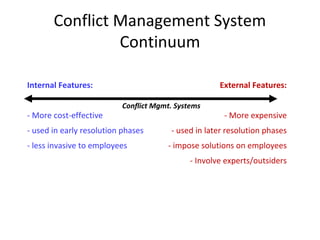
    Conflict Management System Continuum Conflict Mgmt. Systems Internal Features: - More cost-effective - used in early resolution phases - less invasive to employees External Features: - More expensive - used in later resolution phases - impose solutions on employees - Involve experts/outsiders
  • 3.
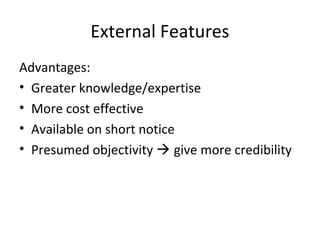
    External Features Advantages: • Greater knowledge/expertise • More cost effective • Available on short notice • Presumed objectivity  give more credibility
  • 4.
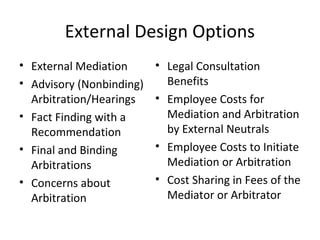
    External Design Options • External Mediation • Advisory (Nonbinding) Arbitration/Hearings • Fact Finding with a Recommendation • Final and Binding Arbitrations • Concerns about Arbitration • Legal Consultation Benefits • Employee Costs for Mediation and Arbitration by External Neutrals • Employee Costs to Initiate Mediation or Arbitration • Cost Sharing in Fees of the Mediator or Arbitrator
  • 5.
    Stakeholders Views •View from the Plantiff Bar • View of the EEOC • View of the National Academy of Arbitrators • The Dunlop Commission on Worker- Management Relations • The Due Process Protocol on Employment Arbitration
  • 6.
    Legal Challenges toMandatory Predispute Arbitration • Challenges Based on Contract Defenses • Adequate Consideration • Validity of Adhesion Contracts • Validity of Ambiguous Language • Knowing and Voluntary Agreement to Arbitrate • Challenges Based on Unconsionability • Cost to Employee • Restrictions on Discovery • Restrictions on Scope of Remedy • Employer Control of the List of Arbitrators • Form of the Award
  • 7.
    Best Practices inDesign of Employment Arbitration Provisions • Scope of Disputes Subject to Arbitration • Exclusivity • Requirement to Attempt Mediation Prior to Filing a Demand • Time Limit to Initiate Arbitration • Right to Representation • Initiation of Arbitration • Selection and Authority of the Arbitrator • Venue and Governing Law • Prehearing Discovery
  • 8.
    Best Practices inDesign of Employment Arbitration Provisions • Subpoenas and Documents • Order of Presentation • Standard and Burden of Persuasion • Evidence and Argument • Allocation of Arbitrator Expenses • Form of the Award • Record of Proceeding • Damages and Relief • The Uncertainty of Predispute Mandatory Arbitration
  • 9.
    Workplace Neutrals: Qualificationsand Standards • The Employment Mediation Profession • The Employment Arbitration Profession • Ethical Expectations and Qualifications in Mandatory Employment Arbitration • Sources of Workplace Neutrals
  • 10.
    Workplace Neutrals: Qualificationsand Standards • The Employment Mediation Profession • The Employment Arbitration Profession • Ethical Expectations and Qualifications in Mandatory Employment Arbitration • Sources of Workplace Neutrals