¿¡TENEMOS VOZ!?
Measuring citizen engagement in Argentina
Martín Szyszlican
@martinszy
www.martinszyszlican.com
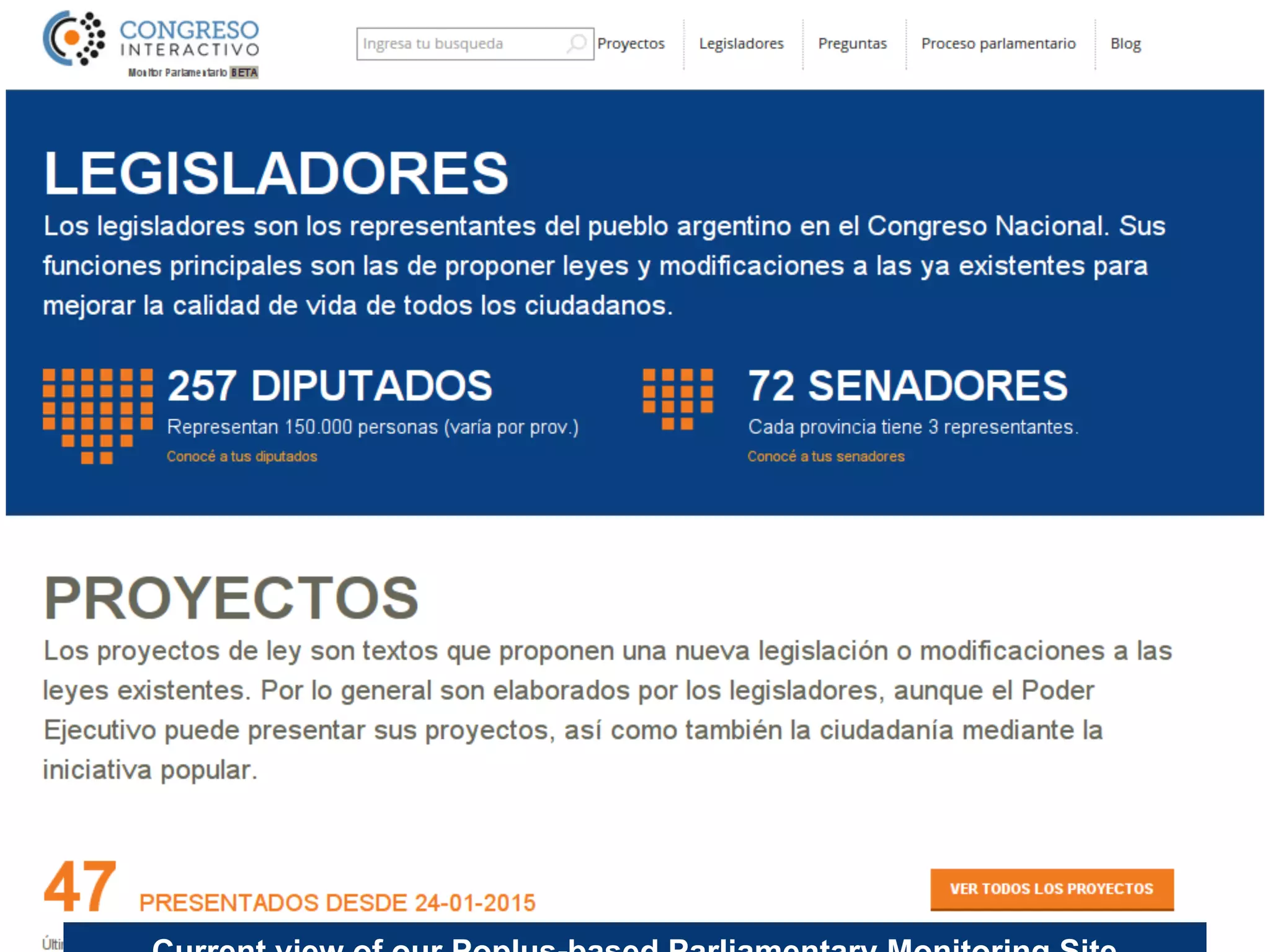
Congreso Interactivo
@CongresoInterac
www.congresointeractivo.org
1. Introduction and political context
2. Will NGOs use our PMO?
3. Did we just make 200.000 argentinians
question their vote?
4. Is the Buenos Aires city council opening up?
5 minutes for each topic, and then a conversation.
What are we going to cover?
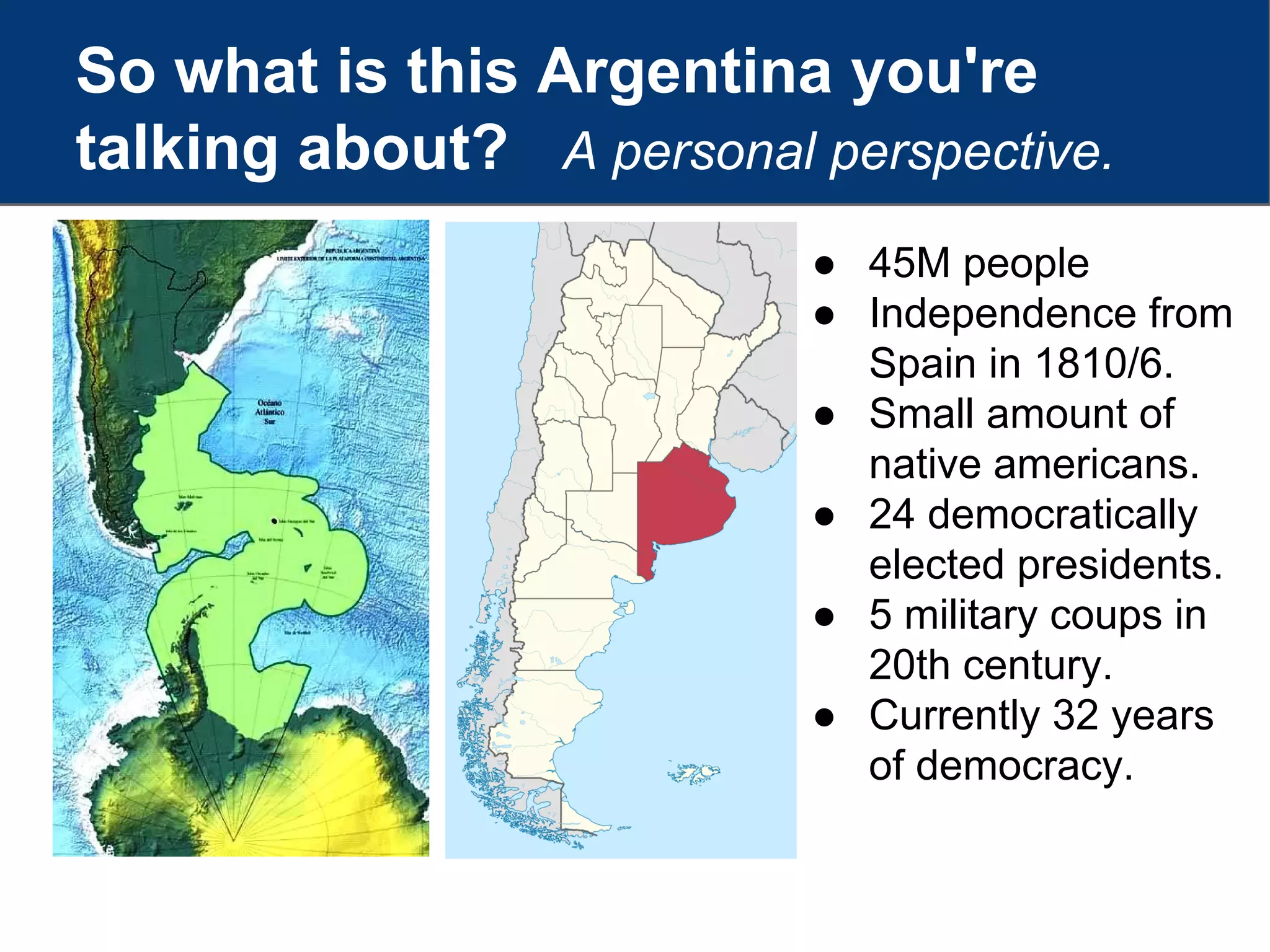
So what is this Argentina you're
talking about? A personal perspective.
● 45M people
● Independence from
Spain in 1810/6.
● Small amount of
native americans.
● 24 democratically
elected presidents.
● 5 military coups in
20th century.
● Currently 32 years
of democracy.
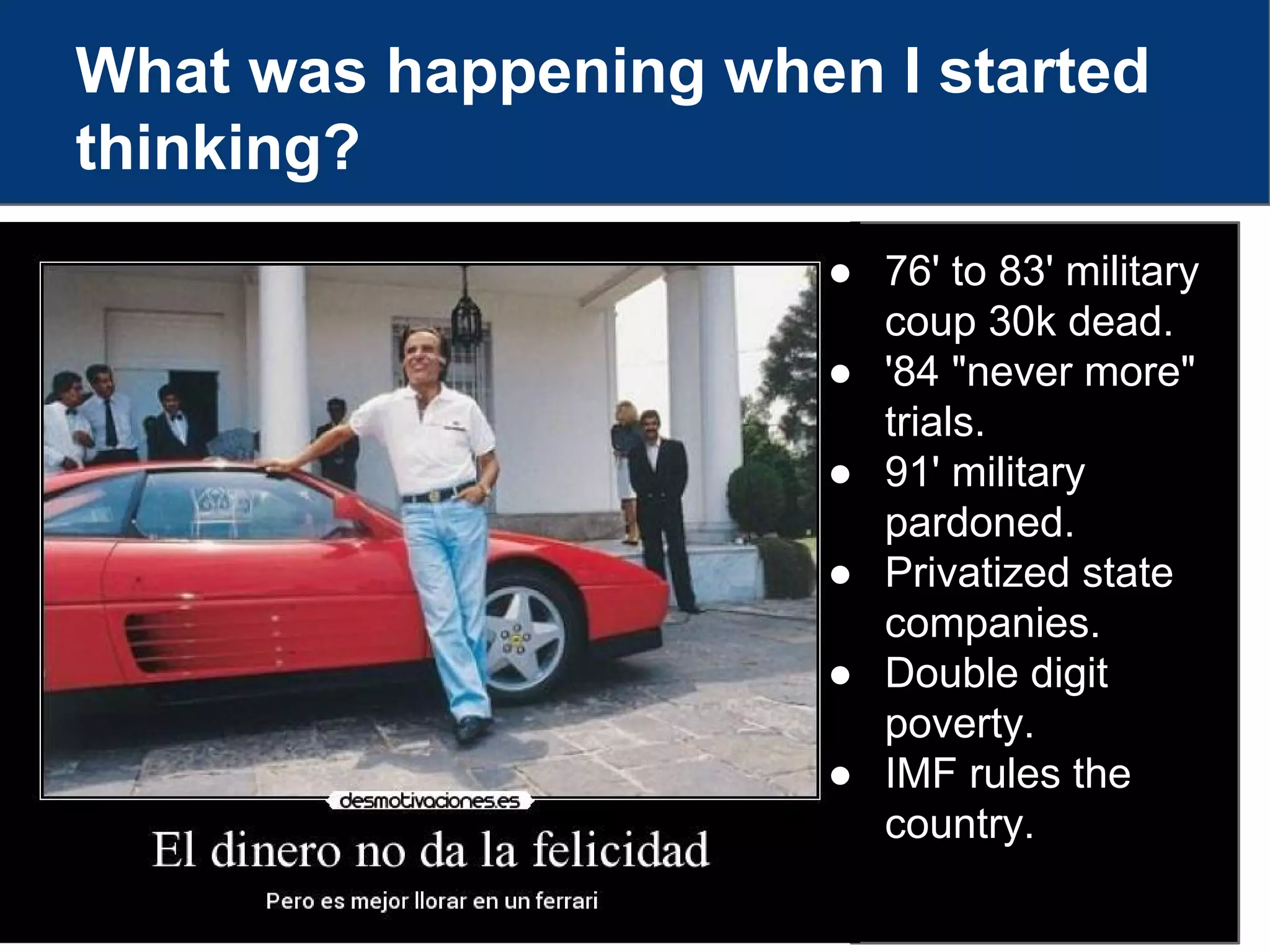
What was happening when I started
thinking?
● 76' to 83' military
coup 30k dead.
● '84 "never more"
trials.
● 91' military
pardoned.
● Privatized state
companies.
● Double digit
poverty.
● IMF rules the
country.
Do I have a future?
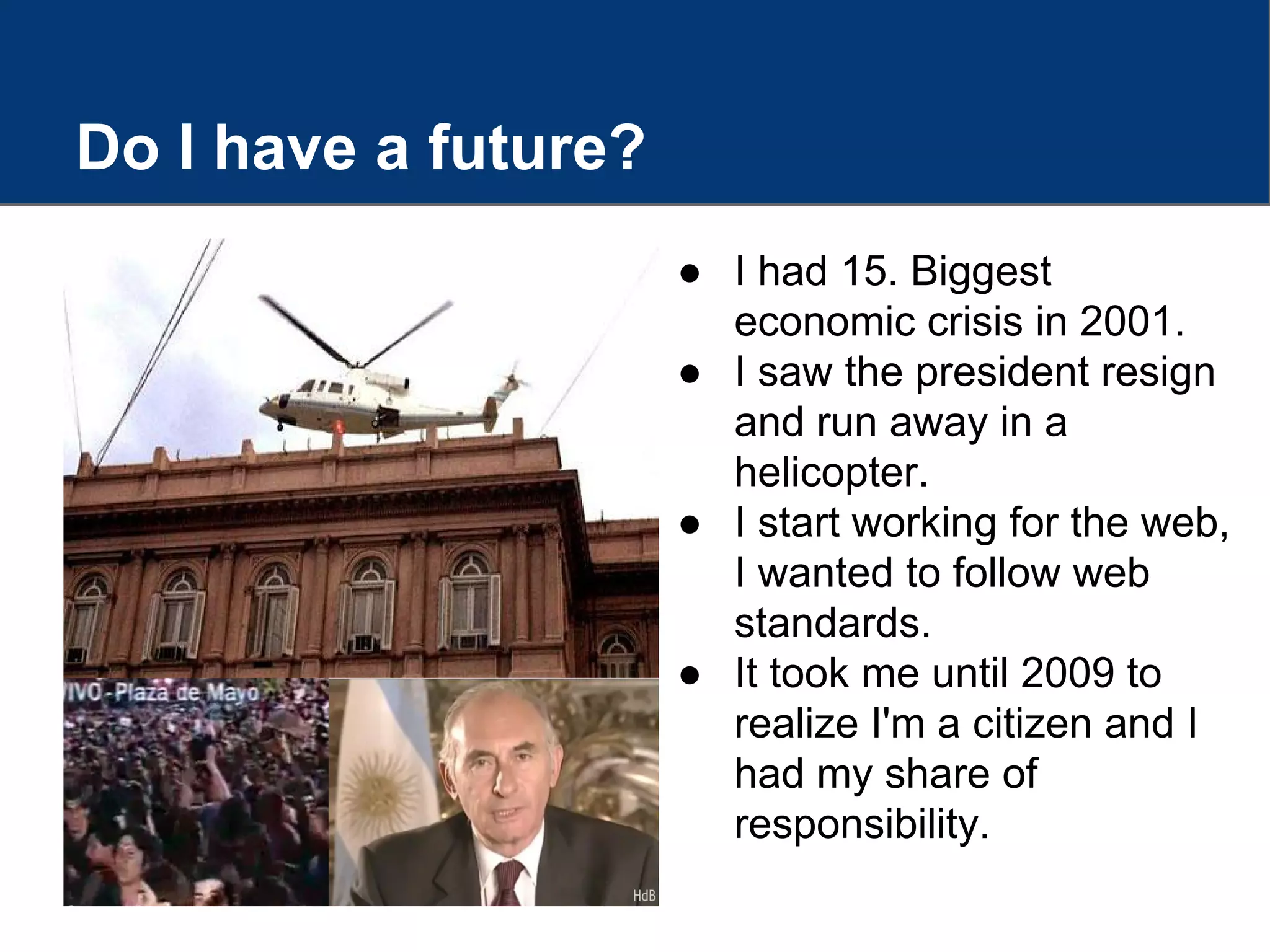
● I had 15. Biggest
economic crisis in 2001.
● I saw the president resign
and run away in a
helicopter.
● I start working for the web,
I wanted to follow web
standards.
● It took me until 2009 to
realize I'm a citizen and I
had my share of
responsibility.
The congress around 2009
Interesting projects and debates.
● Media reform. Licenses handled by military.
● Gay rights. Inclusion should be for
everyone.
● Nationalizations. Privatizations failed.
● Progressive taxes and retirement.
People started to take notice.
Will NGOs use our PMO?
Can user research help us improve the
parliamentary process?
Redesigning the legislative UX
Or is it citizen experience?
Positive points
● Valuable information for all citizens.
● Processes that claim to represent all
citizens.
Opportunities
● Accessibility
● Mediated and biased access.
● Paths of action are hard to discover.
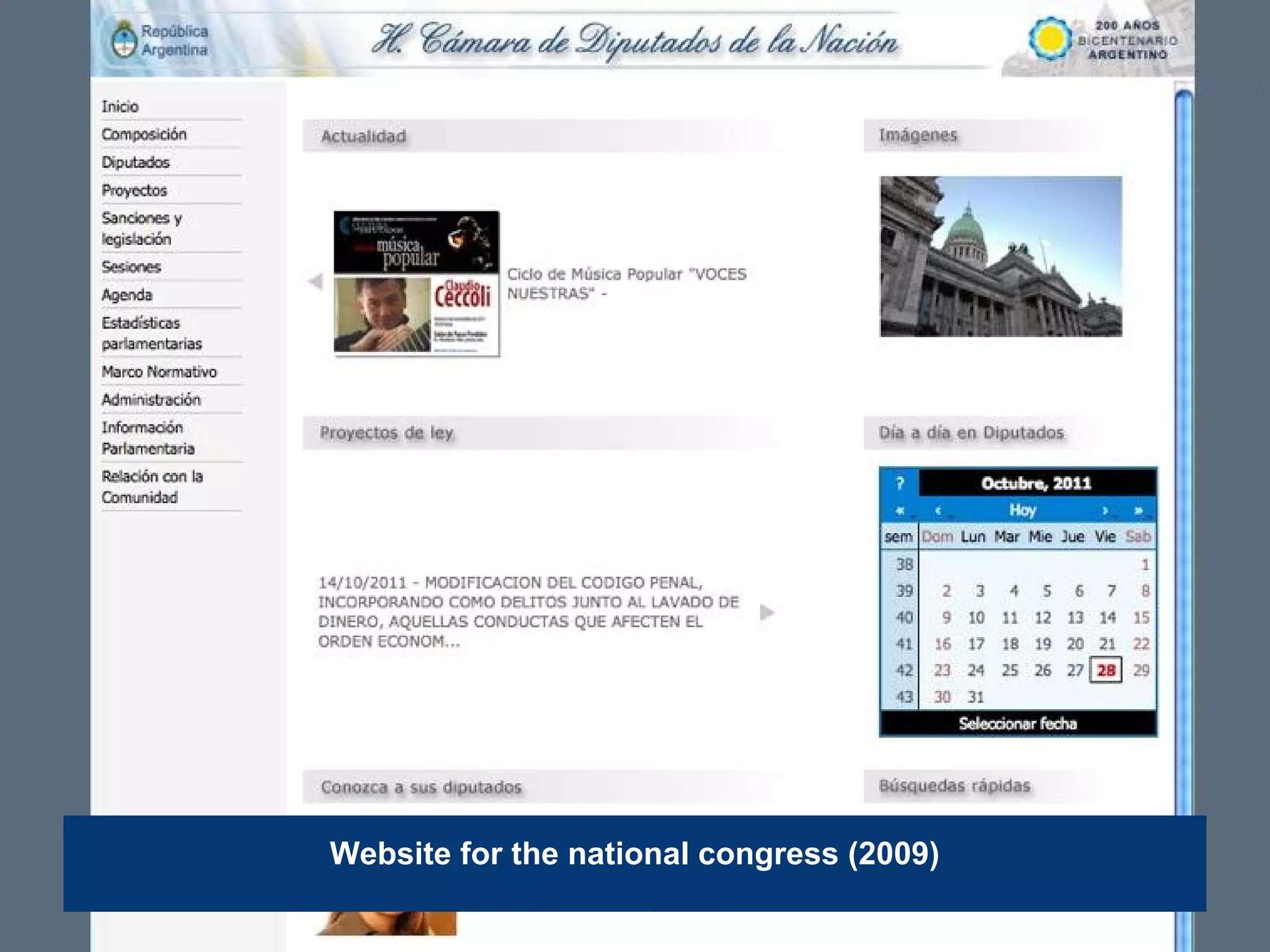
Website for the national congress (2009)
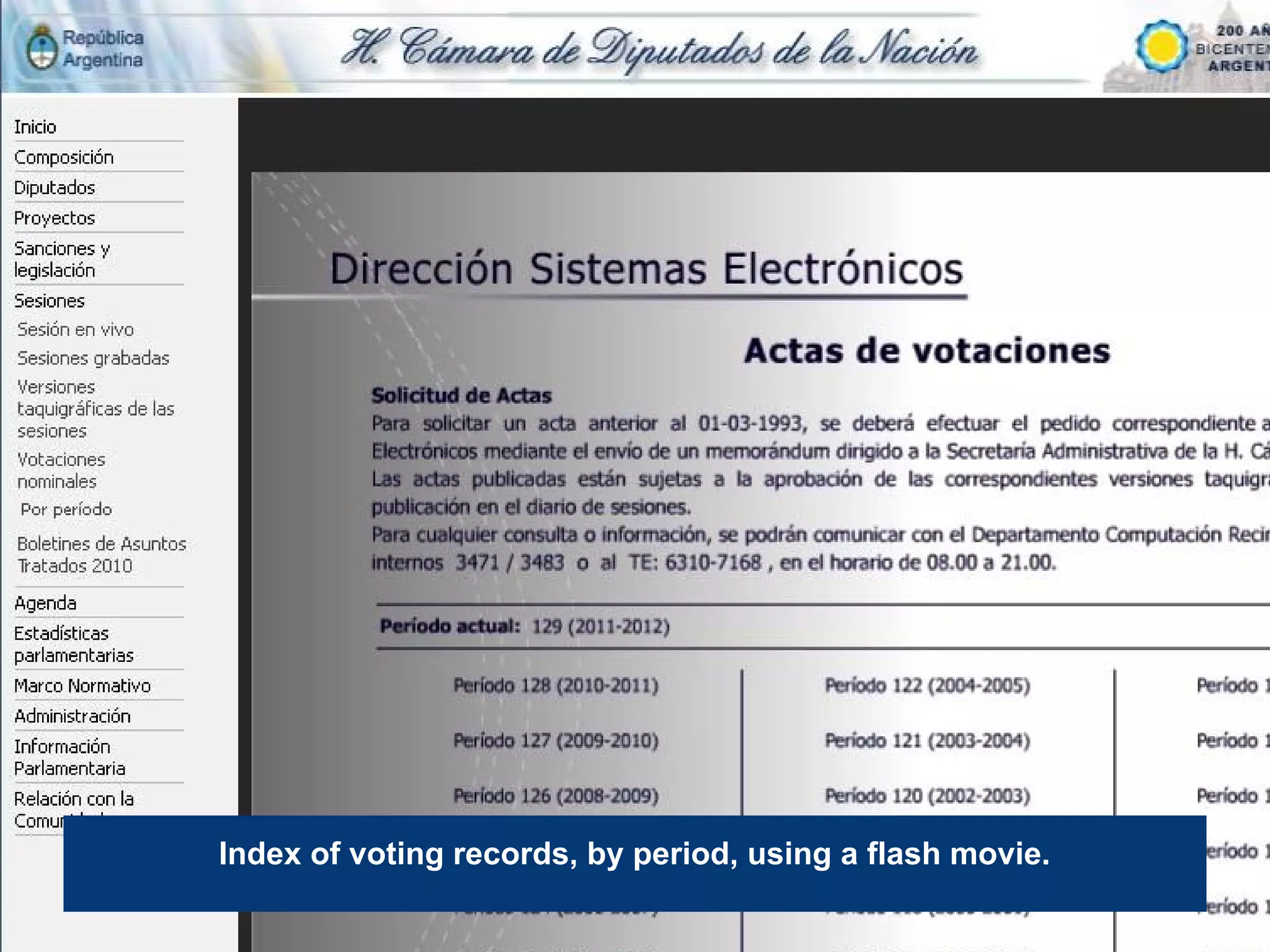
Index of voting records, by period, using a flash movie.
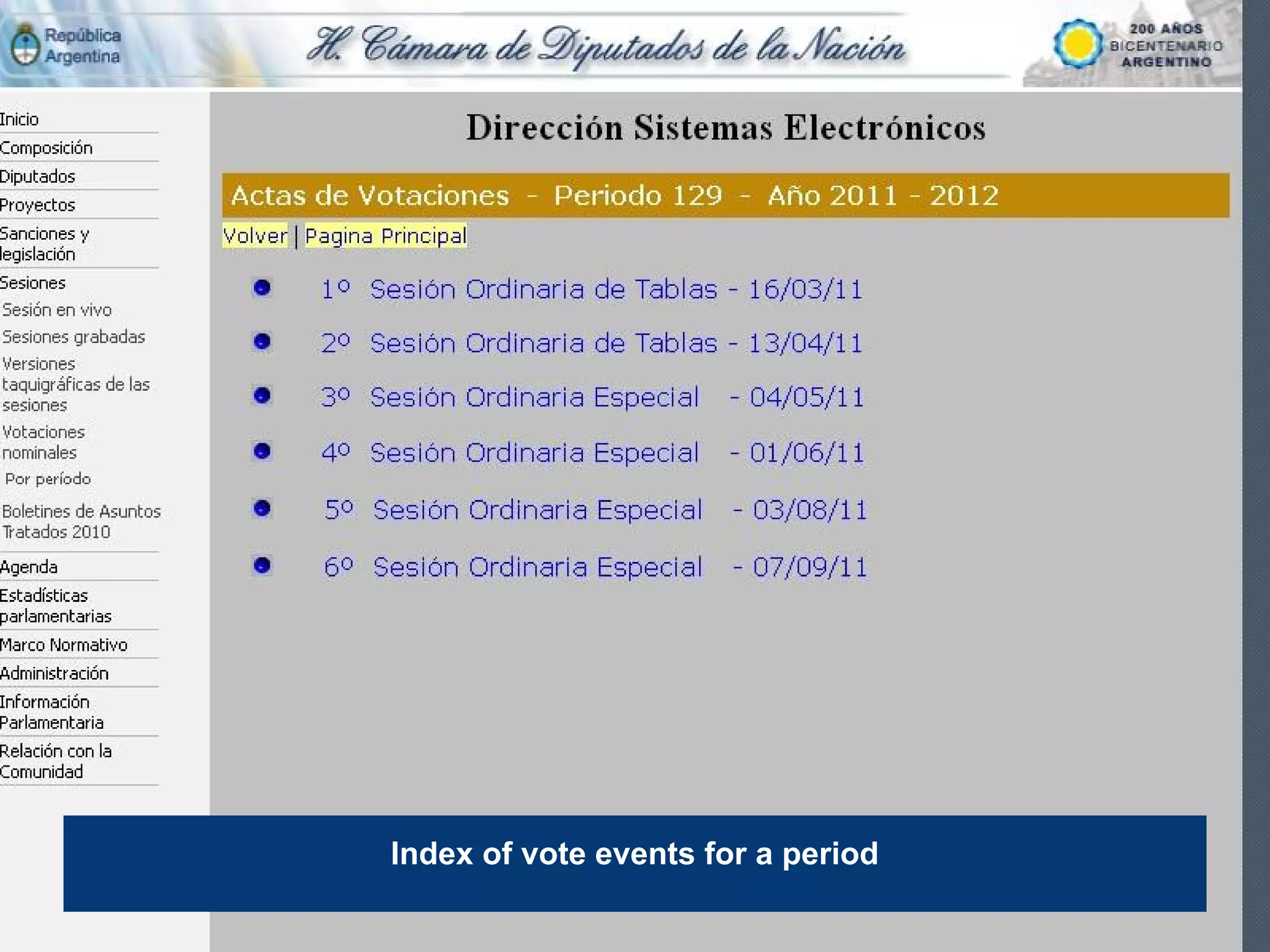
Index of vote events for a period
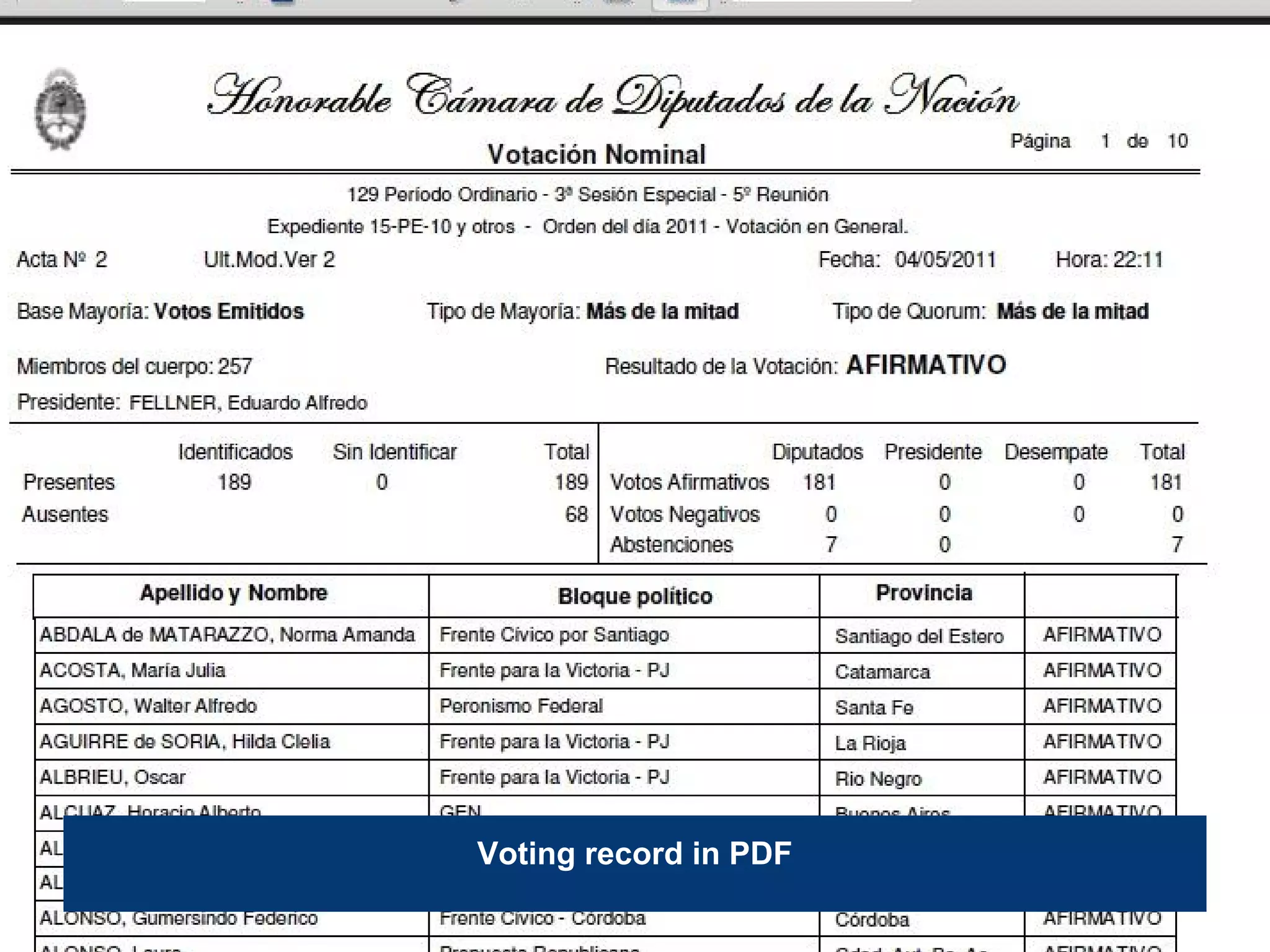
Voting record in PDF
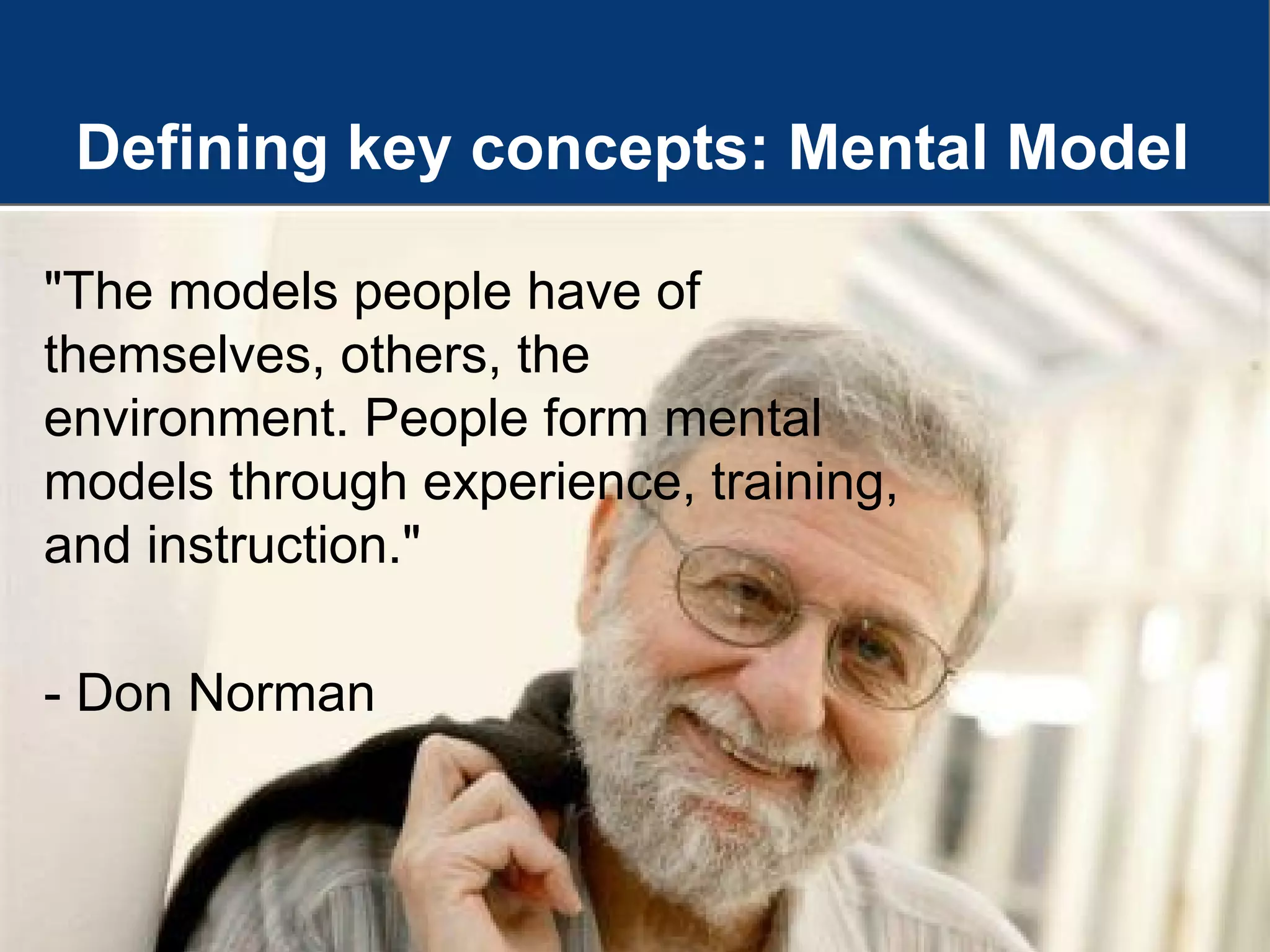
Defining key concepts: Mental Model
"The models people have of
themselves, others, the
environment. People form mental
models through experience, training,
and instruction."
- Don Norman
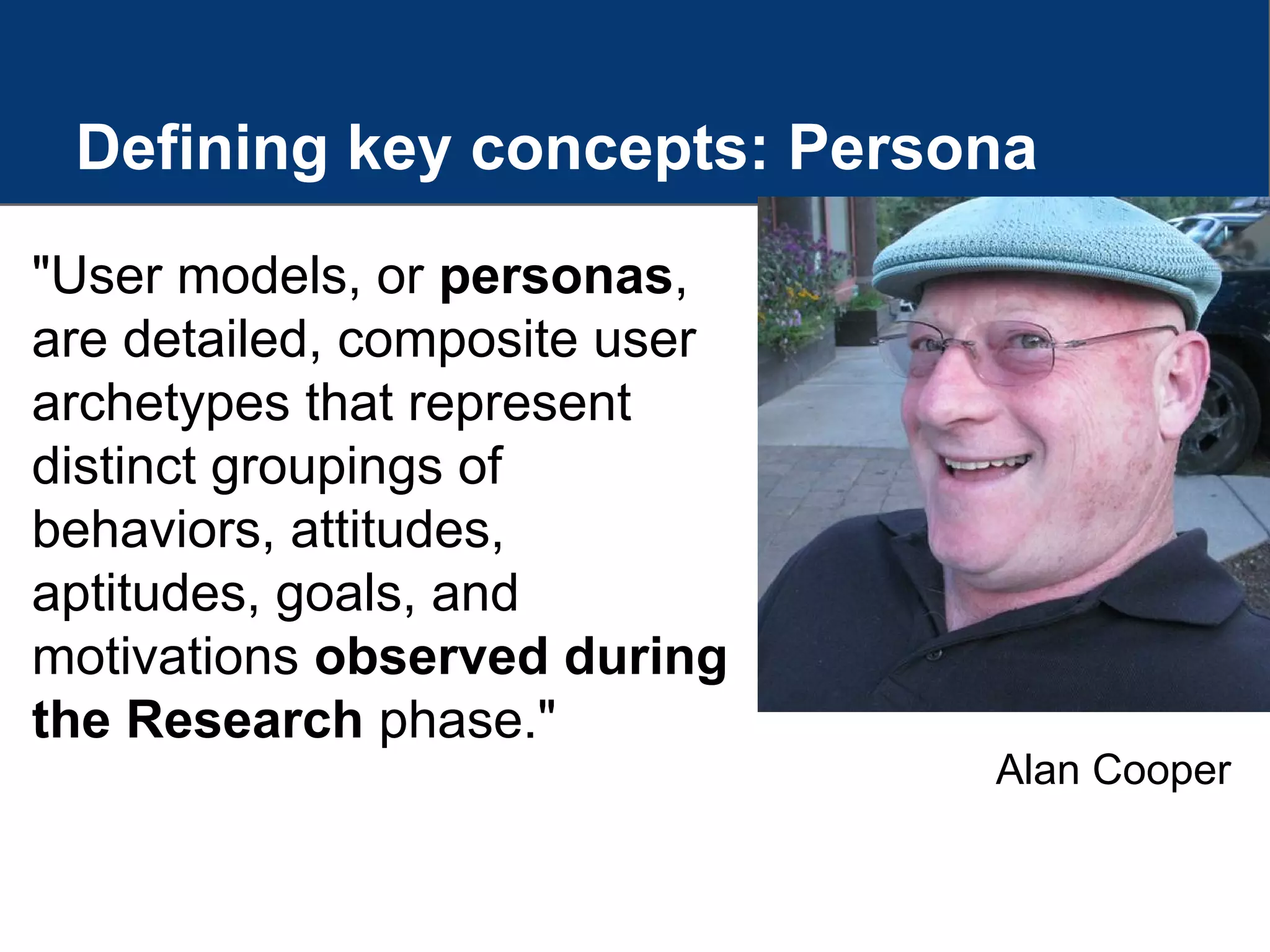
Defining key concepts: Persona
"User models, or personas,
are detailed, composite user
archetypes that represent
distinct groupings of
behaviors, attitudes,
aptitudes, goals, and
motivations observed during
the Research phase."
Alan Cooper
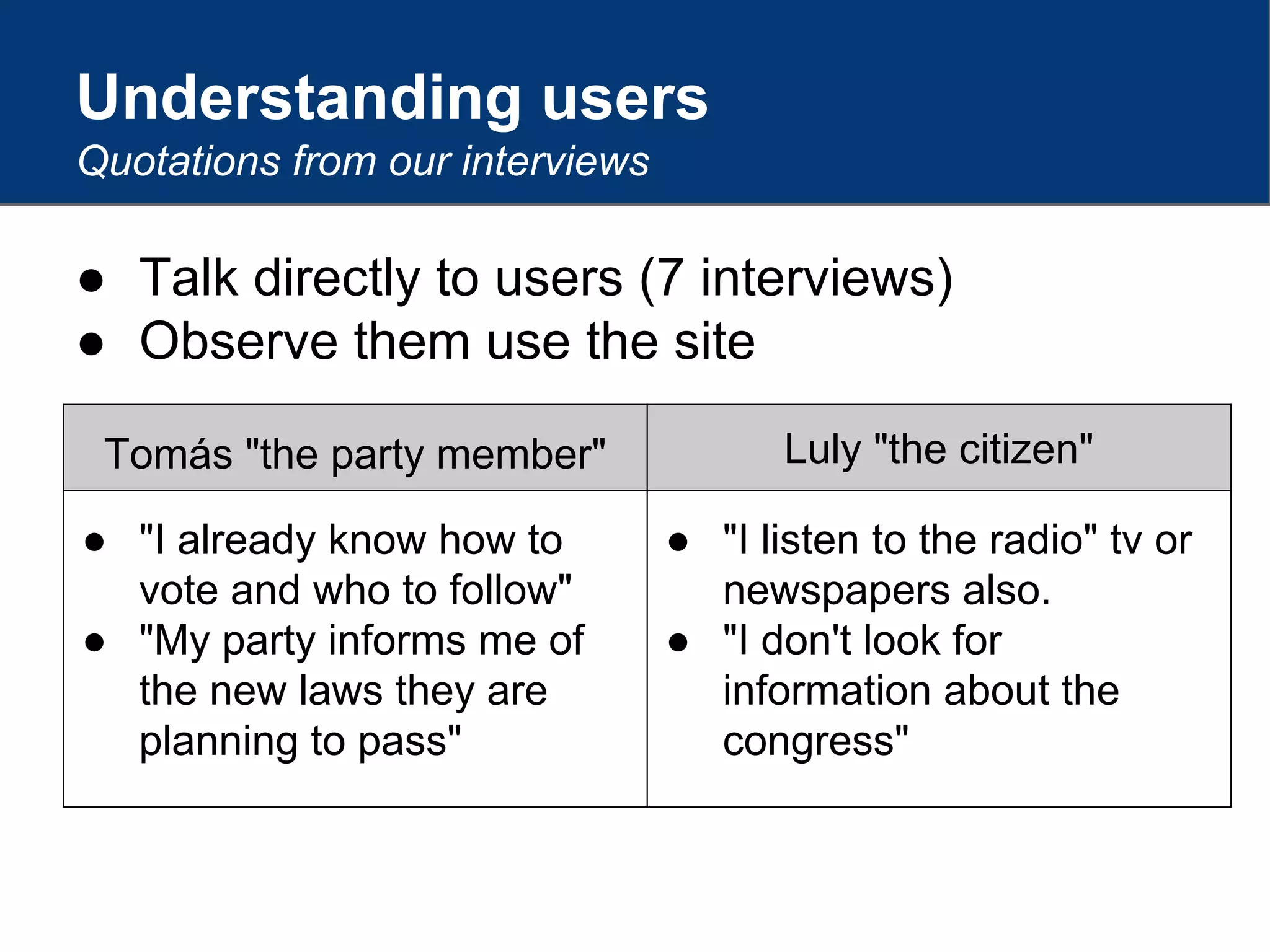
Understanding users
Quotations from our interviews
● Talk directly to users (7 interviews)
● Observe them use the site
Tomás "the party member" Luly "the citizen"
● "I already know how to
vote and who to follow"
● "My party informs me of
the new laws they are
planning to pass"
● "I listen to the radio" tv or
newspapers also.
● "I don't look for
information about the
congress"
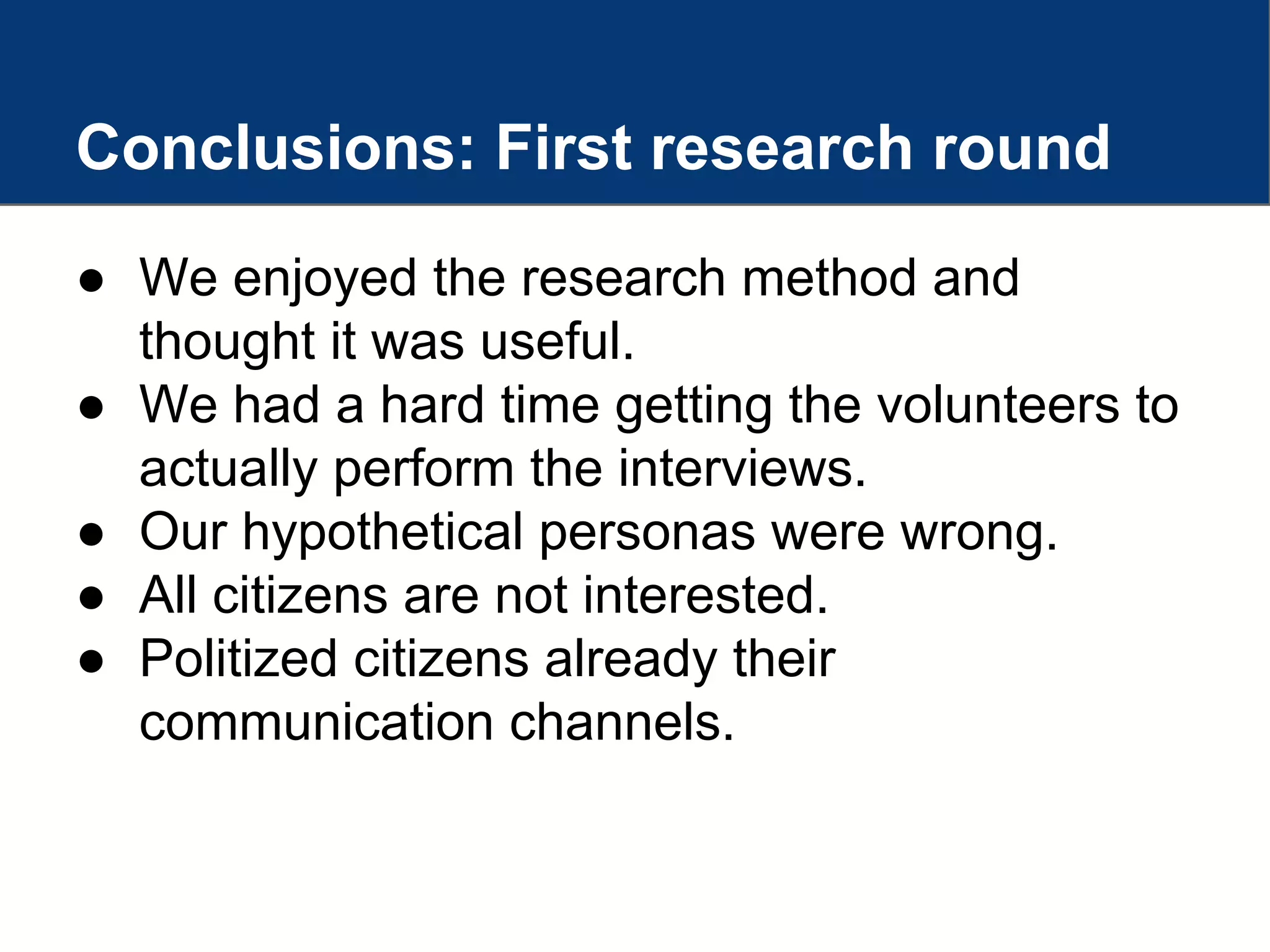
Conclusions: First research round
● We enjoyed the research method and
thought it was useful.
● We had a hard time getting the volunteers to
actually perform the interviews.
● Our hypothetical personas were wrong.
● All citizens are not interested.
● Politized citizens already their
communication channels.
Second research round
On getting it right
● New personas hypothesis
● Five more interviews
Ricardo "the researcher" Julieta "the committed citizen"
● "we want to show the
congress is empty, that
no one is there fighting
for your rights"
● "they make it confusing
so its hard to access"
● "I went to the radio and
formed an association to
change the law"
● "It took me five years to
understand how to do it"
Interface design and usability
What tools do we need to build?
● Understanding activity
● Understanding actionability
How do we know they work?
● User testing in controlled settings
● Task-oriented measuring of failures
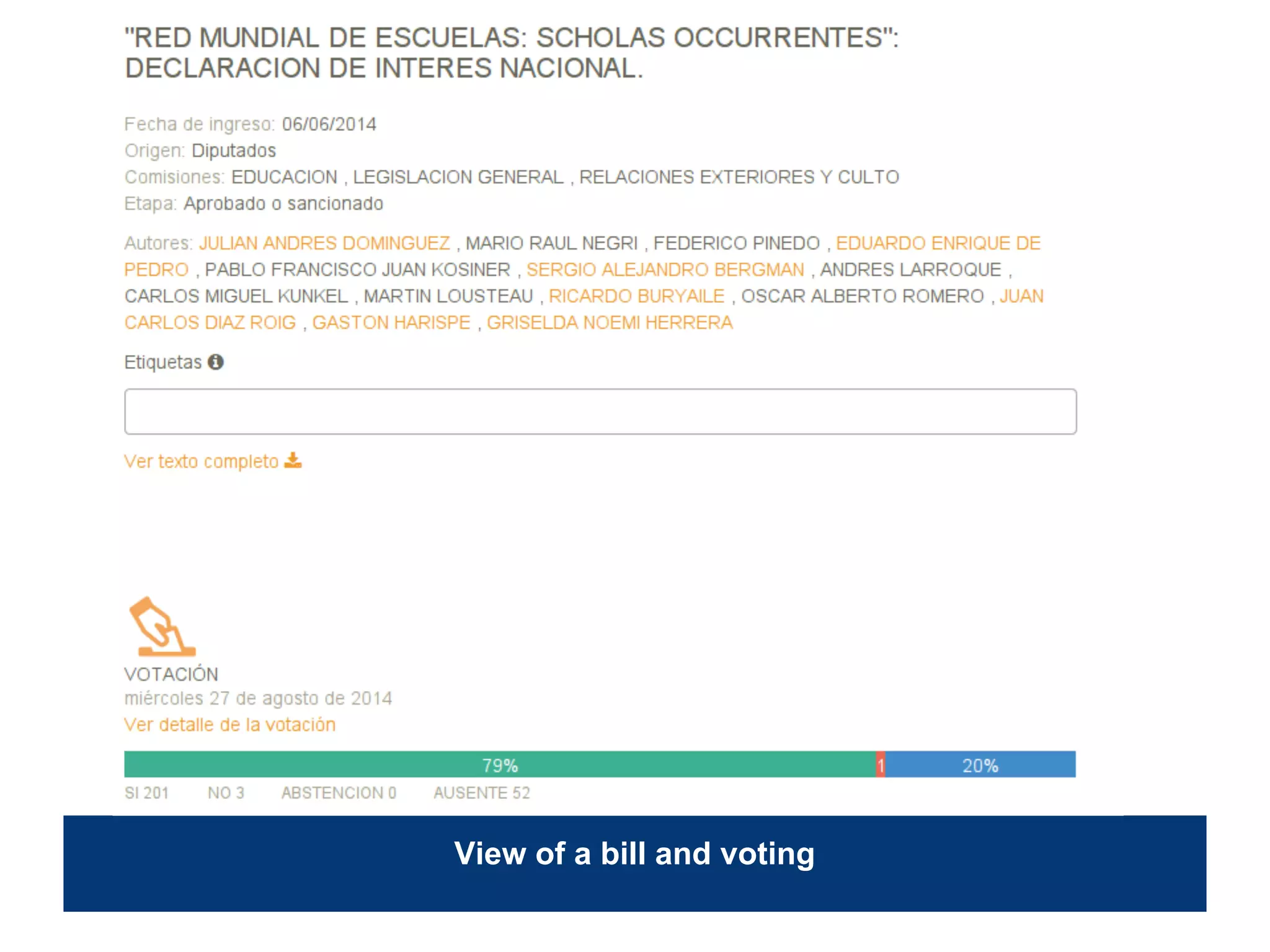
View of a bill and voting
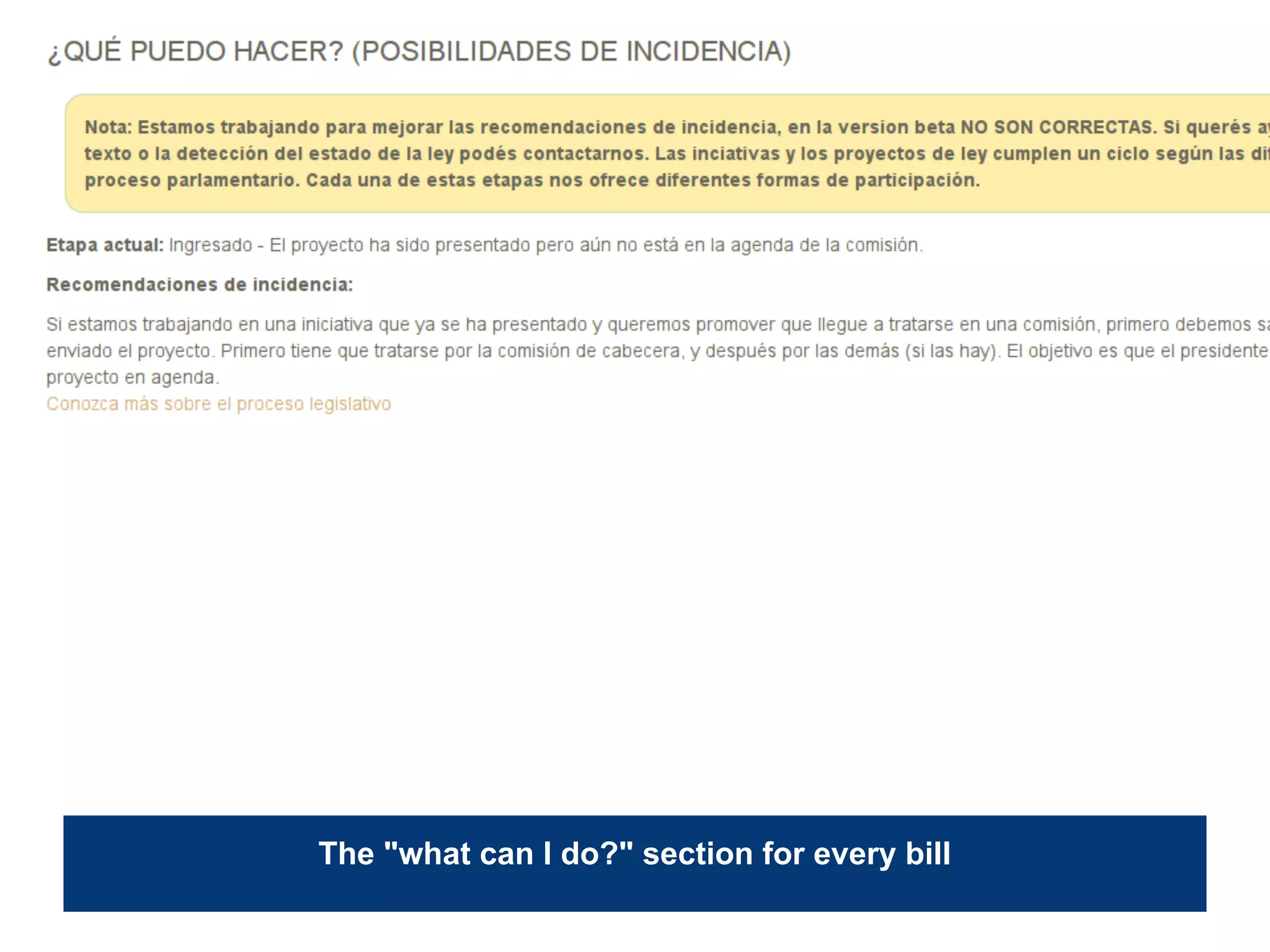
The "what can I do?" section for every bill
We performed
● 5 usability tests with NGOs
● 2 co-design sessions with designers and
journalists.
Results:
● Improved language in many areas
● Added information based on requests
● Clarified the homepage introduction
Usability of the PMO
Conclusions
How do we know we are delivering what
they need?
Ensuring the match between the interface
model and the user mental model is the key.
Will they use it?
They said they would, and we have 100 users a
day.
Did we just make 200.000
people question their vote?
With just a simple game.
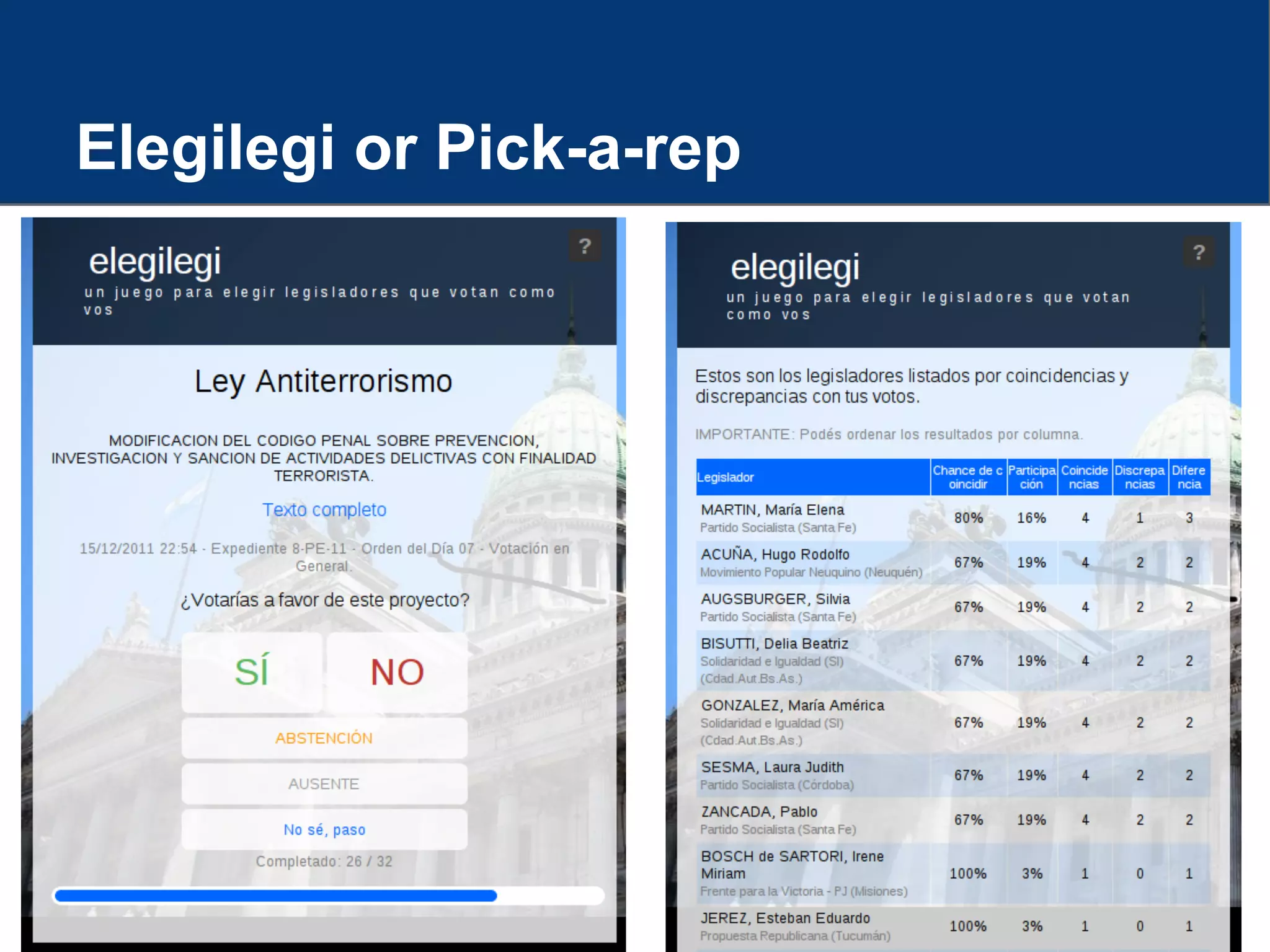
Elegilegi or Pick-a-rep
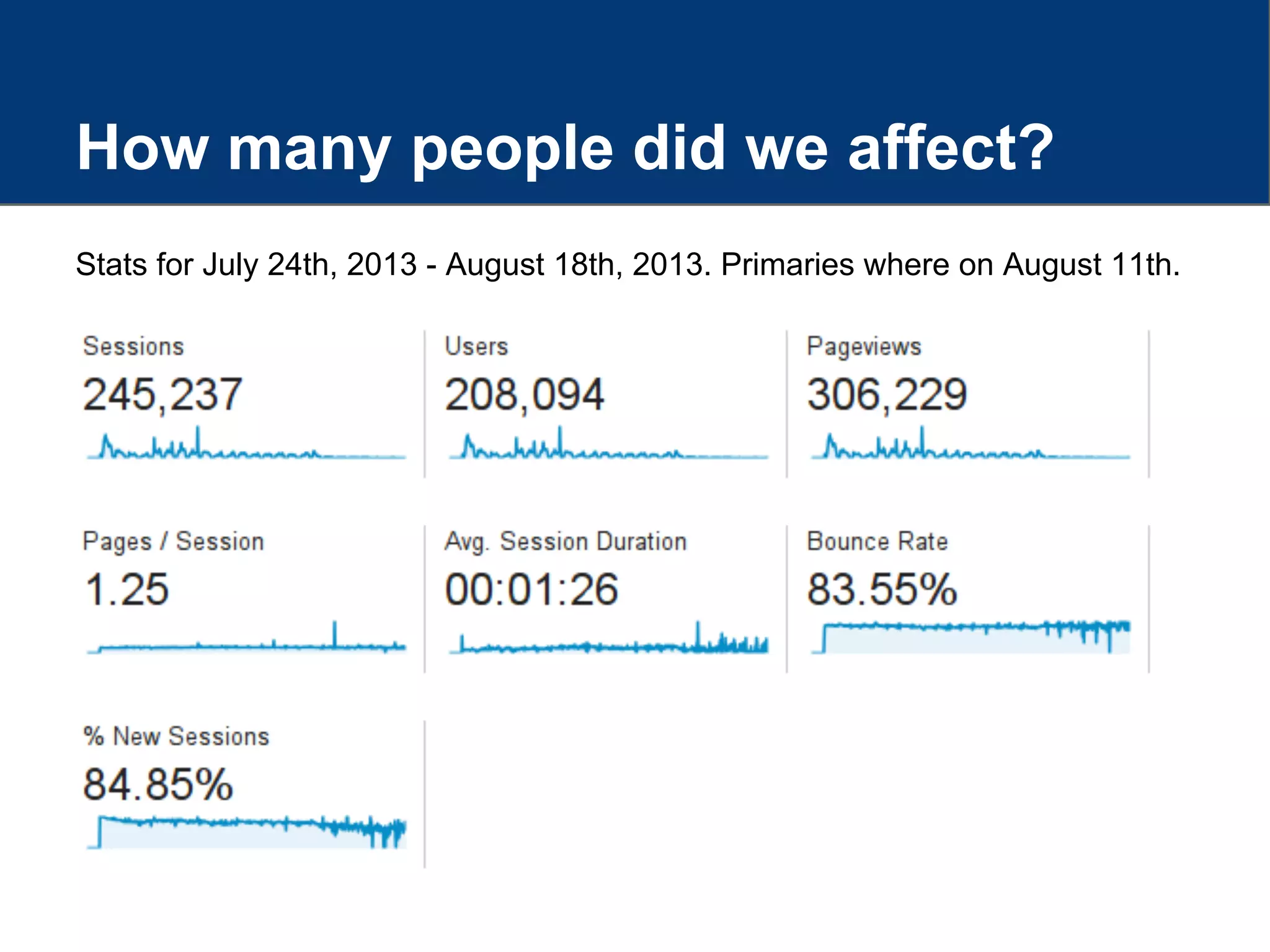
How many people did we affect?
Stats for July 24th, 2013 - August 18th, 2013. Primaries where on August 11th.
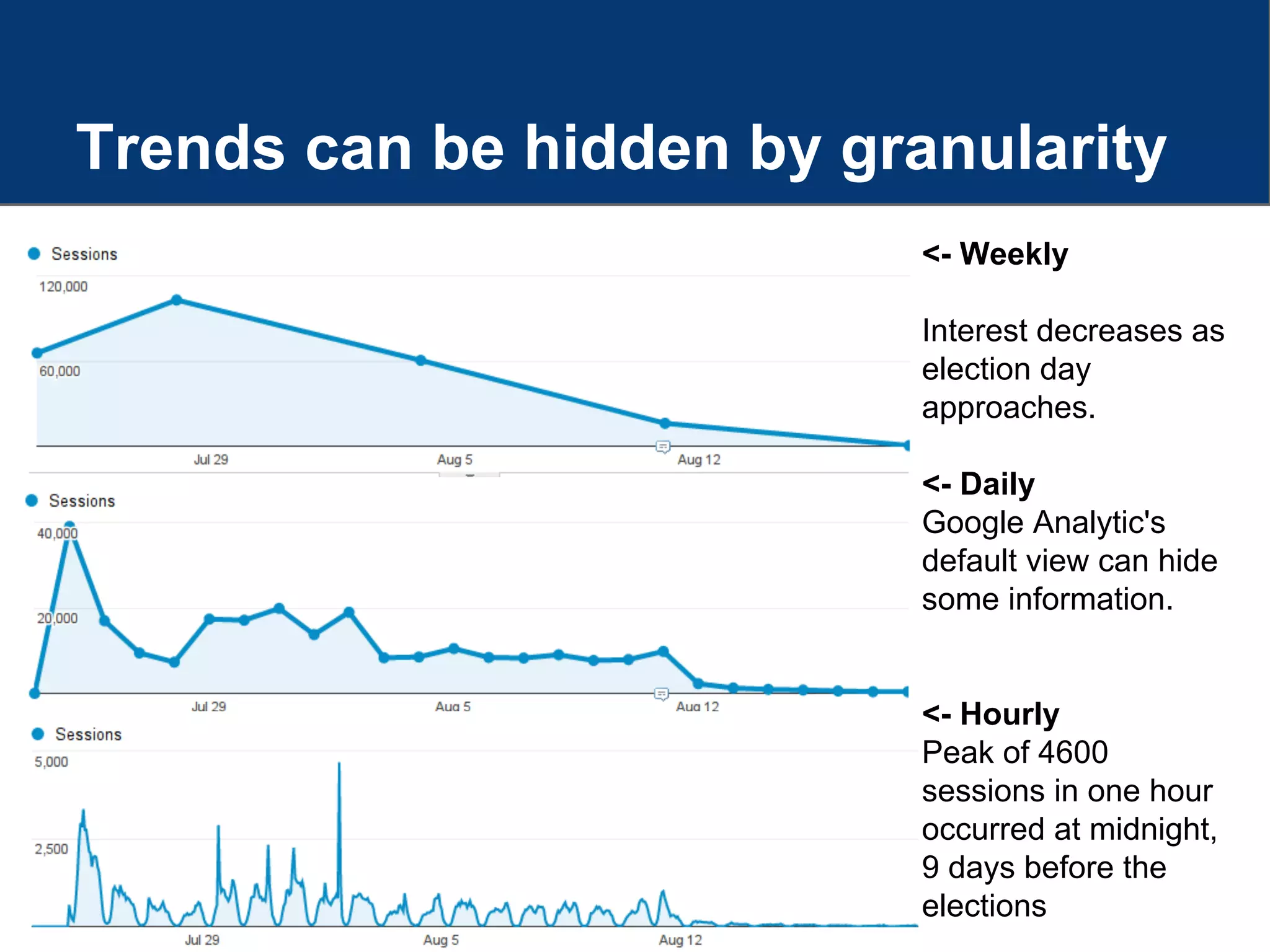
Trends can be hidden by granularity
<- Weekly
Interest decreases as
election day
approaches.
<- Daily
Google Analytic's
default view can hide
some information.
<- Hourly
Peak of 4600
sessions in one hour
occurred at midnight,
9 days before the
elections
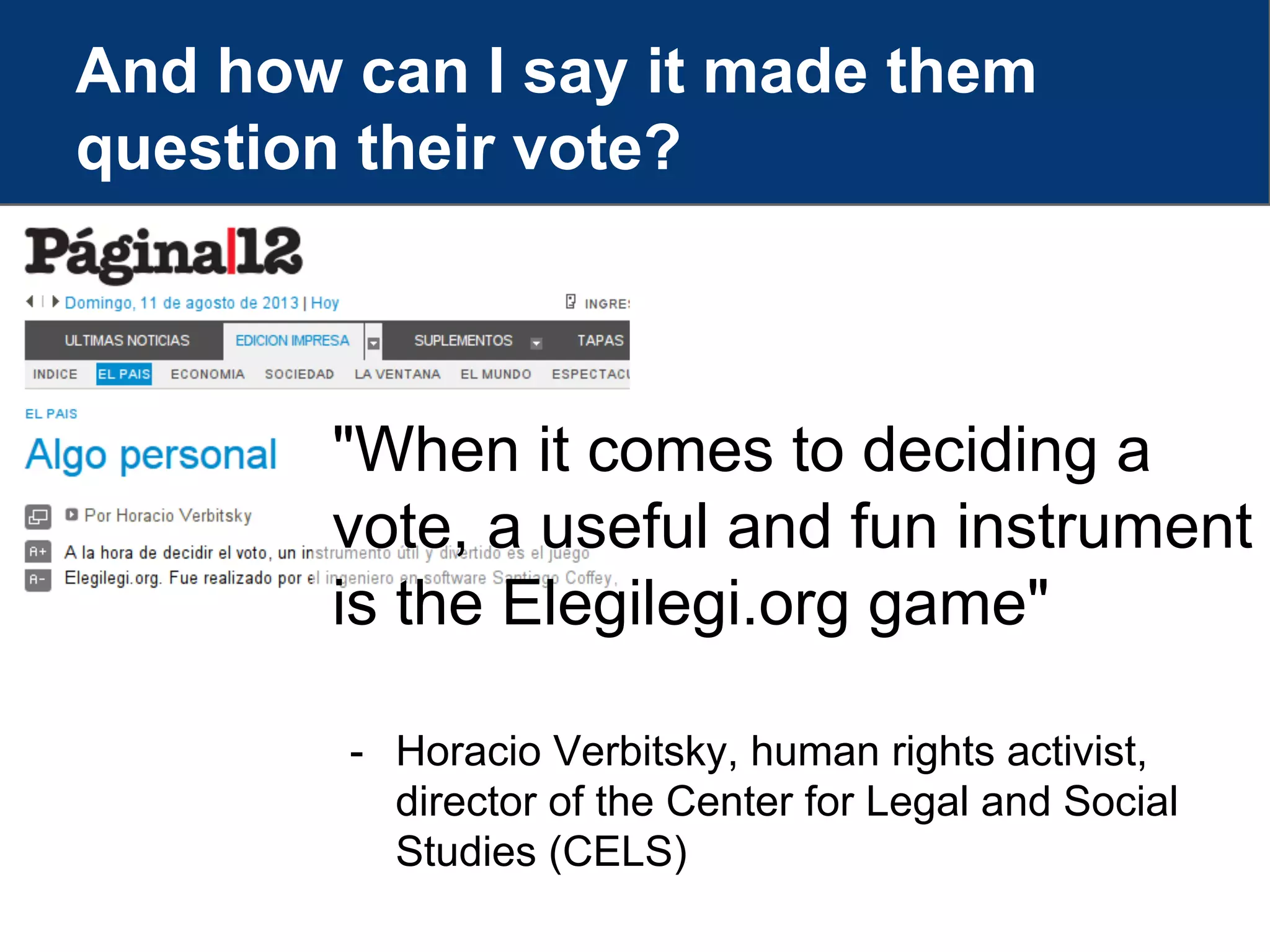
And how can I say it made them
question their vote?
"When it comes to deciding a
vote, a useful and fun instrument
is the Elegilegi.org game"
- Horacio Verbitsky, human rights activist,
director of the Center for Legal and Social
Studies (CELS)
Is the city council
opening up?
Experimenting with DemocracyOS
in Buenos Aires
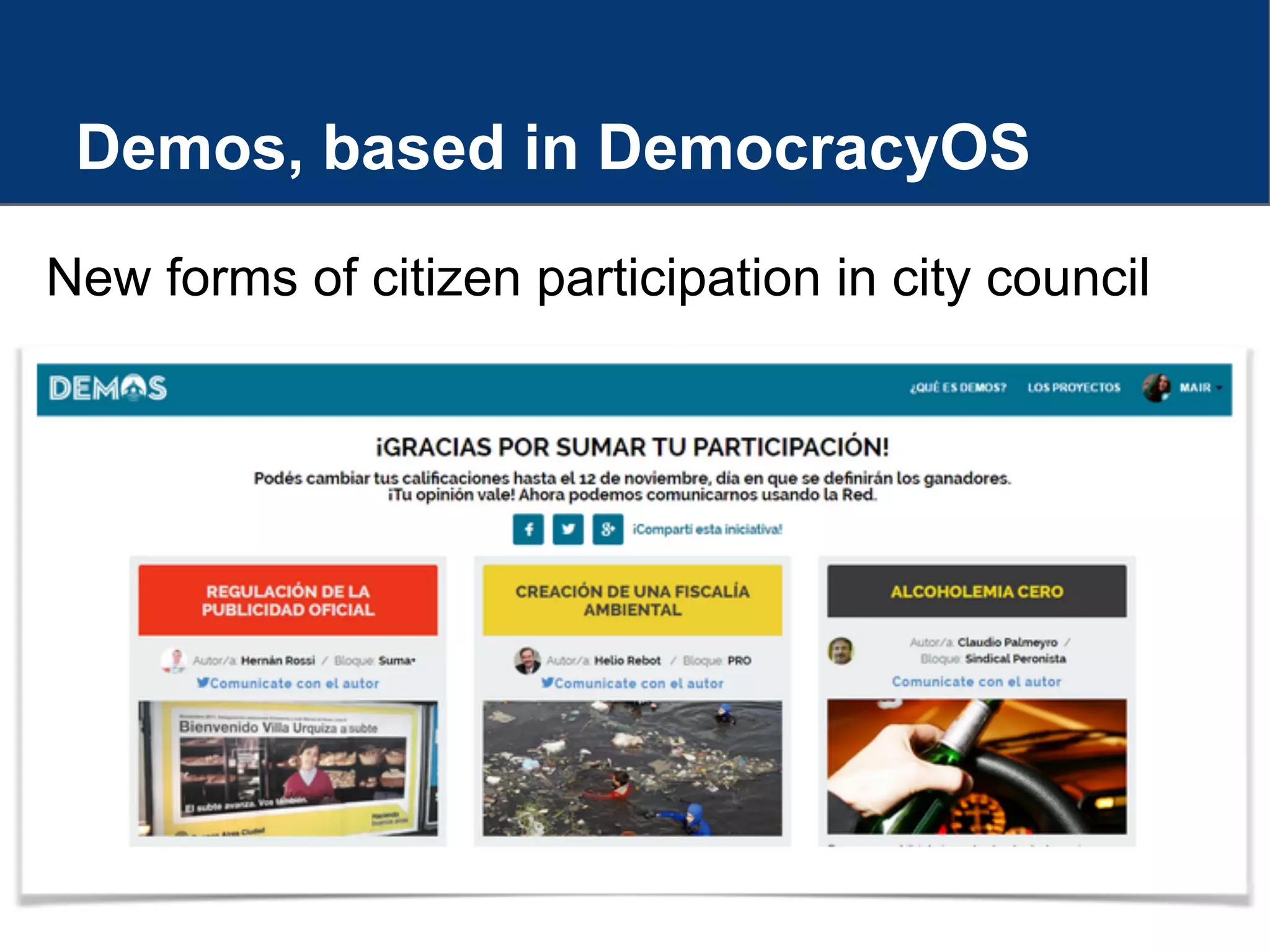
Demos, based in DemocracyOS
New forms of citizen participation in city council
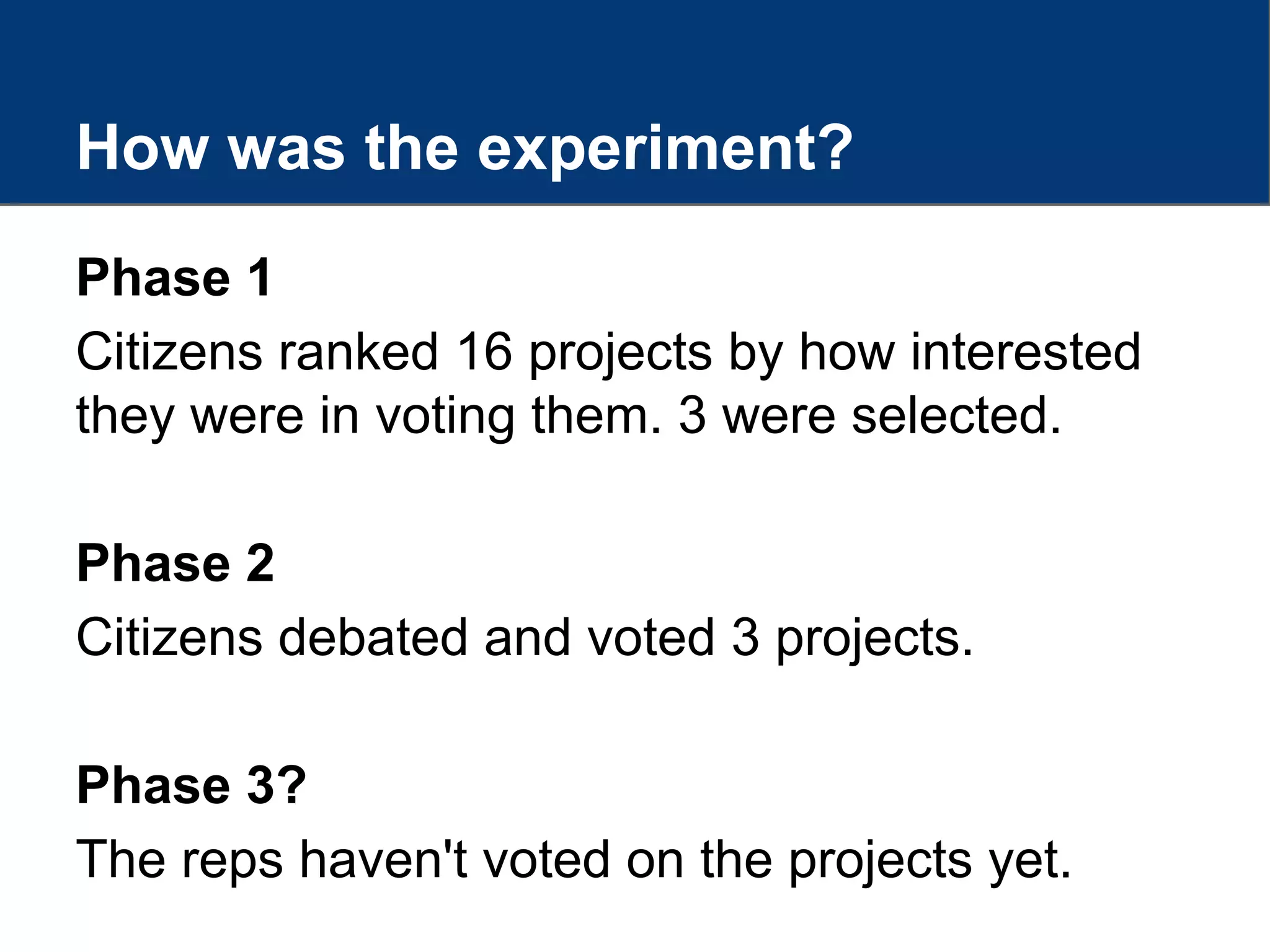
How was the experiment?
Phase 1
Citizens ranked 16 projects by how interested
they were in voting them. 3 were selected.
Phase 2
Citizens debated and voted 3 projects.
Phase 3?
The reps haven't voted on the projects yet.
Measures of citizen participation
● 20.000 users.
● 2.400 votes cast.
● 700 comments.
● Project authors engaged in
social networks.
Current status
● The most voted project reached committee
debate after being frozen for two years.
● Users suggestions are compiled and will be
sent to the reps.
● Year ended before other projects could be
debated.
● None of the citizen-ranked projects reach the
chamber yet.
Final words
● UX research and evaluation is a good way of
ensuring user acceptance of tools.
● Web analytics are a good way of evaluating
reach and engagement.
● Following parliamentary activity is needed
for evaluating whether participation
experiments effectively impact policy.
Thanks.
@martinszy
@CongresoInterac
Let's have a conversation.

Congreso Interactivo, Elegilegi and DEMOS - Presentation at TICTeC

  • 1.
    ¿¡TENEMOS VOZ!? Measuring citizenengagement in Argentina Martín Szyszlican @martinszy www.martinszyszlican.com Congreso Interactivo @CongresoInterac www.congresointeractivo.org
  • 2.
    1. Introduction andpolitical context 2. Will NGOs use our PMO? 3. Did we just make 200.000 argentinians question their vote? 4. Is the Buenos Aires city council opening up? 5 minutes for each topic, and then a conversation. What are we going to cover?
  • 3.
    So what isthis Argentina you're talking about? A personal perspective. ● 45M people ● Independence from Spain in 1810/6. ● Small amount of native americans. ● 24 democratically elected presidents. ● 5 military coups in 20th century. ● Currently 32 years of democracy.
  • 4.
    What was happeningwhen I started thinking? ● 76' to 83' military coup 30k dead. ● '84 "never more" trials. ● 91' military pardoned. ● Privatized state companies. ● Double digit poverty. ● IMF rules the country.
  • 5.
    Do I havea future? ● I had 15. Biggest economic crisis in 2001. ● I saw the president resign and run away in a helicopter. ● I start working for the web, I wanted to follow web standards. ● It took me until 2009 to realize I'm a citizen and I had my share of responsibility.
  • 6.
    The congress around2009 Interesting projects and debates. ● Media reform. Licenses handled by military. ● Gay rights. Inclusion should be for everyone. ● Nationalizations. Privatizations failed. ● Progressive taxes and retirement. People started to take notice.
  • 7.
    Will NGOs useour PMO? Can user research help us improve the parliamentary process?
  • 8.
    Redesigning the legislativeUX Or is it citizen experience? Positive points ● Valuable information for all citizens. ● Processes that claim to represent all citizens. Opportunities ● Accessibility ● Mediated and biased access. ● Paths of action are hard to discover.
  • 9.
    Website for thenational congress (2009)
  • 10.
    Index of votingrecords, by period, using a flash movie.
  • 11.
    Index of voteevents for a period
  • 12.
  • 13.
    Defining key concepts:Mental Model "The models people have of themselves, others, the environment. People form mental models through experience, training, and instruction." - Don Norman
  • 14.
    Defining key concepts:Persona "User models, or personas, are detailed, composite user archetypes that represent distinct groupings of behaviors, attitudes, aptitudes, goals, and motivations observed during the Research phase." Alan Cooper
  • 15.
    Understanding users Quotations fromour interviews ● Talk directly to users (7 interviews) ● Observe them use the site Tomás "the party member" Luly "the citizen" ● "I already know how to vote and who to follow" ● "My party informs me of the new laws they are planning to pass" ● "I listen to the radio" tv or newspapers also. ● "I don't look for information about the congress"
  • 16.
    Conclusions: First researchround ● We enjoyed the research method and thought it was useful. ● We had a hard time getting the volunteers to actually perform the interviews. ● Our hypothetical personas were wrong. ● All citizens are not interested. ● Politized citizens already their communication channels.
  • 17.
    Second research round Ongetting it right ● New personas hypothesis ● Five more interviews Ricardo "the researcher" Julieta "the committed citizen" ● "we want to show the congress is empty, that no one is there fighting for your rights" ● "they make it confusing so its hard to access" ● "I went to the radio and formed an association to change the law" ● "It took me five years to understand how to do it"
  • 18.
    Interface design andusability What tools do we need to build? ● Understanding activity ● Understanding actionability How do we know they work? ● User testing in controlled settings ● Task-oriented measuring of failures
  • 20.
    View of abill and voting
  • 21.
    The "what canI do?" section for every bill
  • 22.
    We performed ● 5usability tests with NGOs ● 2 co-design sessions with designers and journalists. Results: ● Improved language in many areas ● Added information based on requests ● Clarified the homepage introduction Usability of the PMO
  • 23.
    Conclusions How do weknow we are delivering what they need? Ensuring the match between the interface model and the user mental model is the key. Will they use it? They said they would, and we have 100 users a day.
  • 24.
    Did we justmake 200.000 people question their vote? With just a simple game.
  • 25.
  • 26.
    How many peopledid we affect? Stats for July 24th, 2013 - August 18th, 2013. Primaries where on August 11th.
  • 27.
    Trends can behidden by granularity <- Weekly Interest decreases as election day approaches. <- Daily Google Analytic's default view can hide some information. <- Hourly Peak of 4600 sessions in one hour occurred at midnight, 9 days before the elections
  • 28.
    And how canI say it made them question their vote? "When it comes to deciding a vote, a useful and fun instrument is the Elegilegi.org game" - Horacio Verbitsky, human rights activist, director of the Center for Legal and Social Studies (CELS)
  • 30.
    Is the citycouncil opening up? Experimenting with DemocracyOS in Buenos Aires
  • 31.
    Demos, based inDemocracyOS New forms of citizen participation in city council
  • 32.
    How was theexperiment? Phase 1 Citizens ranked 16 projects by how interested they were in voting them. 3 were selected. Phase 2 Citizens debated and voted 3 projects. Phase 3? The reps haven't voted on the projects yet.
  • 33.
    Measures of citizenparticipation ● 20.000 users. ● 2.400 votes cast. ● 700 comments. ● Project authors engaged in social networks.
  • 34.
    Current status ● Themost voted project reached committee debate after being frozen for two years. ● Users suggestions are compiled and will be sent to the reps. ● Year ended before other projects could be debated. ● None of the citizen-ranked projects reach the chamber yet.
  • 35.
    Final words ● UXresearch and evaluation is a good way of ensuring user acceptance of tools. ● Web analytics are a good way of evaluating reach and engagement. ● Following parliamentary activity is needed for evaluating whether participation experiments effectively impact policy.
  • 36.