A PRESENTATION ON
CONFLICT
MANAGEMENT
 Introduction
 Conflict occurs in almost all of the working
environments. This is because of different needs,
responsibilities, ideas, perceptions, goals and
desires. Conflict is the leading problem in job
dissatisfaction in many of the nursing settings.
Personal values held by individual nurses are often
subsumed by the need to be professional at all
times as a nurse. This is a source of conflict for
nurses who may have conscientious objections
based on their professional beliefs about care,
treatment, dignity or the behavior of patients.
DEFINITIONS
Conflict
 Conflict is defined as a situation in which two or more
parties become aware of the fact that each party
wants is incompatible with the wishes of the other.
Conflict management
 Conflict management is a comprehensive term
indicating the range of attitudes and behaviors
individuals, groups and organizations manifest in
dealing with conflict.
CAUSES
1. Specialization
2. Multitask roles
3. Role interdependence
4. Task blurring
5. Differentiation
6. Scarcity of resources
7. Change
8. Unequal rewards
9. Communication problems
 Types of conflict
 1. Intra personal conflict – Intrapersonal conflict may result
as a nurse want to spend more time comforting a clients
grieving spouse, but another client is nearing an arrest
situation and needs immediate attention.
 2. Inter personal conflict – Inter personal conflict may erupt
between a nurse and unlicensed assistive personnel over
uncompleted tasks or miscommunication.
 3. An inter group conflict may occur between the nurses and
pharmacy department regarding the timelines of medication
delivery.
 Process of conflict
 1. Antecedent conditions
 2. Perceived and/or felt conflict
 3. Manifest behavior
 4. Conflict resolution
 5. Resolution aftermath
 Effective conflict management:
actions and implications
 Recognize and accept conflict : Implication – Value
self and others without blaming.
 State intention to resolve conflict and act with
effective interpersonal skills : Implication – Commit
to improving interpersonal skills.
 Acknowledge feelings and thoughts : Implication –
Openness of self.
 Adopt flexible, adaptable and creative strategies :
Implication – Challenge and revise old patterns.
 Avoid power-over communication : Implication –
Value self and others without blaming.
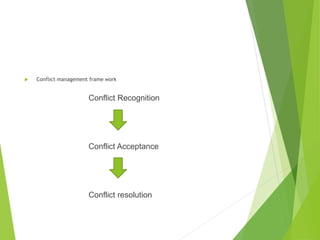
 Conflict management frame work
Conflict Recognition
Conflict Acceptance
Conflict resolution
 Common conflict resolution
strategies
 1. Compromising
 2. Competing
 3. Cooperating or Accommodating
 4. Smoothing
 5. Avoiding
 6. Collaborating

CONFLICT MANAGEMENT.pptx

  • 1.
  • 2.
     Introduction  Conflictoccurs in almost all of the working environments. This is because of different needs, responsibilities, ideas, perceptions, goals and desires. Conflict is the leading problem in job dissatisfaction in many of the nursing settings. Personal values held by individual nurses are often subsumed by the need to be professional at all times as a nurse. This is a source of conflict for nurses who may have conscientious objections based on their professional beliefs about care, treatment, dignity or the behavior of patients.
  • 3.
    DEFINITIONS Conflict  Conflict isdefined as a situation in which two or more parties become aware of the fact that each party wants is incompatible with the wishes of the other. Conflict management  Conflict management is a comprehensive term indicating the range of attitudes and behaviors individuals, groups and organizations manifest in dealing with conflict.
  • 4.
    CAUSES 1. Specialization 2. Multitaskroles 3. Role interdependence 4. Task blurring 5. Differentiation 6. Scarcity of resources 7. Change 8. Unequal rewards 9. Communication problems
  • 5.
     Types ofconflict  1. Intra personal conflict – Intrapersonal conflict may result as a nurse want to spend more time comforting a clients grieving spouse, but another client is nearing an arrest situation and needs immediate attention.  2. Inter personal conflict – Inter personal conflict may erupt between a nurse and unlicensed assistive personnel over uncompleted tasks or miscommunication.  3. An inter group conflict may occur between the nurses and pharmacy department regarding the timelines of medication delivery.
  • 6.
     Process ofconflict  1. Antecedent conditions  2. Perceived and/or felt conflict  3. Manifest behavior  4. Conflict resolution  5. Resolution aftermath
  • 7.
     Effective conflictmanagement: actions and implications  Recognize and accept conflict : Implication – Value self and others without blaming.  State intention to resolve conflict and act with effective interpersonal skills : Implication – Commit to improving interpersonal skills.
  • 8.
     Acknowledge feelingsand thoughts : Implication – Openness of self.  Adopt flexible, adaptable and creative strategies : Implication – Challenge and revise old patterns.  Avoid power-over communication : Implication – Value self and others without blaming.
  • 9.
     Conflict managementframe work Conflict Recognition Conflict Acceptance Conflict resolution
  • 10.
     Common conflictresolution strategies  1. Compromising  2. Competing  3. Cooperating or Accommodating  4. Smoothing  5. Avoiding  6. Collaborating