ENTREPRENEURSHIP
POTNEMOCN
COMPONENT
BLANCEA HESTE
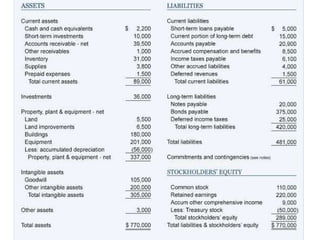
BALANCE SHEET
BNESIUSS HORT
BUSINESS WORTH
PUTINOTAMOC
COMPUTATION
TESSEAS
ASSETS
WHAT
ARE THE
COMPONENT’S OF
BALANCE
SHEET’S?
WE HAVE 3
COMPONENT’S OF
BALANCE SHEET
1. ASSET’S
>An asset is a resource with economic value that an
individual, corporation, or country owns or controls
with the expectation that it will provide a future
benefit.
>Assets are reported on a company's balance sheet.
They're classified as current, fixed, financial, and
intangible or intangible.
>An asset can be thought of as something that, in
the future, can generate cash flow, reduce expenses,
or improve sales.
> Assets represent all things of value that
belong to the company.
THERE ARE
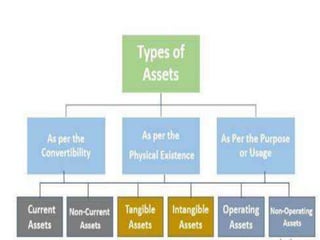
6 TYPE’S OF ASSETS
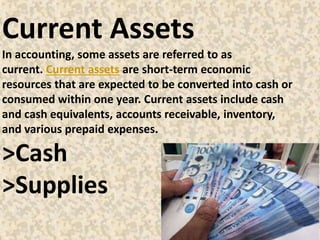
Current Assets
In accounting, some assets are referred to as
current. Current assets are short-term economic
resources that are expected to be converted into cash or
consumed within one year. Current assets include cash
and cash equivalents, accounts receivable, inventory,
and various prepaid expenses.
>Cash
>Supplies
Non-current assets
characterized as assets that will generate economic value
for one or more fiscal periods into the future. For example,
consider a business that owns manufacturing equipment;
an effective management team will use that equipment to
manufacture products for as long as it is safe and practical
to do so. The economic benefit materializes in the future
when those products are sold to generate revenue.
Other examples of non-current assets include tangible
assets like land, buildings, and vehicles, as well as
intangible assets like intellectual property and goodwill.
Non-current assets are sometimes referred to as LONG
TERM and FIXED ASSET IS UNDER NON CURRENT
EXAMPLE;
>Land
>Property, plant, and
equipment (PP&E)
>Trademarks
. Tangible assets
Tangible assets are ones you can touch, feel or
see. Meaning they’re any physical or measurable
items a company uses for its operations. These
assets often provide a way for a business to
operate. Some common examples of these
include:
>Machinery
>Buildings
>Cash
>Land
Intangible or FINANCIAL
ASSETS
Intangible assets are economic
resources that have no physical
presence
>Patents
>Trademarks
>Copyrights
>Goodwill.
. Operating assets
These assets are any ones that are vital for a
company’s daily operations. Operating assets
allow companies to perform their more basic
business activities, which helps them generate
revenue. Examples of these assets are:
>Cash
>Buildings
>Goodwill
>Machinery
. Non-operating assets
Non-operating assets are ones that
businesses can use to generate revenue,
even though they aren’t required for their
daily operations. Some common examples
of these assets include:
>Vacant land
>Interest income from fixed deposits
>Marketable securities
>Short-term investments
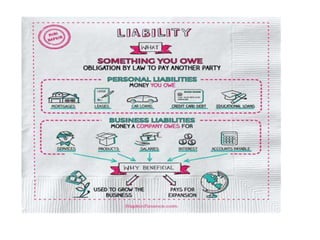
2. LIABILITIES – WHAT THE
COMPANY OWE’S?
Anything for which a company is legally bound or
obligated, as to make good any loss or damage
that occurs in a transaction
are one of two general categories claims held
against a company. Liabilities are the non-
ownership claims against the firm. It is also
possible to define liabilities as obligations that
the entity must satisfy through the sacrifice of
some future benefit.
There are
2 types of
liabilities
> Current liabilities
These include debts or
obligations that have
to fulfilled within a year. Current
are also
called short-term liabilities,
interest
payable, and short-term loans.
> NON-CURRENT LIABILITIES
These are debts or obligations for
which the due date is more than
a year. Non-current liabilities,
also called long term liabilities,
include bonds payable, long
term notes payable, and deferred
tax liabilities.
3. shareholder’s equity
Is the amount that the owners of a
company have invested in their
business. This includes the money
they’re directly invested and the
accumulation of income the company
has earned and that has been
reinvested since inception’ and also
known as stockholders’ equity or
owner’s equity.
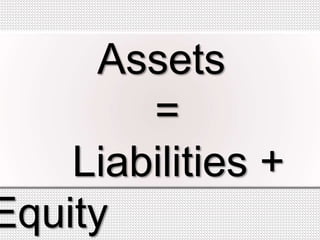
Assets
=
Liabilities +
Equity
THANK
YOU!

Components of Balance Sheet.pptx

  • 1.
  • 2.
  • 3.
  • 4.
  • 5.
  • 6.
  • 9.
  • 10.
    WE HAVE 3 COMPONENT’SOF BALANCE SHEET
  • 11.
    1. ASSET’S >An assetis a resource with economic value that an individual, corporation, or country owns or controls with the expectation that it will provide a future benefit. >Assets are reported on a company's balance sheet. They're classified as current, fixed, financial, and intangible or intangible. >An asset can be thought of as something that, in the future, can generate cash flow, reduce expenses, or improve sales. > Assets represent all things of value that belong to the company.
  • 13.
  • 14.
    Current Assets In accounting,some assets are referred to as current. Current assets are short-term economic resources that are expected to be converted into cash or consumed within one year. Current assets include cash and cash equivalents, accounts receivable, inventory, and various prepaid expenses. >Cash >Supplies
  • 15.
    Non-current assets characterized asassets that will generate economic value for one or more fiscal periods into the future. For example, consider a business that owns manufacturing equipment; an effective management team will use that equipment to manufacture products for as long as it is safe and practical to do so. The economic benefit materializes in the future when those products are sold to generate revenue. Other examples of non-current assets include tangible assets like land, buildings, and vehicles, as well as intangible assets like intellectual property and goodwill. Non-current assets are sometimes referred to as LONG TERM and FIXED ASSET IS UNDER NON CURRENT
  • 16.
  • 18.
    . Tangible assets Tangibleassets are ones you can touch, feel or see. Meaning they’re any physical or measurable items a company uses for its operations. These assets often provide a way for a business to operate. Some common examples of these include: >Machinery >Buildings >Cash >Land
  • 19.
    Intangible or FINANCIAL ASSETS Intangibleassets are economic resources that have no physical presence >Patents >Trademarks >Copyrights >Goodwill.
  • 20.
    . Operating assets Theseassets are any ones that are vital for a company’s daily operations. Operating assets allow companies to perform their more basic business activities, which helps them generate revenue. Examples of these assets are: >Cash >Buildings >Goodwill >Machinery
  • 21.
    . Non-operating assets Non-operatingassets are ones that businesses can use to generate revenue, even though they aren’t required for their daily operations. Some common examples of these assets include: >Vacant land >Interest income from fixed deposits >Marketable securities >Short-term investments
  • 22.
    2. LIABILITIES –WHAT THE COMPANY OWE’S? Anything for which a company is legally bound or obligated, as to make good any loss or damage that occurs in a transaction are one of two general categories claims held against a company. Liabilities are the non- ownership claims against the firm. It is also possible to define liabilities as obligations that the entity must satisfy through the sacrifice of some future benefit.
  • 24.
    There are 2 typesof liabilities
  • 25.
    > Current liabilities Theseinclude debts or obligations that have to fulfilled within a year. Current are also called short-term liabilities, interest payable, and short-term loans.
  • 26.
    > NON-CURRENT LIABILITIES Theseare debts or obligations for which the due date is more than a year. Non-current liabilities, also called long term liabilities, include bonds payable, long term notes payable, and deferred tax liabilities.
  • 27.
    3. shareholder’s equity Isthe amount that the owners of a company have invested in their business. This includes the money they’re directly invested and the accumulation of income the company has earned and that has been reinvested since inception’ and also known as stockholders’ equity or owner’s equity.
  • 29.
  • 30.

Editor's Notes

  • #12 Assets represent all things of value that belong to the company. This includes liquid assets such as cash or cash equivalents, as well as incoming payments via accounts receivable or prepaid expenses that will produce more company value
  • #14 Assets represent all things of value that belong to the company. This includes liquid assets such as cash or cash equivalents, as well as incoming payments via accounts receivable or prepaid expenses that will produce more company value