Introduction to Web Designing
Web designing is the process of creating the visual
appearance and layout of websites. It involves
combining creative and technical skills to craft a
website that is not only aesthetically appealing but also
functional and user-friendly.
Basic key aspects of web designing
• HTML : HTML is the basic building block of web pages. It provides the structure
and content of a webpage through elements like headings, paragraphs, images,
links, etc.
• CSS : CSS is used to style the HTML elements, defining how they should appear on
the webpage. It controls aspects like colors, fonts, layout, and spacing.
• Responsive Design: With the proliferation of different devices and screen sizes,
responsive design ensures that websites adapt and look good on various devices
such as desktops, tablets, and smartphones.
Importance of effective Web Designing
• Captures Attention: Grabs user interest instantly.
• Enhances Usability: Improves navigation and accessibility.
• Supports SEO: Improves search engine rankings.
• Adapts to Devices: Ensures seamless experience across platforms.
• Reflects Brand: Reinforces brand identity and values.
Types of Web Designing
• Graphic Design: This involves creating visuals, including logos, icons, images.
• User Interface (UI) Design: UI design focuses on the visual aspects of the website
such as buttons, menus, forms, and layout.
• User Experience (UX) Design: UX design focuses on enhancing user satisfaction
by improving the usability, accessibility, and overall interaction between the user
and the website.
• Responsive Design: Responsive design ensures that a website looks and functions
well on various devices and screen sizes, from desktop computers to tablets and
smartphones.
• Interaction Design: Interaction design focuses on creating engaging and
interactive elements on the website, such as animations, transitions.
• Front-end Development: While not traditionally considered "design,"
front-end development involves implementing the design using
coding languages like HTML, CSS, and JavaScript.
• Back-end Development: Back-end development involves building the
server-side of the website, handling databases, server requests.
• E-commerce Design: E-commerce design focuses on creating online
stores. It includes product pages, shopping carts, payment gateways,
and secure checkout processes.
Scope of Web Designing
• Increased Demand: As businesses increasingly recognize the importance of
having an online presence, the demand for well-designed websites continues to
grow.
• Diverse Career Opportunities: Web designing offers diverse career opportunities
ranging from UI/UX designers, front-end developers, graphic 7 designers, to SEO
specialists, content strategists.
• Technological Advancements: The field of web designing is dynamic, with
continuous advancements in technologies, frameworks, and tools.
• E-commerce Growth: With the growth of online shopping and e-commerce
platforms, there is a specific demand for web designers.
• Freelance Opportunities: Many web designers choose to work independently as
freelancers.
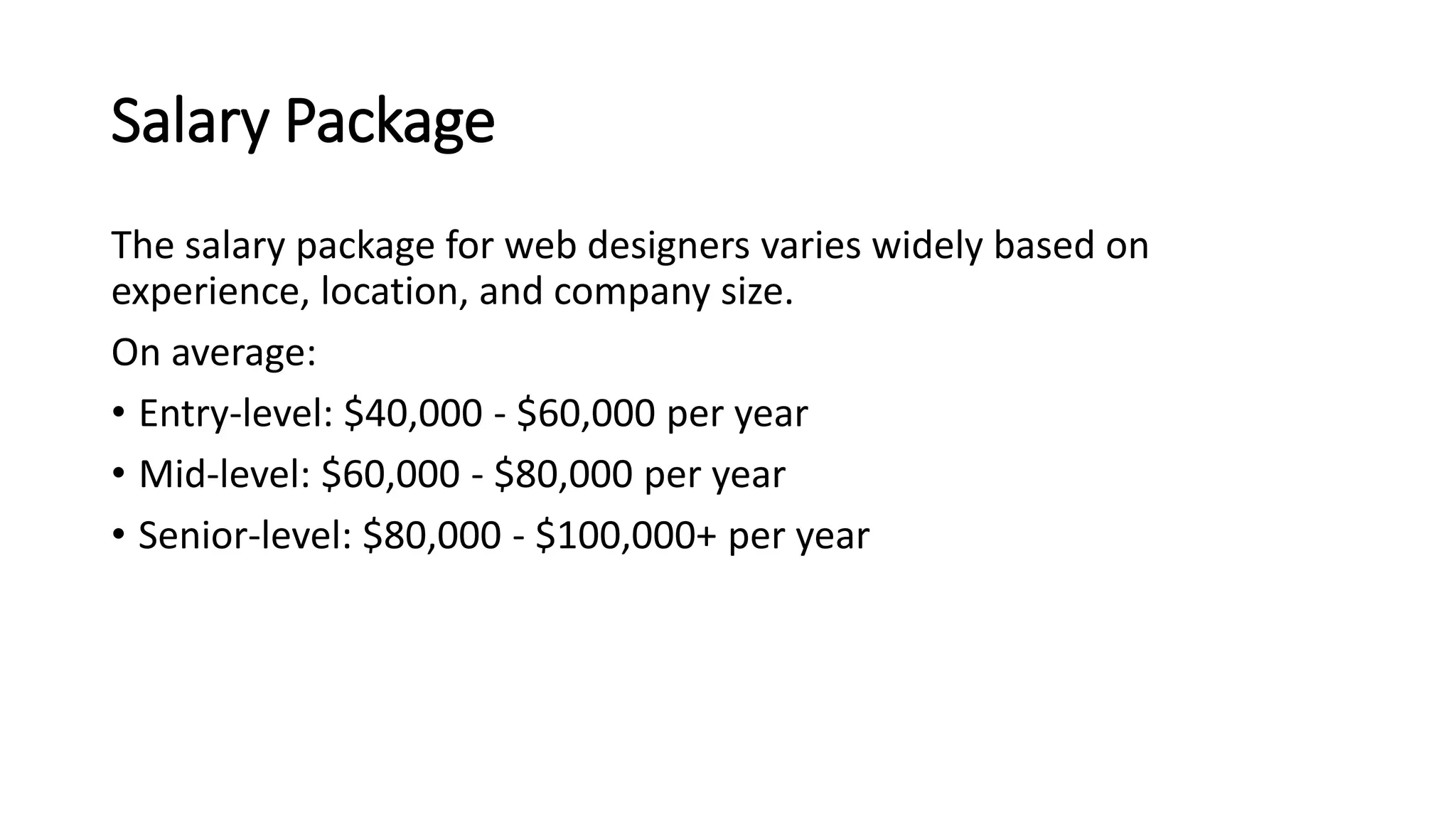
Salary Package
The salary package for web designers varies widely based on
experience, location, and company size.
On average:
• Entry-level: $40,000 - $60,000 per year
• Mid-level: $60,000 - $80,000 per year
• Senior-level: $80,000 - $100,000+ per year

Complete web designing course in chandigarh

  • 1.
  • 2.
    Web designing isthe process of creating the visual appearance and layout of websites. It involves combining creative and technical skills to craft a website that is not only aesthetically appealing but also functional and user-friendly.
  • 3.
    Basic key aspectsof web designing • HTML : HTML is the basic building block of web pages. It provides the structure and content of a webpage through elements like headings, paragraphs, images, links, etc. • CSS : CSS is used to style the HTML elements, defining how they should appear on the webpage. It controls aspects like colors, fonts, layout, and spacing. • Responsive Design: With the proliferation of different devices and screen sizes, responsive design ensures that websites adapt and look good on various devices such as desktops, tablets, and smartphones.
  • 4.
    Importance of effectiveWeb Designing • Captures Attention: Grabs user interest instantly. • Enhances Usability: Improves navigation and accessibility. • Supports SEO: Improves search engine rankings. • Adapts to Devices: Ensures seamless experience across platforms. • Reflects Brand: Reinforces brand identity and values.
  • 5.
    Types of WebDesigning • Graphic Design: This involves creating visuals, including logos, icons, images. • User Interface (UI) Design: UI design focuses on the visual aspects of the website such as buttons, menus, forms, and layout. • User Experience (UX) Design: UX design focuses on enhancing user satisfaction by improving the usability, accessibility, and overall interaction between the user and the website. • Responsive Design: Responsive design ensures that a website looks and functions well on various devices and screen sizes, from desktop computers to tablets and smartphones. • Interaction Design: Interaction design focuses on creating engaging and interactive elements on the website, such as animations, transitions.
  • 6.
    • Front-end Development:While not traditionally considered "design," front-end development involves implementing the design using coding languages like HTML, CSS, and JavaScript. • Back-end Development: Back-end development involves building the server-side of the website, handling databases, server requests. • E-commerce Design: E-commerce design focuses on creating online stores. It includes product pages, shopping carts, payment gateways, and secure checkout processes.
  • 7.
    Scope of WebDesigning • Increased Demand: As businesses increasingly recognize the importance of having an online presence, the demand for well-designed websites continues to grow. • Diverse Career Opportunities: Web designing offers diverse career opportunities ranging from UI/UX designers, front-end developers, graphic 7 designers, to SEO specialists, content strategists. • Technological Advancements: The field of web designing is dynamic, with continuous advancements in technologies, frameworks, and tools. • E-commerce Growth: With the growth of online shopping and e-commerce platforms, there is a specific demand for web designers. • Freelance Opportunities: Many web designers choose to work independently as freelancers.
  • 8.
    Salary Package The salarypackage for web designers varies widely based on experience, location, and company size. On average: • Entry-level: $40,000 - $60,000 per year • Mid-level: $60,000 - $80,000 per year • Senior-level: $80,000 - $100,000+ per year