*It has been brought to our notice that some company had shared an investment sof

Search... 
SOIL TESTING EQUIPMENT
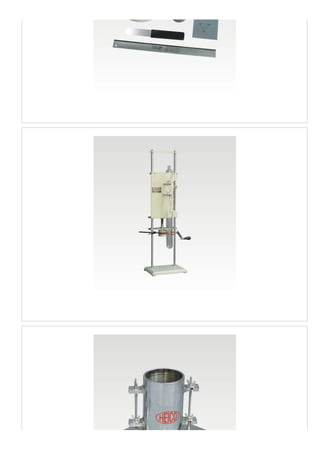
Liquid Limit
Know More 
What is Soil Testing: Benefits, How to Do Soil
Testing, Checklist: Soil Testing
Soil checking out is a brief and accurate way to find the relative acidity (pH) of the soil in addition
to the awareness of several essential factors (phosphorus, potassium, calcium, magnesium,
sodium, sulfur, manganese, copper, and zinc). These nutrients are critical to the increase of plant
life. Your selections regarding what vegetation to domesticate, a way to amend the soil, and what
sort of fertilizer to apply might be motivated by means of taking a look at findings.
With their help, over-fertilization may be prevented, which can bring about excessive plant increase
and lift the danger of numerous diseases. They’ll accomplish this by making sure you don’t apply
too much fertilizer. It might also be beneficial in the endeavour to lessen water contamination. If
excess fertilizer is sprayed on plants but is not taken up by the plants, it could wash away in
storms, contaminate surface water, or seep underground. Using the proper amount of premium
fertilizer and soil testing machine and avoiding needless pruning of aggressive new growth will
result in healthy, prolific plants.
The Reasons for Testing Your Soil
By making better fertilizer recommendations, soil analysis lowers soil hazards such as sterility,
erosion, and damaged lands while ultimately increasing farm profitability.
Finds the depth profile of soil nutrients and measures the quantity of macronutrients in the soil
that are available to plants.
Determines which nutrients might be restricting the amount produced.
Carries out measurements of the pH, EC, and OC of the soil. These factors all impact the
availability of nutrients to plants, which in turn impacts crop yields and the sustainability of the
agricultural industry.
This creates the foundation for variable rate treatment, depending on the crop and soil (VRT).
This tool can help decide the best fertilizer kind, quantity, timing, and location.
A deeper comprehension of the different kinds of soil and soil testing methods that are present on
the farm in order to broaden the range of practical management solutions.
Increases openness for the current year.
Techniques for Testing Soil
Physical Techniques for Testing Soil
In addition to its structure and texture, physical characteristics of the soil such as density,
permeability, porosity, temperature, flexibility, aggregate stability, and more should be assessed.
The abbreviation “TND” stands for “total nutrient digestion”
Determines the overall value of the soil by using its nutrient content. While most extract tests
identify the nutrients that are “available,” the TND identifies the nutrients that are “potentially
available” in your soil.
Evaluations of the pH and acidity of the soil
Accurate pH readings are crucial in the field. Measuring the concentration of hydrogen ions in the
sample helps determine the pH of the soil. A pH soil testing can assist identify how much lime
needs to be applied to the soil to fix the problem if it is excessively acidic.
Ground Salinity Test Results
Investigative techniques that could be used are diluting distilled water with earth, evaluating the
electric conductivity (EC) of a saturated paste extract, and evaporating ground-water extract to
ascertain total soluble salts (TSS).
Examining Soil Life
This type of soil analysis by automatic soil testing machine focuses on soil microorganisms,
including bacteria, fungus, and archaea. This examination tests your body’s ability to withstand
pressure and monitors your hormone levels in addition to identifying sickness. There are additional
details about the roles that bacteria play in salinity protection, bioremediation, root development,
and water regulation.
How Soil Samples Are Taken for Testing
Although they shouldn’t be taken in the two months after the application of a complex fertilizer,
organic manure, or more than 50 kg/ha of nitrogen, soil samples can be taken at any time of year.
What specifically are you in need of?
Soil samples can be effectively collected using an auger or corer. If these are not available, a
shovel or spade may be used, but only after all other choices have been considered and the
necessary safety precautions have been taken.
A sample-taking receptacle featuring an integrated stir bar
A sterile polypropylene bag weighing one kilogram was provided for the sample, along with a
waterproof marker.
List of Soil Analysis Checks
Before planting, conduct media studies to find any nutritional deficits, pH issues, or excess soluble
salts. For cultivators that make their own media, this is really important.
Controlling the crop’s nutrient and soluble salt levels requires testing the medium during the
growth season.
To guarantee a correct interpretation of soil test results, always consult the accompanying
interpretive data.
It is best to collect soil samples for testing on the same day the area was fertilized, or at the latest,
two hours after. If the sample has any slow-release fertilizer pellets, carefully remove each one.
Collecting soil samples from a range of plants cultivated in greenhouses is a smart idea. There will
be a great diversity of plants. Here you can use Soil Testing Machine for agriculture.
In order to identify the source of an issue, samples from both healthy and sick plants must be
taken.
Maintaining consistency in all of your sample practices is essential
Comparing soil test results from various labs side by side is inappropriate. Testing protocols and
Soil Testing Equipment can differ. The interpretation of a soil test is the most important factor to
consider when making decisions based on the test results.
Why is Soil Testing Important?
Prior to start of construction of a building or road or embankment, it is important to check the
condition of soil and study the behavior of soil under expected loading patterns. Soil has a direct
relation to geography and this explains the variety of soil behaviors. The load bearing capacity of
the location enables an idea of the weight a cross-sectional unit area of soil can support. Based on
this, designers can decide the depth to be dug for foundation elements. Soil containing a higher
portion of clay shall expand or shrink depending on the amount of moisture present..
Types of soil test
Soil testing is primarily divided into residual, physical, and chemical tests. Typical prominent
physical tests performed are Shear strength, Elasticity, and porosity. There are more tests like grain
size analysis, density, moisture levels, permeability, load bearing capacity, penetration strength,
etc. In material testing, it is common practice to specify in standards, the process to be adopted
for sample preparations as the test results will depend on the way the samples were prepared.
Hence each laboratory must have sample preparation devices. HEICO manufactures the entire
range of testing instruments like the soil testing machine required for each of the purposes.
Shear Strength test
The most extensively used test method for load bearing ability is the shear strength test. This test
is carried out in a special transparent container called triaxial cell The sample preparation involves
special devices and the dimensions of the sample (generally cylindrical) depend on the end use or
the type and detailed design of building or road.
Triaxial test
The Triaxial test involves not only the test-cell that houses the test-sample, but also a loading
system along with soil testing lab equipment that has the provisions and features to carry out the
steps, process and pattern of loading. With the loading system comes the measurement, control,
and the display and analytical systems required to present the results. The precise needs of this
test are made possible with the use of advanced hydraulics including hydraulic power pack that is
well controlled by hydraulic valves driven by complex computer algorithms. HEICO uses its own
special software to enable control of the process to match the requirements of standards. HEICO
have expertise in offering standard products, as well as customized equipment depending on
customer requirements.
Most common standards used are ASTM, ISO, EN, DIN, JIS, and BIS.
The extensive spread of construction activity demands onsite tests. Hence more and more
organizations prefer to have testing labs with soil testing equipment for agriculture closer to their
sites of construction or road building. HEICO is able to deliver onsite and provide local onsite
service thanks to its network of teams. Service is rendered onsite as well as offsite/remotely using
computer based communication programs.
Need help? Call Our Sales & Service Support Team at : +91 8826898490
Complete Guide to Choosing the Right Soil Testing Equipment.pdf

Complete Guide to Choosing the Right Soil Testing Equipment.pdf

  • 1.
    *It has beenbrought to our notice that some company had shared an investment sof  Search...  SOIL TESTING EQUIPMENT Liquid Limit Know More 
  • 17.
    What is SoilTesting: Benefits, How to Do Soil Testing, Checklist: Soil Testing Soil checking out is a brief and accurate way to find the relative acidity (pH) of the soil in addition to the awareness of several essential factors (phosphorus, potassium, calcium, magnesium, sodium, sulfur, manganese, copper, and zinc). These nutrients are critical to the increase of plant life. Your selections regarding what vegetation to domesticate, a way to amend the soil, and what sort of fertilizer to apply might be motivated by means of taking a look at findings. With their help, over-fertilization may be prevented, which can bring about excessive plant increase and lift the danger of numerous diseases. They’ll accomplish this by making sure you don’t apply too much fertilizer. It might also be beneficial in the endeavour to lessen water contamination. If excess fertilizer is sprayed on plants but is not taken up by the plants, it could wash away in storms, contaminate surface water, or seep underground. Using the proper amount of premium fertilizer and soil testing machine and avoiding needless pruning of aggressive new growth will result in healthy, prolific plants. The Reasons for Testing Your Soil By making better fertilizer recommendations, soil analysis lowers soil hazards such as sterility, erosion, and damaged lands while ultimately increasing farm profitability. Finds the depth profile of soil nutrients and measures the quantity of macronutrients in the soil that are available to plants. Determines which nutrients might be restricting the amount produced. Carries out measurements of the pH, EC, and OC of the soil. These factors all impact the availability of nutrients to plants, which in turn impacts crop yields and the sustainability of the agricultural industry. This creates the foundation for variable rate treatment, depending on the crop and soil (VRT). This tool can help decide the best fertilizer kind, quantity, timing, and location.
  • 18.
    A deeper comprehensionof the different kinds of soil and soil testing methods that are present on the farm in order to broaden the range of practical management solutions. Increases openness for the current year. Techniques for Testing Soil Physical Techniques for Testing Soil In addition to its structure and texture, physical characteristics of the soil such as density, permeability, porosity, temperature, flexibility, aggregate stability, and more should be assessed. The abbreviation “TND” stands for “total nutrient digestion” Determines the overall value of the soil by using its nutrient content. While most extract tests identify the nutrients that are “available,” the TND identifies the nutrients that are “potentially available” in your soil. Evaluations of the pH and acidity of the soil Accurate pH readings are crucial in the field. Measuring the concentration of hydrogen ions in the sample helps determine the pH of the soil. A pH soil testing can assist identify how much lime needs to be applied to the soil to fix the problem if it is excessively acidic. Ground Salinity Test Results Investigative techniques that could be used are diluting distilled water with earth, evaluating the electric conductivity (EC) of a saturated paste extract, and evaporating ground-water extract to ascertain total soluble salts (TSS). Examining Soil Life This type of soil analysis by automatic soil testing machine focuses on soil microorganisms, including bacteria, fungus, and archaea. This examination tests your body’s ability to withstand pressure and monitors your hormone levels in addition to identifying sickness. There are additional details about the roles that bacteria play in salinity protection, bioremediation, root development, and water regulation. How Soil Samples Are Taken for Testing Although they shouldn’t be taken in the two months after the application of a complex fertilizer, organic manure, or more than 50 kg/ha of nitrogen, soil samples can be taken at any time of year.
  • 19.
    What specifically areyou in need of? Soil samples can be effectively collected using an auger or corer. If these are not available, a shovel or spade may be used, but only after all other choices have been considered and the necessary safety precautions have been taken. A sample-taking receptacle featuring an integrated stir bar A sterile polypropylene bag weighing one kilogram was provided for the sample, along with a waterproof marker. List of Soil Analysis Checks Before planting, conduct media studies to find any nutritional deficits, pH issues, or excess soluble salts. For cultivators that make their own media, this is really important. Controlling the crop’s nutrient and soluble salt levels requires testing the medium during the growth season. To guarantee a correct interpretation of soil test results, always consult the accompanying interpretive data. It is best to collect soil samples for testing on the same day the area was fertilized, or at the latest, two hours after. If the sample has any slow-release fertilizer pellets, carefully remove each one. Collecting soil samples from a range of plants cultivated in greenhouses is a smart idea. There will be a great diversity of plants. Here you can use Soil Testing Machine for agriculture. In order to identify the source of an issue, samples from both healthy and sick plants must be taken. Maintaining consistency in all of your sample practices is essential Comparing soil test results from various labs side by side is inappropriate. Testing protocols and Soil Testing Equipment can differ. The interpretation of a soil test is the most important factor to consider when making decisions based on the test results. Why is Soil Testing Important? Prior to start of construction of a building or road or embankment, it is important to check the condition of soil and study the behavior of soil under expected loading patterns. Soil has a direct relation to geography and this explains the variety of soil behaviors. The load bearing capacity of the location enables an idea of the weight a cross-sectional unit area of soil can support. Based on this, designers can decide the depth to be dug for foundation elements. Soil containing a higher portion of clay shall expand or shrink depending on the amount of moisture present..
  • 20.
    Types of soiltest Soil testing is primarily divided into residual, physical, and chemical tests. Typical prominent physical tests performed are Shear strength, Elasticity, and porosity. There are more tests like grain size analysis, density, moisture levels, permeability, load bearing capacity, penetration strength, etc. In material testing, it is common practice to specify in standards, the process to be adopted for sample preparations as the test results will depend on the way the samples were prepared. Hence each laboratory must have sample preparation devices. HEICO manufactures the entire range of testing instruments like the soil testing machine required for each of the purposes. Shear Strength test The most extensively used test method for load bearing ability is the shear strength test. This test is carried out in a special transparent container called triaxial cell The sample preparation involves special devices and the dimensions of the sample (generally cylindrical) depend on the end use or the type and detailed design of building or road. Triaxial test The Triaxial test involves not only the test-cell that houses the test-sample, but also a loading system along with soil testing lab equipment that has the provisions and features to carry out the steps, process and pattern of loading. With the loading system comes the measurement, control, and the display and analytical systems required to present the results. The precise needs of this test are made possible with the use of advanced hydraulics including hydraulic power pack that is well controlled by hydraulic valves driven by complex computer algorithms. HEICO uses its own special software to enable control of the process to match the requirements of standards. HEICO have expertise in offering standard products, as well as customized equipment depending on customer requirements. Most common standards used are ASTM, ISO, EN, DIN, JIS, and BIS. The extensive spread of construction activity demands onsite tests. Hence more and more organizations prefer to have testing labs with soil testing equipment for agriculture closer to their sites of construction or road building. HEICO is able to deliver onsite and provide local onsite service thanks to its network of teams. Service is rendered onsite as well as offsite/remotely using computer based communication programs. Need help? Call Our Sales & Service Support Team at : +91 8826898490 Need help? Call Our Sales & Service Support Team at : +91 8826898490