COLOR THEORY
Arts and visual education
1º ESO
gabriela-teacher.blogspot.com
The colors we use for painting are
called “pigment colors”
Pigments are natural or
synthetic powders that
change the color of the
light they reflect.
Paint is made out of
pigments.
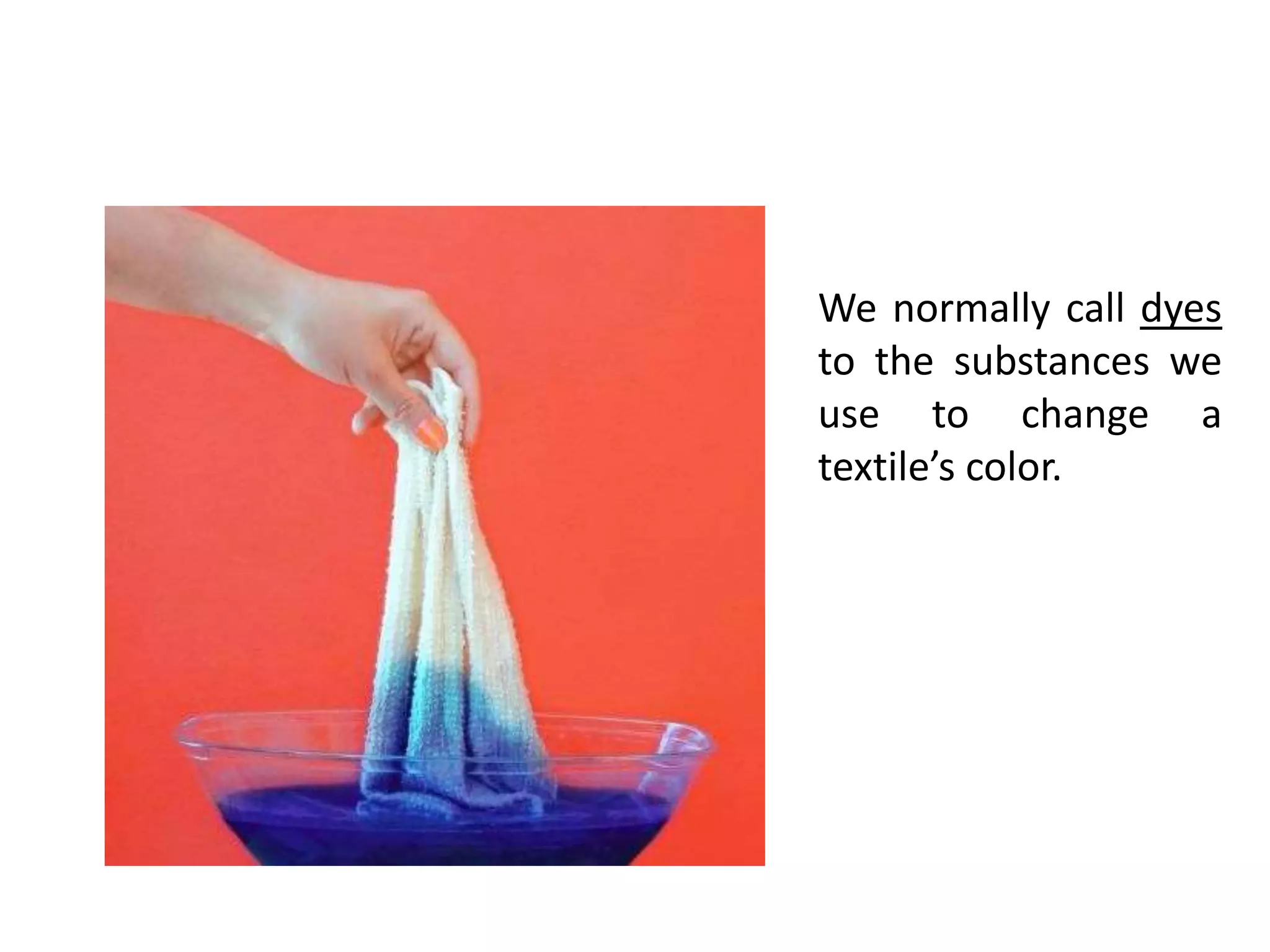
We normally call dyes
to the substances we
use to change a
textile’s color.
When working with
pigments, the primary
colors are:
MAGENTA REDCYAN BLUE
CADMIUM YELLOW
PRIMARY COLORS are the ones that can’t
be generated by mixing other colors. They
can be mixed to make all colors.
SECONDARY COLORS are created by mixing
the primaries in equal parts.
Yellow + cyan
=
GREEN
Cyan + magenta
=
PURPLE
Yellow + magenta
=
ORANGE
TERTIARY COLORS are created by mixing a
secondary color with a primary color.
Yellow + green =
YELLOWISH GREEN
Green + cyan =
BLUEISH GREEN
Yellow + orange =
YELLOWISH ORANGE
Magenta + orange =
REDDISH ORANGE
Magenta + purple =
REDDISH PURPLE
Purple + cyan=
BLUEISH PURPLE
The COLOR WHEEL is a figure that represents
the relations between the colors.
CADMIUM
YELLOW
CYAN
BLUE
MAGENTA
RED
GREEN
PURPLE
ORANGE
YELLOWISH
GREEN
BLUEISH
GREEN
BLUEISH
PURPLE
REDDISH
PURPLE
REDDISH
ORANGE
YELLOWISH
ORANGE
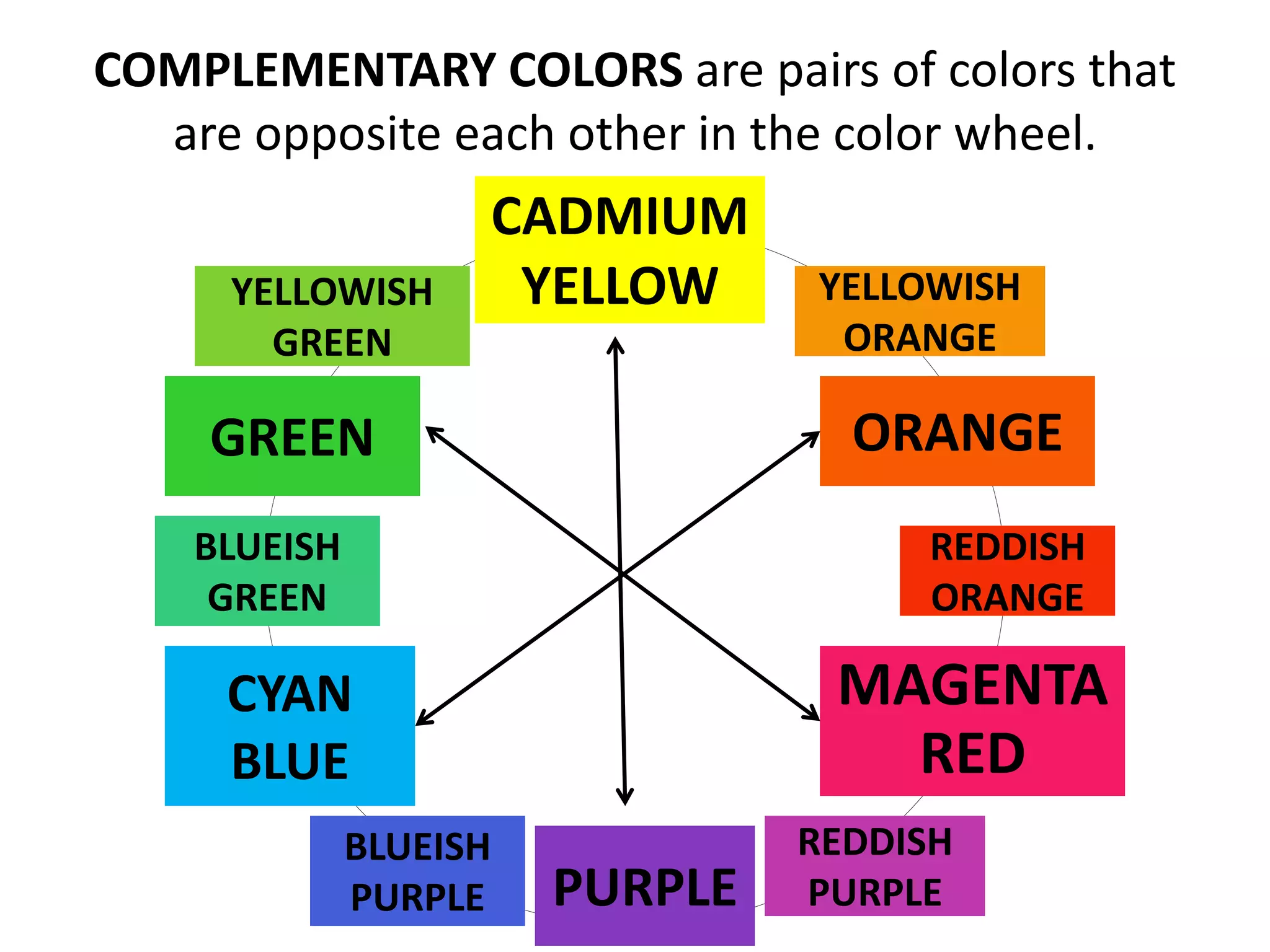
COMPLEMENTARY COLORS are pairs of colors that
are opposite each other in the color wheel.
CADMIUM
YELLOW
CYAN
BLUE
MAGENTA
RED
GREEN
PURPLE
ORANGE
YELLOWISH
GREEN
BLUEISH
GREEN
BLUEISH
PURPLE
REDDISH
PURPLE
REDDISH
ORANGE
YELLOWISH
ORANGE
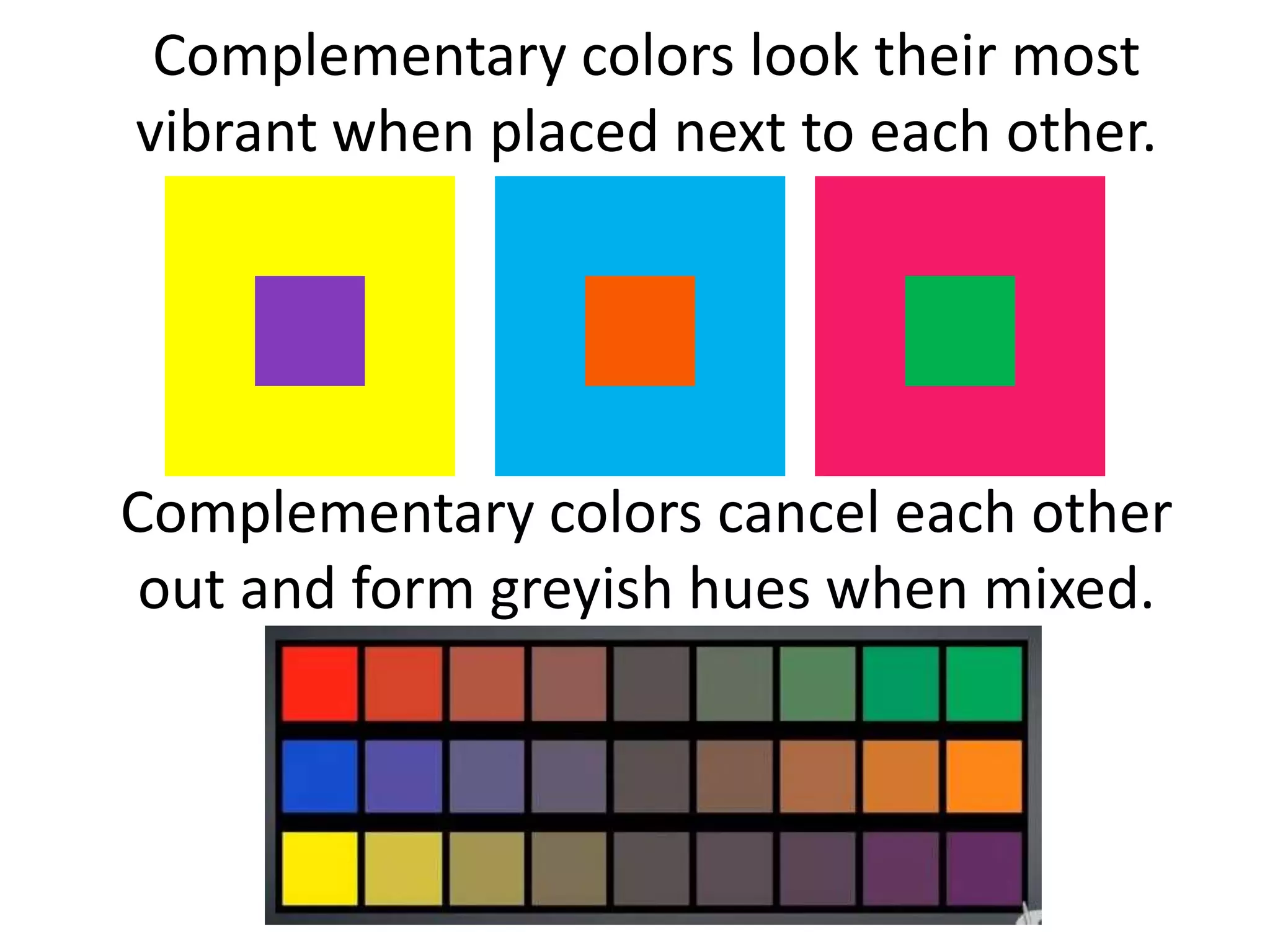
Complementary colors look their most
vibrant when placed next to each other.
Complementary colors cancel each other
out and form greyish hues when mixed.
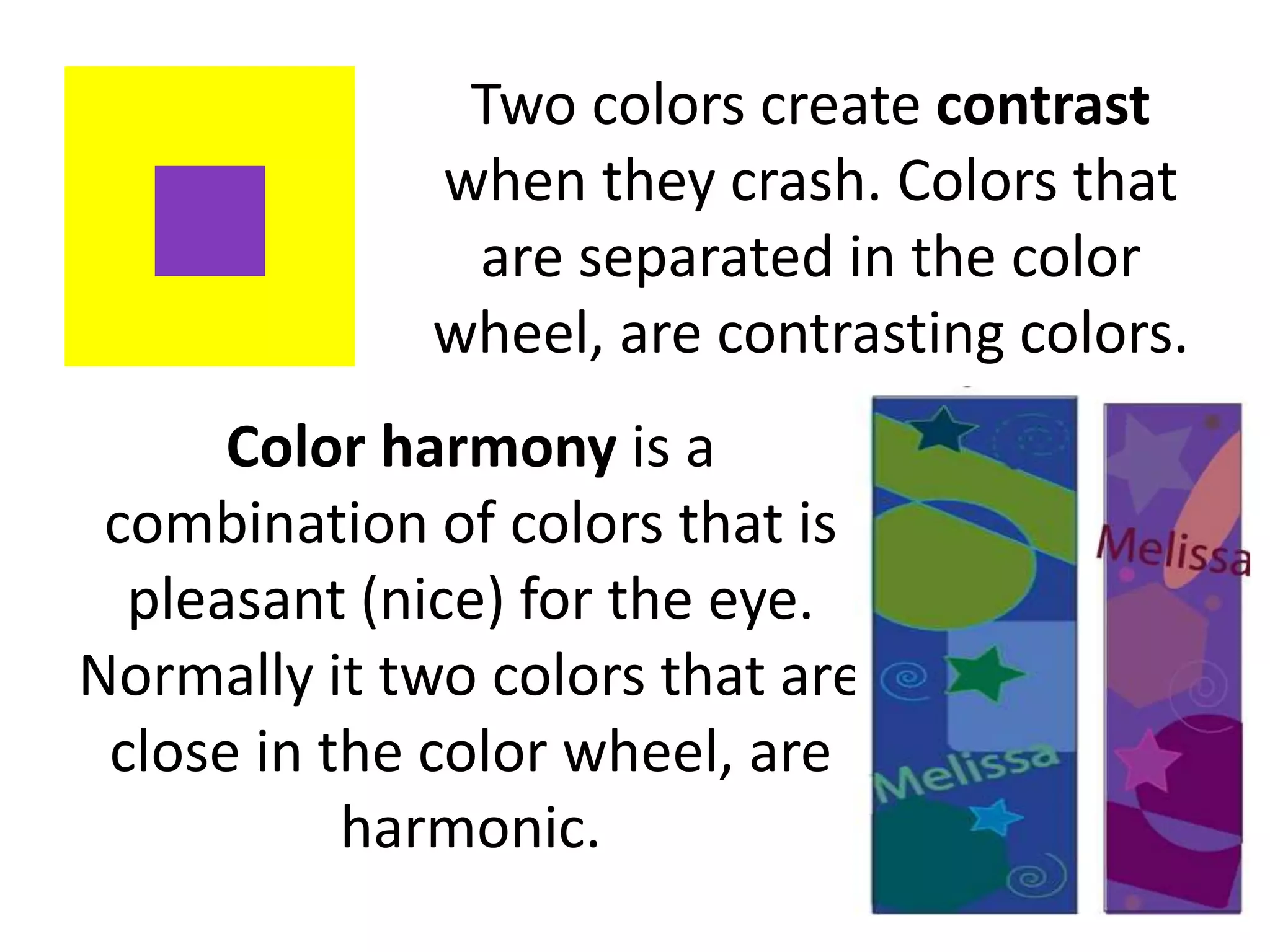
Two colors create contrast
when they crash. Colors that
are separated in the color
wheel, are contrasting colors.
Color harmony is a
combination of colors that is
pleasant (nice) for the eye.
Normally it two colors that are
close in the color wheel, are
harmonic.
Look at the color
wheel:
· Are red and green
contrasting or
harmonic colors?
· Are blue and
green contrasting
or harmonic colors?
If we divide the color wheel in halves, we
can see the WARM and COLD colors.
ColdWarm
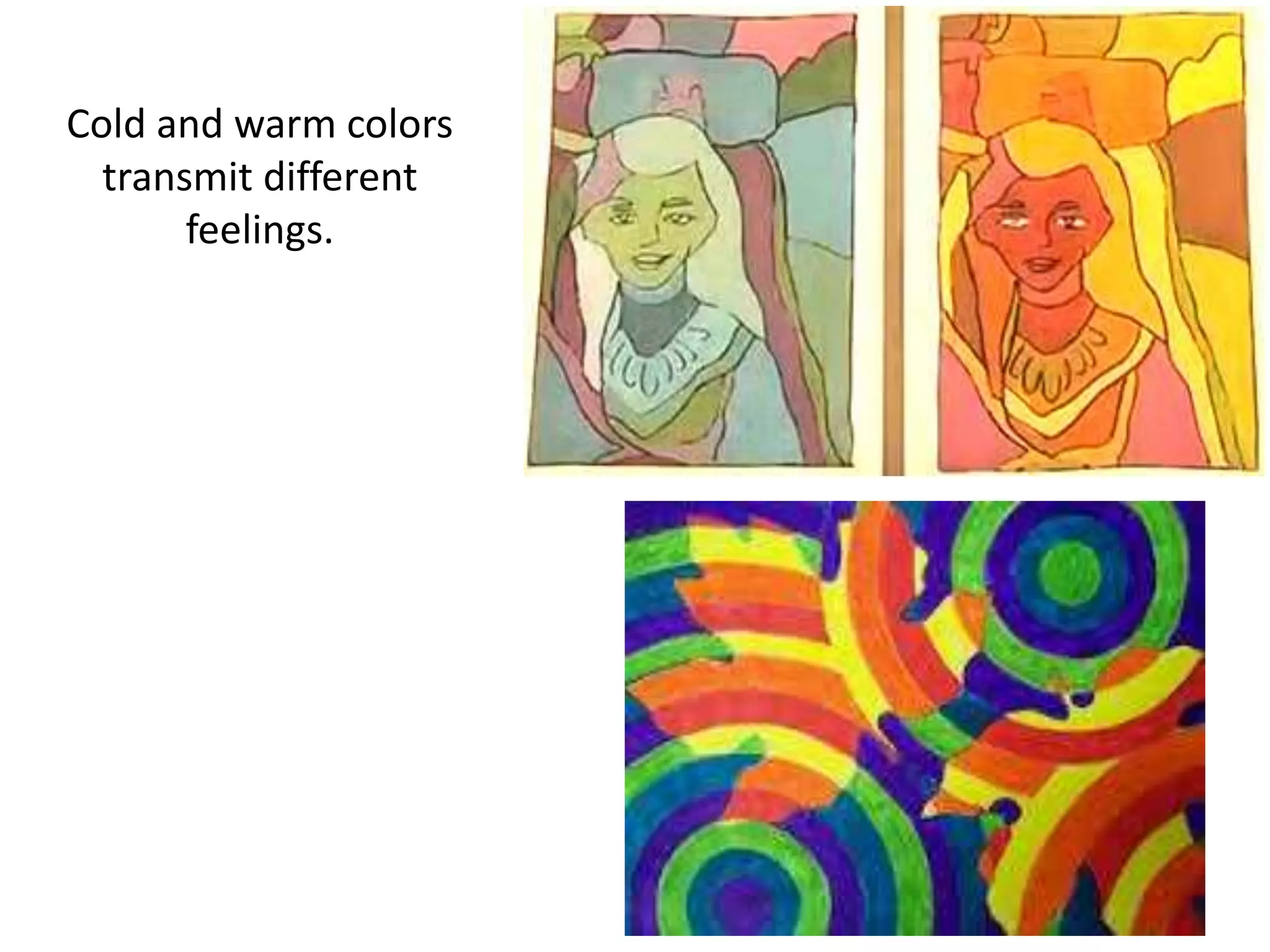
Cold and warm colors
transmit different
feelings.
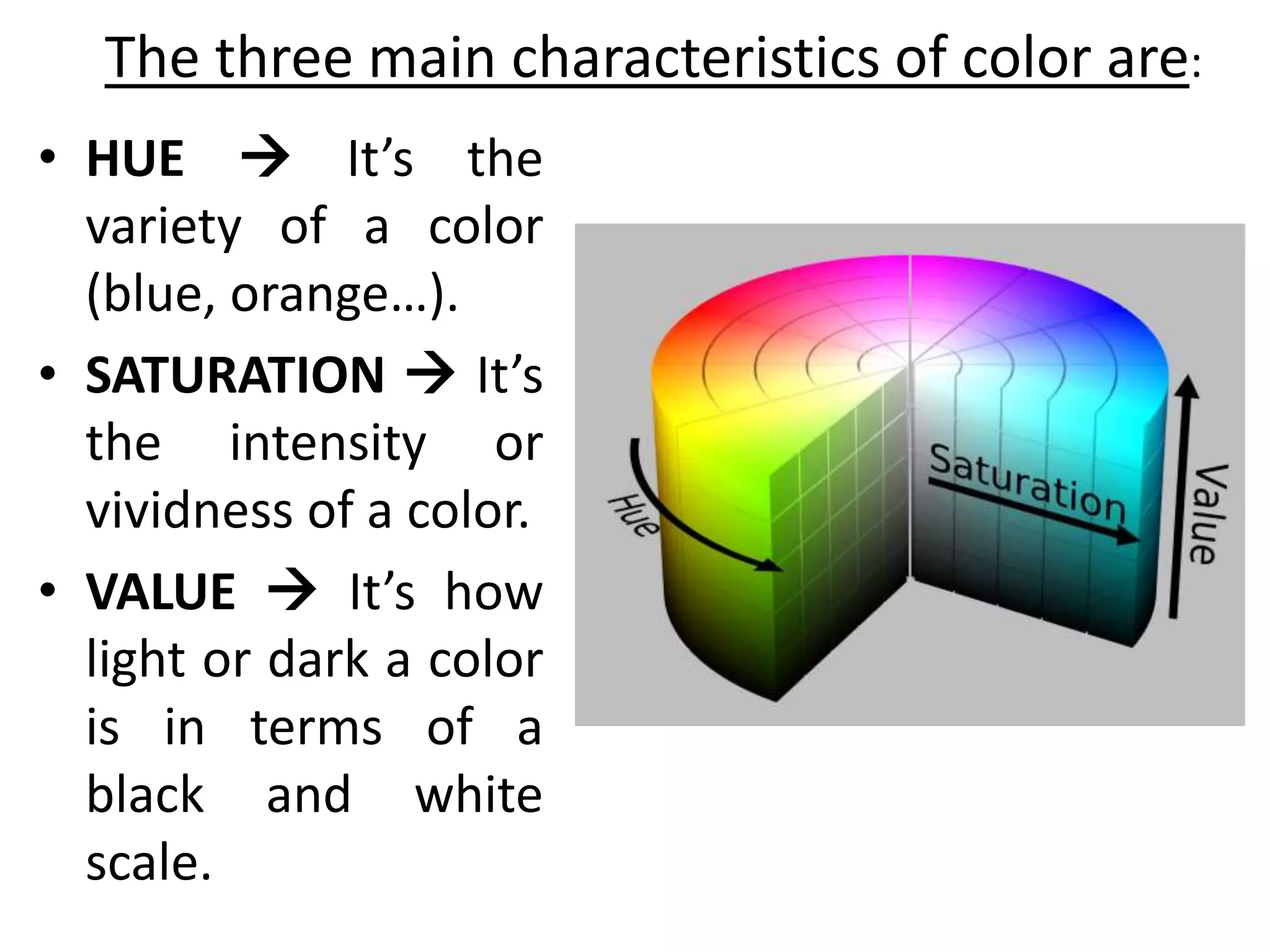
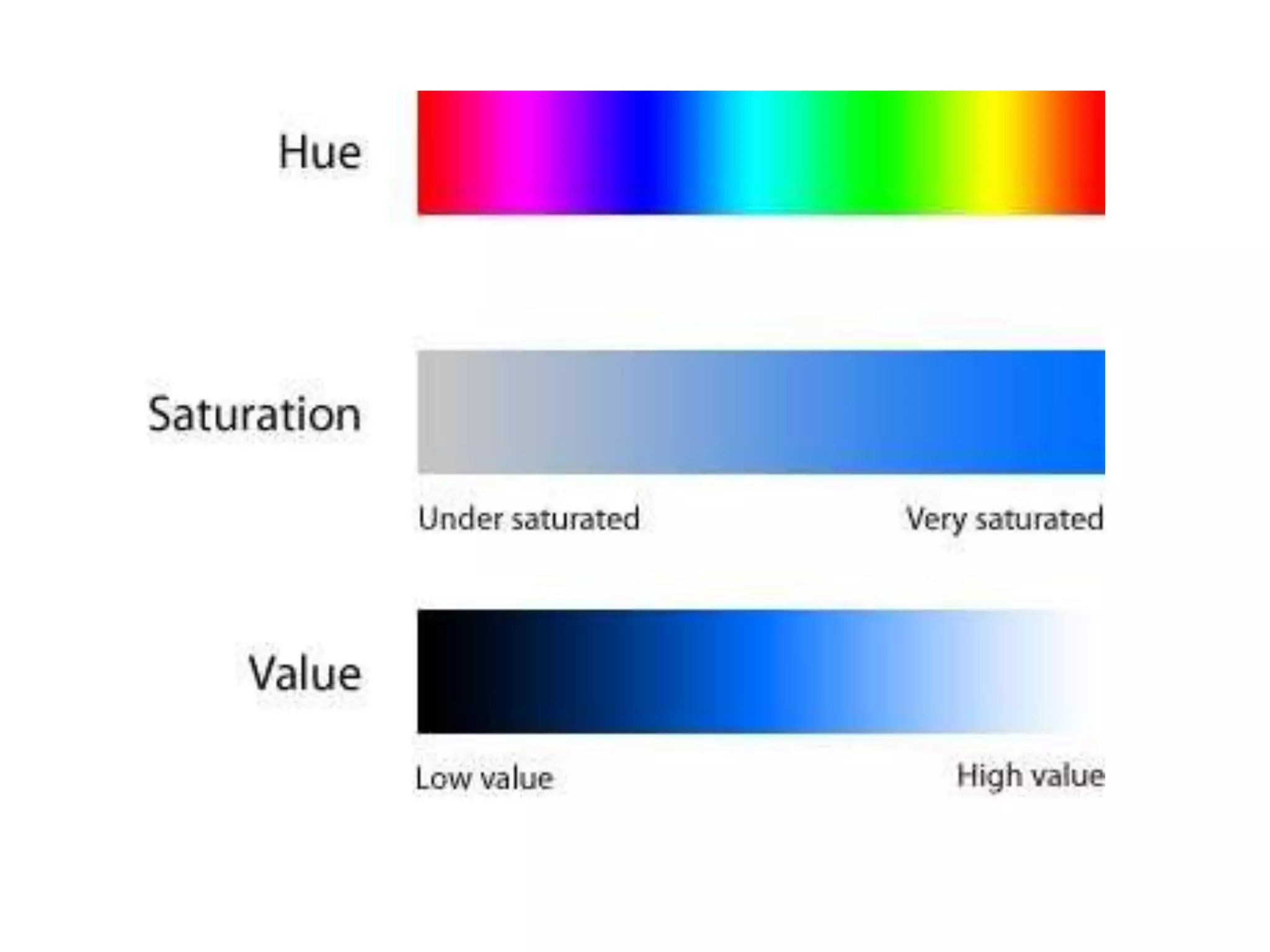
The three main characteristics of color are:
• HUE  It’s the
variety of a color
(blue, orange…).
• SATURATION  It’s
the intensity or
vividness of a color.
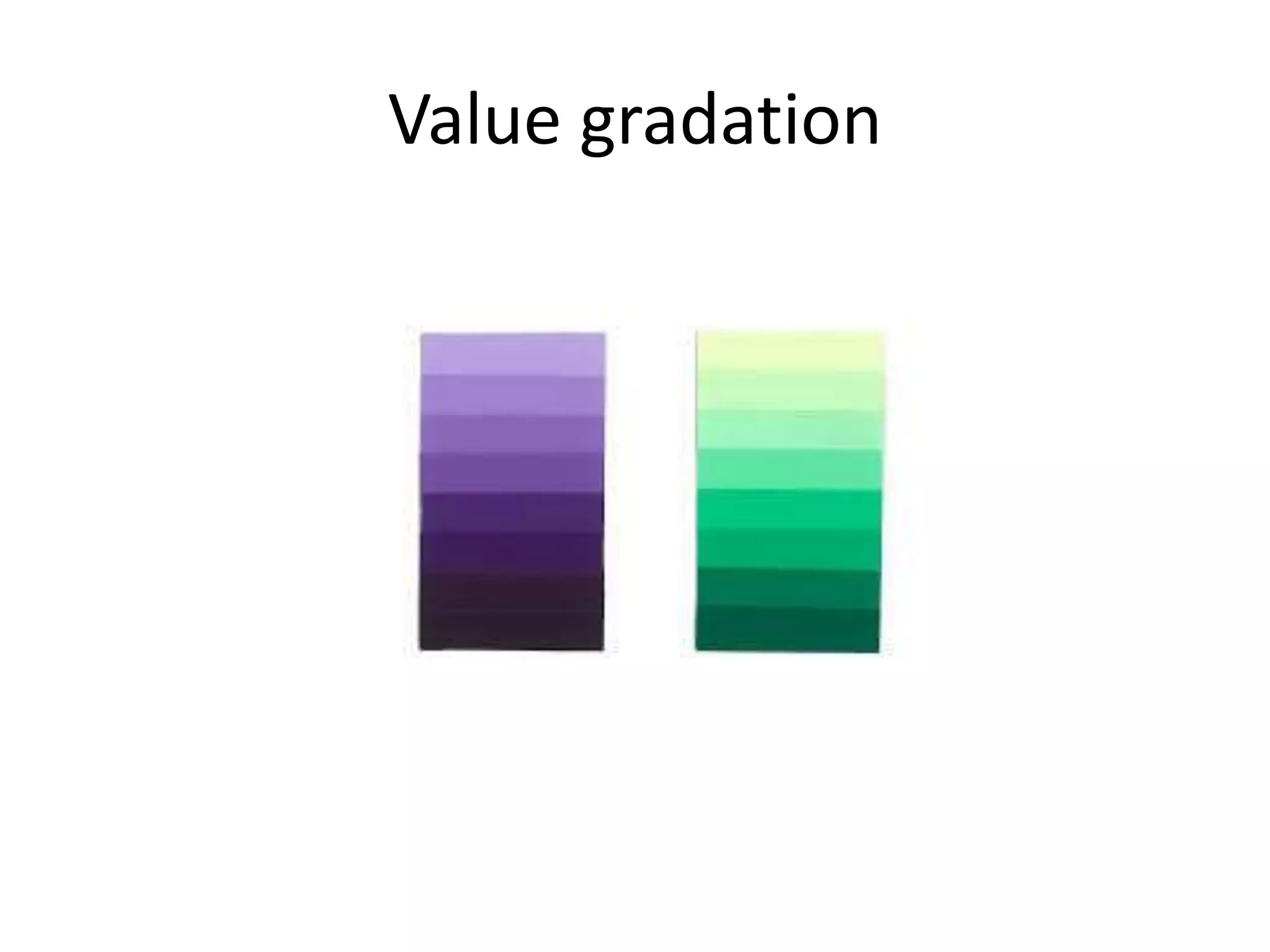
• VALUE  It’s how
light or dark a color
is in terms of a
black and white
scale.
Value gradation
The application of this to landscapes…

Color theory

  • 1.
    COLOR THEORY Arts andvisual education 1º ESO gabriela-teacher.blogspot.com
  • 2.
    The colors weuse for painting are called “pigment colors” Pigments are natural or synthetic powders that change the color of the light they reflect. Paint is made out of pigments.
  • 3.
    We normally calldyes to the substances we use to change a textile’s color.
  • 4.
    When working with pigments,the primary colors are: MAGENTA REDCYAN BLUE CADMIUM YELLOW PRIMARY COLORS are the ones that can’t be generated by mixing other colors. They can be mixed to make all colors.
  • 5.
    SECONDARY COLORS arecreated by mixing the primaries in equal parts. Yellow + cyan = GREEN Cyan + magenta = PURPLE Yellow + magenta = ORANGE
  • 7.
    TERTIARY COLORS arecreated by mixing a secondary color with a primary color. Yellow + green = YELLOWISH GREEN Green + cyan = BLUEISH GREEN Yellow + orange = YELLOWISH ORANGE Magenta + orange = REDDISH ORANGE Magenta + purple = REDDISH PURPLE Purple + cyan= BLUEISH PURPLE
  • 8.
    The COLOR WHEELis a figure that represents the relations between the colors. CADMIUM YELLOW CYAN BLUE MAGENTA RED GREEN PURPLE ORANGE YELLOWISH GREEN BLUEISH GREEN BLUEISH PURPLE REDDISH PURPLE REDDISH ORANGE YELLOWISH ORANGE
  • 10.
    COMPLEMENTARY COLORS arepairs of colors that are opposite each other in the color wheel. CADMIUM YELLOW CYAN BLUE MAGENTA RED GREEN PURPLE ORANGE YELLOWISH GREEN BLUEISH GREEN BLUEISH PURPLE REDDISH PURPLE REDDISH ORANGE YELLOWISH ORANGE
  • 11.
    Complementary colors looktheir most vibrant when placed next to each other. Complementary colors cancel each other out and form greyish hues when mixed.
  • 12.
    Two colors createcontrast when they crash. Colors that are separated in the color wheel, are contrasting colors. Color harmony is a combination of colors that is pleasant (nice) for the eye. Normally it two colors that are close in the color wheel, are harmonic.
  • 13.
    Look at thecolor wheel: · Are red and green contrasting or harmonic colors? · Are blue and green contrasting or harmonic colors?
  • 14.
    If we dividethe color wheel in halves, we can see the WARM and COLD colors. ColdWarm
  • 15.
    Cold and warmcolors transmit different feelings.
  • 16.
    The three maincharacteristics of color are: • HUE  It’s the variety of a color (blue, orange…). • SATURATION  It’s the intensity or vividness of a color. • VALUE  It’s how light or dark a color is in terms of a black and white scale.
  • 18.
  • 19.
    The application ofthis to landscapes…
  • 20.
    The application ofthis to landscapes…