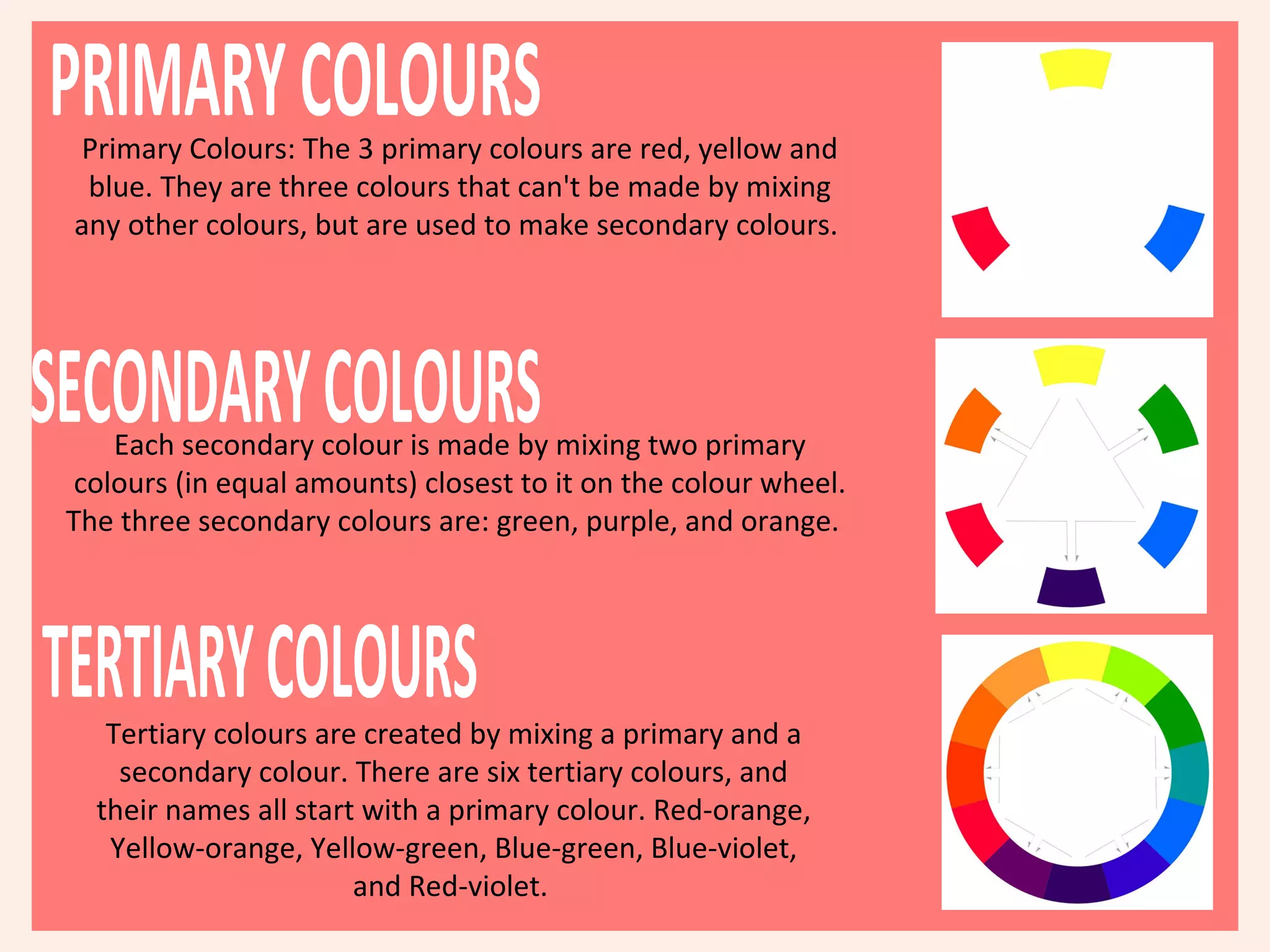
Primary Colours: The 3 primary colours are red, yellow and
 blue. They are three colours that can't be made by mixing
any other colours, but are used to make secondary colours.


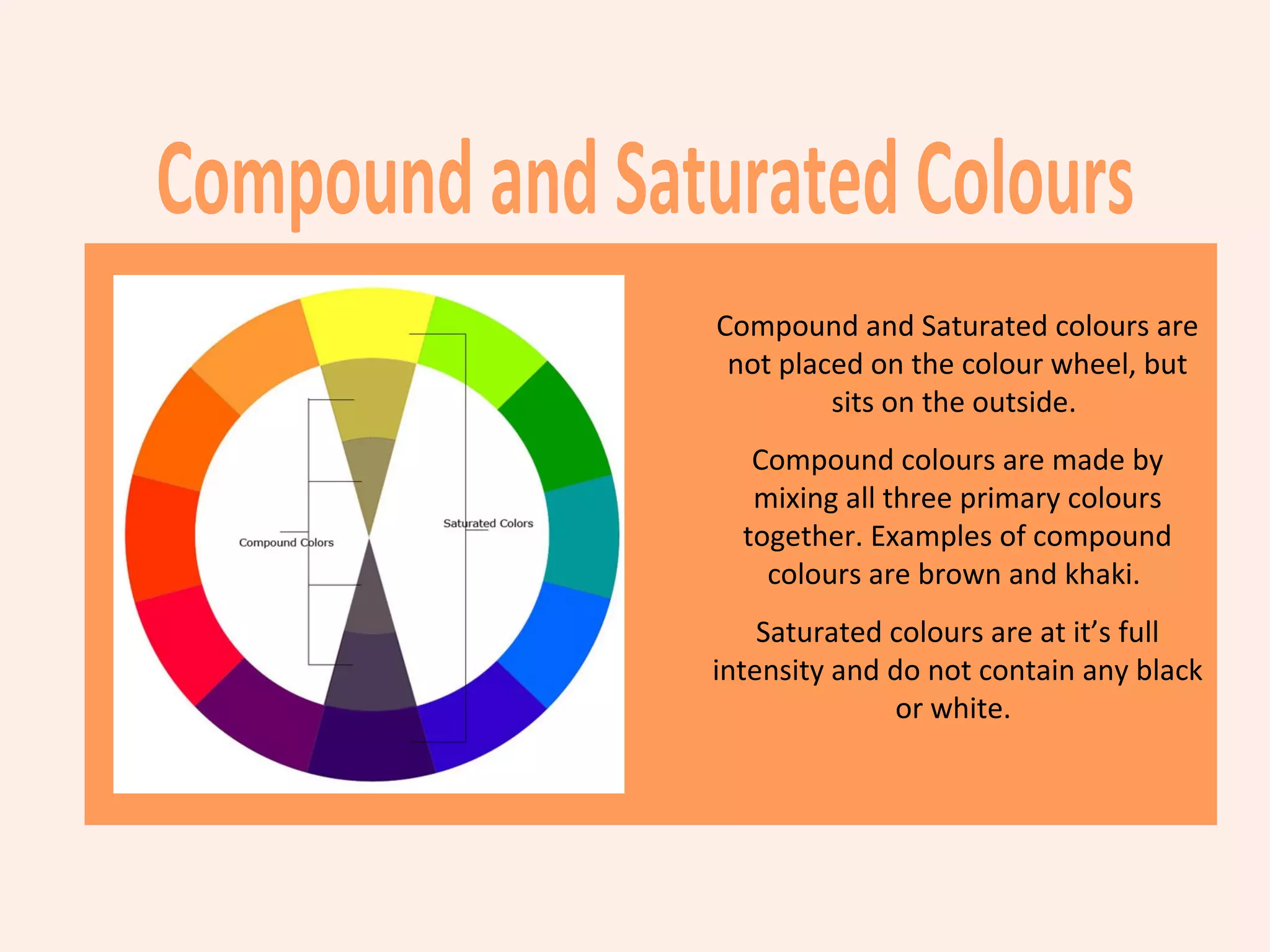
    Each secondary colour is made by mixing two primary
 colours (in equal amounts) closest to it on the colour wheel.
The three secondary colours are: green, purple, and orange.


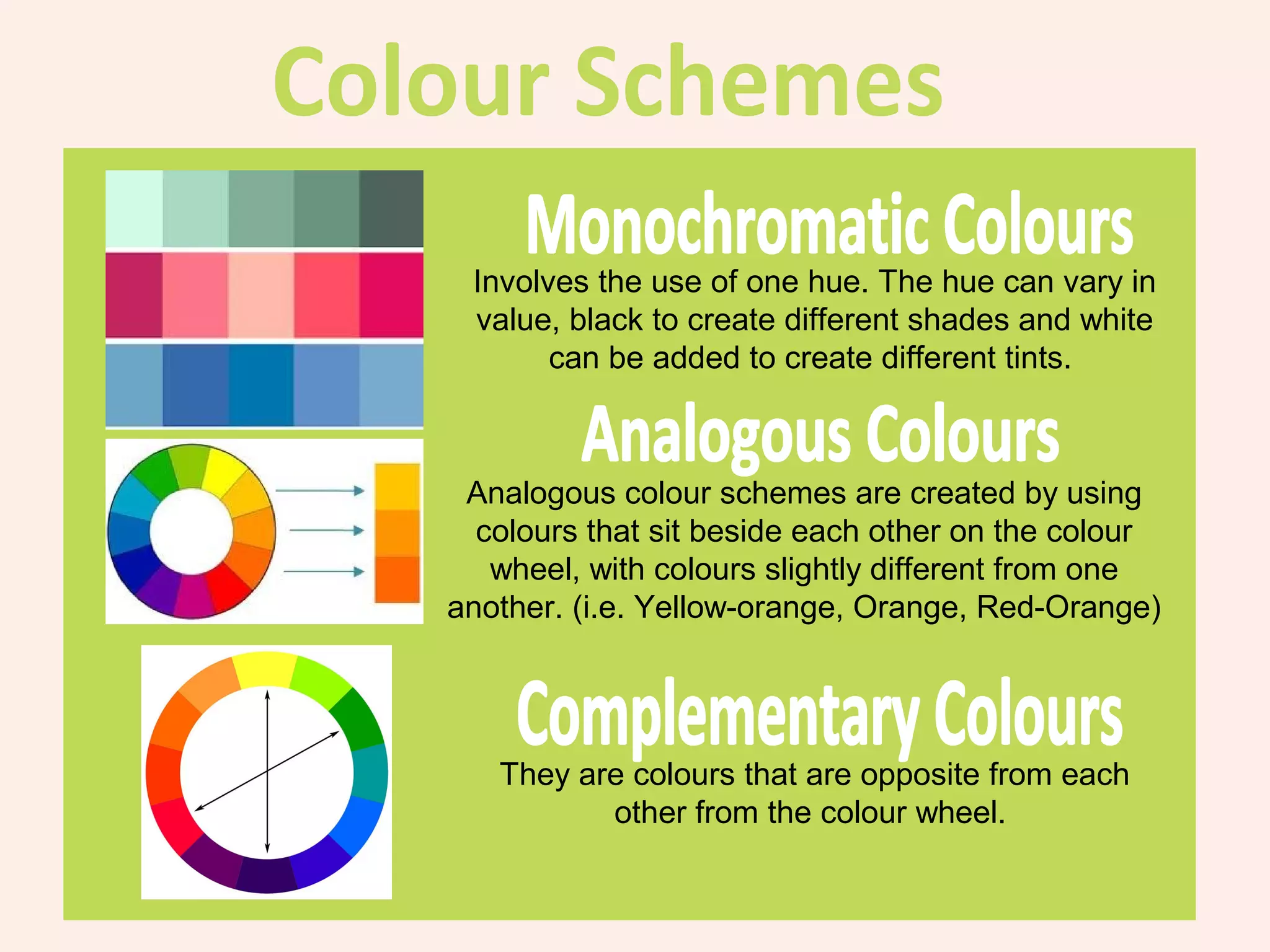
   Tertiary colours are created by mixing a primary and a
    secondary colour. There are six tertiary colours, and
  their names all start with a primary colour. Red-orange,
   Yellow-orange, Yellow-green, Blue-green, Blue-violet,
                       and Red-violet.
Compound and Saturated colours are
 not placed on the colour wheel, but
         sits on the outside.
   Compound colours are made by
   mixing all three primary colours
  together. Examples of compound
    colours are brown and khaki.
    Saturated colours are at it’s full
intensity and do not contain any black
              or white.
Involves the use of one hue. The hue can vary in
 value, black to create different shades and white
       can be added to create different tints.


 Analogous colour schemes are created by using
  colours that sit beside each other on the colour
   wheel, with colours slightly different from one
another. (i.e. Yellow-orange, Orange, Red-Orange)


   They are colours that are opposite from each
          other from the colour wheel.
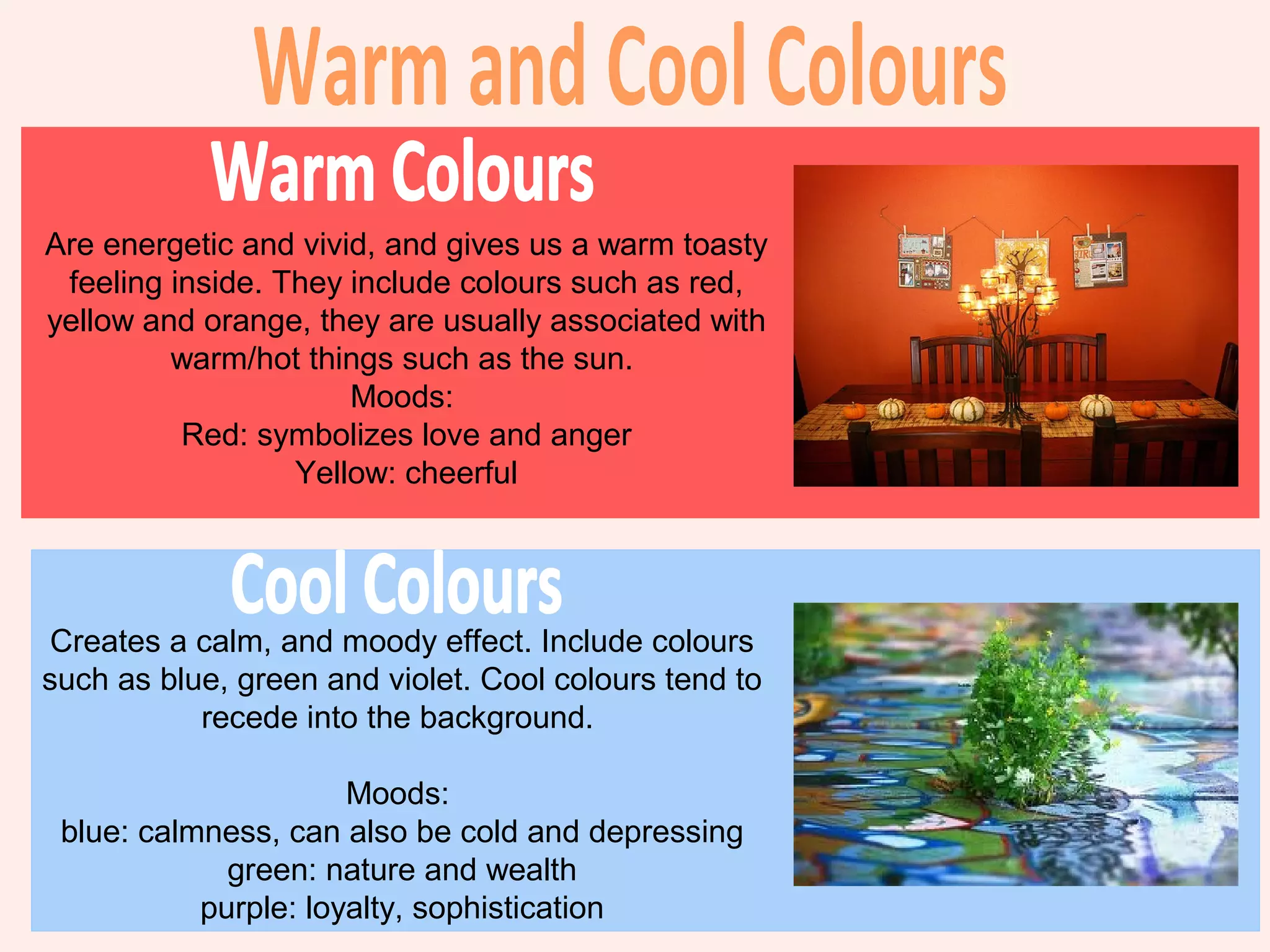
Are energetic and vivid, and gives us a warm toasty
 feeling inside. They include colours such as red,
yellow and orange, they are usually associated with
         warm/hot things such as the sun.
                      Moods:
          Red: symbolizes love and anger
                  Yellow: cheerful


 Creates a calm, and moody effect. Include colours
such as blue, green and violet. Cool colours tend to
           recede into the background.

                      Moods:
 blue: calmness, can also be cold and depressing
             green: nature and wealth
           purple: loyalty, sophistication
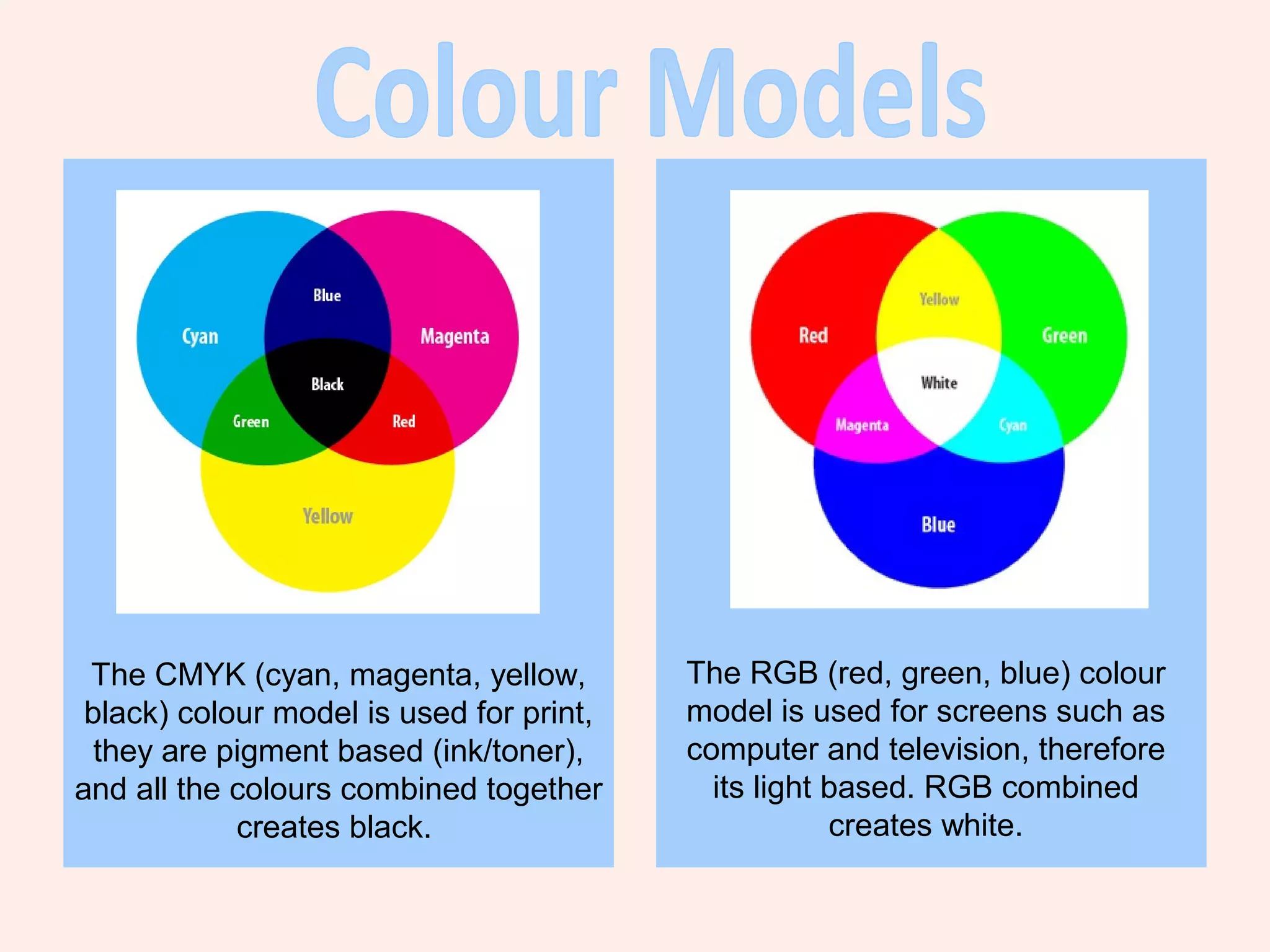
The CMYK (cyan, magenta, yellow,         The RGB (red, green, blue) colour
 black) colour model is used for print,   model is used for screens such as
  they are pigment based (ink/toner),     computer and television, therefore
and all the colours combined together       its light based. RGB combined
            creates black.                            creates white.
PICTURES ALL FROM GOOGLE:
                             www.google.ca
              http://designelementsandprinciples.com/color1.htm
http://photo.tutsplus.com/tutorials/photography-fundamentals/6-elements-of-design-for
   http://www.usask.ca/education/coursework/skaalid/theory/cgdt/color.htm
                             www.johnlovett.com
              www.technologystudent.com/designpro/pricol1.htm
                      www.colourtherapyhealing.com
                 http://www.infoplease.com/spot/colors1.html
Elements of design   colour

Elements of design colour

  • 2.
    Primary Colours: The3 primary colours are red, yellow and blue. They are three colours that can't be made by mixing any other colours, but are used to make secondary colours. Each secondary colour is made by mixing two primary colours (in equal amounts) closest to it on the colour wheel. The three secondary colours are: green, purple, and orange. Tertiary colours are created by mixing a primary and a secondary colour. There are six tertiary colours, and their names all start with a primary colour. Red-orange, Yellow-orange, Yellow-green, Blue-green, Blue-violet, and Red-violet.
  • 3.
    Compound and Saturatedcolours are not placed on the colour wheel, but sits on the outside. Compound colours are made by mixing all three primary colours together. Examples of compound colours are brown and khaki. Saturated colours are at it’s full intensity and do not contain any black or white.
  • 4.
    Involves the useof one hue. The hue can vary in value, black to create different shades and white can be added to create different tints. Analogous colour schemes are created by using colours that sit beside each other on the colour wheel, with colours slightly different from one another. (i.e. Yellow-orange, Orange, Red-Orange) They are colours that are opposite from each other from the colour wheel.
  • 5.
    Are energetic andvivid, and gives us a warm toasty feeling inside. They include colours such as red, yellow and orange, they are usually associated with warm/hot things such as the sun. Moods: Red: symbolizes love and anger Yellow: cheerful Creates a calm, and moody effect. Include colours such as blue, green and violet. Cool colours tend to recede into the background. Moods: blue: calmness, can also be cold and depressing green: nature and wealth purple: loyalty, sophistication
  • 6.
    The CMYK (cyan,magenta, yellow, The RGB (red, green, blue) colour black) colour model is used for print, model is used for screens such as they are pigment based (ink/toner), computer and television, therefore and all the colours combined together its light based. RGB combined creates black. creates white.
  • 12.
    PICTURES ALL FROMGOOGLE: www.google.ca http://designelementsandprinciples.com/color1.htm http://photo.tutsplus.com/tutorials/photography-fundamentals/6-elements-of-design-for http://www.usask.ca/education/coursework/skaalid/theory/cgdt/color.htm www.johnlovett.com www.technologystudent.com/designpro/pricol1.htm www.colourtherapyhealing.com http://www.infoplease.com/spot/colors1.html