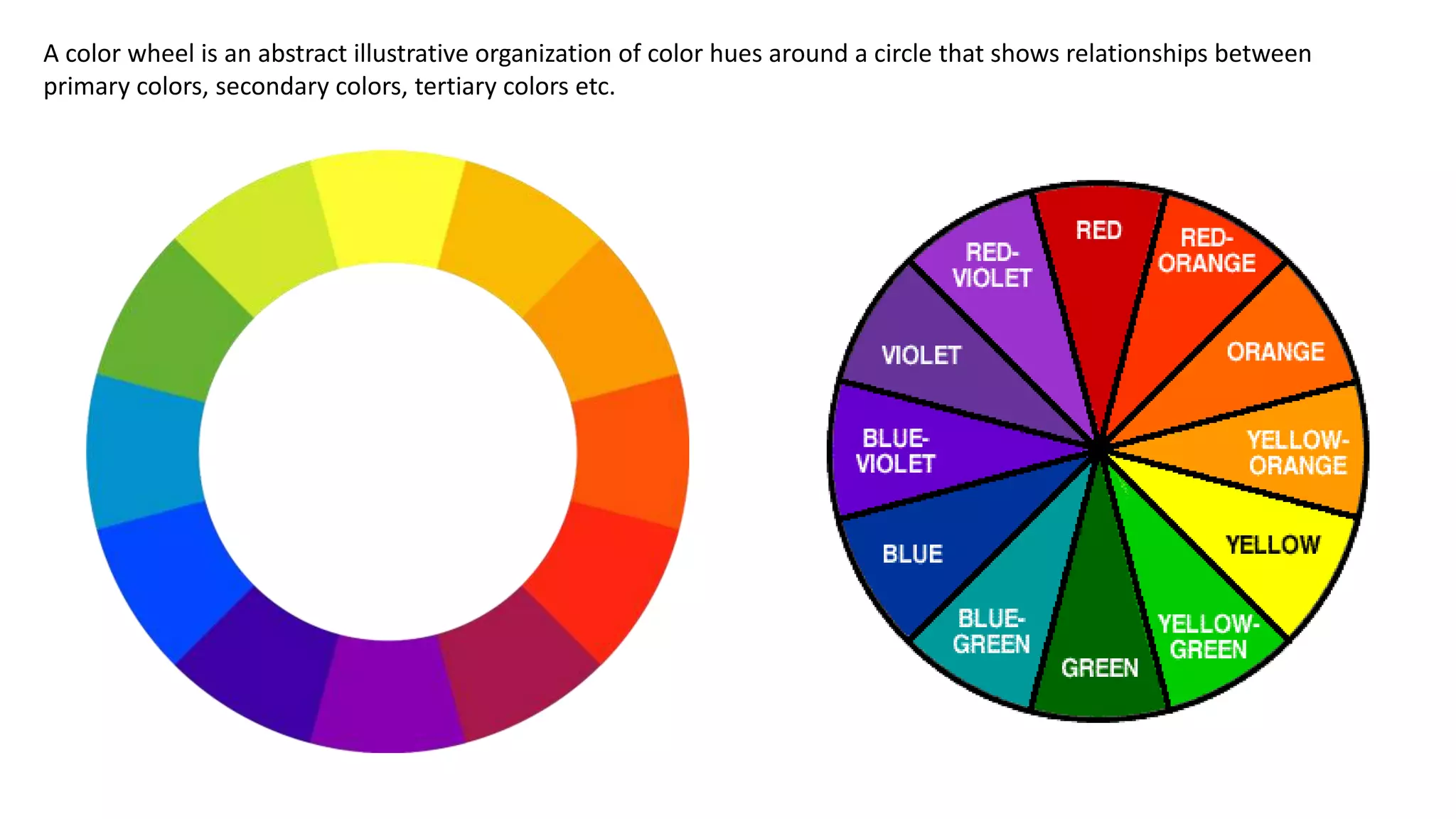
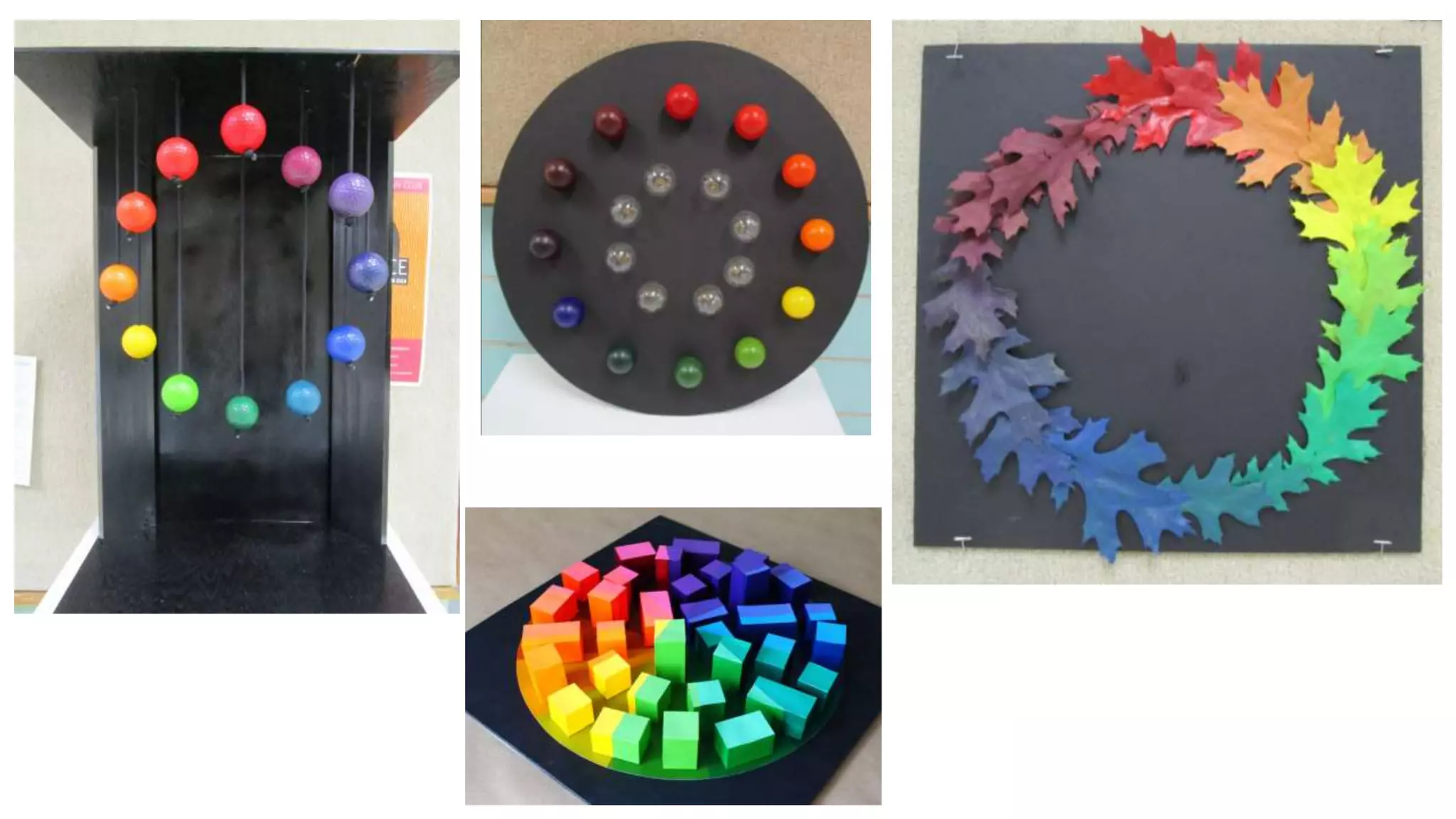
A color wheel is an abstract illustrative organization of color hues around a circle that shows relationships between
primary colors, secondary colors, tertiary colors etc.
The typical artists' paint or
pigment color wheel includes the
blue, red, and yellow primary
colors.
The corresponding secondary
colors are green, orange, and
violet or purple.
The tertiary colors are red–
orange, red–violet, yellow–
orange, yellow–green, blue–
violet and blue–green.
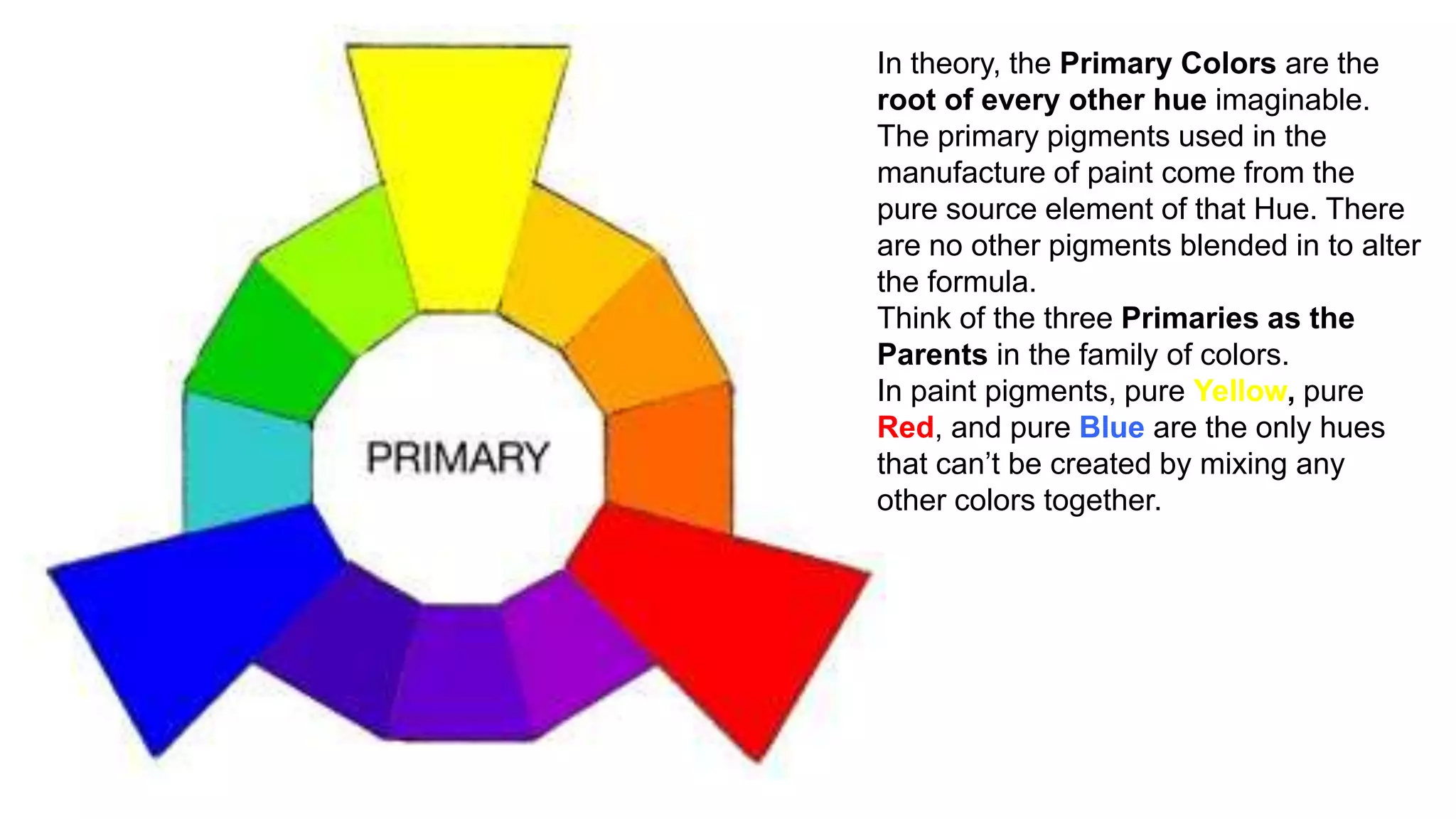
In theory, the Primary Colors are the
root of every other hue imaginable.
The primary pigments used in the
manufacture of paint come from the
pure source element of that Hue. There
are no other pigments blended in to alter
the formula.
Think of the three Primaries as the
Parents in the family of colors.
In paint pigments, pure Yellow, pure
Red, and pure Blue are the only hues
that can’t be created by mixing any
other colors together.
When you combine any two of the Pure
Primary Hues, you get three new mixtures
called Secondary Colors.
Think of the three Secondaries as the
Children in the family of colors.
Yellow + Red = ORANGE
Red + Blue = VIOLET or PURPLE
Blue + Yellow = GREEN
When you mix a Primary and its
nearest Secondary on the Basic Color
Wheel you create six new mixtures
called Tertiary colors.
Think of the six Tertiary Colors as the
Grandchildren in the family of colors,
since their genetic makeup combines a
Primary and Secondary color.
Yellow + Orange = YELLOW-
ORANGE
Red + Orange = RED-ORANGE
Red + Violet = RED-VIOLET
Blue + Violet = BLUE-VIOLET
Blue + Green = BLUE-GREEN
Yellow + Green = YELLOW-GREEN
A color scheme based on analogous colors
Analogous colors are any three colors which are side by side on
a 12 part color wheel, such as yellow-green, yellow, and yellow-
orange. Usually one of the three colors predominates.
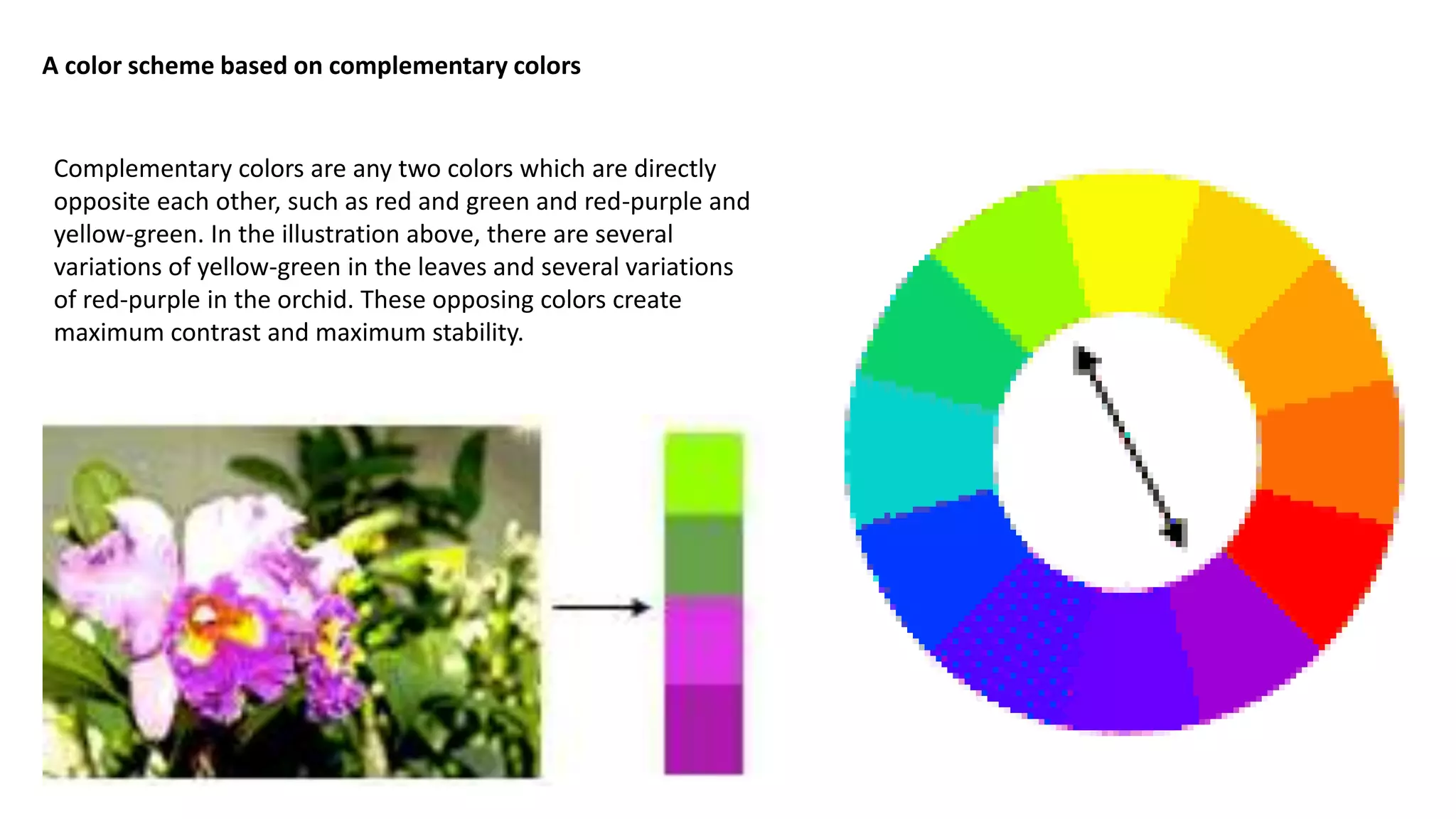
A color scheme based on complementary colors
Complementary colors are any two colors which are directly
opposite each other, such as red and green and red-purple and
yellow-green. In the illustration above, there are several
variations of yellow-green in the leaves and several variations
of red-purple in the orchid. These opposing colors create
maximum contrast and maximum stability.
A triadic color scheme uses colors that are evenly spaced
around the color wheel.
Triadic color harmonies tend to be quite vibrant, even if you
use pale or unsaturated versions of your hues.
To use a triadic harmony successfully, the colors should be
carefully balanced - let one color dominate and use the two
others for accent.
The split-complementary color scheme is a variation of the
complementary color scheme. In addition to the base color,
it uses the two colors adjacent to its complement.
This color scheme has the same strong visual contrast as
the complementary color scheme, but has less tension.
Traditional Color Wheels
Color pp
Color pp
Color pp
Color pp
Color pp

Color pp

  • 1.
    A color wheelis an abstract illustrative organization of color hues around a circle that shows relationships between primary colors, secondary colors, tertiary colors etc.
  • 2.
    The typical artists'paint or pigment color wheel includes the blue, red, and yellow primary colors. The corresponding secondary colors are green, orange, and violet or purple. The tertiary colors are red– orange, red–violet, yellow– orange, yellow–green, blue– violet and blue–green.
  • 3.
    In theory, thePrimary Colors are the root of every other hue imaginable. The primary pigments used in the manufacture of paint come from the pure source element of that Hue. There are no other pigments blended in to alter the formula. Think of the three Primaries as the Parents in the family of colors. In paint pigments, pure Yellow, pure Red, and pure Blue are the only hues that can’t be created by mixing any other colors together.
  • 4.
    When you combineany two of the Pure Primary Hues, you get three new mixtures called Secondary Colors. Think of the three Secondaries as the Children in the family of colors. Yellow + Red = ORANGE Red + Blue = VIOLET or PURPLE Blue + Yellow = GREEN
  • 5.
    When you mixa Primary and its nearest Secondary on the Basic Color Wheel you create six new mixtures called Tertiary colors. Think of the six Tertiary Colors as the Grandchildren in the family of colors, since their genetic makeup combines a Primary and Secondary color. Yellow + Orange = YELLOW- ORANGE Red + Orange = RED-ORANGE Red + Violet = RED-VIOLET Blue + Violet = BLUE-VIOLET Blue + Green = BLUE-GREEN Yellow + Green = YELLOW-GREEN
  • 6.
    A color schemebased on analogous colors Analogous colors are any three colors which are side by side on a 12 part color wheel, such as yellow-green, yellow, and yellow- orange. Usually one of the three colors predominates.
  • 7.
    A color schemebased on complementary colors Complementary colors are any two colors which are directly opposite each other, such as red and green and red-purple and yellow-green. In the illustration above, there are several variations of yellow-green in the leaves and several variations of red-purple in the orchid. These opposing colors create maximum contrast and maximum stability.
  • 8.
    A triadic colorscheme uses colors that are evenly spaced around the color wheel. Triadic color harmonies tend to be quite vibrant, even if you use pale or unsaturated versions of your hues. To use a triadic harmony successfully, the colors should be carefully balanced - let one color dominate and use the two others for accent.
  • 9.
    The split-complementary colorscheme is a variation of the complementary color scheme. In addition to the base color, it uses the two colors adjacent to its complement. This color scheme has the same strong visual contrast as the complementary color scheme, but has less tension.
  • 10.