‭
Beauty in Banality: Coffee Beans‬
‭
A lesson in partnership with Trail Coffee Roasters‬
‭
Phone:‬‭
209.292.8791‬ ‭
Address:‬‭
501 E Main St. Stockton, CA 95202‬
‭
K-12 Standards:‬
‭
●‬ ‭
5.VA:Cr1.1 Combine ideas to generate an innovative idea for art-making‬
‭
Learning Objectives:‬
‭
●‬ ‭
Students will learn about found art: made from everyday materials‬
‭
●‬ ‭
Students will create mosaic-like art using coffee beans‬
‭
Materials:‬
‭
●‬ ‭
Background to place beans (canvas, cardboard, paper)‬
‭
●‬ ‭
Coffee beans‬
‭
●‬ ‭
Ribbon, twine (anything to add pizazz)‬
‭
●‬ ‭
Glue (Elmers, Glue Gun)‬
‭
Vocabulary Covered in Lesson:‬
‭
-‬ ‭
Found Art: (AKA object trouvé) art made from items that are not normally considered‬
‭
art materials, but are instead repurposed for an artistic purpose‬
‭
Considerations for Learner Variability:‬
‭
-‬ ‭
Hand eye-coordination‬
‭
-‬ ‭
alternative input devices can be beneficial‬
‭
-‬ ‭
Fine motor skills‬
‭
-‬ ‭
adaptive tools available to assist learners with fine motor skill difficulties‬
‭
Total Time: 60 minutes‬
‭
Beginning of the Lesson‬
‭
Time‬ ‭
Teacher Actions and Pre-planned‬
‭
Questions‬
‭
Student Actions/Learning Activities‬
‭
5 min‬ ‭
Introduction: Do you enjoy art? What is‬
‭
one thing you like about art? What’s one‬
‭
thing you don’t?‬
‭
Refer to slideshow to show how‬
‭
something like a fork can be turned into‬
‭
art.‬
‭
Art doesn’t have to be something‬
‭
extremely intricate and detailed. You can‬
‭
make it with everyday objects.‬
‭
Have you made something from things in‬
‭
your house? If so, what did you make?‬
‭
-‬ ‭
Listen attentively to the‬
‭
teacher's introduction to found‬
‭
art‬
‭
-‬ ‭
Take notes or follow along with‬
‭
the vocabulary list provided by‬
‭
the teacher.‬
‭
10min‬ ‭
Intro to Everyday Art:‬
‭
Artists have made art out of everyday‬
‭
items for generations. They create the‬
‭
extraordinary out of the seemingly‬
‭
ordinary.‬
‭
The first known paintings made by‬
‭
humans are the art on the walls of caves.‬
‭
Inspiration strikes everywhere and‬
‭
sometimes you just need to grab a pencil,‬
‭
a paintbrush, or a crayon to get it out of‬
‭
your system.‬
‭
Museums, galleries, and studios‬
‭
everywhere are filled with things people‬
‭
found intriguing‬
‭
Do you believe that art made from‬
‭
everyday items can have the same impact‬
‭
as more traditional forms of art? Why or‬
‭
why not?‬
‭
Pop artists might see a chance to poke‬
‭
fun, sculptors may want to create‬
‭
large-scale sculptures of something little‬
‭
and mundane.‬
‭
Anything can start a conversation. Using‬
‭
the medium of art to create a drawing or a‬
‭
sculpture that moves someone enough to‬
‭
want to put it in a room, look at it every‬
‭
day, and always be affected by it.‬
‭
No matter how humble the subject, I‬
‭
never forget its impact can be truly‬
‭
extraordinary.‬
‭
What role do you think context plays in‬
‭
the appreciation of art made from‬
‭
everyday items? For example, if you saw‬
‭
a sculpture made from coffee beans in a‬
‭
museum versus in a coffee shop.‬
‭
-‬ ‭
Listen attentively to the‬
‭
teacher's explanation of the‬
‭
history behind found art‬
‭
Today we are going to use coffee beans.‬
‭
Show examples of Bean Art‬
‭
List materials‬
‭
-‬ ‭
Background to place beans‬
‭
(canvas, cardboard, paper)‬
‭
-‬ ‭
Coffee beans‬
‭
-‬ ‭
Ribbon, twine (anything to add‬
‭
pizazz)‬
‭
-‬ ‭
Glue (Elmers, Glue Gun)‬
‭
During the Lesson‬
‭
35 min‬ ‭
1.‬ ‭
Think of images, symbols, or icons‬
‭
to design with coffee beans.‬
‭
Simple designs usually work‬
‭
better. (2 mins)‬
‭
2.‬ ‭
Place beans in the outline of the‬
‭
image you decide upon. Try to be‬
‭
as precise as possible. (10 mins)‬
‭
3.‬ ‭
Carefully glue the outline. This‬
‭
step makes it easier when filling it‬
‭
in. (10 mins)‬
‭
4.‬ ‭
Place beans in the outline without‬
‭
leaving big spaces. Use the‬
‭
different sizes and textures of the‬
‭
beans to your advantage. (8 mins)‬
‭
5.‬ ‭
Add lace, string or anything you‬
‭
have on hand to enhance the‬
‭
image. (4 mins)‬
‭
6.‬ ‭
TADA: now you have a‬
‭
magnificent picture to give to a‬
‭
friend or hang in your house.‬
‭
●‬ ‭
Students follow directions and‬
‭
clarify questions they may‬
‭
have.‬
‭
Closing the Lesson:‬
‭
10 min‬ ‭
-‬ ‭
Have students share their artwork‬
‭
in small groups.‬
‭
-‬ ‭
Prompt students:‬
‭
-‬ ‭
Why did they choose this‬
‭
object?‬
‭
-‬ ‭
How was making this piece‬
‭
of art?‬
‭
-‬ ‭
Encourage students to reflect on‬
‭
the ability to make art out of‬
‭
everyday objects.‬
‭
●‬ ‭
Students share their‬
‭
completed artwork in small‬
‭
groups, discussing their‬
‭
chosen objects, the process of‬
‭
creating their piece, and‬
‭
reflecting on the ability to‬
‭
make art out of everyday‬
‭
items.‬
‭
●‬ ‭
Students are encouraged to‬
‭
reflect on the overall lesson‬
‭
and the creative potential of‬
‭
using everyday objects as art‬
‭
mediums. They discuss the‬
‭
impact of their artwork and the‬
‭
significance of finding‬
‭
inspiration in the ordinary.‬
‭
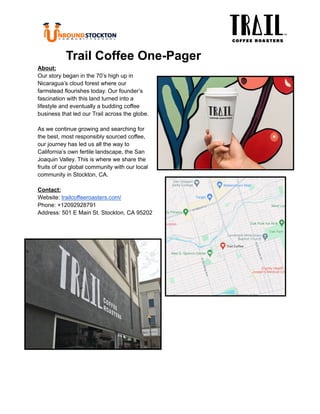
Trail Coffee One-Pager‬
‭
About:‬
‭
Our story began in the 70’s high up in‬
‭
Nicaragua’s cloud forest where our‬
‭
farmstead flourishes today. Our founder’s‬
‭
fascination with this land turned into a‬
‭
lifestyle and eventually a budding coffee‬
‭
business that led our Trail across the globe.‬
‭
As we continue growing and searching for‬
‭
the best, most responsibly sourced coffee,‬
‭
our journey has led us all the way to‬
‭
California’s own fertile landscape, the San‬
‭
Joaquin Valley. This is where we share the‬
‭
fruits of our global community with our local‬
‭
community in Stockton, CA.‬
‭
Contact:‬
‭
Website:‬‭
trailcoffeeroasters.com/‬
‭
Phone: +12092928791‬
‭
Address: 501 E Main St. Stockton, CA 95202‬

Coffee Beans Lesson Plan -Unbound Stockton

  • 1.
    ‭ Beauty in Banality:Coffee Beans‬ ‭ A lesson in partnership with Trail Coffee Roasters‬ ‭ Phone:‬‭ 209.292.8791‬ ‭ Address:‬‭ 501 E Main St. Stockton, CA 95202‬ ‭ K-12 Standards:‬ ‭ ●‬ ‭ 5.VA:Cr1.1 Combine ideas to generate an innovative idea for art-making‬ ‭ Learning Objectives:‬ ‭ ●‬ ‭ Students will learn about found art: made from everyday materials‬ ‭ ●‬ ‭ Students will create mosaic-like art using coffee beans‬ ‭ Materials:‬ ‭ ●‬ ‭ Background to place beans (canvas, cardboard, paper)‬ ‭ ●‬ ‭ Coffee beans‬ ‭ ●‬ ‭ Ribbon, twine (anything to add pizazz)‬ ‭ ●‬ ‭ Glue (Elmers, Glue Gun)‬ ‭ Vocabulary Covered in Lesson:‬ ‭ -‬ ‭ Found Art: (AKA object trouvé) art made from items that are not normally considered‬ ‭ art materials, but are instead repurposed for an artistic purpose‬ ‭ Considerations for Learner Variability:‬ ‭ -‬ ‭ Hand eye-coordination‬ ‭ -‬ ‭ alternative input devices can be beneficial‬ ‭ -‬ ‭ Fine motor skills‬ ‭ -‬ ‭ adaptive tools available to assist learners with fine motor skill difficulties‬ ‭ Total Time: 60 minutes‬ ‭ Beginning of the Lesson‬ ‭ Time‬ ‭ Teacher Actions and Pre-planned‬ ‭ Questions‬ ‭ Student Actions/Learning Activities‬ ‭ 5 min‬ ‭ Introduction: Do you enjoy art? What is‬ ‭ one thing you like about art? What’s one‬ ‭ thing you don’t?‬ ‭ Refer to slideshow to show how‬ ‭ something like a fork can be turned into‬ ‭ art.‬ ‭ Art doesn’t have to be something‬ ‭ extremely intricate and detailed. You can‬ ‭ make it with everyday objects.‬ ‭ Have you made something from things in‬ ‭ your house? If so, what did you make?‬ ‭ -‬ ‭ Listen attentively to the‬ ‭ teacher's introduction to found‬ ‭ art‬ ‭ -‬ ‭ Take notes or follow along with‬ ‭ the vocabulary list provided by‬ ‭ the teacher.‬
  • 2.
    ‭ 10min‬ ‭ Intro toEveryday Art:‬ ‭ Artists have made art out of everyday‬ ‭ items for generations. They create the‬ ‭ extraordinary out of the seemingly‬ ‭ ordinary.‬ ‭ The first known paintings made by‬ ‭ humans are the art on the walls of caves.‬ ‭ Inspiration strikes everywhere and‬ ‭ sometimes you just need to grab a pencil,‬ ‭ a paintbrush, or a crayon to get it out of‬ ‭ your system.‬ ‭ Museums, galleries, and studios‬ ‭ everywhere are filled with things people‬ ‭ found intriguing‬ ‭ Do you believe that art made from‬ ‭ everyday items can have the same impact‬ ‭ as more traditional forms of art? Why or‬ ‭ why not?‬ ‭ Pop artists might see a chance to poke‬ ‭ fun, sculptors may want to create‬ ‭ large-scale sculptures of something little‬ ‭ and mundane.‬ ‭ Anything can start a conversation. Using‬ ‭ the medium of art to create a drawing or a‬ ‭ sculpture that moves someone enough to‬ ‭ want to put it in a room, look at it every‬ ‭ day, and always be affected by it.‬ ‭ No matter how humble the subject, I‬ ‭ never forget its impact can be truly‬ ‭ extraordinary.‬ ‭ What role do you think context plays in‬ ‭ the appreciation of art made from‬ ‭ everyday items? For example, if you saw‬ ‭ a sculpture made from coffee beans in a‬ ‭ museum versus in a coffee shop.‬ ‭ -‬ ‭ Listen attentively to the‬ ‭ teacher's explanation of the‬ ‭ history behind found art‬
  • 3.
    ‭ Today we aregoing to use coffee beans.‬ ‭ Show examples of Bean Art‬ ‭ List materials‬ ‭ -‬ ‭ Background to place beans‬ ‭ (canvas, cardboard, paper)‬ ‭ -‬ ‭ Coffee beans‬ ‭ -‬ ‭ Ribbon, twine (anything to add‬ ‭ pizazz)‬ ‭ -‬ ‭ Glue (Elmers, Glue Gun)‬ ‭ During the Lesson‬ ‭ 35 min‬ ‭ 1.‬ ‭ Think of images, symbols, or icons‬ ‭ to design with coffee beans.‬ ‭ Simple designs usually work‬ ‭ better. (2 mins)‬ ‭ 2.‬ ‭ Place beans in the outline of the‬ ‭ image you decide upon. Try to be‬ ‭ as precise as possible. (10 mins)‬ ‭ 3.‬ ‭ Carefully glue the outline. This‬ ‭ step makes it easier when filling it‬ ‭ in. (10 mins)‬ ‭ 4.‬ ‭ Place beans in the outline without‬ ‭ leaving big spaces. Use the‬ ‭ different sizes and textures of the‬ ‭ beans to your advantage. (8 mins)‬ ‭ 5.‬ ‭ Add lace, string or anything you‬ ‭ have on hand to enhance the‬ ‭ image. (4 mins)‬ ‭ 6.‬ ‭ TADA: now you have a‬ ‭ magnificent picture to give to a‬ ‭ friend or hang in your house.‬ ‭ ●‬ ‭ Students follow directions and‬ ‭ clarify questions they may‬ ‭ have.‬ ‭ Closing the Lesson:‬ ‭ 10 min‬ ‭ -‬ ‭ Have students share their artwork‬ ‭ in small groups.‬ ‭ -‬ ‭ Prompt students:‬ ‭ -‬ ‭ Why did they choose this‬ ‭ object?‬ ‭ -‬ ‭ How was making this piece‬ ‭ of art?‬ ‭ -‬ ‭ Encourage students to reflect on‬ ‭ the ability to make art out of‬ ‭ everyday objects.‬ ‭ ●‬ ‭ Students share their‬ ‭ completed artwork in small‬ ‭ groups, discussing their‬ ‭ chosen objects, the process of‬ ‭ creating their piece, and‬ ‭ reflecting on the ability to‬ ‭ make art out of everyday‬ ‭ items.‬ ‭ ●‬ ‭ Students are encouraged to‬ ‭ reflect on the overall lesson‬
  • 4.
    ‭ and the creativepotential of‬ ‭ using everyday objects as art‬ ‭ mediums. They discuss the‬ ‭ impact of their artwork and the‬ ‭ significance of finding‬ ‭ inspiration in the ordinary.‬
  • 5.
    ‭ Trail Coffee One-Pager‬ ‭ About:‬ ‭ Ourstory began in the 70’s high up in‬ ‭ Nicaragua’s cloud forest where our‬ ‭ farmstead flourishes today. Our founder’s‬ ‭ fascination with this land turned into a‬ ‭ lifestyle and eventually a budding coffee‬ ‭ business that led our Trail across the globe.‬ ‭ As we continue growing and searching for‬ ‭ the best, most responsibly sourced coffee,‬ ‭ our journey has led us all the way to‬ ‭ California’s own fertile landscape, the San‬ ‭ Joaquin Valley. This is where we share the‬ ‭ fruits of our global community with our local‬ ‭ community in Stockton, CA.‬ ‭ Contact:‬ ‭ Website:‬‭ trailcoffeeroasters.com/‬ ‭ Phone: +12092928791‬ ‭ Address: 501 E Main St. Stockton, CA 95202‬