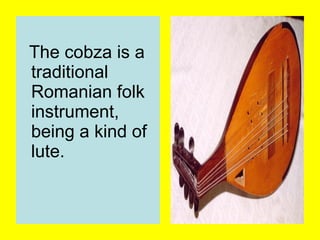
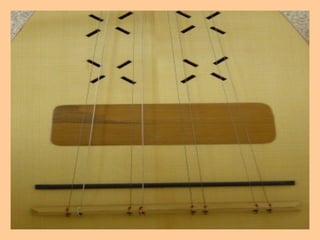
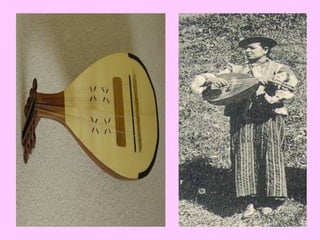
The cobza is a
traditional
Romanian folk
instrument,
being a kind of
lute.
•   The term kobza is first mentioned in Polish chronicles dating back to
    1331, but lute-like instruments are known to have existed in the
    territories now known as Ukraine even earlier, either from the sixth
    century, brought there by Bulgars, or possibly somewhat later by
    Polovetsians and Khazars. The term has a Turkic origin: "kobyz" or
    "khomus". The stringed folk instrument acquired widespread
    popularity in the 16th century, with the advent of the Hetmanate
    (Cossack state).
•   The kobza was usually played by a bard or minstrel called kobzar
    (occasionally in earlier times a kobeznik), to accompany the
    recitation of a Ukrainian epics called duma.
•   The kobza became extinct early in the 20th century. Currently there
    is a revival of kobza playing in Ukraine, due to the efforts of the
    "Kobzar Guild" in Kiev and Kharkiv.
•   The kobza was often referred to in historical sources as bandura
    (from Latin Pandura, via medieval Polish Barduny, i.e. a lute). The
    terms were interchangeable until about 1900. Eventually the
    unfretted "starosvitska" bandura (developed ca. 1800) appropriated
    the bandura name, but still was often referred to as kobza among
    the common folk, because of the name's historical cachet.
Cobza

Cobza

  • 2.
    The cobza isa traditional Romanian folk instrument, being a kind of lute.
  • 8.
    The term kobza is first mentioned in Polish chronicles dating back to 1331, but lute-like instruments are known to have existed in the territories now known as Ukraine even earlier, either from the sixth century, brought there by Bulgars, or possibly somewhat later by Polovetsians and Khazars. The term has a Turkic origin: "kobyz" or "khomus". The stringed folk instrument acquired widespread popularity in the 16th century, with the advent of the Hetmanate (Cossack state). • The kobza was usually played by a bard or minstrel called kobzar (occasionally in earlier times a kobeznik), to accompany the recitation of a Ukrainian epics called duma. • The kobza became extinct early in the 20th century. Currently there is a revival of kobza playing in Ukraine, due to the efforts of the "Kobzar Guild" in Kiev and Kharkiv. • The kobza was often referred to in historical sources as bandura (from Latin Pandura, via medieval Polish Barduny, i.e. a lute). The terms were interchangeable until about 1900. Eventually the unfretted "starosvitska" bandura (developed ca. 1800) appropriated the bandura name, but still was often referred to as kobza among the common folk, because of the name's historical cachet.