Coaching
Caregivers
HELPING PEOPLE SHAPE HABITS
We are transforming caregiving
by creating tools for family
caregivers taking care of obese
older adults.
We are combining behavioral science, human-centered design, and new
technology to support caregivers and their loved ones.
Why do family caregivers, who perform a critical
and difficult job, get so little attention and
support?
Family caregivers suffer from higher levels of stress and depression; have lower
levels of subjective well-being and physical health.
What tools can be created for caregivers that want
to start the journey of health behavior change?
The “typical” U.S. caregiver is a 46-year-old woman who works outside the
home and spends more than 20 hours a week providing care to her mother.
How can we support family caregivers that are
trying to motivate loved ones to adopt healthier
lifestyles?
Obesity effects the daily activities of older adults, making them more dependent
on caregivers for basic tasks such as walking a distance or going shopping.
We are using a dynamic approach.
Our solution is designed to emphasize equally both the process and the
outcome, and can be adapted to one’s lifestyle.
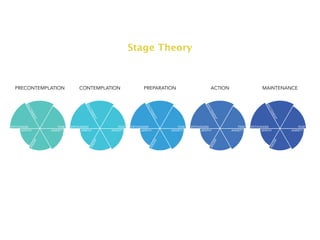
We will apply the Stage of Change theory to coach
caregivers to identify/recognize what stage of
change their loved one is in.
We will use the power of their relationship to drive health behavior change.
Stage Theory


  PRECONTEMPLATION                 CONTEMPLATION                     PREPARATION                          ACTION                    MAINTENANCE
        EX


                                       EX


                                                                      EX


                                                                                                     EX


                                                                                                                                      EX
         CIT


                                        CIT


                                                                       CIT


                                                                                                      CIT


                                                                                                                                       CIT
            E


                                           E


                                                                          E


                                                                                                        EM


                                                                                                                                          EM
             ME


                                            ME


                                                                           ME


                                                                                                            EN


                                                                                                                                             EN
               NT


                                              NT


                                                                             NT


                                                                                                            T


                                                                                                                                             T
ENTHUSIASM              FEAR   ENTHUSIASM              FEAR   ENTHUSIASM              FEAR   ENTHUSIASM                FEAR   ENTHUSIASM              FEAR
      APATHY        ANXIETY          APATHY        ANXIETY          APATHY        ANXIETY          APATHY          ANXIETY          APATHY        ANXIETY
               R


                                              R


                                                                             R


                                                                                                            R


                                                                                                                                             ER
             GE


                                            GE


                                                                           GE


                                                                                                          GE


                                                                                                                                           G
          AN


                                         AN


                                                                        AN


                                                                                                       AN


                                                                                                                                        AN
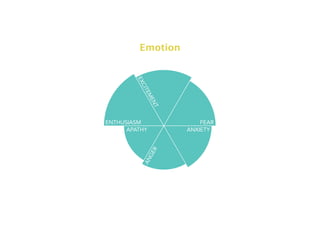
We will add emotional elements to the stages to
“crispify” target intervention behaviors.
We will put the patient at the heart of the process by building empathy for them.
Emotion


        EX
         CIT
           EM
               EN
                 T
ENTHUSIASM               FEAR
      APATHY         ANXIETY


               R
             GE
          AN
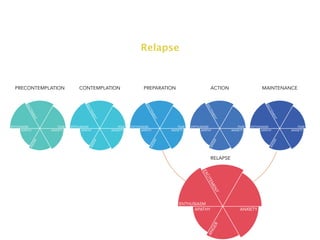
Relapse is built into this experience to guide the
caregiver on how to help the patient who
regresses.
We will use audio-visual feedback loops to nudge the caregiver and the patient.
Relapse


  PRECONTEMPLATION                 CONTEMPLATION                     PREPARATION                          ACTION                     MAINTENANCE
        EX


                                       EX


                                                                      EX


                                                                                                     EX


                                                                                                                                       EX
         CIT


                                        CIT


                                                                       CIT


                                                                                                      CIT


                                                                                                                                        CIT
           EM


                                          EM


                                                                         EM


                                                                                                        EM


                                                                                                                                          EM
               EN


                                              EN


                                                                             EN


                                                                                                          EN


                                                                                                                                              EN
               T


                                              T


                                                                             T


                                                                                                             T


                                                                                                                                              T
ENTHUSIASM              FEAR   ENTHUSIASM              FEAR   ENTHUSIASM              FEAR   ENTHUSIASM                 FEAR   ENTHUSIASM              FEAR
      APATHY        ANXIETY          APATHY        ANXIETY          APATHY        ANXIETY          APATHY           ANXIETY          APATHY        ANXIETY
               R


                                              R


                                                                             R


                                                                                                            R


                                                                                                                                              R
             GE


                                            GE


                                                                           GE


                                                                                                          GE


                                                                                                                                            GE
          AN


                                         AN


                                                                        AN


                                                                                                        AN


                                                                                                                                         AN
                                                                                                          RELAPSE


                                                                                                   EX
                                                                                                     CIT
                                                                                                       EM
                                                                                                          EN
                                                                                                            T
                                                                                                                                                              FEAR
                                                                                      ENTHUSIASM
                                                                                            APATHY                       ANXIETY
                                                                                                            R
                                                                                                        GE
                                                                                                      AN
Meet the team
Our team is composed of generalists with a specialization in behavioral science,
human-centered design and technology.
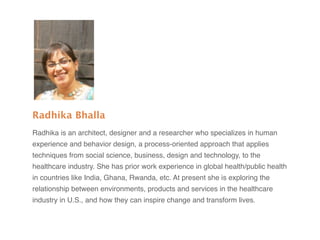
Radhika Bhalla
Radhika is an architect, designer and a researcher who specializes in human
experience and behavior design, a process-oriented approach that applies
techniques from social science, business, design and technology, to the
healthcare industry. She has prior work experience in global health/public health
in countries like India, Ghana, Rwanda, etc. At present she is exploring the
relationship between environments, products and services in the healthcare
industry in U.S., and how they can inspire change and transform lives.
Stephanie Habif, EdD, MS, CHES
Steph specializes in behavior design and strategy for technology start-ups,
advertising agencies, and health care companies. She has over 15 years as an
academic practitioner, and currently conducts her research and design work at
Stanford University. Dr. Habif also has worked as a private health coach to
adults with lifestyle diseases like obesity. She has an overwhelming desire to
mobilize resources towards evidence-based, behavior-driven, user-centric
health care solutions.
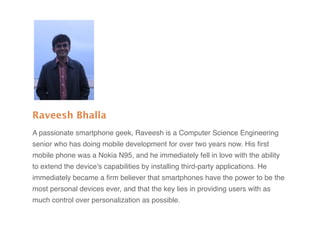
Raveesh Bhalla
A passionate smartphone geek, Raveesh is a Computer Science Engineering
senior who has doing mobile development for over two years now. His first
mobile phone was a Nokia N95, and he immediately fell in love with the ability
to extend the device’s capabilities by installing third-party applications. He
immediately became a firm believer that smartphones have the power to be the
most personal devices ever, and that the key lies in providing users with as
much control over personalization as possible.
Contact Us
radhika@ideasyncrasy.com
steph@habifhealth.com
raveesh@appsculture.com
Thank You
ROCK HEALTH!

Coaching Caregivers

  • 1.
  • 2.
    We are transformingcaregiving by creating tools for family caregivers taking care of obese older adults. We are combining behavioral science, human-centered design, and new technology to support caregivers and their loved ones.
  • 3.
    Why do familycaregivers, who perform a critical and difficult job, get so little attention and support? Family caregivers suffer from higher levels of stress and depression; have lower levels of subjective well-being and physical health.
  • 4.
    What tools canbe created for caregivers that want to start the journey of health behavior change? The “typical” U.S. caregiver is a 46-year-old woman who works outside the home and spends more than 20 hours a week providing care to her mother.
  • 5.
    How can wesupport family caregivers that are trying to motivate loved ones to adopt healthier lifestyles? Obesity effects the daily activities of older adults, making them more dependent on caregivers for basic tasks such as walking a distance or going shopping.
  • 6.
    We are usinga dynamic approach. Our solution is designed to emphasize equally both the process and the outcome, and can be adapted to one’s lifestyle.
  • 7.
    We will applythe Stage of Change theory to coach caregivers to identify/recognize what stage of change their loved one is in. We will use the power of their relationship to drive health behavior change.
  • 8.
    Stage Theory PRECONTEMPLATION CONTEMPLATION PREPARATION ACTION MAINTENANCE EX EX EX EX EX CIT CIT CIT CIT CIT E E E EM EM ME ME ME EN EN NT NT NT T T ENTHUSIASM FEAR ENTHUSIASM FEAR ENTHUSIASM FEAR ENTHUSIASM FEAR ENTHUSIASM FEAR APATHY ANXIETY APATHY ANXIETY APATHY ANXIETY APATHY ANXIETY APATHY ANXIETY R R R R ER GE GE GE GE G AN AN AN AN AN
  • 9.
    We will addemotional elements to the stages to “crispify” target intervention behaviors. We will put the patient at the heart of the process by building empathy for them.
  • 10.
    Emotion EX CIT EM EN T ENTHUSIASM FEAR APATHY ANXIETY R GE AN
  • 11.
    Relapse is builtinto this experience to guide the caregiver on how to help the patient who regresses. We will use audio-visual feedback loops to nudge the caregiver and the patient.
  • 12.
    Relapse PRECONTEMPLATION CONTEMPLATION PREPARATION ACTION MAINTENANCE EX EX EX EX EX CIT CIT CIT CIT CIT EM EM EM EM EM EN EN EN EN EN T T T T T ENTHUSIASM FEAR ENTHUSIASM FEAR ENTHUSIASM FEAR ENTHUSIASM FEAR ENTHUSIASM FEAR APATHY ANXIETY APATHY ANXIETY APATHY ANXIETY APATHY ANXIETY APATHY ANXIETY R R R R R GE GE GE GE GE AN AN AN AN AN RELAPSE EX CIT EM EN T FEAR ENTHUSIASM APATHY ANXIETY R GE AN
  • 13.
    Meet the team Ourteam is composed of generalists with a specialization in behavioral science, human-centered design and technology.
  • 14.
    Radhika Bhalla Radhika isan architect, designer and a researcher who specializes in human experience and behavior design, a process-oriented approach that applies techniques from social science, business, design and technology, to the healthcare industry. She has prior work experience in global health/public health in countries like India, Ghana, Rwanda, etc. At present she is exploring the relationship between environments, products and services in the healthcare industry in U.S., and how they can inspire change and transform lives.
  • 15.
    Stephanie Habif, EdD,MS, CHES Steph specializes in behavior design and strategy for technology start-ups, advertising agencies, and health care companies. She has over 15 years as an academic practitioner, and currently conducts her research and design work at Stanford University. Dr. Habif also has worked as a private health coach to adults with lifestyle diseases like obesity. She has an overwhelming desire to mobilize resources towards evidence-based, behavior-driven, user-centric health care solutions.
  • 16.
    Raveesh Bhalla A passionatesmartphone geek, Raveesh is a Computer Science Engineering senior who has doing mobile development for over two years now. His first mobile phone was a Nokia N95, and he immediately fell in love with the ability to extend the device’s capabilities by installing third-party applications. He immediately became a firm believer that smartphones have the power to be the most personal devices ever, and that the key lies in providing users with as much control over personalization as possible.
  • 17.
  • 18.