CO2 CAPTURE
MACHINE
BY: JANA KHDER AND MENATALLA
UNDER THE SUPERVISION OF: MS BONHI
INTRODUCTION
• The increasing levels of carbon dioxide (CO2) in the atmosphere have
become a significant contributor to global warming and air pollution.
With climate change posing a serious threat to our environment,
addressing CO2 emissions is crucial for creating a sustainable future. In
this presentation, we will explore a cutting-edge technology designed
to combat these issues: the 3D carbon dioxide capture machine.This
innovative solution not only captures CO2 from the air but also
contributes to cleaner air and sustainable fuel production.
WHAT IS CARBON CAPTURE?
• Carbon capture refers to a set of technologies designed to trap and
store CO2 emissions produced from various industrial processes,
including energy production.Among these technologies, Direct Air
Capture (DAC) stands out as it focuses on removing CO2 directly from
the atmosphere. DAC systems can significantly reduce greenhouse gas
concentrations, making them a vital part of strategies aimed at mitigating
climate change. By capturing CO2 from the air, these systems help
address one of the primary contributors to global warming.
OVERVIEW OF THE 3D CARBON DIOXIDE
CAPTURE MACHINE
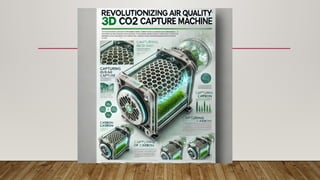
• The 3D carbon dioxide capture machine utilizes advanced materials and engineering to efficiently
capture and remove CO2 from the atmosphere.The machine consists of several key components,
including a honeycomb ceramic catalyst and potassium hydrogen carbonate.
• Honeycomb Ceramic Catalyst: This component provides a large surface area, allowing for
effective CO2 absorption and facilitating the cleaning of air as it passes through the machine.The
unique honeycomb structure enhances the reaction efficiency, making it a crucial part of the
overall design.
• Potassium Hydrogen Carbonate: This chemical compound plays a vital role in absorbing CO2.
When air containing CO2 enters the machine, potassium hydrogen carbonate reacts with the
CO2, effectively trapping it in a solid form, thus preventing it from contributing to atmospheric
pollution.
HOW THE MACHINE WORKS
• The operation of the 3D carbon dioxide capture machine can be broken down into several key processes:
1. Air Intake: The machine draws in air from the surrounding environment, allowing CO2 and other
pollutants to enter the system.This intake process is crucial for initiating the capture of atmospheric CO2.
2. CO2 Absorption: Once the air is inside the machine, potassium hydrogen carbonate reacts with the CO2
present.This chemical reaction converts CO2 into a solid compound, effectively removing it from the air.
This process not only captures CO2 but also prepares it for storage.
3. Catalytic Reaction: As the air continues to pass through the machine, the honeycomb ceramic catalyst
aids in breaking down additional pollutants and cleaning the air before it is released back into the
atmosphere.This step ensures that the machine contributes to improved air quality.
4. Storage: After capturing CO2, the machine compresses the gas and stores it underground in designated
facilities.This underground storage is critical for preventing CO2 from re-entering the atmosphere, allowing
it to be safely sequestered for future use, such as converting it into sustainable fuels.
RAISING AWARENESS
• Public awareness is vital for the success of carbon capture technologies. Educating communities

about the impacts of climate change and the benefits of carbon capture can encourage support for
such initiatives.
• Educational Campaigns: Implementing campaigns in schools and communities can help inform
individuals about the importance of reducing CO2 emissions and the role of carbon capture.
• Workshops and Seminars: Hosting workshops can provide hands-on demonstrations of the
technology, allowing people to see its benefits firsthand.
• Collaboration with Environmental Organizations: Partnering with organizations focused on
environmental advocacy can amplify outreach efforts and promote cleaner technologies effectively.
SHARING AWARENESS
OUR WEBSITE
THANKYOU

CO2 Capture Machine PDF CARBON.NNNNNpptx

  • 1.
    CO2 CAPTURE MACHINE BY: JANAKHDER AND MENATALLA UNDER THE SUPERVISION OF: MS BONHI
  • 2.
    INTRODUCTION • The increasinglevels of carbon dioxide (CO2) in the atmosphere have become a significant contributor to global warming and air pollution. With climate change posing a serious threat to our environment, addressing CO2 emissions is crucial for creating a sustainable future. In this presentation, we will explore a cutting-edge technology designed to combat these issues: the 3D carbon dioxide capture machine.This innovative solution not only captures CO2 from the air but also contributes to cleaner air and sustainable fuel production.
  • 3.
    WHAT IS CARBONCAPTURE? • Carbon capture refers to a set of technologies designed to trap and store CO2 emissions produced from various industrial processes, including energy production.Among these technologies, Direct Air Capture (DAC) stands out as it focuses on removing CO2 directly from the atmosphere. DAC systems can significantly reduce greenhouse gas concentrations, making them a vital part of strategies aimed at mitigating climate change. By capturing CO2 from the air, these systems help address one of the primary contributors to global warming.
  • 4.
    OVERVIEW OF THE3D CARBON DIOXIDE CAPTURE MACHINE • The 3D carbon dioxide capture machine utilizes advanced materials and engineering to efficiently capture and remove CO2 from the atmosphere.The machine consists of several key components, including a honeycomb ceramic catalyst and potassium hydrogen carbonate. • Honeycomb Ceramic Catalyst: This component provides a large surface area, allowing for effective CO2 absorption and facilitating the cleaning of air as it passes through the machine.The unique honeycomb structure enhances the reaction efficiency, making it a crucial part of the overall design. • Potassium Hydrogen Carbonate: This chemical compound plays a vital role in absorbing CO2. When air containing CO2 enters the machine, potassium hydrogen carbonate reacts with the CO2, effectively trapping it in a solid form, thus preventing it from contributing to atmospheric pollution.
  • 5.
    HOW THE MACHINEWORKS • The operation of the 3D carbon dioxide capture machine can be broken down into several key processes: 1. Air Intake: The machine draws in air from the surrounding environment, allowing CO2 and other pollutants to enter the system.This intake process is crucial for initiating the capture of atmospheric CO2. 2. CO2 Absorption: Once the air is inside the machine, potassium hydrogen carbonate reacts with the CO2 present.This chemical reaction converts CO2 into a solid compound, effectively removing it from the air. This process not only captures CO2 but also prepares it for storage. 3. Catalytic Reaction: As the air continues to pass through the machine, the honeycomb ceramic catalyst aids in breaking down additional pollutants and cleaning the air before it is released back into the atmosphere.This step ensures that the machine contributes to improved air quality. 4. Storage: After capturing CO2, the machine compresses the gas and stores it underground in designated facilities.This underground storage is critical for preventing CO2 from re-entering the atmosphere, allowing it to be safely sequestered for future use, such as converting it into sustainable fuels.
  • 6.
    RAISING AWARENESS • Publicawareness is vital for the success of carbon capture technologies. Educating communities about the impacts of climate change and the benefits of carbon capture can encourage support for such initiatives. • Educational Campaigns: Implementing campaigns in schools and communities can help inform individuals about the importance of reducing CO2 emissions and the role of carbon capture. • Workshops and Seminars: Hosting workshops can provide hands-on demonstrations of the technology, allowing people to see its benefits firsthand. • Collaboration with Environmental Organizations: Partnering with organizations focused on environmental advocacy can amplify outreach efforts and promote cleaner technologies effectively.

  • 7.
  • 8.
  • 10.