Best Practices for Keeping
Your Data Safe During Cloud
Transformation
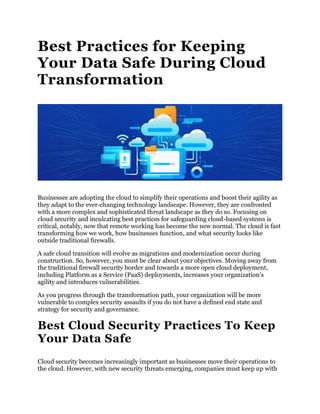
Businesses are adopting the cloud to simplify their operations and boost their agility as
they adapt to the ever-changing technology landscape. However, they are confronted
with a more complex and sophisticated threat landscape as they do so. Focusing on
cloud security and inculcating best practices for safeguarding cloud-based systems is
critical, notably, now that remote working has become the new normal. The cloud is fast
transforming how we work, how businesses function, and what security looks like
outside traditional firewalls.
A safe cloud transition will evolve as migrations and modernization occur during
construction. So, however, you must be clear about your objectives. Moving away from
the traditional firewall security border and towards a more open cloud deployment,
including Platform as a Service (PaaS) deployments, increases your organization’s
agility and introduces vulnerabilities.
As you progress through the transformation path, your organization will be more
vulnerable to complex security assaults if you do not have a defined end state and
strategy for security and governance.
Best Cloud Security Practices To Keep
Your Data Safe
Cloud security becomes increasingly important as businesses move their operations to
the cloud. However, with new security threats emerging, companies must keep up with
best practices for keeping their data safe. Let’s delve at some of the best practices for
cloud security in 2023:
Choose A Reputable Cloud Service
Provider
Selecting a strong security and reliability track record is crucial when choosing a cloud
service provider. Look for secure cloud solutions that have established security protocols
and certifications, such as ISO 27001 or SOC 2.
Implement Multi-Factor
Authentication (MFA)
MFA secures user logins by enabling users to submit multiple forms of authentication,
such as a password and a security token. As a result, it can significantly reduce the risk
of unauthorized access to your data.
Use Encryption
Safeguarding your data in transit and at rest can help secure it from unauthorized
access, which entails utilizing HTTPS for web traffic and encrypting sensitive data at the
application layer.
Implement Access Controls
Installing access controls, such as role-based access control (RBAC), can ensure that
only authorized users can access sensitive data and applications.
Monitor for Anomalies
Implementing tools to monitor network traffic and user activity can help detect
potential security threats before they become significant issues. This can include tools
such as intrusion detection and prevention systems (IDPS) and security information and
event management (SIEM) platforms.
Regularly Audit Your Security
Practices
Regular security audits can help you identify vulnerabilities and gaps in your security
practices. This can help you address potential issues before they become major security
threats.
By following these best practices, businesses can help ensure the security of their data in
the cloud and protect themselves from the ever-evolving landscape of security threats.
To Sum Up
Although businesses refer to the cloud as one of their most vulnerable points, it does not
have to be an open door for attackers. Securing access controls, doing frequent cloud
audits, and installing robust encryption are just a few ways for your company to take
control of cloud environment security. In addition, understanding the security
procedures of providers PetaBytz Technologies not only assists you in selecting the best
guaranteed practices and better managing your duties.
Contact us at +91 89779 15322 or visit petabytz.com for additional details.

Cloud transformation Service in Hy.pdf

  • 1.
    Best Practices forKeeping Your Data Safe During Cloud Transformation Businesses are adopting the cloud to simplify their operations and boost their agility as they adapt to the ever-changing technology landscape. However, they are confronted with a more complex and sophisticated threat landscape as they do so. Focusing on cloud security and inculcating best practices for safeguarding cloud-based systems is critical, notably, now that remote working has become the new normal. The cloud is fast transforming how we work, how businesses function, and what security looks like outside traditional firewalls. A safe cloud transition will evolve as migrations and modernization occur during construction. So, however, you must be clear about your objectives. Moving away from the traditional firewall security border and towards a more open cloud deployment, including Platform as a Service (PaaS) deployments, increases your organization’s agility and introduces vulnerabilities. As you progress through the transformation path, your organization will be more vulnerable to complex security assaults if you do not have a defined end state and strategy for security and governance. Best Cloud Security Practices To Keep Your Data Safe Cloud security becomes increasingly important as businesses move their operations to the cloud. However, with new security threats emerging, companies must keep up with
  • 2.
    best practices forkeeping their data safe. Let’s delve at some of the best practices for cloud security in 2023: Choose A Reputable Cloud Service Provider Selecting a strong security and reliability track record is crucial when choosing a cloud service provider. Look for secure cloud solutions that have established security protocols and certifications, such as ISO 27001 or SOC 2. Implement Multi-Factor Authentication (MFA) MFA secures user logins by enabling users to submit multiple forms of authentication, such as a password and a security token. As a result, it can significantly reduce the risk of unauthorized access to your data. Use Encryption Safeguarding your data in transit and at rest can help secure it from unauthorized access, which entails utilizing HTTPS for web traffic and encrypting sensitive data at the application layer. Implement Access Controls Installing access controls, such as role-based access control (RBAC), can ensure that only authorized users can access sensitive data and applications. Monitor for Anomalies Implementing tools to monitor network traffic and user activity can help detect potential security threats before they become significant issues. This can include tools such as intrusion detection and prevention systems (IDPS) and security information and event management (SIEM) platforms.
  • 3.
    Regularly Audit YourSecurity Practices Regular security audits can help you identify vulnerabilities and gaps in your security practices. This can help you address potential issues before they become major security threats. By following these best practices, businesses can help ensure the security of their data in the cloud and protect themselves from the ever-evolving landscape of security threats. To Sum Up Although businesses refer to the cloud as one of their most vulnerable points, it does not have to be an open door for attackers. Securing access controls, doing frequent cloud audits, and installing robust encryption are just a few ways for your company to take control of cloud environment security. In addition, understanding the security procedures of providers PetaBytz Technologies not only assists you in selecting the best guaranteed practices and better managing your duties. Contact us at +91 89779 15322 or visit petabytz.com for additional details.