Cloud Adoption –
Journey of IT Service Management
CIO San Francisco Summit
Dec 4, 2013
Caroline Hsieh
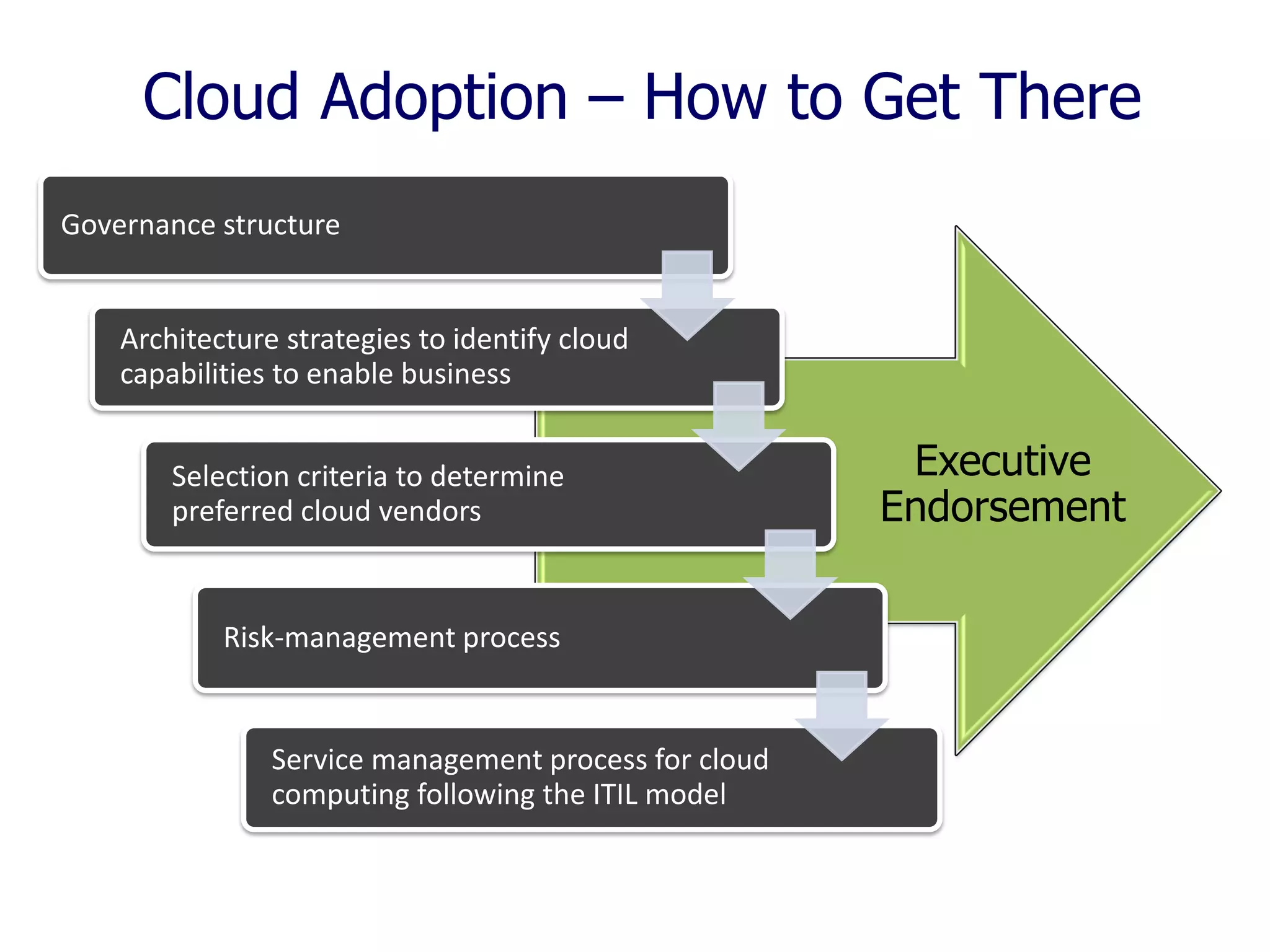
Cloud Adoption – How to Get There
Governance structure

Architecture strategies to identify cloud
capabilities to enable business
Selection criteria to determine
preferred cloud vendors

Risk-management process

Service management process for cloud
computing following the ITIL model

Executive
Endorsement
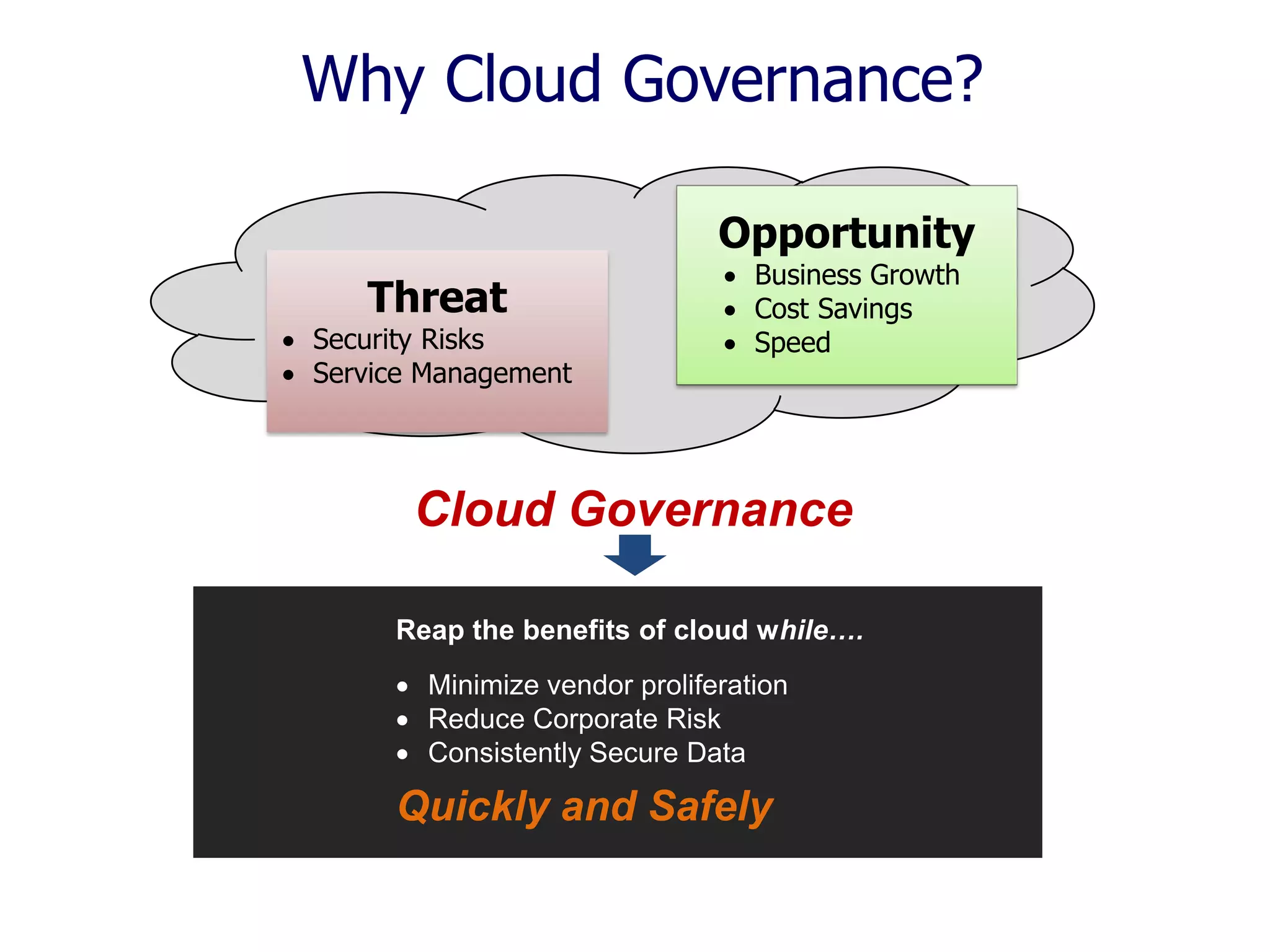
Why Cloud Governance?
Opportunity

 Business Growth
Threat
 Cost Savings
 Minimize vendor proliferation
 Security Risks
 Speed
 Reduce Corporate Risk
 Service Management
 Consistently Secure Data

Cloud Governance
Reap the benefits of cloud while….
 Minimize vendor proliferation
 Reduce Corporate Risk
 Consistently Secure Data

Quickly and Safely
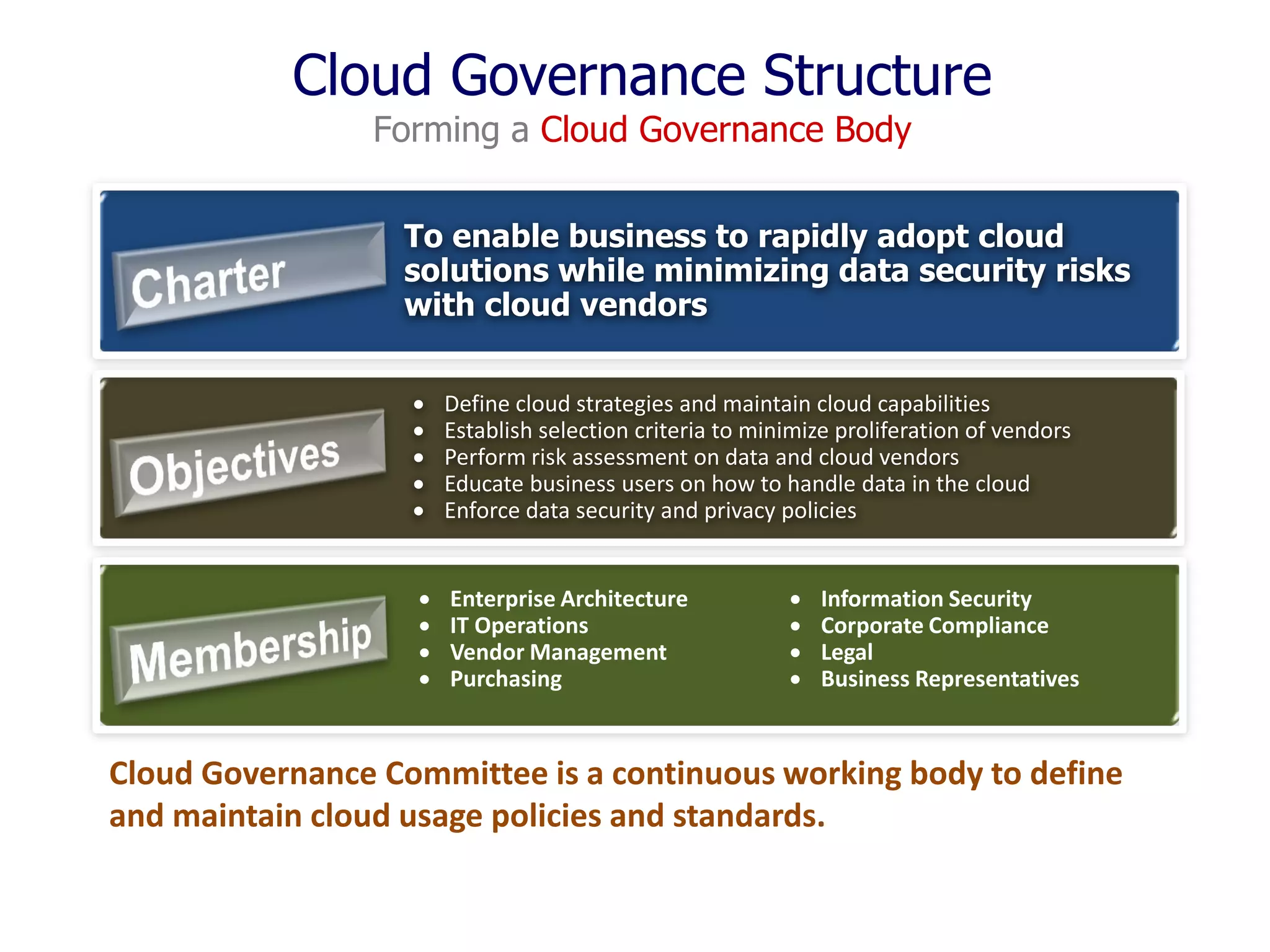
Cloud Governance Structure
Forming a Cloud Governance Body

To enable business to rapidly adopt cloud
solutions while minimizing data security risks
with cloud vendors






Define cloud strategies and maintain cloud capabilities
Establish selection criteria to minimize proliferation of vendors
Perform risk assessment on data and cloud vendors
Educate business users on how to handle data in the cloud
Enforce data security and privacy policies






Enterprise Architecture
IT Operations
Vendor Management
Purchasing






Information Security
Corporate Compliance
Legal
Business Representatives

Cloud Governance Committee is a continuous working body to define
and maintain cloud usage policies and standards.
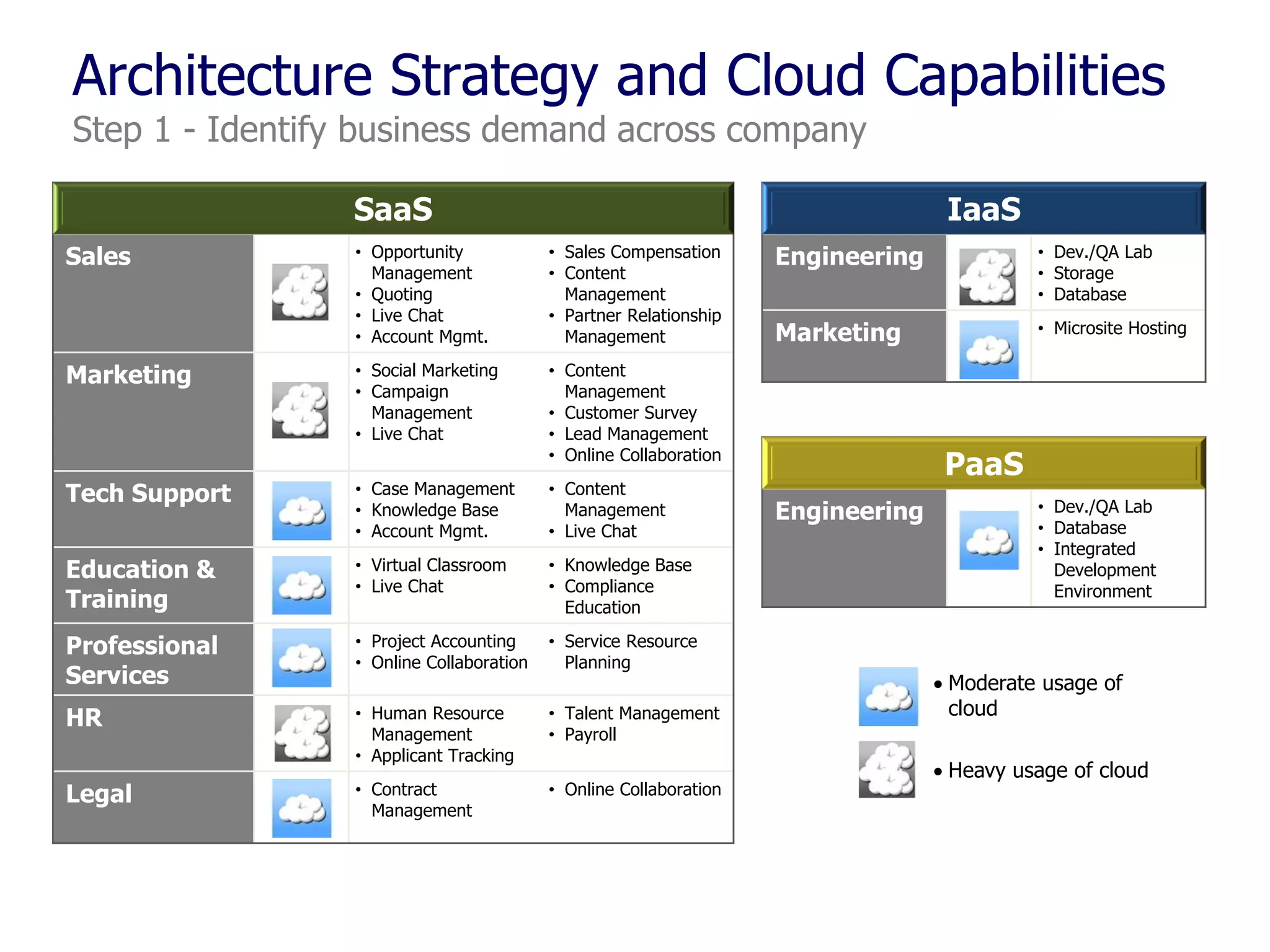
Architecture Strategy and Cloud Capabilities
Step 1 - Identify business demand across company
SaaS
Sales

IaaS

• Opportunity
Management
• Quoting
• Live Chat
• Account Mgmt.

• Sales Compensation
• Content
Management
• Partner Relationship
Management

Marketing

• Social Marketing
• Campaign
Management
• Live Chat

Tech Support

• Content
Management
• Live Chat

Education &
Training

• Virtual Classroom
• Live Chat

• Knowledge Base
• Compliance
Education

Professional
Services

• Project Accounting
• Online Collaboration

• Service Resource
Planning

HR

• Human Resource
Management
• Applicant Tracking

• Talent Management
• Payroll

Legal

• Contract
Management

• Online Collaboration

• Dev./QA Lab
• Storage
• Database

Marketing

• Microsite Hosting

• Content
Management
• Customer Survey
• Lead Management
• Online Collaboration

• Case Management
• Knowledge Base
• Account Mgmt.

Engineering

PaaS
Engineering

• Dev./QA Lab
• Database
• Integrated
Development
Environment

 Moderate usage of
cloud
 Heavy usage of cloud
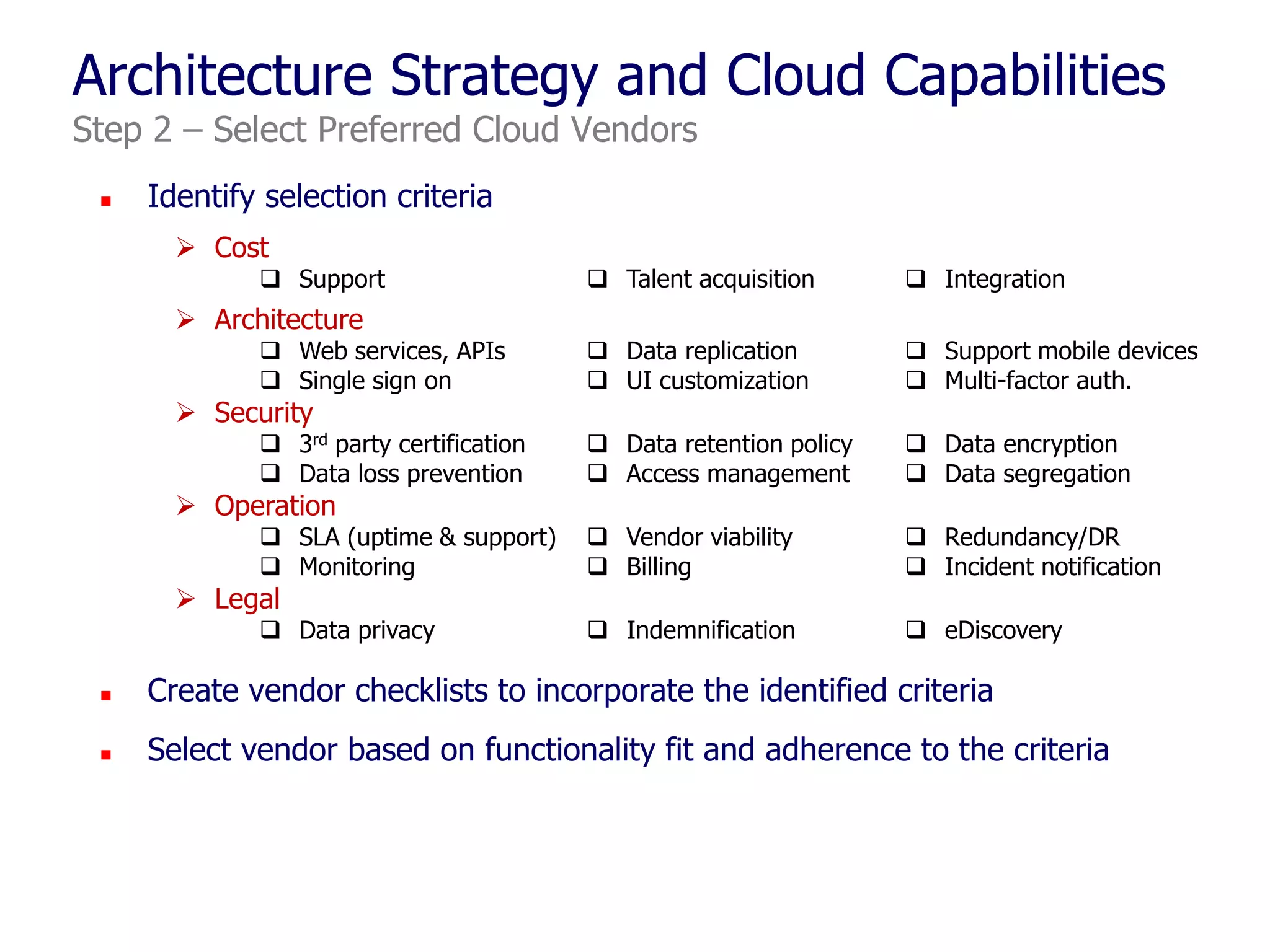
Architecture Strategy and Cloud Capabilities
Step 2 – Select Preferred Cloud Vendors


Identify selection criteria
 Cost

 Support

 Talent acquisition

 Integration

 Web services, APIs
 Single sign on

 Data replication
 UI customization

 Support mobile devices
 Multi-factor auth.

 3rd party certification
 Data loss prevention

 Data retention policy
 Access management

 Data encryption
 Data segregation

 SLA (uptime & support)
 Monitoring

 Vendor viability
 Billing

 Redundancy/DR
 Incident notification

 Data privacy

 Indemnification

 eDiscovery

 Architecture
 Security

 Operation
 Legal



Create vendor checklists to incorporate the identified criteria



Select vendor based on functionality fit and adherence to the criteria
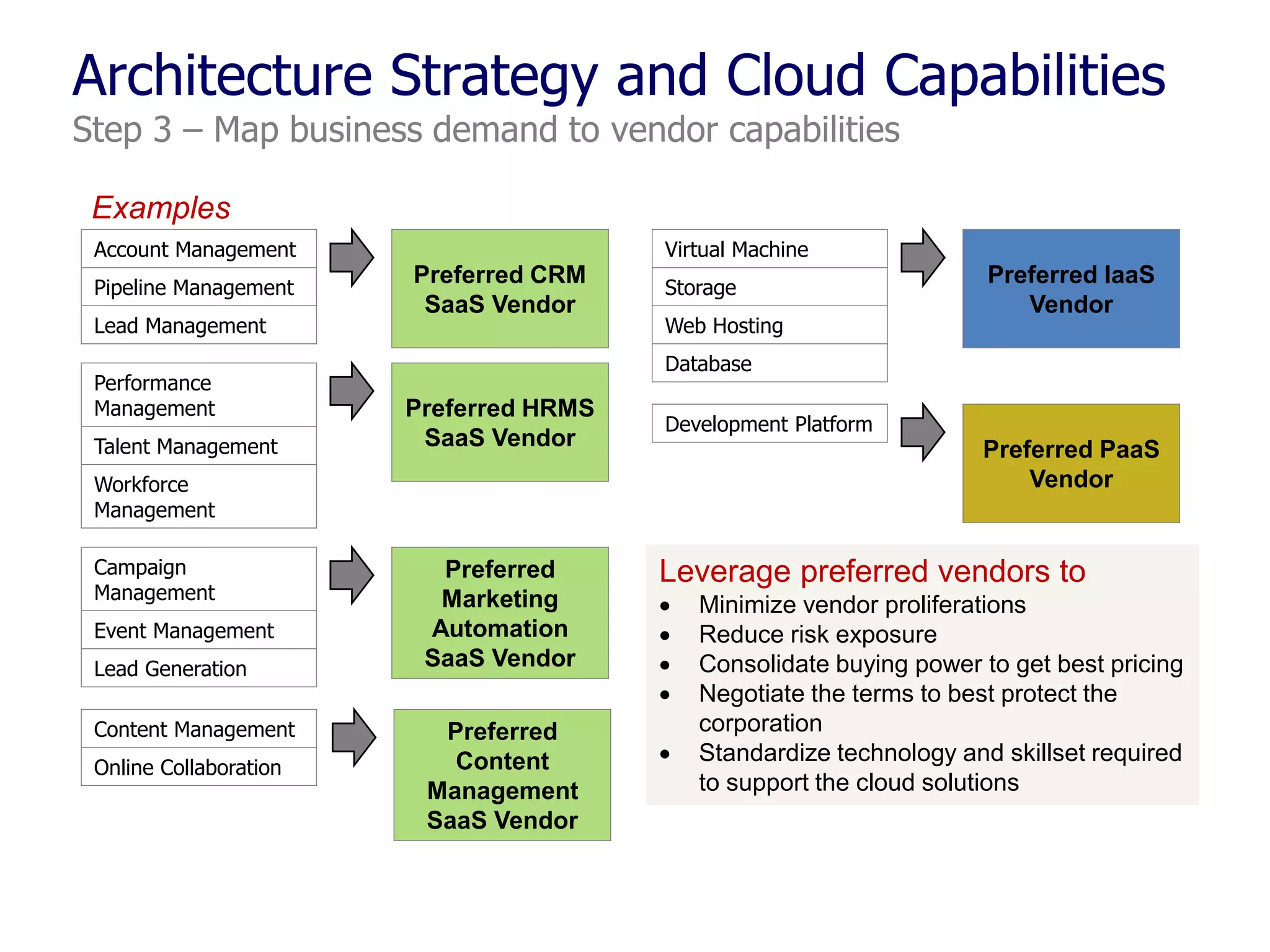
Architecture Strategy and Cloud Capabilities
Step 3 – Map business demand to vendor capabilities
Examples
Account Management

Pipeline Management
Lead Management
Performance
Management
Talent Management

Virtual Machine

Preferred CRM
SaaS Vendor

Storage
Web Hosting
Database

Preferred HRMS
SaaS Vendor

Development Platform

Preferred PaaS
Vendor

Workforce
Management
Campaign
Management
Event Management
Lead Generation
Content Management

Online Collaboration

Preferred IaaS
Vendor

Preferred
Marketing
Automation
SaaS Vendor
Preferred
Content
Management
SaaS Vendor

Leverage preferred vendors to






Minimize vendor proliferations
Reduce risk exposure
Consolidate buying power to get best pricing
Negotiate the terms to best protect the
corporation
Standardize technology and skillset required
to support the cloud solutions
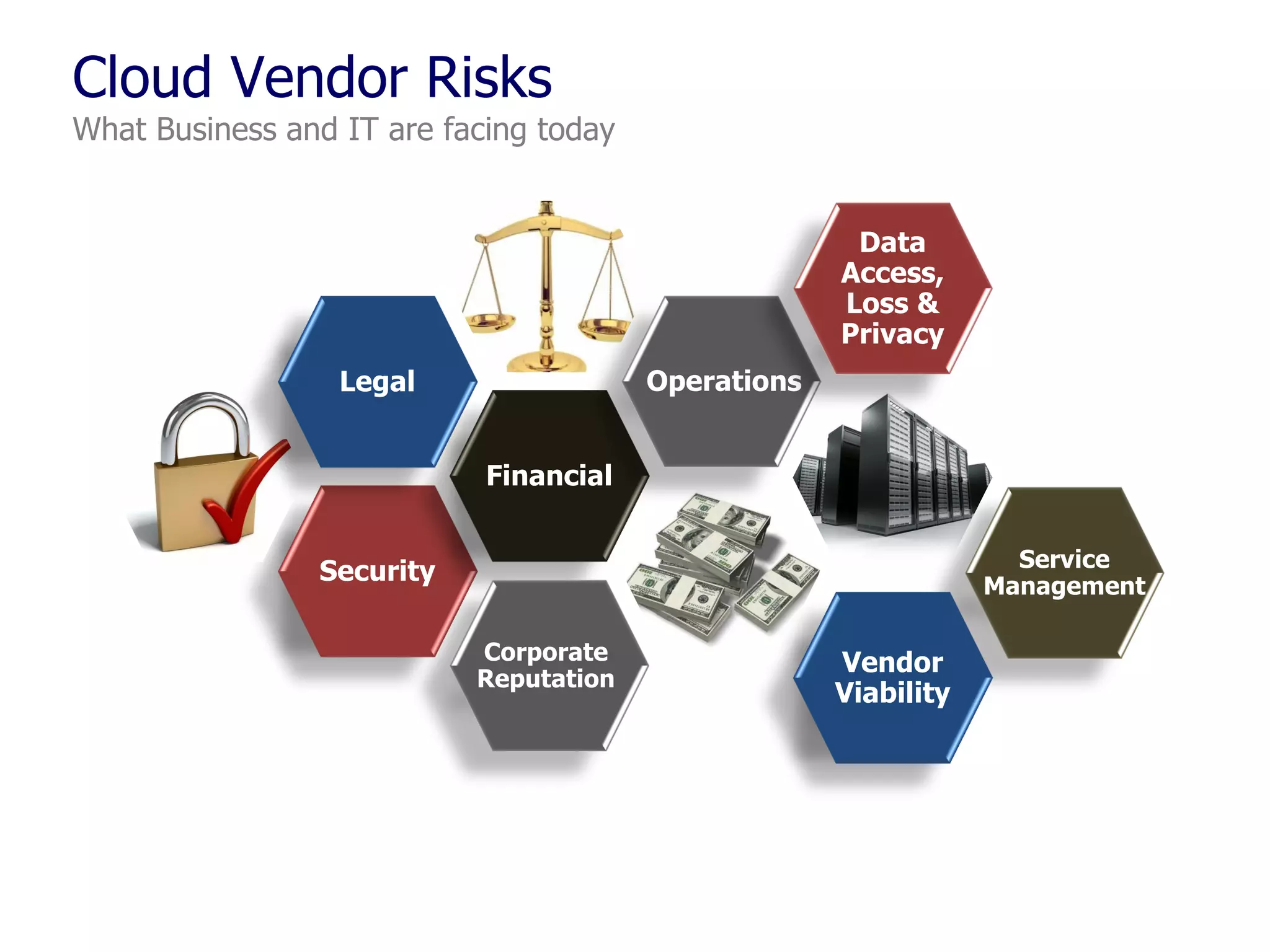
Cloud Vendor Risks

What Business and IT are facing today
Data
Access,
Loss &
Privacy
Operations

Legal
Financial

Service
Management

Security
Corporate
Reputation

Vendor
Viability
Data Security and Risk Management


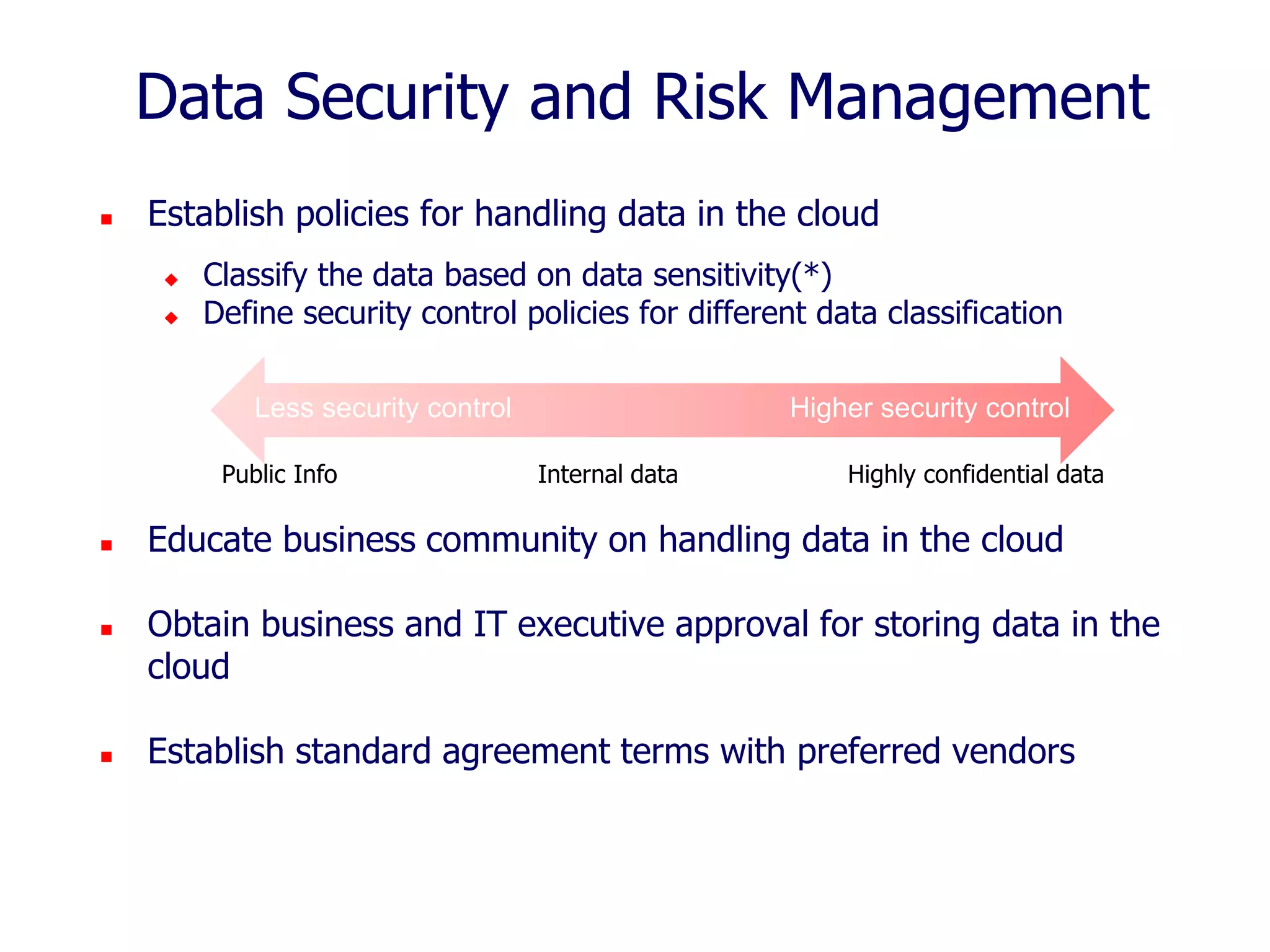
Establish policies for handling data in the cloud



Classify the data based on data sensitivity(*)
Define security control policies for different data classification
Less security control
Public Info







Higher security control
Internal data

Highly confidential data

Educate business community on handling data in the cloud
Obtain business and IT executive approval for storing data in the
cloud
Establish standard agreement terms with preferred vendors
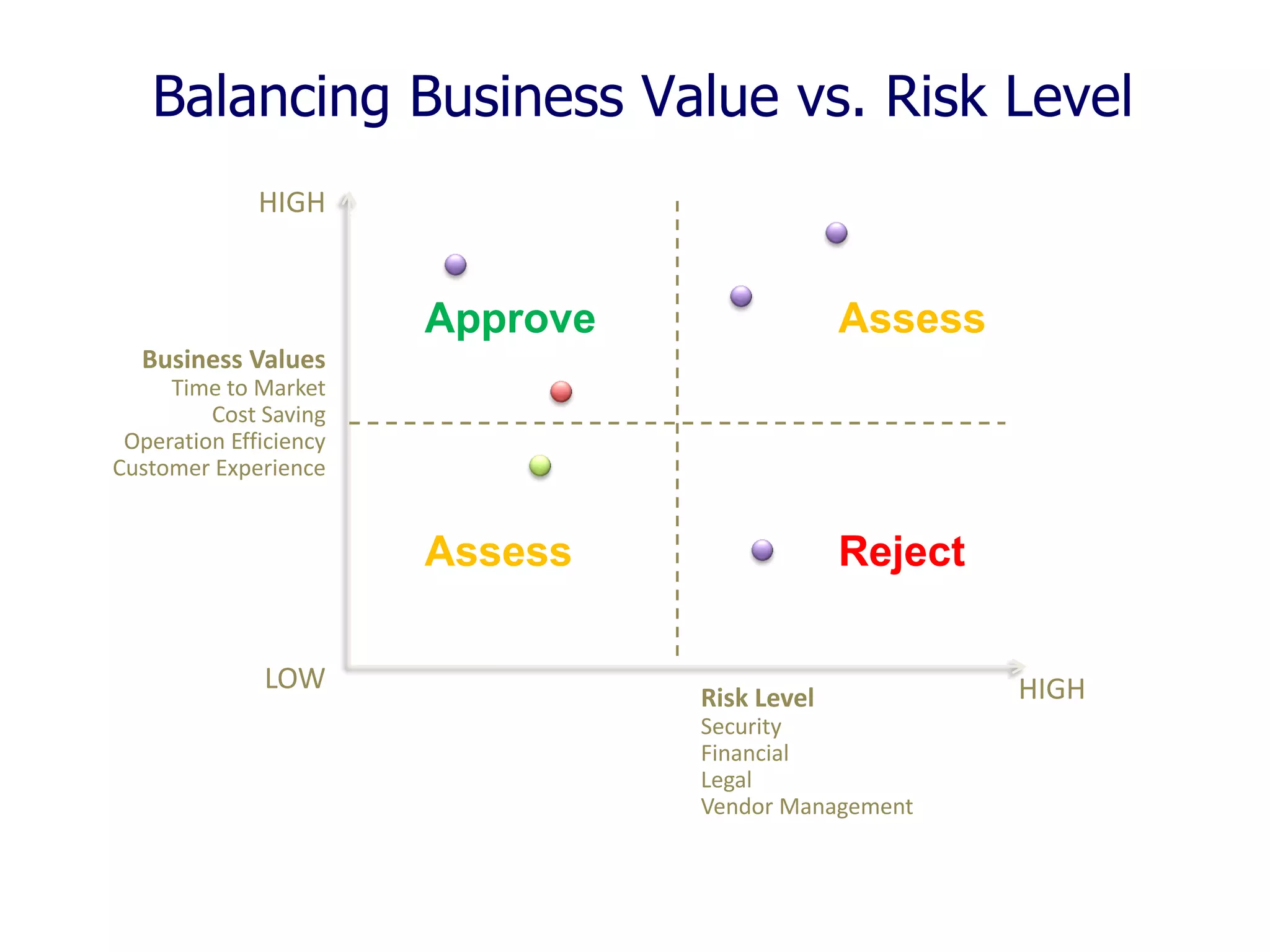
Balancing Business Value vs. Risk Level
HIGH

Approve

Assess

Assess

Reject

Business Values
Time to Market
Cost Saving
Operation Efficiency
Customer Experience

LOW

Risk Level
Security
Financial
Legal
Vendor Management

HIGH
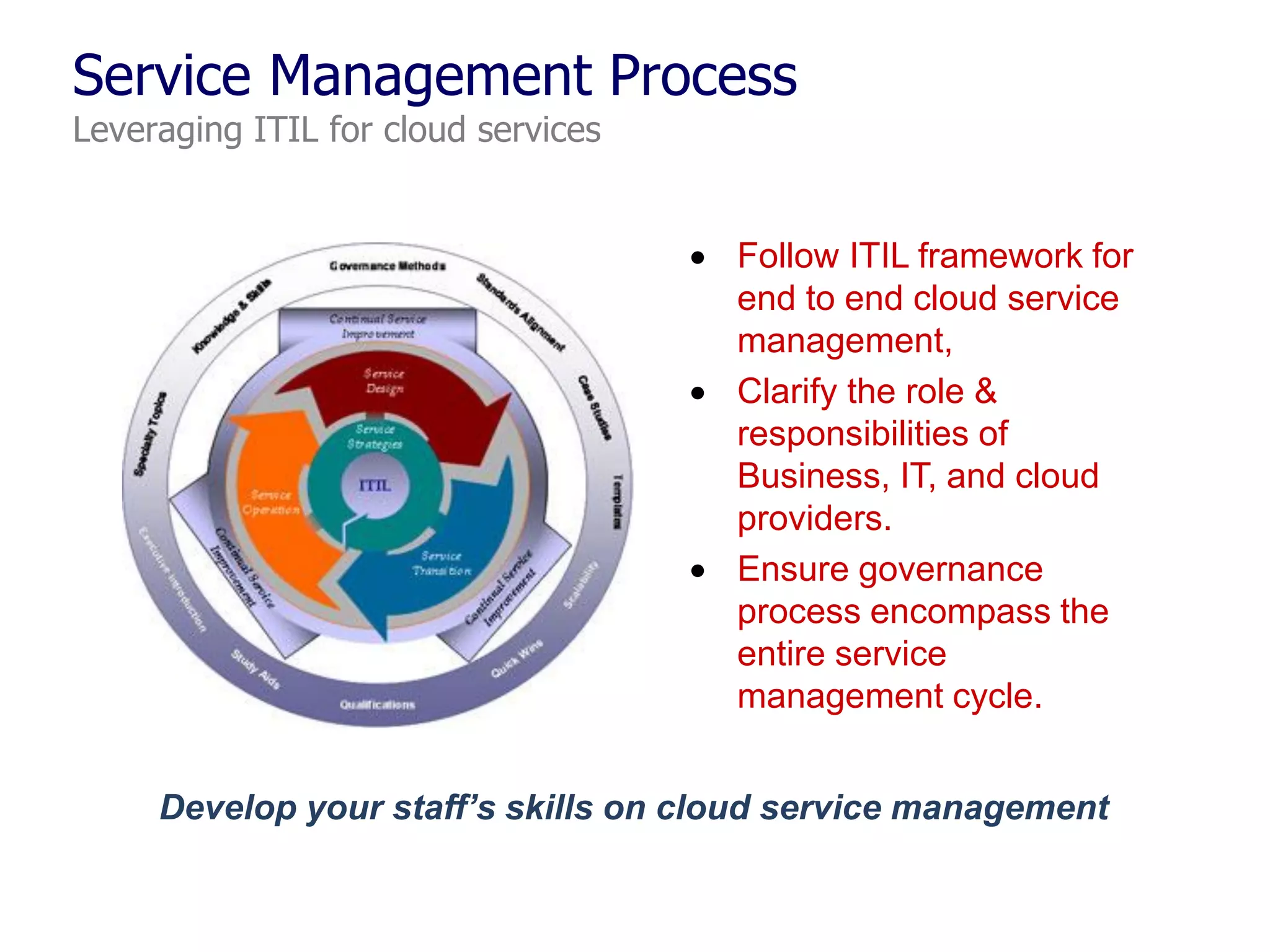
Service Management Process
Leveraging ITIL for cloud services

 Follow ITIL framework for
end to end cloud service
management,
 Clarify the role &
responsibilities of
Business, IT, and cloud
providers.
 Ensure governance
process encompass the
entire service
management cycle.
Develop your staff’s skills on cloud service management
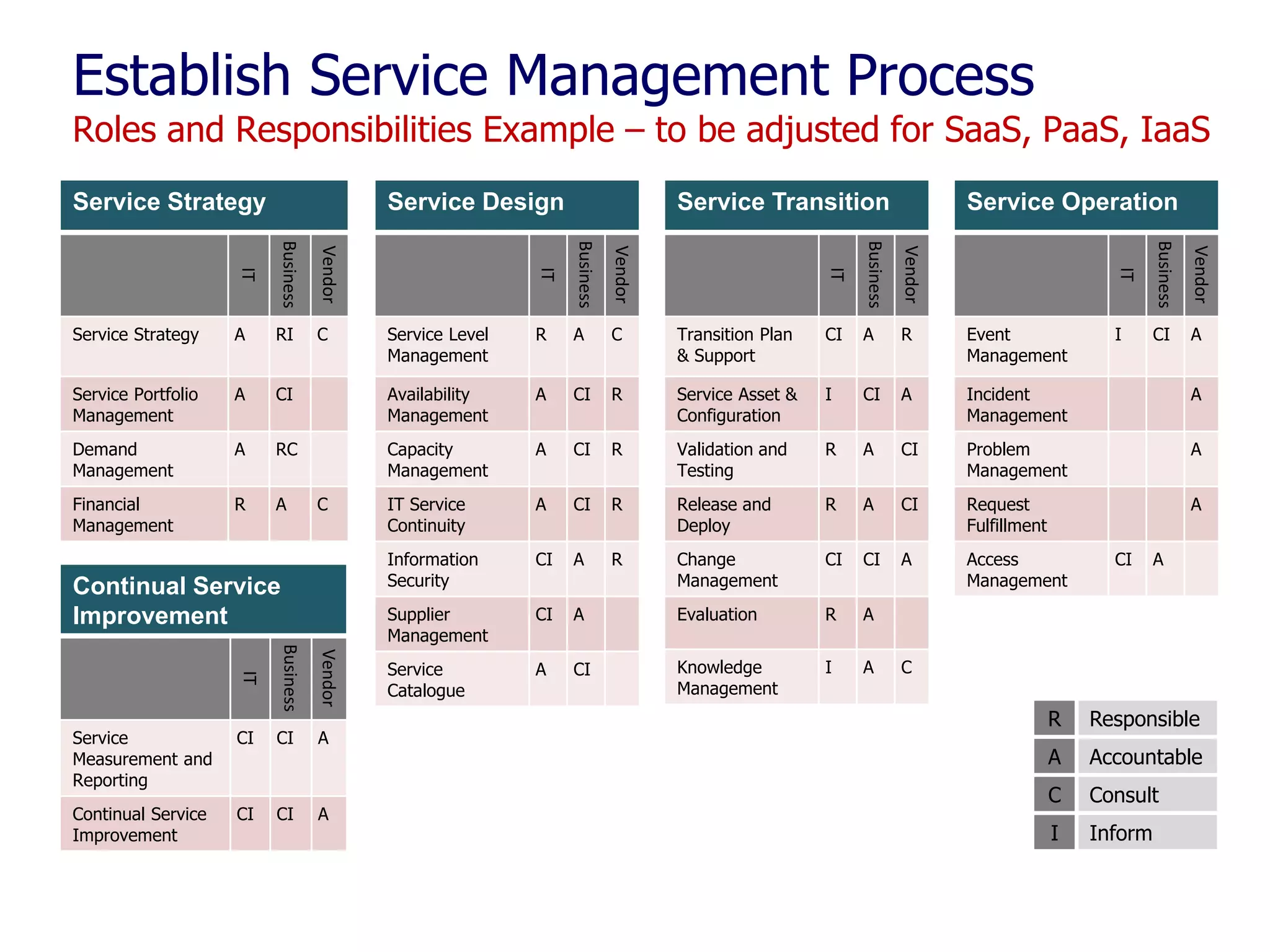
Establish Service Management Process

Roles and Responsibilities Example – to be adjusted for SaaS, PaaS, IaaS
Service Strategy

Service Design

Vendor

Service Portfolio
Management

A

Demand
Management
Financial
Management

Service Level
Management

R

A

C

Transition Plan
& Support

CI

A

R

Event
Management

CI

Availability
Management

A

CI

R

Service Asset &
Configuration

I

CI

A

Incident
Management

A

A

RC

Capacity
Management

A

CI

R

Validation and
Testing

R

A

CI

Problem
Management

A

R

A

IT Service
Continuity

A

CI

R

Release and
Deploy

R

A

CI

Request
Fulfillment

A

Information
Security

CI

A

R

Change
Management

CI

CI

A

Access
Management

Supplier
Management

CI

A

Evaluation

R

A

Service
Catalogue

A

CI

Knowledge
Management

I

A

C

Continual Service
Improvement
IT

Business

Vendor

Service
Measurement and
Reporting

CI

CI

A

Continual Service
Improvement

CI

CI

A

Vendor

Business

C

Business

IT

RI

IT

Vendor

Vendor

Business

Business

A

Service Operation

IT

IT
Service Strategy

Service Transition

I

CI

A

CI

A

C

R

Responsible

A

Accountable

C

Consult

I

Inform
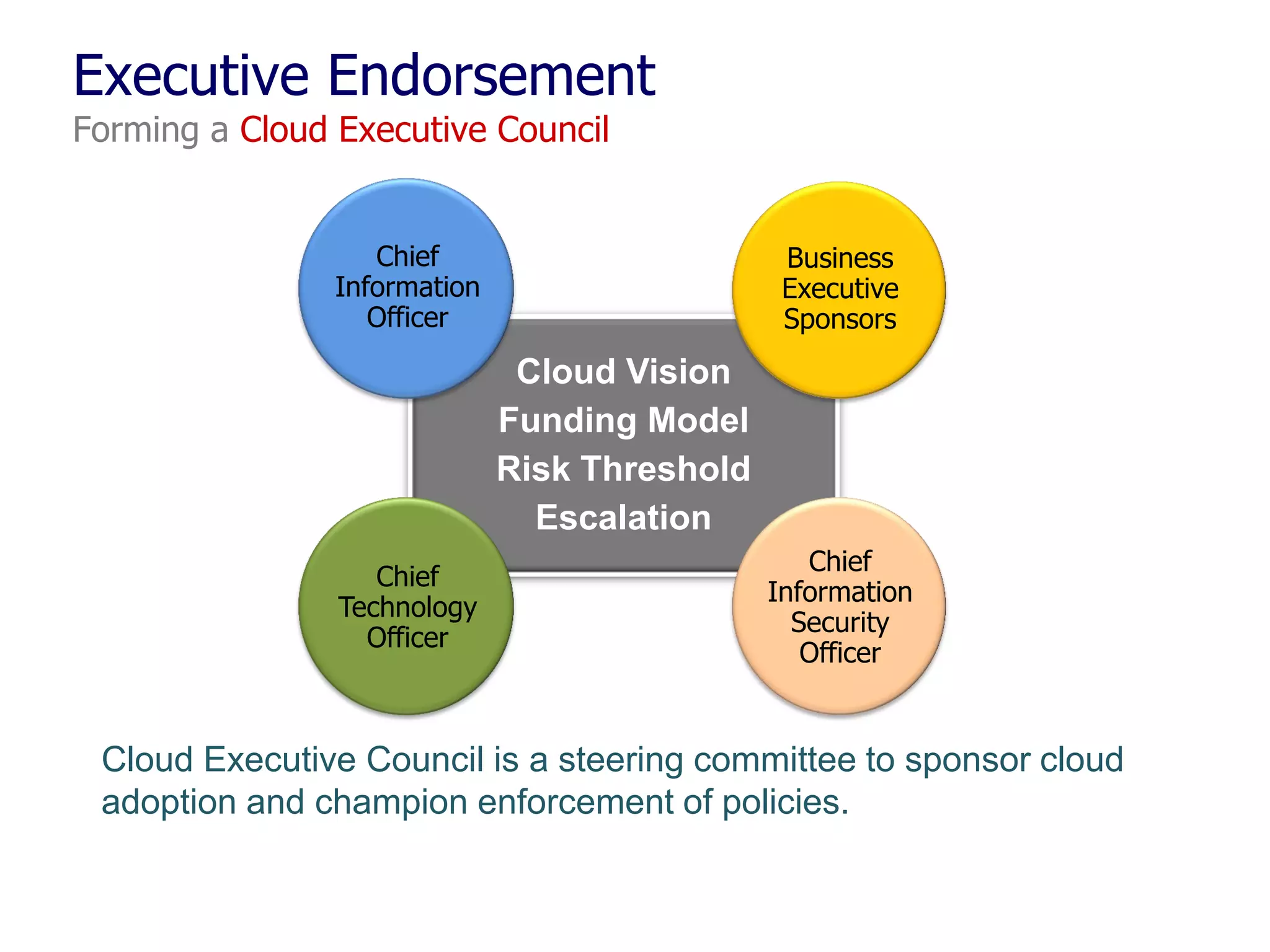
Executive Endorsement
Forming a Cloud Executive Council

Chief
Information
Officer

Business
Executive
Sponsors

Cloud Vision
Funding Model
Risk Threshold
Escalation
Chief
Technology
Officer

Chief
Information
Security
Officer

Cloud Executive Council is a steering committee to sponsor cloud
adoption and champion enforcement of policies.
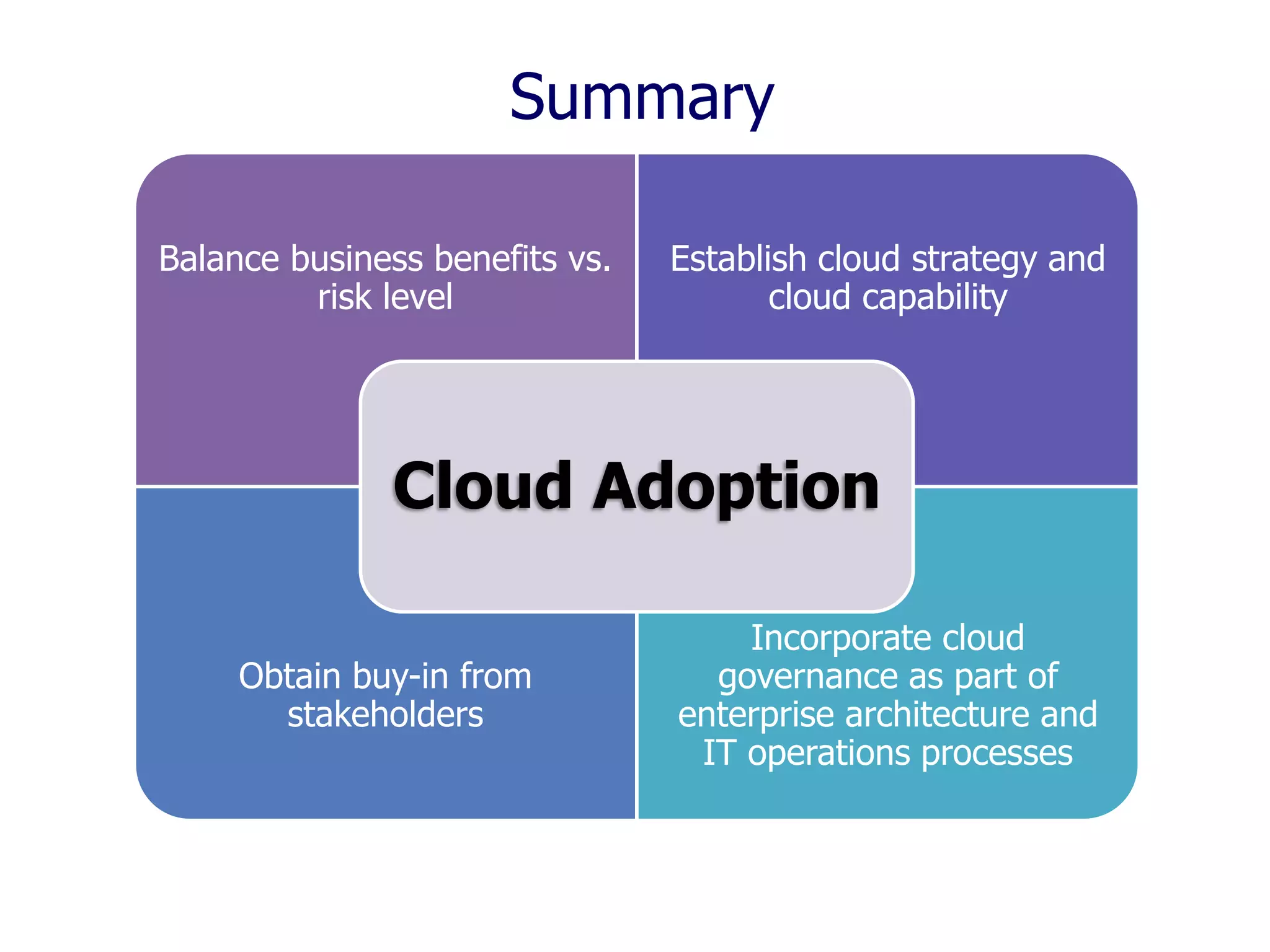
Summary
Balance business benefits vs.
risk level

Establish cloud strategy and
cloud capability

Cloud Adoption
Obtain buy-in from
stakeholders

Incorporate cloud
governance as part of
enterprise architecture and
IT operations processes
Thank you!

Caroline Hsieh
Email: clhsieh@yahoo.com
www.linkedin.com/in/carolinehsieh

CarolineLHsieh

Cloud Adoption - Journey of IT Service Management

  • 1.
    Cloud Adoption – Journeyof IT Service Management CIO San Francisco Summit Dec 4, 2013 Caroline Hsieh
  • 2.
    Cloud Adoption –How to Get There Governance structure Architecture strategies to identify cloud capabilities to enable business Selection criteria to determine preferred cloud vendors Risk-management process Service management process for cloud computing following the ITIL model Executive Endorsement
  • 3.
    Why Cloud Governance? Opportunity Business Growth Threat  Cost Savings  Minimize vendor proliferation  Security Risks  Speed  Reduce Corporate Risk  Service Management  Consistently Secure Data Cloud Governance Reap the benefits of cloud while….  Minimize vendor proliferation  Reduce Corporate Risk  Consistently Secure Data Quickly and Safely
  • 4.
    Cloud Governance Structure Forminga Cloud Governance Body To enable business to rapidly adopt cloud solutions while minimizing data security risks with cloud vendors      Define cloud strategies and maintain cloud capabilities Establish selection criteria to minimize proliferation of vendors Perform risk assessment on data and cloud vendors Educate business users on how to handle data in the cloud Enforce data security and privacy policies     Enterprise Architecture IT Operations Vendor Management Purchasing     Information Security Corporate Compliance Legal Business Representatives Cloud Governance Committee is a continuous working body to define and maintain cloud usage policies and standards.
  • 5.
    Architecture Strategy andCloud Capabilities Step 1 - Identify business demand across company SaaS Sales IaaS • Opportunity Management • Quoting • Live Chat • Account Mgmt. • Sales Compensation • Content Management • Partner Relationship Management Marketing • Social Marketing • Campaign Management • Live Chat Tech Support • Content Management • Live Chat Education & Training • Virtual Classroom • Live Chat • Knowledge Base • Compliance Education Professional Services • Project Accounting • Online Collaboration • Service Resource Planning HR • Human Resource Management • Applicant Tracking • Talent Management • Payroll Legal • Contract Management • Online Collaboration • Dev./QA Lab • Storage • Database Marketing • Microsite Hosting • Content Management • Customer Survey • Lead Management • Online Collaboration • Case Management • Knowledge Base • Account Mgmt. Engineering PaaS Engineering • Dev./QA Lab • Database • Integrated Development Environment  Moderate usage of cloud  Heavy usage of cloud
  • 6.
    Architecture Strategy andCloud Capabilities Step 2 – Select Preferred Cloud Vendors  Identify selection criteria  Cost  Support  Talent acquisition  Integration  Web services, APIs  Single sign on  Data replication  UI customization  Support mobile devices  Multi-factor auth.  3rd party certification  Data loss prevention  Data retention policy  Access management  Data encryption  Data segregation  SLA (uptime & support)  Monitoring  Vendor viability  Billing  Redundancy/DR  Incident notification  Data privacy  Indemnification  eDiscovery  Architecture  Security  Operation  Legal  Create vendor checklists to incorporate the identified criteria  Select vendor based on functionality fit and adherence to the criteria
  • 7.
    Architecture Strategy andCloud Capabilities Step 3 – Map business demand to vendor capabilities Examples Account Management Pipeline Management Lead Management Performance Management Talent Management Virtual Machine Preferred CRM SaaS Vendor Storage Web Hosting Database Preferred HRMS SaaS Vendor Development Platform Preferred PaaS Vendor Workforce Management Campaign Management Event Management Lead Generation Content Management Online Collaboration Preferred IaaS Vendor Preferred Marketing Automation SaaS Vendor Preferred Content Management SaaS Vendor Leverage preferred vendors to      Minimize vendor proliferations Reduce risk exposure Consolidate buying power to get best pricing Negotiate the terms to best protect the corporation Standardize technology and skillset required to support the cloud solutions
  • 8.
    Cloud Vendor Risks WhatBusiness and IT are facing today Data Access, Loss & Privacy Operations Legal Financial Service Management Security Corporate Reputation Vendor Viability
  • 9.
    Data Security andRisk Management  Establish policies for handling data in the cloud   Classify the data based on data sensitivity(*) Define security control policies for different data classification Less security control Public Info    Higher security control Internal data Highly confidential data Educate business community on handling data in the cloud Obtain business and IT executive approval for storing data in the cloud Establish standard agreement terms with preferred vendors
  • 10.
    Balancing Business Valuevs. Risk Level HIGH Approve Assess Assess Reject Business Values Time to Market Cost Saving Operation Efficiency Customer Experience LOW Risk Level Security Financial Legal Vendor Management HIGH
  • 11.
    Service Management Process LeveragingITIL for cloud services  Follow ITIL framework for end to end cloud service management,  Clarify the role & responsibilities of Business, IT, and cloud providers.  Ensure governance process encompass the entire service management cycle. Develop your staff’s skills on cloud service management
  • 12.
    Establish Service ManagementProcess Roles and Responsibilities Example – to be adjusted for SaaS, PaaS, IaaS Service Strategy Service Design Vendor Service Portfolio Management A Demand Management Financial Management Service Level Management R A C Transition Plan & Support CI A R Event Management CI Availability Management A CI R Service Asset & Configuration I CI A Incident Management A A RC Capacity Management A CI R Validation and Testing R A CI Problem Management A R A IT Service Continuity A CI R Release and Deploy R A CI Request Fulfillment A Information Security CI A R Change Management CI CI A Access Management Supplier Management CI A Evaluation R A Service Catalogue A CI Knowledge Management I A C Continual Service Improvement IT Business Vendor Service Measurement and Reporting CI CI A Continual Service Improvement CI CI A Vendor Business C Business IT RI IT Vendor Vendor Business Business A Service Operation IT IT Service Strategy Service Transition I CI A CI A C R Responsible A Accountable C Consult I Inform
  • 13.
    Executive Endorsement Forming aCloud Executive Council Chief Information Officer Business Executive Sponsors Cloud Vision Funding Model Risk Threshold Escalation Chief Technology Officer Chief Information Security Officer Cloud Executive Council is a steering committee to sponsor cloud adoption and champion enforcement of policies.
  • 14.
    Summary Balance business benefitsvs. risk level Establish cloud strategy and cloud capability Cloud Adoption Obtain buy-in from stakeholders Incorporate cloud governance as part of enterprise architecture and IT operations processes
  • 15.
    Thank you! Caroline Hsieh Email:clhsieh@yahoo.com www.linkedin.com/in/carolinehsieh CarolineLHsieh