CHRONIC HEPATITIS Hepatic inflammation and necrosis continue for at least 6 months Classification: cause, grade, stage
By Cause Hepatitis B Hepatitis B and D Hepatitis C Autoimmune Hepatitis Drug-associated chronic hepatitis Cryptogenic hepatitis
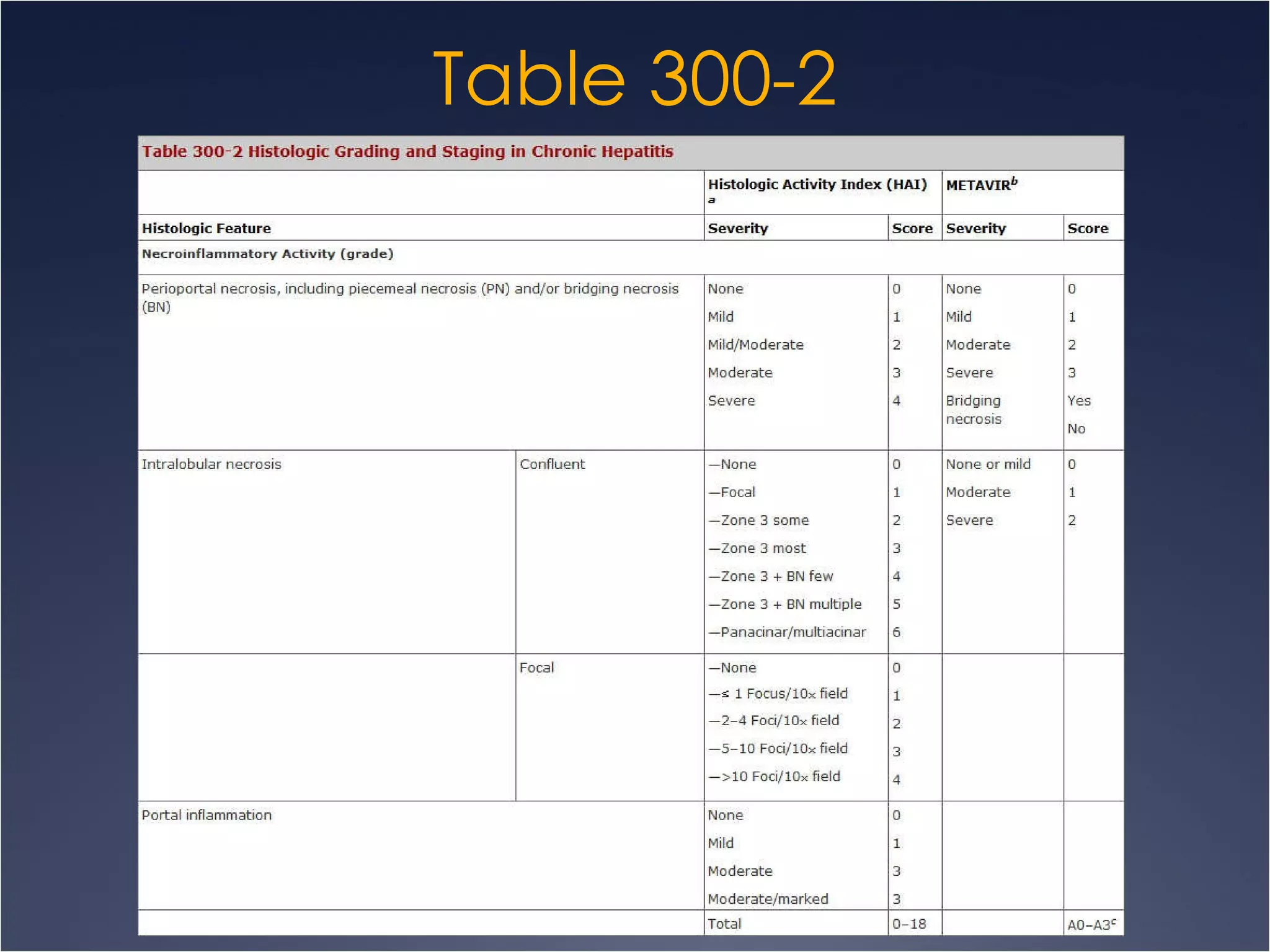
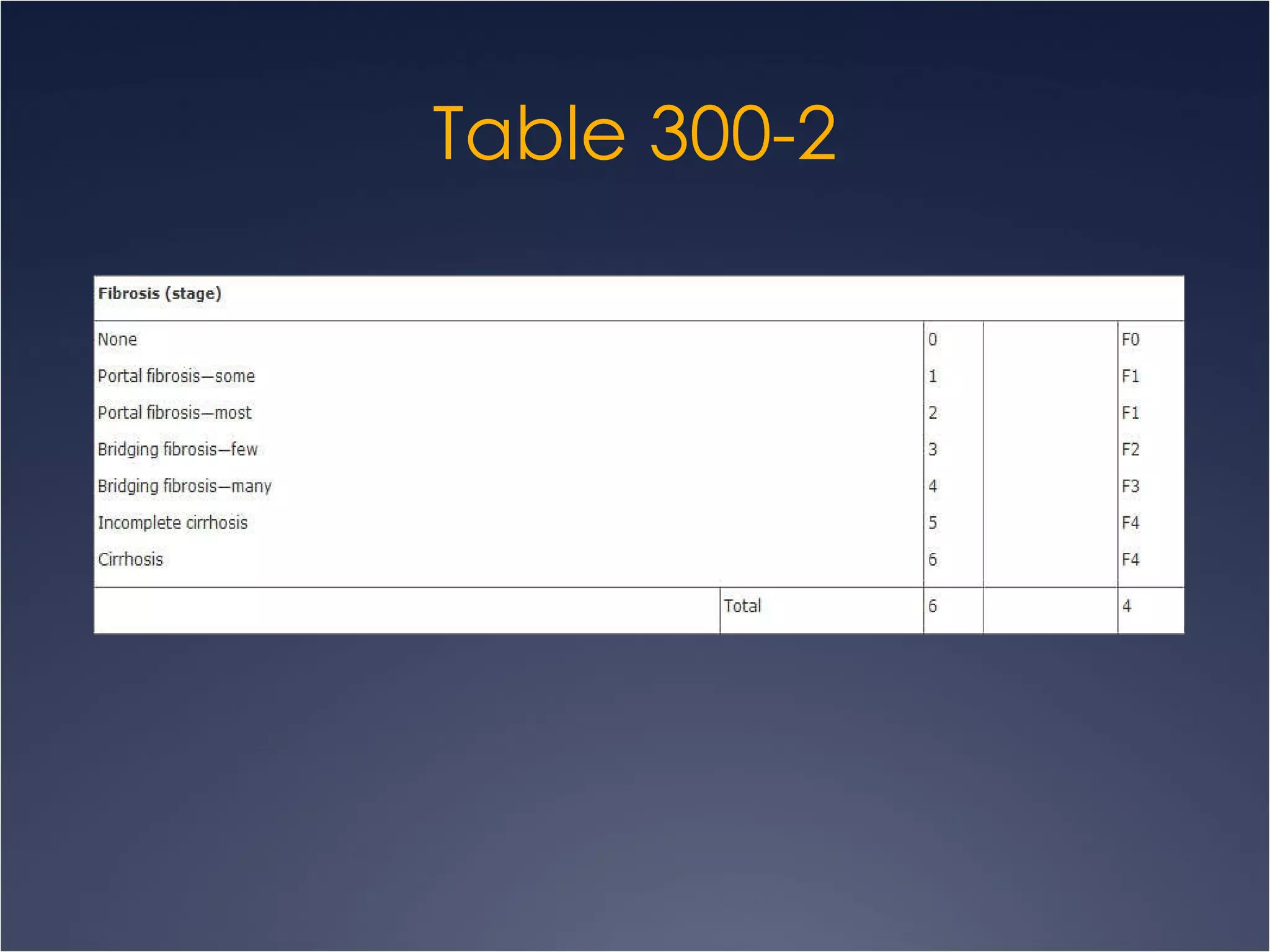
By Grade Piecemeal necrosis – periportal necrosis and disruption of the limiting plate Bridging necrosis –confluent necrosis that forms bridges between portal tracts and central vein Degree of hepatocyte degeneration Portal inflammation Scoring Indices: HAI, METAVIR
Table 300-2
Table 300-2
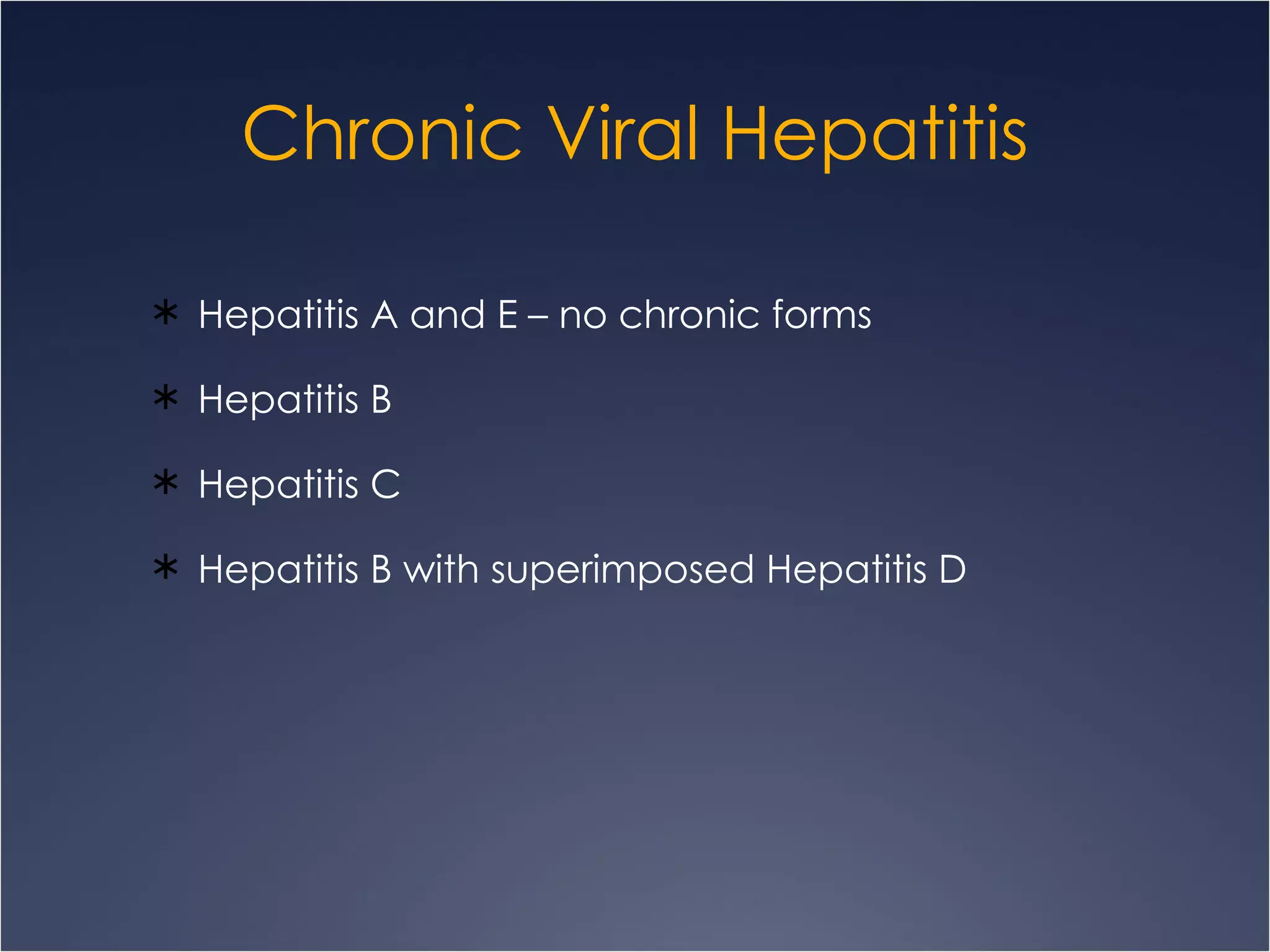
Chronic Viral Hepatitis Hepatitis A and E – no chronic forms Hepatitis B Hepatitis C Hepatitis B with superimposed Hepatitis D
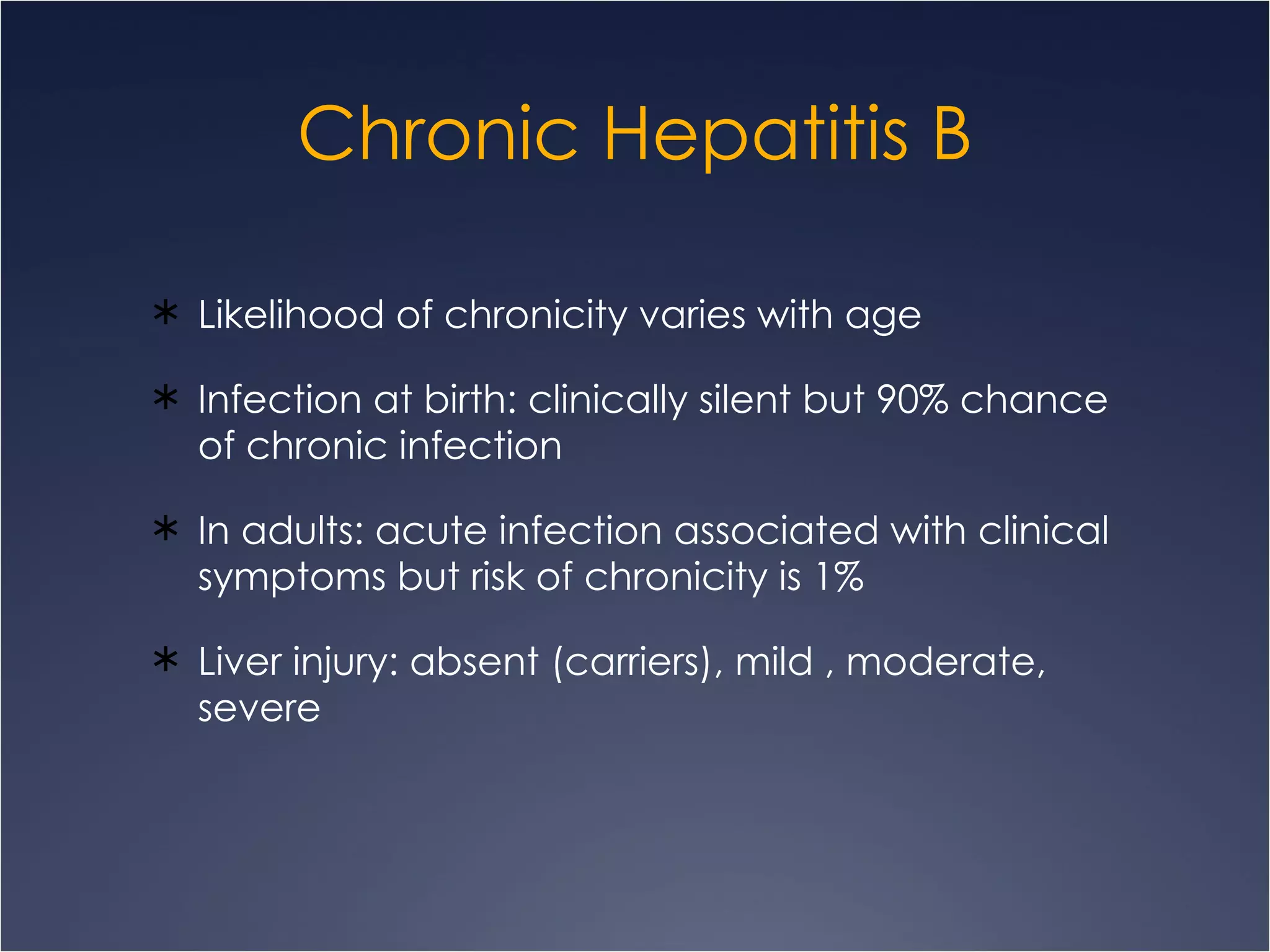
Chronic Hepatitis B Likelihood of chronicity varies with age Infection at birth: clinically silent but 90% chance of chronic infection In adults: acute infection associated with clinical symptoms but risk of chronicity is 1% Liver injury: absent (carriers), mild , moderate, severe
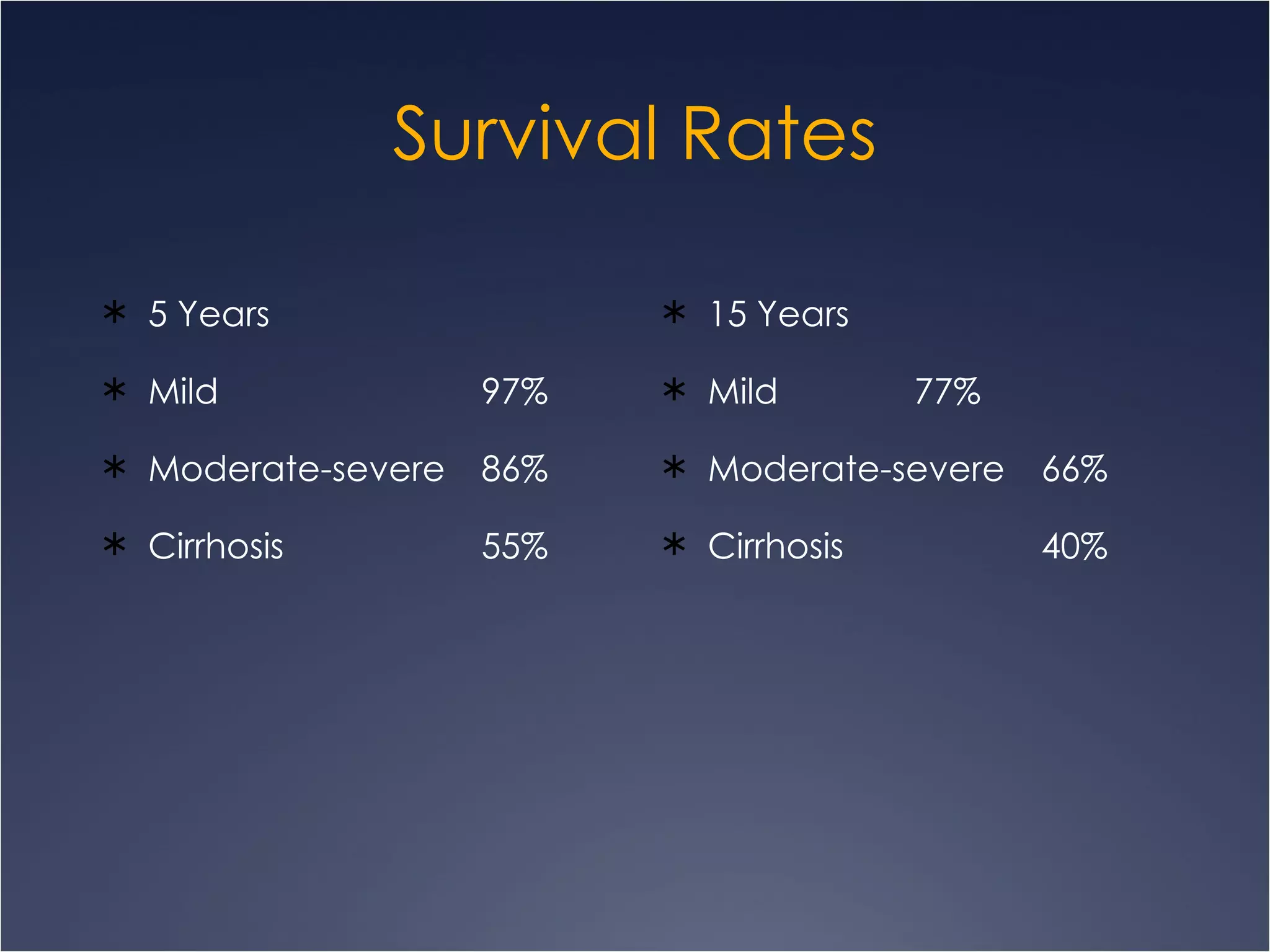
Survival Rates 5 Years Mild  97% Moderate-severe 86% Cirrhosis 55%  15 Years Mild 77% Moderate-severe 66% Cirrhosis 40%
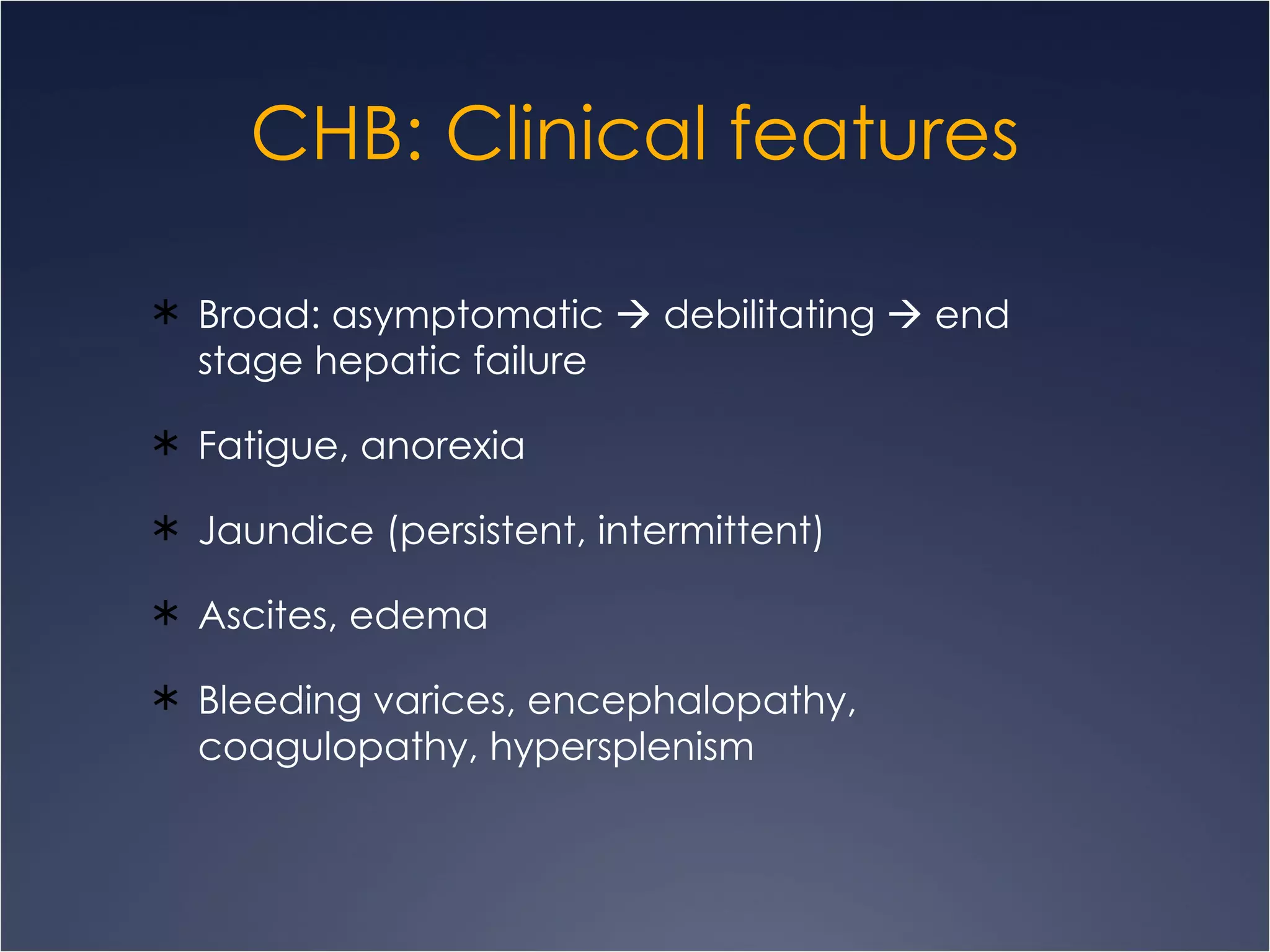
CHB: Clinical features Broad: asymptomatic    debilitating    end stage hepatic failure Fatigue, anorexia Jaundice (persistent, intermittent) Ascites, edema Bleeding varices, encephalopathy, coagulopathy, hypersplenism
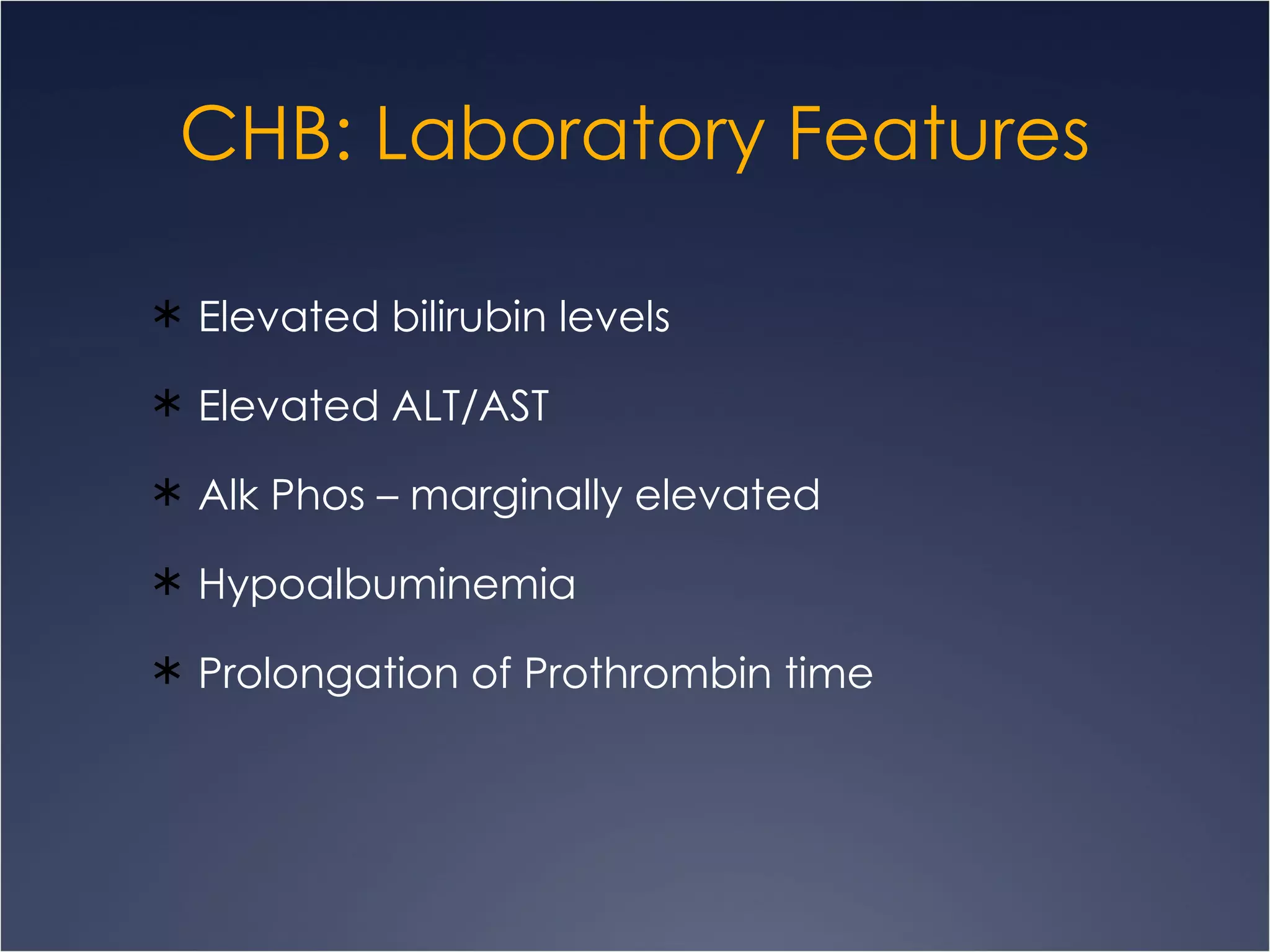
CHB: Laboratory Features Elevated bilirubin levels Elevated ALT/AST Alk Phos – marginally elevated Hypoalbuminemia Prolongation of Prothrombin time
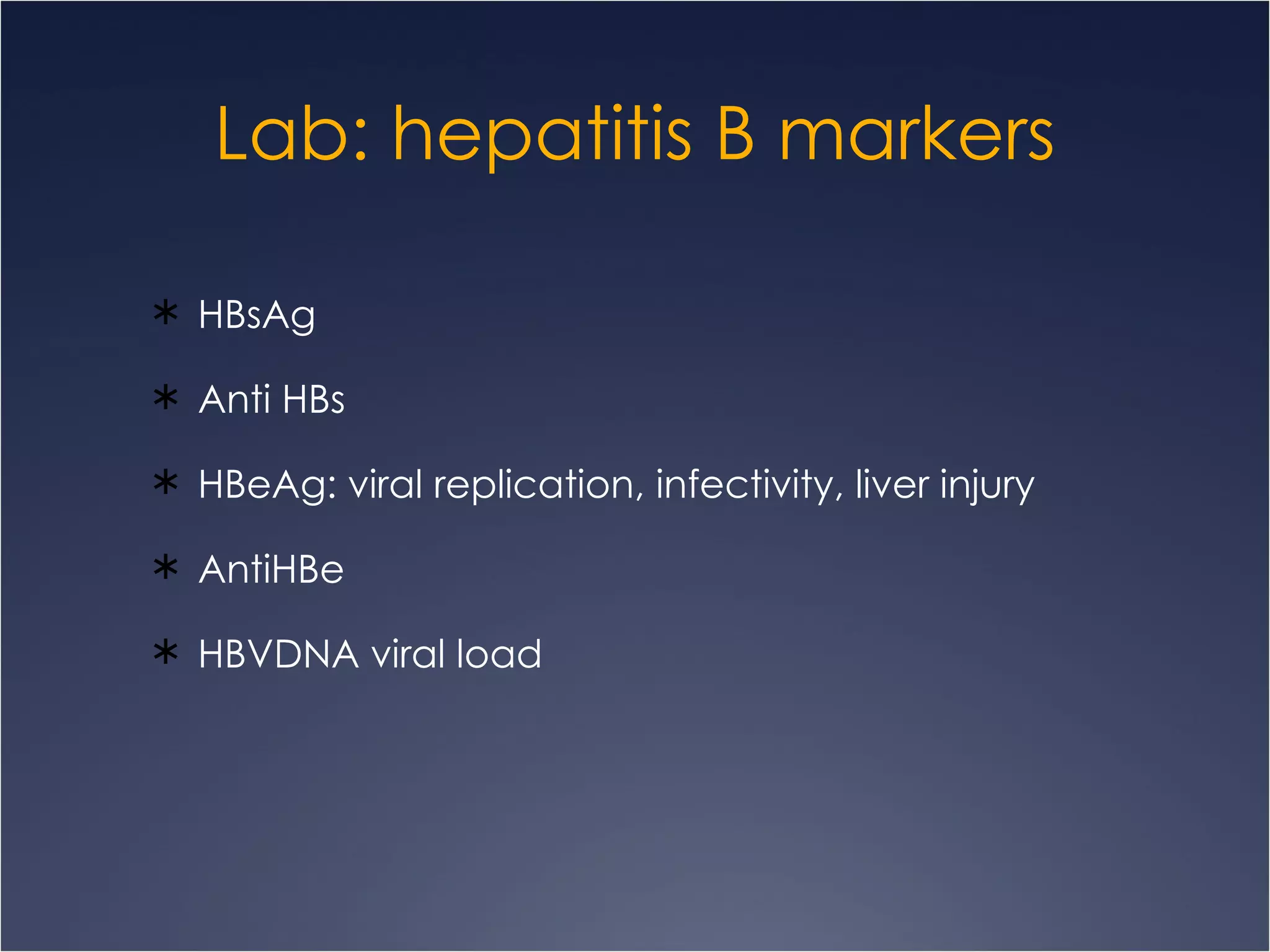
Lab: hepatitis B markers HBsAg Anti HBs HBeAg: viral replication, infectivity, liver injury AntiHBe HBVDNA viral load
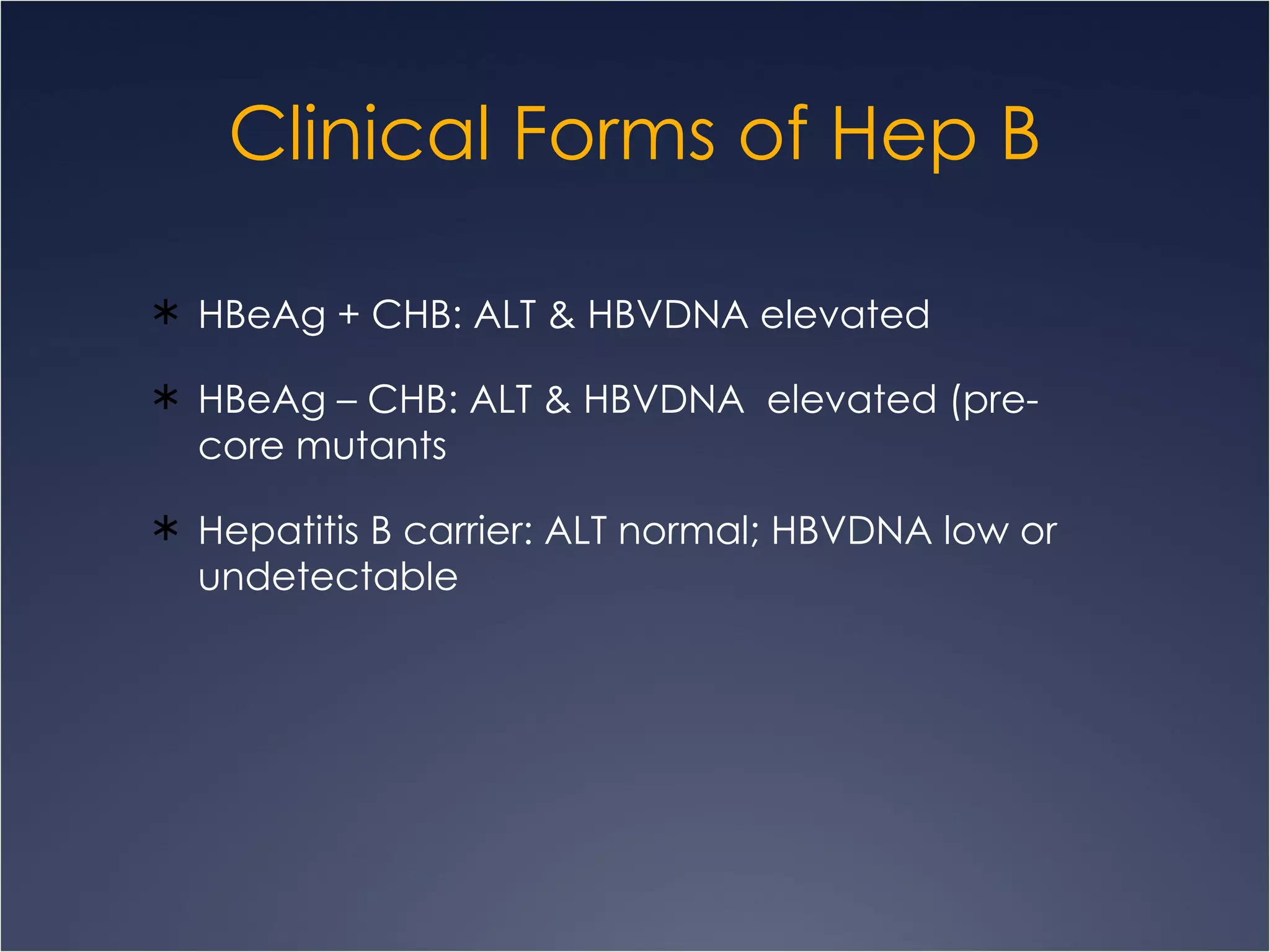
Clinical Forms of Hep B HBeAg + CHB: ALT & HBVDNA elevated HBeAg – CHB: ALT & HBVDNA  elevated (pre-core mutants Hepatitis B carrier: ALT normal; HBVDNA low or undetectable
 

Chronic hep b

  • 1.
    CHRONIC HEPATITIS Hepaticinflammation and necrosis continue for at least 6 months Classification: cause, grade, stage
  • 2.
    By Cause HepatitisB Hepatitis B and D Hepatitis C Autoimmune Hepatitis Drug-associated chronic hepatitis Cryptogenic hepatitis
  • 3.
    By Grade Piecemealnecrosis – periportal necrosis and disruption of the limiting plate Bridging necrosis –confluent necrosis that forms bridges between portal tracts and central vein Degree of hepatocyte degeneration Portal inflammation Scoring Indices: HAI, METAVIR
  • 4.
  • 5.
  • 6.
    Chronic Viral HepatitisHepatitis A and E – no chronic forms Hepatitis B Hepatitis C Hepatitis B with superimposed Hepatitis D
  • 7.
    Chronic Hepatitis BLikelihood of chronicity varies with age Infection at birth: clinically silent but 90% chance of chronic infection In adults: acute infection associated with clinical symptoms but risk of chronicity is 1% Liver injury: absent (carriers), mild , moderate, severe
  • 8.
    Survival Rates 5Years Mild 97% Moderate-severe 86% Cirrhosis 55% 15 Years Mild 77% Moderate-severe 66% Cirrhosis 40%
  • 9.
    CHB: Clinical featuresBroad: asymptomatic  debilitating  end stage hepatic failure Fatigue, anorexia Jaundice (persistent, intermittent) Ascites, edema Bleeding varices, encephalopathy, coagulopathy, hypersplenism
  • 10.
    CHB: Laboratory FeaturesElevated bilirubin levels Elevated ALT/AST Alk Phos – marginally elevated Hypoalbuminemia Prolongation of Prothrombin time
  • 11.
    Lab: hepatitis Bmarkers HBsAg Anti HBs HBeAg: viral replication, infectivity, liver injury AntiHBe HBVDNA viral load
  • 12.
    Clinical Forms ofHep B HBeAg + CHB: ALT & HBVDNA elevated HBeAg – CHB: ALT & HBVDNA elevated (pre-core mutants Hepatitis B carrier: ALT normal; HBVDNA low or undetectable
  • 13.