
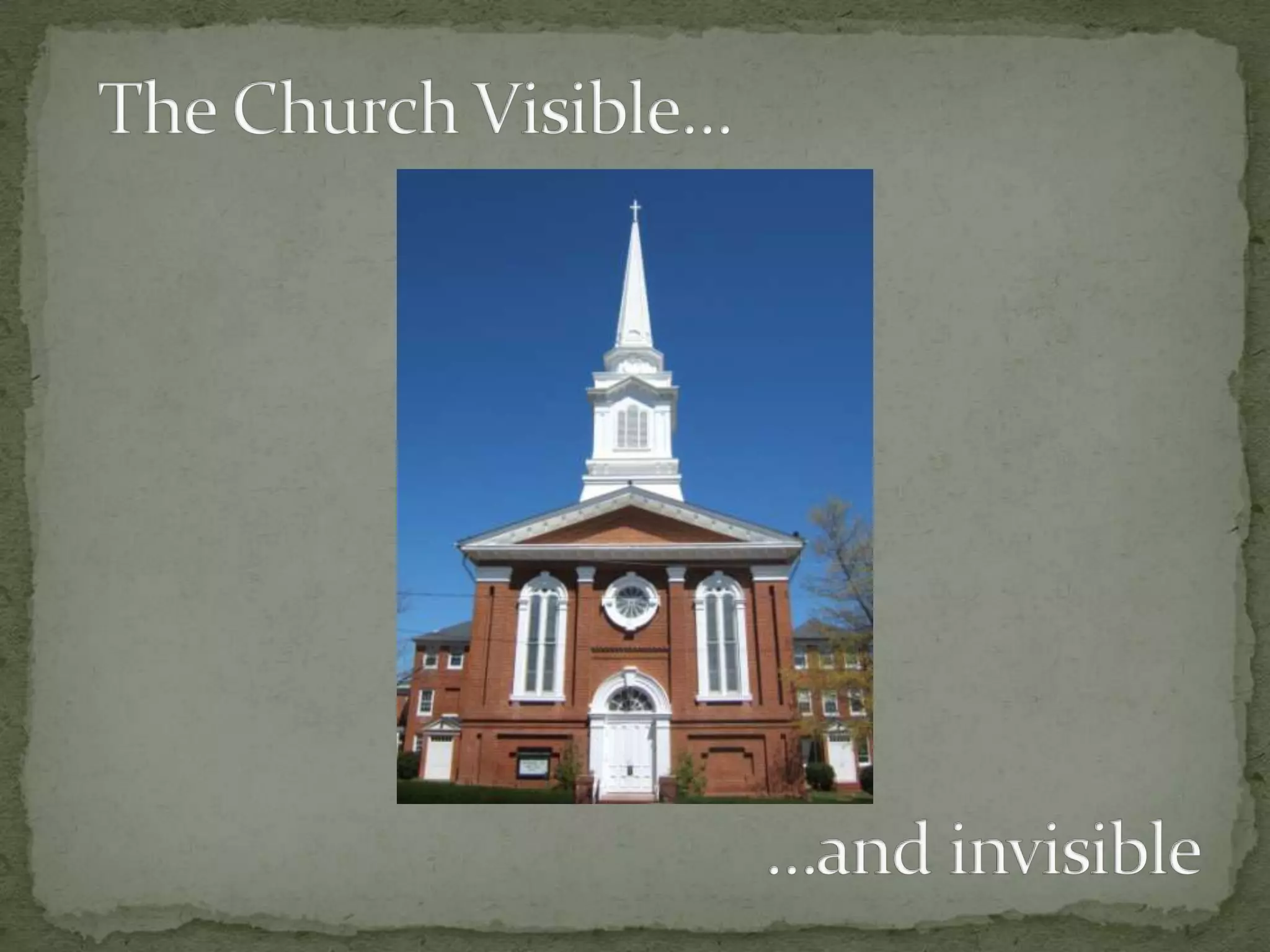
very
A brief history of the church
1.   Introduction             8.    The Reformation (the
2.   The Church Fathers             British Isles)
3.   Creeds, Councils, and    9.    The Puritans
     Heretics                 10.   Colonial America
4.   Eastern Orthodoxy        11.   1st and 2nd Great
5.   Roman Catholicism              Awakenings
6.   The Crusades and Islam   12.   Missionary Movements
7.   The Reformation          13.   To the future
     (Continental Europe)
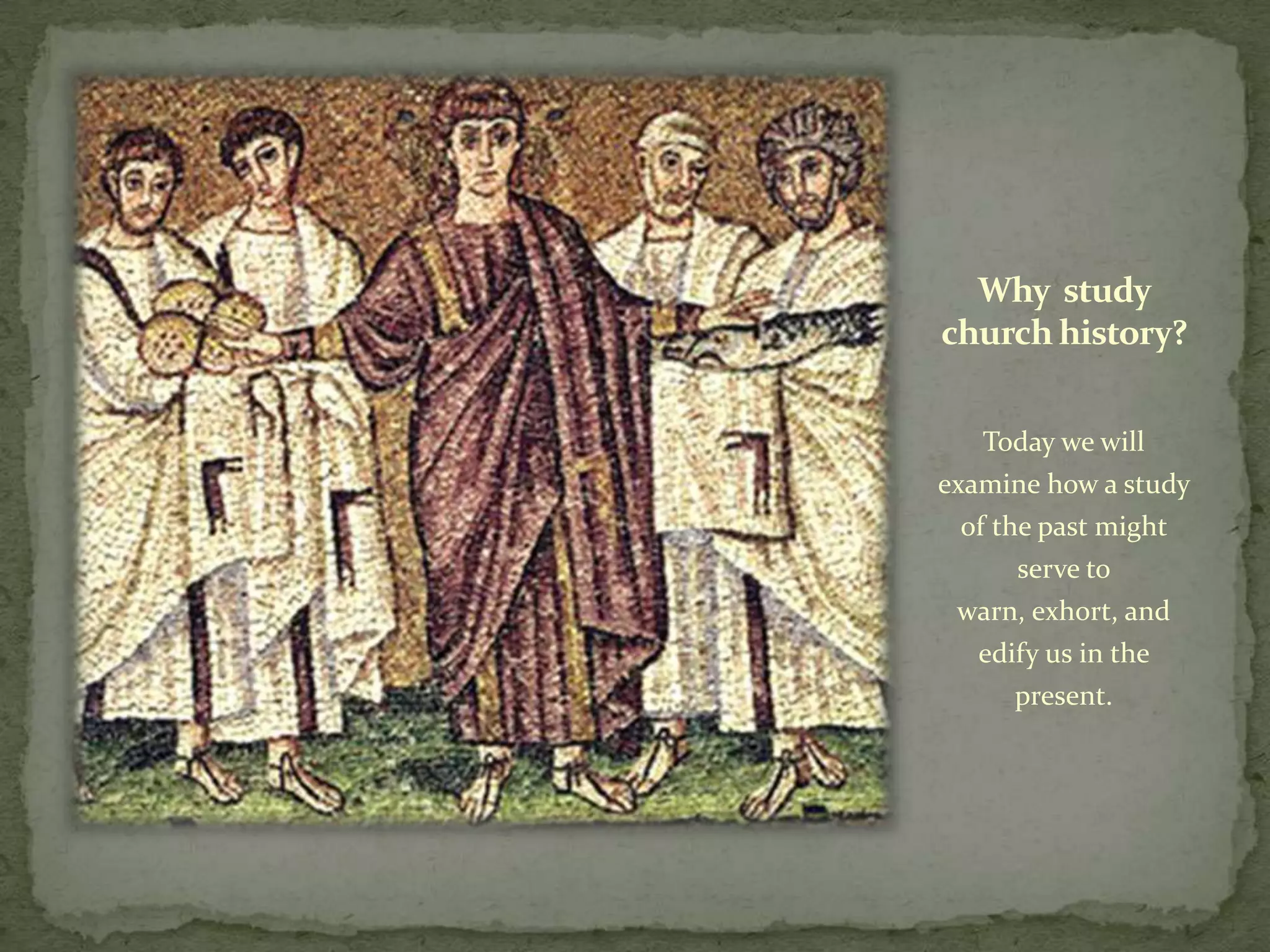
Why study
church history?


   Today we will
examine how a study
 of the past might
      serve to
 warn, exhort, and
   edify us in the
      present.
 The invisible church consists of all believers
  throughout history.
 The visible church is a physical manifestation of the
  invisible church and is flawed.
 We must not evaluate the invisible church according to
  the actions of the visible church.
 A record of God’s
 leading of the
 visible church
   Why is this
   important to
   keep in mind?
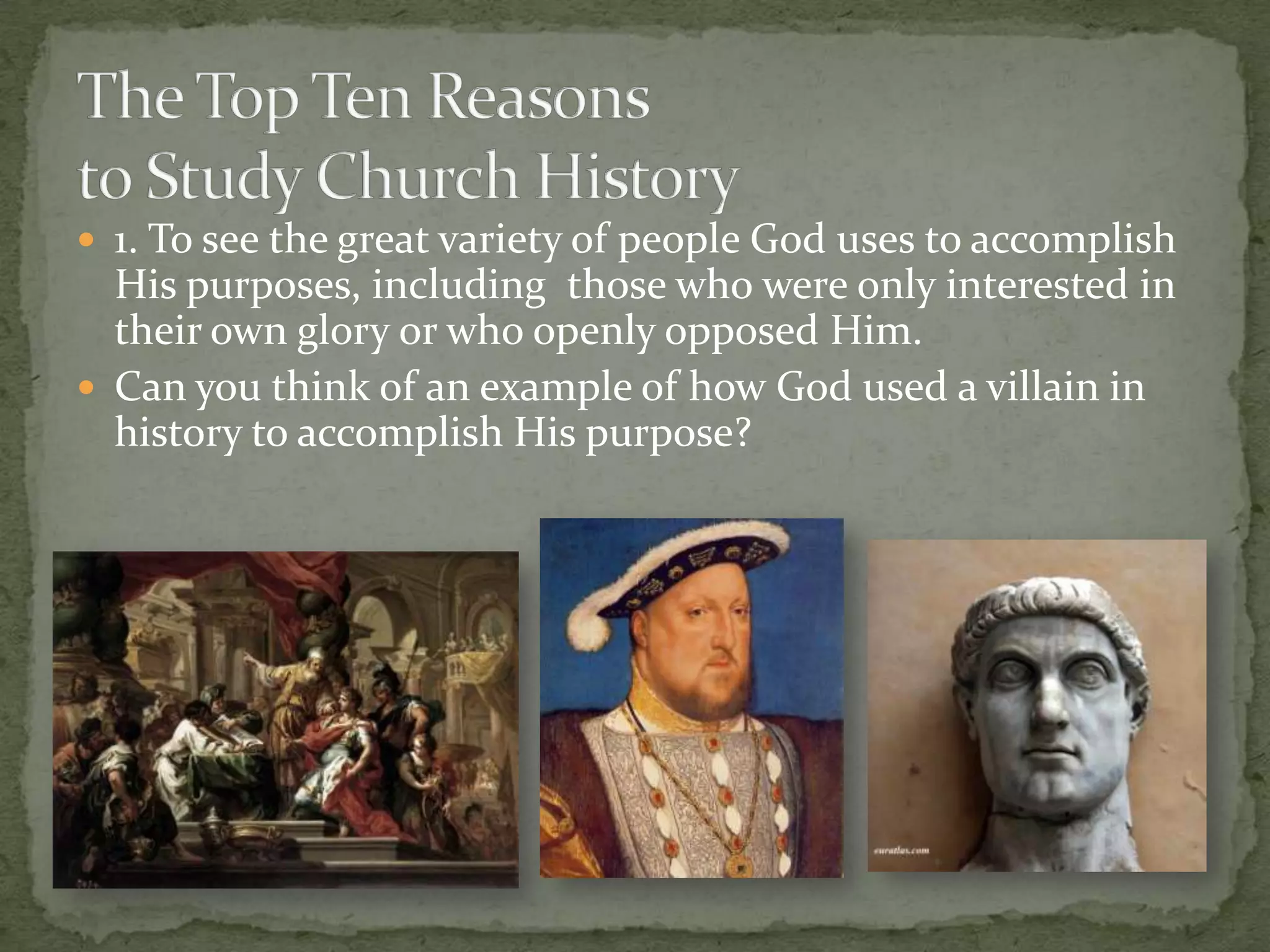
 1. To see the great variety of people God uses to accomplish
  His purposes, including those who were only interested in
  their own glory or who openly opposed Him.
 Can you think of an example of how God used a villain in
  history to accomplish His purpose?
 2. To realize that each generation was a product of its
  own time.
   We must carefully study the historical/cultural context
    before we pass judgment.
   We must not impose our time and culture on the past.
   Every culture has its blind spots; we must work to be
    aware of our own areas of weakness and failing.
   How does this differ from cultural relativism (a view that
    ethical truths depend on the individuals and groups holding them)?
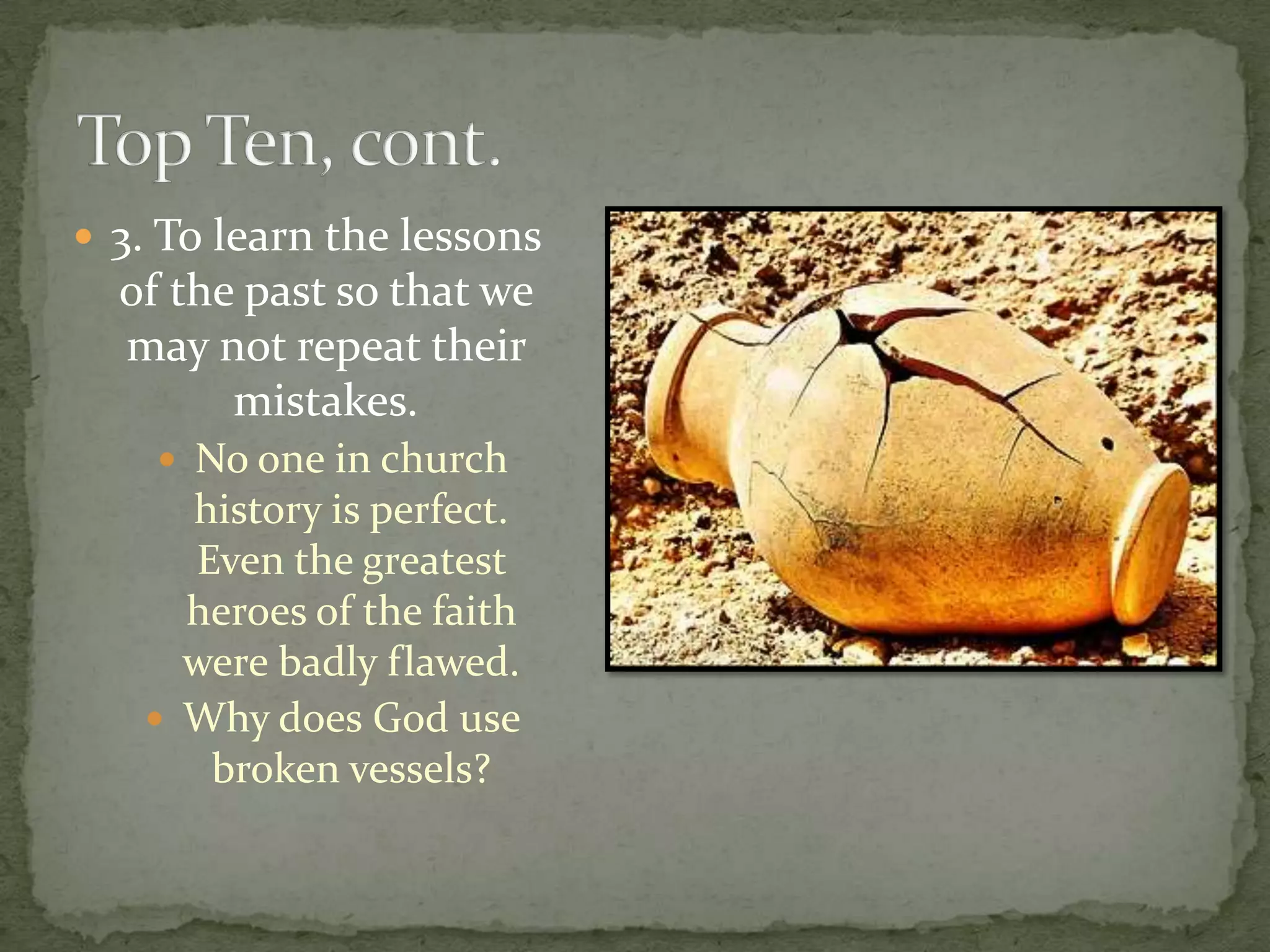
 3. To learn the lessons
  of the past so that we
  may not repeat their
        mistakes.
     No one in church
     history is perfect.
     Even the greatest
     heroes of the faith
     were badly flawed.
    Why does God use
      broken vessels?
 4. To recognize our part in the flow of God’s
  redemptive history and its effect upon us.
   In Acts, we see the beginning of the church.
   In Revelation, we see the end—the church triumphant.
   We are in between these two points.
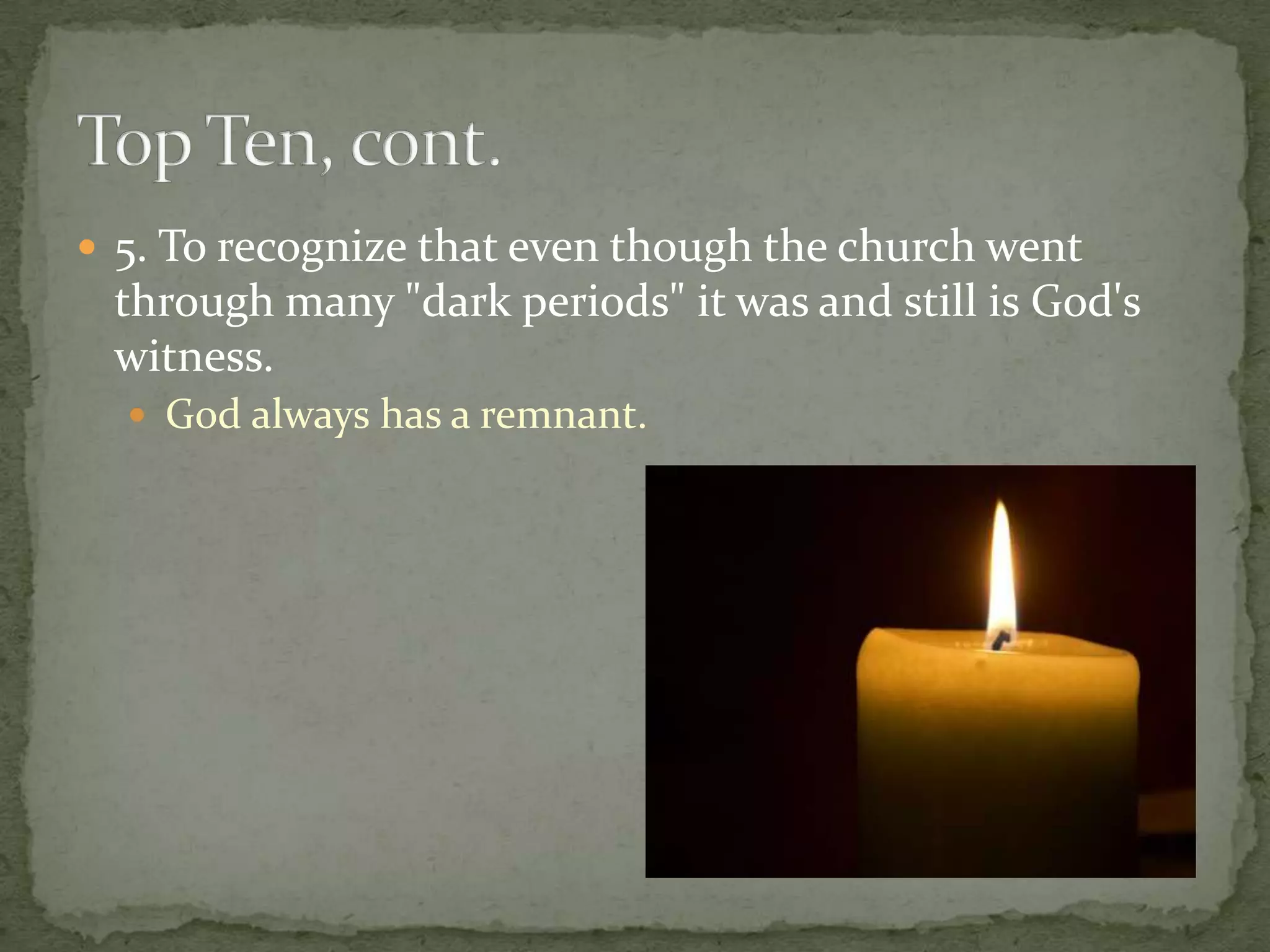
 5. To recognize that even though the church went
 through many "dark periods" it was and still is God's
 witness.
   God always has a remnant.
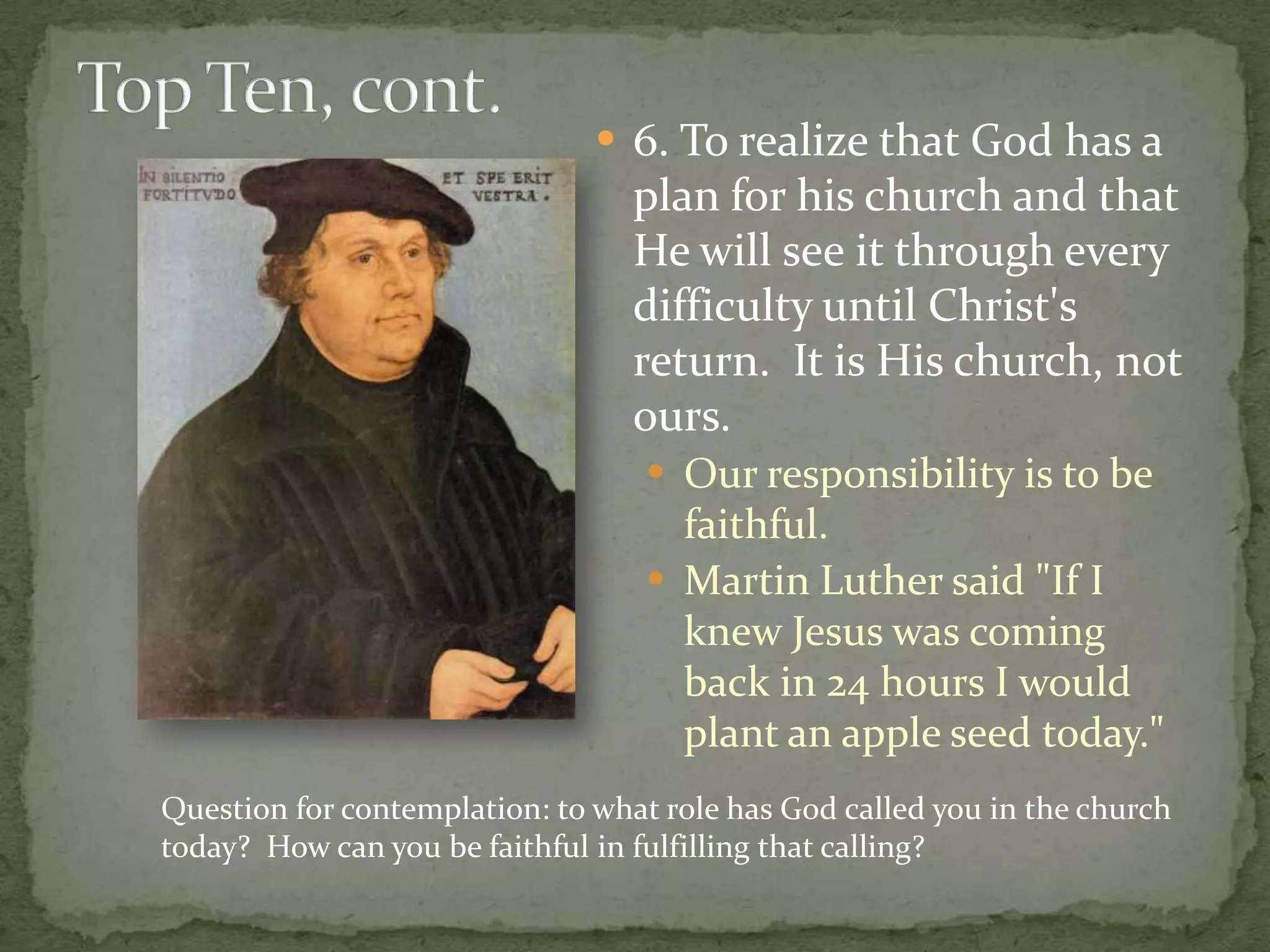
 6. To realize that God has a
                                  plan for his church and that
                                  He will see it through every
                                  difficulty until Christ's
                                  return. It is His church, not
                                  ours.
                                    Our responsibility is to be
                                     faithful.
                                    Martin Luther said "If I
                                     knew Jesus was coming
                                     back in 24 hours I would
                                     plant an apple seed today."
Question for contemplation: to what role has God called you in the church
today? How can you be faithful in fulfilling that calling?
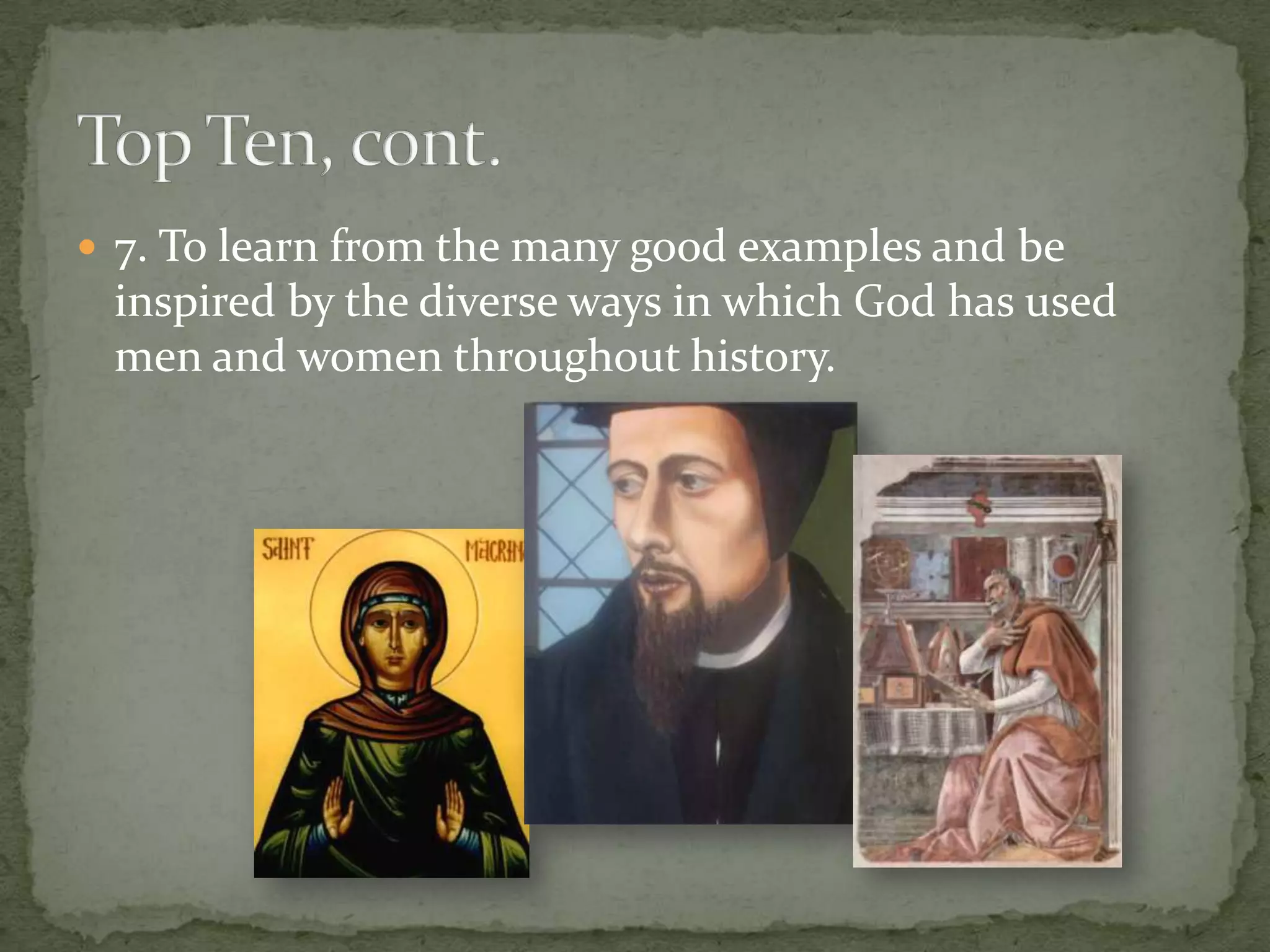
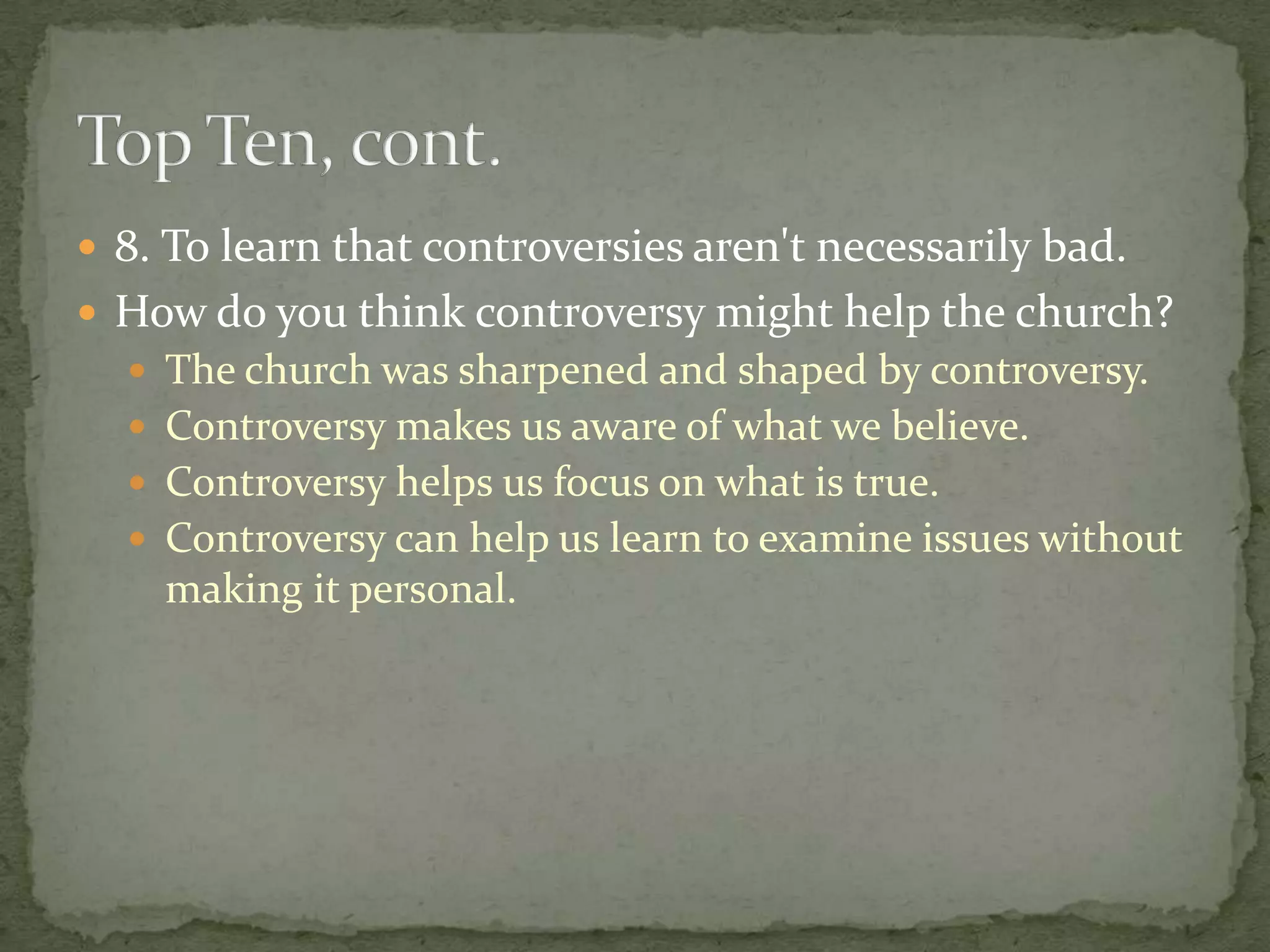
 7. To learn from the many good examples and be
 inspired by the diverse ways in which God has used
 men and women throughout history.
 8. To learn that controversies aren't necessarily bad.
 How do you think controversy might help the church?
   The church was sharpened and shaped by controversy.
   Controversy makes us aware of what we believe.
   Controversy helps us focus on what is true.
   Controversy can help us learn to examine issues without
    making it personal.
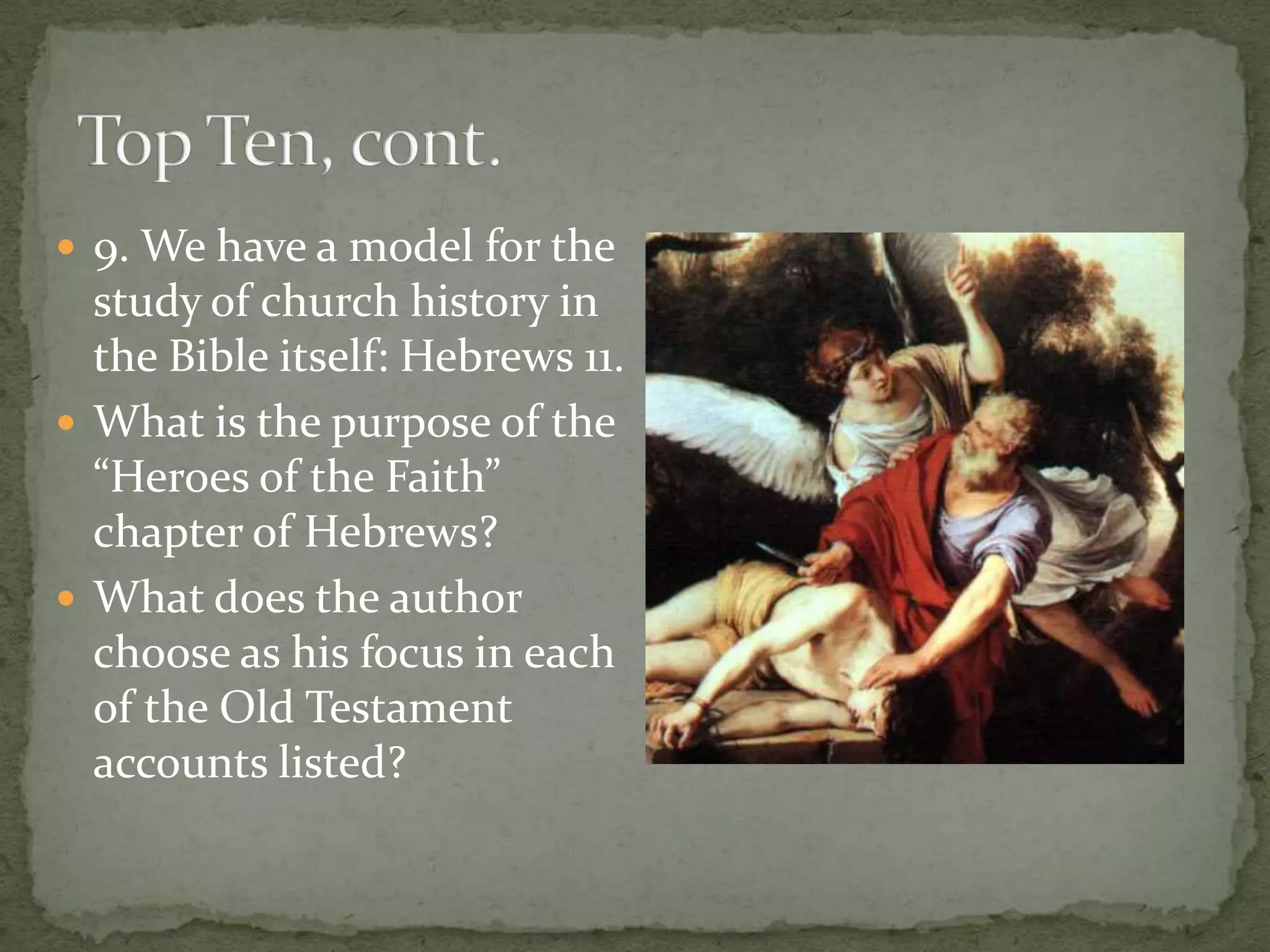
 9. We have a model for the
  study of church history in
  the Bible itself: Hebrews 11.
 What is the purpose of the
  “Heroes of the Faith”
  chapter of Hebrews?
 What does the author
  choose as his focus in each
  of the Old Testament
  accounts listed?
 10. To realize that we are creating our own history and
 that we will be studied someday.


         What will our testimony
         to future generations be?

Christian History introduction

  • 1.
    very A brief historyof the church
  • 4.
    1. Introduction 8. The Reformation (the 2. The Church Fathers British Isles) 3. Creeds, Councils, and 9. The Puritans Heretics 10. Colonial America 4. Eastern Orthodoxy 11. 1st and 2nd Great 5. Roman Catholicism Awakenings 6. The Crusades and Islam 12. Missionary Movements 7. The Reformation 13. To the future (Continental Europe)
  • 5.
    Why study church history? Today we will examine how a study of the past might serve to warn, exhort, and edify us in the present.
  • 7.
     The invisiblechurch consists of all believers throughout history.  The visible church is a physical manifestation of the invisible church and is flawed.  We must not evaluate the invisible church according to the actions of the visible church.
  • 8.
     A recordof God’s leading of the visible church  Why is this important to keep in mind?
  • 9.
     1. Tosee the great variety of people God uses to accomplish His purposes, including those who were only interested in their own glory or who openly opposed Him.  Can you think of an example of how God used a villain in history to accomplish His purpose?
  • 10.
     2. Torealize that each generation was a product of its own time.  We must carefully study the historical/cultural context before we pass judgment.  We must not impose our time and culture on the past.  Every culture has its blind spots; we must work to be aware of our own areas of weakness and failing.  How does this differ from cultural relativism (a view that ethical truths depend on the individuals and groups holding them)?
  • 11.
     3. Tolearn the lessons of the past so that we may not repeat their mistakes.  No one in church history is perfect. Even the greatest heroes of the faith were badly flawed.  Why does God use broken vessels?
  • 12.
     4. Torecognize our part in the flow of God’s redemptive history and its effect upon us.  In Acts, we see the beginning of the church.  In Revelation, we see the end—the church triumphant.  We are in between these two points.
  • 13.
     5. Torecognize that even though the church went through many "dark periods" it was and still is God's witness.  God always has a remnant.
  • 14.
     6. Torealize that God has a plan for his church and that He will see it through every difficulty until Christ's return. It is His church, not ours.  Our responsibility is to be faithful.  Martin Luther said "If I knew Jesus was coming back in 24 hours I would plant an apple seed today." Question for contemplation: to what role has God called you in the church today? How can you be faithful in fulfilling that calling?
  • 15.
     7. Tolearn from the many good examples and be inspired by the diverse ways in which God has used men and women throughout history.
  • 16.
     8. Tolearn that controversies aren't necessarily bad.  How do you think controversy might help the church?  The church was sharpened and shaped by controversy.  Controversy makes us aware of what we believe.  Controversy helps us focus on what is true.  Controversy can help us learn to examine issues without making it personal.
  • 17.
     9. Wehave a model for the study of church history in the Bible itself: Hebrews 11.  What is the purpose of the “Heroes of the Faith” chapter of Hebrews?  What does the author choose as his focus in each of the Old Testament accounts listed?
  • 18.
     10. Torealize that we are creating our own history and that we will be studied someday. What will our testimony to future generations be?

Editor's Notes

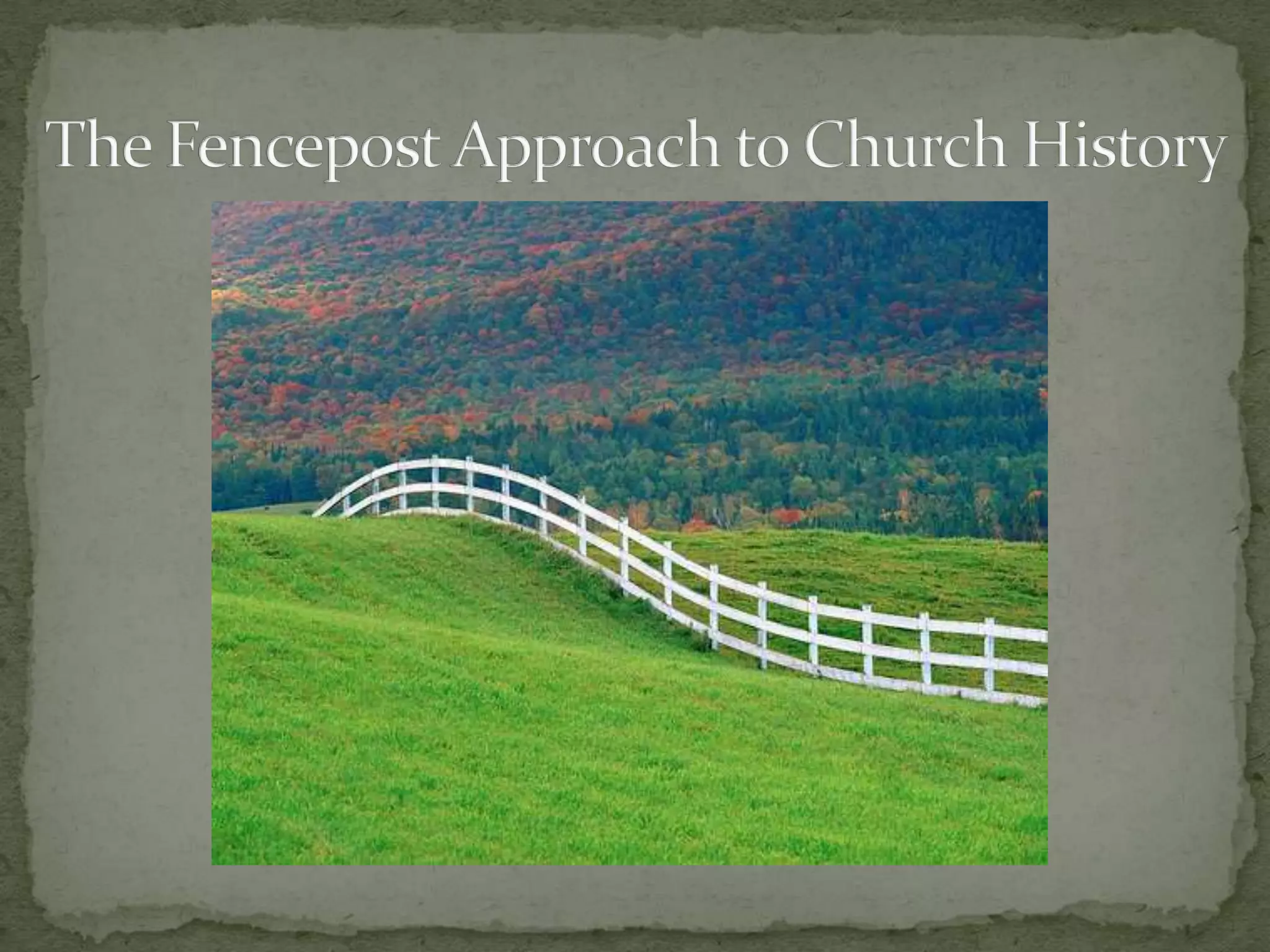
  • #4 Due to limited time, all we can do is provide a taste of church history in order to whet your appetite for further study.We will be “digging in” at thirteen different fence posts in church history and “flying over” the rest. We will have some recommended reading for you at the end of class. If you have the time for this, it will greatly aid your understanding of the class material and will supplement our instruction.