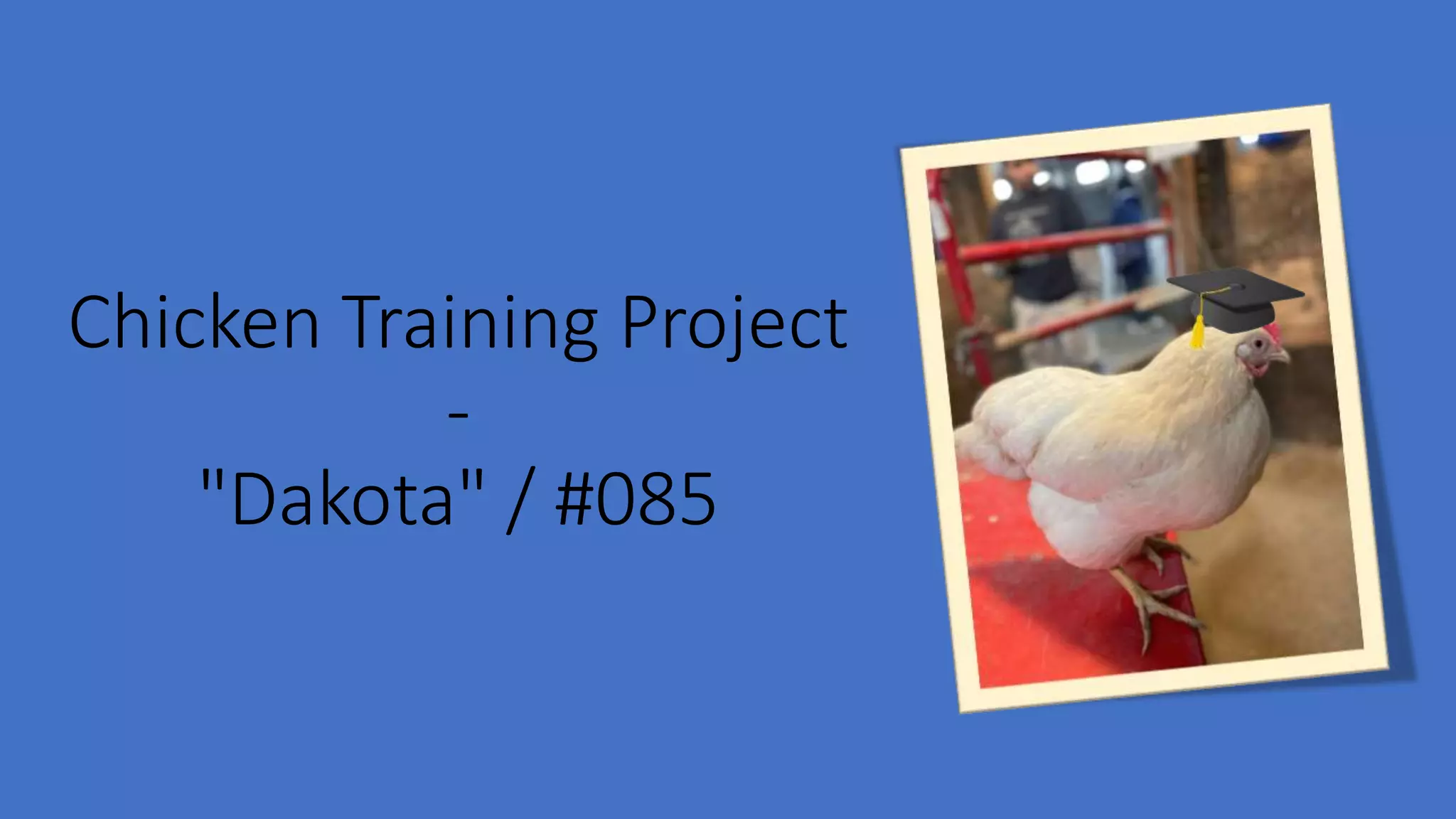
Chicken Training Project
-
"Dakota" / #085
Initial Goal
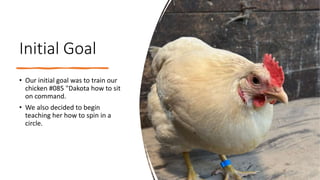
• Our initial goal was to train our
chicken #085 "Dakota how to sit
on command.
• We also decided to begin
teaching her how to spin in a
circle.
Training Information
(Plan)
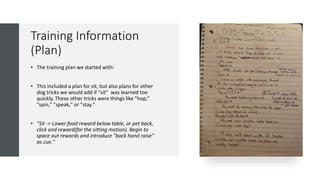
• The training plan we started with:
• This included a plan for sit, but also plans for other
dog tricks we would add if "sit" was learned too
quickly. These other tricks were things like "hop,"
"spin," "speak," or "stay."
• "Sit -> Lower food reward below table, or pet back,
click and reward(for the sitting motion). Begin to
space out rewards and introduce "back hand raise"
as cue."
Training
Information
(Used)
• First week was spent charging clicker only
• Second week was spent charging clicker, and also
introducing the lure. We placed her on a raised
space and put the food under her so that she
had to crouch, and clicked/rewarded when she
did.
• Third week continued luring to this position, and
introduced "sit" as a verbal cue that proceeded
the lure. Time was also spent moving away from
luring her into the position.
• Fourth week continued more of this, rewarding
as much as possible only for an un-lured sit that
followed the verbal cue
• Fifth week finalized "sit" and introduced "spin"
by luring her in a circle around herself (moving
lure from under chin to over shoulder in the
middle)
• Seventh week, after break, did more "sit" by
asking for more exact movement before she was
rewarded, and also worked more on "spin" in the
same way as the week prior which she seemed
to take to quickly
• 10 Training sessions
total outside of class time
Final Result:
• Video of Sit:https://livecobleskill-
my.sharepoint.com/personal/kirtonj103_cobl
eskill_edu/_layouts/15/stream.aspx?id=%2Fp
ersonal%2Fkirtonj103%5Fcobleskill%5Fedu%
2FDocuments%2FIMG%5F3763%2EMOV
• https://livecobleskill-
my.sharepoint.com/personal/kirtonj103_cobl
eskill_edu/_layouts/15/stream.aspx?id=%2Fp
ersonal%2Fkirtonj103%5Fcobleskill%5Fedu%
2FDocuments%2FIMG%5F3748%2EMOV
Takeaways
• Be patient and charge the clicker
before each training session.
• Know when your
chicken is losing interest in training.
• Make sure to use food that holds
higher value than chicken feed.
• Be consistent with the methods you
are using for training.
What we would've done differently
• Knowing that the "sit" trick wound up looking more like a bow, we
maybe would have changed the name
• She started learning "spin" faster than she did "sit," so if she'd started
with that one she might've mastered it sooner
• Given we used verbal cues, and she responded to "sit," we might
have picked a second cue for the new trick that didn't sound so
similar (like "turn," or even "turn around" to add syllables)
• We found out in the final training session she wouldn't work for the
regular feed reward. This could mean there's also a treat she'd work
even harder for than mealworms, that we just never found. It might
have been
Thank you!
• Any questions?

Chicken Presentation.pptx

  • 1.
  • 2.
    Initial Goal • Ourinitial goal was to train our chicken #085 "Dakota how to sit on command. • We also decided to begin teaching her how to spin in a circle.
  • 3.
    Training Information (Plan) • Thetraining plan we started with: • This included a plan for sit, but also plans for other dog tricks we would add if "sit" was learned too quickly. These other tricks were things like "hop," "spin," "speak," or "stay." • "Sit -> Lower food reward below table, or pet back, click and reward(for the sitting motion). Begin to space out rewards and introduce "back hand raise" as cue."
  • 4.
    Training Information (Used) • First weekwas spent charging clicker only • Second week was spent charging clicker, and also introducing the lure. We placed her on a raised space and put the food under her so that she had to crouch, and clicked/rewarded when she did. • Third week continued luring to this position, and introduced "sit" as a verbal cue that proceeded the lure. Time was also spent moving away from luring her into the position. • Fourth week continued more of this, rewarding as much as possible only for an un-lured sit that followed the verbal cue • Fifth week finalized "sit" and introduced "spin" by luring her in a circle around herself (moving lure from under chin to over shoulder in the middle) • Seventh week, after break, did more "sit" by asking for more exact movement before she was rewarded, and also worked more on "spin" in the same way as the week prior which she seemed to take to quickly • 10 Training sessions total outside of class time
  • 5.
    Final Result: • Videoof Sit:https://livecobleskill- my.sharepoint.com/personal/kirtonj103_cobl eskill_edu/_layouts/15/stream.aspx?id=%2Fp ersonal%2Fkirtonj103%5Fcobleskill%5Fedu% 2FDocuments%2FIMG%5F3763%2EMOV • https://livecobleskill- my.sharepoint.com/personal/kirtonj103_cobl eskill_edu/_layouts/15/stream.aspx?id=%2Fp ersonal%2Fkirtonj103%5Fcobleskill%5Fedu% 2FDocuments%2FIMG%5F3748%2EMOV
  • 6.
    Takeaways • Be patientand charge the clicker before each training session. • Know when your chicken is losing interest in training. • Make sure to use food that holds higher value than chicken feed. • Be consistent with the methods you are using for training.
  • 7.
    What we would'vedone differently • Knowing that the "sit" trick wound up looking more like a bow, we maybe would have changed the name • She started learning "spin" faster than she did "sit," so if she'd started with that one she might've mastered it sooner • Given we used verbal cues, and she responded to "sit," we might have picked a second cue for the new trick that didn't sound so similar (like "turn," or even "turn around" to add syllables) • We found out in the final training session she wouldn't work for the regular feed reward. This could mean there's also a treat she'd work even harder for than mealworms, that we just never found. It might have been
  • 8.