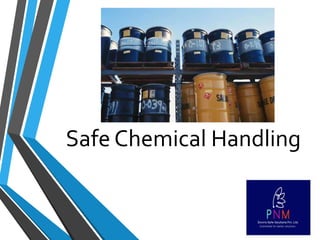
Safe Chemical Handling
Categories of
Hazardous Chemicals
• Corrosive
• Flammable
• Toxic
• Reactive
• Biological (infectious)
• Carcinogen (cancer-causing)
• Radioactive
Physical States of
Hazardous Materials
• Liquid
• Solid
• Gas
• Vapor
How to Handle
Chemicals Properly
• Use cautions
• Always follow procedures
• Read all labels
• Keep yourself and the work area clean
• Plan ahead
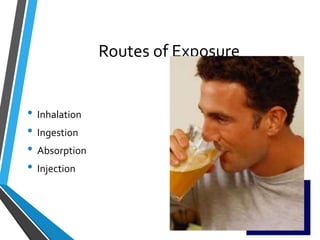
Routes of Exposure
• Inhalation
• Ingestion
• Absorption
• Injection
Symptoms of
Possible Overexposure
• Eye discomfort
• Breathing difficulty
• Dizziness
• Headache
• Nausea
• Vomiting
• Skin irritation
Incompatible Chemicals
• Flammables and oxidizers
• Flammables and any ignition source
• Acids and cyanides
• Strong acids and strong alkalines
• Concentrated acids and water
• Organic solvents and corrosives
• Corrosives and other reactive materials
AgenciesThat Regulate
Hazardous Chemical Storage
• Occupational Safety and Health Administration (OSHA)
• National Fire Protection Association (NFPA)
• Environmental Protection Agency (EPA)
• Department ofTransportation (DOT)
Handling Flammable Chemicals
• Keep containers closed when not in use
• Keep away from ignition sources
• Avoid contact with incompatible materials
• Only transfer to approved containers
• Bond all receiving containers
• Clean up spills and dispose of waste properly
Proper Storage of
Flammable Chemicals
• Ensure that storage areas meet regulatory requirements
• Replace all bung caps with drum vents after receiving
containers
• Ground all drums properly
• Store quantities in approved storage rooms and cabinets
• Store only in small quantities
General SafetyTips
• Never eat, drink, or smoke while using hazardous
chemicals
• Use personal protective equipment as required
• Make sure all chemical containers are properly labeled
• Always wash up after using chemicals
General SafetyTips (cont.)
• Never smell or taste a chemical to identify it
• Know all emergency procedures and equipment
• Always read labels’ MSDSs prior to use
• Store all hazardous chemicals properly
• Always use hazardous chemicals as intended
Primary Container Labels
• Identity of the hazardous chemical
• Appropriate hazard warnings
• Name and address of the manufacturer
or importer
• Target organ effects
Secondary Container Labels
• Identity of the hazardous
chemical
• Hazard warning
information
Handling Chemical Emergencies
• Know emergency phone numbers
• Know how to control the spill
• Know proper equipment shutdown
procedure
• Know proper evacuation routes
and assembly areas
What Emergency
Personnel Should Know
• Emergency cleanup and disposal measures
• Required protective equipment
• Use of cleanup equipment
• Firefighting and other emergency measures (i.e., first aid)
• Use of other emergency equipment
First Aid for
Chemicals in the Eyes
• Don’t rub the eyes
• Hold eyelids open and flush with water for
15 minutes
• Be careful not to contaminate the other eye
• Seek additional medical attention
First Aid for
Chemicals on the Skin
• Flush area with lukewarm water for
15 minutes
• Remove clothing and jewelry from
burn area
• Seek additional medical attention
First Aid for
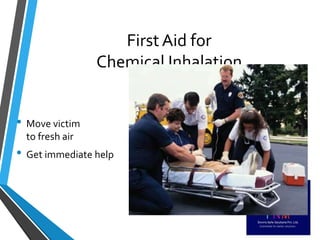
Chemical Inhalation
• Move victim
to fresh air
• Get immediate help
First Aid for
Chemical Ingestion
• Induce vomiting only if told to do so by Poison Control
• Get immediate medical attention
Quiz
1.Two primary routes of exposure to hazardous chemicals
are ___________________ and ___________________.
2.Gas, liquids, and aerosols are the three
states of hazardous materials. True or False
3.The Department ofTransportation
does not regulate hazardous chemicals. True or False
4.Two dangerous incompatible materials are
__________________________________ and cyanides.
11006115 Copyright Business and Legal Reports, Inc.
Quiz (cont.)
5. Flammables and oxidizers should never
be stored together. True or False
6. Secondary container labels should include
______________________________________ and
hazard warning information.
7. Three symptoms of overexposure
to hazardous chemicals are
____________, ____________, and ____________.
8. Carcinogens are chemicals that cause
birth defects in unborn children. True or False
11006115 Copyright Business and Legal Reports, Inc.
Quiz (cont.)
9. Flammables should always be used away from
sources of
________________________________.
10. If a chemical has been used by a
company before, the containers do
not have to be labeled. True or False
11006115 Copyright Business and Legal Reports, Inc.
Quiz Answers
1.The primary routes of exposure to hazardous chemicals
are inhalation, ingestion, absorption, and injection.
2. False. Liquids, solids, gases, and vapors are the
four states of hazardous materials.
3.False.The Department ofTransportation does regulate
hazardous chemicals.
4.Two dangerous incompatible materials are acids
and cyanides.
5.True. Flammables and oxidizers are incompatible and
should never be stored together.
11006115 Copyright Business and Legal Reports, Inc.
Quiz Answers (cont.)
6. Secondary container labels should include the identity
of the material and hazard warning information.
7. Three symptoms of overexposure to hazardous
chemicals are eye discomfort, breathing difficulty,
dizziness, headache, nausea, vomiting and skin
irritation.
8. False. Carcinogens are chemicals that can cause cancer.
9. Flammables should always be used away from sources
of ignition.
10. False. Even if a chemical has been used before, it must
always be labeled if it is hazardous.
11006115 Copyright Business and Legal Reports, Inc.

Chemical_Handling_1.ppt

  • 1.
  • 2.
    Categories of Hazardous Chemicals •Corrosive • Flammable • Toxic • Reactive • Biological (infectious) • Carcinogen (cancer-causing) • Radioactive
  • 3.
    Physical States of HazardousMaterials • Liquid • Solid • Gas • Vapor
  • 4.
    How to Handle ChemicalsProperly • Use cautions • Always follow procedures • Read all labels • Keep yourself and the work area clean • Plan ahead
  • 5.
    Routes of Exposure •Inhalation • Ingestion • Absorption • Injection
  • 6.
    Symptoms of Possible Overexposure •Eye discomfort • Breathing difficulty • Dizziness • Headache • Nausea • Vomiting • Skin irritation
  • 7.
    Incompatible Chemicals • Flammablesand oxidizers • Flammables and any ignition source • Acids and cyanides • Strong acids and strong alkalines • Concentrated acids and water • Organic solvents and corrosives • Corrosives and other reactive materials
  • 8.
    AgenciesThat Regulate Hazardous ChemicalStorage • Occupational Safety and Health Administration (OSHA) • National Fire Protection Association (NFPA) • Environmental Protection Agency (EPA) • Department ofTransportation (DOT)
  • 9.
    Handling Flammable Chemicals •Keep containers closed when not in use • Keep away from ignition sources • Avoid contact with incompatible materials • Only transfer to approved containers • Bond all receiving containers • Clean up spills and dispose of waste properly
  • 10.
    Proper Storage of FlammableChemicals • Ensure that storage areas meet regulatory requirements • Replace all bung caps with drum vents after receiving containers • Ground all drums properly • Store quantities in approved storage rooms and cabinets • Store only in small quantities
  • 11.
    General SafetyTips • Nevereat, drink, or smoke while using hazardous chemicals • Use personal protective equipment as required • Make sure all chemical containers are properly labeled • Always wash up after using chemicals
  • 12.
    General SafetyTips (cont.) •Never smell or taste a chemical to identify it • Know all emergency procedures and equipment • Always read labels’ MSDSs prior to use • Store all hazardous chemicals properly • Always use hazardous chemicals as intended
  • 13.
    Primary Container Labels •Identity of the hazardous chemical • Appropriate hazard warnings • Name and address of the manufacturer or importer • Target organ effects
  • 14.
    Secondary Container Labels •Identity of the hazardous chemical • Hazard warning information
  • 15.
    Handling Chemical Emergencies •Know emergency phone numbers • Know how to control the spill • Know proper equipment shutdown procedure • Know proper evacuation routes and assembly areas
  • 16.
    What Emergency Personnel ShouldKnow • Emergency cleanup and disposal measures • Required protective equipment • Use of cleanup equipment • Firefighting and other emergency measures (i.e., first aid) • Use of other emergency equipment
  • 17.
    First Aid for Chemicalsin the Eyes • Don’t rub the eyes • Hold eyelids open and flush with water for 15 minutes • Be careful not to contaminate the other eye • Seek additional medical attention
  • 18.
    First Aid for Chemicalson the Skin • Flush area with lukewarm water for 15 minutes • Remove clothing and jewelry from burn area • Seek additional medical attention
  • 19.
    First Aid for ChemicalInhalation • Move victim to fresh air • Get immediate help
  • 20.
    First Aid for ChemicalIngestion • Induce vomiting only if told to do so by Poison Control • Get immediate medical attention
  • 21.
    Quiz 1.Two primary routesof exposure to hazardous chemicals are ___________________ and ___________________. 2.Gas, liquids, and aerosols are the three states of hazardous materials. True or False 3.The Department ofTransportation does not regulate hazardous chemicals. True or False 4.Two dangerous incompatible materials are __________________________________ and cyanides. 11006115 Copyright Business and Legal Reports, Inc.
  • 22.
    Quiz (cont.) 5. Flammablesand oxidizers should never be stored together. True or False 6. Secondary container labels should include ______________________________________ and hazard warning information. 7. Three symptoms of overexposure to hazardous chemicals are ____________, ____________, and ____________. 8. Carcinogens are chemicals that cause birth defects in unborn children. True or False 11006115 Copyright Business and Legal Reports, Inc.
  • 23.
    Quiz (cont.) 9. Flammablesshould always be used away from sources of ________________________________. 10. If a chemical has been used by a company before, the containers do not have to be labeled. True or False 11006115 Copyright Business and Legal Reports, Inc.
  • 24.
    Quiz Answers 1.The primaryroutes of exposure to hazardous chemicals are inhalation, ingestion, absorption, and injection. 2. False. Liquids, solids, gases, and vapors are the four states of hazardous materials. 3.False.The Department ofTransportation does regulate hazardous chemicals. 4.Two dangerous incompatible materials are acids and cyanides. 5.True. Flammables and oxidizers are incompatible and should never be stored together. 11006115 Copyright Business and Legal Reports, Inc.
  • 25.
    Quiz Answers (cont.) 6.Secondary container labels should include the identity of the material and hazard warning information. 7. Three symptoms of overexposure to hazardous chemicals are eye discomfort, breathing difficulty, dizziness, headache, nausea, vomiting and skin irritation. 8. False. Carcinogens are chemicals that can cause cancer. 9. Flammables should always be used away from sources of ignition. 10. False. Even if a chemical has been used before, it must always be labeled if it is hazardous. 11006115 Copyright Business and Legal Reports, Inc.