1
Ch 7 -1
Chapter 7
Implementing Strategies: Management &
Operations Issues
Strategic
Management:
Rao Majid Shamshad
Punjab College Okara
Ch 7 -2
Ch 7 -3
Strategy Formulation vs. Implementation
Strategy Formulation
 Positioning forces
before the action
 Focus on
effectiveness
 Primarily intellectual
 Requires good
intuitive and analytical
skills
 Requires coordination
among a few people
Strategy Implementation
 Managing forces
during the action
 Focus on efficiency
 Primarily operational
 Requires special
motivation and
leadership skills
 Requires coordination
among many people
Ch 7 -4
 Shift in responsibility
Nature of Strategy Implementation
Management Perspectives
Divisional or
Functional
Managers
Strategists
Ch 7 -5
Management Issues Central to
Strategy Implementation
 Establish annual
objectives
 Devise policies
 Allocate resources
 Alter existing
organizational structure
 Restructure & reengineer
 Revise reward & incentive
plans
 Minimize resistance to
change
 Match managers to strategy
 Develop a strategy-
supportive culture
 Adapt production/operations
processes
 Develop an effective human
resources function
 Downsize & furlough as
needed
 Link performance & pay to
strategies
Ch 7 -6
Purpose of Annual Objectives
Basis for resource allocation
Mechanism for management evaluation
Major instrument for monitoring progress
toward achieving long-term objectives
Establish priorities (organizational, divisional,
and departmental)
2
Ch 7 -7
Annual Objectives
 Horizontal consistency of objectives
 Vertical consistency of objectives
Ch 7 -8
Policies
 Policies set boundaries, constraints,
and limits on the kinds of
administrative actions that can be
taken to reward and sanction
behavior
Ch 7 -9
Resource Allocation
1. Financial resources
2. Physical resources
3. Human resources
4. Technological resources
Four Types of Resources
Ch 7 -10
Managing Conflict
 Conflict not always “bad”
 Lack of conflict may signal apathy
 Can energize opposing groups to action
 May help managers identify problems
Ch 7 -11
Managing Conflict
 Approaches for managing and resolving
conflict
 Avoidance
 Defusion
 Confrontation
Ch 7 -12
Matching Structure with Strategy
 Structure dictates how objectives
and policies will be established
 Structure dictates how resources
will be allocated
 Changes in strategy often lead to
changes in organizational structure
3
Ch 7 -13 Ch 7 -14
Basic Forms of Structure
 Functional Structure
 Divisional Structure
 Strategic Business Unit Structure
(SBU)
 Matrix Structure
Ch 7 -15
Functional Structure
 Group tasks and activities by
business function
Ch 7 -16
Functional Structure
Ch 7 -17
Divisional Structure
 Can be organized in one of four
ways:
 By geographic area
 By product or service
 By customer
 By process
Ch 7 -18
Divisional Structure
4
Ch 7 -19
Strategic Business Unit Structure
(SBU)
 Group similar divisions into
strategic business units and
delegate authority and
responsibility for each unit to a
senior executive who reports
directly to the chief executive
officer
Ch 7 -20
Matrix Structure
 The most complex of all designs
because it depends upon both
vertical and horizontal flows of
authority and communication
Ch 7 -21
Matrix Structure
Ch 7 -22
Restructuring, Reengineering, and
E-engineering
Restructuring is called
Downsizing
Rightsizing
Delayering
Ch 7 -23
Restructuring, Reengineering, and
E-engineering
Cornerstones of Reengineering
Decentralization
Reciprocal interdependence
Information sharing
Ch 7 -24
Tests for Performance-Pay Plans
Does the plan capture attention?
Do employees understand the plan?
Is the plan improving communication?
Does the plan pay out when it should?
Is the company or unit performing better?
5
Ch 7 -25
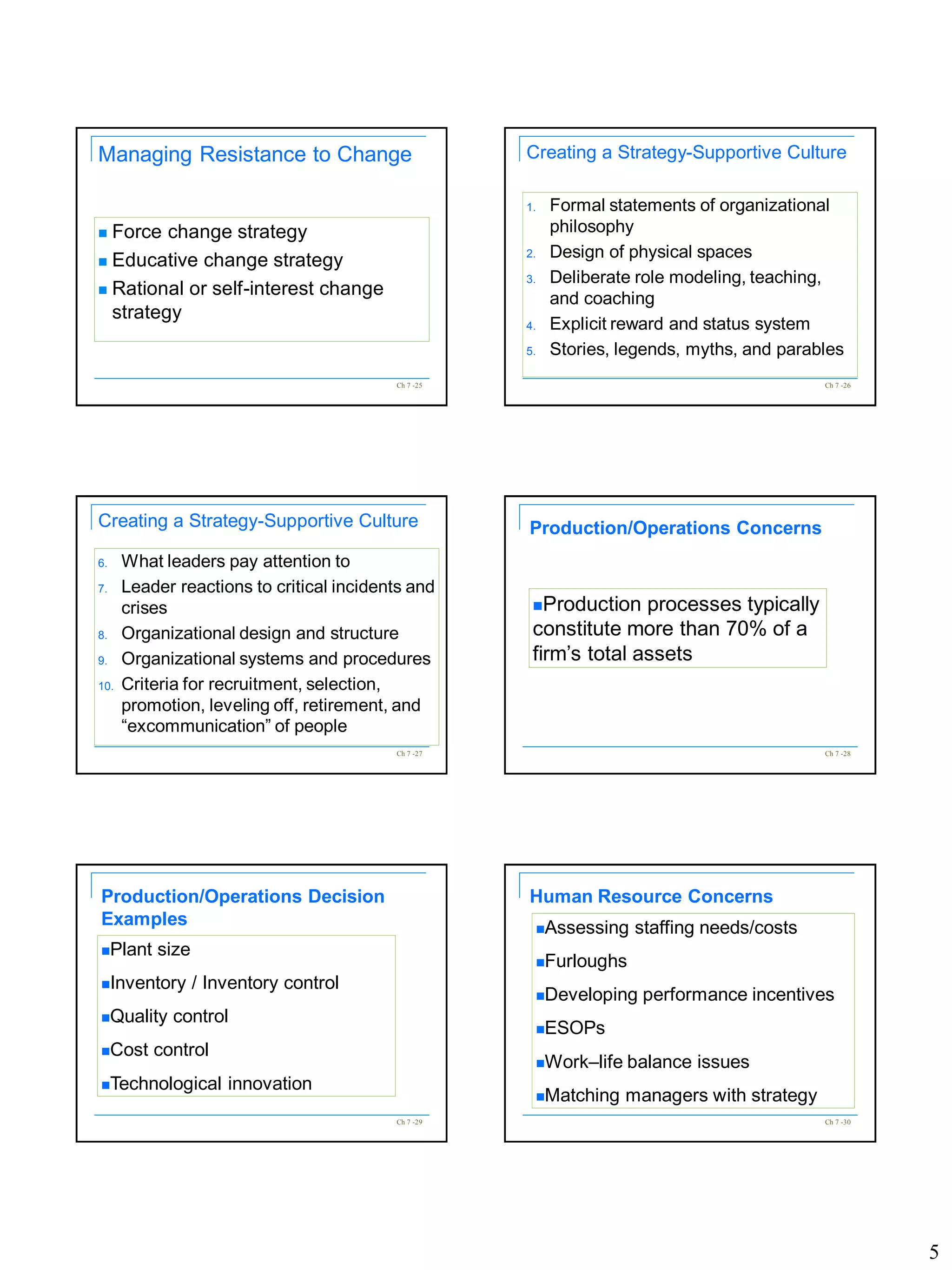
Managing Resistance to Change
 Force change strategy
 Educative change strategy
 Rational or self-interest change
strategy
Ch 7 -26
Creating a Strategy-Supportive Culture
1. Formal statements of organizational
philosophy
2. Design of physical spaces
3. Deliberate role modeling, teaching,
and coaching
4. Explicit reward and status system
5. Stories, legends, myths, and parables
Ch 7 -27
Creating a Strategy-Supportive Culture
6. What leaders pay attention to
7. Leader reactions to critical incidents and
crises
8. Organizational design and structure
9. Organizational systems and procedures
10. Criteria for recruitment, selection,
promotion, leveling off, retirement, and
“excommunication” of people
Ch 7 -28
Production/Operations Concerns
Production processes typically
constitute more than 70% of a
firm’s total assets
Ch 7 -29
Production/Operations Decision
Examples
Plant size
Inventory / Inventory control
Quality control
Cost control
Technological innovation
Ch 7 -30
Human Resource Concerns
Assessing staffing needs/costs
Furloughs
Developing performance incentives
ESOPs
Work–life balance issues
Matching managers with strategy
6
Ch 7 -31
Corporate Wellness Programs
 Wellness of employees has
become a strategic issue for many
firms

Chapter 7

  • 1.
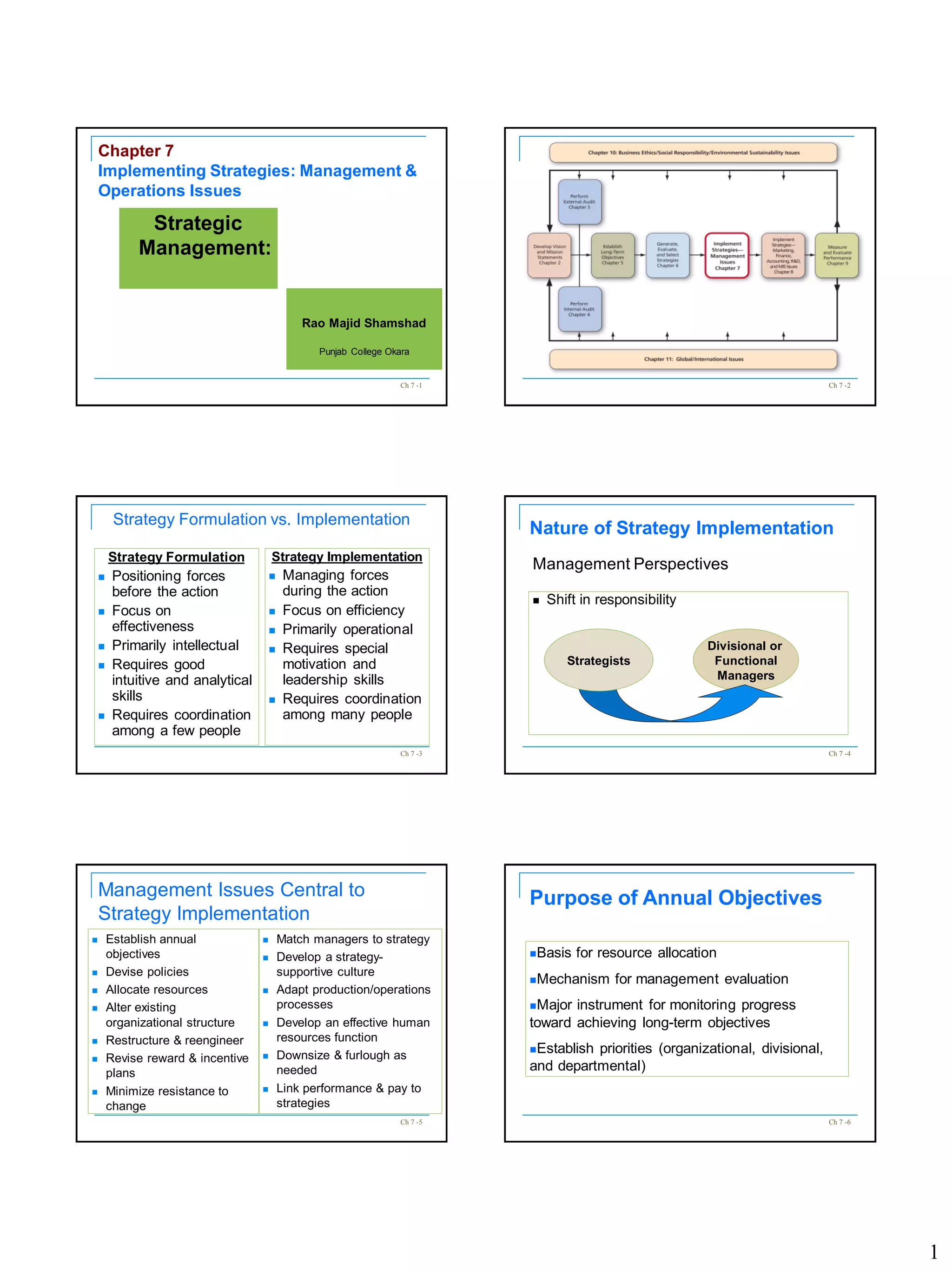
    1 Ch 7 -1 Chapter7 Implementing Strategies: Management & Operations Issues Strategic Management: Rao Majid Shamshad Punjab College Okara Ch 7 -2 Ch 7 -3 Strategy Formulation vs. Implementation Strategy Formulation  Positioning forces before the action  Focus on effectiveness  Primarily intellectual  Requires good intuitive and analytical skills  Requires coordination among a few people Strategy Implementation  Managing forces during the action  Focus on efficiency  Primarily operational  Requires special motivation and leadership skills  Requires coordination among many people Ch 7 -4  Shift in responsibility Nature of Strategy Implementation Management Perspectives Divisional or Functional Managers Strategists Ch 7 -5 Management Issues Central to Strategy Implementation  Establish annual objectives  Devise policies  Allocate resources  Alter existing organizational structure  Restructure & reengineer  Revise reward & incentive plans  Minimize resistance to change  Match managers to strategy  Develop a strategy- supportive culture  Adapt production/operations processes  Develop an effective human resources function  Downsize & furlough as needed  Link performance & pay to strategies Ch 7 -6 Purpose of Annual Objectives Basis for resource allocation Mechanism for management evaluation Major instrument for monitoring progress toward achieving long-term objectives Establish priorities (organizational, divisional, and departmental)
  • 2.
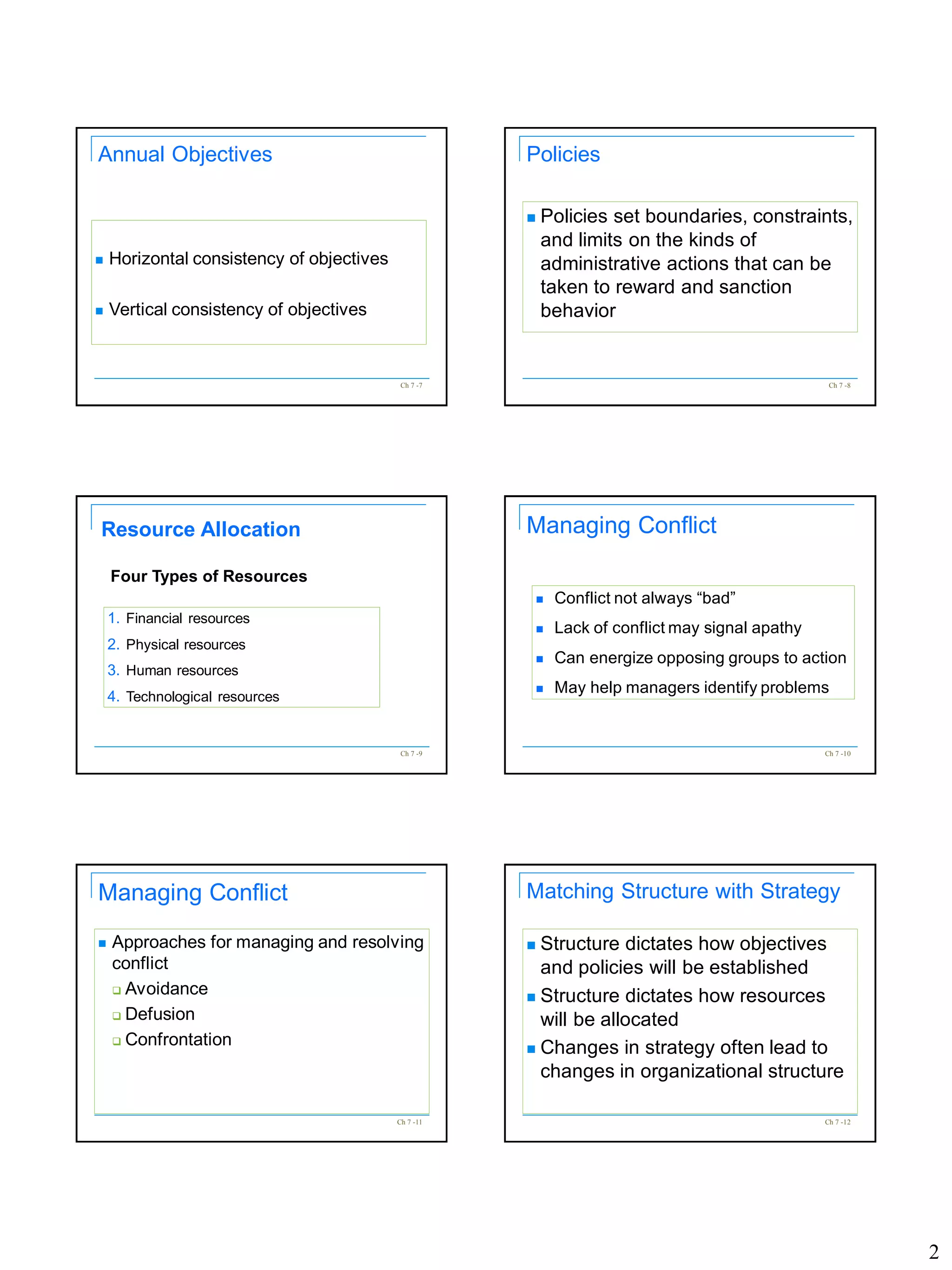
    2 Ch 7 -7 AnnualObjectives  Horizontal consistency of objectives  Vertical consistency of objectives Ch 7 -8 Policies  Policies set boundaries, constraints, and limits on the kinds of administrative actions that can be taken to reward and sanction behavior Ch 7 -9 Resource Allocation 1. Financial resources 2. Physical resources 3. Human resources 4. Technological resources Four Types of Resources Ch 7 -10 Managing Conflict  Conflict not always “bad”  Lack of conflict may signal apathy  Can energize opposing groups to action  May help managers identify problems Ch 7 -11 Managing Conflict  Approaches for managing and resolving conflict  Avoidance  Defusion  Confrontation Ch 7 -12 Matching Structure with Strategy  Structure dictates how objectives and policies will be established  Structure dictates how resources will be allocated  Changes in strategy often lead to changes in organizational structure
  • 3.
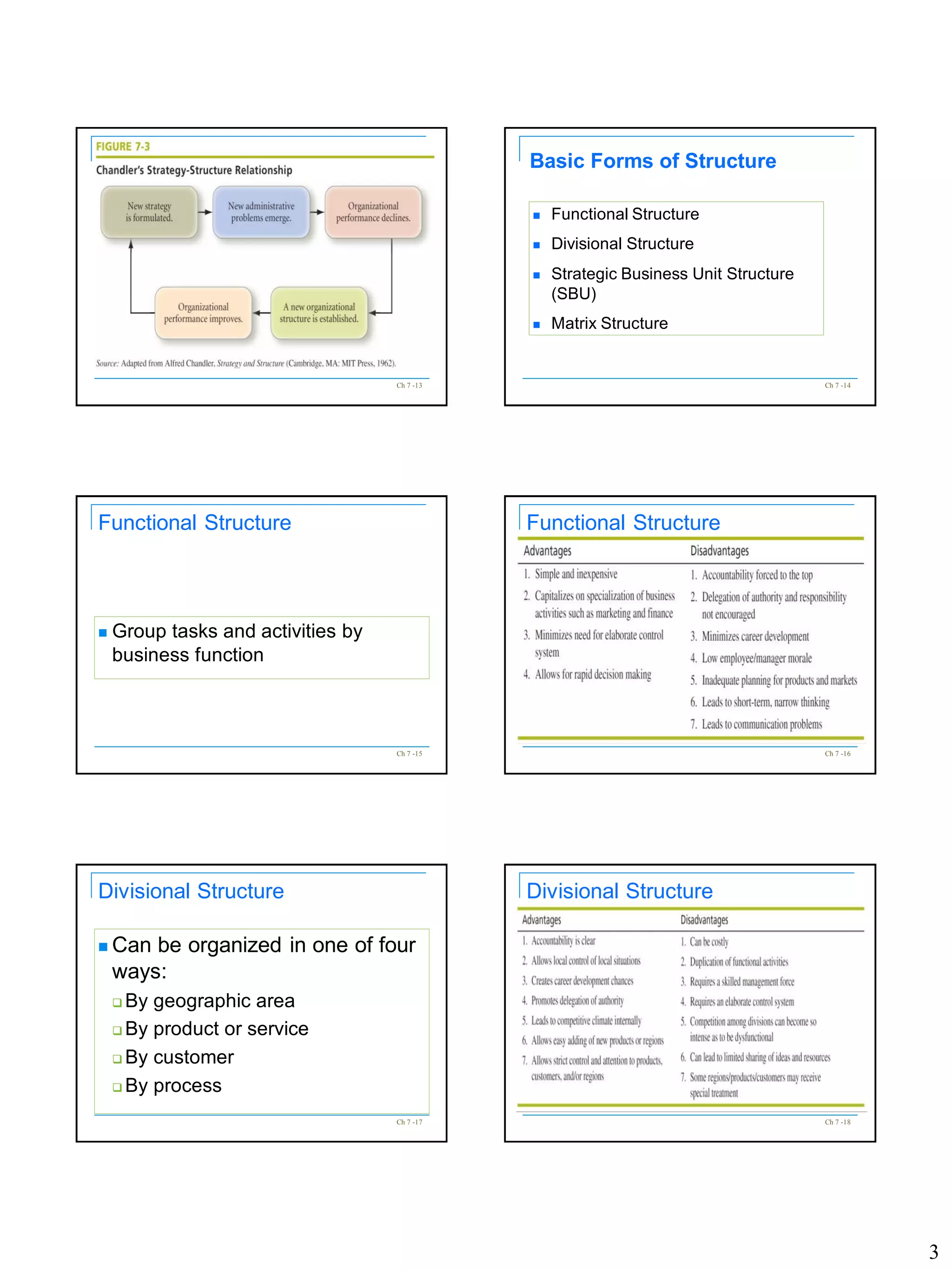
    3 Ch 7 -13Ch 7 -14 Basic Forms of Structure  Functional Structure  Divisional Structure  Strategic Business Unit Structure (SBU)  Matrix Structure Ch 7 -15 Functional Structure  Group tasks and activities by business function Ch 7 -16 Functional Structure Ch 7 -17 Divisional Structure  Can be organized in one of four ways:  By geographic area  By product or service  By customer  By process Ch 7 -18 Divisional Structure
  • 4.
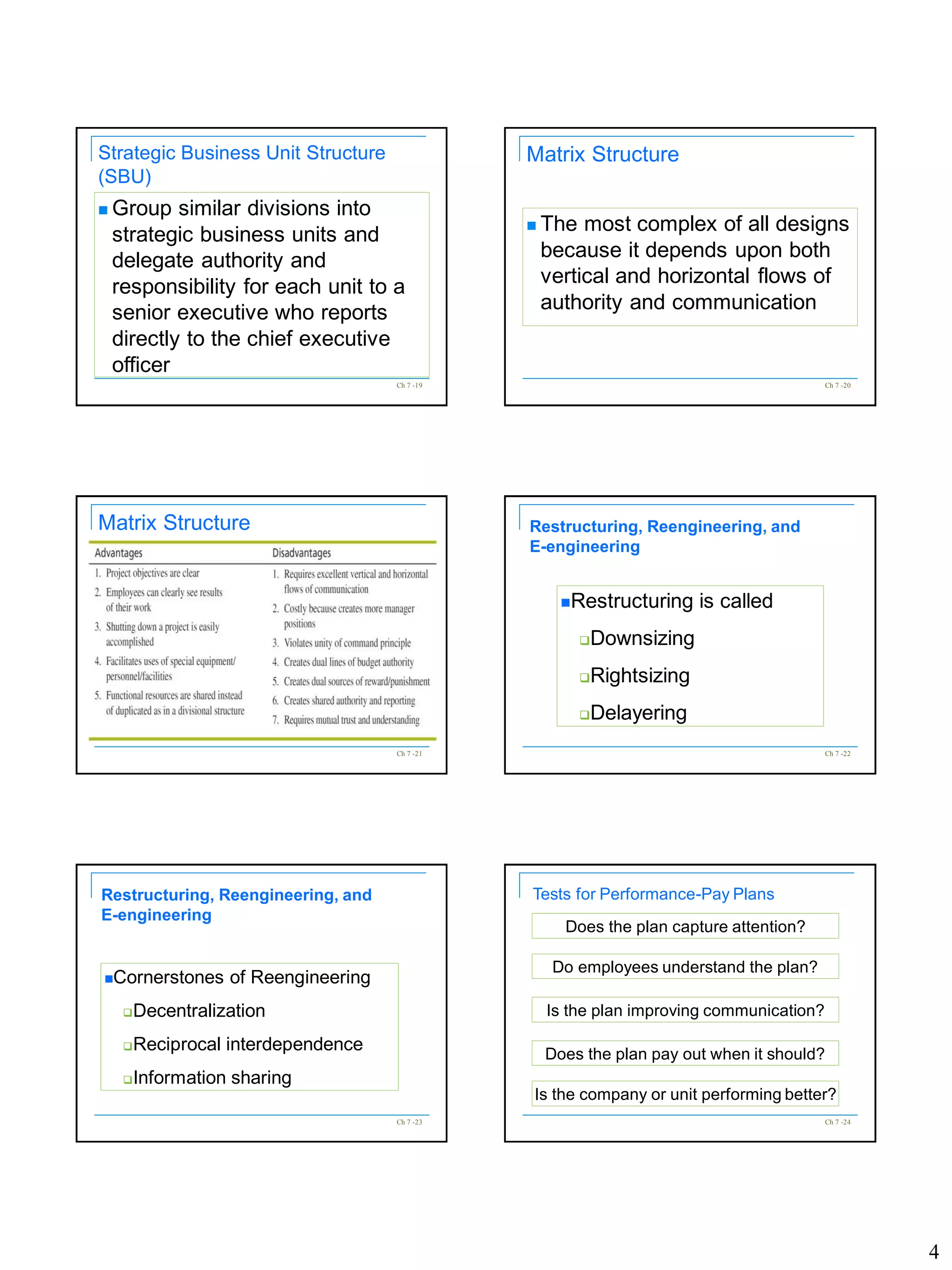
    4 Ch 7 -19 StrategicBusiness Unit Structure (SBU)  Group similar divisions into strategic business units and delegate authority and responsibility for each unit to a senior executive who reports directly to the chief executive officer Ch 7 -20 Matrix Structure  The most complex of all designs because it depends upon both vertical and horizontal flows of authority and communication Ch 7 -21 Matrix Structure Ch 7 -22 Restructuring, Reengineering, and E-engineering Restructuring is called Downsizing Rightsizing Delayering Ch 7 -23 Restructuring, Reengineering, and E-engineering Cornerstones of Reengineering Decentralization Reciprocal interdependence Information sharing Ch 7 -24 Tests for Performance-Pay Plans Does the plan capture attention? Do employees understand the plan? Is the plan improving communication? Does the plan pay out when it should? Is the company or unit performing better?
  • 5.
    5 Ch 7 -25 ManagingResistance to Change  Force change strategy  Educative change strategy  Rational or self-interest change strategy Ch 7 -26 Creating a Strategy-Supportive Culture 1. Formal statements of organizational philosophy 2. Design of physical spaces 3. Deliberate role modeling, teaching, and coaching 4. Explicit reward and status system 5. Stories, legends, myths, and parables Ch 7 -27 Creating a Strategy-Supportive Culture 6. What leaders pay attention to 7. Leader reactions to critical incidents and crises 8. Organizational design and structure 9. Organizational systems and procedures 10. Criteria for recruitment, selection, promotion, leveling off, retirement, and “excommunication” of people Ch 7 -28 Production/Operations Concerns Production processes typically constitute more than 70% of a firm’s total assets Ch 7 -29 Production/Operations Decision Examples Plant size Inventory / Inventory control Quality control Cost control Technological innovation Ch 7 -30 Human Resource Concerns Assessing staffing needs/costs Furloughs Developing performance incentives ESOPs Work–life balance issues Matching managers with strategy
  • 6.
    6 Ch 7 -31 CorporateWellness Programs  Wellness of employees has become a strategic issue for many firms