CHAPTER 11 Strategic Control and Continuous Improvement
Chapter Topics Establishing Strategic Controls Premise Control Strategic Surveillance Special Alert Control Implementation Control The Quality Imperative: Continuous Improvement to Build Customer Value
What is Strategic Control? Tracks a strategy as it is implemented, detects problems or changes in its underlying premises, and makes necessary adjustments
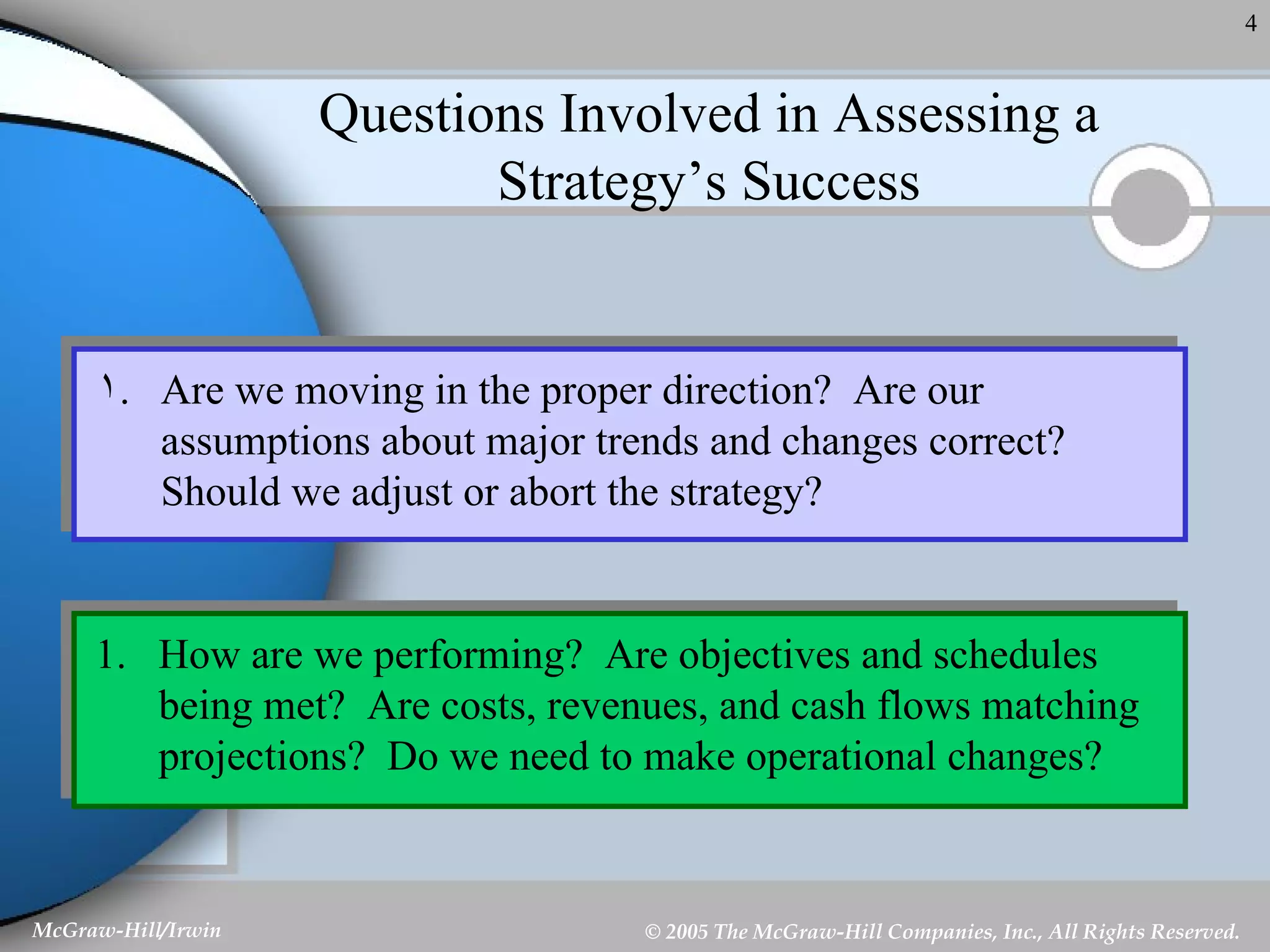
Questions Involved in Assessing a Strategy’s Success Are we moving in the proper direction?  Are our assumptions about major trends and changes correct?  Should we adjust or abort the strategy? How are we performing?  Are objectives and schedules being met?  Are costs, revenues, and cash flows matching projections?  Do we need to make operational changes?
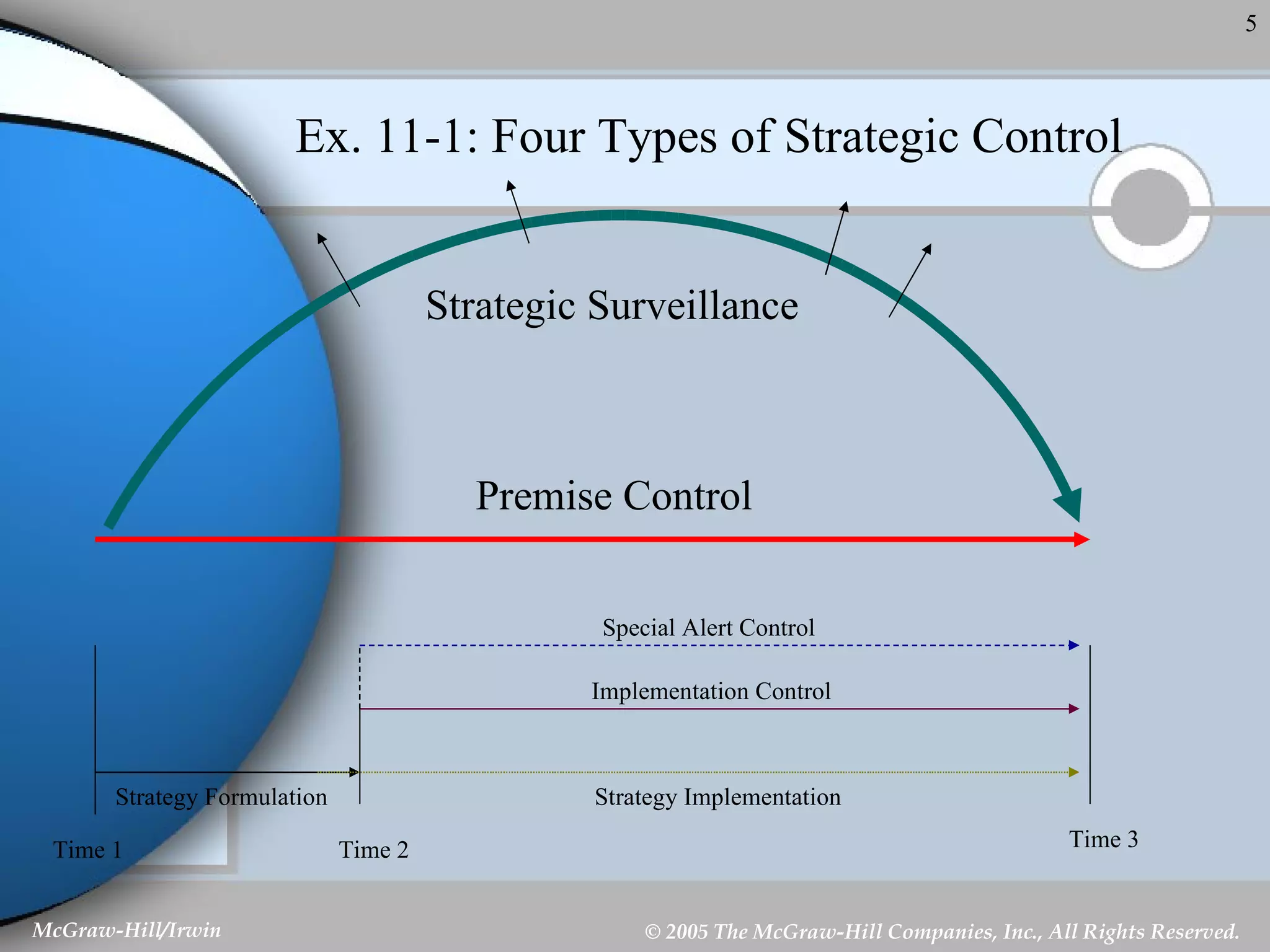
Ex. 11-1: Four Types of Strategic Control Strategic Surveillance Premise Control Time 1 Strategy Formulation Time 2 Time 3 Strategy Implementation Implementation Control Special Alert Control
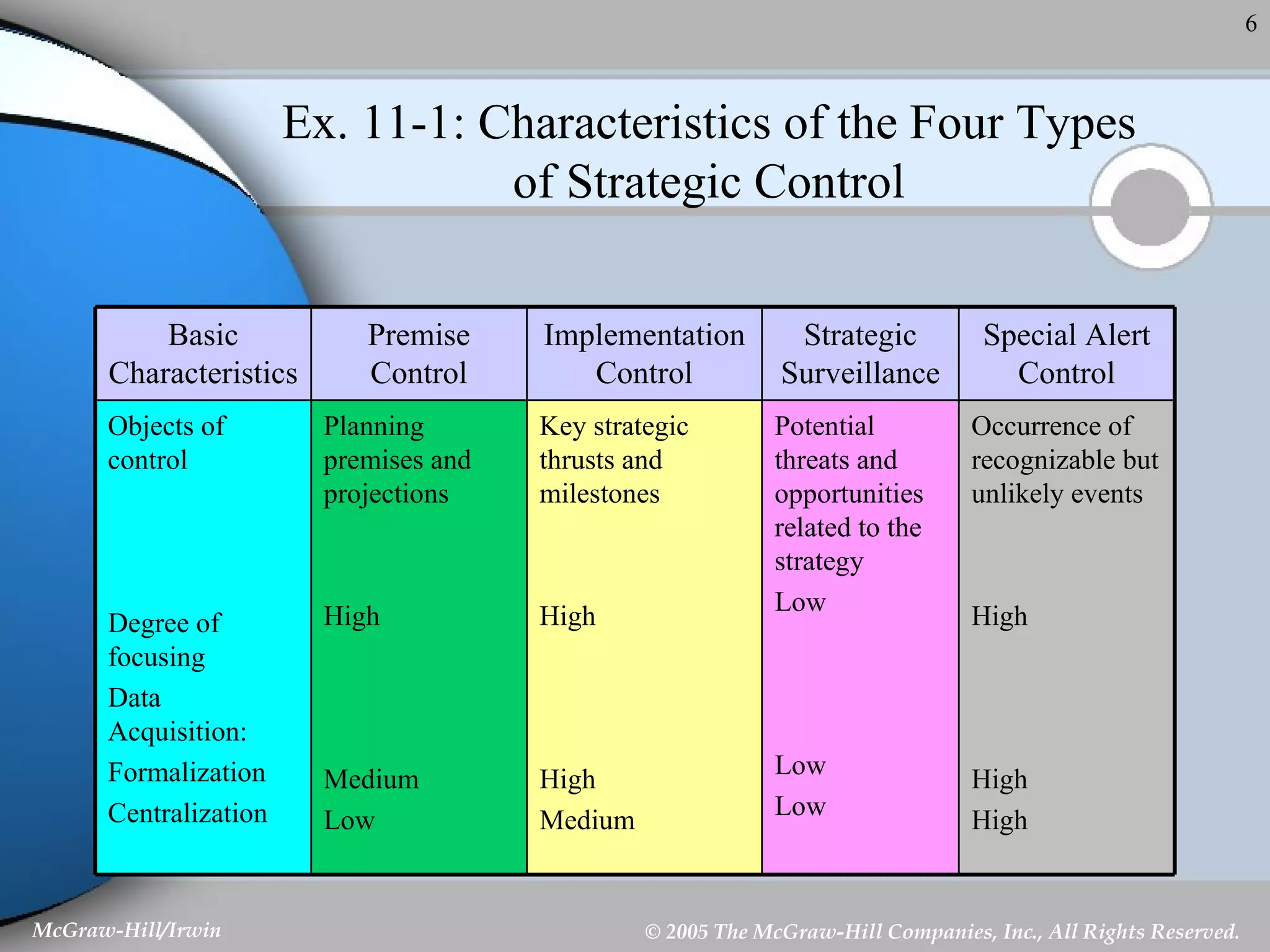
Ex. 11-1: Characteristics of the Four Types of Strategic Control Occurrence of recognizable but unlikely events High High High Potential threats and opportunities related to the strategy Low Low Low Key strategic thrusts and milestones High High Medium Planning premises and projections High Medium Low Objects of control Degree of focusing Data Acquisition: Formalization Centralization Special Alert Control Strategic Surveillance Implementation Control Premise Control Basic Characteristics
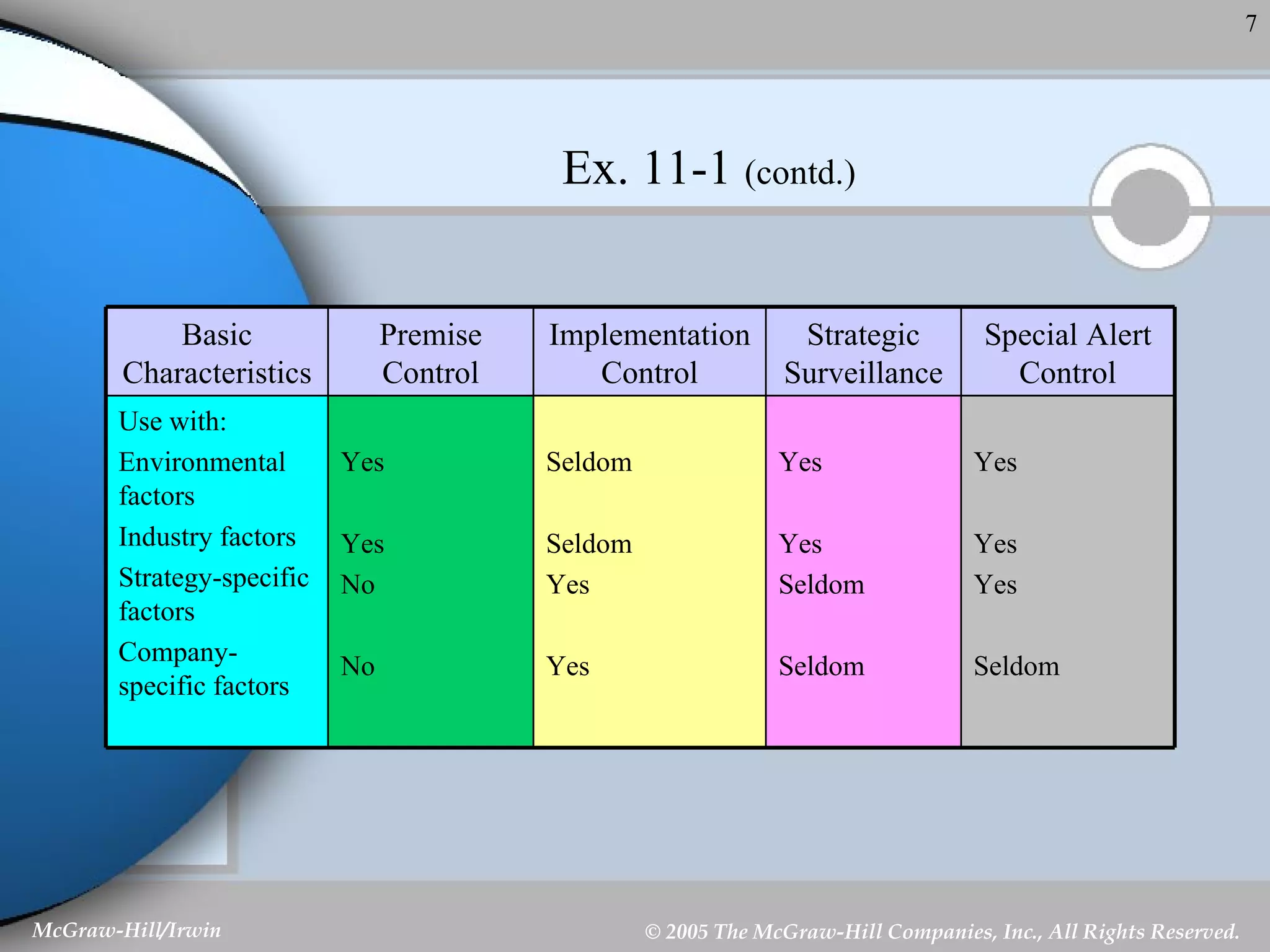
Ex. 11-1  (contd.) Yes Yes Yes Seldom Yes Yes Seldom Seldom Seldom Seldom Yes Yes Yes Yes No No Use with: Environmental factors Industry factors Strategy-specific factors Company-specific factors Special Alert Control Strategic Surveillance Implementation Control Premise Control Basic Characteristics
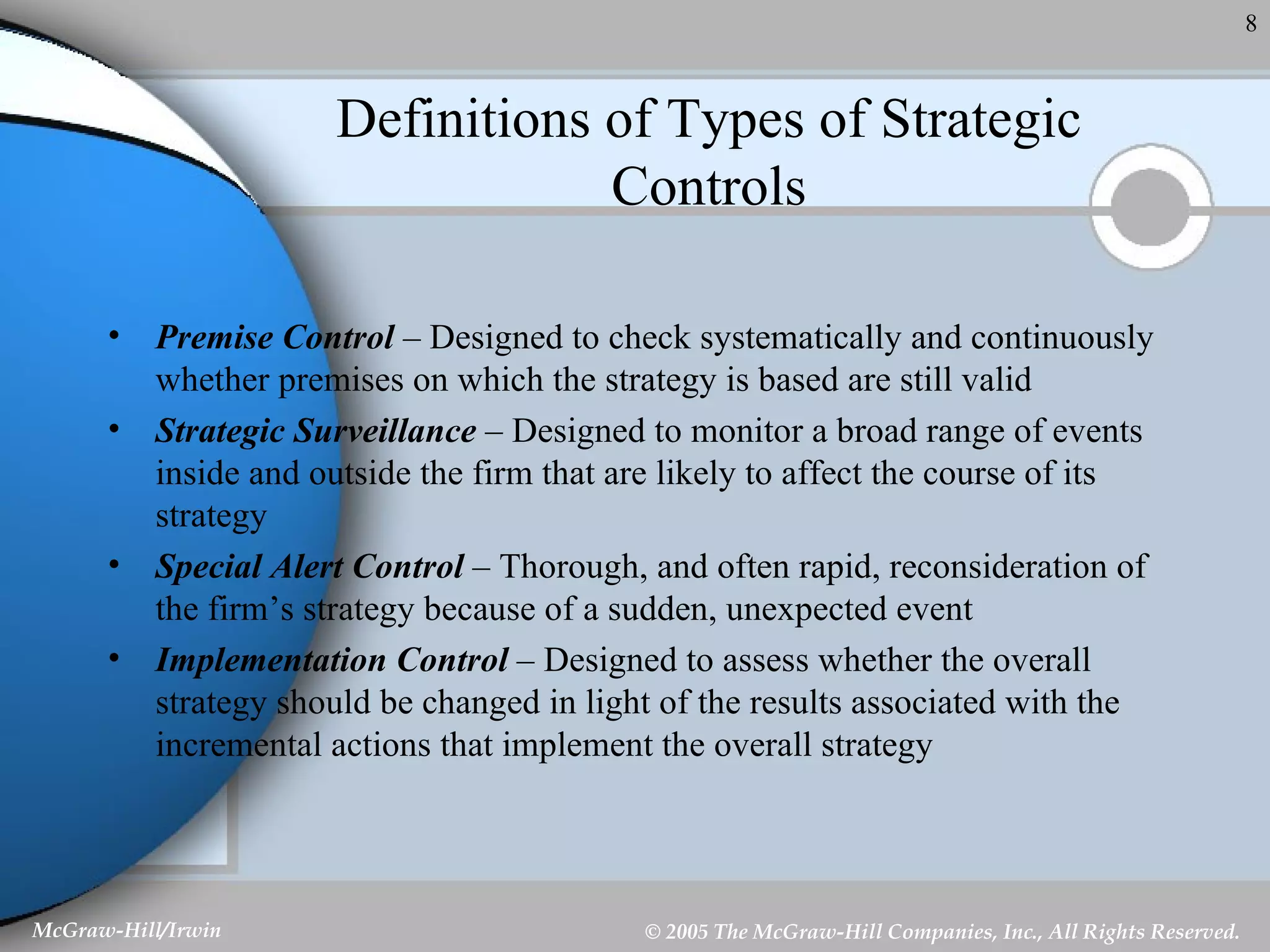
Definitions of Types of Strategic Controls Premise Control  – Designed to check systematically and continuously whether premises on which the strategy is based are still valid Strategic Surveillance  – Designed to monitor a broad range of events inside and outside the firm that are likely to affect the course of its strategy Special Alert Control  – Thorough, and often rapid, reconsideration of the firm’s strategy because of a sudden, unexpected event Implementation Control  – Designed to assess whether the overall strategy should be changed in light of the results associated with the incremental actions that implement the overall strategy
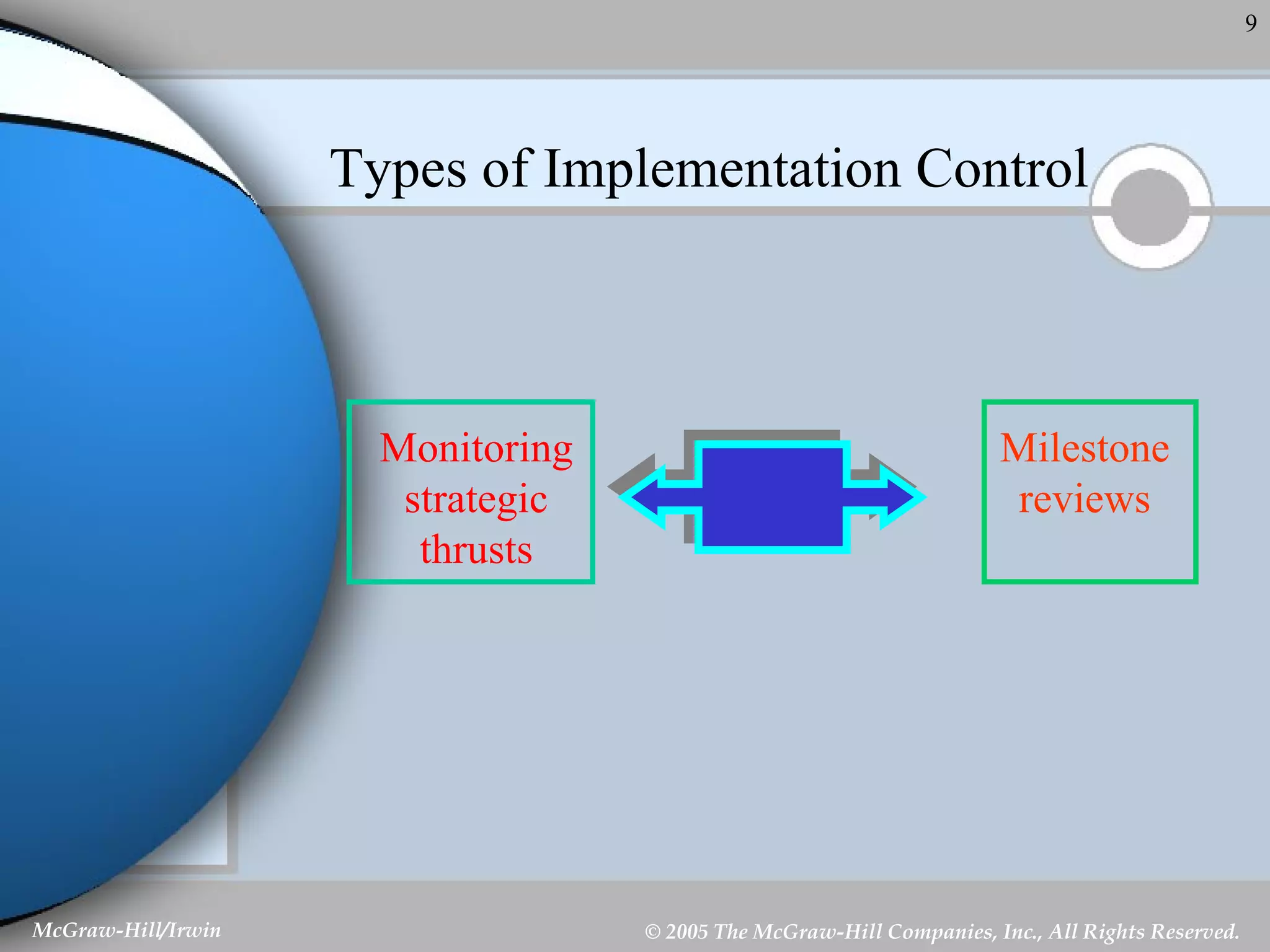
Types of Implementation Control Milestone reviews Monitoring strategic thrusts
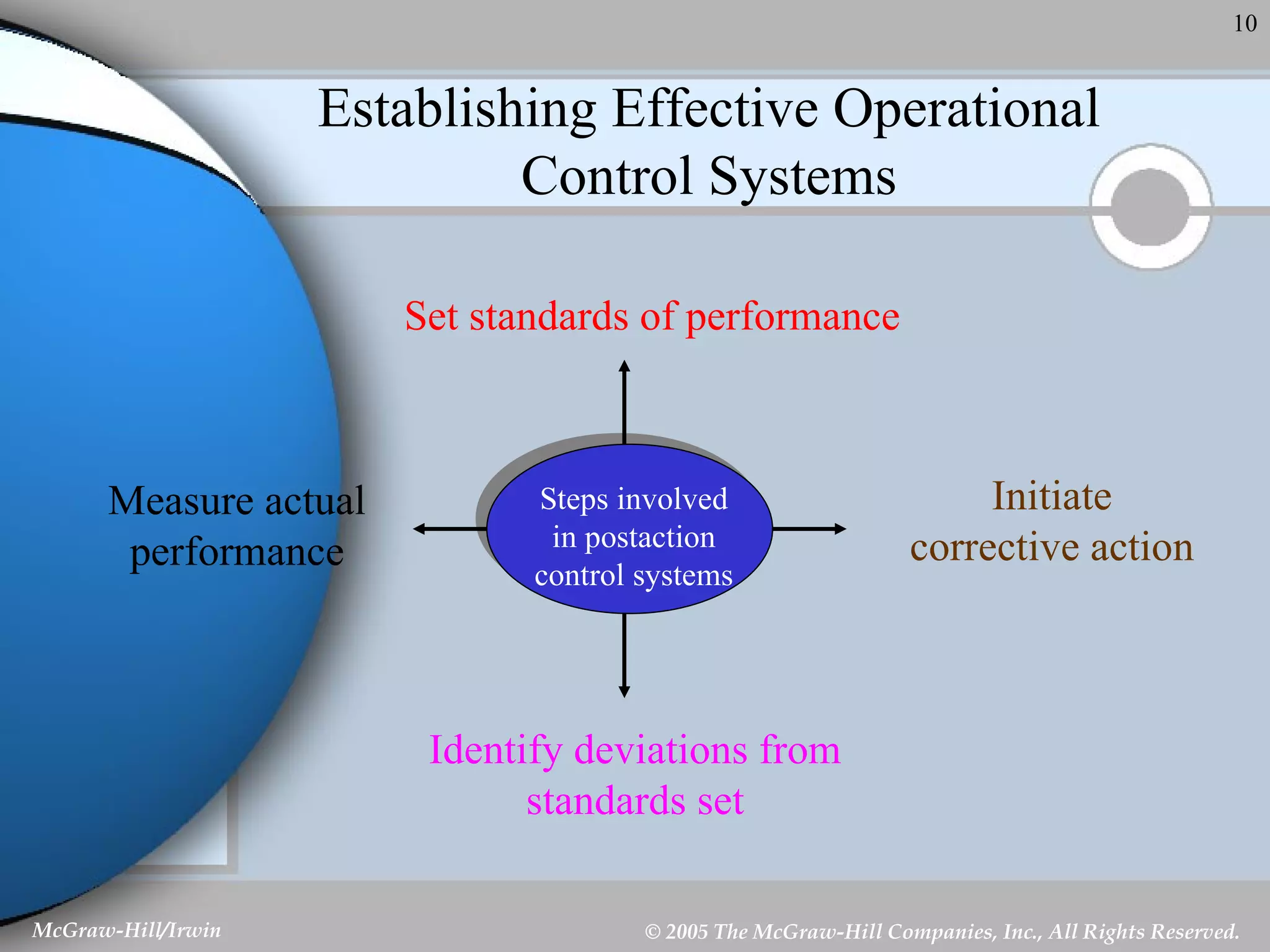
Establishing Effective Operational Control Systems Set standards of performance Measure actual performance Initiate corrective action Identify deviations from standards set Steps involved in postaction control systems
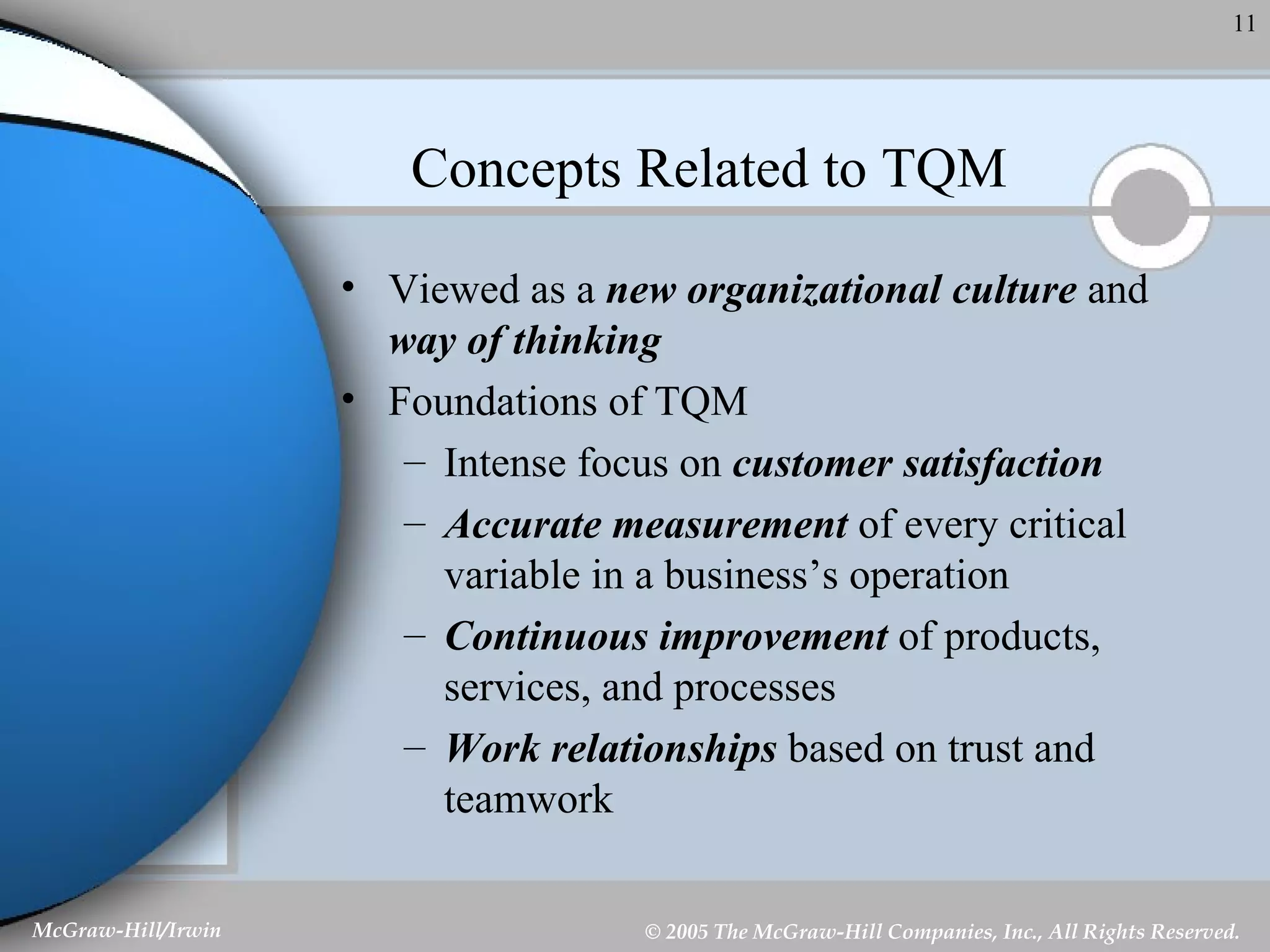
Concepts Related to TQM Viewed as a  new organizational culture  and  way of thinking Foundations of TQM Intense focus on  customer satisfaction Accurate measurement  of every critical variable in a business’s operation Continuous improvement  of products, services, and processes Work relationships  based on trust and teamwork
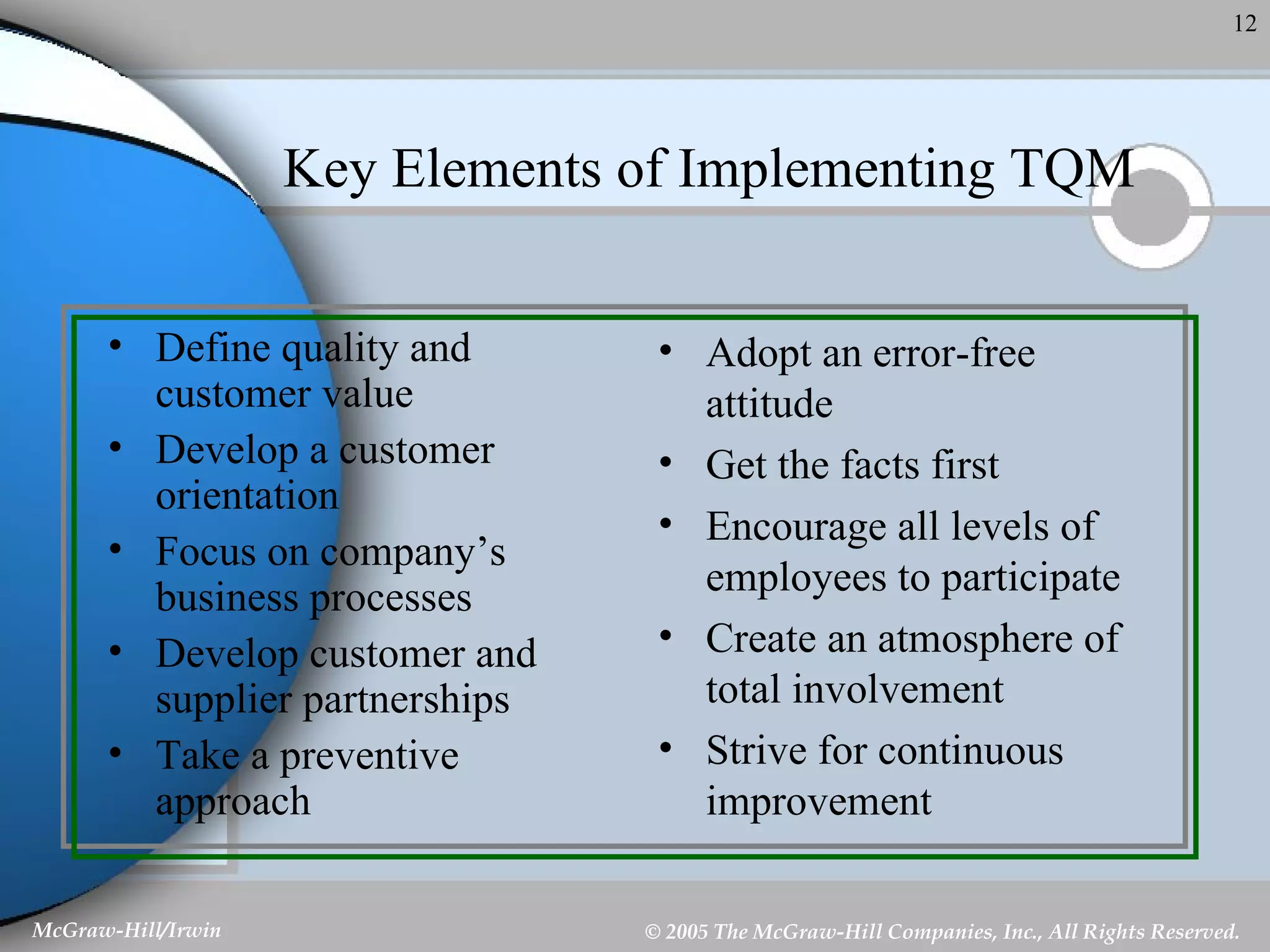
Key Elements of Implementing TQM Define quality and customer value Develop a customer orientation Focus on company’s business processes Develop customer and supplier partnerships Take a preventive approach Adopt an error-free attitude Get the facts first Encourage all levels of employees to participate Create an atmosphere of total involvement Strive for continuous improvement
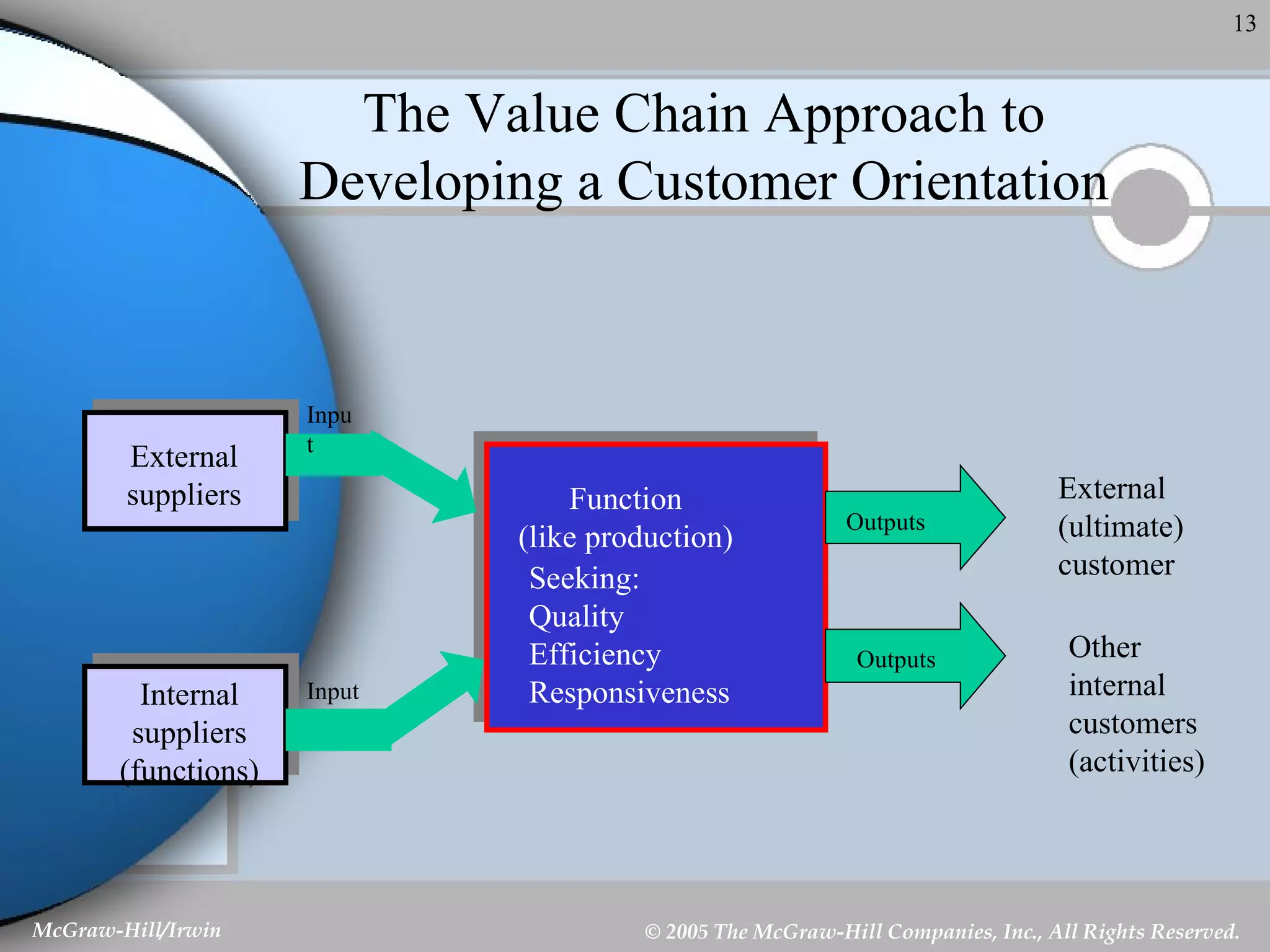
The Value Chain Approach to Developing a Customer Orientation External suppliers Internal suppliers (functions) Input Input Function (like production) Seeking: Quality Efficiency Responsiveness Outputs Outputs External (ultimate) customer Other internal customers (activities)
What is Six-Sigma? A highly rigorous and analytical approach to quality and continuous improvement with an objective to improve profits through deficit reduction, yield improvement, improved customer satisfaction and best-in-class performance
Differences Between TQM and Six-Sigma Acute understanding of customers and the product or service provided Emphasis on the science of statistics and measurement Meticulous and structured training development Strict and project-focused methodologies Reinforcement of the doctrine advocated by Juran such as top management support and continuous education
ISO 9001 The  ISO 9001 standard  focuses on achieving  customer satisfaction  through   Continuous measurement Documentation Assessment Adjustment It  specifies requirements  where an organization Needs to demonstrate its ability to consistently provide product and services that meet customer requirements Aims to enhance customer satisfaction through the effective application of the system, including processes for continual improvement of the system and the assurance of conformation to customer requirements
The Balanced Scorecard Methodology Intends to provide a clear prescription as to what companies should measure in order to  “balance”  the financial perspective in implementation and control of strategic plans It adapts the TQM ideas of customer-defined quality, continuous improvement, employee empowerment, and measurement-based management/feedback into an expanded methodology that includes traditional financial data and results Uses four perspectives: the  learning and growth  perspective, the  business process  perspective, the  customer  perspective, and the  financial perspective
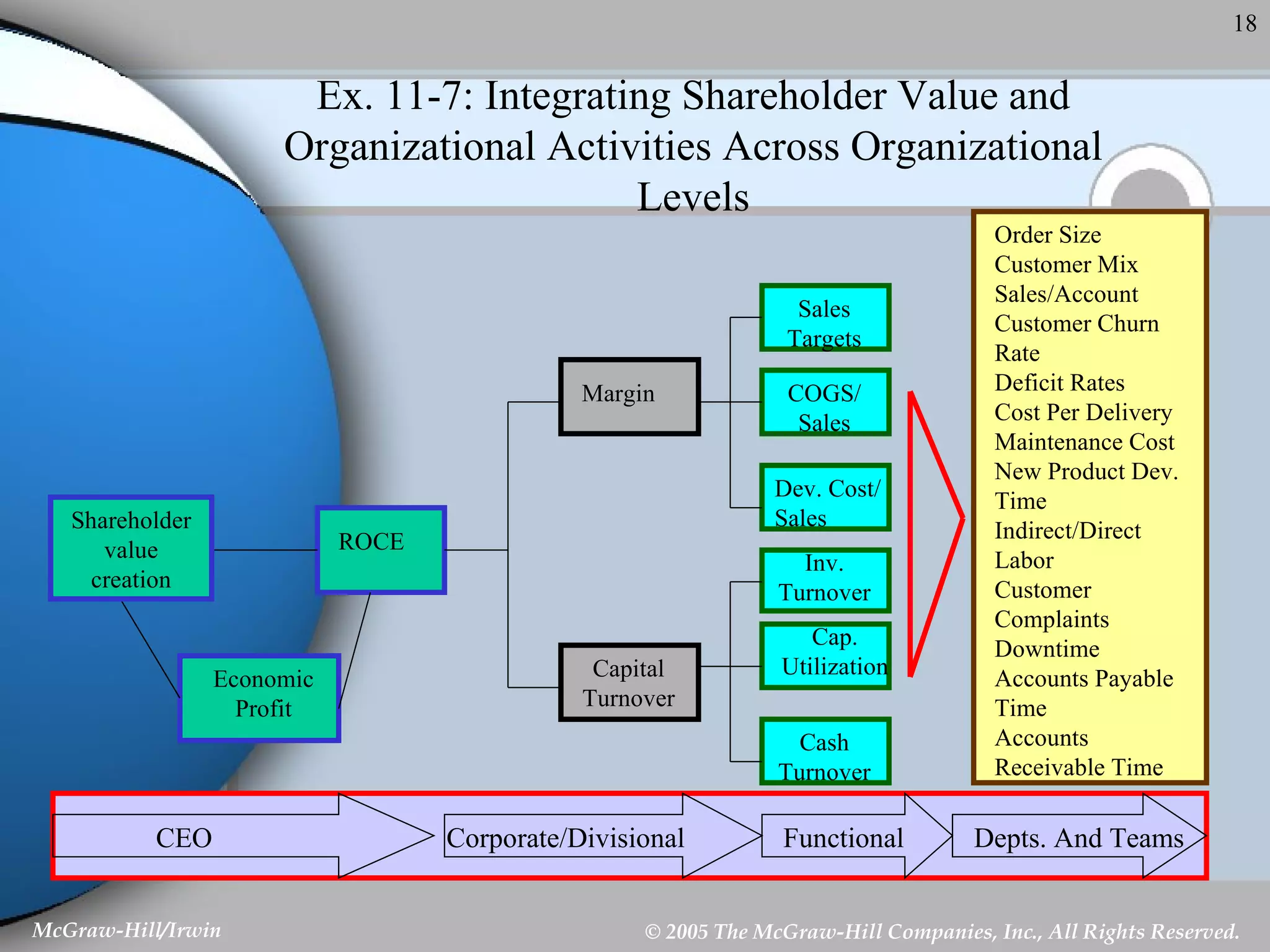
Ex. 11-7: Integrating Shareholder Value and Organizational Activities Across Organizational Levels CEO Corporate/Divisional Functional Depts. And Teams Shareholder value creation ROCE Economic Profit Margin Capital Turnover Sales Targets COGS/ Sales Dev. Cost/ Sales Inv. Turnover Cap. Utilization Cash Turnover Order Size Customer Mix Sales/Account Customer Churn Rate Deficit Rates Cost Per Delivery Maintenance Cost New Product Dev. Time Indirect/Direct Labor Customer Complaints Downtime Accounts Payable Time Accounts Receivable Time

Chap011

  • 1.
    CHAPTER 11 StrategicControl and Continuous Improvement
  • 2.
    Chapter Topics EstablishingStrategic Controls Premise Control Strategic Surveillance Special Alert Control Implementation Control The Quality Imperative: Continuous Improvement to Build Customer Value
  • 3.
    What is StrategicControl? Tracks a strategy as it is implemented, detects problems or changes in its underlying premises, and makes necessary adjustments
  • 4.
    Questions Involved inAssessing a Strategy’s Success Are we moving in the proper direction? Are our assumptions about major trends and changes correct? Should we adjust or abort the strategy? How are we performing? Are objectives and schedules being met? Are costs, revenues, and cash flows matching projections? Do we need to make operational changes?
  • 5.
    Ex. 11-1: FourTypes of Strategic Control Strategic Surveillance Premise Control Time 1 Strategy Formulation Time 2 Time 3 Strategy Implementation Implementation Control Special Alert Control
  • 6.
    Ex. 11-1: Characteristicsof the Four Types of Strategic Control Occurrence of recognizable but unlikely events High High High Potential threats and opportunities related to the strategy Low Low Low Key strategic thrusts and milestones High High Medium Planning premises and projections High Medium Low Objects of control Degree of focusing Data Acquisition: Formalization Centralization Special Alert Control Strategic Surveillance Implementation Control Premise Control Basic Characteristics
  • 7.
    Ex. 11-1 (contd.) Yes Yes Yes Seldom Yes Yes Seldom Seldom Seldom Seldom Yes Yes Yes Yes No No Use with: Environmental factors Industry factors Strategy-specific factors Company-specific factors Special Alert Control Strategic Surveillance Implementation Control Premise Control Basic Characteristics
  • 8.
    Definitions of Typesof Strategic Controls Premise Control – Designed to check systematically and continuously whether premises on which the strategy is based are still valid Strategic Surveillance – Designed to monitor a broad range of events inside and outside the firm that are likely to affect the course of its strategy Special Alert Control – Thorough, and often rapid, reconsideration of the firm’s strategy because of a sudden, unexpected event Implementation Control – Designed to assess whether the overall strategy should be changed in light of the results associated with the incremental actions that implement the overall strategy
  • 9.
    Types of ImplementationControl Milestone reviews Monitoring strategic thrusts
  • 10.
    Establishing Effective OperationalControl Systems Set standards of performance Measure actual performance Initiate corrective action Identify deviations from standards set Steps involved in postaction control systems
  • 11.
    Concepts Related toTQM Viewed as a new organizational culture and way of thinking Foundations of TQM Intense focus on customer satisfaction Accurate measurement of every critical variable in a business’s operation Continuous improvement of products, services, and processes Work relationships based on trust and teamwork
  • 12.
    Key Elements ofImplementing TQM Define quality and customer value Develop a customer orientation Focus on company’s business processes Develop customer and supplier partnerships Take a preventive approach Adopt an error-free attitude Get the facts first Encourage all levels of employees to participate Create an atmosphere of total involvement Strive for continuous improvement
  • 13.
    The Value ChainApproach to Developing a Customer Orientation External suppliers Internal suppliers (functions) Input Input Function (like production) Seeking: Quality Efficiency Responsiveness Outputs Outputs External (ultimate) customer Other internal customers (activities)
  • 14.
    What is Six-Sigma?A highly rigorous and analytical approach to quality and continuous improvement with an objective to improve profits through deficit reduction, yield improvement, improved customer satisfaction and best-in-class performance
  • 15.
    Differences Between TQMand Six-Sigma Acute understanding of customers and the product or service provided Emphasis on the science of statistics and measurement Meticulous and structured training development Strict and project-focused methodologies Reinforcement of the doctrine advocated by Juran such as top management support and continuous education
  • 16.
    ISO 9001 The ISO 9001 standard focuses on achieving customer satisfaction through Continuous measurement Documentation Assessment Adjustment It specifies requirements where an organization Needs to demonstrate its ability to consistently provide product and services that meet customer requirements Aims to enhance customer satisfaction through the effective application of the system, including processes for continual improvement of the system and the assurance of conformation to customer requirements
  • 17.
    The Balanced ScorecardMethodology Intends to provide a clear prescription as to what companies should measure in order to “balance” the financial perspective in implementation and control of strategic plans It adapts the TQM ideas of customer-defined quality, continuous improvement, employee empowerment, and measurement-based management/feedback into an expanded methodology that includes traditional financial data and results Uses four perspectives: the learning and growth perspective, the business process perspective, the customer perspective, and the financial perspective
  • 18.
    Ex. 11-7: IntegratingShareholder Value and Organizational Activities Across Organizational Levels CEO Corporate/Divisional Functional Depts. And Teams Shareholder value creation ROCE Economic Profit Margin Capital Turnover Sales Targets COGS/ Sales Dev. Cost/ Sales Inv. Turnover Cap. Utilization Cash Turnover Order Size Customer Mix Sales/Account Customer Churn Rate Deficit Rates Cost Per Delivery Maintenance Cost New Product Dev. Time Indirect/Direct Labor Customer Complaints Downtime Accounts Payable Time Accounts Receivable Time