Download to read offline
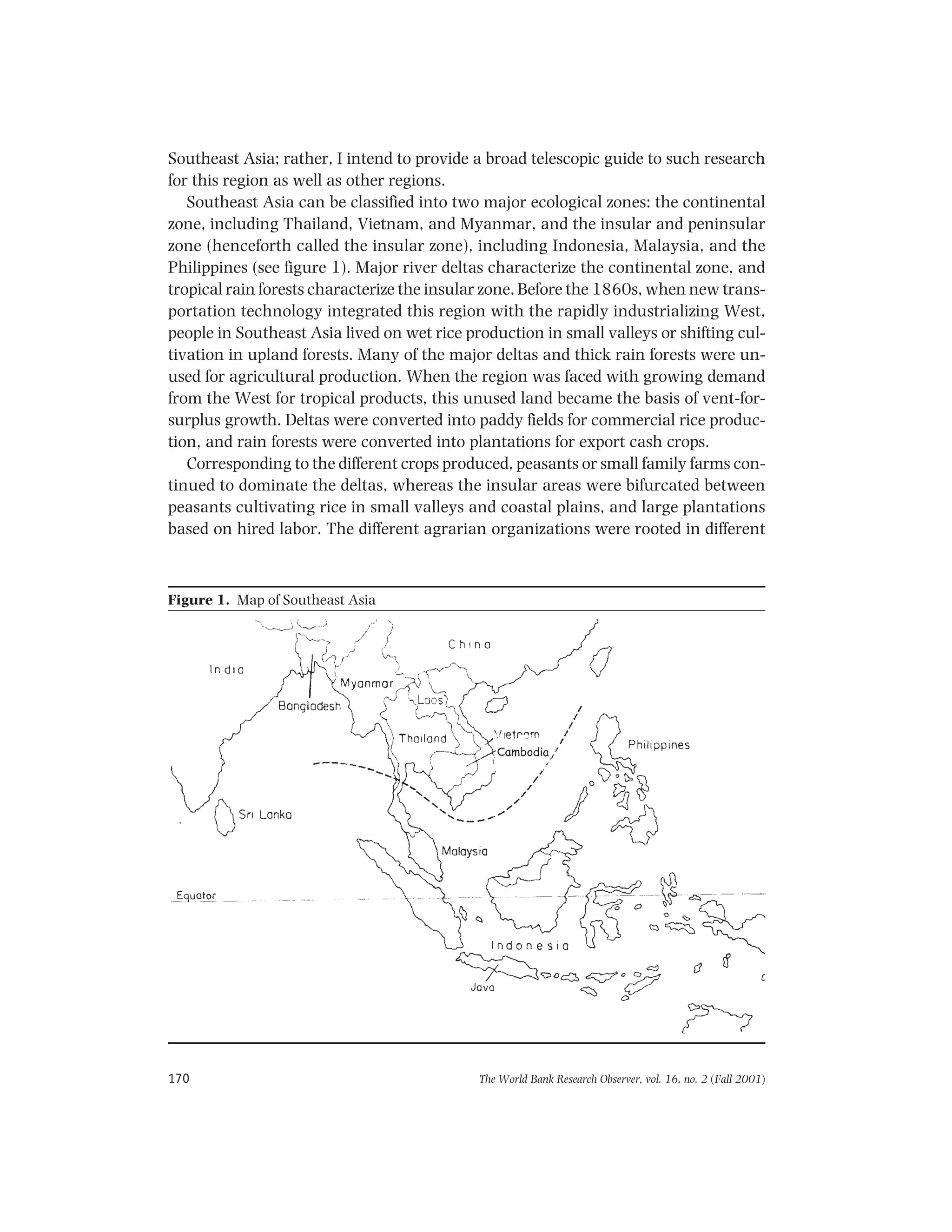
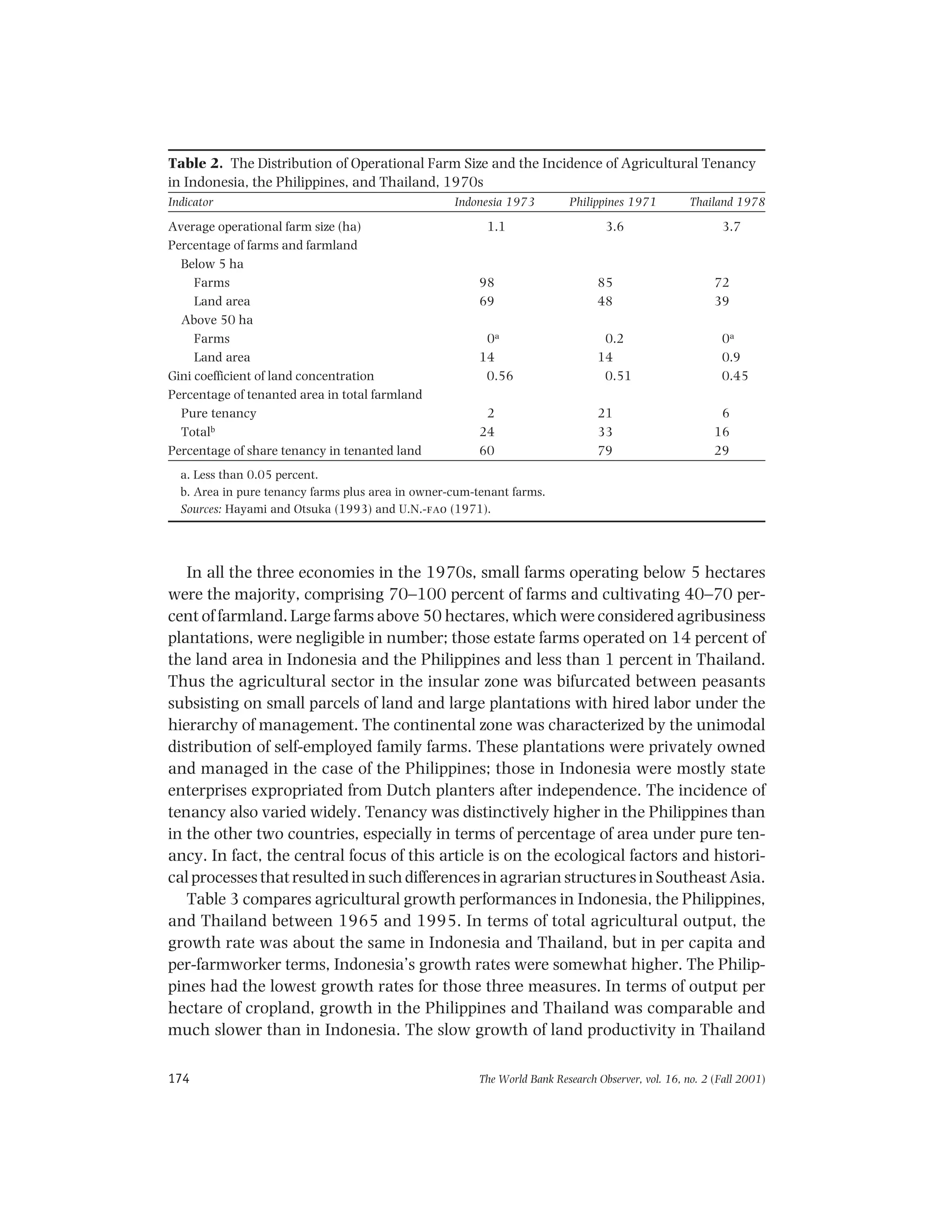
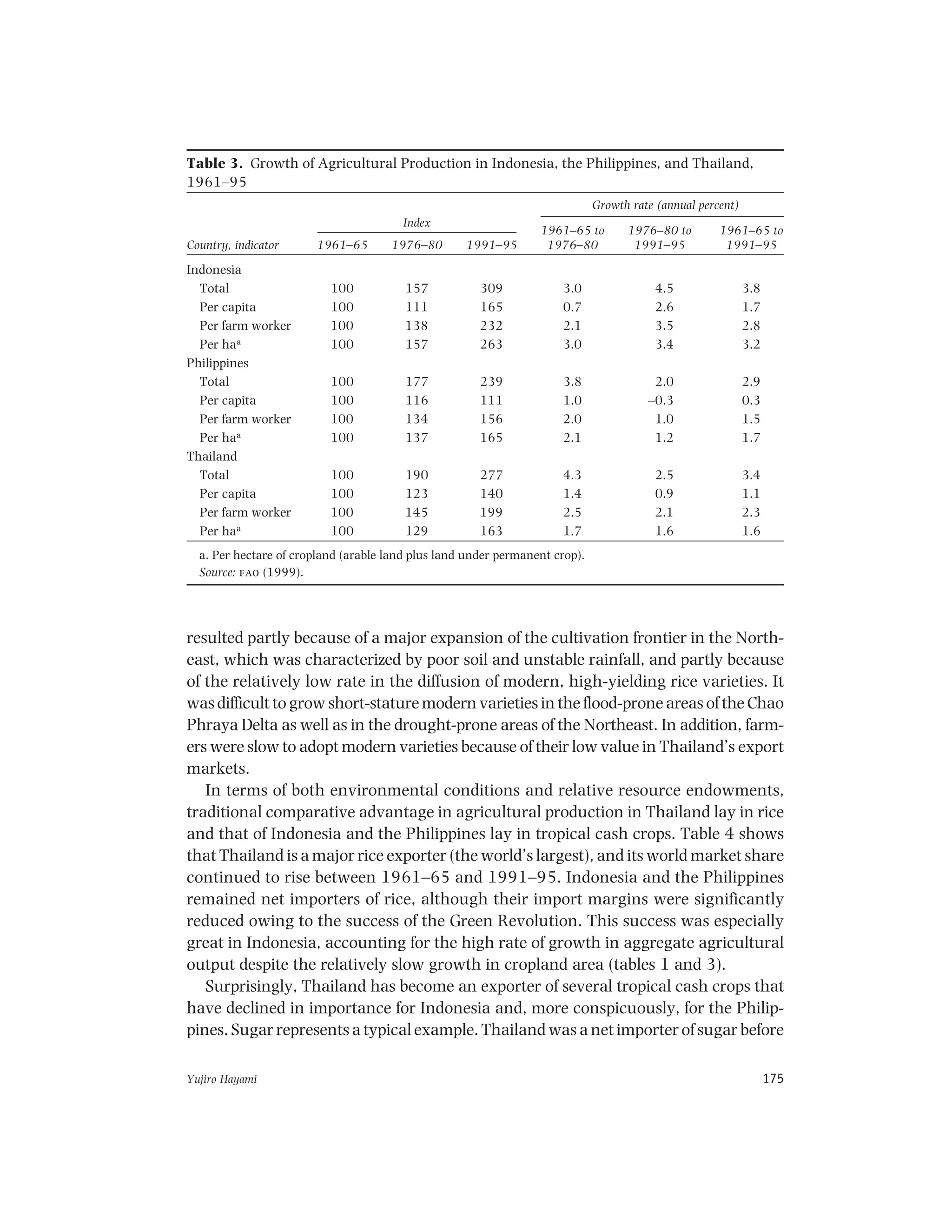
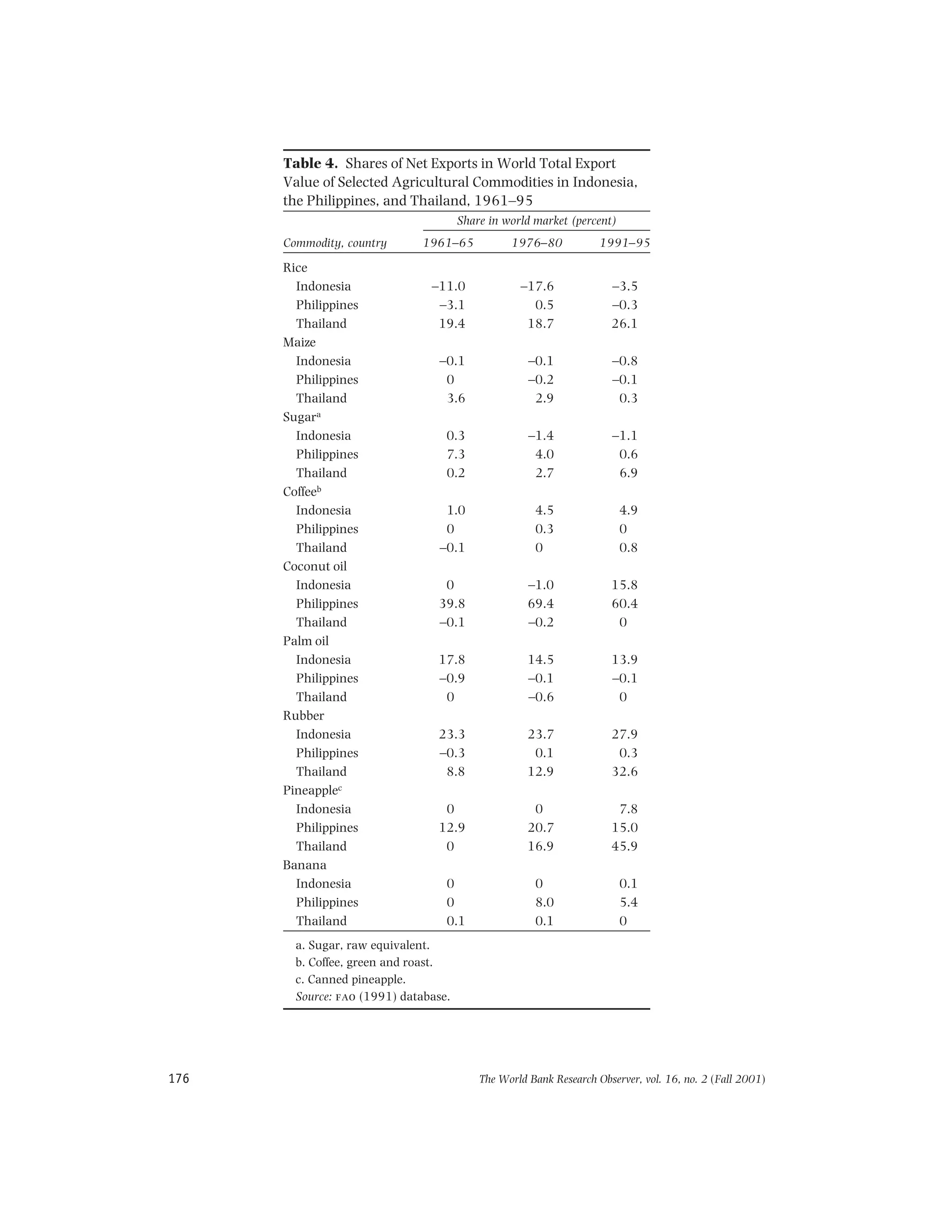
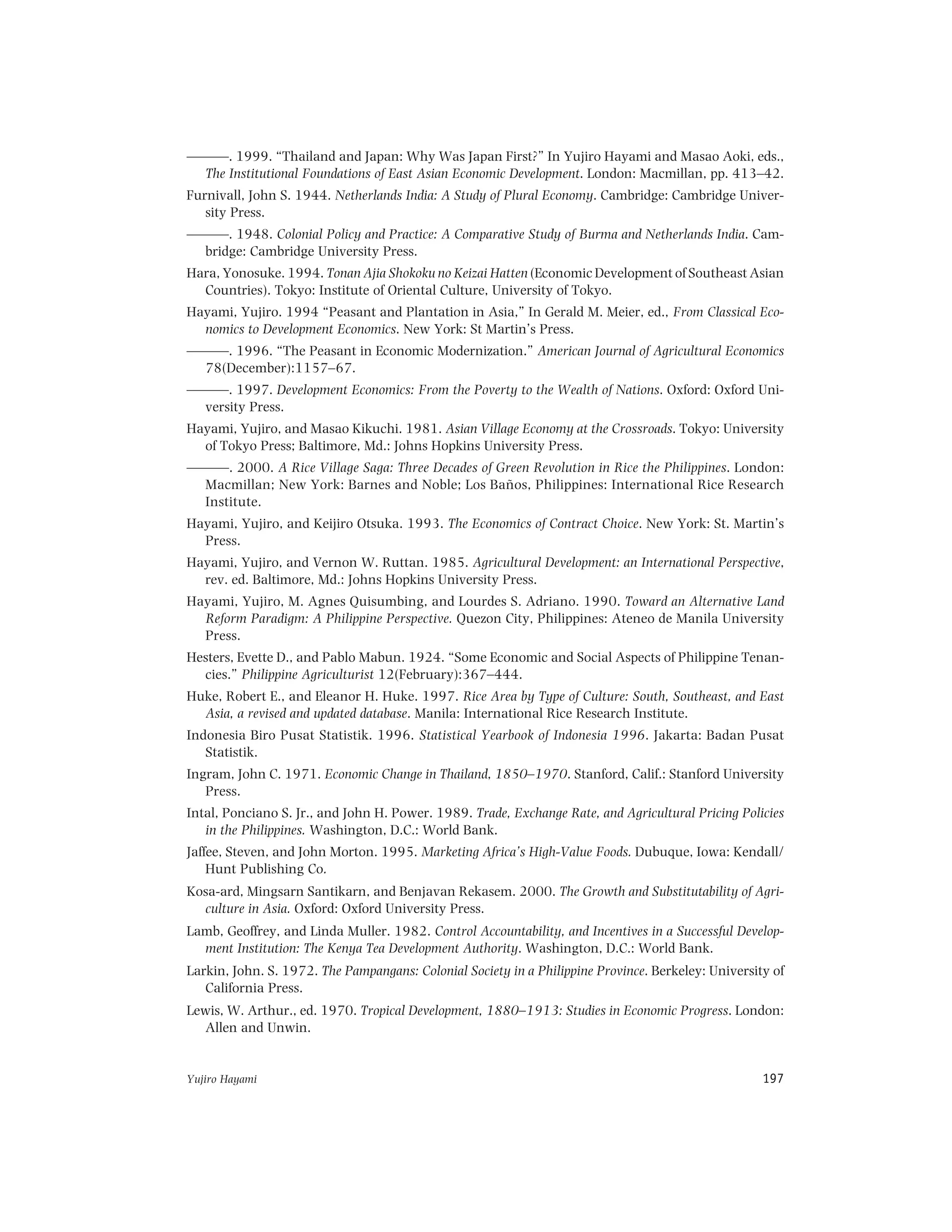
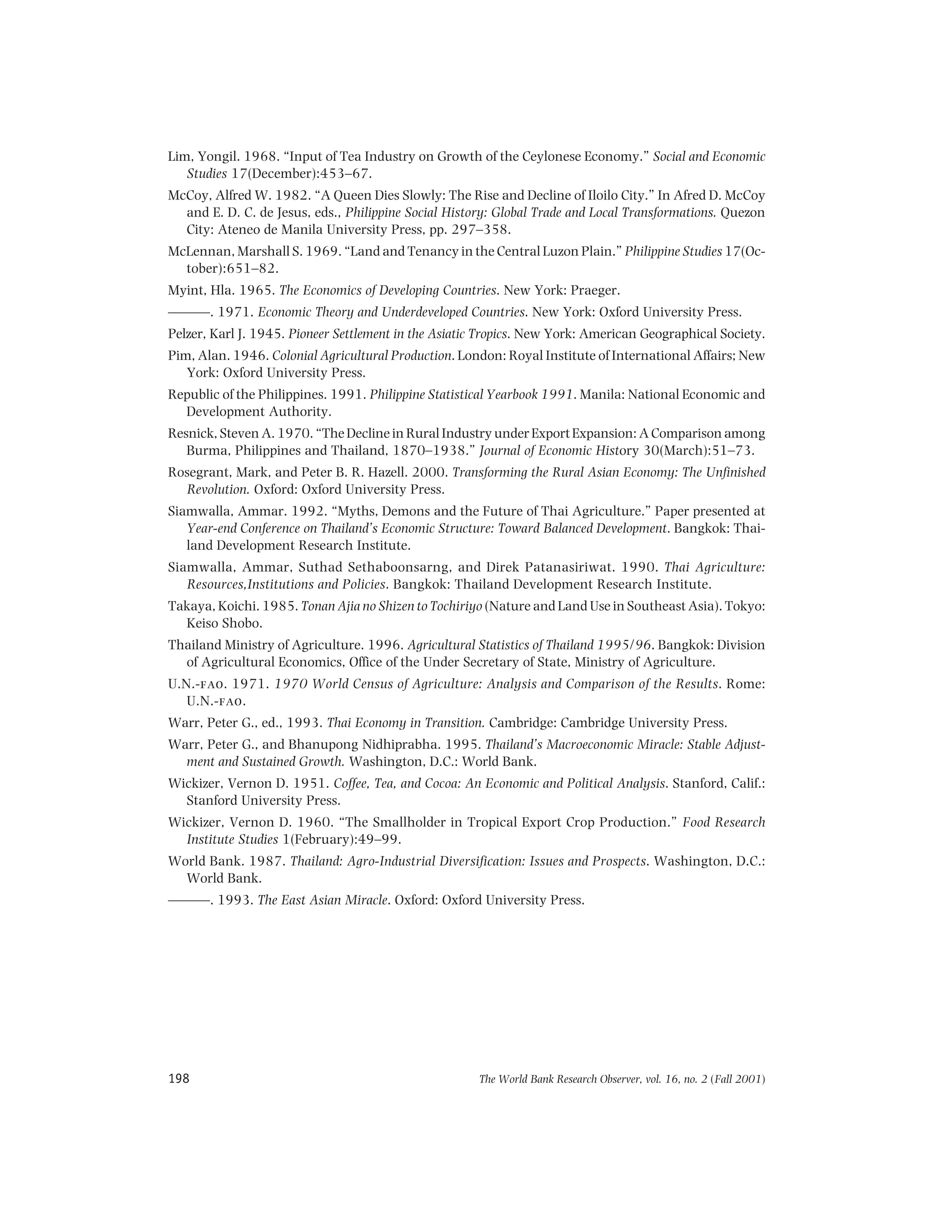

This document discusses how different ecological conditions and historical trajectories in Southeast Asia led to differences in agrarian structures and subsequent economic development performance in Indonesia, the Philippines, and Thailand over the past few decades. In the late 19th century, unused lands in each country were exploited for surplus production differently under varying colonial regimes, resulting in different rural social and economic systems. Specifically, Indonesia developed plantations and bifurcated land ownership while the Philippines experienced widespread landlessness. Thailand maintained small, homogeneous landowning peasants. These divergent agrarian structures influenced each country's recent agricultural and economic growth.


