
P-N. T Johnson , J. Gayin &
       R. K. Bam
Introduction


Source: Olaf Kula and Emmanuel Dormon, 2009. Global Food Security Response- Ghana Rice Study
microREPORT #156
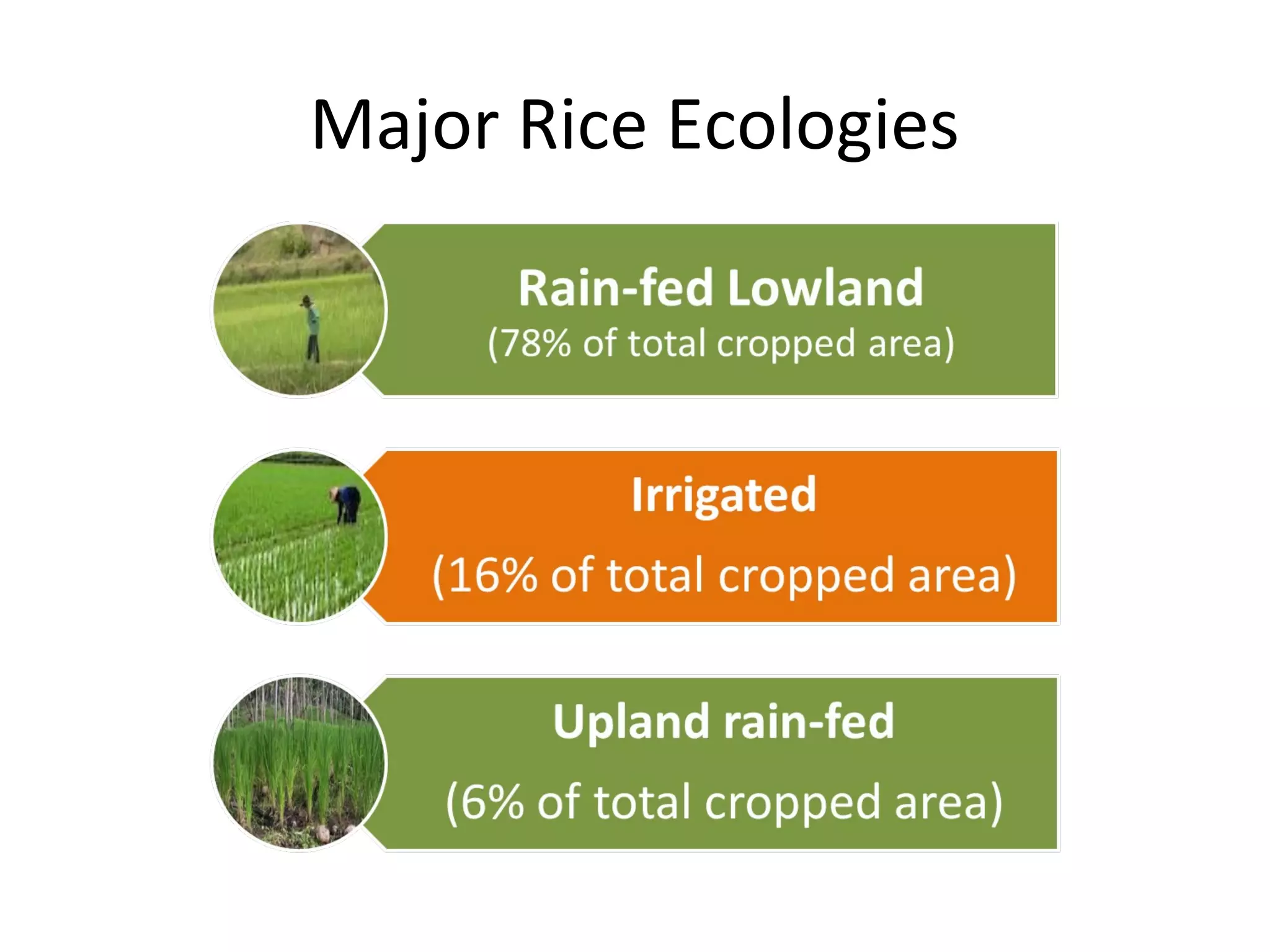
Major Rice Ecologies
Geographical distribution of Rice Ecologies
                in Ghana
• Rainfed lowlands are distributed in all 10
  administrative regions and across all the agro-
  ecological zones
• Upland: Distributed across all the regions except
  Greater Accra. However, upland rice production is
  concentrated mostly in Volta and Western regions
• Irrigated: There are 22 irrigation schemes
  distributed in nine regions. Only 13 schemes are
  being used for rice production
Table 1: Categorization of paddy fields in Ghana

                 Lowland rain-     Upland rain-       Irrigated           Total
                     fed               fed
Planted Area       93,750            18,750            10,200           122,700
    (Ha)
   Paddy               2.4              1.0              4.5              2.4
 (MT/Ha)
   Paddy            224,700           18,750           45,900           289,350
 Production
   (MT)
 % of Total            76               15                8               100
    Area
 % of Total            78                6                16              100
 Production
Source: “The study on the Promotion of Domestic Rice in the Republic of Ghana,”
MoFA and JICA, (Final Report, March 2008).
Table 2: Distribution of irrigated rice schemes in
                         Ghana
Name of scheme   Location (Region)   Agro-ecological    Main biotic stresses
                                     zone
Afife            Volta               Coastal savannah   salinity

Aveyime          Volta               Coastal savannah   salinity

Anum valley      Ashanti             Forest             Submergence, Fe toxicity

Botanga          Northern            Savannah

Golinga          Northern            Savannah

Libga            Northern            Savannah

Ashiaman         Greater Accra       Coastal savannah   Salinity

Dawhenya         Greater Accra       Coastal savannah   Salinity

Okyereko         Central             Coastal savannah   Salinity, Fe toxicity

Kikam            Western             Rain forest        Fe toxicity

Vea (ICOUR)      Upper East          Guinea savannah

Kpong            Greater Accra       Coatal savannah

Tono (ICOUR)     Upper East          Guinea savannah
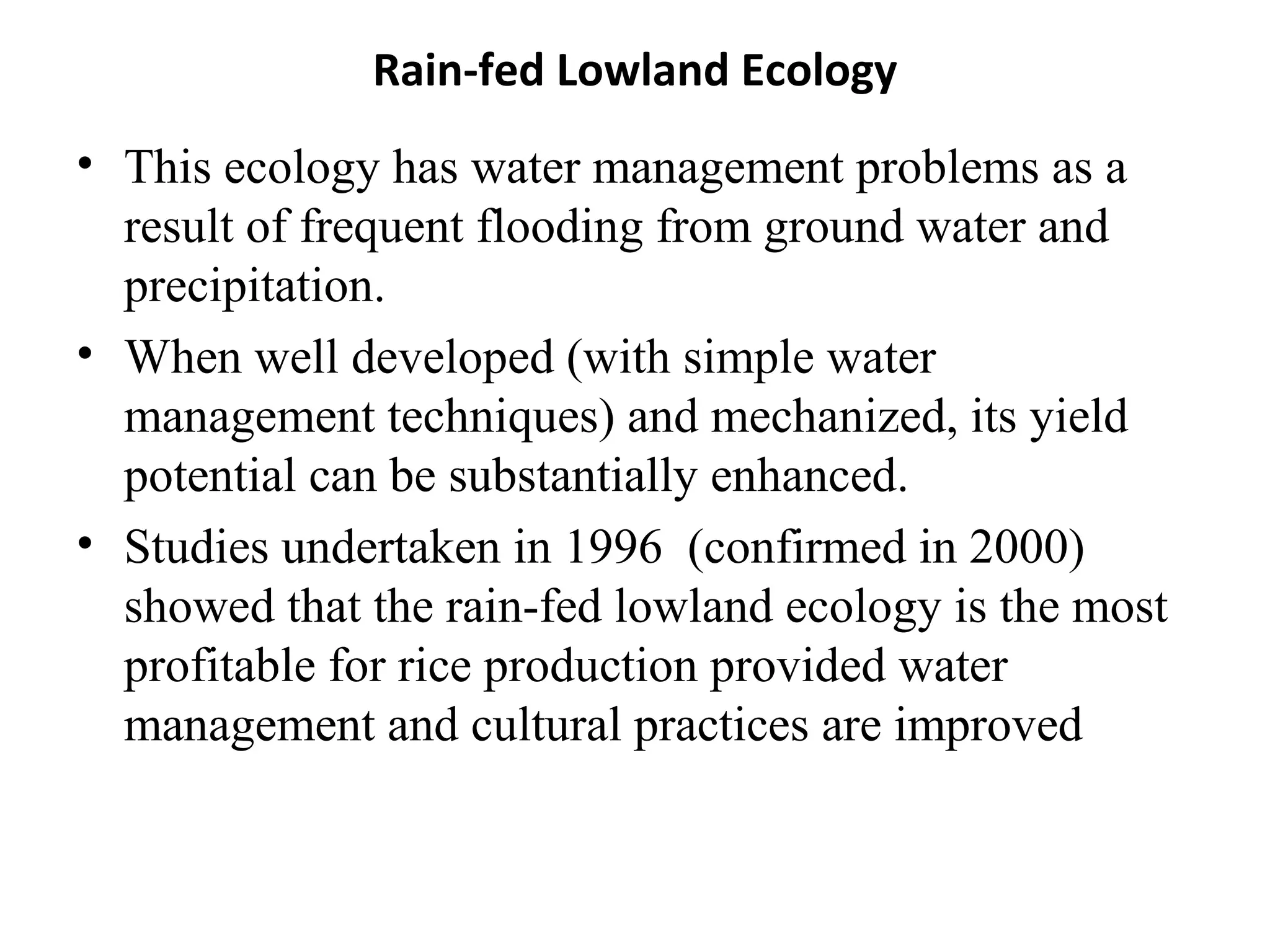
Rain-fed Lowland Ecology
• This ecology has water management problems as a
  result of frequent flooding from ground water and
  precipitation.
• When well developed (with simple water
  management techniques) and mechanized, its yield
  potential can be substantially enhanced.
• Studies undertaken in 1996 (confirmed in 2000)
  showed that the rain-fed lowland ecology is the most
  profitable for rice production provided water
  management and cultural practices are improved
Irrigated Ecology

• This ecology records the highest rice yields
• Levels of technology utilization are higher
  than in both rain-fed lowland and upland
  ecologies (improved land preparation,
  improved varieties, fertilizer application and
  weed control through water management).
Rain-fed Upland Ecology

• This ecology is characterized by an erratic
  rainfall pattern.
• There are also problems of weed competition,
  low soil fertility and pest damage
• Rice varieties suitable for the ecology are short
  duration and drought-tolerant types
Table 3a: Major Abiotic & Biotic Stresses for Rice
                    Ecologies
Ecology

              Abiotic Stress               Biotic Stress

              Drought, poor seedling       Weeds, brown spot,
Upland
              establishment, phosphorus,   narrow leaf spot, blast,

              N and Zn deficiencies        bird damage, stem

                                           borers, nematodes
Table 3b: Major Abiotic & Biotic Stresses for Rice
                      Ecologies
Ecology
               Abiotic Stress              Biotic Stress

               Submergence, flash          Weeds, brown spot,
Rainfed        floods, terminal drought,   narrow leaf spot,
Lowlands       Fe toxicity, salinity,      blast, bird damage,
               declining soil fertility    stem borers,
                                           nematodes

Irrigated      Salinity, Fe toxicity       Weeds, bird damage,
                                           stem borers,
                                           nematodes
Rice Processing (post production)

• Primary Processing
  – Drying
  – Threshing
  – Winnowing
  – Temporary storage/
  – milling
• Secondary Processing
  – Parboiling
  – Rice flour production (rice-based products)
Primary Processing

– Pre-drying        Primary processing occurs in all
                    the ecologies in the major rice
– Bulking           growing regions in Ghana. In the
– Threshing         irrigated fields there is better
                    access to machinery/equipment.
– Winnowing
– Drying            Processing Standards are
– Paddy storage     therefore high. Small holder
                    farmers in the rain-fed lowland
                    and upland ecologies manually
                    engage in these primary
                    processing activities
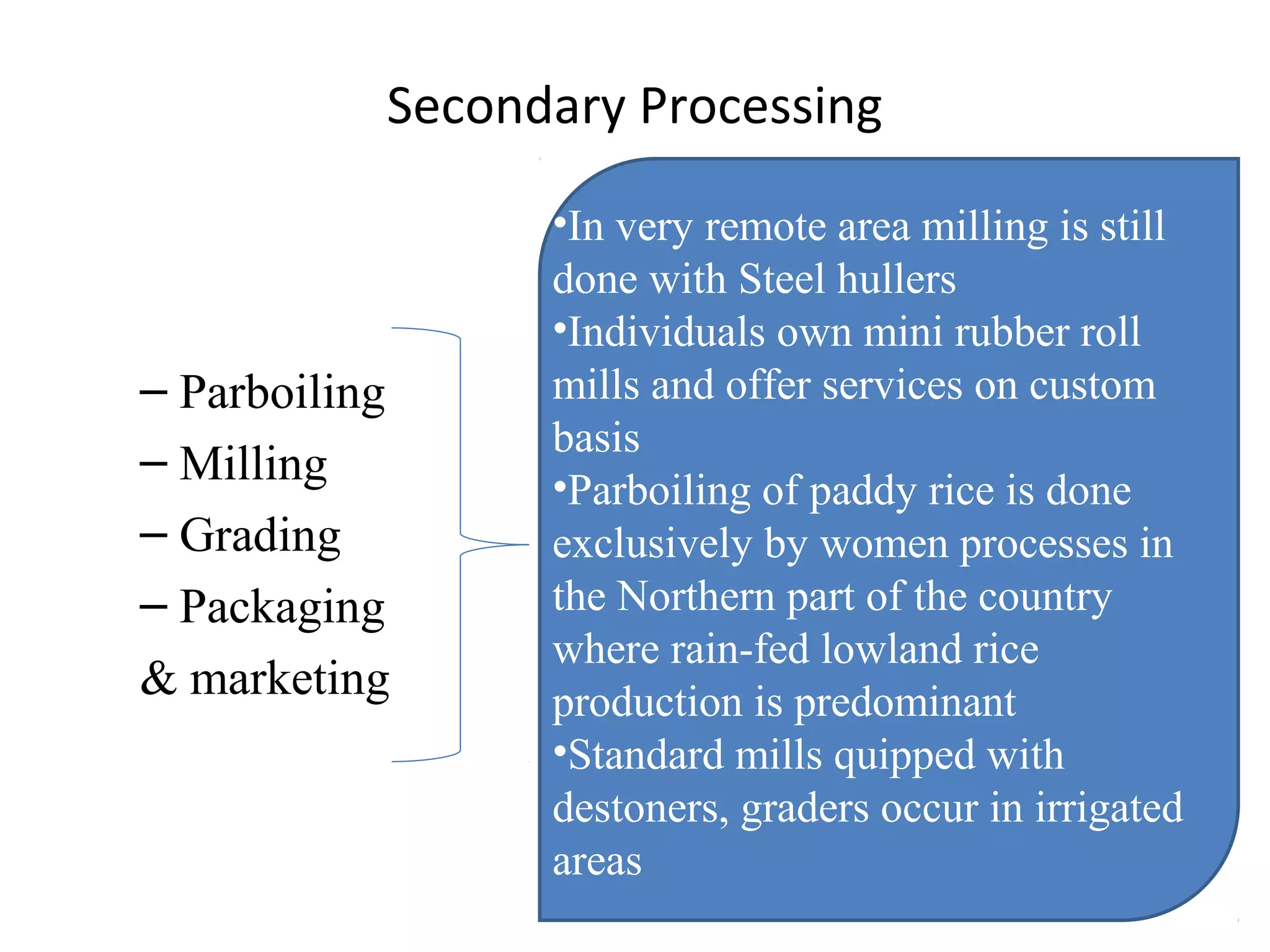
Secondary Processing

                     •In very remote area milling is still
                     done with Steel hullers
                     •Individuals own mini rubber roll
– Parboiling         mills and offer services on custom
                     basis
– Milling
                     •Parboiling of paddy rice is done
– Grading            exclusively by women processes in
– Packaging          the Northern part of the country
                     where rain-fed lowland rice
& marketing          production is predominant
                     •Standard mills quipped with
                     destoners, graders occur in irrigated
                     areas
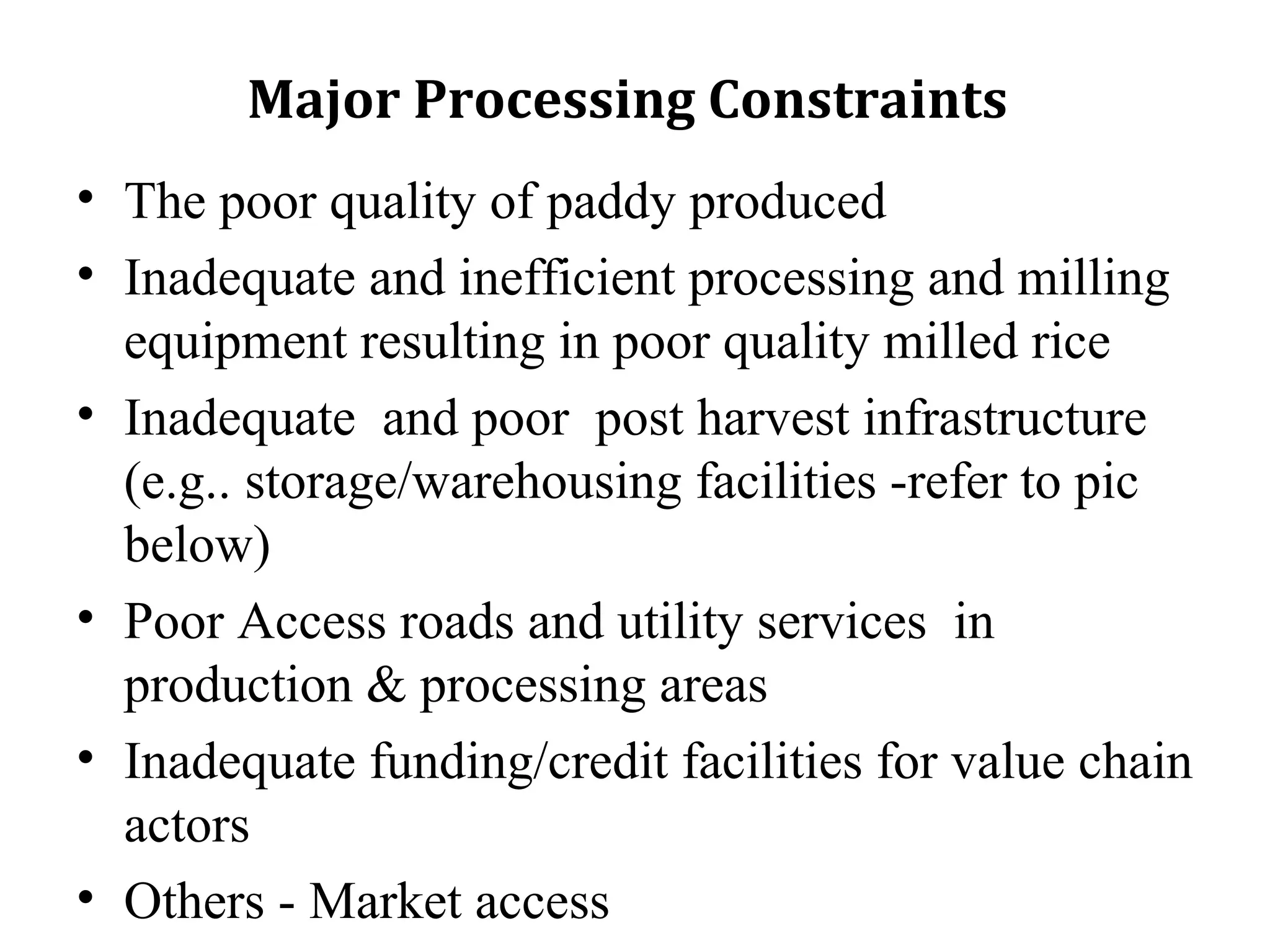
Major Processing Constraints
• The poor quality of paddy produced
• Inadequate and inefficient processing and milling
  equipment resulting in poor quality milled rice
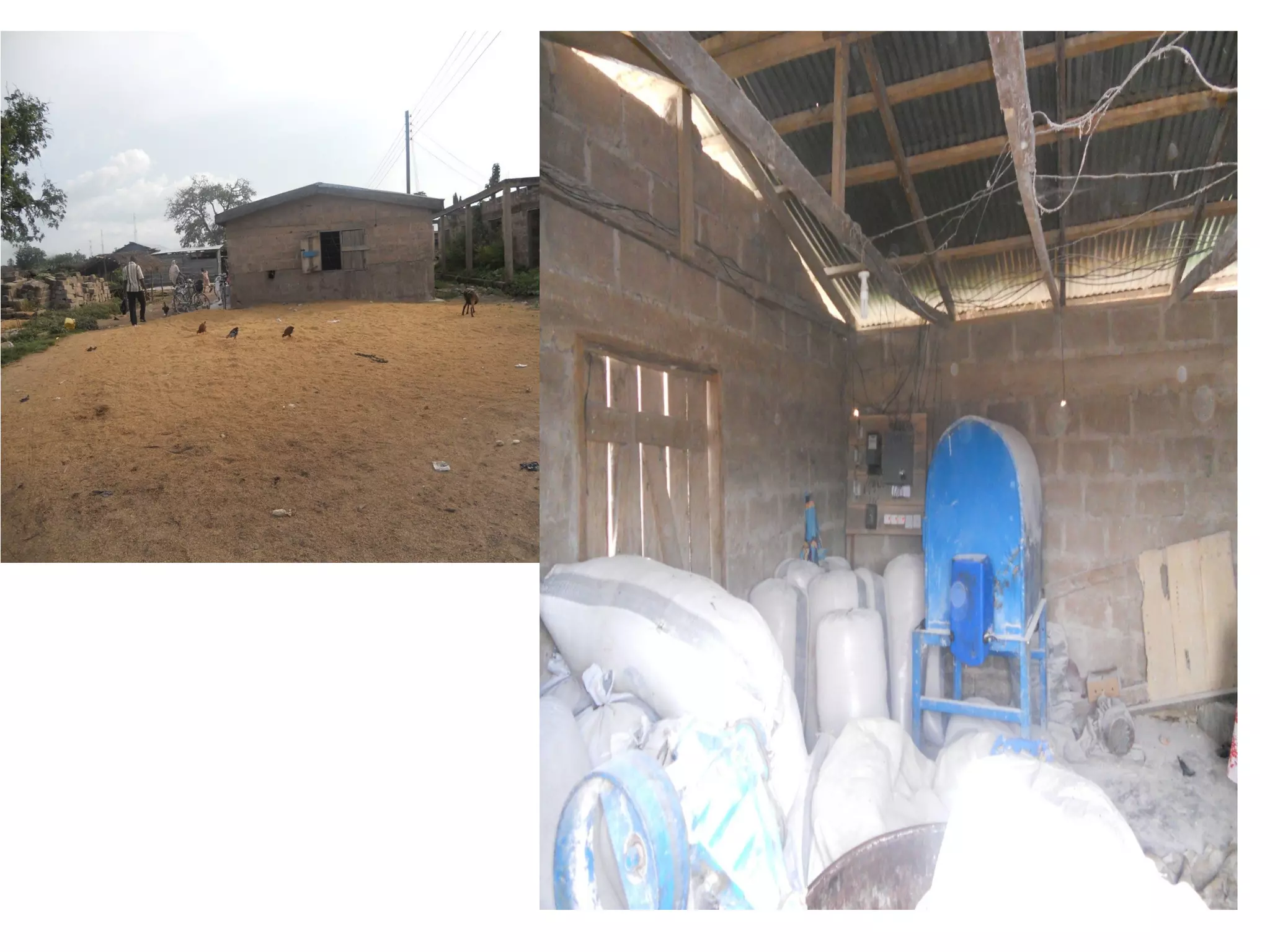
• Inadequate and poor post harvest infrastructure
  (e.g.. storage/warehousing facilities -refer to pic
  below)
• Poor Access roads and utility services in
  production & processing areas
• Inadequate funding/credit facilities for value chain
  actors
• Others - Market access
Recent achievements on technology
    development - processing & value addition
• Capacity building of value chain
  actors to produce quality rice
  through improved post
  production handling of rice

• Packaging, branding and
  Promotion of the locally
  produced rice (comes with its
  additional cost) e.g. Gbewa,
  Worawora, Rhema Perfume
Recent achievements on technology development -
         processing & value addition (con’t)

• Building of linkages between value chain actors
• Installation of standard mills at strategic positions
  (through projects and government efforts)
• Capacity building of artisanal parboilers in
  improved parboiling techniques
On-going research activities processing
                 & value addition
1. Development of Rice Varieties with Enhanced
   Nitrogen-Use Efficiency and Salt Tolerance (NUE-
   EST-AATF)
     • Milling and Sensory tests on Nerica 4 and
       Lowland Nerica 9
1. Expanded Rice Programme
     • Improved post harvest handling and marketing
1. Enhancing Food Security in Africa through the
   Improvement of Rice Post-Harvest Handling,
   Marketing and the Development of New Rice-Based
   Products
Merci

Thank you

Ghana presentation johnson

  • 1.
    P-N. T Johnson, J. Gayin & R. K. Bam
  • 2.
    Introduction Source: Olaf Kulaand Emmanuel Dormon, 2009. Global Food Security Response- Ghana Rice Study microREPORT #156
  • 3.
  • 4.
    Geographical distribution ofRice Ecologies in Ghana • Rainfed lowlands are distributed in all 10 administrative regions and across all the agro- ecological zones • Upland: Distributed across all the regions except Greater Accra. However, upland rice production is concentrated mostly in Volta and Western regions • Irrigated: There are 22 irrigation schemes distributed in nine regions. Only 13 schemes are being used for rice production
  • 5.
    Table 1: Categorizationof paddy fields in Ghana Lowland rain- Upland rain- Irrigated Total fed fed Planted Area 93,750 18,750 10,200 122,700 (Ha) Paddy 2.4 1.0 4.5 2.4 (MT/Ha) Paddy 224,700 18,750 45,900 289,350 Production (MT) % of Total 76 15 8 100 Area % of Total 78 6 16 100 Production Source: “The study on the Promotion of Domestic Rice in the Republic of Ghana,” MoFA and JICA, (Final Report, March 2008).
  • 6.
    Table 2: Distributionof irrigated rice schemes in Ghana Name of scheme Location (Region) Agro-ecological Main biotic stresses zone Afife Volta Coastal savannah salinity Aveyime Volta Coastal savannah salinity Anum valley Ashanti Forest Submergence, Fe toxicity Botanga Northern Savannah Golinga Northern Savannah Libga Northern Savannah Ashiaman Greater Accra Coastal savannah Salinity Dawhenya Greater Accra Coastal savannah Salinity Okyereko Central Coastal savannah Salinity, Fe toxicity Kikam Western Rain forest Fe toxicity Vea (ICOUR) Upper East Guinea savannah Kpong Greater Accra Coatal savannah Tono (ICOUR) Upper East Guinea savannah
  • 7.
    Rain-fed Lowland Ecology •This ecology has water management problems as a result of frequent flooding from ground water and precipitation. • When well developed (with simple water management techniques) and mechanized, its yield potential can be substantially enhanced. • Studies undertaken in 1996 (confirmed in 2000) showed that the rain-fed lowland ecology is the most profitable for rice production provided water management and cultural practices are improved
  • 8.
    Irrigated Ecology • Thisecology records the highest rice yields • Levels of technology utilization are higher than in both rain-fed lowland and upland ecologies (improved land preparation, improved varieties, fertilizer application and weed control through water management).
  • 9.
    Rain-fed Upland Ecology •This ecology is characterized by an erratic rainfall pattern. • There are also problems of weed competition, low soil fertility and pest damage • Rice varieties suitable for the ecology are short duration and drought-tolerant types
  • 10.
    Table 3a: MajorAbiotic & Biotic Stresses for Rice Ecologies Ecology Abiotic Stress Biotic Stress Drought, poor seedling Weeds, brown spot, Upland establishment, phosphorus, narrow leaf spot, blast, N and Zn deficiencies bird damage, stem borers, nematodes
  • 11.
    Table 3b: MajorAbiotic & Biotic Stresses for Rice Ecologies Ecology Abiotic Stress Biotic Stress Submergence, flash Weeds, brown spot, Rainfed floods, terminal drought, narrow leaf spot, Lowlands Fe toxicity, salinity, blast, bird damage, declining soil fertility stem borers, nematodes Irrigated Salinity, Fe toxicity Weeds, bird damage, stem borers, nematodes
  • 12.
    Rice Processing (postproduction) • Primary Processing – Drying – Threshing – Winnowing – Temporary storage/ – milling • Secondary Processing – Parboiling – Rice flour production (rice-based products)
  • 13.
    Primary Processing – Pre-drying Primary processing occurs in all the ecologies in the major rice – Bulking growing regions in Ghana. In the – Threshing irrigated fields there is better access to machinery/equipment. – Winnowing – Drying Processing Standards are – Paddy storage therefore high. Small holder farmers in the rain-fed lowland and upland ecologies manually engage in these primary processing activities
  • 14.
    Secondary Processing •In very remote area milling is still done with Steel hullers •Individuals own mini rubber roll – Parboiling mills and offer services on custom basis – Milling •Parboiling of paddy rice is done – Grading exclusively by women processes in – Packaging the Northern part of the country where rain-fed lowland rice & marketing production is predominant •Standard mills quipped with destoners, graders occur in irrigated areas
  • 15.
    Major Processing Constraints •The poor quality of paddy produced • Inadequate and inefficient processing and milling equipment resulting in poor quality milled rice • Inadequate and poor post harvest infrastructure (e.g.. storage/warehousing facilities -refer to pic below) • Poor Access roads and utility services in production & processing areas • Inadequate funding/credit facilities for value chain actors • Others - Market access
  • 17.
    Recent achievements ontechnology development - processing & value addition • Capacity building of value chain actors to produce quality rice through improved post production handling of rice • Packaging, branding and Promotion of the locally produced rice (comes with its additional cost) e.g. Gbewa, Worawora, Rhema Perfume
  • 18.
    Recent achievements ontechnology development - processing & value addition (con’t) • Building of linkages between value chain actors • Installation of standard mills at strategic positions (through projects and government efforts) • Capacity building of artisanal parboilers in improved parboiling techniques
  • 19.
    On-going research activitiesprocessing & value addition 1. Development of Rice Varieties with Enhanced Nitrogen-Use Efficiency and Salt Tolerance (NUE- EST-AATF) • Milling and Sensory tests on Nerica 4 and Lowland Nerica 9 1. Expanded Rice Programme • Improved post harvest handling and marketing 1. Enhancing Food Security in Africa through the Improvement of Rice Post-Harvest Handling, Marketing and the Development of New Rice-Based Products
  • 20.