Fish Anatomy and Physiology
Objectives
 To give a brief outline of the anatomy and physiology of fish
which are necessary for an appreciation of the pathological
changes.
 To understand the mechanisms underlying clinical disease
manifestations and management of fish.
INTRODUCTION
 Many basic functions of fish are similar to those of other
vertebrates.
 Fish is poikilothermy: it conforms with the environmental
temperature.
 No simple physiological constant values can be given (e.g. for
heart rate, rate of digestion or rate of growth).
Anatomy and Physiology of Fish
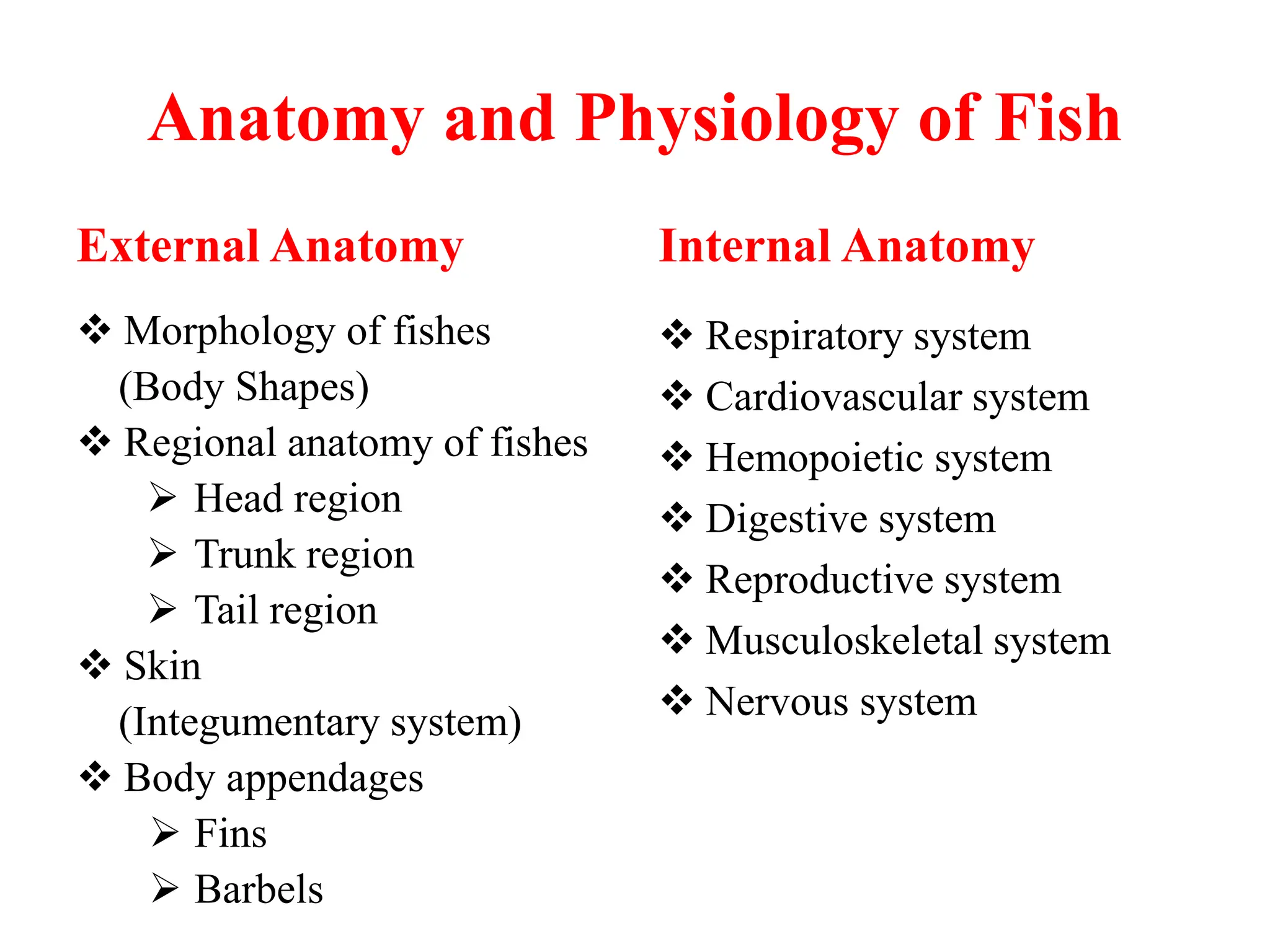
External Anatomy
 Morphology of fishes
(Body Shapes)
 Regional anatomy of fishes
 Head region
 Trunk region
 Tail region
 Skin
(Integumentary system)
 Body appendages
 Fins
 Barbels
Internal Anatomy
 Respiratory system
 Cardiovascular system
 Hemopoietic system
 Digestive system
 Reproductive system
 Musculoskeletal system
 Nervous system
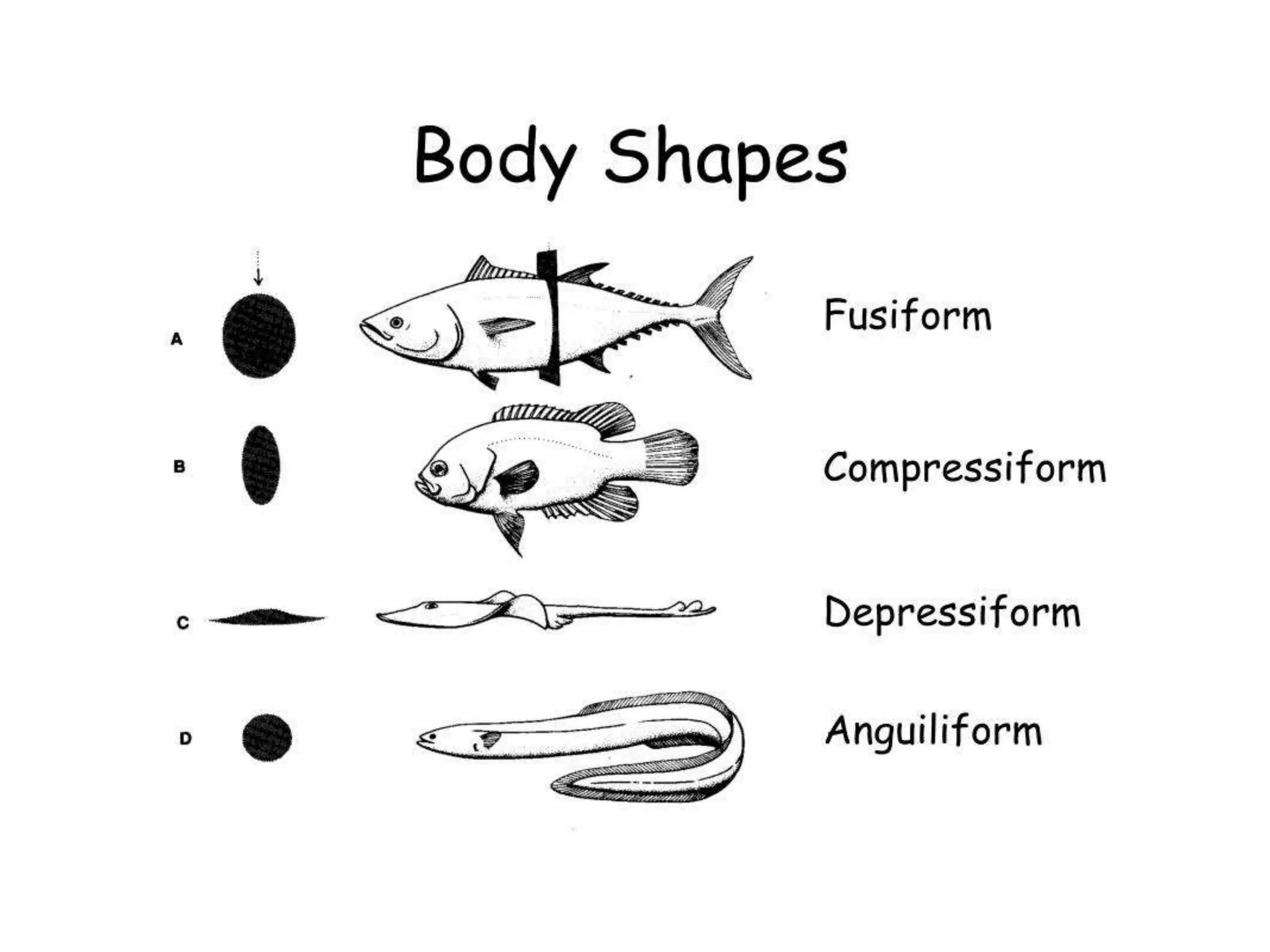
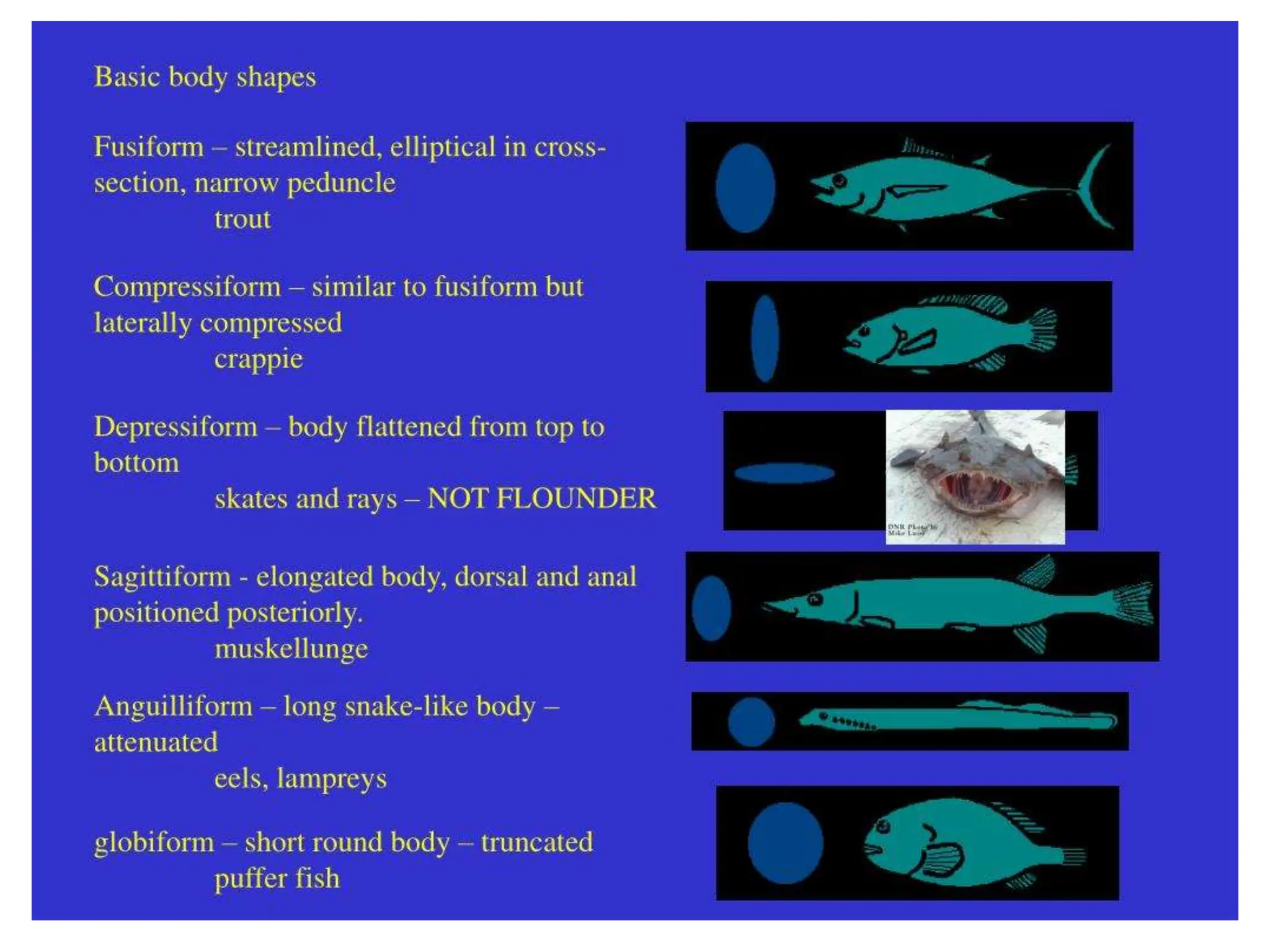
Morphology of fishes (Body shapes)
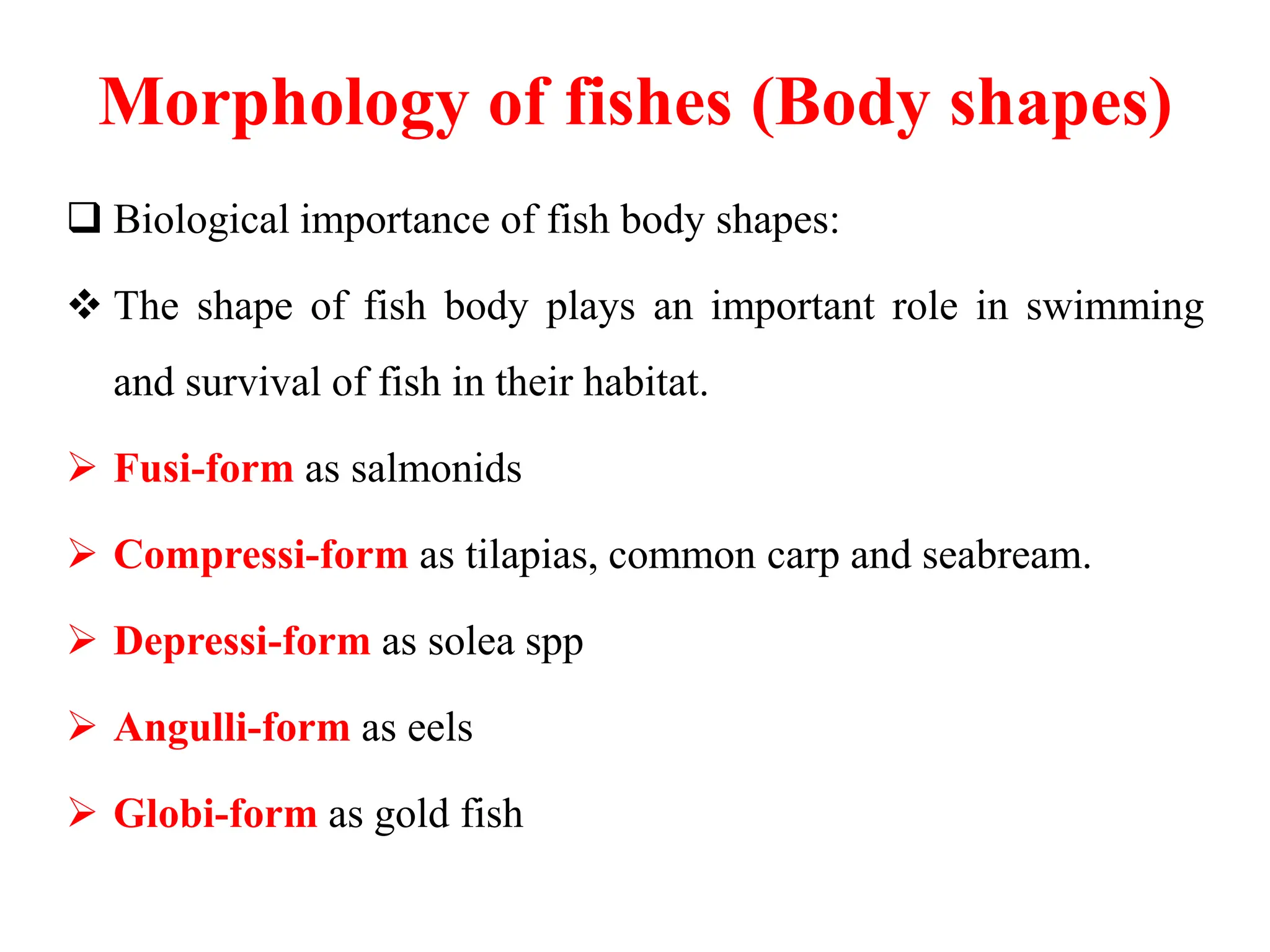
 Biological importance of fish body shapes:
 The shape of fish body plays an important role in swimming
and survival of fish in their habitat.
 Fusi-form as salmonids
 Compressi-form as tilapias, common carp and seabream.
 Depressi-form as solea spp
 Angulli-form as eels
 Globi-form as gold fish
Integumentary System
Skin
 Unlike the mammalian skin, the fish skin is living and non-
keratinized.
 Function
 Protection against environment
 Osmotic barrier
 Defense against disease
 Composed
 Cuticle
 Epidermis
 Dermis (connective tissue incl. pigment cells/chromatophores
and scales).
 Hypodermis (well vascularized adipose layer)
The Integumentary System (Cont…)
Mainly muco-polysaccharide, made of
epithelial surface cells,
Immunoglobulin destroy and digest
Lysozyme and invasive microorganisms
Free fatty acids
Fibrous malpighian cell
Found in body surface, fins and tail
Living and capable of mitotic division
Thickness vary based on species
Mucus-secreting cells
Club cells responsible for the secretion of
a potent alarm substances
Granule cells functions yet unknown
Upper layer
 Composed of collagen and reticulin fiber
 Pigment, mast, scale bed and scale cells
Lower layer collagenous dense matrix
Looser adipose tissue, vascular, site of
infection
 The significant functions of fish skin
1. Primary barrier against noxious, harmful parasite and micro organisms
through:
a. The physical barrier achieved by its skin intactness and scales.
b. The mucus barrier helps in getting off the noxious accumulated chemicals
and micro organisms away from fish body.
c. The immunological barrier through the presence of immunoglobulin,
lysozymes and free fatty acids in cuticle layer.
2. The mucus of skin minimizes the friction between the fish body and water
during swimming, these consequently saving the energy loss.
3. The skin has a respiratory, excretory and osmoregulatory functions.
4. The skin contains sensory and chemo receptors
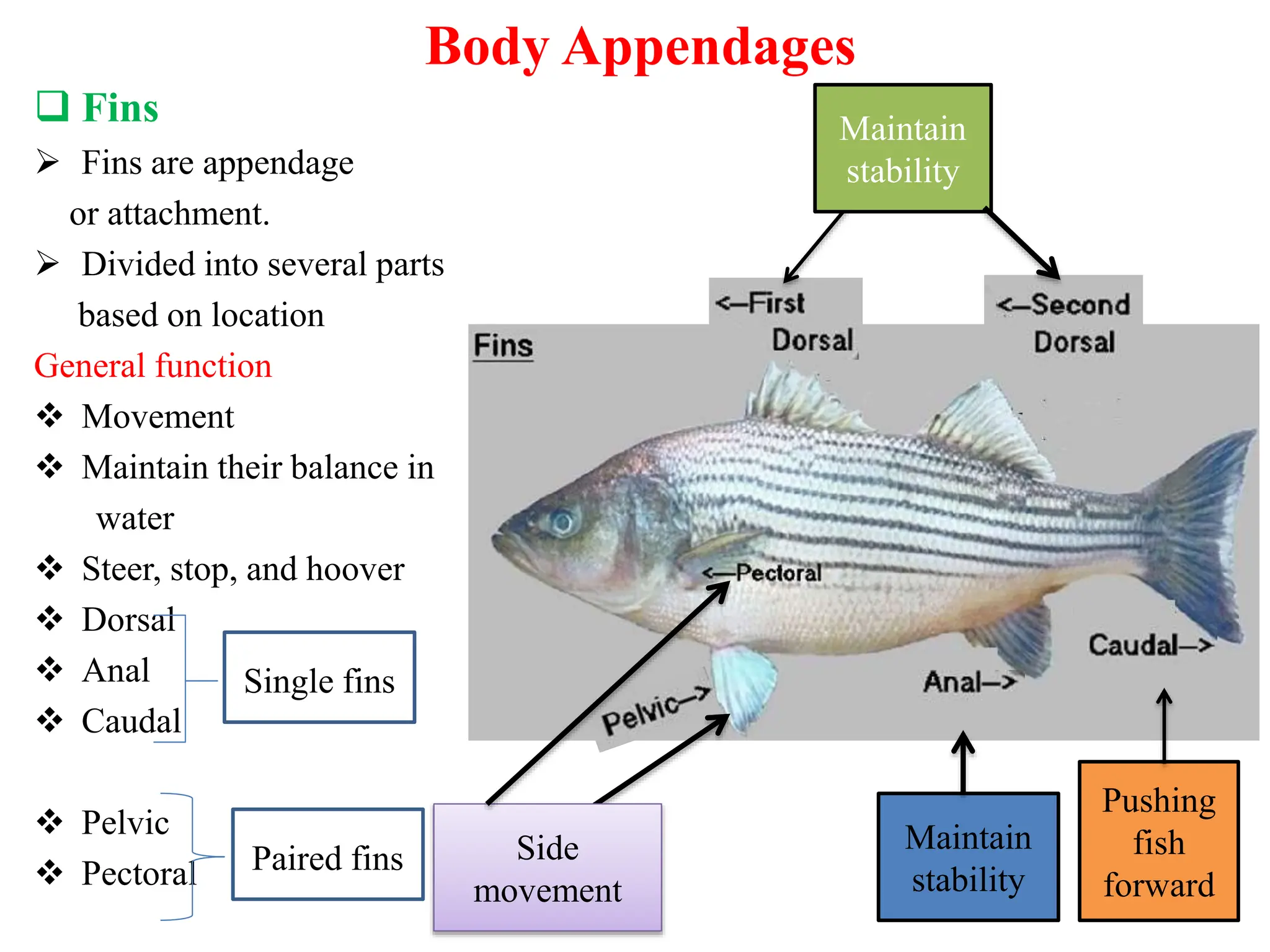
 Fins
 Fins are appendage
or attachment.
 Divided into several parts
based on location
General function
 Movement
 Maintain their balance in
water
 Steer, stop, and hoover
 Dorsal
 Anal
 Caudal
 Pelvic
 Pectoral
Maintain
stability
Pushing
fish
forward
Maintain
stability
Side
movement
Single fins
Paired fins
Body Appendages
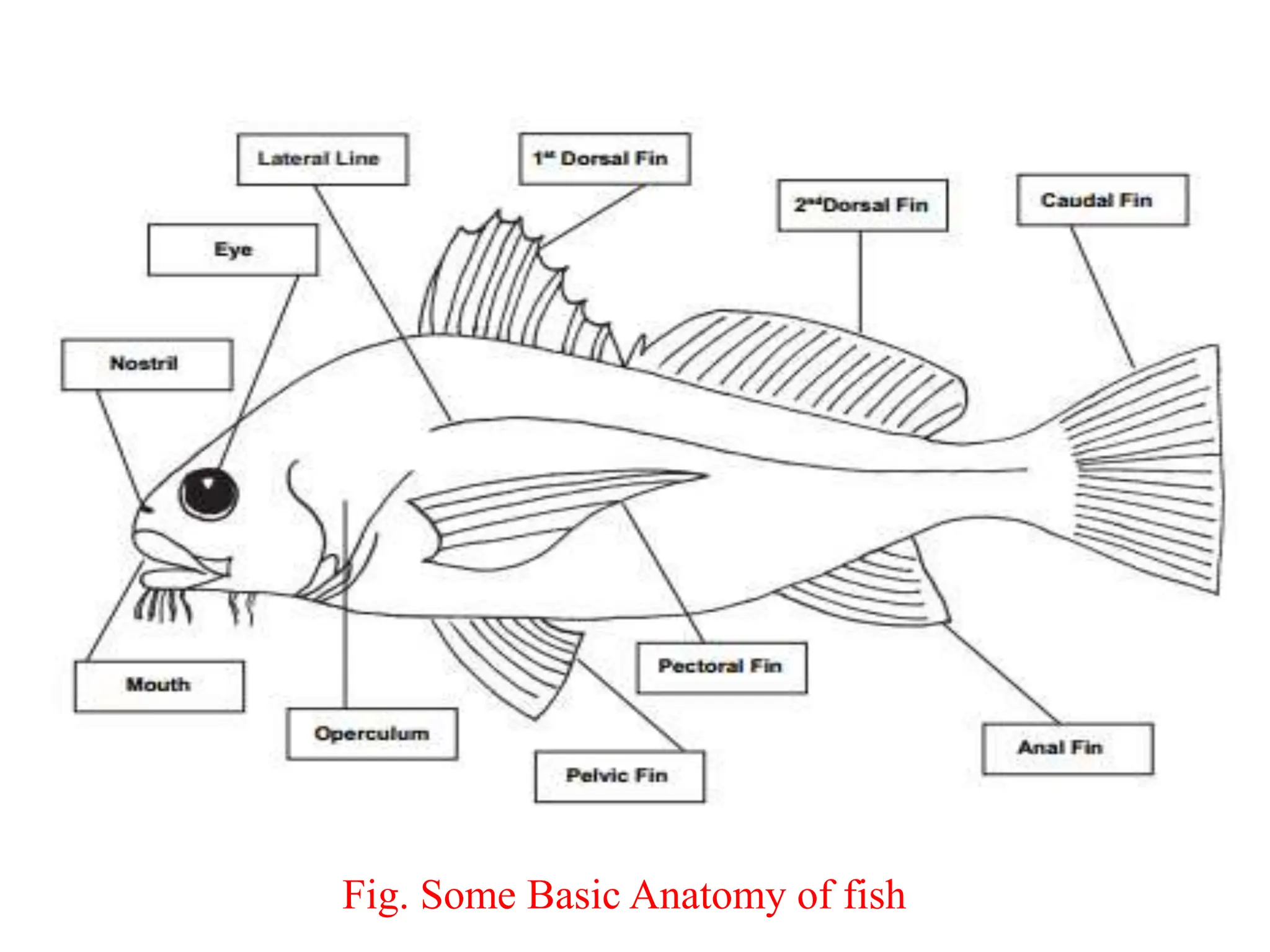
Fig. Some Basic Anatomy of fish
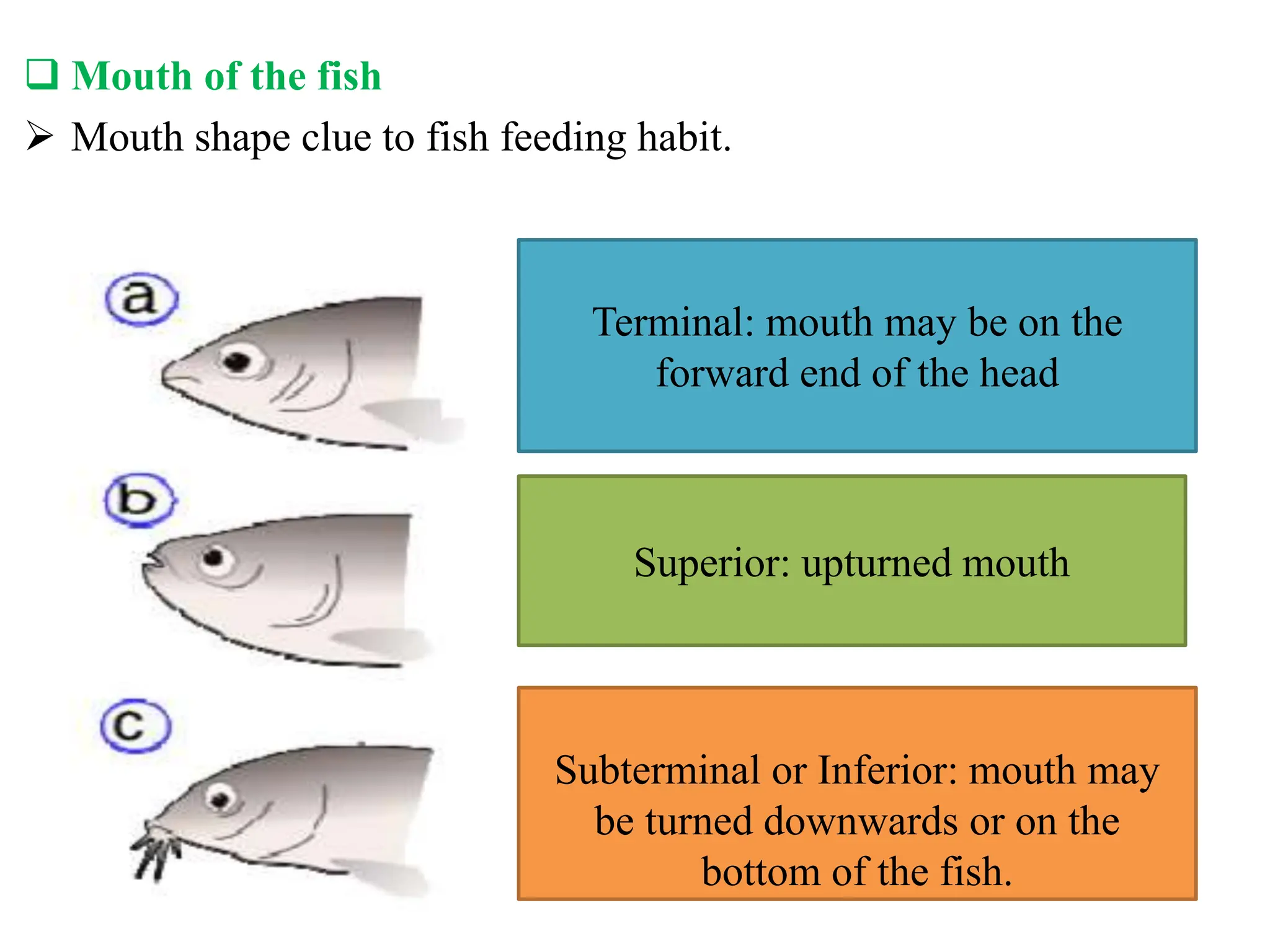
 Mouth of the fish
 Mouth shape clue to fish feeding habit.
Terminal: mouth may be on the
forward end of the head
Superior: upturned mouth
Subterminal or Inferior: mouth may
be turned downwards or on the
bottom of the fish.
 Nostril/Nares:
 Fish are used to detect odors in water and can be quite sensitive.
 Fish use smell rather than sight to locate food.
 Eyes
 Sight organs located on the head.
 The most significant is the small amount of light available in all but
the uppermost layers of water.
 Lateral Line
 A series of sensory pores (small openings) those are located along
the sides of fish that sense vibrations in the water.
 It can easily be seen in fish as a band of darker looking scales
running along the side.
 The lateral line organ is a series of fluid-filled ducts located just
under the scales.
 The lateral line system picks vibrations in the water.
 Thus, fish are able to detect predator, find food and navigate more
efficiently.
 Many fish species can navigate without vision in darkness or
muddy water.
 Operculum (gill cover)
 Is a flexible, bony plate that protects the sensitive gills.
 Gills are fleshy organs that are used for breathing they are located
on the side of the head.
 Water is inhaled through the mouth, passes over the gills and
exhaled from beneath the operculum.
 Body length of the fish
 Fish Body length is usually expressed as a proportion of standard length
(SL), fork length (FL) and total length (TL).
 In sampling programs, body length is often used because it is relatively
easy and fast to measure in the field and it is important for:
 Life history and morphological comparisons of fish populations from
different locations.
 The estimation of weight for individual fish and for length classes of
fish; and
 Conversion of growth-in-length equations to growth-in-weight for
prediction of weight-at-age and use in stock assessment models.
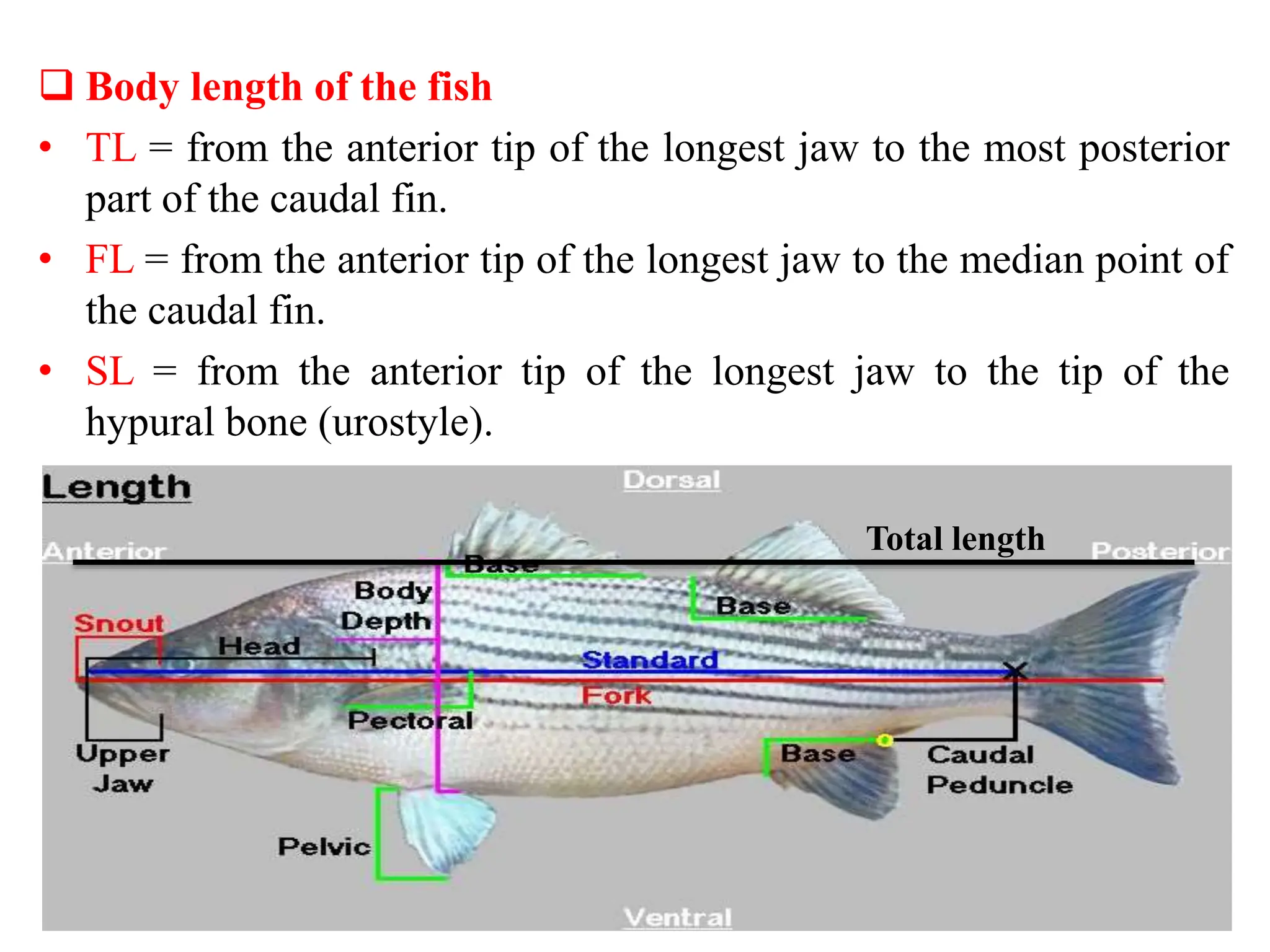
 Body length of the fish
• TL = from the anterior tip of the longest jaw to the most posterior
part of the caudal fin.
• FL = from the anterior tip of the longest jaw to the median point of
the caudal fin.
• SL = from the anterior tip of the longest jaw to the tip of the
hypural bone (urostyle).
Total length
Fish Physiology
 Respiratory System of Fish
 Respiration: The capture of O2 and elimination of CO2.
 Oxygen is more readily available to terrestrial vertebrates than
fishes.
For example:
 1 lit. of air contains 210cc of oxygen whereas 1lit. of water
contains 10cc of oxygen.
 Fishes get oxygen by creating a continuous flow of water (800x
denser than air) over the gills.
Respiratory system of Fish (Contd…)
 Respiration in aquatic environment is difficult as compared to terrestrial.
 Most terrestrial animals vertebrate have internal organ that must be
ventilated by tidal movement of air.
 Fish have gills which are ventilated by bronchial pumping or simple
opening the mouth and opercular cavity while swimming forward.
 Gills are basic structures for gas exchange in fish located in either side of
the head and protected by gill bony arches.
 Besides its role is respiration, the gills are responsible for;
 Regulating the exchange of salt & water.
 Play a major role in the excretion of nitrogenous waste products.
Respiratory system of Fish (Cont…)
 How fish overcome difficulty in respiration?
 Fish have high oxygen removal efficiency as compared to other
organisms thus, the efficiency of oxygen removal is very vital for
fish because of water’s low oxygen solubility characteristics.
 For instance;
 Tuna remove up to 80% of the oxygen in water.
 Humans remove only 25% of the oxygen from air.
Respiratory system of Fish (Cont…)
 There are three mechanisms to grasp the smallest amount of
oxygen in water are:
1.The flow of blood and water in opposite direction, and the flow of
oxygen is unidirectional.
2.The secondary folding of gill filament.
3.The covering of gill filament is only in single celled.
Respiratory system of Fish (Cont…)
 Ventilation and gas exchange
 During breathing;
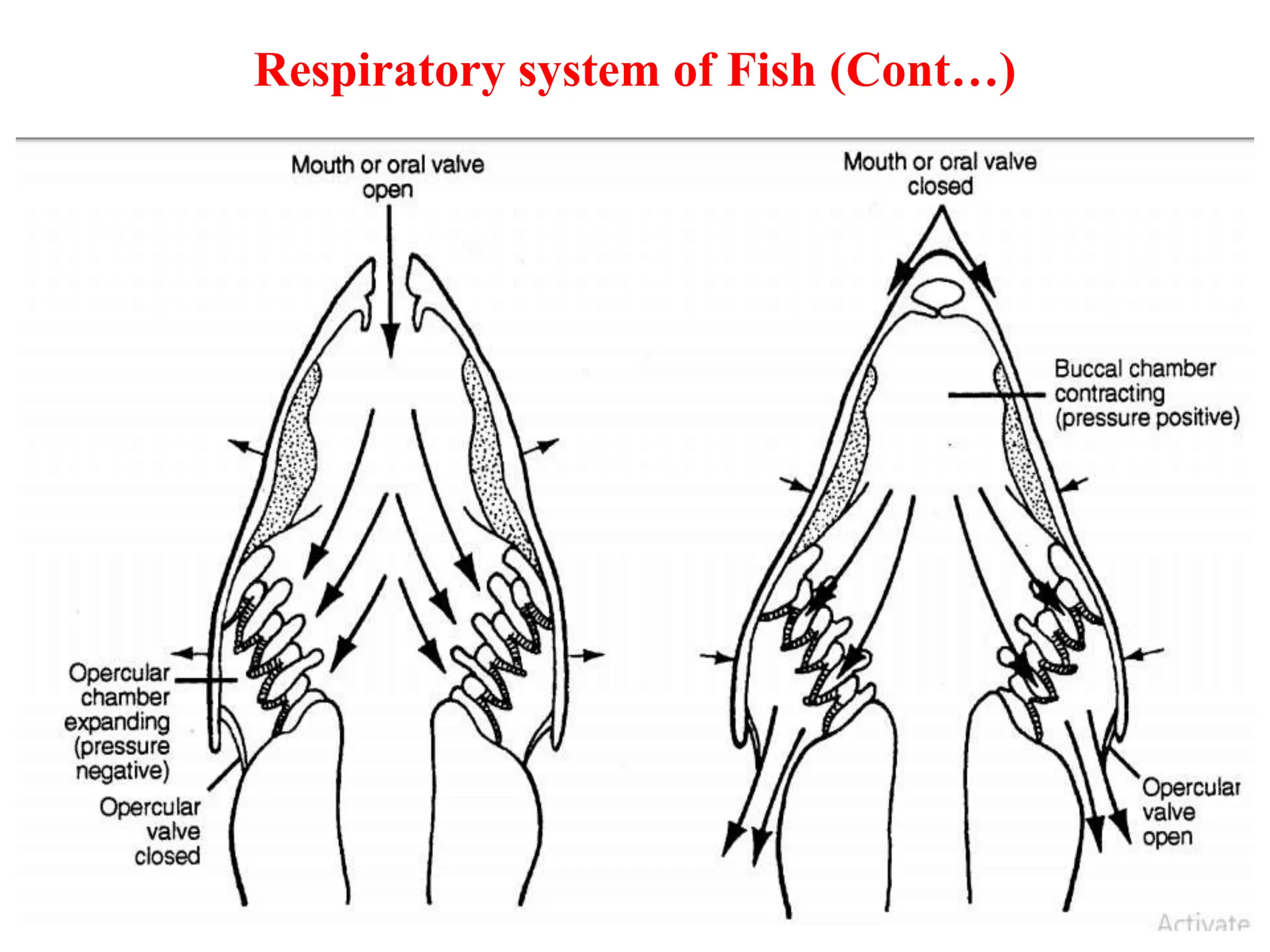
 Water is passed in through the mouth, over the gills and out
through the opercula.
 The ventilator flow is driven by alternate expansion and
contraction of the buccal and opercular chambers.
 Thus, a continuous water flow is maintained over the gills.
 The energy cost of gill ventilation is very high, especially, when
the oxygen content of the water is low, such as in warm or polluted
conditions.
Respiratory system of Fish (Cont…)
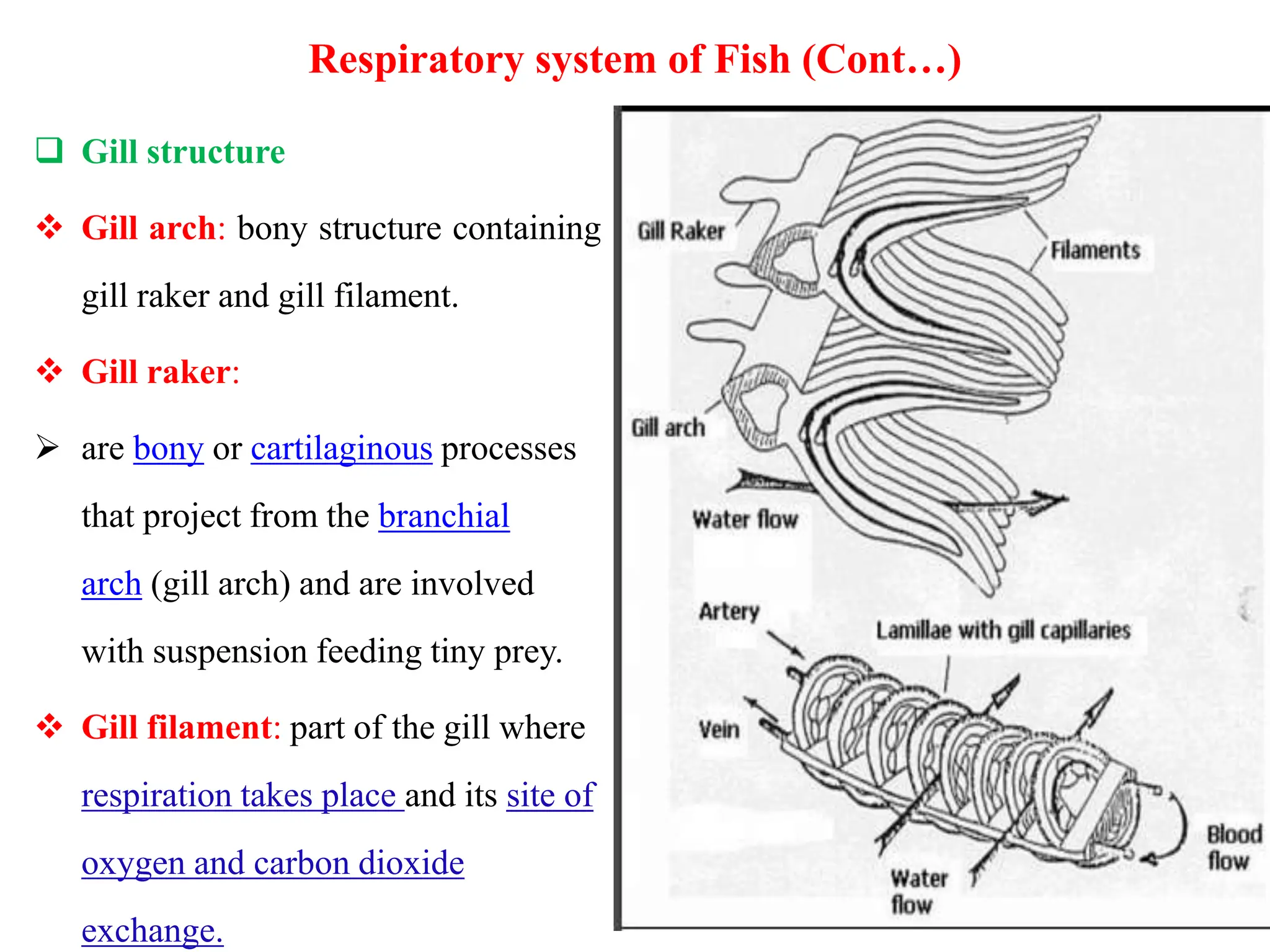
 Gill structure
 Gill arch: bony structure containing
gill raker and gill filament.
 Gill raker:
 are bony or cartilaginous processes
that project from the branchial
arch (gill arch) and are involved
with suspension feeding tiny prey.
 Gill filament: part of the gill where
respiration takes place and its site of
oxygen and carbon dioxide
exchange.
Respiratory system of Fish (Cont…)
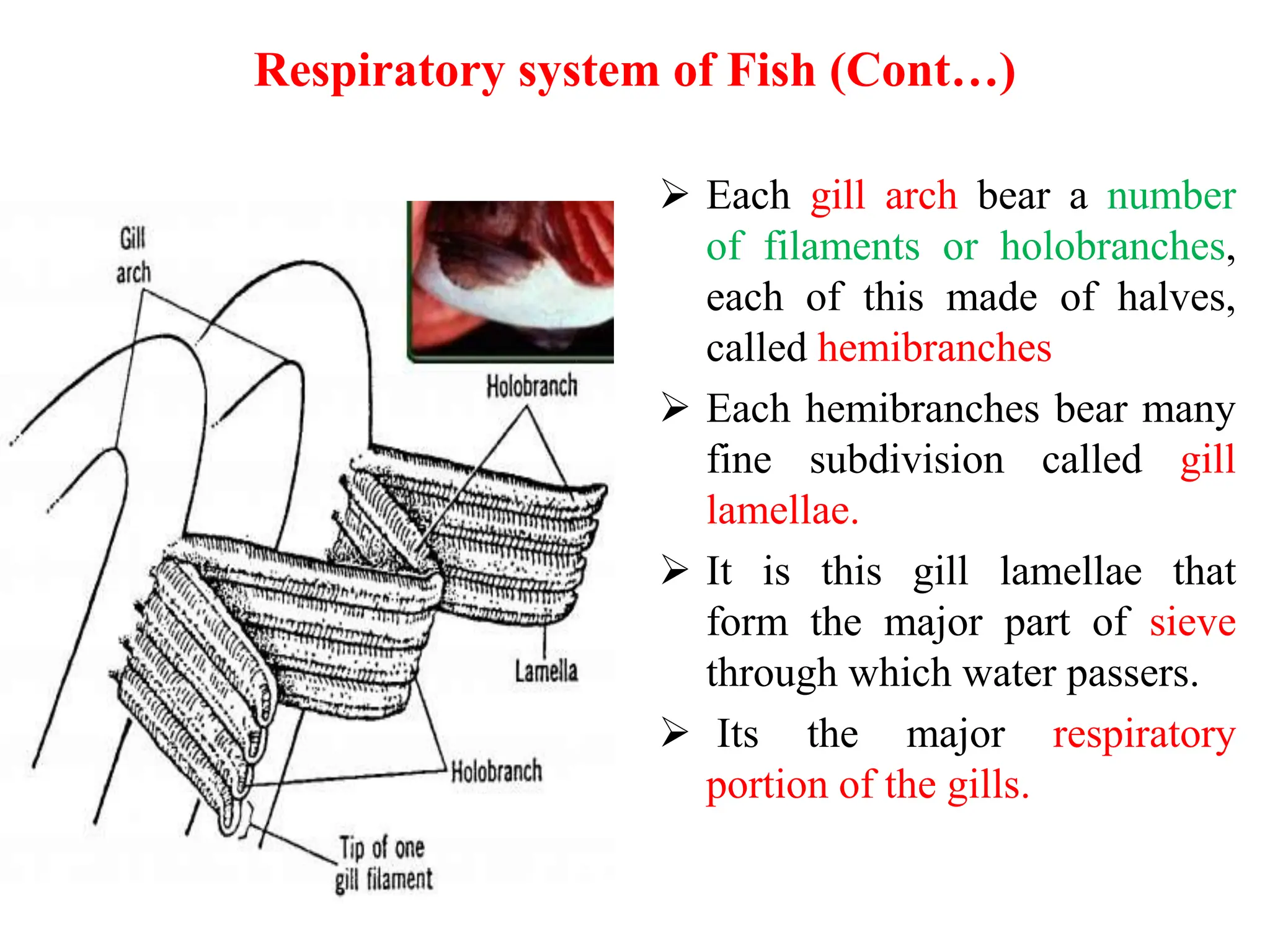
 Each gill arch bear a number
of filaments or holobranches,
each of this made of halves,
called hemibranches
 Each hemibranches bear many
fine subdivision called gill
lamellae.
 It is this gill lamellae that
form the major part of sieve
through which water passers.
 Its the major respiratory
portion of the gills.
Accessory Lung
 Only present in catfish (clarids).
 Located under the gills.
 Structure: A very thin sac that is formed of an arborization (tree) of highly
vascularized tissue.
 Function and significance:
 The tissue has the capability to get the atmospheric oxygen from outside
the water.
 The accessory lung is responsible of keeping the fish alive for relatively
long period during the drought season and for a shorter period if they
jumped out of an aquarium.
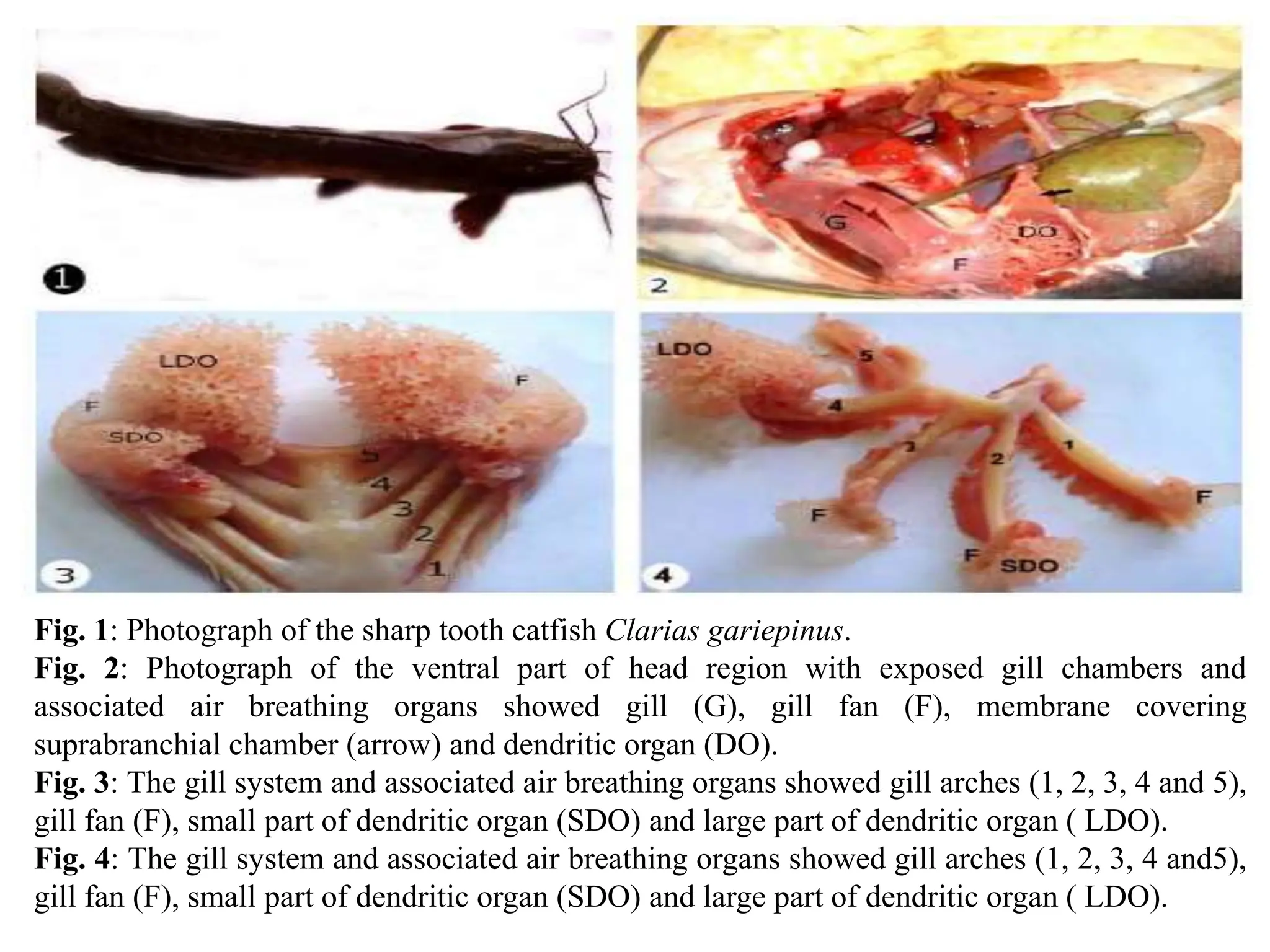
Fig. 1: Photograph of the sharp tooth catfish Clarias gariepinus.
Fig. 2: Photograph of the ventral part of head region with exposed gill chambers and
associated air breathing organs showed gill (G), gill fan (F), membrane covering
suprabranchial chamber (arrow) and dendritic organ (DO).
Fig. 3: The gill system and associated air breathing organs showed gill arches (1, 2, 3, 4 and 5),
gill fan (F), small part of dendritic organ (SDO) and large part of dendritic organ ( LDO).
Fig. 4: The gill system and associated air breathing organs showed gill arches (1, 2, 3, 4 and5),
gill fan (F), small part of dendritic organ (SDO) and large part of dendritic organ ( LDO).
 Lung
Present in African lungfishes and whales.
Lungfish must return to the surface to breathe air.
A lungfish swallows air to fill up an air sac or "lung" This lung is
surrounded by veins that bring blood to be oxygenated.
Its gills alone can't bring enough oxygen to keep them alive.
Fig: African lungfish and its body part.
Fig: Lung of Whale at the musium
 Labyrinth organ is a highly folded supra-branchial accessory breathing organ, to
act as a lung. It is formed by vascularized expansion of the epibranchial bone of
the first gill arch and used for respiration in air.[
 Within the folds of this lung-like organ are boney plates called lamellae. These
have thin membranes which facilitate the movement of oxygen into the
bloodstream.
 Labyrinth fish are primarily found throughout Asia and Africa.
 The purpose of the labyrinth organ is to allow fish a secondary source of oxygen in
case water conditions are poor or in response to their natural low-oxygen
environment.
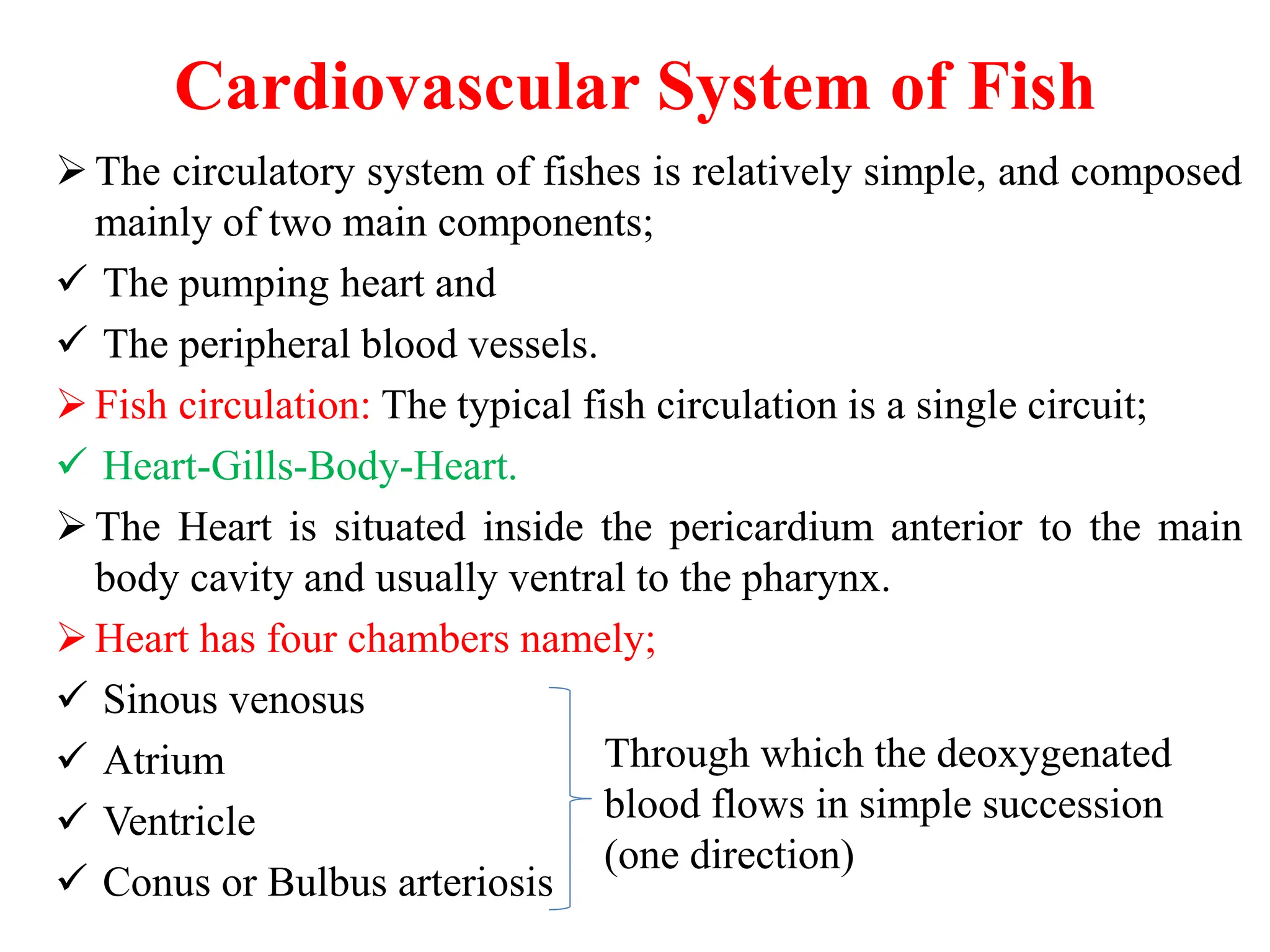
Cardiovascular System of Fish
The circulatory system of fishes is relatively simple, and composed
mainly of two main components;
 The pumping heart and
 The peripheral blood vessels.
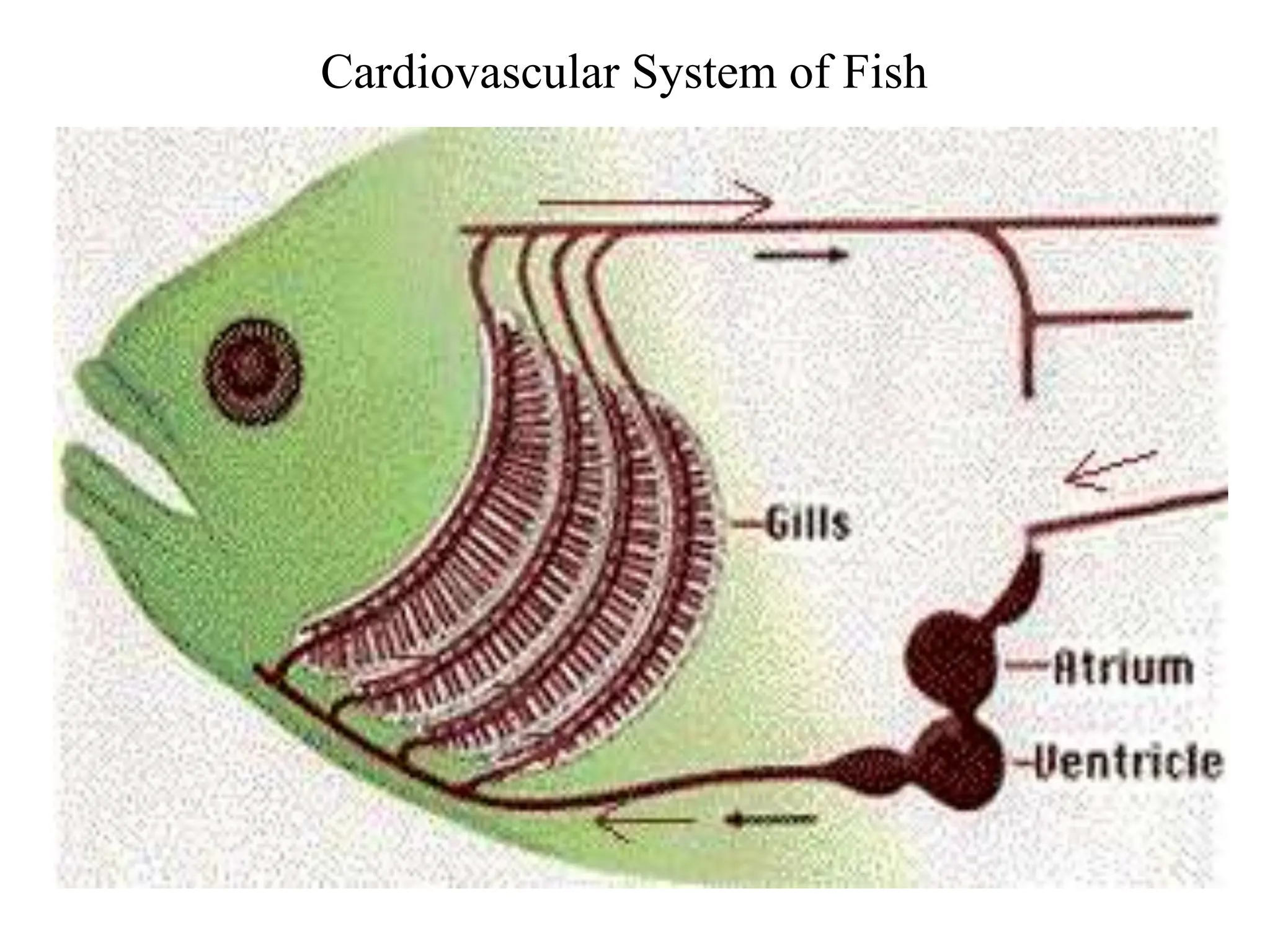
Fish circulation: The typical fish circulation is a single circuit;
 Heart-Gills-Body-Heart.
The Heart is situated inside the pericardium anterior to the main
body cavity and usually ventral to the pharynx.
Heart has four chambers namely;
 Sinous venosus
 Atrium
 Ventricle
 Conus or Bulbus arteriosis
Through which the deoxygenated
blood flows in simple succession
(one direction)
Cardiovascular System of Fish
Reproduction in fish
 Reproduction Physiology of fish
 Definition
 To inherit the properties of its parent to their offspring in order to
ensure the continuing survival of the concerned species.
 Different strategies and tactics used by fish.
 Nearly all fish reproduce by sexual reproduction.
 Sexual behavior of fish
 Some fish species have separate male and female.
 Some are hermaphrodites.
 Many hermaphroditic fish switch sexes.
 Some produce both eggs and sperm.
 A more unusual form of reproduction found in a few
fish species is parthenogenesis (where the female egg develops
into a new individual without fusing with a sperm cell).
 The offspring are identical copies of their mothers. ex. Bony fish
Reproduction in fish (Contd…)
 Fertilization
 Fertilization is external in most fish species (95%).
 Some release egg and sperm into water.
 Some release into nest and guard there.
 During spawning, members of a species will come together to form an
enormous group, and all release their eggs and sperm at the same time.
This process of egg release is termed spawning.
 Mostly no parental care however some of them care until they hatch.
 Some fish species called mouthbrooders, particularly male fish including
jaw fish, sea catfish, and cardinal fish. In many of these species, it is
actually the male that broods the eggs in his mouth until hatching.
Reproduction in fish (Contd..)
 Case of Internal Fertilization:
 The eggs are released into the water for external development only
after fertilization has taken place.
 Shark and ray species develop their eggs inside of their bodies but
without direct nourishment from the mother.
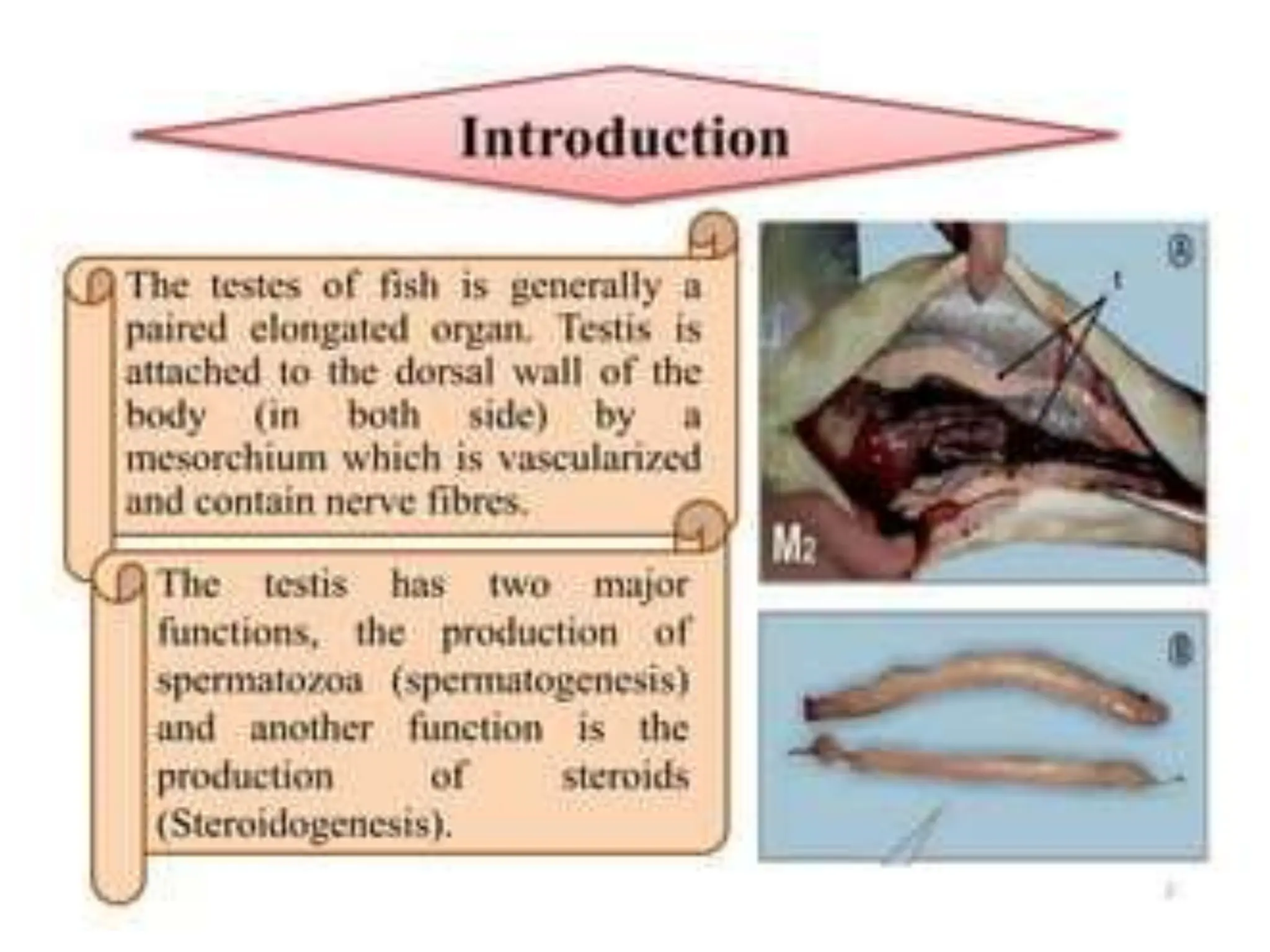
 Female fish have paired ovaries that produce eggs, and male fish
have paired testes that produce sperm.
 Some fish change sex during their lifetime;
 Some from male to female (protogynous hermaphrodites).
 Some from female to male (protandrous hermaphrodites).
 Most fishes are capable of spawning several times during their life
(iteroparous) however, some spawn once and die (semelparous).
Reproduction in fish (Contd..)
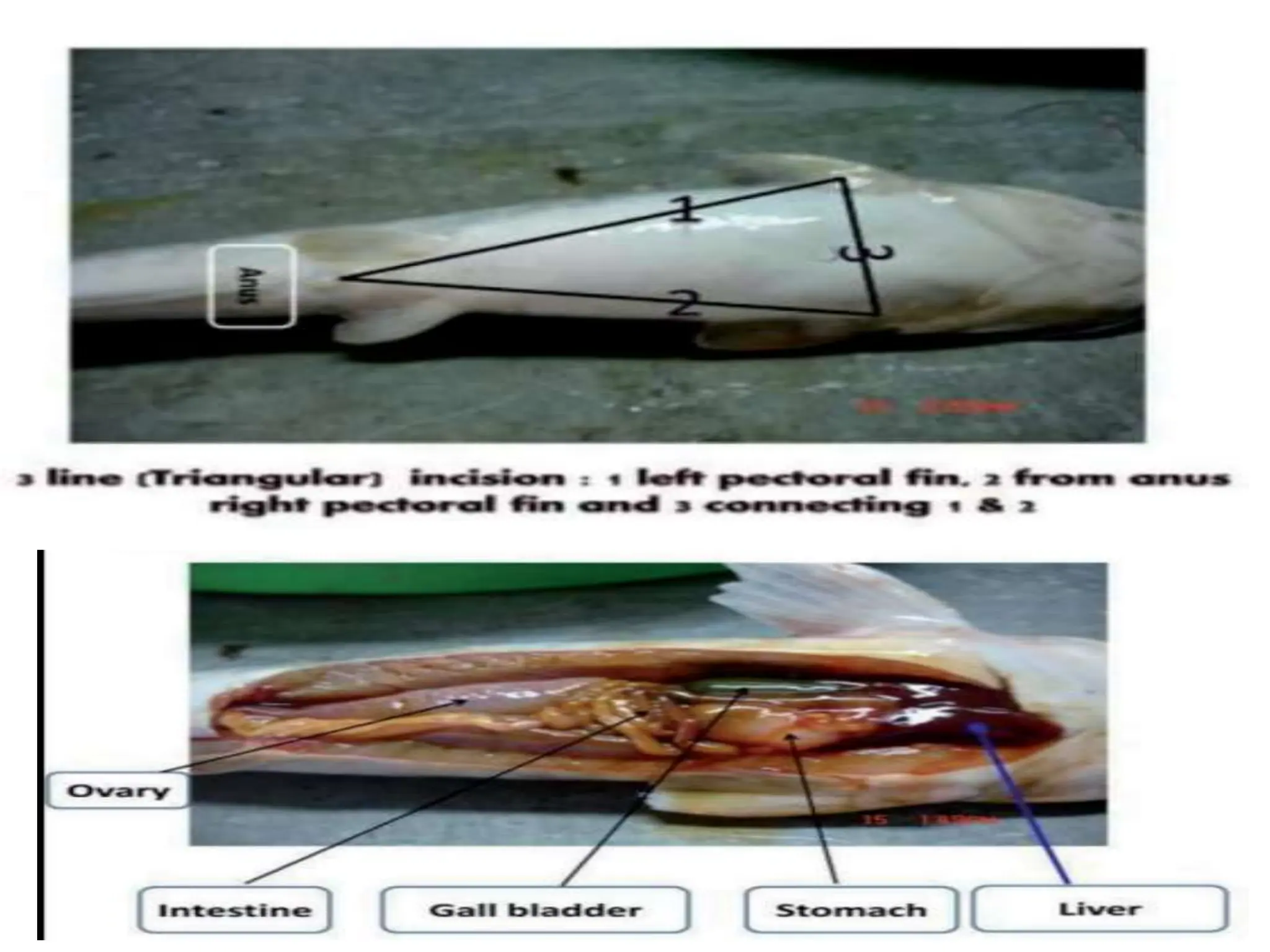
 Ovary and Testes
 Both the ovaries and testes go through a series of stages which can be
identified visually by size and colour, whether the eggs are transparent or
opaque.
 The gonadal development of fishes is affected by various factors i.e.
genetics, nutrition, brood fish and environmental conditions.
 The description of the ovary is known as a maturity index.
 Immature
 Develop
 Mature
 Ripe
 Spent
Stages of development Gonad appearance
Testes Ovary
Immature
Small, flat, translucent to whitish, poorly
developed, with reduced fringes.
Small, transparent to translucent and
not very voluminous. Oocyte not
visible with naked eye.
Develop
Whitish with voluminous fringes. Large orange-pale, oocytes may be
visible through the ovary tunic.
Mature
Very large, firm, white in colour. Very large occupying part of the
abdominal cavity. Yellow oocyte
turgescency
Ripe
Fully developed, turgid fringes, milky-
whitish in colour. Milt run out of the fish.
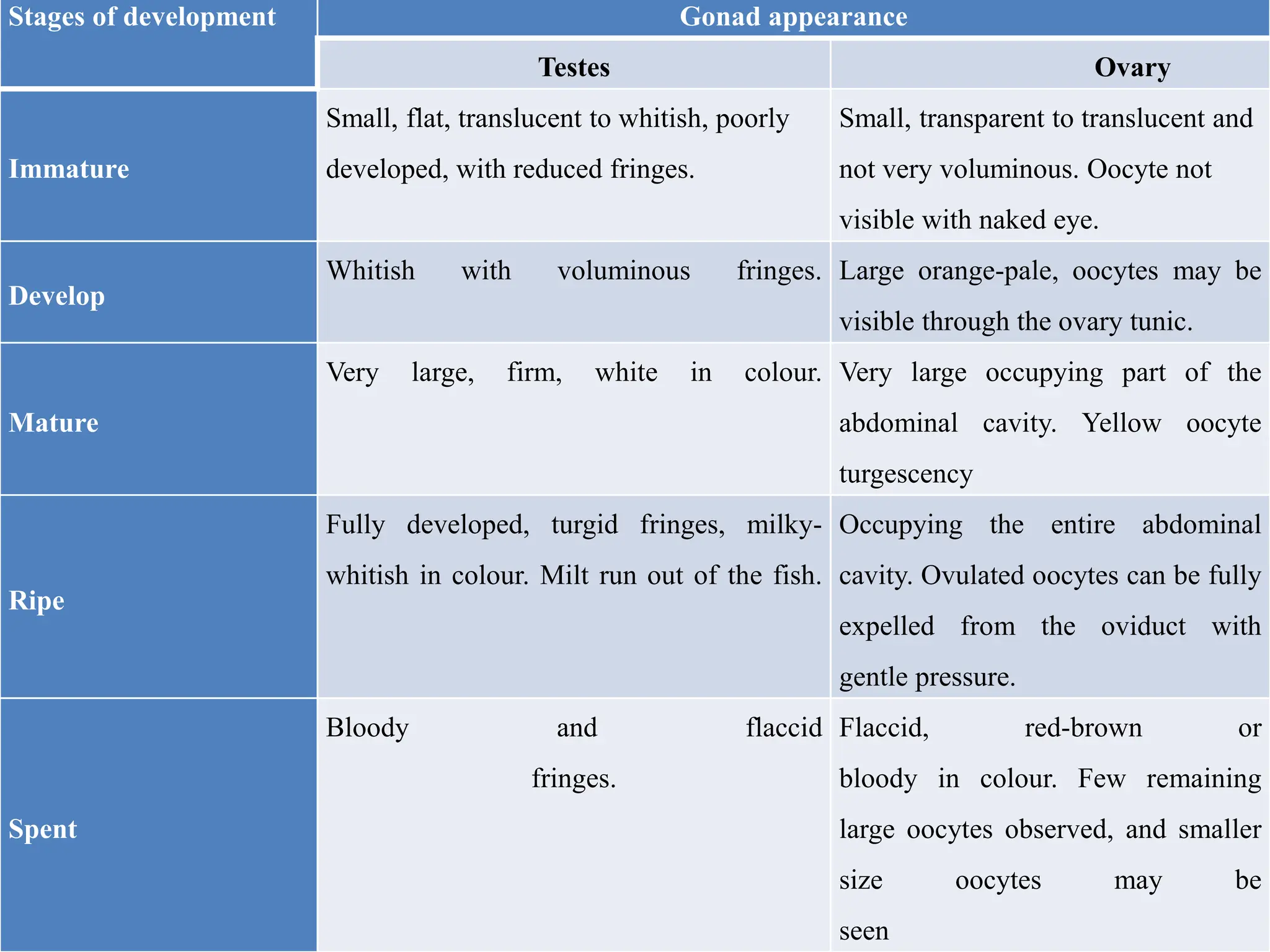
Occupying the entire abdominal
cavity. Ovulated oocytes can be fully
expelled from the oviduct with
gentle pressure.
Spent
Bloody and flaccid
fringes.
Flaccid, red-brown or
bloody in colour. Few remaining
large oocytes observed, and smaller
size oocytes may be
seen
 Ovaries
The female reproductive organ which produces eggs.
Gills
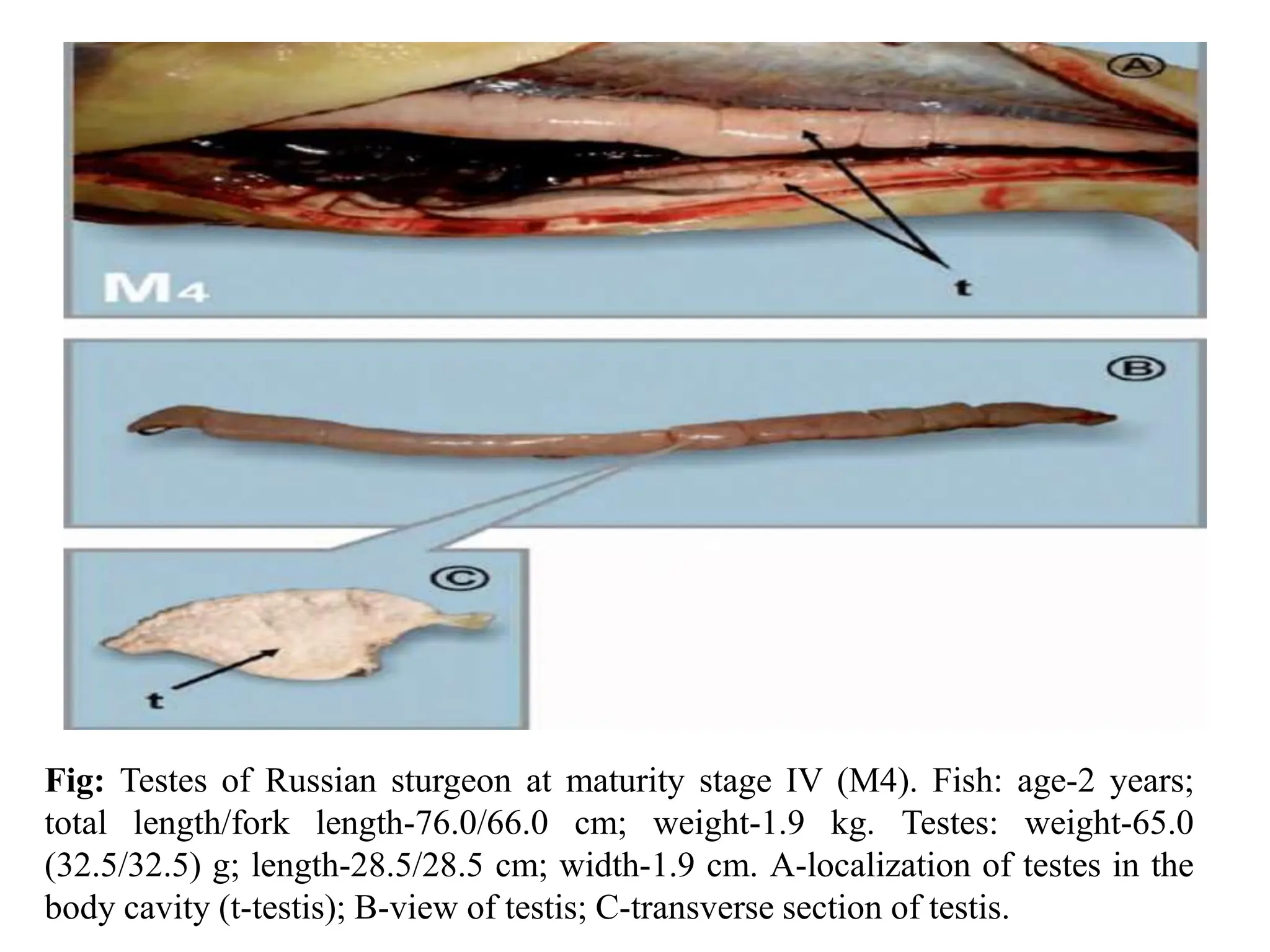
Fig: Testes of Russian sturgeon at maturity stage IV (M4). Fish: age-2 years;
total length/fork length-76.0/66.0 cm; weight-1.9 kg. Testes: weight-65.0
(32.5/32.5) g; length-28.5/28.5 cm; width-1.9 cm. A-localization of testes in the
body cavity (t-testis); B-view of testis; C-transverse section of testis.
Hemopoietic system
 Fish hemopoietic system major characteristics
 Fish have no lymph nodes
 Fish have no bone marrow
 Haemopoietic tissues are usually located in the;
 Spleen
 Anterior kidney
 Liver
 Thymus
majorly
Lesser extent
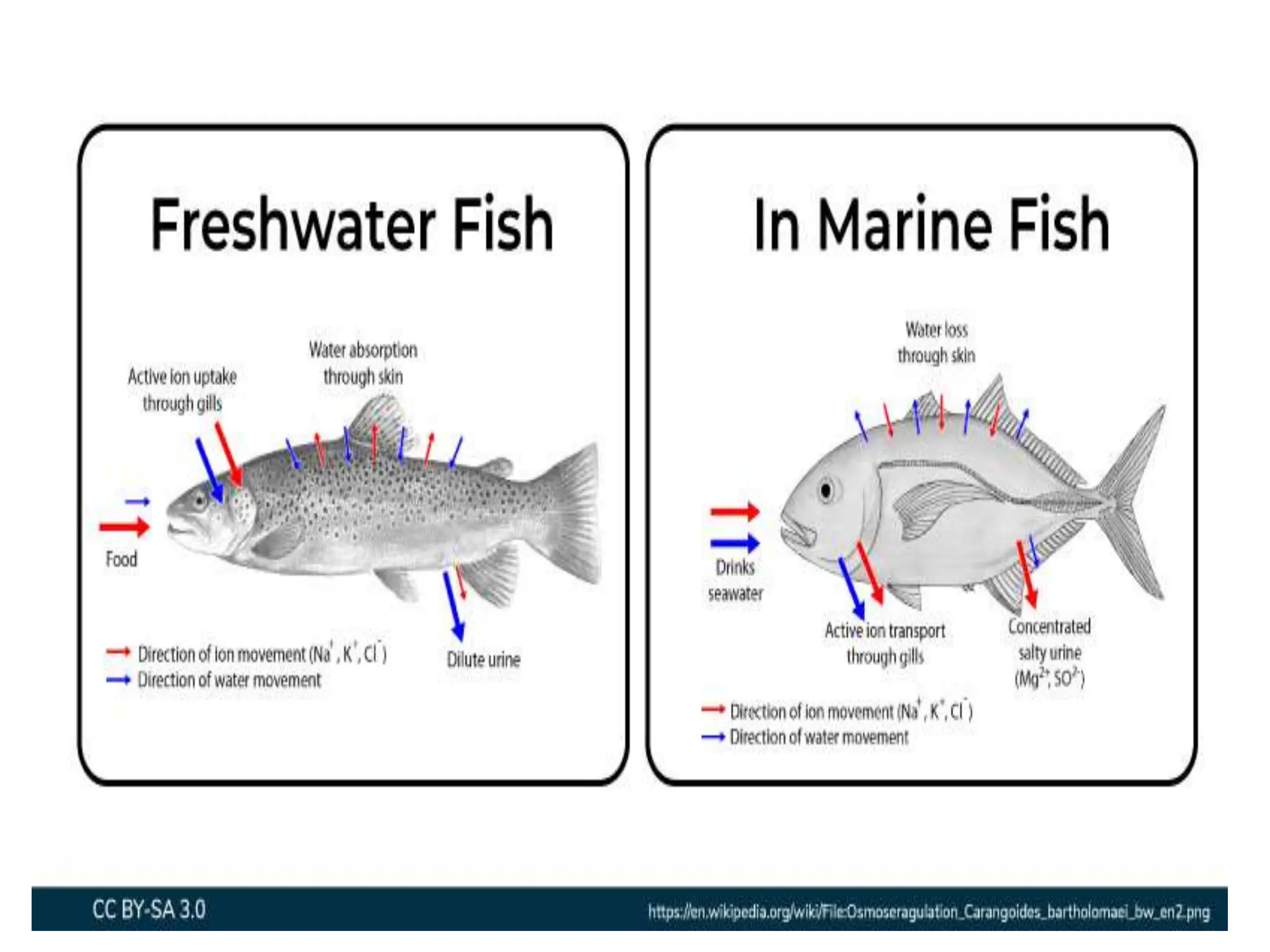
Osmoregulation of Fish
Osmoregulation is the process which regulates the balance of
electrolytes and fluids in an organism and thereby maintains
homeostasis.
Internal Body Parts of Fish
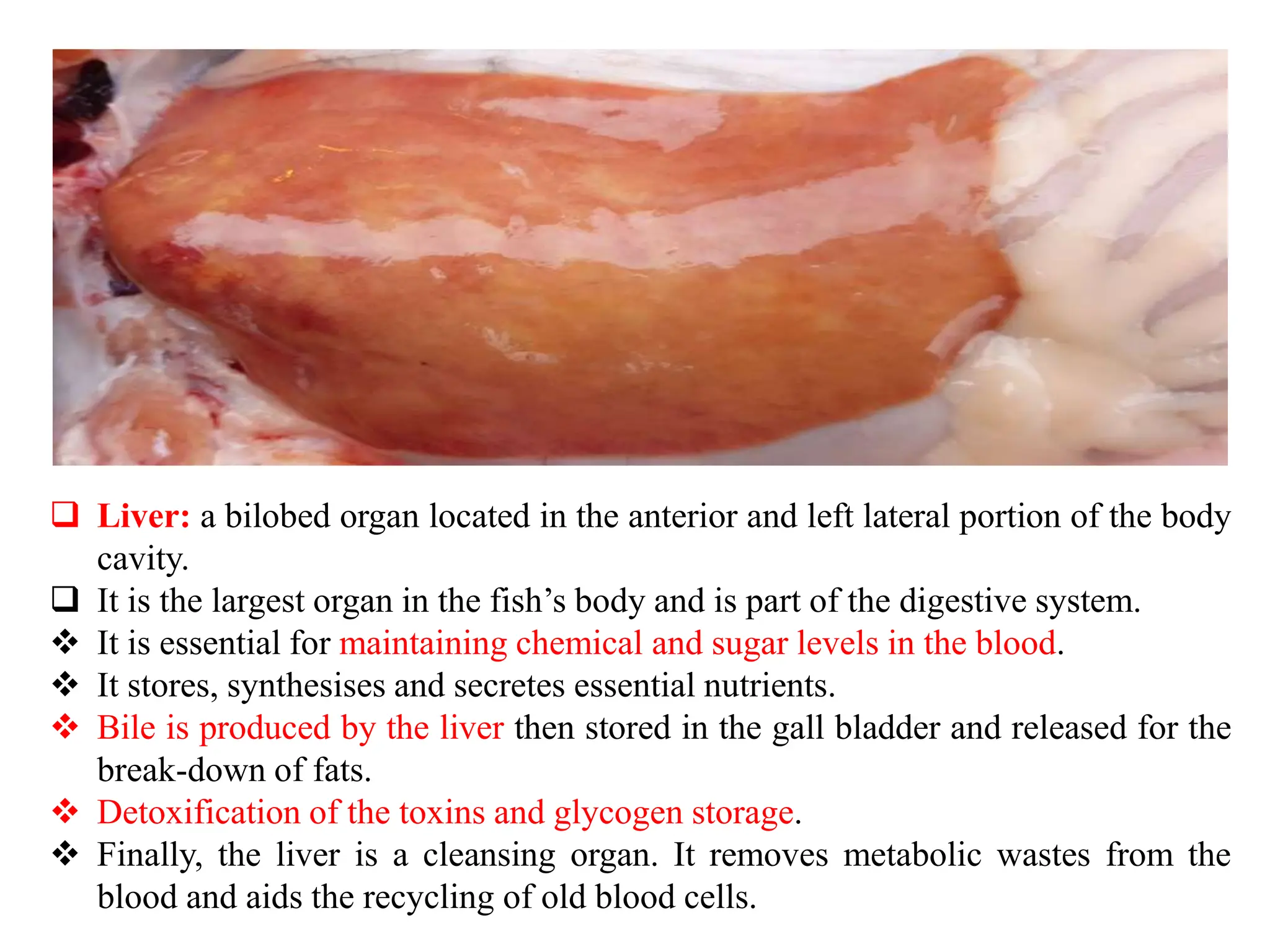
 Liver: a bilobed organ located in the anterior and left lateral portion of the body
cavity.
 It is the largest organ in the fish’s body and is part of the digestive system.
 It is essential for maintaining chemical and sugar levels in the blood.
 It stores, synthesises and secretes essential nutrients.
 Bile is produced by the liver then stored in the gall bladder and released for the
break-down of fats.
 Detoxification of the toxins and glycogen storage.
 Finally, the liver is a cleansing organ. It removes metabolic wastes from the
blood and aids the recycling of old blood cells.
 Fish have two Kidneys joined together. They are positioned under the spinal
column.
 The front kidney produces red blood cells and the back kidney cleans the blood.
Urine is collected by ducts near the vent.
 The kidneys have a critical osmoregulation role.
Kidney
Spinal column
Swim Bladder/Gas bladder/Air bladder/Pneumatic tract
 Fish fill their Swim Bladder with air (Oxygen and Nitrogen).
 The air provides buoyancy, allowing them to hold their position in the water
column without using so much energy.
 They can adjust the gasses in their swim bladder to allow them to alter their
holding depth without floating upward or sinking.
Fig: Swim bladder of Salmon.
 The Spleen is a storehouse for blood.
 It helps to control the amount of blood circulating through the body by creating
a reserve pool that can be released during severe bleeding.
 This helps to improve circulation and oxygenation.
 The spleen also recycles worn-out red blood cells.
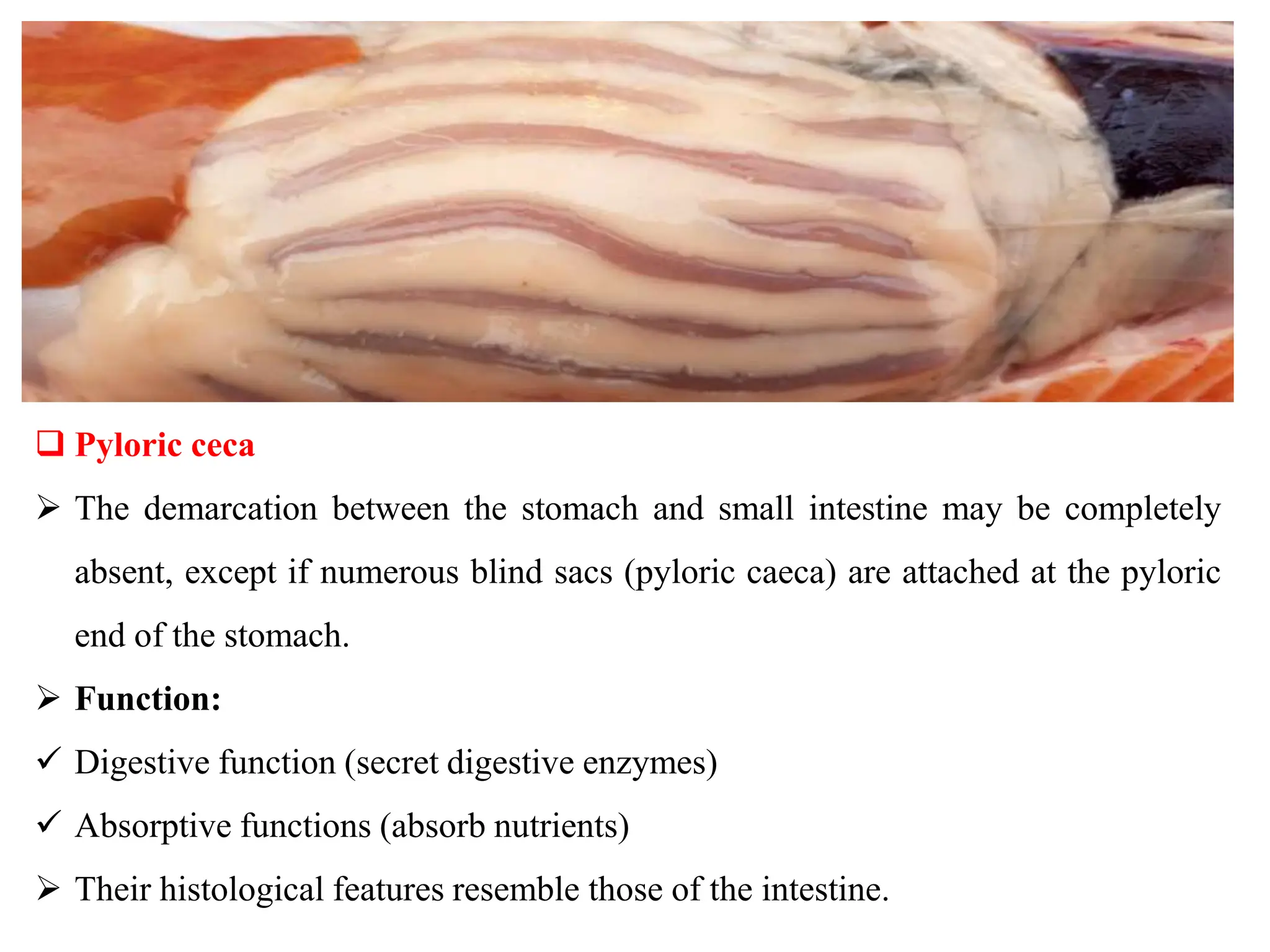
 Pyloric ceca
 The demarcation between the stomach and small intestine may be completely
absent, except if numerous blind sacs (pyloric caeca) are attached at the pyloric
end of the stomach.
 Function:
 Digestive function (secret digestive enzymes)
 Absorptive functions (absorb nutrients)
 Their histological features resemble those of the intestine.
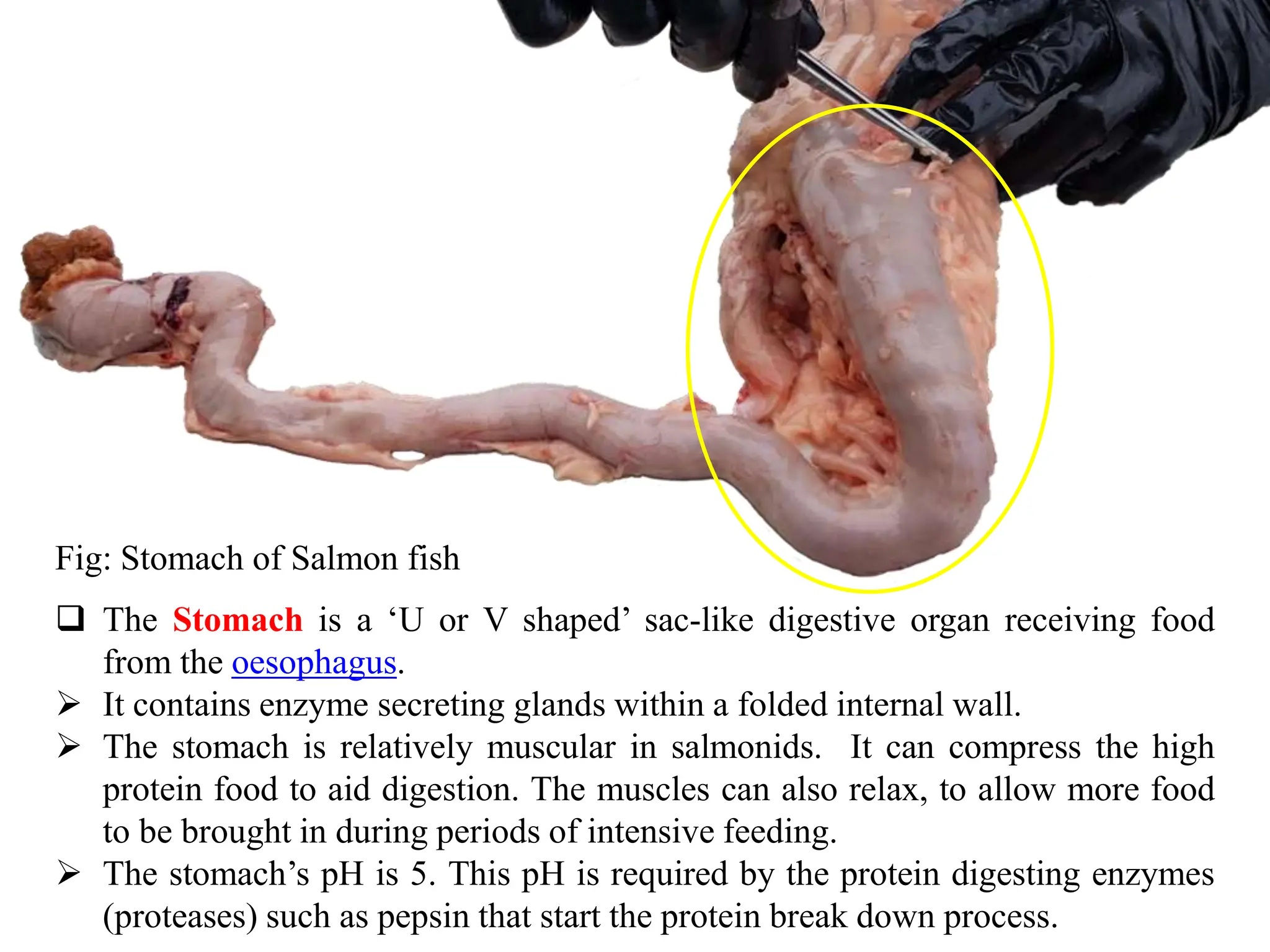
 The Stomach is a ‘U or V shaped’ sac-like digestive organ receiving food
from the oesophagus.
 It contains enzyme secreting glands within a folded internal wall.
 The stomach is relatively muscular in salmonids. It can compress the high
protein food to aid digestion. The muscles can also relax, to allow more food
to be brought in during periods of intensive feeding.
 The stomach’s pH is 5. This pH is required by the protein digesting enzymes
(proteases) such as pepsin that start the protein break down process.
Fig: Stomach of Salmon fish
 The Intestine extends from the pyloric caeca to the anal vent.
 Its relative length and shape may vary according to diet.
 They vary from very long and coiled to short tube or straight, sigmoid or
coiled depending on the shape of the abdominal cavity.
 Intestine is very long and coiled in herbivorous fishes while remarkably
short in carnivorous fishes.
Pyloric Caeca
Anal Vent
 The Heart is connected to the gills by the ventral aorta and drives the blood
round the body via a ‘single circulatory system’.
 Once the blood has been pumped to the gills to absorb oxygen it then passes
round the rest of the body.
 This is not like mammals, where the blood returns to the heart before being
pumped round the body within a ‘double circulatory system’.
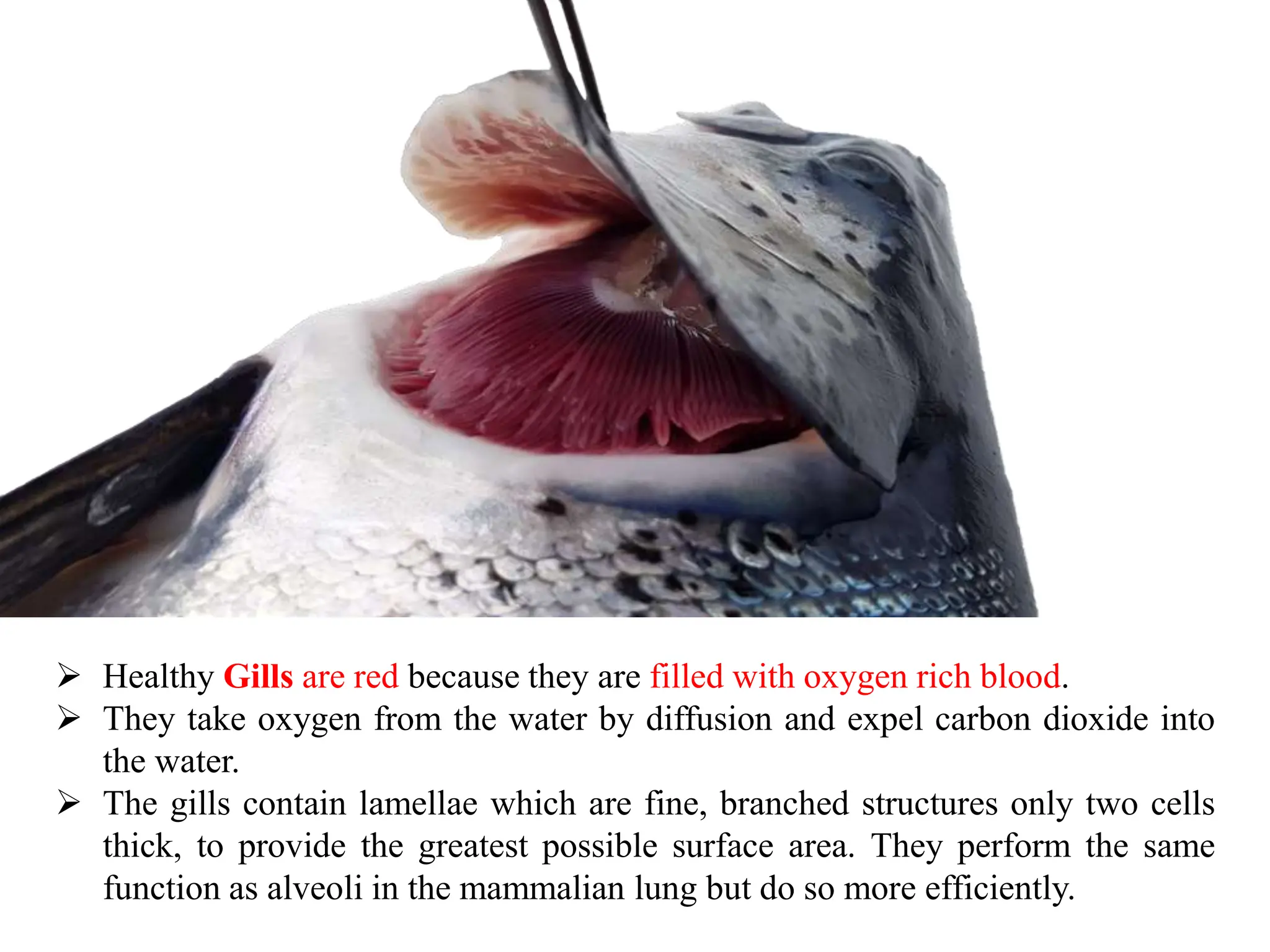
 Healthy Gills are red because they are filled with oxygen rich blood.
 They take oxygen from the water by diffusion and expel carbon dioxide into
the water.
 The gills contain lamellae which are fine, branched structures only two cells
thick, to provide the greatest possible surface area. They perform the same
function as alveoli in the mammalian lung but do so more efficiently.

Chap-4 Anatomy and Physiology of Fish.pptx

  • 1.
    Fish Anatomy andPhysiology Objectives  To give a brief outline of the anatomy and physiology of fish which are necessary for an appreciation of the pathological changes.  To understand the mechanisms underlying clinical disease manifestations and management of fish.
  • 2.
    INTRODUCTION  Many basicfunctions of fish are similar to those of other vertebrates.  Fish is poikilothermy: it conforms with the environmental temperature.  No simple physiological constant values can be given (e.g. for heart rate, rate of digestion or rate of growth).
  • 3.
    Anatomy and Physiologyof Fish External Anatomy  Morphology of fishes (Body Shapes)  Regional anatomy of fishes  Head region  Trunk region  Tail region  Skin (Integumentary system)  Body appendages  Fins  Barbels Internal Anatomy  Respiratory system  Cardiovascular system  Hemopoietic system  Digestive system  Reproductive system  Musculoskeletal system  Nervous system
  • 4.
    Morphology of fishes(Body shapes)  Biological importance of fish body shapes:  The shape of fish body plays an important role in swimming and survival of fish in their habitat.  Fusi-form as salmonids  Compressi-form as tilapias, common carp and seabream.  Depressi-form as solea spp  Angulli-form as eels  Globi-form as gold fish
  • 7.
    Integumentary System Skin  Unlikethe mammalian skin, the fish skin is living and non- keratinized.  Function  Protection against environment  Osmotic barrier  Defense against disease  Composed  Cuticle  Epidermis  Dermis (connective tissue incl. pigment cells/chromatophores and scales).  Hypodermis (well vascularized adipose layer)
  • 8.
    The Integumentary System(Cont…) Mainly muco-polysaccharide, made of epithelial surface cells, Immunoglobulin destroy and digest Lysozyme and invasive microorganisms Free fatty acids Fibrous malpighian cell Found in body surface, fins and tail Living and capable of mitotic division Thickness vary based on species Mucus-secreting cells Club cells responsible for the secretion of a potent alarm substances Granule cells functions yet unknown Upper layer  Composed of collagen and reticulin fiber  Pigment, mast, scale bed and scale cells Lower layer collagenous dense matrix Looser adipose tissue, vascular, site of infection
  • 9.
     The significantfunctions of fish skin 1. Primary barrier against noxious, harmful parasite and micro organisms through: a. The physical barrier achieved by its skin intactness and scales. b. The mucus barrier helps in getting off the noxious accumulated chemicals and micro organisms away from fish body. c. The immunological barrier through the presence of immunoglobulin, lysozymes and free fatty acids in cuticle layer. 2. The mucus of skin minimizes the friction between the fish body and water during swimming, these consequently saving the energy loss. 3. The skin has a respiratory, excretory and osmoregulatory functions. 4. The skin contains sensory and chemo receptors
  • 10.
     Fins  Finsare appendage or attachment.  Divided into several parts based on location General function  Movement  Maintain their balance in water  Steer, stop, and hoover  Dorsal  Anal  Caudal  Pelvic  Pectoral Maintain stability Pushing fish forward Maintain stability Side movement Single fins Paired fins Body Appendages
  • 11.
    Fig. Some BasicAnatomy of fish
  • 12.
     Mouth ofthe fish  Mouth shape clue to fish feeding habit. Terminal: mouth may be on the forward end of the head Superior: upturned mouth Subterminal or Inferior: mouth may be turned downwards or on the bottom of the fish.
  • 13.
     Nostril/Nares:  Fishare used to detect odors in water and can be quite sensitive.  Fish use smell rather than sight to locate food.  Eyes  Sight organs located on the head.  The most significant is the small amount of light available in all but the uppermost layers of water.  Lateral Line  A series of sensory pores (small openings) those are located along the sides of fish that sense vibrations in the water.  It can easily be seen in fish as a band of darker looking scales running along the side.
  • 14.
     The lateralline organ is a series of fluid-filled ducts located just under the scales.  The lateral line system picks vibrations in the water.  Thus, fish are able to detect predator, find food and navigate more efficiently.  Many fish species can navigate without vision in darkness or muddy water.
  • 15.
     Operculum (gillcover)  Is a flexible, bony plate that protects the sensitive gills.  Gills are fleshy organs that are used for breathing they are located on the side of the head.  Water is inhaled through the mouth, passes over the gills and exhaled from beneath the operculum.
  • 16.
     Body lengthof the fish  Fish Body length is usually expressed as a proportion of standard length (SL), fork length (FL) and total length (TL).  In sampling programs, body length is often used because it is relatively easy and fast to measure in the field and it is important for:  Life history and morphological comparisons of fish populations from different locations.  The estimation of weight for individual fish and for length classes of fish; and  Conversion of growth-in-length equations to growth-in-weight for prediction of weight-at-age and use in stock assessment models.
  • 17.
     Body lengthof the fish • TL = from the anterior tip of the longest jaw to the most posterior part of the caudal fin. • FL = from the anterior tip of the longest jaw to the median point of the caudal fin. • SL = from the anterior tip of the longest jaw to the tip of the hypural bone (urostyle). Total length
  • 18.
    Fish Physiology  RespiratorySystem of Fish  Respiration: The capture of O2 and elimination of CO2.  Oxygen is more readily available to terrestrial vertebrates than fishes. For example:  1 lit. of air contains 210cc of oxygen whereas 1lit. of water contains 10cc of oxygen.  Fishes get oxygen by creating a continuous flow of water (800x denser than air) over the gills.
  • 19.
    Respiratory system ofFish (Contd…)  Respiration in aquatic environment is difficult as compared to terrestrial.  Most terrestrial animals vertebrate have internal organ that must be ventilated by tidal movement of air.  Fish have gills which are ventilated by bronchial pumping or simple opening the mouth and opercular cavity while swimming forward.  Gills are basic structures for gas exchange in fish located in either side of the head and protected by gill bony arches.  Besides its role is respiration, the gills are responsible for;  Regulating the exchange of salt & water.  Play a major role in the excretion of nitrogenous waste products.
  • 20.
    Respiratory system ofFish (Cont…)  How fish overcome difficulty in respiration?  Fish have high oxygen removal efficiency as compared to other organisms thus, the efficiency of oxygen removal is very vital for fish because of water’s low oxygen solubility characteristics.  For instance;  Tuna remove up to 80% of the oxygen in water.  Humans remove only 25% of the oxygen from air.
  • 21.
    Respiratory system ofFish (Cont…)  There are three mechanisms to grasp the smallest amount of oxygen in water are: 1.The flow of blood and water in opposite direction, and the flow of oxygen is unidirectional. 2.The secondary folding of gill filament. 3.The covering of gill filament is only in single celled.
  • 22.
    Respiratory system ofFish (Cont…)  Ventilation and gas exchange  During breathing;  Water is passed in through the mouth, over the gills and out through the opercula.  The ventilator flow is driven by alternate expansion and contraction of the buccal and opercular chambers.  Thus, a continuous water flow is maintained over the gills.  The energy cost of gill ventilation is very high, especially, when the oxygen content of the water is low, such as in warm or polluted conditions.
  • 23.
    Respiratory system ofFish (Cont…)
  • 24.
    Respiratory system ofFish (Cont…)  Gill structure  Gill arch: bony structure containing gill raker and gill filament.  Gill raker:  are bony or cartilaginous processes that project from the branchial arch (gill arch) and are involved with suspension feeding tiny prey.  Gill filament: part of the gill where respiration takes place and its site of oxygen and carbon dioxide exchange.
  • 26.
    Respiratory system ofFish (Cont…)  Each gill arch bear a number of filaments or holobranches, each of this made of halves, called hemibranches  Each hemibranches bear many fine subdivision called gill lamellae.  It is this gill lamellae that form the major part of sieve through which water passers.  Its the major respiratory portion of the gills.
  • 27.
    Accessory Lung  Onlypresent in catfish (clarids).  Located under the gills.  Structure: A very thin sac that is formed of an arborization (tree) of highly vascularized tissue.  Function and significance:  The tissue has the capability to get the atmospheric oxygen from outside the water.  The accessory lung is responsible of keeping the fish alive for relatively long period during the drought season and for a shorter period if they jumped out of an aquarium.
  • 28.
    Fig. 1: Photographof the sharp tooth catfish Clarias gariepinus. Fig. 2: Photograph of the ventral part of head region with exposed gill chambers and associated air breathing organs showed gill (G), gill fan (F), membrane covering suprabranchial chamber (arrow) and dendritic organ (DO). Fig. 3: The gill system and associated air breathing organs showed gill arches (1, 2, 3, 4 and 5), gill fan (F), small part of dendritic organ (SDO) and large part of dendritic organ ( LDO). Fig. 4: The gill system and associated air breathing organs showed gill arches (1, 2, 3, 4 and5), gill fan (F), small part of dendritic organ (SDO) and large part of dendritic organ ( LDO).
  • 29.
     Lung Present inAfrican lungfishes and whales. Lungfish must return to the surface to breathe air. A lungfish swallows air to fill up an air sac or "lung" This lung is surrounded by veins that bring blood to be oxygenated. Its gills alone can't bring enough oxygen to keep them alive. Fig: African lungfish and its body part.
  • 30.
    Fig: Lung ofWhale at the musium
  • 31.
     Labyrinth organis a highly folded supra-branchial accessory breathing organ, to act as a lung. It is formed by vascularized expansion of the epibranchial bone of the first gill arch and used for respiration in air.[  Within the folds of this lung-like organ are boney plates called lamellae. These have thin membranes which facilitate the movement of oxygen into the bloodstream.  Labyrinth fish are primarily found throughout Asia and Africa.  The purpose of the labyrinth organ is to allow fish a secondary source of oxygen in case water conditions are poor or in response to their natural low-oxygen environment.
  • 32.
    Cardiovascular System ofFish The circulatory system of fishes is relatively simple, and composed mainly of two main components;  The pumping heart and  The peripheral blood vessels. Fish circulation: The typical fish circulation is a single circuit;  Heart-Gills-Body-Heart. The Heart is situated inside the pericardium anterior to the main body cavity and usually ventral to the pharynx. Heart has four chambers namely;  Sinous venosus  Atrium  Ventricle  Conus or Bulbus arteriosis Through which the deoxygenated blood flows in simple succession (one direction)
  • 33.
  • 34.
    Reproduction in fish Reproduction Physiology of fish  Definition  To inherit the properties of its parent to their offspring in order to ensure the continuing survival of the concerned species.  Different strategies and tactics used by fish.  Nearly all fish reproduce by sexual reproduction.  Sexual behavior of fish  Some fish species have separate male and female.  Some are hermaphrodites.  Many hermaphroditic fish switch sexes.  Some produce both eggs and sperm.  A more unusual form of reproduction found in a few fish species is parthenogenesis (where the female egg develops into a new individual without fusing with a sperm cell).  The offspring are identical copies of their mothers. ex. Bony fish
  • 35.
    Reproduction in fish(Contd…)  Fertilization  Fertilization is external in most fish species (95%).  Some release egg and sperm into water.  Some release into nest and guard there.  During spawning, members of a species will come together to form an enormous group, and all release their eggs and sperm at the same time. This process of egg release is termed spawning.  Mostly no parental care however some of them care until they hatch.  Some fish species called mouthbrooders, particularly male fish including jaw fish, sea catfish, and cardinal fish. In many of these species, it is actually the male that broods the eggs in his mouth until hatching.
  • 36.
    Reproduction in fish(Contd..)  Case of Internal Fertilization:  The eggs are released into the water for external development only after fertilization has taken place.  Shark and ray species develop their eggs inside of their bodies but without direct nourishment from the mother.  Female fish have paired ovaries that produce eggs, and male fish have paired testes that produce sperm.  Some fish change sex during their lifetime;  Some from male to female (protogynous hermaphrodites).  Some from female to male (protandrous hermaphrodites).  Most fishes are capable of spawning several times during their life (iteroparous) however, some spawn once and die (semelparous).
  • 37.
    Reproduction in fish(Contd..)  Ovary and Testes  Both the ovaries and testes go through a series of stages which can be identified visually by size and colour, whether the eggs are transparent or opaque.  The gonadal development of fishes is affected by various factors i.e. genetics, nutrition, brood fish and environmental conditions.  The description of the ovary is known as a maturity index.  Immature  Develop  Mature  Ripe  Spent
  • 38.
    Stages of developmentGonad appearance Testes Ovary Immature Small, flat, translucent to whitish, poorly developed, with reduced fringes. Small, transparent to translucent and not very voluminous. Oocyte not visible with naked eye. Develop Whitish with voluminous fringes. Large orange-pale, oocytes may be visible through the ovary tunic. Mature Very large, firm, white in colour. Very large occupying part of the abdominal cavity. Yellow oocyte turgescency Ripe Fully developed, turgid fringes, milky- whitish in colour. Milt run out of the fish. Occupying the entire abdominal cavity. Ovulated oocytes can be fully expelled from the oviduct with gentle pressure. Spent Bloody and flaccid fringes. Flaccid, red-brown or bloody in colour. Few remaining large oocytes observed, and smaller size oocytes may be seen
  • 39.
     Ovaries The femalereproductive organ which produces eggs. Gills
  • 41.
    Fig: Testes ofRussian sturgeon at maturity stage IV (M4). Fish: age-2 years; total length/fork length-76.0/66.0 cm; weight-1.9 kg. Testes: weight-65.0 (32.5/32.5) g; length-28.5/28.5 cm; width-1.9 cm. A-localization of testes in the body cavity (t-testis); B-view of testis; C-transverse section of testis.
  • 42.
    Hemopoietic system  Fishhemopoietic system major characteristics  Fish have no lymph nodes  Fish have no bone marrow  Haemopoietic tissues are usually located in the;  Spleen  Anterior kidney  Liver  Thymus majorly Lesser extent
  • 43.
    Osmoregulation of Fish Osmoregulationis the process which regulates the balance of electrolytes and fluids in an organism and thereby maintains homeostasis.
  • 45.
  • 47.
     Liver: abilobed organ located in the anterior and left lateral portion of the body cavity.  It is the largest organ in the fish’s body and is part of the digestive system.  It is essential for maintaining chemical and sugar levels in the blood.  It stores, synthesises and secretes essential nutrients.  Bile is produced by the liver then stored in the gall bladder and released for the break-down of fats.  Detoxification of the toxins and glycogen storage.  Finally, the liver is a cleansing organ. It removes metabolic wastes from the blood and aids the recycling of old blood cells.
  • 48.
     Fish havetwo Kidneys joined together. They are positioned under the spinal column.  The front kidney produces red blood cells and the back kidney cleans the blood. Urine is collected by ducts near the vent.  The kidneys have a critical osmoregulation role.
  • 49.
  • 50.
    Swim Bladder/Gas bladder/Airbladder/Pneumatic tract
  • 51.
     Fish filltheir Swim Bladder with air (Oxygen and Nitrogen).  The air provides buoyancy, allowing them to hold their position in the water column without using so much energy.  They can adjust the gasses in their swim bladder to allow them to alter their holding depth without floating upward or sinking. Fig: Swim bladder of Salmon.
  • 52.
     The Spleenis a storehouse for blood.  It helps to control the amount of blood circulating through the body by creating a reserve pool that can be released during severe bleeding.  This helps to improve circulation and oxygenation.  The spleen also recycles worn-out red blood cells.
  • 53.
     Pyloric ceca The demarcation between the stomach and small intestine may be completely absent, except if numerous blind sacs (pyloric caeca) are attached at the pyloric end of the stomach.  Function:  Digestive function (secret digestive enzymes)  Absorptive functions (absorb nutrients)  Their histological features resemble those of the intestine.
  • 54.
     The Stomachis a ‘U or V shaped’ sac-like digestive organ receiving food from the oesophagus.  It contains enzyme secreting glands within a folded internal wall.  The stomach is relatively muscular in salmonids. It can compress the high protein food to aid digestion. The muscles can also relax, to allow more food to be brought in during periods of intensive feeding.  The stomach’s pH is 5. This pH is required by the protein digesting enzymes (proteases) such as pepsin that start the protein break down process. Fig: Stomach of Salmon fish
  • 55.
     The Intestineextends from the pyloric caeca to the anal vent.  Its relative length and shape may vary according to diet.  They vary from very long and coiled to short tube or straight, sigmoid or coiled depending on the shape of the abdominal cavity.  Intestine is very long and coiled in herbivorous fishes while remarkably short in carnivorous fishes. Pyloric Caeca Anal Vent
  • 56.
     The Heartis connected to the gills by the ventral aorta and drives the blood round the body via a ‘single circulatory system’.  Once the blood has been pumped to the gills to absorb oxygen it then passes round the rest of the body.  This is not like mammals, where the blood returns to the heart before being pumped round the body within a ‘double circulatory system’.
  • 57.
     Healthy Gillsare red because they are filled with oxygen rich blood.  They take oxygen from the water by diffusion and expel carbon dioxide into the water.  The gills contain lamellae which are fine, branched structures only two cells thick, to provide the greatest possible surface area. They perform the same function as alveoli in the mammalian lung but do so more efficiently.