Introduction
• The digestivesystem in fish is adapted to different feeding habits,
ranging from carnivorous to herbivorous diets.
• The efficiency of digestion influences growth, health, and survival,
which is crucial in aquaculture and fisheries management.
4.
Key Learning Objectives
•Understand the structure and function of the digestive system in fish.
• Learn about the physiology of digestion, nutrient absorption, and
excretion.
• Explore variations in digestive adaptations based on feeding habits.
• Discuss implications for fish nutrition and aquaculture.
5.
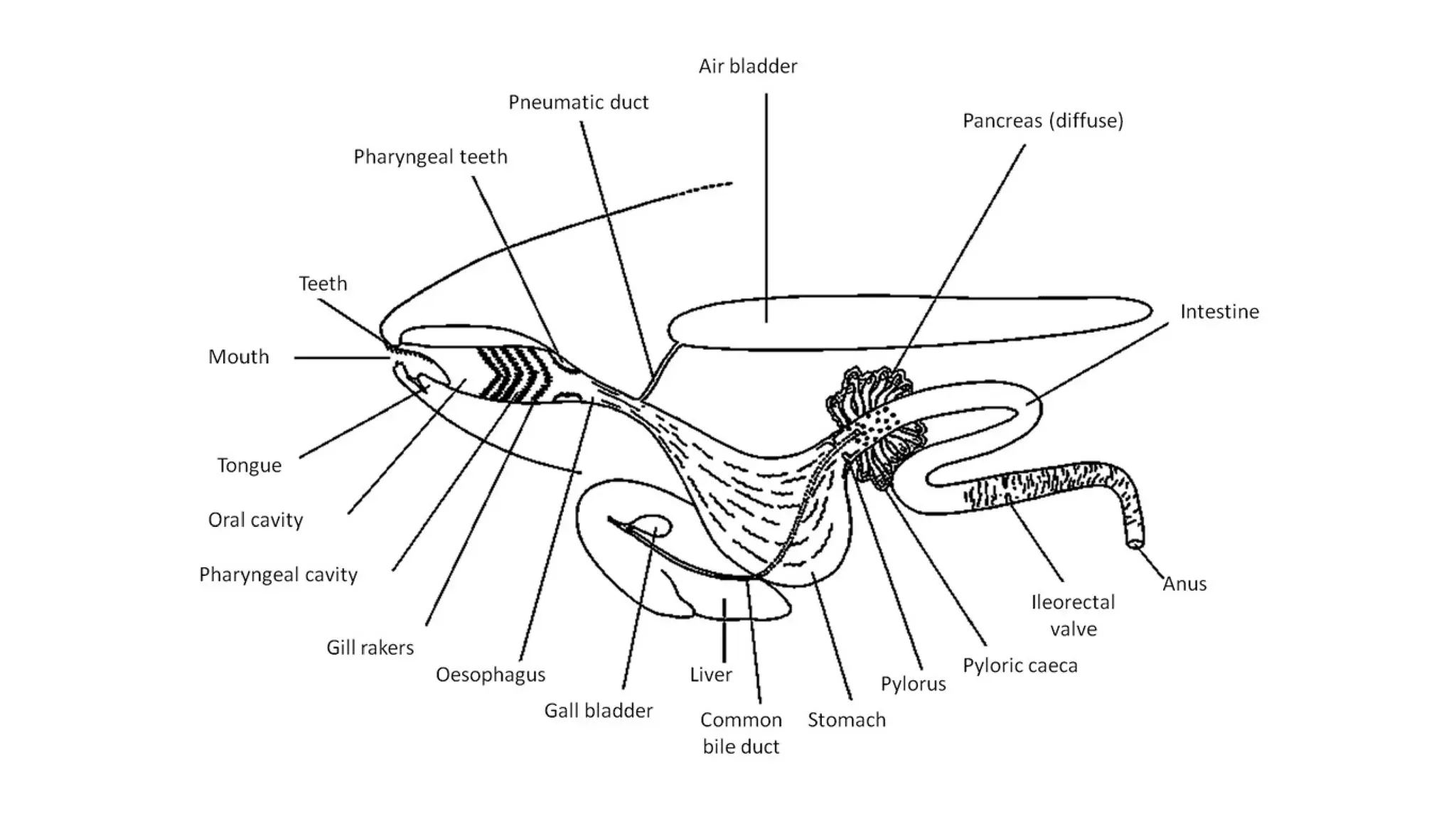
Anatomy of theFish Digestive System
The digestive system in fish consists of:
1. Alimentary canal (mouth to anus)
2. Accessory digestive organs (liver, pancreas, gallbladder)
6.
• The lengthand complexity of the alimentary canal vary depending on dietary habits.
1.Mouth and Buccal Cavity
1. Structure varies (sharp teeth in carnivores, toothless in filter feeders).
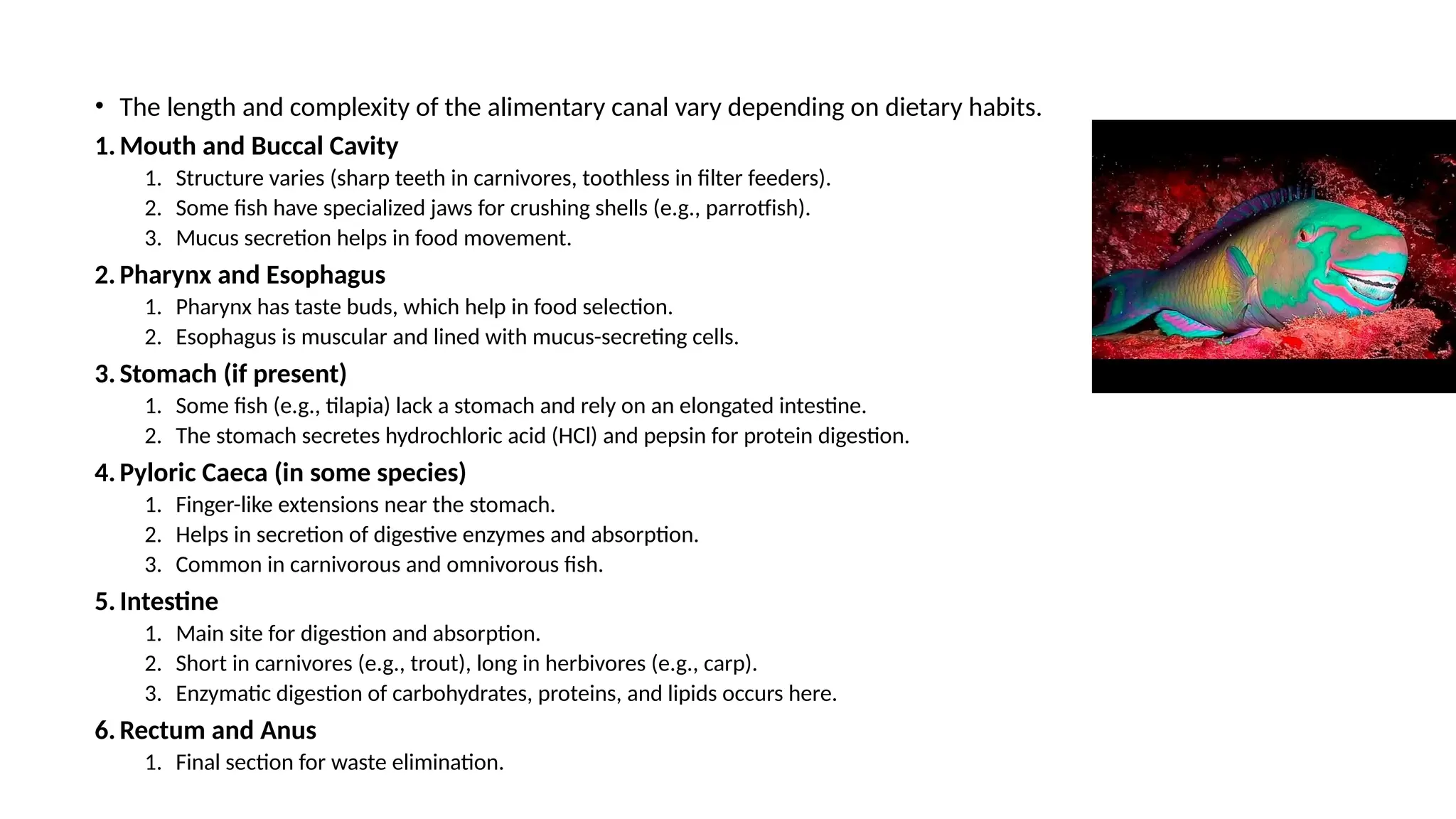
2. Some fish have specialized jaws for crushing shells (e.g., parrotfish).
3. Mucus secretion helps in food movement.
2.Pharynx and Esophagus
1. Pharynx has taste buds, which help in food selection.
2. Esophagus is muscular and lined with mucus-secreting cells.
3.Stomach (if present)
1. Some fish (e.g., tilapia) lack a stomach and rely on an elongated intestine.
2. The stomach secretes hydrochloric acid (HCl) and pepsin for protein digestion.
4.Pyloric Caeca (in some species)
1. Finger-like extensions near the stomach.
2. Helps in secretion of digestive enzymes and absorption.
3. Common in carnivorous and omnivorous fish.
5.Intestine
1. Main site for digestion and absorption.
2. Short in carnivores (e.g., trout), long in herbivores (e.g., carp).
3. Enzymatic digestion of carbohydrates, proteins, and lipids occurs here.
6.Rectum and Anus
1. Final section for waste elimination.
7.
B. Digestive Glands
1.Liver
1.Produces bile for emulsification of fats.
2. Stores glycogen and detoxifies harmful substances.
2.Pancreas
1. Secretes enzymes: trypsin (proteins), lipase (fats), and amylase
(carbohydrates).
2. Controls blood glucose levels via insulin.
3.Gallbladder
1. Stores and releases bile into the intestine for fat digestion.
8.
2. Physiology ofDigestion in Fish
• The process of digestion involves ingestion, mechanical and chemical
breakdown, absorption, and excretion.
• A. Ingestion and Food Processing
• Fish use various feeding mechanisms:
• Suction feeding (e.g., catfish).
• Ram feeding (e.g., tuna).
• Filter feeding (e.g., whale sharks).
• Food moves through the buccal cavity and pharynx into the
esophagus.
9.
Mechanical and ChemicalDigestion
• B. Mechanical Digestion
1. Teeth (if present) help in food breakdown.
2. Peristaltic movements push food down the alimentary canal.
1.Chemical Digestion
1. Proteins → Broken down by pepsin (stomach) and trypsin (intestine).
2. Carbohydrates → Digested by amylase (produced by pancreas).
3. Lipids → Bile and lipase facilitate fat digestion.
10.
Nutrient Absorption
• C.Takes place mainly in the intestine.
• Amino acids, glucose, and fatty acids enter the bloodstream.
• Villi and microvilli increase surface area for absorption.
• D. Excretion of Wastes
• Undigested material is expelled through the anus.
• Nitrogenous waste (ammonia) is primarily excreted through the gills.
11.
3. Adaptations ofDigestive System in Different Feeding Groups
1.Carnivorous Fish (e.g., Trout, Pike, Barracuda)
1. Short intestines, large stomachs.
2. Highly acidic stomach for protein digestion.
2.Herbivorous Fish (e.g., Parrotfish, Carp, Surgeonfish)
1. Long intestines to aid cellulose digestion.
2. Specialized enzymes (cellulase in gut bacteria).
3.Omnivorous Fish (e.g., Tilapia, Catfish)
1. Intermediate digestive system.
2. Can digest plant and animal matter.
4.Filter Feeders (e.g., Whale Shark, Manta Ray)
1. Gill rakers filter plankton from water.
2. Small, simple digestive system.
12.
4. Factors InfluencingDigestion in Fish
1.Water Temperature
1. Higher temperatures accelerate digestion.
2. Cold water slows down metabolic and digestive processes.
2.Diet Composition
1. Protein-rich diets require strong stomach acids.
2. Herbivorous diets require longer digestion times.
3.Fish Size and Age
1. Young fish have different enzyme profiles than adults.
2. Growing fish require higher protein intake.
4.Enzyme Activity
1. Carnivores have more proteases (for proteins).
2. Herbivores have more amylases and cellulases (for plant digestion).
13.
5. Importance inAquaculture and Fisheries
1.Nutrient Optimization
1. Formulating fish feed based on digestive physiology improves growth rates.
2. Balancing proteins, fats, and carbohydrates in artificial diets is essential.
2.Health Management
1. Poor digestion can lead to bloating, gut infections, or malnutrition.
2. Probiotics and prebiotics enhance gut health in aquaculture.
3.Environmental Considerations
1. Proper feeding reduces waste output, minimizing water pollution.
2. Efficient digestion leads to less ammonia excretion, improving water quality.
14.
Conclusion
• The fishdigestive system is adapted to different dietary habits.
• Efficient digestion is essential for growth, survival, and aquaculture
success.
• Understanding fish digestion helps optimize feed formulation and
sustainable fisheries management.
• References
1. Evans, D. H., & Claiborne, J. B. (2006). The Physiology of Fishes. CRC Press.
2. Jobling, M. (1995). Environmental Biology of Fishes. Chapman & Hall.
3. Lovell, R. T. (1998). Nutrition and Feeding of Fish. Springer.







![Excretory Organs In FinFish And ShellFish,Physiology of Excretion[1].pptx](https://cdn.slidesharecdn.com/ss_thumbnails/excretoryorgansinfinfishandshellfishphysiologyofexcretion1-230819064231-c7cd7dec-thumbnail.jpg?width=640&height=640&fit=bounds)


![Structure and Types of Scales in Fishes[1].pptx](https://cdn.slidesharecdn.com/ss_thumbnails/structureandtypesofscalesinfishes1-250325121125-2f63aca3-thumbnail.jpg?width=640&height=640&fit=bounds)

![Structure_and_function_of_Nervous_system_in_Teleost_Fishes[1].pptx](https://cdn.slidesharecdn.com/ss_thumbnails/structureandfunctionofnervoussysteminteleostfishes1-250330113520-5813502c-thumbnail.jpg?width=640&height=640&fit=bounds)


![Reproductive organs in Fishes (Teleost)[1].pptx](https://cdn.slidesharecdn.com/ss_thumbnails/reproductiveorgansinfishesteleost1-250325121624-c43f9959-thumbnail.jpg?width=640&height=640&fit=bounds)


