Shahriar I
Strategic Choice
SBM:CLASS 2021
2
Shahriar I
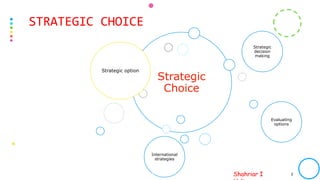
Strategic
Choice
Strategic option
Strategic
decision
making
Evaluating
options
International
strategies
STRATEGIC CHOICE
PREPARED BY SIH FOR ICAB INTERNAL USAGE ONLY. PHOTO SOURCE: INTERNET 2
Shahriar I
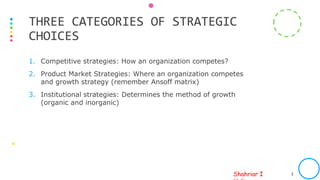
1. Competitive strategies: How an organization competes?
2. Product Market Strategies: Where an organization competes
and growth strategy (remember Ansoff matrix)
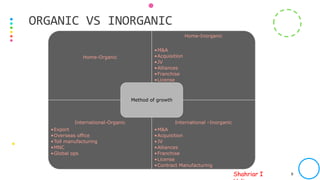
3. Institutional strategies: Determines the method of growth
(organic and inorganic)
PREPARED BY SIH FOR ICAB INTERNAL USAGE ONLY. PHOTO SOURCE: INTERNET 3
THREE CATEGORIES OF STRATEGIC
CHOICES
Shahriar I
Strategic
Options
COST OR DIFFERENTIATION?
4
Shahriar I 5
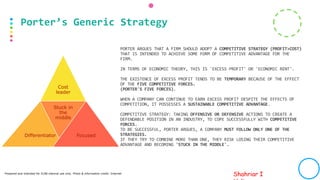
PORTER ARGUES THAT A FIRM SHOULD ADOPT A COMPETITIVE STRATEGY (PROFIT>COST)
THAT IS INTENDED TO ACHIEVE SOME FORM OF COMPETITIVE ADVANTAGE FOR THE
FIRM.
IN TERMS OF ECONOMIC THEORY, THIS IS 'EXCESS PROFIT' OR 'ECONOMIC RENT'.
THE EXISTENCE OF EXCESS PROFIT TENDS TO BE TEMPORARY BECAUSE OF THE EFFECT
OF THE FIVE COMPETITIVE FORCES.
(PORTER'S FIVE FORCES).
WHEN A COMPANY CAN CONTINUE TO EARN EXCESS PROFIT DESPITE THE EFFECTS OF
COMPETITION, IT POSSESSES A SUSTAINABLE COMPETITIVE ADVANTAGE.
COMPETITIVE STRATEGY: TAKING OFFENSIVE OR DEFENSIVE ACTIONS TO CREATE A
DEFENDABLE POSITION IN AN INDUSTRY, TO COPE SUCCESSFULLY WITH COMPETITIVE
FORCES.
TO BE SUCCESSFUL, PORTER ARGUES, A COMPANY MUST FOLLOW ONLY ONE OF THE
STRATEGIES.
IF THEY TRY TO COMBINE MORE THAN ONE, THEY RISK LOSING THEIR COMPETITIVE
ADVANTAGE AND BECOMING 'STUCK IN THE MIDDLE'.
Prepared and intended for ICAB internal use only. Photo & information credit: Internet
Porter’s Generic Strategy
Cost
leader
Differentiator
Stuck in
the
middle
Focused
Shahriar I
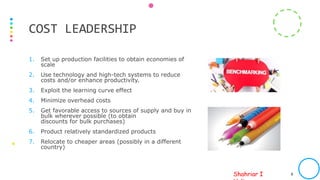
1. Set up production facilities to obtain economies of
scale
2. Use technology and high-tech systems to reduce
costs and/or enhance productivity.
3. Exploit the learning curve effect
4. Minimize overhead costs
5. Get favorable access to sources of supply and buy in
bulk wherever possible (to obtain
discounts for bulk purchases)
6. Product relatively standardized products
7. Relocate to cheaper areas (possibly in a different
country)
PREPARED BY SIH FOR ICAB INTERNAL USAGE ONLY. PHOTO SOURCE: INTERNET 6
COST LEADERSHIP
Shahriar I
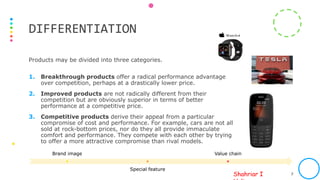
Products may be divided into three categories.
1. Breakthrough products offer a radical performance advantage
over competition, perhaps at a drastically lower price.
2. Improved products are not radically different from their
competition but are obviously superior in terms of better
performance at a competitive price.
3. Competitive products derive their appeal from a particular
compromise of cost and performance. For example, cars are not all
sold at rock-bottom prices, nor do they all provide immaculate
comfort and performance. They compete with each other by trying
to offer a more attractive compromise than rival models.
PREPARED BY SIH FOR ICAB INTERNAL USAGE ONLY. PHOTO SOURCE: INTERNET 7
DIFFERENTIATION
Brand image
Special feature
Value chain
Shahriar I
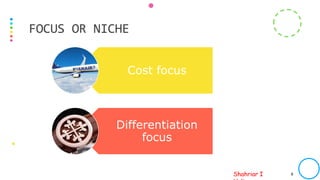
Cost focus
Differentiation
focus
PREPARED BY SIH FOR ICAB INTERNAL USAGE ONLY. PHOTO SOURCE: INTERNET 8
FOCUS OR NICHE
Shahriar I
Home-Organic
Home-Inorganic
•M&A
•Acquisition
•JV
•Alliances
•Franchise
•License
International-Organic
•Export
•Overseas office
•Toll manufacturing
•MNC
•Global ops
International –Inorganic
•M&A
•Acquisition
•JV
•Alliances
•Franchise
•License
•Contract Manufacturing
Method of growth
PREPARED BY SIH FOR ICAB INTERNAL USAGE ONLY. PHOTO SOURCE: INTERNET 9
ORGANIC VS INORGANIC
Shahriar I
Strategic
Decision
Making
RIGHT OR WRONG?
10
Shahriar I
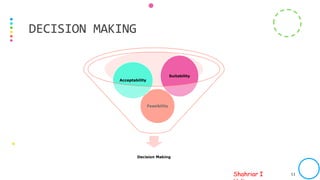
Decision Making
Feasibility
Acceptability
Suitability
PREPARED BY SIH FOR ICAB INTERNAL USAGE ONLY. PHOTO SOURCE: INTERNET 11
DECISION MAKING
Shahriar I
Evaluating
Options
BLINK OR INFORMED?
12
Shahriar I
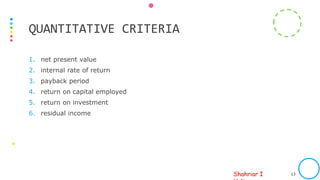
1. net present value
2. internal rate of return
3. payback period
4. return on capital employed
5. return on investment
6. residual income
PREPARED BY SIH FOR ICAB INTERNAL USAGE ONLY. PHOTO SOURCE: INTERNET 13
QUANTITATIVE CRITERIA
Shahriar I
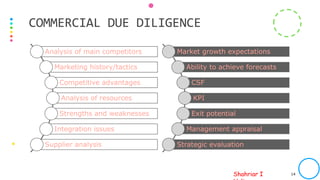
Analysis of main competitors
Marketing history/tactics
Competitive advantages
Analysis of resources
Strengths and weaknesses
Integration issues
Supplier analysis
PREPARED BY SIH FOR ICAB INTERNAL USAGE ONLY. PHOTO SOURCE: INTERNET 14
COMMERCIAL DUE DILIGENCE
Market growth expectations
Ability to achieve forecasts
CSF
KPI
Exit potential
Management appraisal
Strategic evaluation
Shahriar I
International
Strategies
BETTER OFF VS EXPANSION?
15
Shahriar I
Cost or
Competence
Market Led
PREPARED BY SIH FOR ICAB INTERNAL USAGE ONLY. PHOTO SOURCE: INTERNET 16
KEY DECISION IN INTERNATIONAL
EXPANSION
Shahriar I
REFERENCES
PREPARED BY SIH FOR ICAB INTERNAL USAGE ONLY. PHOTO SOURCE: INTERNET 17
Shahriar I
QUESTIONS
PREPARED BY SIH FOR ICAB INTERNAL USAGE ONLY. PHOTO SOURCE: INTERNET 18
Shahriar I
LinkedIn
/shahriar81
Twitter
@shahriar17
Email
shahriar.halim@gmail.com
Phone
(880)1712535438
CONTACT DETAILS
PREPARED BY SIH FOR ICAB INTERNAL USAGE ONLY. PHOTO SOURCE: INTERNET 19

Chap 2 Strategic Choice.pptx

  • 1.
  • 2.
  • 3.
    Shahriar I 1. Competitivestrategies: How an organization competes? 2. Product Market Strategies: Where an organization competes and growth strategy (remember Ansoff matrix) 3. Institutional strategies: Determines the method of growth (organic and inorganic) PREPARED BY SIH FOR ICAB INTERNAL USAGE ONLY. PHOTO SOURCE: INTERNET 3 THREE CATEGORIES OF STRATEGIC CHOICES
  • 4.
  • 5.
    Shahriar I 5 PORTERARGUES THAT A FIRM SHOULD ADOPT A COMPETITIVE STRATEGY (PROFIT>COST) THAT IS INTENDED TO ACHIEVE SOME FORM OF COMPETITIVE ADVANTAGE FOR THE FIRM. IN TERMS OF ECONOMIC THEORY, THIS IS 'EXCESS PROFIT' OR 'ECONOMIC RENT'. THE EXISTENCE OF EXCESS PROFIT TENDS TO BE TEMPORARY BECAUSE OF THE EFFECT OF THE FIVE COMPETITIVE FORCES. (PORTER'S FIVE FORCES). WHEN A COMPANY CAN CONTINUE TO EARN EXCESS PROFIT DESPITE THE EFFECTS OF COMPETITION, IT POSSESSES A SUSTAINABLE COMPETITIVE ADVANTAGE. COMPETITIVE STRATEGY: TAKING OFFENSIVE OR DEFENSIVE ACTIONS TO CREATE A DEFENDABLE POSITION IN AN INDUSTRY, TO COPE SUCCESSFULLY WITH COMPETITIVE FORCES. TO BE SUCCESSFUL, PORTER ARGUES, A COMPANY MUST FOLLOW ONLY ONE OF THE STRATEGIES. IF THEY TRY TO COMBINE MORE THAN ONE, THEY RISK LOSING THEIR COMPETITIVE ADVANTAGE AND BECOMING 'STUCK IN THE MIDDLE'. Prepared and intended for ICAB internal use only. Photo & information credit: Internet Porter’s Generic Strategy Cost leader Differentiator Stuck in the middle Focused
  • 6.
    Shahriar I 1. Setup production facilities to obtain economies of scale 2. Use technology and high-tech systems to reduce costs and/or enhance productivity. 3. Exploit the learning curve effect 4. Minimize overhead costs 5. Get favorable access to sources of supply and buy in bulk wherever possible (to obtain discounts for bulk purchases) 6. Product relatively standardized products 7. Relocate to cheaper areas (possibly in a different country) PREPARED BY SIH FOR ICAB INTERNAL USAGE ONLY. PHOTO SOURCE: INTERNET 6 COST LEADERSHIP
  • 7.
    Shahriar I Products maybe divided into three categories. 1. Breakthrough products offer a radical performance advantage over competition, perhaps at a drastically lower price. 2. Improved products are not radically different from their competition but are obviously superior in terms of better performance at a competitive price. 3. Competitive products derive their appeal from a particular compromise of cost and performance. For example, cars are not all sold at rock-bottom prices, nor do they all provide immaculate comfort and performance. They compete with each other by trying to offer a more attractive compromise than rival models. PREPARED BY SIH FOR ICAB INTERNAL USAGE ONLY. PHOTO SOURCE: INTERNET 7 DIFFERENTIATION Brand image Special feature Value chain
  • 8.
    Shahriar I Cost focus Differentiation focus PREPAREDBY SIH FOR ICAB INTERNAL USAGE ONLY. PHOTO SOURCE: INTERNET 8 FOCUS OR NICHE
  • 9.
    Shahriar I Home-Organic Home-Inorganic •M&A •Acquisition •JV •Alliances •Franchise •License International-Organic •Export •Overseas office •Tollmanufacturing •MNC •Global ops International –Inorganic •M&A •Acquisition •JV •Alliances •Franchise •License •Contract Manufacturing Method of growth PREPARED BY SIH FOR ICAB INTERNAL USAGE ONLY. PHOTO SOURCE: INTERNET 9 ORGANIC VS INORGANIC
  • 10.
  • 11.
    Shahriar I Decision Making Feasibility Acceptability Suitability PREPAREDBY SIH FOR ICAB INTERNAL USAGE ONLY. PHOTO SOURCE: INTERNET 11 DECISION MAKING
  • 12.
  • 13.
    Shahriar I 1. netpresent value 2. internal rate of return 3. payback period 4. return on capital employed 5. return on investment 6. residual income PREPARED BY SIH FOR ICAB INTERNAL USAGE ONLY. PHOTO SOURCE: INTERNET 13 QUANTITATIVE CRITERIA
  • 14.
    Shahriar I Analysis ofmain competitors Marketing history/tactics Competitive advantages Analysis of resources Strengths and weaknesses Integration issues Supplier analysis PREPARED BY SIH FOR ICAB INTERNAL USAGE ONLY. PHOTO SOURCE: INTERNET 14 COMMERCIAL DUE DILIGENCE Market growth expectations Ability to achieve forecasts CSF KPI Exit potential Management appraisal Strategic evaluation
  • 15.
  • 16.
    Shahriar I Cost or Competence MarketLed PREPARED BY SIH FOR ICAB INTERNAL USAGE ONLY. PHOTO SOURCE: INTERNET 16 KEY DECISION IN INTERNATIONAL EXPANSION
  • 17.
    Shahriar I REFERENCES PREPARED BYSIH FOR ICAB INTERNAL USAGE ONLY. PHOTO SOURCE: INTERNET 17
  • 18.
    Shahriar I QUESTIONS PREPARED BYSIH FOR ICAB INTERNAL USAGE ONLY. PHOTO SOURCE: INTERNET 18
  • 19.