Computer Science: A Structured Programming Approach Using C 1
Objectives
❏ To understand the structure of a C-language program.
❏ To write your first C program.
❏ To introduce the include preprocessor command.
❏ To be able to create good identifiers for objects in a program.
❏ To be able to list, describe, and use the C basic data types.
❏ To be able to create and use variables and constants.
❏ To understand input and output concepts.
❏ To be able to use simple input and output statements.
Chapter 2
Introduction to the C Language
Computer Science: A Structured Programming Approach Using C 2
2-1 Background
C is a structured programming language. It is
considered a high-level language because it allows the
programmer to concentrate on the problem at hand
and not worry about the machine that the program
will be using. That is another reason why it is used by
software developers whose applications have to run on
many different hardware platforms.
Computer Science: A Structured Programming Approach Using C 3
2-2 C Programs
It's time to write your first C program.
Structure of a C Program
Your First C Program
Comments
The Greeting Program
Topics discussed in this section:
Computer Science: A Structured Programming Approach Using C 4
FIGURE 2-2 Structure of a C Program
Computer Science: A Structured Programming Approach Using C 5
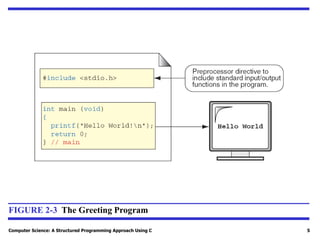
FIGURE 2-3 The Greeting Program
Computer Science: A Structured Programming Approach Using C 6
PROGRAM 2-1 The Greeting Program
Computer Science: A Structured Programming Approach Using C 7
FIGURE 2-4 Examples of Block Comments
Computer Science: A Structured Programming Approach Using C 8
FIGURE 2-5 Examples of Line Comments
Computer Science: A Structured Programming Approach Using C 9
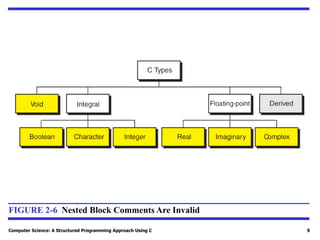
FIGURE 2-6 Nested Block Comments Are Invalid
Computer Science: A Structured Programming Approach Using C 10
2-3 Identifiers
One feature present in all computer languages is the
identifier. Identifiers allow us to name data and other
objects in the program. Each identified object in the
computer is stored at a unique address.
Computer Science: A Structured Programming Approach Using C 11
Table 2-1 Rules for Identifiers
Computer Science: A Structured Programming Approach Using C 12
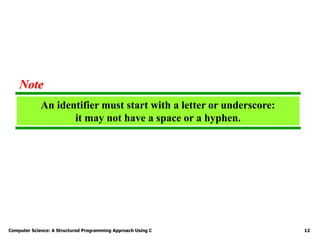
An identifier must start with a letter or underscore:
it may not have a space or a hyphen.
Note
Computer Science: A Structured Programming Approach Using C 13
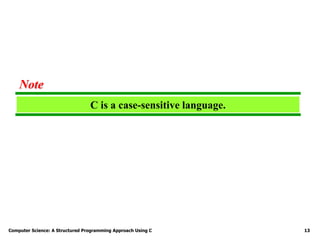
C is a case-sensitive language.
Note
Computer Science: A Structured Programming Approach Using C 14
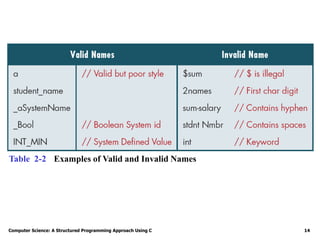
Table 2-2 Examples of Valid and Invalid Names
Computer Science: A Structured Programming Approach Using C 15
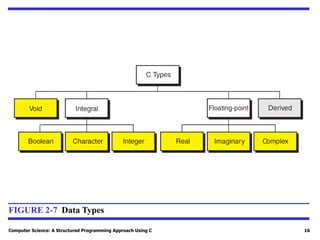
2-4 Types
A type defines a set of values and a set of operations
that can be applied on those values.
Void Type
Integral Type
Floating-Point Types
Topics discussed in this section:
Computer Science: A Structured Programming Approach Using C 16
FIGURE 2-7 Data Types
Computer Science: A Structured Programming Approach Using C 17
FIGURE 2-8 Character Types
Computer Science: A Structured Programming Approach Using C 18
FIGURE 2-9 Integer Types
Computer Science: A Structured Programming Approach Using C 19
sizeof (short) ≤ sizeof (int) ≤ sizeof (long) ≤ sizeof (long long)
Note
Computer Science: A Structured Programming Approach Using C 20
Table 2-3 Typical Integer Sizes and Values for Signed Integers
Computer Science: A Structured Programming Approach Using C 21
FIGURE 2-10 Floating-point Types
Computer Science: A Structured Programming Approach Using C 22
sizeof (float) ≤ sizeof (double) ≤ sizeof (long double)
Note
Computer Science: A Structured Programming Approach Using C 23
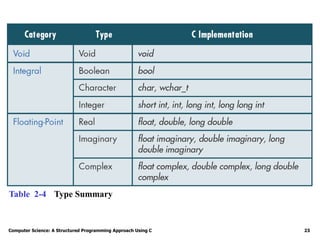
Table 2-4 Type Summary
Computer Science: A Structured Programming Approach Using C 24
2-5 Variables
Variables are named memory locations that have a type,
such as integer or character, which is inherited from
their type. The type determines the values that a variable
may contain and the operations that may be used with
its values.
Variable Declaration
Variable Initialization
Topics discussed in this section:
Computer Science: A Structured Programming Approach Using C 25
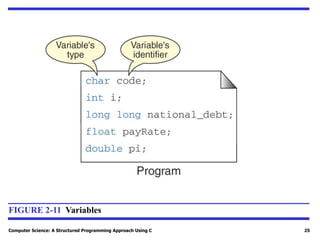
FIGURE 2-11 Variables
Computer Science: A Structured Programming Approach Using C 26
Table 2-5 Examples of Variable Declarations and Definitions
Computer Science: A Structured Programming Approach Using C 27
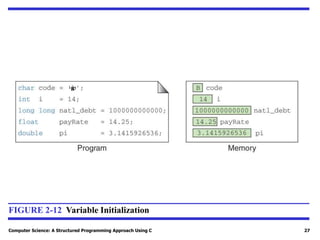
FIGURE 2-12 Variable Initialization
‘B’
Computer Science: A Structured Programming Approach Using C 28
When a variable is defined, it is not initialized.
We must initialize any variable requiring
prescribed data when the function starts.
Note
Computer Science: A Structured Programming Approach Using C 29
PROGRAM 2-2 Print Sum of Three Numbers
Computer Science: A Structured Programming Approach Using C 30
PROGRAM 2-2 Print Sum of Three Numbers (continued)
Computer Science: A Structured Programming Approach Using C 31
PROGRAM 2-2 Print Sum of Three Numbers (continued)
Computer Science: A Structured Programming Approach Using C 32
2-6 Constants
Constants are data values that cannot be changed
during the execution of a program. Like variables,
constants have a type. In this section, we discuss
Boolean, character, integer, real, complex, and string
constants.
Constant Representation
Coding Constants
Topics discussed in this section:
Computer Science: A Structured Programming Approach Using C 33
A character constant is enclosed in single quotes.
Note
Computer Science: A Structured Programming Approach Using C 34
Table 2-6 Symbolic Names for Control Characters
Computer Science: A Structured Programming Approach Using C 35
Table 2-7 Examples of Integer Constants
Computer Science: A Structured Programming Approach Using C 36
Table 2-8 Examples of Real Constants
Computer Science: A Structured Programming Approach Using C 37
FIGURE 2-13 Some Strings
Computer Science: A Structured Programming Approach Using C 38
FIGURE 2-14 Null Characters and Null Strings
Computer Science: A Structured Programming Approach Using C 39
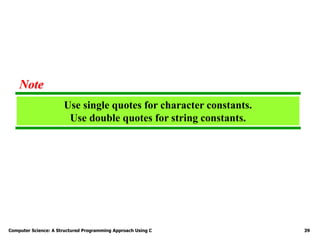
Use single quotes for character constants.
Use double quotes for string constants.
Note
Computer Science: A Structured Programming Approach Using C 40
PROGRAM 2-3 Memory Constants
Computer Science: A Structured Programming Approach Using C 41
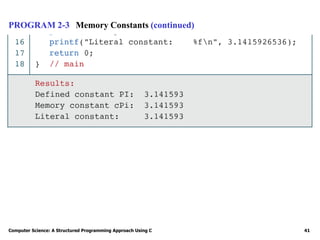
PROGRAM 2-3 Memory Constants (continued)

Chap 02-1

  • 1.
    Computer Science: AStructured Programming Approach Using C 1 Objectives ❏ To understand the structure of a C-language program. ❏ To write your first C program. ❏ To introduce the include preprocessor command. ❏ To be able to create good identifiers for objects in a program. ❏ To be able to list, describe, and use the C basic data types. ❏ To be able to create and use variables and constants. ❏ To understand input and output concepts. ❏ To be able to use simple input and output statements. Chapter 2 Introduction to the C Language
  • 2.
    Computer Science: AStructured Programming Approach Using C 2 2-1 Background C is a structured programming language. It is considered a high-level language because it allows the programmer to concentrate on the problem at hand and not worry about the machine that the program will be using. That is another reason why it is used by software developers whose applications have to run on many different hardware platforms.
  • 3.
    Computer Science: AStructured Programming Approach Using C 3 2-2 C Programs It's time to write your first C program. Structure of a C Program Your First C Program Comments The Greeting Program Topics discussed in this section:
  • 4.
    Computer Science: AStructured Programming Approach Using C 4 FIGURE 2-2 Structure of a C Program
  • 5.
    Computer Science: AStructured Programming Approach Using C 5 FIGURE 2-3 The Greeting Program
  • 6.
    Computer Science: AStructured Programming Approach Using C 6 PROGRAM 2-1 The Greeting Program
  • 7.
    Computer Science: AStructured Programming Approach Using C 7 FIGURE 2-4 Examples of Block Comments
  • 8.
    Computer Science: AStructured Programming Approach Using C 8 FIGURE 2-5 Examples of Line Comments
  • 9.
    Computer Science: AStructured Programming Approach Using C 9 FIGURE 2-6 Nested Block Comments Are Invalid
  • 10.
    Computer Science: AStructured Programming Approach Using C 10 2-3 Identifiers One feature present in all computer languages is the identifier. Identifiers allow us to name data and other objects in the program. Each identified object in the computer is stored at a unique address.
  • 11.
    Computer Science: AStructured Programming Approach Using C 11 Table 2-1 Rules for Identifiers
  • 12.
    Computer Science: AStructured Programming Approach Using C 12 An identifier must start with a letter or underscore: it may not have a space or a hyphen. Note
  • 13.
    Computer Science: AStructured Programming Approach Using C 13 C is a case-sensitive language. Note
  • 14.
    Computer Science: AStructured Programming Approach Using C 14 Table 2-2 Examples of Valid and Invalid Names
  • 15.
    Computer Science: AStructured Programming Approach Using C 15 2-4 Types A type defines a set of values and a set of operations that can be applied on those values. Void Type Integral Type Floating-Point Types Topics discussed in this section:
  • 16.
    Computer Science: AStructured Programming Approach Using C 16 FIGURE 2-7 Data Types
  • 17.
    Computer Science: AStructured Programming Approach Using C 17 FIGURE 2-8 Character Types
  • 18.
    Computer Science: AStructured Programming Approach Using C 18 FIGURE 2-9 Integer Types
  • 19.
    Computer Science: AStructured Programming Approach Using C 19 sizeof (short) ≤ sizeof (int) ≤ sizeof (long) ≤ sizeof (long long) Note
  • 20.
    Computer Science: AStructured Programming Approach Using C 20 Table 2-3 Typical Integer Sizes and Values for Signed Integers
  • 21.
    Computer Science: AStructured Programming Approach Using C 21 FIGURE 2-10 Floating-point Types
  • 22.
    Computer Science: AStructured Programming Approach Using C 22 sizeof (float) ≤ sizeof (double) ≤ sizeof (long double) Note
  • 23.
    Computer Science: AStructured Programming Approach Using C 23 Table 2-4 Type Summary
  • 24.
    Computer Science: AStructured Programming Approach Using C 24 2-5 Variables Variables are named memory locations that have a type, such as integer or character, which is inherited from their type. The type determines the values that a variable may contain and the operations that may be used with its values. Variable Declaration Variable Initialization Topics discussed in this section:
  • 25.
    Computer Science: AStructured Programming Approach Using C 25 FIGURE 2-11 Variables
  • 26.
    Computer Science: AStructured Programming Approach Using C 26 Table 2-5 Examples of Variable Declarations and Definitions
  • 27.
    Computer Science: AStructured Programming Approach Using C 27 FIGURE 2-12 Variable Initialization ‘B’
  • 28.
    Computer Science: AStructured Programming Approach Using C 28 When a variable is defined, it is not initialized. We must initialize any variable requiring prescribed data when the function starts. Note
  • 29.
    Computer Science: AStructured Programming Approach Using C 29 PROGRAM 2-2 Print Sum of Three Numbers
  • 30.
    Computer Science: AStructured Programming Approach Using C 30 PROGRAM 2-2 Print Sum of Three Numbers (continued)
  • 31.
    Computer Science: AStructured Programming Approach Using C 31 PROGRAM 2-2 Print Sum of Three Numbers (continued)
  • 32.
    Computer Science: AStructured Programming Approach Using C 32 2-6 Constants Constants are data values that cannot be changed during the execution of a program. Like variables, constants have a type. In this section, we discuss Boolean, character, integer, real, complex, and string constants. Constant Representation Coding Constants Topics discussed in this section:
  • 33.
    Computer Science: AStructured Programming Approach Using C 33 A character constant is enclosed in single quotes. Note
  • 34.
    Computer Science: AStructured Programming Approach Using C 34 Table 2-6 Symbolic Names for Control Characters
  • 35.
    Computer Science: AStructured Programming Approach Using C 35 Table 2-7 Examples of Integer Constants
  • 36.
    Computer Science: AStructured Programming Approach Using C 36 Table 2-8 Examples of Real Constants
  • 37.
    Computer Science: AStructured Programming Approach Using C 37 FIGURE 2-13 Some Strings
  • 38.
    Computer Science: AStructured Programming Approach Using C 38 FIGURE 2-14 Null Characters and Null Strings
  • 39.
    Computer Science: AStructured Programming Approach Using C 39 Use single quotes for character constants. Use double quotes for string constants. Note
  • 40.
    Computer Science: AStructured Programming Approach Using C 40 PROGRAM 2-3 Memory Constants
  • 41.
    Computer Science: AStructured Programming Approach Using C 41 PROGRAM 2-3 Memory Constants (continued)