Types of cell division :
1. Amitosis
2. Mitosis
3. Meiosis
Direct Division
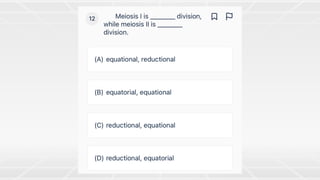
Indirect Division/ Equational Division
Reductional Division
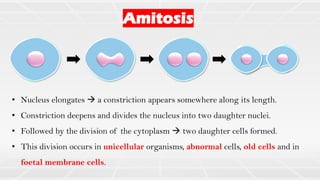
Amitosis
• Nucleus elongates → a constriction appears somewhere along its length.
• Constriction deepens and divides the nucleus into two daughter nuclei.
• Followed by the division of the cytoplasm → two daughter cells formed.
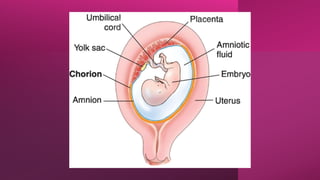
• This division occurs in unicellular organisms, abnormal cells, old cells and in
foetal membrane cells.
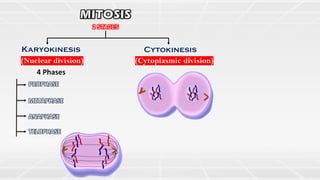
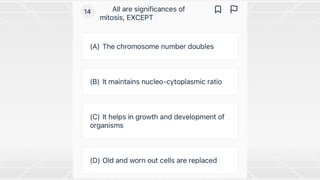
2 STAGES
Karyokinesis Cytokinesis
(Nuclear division) (Cytoplasmic division)
4 Phases
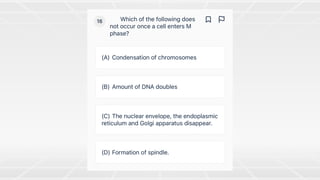
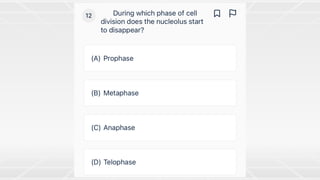
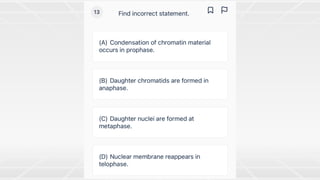
PROPHASE
METAPHASE
ANAPHASE
TELOPHASE
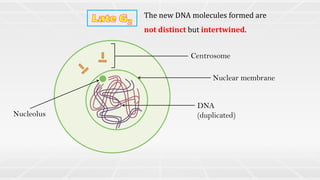
Centrosome
Nuclear membrane
Nucleolus
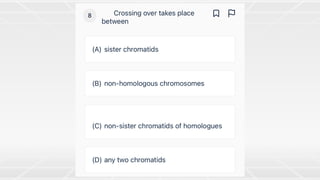
DNA
(duplicated)
The new DNA molecules formed are
not distinct but intertwined.
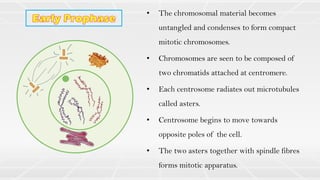
• The chromosomal material becomes
untangled and condenses to form compact
mitotic chromosomes.
• Chromosomes are seen to be composed of
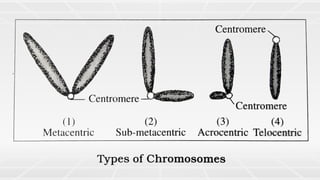
two chromatids attached at centromere.
• Each centrosome radiates out microtubules
called asters.
• Centrosome begins to move towards
opposite poles of the cell.
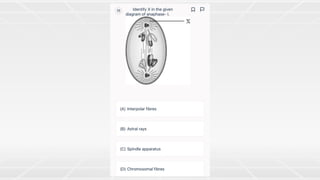
• The two asters together with spindle fibres
forms mitotic apparatus.
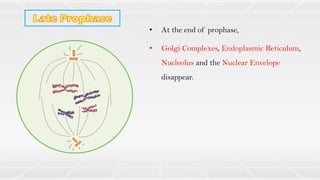
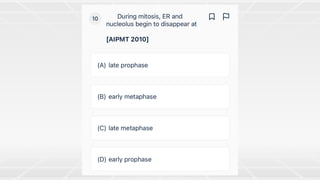
• At the end of prophase,
• Golgi Complexes, Endoplasmic Reticulum,
Nucleolus and the Nuclear Envelope
disappear.
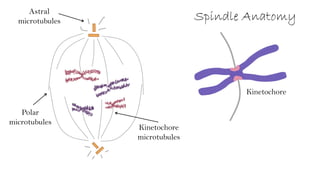
Spindle Anatomy
Kinetochore
Astral
microtubules
Polar
microtubules
Kinetochore
microtubules
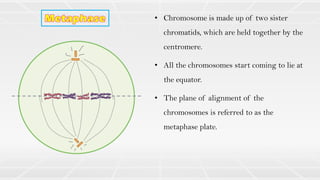
• Chromosome is made up of two sister
chromatids, which are held together by the
centromere.
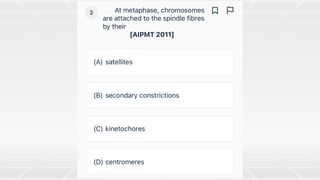
• All the chromosomes start coming to lie at
the equator.
• The plane of alignment of the
chromosomes is referred to as the
metaphase plate.
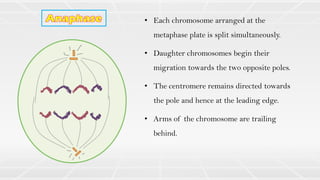
• Each chromosome arranged at the
metaphase plate is split simultaneously.
• Daughter chromosomes begin their
migration towards the two opposite poles.
• The centromere remains directed towards
the pole and hence at the leading edge.
• Arms of the chromosome are trailing
behind.
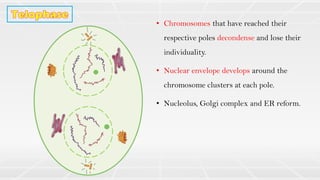
• Chromosomes that have reached their
respective poles decondense and lose their
individuality.
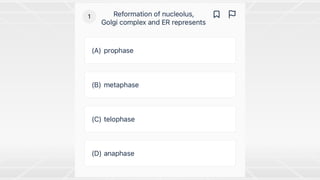
• Nuclear envelope develops around the
chromosome clusters at each pole.
• Nucleolus, Golgi complex and ER reform.
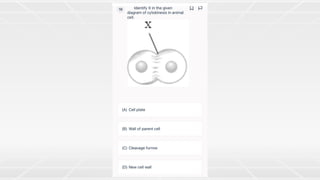
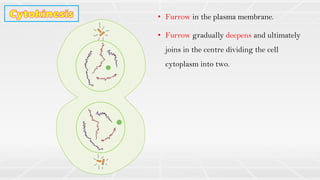
• Furrow in the plasma membrane.
• Furrow gradually deepens and ultimately
joins in the centre dividing the cell
cytoplasm into two.
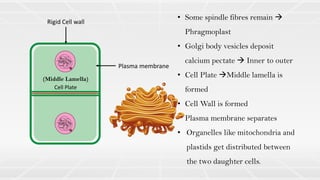
Cell Plate
Rigid Cell wall
Plasma membrane
(Middle Lamella)
• Some spindle fibres remain →
Phragmoplast
• Golgi body vesicles deposit
calcium pectate → Inner to outer
• Cell Plate →Middle lamella is
formed
• Cell Wall is formed
• Plasma membrane separates
• Organelles like mitochondria and
plastids get distributed between
the two daughter cells.
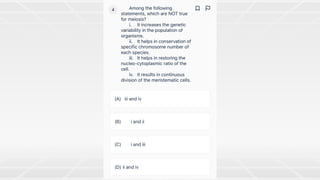
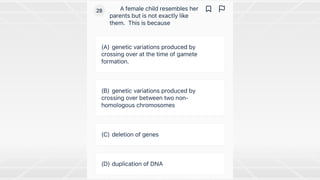
• Takes place only in reproductive cells during the formation of gametes.
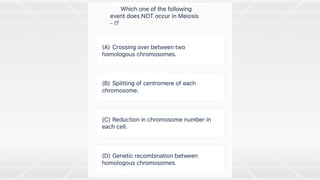
• The number of chromosomes is reduced to half; hence it is also called
reductional division.
• The cells in which meiosis take place are termed as meiocytes.
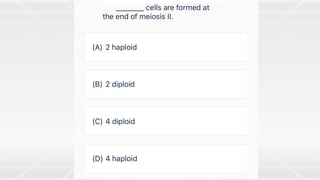
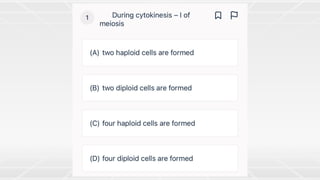
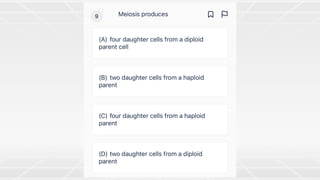
• Meiosis produces four haploid daughter cells from a diploid parent cell.
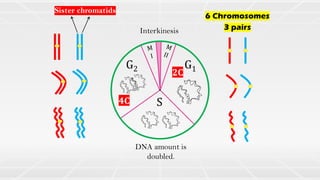
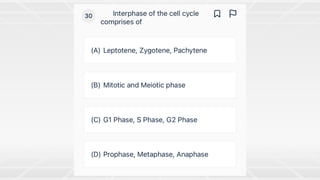
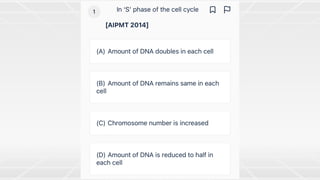
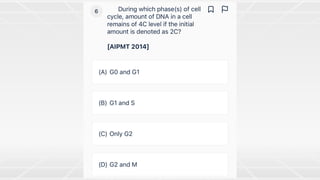
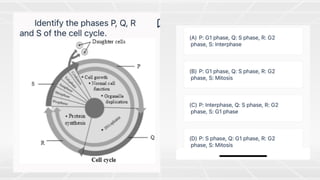
G1
S
G2
6 Chromosomes
3 pairs
Sister chromatids
2C
4C
DNA amount is
doubled.
Interkinesis
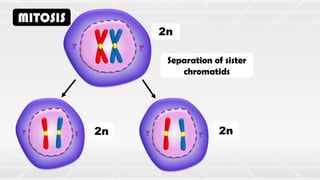
MITOSIS
Separation of sister
chromatids
2n
2n 2n
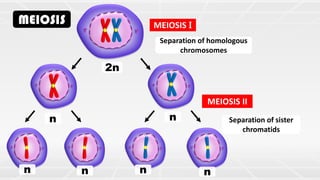
MEIOSIS MEIOSIS I
MEIOSIS II
Separation of homologous
chromosomes
Separation of sister
chromatids
n n
2n
n n n
n
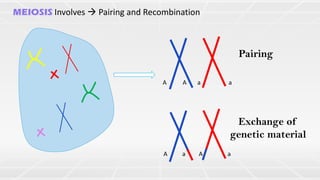
Involves → Pairing and Recombination
Pairing
Exchange of
genetic material
A A a a
A a A a
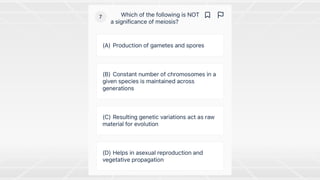
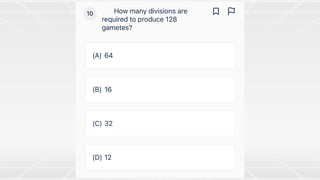
1. Takes place to reduce chromosome number
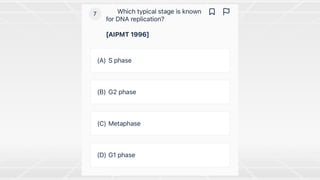
2. DNA replication is done once → Division twice
3. Pairing occurs for genetic exchange
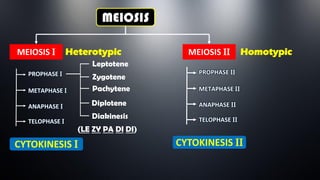
MEIOSIS
MEIOSIS I MEIOSIS II
PROPHASE I
METAPHASE I
ANAPHASE I
TELOPHASE I
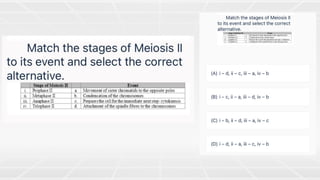
PROPHASE II
METAPHASE II
ANAPHASE II
TELOPHASE II
Leptotene
Zygotene
Pachytene
Diplotene
Diakinesis
CYTOKINESIS I CYTOKINESIS II
(LE ZY PA DI DI)
Heterotypic Homotypic
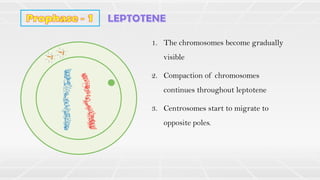
1. The chromosomes become gradually
visible
2. Compaction of chromosomes
continues throughout leptotene
3. Centrosomes start to migrate to
opposite poles.
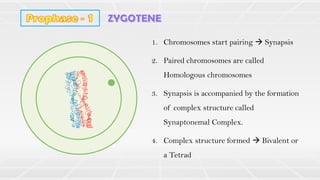
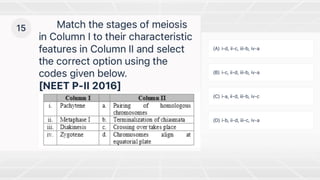
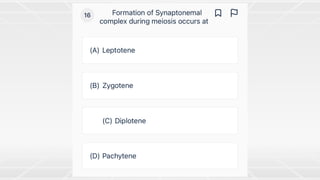
1. Chromosomes start pairing → Synapsis
2. Paired chromosomes are called
Homologous chromosomes
3. Synapsis is accompanied by the formation
of complex structure called
Synaptonemal Complex.
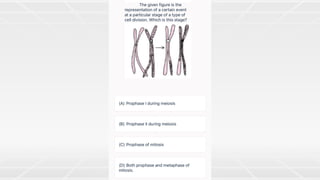
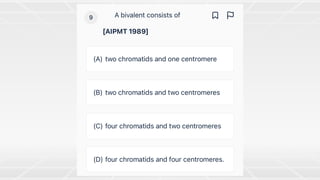
4. Complex structure formed → Bivalent or
a Tetrad
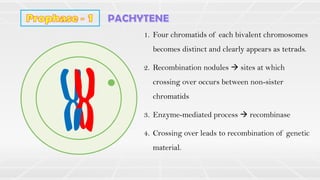
1. Four chromatids of each bivalent chromosomes
becomes distinct and clearly appears as tetrads.
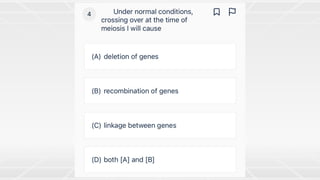
2. Recombination nodules → sites at which
crossing over occurs between non-sister
chromatids
3. Enzyme-mediated process → recombinase
4. Crossing over leads to recombination of genetic
material.
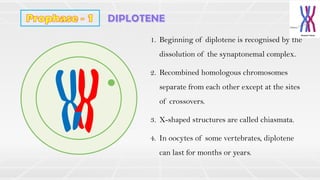
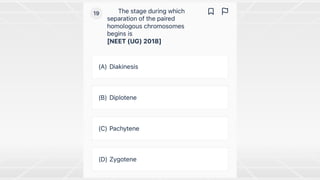
1. Beginning of diplotene is recognised by the
dissolution of the synaptonemal complex.
2. Recombined homologous chromosomes
separate from each other except at the sites
of crossovers.
3. X-shaped structures are called chiasmata.
4. In oocytes of some vertebrates, diplotene
can last for months or years.
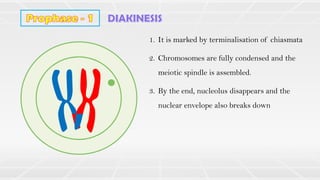
1. It is marked by terminalisation of chiasmata
2. Chromosomes are fully condensed and the
meiotic spindle is assembled.
3. By the end, nucleolus disappears and the
nuclear envelope also breaks down
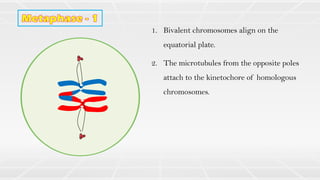
1. Bivalent chromosomes align on the
equatorial plate.
2. The microtubules from the opposite poles
attach to the kinetochore of homologous
chromosomes.
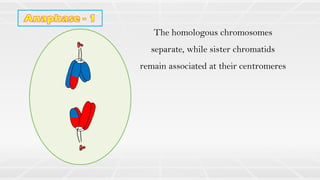
The homologous chromosomes
separate, while sister chromatids
remain associated at their centromeres
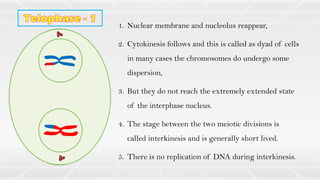
1. Nuclear membrane and nucleolus reappear,
2. Cytokinesis follows and this is called as dyad of cells
in many cases the chromosomes do undergo some
dispersion,
3. But they do not reach the extremely extended state
of the interphase nucleus.
4. The stage between the two meiotic divisions is
called interkinesis and is generally short lived.
5. There is no replication of DNA during interkinesis.
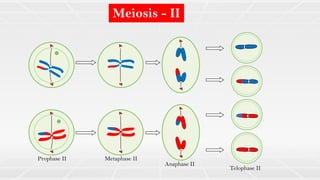
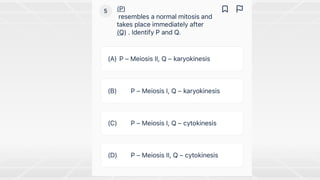
Meiosis - II
Prophase II Metaphase II
Anaphase II
Telophase II
Cell division - 2.pdf

Cell division - 2.pdf

  • 1.
    Types of celldivision : 1. Amitosis 2. Mitosis 3. Meiosis Direct Division Indirect Division/ Equational Division Reductional Division
  • 2.
    Amitosis • Nucleus elongates→ a constriction appears somewhere along its length. • Constriction deepens and divides the nucleus into two daughter nuclei. • Followed by the division of the cytoplasm → two daughter cells formed. • This division occurs in unicellular organisms, abnormal cells, old cells and in foetal membrane cells.
  • 4.
    2 STAGES Karyokinesis Cytokinesis (Nucleardivision) (Cytoplasmic division) 4 Phases PROPHASE METAPHASE ANAPHASE TELOPHASE
  • 5.
    Centrosome Nuclear membrane Nucleolus DNA (duplicated) The newDNA molecules formed are not distinct but intertwined.
  • 6.
    • The chromosomalmaterial becomes untangled and condenses to form compact mitotic chromosomes. • Chromosomes are seen to be composed of two chromatids attached at centromere. • Each centrosome radiates out microtubules called asters. • Centrosome begins to move towards opposite poles of the cell. • The two asters together with spindle fibres forms mitotic apparatus.
  • 7.
    • At theend of prophase, • Golgi Complexes, Endoplasmic Reticulum, Nucleolus and the Nuclear Envelope disappear.
  • 8.
  • 9.
    • Chromosome ismade up of two sister chromatids, which are held together by the centromere. • All the chromosomes start coming to lie at the equator. • The plane of alignment of the chromosomes is referred to as the metaphase plate.
  • 10.
    • Each chromosomearranged at the metaphase plate is split simultaneously. • Daughter chromosomes begin their migration towards the two opposite poles. • The centromere remains directed towards the pole and hence at the leading edge. • Arms of the chromosome are trailing behind.
  • 12.
    • Chromosomes thathave reached their respective poles decondense and lose their individuality. • Nuclear envelope develops around the chromosome clusters at each pole. • Nucleolus, Golgi complex and ER reform.
  • 13.
    • Furrow inthe plasma membrane. • Furrow gradually deepens and ultimately joins in the centre dividing the cell cytoplasm into two.
  • 14.
    Cell Plate Rigid Cellwall Plasma membrane (Middle Lamella) • Some spindle fibres remain → Phragmoplast • Golgi body vesicles deposit calcium pectate → Inner to outer • Cell Plate →Middle lamella is formed • Cell Wall is formed • Plasma membrane separates • Organelles like mitochondria and plastids get distributed between the two daughter cells.
  • 15.
    • Takes placeonly in reproductive cells during the formation of gametes. • The number of chromosomes is reduced to half; hence it is also called reductional division. • The cells in which meiosis take place are termed as meiocytes. • Meiosis produces four haploid daughter cells from a diploid parent cell.
  • 16.
    G1 S G2 6 Chromosomes 3 pairs Sisterchromatids 2C 4C DNA amount is doubled. Interkinesis
  • 17.
  • 18.
    MEIOSIS MEIOSIS I MEIOSISII Separation of homologous chromosomes Separation of sister chromatids n n 2n n n n n
  • 19.
    Involves → Pairingand Recombination Pairing Exchange of genetic material A A a a A a A a
  • 20.
    1. Takes placeto reduce chromosome number 2. DNA replication is done once → Division twice 3. Pairing occurs for genetic exchange
  • 21.
    MEIOSIS MEIOSIS I MEIOSISII PROPHASE I METAPHASE I ANAPHASE I TELOPHASE I PROPHASE II METAPHASE II ANAPHASE II TELOPHASE II Leptotene Zygotene Pachytene Diplotene Diakinesis CYTOKINESIS I CYTOKINESIS II (LE ZY PA DI DI) Heterotypic Homotypic
  • 22.
    1. The chromosomesbecome gradually visible 2. Compaction of chromosomes continues throughout leptotene 3. Centrosomes start to migrate to opposite poles.
  • 23.
    1. Chromosomes startpairing → Synapsis 2. Paired chromosomes are called Homologous chromosomes 3. Synapsis is accompanied by the formation of complex structure called Synaptonemal Complex. 4. Complex structure formed → Bivalent or a Tetrad
  • 24.
    1. Four chromatidsof each bivalent chromosomes becomes distinct and clearly appears as tetrads. 2. Recombination nodules → sites at which crossing over occurs between non-sister chromatids 3. Enzyme-mediated process → recombinase 4. Crossing over leads to recombination of genetic material.
  • 25.
    1. Beginning ofdiplotene is recognised by the dissolution of the synaptonemal complex. 2. Recombined homologous chromosomes separate from each other except at the sites of crossovers. 3. X-shaped structures are called chiasmata. 4. In oocytes of some vertebrates, diplotene can last for months or years.
  • 26.
    1. It ismarked by terminalisation of chiasmata 2. Chromosomes are fully condensed and the meiotic spindle is assembled. 3. By the end, nucleolus disappears and the nuclear envelope also breaks down
  • 27.
    1. Bivalent chromosomesalign on the equatorial plate. 2. The microtubules from the opposite poles attach to the kinetochore of homologous chromosomes.
  • 28.
    The homologous chromosomes separate,while sister chromatids remain associated at their centromeres
  • 29.
    1. Nuclear membraneand nucleolus reappear, 2. Cytokinesis follows and this is called as dyad of cells in many cases the chromosomes do undergo some dispersion, 3. But they do not reach the extremely extended state of the interphase nucleus. 4. The stage between the two meiotic divisions is called interkinesis and is generally short lived. 5. There is no replication of DNA during interkinesis.
  • 30.
    Meiosis - II ProphaseII Metaphase II Anaphase II Telophase II