Cell
Anatomy.
Introduction to Cell
•Cells are the structural
units of all living things. All
cells arise from existing
cells by the process of cell
division, in which one cell
divides into two identical
cells
Parts of Cell
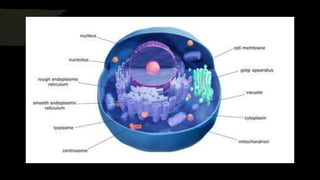
• A human cell has three
main parts:
• The plasma membrane:
the outer boundary of the
cell.
• The cytoplasm: the
intracellular fluid packed
with organelles, small
structures that perform
specific cell functions.
• The nucleus: an
organelle that controls
cellular activities. The
nucleus lies near the cell’s
center
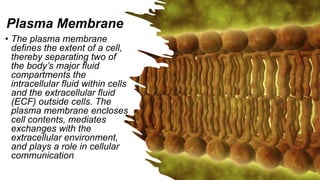
Plasma Membrane
• The plasma membrane
defines the extent of a cell,
thereby separating two of
the body’s major fluid
compartments the
intracellular fluid within cells
and the extracellular fluid
(ECF) outside cells. The
plasma membrane encloses
cell contents, mediates
exchanges with the
extracellular environment,
and plays a role in cellular
communication
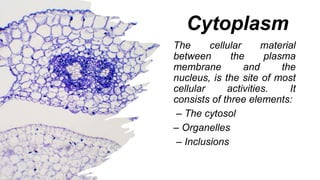
Cytoplasm
The cellular material
between the plasma
membrane and the
nucleus, is the site of most
cellular activities. It
consists of three elements:
– The cytosol
– Organelles
– Inclusions
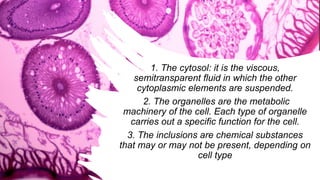
1. The cytosol: it is the viscous,
semitransparent fluid in which the other
cytoplasmic elements are suspended.
2. The organelles are the metabolic
machinery of the cell. Each type of organelle
carries out a specific function for the cell.
3. The inclusions are chemical substances
that may or may not be present, depending on
cell type
Mitochondria
• Rodlike, doublemembrane
structures; inner
membrane folded into
projections called cristae.
• Site of ATP synthesis;
powerhouse of the cell
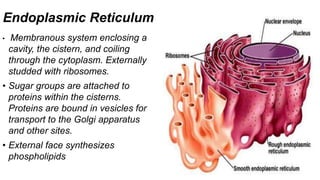
Endoplasmic Reticulum
• Membranous system enclosing a
cavity, the cistern, and coiling
through the cytoplasm. Externally
studded with ribosomes.
• Sugar groups are attached to
proteins within the cisterns.
Proteins are bound in vesicles for
transport to the Golgi apparatus
and other sites.
• External face synthesizes
phospholipids
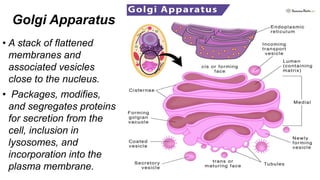
Golgi Apparatus
• A stack of flattened
membranes and
associated vesicles
close to the nucleus.
• Packages, modifies,
and segregates proteins
for secretion from the
cell, inclusion in
lysosomes, and
incorporation into the
plasma membrane.
Lysosomes
• Membranous sacs
containing acid
hydrolases.
• Sites of
intracellular
digestion
Nucleus
The nucleus is a spherical or oval-shaped structure that usually is
the most prominent feature of a cell. Surrounded by the nuclear
envelope; contains fluid nucleoplasm, nucleoli, and chromatin.
Control center of the cell; responsible for transmitting genetic
information and providing the instructions for protein synthesis
Structure of Nucleus
The nuclear envelope
Nucleoplasm
Chromatin
The nucleolus
Thank You!

Cell anatomy.pptx

  • 1.
  • 3.
    Introduction to Cell •Cellsare the structural units of all living things. All cells arise from existing cells by the process of cell division, in which one cell divides into two identical cells
  • 5.
    Parts of Cell •A human cell has three main parts: • The plasma membrane: the outer boundary of the cell. • The cytoplasm: the intracellular fluid packed with organelles, small structures that perform specific cell functions. • The nucleus: an organelle that controls cellular activities. The nucleus lies near the cell’s center
  • 6.
    Plasma Membrane • Theplasma membrane defines the extent of a cell, thereby separating two of the body’s major fluid compartments the intracellular fluid within cells and the extracellular fluid (ECF) outside cells. The plasma membrane encloses cell contents, mediates exchanges with the extracellular environment, and plays a role in cellular communication
  • 10.
    Cytoplasm The cellular material betweenthe plasma membrane and the nucleus, is the site of most cellular activities. It consists of three elements: – The cytosol – Organelles – Inclusions
  • 11.
    1. The cytosol:it is the viscous, semitransparent fluid in which the other cytoplasmic elements are suspended. 2. The organelles are the metabolic machinery of the cell. Each type of organelle carries out a specific function for the cell. 3. The inclusions are chemical substances that may or may not be present, depending on cell type
  • 12.
    Mitochondria • Rodlike, doublemembrane structures;inner membrane folded into projections called cristae. • Site of ATP synthesis; powerhouse of the cell
  • 13.
    Endoplasmic Reticulum • Membranoussystem enclosing a cavity, the cistern, and coiling through the cytoplasm. Externally studded with ribosomes. • Sugar groups are attached to proteins within the cisterns. Proteins are bound in vesicles for transport to the Golgi apparatus and other sites. • External face synthesizes phospholipids
  • 15.
    Golgi Apparatus • Astack of flattened membranes and associated vesicles close to the nucleus. • Packages, modifies, and segregates proteins for secretion from the cell, inclusion in lysosomes, and incorporation into the plasma membrane.
  • 16.
    Lysosomes • Membranous sacs containingacid hydrolases. • Sites of intracellular digestion
  • 17.
    Nucleus The nucleus isa spherical or oval-shaped structure that usually is the most prominent feature of a cell. Surrounded by the nuclear envelope; contains fluid nucleoplasm, nucleoli, and chromatin. Control center of the cell; responsible for transmitting genetic information and providing the instructions for protein synthesis
  • 19.
    Structure of Nucleus Thenuclear envelope Nucleoplasm Chromatin The nucleolus
  • 21.