“Potential role of CD39 and CD73 in valve 
calcification and role of shear stress in the 
process." 
Ewa Kaniewska
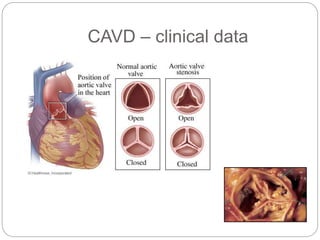
CAVD – clinical data
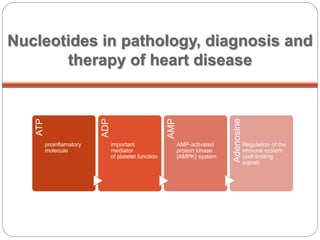
Nucleotides in pathology, diagnosis and 
therapy of heart disease 
ATP 
proinflamatory 
molecule 
ADP 
important 
mediator 
of platelet function 
AMP 
AMP-activated 
protein kinase 
(AMPK) system 
Adenosine 
Regulation of the 
immune system 
(self-limiting 
signal)
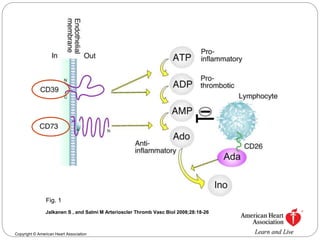
Fig. 1 
Jalkanen S , and Salmi M Arterioscler Thromb Vasc Biol 2008;28:18-26 
Copyright © American Heart Association
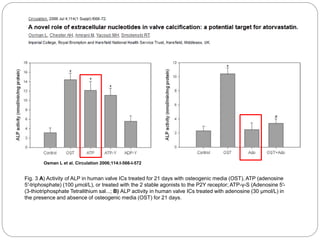
Osman L et al. Circulation 2006;114:I-566-I-572 
Fig. 3 A) Activity of ALP in human valve ICs treated for 21 days with osteogenic media (OST), ATP (adenosine 
5′-triphosphate) (100 μmol/L), or treated with the 2 stable agonists to the P2Y receptor; ATP-γ-S (Adenosine 5′- 
(3-thiotriphosphate Tetralithium sal...; B) ALP activity in human valve ICs treated with adenosine (30 μmol/L) in 
the presence and absence of osteogenic media (OST) for 21 days.

CAVD

  • 1.
    “Potential role ofCD39 and CD73 in valve calcification and role of shear stress in the process." Ewa Kaniewska
  • 2.
  • 3.
    Nucleotides in pathology,diagnosis and therapy of heart disease ATP proinflamatory molecule ADP important mediator of platelet function AMP AMP-activated protein kinase (AMPK) system Adenosine Regulation of the immune system (self-limiting signal)
  • 4.
    Fig. 1 JalkanenS , and Salmi M Arterioscler Thromb Vasc Biol 2008;28:18-26 Copyright © American Heart Association
  • 5.
    Osman L etal. Circulation 2006;114:I-566-I-572 Fig. 3 A) Activity of ALP in human valve ICs treated for 21 days with osteogenic media (OST), ATP (adenosine 5′-triphosphate) (100 μmol/L), or treated with the 2 stable agonists to the P2Y receptor; ATP-γ-S (Adenosine 5′- (3-thiotriphosphate Tetralithium sal...; B) ALP activity in human valve ICs treated with adenosine (30 μmol/L) in the presence and absence of osteogenic media (OST) for 21 days.

Editor's Notes

  • #4  Adenosine di-phosphate (ADP) is considered to be an important mediator of platelet function, which is confirmed by studies done in patients exhibiting storage pool deficiencies or defective ADP receptors. Formation of thrombus due to inappropriate activation of platelets results in life-threatening conditions likemyocardial infarction and stroke. The AMP-activated protein kinase (AMPK) system acts as a sensor of cellular energy status that is conserved in all eukaryotic cells. Perivascular adipose tissue (PVAT) is an active endocrine and paracrine organ that modulates vascular function, with implications for the pathophysiology of cardiovascular disease (CVD). Adipocytes and stromal cells contained within PVAT produce mediators (adipokines, cytokines, reactive oxygen species and gaseous compounds) with a range of paracrine effects modulating vascular smooth muscle cell contraction, proliferation and migration. However, the modulatory effect of PVAT on the vascular system in diseases, such as obesity, hypertension and atherosclerosis, remains poorly characterized. AMP-activated protein kinase (AMPK) regulates adipocyte metabolism, adipose biology and vascular function, and hence may be a potential therapeutic target for metabolic disorders such as type 2 diabetes mellitus (T2DM) and the vascular complications associated with obesity and T2DM. The role of AMPK in PVAT or the actions of PVAT have yet to be established, however. Activation of AMPK by pharmacological agents, such as metformin and thiazolidinediones, may modulate the activity of PVAT surrounding blood vessels and thereby contribute to their beneficial effect in cardiometabolic diseases. This review will provide a current perspective on how PVAT may influence vascularfunction via AMPK. We will also attempt to demonstrate how modulating AMPK activity using pharmacological agents could be exploited therapeutically to treat cardiometabolic diseases.
  • #5 Figure 3. CD73 is a key player in extracellular ATP metabolism and regulates leukocyte trafficking. CD73 dephosphorylates AMP to adenosine (Ado). Lymphocyte binding to endothelium inhibits enzymatic activity of CD73. Adenosine level drops and the remaining adenosine is degraded to inosine (Ino) by adenosine deaminase (Ada) leading to increased transmigration of lymphocytes.