Dropping Out vs.
Hanging Tough:
Mexican Males and the Factors that
Influence Dropping Out
Bethanie Lister
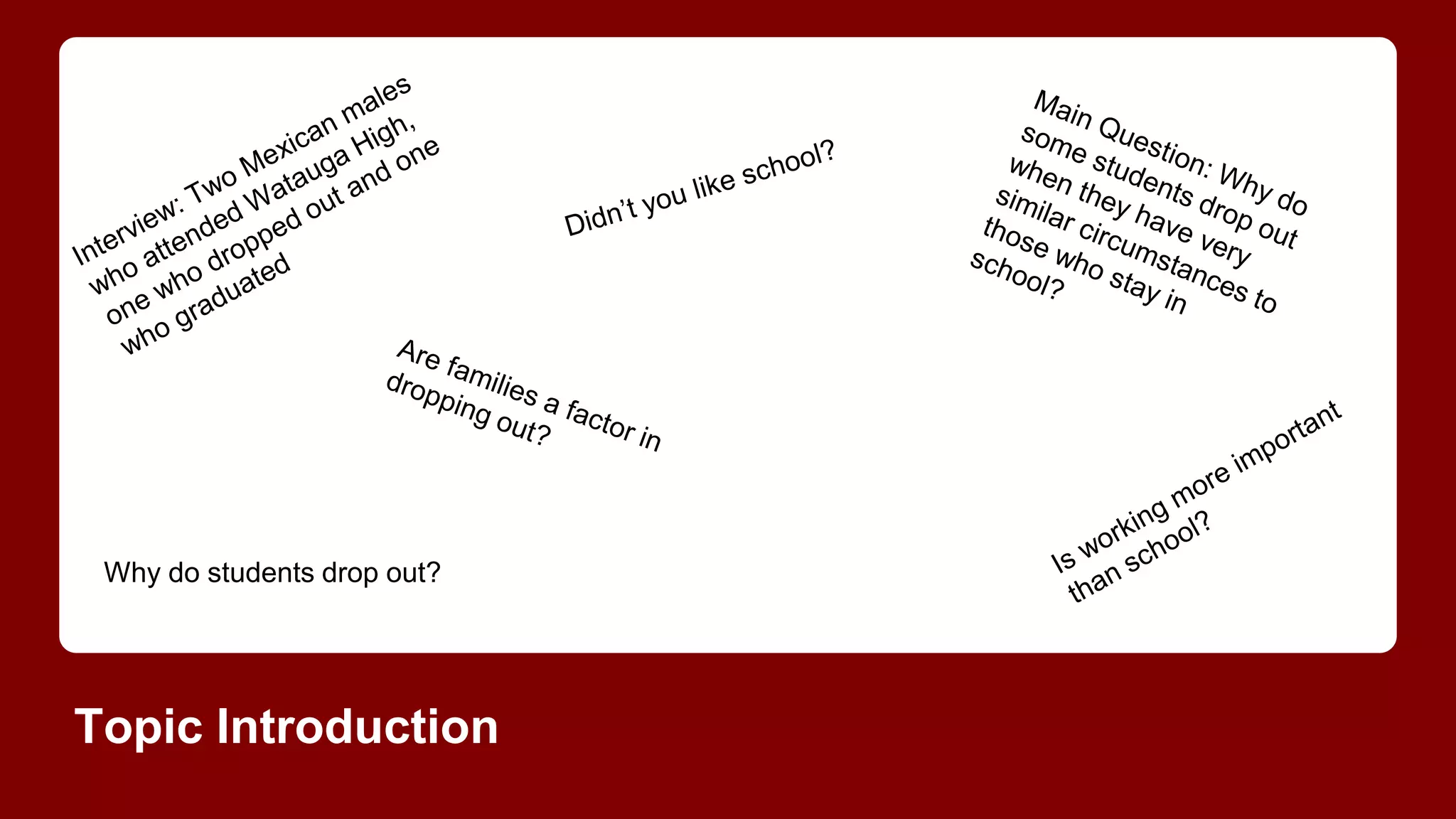
Topic Introduction
Why do students drop out?
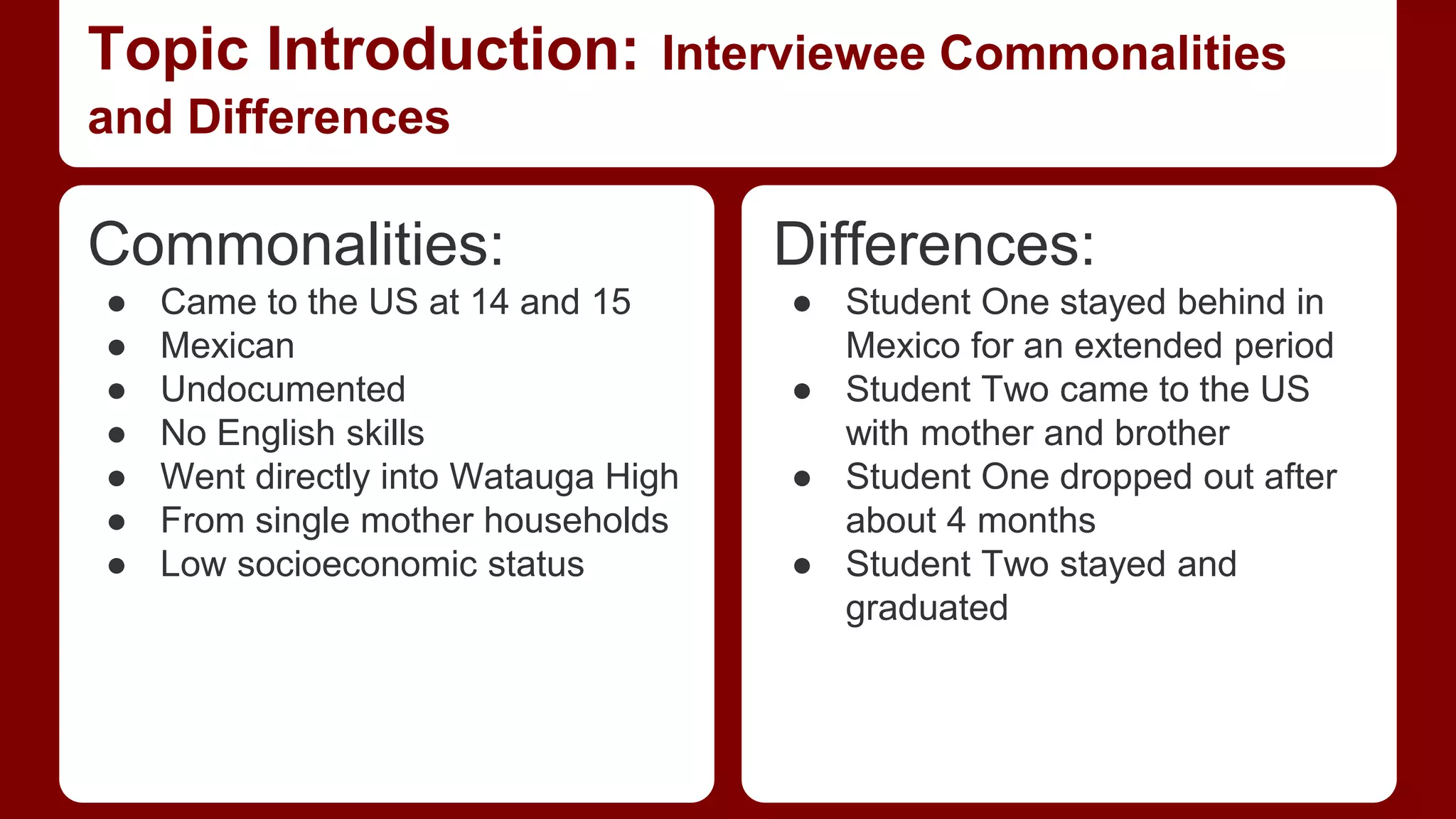
Topic Introduction: Interviewee Commonalities
and Differences
Commonalities:
● Came to the US at 14 and 15
● Mexican
● Undocumented
● No English skills
● Went directly into Watauga High
● From single mother households
● Low socioeconomic status
Differences:
● Student One stayed behind in
Mexico for an extended period
● Student Two came to the US
with mother and brother
● Student One dropped out after
about 4 months
● Student Two stayed and
graduated
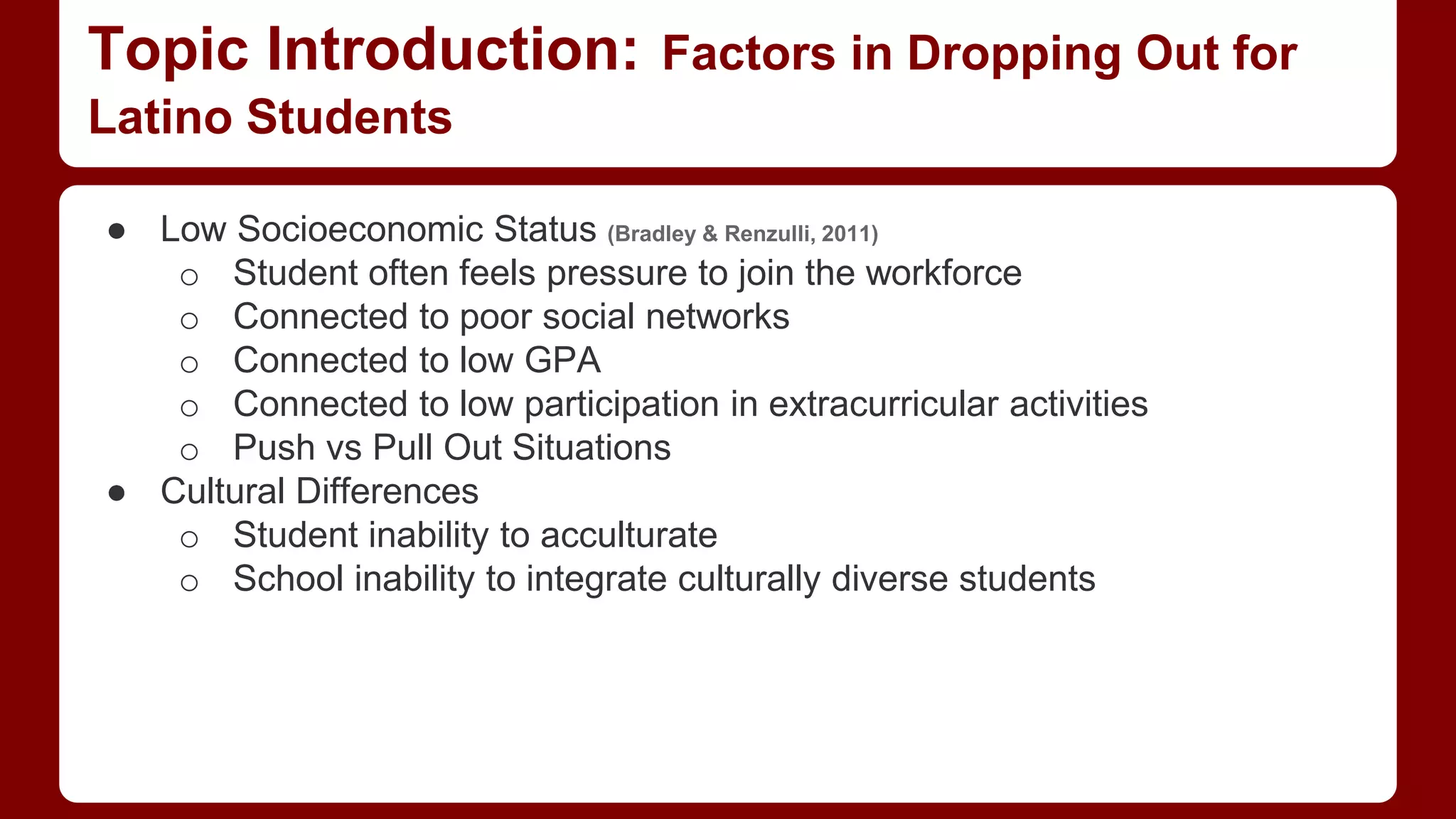
Topic Introduction: Factors in Dropping Out for
Latino Students
● Low Socioeconomic Status (Bradley & Renzulli, 2011)
o Student often feels pressure to join the workforce
o Connected to poor social networks
o Connected to low GPA
o Connected to low participation in extracurricular activities
o Push vs Pull Out Situations
● Cultural Differences
o Student inability to acculturate
o School inability to integrate culturally diverse students
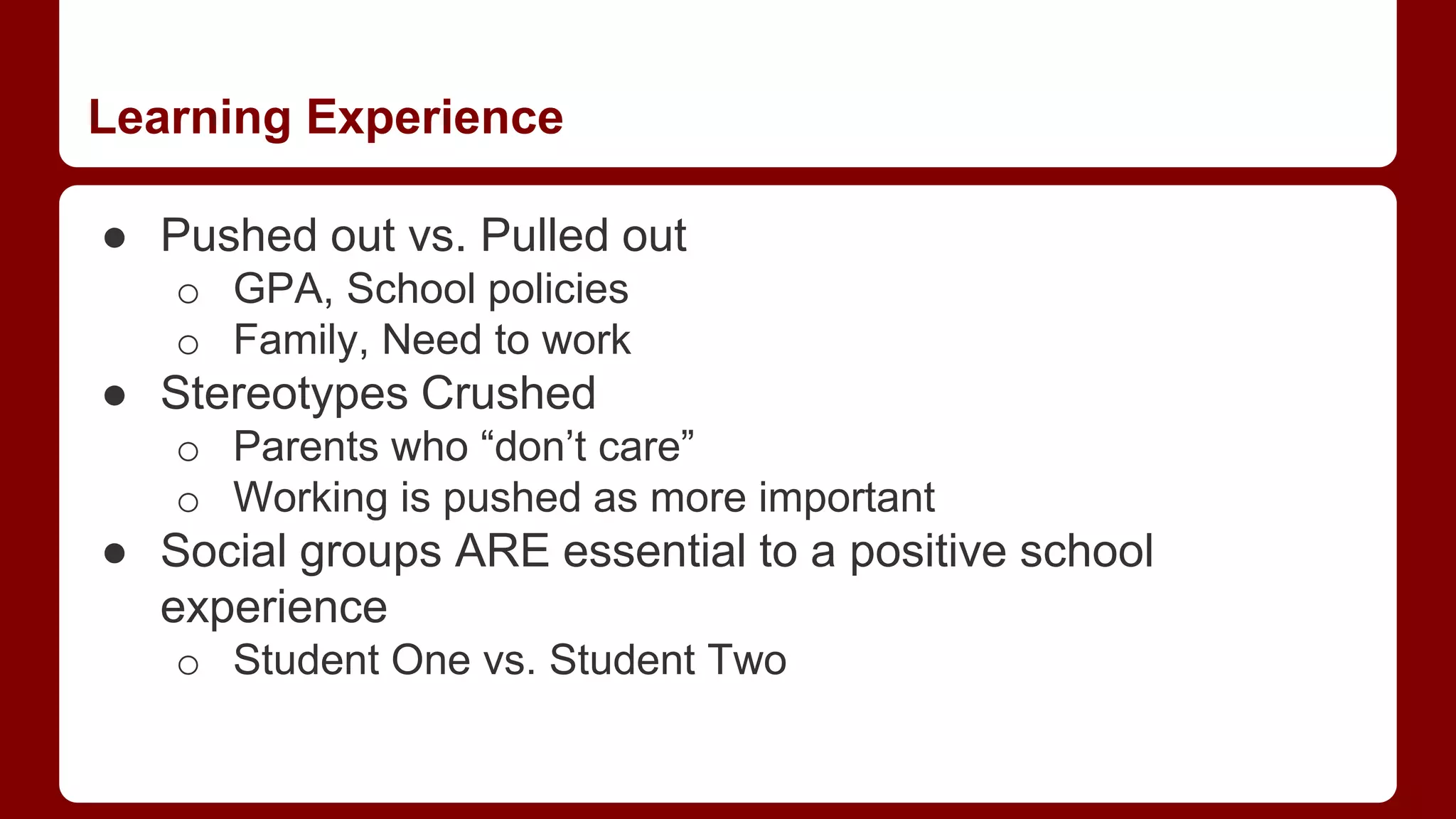
Learning Experience
● Pushed out vs. Pulled out
o GPA, School policies
o Family, Need to work
● Stereotypes Crushed
o Parents who “don’t care”
o Working is pushed as more important
● Social groups ARE essential to a positive school
experience
o Student One vs. Student Two
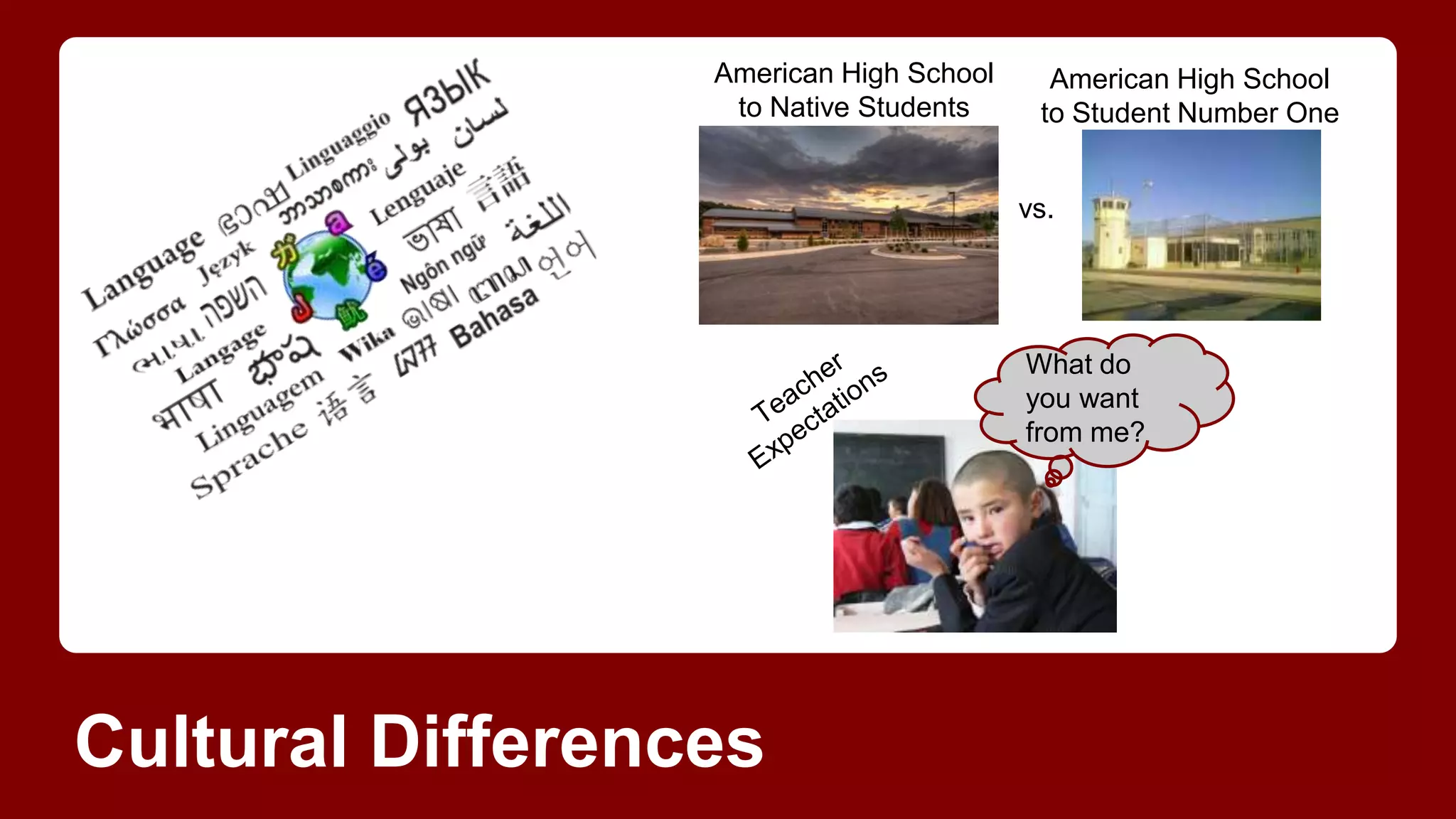
Cultural Differences
American High School
to Native Students
American High School
to Student Number One
What do
you want
from me?
vs.
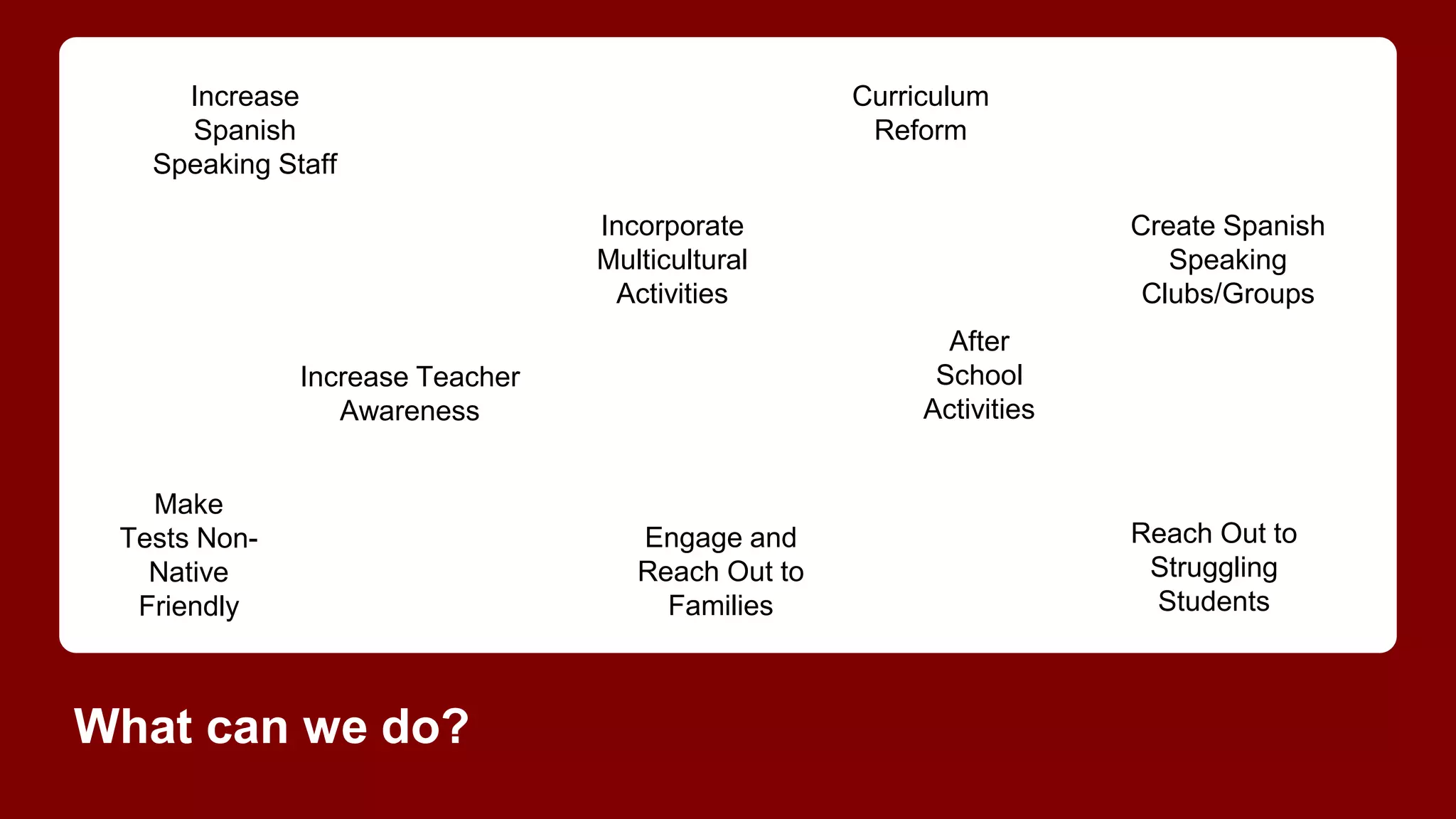
What can we do?
Increase Teacher
Awareness
Increase
Spanish
Speaking Staff
Incorporate
Multicultural
Activities
Reach Out to
Struggling
Students
Create Spanish
Speaking
Clubs/Groups
After
School
Activities
Engage and
Reach Out to
Families
Make
Tests Non-
Native
Friendly
Curriculum
Reform
References
Behnke, A. O., Gonzalez, L. M., & Cox, R. B. (2010). Latino Students in New Arrival States: Factors and Services to Prevent Youth from Dropping Out.
Hispanic Journal Of Behavioral Sciences, 32(3), 385-409.
Bradley, C. L., & Renzulli, L. A. (2011). The Complexity of Non-Completion: Being Pushed or Pulled to Drop out of High School. Social Forces, 90(2),
521-545.
Campos, D., Huerta, M., Delgado, R., & ASCD. (2011). Reaching Out to Latino Families of English Language Learners. ASCD.
Davila, E. R., & de Bradley, A. (2010). Examining Education for Latinas/os in Chicago: A CRT/LatCrit Approach. Educational Foundations, 24(1-2), 39-58.
Flores-Gonzalez, N. (2002). School Kids/Street Kids: Identity Development in Latino Students. Sociology of Education Series.
Frau-Ramos, M. & Nieto, S. (1991). I was an outsider: Dropping out among Puerto Rican youths in Holyoke, Massachusetts. Massachusetts University:
Amherst, MA. Retrieved from ERIC: http://files.eric.ed.gov/fulltext/ED344974.pdf
Martinez, C. r., DeGarmo, D. S., & Eddy, J. (2004). Promoting Academic Success among Latino Youths. Hispanic Journal Of Behavioral Sciences, 26(2),
128-151.
Valenzuela, A., Garcia, E., Romo, H., & Perez, B. (2012). Institutional and Structural Barriers to Latino/a Achievement. Journal Of The Association Of
Mexican American Educators, 6(3), 22-29.

Causes of dropping_out

  • 1.
    Dropping Out vs. HangingTough: Mexican Males and the Factors that Influence Dropping Out Bethanie Lister
  • 2.
    Topic Introduction Why dostudents drop out?
  • 3.
    Topic Introduction: IntervieweeCommonalities and Differences Commonalities: ● Came to the US at 14 and 15 ● Mexican ● Undocumented ● No English skills ● Went directly into Watauga High ● From single mother households ● Low socioeconomic status Differences: ● Student One stayed behind in Mexico for an extended period ● Student Two came to the US with mother and brother ● Student One dropped out after about 4 months ● Student Two stayed and graduated
  • 4.
    Topic Introduction: Factorsin Dropping Out for Latino Students ● Low Socioeconomic Status (Bradley & Renzulli, 2011) o Student often feels pressure to join the workforce o Connected to poor social networks o Connected to low GPA o Connected to low participation in extracurricular activities o Push vs Pull Out Situations ● Cultural Differences o Student inability to acculturate o School inability to integrate culturally diverse students
  • 5.
    Learning Experience ● Pushedout vs. Pulled out o GPA, School policies o Family, Need to work ● Stereotypes Crushed o Parents who “don’t care” o Working is pushed as more important ● Social groups ARE essential to a positive school experience o Student One vs. Student Two
  • 6.
    Cultural Differences American HighSchool to Native Students American High School to Student Number One What do you want from me? vs.
  • 7.
    What can wedo? Increase Teacher Awareness Increase Spanish Speaking Staff Incorporate Multicultural Activities Reach Out to Struggling Students Create Spanish Speaking Clubs/Groups After School Activities Engage and Reach Out to Families Make Tests Non- Native Friendly Curriculum Reform
  • 8.
    References Behnke, A. O.,Gonzalez, L. M., & Cox, R. B. (2010). Latino Students in New Arrival States: Factors and Services to Prevent Youth from Dropping Out. Hispanic Journal Of Behavioral Sciences, 32(3), 385-409. Bradley, C. L., & Renzulli, L. A. (2011). The Complexity of Non-Completion: Being Pushed or Pulled to Drop out of High School. Social Forces, 90(2), 521-545. Campos, D., Huerta, M., Delgado, R., & ASCD. (2011). Reaching Out to Latino Families of English Language Learners. ASCD. Davila, E. R., & de Bradley, A. (2010). Examining Education for Latinas/os in Chicago: A CRT/LatCrit Approach. Educational Foundations, 24(1-2), 39-58. Flores-Gonzalez, N. (2002). School Kids/Street Kids: Identity Development in Latino Students. Sociology of Education Series. Frau-Ramos, M. & Nieto, S. (1991). I was an outsider: Dropping out among Puerto Rican youths in Holyoke, Massachusetts. Massachusetts University: Amherst, MA. Retrieved from ERIC: http://files.eric.ed.gov/fulltext/ED344974.pdf Martinez, C. r., DeGarmo, D. S., & Eddy, J. (2004). Promoting Academic Success among Latino Youths. Hispanic Journal Of Behavioral Sciences, 26(2), 128-151. Valenzuela, A., Garcia, E., Romo, H., & Perez, B. (2012). Institutional and Structural Barriers to Latino/a Achievement. Journal Of The Association Of Mexican American Educators, 6(3), 22-29.