CASE PRESENTATION ON SEIZURES
PRESENTATION BY
V.VENNELA
PHARM - D 2nd YEAR
201K1T0030
SREE CHAITANYA INSTITUTE OF
PHARMACEUTICAL SCIENCES
THIMMUPUR, KARIMNAGAR
1. Introduction
2. Disease
3. Pathophysiology
4. Standard Treatment
5. Subjective Findings
6. Objective Findings
7. Etiology
8. Assessment
9. Plan
10. Lab Findings
11. Discharge Summary
12. Life Style Modification
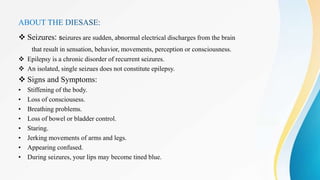
 Seizures: seizures are sudden, abnormal electrical discharges from the brain
that result in sensation, behavior, movements, perception or consciousness.
 Epilepsy is a chronic disorder of recurrent seizures.
 An isolated, single seizues does not constitute epilepsy.
 Signs and Symptoms:
• Stiffening of the body.
• Loss of consciousess.
• Breathing problems.
• Loss of bowel or bladder control.
• Staring.
• Jerking movements of arms and legs.
• Appearing confused.
• During seizures, your lips may become tined blue.
RISK FACTORS
 Age.
 Family history.
 Brain infection.
 Head injuries.
 Stroke and other vascular diseases, leads to brain
damage that may trigger seizers.
 Seizures at childhood, if a child has a long fever
associated seizure that increase the risk of epilepsy.
 Alocohol withdrawal.
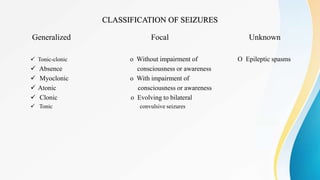
CLASSIFICATION OF SEIZURES
Generalized Focal Unknown
 Tonic-clonic o Without impairment of O Epileptic spasms
 Absence consciousness or awareness
 Myoclonic o With impairment of
 Atonic consciousness or awareness
 Clonic o Evolving to bilateral
 Tonic convulsive seizures
• Seizures that appear to involve all are of the brain are called generalized seizures.
Different types of generalized seizures include:
• Absence seizures: Involves sudden lapse in consciousness and starting blankly into
space. The episodes last less than 15 seconds.
• Tonic seizures: Tonic seizures cause stiffening of your muscle. These seizures usually
affect muscle in your back, arms and legs and may cause fall to the ground.
• Atonic seizures: Atonic seizures also known as drop seizures, cause a loss of muscle
control, which may cause sudden collapse or fall down.
CONT
• Clonic seizuers: Clonic seizuers are associated with repeated or rhythmic, jerking
muscle movements. These seizures usually affect the neck, face and arms.
• Myoclonic seizuers: Myoclonic seizues usually appear as sudden brief jerks or
twitches of arms and legs.
• Tonic-clonic seizuers: Tonic-clonic seizures, previously known as grand mal seizuers,
are the most dramatic type of epileptic seizures and can cause an abrupt loss of
consciousness, body stiffening and shaking, and somethings loss of bladder control or
biting of tonque.
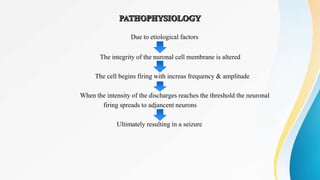
Due to etiological factors
The integrity of the nuronal cell membrane is altered
The cell begins firing with increas frequency & amplitude
When the intensity of the discharges reaches the threshold the neuronal
firing spreads to adjancent neurons
Ultimately resulting in a seizure
1. Phenytoin 50mg/ml/BD
2. Fosphenytoin 15 to 20mg/kg/BD
3. Phenobarbital 200mg/ml/TID
4. Diazepam 5mg/ml/BD
5. Lorazepam 2mg/ml/OD
6. Gabapentin 300,400,600,800mg/TID
7. valproic acid 100mg/ml/BD
 Chief complaints: A male patient of 50 years of age
admitted in acute medical care unit with
IP NO:19012/202 on 19/12/2021
 2 Episodes of seizures on 19/12/2021 at 10:30AM
 Fever since 2 days
Objective evidence
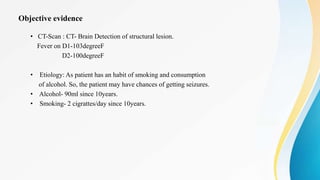
• CT-Scan : CT- Brain Detection of structural lesion.
Fever on D1-103degreeF
D2-100degreeF
• Etiology: As patient has an habit of smoking and consumption
of alcohol. So, the patient may have chances of getting seizures.
• Alcohol- 90ml since 10years.
• Smoking- 2 cigrattes/day since 10years.
ASSESSMENT:
• Based on subjective and objective evidence the diagnosis was made to be
SEIZURES
PLAN:
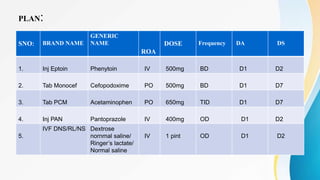
SNO: BRAND NAME
GENERIC
NAME
ROA
DOSE Frequency DA DS
1. Inj Eptoin Phenytoin IV 500mg BD D1 D2
2. Tab Monocef Cefopodoxime PO 500mg BD D1 D7
3. Tab PCM Acetaminophen PO 650mg TID D1 D7
4. Inj PAN Pantoprazole IV 400mg OD D1 D2
5.
IVF DNS/RL/NS Dextrose
nornmal saline/
Ringer’s lactate/
Normal saline
IV 1 pint OD D1 D2
Discharge medication:
Lab Investigation:
1. Acetaminophen+Phenytoin
• Using acetaminophen together with phenytoin may alter the effects
of acetaminophen and cause serious side effects that may affect
your liver.
 Alocohol and smoking should be avoided.
 Food allergies: Food allergies may provide seizures in childrens who also have
migraine headaches, hyperactive behaviour.
 Inadequate or fragmented sleepcan set off seizures in many people.
 Dietary measures: All patients should maintain a healthy diet, including plenty of
whole grains fresh vegetables and fruits.
 Fasting has been used to prevent seizures since ancient times.
 In 1920, A high-fat, no-sugar, low protien diet, known as a ketogenic diet, was used
to prevent seizures.
THANKYOU

CASE PRESENTATION ON SEIZURES.ppt

  • 1.
    CASE PRESENTATION ONSEIZURES PRESENTATION BY V.VENNELA PHARM - D 2nd YEAR 201K1T0030 SREE CHAITANYA INSTITUTE OF PHARMACEUTICAL SCIENCES THIMMUPUR, KARIMNAGAR
  • 2.
    1. Introduction 2. Disease 3.Pathophysiology 4. Standard Treatment 5. Subjective Findings 6. Objective Findings 7. Etiology 8. Assessment 9. Plan 10. Lab Findings 11. Discharge Summary 12. Life Style Modification
  • 3.
     Seizures: seizuresare sudden, abnormal electrical discharges from the brain that result in sensation, behavior, movements, perception or consciousness.  Epilepsy is a chronic disorder of recurrent seizures.  An isolated, single seizues does not constitute epilepsy.  Signs and Symptoms: • Stiffening of the body. • Loss of consciousess. • Breathing problems. • Loss of bowel or bladder control. • Staring. • Jerking movements of arms and legs. • Appearing confused. • During seizures, your lips may become tined blue.
  • 4.
    RISK FACTORS  Age. Family history.  Brain infection.  Head injuries.  Stroke and other vascular diseases, leads to brain damage that may trigger seizers.  Seizures at childhood, if a child has a long fever associated seizure that increase the risk of epilepsy.  Alocohol withdrawal.
  • 5.
    CLASSIFICATION OF SEIZURES GeneralizedFocal Unknown  Tonic-clonic o Without impairment of O Epileptic spasms  Absence consciousness or awareness  Myoclonic o With impairment of  Atonic consciousness or awareness  Clonic o Evolving to bilateral  Tonic convulsive seizures
  • 6.
    • Seizures thatappear to involve all are of the brain are called generalized seizures. Different types of generalized seizures include: • Absence seizures: Involves sudden lapse in consciousness and starting blankly into space. The episodes last less than 15 seconds. • Tonic seizures: Tonic seizures cause stiffening of your muscle. These seizures usually affect muscle in your back, arms and legs and may cause fall to the ground. • Atonic seizures: Atonic seizures also known as drop seizures, cause a loss of muscle control, which may cause sudden collapse or fall down.
  • 7.
    CONT • Clonic seizuers:Clonic seizuers are associated with repeated or rhythmic, jerking muscle movements. These seizures usually affect the neck, face and arms. • Myoclonic seizuers: Myoclonic seizues usually appear as sudden brief jerks or twitches of arms and legs. • Tonic-clonic seizuers: Tonic-clonic seizures, previously known as grand mal seizuers, are the most dramatic type of epileptic seizures and can cause an abrupt loss of consciousness, body stiffening and shaking, and somethings loss of bladder control or biting of tonque.
  • 8.
    Due to etiologicalfactors The integrity of the nuronal cell membrane is altered The cell begins firing with increas frequency & amplitude When the intensity of the discharges reaches the threshold the neuronal firing spreads to adjancent neurons Ultimately resulting in a seizure
  • 9.
    1. Phenytoin 50mg/ml/BD 2.Fosphenytoin 15 to 20mg/kg/BD 3. Phenobarbital 200mg/ml/TID 4. Diazepam 5mg/ml/BD 5. Lorazepam 2mg/ml/OD 6. Gabapentin 300,400,600,800mg/TID 7. valproic acid 100mg/ml/BD
  • 10.
     Chief complaints:A male patient of 50 years of age admitted in acute medical care unit with IP NO:19012/202 on 19/12/2021  2 Episodes of seizures on 19/12/2021 at 10:30AM  Fever since 2 days
  • 11.
    Objective evidence • CT-Scan: CT- Brain Detection of structural lesion. Fever on D1-103degreeF D2-100degreeF • Etiology: As patient has an habit of smoking and consumption of alcohol. So, the patient may have chances of getting seizures. • Alcohol- 90ml since 10years. • Smoking- 2 cigrattes/day since 10years.
  • 12.
    ASSESSMENT: • Based onsubjective and objective evidence the diagnosis was made to be SEIZURES
  • 13.
    PLAN: SNO: BRAND NAME GENERIC NAME ROA DOSEFrequency DA DS 1. Inj Eptoin Phenytoin IV 500mg BD D1 D2 2. Tab Monocef Cefopodoxime PO 500mg BD D1 D7 3. Tab PCM Acetaminophen PO 650mg TID D1 D7 4. Inj PAN Pantoprazole IV 400mg OD D1 D2 5. IVF DNS/RL/NS Dextrose nornmal saline/ Ringer’s lactate/ Normal saline IV 1 pint OD D1 D2
  • 14.
  • 15.
  • 16.
    1. Acetaminophen+Phenytoin • Usingacetaminophen together with phenytoin may alter the effects of acetaminophen and cause serious side effects that may affect your liver.
  • 17.
     Alocohol andsmoking should be avoided.  Food allergies: Food allergies may provide seizures in childrens who also have migraine headaches, hyperactive behaviour.  Inadequate or fragmented sleepcan set off seizures in many people.  Dietary measures: All patients should maintain a healthy diet, including plenty of whole grains fresh vegetables and fruits.  Fasting has been used to prevent seizures since ancient times.  In 1920, A high-fat, no-sugar, low protien diet, known as a ketogenic diet, was used to prevent seizures.
  • 18.