
CASE PRESENTATION ON
ACUTE BRONCHIOLITIS
SUBMITTED BY
METI.BHARATH KUMAR
16DK1T0014
Pharm.D INTERNSHIP
DEMOGRAPHIC DETAILS
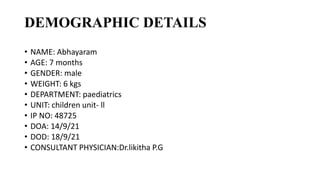
• NAME: Abhayaram
• AGE: 7 months
• GENDER: male
• WEIGHT: 6 kgs
• DEPARTMENT: paediatrics
• UNIT: children unit- ll
• IP NO: 48725
• DOA: 14/9/21
• DOD: 18/9/21
• CONSULTANT PHYSICIAN:Dr.likitha P.G
SUBJECTIVE EVIDENCE
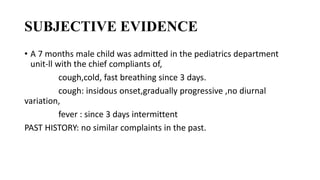
• A 7 months male child was admitted in the pediatrics department
unit-ll with the chief compliants of,
cough,cold, fast breathing since 3 days.
cough: insidous onset,gradually progressive ,no diurnal
variation,
fever : since 3 days intermittent
PAST HISTORY: no similar complaints in the past.
OBJECTIVE EVIDENCE
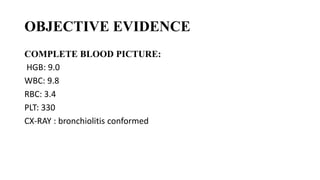
COMPLETE BLOOD PICTURE:
HGB: 9.0
WBC: 9.8
RBC: 3.4
PLT: 330
CX-RAY : bronchiolitis conformed
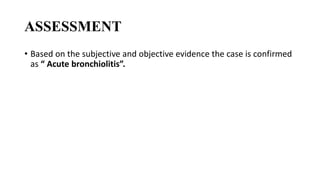
ASSESSMENT
• Based on the subjective and objective evidence the case is confirmed
as “ Acute bronchiolitis”.
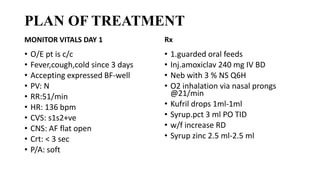
PLAN OF TREATMENT
MONITOR VITALS DAY 1
• O/E pt is c/c
• Fever,cough,cold since 3 days
• Accepting expressed BF-well
• PV: N
• RR:51/min
• HR: 136 bpm
• CVS: s1s2+ve
• CNS: AF flat open
• Crt: < 3 sec
• P/A: soft
Rx
• 1.guarded oral feeds
• Inj.amoxiclav 240 mg IV BD
• Neb with 3 % NS Q6H
• O2 inhalation via nasal prongs
@21/min
• Kufril drops 1ml-1ml
• Syrup.pct 3 ml PO TID
• w/f increase RD
• Syrup zinc 2.5 ml-2.5 ml
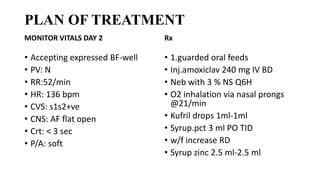
PLAN OF TREATMENT
MONITOR VITALS DAY 2
• Accepting expressed BF-well
• PV: N
• RR:52/min
• HR: 136 bpm
• CVS: s1s2+ve
• CNS: AF flat open
• Crt: < 3 sec
• P/A: soft
Rx
• 1.guarded oral feeds
• Inj.amoxiclav 240 mg IV BD
• Neb with 3 % NS Q6H
• O2 inhalation via nasal prongs
@21/min
• Kufril drops 1ml-1ml
• Syrup.pct 3 ml PO TID
• w/f increase RD
• Syrup zinc 2.5 ml-2.5 ml
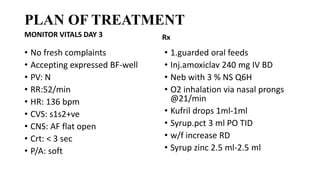
PLAN OF TREATMENT
MONITOR VITALS DAY 3
• No fresh complaints
• Accepting expressed BF-well
• PV: N
• RR:52/min
• HR: 136 bpm
• CVS: s1s2+ve
• CNS: AF flat open
• Crt: < 3 sec
• P/A: soft
Rx
• 1.guarded oral feeds
• Inj.amoxiclav 240 mg IV BD
• Neb with 3 % NS Q6H
• O2 inhalation via nasal prongs
@21/min
• Kufril drops 1ml-1ml
• Syrup.pct 3 ml PO TID
• w/f increase RD
• Syrup zinc 2.5 ml-2.5 ml
DISCHARGE MEDICATION
• Syrup.ambroxyl.HCL 2.5 ml - 2.5 ml BD
• Syrup.pct 3 ml sos
• Syrup. Zinc 2.5 ml -2.5 ml BD
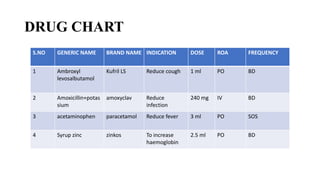
DRUG CHART
S.NO GENERIC NAME BRAND NAME INDICATION DOSE ROA FREQUENCY
1 Ambroxyl
levosalbutamol
Kufril LS Reduce cough 1 ml PO BD
2 Amoxicillin+potas
sium
amoxyclav Reduce
infection
240 mg IV BD
3 acetaminophen paracetamol Reduce fever 3 ml PO SOS
4 Syrup zinc zinkos To increase
haemoglobin
2.5 ml PO BD
PHARMACEUTICAL CARE ISSUES
• No pharmaceutical care issues found the prescription was rational.
DISCUSSION
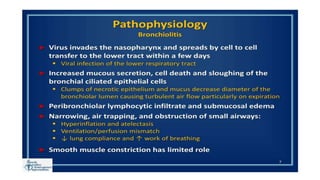
• Bronchiolitis is a viral lung infection that causes inflammation in the
smallest air passages in your lungs called bronchioles. Although it’s
generally a childhood condition, bronchiolitis can also affect adults.
• Inflammation of your bronchioles can cause a blockage of oxygen in
your airways that leads to symptoms such as coughing or trouble
breathing. Bronchiolitis generally causes mild illness, but serious cases
can progress to lung failure.
• Bronchiolitis and bronchitis are both viral infections of your lungs, but
they affect different structures.
• Bronchitis is an infection of your bronchi.bronchiolitis is an infection
of the smaller bronchioles.
CLINICAL MANIFESTATIONS
• runny nose
• fever
• stuffy nose
• loss of appetite
• cough
Over the next several days, symptoms often get worse before gradually getting better. They might
include:
• shortness of breath
• wheezing
• worsening cough that may be raspy
• brief pauses in breathing
• irritability
• vomiting after eating
• having fewer wet diapers than usual
• fatigue
CAUSES
• Respiratory syncytial virus
(RSV)
• Adenoviruses
• Influenza viruses
RISK FACTORS
• not being breastfed
• being born prematurely or born
with a heart or lung condition
• having a suppressed immune
system
• being exposed to cigarette smoke
• being in crowded places where
the virus is present, like daycare
centers
DIAGNOSIS
• physical exam and medical history
evaluation, including potential
environmental exposures.
• imaging testing, including chest X-
rays or a CT scan.
• spirometry, which measures how
much and how quickly you take in
air with each breath.
• arterial blood gas tests measure
how much oxygen and carbon
dioxide are in your blood.
TREATMENT
• Many cases of viral bronchiolitis
are mild and clear up without
treatment.
• For more severe cases in infants,
hospitalization may be necessary.
• A hospital can provide oxygen and
intravenous fluid treatments.
PREVENTION AND PATIENT
COUNSELLING
• Keep them away from people who are sick with infectious diseases,
especially when your child is younger than 2 months.
• Regularly disinfect surfaces and toys your child often comes into
contact with.
• Fully wash and dry your child’s utensils.
• Wash your child’s hands frequently, especially before and after feeding
and after they touch their nose or mouth.
• Keep your child away from secondhand smoke.
CASE PRESENTATION ON BRONCHIOLITIS

CASE PRESENTATION ON BRONCHIOLITIS

  • 1.
    CASE PRESENTATION ON ACUTEBRONCHIOLITIS SUBMITTED BY METI.BHARATH KUMAR 16DK1T0014 Pharm.D INTERNSHIP
  • 2.
    DEMOGRAPHIC DETAILS • NAME:Abhayaram • AGE: 7 months • GENDER: male • WEIGHT: 6 kgs • DEPARTMENT: paediatrics • UNIT: children unit- ll • IP NO: 48725 • DOA: 14/9/21 • DOD: 18/9/21 • CONSULTANT PHYSICIAN:Dr.likitha P.G
  • 3.
    SUBJECTIVE EVIDENCE • A7 months male child was admitted in the pediatrics department unit-ll with the chief compliants of, cough,cold, fast breathing since 3 days. cough: insidous onset,gradually progressive ,no diurnal variation, fever : since 3 days intermittent PAST HISTORY: no similar complaints in the past.
  • 4.
    OBJECTIVE EVIDENCE COMPLETE BLOODPICTURE: HGB: 9.0 WBC: 9.8 RBC: 3.4 PLT: 330 CX-RAY : bronchiolitis conformed
  • 5.
    ASSESSMENT • Based onthe subjective and objective evidence the case is confirmed as “ Acute bronchiolitis”.
  • 6.
    PLAN OF TREATMENT MONITORVITALS DAY 1 • O/E pt is c/c • Fever,cough,cold since 3 days • Accepting expressed BF-well • PV: N • RR:51/min • HR: 136 bpm • CVS: s1s2+ve • CNS: AF flat open • Crt: < 3 sec • P/A: soft Rx • 1.guarded oral feeds • Inj.amoxiclav 240 mg IV BD • Neb with 3 % NS Q6H • O2 inhalation via nasal prongs @21/min • Kufril drops 1ml-1ml • Syrup.pct 3 ml PO TID • w/f increase RD • Syrup zinc 2.5 ml-2.5 ml
  • 7.
    PLAN OF TREATMENT MONITORVITALS DAY 2 • Accepting expressed BF-well • PV: N • RR:52/min • HR: 136 bpm • CVS: s1s2+ve • CNS: AF flat open • Crt: < 3 sec • P/A: soft Rx • 1.guarded oral feeds • Inj.amoxiclav 240 mg IV BD • Neb with 3 % NS Q6H • O2 inhalation via nasal prongs @21/min • Kufril drops 1ml-1ml • Syrup.pct 3 ml PO TID • w/f increase RD • Syrup zinc 2.5 ml-2.5 ml
  • 8.
    PLAN OF TREATMENT MONITORVITALS DAY 3 • No fresh complaints • Accepting expressed BF-well • PV: N • RR:52/min • HR: 136 bpm • CVS: s1s2+ve • CNS: AF flat open • Crt: < 3 sec • P/A: soft Rx • 1.guarded oral feeds • Inj.amoxiclav 240 mg IV BD • Neb with 3 % NS Q6H • O2 inhalation via nasal prongs @21/min • Kufril drops 1ml-1ml • Syrup.pct 3 ml PO TID • w/f increase RD • Syrup zinc 2.5 ml-2.5 ml
  • 9.
    DISCHARGE MEDICATION • Syrup.ambroxyl.HCL2.5 ml - 2.5 ml BD • Syrup.pct 3 ml sos • Syrup. Zinc 2.5 ml -2.5 ml BD
  • 10.
    DRUG CHART S.NO GENERICNAME BRAND NAME INDICATION DOSE ROA FREQUENCY 1 Ambroxyl levosalbutamol Kufril LS Reduce cough 1 ml PO BD 2 Amoxicillin+potas sium amoxyclav Reduce infection 240 mg IV BD 3 acetaminophen paracetamol Reduce fever 3 ml PO SOS 4 Syrup zinc zinkos To increase haemoglobin 2.5 ml PO BD
  • 11.
    PHARMACEUTICAL CARE ISSUES •No pharmaceutical care issues found the prescription was rational.
  • 12.
    DISCUSSION • Bronchiolitis isa viral lung infection that causes inflammation in the smallest air passages in your lungs called bronchioles. Although it’s generally a childhood condition, bronchiolitis can also affect adults. • Inflammation of your bronchioles can cause a blockage of oxygen in your airways that leads to symptoms such as coughing or trouble breathing. Bronchiolitis generally causes mild illness, but serious cases can progress to lung failure. • Bronchiolitis and bronchitis are both viral infections of your lungs, but they affect different structures. • Bronchitis is an infection of your bronchi.bronchiolitis is an infection of the smaller bronchioles.
  • 13.
    CLINICAL MANIFESTATIONS • runnynose • fever • stuffy nose • loss of appetite • cough Over the next several days, symptoms often get worse before gradually getting better. They might include: • shortness of breath • wheezing • worsening cough that may be raspy • brief pauses in breathing • irritability • vomiting after eating • having fewer wet diapers than usual • fatigue
  • 14.
    CAUSES • Respiratory syncytialvirus (RSV) • Adenoviruses • Influenza viruses RISK FACTORS • not being breastfed • being born prematurely or born with a heart or lung condition • having a suppressed immune system • being exposed to cigarette smoke • being in crowded places where the virus is present, like daycare centers
  • 16.
    DIAGNOSIS • physical examand medical history evaluation, including potential environmental exposures. • imaging testing, including chest X- rays or a CT scan. • spirometry, which measures how much and how quickly you take in air with each breath. • arterial blood gas tests measure how much oxygen and carbon dioxide are in your blood. TREATMENT • Many cases of viral bronchiolitis are mild and clear up without treatment. • For more severe cases in infants, hospitalization may be necessary. • A hospital can provide oxygen and intravenous fluid treatments.
  • 17.
    PREVENTION AND PATIENT COUNSELLING •Keep them away from people who are sick with infectious diseases, especially when your child is younger than 2 months. • Regularly disinfect surfaces and toys your child often comes into contact with. • Fully wash and dry your child’s utensils. • Wash your child’s hands frequently, especially before and after feeding and after they touch their nose or mouth. • Keep your child away from secondhand smoke.