Caregiver Burden Among Family Caregivers Of
Cancer Patients Under Palliative care Using Zarit
Burden Scale: Prospective Observational Study
Dr. SUDHA SARNA
Professor and Head of department
SUBMITTED BY : Dr. Karishma jain
PG 1
Dr. NIPUN LAMBA
Associate professor
Under Guidance Of
Dept. Of Pain And Palliative Medicine
Mahatma Gandhi Medical college
Jaipur
Dept. Of Pain And Palliative Medicine
Mahatma Gandhi Medical college
Jaipur
Background
• Cancer affects the entire family, not just the patient.
• Treating a cancer patient is often an exercise of treating a part if not the
whole family of the patient[1][2]
, that’s why it is important to address the
problem of the entire family and treat the unaddressed part of the cancer.
• Treating cancer causes distress to the patient and it puts financial, personal,
social, and health stress on family members, daily routines of the family are
disrupted, typical duties and activities performed by one member may
change or shift onto other family members and there are financial issues[3],[4],
[5]
.
• It is difficult to address issues of caregivers like physical mental social well-
being, financial burden, and quality of life. The amount and type of stress
should be determined and evaluated accurately.
• The impact of the disease is higher in a country like India[6]
, where the
family is the source of all support to the patient, and the role played by
the family is crucial, hospitalization is mostly used in the end-of-life stage.
• By this time, the disease has consumed both the victim and the family.
Often the disease has a severe financial impact on the family that lasts for
years after the demise of the patient[7],[8],[9]
• Clearly, the burden of the disease on caregivers needs to be measured [10]
.
The duty thrust upon the caregivers often impacts their health and
reduces their efficiency in delivering quality care[11],[12]
.
• Hence the present investigation was undertaken to identify stressors and
quantify their burden using zarit burden score
Aim of the study
To Evaluate Caregiver Burden Among Family Caregivers Of Cancer
Patients Under Palliative care : Prospective Observational Study
OBJECTIVE OF THE STUDY
To assess and quantify the burden experienced by family caregivers of cancer patients
under palliative care, utilizing the validated Zarit Burden Scale, with initial
measurement at baseline and follow-up assessment after one month.
To identify potential factors associated with caregiver burden in this population,
including but not limited to patient clinical characteristics, caregiver demographics,
and changes in caregiving responsibilities over the short-term follow-up period.
Materials and methods
• Study type : prospective & observational
• Study population: all patients in palliative care opd in 6 months after
IEC approval
• Study period of coverage : 6 month
Method of study :
• All the patient who will come in our opd during the study period who are following the inclusion
criteria will be included. The study protocol incorporates a one-month follow-up assessment
subsequent to the initial baseline evaluation. This follow-up phase entails the readministration of
the Zarit Burden Scale to quantify potential variations in caregiver burden.
• Concurrently, researchers will collect updated data pertaining to the patient's clinical status and any
alterations in caregiving responsibilities. This short-term follow-up is designed to capture acute
fluctuations in caregiver burden and elucidate emerging trends. The assessment methodology is
streamlined to minimize participant burden while maintaining data integrity.
• Notably, the study's sampling strategy encompasses all eligible patients from the outpatient
department (OPD) who satisfy the inclusion criteria, thereby ensuring a comprehensive and
representative sample of the caregiver population within the palliative care context.
The rationale of why a study is needed to
answer the research question:-
Some studies reveal that despite advances in cancer detection and treatment, a cancer
diagnosis significantly impacts the quality of life of patients and caregivers. Caregivers are the
primary support for patients and often provide assistance with daily activities, manage family
responsibilities, and help the patient cope with stress. However, caregivers have little to no
formal training and are susceptible to physical, social, and emotional issues. Distress rates
among caregivers are higher than those of patients. Unmet needs, such as inadequate
healthcare, psychological problems, lack of support, information, facilities, and practical help,
compromise the quality of life and contribute to distress and burden for both caregivers and
patients. Unmet needs are critical to developing a program to enhance services for the
adjustment of caregivers which will indirectly impact the patients as well.
Conclusion
• In conclusion, this prospective observation study aims to investigate the
caregiver burden experienced by family caregivers of cancer patients under
palliative care using the Zarit Burden Scale.
• The study will prospectively observe the changes in caregiver burden over
time, providing valuable insights into the impact of palliative care on
caregiver well-being.
• The findings are expected to highlight the need for targeted interventions to
alleviate caregiver burden and improve overall patient outcomes.
• The study's results will contribute to the development of effective caregiver
support programs, ultimately enhancing the quality of life for both
patients and caregivers.
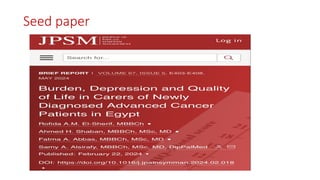
Seed paper
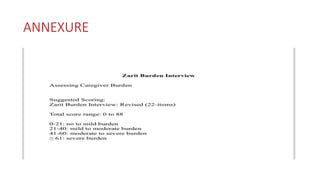
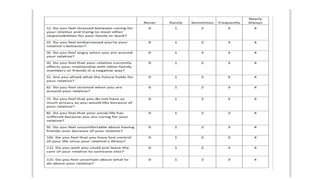
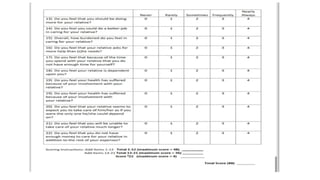
ANNEXURE
References
1. Northouse L. The impact of cancer on the family: An overview. Int J Psychiatry Med [Internet].
1985;14(3):215–42. Available from: http://dx.doi.org/10.2190/c8y5-4y2w-wv93-qdat
2. Brown ML. The national economic burden of cancer: an update. J Natl Cancer Inst [Internet].
1990;82(23):1811–4. Available from: http://dx.doi.org/10.1093/jnci/82.23.1811
3. Girgis A, Lambert SD, McElduff P, Bonevski B, Lecathelinais C, Boyes A, et al. Some things change,
some things stay the same: a longitudinal analysis of cancer caregivers’ unmet supportive care
needs: Cancer caregivers’ unmet needs. Psychooncology [Internet]. 2013;22(7):1557–64. Available
from: http://dx.doi.org/10.1002/pon.3166
4. Calman KC. Quality of life in cancer patients--an hypothesis. J Med Ethics [Internet].
1984;10(3):124–7. Available from: http://dx.doi.org/10.1136/jme.10.3.124
5. Patterson JM, Rapley T, Carding PN, Wilson JA, McColl E. Head and neck cancer and dysphagia;
caring for carers: Carers’ perspective on dysphagia in head and neck cancer patients. Psychooncology
[Internet]. 2013;22(8):1815–20. Available from: http://dx.doi.org/10.1002/pon.3226
6. Broom AF, Doron A. Traditional medicines, collective negotiation, and representations of risk in Indian
cancer care. Qual Health Res [Internet]. 2013;23(1):54–65.
7. Ekedahl M, Wengström Y. Nurses in cancer care--stress when encountering existential issues. Eur J
Oncol Nurs [Internet]. 2007;11(3):228–37.
8. Vrettos I, Kamposioras K, Kontodimopoulos N, Pappa E, Georgiadou E, Haritos D, et al. Comparing
health_x0002_related quality of life of cancer patients under chemotherapy and of their caregivers.
ScientificWorldJournal
[Internet]. 2012;2012:135283.
9. Brown ML, Lipscomb J, Snyder C. The burden of illness of cancer: economic cost and quality of life.
Annu Rev
Public Health [Internet]. 2001;22(1):91–113.
10. Zarit SH, Reever KE, Bach-Peterson J. Relatives of the impaired elderly: correlates of feelings of burden.
Gerontologist [Internet]. 1980;20(6):649–55.
11. Ross A, Sundaramurthi T, Bevans M. A labor of love: the influence of cancer caregiving on health
behaviors.
Cancer Nurs [Internet]. 2013;36(6):474–83
12. Chang Y-J, Kwon YC, Lee WJ, Do YR, Seok LK, Kim HT, et al. Burdens, needs and satisfaction of terminal
cancer patients and their caregivers. Asian Pac J Cancer Prev [Internet]. 2013;14(1):209–16.
THANK YOU

Caregiver burden assessment using zarit burden

  • 1.
    Caregiver Burden AmongFamily Caregivers Of Cancer Patients Under Palliative care Using Zarit Burden Scale: Prospective Observational Study Dr. SUDHA SARNA Professor and Head of department SUBMITTED BY : Dr. Karishma jain PG 1 Dr. NIPUN LAMBA Associate professor Under Guidance Of Dept. Of Pain And Palliative Medicine Mahatma Gandhi Medical college Jaipur Dept. Of Pain And Palliative Medicine Mahatma Gandhi Medical college Jaipur
  • 2.
    Background • Cancer affectsthe entire family, not just the patient. • Treating a cancer patient is often an exercise of treating a part if not the whole family of the patient[1][2] , that’s why it is important to address the problem of the entire family and treat the unaddressed part of the cancer. • Treating cancer causes distress to the patient and it puts financial, personal, social, and health stress on family members, daily routines of the family are disrupted, typical duties and activities performed by one member may change or shift onto other family members and there are financial issues[3],[4], [5] . • It is difficult to address issues of caregivers like physical mental social well- being, financial burden, and quality of life. The amount and type of stress should be determined and evaluated accurately.
  • 3.
    • The impactof the disease is higher in a country like India[6] , where the family is the source of all support to the patient, and the role played by the family is crucial, hospitalization is mostly used in the end-of-life stage. • By this time, the disease has consumed both the victim and the family. Often the disease has a severe financial impact on the family that lasts for years after the demise of the patient[7],[8],[9] • Clearly, the burden of the disease on caregivers needs to be measured [10] . The duty thrust upon the caregivers often impacts their health and reduces their efficiency in delivering quality care[11],[12] . • Hence the present investigation was undertaken to identify stressors and quantify their burden using zarit burden score
  • 4.
    Aim of thestudy To Evaluate Caregiver Burden Among Family Caregivers Of Cancer Patients Under Palliative care : Prospective Observational Study
  • 5.
    OBJECTIVE OF THESTUDY To assess and quantify the burden experienced by family caregivers of cancer patients under palliative care, utilizing the validated Zarit Burden Scale, with initial measurement at baseline and follow-up assessment after one month. To identify potential factors associated with caregiver burden in this population, including but not limited to patient clinical characteristics, caregiver demographics, and changes in caregiving responsibilities over the short-term follow-up period.
  • 6.
    Materials and methods •Study type : prospective & observational • Study population: all patients in palliative care opd in 6 months after IEC approval • Study period of coverage : 6 month
  • 7.
    Method of study: • All the patient who will come in our opd during the study period who are following the inclusion criteria will be included. The study protocol incorporates a one-month follow-up assessment subsequent to the initial baseline evaluation. This follow-up phase entails the readministration of the Zarit Burden Scale to quantify potential variations in caregiver burden. • Concurrently, researchers will collect updated data pertaining to the patient's clinical status and any alterations in caregiving responsibilities. This short-term follow-up is designed to capture acute fluctuations in caregiver burden and elucidate emerging trends. The assessment methodology is streamlined to minimize participant burden while maintaining data integrity. • Notably, the study's sampling strategy encompasses all eligible patients from the outpatient department (OPD) who satisfy the inclusion criteria, thereby ensuring a comprehensive and representative sample of the caregiver population within the palliative care context.
  • 8.
    The rationale ofwhy a study is needed to answer the research question:- Some studies reveal that despite advances in cancer detection and treatment, a cancer diagnosis significantly impacts the quality of life of patients and caregivers. Caregivers are the primary support for patients and often provide assistance with daily activities, manage family responsibilities, and help the patient cope with stress. However, caregivers have little to no formal training and are susceptible to physical, social, and emotional issues. Distress rates among caregivers are higher than those of patients. Unmet needs, such as inadequate healthcare, psychological problems, lack of support, information, facilities, and practical help, compromise the quality of life and contribute to distress and burden for both caregivers and patients. Unmet needs are critical to developing a program to enhance services for the adjustment of caregivers which will indirectly impact the patients as well.
  • 9.
    Conclusion • In conclusion,this prospective observation study aims to investigate the caregiver burden experienced by family caregivers of cancer patients under palliative care using the Zarit Burden Scale. • The study will prospectively observe the changes in caregiver burden over time, providing valuable insights into the impact of palliative care on caregiver well-being. • The findings are expected to highlight the need for targeted interventions to alleviate caregiver burden and improve overall patient outcomes. • The study's results will contribute to the development of effective caregiver support programs, ultimately enhancing the quality of life for both patients and caregivers.
  • 10.
  • 11.
  • 14.
    References 1. Northouse L.The impact of cancer on the family: An overview. Int J Psychiatry Med [Internet]. 1985;14(3):215–42. Available from: http://dx.doi.org/10.2190/c8y5-4y2w-wv93-qdat 2. Brown ML. The national economic burden of cancer: an update. J Natl Cancer Inst [Internet]. 1990;82(23):1811–4. Available from: http://dx.doi.org/10.1093/jnci/82.23.1811 3. Girgis A, Lambert SD, McElduff P, Bonevski B, Lecathelinais C, Boyes A, et al. Some things change, some things stay the same: a longitudinal analysis of cancer caregivers’ unmet supportive care needs: Cancer caregivers’ unmet needs. Psychooncology [Internet]. 2013;22(7):1557–64. Available from: http://dx.doi.org/10.1002/pon.3166 4. Calman KC. Quality of life in cancer patients--an hypothesis. J Med Ethics [Internet]. 1984;10(3):124–7. Available from: http://dx.doi.org/10.1136/jme.10.3.124 5. Patterson JM, Rapley T, Carding PN, Wilson JA, McColl E. Head and neck cancer and dysphagia; caring for carers: Carers’ perspective on dysphagia in head and neck cancer patients. Psychooncology [Internet]. 2013;22(8):1815–20. Available from: http://dx.doi.org/10.1002/pon.3226
  • 15.
    6. Broom AF,Doron A. Traditional medicines, collective negotiation, and representations of risk in Indian cancer care. Qual Health Res [Internet]. 2013;23(1):54–65. 7. Ekedahl M, Wengström Y. Nurses in cancer care--stress when encountering existential issues. Eur J Oncol Nurs [Internet]. 2007;11(3):228–37. 8. Vrettos I, Kamposioras K, Kontodimopoulos N, Pappa E, Georgiadou E, Haritos D, et al. Comparing health_x0002_related quality of life of cancer patients under chemotherapy and of their caregivers. ScientificWorldJournal [Internet]. 2012;2012:135283. 9. Brown ML, Lipscomb J, Snyder C. The burden of illness of cancer: economic cost and quality of life. Annu Rev Public Health [Internet]. 2001;22(1):91–113. 10. Zarit SH, Reever KE, Bach-Peterson J. Relatives of the impaired elderly: correlates of feelings of burden. Gerontologist [Internet]. 1980;20(6):649–55. 11. Ross A, Sundaramurthi T, Bevans M. A labor of love: the influence of cancer caregiving on health behaviors. Cancer Nurs [Internet]. 2013;36(6):474–83 12. Chang Y-J, Kwon YC, Lee WJ, Do YR, Seok LK, Kim HT, et al. Burdens, needs and satisfaction of terminal cancer patients and their caregivers. Asian Pac J Cancer Prev [Internet]. 2013;14(1):209–16.
  • 16.