Fabrication and identification of
wholesale and retail cuts of Livestock
Carcasses
MEAT FABRICATION
Butchering: is the term commonly used for the process of slaughtering and
preparing meat for retail or wholesale use.
MEAT FABRICATION
 Meat cutting or fabrication, is the process of cutting and portioning large
cuts of meat to menu specific.
 Becoming proficient at fabricating whole carcass or primal meat cuts takes
practice often through an apprenticeship under a master meat cutter.
MEAT FABRICATION
 Dressed carcasses are processed whole, split into sides or cut into quarters.
 More often carcasses are fabricated into primal cuts of meat.
These are large cuts based on the muscle and bone structure of the animal.
MEAT FABRICATION
 From there the meat is further divided into sub primal cuts that are often
vacuum sealed and boxed fresh or frozen.
 They are processed further into portion cuts as needed
PRIMAL CUTS
 There are four major primal cuts
1. The shoulder
2. Rib
3. Loin
4. Leg
PRIMAL CUTS
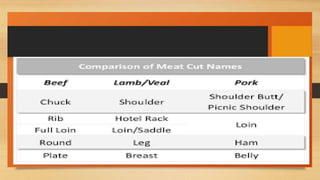
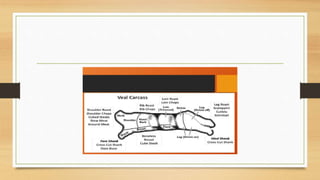
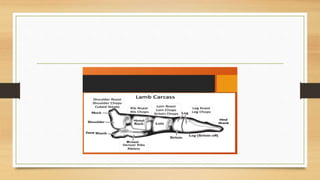
• but depending on the species thereare some differences in naming and
fabricatingthese cuts. For example, abeef chuck is thesame cut as alamb
shoulder or pork shoulderbutt. Abeef round is the same as aveal leg anda
pork ham.•
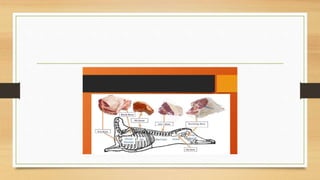
• Pork carcass breakdown is notably different from beef,veal, and lamb.
Whereas beef, veal and lamb split therib and loin muscles between the 12th
and 13th rib, porkcarcass fabrication leaves this muscle intact and names
itsimply the loin.• Porkback ribs are marketed for barbecuing. The porkbelly
is a much more prominent cut producing bacon andspare ribs. The pork
shoulder is split into two cuts; theshoulder butt and the picnic shoulder .
Carcass................. Fabrication.pptx

Carcass................. Fabrication.pptx

  • 1.
    Fabrication and identificationof wholesale and retail cuts of Livestock Carcasses
  • 2.
    MEAT FABRICATION Butchering: isthe term commonly used for the process of slaughtering and preparing meat for retail or wholesale use.
  • 3.
    MEAT FABRICATION  Meatcutting or fabrication, is the process of cutting and portioning large cuts of meat to menu specific.  Becoming proficient at fabricating whole carcass or primal meat cuts takes practice often through an apprenticeship under a master meat cutter.
  • 4.
    MEAT FABRICATION  Dressedcarcasses are processed whole, split into sides or cut into quarters.  More often carcasses are fabricated into primal cuts of meat. These are large cuts based on the muscle and bone structure of the animal.
  • 5.
    MEAT FABRICATION  Fromthere the meat is further divided into sub primal cuts that are often vacuum sealed and boxed fresh or frozen.  They are processed further into portion cuts as needed
  • 6.
    PRIMAL CUTS  Thereare four major primal cuts 1. The shoulder 2. Rib 3. Loin 4. Leg
  • 7.
    PRIMAL CUTS • butdepending on the species thereare some differences in naming and fabricatingthese cuts. For example, abeef chuck is thesame cut as alamb shoulder or pork shoulderbutt. Abeef round is the same as aveal leg anda pork ham.•
  • 15.
    • Pork carcassbreakdown is notably different from beef,veal, and lamb. Whereas beef, veal and lamb split therib and loin muscles between the 12th and 13th rib, porkcarcass fabrication leaves this muscle intact and names itsimply the loin.• Porkback ribs are marketed for barbecuing. The porkbelly is a much more prominent cut producing bacon andspare ribs. The pork shoulder is split into two cuts; theshoulder butt and the picnic shoulder .