CALIFORNIA
Penal Code
and
Evidence Code
2014
ii
Copyright © 2014 by Snape Legal Publishing
Some Rights Reserved. This book contains the laws of the state of California,
compiled for easier reference. The laws of this country are in the public
domain, but the specific compilation design is copyrighted. You are free to, and
encouraged to, take the law listed herein and freely disseminate it to whomever
you’d like. We ask that if you are going to do this, please design your own
presentation.
Snape Legal Publishing
1026 E Washington Ave
El Cajon, CA 92020
Legal Disclaimer: The code in this book is current as of January
1st, 2014. The next compiling of this will be the 2015 edition. Any
changes to the law in the meantime will not be reflected in the text.
You will need to confirm any text before using it for any legal pro-
ceeding.
This is the pdf version of the California Penal Code and Evidence Code 2014
which is available as two printed books under the following ISBN numbers:
Book 1: 978-1-312-05335-9
Book 2: 978-1-312-05336-6
California Penal Code and Evidence Code 2014
iii
CALIFORNIA
Penal Code
and
Evidence Code
2014
Compiled by
John Snape
iv
Intentionally Blank Page
v
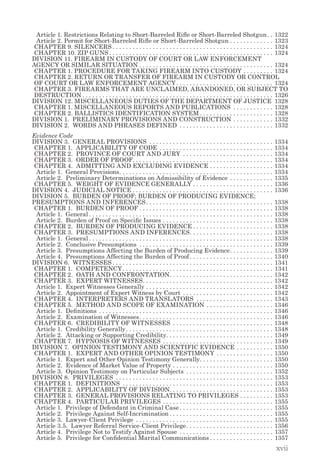
TITLE OF THE ACT������������������������������������������������������������������������������������������������������������������1
PRELIMINARY PROVISIONS������������������������������������������������������������������������������������������������1
CALIFORNIA PENAL CODE
PART 1. OF CRIMES AND PUNISHMENTS ������������������������������������������������������������������������5
TITLE 1. OF PERSONS LIABLE TO PUNISHMENT FOR CRIME�����������������������������������5
TITLE 2. OF PARTIES TO CRIME������������������������������������������������������������������������������������������6
TITLE 3. OF OFFENSES AGAINST THE SOVEREIGNTY OF THE STATE��������������������7
TITLE 5. OF CRIMES BY AND AGAINST THE EXECUTIVE POWER OF THE STATE7
TITLE 6. OF CRIMES AGAINST THE LEGISLATIVE POWER��������������������������������������10
TITLE 7. OF CRIMES AGAINST PUBLIC JUSTICE����������������������������������������������������������11
CHAPTER 1. BRIBERY AND CORRUPTION��������������������������������������������������������������������11
CHAPTER 2. RESCUES��������������������������������������������������������������������������������������������������������12
CHAPTER 3. ESCAPES AND AIDING THEREIN������������������������������������������������������������12
CHAPTER 4. FORGING, STEALING, MUTILATING, AND FALSIFYING JUDICIAL
AND PUBLIC RECORDS AND DOCUMENTS������������������������������������������������������������������13
CHAPTER 5. PERJURY AND SUBORNATION OF PERJURY ��������������������������������������15
CHAPTER 6. FALSIFYING EVIDENCE, AND BRIBING, INFLUENCING,
INTIMIDATING OR THREATENING WITNESSES��������������������������������������������������������16
CHAPTER 7. OTHER OFFENSES AGAINST PUBLIC JUSTICE������������������������������������24
CHAPTER 8. CONSPIRACY������������������������������������������������������������������������������������������������42
CHAPTER 9. CRIMINAL PROFITEERING ����������������������������������������������������������������������42
CHAPTER 10. MONEY LAUNDERING������������������������������������������������������������������������������46
CHAPTER 10.5. FRAUD AND EMBEZZLEMENT: VICTIM RESTITUTION����������������48
CHAPTER 11. STREET TERRORISM ENFORCEMENT AND PREVENTION ACT���� 55
TITLE 8. OF CRIMES AGAINST THE PERSON����������������������������������������������������������������64
CHAPTER 1. HOMICIDE������������������������������������������������������������������������������������������������������64
CHAPTER 2. MAYHEM��������������������������������������������������������������������������������������������������������75
CHAPTER 3. KIDNAPPING������������������������������������������������������������������������������������������������75
CHAPTER 3.5. HOSTAGES��������������������������������������������������������������������������������������������������76
CHAPTER 4. ROBBERY��������������������������������������������������������������������������������������������������������76
CHAPTER 5. ATTEMPTS TO KILL������������������������������������������������������������������������������������77
CHAPTER 6. ASSAULTS WITH INTENT TO COMMIT FELONY, OTHER THAN
ASSAULTS WITH INTENT TO MURDER ������������������������������������������������������������������������78
CHAPTER 8. FALSE IMPRISONMENT AND HUMAN TRAFFICKING����������������������79
CHAPTER 9. ASSAULT AND BATTERY ��������������������������������������������������������������������������86
TITLE 9. OF CRIMES AGAINST THE PERSON INVOLVING SEXUAL ASSAULT, AND
CRIMES AGAINST PUBLIC DECENCY AND GOOD MORALS��������������������������������������99
CHAPTER 1. RAPE, ABDUCTION, CARNAL ABUSE OF CHILDREN, AND
SEDUCTION ��������������������������������������������������������������������������������������������������������������������������99
CHAPTER 2. ABANDONMENT AND NEGLECT OF CHILDREN ������������������������������104
CHAPTER 2.5. SPOUSAL ABUSERS�������������������������������������������������������������������������������� 114
CHAPTER 4. CHILD ABDUCTION ���������������������������������������������������������������������������������� 116
CHAPTER 5. BIGAMY, INCEST, AND THE CRIME AGAINST NATURE������������������ 119
CHAPTER 5.5. SEX OFFENDERS������������������������������������������������������������������������������������128
CHAPTER 6. DNA AND FORENSIC IDENTIFICATION DATA BASE AND DATA
BANK ACT OF 1998 ������������������������������������������������������������������������������������������������������������150
Article 1. Purpose and Administration������������������������������������������������������������������������������150
Article 2. Offenders Subject to Sample Collection��������������������������������������������������������������153
Article 3. Data Base Applications ��������������������������������������������������������������������������������������156
Article 4. Collection and Forwarding of Samples�������������������������������������������������������������� 157
Article 5. Expungement of Information������������������������������������������������������������������������������159
Article 6. Limitations on Disclosure ����������������������������������������������������������������������������������160
Table of Contents
vi
Article 7. Construction and Severability����������������������������������������������������������������������������163
CHAPTER 7. OF CRIMES AGAINST RELIGION AND CONSCIENCE, AND OTHER
OFFENSES AGAINST GOOD MORALS ��������������������������������������������������������������������������163
CHAPTER 7.5. OBSCENE MATTER ��������������������������������������������������������������������������������166
CHAPTER 7.6. HARMFUL MATTER�������������������������������������������������������������������������������� 173
CHAPTER 8. INDECENT EXPOSURE, OBSCENE EXHIBITIONS, AND BAWDY AND
OTHER DISORDERLY HOUSES���������������������������������������������������������������������������������������� 175
CHAPTER 9. LOTTERIES�������������������������������������������������������������������������������������������������� 176
CHAPTER 10. GAMING������������������������������������������������������������������������������������������������������188
CHAPTER 10.5. HORSE RACING��������������������������������������������������������������������������������������198
CHAPTER 11. PAWNBROKERS����������������������������������������������������������������������������������������199
CHAPTER 12. OTHER INJURIES TO PERSONS����������������������������������������������������������199
CHAPTER 13. CRIMES AGAINST ELDERS, DEPENDENT ADULTS, AND PERSONS
WITH DISABILITIES����������������������������������������������������������������������������������������������������������203
TITLE 10. OF CRIMES AGAINST THE PUBLIC HEALTH AND SAFETY������������������205
TITLE 11. OF CRIMES AGAINST THE PUBLIC PEACE������������������������������������������������221
TITLE 11.5. CRIMINAL THREATS������������������������������������������������������������������������������������227
TITLE 11.6. CIVIL RIGHTS������������������������������������������������������������������������������������������������228
CHAPTER 1. DEFINITIONS����������������������������������������������������������������������������������������������228
CHAPTER 2. CRIMES AND PENALTIES������������������������������������������������������������������������228
CHAPTER 3. GENERAL PROVISIONS ��������������������������������������������������������������������������231
TITLE 11.7. CALIFORNIA FREEDOM OF ACCESS TO CLINIC AND CHURCH
ENTRANCES ACT6��������������������������������������������������������������������������������������������������������������231
TITLE 12. OF CRIMES AGAINST THE REVENUE AND PROPERTY OF THIS STATE
�������������������������������������������������������������������������������������������������������������������������������������������������234
TITLE 13. OF CRIMES AGAINST PROPERTY ����������������������������������������������������������������234
CHAPTER 1. ARSON����������������������������������������������������������������������������������������������������������234
CHAPTER 2. BURGLARY��������������������������������������������������������������������������������������������������239
CHAPTER 3. BURGLARIOUS AND LARCENOUS INSTRUMENTS AND DEADLY
WEAPONS����������������������������������������������������������������������������������������������������������������������������241
CHAPTER 4. FORGERY AND COUNTERFEITING ������������������������������������������������������243
CHAPTER 5. LARCENY ����������������������������������������������������������������������������������������������������246
CHAPTER 6. EMBEZZLEMENT ��������������������������������������������������������������������������������������264
CHAPTER 7. EXTORTION��������������������������������������������������������������������������������������������������266
CHAPTER 8. FALSE PERSONATION AND CHEATS����������������������������������������������������267
CHAPTER 10. CRIMES AGAINST INSURED PROPERTY AND INSURERS������������279
CHAPTER 12. UNLAWFUL INTERFERENCE WITH PROPERTY������������������������������282
Article 1. Trespassing or Loitering Near Posted Industrial Property������������������������������282
Article 2. Unlawfully Placing Signs on Public and Private Property������������������������������283
Article 3. Trespass on Property Belonging to the University of California ��������������������283
CHAPTER 12.5. CRIMES INVOLVING BAILMENTS����������������������������������������������������284
CHAPTER 12.6. CRIMES INVOLVING BRANDED CONTAINERS, CABINETS, OR
OTHER DAIRY EQUIPMENT��������������������������������������������������������������������������������������������285
CHAPTER 12.7. UNLAWFUL SUBLEASING OF MOTOR VEHICLES������������������������285
CHAPTER 14. FRAUDULENT ISSUE OF DOCUMENTS OF TITLE TO
MERCHANDISE������������������������������������������������������������������������������������������������������������������286
CHAPTER 15. MALICIOUS INJURIES TO RAILROAD BRIDGES, HIGHWAYS,
BRIDGES, AND TELEGRAPHS����������������������������������������������������������������������������������������287
TITLE 14. MALICIOUS MISCHIEF������������������������������������������������������������������������������������291
TITLE 15. MISCELLANEOUS CRIMES����������������������������������������������������������������������������322
CHAPTER 1. SCHOOLS������������������������������������������������������������������������������������������������������322
CHAPTER 1.1. ACCESS TO SCHOOL PREMISES����������������������������������������������������������330
CHAPTER 1.3. MASSAGE THERAPY������������������������������������������������������������������������������332
CHAPTER 1.4. INTERCEPTION OF WIRE, ELECTRONIC DIGITAL PAGER,OR
ELECTRONIC CELLULAR TELEPHONE COMMUNICATIONS ��������������������������������332
CHAPTER 1.5. INVASION OF PRIVACY��������������������������������������������������������������������������338
CHAPTER 2. OF OTHER AND MISCELLANEOUS OFFENSES����������������������������������347
CHAPTER 2.5. LOITERING FOR THE PURPOSE OF ENGAGING IN A
PROSTITUTION OFFENSE ����������������������������������������������������������������������������������������������372
CHAPTER 3. IMMIGRATION MATTERS������������������������������������������������������������������������373
CHAPTER 4. CRIMES COMMITTED WHILE IN CUSTODY IN CORRECTIONAL
FACILITIES�������������������������������������������������������������������������������������������������������������������������� 374
TITLE 16. GENERAL PROVISIONS���������������������������������������������������������������������������������� 374
TITLE 17. RIGHTS OF VICTIMS AND WITNESSES OF CRIME����������������������������������387
vii
PART 2. OF CRIMINAL PROCEDURE PRELIMINARY PROVISIONS��������������������������392
TITLE 1. OF THE PREVENTION OF PUBLIC OFFENSES��������������������������������������������393
CHAPTER 1. OF LAWFUL RESISTANCE������������������������������������������������������������������������393
CHAPTER 2. OF THE INTERVENTION OF THE OFFICERS OF JUSTICE��������������393
CHAPTER 3. SECURITY TO KEEP THE PEACE ����������������������������������������������������������393
CHAPTER 5. SUPPRESSION OF RIOTS��������������������������������������������������������������������������395
TITLE 2. MODE OF PROSECUTION����������������������������������������������������������������������������������395
TITLE 2.5. NIGHTCOURT ��������������������������������������������������������������������������������������������������395
TITLE 3. ADDITIONAL PROVISIONS REGARDING CRIMINAL PROCEDURE��������395
CHAPTER 1. OF THE LOCAL JURISDICTION OF PUBLIC OFFENSES ������������������395
CHAPTER 2. TIME OF COMMENCING CRIMINAL ACTIONS ����������������������������������398
CHAPTER 3. COMPLAINTS BEFORE MAGISTRATES������������������������������������������������401
CHAPTER 4. THE WARRANT OF ARREST��������������������������������������������������������������������401
CHAPTER 4.2. CODE ENFORCEMENT OFFICERS������������������������������������������������������406
CHAPTER 4.5. PEACE OFFICERS������������������������������������������������������������������������������������406
CHAPTER 5. ARREST, BY WHOM AND HOW MADE ��������������������������������������������������431
CHAPTER 5a. UNIFORM ACT ON FRESH PURSUIT��������������������������������������������������442
CHAPTER 5B. INTERSTATE JURISDICTION���������������������������������������������������������������442
Article 1. Colorado River Crime Enforcement Compact����������������������������������������������������442
Article 2. California-Nevada Compact for Jurisdiction on Interstate Waters������������������443
CHAPTER 5C. CITATIONS FOR MISDEMEANORS������������������������������������������������������443
CHAPTER 5D. FILING COMPLAINT AFTER CITATION��������������������������������������������447
CHAPTER 6. RETAKING AFTER AN ESCAPE OR RESCUE��������������������������������������447
CHAPTER 7. EXAMINATION OF THE CASE, AND DISCHARGE OF THE
DEFENDANT, OR HOLDING HIM TO ANSWER������������������������������������������������������������448
TITLE 4. GRAND JURY PROCEEDINGS��������������������������������������������������������������������������458
CHAPTER 1. GENERAL PROVISIONS����������������������������������������������������������������������������458
CHAPTER 2. FORMATION OF GRAND JURY����������������������������������������������������������������459
Article 1. Qualifications of Grand Jurors ��������������������������������������������������������������������������459
Article 2. Listing and Selection of Grand Jurors ��������������������������������������������������������������459
Article 3. Jury Commissioners��������������������������������������������������������������������������������������������460
Article 4. Impaneling of Grand Jury����������������������������������������������������������������������������������460
CHAPTER 3. POWERS AND DUTIES OF GRAND JURY ��������������������������������������������463
Article 1. General Provisions����������������������������������������������������������������������������������������������463
Article 2. Investigation of County, City, and District Affairs6������������������������������������������466
Article 3. Legal and Other Assistants for Grand Juries����������������������������������������������������468
Article 4. Conduct of Investigations������������������������������������������������������������������������������������470
TITLE 5. THE PLEADINGS������������������������������������������������������������������������������������������������472
CHAPTER 1. FINDING AND PRESENTMENT OF THE INDICTMENT�������������������� 472
CHAPTER 2. RULES OF PLEADING ������������������������������������������������������������������������������473
TITLE 6. PLEADINGS AND PROCEEDINGS BEFORE TRIAL ������������������������������������477
CHAPTER 1. OF THE ARRAIGNMENT OF THE DEFENDANT����������������������������������477
CHAPTER 2. SETTING ASIDE THE INDICTMENT OR INFORMATION������������������485
CHAPTER 2.2. CAREER CRIMINALS ����������������������������������������������������������������������������486
CHAPTER 2.3. REPEAT SEXUAL OFFENDERS������������������������������������������������������������488
CHAPTER 2.4. CHILD ABUSERS ������������������������������������������������������������������������������������489
CHAPTER 2.5. SPECIAL PROCEEDINGS IN NARCOTICS AND DRUG ABUSE
CASES������������������������������������������������������������������������������������������������������������������������������������491
CHAPTER 2.6. DEFERRED ENTRY OF JUDGMENT REENTRY PROGRAM ����������494
CHAPTER 2.65. CHILD ABUSE AND NEGLECT COUNSELING��������������������������������495
CHAPTER 2.7. MISDEMEANOR DIVERSION����������������������������������������������������������������496
CHAPTER 2.71. AIDS PREVENTION PROGRAM IN DRUG ABUSE AND
PROSTITUTION CASES����������������������������������������������������������������������������������������������������497
CHAPTER 2.75. DIVERSION FEES����������������������������������������������������������������������������������497
CHAPTER 2.8. DIVERSION OF DEFENDANTS WITH COGNITIVE
DEVELOPMENTAL DISABILITIES ��������������������������������������������������������������������������������498
CHAPTER 2.81. PRETRIAL DIVERSION OF TRAFFIC VIOLATORS������������������������501
CHAPTER 2.9. DIVERSION OF MISDEMEANOR OFFENDERS ��������������������������������501
CHAPTER 2.9A. BAD CHECK DIVERSION��������������������������������������������������������������������503
CHAPTER 2.9B. PARENTAL DIVERSION����������������������������������������������������������������������504
CHAPTER 2.95. DIVERSION RESTITUTION FEE��������������������������������������������������������505
CHAPTER 3. DEMURRER AND AMENDMENT������������������������������������������������������������506
CHAPTER 4. PLEA��������������������������������������������������������������������������������������������������������������507
CHAPTER 5. TRANSMISSION OF CERTAIN INDICTMENTS AND INFORMATION
������������������������������������������������������������������������������������������������������������������������������������������������ 514
viii
CHAPTER 6. CHANGE OF VENUE���������������������������������������������������������������������������������� 514
CHAPTER 7. THE MODE OF TRIAL�������������������������������������������������������������������������������� 516
CHAPTER 8. FORMATION OF THE TRIAL JURY AND THE CALENDAR OF ISSUES
FOR TRIAL �������������������������������������������������������������������������������������������������������������������������� 517
CHAPTER 9. POSTPONEMENT OF THE TRIAL ���������������������������������������������������������� 519
CHAPTER 10. DISCOVERY������������������������������������������������������������������������������������������������ 519
TITLE 7. OF PROCEEDINGS AFTER THE COMMENCEMENT OF THE TRIAL AND
BEFORE JUDGMENT����������������������������������������������������������������������������������������������������������522
CHAPTER 1. CHALLENGING THE JURY����������������������������������������������������������������������522
CHAPTER 2. THE TRIAL��������������������������������������������������������������������������������������������������522
CHAPTER 3. CONDUCT OF THE JURY AFTER THE CAUSE IS SUBMITTED TO
THEM������������������������������������������������������������������������������������������������������������������������������������528
CHAPTER 4. THE VERDICT OR FINDING ��������������������������������������������������������������������528
CHAPTER 4.5. TRIAL COURT SENTENCING����������������������������������������������������������������531
Article 1. Initial Sentencing ����������������������������������������������������������������������������������������������531
CHAPTER 4.8. PREGNANT AND PARENTING WOMEN’S ALTERNATIVE
SENTENCING PROGRAM ACT����������������������������������������������������������������������������������������551
CHAPTER 5. BILLS OF EXCEPTION������������������������������������������������������������������������������555
CHAPTER 6. NEW TRIALS������������������������������������������������������������������������������������������������555
CHAPTER 7. ARREST OF JUDGMENT ��������������������������������������������������������������������������555
TITLE 8. OF JUDGMENT AND EXECUTION������������������������������������������������������������������556
CHAPTER 1. THE JUDGMENT����������������������������������������������������������������������������������������556
CHAPTER 1.4. ELECTRONIC MONITORING����������������������������������������������������������������625
CHAPTER 1.5. CERTIFICATION OF DRUG DIVERSION PROGRAMS����������������������626
CHAPTER 2. THE EXECUTION����������������������������������������������������������������������������������������627
CHAPTER 3. CALIFORNIA COMMUNITY CORRECTIONS PERFORMANCE
INCENTIVES������������������������������������������������������������������������������������������������������������������������630
TITLE 9. APPEALS IN FELONY CASES��������������������������������������������������������������������������638
CHAPTER 1. APPEALS, WHEN ALLOWED AND HOW TAKEN, AND THE EFFECT
THEREOF������������������������������������������������������������������������������������������������������������������������������638
CHAPTER 1a. JUDICIAL COUNCIL RULES������������������������������������������������������������������641
CHAPTER 2. DISMISSING AN APPEAL FOR IRREGULARITY ��������������������������������641
CHAPTER 3. ARGUMENT OF THE APPEAL ����������������������������������������������������������������641
CHAPTER 4. JUDGMENT UPON APPEAL��������������������������������������������������������������������641
TITLE 10. MISCELLANEOUS PROCEEDINGS ��������������������������������������������������������������642
CHAPTER 1. BAIL��������������������������������������������������������������������������������������������������������������642
Article 1. In What Cases the Defendant May Be Admitted to Bail����������������������������������642
Article 2. Bail Upon Being Held to Answer Before Indictment����������������������������������������647
Article 3. Bail Upon an Indictment Before Conviction������������������������������������������������������648
Article 4. Bail on Appeal������������������������������������������������������������������������������������������������������648
Article 5. Deposit Instead of Bail����������������������������������������������������������������������������������������649
Article 5.5. Bail Fugitive Recovery Persons Act����������������������������������������������������������������649
Article 6. Exoneration����������������������������������������������������������������������������������������������������������651
Article 7. Forfeiture of the Undertaking of Bail or of the Deposit of Money��������������������652
Article 8. Recommitment of the Defendant, After Having Given Bail or Deposited Money
Instead of Bail����������������������������������������������������������������������������������������������������������������������655
Article 9. Procedure Relating to Release on Own Recognizance��������������������������������������656
Article 10. Violations������������������������������������������������������������������������������������������������������������657
CHAPTER 2. WHO MAY BE WITNESSES IN CRIMINAL ACTIONS��������������������������657
CHAPTER 3. COMPELLING THE ATTENDANCE OF WITNESSES ������������������������658
CHAPTER 3a. ATTENDANCE OF WITNESSES OUTSIDE THE STATE��������������������662
CHAPTER 4. EXAMINATION OF WITNESSES CONDITIONALLY����������������������������664
CHAPTER 4.5. EXAMINATION OF VICTIMS OF SEXUAL CRIMES ������������������������665
CHAPTER 5. EXAMINATION OF WITNESSES ON COMMISSION����������������������������669
CHAPTER 6. INQUIRY INTO THE COMPETENCE OF THE DEFENDANT BEFORE
TRIAL OR AFTER CONVICTION��������������������������������������������������������������������������������������671
CHAPTER 7. COMPROMISING CERTAIN PUBLIC OFFENSES BY LEAVE OF THE
COURT����������������������������������������������������������������������������������������������������������������������������������686
CHAPTER 8. DISMISSAL OF THE ACTION FOR WANT OF PROSECUTION OR
OTHERWISE������������������������������������������������������������������������������������������������������������������������687
CHAPTER 8.5. AGREEMENT ON DETAINERS��������������������������������������������������������������690
CHAPTER 9. PROCEEDINGS AGAINST CORPORATIONS������������������������������������������694
CHAPTER 10. ENTITLING AFFIDAVITS������������������������������������������������������������������������694
CHAPTER 11. ERRORS AND MISTAKES IN PLEADINGS AND OTHER
PROCEEDINGS��������������������������������������������������������������������������������������������������������������������694
CHAPTER 12. DISPOSAL OF PROPERTY STOLEN OR EMBEZZLED����������������������696
ix
CHAPTER 13. DISPOSITION OF EVIDENCE IN CRIMINAL CASES������������������������697
CHAPTER 14. DISPOSITION OF UNCLAIMED MONEY HELD BY DISTRICT
ATTORNEY OR COURT CLERK����������������������������������������������������������������������������������������700
CHAPTER 15. DISQUALIFICATION OF PROSECUTING ATTORNEYS ������������������700
TITLE 11. PROCEEDINGS IN MISDEMEANOR AND INFRACTION CASES AND
APPEALS FROM SUCH CASES������������������������������������������������������������������������������������������701
CHAPTER 1. PROCEEDINGS IN MISDEMEANOR AND INFRACTION CASES������ 701
CHAPTER 2. APPEALS IN MISDEMEANOR AND INFRACTION CASES����������������719
CHAPTER 3. TRANSFER OF MISDEMEANOR AND INFRACTION APPEALS�������720
TITLE 12. OF SPECIAL PROCEEDINGS OF A CRIMINAL NATURE��������������������������720
CHAPTER 1. OF THE WRIT OF HABEAS CORPUS������������������������������������������������������720
CHAPTER 2. PRETRIAL REVIEW ����������������������������������������������������������������������������������726
CHAPTER 3. OF SEARCH WARRANTS��������������������������������������������������������������������������726
CHAPTER 3.5. DISCLOSURE OF MEDICAL RECORDS TO LAW ENFORCEMENT
AGENCIES����������������������������������������������������������������������������������������������������������������������������738
CHAPTER 14. PROCEEDINGS AGAINST FUGITIVES FROM JUSTICE ������������������739
CHAPTER 5. MISCELLANEOUS PROVISIONS RESPECTING SPECIAL
PROCEEDINGS OF A CRIMINAL NATURE��������������������������������������������������������������������746
TITLE 13. PROCEEDINGS FOR BRINGING PERSONS IMPRISONED IN THE STATE
PRISON, OR THE JAIL OF ANOTHER COUNTY, BEFORE A COURT������������������������746
TITLE 15. OUTPATIENT STATUS FOR MENTALLY DISORDERED AND
DEVELOPMENTALLY DISABLED OFFENDERS ����������������������������������������������������������746
PART 3. OF IMPRISONMENT AND THE DEATH PENALTY���������������������������������������� 751
TITLE 1. IMPRISONMENT OF MALE PRISONERS IN STATE PRISONS������������������ 751
CHAPTER 1. ESTABLISHMENT OF STATE PRISONS������������������������������������������������ 751
Article 1. California Institution for Men���������������������������������������������������������������������������� 751
Article 2. California State Prison at San Quentin������������������������������������������������������������ 751
Article 3. California State Prison at Folsom���������������������������������������������������������������������� 751
Article 4. The Deuel Vocational Institution������������������������������������������������������������������������752
Article 4.5. California Correctional Center������������������������������������������������������������������������752
Article 5. Correctional Training Facility ��������������������������������������������������������������������������752
Article 5.5. California Correctional Institution in Monterey County ������������������������������752
Article 6. California Men’s Colony��������������������������������������������������������������������������������������753
Article 7. California Correctional Institution at Tehachapi����������������������������������������������753
CHAPTER 2. ADMINISTRATION OF STATE PRISONS������������������������������������������������753
Article 1. Miscellaneous Powers and Duties of Department and Director of Corrections
����������������������������������������������������������������������������������������������������������������������������������������������753
Article 2. Wardens����������������������������������������������������������������������������������������������������������������758
Article 6. Prohibition Upon Wardens, Clerks, Officers and Employees����������������������������762
CHAPTER 3. CIVIL RIGHTS OF PRISONERS����������������������������������������������������������������762
Article 1. Civil Rights����������������������������������������������������������������������������������������������������������762
Article 2. Prisoners as Witnesses����������������������������������������������������������������������������������������767
Article 3. Sexual Abuse in Detention����������������������������������������������������������������������������������770
CHAPTER 4. TREATMENT OF PRISONERS������������������������������������������������������������������771
Article 1. Mistreatment of Prisoners����������������������������������������������������������������������������������771
Article 2. Organic Therapy��������������������������������������������������������������������������������������������������773
Article 3. Disposition of Insane Prisoners��������������������������������������������������������������������������775
Article 4. Temporary Removal of Prisoners������������������������������������������������������������������������776
Article 5. Substance Abuse Treatment ������������������������������������������������������������������������������777
Article 6. Veterans In State Prisons ����������������������������������������������������������������������������������777
CHAPTER 5. EMPLOYMENT OF PRISONERS��������������������������������������������������������������777
Article 1. Employment of Prisoners Generally ������������������������������������������������������������������777
Article 1.5. Joint Venture Program ������������������������������������������������������������������������������������778
Article 4. Employment at Road Camps ������������������������������������������������������������������������������780
Article 5. Employment in Public Parks, Forests, etc.��������������������������������������������������������781
CHAPTER 6. SALE OF PRISON-MADE GOODS������������������������������������������������������������782
Article 1. Prison Industry Authority����������������������������������������������������������������������������������782
Article 2. Sale of Prison Goods Made Outside California�������������������������������������������������786
CHAPTER 7. EXECUTION OF SENTENCES OF IMPRISONMENT����������������������������787
Article 1. Commencement of Term��������������������������������������������������������������������������������������787
Article 1.5. Transfer of Prisoners����������������������������������������������������������������������������������������789
Article 2.5. Credit on Term of Imprisonment ��������������������������������������������������������������������792
Article 3. Blacklist or Extortion of Discharged Prisoner��������������������������������������������������798
Article 4. Disposition of Mentally Disordered Prisoners Upon Discharge ����������������������798
Article 5. Supportive Housing Program for Mentally Ill Parolees������������������������������������803
x
CHAPTER 8. LENGTH OF TERM OF IMPRISONMENT AND PAROLES������������������805
Article 1. General Provisions����������������������������������������������������������������������������������������������805
Article 1.5. Intensive Parole Supervision of Sex Offenders���������������������������������������������� 814
Article 2. Electronic Monitoring������������������������������������������������������������������������������������������ 814
Article 2.3. Parole Reentry Accountability Program�������������������������������������������������������� 816
Article 2.5. Interdisciplinary Assessment of Inmates ������������������������������������������������������ 817
Article 3. Paroles������������������������������������������������������������������������������������������������������������������ 817
Article 3.5. County Boards of Parole Commissioners��������������������������������������������������������838
CHAPTER 9. PRISON TO EMPLOYMENT����������������������������������������������������������������������840
TITLE 2. IMPRISONMENT OF FEMALE PRISONERS IN STATE INSTITUTIONS 840
CHAPTER 1. ESTABLISHMENT OF INSTITUTION FOR WOMEN����������������������������840
CHAPTER 2. ADMINISTRATION OF INSTITUTION����������������������������������������������������840
Article 1. Administration of Institution for Women ����������������������������������������������������������840
CHAPTER 3. PRISONERS��������������������������������������������������������������������������������������������������840
CHAPTER 4. COMMUNITY TREATMENT PROGRAMS����������������������������������������������842
CHAPTER 5. GENDER RESPONSIVE PROGRAMS������������������������������������������������������845
TITLE 2.05. POSTRELEASE COMMUNITY SUPERVISION ACT OF 2011 ����������������846
TITLE 2.1. BIOMEDICAL AND BEHAVIORIAL RESEARCH����������������������������������������850
CHAPTER 1. DEFINITIONS����������������������������������������������������������������������������������������������850
CHAPTER 2. GENERAL PROVISIONS AND PROHIBITIONS������������������������������������850
CHAPTER 3. ADMINISTRATION ������������������������������������������������������������������������������������851
CHAPTER 4. PRISONERS’ RIGHTS AS RESEARCH SUBJECTS ������������������������������851
CHAPTER 5. REMEDIES ��������������������������������������������������������������������������������������������������851
TITLE 2.3. MEDICAL PAROLE������������������������������������������������������������������������������������������852
TITLE 3. EXECUTION OF DEATH PENALTY ����������������������������������������������������������������853
CHAPTER 1. EXECUTING DEATH PENALTY��������������������������������������������������������������853
CHAPTER 2. SUSPENSION OF EXECUTION OF DEATH PENALTY: INSANITY:
PREGNANCY������������������������������������������������������������������������������������������������������������������������855
TITLE 4. COUNTY JAILS, FARMS AND CAMPS������������������������������������������������������������856
CHAPTER 1. COUNTY JAILS��������������������������������������������������������������������������������������������856
CHAPTER 1.5. JOINT COUNTY JAILS����������������������������������������������������������������������������875
CHAPTER 2. COUNTY INDUSTRIAL FARMS AND ROAD CAMPS��������������������������877
Article 1. County Industrial Farms ����������������������������������������������������������������������������������877
Article 2. Joint County Road Camp Act������������������������������������������������������������������������������881
Article 3. Advisory Committees for Adult Detention Facilities����������������������������������������884
CHAPTER 2.5. PILOT JAIL INDUSTRY PROGRAMS ��������������������������������������������������884
CHAPTER 3. BLOOD DONATIONS����������������������������������������������������������������������������������885
TITLE 4.5. COUNTY JAIL CAPITAL EXPENDITURE BOND ACT OF 1981 ��������������885
CHAPTER 1. FINDINGS AND DECLARATIONS ����������������������������������������������������������885
CHAPTER 2. FISCAL PROVISIONS ��������������������������������������������������������������������������������885
TITLE 4.6. COUNTY JAIL CAPITAL EXPENDITURE BOND ACT OF 1984 ��������������887
CHAPTER 1. FINDINGS AND DECLARATIONS ����������������������������������������������������������887
CHAPTER 2. FISCAL PROVISIONS ��������������������������������������������������������������������������������887
TITLE 4.7. COUNTY CORRECTIONAL FACILITY CAPITAL EXPENDITURE BOND
ACT OF 1986��������������������������������������������������������������������������������������������������������������������������889
CHAPTER 1. FINDINGS AND DECLARATIONS ����������������������������������������������������������889
CHAPTER 2. FISCAL PROVISIONS ��������������������������������������������������������������������������������889
TITLE 4.8. COUNTY CORRECTIONAL FACILITY CAPITAL EXPENDITURE AND
YOUTH FACILITY BOND ACT OF 1988����������������������������������������������������������������������������891
CHAPTER 1. GENERAL PROVISIONS����������������������������������������������������������������������������891
CHAPTER 2. PROGRAM����������������������������������������������������������������������������������������������������891
CHAPTER 3. FISCAL PROVISIONS ��������������������������������������������������������������������������������892
TITLE 4.85. COUNTY CORRECTIONAL FACILITIES CAPITAL EXPENDITURE AND
YOUTH FACILITY BOND ACT OF 1988 ALLOCATIONS������������������������������������������������893
CHAPTER 1. GENERAL ����������������������������������������������������������������������������������������������������893
CHAPTER 2. COUNTY JAILS ������������������������������������������������������������������������������������������894
CHAPTER 3. JUVENILE FACILITIES����������������������������������������������������������������������������897
CHAPTER 4. PURCHASE OF CORRECTIONAL INDUSTRY PRODUCTS FOR
CORRECTIONAL, JUVENILE, AND YOUTH FACILITIES������������������������������������������899
TITLE 5. OFFENSES RELATING TO PRISONS AND PRISONERS ����������������������������900
CHAPTER 1. OFFENSES BY PRISONERS����������������������������������������������������������������������900
CHAPTER 2. ESCAPES AND RESCUES ������������������������������������������������������������������������901
Article 1. Escapes����������������������������������������������������������������������������������������������������������������901
xi
Article 2. Rescues����������������������������������������������������������������������������������������������������������������904
CHAPTER 3. UNAUTHORIZED COMMUNICATIONS WITH PRISONS AND
PRISONERS��������������������������������������������������������������������������������������������������������������������������904
CHAPTER 4. DEMOLISHING PRISONS AND JAILS����������������������������������������������������907
CHAPTER 5. TRIALS OF PRISONERS����������������������������������������������������������������������������907
CHAPTER 6. LOCAL EXPENSES ������������������������������������������������������������������������������������907
TITLE 6. REPRIEVES, PARDONS AND COMMUTATIONS������������������������������������������909
CHAPTER 1. POWERS AND DUTIES OF GOVERNOR ������������������������������������������������909
CHAPTER 3. DUTIES OF SUPREME COURT���������������������������������������������������������������� 911
CHAPTER 3.5. PROCEDURE FOR RESTORATION OF RIGHTS AND APPLICATION
FOR PARDON ���������������������������������������������������������������������������������������������������������������������� 911
CHAPTER 4. EFFECT OF FULL PARDON���������������������������������������������������������������������� 914
CHAPTER 5. INDEMNITY FOR PERSONS ERRONEOUSLY CONVICTED AND
PARDONED�������������������������������������������������������������������������������������������������������������������������� 914
TITLE 7. ADMINISTRATION OF THE STATE CORRECTIONAL SYSTEM���������������� 915
CHAPTER 1. THE DEPARTMENT OF CORRECTIONS AND REHABILITATION���� 915
CHAPTER 2. THE SECRETARY OF THE DEPARTMENT OF CORRECTIONS AND
REHABILITATION��������������������������������������������������������������������������������������������������������������927
CHAPTER 3. THE BOARD OF PAROLE HEARINGS����������������������������������������������������936
CHAPTER 3.5. THE ROBERT PRESLEY CENTER OF CRIME AND JUSTICE
STUDIES������������������������������������������������������������������������������������������������������������������������������939
CHAPTER 4. DIVISION OF JUVENILE FACILITIES ��������������������������������������������������939
CHAPTER 4.5. EXAMINATION OF STAFF FOR TUBERCULOSIS����������������������������940
CHAPTER 5. THE CORRECTIONS STANDARDS AUTHORITY����������������������������������942
Article 1. General Provisions����������������������������������������������������������������������������������������������942
Article 2. Standards and Training of Local Corrections and Probation Officers������������948
Article 3. Corrections Training Fund��������������������������������������������������������������������������������948
Article 3.5. Council on Mentally Ill Offenders ������������������������������������������������������������������948
CHAPTER 6. APPOINTMENT OF PERSONNEL������������������������������������������������������������949
CHAPTER 6.5. INTERNAL INVESTIGATIONS��������������������������������������������������������������950
CHAPTER 7. DEFINITIONS����������������������������������������������������������������������������������������������951
CHAPTER 8. THE MEDICAL FACILITY��������������������������������������������������������������������������951
CHAPTER 8.2. OFFICE OF THE INSPECTOR GENERAL��������������������������������������������951
CHAPTER 9. CONSERVATION CENTERS����������������������������������������������������������������������958
CHAPTER 9.2. RESTITUTION CENTERS����������������������������������������������������������������������958
CHAPTER 9.4. SUBSTANCE ABUSE COMMUNITY CORRECTIONAL DETENTION
CENTERS������������������������������������������������������������������������������������������������������������������������������960
CHAPTER 9.5. COMMUNITY CORRECTIONAL CENTERS����������������������������������������964
CHAPTER 9.6. WORK FURLOUGH PROGRAMS ����������������������������������������������������������966
CHAPTER 9.7. SPECIAL FACILITIES������������������������������������������������������������������������������967
CHAPTER 10. REGIONAL JAIL CAMPS�������������������������������������������������������������������������968
CHAPTER 10.5. PRISON VISITOR SERVICES ��������������������������������������������������������������968
CHAPTER 10.7. PRISON VISITATION ����������������������������������������������������������������������������969
CHAPTER 11. MASTER PLAN CONSTRUCTION����������������������������������������������������������969
CHAPTER 12. NEW PRISON CONSTRUCTION BOND ACT OF 1981 ������������������������973
CHAPTER 13. NEW PRISON CONSTRUCTION BOND ACT OF 1984 ������������������������ 974
CHAPTER 14. NEW PRISON CONSTRUCTION BOND ACT OF 1986 ������������������������975
CHAPTER 15. NEW PRISON CONSTRUCTION BOND ACT OF 1988 ������������������������976
CHAPTER 16. NEW PRISON CONSTRUCTION BOND ACT OF 1990 ������������������������978
CHAPTER 17. CHILDREN OF INCARCERATED PARENTS����������������������������������������980
TITLE 8. MEDICAL TESTING OF PRISONERS��������������������������������������������������������������981
CHAPTER 1. GENERAL PROVISIONS����������������������������������������������������������������������������981
CHAPTER 2. PROCEDURES FOR REQUIRING HIV TESTING����������������������������������983
CHAPTER 3. NOTIFICATION REQUIREMENT������������������������������������������������������������987
CHAPTER 4. TESTING PROCEDURES ��������������������������������������������������������������������������988
CHAPTER 5. PENALTIES��������������������������������������������������������������������������������������������������988
CHAPTER 6. MISCELLANEOUS PROVISIONS ������������������������������������������������������������988
TITLE 8.7. EXAMINATION OF INMATES AND WARDS FOR TUBERCULOSIS������989
TITLE 9. PUNISHMENT OPTIONS ����������������������������������������������������������������������������������991
CHAPTER 1. PROGRAMS WITH SPECIAL FOCUS ON SUBSTANCE ABUSE��������991
CHAPTER 2. COMMUNITY-BASED PUNISHMENT ACT��������������������������������������������991
Article 1. General Provisions����������������������������������������������������������������������������������������������991
Article 2. State Administration������������������������������������������������������������������������������������������992
Article 3. Community-Based Punishment Plan ����������������������������������������������������������������993
Article 4. Funding����������������������������������������������������������������������������������������������������������������993
CHAPTER 3. SEX OFFENDER MANAGEMENT BOARD����������������������������������������������994
xii
TITLE 10. GENERAL PROVISIONS����������������������������������������������������������������������������������996
PART 4. PREVENTION OF CRIMES AND APPREHENSION OF CRIMINALS ����������996
TITLE 1. INVESTIGATION AND CONTROL OF CRIMES AND CRIMINALS������������996
CHAPTER 1. INVESTIGATION, IDENTIFICATION, AND INFORMATION
RESPONSIBILITIES OF THE DEPARTMENT OF JUSTICE����������������������������������������996
Article 1. Administration����������������������������������������������������������������������������������������������������996
Article 2. Criminal Investigation����������������������������������������������������������������������������������������997
Article 2.3. California Criminalistics Institute ����������������������������������������������������������������998
Article 2.5. Criminal Record Dissemination��������������������������������������������������������������������1000
Article 3. Criminal Identification and Statistics��������������������������������������������������������������1001
Article 3.5. Fingerprints and Photographs���������������������������������������������������������������������� 1017
Article 4. Criminal Records���������������������������������������������������������������������������������������������� 1019
Article 5. Examination of Records������������������������������������������������������������������������������������1020
Article 6. Unlawful Furnishing of State Summary Criminal History Information������ 1021
CHAPTER 1.5. NATIONAL SEARCH OF CRIMINAL RECORDS������������������������������1022
CHAPTER 2. CONTROL OF CRIMES AND CRIMINALS ������������������������������������������1023
Article 1. Release of Persons Convicted of Arson������������������������������������������������������������1023
Article 1.5. Reports of Disposition of Inmates������������������������������������������������������������������1023
Article 2. Reports of Injuries ��������������������������������������������������������������������������������������������1023
Article 2.5. Child Abuse and Neglect Reporting Act ������������������������������������������������������1030
Article 2.6. Child Death Review Teams����������������������������������������������������������������������������1047
Article 2.7. Elder and Dependent Adult Death Review Teams����������������������������������������1050
Article 3. Uniform Act for Out-of-State Parolee Supervision������������������������������������������ 1051
Article 3.5. Interstate Compact for Adult Offender Supervision������������������������������������1052
Article 4. Interstate Corrections Compacts����������������������������������������������������������������������1059
Article 5. Reports of Animal Cruelty, Abuse, or Neglect������������������������������������������������1066
CHAPTER 3. PREVENTION AND ABATEMENT OF UNLAWFUL ACTIVITIES��1066
Article 1. Unlawful Liquor Sale Abatement Law ������������������������������������������������������������1066
Article 2. Red Light Abatement Law��������������������������������������������������������������������������������1067
Article 3. Control of Gambling Ships��������������������������������������������������������������������������������1069
Article 4.5. Terrorizing������������������������������������������������������������������������������������������������������1071
Article 4.6. The Hertzberg-Alarcon California Prevention of Terrorism Act���������������� 1073
Article 6. Paramilitary Organizations������������������������������������������������������������������������������1076
TITLE 1.5. STATEWIDE PROGRAMS OF EDUCATION, TRAINING, AND RESEARCH
FOR LOCAL PUBLIC PROSECUTORS AND PUBLIC DEFENDERS�������������������������� 1076
TITLE 2. SENTENCE ENHANCEMENTS����������������������������������������������������������������������1077
TITLE 3. CRIMINAL STATISTICS����������������������������������������������������������������������������������1084
CHAPTER 1. DEPARTMENT OF JUSTICE ������������������������������������������������������������������1084
Article 1. Duties of the Department����������������������������������������������������������������������������������1084
Article 2. Duties of Public Agencies and Officers������������������������������������������������������������1086
CHAPTER 1.5. REPORTS TO THE BUREAU OF LIVESTOCK IDENTIFICATION1087
CHAPTER 2. CRIMINAL OFFENDER RECORD INFORMATION����������������������������1087
Article 1. Legislative Findings and Definitions ��������������������������������������������������������������1087
Article 2. Recording Information��������������������������������������������������������������������������������������1088
Article 3. Reporting Information��������������������������������������������������������������������������������������1090
Article 4. Information Service������������������������������������������������������������������������������������������1091
Article 5. Access to Information����������������������������������������������������������������������������������������1091
Article 6. Local Summary Criminal History Information����������������������������������������������1091
Article 7. Examinations of Local Records������������������������������������������������������������������������1095
TITLE 4. STANDARDS AND TRAINING OF LOCAL LAW ENFORCEMENT
OFFICERS����������������������������������������������������������������������������������������������������������������������������1095
CHAPTER 1. COMMISSION ON PEACE OFFICER STANDARDS AND TRAINING
����������������������������������������������������������������������������������������������������������������������������������������������1095
Article 1. Administration��������������������������������������������������������������������������������������������������1095
Article 2. Field Services and Standards for Recruitment and Training������������������������1097
Article 3. Peace Officers’ Training Fund and Allocations Therefrom���������������������������� 1111
Article 4. Peace Officers���������������������������������������������������������������������������������������������������� 1112
Article 5. Local Law Enforcement Accreditation ������������������������������������������������������������ 1113
TITLE 4.5. COMMISSION ON CORRECTIONAL PEACE OFFICER STANDARDS AND
TRAINING �������������������������������������������������������������������������������������������������������������������������� 1113
TITLE 5. LAW ENFORCEMENT RESPONSE TO DOMESTIC VIOLENCE���������������� 1115
CHAPTER 1. GENERAL PROVISIONS�������������������������������������������������������������������������� 1115
CHAPTER 2. RESTRAINING ORDERS�������������������������������������������������������������������������� 1117
CHAPTER 4. DATA COLLECTION���������������������������������������������������������������������������������� 1117
xiii
TITLE 5.7. REPRODUCTIVE RIGHTS LAW ENFORCEMENT ACT���������������������������� 1119
TITLE 6. CALIFORNIA COUNCIL ON CRIMINAL JUSTICE ������������������������������������1120
CHAPTER 1. GENERAL PROVISIONS AND DEFINITIONS��������������������������������������1120
CHAPTER 2. CALIFORNIA COUNCIL ON CRIMINAL JUSTICE����������������������������1120
CHAPTER 3. CRIMINAL JUSTICE PLANNING����������������������������������������������������������1120
CHAPTER 3.1. THE CALIFORNIA GANG, CRIME, AND VIOLENCE PREVENTION
PARTNERSHIP PROGRAM����������������������������������������������������������������������������������������������1133
CHAPTER 3.5. GANG VIOLENCE SUPPRESSION������������������������������������������������������1135
CHAPTER 3.6. OFFICE OF GANG AND YOUTH VIOLENCE POLICY ��������������������1138
CHAPTER 3.7. JUDICIAL TRAINING PROGRAMS FOR CHILD SEXUAL ABUSE
CASES����������������������������������������������������������������������������������������������������������������������������������1138
CHAPTER 4. CRIMINAL JUSTICE PLANNING COMMITTEE FOR STATE
JUDICIAL SYSTEM����������������������������������������������������������������������������������������������������������1139
Article 1. General Provisions��������������������������������������������������������������������������������������������1139
Article 2. Local Assistance Centers for Victims and Witnesses��������������������������������������1139
Article 3. Training of Sexual Assault Investigators�������������������������������������������������������� 1142
Article 4. Rape Victim Counseling Centers���������������������������������������������������������������������� 1142
CHAPTER 5. CALIFORNIA COMMUNITY CRIME RESISTANCE PROGRAM������ 1144
CHAPTER 5.5. RURAL INDIAN CRIME PREVENTION PROGRAM������������������������ 1147
CHAPTER 5.7. HIGH TECHNOLOGY THEFT APPREHENSION AND PROSECUTION
PROGRAM�������������������������������������������������������������������������������������������������������������������������� 1147
CHAPTER 6. CALIFORNIA CAREER CRIMINAL APPREHENSION PROGRAM�� 1148
CHAPTER 7. SUPPRESSION OF DRUG ABUSE IN SCHOOLS����������������������������������1150
CHAPTER 8. INFORMATION ON RACIAL, ETHNIC AND RELIGIOUS CRIMES 1152
CHAPTER 8.6. LAW ENFORCEMENT RESPONSE TO DRUG ENDANGERED
CHILDREN ������������������������������������������������������������������������������������������������������������������������ 1152
CHAPTER 9. CALIFORNIA MAJOR NARCOTIC VENDORS PROSECUTION LAW
����������������������������������������������������������������������������������������������������������������������������������������������1153
CHAPTER 9.5. STATEWIDE SEXUAL PREDATOR APPREHENSION TEAM��������1154
CHAPTER 9.7. COUNTY SEXUAL ASSAULT FELONY ENFORCEMENT (SAFE)
TEAM PROGRAM��������������������������������������������������������������������������������������������������������������1155
CHAPTER 10. CALIFORNIA FORENSIC SCIENCE LABORATORY ENHANCEMENT
PROGRAM��������������������������������������������������������������������������������������������������������������������������1156
CHAPTER 11. VICTIMS’ LEGAL RESOURCE CENTER ��������������������������������������������1156
TITLE 6.5. LOCAL CRIMINAL JUSTICE PLANNING ������������������������������������������������ 1157
TITLE 6.7. CALIFORNIA ALLIANCE TO COMBAT TRAFFICKING AND SLAVERY
(CALIFORNIA ACTS) TASK FORCE�������������������������������������������������������������������������������� 1159
TITLE 7.5. THE HERTZBERG-LESLIE WITNESS PROTECTION ACT �������������������� 1160
TITLE 8. BUILDING SECURITY�������������������������������������������������������������������������������������� 1162
TITLE 10. COMMUNITY VIOLENCE PREVENTION AND CONFLICT RESOLUTION
����������������������������������������������������������������������������������������������������������������������������������������������� 1162
TITLE 10.5. VIOLENT CRIMES AGAINST WOMEN���������������������������������������������������� 1165
TITLE 10.6. COMMUNITY CONFLICT RESOLUTION PROGRAMS�������������������������� 1166
TITLE 11. RECORDS AND REPORTS OF MONETARY INSTRUMENT
TRANSACTIONS���������������������������������������������������������������������������������������������������������������� 1167
TITLE 11.5. CENTRAL VALLEY RURAL CRIME PREVENTION PROGRAM���������� 1169
TITLE 11.7. CENTRAL COAST RURAL CRIME PREVENTION PROGRAM ������������ 1171
TITLE 12. VIOLENT CRIME INFORMATION CENTER���������������������������������������������� 1171
TITLE 12.5. DNA ���������������������������������������������������������������������������������������������������������������� 1176
TITLE 13. LOCAL ENVIRONMENTAL ENFORCEMENT AND TRAINING
PROGRAMS ������������������������������������������������������������������������������������������������������������������������ 1178
CHAPTER 1. GENERAL PROVISIONS�������������������������������������������������������������������������� 1178
CHAPTER 2. PEACE OFFICER ENVIRONMENTAL ENFORCEMENT TRAINING
���������������������������������������������������������������������������������������������������������������������������������������������� 1179
CHAPTER 3. ENVIRONMENTAL TRAINING AND ENFORCEMENT��������������������1180
CHAPTER 4. ENVIRONMENTAL CIRCUIT PROSECUTOR PROJECT������������������1180
CHAPTER 5. IMPLEMENTATION AND FUNDING PRIORITIES���������������������������� 1181
PART 5. PEACE OFFICERS’ MEMORIAL�������������������������������������������������������������������������1181
PART 6. CONTROL OF DEADLY WEAPONS�������������������������������������������������������������������1181
TITLE 1. PRELIMINARY PROVISIONS�������������������������������������������������������������������������� 1181
DIVISION 1. GENERAL PROVISIONS���������������������������������������������������������������������������� 1181
xiv
DIVISION 2. DEFINITIONS���������������������������������������������������������������������������������������������� 1182
TITLE 2. WEAPONS GENERALLY����������������������������������������������������������������������������������1195
DIVISION 1. MISCELLANEOUS RULES RELATING TO WEAPONS GENERALLY
�����������������������������������������������������������������������������������������������������������������������������������������������1195
DIVISION 2. GENERALLY PROHIBITED WEAPONS��������������������������������������������������1196
CHAPTER 1. EXEMPTIONS��������������������������������������������������������������������������������������������1196
CHAPTER 2. MISCELLANEOUS PROVISIONS ����������������������������������������������������������1197
DIVISION 3. SURRENDER, DISPOSAL, AND ENJOINING OF WEAPONS
CONSTITUTING A NUISANCE����������������������������������������������������������������������������������������1197
DIVISION 4. SEIZURE OF FIREARM OR OTHER DEADLY WEAPON AT SCENE OF
DOMESTIC VIOLENCE������������������������������������������������������������������������������������������������������1199
CHAPTER 1. SEIZURE AND SUBSEQUENT PROCEDURES������������������������������������1199
CHAPTER 2. PROCEDURE WHERE AGENCY BELIEVES RETURN OF WEAPON
WOULD CREATE DANGER ��������������������������������������������������������������������������������������������1200
CHAPTER 3. LIABILITY��������������������������������������������������������������������������������������������������1200
DIVISION 5. DESTRUCTIVE DEVICES, EXPLOSIVES, AND SIMILAR WEAPONS
�����������������������������������������������������������������������������������������������������������������������������������������������1200
CHAPTER 1. DESTRUCTIVE DEVICES AND EXPLOSIVES GENERALLY������������1200
Article 1. Prohibited Acts��������������������������������������������������������������������������������������������������1200
Article 2. Exemptions��������������������������������������������������������������������������������������������������������1201
Article 3. Permit and Inspection ��������������������������������������������������������������������������������������1202
Article 4. Destructive Device Constituting Nuisance������������������������������������������������������1202
CHAPTER 2. EXPLOSIVE SUBSTANCE OTHER THAN FIXED AMMUNITION��1202
CHAPTER 3. HANDGRENADES������������������������������������������������������������������������������������1202
DIVISION 6. LESS LETHAL WEAPONS������������������������������������������������������������������������1203
TITLE 3. WEAPONS AND DEVICES OTHER THAN FIREARMS������������������������������1203
DIVISION 1. BB DEVICES������������������������������������������������������������������������������������������������1203
DIVISION 2. BLOWGUNS��������������������������������������������������������������������������������������������������1203
DIVISION 3. BOOBYTRAP������������������������������������������������������������������������������������������������1203
DIVISION 4. IMITATION FIREARMS ����������������������������������������������������������������������������1203
DIVISION 5. KNIVES AND SIMILAR WEAPONS��������������������������������������������������������1205
CHAPTER 1. GENERAL PROVISIONS��������������������������������������������������������������������������1205
CHAPTER 2. DISGUISED OR MISLEADING APPEARANCE������������������������������������1205
Article 1. Air Gauge Knife������������������������������������������������������������������������������������������������1205
Article 2. Belt Buckle Knife����������������������������������������������������������������������������������������������1205
Article 3. Cane Sword��������������������������������������������������������������������������������������������������������1205
Article 4. Lipstick Case Knife ������������������������������������������������������������������������������������������1205
Article 5. Shobi-zue������������������������������������������������������������������������������������������������������������1205
Article 6. Undetectable Knife��������������������������������������������������������������������������������������������1205
Article 7. Writing Pen Knife����������������������������������������������������������������������������������������������1206
CHAPTER 3. BALLISTIC KNIFE������������������������������������������������������������������������������������1206
CHAPTER 4. DIRK OR DAGGER������������������������������������������������������������������������������������1206
CHAPTER 5. SWITCHBLADE KNIFE ��������������������������������������������������������������������������1206
DIVISION 6. KNUCKLES��������������������������������������������������������������������������������������������������1206
CHAPTER 1. COMPOSITE KNUCKLES OR HARD WOODEN KNUCKLES������������1206
CHAPTER 2. METAL KNUCKLES ��������������������������������������������������������������������������������1206
DIVISION 7. NUNCHAKU������������������������������������������������������������������������������������������������1206
DIVISION 8. SAPS AND SIMILAR WEAPONS��������������������������������������������������������������1207
DIVISION 9. SHURIKEN��������������������������������������������������������������������������������������������������1207
DIVISION 10. STUN GUN��������������������������������������������������������������������������������������������������1208
DIVISION 11. TEAR GAS AND TEAR GAS WEAPONS������������������������������������������������1208
CHAPTER 1. GENERAL PROVISIONS��������������������������������������������������������������������������1208
CHAPTER 2. UNLAWFUL POSSESSION, SALE, OR TRANSPORTATION ������������1209
CHAPTER 3. PERMITS����������������������������������������������������������������������������������������������������1209
TITLE 4. FIREARMS���������������������������������������������������������������������������������������������������������� 1210
DIVISION 1. PRELIMINARY PROVISIONS�������������������������������������������������������������������� 1210
DIVISION 2. FIREARM SAFETY DEVICES, GUN SAFES, AND RELATED
WARNINGS��������������������������������������������������������������������������������������������������������������������������1211
DIVISION 3. DISGUISED OR MISLEADING APPEARANCE�������������������������������������� 1214
CHAPTER 1. MISCELLANEOUS PROVISIONS ���������������������������������������������������������� 1214
CHAPTER 2. OBLITERATION OF IDENTIFICATION MARKS �������������������������������� 1214
CHAPTER 3. CAMOUFLAGING FIREARM CONTAINER������������������������������������������1215
CHAPTER 4. CANE GUN ������������������������������������������������������������������������������������������������1215
CHAPTER 5. FIREARM NOT IMMEDIATELY RECOGNIZABLE AS A FIREARM1215
CHAPTER 6. UNDETECTABLE FIREARM AND FIREARM DETECTION
EQUIPMENT����������������������������������������������������������������������������������������������������������������������1215
xv
CHAPTER 7. WALLET GUN�������������������������������������������������������������������������������������������� 1216
DIVISION 4. STORAGE OF FIREARMS�������������������������������������������������������������������������� 1216
CHAPTER 1. PRELIMINARY PROVISIONS������������������������������������������������������������������ 1216
CHAPTER 2. CRIMINAL STORAGE OF FIREARM ���������������������������������������������������� 1216
CHAPTER 3. STORAGE OF FIREARM WHERE CHILD OBTAINS ACCESS AND
CARRIES FIREARM OFF-PREMISES���������������������������������������������������������������������������� 1217
DIVISION 5. CARRYING FIREARMS������������������������������������������������������������������������������1219
CHAPTER 1. MISCELLANEOUS RULES RELATING TO CARRYING FIREARMS
����������������������������������������������������������������������������������������������������������������������������������������������1219
CHAPTER 2. CARRYING A CONCEALED FIREARM������������������������������������������������1219
Article 1. Crime of Carrying a Concealed Firearm���������������������������������������������������������1219
Article 2. Peace Officer Exemption������������������������������������������������������������������������������������1220
Article 3. Conditional Exemptions������������������������������������������������������������������������������������1221
Article 4. Other Exemptions����������������������������������������������������������������������������������������������1222
Article 5. Concealed Carrying of Firearm as a Nuisance������������������������������������������������1224
CHAPTER 3. CARRYING A LOADED FIREARM ��������������������������������������������������������1224
Article 1. Armed Criminal Action������������������������������������������������������������������������������������1224
Article 2. Crime of Carrying a Loaded Firearm in Public����������������������������������������������1224
Article 3. Peace Officer Exemption to the Crime of Carrying a Loaded Firearm in Public
��������������������������������������������������������������������������������������������������������������������������������������������1225
Article 4. Other Exemptions to the Crime of Carrying a Loaded Firearm in Public����1226
Article 5. Loaded Firearm in a Motor Vehicle������������������������������������������������������������������1228
CHAPTER 4. LICENSE TO CARRY A PISTOL, REVOLVER, OR OTHER FIREARM
CAPABLE OF BEING CONCEALED UPON THE PERSON����������������������������������������1228
CHAPTER 5. RETIRED PEACE OFFICER CARRYING A CONCEALED AND LOADED
FIREARM����������������������������������������������������������������������������������������������������������������������������1232
CHAPTER 6. OPENLY CARRYING AN UNLOADED HANDGUN����������������������������1234
Article 1. Crime of Openly Carrying an Unloaded Handgun������������������������������������������1234
Article 2. Exemptions��������������������������������������������������������������������������������������������������������1234
CHAPTER 7. CARRYING AN UNLOADED FIREARM THAT IS NOT A HANDGUN IN
AN INCORPORATED CITY OR CITY AND COUNTY��������������������������������������������������1236
Article 1. Crime of Carrying an Unloaded Firearm that is not a Handgun in an
Incorporated City or City and County������������������������������������������������������������������������������1236
Article 2. Exemptions��������������������������������������������������������������������������������������������������������1237
DIVISION 6. SALE, LEASE, OR TRANSFER OF FIREARMS��������������������������������������1239
CHAPTER 1. LICENSE REQUIREMENT FOR SALE, LEASE, OR TRANSFER OF
FIREARMS ������������������������������������������������������������������������������������������������������������������������1239
Article 1. License Requirement and Miscellaneous Exceptions��������������������������������������1239
Article 2. Exceptions Relating to Law Enforcement��������������������������������������������������������1240
CHAPTER 2. ISSUANCE, FORFEITURE, AND CONDITIONS OF LICENSE TO SELL,
LEASE, OR TRANSFER FIREARMS AT RETAIL��������������������������������������������������������1242
Article 1. License to Sell, Lease, or Transfer Firearms at Retail����������������������������������1242
Article 2. Grounds for Forfeiture of License��������������������������������������������������������������������1243
Article 3. Exceptions Extending Only to Waiting Period������������������������������������������������1248
Article 4. Exceptions Extending Only to Grounds for Forfeiture of License������������������1249
Article 5. Exceptions Relating to Law Enforcement��������������������������������������������������������1249
Article 6. Other Exceptions ����������������������������������������������������������������������������������������������1250
CHAPTER 3. GUN SHOW OR EVENT����������������������������������������������������������������������������1251
Article 1. Gun Show or Event��������������������������������������������������������������������������������������������1251
Article 2. Gun Show Enforcement and Security Act of 2000������������������������������������������1253
Article 3. Exceptions Relating to Law Enforcement��������������������������������������������������������1254
CHAPTER 4. CRIMES RELATING TO SALE, LEASE, OR TRANSFER OF FIREARMS
����������������������������������������������������������������������������������������������������������������������������������������������1255
Article 1. Crimes Relating to Sale, Lease, or Transfer of Firearms������������������������������1255
Article 2. Exceptions Relating to Law Enforcement��������������������������������������������������������1259
Article 3. Exceptions Extending Only to Waiting Period������������������������������������������������1260
Article 4. Exceptions to Restrictions on Delivery of a Firearm��������������������������������������1261
Article 5. Exceptions to the Requirement of Obtaining a Verification Number������������1262
Article 6. Exceptions to the Requirement of Using a Dealer for a Private Party Firearms
Transaction������������������������������������������������������������������������������������������������������������������������1263
Article 7. Report to Department of Justice����������������������������������������������������������������������1267
CHAPTER 5. PROCEDURE FOR A PRIVATE PARTY FIREARMS TRANSACTION
����������������������������������������������������������������������������������������������������������������������������������������������1268
CHAPTER 6. RECORDKEEPING, BACKGROUND CHECKS, AND FEES RELATING
TO SALE, LEASE, OR TRANSFER OF FIREARMS ����������������������������������������������������1268
Article 1. General Provisions Relating to the Register or the Record of Electronic or
Telephonic Transfer�����������������������������������������������������������������������������������������������������������1268
Article 2. Form of the Register or the Record of Electronic Transfer����������������������������1269
xvi
Article 3. Submission of Fees and Firearm Purchaser Information to the Department of
Justice ��������������������������������������������������������������������������������������������������������������������������������1271
Article 4. Firearms Safety and Enforcement Special Fund��������������������������������������������1275
Article 5. Exceptions Relating to Law Enforcement��������������������������������������������������������1275
Article 6. Centralized List of Exempted Federal Firearms Licensees����������������������������1276
DIVISION 7. MANUFACTURE OF FIREARMS��������������������������������������������������������������1277
CHAPTER 1. LICENSE REQUIREMENT FOR MANUFACTURE OF FIREARMS�� 1277
CHAPTER 2. ISSUANCE, FORFEITURE, AND CONDITIONS OF LICENSE TO
MANUFACTURE FIREARMS������������������������������������������������������������������������������������������1278
Article 1. Preliminary Provisions ������������������������������������������������������������������������������������1278
Article 2. Licensing Process����������������������������������������������������������������������������������������������1278
Article 3. Prohibitions and Requirements Applicable to Licensee����������������������������������1278
DIVISION 8. MISCELLANEOUS RULES RELATING TO FIREARMS GENERALLY
�����������������������������������������������������������������������������������������������������������������������������������������������1280
CHAPTER 1. MISCELLANEOUS PROVISIONS ����������������������������������������������������������1280
CHAPTER 2. ENTERTAINMENT FIREARMS PERMIT��������������������������������������������1280
DIVISION 9. SPECIAL FIREARM RULES RELATING TO PARTICULAR PERSONS
�����������������������������������������������������������������������������������������������������������������������������������������������1281
CHAPTER 1. JUVENILE��������������������������������������������������������������������������������������������������1281
Article 1. Possession of Handgun��������������������������������������������������������������������������������������1281
Article 2. Possession of Live Ammunition������������������������������������������������������������������������1282
Article 3. Punishment��������������������������������������������������������������������������������������������������������1282
Article 4. Legislative Intent����������������������������������������������������������������������������������������������1282
CHAPTER 2. PERSON CONVICTED OF SPECIFIED OFFENSE, ADDICTED TO
NARCOTIC, OR SUBJECT TO COURT ORDER������������������������������������������������������������1282
Article 1. Prohibitions on Firearm Access������������������������������������������������������������������������1282
Article 2. Exemption or Petition for Relief������������������������������������������������������������������������1284
Article 3. Miscellaneous Provisions����������������������������������������������������������������������������������1285
CHAPTER 3. PERSON CONVICTED OF VIOLENT OFFENSE����������������������������������1285
CHAPTER 4. PROHIBITED ARMED PERSONS FILE������������������������������������������������1286
CHAPTER 5. FIREARMS ELIGIBILITY CHECK ��������������������������������������������������������1287
Article 1. Firearms Eligibility Check ������������������������������������������������������������������������������1287
Article 2. Exceptions Relating to Law Enforcement��������������������������������������������������������1288
DIVISION 10. SPECIAL RULES RELATING TO PARTICULAR TYPES OF FIREARMS
OR FIREARM EQUIPMENT ��������������������������������������������������������������������������������������������1289
CHAPTER 1. AMMUNITION������������������������������������������������������������������������������������������1289
Article 1. Flechette Dart Ammunition or Bullet Containing or Carrying an Explosive
Agent ����������������������������������������������������������������������������������������������������������������������������������1289
Article 2. Other Restrictions Relating to Ammunition����������������������������������������������������1289
Article 3. Handgun Ammunition Vendors������������������������������������������������������������������������1291
CHAPTER 2. ASSAULT WEAPONS AND .50 BMG RIFLES��������������������������������������1292
Article 1. General Provisions��������������������������������������������������������������������������������������������1292
Article 2. Unlawful Acts Relating to Assault Weapons and .50 BMG Rifles ����������������1294
Article 3. SKS Rifles����������������������������������������������������������������������������������������������������������1298
Article 4. Assault Weapon or .50 BMG Rifle Constituting Nuisance������������������������������1299
Article 5. Registration of Assault Weapons and .50 BMG Rifles and Related Rules����1299
Article 6. Permits for Assault Weapons and .50 BMG Rifles������������������������������������������1301
Article 7. Licensed Gun Dealers����������������������������������������������������������������������������������������1302
Article 8. Miscellaneous Provisions����������������������������������������������������������������������������������1302
CHAPTER 3. BODY ARMOR��������������������������������������������������������������������������������������������1303
CHAPTER 4. HANDGUNS AND FIREARM SAFETY��������������������������������������������������1304
Article 1. Unconventional Pistol����������������������������������������������������������������������������������������1304
Article 2. Firearm Safety Certificate��������������������������������������������������������������������������������1305
Article 3. Exceptions to Firearm Safety Certificate Requirement����������������������������������1309
Article 4. “Unsafe Handgun” and Related Definitions���������������������������������������������������� 1314
Article 5. Rules Governing Unsafe Handguns ���������������������������������������������������������������� 1316
Article 6. Exceptions to Rules Governing Unsafe Handguns������������������������������������������ 1318
CHAPTER 5. LARGE-CAPACITY MAGAZINE�������������������������������������������������������������� 1319
Article 1. Rules Governing Large-Capacity Magazines�������������������������������������������������� 1319
Article 2. Exceptions Relating Specifically to Large-Capacity Magazines��������������������1320
CHAPTER 6. MACHINEGUNS����������������������������������������������������������������������������������������1321
Article 1. General Provisions��������������������������������������������������������������������������������������������1321
Article 2. Unlawful Acts Relating to Machineguns ��������������������������������������������������������1321
Article 3. Permits �������������������������������������������������������������������������������������������������������������� 1321
Article 4. Licenses to Sell Machineguns��������������������������������������������������������������������������1322
Article 5. Machinegun Constituting Nuisance����������������������������������������������������������������1322
CHAPTER 7. MULTIBURST TRIGGER ACTIVATOR��������������������������������������������������1322
CHAPTER 8. SHORT-BARRELED RIFLE OR SHORT-BARRELED SHOTGUN������1322
xvii
Article 1. Restrictions Relating to Short-Barreled Rifle or Short-Barreled Shotgun���� 1322
Article 2. Permit for Short-Barreled Rifle or Short-Barreled Shotgun��������������������������1323
CHAPTER 9. SILENCERS������������������������������������������������������������������������������������������������1324
CHAPTER 10. ZIP GUNS��������������������������������������������������������������������������������������������������1324
DIVISION 11. FIREARM IN CUSTODY OF COURT OR LAW ENFORCEMENT
AGENCY OR SIMILAR SITUATION��������������������������������������������������������������������������������1324
CHAPTER 1. PROCEDURE FOR TAKING FIREARM INTO CUSTODY������������������1324
CHAPTER 2. RETURN OR TRANSFER OF FIREARM IN CUSTODY OR CONTROL
OF COURT OR LAW ENFORCEMENT AGENCY����������������������������������������������������������1324
CHAPTER 3. FIREARMS THAT ARE UNCLAIMED, ABANDONED, OR SUBJECT TO
DESTRUCTION������������������������������������������������������������������������������������������������������������������1326
DIVISION 12. MISCELLANEOUS DUTIES OF THE DEPARTMENT OF JUSTICE 1328
CHAPTER 1. MISCELLANEOUS REPORTS AND PUBLICATIONS ������������������������1328
CHAPTER 2. BALLISTICS IDENTIFICATION SYSTEM��������������������������������������������1328
DIVISION 1. PRELIMINARY PROVISIONS AND CONSTRUCTION������������������������1332
DIVISION 2. WORDS AND PHRASES DEFINED ��������������������������������������������������������1332
Evidence Code
DIVISION 3. GENERAL PROVISIONS ��������������������������������������������������������������������������1334
CHAPTER 1. APPLICABILITY OF CODE ��������������������������������������������������������������������1334
CHAPTER 2. PROVINCE OF COURT AND JURY ������������������������������������������������������1334
CHAPTER 3. ORDER OF PROOF������������������������������������������������������������������������������������1334
CHAPTER 4. ADMITTING AND EXCLUDING EVIDENCE��������������������������������������1334
Article 1. General Provisions��������������������������������������������������������������������������������������������1334
Article 2. Preliminary Determinations on Admissibility of Evidence��������������������������1335
CHAPTER 5. WEIGHT OF EVIDENCE GENERALLY������������������������������������������������1336
DIVISION 4. JUDICIAL NOTICE������������������������������������������������������������������������������������1336
DIVISION 5. BURDEN OF PROOF; BURDEN OF PRODUCING EVIDENCE;
PRESUMPTIONS AND INFERENCES����������������������������������������������������������������������������1338
CHAPTER 1. BURDEN OF PROOF��������������������������������������������������������������������������������1338
Article 1. General��������������������������������������������������������������������������������������������������������������1338
Article 2. Burden of Proof on Specific Issues������������������������������������������������������������������1338
CHAPTER 2. BURDEN OF PRODUCING EVIDENCE������������������������������������������������1338
CHAPTER 3. PRESUMPTIONS AND INFERENCES��������������������������������������������������1338
Article 1. General��������������������������������������������������������������������������������������������������������������1338
Article 2. Conclusive Presumptions ��������������������������������������������������������������������������������1339
Article 3. Presumptions Affecting the Burden of Producing Evidence��������������������������1339
Article 4. Presumptions Affecting the Burden of Proof��������������������������������������������������1340
DIVISION 6. WITNESSES������������������������������������������������������������������������������������������������1341
CHAPTER 1. COMPETENCY������������������������������������������������������������������������������������������1341
CHAPTER 2. OATH AND CONFRONTATION��������������������������������������������������������������1342
CHAPTER 3. EXPERT WITNESSES������������������������������������������������������������������������������1342
Article 1. Expert Witnesses Generally����������������������������������������������������������������������������1342
Article 2. Appointment of Expert Witness by Court ������������������������������������������������������1342
CHAPTER 4. INTERPRETERS AND TRANSLATORS ����������������������������������������������1343
CHAPTER 5. METHOD AND SCOPE OF EXAMINATION����������������������������������������1346
Article 1. Definitions��������������������������������������������������������������������������������������������������������1346
Article 2. Examination of Witnesses��������������������������������������������������������������������������������1346
CHAPTER 6. CREDIBILITY OF WITNESSES ������������������������������������������������������������1348
Article 1. Credibility Generally����������������������������������������������������������������������������������������1348
Article 2. Attacking or Supporting Credibility����������������������������������������������������������������1349
CHAPTER 7. HYPNOSIS OF WITNESSES������������������������������������������������������������������1349
DIVISION 7. OPINION TESTIMONY AND SCIENTIFIC EVIDENCE����������������������1350
CHAPTER 1. EXPERT AND OTHER OPINION TESTIMONY����������������������������������1350
Article 1. Expert and Other Opinion Testimony Generally��������������������������������������������1350
Article 2. Evidence of Market Value of Property������������������������������������������������������������1350
Article 3. Opinion Testimony on Particular Subjects ����������������������������������������������������1352
DIVISION 8. PRIVILEGES ����������������������������������������������������������������������������������������������1353
CHAPTER 1. DEFINITIONS ������������������������������������������������������������������������������������������1353
CHAPTER 2. APPLICABILITY OF DIVISION��������������������������������������������������������������1353
CHAPTER 3. GENERAL PROVISIONS RELATING TO PRIVILEGES��������������������1353
CHAPTER 4. PARTICULAR PRIVILEGES������������������������������������������������������������������1355
Article 1. Privilege of Defendant in Criminal Case��������������������������������������������������������1355
Article 2. Privilege Against Self-Incrimination��������������������������������������������������������������1355
Article 3. Lawyer-Client Privilege ����������������������������������������������������������������������������������1355
Article 3.5. Lawyer Referral Service-Client Privilege����������������������������������������������������1356
Article 4. Privilege Not to Testify Against Spouse ��������������������������������������������������������1357
Article 5. Privilege for Confidential Marital Communications��������������������������������������1357
xviii
Article 6. Physician-Patient Privilege������������������������������������������������������������������������������1358
Article 7. Psychotherapist-Patient Privilege��������������������������������������������������������������������1359
Article 8. Clergy Penitent Privileges ������������������������������������������������������������������������������1361
Article 8.5. Sexual Assault Counselor-Victim Privilege������������������������������������������������1361
Article 8.7. Domestic Violence Counselor-Victim Privilege��������������������������������������������1363
Article 8.8. Human Trafficking Caseworker-Victim Privilege��������������������������������������1364
Article 9. Official Information and Identity of Informer������������������������������������������������1365
Article 10. Political Vote ��������������������������������������������������������������������������������������������������1368
Article 11. Trade Secret����������������������������������������������������������������������������������������������������1368
CHAPTER 5. IMMUNITY OF NEWSMAN FROM CITATION FOR CONTEMPT ��1370
DIVISION 9. EVIDENCE AFFECTED OR EXCLUDED BY EXTRINSIC POLICIES1370
CHAPTER 1. EVIDENCE OF CHARACTER, HABIT, OR CUSTOM��������������������������1370
CHAPTER 2. MEDIATION����������������������������������������������������������������������������������������������1373
CHAPTER 3. OTHER EVIDENCE AFFECTED OR EXCLUDED BY EXTRINSIC
POLICIES����������������������������������������������������������������������������������������������������������������������������1375
DIVISION 10. HEARSAY EVIDENCE ����������������������������������������������������������������������������1378
CHAPTER 1. GENERAL PROVISIONS ������������������������������������������������������������������������1378
CHAPTER 2. EXCEPTIONS TO THE HEARSAY RULE ��������������������������������������������1378
Article 1. Confessions and Admissions����������������������������������������������������������������������������1378
Article 2. Declarations Against Interest��������������������������������������������������������������������������1380
Article 2.5. Sworn Statements Regarding Gang-Related Crimes����������������������������������1380
Article 3. Prior Statements of Witnesses������������������������������������������������������������������������1380
Article 4. Spontaneous, Contemporaneous, and Dying Declarations	 ����������������������1381
Article 5. Statements of Mental or Physical State����������������������������������������������������������1381
Article 6. Statements Relating to Wills and to Claims Against Estates����������������������1381
Article 7. Business Records����������������������������������������������������������������������������������������������1382
Article 8. Official Records and Other Official Writings��������������������������������������������������1382
Article 9. Former Testimony��������������������������������������������������������������������������������������������1382
Article 10. Judgments ������������������������������������������������������������������������������������������������������1383
Article 11. Family History������������������������������������������������������������������������������������������������1383
Article 12. Reputation and Statements Concerning Community History, Property
Interests, and Character����������������������������������������������������������������������������������������������������1384
Article 13. Dispositive Instruments and Ancient Writings��������������������������������������������1385
Article 14. Commercial, Scientific, and Similar Publications����������������������������������������1385
Article 15. Declarant Unavailable as Witness����������������������������������������������������������������1385
Article 16. Statements by Children Under the Age of 12 in Child Neglect and Abuse
Proceedings������������������������������������������������������������������������������������������������������������������������1385
Article 17. Physical Abuse������������������������������������������������������������������������������������������������1386
DIVISION 11. WRITINGS ������������������������������������������������������������������������������������������������1387
CHAPTER 1. AUTHENTICATION AND PROOF OF WRITINGS������������������������������1387
Article 1. Requirement of Authentication������������������������������������������������������������������������1387
Article 2. Means of Authenticating and Proving Writings��������������������������������������������1387
Article 3. Presumptions Affecting Acknowledged Writings and Official Writings������1388
CHAPTER 2. SECONDARY EVIDENCE OF WRITINGS��������������������������������������������1389
Article 1. Proof of the Content of a Writing��������������������������������������������������������������������1389
Article 2. Official Writings and Recorded Writings��������������������������������������������������������1389
Article 3. Photographic Copies and Printed Representations of Writings��������������������1390
Article 4. Production of Business Records����������������������������������������������������������������������1391
CHAPTER 3. OFFICIAL WRITINGS AFFECTING PROPERTY��������������������������������1393
xix
Intentionally Blank Page
1
PRELIMINARY
PROVISIONS
2. This Code takes effect at twelve o’clock,
noon, on the first day of January, eighteen
hundred and seventy-three.
3. No part of it is retroactive, unless ex-
pressly so declared.
4. The rule of the common law, that penal
statutes are to be strictly construed, has no
application to this Code. All its provisions
are to be construed according to the fair im-
port of their terms, with a view to effect its
objects and to promote justice.
5. The provisions of this Code, so far as
they are substantially the same as existing
statutes, must be construed as continuations
thereof, and not as new enactments.
6. No act or omission, commenced after
twelve o’clock noon of the day on which this
Code takes effect as a law, is criminal or
punishable, except as prescribed or autho-
rized by this Code, or by some of the statutes
which it specifies as continuing in force and
as not affected by its provisions, or by some
ordinance, municipal, county, or township
regulation, passed or adopted, under such
statutes and in force when this Code takes
effect. Any act or omission commenced prior
to that time may be inquired of, prosecuted,
and punished in the same manner as if this
Code had not been passed.
7. Words used in this code in the present
tense include the future as well as the pres-
ent; words used in the masculine gender in-
clude the feminine and neuter; the singular
number includes the plural, and the plural
the singular; the word “person” includes a
corporation as well as a natural person; the
word “county” includes “city and county”;
writing includes printing and typewriting;
oath includes affirmation or declaration;
and every mode of oral statement, under
oath or affirmation, is embraced by the term
“testify,” and every written one in the term
“depose”; signature or subscription includes
mark, when the person cannot write, his or
her name being written near it, by a person
who writes his or her own name as a witness;
provided, that when a signature is made by
mark it must, in order that the same may
be acknowledged or serve as the signature
to any sworn statement, be witnessed by
two persons who must subscribe their own
names as witnesses thereto. The following
words have in this code the signification at-
tached to them in this section, unless other-
wise apparent from the context:
1. The word “willfully,” when applied to the
intent with which an act is done or omitted,
implies simply a purpose or willingness to
commit the act, or make the omission re-
ferred to. It does not require any intent to vi-
olate law, or to injure another, or to acquire
any advantage.
2. The words “neglect,” “negligence,” “neg-
ligent,” and “negligently” import a want of
such attention to the nature or probable con-
sequences of the act or omission as a prudent
man ordinarily bestows in acting in his own
concerns.
3. The word “corruptly” imports a wrongful
design to acquire or cause some pecuniary or
other advantage to the person guilty of the
act or omission referred to, or to some other
person.
4. The words “malice” and “maliciously”
import a wish to vex, annoy, or injure anoth-
er person, or an intent to do a wrongful act,
established either by proof or presumption of
law.
5. The word “knowingly” imports only a
knowledge that the facts exist which bring
the act or omission within the provisions of
this code. It does not require any knowledge
of the unlawfulness of such act or omission.
6. The word “bribe” signifies anything of
CALIFORNIA PENAL CODE
TITLE OF THE ACT
1. This Act shall be known as THE PENAL CODE OF CALIFORNIA, and is divided into
four parts, as follows:
I.--OF CRIMES AND PUNISHMENTS
II.--OF CRIMINAL PROCEDURE.
III.--OF THE STATE PRISON AND COUNTY JAILS
IV.--OF PREVENTION OF CRIMES AND APPREHENSION OF CRIMINALS.
2
value or advantage, present or prospective,
or any promise or undertaking to give any,
asked, given, or accepted, with a corrupt in-
tent to influence, unlawfully, the person to
whom it is given, in his or her action, vote,
or opinion, in any public or official capacity.
7. The word “vessel,” when used with refer-
ence to shipping, includes ships of all kinds,
steamboats, canalboats, barges, and every
structure adapted to be navigated from
place to place for the transportation of mer-
chandise or persons, except that, as used in
Sections 192.5 and 193.5, the word “vessel”
means a vessel as defined in subdivision (c)
of Section 651 of the Harbors and Navigation
Code.
8. The words “peace officer” signify any
one of the officers mentioned in Chapter 4.5
(commencing with Section 830) of Title 3 of
Part 2.
9. The word “magistrate” signifies any one
of the officers mentioned in Section 808.
10. The word “property” includes both real
and personal property.
11. The words “real property” are coexten-
sive with lands, tenements, and heredita-
ments.
12. The words “personal property” include
money, goods, chattels, things in action, and
evidences of debt.
13. The word “month” means a calendar
month, unless otherwise expressed; the word
“daytime” means the period between sunrise
and sunset, and the word “nighttime” means
the period between sunset and sunrise.
14. The word “will” includes codicil.
15. The word “writ” signifies an order or
precept in writing, issued in the name of the
people, or of a court or judicial officer, and
the word “process” a writ or summons issued
in the course of judicial proceedings.
16. Words and phrases must be construed
according to the context and the approved
usage of the language; but technical words
and phrases, and such others as may have
acquired a peculiar and appropriate mean-
ing in law, must be construed according to
such peculiar and appropriate meaning.
17. Words giving a joint authority to three
or more public officers or other persons,
are construed as giving such authority to a
majority of them, unless it is otherwise ex-
pressed in the act giving the authority.
18. When the seal of a court or public offi-
cer is required by law to be affixed to any pa-
per, the word “seal” includes an impression
of such seal upon the paper alone, or upon
any substance attached to the paper capable
of receiving a visible impression. The seal of
a private person may be made in like man-
ner, or by the scroll of a pen, or by writing
the word “seal” against his or her name.
19. The word “state,” when applied to the
different parts of the United States, includes
the District of Columbia and the territories,
and the words “United States” may include
the district and territories.
20. The word “section,” whenever hereinaf-
ter employed, refers to a section of this code,
unless some other code or statute is express-
ly mentioned.
21. To “book” signifies the recordation of
an arrest in official police records, and the
taking by the police of fingerprints and pho-
tographs of the person arrested, or any of
these acts following an arrest.
7.5. Whenever any offense is described
in this code, the Uniform Controlled
Substances Act (Division 10 (commencing
with Section 11000) of the Health and Safety
Code), or the Welfare and Institutions Code,
as criminal conduct and as a violation of a
specified code section or a particular pro-
vision of a code section, in the case of any
ambiguity or conflict in interpretation, the
code section or particular provision of the
code section shall take precedence over the
descriptive language. The descriptive lan-
guage shall be deemed as being offered only
for ease of reference unless it is otherwise
clearly apparent from the context that the
descriptive language is intended to narrow
the application of the referenced code section
or particular provision of the code section.
8. Whenever, by any of the provisions of
this Code, an intent to defraud is required
in order to constitute any offense, it is suffi-
cient if an intent appears to defraud any per-
son, association, or body politic or corporate,
whatever.
9. The omission to specify or affirm in
this Code any liability to damages, penalty,
forfeiture, or other remedy imposed by law
and allowed to be recovered or enforced in
any civil action or proceeding, for any act or
omission declared punishable herein, does
not affect any right to recover or enforce the
same.
10. The omission to specify or affirm in
this Code any ground of forfeiture of a pub-
lic office, or other trust or special authority
conferred by law, or any power conferred by
law to impeach, remove, depose, or suspend
any public officer or other person holding
any trust, appointment, or other special
authority conferred by law, does not affect
such forfeiture or power, or any proceeding
authorized by law to carry into effect such
impeachment, removal, deposition, or sus-
pension.
11. This code does not affect any power
conferred by law upon any court-martial, or
other military authority or officer, to impose
or inflict punishment upon offenders; nor,
except as provided in Section 19.2 of this
code, any power conferred by law upon any
public body, tribunal, or officer, to impose or
inflict punishment for a contempt.
12. The several sections of this Code which
declare certain crimes to be punishable as
therein mentioned, devolve a duty upon the
Court authorized to pass sentence, to de-
3
termine and impose the punishment pre-
scribed.
13. Whenever in this Code the punishment
for a crime is left undetermined between
certain limits, the punishment to be inflict-
ed in a particular case must be determined
by the Court authorized to pass sentence,
within such limits as may be prescribed by
this Code.
14. The various sections of this Code which
declare that evidence obtained upon the ex-
amination of a person as a witness cannot
be received against him in any criminal pro-
ceeding, do not forbid such evidence being
proved against such person upon any pro-
ceedings founded upon a charge of perjury
committed in such examination.
15. A crime or public offense is an act
committed or omitted in violation of a
law forbidding or commanding it, and to
which is annexed, upon conviction, either
of the following punishments: 1. Death; 2.
Imprisonment; 3. Fine; 4. Removal from of-
fice; or, 5. Disqualification to hold and enjoy
any office of honor, trust, or profit in this
State.
16. Crimes and public offenses include:
1. Felonies;
2. Misdemeanors; and
3. Infractions.
17. (a) A felony is a crime that is punishable
with death, by imprisonment in the state
prison, or notwithstanding any other pro-
vision of law, by imprisonment in a county
jail under the provisions of subdivision (h) of
Section 1170. Every other crime or public of-
fense is a misdemeanor except those offenses
that are classified as infractions.
  (b) When a crime is punishable, in the
discretion of the court, either by imprison-
ment in the state prison or imprisonment
in a county jail under the provisions of sub-
division (h) of Section 1170, or by fine or
imprisonment in the county jail, it is a mis-
demeanor for all purposes under the follow-
ing circumstances:
  (1) After a judgment imposing a punish-
ment other than imprisonment in the state
prison or imprisonment in a county jail
under the provisions of subdivision (h) of
Section 1170.
  (2) When the court, upon committing the
defendant to the Division of Juvenile Justice,
designates the offense to be a misdemeanor.
  (3) When the court grants probation to
a defendant without imposition of sentence
and at the time of granting probation, or on
application of the defendant or probation offi-
cer thereafter, the court declares the offense
to be a misdemeanor.
  (4) When the prosecuting attorney files in
a court having jurisdiction over misdemean-
or offenses a complaint specifying that the
offense is a misdemeanor, unless the defen-
dant at the time of his or her arraignment
or plea objects to the offense being made a
misdemeanor, in which event the complaint
shall be amended to charge the felony and
the case shall proceed on the felony com-
plaint.
  (5) When, at or before the preliminary
examination or prior to filing an order pur-
suant to Section 872, the magistrate deter-
mines that the offense is a misdemeanor, in
which event the case shall proceed as if the
defendant had been arraigned on a misde-
meanor complaint.
  (c) When a defendant is committed to
the Division of Juvenile Justice for a crime
punishable, in the discretion of the court,
either by imprisonment in the state prison
or imprisonment in a county jail under the
provisions of subdivision (h) of Section 1170,
or by fine or imprisonment in the county jail
not exceeding one year, the offense shall,
upon the discharge of the defendant from
the Division of Juvenile Justice, thereafter
be deemed a misdemeanor for all purposes.
  (d) A violation of any code section listed
in Section 19.8 is an infraction subject to the
procedures described in Sections 19.6 and
19.7 when:
  (1) The prosecutor files a complaint
charging the offense as an infraction unless
the defendant, at the time he or she is ar-
raigned, after being informed of his or her
rights, elects to have the case proceed as a
misdemeanor, or;
  (2) The court, with the consent of the de-
fendant, determines that the offense is an
infraction in which event the case shall pro-
ceed as if the defendant had been arraigned
on an infraction complaint.
  (e) Nothing in this section authorizes
a judge to relieve a defendant of the duty
to register as a sex offender pursuant to
Section 290 if the defendant is charged with
an offense for which registration as a sex of-
fender is required pursuant to Section 290,
and for which the trier of fact has found the
defendant guilty.
17.5. (a) The Legislature finds and de-
clares all of the following:
  (1) The Legislature reaffirms its commit-
ment to reducing recidivism among criminal
offenders.
  (2) Despite the dramatic increase in cor-
rections spending over the past two decades,
national reincarceration rates for people
released from prison remain unchanged or
have worsened. National data show that
about 40 percent of released individuals
are reincarcerated within three years. In
California, the recidivism rate for persons
who have served time in prison is even
greater than the national average.
  (3) Criminal justice policies that rely on
building and operating more prisons to ad-
dress community safety concerns are not
sustainable, and will not result in improved
public safety.
  (4) California must reinvest its crim-
inal justice resources to support com-
4
munity-based corrections programs and
evidence-based practices that will achieve
improved public safety returns on this
state’s substantial investment in its crimi-
nal justice system.
  (5) Realigning low-level felony offenders
who do not have prior convictions for serious,
violent, or sex offenses to locally run com-
munity-based corrections programs, which
are strengthened through community-based
punishment, evidence-based practices, im-
proved supervision strategies, and enhanced
secured capacity, will improve public safety
outcomes among adult felons and facilitate
their reintegration back into society.
  (6) Community-based corrections pro-
grams require a partnership between local
public safety entities and the county to pro-
vide and expand the use of community-based
punishment for low-level offender popu-
lations. Each county’s Local Community
Corrections Partnership, as established in
paragraph (2) of subdivision (b) of Section
1230, should play a critical role in develop-
ing programs and ensuring appropriate out-
comes for low-level offenders.
  (7) Fiscal policy and correctional practic-
es should align to promote a justice reinvest-
ment strategy that fits each county. “Justice
reinvestment” is a data-driven approach to
reduce corrections and related criminal jus-
tice spending and reinvest savings in strat-
egies designed to increase public safety. The
purpose of justice reinvestment is to manage
and allocate criminal justice populations
more cost-effectively, generating savings
that can be reinvested in evidence-based
strategies that increase public safety while
holding offenders accountable.
  (8) “Community-based punishment”
means correctional sanctions and program-
ming encompassing a range of custodial
and noncustodial responses to criminal or
noncompliant offender activity. Community-
based punishment may be provided by local
public safety entities directly or through
community-based public or private correc-
tional service providers, and include, but are
not limited to, the following:
  (A) Short-term flash incarceration in jail
for a period of not more than 10 days.
  (B) Intensive community supervision.
  (C) Home detention with electronic moni-
toring or GPS monitoring.
  (D) Mandatory community service.
  (E) Restorative justice programs such as
mandatory victim restitution and victim-of-
fender reconciliation.
  (F) Work, training, or education in a fur-
lough program pursuant to Section 1208.
  (G) Work, in lieu of confinement, in a work
release program pursuant to Section 4024.2.
  (H) Day reporting.
  (I) Mandatory residential or nonresiden-
tial substance abuse treatment programs.
  (J) Mandatory random drug testing.
  (K) Mother-infant care programs.
  (L) Community-based residential pro-
grams offering structure, supervision, drug
treatment, alcohol treatment, literacy pro-
gramming, employment counseling, psycho-
logical counseling, mental health treatment,
or any combination of these and other inter-
ventions.
  (9) “Evidence-based practices” refers to
supervision policies, procedures, programs,
and practices demonstrated by scientific re-
search to reduce recidivism among individ-
uals under probation, parole, or post release
supervision.
  (b) The provisions of this act are not in-
tended to alleviate state prison overcrowd-
ing.
18. (a) Except in cases where a different
punishment is prescribed by any law of this
state, every offense declared to be a felony is
punishable by imprisonment for 16 months,
or two or three years in the state prison un-
less the offense is punishable pursuant to
subdivision (h) of Section 1170.
  (b) Every offense which is prescribed by
any law of the state to be a felony punishable
by imprisonment or by a fine, but without an
alternate sentence to the county jail for a pe-
riod not exceeding one year, may be punish-
able by imprisonment in the county jail not
exceeding one year or by a fine, or by both.
19. Except in cases where a different pun-
ishment is prescribed by any law of this
state, every offense declared to be a misde-
meanor is punishable by imprisonment in
the county jail not exceeding six months, or
by fine not exceeding one thousand dollars
($1,000), or by both.
19.2. In no case shall any person sentenced
to confinement in a county or city jail, or in
a county or joint county penal farm, road
camp, work camp, or other county adult de-
tention facility, or committed to the sheriff
for placement in any county adult detention
facility, on conviction of a misdemeanor, or
as a condition of probation upon conviction
of either a felony or a misdemeanor, or upon
commitment for civil contempt, or upon de-
fault in the payment of a fine upon conviction
of either a felony or a misdemeanor, or for
any reason except upon conviction of a crime
that specifies a felony punishment pursuant
to subdivision (h) of Section 1170 or a con-
viction of more than one offense when con-
secutive sentences have been imposed, be
committed for a period in excess of one year;
provided, however, that the time allowed on
parole shall not be considered as a part of
the period of confinement.
19.4. When an act or omission is declared
by a statute to be a public offense and no
penalty for the offense is prescribed in any
statute, the act or omission is punishable as
a misdemeanor.
19.6. An infraction is not punishable by
imprisonment. A person charged with an
infraction shall not be entitled to a trial by
jury. A person charged with an infraction
shall not be entitled to have the public de-
5
fender or other counsel appointed at public
expense to represent him or her unless he or
she is arrested and not released on his or her
written promise to appear, his or her own re-
cognizance, or a deposit of bail.
19.7. Except as otherwise provided by law,
all provisions of law relating to misdemean-
ors shall apply to infractions including, but
not limited to, powers of peace officers, ju-
risdiction of courts, periods for commencing
action and for bringing a case to trial and
burden of proof.
19.8. (a) The following offenses are sub-
ject to subdivision (d) of Section 17: Sections
193.8, 330, 415, 485, 490.7, 555, 602.13, and
853.7 of this code; subdivision (c) of Section
532b, and subdivision (o) of Section 602 of
this code; subdivision (b) of Section 25658
and Sections 21672, 25661, and 25662 of
the Business and Professions Code; Section
27204 of the Government Code; subdivision
(c) of Section 23109 and Sections 5201.1,
12500, 14601.1, 27150.1, 40508, and 42005
of the Vehicle Code, and any other offense
that the Legislature makes subject to subdi-
vision (d) of Section 17. Except where a less-
er maximum fine is expressly provided for a
violation of those sections, a violation that
is an infraction is punishable by a fine not
exceeding two hundred fifty dollars ($250).
  (b) Except for the violations enumerated
in subdivision (d) of Section 13202.5 of the
Vehicle Code, and Section 14601.1 of the
Vehicle Code based upon failure to appear,
a conviction for an offense made an infrac-
tion under subdivision (d) of Section 17 is
not grounds for the suspension, revocation,
or denial of a license, or for the revocation of
probation or parole of the person convicted.
19.9. For purposes of this code, “manda-
tory supervision” shall mean the portion of
a defendant’s sentenced term during which
time he or she is supervised by the county
probation officer pursuant to subparagraph
(B) of paragraph (5) of subdivision (h) of
Section 1170.
20. In every crime or public offense there
must exist a union, or joint operation of act
and intent, or criminal negligence.
21a. An attempt to commit a crime consists
of two elements: a specific intent to commit
the crime, and a direct but ineffectual act
done toward its commission.
23. In any criminal proceeding against a
person who has been issued a license to en-
gage in a business or profession by a state
agency pursuant to provisions of the Business
and Professions Code or the Education Code,
or the Chiropractic Initiative Act, the state
agency which issued the license may vol-
untarily appear to furnish pertinent infor-
mation, make recommendations regarding
specific conditions of probation, or provide
any other assistance necessary to promote
the interests of justice and protect the inter-
ests of the public, or may be ordered by the
court to do so, if the crime charged is sub-
stantially related to the qualifications, func-
tions, or duties of a licensee. For purposes of
this section, the term “license” shall include
a permit or a certificate issued by a state
agency. For purposes of this section, the term
“state agency” shall include any state board,
commission, bureau, or division created pur-
suant to the provisions of the Business and
Professions Code, the Education Code, or the
Chiropractic Initiative Act to license and
regulate individuals who engage in certain
businesses and professions.
24. This Act, whenever cited, enumerated,
referred to, or amended, may be designat-
ed simply as THE PENAL CODE, adding,
when necessary, the number of the section.
PART 1. OF CRIMES
AND PUNISHMENTS
TITLE 1. OF PERSONS
LIABLE TO PUNISHMENT
FOR CRIME
25. (a) The defense of diminished capacity
is hereby abolished. In a criminal action, as
well as any juvenile court proceeding, evi-
dence concerning an accused person’s intox-
ication, trauma, mental illness, disease, or
defect shall not be admissible to show or ne-
gate capacity to form the particular purpose,
intent, motive, malice aforethought, knowl-
edge, or other mental state required for the
commission of the crime charged.
  (b) In any criminal proceeding, including
any juvenile court proceeding, in which a
plea of not guilty by reason of insanity is en-
tered, this defense shall be found by the trier
of fact only when the accused person proves
by a preponderance of the evidence that he
or she was incapable of knowing or under-
standing the nature and quality of his or her
act and of distinguishing right from wrong
at the time of the commission of the offense.
  (c) Notwithstanding the foregoing, evi-
dence of diminished capacity or of a mental
disorder may be considered by the court only
at the time of sentencing or other disposition
or commitment.
  (d) The provisions of this section shall
not be amended by the Legislature except
by statute passed in each house by rollcall
vote entered in the journal, two-thirds of the
membership concurring, or by a statute that
becomes effective only when approved by the
electors.
26. All persons are capable of committing
crimes except those belonging to the follow-
ing classes: One--Children under the age of
14, in the absence of clear proof that at the
time of committing the act charged against
them, they knew its wrongfulness. Two--
Persons who are mentally incapacitated.
Three--Persons who committed the act or
made the omission charged under an igno-
6
rance or mistake of fact, which disproves any
criminal intent. Four--Persons who commit-
ted the act charged without being conscious
thereof. Five--Persons who committed the
act or made the omission charged through
misfortune or by accident, when it appears
that there was no evil design, intention, or
culpable negligence. Six--Persons (unless the
crime be punishable with death) who com-
mitted the act or made the omission charged
under threats or menaces sufficient to show
that they had reasonable cause to and did
believe their lives would be endangered if
they refused.
27. (a) The following persons are liable to
punishment under the laws of this state:
  (1) All persons who commit, in whole or in
part, any crime within this state.
  (2) All who commit any offense without
this state which, if committed within this
state, would be larceny, carjacking, robbery,
or embezzlement under the laws of this state,
and bring the property stolen or embezzled,
or any part of it, or are found with it, or any
part of it, within this state.
  (3) All who, being without this state,
cause or aid, advise or encourage, another
person to commit a crime within this state,
and are afterwards found therein.
  (b) Perjury, in violation of Section 118, is
punishable also when committed outside of
California to the extent provided in Section
118.
28. (a) Evidence of mental disease, mental
defect, or mental disorder shall not be ad-
mitted to show or negate the capacity to form
any mental state, including, but not limited
to, purpose, intent, knowledge, premedita-
tion, deliberation, or malice aforethought,
with which the accused committed the act.
Evidence of mental disease, mental defect,
or mental disorder is admissible solely on
the issue of whether or not the accused ac-
tually formed a required specific intent, pre-
meditated, deliberated, or harbored malice
aforethought, when a specific intent crime is
charged.
  (b) As a matter of public policy there shall
be no defense of diminished capacity, dimin-
ished responsibility, or irresistible impulse
in a criminal action or juvenile adjudication
hearing.
  (c) This section shall not be applicable
to an insanity hearing pursuant to Section
1026.
  (d) Nothing in this section shall limit a
court’s discretion, pursuant to the Evidence
Code, to exclude psychiatric or psychological
evidence on whether the accused had a men-
tal disease, mental defect, or mental disor-
der at the time of the alleged offense.
29. In the guilt phase of a criminal action,
any expert testifying about a defendant’s
mental illness, mental disorder, or mental
defect shall not testify as to whether the
defendant had or did not have the required
mental states, which include, but are not
limited to, purpose, intent, knowledge, or
malice aforethought, for the crimes charged.
The question as to whether the defendant
had or did not have the required mental
states shall be decided by the trier of fact.
29.2. (a) The intent or intention is mani-
fested by the circumstances connected with
the offense.
  (b) In the guilt phase of a criminal action
or a juvenile adjudication hearing, evidence
that the accused lacked the capacity or abil-
ity to control his or her conduct for any rea-
son shall not be admissible on the issue of
whether the accused actually had any men-
tal state with respect to the commission of
any crime. This subdivision is not applicable
to Section 26.
29.4. (a) No act committed by a person
while in a state of voluntary intoxication is
less criminal by reason of his or her having
been in that condition. Evidence of voluntary
intoxication shall not be admitted to negate
the capacity to form any mental states for
the crimes charged, including, but not lim-
ited to, purpose, intent, knowledge, premed-
itation, deliberation, or malice aforethought,
with which the accused committed the act.
  (b) Evidence of voluntary intoxication
is admissible solely on the issue of whether
or not the defendant actually formed a re-
quired specific intent, or, when charged with
murder, whether the defendant premeditat-
ed, deliberated, or harbored express malice
aforethought.
  (c) Voluntary intoxication includes the
voluntary ingestion, injection, or taking by
any other means of any intoxicating liquor,
drug, or other substance.
29.8. In any criminal proceeding in which
a plea of not guilty by reason of insanity is
entered, this defense shall not be found by
the trier of fact solely on the basis of a per-
sonality or adjustment disorder, a seizure
disorder, or an addiction to, or abuse of, in-
toxicating substances. This section shall ap-
ply only to persons who utilize this defense
on or after the operative date of the section.
TITLE 2. OF PARTIES TO
CRIME
30. The parties to crimes are classified as:
1. Principals; and, 2. Accessories.
31. All persons concerned in the commis-
sion of a crime, whether it be felony or mis-
demeanor, and whether they directly commit
the act constituting the offense, or aid and
abet in its commission, or, not being present,
have advised and encouraged its commis-
sion, and all persons counseling, advising,
or encouraging children under the age of
fourteen years, or persons who are mentally
incapacitated, to commit any crime, or who,
by fraud, contrivance, or force, occasion the
drunkenness of another for the purpose of
causing him to commit any crime, or who,
by threats, menaces, command, or coercion,
7
compel another to commit any crime, are
principals in any crime so committed.
32. Every person who, after a felony has
been committed, harbors, conceals or aids a
principal in such felony, with the intent that
said principal may avoid or escape from ar-
rest, trial, conviction or punishment, having
knowledge that said principal has commit-
ted such felony or has been charged with
such felony or convicted thereof, is an acces-
sory to such felony.
33. Except in cases where a different pun-
ishment is prescribed, an accessory is pun-
ishable by a fine not exceeding five thousand
dollars ($5,000), or by imprisonment pursu-
ant to subdivision (h) of Section 1170, or in a
county jail not exceeding one year, or by both
such fine and imprisonment.
TITLE 3. OF OFFENSES
AGAINST THE
SOVEREIGNTY OF THE
STATE
37. (a) Treason against this state consists
only in levying war against it, adhering to
its enemies, or giving them aid and comfort,
and can be committed only by persons owing
allegiance to the state. The punishment of
treason shall be death or life imprisonment
without possibility of parole. The penalty
shall be determined pursuant to Sections
190.3 and 190.4.
  (b) Upon a trial for treason, the defendant
cannot be convicted unless upon the testimo-
ny of two witnesses to the same overt act,
or upon confession in open court; nor, except
as provided in Sections 190.3 and 190.4, can
evidence be admitted of an overt act not ex-
pressly charged in the indictment or infor-
mation; nor can the defendant be convicted
unless one or more overt acts be expressly
alleged therein.
38. Misprision of treason is the knowledge
and concealment of treason, without oth-
erwise assenting to or participating in the
crime. It is punishable by imprisonment pur-
suant to subdivision (h) of Section 1170.
TITLE 5. OF CRIMES
BY AND AGAINST THE
EXECUTIVE POWER OF
THE STATE
67. Every person who gives or offers any
bribe to any executive officer in this state,
with intent to influence him in respect to
any act, decision, vote, opinion, or other pro-
ceeding as such officer, is punishable by im-
prisonment in the state prison for two, three
or four years, and is disqualified from hold-
ing any office in this state.
67.5. (a) Every person who gives or offers as
a bribe to any ministerial officer, employee,
or appointee of the State of California, coun-
ty or city therein, or political subdivision
thereof, any thing the theft of which would
be petty theft is guilty of a misdemeanor.
  (b) If the theft of the thing given or of-
fered would be grand theft the offense is a
felony punishable by imprisonment pursu-
ant to subdivision (h) of Section 1170.
68. (a) Every executive or ministerial of-
ficer, employee, or appointee of the State
of California, a county or city therein, or a
political subdivision thereof, who asks, re-
ceives, or agrees to receive, any bribe, upon
any agreement or understanding that his or
her vote, opinion, or action upon any mat-
ter then pending, or that may be brought
before him or her in his or her official ca-
pacity, shall be influenced thereby, is pun-
ishable by imprisonment in the state prison
for two, three, or four years and, in cases in
which no bribe has been actually received,
by a restitution fine of not less than two
thousand dollars ($2,000) or not more than
ten thousand dollars ($10,000) or, in cases
in which a bribe was actually received, by a
restitution fine of at least the actual amount
of the bribe received or two thousand dollars
($2,000), whichever is greater, or any larger
amount of not more than double the amount
of any bribe received or ten thousand dol-
lars ($10,000), whichever is greater, and,
in addition thereto, forfeits his or her office,
employment, or appointment, and is forever
disqualified from holding any office, employ-
ment, or appointment, in this state.
  (b) In imposing a restitution fine pursu-
ant to this section, the court shall consider
the defendant’s ability to pay the fine.
69. Every person who attempts, by means
of any threat or violence, to deter or prevent
an executive officer from performing any
duty imposed upon such officer by law, or
who knowingly resists, by the use of force
or violence, such officer, in the performance
of his duty, is punishable by a fine not ex-
ceeding ten thousand dollars ($10,000), or
by imprisonment pursuant to subdivision
(h) of Section 1170, or in a county jail not
exceeding one year, or by both such fine and
imprisonment.
70. (a) Every executive or ministerial of-
ficer, employee, or appointee of the State of
California, or any county or city therein, or
any political subdivision thereof, who know-
ingly asks, receives, or agrees to receive
any emolument, gratuity, or reward, or any
promise thereof excepting such as may be
authorized by law for doing an official act, is
guilty of a misdemeanor.
  (b) This section does not prohibit deputy
registrars of voters from receiving compen-
sation when authorized by local ordinance
from any candidate, political committee, or
statewide political organization for securing
the registration of voters.
  (c) (1) Nothing in this section precludes a
peace officer, as defined in Chapter 4.5 (com-
mencing with Section 830) of Title 3 of Part
8
2, from engaging in, or being employed in,
casual or part-time employment as a private
security guard or patrolman for a public en-
tity while off duty from his or her principal
employment and outside his or her regular
employment as a peace officer of a state or
local agency, and exercising the powers of a
peace officer concurrently with that employ-
ment, provided that the peace officer is in a
police uniform and is subject to reasonable
rules and regulations of the agency for which
he or she is a peace officer. Notwithstanding
the above provisions, any and all civil and
criminal liability arising out of the second-
ary employment of any peace officer pursu-
ant to this subdivision shall be borne by the
officer’s secondary employer.
  (2) It is the intent of the Legislature
by this subdivision to abrogate the hold-
ings in People v. Corey, 21 Cal.3d 738, and
Cervantez v. J.C. Penney Co., 24 Cal.3d 579,
to reinstate prior judicial interpretations of
this section as they relate to criminal sanc-
tions for battery on peace officers who are
employed, on a part-time or casual basis, by a
public entity, while wearing a police uniform
as private security guards or patrolmen, and
to allow the exercise of peace officer powers
concurrently with that employment.
  (d) (1) Nothing in this section precludes
a peace officer, as defined in Chapter 4.5
(commencing with Section 830) of Title 3 of
Part 2, from engaging in, or being employed
in, casual or part-time employment as a pri-
vate security guard or patrolman by a pri-
vate employer while off duty from his or her
principal employment and outside his or her
regular employment as a peace officer, and
exercising the powers of a peace officer con-
currently with that employment, provided
that all of the following are true:
  (A) The peace officer is in his or her police
uniform.
  (B) The casual or part-time employment
as a private security guard or patrolman is
approved by the county board of supervisors
with jurisdiction over the principal employ-
er or by the board’s designee or by the city
council with jurisdiction over the principal
employer or by the council’s designee.
  (C) The wearing of uniforms and equip-
ment is approved by the principal employer.
  (D) The peace officer is subject to reason-
able rules and regulations of the agency for
which he or she is a peace officer.
  (2) Notwithstanding the above provi-
sions, a peace officer while off duty from his
or her principal employment and outside his
or her regular employment as a peace officer
of a state or local agency shall not exercise
the powers of a police officer if employed
by a private employer as a security guard
during a strike, lockout, picketing, or other
physical demonstration of a labor dispute at
the site of the strike, lockout, picketing, or
other physical demonstration of a labor dis-
pute. The issue of whether or not casual or
part-time employment as a private security
guard or patrolman pursuant to this subdi-
vision is to be approved shall not be a sub-
ject for collective bargaining. Any and all
civil and criminal liability arising out of the
secondary employment of any peace officer
pursuant to this subdivision shall be borne
by the officer’s principal employer. The prin-
cipal employer shall require the secondary
employer to enter into an indemnity agree-
ment as a condition of approving casual or
part-time employment pursuant to this sub-
division.
  (3) It is the intent of the Legislature by
this subdivision to abrogate the holdings
in People v. Corey, 21 Cal. 3d 738, and
Cervantez v. J. C. Penney Co., 24 Cal. 3d
579, to reinstate prior judicial interpreta-
tions of this section as they relate to crim-
inal sanctions for battery on peace officers
who are employed, on a part-time or casual
basis, while wearing a police uniform ap-
proved by the principal employer, as private
security guards or patrolmen, and to allow
the exercise of peace officer powers concur-
rently with that employment.
  (e) (1) Nothing in this section precludes a
peace officer, as defined in Chapter 4.5 (com-
mencing with Section 830) of Title 3 of Part
2, from engaging in, or being employed in,
other employment while off duty from his or
her principal employment and outside his or
her regular employment as a peace officer of
a state or local agency.
  (2) Subject to subdivisions (c) and (d), and
except as provided by written regulations or
policies adopted by the employing state or
local agency, or pursuant to an agreement
between the employing state or local agency
and a recognized employee organization rep-
resenting the peace officer, no peace officer
shall be prohibited from engaging in, or be-
ing employed in, other employment while off
duty from his or her principal employment
and outside his or her regular employment
as a peace officer of a state or local agency.
  (3) If an employer withholds consent to
allow a peace officer to engage in or be em-
ployed in other employment while off duty,
the employer shall, at the time of denial, pro-
vide the reasons for denial in writing to the
peace officer.
70.5. Every commissioner of civil mar-
riages or every deputy commissioner of civil
marriages who accepts any money or other
thing of value for performing any marriage
pursuant to Section 401 of the Family Code,
including any money or thing of value vol-
untarily tendered by the persons about to
be married or who have been married by
the commissioner of civil marriages or dep-
uty commissioner of civil marriages, oth-
er than a fee expressly imposed by law for
performance of a marriage, whether the ac-
ceptance occurs before or after performance
of the marriage and whether or not perfor-
mance of the marriage is conditioned on the
giving of such money or the thing of value
9
by the persons being married, is guilty of a
misdemeanor. It is not a necessary element
of the offense described by this section that
the acceptance of the money or other thing
of value be committed with intent to com-
mit extortion or with other criminal intent.
This section does not apply to the request or
acceptance by any retired commissioner of
civil marriages of a fee for the performance
of a marriage. This section is inapplicable to
the acceptance of a fee for the performance of
a marriage on Saturday, Sunday, or a legal
holiday.
71. (a) Every person who, with intent to
cause, attempts to cause, or causes, any of-
ficer or employee of any public or private ed-
ucational institution or any public officer or
employee to do, or refrain from doing, any act
in the performance of his duties, by means
of a threat, directly communicated to such
person, to inflict an unlawful injury upon
any person or property, and it reasonably ap-
pears to the recipient of the threat that such
threat could be carried out, is guilty of a pub-
lic offense punishable as follows:
  (1) Upon a first conviction, such person is
punishable by a fine not exceeding ten thou-
sand dollars ($10,000), or by imprisonment
pursuant to subdivision (h) of Section 1170,
or in a county jail not exceeding one year, or
by both that fine and imprisonment.
  (2) If the person has been previously
convicted of a violation of this section, such
previous conviction shall be charged in the
accusatory pleading, and if that previous
conviction is found to be true by the jury,
upon a jury trial, or by the court, upon a
court trial, or is admitted by the defendant,
he or she is punishable by imprisonment
pursuant to subdivision (h) of Section 1170.
  (b) As used in this section, “directly com-
municated” includes, but is not limited to, a
communication to the recipient of the threat
by telephone, telegraph, or letter.
72. Every person who, with intent to de-
fraud, presents for allowance or for payment
to any state board or officer, or to any coun-
ty, city, or district board or officer, autho-
rized to allow or pay the same if genuine,
any false or fraudulent claim, bill, account,
voucher, or writing, is punishable either by
imprisonment in the county jail for a period
of not more than one year, by a fine of not
exceeding one thousand dollars ($1,000), or
by both that imprisonment and fine, or by
imprisonment pursuant to subdivision (h) of
Section 1170, by a fine of not exceeding ten
thousand dollars ($10,000), or by both such
imprisonment and fine. As used in this sec-
tion “officer” includes a “carrier,” as defined
in subdivision (a) of Section 14124.70 of the
Welfare and Institutions Code, authorized to
act as an agent for a state board or officer or
a county, city, or district board or officer, as
the case may be.
72.5. (a) Every person who, knowing a
claim seeks public funds for reimbursement
of costs incurred in attending a political
function organized to support or oppose any
political party or political candidate, pres-
ents such a claim for allowance or for pay-
ment to any state board or officer, or to any
county, city, or district board or officer au-
thorized to allow or pay such claims, is pun-
ishable either by imprisonment in the county
jail for a period of not more than one year, by
a fine of not exceeding one thousand dollars
($1,000), or by both such imprisonment and
fine, or by imprisonment pursuant to sub-
division (h) of Section 1170, by a fine of not
exceeding ten thousand dollars ($10,000), or
by both such imprisonment and fine.
  (b) Every person who, knowing a claim
seeks public funds for reimbursement of
costs incurred to gain admittance to a polit-
ical function expressly organized to support
or oppose any ballot measure, presents such
a claim for allowance or for payment to any
state board or officer, or to any county, city,
or district board or officer authorized to al-
low or pay those claims is punishable either
by imprisonment in the county jail for a pe-
riod of not more than one year, by a fine of
not exceeding one thousand dollars ($1,000),
or by both that imprisonment and fine, or by
imprisonment pursuant to subdivision (h) of
Section 1170, by a fine of not exceeding ten
thousand dollars ($10,000), or by both that
imprisonment and fine.
73. Every person who gives or offers any
gratuity or reward, in consideration that he
or any other person shall be appointed to any
public office, or shall be permitted to exer-
cise or discharge the duties thereof, is guilty
of a misdemeanor.
74. Every public officer who, for any gra-
tuity or reward, appoints another person to
a public office, or permits another person to
exercise or discharge any of the duties of his
office, is punishable by a fine not exceeding
ten thousand dollars ($10,000), and, in addi-
tion thereto, forfeits his office and is forever
disqualified from holding any office in this
state.
76. (a) Every person who knowingly and
willingly threatens the life of, or threatens
serious bodily harm to, any elected public
official, county public defender, county clerk,
exempt appointee of the Governor, judge, or
Deputy Commissioner of the Board of Prison
Terms, or the staff, immediate family, or
immediate family of the staff of any elected
public official, county public defender, coun-
ty clerk, exempt appointee of the Governor,
judge, or Deputy Commissioner of the Board
of Prison Terms, with the specific intent that
the statement is to be taken as a threat, and
the apparent ability to carry out that threat
by any means, is guilty of a public offense,
punishable as follows:
  (1) Upon a first conviction, the offense is
punishable by a fine not exceeding five thou-
sand dollars ($5,000), or by imprisonment
pursuant to subdivision (h) of Section 1170,
10
or in a county jail not exceeding one year, or
by both that fine and imprisonment.
  (2) If the person has been convicted pre-
viously of violating this section, the previous
conviction shall be charged in the accusato-
ry pleading, and if the previous conviction
is found to be true by the jury upon a jury
trial, or by the court upon a court trial, or
is admitted by the defendant, the offense is
punishable by imprisonment pursuant to
subdivision (h) of Section 1170.
  (b) Any law enforcement agency that has
knowledge of a violation of this section in-
volving a constitutional officer of the state,
a Member of the Legislature, or a member
of the judiciary shall immediately report
that information to the Department of the
California Highway Patrol.
  (c) For purposes of this section, the follow-
ing definitions shall apply:
  (1) “Apparent ability to carry out that
threat” includes the ability to fulfill the
threat at some future date when the person
making the threat is an incarcerated prison-
er with a stated release date.
  (2) “Serious bodily harm” includes serious
physical injury or serious traumatic condi-
tion.
  (3) “Immediate family” means a spouse,
parent, or child, or anyone who has regular-
ly resided in the household for the past six
months.
  (4) “Staff of a judge” means court officers
and employees, including commissioners,
referees, and retired judges sitting on as-
signment.
  (5) “Threat” means a verbal or written
threat or a threat implied by a pattern of
conduct or a combination of verbal or writ-
ten statements and conduct made with the
intent and the apparent ability to carry out
the threat so as to cause the person who is
the target of the threat to reasonably fear for
his or her safety or the safety of his or her
immediate family.
  (d) As for threats against staff or imme-
diate family of staff, the threat must relate
directly to the official duties of the staff of
the elected public official, county public de-
fender, county clerk, exempt appointee of the
Governor, judge, or Deputy Commissioner of
the Board of Prison Terms in order to consti-
tute a public offense under this section.
  (e) A threat must relate directly to the of-
ficial duties of a Deputy Commissioner of the
Board of Prison Terms in order to constitute
a public offense under this section.
77. The various provisions of this title, ex-
cept Section 76, apply to administrative and
ministerial officers, in the same manner as
if they were mentioned therein.
TITLE 6. OF CRIMES
AGAINST THE
LEGISLATIVE POWER
85. Every person who gives or offers to give
a bribe to any Member of the Legislature,
any member of the legislative body of a city,
county, city and county, school district, or
other special district, or to another person
for the member, or attempts by menace,
deceit, suppression of truth, or any corrupt
means, to influence a member in giving or
withholding his or her vote, or in not attend-
ing the house or any committee of which he
or she is a member, is punishable by impris-
onment in the state prison for two, three or
four years.
86. Every Member of either house of the
Legislature, or any member of the legislative
body of a city, county, city and county, school
district, or other special district, who asks,
receives, or agrees to receive, any bribe,
upon any understanding that his or her of-
ficial vote, opinion, judgment, or action shall
be influenced thereby, or shall give, in any
particular manner, or upon any particular
side of any question or matter upon which
he or she may be required to act in his or her
official capacity, or gives, or offers or promis-
es to give, any official vote in consideration
that another Member of the Legislature, or
another member of the legislative body of a
city, county, city and county, school district,
or other special district shall give this vote
either upon the same or another question,
is punishable by imprisonment in the state
prison for two, three, or four years and, in
cases in which no bribe has been actually re-
ceived, by a restitution fine of not less than
two thousand dollars ($2,000) or not more
than ten thousand dollars ($10,000) or, in
cases in which a bribe was actually received,
by a restitution fine of at least the actual
amount of the bribe received or two thou-
sand dollars ($2,000), whichever is great-
er, or any larger amount of not more than
double the amount of any bribe received or
ten thousand dollars ($10,000), whichever is
greater. In imposing a fine under this sec-
tion, the court shall consider the defendant’s
ability to pay the fine.
88. Every Member of the Legislature, and
every member of a legislative body of a city,
county, city and county, school district, or
other special district convicted of any crime
defined in this title, in addition to the pun-
ishment prescribed, forfeits his or her office
and is forever disqualified from holding any
office in this state or a political subdivision
thereof.
11
TITLE 7. OF CRIMES
AGAINST PUBLIC
JUSTICE
CHAPTER 1. BRIBERY AND
CORRUPTION
92. Every person who gives or offers to give
a bribe to any judicial officer, juror, referee,
arbitrator, or umpire, or to any person who
may be authorized by law to hear or de-
termine any question or controversy, with
intent to influence his vote, opinion, or de-
cision upon any matter or question which is
or may be brought before him for decision,
is punishable by imprisonment in the state
prison for two, three or four years.
93. (a) Every judicial officer, juror, refer-
ee, arbitrator, or umpire, and every person
authorized by law to hear or determine any
question or controversy, who asks, receives,
or agrees to receive, any bribe, upon any
agreement or understanding that his or
her vote, opinion, or decision upon any mat-
ters or question which is or may be brought
before him or her for decision, shall be in-
fluenced thereby, is punishable by impris-
onment in the state prison for two, three,
or four years and, in cases where no bribe
has been actually received, by a restitution
fine of not less than two thousand dollars
($2,000) or not more than ten thousand dol-
lars ($10,000) or, in cases where a bribe was
actually received, by a restitution fine of at
least the actual amount of the bribe received
or two thousand dollars ($2,000), whichev-
er is greater, or any larger amount of not
more than double the amount of any bribe
received or ten thousand dollars ($10,000),
whichever is greater.
  (b) In imposing a restitution fine under
this section, the court shall consider the de-
fendant’s ability to pay the fine.
94. Every judicial officer who asks or re-
ceives any emolument, gratuity, or reward,
or any promise thereof, except such as may
be authorized by law, for doing any official
act, is guilty of a misdemeanor. The lawful
compensation of a temporary judge shall be
prescribed by Judicial Council rule. Every
judicial officer who shall ask or receive the
whole or any part of the fees allowed by law
to any stenographer or reporter appointed
by him or her, or any other person, to record
the proceedings of any court or investigation
held by him or her, shall be guilty of a mis-
demeanor, and upon conviction thereof shall
forfeit his or her office. Any stenographer or
reporter, appointed by any judicial officer in
this state, who shall pay, or offer to pay, the
whole or any part of the fees allowed him or
her by law, for his or her appointment or re-
tention in office, shall be guilty of a misde-
meanor, and upon conviction thereof shall be
forever disqualified from holding any simi-
lar office in the courts of this state.
94.5. Every judge, justice, commissioner,
or assistant commissioner of a court of this
state who accepts any money or other thing
of value for performing any marriage, in-
cluding any money or thing of value volun-
tarily tendered by the persons about to be
married or who have been married by such
judge, justice, commissioner, or assistant
commissioner, whether the acceptance oc-
curs before or after performance of the mar-
riage and whether or not performance of the
marriage is conditioned on the giving of such
money or the thing of value by the persons
being married, is guilty of a misdemeanor. It
is not a necessary element of the offense de-
scribed by this section that the acceptance of
the money or other thing of value be commit-
ted with intent to commit extortion or with
other criminal intent. This section does not
apply to the request for or acceptance of a fee
expressly imposed by law for performance of
a marriage or to the request or acceptance by
any retired judge, retired justice, or retired
commissioner of a fee for the performance of
a marriage. For the purposes of this section,
a retired judge or retired justice sitting on
assignment in court shall not be deemed to
be a retired judge or retired justice. This
section does not apply to an acceptance of a
fee for performing a marriage on Saturday,
Sunday, or a legal holiday.
95. Every person who corruptly attempts
to influence a juror, or any person sum-
moned or drawn as a juror, or chosen as an
arbitrator or umpire, or appointed a referee,
in respect to his or her verdict in, or deci-
sion of, any cause or proceeding, pending, or
about to be brought before him or her, is pun-
ishable by a fine not exceeding ten thousand
dollars ($10,000), or by imprisonment pursu-
ant to subdivision (h) of Section 1170, if it is
by means of any of the following:
  (a) Any oral or written communication
with him or her except in the regular course
of proceedings.
  (b) Any book, paper, or instrument exhib-
ited, otherwise than in the regular course of
proceedings.
  (c) Any threat, intimidation, persuasion,
or entreaty.
  (d) Any promise, or assurance of any pe-
cuniary or other advantage.
95.1. Every person who threatens a juror
with respect to a criminal proceeding in
which a verdict has been rendered and who
has the intent and apparent ability to carry
out the threat so as to cause the target of the
threat to reasonably fear for his or her safety
or the safety of his or her immediate family,
is guilty of a public offense and shall be pun-
ished by imprisonment in a county jail for
not more than one year, or by imprisonment
pursuant to subdivision
  (h) of Section 1170, or by a fine not ex-
ceeding ten thousand dollars ($10,000), or
by both that imprisonment and fine.
95.2. Any person who, with knowledge of
12
the relationship of the parties and without
court authorization and juror consent, in-
tentionally provides a defendant or former
defendant to any criminal proceeding in-
formation from records sealed by the court
pursuant to subdivision (b) of Section 237 of
the Code of Civil Procedure, knowing that
the records have been sealed, in order to
locate or communicate with a juror to that
proceeding and that information is used to
violate Section 95 or 95.1, shall be guilty of a
misdemeanor. Except as otherwise provided
by any other law or court order limiting com-
munication with a juror after a verdict has
been reached, compliance with Section 206
of the Code of Civil Procedure shall consti-
tute court authorization.
95.3. Any person licensed pursuant to
Chapter 11.5 (commencing with Section
7512) of Division 3 of the Business and
Professions Code who, with knowledge of the
relationship of the parties and without court
authorization and juror consent, knowingly
provides a defendant or former defendant to
any criminal proceeding information in or-
der to locate or communicate with a juror to
that proceeding is guilty of a misdemeanor.
Conviction under this section shall be a ba-
sis for revocation or suspension of any license
issued pursuant to Section 7561.1 of the
Business and Professions Code. Except as
otherwise provided by any law or court order
limiting communication with a juror after a
verdict has been reached, compliance with
Section 206 of the Code of Civil Procedure
shall constitute court authorization.
96. Every juror, or person drawn or sum-
moned as a juror, or chosen arbitrator or
umpire, or appointed referee, who either:
One--Makes any promise or agreement to
give a verdict or decision for or against any
party; or, Two--Willfully and corruptly per-
mits any communication to be made to him,
or receives any book, paper, instrument, or
information relating to any cause or matter
pending before him, except according to the
regular course of proceedings, is punishable
by fine not exceeding ten thousand dollars
($10,000), or by imprisonment pursuant to
subdivision (h) of Section 1170.
96.5. (a) Every judicial officer, court com-
missioner, or referee who commits any act
that he or she knows perverts or obstructs
justice, is guilty of a public offense punish-
able by imprisonment in a county jail for not
more than one year.
  (b) Nothing in this section prohibits pros-
ecution under paragraph
  (5) of subdivision (a) of Section 182 of the
Penal Code or any other law.
98. Every officer convicted of any crime de-
fined in this Chapter, in addition to the pun-
ishment prescribed, forfeits his office and is
forever disqualified from holding any office
in this State.
99. The Superintendent of State Printing
shall not, during his continuance in office,
have any interest, either directly or indi-
rectly, in any contract in any way connected
with his office as Superintendent of State
Printing; nor shall he, during said period,
be interested, either directly or indirectly,
in any state printing, binding, engraving,
lithographing, or other state work of any
kind connected with his said office; nor shall
he, directly or indirectly, be interested in
any contract for furnishing paper, or other
printing stock or material, to or for use in
his said office; and any violations of these
provisions shall subject him, on conviction
before a court of competent jurisdiction, to
imprisonment pursuant to subdivision (h) of
Section 1170 and to a fine of not less than
one thousand dollars ($1,000) nor more than
ten thousand dollars ($10,000), or by both
that fine and imprisonment.
100. If the Superintendent of State
Printing corruptly colludes with any person
or persons furnishing paper or materials, or
bidding therefor, or with any other person
or persons, or has any secret understand-
ing with him or them, by himself or through
others, to defraud the state, or by which the
state is defrauded or made to sustain a loss,
contrary to the true intent and meaning of
this chapter, he, upon conviction thereof,
forfeits his office, and is subject to imprison-
ment in the state prison, and to a fine of not
less than one thousand dollars ($1,000) nor
more than ten thousand dollars ($10,000), or
both such fine and imprisonment.
CHAPTER 2. RESCUES
102. Every person who willfully injures
or destroys, or takes or attempts to take, or
assists any person in taking or attempting
to take, from the custody of any officer or
person, any personal property which such
officer or person has in charge under any
process of law, is guilty of a misdemeanor.
CHAPTER 3. ESCAPES AND
AIDING THEREIN
107. Every prisoner charged with or con-
victed of a felony who is an inmate of any
public training school or reformatory or
county hospital who escapes or attempts to
escape from such public training school or
reformatory or county hospital is guilty of
a felony and is punishable by imprisonment
pursuant to subdivision (h) of Section 1170,
or by a fine not exceeding ten thousand dol-
lars ($10,000), or by both that fine and im-
prisonment.
109. Any person who willfully assists
any inmate of any public training school or
reformatory to escape, or in an attempt to
escape from that public training school or
reformatory is punishable by imprisonment
pursuant to subdivision (h) of Section 1170,
and fine not exceeding ten thousand dollars
($10,000).
110. Every person who carries or sends
13
into a public training school, or reformatory,
anything useful to aid a prisoner or inmate
in making his escape, with intent thereby to
facilitate the escape of any prisoner or in-
mate confined therein, is guilty of a felony.
CHAPTER 4. FORGING,
STEALING, MUTILATING,
AND FALSIFYING JUDICIAL
AND PUBLIC RECORDS AND
DOCUMENTS
112. (a) Any person who manufactures or
sells any false government document with
the intent to conceal the true citizenship or
resident alien status of another person is
guilty of a misdemeanor and shall be pun-
ished by imprisonment in a county jail for
one year. Every false government document
that is manufactured or sold in violation of
this section may be charged and prosecuted
as a separate and distinct violation, and con-
secutive sentences may be imposed for each
violation.
  (b) A prosecuting attorney shall have
discretion to charge a defendant with a vi-
olation of this section or any other law that
applies.
  (c) As used in this section, “government
document” means any document issued by
the United States government or any state
or local government, including, but not lim-
ited to, any passport, immigration visa,
employment authorization card, birth certif-
icate, driver’s license, identification card, or
social security card.
113. Any person who manufactures, dis-
tributes or sells false documents to conceal
the true citizenship or resident alien status
of another person is guilty of a felony, and
shall be punished by imprisonment pursu-
ant to subdivision (h) of Section 1170 for five
years or by a fine of seventy-five thousand
dollars ($75,000).
114. Any person who uses false documents
to conceal his or her true citizenship or res-
ident alien status is guilty of a felony, and
shall be punished by imprisonment pursu-
ant to subdivision (h) of Section 1170 for five
years or by a fine of twenty-five thousand
dollars ($25,000).
115. (a) Every person who knowingly pro-
cures or offers any false or forged instru-
ment to be filed, registered, or recorded in
any public office within this state, which
instrument, if genuine, might be filed, regis-
tered, or recorded under any law of this state
or of the United States, is guilty of a felony.
  (b) Each instrument which is procured or
offered to be filed, registered, or recorded in
violation of subdivision (a) shall constitute a
separate violation of this section.
  (c) Except in unusual cases where the
interests of justice would best be served if
probation is granted, probation shall not be
granted to, nor shall the execution or imposi-
tion of sentence be suspended for, any of the
following persons:
  (1) Any person with a prior conviction
under this section who is again convicted of
a violation of this section in a separate pro-
ceeding.
  (2) Any person who is convicted of more
than one violation of this section in a single
proceeding, with intent to defraud another,
and where the violations resulted in a cumu-
lative financial loss exceeding one hundred
thousand dollars ($100,000).
  (d) For purposes of prosecution under this
section, each act of procurement or of offer-
ing a false or forged instrument to be filed,
registered, or recorded shall be considered a
separately punishable offense.
115.1. (a) The Legislature finds and de-
clares that the voters of California are enti-
tled to accurate representations in materials
that are directed to them in efforts to influ-
ence how they vote.
  (b) No person shall publish or cause to be
published, with intent to deceive, any cam-
paign advertisement containing a signature
that the person knows to be unauthorized.
  (c) For purposes of this section, “cam-
paign advertisement” means any communi-
cation directed to voters by means of a mass
mailing as defined in Section 82041.5 of the
Government Code, a paid television, radio,
or newspaper advertisement, an outdoor ad-
vertisement, or any other printed matter, if
the expenditures for that communication are
required to be reported by Chapter 4 (com-
mencing with Section 84100) of Title 9 of the
Government Code.
  (d) For purposes of this section, an autho-
rization to use a signature shall be oral or
written.
  (e) Nothing in this section shall be con-
strued to prohibit a person from publishing
or causing to be published a reproduction of
all or part of a document containing an ac-
tual or authorized signature, provided that
the signature so reproduced shall not, with
the intent to deceive, be incorporated into
another document in a manner that falsely
suggests that the person whose signature is
reproduced has signed the other document.
  (f) Any knowing or willful violation of
this section is a public offense punishable by
imprisonment in a county jail not exceeding
6 months, or pursuant to subdivision (h) of
Section 1170, or by a fine not to exceed fifty
thousand dollars ($50,000), or by both that
fine and imprisonment.
  (g) As used in this section, “signature”
means either of the following:
  (1) A handwritten or mechanical signa-
ture, or a copy thereof.
  (2) Any representation of a person’s name,
including, but not limited to, a printed or
typewritten representation, that serves the
same purpose as a handwritten or mechan-
ical signature.
115.2. (a) No person shall publish or cause
to be published, with actual knowledge, and
14
intent to deceive, any campaign advertise-
ment containing false or fraudulent depic-
tions, or false or fraudulent representations,
of official public documents or purported of-
ficial public documents.
  (b) For purposes of this section, “cam-
paign advertisement” means any communi-
cation directed to voters by means of a mass
mailing as defined in Section 82041.5 of the
Government Code, a paid newspaper adver-
tisement, an outdoor advertisement, or any
other printed matter, if the expenditures
for that communication are required to be
reported by Chapter 4 (commencing with
Section 84100) of Title 9 of the Government
Code.
  (c) Any violation of this section is a misde-
meanor punishable by imprisonment in the
county jail, or by a fine not to exceed fifty
thousand dollars ($50,000), or both.
115.25. (a) No person or entity shall au-
thorize the production or distribution, or
participate in the authorization of the pro-
duction or distribution, of any document,
including, but not limited to, any campaign
advertisement, as defined in subdivision (d),
that the person or entity knows contains in-
accurate emergency service phone numbers
for various emergency services, including,
but not limited to, police, fire, or ambulance
services.
  (b) A violation of subdivision (a) shall be
an infraction, punishable by a fine not ex-
ceeding two hundred fifty dollars ($250).
  (c) A violation of subdivision (a) resulting
in the serious injury or death of persons who
innocently rely on the erroneous phone num-
bers contained in the document is a misde-
meanor, punishable by a fine not exceeding
ten thousand dollars ($10,000), by imprison-
ment in a county jail not exceeding one year,
or by both that fine and imprisonment.
  (d) For purposes of this section, “cam-
paign advertisement” means any communi-
cation directed to voters by means of a mass
mailing, as defined in Section 82041.5 of the
Government Code, a paid television, radio,
or newspaper advertisement, an outdoor ad-
vertisement, or any other printed matter, if
the expenditures for that communication are
required to be reported by Chapter 4 (com-
mencing with Section 84100) of Title 9 of the
Government Code.
115.3. Any person who alters a certified
copy of an official record, or knowingly fur-
nishes an altered certified copy of an official
record, of this state, including the executive,
legislative, and judicial branches thereof, or
of any city, county, city and county, district,
or political subdivision thereof, is guilty of a
misdemeanor.
115.5. (a) Every person who files any false
or forged document or instrument with the
county recorder which affects title to, plac-
es an encumbrance on, or places an interest
secured by a mortgage or deed of trust on,
real property consisting of a single-fami-
ly residence containing not more than four
dwelling units, with knowledge that the doc-
ument is false or forged, is punishable, in
addition to any other punishment, by a fine
not exceeding seventy-five thousand dollars
($75,000).
  (b) Every person who makes a false sworn
statement to a notary public, with knowl-
edge that the statement is false, to induce
the notary public to perform an improper
notarial act on an instrument or document
affecting title to, or placing an encumbrance
on, real property consisting of a single-fam-
ily residence containing not more than four
dwelling units is guilty of a felony.
116. Every person who adds any names to
the list of persons selected to serve as jurors
for the county, either by placing the names
in the jury box or otherwise, or extracts any
name therefrom, or destroys the jury box
or any of the pieces of paper containing the
names of jurors, or mutilates or defaces the
names so that they cannot be read, or chang-
es the names on the pieces of paper, except
in cases allowed by law, is guilty of a felony.
116.5. (a) A person is guilty of tampering
with a jury when, prior to, or within 90 days
of, discharge of the jury in a criminal pro-
ceeding, he or she does any of the following:
  (1) Confers, or offers or agrees to confer,
any payment or benefit upon a juror or upon
a third person who is acting on behalf of a
juror in consideration for the juror or third
person supplying information in relation to
an action or proceeding.
  (2) Acting on behalf of a juror, accepts or
agrees to accept any payment or benefit for
himself or herself or for the juror in consid-
eration for supplying any information in re-
lation to an action or proceeding.
  (3) Acting on behalf of himself or herself,
agrees to accept, directly or indirectly, any
payment or benefit in consideration for sup-
plying any information in relation to an ac-
tion or proceeding.
  (b) Any person who violates this section is
guilty of a misdemeanor.
  (c) In the case of a juror who is within 90
days of having been discharged, otherwise
lawful compensation not exceeding fifty
dollars ($50) in value shall not constitute a
criminal violation of this section.
  (d) Upon conviction under this section,
in addition to the penalty described in sub-
division (b), any compensation received in
violation of this section shall be forfeited by
the defendant and deposited in the Victim
Restitution Fund.
117. Every officer or person required by
law to certify to the list of persons select-
ed as jurors who maliciously, corruptly, or
willfully certifies to a false or incorrect list,
or a list containing other names than those
selected, or who, being required by law to
write down the names placed on the certi-
fied lists on separate pieces of paper, does
not write down and place in the jury box the
15
same names that are on the certified list,
and no more and no less than are on such
list, is guilty of a felony.
CHAPTER 5. PERJURY AND
SUBORNATION OF PERJURY
118. (a) Every person who, having taken
an oath that he or she will testify, declare,
depose, or certify truly before any compe-
tent tribunal, officer, or person, in any of the
cases in which the oath may by law of the
State of California be administered, willful-
ly and contrary to the oath, states as true
any material matter which he or she knows
to be false, and every person who testifies,
declares, deposes, or certifies under penalty
of perjury in any of the cases in which the
testimony, declarations, depositions, or cer-
tification is permitted by law of the State
of California under penalty of perjury and
willfully states as true any material matter
which he or she knows to be false, is guilty
of perjury. This subdivision is applicable
whether the statement, or the testimony,
declaration, deposition, or certification is
made or subscribed within or without the
State of California.
  (b) No person shall be convicted of per-
jury where proof of falsity rests solely upon
contradiction by testimony of a single person
other than the defendant. Proof of falsity
may be established by direct or indirect ev-
idence.
118.1. Every peace officer who files any re-
port with the agency which employs him or
her regarding the commission of any crime
or any investigation of any crime, if he or
she knowingly and intentionally makes any
statement regarding any material matter
in the report which the officer knows to be
false, whether or not the statement is certi-
fied or otherwise expressly reported as true,
is guilty of filing a false report punishable
by imprisonment in the county jail for up to
one year, or in the state prison for one, two,
or three years. This section shall not apply
to the contents of any statement which the
peace officer attributes in the report to any
other person.
118a. Any person who, in any affidavit
taken before any person authorized to ad-
minister oaths, swears, affirms, declares,
deposes, or certifies that he will testify, de-
clare, depose, or certify before any compe-
tent tribunal, officer, or person, in any case
then pending or thereafter to be instituted,
in any particular manner, or to any par-
ticular fact, and in such affidavit willfully
and contrary to such oath states as true any
material matter which he knows to be false,
is guilty of perjury. In any prosecution un-
der this section, the subsequent testimony
of such person, in any action involving the
matters in such affidavit contained, which is
contrary to any of the matters in such affida-
vit contained, shall be prima facie evidence
that the matters in such affidavit were false.
119. The term “oath,” as used in the last
two sections, includes an affirmation and ev-
ery other mode authorized by law of attest-
ing the truth of that which is stated.
120. So much of an oath of office as relates
to the future performance of official duties
is not such an oath as is intended by the two
preceding sections.
121. It is no defense to a prosecution for
perjury that the oath was administered or
taken in an irregular manner, or that the
person accused of perjury did not go before,
or was not in the presence of, the officer
purporting to administer the oath, if such
accused caused or procured such officer to
certify that the oath had been taken or ad-
ministered.
122. It is no defense to a prosecution for
perjury that the accused was not competent
to give the testimony, deposition, or certifi-
cate of which falsehood is alleged. It is suf-
ficient that he did give such testimony or
make such deposition or certificate.
123. It is no defense to a prosecution for
perjury that the accused did not know the
materiality of the false statement made by
him; or that it did not, in fact, affect the pro-
ceeding in or for which it was made. It is suf-
ficient that it was material, and might have
been used to affect such proceeding.
124. The making of a deposition, affida-
vit or certificate is deemed to be complete,
within the provisions of this chapter, from
the time when it is delivered by the accused
to any other person, with the intent that it be
uttered or published as true.
125. An unqualified statement of that
which one does not know to be true is equiv-
alent to a statement of that which one knows
to be false.
126. Perjury is punishable by imprison-
ment pursuant to subdivision
  (h) of Section 1170 for two, three or four
years.
127. Every person who willfully procures
another person to commit perjury is guilty of
subornation of perjury, and is punishable in
the same manner as he would be if personal-
ly guilty of the prejury so procured.
128. Every person who, by willful perjury
or subornation of perjury procures the con-
viction and execution of any innocent person,
is punishable by death or life imprisonment
without possibility of parole. The penalty
shall be determined pursuant to Sections
190.3 and 190.4.
129. Every person who, being required
by law to make any return, statement, or
report, under oath, willfully makes and de-
livers any such return, statement, or report,
purporting to be under oath, knowing the
same to be false in any particular, is guilty
of perjury, whether such oath was in fact
taken or not.
131. Every person in any matter under in-
vestigation for a violation of the Corporate
16
Securities Law of 1968 (Part 1 (commencing
with Section 25000) of Division 1 of Title
4 of the Corporations Code), the California
Commodity Law of 1990 (Chapter 1 (com-
mencing with Section 29500) of Division 4.5
of Title 4 of the Corporations Code), Section
16755 of the Business and Professions Code,
or in connection with an investigation con-
ducted by the head of a department of the
State of California relating to the business
activities and subjects under the jurisdiction
of the department, who knowingly and will-
fully falsifies, misrepresents, or conceals a
material fact or makes any materially false,
fictitious, misleading, or fraudulent state-
ment or representation, and any person who
knowingly and willfully procures or causes
another to violate this section, is guilty of a
misdemeanor punishable by imprisonment
in a county jail not exceeding one year, or
by a fine not exceeding twenty-five thousand
dollars ($25,000), or by both that imprison-
ment and fine for each violation of this sec-
tion. This section does not apply to conduct
charged as a violation of Section 118 of this
code.
CHAPTER 6. FALSIFYING
EVIDENCE, AND BRIBING,
INFLUENCING, INTIMIDATING
OR THREATENING
WITNESSES
132. Every person who upon any trial, pro-
ceeding, inquiry, or investigation whatever,
authorized or permitted by law, offers in
evidence, as genuine or true, any book, pa-
per, document, record, or other instrument
in writing, knowing the same to have been
forged or fraudulently altered or ante-dated,
is guilty of felony.
132.5. (a) A person who is a witness to an
event or occurrence that he or she knows, or
reasonably should know, is a crime or who
has personal knowledge of facts that he or
she knows, or reasonably should know, may
require that person to be called as a witness
in a criminal prosecution shall not accept or
receive, directly or indirectly, any payment
or benefit in consideration for providing in-
formation obtained as a result of witnessing
the event or occurrence or having personal
knowledge of the facts.
  (b) A violation of this section is a misde-
meanor and shall be punished by imprison-
ment in a county jail for not exceeding six
months, by a fine not exceeding one thou-
sand dollars ($1,000), or by both that impris-
onment and fine.
  (c) Upon conviction under this section, in
addition to the penalty described in subdi-
vision (b), any compensation received in vi-
olation of this section shall be forfeited by
the defendant and deposited in the Victim
Restitution Fund.
  (d) This section shall not apply if more
than one year has elapsed from the date of
any criminal act related to the information
that is provided under subdivision (a) unless
prosecution has commenced for that crimi-
nal act. If prosecution has commenced, this
section shall remain applicable until the fi-
nal judgment in the action.
  (e) This section shall not apply to any of
the following circumstances:
  (1) Lawful compensation paid to ex-
pert witnesses, investigators, employees,
or agents by a prosecutor, law enforcement
agency, or an attorney employed to represent
a person in a criminal matter.
  (2) Lawful compensation provided to an
informant by a prosecutor or law enforce-
ment agency.
  (3) Compensation paid to a publisher,
editor, reporter, writer, or other person con-
nected with or employed by a newspaper,
magazine, or other publication or a televi-
sion or radio news reporter or other person
connected with a television or radio station,
for disclosing information obtained in the or-
dinary course of business.
  (4) Statutorily authorized rewards offered
by governmental agencies for information
leading to the arrest and conviction of spec-
ified offenders.
  (5) Lawful compensation provided to
a witness participating in the Witness
Protection Program established pursuant to
Title 7.5 (commencing with Section 14020)
of Part 4.
  (f) For purposes of this section, “infor-
mation” does not include a photograph,
videotape, audiotape, or any other direct re-
cording of events or occurrences.
132.5. (a) The Legislature supports and
affirms the constitutional right of every
person to communicate on any subject. This
section is intended to preserve the right
of every accused person to a fair trial, the
right of the people to due process of law, and
the integrity of judicial proceedings. This
section is not intended to prevent any per-
son from disseminating any information or
opinion. The Legislature hereby finds and
declares that the disclosure for valuable con-
sideration of information relating to crimes
by prospective witnesses can cause the loss
of credible evidence in criminal trials and
threatens to erode the reliability of verdicts.
The Legislature further finds and declares
that the disclosure for valuable consider-
ation of information relating to crimes by
prospective witnesses creates an appearance
of injustice that is destructive of public con-
fidence.
  (b) A person who is a witness to an event
or occurrence that he or she knows is a crime
or who has personal knowledge of facts that
he or she knows or reasonably should know
may require that person to be called as a
witness in a criminal prosecution shall not
accept or receive, directly or indirectly, any
money or its equivalent in consideration for
providing information obtained as a result of
17
witnessing the event or occurrence or having
personal knowledge of the facts.
  (c) Any person who is a witness to an
event or occurrence that he or she reason-
ably should know is a crime shall not accept
or receive, directly or indirectly, any money
or its equivalent in consideration for provid-
ing information obtained as a result of his or
her witnessing the event or occurrence.
  (d) The Attorney General or the district
attorney of the county in which an alleged
violation of subdivision (c) occurs may insti-
tute a civil proceeding. Where a final judg-
ment is rendered in the civil proceeding, the
defendant shall be punished for the violation
of subdivision (c) by a fine equal to 150 per-
cent of the amount received or contracted for
by the person.
  (e) A violation of subdivision (b) is a mis-
demeanor punishable by imprisonment for
a term not exceeding six months in a coun-
ty jail, a fine not exceeding three times the
amount of compensation requested, accept-
ed, or received, or both the imprisonment
and fine.
  (f) This section does not apply if more
than one year has elapsed from the date of
any criminal act related to the information
that is provided under subdivision (b) or (c)
unless prosecution has commenced for that
criminal act. If prosecution has commenced,
this section shall remain applicable until the
final judgment in the action.
  (g) This section does not apply to any of
the following circumstances:
  (1) Lawful compensation paid to ex-
pert witnesses, investigators, employees,
or agents by a prosecutor, law enforcement
agency, or an attorney employed to represent
a person in a criminal matter.
  (2) Lawful compensation provided to an
informant by a prosecutor or law enforce-
ment agency.
  (3) Compensation paid to a publisher,
editor, reporter, writer, or other person con-
nected with or employed by a newspaper,
magazine, or other publication or a televi-
sion or radio news reporter or other person
connected with a television or radio station,
for disclosing information obtained in the or-
dinary course of business.
  (4) Statutorily authorized rewards offered
by governmental agencies or private reward
programs offered by victims of crimes for in-
formation leading to the arrest and convic-
tion of specified offenders.
  (5) Lawful compensation provided to
a witness participating in the Witness
Protection Program established pursuant to
Title 7.5 (commencing with Section 14020)
of Part 4.
  (h) For purposes of this section, “infor-
mation” does not include a photograph,
videotape, audiotape, or any other direct re-
cording of an event or occurrence.
  (i) For purposes of this section, “victims
of crimes” shall be construed in a manner
consistent with Section 28 of Article I of
the California Constitution, and shall in-
clude victims, as defined in subdivision (3)
of Section 136.
133. Every person who practices any fraud
or deceit, or knowingly makes or exhibits
any false statement, representation, token,
or writing, to any witness or person about
to be called as a witness upon any trial, pro-
ceeding, inquiry, or investigation whatever,
authorized by law, with intent to affect the
testimony of such witness, is guilty of a mis-
demeanor.
134. Every person guilty of preparing
any false or ante-dated book, paper, record,
instrument in writing, or other matter or
thing, with intent to produce it, or allow it to
be produced for any fraudulent or deceitful
purpose, as genuine or true, upon any trial,
proceeding, or inquiry whatever, authorized
by law, is guilty of felony.
135. Every person who, knowing that any
book, paper, record, instrument in writing,
or other matter or thing, is about to be pro-
duced in evidence upon any trial, inquiry, or
investigation whatever, authorized by law,
willfully destroys or conceals the same, with
intent thereby to prevent it from being pro-
duced, is guilty of a misdemeanor.
135.5. Any person who knowingly alters,
tampers with, conceals, or destroys relevant
evidence in any disciplinary proceeding
against a public safety officer, for the pur-
pose of harming that public safety officer, is
guilty of a misdemeanor.
136. As used in this chapter:
  (1) “Malice” means an intent to vex, an-
noy, harm, or injure in any way another per-
son, or to thwart or interfere in any manner
with the orderly administration of justice.
  (2) “Witness” means any natural person,
(i) having knowledge of the existence or
nonexistence of facts relating to any crime,
or (ii) whose declaration under oath is re-
ceived or has been received as evidence for
any purpose, or (iii) who has reported any
crime to any peace officer, prosecutor, proba-
tion or parole officer, correctional officer or
judicial officer, or (iv) who has been served
with a subpoena issued under the authority
of any court in the state, or of any other state
or of the United States, or (v) who would be
believed by any reasonable person to be an
individual described in subparagraphs (i) to
(iv), inclusive.
  (3) “Victim” means any natural person
with respect to whom there is reason to be-
lieve that any crime as defined under the
laws of this state or any other state or of the
United States is being or has been perpetrat-
ed or attempted to be perpetrated.
136.1. (a) Except as provided in subdivi-
sion (c), any person who does any of the fol-
lowing is guilty of a public offense and shall
be punished by imprisonment in a county
jail for not more than one year or in the state
prison:
18
  (1) Knowingly and maliciously prevents
or dissuades any witness or victim from at-
tending or giving testimony at any trial, pro-
ceeding, or inquiry authorized by law.
  (2) Knowingly and maliciously attempts
to prevent or dissuade any witness or victim
from attending or giving testimony at any
trial, proceeding, or inquiry authorized by
law.
  (3) For purposes of this section, evidence
that the defendant was a family member who
interceded in an effort to protect the witness
or victim shall create a presumption that the
act was without malice.
  (b) Except as provided in subdivision (c),
every person who attempts to prevent or dis-
suade another person who has been the vic-
tim of a crime or who is witness to a crime
from doing any of the following is guilty of a
public offense and shall be punished by im-
prisonment in a county jail for not more than
one year or in the state prison:
  (1) Making any report of that victimiza-
tion to any peace officer or state or local law
enforcement officer or probation or parole or
correctional officer or prosecuting agency or
to any judge.
  (2) Causing a complaint, indictment, in-
formation, probation or parole violation to be
sought and prosecuted, and assisting in the
prosecution thereof.
  (3) Arresting or causing or seeking the
arrest of any person in connection with that
victimization.
  (c) Every person doing any of the acts de-
scribed in subdivision
  (a) or (b) knowingly and maliciously un-
der any one or more of the following circum-
stances, is guilty of a felony punishable by
imprisonment in the state prison for two,
three, or four years under any of the follow-
ing circumstances:
  (1) Where the act is accompanied by force
or by an express or implied threat of force
or violence, upon a witness or victim or any
third person or the property of any victim,
witness, or any third person.
  (2) Where the act is in furtherance of a
conspiracy.
  (3) Where the act is committed by any
person who has been convicted of any vio-
lation of this section, any predecessor law
hereto or any federal statute or statute of
any other state which, if the act prosecuted
was committed in this state, would be a vio-
lation of this section.
  (4) Where the act is committed by any
person for pecuniary gain or for any other
consideration acting upon the request of any
other person. All parties to such a transac-
tion are guilty of a felony.
  (d) Every person attempting the commis-
sion of any act described in subdivisions (a),
(b), and (c) is guilty of the offense attempted
without regard to success or failure of the
attempt. The fact that no person was injured
physically, or in fact intimidated, shall be no
defense against any prosecution under this
section.
  (e) Nothing in this section precludes the
imposition of an enhancement for great bodi-
ly injury where the injury inflicted is signif-
icant or substantial.
  (f) The use of force during the commission
of any offense described in subdivision (c)
shall be considered a circumstance in aggra-
vation of the crime in imposing a term of im-
prisonment under subdivision (b) of Section
1170.
136.2. (a) Except as provided in subdivi-
sion (c), upon a good cause belief that harm
to, or intimidation or dissuasion of, a victim
or witness has occurred or is reasonably
likely to occur, a court with jurisdiction over
a criminal matter may issue orders, includ-
ing, but not limited to, the following:
  (1) An order issued pursuant to Section
6320 of the Family Code.
  (2) An order that a defendant shall not vi-
olate any provision of Section 136.1.
  (3) An order that a person before the court
other than a defendant, including, but not
limited to, a subpoenaed witness or other
person entering the courtroom of the court,
shall not violate any provisions of Section
136.1.
  (4) An order that a person described in
this section shall have no communication
whatsoever with a specified witness or a
victim, except through an attorney under
reasonable restrictions that the court may
impose.
  (5) An order calling for a hearing to deter-
mine if an order as described in paragraphs
(1) to (4), inclusive, should be issued.
  (6) (A) An order that a particular law en-
forcement agency within the jurisdiction of
the court provide protection for a victim or
a witness, or both, or for immediate family
members of a victim or a witness who re-
side in the same household as the victim or
witness or within reasonable proximity of
the victim’s or witness’ household, as deter-
mined by the court. The order shall not be
made without the consent of the law enforce-
ment agency except for limited and specified
periods of time and upon an express finding
by the court of a clear and present danger of
harm to the victim or witness or immediate
family members of the victim or witness.
  (B) For purposes of this paragraph,
“immediate family members” include the
spouse, children, or parents of the victim or
witness.
  (7) (A) An order protecting victims of
violent crime from all contact by the defen-
dant, or contact, with the intent to annoy,
harass, threaten, or commit acts of violence,
by the defendant. The court or its designee
shall transmit orders made under this para-
graph to law enforcement personnel within
one business day of the issuance, modifica-
tion, extension, or termination of the order,
pursuant to subdivision (a) of Section 6380
of the Family Code. It is the responsibility
19
of the court to transmit the modification,
extension, or termination orders made un-
der this paragraph to the same agency that
entered the original protective order into
the Domestic Violence Restraining Order
System.
  (B) (i) If a court does not issue an order
pursuant to subparagraph (A) in a case in
which the defendant is charged with a crime
of domestic violence as defined in Section
13700, the court on its own motion shall con-
sider issuing a protective order upon a good
cause belief that harm to, or intimidation
or dissuasion of, a victim or witness has oc-
curred or is reasonably likely to occur, that
provides as follows:
  (I) The defendant shall not own, possess,
purchase, receive, or attempt to purchase or
receive, a firearm while the protective order
is in effect. (II) The defendant shall relin-
quish any firearms that he or she owns or
possesses pursuant to Section 527.9 of the
Code of Civil Procedure. (ii) Every person
who owns, possesses, purchases, or receives,
or attempts to purchase or receive, a firearm
while this protective order is in effect is pun-
ishable pursuant to Section 29825.
  (C) An order issued, modified, extended,
or terminated by a court pursuant to this
paragraph shall be issued on forms adopted
by the Judicial Council of California and that
have been approved by the Department of
Justice pursuant to subdivision (i) of Section
6380 of the Family Code. However, the fact
that an order issued by a court pursuant to
this section was not issued on forms adopted
by the Judicial Council and approved by the
Department of Justice shall not, in and of it-
self, make the order unenforceable.
  (D) A protective order issued under this
paragraph may require the defendant to be
placed on electronic monitoring if the local
government, with the concurrence of the
county sheriff or the chief probation officer
with jurisdiction, adopts a policy to autho-
rize electronic monitoring of defendants and
specifies the agency with jurisdiction for this
purpose. If the court determines that the de-
fendant has the ability to pay for the mon-
itoring program, the court shall order the
defendant to pay for the monitoring. If the
court determines that the defendant does
not have the ability to pay for the electronic
monitoring, the court may order electronic
monitoring to be paid for by the local gov-
ernment that adopted the policy to authorize
electronic monitoring. The duration of elec-
tronic monitoring shall not exceed one year
from the date the order is issued. At no time
shall the electronic monitoring be in place if
the protective order is not in place.
  (b) A person violating an order made pur-
suant to paragraphs (1) to (7), inclusive, of
subdivision (a) may be punished for any sub-
stantive offense described in Section 136.1,
or for a contempt of the court making the
order. A finding of contempt shall not be a
bar to prosecution for a violation of Section
136.1. However, a person so held in contempt
shall be entitled to credit for punishment
imposed therein against a sentence imposed
upon conviction of an offense described in
Section 136.1. A conviction or acquittal for
a substantive offense under Section 136.1
shall be a bar to a subsequent punishment
for contempt arising out of the same act.
  (c) (1) Notwithstanding subdivisions (a)
and (e), an emergency protective order issued
pursuant to Chapter 2 (commencing with
Section 6250) of Part 3 of Division 10 of the
Family Code or Section 646.91 of the Penal
Code shall have precedence in enforcement
over any other restraining or protective or-
der, provided the emergency protective order
meets all of the following requirements:
  (A) The emergency protective order is is-
sued to protect one or more individuals who
are already protected persons under another
restraining or protective order.
  (B) The emergency protective order re-
strains the individual who is the restrained
person in the other restraining or protective
order specified in subparagraph (A).
  (C) The provisions of the emergency pro-
tective order are more restrictive in relation
to the restrained person than are the provi-
sions of the other restraining or protective
order specified in subparagraph (A).
  (2) An emergency protective order that
meets the requirements of paragraph (1)
shall have precedence in enforcement over
the provisions of any other restraining or
protective order only with respect to those
provisions of the emergency protective order
that are more restrictive in relation to the
restrained person.
  (d) (1) A person subject to a protective or-
der issued under this section shall not own,
possess, purchase, receive, or attempt to
purchase or receive a firearm while the pro-
tective order is in effect.
  (2) The court shall order a person sub-
ject to a protective order issued under this
section to relinquish any firearms he or she
owns or possesses pursuant to Section 527.9
of the Code of Civil Procedure.
  (3) A person who owns, possesses, pur-
chases or receives, or attempts to purchase
or receive a firearm while the protective
order is in effect is punishable pursuant to
Section 29825.
  (e) (1) In all cases where the defendant is
charged with a crime of domestic violence,
as defined in Section 13700, the court shall
consider issuing the above-described orders
on its own motion. All interested parties
shall receive a copy of those orders. In order
to facilitate this, the court’s records of all
criminal cases involving domestic violence
shall be marked to clearly alert the court to
this issue.
  (2) In those cases in which a complaint,
information, or indictment charging a crime
of domestic violence, as defined in Section
13700, has been issued, a restraining order
or protective order against the defendant is-
20
sued by the criminal court in that case has
precedence in enforcement over a civil court
order against the defendant, unless a court
issues an emergency protective order pursu-
ant to Chapter 2 (commencing with Section
6250) of Part 3 of Division 10 of the Family
Code or Section 646.91 of the Penal Code, in
which case the emergency protective order
shall have precedence in enforcement over
any other restraining or protective order,
provided the emergency protective order
meets the following requirements:
  (A) The emergency protective order is is-
sued to protect one or more individuals who
are already protected persons under another
restraining or protective order.
  (B) The emergency protective order re-
strains the individual who is the restrained
person in the other restraining or protective
order specified in subparagraph (A).
  (C) The provisions of the emergency pro-
tective order are more restrictive in relation
to the restrained person than are the provi-
sions of the other restraining or protective
order specified in subparagraph (A).
  (3) Custody and visitation with respect to
the defendant and his or her minor children
may be ordered by a family or juvenile court
consistent with the protocol established pur-
suant to subdivision (f), but if ordered after
a criminal protective order has been issued
pursuant to this section, the custody and
visitation order shall make reference to, and
acknowledge the precedence of enforcement
of, an appropriate criminal protective or-
der. On or before July 1, 2006, the Judicial
Council shall modify the criminal and civil
court forms consistent with this subdivision.
  (f) On or before January 1, 2003, the
Judicial Council shall promulgate a protocol,
for adoption by each local court in substan-
tially similar terms, to provide for the timely
coordination of all orders against the same
defendant and in favor of the same named
victim or victims. The protocol shall include,
but shall not be limited to, mechanisms for
ensuring appropriate communication and
information sharing between criminal, fam-
ily, and juvenile courts concerning orders
and cases that involve the same parties, and
shall permit a family or juvenile court order
to coexist with a criminal court protective
order subject to the following conditions:
  (1) An order that permits contact between
the restrained person and his or her chil-
dren shall provide for the safe exchange of
the children and shall not contain language
either printed or handwritten that violates
a “no-contact order” issued by a criminal
court.
  (2) Safety of all parties shall be the courts’
paramount concern. The family or juvenile
court shall specify the time, day, place, and
manner of transfer of the child, as provided
in Section 3100 of the Family Code.
  (g) On or before January 1, 2003, the
Judicial Council shall modify the criminal
and civil court protective order forms consis-
tent with this section.
  (h) In any case in which a complaint, in-
formation, or indictment charging a crime
of domestic violence, as defined in Section
13700, has been filed, the court may consid-
er, in determining whether good cause exists
to issue an order under paragraph (1) of sub-
division (a), the underlying nature of the of-
fense charged, and the information provided
to the court pursuant to Section 273.75.
  (i) (1) In all cases in which a criminal
defendant has been convicted of a crime
of domestic violence as defined in Section
13700, a violation of Section 261, 261.5, or
262, or any crime that requires the defen-
dant to register pursuant to subdivision
(c) of Section 290, the court, at the time of
sentencing, shall consider issuing an order
restraining the defendant from any contact
with the victim. The order may be valid for
up to 10 years, as determined by the court.
This protective order may be issued by the
court regardless of whether the defendant
is sentenced to the state prison or a county
jail, or whether imposition of sentence is sus-
pended and the defendant is placed on pro-
bation. It is the intent of the Legislature in
enacting this subdivision that the duration
of any restraining order issued by the court
be based upon the seriousness of the facts
before the court, the probability of future vi-
olations, and the safety of the victim and his
or her immediate family.
  (2) An order under this subdivision may
include provisions for electronic monitoring
if the local government, upon receiving the
concurrence of the county sheriff or the chief
probation officer with jurisdiction, adopts a
policy authorizing electronic monitoring of
defendants and specifies the agency with
jurisdiction for this purpose. If the court
determines that the defendant has the abil-
ity to pay for the monitoring program, the
court shall order the defendant to pay for the
monitoring. If the court determines that the
defendant does not have the ability to pay
for the electronic monitoring, the court may
order the electronic monitoring to be paid
for by the local government that adopted the
policy authorizing electronic monitoring.
The duration of the electronic monitoring
shall not exceed one year from the date the
order is issued.
  (j) For purposes of this section, “local gov-
ernment” means the county that has juris-
diction over the protective order.
136.2. (a) Upon a good cause belief that
harm to, or intimidation or dissuasion of, a
victim or witness has occurred or is reason-
ably likely to occur, a court with jurisdiction
over a criminal matter may issue orders, in-
cluding, but not limited to, the following:
  (1) An order issued pursuant to Section
6320 of the Family Code.
  (2) An order that a defendant shall not vi-
olate any provision of Section 136.1.
  (3) An order that a person before the court
21
other than a defendant, including, but not
limited to, a subpoenaed witness or other
person entering the courtroom of the court,
shall not violate any provisions of Section
136.1.
  (4) An order that a person described in
this section shall have no communication
whatsoever with a specified witness or a
victim, except through an attorney under
reasonable restrictions that the court may
impose.
  (5) An order calling for a hearing to deter-
mine if an order as described in paragraphs
(1) to (4), inclusive, should be issued.
  (6) (A) An order that a particular law en-
forcement agency within the jurisdiction of
the court provide protection for a victim or
a witness, or both, or for immediate family
members of a victim or a witness who re-
side in the same household as the victim or
witness or within reasonable proximity of
the victim’s or witness’ household, as deter-
mined by the court. The order shall not be
made without the consent of the law enforce-
ment agency except for limited and specified
periods of time and upon an express finding
by the court of a clear and present danger of
harm to the victim or witness or immediate
family members of the victim or witness.
  (B) For purposes of this paragraph,
“immediate family members” include the
spouse, children, or parents of the victim or
witness.
  (7) (A) An order protecting victims of
violent crime from all contact by the defen-
dant, or contact, with the intent to annoy,
harass, threaten, or commit acts of violence,
by the defendant. The court or its designee
shall transmit orders made under this para-
graph to law enforcement personnel within
one business day of the issuance, modifica-
tion, extension, or termination of the order,
pursuant to subdivision (a) of Section 6380
of the Family Code. It is the responsibility
of the court to transmit the modification,
extension, or termination orders made un-
der this paragraph to the same agency that
entered the original protective order into
the Domestic Violence Restraining Order
System.
  (B) (i) If a court does not issue an order
pursuant to subparagraph (A) in a case in
which the defendant is charged with a crime
of domestic violence as defined in Section
13700, the court on its own motion shall con-
sider issuing a protective order upon a good
cause belief that harm to, or intimidation
or dissuasion of, a victim or witness has oc-
curred or is reasonably likely to occur, that
provides as follows:
  (I) The defendant shall not own, possess,
purchase, receive, or attempt to purchase or
receive, a firearm while the protective order
is in effect. (II) The defendant shall relin-
quish any firearms that he or she owns or
possesses pursuant to Section 527.9 of the
Code of Civil Procedure. (ii) Every person
who owns, possesses, purchases, or receives,
or attempts to purchase or receive, a firearm
while this protective order is in effect is pun-
ishable pursuant to Section 29825.
  (C) An order issued, modified, extended,
or terminated by a court pursuant to this
paragraph shall be issued on forms adopted
by the Judicial Council of California and that
have been approved by the Department of
Justice pursuant to subdivision (i) of Section
6380 of the Family Code. However, the fact
that an order issued by a court pursuant to
this section was not issued on forms adopted
by the Judicial Council and approved by the
Department of Justice shall not, in and of it-
self, make the order unenforceable.
  (D) A protective order issued under this
paragraph may require the defendant to be
placed on electronic monitoring if the local
government, with the concurrence of the
county sheriff or the chief probation officer
with jurisdiction, adopts a policy to autho-
rize electronic monitoring of defendants and
specifies the agency with jurisdiction for this
purpose. If the court determines that the de-
fendant has the ability to pay for the mon-
itoring program, the court shall order the
defendant to pay for the monitoring. If the
court determines that the defendant does
not have the ability to pay for the electronic
monitoring, the court may order electronic
monitoring to be paid for by the local gov-
ernment that adopted the policy to authorize
electronic monitoring. The duration of elec-
tronic monitoring shall not exceed one year
from the date the order is issued. At no time
shall the electronic monitoring be in place if
the protective order is not in place.
  (b) A person violating an order made pur-
suant to paragraphs (1) to (7), inclusive, of
subdivision (a) may be punished for any sub-
stantive offense described in Section 136.1,
or for a contempt of the court making the
order. A finding of contempt shall not be a
bar to prosecution for a violation of Section
136.1. However, a person so held in contempt
shall be entitled to credit for punishment
imposed therein against a sentence imposed
upon conviction of an offense described in
Section 136.1. A conviction or acquittal for
a substantive offense under Section 136.1
shall be a bar to a subsequent punishment
for contempt arising out of the same act.
  (c) (1) (A) Notwithstanding subdivision
(e), an emergency protective order issued
pursuant to Chapter 2 (commencing with
Section 6250) of Part 3 of Division 10 of the
Family Code or Section 646.91 shall have
precedence in enforcement over any other
restraining or protective order, provided the
emergency protective order meets all of the
following requirements:
  (i) The emergency protective order is
issued to protect one or more individuals
who are already protected persons under
another restraining or protective order. (ii)
The emergency protective order restrains
the individual who is the restrained person
in the other restraining or protective order
22
specified in subparagraph (A). (iii) The pro-
visions of the emergency protective order are
more restrictive in relation to the restrained
person than are the provisions of the other
restraining or protective order specified in
subparagraph (A).
  (B) An emergency protective order that
meets the requirements of paragraph (1)
shall have precedence in enforcement over
the provisions of any other restraining or
protective order only with respect to those
provisions of the emergency protective order
that are more restrictive in relation to the
restrained person.
  (2) Except as described in paragraph (1),
a no-contact order, as described in Section
6320 of the Family Code, shall have pre-
cedence in enforcement over any other re-
straining or protective order.
  (d) (1) A person subject to a protective or-
der issued under this section shall not own,
possess, purchase, receive, or attempt to
purchase or receive a firearm while the pro-
tective order is in effect.
  (2) The court shall order a person sub-
ject to a protective order issued under this
section to relinquish any firearms he or she
owns or possesses pursuant to Section 527.9
of the Code of Civil Procedure.
  (3) A person who owns, possesses, pur-
chases or receives, or attempts to purchase
or receive a firearm while the protective
order is in effect is punishable pursuant to
Section 29825.
  (e) (1) In all cases where the defendant is
charged with a crime of domestic violence,
as defined in Section 13700, the court shall
consider issuing the above-described orders
on its own motion. All interested parties
shall receive a copy of those orders. In order
to facilitate this, the court’s records of all
criminal cases involving domestic violence
shall be marked to clearly alert the court to
this issue.
  (2) In those cases in which a complaint,
information, or indictment charging a crime
of domestic violence, as defined in Section
13700, has been issued, except as described
in subdivision (c), a restraining order or pro-
tective order against the defendant issued
by the criminal court in that case has prece-
dence in enforcement over a civil court order
against the defendant.
  (3) Custody and visitation with respect to
the defendant and his or her minor children
may be ordered by a family or juvenile court
consistent with the protocol established pur-
suant to subdivision (f), but if ordered after
a criminal protective order has been issued
pursuant to this section, the custody and
visitation order shall make reference to,
and, if there is not an emergency protective
order that has precedence in enforcement
pursuant to paragraph (1) of subdivision (c),
or a no-contact order, as described in Section
6320 of the Family Code, acknowledge the
precedence of enforcement of, an appropriate
criminal protective order. On or before July
1, 2014, the Judicial Council shall modify
the criminal and civil court forms consistent
with this subdivision.
  (f) On or before January 1, 2003, the
Judicial Council shall promulgate a protocol,
for adoption by each local court in substan-
tially similar terms, to provide for the timely
coordination of all orders against the same
defendant and in favor of the same named
victim or victims. The protocol shall include,
but shall not be limited to, mechanisms for
ensuring appropriate communication and
information sharing between criminal, fam-
ily, and juvenile courts concerning orders
and cases that involve the same parties, and
shall permit a family or juvenile court order
to coexist with a criminal court protective
order subject to the following conditions:
  (1) An order that permits contact between
the restrained person and his or her chil-
dren shall provide for the safe exchange of
the children and shall not contain language
either printed or handwritten that violates
a “no-contact order” issued by a criminal
court.
  (2) Safety of all parties shall be the courts’
paramount concern. The family or juvenile
court shall specify the time, day, place, and
manner of transfer of the child, as provided
in Section 3100 of the Family Code.
  (g) On or before January 1, 2003, the
Judicial Council shall modify the criminal
and civil court protective order forms consis-
tent with this section.
  (h) In any case in which a complaint, in-
formation, or indictment charging a crime
of domestic violence, as defined in Section
13700, has been filed, the court may consid-
er, in determining whether good cause exists
to issue an order under paragraph (1) of sub-
division (a), the underlying nature of the of-
fense charged, and the information provided
to the court pursuant to Section 273.75.
  (i) (1) In all cases in which a criminal
defendant has been convicted of a crime
of domestic violence as defined in Section
13700, a violation of Section 261, 261.5, or
262, or any crime that requires the defen-
dant to register pursuant to subdivision
(c) of Section 290, the court, at the time of
sentencing, shall consider issuing an order
restraining the defendant from any contact
with the victim. The order may be valid for
up to 10 years, as determined by the court.
This protective order may be issued by the
court regardless of whether the defendant
is sentenced to the state prison or a county
jail, or whether imposition of sentence is sus-
pended and the defendant is placed on pro-
bation. It is the intent of the Legislature in
enacting this subdivision that the duration
of any restraining order issued by the court
be based upon the seriousness of the facts
before the court, the probability of future vi-
olations, and the safety of the victim and his
or her immediate family.
  (2) An order under this subdivision may
include provisions for electronic monitoring
23
if the local government, upon receiving the
concurrence of the county sheriff or the chief
probation officer with jurisdiction, adopts a
policy authorizing electronic monitoring of
defendants and specifies the agency with
jurisdiction for this purpose. If the court
determines that the defendant has the abil-
ity to pay for the monitoring program, the
court shall order the defendant to pay for the
monitoring. If the court determines that the
defendant does not have the ability to pay
for the electronic monitoring, the court may
order the electronic monitoring to be paid
for by the local government that adopted the
policy authorizing electronic monitoring.
The duration of the electronic monitoring
shall not exceed one year from the date the
order is issued.
  (j) For purposes of this section, “local gov-
ernment” means the county that has juris-
diction over the protective order.
136.3. (a) The court shall order that any
party enjoined pursuant to Section 136.2 be
prohibited from taking any action to obtain
the address or location of a protected party
or a protected party’s family members, care-
takers, or guardian, unless there is good
cause not to make that order.
  (b) The Judicial Council shall promulgate
forms necessary to effectuate this section.
136.5. Any person who has upon his per-
son a deadly weapon with the intent to use
such weapon to commit a violation of Section
136.1 is guilty of an offense punishable by
imprisonment in the county jail for not more
than one year, or in the state prison.
136.7. Every person imprisoned in a coun-
ty jail or the state prison who has been con-
victed of a sexual offense, including, but
not limited to, a violation of Section 243.4,
261, 261.5, 262, 264.1, 266, 266a, 266b,
266c, 266f, 285, 286, 288, 288a, or 289, who
knowingly reveals the name and address of
any witness or victim to that offense to any
other prisoner with the intent that the other
prisoner will intimidate or harass the wit-
ness or victim through the initiation of un-
authorized correspondence with the witness
or victim, is guilty of a public offense, pun-
ishable by imprisonment in the county jail
not to exceed one year, or by imprisonment
pursuant to subdivision (h) of Section 1170.
Nothing in this section shall prevent the in-
terviewing of witnesses.
137. (a) Every person who gives or offers,
or promises to give, to any witness, person
about to be called as a witness, or person
about to give material information pertain-
ing to a crime to a law enforcement official,
any bribe, upon any understanding or agree-
ment that the testimony of such witness or
information given by such person shall be
thereby influenced is guilty of a felony.
  (b) Every person who attempts by force
or threat of force or by the use of fraud to
induce any person to give false testimony or
withhold true testimony or to give false ma-
terial information pertaining to a crime to,
or withhold true material information per-
taining to a crime from, a law enforcement
official is guilty of a felony, punishable by
imprisonment pursuant to subdivision (h)
of Section 1170 for two, three, or four years.
As used in this subdivision, “threat of force”
means a credible threat of unlawful injury
to any person or damage to the property of
another which is communicated to a person
for the purpose of inducing him to give false
testimony or withhold true testimony or to
give false material information pertaining
to a crime to, or to withhold true material
information pertaining to a crime from, a
law enforcement official.
  (c) Every person who knowingly induces
another person to give false testimony or
withhold true testimony not privileged by
law or to give false material information
pertaining to a crime to, or to withhold true
material information pertaining to a crime
from, a law enforcement official is guilty of
a misdemeanor.
  (d) At the arraignment, on a showing of
cause to believe this section may be violated,
the court, on motion of a party, shall admon-
ish the person who there is cause to believe
may violate this section and shall announce
the penalties and other provisions of this
section.
  (e) As used in this section “law enforce-
ment official” includes any district attorney,
deputy district attorney, city attorney, depu-
ty city attorney, the Attorney General or any
deputy attorney general, or any peace officer
included in Chapter 4.5 (commencing with
Section 830) of Title 3 of Part 2.
  (f) The provisions of subdivision (c) shall
not apply to an attorney advising a client or
to a person advising a member of his or her
family.
138. (a) Every person who gives or offers
or promises to give to any witness or person
about to be called as a witness, any bribe
upon any understanding or agreement that
the person shall not attend upon any trial
or other judicial proceeding, or every per-
son who attempts by means of any offer of a
bribe to dissuade any person from attending
upon any trial or other judicial proceeding,
is guilty of a felony.
  (b) Every person who is a witness, or is
about to be called as such, who receives, or
offers to receive, any bribe, upon any under-
standing that his or her testimony shall be
influenced thereby, or that he or she will ab-
sent himself or herself from the trial or pro-
ceeding upon which his or her testimony is
required, is guilty of a felony.
139. (a) Except as provided in Sections
71 and 136.1, any person who has been
convicted of any felony offense specified in
Chapter 3 (commencing with Section 29900)
of Division 9 of Title 4 of Part 6 who will-
fully and maliciously communicates to a wit-
ness to, or a victim of, the crime for which
24
the person was convicted, a credible threat
to use force or violence upon that person
or that person’s immediate family, shall be
punished by imprisonment in the county jail
not exceeding one year or by imprisonment
pursuant to subdivision (h) of Section 1170
for two, three, or four years.
  (b) Any person who is convicted of vio-
lating subdivision (a) who subsequently is
convicted of making a credible threat, as de-
fined in subdivision (c), which constitutes a
threat against the life of, or a threat to cause
great bodily injury to, a person described in
subdivision (a), shall be sentenced to consec-
utive terms of imprisonment as prescribed
in Section 1170.13.
  (c) As used in this section, “a credible
threat” is a threat made with the intent and
the apparent ability to carry out the threat
so as to cause the target of the threat to rea-
sonably fear for his or her safety or the safe-
ty of his or her immediate family.
  (d) The present incarceration of the per-
son making the threat shall not be a bar to
prosecution under this section.
  (e) As used in this section, “malice,” “wit-
ness,” and “victim” have the meanings given
in Section 136.
140. (a) Except as provided in Section 139,
every person who willfully uses force or
threatens to use force or violence upon the
person of a witness to, or a victim of, a crime
or any other person, or to take, damage, or
destroy any property of any witness, victim,
or any other person, because the witness,
victim, or other person has provided any
assistance or information to a law enforce-
ment officer, or to a public prosecutor in a
criminal proceeding or juvenile court pro-
ceeding, shall be punished by imprisonment
in the county jail not exceeding one year, or
by imprisonment pursuant to subdivision (h)
of Section 1170 for two, three, or four years.
  (b) A person who is punished under an-
other provision of law for an act described in
subdivision (a) shall not receive an addition-
al term of imprisonment under this section.
141. (a) Except as provided in subdivision
(b), any person who knowingly, willfully, and
intentionally alters, modifies, plants, places,
manufactures, conceals, or moves any phys-
ical matter, with specific intent that the ac-
tion will result in a person being charged
with a crime or with the specific intent that
the physical matter will be wrongfully pro-
duced as genuine or true upon any trial, pro-
ceeding, or inquiry whatever, is guilty of a
misdemeanor.
  (b) Any peace officer who knowingly,
willfully, and intentionally alters, modifies,
plants, places, manufactures, conceals, or
moves any physical matter, with specific
intent that the action will result in a per-
son being charged with a crime or with the
specific intent that the physical matter will
be wrongfully produced as genuine or true
upon any trial, proceeding, or inquiry what-
ever, is guilty of a felony punishable by two,
three, or five years in the state prison.
  (c) Nothing in this section shall preclude
prosecution under both this section and any
other provision of law.
CHAPTER 7. OTHER
OFFENSES AGAINST PUBLIC
JUSTICE
142. (a) Any peace officer who has the au-
thority to receive or arrest a person charged
with a criminal offense and willfully refuses
to receive or arrest that person shall be pun-
ished by a fine not exceeding ten thousand
dollars ($10,000), or by imprisonment in a
county jail not exceeding one year, or pursu-
ant to subdivision (h) of Section 1170, or by
both that fine and imprisonment.
  (b) Notwithstanding subdivision (a), the
sheriff may determine whether any jail,
institution, or facility under his or her di-
rection shall be designated as a reception,
holding, or confinement facility, or shall be
used for several of those purposes, and may
designate the class of prisoners for which
any facility shall be used.
  (c) This section shall not apply to arrests
made pursuant to Section 837.
145. Every public officer or other person,
having arrested any person upon a criminal
charge, who willfully delays to take such
person before a magistrate having jurisdic-
tion, to take his examination, is guilty of a
misdemeanor.
145.5. (a) (1) Subject to paragraph (2),
notwithstanding any law to the contrary, no
agency of the State of California, no politi-
cal subdivision of this state, no employee of
an agency, or a political subdivision, of this
state acting in his or her official capacity, and
no member of the California National Guard
on official state duty shall knowingly aid an
agency of the Armed Forces of the United
States in any investigation, prosecution,
or detention of a person within California
pursuant to (A) Sections 1021 and 1022 of
the National Defense Authorization Act for
Fiscal Year 2012 (NDAA), (B) the federal
law known as the Authorization for Use of
Military Force (Public Law 107-40), enact-
ed in 2001, or (C) any other federal law, if
the state agency, political subdivision, em-
ployee, or member of the California National
Guard would violate the United States
Constitution, the California Constitution, or
any law of this state by providing that aid.
  (2) Paragraph (1) does not apply to partic-
ipation by state or local law enforcement or
the California National Guard in a joint task
force, partnership, or other similar cooper-
ative agreement with federal law enforce-
ment if that joint task force, partnership, or
similar cooperative agreement is not for the
purpose of investigating, prosecuting, or de-
taining any person pursuant to (A) Sections
1021 and 1022 of the NDAA, (B) the federal
25
law known as the Authorization for Use of
Military Force (Public Law 107-40), enact-
ed in 2001, or (C) any other federal law, if
the state agency, political subdivision, em-
ployee, or member of the California National
Guard would violate the United States
Constitution, the California Constitution, or
any law of this state by providing that aid.
  (b) It is the policy of this state to refuse to
provide material support for or to participate
in any way with the implementation within
this state of any federal law that purports
to authorize indefinite detention of a person
within California. Notwithstanding any oth-
er law, no local law enforcement agency or
local or municipal government, or the em-
ployee of that agency or government acting
in his or her official capacity, shall knowing-
ly use state funds or funds allocated by the
state to local entities on or after January 1,
2013, in whole or in part, to engage in any
activity that aids an agency of the Armed
Forces of the United States in the detention
of any person within California for purpos-
es of implementing Sections 1021 and 1022
of the NDAA or the federal law known as
the Authorization for Use of Military Force
(Public Law 107-40), enacted in 200 1, if
that activity would violate the United States
Constitution, the California Constitution, or
any law of this state.
146. Every public officer, or person pre-
tending to be a public officer, who, under the
pretense or color of any process or other legal
authority, does any of the following, without
a regular process or other lawful authority,
is guilty of a misdemeanor:
  (a) Arrests any person or detains that
person against his or her will.
  (b) Seizes or levies upon any property.
  (c) Dispossesses any one of any lands or
tenements.
146a. (a) Any person who falsely rep-
resents himself or herself to be a deputy
or clerk in any state department and who,
in that assumed character, does any of the
following is guilty of a misdemeanor punish-
able by imprisonment in a county jail not ex-
ceeding six months, by a fine not exceeding
two thousand five hundred dollars ($2,500),
or both the fine and imprisonment:
  (1) Arrests, detains, or threatens to ar-
rest or detain any person.
  (2) Otherwise intimidates any person.
  (3) Searches any person, building, or oth-
er property of any person.
  (4) Obtains money, property, or other
thing of value.
  (b) Any person who falsely represents
himself or herself to be a public officer, in-
vestigator, or inspector in any state depart-
ment and who, in that assumed character,
does any of the following shall be punished
by imprisonment in a county jail not exceed-
ing one year, by a fine not exceeding two
thousand five hundred dollars ($2,500), or
by both that fine and imprisonment, or by
imprisonment pursuant to subdivision (h) of
Section 1170:
  (1) Arrests, detains, or threatens to ar-
rest or detain any person.
  (2) Otherwise intimidates any person.
  (3) Searches any person, building, or oth-
er property of any person.
  (4) Obtains money, property, or other
thing of value.
146b. Every person who, with intent to
lead another to believe that a request or de-
mand for information is being made by the
State, a county, city, or other governmental
entity, when such is not the case, sends to
such other person a written or printed form
or other communication which reasonably
appears to be such request or demand by
such governmental entity, is guilty of a mis-
demeanor.
146c. Every person who designates any
nongovernmental organization by any name,
including, but not limited to any name that
incorporates the term “peace officer,” “po-
lice,” or “law enforcement,” that would rea-
sonably be understood to imply that the
organization is composed of law enforce-
ment personnel, when, in fact, less than 80
percent of the voting members of the orga-
nization are law enforcement personnel or
firefighters, active or retired, is guilty of a
misdemeanor. Every person who solicits an-
other to become a member of any organiza-
tion so named, of which less than 80 percent
of the voting members are law enforcement
personnel or firefighters, or to make a con-
tribution thereto or subscribe to or adver-
tise in a publication of the organization, or
who sells or gives to another any badge, pin,
membership card, or other article indicat-
ing membership in the organization, know-
ing that less than 80 percent of the voting
members are law enforcement personnel or
firefighters, active or retired, is guilty of a
misdemeanor. As used in this section, “law
enforcement personnel” includes those men-
tioned in Chapter 4.5 (commencing with
Section 830) of Title 3 of Part 2, plus any
other officers in any segment of law enforce-
ment who are employed by the state or any of
its political subdivisions.
146d. Every person who sells or gives to
another a membership card, badge, or other
device, where it can be reasonably inferred
by the recipient that display of the device
will have the result that the law will be en-
forced less rigorously as to such person than
would otherwise be the case is guilty of a
misdemeanor.
146e. (a) Every person who maliciously,
and with the intent to obstruct justice or the
due administration of the laws, or with the
intent or threat to inflict imminent physical
harm in retaliation for the due administra-
tion of the laws, publishes, disseminates, or
otherwise discloses the residence address or
telephone number of any peace officer, non-
sworn police dispatcher, employee of a city
26
police department or county sheriff’s office,
or public safety official, or that of the spouse
or children of these persons who reside with
them, while designating the peace officer,
nonsworn police dispatcher, employee of a
city police department or county sheriff’s
office, or public safety official, or relative of
these persons as such, without the authori-
zation of the employing agency, is guilty of a
misdemeanor.
  (b) A violation of subdivision (a) with re-
gard to any peace officer, employee of a city
police department or county sheriff’s office,
or public safety official, or the spouse or chil-
dren of these persons, that results in bodily
injury to the peace officer, employee of the
city police department or county sheriff’s of-
fice, or public safety official, or the spouse or
children of these persons, is a felony punish-
able by imprisonment pursuant to subdivi-
sion (h) of Section 1170.
  (c) For purposes of this section, “public
safety official” is defined in Section 6254.24
of the Government Code.
146f. No inmate under the control or su-
pervision of the Department of Corrections
or the Department of the Youth Authority
shall be permitted to work with records or
files containing peace officer personnel infor-
mation or be allowed access to the immedi-
ate area where that information is normally
stored, except for maintenance services and
only after those records or files have been se-
cured and locked.
146g. (a) Any peace officer, as defined in
Chapter 4.5 (commencing with Section 830)
of Title 3 of Part 2, any employee of a law en-
forcement agency, any attorney as defined in
Section 6125 of the Business and Professions
Code employed by a governmental agency,
or any trial court employee as defined in
Section 71601 of the Government Code, who
does either of the following is guilty of a mis-
demeanor punishable by a fine not to exceed
one thousand dollars ($1,000):
  (1) Discloses, for financial gain, infor-
mation obtained in the course of a criminal
investigation, the disclosure of which is pro-
hibited by law.
  (2) Solicits, for financial gain, the ex-
change of information obtained in the course
of a criminal investigation, the disclosure of
which is prohibited by law.
  (b) Any person who solicits any other
person described in subdivision (a) for the fi-
nancial gain of the person described in sub-
division (a) to disclose information obtained
in the course of a criminal investigation,
with the knowledge that the disclosure is
prohibited by law, is guilty of a misdemean-
or, punishable by a fine not to exceed one
thousand dollars ($1,000).
  (c) (1) Any person described in subdivi-
sion (a) who, for financial gain, solicits or
sells any photograph or video taken inside
any secure area of a law enforcement or
court facility, the taking of which was not
authorized by the law enforcement or court
facility administrator, is guilty of a misde-
meanor punishable by a fine not to exceed
one thousand dollars ($1,000).
  (2) Any person who solicits any person de-
scribed in subdivision
  (a) for financial gain to the person de-
scribed in subdivision (a) to disclose any
photograph or video taken inside any secure
area of a law enforcement or court facility,
the taking of which was not authorized by
the law enforcement or court facility admin-
istrator, is guilty of a misdemeanor punish-
able by a fine not to exceed one thousand
dollars ($1,000).
  (d) Upon conviction of, and in addition to,
any other penalty prescribed by this section,
the defendant shall forfeit any monetary
compensation received in the commission
of a violation of this section and the money
shall be deposited in the Victim Restitution
Fund.
  (e) Nothing in this section shall apply
to officially sanctioned information, pho-
tographs, or video, or to information, pho-
tographs, or video obtained or distributed
pursuant to the California Whistleblower
Protection Act or the Local Government
Disclosure of Information Act.
  (f) This section shall not be construed to
limit or prevent prosecution pursuant to any
other applicable provision of law.
147. Every officer who is guilty of willful
inhumanity or oppression toward any pris-
oner under his care or in his custody, is pun-
ishable by fine not exceeding four thousand
dollars ($4,000), and by removal from office.
148. (a) (1) Every person who willfully
resists, delays, or obstructs any public offi-
cer, peace officer, or an emergency medical
technician, as defined in Division 2.5 (com-
mencing with Section 1797) of the Health
and Safety Code, in the discharge or attempt
to discharge any duty of his or her office or
employment, when no other punishment is
prescribed, shall be punished by a fine not
exceeding one thousand dollars ($1,000), or
by imprisonment in a county jail not to ex-
ceed one year, or by both that fine and im-
prisonment.
  (2) Except as provided by subdivision (d)
of Section 653t, every person who know-
ingly and maliciously interrupts, disrupts,
impedes, or otherwise interferes with the
transmission of a communication over a pub-
lic safety radio frequency shall be punished
by a fine not exceeding one thousand dollars
($1,000), imprisonment in a county jail not
exceeding one year, or by both that fine and
imprisonment.
  (b) Every person who, during the commis-
sion of any offense described in subdivision
(a), removes or takes any weapon, other than
a firearm, from the person of, or immediate
presence of, a public officer or peace officer
shall be punished by imprisonment in a
county jail not to exceed one year or pursu-
27
ant to subdivision (h) of Section 1170.
  (c) Every person who, during the commis-
sion of any offense described in subdivision
(a), removes or takes a firearm from the per-
son of, or immediate presence of, a public
officer or peace officer shall be punished by
imprisonment pursuant to subdivision (h) of
Section 1170.
  (d) Except as provided in subdivision
(c) and notwithstanding subdivision (a) of
Section 489, every person who removes or
takes without intent to permanently de-
prive, or who attempts to remove or take a
firearm from the person of, or immediate
presence of, a public officer or peace officer,
while the officer is engaged in the perfor-
mance of his or her lawful duties, shall be
punished by imprisonment in a county jail
not to exceed one year or pursuant to subdi-
vision (h) of Section 1170. In order to prove a
violation of this subdivision, the prosecution
shall establish that the defendant had the
specific intent to remove or take the firearm
by demonstrating that any of the following
direct, but ineffectual, acts occurred:
  (1) The officer’s holster strap was unfas-
tened by the defendant.
  (2) The firearm was partially removed
from the officer’s holster by the defendant.
  (3) The firearm safety was released by the
defendant.
  (4) An independent witness corroborates
that the defendant stated that he or she in-
tended to remove the firearm and the defen-
dant actually touched the firearm.
  (5) An independent witness corroborates
that the defendant actually had his or her
hand on the firearm and tried to take the
firearm away from the officer who was hold-
ing it.
  (6) The defendant’s fingerprint was found
on the firearm or holster.
  (7) Physical evidence authenticated by
a scientifically verifiable procedure estab-
lished that the defendant touched the fire-
arm.
  (8) In the course of any struggle, the offi-
cer’s firearm fell and the defendant attempt-
ed to pick it up.
  (e) A person shall not be convicted of a vi-
olation of subdivision
  (a) in addition to a conviction of a viola-
tion of subdivision (b), (c), or (d) when the
resistance, delay, or obstruction, and the re-
moval or taking of the weapon or firearm or
attempt thereof, was committed against the
same public officer, peace officer, or emergen-
cy medical technician. A person may be con-
victed of multiple violations of this section if
more than one public officer, peace officer, or
emergency medical technician are victims.
  (f) This section shall not apply if the pub-
lic officer, peace officer, or emergency medi-
cal technician is disarmed while engaged in
a criminal act.
148.1. (a) Any person who reports to any
peace officer listed in Section 830.1 or 830.2,
or subdivision (a) of Section 830.33, em-
ployee of a fire department or fire service,
district attorney, newspaper, radio station,
television station, deputy district attorney,
employees of the Department of Justice,
employees of an airline, employees of an
airport, employees of a railroad or busline,
an employee of a telephone company, occu-
pants of a building or a news reporter in the
employ of a newspaper or radio or television
station, that a bomb or other explosive has
been or will be placed or secreted in any pub-
lic or private place, knowing that the report
is false, is guilty of a crime punishable by
imprisonment in a county jail not to exceed
one year, or pursuant to subdivision (h) of
Section 1170.
  (b) Any person who reports to any other
peace officer defined in Chapter 4.5 (com-
mencing with Section 830) of Title 3 of Part
2 that a bomb or other explosive has been
or will be placed or secreted in any public
or private place, knowing that the report
is false, is guilty of a crime punishable by
imprisonment in a county jail not to exceed
one year or pursuant to subdivision (h) of
Section 1170 if (1) the false information is
given while the peace officer is engaged in
the performance of his or her duties as a
peace officer and (2) the person providing
the false information knows or should have
known that the person receiving the infor-
mation is a peace officer.
  (c) Any person who maliciously informs
any other person that a bomb or other explo-
sive has been or will be placed or secreted
in any public or private place, knowing that
the information is false, is guilty of a crime
punishable by imprisonment in a county jail
not to exceed one year, or pursuant to subdi-
vision (h) of Section 1170.
  (d) Any person who maliciously gives,
mails, sends, or causes to be sent any false or
facsimile bomb to another person, or places,
causes to be placed, or maliciously possesses
any false or facsimile bomb, with the intent
to cause another to fear for his or her per-
sonal safety or the safety of others, is guilty
of a crime punishable by imprisonment in a
county jail not to exceed one year, or pursu-
ant to subdivision (h) of Section 1170.
148.2. Every person who willfully com-
mits any of the following acts at the burn-
ing of a building or at any other time and
place where any fireman or firemen or emer-
gency rescue personnel are discharging or
attempting to discharge an official duty, is
guilty of a misdemeanor: 1. Resists or inter-
feres with the lawful efforts of any fireman
or firemen or emergency rescue personnel in
the discharge or attempt to discharge an of-
ficial duty. 2. Disobeys the lawful orders of
any fireman or public officer. 3. Engages in
any disorderly conduct which delays or pre-
vents a fire from being timely extinguished.
4. Forbids or prevents others from assisting
in extinguishing a fire or exhorts another
28
person, as to whom he has no legal right or
obligation to protect or control, from assist-
ing in extinguishing a fire.
148.3. (a) Any individual who reports, or
causes any report to be made, to any city,
county, city and county, or state department,
district, agency, division, commission, or
board, that an “emergency” exists, knowing
that the report is false, is guilty of a mis-
demeanor and upon conviction thereof shall
be punishable by imprisonment in a county
jail for a period not exceeding one year, or
by a fine not exceeding one thousand dollars
($1,000), or by both that imprisonment and
fine.
  (b) Any individual who reports, or causes
any report to be made, to any city, county,
city and county, or state department, dis-
trict, agency, division, commission, or board,
that an “emergency” exists, who knows that
the report is false, and who knows or should
know that the response to the report is like-
ly to cause death or great bodily injury, and
great bodily injury or death is sustained by
any person as a result of the false report, is
guilty of a felony and upon conviction thereof
shall be punishable by imprisonment pursu-
ant to subdivision (h) of Section 1170, or by
a fine of not more than ten thousand dollars
($10,000), or by both that imprisonment and
fine.
  (c) “Emergency” as used in this section
means any condition that results in, or could
result in, the response of a public official in
an authorized emergency vehicle, aircraft,
or vessel, any condition that jeopardizes or
could jeopardize public safety and results
in, or could result in, the evacuation of any
area, building, structure, vehicle, or of any
other place that any individual may enter, or
any situation that results in or could result
in activation of the Emergency Alert System
pursuant to Section 8594 of the Government
Code. An activation or possible activation of
the Emergency Alert System pursuant to
Section 8594 of the Government Code shall
not constitute an “emergency” for purposes
of this section if it occurs as the result of a
report made or caused to be made by a par-
ent, guardian, or lawful custodian of a child
that is based on a good faith belief that the
child is missing.
  (d) Nothing in this section precludes pun-
ishment for the conduct described in subdivi-
sion (a) or (b) under any other section of law
providing for greater punishment for that
conduct.
  (e) Any individual convicted of violating
this section, based upon a report that result-
ed in an emergency response, is liable to a
public agency for the reasonable costs of the
emergency response by that public agency.
148.4. (a) Any person who does any of the
following is guilty of a misdemeanor and
upon conviction is punishable by imprison-
ment in a county jail, not exceeding one year,
or by a fine, not exceeding one thousand dol-
lars ($1,000), or by both that fine and impris-
onment:
  (1) Willfully and maliciously tampers
with, molests, injures, or breaks any fire
protection equipment, fire protection instal-
lation, fire alarm apparatus, wire, or signal.
  (2) Willfully and maliciously sends, gives,
transmits, or sounds any false alarm of fire,
by means of any fire alarm system or signal
or by any other means or methods.
  (b) Any person who willfully and mali-
ciously sends, gives, transmits, or sounds
any false alarm of fire, by means of any
fire alarm system or signal, or by any other
means or methods, is guilty of a felony and
upon conviction is punishable by imprison-
ment pursuant to subdivision (h) of Section
1170 or by a fine of not less than five hundred
dollars ($500) nor more than ten thousand
dollars ($10,000), or by both that fine and
imprisonment, if any person sustains as a
result thereof, any of the following:
  (1) Great bodily injury.
  (2) Death.
148.5. (a) Every person who reports to
any peace officer listed in Section 830.1 or
830.2, or subdivision (a) of Section 830.33,
the Attorney General, or a deputy attorney
general, or a district attorney, or a deputy
district attorney that a felony or misdemean-
or has been committed, knowing the report
to be false, is guilty of a misdemeanor.
  (b) Every person who reports to any other
peace officer, as defined in Chapter 4.5 (com-
mencing with Section 830) of Title 3 of Part
2, that a felony or misdemeanor has been
committed, knowing the report to be false,
is guilty of a misdemeanor if (1) the false in-
formation is given while the peace officer is
engaged in the performance of his or her du-
ties as a peace officer and (2) the person pro-
viding the false information knows or should
have known that the person receiving the
information is a peace officer.
  (c) Except as provided in subdivisions (a)
and (b), every person who reports to any em-
ployee who is assigned to accept reports from
citizens, either directly or by telephone, and
who is employed by a state or local agency
which is designated in Section 830.1, 830.2,
subdivision (e) of Section 830.3, Section
830.31, 830.32, 830.33, 830.34, 830.35,
830.36, 830.37, or 830.4, that a felony or mis-
demeanor has been committed, knowing the
report to be false, is guilty of a misdemeanor
if (1) the false information is given while the
employee is engaged in the performance of
his or her duties as an agency employee and
(2) the person providing the false informa-
tion knows or should have known that the
person receiving the information is an agen-
cy employee engaged in the performance of
the duties described in this subdivision.
  (d) Every person who makes a report to
a grand jury that a felony or misdemeanor
has been committed, knowing the report to
be false, is guilty of a misdemeanor. This
29
subdivision shall not be construed as pro-
hibiting or precluding a charge of perjury
or contempt for any report made under oath
in an investigation or proceeding before a
grand jury.
  (e) This section does not apply to reports
made by persons who are required by stat-
ute to report known or suspected instances
of child abuse, dependent adult abuse, or el-
der abuse.
148.6. (a) (1) Every person who files any
allegation of misconduct against any peace
officer, as defined in Chapter 4.5 (commenc-
ing with Section 830) of Title 3 of Part 2,
knowing the allegation to be false, is guilty
of a misdemeanor.
  (2) Any law enforcement agency accepting
an allegation of misconduct against a peace
officer shall require the complainant to read
and sign the following advisory, all in bold-
face type:
YOU HAVE THE RIGHT TO MAKE
A COMPLAINT AGAINST A POLICE
OFFICER FOR ANY IMPROPER POLICE
CONDUCT.CALIFORNIALAWREQUIRES
THIS AGENCY TO HAVE A PROCEDURE
TO INVESTIGATE CITIZENS’
COMPLAINTS. YOU HAVE A RIGHT TO
A WRITTEN DESCRIPTION OF THIS
PROCEDURE. THIS AGENCY MAY FIND
AFTER INVESTIGATION THAT THERE IS
NOT ENOUGH EVIDENCE TO WARRANT
ACTION ON YOUR COMPLAINT; EVEN
IF THAT IS THE CASE, YOU HAVE THE
RIGHT TO MAKE THE COMPLAINT
AND HAVE IT INVESTIGATED IF YOU
BELIEVE AN OFFICER BEHAVED
IMPROPERLY. CITIZEN COMPLAINTS
AND ANY REPORTS OR FINDINGS
RELATING TO COMPLAINTS MUST BE
RETAINED BY THIS AGENCY FOR AT
LEAST FIVE YEARS. IT IS AGAINST THE
LAW TO MAKE A COMPLAINT THAT
YOU KNOW TO BE FALSE. IF YOU MAKE
A COMPLAINT AGAINST AN OFFICER
KNOWING THAT IT IS FALSE, YOU CAN
BE PROSECUTED ON A MISDEMEANOR
CHARGE.
I have read and understood the above state-
ment.
____________ Complainant
  (3) The advisory shall be available in mul-
tiple languages.
  (b) Every person who files a civil claim
against a peace officer or a lien against his
or her property, knowing the claim or lien to
be false and with the intent to harass or dis-
suade the officer from carrying out his or her
official duties, is guilty of a misdemeanor.
This section applies only to claims pertain-
ing to actions that arise in the course and
scope of the peace officer’s duties.
148.7. Every person who, for the purpose
of serving in any county or city jail, indus-
trial farm or road camp, or other local cor-
rectional institution any part or all of the
sentence of another person, or any part or
all of a term of confinement that is required
to be served by another person as a condition
of probation, represents to any public officer
or employee that he is such other person, is
guilty of a misdemeanor.
148.9. (a) Any person who falsely rep-
resents or identifies himself or herself as an-
other person or as a fictitious person to any
peace officer listed in Section 830.1 or 830.2,
or subdivision (a) of Section 830.33, upon a
lawful detention or arrest of the person, ei-
ther to evade the process of the court, or to
evade the proper identification of the person
by the investigating officer is guilty of a mis-
demeanor.
  (b) Any person who falsely represents
or identifies himself or herself as another
person or as a fictitious person to any other
peace officer defined in Chapter 4.5 (com-
mencing with Section 830) of Title 3 of Part
2, upon lawful detention or arrest of the per-
son, either to evade the process of the court,
or to evade the proper identification of the
person by the arresting officer is guilty of a
misdemeanor if (1) the false information is
given while the peace officer is engaged in
the performance of his or her duties as a
peace officer and (2) the person providing
the false information knows or should have
known that the person receiving the infor-
mation is a peace officer.
148.10. (a) Every person who willfully
resists a peace officer in the discharge or
attempt to discharge any duty of his or her
office or employment and whose willful re-
sistance proximately causes death or serious
bodily injury to a peace officer shall be pun-
ished by imprisonment pursuant to subdi-
vision (h) of Section 1170 for two, three, or
four years, or by a fine of not less than one
thousand dollars ($1,000) or more than ten
thousand dollars ($10,000), or by both that
fine and imprisonment, or by imprisonment
in a county jail for not more than one year,
or by a fine of not more than one thousand
dollars ($1,000), or by both that fine and im-
prisonment.
  (b) For purposes of subdivision (a), the
following facts shall be found by the trier of
fact:
  (1) That the peace officer’s action was rea-
sonable based on the facts or circumstances
confronting the officer at the time.
  (2) That the detention and arrest was
lawful and there existed probable cause or
reasonable cause to detain.
  (3) That the person who willfully resisted
any peace officer knew or reasonably should
have known that the other person was a
peace officer engaged in the performance of
his or her duties.
  (c) This section does not apply to conduct
that occurs during labor picketing, demon-
strations, or disturbing the peace.
  (d) For purposes of this section, “serious
bodily injury” is defined in paragraph (4) of
subdivision (f) of Section 243.
30
149. Every public officer who, under col-
or of authority, without lawful necessity,
assaults or beats any person, is punishable
by a fine not exceeding ten thousand dollars
($10,000), or by imprisonment in a county
jail not exceeding one year, or pursuant to
subdivision (h) of Section 1170, or by both
that fine and imprisonment.
150. Every able-bodied person above 18
years of age who neglects or refuses to join
the posse comitatus or power of the county,
by neglecting or refusing to aid and assist
in taking or arresting any person against
whom there may be issued any process, or by
neglecting to aid and assist in retaking any
person who, after being arrested or confined,
may have escaped from arrest or imprison-
ment, or by neglecting or refusing to aid and
assist in preventing any breach of the peace,
or the commission of any criminal offense,
being thereto lawfully required by any uni-
formed peace officer, or by any peace officer
described in Section 830.1, subdivision (a),
(b), (c), (d), (e), or (f) of Section 830.2, or sub-
division (a) of Section 830.33, who identifies
himself or herself with a badge or identifi-
cation card issued by the officer’s employing
agency, or by any judge, is punishable by a
fine of not less than fifty dollars ($50) nor
more than one thousand dollars ($1,000).
151. (a) Any person who advocates the
willful and unlawful killing or injuring of
a peace officer, with the specific intent to
cause the willful and unlawful killing or
injuring of a peace officer, and such advoca-
cy is done at a time, place, and under cir-
cumstances in which the advocacy is likely
to cause the imminent willful and unlawful
killing or injuring of a peace officer is guilty
of (1) a misdemeanor if such advocacy does
not cause the unlawful and willful killing or
injuring of a peace officer, or (2) a felony if
such advocacy causes the unlawful and will-
ful killing or injuring of a peace officer.
  (b) As used in this section, “advocacy”
means the direct incitement of others to
cause the imminent willful and unlawful
killing or injuring of a peace officer, and not
the mere abstract teaching of a doctrine.
152. (a) Every person who, having knowl-
edge of an accidental death, actively conceals
or attempts to conceal that death, shall be
guilty of a misdemeanor punishable by im-
prisonment in a county jail for not more than
one year, or by a fine of not less than one
thousand dollars ($1,000) nor more than ten
thousand dollars ($10,000), or by both that
fine and imprisonment.
  (b) For purposes of this section, “to active-
ly conceal an accidental death” means any of
the following:
  (1) To perform an overt act that conceals
the body or directly impedes the ability of
authorities or family members to discover
the body.
  (2) To directly destroy or suppress evi-
dence of the actual physical body of the de-
ceased, including, but not limited to, bodily
fluids or tissues.
  (3) To destroy or suppress the actual
physical instrumentality of death.
152.3. (a) Any person who reasonably
believes that he or she has observed the
commission of any of the following offenses
where the victim is a child under the age
of 14 years shall notify a peace officer, as
defined in Chapter 4.5 (commencing with
Section 830) of Title 3 of Part 2:
  (1) Murder.
  (2) Rape.
  (3) A violation of paragraph (1) of subdi-
vision (b) of Section 288 of the Penal Code.
  (b) This section shall not be construed to
affect privileged relationships as provided
by law.
  (c) The duty to notify a peace officer im-
posed pursuant to subdivision (a) is satisfied
if the notification or an attempt to provide
notice is made by telephone or any other
means.
  (d) Failure to notify as required pursuant
to subdivision (a) is a misdemeanor and is
punishable by a fine of not more than one
thousand five hundred dollars ($1,500), by
imprisonment in a county jail for not more
than six months, or by both that fine and im-
prisonment.
  (e) The requirements of this section shall
not apply to the following:
  (1) A person who is related to either the
victim or the offender, including a husband,
wife, parent, child, brother, sister, grandpar-
ent, grandchild, or other person related by
consanguinity or affinity.
  (2) A person who fails to report based on a
reasonable mistake of fact.
  (3) A person who fails to report based on
a reasonable fear for his or her own safety or
for the safety of his or her family.
153. Every person who, having knowledge
of the actual commission of a crime, takes
money or property of another, or any gratu-
ity or reward, or any engagement, or promise
thereof, upon any agreement or understand-
ing to compound or conceal that crime, or to
abstain from any prosecution thereof, or to
withhold any evidence thereof, except in the
cases provided for by law, in which crimes
may be compromised by leave of court, is
punishable as follows:
1. By imprisonment in a county jail not
exceeding one year, or pursuant to subdivi-
sion (h) of Section 1170, where the crime was
punishable by death or imprisonment in the
state prison for life;
2. By imprisonment in a county jail not ex-
ceeding six months, or pursuant to subdivi-
sion (h) of Section 1170, where the crime was
punishable by imprisonment in the state
prison for any other term than for life;
3. By imprisonment in a county jail not ex-
ceeding six months, or by fine not exceeding
one thousand dollars ($1,000), where the
crime was a misdemeanor.
31
154. (a) Every debtor who fraudulently re-
moves his or her property or effects out of
this state, or who fraudulently sells, conveys,
assigns or conceals his or her property with
intent to defraud, hinder or delay his or her
creditors of their rights, claims, or demands,
is punishable by imprisonment in the county
jail not exceeding one year, or by fine not ex-
ceeding one thousand dollars ($1,000), or by
both that fine and imprisonment.
  (b) Where the property so removed, sold,
conveyed, assigned, or concealed consists of
a stock in trade, or a part thereof, of a value
exceeding two hundred fifty dollars ($250),
the offense shall be a felony and punishable
as such.
155. (a) Every person against whom an
action is pending, or against whom a judg-
ment has been rendered for the recovery of
any personal property, who fraudulently con-
ceals, sells, or disposes of that property, with
intent to hinder, delay, or defraud the person
bringing the action or recovering the judg-
ment, or with such intent removes that prop-
erty beyond the limits of the county in which
it may be at the time of the commencement of
the action or the rendering of the judgment,
is punishable by imprisonment in a county
jail not exceeding one year, or by fine not ex-
ceeding one thousand dollars ($1,000), or by
both that fine and imprisonment.
  (b) Where the property so concealed, sold,
disposed of, or removed consists of a stock in
trade, or a part thereof, of a value exceeding
two hundred fifty dollars ($250), the offenses
shall be a felony and punishable as such.
155.5. (a) Any defendant who is ordered
to pay any fine or restitution in connection
with the commission of a misdemeanor and
who, after the plea or judgment and prior to
sentencing, or during the period that a resti-
tution fine or order remains unsatisfied and
enforceable, sells, conveys, assigns, or con-
ceals his or her property with the intent to
lessen or impair his or her financial ability
to pay in full any fine or restitution which
he or she may lawfully be ordered to pay, or
to avoid forfeiture of assets pursuant to the
California Control of Profits of Organized
Crime Act (Chapter 9 (commencing with
Section 186) of this title), is guilty of a mis-
demeanor.
  (b) Any defendant who is ordered to pay
any fine or restitution in connection with the
commission of a felony and who, after the
plea or judgment and prior to sentencing for
the same felony offense, or during the period
that a restitution order remains unsatisfied
and enforceable, sells, conveys, assigns, or
conceals his or her property with the in-
tent to lessen or impair his or her financial
ability to pay in full any fine or restitution
which he or she may lawfully be ordered to
pay or to avoid forfeiture of assets derived
from either criminal profiteering pursuant
to Chapter 9 (commencing with Section 186)
of this title or trafficking in controlled sub-
stances pursuant to Chapter 8 (commencing
with Section 11470) of Division 10 of the
Health and Safety Code, is guilty of a felony.
156. Every person who fraudulently pro-
duces an infant, falsely pretending it to have
been born of any parent whose child would
be entitled to inherit any real estate or to re-
ceive a share of any personal estate, with in-
tent to intercept the inheritance of any such
real estate, or the distribution of any such
personal estate from any person lawfully
entitled thereto, is punishable by imprison-
ment pursuant to subdivision (h) of Section
1170 for two, three or four years.
157. Every person to whom an infant has
been confided for nursing, education, or any
other purpose, who, with intent to deceive
any parent or guardian of that child, substi-
tutes or produces to that parent or guardian
another child in the place of the one so con-
fided, is punishable by imprisonment pursu-
ant to subdivision (h) of Section 1170 for two,
three or four years.
158. Common barratry is the practice of
exciting groundless judicial proceedings,
and is punishable by imprisonment in the
county jail not exceeding six months and
by fine not exceeding one thousand dollars
($1,000).
159. No person can be convicted of common
barratry except upon proof that he has ex-
cited suits or proceedings at law in at least
three instances, and with a corrupt or mali-
cious intent to vex and annoy.
160. (a) No bail licensee may employ, en-
gage, solicit, pay, or promise any payment,
compensation, consideration or thing of val-
ue to any person incarcerated in any prison,
jail, or other place of detention for the pur-
pose of that person soliciting bail on behalf
of the licensee. A violation of this section is
a misdemeanor.
  (b) Nothing in this section shall prohibit
prosecution under Section 1800 or 1814 of
the Insurance Code, or any other applicable
provision of law.
165. Every person who gives or offers a
bribe to any member of any common coun-
cil, board of supervisors, or board of trust-
ees of any county, city and county, city, or
public corporation, with intent to corruptly
influence such member in his action on any
matter or subject pending before, or which
is afterward to be considered by, the body
of which he is a member, and every mem-
ber of any of the bodies mentioned in this
section who receives, or offers or agrees to
receive any bribe upon any understanding
that his official vote, opinion, judgment, or
action shall be influenced thereby, or shall
be given in any particular manner or upon
any particular side of any question or mat-
ter, upon which he may be required to act
in his official capacity, is punishable by im-
prisonment in the state prison for two, three
or four years, and upon conviction thereof
32
shall, in addition to said punishment, forfeit
his office, and forever be disfranchised and
disqualified from holding any public office or
trust.
166. (a) Except as provided in subdivisions
(b), (c), and (d), a person guilty of any of the
following contempts of court is guilty of a
misdemeanor:
  (1) Disorderly, contemptuous, or insolent
behavior committed during the sitting of a
court of justice, in the immediate view and
presence of the court, and directly tending
to interrupt its proceedings or to impair the
respect due to its authority.
  (2) Behavior specified in paragraph (1)
that is committed in the presence of a ref-
eree, while actually engaged in a trial or
hearing, pursuant to the order of a court,
or in the presence of any jury while actually
sitting for the trial of a cause, or upon an in-
quest or other proceeding authorized by law.
  (3) A breach of the peace, noise, or oth-
er disturbance directly tending to interrupt
the proceedings of the court.
  (4) Willful disobedience of the terms as
written of any process or court order or out-
of-state court order, lawfully issued by a
court, including orders pending trial.
  (5) Resistance willfully offered by any
person to the lawful order or process of a
court.
  (6) Willful disobedience by a juror of a
court admonishment related to the prohi-
bition on any form of communication or re-
search about the case, including all forms
of electronic or wireless communication or
research.
  (7) The contumacious and unlawful re-
fusal of a person to be sworn as a witness or,
when so sworn, the like refusal to answer a
material question.
  (8) The publication of a false or grossly in-
accurate report of the proceedings of a court.
  (9) Presenting to a court having power to
pass sentence upon a prisoner under convic-
tion, or to a member of the court, an affida-
vit, testimony, or representation of any kind,
verbal or written, in aggravation or mitiga-
tion of the punishment to be imposed upon
the prisoner, except as provided in this code.
  (10) Willful disobedience of the terms of
an injunction that restrains the activities of
a criminal street gang or any of its members,
lawfully issued by a court, including an or-
der pending trial.
  (b) (1) A person who is guilty of contempt
of court under paragraph (4) of subdivision
(a) by willfully contacting a victim by tele-
phone or mail, or directly, and who has been
previously convicted of a violation of Section
646.9 shall be punished by imprisonment in
a county jail for not more than one year, by
a fine of five thousand dollars ($5,000), or by
both that fine and imprisonment.
  (2) For the purposes of sentencing under
this subdivision, each contact shall consti-
tute a separate violation of this subdivision.
  (3) The present incarceration of a person
who makes contact with a victim in violation
of paragraph (1) is not a defense to a viola-
tion of this subdivision.
  (c) (1) Notwithstanding paragraph (4) of
subdivision (a), a willful and knowing viola-
tion of a protective order or stay-away court
order described as follows shall constitute
contempt of court, a misdemeanor, punish-
able by imprisonment in a county jail for not
more than one year, by a fine of not more
than one thousand dollars ($1,000), or by
both that imprisonment and fine:
  (A) An order issued pursuant to Section
136.2.
  (B) An order issued pursuant to para-
graph (2) of subdivision (a) of Section
1203.097.
  (C) An order issued as a condition of pro-
bation after a conviction in a criminal pro-
ceeding involving elder or dependent adult
abuse, as defined in Section 368.
  (D) An order issued pursuant to Section
1201.3.
  (E) An order described in paragraph (3).
  (2) If a violation of paragraph (1) results
in a physical injury, the person shall be im-
prisoned in a county jail for at least 48 hours,
whether a fine or imprisonment is imposed,
or the sentence is suspended.
  (3) Paragraphs (1) and (2) apply to the fol-
lowing court orders:
  (A) An order issued pursuant to Section
6320 or 6389 of the Family Code.
  (B) An order excluding one party from the
family dwelling or from the dwelling of the
other.
  (C) An order enjoining a party from spec-
ified behavior that the court determined was
necessary to effectuate the orders described
in paragraph (1).
  (4) A second or subsequent conviction for
a violation of an order described in para-
graph (1) occurring within seven years of a
prior conviction for a violation of any of those
orders and involving an act of violence or “a
credible threat” of violence, as provided in
subdivision (c) of Section 139, is punishable
by imprisonment in a county jail not to ex-
ceed one year, or in the state prison for 16
months or two or three years.
  (5) The prosecuting agency of each county
shall have the primary responsibility for the
enforcement of the orders described in para-
graph (1).
  (d) (1) A person who owns, possesses,
purchases, or receives a firearm knowing
he or she is prohibited from doing so by the
provisions of a protective order as defined in
Section 136.2 of this code, Section 6218 of
the Family Code, or Section 527.6 or 527.8
of the Code of Civil Procedure, shall be pun-
ished under Section 29825.
  (2) A person subject to a protective order
described in paragraph
  (1) shall not be prosecuted under this sec-
tion for owning, possessing, purchasing, or
receiving a firearm to the extent that fire-
33
arm is granted an exemption pursuant to
subdivision (h) of Section 6389 of the Family
Code.
  (e) (1) If probation is granted upon con-
viction of a violation of subdivision (c), the
court shall impose probation consistent with
Section 1203.097.
  (2) If probation is granted upon conviction
of a violation of subdivision (c), the conditions
of probation may include, in lieu of a fine, one
or both of the following requirements:
  (A) That the defendant make payments
to a battered women’s shelter, up to a maxi-
mum of one thousand dollars ($1,000).
  (B) That the defendant provide restitu-
tion to reimburse the victim for reasonable
costs of counseling and other reasonable
expenses that the court finds are the direct
result of the defendant’s offense.
  (3) For an order to pay a fine, make pay-
ments to a battered women’ s shelter, or pay
restitution as a condition of probation under
this subdivision or subdivision (c), the court
shall make a determination of the defen-
dant’s ability to pay. In no event shall an or-
der to make payments to a battered women’s
shelter be made if it would impair the ability
of the defendant to pay direct restitution to
the victim or court-ordered child support.
  (4) If the injury to a married person is
caused in whole, or in part, by the criminal
acts of his or her spouse in violation of sub-
division (c), the community property shall
not be used to discharge the liability of the
offending spouse for restitution to the in-
jured spouse required by Section 1203.04,
as operative on or before August 2, 1995, or
Section 1202.4, or to a shelter for costs with
regard to the injured spouse and dependents
required by this subdivision, until all sepa-
rate property of the offending spouse is ex-
hausted.
  (5) A person violating an order described
in subdivision (c) may be punished for
any substantive offenses described under
Section 136.1 or 646.9. A finding of contempt
shall not be a bar to prosecution for a vio-
lation of Section 136.1 or 646.9. However,
a person held in contempt for a violation of
subdivision (c) shall be entitled to credit for
any punishment imposed as a result of that
violation against any sentence imposed upon
conviction of an offense described in Section
136.1 or 646.9. A conviction or acquittal for
a substantive offense under Section 136.1 or
646.9 shall be a bar to a subsequent punish-
ment for contempt arising out of the same
act.
166.5. (a) After arrest and before plea or
trial or after conviction or plea of guilty and
before sentence under paragraph (4) of subdi-
vision (a) of Section 166, for willful disobedi-
ence of any order for child, spousal, or family
support issued pursuant to Division 9 (com-
mencing with Section 3500) of the Family
Code or Section 11475.1 of the Welfare and
Institutions Code, the court may suspend
proceedings or sentence therein if:
  (1) The defendant appears before the
court and affirms his or her obligation to pay
to the person having custody of the child,
or the spouse, that sum per month as shall
have been previously fixed by the court in
order to provide for the minor child or the
spouse.
  (2) The defendant provides a bond or
other undertaking with sufficient sureties
to the people of the State of California in a
sum as the court may fix to secure the de-
fendant’s performance of his or her support
obligations and that bond or undertaking is
valid and binding for two years, or any lesser
time that the court shall fix.
  (b) Upon the failure of the defendant to
comply with the conditions imposed by the
court in subdivision (a), the defendant may
be ordered to appear before the court and
show cause why further proceedings should
not be had in the action or why sentence
should not be imposed, whereupon the court
may proceed with the action, or pass sen-
tence, or for good cause shown may modify
the order and take a new bond or undertak-
ing and further suspend proceedings or sen-
tence for a like period.
166.5. (a) After arrest and before plea
or trial or after conviction or plea of guilty
and before sentence under paragraph (4) of
subdivision (a) of Section 166, for willful dis-
obedience of any order for child, spousal, or
family support issued pursuant to Division
9 (commencing with Section 3500) of the
Family Code or Section 17400 of the Family
Code, the court may suspend proceedings or
sentence therein if:
  (1) The defendant appears before the
court and affirms his or her obligation to pay
to the person having custody of the child,
or the spouse, that sum per month as shall
have been previously fixed by the court in
order to provide for the minor child or the
spouse.
  (2) The defendant provides a bond or
other undertaking with sufficient sureties
to the people of the State of California in a
sum as the court may fix to secure the de-
fendant’s performance of his or her support
obligations and that bond or undertaking is
valid and binding for two years, or any lesser
time that the court shall fix.
  (b) Upon the failure of the defendant to
comply with the conditions imposed by the
court in subdivision (a), the defendant may
be ordered to appear before the court and
show cause why further proceedings should
not be had in the action or why sentence
should not be imposed, whereupon the court
may proceed with the action, or pass sen-
tence, or for good cause shown may modify
the order and take a new bond or undertak-
ing and further suspend proceedings or sen-
tence for a like period.
167. Every person who, by any means
whatsoever, willfully and knowingly, and
34
without knowledge and consent of the jury,
records, or attempts to record, all or part
of the proceedings of any trial jury while it
is deliberating or voting, or listens to or ob-
serves, or attempts to listen to or observe,
the proceedings of any trial jury of which he
is not a member while such jury is deliber-
ating or voting is guilty of a misdemeanor.
This section is not intended to prohibit the
taking of notes by a trial juror in connection
with and solely for the purpose of assisting
him in the performance of his duties as such
juror.
168. (a) Every district attorney, clerk,
judge, or peace officer who, except by issuing
or in executing a search warrant or warrant
of arrest for a felony, willfully discloses the
fact of the warrant prior to execution for the
purpose of preventing the search or seizure
of property or the arrest of any person shall
be punished by imprisonment in a county
jail for not exceeding one year or pursuant to
subdivision (h) of Section 1170.
  (b) This section shall not prohibit the fol-
lowing:
  (1) A disclosure made by a district attor-
ney or the Attorney General for the sole pur-
pose of securing voluntary compliance with
the warrant.
  (2) Upon the return of an indictment and
the issuance of an arrest warrant, a disclo-
sure of the existence of the indictment and
arrest warrant by a district attorney or the
Attorney General to assist in the apprehen-
sion of a defendant.
  (3) The disclosure of an arrest warrant
pursuant to paragraph (1) of subdivision (a)
of Section 14201.6.
169. Any person who pickets or parades in
or near a building which houses a court of
this state with the intent to interfere with,
obstruct, or impede the administration of
justice or with the intent to influence any
judge, juror, witness, or officer of the court
in the discharge of his duty is guilty of a mis-
demeanor.
170. Every person who maliciously and
without probable cause procures a search
warrant or warrant of arrest to be issued
and executed, is guilty of a misdemeanor.
171. Every person, not authorized by law,
who, without the permission of the officer in
charge of any reformatory in this State, com-
municates with any person detained there-
in, or brings therein or takes therefrom any
letter, writing, literature, or reading matter
to or from any person confined therein, is
guilty of a misdemeanor.
171b. (a) Any person who brings or pos-
sesses within any state or local public build-
ing or at any meeting required to be open to
the public pursuant to Chapter 9 (commenc-
ing with Section 54950) of Part 1 of Division
2 of Title 5 of, or Article 9 (commencing
with Section 11120) of Chapter 1 of Part 1
of Division 3 of Title 2 of, the Government
Code, any of the following is guilty of a pub-
lic offense punishable by imprisonment in a
county jail for not more than one year, or in
the state prison:
  (1) Any firearm.
  (2) Any deadly weapon described in
Section 17235 or in any provision listed in
Section 16590.
  (3) Any knife with a blade length in ex-
cess of four inches, the blade of which is fixed
or is capable of being fixed in an unguarded
position by the use of one or two hands.
  (4) Any unauthorized tear gas weapon.
  (5) Any taser or stun gun, as defined in
Section 244.5.
  (6) Any instrument that expels a metal-
lic projectile, such as a BB or pellet, through
the force of air pressure, CO2 pressure, or
spring action, or any spot marker gun or
paint gun.
  (b) Subdivision (a) shall not apply to, or
affect, any of the following:
  (1) A person who possesses weapons in, or
transports weapons into, a court of law to be
used as evidence.
  (2) (A) A duly appointed peace officer as
defined in Chapter 4.5 (commencing with
Section 830) of Title 3 of Part 2, a retired
peace officer with authorization to carry
concealed weapons as described in Article
2 (commencing with Section 25450) of
Chapter 2 of Division 5 of Title 4 of Part 6, a
full-time paid peace officer of another state
or the federal government who is carrying
out official duties while in California, or any
person summoned by any of these officers to
assist in making arrests or preserving the
peace while he or she is actually engaged in
assisting the officer.
  (B) Notwithstanding subparagraph (A),
subdivision (a) shall apply to any person who
brings or possesses any weapon specified
therein within any courtroom if he or she
is a party to an action pending before the
court.
  (3) A person holding a valid license to car-
ry the firearm pursuant to Chapter 4 (com-
mencing with Section 26150) of Division 5 of
Title 4 of Part 6.
  (4) A person who has permission to pos-
sess that weapon granted in writing by a
duly authorized official who is in charge of
the security of the state or local government
building.
  (5) A person who lawfully resides in, law-
fully owns, or is in lawful possession of, that
building with respect to those portions of the
building that are not owned or leased by the
state or local government.
  (6) A person licensed or registered in ac-
cordance with, and acting within the course
and scope of, Chapter 11.5 (commencing
with Section 7512) or Chapter 11.6 (com-
mencing with Section 7590) of Division 3 of
the Business and Professions Code who has
been hired by the owner or manager of the
building if the person has permission pursu-
ant to paragraph (5).
  (7) (A) A person who, for the purpose of
35
sale or trade, brings any weapon that may
otherwise be lawfully transferred, into a gun
show conducted pursuant to Article 1 (com-
mencing with Section 27200) and Article 2
(commencing with Section 27300) of Chapter
3 of Division 6 of Title 4 of Part 6.
  (B) A person who, for purposes of an
authorized public exhibition, brings any
weapon that may otherwise be lawfully pos-
sessed, into a gun show conducted pursu-
ant to Article 1 (commencing with Section
27200) and Article 2 (commencing with
Section 27300) of Chapter 3 of Division 6 of
Title 4 of Part 6.
  (c) As used in this section, “state or lo-
cal public building” means a building that
meets all of the following criteria:
  (1) It is a building or part of a building
owned or leased by the state or local govern-
ment, if state or local public employees are
regularly present for the purposes of per-
forming their official duties. A state or local
public building includes, but is not limited
to, a building that contains a courtroom.
  (2) It is not a building or facility, or a part
thereof, that is referred to in Section 171c,
171d, 626.9, 626.95, or 626.10 of this code, or
in Section 18544 of the Elections Code.
  (3) It is a building not regularly used, and
not intended to be used, by state or local em-
ployees as a place of residence.
171c. (a) (1) Any person who brings a
loaded firearm into, or possesses a loaded
firearm within, the State Capitol, any leg-
islative office, any office of the Governor or
other constitutional officer, or any hearing
room in which any committee of the Senate
or Assembly is conducting a hearing, or upon
the grounds of the State Capitol, which is
bounded by 10th, L, 15th, and N Streets in
the City of Sacramento, shall be punished by
imprisonment in a county jail for a period of
not more than one year, a fine of not more
than one thousand dollars ($1,000), or both
such imprisonment and fine, or by imprison-
ment pursuant to subdivision (h) of Section
1170.
  (2) Any person who brings or possesses,
within the State Capitol, any legislative of-
fice, any hearing room in which any commit-
tee of the Senate or Assembly is conducting
a hearing, the Legislative Office Building at
1020 N Street in the City of Sacramento, or
upon the grounds of the State Capitol, which
is bounded by 10th, L, 15th, and N Streets
in the City of Sacramento, any of the follow-
ing, is guilty of a misdemeanor punishable
by imprisonment in a county jail for a period
not to exceed one year, or by a fine not ex-
ceeding one thousand dollars ($1,000), or by
both that fine and imprisonment, if the area
is posted with a statement providing reason-
able notice that prosecution may result from
possession of any of these items:
  (A) Any firearm.
  (B) Any deadly weapon described in
Section 21510 or in any provision listed in
Section 16590.
  (C) Any knife with a blade length in ex-
cess of four inches, the blade of which is fixed
or is capable of being fixed in an unguarded
position by the use of one or two hands.
  (D) Any unauthorized tear gas weapon.
  (E) Any stun gun, as defined in Section
244.5.
  (F) Any instrument that expels a metal-
lic projectile, such as a BB or pellet, through
the force of air pressure, CO2 pressure, or
spring action, or any spot marker gun or
paint gun.
  (G) Any ammunition as defined in
Sections 16150 and 16650.
  (H) Any explosive as defined in Section
12000 of the Health and Safety Code.
  (b) Subdivision (a) shall not apply to, or
affect, any of the following:
  (1) A duly appointed peace officer as de-
fined in Chapter 4.5 (commencing with
Section 830) of Title 3 of Part 2, a retired
peace officer with authorization to carry
concealed weapons as described in Article
2 (commencing with Section 25450) of
Chapter 2 of Division 5 of Title 4 of Part 6, a
full-time paid peace officer of another state
or the federal government who is carrying
out official duties while in California, or any
person summoned by any of these officers to
assist in making arrests or preserving the
peace while he or she is actually engaged in
assisting the officer.
  (2) A person holding a valid license to car-
ry the firearm pursuant to Chapter 4 (com-
mencing with Section 26150) of Division 5
of Title 4 of Part 6, and who has permission
granted by the Chief Sergeants at Arms of
the State Assembly and the State Senate to
possess a concealed weapon upon the prem-
ises described in subdivision (a).
  (3) A person who has permission granted
by the Chief Sergeants at Arms of the State
Assembly and the State Senate to possess a
weapon upon the premises described in sub-
division (a).
  (c) (1) Nothing in this section shall pre-
clude prosecution under Chapter 2 (com-
mencing with Section 29800) or Chapter 3
(commencing with Section 29900) of Division
9 of Title 4 of Part 6 of this code, Section
8100 or 8103 of the Welfare and Institutions
Code, or any other law with a penalty great-
er than is set forth in this section.
  (2) The provisions of this section are cu-
mulative, and shall not be construed as re-
stricting the application of any other law.
However, an act or omission punishable in
different ways by different provisions of law
shall not be punished under more than one
provision.
171d. Any person, except a duly appointed
peace officer as defined in Chapter 4.5 (com-
mencing with Section 830) of Title 3 of Part
2, a full-time paid peace officer of another
state or the federal government who is car-
rying out official duties while in California,
36
any person summoned by that officer to
assist in making arrests or preserving the
peace while he or she is actually engaged in
assisting the officer, a member of the mili-
tary forces of this state or of the United
States engaged in the performance of his or
her duties, a person holding a valid license
to carry the firearm pursuant to Chapter
4 (commencing with Section 26150) of
Division 5 of Title 4 of Part 6, the Governor
or a member of his or her immediate family
or a person acting with his or her permis-
sion with respect to the Governor’s Mansion
or any other residence of the Governor, any
other constitutional officer or a member of
his or her immediate family or a person act-
ing with his or her permission with respect
to the officer’s residence, or a Member of the
Legislature or a member of his or her imme-
diate family or a person acting with his or
her permission with respect to the Member’s
residence, shall be punished by imprison-
ment in a county jail for not more than one
year, by fine of not more than one thousand
dollars ($1,000), or by both the fine and im-
prisonment, or by imprisonment pursuant to
subdivision (h) of Section 1170, if he or she
does any of the following:
  (a) Brings a loaded firearm into, or
possesses a loaded firearm within, the
Governor’s Mansion, or any other residence
of the Governor, the residence of any other
constitutional officer, or the residence of any
Member of the Legislature.
  (b) Brings a loaded firearm upon, or pos-
sesses a loaded firearm upon, the grounds
of the Governor’s Mansion or any other res-
idence of the Governor, the residence of any
other constitutional officer, or the residence
of any Member of the Legislature.
171e. A firearm shall be deemed loaded
for the purposes of Sections 171c and 171d
whenever both the firearm and unexpend-
ed ammunition capable of being discharged
from such firearm are in the immediate pos-
session of the same person. In order to de-
termine whether or not a firearm is loaded
for the purpose of enforcing Section 171c or
171d, peace officers are authorized to exam-
ine any firearm carried by anyone on his
person or in a vehicle while in any place or
on the grounds of any place in or on which
the possession of a loaded firearm is prohib-
ited by Section 171c or 171d. Refusal to allow
a peace officer to inspect a firearm pursuant
to the provisions of this section constitutes
probable cause for arrest for violation of
Section 171c or 171d.
171f. No person or group of persons shall
willfully and knowingly: 1. Enter or remain
within or upon any part of the chamber of
either house of the Legislature unless autho-
rized, pursuant to rules adopted or permis-
sion granted by either such house, to enter or
remain within or upon a part of the chamber
of either such house; 2. Engage in any con-
duct within the State Capitol which disrupts
the orderly conduct of official business. A vi-
olation of this section is a misdemeanor. As
used in this section, “State Capitol” means
the building which is intended primarily for
use of the legislative department and situ-
ated in the area bounded by 10th, L, 15th,
and N Streets in the City of Sacramento.
Nothing in this section shall forbid any act
of any Member of the Legislature, or any
employee of a Member of the Legislature,
any officer or employee of the Legislature or
any committee or subcommittee thereof, or
any officer or employee of either house of the
Legislature or any committee or subcommit-
tee thereof, which is performed in the lawful
discharge of his official duties.
171.5. (a) For purposes of this section:
  (1) “Airport” means an airport, with a
secured area, that regularly serves an air
carrier holding a certificate issued by the
United States Secretary of Transportation.
  (2) “Passenger vessel terminal” means
only that portion of a harbor or port facility,
as described in Section 105.105(a)(2) of Title
33 of the Code of Federal Regulations, with
a secured area that regularly serves sched-
uled commuter or passenger operations.
  (3) “Sterile area” means a portion of an
airport defined in the airport security pro-
gram to which access generally is controlled
through the screening of persons and prop-
erty, as specified in Section 1540.5 of Title
49 of the Code of Federal Regulations, or
a portion of any passenger vessel terminal
to which, pursuant to the requirements set
forth in Sections 105.255(a)(1), 105.255(c)
(1), and 105.260(a) of Title 33 of the Code
of Federal Regulations, access is generally
controlled in a manner consistent with the
passenger vessel terminal’s security plan
and the MARSEC level in effect at the time.
  (b) It is unlawful for any person to know-
ingly possess, within any sterile area of an
airport or a passenger vessel terminal, any
of the items listed in subdivision (c).
  (c) The following items are unlawful to
possess as provided in subdivision (b):
  (1) Any firearm.
  (2) Any knife with a blade length in excess
of four inches, the blade of which is fixed, or
is capable of being fixed, in an unguarded
position by the use of one or two hands.
  (3) Any box cutter or straight razor.
  (4) Any metal military practice hand gre-
nade.
  (5) Any metal replica hand grenade.
  (6) Any plastic replica hand grenade.
  (7) Any imitation firearm as defined in
Section 417.4.
  (8) Any frame, receiver, barrel, or maga-
zine of a firearm.
  (9) Any unauthorized tear gas weapon.
  (10) Any taser or stun gun, as defined in
Section 244.5.
  (11) Any instrument that expels a metal-
lic projectile, such as a BB or pellet, through
the force of air pressure, CO2 pressure, or
37
spring action, or any spot marker gun or
paint gun.
  (12) Any ammunition as defined in
Section 16150.
  (d) Subdivision (b) shall not apply to, or
affect, any of the following:
  (1) A duly appointed peace officer, as
defined in Chapter 4.5 (commencing with
Section 830) of Title 3 of Part 2, a retired
peace officer with authorization to carry
concealed weapons as described in Article
2 (commencing with Section 25450) of
Chapter 2 of Division 5 of Title 4 of Part 6, a
full-time paid peace officer of another state
or the federal government who is carrying
out official duties while in California, or any
person summoned by any of these officers to
assist in making arrests or preserving the
peace while he or she is actually engaged in
assisting the officer.
  (2) A person who has authorization to
possess a weapon specified in subdivision
(c), granted in writing by an airport security
coordinator who is designated as specified
in Section 1542.3 of Title 49 of the Code of
Federal Regulations, and who is responsible
for the security of the airport.
  (3) A person, including an employee of a
licensed contract guard service, who has au-
thorization to possess a weapon specified in
subdivision (c) granted in writing by a person
discharging the duties of Facility Security
Officer or Company Security Officer pur-
suant to an approved United States Coast
Guard facility security plan, and who is re-
sponsible for the security of the passenger
vessel terminal.
  (e) A violation of this section is punish-
able by imprisonment in a county jail for a
period not exceeding six months, or by a fine
not exceeding one thousand dollars ($1,000),
or by both that fine and imprisonment.
  (f) The provisions of this section are cu-
mulative, and shall not be construed as re-
stricting the application of any other law.
However, an act or omission that is punish-
able in different ways by this and any other
provision of law shall not be punished under
more than one provision.
  (g) Nothing in this section is intended to
affect existing state or federal law regarding
the transportation of firearms on airplanes
in checked luggage, or the possession of the
items listed in subdivision (c) in areas that
are not “sterile areas.”
171.7. (a) For purposes of this section:
  (1) “Public transit facility” means any
land, building, or equipment, or any inter-
est therein, including any station on a pub-
lic transportation route, to which access is
controlled in a manner consistent with the
public transit authority’s security plan,
whether or not the operation thereof produc-
es revenue, that has as its primary purpose
the operation of a public transit system or
the providing of services to the passengers
of a public transit system. A public transit
system includes the vehicles used in the
system, including, but not limited to, motor
vehicles, streetcars, trackless trolleys, bus-
es, light rail systems, rapid transit systems,
subways, trains, or jitneys, that transport
members of the public for hire.
  (2) “Sterile area” means any portion of a
public transit facility that is generally con-
trolled in a manner consistent with the pub-
lic transit authority’s security plan.
  (3) “Firearm” has the same meaning as
specified in subdivision (a) of Section 16520.
  (b) It is unlawful for any person to know-
ingly possess within any sterile area of a
public transit facility any of the following, if
the sterile area is posted with a statement
providing reasonable notice that prosecution
may result from possession of these items:
  (1) Any firearm.
  (2) Any imitation firearm as defined in
Section 417.4.
  (3) Any instrument that expels a metal-
lic projectile, such as a BB or pellet, through
the force of air pressure, CO2 pressure, or
spring action, or any spot marker gun or
paint gun.
  (4) Any metal military practice hand gre-
nade.
  (5) Any metal replica hand grenade.
  (6) Any plastic replica hand grenade.
  (7) Any unauthorized tear gas weapon.
  (8) Any undetectable knife, as described
in Section 17290.
  (c) (1) Subdivision (b) shall not apply to, or
affect, any of the following:
  (A) A duly appointed peace officer, as
defined in Chapter 4.5 (commencing with
Section 830) of Title 3 of Part 2.
  (B) A retired peace officer with authoriza-
tion to carry concealed weapons as described
in Article 2 (commencing with Section
25450) of Chapter 2 of Division 5 of Title 4
of Part 6.
  (C) A full-time paid peace officer of anoth-
er state or the federal government who is car-
rying out official duties while in California.
  (D) A qualified law enforcement officer
of another state or the federal government,
as permitted under the Law Enforcement
Officers Safety Act pursuant to Section
926B or 926C of Title 18 of the United States
Code.
  (E) Any person summoned by any of the
officers listed in subparagraphs (A) to (C),
inclusive, to assist in making arrests or pre-
serving the peace while he or she is actually
engaged in assisting the officer.
  (F) A person who is responsible for the se-
curity of the public transit system and who
has been authorized by the public transit
authority’s security coordinator, in writing,
to possess a weapon specified in subdivision
(b).
  (2) Paragraph (1) of subdivision (b) does
not apply to or affect a person who is ex-
empt from the prohibition against carrying
a handgun pursuant to Section 25400 if the
carrying of that handgun is in accordance
38
with the terms and conditions of the exemp-
tion specified in Article 2 (commencing with
Section 25450) of Chapter 2 of Division 5 of
Title 4 of Part 6 or Sections 25615 to 25655,
inclusive.
  (3) Paragraph (7) of subdivision (b) shall
not apply to or affect the possession of a tear
gas weapon when possession is permitted
pursuant to Division 11 (commencing with
Section 22810) of Title 3 of Part 6.
  (d) A violation of this section is punish-
able by imprisonment in a county jail for a
period not exceeding six months, or by a fine
not exceeding one thousand dollars ($1,000),
or by both that fine and imprisonment.
  (e) The provisions of this section are cu-
mulative, and shall not be construed as re-
stricting the application of any other law.
However, an act or omission that is punish-
able in different ways by this and any other
provision of law shall not be punished under
more than one provision.
  (f) This section does not prevent prose-
cution under any other provision of law that
may provide a greater punishment.
  (g) This section shall be interpreted so as
to be consistent with Section 926A of Title
18 of the United States Code.
172. (a) Every person who, within one-
half mile of the land belonging to this state
upon which any state prison, or within 1,900
feet of the land belonging to this state upon
which any Youth Authority institution is
situated, or within one mile of the grounds
belonging to the University of California, at
Berkeley, or within one mile of the grounds
belonging to the University of California at
Santa Barbara, as such grounds existed as
of January 1, 1961, or within one mile of the
grounds belonging to Fresno State College,
as such grounds existed as of January 1,
1959, or within three miles of the University
Farm at Davis, or within 1 1/2 miles of any
building actually occupied as a home, re-
treat, or asylum for ex-soldiers, sailors, and
marines of the Army and Navy of the United
States, established or to be established by
this state, or by the United States within
this state, or within the State Capitol, or
within the limits of the grounds adjacent
and belonging thereto, sells or exposes for
sale, any intoxicating liquor, is guilty of a
misdemeanor, and upon conviction thereof
shall be punished by a fine of not less than
one hundred dollars ($100), or by imprison-
ment for not less than 50 days or by both
such fine and imprisonment, in the discre-
tion of the court.
  (b) The provision of subdivision (a) of this
section prohibiting the sale or exposure for
sale of any intoxicating liquor within 1,900
feet of the land belonging to this state upon
which any Youth Authority institution is
situated shall not apply with respect to the
Fred C. Nelles School for Boys.
  (c) Except within the State Capitol or the
limits of the grounds adjacent and belong-
ing thereto, as mentioned in subdivision (a)
of this section, the provisions of this section
shall not apply to the sale or exposing or of-
fering for sale of ale, porter, wine, similar
fermented malt or vinous liquor or fruit juice
containing one-half of 1 percent or more of
alcohol by volume and not more than 3.2
percent of alcohol by weight nor the sale or
exposing or offering for sale of beer.
  (d) Distances provided in this section
shall be measured not by airline but by fol-
lowing the shortest highway or highways as
defined in Section 360 of the Vehicle Code
connecting the points in question. In mea-
suring distances from the Folsom State
Prison and the eastern facilities of the
California Institution for Men at Chino and
Youth Training School, the measurement
shall start at the entrance gate.
  (e) The provision of subdivision (a) of this
section prohibiting the sale or exposure for
sale of any intoxicating liquor within 1 1/2
miles of any building actually occupied as
a home, retreat, or asylum for ex-soldiers,
sailors, and marines of the Army and Navy
of the United States shall not apply to the
Veterans’ Home at Yountville, Napa County,
California.
172a. Every person who, within one and
one-half miles of the university grounds or
campus, upon which are located the princi-
pal administrative offices of any university
having an enrollment of more than 1,000
students, more than 500 of whom reside
or lodge upon such university grounds or
campus, sells or exposes for sale, any intox-
icating liquor, is guilty of a misdemeanor;
provided, however, that the provisions of
this section shall not apply to nor prohibit
the sale of any of said liquors by any regular-
ly licensed pharmacist who shall maintain
a fixed place of business in said territory,
upon the written prescription of a physician
regularly licensed to practice medicine un-
der the laws of the State of California when
such prescription is dated by the physician
issuing it, contains the name of the person
for whom the prescription is written, and
is filled for such person only and within 48
hours of its date; provided further, that the
provisions of this section shall not apply to
nor prohibit the sale of any of said liquors for
chemical or mechanical purposes; provided
further, that the provisions of this section
shall not apply to nor prohibit the sale or
exposing or offering for sale of ale, porter,
wine, similar fermented malt, or vinous li-
quor or fruit juice containing one-half of 1
percent or more of alcohol by volume and not
more than 3.2 percent of alcohol by weight
nor the sale or exposing or offering for sale
of beer. In measuring distances from the
university grounds or campus of any such
university, such distances shall not be mea-
sured by airline but by following the short-
est road or roads connecting the points in
question. With respect to Leland Stanford
39
Junior University measurements from the
university grounds or campus shall be by
airline measurement. Any license issued
and in effect in the City and County of San
Francisco on the effective date of the amend-
ment of this section enacted at the 1961
Regular Session of the Legislature may be
transferred to any location in the City and
County of San Francisco.
172b. 1. Every person who, within one
and one-half miles of the boundaries of
the grounds belonging to the University of
California at Los Angeles on which the prin-
cipal administrative offices of the university
are located, as such boundaries were estab-
lished as of July 1, 1959, sells or exposes for
sale any intoxicating liquor, is guilty of a
misdemeanor, and upon conviction thereof
shall be punished by a fine of not less than
one hundred dollars ($100), or by imprison-
ment for not less than 50 days, or by both
such fine and imprisonment, in the discre-
tion of the court. 2. The provisions of this
section shall not apply to the sale or expos-
ing or offering for sale of ale, porter, wine,
similar fermented malt or vinous liquor or
fruit juice containing one-half of 1 percent
or more of alcohol by volume and not more
than 3.2 percent of alcohol by weight nor the
sale or exposing or offering for sale of beer.
3. Distances provided in this section shall be
measured not by airline but by following the
shortest road or roads connecting the points
in question.
172c. Section 172a shall not apply to the
sale at auction of alcoholic beverages by a non-
profit organization at the California Science
Center premises located at Exposition Park,
Los Angeles, California.
172d. 1. Every person who, within one
mile of that portion of the grounds at
Riverside (hereinafter described) belonging
to the University of California, that will be
used by the College of Letters and Sciences,
sells, or exposes for sale, any intoxicating li-
quor, is guilty of a misdemeanor, and upon
conviction thereof shall be punished by a
fine of not less than one hundred dollars
($100), or by imprisonment for not less than
50 days or by both such fine and imprison-
ment in the discretion of the court. 2. The
provisions of this section shall not apply to
the sale or exposing or offering for sale of
ale, porter, wine, similar fermented malt or
vinous liquor or fruit juice containing one-
half of 1 percent or more of alcohol by volume
and not more than 3.2 percent of alcohol by
weight nor the sale or exposing or offering
for sale of beer. 3. Distances provided in this
section shall be measured not by air line but
by following the shortest vehicular road or
roads connecting the points in question. 4.
The portion of the grounds of the University
of California referred to in paragraph 1 are
situated in the County of Riverside and more
particularly described as follows: beginning
at the intersection of Canyon Crest Drive
and U.S. Highway 60, thence southeasterly
along said highway to a point opposite the
intersection of said U.S. Highway 60 and
Pennsylvania Avenue, thence northeaster-
ly following centerline of present drive into
University campus, thence continuing north
along said centerline of drive on west side
of Citrus Experiment Station buildings to
a point intersecting the present east-west
road running east from intersection of
Canyon Crest Drive and U.S. Highway 60,
thence east 500 feet more or less, thence
north 1,300 feet more or less, thence east to
intersection of east boundary of the Regents
of the University of California property
(Valencia Hill Drive), thence north along
said east boundary to the north boundary of
the Regents of the University of California
property (Linden Street), thence west along
said north boundary to the west boundary of
the Regents of the University of California
property (Canyon Crest Drive) thence south
along said west boundary to the point of be-
ginning.
172e. The provisions of Sections 172, 172a,
172b, 172d, and 172g of this code shall not
apply to the sale or the exposing or offer-
ing for sale of alcoholic beverages by an on-
sale licensee under the Alcoholic Beverage
Control Act within premises licensed as
a bona fide public eating place as provided
in the Constitution and as defined in the
Alcoholic Beverage Control Act (commencing
at Section 23000, Business and Professions
Code), or within premises licensed as a club
as defined in Articles 4 and 5 of Chapter 3 of
the Alcoholic Beverage Control Act, provided
that such club shall have been in existence
for not less than 5 years, have a membership
of 300 or more, and serves meals daily to its
members, or by the holder of a caterer’s per-
mit under the provisions of Section 23399 of
the Business and Professions Code in con-
nection with the serving of bona fide meals
as defined in Section 23038 of the Business
and Professions Code, and the provisions
of such sections shall not be construed so
as to preclude the Department of Alcoholic
Beverage Control from issuing licenses for
bona fide public eating places within the
areas prescribed by the sections. The provi-
sions of this section shall not permit the is-
suance of licenses to fraternities, sororities,
or other student organizations.
172f. The provisions of Sections 172, 172a,
172b, 172d, and 172g of this code shall not
apply to the sale or the exposing or offer-
ing for sale of any intoxicating liquor in
any premises within the areas prescribed
by said sections for which a license was is-
sued under the Alcoholic Beverage Control
Act (Division 9 (commencing with Section
23000), Business and Professions Code) and
is in effect on the effective date of this section
or on the effective date of any amendment
to Section 172g specifying an additional in-
stitution, or in any licensed premises which
40
may become included in such a prescribed
area because of the extension of the bound-
aries of any of the institutions mentioned in
said sections or because of the increased en-
rollment or number of resident students at
any of such institutions. Any such licenses
may be transferred from person to person,
and may be transferred from premises to
premises if the premises to which the license
is transferred are not located nearer to the
boundaries of the institution, as they exist
on the date of the transfer, than the prem-
ises from which the license is transferred,
except that such license may be transferred
once from premises to premises located
nearer by not more than 300 feet to the
boundaries of the institution as they exist on
the date of transfer than the premises from
which the license is transferred. If a license
is transferred pursuant to this section from
premises to premises located nearer by not
more than 300 feet to the boundaries of the
institution as they exist on the date of the
transfer than the premises from which the
license is transferred, such license shall not
be thereafter transferred to any other prem-
ises located nearer to the boundaries of the
institution as they exist on the date of the
transfer than the premises from which the
license is transferred.
172g. (a) Every person who, within one-
half mile by air line from the intersection
of Sierra Vista, Pierce, and Campus Drive
streets at the entrance to La Sierra College
in the City of Riverside, or within one mile
of the grounds or campus of Loma Linda
University in the County of San Bernardino,
or within one mile of the grounds of the
University of Santa Clara in the City of
Santa Clara, sells, or exposes for sale, any
intoxicating liquor, is guilty of a misde-
meanor, and upon conviction thereof shall
be punished by a fine of not less than one
hundred dollars ($100), or by imprisonment
in the county jail of not less than 50 days nor
more than one year, or by both that fine and
imprisonment in the discretion of the court.
  (b) The provisions of this section shall not
apply to the sale or exposing or offering for
sale of ale, porter, wine, similar fermented
malt or vinous liquor or fruit juice contain-
ing one-half of 1 percent or more of alcohol
by volume and not more than 3.2 percent of
alcohol by weight nor the sale or exposing or
offering for sale of beer.
  (c) Distances provided in this section
shall be measured not by air line but by fol-
lowing the shortest road or roads connecting
the points in question except those applying
to La Sierra College.
172h. The provisions of Sections 172, 172a,
172b, 172d and 172g of this code shall not be
applied to prohibit the sale or the exposing or
offering for sale of any intoxicating liquor in,
or the issuance of an alcoholic beverage li-
cense for, any premises because a university
has contructed and occupied since January
1, 1960, or in the future constructs, dormi-
tories for its students which has resulted or
results in the premises being prohibited by
the foregoing sections from selling, exposing
or offering such liquor for sale because the
premises are or become thereby within the
area prescribed by these sections.
172j. The provisions of Sections 172, 172a,
172b, 172d, and 172g shall not apply to the
sale or exposing for sale of any intoxicating
liquor on the premises of, and by the hold-
er or agent of, a holder of a retail package
off-sale general license or retail package off-
sale beer and wine license issued under the
Alcoholic Beverage Control Act (Division 9
(commencing with Section 23000), Business
and Professions Code).
172l. The provisions of Section 172a shall
not apply to the sale or offering for sale of
any intoxicating liquor on the premises of,
and by the holder or agent of a holder of, a
retail off-sale license, as defined in Section
23394 of the Business and Professions Code,
outside one mile of the closest building of the
Claremont Colleges to these premises; nor
shall the provisions of Section 172a apply
to the sale or offering for sale of any beer,
or wine, or both, on the premises of, and by
the holder or agent of a holder of, a retail
package off-sale beer and wine license, as
defined in Section 23393 of the Business and
Professions Code, outside 2,000 feet of the
closest building of the Claremont Colleges
to these premises. Distance provided in this
section shall be measured not by air line but
by following the shortest road or roads con-
necting the points in question.
172m. The provisions of Section 172a shall
not apply to the sale or the exposing or offer-
ing for sale of alcoholic beverages at premis-
es licensed under any type of on-sale license
issued pursuant to Division 9 (commencing
with Section 23000) of the Business and
Professions Code, which premises are locat-
ed off of the grounds or campus of Leland
Stanford Junior University near the City of
Palo Alto.
172n. The provisions of Sections 172a and
172b shall not apply to the sale or exposing
or offering for sale of alcoholic beverages
by any off-sale licensee under the Alcoholic
Beverage Control Act situated more than
2,000 feet of the boundaries of the grounds
belonging to the University of California at
Los Angeles on which the principal admin-
istrative offices of the university are locat-
ed, as such boundaries were established as
of July 1, 1959, provided the licensee has
conducted a retail grocery business and has
held an off-sale beer and wine license at the
same location for at least 15 years. Distances
provided in this section shall be measured
not by airline but by following the shortest
road or roads connecting the points in ques-
tion.
172o. The provisions of Sections 172, 172a,
172b, 172d, and 172g shall not apply to the
41
sale of wine for consumption off the premises
where sold when the wine is sold at a bona
fide public eating place by the holder of an on-
sale general alcoholic beverage license or an
on-sale beer and wine license issued under
the Alcoholic Beverage Control Act (Division
9 (commencing with Section 23000) of the
Business and Professions Code).
172p. The provisions of Section 172a shall
not apply to the sale or exposing or offering
for sale of beer or wine by any on-sale licens-
ee under the Alcoholic Beverage Control
Act whose licensed premises are situated
more than 1,200 feet from the boundaries of
Whittier College in the City of Whittier.
172.1. No provision of law shall prevent
the possession or use of wine on any state
university, state college or community col-
lege premises solely for use in experimenta-
tion in or instruction of viticulture, enology,
domestic science or home economics.
172.3. The provisions of Section 172a
shall not apply to the sale or exposing or of-
fering for sale of any alcoholic beverages on
the premises of, and by the holder or agent
of a holder of, any off-sale license situated
within 1 1/2 miles from the grounds of the
University of Redlands.
172.5. The provisions of Sections 172 and
172a of this code shall not apply to the sale
or exposing or offering for sale of alcoholic
beverages by a licensee under the Alcoholic
Beverage Control Act within the premis-
es occupied by any bona fide club which is
situated within one mile of the grounds be-
longing to the University of California at
Berkeley, if the club meets all of the follow-
ing requirements:
  (a) The membership in the club shall be
limited to male American citizens over the
age of 21 years.
  (b) The club shall have been organized
and have existed in the City of Berkeley for
not less than 35 years continuously.
  (c) The club shall have a bona fide mem-
bership of not less than 500 members.
  (d) The premises occupied by the club
are owned by the club, or by a corporation,
at least 75 percent of whose capital stock is
owned by the club, and have a value of not
less than one hundred thousand dollars
($100,000).
172.6. The provisions of Section 172 of this
code shall not apply to the sale, gift, or expos-
ing or offering for sale of alcoholic beverages
by a licensee under the Alcoholic Beverage
Control Act within the premises occupied by
any bona fide club which is situated within
2,000 feet of San Quentin Prison in Marin
County, provided the club meets all the fol-
lowing requirements:
  (a) The club shall have been organized
and have existed in the County of Marin for
not less than 25 years continuously.
  (b) The club shall have a bona fide mem-
bership of not less than 1,000 persons.
  (c) The premises occupied by the club are
owned by the club or by club members.
172.7. The provisions of Section 172a
shall not apply to the sale, gift, or exposing
or offering for sale of alcoholic beverages
by a licensee under the Alcoholic Beverage
Control Act within the premises occupied by
any bona fide club which is situated within
one mile of the campus of Whittier College
in the City of Whittier, or one mile or more
from the campus of Leland Stanford Junior
University near the City of Palo Alto, provid-
ed the club meets all the following require-
ments:
  (a) The club shall have been organized
and have existed for not less than 10 years
continuously.
  (b) The club shall have a bona fide mem-
bership of not less than 350 persons.
  (c) The club shall own the building which
it occupies.
172.8. The provisions of Section 172a shall
not apply to the sale of alcoholic beverages
for consumption on the premises, by a non-
profit organization at a municipally owned
conference center located more than one but
less than 1 1/2 miles from the California
Institute of Technology in Pasadena.
172.9. The word “university,” when used
in this chapter with reference to the sale,
exposing or offering for sale, of alcoholic
beverages, means an institution which has
the authority to grant an academic graduate
degree.
172.95. Sections 172 to 172.9, inclusive, do
not apply to sales to wholesalers or retailers
by licensed winegrowers, brandy manufac-
turers, beer manufacturers, distilled spir-
its manufacturers’ agents, distilled spirits
manufacturers, or wholesalers.
173. Every Captain, Master of a vessel,
or other person, who willfully imports,
brings, or sends, or causes or procures to be
brought or sent, into this State, any person
who is a foreign convict of any crime which,
if committed within this State, would be
punishable therein (treason and misprision
of treason excepted), or who is delivered or
sent to him from any prison or place of con-
finement in any place without this State, is
guilty of a misdemeanor.
175. Every individual person of the class-
es referred to in Section 173, brought to or
landed within this state contrary to the
provisions of such section, renders the per-
son bringing or landing liable to a separate
prosecution and penalty.
181. Every person who holds, or attempts
to hold, any person in involuntary servitude,
or assumes, or attempts to assume, rights of
ownership over any person, or who sells, or
attempts to sell, any person to another, or
receives money or anything of value, in con-
sideration of placing any person in the custo-
dy, or under the power or control of another,
or who buys, or attempts to buy, any person,
or pays money, or delivers anything of value,
42
to another, in consideration of having any
person placed in his or her custody, or under
his or her power or control, or who knowingly
aids or assists in any manner any one thus
offending, is punishable by imprisonment
pursuant to subdivision (h) of Section 1170
for two, three or four years.
CHAPTER 8. CONSPIRACY
182. (a) If two or more persons conspire:
  (1) To commit any crime.
  (2) Falsely and maliciously to indict an-
other for any crime, or to procure another to
be charged or arrested for any crime.
  (3) Falsely to move or maintain any suit,
action, or proceeding.
  (4) To cheat and defraud any person of
any property, by any means which are in
themselves criminal, or to obtain money or
property by false pretenses or by false prom-
ises with fraudulent intent not to perform
those promises.
  (5) To commit any act injurious to the
public health, to public morals, or to pervert
or obstruct justice, or the due administration
of the laws.
  (6) To commit any crime against the per-
son of the President or Vice President of the
United States, the Governor of any state or
territory, any United States justice or judge,
or the secretary of any of the executive de-
partments of the United States. They are
punishable as follows: When they conspire
to commit any crime against the person of
any official specified in paragraph (6), they
are guilty of a felony and are punishable by
imprisonment pursuant to subdivision (h) of
Section 1170 for five, seven, or nine years.
When they conspire to commit any other
felony, they shall be punishable in the same
manner and to the same extent as is pro-
vided for the punishment of that felony. If
the felony is one for which different punish-
ments are prescribed for different degrees,
the jury or court which finds the defendant
guilty thereof shall determine the degree of
the felony the defendant conspired to com-
mit. If the degree is not so determined, the
punishment for conspiracy to commit the
felony shall be that prescribed for the less-
er degree, except in the case of conspiracy to
commit murder, in which case the punish-
ment shall be that prescribed for murder in
the first degree. If the felony is conspiracy
to commit two or more felonies which have
different punishments and the commission
of those felonies constitute but one offense
of conspiracy, the penalty shall be that pre-
scribed for the felony which has the greater
maximum term. When they conspire to do
an act described in paragraph (4), they shall
be punishable by imprisonment in a county
jail for not more than one year, or by im-
prisonment pursuant to subdivision (h) of
Section 1170, or by a fine not exceeding ten
thousand dollars ($10,000), or by both that
imprisonment and fine. When they conspire
to do any of the other acts described in this
section, they shall be punishable by impris-
onment in a county jail for not more than
one year, or pursuant to subdivision (h) of
Section 1170, or by a fine not exceeding ten
thousand dollars ($10,000), or by both that
imprisonment and fine. When they receive
a felony conviction for conspiring to commit
identity theft, as defined in Section 530.5,
the court may impose a fine of up to twen-
ty-five thousand dollars ($25,000). All cases
of conspiracy may be prosecuted and tried
in the superior court of any county in which
any overt act tending to effect the conspiracy
shall be done.
  (b) Upon a trial for conspiracy, in a case
where an overt act is necessary to constitute
the offense, the defendant cannot be convict-
ed unless one or more overt acts are express-
ly alleged in the indictment or information,
nor unless one of the acts alleged is proved;
but other overt acts not alleged may be given
in evidence.
182.5. Notwithstanding subdivisions (a)
or (b) of Section 182, any person who actively
participates in any criminal street gang, as
defined in subdivision (f) of Section 186.22,
with knowledge that its members engage
in or have engaged in a pattern of criminal
gang activity, as defined in subdivision (e) of
Section 186.22, and who willfully promotes,
furthers, assists, or benefits from any felo-
nious criminal conduct by members of that
gang is guilty of conspiracy to commit that
felony and may be punished as specified in
subdivision (a) of Section 182.
183. No conspiracies, other than those
enumerated in the preceding section, are
punishable criminally.
184. No agreement amounts to a conspira-
cy, unless some act, beside such agreement,
be done within this state to effect the object
thereof, by one or more of the parties to such
agreement and the trial of cases of conspir-
acy may be had in any county in which any
such act be done.
[185.] Section One Hundred and Eighty-
five. It shall be unlawful for any person to
wear any mask, false whiskers, or any per-
sonal disguise (whether complete or partial)
for the purpose of: One--Evading or escap-
ing discovery, recognition, or identification
in the commission of any public offense.
Two--Concealment, flight, or escape, when
charged with, arrested for, or convicted of,
any public offense. Any person violating
any of the provisions of this section shall be
deemed guilty of a misdemeanor.
CHAPTER 9. CRIMINAL
PROFITEERING
186. This act may be cited as the
“California Control of Profits of Organized
Crime Act.”
186.1. The Legislature hereby finds and
declares that an effective means of punish-
43
ing and deterring criminal activities of or-
ganized crime is through the forfeiture of
profits acquired and accumulated as a result
of such criminal activities. It is the intent of
the Legislature that the “California Control
of Profits of Organized Crime Act” be used
by prosecutors to punish and deter only such
activities.
186.2. For purposes of this chapter, the
following definitions apply:
  (a) “Criminal profiteering activity”
means any act committed or attempted or
any threat made for financial gain or advan-
tage, which act or threat may be charged as
a crime under any of the following sections:
  (1) Arson, as defined in Section 451.
  (2) Bribery, as defined in Sections 67,
67.5, and 68.
  (3) Child pornography or exploitation, as
defined in subdivision
  (b) of Section 311.2, or Section 311.3 or
311.4, which may be prosecuted as a felony.
  (4) Felonious assault, as defined in
Section 245.
  (5) Embezzlement, as defined in Sections
424 and 503.
  (6) Extortion, as defined in Section 518.
  (7) Forgery, as defined in Section 470.
  (8) Gambling, as defined in Sections 337a
to 337f, inclusive, and Section 337i, except
the activities of a person who participates
solely as an individual bettor.
  (9) Kidnapping, as defined in Section 207.
  (10) Mayhem, as defined in Section 203.
  (11) Murder, as defined in Section 187.
  (12) Pimping and pandering, as defined
in Section 266.
  (13) Receiving stolen property, as defined
in Section 496.
  (14) Robbery, as defined in Section 211.
  (15) Solicitation of crimes, as defined in
Section 653f.
  (16) Grand theft, as defined in Section
487 or subdivision (a) of Section 487a.
  (17) Trafficking in controlled substanc-
es, as defined in Sections 11351, 11352, and
11353 of the Health and Safety Code.
  (18) Violation of the laws governing corpo-
rate securities, as defined in Section 25541
of the Corporations Code.
  (19) Any of the offenses contained in
Chapter 7.5 (commencing with Section 311)
of Title 9, relating to obscene matter, or in
Chapter 7.6 (commencing with Section 313)
of Title 9, relating to harmful matter that
may be prosecuted as a felony.
  (20) Presentation of a false or fraudulent
claim, as defined in Section 550.
  (21) False or fraudulent activities,
schemes, or artifices, as described in Section
14107 of the Welfare and Institutions Code.
  (22) Money laundering, as defined in
Section 186.10.
  (23) Offenses relating to the counterfeit
of a registered mark, as specified in Section
350.
  (24) Offenses relating to the unauthorized
access to computers, computer systems, and
computer data, as specified in Section 502.
  (25) Conspiracy to commit any of the
crimes listed above, as defined in Section
182.
  (26) Subdivision (a) of Section 186.22, or
a felony subject to enhancement as specified
in subdivision (b) of Section 186.22.
  (27) Any offenses related to fraud or theft
against the state’s beverage container recy-
cling program, including, but not limited to,
those offenses specified in this subdivision
and those criminal offenses specified in the
California Beverage Container Recycling
and Litter Reduction Act, commencing at
Section 14500 of the Public Resources Code.
  (28) Human trafficking, as defined in
Section 236.1.
  (29) Any crime in which the perpetrator
induces, encourages, or persuades a person
under 18 years of age to engage in a commer-
cial sex act. For purposes of this paragraph,
a commercial sex act means any sexual con-
duct on account of which anything of value is
given or received by any person.
  (30) Any crime in which the perpetrator,
through force, fear, coercion, deceit, violence,
duress, menace, or threat of unlawful injury
to the victim or to another person, causes a
person under 18 years of age to engage in
a commercial sex act. For purposes of this
paragraph, a commercial sex act means any
sexual conduct on account of which anything
of value is given or received by any person.
  (31) Theft of personal identifying infor-
mation, as defined in Section 530.5.
  (32) Offenses involving the theft of a mo-
tor vehicle, as specified in Section 10851 of
the Vehicle Code.
  (33) Abduction or procurement by fraudu-
lent inducement for prostitution, as defined
in Section 266a.
  (b) (1) “Pattern of criminal profiteering
activity” means engaging in at least two in-
cidents of criminal profiteering, as defined
by this chapter, that meet the following re-
quirements:
  (A) Have the same or a similar purpose,
result, principals, victims, or methods of
commission, or are otherwise interrelated
by distinguishing characteristics.
  (B) Are not isolated events.
  (C) Were committed as a criminal activity
of organized crime.
  (2) Acts that would constitute a “pattern
of criminal profiteering activity” may not
be used by a prosecuting agency to seek the
remedies provided by this chapter unless the
underlying offense occurred after the effec-
tive date of this chapter and the prior act oc-
curred within 10 years, excluding any period
of imprisonment, of the commission of the
underlying offense. A prior act may not be
used by a prosecuting agency to seek reme-
dies provided by this chapter if a prosecution
for that act resulted in an acquittal.
  (c) “Prosecuting agency” means the
Attorney General or the district attorney of
44
any county.
  (d) “Organized crime” means crime that is
of a conspiratorial nature and that is either
of an organized nature and seeks to supply
illegal goods and services such as narcot-
ics, prostitution, loan-sharking, gambling,
and pornography, or that, through planning
and coordination of individual efforts, seeks
to conduct the illegal activities of arson for
profit, hijacking, insurance fraud, smug-
gling, operating vehicle theft rings, fraud
against the beverage container recycling
program, or systematically encumbering the
assets of a business for the purpose of de-
frauding creditors. “Organized crime” also
means crime committed by a criminal street
gang, as defined in subdivision (f) of Section
186.22. “Organized crime” also means false
or fraudulent activities, schemes, or arti-
fices, as described in Section 14107 of the
Welfare and Institutions Code, and the theft
of personal identifying information, as de-
fined in Section 530.5.
  (e) “Underlying offense” means an offense
enumerated in subdivision (a) for which the
defendant is being prosecuted.
186.3. (a) In any case in which a person is
alleged to have been engaged in a pattern of
criminal profiteering activity, upon a convic-
tion of the underlying offense, the assets list-
ed in subdivisions (b) and (c) shall be subject
to forfeiture upon proof of the provisions of
subdivision (d) of Section 186.5.
  (b) Any property interest whether tangi-
ble or intangible, acquired through a pattern
of criminal profiteering activity.
  (c) All proceeds of a pattern of criminal
profiteering activity, which property shall
include all things of value that may have
been received in exchange for the proceeds
immediately derived from the pattern of
criminal profiteering activity.
186.4. (a) The prosecuting agency shall,
in conjunction with the criminal proceeding,
file a petition of forfeiture with the superior
court of the county in which the defendant
has been charged with the underlying crim-
inal offense, which shall allege that the de-
fendant has engaged in a pattern of criminal
profiteering activity, including the acts or
threats chargeable as crimes and the prop-
erty forfeitable pursuant to Section 186.3.
The prosecuting agency shall make service
of process of a notice regarding that petition
upon every individual who may have a prop-
erty interest in the alleged proceeds, which
notice shall state that any interested party
may file a verified claim with the superior
court stating the amount of their claimed
interest and an affirmation or denial of the
prosecuting agency’s allegation. If the no-
tices cannot be given by registered mail or
personal delivery, the notices shall be pub-
lished for at least three successive weeks
in a newspaper of general circulation in the
county where the property is located. If the
property alleged to be subject to forfeiture is
real property, the prosecuting agency shall,
at the time of filing the petition of forfeiture,
record a lis pendens in each county in which
the real property is situated which specifi-
cally identifies the real property alleged to
be subject to forfeiture. The judgment of for-
feiture shall not affect the interest in real
property of any third party which was ac-
quired prior to the recording of the lis pen-
dens.
  (b) All notices shall set forth the time
within which a claim of interest in the prop-
erty seized is required to be filed pursuant
to Section 186.5.
186.5. (a) Any person claiming an interest
in the property or proceeds may, at any time
within 30 days from the date of the first pub-
lication of the notice of seizure, or within 30
days after receipt of actual notice, file with
the superior court of the county in which the
action is pending a verified claim stating his
or her interest in the property or proceeds.
A verified copy of the claim shall be given
by the claimant to the Attorney General or
district attorney, as appropriate.
  (b) (1) If, at the end of the time set forth in
subdivision (a), an interested person, other
than the defendant, has not filed a claim, the
court, upon motion, shall declare that the
person has defaulted upon his or her alleged
interest, and it shall be subject to forfeiture
upon proof of the provisions of subdivision
(d).
  (2) The defendant may admit or deny that
the property is subject to forfeiture pursu-
ant to the provisions of this chapter. If the
defendant fails to admit or deny or to file a
claim of interest in the property or proceeds,
the court shall enter a response of denial on
behalf of the defendant.
  (c) (1) The forfeiture proceeding shall be
set for hearing in the superior court in which
the underlying criminal offense will be tried.
  (2) If the defendant is found guilty of the
underlying offense, the issue of forfeiture
shall be promptly tried, either before the
same jury or before a new jury in the discre-
tion of the court, unless waived by the con-
sent of all parties.
  (d) At the forfeiture hearing, the prose-
cuting agency shall have the burden of es-
tablishing beyond a reasonable doubt that
the defendant was engaged in a pattern of
criminal profiteering activity and that the
property alleged in the petition comes with-
in the provisions of subdivision (b) or (c) of
Section 186.3.
186.6. (a) Concurrent with, or subsequent
to, the filing of the petition, the prosecuting
agency may move the superior court for the
following pendente lite orders to preserve
the status quo of the property alleged in the
petition of forfeiture:
  (1) An injunction to restrain all interested
parties and enjoin them from transferring,
encumbering, hypothecating or otherwise
disposing of that property.
45
  (2) Appointment of a receiver to take pos-
session of, care for, manage, and operate the
assets and properties so that such property
may be maintained and preserved.
  (b) No preliminary injunction may be
granted or receiver appointed without notice
to the interested parties and a hearing to
determine that such an order is necessary to
preserve the property, pending the outcome
of the criminal proceedings, and that there
is probable cause to believe that the proper-
ty alleged in the forfeiture proceedings are
proceeds or property interests forfeitable
under Section 186.3. However, a tempo-
rary restraining order may issue pending
that hearing pursuant to the provisions of
Section 527 of the Code of Civil Procedure.
  (c) Notwithstanding any other provision
of law, the court in granting these motions
may order a surety bond or undertaking to
preserve the property interests of the inter-
ested parties.
  (d) The court shall, in making its orders,
seek to protect the interests of those who
may be involved in the same enterprise as
the defendant, but who were not involved in
the commission of the criminal profiteering
activity.
186.7. (a) If the trier of fact at the forfei-
ture hearing finds that the alleged property
or proceeds is forfeitable pursuant to Section
186.3 and the defendant was engaged in a
pattern of criminal profiteering activity, the
court shall declare that property or proceeds
forfeited to the state or local governmental
entity, subject to distribution as provided in
Section 186.8. No property solely owned by
a bona fide purchaser for value shall be sub-
ject to forfeiture.
  (b) If the trier of fact at the forfeiture
hearing finds that the alleged property is
forfeitable pursuant to Section 186.3 but
does not find that a person holding a valid
lien, mortgage, security interest, or interest
under a conditional sales contract acquired
that interest with actual knowledge that
the property was to be used for a purpose
for which forfeiture is permitted, and the
amount due to that person is less than the
appraised value of the property, that person
may pay to the state or the local govern-
mental entity which initiated the forfeiture
proceeding, the amount of the registered
owner’s equity, which shall be deemed to be
the difference between the appraised value
and the amount of the lien, mortgage, secu-
rity interest, or interest under a conditional
sales contract. Upon that payment, the state
or local governmental entity shall relinquish
all claims to the property. If the holder of the
interest elects not to make that payment to
the state or local governmental entity, the
property shall be deemed forfeited to the
state or local governmental entity and the
ownership certificate shall be forwarded.
The appraised value shall be determined
as of the date judgment is entered either
by agreement between the legal owner and
the governmental entity involved, or if they
cannot agree, then by a court-appointed ap-
praiser for the county in which the action is
brought. A person holding a valid lien, mort-
gage, security interest, or interest under a
conditional sales contract shall be paid the
appraised value of his or her interest.
  (c) If the amount due to a person holding
a valid lien, mortgage, security interest, or
interest under a conditional sales contract is
less than the value of the property and the
person elects not to make payment to the
governmental entity, the property shall be
sold at public auction by the Department of
General Services or by the local governmen-
tal entity which shall provide notice of that
sale by one publication in a newspaper pub-
lished and circulated in the city, community,
or locality where the sale is to take place.
  (d) Notwithstanding subdivision (c),
a county may dispose of any real proper-
ty forfeited to the county pursuant to this
chapter pursuant to Section 25538.5 of the
Government Code.
186.8. Notwithstanding that no response
or claim has been filed pursuant to Section
186.5, in all cases where property is forfeited
pursuant to this chapter and, if necessary,
sold by the Department of General Services
or local governmental entity, the money for-
feited or the proceeds of sale shall be dis-
tributed by the state or local governmental
entity as follows:
  (a) To the bona fide or innocent purchaser,
conditional sales vendor, or holder of a valid
lien, mortgage, or security interest, if any,
up to the amount of his or her interest in
the property or proceeds, when the court de-
claring the forfeiture orders a distribution to
that person. The court shall endeavor to dis-
cover all those lienholders and protect their
interests and may, at its discretion, order the
proceeds placed in escrow for up to an addi-
tional 60 days to ensure that all valid claims
are received and processed.
  (b) To the Department of General Services
or local governmental entity for all expendi-
tures made or incurred by it in connection
with the sale of the property, including ex-
penditures for any necessary repairs, stor-
age, or transportation of any property seized
under this chapter.
  (c) To the General Fund of the state or a
general fund of a local governmental entity,
whichever prosecutes.
  (d) In any case involving a violation of
subdivision (b) of Section 311.2, or Section
311.3 or 311.4, in lieu of the distribution of
the proceeds provided for by subdivisions (b)
and (c), the proceeds shall be deposited in
the county children’s trust fund, established
pursuant to Section 18966 of the Welfare and
Institutions Code, of the county that filed
the petition of forfeiture. If the county does
not have a children’s trust fund, the funds
shall be deposited in the State Children’s
46
Trust Fund, established pursuant to Section
18969 of the Welfare and Institutions Code.
  (e) In any case involving crimes against
the state beverage container recycling pro-
gram, in lieu of the distribution of proceeds
provided in subdivision (c), the proceeds
shall be deposited in the penalty account
established pursuant to subdivision (d) of
Section 14580 of the Public Resources Code,
except that a portion of the proceeds equiv-
alent to the cost of prosecution in the case
shall be distributed to the local prosecuting
entity that filed the petition of forfeiture.
  (f) (1) In any case described in paragraph
(29) or (30) of subdivision (a) of Section
186.2, or paragraph (33) of subdivision
  (a) of Section 186.2 where the victim is
a minor, in lieu of the distribution provided
for in subdivision (c), the proceeds shall be
deposited in the Victim-Witness Assistance
Fund to be available for appropriation to
fund child sexual exploitation and child
sexual abuse victim counseling centers and
prevention programs under Section 13837.
Fifty percent of the funds deposited in the
Victim-Witness Assistance Fund pursuant
to this subdivision shall be granted to com-
munity-based organizations that serve mi-
nor victims of human trafficking.
  (2) Notwithstanding paragraph (1),
any proceeds specified in paragraph (1)
that would otherwise be distributed to the
General Fund of the state under subdivision
(c) pursuant to a paragraph in subdivision
(a) of Section 186.2 other than paragraph
(29) or (30) of subdivision (a) of Section
186.2, or paragraph (33) of subdivision
  (a) of Section 186.2 where the victim is a
minor, shall, except as otherwise required
by law, continue to be distributed to the
General Fund of the state as specified in
subdivision (c).
CHAPTER 10. MONEY
LAUNDERING
186.9. As used in this chapter:
  (a) “Conducts” includes, but is not limited
to, initiating, concluding, or participating in
conducting, initiating, or concluding a trans-
action.
  (b) “Financial institution” means, when
located or doing business in this state, any
national bank or banking association, state
bank or banking association, commercial
bank or trust company organized under
the laws of the United States or any state,
any private bank, industrial savings bank,
savings bank or thrift institution, sav-
ings and loan association, or building and
loan association organized under the laws
of the United States or any state, any in-
sured institution as defined in Section 401
of the National Housing Act (12 U.S.C. Sec.
1724(a)), any credit union organized under
the laws of the United States or any state,
any national banking association or corpo-
ration acting under Chapter 6 (commencing
with Section 601) of Title 12 of the United
States Code, any agency, agent or branch of
a foreign bank, any currency dealer or ex-
change, any person or business engaged pri-
marily in the cashing of checks, any person
or business who regularly engages in the
issuing, selling, or redeeming of traveler’s
checks, money orders, or similar instru-
ments, any broker or dealer in securities reg-
istered or required to be registered with the
Securities and Exchange Commission under
the Securities Exchange Act of 1934 or with
the Commissioner of Corporations under
Part 3 (commencing with Section 25200)
of Division 1 of Title 4 of the Corporations
Code, any licensed transmitter of funds or
other person or business regularly engaged
in transmitting funds to a foreign nation for
others, any investment banker or investment
company, any insurer, any dealer in gold, sil-
ver, or platinum bullion or coins, diamonds,
emeralds, rubies, or sapphires, any pawn-
broker, any telegraph company, any person
or business regularly engaged in the deliv-
ery, transmittal, or holding of mail or pack-
ages, any person or business that conducts a
transaction involving the transfer of title to
any real property, vehicle, vessel, or aircraft,
any personal property broker, any person
or business acting as a real property secu-
rities dealer within the meaning of Section
10237 of the Business and Professions Code,
whether licensed to do so or not, any person
or business acting within the meaning and
scope of subdivisions (d) and (e) of Section
10131 and Section 10131.1 of the Business
and Professions Code, whether licensed to
do so or not, any person or business regu-
larly engaged in gaming within the mean-
ing and scope of Section 330, any person or
business regularly engaged in pool selling or
bookmaking within the meaning and scope
of Section 337a, any person or business
regularly engaged in horse racing whether
licensed to do so or not under the Business
and Professions Code, any person or busi-
ness engaged in the operation of a gambling
ship within the meaning and scope of Section
11317, any person or business engaged in
controlled gambling within the meaning and
scope of subdivision (e) of Section 19805 of
the Business and Professions Code, wheth-
er registered to do so or not, and any person
or business defined as a “bank,” “financial
agency,” or “financial institution” by Section
5312 of Title 31 of the United States Code
or Section 103.11 of Title 31 of the Code of
Federal Regulations and any successor pro-
visions thereto.
  (c) “Transaction” includes the deposit,
withdrawal, transfer, bailment, loan, pledge,
payment, or exchange of currency, or a mon-
etary instrument, as defined by subdivision
(d), or the electronic, wire, magnetic, or man-
ual transfer of funds between accounts by,
through, or to, a financial institution as de-
fined by subdivision (b).
  (d) “Monetary instrument” means United
47
States currency and coin; the currency, coin,
and foreign bank drafts of any foreign coun-
try; payment warrants issued by the United
States, this state, or any city, county, or city
and county of this state or any other polit-
ical subdivision thereof; any bank check,
cashier’s check, traveler’s check, or money
order; any personal check, stock, investment
security, or negotiable instrument in bear-
er form or otherwise in a form in which title
thereto passes upon delivery; gold, silver, or
platinum bullion or coins; and diamonds,
emeralds, rubies, or sapphires. Except for
foreign bank drafts and federal, state, coun-
ty, or city warrants, “monetary instrument”
does not include personal checks made pay-
able to the order of a named party which
have not been endorsed or which bear re-
strictive endorsements, and also does not
include personal checks which have been
endorsed by the named party and deposited
by the named party into the named party’s
account with a financial institution.
  (e) “Criminal activity” means a criminal
offense punishable under the laws of this
state by death, imprisonment in the state
prison, or imprisonment pursuant to subdi-
vision (h) of Section 1170 or from a criminal
offense committed in another jurisdiction
punishable under the laws of that jurisdic-
tion by death or imprisonment for a term ex-
ceeding one year.
  (f) “Foreign bank draft” means a bank
draft or check issued or made out by a for-
eign bank, savings and loan, casa de cambio,
credit union, currency dealer or exchanger,
check cashing business, money transmitter,
insurance company, investment or private
bank, or any other foreign financial institu-
tion that provides similar financial services,
on an account in the name of the foreign
bank or foreign financial institution held at
a bank or other financial institution locat-
ed in the United States or a territory of the
United States.
186.10. (a) Any person who conducts or
attempts to conduct a transaction or more
than one transaction within a seven-day
period involving a monetary instrument or
instruments of a total value exceeding five
thousand dollars ($5,000), or a total val-
ue exceeding twenty-five thousand dollars
($25,000) within a 30-day period, through
one or more financial institutions (1) with
the specific intent to promote, manage, es-
tablish, carry on, or facilitate the promotion,
management, establishment, or carrying on
of any criminal activity, or (2) knowing that
the monetary instrument represents the
proceeds of, or is derived directly or indirect-
ly from the proceeds of, criminal activity, is
guilty of the crime of money laundering. The
aggregation periods do not create an obliga-
tion for financial institutions to record, re-
port, create, or implement tracking systems
or otherwise monitor transactions involving
monetary instruments in any time period.
In consideration of the constitutional right to
counsel afforded by the Sixth Amendment to
the United States Constitution and Section
15 of Article I of the California Constitution,
when a case involves an attorney who accepts
a fee for representing a client in a criminal
investigation or proceeding, the prosecution
shall additionally be required to prove that
the monetary instrument was accepted by
the attorney with the intent to disguise or
aid in disguising the source of the funds or
the nature of the criminal activity. A viola-
tion of this section shall be punished by im-
prisonment in a county jail for not more than
one year or pursuant to subdivision (h) of
Section 1170, by a fine of not more than two
hundred fifty thousand dollars ($250,000)
or twice the value of the property trans-
acted, whichever is greater, or by both that
imprisonment and fine. However, for a sec-
ond or subsequent conviction for a violation
of this section, the maximum fine that may
be imposed is five hundred thousand dol-
lars ($500,000) or five times the value of the
property transacted, whichever is greater.
  (b) Notwithstanding any other law, for
purposes of this section, each individual
transaction conducted in excess of five thou-
sand dollars ($5,000), each series of trans-
actions conducted within a seven-day period
that total in excess of five thousand dollars
($5,000), or each series of transactions con-
ducted within a 30-day period that total
in excess of twenty-five thousand dollars
($25,000), shall constitute a separate, pun-
ishable offense.
  (c) (1) Any person who is punished under
subdivision (a) by imprisonment pursuant to
subdivision (h) of Section 1170 shall also be
subject to an additional term of imprison-
ment pursuant to subdivision (h) of Section
1170 as follows:
  (A) If the value of the transaction or
transactions exceeds fifty thousand dollars
($50,000) but is less than one hundred fif-
ty thousand dollars ($150,000), the court,
in addition to and consecutive to the felony
punishment otherwise imposed pursuant to
this section, shall impose an additional term
of imprisonment of one year.
  (B) If the value of the transaction or
transactions exceeds one hundred fifty
thousand dollars ($150,000) but is less than
one million dollars ($1,000,000), the court,
in addition to and consecutive to the felony
punishment otherwise imposed pursuant to
this section, shall impose an additional term
of imprisonment of two years.
  (C) If the value of the transaction or
transactions exceeds one million dollars
($1,000,000), but is less than two million five
hundred thousand dollars ($2,500,000), the
court, in addition to and consecutive to the
felony punishment otherwise imposed pur-
suant to this section, shall impose an addi-
tional term of imprisonment of three years.
  (D) If the value of the transaction or
transactions exceeds two million five hun-
48
dred thousand dollars ($2,500,000), the
court, in addition to and consecutive to the
felony punishment otherwise prescribed by
this section, shall impose an additional term
of imprisonment of four years.
  (2) (A) An additional term of imprison-
ment as provided for in this subdivision shall
not be imposed unless the facts of a transac-
tion or transactions, or attempted transac-
tion or transactions, of a value described in
paragraph (1), are charged in the accusatory
pleading, and are either admitted to by the
defendant or are found to be true by the trier
of fact.
  (B) An additional term of imprisonment
as provided for in this subdivision may
be imposed with respect to an accusatory
pleading charging multiple violations of this
section, regardless of whether any single
violation charged in that pleading involves
a transaction or attempted transaction of a
value covered by paragraph (1), if the viola-
tions charged in that pleading arise from a
common scheme or plan and the aggregate
value of the alleged transactions or attempt-
ed transactions is of a value covered by para-
graph (1).
  (d) All pleadings under this section shall
remain subject to the rules of joinder and
severance stated in Section 954.
CHAPTER 10.5. FRAUD AND
EMBEZZLEMENT: VICTIM
RESTITUTION
186.11. (a) (1) Any person who commits
two or more related felonies, a material el-
ement of which is fraud or embezzlement,
which involve a pattern of related felony
conduct, and the pattern of related felony
conduct involves the taking of, or results
in the loss by another person or entity of,
more than one hundred thousand dollars
($100,000), shall be punished, upon convic-
tion of two or more felonies in a single crim-
inal proceeding, in addition and consecutive
to the punishment prescribed for the felony
offenses of which he or she has been convict-
ed, by an additional term of imprisonment in
the state prison as specified in paragraph (2)
or (3). This enhancement shall be known as
the aggravated white collar crime enhance-
ment. The aggravated white collar crime en-
hancement shall only be imposed once in a
single criminal proceeding. For purposes of
this section, “pattern of related felony con-
duct” means engaging in at least two felo-
nies that have the same or similar purpose,
result, principals, victims, or methods of
commission, or are otherwise interrelated
by distinguishing characteristics, and that
are not isolated events. For purposes of this
section, “two or more related felonies” means
felonies committed against two or more sep-
arate victims, or against the same victim on
two or more separate occasions.
  (2) If the pattern of related felony conduct
involves the taking of, or results in the loss
by another person or entity of, more than five
hundred thousand dollars ($500,000), the
additional term of punishment shall be two,
three, or five years in the state prison.
  (3) If the pattern of related felony conduct
involves the taking of, or results in the loss
by another person or entity of, more than
one hundred thousand dollars ($100,000),
but not more than five hundred thousand
dollars ($500,000), the additional term of
punishment shall be the term specified
in paragraph (1) or (2) of subdivision (a) of
Section 12022.6.
  (b) (1) The additional prison term and
penalties provided for in subdivisions (a), (c),
and (d) shall not be imposed unless the facts
set forth in subdivision (a) are charged in the
accusatory pleading and admitted or found
to be true by the trier of fact.
  (2) The additional prison term provided
in paragraph (2) of subdivision (a) shall be in
addition to any other punishment provided
by law, including Section 12022.6, and shall
not be limited by any other provision of law.
  (c) Any person convicted of two or more
felonies, as specified in subdivision (a),
shall also be liable for a fine not to exceed
five hundred thousand dollars ($500,000) or
double the value of the taking, whichever is
greater, if the existence of facts that would
make the person subject to the aggravated
white collar crime enhancement have been
admitted or found to be true by the trier of
fact. However, if the pattern of related felo-
ny conduct involves the taking of more than
one hundred thousand dollars ($100,000),
but not more than five hundred thousand
dollars ($500,000), the fine shall not exceed
one hundred thousand dollars ($100,000) or
double the value of the taking, whichever is
greater.
  (d) (1) If a person is alleged to have com-
mitted two or more felonies, as specified in
subdivision (a), and the aggravated white
collar crime enhancement is also charged, or
a person is charged in an accusatory plead-
ing with a felony, a material element of which
is fraud or embezzlement, that involves the
taking or loss of more than one hundred
thousand dollars ($100,000), and an allega-
tion as to the existence of those facts, any
asset or property that is in the control of that
person, and any asset or property that has
been transferred by that person to a third
party, subsequent to the commission of any
criminal act alleged pursuant to subdivi-
sion (a), other than in a bona fide purchase,
whether found within or outside the state,
may be preserved by the superior court in
order to pay restitution and fines. Upon con-
viction of two or more felonies, as specified
in subdivision (a), or a felony, a material ele-
ment of which is fraud or embezzlement, that
involves the taking or loss of more than one
hundred thousand dollars ($100,000), this
property may be levied upon by the superior
court to pay restitution and fines if the ex-
istence of facts that would make the person
49
subject to the aggravated white collar crime
enhancement or that demonstrate the tak-
ing or loss of more than one hundred thou-
sand dollars ($100,000) in the commission of
a felony, a material element of which is fraud
or embezzlement, have been charged in the
accusatory pleading and admitted or found
to be true by the trier of fact.
  (2) To prevent dissipation or secreting
of assets or property, the prosecuting agen-
cy may, at the same time as or subsequent
to the filing of a complaint or indictment
charging two or more felonies, as specified
in subdivision (a), and the enhancement
specified in subdivision (a), or a felony, a
material element of which is fraud or em-
bezzlement, that involves the taking or loss
of more than one hundred thousand dollars
($100,000), and an allegation as to the exis-
tence of those facts, file a petition with the
criminal division of the superior court of
the county in which the accusatory pleading
was filed, seeking a temporary restraining
order, preliminary injunction, the appoint-
ment of a receiver, or any other protective
relief necessary to preserve the property or
assets. This petition shall commence a pro-
ceeding that shall be pendent to the crim-
inal proceeding and maintained solely to
affect the criminal remedies provided for
in this section. The proceeding shall not be
subject to or governed by the provisions of
the Civil Discovery Act as set forth in Title
4 (commencing with Section 2016.010) of
Part 4 of the Code of Civil Procedure. The
petition shall allege that the defendant has
been charged with two or more felonies, as
specified in subdivision (a), and is subject to
the aggravated white collar crime enhance-
ment specified in subdivision (a) or that the
defendant has been charged with a felony,
a material element of which is fraud or em-
bezzlement, that involves the taking or loss
of more than one hundred thousand dollars
($100,000), and an allegation as to the exis-
tence of those facts. The petition shall iden-
tify that criminal proceeding and the assets
and property to be affected by an order is-
sued pursuant to this section.
  (3) A notice regarding the petition shall
be provided, by personal service or regis-
tered mail, to every person who may have
an interest in the property specified in the
petition. Additionally, the notice shall be
published for at least three successive weeks
in a newspaper of general circulation in the
county where the property affected by an or-
der issued pursuant to this section is locat-
ed. The notice shall state that any interested
person may file a verified claim with the su-
perior court stating the nature and amount
of their claimed interest. The notice shall set
forth the time within which a claim of inter-
est in the protected property is required to
be filed.
  (4) If the property to be preserved is real
property, the prosecuting agency shall re-
cord, at the time of filing the petition, a lis
pendens in each county in which the real
property is situated which specifically iden-
tifies the property by legal description, the
name of the owner of record as shown on the
latest equalized assessment roll, and the as-
sessor’s parcel number.
  (5) If the property to be preserved are
assets under the control of a banking or fi-
nancial institution, the prosecuting agen-
cy, at the time of the filing of the petition,
may obtain an order from the court direct-
ing the banking or financial institution to
immediately disclose the account numbers
and value of the assets of the accused held
by the banking or financial institution. The
prosecuting agency shall file a supplemental
petition, specifically identifying which bank-
ing or financial institution accounts shall be
subject to a temporary restraining order,
preliminary injunction, or other protective
remedy.
  (6) Any person claiming an interest in the
protected property may, at any time within
30 days from the date of the first publication
of the notice of the petition, or within 30
days after receipt of actual notice, file with
the superior court of the county in which the
action is pending a verified claim stating the
nature and amount of his or her interest in
the property or assets. A verified copy of the
claim shall be served by the claimant on the
Attorney General or district attorney, as ap-
propriate.
  (7) The imposition of fines and restitution
pursuant to this section shall be determined
by the superior court in which the underlying
criminal offense is sentenced. Any judge who
is assigned to the criminal division of the su-
perior court in the county where the petition
is filed may issue a temporary restraining
order in conjunction with, or subsequent to,
the filing of an allegation pursuant to this
section. Any subsequent hearing on the peti-
tion shall also be heard by a judge assigned
to the criminal division of the superior court
in the county in which the petition is filed.
At the time of the filing of an information
or indictment in the underlying criminal
case, any subsequent hearing on the petition
shall be heard by the superior court judge
assigned to the underlying criminal case.
  (e) Concurrent with or subsequent to the
filing of the petition, the prosecuting agen-
cy may move the superior court for, and the
superior court may issue, the following pen-
dente lite orders to preserve the status quo
of the property alleged in the petition:
  (1) An injunction to restrain any person
from transferring, encumbering, hypothe-
cating, or otherwise disposing of that prop-
erty.
  (2) Appointment of a receiver to take pos-
session of, care for, manage, and operate
the assets and properties so that the prop-
erty may be maintained and preserved. The
court may order that a receiver appointed
pursuant to this section shall be compensat-
ed for all reasonable expenditures made or
50
incurred by him or her in connection with
the possession, care, management, and oper-
ation of any property or assets that are sub-
ject to the provisions of this section.
  (3) A bond or other undertaking, in lieu of
other orders, of a value sufficient to ensure
the satisfaction of restitution and fines im-
posed pursuant to this section.
  (f) (1) No preliminary injunction may be
granted or receiver appointed by the court
without notice that meets the requirements
of paragraph (3) of subdivision (d) to all
known and reasonably ascertainable inter-
ested parties and upon a hearing to deter-
mine that an order is necessary to preserve
the property pending the outcome of the
criminal proceedings. A temporary restrain-
ing order may be issued by the court, ex
parte, pending that hearing in conjunction
with or subsequent to the filing of the peti-
tion upon the application of the prosecuting
attorney. The temporary restraining order
may be based upon the sworn declaration of
a peace officer with personal knowledge of
the criminal investigation that establishes
probable cause to believe that aggravated
white collar crime or a felony, a material ele-
ment of which is fraud or embezzlement, that
involves the taking or loss of more than one
hundred thousand dollars ($100,000) has
taken place and that the amount of restitu-
tion and fines exceeds or equals the worth of
the assets subject to the temporary restrain-
ing order. The declaration may include the
hearsay statements of witnesses to establish
the necessary facts. The temporary restrain-
ing order may be issued without notice upon
a showing of good cause to the court.
  (2) The defendant, or a person who has
filed a verified claim as provided in para-
graph (6) of subdivision (d), shall have the
right to have the court conduct an order to
show cause hearing within 10 days of the
service of the request for hearing upon the
prosecuting agency, in order to determine
whether the temporary restraining or-
der should remain in effect, whether relief
should be granted from any lis pendens
recorded pursuant to paragraph (4) of sub-
division (d), or whether any existing order
should be modified in the interests of justice.
Upon a showing of good cause, the hearing
shall be held within two days of the service
of the request for hearing upon the prosecut-
ing agency.
  (3) In determining whether to issue a
preliminary injunction or temporary re-
straining order in a proceeding brought by
a prosecuting agency in conjunction with or
subsequent to the filing of an allegation pur-
suant to this section, the court has the dis-
cretion to consider any matter that it deems
reliable and appropriate, including hearsay
statements, in order to reach a just and eq-
uitable decision. The court shall weigh the
relative degree of certainty of the outcome
on the merits and the consequences to each
of the parties of granting the interim relief.
If the prosecution is likely to prevail on the
merits and the risk of the dissipation of as-
sets outweighs the potential harm to the
defendants and the interested parties, the
court shall grant injunctive relief. The court
shall give significant weight to the following
factors:
  (A) The public interest in preserving the
property or assets pendente lite.
  (B) The difficulty of preserving the prop-
erty or assets pendente lite where the under-
lying alleged crimes involve issues of fraud
and moral turpitude.
  (C) The fact that the requested relief is
being sought by a public prosecutor on be-
half of alleged victims of white collar crimes.
  (D) The likelihood that substantial public
harm has occurred where aggravated white
collar crime is alleged to have been commit-
ted.
  (E) The significant public interest in-
volved in compensating the victims of white
collar crime and paying court-imposed resti-
tution and fines.
  (4) The court, in making its orders, may
consider a defendant’s request for the release
of a portion of the property affected by this
section in order to pay reasonable legal fees
in connection with the criminal proceeding,
any necessary and appropriate living ex-
penses pending trial and sentencing, and for
the purpose of posting bail. The court shall
weigh the needs of the public to retain the
property against the needs of the defendant
to a portion of the property. The court shall
consider the factors listed in paragraph (3)
prior to making any order releasing property
for these purposes.
  (5) The court, in making its orders, shall
seek to protect the interests of any innocent
third persons, including an innocent spouse,
who were not involved in the commission of
any criminal activity.
  (6) Any petition filed pursuant to this
section is part of the criminal proceedings
for purposes of appointment of counsel and
shall be assigned to the criminal division of
the superior court of the county in which the
accusatory pleading was filed.
  (7) Based upon a noticed motion brought
by the receiver appointed pursuant to para-
graph (2) of subdivision (e), the court may or-
der an interlocutory sale of property named
in the petition when the property is liable
to perish, to waste, or to be significantly
reduced in value, or when the expenses of
maintaining the property are disproportion-
ate to the value thereof. The proceeds of the
interlocutory sale shall be deposited with
the court or as directed by the court pending
determination of the proceeding pursuant to
this section.
  (8) The court may make any orders that
are necessary to preserve the continuing vi-
ability of any lawful business enterprise that
is affected by the issuance of a temporary
restraining order or preliminary injunction
issued pursuant to this action.
51
  (9) In making its orders, the court shall
seek to prevent any asset subject to a tem-
porary restraining order or preliminary
injunction from perishing, spoiling, going
to waste, or otherwise being significantly
reduced in value. Where the potential for
diminution in value exists, the court shall
appoint a receiver to dispose of or otherwise
protect the value of the property or asset.
  (10) A preservation order shall not be is-
sued against any assets of a business that
are not likely to be dissipated and that may
be subject to levy or attachment to meet the
purposes of this section.
  (g) If the allegation that the defendant is
subject to the aggravated white collar crime
enhancement or has committed a felony, a
material element of which is fraud or em-
bezzlement, that involves the taking or loss
of more than one hundred thousand dollars
($100,000) is dismissed or found by the trier
of fact to be untrue, any preliminary injunc-
tion or temporary restraining order issued
pursuant to this section shall be dissolved.
If a jury is the trier of fact, and the jury is
unable to reach a unanimous verdict, the
court shall have the discretion to continue
or dissolve all or a portion of the preliminary
injunction or temporary restraining order
based upon the interests of justice. However,
if the prosecuting agency elects not to retry
the case, any preliminary injunction or tem-
porary restraining order issued pursuant to
this section shall be dissolved.
  (h) (1) (A) If the defendant is convicted of
two or more felonies, as specified in subdivi-
sion (a), and the existence of facts that would
make the person subject to the aggravated
white collar crime enhancement have been
admitted or found to be true by the trier of
fact, or the defendant is convicted of a felo-
ny, a material element of which is fraud or
embezzlement, that involves the taking or
loss of more than one hundred thousand dol-
lars ($100,000), and an allegation as to the
existence of those facts has been admitted
or found to be true by the trier of fact, the
trial judge shall continue the preliminary
injunction or temporary restraining order
until the date of the criminal sentencing and
shall make a finding at that time as to what
portion, if any, of the property or assets sub-
ject to the preliminary injunction or tempo-
rary restraining order shall be levied upon
to pay fines and restitution to victims of the
crime. The order imposing fines and restitu-
tion may exceed the total worth of the prop-
erty or assets subjected to the preliminary
injunction or temporary restraining order.
The court may order the immediate trans-
fer of the property or assets to satisfy any
judgment and sentence made pursuant to
this section. Additionally, upon motion of the
prosecution, the court may enter an order as
part of the judgment and sentence making
the order imposing fines and restitution pur-
suant to this section enforceable pursuant to
Title 9 (commencing with Section 680.010) of
Part 2 of the Code of Civil Procedure.
  (B) Additionally, the court shall order
the defendant to make full restitution to the
victim or to make restitution to the victim
based on his or her ability to pay, as de-
fined in subdivision (b) of Section 1203.1b.
The payment of the restitution ordered by
the court pursuant to this section shall be
made a condition of any probation granted
by the court if the existence of facts that
would make the defendant subject to the
aggravated white collar crime enhancement
or of facts demonstrating the person com-
mitted a felony, a material element of which
is fraud or embezzlement, that involves the
taking or loss of more than one hundred
thousand dollars ($100,000) have been ad-
mitted or found to be true by the trier of fact.
Notwithstanding any other provision of law,
the court may order that the period of proba-
tion continue for up to 10 years or until full
restitution is made to the victim, whichever
is earlier.
  (C) The sentencing court shall retain
jurisdiction to enforce the order to pay ad-
ditional fines and restitution and, in appro-
priate cases, may initiate probation violation
proceedings or contempt of court proceed-
ings against a defendant who is found to
have willfully failed to comply with any law-
ful order of the court.
  (D) If the execution of judgment is stayed
pending an appeal of an order of the superior
court pursuant to this section, the prelim-
inary injunction or temporary restraining
order shall be maintained in full force and
effect during the pendency of the appellate
period.
  (2) The order imposing fines and restitu-
tion shall not affect the interest in real prop-
erty of any third party that was acquired
prior to the recording of the lis pendens,
unless the property was obtained from the
defendant other than as a bona fide pur-
chaser for value. If any assets or property
affected by this section are subject to a valid
lien, mortgage, security interest, or interest
under a conditional sales contract and the
amount due to the holder of the lien, mort-
gage, interest, or contract is less than the
appraised value of the property, that person
may pay to the state or the local government
that initiated the proceeding the amount of
the difference between the appraised value
of the property and the amount of the lien,
mortgage, security interest, or interest un-
der a conditional sales contract. Upon that
payment, the state or local entity shall re-
linquish all claims to the property. If the
holder of the interest elects not to make that
payment to the state or local governmental
entity, the interest in the property shall be
deemed transferred to the state or local gov-
ernmental entity and any indicia of owner-
ship of the property shall be confirmed in
the state or local governmental entity. The
appraised value shall be determined as
of the date judgment is entered either by
52
agreement between the holder of the lien,
mortgage, security interest, or interest un-
der a conditional sales contract and the gov-
ernmental entity involved, or if they cannot
agree, then by a court-appointed appraiser
for the county in which the action is brought.
A person holding a valid lien, mortgage, se-
curity interest, or interest under a condition-
al sales contract shall be paid the appraised
value of his or her interest.
  (3) In making its final order, the court
shall seek to protect the legitimately ac-
quired interests of any innocent third per-
sons, including an innocent spouse, who
were not involved in the commission of any
criminal activity.
  (i) In all cases where property is to be lev-
ied upon pursuant to this section, a receiver
appointed by the court shall be empowered
to liquidate all property or assets which
shall be distributed in the following order of
priority:
  (1) To the receiver, or court-appointed
appraiser, for all reasonable expenditures
made or incurred by him or her in connection
with the sale of the property or liquidation
of assets, including all reasonable expendi-
tures for any necessary repairs, storage, or
transportation of any property levied upon
under this section.
  (2) To any holder of a valid lien, mortgage,
or security interest up to the amount of his
or her interest in the property or proceeds.
  (3) To any victim as restitution for any
fraudulent or unlawful acts alleged in the
accusatory pleading that were proven by the
prosecuting agency as part of the pattern of
fraudulent or unlawful acts.
  (4) For payment of any fine imposed pur-
suant to this section. The proceeds obtained
in payment of a fine shall be paid to the trea-
surer of the county in which the judgment
was entered, or if the action was undertaken
by the Attorney General, to the Treasurer.
If the payment of any fine imposed pursu-
ant to this section involved losses resulting
from violation of Section 550 of this code or
Section 1871.4 of the Insurance Code, one-
half of the fine collected shall be paid to the
treasurer of the county in which the judg-
ment was entered, and one-half of the fine
collected shall be paid to the Department of
Insurance for deposit in the appropriate ac-
count in the Insurance Fund. The proceeds
from the fine first shall be used by a county
to reimburse local prosecutors and enforce-
ment agencies for the reasonable costs of in-
vestigation and prosecution of cases brought
pursuant to this section.
  (5) To the Restitution Fund, or in cases
involving convictions relating to insurance
fraud, to the Insurance Fund as restitution
for crimes not specifically pleaded and prov-
en in the accusatory pleading.
  (j) If, after distribution pursuant to para-
graphs (1) and (2) of subdivision (i), the value
of the property to be levied upon pursuant
to this section is insufficient to pay for res-
titution and fines, the court shall order an
equitable sharing of the proceeds of the liq-
uidation of the property, and any other re-
coveries, which shall specify the percentage
of recoveries to be devoted to each purpose.
At least 70 percent of the proceeds remain-
ing after distribution pursuant to para-
graphs (1) and (2) of subdivision (i) shall be
devoted to restitution.
  (k) Unless otherwise expressly provided,
the remedies or penalties provided by this
section are cumulative to each other and to
the remedies or penalties available under
all other laws of this state, except that two
separate actions against the same defendant
and pertaining to the same fraudulent or un-
lawful acts may not be brought by a district
attorney or the Attorney General pursuant
to this section and Chapter 5 (commencing
with Section 17200) of Part 2 of Division 7 of
the Business and Professions Code. If a fine
is imposed under this section, it shall be in
lieu of all other fines that may be imposed
pursuant to any other provision of law for
the crimes for which the defendant has been
convicted in the action.
186.12. (a) (1) A felony for purposes of this
section means a felony violation of subdivi-
sion (d) or (e) of Section 368, or a felony viola-
tion of subdivision (c) of Section 15656 of the
Welfare and Institutions Code, that involves
the taking or loss of more than one hundred
thousand dollars ($100,000).
  (2) If a person is charged with a felony as
described in paragraph (1) and an allegation
as to the existence of those facts has been
made, any property that is in the control of
that person, and any property that has been
transferred by that person to a third party,
subsequent to the commission of any crimi-
nal act alleged pursuant to this subdivision,
other than in a bona fide purchase, wheth-
er found within or outside the state, may
be preserved by the superior court in order
to pay restitution imposed pursuant to this
section. Upon conviction of the felony, this
property may be levied upon by the superior
court to pay restitution imposed pursuant to
this section.
  (b) (1) To prevent dissipation or secreting
of property, the prosecuting agency may, at
the same time as or subsequent to the filing
of a complaint or indictment charging a felo-
ny subject to this section, file a petition with
the criminal division of the superior court of
the county in which the accusatory pleading
was filed, seeking a temporary restraining
order, preliminary injunction, the appoint-
ment of a receiver, or any other protective
relief necessary to preserve the property.
The filing of the petition shall commence
a proceeding that shall be pendent to the
criminal proceeding and maintained solely
to affect the criminal remedies provided for
in this section. The proceeding shall not be
subject to or governed by the provisions of
the Civil Discovery Act as set forth in Title 4
53
(commencing with Section 2016.010) of Part
4 of the Code of Civil Procedure. The peti-
tion shall allege that the defendant has been
charged with a felony as described in para-
graph (1) of subdivision
  (a) and shall identify that criminal pro-
ceeding and the property to be affected by an
order issued pursuant to this section.
  (2) A notice regarding the petition shall
be provided, by personal service or regis-
tered mail, to every person who may have
an interest in the property specified in the
petition. Additionally, the notice shall be
published for at least three successive weeks
in a newspaper of general circulation in the
county where the property affected by an or-
der issued pursuant to this section is locat-
ed. The notice shall state that any interested
person may file a verified claim with the su-
perior court stating the nature and amount
of their claimed interest. The notice shall set
forth the time within which a claim of inter-
est in the protected property is required to
be filed.
  (3) If the property to be preserved is real
property, the prosecuting agency shall re-
cord, at the time of filing the petition, a lis
pendens in each county in which the real
property is situated which specifically iden-
tifies the property by legal description, the
name of the owner of record as shown on the
latest equalized assessment roll, and the as-
sessor’s parcel number.
  (4) If the property to be preserved are
assets under the control of a banking or fi-
nancial institution, the prosecuting agen-
cy, at the time of the filing of the petition,
may obtain an order from the court direct-
ing the banking or financial institution to
immediately disclose the account numbers
and value of the assets of the accused held
by the banking or financial institution. The
prosecuting agency shall file a supplemental
petition, specifically identifying which bank-
ing or financial institution accounts shall be
subject to a temporary restraining order,
preliminary injunction, or other protective
remedy.
  (5) Any person claiming an interest in the
protected property may, at any time within
30 days from the date of the first publication
of the notice of the petition, or within 30 days
after receipt of actual notice, file with the su-
perior court of the county in which the action
is pending a verified claim stating the na-
ture and amount of his or her interest in the
property. A verified copy of the claim shall
be served by the claimant on the Attorney
General or district attorney, as appropriate.
  (6) The imposition of restitution pursuant
to this section shall be determined by the
superior court in which the underlying crim-
inal offense is sentenced. Any judge who is
assigned to the criminal division of the su-
perior court in the county where the petition
is filed may issue a temporary restraining
order in conjunction with, or subsequent to,
the filing of an allegation pursuant to this
section. Any subsequent hearing on the peti-
tion shall also be heard by a judge assigned
to the criminal division of the superior court
in the county in which the petition is filed.
At the time of the filing of an information
or indictment in the underlying criminal
case, any subsequent hearing on the petition
shall be heard by the superior court judge
assigned to the underlying criminal case.
  (c) Concurrent with or subsequent to the
filing of the petition pursuant to this section,
the prosecuting agency may move the supe-
rior court for, and the superior court may
issue, the following pendente lite orders to
preserve the status quo of the property iden-
tified in the petition:
  (1) An injunction to restrain any person
from transferring, encumbering, hypothe-
cating, or otherwise disposing of that prop-
erty.
  (2) Appointment of a receiver to take pos-
session of, care for, manage, and operate the
properties so that the property may be main-
tained and preserved. The court may order
that a receiver appointed pursuant to this
section shall be compensated for all reason-
able expenditures made or incurred by him
or her in connection with the possession,
care, management, and operation of any
property that is subject to this section.
  (3) A bond or other undertaking, in lieu of
other orders, of a value sufficient to ensure
the satisfaction of restitution imposed pur-
suant to this section.
  (d) (1) No preliminary injunction may be
granted or receiver appointed by the court
without notice that meets the requirements
of paragraph (2) of subdivision (b) to all
known and reasonably ascertainable inter-
ested parties and upon a hearing to deter-
mine that an order is necessary to preserve
the property pending the outcome of the
criminal proceedings. A temporary restrain-
ing order may be issued by the court, ex
parte, pending that hearing in conjunction
with or subsequent to the filing of the peti-
tion upon the application of the prosecuting
attorney. The temporary restraining order
may be based upon the sworn declaration of
a peace officer with personal knowledge of
the criminal investigation that establishes
probable cause to believe that a felony has
taken place and that the amount of restitu-
tion established by this section exceeds or
equals the worth of the property subject to
the temporary restraining order. The decla-
ration may include the hearsay statements
of witnesses to establish the necessary facts.
The temporary restraining order may be is-
sued without notice upon a showing of good
cause to the court.
  (2) The defendant, or a person who has
filed a verified claim as provided in para-
graph (5) of subdivision (b), shall have the
right to have the court conduct an order to
show cause hearing within 10 days of the
service of the request for hearing upon the
prosecuting agency, in order to determine
54
whether the temporary restraining or-
der should remain in effect, whether relief
should be granted from any lis pendens
recorded pursuant to paragraph (3) of sub-
division (b), or whether any existing order
should be modified in the interests of justice.
Upon a showing of good cause, the hearing
shall be held within two days of the service
of the request for hearing upon the prosecut-
ing agency.
  (3) In determining whether to issue a
preliminary injunction or temporary re-
straining order in a proceeding brought by
a prosecuting agency in conjunction with or
subsequent to the filing of an allegation pur-
suant to this section, the court has the dis-
cretion to consider any matter that it deems
reliable and appropriate, including hearsay
statements, in order to reach a just and eq-
uitable decision. The court shall weigh the
relative degree of certainty of the outcome
on the merits and the consequences to each
of the parties of granting the interim relief.
If the prosecution is likely to prevail on the
merits and the risk of dissipation of the prop-
erty outweighs the potential harm to the
defendants and the interested parties, the
court shall grant injunctive relief. The court
shall give significant weight to the following
factors:
  (A) The public interest in preserving the
property pendente lite.
  (B) The difficulty of preserving the prop-
erty pendente lite where the underlying
alleged crimes involve issues of fraud and
moral turpitude.
  (C) The fact that the requested relief is
being sought by a public prosecutor on be-
half of alleged victims of elder or dependent
adult financial abuse.
  (D) The likelihood that substantial public
harm has occurred where a felony is alleged
to have been committed.
  (E) The significant public interest in-
volved in compensating the elder or depen-
dent adult victim of financial abuse and
paying court-imposed restitution.
  (4) The court, in making its orders, may
consider a defendant’s request for the release
of a portion of the property affected by this
section in order to pay reasonable legal fees
in connection with the criminal proceeding,
any necessary and appropriate living ex-
penses pending trial and sentencing, and for
the purpose of posting bail. The court shall
weigh the needs of the public to retain the
property against the needs of the defendant
to a portion of the property. The court shall
consider the factors listed in paragraph (3)
prior to making any order releasing property
for these purposes.
  (5) The court, in making its orders, shall
seek to protect the interests of any innocent
third persons, including an innocent spouse,
who were not involved in the commission of
any criminal activity.
  (6) Any petition filed pursuant to this sec-
tion shall be part of the criminal proceedings
for purposes of appointment of counsel and
shall be assigned to the criminal division of
the superior court of the county in which the
accusatory pleading was filed.
  (7) Based upon a noticed motion brought
by the receiver appointed pursuant to para-
graph (2) of subdivision (c), the court may
order an interlocutory sale of property iden-
tified in the petition when the property is li-
able to perish, to waste, or to be significantly
reduced in value, or when the expenses of
maintaining the property are disproportion-
ate to the value thereof. The proceeds of the
interlocutory sale shall be deposited with
the court or as directed by the court pending
determination of the proceeding pursuant to
this section.
  (8) The court may make any orders that
are necessary to preserve the continuing vi-
ability of any lawful business enterprise that
is affected by the issuance of a temporary
restraining order or preliminary injunction
issued pursuant to this action.
  (9) In making its orders, the court shall
seek to prevent any property subject to a
temporary restraining order or preliminary
injunction from perishing, spoiling, going
to waste, or otherwise being significantly
reduced in value. Where the potential for
diminution in value exists, the court shall
appoint a receiver to dispose of or otherwise
protect the value of the property.
  (10) A preservation order shall not be is-
sued against any assets of a business that
are not likely to be dissipated and that may
be subject to levy or attachment to meet the
purposes of this section.
  (e) If the allegation that the defendant
committed a felony subject to this section is
dismissed or found by the trier of fact to be
untrue, any preliminary injunction or tem-
porary restraining order issued pursuant
to this section shall be dissolved. If a jury
is the trier of fact, and the jury is unable to
reach a unanimous verdict, the court shall
have the discretion to continue or dissolve
all or a portion of the preliminary injunction
or temporary restraining order based upon
the interests of justice. However, if the pros-
ecuting agency elects not to retry the case,
any preliminary injunction or temporary re-
straining order issued pursuant to this sec-
tion shall be dissolved.
  (f) (1) (A) If the defendant is convicted of a
felony subject to this section, the trial judge
shall continue the preliminary injunction or
temporary restraining order until the date
of the criminal sentencing and shall make
a finding at that time as to what portion, if
any, of the property subject to the prelimi-
nary injunction or temporary restraining
order shall be levied upon to pay restitution
to victims of the crime. The order imposing
restitution may exceed the total worth of
the property subjected to the preliminary
injunction or temporary restraining order.
The court may order the immediate trans-
fer of the property to satisfy any judgment
55
and sentence made pursuant to this section.
Additionally, upon motion of the prosecution,
the court may enter an order as part of the
judgment and sentence making the order im-
posing restitution pursuant to this section
enforceable pursuant to Title 9 (commencing
with Section 680.010) of Part 2 of the Code
of Civil Procedure.
  (B) Additionally, the court shall order
the defendant to make full restitution to the
victim or to make restitution to the victim
based on his or her ability to pay, as defined
in subdivision (b) of Section 1203.1b. The
payment of the restitution ordered by the
court pursuant to this section shall be made
a condition of any probation granted by the
court. Notwithstanding any other provision
of law, the court may order that the period
of probation continue for up to 10 years or
until full restitution is made to the victim,
whichever is earlier.
  (C) The sentencing court shall retain ju-
risdiction to enforce the order to pay addi-
tional restitution and, in appropriate cases,
may initiate probation violation proceedings
or contempt of court proceedings against
a defendant who is found to have willfully
failed to comply with any lawful order of the
court.
  (D) If the execution of judgment is stayed
pending an appeal of an order of the superior
court pursuant to this section, the prelim-
inary injunction or temporary restraining
order shall be maintained in full force and
effect during the pendency of the appellate
period.
  (2) The order imposing restitution shall
not affect the interest in real property of
any third party that was acquired prior to
the recording of the lis pendens, unless the
property was obtained from the defendant
other than as a bona fide purchaser for val-
ue. If any assets or property affected by this
section are subject to a valid lien, mortgage,
security interest, or interest under a con-
ditional sales contract and the amount due
to the holder of the lien, mortgage, interest,
or contract is less than the appraised value
of the property, that person may pay to the
state or the local government that initiated
the proceeding the amount of the difference
between the appraised value of the property
and the amount of the lien, mortgage, secu-
rity interest, or interest under a conditional
sales contract. Upon that payment, the state
or local entity shall relinquish all claims
to the property. If the holder of the interest
elects not to make that payment to the state
or local governmental entity, the interest in
the property shall be deemed transferred to
the state or local governmental entity and
any indicia of ownership of the property
shall be confirmed in the state or local gov-
ernmental entity. The appraised value shall
be determined as of the date judgment is en-
tered either by agreement between the hold-
er of the lien, mortgage, security interest, or
interest under a conditional sales contract
and the governmental entity involved, or if
they cannot agree, then by a court-appointed
appraiser for the county in which the action
is brought. A person holding a valid lien,
mortgage, security interest, or interest un-
der a conditional sales contract shall be paid
the appraised value of his or her interest.
  (3) In making its final order, the court
shall seek to protect the legitimately ac-
quired interests of any innocent third per-
sons, including an innocent spouse, who
were not involved in the commission of any
criminal activity.
  (g) In all cases where property is to be lev-
ied upon pursuant to this section, a receiver
appointed by the court shall be empowered
to liquidate all property, the proceeds of
which shall be distributed in the following
order of priority:
  (1) To the receiver, or court-appointed
appraiser, for all reasonable expenditures
made or incurred by him or her in connec-
tion with the sale or liquidation of the prop-
erty, including all reasonable expenditures
for any necessary repairs, storage, or trans-
portation of any property levied upon under
this section.
  (2) To any holder of a valid lien, mortgage,
or security interest up to the amount of his
or her interest in the property or proceeds.
  (3) To any victim as restitution for any
fraudulent or unlawful acts alleged in the
accusatory pleading that were proven by the
prosecuting agency as part of the pattern of
fraudulent or unlawful acts.
  (h) Unless otherwise expressly provided,
the remedies or penalties provided by this
section are cumulative to each other and to
the remedies or penalties available under
all other laws of this state, except that two
separate actions against the same defendant
and pertaining to the same fraudulent or un-
lawful acts may not be brought by a district
attorney or the Attorney General pursuant
to this section and Chapter 5 (commencing
with Section 17200) of Part 2 of Division 7 of
the Business and Professions Code.
CHAPTER 11. STREET
TERRORISM ENFORCEMENT
AND PREVENTION ACT
186.20. This chapter shall be known
and may be cited as the “California Street
Terrorism Enforcement and Prevention Act.”
186.21. The Legislature hereby finds and
declares that it is the right of every person,
regardless of race, color, creed, religion, na-
tional origin, gender, gender identity, gender
expression, age, sexual orientation, or hand-
icap, to be secure and protected from fear,
intimidation, and physical harm caused by
the activities of violent groups and individ-
uals. It is not the intent of this chapter to
interfere with the exercise of the constitu-
tionally protected rights of freedom of ex-
pression and association. The Legislature
hereby recognizes the constitutional right of
56
every citizen to harbor and express beliefs
on any lawful subject whatsoever, to lawful-
ly associate with others who share similar
beliefs, to petition lawfully constituted au-
thority for a redress of perceived grievances,
and to participate in the electoral process.
The Legislature, however, further finds that
the State of California is in a state of cri-
sis which has been caused by violent street
gangs whose members threaten, terrorize,
and commit a multitude of crimes against
the peaceful citizens of their neighborhoods.
These activities, both individually and col-
lectively, present a clear and present dan-
ger to public order and safety and are not
constitutionally protected. The Legislature
finds that there are nearly 600 criminal
street gangs operating in California, and
that the number of gang-related murders is
increasing. The Legislature also finds that
in Los Angeles County alone there were
328 gang-related murders in 1986, and that
gang homicides in 1987 have increased 80
percent over 1986. It is the intent of the
Legislature in enacting this chapter to seek
the eradication of criminal activity by street
gangs by focusing upon patterns of criminal
gang activity and upon the organized nature
of street gangs, which together, are the chief
source of terror created by street gangs.
The Legislature further finds that an effec-
tive means of punishing and deterring the
criminal activities of street gangs is through
forfeiture of the profits, proceeds, and in-
strumentalities acquired, accumulated, or
used by street gangs.
186.22. (a) Any person who actively par-
ticipates in any criminal street gang with
knowledge that its members engage in or
have engaged in a pattern of criminal gang
activity, and who willfully promotes, fur-
thers, or assists in any felonious criminal
conduct by members of that gang, shall be
punished by imprisonment in a county jail
for a period not to exceed one year, or by im-
prisonment in the state prison for 16 months,
or two or three years.
  (b) (1) Except as provided in paragraphs
(4) and (5), any person who is convicted of
a felony committed for the benefit of, at the
direction of, or in association with any crim-
inal street gang, with the specific intent to
promote, further, or assist in any criminal
conduct by gang members, shall, upon con-
viction of that felony, in addition and consec-
utive to the punishment prescribed for the
felony or attempted felony of which he or she
has been convicted, be punished as follows:
  (A) Except as provided in subparagraphs
(B) and (C), the person shall be punished
by an additional term of two, three, or four
years at the court’s discretion.
  (B) If the felony is a serious felony, as de-
fined in subdivision
  (c) of Section 1192.7, the person shall be
punished by an additional term of five years.
  (C) If the felony is a violent felony, as de-
fined in subdivision
  (c) of Section 667.5, the person shall be
punished by an additional term of 10 years.
  (2) If the underlying felony described in
paragraph (1) is committed on the grounds
of, or within 1,000 feet of, a public or private
elementary, vocational, junior high, or high
school, during hours in which the facility is
open for classes or school-related programs
or when minors are using the facility, that
fact shall be a circumstance in aggravation
of the crime in imposing a term under para-
graph (1).
  (3) The court shall select the sentence en-
hancement which, in the court’s discretion,
best serves the interests of justice and shall
state the reasons for its choice on the record
at the time of the sentencing in accordance
with the provisions of subdivision (d) of
Section 1170.1.
  (4) Any person who is convicted of a felo-
ny enumerated in this paragraph committed
for the benefit of, at the direction of, or in
association with any criminal street gang,
with the specific intent to promote, further,
or assist in any criminal conduct by gang
members, shall, upon conviction of that fel-
ony, be sentenced to an indeterminate term
of life imprisonment with a minimum term
of the indeterminate sentence calculated as
the greater of:
  (A) The term determined by the court
pursuant to Section 1170 for the underly-
ing conviction, including any enhancement
applicable under Chapter 4.5 (commencing
with Section 1170) of Title 7 of Part 2, or
any period prescribed by Section 3046, if the
felony is any of the offenses enumerated in
subparagraph (B) or (C) of this paragraph.
  (B) Imprisonment in the state prison for
15 years, if the felony is a home invasion
robbery, in violation of subparagraph (A) of
paragraph (1) of subdivision (a) of Section
213; carjacking, as defined in Section 215; a
felony violation of Section 246; or a violation
of Section 12022.55.
  (C) Imprisonment in the state prison for
seven years, if the felony is extortion, as de-
fined in Section 519; or threats to victims
and witnesses, as defined in Section 136.1.
  (5) Except as provided in paragraph (4),
any person who violates this subdivision in
the commission of a felony punishable by im-
prisonment in the state prison for life shall
not be paroled until a minimum of 15 calen-
dar years have been served.
  (c) If the court grants probation or sus-
pends the execution of sentence imposed
upon the defendant for a violation of subdivi-
sion (a), or in cases involving a true finding
of the enhancement enumerated in subdivi-
sion (b), the court shall require that the de-
fendant serve a minimum of 180 days in a
county jail as a condition thereof.
  (d) Any person who is convicted of a pub-
lic offense punishable as a felony or a misde-
meanor, which is committed for the benefit
of, at the direction of, or in association with
57
any criminal street gang, with the specific
intent to promote, further, or assist in any
criminal conduct by gang members, shall
be punished by imprisonment in a county
jail not to exceed one year, or by imprison-
ment in a state prison for one, two, or three
years, provided that any person sentenced to
imprisonment in the county jail shall be im-
prisoned for a period not to exceed one year,
but not less than 180 days, and shall not be
eligible for release upon completion of sen-
tence, parole, or any other basis, until he or
she has served 180 days. If the court grants
probation or suspends the execution of sen-
tence imposed upon the defendant, it shall
require as a condition thereof that the defen-
dant serve 180 days in a county jail.
  (e) As used in this chapter, “pattern of
criminal gang activity” means the commis-
sion of, attempted commission of, conspir-
acy to commit, or solicitation of, sustained
juvenile petition for, or conviction of two or
more of the following offenses, provided at
least one of these offenses occurred after the
effective date of this chapter and the last of
those offenses occurred within three years
after a prior offense, and the offenses were
committed on separate occasions, or by two
or more persons:
  (1) Assault with a deadly weapon or by
means of force likely to produce great bodily
injury, as defined in Section 245.
  (2) Robbery, as defined in Chapter 4 (com-
mencing with Section 211) of Title 8 of Part
1.
  (3) Unlawful homicide or manslaughter,
as defined in Chapter 1 (commencing with
Section 187) of Title 8 of Part 1.
  (4) The sale, possession for sale, trans-
portation, manufacture, offer for sale, or
offer to manufacture controlled substances
as defined in Sections 11054, 11055, 11056,
11057, and 11058 of the Health and Safety
Code.
  (5) Shooting at an inhabited dwelling or
occupied motor vehicle, as defined in Section
246.
  (6) Discharging or permitting the dis-
charge of a firearm from a motor vehicle, as
defined in subdivisions (a) and (b) of Section
12034 until January 1, 2012, and, on or
after that date, subdivisions (a) and (b) of
Section 26100.
  (7) Arson, as defined in Chapter 1 (com-
mencing with Section 450) of Title 13.
  (8) The intimidation of witnesses and vic-
tims, as defined in Section 136.1.
  (9) Grand theft, as defined in subdivision
(a) or (c) of Section 487.
  (10) Grand theft of any firearm, vehicle,
trailer, or vessel.
  (11) Burglary, as defined in Section 459.
  (12) Rape, as defined in Section 261.
  (13) Looting, as defined in Section 463.
  (14) Money laundering, as defined in
Section 186.10.
  (15) Kidnapping, as defined in Section
207.
  (16) Mayhem, as defined in Section 203.
  (17) Aggravated mayhem, as defined in
Section 205.
  (18) Torture, as defined in Section 206.
  (19) Felony extortion, as defined in
Sections 518 and 520.
  (20) Felony vandalism, as defined in
paragraph (1) of subdivision
  (b) of Section 594.
  (21) Carjacking, as defined in Section 215.
  (22) The sale, delivery, or transfer of a
firearm, as defined in Section 12072 until
January 1, 2012, and, on or after that date,
Article 1 (commencing with Section 27500)
of Chapter 4 of Division 6 of Title 4 of Part 6.
  (23) Possession of a pistol, revolver, or
other firearm capable of being concealed
upon the person in violation of paragraph
(1) of subdivision (a) of Section 12101 until
January 1, 2012, and, on or after that date,
Section 29610.
  (24) Threats to commit crimes resulting
in death or great bodily injury, as defined in
Section 422.
  (25) Theft and unlawful taking or driving
of a vehicle, as defined in Section 10851 of
the Vehicle Code.
  (26) Felony theft of an access card or
account information, as defined in Section
484e.
  (27) Counterfeiting, designing, using, or
attempting to use an access card, as defined
in Section 484f.
  (28) Felony fraudulent use of an access
card or account information, as defined in
Section 484g.
  (29) Unlawful use of personal identifying
information to obtain credit, goods, services,
or medical information, as defined in Section
530.5.
  (30) Wrongfully obtaining Department of
Motor Vehicles documentation, as defined in
Section 529.7.
  (31) Prohibited possession of a firearm in
violation of Section 12021 until January 1,
2012, and on or after that date, Chapter 2
(commencing with Section 29800) of Division
9 of Title 4 of Part 6.
  (32) Carrying a concealed firearm in vi-
olation of Section 12025 until January 1,
2012, and, on or after that date, Section
25400.
  (33) Carrying a loaded firearm in viola-
tion of Section 12031 until January 1, 2012,
and, on or after that date, Section 25850.
  (f) As used in this chapter, “criminal
street gang” means any ongoing organiza-
tion, association, or group of three or more
persons, whether formal or informal, having
as one of its primary activities the commis-
sion of one or more of the criminal acts enu-
merated in paragraphs (1) to (25), inclusive,
or (31) to (33), inclusive, of subdivision (e),
having a common name or common identi-
fying sign or symbol, and whose members
individually or collectively engage in or have
engaged in a pattern of criminal gang activ-
ity.
58
  (g) Notwithstanding any other law, the
court may strike the additional punishment
for the enhancements provided in this sec-
tion or refuse to impose the minimum jail
sentence for misdemeanors in an unusual
case where the interests of justice would best
be served, if the court specifies on the record
and enters into the minutes the circum-
stances indicating that the interests of jus-
tice would best be served by that disposition.
  (h) Notwithstanding any other pro-
vision of law, for each person commit-
ted to the Department of Corrections
and Rehabilitation, Division of Juvenile
Facilities for a conviction pursuant to sub-
division (a) or (b) of this section, the offense
shall be deemed one for which the state
shall pay the rate of 100 percent of the per
capita institutional cost of the Department
of Corrections and Rehabilitation, Division
of Juvenile Facilities, pursuant to Section
912.5 of the Welfare and Institutions Code.
  (i) In order to secure a conviction or sus-
tain a juvenile petition, pursuant to subdivi-
sion (a) it is not necessary for the prosecution
to prove that the person devotes all, or a sub-
stantial part, of his or her time or efforts to
the criminal street gang, nor is it necessary
to prove that the person is a member of the
criminal street gang. Active participation
in the criminal street gang is all that is re-
quired.
  (j) A pattern of gang activity may be
shown by the commission of one or more of
the offenses enumerated in paragraphs (26)
to (30), inclusive, of subdivision (e), and the
commission of one or more of the offenses
enumerated in paragraphs (1) to (25), inclu-
sive, or (31) to (33), inclusive, of subdivision
(e). A pattern of gang activity cannot be es-
tablished solely by proof of commission of
offenses enumerated in paragraphs (26) to
(30), inclusive, of subdivision (e), alone.
  (k) This section shall remain in effect
only until January 1, 2017, and as of that
date is repealed, unless a later enacted stat-
ute, that is enacted before January 1, 2017,
deletes or extends that date.
186.22. (a) Any person who actively par-
ticipates in any criminal street gang with
knowledge that its members engage in or
have engaged in a pattern of criminal gang
activity, and who willfully promotes, fur-
thers, or assists in any felonious criminal
conduct by members of that gang, shall be
punished by imprisonment in a county jail
for a period not to exceed one year, or by im-
prisonment in the state prison for 16 months,
or two or three years.
  (b) (1) Except as provided in paragraphs
(4) and (5), any person who is convicted of
a felony committed for the benefit of, at the
direction of, or in association with any crim-
inal street gang, with the specific intent to
promote, further, or assist in any criminal
conduct by gang members, shall, upon con-
viction of that felony, in addition and consec-
utive to the punishment prescribed for the
felony or attempted felony of which he or she
has been convicted, be punished as follows:
  (A) Except as provided in subparagraphs
(B) and (C), the person shall be punished
by an additional term of two, three, or four
years at the court’s discretion.
  (B) If the felony is a serious felony, as de-
fined in subdivision (c) of Section 1192.7, the
person shall be punished by an additional
term of five years.
  (C) If the felony is a violent felony, as de-
fined in subdivision (c) of Section 667.5, the
person shall be punished by an additional
term of 10 years.
  (2) If the underlying felony described in
paragraph (1) is committed on the grounds
of, or within 1,000 feet of, a public or private
elementary, vocational, junior high, or high
school, during hours in which the facility is
open for classes or school-related programs
or when minors are using the facility, that
fact shall be a circumstance in aggravation
of the crime in imposing a term under para-
graph (1).
  (3) The court shall order the imposition
of the middle term of the sentence enhance-
ment, unless there are circumstances in
aggravation or mitigation. The court shall
state the reasons for its choice of sentencing
enhancements on the record at the time of
the sentencing.
  (4) Any person who is convicted of a felo-
ny enumerated in this paragraph committed
for the benefit of, at the direction of, or in
association with any criminal street gang,
with the specific intent to promote, further,
or assist in any criminal conduct by gang
members, shall, upon conviction of that fel-
ony, be sentenced to an indeterminate term
of life imprisonment with a minimum term
of the indeterminate sentence calculated as
the greater of:
  (A) The term determined by the court
pursuant to Section 1170 for the underly-
ing conviction, including any enhancement
applicable under Chapter 4.5 (commencing
with Section 1170) of Title 7 of Part 2, or
any period prescribed by Section 3046, if the
felony is any of the offenses enumerated in
subparagraph (B) or (C) of this paragraph.
  (B) Imprisonment in the state prison for
15 years, if the felony is a home invasion
robbery, in violation of subparagraph (A) of
paragraph (1) of subdivision (a) of Section
213; carjacking, as defined in Section 215; a
felony violation of Section 246; or a violation
of Section 12022.55.
  (C) Imprisonment in the state prison for
seven years, if the felony is extortion, as de-
fined in Section 519; or threats to victims
and witnesses, as defined in Section 136.1.
  (5) Except as provided in paragraph (4),
any person who violates this subdivision in
the commission of a felony punishable by im-
prisonment in the state prison for life shall
not be paroled until a minimum of 15 calen-
dar years have been served.
59
  (c) If the court grants probation or sus-
pends the execution of sentence imposed
upon the defendant for a violation of subdivi-
sion (a), or in cases involving a true finding
of the enhancement enumerated in subdivi-
sion (b), the court shall require that the de-
fendant serve a minimum of 180 days in a
county jail as a condition thereof.
  (d) Any person who is convicted of a pub-
lic offense punishable as a felony or a misde-
meanor, which is committed for the benefit
of, at the direction of, or in association with
any criminal street gang, with the specific
intent to promote, further, or assist in any
criminal conduct by gang members, shall
be punished by imprisonment in a county
jail not to exceed one year, or by imprison-
ment in a state prison for one, two, or three
years, provided that any person sentenced to
imprisonment in the county jail shall be im-
prisoned for a period not to exceed one year,
but not less than 180 days, and shall not be
eligible for release upon completion of sen-
tence, parole, or any other basis, until he or
she has served 180 days. If the court grants
probation or suspends the execution of sen-
tence imposed upon the defendant, it shall
require as a condition thereof that the defen-
dant serve 180 days in a county jail.
  (e) As used in this chapter, “pattern of
criminal gang activity” means the commis-
sion of, attempted commission of, conspir-
acy to commit, or solicitation of, sustained
juvenile petition for, or conviction of two or
more of the following offenses, provided at
least one of these offenses occurred after the
effective date of this chapter and the last of
those offenses occurred within three years
after a prior offense, and the offenses were
committed on separate occasions, or by two
or more persons:
  (1) Assault with a deadly weapon or by
means of force likely to produce great bodily
injury, as defined in Section 245.
  (2) Robbery, as defined in Chapter 4 (com-
mencing with Section 211) of Title 8 of Part
1.
  (3) Unlawful homicide or manslaughter,
as defined in Chapter 1 (commencing with
Section 187) of Title 8 of Part 1.
  (4) The sale, possession for sale, trans-
portation, manufacture, offer for sale, or
offer to manufacture controlled substances
as defined in Sections 11054, 11055, 11056,
11057, and 11058 of the Health and Safety
Code.
  (5) Shooting at an inhabited dwelling or
occupied motor vehicle, as defined in Section
246.
  (6) Discharging or permitting the dis-
charge of a firearm from a motor vehicle, as
defined in subdivisions (a) and (b) of Section
12034 until January 1, 2012, and, on or af-
ter that date, subdivisions
  (a) and (b) of Section 26100.
  (7) Arson, as defined in Chapter 1 (com-
mencing with Section 450) of Title 13.
  (8) The intimidation of witnesses and vic-
tims, as defined in Section 136.1.
  (9) Grand theft, as defined in subdivision
(a) or (c) of Section 487.
  (10) Grand theft of any firearm, vehicle,
trailer, or vessel.
  (11) Burglary, as defined in Section 459.
  (12) Rape, as defined in Section 261.
  (13) Looting, as defined in Section 463.
  (14) Money laundering, as defined in
Section 186.10.
  (15) Kidnapping, as defined in Section
207.
  (16) Mayhem, as defined in Section 203.
  (17) Aggravated mayhem, as defined in
Section 205.
  (18) Torture, as defined in Section 206.
  (19) Felony extortion, as defined in
Sections 518 and 520.
  (20) Felony vandalism, as defined in
paragraph (1) of subdivision
  (b) of Section 594.
  (21) Carjacking, as defined in Section 215.
  (22) The sale, delivery, or transfer of a
firearm, as defined in Section 12072 until
January 1, 2012, and, on or after that date,
Article 1 (commencing with Section 27500)
of Chapter 4 of Division 6 of Title 4 of Part 6.
  (23) Possession of a pistol, revolver, or
other firearm capable of being concealed
upon the person in violation of paragraph
(1) of subdivision (a) of Section 12101 until
January 1, 2012, and, on or after that date,
Section 29610.
  (24) Threats to commit crimes resulting
in death or great bodily injury, as defined in
Section 422.
  (25) Theft and unlawful taking or driving
of a vehicle, as defined in Section 10851 of
the Vehicle Code.
  (26) Felony theft of an access card or
account information, as defined in Section
484e.
  (27) Counterfeiting, designing, using, or
attempting to use an access card, as defined
in Section 484f.
  (28) Felony fraudulent use of an access
card or account information, as defined in
Section 484g.
  (29) Unlawful use of personal identifying
information to obtain credit, goods, services,
or medical information, as defined in Section
530.5.
  (30) Wrongfully obtaining Department of
Motor Vehicles documentation, as defined in
Section 529.7.
  (31) Prohibited possession of a firearm in
violation of Section 12021 until January 1,
2012, and, on or after that date, Chapter 2
(commencing with Section 29800) of Division
9 of Title 4 of Part 6.
  (32) Carrying a concealed firearm in vi-
olation of Section 12025 until January 1,
2012, and, on or after that date, Section
25400.
  (33) Carrying a loaded firearm in viola-
tion of Section 12031 until January 1, 2012,
and, on or after that date, Section 25850.
  (f) As used in this chapter, “criminal
60
street gang” means any ongoing organiza-
tion, association, or group of three or more
persons, whether formal or informal, having
as one of its primary activities the commis-
sion of one or more of the criminal acts enu-
merated in paragraphs (1) to (25), inclusive,
or (31) to (33), inclusive, of subdivision (e),
having a common name or common identi-
fying sign or symbol, and whose members
individually or collectively engage in or have
engaged in a pattern of criminal gang activ-
ity.
  (g) Notwithstanding any other law, the
court may strike the additional punishment
for the enhancements provided in this sec-
tion or refuse to impose the minimum jail
sentence for misdemeanors in an unusual
case where the interests of justice would best
be served, if the court specifies on the record
and enters into the minutes the circum-
stances indicating that the interests of jus-
tice would best be served by that disposition.
  (h) Notwithstanding any other pro-
vision of law, for each person commit-
ted to the Department of Corrections
and Rehabilitation, Division of Juvenile
Facilities for a conviction pursuant to sub-
division (a) or (b) of this section, the offense
shall be deemed one for which the state
shall pay the rate of 100 percent of the per
capita institutional cost of the Department
of Corrections and Rehabilitation, Division
of Juvenile Facilities, pursuant to Section
912.5 of the Welfare and Institutions Code.
  (i) In order to secure a conviction or sus-
tain a juvenile petition, pursuant to subdivi-
sion (a) it is not necessary for the prosecution
to prove that the person devotes all, or a sub-
stantial part, of his or her time or efforts to
the criminal street gang, nor is it necessary
to prove that the person is a member of the
criminal street gang. Active participation
in the criminal street gang is all that is re-
quired.
  (j) A pattern of gang activity may be
shown by the commission of one or more of
the offenses enumerated in paragraphs (26)
to (30), inclusive, of subdivision (e), and the
commission of one or more of the offenses
enumerated in paragraphs (1) to (25), inclu-
sive, or (31) to (33), inclusive, of subdivision
(e). A pattern of gang activity cannot be es-
tablished solely by proof of commission of
offenses enumerated in paragraphs (26) to
(30), inclusive, of subdivision (e), alone.
  (k) This section shall become operative on
January 1, 2017.
186.22a. (a) Every building or place used
by members of a criminal street gang for
the purpose of the commission of the offens-
es listed in subdivision (e) of Section 186.22
or any offense involving dangerous or dead-
ly weapons, burglary, or rape, and every
building or place wherein or upon which that
criminal conduct by gang members takes
place, is a nuisance which shall be enjoined,
abated, and prevented, and for which dam-
ages may be recovered, whether it is a public
or private nuisance.
  (b) Any action for injunction or abatement
filed pursuant to subdivision (a), including
an action filed by the Attorney General,
shall proceed according to the provisions of
Article 3 (commencing with Section 11570)
of Chapter 10 of Division 10 of the Health
and Safety Code, except that all of the fol-
lowing shall apply:
  (1) The court shall not assess a civil pen-
alty against any person unless that person
knew or should have known of the unlawful
acts.
  (2) No order of eviction or closure may be
entered.
  (3) All injunctions issued shall be limit-
ed to those necessary to protect the health
and safety of the residents or the public or
those necessary to prevent further criminal
activity.
  (4) Suit may not be filed until 30-day no-
tice of the unlawful use or criminal conduct
has been provided to the owner by mail, re-
turn receipt requested, postage prepaid, to
the last known address.
  (c) Whenever an injunction is issued pur-
suant to subdivision (a), or Section 3479 of
the Civil Code, to abate gang activity con-
stituting a nuisance, the Attorney General
or any district attorney or any prosecuting
city attorney may maintain an action for
money damages on behalf of the community
or neighborhood injured by that nuisance.
Any money damages awarded shall be paid
by or collected from assets of the criminal
street gang or its members. Only members
of the criminal street gang who created,
maintained, or contributed to the creation
or maintenance of the nuisance shall be per-
sonally liable for the payment of the dam-
ages awarded. In a civil action for damages
brought pursuant to this subdivision, the
Attorney General, district attorney, or city
attorney may use, but is not limited to the
use of, the testimony of experts to estab-
lish damages suffered by the community or
neighborhood injured by the nuisance. The
damages recovered pursuant to this subdi-
vision shall be deposited into a separate seg-
regated fund for payment to the governing
body of the city or county in whose political
subdivision the community or neighborhood
is located, and that governing body shall
use those assets solely for the benefit of the
community or neighborhood that has been
injured by the nuisance.
  (d) No nonprofit or charitable organiza-
tion which is conducting its affairs with or-
dinary care or skill, and no governmental
entity, shall be abated pursuant to subdivi-
sions (a) and (b).
  (e) Nothing in this chapter shall preclude
any aggrieved person from seeking any oth-
er remedy provided by law.
  (f) (1) Any firearm, ammunition which
may be used with the firearm, or any dead-
ly or dangerous weapon which is owned or
possessed by a member of a criminal street
61
gang for the purpose of the commission of
any of the offenses listed in subdivision (e)
of Section 186.22, or the commission of any
burglary or rape, may be confiscated by any
law enforcement agency or peace officer.
  (2) In those cases where a law enforce-
ment agency believes that the return of the
firearm, ammunition, or deadly weapon con-
fiscated pursuant to this subdivision, is or
will be used in criminal street gang activity
or that the return of the item would be likely
to result in endangering the safety of others,
the law enforcement agency shall initiate a
petition in the superior court to determine
if the item confiscated should be returned or
declared a nuisance.
  (3) No firearm, ammunition, or deadly
weapon shall be sold or destroyed unless
reasonable notice is given to its lawful own-
er if his or her identity and address can be
reasonably ascertained. The law enforce-
ment agency shall inform the lawful owner,
at that person’ s last known address by reg-
istered mail, that he or she has 30 days from
the date of receipt of the notice to respond to
the court clerk to confirm his or her desire
for a hearing and that the failure to respond
shall result in a default order forfeiting the
confiscated firearm, ammunition, or deadly
weapon as a nuisance.
  (4) If the person requests a hearing, the
court clerk shall set a hearing no later than
30 days from receipt of that request. The
court clerk shall notify the person, the law
enforcement agency involved, and the dis-
trict attorney of the date, time, and place of
the hearing.
  (5) At the hearing, the burden of proof is
upon the law enforcement agency or peace
officer to show by a preponderance of the
evidence that the seized item is or will be
used in criminal street gang activity or
that return of the item would be likely to
result in endangering the safety of others.
All returns of firearms shall be subject to
Chapter 2 (commencing with Section 33850)
of Division 11 of Title 4 of Part 6.
  (6) If the person does not request a hear-
ing within 30 days of the notice or the lawful
owner cannot be ascertained, the law en-
forcement agency may file a petition that the
confiscated firearm, ammunition, or deadly
weapon be declared a nuisance. If the items
are declared to be a nuisance, the law en-
forcement agency shall dispose of the items
as provided in Sections 18000 and 18005.
186.23. This chapter does not apply to em-
ployees engaged in concerted activities for
their mutual aid and protection, or the activ-
ities of labor organizations or their members
or agents.
186.24. If any part or provision of this
chapter, or the application thereof to any
person or circumstance, is held invalid,
the remainder of the chapter, including the
application of that part or provision to oth-
er persons or circumstances, shall not be
affected thereby and shall continue in full
force and effect. To this end, the provisions
of this chapter are severable.
186.25. Nothing in this chapter shall
prevent a local governing body from adopt-
ing and enforcing laws consistent with this
chapter relating to gangs and gang violence.
Where local laws duplicate or supplement
this chapter, this chapter shall be construed
as providing alternative remedies and not as
preempting the field.
186.26. (a) Any person who solicits or
recruits another to actively participate in
a criminal street gang, as defined in subdi-
vision (f) of Section 186.22, with the intent
that the person solicited or recruited partic-
ipate in a pattern of criminal street gang ac-
tivity, as defined in subdivision (e) of Section
186.22, or with the intent that the person
solicited or recruited promote, further, or as-
sist in any felonious conduct by members of
the criminal street gang, shall be punished
by imprisonment in the state prison for 16
months, or two or three years.
  (b) Any person who threatens another
person with physical violence on two or more
separate occasions within any 30-day period
with the intent to coerce, induce, or solicit
any person to actively participate in a crimi-
nal street gang, as defined in subdivision (f)
of Section 186.22, shall be punished by im-
prisonment in the state prison for two, three,
or four years.
  (c) Any person who uses physical violence
to coerce, induce, or solicit another person to
actively participate in any criminal street
gang, as defined in subdivision (f) of Section
186.22, or to prevent the person from leaving
a criminal street gang, shall be punished by
imprisonment in the state prison for three,
four, or five years.
  (d) If the person solicited, recruited, co-
erced, or threatened pursuant to subdivision
(a), (b), or (c) is a minor, an additional term of
three years shall be imposed in addition and
consecutive to the penalty prescribed for a
violation of any of these subdivisions.
  (e) Nothing in this section shall be con-
strued to limit prosecution under any other
provision of law.
186.28. (a) Any person, corporation, or
firm who shall knowingly supply, sell, or give
possession or control of any firearm to anoth-
er shall be punished by imprisonment pur-
suant to subdivision (h) of Section 1170, or
in a county jail for a term not exceeding one
year, or by a fine not exceeding one thousand
dollars ($1,000), or by both that fine and im-
prisonment if all of the following apply:
  (1) The person, corporation, or firm has
actual knowledge that the person will use
the firearm to commit a felony described in
subdivision (e) of Section 186.22, while ac-
tively participating in any criminal street
gang, as defined in subdivision (f) of Section
186.22, the members of which engage in a
pattern of criminal activity, as defined in
62
subdivision (e) of Section 186.22.
  (2) The firearm is used to commit the fel-
ony.
  (3) A conviction for the felony violation
under subdivision (e) of Section 186.22 has
first been obtained of the person to whom the
firearm was supplied, sold, or given posses-
sion or control pursuant to this section.
  (b) This section shall only be applicable
where the person is not convicted as a prin-
cipal to the felony offense committed by the
person to whom the firearm was supplied,
sold, or given possession or control pursuant
to this section.
186.30. (a) Any person described in subdi-
vision (b) shall register with the chief of po-
lice of the city in which he or she resides, or
the sheriff of the county if he or she resides
in an unincorporated area, within 10 days
of release from custody or within 10 days of
his or her arrival in any city, county, or city
and county to reside there, whichever occurs
first.
  (b) Subdivision (a) shall apply to any per-
son convicted in a criminal court or who has
had a petition sustained in a juvenile court
in this state for any of the following offenses:
  (1) Subdivision (a) of Section 186.22.
  (2) Any crime where the enhancement
specified in subdivision (b) of Section 186.22
is found to be true.
  (3) Any crime that the court finds is gang
related at the time of sentencing or disposi-
tion.
186.31. At the time of sentencing in adult
court, or at the time of the dispositional
hearing in the juvenile court, the court shall
inform any person subject to Section 186.30
of his or her duty to register pursuant to that
section. This advisement shall be noted in
the court minute order. The court clerk shall
send a copy of the minute order to the law
enforcement agency with jurisdiction for the
last known address of the person subject to
registration under Section 186.30. The pa-
role officer or the probation officer assigned
to that person shall verify that he or she has
complied with the registration requirements
of Section 186.30.
186.32. (a) The registration required by
Section 186.30 shall consist of the following:
  (1) Juvenile registration shall include the
following:
  (A) The juvenile shall appear at the law
enforcement agency with a parent or guard-
ian.
  (B) The law enforcement agency shall
serve the juvenile and the parent with a
California Street Terrorism Enforcement
and Prevention Act notification which shall
include, where applicable, that the juvenile
belongs to a gang whose members engage
in or have engaged in a pattern of criminal
gang activity as described in subdivision (e)
of Section 186.22.
  (C) A written statement signed by the
juvenile, giving any information that may
be required by the law enforcement agency,
shall be submitted to the law enforcement
agency.
  (D) The fingerprints and current photo-
graph of the juvenile shall be submitted to
the law enforcement agency.
  (2) Adult registration shall include the
following:
  (A) The adult shall appear at the law en-
forcement agency.
  (B) The law enforcement agency shall
serve the adult with a California Street
Terrorism Enforcement and Prevention Act
notification which shall include, where appli-
cable, that the adult belongs to a gang whose
members engage in or have engaged in a pat-
tern of criminal gang activity as described
in subdivision (e) of Section 186.22.
  (C) A written statement, signed by the
adult, giving any information that may be
required by the law enforcement agency,
shall be submitted to the law enforcement
agency.
  (D) The fingerprints and current photo-
graph of the adult shall be submitted to the
law enforcement agency.
  (b) Within 10 days of changing his or her
residence address, any person subject to
Section 186.30 shall inform, in writing, the
law enforcement agency with whom he or she
last registered of his or her new address. If
his or her new residence address is located
within the jurisdiction of a law enforcement
agency other than the agency where he or
she last registered, he or she shall register
with the new law enforcement agency, in
writing, within 10 days of the change of res-
idence.
  (c) All registration requirements set forth
in this article shall terminate five years af-
ter the last imposition of a registration re-
quirement pursuant to Section 186.30.
  (d) The statements, photographs and fin-
gerprints required under this section shall
not be open to inspection by any person other
than a regularly employed peace or other law
enforcement officer.
  (e) Nothing in this section or Section
186.30 or 186.31 shall preclude a court in its
discretion from imposing the registration re-
quirements as set forth in those sections in a
gang-related crime.
186.33. (a) Any person required to regis-
ter pursuant to Section 186.30 who know-
ingly violates any of its provisions is guilty
of a misdemeanor.
  (b) (1) Any person who knowingly fails to
register pursuant to Section 186.30 and is
subsequently convicted of, or any person for
whom a petition is subsequently sustained
for a violation of, any of the offenses speci-
fied in Section 186.30, shall be punished by
an additional term of imprisonment in the
state prison for 16 months, or two or three
years. The court shall select the sentence en-
hancement which, in the court’s discretion,
best serves the interests of justice and shall
63
state the reasons for its choice on the record
at the time of sentencing in accordance with
the provisions of subdivision (d) of Section
1170.1.
  (2) The existence of any fact bringing a
person under this subdivision shall be al-
leged in the information, indictment, or
petition, and be either admitted by the de-
fendant or minor in open court, or found to
be true or not true by the trier of fact.
  (c) This section shall remain in effect only
until January 1, 2017, and as of that date is
repealed, unless a later enacted statute, that
is enacted before January 1, 2017, deletes or
extends that date.
186.33. (a) Any person required to regis-
ter pursuant to Section 186.30 who know-
ingly violates any of its provisions is guilty
of a misdemeanor.
  (b) (1) Any person who knowingly fails to
register pursuant to Section 186.30 and is
subsequently convicted of, or any person for
whom a petition is subsequently sustained
for a violation of, any of the offenses speci-
fied in Section 186.30, shall be punished by
an additional term of imprisonment in the
state prison for 16 months, or two or three
years. The court shall order imposition of the
middle term unless there are circumstances
in aggravation or mitigation. The court shall
state its reasons for the enhancement choice
on the record at the time of sentencing.
  (2) The existence of any fact bringing a
person under this subdivision shall be al-
leged in the information, indictment, or
petition, and be either admitted by the de-
fendant or minor in open court, or found to
be true or not true by the trier of fact.
  (c) This section shall become operative on
January 1, 2017.
186.34. (a) (1) For purposes of this section,
“shared gang database” shall mean any da-
tabase that satisfies all of the following:
  (A) Allows access for any local law en-
forcement agency.
  (B) Contains personal, identifying infor-
mation in which a person may be designated
as a suspected gang member, associate, or
affiliate, or for which entry of a person in the
database reflects a designation of that per-
son as a suspected gang member, associate,
or affiliate.
  (C) Is subject to Part 23 of Title 28 of
the Code of Federal Regulations. If federal
funding is no longer available to a database
through the federal Omnibus Crime Control
and Safe Streets Act of 1968 (42 U.S.C. Sec.
3711 et seq.), a database shall not have to
satisfy this subparagraph to meet the defini-
tion of a “shared gang database.”
  (2) A “shared gang database” does not in-
clude dispatch operator reports, information
used for the administration of jail or custodi-
al facilities, criminal investigative reports,
probation reports, or information required to
be collected pursuant to Section 186.30.
  (b) To the extent a local law enforcement
agency elects to utilize a shared gang data-
base, as defined in subdivision (a), prior to a
local law enforcement agency designating a
person as a suspected gang member, associ-
ate, or affiliate in a shared gang database,
or submitting a document to the Attorney
General’s office for the purpose of designat-
ing a person in a shared gang database, or
otherwise identifying the person in a shared
gang database, the local law enforcement
agency shall, if the person is under 18 years
of age, provide written notice to the person
and his or her parent or guardian of the des-
ignation and the basis for the designation,
unless providing that notification would
compromise an active criminal investigation
or compromise the health or safety of the mi-
nor.
  (c) Subsequent to the notice described in
subdivision (b), the person to be designated
as a suspected gang member, associate, or
affiliate, or his or her parent or guardian,
may submit written documentation to the
local law enforcement agency contesting
the designation. The local law enforcement
agency shall review the documentation, and
if the agency determines that the person is
not a suspected gang member, associate, or
affiliate, the agency shall remove the per-
son from the shared gang database. The
local law enforcement agency shall provide
the person and his or her parent or guard-
ian with written verification of the agency’s
decision within 60 days of submission of the
written documentation contesting the desig-
nation.
  (d) The person to be designated as a sus-
pected gang member, associate, or affiliate,
or his or her parent or guardian, shall be
able to request information as to whether the
person has been designated as a suspected
gang member, associate, or affiliate, and the
local law enforcement agency shall provide
that information, unless doing so would com-
promise an active criminal investigation or
compromise the health or safety of the mi-
nor.
  (e) The local law enforcement agency shall
not disclose the location of the person to be
designated as a suspected gang member,
associate, or affiliate to his or her parent or
guardian if the agency determines there is
credible evidence that the information would
endanger the health or safety of the minor.
  (f) A shared gang database, as defined in
this section, shall retain records related to
the gang activity of the individuals in the
database consistent with the provisions con-
tained in Section 23.20
  (h) of Title 28 of the Code of Federal
Regulations.
  (g) Nothing in this section shall require a
local law enforcement agency to disclose any
information protected under Section 1040 or
1041 of the Evidence Code or Section 6254 of
the Government Code.
64
TITLE 8. OF CRIMES
AGAINST THE PERSON
CHAPTER 1. HOMICIDE
187. (a) Murder is the unlawful killing of a
human being, or a fetus, with malice afore-
thought.
  (b) This section shall not apply to any per-
son who commits an act that results in the
death of a fetus if any of the following apply:
  (1) The act complied with the Therapeutic
Abortion Act, Article 2 (commencing with
Section 123400) of Chapter 2 of Part 2 of
Division 106 of the Health and Safety Code.
  (2) The act was committed by a holder of a
physician’s and surgeon’ s certificate, as de-
fined in the Business and Professions Code,
in a case where, to a medical certainty, the
result of childbirth would be death of the
mother of the fetus or where her death from
childbirth, although not medically certain,
would be substantially certain or more like-
ly than not.
  (3) The act was solicited, aided, abetted,
or consented to by the mother of the fetus.
  (c) Subdivision (b) shall not be construed
to prohibit the prosecution of any person un-
der any other provision of law.
188. Such malice may be express or im-
plied. It is express when there is manifest-
ed a deliberate intention unlawfully to take
away the life of a fellow creature. It is im-
plied, when no considerable provocation ap-
pears, or when the circumstances attending
the killing show an abandoned and malig-
nant heart. When it is shown that the killing
resulted from the intentional doing of an act
with express or implied malice as defined
above, no other mental state need be shown
to establish the mental state of malice afore-
thought. Neither an awareness of the obliga-
tion to act within the general body of laws
regulating society nor acting despite such
awareness is included within the definition
of malice.
189. All murder which is perpetrated by
means of a destructive device or explosive,
a weapon of mass destruction, knowing use
of ammunition designed primarily to pene-
trate metal or armor, poison, lying in wait,
torture, or by any other kind of willful, de-
liberate, and premeditated killing, or which
is committed in the perpetration of, or at-
tempt to perpetrate, arson, rape, carjacking,
robbery, burglary, mayhem, kidnapping,
train wrecking, or any act punishable un-
der Section 206, 286, 288, 288a, or 289, or
any murder which is perpetrated by means
of discharging a firearm from a motor vehi-
cle, intentionally at another person outside
of the vehicle with the intent to inflict death,
is murder of the first degree. All other kinds
of murders are of the second degree. As used
in this section, “destructive device” means
any destructive device as defined in Section
16460, and “explosive” means any explosive
as defined in Section 12000 of the Health
and Safety Code. As used in this section,
“weapon of mass destruction” means any
item defined in Section 11417. To prove the
killing was “deliberate and premeditated,”
it shall not be necessary to prove the defen-
dant maturely and meaningfully reflected
upon the gravity of his or her act.
189.5. (a) Upon a trial for murder, the
commission of the homicide by the defendant
being proved, the burden of proving cir-
cumstances of mitigation, or that justify or
excuse it, devolves upon the defendant, un-
less the proof on the part of the prosecution
tends to show that the crime committed only
amounts to manslaughter, or that the defen-
dant was justifiable or excusable.
  (b) Nothing in this section shall apply to
or affect any proceeding under Section 190.3
or 190.4.
190. (a) Every person guilty of murder in
the first degree shall be punished by death,
imprisonment in the state prison for life
without the possibility of parole, or impris-
onment in the state prison for a term of 25
years to life. The penalty to be applied shall
be determined as provided in Sections 190.1,
190.2, 190.3, 190.4, and 190.5. Except as
provided in subdivision (b), (c), or (d), every
person guilty of murder in the second degree
shall be punished by imprisonment in the
state prison for a term of 15 years to life.
  (b) Except as provided in subdivision (c),
every person guilty of murder in the second
degree shall be punished by imprisonment
in the state prison for a term of 25 years
to life if the victim was a peace officer, as
defined in subdivision (a) of Section 830.1,
subdivision (a), (b), or (c) of Section 830.2,
subdivision (a) of Section 830.33, or Section
830.5, who was killed while engaged in the
performance of his or her duties, and the
defendant knew, or reasonably should have
known, that the victim was a peace officer
engaged in the performance of his or her du-
ties.
  (c) Every person guilty of murder in the
second degree shall be punished by impris-
onment in the state prison for a term of life
without the possibility of parole if the victim
was a peace officer, as defined in subdivision
(a) of Section 830.1, subdivision (a), (b), or (c)
of Section 830.2, subdivision (a) of Section
830.33, or Section 830.5, who was killed
while engaged in the performance of his or
her duties, and the defendant knew, or rea-
sonably should have known, that the victim
was a peace officer engaged in the perfor-
mance of his or her duties, and any of the
following facts has been charged and found
true:
  (1) The defendant specifically intended to
kill the peace officer.
  (2) The defendant specifically intended
to inflict great bodily injury, as defined in
Section 12022.7, on a peace officer.
  (3) The defendant personally used a dan-
65
gerous or deadly weapon in the commission
of the offense, in violation of subdivision (b)
of Section 12022.
  (4) The defendant personally used a fire-
arm in the commission of the offense, in vio-
lation of Section 12022.5.
  (d) Every person guilty of murder in the
second degree shall be punished by impris-
onment in the state prison for a term of 20
years to life if the killing was perpetrated by
means of shooting a firearm from a motor ve-
hicle, intentionally at another person outside
of the vehicle with the intent to inflict great
bodily injury.
  (e) Article 2.5 (commencing with Section
2930) of Chapter 7 of Title 1 of Part 3 shall
not apply to reduce any minimum term of a
sentence imposed pursuant to this section.
A person sentenced pursuant to this section
shall not be released on parole prior to serv-
ing the minimum term of confinement pre-
scribed by this section.
190.03. (a) A person who commits first-de-
gree murder that is a hate crime shall be
punished by imprisonment in the state pris-
on for life without the possibility of parole.
  (b) The term authorized by subdivision
(a) shall not apply unless the allegation is
charged in the accusatory pleading and ad-
mitted by the defendant or found true by the
trier of fact. The court shall not strike the al-
legation, except in the interest of justice, in
which case the court shall state its reasons
in writing for striking the allegation.
  (c) For the purpose of this section, “hate
crime” has the same meaning as in Section
422.55.
  (d) Nothing in this section shall be con-
strued to prevent punishment instead pur-
suant to any other provision of law that
imposes a greater or more severe punish-
ment.
190.05. (a) The penalty for a defendant
found guilty of murder in the second degree,
who has served a prior prison term for mur-
der in the first or second degree, shall be
confinement in the state prison for a term of
life without the possibility of parole or con-
finement in the state prison for a term of 15
years to life. For purposes of this section, a
prior prison term for murder of the first or
second degree is that time period in which
a defendant has spent actually incarcerated
for his or her offense prior to release on pa-
role.
  (b) A prior prison term for murder for pur-
poses of this section includes either of the fol-
lowing:
  (1) A prison term served in any state pris-
on or federal penal institution, including
confinement in a hospital or other institu-
tion or facility credited as service of prison
time in the jurisdiction of confinement, as
punishment for the commission of an offense
which includes all of the elements of murder
in the first or second degree as defined under
California law.
  (2) Incarceration at a facility operated by
the Youth Authority for murder of the first or
second degree when the person was subject
to the custody, control, and discipline of the
Director of Corrections.
  (c) The fact of a prior prison term for mur-
der in the first or second degree shall be al-
leged in the accusatory pleading, and either
admitted by the defendant in open court, or
found to be true by the jury trying the issue
of guilt or by the court where guilt is estab-
lished by a plea of guilty or nolo contendere
or by trial by the court sitting without a jury.
  (d) In case of a reasonable doubt as to
whether the defendant served a prior pris-
on term for murder in the first or second de-
gree, the defendant is entitled to a finding
that the allegation is not true.
  (e) If the trier of fact finds that the de-
fendant has served a prior prison term for
murder in the first or second degree, there
shall be a separate penalty hearing before
the same trier of fact, except as provided in
subdivision (f).
  (f) If the defendant was convicted by the
court sitting without a jury, the trier of fact
at the penalty hearing shall be a jury unless
a jury is waived by the defendant and the
people, in which case the trier of fact shall
be the court. If the defendant was convict-
ed by a plea of guilty or nolo contendere, the
trier of fact shall be a jury unless a jury is
waived by the defendant and the people. If
the trier of fact is a jury and has been unable
to reach a unanimous verdict as to what the
penalty shall be, the court shall dismiss the
jury and shall order a new jury impaneled to
try the issue as to what the penalty shall be.
If the new jury is unable to reach a unani-
mous verdict as to what the penalty shall be,
the court in its discretion shall either order
a new jury or impose a punishment of con-
finement in the state prison for a term of 15
years to life.
  (g) Evidence presented at any prior phase
of the trial, including any proceeding under
a plea of not guilty by reason of insanity pur-
suant to Section 1026, shall be considered at
any subsequent phase of the trial, if the trier
of fact of the prior phase is the same trier of
fact at the subsequent phase.
  (h) In the proceeding on the question of
penalty, evidence may be presented by both
the people and the defendant as to any mat-
ter relevant to aggravation, mitigation, and
sentence, including, but not limited to, the
nature and circumstances of the present
offense, any prior felony conviction or con-
victions whether or not such conviction or
convictions involved a crime of violence, the
presence or absence of other criminal ac-
tivity by the defendant which involved the
use or attempted use of force or violence or
which involved the express or implied threat
to use force or violence, and the defendant’ s
character, background, history, mental con-
dition, and physical condition. However, no
evidence shall be admitted regarding other
66
criminal activity by the defendant which
did not involve the use or attempted use of
force or violence or which did not involve the
express or implied threat to use force or vi-
olence. As used in this section, criminal ac-
tivity does not require a conviction. However,
in no event shall evidence of prior criminal
activity be admitted for an offense for which
the defendant was prosecuted and acquitted.
The restriction on the use of this evidence is
intended to apply only to proceedings pur-
suant to this section and is not intended to
affect statutory or decisional law allowing
such evidence to be used in any other pro-
ceedings. Except for evidence in proof of the
offense or the prior prison term for murder
of the first or second degree which subjects a
defendant to the punishment of life without
the possibility of parole, no evidence may be
presented by the prosecution in aggravation
unless notice of the evidence to be intro-
duced has been given to the defendant with-
in a reasonable period of time as determined
by the court, prior to trial. Evidence may be
introduced without such notice in rebuttal
to evidence introduced by the defendant in
mitigation. In determining the penalty, the
trier of fact shall take into account any of the
following factors if relevant:
  (1) The circumstances of the crime of
which the defendant was convicted in the
present proceeding and the existence of the
prior prison term for murder.
  (2) The presence or absence of criminal
activity by the defendant which involved the
use or attempted use of force or violence or
the express or implied threat to use force or
violence.
  (3) The presence or absence of any prior
felony conviction.
  (4) Whether or not the offense was com-
mitted while the defendant was under the
influence of extreme mental or emotional
disturbance.
  (5) Whether or not the victim was a par-
ticipant in the defendant’s homicidal conduct
or consented to the homicidal act.
  (6) Whether or not the offense was com-
mitted under circumstances which the de-
fendant reasonably believed to be a moral
justification or extenuation for his or her
conduct.
  (7) Whether or not the defendant acted
under extreme duress or under the substan-
tial domination of another person.
  (8) Whether or not at the time of the of-
fense the ability of the defendant to appre-
ciate the criminality of his or her conduct
or to conform his or her conduct to the re-
quirements of law was impaired as a result
of mental disease or defect, or the effects of
intoxication.
  (9) The age of the defendant at the time
of the crime.
  (10) Whether or not the defendant was an
accomplice to the offense and his or her par-
ticipation in the commission of the offense
was relatively minor.
  (11) Any other circumstance which exten-
uates the gravity of the crime even though it
is not a legal excuse for the crime. After hav-
ing heard and received all of the evidence,
and after having heard and considered the
arguments of counsel, the trier of fact shall
consider, take into account, and be guided
by the aggravating and mitigating circum-
stances referred to in this section, and shall
impose a sentence of life without the possi-
bility of parole if the trier of fact concludes
that the aggravating circumstances out-
weigh the mitigating circumstances. If the
trier of fact determines that the mitigating
circumstances outweigh the aggravating cir-
cumstances, the trier of fact shall impose a
sentence of confinement in the state prison
for 15 years to life.
  (i) Nothing in this section shall be con-
strued to prohibit the charging of finding
of any special circumstance pursuant to
Sections 190.1, 190.2, 190.3, 190.4, and
190.5.
190.1. A case in which the death penalty
may be imposed pursuant to this chapter
shall be tried in separate phases as follows:
  (a) The question of the defendant’s guilt
shall be first determined. If the trier of fact
finds the defendant guilty of first degree
murder, it shall at the same time deter-
mine the truth of all special circumstanc-
es charged as enumerated in Section 190.2
except for a special circumstance charged
pursuant to paragraph (2) of subdivision (a)
of Section 190.2 where it is alleged that the
defendant had been convicted in a prior pro-
ceeding of the offense of murder in the first
or second degree.
  (b) If the defendant is found guilty of
first degree murder and one of the special
circumstances is charged pursuant to para-
graph (2) of subdivision (a) of Section 190.2
which charges that the defendant had been
convicted in a prior proceeding of the offense
of murder of the first or second degree, there
shall thereupon be further proceedings on
the question of the truth of such special cir-
cumstance.
  (c) If the defendant is found guilty of first
degree murder and one or more special cir-
cumstances as enumerated in Section 190.2
has been charged and found to be true, his
sanity on any plea of not guilty by reason of
insanity under Section 1026 shall be deter-
mined as provided in Section 190.4. If he is
found to be sane, there shall thereupon be
further proceedings on the question of the
penalty to be imposed. Such proceedings
shall be conducted in accordance with the
provisions of Section 190.3 and 190.4.
190.2. (a) The penalty for a defendant who
is found guilty of murder in the first degree
is death or imprisonment in the state prison
for life without the possibility of parole if one
or more of the following special circumstanc-
es has been found under Section 190.4 to be
true:
67
  (1) The murder was intentional and car-
ried out for financial gain.
  (2) The defendant was convicted previous-
ly of murder in the first or second degree. For
the purpose of this paragraph, an offense
committed in another jurisdiction, which if
committed in California would be punish-
able as first or second degree murder, shall
be deemed murder in the first or second de-
gree.
  (3) The defendant, in this proceeding, has
been convicted of more than one offense of
murder in the first or second degree.
  (4) The murder was committed by means
of a destructive device, bomb, or explosive
planted, hidden, or concealed in any place,
area, dwelling, building, or structure, and
the defendant knew, or reasonably should
have known, that his or her act or acts would
create a great risk of death to one or more
human beings.
  (5) The murder was committed for the
purpose of avoiding or preventing a lawful
arrest, or perfecting or attempting to per-
fect, an escape from lawful custody.
  (6) The murder was committed by means
of a destructive device, bomb, or explosive
that the defendant mailed or delivered, at-
tempted to mail or deliver, or caused to be
mailed or delivered, and the defendant knew,
or reasonably should have known, that his or
her act or acts would create a great risk of
death to one or more human beings.
  (7) The victim was a peace officer, as de-
fined in Section 830.1, 830.2, 830.3, 830.31,
830.32, 830.33, 830.34, 830.35, 830.36,
830.37, 830.4, 830.5, 830.6, 830.10, 830.11,
or 830.12, who, while engaged in the course
of the performance of his or her duties,
was intentionally killed, and the defendant
knew, or reasonably should have known,
that the victim was a peace officer engaged
in the performance of his or her duties; or
the victim was a peace officer, as defined in
the above-enumerated sections, or a former
peace officer under any of those sections, and
was intentionally killed in retaliation for the
performance of his or her official duties.
  (8) The victim was a federal law enforce-
ment officer or agent who, while engaged in
the course of the performance of his or her
duties, was intentionally killed, and the
defendant knew, or reasonably should have
known, that the victim was a federal law
enforcement officer or agent engaged in the
performance of his or her duties; or the vic-
tim was a federal law enforcement officer or
agent, and was intentionally killed in retal-
iation for the performance of his or her offi-
cial duties.
  (9) The victim was a firefighter, as de-
fined in Section 245.1, who, while engaged
in the course of the performance of his or
her duties, was intentionally killed, and the
defendant knew, or reasonably should have
known, that the victim was a firefighter en-
gaged in the performance of his or her du-
ties.
  (10) The victim was a witness to a crime
who was intentionally killed for the pur-
pose of preventing his or her testimony in
any criminal or juvenile proceeding, and
the killing was not committed during the
commission or attempted commission, of
the crime to which he or she was a witness;
or the victim was a witness to a crime and
was intentionally killed in retaliation for
his or her testimony in any criminal or juve-
nile proceeding. As used in this paragraph,
“juvenile proceeding” means a proceeding
brought pursuant to Section 602 or 707 of
the Welfare and Institutions Code.
  (11) The victim was a prosecutor or as-
sistant prosecutor or a former prosecutor
or assistant prosecutor of any local or state
prosecutor’s office in this or any other state,
or of a federal prosecutor’s office, and the
murder was intentionally carried out in re-
taliation for, or to prevent the performance
of, the victim’s official duties.
  (12) The victim was a judge or former
judge of any court of record in the local,
state, or federal system in this or any other
state, and the murder was intentionally car-
ried out in retaliation for, or to prevent the
performance of, the victim’s official duties.
  (13) The victim was an elected or appoint-
ed official or former official of the federal gov-
ernment, or of any local or state government
of this or any other state, and the killing was
intentionally carried out in retaliation for, or
to prevent the performance of, the victim’s
official duties.
  (14) The murder was especially heinous,
atrocious, or cruel, manifesting exceptional
depravity. As used in this section, the phrase
“especially heinous, atrocious, or cruel,
manifesting exceptional depravity” means
a conscienceless or pitiless crime that is un-
necessarily torturous to the victim.
  (15) The defendant intentionally killed
the victim by means of lying in wait.
  (16) The victim was intentionally killed
because of his or her race, color, religion, na-
tionality, or country of origin.
  (17) The murder was committed while
the defendant was engaged in, or was an
accomplice in, the commission of, attempted
commission of, or the immediate flight after
committing, or attempting to commit, the
following felonies:
  (A) Robbery in violation of Section 211 or
212.5.
  (B) Kidnapping in violation of Section
207, 209, or 209.5.
  (C) Rape in violation of Section 261.
  (D) Sodomy in violation of Section 286.
  (E) The performance of a lewd or lascivi-
ous act upon the person of a child under the
age of 14 years in violation of Section 288.
  (F) Oral copulation in violation of Section
288a.
  (G) Burglary in the first or second degree
in violation of Section 460.
  (H) Arson in violation of subdivision (b)
of Section 451.
68
  (I) Train wrecking in violation of Section
219.
  (J) Mayhem in violation of Section 203.
  (K) Rape by instrument in violation of
Section 289.
  (L) Carjacking, as defined in Section 215.
  (M) To prove the special circumstances of
kidnapping in subparagraph (B), or arson in
subparagraph (H), if there is specific intent
to kill, it is only required that there be proof
of the elements of those felonies. If so estab-
lished, those two special circumstances are
proven even if the felony of kidnapping or ar-
son is committed primarily or solely for the
purpose of facilitating the murder.
  (18) The murder was intentional and in-
volved the infliction of torture.
  (19) The defendant intentionally killed
the victim by the administration of poison.
  (20) The victim was a juror in any court
of record in the local, state, or federal system
in this or any other state, and the murder
was intentionally carried out in retaliation
for, or to prevent the performance of, the vic-
tim’s official duties.
  (21) The murder was intentional and per-
petrated by means of discharging a firearm
from a motor vehicle, intentionally at an-
other person or persons outside the vehicle
with the intent to inflict death. For purpos-
es of this paragraph, “motor vehicle” means
any vehicle as defined in Section 415 of the
Vehicle Code.
  (22) The defendant intentionally killed
the victim while the defendant was an ac-
tive participant in a criminal street gang, as
defined in subdivision (f) of Section 186.22,
and the murder was carried out to further
the activities of the criminal street gang.
  (b) Unless an intent to kill is specifically
required under subdivision (a) for a special
circumstance enumerated therein, an actual
killer, as to whom the special circumstance
has been found to be true under Section
190.4, need not have had any intent to kill
at the time of the commission of the offense
which is the basis of the special circum-
stance in order to suffer death or confine-
ment in the state prison for life without the
possibility of parole.
  (c) Every person, not the actual killer,
who, with the intent to kill, aids, abets,
counsels, commands, induces, solicits, re-
quests, or assists any actor in the commis-
sion of murder in the first degree shall be
punished by death or imprisonment in the
state prison for life without the possibility of
parole if one or more of the special circum-
stances enumerated in subdivision (a) has
been found to be true under Section 190.4.
  (d) Notwithstanding subdivision (c), ev-
ery person, not the actual killer, who, with
reckless indifference to human life and as a
major participant, aids, abets, counsels, com-
mands, induces, solicits, requests, or assists
in the commission of a felony enumerated in
paragraph (17) of subdivision (a) which re-
sults in the death of some person or persons,
and who is found guilty of murder in the first
degree therefor, shall be punished by death
or imprisonment in the state prison for life
without the possibility of parole if a special
circumstance enumerated in paragraph (17)
of subdivision (a) has been found to be true
under Section 190.4. The penalty shall be
determined as provided in this section and
Sections 190.1, 190.3, 190.4, and 190.5.
190.25. (a) The penalty for a defendant
found guilty of murder in the first degree
shall be confinement in state prison for a
term of life without the possibility of parole
in any case in which any of the following
special circumstances has been charged and
specially found under Section 190.4, to be
true: the victim was the operator or driver
of a bus, taxicab, streetcar, cable car, track-
less trolley, or other motor vehicle operated
on land, including a vehicle operated on sta-
tionary rails or on a track or rail suspend-
ed in the air, used for the transportation of
persons for hire, or the victim was a station
agent or ticket agent for the entity providing
such transportation, who, while engaged in
the course of the performance of his or her
duties was intentionally killed, and such
defendant knew or reasonably should have
known that such victim was the operator or
driver of a bus, taxicab, streetcar, cable car,
trackless trolley, or other motor vehicle oper-
ated on land, including a vehicle operated on
stationary rails or on a track or rail suspend-
ed in the air, used for the transportation of
persons for hire, or was a station agent or
ticket agent for the entity providing such
transportation, engaged in the performance
of his or her duties.
  (b) Every person whether or not the actu-
al killer found guilty of intentionally aiding,
abetting, counseling, commanding, induc-
ing, soliciting, requesting, or assisting any
actor in the commission of murder in the
first degree shall suffer confinement in state
prison for a term of life without the possi-
bility of parole, in any case in which one or
more of the special circumstances enumerat-
ed in subdivision (a) of this section has been
charged and specially found under Section
190.4 to be true.
  (c) Nothing in this section shall be con-
strued to prohibit the charging or finding
of any special circumstance pursuant to
Sections 190.1, 190.2, 190.3, 190.4, and
190.5.
190.3. If the defendant has been found
guilty of murder in the first degree, and a
special circumstance has been charged and
found to be true, or if the defendant may be
subject to the death penalty after having
been found guilty of violating subdivision (a)
of Section 1672 of the Military and Veterans
Code or Sections 37, 128, 219, or 4500 of this
code, the trier of fact shall determine wheth-
er the penalty shall be death or confinement
in state prison for a term of life without the
possibility of parole. In the proceedings on
69
the question of penalty, evidence may be pre-
sented by both the people and the defendant
as to any matter relevant to aggravation,
mitigation, and sentence including, but not
limited to, the nature and circumstances
of the present offense, any prior felony con-
viction or convictions whether or not such
conviction or convictions involved a crime
of violence, the presence or absence of oth-
er criminal activity by the defendant which
involved the use or attempted use of force
or violence or which involved the express
or implied threat to use force or violence,
and the defendant’s character, background,
history, mental condition and physical con-
dition. However, no evidence shall be admit-
ted regarding other criminal activity by the
defendant which did not involve the use or
attempted use of force or violence or which
did not involve the express or implied threat
to use force or violence. As used in this sec-
tion, criminal activity does not require a
conviction. However, in no event shall evi-
dence of prior criminal activity be admitted
for an offense for which the defendant was
prosecuted and acquitted. The restriction on
the use of this evidence is intended to apply
only to proceedings pursuant to this sec-
tion and is not intended to affect statutory
or decisional law allowing such evidence to
be used in any other proceedings. Except for
evidence in proof of the offense or special cir-
cumstances which subject a defendant to the
death penalty, no evidence may be presented
by the prosecution in aggravation unless no-
tice of the evidence to be introduced has been
given to the defendant within a reasonable
period of time as determined by the court,
prior to trial. Evidence may be introduced
without such notice in rebuttal to evidence
introduced by the defendant in mitigation.
The trier of fact shall be instructed that a
sentence of confinement to state prison for
a term of life without the possibility of pa-
role may in future after sentence is imposed,
be commuted or modified to a sentence that
includes the possibility of parole by the
Governor of the State of California. In de-
termining the penalty, the trier of fact shall
take into account any of the following factors
if relevant:
  (a) The circumstances of the crime of
which the defendant was convicted in the
present proceeding and the existence of any
special circumstances found to be true pur-
suant to Section 190.1.
  (b) The presence or absence of criminal
activity by the defendant which involved the
use or attempted use of force or violence or
the express or implied threat to use force or
violence.
  (c) The presence or absence of any prior
felony conviction.
  (d) Whether or not the offense was com-
mitted while the defendant was under the
influence of extreme mental or emotional
disturbance.
  (e) Whether or not the victim was a par-
ticipant in the defendant’s homicidal conduct
or consented to the homicidal act.
  (f) Whether or not the offense was com-
mitted under circumstances which the de-
fendant reasonably believed to be a moral
justification or extenuation for his conduct.
  (g) Whether or not defendant acted un-
der extreme duress or under the substantial
domination of another person.
  (h) Whether or not at the time of the of-
fense the capacity of the defendant to ap-
preciate the criminality of his conduct or to
conform his conduct to the requirements of
law was impaired as a result of mental dis-
ease or defect, or the affects of intoxication.
  (i) The age of the defendant at the time of
the crime.
  (j) Whether or not the defendant was an
accomplice to the offense and his participa-
tion in the commission of the offense was rel-
atively minor.
  (k) Any other circumstance which exten-
uates the gravity of the crime even though it
is not a legal excuse for the crime. After hav-
ing heard and received all of the evidence,
and after having heard and considered the
arguments of counsel, the trier of fact shall
consider, take into account and be guided
by the aggravating and mitigating circum-
stances referred to in this section, and shall
impose a sentence of death if the trier of fact
concludes that the aggravating circumstanc-
es outweigh the mitigating circumstances. If
the trier of fact determines that the mitigat-
ing circumstances outweigh the aggravating
circumstances the trier of fact shall impose a
sentence of confinement in state prison for a
term of life without the possibility of parole.
190.4. (a) Whenever special circumstances
as enumerated in Section 190.2 are alleged
and the trier of fact finds the defendant
guilty of first degree murder, the trier of
fact shall also make a special finding on the
truth of each alleged special circumstance.
The determination of the truth of any or all
of the special circumstances shall be made
by the trier of fact on the evidence presented
at the trial or at the hearing held pursuant
to Subdivision (b) of Section 190.1. In case
of a reasonable doubt as to whether a spe-
cial circumstance is true, the defendant is
entitled to a finding that is not true. The tri-
er of fact shall make a special finding that
each special circumstance charged is either
true or not true. Whenever a special circum-
stance requires proof of the commission or
attempted commission of a crime, such crime
shall be charged and proved pursuant to the
general law applying to the trial and convic-
tion of the crime. If the defendant was con-
victed by the court sitting without a jury, the
trier of fact shall be a jury unless a jury is
waived by the defendant and by the people,
in which case the trier of fact shall be the
court. If the defendant was convicted by a
plea of guilty, the trier of fact shall be a jury
unless a jury is waived by the defendant and
70
by the people. If the trier of fact finds that
any one or more of the special circumstances
enumerated in Section 190.2 as charged is
true, there shall be a separate penalty hear-
ing, and neither the finding that any of the
remaining special circumstances charged is
not true, nor if the trier of fact is a jury, the
inability of the jury to agree on the issue of
the truth or untruth of any of the remain-
ing special circumstances charged, shall
prevent the holding of a separate penalty
hearing. In any case in which the defendant
has been found guilty by a jury, and the jury
has been unable to reach an unanimous
verdict that one or more of the special cir-
cumstances charged are true, and does not
reach a unanimous verdict that all the spe-
cial circumstances charged are not true, the
court shall dismiss the jury and shall order
a new jury impaneled to try the issues, but
the issue of guilt shall not be tried by such
jury, nor shall such jury retry the issue of
the truth of any of the special circumstances
which were found by an unanimous verdict
of the previous jury to be untrue. If such new
jury is unable to reach the unanimous ver-
dict that one or more of the special circum-
stances it is trying are true, the court shall
dismiss the jury and in the court’s discretion
shall either order a new jury impaneled to
try the issues the previous jury was unable
to reach the unanimous verdict on, or im-
pose a punishment of confinement in state
prison for a term of 25 years.
  (b) If defendant was convicted by the
court sitting without a jury the trier of fact
at the penalty hearing shall be a jury unless
a jury is waived by the defendant and the
people, in which case the trier of fact shall
be the court. If the defendant was convicted
by a plea of guilty, the trier of fact shall be a
jury unless a jury is waived by the defendant
and the people. If the trier of fact is a jury
and has been unable to reach a unanimous
verdict as to what the penalty shall be, the
court shall dismiss the jury and shall order
a new jury impaneled to try the issue as to
what the penalty shall be. If such new jury
is unable to reach a unanimous verdict as
to what the penalty shall be, the court in its
discretion shall either order a new jury or
impose a punishment of confinement in state
prison for a term of life without the possibil-
ity of parole.
  (c) If the trier of fact which convicted
the defendant of a crime for which he may
be subject to the death penalty was a jury,
the same jury shall consider any plea of not
guilty by reason of insanity pursuant to
Section 1026, the truth of any special cir-
cumstances which may be alleged, and the
penalty to be applied, unless for good cause
shown the court discharges that jury in
which case a new jury shall be drawn. The
court shall state facts in support of the find-
ing of good cause upon the record and cause
them to be entered into the minutes.
  (d) In any case in which the defendant
may be subject to the death penalty, evi-
dence presented at any prior phase of the
trial, including any proceeding under a plea
of not guilty by reason of insanity pursuant
to Section 1026 shall be considered an any
subsequent phase of the trial, if the trier of
fact of the prior phase is the same trier of
fact at the subsequent phase.
  (e) In every case in which the trier of fact
has returned a verdict or finding imposing
the death penalty, the defendant shall be
deemed to have made an application for mod-
ification of such verdict or finding pursuant
to Subdivision 7 of Section 11. In ruling on
the application, the judge shall review the
evidence, consider, take into account, and
be guided by the aggravating and mitigat-
ing circumstances referred to in Section
190.3, and shall make a determination as to
whether the jury’s findings and verdicts that
the aggravating circumstances outweigh
the mitigating circumstances are contrary
to law or the evidence presented. The judge
shall state on the record the reasons for his
findings. The judge shall set forth the rea-
sons for his ruling on the application and
direct that they be entered on the Clerk’s
minutes. The denial of the modification of
the death penalty verdict pursuant to subdi-
vision (7) of Section 1181 shall be reviewed
on the defendant’ s automatic appeal pursu-
ant to subdivision (b) of Section 1239. The
granting of the application shall be reviewed
on the People’s appeal pursuant to para-
graph (6).
190.41. Notwithstanding Section 190.4
or any other provision of law, the corpus de-
licti of a felony-based special circumstance
enumerated in paragraph (17) of subdivision
(a) of Section 190.2 need not be proved in-
dependently of a defendant’s extrajudicial
statement.
190.5. (a) Notwithstanding any other pro-
vision of law, the death penalty shall not be
imposed upon any person who is under the
age of 18 at the time of the commission of
the crime. The burden of proof as to the age
of such person shall be upon the defendant.
  (b) The penalty for a defendant found
guilty of murder in the first degree, in
any case in which one or more special cir-
cumstances enumerated in Section 190.2
or 190.25 has been found to be true under
Section 190.4, who was 16 years of age or
older and under the age of 18 years at the
time of the commission of the crime, shall be
confinement in the state prison for life with-
out the possibility of parole or, at the discre-
tion of the court, 25 years to life.
  (c) The trier of fact shall determine the
existence of any special circumstance pur-
suant to the procedure set forth in Section
190.4.
190.6. (a) The Legislature finds that the
sentence in all capital cases should be im-
posed expeditiously.
  (b) Therefore, in all cases in which a sen-
71
tence of death has been imposed on or after
January 1, 1997, the opening appellate brief
in the appeal to the State Supreme Court
shall be filed no later than seven months
after the certification of the record for com-
pleteness under subdivision (d) of Section
190.8 or receipt by the appellant’s counsel
of the completed record, whichever is later,
except for good cause. However, in those cas-
es where the trial transcript exceeds 10,000
pages, the briefing shall be completed within
the time limits and pursuant to the proce-
dures set by the rules of court adopted by the
Judicial Council.
  (c) In all cases in which a sentence of
death has been imposed on or after January
1, 1997, it is the Legislature’s goal that the
appeal be decided and an opinion reaching
the merits be filed within 210 days of the
completion of the briefing. However, where
the appeal and a petition for writ of habeas
corpus is heard at the same time, the peti-
tion should be decided and an opinion reach-
ing the merits should be filed within 210
days of the completion of the briefing for the
petition.
  (d) The failure of the parties or the
Supreme Court to meet or comply with the
time limit provided by this section shall not
be a ground for granting relief from a judg-
ment of conviction or sentence of death.
190.7. (a) The “entire record” referred to in
Section 190.6 includes, but is not limited to,
the following:
  (1) The normal and additional record pre-
scribed in the rules adopted by the Judicial
Council pertaining to an appeal taken by the
defendant from a judgment of conviction.
  (2) A copy of any other paper or record on
file or lodged with the superior or municipal
court and a transcript of any other oral pro-
ceeding reported in the superior or munici-
pal court pertaining to the trial of the cause.
  (b) Notwithstanding this section, the
Judicial Council may adopt rules, not incon-
sistent with the purpose of Section 190.6,
specifically pertaining to the content, prepa-
ration and certification of the record on
appeal when a judgment of death has been
pronounced.
190.8. (a) In any case in which a death
sentence has been imposed, the record on
appeal shall be expeditiously certified in two
stages, the first for completeness and the
second for accuracy, as provided by this sec-
tion. The trial court may use all reasonable
means to ensure compliance with all appli-
cable statutes and rules of court pertaining
to record certification in capital appeals, in-
cluding, but not limited to, the imposition of
sanctions.
  (b) Within 30 days of the imposition of
the death sentence, the clerk of the superior
court shall provide to trial counsel copies of
the clerk’s transcript and shall deliver the
transcript as provided by the court reporter.
Trial counsel shall promptly notify the court
if he or she has not received the transcript
within 30 days.
  (c) During the course of a trial in which the
death penalty is being sought, trial counsel
shall alert the court’s attention to any errors
in the transcripts incidentally discovered by
counsel while reviewing them in the ordi-
nary course of trial preparation. The court
shall periodically request that trial counsel
provide a list of errors in the trial transcript
during the course of trial and may hold hear-
ings in connection therewith. Corrections to
the record shall not be required to include
immaterial typographical errors that cannot
conceivably cause confusion.
  (d) The trial court shall certify the re-
cord for completeness and for incorporation
of all corrections, as provided by subdivision
(c), no later than 90 days after entry of the
imposition of the death sentence unless good
cause is shown. However, this time period
may be extended for proceedings in which
the trial transcript exceeds 10,000 pages in
accordance with the timetable set forth in,
or for good cause pursuant to the procedures
set forth in, the rules of court adopted by the
Judicial Council.
  (e) Following the imposition of the death
sentence and prior to the deadline set forth
in subdivision (d), the trial court shall hold
one or more hearings for trial counsel to ad-
dress the completeness of the record and any
outstanding errors that have come to their
attention and to certify that they have re-
viewed all docket sheets to ensure that the
record contains transcripts for any proceed-
ings, hearings, or discussions that are re-
quired to be reported and that have occurred
in the course of the case in any court, as well
as all documents required by this code and
the rules adopted by the Judicial Council.
  (f) The clerk of the trial court shall de-
liver a copy of the record on appeal to appel-
late counsel when the clerk receives notice of
counsel’s appointment or retention, or when
the record is certified for completeness under
subdivision (d), whichever is later.
  (g) The trial court shall certify the record
for accuracy no later than 120 days after
the record has been delivered to appellate
counsel. However, this time may be extend-
ed pursuant to the timetable and procedures
set forth in the rules of court adopted by the
Judicial Council. The trial court may hold
one or more status conferences for purposes
of timely certification of the record for accu-
racy, as set forth in the rules of court adopt-
ed by the Judicial Council.
  (h) The Supreme Court shall identify in
writing to the Judicial Council any case that
has not met the time limit for certification
of the record for completeness under subdivi-
sion (d) or for accuracy under subdivision (g),
and shall identify those cases, and its rea-
sons, for which it has granted an extension
of time. The Judicial Council shall include
this information in its annual report to the
Legislature.
72
  (i) As used in this section, “trial counsel”
means both the prosecution and the defense
counsel in the trial in which the sentence of
death has been imposed.
  (j) This section shall be implemented
pursuant to rules of court adopted by the
Judicial Council.
  (k) This section shall only apply to those
proceedings in which a sentence of death has
been imposed following a trial that was com-
menced on or after January 1, 1997.
190.9. (a) (1) In any case in which a death
sentence may be imposed, all proceedings
conducted in the superior court, including
all conferences and proceedings, whether in
open court, in conference in the courtroom,
or in chambers, shall be conducted on the re-
cord with a court reporter present. The court
reporter shall prepare and certify a daily
transcript of all proceedings commencing
with the preliminary hearing. Proceedings
prior to the preliminary hearing shall be re-
ported but need not be transcribed until the
court receives notice as prescribed in para-
graph (2).
  (2) Upon receiving notification from the
prosecution that the death penalty is being
sought, the clerk shall order the transcrip-
tion and preparation of the record of all
proceedings prior to and including the pre-
liminary hearing in the manner prescribed
by the Judicial Council in the rules of court.
The record of all proceedings prior to and
including the preliminary hearing shall be
certified by the court no later than 120 days
following notification unless the time is ex-
tended pursuant to rules of court adopted by
the Judicial Council. Upon certification, the
record of all proceedings is incorporated into
the superior court record.
  (b) (1) The court shall assign a court re-
porter who uses computer-aided transcrip-
tion equipment to report all proceedings
under this section.
  (2) Failure to comply with the re-
quirements of this section relating to the
assignment of court reporters who use com-
puter-aided transcription equipment is not a
ground for reversal.
  (c) Any computer-readable transcript pro-
duced by court reporters pursuant to this
section shall conform to the requirements of
Section 271 of the Code of Civil Procedure.
191. The rules of the common law, distin-
guishing the killing of a master by his ser-
vant, and of a husband by his wife, as petit
treason, are abolished, and these offenses
are homicides, punishable in the manner
prescribed by this Chapter.
191.5. (a) Gross vehicular manslaughter
while intoxicated is the unlawful killing of
a human being without malice aforethought,
in the driving of a vehicle, where the driving
was in violation of Section 23140, 23152, or
23153 of the Vehicle Code, and the killing
was either the proximate result of the com-
mission of an unlawful act, not amounting
to a felony, and with gross negligence, or the
proximate result of the commission of a law-
ful act that might produce death, in an un-
lawful manner, and with gross negligence.
  (b) Vehicular manslaughter while intox-
icated is the unlawful killing of a human
being without malice aforethought, in the
driving of a vehicle, where the driving was in
violation of Section 23140, 23152, or 23153 of
the Vehicle Code, and the killing was either
the proximate result of the commission of an
unlawful act, not amounting to a felony, but
without gross negligence, or the proximate
result of the commission of a lawful act that
might produce death, in an unlawful man-
ner, but without gross negligence.
  (c) (1) Except as provided in subdivision
(d), gross vehicular manslaughter while in-
toxicated in violation of subdivision (a) is
punishable by imprisonment in the state
prison for 4, 6, or 10 years.
  (2) Vehicular manslaughter while intox-
icated in violation of subdivision (b) is pun-
ishable by imprisonment in a county jail for
not more than one year or by imprisonment
pursuant to subdivision (h) of Section 1170
for 16 months or two or four years.
  (d) A person convicted of violating sub-
division (a) who has one or more prior con-
victions of this section or of paragraph (1)
of subdivision (c) of Section 192, subdivision
(a) or (b) of Section 192.5 of this code, or
of violating Section 23152 punishable un-
der Sections 23540, 23542, 23546, 23548,
23550, or 23552 of, or convicted of Section
23153 of, the Vehicle Code, shall be pun-
ished by imprisonment in the state prison for
a term of 15 years to life. Article 2.5 (com-
mencing with Section 2930) of Chapter 7 of
Title 1 of Part 3 shall apply to reduce the
term imposed pursuant to this subdivision.
  (e) This section shall not be construed as
prohibiting or precluding a charge of mur-
der under Section 188 upon facts exhibiting
wantonness and a conscious disregard for
life to support a finding of implied malice,
or upon facts showing malice consistent with
the holding of the California Supreme Court
in People v. Watson, 30 Cal. 3d 290.
  (f) This section shall not be construed as
making any homicide in the driving of a ve-
hicle or the operation of a vessel punishable
which is not a proximate result of the com-
mission of an unlawful act, not amounting
to felony, or of the commission of a lawful act
which might produce death, in an unlawful
manner.
  (g) For the penalties in subdivision (d) to
apply, the existence of any fact required un-
der subdivision (d) shall be alleged in the in-
formation or indictment and either admitted
by the defendant in open court or found to be
true by the trier of fact.
192. Manslaughter is the unlawful killing
of a human being without malice. It is of
three kinds:
  (a) Voluntary--upon a sudden quarrel or
73
heat of passion.
  (b) Involuntary--in the commission of an
unlawful act, not amounting to felony; or in
the commission of a lawful act which might
produce death, in an unlawful manner, or
without due caution and circumspection.
This subdivision shall not apply to acts com-
mitted in the driving of a vehicle.
  (c) Vehicular--
  (1) Except as provided in subdivision (a) of
Section 191.5, driving a vehicle in the com-
mission of an unlawful act, not amounting to
felony, and with gross negligence; or driving
a vehicle in the commission of a lawful act
which might produce death, in an unlawful
manner, and with gross negligence.
  (2) Driving a vehicle in the commission
of an unlawful act, not amounting to felo-
ny, but without gross negligence; or driving
a vehicle in the commission of a lawful act
which might produce death, in an unlawful
manner, but without gross negligence.
  (3) Driving a vehicle in connection with a
violation of paragraph (3) of subdivision (a)
of Section 550, where the vehicular collision
or vehicular accident was knowingly caused
for financial gain and proximately resulted
in the death of any person. This provision
shall not be construed to prevent prosecu-
tion of a defendant for the crime of murder.
This section shall not be construed as mak-
ing any homicide in the driving of a vehicle
punishable that is not a proximate result
of the commission of an unlawful act, not
amounting to felony, or of the commission of
a lawful act which might produce death, in
an unlawful manner. “Gross negligence,” as
used in this section, shall not be construed
as prohibiting or precluding a charge of mur-
der under Section 188 upon facts exhibiting
wantonness and a conscious disregard for
life to support a finding of implied malice, or
upon facts showing malice, consistent with
the holding of the California Supreme Court
in People v. Watson, 30 Cal. 3d 290.
192.5. Vehicular manslaughter pursu-
ant to subdivision (b) of Section 191.5 and
subdivision (c) of Section 192 is the unlaw-
ful killing of a human being without malice
aforethought, and includes:
  (a) Operating a vessel in violation of sub-
division (b), (c), (d), (e), or (f) of Section 655 of
the Harbors and Navigation Code, and in the
commission of an unlawful act, not amount-
ing to felony, and with gross negligence; or
operating a vessel in violation of subdivi-
sion (b), (c), (d), (e), or (f) of Section 655 of
the Harbors and Navigation Code, and in
the commission of a lawful act that might
produce death, in an unlawful manner, and
with gross negligence.
  (b) Operating a vessel in violation of sub-
division (b), (c), (d), (e), or (f) of Section 655 of
the Harbors and Navigation Code, and in the
commission of an unlawful act, not amount-
ing to felony, but without gross negligence;
or operating a vessel in violation of subdivi-
sion (b), (c), (d), (e), or (f) of Section 655 of
the Harbors and Navigation Code, and in
the commission of a lawful act that might
produce death, in an unlawful manner, but
without gross negligence.
  (c) Operating a vessel in the commission
of an unlawful act, not amounting to a felo-
ny, and with gross negligence; or operating a
vessel in the commission of a lawful act that
might produce death, in an unlawful man-
ner, and with gross negligence.
  (d) Operating a vessel in the commission
of an unlawful act, not amounting to a felo-
ny, but without gross negligence; or operat-
ing a vessel in the commission of a lawful act
that might produce death, in an unlawful
manner, but without gross negligence.
  (e) A person who flees the scene of the
crime after committing a violation of sub-
division (a), (b), or (c), upon conviction, in
addition and consecutive to the punishment
prescribed, shall be punished by an addition-
al term of imprisonment of five years in the
state prison. This additional term shall not
be imposed unless the allegation is charged
in the accusatory pleading and admitted by
the defendant or found to be true by the trier
of fact. The court shall not strike a finding
that brings a person within the provisions of
this subdivision or an allegation made pur-
suant to this subdivision.
193. (a) Voluntary manslaughter is pun-
ishable by imprisonment in the state prison
for 3, 6, or 11 years.
  (b) Involuntary manslaughter is punish-
able by imprisonment pursuant to subdivi-
sion (h) of Section 1170 for two, three, or four
years.
  (c) Vehicular manslaughter is punishable
as follows:
  (1) A violation of paragraph (1) of subdi-
vision (c) of Section 192 is punishable either
by imprisonment in the county jail for not
more than one year or by imprisonment in
the state prison for two, four, or six years.
  (2) A violation of paragraph (2) of sub-
division (c) of Section 192 is punishable by
imprisonment in the county jail for not more
than one year.
  (3) A violation of paragraph (3) of sub-
division (c) of Section 192 is punishable by
imprisonment in the state prison for 4, 6, or
10 years.
193.5. Manslaughter committed during
the operation of a vessel is punishable as
follows:
  (a) A violation of subdivision (a) of Section
192.5 is punishable by imprisonment in the
state prison for 4, 6, or 10 years.
  (b) A violation of subdivision (b) of Section
192.5 is punishable by imprisonment in a
county jail for not more than one year or by
imprisonment pursuant to subdivision (h)
of Section 1170 for 16 months or two or four
years.
  (c) A violation of subdivision (c) of Section
192.5 is punishable either by imprisonment
74
in the county jail for not more than one year
or by imprisonment in the state prison for
two, four, or six years.
  (d) A violation of subdivision (d) of Section
192.5 is punishable by imprisonment in the
county jail for not more than one year.
193.7. A person convicted of a violation
of subdivision (b) of Section 191.5 that oc-
curred within seven years of two or more
separate violations of Section 23103, as spec-
ified in Section 23103.5, of, or Section 23152
or 23153 of, the Vehicle Code, or any combi-
nation thereof, that resulted in convictions,
shall be designated as an habitual traffic of-
fender subject to paragraph (3) of subdivision
(e) of Section 14601.3 of the Vehicle Code, for
a period of three years, subsequent to the
conviction. The person shall be advised of
this designation pursuant to subdivision (b)
of Section 13350 of the Vehicle Code.
193.8. (a) An adult, who is the registered
owner of a motor vehicle or in possession of
a motor vehicle, shall not relinquish posses-
sion of the vehicle to a minor for the purpose
of driving if the following conditions exist:
  (1) The adult owner or person in posses-
sion of the vehicle knew or reasonably should
have known that the minor was intoxicated
at the time possession was relinquished.
  (2) A petition was sustained or the mi-
nor was convicted of a violation of Section
23103 as specified in Section 23103.5, 23140,
23152, or 23153 of the Vehicle Code or a vi-
olation of Section 191.5 or subdivision (a) of
Section 192.5.
  (3) The minor does not otherwise have a
lawful right to possession of the vehicle.
  (b) The offense described in subdivision (a)
shall not apply to commercial bailments, mo-
tor vehicle leases, or parking arrangements,
whether or not for compensation, provided
by hotels, motels, or food facilities for cus-
tomers, guests, or other invitees thereof. For
purposes of this subdivision, hotel and motel
shall have the same meaning as in subdivi-
sion (b) of Section 25503.16 of the Business
and Professions Code and food facility shall
have the same meaning as in Section 113785
of the Health and Safety Code.
  (c) If an adult is convicted of the offense
described in subdivision (a), that person
shall be punished by a fine not exceeding
one thousand dollars ($1,000), or by impris-
onment in a county jail not exceeding six
months, or by both the fine and imprison-
ment. An adult convicted of the offense de-
scribed in subdivision (a) shall not be subject
to driver’s license suspension or revocation
or attendance at a licensed alcohol or drug
education and counseling program for per-
sons who drive under the influence.
194. To make the killing either murder
or manslaughter, it is not requisite that the
party die within three years and a day after
the stroke received or the cause of death ad-
ministered. If death occurs beyond the time
of three years and a day, there shall be a
rebuttable presumption that the killing was
not criminal. The prosecution shall bear the
burden of overcoming this presumption. In
the computation of time, the whole of the day
on which the act was done shall be reckoned
the first.
195. Homicide is excusable in the following
cases: 1. When committed by accident and
misfortune, or in doing any other lawful act
by lawful means, with usual and ordinary
caution, and without any unlawful intent.
2. When committed by accident and misfor-
tune, in the heat of passion, upon any sudden
and sufficient provocation, or upon a sudden
combat, when no undue advantage is taken,
nor any dangerous weapon used, and when
the killing is not done in a cruel or unusual
manner.
196. Homicide is justifiable when commit-
ted by public officers and those acting by
their command in their aid and assistance,
either-- 1. In obedience to any judgment of
a competent Court; or, 2. When necessarily
committed in overcoming actual resistance
to the execution of some legal process, or in
the discharge of any other legal duty; or, 3.
When necessarily committed in retaking fel-
ons who have been rescued or have escaped,
or when necessarily committed in arresting
persons charged with felony, and who are
fleeing from justice or resisting such arrest.
197. Homicide is also justifiable when com-
mitted by any person in any of the following
cases: 1. When resisting any attempt to mur-
der any person, or to commit a felony, or to do
some great bodily injury upon any person; or,
2. When committed in defense of habitation,
property, or person, against one who man-
ifestly intends or endeavors, by violence or
surprise, to commit a felony, or against one
who manifestly intends and endeavors, in a
violent, riotous or tumultuous manner, to en-
ter the habitation of another for the purpose
of offering violence to any person therein; or,
3. When committed in the lawful defense of
such person, or of a wife or husband, parent,
child, master, mistress, or servant of such
person, when there is reasonable ground to
apprehend a design to commit a felony or to
do some great bodily injury, and imminent
danger of such design being accomplished;
but such person, or the person in whose be-
half the defense was made, if he was the as-
sailant or engaged in mutual combat, must
really and in good faith have endeavored to
decline any further struggle before the homi-
cide was committed; or, 4. When necessari-
ly committed in attempting, by lawful ways
and means, to apprehend any person for any
felony committed, or in lawfully suppressing
any riot, or in lawfully keeping and preserv-
ing the peace.
198. A bare fear of the commission of any of
the offenses mentioned in subdivisions 2 and
3 of Section 197, to prevent which homicide
may be lawfully committed, is not sufficient
to justify it. But the circumstances must be
75
sufficient to excite the fears of a reasonable
person, and the party killing must have act-
ed under the influence of such fears alone.
198.5. Any person using force intended
or likely to cause death or great bodily in-
jury within his or her residence shall be
presumed to have held a reasonable fear of
imminent peril of death or great bodily inju-
ry to self, family, or a member of the house-
hold when that force is used against another
person, not a member of the family or house-
hold, who unlawfully and forcibly enters or
has unlawfully and forcibly entered the resi-
dence and the person using the force knew or
had reason to believe that an unlawful and
forcible entry occurred. As used in this sec-
tion, great bodily injury means a significant
or substantial physical injury.
199. The homicide appearing to be justifi-
able or excusable, the person indicted must,
upon his trial, be fully acquitted and dis-
charged.
CHAPTER 2. MAYHEM
203. Every person who unlawfully and
maliciously deprives a human being of a
member of his body, or disables, disfigures,
or renders it useless, or cuts or disables the
tongue, or puts out an eye, or slits the nose,
ear, or lip, is guilty of mayhem.
204. Mayhem is punishable by impris-
onment in the state prison for two, four, or
eight years.
205. A person is guilty of aggravated
mayhem when he or she unlawfully, under
circumstances manifesting extreme in-
difference to the physical or psychological
well-being of another person, intentionally
causes permanent disability or disfigure-
ment of another human being or deprives a
human being of a limb, organ, or member of
his or her body. For purposes of this section,
it is not necessary to prove an intent to kill.
Aggravated mayhem is a felony punishable
by imprisonment in the state prison for life
with the possibility of parole.
206. Every person who, with the intent to
cause cruel or extreme pain and suffering
for the purpose of revenge, extortion, per-
suasion, or for any sadistic purpose, inflicts
great bodily injury as defined in Section
12022.7 upon the person of another, is guilty
of torture. The crime of torture does not
require any proof that the victim suffered
pain.
206.1. Torture is punishable by imprison-
ment in the state prison for a term of life.
CHAPTER 3. KIDNAPPING
207. (a) Every person who forcibly, or by
any other means of instilling fear, steals or
takes, or holds, detains, or arrests any per-
son in this state, and carries the person into
another country, state, or county, or into
another part of the same county, is guilty of
kidnapping.
  (b) Every person, who for the purpose of
committing any act defined in Section 288,
hires, persuades, entices, decoys, or seduces
by false promises, misrepresentations, or the
like, any child under the age of 14 years to go
out of this country, state, or county, or into
another part of the same county, is guilty of
kidnapping.
  (c) Every person who forcibly, or by any
other means of instilling fear, takes or holds,
detains, or arrests any person, with a design
to take the person out of this state, without
having established a claim, according to the
laws of the United States, or of this state, or
who hires, persuades, entices, decoys, or se-
duces by false promises, misrepresentations,
or the like, any person to go out of this state,
or to be taken or removed therefrom, for the
purpose and with the intent to sell that per-
son into slavery or involuntary servitude, or
otherwise to employ that person for his or
her own use, or to the use of another, without
the free will and consent of that persuaded
person, is guilty of kidnapping.
  (d) Every person who, being out of this
state, abducts or takes by force or fraud any
person contrary to the law of the place where
that act is committed, and brings, sends, or
conveys that person within the limits of this
state, and is afterwards found within the
limits thereof, is guilty of kidnapping.
  (e) For purposes of those types of kidnap-
ping requiring force, the amount of force
required to kidnap an unresisting infant
or child is the amount of physical force re-
quired to take and carry the child away a
substantial distance for an illegal purpose
or with an illegal intent.
  (f) Subdivisions (a) to (d), inclusive, do not
apply to any of the following:
  (1) To any person who steals, takes, en-
tices away, detains, conceals, or harbors any
child under the age of 14 years, if that act
is taken to protect the child from danger of
imminent harm.
  (2) To any person acting under Section
834 or 837.
208. (a) Kidnapping is punishable by im-
prisonment in the state prison for three, five,
or eight years.
  (b) If the person kidnapped is under 14
years of age at the time of the commission of
the crime, the kidnapping is punishable by
imprisonment in the state prison for 5, 8, or
11 years. This subdivision is not applicable
to the taking, detaining, or concealing, of a
minor child by a biological parent, a natu-
ral father, as specified in Section 7611 of the
Family Code, an adoptive parent, or a person
who has been granted access to the minor
child by a court order.
  (c) In all cases in which probation is grant-
ed, the court shall, except in unusual cases
where the interests of justice would best be
served by a lesser penalty, require as a con-
dition of the probation that the person be
confined in the county jail for 12 months. If
76
the court grants probation without requiring
the defendant to be confined in the county
jail for 12 months, it shall specify its reason
or reasons for imposing a lesser penalty.
209. (a) Any person who seizes, confines,
inveigles, entices, decoys, abducts, conceals,
kidnaps or carries away another person by
any means whatsoever with intent to hold or
detain, or who holds or detains, that person
for ransom, reward or to commit extortion
or to exact from another person any money
or valuable thing, or any person who aids
or abets any such act, is guilty of a felony,
and upon conviction thereof, shall be pun-
ished by imprisonment in the state prison
for life without possibility of parole in cases
in which any person subjected to any such
act suffers death or bodily harm, or is inten-
tionally confined in a manner which expos-
es that person to a substantial likelihood of
death, or shall be punished by imprisonment
in the state prison for life with the possibil-
ity of parole in cases where no such person
suffers death or bodily harm.
  (b) (1) Any person who kidnaps or car-
ries away any individual to commit robbery,
rape, spousal rape, oral copulation, sodomy,
or any violation of Section 264.1, 288, or
289, shall be punished by imprisonment in
the state prison for life with the possibility
of parole.
  (2) This subdivision shall only apply if
the movement of the victim is beyond that
merely incidental to the commission of, and
increases the risk of harm to the victim over
and above that necessarily present in, the
intended underlying offense.
  (c) In all cases in which probation is grant-
ed, the court shall, except in unusual cases
where the interests of justice would best be
served by a lesser penalty, require as a con-
dition of the probation that the person be
confined in the county jail for 12 months. If
the court grants probation without requiring
the defendant to be confined in the county
jail for 12 months, it shall specify its reason
or reasons for imposing a lesser penalty.
  (d) Subdivision (b) shall not be construed
to supersede or affect Section 667.61. A per-
son may be charged with a violation of sub-
division (b) and Section 667.61. However, a
person may not be punished under subdivi-
sion (b) and Section 667.61 for the same act
that constitutes a violation of both subdivi-
sion (b) and Section 667.61.
209.5. (a) Any person who, during the
commission of a carjacking and in order to
facilitate the commission of the carjacking,
kidnaps another person who is not a princi-
pal in the commission of the carjacking shall
be punished by imprisonment in the state
prison for life with the possibility of parole.
  (b) This section shall only apply if the
movement of the victim is beyond that mere-
ly incidental to the commission of the car-
jacking, the victim is moved a substantial
distance from the vicinity of the carjacking,
and the movement of the victim increases
the risk of harm to the victim over and above
that necessarily present in the crime of car-
jacking itself.
  (c) In all cases in which probation is grant-
ed, the court shall, except in unusual cases
where the interests of justice would best be
served by a lesser penalty, require as a con-
dition of the probation that the person be
confined in the county jail for 12 months. If
the court grants probation without requiring
the defendant to be confined in the county
jail for 12 months, it shall specify its reason
or reasons for imposing a lesser penalty.
210. Every person who for the purpose of
obtaining any ransom or reward, or to ex-
tort or exact from any person any money or
thing of value, poses as, or in any manner
represents himself to be a person who has
seized, confined, inveigled, enticed, decoyed,
abducted, concealed, kidnapped or carried
away any person, or who poses as, or in any
manner represents himself to be a person
who holds or detains such person, or who pos-
es as, or in any manner represents himself
to be a person who has aided or abetted any
such act, or who poses as or in any manner
represents himself to be a person who has
the influence, power, or ability, to obtain the
release of such person so seized, confined,
inveigled, enticed, decoyed, abducted, con-
cealed, kidnapped or carried away, is guilty
of a felony and upon conviction thereof shall
be punished by imprisonment for two, three
or four years. Nothing in this section pro-
hibits any person who, in good faith believes
that he can rescue any person who has been
seized, confined, inveigled, enticed, decoyed,
abducted, concealed, kidnapped or carried
away, and who has had no part in, or connec-
tion with, such confinement, inveigling, de-
coying, abducting, concealing, kidnapping,
or carrying away, from offering to rescue or
obtain the release of such person for a mon-
etary consideration or other thing of value.
CHAPTER 3.5. HOSTAGES
210.5. Every person who commits the of-
fense of false imprisonment, as defined in
Section 236, against a person for purposes of
protection from arrest, which substantially
increases the risk of harm to the victim, or
for purposes of using the person as a shield
is punishable by imprisonment pursuant to
subdivision (h) of Section 1170 for three, five,
or eight years.
CHAPTER 4. ROBBERY
211. Robbery is the felonious taking of per-
sonal property in the possession of another,
from his person or immediate presence, and
against his will, accomplished by means of
force or fear.
212. The fear mentioned in Section 211
may be either: 1. The fear of an unlawful in-
jury to the person or property of the person
robbed, or of any relative of his or member of
77
his family; or, 2. The fear of an immediate
and unlawful injury to the person or prop-
erty of anyone in the company of the person
robbed at the time of the robbery.
212.5. (a) Every robbery of any person who
is performing his or her duties as an opera-
tor of any bus, taxicab, cable car, streetcar,
trackless trolley, or other vehicle, including
a vehicle operated on stationary rails or on
a track or rail suspended in the air, and
used for the transportation of persons for
hire, every robbery of any passenger which
is perpetrated on any of these vehicles, and
every robbery which is perpetrated in an in-
habited dwelling house, a vessel as defined
in Section 21 of the Harbors and Navigation
Code which is inhabited and designed for
habitation, an inhabited floating home as de-
fined in subdivision (d) of Section 18075.55
of the Health and Safety Code, a trailer
coach as defined in the Vehicle Code which
is inhabited, or the inhabited portion of any
other building is robbery of the first degree.
  (b) Every robbery of any person while
using an automated teller machine or im-
mediately after the person has used an au-
tomated teller machine and is in the vicinity
of the automated teller machine is robbery of
the first degree.
  (c) All kinds of robbery other than those
listed in subdivisions (a) and (b) are of the
second degree.
213. (a) Robbery is punishable as follows:
  (1) Robbery of the first degree is punish-
able as follows:
  (A) If the defendant, voluntarily acting in
concert with two or more other persons, com-
mits the robbery within an inhabited dwell-
ing house, a vessel as defined in Section 21
of the Harbors and Navigation Code, which
is inhabited and designed for habitation, an
inhabited floating home as defined in subdi-
vision (d) of Section 18075.55 of the Health
and Safety Code, a trailer coach as defined
in the Vehicle Code, which is inhabited, or
the inhabited portion of any other build-
ing, by imprisonment in the state prison for
three, six, or nine years.
  (B) In all cases other than that specified
in subparagraph (A), by imprisonment in the
state prison for three, four, or six years.
  (2) Robbery of the second degree is pun-
ishable by imprisonment in the state prison
for two, three, or five years.
  (b) Notwithstanding Section 664, at-
tempted robbery in violation of paragraph
(2) of subdivision (a) is punishable by impris-
onment in the state prison.
214. Every person who goes upon or boards
any railroad train, car or engine, with the
intention of robbing any passenger or other
person on such train, car or engine, of any
personal property thereon in the possession
or care or under the control of any such pas-
senger or other person, or who interferes in
any manner with any switch, rail, sleeper,
viaduct, culvert, embankment, structure or
appliance pertaining to or connected with
any railroad, or places any dynamite or oth-
er explosive substance or material upon or
near the track of any railroad, or who sets
fire to any railroad bridge or trestle, or who
shows, masks, extinguishes or alters any
light or other signal, or exhibits or compels
any other person to exhibit any false light
or signal, or who stops any such train, car or
engine, or slackens the speed thereof, or who
compels or attempts to compel any person
in charge or control thereof to stop any such
train, car or engine, or slacken the speed
thereof, with the intention of robbing any
passenger or other person on such train, car
or engine, of any personal property thereon
in the possession or charge or under the con-
trol of any such passenger or other person, is
guilty of a felony.
215. (a) “Carjacking” is the felonious tak-
ing of a motor vehicle in the possession of an-
other, from his or her person or immediate
presence, or from the person or immediate
presence of a passenger of the motor vehicle,
against his or her will and with the intent
to either permanently or temporarily deprive
the person in possession of the motor vehi-
cle of his or her possession, accomplished by
means of force or fear.
  (b) Carjacking is punishable by imprison-
ment in the state prison for a term of three,
five, or nine years.
  (c) This section shall not be construed to
supersede or affect Section 211. A person
may be charged with a violation of this sec-
tion and Section 211. However, no defendant
may be punished under this section and
Section 211 for the same act which consti-
tutes a violation of both this section and
Section 211.
CHAPTER 5. ATTEMPTS TO
KILL
217.1. (a) Except as provided in subdivi-
sion (b), every person who commits any as-
sault upon the President or Vice President of
the United States, the Governor of any state
or territory, any justice, judge, or former
judge of any local, state, or federal court of
record, any commissioner, referee, or other
subordinate judicial officer of any court of
record, the secretary or director of any ex-
ecutive agency or department of the United
States or any state or territory, or any other
official of the United States or any state or
territory holding elective office, any may-
or, city council member, county supervisor,
sheriff, district attorney, prosecutor or assis-
tant prosecutor of any local, state, or federal
prosecutor’s office, a former prosecutor or
assistant prosecutor of any local, state, or
federal prosecutor’s office, public defender or
assistant public defender of any local, state,
or federal public defender’s office, a former
public defender or assistant public defender
of any local, state, or federal public defend-
er’s office, the chief of police of any munici-
78
pal police department, any peace officer, any
juror in any local, state, or federal court of
record, or the immediate family of any of
these officials, in retaliation for or to prevent
the performance of the victim’s official du-
ties, shall be punished by imprisonment in
the county jail not exceeding one year or by
imprisonment pursuant to subdivision (h) of
Section 1170.
  (b) Notwithstanding subdivision (a), ev-
ery person who attempts to commit murder
against any person listed in subdivision (a)
in retaliation for or to prevent the perfor-
mance of the victim’s official duties, shall
be confined in the state prison for a term of
15 years to life. The provisions of Article 2.5
(commencing with Section 2930) of Chapter
7 of Title 1 of Part 3 shall apply to reduce
any minimum term of 15 years in a state
prison imposed pursuant to this section, but
that person shall not otherwise be released
on parole prior to that time.
  (c) For the purposes of this section, the
following words have the following mean-
ings:
  (1) “Immediate family” means spouse,
child, stepchild, brother, stepbrother, sister,
stepsister, mother, stepmother, father, or
stepfather.
  (2) “Peace officer” means any person spec-
ified in subdivision (a) of Section 830.1 or
Section 830.5.
218. Every person who unlawfully throws
out a switch, removes a rail, or places any
obstruction on any railroad with the inten-
tion of derailing any passenger, freight or
other train, car or engine, or who unlawfully
places any dynamite or other explosive ma-
terial or any other obstruction upon or near
the track of any railroad with the intention
of blowing up or derailing any such train,
car or engine, or who unlawfully sets fire
to any railroad bridge or trestle, over which
any such train, car or engine must pass with
the intention of wrecking such train, car
or engine, is guilty of a felony, and shall be
punished by imprisonment in the state pris-
on for life without possibility of parole.
218.1. Any person who unlawfully and
with gross negligence places or causes to
be placed any obstruction upon or near the
track of any railroad that proximately re-
sults in either the damaging or derailing of
any passenger, freight, or other train, or in-
jures a rail passenger or employee, shall be
punished by imprisonment pursuant to sub-
division (h) of Section 1170 for two, three, or
four years, or by imprisonment in a county
jail for not more than one year, or by a fine
not to exceed two thousand five hundred dol-
lars ($2,500), or by both that imprisonment
and fine.
219. Every person who unlawfully throws
out a switch, removes a rail, or places any
obstruction on any railroad with the inten-
tion of derailing any passenger, freight or
other train, car or engine and thus derails
the same, or who unlawfully places any dy-
namite or other explosive material or any
other obstruction upon or near the track of
any railroad with the intention of blowing
up or derailing any such train, car or en-
gine and thus blows up or derails the same,
or who unlawfully sets fire to any railroad
bridge or trestle over which any such train,
car or engine must pass with the intention
of wrecking such train, car or engine, and
thus wrecks the same, is guilty of a felony
and punishable with death or imprisonment
in the state prison for life without possibility
of parole in cases where any person suffers
death as a proximate result thereof, or im-
prisonment in the state prison for life with
the possibility of parole, in cases where no
person suffers death as a proximate result
thereof. The penalty shall be determined
pursuant to Sections 190.3 and 190.4.
219.1. Every person who unlawfully
throws, hurls or projects at a vehicle operat-
ed by a common carrier, while such vehicle
is either in motion or stationary, any rock,
stone, brick, bottle, piece of wood or metal
or any other missile of any kind or charac-
ter, or does any unlawful act, with the in-
tention of wrecking such vehicle and doing
bodily harm, and thus wrecks the same and
causes bodily harm, is guilty of a felony and
punishable by imprisonment pursuant to
subdivision (h) of Section 1170 for two, four,
or six years.
219.2. Every person who willfully throws,
hurls, or projects a stone or other hard sub-
stance, or shoots a missile, at a train, locomo-
tive, railway car, caboose, cable railway car,
street railway car, or bus or at a steam vessel
or watercraft used for carrying passengers
or freight on any of the waters within or
bordering on this state, is punishable by im-
prisonment in the county jail not exceeding
one year, or in a state prison, or by fine not
exceeding two thousand dollars ($2,000), or
by both such fine and imprisonment.
219.3. Any person who wilfully drops or
throws any object or missile from any toll
bridge is guilty of a misdemeanor.
CHAPTER 6. ASSAULTS WITH
INTENT TO COMMIT FELONY,
OTHER THAN ASSAULTS
WITH INTENT TO MURDER
220. (a) (1) Except as provided in subdi-
vision (b), any person who assaults anoth-
er with intent to commit mayhem, rape,
sodomy, oral copulation, or any violation of
Section 264.1, 288, or 289 shall be punished
by imprisonment in the state prison for two,
four, or six years.
  (2) Except as provided in subdivision (b),
any person who assaults another person un-
der 18 years of age with the intent to commit
rape, sodomy, oral copulation, or any viola-
tion of Section 264.1, 288, or 289 shall be
punished by imprisonment in the state pris-
79
on for five, seven, or nine years.
  (b) Any person who, in the commission of
a burglary of the first degree, as defined in
subdivision (a) of Section 460, assaults an-
other with intent to commit rape, sodomy,
oral copulation, or any violation of Section
264.1, 288, or 289 shall be punished by im-
prisonment in the state prison for life with
the possibility of parole.
222. Every person guilty of administering
to another any chloroform, ether, laudanum,
or any controlled substance, anaesthetic, or
intoxicating agent, with intent thereby to
enable or assist himself or herself or any oth-
er person to commit a felony, is guilty of a fel-
ony punishable by imprisonment in the state
prison for 16 months, or two or three years.
CHAPTER 8. FALSE
IMPRISONMENT AND HUMAN
TRAFFICKING
236. False imprisonment is the unlawful
violation of the personal liberty of another.
236.1. (a) Any person who deprives or vi-
olates the personal liberty of another with
the intent to obtain forced labor or services,
is guilty of human trafficking and shall
be punished by imprisonment in the state
prison for 5, 8, or 12 years and a fine of not
more than five hundred thousand dollars
($500,000).
  (b) Any person who deprives or violates
the personal liberty of another with the
intent to effect or maintain a violation of
Section 266, 266h, 266i, 266j, 267, 311.1,
311.2, 311.3, 311.4, 311.5, 311.6, or 518 is
guilty of human trafficking and shall be
punished by imprisonment in the state pris-
on for 8, 14, or 20 years and a fine of not
more than five hundred thousand dollars
($500,000).
  (c) Any person who causes, induces, or
persuades, or attempts to cause, induce, or
persuade, a person who is a minor at the
time of commission of the offense to engage
in a commercial sex act, with the intent to
effect or maintain a violation of Section 266,
266h, 266i, 266j, 267, 311.1, 311.2, 311.3,
311.4, 311.5, 311.6, or 518 is guilty of human
trafficking. A violation of this subdivision
is punishable by imprisonment in the state
prison as follows:
  (1) Five, 8, or 12 years and a fine of not
more than five hundred thousand dollars
($500,000).
  (2) Fifteen years to life and a fine of not
more than five hundred thousand dollars
($500,000) when the offense involves force,
fear, fraud, deceit, coercion, violence, duress,
menace, or threat of unlawful injury to the
victim or to another person.
  (d) In determining whether a minor was
caused, induced, or persuaded to engage in
a commercial sex act, the totality of the cir-
cumstances, including the age of the victim,
his or her relationship to the trafficker or
agents of the trafficker, and any handicap or
disability of the victim, shall be considered.
  (e) Consent by a victim of human traffick-
ing who is a minor at the time of the com-
mission of the offense is not a defense to a
criminal prosecution under this section.
  (f) Mistake of fact as to the age of a victim
of human trafficking who is a minor at the
time of the commission of the offense is not a
defense to a criminal prosecution under this
section.
  (g) The Legislature finds that the defi-
nition of human trafficking in this section
is equivalent to the federal definition of a
severe form of trafficking found in Section
7102(8) of Title 22 of the United States Code.
  (h) For purposes of this chapter, the fol-
lowing definitions apply:
  (1) “Coercion” includes any scheme, plan,
or pattern intended to cause a person to be-
lieve that failure to perform an act would re-
sult in serious harm to or physical restraint
against any person; the abuse or threatened
abuse of the legal process; debt bondage; or
providing and facilitating the possession of
any controlled substance to a person with
the intent to impair the person’s judgment.
  (2) “Commercial sex act” means sexual
conduct on account of which anything of val-
ue is given or received by any person.
  (3) “Deprivation or violation of the person-
al liberty of another” includes substantial
and sustained restriction of another’s liber-
ty accomplished through force, fear, fraud,
deceit, coercion, violence, duress, menace,
or threat of unlawful injury to the victim
or to another person, under circumstances
where the person receiving or apprehending
the threat reasonably believes that it is like-
ly that the person making the threat would
carry it out.
  (4) “Duress” includes a direct or implied
threat of force, violence, danger, hardship,
or retribution sufficient to cause a reason-
able person to acquiesce in or perform an
act which he or she would otherwise not
have submitted to or performed; a direct or
implied threat to destroy, conceal, remove,
confiscate, or possess any actual or purport-
ed passport or immigration document of the
victim; or knowingly destroying, concealing,
removing, confiscating, or possessing any
actual or purported passport or immigration
document of the victim.
  (5) “Forced labor or services” means labor
or services that are performed or provided
by a person and are obtained or maintained
through force, fraud, duress, or coercion, or
equivalent conduct that would reasonably
overbear the will of the person.
  (6) “Great bodily injury” means a signifi-
cant or substantial physical injury.
  (7) “Minor” means a person less than 18
years of age.
  (8) “Serious harm” includes any harm,
whether physical or nonphysical, including
psychological, financial, or reputational
harm, that is sufficiently serious, under all
80
the surrounding circumstances, to compel a
reasonable person of the same background
and in the same circumstances to perform
or to continue performing labor, services, or
commercial sexual acts in order to avoid in-
curring that harm.
  (i) The total circumstances, including the
age of the victim, the relationship between
the victim and the trafficker or agents of the
trafficker, and any handicap or disability
of the victim, shall be factors to consider in
determining the presence of “deprivation or
violation of the personal liberty of another,”
“duress,” and “coercion” as described in this
section.
236.2. Law enforcement agencies shall
use due diligence to identify all victims of
human trafficking, regardless of the citi-
zenship of the person. When a peace officer
comes into contact with a person who has
been deprived of his or her personal liberty, a
minor who has engaged in a commercial sex
act, a person suspected of violating subdivi-
sion (a) or (b) of Section 647, or a victim of a
crime of domestic violence or sexual assault,
the peace officer shall consider whether the
following indicators of human trafficking
are present:
  (a) Signs of trauma, fatigue, injury, or
other evidence of poor care.
  (b) The person is withdrawn, afraid to
talk, or his or her communication is censored
by another person.
  (c) The person does not have freedom of
movement.
  (d) The person lives and works in one
place.
  (e) The person owes a debt to his or her
employer.
  (f) Security measures are used to control
who has contact with the person.
  (g) The person does not have control over
his or her own government-issued identifica-
tion or over his or her worker immigration
documents.
236.3. Upon conviction of a violation of
Section 236.1, if real property is used to fa-
cilitate the commission of the offense, the
procedures for determining whether the
property constitutes a nuisance and the
remedies imposed therefor as provided in
Article 2 (commencing with Section 11225)
of Chapter 3 of Title 1 of Part 4 shall apply.
236.4. (a) Upon the conviction of a person
of a violation of Section 236.1, the court may,
in addition to any other penalty, fine, or res-
titution imposed, order the defendant to pay
an additional fine not to exceed one million
dollars ($1,000,000). In setting the amount
of the fine, the court shall consider any rel-
evant factors, including, but not limited to,
the seriousness and gravity of the offense,
the circumstances and duration of its com-
mission, the amount of economic gain the
defendant derived as a result of the crime,
and the extent to which the victim suffered
losses as a result of the crime.
  (b) Any person who inflicts great bodily
injury on a victim in the commission or at-
tempted commission of a violation of Section
236.1 shall be punished by an additional
and consecutive term of imprisonment in the
state prison for 5, 7, or 10 years.
  (c) Any person who has previously been
convicted of a violation of any crime specified
in Section 236.1 shall receive an additional
and consecutive term of imprisonment in the
state prison for 5 years for each additional
conviction on charges separately brought
and tried.
  (d) Every fine imposed and collected
pursuant to Section 236.1 and this section
shall be deposited in the Victim-Witness
Assistance Fund, to be administered by the
California Emergency Management Agency
(Cal EMA), to fund grants for services for
victims of human trafficking. Seventy per-
cent of the fines collected and deposited shall
be granted to public agencies and nonprofit
corporations that provide shelter, counsel-
ing, or other direct services for trafficked
victims. Thirty percent of the fines collected
and deposited shall be granted to law en-
forcement and prosecution agencies in the
jurisdiction in which the charges were filed
to fund human trafficking prevention, wit-
ness protection, and rescue operations.
236.5. (a) Within 15 business days of the
first encounter with a victim of human traf-
ficking, as defined by Section 236.1, law en-
forcement agencies shall provide brief letters
that satisfy the following Law Enforcement
Agency (LEA) endorsement regulations as
found in paragraph (1) of subdivision (f)
of Section 214.11 of Title 8 of the Code of
Federal Regulations.
  (b) The LEA must be submitted
on Supplement B, Declaration of Law
Enforcement Officer for Victim of Trafficking
in Persons, of Form I-914. The LEA endorse-
ment must be filled out completely in accor-
dance with the instructions contained on
the form and must attach the results of any
name or database inquiry performed. In or-
der to provide persuasive evidence, the LEA
endorsement must contain a description of
the victimization upon which the application
is based, including the dates the trafficking
in persons and victimization occurred, and
be signed by a supervising official respon-
sible for the investigation or prosecution of
trafficking in persons. The LEA endorse-
ment must address whether the victim had
been recruited, harbored, transported,
provided, or obtained specifically for either
labor or services, or for the purposes of a
commercial sex act.
  (c) Where state law enforcement agencies
find the grant of a LEA endorsement to be
inappropriate for a victim of trafficking in
persons, the agency shall within 15 days pro-
vide the victim with a letter explaining the
grounds of the denial of the LEA. The victim
may submit additional evidence to the law
81
enforcement agency, which must reconsider
the denial of the LEA within one week of the
receipt of additional evidence.
236.6. (a) To prevent dissipation or se-
creting of assets or property, the prose-
cuting agency may, at the same time as or
subsequent to the filing of a complaint or
indictment charging human trafficking un-
der Section 236.1, file a petition with the
criminal division of the superior court of the
county in which the accusatory pleading was
filed, seeking a temporary restraining order,
preliminary injunction, the appointment of a
receiver, or any other protective relief neces-
sary to preserve the property or assets. The
filing of the petition shall start a proceeding
that shall be pendent to the criminal pro-
ceeding and maintained solely to effect the
remedies available for this crime, including,
but not limited to, payment of restitution and
payment of fines. The proceeding shall not
be subject to or governed by the provisions of
the Civil Discovery Act as set forth in Title
4 (commencing with Section 2016.010) of
Part 4 of the Code of Civil Procedure. The
petition shall allege that the defendant has
been charged with human trafficking under
Section 236.1 and shall identify that crimi-
nal proceeding and the assets and property
to be affected by an order issued pursuant to
this section.
  (b) The prosecuting agency shall, by per-
sonal service or registered mail, provide no-
tice of the petition to every person who may
have an interest in the property specified in
the petition. Additionally, the notice shall be
published for at least three successive weeks
in a newspaper of general circulation in the
county where the property affected by the or-
der is located. The notice shall state that any
interested person may file a verified claim
with the superior court stating the nature
and amount of his or her claimed interest.
The notice shall set forth the time within
which a claim of interest in the protected
property shall be filed.
  (c) If the property to be preserved is real
property, the prosecuting agency shall re-
cord, at the time of filing the petition, a lis
pendens in each county in which the real
property is situated that specifically iden-
tifies the property by legal description, the
name of the owner of record, as shown on the
latest equalized assessment roll, and the as-
sessor’s parcel number.
  (d) If the property to be preserved con-
sists of assets under the control of a bank-
ing or financial institution, the prosecuting
agency, at the time of filing the petition,
may obtain an order from the court direct-
ing the banking or financial institution to
immediately disclose the account numbers
and value of the assets of the accused held
by the banking or financial institution. The
prosecuting agency shall file a supplemental
petition, specifically identifying which bank-
ing or financial institution accounts shall be
subject to a temporary restraining order,
preliminary injunction, or other protective
remedy.
  (e) A person claiming an interest in the
protected property or assets may, at any
time within 30 days from the date of the
first publication of the notice of the petition,
or within 30 days after receipt of actual
notice, whichever is later, file with the su-
perior court of the county in which the ac-
tion is pending a verified claim stating the
nature and amount of his or her interest in
the property or assets. A verified copy of the
claim shall be served by the claimant on the
Attorney General or district attorney, as ap-
propriate.
  (f) Concurrent with or subsequent to the
filing of the petition, the prosecuting agency
may move the superior court for, and the su-
perior court may issue, any of the following
pendente lite orders to preserve the status
quo of the property or assets alleged in the
petition:
  (1) An injunction to restrain any person
from transferring, encumbering, hypothe-
cating, or otherwise disposing of the proper-
ty or assets.
  (2) Appointment of a receiver to take pos-
session of, care for, manage, and operate the
assets and properties so that they may be
maintained and preserved. The court may
order that a receiver appointed pursuant
to this section shall be compensated for all
reasonable expenditures made or incurred
by him or her in connection with the pos-
session, care, management, and operation
of property or assets that are subject to the
provisions of this section.
  (3) Requiring a bond or other undertak-
ing, in lieu of other orders, of a value suffi-
cient to ensure the satisfaction of restitution
and fines imposed pursuant to Section 236.1.
  (g) The following procedures shall be fol-
lowed in processing the petition:
  (1) No preliminary injunction shall be
granted or receiver appointed without notice
to the interested parties and a hearing to
determine that the order is necessary to pre-
serve the property or assets, pending the out-
come of the criminal proceedings. However,
a temporary restraining order may be issued
pending that hearing pursuant to the pro-
visions of Section 527 of the Code of Civil
Procedure. The temporary restraining order
may be based upon the sworn declaration of
a peace officer with personal knowledge of
the criminal investigation that establishes
probable cause to believe that human traf-
ficking has taken place and that the amount
of restitution and fines established pursu-
ant to subdivision (f) exceeds or equals the
worth of the property or assets subject to the
temporary restraining order. The declara-
tion may include the hearsay statements of
witnesses to establish the necessary facts.
The temporary restraining order may be is-
sued without notice upon a showing of good
cause to the court.
82
  (2) The defendant, or a person who has
filed a verified claim, shall have the right
to have the court conduct an order to show
cause hearing within 10 days of the service
of the request for a hearing upon the prose-
cuting agency, in order to determine wheth-
er the temporary restraining order should
remain in effect, whether relief should be
granted from a lis pendens recorded pursu-
ant to subdivision (c), or whether an existing
order should be modified in the interests of
justice. Upon a showing of good cause, the
hearing shall be held within two days of the
service of the request for a hearing upon the
prosecuting agency.
  (3) In determining whether to issue a
preliminary injunction or temporary re-
straining order in a proceeding brought by
a prosecuting agency in conjunction with or
subsequent to the filing of an allegation pur-
suant to this section, the court has the dis-
cretion to consider any matter that it deems
reliable and appropriate, including hearsay
statements, in order to reach a just and eq-
uitable decision. The court shall weigh the
relative degree of certainty of the outcome
on the merits and the consequences to each
of the parties of granting the interim relief.
If the prosecution is likely to prevail on the
merits and the risk of the dissipation of as-
sets outweighs the potential harm to the
defendants and the interested parties, the
court shall grant injunctive relief. The court
shall give significant weight to the following
factors:
  (A) The public interest in preserving the
property or assets pendente lite.
  (B) The difficulty of preserving the
property or assets pendente lite where the
underlying alleged crimes involve human
trafficking.
  (C) The fact that the requested relief is
being sought by a public prosecutor on be-
half of alleged victims of human trafficking.
  (D) The likelihood that substantial public
harm has occurred where the human traf-
ficking is alleged to have been committed.
  (E) The significant public interest in-
volved in compensating victims of human
trafficking and paying court-imposed resti-
tution and fines.
  (4) The court, in making its orders, may
consider a defendant’s request for the release
of a portion of the property affected by this
section in order to pay reasonable legal fees
in connection with the criminal proceeding,
necessary and appropriate living expenses
pending trial and sentencing, and for the
purpose of posting bail. The court shall
weigh the needs of the public to retain the
property against the needs of the defendant
to a portion of the property. The court shall
consider the factors listed in paragraph (3)
prior to making an order releasing property
for these purposes.
  (5) The court, in making its orders, shall
seek to protect the interests of innocent
third parties, including an innocent spouse,
who were not involved in the commission of
criminal activity.
  (6) The orders shall be no more exten-
sive than necessary to effect the remedies
available for the crime. In determining the
amount of property to be held, the court
shall ascertain the amount of fines that are
assessed for a violation of this chapter and
the amount of possible restitution.
  (7) A petition filed pursuant to this sec-
tion is part of the criminal proceedings for
purposes of appointment of counsel and
shall be assigned to the criminal division of
the superior court of the county in which the
accusatory pleading was filed.
  (8) Based upon a noticed motion brought
by the receiver appointed pursuant to para-
graph (2) of subdivision (f), the court may or-
der an interlocutory sale of property named
in the petition when the property is liable
to perish, to waste, or to be significantly
reduced in value, or when the expenses of
maintaining the property are disproportion-
ate to the value of the property. The proceeds
of the interlocutory sale shall be deposited
with the court or as directed by the court
pending determination of the proceeding
pursuant to this section.
  (9) The court may make any orders that
are necessary to preserve the continuing vi-
ability of a lawful business enterprise that
is affected by the issuance of a temporary
restraining order or preliminary injunction
issued pursuant to this section.
  (10) In making its orders, the court shall
seek to prevent the property or asset subject
to a temporary restraining order or prelimi-
nary injunction from perishing, spoiling, go-
ing to waste, or otherwise being significantly
reduced in value. Where the potential for
diminution in value exists, the court shall
appoint a receiver to dispose of or otherwise
protect the value of the property or asset.
  (11) A preservation order shall not be is-
sued against an asset of a business that is
not likely to be dissipated and that may be
subject to levy or attachment to meet the
purposes of this section.
  (h) If the allegation of human trafficking
is dismissed or found by the trier of fact to
be untrue, a preliminary injunction or tem-
porary restraining order issued pursuant
to this section shall be dissolved. If a jury
is the trier of fact, and the jury is unable to
reach a unanimous verdict, the court shall
have the discretion to continue or dissolve
all or a portion of the preliminary injunction
or temporary restraining order based upon
the interests of justice. However, if the pros-
ecuting agency elects not to retry the case,
a preliminary injunction or temporary re-
straining order issued pursuant to this sec-
tion shall be dissolved.
  (i) (1) (A) If the defendant is convicted of
human trafficking, the trial judge shall con-
tinue the preliminary injunction or tempo-
rary restraining order until the date of the
criminal sentencing and shall make a find-
83
ing at that time as to what portion, if any,
of the property or assets subject to the pre-
liminary injunction or temporary restrain-
ing order shall be levied upon to pay fines
and restitution to victims of the crime. The
order imposing fines and restitution may ex-
ceed the total worth of the property or assets
subjected to the preliminary injunction or
temporary restraining order. The court may
order the immediate transfer of the property
or assets to satisfy a restitution order issued
pursuant to Section 1202.4 and a fine im-
posed pursuant to this chapter.
  (B) If the execution of judgment is stayed
pending an appeal of an order of the superior
court pursuant to this section, the prelim-
inary injunction or temporary restraining
order shall be maintained in full force and
effect during the pendency of the appellate
period.
  (2) The order imposing fines and restitu-
tion shall not affect the interest in real prop-
erty of a third party that was acquired prior
to the recording of the lis pendens, unless the
property was obtained from the defendant
other than as a bona fide purchaser for val-
ue. If any assets or property affected by this
section are subject to a valid lien, mortgage,
security interest, or interest under a con-
ditional sales contract and the amount due
to the holder of the lien, mortgage, interest,
or contract is less than the appraised value
of the property, that person may pay to the
state or the local government that initiated
the proceeding the amount of the difference
between the appraised value of the property
and the amount of the lien, mortgage, secu-
rity interest, or interest under a conditional
sales contract. Upon that payment, the state
or local entity shall relinquish all claims
to the property. If the holder of the interest
elects not to make that payment to the state
or local governmental entity, the interest in
the property shall be deemed transferred to
the state or local governmental entity and
any indicia of ownership of the property
shall be confirmed in the state or local gov-
ernmental entity. The appraised value shall
be determined as of the date judgment is en-
tered either by agreement between the hold-
er of the lien, mortgage, security interest, or
interest under a conditional sales contract
and the governmental entity involved or, if
they cannot agree, then by a court-appointed
appraiser for the county in which the action
is brought. A person holding a valid lien,
mortgage, security interest, or interest un-
der a conditional sales contract shall be paid
the appraised value of his or her interest.
  (3) In making its final order, the court
shall seek to protect the legitimately ac-
quired interests of innocent third parties,
including an innocent spouse, who were not
involved in the commission of criminal ac-
tivity.
  (j) In all cases where property is to be lev-
ied upon pursuant to this section, a receiver
appointed by the court shall be empowered
to liquidate all property or assets, which
shall be distributed in the following order of
priority:
  (1) To the receiver, or court-appointed
appraiser, for all reasonable expenditures
made or incurred by him or her in connec-
tion with the sale of the property or liqui-
dation of assets, including all reasonable
expenditures for necessary repairs, storage,
or transportation of property levied upon un-
der this section.
  (2) To a holder of a valid lien, mortgage,
or security interest, up to the amount of his
or her interest in the property or proceeds.
  (3) To a victim as restitution for human
trafficking that was alleged in the accusa-
tory pleading and that was proven by the
prosecution.
  (4) For payment of a fine imposed. The
proceeds obtained in payment of a fine shall
be paid in the manner set forth in subdivi-
sion (h) of Section 236.1.
236.7. (a) Any interest in a vehicle, boat,
airplane, money, negotiable instruments,
securities, real property, or other thing of
value that was put to substantial use for the
purpose of facilitating the crime of human
trafficking that involves a commercial sex
act, as defined in paragraph (2) of subdivi-
sion (g) of Section 236.1, where the victim
was less than 18 years of age at the time of
the commission of the crime, may be seized
and ordered forfeited by the court upon the
conviction of a person guilty of human traf-
ficking that involves a commercial sex act
where the victim is an individual under 18
years of age, pursuant to Section 236.1.
  (b) In any case in which a defendant is
convicted of human trafficking pursuant to
Section 236.1 and an allegation is found to
be true that the victim was a person under
18 years of age and the crime involved a com-
mercial sex act, as defined in paragraph (2)
of subdivision (g) of Section 236.1, the fol-
lowing assets shall be subject to forfeiture
upon proof of the provisions of subdivision
(d) of Section 236.9:
  (1) Any property interest, whether tangi-
ble or intangible, acquired through human
trafficking that involves a commercial sex
act where the victim was less than 18 years
of age at the time of the commission of the
crime.
  (2) All proceeds from human trafficking
that involves a commercial sex act where the
victim was less than 18 years of age at the
time of the commission of the crime, which
property shall include all things of value
that may have been received in exchange for
the proceeds immediately derived from the
act.
  (c) If a prosecuting agency petitions for
forfeiture of an interest under subdivision
(a) or (b), the process prescribed in Sections
236.8 to 236.12, inclusive, shall apply, but no
local or state prosecuting agency shall be re-
quired to petition for forfeiture in any case.
84
  (d) Real property that is used as a fami-
ly residence or for other lawful purposes, or
that is owned by two or more persons, one of
whom had no knowledge of its unlawful use,
shall not be subject to forfeiture.
  (e) An interest in a vehicle that may be
lawfully driven with a class C, class M1, or
class M2 license, as prescribed in Section
12804.9 of the Vehicle Code, may not be for-
feited under this section if there is a com-
munity property interest in the vehicle by a
person other than the defendant and the ve-
hicle is the sole vehicle of this type available
to the defendant’s immediate family.
  (f) Real property subject to forfeiture may
not be seized, absent exigent circumstances,
without notice to the interested parties and
a hearing to determine that seizure is nec-
essary to preserve the property pending the
outcome of the proceedings. At the hearing,
the prosecution shall bear the burden of es-
tablishing that probable cause exists for the
forfeiture of the property and that seizure is
necessary to preserve the property pending
the outcome of the forfeiture proceedings.
The court may issue a seizure order pursu-
ant to this section if it finds that seizure is
warranted or a pendente lite order pursuant
to Section 236.10 if it finds that the status
quo or value of the property can be preserved
without seizure.
  (g) For purposes of this section, no alle-
gation or proof of a pattern of criminal profi-
teering activity is required.
236.8. (a) If the prosecuting agency, in
conjunction with the criminal proceeding,
files a petition of forfeiture with the superior
court of the county in which the defendant
has been charged with human trafficking
that involves a commercial sex act, as de-
fined in paragraph (2) of subdivision (g) of
Section 236.1, where the victim was less
than 18 years of age at the time of the com-
mission of the crime, the prosecuting agen-
cy shall make service of process of a notice
regarding that petition upon every individ-
ual who may have a property interest in the
alleged proceeds or instruments. The notice
shall state that any interested party may file
a verified claim with the superior court stat-
ing the amount of their claimed interest and
an affirmation or denial of the prosecuting
agency’s allegation. If the notice cannot be
given by registered mail or personal deliv-
ery, the notice shall be published for at least
three successive weeks in a newspaper of
general circulation in the county where the
property is located. If the property alleged
to be subject to forfeiture is real property,
the prosecuting agency shall, at the time of
filing the petition of forfeiture, record a lis
pendens with the county recorder in each
county in which the real property is situat-
ed that specifically identifies the real prop-
erty alleged to be subject to forfeiture. The
judgment of forfeiture shall not affect the in-
terest in real property of a third party that
was acquired prior to the recording of the lis
pendens.
  (b) All notices shall set forth the time
within which a claim of interest in the prop-
erty seized is required to be filed pursuant
to Section 236.9.
236.9. (a) A person claiming an interest in
the property, proceeds, or instruments may,
at any time within 30 days from the date of
the first publication of the notice of seizure or
within 30 days after receipt of actual notice,
file with the superior court of the county in
which the action is pending a verified claim
stating his or her interest in the property,
proceeds, or instruments. A verified copy of
the claim shall be given by the claimant to
the Attorney General or district attorney, as
appropriate.
  (b) (1) If, at the end of the time set forth in
subdivision (a), an interested person, other
than the defendant, has not filed a claim, the
court, upon motion, shall declare that the
person has defaulted upon his or her alleged
interest and the interest shall be subject to
forfeiture upon proof of the provisions of sub-
division (d).
  (2) The defendant may admit or deny that
the property is subject to forfeiture pursuant
to the provisions of this chapter. If the defen-
dant fails to admit or deny or to file a claim
of interest in the property, proceeds, or in-
struments, the court shall enter a response
of denial on behalf of the defendant.
  (c) (1) The forfeiture proceeding shall be
set for hearing in the superior court in which
the underlying criminal offense will be tried.
  (2) If the defendant is found guilty of the
underlying offense, the issue of forfeiture
shall be promptly tried, either before the
same jury or before a new jury in the discre-
tion of the court, unless waived by the con-
sent of all parties.
  (d) At the forfeiture hearing, the prose-
cuting agency shall have the burden of es-
tablishing beyond a reasonable doubt that
the property alleged in the petition comes
within the provisions of Section 236.7.
  (e) Unless the trier of fact finds that the
seized property was used for a purpose for
which forfeiture is permitted, the court shall
order the seized property released to the
person that the court determines is entitled
to possession of that property. If the trier of
fact finds that the seized property was used
for a purpose for which forfeiture is permit-
ted, but does not find that a person who has
a valid interest in the property had actual
knowledge that the property would be or
was used for a purpose for which forfeiture
is permitted and consented to that use, the
court shall order the property released to the
claimant.
236.10. (a) Concurrent with or subsequent
to the filing of the petition, the prosecuting
agency may move the superior court for, and
the superior court may issue, the following
pendente lite orders to preserve the status
85
quo of the property alleged in the petition:
  (1) An injunction to restrain anyone from
transferring, encumbering, hypothecating,
or otherwise disposing of the property.
  (2) Appointment of a receiver to take pos-
session of, care for, manage, and operate
the assets and properties so that the prop-
erty may be maintained and preserved. The
court may order that a receiver appointed
pursuant to this section be compensated
for all reasonable expenditures made or in-
curred by him or her in connection with the
possession, care, management, and opera-
tion of property or assets that are subject to
the provisions of this section.
  (b) No preliminary injunction may be
granted or receiver appointed without no-
tice to the interested parties and a hearing
to determine that an order is necessary to
preserve the property, pending the outcome
of the criminal proceedings, and that there
is probable cause to believe that the proper-
ty alleged in the forfeiture proceedings are
proceeds, instruments, or property interests
forfeitable under the provisions of Section
236.7. However, a temporary restraining
order may issue pending that hearing pur-
suant to the provisions of Section 527 of the
Code of Civil Procedure.
  (c) Notwithstanding any other provision
of law, the court in granting these motions
may order a surety bond or undertaking to
preserve the property interests of the inter-
ested parties.
  (d) The court shall, in making its orders,
seek to protect the interests of those who
may be involved in the same enterprise as
the defendant, but who were not involved in
human trafficking that involves a commer-
cial sex act, as defined in paragraph (2) of
subdivision (g) of Section 236.1, where the
victim was less than 18 years of age at the
time of the commission of the crime.
236.11. (a) If the trier of fact at the forfei-
ture hearing finds that the alleged proper-
ty, instruments, or proceeds are forfeitable
pursuant to Section 236.7 and the defendant
was engaged in human trafficking that in-
volves a commercial sex act, as defined in
paragraph (2) of subdivision (g) of Section
236.1, where the victim was less than 18
years of age at the time of the commission of
the crime, the court shall declare that prop-
erty or proceeds forfeited to the state or local
governmental entity, subject to distribution
as provided in Section 236.12. No property
solely owned by a bona fide purchaser for
value shall be subject to forfeiture.
  (b) If the trier of fact at the forfeiture hear-
ing finds that the alleged property is forfeit-
able pursuant to Section 236.7 but does not
find that a person holding a valid lien, mort-
gage, security interest, or interest under a
conditional sales contract acquired that in-
terest with actual knowledge that the prop-
erty was to be used for a purpose for which
forfeiture is permitted, and the amount due
to that person is less than the appraised
value of the property, that person may pay
to the state or the local governmental enti-
ty that initiated the forfeiture proceeding
the amount of the registered owner’s equity,
which shall be deemed to be the difference
between the appraised value and the amount
of the lien, mortgage, security interest, or
interest under a conditional sales contract.
Upon payment, the state or local governmen-
tal entity shall relinquish all claims to the
property. If the holder of the interest elects
not to pay the state or local governmental
entity, the property shall be deemed forfeited
to the state or local governmental entity and
the ownership certificate shall be forward-
ed. The appraised value shall be determined
as of the date judgment is entered either by
agreement between the legal owner and the
governmental entity involved, or, if they can-
not agree, by a court-appointed appraiser for
the county in which the action is brought. A
person holding a valid lien, mortgage, secu-
rity interest, or interest under a conditional
sales contract shall be paid the appraised
value of his or her interest.
  (c) If the amount due to a person holding
a valid lien, mortgage, security interest, or
interest under a conditional sales contract is
less than the value of the property and the
person elects not to make payment to the
governmental entity, the property shall be
sold at public auction by the Department of
General Services or by the local governmen-
tal entity. The seller shall provide notice of
the sale by one publication in a newspaper
published and circulated in the city, com-
munity, or locality where the sale is to take
place.
  (d) Notwithstanding subdivision (c), a
county may dispose of real property forfeited
to the county pursuant to this chapter by the
process prescribed in Section 25538.5 of the
Government Code.
236.12. Notwithstanding that no response
or claim has been filed pursuant to Section
236.9, in all cases where property is forfeited
pursuant to this chapter and, if necessary,
sold by the Department of General Services
or local governmental entity, the money for-
feited or the proceeds of sale shall be dis-
tributed by the state or local governmental
entity as follows:
  (a) To the bona fide or innocent purchaser,
conditional sales vendor, or holder of a valid
lien, mortgage, or security interest, if any,
up to the amount of his or her interest in
the property or proceeds, when the court de-
claring the forfeiture orders a distribution to
that person. The court shall endeavor to dis-
cover all those lienholders and protect their
interests and may, at its discretion, order the
proceeds placed in escrow for up to an addi-
tional 60 days to ensure that all valid claims
are received and processed.
  (b) To the Department of General Services
or local governmental entity for all expendi-
86
tures made or incurred by it in connection
with the sale of the property, including ex-
penditures for necessary repairs, storage, or
transportation of property seized under this
chapter.
  (c) (1) Fifty percent to the General Fund
of the state or local governmental entity,
whichever prosecutes or handles the forfei-
ture hearing.
  (2) Fifty percent to the Victim-Witness
Assistance Fund to be used upon appro-
priation for grants to community-based or-
ganizations that serve victims of human
trafficking.
237. (a) False imprisonment is punishable
by a fine not exceeding one thousand dollars
($1,000), or by imprisonment in the county
jail for not more than one year, or by both
that fine and imprisonment. If the false im-
prisonment be effected by violence, menace,
fraud, or deceit, it shall be punishable by
imprisonment pursuant to subdivision (h) of
Section 1170.
  (b) False imprisonment of an elder or de-
pendent adult by use of violence, menace,
fraud, or deceit shall be punishable as de-
scribed in subdivision (f) of Section 368.
CHAPTER 9. ASSAULT AND
BATTERY
240. An assault is an unlawful attempt,
coupled with a present ability, to commit a
violent injury on the person of another.
241. (a) An assault is punishable by a fine
not exceeding one thousand dollars ($1,000),
or by imprisonment in the county jail not ex-
ceeding six months, or by both the fine and
imprisonment.
  (b) When an assault is committed against
the person of a parking control officer en-
gaged in the performance of his or her du-
ties, and the person committing the offense
knows or reasonably should know that the
victim is a parking control officer, the as-
sault is punishable by a fine not exceeding
two thousand dollars ($2,000), or by impris-
onment in the county jail not exceeding six
months, or by both the fine and imprison-
ment.
  (c) When an assault is committed against
the person of a peace officer, firefighter,
emergency medical technician, mobile in-
tensive care paramedic, lifeguard, process
server, traffic officer, code enforcement offi-
cer, animal control officer, or search and res-
cue member engaged in the performance of
his or her duties, or a physician or nurse en-
gaged in rendering emergency medical care
outside a hospital, clinic, or other health
care facility, and the person committing the
offense knows or reasonably should know
that the victim is a peace officer, firefight-
er, emergency medical technician, mobile
intensive care paramedic, lifeguard, pro-
cess server, traffic officer, code enforcement
officer, animal control officer, or search and
rescue member engaged in the performance
of his or her duties, or a physician or nurse
engaged in rendering emergency medical
care, the assault is punishable by a fine not
exceeding two thousand dollars ($2,000), or
by imprisonment in a county jail not exceed-
ing one year, or by both the fine and impris-
onment.
  (d) As used in this section, the following
definitions apply:
  (1) Peace officer means any person de-
fined in Chapter 4.5 (commencing with
Section 830) of Title 3 of Part 2.
  (2) “Emergency medical technician”
means a person possessing a valid course
completion certificate from a program ap-
proved by the State Department of Health
Care Services for the medical training and
education of ambulance personnel, and who
meets the standards of Division 2.5 (com-
mencing with Section 1797) of the Health
and Safety Code.
  (3) “Mobile intensive care paramedic”
refers to those persons who meet the stan-
dards set forth in Division 2.5 (commencing
with Section 1797) of the Health and Safety
Code.
  (4) “Nurse” means a person who meets
the standards of Division 2.5 (commencing
with Section 1797) of the Health and Safety
Code.
  (5) “Lifeguard” means a person who is:
  (A) Employed as a lifeguard by the state,
a county, or a city, and is designated by local
ordinance as a public officer who has a duty
and responsibility to enforce local ordinanc-
es and misdemeanors through the issuance
of citations.
  (B) Wearing distinctive clothing which
includes written identification of the per-
son’s status as a lifeguard and which clearly
identifies the employing organization.
  (6) “Process server” means any person
who meets the standards or is expressly ex-
empt from the standards set forth in Section
22350 of the Business and Professions Code.
  (7) “Traffic officer” means any person
employed by a county or city to monitor and
enforce state laws and local ordinances re-
lating to parking and the operation of vehi-
cles.
  (8) “Animal control officer” means any
person employed by a county or city for pur-
poses of enforcing animal control laws or
regulations.
  (9) (A) “Code enforcement officer” means
any person who is not described in Chapter
4.5 (commencing with Section 830) of Title
3 of Part 2 and who is employed by any gov-
ernmental subdivision, public or quasi-pub-
lic corporation, public agency, public service
corporation, any town, city, county, or mu-
nicipal corporation, whether incorporated or
chartered, that has enforcement authority
for health, safety, and welfare requirements,
and whose duties include enforcement of any
statute, rules, regulations, or standards,
and who is authorized to issue citations, or
file formal complaints.
87
  (B) “Code enforcement officer” also in-
cludes any person who is employed by the
Department of Housing and Community
Development who has enforcement authority
for health, safety, and welfare requirements
pursuant to the Employee Housing Act
(Part 1 (commencing with Section 17000) of
Division 13 of the Health and Safety Code);
the State Housing Law (Part 1.5 (commenc-
ing with Section 17910) of Division 13 of the
Health and Safety Code); the Manufactured
Housing Act of 1980 (Part 2 (commencing
with Section 18000) of Division 13 of the
Health and Safety Code); the Mobilehome
Parks Act (Part 2.1 (commencing with
Section 18200) of Division 13 of the Health
and Safety Code); and the Special Occupancy
Parks Act (Part 2.3 (commencing with
Section 18860) of Division 13 of the Health
and Safety Code).
  (10) “Parking control officer” means any
person employed by a city, county, or city and
county, to monitor and enforce state laws
and local ordinances relating to parking.
  (11) “Search and rescue member” means
any person who is part of an organized
search and rescue team managed by a gov-
ernmental agency.
241.1. When an assault is committed
against the person of a custodial officer as
defined in Section 831 or 831.5, and the
person committing the offense knows or
reasonably should know that the victim is a
custodial officer engaged in the performance
of his or her duties, the offense shall be pun-
ished by imprisonment in the county jail not
exceeding one year or by imprisonment pur-
suant to subdivision (h) of Section 1170.
241.2. (a) (1) When an assault is commit-
ted on school or park property against any
person, the assault is punishable by a fine
not exceeding two thousand dollars ($2,000),
or by imprisonment in the county jail not ex-
ceeding one year, or by both that fine and
imprisonment.
  (2) When a violation of this section is com-
mitted by a minor on school property, the
court may, in addition to any other fine, sen-
tence, or as a condition of probation, order
the minor to attend counseling as deemed
appropriate by the court at the expense of
the minor’s parents. The court shall take
into consideration the ability of the minor’s
parents to pay, however, no minor shall be
relieved of attending counseling because of
the minor’s parents’ inability to pay for the
counseling imposed by this section.
  (b) “School,” as used in this section,
means any elementary school, junior high
school, four-year high school, senior high
school, adult school or any branch there-
of, opportunity school, continuation high
school, regional occupational center, evening
high school, technical school, or community
college.
  (c) “Park,” as used in this section, means
any publicly maintained or operated park. It
does not include any facility when used for
professional sports or commercial events.
241.3. (a) When an assault is committed
against any person on the property of, or on
a motor vehicle of, a public transportation
provider, the offense shall be punished by
a fine not to exceed two thousand dollars
($2,000), or by imprisonment in a county jail
not to exceed one year, or by both the fine
and imprisonment.
  (b) As used in this section, “public trans-
portation provider” means a publicly or pri-
vately owned entity that operates, for the
transportation of persons for hire, a bus,
taxicab, streetcar, cable car, trackless trol-
ley, or other motor vehicle, including a vehi-
cle operated on stationary rails or on a track
or rail suspended in air, or that operates a
schoolbus.
  (c) As used in this section, “on the proper-
ty of” means the entire station where public
transportation is available, including the
parking lot reserved for the public who uti-
lize the transportation system.
241.4. An assault is punishable by fine not
exceeding one thousand dollars ($1,000), or
by imprisonment in the county jail not ex-
ceeding six months, or by both. When the
assault is committed against the person of
a peace officer engaged in the performance
of his or her duties as a member of a police
department of a school district pursuant to
Section 38000 of the Education Code, and
the person committing the offense knows or
reasonably should know that the victim is a
peace officer engaged in the performance of
his or her duties, the offense shall be pun-
ished by imprisonment in the county jail not
exceeding one year or by imprisonment pur-
suant to subdivision (h) of Section 1170.
241.5. (a) When an assault is committed
against a highway worker engaged in the
performance of his or her duties and the
person committing the offense knows or
reasonably should know that the victim is a
highway worker engaged in the performance
of his or her duties, the offense shall be pun-
ishable by a fine not to exceed two thousand
dollars ($2,000) or by imprisonment in a
county jail up to one year or by both that fine
and imprisonment.
  (b) As used in this section, “highway work-
er” means an employee of the Department of
Transportation, a contractor or employee of
a contractor while working under contract
with the Department of Transportation, an
employee of a city, county, or city and coun-
ty, a contractor or employee of a contractor
while working under contract with a city,
county, or city and county, or a volunteer as
defined in Section 1720.4 of the Labor Code
who does one or more of the following:
  (1) Performs maintenance, repair, or con-
struction of state highway or local street or
road infrastructures and associated rights-
of-way in highway or local street or road
work zones.
88
  (2) Operates equipment on state highway
or local street or road infrastructures and
associated rights-of-way in highway or local
street or road work zones.
  (3) Performs any related maintenance
work, as required, on state highway or local
street or road infrastructures in highway or
local street or road work zones.
241.6. When an assault is committed
against a school employee engaged in the
performance of his or her duties, or in re-
taliation for an act performed in the course
of his or her duties, whether on or off cam-
pus, during the schoolday or at any other
time, and the person committing the offense
knows or reasonably should know the victim
is a school employee, the assault is punish-
able by imprisonment in a county jail not
exceeding one year, or by a fine not exceed-
ing two thousand dollars ($2,000), or by both
the fine and imprisonment. For purposes of
this section, “school employee” has the same
meaning as defined in subdivision (d) of
Section 245.5. This section shall not apply
to conduct arising during the course of an
otherwise lawful labor dispute.
241.7. Any person who is a party to a civil
or criminal action in which a jury has been
selected to try the case and who, while the
legal action is pending or after the conclu-
sion of the trial, commits an assault against
any juror or alternate juror who was selected
and sworn in that legal action, shall be pun-
ished by a fine not to exceed two thousand
dollars ($2,000), or by imprisonment in the
county jail not exceeding one year, or by both
such fine and imprisonment, or by imprison-
ment pursuant to subdivision (h) of Section
1170.
241.8. (a) Any person who commits an as-
sault against a member of the United States
Armed Forces because of the victim’s service
in the United States Armed Forces shall be
punished by a fine not exceeding two thou-
sand dollars ($2,000), by imprisonment in
a county jail for a period not exceeding one
year, or by both that fine and imprisonment.
  (b) “Because of” means that the bias moti-
vation must be a cause in fact of the assault,
whether or not other causes exist. When
multiple concurrent motives exist, the pro-
hibited bias must be a substantial factor in
bringing about the assault.
242. A battery is any willful and unlawful
use of force or violence upon the person of
another.
243. (a) A battery is punishable by a fine
not exceeding two thousand dollars ($2,000),
or by imprisonment in a county jail not ex-
ceeding six months, or by both that fine and
imprisonment.
  (b) When a battery is committed against
the person of a peace officer, custodial of-
ficer, firefighter, emergency medical tech-
nician, lifeguard, security officer, custody
assistant, process server, traffic officer, code
enforcement officer, animal control officer,
or search and rescue member engaged in the
performance of his or her duties, whether on
or off duty, including when the peace officer
is in a police uniform and is concurrently
performing the duties required of him or
her as a peace officer while also employed in
a private capacity as a part-time or casual
private security guard or patrolman, or a
nonsworn employee of a probation depart-
ment engaged in the performance of his or
her duties, whether on or off duty, or a phy-
sician or nurse engaged in rendering emer-
gency medical care outside a hospital, clinic,
or other health care facility, and the person
committing the offense knows or reasonably
should know that the victim is a peace offi-
cer, custodial officer, firefighter, emergency
medical technician, lifeguard, security offi-
cer, custody assistant, process server, traf-
fic officer, code enforcement officer, animal
control officer, or search and rescue member
engaged in the performance of his or her du-
ties, nonsworn employee of a probation de-
partment, or a physician or nurse engaged
in rendering emergency medical care, the
battery is punishable by a fine not exceeding
two thousand dollars ($2,000), or by impris-
onment in a county jail not exceeding one
year, or by both that fine and imprisonment.
  (c) (1) When a battery is committed
against a custodial officer, firefighter, emer-
gency medical technician, lifeguard, pro-
cess server, traffic officer, or animal control
officer engaged in the performance of his
or her duties, whether on or off duty, or a
nonsworn employee of a probation depart-
ment engaged in the performance of his or
her duties, whether on or off duty, or a phy-
sician or nurse engaged in rendering emer-
gency medical care outside a hospital, clinic,
or other health care facility, and the person
committing the offense knows or reasonably
should know that the victim is a nonsworn
employee of a probation department, custo-
dial officer, firefighter, emergency medical
technician, lifeguard, process server, traf-
fic officer, or animal control officer engaged
in the performance of his or her duties, or
a physician or nurse engaged in rendering
emergency medical care, and an injury is in-
flicted on that victim, the battery is punish-
able by a fine of not more than two thousand
dollars ($2,000), by imprisonment in a coun-
ty jail not exceeding one year, or by both that
fine and imprisonment, or by imprisonment
pursuant to subdivision (h) of Section 1170
for 16 months, or two or three years.
  (2) When the battery specified in para-
graph (1) is committed against a peace of-
ficer engaged in the performance of his or
her duties, whether on or off duty, including
when the peace officer is in a police uniform
and is concurrently performing the duties
required of him or her as a peace officer
while also employed in a private capacity as
a part-time or casual private security guard
or patrolman and the person committing the
offense knows or reasonably should know
89
that the victim is a peace officer engaged in
the performance of his or her duties, the bat-
tery is punishable by a fine of not more than
ten thousand dollars ($10,000), or by impris-
onment in a county jail not exceeding one
year or pursuant to subdivision (h) of Section
1170 for 16 months, or two or three years, or
by both that fine and imprisonment.
  (d) When a battery is committed against
any person and serious bodily injury is in-
flicted on the person, the battery is punish-
able by imprisonment in a county jail not
exceeding one year or imprisonment pursu-
ant to subdivision (h) of Section 1170 for two,
three, or four years.
  (e) (1) When a battery is committed
against a spouse, a person with whom the
defendant is cohabiting, a person who is
the parent of the defendant’s child, former
spouse, fiancé, or fiancée, or a person with
whom the defendant currently has, or has
previously had, a dating or engagement rela-
tionship, the battery is punishable by a fine
not exceeding two thousand dollars ($2,000),
or by imprisonment in a county jail for a pe-
riod of not more than one year, or by both
that fine and imprisonment. If probation is
granted, or the execution or imposition of the
sentence is suspended, it shall be a condition
thereof that the defendant participate in,
for no less than one year, and successfully
complete, a batterer’s treatment program,
as described in Section 1203.097, or if none
is available, another appropriate counseling
program designated by the court. However,
this provision shall not be construed as re-
quiring a city, a county, or a city and coun-
ty to provide a new program or higher level
of service as contemplated by Section 6 of
Article XIII B of the California Constitution.
  (2) Upon conviction of a violation of this
subdivision, if probation is granted, the con-
ditions of probation may include, in lieu of
a fine, one or both of the following require-
ments:
  (A) That the defendant make payments
to a battered women’s shelter, up to a maxi-
mum of five thousand dollars ($5,000).
  (B) That the defendant reimburse the vic-
tim for reasonable costs of counseling and
other reasonable expenses that the court
finds are the direct result of the defendant’s
offense. For any order to pay a fine, make
payments to a battered women’s shelter, or
pay restitution as a condition of probation
under this subdivision, the court shall make
a determination of the defendant’s ability to
pay. In no event shall any order to make pay-
ments to a battered women’s shelter be made
if it would impair the ability of the defen-
dant to pay direct restitution to the victim
or court-ordered child support. If the injury
to a married person is caused in whole or in
part by the criminal acts of his or her spouse
in violation of this section, the community
property shall not be used to discharge the
liability of the offending spouse for resti-
tution to the injured spouse, required by
Section 1203.04, as operative on or before
August 2, 1995, or Section 1202.4, or to a
shelter for costs with regard to the injured
spouse and dependents, required by this
section, until all separate property of the of-
fending spouse is exhausted.
  (3) Upon conviction of a violation of this
subdivision, if probation is granted or the ex-
ecution or imposition of the sentence is sus-
pended and the person has been previously
convicted of a violation of this subdivision
and sentenced under paragraph (1), the per-
son shall be imprisoned for not less than 48
hours in addition to the conditions in para-
graph (1). However, the court, upon a show-
ing of good cause, may elect not to impose
the mandatory minimum imprisonment as
required by this subdivision and may, under
these circumstances, grant probation or or-
der the suspension of the execution or impo-
sition of the sentence.
  (4) The Legislature finds and declares
that these specified crimes merit special
consideration when imposing a sentence
so as to display society’s condemnation for
these crimes of violence upon victims with
whom a close relationship has been formed.
  (5) If a peace officer makes an arrest for
a violation of paragraph (1) of subdivision
(e) of this section, the peace officer is not
required to inform the victim of his or her
right to make a citizen’s arrest pursuant to
subdivision (b) of Section 836.
  (f) As used in this section:
  (1) “Peace officer” means any person
defined in Chapter 4.5 (commencing with
Section 830) of Title 3 of Part 2.
  (2) “Emergency medical technician”
means a person who is either an EMT-I,
EMT-II, or EMT-P (paramedic), and pos-
sesses a valid certificate or license in ac-
cordance with the standards of Division
2.5 (commencing with Section 1797) of the
Health and Safety Code.
  (3) “Nurse” means a person who meets
the standards of Division 2.5 (commencing
with Section 1797) of the Health and Safety
Code.
  (4) “Serious bodily injury” means a se-
rious impairment of physical condition, in-
cluding, but not limited to, the following:
loss of consciousness; concussion; bone frac-
ture; protracted loss or impairment of func-
tion of any bodily member or organ; a wound
requiring extensive suturing; and serious
disfigurement.
  (5) “Injury” means any physical injury
which requires professional medical treat-
ment.
  (6) “Custodial officer” means any person
who has the responsibilities and duties de-
scribed in Section 831 and who is employed
by a law enforcement agency of any city or
county or who performs those duties as a vol-
unteer.
  (7) “Lifeguard” means a person defined
in paragraph (5) of subdivision (d) of Section
241.
90
  (8) “Traffic officer” means any person em-
ployed by a city, county, or city and county
to monitor and enforce state laws and local
ordinances relating to parking and the oper-
ation of vehicles.
  (9) “Animal control officer” means any
person employed by a city, county, or city
and county for purposes of enforcing animal
control laws or regulations.
  (10) “Dating relationship” means fre-
quent, intimate associations primarily char-
acterized by the expectation of affectional or
sexual involvement independent of financial
considerations.
  (11) (A) “Code enforcement officer” means
any person who is not described in Chapter
4.5 (commencing with Section 830) of Title
3 of Part 2 and who is employed by any gov-
ernmental subdivision, public or quasi-pub-
lic corporation, public agency, public service
corporation, any town, city, county, or mu-
nicipal corporation, whether incorporated or
chartered, who has enforcement authority
for health, safety, and welfare requirements,
and whose duties include enforcement of any
statute, rules, regulations, or standards,
and who is authorized to issue citations, or
file formal complaints.
  (B) “Code enforcement officer” also in-
cludes any person who is employed by the
Department of Housing and Community
Development who has enforcement authority
for health, safety, and welfare requirements
pursuant to the Employee Housing Act
(Part 1 (commencing with Section 17000) of
Division 13 of the Health and Safety Code);
the State Housing Law (Part 1.5 (commenc-
ing with Section 17910) of Division 13 of the
Health and Safety Code); the Manufactured
Housing Act of 1980 (Part 2 (commencing
with Section 18000) of Division 13 of the
Health and Safety Code); the Mobilehome
Parks Act (Part 2.1 (commencing with
Section 18200) of Division 13 of the Health
and Safety Code); and the Special Occupancy
Parks Act (Part 2.3 (commencing with
Section 18860) of Division 13 of the Health
and Safety Code).
  (12) “Custody assistant” means any per-
son who has the responsibilities and duties
described in Section 831.7 and who is em-
ployed by a law enforcement agency of any
city, county, or city and county.
  (13) “Search and rescue member” means
any person who is part of an organized
search and rescue team managed by a gov-
ernment agency.
  (14) “Security officer” means any person
who has the responsibilities and duties de-
scribed in Section 831.4 and who is employed
by a law enforcement agency of any city,
county, or city and county.
  (g) It is the intent of the Legislature by
amendments to this section at the 1981-82
and 1983-84 Regular Sessions to abrogate
the holdings in cases such as People v. Corey,
21 Cal. 3d 738, and Cervantez v. J.C. Penney
Co., 24 Cal. 3d 579, and to reinstate prior ju-
dicial interpretations of this section as they
relate to criminal sanctions for battery on
peace officers who are employed, on a part-
time or casual basis, while wearing a police
uniform as private security guards or patrol-
men and to allow the exercise of peace officer
powers concurrently with that employment.
243.1. When a battery is committed
against the person of a custodial officer as
defined in Section 831 of the Penal Code, and
the person committing the offense knows or
reasonably should know that the victim is a
custodial officer engaged in the performance
of his or her duties, and the custodial offi-
cer is engaged in the performance of his or
her duties, the offense shall be punished by
imprisonment pursuant to subdivision (h) of
Section 1170.
243.2. (a) (1) Except as otherwise provid-
ed in Section 243.6, when a battery is com-
mitted on school property, park property, or
the grounds of a public or private hospital,
against any person, the battery is punish-
able by a fine not exceeding two thousand
dollars ($2,000), or by imprisonment in the
county jail not exceeding one year, or by both
the fine and imprisonment.
  (2) When a violation of this section is com-
mitted by a minor on school property, the
court may, in addition to any other fine, sen-
tence, or as a condition of probation, order
the minor to attend counseling as deemed
appropriate by the court at the expense of
the minor’s parents. The court shall take
into consideration the ability of the minor’s
parents to pay, however, no minor shall be
relieved of attending counseling because of
the minor’s parents’ inability to pay for the
counseling imposed by this section.
  (b) For the purposes of this section, the
following terms have the following mean-
ings:
  (1) “Hospital” means a facility for the
diagnosis, care, and treatment of human
illness that is subject to, or specifically ex-
empted from, the licensure requirements of
Chapter 2 (commencing with Section 1250)
of Division 2 of the Health and Safety Code.
  (2) “Park” means any publicly maintained
or operated park. It does not include any fa-
cility when used for professional sports or
commercial events.
  (3) “School” means any elementary
school, junior high school, four-year high
school, senior high school, adult school or
any branch thereof, opportunity school, con-
tinuation high school, regional occupational
center, evening high school, technical school,
or community college.
  (c) This section shall not apply to conduct
arising during the course of an otherwise
lawful labor dispute.
243.25. When a battery is committed
against the person of an elder or a dependent
adult as defined in Section 368, with knowl-
edge that he or she is an elder or a depen-
dent adult, the offense shall be punishable
91
by a fine not to exceed two thousand dollars
($2,000), or by imprisonment in a county jail
not to exceed one year, or by both that fine
and imprisonment.
243.3. When a battery is committed
against the person of an operator, driver, or
passenger on a bus, taxicab, streetcar, cable
car, trackless trolley, or other motor vehicle,
including a vehicle operated on stationary
rails or on a track or rail suspended in the
air, used for the transportation of persons for
hire, or against a schoolbus driver, or against
the person of a station agent or ticket agent
for the entity providing the transportation,
and the person who commits the offense
knows or reasonably should know that the
victim, in the case of an operator, driver, or
agent, is engaged in the performance of his
or her duties, or is a passenger the offense
shall be punished by a fine not exceeding ten
thousand dollars ($10,000), or by imprison-
ment in a county jail not exceeding one year,
or by both that fine and imprisonment. If an
injury is inflicted on that victim, the offense
shall be punished by a fine not exceeding ten
thousand dollars ($10,000), or by imprison-
ment in a county jail not exceeding one year
or in the state prison for 16 months, or two
or three years, or by both that fine and im-
prisonment.
243.35. (a) Except as provided in Section
243.3, when a battery is committed against
any person on the property of, or in a motor
vehicle of, a public transportation provider,
the offense shall be punished by a fine not to
exceed two thousand dollars ($2,000), or by
imprisonment in a county jail not to exceed
one year, or by both the fine and imprison-
ment.
  (b) As used in this section, “public trans-
portation provider” means a publicly or pri-
vately owned entity that operates, for the
transportation of persons for hire, a bus,
taxicab, streetcar, cable car, trackless trol-
ley, or other motor vehicle, including a vehi-
cle operated on stationary rails or on a track
or rail suspended in air, or that operates a
schoolbus.
  (c) As used in this section, “on the proper-
ty of” means the entire station where public
transportation is available, including the
parking lot reserved for the public who uti-
lize the transportation system.
243.4. (a) Any person who touches an
intimate part of another person while that
person is unlawfully restrained by the ac-
cused or an accomplice, and if the touching
is against the will of the person touched and
is for the purpose of sexual arousal, sexual
gratification, or sexual abuse, is guilty of sex-
ual battery. A violation of this subdivision is
punishable by imprisonment in a county jail
for not more than one year, and by a fine not
exceeding two thousand dollars ($2,000); or
by imprisonment in the state prison for two,
three, or four years, and by a fine not exceed-
ing ten thousand dollars ($10,000).
  (b) Any person who touches an intimate
part of another person who is institutional-
ized for medical treatment and who is seri-
ously disabled or medically incapacitated, if
the touching is against the will of the person
touched, and if the touching is for the pur-
pose of sexual arousal, sexual gratification,
or sexual abuse, is guilty of sexual battery. A
violation of this subdivision is punishable by
imprisonment in a county jail for not more
than one year, and by a fine not exceeding
two thousand dollars ($2,000); or by impris-
onment in the state prison for two, three, or
four years, and by a fine not exceeding ten
thousand dollars ($10,000).
  (c) Any person who touches an intimate
part of another person for the purpose of sex-
ual arousal, sexual gratification, or sexual
abuse, and the victim is at the time uncon-
scious of the nature of the act because the
perpetrator fraudulently represented that
the touching served a professional purpose,
is guilty of sexual battery. A violation of this
subdivision is punishable by imprisonment
in a county jail for not more than one year,
and by a fine not exceeding two thousand
dollars ($2,000); or by imprisonment in the
state prison for two, three, or four years, and
by a fine not exceeding ten thousand dollars
($10,000).
  (d) Any person who, for the purpose of
sexual arousal, sexual gratification, or sex-
ual abuse, causes another, against that per-
son’s will while that person is unlawfully
restrained either by the accused or an ac-
complice, or is institutionalized for medical
treatment and is seriously disabled or med-
ically incapacitated, to masturbate or touch
an intimate part of either of those persons or
a third person, is guilty of sexual battery. A
violation of this subdivision is punishable by
imprisonment in a county jail for not more
than one year, and by a fine not exceeding
two thousand dollars ($2,000); or by impris-
onment in the state prison for two, three, or
four years, and by a fine not exceeding ten
thousand dollars ($10,000).
  (e) (1) Any person who touches an inti-
mate part of another person, if the touching
is against the will of the person touched, and
is for the specific purpose of sexual arous-
al, sexual gratification, or sexual abuse, is
guilty of misdemeanor sexual battery, pun-
ishable by a fine not exceeding two thou-
sand dollars ($2,000), or by imprisonment
in a county jail not exceeding six months,
or by both that fine and imprisonment.
However, if the defendant was an employer
and the victim was an employee of the de-
fendant, the misdemeanor sexual battery
shall be punishable by a fine not exceeding
three thousand dollars ($3,000), by impris-
onment in a county jail not exceeding six
months, or by both that fine and imprison-
ment. Notwithstanding any other provi-
sion of law, any amount of a fine above two
thousand dollars ($2,000) which is collected
from a defendant for a violation of this sub-
92
division shall be transmitted to the State
Treasury and, upon appropriation by the
Legislature, distributed to the Department
of Fair Employment and Housing for the
purpose of enforcement of the California
Fair Employment and Housing Act (Part 2.8
(commencing with Section 12900) of Division
3 of Title 2 of the Government Code), includ-
ing, but not limited to, laws that proscribe
sexual harassment in places of employment.
However, in no event shall an amount over
two thousand dollars ($2,000) be transmit-
ted to the State Treasury until all fines, in-
cluding any restitution fines that may have
been imposed upon the defendant, have been
paid in full.
  (2) As used in this subdivision, “touches”
means physical contact with another person,
whether accomplished directly, through the
clothing of the person committing the of-
fense, or through the clothing of the victim.
  (f) As used in subdivisions (a), (b), (c), and
(d), “touches” means physical contact with
the skin of another person whether accom-
plished directly or through the clothing of
the person committing the offense.
  (g) As used in this section, the following
terms have the following meanings:
  (1) “Intimate part” means the sexual or-
gan, anus, groin, or buttocks of any person,
and the breast of a female.
  (2) “Sexual battery” does not include the
crimes defined in Section 261 or 289.
  (3) “Seriously disabled” means a person
with severe physical or sensory disabilities.
  (4) “Medically incapacitated” means a
person who is incapacitated as a result of
prescribed sedatives, anesthesia, or other
medication.
  (5) “Institutionalized” means a person
who is located voluntarily or involuntari-
ly in a hospital, medical treatment facility,
nursing home, acute care facility, or mental
hospital.
  (6) “Minor” means a person under 18
years of age.
  (h) This section shall not be construed to
limit or prevent prosecution under any other
law which also proscribes a course of conduct
that also is proscribed by this section.
  (i) In the case of a felony conviction for
a violation of this section, the fact that the
defendant was an employer and the victim
was an employee of the defendant shall be a
factor in aggravation in sentencing.
  (j) A person who commits a violation of
subdivision (a), (b), (c), or (d) against a minor
when the person has a prior felony conviction
for a violation of this section shall be guilty
of a felony, punishable by imprisonment in
the state prison for two, three, or four years
and a fine not exceeding ten thousand dol-
lars ($10,000).
243.5. (a) When a person commits an as-
sault or battery on school property during
hours when school activities are being con-
ducted, a peace officer may, without a war-
rant, notwithstanding paragraph (2) or (3)
of subdivision (a) of Section 836, arrest the
person who commits the assault or battery:
  (1) Whenever the person has committed
the assault or battery, although not in the
peace officer’s presence.
  (2) Whenever the peace officer has rea-
sonable cause to believe that the person to
be arrested has committed the assault or
battery, whether or not it has in fact been
committed.
  (b) “School,” as used in this section,
means any elementary school, junior high
school, four-year high school, senior high
school, adult school or any branch there-
of, opportunity school, continuation high
school, regional occupational center, evening
high school, technical school, or community
college.
243.6. When a battery is committed
against a school employee engaged in the
performance of his or her duties, or in re-
taliation for an act performed in the course
of his or her duties, whether on or off cam-
pus, during the schoolday or at any other
time, and the person committing the offense
knows or reasonably should know that the
victim is a school employee, the battery is
punishable by imprisonment in a county jail
not exceeding one year, or by a fine not ex-
ceeding two thousand dollars ($2,000), or by
both the fine and imprisonment. However, if
an injury is inflicted on the victim, the bat-
tery shall be punishable by imprisonment
in a county jail for not more than one year,
or by a fine of not more than two thousand
dollars ($2,000), or by imprisonment pursu-
ant to subdivision (h) of Section 1170 for 16
months, or two or three years. For purpos-
es of this section, “school employee” has the
same meaning as defined in subdivision (d)
of Section 245.5. This section shall not apply
to conduct arising during the course of an
otherwise lawful labor dispute.
243.65. (a) When a battery is committed
against the person of a highway worker en-
gaged in the performance of his or her du-
ties and the person committing the offense
knows or reasonably should know that the
victim is a highway worker engaged in the
performance of his or her duties, the offense
shall be punished by a fine not exceeding
two thousand dollars ($2,000), or by impris-
onment in a county jail not exceeding one
year, or by both that fine and imprisonment.
  (b) As used in this section, “highway work-
er” means an employee of the Department of
Transportation, a contractor or employee of
a contractor while working under contract
with the Department of Transportation, an
employee of a city, county, or city and coun-
ty, a contractor or employee of a contractor
while working under contract with a city,
county, or city and county, or a volunteer as
defined in Section 1720.4 of the Labor Code
who does one or more of the following:
  (1) Performs maintenance, repair, or con-
93
struction of state highway or local street or
road infrastructures and associated rights-
of-way in highway or local street or road
work zones.
  (2) Operates equipment on state highway
or local street or road infrastructures and
associated rights-of-way in highway or local
street or road work zones.
  (3) Performs any related maintenance
work, as required, on state highway or local
street or road infrastructures in highway or
local street or road work zones.
243.7. Any person who is a party to a civil
or criminal action in which a jury has been
selected to try the case and who, while the le-
gal action is pending or after the conclusion
of the trial commits a battery against any ju-
ror or alternate juror who was selected and
sworn in that legal action shall be punished
by a fine not to exceed five thousand dollars
($5,000), or by imprisonment in the county
jail not exceeding one year, or by both such
fine and imprisonment, or by the imprison-
ment in the state prison for 16 months, or for
two or three years.
243.8. (a) When a battery is committed
against a sports official immediately prior
to, during, or immediately following an in-
terscholastic, intercollegiate, or any other
organized amateur or professional athletic
contest in which the sports official is partic-
ipating, and the person who commits the of-
fense knows or reasonably should know that
the victim is engaged in the performance of
his or her duties, the offense shall be pun-
ishable by a fine not exceeding two thousand
dollars ($2,000), or by imprisonment in the
county jail not exceeding one year, or by both
that fine and imprisonment.
  (b) For purposes of this section, “sports
official” means any individual who serves as
a referee, umpire, linesman, or who serves
in a similar capacity but may be known by a
different title or name and is duly registered
by, or a member of, a local, state, regional,
or national organization engaged in part in
providing education and training to sports
officials.
243.83. (a) It is unlawful for any person
attending a professional sporting event to do
any of the following:
  (1) Throw any object on or across the
court or field of play with the intent to inter-
fere with play or distract a player.
  (2) Enter upon the court or field of play
without permission from an authorized per-
son any time after the authorized partici-
pants of play have entered the court or field
to begin the sporting event and until the
participants of play have completed the play-
ing time of the sporting event.
  (b) (1) The owner of the facility in which
a professional sporting event is to be held
shall provide a notice specifying the unlaw-
ful activity prohibited by this section and
the punishment for engaging in that prohib-
ited activity.
  (2) The notice shall be prominently dis-
played throughout the facility or may be pro-
vided by some other manner, such as on a big
screen or by a general public announcement.
In addition, notice shall be posted at all con-
trolled entry areas of the sporting facility.
  (3) Failure to provide the notice shall not
be a defense to a violation of this section.
  (c) For the purposes of this section, the
following terms have the following mean-
ings:
  (1) “Player” includes any authorized par-
ticipant of play, including, but not limited to,
team members, referees however designat-
ed, and support staff, whether or not any of
those persons receive compensation.
  (2) “Professional sporting event” means a
scheduled sporting event involving a profes-
sional sports team or organization or a pro-
fessional athlete for which an admission fee
is charged to the public.
  (d) A violation of subdivision (a) is an in-
fraction punishable by a fine not exceeding
two hundred fifty dollars ($250). The fine
shall not be subject to penalty assessments
as provided in Section 1464 or 1465.7 of this
code or Section 76000 of the Government
Code.
  (e) This section shall apply to attendees
at professional sporting events; this section
shall not apply to players or to sports offi-
cials, as defined in Section 243.8.
  (f) Nothing in this section shall be con-
strued to limit or prevent prosecution under
any applicable provision of law.
243.85. The owner of any profession-
al sports facility shall post, visible from a
majority of the seating in the stands at all
times, at controlled entry areas, and at park-
ing facilities that are part of the professional
sports facility, written notices displaying the
text message number and telephone number
to contact security in order to report a vio-
lent act.
243.9. (a) Every person confined in any lo-
cal detention facility who commits a battery
by gassing upon the person of any peace of-
ficer, as defined in Chapter 4.5 (commencing
with Section 830) of Title 3 of Part 2, or em-
ployee of the local detention facility is guilty
of aggravated battery and shall be punished
by imprisonment in a county jail or by im-
prisonment in the state prison for two, three,
or four years.
  (b) For purposes of this section, “gassing”
means intentionally placing or throwing,
or causing to be placed or thrown, upon the
person of another, any human excrement or
other bodily fluids or bodily substances or
any mixture containing human excrement
or other bodily fluids or bodily substances
that results in actual contact with the per-
son’s skin or membranes.
  (c) The person in charge of the local de-
tention facility shall use every available
means to immediately investigate all re-
ported or suspected violations of subdivision
94
(a), including, but not limited to, the use of
forensically acceptable means of preserving
and testing the suspected gassing substance
to confirm the presence of human excrement
or other bodily fluids or bodily substances.
If there is probable cause to believe that the
inmate has violated subdivision (a), the chief
medical officer of the local detention facili-
ty, or his or her designee, may, when he or
she deems it medically necessary to protect
the health of an officer or employee who may
have been subject to a violation of this sec-
tion, order the inmate to receive an exam-
ination or test for hepatitis or tuberculosis
or both hepatitis and tuberculosis on either a
voluntary or involuntary basis immediately
after the event, and periodically thereafter
as determined to be necessary by the medical
officer in order to ensure that further hepati-
tis or tuberculosis transmission does not oc-
cur. These decisions shall be consistent with
an occupational exposure as defined by the
Center for Disease Control and Prevention.
The results of any examination or test shall
be provided to the officer or employee who
has been subject to a reported or suspected
violation of this section. Nothing in this sub-
division shall be construed to otherwise su-
persede the operation of Title 8 (commencing
with Section 7500). Any person performing
tests, transmitting test results, or disclosing
information pursuant to this section shall
be immune from civil liability for any action
taken in accordance with this section.
  (d) The person in charge of the local de-
tention facility shall refer all reports for
which there is probable cause to believe that
the inmate has violated subdivision (a) to
the local district attorney for prosecution.
  (e) Nothing in this section shall preclude
prosecution under both this section and any
other provision of law.
243.10. (a) Any person who commits a bat-
tery against a member of the United States
Armed Forces because of the victim’s service
in the
United States Armed Forces shall be pun-
ished by a fine not exceeding two thousand
dollars ($2,000), by imprisonment in a coun-
ty jail for a period not exceeding one year, or
by both that fine and imprisonment.
  (b) “Because of” means that the bias moti-
vation must be a cause in fact of the battery,
whether or not other causes exist. When
multiple concurrent motives exist, the pro-
hibited bias must be a substantial factor in
bringing about the battery.
244. Any person who willfully and ma-
liciously places or throws, or causes to be
placed or thrown, upon the person of an-
other, any vitriol, corrosive acid, flammable
substance, or caustic chemical of any nature,
with the intent to injure the flesh or disfig-
ure the body of that person, is punishable
by imprisonment in the state prison for two,
three or four years. As used in this section,
“flammable substance” means gasoline, pe-
troleum products, or flammable liquids with
a flashpoint of 150 degrees Fahrenheit or
less.
244.5. (a) As used in this section, “stun
gun” means any item, except a less lethal
weapon, as defined in Section 16780, used
or intended to be used as either an offensive
or defensive weapon that is capable of tem-
porarily immobilizing a person by the inflic-
tion of an electrical charge.
  (b) Every person who commits an assault
upon the person of another with a stun gun
or less lethal weapon, as defined in Section
16780, shall be punished by imprisonment
in a county jail for a term not exceeding one
year, or by imprisonment pursuant to subdi-
vision (h) of Section 1170 for 16 months, two,
or three years.
  (c) Every person who commits an assault
upon the person of a peace officer or fire-
fighter with a stun gun or less lethal weap-
on, as defined in Section 16780, who knows
or reasonably should know that the person
is a peace officer or firefighter engaged in
the performance of his or her duties, when
the peace officer or firefighter is engaged in
the performance of his or her duties, shall
be punished by imprisonment in the county
jail for a term not exceeding one year, or by
imprisonment pursuant to subdivision (h) of
Section 1170 for two, three, or four years.
  (d) This section shall not be construed to
preclude or in any way limit the applicability
of Section 245 in any criminal prosecution.
245. (a) (1) Any person who commits an
assault upon the person of another with a
deadly weapon or instrument other than a
firearm or by any means of force likely to
produce great bodily injury shall be pun-
ished by imprisonment in the state prison for
two, three, or four years, or in a county jail
for not exceeding one year, or by a fine not
exceeding ten thousand dollars ($10,000), or
by both the fine and imprisonment.
  (2) Any person who commits an assault
upon the person of another with a firearm
shall be punished by imprisonment in the
state prison for two, three, or four years, or
in a county jail for not less than six months
and not exceeding one year, or by both a fine
not exceeding ten thousand dollars ($10,000)
and imprisonment.
  (3) Any person who commits an assault
upon the person of another with a machine-
gun, as defined in Section 16880, or an as-
sault weapon, as defined in Section 30510
or 30515, or a .50 BMG rifle, as defined in
Section 30530, shall be punished by impris-
onment in the state prison for 4, 8, or 12
years.
  (b) Any person who commits an assault
upon the person of another with a semiauto-
matic firearm shall be punished by impris-
onment in the state prison for three, six, or
nine years.
  (c) Any person who commits an assault
with a deadly weapon or instrument, other
95
than a firearm, or by any means likely to pro-
duce great bodily injury upon the person of
a peace officer or firefighter, and who knows
or reasonably should know that the victim
is a peace officer or firefighter engaged in
the performance of his or her duties, when
the peace officer or firefighter is engaged in
the performance of his or her duties, shall be
punished by imprisonment in the state pris-
on for three, four, or five years.
  (d) (1) Any person who commits an as-
sault with a firearm upon the person of a
peace officer or firefighter, and who knows
or reasonably should know that the victim
is a peace officer or firefighter engaged in
the performance of his or her duties, when
the peace officer or firefighter is engaged in
the performance of his or her duties, shall be
punished by imprisonment in the state pris-
on for four, six, or eight years.
  (2) Any person who commits an assault
upon the person of a peace officer or fire-
fighter with a semiautomatic firearm and
who knows or reasonably should know that
the victim is a peace officer or firefighter en-
gaged in the performance of his or her du-
ties, when the peace officer or firefighter is
engaged in the performance of his or her du-
ties, shall be punished by imprisonment in
the state prison for five, seven, or nine years.
  (3) Any person who commits an assault
with a machinegun, as defined in Section
16880, or an assault weapon, as defined in
Section 30510 or 30515, or a .50 BMG rifle,
as defined in Section 30530, upon the per-
son of a peace officer or firefighter, and who
knows or reasonably should know that the
victim is a peace officer or firefighter en-
gaged in the performance of his or her du-
ties, shall be punished by imprisonment in
the state prison for 6, 9, or 12 years.
  (e) When a person is convicted of a viola-
tion of this section in a case involving use of
a deadly weapon or instrument or firearm,
and the weapon or instrument or firearm is
owned by that person, the court shall order
that the weapon or instrument or firearm be
deemed a nuisance, and it shall be confiscat-
ed and disposed of in the manner provided
by Sections 18000 and 18005.
  (f) As used in this section, “peace officer”
refers to any person designated as a peace
officer in Chapter 4.5 (commencing with
Section 830) of Title 3 of Part 2.
245. (a) (1) Any person who commits an
assault upon the person of another with a
deadly weapon or instrument other than a
firearm shall be punished by imprisonment
in the state prison for two, three, or four
years, or in a county jail for not exceeding
one year, or by a fine not exceeding ten thou-
sand dollars ($10,000), or by both the fine
and imprisonment.
  (2) Any person who commits an assault
upon the person of another with a firearm
shall be punished by imprisonment in the
state prison for two, three, or four years, or
in a county jail for not less than six months
and not exceeding one year, or by both a fine
not exceeding ten thousand dollars ($10,000)
and imprisonment.
  (3) Any person who commits an assault
upon the person of another with a machine-
gun, as defined in Section 16880, or an as-
sault weapon, as defined in Section 30510
or 30515, or a .50 BMG rifle, as defined in
Section 30530, shall be punished by impris-
onment in the state prison for 4, 8, or 12
years.
  (4) Any person who commits an assault
upon the person of another by any means
of force likely to produce great bodily injury
shall be punished by imprisonment in the
state prison for two, three, or four years, or
in a county jail for not exceeding one year, or
by a fine not exceeding ten thousand dollars
($10,000), or by both the fine and imprison-
ment.
  (b) Any person who commits an assault
upon the person of another with a semiauto-
matic firearm shall be punished by impris-
onment in the state prison for three, six, or
nine years.
  (c) Any person who commits an assault
with a deadly weapon or instrument, other
than a firearm, or by any means likely to pro-
duce great bodily injury upon the person of
a peace officer or firefighter, and who knows
or reasonably should know that the victim
is a peace officer or firefighter engaged in
the performance of his or her duties, when
the peace officer or firefighter is engaged in
the performance of his or her duties, shall be
punished by imprisonment in the state pris-
on for three, four, or five years.
  (d) (1) Any person who commits an as-
sault with a firearm upon the person of a
peace officer or firefighter, and who knows
or reasonably should know that the victim
is a peace officer or firefighter engaged in
the performance of his or her duties, when
the peace officer or firefighter is engaged in
the performance of his or her duties, shall be
punished by imprisonment in the state pris-
on for four, six, or eight years.
  (2) Any person who commits an assault
upon the person of a peace officer or fire-
fighter with a semiautomatic firearm and
who knows or reasonably should know that
the victim is a peace officer or firefighter en-
gaged in the performance of his or her du-
ties, when the peace officer or firefighter is
engaged in the performance of his or her du-
ties, shall be punished by imprisonment in
the state prison for five, seven, or nine years.
  (3) Any person who commits an assault
with a machinegun, as defined in Section
16880, or an assault weapon, as defined in
Section 30510 or 30515, or a .50 BMG rifle,
as defined in Section 30530, upon the per-
son of a peace officer or firefighter, and who
knows or reasonably should know that the
victim is a peace officer or firefighter en-
gaged in the performance of his or her du-
ties, shall be punished by imprisonment in
96
the state prison for 6, 9, or 12 years.
  (e) When a person is convicted of a viola-
tion of this section in a case involving use of
a deadly weapon or instrument or firearm,
and the weapon or instrument or firearm is
owned by that person, the court shall order
that the weapon or instrument or firearm be
deemed a nuisance, and it shall be confiscat-
ed and disposed of in the manner provided
by Sections 18000 and 18005.
  (f) As used in this section, “peace officer”
refers to any person designated as a peace
officer in Chapter 4.5 (commencing with
Section 830) of Title 3 of Part 2.
245.1. As used in Sections 148.2, 241,
243, 244.5, and 245, “fireman” or “firefight-
er” includes any person who is an officer,
employee or member of a fire department or
fire protection or firefighting agency of the
federal government, the State of California,
a city, county, city and county, district, or
other public or municipal corporation or po-
litical subdivision of this state, whether this
person is a volunteer or partly paid or fully
paid. As used in Section 148.2, “emergency
rescue personnel” means any person who
is an officer, employee or member of a fire
department or fire protection or firefighting
agency of the federal government, the State
of California, a city, county, city and county,
district, or other public or municipal corpo-
ration or political subdivision of this state,
whether this person is a volunteer or partly
paid or fully paid, while he or she is actually
engaged in the on-the-site rescue of persons
or property during an emergency as defined
by subdivision (c) of Section 148.3.
245.2. Every person who commits an as-
sault with a deadly weapon or instrument or
by any means of force likely to produce great
bodily injury upon the person of an opera-
tor, driver, or passenger on a bus, taxicab,
streetcar, cable car, trackless trolley, or oth-
er motor vehicle, including a vehicle operat-
ed on stationary rails or on a track or rail
suspended in the air, used for the transpor-
tation of persons for hire, or upon the person
of a station agent or ticket agent for the en-
tity providing such transportation, when the
driver, operator, or agent is engaged in the
performance of his or her duties, and where
the person who commits the assault knows
or reasonably should know that the victim is
engaged in the performance of his or her du-
ties, or is a passenger, shall be punished by
imprisonment in the state prison for three,
four, or five years.
245.3. Every person who commits an as-
sault with a deadly weapon or instrument or
by any means likely to produce great bodily
injury upon the person of a custodial officer
as defined in Section 831 or 831.5, and who
knows or reasonably should know that the
victim is a custodial officer engaged in the
performance of that person’s duties, shall be
punished by imprisonment in the state pris-
on for three, four, or five years. When a per-
son is convicted of a violation of this section
in a case involving use of a deadly weapon or
instrument, and such weapon or instrument
is owned by that person, the court may, in
its discretion, order that the weapon or in-
strument be deemed a nuisance and shall
be confiscated and destroyed in the manner
provided by Sections 18000 and 18005.
245.5. (a) Every person who commits an
assault with a deadly weapon or instrument,
other than a firearm, or by any means likely
to produce great bodily injury upon the per-
son of a school employee, and who knows or
reasonably should know that the victim is a
school employee engaged in the performance
of his or her duties, when that school employ-
ee is engaged in the performance of his or
her duties, shall be punished by imprison-
ment in the state prison for three, four, or
five years, or in a county jail not exceeding
one year.
  (b) Every person who commits an assault
with a firearm upon the person of a school
employee, and who knows or reasonably
should know that the victim is a school em-
ployee engaged in the performance of his or
her duties, when the school employee is en-
gaged in the performance of his or her duties,
shall be punished by imprisonment in the
state prison for four, six, or eight years, or in
a county jail for not less than six months and
not exceeding one year.
  (c) Every person who commits an assault
upon the person of a school employee with a
stun gun or taser, and who knows or reason-
ably should know that the person is a school
employee engaged in the performance of his
or her duties, when the school employee is
engaged in the performance of his or her du-
ties, shall be punished by imprisonment in a
county jail for a term not exceeding one year
or by imprisonment in the state prison for
two, three, or four years. This subdivision
shall not be construed to preclude or in any
way limit the applicability of Section 245 in
any criminal prosecution.
  (d) As used in the section, “school employ-
ee” means any person employed as a perma-
nent or probationary certificated or classified
employee of a school district on a part-time
or full-time basis, including a substitute
teacher. “School employee,” as used in this
section, also includes a student teacher, or
a school board member. “School,” as used in
this section, has the same meaning as that
term is defined in Section 626.
245.6. (a) It shall be unlawful to engage in
hazing, as defined in this section.
  (b) “Hazing” means any method of initi-
ation or preinitiation into a student organi-
zation or student body, whether or not the
organization or body is officially recognized
by an educational institution, which is likely
to cause serious bodily injury to any former,
current, or prospective student of any school,
community college, college, university, or
other educational institution in this state.
97
The term “hazing” does not include cus-
tomary athletic events or school-sanctioned
events.
  (c) A violation of this section that does not
result in serious bodily injury is a misde-
meanor, punishable by a fine of not less than
one hundred dollars ($100), nor more than
five thousand dollars ($5,000), or imprison-
ment in the county jail for not more than one
year, or both.
  (d) Any person who personally engages in
hazing that results in death or serious bodily
injury as defined in paragraph (4) of subdi-
vision (f) of Section 243 of the Penal Code,
is guilty of either a misdemeanor or a felo-
ny, and shall be punished by imprisonment
in county jail not exceeding one year, or by
imprisonment pursuant to subdivision (h) of
Section 1170.
  (e) The person against whom the hazing
is directed may commence a civil action
for injury or damages. The action may be
brought against any participants in the haz-
ing, or any organization to which the student
is seeking membership whose agents, direc-
tors, trustees, managers, or officers autho-
rized, requested, commanded, participated
in, or ratified the hazing.
  (f) Prosecution under this section shall
not prohibit prosecution under any other
provision of law.
246. Any person who shall maliciously and
willfully discharge a firearm at an inhabited
dwelling house, occupied building, occupied
motor vehicle, occupied aircraft, inhabited
housecar, as defined in Section 362 of the
Vehicle Code, or inhabited camper, as de-
fined in Section 243 of the Vehicle Code, is
guilty of a felony, and upon conviction shall
be punished by imprisonment in the state
prison for three, five, or seven years, or by
imprisonment in the county jail for a term of
not less than six months and not exceeding
one year. As used in this section, “inhabit-
ed” means currently being used for dwelling
purposes, whether occupied or not.
246.1. (a) Except as provided in subdivi-
sion (f), upon the conviction of any person
found guilty of murder in the first or second
degree, manslaughter, attempted murder,
assault with a deadly weapon, the unlawful
discharge or brandishing of a firearm from
or at an occupied vehicle where the victim
was killed, attacked, or assaulted from or in
a motor vehicle by the use of a firearm on
a public street or highway, or the unlawful
possession of a firearm by a member of a
criminal street gang, as defined in subdivi-
sion (f) of Section 186.22, while present in a
vehicle the court shall order a vehicle used
in the commission of that offense sold. Any
vehicle ordered to be sold pursuant to this
subdivision shall be surrendered to the sher-
iff of the county or the chief of police of the
city in which the violation occurred. The offi-
cer to whom the vehicle is surrendered shall
promptly ascertain from the Department of
Motor Vehicles the names and addresses of
all legal and registered owners of the ve-
hicle and within five days of receiving that
information, shall send by certified mail a
notice to all legal and registered owners of
the vehicle other than the defendant, at the
addresses obtained from the department,
informing them that the vehicle has been
declared a nuisance and will be sold or oth-
erwise disposed of pursuant to this section,
and of the approximate date and location of
the sale or other disposition. The notice shall
also inform any legal owner of its right to
conduct the sale pursuant to subdivision (b).
  (b) Any legal owner which in the regu-
lar course of its business conducts sales of
repossessed or surrendered motor vehicles
may take possession and conduct the sale of
the vehicle if it notifies the officer to whom
the vehicle is surrendered of its intent to
conduct the sale within 15 days of the mail-
ing of the notice pursuant to subdivision (a).
Sale of the vehicle pursuant to this subdi-
vision may be conducted at the time, in the
manner, and on the notice usually given by
the legal owner for the sale of repossessed
or surrendered vehicles. The proceeds of any
sale conducted by the legal owner shall be
disposed of as provided in subdivision (d).
  (c) If the legal owner does not notify the
officer to whom the vehicle is surrendered
of its intent to conduct the sale as provided
in subdivision (b), the officer shall offer the
vehicle for sale at public auction within 60
days of receiving the vehicle. At least 10 days
but not more than 20 days prior to the sale,
not counting the day of sale, the officer shall
give notice of the sale by advertising once in
a newspaper of general circulation published
in the city or county, as the case may be, in
which the vehicle is located, which notice
shall contain a description of the make, year,
model, identification number, and license
number of the vehicle, and the date, time,
and location of the sale. For motorcycles,
the engine number shall also be included. If
there is no newspaper of general circulation
published in the county, notice shall be giv-
en by posting a notice of sale containing the
information required by this subdivision in
three of the most public places in the city or
county in which the vehicle is located and at
the place where the vehicle is to be sold for
10 consecutive days prior to and including
the day of the sale.
  (d) The proceeds of a sale conducted pur-
suant to this section shall be disposed of in
the following priority:
  (1) To satisfy the costs of the sale, includ-
ing costs incurred with respect to the taking
and keeping of the vehicle pending sale.
  (2) To the legal owner in an amount to
satisfy the indebtedness owed to the legal
owner remaining as of the date of sale, in-
cluding accrued interest or finance charges
and delinquency charges.
  (3) To the holder of any subordinate lien
or encumbrance on the vehicle to satisfy any
98
indebtedness so secured if written notifica-
tion of demand is received before distribu-
tion of the proceeds is completed. The holder
of a subordinate lien or encumbrance, if
requested, shall reasonably furnish reason-
able proof of its interest, and unless it does
so on request is not entitled to distribution
pursuant to this paragraph.
  (4) To any other person who can establish
an interest in the vehicle, including a com-
munity property interest, to the extent of his
or her provable interest.
  (5) The balance, if any, to the city or coun-
ty in which the violation occurred, to be de-
posited in a special account in its general
fund to be used exclusively to pay the costs
or a part of the costs of providing services or
education to prevent juvenile violence. The
person conducting the sale shall disburse
the proceeds of the sale as provided in this
subdivision, and provide a written account-
ing regarding the disposition to all persons
entitled to or claiming a share of the pro-
ceeds, within 15 days after the sale is con-
ducted.
  (e) If the vehicle to be sold under this sec-
tion is not of the type that can readily be sold
to the public generally, the vehicle shall be
destroyed or donated to an eleemosynary in-
stitution.
  (f) No vehicle may be sold pursuant to
this section in either of the following circum-
stances:
  (1) The vehicle is stolen, unless the iden-
tity of the legal and registered owners of the
vehicle cannot be reasonably ascertained.
  (2) The vehicle is owned by another, or
there is a community property interest in
the vehicle owned by a person other than the
defendant and the vehicle is the only vehicle
available to the defendant’s immediate fam-
ily which may be operated on the highway
with a class 3 or class 4 driver’s license.
  (g) A vehicle is used in the commission
of a violation of the offenses enumerated in
subdivision (a) if a firearm is discharged ei-
ther from the vehicle at another person or by
an occupant of a vehicle other than the vehi-
cle in which the victim is an occupant.
246.3. (a) Except as otherwise authorized
by law, any person who willfully discharg-
es a firearm in a grossly negligent manner
which could result in injury or death to a
person is guilty of a public offense and shall
be punished by imprisonment in a county jail
not exceeding one year, or by imprisonment
pursuant to subdivision (h) of Section 1170.
  (b) Except as otherwise authorized by
law, any person who willfully discharges
a BB device in a grossly negligent manner
which could result in injury or death to a
person is guilty of a public offense and shall
be punished by imprisonment in a county
jail not exceeding one year.
  (c) As used in this section, “BB device”
means any instrument that expels a projec-
tile, such as a BB or a pellet, through the
force of air pressure, gas pressure, or spring
action.
247. (a) Any person who willfully and ma-
liciously discharges a firearm at an unoccu-
pied aircraft is guilty of a felony.
  (b) Any person who discharges a firearm
at an unoccupied motor vehicle or an unin-
habited building or dwelling house is guilty
of a public offense punishable by imprison-
ment in the county jail for not more than one
year or in the state prison. This subdivision
does not apply to shooting at an abandoned
vehicle, unoccupied vehicle, uninhabited
building, or dwelling house with the permis-
sion of the owner. As used in this section and
Section 246 “aircraft” means any contriv-
ance intended for and capable of transport-
ing persons through the airspace.
247.5. Any person who willfully and ma-
liciously discharges a laser at an aircraft,
whether in motion or in flight, while occu-
pied, is guilty of a violation of this section,
which shall be punishable as either a mis-
demeanor by imprisonment in the county
jail for not more than one year or by a fine
of one thousand dollars ($1,000), or a felo-
ny by imprisonment pursuant to subdivision
(h) of Section 1170 for 16 months, two years,
or three years, or by a fine of two thousand
dollars ($2,000). This section does not apply
to the conduct of laser development activity
by or on behalf of the United States Armed
Forces. As used in this section, “aircraft”
means any contrivance intended for and ca-
pable of transporting persons through the
airspace. As used in this section, “laser”
means a device that utilizes the natural
oscillations of atoms or molecules between
energy levels for generating coherent electro-
magnetic radiation in the ultraviolet, visible,
or infrared region of the spectrum, and when
discharged exceeds one milliwatt continuous
wave.
248. Any person who, with the intent to
interfere with the operation of an aircraft,
willfully shines a light or other bright de-
vice, of an intensity capable of impairing
the operation of an aircraft, at an aircraft,
shall be punished by a fine not exceeding one
thousand dollars ($1,000), or by imprison-
ment in a county jail not exceeding one year,
or by both that fine and imprisonment.
99
TITLE 9. OF CRIMES
AGAINST THE PERSON
INVOLVING SEXUAL
ASSAULT, AND CRIMES
AGAINST PUBLIC
DECENCY AND GOOD
MORALS
CHAPTER 1. RAPE,
ABDUCTION, CARNAL
ABUSE OF CHILDREN, AND
SEDUCTION
261. (a) Rape is an act of sexual inter-
course accomplished with a person not the
spouse of the perpetrator, under any of the
following circumstances:
  (1) Where a person is incapable, because
of a mental disorder or developmental or
physical disability, of giving legal consent,
and this is known or reasonably should be
known to the person committing the act.
Notwithstanding the existence of a conser-
vatorship pursuant to the provisions of the
Lanterman-Petris-Short Act (Part 1 (com-
mencing with Section 5000) of Division 5 of
the Welfare and Institutions Code), the pros-
ecuting attorney shall prove, as an element
of the crime, that a mental disorder or devel-
opmental or physical disability rendered the
alleged victim incapable of giving consent.
  (2) Where it is accomplished against a
person’s will by means of force, violence,
duress, menace, or fear of immediate and
unlawful bodily injury on the person or an-
other.
  (3) Where a person is prevented from re-
sisting by any intoxicating or anesthetic sub-
stance, or any controlled substance, and this
condition was known, or reasonably should
have been known by the accused.
  (4) Where a person is at the time uncon-
scious of the nature of the act, and this is
known to the accused. As used in this para-
graph, “unconscious of the nature of the act”
means incapable of resisting because the
victim meets any one of the following con-
ditions:
  (A) Was unconscious or asleep.
  (B) Was not aware, knowing, perceiving,
or cognizant that the act occurred.
  (C) Was not aware, knowing, perceiving,
or cognizant of the essential characteristics
of the act due to the perpetrator’s fraud in
fact.
  (D) Was not aware, knowing, perceiving,
or cognizant of the essential characteristics
of the act due to the perpetrator’s fraudulent
representation that the sexual penetration
served a professional purpose when it served
no professional purpose.
  (5) Where a person submits under the
belief that the person committing the act is
someone known to the victim other than the
accused, and this belief is induced by any ar-
tifice, pretense, or concealment practiced by
the accused, with intent to induce the belief.
  (6) Where the act is accomplished against
the victim’s will by threatening to retaliate
in the future against the victim or any other
person, and there is a reasonable possibility
that the perpetrator will execute the threat.
As used in this paragraph, “threatening to
retaliate” means a threat to kidnap or false-
ly imprison, or to inflict extreme pain, seri-
ous bodily injury, or death.
  (7) Where the act is accomplished against
the victim’s will by threatening to use the
authority of a public official to incarcerate,
arrest, or deport the victim or another, and
the victim has a reasonable belief that the
perpetrator is a public official. As used in
this paragraph, “public official” means a per-
son employed by a governmental agency who
has the authority, as part of that position,
to incarcerate, arrest, or deport another.
The perpetrator does not actually have to be
a public official.
  (b) As used in this section, “duress”
means a direct or implied threat of force,
violence, danger, or retribution sufficient
to coerce a reasonable person of ordinary
susceptibilities to perform an act which oth-
erwise would not have been performed, or
acquiesce in an act to which one otherwise
would not have submitted. The total circum-
stances, including the age of the victim, and
his or her relationship to the defendant, are
factors to consider in appraising the exis-
tence of duress.
  (c) As used in this section, “menace”
means any threat, declaration, or act which
shows an intention to inflict an injury upon
another.
261.5. (a) Unlawful sexual intercourse is
an act of sexual intercourse accomplished
with a person who is not the spouse of the
perpetrator, if the person is a minor. For the
purposes of this section, a “minor” is a per-
son under the age of 18 years and an “adult”
is a person who is at least 18 years of age.
  (b) Any person who engages in an act of
unlawful sexual intercourse with a minor
who is not more than three years older or
three years younger than the perpetrator, is
guilty of a misdemeanor.
  (c) Any person who engages in an act of
unlawful sexual intercourse with a minor
who is more than three years younger than
the perpetrator is guilty of either a misde-
meanor or a felony, and shall be punished by
imprisonment in a county jail not exceeding
one year, or by imprisonment pursuant to
subdivision (h) of Section 1170.
  (d) Any person 21 years of age or older who
engages in an act of unlawful sexual inter-
course with a minor who is under 16 years of
age is guilty of either a misdemeanor or a fel-
ony, and shall be punished by imprisonment
in a county jail not exceeding one year, or by
imprisonment pursuant to subdivision (h) of
100
Section 1170 for two, three, or four years.
  (e) (1) Notwithstanding any other provi-
sion of this section, an adult who engages in
an act of sexual intercourse with a minor in
violation of this section may be liable for civil
penalties in the following amounts:
  (A) An adult who engages in an act of
unlawful sexual intercourse with a minor
less than two years younger than the adult
is liable for a civil penalty not to exceed two
thousand dollars ($2,000).
  (B) An adult who engages in an act of
unlawful sexual intercourse with a minor
at least two years younger than the adult
is liable for a civil penalty not to exceed five
thousand dollars ($5,000).
  (C) An adult who engages in an act of
unlawful sexual intercourse with a minor
at least three years younger than the adult
is liable for a civil penalty not to exceed ten
thousand dollars ($10,000).
  (D) An adult over the age of 21 years who
engages in an act of unlawful sexual inter-
course with a minor under 16 years of age is
liable for a civil penalty not to exceed twen-
ty-five thousand dollars ($25,000).
  (2) The district attorney may bring ac-
tions to recover civil penalties pursuant to
this subdivision. From the amounts collected
for each case, an amount equal to the costs of
pursuing the action shall be deposited with
the treasurer of the county in which the judg-
ment was entered, and the remainder shall
be deposited in the Underage Pregnancy
Prevention Fund, which is hereby created
in the State Treasury. Amounts deposited in
the Underage Pregnancy Prevention Fund
may be used only for the purpose of prevent-
ing underage pregnancy upon appropriation
by the Legislature.
  (3) In addition to any punishment im-
posed under this section, the judge may as-
sess a fine not to exceed seventy dollars ($70)
against any person who violates this section
with the proceeds of this fine to be used in
accordance with Section 1463.23. The court
shall, however, take into consideration the
defendant’s ability to pay, and no defendant
shall be denied probation because of his or
her inability to pay the fine permitted under
this subdivision.
261.6. In prosecutions under Section 261,
262, 286, 288a, or 289, in which consent is
at issue, “consent” shall be defined to mean
positive cooperation in act or attitude pursu-
ant to an exercise of free will. The person
must act freely and voluntarily and have
knowledge of the nature of the act or trans-
action involved. A current or previous dating
or marital relationship shall not be suffi-
cient to constitute consent where consent is
at issue in a prosecution under Section 261,
262, 286, 288a, or 289. Nothing in this sec-
tion shall affect the admissibility of evidence
or the burden of proof on the issue of consent.
261.7. In prosecutions under Section 261,
262, 286, 288a, or 289, in which consent is at
issue, evidence that the victim suggested, re-
quested, or otherwise communicated to the
defendant that the defendant use a condom
or other birth control device, without addi-
tional evidence of consent, is not sufficient to
constitute consent.
261.9. (a) Any person convicted of seeking
to procure or procuring the sexual services
of a prostitute in violation of subdivision
(b) of Section 647, if the prostitute is un-
der 18 years of age, shall be ordered by the
court, in addition to any other penalty or
fine imposed, to pay an additional fine in an
amount not to exceed twenty-five thousand
dollars ($25,000).
  (b) Every fine imposed and collected pur-
suant to this section shall, upon appropria-
tion by the Legislature, be available to fund
programs and services for commercially sex-
ually exploited minors in the counties where
the underlying offenses are committed.
262. (a) Rape of a person who is the spouse
of the perpetrator is an act of sexual inter-
course accomplished under any of the follow-
ing circumstances:
  (1) Where it is accomplished against a per-
son’s will by means of force, violence, duress,
menace, or fear of immediate and unlawful
bodily injury on the person or another.
  (2) Where a person is prevented from re-
sisting by any intoxicating or anesthetic sub-
stance, or any controlled substance, and this
condition was known, or reasonably should
have been known, by the accused.
  (3) Where a person is at the time uncon-
scious of the nature of the act, and this is
known to the accused. As used in this para-
graph, “unconscious of the nature of the act”
means incapable of resisting because the
victim meets one of the following conditions:
  (A) Was unconscious or asleep.
  (B) Was not aware, knowing, perceiving,
or cognizant that the act occurred.
  (C) Was not aware, knowing, perceiving,
or cognizant of the essential characteristics
of the act due to the perpetrator’s fraud in
fact.
  (4) Where the act is accomplished against
the victim’s will by threatening to retaliate
in the future against the victim or any other
person, and there is a reasonable possibility
that the perpetrator will execute the threat.
As used in this paragraph, “threatening to
retaliate” means a threat to kidnap or false-
ly imprison, or to inflict extreme pain, seri-
ous bodily injury, or death.
  (5) Where the act is accomplished against
the victim’s will by threatening to use the
authority of a public official to incarcerate,
arrest, or deport the victim or another, and
the victim has a reasonable belief that the
perpetrator is a public official. As used in
this paragraph, “public official” means a per-
son employed by a governmental agency who
has the authority, as part of that position,
to incarcerate, arrest, or deport another.
The perpetrator does not actually have to be
101
a public official.
  (b) As used in this section, “duress” means
a direct or implied threat of force, violence,
danger, or retribution sufficient to coerce
a reasonable person of ordinary suscepti-
bilities to perform an act which otherwise
would not have been performed, or acquiesce
in an act to which one otherwise would not
have submitted. The total circumstances, in-
cluding the age of the victim, and his or her
relationship to the defendant, are factors to
consider in apprising the existence of duress.
  (c) As used in this section, “menace”
means any threat, declaration, or act that
shows an intention to inflict an injury upon
another.
  (d) If probation is granted upon conviction
of a violation of this section, the conditions of
probation may include, in lieu of a fine, one
or both of the following requirements:
  (1) That the defendant make payments
to a battered women’s shelter, up to a maxi-
mum of one thousand dollars ($1,000).
  (2) That the defendant reimburse the vic-
tim for reasonable costs of counseling and
other reasonable expenses that the court
finds are the direct result of the defendant’s
offense. For any order to pay a fine, make
payments to a battered women’s shelter, or
pay restitution as a condition of probation
under this subdivision, the court shall make
a determination of the defendant’s ability
to pay. In no event shall any order to make
payments to a battered women’s shelter be
made if it would impair the ability of the de-
fendant to pay direct restitution to the vic-
tim or court-ordered child support. Where
the injury to a married person is caused in
whole or in part by the criminal acts of his
or her spouse in violation of this section,
the community property may not be used
to discharge the liability of the offending
spouse for restitution to the injured spouse,
required by Section 1203.04, as operative on
or before August 2, 1995, or Section 1202.4,
or to a shelter for costs with regard to the
injured spouse and dependents, required by
this section, until all separate property of
the offending spouse is exhausted.
263. The essential guilt of rape consists in
the outrage to the person and feelings of the
victim of the rape. Any sexual penetration,
however slight, is sufficient to complete the
crime.
264. (a) Except as provided in subdivision
(c), rape, as defined in Section 261 or 262,
is punishable by imprisonment in the state
prison for three, six, or eight years.
  (b) In addition to any punishment im-
posed under this section the judge may as-
sess a fine not to exceed seventy dollars ($70)
against any person who violates Section 261
or 262 with the proceeds of this fine to be
used in accordance with Section 1463.23.
The court shall, however, take into consid-
eration the defendant’s ability to pay, and no
defendant shall be denied probation because
of his or her inability to pay the fine permit-
ted under this subdivision.
  (c) (1) Any person who commits rape in
violation of paragraph (2) of subdivision (a)
of Section 261 upon a child who is under 14
years of age shall be punished by imprison-
ment in the state prison for 9, 11, or 13 years.
  (2) Any person who commits rape in vio-
lation of paragraph (2) of subdivision (a) of
Section 261 upon a minor who is 14 years of
age or older shall be punished by imprison-
ment in the state prison for 7, 9, or 11 years.
  (3) This subdivision does not preclude
prosecution under Section 269, Section
288.7, or any other provision of law.
264.1. (a) The provisions of Section 264
notwithstanding, in any case in which the
defendant, voluntarily acting in concert
with another person, by force or violence and
against the will of the victim, committed an
act described in Section 261, 262, or 289, ei-
ther personally or by aiding and abetting the
other person, that fact shall be charged in
the indictment or information and if found
to be true by the jury, upon a jury trial, or if
found to be true by the court, upon a court
trial, or if admitted by the defendant, the de-
fendant shall suffer confinement in the state
prison for five, seven, or nine years.
  (b) (1) If the victim of an offense described
in subdivision (a) is a child who is under 14
years of age, the defendant shall be pun-
ished by imprisonment in the state prison
for 10, 12, or 14 years.
  (2) If the victim of an offense described in
subdivision (a) is a minor who is 14 years of
age or older, the defendant shall be punished
by imprisonment in the state prison for 7, 9,
or 11 years.
  (3) This subdivision does not preclude
prosecution under Section 269, Section
288.7, or any other provision of law.
264.2. (a) Whenever there is an alleged
violation or violations of subdivision (e)
of Section 243, or Section 261, 261.5, 262,
273.5, 286, 288a, or 289, the law enforce-
ment officer assigned to the case shall imme-
diately provide the victim of the crime with
the “Victims of Domestic Violence” card, as
specified in subparagraph (G) of paragraph
(9) of subdivision (c) of Section 13701.
  (b) (1) The law enforcement officer, or his
or her agency, shall immediately notify the
local rape victim counseling center, whenev-
er a victim of an alleged violation of Section
261, 261.5, 262, 286, 288a, or 289 is trans-
ported to a hospital for any medical eviden-
tiary or physical examination. The victim
shall have the right to have a sexual assault
counselor, as defined in Section 1035.2 of the
Evidence Code, and a support person of the
victim’s choosing present at any medical evi-
dentiary or physical examination.
  (2) Prior to the commencement of any
initial medical evidentiary or physical ex-
amination arising out of a sexual assault, a
victim shall be notified orally or in writing
102
by the medical provider that the victim has
the right to have present a sexual assault
counselor and at least one other support per-
son of the victim’s choosing.
  (3) The hospital may verify with the law
enforcement officer, or his or her agency,
whether the local rape victim counseling
center has been notified, upon the approval
of the victim.
  (4) A support person may be excluded
from a medical evidentiary or physical ex-
amination if the law enforcement officer or
medical provider determines that the pres-
ence of that individual would be detrimental
to the purpose of the examination.
265. Every person who takes any woman
unlawfully, against her will, and by force,
menace or duress, compels her to marry
him, or to marry any other person, or to be
defiled, is punishable by imprisonment pur-
suant to subdivision (h) of Section 1170.
266. Every person who inveigles or entic-
es any unmarried female, of previous chaste
character, under the age of 18 years, into
any house of ill fame, or of assignation, or
elsewhere, for the purpose of prostitution,
or to have illicit carnal connection with any
man; and every person who aids or assists
in such inveiglement or enticement; and ev-
ery person who, by any false pretenses, false
representation, or other fraudulent means,
procures any female to have illicit carnal
connection with any man, is punishable by
imprisonment in the state prison, or by im-
prisonment in a county jail not exceeding
one year, or by a fine not exceeding two thou-
sand dollars ($2,000), or by both such fine
and imprisonment.
266a. Every person who, within this state,
takes any person against his or her will and
without his or her consent, or with his or her
consent procured by fraudulent inducement
or misrepresentation, for the purpose of
prostitution, as defined in subdivision (b) of
Section 647, is punishable by imprisonment
in the state prison, and a fine not exceeding
two thousand dollars ($2,000).
266b. Every person who takes any other
person unlawfully, and against his or her
will, and by force, menace, or duress, com-
pels him or her to live with such person in
an illicit relation, against his or her consent,
or to so live with any other person, is pun-
ishable by imprisonment pursuant to subdi-
vision (h) of Section 1170.
266c. Every person who induces any other
person to engage in sexual intercourse, sex-
ual penetration, oral copulation, or sodomy
when his or her consent is procured by false
or fraudulent representation or pretense that
is made with the intent to create fear, and
which does induce fear, and that would cause
a reasonable person in like circumstances to
act contrary to the person’s free will, and
does cause the victim to so act, is punish-
able by imprisonment in a county jail for not
more than one year or in the state prison for
two, three, or four years. As used in this sec-
tion, “fear” means the fear of physical injury
or death to the person or to any relative of
the person or member of the person’s family.
266d. Any person who receives any mon-
ey or other valuable thing for or on account
of placing in custody any other person for
the purpose of causing the other person to
cohabit with any person to whom the other
person is not married, is guilty of a felony.
266e. Every person who purchases, or
pays any money or other valuable thing for,
any person for the purpose of prostitution as
defined in subdivision (b) of Section 647, or
for the purpose of placing such person, for
immoral purposes, in any house or place
against his or her will, is guilty of a felony
punishable by imprisonment in the state
prison for 16 months, or two or three years.
266f. Every person who sells any person or
receives any money or other valuable thing
for or on account of his or her placing in
custody, for immoral purposes, any person,
whether with or without his or her consent,
is guilty of a felony punishable by imprison-
ment in the state prison for 16 months, or
two or three years.
266g. Every man who, by force, intimida-
tion, threats, persuasion, promises, or any
other means, places or leaves, or procures
any other person or persons to place or leave,
his wife in a house of prostitution, or connives
at or consents to, or permits, the placing or
leaving of his wife in a house of prostitution,
or allows or permits her to remain therein,
is guilty of a felony and punishable by im-
prisonment pursuant to subdivision (h) of
Section 1170 for two, three or four years; and
in all prosecutions under this section a wife
is a competent witness against her husband.
266h. (a) Except as provided in subdivision
(b), any person who, knowing another per-
son is a prostitute, lives or derives support
or maintenance in whole or in part from the
earnings or proceeds of the person’s prosti-
tution, or from money loaned or advanced to
or charged against that person by any keep-
er or manager or inmate of a house or other
place where prostitution is practiced or al-
lowed, or who solicits or receives compensa-
tion for soliciting for the person, is guilty of
pimping, a felony, and shall be punishable by
imprisonment in the state prison for three,
four, or six years.
  (b) Any person who, knowing another per-
son is a prostitute, lives or derives support
or maintenance in whole or in part from the
earnings or proceeds of the person’s prosti-
tution, or from money loaned or advanced
to or charged against that person by any
keeper or manager or inmate of a house or
other place where prostitution is practiced or
allowed, or who solicits or receives compen-
sation for soliciting for the person, when the
prostitute is a minor, is guilty of pimping a
minor, a felony, and shall be punishable as
follows:
103
  (1) If the person engaged in prostitution is
a minor 16 years of age or older, the offense
is punishable by imprisonment in the state
prison for three, four, or six years.
  (2) If the person engaged in prostitution is
under 16 years of age, the offense is punish-
able by imprisonment in the state prison for
three, six, or eight years.
266i. (a) Except as provided in subdivision
(b), any person who does any of the follow-
ing is guilty of pandering, a felony, and shall
be punishable by imprisonment in the state
prison for three, four, or six years:
  (1) Procures another person for the pur-
pose of prostitution.
  (2) By promises, threats, violence, or by
any device or scheme, causes, induces, per-
suades, or encourages another person to be-
come a prostitute.
  (3) Procures for another person a place as
an inmate in a house of prostitution or as an
inmate of any place in which prostitution is
encouraged or allowed within this state.
  (4) By promises, threats, violence, or by
any device or scheme, causes, induces, per-
suades, or encourages an inmate of a house
of prostitution, or any other place in which
prostitution is encouraged or allowed, to re-
main therein as an inmate.
  (5) By fraud or artifice, or by duress of
person or goods, or by abuse of any position
of confidence or authority, procures another
person for the purpose of prostitution, or to
enter any place in which prostitution is en-
couraged or allowed within this state, or to
come into this state or leave this state for the
purpose of prostitution.
  (6) Receives or gives, or agrees to receive
or give, any money or thing of value for pro-
curing, or attempting to procure, another
person for the purpose of prostitution, or to
come into this state or leave this state for the
purpose of prostitution.
  (b) Any person who does any of the acts
described in subdivision
  (a) with another person who is a minor
is guilty of pandering, a felony, and shall be
punishable as follows:
  (1) If the other person is a minor 16 years
of age or older, the offense is punishable by
imprisonment in the state prison for three,
four, or six years.
  (2) If the other person is under 16 years
of age, the offense is punishable by impris-
onment in the state prison for three, six, or
eight years.
266j. Any person who intentionally gives,
transports, provides, or makes available,
or who offers to give, transport, provide, or
make available to another person, a child
under the age of 16 for the purpose of any
lewd or lascivious act as defined in Section
288, or who causes, induces, or persuades a
child under the age of 16 to engage in such
an act with another person, is guilty of a
felony and shall be imprisoned in the state
prison for a term of three, six, or eight years,
and by a fine not to exceed fifteen thousand
dollars ($15,000).
266k. (a) Upon the conviction of any per-
son for a violation of Section 266h or 266i,
the court may, in addition to any other pen-
alty or fine imposed, order the defendant to
pay an additional fine not to exceed five thou-
sand dollars ($5,000). In setting the amount
of the fine, the court shall consider any rel-
evant factors including, but not limited to,
the seriousness and gravity of the offense
and the circumstances of its commission,
whether the defendant derived any economic
gain as the result of the crime, and the ex-
tent to which the victim suffered losses as a
result of the crime. Every fine imposed and
collected under this section shall be deposit-
ed in the Victim-Witness Assistance Fund to
be available for appropriation to fund child
sexual exploitation and child sexual abuse
victim counseling centers and prevention
programs under Section 13837.
  (b) Upon the conviction of any person for
a violation of Section 266j or 267, the court
may, in addition to any other penalty or fine
imposed, order the defendant to pay an ad-
ditional fine not to exceed twenty thousand
dollars ($20,000).
  (c) Fifty percent of the fines collected pur-
suant to subdivision
  (b) and deposited in the Victim-Witness
Assistance Fund pursuant to subdivision (a)
shall be granted to community-based orga-
nizations that serve minor victims of human
trafficking.
  (d) If the court orders a fine to be imposed
pursuant to this section, the actual adminis-
trative cost of collecting that fine, not to ex-
ceed 2 percent of the total amount paid, may
be paid into the general fund of the county
treasury for the use and benefit of the coun-
ty.
267. Every person who takes away any
other person under the age of 18 years from
the father, mother, guardian, or other person
having the legal charge of the other person,
without their consent, for the purpose of
prostitution, is punishable by imprisonment
in the state prison, and a fine not exceeding
two thousand dollars ($2,000).
269. (a) Any person who commits any of
the following acts upon a child who is un-
der 14 years of age and seven or more years
younger than the person is guilty of aggra-
vated sexual assault of a child:
  (1) Rape, in violation of paragraph (2) or
(6) of subdivision (a) of Section 261.
  (2) Rape or sexual penetration, in concert,
in violation of Section 264.1.
  (3) Sodomy, in violation of paragraph (2)
or (3) of subdivision (c), or subdivision (d), of
Section 286.
  (4) Oral copulation, in violation of para-
graph (2) or (3) of subdivision (c), or subdivi-
sion (d), of Section 288a.
  (5) Sexual penetration, in violation of
subdivision (a) of Section 289.
104
  (b) Any person who violates this section
is guilty of a felony and shall be punished
by imprisonment in the state prison for 15
years to life.
  (c) The court shall impose a consecutive
sentence for each offense that results in a
conviction under this section if the crimes
involve separate victims or involve the same
victim on separate occasions as defined in
subdivision (d) of Section 667.6.
CHAPTER 2. ABANDONMENT
AND NEGLECT OF CHILDREN
270. If a parent of a minor child willful-
ly omits, without lawful excuse, to furnish
necessary clothing, food, shelter or medical
attendance, or other remedial care for his
or her child, he or she is guilty of a misde-
meanor punishable by a fine not exceeding
two thousand dollars ($2,000), or by impris-
onment in the county jail not exceeding one
year, or by both such fine and imprisonment.
If a court of competent jurisdiction has
made a final adjudication in either a civ-
il or a criminal action that a person is the
parent of a minor child and the person has
notice of such adjudication and he or she
then willfully omits, without lawful excuse,
to furnish necessary clothing, food, shelter,
medical attendance or other remedial care
for his or her child, this conduct is punish-
able by imprisonment in the county jail not
exceeding one year or in a state prison for a
determinate term of one year and one day, or
by a fine not exceeding two thousand dollars
($2,000), or by both such fine and imprison-
ment. This statute shall not be construed so
as to relieve such parent from the criminal
liability defined herein for such omission
merely because the other parent of such child
is legally entitled to the custody of such child
nor because the other parent of such child or
any other person or organization voluntari-
ly or involuntarily furnishes such necessary
food, clothing, shelter or medical attendance
or other remedial care for such child or un-
dertakes to do so. Proof of abandonment or
desertion of a child by such parent, or the
omission by such parent to furnish neces-
sary food, clothing, shelter or medical atten-
dance or other remedial care for his or her
child is prima facie evidence that such aban-
donment or desertion or omission to furnish
necessary food, clothing, shelter or medical
attendance or other remedial care is will-
ful and without lawful excuse. The court,
in determining the ability of the parent to
support his or her child, shall consider all
income, including social insurance benefits
and gifts. The provisions of this section are
applicable whether the parents of such child
are or were ever married or divorced, and re-
gardless of any decree made in any divorce
action relative to alimony or to the support of
the child. A child conceived but not yet born
is to be deemed an existing person insofar
as this section is concerned. The husband of
a woman who bears a child as a result of ar-
tificial insemination shall be considered the
father of that child for the purpose of this
section, if he consented in writing to the ar-
tificial insemination. If a parent provides a
minor with treatment by spiritual means
through prayer alone in accordance with the
tenets and practices of a recognized church
or religious denomination, by a duly accred-
ited practitioner thereof, such treatment
shall constitute “other remedial care”, as
used in this section.
270.1. (a) A parent or guardian of a pupil
of six years of age or more who is in kinder-
garten or any of grades 1 to 8, inclusive, and
who is subject to compulsory full-time edu-
cation or compulsory continuation education,
whose child is a chronic truant as defined in
Section 48263.6 of the Education Code, who
has failed to reasonably supervise and en-
courage the pupil’s school attendance, and
who has been offered language accessible
support services to address the pupil’s tru-
ancy, is guilty of a misdemeanor punishable
by a fine not exceeding two thousand dollars
($2,000), or by imprisonment in a county jail
not exceeding one year, or by both that fine
and imprisonment. A parent or guardian
guilty of a misdemeanor under this subdi-
vision may participate in the deferred entry
of judgment program defined in subdivision
(b).
  (b) A superior court may establish a de-
ferred entry of judgment program that in-
cludes the components listed in paragraphs
(1) to (7), inclusive, to adjudicate cases in-
volving parents or guardians of elementary
school pupils who are chronic truants as
defined in Section 48263.6 of the Education
Code:
  (1) A dedicated court calendar.
  (2) Leadership by a judge of the superior
court in that county.
  (3) Meetings, scheduled and held period-
ically, with school district representatives
designated by the chronic truant’s school
district of enrollment. Those representatives
may include school psychologists, school
counselors, teachers, school administra-
tors, or other educational service providers
deemed appropriate by the school district.
  (4) Service referrals for parents or guard-
ians, as appropriate to each case that may
include, but are not limited to, all of the fol-
lowing:
  (A) Case management.
  (B) Mental and physical health services.
  (C) Parenting classes and support.
  (D) Substance abuse treatment.
  (E) Child care and housing.
  (5) A clear statement that, in lieu of trial,
the court may grant deferred entry of judg-
ment with respect to the current crime or
crimes charged if the defendant pleads guilty
to each charge and waives time for the pro-
nouncement of judgment and that, upon the
defendant’s compliance with the terms and
105
conditions set forth by the court and agreed
to by the defendant upon the entry of his or
her plea, and upon the motion of the pros-
ecuting attorney, the court will dismiss the
charge or charges against the defendant and
the same procedures specified for successful
completion of a drug diversion program or a
deferred entry of judgment program pursu-
ant to Section 851.90 and the provisions of
Section 1203.4 shall apply.
  (6) A clear statement that failure to com-
ply with any condition under the program
may result in the prosecuting attorney or the
court making a motion for entry of judgment,
whereupon the court will render a finding of
guilty to the charge or charges pled, enter
judgment, and schedule a sentencing hear-
ing as otherwise provided in this code.
  (7) An explanation of criminal record re-
tention and disposition resulting from par-
ticipation in the deferred entry of judgment
program and the defendant’s rights relative
to answering questions about his or her ar-
rest and deferred entry of judgment follow-
ing successful completion of the program.
  (c) Funding for the deferred entry of judg-
ment program pursuant to this section shall
be derived solely from nonstate sources.
  (d) A parent or guardian of an elementa-
ry school pupil who is a chronic truant, as
defined in Section 48263.6 of the Education
Code, may not be punished for a violation
of both this section and the provisions of
Section 272 that involve criminal liability
for parents and guardians of truant chil-
dren.
  (e) If any district attorney chooses to
charge a defendant with a violation of sub-
division (a) and the defendant is found by
the prosecuting attorney to be eligible or in-
eligible for deferred entry of judgment, the
prosecuting attorney shall file with the court
a declaration in writing, or state for the re-
cord, the grounds upon which that determi-
nation is based.
270.5. (a) Every parent who refuses, with-
out lawful excuse, to accept his or her minor
child into the parent’s home, or, failing to do
so, to provide alternative shelter, upon be-
ing requested to do so by a child protective
agency and after being informed of the duty
imposed by this statute to do so, is guilty of
a misdemeanor and shall be punished by a
fine of not more than five hundred dollars
($500).
  (b) For purposes of this section, “child
protective agency” means a police or sheriff’s
department, a county probation department,
or a county welfare department.
  (c) For purposes of this section, “lawful
excuse” shall include, but not be limited to,
a reasonable fear that the minor child’s pres-
ence in the home will endanger the safety of
the parent or other persons residing in the
home.
270.6. If a court of competent jurisdiction
has made a temporary or permanent order
awarding spousal support that a person must
pay, the person has notice of that order, and
he or she then leaves the state with the in-
tent to willfully omit, without lawful excuse,
to furnish the spousal support, he or she is
punishable by imprisonment in a county jail
for a period not exceeding one year, a fine not
exceeding two thousand dollars ($2,000), or
both that imprisonment and fine.
270a. Every individual who has sufficient
ability to provide for his or her spouse’s sup-
port, or who is able to earn the means of
such spouse’s support, who willfully aban-
dons and leaves his or her spouse in a des-
titute condition, or who refuses or neglects
to provide such spouse with necessary food,
clothing, shelter, or medical attendance, un-
less by such spouse’s conduct the individual
was justified in abandoning such spouse, is
guilty of a misdemeanor.
270b. After arrest and before plea or tri-
al, or after conviction or plea of guilty and
before sentence under either Section 270 or
270a, if the defendant shall appear before
the court and enter into an undertaking
with sufficient sureties to the people of the
State of California in such penal sum as the
court may fix, to be approved by the court,
and conditioned that the defendant will pay
to the person having custody of such child
or to such spouse, such sum per month as
may be fixed by the court in order to thereby
provide such minor child or such spouse as
the case may be, with necessary food, shel-
ter, clothing, medical attendance, or other
remedial care, then the court may suspend
proceedings or sentence therein; and such
undertaking is valid and binding for two
years, or such lesser time which the court
shall fix; and upon the failure of defendant
to comply with such undertaking, the defen-
dant may be ordered to appear before the
court and show cause why further proceed-
ings should not be had in such action or why
sentence should not be imposed, whereupon
the court may proceed with such action, or
pass sentence, or for good cause shown may
modify the order and take a new undertak-
ing and further suspend proceedings or sen-
tence for a like period.
270c. Except as provided in Chapter 2
(commencing with Section 4410) of Part 4 of
Division 9 of the Family Code, every adult
child who, having the ability so to do, fails to
provide necessary food, clothing, shelter, or
medical attendance for an indigent parent,
is guilty of a misdemeanor.
270d. In any case where there is a convic-
tion and sentence under the provisions of
either Section 270 or 270a, should a fine be
imposed, such fine shall be directed by the
court to be paid in whole or in part to the
spouse of the defendant or guardian or cus-
todian of the child or children of such defen-
dant, except as follows: If the children are
receiving public assistance, all fines, pen-
alties or forfeitures imposed and all funds
106
collected from the defendant shall be paid to
the county department. Money so paid shall
be applied first to support for the calendar
month following its receipt by the county de-
partment and any balance remaining shall
be applied to future needs, or be treated as
reimbursement for past support furnished
from public assistance funds.
270e. No other evidence shall be required
to prove marriage of husband and wife, or
that a person is the lawful father or mother
of a child or children, than is or shall be re-
quired to prove such facts in a civil action. In
all prosecutions under either Section 270a or
270 of this code, Sections 970, 971, and 980
of the Evidence Code do not apply, and both
husband and wife shall be competent to tes-
tify to any and all relevant matters, includ-
ing the fact of marriage and the parentage
of a child or children. Proof of the abandon-
ment and nonsupport of a spouse, or of the
omission to furnish necessary food, cloth-
ing, shelter, or of medical attendance for a
child or children is a prima facie evidence
that such abandonment and nonsupport or
omission to furnish necessary food, clothing,
shelter or medical attendance is willful. In
any prosecution under Section 270, it shall
be competent for the people to prove non-
access of husband to wife or any other fact
establishing nonpaternity of a husband. In
any prosecution pursuant to Section 270, the
final establishment of paternity or nonpater-
nity in another proceeding shall be admissi-
ble as evidence of paternity or nonpaternity.
270f. Where, under the provisions of this
chapter, a report is filed by a parent of a
child with the district attorney averring:
  (1) That the other parent has failed to
provide necessary support and
  (2) That neither the child in need of assis-
tance nor another on his behalf is receiving
public assistance, the district attorney shall
immediately investigate the verity of such
report and determine the defaulting parent’s
location and financial ability to provide the
needed support, and upon a finding that the
report is true shall immediately take all
steps necessary to obtain support for the
child in need of assistance.
270g. A review of each report filed with the
district attorney under Section 270f shall be
made at 90-day intervals unless the support
payments have been legally terminated, the
parties involved are permanently located be-
yond county jurisdiction, or the defaulting
parent is complying with the provisions of
this chapter.
270h. In any case where there is a convic-
tion under either Section 270 or 270a and
there is an order granting probation which
includes an order for support, the court may:
  (a) Issue an execution on the order for the
support payments that accrue during the
time the probation order is in effect, in the
same manner as on a judgment in a civil ac-
tion for support payments. This remedy shall
apply only when there is no existing civil or-
der of this state or a foreign court order that
has been reduced to a judgment of this state
for support of the same person or persons in-
cluded in the probation support order.
  (b) Issue an earnings assignment order for
support pursuant to Chapter 8 (commencing
with Section 5200) of Part 5 of Division 9 of
the Family Code as a condition of probation.
This remedy shall apply only when there is
no existing civil order for support of the same
person or persons included in the probation
support order upon which an assignment or-
der has been entered pursuant to Chapter 8
(commencing with Section 5200) of Part 5 of
Division 9 of the Family Code or pursuant to
former Chapter 5 (commencing with Section
4390) of Title 1.5 of Part 5 of Division 4 of
the Civil Code. These remedies are in addi-
tion to any other remedies available to the
court.
271. Every parent of any child under the
age of 14 years, and every person to whom
any such child has been confided for nur-
ture, or education, who deserts such child in
any place whatever with intent to abandon
it, is punishable by imprisonment pursuant
to subdivision
  (h) of Section 1170 or in the county jail
not exceeding one year or by fine not exceed-
ing one thousand dollars ($1,000) or by both.
271a. Every person who knowingly and
willfully abandons, or who, having ability
so to do, fails or refuses to maintain his or
her minor child under the age of 14 years,
or who falsely, knowing the same to be false,
represents to any manager, officer or agent
of any orphan asylum or charitable institu-
tion for the care of orphans, that any child
for whose admission into that asylum or
institution application has been made is an
orphan, is punishable by imprisonment pur-
suant to subdivision (h) of Section 1170, or
in the county jail not exceeding one year, or
by fine not exceeding one thousand dollars
($1,000), or by both.
271.5. (a) No parent or other individual
having lawful custody of a minor child 72
hours old or younger may be prosecuted for a
violation of Section 270, 270.5, 271, or 271a
if he or she voluntarily surrenders physical
custody of the child to personnel on duty at a
safe-surrender site.
  (b) For purposes of this section, “safe-sur-
render site” has the same meaning as defined
in paragraph (1) of subdivision (a) of Section
1255.7 of the Health and Safety Code.
  (c) (1) For purposes of this section, “lawful
custody” has the same meaning as defined
in subdivision (j) of Section 1255.7 of the
Health and Safety Code.
  (2) For purposes of this section, “person-
nel” has the same meaning as defined in
paragraph (3) of subdivision (a) of Section
1255.7 of the Health and Safety Code.
272. (a) (1) Every person who commits
any act or omits the performance of any
107
duty, which act or omission causes or tends
to cause or encourage any person under the
age of 18 years to come within the provisions
of Section 300, 601, or 602 of the Welfare
and Institutions Code or which act or omis-
sion contributes thereto, or any person who,
by any act or omission, or by threats, com-
mands, or persuasion, induces or endeavors
to induce any person under the age of 18
years or any ward or dependent child of the
juvenile court to fail or refuse to conform to a
lawful order of the juvenile court, or to do or
to perform any act or to follow any course of
conduct or to so live as would cause or mani-
festly tend to cause that person to become or
to remain a person within the provisions of
Section 300, 601, or 602 of the Welfare and
Institutions Code, is guilty of a misdemean-
or and upon conviction thereof shall be pun-
ished by a fine not exceeding two thousand
five hundred dollars ($2,500), or by impris-
onment in the county jail for not more than
one year, or by both fine and imprisonment
in a county jail, or may be released on pro-
bation for a period not exceeding five years.
  (2) For purposes of this subdivision, a
parent or legal guardian to any person un-
der the age of 18 years shall have the duty
to exercise reasonable care, supervision, pro-
tection, and control over their minor child.
  (b) (1) An adult stranger who is 21 years
of age or older, who knowingly contacts or
communicates with a minor who is under 14
years of age, who knew or reasonably should
have known that the minor is under 14
years of age, for the purpose of persuading
and luring, or transporting, or attempting
to persuade and lure, or transport, that mi-
nor away from the minor’s home or from any
location known by the minor’s parent, legal
guardian, or custodian, to be a place where
the minor is located, for any purpose, with-
out the express consent of the minor’s par-
ent or legal guardian, and with the intent
to avoid the consent of the minor’s parent or
legal guardian, is guilty of an infraction or
a misdemeanor, subject to subdivision (d) of
Section 17.
  (2) This subdivision shall not apply in an
emergency situation.
  (3) As used in this subdivision, the follow-
ing terms are defined to mean:
  (A) “Emergency situation” means a sit-
uation where the minor is threatened with
imminent bodily harm, emotional harm, or
psychological harm.
  (B) “Contact” or “communication” in-
cludes, but is not limited to, the use of a tele-
phone or the Internet, as defined in Section
17538 of the Business and Professions Code.
  (C) “Stranger” means a person of casu-
al acquaintance with whom no substantial
relationship exists, or an individual with
whom a relationship has been established
or promoted for the primary purpose of vic-
timization, as defined in subdivision (e) of
Section 6600 of the Welfare and Institutions
Code.
  (D) “Express consent” means oral or writ-
ten permission that is positive, direct, and
unequivocal, requiring no inference or impli-
cation to supply its meaning.
  (4) This section shall not be interpreted
to criminalize acts of persons contacting
minors within the scope and course of their
employment, or status as a volunteer of a
recognized civic or charitable organization.
  (5) This section is intended to protect
minors and to help parents and legal guard-
ians exercise reasonable care, supervision,
protection, and control over minor children.
273. (a) It is a misdemeanor for any person
or agency to pay, offer to pay, or to receive
money or anything of value for the placement
for adoption or for the consent to an adoption
of a child. This subdivision shall not apply to
any fee paid for adoption services provided
by the State Department of Social Services,
a licensed adoption agency, adoption services
providers, as defined in Section 8502 of the
Family Code, or an attorney providing adop-
tion legal services.
  (b) This section shall not make it unlaw-
ful to pay or receive the maternity-connected
medical or hospital and necessary living ex-
penses of the mother preceding and during
confinement as an act of charity, as long as
the payment is not contingent upon place-
ment of the child for adoption, consent to the
adoption, or cooperation in the completion of
the adoption.
  (c) It is a misdemeanor punishable by
imprisonment in a county jail not exceed-
ing one year or by a fine not exceeding two
thousand five hundred dollars ($2,500) for
any parent to obtain the financial benefits
set forth in subdivision (b) with the intent to
receive those financial benefits where there
is an intent to do either of the following:
  (1) Not complete the adoption.
  (2) Not consent to the adoption.
  (d) It is a misdemeanor punishable by
imprisonment in a county jail not exceed-
ing one year or by a fine not exceeding two
thousand five hundred dollars ($2,500) for
any parent to obtain the financial benefits
set forth in subdivision (b) from two or more
prospective adopting families or persons, if
either parent does both of the following:
  (1) Knowingly fails to disclose to those
families or persons that there are other pro-
spective adopting families or persons inter-
ested in adopting the child, with knowledge
that there is an obligation to disclose that
information.
  (2) Knowingly accepts the financial ben-
efits set forth in subdivision (b) if the ag-
gregate amount exceeds the reasonable
maternity-connected medical or hospital
and necessary living expenses of the mother
preceding and during the pregnancy.
  (e) Any person who has been convicted
previously of an offense described in subdi-
vision (c) or (d), who is separately tried and
convicted of a subsequent violation of subdi-
108
vision (c) or (d), is guilty of a public offense
punishable by imprisonment in a county jail
or in the state prison.
  (f) Nothing in this section shall be con-
strued to prohibit the prosecution of any per-
son for a misdemeanor or felony pursuant to
Section 487 or any other provision of law in
lieu of prosecution pursuant to this section.
273a. (a) Any person who, under circum-
stances or conditions likely to produce great
bodily harm or death, willfully causes or
permits any child to suffer, or inflicts there-
on unjustifiable physical pain or mental suf-
fering, or having the care or custody of any
child, willfully causes or permits the per-
son or health of that child to be injured, or
willfully causes or permits that child to be
placed in a situation where his or her person
or health is endangered, shall be punished
by imprisonment in a county jail not exceed-
ing one year, or in the state prison for two,
four, or six years.
  (b) Any person who, under circumstanc-
es or conditions other than those likely to
produce great bodily harm or death, willful-
ly causes or permits any child to suffer, or
inflicts thereon unjustifiable physical pain
or mental suffering, or having the care or
custody of any child, willfully causes or per-
mits the person or health of that child to be
injured, or willfully causes or permits that
child to be placed in a situation where his or
her person or health may be endangered, is
guilty of a misdemeanor.
  (c) If a person is convicted of violating this
section and probation is granted, the court
shall require the following minimum condi-
tions of probation:
  (1) A mandatory minimum period of pro-
bation of 48 months.
  (2) A criminal court protective order
protecting the victim from further acts of
violence or threats, and, if appropriate, resi-
dence exclusion or stay-away conditions.
  (3) (A) Successful completion of no less
than one year of a child abuser’s treatment
counseling program approved by the pro-
bation department. The defendant shall be
ordered to begin participation in the pro-
gram immediately upon the grant of pro-
bation. The counseling program shall meet
the criteria specified in Section 273.1. The
defendant shall produce documentation of
program enrollment to the court within 30
days of enrollment, along with quarterly
progress reports.
  (B) The terms of probation for offenders
shall not be lifted until all reasonable fees
due to the counseling program have been
paid in full, but in no case shall probation be
extended beyond the term provided in subdi-
vision (a) of Section 1203.1. If the court finds
that the defendant does not have the abili-
ty to pay the fees based on the defendant’s
changed circumstances, the court may re-
duce or waive the fees.
  (4) If the offense was committed while the
defendant was under the influence of drugs
or alcohol, the defendant shall abstain from
the use of drugs or alcohol during the period
of probation and shall be subject to random
drug testing by his or her probation officer.
  (5) The court may waive any of the above
minimum conditions of probation upon a
finding that the condition would not be in
the best interests of justice. The court shall
state on the record its reasons for any waiv-
er.
273ab. (a) Any person, having the care or
custody of a child who is under eight years
of age, who assaults the child by means of
force that to a reasonable person would be
likely to produce great bodily injury, result-
ing in the child’s death, shall be punished
by imprisonment in the state prison for 25
years to life. Nothing in this section shall
be construed as affecting the applicability of
subdivision (a) of Section 187 or Section 189.
  (b) Any person, having the care or custo-
dy of a child who is under eight years of age,
who assaults the child by means of force that
to a reasonable person would be likely to
produce great bodily injury, resulting in the
child becoming comatose due to brain injury
or suffering paralysis of a permanent na-
ture, shall be punished by imprisonment in
the state prison for life with the possibility of
parole. As used in this subdivision, “paraly-
sis” means a major or complete loss of motor
function resulting from injury to the nervous
system or to a muscular mechanism.
273b. No child under the age of 16 years
shall be placed in any courtroom, or in any
vehicle for transportation to any place, in
company with adults charged with or con-
victed of crime, except in the presence of a
proper official.
273c. All fines, penalties, and forfeitures
imposed and collected under the provisions
of Sections 270, 271, 271a, 273a, and 273b,
or under the provisions of any law relating
to, or affecting, children, in every case where
the prosecution is instituted or conducted by
a society incorporated under the laws of this
state for the prevention of cruelty to chil-
dren, inure to such society in aid of the pur-
poses for which it is incorporated.
273d. (a) Any person who willfully inflicts
upon a child any cruel or inhuman corporal
punishment or an injury resulting in a trau-
matic condition is guilty of a felony and shall
be punished by imprisonment pursuant to
subdivision (h) of Section 1170 for two, four,
or six years, or in a county jail for not more
than one year, by a fine of up to six thousand
dollars ($6,000), or by both that imprison-
ment and fine.
  (b) Any person who is found guilty of vi-
olating subdivision (a) shall receive a four-
year enhancement for a prior conviction of
that offense provided that no additional term
shall be imposed under this subdivision for
any prison term or term imposed under the
provisions of subdivision (h) of Section 1170
109
served prior to a period of 10 years in which
the defendant remained free of both the com-
mission of an offense that results in a felony
conviction and prison custody or custody in
a county jail under the provisions of subdivi-
sion (h) of Section 1170.
  (c) If a person is convicted of violating this
section and probation is granted, the court
shall require the following minimum condi-
tions of probation:
  (1) A mandatory minimum period of pro-
bation of 36 months.
  (2) A criminal court protective order
protecting the victim from further acts of
violence or threats, and, if appropriate, resi-
dence exclusion or stay-away conditions.
  (3) (A) Successful completion of no less
than one year of a child abuser’s treatment
counseling program. The defendant shall
be ordered to begin participation in the pro-
gram immediately upon the grant of proba-
tion. The counseling program shall meet the
criteria specified in Section 273.1. The de-
fendant shall produce documentation of pro-
gram enrollment to the court within 30 days
of enrollment, along with quarterly progress
reports.
  (B) The terms of probation for offenders
shall not be lifted until all reasonable fees
due to the counseling program have been
paid in full, but in no case shall probation be
extended beyond the term provided in subdi-
vision (a) of Section 1203.1. If the court finds
that the defendant does not have the abili-
ty to pay the fees based on the defendant’s
changed circumstances, the court may re-
duce or waive the fees.
  (4) If the offense was committed while the
defendant was under the influence of drugs
or alcohol, the defendant shall abstain from
the use of drugs or alcohol during the period
of probation and shall be subject to random
drug testing by his or her probation officer.
  (5) The court may waive any of the above
minimum conditions of probation upon a
finding that the condition would not be in
the best interests of justice. The court shall
state on the record its reasons for any waiv-
er.
273e. Every telephone, special delivery
company or association, and every other cor-
poration or person engaged in the delivery of
packages, letters, notes, messages, or other
matter, and every manager, superintendent,
or other agent of such person, corporation,
or association, who sends any minor in the
employ or under the control of any such per-
son, corporation, association, or agent, to
the keeper of any house of prostitution, va-
riety theater, or other place of questionable
repute, or to any person connected with, or
any inmate of, such house, theater, or oth-
er place, or who permits such minor to enter
such house, theater, or other place, is guilty
of a misdemeanor.
273f. Any person, whether as parent,
guardian, employer, or otherwise, and any
firm or corporation, who as employer or oth-
erwise, shall send, direct, or cause to be sent
or directed to any saloon, gambling house,
house of prostitution, or other immoral
place, any minor, is guilty of a misdemeanor.
273g. Any person who in the presence of
any child indulges in any degrading, lewd,
immoral or vicious habits or practices, or
who is habitually drunk in the presence of
any child in his care, custody or control, is
guilty of a misdemeanor.
273h. In all prosecutions under the provi-
sions of either section 270, section 270a, sec-
tion 270b, section 271 or section 271a, of this
code, where a conviction is had and sentence
of imprisonment in the county jail or in the
city jail is imposed, the court may direct that
the person so convicted shall be compelled
to work upon the public roads or highways,
or any other public work, in the county or in
the city where such conviction is had, during
the term of such sentence. And it shall be the
duty of the board of supervisors of the coun-
ty where such person is imprisoned in the
county jail, and of the city council of the city
where such person is imprisoned in the city
jail, where such conviction and sentence are
had and where such work is performed by a
person under sentence to the county jail or to
the city jail, to allow and order the payment
out of any funds available, to the wife or to
the guardian, or to the custodian of a child
or children, or to an organization, or to an
individual, appointed by the court as trust-
ee, at the end of each calendar month, for the
support of such wife or children, a sum not
to exceed two dollars for each day’s work of
such person so imprisoned.
273i. (a) Any person who publishes infor-
mation describing or depicting a child, the
physical appearance of a child, the location
of a child, or locations where children may
be found with the intent that another person
imminently use the information to commit a
crime against a child and the information is
likely to aid in the imminent commission of
a crime against a child, is guilty of a mis-
demeanor, punishable by imprisonment in
a county jail for not more than one year, a
fine of not more than one thousand dollars
($1,000), or by both a fine and imprisonment.
  (b) For purposes of this section, “publish-
es” means making the information available
to another person through any medium, in-
cluding, but not limited to, the Internet, the
World Wide Web, or e-mail.
  (c) For purposes of this section, “child”
means a person who is 14 years of age or
younger.
  (d) For purposes of this section, “infor-
mation” includes, but is not limited to, an
image, film, filmstrip, photograph, negative,
slide, photocopy, videotape, video laser disc,
or any other computer-generated image.
  (e) Any parent or legal guardian of a child
about whom information is published in
violation of subdivision (a) may seek a pre-
110
liminary injunction enjoining any further
publication of that information.
273j. (a) (1) Any parent or guardian hav-
ing the care, custody, or control of a child un-
der 14 years of age who knows or should have
known that the child has died shall notify
a public safety agency, as defined in Section
53102 of the Government Code, within 24
hours of the time that the parent or guard-
ian knew or should have known that the
child has died.
  (2) This subdivision shall not apply when
a child is otherwise under the immediate
care of a physician at the time of death,
or if a public safety agency, a coroner, or a
medical examiner is otherwise aware of the
death.
  (b) (1) Any parent or guardian having the
care, custody, or control of a child under 14
years of age shall notify law enforcement
within 24 hours of the time that the parent
or guardian knows or should have known
that the child is a missing person and there
is evidence that the child is a person at risk,
as those terms are defined in Section 14213.
  (2) This subdivision shall not apply if law
enforcement is otherwise aware that the
child is a missing person.
  (c) A violation of this section is a misde-
meanor punishable by imprisonment in a
county jail for not more than one year, or by
a fine not exceeding one thousand dollars
($1,000), or by both that fine and imprison-
ment.
  (d) Nothing in this section shall preclude
prosecution under any other provision of law.
273.1. (a) Any treatment program to
which a child abuser convicted of a violation
of Section 273a or 273d is referred as a con-
dition of probation shall meet the following
criteria:
  (1) Substantial expertise and experience
in the treatment of victims of child abuse
and the families in which abuse and violence
have occurred.
  (2) Staff providing direct service are ther-
apists licensed to practice in this state or are
under the direct supervision of a therapist
licensed to practice in this state.
  (3) Utilization of a treatment regimen de-
signed to specifically address the offense, in-
cluding methods of preventing and breaking
the cycle of family violence, anger manage-
ment, and parenting education that focuses,
among other things, on means of identifying
the developmental and emotional needs of
the child.
  (4) Utilization of group and individual
therapy and counseling, with groups no larg-
er than 12 persons.
  (5) Capability of identifying substance
abuse and either treating the abuse or refer-
ring the offender to a substance abuse pro-
gram, to the extent that the court has not
already done so.
  (6) Entry into a written agreement with
the defendant that includes an outline of the
components of the program, the attendance
requirements, a requirement to attend
group session free of chemical influence, and
a statement that the defendant may be re-
moved from the program if it is determined
that the defendant is not benefiting from the
program or is disruptive to the program.
  (7) The program may include, on the rec-
ommendation of the treatment counselor,
family counseling. However, no child victim
shall be compelled or required to participate
in the program, including family counseling,
and no program may condition a defendant’ s
enrollment on participation by the child vic-
tim. The treatment counselor shall privately
advise the child victim that his or her partic-
ipation is voluntary.
  (b) If the program finds that the defen-
dant is unsuitable, the program shall im-
mediately contact the probation department
or the court. The probation department or
court shall either recalendar the case for
hearing or refer the defendant to an appro-
priate alternative child abuser’s treatment
counseling program.
  (c) Upon request by the child abuser’s
treatment counseling program, the court
shall provide the defendant’s arrest report,
prior incidents of violence, and treatment
history to the program.
  (d) The child abuser’s treatment coun-
seling program shall provide the probation
department and the court with periodic
progress reports at least every three months
that include attendance, fee payment histo-
ry, and program compliance. The program
shall submit a final evaluation that includes
the program’s evaluation of the defendant’s
progress, and recommendation for either
successful or unsuccessful termination of
the program.
  (e) The defendant shall pay for the full
costs of the treatment program, including
any drug testing. However, the court may
waive any portion or all of that financial
responsibility upon a finding of an inability
to pay. Upon the request of the defendant,
the court shall hold a hearing to determine
the defendant’s ability to pay for the treat-
ment program. At the hearing the court may
consider all relevant information, but shall
consider the impact of the costs of the treat-
ment program on the defendant’s ability to
provide food, clothing, and shelter for the
child injured by a violation of Section 273a
or 273d. If the court finds that the defendant
is unable to pay for any portion of the costs of
the treatment program, its reasons for that
finding shall be stated on the record. In the
event of this finding, the program fees or a
portion thereof shall be waived.
  (f) All programs accepting referrals of
child abusers pursuant to this section shall
accept offenders for whom fees have been
partially or fully waived. However, the court
shall require each qualifying program to
serve no more than its proportionate share
of those offenders who have been granted
111
fee waivers, and require all qualifying pro-
grams to share equally in the cost of serving
those offenders with fee waivers.
273.4. (a) If the act constituting a felony
violation of subdivision (a) of Section 273a
was female genital mutilation, as defined
in subdivision (b), the defendant shall be
punished by an additional term of impris-
onment in the state prison for one year, in
addition and consecutive to the punishment
prescribed by Section 273a.
  (b) “Female genital mutilation” means
the excision or infibulation of the labia ma-
jora, labia minora, clitoris, or vulva, per-
formed for nonmedical purposes.
  (c) Nothing in this section shall preclude
prosecution under Section 203, 205, or 206
or any other provision of law.
273.5. (a) Any person who willfully inflicts
corporal injury resulting in a traumatic con-
dition upon a victim described in subdivision
(b) is guilty of a felony, and upon conviction
thereof shall be punished by imprisonment
in the state prison for two, three, or four
years, or in a county jail for not more than
one year, or by a fine of up to six thousand
dollars ($6,000) or by both that fine and im-
prisonment.
  (b) Subdivision (a) shall apply if the vic-
tim is or was one or more of the following:
  (1) The offender’s spouse or former spouse.
  (2) The offender’s cohabitant or former
cohabitant.
  (3) The offender’s fiancé or fiancée, or
someone with whom the offender has, or
previously had, an engagement or dating
relationship, as defined in paragraph (10) of
subdivision (f) of Section 243.
  (4) The mother or father of the offender’s
child.
  (c) Holding oneself out to be the husband
or wife of the person with whom one is cohab-
iting is not necessary to constitute cohabita-
tion as the term is used in this section.
  (d) As used in this section, “traumatic con-
dition” means a condition of the body, such
as a wound, or external or internal injury,
including, but not limited to, injury as a re-
sult of strangulation or suffocation, wheth-
er of a minor or serious nature, caused by a
physical force. For purposes of this section,
“strangulation” and “suffocation” include im-
peding the normal breathing or circulation
of the blood of a person by applying pressure
on the throat or neck.
  (e) For the purpose of this section, a per-
son shall be considered the father or mother
of another person’s child if the alleged male
parent is presumed the natural father under
Sections 7611 and 7612 of the Family Code.
  (f) (1) Any person convicted of violating
this section for acts occurring within seven
years of a previous conviction under subdi-
vision (a), or subdivision (d) of Section 243,
or Section 243.4, 244, 244.5, or 245, shall be
punished by imprisonment in a county jail
for not more than one year, or by imprison-
ment in the state prison for two, four, or five
years, or by both imprisonment and a fine of
up to ten thousand dollars ($10,000).
  (2) Any person convicted of a violation of
this section for acts occurring within seven
years of a previous conviction under subdi-
vision (e) of Section 243 shall be punished
by imprisonment in the state prison for two,
three, or four years, or in a county jail for not
more than one year, or by a fine of up to ten
thousand dollars ($10,000), or by both that
imprisonment and fine.
  (g) If probation is granted to any person
convicted under subdivision (a), the court
shall impose probation consistent with the
provisions of Section 1203.097.
  (h) If probation is granted, or the execu-
tion or imposition of a sentence is suspended,
for any defendant convicted under subdivi-
sion
  (a) who has been convicted of any prior
offense specified in subdivision (f), the court
shall impose one of the following conditions
of probation:
  (1) If the defendant has suffered one prior
conviction within the previous seven years
for a violation of any offense specified in sub-
division (f), it shall be a condition thereof,
in addition to the provisions contained in
Section 1203.097, that he or she be impris-
oned in a county jail for not less than 15
days.
  (2) If the defendant has suffered two or
more prior convictions within the previous
seven years for a violation of any offense
specified in subdivision (f), it shall be a con-
dition of probation, in addition to the provi-
sions contained in Section 1203.097, that he
or she be imprisoned in a county jail for not
less than 60 days.
  (3) The court, upon a showing of good
cause, may find that the mandatory impris-
onment required by this subdivision shall
not be imposed and shall state on the record
its reasons for finding good cause.
  (i) If probation is granted upon conviction
of a violation of subdivision (a), the condi-
tions of probation may include, consistent
with the terms of probation imposed pursu-
ant to Section 1203.097, in lieu of a fine, one
or both of the following requirements:
  (1) That the defendant make payments
to a battered women’s shelter, up to a maxi-
mum of five thousand dollars ($5,000), pur-
suant to Section 1203.097.
  (2) (A) That the defendant reimburse the
victim for reasonable costs of counseling and
other reasonable expenses that the court
finds are the direct result of the defendant’s
offense.
  (B) For any order to pay a fine, make pay-
ments to a battered women’ s shelter, or pay
restitution as a condition of probation under
this subdivision, the court shall make a de-
termination of the defendant’s ability to pay.
In no event shall any order to make pay-
ments to a battered women’s shelter be made
if it would impair the ability of the defen-
112
dant to pay direct restitution to the victim
or court-ordered child support. If the injury
to a married person is caused in whole or in
part by the criminal acts of his or her spouse
in violation of this section, the community
property may not be used to discharge the li-
ability of the offending spouse for restitution
to the injured spouse, required by Section
1203.04, as operative on or before August 2,
1995, or Section 1202.4, or to a shelter for
costs with regard to the injured spouse and
dependents, required by this section, until
all separate property of the offending spouse
is exhausted.
  (j) Upon conviction under subdivision (a),
the sentencing court shall also consider issu-
ing an order restraining the defendant from
any contact with the victim, which may be
valid for up to 10 years, as determined by the
court. It is the intent of the Legislature that
the length of any restraining order be based
upon the seriousness of the facts before the
court, the probability of future violations,
and the safety of the victim and his or her
immediate family. This protective order may
be issued by the court whether the defendant
is sentenced to state prison, county jail, or if
imposition of sentence is suspended and the
defendant is placed on probation.
  (k) If a peace officer makes an arrest for
a violation of this section, the peace officer
is not required to inform the victim of his or
her right to make a citizen’s arrest pursuant
to subdivision (b) of Section 836.
273.6. (a) Any intentional and knowing
violation of a protective order, as defined in
Section 6218 of the Family Code, or of an or-
der issued pursuant to Section 527.6, 527.8,
or 527.85 of the Code of Civil Procedure,
or Section 15657.03 of the Welfare and
Institutions Code, is a misdemeanor punish-
able by a fine of not more than one thousand
dollars ($1,000), or by imprisonment in a
county jail for not more than one year, or by
both that fine and imprisonment.
  (b) In the event of a violation of subdivi-
sion (a) that results in physical injury, the
person shall be punished by a fine of not
more than two thousand dollars ($2,000), or
by imprisonment in a county jail for not less
than 30 days nor more than one year, or by
both that fine and imprisonment. However,
if the person is imprisoned in a county jail
for at least 48 hours, the court may, in the
interest of justice and for reasons stated on
the record, reduce or eliminate the 30-day
minimum imprisonment required by this
subdivision. In determining whether to re-
duce or eliminate the minimum imprison-
ment pursuant to this subdivision, the court
shall consider the seriousness of the facts be-
fore the court, whether there are additional
allegations of a violation of the order during
the pendency of the case before the court, the
probability of future violations, the safety of
the victim, and whether the defendant has
successfully completed or is making prog-
ress with counseling.
  (c) Subdivisions (a) and (b) shall apply to
the following court orders:
  (1) Any order issued pursuant to Section
6320 or 6389 of the Family Code.
  (2) An order excluding one party from the
family dwelling or from the dwelling of the
other.
  (3) An order enjoining a party from speci-
fied behavior that the court determined was
necessary to effectuate the order described
in subdivision (a).
  (4) Any order issued by another state
that is recognized under Part 5 (commenc-
ing with Section 6400) of Division 10 of the
Family Code.
  (d) A subsequent conviction for a viola-
tion of an order described in subdivision (a),
occurring within seven years of a prior con-
viction for a violation of an order described
in subdivision (a) and involving an act of vi-
olence or “a credible threat” of violence, as
defined in subdivision (c) of Section 139, is
punishable by imprisonment in a county jail
not to exceed one year, or pursuant to subdi-
vision (h) of Section 1170.
  (e) In the event of a subsequent conviction
for a violation of an order described in sub-
division (a) for an act occurring within one
year of a prior conviction for a violation of
an order described in subdivision (a) that re-
sults in physical injury to a victim, the per-
son shall be punished by a fine of not more
than two thousand dollars ($2,000), or by im-
prisonment in a county jail for not less than
six months nor more than one year, by both
that fine and imprisonment, or by imprison-
ment pursuant to subdivision (h) of Section
1170. However, if the person is imprisoned
in a county jail for at least 30 days, the court
may, in the interest of justice and for reasons
stated in the record, reduce or eliminate the
six-month minimum imprisonment required
by this subdivision. In determining whether
to reduce or eliminate the minimum impris-
onment pursuant to this subdivision, the
court shall consider the seriousness of the
facts before the court, whether there are ad-
ditional allegations of a violation of the order
during the pendency of the case before the
court, the probability of future violations,
the safety of the victim, and whether the
defendant has successfully completed or is
making progress with counseling.
  (f) The prosecuting agency of each county
shall have the primary responsibility for the
enforcement of orders described in subdivi-
sions (a), (b), (d), and (e).
  (g) (1) Every person who owns, possess-
es, purchases, or receives a firearm knowing
he or she is prohibited from doing so by the
provisions of a protective order as defined
in Section 136.2 of this code, Section 6218
of the Family Code, or Section 527.6, 527.8,
or 527.85 of the Code of Civil Procedure,
or Section 15657.03 of the Welfare and
Institutions Code, shall be punished under
Section 29825.
113
  (2) Every person subject to a protective
order described in paragraph (1) shall not
be prosecuted under this section for owning,
possessing, purchasing, or receiving a fire-
arm to the extent that firearm is granted
an exemption pursuant to subdivision (f) of
Section 527.9 of the Code of Civil Procedure,
or subdivision (h) of Section 6389 of the
Family Code.
  (h) If probation is granted upon convic-
tion of a violation of subdivision (a), (b), (c),
(d), or (e), the court shall impose probation
consistent with Section 1203.097, and the
conditions of probation may include, in lieu
of a fine, one or both of the following require-
ments:
  (1) That the defendant make payments to
a battered women’s shelter or to a shelter for
abused elder persons or dependent adults,
up to a maximum of five thousand dollars
($5,000), pursuant to Section 1203.097.
  (2) That the defendant reimburse the vic-
tim for reasonable costs of counseling and
other reasonable expenses that the court
finds are the direct result of the defendant’s
offense.
  (i) For any order to pay a fine, make pay-
ments to a battered women’ s shelter, or
pay restitution as a condition of probation
under subdivision (e), the court shall make
a determination of the defendant’s ability
to pay. In no event shall any order to make
payments to a battered women’s shelter be
made if it would impair the ability of the de-
fendant to pay direct restitution to the vic-
tim or court-ordered child support. Where
the injury to a married person is caused in
whole or in part by the criminal acts of his
or her spouse in violation of this section,
the community property may not be used
to discharge the liability of the offending
spouse for restitution to the injured spouse,
required by Section 1203.04, as operative on
or before August 2, 1995, or Section 1202.4,
or to a shelter for costs with regard to the
injured spouse and dependents, required by
this section, until all separate property of
the offending spouse is exhausted.
273.65. (a) Any intentional and know-
ing violation of a protective order issued
pursuant to Section 213.5, 304, or 362.4 of
the Welfare and Institutions Code is a mis-
demeanor punishable by a fine of not more
than one thousand dollars ($1,000), or by
imprisonment in a county jail for not more
than one year, or by both the fine and im-
prisonment.
  (b) In the event of a violation of subdivi-
sion (a) which results in physical injury, the
person shall be punished by a fine of not
more than two thousand dollars ($2,000), or
by imprisonment in a county jail for not less
than 30 days nor more than one year, or by
both the fine and imprisonment. However, if
the person is imprisoned in a county jail for
at least 48 hours, the court may, in the inter-
ests of justice and for reasons stated on the
record, reduce or eliminate the 30-day min-
imum imprisonment required by this sub-
division. In determining whether to reduce
or eliminate the minimum imprisonment
pursuant to this subdivision, the court shall
consider the seriousness of the facts before
the court, whether there are additional al-
legations of a violation of the order during
the pendency of the case before the court, the
probability of future violations, the safety of
the victim, and whether the defendant has
successfully completed or is making prog-
ress with counseling.
  (c) Subdivisions (a) and (b) shall apply to
the following court orders:
  (1) An order enjoining any party from
molesting, attacking, striking, threatening,
sexually assaulting, battering, harassing,
contacting repeatedly by mail with the in-
tent to harass, or disturbing the peace of
the other party, or other named family and
household members.
  (2) An order excluding one party from the
family dwelling or from the dwelling of the
other.
  (3) An order enjoining a party from spec-
ified behavior which the court determined
was necessary to effectuate the order under
subdivision (a).
  (d) A subsequent conviction for a viola-
tion of an order described in subdivision (a),
occurring within seven years of a prior con-
viction for a violation of an order described
in subdivision (a) and involving an act of vi-
olence or “a credible threat” of violence, as
defined in subdivision (c) of Section 139, is
punishable by imprisonment in a county jail
not to exceed one year, or pursuant to subdi-
vision (h) of Section 1170.
  (e) In the event of a subsequent conviction
for a violation of an order described in sub-
division (a) for an act occurring within one
year of a prior conviction for a violation of
an order described in subdivision (a) which
results in physical injury to the same victim,
the person shall be punished by a fine of not
more than two thousand dollars ($2,000),
or by imprisonment in a county jail for not
less than six months nor more than one
year, by both that fine and imprisonment,
or by imprisonment pursuant to subdivision
(h) of Section 1170. However, if the person
is imprisoned in a county jail for at least
30 days, the court may, in the interests of
justice and for reasons stated in the record,
reduce or eliminate the six-month minimum
imprisonment required by this subdivision.
In determining whether to reduce or elimi-
nate the minimum imprisonment pursuant
to this subdivision, the court shall consider
the seriousness of the facts before the court,
whether there are additional allegations of
a violation of the order during the pendency
of the case before the court, the probability
of future violations, the safety of the victim,
and whether the defendant has successfully
completed or is making progress with coun-
seling.
114
  (f) The prosecuting agency of each coun-
ty shall have the primary responsibility for
the enforcement of orders issued pursuant to
subdivisions (a), (b), (d), and (e).
  (g) The court may order a person convict-
ed under this section to undergo counseling,
and, if appropriate, to complete a batterer’s
treatment program.
  (h) If probation is granted upon convic-
tion of a violation of subdivision (a), (b), or
(c), the conditions of probation may include,
in lieu of a fine, one or both of the following
requirements:
  (1) That the defendant make payments
to a battered women’s shelter, up to a maxi-
mum of five thousand dollars ($5,000), pur-
suant to Section 1203.097.
  (2) That the defendant reimburse the vic-
tim for reasonable costs of counseling and
other reasonable expenses that the court
finds are the direct result of the defendant’s
offense.
  (i) For any order to pay a fine, make pay-
ments to a battered women’ s shelter, or pay
restitution as a condition of probation under
subdivision (e), the court shall make a deter-
mination of the defendant’s ability to pay. In
no event shall any order to make payments
to a battered women’s shelter be made if it
would impair the ability of the defendant
to pay direct restitution to the victim or
court-ordered child support.
273.7. (a) Any person who maliciously
publishes, disseminates, or otherwise dis-
closes the location of any trafficking shelter
or domestic violence shelter or any place des-
ignated as a trafficking shelter or domestic
violence shelter, without the authorization of
that trafficking shelter or domestic violence
shelter, is guilty of a misdemeanor.
  (b) (1) For purposes of this section, “do-
mestic violence shelter” means a confidential
location that provides emergency housing on
a 24-hour basis for victims of sexual assault,
spousal abuse, or both, and their families.
  (2) For purposes of this section, “traffick-
ing shelter” means a confidential location
that provides emergency housing on a 24-
hour basis for victims of human trafficking,
including any person who is a victim under
Section 236.1.
  (3) Sexual assault, spousal abuse, or both,
include, but are not limited to, those crimes
described in Sections 240, 242, 243.4, 261,
261.5, 262, 264.1, 266, 266a, 266b, 266c,
266f, 273.5, 273.6, 285, 288, and 289.
  (c) Nothing in this section shall apply to
confidential communications between an at-
torney and his or her client.
273.75. (a) On any charge involving acts of
domestic violence as defined in subdivisions
(a) and (b) of Section 13700 of the Penal Code
or Sections 6203 and 6211 of the Family
Code, the district attorney or prosecuting
city attorney shall perform or cause to be
performed, by accessing the electronic data-
bases enumerated in subdivision (b), a thor-
ough investigation of the defendant’s history,
including, but not limited to, prior convic-
tions for domestic violence, other forms of vi-
olence or weapons offenses and any current
protective or restraining order issued by any
civil or criminal court. This information
shall be presented for consideration by the
court (1) when setting bond or when releas-
ing a defendant on his or her own recogni-
zance at the arraignment, if the defendant is
in custody, (2) upon consideration of any plea
agreement, and (3) when issuing a protective
order pursuant to Section 136.2 of the Penal
Code, in accordance with subdivision (h) of
that section. In determining bail or release
upon a plea agreement, the court shall con-
sider the safety of the victim, the victim’s
children, and any other person who may be
in danger if the defendant is released.
  (b) For purposes of this section, the dis-
trict attorney or prosecuting city attorney
shall search or cause to be searched the
following databases, when readily available
and reasonably accessible:
  (1) The Violent Crime Information
Network (VCIN).
  (2) The Supervised Release File.
  (3) State summary criminal history in-
formation maintained by the Department
of Justice pursuant to Section 11105 of the
Penal Code.
  (4) The Federal Bureau of Investigation’s
nationwide database.
  (5) Locally maintained criminal history
records or databases. However, a record or
database need not be searched if the infor-
mation available in that record or database
can be obtained as a result of a search con-
ducted in another record or database.
  (c) If the investigation required by this
section reveals a current civil protective or
restraining order or a protective or restrain-
ing order issued by another criminal court
and involving the same or related parties,
and if a protective or restraining order is is-
sued in the current criminal proceeding, the
district attorney or prosecuting city attorney
shall send relevant information regarding
the contents of the order issued in the cur-
rent criminal proceeding, and any informa-
tion regarding a conviction of the defendant,
to the other court immediately after the or-
der has been issued. When requested, the in-
formation described in this subdivision may
be sent to the appropriate family, juvenile,
or civil court. When requested, and upon a
showing of a compelling need, the informa-
tion described in this section may be sent to
a court in another state.
CHAPTER 2.5. SPOUSAL
ABUSERS
273.8. The Legislature hereby finds that
spousal abusers present a clear and present
danger to the mental and physical well-being
of the citizens of the State of California. The
Legislature further finds that the concept
115
of vertical prosecution, in which a specially
trained deputy district attorney, deputy city
attorney, or prosecution unit is assigned to a
case after arraignment and continuing to its
completion, is a proven way of demonstrably
increasing the likelihood of convicting spou-
sal abusers and ensuring appropriate sen-
tences for those offenders. In enacting this
chapter, the Legislature intends to support
increased efforts by district attorneys’ and
city attorneys’ offices to prosecute spousal
abusers through organizational and oper-
ational techniques that have already prov-
en their effectiveness in selected cities and
counties in this and other states.
273.81. (a) There is hereby established in
the Department of Justice a program of fi-
nancial and technical assistance for district
attorneys’ or city attorneys’ offices, designat-
ed the Spousal Abuser Prosecution Program.
All funds appropriated to the Department
of Justice for the purposes of this chapter
shall be administered and disbursed by the
Attorney General, and shall to the greatest
extent feasible, be coordinated or consol-
idated with any federal or local funds that
may be made available for these purposes.
The Department of Justice shall establish
guidelines for the provision of grant awards
to proposed and existing programs prior to
the allocation of funds under this chapter.
These guidelines shall contain the criteria
for the selection of agencies to receive fund-
ing and the terms and conditions upon which
the Department of Justice is prepared to of-
fer grants pursuant to statutory authority.
The guidelines shall not constitute rules,
regulations, orders, or standards of general
application.
  (b) The Attorney General may allocate
and award funds to cities or counties, or
both, in which spousal abuser prosecution
units are established or are proposed to be
established in substantial compliance with
the policies and criteria set forth in this
chapter.
  (c) The allocation and award of funds
shall be made upon application executed
by the county’s district attorney or by the
city’ s attorney and approved by the county
board of supervisors or by the city council.
Funds disbursed under this chapter shall
not supplant local funds that would, in the
absence of the California Spousal Abuser
Prosecution Program, be made available
to support the prosecution of spousal abus-
er cases. Local grant awards made under
this program shall not be subject to review
as specified in Section 10295 of the Public
Contract Code.
  (d) Local government recipients shall
provide 20 percent matching funds for every
grant awarded under this program.
273.82. Spousal abuser prosecution units
receiving funds under this chapter shall con-
centrate enhanced prosecution efforts and
resources upon individuals identified under
selection criteria set forth in Section 273.83.
Enhanced prosecution efforts and resources
shall include, but not be limited to, all of the
following:
  (a) (1) Vertical prosecutorial representa-
tion, whereby the prosecutor who, or pros-
ecution unit that, makes all major court
appearances on that particular case through
its conclusion, including bail evaluation, pre-
liminary hearing, significant law and mo-
tion litigation, trial, and sentencing.
  (2) Vertical counselor representation,
whereby a trained domestic violence coun-
selor maintains liaison from initial court
appearances through the case’s conclusion,
including the sentencing phase.
  (b) The assignment of highly qualified in-
vestigators and prosecutors to spousal abus-
er cases. “Highly qualified” for the purposes
of this chapter means any of the following:
  (1) Individuals with one year of experi-
ence in the investigation and prosecution of
felonies.
  (2) Individuals with at least two years of
experience in the investigation and prosecu-
tion of misdemeanors.
  (3) Individuals who have attended a pro-
gram providing domestic violence training
as approved by the Office of Emergency
Services or the Department of Justice.
  (c) A significant reduction of caseloads for
investigators and prosecutors assigned to
spousal abuser cases.
  (d) Coordination with local rape victim
counseling centers, spousal abuse services
programs, and victim-witness assistance
programs. That coordination shall include,
but not be limited to: referrals of individu-
als to receive client services; participation
in local training programs; membership and
participation in local task forces established
to improve communication between crimi-
nal justice system agencies and community
service agencies; and cooperating with indi-
viduals serving as liaison representatives of
local rape victim counseling centers, spousal
abuse victim programs, and victim-witness
assistance programs.
273.83. (a) An individual shall be the
subject of a spousal abuser prosecution ef-
fort who is under arrest for any act or omis-
sion described in subdivisions (a) and (b) of
Section 13700.
  (b) In applying the spousal abuser selec-
tion criteria set forth in subdivision (a), a
district attorney or city attorney shall not
reject cases for filing exclusively on the ba-
sis that there is a family or personal rela-
tionship between the victim and the alleged
offender.
  (c) In exercising the prosecutorial discre-
tion granted by Section 273.85, the district
attorney or city attorney shall consider the
number and seriousness of the offenses cur-
rently charged against the defendant.
273.84. Each district attorney’s or city at-
torney’s office establishing a spousal abuser
116
prosecution unit and receiving state support
under this chapter shall adopt and pursue
the following policies for spousal abuser cas-
es:
  (a) All reasonable prosecutorial efforts
shall be made to resist the pretrial release of
a charged defendant meeting spousal abuser
selection criteria.
  (b) All reasonable prosecutorial efforts
shall be made to persuade the court to im-
pose the most severe authorized sentence
upon a person convicted after prosecution as
a spousal abuser. In the prosecution of an in-
trafamily sexual abuse case, discretion may
be exercised as to the type and nature of sen-
tence recommended to the court.
  (c) All reasonable prosecutorial efforts
shall be made to reduce the time between
arrest and disposition of charge against an
individual meeting spousal abuser criteria.
273.85. (a) The selection criteria set forth
in Section 273.84 shall be adhered to for
each spousal abuser case unless, in the rea-
sonable exercise of prosecutor’s discretion,
extraordinary circumstances require depar-
ture from those policies in order to promote
the general purposes and intent of this chap-
ter.
  (b) Each district attorney’s and city at-
torney’s office establishing a spousal abuser
prosecution unit and receiving state support
under this chapter shall submit the follow-
ing information, on a quarterly basis, to the
Department of Justice:
  (1) The number of spousal abuser cases
referred to the district attorney’s or city at-
torney’s office for possible filing.
  (2) The number of spousal abuser cases
filed for prosecution.
  (3) The number of spousal abuser cases
taken to trial.
  (4) The number of spousal abuser cases
tried that resulted in conviction.
273.86. The characterization of a defen-
dant as a “spousal abuser” as defined by this
chapter shall not be communicated to the
trier of fact.
273.87. The Department of Justice is
encouraged to utilize Federal Victims of
Crimes Act (VOCA) funds or any other fed-
eral funds that may become available in or-
der to implement this chapter.
273.88. Administrative costs incurred by
the Department of Justice pursuant to the
Spousal Abuser Prosecution Program shall
not exceed 5 percent of the total funds allo-
cated for the program.
CHAPTER 4. CHILD
ABDUCTION
277. The following definitions apply for the
purposes of this chapter:
  (a) “Child” means a person under the age
of 18 years.
  (b) “Court order” or “custody order”
means a custody determination decree, judg-
ment, or order issued by a court of competent
jurisdiction, whether permanent or tem-
porary, initial or modified, that affects the
custody or visitation of a child, issued in the
context of a custody proceeding. An order,
once made, shall continue in effect until it
expires, is modified, is rescinded, or termi-
nates by operation of law.
  (c) “Custody proceeding” means a pro-
ceeding in which a custody determination
is an issue, including, but not limited to, an
action for dissolution or separation, depen-
dency, guardianship, termination of paren-
tal rights, adoption, paternity, except actions
under Section 11350 or 11350.1 of the
Welfare and Institutions Code, or protection
from domestic violence proceedings, includ-
ing an emergency protective order pursuant
to Part 3 (commencing with Section 6240) of
Division 10 of the Family Code.
  (d) “Lawful custodian” means a person,
guardian, or public agency having a right to
custody of a child.
  (e) A “right to custody” means the right to
the physical care, custody, and control of a
child pursuant to a custody order as defined
in subdivision (b) or, in the absence of a court
order, by operation of law, or pursuant to the
Uniform Parentage Act contained in Part 3
(commencing with Section 7600) of Division
12 of the Family Code. Whenever a public
agency takes protective custody or jurisdic-
tion of the care, custody, control, or conduct
of a child by statutory authority or court or-
der, that agency is a lawful custodian of the
child and has a right to physical custody of
the child. In any subsequent placement of
the child, the public agency continues to be
a lawful custodian with a right to physical
custody of the child until the public agency’s
right of custody is terminated by an order of
a court of competent jurisdiction or by oper-
ation of law.
  (f) In the absence of a court order to the
contrary, a parent loses his or her right to
custody of the child to the other parent if the
parent having the right to custody is dead,
is unable or refuses to take the custody, or
has abandoned his or her family. A natural
parent whose parental rights have been ter-
minated by court order is no longer a lawful
custodian and no longer has a right to phys-
ical custody.
  (g) “Keeps” or “withholds” means retains
physical possession of a child whether or not
the child resists or objects.
  (h) “Visitation” means the time for access
to the child allotted to any person by court
order.
  (i) “Person” includes, but is not limited to,
a parent or an agent of a parent.
  (j) “Domestic violence” means domestic
violence as defined in Section 6211 of the
Family Code.
  (k) “Abduct” means take, entice away,
keep, withhold, or conceal.
278. Every person, not having a right
117
to custody, who maliciously takes, entic-
es away, keeps, withholds, or conceals any
child with the intent to detain or conceal
that child from a lawful custodian shall be
punished by imprisonment in a county jail
not exceeding one year, a fine not exceeding
one thousand dollars ($1,000), or both that
fine and imprisonment, or by imprisonment
pursuant to subdivision (h) of Section 1170
for two, three, or four years, a fine not ex-
ceeding ten thousand dollars ($10,000), or
both that fine and imprisonment.
278.5. (a) Every person who takes, entices
away, keeps, withholds, or conceals a child
and maliciously deprives a lawful custodian
of a right to custody, or a person of a right
to visitation, shall be punished by imprison-
ment in a county jail not exceeding one year,
a fine not exceeding one thousand dollars
($1,000), or both that fine and imprison-
ment, or by imprisonment pursuant to sub-
division (h) of Section 1170 for 16 months, or
two or three years, a fine not exceeding ten
thousand dollars ($10,000), or both that fine
and imprisonment.
  (b) Nothing contained in this section lim-
its the court’s contempt power.
  (c) A custody order obtained after the tak-
ing, enticing away, keeping, withholding, or
concealing of a child does not constitute a de-
fense to a crime charged under this section.
278.6. (a) At the sentencing hearing fol-
lowing a conviction for a violation of Section
278 or 278.5, or both, the court shall consid-
er any relevant factors and circumstances in
aggravation, including, but not limited to,
all of the following:
  (1) The child was exposed to a substantial
risk of physical injury or illness.
  (2) The defendant inflicted or threatened
to inflict physical harm on a parent or lawful
custodian of the child or on the child at the
time of or during the abduction.
  (3) The defendant harmed or abandoned
the child during the abduction.
  (4) The child was taken, enticed away,
kept, withheld, or concealed outside the
United States.
  (5) The child has not been returned to the
lawful custodian.
  (6) The defendant previously abducted or
threatened to abduct the child.
  (7) The defendant substantially altered
the appearance or the name of the child.
  (8) The defendant denied the child appro-
priate education during the abduction.
  (9) The length of the abduction.
  (10) The age of the child.
  (b) At the sentencing hearing following
a conviction for a violation of Section 278 or
278.5, or both, the court shall consider any
relevant factors and circumstances in miti-
gation, including, but not limited to, both of
the following:
  (1) The defendant returned the child un-
harmed and prior to arrest or issuance of a
warrant for arrest, whichever is first.
  (2) The defendant provided information
and assistance leading to the child’s safe re-
turn.
  (c) In addition to any other penalties pro-
vided for a violation of Section 278 or 278.5,
a court shall order the defendant to pay res-
titution to the district attorney for any costs
incurred in locating and returning the child
as provided in Section 3134 of the Family
Code, and to the victim for those expenses
and costs reasonably incurred by, or on be-
half of, the victim in locating and recovering
the child. An award made pursuant to this
section shall constitute a final judgment and
shall be enforceable as such.
278.7. (a) Section 278.5 does not apply to a
person with a right to custody of a child who,
with a good faith and reasonable belief that
the child, if left with the other person, will
suffer immediate bodily injury or emotional
harm, takes, entices away, keeps, withholds,
or conceals that child.
  (b) Section 278.5 does not apply to a per-
son with a right to custody of a child who
has been a victim of domestic violence who,
with a good faith and reasonable belief that
the child, if left with the other person, will
suffer immediate bodily injury or emotional
harm, takes, entices away, keeps, withholds,
or conceals that child. “Emotional harm” in-
cludes having a parent who has committed
domestic violence against the parent who is
taking, enticing away, keeping, withholding,
or concealing the child.
  (c) The person who takes, entices away,
keeps, withholds, or conceals a child shall do
all of the following:
  (1) Within a reasonable time from the
taking, enticing away, keeping, withholding,
or concealing, make a report to the office
of the district attorney of the county where
the child resided before the action. The re-
port shall include the name of the person,
the current address and telephone number
of the child and the person, and the reasons
the child was taken, enticed away, kept,
withheld, or concealed.
  (2) Within a reasonable time from the
taking, enticing away, keeping, withhold-
ing, or concealing, commence a custody
proceeding in a court of competent juris-
diction consistent with the federal Parental
Kidnapping Prevention Act (Section 1738A,
Title 28, United States Code) or the Uniform
Child Custody Jurisdiction Act (Part 3 (com-
mencing with Section 3400) of Division 8 of
the Family Code).
  (3) Inform the district attorney’s office of
any change of address or telephone number
of the person and the child.
  (d) For the purposes of this article, a rea-
sonable time within which to make a report
to the district attorney’s office is at least 10
days and a reasonable time to commence a
custody proceeding is at least 30 days. This
section shall not preclude a person from
making a report to the district attorney’s
118
office or commencing a custody proceeding
earlier than those specified times.
  (e) The address and telephone number of
the person and the child provided pursuant
to this section shall remain confidential un-
less released pursuant to state law or by a
court order that contains appropriate safe-
guards to ensure the safety of the person
and the child.
279. A violation of Section 278 or 278.5 by
a person who was not a resident of, or pres-
ent in, this state at the time of the alleged
offense is punishable in this state, whether
the intent to commit the offense is formed
within or outside of this state, if any of the
following apply:
  (a) The child was a resident of, or present
in, this state at the time the child was taken,
enticed away, kept, withheld, or concealed.
  (b) The child thereafter is found in this
state.
  (c) A lawful custodian or a person with a
right to visitation is a resident of this state
at the time the child was taken, enticed
away, kept, withheld, or concealed.
279.1. The offenses enumerated in
Sections 278 and 278.5 are continuous in na-
ture, and continue for as long as the minor
child is concealed or detained.
279.5. When a person is arrested for an
alleged violation of Section 278 or 278.5, the
court, in setting bail, shall take into consid-
eration whether the child has been returned
to the lawful custodian, and if not, shall
consider whether there is an increased risk
that the child may not be returned, or the
defendant may flee the jurisdiction, or, by
flight or concealment, evade the authority of
the court.
279.6. (a) A law enforcement officer may
take a child into protective custody under
any of the following circumstances:
  (1) It reasonably appears to the officer
that a person is likely to conceal the child,
flee the jurisdiction with the child, or, by
flight or concealment, evade the authority of
the court.
  (2) There is no lawful custodian available
to take custody of the child.
  (3) There are conflicting custody orders or
conflicting claims to custody and the parties
cannot agree which party should take custo-
dy of the child.
  (4) The child is an abducted child.
  (b) When a law enforcement officer takes
a child into protective custody pursuant to
this section, the officer shall do one of the
following:
  (1) Release the child to the lawful custodi-
an of the child, unless it reasonably appears
that the release would cause the child to be
endangered, abducted, or removed from the
jurisdiction.
  (2) Obtain an emergency protective or-
der pursuant to Part 3 (commencing with
Section 6240) of Division 10 of the Family
Code ordering placement of the child with an
interim custodian who agrees in writing to
accept interim custody.
  (3) Release the child to the social services
agency responsible for arranging shelter or
foster care.
  (4) Return the child as ordered by a court
of competent jurisdiction.
  (c) Upon the arrest of a person for a vi-
olation of Section 278 or 278.5, a law en-
forcement officer shall take possession of an
abducted child who is found in the compa-
ny of, or under the control of, the arrested
person and deliver the child as directed in
subdivision (b).
  (d) Notwithstanding any other law, when
a person is arrested for an alleged violation
of Section 278 or 278.5, the court shall, at
the time of the arraignment or thereafter,
order that the child shall be returned to the
lawful custodian by or on a specific date,
or that the person show cause on that date
why the child has not been returned as or-
dered. If conflicting custodial orders exist
within this state, or between this state and
a foreign state, the court shall set a hearing
within five court days to determine which
court has jurisdiction under the laws of this
state and determine which state has subject
matter jurisdiction to issue a custodial or-
der under the laws of this state, the Uniform
Child Custody Jurisdiction Act (Part 3 (com-
mencing with Section 3400) of Division 8 of
the Family Code), or federal law, if applica-
ble. At the conclusion of the hearing, or if
the child has not been returned as ordered
by the court at the time of arraignment, the
court shall enter an order as to which custo-
dy order is valid and is to be enforced. If the
child has not been returned at the conclu-
sion of the hearing, the court shall set a date
within a reasonable time by which the child
shall be returned to the lawful custodian,
and order the defendant to comply by this
date, or to show cause on that date why he or
she has not returned the child as directed.
The court shall only enforce its order, or any
subsequent orders for the return of the child,
under subdivision (a) of Section 1219 of the
Code of Civil Procedure, to ensure that the
child is promptly placed with the lawful cus-
todian. An order adverse to either the pros-
ecution or defense is reviewable by a writ of
mandate or prohibition addressed to the ap-
propriate court.
280. Every person who willfully causes or
permits the removal or concealment of any
child in violation of Section 8713, 8803, or
8910 of the Family Code shall be punished
as follows:
  (a) By imprisonment in a county jail for
not more than one year if the child is con-
cealed within the county in which the adop-
tion proceeding is pending or in which the
child has been placed for adoption, or is re-
moved from that county to a place within
this state.
  (b) By imprisonment pursuant to subdivi-
119
sion (h) of Section 1170, or by imprisonment
in a county jail for not more than one year,
if the child is removed from that county to a
place outside of this state.
CHAPTER 5. BIGAMY,
INCEST, AND THE CRIME
AGAINST NATURE
281. (a) Every person having a husband or
wife living, who marries any other person,
except in the cases specified in Section 282,
is guilty of bigamy.
  (b) Upon a trial for bigamy, it is not neces-
sary to prove either of the marriages by the
register, certificate, or other record evidence
thereof, but the marriages may be proved by
evidence which is admissible to prove a mar-
riage in other cases; and when the second
marriage took place out of this state, proof of
that fact, accompanied with proof of cohabi-
tation thereafter in this state, is sufficient to
sustain the charge.
282. Section 281 does not extend to any of
the following:
  (a) To any person by reason of any former
marriage whose husband or wife by such
marriage has been absent for five successive
years without being known to such person
within that time to be living.
  (b) To any person by reason of any former
marriage which has been pronounced void,
annulled, or dissolved by the judgment of a
competent court.
283. Bigamy is punishable by a fine not ex-
ceeding ten thousand dollars ($10,000) or by
imprisonment in a county jail not exceeding
one year or in the state prison.
284. Every person who knowingly and
willfully marries the husband or wife of an-
other, in any case in which such husband or
wife would be punishable under the provi-
sions of this chapter, is punishable by fine
not less than five thousand dollars ($5,000),
or by imprisonment pursuant to subdivision
(h) of Section 1170.
285. Persons being within the degrees of
consanguinity within which marriages are
declared by law to be incestuous and void,
who intermarry with each other, or who
being 14 years of age or older, commit for-
nication or adultery with each other, are
punishable by imprisonment in the state
prison.
286. (a) Sodomy is sexual conduct con-
sisting of contact between the penis of one
person and the anus of another person. Any
sexual penetration, however slight, is suffi-
cient to complete the crime of sodomy.
  (b) (1) Except as provided in Section 288,
any person who participates in an act of sod-
omy with another person who is under 18
years of age shall be punished by imprison-
ment in the state prison, or in a county jail
for not more than one year.
  (2) Except as provided in Section 288, any
person over 21 years of age who participates
in an act of sodomy with another person who
is under 16 years of age shall be guilty of a
felony.
  (c) (1) Any person who participates in an
act of sodomy with another person who is un-
der 14 years of age and more than 10 years
younger than he or she shall be punished by
imprisonment in the state prison for three,
six, or eight years.
  (2) (A) Any person who commits an act
of sodomy when the act is accomplished
against the victim’s will by means of force,
violence, duress, menace, or fear of immedi-
ate and unlawful bodily injury on the victim
or another person shall be punished by im-
prisonment in the state prison for three, six,
or eight years.
  (B) Any person who commits an act of
sodomy with another person who is under
14 years of age when the act is accomplished
against the victim’s will by means of force,
violence, duress, menace, or fear of immedi-
ate and unlawful bodily injury on the victim
or another person shall be punished by im-
prisonment in the state prison for 9, 11, or
13 years.
  (C) Any person who commits an act of sod-
omy with another person who is a minor 14
years of age or older when the act is accom-
plished against the victim’s will by means of
force, violence, duress, menace, or fear of im-
mediate and unlawful bodily injury on the
victim or another person shall be punished
by imprisonment in the state prison for 7, 9,
or 11 years.
  (D) This paragraph does not preclude
prosecution under Section 269, Section
288.7, or any other provision of law.
  (3) Any person who commits an act of sod-
omy where the act is accomplished against
the victim’s will by threatening to retaliate
in the future against the victim or any other
person, and there is a reasonable possibility
that the perpetrator will execute the threat,
shall be punished by imprisonment in the
state prison for three, six, or eight years.
  (d) (1) Any person who, while voluntarily
acting in concert with another person, either
personally or aiding and abetting that oth-
er person, commits an act of sodomy when
the act is accomplished against the victim’s
will by means of force or fear of immediate
and unlawful bodily injury on the victim or
another person or where the act is accom-
plished against the victim’s will by threat-
ening to retaliate in the future against the
victim or any other person, and there is a
reasonable possibility that the perpetrator
will execute the threat, shall be punished
by imprisonment in the state prison for five,
seven, or nine years.
  (2) Any person who, while voluntarily
acting in concert with another person, either
personally or aiding and abetting that oth-
er person, commits an act of sodomy upon a
victim who is under 14 years of age, when
the act is accomplished against the victim’s
will by means of force or fear of immediate
120
and unlawful bodily injury on the victim or
another person, shall be punished by impris-
onment in the state prison for 10, 12, or 14
years.
  (3) Any person who, while voluntarily
acting in concert with another person, either
personally or aiding and abetting that oth-
er person, commits an act of sodomy upon a
victim who is a minor 14 years of age or old-
er, when the act is accomplished against the
victim’s will by means of force or fear of im-
mediate and unlawful bodily injury on the
victim or another person, shall be punished
by imprisonment in the state prison for 7, 9,
or 11 years.
  (4) This subdivision does not preclude
prosecution under Section 269, Section
288.7, or any other provision of law.
  (e) Any person who participates in an act
of sodomy with any person of any age while
confined in any state prison, as defined in
Section 4504, or in any local detention fa-
cility, as defined in Section 6031.4, shall be
punished by imprisonment in the state pris-
on, or in a county jail for not more than one
year.
  (f) Any person who commits an act of
sodomy, and the victim is at the time un-
conscious of the nature of the act and this
is known to the person committing the act,
shall be punished by imprisonment in the
state prison for three, six, or eight years. As
used in this subdivision, “unconscious of the
nature of the act” means incapable of resist-
ing because the victim meets one of the fol-
lowing conditions:
  (1) Was unconscious or asleep.
  (2) Was not aware, knowing, perceiving,
or cognizant that the act occurred.
  (3) Was not aware, knowing, perceiving,
or cognizant of the essential characteristics
of the act due to the perpetrator’s fraud in
fact.
  (4) Was not aware, knowing, perceiving,
or cognizant of the essential characteristics
of the act due to the perpetrator’s fraudulent
representation that the sexual penetration
served a professional purpose when it served
no professional purpose.
  (g) Except as provided in subdivision (h),
a person who commits an act of sodomy, and
the victim is at the time incapable, because of
a mental disorder or developmental or physi-
cal disability, of giving legal consent, and this
is known or reasonably should be known to
the person committing the act, shall be pun-
ished by imprisonment in the state prison for
three, six, or eight years. Notwithstanding
the existence of a conservatorship pursuant
to the Lanterman-Petris-Short Act (Part 1
(commencing with Section 5000) of Division
5 of the Welfare and Institutions Code), the
prosecuting attorney shall prove, as an el-
ement of the crime, that a mental disorder
or developmental or physical disability ren-
dered the alleged victim incapable of giving
consent.
  (h) Any person who commits an act of sod-
omy, and the victim is at the time incapable,
because of a mental disorder or developmen-
tal or physical disability, of giving legal con-
sent, and this is known or reasonably should
be known to the person committing the act,
and both the defendant and the victim are
at the time confined in a state hospital for
the care and treatment of the mentally disor-
dered or in any other public or private facili-
ty for the care and treatment of the mentally
disordered approved by a county mental
health director, shall be punished by impris-
onment in the state prison, or in a county jail
for not more than one year. Notwithstanding
the existence of a conservatorship pursuant
to the Lanterman-Petris-Short Act (Part 1
(commencing with Section 5000) of Division
5 of the Welfare and Institutions Code), the
prosecuting attorney shall prove, as an el-
ement of the crime, that a mental disorder
or developmental or physical disability ren-
dered the alleged victim incapable of giving
legal consent.
  (i) Any person who commits an act of
sodomy, where the victim is prevented from
resisting by an intoxicating or anesthetic
substance, or any controlled substance, and
this condition was known, or reasonably
should have been known by the accused,
shall be punished by imprisonment in the
state prison for three, six, or eight years.
  (j) Any person who commits an act of
sodomy, where the victim submits under the
belief that the person committing the act is
someone known to the victim other than the
accused, and this belief is induced by any ar-
tifice, pretense, or concealment practiced by
the accused, with intent to induce the belief,
shall be punished by imprisonment in the
state prison for three, six, or eight years.
  (k) Any person who commits an act of sod-
omy, where the act is accomplished against
the victim’s will by threatening to use the
authority of a public official to incarcerate,
arrest, or deport the victim or another, and
the victim has a reasonable belief that the
perpetrator is a public official, shall be pun-
ished by imprisonment in the state prison
for three, six, or eight years. As used in this
subdivision, “public official” means a person
employed by a governmental agency who
has the authority, as part of that position,
to incarcerate, arrest, or deport another.
The perpetrator does not actually have to be
a public official.
  (l) As used in subdivisions (c) and (d),
“threatening to retaliate” means a threat to
kidnap or falsely imprison, or inflict extreme
pain, serious bodily injury, or death.
  (m) In addition to any punishment im-
posed under this section, the judge may as-
sess a fine not to exceed seventy dollars ($70)
against any person who violates this section,
with the proceeds of this fine to be used in
accordance with Section 1463.23. The court,
however, shall take into consideration the
defendant’s ability to pay, and no defendant
shall be denied probation because of his or
121
her inability to pay the fine permitted under
this subdivision.
286.5. Any person who sexually assaults
any animal protected by Section 597f for the
purpose of arousing or gratifying the sexu-
al desire of the person is guilty of a misde-
meanor.
288. (a) Except as provided in subdivision
(i), any person who willfully and lewdly com-
mits any lewd or lascivious act, including
any of the acts constituting other crimes pro-
vided for in Part 1, upon or with the body,
or any part or member thereof, of a child
who is under the age of 14 years, with the
intent of arousing, appealing to, or gratify-
ing the lust, passions, or sexual desires of
that person or the child, is guilty of a felony
and shall be punished by imprisonment in
the state prison for three, six, or eight years.
  (b) (1) Any person who commits an act
described in subdivision (a) by use of force,
violence, duress, menace, or fear of immedi-
ate and unlawful bodily injury on the victim
or another person, is guilty of a felony and
shall be punished by imprisonment in the
state prison for 5, 8, or 10 years.
  (2) Any person who is a caretaker and
commits an act described in subdivision (a)
upon a dependent person by use of force, vi-
olence, duress, menace, or fear of immediate
and unlawful bodily injury on the victim or
another person, with the intent described in
subdivision (a), is guilty of a felony and shall
be punished by imprisonment in the state
prison for 5, 8, or 10 years.
  (c) (1) Any person who commits an act
described in subdivision (a) with the intent
described in that subdivision, and the victim
is a child of 14 or 15 years, and that person
is at least 10 years older than the child, is
guilty of a public offense and shall be pun-
ished by imprisonment in the state prison for
one, two, or three years, or by imprisonment
in a county jail for not more than one year. In
determining whether the person is at least
10 years older than the child, the difference
in age shall be measured from the birth date
of the person to the birth date of the child.
  (2) Any person who is a caretaker and
commits an act described in subdivision (a)
upon a dependent person, with the intent
described in subdivision (a), is guilty of a
public offense and shall be punished by im-
prisonment in the state prison for one, two,
or three years, or by imprisonment in a
county jail for not more than one year.
  (d) In any arrest or prosecution under
this section or Section 288.5, the peace of-
ficer, district attorney, and the court shall
consider the needs of the child victim or de-
pendent person and shall do whatever is nec-
essary, within existing budgetary resources,
and constitutionally permissible to prevent
psychological harm to the child victim or to
prevent psychological harm to the dependent
person victim resulting from participation
in the court process.
  (e) Upon the conviction of any person
for a violation of subdivision (a) or (b), the
court may, in addition to any other penalty
or fine imposed, order the defendant to pay
an additional fine not to exceed ten thousand
dollars ($10,000). In setting the amount of
the fine, the court shall consider any rele-
vant factors, including, but not limited to,
the seriousness and gravity of the offense,
the circumstances of its commission, wheth-
er the defendant derived any economic gain
as a result of the crime, and the extent to
which the victim suffered economic losses as
a result of the crime. Every fine imposed and
collected under this section shall be deposit-
ed in the Victim-Witness Assistance Fund to
be available for appropriation to fund child
sexual exploitation and child sexual abuse
victim counseling centers and prevention
programs pursuant to Section 13837. If the
court orders a fine imposed pursuant to this
subdivision, the actual administrative cost
of collecting that fine, not to exceed 2 percent
of the total amount paid, may be paid into
the general fund of the county treasury for
the use and benefit of the county.
  (f) For purposes of paragraph (2) of sub-
division (b) and paragraph (2) of subdivision
(c), the following definitions apply:
  (1) “Caretaker” means an owner, opera-
tor, administrator, employee, independent
contractor, agent, or volunteer of any of the
following public or private facilities when
the facilities provide care for elder or depen-
dent persons:
  (A) Twenty-four hour health facilities, as
defined in Sections 1250, 1250.2, and 1250.3
of the Health and Safety Code.
  (B) Clinics.
  (C) Home health agencies.
  (D) Adult day health care centers.
  (E) Secondary schools that serve depen-
dent persons and postsecondary educational
institutions that serve dependent persons or
elders.
  (F) Sheltered workshops.
  (G) Camps.
  (H) Community care facilities, as defined
by Section 1402 of the Health and Safety
Code, and residential care facilities for the
elderly, as defined in Section 1569.2 of the
Health and Safety Code.
  (I) Respite care facilities.
  (J) Foster homes.
  (K) Regional centers for persons with de-
velopmental disabilities.
  (L) A home health agency licensed in ac-
cordance with Chapter 8 (commencing with
Section 1725) of Division 2 of the Health and
Safety Code.
  (M) An agency that supplies in-home sup-
portive services.
  (N) Board and care facilities.
  (O) Any other protective or public assis-
tance agency that provides health services
or social services to elder or dependent per-
sons, including, but not limited to, in-home
supportive services, as defined in Section
122
14005.14 of the Welfare and Institutions
Code.
  (P) Private residences.
  (2) “Board and care facilities” means li-
censed or unlicensed facilities that provide
assistance with one or more of the following
activities:
  (A) Bathing.
  (B) Dressing.
  (C) Grooming.
  (D) Medication storage.
  (E) Medical dispensation.
  (F) Money management.
  (3) “Dependent person” means any per-
son who has a physical or mental impair-
ment that substantially restricts his or her
ability to carry out normal activities or to
protect his or her rights, including, but not
limited to, persons who have physical or de-
velopmental disabilities or whose physical
or mental abilities have significantly dimin-
ished because of age. “Dependent person”
includes any person who is admitted as an
inpatient to a 24-hour health facility, as de-
fined in Sections 1250, 1250.2, and 1250.3 of
the Health and Safety Code.
  (g) Paragraph (2) of subdivision (b) and
paragraph (2) of subdivision (c) apply to the
owners, operators, administrators, employ-
ees, independent contractors, agents, or vol-
unteers working at these public or private
facilities and only to the extent that the in-
dividuals personally commit, conspire, aid,
abet, or facilitate any act prohibited by para-
graph (2) of subdivision (b) and paragraph
(2) of subdivision (c).
  (h) Paragraph (2) of subdivision (b) and
paragraph (2) of subdivision (c) do not apply
to a caretaker who is a spouse of, or who is
in an equivalent domestic relationship with,
the dependent person under care.
  (i) (1) Any person convicted of a violation
of subdivision (a) shall be imprisoned in the
state prison for life with the possibility of
parole if the defendant personally inflicted
bodily harm upon the victim.
  (2) The penalty provided in this subdi-
vision shall only apply if the fact that the
defendant personally inflicted bodily harm
upon the victim is pled and proved.
  (3) As used in this subdivision, “bodily
harm” means any substantial physical in-
jury resulting from the use of force that is
more than the force necessary to commit the
offense.
288.1. Any person convicted of committing
any lewd or lascivious act including any of
the acts constituting other crimes provided
for in Part 1 of this code upon or with the
body, or any part or member thereof, of a
child under the age of 14 years shall not
have his or her sentence suspended until
the court obtains a report from a reputable
psychiatrist, from a reputable psychologist
who meets the standards set forth in Section
1027, as to the mental condition of that per-
son.
288.2. (a) (1) Every person who knows,
should have known, or believes that anoth-
er person is a minor, and who knowingly
distributes, sends, causes to be sent, ex-
hibits, or offers to distribute or exhibit by
any means, including by physical delivery,
telephone, electronic communication, or in
person, any harmful matter that depicts a
minor or minors engaging in sexual conduct,
to the other person with the intent of arous-
ing, appealing to, or gratifying the lust or
passions or sexual desires of that person or
of the minor, and with the intent or for the
purposes of engaging in sexual intercourse,
sodomy, or oral copulation with the other
person, or with the intent that either person
touch an intimate body part of the other, is
guilty of a misdemeanor, punishable by im-
prisonment in a county jail not exceeding
one year, or is guilty of a felony, punishable
by imprisonment in the state prison for two,
three, or five years.
  (2) If the matter used by the person is
harmful matter but does not include a de-
piction or depictions of a minor or minors
engaged in sexual conduct, the offense is
punishable by imprisonment in a county jail
not exceeding one year, or by imprisonment
in the state prison for 16 months, or two or
three years.
  (3) For purposes of this subdivision, the
offense described in paragraph (2) shall in-
clude all of the elements described in para-
graph (1), except as to the element modified
in paragraph (2).
  (b) For purposes of this section, “sexual
conduct” has the same meaning as defined
in subdivision (d) of Section 311.4.
  (c) For purposes of this section, “harmful
matter” has the same meaning as defined in
Section 313.
  (d) For purposes of this section, an inti-
mate body part includes the sexual organ,
anus, groin, or buttocks of any person, or the
breasts of a female.
  (e) Prosecution under this section shall
not preclude prosecution under any other
provision of law.
  (f) It shall be a defense to any prosecution
under this section that a parent or guardian
committed the act charged in aid of legiti-
mate sex education.
  (g) It shall be a defense in any prosecu-
tion under this section that the act charged
was committed in aid of legitimate scientific
or educational purposes.
  (h) It does not constitute a violation of
this section for a telephone corporation, as
defined in Section 234 of the Public Utilities
Code, a cable television company fran-
chised pursuant to Section 53066 of the
Government Code, or any of its affiliates, an
Internet service provider, or commercial on-
line service provider, to carry, broadcast, or
transmit messages described in this section
or perform related activities in providing
telephone, cable television, Internet, or com-
mercial online services.
123
288.3. (a) Every person who contacts or
communicates with a minor, or attempts to
contact or communicate with a minor, who
knows or reasonably should know that the
person is a minor, with intent to commit an
offense specified in Section 207, 209, 261,
264.1, 273a, 286, 288, 288a, 288.2, 289,
311.1, 311.2, 311.4 or 311.11 involving the
minor shall be punished by imprisonment in
the state prison for the term prescribed for
an attempt to commit the intended offense.
  (b) As used in this section, “contacts or
communicates with” shall include direct and
indirect contact or communication that may
be achieved personally or by use of an agent
or agency, any print medium, any postal ser-
vice, a common carrier or communication
common carrier, any electronic communi-
cations system, or any telecommunications,
wire, computer, or radio communications de-
vice or system.
  (c) A person convicted of a violation of
subdivision (a) who has previously been con-
victed of a violation of subdivision (a) shall
be punished by an additional and consecu-
tive term of imprisonment in the state prison
for five years.
288.4. (a) (1) Every person who, motivated
by an unnatural or abnormal sexual inter-
est in children, arranges a meeting with a
minor or a person he or she believes to be a
minor for the purpose of exposing his or her
genitals or pubic or rectal area, having the
child expose his or her genitals or pubic or
rectal area, or engaging in lewd or lascivi-
ous behavior, shall be punished by a fine not
exceeding five thousand dollars ($5,000), by
imprisonment in a county jail not exceeding
one year, or by both the fine and imprison-
ment.
  (2) Every person who violates this subdi-
vision after a prior conviction for an offense
listed in subdivision (c) of Section 290 shall
be punished by imprisonment in the state
prison.
  (b) Every person described in paragraph
(1) of subdivision (a) who goes to the arranged
meeting place at or about the arranged time,
shall be punished by imprisonment in the
state prison for two, three, or four years.
  (c) Nothing in this section shall preclude
or prohibit prosecution under any other pro-
vision of law.
288.5. (a) Any person who either resides
in the same home with the minor child or
has recurring access to the child, who over
a period of time, not less than three months
in duration, engages in three or more acts
of substantial sexual conduct with a child
under the age of 14 years at the time of the
commission of the offense, as defined in sub-
division (b) of Section 1203.066, or three or
more acts of lewd or lascivious conduct, as
defined in Section 288, with a child under
the age of 14 years at the time of the commis-
sion of the offense is guilty of the offense of
continuous sexual abuse of a child and shall
be punished by imprisonment in the state
prison for a term of 6, 12, or 16 years.
  (b) To convict under this section the tri-
er of fact, if a jury, need unanimously agree
only that the requisite number of acts oc-
curred not on which acts constitute the req-
uisite number.
  (c) No other act of substantial sexual con-
duct, as defined in subdivision (b) of Section
1203.066, with a child under 14 years of age
at the time of the commission of the offens-
es, or lewd and lascivious acts, as defined in
Section 288, involving the same victim may
be charged in the same proceeding with a
charge under this section unless the other
charged offense occurred outside the time
period charged under this section or the
other offense is charged in the alternative.
A defendant may be charged with only one
count under this section unless more than
one victim is involved in which case a sepa-
rate count may be charged for each victim.
288.7. (a) Any person 18 years of age or
older who engages in sexual intercourse or
sodomy with a child who is 10 years of age
or younger is guilty of a felony and shall be
punished by imprisonment in the state pris-
on for a term of 25 years to life.
  (b) Any person 18 years of age or older
who engages in oral copulation or sexual
penetration, as defined in Section 289, with
a child who is 10 years of age or younger is
guilty of a felony and shall be punished by
imprisonment in the state prison for a term
of 15 years to life.
288a. (a) Oral copulation is the act of copu-
lating the mouth of one person with the sex-
ual organ or anus of another person.
  (b) (1) Except as provided in Section 288,
any person who participates in an act of oral
copulation with another person who is under
18 years of age shall be punished by impris-
onment in the state prison, or in a county jail
for a period of not more than one year.
  (2) Except as provided in Section 288, any
person over 21 years of age who participates
in an act of oral copulation with another per-
son who is under 16 years of age is guilty of
a felony.
  (c) (1) Any person who participates in an
act of oral copulation with another person
who is under 14 years of age and more than
10 years younger than he or she shall be
punished by imprisonment in the state pris-
on for three, six, or eight years.
  (2) (A) Any person who commits an act of
oral copulation when the act is accomplished
against the victim’s will by means of force,
violence, duress, menace, or fear of immedi-
ate and unlawful bodily injury on the victim
or another person shall be punished by im-
prisonment in the state prison for three, six,
or eight years.
  (B) Any person who commits an act of
oral copulation upon a person who is under
14 years of age, when the act is accomplished
against the victim’s will by means of force,
124
violence, duress, menace, or fear of immedi-
ate and unlawful bodily injury on the victim
or another person, shall be punished by im-
prisonment in the state prison for 8, 10, or
12 years.
  (C) Any person who commits an act of
oral copulation upon a minor who is 14 years
of age or older, when the act is accomplished
against the victim’s will by means of force,
violence, duress, menace, or fear of immedi-
ate and unlawful bodily injury on the victim
or another person, shall be punished by im-
prisonment in the state prison for 6, 8, or 10
years.
  (D) This paragraph does not preclude
prosecution under Section 269, Section
288.7, or any other provision of law.
  (3) Any person who commits an act of oral
copulation where the act is accomplished
against the victim’s will by threatening to
retaliate in the future against the victim or
any other person, and there is a reasonable
possibility that the perpetrator will execute
the threat, shall be punished by imprison-
ment in the state prison for three, six, or
eight years.
  (d) (1) Any person who, while voluntari-
ly acting in concert with another person,
either personally or by aiding and abetting
that other person, commits an act of oral
copulation (A) when the act is accomplished
against the victim’s will by means of force
or fear of immediate and unlawful bodily
injury on the victim or another person, or
(B) where the act is accomplished against
the victim’s will by threatening to retaliate
in the future against the victim or any oth-
er person, and there is a reasonable possi-
bility that the perpetrator will execute the
threat, or (C) where the victim is at the
time incapable, because of a mental disor-
der or developmental or physical disability,
of giving legal consent, and this is known
or reasonably should be known to the per-
son committing the act, shall be punished
by imprisonment in the state prison for five,
seven, or nine years. Notwithstanding the
appointment of a conservator with respect to
the victim pursuant to the provisions of the
Lanterman-Petris-Short Act (Part 1 (com-
mencing with Section 5000) of Division 5 of
the Welfare and Institutions Code), the pros-
ecuting attorney shall prove, as an element
of the crime described under paragraph (3),
that a mental disorder or developmental or
physical disability rendered the alleged vic-
tim incapable of giving legal consent.
  (2) Any person who, while voluntarily
acting in concert with another person, either
personally or aiding and abetting that oth-
er person, commits an act of oral copulation
upon a victim who is under 14 years of age,
when the act is accomplished against the
victim’s will by means of force or fear of im-
mediate and unlawful bodily injury on the
victim or another person, shall be punished
by imprisonment in the state prison for 10,
12, or 14 years.
  (3) Any person who, while voluntarily
acting in concert with another person, ei-
ther personally or aiding and abetting that
other person, commits an act of oral copula-
tion upon a victim who is a minor 14 years
of age or older, when the act is accomplished
against the victim’s will by means of force or
fear of immediate and unlawful bodily inju-
ry on the victim or another person, shall be
punished by imprisonment in the state pris-
on for 8, 10, or 12 years.
  (4) This paragraph does not preclude pros-
ecution under Section 269, Section 288.7, or
any other provision of law.
  (e) Any person who participates in an act
of oral copulation while confined in any state
prison, as defined in Section 4504 or in any
local detention facility as defined in Section
6031.4, shall be punished by imprisonment
in the state prison, or in a county jail for a
period of not more than one year.
  (f) Any person who commits an act of oral
copulation, and the victim is at the time un-
conscious of the nature of the act and this
is known to the person committing the act,
shall be punished by imprisonment in the
state prison for a period of three, six, or eight
years. As used in this subdivision, “uncon-
scious of the nature of the act” means inca-
pable of resisting because the victim meets
one of the following conditions:
  (1) Was unconscious or asleep.
  (2) Was not aware, knowing, perceiving,
or cognizant that the act occurred.
  (3) Was not aware, knowing, perceiving,
or cognizant of the essential characteristics
of the act due to the perpetrator’s fraud in
fact.
  (4) Was not aware, knowing, perceiving,
or cognizant of the essential characteristics
of the act due to the perpetrator’s fraudu-
lent representation that the oral copulation
served a professional purpose when it served
no professional purpose.
  (g) Except as provided in subdivision
(h), any person who commits an act of oral
copulation, and the victim is at the time
incapable, because of a mental disorder
or developmental or physical disability, of
giving legal consent, and this is known or
reasonably should be known to the person
committing the act, shall be punished by
imprisonment in the state prison, for three,
six, or eight years. Notwithstanding the ex-
istence of a conservatorship pursuant to the
provisions of the Lanterman-Petris-Short
Act (Part 1 (commencing with Section 5000)
of Division 5 of the Welfare and Institutions
Code), the prosecuting attorney shall prove,
as an element of the crime, that a mental
disorder or developmental or physical dis-
ability rendered the alleged victim incapable
of giving consent.
  (h) Any person who commits an act of oral
copulation, and the victim is at the time in-
capable, because of a mental disorder or de-
velopmental or physical disability, of giving
legal consent, and this is known or reason-
125
ably should be known to the person commit-
ting the act, and both the defendant and the
victim are at the time confined in a state
hospital for the care and treatment of the
mentally disordered or in any other public or
private facility for the care and treatment of
the mentally disordered approved by a coun-
ty mental health director, shall be punished
by imprisonment in the state prison, or in
a county jail for a period of not more than
one year. Notwithstanding the existence of a
conservatorship pursuant to the provisions
of the Lanterman-Petris-Short Act (Part 1
(commencing with Section 5000) of Division
5 of the Welfare and Institutions Code), the
prosecuting attorney shall prove, as an el-
ement of the crime, that a mental disorder
or developmental or physical disability ren-
dered the alleged victim incapable of giving
legal consent.
  (i) Any person who commits an act of
oral copulation, where the victim is pre-
vented from resisting by any intoxicating
or anesthetic substance, or any controlled
substance, and this condition was known, or
reasonably should have been known by the
accused, shall be punished by imprisonment
in the state prison for a period of three, six,
or eight years.
  (j) Any person who commits an act of oral
copulation, where the victim submits under
the belief that the person committing the act
is someone known to the victim other than
the accused, and this belief is induced by any
artifice, pretense, or concealment practiced
by the accused, with intent to induce the be-
lief, shall be punished by imprisonment in
the state prison for a period of three, six, or
eight years.
  (k) Any person who commits an act of
oral copulation, where the act is accom-
plished against the victim’s will by threat-
ening to use the authority of a public official
to incarcerate, arrest, or deport the victim
or another, and the victim has a reasonable
belief that the perpetrator is a public official,
shall be punished by imprisonment in the
state prison for a period of three, six, or eight
years. As used in this subdivision, “public
official” means a person employed by a gov-
ernmental agency who has the authority, as
part of that position, to incarcerate, arrest,
or deport another. The perpetrator does not
actually have to be a public official.
  (l) As used in subdivisions (c) and (d),
“threatening to retaliate” means a threat to
kidnap or falsely imprison, or to inflict ex-
treme pain, serious bodily injury, or death.
  (m) In addition to any punishment im-
posed under this section, the judge may as-
sess a fine not to exceed seventy dollars ($70)
against any person who violates this section,
with the proceeds of this fine to be used in
accordance with Section 1463.23. The court
shall, however, take into consideration the
defendant’s ability to pay, and no defendant
shall be denied probation because of his or
her inability to pay the fine permitted under
this subdivision.
289. (a) (1) (A) Any person who commits
an act of sexual penetration when the act
is accomplished against the victim’s will by
means of force, violence, duress, menace, or
fear of immediate and unlawful bodily inju-
ry on the victim or another person shall be
punished by imprisonment in the state pris-
on for three, six, or eight years.
  (B) Any person who commits an act of
sexual penetration upon a child who is under
14 years of age, when the act is accomplished
against the victim’s will by means of force,
violence, duress, menace, or fear of immedi-
ate and unlawful bodily injury on the victim
or another person, shall be punished by im-
prisonment in the state prison for 8, 10, or
12 years.
  (C) Any person who commits an act of
sexual penetration upon a minor who is 14
years of age or older, when the act is accom-
plished against the victim’s will by means of
force, violence, duress, menace, or fear of im-
mediate and unlawful bodily injury on the
victim or another person, shall be punished
by imprisonment in the state prison for 6, 8,
or 10 years.
  (D) This paragraph does not preclude
prosecution under Section 269, Section
288.7, or any other provision of law.
  (2) Any person who commits an act of sex-
ual penetration when the act is accomplished
against the victim’s will by threatening to
retaliate in the future against the victim or
any other person, and there is a reasonable
possibility that the perpetrator will execute
the threat, shall be punished by imprison-
ment in the state prison for three, six, or
eight years.
  (b) Except as provided in subdivision
(c), any person who commits an act of sex-
ual penetration, and the victim is at the
time incapable, because of a mental disor-
der or developmental or physical disability,
of giving legal consent, and this is known
or reasonably should be known to the per-
son committing the act or causing the act
to be committed, shall be punished by im-
prisonment in the state prison for three,
six, or eight years. Notwithstanding the ap-
pointment of a conservator with respect to
the victim pursuant to the provisions of the
Lanterman-Petris-Short Act (Part 1 (com-
mencing with Section 5000) of Division 5 of
the Welfare and Institutions Code), the pros-
ecuting attorney shall prove, as an element
of the crime, that a mental disorder or de-
velopmental or physical disability rendered
the alleged victim incapable of giving legal
consent.
  (c) Any person who commits an act of
sexual penetration, and the victim is at the
time incapable, because of a mental disor-
der or developmental or physical disability,
of giving legal consent, and this is known or
reasonably should be known to the person
committing the act or causing the act to be
126
committed and both the defendant and the
victim are at the time confined in a state
hospital for the care and treatment of the
mentally disordered or in any other public or
private facility for the care and treatment of
the mentally disordered approved by a coun-
ty mental health director, shall be punished
by imprisonment in the state prison, or in
a county jail for a period of not more than
one year. Notwithstanding the existence of a
conservatorship pursuant to the provisions
of the Lanterman-Petris-Short Act (Part 1
(commencing with Section 5000) of Division
5 of the Welfare and Institutions Code), the
prosecuting attorney shall prove, as an el-
ement of the crime, that a mental disorder
or developmental or physical disability ren-
dered the alleged victim incapable of giving
legal consent.
  (d) Any person who commits an act of sex-
ual penetration, and the victim is at the time
unconscious of the nature of the act and this
is known to the person committing the act
or causing the act to be committed, shall be
punished by imprisonment in the state pris-
on for three, six, or eight years. As used in
this subdivision, “unconscious of the nature
of the act” means incapable of resisting be-
cause the victim meets one of the following
conditions:
  (1) Was unconscious or asleep.
  (2) Was not aware, knowing, perceiving,
or cognizant that the act occurred.
  (3) Was not aware, knowing, perceiving,
or cognizant of the essential characteristics
of the act due to the perpetrator’s fraud in
fact.
  (4) Was not aware, knowing, perceiving,
or cognizant of the essential characteristics
of the act due to the perpetrator’s fraudulent
representation that the sexual penetration
served a professional purpose when it served
no professional purpose.
  (e) Any person who commits an act of
sexual penetration when the victim is pre-
vented from resisting by any intoxicating
or anesthetic substance, or any controlled
substance, and this condition was known, or
reasonably should have been known by the
accused, shall be punished by imprisonment
in the state prison for a period of three, six,
or eight years.
  (f) Any person who commits an act of
sexual penetration when the victim submits
under the belief that the person committing
the act or causing the act to be committed
is someone known to the victim other than
the accused, and this belief is induced by any
artifice, pretense, or concealment practiced
by the accused, with intent to induce the be-
lief, shall be punished by imprisonment in
the state prison for a period of three, six, or
eight years.
  (g) Any person who commits an act of
sexual penetration when the act is accom-
plished against the victim’s will by threat-
ening to use the authority of a public official
to incarcerate, arrest, or deport the victim
or another, and the victim has a reasonable
belief that the perpetrator is a public official,
shall be punished by imprisonment in the
state prison for a period of three, six, or eight
years. As used in this subdivision, “public
official” means a person employed by a gov-
ernmental agency who has the authority, as
part of that position, to incarcerate, arrest,
or deport another. The perpetrator does not
actually have to be a public official.
  (h) Except as provided in Section 288,
any person who participates in an act of
sexual penetration with another person who
is under 18 years of age shall be punished
by imprisonment in the state prison or in a
county jail for a period of not more than one
year.
  (i) Except as provided in Section 288, any
person over 21 years of age who participates
in an act of sexual penetration with another
person who is under 16 years of age shall be
guilty of a felony.
  (j) Any person who participates in an act
of sexual penetration with another person
who is under 14 years of age and who is more
than 10 years younger than he or she shall
be punished by imprisonment in the state
prison for three, six, or eight years.
  (k) As used in this section:
  (1) “Sexual penetration” is the act of
causing the penetration, however slight, of
the genital or anal opening of any person
or causing another person to so penetrate
the defendant’s or another person’s genital
or anal opening for the purpose of sexual
arousal, gratification, or abuse by any for-
eign object, substance, instrument, or de-
vice, or by any unknown object.
  (2) “Foreign object, substance, instru-
ment, or device” shall include any part of the
body, except a sexual organ.
  (3) “Unknown object” shall include any
foreign object, substance, instrument, or
device, or any part of the body, including a
penis, when it is not known whether pene-
tration was by a penis or by a foreign object,
substance, instrument, or device, or by any
other part of the body.
  (l) As used in subdivision (a), “threaten-
ing to retaliate” means a threat to kidnap
or falsely imprison, or inflict extreme pain,
serious bodily injury or death.
  (m) As used in this section, “victim” in-
cludes any person who the defendant causes
to penetrate the genital or anal opening of
the defendant or another person or whose
genital or anal opening is caused to be pen-
etrated by the defendant or another person
and who otherwise qualifies as a victim un-
der the requirements of this section.
289.5. (a) Every person who flees to this
state with the intent to avoid prosecution for
an offense which, if committed or attempted
in this state, would have been punishable as
one or more of the offenses described in sub-
division (c) of Section 290, and who has been
charged with that offense under the laws of
127
the jurisdiction from which the person fled,
is guilty of a misdemeanor.
  (b) Every person who flees to this state
with the intent to avoid custody or confine-
ment imposed for conviction of an offense un-
der the laws of the jurisdiction from which
the person fled, which offense, if committed
or attempted in this state, would have been
punishable as one or more of the offenses de-
scribed in subdivision (c) of Section 290, is
guilty of a misdemeanor.
  (c) No person shall be charged and pros-
ecuted for an offense under this section un-
less the prosecutor has requested the other
jurisdiction to extradite the person and the
other jurisdiction has refused to do so.
  (d) Any person who is convicted of any
felony sex offense described in subdivision
(c) of Section 290, that is committed after
fleeing to this state under the circumstances
described in subdivision (a) or (b) of this sec-
tion, shall, in addition and consecutive to the
punishment for that conviction, receive an
additional term of two years’ imprisonment.
289.6. (a) (1) An employee or officer of a
public entity health facility, or an employee,
officer, or agent of a private person or entity
that provides a health facility or staff for a
health facility under contract with a public
entity, who engages in sexual activity with a
consenting adult who is confined in a health
facility is guilty of a public offense. As used
in this paragraph, “health facility” means a
health facility as defined in subdivisions (b),
(e), (g), (h), and (j) of, and subparagraph (C)
of paragraph (2) of subdivision (i) of, Section
1250 of the Health and Safety Code, in which
the victim has been confined involuntarily.
  (2) An employee or officer of a public enti-
ty detention facility, or an employee, officer,
agent of a private person or entity that pro-
vides a detention facility or staff for a deten-
tion facility, a person or agent of a public or
private entity under contract with a deten-
tion facility, a volunteer of a private or pub-
lic entity detention facility, or a peace officer
who engages in sexual activity with a con-
senting adult who is confined in a detention
facility is guilty of a public offense.
  (3) An employee with a department,
board, or authority under the Department
of Corrections and Rehabilitation or a fa-
cility under contract with a department,
board, or authority under the Department of
Corrections and Rehabilitation, who, during
the course of his or her employment directly
provides treatment, care, control, or supervi-
sion of inmates, wards, or parolees, and who
engages in sexual activity with a consenting
adult who is an inmate, ward, or parolee, is
guilty of a public offense.
  (b) As used in this section, the term “pub-
lic entity” means the state, federal govern-
ment, a city, a county, a city and county, a
joint county jail district, or any entity cre-
ated as a result of a joint powers agreement
between two or more public entities.
  (c) As used in this section, the term “de-
tention facility” means:
  (1) A prison, jail, camp, or other correc-
tional facility used for the confinement of
adults or both adults and minors.
  (2) A building or facility used for the con-
finement of adults or adults and minors pur-
suant to a contract with a public entity.
  (3) A room that is used for holding per-
sons for interviews, interrogations, or inves-
tigations and that is separate from a jail or
located in the administrative area of a law
enforcement facility.
  (4) A vehicle used to transport confined
persons during their period of confinement,
including transporting a person after he
or she has been arrested but has not been
booked.
  (5) A court holding facility located within
or adjacent to a court building that is used
for the confinement of persons for the pur-
pose of court appearances.
  (d) As used in this section, “sexual activ-
ity” means:
  (1) Sexual intercourse.
  (2) Sodomy, as defined in subdivision (a)
of Section 286.
  (3) Oral copulation, as defined in subdivi-
sion (a) of Section 288a.
  (4) Sexual penetration, as defined in sub-
division (k) of Section 289.
  (5) The rubbing or touching of the breasts
or sexual organs of another, or of oneself in
the presence of and with knowledge of an-
other, with the intent of arousing, appealing
to, or gratifying the lust, passions, or sexual
desires of oneself or another.
  (e) Consent by a confined person or pa-
rolee to sexual activity proscribed by this
section is not a defense to a criminal prose-
cution for violation of this section.
  (f) This section does not apply to sexual
activity between consenting adults that oc-
curs during an overnight conjugal visit that
takes place pursuant to a court order or with
the written approval of an authorized repre-
sentative of the public entity that operates or
contracts for the operation of the detention
facility where the conjugal visit takes place,
to physical contact or penetration made pur-
suant to a lawful search, or bona fide med-
ical examinations or treatments, including
clinical treatments.
  (g) Any violation of paragraph (1) of sub-
division (a), or a violation of paragraph (2)
or (3) of subdivision (a) as described in para-
graph (5) of subdivision (d), is a misdemean-
or.
  (h) Any violation of paragraph (2) or (3)
of subdivision (a), as described in paragraph
(1), (2), (3), or (4) of subdivision (d), shall be
punished by imprisonment in a county jail
not exceeding one year, or in the state pris-
on, or by a fine of not more than ten thou-
sand dollars ($10,000) or by both that fine
and imprisonment.
  (i) Any person previously convicted of a
violation of this section shall, upon a subse-
128
quent violation, be guilty of a felony.
  (j) Anyone who is convicted of a felony
violation of this section who is employed
by a department, board, or authority with-
in the Department of Corrections and
Rehabilitation shall be terminated in ac-
cordance with the State Civil Service Act
(Part 2 (commencing with Section 18500)
of Division 5 of Title 2 of the Government
Code). Anyone who has been convicted of a
felony violation of this section shall not be
eligible to be hired or reinstated by a depart-
ment, board, or authority within the Youth
and Adult Correctional Agency.
CHAPTER 5.5. SEX
OFFENDERS
290. (a) Sections 290 to 290.024, inclusive,
shall be known and may be cited as the Sex
Offender Registration Act. All references to
“the Act” in those sections are to the Sex
Offender Registration Act.
  (b) Every person described in subdivi-
sion (c), for the rest of his or her life while
residing in California, or while attending
school or working in California, as described
in Sections 290.002 and 290.01, shall be
required to register with the chief of police
of the city in which he or she is residing, or
the sheriff of the county if he or she is resid-
ing in an unincorporated area or city that
has no police department, and, addition-
ally, with the chief of police of a campus of
the University of California, the California
State University, or community college if he
or she is residing upon the campus or in any
of its facilities, within five working days of
coming into, or changing his or her residence
within, any city, county, or city and county,
or campus in which he or she temporarily
resides, and shall be required to register
thereafter in accordance with the Act.
  (c) The following persons shall be re-
quired to register: Any person who, since
July 1, 1944, has been or is hereafter con-
victed in any court in this state or in any fed-
eral or military court of a violation of Section
187 committed in the perpetration, or an at-
tempt to perpetrate, rape or any act punish-
able under Section 286, 288, 288a, or 289,
Section 207 or 209 committed with intent to
violate Section 261, 286, 288, 288a, or 289,
Section 220, except assault to commit may-
hem, subdivision (b) and (c) of Section 236.1,
Section 243.4, paragraph (1), (2), (3), (4), or
(6) of subdivision
  (a) of Section 261, paragraph (1) of sub-
division (a) of Section 262 involving the use
of force or violence for which the person is
sentenced to the state prison, Section 264.1,
266, or 266c, subdivision (b) of Section 266h,
subdivision (b) of Section 266i, Section
266j, 267, 269, 285, 286, 288, 288a, 288.3,
288.4, 288.5, 288.7, 289, or 311.1, subdivi-
sion (b), (c), or (d) of Section 311.2, Section
311.3, 311.4, 311.10, 311.11, or 647.6, for-
mer Section 647a, subdivision (c) of Section
653f, subdivision 1 or 2 of Section 314, any
offense involving lewd or lascivious conduct
under Section 272, or any felony violation
of Section 288.2; any statutory predeces-
sor that includes all elements of one of the
above-mentioned offenses; or any person who
since that date has been or is hereafter con-
victed of the attempt or conspiracy to com-
mit any of the above-mentioned offenses.
290.001. Every person who has ever been
adjudicated a sexually violent predator, as
defined in Section 6600 of the Welfare and
Institutions Code, shall register in accor-
dance with the Act.
290.002. Persons required to register in
their state of residence who are out-of-state
residents employed, or carrying on a vo-
cation in California on a full-time or part-
time basis, with or without compensation,
for more than 14 days, or for an aggregate
period exceeding 30 days in a calendar
year, shall register in accordance with the
Act. Persons described in the Act who are
out-of-state residents enrolled in any edu-
cational institution in California, as defined
in Section 22129 of the Education Code, on
a full-time or part-time basis, shall regis-
ter in accordance with the Act. The place
where the out-of-state resident is located, for
purposes of registration, shall be the place
where the person is employed, carrying on
a vocation, or attending school. The out-of-
state resident subject to this section shall,
in addition to the information required
pursuant to Section 290.015, provide the
registering authority with the name of his
or her place of employment or the name of
the school attended in California, and his or
her address or location in his or her state of
residence. The registration requirement for
persons subject to this section shall become
operative on November 25, 2000. The terms
“employed or carries on a vocation” include
employment whether or not financially com-
pensated, volunteered, or performed for gov-
ernment or educational benefit.
290.003. Any person who, since July 1,
1944, has been or hereafter is released, dis-
charged, or paroled from a penal institution
where he or she was confined because of the
commission or attempted commission of one
of the offenses described in subdivision (c)
of Section 290, shall register in accordance
with the Act.
290.004. Any person who, since July 1,
1944, has been or hereafter is determined to
be a mentally disordered sex offender under
Article 1 (commencing with Section 6300)
of Chapter 2 of Part 2 of Division 6 of the
Welfare and Institutions Code, or any per-
son who has been found guilty in the guilt
phase of a trial for an offense for which reg-
istration is required by this section but who
has been found not guilty by reason of in-
sanity in the sanity phase of the trial shall
register in accordance with the Act.
290.005. The following persons shall reg-
129
ister in accordance with the Act:
  (a) Except as provided in subdivision (c)
or (d), any person who, since July 1, 1944,
has been, or is hereafter convicted in any
other court, including any state, federal, or
military court, of any offense that, if com-
mitted or attempted in this state, based on
the elements of the convicted offense or facts
admitted by the person or found true by the
trier of fact or stipulated facts in the record
of military proceedings, would have been
punishable as one or more of the offenses
described in subdivision (c) of Section 290,
including offenses in which the person was a
principal, as defined in Section 31.
  (b) Any person ordered by any other
court, including any state, federal, or mili-
tary court, to register as a sex offender for
any offense, if the court found at the time
of conviction or sentencing that the person
committed the offense as a result of sexual
compulsion or for purposes of sexual grati-
fication.
  (c) Except as provided in subdivision (d),
any person who would be required to regis-
ter while residing in the state of conviction
for a sex offense committed in that state.
  (d) Notwithstanding any other law, a per-
son convicted in another state of an offense
similar to one of the following offenses who
is required to register in the state of con-
viction shall not be required to register in
California unless the out-of-state offense,
based on the elements of the conviction of-
fense or proven or stipulated facts in the
record of conviction, contains all of the el-
ements of a registerable California offense
described in subdivision (c) of Section 290:
  (1) Indecent exposure, pursuant to
Section 314.
  (2) Unlawful sexual intercourse, pursu-
ant to Section 261.5.
  (3) Incest, pursuant to Section 285.
  (4) Sodomy, pursuant to Section 286, or
oral copulation, pursuant to Section 288a,
provided that the offender notifies the
Department of Justice that the sodomy or
oral copulation conviction was for conduct
between consenting adults, as described in
Section 290.019, and the department is able,
upon the exercise of reasonable diligence, to
verify that fact.
  (5) Pimping, pursuant to Section 266h, or
pandering, pursuant to Section 266i.
290.006. Any person ordered by any court
to register pursuant to the Act for any of-
fense not included specifically in subdivi-
sion (c) of Section 290, shall so register, if
the court finds at the time of conviction or
sentencing that the person committed the of-
fense as a result of sexual compulsion or for
purposes of sexual gratification. The court
shall state on the record the reasons for its
findings and the reasons for requiring reg-
istration.
290.007. Any person required to register
pursuant to any provision of the Act shall
register in accordance with the Act, regard-
less of whether the person’s conviction has
been dismissed pursuant to Section 1203.4,
unless the person obtains a certificate of re-
habilitation and is entitled to relief from reg-
istration pursuant to Section 290.5.
290.008. (a) Any person who, on or af-
ter January 1, 1986, is discharged or pa-
roled from the Department of Corrections
and Rehabilitation to the custody of which
he or she was committed after having been
adjudicated a ward of the juvenile court
pursuant to Section 602 of the Welfare and
Institutions Code because of the commission
or attempted commission of any offense de-
scribed in subdivision (c) shall register in
accordance with the Act.
  (b) Any person who is discharged or pa-
roled from a facility in another state that
is equivalent to the Division of Juvenile
Justice, to the custody of which he or she was
committed because of an offense which, if
committed or attempted in this state, would
have been punishable as one or more of the
offenses described in subdivision (c) shall
register in accordance with the Act.
  (c) Any person described in this section
who committed an offense in violation of any
of the following provisions shall be required
to register pursuant to the Act:
  (1) Assault with intent to commit rape,
sodomy, oral copulation, or any violation of
Section 264.1, 288, or 289 under Section
220.
  (2) Any offense defined in paragraph (1),
(2), (3), (4), or (6) of subdivision (a) of Section
261, Section 264.1, 266c, or 267, paragraph
(1) of subdivision (b) of, or subdivision (c)
or (d) of, Section 286, Section 288 or 288.5,
paragraph (1) of subdivision (b) of, or subdi-
vision (c) or (d) of, Section 288a, subdivision
(a) of Section 289, or Section 647.6.
  (3) A violation of Section 207 or 209 com-
mitted with the intent to violate Section 261,
286, 288, 288a, or 289.
  (d) Prior to discharge or parole from
the Department of Corrections and
Rehabilitation, any person who is subject
to registration under this section shall be
informed of the duty to register under the
procedures set forth in the Act. Department
officials shall transmit the required forms
and information to the Department of
Justice.
  (e) All records specifically relating to the
registration in the custody of the Department
of Justice, law enforcement agencies, and
other agencies or public officials shall be
destroyed when the person who is required
to register has his or her records sealed un-
der the procedures set forth in Section 781
of the Welfare and Institutions Code. This
section shall not be construed as requiring
the destruction of other criminal offender or
juvenile records relating to the case that are
maintained by the Department of Justice,
law enforcement agencies, the juvenile court,
130
or other agencies and public officials unless
ordered by a court under Section 781 of the
Welfare and Institutions Code.
290.009. Any person required to register
under the Act who is enrolled as a student or
is an employee or carries on a vocation, with
or without compensation, at an institution of
higher learning in this state, shall register
pursuant to the provisions of the Act.
290.010. If the person who is register-
ing has more than one residence address at
which he or she regularly resides, he or she
shall register in accordance with the Act in
each of the jurisdictions in which he or she
regularly resides, regardless of the number
of days or nights spent there. If all of the ad-
dresses are within the same jurisdiction, the
person shall provide the registering author-
ity with all of the addresses where he or she
regularly resides.
290.011. Every person who is required to
register pursuant to the act who is living as
a transient shall be required to register for
the rest of his or her life as follows:
  (a) He or she shall register, or reregis-
ter if the person has previously registered,
within five working days from release from
incarceration, placement or commitment,
or release on probation, pursuant to subdi-
vision (b) of Section 290, except that if the
person previously registered as a transient
less than 30 days from the date of his or her
release from incarceration, he or she does
not need to reregister as a transient until his
or her next required 30-day update of regis-
tration. If a transient convicted in another
jurisdiction enters the state, he or she shall
register within five working days of coming
into California with the chief of police of
the city in which he or she is present or the
sheriff of the county if he or she is present in
an unincorporated area or city that has no
police department. If a transient is not phys-
ically present in any one jurisdiction for five
consecutive working days, he or she shall
register in the jurisdiction in which he or she
is physically present on the fifth working day
following release, pursuant to subdivision
  (b) of Section 290. Beginning on or before
the 30th day following initial registration
upon release, a transient shall reregister no
less than once every 30 days thereafter. A
transient shall register with the chief of po-
lice of the city in which he or she is physical-
ly present within that 30-day period, or the
sheriff of the county if he or she is physically
present in an unincorporated area or city
that has no police department, and addition-
ally, with the chief of police of a campus of
the University of California, the California
State University, or community college if he
or she is physically present upon the campus
or in any of its facilities. A transient shall
reregister no less than once every 30 days
regardless of the length of time he or she has
been physically present in the particular ju-
risdiction in which he or she reregisters. If a
transient fails to reregister within any 30-
day period, he or she may be prosecuted in
any jurisdiction in which he or she is physi-
cally present.
  (b) A transient who moves to a residence
shall have five working days within which to
register at that address, in accordance with
subdivision (b) of Section 290. A person reg-
istered at a residence address in accordance
with that provision who becomes transient
shall have five working days within which to
reregister as a transient in accordance with
subdivision (a).
  (c) Beginning on his or her first birth-
day following registration, a transient shall
register annually, within five working days
of his or her birthday, to update his or her
registration with the entities described in
subdivision (a). A transient shall register in
whichever jurisdiction he or she is physically
present on that date. At the 30-day updates
and the annual update, a transient shall
provide current information as required on
the Department of Justice annual update
form, including the information described in
paragraphs (1) to (3), inclusive, of subdivi-
sion (a) of Section 290.015, and the informa-
tion specified in subdivision (d).
  (d) A transient shall, upon registration
and reregistration, provide current infor-
mation as required on the Department of
Justice registration forms, and shall also
list the places where he or she sleeps, eats,
works, frequents, and engages in leisure ac-
tivities. If a transient changes or adds to the
places listed on the form during the 30-day
period, he or she does not need to report the
new place or places until the next required
reregistration.
  (e) Failure to comply with the require-
ment of reregistering every 30 days following
initial registration pursuant to subdivision
(a) shall be punished in accordance with
subdivision (g) of Section 290.018. Failure
to comply with any other requirement of
this section shall be punished in accordance
with either subdivision (a) or (b) of Section
290.018.
  (f) A transient who moves out of state
shall inform, in person, the chief of police in
the city in which he or she is physically pres-
ent, or the sheriff of the county if he or she
is physically present in an unincorporated
area or city that has no police department,
within five working days, of his or her move
out of state. The transient shall inform that
registering agency of his or her planned
destination, residence or transient location
out of state, and any plans he or she has to
return to California, if known. The law en-
forcement agency shall, within three days
after receipt of this information, forward a
copy of the change of location information to
the Department of Justice. The department
shall forward appropriate registration data
to the law enforcement agency having local
jurisdiction of the new place of residence or
location.
131
  (g) For purposes of the act, “transient”
means a person who has no residence.
“Residence” means one or more addresses at
which a person regularly resides, regardless
of the number of days or nights spent there,
such as a shelter or structure that can be
located by a street address, including, but
not limited to, houses, apartment buildings,
motels, hotels, homeless shelters, and recre-
ational and other vehicles.
  (h) The transient registrant’s duty to
update his or her registration no less than
every 30 days shall begin with his or her sec-
ond transient update following the date this
section became effective.
290.012. (a) Beginning on his or her first
birthday following registration or change
of address, the person shall be required to
register annually, within five working days
of his or her birthday, to update his or her
registration with the entities described in
subdivision (b) of Section 290. At the annu-
al update, the person shall provide current
information as required on the Department
of Justice annual update form, including
the information described in paragraphs (1)
to (5), inclusive of subdivision (a) of Section
290.015. The registering agency shall give
the registrant a copy of the registration re-
quirements from the Department of Justice
form.
  (b) In addition, every person who has ever
been adjudicated a sexually violent predator,
as defined in Section 6600 of the Welfare and
Institutions Code, shall, after his or her re-
lease from custody, verify his or her address
no less than once every 90 days and place
of employment, including the name and ad-
dress of the employer, in a manner estab-
lished by the Department of Justice. Every
person who, as a sexually violent predator,
is required to verify his or her registration
every 90 days, shall be notified wherever he
or she next registers of his or her increased
registration obligations. This notice shall be
provided in writing by the registering agen-
cy or agencies. Failure to receive this notice
shall be a defense to the penalties prescribed
in subdivision (f) of Section 290.018.
  (c) In addition, every person subject to the
Act, while living as a transient in California,
shall update his or her registration at least
every 30 days, in accordance with Section
290.011.
  (d) No entity shall require a person to pay
a fee to register or update his or her registra-
tion pursuant to this section. The registering
agency shall submit registrations, including
annual updates or changes of address, di-
rectly into the Department of Justice Violent
Crime Information Network (VCIN).
290.013. (a) Any person who was last
registered at a residence address pursuant
to the Act who changes his or her residence
address, whether within the jurisdiction in
which he or she is currently registered or to
a new jurisdiction inside or outside the state,
shall, in person, within five working days of
the move, inform the law enforcement agen-
cy or agencies with which he or she last
registered of the move, the new address or
transient location, if known, and any plans
he or she has to return to California.
  (b) If the person does not know the new
residence address or location at the time of
the move, the registrant shall, in person,
within five working days of the move, in-
form the last registering agency or agencies
that he or she is moving. The person shall
later notify the last registering agency or
agencies, in writing, sent by certified or reg-
istered mail, of the new address or location
within five working days of moving into the
new residence address or location, whether
temporary or permanent.
  (c) The law enforcement agency or agen-
cies shall, within three working days after
receipt of this information, forward a copy
of the change of address information to the
Department of Justice. The Department of
Justice shall forward appropriate registra-
tion data to the law enforcement agency or
agencies having local jurisdiction of the new
place of residence.
  (d) If the person’s new address is
in a Department of Corrections and
Rehabilitation facility or state mental in-
stitution, an official of the place of incar-
ceration, placement, or commitment shall,
within 90 days of receipt of the person, for-
ward the registrant’s change of address in-
formation to the Department of Justice. The
agency need not provide a physical address
for the registrant but shall indicate that he
or she is serving a period of incarceration or
commitment in a facility under the agency’s
jurisdiction. This subdivision shall apply to
persons received in a department facility or
state mental institution on or after January
1, 1999. The Department of Justice shall for-
ward the change of address information to
the agency with which the person last reg-
istered.
290.014. (a) If any person who is required
to register pursuant to the Act changes his
or her name, the person shall inform, in per-
son, the law enforcement agency or agencies
with which he or she is currently registered
within five working days. The law enforce-
ment agency or agencies shall forward a
copy of this information to the Department
of Justice within three working days of its
receipt.
  (b) If any person who is required to reg-
ister pursuant to the Act adds or changes
his or her account with an Internet service
provider or adds or changes an Internet
identifier, the person shall send written
notice of the addition or change to the law
enforcement agency or agencies with which
he or she is currently registered within 24
hours. The law enforcement agency or agen-
cies shall make this information available
to the Department of Justice. Each person
132
to whom this subdivision applies at the time
this subdivision becomes effective shall im-
mediately provide the information required
by this subdivision.
290.015. (a) A person who is subject to the
Act shall register, or reregister if he or she
has previously registered, upon release from
incarceration, placement, commitment, or
release on probation pursuant to subdivision
(b) of Section 290. This section shall not ap-
ply to a person who is incarcerated for less
than 30 days if he or she has registered as
required by the Act, he or she returns after
incarceration to the last registered address,
and the annual update of registration that is
required to occur within five working days of
his or her birthday, pursuant to subdivision
(a) of Section 290.012, did not fall within
that incarceration period. The registration
shall consist of all of the following:
  (1) A statement in writing signed by the
person, giving information as shall be re-
quired by the Department of Justice and
giving the name and address of the person’s
employer, and the address of the person’s
place of employment if that is different from
the employer’s main address.
  (2) The fingerprints and a current photo-
graph of the person taken by the registering
official.
  (3) The license plate number of any vehi-
cle owned by, regularly driven by, or regis-
tered in the name of the person.
  (4) A list of any and all Internet identifi-
ers established or used by the person.
  (5) A list of any and all Internet service
providers used by the person.
  (6) A statement in writing, signed by the
person, acknowledging that the person is re-
quired to register and update the informa-
tion in paragraphs (4) and (5), as required
by this chapter.
  (7) Notice to the person that, in addition
to the requirements of the Act, he or she may
have a duty to register in any other state
where he or she may relocate.
  (8) Copies of adequate proof of residence,
which shall be limited to a California driver’s
license, California identification card, recent
rent or utility receipt, printed personalized
checks or other recent banking documents
showing that person’s name and address, or
any other information that the registering
official believes is reliable. If the person has
no residence and no reasonable expectation
of obtaining a residence in the foreseeable
future, the person shall so advise the reg-
istering official and shall sign a statement
provided by the registering official stating
that fact. Upon presentation of proof of res-
idence to the registering official or a signed
statement that the person has no residence,
the person shall be allowed to register. If the
person claims that he or she has a residence
but does not have any proof of residence, he
or she shall be allowed to register but shall
furnish proof of residence within 30 days of
the date he or she is allowed to register.
  (b) Within three days thereafter, the reg-
istering law enforcement agency or agencies
shall forward the statement, fingerprints,
photograph, and vehicle license plate num-
ber, if any, to the Department of Justice.
  (c) (1) If a person fails to register in accor-
dance with subdivision (a) after release, the
district attorney in the jurisdiction where
the person was to be paroled or to be on pro-
bation may request that a warrant be issued
for the person’s arrest and shall have the au-
thority to prosecute that person pursuant to
Section 290.018.
  (2) If the person was not on parole or
probation at the time of release, the district
attorney in the following applicable jurisdic-
tion shall have the authority to prosecute
that person pursuant to Section 290.018:
  (A) If the person was previously regis-
tered, in the jurisdiction in which the person
last registered.
  (B) If there is no prior registration, but
the person indicated on the Department of
Justice notice of sex offender registration
requirement form where he or she expected
to reside, in the jurisdiction where he or she
expected to reside.
  (C) If neither subparagraph (A) nor (B)
applies, in the jurisdiction where the offense
subjecting the person to registration pursu-
ant to this Act was committed.
290.015. (a) A person who is subject to the
Act shall register, or reregister if he or she
has previously registered, upon release from
incarceration, placement, commitment, or
release on probation pursuant to subdivision
(b) of Section 290. This section shall not ap-
ply to a person who is incarcerated for less
than 30 days if he or she has registered as
required by the Act, he or she returns after
incarceration to the last registered address,
and the annual update of registration that is
required to occur within five working days of
his or her birthday, pursuant to subdivision
(a) of Section 290.012, did not fall within
that incarceration period. The registration
shall consist of all of the following:
  (1) A statement in writing signed by the
person, giving information as shall be re-
quired by the Department of Justice and
giving the name and address of the person’s
employer, and the address of the person’s
place of employment if that is different from
the employer’s main address.
  (2) The fingerprints and a current photo-
graph of the person taken by the registering
official.
  (3) The license plate number of any vehi-
cle owned by, regularly driven by, or regis-
tered in the name of the person.
  (4) Notice to the person that, in addition
to the requirements of the Act, he or she may
have a duty to register in any other state
where he or she may relocate.
  (5) Copies of adequate proof of residence,
which shall be limited to a California driver’s
133
license, California identification card, recent
rent or utility receipt, printed personalized
checks or other recent banking documents
showing that person’s name and address, or
any other information that the registering
official believes is reliable. If the person has
no residence and no reasonable expectation
of obtaining a residence in the foreseeable
future, the person shall so advise the reg-
istering official and shall sign a statement
provided by the registering official stating
that fact. Upon presentation of proof of res-
idence to the registering official or a signed
statement that the person has no residence,
the person shall be allowed to register. If the
person claims that he or she has a residence
but does not have any proof of residence, he
or she shall be allowed to register but shall
furnish proof of residence within 30 days of
the date he or she is allowed to register.
  (b) Within three days thereafter, the reg-
istering law enforcement agency or agencies
shall forward the statement, fingerprints,
photograph, and vehicle license plate num-
ber, if any, to the Department of Justice.
  (c) (1) If a person fails to register in accor-
dance with subdivision (a) after release, the
district attorney in the jurisdiction where
the person was to be paroled or to be on pro-
bation may request that a warrant be issued
for the person’s arrest and shall have the au-
thority to prosecute that person pursuant to
Section 290.018.
  (2) If the person was not on parole or pro-
bation or on postrelease community supervi-
sion or mandatory supervision at the time of
release, the district attorney in the following
applicable jurisdiction shall have the au-
thority to prosecute that person pursuant to
Section 290.018:
  (A) If the person was previously regis-
tered, in the jurisdiction in which the person
last registered.
  (B) If there is no prior registration, but
the person indicated on the Department of
Justice notice of sex offender registration
requirement form where he or she expected
to reside, in the jurisdiction where he or she
expected to reside.
  (C) If neither subparagraph (A) nor (B)
applies, in the jurisdiction where the offense
subjecting the person to registration pursu-
ant to this Act was committed.
290.016. (a) On or after January 1, 1998,
upon incarceration, placement, or commit-
ment, or prior to release on probation, any
person who is required to register under the
Act shall preregister. The preregistering
official shall be the admitting officer at the
place of incarceration, placement, or commit-
ment, or the probation officer if the person is
to be released on probation. The preregistra-
tion shall consist of all of the following:
  (1) A preregistration statement in writ-
ing, signed by the person, giving information
that shall be required by the Department of
Justice.
  (2) The fingerprints and a current photo-
graph of the person.
  (3) Any person who is preregistered pur-
suant to this subdivision is required to be
preregistered only once.
  (b) Within three days thereafter, the
preregistering official shall forward the
statement, fingerprints, photograph, and
vehicle license plate number, if any, to the
Department of Justice.
290.017. (a) Any person who is released,
discharged, or paroled from a jail, state or
federal prison, school, road camp, or other
institution where he or she was confined,
who is required to register pursuant to the
Act, shall, prior to discharge, parole, or re-
lease, be informed of his or her duty to reg-
ister under the Act by the official in charge
of the place of confinement or hospital, and
the official shall require the person to read
and sign any form that may be required by
the Department of Justice, stating that the
duty of the person to register under the Act
has been explained to the person. The offi-
cial in charge of the place of confinement or
hospital shall obtain the address where the
person expects to reside upon his or her dis-
charge, parole, or release and shall report
the address to the Department of Justice.
The official shall at the same time forward
a current photograph of the person to the
Department of Justice.
  (b) The official in charge of the place of
confinement or hospital shall give one copy
of the form to the person and shall send one
copy to the Department of Justice and one
copy to the appropriate law enforcement
agency or agencies having jurisdiction over
the place the person expects to reside upon
discharge, parole, or release. If the conviction
that makes the person subject to the Act is a
felony conviction, the official in charge shall,
not later than 45 days prior to the sched-
uled release of the person, send one copy to
the appropriate law enforcement agency or
agencies having local jurisdiction where the
person expects to reside upon discharge, pa-
role, or release; one copy to the prosecuting
agency that prosecuted the person; and one
copy to the Department of Justice. The offi-
cial in charge of the place of confinement or
hospital shall retain one copy.
  (c) Any person who is required to regis-
ter pursuant to the Act and who is released
on probation, shall, prior to release or dis-
charge, be informed of the duty to register
under the Act by the probation department,
and a probation officer shall require the per-
son to read and sign any form that may be
required by the Department of Justice, stat-
ing that the duty of the person to register
has been explained to him or her. The pro-
bation officer shall obtain the address where
the person expects to reside upon release or
discharge and shall report within three days
the address to the Department of Justice.
The probation officer shall give one copy of
134
the form to the person, send one copy to the
Department of Justice, and forward one copy
to the appropriate law enforcement agency
or agencies having local jurisdiction where
the person expects to reside upon his or her
discharge, parole, or release.
  (d) Any person who is required to regis-
ter pursuant to the Act and who is granted
conditional release without supervised pro-
bation, or discharged upon payment of a fine,
shall, prior to release or discharge, be in-
formed of the duty to register under the Act
in open court by the court in which the per-
son has been convicted, and the court shall
require the person to read and sign any form
that may be required by the Department of
Justice, stating that the duty of the person to
register has been explained to him or her. If
the court finds that it is in the interest of the
efficiency of the court, the court may assign
the bailiff to require the person to read and
sign forms under the Act. The court shall ob-
tain the address where the person expects to
reside upon release or discharge and shall
report within three days the address to the
Department of Justice. The court shall give
one copy of the form to the person, send one
copy to the Department of Justice, and for-
ward one copy to the appropriate law en-
forcement agency or agencies having local
jurisdiction where the person expects to
reside upon his or her discharge, parole, or
release.
290.018. (a) Any person who is required
to register under the Act based on a misde-
meanor conviction or juvenile adjudication
who willfully violates any requirement of
the act is guilty of a misdemeanor punish-
able by imprisonment in a county jail not ex-
ceeding one year.
  (b) Except as provided in subdivisions
(f), (h), and (j), any person who is required
to register under the act based on a felony
conviction or juvenile adjudication who will-
fully violates any requirement of the act or
who has a prior conviction or juvenile adju-
dication for the offense of failing to register
under the act and who subsequently and
willfully violates any requirement of the act
is guilty of a felony and shall be punished
by imprisonment in the state prison for 16
months, or two or three years.
  (c) If probation is granted or if the impo-
sition or execution of sentence is suspended,
it shall be a condition of the probation or
suspension that the person serve at least 90
days in a county jail. The penalty described
in subdivision (b) or this subdivision shall
apply whether or not the person has been
released on parole or has been discharged
from parole.
  (d) Any person determined to be a men-
tally disordered sex offender or who has been
found guilty in the guilt phase of trial for an
offense for which registration is required un-
der the act, but who has been found not guilty
by reason of insanity in the sanity phase of
the trial, or who has had a petition sustained
in a juvenile adjudication for an offense for
which registration is required pursuant to
Section 290.008, but who has been found not
guilty by reason of insanity, who willfully
violates any requirement of the act is guilty
of a misdemeanor and shall be punished by
imprisonment in a county jail not exceeding
one year. For any second or subsequent will-
ful violation of any requirement of the act,
the person is guilty of a felony and shall be
punished by imprisonment in the state pris-
on for 16 months, or two or three years.
  (e) If, after discharge from parole, the
person is convicted of a felony or suffers a
juvenile adjudication as specified in this act,
he or she shall be required to complete pa-
role of at least one year, in addition to any
other punishment imposed under this sec-
tion. A person convicted of a felony as speci-
fied in this section may be granted probation
only in the unusual case where the interests
of justice would best be served. When proba-
tion is granted under this act, the court shall
specify on the record and shall enter into the
minutes the circumstances indicating that
the interests of justice would best be served
by the disposition.
  (f) Any person who has ever been adju-
dicated a sexually violent predator, as de-
fined in Section 6600 of the Welfare and
Institutions Code, and who fails to verify
his or her registration every 90 days as re-
quired pursuant to subdivision (b) of Section
290.012, shall be punished by imprisonment
in the state prison or in a county jail not ex-
ceeding one year.
  (g) Except as otherwise provided in sub-
division (f), any person who is required to
register or reregister pursuant to Section
290.011 and willfully fails to comply with
the requirement that he or she reregister no
less than every 30 days is guilty of a mis-
demeanor and shall be punished by impris-
onment in a county jail for at least 30 days,
but not exceeding six months. A person who
willfully fails to comply with the require-
ment that he or she reregister no less than
every 30 days shall not be charged with this
violation more often than once for a failure
to register in any period of 90 days. Any
person who willfully commits a third or
subsequent violation of the requirements of
Section 290.011 that he or she reregister no
less than every 30 days shall be punished in
accordance with either subdivision (a) or (b).
  (h) Any person who fails to provide proof
of residence as required by paragraph (5) of
subdivision (a) of Section 290.015, regard-
less of the offense upon which the duty to
register is based, is guilty of a misdemeanor
punishable by imprisonment in a county jail
not exceeding six months.
  (i) Any person who is required to regis-
ter under the act who willfully violates any
requirement of the act is guilty of a continu-
ing offense as to each requirement he or she
violated.
135
  (j) In addition to any other penalty im-
posed under this section, the failure to pro-
vide information required on registration
and reregistration forms of the Department
of Justice, or the provision of false informa-
tion, is a crime punishable by imprisonment
in a county jail for a period not exceeding
one year. Nothing in this subdivision shall
be construed to limit or prevent prosecution
under any applicable provision of law.
  (k) Whenever any person is released on
parole or probation and is required to regis-
ter under the act but fails to do so within the
time prescribed, the parole authority or the
court, as the case may be, shall order the pa-
role or probation of the person revoked. For
purposes of this subdivision, “parole author-
ity” has the same meaning as described in
Section 3000.
290.019. (a) Notwithstanding any other
section in the Act, a person who was convict-
ed before January 1, 1976, under subdivision
(a) of Section 286, or Section 288a, shall not
be required to register pursuant to the Act
for that conviction if the conviction was for
conduct between consenting adults that was
decriminalized by Chapter 71 of the Statutes
of 1975 or Chapter 1139 of the Statutes of
1976. The Department of Justice shall re-
move that person from the Sex Offender
Registry, and the person is discharged from
his or her duty to register pursuant to either
of the following procedures:
  (1) The person submits to the Department
of Justice official documentary evidence, in-
cluding court records or police reports, that
demonstrate that the person’s conviction
pursuant to either of those sections was for
conduct between consenting adults that was
decriminalized.
  (2) The person submits to the department
a declaration stating that the person’s con-
viction pursuant to either of those sections
was for consensual conduct between adults
that has been decriminalized. The declara-
tion shall be confidential and not a public
record, and shall include the person’s name,
address, telephone number, date of birth,
and a summary of the circumstances lead-
ing to the conviction, including the date of
the conviction and county of the occurrence.
  (b) The department shall determine
whether the person’s conviction was for con-
duct between consensual adults that has
been decriminalized. If the conviction was
for consensual conduct between adults that
has been decriminalized, and the person has
no other offenses for which he or she is re-
quired to register pursuant to the Act, the
department shall, within 60 days of receipt
of those documents, notify the person that he
or she is relieved of the duty to register, and
shall notify the local law enforcement agen-
cy with which the person is registered that
he or she has been relieved of the duty to
register. The local law enforcement agency
shall remove the person’s registration from
its files within 30 days of receipt of notifi-
cation. If the documentary or other evidence
submitted is insufficient to establish the
person’s claim, the department shall, within
60 days of receipt of those documents, notify
the person that his or her claim cannot be
established, and that the person shall con-
tinue to register pursuant to the Act. The
department shall provide, upon the person’s
request, any information relied upon by the
department in making its determination
that the person shall continue to register
pursuant to the Act. Any person whose claim
has been denied by the department pursuant
to this subdivision may petition the court to
appeal the department’s denial of the per-
son’s claim.
290.020. In any case in which a person
who would be required to register pursuant
to the Act for a felony conviction is to be tem-
porarily sent outside the institution where he
or she is confined on any assignment within
a city or county including firefighting, di-
saster control, or of whatever nature the as-
signment may be, the local law enforcement
agency having jurisdiction over the place
or places where the assignment shall occur
shall be notified within a reasonable time
prior to removal from the institution. This
section shall not apply to any person who is
temporarily released under guard from the
institution where he or she is confined.
290.021. Except as otherwise provided
by law, the statements, photographs, and
fingerprints required by the Act shall not
be open to inspection by the public or by
any person other than a regularly employed
peace officer or other law enforcement offi-
cer.
290.022. On or before July 1, 2010, the
Department of Justice shall renovate the
VCIN to do the following:
  (1) Correct all software deficiencies af-
fecting data integrity and include designat-
ed data fields for all mandated sex offender
data.
  (2) Consolidate and simplify program log-
ic, thereby increasing system performance
and reducing system maintenance costs.
  (3) Provide all necessary data storage,
processing, and search capabilities.
  (4) Provide law enforcement agencies
with full Internet access to all sex offender
data and photos.
  (5) Incorporate a flexible design struc-
ture to readily meet future demands for
enhanced system functionality, including
public Internet access to sex offender infor-
mation pursuant to Section 290.46.
290.023. The registration provisions of
the Act are applicable to every person de-
scribed in the Act, without regard to when
his or her crime or crimes were committed
or his or her duty to register pursuant to the
Act arose, and to every offense described in
the Act, regardless of when it was commit-
ted.
136
290.024. For purposes of this chapter, the
following terms apply:
  (a) “Internet service provider” means a
business, organization, or other entity pro-
viding a computer and communications fa-
cility directly to consumers through which a
person may obtain access to the Internet. An
Internet service provider does not include a
business, organization, or other entity that
provides only telecommunications services,
cable services, or video services, or any sys-
tem operated or services offered by a library
or educational institution.
  (b) “Internet identifier” means an elec-
tronic mail address, user name, screen
name, or similar identifier used for the pur-
pose of Internet forum discussions, Internet
chat room discussions, instant messaging,
social networking, or similar Internet com-
munication.
290.01. (a) (1) Commencing October 28,
2002, every person required to register pur-
suant to Sections 290 to 290.009, inclusive,
of the Sex Offender Registration Act who is
enrolled as a student of any university, col-
lege, community college, or other institution
of higher learning, or is, with or without
compensation, a full-time or part-time em-
ployee of that university, college, commu-
nity college, or other institution of higher
learning, or is carrying on a vocation at the
university, college, community college, or
other institution of higher learning, for more
than 14 days, or for an aggregate period ex-
ceeding 30 days in a calendar year, shall, in
addition to the registration required by the
Sex Offender Registration Act, register with
the campus police department within five
working days of commencing enrollment or
employment at that university, college, com-
munity college, or other institution of higher
learning, on a form as may be required by the
Department of Justice. The terms “employed
or carries on a vocation” include employment
whether or not financially compensated, vol-
unteered, or performed for government or ed-
ucational benefit. The registrant shall also
notify the campus police department within
five working days of ceasing to be enrolled or
employed, or ceasing to carry on a vocation,
at the university, college, community college,
or other institution of higher learning.
  (2) For purposes of this section, a campus
police department is a police department
of the University of California, California
State University, or California Community
College, established pursuant to Section
72330, 89560, or 92600 of the Education
Code, or is a police department staffed with
deputized or appointed personnel with peace
officer status as provided in Section 830.6 of
the Penal Code and is the law enforcement
agency with the primary responsibility for
investigating crimes occurring on the college
or university campus on which it is located.
  (b) If the university, college, community
college, or other institution of higher learn-
ing has no campus police department, the
registrant shall instead register pursuant to
subdivision (a) with the police of the city in
which the campus is located or the sheriff of
the county in which the campus is located if
the campus is located in an unincorporated
area or in a city that has no police depart-
ment, on a form as may be required by the
Department of Justice. The requirements
of subdivisions (a) and (b) are in addition
to the requirements of the Sex Offender
Registration Act.
  (c) A first violation of this section is a
misdemeanor punishable by a fine not to ex-
ceed one thousand dollars ($1,000). A second
violation of this section is a misdemeanor
punishable by imprisonment in a county jail
for not more than six months, by a fine not
to exceed one thousand dollars ($1,000), or
by both that imprisonment and fine. A third
or subsequent violation of this section is a
misdemeanor punishable by imprisonment
in a county jail for not more than one year,
by a fine not exceeding one thousand dollars
($1,000), or by both that imprisonment and
fine.
  (d) (1) (A) The following information re-
garding a registered sex offender on campus
as to whom information shall not be made
available to the public via the Internet Web
site as provided in Section 290.46 may be
released to members of the campus commu-
nity by any campus police department or, if
the university, college, community college, or
other institution of higher learning has no
police department, the police department or
sheriff’s department with jurisdiction over
the campus, and any employees of those
agencies, as required by Section 1092(f)(1)
(I) of Title 20 of the United States Code:
  (i) The offender’s full name. (ii) The of-
fender’s known aliases. (iii) The offender’s
gender. (iv) The offender’s race.
  (v) The offender’s physical description.
(vi) The offender’s photograph. (vii) The of-
fender’s date of birth. (viii) Crimes resulting
in registration under Section 290. (ix) The
date of last registration or reregistration.
  (B) The authority provided in this sub-
division is in addition to the authority of a
peace officer or law enforcement agency to
provide information about a registered sex
offender pursuant to Section 290.45, and ex-
ists notwithstanding Section 290.021 or any
other provision of law.
  (2) Any law enforcement entity and em-
ployees of any law enforcement entity listed
in paragraph (1) shall be immune from civil
or criminal liability for good faith conduct
under this subdivision.
  (3) Nothing in this subdivision shall be
construed to authorize campus police de-
partments or, if the university, college, com-
munity college, or other institution has no
police department, the police department or
sheriff’s department with jurisdiction over
the campus, to make disclosures about regis-
trants intended to reach persons beyond the
137
campus community.
  (4) (A) Before being provided any in-
formation by an agency pursuant to this
subdivision, a member of the campus com-
munity who requests that information shall
sign a statement, on a form provided by the
Department of Justice, stating that he or she
is not a registered sex offender, that he or
she understands the purpose of the release
of information is to allow members of the
campus community to protect themselves
and their children from sex offenders, and
that he or she understands it is unlawful to
use information obtained pursuant to this
subdivision to commit a crime against any
registrant or to engage in illegal discrimi-
nation or harassment of any registrant. The
signed statement shall be maintained in a
file in the agency’s office for a minimum of
five years.
  (B) An agency disseminating printed in-
formation pursuant to this subdivision shall
maintain records of the means and dates of
dissemination for a minimum of five years.
  (5) For purposes of this subdivision,
“campus community” means those persons
present at, and those persons regularly
frequenting, any place associated with an
institution of higher education, including
campuses; administrative and education-
al offices; laboratories; satellite facilities
owned or utilized by the institution for ed-
ucational instruction, business, or institu-
tional events; and public areas contiguous
to any campus or facility that are regularly
frequented by students, employees, or volun-
teers of the campus.
290.02. (a) Notwithstanding any other
law, the Department of Justice shall identi-
fy the names of persons required to register
pursuant to Section 290 from a list of per-
sons provided by the requesting agency, and
provide those names and other information
necessary to verify proper identification, to
any state governmental entity responsible
for authorizing or providing publicly fund-
ed prescription drugs or other therapies to
treat erectile dysfunction of those persons.
State governmental entities shall use infor-
mation received pursuant to this section to
protect public safety by preventing the use
of prescription drugs or other therapies to
treat erectile dysfunction by convicted sex
offenders.
  (b) Use or disclosure of the information
disclosed pursuant to this section is prohib-
ited for any purpose other than that autho-
rized by this section or Section 14133.225
of the Welfare and Institutions Code. The
Department of Justice may establish a fee
for requests, including all actual and reason-
able costs associated with the service.
  (c) Notwithstanding any other provision
of law, any state governmental entity that
is responsible for authorizing or providing
publicly funded prescription drugs or other
therapies to treat erectile dysfunction may
use the sex offender database authorized by
Section 290.46 to protect public safety by
preventing the use of those drugs or thera-
pies for convicted sex offenders.
290.03. (a) The Legislature finds and de-
clares that a comprehensive system of risk
assessment, supervision, monitoring and
containment for registered sex offenders
residing in California communities is neces-
sary to enhance public safety and reduce the
risk of recidivism posed by these offenders.
The Legislature further affirms and incor-
porates the following findings and declara-
tions, previously reflected in its enactment
of “Megan’s Law”:
  (1) Sex offenders pose a potentially high
risk of committing further sex offenses after
release from incarceration or commitment,
and the protection of the public from reof-
fending by these offenders is a paramount
public interest.
  (2) It is a compelling and necessary pub-
lic interest that the public have information
concerning persons convicted of offenses in-
volving unlawful sexual behavior collected
pursuant to Sections 290 and 290.4 to allow
members of the public to adequately protect
themselves and their children from these
persons.
  (3) Persons convicted of these offenses in-
volving unlawful sexual behavior have a re-
duced expectation of privacy because of the
public’ s interest in public safety.
  (4) In balancing the offenders’ due pro-
cess and other rights against the interests
of public security, the Legislature finds that
releasing information about sex offenders
under the circumstances specified in the
Sex Offender Punishment, Control, and
Containment Act of 2006 will further the
primary government interest of protecting
vulnerable populations from potential harm.
  (5) The registration of sex offenders, the
public release of specified information about
certain sex offenders pursuant to Sections
290 and 290.4, and public notice of the pres-
ence of certain high risk sex offenders in
communities will further the governmental
interests of public safety and public scrutiny
of the criminal and mental health systems
that deal with these offenders.
  (6) To protect the safety and general wel-
fare of the people of this state, it is necessary
to provide for continued registration of sex
offenders, for the public release of specified
information regarding certain more serious
sex offenders, and for community notifica-
tion regarding high risk sex offenders who
are about to be released from custody or who
already reside in communities in this state.
This policy of authorizing the release of nec-
essary and relevant information about seri-
ous and high risk sex offenders to members
of the general public is a means of assuring
public protection and shall not be construed
as punitive.
  (7) The Legislature also declares, how-
138
ever, that in making information available
about certain sex offenders to the public, it
does not intend that the information be used
to inflict retribution or additional punish-
ment on any person convicted of a sex offense.
While the Legislature is aware of the possi-
bility of misuse, it finds that the dangers to
the public of nondisclosure far outweigh the
risk of possible misuse of the information.
The Legislature is further aware of studies
in Oregon and Washington indicating that
community notification laws and public re-
lease of similar information in those states
have resulted in little criminal misuse of the
information and that the enhancement to
public safety has been significant.
  (b) In enacting the Sex Offender
Punishment, Control, and Containment Act
of 2006, the Legislature hereby creates a
standardized, statewide system to identify,
assess, monitor and contain known sex of-
fenders for the purpose of reducing the risk
of recidivism posed by these offenders, there-
by protecting victims and potential victims
from future harm.
290.04. (a) (1) The sex offender risk assess-
ment tools authorized by this section for use
with selected populations shall be known,
with respect to each population, as the
State-Authorized Risk Assessment Tool for
Sex Offenders (SARATSO). If a SARATSO
has not been selected for a given population
pursuant to this section, no duty to admin-
ister the SARATSO elsewhere in this code
shall apply with respect to that population.
Every person required to register as a sex
offender shall be subject to assessment with
the SARATSO as set forth in this section
and elsewhere in this code.
  (2) A representative of the Department
of Corrections and Rehabilitation, in con-
sultation with a representative of the State
Department of State Hospitals and a rep-
resentative of the Attorney General’s of-
fice, shall comprise the SARATSO Review
Committee. The purpose of the committee,
which shall be staffed by the Department of
Corrections and Rehabilitation, shall be to
ensure that the SARATSO reflects the most
reliable, objective, and well-established pro-
tocols for predicting sex offender risk of re-
cidivism, has been scientifically validated
and cross validated, and is, or is reasonably
likely to be, widely accepted by the courts.
The committee shall consult with experts in
the fields of risk assessment and the use of
actuarial instruments in predicting sex of-
fender risk, sex offending, sex offender treat-
ment, mental health, and law, as it deems
appropriate.
  (b) (1) Commencing January 1, 2007, the
SARATSO for adult males required to regis-
ter as sex offenders shall be the STATIC-99
risk assessment scale, which shall be the
SARATSO static tool for adult males.
  (2) The SARATSO Review Committee
shall determine whether the STATIC-99
should be supplemented with an empirically
derived instrument that measures dynam-
ic risk factors or whether the STATIC-99
should be replaced as the SARATSO
with a different risk assessment tool. The
SARATSO Review Committee shall select
an empirically derived instrument that
measures dynamic risk factors and an em-
pirically derived instrument that measures
risk of future violence. The selected instru-
ments shall be the SARATSO dynamic tool
for adult males and the SARATSO future vi-
olence tool for adult males. If the committee
unanimously agrees on changes to be made
to a designated SARATSO, it shall advise
the Governor and the Legislature of the
changes, and the Department of Corrections
and Rehabilitation shall post the decision on
its Internet Web site. Sixty days after the
decision is posted, the selected tool shall be-
come the SARATSO for adult males.
  (c) On or before July 1, 2007, the
SARATSO Review Committee shall re-
search risk assessment tools for adult fe-
males required to register as sex offenders.
If the committee unanimously agrees on an
appropriate risk assessment tool to be used
to assess this population, it shall advise the
Governor and the Legislature of the select-
ed tool, and the State Department of Mental
Health shall post the decision on its Internet
Web site. Sixty days after the decision is
posted, the selected tool shall become the
SARATSO for adult females.
  (d) On or before July 1, 2007, the
SARATSO Review Committee shall re-
search risk assessment tools for male juve-
niles required to register as sex offenders.
If the committee unanimously agrees on an
appropriate risk assessment tool to be used
to assess this population, it shall advise the
Governor and the Legislature of the select-
ed tool, and the State Department of Mental
Health shall post the decision on its Internet
Web site. Sixty days after the decision is
posted, the selected tool shall become the
SARATSO for male juveniles.
  (e) On or before July 1, 2007, the
SARATSO Review Committee shall re-
search risk assessment tools for female ju-
veniles required to register as sex offenders.
If the committee unanimously agrees on an
appropriate risk assessment tool to be used
to assess this population, it shall advise the
Governor and the Legislature of the select-
ed tool, and the State Department of Mental
Health shall post the decision on its Internet
Web site. Sixty days after the decision is
posted, the selected tool shall become the
SARATSO for female juveniles.
  (f) The committee shall periodically eval-
uate the SARATSO static, dynamic, and
risk of future violence tools for each specified
population. If the committee unanimous-
ly agrees on a change to the SARATSO for
any population, it shall advise the Governor
and the Legislature of the selected tool,
and the Department of Corrections and
139
Rehabilitation shall post the decision on its
Internet Web site. Sixty days after the deci-
sion is posted, the selected tool shall become
the SARATSO for that population.
  (g) The committee shall perform other
functions consistent with the provisions of
this act or as may be otherwise required by
law, including, but not limited to, defining
tiers of risk based on the SARATSO. The
committee shall be immune from liability for
good faith conduct under this act.
290.05. (a) The SARATSO Training
Committee shall be comprised of a repre-
sentative of the State Department of State
Hospitals,arepresentativeoftheDepartment
of Corrections and Rehabilitation, a repre-
sentative of the Attorney General’s Office,
and a representative of the Chief Probation
Officers of California.
  (b) On or before January 1, 2008, the
SARATSO Training Committee, in con-
sultation with the Corrections Standards
Authority and the Commission on Peace
Officer Standards and Training, shall de-
velop a training program for persons autho-
rized by this code to administer the static
SARATSO, as set forth in Section 290.04.
  (c) (1) The Department of Corrections
and Rehabilitation shall be responsible for
overseeing the training of persons who will
administer the static SARATSO pursuant
to paragraph (1) or (2) of subdivision (a) of
Section 290.06.
  (2) The State Department of State
Hospitals shall be responsible for overseeing
the training of persons who will administer
the static SARATSO pursuant to paragraph
(3) of subdivision (a) of Section 290.06.
  (3) The Correction Standards Authority
shall be responsible for developing stan-
dards for the training of persons who will
administer the static SARATSO pursuant
to paragraph (5) or (6) of subdivision
  (a) of Section 290.06.
  (4) The Commission on Peace Officer
Standards and Training shall be responsi-
ble for developing standards for the training
of persons who will administer the static
SARATSO pursuant to subdivision (b) of
Section 290.06.
  (d) The training shall be conducted by ex-
perts in the field of risk assessment and the
use of actuarial instruments in predicting
sex offender risk. Subject to requirements es-
tablished by the committee, the Department
of Corrections and Rehabilitation, the State
Department of State Hospitals, probation de-
partments, and authorized local law enforce-
ment agencies shall designate key persons
within their organizations to attend train-
ing and, as authorized by the department,
to train others within their organizations
designated to perform risk assessments as
required or authorized by law. Any person
who administers the static SARATSO shall
receive training no less frequently than ev-
ery two years.
  (e) If the agency responsible for scoring
the static SARATSO believes an individual
score does not represent the person’s true
risk level, based on factors in the offend-
er’s record, the agency may submit the case
to the experts retained by the SARATSO
Review Committee to monitor the scoring
of the SARATSO. Those experts shall be
guided by empirical research in determin-
ing whether to raise or lower the risk level.
Agencies that score the static SARATSO
shall develop a protocol for submission of
risk level override requests to the experts re-
tained in accordance with this subdivision.
  (f) The static SARATSO may be per-
formed for purposes authorized by statute
only by persons trained pursuant to this
section. Persons who administer the dy-
namic SARATSO and the future violence
SARATSO shall be trained to administer
the dynamic and future violence SARATSO
tools as required in Section 290.09.
Probation officers or parole agents may be
trained by SARATSO experts on the dy-
namic SARATSO tool and perform assess-
ments on that tool only if authorized by the
SARATSO Training Committee to do so af-
ter successful completion of training.
290.06. The static SARATSO, as set forth
in Section 290.04, shall be administered as
follows:
  (a) (1) The Department of Corrections
and Rehabilitation shall assess every el-
igible person who is incarcerated in state
prison. Whenever possible, the assessment
shall take place at least four months, but no
sooner than 10 months, prior to release from
incarceration.
  (2) The department shall assess every el-
igible person who is on parole if the person
was not assessed prior to release from state
prison. Whenever possible, the assessment
shall take place at least four months, but no
sooner than 10 months, prior to termination
of parole. The department shall record in a
database the risk assessment scores of per-
sons assessed pursuant to this paragraph
and paragraph (1), and any risk assessment
score that was submitted to the department
by a probation officer pursuant to Section
1203.
  (3) The department shall assess every
person on parole transferred from any oth-
er state or by the federal government to this
state who has been, or is hereafter convicted
in any other court, including any state, fed-
eral, or military court, of any offense that,
if committed or attempted in this state,
would have been punishable as one or more
of the offenses described in subdivision (c) of
Section 290. The assessment required by this
paragraph shall occur no later than 60 days
after a determination by the Department of
Justice that the person is required to regis-
ter as a sex offender in California pursuant
to Section 290.005.
  (4) The State Department of State
140
Hospitals shall assess every eligible per-
son who is committed to that department.
Whenever possible, the assessment shall
take place at least four months, but no soon-
er than 10 months, prior to release from
commitment. The State Department of State
Hospitals shall record in a database the
risk assessment scores of persons assessed
pursuant to this paragraph and any risk
assessment score that was submitted to the
department by a probation officer pursuant
to Section 1203.
  (5) Commencing January 1, 2010,
the Department of Corrections and
Rehabilitation and the State Department
of State Hospitals shall send the scores ob-
tained in accordance with paragraphs (2),
(3), and (4) to the Department of Justice Sex
Offender Tracking Program not later than
30 days after the date of the assessment. The
risk assessment score of an offender shall
be made part of his or her file maintained
by the Department of Justice Sex Offender
Tracking Program as soon as possible
without financial impact, but no later than
January 1, 2012.
  (6) Each probation department shall, pri-
or to sentencing, assess every eligible person
as defined in subdivision (c), whether or not a
report is prepared pursuant to Section 1203.
  (7) Each probation department shall as-
sess every eligible person under its super-
vision who was not assessed pursuant to
paragraph (6). The assessment shall take
place prior to the termination of probation,
but no later than January 1, 2010.
  (b) Eligible persons not assessed pursu-
ant to subdivision (a) may be assessed as
follows:
  (1) Upon request of the law enforcement
agency in the jurisdiction in which the per-
son is registered pursuant to Sections 290
to 290.023, inclusive, the person shall be
assessed. The law enforcement agency may
enter into a memorandum of understand-
ing with a probation department to perform
the assessment. In the alternative, the law
enforcement agency may arrange to have
personnel trained to perform the risk assess-
ment in accordance with subdivision (d) of
Section 290.05.
  (2) Eligible persons not assessed pur-
suant to subdivision (a) may request that
a risk assessment be performed. A request
form shall be available at registering law
enforcement agencies. The person request-
ing the assessment shall pay a fee for the as-
sessment that shall be sufficient to cover the
cost of the assessment. The risk assessment
so requested shall be performed either by the
probation department, if a memorandum of
understanding is established between the
law enforcement agency and the probation
department, or by personnel who have been
trained to perform risk assessment in accor-
dance with subdivision (d) of Section 290.05.
  (c) For purposes of this section,”eligible
person” means a person who was convict-
ed of an offense that requires him or her to
register as a sex offender pursuant to the
Sex Offender Registration Act and who is
eligible for assessment, pursuant to the of-
ficial Coding Rules designated for use with
the risk assessment instrument by the au-
thor of any risk assessment instrument
(SARATSO) selected by the SARATSO
Review Committee.
  (d) Persons authorized to perform risk as-
sessments pursuant to this section, Section
1203, and Section 706 of the Welfare and
Institutions Code shall be immune from li-
ability for good faith conduct under this act.
290.07. Notwithstanding any other pro-
vision of law, a person authorized by stat-
ute to administer the State Authorized
Risk Assessment Tool for Sex Offenders
(SARATSO) and trained pursuant to Section
290.06 or 290.09, and a person acting un-
der authority from the SARATSO Review
Committee as an expert to train, monitor,
or review scoring by persons who admin-
ister the SARATSO pursuant to Section
290.05 or 1203 of this code or Section 706
of the Welfare and Institutions Code, shall
be granted access to all relevant records
pertaining to a registered sex offender, in-
cluding, but not limited to, criminal his-
tories, sex offender registration records,
police reports, probation and presentencing
reports, judicial records and case files, juve-
nile records, psychological evaluations and
psychiatric hospital reports, sexually violent
predator treatment program reports, and
records that have been sealed by the courts
or the Department of Justice. Records and
information obtained under this section
shall not be subject to the California Public
Records Act, Chapter 3.5 (commencing with
Section 6250) of Division 7 of Title 1 of the
Government Code.
290.08. Every district attorney’s office
and the Department of Justice shall retain
records relating to a person convicted of an
offense for which registration is required
pursuant to Section 290 for a period of 75
years after disposition of the case.
290.09. On or before July 2012, the
SARATSO dynamic tool and the SARATSO
future violence tool, as set forth in Section
290.04, shall be administered as follows:
  (a) (1) Every sex offender required to reg-
ister pursuant to Sections 290 to 290.023,
inclusive, shall, while on parole or formal
probation, participate in an approved sex
offender management program, pursuant to
Sections 1203.067 and 3008.
  (2) The sex offender management pro-
gram shall meet the certification require-
ments developed by the California Sex
Offender Management Board pursuant
to Section 9003. Probation departments
and the Department of Corrections and
Rehabilitation shall not employ or contract
with, and shall not allow a sex offender to
employ or contract with, any individual or
141
entity to provide sex offender evaluation or
treatment services pursuant to this section
unless the sex offender evaluation or treat-
ment services to be provided by the individ-
ual or entity conforms with the standards
developed pursuant to Section 9003.
  (b) (1) The sex offender management pro-
fessionals certified by the California Sex
Offender Management Board in accordance
with Section 9003 who provide sex offender
management programs for any probation de-
partment or the Department of Corrections
and Rehabilitation shall assess each reg-
istered sex offender on formal probation or
parole using the SARATSO dynamic tool,
when a dynamic risk factor changes, and
shall do a final dynamic assessment with-
in six months of the offender’s release from
supervision. The management professional
shall also assess the sex offenders in the
program with the SARATSO future violence
tool.
  (2) The certified sex offender management
professional shall, as soon as possible but
not later than 30 days after the assessment,
provide the person’s score on the SARATSO
dynamic tool and the future violence tool
to the person’s parole agent or probation
officer. Within five working days of receipt
of the score, the parole or probation officer
shall send the score to the Department of
Justice, and the score shall be accessible to
law enforcement through the Department of
Justice’s Internet Web site for the California
Sex and Arson Registry (CSAR).
  (c) The certified sex offender management
professional shall communicate with the of-
fender’s probation officer or parole agent on
a regular basis, but at least once a month,
about the offender’s progress in the program
and dynamic risk assessment issues, and
shall share pertinent information with the
certified polygraph examiner as required.
  (d) The SARATSO Training Committee
shall provide annual training on the
SARATSO dynamic tool and the SARATSO
future violence tool. Certified sex offend-
er management professionals shall attend
this training once to obtain authorization
to perform the assessments, and thereafter
attend training updates as required by the
SARATSO Training Committee. If a sex
offender management professional is cer-
tified pursuant to Section 9003 to conduct
an approved sex offender management pro-
gram prior to attending SARATSO training
on the dynamic and violent risk assess-
ment tools, he or she shall present to the
SARATSO Training Committee proof of
training on these tools from a risk assess-
ment expert approved by the SARATSO
Training Committee.
290.3. (a) Every person who is convicted
of any offense specified in subdivision (c) of
Section 290 shall, in addition to any impris-
onment or fine, or both, imposed for commis-
sion of the underlying offense, be punished
by a fine of three hundred dollars ($300)
upon the first conviction or a fine of five
hundred dollars ($500) upon the second and
each subsequent conviction, unless the court
determines that the defendant does not have
the ability to pay the fine. An amount equal
to all fines collected pursuant to this sub-
division during the preceding month upon
conviction of, or upon the forfeiture of bail
by, any person arrested for, or convicted of,
committing an offense specified in subdivi-
sion (c) of Section 290, shall be transferred
once a month by the county treasurer to
the Controller for deposit in the General
Fund. Moneys deposited in the General
Fund pursuant to this subdivision shall be
transferred by the Controller as provided in
subdivision (b).
  (b) Except as provided in subdivision (d),
out of the moneys deposited pursuant to sub-
division (a) as a result of second and subse-
quent convictions of Section 290, one-third
shall first be transferred to the Department
of Justice Sexual Habitual Offender Fund, as
provided in paragraph (1) of this subdivision.
Out of the remainder of all moneys deposited
pursuant to subdivision (a), 50 percent shall
be transferred to the Department of Justice
Sexual Habitual Offender Fund, as pro-
vided in paragraph (1), 25 percent shall be
transferred to the DNA Identification Fund,
as established by Section 76104.6 of the
Government Code, and 25 percent shall be
allocated equally to counties that maintain
a local DNA testing laboratory, as provided
in paragraph (2).
  (1) Those moneys so designated shall be
transferred to the Department of Justice
Sexual Habitual Offender Fund created pur-
suant to paragraph (5) of subdivision (b) of
Section 11170 and, when appropriated by the
Legislature, shall be used for the purposes
of Chapter 9.5 (commencing with Section
13885) and Chapter 10 (commencing with
Section 13890) of Title 6 of Part 4 for the
purpose of monitoring, apprehending, and
prosecuting sexual habitual offenders.
  (2) Those moneys so designated shall be
allocated equally and distributed quarterly
to counties that maintain a local DNA test-
ing laboratory. Before making any alloca-
tions under this paragraph, the Controller
shall deduct the estimated costs that will
be incurred to set up and administer the
payment of these funds to the counties. Any
funds allocated to a county pursuant to this
paragraph shall be used by that county for
the exclusive purpose of testing DNA sam-
ples for law enforcement purposes.
  (c) Notwithstanding any other provi-
sion of this section, the Department of
Corrections and Rehabilitation may collect a
fine imposed pursuant to this section from
a person convicted of a violation of any of-
fense listed in subdivision (c) of Section 290,
that results in incarceration in a facility
under the jurisdiction of the Department of
Corrections and Rehabilitation. All moneys
142
collected by the Department of Corrections
and Rehabilitation under this subdivision
shall be transferred, once a month, to the
Controller for deposit in the General Fund,
as provided in subdivision (a), for transfer
by the Controller, as provided in subdivision
(b).
  (d) An amount equal to one-third of ev-
ery first conviction fine collected and one-
fifth of every second conviction fine collected
pursuant to subdivision (a) shall be trans-
ferred to the Department of Corrections and
Rehabilitation to help defray the cost of the
global positioning system used to monitor
sex offender parolees.
290.4. (a) The department shall operate a
service through which members of the public
may provide a list of at least six persons on a
form approved by the Department of Justice
and inquire whether any of those persons
is required to register as a sex offender
and is subject to public notification. The
Department of Justice shall respond with
information on any person as to whom in-
formation may be available to the public via
the Internet Web site as provided in Section
290.46, to the extent that information may
be disclosed pursuant to Section 290.46.
The Department of Justice may establish
a fee for requests, including all actual and
reasonable costs associated with the service.
  (b) The income from the operation of the
service specified in subdivision (a) shall be
deposited in the Sexual Predator Public
Information Account within the Department
of Justice for the purpose of the implemen-
tation of this section by the Department of
Justice. The moneys in the account shall con-
sist of income from the operation of the ser-
vice authorized by subdivision (a), and any
other funds made available to the account by
the Legislature. Moneys in the account shall
be available to the Department of Justice
upon appropriation by the Legislature for
the purpose specified in subdivision (a).
  (c) (1) Any person who uses information
disclosed pursuant to this section to commit
a felony shall be punished, in addition and
consecutive to, any other punishment, by a
five-year term of imprisonment pursuant to
subdivision (h) of Section 1170.
  (2) Any person who, without authoriza-
tion, uses information disclosed pursuant to
this section to commit a misdemeanor shall
be subject to, in addition to any other penal-
ty or fine imposed, a fine of not less than five
hundred dollars ($500) and not more than
one thousand dollars ($1,000).
  (d) (1) A person is authorized to use in-
formation disclosed pursuant to this section
only to protect a person at risk.
  (2) Except as authorized under paragraph
(1) or any other provision of law, use of any
information that is disclosed pursuant to
this section for purposes relating to any of
the following is prohibited:
  (A) Health insurance.
  (B) Insurance.
  (C) Loans.
  (D) Credit.
  (E) Employment.
  (F) Education, scholarships, or fellow-
ships.
  (G) Housing or accommodations.
  (H) Benefits, privileges, or services pro-
vided by any business establishment.
  (3) This section shall not affect authorized
access to, or use of, information pursuant
to, among other provisions, Sections 11105
and 11105.3 of this code, Section 226.55 of
the Civil Code, Sections 777.5 and 14409.2
of the Financial Code, Sections 1522.01 and
1596.871 of the Health and Safety Code, and
Section 432.7 of the Labor Code.
  (4) (A) Any use of information disclosed
pursuant to this section for purposes other
than those provided by paragraph (1) or in
violation of paragraph (2) shall make the
user liable for the actual damages, and any
amount that may be determined by a jury or
a court sitting without a jury, not exceeding
three times the amount of actual damage,
and not less than two hundred fifty dollars
($250), and attorney’s fees, exemplary dam-
ages, or a civil penalty not exceeding twen-
ty-five thousand dollars ($25,000).
  (B) Whenever there is reasonable cause to
believe that any person or group of persons
is engaged in a pattern or practice of mis-
use of the service specified in subdivision (a),
in violation of paragraph (2), the Attorney
General, any district attorney, or city attor-
ney, or any person aggrieved by the misuse
of the service is authorized to bring a civil
action in the appropriate court requesting
preventive relief, including an application
for a permanent or temporary injunction,
restraining order, or other order against the
person or group of persons responsible for
the pattern or practice of misuse. The fore-
going remedies shall be independent of any
other remedies or procedures that may be
available to an aggrieved party under oth-
er provisions of law, including Part 2 (com-
mencing with Section 43) of Division 1 of the
Civil Code.
  (e) The Department of Justice and its em-
ployees shall be immune from liability for
good faith conduct under this section.
  (f) The public notification provisions of
this section are applicable to every person
described in subdivision (a), without regard
to when his or her crimes were commit-
ted or his or her duty to register pursuant
to Section 290 arose, and to every offense
subject to public notification pursuant to
Section 290.46, regardless of when it was
committed.
290.45. (a) (1) Notwithstanding any other
provision of law, and except as provided in
paragraph (2), any designated law enforce-
ment entity may provide information to the
public about a person required to register
as a sex offender pursuant to Section 290,
143
by whatever means the entity deems appro-
priate, when necessary to ensure the public
safety based upon information available to
the entity concerning that specific person.
  (2) The law enforcement entity shall in-
clude, with the disclosure, a statement that
the purpose of the release of information is
to allow members of the public to protect
themselves and their children from sex of-
fenders.
  (3) Community notification by way of
an Internet Web site shall be governed by
Section 290.46, and a designated law en-
forcement entity may not post on an Internet
Web site any information identifying an in-
dividual as a person required to register as
a sex offender except as provided in that sec-
tion unless there is a warrant outstanding
for that person’s arrest.
  (b) Information that may be provided pur-
suant to subdivision (a) may include, but is
not limited to, the offender’s name, known
aliases, gender, race, physical description,
photograph, date of birth, address, which
shall be verified prior to publication, de-
scription and license plate number of the
offender’s vehicles or vehicles the offender is
known to drive, type of victim targeted by
the offender, relevant parole or probation
conditions, crimes resulting in classification
under this section, and date of release from
confinement, but excluding information that
would identify the victim.
  (c) (1) The designated law enforcement
entity may authorize persons and entities
who receive the information pursuant to this
section to disclose information to additional
persons only if the entity determines that
disclosure to the additional persons will en-
hance the public safety and identifies the ap-
propriate scope of further disclosure. A law
enforcement entity may not authorize any
disclosure of this information by its place-
ment on an Internet Web site.
  (2) A person who receives information
from a law enforcement entity pursuant to
paragraph (1) may disclose that information
only in the manner and to the extent autho-
rized by the law enforcement entity.
  (d) (1) A designated law enforcement en-
tity and its employees shall be immune from
liability for good faith conduct under this
section.
  (2) Any public or private educational in-
stitution, day care facility, or any child care
custodian described in Section 11165.7, or
any employee of a public or private educa-
tional institution or day care facility which
in good faith disseminates information as
authorized pursuant to subdivision (c) shall
be immune from civil liability.
  (e) (1) Any person who uses information
disclosed pursuant to this section to commit
a felony shall be punished, in addition and
consecutive to any other punishment, by a
five-year term of imprisonment pursuant to
subdivision (h) of Section 1170.
  (2) Any person who uses information dis-
closed pursuant to this section to commit a
misdemeanor shall be subject to, in addition
to any other penalty or fine imposed, a fine of
not less than five hundred dollars ($500) and
not more than one thousand dollars ($1,000).
  (f) For purposes of this section, “desig-
nated law enforcement entity” means the
Department of Justice, every district at-
torney, the Department of Corrections, the
Department of the Youth Authority, and
every state or local agency expressly autho-
rized by statute to investigate or prosecute
law violators.
  (g) The public notification provisions of
this section are applicable to every person
required to register pursuant to Section 290,
without regard to when his or her crimes
were committed or his or her duty to register
pursuant to Section 290 arose, and to every
offense described in Section 290, regardless
of when it was committed.
290.46. (a) (1) On or before the dates
specified in this section, the Department
of Justice shall make available information
concerning persons who are required to reg-
ister pursuant to Section 290 to the public
via an Internet Web site as specified in this
section. The department shall update the
Internet Web site on an ongoing basis. All
information identifying the victim by name,
birth date, address, or relationship to the reg-
istrant shall be excluded from the Internet
Web site. The name or address of the per-
son’s employer and the listed person’s crim-
inal history other than the specific crimes
for which the person is required to register
shall not be included on the Internet Web
site. The Internet Web site shall be trans-
lated into languages other than English as
determined by the department.
  (2) (A) On or before July 1, 2010, the
Department of Justice shall make avail-
able to the public, via an Internet Web site
as specified in this section, as to any person
described in subdivision (b), (c), or (d), the
following information:
  (i) The year of conviction of his or her
most recent offense requiring registration
pursuant to Section 290. (ii) The year he or
she was released from incarceration for that
offense. (iii) Whether he or she was subse-
quently incarcerated for any other felony, if
that fact is reported to the department. If
the department has no information about a
subsequent incarceration for any felony, that
fact shall be noted on the Internet Web site.
However, no year of conviction shall be made
available to the public unless the depart-
ment also is able to make available the cor-
responding year of release of incarceration
for that offense, and the required notation
regarding any subsequent felony.
  (B) (i) Any state facility that releases from
incarceration a person who was incarcerated
because of a crime for which he or she is re-
quired to register as a sex offender pursuant
to Section 290 shall, within 30 days of re-
144
lease, provide the year of release for his or her
most recent offense requiring registration to
the Department of Justice in a manner and
format approved by the department. (ii) Any
state facility that releases a person who is
required to register pursuant to Section 290
from incarceration whose incarceration was
for a felony committed subsequently to the
offense for which he or she is required to reg-
ister shall, within 30 days of release, advise
the Department of Justice of that fact. (iii)
Any state facility that, prior to January 1,
2007, released from incarceration a person
who was incarcerated because of a crime for
which he or she is required to register as a
sex offender pursuant to Section 290 shall
provide the year of release for his or her
most recent offense requiring registration to
the Department of Justice in a manner and
format approved by the department. The
information provided by the Department of
Corrections and Rehabilitation shall be lim-
ited to information that is currently main-
tained in an electronic format. (iv) Any state
facility that, prior to January 1, 2007, re-
leased a person who is required to register
pursuant to Section 290 from incarceration
whose incarceration was for a felony commit-
ted subsequently to the offense for which he
or she is required to register shall advise the
Department of Justice of that fact in a man-
ner and format approved by the department.
The information provided by the Department
of Corrections and Rehabilitation shall be
limited to information that is currently
maintained in an electronic format.
  (3) The State Department of State
Hospitals shall provide to the Department
of Justice Sex Offender Tracking Program
the names of all persons committed to its
custody pursuant to Article 4 (commencing
with Section 6600) of Chapter 2 of Part 2 of
Division 6 of the Welfare and Institutions
Code, within 30 days of commitment, and
shall provide the names of all of those per-
sons released from its custody within five
working days of release.
  (b) (1) On or before July 1, 2005, with
respect to a person who has been convicted
of the commission or the attempted commis-
sion of any of the offenses listed in, or who is
described in, paragraph (2), the Department
of Justice shall make available to the pub-
lic via the Internet Web site his or her name
and known aliases, a photograph, a physical
description, including gender and race, date
of birth, criminal history, prior adjudication
as a sexually violent predator, the address
at which the person resides, and any other
information that the Department of Justice
deems relevant, but not the information ex-
cluded pursuant to subdivision (a). On or be-
fore January 1, 2013, the department shall
make available to the public via the Internet
Web site his or her static SARATSO score
and information on an elevated risk level
based on the SARATSO future violence tool.
  (2) This subdivision shall apply to the fol-
lowing offenses and offenders:
  (A) Section 187 committed in the perpe-
tration, or an attempt to perpetrate, rape or
any act punishable under Section 286, 288,
288a, or 289.
  (B) Section 207 committed with intent to
violate Section 261, 286, 288, 288a, or 289.
  (C) Section 209 committed with intent to
violate Section 261, 286, 288, 288a, or 289.
  (D) Paragraph (2) or (6) of subdivision (a)
of Section 261.
  (E) Section 264.1.
  (F) Section 269.
  (G) Subdivision (c) or (d) of Section 286.
  (H) Subdivision (a), (b), or (c) of Section
288, provided that the offense is a felony.
  (I) Subdivision (c) or (d) of Section 288a.
  (J) Section 288.3, provided that the of-
fense is a felony.
  (K) Section 288.4, provided that the of-
fense is a felony.
  (L) Section 288.5.
  (M) Subdivision (a) or (j) of Section 289.
  (N) Section 288.7.
  (O) Any person who has ever been ad-
judicated a sexually violent predator, as
defined in Section 6600 of the Welfare and
Institutions Code.
  (P) A felony violation of Section 311.1.
  (Q) A felony violation of subdivision (b),
(c), or (d) of Section 311.2.
  (R) A felony violation of Section 311.3.
  (S) A felony violation of subdivision (a),
(b), or (c) of Section 311.4.
  (T) Section 311.10.
  (U) A felony violation of Section 311.11.
  (c) (1) On or before July 1, 2005, with re-
spect to a person who has been convicted of
the commission or the attempted commis-
sion of any of the offenses listed in para-
graph (2), the Department of Justice shall
make available to the public via the Internet
Web site his or her name and known aliases,
a photograph, a physical description, includ-
ing gender and race, date of birth, criminal
history, the community of residence and
ZIP Code in which the person resides or the
county in which the person is registered as
a transient, and any other information that
the Department of Justice deems relevant,
but not the information excluded pursuant
to subdivision (a). On or before July 1, 2006,
the Department of Justice shall determine
whether any person convicted of an offense
listed in paragraph (2) also has one or more
prior or subsequent convictions of an offense
listed in subdivision (c) of Section 290, and,
for those persons, the Department of Justice
shall make available to the public via the
Internet Web site the address at which the
person resides. However, the address at
which the person resides shall not be dis-
closed until a determination is made that the
person is, by virtue of his or her additional
prior or subsequent conviction of an offense
listed in subdivision (c) of Section 290, sub-
ject to this subdivision.
  (2) This subdivision shall apply to the fol-
145
lowing offenses:
  (A) Section 220, except assault to commit
mayhem.
  (B) Paragraph (1), (3), or (4) of subdivision
(a) of Section 261.
  (C) Paragraph (2) of subdivision (b), or
subdivision (f), (g), or (i), of Section 286.
  (D) Paragraph (2) of subdivision (b), or
subdivision (f), (g), or (i), of Section 288a.
  (E) Subdivision (b), (d), (e), or (i) of Section
289.
  (d) (1) On or before July 1, 2005, with re-
spect to a person who has been convicted of
the commission or the attempted commission
of any of the offenses listed in, or who is de-
scribed in, this subdivision, the Department
of Justice shall make available to the public
via the Internet Web site his or her name
and known aliases, a photograph, a physical
description, including gender and race, date
of birth, criminal history, the community of
residence and ZIP Code in which the person
resides or the county in which the person
is registered as a transient, and any other
information that the Department of Justice
deems relevant, but not the information ex-
cluded pursuant to subdivision (a) or the ad-
dress at which the person resides.
  (2) This subdivision shall apply to the fol-
lowing offenses and offenders:
  (A) Subdivision (a) of Section 243.4, pro-
vided that the offense is a felony.
  (B) Section 266, provided that the offense
is a felony.
  (C) Section 266c, provided that the of-
fense is a felony.
  (D) Section 266j.
  (E) Section 267.
  (F) Subdivision (c) of Section 288, provid-
ed that the offense is a misdemeanor.
  (G) Section 288.3, provided that the of-
fense is a misdemeanor.
  (H) Section 288.4, provided that the of-
fense is a misdemeanor.
  (I) Section 626.81.
  (J) Section 647.6.
  (K) Section 653c.
  (L) Any person required to register pursu-
ant to Section 290 based upon an out-of-state
conviction, unless that person is excluded
from the Internet Web site pursuant to sub-
division (e). However, if the Department of
Justice has determined that the out-of-state
crime, if committed or attempted in this
state, would have been punishable in this
state as a crime described in subdivision (c)
of Section 290, the person shall be placed on
the Internet Web site as provided in subdivi-
sion (b) or (c), as applicable to the crime.
  (e) (1) If a person has been convicted of
the commission or the attempted commis-
sion of any of the offenses listed in this sub-
division, and he or she has been convicted
of no other offense listed in subdivision (b),
(c), or (d) other than those listed in this sub-
division, that person may file an application
with the Department of Justice, on a form
approved by the department, for exclusion
from the Internet Web site. If the depart-
ment determines that the person meets the
requirements of this subdivision, the depart-
ment shall grant the exclusion and no infor-
mation concerning the person shall be made
available via the Internet Web site described
in this section. He or she bears the burden of
proving the facts that make him or her eligi-
ble for exclusion from the Internet Web site.
However, a person who has filed for or been
granted an exclusion from the Internet Web
site is not relieved of his or her duty to regis-
ter as a sex offender pursuant to Section 290
nor from any otherwise applicable provision
of law.
  (2) This subdivision shall apply to the fol-
lowing offenses:
  (A) A felony violation of subdivision (a) of
Section 243.4.
  (B) Section 647.6, if the offense is a mis-
demeanor.
  (C) A felony violation of Section 311.1,
subdivision (b), (c), or
  (d) of Section 311.2, or Section 311.3,
311.4, 311.10, or 311.11 if the person submits
to the department a certified copy of a proba-
tion report filed in court that clearly states
that all victims involved in the commission
of the offense were at least 16 years of age
or older at the time of the commission of the
offense.
  (D) (i) An offense for which the offender
successfully completed probation, provided
that the offender submits to the department
a certified copy of a probation report, pre-
sentencing report, report prepared pursu-
ant to Section 288.1, or other official court
document that clearly demonstrates that
the offender was the victim’s parent, step-
parent, sibling, or grandparent and that the
crime did not involve either oral copulation
or penetration of the vagina or rectum of ei-
ther the victim or the offender by the penis
of the other or by any foreign object. (ii) An
offense for which the offender is on probation
at the time of his or her application, provided
that the offender submits to the department
a certified copy of a probation report, pre-
sentencing report, report prepared pursu-
ant to Section 288.1, or other official court
document that clearly demonstrates that the
offender was the victim’s parent, stepparent,
sibling, or grandparent and that the crime
did not involve either oral copulation or pen-
etration of the vagina or rectum of either
the victim or the offender by the penis of the
other or by any foreign object. (iii) If, subse-
quent to his or her application, the offender
commits a violation of probation resulting
in his or her incarceration in county jail or
state prison, his or her exclusion, or applica-
tion for exclusion, from the Internet Web site
shall be terminated. (iv) For the purposes of
this subparagraph, “successfully completed
probation” means that during the period of
probation the offender neither received ad-
ditional county jail or state prison time for
a violation of probation nor was convicted
146
of another offense resulting in a sentence to
county jail or state prison.
  (3) If the department determines that a
person who was granted an exclusion under
a former version of this subdivision would
not qualify for an exclusion under the cur-
rent version of this subdivision, the depart-
ment shall rescind the exclusion, make a
reasonable effort to provide notification to
the person that the exclusion has been re-
scinded, and, no sooner than 30 days after
notification is attempted, make information
about the offender available to the public on
the Internet Web site as provided in this sec-
tion.
  (4) Effective January 1, 2012, no person
shall be excluded pursuant to this subdivi-
sion unless the offender has submitted to
the department documentation sufficient for
the department to determine that he or she
has a SARATSO risk level of low or moder-
ate-low.
  (f) The Department of Justice shall make
a reasonable effort to provide notification
to persons who have been convicted of the
commission or attempted commission of an
offense specified in subdivision (b), (c), or (d),
that on or before July 1, 2005, the depart-
ment is required to make information about
specified sex offenders available to the public
via an Internet Web site as specified in this
section. The Department of Justice shall
also make a reasonable effort to provide no-
tice that some offenders are eligible to apply
for exclusion from the Internet Web site.
  (g) (1) A designated law enforcement en-
tity, as defined in subdivision (f) of Section
290.45, may make available information
concerning persons who are required to reg-
ister pursuant to Section 290 to the public
via an Internet Web site as specified in para-
graph (2).
  (2) The law enforcement entity may make
available by way of an Internet Web site the
information described in subdivision (c) if it
determines that the public disclosure of the
information about a specific offender by way
of the entity’s Internet Web site is necessary
to ensure the public safety based upon in-
formation available to the entity concerning
that specific offender.
  (3) The information that may be provid-
ed pursuant to this subdivision may include
the information specified in subdivision (b)
of Section 290.45. However, that offend-
er’s address may not be disclosed unless he
or she is a person whose address is on the
Department of Justice’s Internet Web site
pursuant to subdivision (b) or (c).
  (h) For purposes of this section, “offense”
includes the statutory predecessors of that
offense, or any offense committed in another
jurisdiction that, if committed or attempted
to be committed in this state, would have
been punishable in this state as an offense
listed in subdivision (c) of Section 290.
  (i) Notwithstanding Section 6254.5 of the
Government Code, disclosure of information
pursuant to this section is not a waiver of
exemptions under Chapter 3.5 (commencing
with Section 6250) of Title 1 of Division 7
of the Government Code and does not affect
other statutory restrictions on disclosure in
other situations.
  (j) (1) Any person who uses information
disclosed pursuant to this section to commit
a misdemeanor shall be subject to, in addi-
tion to any other penalty or fine imposed,
a fine of not less than ten thousand dollars
($10,000) and not more than fifty thousand
dollars ($50,000).
  (2) Any person who uses information dis-
closed pursuant to this section to commit
a felony shall be punished, in addition and
consecutive to any other punishment, by a
five-year term of imprisonment pursuant to
subdivision (h) of Section 1170.
  (k) Any person who is required to regis-
ter pursuant to Section 290 who enters an
Internet Web site established pursuant to
this section shall be punished by a fine not
exceeding one thousand dollars ($1,000), im-
prisonment in a county jail for a period not
to exceed six months, or by both that fine
and imprisonment.
  (l) (1) A person is authorized to use in-
formation disclosed pursuant to this section
only to protect a person at risk.
  (2) Except as authorized under paragraph
(1) or any other provision of law, use of any
information that is disclosed pursuant to
this section for purposes relating to any of
the following is prohibited:
  (A) Health insurance.
  (B) Insurance.
  (C) Loans.
  (D) Credit.
  (E) Employment.
  (F) Education, scholarships, or fellow-
ships.
  (G) Housing or accommodations.
  (H) Benefits, privileges, or services pro-
vided by any business establishment.
  (3) This section shall not affect authorized
access to, or use of, information pursuant to,
among other provisions, Sections 11105 and
11105.3, Section 8808 of the Family Code,
Sections 777.5 and 14409.2 of the Financial
Code, Sections 1522.01 and 1596.871 of the
Health and Safety Code, and Section 432.7
of the Labor Code.
  (4) (A) Any use of information disclosed
pursuant to this section for purposes other
than those provided by paragraph (1) or in
violation of paragraph (2) shall make the
user liable for the actual damages, and any
amount that may be determined by a jury or
a court sitting without a jury, not exceeding
three times the amount of actual damage,
and not less than two hundred fifty dollars
($250), and attorney’s fees, exemplary dam-
ages, or a civil penalty not exceeding twen-
ty-five thousand dollars ($25,000).
  (B) Whenever there is reasonable cause to
believe that any person or group of persons
is engaged in a pattern or practice of misuse
147
of the information available via an Internet
Web site established pursuant to this section
in violation of paragraph (2), the Attorney
General, any district attorney, or city attor-
ney, or any person aggrieved by the misuse
is authorized to bring a civil action in the ap-
propriate court requesting preventive relief,
including an application for a permanent or
temporary injunction, restraining order, or
other order against the person or group of
persons responsible for the pattern or prac-
tice of misuse. The foregoing remedies shall
be independent of any other remedies or
procedures that may be available to an ag-
grieved party under other provisions of law,
including Part 2 (commencing with Section
43) of Division 1 of the Civil Code.
  (m) The public notification provisions of
this section are applicable to every person
described in this section, without regard
to when his or her crimes were committed
or his or her duty to register pursuant to
Section 290 arose, and to every offense de-
scribed in this section, regardless of when it
was committed.
  (n) A designated law enforcement entity
and its employees shall be immune from li-
ability for good faith conduct under this sec-
tion.
  (o) The Attorney General, in collaboration
with local law enforcement and others knowl-
edgeable about sex offenders, shall develop
strategies to assist members of the public in
understanding and using publicly available
information about registered sex offenders
to further public safety. These strategies
may include, but are not limited to, a hotline
for community inquiries, neighborhood and
business guidelines for how to respond to in-
formation posted on this Internet Web site,
and any other resource that promotes public
education about these offenders.
290.47. The Department of Justice shall
record the address at which a registered sex
offender resides with a unique identifier for
the address. The information for this iden-
tifier shall be captured pursuant to Section
290.015 and the identifier shall consist of
a description of the nature of the dwelling,
with the choices of a single family residence,
an apartment/condominium, a motel/hotel,
or a licensed facility. Each address and its
association with any specific registered sex
offender shall be stored by the department in
the same database as the registration data
recorded pursuant to Section 290.015. The
department shall make that information
available to the State Department of Social
Services or any other state agency when
the agency needs the information for law
enforcement purposes relating to investiga-
tive responsibilities relative to sex offend-
ers. This section shall become operative on
January 1, 2012.
290.5. (a) (1) A person required to register
under Section 290 for an offense not listed in
paragraph (2), upon obtaining a certificate of
rehabilitation under Chapter 3.5 (commenc-
ing with Section 4852.01) of Title 6 of Part 3,
shall be relieved of any further duty to reg-
ister under Section 290 if he or she is not in
custody, on parole, or on probation.
  (2) A person required to register under
Section 290, upon obtaining a certificate of
rehabilitation under Chapter 3.5 (commenc-
ing with Section 4852.01) of Title 6 of Part 3,
shall not be relieved of the duty to register
under Section 290, or of the duty to register
under Section 290 for any offense subject to
that section of which he or she is convicted in
the future, if his or her conviction is for one
of the following offenses:
  (A) Section 207 or 209 committed with
the intent to violate Section 261, 286, 288,
288a, or 289.
  (B) Section 220, except assault to commit
mayhem.
  (C) Section 243.4, provided that the of-
fense is a felony.
  (D) Paragraph (1), (2), (3), (4), or (6) of
subdivision (a) of Section 261.
  (E) Section 264.1.
  (F) Section 266, provided that the offense
is a felony.
  (G) Section 266c, provided that the of-
fense is a felony.
  (H) Section 266j.
  (I) Section 267.
  (J) Section 269.
  (K) Paragraph (1) of subdivision (b) of
Section 286, provided that the offense is a
felony.
  (L) Paragraph (2) of subdivision (b) of, or
subdivision (c), (d), (f), (g), (i), (j), or (k) of,
Section 286.
  (M) Section 288.
  (N) Paragraph (1) of subdivision (b) of
Section 288a, provided that the offense is a
felony.
  (O) Paragraph (2) of subdivision (b) of, or
subdivision (c), (d), (f), (g), (i), (j), or (k) of,
Section 288a.
  (P) Section 288.5.
  (Q) Subdivision (a), (b), (d), (e), (f), (g), or
(h) of Section 289, provided that the offense
is a felony.
  (R) Subdivision (i) or (j) of Section 289.
  (S) Section 647.6.
  (T) The attempted commission of any of
the offenses specified in this paragraph.
  (U) The statutory predecessor of any of
the offenses specified in this paragraph.
  (V) Any offense which, if committed or
attempted in this state, would have been
punishable as one or more of the offenses
specified in this paragraph.
  (b) (1) Except as provided in paragraphs
(2) and (3), a person described in paragraph
(2) of subdivision (a) shall not be relieved of
the duty to register until that person has ob-
tained a full pardon as provided in Chapter 1
(commencing with Section 4800) or Chapter
3 (commencing with Section 4850) of Title 6
of Part 3.
  (2) This subdivision does not apply to mis-
148
demeanor violations of Section 647.6.
  (3) The court, upon granting a petition
for a certificate of rehabilitation pursuant
to Chapter 3.5 (commencing with Section
4852.01) of Title 6 of Part 3, if the petition
was granted prior to January 1, 1998, may
relieve a person of the duty to register under
Section 290 for a violation of Section 288 or
288.5, provided that the person was grant-
ed probation pursuant to subdivision (c) of
Section 1203.066, has complied with the
provisions of Section 290 for a continuous
period of at least 10 years immediately pre-
ceding the filing of the petition, and has not
been convicted of a felony during that period.
290.6. (a) Fifteen days before the sched-
uled release date of a person described
in subdivision (b), the Department of
Corrections and Rehabilitation shall provide
to local law enforcement all of the following
information regarding the person:
  (1) Name.
  (2) Community residence and address, in-
cluding ZIP Code.
  (3) Physical description.
  (4) Conviction information.
  (b) This subdivision shall apply to any
person sentenced to the state prison who
is required to register pursuant to Section
290 for a conviction of an offense specified in
subdivision (b), (c), or (d) of Section 290.46
and to any person described in those subdi-
visions.
  (c) For the purpose of this section, “law
enforcement” includes any agency with
which the person will be required to register
upon his or her release pursuant to Section
290 based upon the person’s community of
residence upon release.
  (d) If it is not possible for the Department
of Corrections and Rehabilitation to provide
the information specified in subdivision
  (a) on a date that is 15 days before the
scheduled release date, the information
shall be provided on the next business day
following that date.
  (e) The Department of Corrections and
Rehabilitation shall notify local law en-
forcement within 36 hours of learning of the
change if the scheduled release date or any
of the required information changes prior to
the scheduled release date.
290.7. The Department of Corrections
shall provide samples of blood and saliva
taken from a prison inmate pursuant to the
DNA and Forensic Identification Data Base
and Data Bank Act of 1998 (Chapter 6 (com-
mencing with Section 295) of Title 9 of Part
1 of the Penal Code) to the county in which
the inmate is to be released if the county
maintains a local DNA testing laboratory.
290.8. Effective January 1, 1999, any lo-
cal law enforcement agency that does not
register sex offenders during regular day-
time business hours on a daily basis, exclud-
ing weekends and holidays, shall notify the
regional parole office for the Department of
Corrections and the regional parole office
for the Department of the Youth Authority
of the days, times, and locations the agency
is available for registration of sex offenders
pursuant to Section 290.
290.85. (a) Every person released on pro-
bation or parole who is required to register
as a sex offender, pursuant to Section 290,
shall provide proof of registration to his or
her probation officer or parole agent with-
in six working days of release on probation
or parole. The six-day period for providing
proof of registration may be extended only
upon determination by the probation officer
or parole agent that unusual circumstanc-
es exist relating to the availability of local
law enforcement registration capabilities
that preclude the person’s ability to meet the
deadline.
  (b) Every person released on probation or
parole who is required to register as a sex of-
fender pursuant to Section 290 shall provide
proof of any change or update to his or her
registration information to his or her proba-
tion officer or parole agent within five work-
ing days for so long as he or she is required
to be under the supervision of a probation
officer or parole agent.
  (c) A probation officer or parole agent who
supervises an individual who is required to
register as a sex offender pursuant to Section
290 shall inform that individual of his or her
duties under this section not fewer than six
days prior to the date on which proof of reg-
istration or proof of any change or update to
registration information is to be provided to
the probation officer or parole agent.
  (d) For purposes of this section, “proof of
registration” means a photocopy of the actual
registration form. A law enforcement agency
that registers an individual as a sex offender
pursuant to Section 290 who is released on
probation or parole and is therefore subject
to this section shall provide that individual
with proof of his or her registration free of
charge when requested by the registrant to
fulfill the requirements of this section or any
other provision of law.
290.9. Notwithstanding any other provi-
sion of law, any state or local governmental
agency shall, upon written request, provide
to the Department of Justice the address of
any person represented by the department to
be a person who is in violation of his or her
duty to register under Section 290.
290.95. (a) Every person required to reg-
ister under Section 290, who applies for or
accepts a position as an employee or volun-
teer with any person, group, or organization
where the registrant would be working di-
rectly and in an unaccompanied setting with
minor children on more than an incidental
and occasional basis or have supervision
or disciplinary power over minor children,
shall disclose his or her status as a regis-
trant, upon application or acceptance of a po-
sition, to that person, group, or organization.
149
  (b) Every person required to register un-
der Section 290 who applies for or accepts a
position as an employee or volunteer with
any person, group, or organization where
the applicant would be working directly and
in an accompanied setting with minor chil-
dren, and the applicant’s work would require
him or her to touch the minor children on
more than an incidental basis, shall disclose
his or her status as a registrant, upon appli-
cation or acceptance of the position, to that
person, group, or organization.
  (c) No person who is required to register
under Section 290 because of a conviction for
a crime where the victim was a minor under
16 years of age shall be an employer, em-
ployee, or independent contractor, or act as a
volunteer with any person, group, or organi-
zation in a capacity in which the registrant
would be working directly and in an unac-
companied setting with minor children on
more than an incidental and occasional ba-
sis or have supervision or disciplinary power
over minor children. This subdivision shall
not apply to a business owner or an indepen-
dent contractor who does not work directly
in an unaccompanied setting with minors.
  (d) For purposes of this section, “working
directly and in an unaccompanied setting”
includes, but is not limited to, providing
goods or services to minors.
  (e) A violation of this section is a misde-
meanor punishable by imprisonment in a
county jail for not exceeding six months, by
a fine not exceeding one thousand dollars
($1,000), or by both that imprisonment and
fine, and a violation of this section shall not
constitute a continuing offense.
291. Every sheriff, chief of police, or the
Commissioner of the California Highway
Patrol, upon the arrest for any of the of-
fenses enumerated in Section 290, subdivi-
sion (a) of Section 261, or Section 44010 of
the Education Code, of any school employee,
shall, provided that he or she knows that the
arrestee is a school employee, do either of the
following:
  (a) If the school employee is a teacher in
any of the public schools of this state, the
sheriff, chief of police, or Commissioner of
the California Highway Patrol shall immedi-
ately notify by telephone the superintendent
of schools of the school district employing the
teacher and shall immediately give written
notice of the arrest to the Commission on
Teacher Credentialing and to the superinten-
dent of schools in the county where the per-
son is employed. Upon receipt of the notice,
the county superintendent of schools and the
Commission on Teacher Credentialing shall
immediately notify the governing board of
the school district employing the person.
  (b) If the school employee is a nonteacher
in any of the public schools of this state, the
sheriff, chief of police, or Commissioner of
the California Highway Patrol shall immedi-
ately notify by telephone the superintendent
of schools of the school district employing
the nonteacher and shall immediately give
written notice of the arrest to the governing
board of the school district employing the
person.
291.1. Every sheriff or chief of police, or
Commissioner of the California Highway
Patrol, upon the arrest for any of the offenses
enumerated in Section 290 or Section 44010
of the Education Code, of any person who is
employed as a teacher in any private school
of this state, shall, provided that he or she
knows that the arrestee is a school employee,
immediately give written notice of the arrest
to the private school authorities employing
the teacher. The sheriff, chief of police, or
Commissioner of the California Highway
Patrol, provided that he or she knows that
the arrestee is a school employee, shall im-
mediately notify by telephone the private
school authorities employing the teacher of
the arrest.
291.5. Every sheriff or chief of police,
upon the arrest for any of the offenses enu-
merated in Section 290 or in subdivision (1)
of Section 261 of any teacher or instructor
employed in any community college district
shall immediately notify by telephone the
superintendent of the community college
district employing the teacher or instructor
and shall immediately give written notice of
the arrest to the Office of the Chancellor of
the California Community Colleges. Upon
receipt of such notice, the district superin-
tendent shall immediately notify the govern-
ing board of the community college district
employing the person.
292. It is the intention of the Legislature
in enacting this section to clarify that for the
purposes of subdivisions (b) and (c) of Section
12 of Article I of the California Constitution,
a violation of paragraph (2) or (6) of subdivi-
sion (a) of Section 261, paragraph (1) or (4) of
subdivision (a) of Section 262, Section 264.1,
subdivision (c) or (d) of Section 286, subdivi-
sion (b) of Section 288, subdivision (c) or (d)
of Section 288a, or subdivision
  (a) of Section 289, shall be deemed to be
a felony offense involving an act of violence
and a felony offense involving great bodily
harm.
293. (a) An employee of a law enforcement
agency who personally receives a report
from a person, alleging that the person mak-
ing the report has been the victim of a sex
offense, or was forced to commit an act of
prostitution because he or she is the victim
of human trafficking, as defined in Section
236.1, shall inform that person that his or
her name will become a matter of public re-
cord unless he or she requests that it not be-
come a matter of public record, pursuant to
Section 6254 of the Government Code.
  (b) A written report of an alleged sex of-
fense shall indicate that the alleged victim
has been properly informed pursuant to sub-
division (a) and shall memorialize his or her
150
response.
  (c) A law enforcement agency shall not
disclose to a person, except the prosecu-
tor, parole officers of the Department of
Corrections and Rehabilitation, hearing
officers of the parole authority, probation
officers of county probation departments, or
other persons or public agencies where au-
thorized or required by law, the address of a
person who alleges to be the victim of a sex
offense or who was forced to commit an act of
prostitution because he or she is the victim
of human trafficking, as defined in Section
236.1.
  (d) A law enforcement agency shall not
disclose to a person, except the prosecu-
tor, parole officers of the Department of
Corrections and Rehabilitation, hearing
officers of the parole authority, probation
officers of county probation departments, or
other persons or public agencies where au-
thorized or required by law, the name of a
person who alleges to be the victim of a sex
offense or who was forced to commit an act of
prostitution because he or she is the victim
of human trafficking, as defined in Section
236.1, if that person has elected to exercise
his or her right pursuant to this section and
Section 6254 of the Government Code.
  (e) For purposes of this section, sex of-
fense means any crime listed in paragraph
(2) of subdivision (f) of Section 6254 of the
Government Code.
  (f) Parole officers of the Department of
Corrections and Rehabilitation, hearing offi-
cers of the parole authority, and probation of-
ficers of county probation departments shall
be entitled to receive information pursuant
to subdivisions (c) and (d) only if the person
to whom the information pertains alleges
that he or she is the victim of a sex offense
or was forced to commit an act of prostitu-
tion because he or she is the victim of hu-
man trafficking, as defined in Section 236.1,
the alleged perpetrator of which is a parolee
who is alleged to have committed the offense
while on parole, or in the case of a county
probation officer, the person who is alleged
to have committed the offense is a proba-
tioner or is under investigation by a county
probation department.
293.5. (a) Except as provided in Chapter
10 (commencing with Section 1054) of Part
2 of Title 7, or for cases in which the alleged
victim of a sex offense, as specified in subdi-
vision (e) of Section 293, has not elected to
exercise his or her right pursuant to Section
6254 of the Government Code, the court, at
the request of the alleged victim, may order
the identity of the alleged victim in all re-
cords and during all proceedings to be ei-
ther Jane Doe or John Doe, if the court finds
that such an order is reasonably necessary
to protect the privacy of the person and will
not unduly prejudice the prosecution or the
defense.
  (b) If the court orders the alleged victim
to be identified as Jane Doe or John Doe pur-
suant to subdivision (a) and if there is a jury
trial, the court shall instruct the jury, at the
beginning and at the end of the trial, that
the alleged victim is being so identified only
for the purpose of protecting his or her priva-
cy pursuant to this section.
294. (a) Upon conviction of any person for a
violation of Section 273a, 273d, 288.5, 311.2,
311.3, or 647.6, the court may, in addition to
any other penalty or restitution fine imposed,
order the defendant to pay a restitution fine
based on the defendant’s ability to pay not to
exceed five thousand dollars ($5,000), upon
a felony conviction, or one thousand dollars
($1,000), upon a misdemeanor conviction,
to be deposited in the Restitution Fund to
be transferred to the county children’s trust
fund for the purposes of child abuse preven-
tion.
  (b) Upon conviction of any person for a vi-
olation of Section 261, 264.1, 285, 286, 288a,
or 289 where the violation is with a minor
under the age of 14 years, the court may, in
addition to any other penalty or restitution
fine imposed, order the defendant to pay a
restitution fine based on the defendant’s
ability to pay not to exceed five thousand
dollars ($5,000), upon a felony conviction, or
one thousand dollars ($1,000), upon a mis-
demeanor conviction, to be deposited in the
Restitution Fund to be transferred to the
county children’s trust fund for the purpose
of child abuse prevention.
  (c) If the perpetrator is a member of the
immediate family of the victim, the court
shall consider in its decision to impose a fine
under this section any hardship that may
impact the victim from the imposition of the
fine.
  (d) If the court orders a fine to be imposed
pursuant to this section, the actual adminis-
trative cost of collecting that fine, not to ex-
ceed 2 percent of the total amount paid, may
be paid into the general fund of the county
treasury for the use and benefit of the coun-
ty.
CHAPTER 6. DNA AND
FORENSIC IDENTIFICATION
DATA BASE AND DATA BANK
ACT OF 1998
Article 1. Purpose and
Administration
295. (a) This chapter shall be known
and may be cited as the DNA and Forensic
Identification Database and Data Bank Act
of 1998, as amended.
  (b) The people of the State of California
set forth all of the following:
  (1) Deoxyribonucleic acid (DNA) and fo-
rensic identification analysis is a useful law
enforcement tool for identifying and prose-
cuting criminal offenders and exonerating
the innocent.
151
  (2) It is the intent of the people of the
State of California, in order to further the
purposes of this chapter, to require DNA
and forensic identification data bank sam-
ples from all persons, including juveniles,
for the felony and misdemeanor offenses de-
scribed in subdivision (a) of Section 296.
  (3) It is necessary to enact this act defin-
ing and governing the state’s DNA and fo-
rensic identification database and data bank
in order to clarify existing law and to enable
the state’s DNA and Forensic Identification
Database and Data Bank Program to be-
come a more effective law enforcement tool.
  (c) The purpose of the DNA and Forensic
Identification Database and Data Bank
Program is to assist federal, state, and lo-
cal criminal justice and law enforcement
agencies within and outside California in
the expeditious and accurate detection and
prosecution of individuals responsible for
sex offenses and other crimes, the exclusion
of suspects who are being investigated for
these crimes, and the identification of miss-
ing and unidentified persons, particularly
abducted children.
  (d) Like the collection of fingerprints, the
collection of DNA samples pursuant to this
chapter is an administrative requirement to
assist in the accurate identification of crim-
inal offenders.
  (e) Unless otherwise requested by the
Department of Justice, collection of biologi-
cal samples for DNA analysis from qualify-
ing persons under this chapter is limited to
collection of inner cheek cells of the mouth
(buccal swab samples).
  (f) The Department of Justice DNA
Laboratory may obtain through federal,
state, or local law enforcement agencies
blood specimens from qualifying persons as
defined in subdivision (a) of Section 296, and
according to procedures set forth in Section
298, when it is determined in the discretion
of the Department of Justice that such spec-
imens are necessary in a particular case or
would aid the department in obtaining an
accurate forensic DNA profile for identifica-
tion purposes.
  (g) The Department of Justice, through
its DNA Laboratory, shall be responsible
for the management and administration of
the state’s DNA and Forensic Identification
Database and Data Bank Program and
for liaison with the Federal Bureau of
Investigation (FBI) regarding the state’s
participation in a national or international
DNA database and data bank program such
as the FBI’s Combined DNA Index System
(CODIS) that allows the storage and ex-
change of DNA records submitted by state
and local forensic DNA laboratories nation-
wide.
  (h) The Department of Justice shall be re-
sponsible for implementing this chapter.
  (1) The Department of Justice DNA
Laboratory, and the Department of
Corrections and Rehabilitation may adopt
policies and enact regulations for the imple-
mentation of this chapter, as necessary, to
give effect to the intent and purpose of this
chapter, and to ensure that data bank blood
specimens, buccal swab samples, and thumb
and palm print impressions as required by
this chapter are collected from qualifying
persons in a timely manner, as soon as pos-
sible after arrest, conviction, or a plea or
finding of guilty, no contest, or not guilty by
reason of insanity, or upon any disposition
rendered in the case of a juvenile who is ad-
judicated under Section 602 of the Welfare
and Institutions Code for commission of
any of this chapter’s enumerated qualify-
ing offenses, including attempts, or when
it is determined that a qualifying person
has not given the required specimens, sam-
ples or print impressions. Before adopting
any policy or regulation implementing this
chapter, the Department of Corrections and
Rehabilitation shall seek advice from and
consult with the Department of Justice DNA
Laboratory Director.
  (2) Given the specificity of this chapter,
and except as provided in subdivision (c) of
Section 298.1, any administrative bulletins,
notices, regulations, policies, procedures,
or guidelines adopted by the Department
of Justice and its DNA Laboratory or
the Department of Corrections and
Rehabilitation for the purpose of the imple-
menting this chapter are exempt from the
provisions of the Administrative Procedure
Act, Chapter 3.5 (commencing with Section
11340), Chapter 4 (commencing with Section
11370), Chapter 4.5 (commencing with
Section 11400), and Chapter 5 (commencing
with Section 11500) of Part 1 of Division 3 of
Title 2 of the Government Code.
  (3) The Department of Corrections and
Rehabilitation shall submit copies of any of
its policies and regulations with respect to
this chapter to the Department of Justice
DNA Laboratory Director, and quarterly
shall submit to the director written reports
updating the director as to the status of its
compliance with this chapter.
  (4) On or before April 1 in the year fol-
lowing adoption of the act that added this
paragraph, and quarterly thereafter, the
Department of Justice DNA Laboratory
shall submit a quarterly report to be pub-
lished electronically on a Department of
Justice Internet Web site and made avail-
able for public review. The quarterly report
shall state the total number of samples
received, the number of samples received
from the Department of Corrections and
Rehabilitation, the number of samples fully
analyzed for inclusion in the CODIS data-
base, and the number of profiles uploaded
into the CODIS database for the reporting
period. Each quarterly report shall state the
total, annual, and quarterly number of qual-
ifying profiles in the Department of Justice
DNA Laboratory data bank both from per-
sons and case evidence, and the number of
152
hits and investigations aided, as reported to
the National DNA Index System. The quar-
terly report shall also confirm the laborato-
ry’s accreditation status and participation in
CODIS and shall include an accounting of
the funds collected, expended, and disbursed
pursuant to subdivision (k).
  (5)OnorbeforeApril1intheyearfollowing
adoption of the act that added this paragraph,
and quarterly thereafter, the Department of
Corrections and Rehabilitation shall submit
a quarterly report to be published electron-
ically on a Department of Corrections and
Rehabilitation Internet Web site and made
available for public review. The quarterly
report shall state the total number of in-
mates housed in state correctional facilities,
including a breakdown of those housed in
state prisons, camps, community correc-
tional facilities, and other facilities such as
prisoner mother facilities. Each quarterly
report shall also state the total, annual, and
quarterly number of inmates who have yet
to provide specimens, samples and print im-
pressions pursuant to this chapter and the
number of specimens, samples and print im-
pressions that have yet to be forwarded to
the Department of Justice DNA Laboratory
within 30 days of collection.
  (i) (1) When the specimens, samples, and
print impressions required by this chapter
are collected at a county jail or other county
facility, including a private community cor-
rectional facility, the county sheriff or chief
administrative officer of the county jail or
other facility shall be responsible for ensur-
ing all of the following:
  (A) The requisite specimens, samples,
and print impressions are collected from
qualifying persons immediately following
arrest, conviction, or adjudication, or during
the booking or intake or reception center pro-
cess at that facility, or reasonably promptly
thereafter.
  (B) The requisite specimens, samples,
and print impressions are collected as soon
as administratively practicable after a qual-
ifying person reports to the facility for the
purpose of providing specimens, samples,
and print impressions.
  (C) The specimens, samples, and print
impressions collected pursuant to this
chapter are forwarded immediately to the
Department of Justice, and in compliance
with department policies.
  (2) The specimens, samples, and print im-
pressions required by this chapter shall be
collected by a person using a collection kit
approved by the Department of Justice and
in accordance with the requirements and
procedures set forth in subdivision (b) of
Section 298.
  (3) The counties shall be reimbursed
for the costs of obtaining specimens, sam-
ples, and print impressions subject to the
conditions and limitations set forth by the
Department of Justice policies governing
reimbursement for collecting specimens,
samples, and print impressions pursuant to
Section 76104.6 of the Government Code.
  (j) The trial court may order that a
portion of the costs assessed pursuant to
Section 1203.1c, 1203.1e, or 1203.1m include
a reasonable portion of the cost of obtain-
ing specimens, samples, and print impres-
sions in furtherance of this chapter and the
funds collected pursuant to this subdivision
shall be deposited in the DNA Identification
Fund as created by Section 76104.6 of the
Government Code.
  (k) The Department of Justice DNA
Laboratory shall be known as the Jan
Bashinski DNA Laboratory.
295.1. (a) The Department of Justice shall
perform DNA analysis and other foren-
sic identification analysis pursuant to this
chapter only for identification purposes.
  (b) The Department of Justice Bureau
of Criminal Identification and Information
shall perform examinations of palm prints
pursuant to this chapter only for identifica-
tion purposes.
  (c) The DNA Laboratory of the
Department of Justice shall serve as a repos-
itory for blood specimens and buccal swab
and other biological samples collected, and
shall analyze specimens and samples, and
store, compile, correlate, compare, maintain,
and use DNA and forensic identification pro-
files and records related to the following:
  (1) Forensic casework and forensic un-
knowns.
  (2) Known and evidentiary specimens
and samples from crime scenes or criminal
investigations.
  (3) Missing or unidentified persons.
  (4) Persons required to provide speci-
mens, samples, and print impressions under
this chapter.
  (5) Legally obtained samples.
  (6) Anonymous DNA records used for
training, research, statistical analysis of
populations, quality assurance, or quality
control.
  (d) The computerized data bank and
database of the DNA Laboratory of the
Department of Justice shall include files as
necessary to implement this chapter.
  (e) Nothing in this section shall be con-
strued as requiring the Department of
Justice to provide specimens or samples for
quality control or other purposes to those
who request specimens or samples.
  (f) Submission of samples, specimens, or
profiles for the state DNA Database and Data
Bank Program shall include information as
required by the Department of Justice for
ensuring search capabilities and compliance
with National DNA Index System (NDIS)
standards.
153
Article 2. Offenders Subject to
Sample Collection
296. (a) The following persons shall pro-
vide buccal swab samples, right thumb-
prints, and a full palm print impression of
each hand, and any blood specimens or other
biological samples required pursuant to this
chapter for law enforcement identification
analysis:
  (1) Any person, including any juvenile,
who is convicted of or pleads guilty or no
contest to any felony offense, or is found
not guilty by reason of insanity of any fel-
ony offense, or any juvenile who is adjudi-
cated under Section 602 of the Welfare and
Institutions Code for committing any felony
offense.
  (2) Any adult person who is arrested for
or charged with any of the following felony
offenses:
  (A) Any felony offense specified in Section
290 or attempt to commit any felony offense
described in Section 290, or any felony of-
fense that imposes upon a person the duty to
register in California as a sex offender under
Section 290.
  (B) Murder or voluntary manslaughter or
any attempt to commit murder or voluntary
manslaughter.
  (C) Commencing on January 1 of the fifth
year following enactment of the act that
added this subparagraph, as amended, any
adult person arrested or charged with any
felony offense.
  (3) Any person, including any juvenile,
who is required to regis
California penal code and evidence code 2014

California penal code and evidence code 2014

  • 1.
  • 2.
    ii Copyright © 2014by Snape Legal Publishing Some Rights Reserved. This book contains the laws of the state of California, compiled for easier reference. The laws of this country are in the public domain, but the specific compilation design is copyrighted. You are free to, and encouraged to, take the law listed herein and freely disseminate it to whomever you’d like. We ask that if you are going to do this, please design your own presentation. Snape Legal Publishing 1026 E Washington Ave El Cajon, CA 92020 Legal Disclaimer: The code in this book is current as of January 1st, 2014. The next compiling of this will be the 2015 edition. Any changes to the law in the meantime will not be reflected in the text. You will need to confirm any text before using it for any legal pro- ceeding. This is the pdf version of the California Penal Code and Evidence Code 2014 which is available as two printed books under the following ISBN numbers: Book 1: 978-1-312-05335-9 Book 2: 978-1-312-05336-6 California Penal Code and Evidence Code 2014
  • 3.
  • 4.
  • 5.
    v TITLE OF THEACT������������������������������������������������������������������������������������������������������������������1 PRELIMINARY PROVISIONS������������������������������������������������������������������������������������������������1 CALIFORNIA PENAL CODE PART 1. OF CRIMES AND PUNISHMENTS ������������������������������������������������������������������������5 TITLE 1. OF PERSONS LIABLE TO PUNISHMENT FOR CRIME�����������������������������������5 TITLE 2. OF PARTIES TO CRIME������������������������������������������������������������������������������������������6 TITLE 3. OF OFFENSES AGAINST THE SOVEREIGNTY OF THE STATE��������������������7 TITLE 5. OF CRIMES BY AND AGAINST THE EXECUTIVE POWER OF THE STATE7 TITLE 6. OF CRIMES AGAINST THE LEGISLATIVE POWER��������������������������������������10 TITLE 7. OF CRIMES AGAINST PUBLIC JUSTICE����������������������������������������������������������11 CHAPTER 1. BRIBERY AND CORRUPTION��������������������������������������������������������������������11 CHAPTER 2. RESCUES��������������������������������������������������������������������������������������������������������12 CHAPTER 3. ESCAPES AND AIDING THEREIN������������������������������������������������������������12 CHAPTER 4. FORGING, STEALING, MUTILATING, AND FALSIFYING JUDICIAL AND PUBLIC RECORDS AND DOCUMENTS������������������������������������������������������������������13 CHAPTER 5. PERJURY AND SUBORNATION OF PERJURY ��������������������������������������15 CHAPTER 6. FALSIFYING EVIDENCE, AND BRIBING, INFLUENCING, INTIMIDATING OR THREATENING WITNESSES��������������������������������������������������������16 CHAPTER 7. OTHER OFFENSES AGAINST PUBLIC JUSTICE������������������������������������24 CHAPTER 8. CONSPIRACY������������������������������������������������������������������������������������������������42 CHAPTER 9. CRIMINAL PROFITEERING ����������������������������������������������������������������������42 CHAPTER 10. MONEY LAUNDERING������������������������������������������������������������������������������46 CHAPTER 10.5. FRAUD AND EMBEZZLEMENT: VICTIM RESTITUTION����������������48 CHAPTER 11. STREET TERRORISM ENFORCEMENT AND PREVENTION ACT���� 55 TITLE 8. OF CRIMES AGAINST THE PERSON����������������������������������������������������������������64 CHAPTER 1. HOMICIDE������������������������������������������������������������������������������������������������������64 CHAPTER 2. MAYHEM��������������������������������������������������������������������������������������������������������75 CHAPTER 3. KIDNAPPING������������������������������������������������������������������������������������������������75 CHAPTER 3.5. HOSTAGES��������������������������������������������������������������������������������������������������76 CHAPTER 4. ROBBERY��������������������������������������������������������������������������������������������������������76 CHAPTER 5. ATTEMPTS TO KILL������������������������������������������������������������������������������������77 CHAPTER 6. ASSAULTS WITH INTENT TO COMMIT FELONY, OTHER THAN ASSAULTS WITH INTENT TO MURDER ������������������������������������������������������������������������78 CHAPTER 8. FALSE IMPRISONMENT AND HUMAN TRAFFICKING����������������������79 CHAPTER 9. ASSAULT AND BATTERY ��������������������������������������������������������������������������86 TITLE 9. OF CRIMES AGAINST THE PERSON INVOLVING SEXUAL ASSAULT, AND CRIMES AGAINST PUBLIC DECENCY AND GOOD MORALS��������������������������������������99 CHAPTER 1. RAPE, ABDUCTION, CARNAL ABUSE OF CHILDREN, AND SEDUCTION ��������������������������������������������������������������������������������������������������������������������������99 CHAPTER 2. ABANDONMENT AND NEGLECT OF CHILDREN ������������������������������104 CHAPTER 2.5. SPOUSAL ABUSERS�������������������������������������������������������������������������������� 114 CHAPTER 4. CHILD ABDUCTION ���������������������������������������������������������������������������������� 116 CHAPTER 5. BIGAMY, INCEST, AND THE CRIME AGAINST NATURE������������������ 119 CHAPTER 5.5. SEX OFFENDERS������������������������������������������������������������������������������������128 CHAPTER 6. DNA AND FORENSIC IDENTIFICATION DATA BASE AND DATA BANK ACT OF 1998 ������������������������������������������������������������������������������������������������������������150 Article 1. Purpose and Administration������������������������������������������������������������������������������150 Article 2. Offenders Subject to Sample Collection��������������������������������������������������������������153 Article 3. Data Base Applications ��������������������������������������������������������������������������������������156 Article 4. Collection and Forwarding of Samples�������������������������������������������������������������� 157 Article 5. Expungement of Information������������������������������������������������������������������������������159 Article 6. Limitations on Disclosure ����������������������������������������������������������������������������������160 Table of Contents
  • 6.
    vi Article 7. Constructionand Severability����������������������������������������������������������������������������163 CHAPTER 7. OF CRIMES AGAINST RELIGION AND CONSCIENCE, AND OTHER OFFENSES AGAINST GOOD MORALS ��������������������������������������������������������������������������163 CHAPTER 7.5. OBSCENE MATTER ��������������������������������������������������������������������������������166 CHAPTER 7.6. HARMFUL MATTER�������������������������������������������������������������������������������� 173 CHAPTER 8. INDECENT EXPOSURE, OBSCENE EXHIBITIONS, AND BAWDY AND OTHER DISORDERLY HOUSES���������������������������������������������������������������������������������������� 175 CHAPTER 9. LOTTERIES�������������������������������������������������������������������������������������������������� 176 CHAPTER 10. GAMING������������������������������������������������������������������������������������������������������188 CHAPTER 10.5. HORSE RACING��������������������������������������������������������������������������������������198 CHAPTER 11. PAWNBROKERS����������������������������������������������������������������������������������������199 CHAPTER 12. OTHER INJURIES TO PERSONS����������������������������������������������������������199 CHAPTER 13. CRIMES AGAINST ELDERS, DEPENDENT ADULTS, AND PERSONS WITH DISABILITIES����������������������������������������������������������������������������������������������������������203 TITLE 10. OF CRIMES AGAINST THE PUBLIC HEALTH AND SAFETY������������������205 TITLE 11. OF CRIMES AGAINST THE PUBLIC PEACE������������������������������������������������221 TITLE 11.5. CRIMINAL THREATS������������������������������������������������������������������������������������227 TITLE 11.6. CIVIL RIGHTS������������������������������������������������������������������������������������������������228 CHAPTER 1. DEFINITIONS����������������������������������������������������������������������������������������������228 CHAPTER 2. CRIMES AND PENALTIES������������������������������������������������������������������������228 CHAPTER 3. GENERAL PROVISIONS ��������������������������������������������������������������������������231 TITLE 11.7. CALIFORNIA FREEDOM OF ACCESS TO CLINIC AND CHURCH ENTRANCES ACT6��������������������������������������������������������������������������������������������������������������231 TITLE 12. OF CRIMES AGAINST THE REVENUE AND PROPERTY OF THIS STATE �������������������������������������������������������������������������������������������������������������������������������������������������234 TITLE 13. OF CRIMES AGAINST PROPERTY ����������������������������������������������������������������234 CHAPTER 1. ARSON����������������������������������������������������������������������������������������������������������234 CHAPTER 2. BURGLARY��������������������������������������������������������������������������������������������������239 CHAPTER 3. BURGLARIOUS AND LARCENOUS INSTRUMENTS AND DEADLY WEAPONS����������������������������������������������������������������������������������������������������������������������������241 CHAPTER 4. FORGERY AND COUNTERFEITING ������������������������������������������������������243 CHAPTER 5. LARCENY ����������������������������������������������������������������������������������������������������246 CHAPTER 6. EMBEZZLEMENT ��������������������������������������������������������������������������������������264 CHAPTER 7. EXTORTION��������������������������������������������������������������������������������������������������266 CHAPTER 8. FALSE PERSONATION AND CHEATS����������������������������������������������������267 CHAPTER 10. CRIMES AGAINST INSURED PROPERTY AND INSURERS������������279 CHAPTER 12. UNLAWFUL INTERFERENCE WITH PROPERTY������������������������������282 Article 1. Trespassing or Loitering Near Posted Industrial Property������������������������������282 Article 2. Unlawfully Placing Signs on Public and Private Property������������������������������283 Article 3. Trespass on Property Belonging to the University of California ��������������������283 CHAPTER 12.5. CRIMES INVOLVING BAILMENTS����������������������������������������������������284 CHAPTER 12.6. CRIMES INVOLVING BRANDED CONTAINERS, CABINETS, OR OTHER DAIRY EQUIPMENT��������������������������������������������������������������������������������������������285 CHAPTER 12.7. UNLAWFUL SUBLEASING OF MOTOR VEHICLES������������������������285 CHAPTER 14. FRAUDULENT ISSUE OF DOCUMENTS OF TITLE TO MERCHANDISE������������������������������������������������������������������������������������������������������������������286 CHAPTER 15. MALICIOUS INJURIES TO RAILROAD BRIDGES, HIGHWAYS, BRIDGES, AND TELEGRAPHS����������������������������������������������������������������������������������������287 TITLE 14. MALICIOUS MISCHIEF������������������������������������������������������������������������������������291 TITLE 15. MISCELLANEOUS CRIMES����������������������������������������������������������������������������322 CHAPTER 1. SCHOOLS������������������������������������������������������������������������������������������������������322 CHAPTER 1.1. ACCESS TO SCHOOL PREMISES����������������������������������������������������������330 CHAPTER 1.3. MASSAGE THERAPY������������������������������������������������������������������������������332 CHAPTER 1.4. INTERCEPTION OF WIRE, ELECTRONIC DIGITAL PAGER,OR ELECTRONIC CELLULAR TELEPHONE COMMUNICATIONS ��������������������������������332 CHAPTER 1.5. INVASION OF PRIVACY��������������������������������������������������������������������������338 CHAPTER 2. OF OTHER AND MISCELLANEOUS OFFENSES����������������������������������347 CHAPTER 2.5. LOITERING FOR THE PURPOSE OF ENGAGING IN A PROSTITUTION OFFENSE ����������������������������������������������������������������������������������������������372 CHAPTER 3. IMMIGRATION MATTERS������������������������������������������������������������������������373 CHAPTER 4. CRIMES COMMITTED WHILE IN CUSTODY IN CORRECTIONAL FACILITIES�������������������������������������������������������������������������������������������������������������������������� 374 TITLE 16. GENERAL PROVISIONS���������������������������������������������������������������������������������� 374 TITLE 17. RIGHTS OF VICTIMS AND WITNESSES OF CRIME����������������������������������387
  • 7.
    vii PART 2. OFCRIMINAL PROCEDURE PRELIMINARY PROVISIONS��������������������������392 TITLE 1. OF THE PREVENTION OF PUBLIC OFFENSES��������������������������������������������393 CHAPTER 1. OF LAWFUL RESISTANCE������������������������������������������������������������������������393 CHAPTER 2. OF THE INTERVENTION OF THE OFFICERS OF JUSTICE��������������393 CHAPTER 3. SECURITY TO KEEP THE PEACE ����������������������������������������������������������393 CHAPTER 5. SUPPRESSION OF RIOTS��������������������������������������������������������������������������395 TITLE 2. MODE OF PROSECUTION����������������������������������������������������������������������������������395 TITLE 2.5. NIGHTCOURT ��������������������������������������������������������������������������������������������������395 TITLE 3. ADDITIONAL PROVISIONS REGARDING CRIMINAL PROCEDURE��������395 CHAPTER 1. OF THE LOCAL JURISDICTION OF PUBLIC OFFENSES ������������������395 CHAPTER 2. TIME OF COMMENCING CRIMINAL ACTIONS ����������������������������������398 CHAPTER 3. COMPLAINTS BEFORE MAGISTRATES������������������������������������������������401 CHAPTER 4. THE WARRANT OF ARREST��������������������������������������������������������������������401 CHAPTER 4.2. CODE ENFORCEMENT OFFICERS������������������������������������������������������406 CHAPTER 4.5. PEACE OFFICERS������������������������������������������������������������������������������������406 CHAPTER 5. ARREST, BY WHOM AND HOW MADE ��������������������������������������������������431 CHAPTER 5a. UNIFORM ACT ON FRESH PURSUIT��������������������������������������������������442 CHAPTER 5B. INTERSTATE JURISDICTION���������������������������������������������������������������442 Article 1. Colorado River Crime Enforcement Compact����������������������������������������������������442 Article 2. California-Nevada Compact for Jurisdiction on Interstate Waters������������������443 CHAPTER 5C. CITATIONS FOR MISDEMEANORS������������������������������������������������������443 CHAPTER 5D. FILING COMPLAINT AFTER CITATION��������������������������������������������447 CHAPTER 6. RETAKING AFTER AN ESCAPE OR RESCUE��������������������������������������447 CHAPTER 7. EXAMINATION OF THE CASE, AND DISCHARGE OF THE DEFENDANT, OR HOLDING HIM TO ANSWER������������������������������������������������������������448 TITLE 4. GRAND JURY PROCEEDINGS��������������������������������������������������������������������������458 CHAPTER 1. GENERAL PROVISIONS����������������������������������������������������������������������������458 CHAPTER 2. FORMATION OF GRAND JURY����������������������������������������������������������������459 Article 1. Qualifications of Grand Jurors ��������������������������������������������������������������������������459 Article 2. Listing and Selection of Grand Jurors ��������������������������������������������������������������459 Article 3. Jury Commissioners��������������������������������������������������������������������������������������������460 Article 4. Impaneling of Grand Jury����������������������������������������������������������������������������������460 CHAPTER 3. POWERS AND DUTIES OF GRAND JURY ��������������������������������������������463 Article 1. General Provisions����������������������������������������������������������������������������������������������463 Article 2. Investigation of County, City, and District Affairs6������������������������������������������466 Article 3. Legal and Other Assistants for Grand Juries����������������������������������������������������468 Article 4. Conduct of Investigations������������������������������������������������������������������������������������470 TITLE 5. THE PLEADINGS������������������������������������������������������������������������������������������������472 CHAPTER 1. FINDING AND PRESENTMENT OF THE INDICTMENT�������������������� 472 CHAPTER 2. RULES OF PLEADING ������������������������������������������������������������������������������473 TITLE 6. PLEADINGS AND PROCEEDINGS BEFORE TRIAL ������������������������������������477 CHAPTER 1. OF THE ARRAIGNMENT OF THE DEFENDANT����������������������������������477 CHAPTER 2. SETTING ASIDE THE INDICTMENT OR INFORMATION������������������485 CHAPTER 2.2. CAREER CRIMINALS ����������������������������������������������������������������������������486 CHAPTER 2.3. REPEAT SEXUAL OFFENDERS������������������������������������������������������������488 CHAPTER 2.4. CHILD ABUSERS ������������������������������������������������������������������������������������489 CHAPTER 2.5. SPECIAL PROCEEDINGS IN NARCOTICS AND DRUG ABUSE CASES������������������������������������������������������������������������������������������������������������������������������������491 CHAPTER 2.6. DEFERRED ENTRY OF JUDGMENT REENTRY PROGRAM ����������494 CHAPTER 2.65. CHILD ABUSE AND NEGLECT COUNSELING��������������������������������495 CHAPTER 2.7. MISDEMEANOR DIVERSION����������������������������������������������������������������496 CHAPTER 2.71. AIDS PREVENTION PROGRAM IN DRUG ABUSE AND PROSTITUTION CASES����������������������������������������������������������������������������������������������������497 CHAPTER 2.75. DIVERSION FEES����������������������������������������������������������������������������������497 CHAPTER 2.8. DIVERSION OF DEFENDANTS WITH COGNITIVE DEVELOPMENTAL DISABILITIES ��������������������������������������������������������������������������������498 CHAPTER 2.81. PRETRIAL DIVERSION OF TRAFFIC VIOLATORS������������������������501 CHAPTER 2.9. DIVERSION OF MISDEMEANOR OFFENDERS ��������������������������������501 CHAPTER 2.9A. BAD CHECK DIVERSION��������������������������������������������������������������������503 CHAPTER 2.9B. PARENTAL DIVERSION����������������������������������������������������������������������504 CHAPTER 2.95. DIVERSION RESTITUTION FEE��������������������������������������������������������505 CHAPTER 3. DEMURRER AND AMENDMENT������������������������������������������������������������506 CHAPTER 4. PLEA��������������������������������������������������������������������������������������������������������������507 CHAPTER 5. TRANSMISSION OF CERTAIN INDICTMENTS AND INFORMATION ������������������������������������������������������������������������������������������������������������������������������������������������ 514
  • 8.
    viii CHAPTER 6. CHANGEOF VENUE���������������������������������������������������������������������������������� 514 CHAPTER 7. THE MODE OF TRIAL�������������������������������������������������������������������������������� 516 CHAPTER 8. FORMATION OF THE TRIAL JURY AND THE CALENDAR OF ISSUES FOR TRIAL �������������������������������������������������������������������������������������������������������������������������� 517 CHAPTER 9. POSTPONEMENT OF THE TRIAL ���������������������������������������������������������� 519 CHAPTER 10. DISCOVERY������������������������������������������������������������������������������������������������ 519 TITLE 7. OF PROCEEDINGS AFTER THE COMMENCEMENT OF THE TRIAL AND BEFORE JUDGMENT����������������������������������������������������������������������������������������������������������522 CHAPTER 1. CHALLENGING THE JURY����������������������������������������������������������������������522 CHAPTER 2. THE TRIAL��������������������������������������������������������������������������������������������������522 CHAPTER 3. CONDUCT OF THE JURY AFTER THE CAUSE IS SUBMITTED TO THEM������������������������������������������������������������������������������������������������������������������������������������528 CHAPTER 4. THE VERDICT OR FINDING ��������������������������������������������������������������������528 CHAPTER 4.5. TRIAL COURT SENTENCING����������������������������������������������������������������531 Article 1. Initial Sentencing ����������������������������������������������������������������������������������������������531 CHAPTER 4.8. PREGNANT AND PARENTING WOMEN’S ALTERNATIVE SENTENCING PROGRAM ACT����������������������������������������������������������������������������������������551 CHAPTER 5. BILLS OF EXCEPTION������������������������������������������������������������������������������555 CHAPTER 6. NEW TRIALS������������������������������������������������������������������������������������������������555 CHAPTER 7. ARREST OF JUDGMENT ��������������������������������������������������������������������������555 TITLE 8. OF JUDGMENT AND EXECUTION������������������������������������������������������������������556 CHAPTER 1. THE JUDGMENT����������������������������������������������������������������������������������������556 CHAPTER 1.4. ELECTRONIC MONITORING����������������������������������������������������������������625 CHAPTER 1.5. CERTIFICATION OF DRUG DIVERSION PROGRAMS����������������������626 CHAPTER 2. THE EXECUTION����������������������������������������������������������������������������������������627 CHAPTER 3. CALIFORNIA COMMUNITY CORRECTIONS PERFORMANCE INCENTIVES������������������������������������������������������������������������������������������������������������������������630 TITLE 9. APPEALS IN FELONY CASES��������������������������������������������������������������������������638 CHAPTER 1. APPEALS, WHEN ALLOWED AND HOW TAKEN, AND THE EFFECT THEREOF������������������������������������������������������������������������������������������������������������������������������638 CHAPTER 1a. JUDICIAL COUNCIL RULES������������������������������������������������������������������641 CHAPTER 2. DISMISSING AN APPEAL FOR IRREGULARITY ��������������������������������641 CHAPTER 3. ARGUMENT OF THE APPEAL ����������������������������������������������������������������641 CHAPTER 4. JUDGMENT UPON APPEAL��������������������������������������������������������������������641 TITLE 10. MISCELLANEOUS PROCEEDINGS ��������������������������������������������������������������642 CHAPTER 1. BAIL��������������������������������������������������������������������������������������������������������������642 Article 1. In What Cases the Defendant May Be Admitted to Bail����������������������������������642 Article 2. Bail Upon Being Held to Answer Before Indictment����������������������������������������647 Article 3. Bail Upon an Indictment Before Conviction������������������������������������������������������648 Article 4. Bail on Appeal������������������������������������������������������������������������������������������������������648 Article 5. Deposit Instead of Bail����������������������������������������������������������������������������������������649 Article 5.5. Bail Fugitive Recovery Persons Act����������������������������������������������������������������649 Article 6. Exoneration����������������������������������������������������������������������������������������������������������651 Article 7. Forfeiture of the Undertaking of Bail or of the Deposit of Money��������������������652 Article 8. Recommitment of the Defendant, After Having Given Bail or Deposited Money Instead of Bail����������������������������������������������������������������������������������������������������������������������655 Article 9. Procedure Relating to Release on Own Recognizance��������������������������������������656 Article 10. Violations������������������������������������������������������������������������������������������������������������657 CHAPTER 2. WHO MAY BE WITNESSES IN CRIMINAL ACTIONS��������������������������657 CHAPTER 3. COMPELLING THE ATTENDANCE OF WITNESSES ������������������������658 CHAPTER 3a. ATTENDANCE OF WITNESSES OUTSIDE THE STATE��������������������662 CHAPTER 4. EXAMINATION OF WITNESSES CONDITIONALLY����������������������������664 CHAPTER 4.5. EXAMINATION OF VICTIMS OF SEXUAL CRIMES ������������������������665 CHAPTER 5. EXAMINATION OF WITNESSES ON COMMISSION����������������������������669 CHAPTER 6. INQUIRY INTO THE COMPETENCE OF THE DEFENDANT BEFORE TRIAL OR AFTER CONVICTION��������������������������������������������������������������������������������������671 CHAPTER 7. COMPROMISING CERTAIN PUBLIC OFFENSES BY LEAVE OF THE COURT����������������������������������������������������������������������������������������������������������������������������������686 CHAPTER 8. DISMISSAL OF THE ACTION FOR WANT OF PROSECUTION OR OTHERWISE������������������������������������������������������������������������������������������������������������������������687 CHAPTER 8.5. AGREEMENT ON DETAINERS��������������������������������������������������������������690 CHAPTER 9. PROCEEDINGS AGAINST CORPORATIONS������������������������������������������694 CHAPTER 10. ENTITLING AFFIDAVITS������������������������������������������������������������������������694 CHAPTER 11. ERRORS AND MISTAKES IN PLEADINGS AND OTHER PROCEEDINGS��������������������������������������������������������������������������������������������������������������������694 CHAPTER 12. DISPOSAL OF PROPERTY STOLEN OR EMBEZZLED����������������������696
  • 9.
    ix CHAPTER 13. DISPOSITIONOF EVIDENCE IN CRIMINAL CASES������������������������697 CHAPTER 14. DISPOSITION OF UNCLAIMED MONEY HELD BY DISTRICT ATTORNEY OR COURT CLERK����������������������������������������������������������������������������������������700 CHAPTER 15. DISQUALIFICATION OF PROSECUTING ATTORNEYS ������������������700 TITLE 11. PROCEEDINGS IN MISDEMEANOR AND INFRACTION CASES AND APPEALS FROM SUCH CASES������������������������������������������������������������������������������������������701 CHAPTER 1. PROCEEDINGS IN MISDEMEANOR AND INFRACTION CASES������ 701 CHAPTER 2. APPEALS IN MISDEMEANOR AND INFRACTION CASES����������������719 CHAPTER 3. TRANSFER OF MISDEMEANOR AND INFRACTION APPEALS�������720 TITLE 12. OF SPECIAL PROCEEDINGS OF A CRIMINAL NATURE��������������������������720 CHAPTER 1. OF THE WRIT OF HABEAS CORPUS������������������������������������������������������720 CHAPTER 2. PRETRIAL REVIEW ����������������������������������������������������������������������������������726 CHAPTER 3. OF SEARCH WARRANTS��������������������������������������������������������������������������726 CHAPTER 3.5. DISCLOSURE OF MEDICAL RECORDS TO LAW ENFORCEMENT AGENCIES����������������������������������������������������������������������������������������������������������������������������738 CHAPTER 14. PROCEEDINGS AGAINST FUGITIVES FROM JUSTICE ������������������739 CHAPTER 5. MISCELLANEOUS PROVISIONS RESPECTING SPECIAL PROCEEDINGS OF A CRIMINAL NATURE��������������������������������������������������������������������746 TITLE 13. PROCEEDINGS FOR BRINGING PERSONS IMPRISONED IN THE STATE PRISON, OR THE JAIL OF ANOTHER COUNTY, BEFORE A COURT������������������������746 TITLE 15. OUTPATIENT STATUS FOR MENTALLY DISORDERED AND DEVELOPMENTALLY DISABLED OFFENDERS ����������������������������������������������������������746 PART 3. OF IMPRISONMENT AND THE DEATH PENALTY���������������������������������������� 751 TITLE 1. IMPRISONMENT OF MALE PRISONERS IN STATE PRISONS������������������ 751 CHAPTER 1. ESTABLISHMENT OF STATE PRISONS������������������������������������������������ 751 Article 1. California Institution for Men���������������������������������������������������������������������������� 751 Article 2. California State Prison at San Quentin������������������������������������������������������������ 751 Article 3. California State Prison at Folsom���������������������������������������������������������������������� 751 Article 4. The Deuel Vocational Institution������������������������������������������������������������������������752 Article 4.5. California Correctional Center������������������������������������������������������������������������752 Article 5. Correctional Training Facility ��������������������������������������������������������������������������752 Article 5.5. California Correctional Institution in Monterey County ������������������������������752 Article 6. California Men’s Colony��������������������������������������������������������������������������������������753 Article 7. California Correctional Institution at Tehachapi����������������������������������������������753 CHAPTER 2. ADMINISTRATION OF STATE PRISONS������������������������������������������������753 Article 1. Miscellaneous Powers and Duties of Department and Director of Corrections ����������������������������������������������������������������������������������������������������������������������������������������������753 Article 2. Wardens����������������������������������������������������������������������������������������������������������������758 Article 6. Prohibition Upon Wardens, Clerks, Officers and Employees����������������������������762 CHAPTER 3. CIVIL RIGHTS OF PRISONERS����������������������������������������������������������������762 Article 1. Civil Rights����������������������������������������������������������������������������������������������������������762 Article 2. Prisoners as Witnesses����������������������������������������������������������������������������������������767 Article 3. Sexual Abuse in Detention����������������������������������������������������������������������������������770 CHAPTER 4. TREATMENT OF PRISONERS������������������������������������������������������������������771 Article 1. Mistreatment of Prisoners����������������������������������������������������������������������������������771 Article 2. Organic Therapy��������������������������������������������������������������������������������������������������773 Article 3. Disposition of Insane Prisoners��������������������������������������������������������������������������775 Article 4. Temporary Removal of Prisoners������������������������������������������������������������������������776 Article 5. Substance Abuse Treatment ������������������������������������������������������������������������������777 Article 6. Veterans In State Prisons ����������������������������������������������������������������������������������777 CHAPTER 5. EMPLOYMENT OF PRISONERS��������������������������������������������������������������777 Article 1. Employment of Prisoners Generally ������������������������������������������������������������������777 Article 1.5. Joint Venture Program ������������������������������������������������������������������������������������778 Article 4. Employment at Road Camps ������������������������������������������������������������������������������780 Article 5. Employment in Public Parks, Forests, etc.��������������������������������������������������������781 CHAPTER 6. SALE OF PRISON-MADE GOODS������������������������������������������������������������782 Article 1. Prison Industry Authority����������������������������������������������������������������������������������782 Article 2. Sale of Prison Goods Made Outside California�������������������������������������������������786 CHAPTER 7. EXECUTION OF SENTENCES OF IMPRISONMENT����������������������������787 Article 1. Commencement of Term��������������������������������������������������������������������������������������787 Article 1.5. Transfer of Prisoners����������������������������������������������������������������������������������������789 Article 2.5. Credit on Term of Imprisonment ��������������������������������������������������������������������792 Article 3. Blacklist or Extortion of Discharged Prisoner��������������������������������������������������798 Article 4. Disposition of Mentally Disordered Prisoners Upon Discharge ����������������������798 Article 5. Supportive Housing Program for Mentally Ill Parolees������������������������������������803
  • 10.
    x CHAPTER 8. LENGTHOF TERM OF IMPRISONMENT AND PAROLES������������������805 Article 1. General Provisions����������������������������������������������������������������������������������������������805 Article 1.5. Intensive Parole Supervision of Sex Offenders���������������������������������������������� 814 Article 2. Electronic Monitoring������������������������������������������������������������������������������������������ 814 Article 2.3. Parole Reentry Accountability Program�������������������������������������������������������� 816 Article 2.5. Interdisciplinary Assessment of Inmates ������������������������������������������������������ 817 Article 3. Paroles������������������������������������������������������������������������������������������������������������������ 817 Article 3.5. County Boards of Parole Commissioners��������������������������������������������������������838 CHAPTER 9. PRISON TO EMPLOYMENT����������������������������������������������������������������������840 TITLE 2. IMPRISONMENT OF FEMALE PRISONERS IN STATE INSTITUTIONS 840 CHAPTER 1. ESTABLISHMENT OF INSTITUTION FOR WOMEN����������������������������840 CHAPTER 2. ADMINISTRATION OF INSTITUTION����������������������������������������������������840 Article 1. Administration of Institution for Women ����������������������������������������������������������840 CHAPTER 3. PRISONERS��������������������������������������������������������������������������������������������������840 CHAPTER 4. COMMUNITY TREATMENT PROGRAMS����������������������������������������������842 CHAPTER 5. GENDER RESPONSIVE PROGRAMS������������������������������������������������������845 TITLE 2.05. POSTRELEASE COMMUNITY SUPERVISION ACT OF 2011 ����������������846 TITLE 2.1. BIOMEDICAL AND BEHAVIORIAL RESEARCH����������������������������������������850 CHAPTER 1. DEFINITIONS����������������������������������������������������������������������������������������������850 CHAPTER 2. GENERAL PROVISIONS AND PROHIBITIONS������������������������������������850 CHAPTER 3. ADMINISTRATION ������������������������������������������������������������������������������������851 CHAPTER 4. PRISONERS’ RIGHTS AS RESEARCH SUBJECTS ������������������������������851 CHAPTER 5. REMEDIES ��������������������������������������������������������������������������������������������������851 TITLE 2.3. MEDICAL PAROLE������������������������������������������������������������������������������������������852 TITLE 3. EXECUTION OF DEATH PENALTY ����������������������������������������������������������������853 CHAPTER 1. EXECUTING DEATH PENALTY��������������������������������������������������������������853 CHAPTER 2. SUSPENSION OF EXECUTION OF DEATH PENALTY: INSANITY: PREGNANCY������������������������������������������������������������������������������������������������������������������������855 TITLE 4. COUNTY JAILS, FARMS AND CAMPS������������������������������������������������������������856 CHAPTER 1. COUNTY JAILS��������������������������������������������������������������������������������������������856 CHAPTER 1.5. JOINT COUNTY JAILS����������������������������������������������������������������������������875 CHAPTER 2. COUNTY INDUSTRIAL FARMS AND ROAD CAMPS��������������������������877 Article 1. County Industrial Farms ����������������������������������������������������������������������������������877 Article 2. Joint County Road Camp Act������������������������������������������������������������������������������881 Article 3. Advisory Committees for Adult Detention Facilities����������������������������������������884 CHAPTER 2.5. PILOT JAIL INDUSTRY PROGRAMS ��������������������������������������������������884 CHAPTER 3. BLOOD DONATIONS����������������������������������������������������������������������������������885 TITLE 4.5. COUNTY JAIL CAPITAL EXPENDITURE BOND ACT OF 1981 ��������������885 CHAPTER 1. FINDINGS AND DECLARATIONS ����������������������������������������������������������885 CHAPTER 2. FISCAL PROVISIONS ��������������������������������������������������������������������������������885 TITLE 4.6. COUNTY JAIL CAPITAL EXPENDITURE BOND ACT OF 1984 ��������������887 CHAPTER 1. FINDINGS AND DECLARATIONS ����������������������������������������������������������887 CHAPTER 2. FISCAL PROVISIONS ��������������������������������������������������������������������������������887 TITLE 4.7. COUNTY CORRECTIONAL FACILITY CAPITAL EXPENDITURE BOND ACT OF 1986��������������������������������������������������������������������������������������������������������������������������889 CHAPTER 1. FINDINGS AND DECLARATIONS ����������������������������������������������������������889 CHAPTER 2. FISCAL PROVISIONS ��������������������������������������������������������������������������������889 TITLE 4.8. COUNTY CORRECTIONAL FACILITY CAPITAL EXPENDITURE AND YOUTH FACILITY BOND ACT OF 1988����������������������������������������������������������������������������891 CHAPTER 1. GENERAL PROVISIONS����������������������������������������������������������������������������891 CHAPTER 2. PROGRAM����������������������������������������������������������������������������������������������������891 CHAPTER 3. FISCAL PROVISIONS ��������������������������������������������������������������������������������892 TITLE 4.85. COUNTY CORRECTIONAL FACILITIES CAPITAL EXPENDITURE AND YOUTH FACILITY BOND ACT OF 1988 ALLOCATIONS������������������������������������������������893 CHAPTER 1. GENERAL ����������������������������������������������������������������������������������������������������893 CHAPTER 2. COUNTY JAILS ������������������������������������������������������������������������������������������894 CHAPTER 3. JUVENILE FACILITIES����������������������������������������������������������������������������897 CHAPTER 4. PURCHASE OF CORRECTIONAL INDUSTRY PRODUCTS FOR CORRECTIONAL, JUVENILE, AND YOUTH FACILITIES������������������������������������������899 TITLE 5. OFFENSES RELATING TO PRISONS AND PRISONERS ����������������������������900 CHAPTER 1. OFFENSES BY PRISONERS����������������������������������������������������������������������900 CHAPTER 2. ESCAPES AND RESCUES ������������������������������������������������������������������������901 Article 1. Escapes����������������������������������������������������������������������������������������������������������������901
  • 11.
    xi Article 2. Rescues����������������������������������������������������������������������������������������������������������������904 CHAPTER3. UNAUTHORIZED COMMUNICATIONS WITH PRISONS AND PRISONERS��������������������������������������������������������������������������������������������������������������������������904 CHAPTER 4. DEMOLISHING PRISONS AND JAILS����������������������������������������������������907 CHAPTER 5. TRIALS OF PRISONERS����������������������������������������������������������������������������907 CHAPTER 6. LOCAL EXPENSES ������������������������������������������������������������������������������������907 TITLE 6. REPRIEVES, PARDONS AND COMMUTATIONS������������������������������������������909 CHAPTER 1. POWERS AND DUTIES OF GOVERNOR ������������������������������������������������909 CHAPTER 3. DUTIES OF SUPREME COURT���������������������������������������������������������������� 911 CHAPTER 3.5. PROCEDURE FOR RESTORATION OF RIGHTS AND APPLICATION FOR PARDON ���������������������������������������������������������������������������������������������������������������������� 911 CHAPTER 4. EFFECT OF FULL PARDON���������������������������������������������������������������������� 914 CHAPTER 5. INDEMNITY FOR PERSONS ERRONEOUSLY CONVICTED AND PARDONED�������������������������������������������������������������������������������������������������������������������������� 914 TITLE 7. ADMINISTRATION OF THE STATE CORRECTIONAL SYSTEM���������������� 915 CHAPTER 1. THE DEPARTMENT OF CORRECTIONS AND REHABILITATION���� 915 CHAPTER 2. THE SECRETARY OF THE DEPARTMENT OF CORRECTIONS AND REHABILITATION��������������������������������������������������������������������������������������������������������������927 CHAPTER 3. THE BOARD OF PAROLE HEARINGS����������������������������������������������������936 CHAPTER 3.5. THE ROBERT PRESLEY CENTER OF CRIME AND JUSTICE STUDIES������������������������������������������������������������������������������������������������������������������������������939 CHAPTER 4. DIVISION OF JUVENILE FACILITIES ��������������������������������������������������939 CHAPTER 4.5. EXAMINATION OF STAFF FOR TUBERCULOSIS����������������������������940 CHAPTER 5. THE CORRECTIONS STANDARDS AUTHORITY����������������������������������942 Article 1. General Provisions����������������������������������������������������������������������������������������������942 Article 2. Standards and Training of Local Corrections and Probation Officers������������948 Article 3. Corrections Training Fund��������������������������������������������������������������������������������948 Article 3.5. Council on Mentally Ill Offenders ������������������������������������������������������������������948 CHAPTER 6. APPOINTMENT OF PERSONNEL������������������������������������������������������������949 CHAPTER 6.5. INTERNAL INVESTIGATIONS��������������������������������������������������������������950 CHAPTER 7. DEFINITIONS����������������������������������������������������������������������������������������������951 CHAPTER 8. THE MEDICAL FACILITY��������������������������������������������������������������������������951 CHAPTER 8.2. OFFICE OF THE INSPECTOR GENERAL��������������������������������������������951 CHAPTER 9. CONSERVATION CENTERS����������������������������������������������������������������������958 CHAPTER 9.2. RESTITUTION CENTERS����������������������������������������������������������������������958 CHAPTER 9.4. SUBSTANCE ABUSE COMMUNITY CORRECTIONAL DETENTION CENTERS������������������������������������������������������������������������������������������������������������������������������960 CHAPTER 9.5. COMMUNITY CORRECTIONAL CENTERS����������������������������������������964 CHAPTER 9.6. WORK FURLOUGH PROGRAMS ����������������������������������������������������������966 CHAPTER 9.7. SPECIAL FACILITIES������������������������������������������������������������������������������967 CHAPTER 10. REGIONAL JAIL CAMPS�������������������������������������������������������������������������968 CHAPTER 10.5. PRISON VISITOR SERVICES ��������������������������������������������������������������968 CHAPTER 10.7. PRISON VISITATION ����������������������������������������������������������������������������969 CHAPTER 11. MASTER PLAN CONSTRUCTION����������������������������������������������������������969 CHAPTER 12. NEW PRISON CONSTRUCTION BOND ACT OF 1981 ������������������������973 CHAPTER 13. NEW PRISON CONSTRUCTION BOND ACT OF 1984 ������������������������ 974 CHAPTER 14. NEW PRISON CONSTRUCTION BOND ACT OF 1986 ������������������������975 CHAPTER 15. NEW PRISON CONSTRUCTION BOND ACT OF 1988 ������������������������976 CHAPTER 16. NEW PRISON CONSTRUCTION BOND ACT OF 1990 ������������������������978 CHAPTER 17. CHILDREN OF INCARCERATED PARENTS����������������������������������������980 TITLE 8. MEDICAL TESTING OF PRISONERS��������������������������������������������������������������981 CHAPTER 1. GENERAL PROVISIONS����������������������������������������������������������������������������981 CHAPTER 2. PROCEDURES FOR REQUIRING HIV TESTING����������������������������������983 CHAPTER 3. NOTIFICATION REQUIREMENT������������������������������������������������������������987 CHAPTER 4. TESTING PROCEDURES ��������������������������������������������������������������������������988 CHAPTER 5. PENALTIES��������������������������������������������������������������������������������������������������988 CHAPTER 6. MISCELLANEOUS PROVISIONS ������������������������������������������������������������988 TITLE 8.7. EXAMINATION OF INMATES AND WARDS FOR TUBERCULOSIS������989 TITLE 9. PUNISHMENT OPTIONS ����������������������������������������������������������������������������������991 CHAPTER 1. PROGRAMS WITH SPECIAL FOCUS ON SUBSTANCE ABUSE��������991 CHAPTER 2. COMMUNITY-BASED PUNISHMENT ACT��������������������������������������������991 Article 1. General Provisions����������������������������������������������������������������������������������������������991 Article 2. State Administration������������������������������������������������������������������������������������������992 Article 3. Community-Based Punishment Plan ����������������������������������������������������������������993 Article 4. Funding����������������������������������������������������������������������������������������������������������������993 CHAPTER 3. SEX OFFENDER MANAGEMENT BOARD����������������������������������������������994
  • 12.
    xii TITLE 10. GENERALPROVISIONS����������������������������������������������������������������������������������996 PART 4. PREVENTION OF CRIMES AND APPREHENSION OF CRIMINALS ����������996 TITLE 1. INVESTIGATION AND CONTROL OF CRIMES AND CRIMINALS������������996 CHAPTER 1. INVESTIGATION, IDENTIFICATION, AND INFORMATION RESPONSIBILITIES OF THE DEPARTMENT OF JUSTICE����������������������������������������996 Article 1. Administration����������������������������������������������������������������������������������������������������996 Article 2. Criminal Investigation����������������������������������������������������������������������������������������997 Article 2.3. California Criminalistics Institute ����������������������������������������������������������������998 Article 2.5. Criminal Record Dissemination��������������������������������������������������������������������1000 Article 3. Criminal Identification and Statistics��������������������������������������������������������������1001 Article 3.5. Fingerprints and Photographs���������������������������������������������������������������������� 1017 Article 4. Criminal Records���������������������������������������������������������������������������������������������� 1019 Article 5. Examination of Records������������������������������������������������������������������������������������1020 Article 6. Unlawful Furnishing of State Summary Criminal History Information������ 1021 CHAPTER 1.5. NATIONAL SEARCH OF CRIMINAL RECORDS������������������������������1022 CHAPTER 2. CONTROL OF CRIMES AND CRIMINALS ������������������������������������������1023 Article 1. Release of Persons Convicted of Arson������������������������������������������������������������1023 Article 1.5. Reports of Disposition of Inmates������������������������������������������������������������������1023 Article 2. Reports of Injuries ��������������������������������������������������������������������������������������������1023 Article 2.5. Child Abuse and Neglect Reporting Act ������������������������������������������������������1030 Article 2.6. Child Death Review Teams����������������������������������������������������������������������������1047 Article 2.7. Elder and Dependent Adult Death Review Teams����������������������������������������1050 Article 3. Uniform Act for Out-of-State Parolee Supervision������������������������������������������ 1051 Article 3.5. Interstate Compact for Adult Offender Supervision������������������������������������1052 Article 4. Interstate Corrections Compacts����������������������������������������������������������������������1059 Article 5. Reports of Animal Cruelty, Abuse, or Neglect������������������������������������������������1066 CHAPTER 3. PREVENTION AND ABATEMENT OF UNLAWFUL ACTIVITIES��1066 Article 1. Unlawful Liquor Sale Abatement Law ������������������������������������������������������������1066 Article 2. Red Light Abatement Law��������������������������������������������������������������������������������1067 Article 3. Control of Gambling Ships��������������������������������������������������������������������������������1069 Article 4.5. Terrorizing������������������������������������������������������������������������������������������������������1071 Article 4.6. The Hertzberg-Alarcon California Prevention of Terrorism Act���������������� 1073 Article 6. Paramilitary Organizations������������������������������������������������������������������������������1076 TITLE 1.5. STATEWIDE PROGRAMS OF EDUCATION, TRAINING, AND RESEARCH FOR LOCAL PUBLIC PROSECUTORS AND PUBLIC DEFENDERS�������������������������� 1076 TITLE 2. SENTENCE ENHANCEMENTS����������������������������������������������������������������������1077 TITLE 3. CRIMINAL STATISTICS����������������������������������������������������������������������������������1084 CHAPTER 1. DEPARTMENT OF JUSTICE ������������������������������������������������������������������1084 Article 1. Duties of the Department����������������������������������������������������������������������������������1084 Article 2. Duties of Public Agencies and Officers������������������������������������������������������������1086 CHAPTER 1.5. REPORTS TO THE BUREAU OF LIVESTOCK IDENTIFICATION1087 CHAPTER 2. CRIMINAL OFFENDER RECORD INFORMATION����������������������������1087 Article 1. Legislative Findings and Definitions ��������������������������������������������������������������1087 Article 2. Recording Information��������������������������������������������������������������������������������������1088 Article 3. Reporting Information��������������������������������������������������������������������������������������1090 Article 4. Information Service������������������������������������������������������������������������������������������1091 Article 5. Access to Information����������������������������������������������������������������������������������������1091 Article 6. Local Summary Criminal History Information����������������������������������������������1091 Article 7. Examinations of Local Records������������������������������������������������������������������������1095 TITLE 4. STANDARDS AND TRAINING OF LOCAL LAW ENFORCEMENT OFFICERS����������������������������������������������������������������������������������������������������������������������������1095 CHAPTER 1. COMMISSION ON PEACE OFFICER STANDARDS AND TRAINING ����������������������������������������������������������������������������������������������������������������������������������������������1095 Article 1. Administration��������������������������������������������������������������������������������������������������1095 Article 2. Field Services and Standards for Recruitment and Training������������������������1097 Article 3. Peace Officers’ Training Fund and Allocations Therefrom���������������������������� 1111 Article 4. Peace Officers���������������������������������������������������������������������������������������������������� 1112 Article 5. Local Law Enforcement Accreditation ������������������������������������������������������������ 1113 TITLE 4.5. COMMISSION ON CORRECTIONAL PEACE OFFICER STANDARDS AND TRAINING �������������������������������������������������������������������������������������������������������������������������� 1113 TITLE 5. LAW ENFORCEMENT RESPONSE TO DOMESTIC VIOLENCE���������������� 1115 CHAPTER 1. GENERAL PROVISIONS�������������������������������������������������������������������������� 1115 CHAPTER 2. RESTRAINING ORDERS�������������������������������������������������������������������������� 1117 CHAPTER 4. DATA COLLECTION���������������������������������������������������������������������������������� 1117
  • 13.
    xiii TITLE 5.7. REPRODUCTIVERIGHTS LAW ENFORCEMENT ACT���������������������������� 1119 TITLE 6. CALIFORNIA COUNCIL ON CRIMINAL JUSTICE ������������������������������������1120 CHAPTER 1. GENERAL PROVISIONS AND DEFINITIONS��������������������������������������1120 CHAPTER 2. CALIFORNIA COUNCIL ON CRIMINAL JUSTICE����������������������������1120 CHAPTER 3. CRIMINAL JUSTICE PLANNING����������������������������������������������������������1120 CHAPTER 3.1. THE CALIFORNIA GANG, CRIME, AND VIOLENCE PREVENTION PARTNERSHIP PROGRAM����������������������������������������������������������������������������������������������1133 CHAPTER 3.5. GANG VIOLENCE SUPPRESSION������������������������������������������������������1135 CHAPTER 3.6. OFFICE OF GANG AND YOUTH VIOLENCE POLICY ��������������������1138 CHAPTER 3.7. JUDICIAL TRAINING PROGRAMS FOR CHILD SEXUAL ABUSE CASES����������������������������������������������������������������������������������������������������������������������������������1138 CHAPTER 4. CRIMINAL JUSTICE PLANNING COMMITTEE FOR STATE JUDICIAL SYSTEM����������������������������������������������������������������������������������������������������������1139 Article 1. General Provisions��������������������������������������������������������������������������������������������1139 Article 2. Local Assistance Centers for Victims and Witnesses��������������������������������������1139 Article 3. Training of Sexual Assault Investigators�������������������������������������������������������� 1142 Article 4. Rape Victim Counseling Centers���������������������������������������������������������������������� 1142 CHAPTER 5. CALIFORNIA COMMUNITY CRIME RESISTANCE PROGRAM������ 1144 CHAPTER 5.5. RURAL INDIAN CRIME PREVENTION PROGRAM������������������������ 1147 CHAPTER 5.7. HIGH TECHNOLOGY THEFT APPREHENSION AND PROSECUTION PROGRAM�������������������������������������������������������������������������������������������������������������������������� 1147 CHAPTER 6. CALIFORNIA CAREER CRIMINAL APPREHENSION PROGRAM�� 1148 CHAPTER 7. SUPPRESSION OF DRUG ABUSE IN SCHOOLS����������������������������������1150 CHAPTER 8. INFORMATION ON RACIAL, ETHNIC AND RELIGIOUS CRIMES 1152 CHAPTER 8.6. LAW ENFORCEMENT RESPONSE TO DRUG ENDANGERED CHILDREN ������������������������������������������������������������������������������������������������������������������������ 1152 CHAPTER 9. CALIFORNIA MAJOR NARCOTIC VENDORS PROSECUTION LAW ����������������������������������������������������������������������������������������������������������������������������������������������1153 CHAPTER 9.5. STATEWIDE SEXUAL PREDATOR APPREHENSION TEAM��������1154 CHAPTER 9.7. COUNTY SEXUAL ASSAULT FELONY ENFORCEMENT (SAFE) TEAM PROGRAM��������������������������������������������������������������������������������������������������������������1155 CHAPTER 10. CALIFORNIA FORENSIC SCIENCE LABORATORY ENHANCEMENT PROGRAM��������������������������������������������������������������������������������������������������������������������������1156 CHAPTER 11. VICTIMS’ LEGAL RESOURCE CENTER ��������������������������������������������1156 TITLE 6.5. LOCAL CRIMINAL JUSTICE PLANNING ������������������������������������������������ 1157 TITLE 6.7. CALIFORNIA ALLIANCE TO COMBAT TRAFFICKING AND SLAVERY (CALIFORNIA ACTS) TASK FORCE�������������������������������������������������������������������������������� 1159 TITLE 7.5. THE HERTZBERG-LESLIE WITNESS PROTECTION ACT �������������������� 1160 TITLE 8. BUILDING SECURITY�������������������������������������������������������������������������������������� 1162 TITLE 10. COMMUNITY VIOLENCE PREVENTION AND CONFLICT RESOLUTION ����������������������������������������������������������������������������������������������������������������������������������������������� 1162 TITLE 10.5. VIOLENT CRIMES AGAINST WOMEN���������������������������������������������������� 1165 TITLE 10.6. COMMUNITY CONFLICT RESOLUTION PROGRAMS�������������������������� 1166 TITLE 11. RECORDS AND REPORTS OF MONETARY INSTRUMENT TRANSACTIONS���������������������������������������������������������������������������������������������������������������� 1167 TITLE 11.5. CENTRAL VALLEY RURAL CRIME PREVENTION PROGRAM���������� 1169 TITLE 11.7. CENTRAL COAST RURAL CRIME PREVENTION PROGRAM ������������ 1171 TITLE 12. VIOLENT CRIME INFORMATION CENTER���������������������������������������������� 1171 TITLE 12.5. DNA ���������������������������������������������������������������������������������������������������������������� 1176 TITLE 13. LOCAL ENVIRONMENTAL ENFORCEMENT AND TRAINING PROGRAMS ������������������������������������������������������������������������������������������������������������������������ 1178 CHAPTER 1. GENERAL PROVISIONS�������������������������������������������������������������������������� 1178 CHAPTER 2. PEACE OFFICER ENVIRONMENTAL ENFORCEMENT TRAINING ���������������������������������������������������������������������������������������������������������������������������������������������� 1179 CHAPTER 3. ENVIRONMENTAL TRAINING AND ENFORCEMENT��������������������1180 CHAPTER 4. ENVIRONMENTAL CIRCUIT PROSECUTOR PROJECT������������������1180 CHAPTER 5. IMPLEMENTATION AND FUNDING PRIORITIES���������������������������� 1181 PART 5. PEACE OFFICERS’ MEMORIAL�������������������������������������������������������������������������1181 PART 6. CONTROL OF DEADLY WEAPONS�������������������������������������������������������������������1181 TITLE 1. PRELIMINARY PROVISIONS�������������������������������������������������������������������������� 1181 DIVISION 1. GENERAL PROVISIONS���������������������������������������������������������������������������� 1181
  • 14.
    xiv DIVISION 2. DEFINITIONS����������������������������������������������������������������������������������������������1182 TITLE 2. WEAPONS GENERALLY����������������������������������������������������������������������������������1195 DIVISION 1. MISCELLANEOUS RULES RELATING TO WEAPONS GENERALLY �����������������������������������������������������������������������������������������������������������������������������������������������1195 DIVISION 2. GENERALLY PROHIBITED WEAPONS��������������������������������������������������1196 CHAPTER 1. EXEMPTIONS��������������������������������������������������������������������������������������������1196 CHAPTER 2. MISCELLANEOUS PROVISIONS ����������������������������������������������������������1197 DIVISION 3. SURRENDER, DISPOSAL, AND ENJOINING OF WEAPONS CONSTITUTING A NUISANCE����������������������������������������������������������������������������������������1197 DIVISION 4. SEIZURE OF FIREARM OR OTHER DEADLY WEAPON AT SCENE OF DOMESTIC VIOLENCE������������������������������������������������������������������������������������������������������1199 CHAPTER 1. SEIZURE AND SUBSEQUENT PROCEDURES������������������������������������1199 CHAPTER 2. PROCEDURE WHERE AGENCY BELIEVES RETURN OF WEAPON WOULD CREATE DANGER ��������������������������������������������������������������������������������������������1200 CHAPTER 3. LIABILITY��������������������������������������������������������������������������������������������������1200 DIVISION 5. DESTRUCTIVE DEVICES, EXPLOSIVES, AND SIMILAR WEAPONS �����������������������������������������������������������������������������������������������������������������������������������������������1200 CHAPTER 1. DESTRUCTIVE DEVICES AND EXPLOSIVES GENERALLY������������1200 Article 1. Prohibited Acts��������������������������������������������������������������������������������������������������1200 Article 2. Exemptions��������������������������������������������������������������������������������������������������������1201 Article 3. Permit and Inspection ��������������������������������������������������������������������������������������1202 Article 4. Destructive Device Constituting Nuisance������������������������������������������������������1202 CHAPTER 2. EXPLOSIVE SUBSTANCE OTHER THAN FIXED AMMUNITION��1202 CHAPTER 3. HANDGRENADES������������������������������������������������������������������������������������1202 DIVISION 6. LESS LETHAL WEAPONS������������������������������������������������������������������������1203 TITLE 3. WEAPONS AND DEVICES OTHER THAN FIREARMS������������������������������1203 DIVISION 1. BB DEVICES������������������������������������������������������������������������������������������������1203 DIVISION 2. BLOWGUNS��������������������������������������������������������������������������������������������������1203 DIVISION 3. BOOBYTRAP������������������������������������������������������������������������������������������������1203 DIVISION 4. IMITATION FIREARMS ����������������������������������������������������������������������������1203 DIVISION 5. KNIVES AND SIMILAR WEAPONS��������������������������������������������������������1205 CHAPTER 1. GENERAL PROVISIONS��������������������������������������������������������������������������1205 CHAPTER 2. DISGUISED OR MISLEADING APPEARANCE������������������������������������1205 Article 1. Air Gauge Knife������������������������������������������������������������������������������������������������1205 Article 2. Belt Buckle Knife����������������������������������������������������������������������������������������������1205 Article 3. Cane Sword��������������������������������������������������������������������������������������������������������1205 Article 4. Lipstick Case Knife ������������������������������������������������������������������������������������������1205 Article 5. Shobi-zue������������������������������������������������������������������������������������������������������������1205 Article 6. Undetectable Knife��������������������������������������������������������������������������������������������1205 Article 7. Writing Pen Knife����������������������������������������������������������������������������������������������1206 CHAPTER 3. BALLISTIC KNIFE������������������������������������������������������������������������������������1206 CHAPTER 4. DIRK OR DAGGER������������������������������������������������������������������������������������1206 CHAPTER 5. SWITCHBLADE KNIFE ��������������������������������������������������������������������������1206 DIVISION 6. KNUCKLES��������������������������������������������������������������������������������������������������1206 CHAPTER 1. COMPOSITE KNUCKLES OR HARD WOODEN KNUCKLES������������1206 CHAPTER 2. METAL KNUCKLES ��������������������������������������������������������������������������������1206 DIVISION 7. NUNCHAKU������������������������������������������������������������������������������������������������1206 DIVISION 8. SAPS AND SIMILAR WEAPONS��������������������������������������������������������������1207 DIVISION 9. SHURIKEN��������������������������������������������������������������������������������������������������1207 DIVISION 10. STUN GUN��������������������������������������������������������������������������������������������������1208 DIVISION 11. TEAR GAS AND TEAR GAS WEAPONS������������������������������������������������1208 CHAPTER 1. GENERAL PROVISIONS��������������������������������������������������������������������������1208 CHAPTER 2. UNLAWFUL POSSESSION, SALE, OR TRANSPORTATION ������������1209 CHAPTER 3. PERMITS����������������������������������������������������������������������������������������������������1209 TITLE 4. FIREARMS���������������������������������������������������������������������������������������������������������� 1210 DIVISION 1. PRELIMINARY PROVISIONS�������������������������������������������������������������������� 1210 DIVISION 2. FIREARM SAFETY DEVICES, GUN SAFES, AND RELATED WARNINGS��������������������������������������������������������������������������������������������������������������������������1211 DIVISION 3. DISGUISED OR MISLEADING APPEARANCE�������������������������������������� 1214 CHAPTER 1. MISCELLANEOUS PROVISIONS ���������������������������������������������������������� 1214 CHAPTER 2. OBLITERATION OF IDENTIFICATION MARKS �������������������������������� 1214 CHAPTER 3. CAMOUFLAGING FIREARM CONTAINER������������������������������������������1215 CHAPTER 4. CANE GUN ������������������������������������������������������������������������������������������������1215 CHAPTER 5. FIREARM NOT IMMEDIATELY RECOGNIZABLE AS A FIREARM1215 CHAPTER 6. UNDETECTABLE FIREARM AND FIREARM DETECTION EQUIPMENT����������������������������������������������������������������������������������������������������������������������1215
  • 15.
    xv CHAPTER 7. WALLETGUN�������������������������������������������������������������������������������������������� 1216 DIVISION 4. STORAGE OF FIREARMS�������������������������������������������������������������������������� 1216 CHAPTER 1. PRELIMINARY PROVISIONS������������������������������������������������������������������ 1216 CHAPTER 2. CRIMINAL STORAGE OF FIREARM ���������������������������������������������������� 1216 CHAPTER 3. STORAGE OF FIREARM WHERE CHILD OBTAINS ACCESS AND CARRIES FIREARM OFF-PREMISES���������������������������������������������������������������������������� 1217 DIVISION 5. CARRYING FIREARMS������������������������������������������������������������������������������1219 CHAPTER 1. MISCELLANEOUS RULES RELATING TO CARRYING FIREARMS ����������������������������������������������������������������������������������������������������������������������������������������������1219 CHAPTER 2. CARRYING A CONCEALED FIREARM������������������������������������������������1219 Article 1. Crime of Carrying a Concealed Firearm���������������������������������������������������������1219 Article 2. Peace Officer Exemption������������������������������������������������������������������������������������1220 Article 3. Conditional Exemptions������������������������������������������������������������������������������������1221 Article 4. Other Exemptions����������������������������������������������������������������������������������������������1222 Article 5. Concealed Carrying of Firearm as a Nuisance������������������������������������������������1224 CHAPTER 3. CARRYING A LOADED FIREARM ��������������������������������������������������������1224 Article 1. Armed Criminal Action������������������������������������������������������������������������������������1224 Article 2. Crime of Carrying a Loaded Firearm in Public����������������������������������������������1224 Article 3. Peace Officer Exemption to the Crime of Carrying a Loaded Firearm in Public ��������������������������������������������������������������������������������������������������������������������������������������������1225 Article 4. Other Exemptions to the Crime of Carrying a Loaded Firearm in Public����1226 Article 5. Loaded Firearm in a Motor Vehicle������������������������������������������������������������������1228 CHAPTER 4. LICENSE TO CARRY A PISTOL, REVOLVER, OR OTHER FIREARM CAPABLE OF BEING CONCEALED UPON THE PERSON����������������������������������������1228 CHAPTER 5. RETIRED PEACE OFFICER CARRYING A CONCEALED AND LOADED FIREARM����������������������������������������������������������������������������������������������������������������������������1232 CHAPTER 6. OPENLY CARRYING AN UNLOADED HANDGUN����������������������������1234 Article 1. Crime of Openly Carrying an Unloaded Handgun������������������������������������������1234 Article 2. Exemptions��������������������������������������������������������������������������������������������������������1234 CHAPTER 7. CARRYING AN UNLOADED FIREARM THAT IS NOT A HANDGUN IN AN INCORPORATED CITY OR CITY AND COUNTY��������������������������������������������������1236 Article 1. Crime of Carrying an Unloaded Firearm that is not a Handgun in an Incorporated City or City and County������������������������������������������������������������������������������1236 Article 2. Exemptions��������������������������������������������������������������������������������������������������������1237 DIVISION 6. SALE, LEASE, OR TRANSFER OF FIREARMS��������������������������������������1239 CHAPTER 1. LICENSE REQUIREMENT FOR SALE, LEASE, OR TRANSFER OF FIREARMS ������������������������������������������������������������������������������������������������������������������������1239 Article 1. License Requirement and Miscellaneous Exceptions��������������������������������������1239 Article 2. Exceptions Relating to Law Enforcement��������������������������������������������������������1240 CHAPTER 2. ISSUANCE, FORFEITURE, AND CONDITIONS OF LICENSE TO SELL, LEASE, OR TRANSFER FIREARMS AT RETAIL��������������������������������������������������������1242 Article 1. License to Sell, Lease, or Transfer Firearms at Retail����������������������������������1242 Article 2. Grounds for Forfeiture of License��������������������������������������������������������������������1243 Article 3. Exceptions Extending Only to Waiting Period������������������������������������������������1248 Article 4. Exceptions Extending Only to Grounds for Forfeiture of License������������������1249 Article 5. Exceptions Relating to Law Enforcement��������������������������������������������������������1249 Article 6. Other Exceptions ����������������������������������������������������������������������������������������������1250 CHAPTER 3. GUN SHOW OR EVENT����������������������������������������������������������������������������1251 Article 1. Gun Show or Event��������������������������������������������������������������������������������������������1251 Article 2. Gun Show Enforcement and Security Act of 2000������������������������������������������1253 Article 3. Exceptions Relating to Law Enforcement��������������������������������������������������������1254 CHAPTER 4. CRIMES RELATING TO SALE, LEASE, OR TRANSFER OF FIREARMS ����������������������������������������������������������������������������������������������������������������������������������������������1255 Article 1. Crimes Relating to Sale, Lease, or Transfer of Firearms������������������������������1255 Article 2. Exceptions Relating to Law Enforcement��������������������������������������������������������1259 Article 3. Exceptions Extending Only to Waiting Period������������������������������������������������1260 Article 4. Exceptions to Restrictions on Delivery of a Firearm��������������������������������������1261 Article 5. Exceptions to the Requirement of Obtaining a Verification Number������������1262 Article 6. Exceptions to the Requirement of Using a Dealer for a Private Party Firearms Transaction������������������������������������������������������������������������������������������������������������������������1263 Article 7. Report to Department of Justice����������������������������������������������������������������������1267 CHAPTER 5. PROCEDURE FOR A PRIVATE PARTY FIREARMS TRANSACTION ����������������������������������������������������������������������������������������������������������������������������������������������1268 CHAPTER 6. RECORDKEEPING, BACKGROUND CHECKS, AND FEES RELATING TO SALE, LEASE, OR TRANSFER OF FIREARMS ����������������������������������������������������1268 Article 1. General Provisions Relating to the Register or the Record of Electronic or Telephonic Transfer�����������������������������������������������������������������������������������������������������������1268 Article 2. Form of the Register or the Record of Electronic Transfer����������������������������1269
  • 16.
    xvi Article 3. Submissionof Fees and Firearm Purchaser Information to the Department of Justice ��������������������������������������������������������������������������������������������������������������������������������1271 Article 4. Firearms Safety and Enforcement Special Fund��������������������������������������������1275 Article 5. Exceptions Relating to Law Enforcement��������������������������������������������������������1275 Article 6. Centralized List of Exempted Federal Firearms Licensees����������������������������1276 DIVISION 7. MANUFACTURE OF FIREARMS��������������������������������������������������������������1277 CHAPTER 1. LICENSE REQUIREMENT FOR MANUFACTURE OF FIREARMS�� 1277 CHAPTER 2. ISSUANCE, FORFEITURE, AND CONDITIONS OF LICENSE TO MANUFACTURE FIREARMS������������������������������������������������������������������������������������������1278 Article 1. Preliminary Provisions ������������������������������������������������������������������������������������1278 Article 2. Licensing Process����������������������������������������������������������������������������������������������1278 Article 3. Prohibitions and Requirements Applicable to Licensee����������������������������������1278 DIVISION 8. MISCELLANEOUS RULES RELATING TO FIREARMS GENERALLY �����������������������������������������������������������������������������������������������������������������������������������������������1280 CHAPTER 1. MISCELLANEOUS PROVISIONS ����������������������������������������������������������1280 CHAPTER 2. ENTERTAINMENT FIREARMS PERMIT��������������������������������������������1280 DIVISION 9. SPECIAL FIREARM RULES RELATING TO PARTICULAR PERSONS �����������������������������������������������������������������������������������������������������������������������������������������������1281 CHAPTER 1. JUVENILE��������������������������������������������������������������������������������������������������1281 Article 1. Possession of Handgun��������������������������������������������������������������������������������������1281 Article 2. Possession of Live Ammunition������������������������������������������������������������������������1282 Article 3. Punishment��������������������������������������������������������������������������������������������������������1282 Article 4. Legislative Intent����������������������������������������������������������������������������������������������1282 CHAPTER 2. PERSON CONVICTED OF SPECIFIED OFFENSE, ADDICTED TO NARCOTIC, OR SUBJECT TO COURT ORDER������������������������������������������������������������1282 Article 1. Prohibitions on Firearm Access������������������������������������������������������������������������1282 Article 2. Exemption or Petition for Relief������������������������������������������������������������������������1284 Article 3. Miscellaneous Provisions����������������������������������������������������������������������������������1285 CHAPTER 3. PERSON CONVICTED OF VIOLENT OFFENSE����������������������������������1285 CHAPTER 4. PROHIBITED ARMED PERSONS FILE������������������������������������������������1286 CHAPTER 5. FIREARMS ELIGIBILITY CHECK ��������������������������������������������������������1287 Article 1. Firearms Eligibility Check ������������������������������������������������������������������������������1287 Article 2. Exceptions Relating to Law Enforcement��������������������������������������������������������1288 DIVISION 10. SPECIAL RULES RELATING TO PARTICULAR TYPES OF FIREARMS OR FIREARM EQUIPMENT ��������������������������������������������������������������������������������������������1289 CHAPTER 1. AMMUNITION������������������������������������������������������������������������������������������1289 Article 1. Flechette Dart Ammunition or Bullet Containing or Carrying an Explosive Agent ����������������������������������������������������������������������������������������������������������������������������������1289 Article 2. Other Restrictions Relating to Ammunition����������������������������������������������������1289 Article 3. Handgun Ammunition Vendors������������������������������������������������������������������������1291 CHAPTER 2. ASSAULT WEAPONS AND .50 BMG RIFLES��������������������������������������1292 Article 1. General Provisions��������������������������������������������������������������������������������������������1292 Article 2. Unlawful Acts Relating to Assault Weapons and .50 BMG Rifles ����������������1294 Article 3. SKS Rifles����������������������������������������������������������������������������������������������������������1298 Article 4. Assault Weapon or .50 BMG Rifle Constituting Nuisance������������������������������1299 Article 5. Registration of Assault Weapons and .50 BMG Rifles and Related Rules����1299 Article 6. Permits for Assault Weapons and .50 BMG Rifles������������������������������������������1301 Article 7. Licensed Gun Dealers����������������������������������������������������������������������������������������1302 Article 8. Miscellaneous Provisions����������������������������������������������������������������������������������1302 CHAPTER 3. BODY ARMOR��������������������������������������������������������������������������������������������1303 CHAPTER 4. HANDGUNS AND FIREARM SAFETY��������������������������������������������������1304 Article 1. Unconventional Pistol����������������������������������������������������������������������������������������1304 Article 2. Firearm Safety Certificate��������������������������������������������������������������������������������1305 Article 3. Exceptions to Firearm Safety Certificate Requirement����������������������������������1309 Article 4. “Unsafe Handgun” and Related Definitions���������������������������������������������������� 1314 Article 5. Rules Governing Unsafe Handguns ���������������������������������������������������������������� 1316 Article 6. Exceptions to Rules Governing Unsafe Handguns������������������������������������������ 1318 CHAPTER 5. LARGE-CAPACITY MAGAZINE�������������������������������������������������������������� 1319 Article 1. Rules Governing Large-Capacity Magazines�������������������������������������������������� 1319 Article 2. Exceptions Relating Specifically to Large-Capacity Magazines��������������������1320 CHAPTER 6. MACHINEGUNS����������������������������������������������������������������������������������������1321 Article 1. General Provisions��������������������������������������������������������������������������������������������1321 Article 2. Unlawful Acts Relating to Machineguns ��������������������������������������������������������1321 Article 3. Permits �������������������������������������������������������������������������������������������������������������� 1321 Article 4. Licenses to Sell Machineguns��������������������������������������������������������������������������1322 Article 5. Machinegun Constituting Nuisance����������������������������������������������������������������1322 CHAPTER 7. MULTIBURST TRIGGER ACTIVATOR��������������������������������������������������1322 CHAPTER 8. SHORT-BARRELED RIFLE OR SHORT-BARRELED SHOTGUN������1322
  • 17.
    xvii Article 1. RestrictionsRelating to Short-Barreled Rifle or Short-Barreled Shotgun���� 1322 Article 2. Permit for Short-Barreled Rifle or Short-Barreled Shotgun��������������������������1323 CHAPTER 9. SILENCERS������������������������������������������������������������������������������������������������1324 CHAPTER 10. ZIP GUNS��������������������������������������������������������������������������������������������������1324 DIVISION 11. FIREARM IN CUSTODY OF COURT OR LAW ENFORCEMENT AGENCY OR SIMILAR SITUATION��������������������������������������������������������������������������������1324 CHAPTER 1. PROCEDURE FOR TAKING FIREARM INTO CUSTODY������������������1324 CHAPTER 2. RETURN OR TRANSFER OF FIREARM IN CUSTODY OR CONTROL OF COURT OR LAW ENFORCEMENT AGENCY����������������������������������������������������������1324 CHAPTER 3. FIREARMS THAT ARE UNCLAIMED, ABANDONED, OR SUBJECT TO DESTRUCTION������������������������������������������������������������������������������������������������������������������1326 DIVISION 12. MISCELLANEOUS DUTIES OF THE DEPARTMENT OF JUSTICE 1328 CHAPTER 1. MISCELLANEOUS REPORTS AND PUBLICATIONS ������������������������1328 CHAPTER 2. BALLISTICS IDENTIFICATION SYSTEM��������������������������������������������1328 DIVISION 1. PRELIMINARY PROVISIONS AND CONSTRUCTION������������������������1332 DIVISION 2. WORDS AND PHRASES DEFINED ��������������������������������������������������������1332 Evidence Code DIVISION 3. GENERAL PROVISIONS ��������������������������������������������������������������������������1334 CHAPTER 1. APPLICABILITY OF CODE ��������������������������������������������������������������������1334 CHAPTER 2. PROVINCE OF COURT AND JURY ������������������������������������������������������1334 CHAPTER 3. ORDER OF PROOF������������������������������������������������������������������������������������1334 CHAPTER 4. ADMITTING AND EXCLUDING EVIDENCE��������������������������������������1334 Article 1. General Provisions��������������������������������������������������������������������������������������������1334 Article 2. Preliminary Determinations on Admissibility of Evidence��������������������������1335 CHAPTER 5. WEIGHT OF EVIDENCE GENERALLY������������������������������������������������1336 DIVISION 4. JUDICIAL NOTICE������������������������������������������������������������������������������������1336 DIVISION 5. BURDEN OF PROOF; BURDEN OF PRODUCING EVIDENCE; PRESUMPTIONS AND INFERENCES����������������������������������������������������������������������������1338 CHAPTER 1. BURDEN OF PROOF��������������������������������������������������������������������������������1338 Article 1. General��������������������������������������������������������������������������������������������������������������1338 Article 2. Burden of Proof on Specific Issues������������������������������������������������������������������1338 CHAPTER 2. BURDEN OF PRODUCING EVIDENCE������������������������������������������������1338 CHAPTER 3. PRESUMPTIONS AND INFERENCES��������������������������������������������������1338 Article 1. General��������������������������������������������������������������������������������������������������������������1338 Article 2. Conclusive Presumptions ��������������������������������������������������������������������������������1339 Article 3. Presumptions Affecting the Burden of Producing Evidence��������������������������1339 Article 4. Presumptions Affecting the Burden of Proof��������������������������������������������������1340 DIVISION 6. WITNESSES������������������������������������������������������������������������������������������������1341 CHAPTER 1. COMPETENCY������������������������������������������������������������������������������������������1341 CHAPTER 2. OATH AND CONFRONTATION��������������������������������������������������������������1342 CHAPTER 3. EXPERT WITNESSES������������������������������������������������������������������������������1342 Article 1. Expert Witnesses Generally����������������������������������������������������������������������������1342 Article 2. Appointment of Expert Witness by Court ������������������������������������������������������1342 CHAPTER 4. INTERPRETERS AND TRANSLATORS ����������������������������������������������1343 CHAPTER 5. METHOD AND SCOPE OF EXAMINATION����������������������������������������1346 Article 1. Definitions��������������������������������������������������������������������������������������������������������1346 Article 2. Examination of Witnesses��������������������������������������������������������������������������������1346 CHAPTER 6. CREDIBILITY OF WITNESSES ������������������������������������������������������������1348 Article 1. Credibility Generally����������������������������������������������������������������������������������������1348 Article 2. Attacking or Supporting Credibility����������������������������������������������������������������1349 CHAPTER 7. HYPNOSIS OF WITNESSES������������������������������������������������������������������1349 DIVISION 7. OPINION TESTIMONY AND SCIENTIFIC EVIDENCE����������������������1350 CHAPTER 1. EXPERT AND OTHER OPINION TESTIMONY����������������������������������1350 Article 1. Expert and Other Opinion Testimony Generally��������������������������������������������1350 Article 2. Evidence of Market Value of Property������������������������������������������������������������1350 Article 3. Opinion Testimony on Particular Subjects ����������������������������������������������������1352 DIVISION 8. PRIVILEGES ����������������������������������������������������������������������������������������������1353 CHAPTER 1. DEFINITIONS ������������������������������������������������������������������������������������������1353 CHAPTER 2. APPLICABILITY OF DIVISION��������������������������������������������������������������1353 CHAPTER 3. GENERAL PROVISIONS RELATING TO PRIVILEGES��������������������1353 CHAPTER 4. PARTICULAR PRIVILEGES������������������������������������������������������������������1355 Article 1. Privilege of Defendant in Criminal Case��������������������������������������������������������1355 Article 2. Privilege Against Self-Incrimination��������������������������������������������������������������1355 Article 3. Lawyer-Client Privilege ����������������������������������������������������������������������������������1355 Article 3.5. Lawyer Referral Service-Client Privilege����������������������������������������������������1356 Article 4. Privilege Not to Testify Against Spouse ��������������������������������������������������������1357 Article 5. Privilege for Confidential Marital Communications��������������������������������������1357
  • 18.
    xviii Article 6. Physician-PatientPrivilege������������������������������������������������������������������������������1358 Article 7. Psychotherapist-Patient Privilege��������������������������������������������������������������������1359 Article 8. Clergy Penitent Privileges ������������������������������������������������������������������������������1361 Article 8.5. Sexual Assault Counselor-Victim Privilege������������������������������������������������1361 Article 8.7. Domestic Violence Counselor-Victim Privilege��������������������������������������������1363 Article 8.8. Human Trafficking Caseworker-Victim Privilege��������������������������������������1364 Article 9. Official Information and Identity of Informer������������������������������������������������1365 Article 10. Political Vote ��������������������������������������������������������������������������������������������������1368 Article 11. Trade Secret����������������������������������������������������������������������������������������������������1368 CHAPTER 5. IMMUNITY OF NEWSMAN FROM CITATION FOR CONTEMPT ��1370 DIVISION 9. EVIDENCE AFFECTED OR EXCLUDED BY EXTRINSIC POLICIES1370 CHAPTER 1. EVIDENCE OF CHARACTER, HABIT, OR CUSTOM��������������������������1370 CHAPTER 2. MEDIATION����������������������������������������������������������������������������������������������1373 CHAPTER 3. OTHER EVIDENCE AFFECTED OR EXCLUDED BY EXTRINSIC POLICIES����������������������������������������������������������������������������������������������������������������������������1375 DIVISION 10. HEARSAY EVIDENCE ����������������������������������������������������������������������������1378 CHAPTER 1. GENERAL PROVISIONS ������������������������������������������������������������������������1378 CHAPTER 2. EXCEPTIONS TO THE HEARSAY RULE ��������������������������������������������1378 Article 1. Confessions and Admissions����������������������������������������������������������������������������1378 Article 2. Declarations Against Interest��������������������������������������������������������������������������1380 Article 2.5. Sworn Statements Regarding Gang-Related Crimes����������������������������������1380 Article 3. Prior Statements of Witnesses������������������������������������������������������������������������1380 Article 4. Spontaneous, Contemporaneous, and Dying Declarations ����������������������1381 Article 5. Statements of Mental or Physical State����������������������������������������������������������1381 Article 6. Statements Relating to Wills and to Claims Against Estates����������������������1381 Article 7. Business Records����������������������������������������������������������������������������������������������1382 Article 8. Official Records and Other Official Writings��������������������������������������������������1382 Article 9. Former Testimony��������������������������������������������������������������������������������������������1382 Article 10. Judgments ������������������������������������������������������������������������������������������������������1383 Article 11. Family History������������������������������������������������������������������������������������������������1383 Article 12. Reputation and Statements Concerning Community History, Property Interests, and Character����������������������������������������������������������������������������������������������������1384 Article 13. Dispositive Instruments and Ancient Writings��������������������������������������������1385 Article 14. Commercial, Scientific, and Similar Publications����������������������������������������1385 Article 15. Declarant Unavailable as Witness����������������������������������������������������������������1385 Article 16. Statements by Children Under the Age of 12 in Child Neglect and Abuse Proceedings������������������������������������������������������������������������������������������������������������������������1385 Article 17. Physical Abuse������������������������������������������������������������������������������������������������1386 DIVISION 11. WRITINGS ������������������������������������������������������������������������������������������������1387 CHAPTER 1. AUTHENTICATION AND PROOF OF WRITINGS������������������������������1387 Article 1. Requirement of Authentication������������������������������������������������������������������������1387 Article 2. Means of Authenticating and Proving Writings��������������������������������������������1387 Article 3. Presumptions Affecting Acknowledged Writings and Official Writings������1388 CHAPTER 2. SECONDARY EVIDENCE OF WRITINGS��������������������������������������������1389 Article 1. Proof of the Content of a Writing��������������������������������������������������������������������1389 Article 2. Official Writings and Recorded Writings��������������������������������������������������������1389 Article 3. Photographic Copies and Printed Representations of Writings��������������������1390 Article 4. Production of Business Records����������������������������������������������������������������������1391 CHAPTER 3. OFFICIAL WRITINGS AFFECTING PROPERTY��������������������������������1393
  • 19.
  • 20.
  • 21.
    1 PRELIMINARY PROVISIONS 2. This Codetakes effect at twelve o’clock, noon, on the first day of January, eighteen hundred and seventy-three. 3. No part of it is retroactive, unless ex- pressly so declared. 4. The rule of the common law, that penal statutes are to be strictly construed, has no application to this Code. All its provisions are to be construed according to the fair im- port of their terms, with a view to effect its objects and to promote justice. 5. The provisions of this Code, so far as they are substantially the same as existing statutes, must be construed as continuations thereof, and not as new enactments. 6. No act or omission, commenced after twelve o’clock noon of the day on which this Code takes effect as a law, is criminal or punishable, except as prescribed or autho- rized by this Code, or by some of the statutes which it specifies as continuing in force and as not affected by its provisions, or by some ordinance, municipal, county, or township regulation, passed or adopted, under such statutes and in force when this Code takes effect. Any act or omission commenced prior to that time may be inquired of, prosecuted, and punished in the same manner as if this Code had not been passed. 7. Words used in this code in the present tense include the future as well as the pres- ent; words used in the masculine gender in- clude the feminine and neuter; the singular number includes the plural, and the plural the singular; the word “person” includes a corporation as well as a natural person; the word “county” includes “city and county”; writing includes printing and typewriting; oath includes affirmation or declaration; and every mode of oral statement, under oath or affirmation, is embraced by the term “testify,” and every written one in the term “depose”; signature or subscription includes mark, when the person cannot write, his or her name being written near it, by a person who writes his or her own name as a witness; provided, that when a signature is made by mark it must, in order that the same may be acknowledged or serve as the signature to any sworn statement, be witnessed by two persons who must subscribe their own names as witnesses thereto. The following words have in this code the signification at- tached to them in this section, unless other- wise apparent from the context: 1. The word “willfully,” when applied to the intent with which an act is done or omitted, implies simply a purpose or willingness to commit the act, or make the omission re- ferred to. It does not require any intent to vi- olate law, or to injure another, or to acquire any advantage. 2. The words “neglect,” “negligence,” “neg- ligent,” and “negligently” import a want of such attention to the nature or probable con- sequences of the act or omission as a prudent man ordinarily bestows in acting in his own concerns. 3. The word “corruptly” imports a wrongful design to acquire or cause some pecuniary or other advantage to the person guilty of the act or omission referred to, or to some other person. 4. The words “malice” and “maliciously” import a wish to vex, annoy, or injure anoth- er person, or an intent to do a wrongful act, established either by proof or presumption of law. 5. The word “knowingly” imports only a knowledge that the facts exist which bring the act or omission within the provisions of this code. It does not require any knowledge of the unlawfulness of such act or omission. 6. The word “bribe” signifies anything of CALIFORNIA PENAL CODE TITLE OF THE ACT 1. This Act shall be known as THE PENAL CODE OF CALIFORNIA, and is divided into four parts, as follows: I.--OF CRIMES AND PUNISHMENTS II.--OF CRIMINAL PROCEDURE. III.--OF THE STATE PRISON AND COUNTY JAILS IV.--OF PREVENTION OF CRIMES AND APPREHENSION OF CRIMINALS.
  • 22.
    2 value or advantage,present or prospective, or any promise or undertaking to give any, asked, given, or accepted, with a corrupt in- tent to influence, unlawfully, the person to whom it is given, in his or her action, vote, or opinion, in any public or official capacity. 7. The word “vessel,” when used with refer- ence to shipping, includes ships of all kinds, steamboats, canalboats, barges, and every structure adapted to be navigated from place to place for the transportation of mer- chandise or persons, except that, as used in Sections 192.5 and 193.5, the word “vessel” means a vessel as defined in subdivision (c) of Section 651 of the Harbors and Navigation Code. 8. The words “peace officer” signify any one of the officers mentioned in Chapter 4.5 (commencing with Section 830) of Title 3 of Part 2. 9. The word “magistrate” signifies any one of the officers mentioned in Section 808. 10. The word “property” includes both real and personal property. 11. The words “real property” are coexten- sive with lands, tenements, and heredita- ments. 12. The words “personal property” include money, goods, chattels, things in action, and evidences of debt. 13. The word “month” means a calendar month, unless otherwise expressed; the word “daytime” means the period between sunrise and sunset, and the word “nighttime” means the period between sunset and sunrise. 14. The word “will” includes codicil. 15. The word “writ” signifies an order or precept in writing, issued in the name of the people, or of a court or judicial officer, and the word “process” a writ or summons issued in the course of judicial proceedings. 16. Words and phrases must be construed according to the context and the approved usage of the language; but technical words and phrases, and such others as may have acquired a peculiar and appropriate mean- ing in law, must be construed according to such peculiar and appropriate meaning. 17. Words giving a joint authority to three or more public officers or other persons, are construed as giving such authority to a majority of them, unless it is otherwise ex- pressed in the act giving the authority. 18. When the seal of a court or public offi- cer is required by law to be affixed to any pa- per, the word “seal” includes an impression of such seal upon the paper alone, or upon any substance attached to the paper capable of receiving a visible impression. The seal of a private person may be made in like man- ner, or by the scroll of a pen, or by writing the word “seal” against his or her name. 19. The word “state,” when applied to the different parts of the United States, includes the District of Columbia and the territories, and the words “United States” may include the district and territories. 20. The word “section,” whenever hereinaf- ter employed, refers to a section of this code, unless some other code or statute is express- ly mentioned. 21. To “book” signifies the recordation of an arrest in official police records, and the taking by the police of fingerprints and pho- tographs of the person arrested, or any of these acts following an arrest. 7.5. Whenever any offense is described in this code, the Uniform Controlled Substances Act (Division 10 (commencing with Section 11000) of the Health and Safety Code), or the Welfare and Institutions Code, as criminal conduct and as a violation of a specified code section or a particular pro- vision of a code section, in the case of any ambiguity or conflict in interpretation, the code section or particular provision of the code section shall take precedence over the descriptive language. The descriptive lan- guage shall be deemed as being offered only for ease of reference unless it is otherwise clearly apparent from the context that the descriptive language is intended to narrow the application of the referenced code section or particular provision of the code section. 8. Whenever, by any of the provisions of this Code, an intent to defraud is required in order to constitute any offense, it is suffi- cient if an intent appears to defraud any per- son, association, or body politic or corporate, whatever. 9. The omission to specify or affirm in this Code any liability to damages, penalty, forfeiture, or other remedy imposed by law and allowed to be recovered or enforced in any civil action or proceeding, for any act or omission declared punishable herein, does not affect any right to recover or enforce the same. 10. The omission to specify or affirm in this Code any ground of forfeiture of a pub- lic office, or other trust or special authority conferred by law, or any power conferred by law to impeach, remove, depose, or suspend any public officer or other person holding any trust, appointment, or other special authority conferred by law, does not affect such forfeiture or power, or any proceeding authorized by law to carry into effect such impeachment, removal, deposition, or sus- pension. 11. This code does not affect any power conferred by law upon any court-martial, or other military authority or officer, to impose or inflict punishment upon offenders; nor, except as provided in Section 19.2 of this code, any power conferred by law upon any public body, tribunal, or officer, to impose or inflict punishment for a contempt. 12. The several sections of this Code which declare certain crimes to be punishable as therein mentioned, devolve a duty upon the Court authorized to pass sentence, to de-
  • 23.
    3 termine and imposethe punishment pre- scribed. 13. Whenever in this Code the punishment for a crime is left undetermined between certain limits, the punishment to be inflict- ed in a particular case must be determined by the Court authorized to pass sentence, within such limits as may be prescribed by this Code. 14. The various sections of this Code which declare that evidence obtained upon the ex- amination of a person as a witness cannot be received against him in any criminal pro- ceeding, do not forbid such evidence being proved against such person upon any pro- ceedings founded upon a charge of perjury committed in such examination. 15. A crime or public offense is an act committed or omitted in violation of a law forbidding or commanding it, and to which is annexed, upon conviction, either of the following punishments: 1. Death; 2. Imprisonment; 3. Fine; 4. Removal from of- fice; or, 5. Disqualification to hold and enjoy any office of honor, trust, or profit in this State. 16. Crimes and public offenses include: 1. Felonies; 2. Misdemeanors; and 3. Infractions. 17. (a) A felony is a crime that is punishable with death, by imprisonment in the state prison, or notwithstanding any other pro- vision of law, by imprisonment in a county jail under the provisions of subdivision (h) of Section 1170. Every other crime or public of- fense is a misdemeanor except those offenses that are classified as infractions.   (b) When a crime is punishable, in the discretion of the court, either by imprison- ment in the state prison or imprisonment in a county jail under the provisions of sub- division (h) of Section 1170, or by fine or imprisonment in the county jail, it is a mis- demeanor for all purposes under the follow- ing circumstances:   (1) After a judgment imposing a punish- ment other than imprisonment in the state prison or imprisonment in a county jail under the provisions of subdivision (h) of Section 1170.   (2) When the court, upon committing the defendant to the Division of Juvenile Justice, designates the offense to be a misdemeanor.   (3) When the court grants probation to a defendant without imposition of sentence and at the time of granting probation, or on application of the defendant or probation offi- cer thereafter, the court declares the offense to be a misdemeanor.   (4) When the prosecuting attorney files in a court having jurisdiction over misdemean- or offenses a complaint specifying that the offense is a misdemeanor, unless the defen- dant at the time of his or her arraignment or plea objects to the offense being made a misdemeanor, in which event the complaint shall be amended to charge the felony and the case shall proceed on the felony com- plaint.   (5) When, at or before the preliminary examination or prior to filing an order pur- suant to Section 872, the magistrate deter- mines that the offense is a misdemeanor, in which event the case shall proceed as if the defendant had been arraigned on a misde- meanor complaint.   (c) When a defendant is committed to the Division of Juvenile Justice for a crime punishable, in the discretion of the court, either by imprisonment in the state prison or imprisonment in a county jail under the provisions of subdivision (h) of Section 1170, or by fine or imprisonment in the county jail not exceeding one year, the offense shall, upon the discharge of the defendant from the Division of Juvenile Justice, thereafter be deemed a misdemeanor for all purposes.   (d) A violation of any code section listed in Section 19.8 is an infraction subject to the procedures described in Sections 19.6 and 19.7 when:   (1) The prosecutor files a complaint charging the offense as an infraction unless the defendant, at the time he or she is ar- raigned, after being informed of his or her rights, elects to have the case proceed as a misdemeanor, or;   (2) The court, with the consent of the de- fendant, determines that the offense is an infraction in which event the case shall pro- ceed as if the defendant had been arraigned on an infraction complaint.   (e) Nothing in this section authorizes a judge to relieve a defendant of the duty to register as a sex offender pursuant to Section 290 if the defendant is charged with an offense for which registration as a sex of- fender is required pursuant to Section 290, and for which the trier of fact has found the defendant guilty. 17.5. (a) The Legislature finds and de- clares all of the following:   (1) The Legislature reaffirms its commit- ment to reducing recidivism among criminal offenders.   (2) Despite the dramatic increase in cor- rections spending over the past two decades, national reincarceration rates for people released from prison remain unchanged or have worsened. National data show that about 40 percent of released individuals are reincarcerated within three years. In California, the recidivism rate for persons who have served time in prison is even greater than the national average.   (3) Criminal justice policies that rely on building and operating more prisons to ad- dress community safety concerns are not sustainable, and will not result in improved public safety.   (4) California must reinvest its crim- inal justice resources to support com-
  • 24.
    4 munity-based corrections programsand evidence-based practices that will achieve improved public safety returns on this state’s substantial investment in its crimi- nal justice system.   (5) Realigning low-level felony offenders who do not have prior convictions for serious, violent, or sex offenses to locally run com- munity-based corrections programs, which are strengthened through community-based punishment, evidence-based practices, im- proved supervision strategies, and enhanced secured capacity, will improve public safety outcomes among adult felons and facilitate their reintegration back into society.   (6) Community-based corrections pro- grams require a partnership between local public safety entities and the county to pro- vide and expand the use of community-based punishment for low-level offender popu- lations. Each county’s Local Community Corrections Partnership, as established in paragraph (2) of subdivision (b) of Section 1230, should play a critical role in develop- ing programs and ensuring appropriate out- comes for low-level offenders.   (7) Fiscal policy and correctional practic- es should align to promote a justice reinvest- ment strategy that fits each county. “Justice reinvestment” is a data-driven approach to reduce corrections and related criminal jus- tice spending and reinvest savings in strat- egies designed to increase public safety. The purpose of justice reinvestment is to manage and allocate criminal justice populations more cost-effectively, generating savings that can be reinvested in evidence-based strategies that increase public safety while holding offenders accountable.   (8) “Community-based punishment” means correctional sanctions and program- ming encompassing a range of custodial and noncustodial responses to criminal or noncompliant offender activity. Community- based punishment may be provided by local public safety entities directly or through community-based public or private correc- tional service providers, and include, but are not limited to, the following:   (A) Short-term flash incarceration in jail for a period of not more than 10 days.   (B) Intensive community supervision.   (C) Home detention with electronic moni- toring or GPS monitoring.   (D) Mandatory community service.   (E) Restorative justice programs such as mandatory victim restitution and victim-of- fender reconciliation.   (F) Work, training, or education in a fur- lough program pursuant to Section 1208.   (G) Work, in lieu of confinement, in a work release program pursuant to Section 4024.2.   (H) Day reporting.   (I) Mandatory residential or nonresiden- tial substance abuse treatment programs.   (J) Mandatory random drug testing.   (K) Mother-infant care programs.   (L) Community-based residential pro- grams offering structure, supervision, drug treatment, alcohol treatment, literacy pro- gramming, employment counseling, psycho- logical counseling, mental health treatment, or any combination of these and other inter- ventions.   (9) “Evidence-based practices” refers to supervision policies, procedures, programs, and practices demonstrated by scientific re- search to reduce recidivism among individ- uals under probation, parole, or post release supervision.   (b) The provisions of this act are not in- tended to alleviate state prison overcrowd- ing. 18. (a) Except in cases where a different punishment is prescribed by any law of this state, every offense declared to be a felony is punishable by imprisonment for 16 months, or two or three years in the state prison un- less the offense is punishable pursuant to subdivision (h) of Section 1170.   (b) Every offense which is prescribed by any law of the state to be a felony punishable by imprisonment or by a fine, but without an alternate sentence to the county jail for a pe- riod not exceeding one year, may be punish- able by imprisonment in the county jail not exceeding one year or by a fine, or by both. 19. Except in cases where a different pun- ishment is prescribed by any law of this state, every offense declared to be a misde- meanor is punishable by imprisonment in the county jail not exceeding six months, or by fine not exceeding one thousand dollars ($1,000), or by both. 19.2. In no case shall any person sentenced to confinement in a county or city jail, or in a county or joint county penal farm, road camp, work camp, or other county adult de- tention facility, or committed to the sheriff for placement in any county adult detention facility, on conviction of a misdemeanor, or as a condition of probation upon conviction of either a felony or a misdemeanor, or upon commitment for civil contempt, or upon de- fault in the payment of a fine upon conviction of either a felony or a misdemeanor, or for any reason except upon conviction of a crime that specifies a felony punishment pursuant to subdivision (h) of Section 1170 or a con- viction of more than one offense when con- secutive sentences have been imposed, be committed for a period in excess of one year; provided, however, that the time allowed on parole shall not be considered as a part of the period of confinement. 19.4. When an act or omission is declared by a statute to be a public offense and no penalty for the offense is prescribed in any statute, the act or omission is punishable as a misdemeanor. 19.6. An infraction is not punishable by imprisonment. A person charged with an infraction shall not be entitled to a trial by jury. A person charged with an infraction shall not be entitled to have the public de-
  • 25.
    5 fender or othercounsel appointed at public expense to represent him or her unless he or she is arrested and not released on his or her written promise to appear, his or her own re- cognizance, or a deposit of bail. 19.7. Except as otherwise provided by law, all provisions of law relating to misdemean- ors shall apply to infractions including, but not limited to, powers of peace officers, ju- risdiction of courts, periods for commencing action and for bringing a case to trial and burden of proof. 19.8. (a) The following offenses are sub- ject to subdivision (d) of Section 17: Sections 193.8, 330, 415, 485, 490.7, 555, 602.13, and 853.7 of this code; subdivision (c) of Section 532b, and subdivision (o) of Section 602 of this code; subdivision (b) of Section 25658 and Sections 21672, 25661, and 25662 of the Business and Professions Code; Section 27204 of the Government Code; subdivision (c) of Section 23109 and Sections 5201.1, 12500, 14601.1, 27150.1, 40508, and 42005 of the Vehicle Code, and any other offense that the Legislature makes subject to subdi- vision (d) of Section 17. Except where a less- er maximum fine is expressly provided for a violation of those sections, a violation that is an infraction is punishable by a fine not exceeding two hundred fifty dollars ($250).   (b) Except for the violations enumerated in subdivision (d) of Section 13202.5 of the Vehicle Code, and Section 14601.1 of the Vehicle Code based upon failure to appear, a conviction for an offense made an infrac- tion under subdivision (d) of Section 17 is not grounds for the suspension, revocation, or denial of a license, or for the revocation of probation or parole of the person convicted. 19.9. For purposes of this code, “manda- tory supervision” shall mean the portion of a defendant’s sentenced term during which time he or she is supervised by the county probation officer pursuant to subparagraph (B) of paragraph (5) of subdivision (h) of Section 1170. 20. In every crime or public offense there must exist a union, or joint operation of act and intent, or criminal negligence. 21a. An attempt to commit a crime consists of two elements: a specific intent to commit the crime, and a direct but ineffectual act done toward its commission. 23. In any criminal proceeding against a person who has been issued a license to en- gage in a business or profession by a state agency pursuant to provisions of the Business and Professions Code or the Education Code, or the Chiropractic Initiative Act, the state agency which issued the license may vol- untarily appear to furnish pertinent infor- mation, make recommendations regarding specific conditions of probation, or provide any other assistance necessary to promote the interests of justice and protect the inter- ests of the public, or may be ordered by the court to do so, if the crime charged is sub- stantially related to the qualifications, func- tions, or duties of a licensee. For purposes of this section, the term “license” shall include a permit or a certificate issued by a state agency. For purposes of this section, the term “state agency” shall include any state board, commission, bureau, or division created pur- suant to the provisions of the Business and Professions Code, the Education Code, or the Chiropractic Initiative Act to license and regulate individuals who engage in certain businesses and professions. 24. This Act, whenever cited, enumerated, referred to, or amended, may be designat- ed simply as THE PENAL CODE, adding, when necessary, the number of the section. PART 1. OF CRIMES AND PUNISHMENTS TITLE 1. OF PERSONS LIABLE TO PUNISHMENT FOR CRIME 25. (a) The defense of diminished capacity is hereby abolished. In a criminal action, as well as any juvenile court proceeding, evi- dence concerning an accused person’s intox- ication, trauma, mental illness, disease, or defect shall not be admissible to show or ne- gate capacity to form the particular purpose, intent, motive, malice aforethought, knowl- edge, or other mental state required for the commission of the crime charged.   (b) In any criminal proceeding, including any juvenile court proceeding, in which a plea of not guilty by reason of insanity is en- tered, this defense shall be found by the trier of fact only when the accused person proves by a preponderance of the evidence that he or she was incapable of knowing or under- standing the nature and quality of his or her act and of distinguishing right from wrong at the time of the commission of the offense.   (c) Notwithstanding the foregoing, evi- dence of diminished capacity or of a mental disorder may be considered by the court only at the time of sentencing or other disposition or commitment.   (d) The provisions of this section shall not be amended by the Legislature except by statute passed in each house by rollcall vote entered in the journal, two-thirds of the membership concurring, or by a statute that becomes effective only when approved by the electors. 26. All persons are capable of committing crimes except those belonging to the follow- ing classes: One--Children under the age of 14, in the absence of clear proof that at the time of committing the act charged against them, they knew its wrongfulness. Two-- Persons who are mentally incapacitated. Three--Persons who committed the act or made the omission charged under an igno-
  • 26.
    6 rance or mistakeof fact, which disproves any criminal intent. Four--Persons who commit- ted the act charged without being conscious thereof. Five--Persons who committed the act or made the omission charged through misfortune or by accident, when it appears that there was no evil design, intention, or culpable negligence. Six--Persons (unless the crime be punishable with death) who com- mitted the act or made the omission charged under threats or menaces sufficient to show that they had reasonable cause to and did believe their lives would be endangered if they refused. 27. (a) The following persons are liable to punishment under the laws of this state:   (1) All persons who commit, in whole or in part, any crime within this state.   (2) All who commit any offense without this state which, if committed within this state, would be larceny, carjacking, robbery, or embezzlement under the laws of this state, and bring the property stolen or embezzled, or any part of it, or are found with it, or any part of it, within this state.   (3) All who, being without this state, cause or aid, advise or encourage, another person to commit a crime within this state, and are afterwards found therein.   (b) Perjury, in violation of Section 118, is punishable also when committed outside of California to the extent provided in Section 118. 28. (a) Evidence of mental disease, mental defect, or mental disorder shall not be ad- mitted to show or negate the capacity to form any mental state, including, but not limited to, purpose, intent, knowledge, premedita- tion, deliberation, or malice aforethought, with which the accused committed the act. Evidence of mental disease, mental defect, or mental disorder is admissible solely on the issue of whether or not the accused ac- tually formed a required specific intent, pre- meditated, deliberated, or harbored malice aforethought, when a specific intent crime is charged.   (b) As a matter of public policy there shall be no defense of diminished capacity, dimin- ished responsibility, or irresistible impulse in a criminal action or juvenile adjudication hearing.   (c) This section shall not be applicable to an insanity hearing pursuant to Section 1026.   (d) Nothing in this section shall limit a court’s discretion, pursuant to the Evidence Code, to exclude psychiatric or psychological evidence on whether the accused had a men- tal disease, mental defect, or mental disor- der at the time of the alleged offense. 29. In the guilt phase of a criminal action, any expert testifying about a defendant’s mental illness, mental disorder, or mental defect shall not testify as to whether the defendant had or did not have the required mental states, which include, but are not limited to, purpose, intent, knowledge, or malice aforethought, for the crimes charged. The question as to whether the defendant had or did not have the required mental states shall be decided by the trier of fact. 29.2. (a) The intent or intention is mani- fested by the circumstances connected with the offense.   (b) In the guilt phase of a criminal action or a juvenile adjudication hearing, evidence that the accused lacked the capacity or abil- ity to control his or her conduct for any rea- son shall not be admissible on the issue of whether the accused actually had any men- tal state with respect to the commission of any crime. This subdivision is not applicable to Section 26. 29.4. (a) No act committed by a person while in a state of voluntary intoxication is less criminal by reason of his or her having been in that condition. Evidence of voluntary intoxication shall not be admitted to negate the capacity to form any mental states for the crimes charged, including, but not lim- ited to, purpose, intent, knowledge, premed- itation, deliberation, or malice aforethought, with which the accused committed the act.   (b) Evidence of voluntary intoxication is admissible solely on the issue of whether or not the defendant actually formed a re- quired specific intent, or, when charged with murder, whether the defendant premeditat- ed, deliberated, or harbored express malice aforethought.   (c) Voluntary intoxication includes the voluntary ingestion, injection, or taking by any other means of any intoxicating liquor, drug, or other substance. 29.8. In any criminal proceeding in which a plea of not guilty by reason of insanity is entered, this defense shall not be found by the trier of fact solely on the basis of a per- sonality or adjustment disorder, a seizure disorder, or an addiction to, or abuse of, in- toxicating substances. This section shall ap- ply only to persons who utilize this defense on or after the operative date of the section. TITLE 2. OF PARTIES TO CRIME 30. The parties to crimes are classified as: 1. Principals; and, 2. Accessories. 31. All persons concerned in the commis- sion of a crime, whether it be felony or mis- demeanor, and whether they directly commit the act constituting the offense, or aid and abet in its commission, or, not being present, have advised and encouraged its commis- sion, and all persons counseling, advising, or encouraging children under the age of fourteen years, or persons who are mentally incapacitated, to commit any crime, or who, by fraud, contrivance, or force, occasion the drunkenness of another for the purpose of causing him to commit any crime, or who, by threats, menaces, command, or coercion,
  • 27.
    7 compel another tocommit any crime, are principals in any crime so committed. 32. Every person who, after a felony has been committed, harbors, conceals or aids a principal in such felony, with the intent that said principal may avoid or escape from ar- rest, trial, conviction or punishment, having knowledge that said principal has commit- ted such felony or has been charged with such felony or convicted thereof, is an acces- sory to such felony. 33. Except in cases where a different pun- ishment is prescribed, an accessory is pun- ishable by a fine not exceeding five thousand dollars ($5,000), or by imprisonment pursu- ant to subdivision (h) of Section 1170, or in a county jail not exceeding one year, or by both such fine and imprisonment. TITLE 3. OF OFFENSES AGAINST THE SOVEREIGNTY OF THE STATE 37. (a) Treason against this state consists only in levying war against it, adhering to its enemies, or giving them aid and comfort, and can be committed only by persons owing allegiance to the state. The punishment of treason shall be death or life imprisonment without possibility of parole. The penalty shall be determined pursuant to Sections 190.3 and 190.4.   (b) Upon a trial for treason, the defendant cannot be convicted unless upon the testimo- ny of two witnesses to the same overt act, or upon confession in open court; nor, except as provided in Sections 190.3 and 190.4, can evidence be admitted of an overt act not ex- pressly charged in the indictment or infor- mation; nor can the defendant be convicted unless one or more overt acts be expressly alleged therein. 38. Misprision of treason is the knowledge and concealment of treason, without oth- erwise assenting to or participating in the crime. It is punishable by imprisonment pur- suant to subdivision (h) of Section 1170. TITLE 5. OF CRIMES BY AND AGAINST THE EXECUTIVE POWER OF THE STATE 67. Every person who gives or offers any bribe to any executive officer in this state, with intent to influence him in respect to any act, decision, vote, opinion, or other pro- ceeding as such officer, is punishable by im- prisonment in the state prison for two, three or four years, and is disqualified from hold- ing any office in this state. 67.5. (a) Every person who gives or offers as a bribe to any ministerial officer, employee, or appointee of the State of California, coun- ty or city therein, or political subdivision thereof, any thing the theft of which would be petty theft is guilty of a misdemeanor.   (b) If the theft of the thing given or of- fered would be grand theft the offense is a felony punishable by imprisonment pursu- ant to subdivision (h) of Section 1170. 68. (a) Every executive or ministerial of- ficer, employee, or appointee of the State of California, a county or city therein, or a political subdivision thereof, who asks, re- ceives, or agrees to receive, any bribe, upon any agreement or understanding that his or her vote, opinion, or action upon any mat- ter then pending, or that may be brought before him or her in his or her official ca- pacity, shall be influenced thereby, is pun- ishable by imprisonment in the state prison for two, three, or four years and, in cases in which no bribe has been actually received, by a restitution fine of not less than two thousand dollars ($2,000) or not more than ten thousand dollars ($10,000) or, in cases in which a bribe was actually received, by a restitution fine of at least the actual amount of the bribe received or two thousand dollars ($2,000), whichever is greater, or any larger amount of not more than double the amount of any bribe received or ten thousand dol- lars ($10,000), whichever is greater, and, in addition thereto, forfeits his or her office, employment, or appointment, and is forever disqualified from holding any office, employ- ment, or appointment, in this state.   (b) In imposing a restitution fine pursu- ant to this section, the court shall consider the defendant’s ability to pay the fine. 69. Every person who attempts, by means of any threat or violence, to deter or prevent an executive officer from performing any duty imposed upon such officer by law, or who knowingly resists, by the use of force or violence, such officer, in the performance of his duty, is punishable by a fine not ex- ceeding ten thousand dollars ($10,000), or by imprisonment pursuant to subdivision (h) of Section 1170, or in a county jail not exceeding one year, or by both such fine and imprisonment. 70. (a) Every executive or ministerial of- ficer, employee, or appointee of the State of California, or any county or city therein, or any political subdivision thereof, who know- ingly asks, receives, or agrees to receive any emolument, gratuity, or reward, or any promise thereof excepting such as may be authorized by law for doing an official act, is guilty of a misdemeanor.   (b) This section does not prohibit deputy registrars of voters from receiving compen- sation when authorized by local ordinance from any candidate, political committee, or statewide political organization for securing the registration of voters.   (c) (1) Nothing in this section precludes a peace officer, as defined in Chapter 4.5 (com- mencing with Section 830) of Title 3 of Part
  • 28.
    8 2, from engagingin, or being employed in, casual or part-time employment as a private security guard or patrolman for a public en- tity while off duty from his or her principal employment and outside his or her regular employment as a peace officer of a state or local agency, and exercising the powers of a peace officer concurrently with that employ- ment, provided that the peace officer is in a police uniform and is subject to reasonable rules and regulations of the agency for which he or she is a peace officer. Notwithstanding the above provisions, any and all civil and criminal liability arising out of the second- ary employment of any peace officer pursu- ant to this subdivision shall be borne by the officer’s secondary employer.   (2) It is the intent of the Legislature by this subdivision to abrogate the hold- ings in People v. Corey, 21 Cal.3d 738, and Cervantez v. J.C. Penney Co., 24 Cal.3d 579, to reinstate prior judicial interpretations of this section as they relate to criminal sanc- tions for battery on peace officers who are employed, on a part-time or casual basis, by a public entity, while wearing a police uniform as private security guards or patrolmen, and to allow the exercise of peace officer powers concurrently with that employment.   (d) (1) Nothing in this section precludes a peace officer, as defined in Chapter 4.5 (commencing with Section 830) of Title 3 of Part 2, from engaging in, or being employed in, casual or part-time employment as a pri- vate security guard or patrolman by a pri- vate employer while off duty from his or her principal employment and outside his or her regular employment as a peace officer, and exercising the powers of a peace officer con- currently with that employment, provided that all of the following are true:   (A) The peace officer is in his or her police uniform.   (B) The casual or part-time employment as a private security guard or patrolman is approved by the county board of supervisors with jurisdiction over the principal employ- er or by the board’s designee or by the city council with jurisdiction over the principal employer or by the council’s designee.   (C) The wearing of uniforms and equip- ment is approved by the principal employer.   (D) The peace officer is subject to reason- able rules and regulations of the agency for which he or she is a peace officer.   (2) Notwithstanding the above provi- sions, a peace officer while off duty from his or her principal employment and outside his or her regular employment as a peace officer of a state or local agency shall not exercise the powers of a police officer if employed by a private employer as a security guard during a strike, lockout, picketing, or other physical demonstration of a labor dispute at the site of the strike, lockout, picketing, or other physical demonstration of a labor dis- pute. The issue of whether or not casual or part-time employment as a private security guard or patrolman pursuant to this subdi- vision is to be approved shall not be a sub- ject for collective bargaining. Any and all civil and criminal liability arising out of the secondary employment of any peace officer pursuant to this subdivision shall be borne by the officer’s principal employer. The prin- cipal employer shall require the secondary employer to enter into an indemnity agree- ment as a condition of approving casual or part-time employment pursuant to this sub- division.   (3) It is the intent of the Legislature by this subdivision to abrogate the holdings in People v. Corey, 21 Cal. 3d 738, and Cervantez v. J. C. Penney Co., 24 Cal. 3d 579, to reinstate prior judicial interpreta- tions of this section as they relate to crim- inal sanctions for battery on peace officers who are employed, on a part-time or casual basis, while wearing a police uniform ap- proved by the principal employer, as private security guards or patrolmen, and to allow the exercise of peace officer powers concur- rently with that employment.   (e) (1) Nothing in this section precludes a peace officer, as defined in Chapter 4.5 (com- mencing with Section 830) of Title 3 of Part 2, from engaging in, or being employed in, other employment while off duty from his or her principal employment and outside his or her regular employment as a peace officer of a state or local agency.   (2) Subject to subdivisions (c) and (d), and except as provided by written regulations or policies adopted by the employing state or local agency, or pursuant to an agreement between the employing state or local agency and a recognized employee organization rep- resenting the peace officer, no peace officer shall be prohibited from engaging in, or be- ing employed in, other employment while off duty from his or her principal employment and outside his or her regular employment as a peace officer of a state or local agency.   (3) If an employer withholds consent to allow a peace officer to engage in or be em- ployed in other employment while off duty, the employer shall, at the time of denial, pro- vide the reasons for denial in writing to the peace officer. 70.5. Every commissioner of civil mar- riages or every deputy commissioner of civil marriages who accepts any money or other thing of value for performing any marriage pursuant to Section 401 of the Family Code, including any money or thing of value vol- untarily tendered by the persons about to be married or who have been married by the commissioner of civil marriages or dep- uty commissioner of civil marriages, oth- er than a fee expressly imposed by law for performance of a marriage, whether the ac- ceptance occurs before or after performance of the marriage and whether or not perfor- mance of the marriage is conditioned on the giving of such money or the thing of value
  • 29.
    9 by the personsbeing married, is guilty of a misdemeanor. It is not a necessary element of the offense described by this section that the acceptance of the money or other thing of value be committed with intent to com- mit extortion or with other criminal intent. This section does not apply to the request or acceptance by any retired commissioner of civil marriages of a fee for the performance of a marriage. This section is inapplicable to the acceptance of a fee for the performance of a marriage on Saturday, Sunday, or a legal holiday. 71. (a) Every person who, with intent to cause, attempts to cause, or causes, any of- ficer or employee of any public or private ed- ucational institution or any public officer or employee to do, or refrain from doing, any act in the performance of his duties, by means of a threat, directly communicated to such person, to inflict an unlawful injury upon any person or property, and it reasonably ap- pears to the recipient of the threat that such threat could be carried out, is guilty of a pub- lic offense punishable as follows:   (1) Upon a first conviction, such person is punishable by a fine not exceeding ten thou- sand dollars ($10,000), or by imprisonment pursuant to subdivision (h) of Section 1170, or in a county jail not exceeding one year, or by both that fine and imprisonment.   (2) If the person has been previously convicted of a violation of this section, such previous conviction shall be charged in the accusatory pleading, and if that previous conviction is found to be true by the jury, upon a jury trial, or by the court, upon a court trial, or is admitted by the defendant, he or she is punishable by imprisonment pursuant to subdivision (h) of Section 1170.   (b) As used in this section, “directly com- municated” includes, but is not limited to, a communication to the recipient of the threat by telephone, telegraph, or letter. 72. Every person who, with intent to de- fraud, presents for allowance or for payment to any state board or officer, or to any coun- ty, city, or district board or officer, autho- rized to allow or pay the same if genuine, any false or fraudulent claim, bill, account, voucher, or writing, is punishable either by imprisonment in the county jail for a period of not more than one year, by a fine of not exceeding one thousand dollars ($1,000), or by both that imprisonment and fine, or by imprisonment pursuant to subdivision (h) of Section 1170, by a fine of not exceeding ten thousand dollars ($10,000), or by both such imprisonment and fine. As used in this sec- tion “officer” includes a “carrier,” as defined in subdivision (a) of Section 14124.70 of the Welfare and Institutions Code, authorized to act as an agent for a state board or officer or a county, city, or district board or officer, as the case may be. 72.5. (a) Every person who, knowing a claim seeks public funds for reimbursement of costs incurred in attending a political function organized to support or oppose any political party or political candidate, pres- ents such a claim for allowance or for pay- ment to any state board or officer, or to any county, city, or district board or officer au- thorized to allow or pay such claims, is pun- ishable either by imprisonment in the county jail for a period of not more than one year, by a fine of not exceeding one thousand dollars ($1,000), or by both such imprisonment and fine, or by imprisonment pursuant to sub- division (h) of Section 1170, by a fine of not exceeding ten thousand dollars ($10,000), or by both such imprisonment and fine.   (b) Every person who, knowing a claim seeks public funds for reimbursement of costs incurred to gain admittance to a polit- ical function expressly organized to support or oppose any ballot measure, presents such a claim for allowance or for payment to any state board or officer, or to any county, city, or district board or officer authorized to al- low or pay those claims is punishable either by imprisonment in the county jail for a pe- riod of not more than one year, by a fine of not exceeding one thousand dollars ($1,000), or by both that imprisonment and fine, or by imprisonment pursuant to subdivision (h) of Section 1170, by a fine of not exceeding ten thousand dollars ($10,000), or by both that imprisonment and fine. 73. Every person who gives or offers any gratuity or reward, in consideration that he or any other person shall be appointed to any public office, or shall be permitted to exer- cise or discharge the duties thereof, is guilty of a misdemeanor. 74. Every public officer who, for any gra- tuity or reward, appoints another person to a public office, or permits another person to exercise or discharge any of the duties of his office, is punishable by a fine not exceeding ten thousand dollars ($10,000), and, in addi- tion thereto, forfeits his office and is forever disqualified from holding any office in this state. 76. (a) Every person who knowingly and willingly threatens the life of, or threatens serious bodily harm to, any elected public official, county public defender, county clerk, exempt appointee of the Governor, judge, or Deputy Commissioner of the Board of Prison Terms, or the staff, immediate family, or immediate family of the staff of any elected public official, county public defender, coun- ty clerk, exempt appointee of the Governor, judge, or Deputy Commissioner of the Board of Prison Terms, with the specific intent that the statement is to be taken as a threat, and the apparent ability to carry out that threat by any means, is guilty of a public offense, punishable as follows:   (1) Upon a first conviction, the offense is punishable by a fine not exceeding five thou- sand dollars ($5,000), or by imprisonment pursuant to subdivision (h) of Section 1170,
  • 30.
    10 or in acounty jail not exceeding one year, or by both that fine and imprisonment.   (2) If the person has been convicted pre- viously of violating this section, the previous conviction shall be charged in the accusato- ry pleading, and if the previous conviction is found to be true by the jury upon a jury trial, or by the court upon a court trial, or is admitted by the defendant, the offense is punishable by imprisonment pursuant to subdivision (h) of Section 1170.   (b) Any law enforcement agency that has knowledge of a violation of this section in- volving a constitutional officer of the state, a Member of the Legislature, or a member of the judiciary shall immediately report that information to the Department of the California Highway Patrol.   (c) For purposes of this section, the follow- ing definitions shall apply:   (1) “Apparent ability to carry out that threat” includes the ability to fulfill the threat at some future date when the person making the threat is an incarcerated prison- er with a stated release date.   (2) “Serious bodily harm” includes serious physical injury or serious traumatic condi- tion.   (3) “Immediate family” means a spouse, parent, or child, or anyone who has regular- ly resided in the household for the past six months.   (4) “Staff of a judge” means court officers and employees, including commissioners, referees, and retired judges sitting on as- signment.   (5) “Threat” means a verbal or written threat or a threat implied by a pattern of conduct or a combination of verbal or writ- ten statements and conduct made with the intent and the apparent ability to carry out the threat so as to cause the person who is the target of the threat to reasonably fear for his or her safety or the safety of his or her immediate family.   (d) As for threats against staff or imme- diate family of staff, the threat must relate directly to the official duties of the staff of the elected public official, county public de- fender, county clerk, exempt appointee of the Governor, judge, or Deputy Commissioner of the Board of Prison Terms in order to consti- tute a public offense under this section.   (e) A threat must relate directly to the of- ficial duties of a Deputy Commissioner of the Board of Prison Terms in order to constitute a public offense under this section. 77. The various provisions of this title, ex- cept Section 76, apply to administrative and ministerial officers, in the same manner as if they were mentioned therein. TITLE 6. OF CRIMES AGAINST THE LEGISLATIVE POWER 85. Every person who gives or offers to give a bribe to any Member of the Legislature, any member of the legislative body of a city, county, city and county, school district, or other special district, or to another person for the member, or attempts by menace, deceit, suppression of truth, or any corrupt means, to influence a member in giving or withholding his or her vote, or in not attend- ing the house or any committee of which he or she is a member, is punishable by impris- onment in the state prison for two, three or four years. 86. Every Member of either house of the Legislature, or any member of the legislative body of a city, county, city and county, school district, or other special district, who asks, receives, or agrees to receive, any bribe, upon any understanding that his or her of- ficial vote, opinion, judgment, or action shall be influenced thereby, or shall give, in any particular manner, or upon any particular side of any question or matter upon which he or she may be required to act in his or her official capacity, or gives, or offers or promis- es to give, any official vote in consideration that another Member of the Legislature, or another member of the legislative body of a city, county, city and county, school district, or other special district shall give this vote either upon the same or another question, is punishable by imprisonment in the state prison for two, three, or four years and, in cases in which no bribe has been actually re- ceived, by a restitution fine of not less than two thousand dollars ($2,000) or not more than ten thousand dollars ($10,000) or, in cases in which a bribe was actually received, by a restitution fine of at least the actual amount of the bribe received or two thou- sand dollars ($2,000), whichever is great- er, or any larger amount of not more than double the amount of any bribe received or ten thousand dollars ($10,000), whichever is greater. In imposing a fine under this sec- tion, the court shall consider the defendant’s ability to pay the fine. 88. Every Member of the Legislature, and every member of a legislative body of a city, county, city and county, school district, or other special district convicted of any crime defined in this title, in addition to the pun- ishment prescribed, forfeits his or her office and is forever disqualified from holding any office in this state or a political subdivision thereof.
  • 31.
    11 TITLE 7. OFCRIMES AGAINST PUBLIC JUSTICE CHAPTER 1. BRIBERY AND CORRUPTION 92. Every person who gives or offers to give a bribe to any judicial officer, juror, referee, arbitrator, or umpire, or to any person who may be authorized by law to hear or de- termine any question or controversy, with intent to influence his vote, opinion, or de- cision upon any matter or question which is or may be brought before him for decision, is punishable by imprisonment in the state prison for two, three or four years. 93. (a) Every judicial officer, juror, refer- ee, arbitrator, or umpire, and every person authorized by law to hear or determine any question or controversy, who asks, receives, or agrees to receive, any bribe, upon any agreement or understanding that his or her vote, opinion, or decision upon any mat- ters or question which is or may be brought before him or her for decision, shall be in- fluenced thereby, is punishable by impris- onment in the state prison for two, three, or four years and, in cases where no bribe has been actually received, by a restitution fine of not less than two thousand dollars ($2,000) or not more than ten thousand dol- lars ($10,000) or, in cases where a bribe was actually received, by a restitution fine of at least the actual amount of the bribe received or two thousand dollars ($2,000), whichev- er is greater, or any larger amount of not more than double the amount of any bribe received or ten thousand dollars ($10,000), whichever is greater.   (b) In imposing a restitution fine under this section, the court shall consider the de- fendant’s ability to pay the fine. 94. Every judicial officer who asks or re- ceives any emolument, gratuity, or reward, or any promise thereof, except such as may be authorized by law, for doing any official act, is guilty of a misdemeanor. The lawful compensation of a temporary judge shall be prescribed by Judicial Council rule. Every judicial officer who shall ask or receive the whole or any part of the fees allowed by law to any stenographer or reporter appointed by him or her, or any other person, to record the proceedings of any court or investigation held by him or her, shall be guilty of a mis- demeanor, and upon conviction thereof shall forfeit his or her office. Any stenographer or reporter, appointed by any judicial officer in this state, who shall pay, or offer to pay, the whole or any part of the fees allowed him or her by law, for his or her appointment or re- tention in office, shall be guilty of a misde- meanor, and upon conviction thereof shall be forever disqualified from holding any simi- lar office in the courts of this state. 94.5. Every judge, justice, commissioner, or assistant commissioner of a court of this state who accepts any money or other thing of value for performing any marriage, in- cluding any money or thing of value volun- tarily tendered by the persons about to be married or who have been married by such judge, justice, commissioner, or assistant commissioner, whether the acceptance oc- curs before or after performance of the mar- riage and whether or not performance of the marriage is conditioned on the giving of such money or the thing of value by the persons being married, is guilty of a misdemeanor. It is not a necessary element of the offense de- scribed by this section that the acceptance of the money or other thing of value be commit- ted with intent to commit extortion or with other criminal intent. This section does not apply to the request for or acceptance of a fee expressly imposed by law for performance of a marriage or to the request or acceptance by any retired judge, retired justice, or retired commissioner of a fee for the performance of a marriage. For the purposes of this section, a retired judge or retired justice sitting on assignment in court shall not be deemed to be a retired judge or retired justice. This section does not apply to an acceptance of a fee for performing a marriage on Saturday, Sunday, or a legal holiday. 95. Every person who corruptly attempts to influence a juror, or any person sum- moned or drawn as a juror, or chosen as an arbitrator or umpire, or appointed a referee, in respect to his or her verdict in, or deci- sion of, any cause or proceeding, pending, or about to be brought before him or her, is pun- ishable by a fine not exceeding ten thousand dollars ($10,000), or by imprisonment pursu- ant to subdivision (h) of Section 1170, if it is by means of any of the following:   (a) Any oral or written communication with him or her except in the regular course of proceedings.   (b) Any book, paper, or instrument exhib- ited, otherwise than in the regular course of proceedings.   (c) Any threat, intimidation, persuasion, or entreaty.   (d) Any promise, or assurance of any pe- cuniary or other advantage. 95.1. Every person who threatens a juror with respect to a criminal proceeding in which a verdict has been rendered and who has the intent and apparent ability to carry out the threat so as to cause the target of the threat to reasonably fear for his or her safety or the safety of his or her immediate family, is guilty of a public offense and shall be pun- ished by imprisonment in a county jail for not more than one year, or by imprisonment pursuant to subdivision   (h) of Section 1170, or by a fine not ex- ceeding ten thousand dollars ($10,000), or by both that imprisonment and fine. 95.2. Any person who, with knowledge of
  • 32.
    12 the relationship ofthe parties and without court authorization and juror consent, in- tentionally provides a defendant or former defendant to any criminal proceeding in- formation from records sealed by the court pursuant to subdivision (b) of Section 237 of the Code of Civil Procedure, knowing that the records have been sealed, in order to locate or communicate with a juror to that proceeding and that information is used to violate Section 95 or 95.1, shall be guilty of a misdemeanor. Except as otherwise provided by any other law or court order limiting com- munication with a juror after a verdict has been reached, compliance with Section 206 of the Code of Civil Procedure shall consti- tute court authorization. 95.3. Any person licensed pursuant to Chapter 11.5 (commencing with Section 7512) of Division 3 of the Business and Professions Code who, with knowledge of the relationship of the parties and without court authorization and juror consent, knowingly provides a defendant or former defendant to any criminal proceeding information in or- der to locate or communicate with a juror to that proceeding is guilty of a misdemeanor. Conviction under this section shall be a ba- sis for revocation or suspension of any license issued pursuant to Section 7561.1 of the Business and Professions Code. Except as otherwise provided by any law or court order limiting communication with a juror after a verdict has been reached, compliance with Section 206 of the Code of Civil Procedure shall constitute court authorization. 96. Every juror, or person drawn or sum- moned as a juror, or chosen arbitrator or umpire, or appointed referee, who either: One--Makes any promise or agreement to give a verdict or decision for or against any party; or, Two--Willfully and corruptly per- mits any communication to be made to him, or receives any book, paper, instrument, or information relating to any cause or matter pending before him, except according to the regular course of proceedings, is punishable by fine not exceeding ten thousand dollars ($10,000), or by imprisonment pursuant to subdivision (h) of Section 1170. 96.5. (a) Every judicial officer, court com- missioner, or referee who commits any act that he or she knows perverts or obstructs justice, is guilty of a public offense punish- able by imprisonment in a county jail for not more than one year.   (b) Nothing in this section prohibits pros- ecution under paragraph   (5) of subdivision (a) of Section 182 of the Penal Code or any other law. 98. Every officer convicted of any crime de- fined in this Chapter, in addition to the pun- ishment prescribed, forfeits his office and is forever disqualified from holding any office in this State. 99. The Superintendent of State Printing shall not, during his continuance in office, have any interest, either directly or indi- rectly, in any contract in any way connected with his office as Superintendent of State Printing; nor shall he, during said period, be interested, either directly or indirectly, in any state printing, binding, engraving, lithographing, or other state work of any kind connected with his said office; nor shall he, directly or indirectly, be interested in any contract for furnishing paper, or other printing stock or material, to or for use in his said office; and any violations of these provisions shall subject him, on conviction before a court of competent jurisdiction, to imprisonment pursuant to subdivision (h) of Section 1170 and to a fine of not less than one thousand dollars ($1,000) nor more than ten thousand dollars ($10,000), or by both that fine and imprisonment. 100. If the Superintendent of State Printing corruptly colludes with any person or persons furnishing paper or materials, or bidding therefor, or with any other person or persons, or has any secret understand- ing with him or them, by himself or through others, to defraud the state, or by which the state is defrauded or made to sustain a loss, contrary to the true intent and meaning of this chapter, he, upon conviction thereof, forfeits his office, and is subject to imprison- ment in the state prison, and to a fine of not less than one thousand dollars ($1,000) nor more than ten thousand dollars ($10,000), or both such fine and imprisonment. CHAPTER 2. RESCUES 102. Every person who willfully injures or destroys, or takes or attempts to take, or assists any person in taking or attempting to take, from the custody of any officer or person, any personal property which such officer or person has in charge under any process of law, is guilty of a misdemeanor. CHAPTER 3. ESCAPES AND AIDING THEREIN 107. Every prisoner charged with or con- victed of a felony who is an inmate of any public training school or reformatory or county hospital who escapes or attempts to escape from such public training school or reformatory or county hospital is guilty of a felony and is punishable by imprisonment pursuant to subdivision (h) of Section 1170, or by a fine not exceeding ten thousand dol- lars ($10,000), or by both that fine and im- prisonment. 109. Any person who willfully assists any inmate of any public training school or reformatory to escape, or in an attempt to escape from that public training school or reformatory is punishable by imprisonment pursuant to subdivision (h) of Section 1170, and fine not exceeding ten thousand dollars ($10,000). 110. Every person who carries or sends
  • 33.
    13 into a publictraining school, or reformatory, anything useful to aid a prisoner or inmate in making his escape, with intent thereby to facilitate the escape of any prisoner or in- mate confined therein, is guilty of a felony. CHAPTER 4. FORGING, STEALING, MUTILATING, AND FALSIFYING JUDICIAL AND PUBLIC RECORDS AND DOCUMENTS 112. (a) Any person who manufactures or sells any false government document with the intent to conceal the true citizenship or resident alien status of another person is guilty of a misdemeanor and shall be pun- ished by imprisonment in a county jail for one year. Every false government document that is manufactured or sold in violation of this section may be charged and prosecuted as a separate and distinct violation, and con- secutive sentences may be imposed for each violation.   (b) A prosecuting attorney shall have discretion to charge a defendant with a vi- olation of this section or any other law that applies.   (c) As used in this section, “government document” means any document issued by the United States government or any state or local government, including, but not lim- ited to, any passport, immigration visa, employment authorization card, birth certif- icate, driver’s license, identification card, or social security card. 113. Any person who manufactures, dis- tributes or sells false documents to conceal the true citizenship or resident alien status of another person is guilty of a felony, and shall be punished by imprisonment pursu- ant to subdivision (h) of Section 1170 for five years or by a fine of seventy-five thousand dollars ($75,000). 114. Any person who uses false documents to conceal his or her true citizenship or res- ident alien status is guilty of a felony, and shall be punished by imprisonment pursu- ant to subdivision (h) of Section 1170 for five years or by a fine of twenty-five thousand dollars ($25,000). 115. (a) Every person who knowingly pro- cures or offers any false or forged instru- ment to be filed, registered, or recorded in any public office within this state, which instrument, if genuine, might be filed, regis- tered, or recorded under any law of this state or of the United States, is guilty of a felony.   (b) Each instrument which is procured or offered to be filed, registered, or recorded in violation of subdivision (a) shall constitute a separate violation of this section.   (c) Except in unusual cases where the interests of justice would best be served if probation is granted, probation shall not be granted to, nor shall the execution or imposi- tion of sentence be suspended for, any of the following persons:   (1) Any person with a prior conviction under this section who is again convicted of a violation of this section in a separate pro- ceeding.   (2) Any person who is convicted of more than one violation of this section in a single proceeding, with intent to defraud another, and where the violations resulted in a cumu- lative financial loss exceeding one hundred thousand dollars ($100,000).   (d) For purposes of prosecution under this section, each act of procurement or of offer- ing a false or forged instrument to be filed, registered, or recorded shall be considered a separately punishable offense. 115.1. (a) The Legislature finds and de- clares that the voters of California are enti- tled to accurate representations in materials that are directed to them in efforts to influ- ence how they vote.   (b) No person shall publish or cause to be published, with intent to deceive, any cam- paign advertisement containing a signature that the person knows to be unauthorized.   (c) For purposes of this section, “cam- paign advertisement” means any communi- cation directed to voters by means of a mass mailing as defined in Section 82041.5 of the Government Code, a paid television, radio, or newspaper advertisement, an outdoor ad- vertisement, or any other printed matter, if the expenditures for that communication are required to be reported by Chapter 4 (com- mencing with Section 84100) of Title 9 of the Government Code.   (d) For purposes of this section, an autho- rization to use a signature shall be oral or written.   (e) Nothing in this section shall be con- strued to prohibit a person from publishing or causing to be published a reproduction of all or part of a document containing an ac- tual or authorized signature, provided that the signature so reproduced shall not, with the intent to deceive, be incorporated into another document in a manner that falsely suggests that the person whose signature is reproduced has signed the other document.   (f) Any knowing or willful violation of this section is a public offense punishable by imprisonment in a county jail not exceeding 6 months, or pursuant to subdivision (h) of Section 1170, or by a fine not to exceed fifty thousand dollars ($50,000), or by both that fine and imprisonment.   (g) As used in this section, “signature” means either of the following:   (1) A handwritten or mechanical signa- ture, or a copy thereof.   (2) Any representation of a person’s name, including, but not limited to, a printed or typewritten representation, that serves the same purpose as a handwritten or mechan- ical signature. 115.2. (a) No person shall publish or cause to be published, with actual knowledge, and
  • 34.
    14 intent to deceive,any campaign advertise- ment containing false or fraudulent depic- tions, or false or fraudulent representations, of official public documents or purported of- ficial public documents.   (b) For purposes of this section, “cam- paign advertisement” means any communi- cation directed to voters by means of a mass mailing as defined in Section 82041.5 of the Government Code, a paid newspaper adver- tisement, an outdoor advertisement, or any other printed matter, if the expenditures for that communication are required to be reported by Chapter 4 (commencing with Section 84100) of Title 9 of the Government Code.   (c) Any violation of this section is a misde- meanor punishable by imprisonment in the county jail, or by a fine not to exceed fifty thousand dollars ($50,000), or both. 115.25. (a) No person or entity shall au- thorize the production or distribution, or participate in the authorization of the pro- duction or distribution, of any document, including, but not limited to, any campaign advertisement, as defined in subdivision (d), that the person or entity knows contains in- accurate emergency service phone numbers for various emergency services, including, but not limited to, police, fire, or ambulance services.   (b) A violation of subdivision (a) shall be an infraction, punishable by a fine not ex- ceeding two hundred fifty dollars ($250).   (c) A violation of subdivision (a) resulting in the serious injury or death of persons who innocently rely on the erroneous phone num- bers contained in the document is a misde- meanor, punishable by a fine not exceeding ten thousand dollars ($10,000), by imprison- ment in a county jail not exceeding one year, or by both that fine and imprisonment.   (d) For purposes of this section, “cam- paign advertisement” means any communi- cation directed to voters by means of a mass mailing, as defined in Section 82041.5 of the Government Code, a paid television, radio, or newspaper advertisement, an outdoor ad- vertisement, or any other printed matter, if the expenditures for that communication are required to be reported by Chapter 4 (com- mencing with Section 84100) of Title 9 of the Government Code. 115.3. Any person who alters a certified copy of an official record, or knowingly fur- nishes an altered certified copy of an official record, of this state, including the executive, legislative, and judicial branches thereof, or of any city, county, city and county, district, or political subdivision thereof, is guilty of a misdemeanor. 115.5. (a) Every person who files any false or forged document or instrument with the county recorder which affects title to, plac- es an encumbrance on, or places an interest secured by a mortgage or deed of trust on, real property consisting of a single-fami- ly residence containing not more than four dwelling units, with knowledge that the doc- ument is false or forged, is punishable, in addition to any other punishment, by a fine not exceeding seventy-five thousand dollars ($75,000).   (b) Every person who makes a false sworn statement to a notary public, with knowl- edge that the statement is false, to induce the notary public to perform an improper notarial act on an instrument or document affecting title to, or placing an encumbrance on, real property consisting of a single-fam- ily residence containing not more than four dwelling units is guilty of a felony. 116. Every person who adds any names to the list of persons selected to serve as jurors for the county, either by placing the names in the jury box or otherwise, or extracts any name therefrom, or destroys the jury box or any of the pieces of paper containing the names of jurors, or mutilates or defaces the names so that they cannot be read, or chang- es the names on the pieces of paper, except in cases allowed by law, is guilty of a felony. 116.5. (a) A person is guilty of tampering with a jury when, prior to, or within 90 days of, discharge of the jury in a criminal pro- ceeding, he or she does any of the following:   (1) Confers, or offers or agrees to confer, any payment or benefit upon a juror or upon a third person who is acting on behalf of a juror in consideration for the juror or third person supplying information in relation to an action or proceeding.   (2) Acting on behalf of a juror, accepts or agrees to accept any payment or benefit for himself or herself or for the juror in consid- eration for supplying any information in re- lation to an action or proceeding.   (3) Acting on behalf of himself or herself, agrees to accept, directly or indirectly, any payment or benefit in consideration for sup- plying any information in relation to an ac- tion or proceeding.   (b) Any person who violates this section is guilty of a misdemeanor.   (c) In the case of a juror who is within 90 days of having been discharged, otherwise lawful compensation not exceeding fifty dollars ($50) in value shall not constitute a criminal violation of this section.   (d) Upon conviction under this section, in addition to the penalty described in sub- division (b), any compensation received in violation of this section shall be forfeited by the defendant and deposited in the Victim Restitution Fund. 117. Every officer or person required by law to certify to the list of persons select- ed as jurors who maliciously, corruptly, or willfully certifies to a false or incorrect list, or a list containing other names than those selected, or who, being required by law to write down the names placed on the certi- fied lists on separate pieces of paper, does not write down and place in the jury box the
  • 35.
    15 same names thatare on the certified list, and no more and no less than are on such list, is guilty of a felony. CHAPTER 5. PERJURY AND SUBORNATION OF PERJURY 118. (a) Every person who, having taken an oath that he or she will testify, declare, depose, or certify truly before any compe- tent tribunal, officer, or person, in any of the cases in which the oath may by law of the State of California be administered, willful- ly and contrary to the oath, states as true any material matter which he or she knows to be false, and every person who testifies, declares, deposes, or certifies under penalty of perjury in any of the cases in which the testimony, declarations, depositions, or cer- tification is permitted by law of the State of California under penalty of perjury and willfully states as true any material matter which he or she knows to be false, is guilty of perjury. This subdivision is applicable whether the statement, or the testimony, declaration, deposition, or certification is made or subscribed within or without the State of California.   (b) No person shall be convicted of per- jury where proof of falsity rests solely upon contradiction by testimony of a single person other than the defendant. Proof of falsity may be established by direct or indirect ev- idence. 118.1. Every peace officer who files any re- port with the agency which employs him or her regarding the commission of any crime or any investigation of any crime, if he or she knowingly and intentionally makes any statement regarding any material matter in the report which the officer knows to be false, whether or not the statement is certi- fied or otherwise expressly reported as true, is guilty of filing a false report punishable by imprisonment in the county jail for up to one year, or in the state prison for one, two, or three years. This section shall not apply to the contents of any statement which the peace officer attributes in the report to any other person. 118a. Any person who, in any affidavit taken before any person authorized to ad- minister oaths, swears, affirms, declares, deposes, or certifies that he will testify, de- clare, depose, or certify before any compe- tent tribunal, officer, or person, in any case then pending or thereafter to be instituted, in any particular manner, or to any par- ticular fact, and in such affidavit willfully and contrary to such oath states as true any material matter which he knows to be false, is guilty of perjury. In any prosecution un- der this section, the subsequent testimony of such person, in any action involving the matters in such affidavit contained, which is contrary to any of the matters in such affida- vit contained, shall be prima facie evidence that the matters in such affidavit were false. 119. The term “oath,” as used in the last two sections, includes an affirmation and ev- ery other mode authorized by law of attest- ing the truth of that which is stated. 120. So much of an oath of office as relates to the future performance of official duties is not such an oath as is intended by the two preceding sections. 121. It is no defense to a prosecution for perjury that the oath was administered or taken in an irregular manner, or that the person accused of perjury did not go before, or was not in the presence of, the officer purporting to administer the oath, if such accused caused or procured such officer to certify that the oath had been taken or ad- ministered. 122. It is no defense to a prosecution for perjury that the accused was not competent to give the testimony, deposition, or certifi- cate of which falsehood is alleged. It is suf- ficient that he did give such testimony or make such deposition or certificate. 123. It is no defense to a prosecution for perjury that the accused did not know the materiality of the false statement made by him; or that it did not, in fact, affect the pro- ceeding in or for which it was made. It is suf- ficient that it was material, and might have been used to affect such proceeding. 124. The making of a deposition, affida- vit or certificate is deemed to be complete, within the provisions of this chapter, from the time when it is delivered by the accused to any other person, with the intent that it be uttered or published as true. 125. An unqualified statement of that which one does not know to be true is equiv- alent to a statement of that which one knows to be false. 126. Perjury is punishable by imprison- ment pursuant to subdivision   (h) of Section 1170 for two, three or four years. 127. Every person who willfully procures another person to commit perjury is guilty of subornation of perjury, and is punishable in the same manner as he would be if personal- ly guilty of the prejury so procured. 128. Every person who, by willful perjury or subornation of perjury procures the con- viction and execution of any innocent person, is punishable by death or life imprisonment without possibility of parole. The penalty shall be determined pursuant to Sections 190.3 and 190.4. 129. Every person who, being required by law to make any return, statement, or report, under oath, willfully makes and de- livers any such return, statement, or report, purporting to be under oath, knowing the same to be false in any particular, is guilty of perjury, whether such oath was in fact taken or not. 131. Every person in any matter under in- vestigation for a violation of the Corporate
  • 36.
    16 Securities Law of1968 (Part 1 (commencing with Section 25000) of Division 1 of Title 4 of the Corporations Code), the California Commodity Law of 1990 (Chapter 1 (com- mencing with Section 29500) of Division 4.5 of Title 4 of the Corporations Code), Section 16755 of the Business and Professions Code, or in connection with an investigation con- ducted by the head of a department of the State of California relating to the business activities and subjects under the jurisdiction of the department, who knowingly and will- fully falsifies, misrepresents, or conceals a material fact or makes any materially false, fictitious, misleading, or fraudulent state- ment or representation, and any person who knowingly and willfully procures or causes another to violate this section, is guilty of a misdemeanor punishable by imprisonment in a county jail not exceeding one year, or by a fine not exceeding twenty-five thousand dollars ($25,000), or by both that imprison- ment and fine for each violation of this sec- tion. This section does not apply to conduct charged as a violation of Section 118 of this code. CHAPTER 6. FALSIFYING EVIDENCE, AND BRIBING, INFLUENCING, INTIMIDATING OR THREATENING WITNESSES 132. Every person who upon any trial, pro- ceeding, inquiry, or investigation whatever, authorized or permitted by law, offers in evidence, as genuine or true, any book, pa- per, document, record, or other instrument in writing, knowing the same to have been forged or fraudulently altered or ante-dated, is guilty of felony. 132.5. (a) A person who is a witness to an event or occurrence that he or she knows, or reasonably should know, is a crime or who has personal knowledge of facts that he or she knows, or reasonably should know, may require that person to be called as a witness in a criminal prosecution shall not accept or receive, directly or indirectly, any payment or benefit in consideration for providing in- formation obtained as a result of witnessing the event or occurrence or having personal knowledge of the facts.   (b) A violation of this section is a misde- meanor and shall be punished by imprison- ment in a county jail for not exceeding six months, by a fine not exceeding one thou- sand dollars ($1,000), or by both that impris- onment and fine.   (c) Upon conviction under this section, in addition to the penalty described in subdi- vision (b), any compensation received in vi- olation of this section shall be forfeited by the defendant and deposited in the Victim Restitution Fund.   (d) This section shall not apply if more than one year has elapsed from the date of any criminal act related to the information that is provided under subdivision (a) unless prosecution has commenced for that crimi- nal act. If prosecution has commenced, this section shall remain applicable until the fi- nal judgment in the action.   (e) This section shall not apply to any of the following circumstances:   (1) Lawful compensation paid to ex- pert witnesses, investigators, employees, or agents by a prosecutor, law enforcement agency, or an attorney employed to represent a person in a criminal matter.   (2) Lawful compensation provided to an informant by a prosecutor or law enforce- ment agency.   (3) Compensation paid to a publisher, editor, reporter, writer, or other person con- nected with or employed by a newspaper, magazine, or other publication or a televi- sion or radio news reporter or other person connected with a television or radio station, for disclosing information obtained in the or- dinary course of business.   (4) Statutorily authorized rewards offered by governmental agencies for information leading to the arrest and conviction of spec- ified offenders.   (5) Lawful compensation provided to a witness participating in the Witness Protection Program established pursuant to Title 7.5 (commencing with Section 14020) of Part 4.   (f) For purposes of this section, “infor- mation” does not include a photograph, videotape, audiotape, or any other direct re- cording of events or occurrences. 132.5. (a) The Legislature supports and affirms the constitutional right of every person to communicate on any subject. This section is intended to preserve the right of every accused person to a fair trial, the right of the people to due process of law, and the integrity of judicial proceedings. This section is not intended to prevent any per- son from disseminating any information or opinion. The Legislature hereby finds and declares that the disclosure for valuable con- sideration of information relating to crimes by prospective witnesses can cause the loss of credible evidence in criminal trials and threatens to erode the reliability of verdicts. The Legislature further finds and declares that the disclosure for valuable consider- ation of information relating to crimes by prospective witnesses creates an appearance of injustice that is destructive of public con- fidence.   (b) A person who is a witness to an event or occurrence that he or she knows is a crime or who has personal knowledge of facts that he or she knows or reasonably should know may require that person to be called as a witness in a criminal prosecution shall not accept or receive, directly or indirectly, any money or its equivalent in consideration for providing information obtained as a result of
  • 37.
    17 witnessing the eventor occurrence or having personal knowledge of the facts.   (c) Any person who is a witness to an event or occurrence that he or she reason- ably should know is a crime shall not accept or receive, directly or indirectly, any money or its equivalent in consideration for provid- ing information obtained as a result of his or her witnessing the event or occurrence.   (d) The Attorney General or the district attorney of the county in which an alleged violation of subdivision (c) occurs may insti- tute a civil proceeding. Where a final judg- ment is rendered in the civil proceeding, the defendant shall be punished for the violation of subdivision (c) by a fine equal to 150 per- cent of the amount received or contracted for by the person.   (e) A violation of subdivision (b) is a mis- demeanor punishable by imprisonment for a term not exceeding six months in a coun- ty jail, a fine not exceeding three times the amount of compensation requested, accept- ed, or received, or both the imprisonment and fine.   (f) This section does not apply if more than one year has elapsed from the date of any criminal act related to the information that is provided under subdivision (b) or (c) unless prosecution has commenced for that criminal act. If prosecution has commenced, this section shall remain applicable until the final judgment in the action.   (g) This section does not apply to any of the following circumstances:   (1) Lawful compensation paid to ex- pert witnesses, investigators, employees, or agents by a prosecutor, law enforcement agency, or an attorney employed to represent a person in a criminal matter.   (2) Lawful compensation provided to an informant by a prosecutor or law enforce- ment agency.   (3) Compensation paid to a publisher, editor, reporter, writer, or other person con- nected with or employed by a newspaper, magazine, or other publication or a televi- sion or radio news reporter or other person connected with a television or radio station, for disclosing information obtained in the or- dinary course of business.   (4) Statutorily authorized rewards offered by governmental agencies or private reward programs offered by victims of crimes for in- formation leading to the arrest and convic- tion of specified offenders.   (5) Lawful compensation provided to a witness participating in the Witness Protection Program established pursuant to Title 7.5 (commencing with Section 14020) of Part 4.   (h) For purposes of this section, “infor- mation” does not include a photograph, videotape, audiotape, or any other direct re- cording of an event or occurrence.   (i) For purposes of this section, “victims of crimes” shall be construed in a manner consistent with Section 28 of Article I of the California Constitution, and shall in- clude victims, as defined in subdivision (3) of Section 136. 133. Every person who practices any fraud or deceit, or knowingly makes or exhibits any false statement, representation, token, or writing, to any witness or person about to be called as a witness upon any trial, pro- ceeding, inquiry, or investigation whatever, authorized by law, with intent to affect the testimony of such witness, is guilty of a mis- demeanor. 134. Every person guilty of preparing any false or ante-dated book, paper, record, instrument in writing, or other matter or thing, with intent to produce it, or allow it to be produced for any fraudulent or deceitful purpose, as genuine or true, upon any trial, proceeding, or inquiry whatever, authorized by law, is guilty of felony. 135. Every person who, knowing that any book, paper, record, instrument in writing, or other matter or thing, is about to be pro- duced in evidence upon any trial, inquiry, or investigation whatever, authorized by law, willfully destroys or conceals the same, with intent thereby to prevent it from being pro- duced, is guilty of a misdemeanor. 135.5. Any person who knowingly alters, tampers with, conceals, or destroys relevant evidence in any disciplinary proceeding against a public safety officer, for the pur- pose of harming that public safety officer, is guilty of a misdemeanor. 136. As used in this chapter:   (1) “Malice” means an intent to vex, an- noy, harm, or injure in any way another per- son, or to thwart or interfere in any manner with the orderly administration of justice.   (2) “Witness” means any natural person, (i) having knowledge of the existence or nonexistence of facts relating to any crime, or (ii) whose declaration under oath is re- ceived or has been received as evidence for any purpose, or (iii) who has reported any crime to any peace officer, prosecutor, proba- tion or parole officer, correctional officer or judicial officer, or (iv) who has been served with a subpoena issued under the authority of any court in the state, or of any other state or of the United States, or (v) who would be believed by any reasonable person to be an individual described in subparagraphs (i) to (iv), inclusive.   (3) “Victim” means any natural person with respect to whom there is reason to be- lieve that any crime as defined under the laws of this state or any other state or of the United States is being or has been perpetrat- ed or attempted to be perpetrated. 136.1. (a) Except as provided in subdivi- sion (c), any person who does any of the fol- lowing is guilty of a public offense and shall be punished by imprisonment in a county jail for not more than one year or in the state prison:
  • 38.
    18   (1) Knowinglyand maliciously prevents or dissuades any witness or victim from at- tending or giving testimony at any trial, pro- ceeding, or inquiry authorized by law.   (2) Knowingly and maliciously attempts to prevent or dissuade any witness or victim from attending or giving testimony at any trial, proceeding, or inquiry authorized by law.   (3) For purposes of this section, evidence that the defendant was a family member who interceded in an effort to protect the witness or victim shall create a presumption that the act was without malice.   (b) Except as provided in subdivision (c), every person who attempts to prevent or dis- suade another person who has been the vic- tim of a crime or who is witness to a crime from doing any of the following is guilty of a public offense and shall be punished by im- prisonment in a county jail for not more than one year or in the state prison:   (1) Making any report of that victimiza- tion to any peace officer or state or local law enforcement officer or probation or parole or correctional officer or prosecuting agency or to any judge.   (2) Causing a complaint, indictment, in- formation, probation or parole violation to be sought and prosecuted, and assisting in the prosecution thereof.   (3) Arresting or causing or seeking the arrest of any person in connection with that victimization.   (c) Every person doing any of the acts de- scribed in subdivision   (a) or (b) knowingly and maliciously un- der any one or more of the following circum- stances, is guilty of a felony punishable by imprisonment in the state prison for two, three, or four years under any of the follow- ing circumstances:   (1) Where the act is accompanied by force or by an express or implied threat of force or violence, upon a witness or victim or any third person or the property of any victim, witness, or any third person.   (2) Where the act is in furtherance of a conspiracy.   (3) Where the act is committed by any person who has been convicted of any vio- lation of this section, any predecessor law hereto or any federal statute or statute of any other state which, if the act prosecuted was committed in this state, would be a vio- lation of this section.   (4) Where the act is committed by any person for pecuniary gain or for any other consideration acting upon the request of any other person. All parties to such a transac- tion are guilty of a felony.   (d) Every person attempting the commis- sion of any act described in subdivisions (a), (b), and (c) is guilty of the offense attempted without regard to success or failure of the attempt. The fact that no person was injured physically, or in fact intimidated, shall be no defense against any prosecution under this section.   (e) Nothing in this section precludes the imposition of an enhancement for great bodi- ly injury where the injury inflicted is signif- icant or substantial.   (f) The use of force during the commission of any offense described in subdivision (c) shall be considered a circumstance in aggra- vation of the crime in imposing a term of im- prisonment under subdivision (b) of Section 1170. 136.2. (a) Except as provided in subdivi- sion (c), upon a good cause belief that harm to, or intimidation or dissuasion of, a victim or witness has occurred or is reasonably likely to occur, a court with jurisdiction over a criminal matter may issue orders, includ- ing, but not limited to, the following:   (1) An order issued pursuant to Section 6320 of the Family Code.   (2) An order that a defendant shall not vi- olate any provision of Section 136.1.   (3) An order that a person before the court other than a defendant, including, but not limited to, a subpoenaed witness or other person entering the courtroom of the court, shall not violate any provisions of Section 136.1.   (4) An order that a person described in this section shall have no communication whatsoever with a specified witness or a victim, except through an attorney under reasonable restrictions that the court may impose.   (5) An order calling for a hearing to deter- mine if an order as described in paragraphs (1) to (4), inclusive, should be issued.   (6) (A) An order that a particular law en- forcement agency within the jurisdiction of the court provide protection for a victim or a witness, or both, or for immediate family members of a victim or a witness who re- side in the same household as the victim or witness or within reasonable proximity of the victim’s or witness’ household, as deter- mined by the court. The order shall not be made without the consent of the law enforce- ment agency except for limited and specified periods of time and upon an express finding by the court of a clear and present danger of harm to the victim or witness or immediate family members of the victim or witness.   (B) For purposes of this paragraph, “immediate family members” include the spouse, children, or parents of the victim or witness.   (7) (A) An order protecting victims of violent crime from all contact by the defen- dant, or contact, with the intent to annoy, harass, threaten, or commit acts of violence, by the defendant. The court or its designee shall transmit orders made under this para- graph to law enforcement personnel within one business day of the issuance, modifica- tion, extension, or termination of the order, pursuant to subdivision (a) of Section 6380 of the Family Code. It is the responsibility
  • 39.
    19 of the courtto transmit the modification, extension, or termination orders made un- der this paragraph to the same agency that entered the original protective order into the Domestic Violence Restraining Order System.   (B) (i) If a court does not issue an order pursuant to subparagraph (A) in a case in which the defendant is charged with a crime of domestic violence as defined in Section 13700, the court on its own motion shall con- sider issuing a protective order upon a good cause belief that harm to, or intimidation or dissuasion of, a victim or witness has oc- curred or is reasonably likely to occur, that provides as follows:   (I) The defendant shall not own, possess, purchase, receive, or attempt to purchase or receive, a firearm while the protective order is in effect. (II) The defendant shall relin- quish any firearms that he or she owns or possesses pursuant to Section 527.9 of the Code of Civil Procedure. (ii) Every person who owns, possesses, purchases, or receives, or attempts to purchase or receive, a firearm while this protective order is in effect is pun- ishable pursuant to Section 29825.   (C) An order issued, modified, extended, or terminated by a court pursuant to this paragraph shall be issued on forms adopted by the Judicial Council of California and that have been approved by the Department of Justice pursuant to subdivision (i) of Section 6380 of the Family Code. However, the fact that an order issued by a court pursuant to this section was not issued on forms adopted by the Judicial Council and approved by the Department of Justice shall not, in and of it- self, make the order unenforceable.   (D) A protective order issued under this paragraph may require the defendant to be placed on electronic monitoring if the local government, with the concurrence of the county sheriff or the chief probation officer with jurisdiction, adopts a policy to autho- rize electronic monitoring of defendants and specifies the agency with jurisdiction for this purpose. If the court determines that the de- fendant has the ability to pay for the mon- itoring program, the court shall order the defendant to pay for the monitoring. If the court determines that the defendant does not have the ability to pay for the electronic monitoring, the court may order electronic monitoring to be paid for by the local gov- ernment that adopted the policy to authorize electronic monitoring. The duration of elec- tronic monitoring shall not exceed one year from the date the order is issued. At no time shall the electronic monitoring be in place if the protective order is not in place.   (b) A person violating an order made pur- suant to paragraphs (1) to (7), inclusive, of subdivision (a) may be punished for any sub- stantive offense described in Section 136.1, or for a contempt of the court making the order. A finding of contempt shall not be a bar to prosecution for a violation of Section 136.1. However, a person so held in contempt shall be entitled to credit for punishment imposed therein against a sentence imposed upon conviction of an offense described in Section 136.1. A conviction or acquittal for a substantive offense under Section 136.1 shall be a bar to a subsequent punishment for contempt arising out of the same act.   (c) (1) Notwithstanding subdivisions (a) and (e), an emergency protective order issued pursuant to Chapter 2 (commencing with Section 6250) of Part 3 of Division 10 of the Family Code or Section 646.91 of the Penal Code shall have precedence in enforcement over any other restraining or protective or- der, provided the emergency protective order meets all of the following requirements:   (A) The emergency protective order is is- sued to protect one or more individuals who are already protected persons under another restraining or protective order.   (B) The emergency protective order re- strains the individual who is the restrained person in the other restraining or protective order specified in subparagraph (A).   (C) The provisions of the emergency pro- tective order are more restrictive in relation to the restrained person than are the provi- sions of the other restraining or protective order specified in subparagraph (A).   (2) An emergency protective order that meets the requirements of paragraph (1) shall have precedence in enforcement over the provisions of any other restraining or protective order only with respect to those provisions of the emergency protective order that are more restrictive in relation to the restrained person.   (d) (1) A person subject to a protective or- der issued under this section shall not own, possess, purchase, receive, or attempt to purchase or receive a firearm while the pro- tective order is in effect.   (2) The court shall order a person sub- ject to a protective order issued under this section to relinquish any firearms he or she owns or possesses pursuant to Section 527.9 of the Code of Civil Procedure.   (3) A person who owns, possesses, pur- chases or receives, or attempts to purchase or receive a firearm while the protective order is in effect is punishable pursuant to Section 29825.   (e) (1) In all cases where the defendant is charged with a crime of domestic violence, as defined in Section 13700, the court shall consider issuing the above-described orders on its own motion. All interested parties shall receive a copy of those orders. In order to facilitate this, the court’s records of all criminal cases involving domestic violence shall be marked to clearly alert the court to this issue.   (2) In those cases in which a complaint, information, or indictment charging a crime of domestic violence, as defined in Section 13700, has been issued, a restraining order or protective order against the defendant is-
  • 40.
    20 sued by thecriminal court in that case has precedence in enforcement over a civil court order against the defendant, unless a court issues an emergency protective order pursu- ant to Chapter 2 (commencing with Section 6250) of Part 3 of Division 10 of the Family Code or Section 646.91 of the Penal Code, in which case the emergency protective order shall have precedence in enforcement over any other restraining or protective order, provided the emergency protective order meets the following requirements:   (A) The emergency protective order is is- sued to protect one or more individuals who are already protected persons under another restraining or protective order.   (B) The emergency protective order re- strains the individual who is the restrained person in the other restraining or protective order specified in subparagraph (A).   (C) The provisions of the emergency pro- tective order are more restrictive in relation to the restrained person than are the provi- sions of the other restraining or protective order specified in subparagraph (A).   (3) Custody and visitation with respect to the defendant and his or her minor children may be ordered by a family or juvenile court consistent with the protocol established pur- suant to subdivision (f), but if ordered after a criminal protective order has been issued pursuant to this section, the custody and visitation order shall make reference to, and acknowledge the precedence of enforcement of, an appropriate criminal protective or- der. On or before July 1, 2006, the Judicial Council shall modify the criminal and civil court forms consistent with this subdivision.   (f) On or before January 1, 2003, the Judicial Council shall promulgate a protocol, for adoption by each local court in substan- tially similar terms, to provide for the timely coordination of all orders against the same defendant and in favor of the same named victim or victims. The protocol shall include, but shall not be limited to, mechanisms for ensuring appropriate communication and information sharing between criminal, fam- ily, and juvenile courts concerning orders and cases that involve the same parties, and shall permit a family or juvenile court order to coexist with a criminal court protective order subject to the following conditions:   (1) An order that permits contact between the restrained person and his or her chil- dren shall provide for the safe exchange of the children and shall not contain language either printed or handwritten that violates a “no-contact order” issued by a criminal court.   (2) Safety of all parties shall be the courts’ paramount concern. The family or juvenile court shall specify the time, day, place, and manner of transfer of the child, as provided in Section 3100 of the Family Code.   (g) On or before January 1, 2003, the Judicial Council shall modify the criminal and civil court protective order forms consis- tent with this section.   (h) In any case in which a complaint, in- formation, or indictment charging a crime of domestic violence, as defined in Section 13700, has been filed, the court may consid- er, in determining whether good cause exists to issue an order under paragraph (1) of sub- division (a), the underlying nature of the of- fense charged, and the information provided to the court pursuant to Section 273.75.   (i) (1) In all cases in which a criminal defendant has been convicted of a crime of domestic violence as defined in Section 13700, a violation of Section 261, 261.5, or 262, or any crime that requires the defen- dant to register pursuant to subdivision (c) of Section 290, the court, at the time of sentencing, shall consider issuing an order restraining the defendant from any contact with the victim. The order may be valid for up to 10 years, as determined by the court. This protective order may be issued by the court regardless of whether the defendant is sentenced to the state prison or a county jail, or whether imposition of sentence is sus- pended and the defendant is placed on pro- bation. It is the intent of the Legislature in enacting this subdivision that the duration of any restraining order issued by the court be based upon the seriousness of the facts before the court, the probability of future vi- olations, and the safety of the victim and his or her immediate family.   (2) An order under this subdivision may include provisions for electronic monitoring if the local government, upon receiving the concurrence of the county sheriff or the chief probation officer with jurisdiction, adopts a policy authorizing electronic monitoring of defendants and specifies the agency with jurisdiction for this purpose. If the court determines that the defendant has the abil- ity to pay for the monitoring program, the court shall order the defendant to pay for the monitoring. If the court determines that the defendant does not have the ability to pay for the electronic monitoring, the court may order the electronic monitoring to be paid for by the local government that adopted the policy authorizing electronic monitoring. The duration of the electronic monitoring shall not exceed one year from the date the order is issued.   (j) For purposes of this section, “local gov- ernment” means the county that has juris- diction over the protective order. 136.2. (a) Upon a good cause belief that harm to, or intimidation or dissuasion of, a victim or witness has occurred or is reason- ably likely to occur, a court with jurisdiction over a criminal matter may issue orders, in- cluding, but not limited to, the following:   (1) An order issued pursuant to Section 6320 of the Family Code.   (2) An order that a defendant shall not vi- olate any provision of Section 136.1.   (3) An order that a person before the court
  • 41.
    21 other than adefendant, including, but not limited to, a subpoenaed witness or other person entering the courtroom of the court, shall not violate any provisions of Section 136.1.   (4) An order that a person described in this section shall have no communication whatsoever with a specified witness or a victim, except through an attorney under reasonable restrictions that the court may impose.   (5) An order calling for a hearing to deter- mine if an order as described in paragraphs (1) to (4), inclusive, should be issued.   (6) (A) An order that a particular law en- forcement agency within the jurisdiction of the court provide protection for a victim or a witness, or both, or for immediate family members of a victim or a witness who re- side in the same household as the victim or witness or within reasonable proximity of the victim’s or witness’ household, as deter- mined by the court. The order shall not be made without the consent of the law enforce- ment agency except for limited and specified periods of time and upon an express finding by the court of a clear and present danger of harm to the victim or witness or immediate family members of the victim or witness.   (B) For purposes of this paragraph, “immediate family members” include the spouse, children, or parents of the victim or witness.   (7) (A) An order protecting victims of violent crime from all contact by the defen- dant, or contact, with the intent to annoy, harass, threaten, or commit acts of violence, by the defendant. The court or its designee shall transmit orders made under this para- graph to law enforcement personnel within one business day of the issuance, modifica- tion, extension, or termination of the order, pursuant to subdivision (a) of Section 6380 of the Family Code. It is the responsibility of the court to transmit the modification, extension, or termination orders made un- der this paragraph to the same agency that entered the original protective order into the Domestic Violence Restraining Order System.   (B) (i) If a court does not issue an order pursuant to subparagraph (A) in a case in which the defendant is charged with a crime of domestic violence as defined in Section 13700, the court on its own motion shall con- sider issuing a protective order upon a good cause belief that harm to, or intimidation or dissuasion of, a victim or witness has oc- curred or is reasonably likely to occur, that provides as follows:   (I) The defendant shall not own, possess, purchase, receive, or attempt to purchase or receive, a firearm while the protective order is in effect. (II) The defendant shall relin- quish any firearms that he or she owns or possesses pursuant to Section 527.9 of the Code of Civil Procedure. (ii) Every person who owns, possesses, purchases, or receives, or attempts to purchase or receive, a firearm while this protective order is in effect is pun- ishable pursuant to Section 29825.   (C) An order issued, modified, extended, or terminated by a court pursuant to this paragraph shall be issued on forms adopted by the Judicial Council of California and that have been approved by the Department of Justice pursuant to subdivision (i) of Section 6380 of the Family Code. However, the fact that an order issued by a court pursuant to this section was not issued on forms adopted by the Judicial Council and approved by the Department of Justice shall not, in and of it- self, make the order unenforceable.   (D) A protective order issued under this paragraph may require the defendant to be placed on electronic monitoring if the local government, with the concurrence of the county sheriff or the chief probation officer with jurisdiction, adopts a policy to autho- rize electronic monitoring of defendants and specifies the agency with jurisdiction for this purpose. If the court determines that the de- fendant has the ability to pay for the mon- itoring program, the court shall order the defendant to pay for the monitoring. If the court determines that the defendant does not have the ability to pay for the electronic monitoring, the court may order electronic monitoring to be paid for by the local gov- ernment that adopted the policy to authorize electronic monitoring. The duration of elec- tronic monitoring shall not exceed one year from the date the order is issued. At no time shall the electronic monitoring be in place if the protective order is not in place.   (b) A person violating an order made pur- suant to paragraphs (1) to (7), inclusive, of subdivision (a) may be punished for any sub- stantive offense described in Section 136.1, or for a contempt of the court making the order. A finding of contempt shall not be a bar to prosecution for a violation of Section 136.1. However, a person so held in contempt shall be entitled to credit for punishment imposed therein against a sentence imposed upon conviction of an offense described in Section 136.1. A conviction or acquittal for a substantive offense under Section 136.1 shall be a bar to a subsequent punishment for contempt arising out of the same act.   (c) (1) (A) Notwithstanding subdivision (e), an emergency protective order issued pursuant to Chapter 2 (commencing with Section 6250) of Part 3 of Division 10 of the Family Code or Section 646.91 shall have precedence in enforcement over any other restraining or protective order, provided the emergency protective order meets all of the following requirements:   (i) The emergency protective order is issued to protect one or more individuals who are already protected persons under another restraining or protective order. (ii) The emergency protective order restrains the individual who is the restrained person in the other restraining or protective order
  • 42.
    22 specified in subparagraph(A). (iii) The pro- visions of the emergency protective order are more restrictive in relation to the restrained person than are the provisions of the other restraining or protective order specified in subparagraph (A).   (B) An emergency protective order that meets the requirements of paragraph (1) shall have precedence in enforcement over the provisions of any other restraining or protective order only with respect to those provisions of the emergency protective order that are more restrictive in relation to the restrained person.   (2) Except as described in paragraph (1), a no-contact order, as described in Section 6320 of the Family Code, shall have pre- cedence in enforcement over any other re- straining or protective order.   (d) (1) A person subject to a protective or- der issued under this section shall not own, possess, purchase, receive, or attempt to purchase or receive a firearm while the pro- tective order is in effect.   (2) The court shall order a person sub- ject to a protective order issued under this section to relinquish any firearms he or she owns or possesses pursuant to Section 527.9 of the Code of Civil Procedure.   (3) A person who owns, possesses, pur- chases or receives, or attempts to purchase or receive a firearm while the protective order is in effect is punishable pursuant to Section 29825.   (e) (1) In all cases where the defendant is charged with a crime of domestic violence, as defined in Section 13700, the court shall consider issuing the above-described orders on its own motion. All interested parties shall receive a copy of those orders. In order to facilitate this, the court’s records of all criminal cases involving domestic violence shall be marked to clearly alert the court to this issue.   (2) In those cases in which a complaint, information, or indictment charging a crime of domestic violence, as defined in Section 13700, has been issued, except as described in subdivision (c), a restraining order or pro- tective order against the defendant issued by the criminal court in that case has prece- dence in enforcement over a civil court order against the defendant.   (3) Custody and visitation with respect to the defendant and his or her minor children may be ordered by a family or juvenile court consistent with the protocol established pur- suant to subdivision (f), but if ordered after a criminal protective order has been issued pursuant to this section, the custody and visitation order shall make reference to, and, if there is not an emergency protective order that has precedence in enforcement pursuant to paragraph (1) of subdivision (c), or a no-contact order, as described in Section 6320 of the Family Code, acknowledge the precedence of enforcement of, an appropriate criminal protective order. On or before July 1, 2014, the Judicial Council shall modify the criminal and civil court forms consistent with this subdivision.   (f) On or before January 1, 2003, the Judicial Council shall promulgate a protocol, for adoption by each local court in substan- tially similar terms, to provide for the timely coordination of all orders against the same defendant and in favor of the same named victim or victims. The protocol shall include, but shall not be limited to, mechanisms for ensuring appropriate communication and information sharing between criminal, fam- ily, and juvenile courts concerning orders and cases that involve the same parties, and shall permit a family or juvenile court order to coexist with a criminal court protective order subject to the following conditions:   (1) An order that permits contact between the restrained person and his or her chil- dren shall provide for the safe exchange of the children and shall not contain language either printed or handwritten that violates a “no-contact order” issued by a criminal court.   (2) Safety of all parties shall be the courts’ paramount concern. The family or juvenile court shall specify the time, day, place, and manner of transfer of the child, as provided in Section 3100 of the Family Code.   (g) On or before January 1, 2003, the Judicial Council shall modify the criminal and civil court protective order forms consis- tent with this section.   (h) In any case in which a complaint, in- formation, or indictment charging a crime of domestic violence, as defined in Section 13700, has been filed, the court may consid- er, in determining whether good cause exists to issue an order under paragraph (1) of sub- division (a), the underlying nature of the of- fense charged, and the information provided to the court pursuant to Section 273.75.   (i) (1) In all cases in which a criminal defendant has been convicted of a crime of domestic violence as defined in Section 13700, a violation of Section 261, 261.5, or 262, or any crime that requires the defen- dant to register pursuant to subdivision (c) of Section 290, the court, at the time of sentencing, shall consider issuing an order restraining the defendant from any contact with the victim. The order may be valid for up to 10 years, as determined by the court. This protective order may be issued by the court regardless of whether the defendant is sentenced to the state prison or a county jail, or whether imposition of sentence is sus- pended and the defendant is placed on pro- bation. It is the intent of the Legislature in enacting this subdivision that the duration of any restraining order issued by the court be based upon the seriousness of the facts before the court, the probability of future vi- olations, and the safety of the victim and his or her immediate family.   (2) An order under this subdivision may include provisions for electronic monitoring
  • 43.
    23 if the localgovernment, upon receiving the concurrence of the county sheriff or the chief probation officer with jurisdiction, adopts a policy authorizing electronic monitoring of defendants and specifies the agency with jurisdiction for this purpose. If the court determines that the defendant has the abil- ity to pay for the monitoring program, the court shall order the defendant to pay for the monitoring. If the court determines that the defendant does not have the ability to pay for the electronic monitoring, the court may order the electronic monitoring to be paid for by the local government that adopted the policy authorizing electronic monitoring. The duration of the electronic monitoring shall not exceed one year from the date the order is issued.   (j) For purposes of this section, “local gov- ernment” means the county that has juris- diction over the protective order. 136.3. (a) The court shall order that any party enjoined pursuant to Section 136.2 be prohibited from taking any action to obtain the address or location of a protected party or a protected party’s family members, care- takers, or guardian, unless there is good cause not to make that order.   (b) The Judicial Council shall promulgate forms necessary to effectuate this section. 136.5. Any person who has upon his per- son a deadly weapon with the intent to use such weapon to commit a violation of Section 136.1 is guilty of an offense punishable by imprisonment in the county jail for not more than one year, or in the state prison. 136.7. Every person imprisoned in a coun- ty jail or the state prison who has been con- victed of a sexual offense, including, but not limited to, a violation of Section 243.4, 261, 261.5, 262, 264.1, 266, 266a, 266b, 266c, 266f, 285, 286, 288, 288a, or 289, who knowingly reveals the name and address of any witness or victim to that offense to any other prisoner with the intent that the other prisoner will intimidate or harass the wit- ness or victim through the initiation of un- authorized correspondence with the witness or victim, is guilty of a public offense, pun- ishable by imprisonment in the county jail not to exceed one year, or by imprisonment pursuant to subdivision (h) of Section 1170. Nothing in this section shall prevent the in- terviewing of witnesses. 137. (a) Every person who gives or offers, or promises to give, to any witness, person about to be called as a witness, or person about to give material information pertain- ing to a crime to a law enforcement official, any bribe, upon any understanding or agree- ment that the testimony of such witness or information given by such person shall be thereby influenced is guilty of a felony.   (b) Every person who attempts by force or threat of force or by the use of fraud to induce any person to give false testimony or withhold true testimony or to give false ma- terial information pertaining to a crime to, or withhold true material information per- taining to a crime from, a law enforcement official is guilty of a felony, punishable by imprisonment pursuant to subdivision (h) of Section 1170 for two, three, or four years. As used in this subdivision, “threat of force” means a credible threat of unlawful injury to any person or damage to the property of another which is communicated to a person for the purpose of inducing him to give false testimony or withhold true testimony or to give false material information pertaining to a crime to, or to withhold true material information pertaining to a crime from, a law enforcement official.   (c) Every person who knowingly induces another person to give false testimony or withhold true testimony not privileged by law or to give false material information pertaining to a crime to, or to withhold true material information pertaining to a crime from, a law enforcement official is guilty of a misdemeanor.   (d) At the arraignment, on a showing of cause to believe this section may be violated, the court, on motion of a party, shall admon- ish the person who there is cause to believe may violate this section and shall announce the penalties and other provisions of this section.   (e) As used in this section “law enforce- ment official” includes any district attorney, deputy district attorney, city attorney, depu- ty city attorney, the Attorney General or any deputy attorney general, or any peace officer included in Chapter 4.5 (commencing with Section 830) of Title 3 of Part 2.   (f) The provisions of subdivision (c) shall not apply to an attorney advising a client or to a person advising a member of his or her family. 138. (a) Every person who gives or offers or promises to give to any witness or person about to be called as a witness, any bribe upon any understanding or agreement that the person shall not attend upon any trial or other judicial proceeding, or every per- son who attempts by means of any offer of a bribe to dissuade any person from attending upon any trial or other judicial proceeding, is guilty of a felony.   (b) Every person who is a witness, or is about to be called as such, who receives, or offers to receive, any bribe, upon any under- standing that his or her testimony shall be influenced thereby, or that he or she will ab- sent himself or herself from the trial or pro- ceeding upon which his or her testimony is required, is guilty of a felony. 139. (a) Except as provided in Sections 71 and 136.1, any person who has been convicted of any felony offense specified in Chapter 3 (commencing with Section 29900) of Division 9 of Title 4 of Part 6 who will- fully and maliciously communicates to a wit- ness to, or a victim of, the crime for which
  • 44.
    24 the person wasconvicted, a credible threat to use force or violence upon that person or that person’s immediate family, shall be punished by imprisonment in the county jail not exceeding one year or by imprisonment pursuant to subdivision (h) of Section 1170 for two, three, or four years.   (b) Any person who is convicted of vio- lating subdivision (a) who subsequently is convicted of making a credible threat, as de- fined in subdivision (c), which constitutes a threat against the life of, or a threat to cause great bodily injury to, a person described in subdivision (a), shall be sentenced to consec- utive terms of imprisonment as prescribed in Section 1170.13.   (c) As used in this section, “a credible threat” is a threat made with the intent and the apparent ability to carry out the threat so as to cause the target of the threat to rea- sonably fear for his or her safety or the safe- ty of his or her immediate family.   (d) The present incarceration of the per- son making the threat shall not be a bar to prosecution under this section.   (e) As used in this section, “malice,” “wit- ness,” and “victim” have the meanings given in Section 136. 140. (a) Except as provided in Section 139, every person who willfully uses force or threatens to use force or violence upon the person of a witness to, or a victim of, a crime or any other person, or to take, damage, or destroy any property of any witness, victim, or any other person, because the witness, victim, or other person has provided any assistance or information to a law enforce- ment officer, or to a public prosecutor in a criminal proceeding or juvenile court pro- ceeding, shall be punished by imprisonment in the county jail not exceeding one year, or by imprisonment pursuant to subdivision (h) of Section 1170 for two, three, or four years.   (b) A person who is punished under an- other provision of law for an act described in subdivision (a) shall not receive an addition- al term of imprisonment under this section. 141. (a) Except as provided in subdivision (b), any person who knowingly, willfully, and intentionally alters, modifies, plants, places, manufactures, conceals, or moves any phys- ical matter, with specific intent that the ac- tion will result in a person being charged with a crime or with the specific intent that the physical matter will be wrongfully pro- duced as genuine or true upon any trial, pro- ceeding, or inquiry whatever, is guilty of a misdemeanor.   (b) Any peace officer who knowingly, willfully, and intentionally alters, modifies, plants, places, manufactures, conceals, or moves any physical matter, with specific intent that the action will result in a per- son being charged with a crime or with the specific intent that the physical matter will be wrongfully produced as genuine or true upon any trial, proceeding, or inquiry what- ever, is guilty of a felony punishable by two, three, or five years in the state prison.   (c) Nothing in this section shall preclude prosecution under both this section and any other provision of law. CHAPTER 7. OTHER OFFENSES AGAINST PUBLIC JUSTICE 142. (a) Any peace officer who has the au- thority to receive or arrest a person charged with a criminal offense and willfully refuses to receive or arrest that person shall be pun- ished by a fine not exceeding ten thousand dollars ($10,000), or by imprisonment in a county jail not exceeding one year, or pursu- ant to subdivision (h) of Section 1170, or by both that fine and imprisonment.   (b) Notwithstanding subdivision (a), the sheriff may determine whether any jail, institution, or facility under his or her di- rection shall be designated as a reception, holding, or confinement facility, or shall be used for several of those purposes, and may designate the class of prisoners for which any facility shall be used.   (c) This section shall not apply to arrests made pursuant to Section 837. 145. Every public officer or other person, having arrested any person upon a criminal charge, who willfully delays to take such person before a magistrate having jurisdic- tion, to take his examination, is guilty of a misdemeanor. 145.5. (a) (1) Subject to paragraph (2), notwithstanding any law to the contrary, no agency of the State of California, no politi- cal subdivision of this state, no employee of an agency, or a political subdivision, of this state acting in his or her official capacity, and no member of the California National Guard on official state duty shall knowingly aid an agency of the Armed Forces of the United States in any investigation, prosecution, or detention of a person within California pursuant to (A) Sections 1021 and 1022 of the National Defense Authorization Act for Fiscal Year 2012 (NDAA), (B) the federal law known as the Authorization for Use of Military Force (Public Law 107-40), enact- ed in 2001, or (C) any other federal law, if the state agency, political subdivision, em- ployee, or member of the California National Guard would violate the United States Constitution, the California Constitution, or any law of this state by providing that aid.   (2) Paragraph (1) does not apply to partic- ipation by state or local law enforcement or the California National Guard in a joint task force, partnership, or other similar cooper- ative agreement with federal law enforce- ment if that joint task force, partnership, or similar cooperative agreement is not for the purpose of investigating, prosecuting, or de- taining any person pursuant to (A) Sections 1021 and 1022 of the NDAA, (B) the federal
  • 45.
    25 law known asthe Authorization for Use of Military Force (Public Law 107-40), enact- ed in 2001, or (C) any other federal law, if the state agency, political subdivision, em- ployee, or member of the California National Guard would violate the United States Constitution, the California Constitution, or any law of this state by providing that aid.   (b) It is the policy of this state to refuse to provide material support for or to participate in any way with the implementation within this state of any federal law that purports to authorize indefinite detention of a person within California. Notwithstanding any oth- er law, no local law enforcement agency or local or municipal government, or the em- ployee of that agency or government acting in his or her official capacity, shall knowing- ly use state funds or funds allocated by the state to local entities on or after January 1, 2013, in whole or in part, to engage in any activity that aids an agency of the Armed Forces of the United States in the detention of any person within California for purpos- es of implementing Sections 1021 and 1022 of the NDAA or the federal law known as the Authorization for Use of Military Force (Public Law 107-40), enacted in 200 1, if that activity would violate the United States Constitution, the California Constitution, or any law of this state. 146. Every public officer, or person pre- tending to be a public officer, who, under the pretense or color of any process or other legal authority, does any of the following, without a regular process or other lawful authority, is guilty of a misdemeanor:   (a) Arrests any person or detains that person against his or her will.   (b) Seizes or levies upon any property.   (c) Dispossesses any one of any lands or tenements. 146a. (a) Any person who falsely rep- resents himself or herself to be a deputy or clerk in any state department and who, in that assumed character, does any of the following is guilty of a misdemeanor punish- able by imprisonment in a county jail not ex- ceeding six months, by a fine not exceeding two thousand five hundred dollars ($2,500), or both the fine and imprisonment:   (1) Arrests, detains, or threatens to ar- rest or detain any person.   (2) Otherwise intimidates any person.   (3) Searches any person, building, or oth- er property of any person.   (4) Obtains money, property, or other thing of value.   (b) Any person who falsely represents himself or herself to be a public officer, in- vestigator, or inspector in any state depart- ment and who, in that assumed character, does any of the following shall be punished by imprisonment in a county jail not exceed- ing one year, by a fine not exceeding two thousand five hundred dollars ($2,500), or by both that fine and imprisonment, or by imprisonment pursuant to subdivision (h) of Section 1170:   (1) Arrests, detains, or threatens to ar- rest or detain any person.   (2) Otherwise intimidates any person.   (3) Searches any person, building, or oth- er property of any person.   (4) Obtains money, property, or other thing of value. 146b. Every person who, with intent to lead another to believe that a request or de- mand for information is being made by the State, a county, city, or other governmental entity, when such is not the case, sends to such other person a written or printed form or other communication which reasonably appears to be such request or demand by such governmental entity, is guilty of a mis- demeanor. 146c. Every person who designates any nongovernmental organization by any name, including, but not limited to any name that incorporates the term “peace officer,” “po- lice,” or “law enforcement,” that would rea- sonably be understood to imply that the organization is composed of law enforce- ment personnel, when, in fact, less than 80 percent of the voting members of the orga- nization are law enforcement personnel or firefighters, active or retired, is guilty of a misdemeanor. Every person who solicits an- other to become a member of any organiza- tion so named, of which less than 80 percent of the voting members are law enforcement personnel or firefighters, or to make a con- tribution thereto or subscribe to or adver- tise in a publication of the organization, or who sells or gives to another any badge, pin, membership card, or other article indicat- ing membership in the organization, know- ing that less than 80 percent of the voting members are law enforcement personnel or firefighters, active or retired, is guilty of a misdemeanor. As used in this section, “law enforcement personnel” includes those men- tioned in Chapter 4.5 (commencing with Section 830) of Title 3 of Part 2, plus any other officers in any segment of law enforce- ment who are employed by the state or any of its political subdivisions. 146d. Every person who sells or gives to another a membership card, badge, or other device, where it can be reasonably inferred by the recipient that display of the device will have the result that the law will be en- forced less rigorously as to such person than would otherwise be the case is guilty of a misdemeanor. 146e. (a) Every person who maliciously, and with the intent to obstruct justice or the due administration of the laws, or with the intent or threat to inflict imminent physical harm in retaliation for the due administra- tion of the laws, publishes, disseminates, or otherwise discloses the residence address or telephone number of any peace officer, non- sworn police dispatcher, employee of a city
  • 46.
    26 police department orcounty sheriff’s office, or public safety official, or that of the spouse or children of these persons who reside with them, while designating the peace officer, nonsworn police dispatcher, employee of a city police department or county sheriff’s office, or public safety official, or relative of these persons as such, without the authori- zation of the employing agency, is guilty of a misdemeanor.   (b) A violation of subdivision (a) with re- gard to any peace officer, employee of a city police department or county sheriff’s office, or public safety official, or the spouse or chil- dren of these persons, that results in bodily injury to the peace officer, employee of the city police department or county sheriff’s of- fice, or public safety official, or the spouse or children of these persons, is a felony punish- able by imprisonment pursuant to subdivi- sion (h) of Section 1170.   (c) For purposes of this section, “public safety official” is defined in Section 6254.24 of the Government Code. 146f. No inmate under the control or su- pervision of the Department of Corrections or the Department of the Youth Authority shall be permitted to work with records or files containing peace officer personnel infor- mation or be allowed access to the immedi- ate area where that information is normally stored, except for maintenance services and only after those records or files have been se- cured and locked. 146g. (a) Any peace officer, as defined in Chapter 4.5 (commencing with Section 830) of Title 3 of Part 2, any employee of a law en- forcement agency, any attorney as defined in Section 6125 of the Business and Professions Code employed by a governmental agency, or any trial court employee as defined in Section 71601 of the Government Code, who does either of the following is guilty of a mis- demeanor punishable by a fine not to exceed one thousand dollars ($1,000):   (1) Discloses, for financial gain, infor- mation obtained in the course of a criminal investigation, the disclosure of which is pro- hibited by law.   (2) Solicits, for financial gain, the ex- change of information obtained in the course of a criminal investigation, the disclosure of which is prohibited by law.   (b) Any person who solicits any other person described in subdivision (a) for the fi- nancial gain of the person described in sub- division (a) to disclose information obtained in the course of a criminal investigation, with the knowledge that the disclosure is prohibited by law, is guilty of a misdemean- or, punishable by a fine not to exceed one thousand dollars ($1,000).   (c) (1) Any person described in subdivi- sion (a) who, for financial gain, solicits or sells any photograph or video taken inside any secure area of a law enforcement or court facility, the taking of which was not authorized by the law enforcement or court facility administrator, is guilty of a misde- meanor punishable by a fine not to exceed one thousand dollars ($1,000).   (2) Any person who solicits any person de- scribed in subdivision   (a) for financial gain to the person de- scribed in subdivision (a) to disclose any photograph or video taken inside any secure area of a law enforcement or court facility, the taking of which was not authorized by the law enforcement or court facility admin- istrator, is guilty of a misdemeanor punish- able by a fine not to exceed one thousand dollars ($1,000).   (d) Upon conviction of, and in addition to, any other penalty prescribed by this section, the defendant shall forfeit any monetary compensation received in the commission of a violation of this section and the money shall be deposited in the Victim Restitution Fund.   (e) Nothing in this section shall apply to officially sanctioned information, pho- tographs, or video, or to information, pho- tographs, or video obtained or distributed pursuant to the California Whistleblower Protection Act or the Local Government Disclosure of Information Act.   (f) This section shall not be construed to limit or prevent prosecution pursuant to any other applicable provision of law. 147. Every officer who is guilty of willful inhumanity or oppression toward any pris- oner under his care or in his custody, is pun- ishable by fine not exceeding four thousand dollars ($4,000), and by removal from office. 148. (a) (1) Every person who willfully resists, delays, or obstructs any public offi- cer, peace officer, or an emergency medical technician, as defined in Division 2.5 (com- mencing with Section 1797) of the Health and Safety Code, in the discharge or attempt to discharge any duty of his or her office or employment, when no other punishment is prescribed, shall be punished by a fine not exceeding one thousand dollars ($1,000), or by imprisonment in a county jail not to ex- ceed one year, or by both that fine and im- prisonment.   (2) Except as provided by subdivision (d) of Section 653t, every person who know- ingly and maliciously interrupts, disrupts, impedes, or otherwise interferes with the transmission of a communication over a pub- lic safety radio frequency shall be punished by a fine not exceeding one thousand dollars ($1,000), imprisonment in a county jail not exceeding one year, or by both that fine and imprisonment.   (b) Every person who, during the commis- sion of any offense described in subdivision (a), removes or takes any weapon, other than a firearm, from the person of, or immediate presence of, a public officer or peace officer shall be punished by imprisonment in a county jail not to exceed one year or pursu-
  • 47.
    27 ant to subdivision(h) of Section 1170.   (c) Every person who, during the commis- sion of any offense described in subdivision (a), removes or takes a firearm from the per- son of, or immediate presence of, a public officer or peace officer shall be punished by imprisonment pursuant to subdivision (h) of Section 1170.   (d) Except as provided in subdivision (c) and notwithstanding subdivision (a) of Section 489, every person who removes or takes without intent to permanently de- prive, or who attempts to remove or take a firearm from the person of, or immediate presence of, a public officer or peace officer, while the officer is engaged in the perfor- mance of his or her lawful duties, shall be punished by imprisonment in a county jail not to exceed one year or pursuant to subdi- vision (h) of Section 1170. In order to prove a violation of this subdivision, the prosecution shall establish that the defendant had the specific intent to remove or take the firearm by demonstrating that any of the following direct, but ineffectual, acts occurred:   (1) The officer’s holster strap was unfas- tened by the defendant.   (2) The firearm was partially removed from the officer’s holster by the defendant.   (3) The firearm safety was released by the defendant.   (4) An independent witness corroborates that the defendant stated that he or she in- tended to remove the firearm and the defen- dant actually touched the firearm.   (5) An independent witness corroborates that the defendant actually had his or her hand on the firearm and tried to take the firearm away from the officer who was hold- ing it.   (6) The defendant’s fingerprint was found on the firearm or holster.   (7) Physical evidence authenticated by a scientifically verifiable procedure estab- lished that the defendant touched the fire- arm.   (8) In the course of any struggle, the offi- cer’s firearm fell and the defendant attempt- ed to pick it up.   (e) A person shall not be convicted of a vi- olation of subdivision   (a) in addition to a conviction of a viola- tion of subdivision (b), (c), or (d) when the resistance, delay, or obstruction, and the re- moval or taking of the weapon or firearm or attempt thereof, was committed against the same public officer, peace officer, or emergen- cy medical technician. A person may be con- victed of multiple violations of this section if more than one public officer, peace officer, or emergency medical technician are victims.   (f) This section shall not apply if the pub- lic officer, peace officer, or emergency medi- cal technician is disarmed while engaged in a criminal act. 148.1. (a) Any person who reports to any peace officer listed in Section 830.1 or 830.2, or subdivision (a) of Section 830.33, em- ployee of a fire department or fire service, district attorney, newspaper, radio station, television station, deputy district attorney, employees of the Department of Justice, employees of an airline, employees of an airport, employees of a railroad or busline, an employee of a telephone company, occu- pants of a building or a news reporter in the employ of a newspaper or radio or television station, that a bomb or other explosive has been or will be placed or secreted in any pub- lic or private place, knowing that the report is false, is guilty of a crime punishable by imprisonment in a county jail not to exceed one year, or pursuant to subdivision (h) of Section 1170.   (b) Any person who reports to any other peace officer defined in Chapter 4.5 (com- mencing with Section 830) of Title 3 of Part 2 that a bomb or other explosive has been or will be placed or secreted in any public or private place, knowing that the report is false, is guilty of a crime punishable by imprisonment in a county jail not to exceed one year or pursuant to subdivision (h) of Section 1170 if (1) the false information is given while the peace officer is engaged in the performance of his or her duties as a peace officer and (2) the person providing the false information knows or should have known that the person receiving the infor- mation is a peace officer.   (c) Any person who maliciously informs any other person that a bomb or other explo- sive has been or will be placed or secreted in any public or private place, knowing that the information is false, is guilty of a crime punishable by imprisonment in a county jail not to exceed one year, or pursuant to subdi- vision (h) of Section 1170.   (d) Any person who maliciously gives, mails, sends, or causes to be sent any false or facsimile bomb to another person, or places, causes to be placed, or maliciously possesses any false or facsimile bomb, with the intent to cause another to fear for his or her per- sonal safety or the safety of others, is guilty of a crime punishable by imprisonment in a county jail not to exceed one year, or pursu- ant to subdivision (h) of Section 1170. 148.2. Every person who willfully com- mits any of the following acts at the burn- ing of a building or at any other time and place where any fireman or firemen or emer- gency rescue personnel are discharging or attempting to discharge an official duty, is guilty of a misdemeanor: 1. Resists or inter- feres with the lawful efforts of any fireman or firemen or emergency rescue personnel in the discharge or attempt to discharge an of- ficial duty. 2. Disobeys the lawful orders of any fireman or public officer. 3. Engages in any disorderly conduct which delays or pre- vents a fire from being timely extinguished. 4. Forbids or prevents others from assisting in extinguishing a fire or exhorts another
  • 48.
    28 person, as towhom he has no legal right or obligation to protect or control, from assist- ing in extinguishing a fire. 148.3. (a) Any individual who reports, or causes any report to be made, to any city, county, city and county, or state department, district, agency, division, commission, or board, that an “emergency” exists, knowing that the report is false, is guilty of a mis- demeanor and upon conviction thereof shall be punishable by imprisonment in a county jail for a period not exceeding one year, or by a fine not exceeding one thousand dollars ($1,000), or by both that imprisonment and fine.   (b) Any individual who reports, or causes any report to be made, to any city, county, city and county, or state department, dis- trict, agency, division, commission, or board, that an “emergency” exists, who knows that the report is false, and who knows or should know that the response to the report is like- ly to cause death or great bodily injury, and great bodily injury or death is sustained by any person as a result of the false report, is guilty of a felony and upon conviction thereof shall be punishable by imprisonment pursu- ant to subdivision (h) of Section 1170, or by a fine of not more than ten thousand dollars ($10,000), or by both that imprisonment and fine.   (c) “Emergency” as used in this section means any condition that results in, or could result in, the response of a public official in an authorized emergency vehicle, aircraft, or vessel, any condition that jeopardizes or could jeopardize public safety and results in, or could result in, the evacuation of any area, building, structure, vehicle, or of any other place that any individual may enter, or any situation that results in or could result in activation of the Emergency Alert System pursuant to Section 8594 of the Government Code. An activation or possible activation of the Emergency Alert System pursuant to Section 8594 of the Government Code shall not constitute an “emergency” for purposes of this section if it occurs as the result of a report made or caused to be made by a par- ent, guardian, or lawful custodian of a child that is based on a good faith belief that the child is missing.   (d) Nothing in this section precludes pun- ishment for the conduct described in subdivi- sion (a) or (b) under any other section of law providing for greater punishment for that conduct.   (e) Any individual convicted of violating this section, based upon a report that result- ed in an emergency response, is liable to a public agency for the reasonable costs of the emergency response by that public agency. 148.4. (a) Any person who does any of the following is guilty of a misdemeanor and upon conviction is punishable by imprison- ment in a county jail, not exceeding one year, or by a fine, not exceeding one thousand dol- lars ($1,000), or by both that fine and impris- onment:   (1) Willfully and maliciously tampers with, molests, injures, or breaks any fire protection equipment, fire protection instal- lation, fire alarm apparatus, wire, or signal.   (2) Willfully and maliciously sends, gives, transmits, or sounds any false alarm of fire, by means of any fire alarm system or signal or by any other means or methods.   (b) Any person who willfully and mali- ciously sends, gives, transmits, or sounds any false alarm of fire, by means of any fire alarm system or signal, or by any other means or methods, is guilty of a felony and upon conviction is punishable by imprison- ment pursuant to subdivision (h) of Section 1170 or by a fine of not less than five hundred dollars ($500) nor more than ten thousand dollars ($10,000), or by both that fine and imprisonment, if any person sustains as a result thereof, any of the following:   (1) Great bodily injury.   (2) Death. 148.5. (a) Every person who reports to any peace officer listed in Section 830.1 or 830.2, or subdivision (a) of Section 830.33, the Attorney General, or a deputy attorney general, or a district attorney, or a deputy district attorney that a felony or misdemean- or has been committed, knowing the report to be false, is guilty of a misdemeanor.   (b) Every person who reports to any other peace officer, as defined in Chapter 4.5 (com- mencing with Section 830) of Title 3 of Part 2, that a felony or misdemeanor has been committed, knowing the report to be false, is guilty of a misdemeanor if (1) the false in- formation is given while the peace officer is engaged in the performance of his or her du- ties as a peace officer and (2) the person pro- viding the false information knows or should have known that the person receiving the information is a peace officer.   (c) Except as provided in subdivisions (a) and (b), every person who reports to any em- ployee who is assigned to accept reports from citizens, either directly or by telephone, and who is employed by a state or local agency which is designated in Section 830.1, 830.2, subdivision (e) of Section 830.3, Section 830.31, 830.32, 830.33, 830.34, 830.35, 830.36, 830.37, or 830.4, that a felony or mis- demeanor has been committed, knowing the report to be false, is guilty of a misdemeanor if (1) the false information is given while the employee is engaged in the performance of his or her duties as an agency employee and (2) the person providing the false informa- tion knows or should have known that the person receiving the information is an agen- cy employee engaged in the performance of the duties described in this subdivision.   (d) Every person who makes a report to a grand jury that a felony or misdemeanor has been committed, knowing the report to be false, is guilty of a misdemeanor. This
  • 49.
    29 subdivision shall notbe construed as pro- hibiting or precluding a charge of perjury or contempt for any report made under oath in an investigation or proceeding before a grand jury.   (e) This section does not apply to reports made by persons who are required by stat- ute to report known or suspected instances of child abuse, dependent adult abuse, or el- der abuse. 148.6. (a) (1) Every person who files any allegation of misconduct against any peace officer, as defined in Chapter 4.5 (commenc- ing with Section 830) of Title 3 of Part 2, knowing the allegation to be false, is guilty of a misdemeanor.   (2) Any law enforcement agency accepting an allegation of misconduct against a peace officer shall require the complainant to read and sign the following advisory, all in bold- face type: YOU HAVE THE RIGHT TO MAKE A COMPLAINT AGAINST A POLICE OFFICER FOR ANY IMPROPER POLICE CONDUCT.CALIFORNIALAWREQUIRES THIS AGENCY TO HAVE A PROCEDURE TO INVESTIGATE CITIZENS’ COMPLAINTS. YOU HAVE A RIGHT TO A WRITTEN DESCRIPTION OF THIS PROCEDURE. THIS AGENCY MAY FIND AFTER INVESTIGATION THAT THERE IS NOT ENOUGH EVIDENCE TO WARRANT ACTION ON YOUR COMPLAINT; EVEN IF THAT IS THE CASE, YOU HAVE THE RIGHT TO MAKE THE COMPLAINT AND HAVE IT INVESTIGATED IF YOU BELIEVE AN OFFICER BEHAVED IMPROPERLY. CITIZEN COMPLAINTS AND ANY REPORTS OR FINDINGS RELATING TO COMPLAINTS MUST BE RETAINED BY THIS AGENCY FOR AT LEAST FIVE YEARS. IT IS AGAINST THE LAW TO MAKE A COMPLAINT THAT YOU KNOW TO BE FALSE. IF YOU MAKE A COMPLAINT AGAINST AN OFFICER KNOWING THAT IT IS FALSE, YOU CAN BE PROSECUTED ON A MISDEMEANOR CHARGE. I have read and understood the above state- ment. ____________ Complainant   (3) The advisory shall be available in mul- tiple languages.   (b) Every person who files a civil claim against a peace officer or a lien against his or her property, knowing the claim or lien to be false and with the intent to harass or dis- suade the officer from carrying out his or her official duties, is guilty of a misdemeanor. This section applies only to claims pertain- ing to actions that arise in the course and scope of the peace officer’s duties. 148.7. Every person who, for the purpose of serving in any county or city jail, indus- trial farm or road camp, or other local cor- rectional institution any part or all of the sentence of another person, or any part or all of a term of confinement that is required to be served by another person as a condition of probation, represents to any public officer or employee that he is such other person, is guilty of a misdemeanor. 148.9. (a) Any person who falsely rep- resents or identifies himself or herself as an- other person or as a fictitious person to any peace officer listed in Section 830.1 or 830.2, or subdivision (a) of Section 830.33, upon a lawful detention or arrest of the person, ei- ther to evade the process of the court, or to evade the proper identification of the person by the investigating officer is guilty of a mis- demeanor.   (b) Any person who falsely represents or identifies himself or herself as another person or as a fictitious person to any other peace officer defined in Chapter 4.5 (com- mencing with Section 830) of Title 3 of Part 2, upon lawful detention or arrest of the per- son, either to evade the process of the court, or to evade the proper identification of the person by the arresting officer is guilty of a misdemeanor if (1) the false information is given while the peace officer is engaged in the performance of his or her duties as a peace officer and (2) the person providing the false information knows or should have known that the person receiving the infor- mation is a peace officer. 148.10. (a) Every person who willfully resists a peace officer in the discharge or attempt to discharge any duty of his or her office or employment and whose willful re- sistance proximately causes death or serious bodily injury to a peace officer shall be pun- ished by imprisonment pursuant to subdi- vision (h) of Section 1170 for two, three, or four years, or by a fine of not less than one thousand dollars ($1,000) or more than ten thousand dollars ($10,000), or by both that fine and imprisonment, or by imprisonment in a county jail for not more than one year, or by a fine of not more than one thousand dollars ($1,000), or by both that fine and im- prisonment.   (b) For purposes of subdivision (a), the following facts shall be found by the trier of fact:   (1) That the peace officer’s action was rea- sonable based on the facts or circumstances confronting the officer at the time.   (2) That the detention and arrest was lawful and there existed probable cause or reasonable cause to detain.   (3) That the person who willfully resisted any peace officer knew or reasonably should have known that the other person was a peace officer engaged in the performance of his or her duties.   (c) This section does not apply to conduct that occurs during labor picketing, demon- strations, or disturbing the peace.   (d) For purposes of this section, “serious bodily injury” is defined in paragraph (4) of subdivision (f) of Section 243.
  • 50.
    30 149. Every publicofficer who, under col- or of authority, without lawful necessity, assaults or beats any person, is punishable by a fine not exceeding ten thousand dollars ($10,000), or by imprisonment in a county jail not exceeding one year, or pursuant to subdivision (h) of Section 1170, or by both that fine and imprisonment. 150. Every able-bodied person above 18 years of age who neglects or refuses to join the posse comitatus or power of the county, by neglecting or refusing to aid and assist in taking or arresting any person against whom there may be issued any process, or by neglecting to aid and assist in retaking any person who, after being arrested or confined, may have escaped from arrest or imprison- ment, or by neglecting or refusing to aid and assist in preventing any breach of the peace, or the commission of any criminal offense, being thereto lawfully required by any uni- formed peace officer, or by any peace officer described in Section 830.1, subdivision (a), (b), (c), (d), (e), or (f) of Section 830.2, or sub- division (a) of Section 830.33, who identifies himself or herself with a badge or identifi- cation card issued by the officer’s employing agency, or by any judge, is punishable by a fine of not less than fifty dollars ($50) nor more than one thousand dollars ($1,000). 151. (a) Any person who advocates the willful and unlawful killing or injuring of a peace officer, with the specific intent to cause the willful and unlawful killing or injuring of a peace officer, and such advoca- cy is done at a time, place, and under cir- cumstances in which the advocacy is likely to cause the imminent willful and unlawful killing or injuring of a peace officer is guilty of (1) a misdemeanor if such advocacy does not cause the unlawful and willful killing or injuring of a peace officer, or (2) a felony if such advocacy causes the unlawful and will- ful killing or injuring of a peace officer.   (b) As used in this section, “advocacy” means the direct incitement of others to cause the imminent willful and unlawful killing or injuring of a peace officer, and not the mere abstract teaching of a doctrine. 152. (a) Every person who, having knowl- edge of an accidental death, actively conceals or attempts to conceal that death, shall be guilty of a misdemeanor punishable by im- prisonment in a county jail for not more than one year, or by a fine of not less than one thousand dollars ($1,000) nor more than ten thousand dollars ($10,000), or by both that fine and imprisonment.   (b) For purposes of this section, “to active- ly conceal an accidental death” means any of the following:   (1) To perform an overt act that conceals the body or directly impedes the ability of authorities or family members to discover the body.   (2) To directly destroy or suppress evi- dence of the actual physical body of the de- ceased, including, but not limited to, bodily fluids or tissues.   (3) To destroy or suppress the actual physical instrumentality of death. 152.3. (a) Any person who reasonably believes that he or she has observed the commission of any of the following offenses where the victim is a child under the age of 14 years shall notify a peace officer, as defined in Chapter 4.5 (commencing with Section 830) of Title 3 of Part 2:   (1) Murder.   (2) Rape.   (3) A violation of paragraph (1) of subdi- vision (b) of Section 288 of the Penal Code.   (b) This section shall not be construed to affect privileged relationships as provided by law.   (c) The duty to notify a peace officer im- posed pursuant to subdivision (a) is satisfied if the notification or an attempt to provide notice is made by telephone or any other means.   (d) Failure to notify as required pursuant to subdivision (a) is a misdemeanor and is punishable by a fine of not more than one thousand five hundred dollars ($1,500), by imprisonment in a county jail for not more than six months, or by both that fine and im- prisonment.   (e) The requirements of this section shall not apply to the following:   (1) A person who is related to either the victim or the offender, including a husband, wife, parent, child, brother, sister, grandpar- ent, grandchild, or other person related by consanguinity or affinity.   (2) A person who fails to report based on a reasonable mistake of fact.   (3) A person who fails to report based on a reasonable fear for his or her own safety or for the safety of his or her family. 153. Every person who, having knowledge of the actual commission of a crime, takes money or property of another, or any gratu- ity or reward, or any engagement, or promise thereof, upon any agreement or understand- ing to compound or conceal that crime, or to abstain from any prosecution thereof, or to withhold any evidence thereof, except in the cases provided for by law, in which crimes may be compromised by leave of court, is punishable as follows: 1. By imprisonment in a county jail not exceeding one year, or pursuant to subdivi- sion (h) of Section 1170, where the crime was punishable by death or imprisonment in the state prison for life; 2. By imprisonment in a county jail not ex- ceeding six months, or pursuant to subdivi- sion (h) of Section 1170, where the crime was punishable by imprisonment in the state prison for any other term than for life; 3. By imprisonment in a county jail not ex- ceeding six months, or by fine not exceeding one thousand dollars ($1,000), where the crime was a misdemeanor.
  • 51.
    31 154. (a) Everydebtor who fraudulently re- moves his or her property or effects out of this state, or who fraudulently sells, conveys, assigns or conceals his or her property with intent to defraud, hinder or delay his or her creditors of their rights, claims, or demands, is punishable by imprisonment in the county jail not exceeding one year, or by fine not ex- ceeding one thousand dollars ($1,000), or by both that fine and imprisonment.   (b) Where the property so removed, sold, conveyed, assigned, or concealed consists of a stock in trade, or a part thereof, of a value exceeding two hundred fifty dollars ($250), the offense shall be a felony and punishable as such. 155. (a) Every person against whom an action is pending, or against whom a judg- ment has been rendered for the recovery of any personal property, who fraudulently con- ceals, sells, or disposes of that property, with intent to hinder, delay, or defraud the person bringing the action or recovering the judg- ment, or with such intent removes that prop- erty beyond the limits of the county in which it may be at the time of the commencement of the action or the rendering of the judgment, is punishable by imprisonment in a county jail not exceeding one year, or by fine not ex- ceeding one thousand dollars ($1,000), or by both that fine and imprisonment.   (b) Where the property so concealed, sold, disposed of, or removed consists of a stock in trade, or a part thereof, of a value exceeding two hundred fifty dollars ($250), the offenses shall be a felony and punishable as such. 155.5. (a) Any defendant who is ordered to pay any fine or restitution in connection with the commission of a misdemeanor and who, after the plea or judgment and prior to sentencing, or during the period that a resti- tution fine or order remains unsatisfied and enforceable, sells, conveys, assigns, or con- ceals his or her property with the intent to lessen or impair his or her financial ability to pay in full any fine or restitution which he or she may lawfully be ordered to pay, or to avoid forfeiture of assets pursuant to the California Control of Profits of Organized Crime Act (Chapter 9 (commencing with Section 186) of this title), is guilty of a mis- demeanor.   (b) Any defendant who is ordered to pay any fine or restitution in connection with the commission of a felony and who, after the plea or judgment and prior to sentencing for the same felony offense, or during the period that a restitution order remains unsatisfied and enforceable, sells, conveys, assigns, or conceals his or her property with the in- tent to lessen or impair his or her financial ability to pay in full any fine or restitution which he or she may lawfully be ordered to pay or to avoid forfeiture of assets derived from either criminal profiteering pursuant to Chapter 9 (commencing with Section 186) of this title or trafficking in controlled sub- stances pursuant to Chapter 8 (commencing with Section 11470) of Division 10 of the Health and Safety Code, is guilty of a felony. 156. Every person who fraudulently pro- duces an infant, falsely pretending it to have been born of any parent whose child would be entitled to inherit any real estate or to re- ceive a share of any personal estate, with in- tent to intercept the inheritance of any such real estate, or the distribution of any such personal estate from any person lawfully entitled thereto, is punishable by imprison- ment pursuant to subdivision (h) of Section 1170 for two, three or four years. 157. Every person to whom an infant has been confided for nursing, education, or any other purpose, who, with intent to deceive any parent or guardian of that child, substi- tutes or produces to that parent or guardian another child in the place of the one so con- fided, is punishable by imprisonment pursu- ant to subdivision (h) of Section 1170 for two, three or four years. 158. Common barratry is the practice of exciting groundless judicial proceedings, and is punishable by imprisonment in the county jail not exceeding six months and by fine not exceeding one thousand dollars ($1,000). 159. No person can be convicted of common barratry except upon proof that he has ex- cited suits or proceedings at law in at least three instances, and with a corrupt or mali- cious intent to vex and annoy. 160. (a) No bail licensee may employ, en- gage, solicit, pay, or promise any payment, compensation, consideration or thing of val- ue to any person incarcerated in any prison, jail, or other place of detention for the pur- pose of that person soliciting bail on behalf of the licensee. A violation of this section is a misdemeanor.   (b) Nothing in this section shall prohibit prosecution under Section 1800 or 1814 of the Insurance Code, or any other applicable provision of law. 165. Every person who gives or offers a bribe to any member of any common coun- cil, board of supervisors, or board of trust- ees of any county, city and county, city, or public corporation, with intent to corruptly influence such member in his action on any matter or subject pending before, or which is afterward to be considered by, the body of which he is a member, and every mem- ber of any of the bodies mentioned in this section who receives, or offers or agrees to receive any bribe upon any understanding that his official vote, opinion, judgment, or action shall be influenced thereby, or shall be given in any particular manner or upon any particular side of any question or mat- ter, upon which he may be required to act in his official capacity, is punishable by im- prisonment in the state prison for two, three or four years, and upon conviction thereof
  • 52.
    32 shall, in additionto said punishment, forfeit his office, and forever be disfranchised and disqualified from holding any public office or trust. 166. (a) Except as provided in subdivisions (b), (c), and (d), a person guilty of any of the following contempts of court is guilty of a misdemeanor:   (1) Disorderly, contemptuous, or insolent behavior committed during the sitting of a court of justice, in the immediate view and presence of the court, and directly tending to interrupt its proceedings or to impair the respect due to its authority.   (2) Behavior specified in paragraph (1) that is committed in the presence of a ref- eree, while actually engaged in a trial or hearing, pursuant to the order of a court, or in the presence of any jury while actually sitting for the trial of a cause, or upon an in- quest or other proceeding authorized by law.   (3) A breach of the peace, noise, or oth- er disturbance directly tending to interrupt the proceedings of the court.   (4) Willful disobedience of the terms as written of any process or court order or out- of-state court order, lawfully issued by a court, including orders pending trial.   (5) Resistance willfully offered by any person to the lawful order or process of a court.   (6) Willful disobedience by a juror of a court admonishment related to the prohi- bition on any form of communication or re- search about the case, including all forms of electronic or wireless communication or research.   (7) The contumacious and unlawful re- fusal of a person to be sworn as a witness or, when so sworn, the like refusal to answer a material question.   (8) The publication of a false or grossly in- accurate report of the proceedings of a court.   (9) Presenting to a court having power to pass sentence upon a prisoner under convic- tion, or to a member of the court, an affida- vit, testimony, or representation of any kind, verbal or written, in aggravation or mitiga- tion of the punishment to be imposed upon the prisoner, except as provided in this code.   (10) Willful disobedience of the terms of an injunction that restrains the activities of a criminal street gang or any of its members, lawfully issued by a court, including an or- der pending trial.   (b) (1) A person who is guilty of contempt of court under paragraph (4) of subdivision (a) by willfully contacting a victim by tele- phone or mail, or directly, and who has been previously convicted of a violation of Section 646.9 shall be punished by imprisonment in a county jail for not more than one year, by a fine of five thousand dollars ($5,000), or by both that fine and imprisonment.   (2) For the purposes of sentencing under this subdivision, each contact shall consti- tute a separate violation of this subdivision.   (3) The present incarceration of a person who makes contact with a victim in violation of paragraph (1) is not a defense to a viola- tion of this subdivision.   (c) (1) Notwithstanding paragraph (4) of subdivision (a), a willful and knowing viola- tion of a protective order or stay-away court order described as follows shall constitute contempt of court, a misdemeanor, punish- able by imprisonment in a county jail for not more than one year, by a fine of not more than one thousand dollars ($1,000), or by both that imprisonment and fine:   (A) An order issued pursuant to Section 136.2.   (B) An order issued pursuant to para- graph (2) of subdivision (a) of Section 1203.097.   (C) An order issued as a condition of pro- bation after a conviction in a criminal pro- ceeding involving elder or dependent adult abuse, as defined in Section 368.   (D) An order issued pursuant to Section 1201.3.   (E) An order described in paragraph (3).   (2) If a violation of paragraph (1) results in a physical injury, the person shall be im- prisoned in a county jail for at least 48 hours, whether a fine or imprisonment is imposed, or the sentence is suspended.   (3) Paragraphs (1) and (2) apply to the fol- lowing court orders:   (A) An order issued pursuant to Section 6320 or 6389 of the Family Code.   (B) An order excluding one party from the family dwelling or from the dwelling of the other.   (C) An order enjoining a party from spec- ified behavior that the court determined was necessary to effectuate the orders described in paragraph (1).   (4) A second or subsequent conviction for a violation of an order described in para- graph (1) occurring within seven years of a prior conviction for a violation of any of those orders and involving an act of violence or “a credible threat” of violence, as provided in subdivision (c) of Section 139, is punishable by imprisonment in a county jail not to ex- ceed one year, or in the state prison for 16 months or two or three years.   (5) The prosecuting agency of each county shall have the primary responsibility for the enforcement of the orders described in para- graph (1).   (d) (1) A person who owns, possesses, purchases, or receives a firearm knowing he or she is prohibited from doing so by the provisions of a protective order as defined in Section 136.2 of this code, Section 6218 of the Family Code, or Section 527.6 or 527.8 of the Code of Civil Procedure, shall be pun- ished under Section 29825.   (2) A person subject to a protective order described in paragraph   (1) shall not be prosecuted under this sec- tion for owning, possessing, purchasing, or receiving a firearm to the extent that fire-
  • 53.
    33 arm is grantedan exemption pursuant to subdivision (h) of Section 6389 of the Family Code.   (e) (1) If probation is granted upon con- viction of a violation of subdivision (c), the court shall impose probation consistent with Section 1203.097.   (2) If probation is granted upon conviction of a violation of subdivision (c), the conditions of probation may include, in lieu of a fine, one or both of the following requirements:   (A) That the defendant make payments to a battered women’s shelter, up to a maxi- mum of one thousand dollars ($1,000).   (B) That the defendant provide restitu- tion to reimburse the victim for reasonable costs of counseling and other reasonable expenses that the court finds are the direct result of the defendant’s offense.   (3) For an order to pay a fine, make pay- ments to a battered women’ s shelter, or pay restitution as a condition of probation under this subdivision or subdivision (c), the court shall make a determination of the defen- dant’s ability to pay. In no event shall an or- der to make payments to a battered women’s shelter be made if it would impair the ability of the defendant to pay direct restitution to the victim or court-ordered child support.   (4) If the injury to a married person is caused in whole, or in part, by the criminal acts of his or her spouse in violation of sub- division (c), the community property shall not be used to discharge the liability of the offending spouse for restitution to the in- jured spouse required by Section 1203.04, as operative on or before August 2, 1995, or Section 1202.4, or to a shelter for costs with regard to the injured spouse and dependents required by this subdivision, until all sepa- rate property of the offending spouse is ex- hausted.   (5) A person violating an order described in subdivision (c) may be punished for any substantive offenses described under Section 136.1 or 646.9. A finding of contempt shall not be a bar to prosecution for a vio- lation of Section 136.1 or 646.9. However, a person held in contempt for a violation of subdivision (c) shall be entitled to credit for any punishment imposed as a result of that violation against any sentence imposed upon conviction of an offense described in Section 136.1 or 646.9. A conviction or acquittal for a substantive offense under Section 136.1 or 646.9 shall be a bar to a subsequent punish- ment for contempt arising out of the same act. 166.5. (a) After arrest and before plea or trial or after conviction or plea of guilty and before sentence under paragraph (4) of subdi- vision (a) of Section 166, for willful disobedi- ence of any order for child, spousal, or family support issued pursuant to Division 9 (com- mencing with Section 3500) of the Family Code or Section 11475.1 of the Welfare and Institutions Code, the court may suspend proceedings or sentence therein if:   (1) The defendant appears before the court and affirms his or her obligation to pay to the person having custody of the child, or the spouse, that sum per month as shall have been previously fixed by the court in order to provide for the minor child or the spouse.   (2) The defendant provides a bond or other undertaking with sufficient sureties to the people of the State of California in a sum as the court may fix to secure the de- fendant’s performance of his or her support obligations and that bond or undertaking is valid and binding for two years, or any lesser time that the court shall fix.   (b) Upon the failure of the defendant to comply with the conditions imposed by the court in subdivision (a), the defendant may be ordered to appear before the court and show cause why further proceedings should not be had in the action or why sentence should not be imposed, whereupon the court may proceed with the action, or pass sen- tence, or for good cause shown may modify the order and take a new bond or undertak- ing and further suspend proceedings or sen- tence for a like period. 166.5. (a) After arrest and before plea or trial or after conviction or plea of guilty and before sentence under paragraph (4) of subdivision (a) of Section 166, for willful dis- obedience of any order for child, spousal, or family support issued pursuant to Division 9 (commencing with Section 3500) of the Family Code or Section 17400 of the Family Code, the court may suspend proceedings or sentence therein if:   (1) The defendant appears before the court and affirms his or her obligation to pay to the person having custody of the child, or the spouse, that sum per month as shall have been previously fixed by the court in order to provide for the minor child or the spouse.   (2) The defendant provides a bond or other undertaking with sufficient sureties to the people of the State of California in a sum as the court may fix to secure the de- fendant’s performance of his or her support obligations and that bond or undertaking is valid and binding for two years, or any lesser time that the court shall fix.   (b) Upon the failure of the defendant to comply with the conditions imposed by the court in subdivision (a), the defendant may be ordered to appear before the court and show cause why further proceedings should not be had in the action or why sentence should not be imposed, whereupon the court may proceed with the action, or pass sen- tence, or for good cause shown may modify the order and take a new bond or undertak- ing and further suspend proceedings or sen- tence for a like period. 167. Every person who, by any means whatsoever, willfully and knowingly, and
  • 54.
    34 without knowledge andconsent of the jury, records, or attempts to record, all or part of the proceedings of any trial jury while it is deliberating or voting, or listens to or ob- serves, or attempts to listen to or observe, the proceedings of any trial jury of which he is not a member while such jury is deliber- ating or voting is guilty of a misdemeanor. This section is not intended to prohibit the taking of notes by a trial juror in connection with and solely for the purpose of assisting him in the performance of his duties as such juror. 168. (a) Every district attorney, clerk, judge, or peace officer who, except by issuing or in executing a search warrant or warrant of arrest for a felony, willfully discloses the fact of the warrant prior to execution for the purpose of preventing the search or seizure of property or the arrest of any person shall be punished by imprisonment in a county jail for not exceeding one year or pursuant to subdivision (h) of Section 1170.   (b) This section shall not prohibit the fol- lowing:   (1) A disclosure made by a district attor- ney or the Attorney General for the sole pur- pose of securing voluntary compliance with the warrant.   (2) Upon the return of an indictment and the issuance of an arrest warrant, a disclo- sure of the existence of the indictment and arrest warrant by a district attorney or the Attorney General to assist in the apprehen- sion of a defendant.   (3) The disclosure of an arrest warrant pursuant to paragraph (1) of subdivision (a) of Section 14201.6. 169. Any person who pickets or parades in or near a building which houses a court of this state with the intent to interfere with, obstruct, or impede the administration of justice or with the intent to influence any judge, juror, witness, or officer of the court in the discharge of his duty is guilty of a mis- demeanor. 170. Every person who maliciously and without probable cause procures a search warrant or warrant of arrest to be issued and executed, is guilty of a misdemeanor. 171. Every person, not authorized by law, who, without the permission of the officer in charge of any reformatory in this State, com- municates with any person detained there- in, or brings therein or takes therefrom any letter, writing, literature, or reading matter to or from any person confined therein, is guilty of a misdemeanor. 171b. (a) Any person who brings or pos- sesses within any state or local public build- ing or at any meeting required to be open to the public pursuant to Chapter 9 (commenc- ing with Section 54950) of Part 1 of Division 2 of Title 5 of, or Article 9 (commencing with Section 11120) of Chapter 1 of Part 1 of Division 3 of Title 2 of, the Government Code, any of the following is guilty of a pub- lic offense punishable by imprisonment in a county jail for not more than one year, or in the state prison:   (1) Any firearm.   (2) Any deadly weapon described in Section 17235 or in any provision listed in Section 16590.   (3) Any knife with a blade length in ex- cess of four inches, the blade of which is fixed or is capable of being fixed in an unguarded position by the use of one or two hands.   (4) Any unauthorized tear gas weapon.   (5) Any taser or stun gun, as defined in Section 244.5.   (6) Any instrument that expels a metal- lic projectile, such as a BB or pellet, through the force of air pressure, CO2 pressure, or spring action, or any spot marker gun or paint gun.   (b) Subdivision (a) shall not apply to, or affect, any of the following:   (1) A person who possesses weapons in, or transports weapons into, a court of law to be used as evidence.   (2) (A) A duly appointed peace officer as defined in Chapter 4.5 (commencing with Section 830) of Title 3 of Part 2, a retired peace officer with authorization to carry concealed weapons as described in Article 2 (commencing with Section 25450) of Chapter 2 of Division 5 of Title 4 of Part 6, a full-time paid peace officer of another state or the federal government who is carrying out official duties while in California, or any person summoned by any of these officers to assist in making arrests or preserving the peace while he or she is actually engaged in assisting the officer.   (B) Notwithstanding subparagraph (A), subdivision (a) shall apply to any person who brings or possesses any weapon specified therein within any courtroom if he or she is a party to an action pending before the court.   (3) A person holding a valid license to car- ry the firearm pursuant to Chapter 4 (com- mencing with Section 26150) of Division 5 of Title 4 of Part 6.   (4) A person who has permission to pos- sess that weapon granted in writing by a duly authorized official who is in charge of the security of the state or local government building.   (5) A person who lawfully resides in, law- fully owns, or is in lawful possession of, that building with respect to those portions of the building that are not owned or leased by the state or local government.   (6) A person licensed or registered in ac- cordance with, and acting within the course and scope of, Chapter 11.5 (commencing with Section 7512) or Chapter 11.6 (com- mencing with Section 7590) of Division 3 of the Business and Professions Code who has been hired by the owner or manager of the building if the person has permission pursu- ant to paragraph (5).   (7) (A) A person who, for the purpose of
  • 55.
    35 sale or trade,brings any weapon that may otherwise be lawfully transferred, into a gun show conducted pursuant to Article 1 (com- mencing with Section 27200) and Article 2 (commencing with Section 27300) of Chapter 3 of Division 6 of Title 4 of Part 6.   (B) A person who, for purposes of an authorized public exhibition, brings any weapon that may otherwise be lawfully pos- sessed, into a gun show conducted pursu- ant to Article 1 (commencing with Section 27200) and Article 2 (commencing with Section 27300) of Chapter 3 of Division 6 of Title 4 of Part 6.   (c) As used in this section, “state or lo- cal public building” means a building that meets all of the following criteria:   (1) It is a building or part of a building owned or leased by the state or local govern- ment, if state or local public employees are regularly present for the purposes of per- forming their official duties. A state or local public building includes, but is not limited to, a building that contains a courtroom.   (2) It is not a building or facility, or a part thereof, that is referred to in Section 171c, 171d, 626.9, 626.95, or 626.10 of this code, or in Section 18544 of the Elections Code.   (3) It is a building not regularly used, and not intended to be used, by state or local em- ployees as a place of residence. 171c. (a) (1) Any person who brings a loaded firearm into, or possesses a loaded firearm within, the State Capitol, any leg- islative office, any office of the Governor or other constitutional officer, or any hearing room in which any committee of the Senate or Assembly is conducting a hearing, or upon the grounds of the State Capitol, which is bounded by 10th, L, 15th, and N Streets in the City of Sacramento, shall be punished by imprisonment in a county jail for a period of not more than one year, a fine of not more than one thousand dollars ($1,000), or both such imprisonment and fine, or by imprison- ment pursuant to subdivision (h) of Section 1170.   (2) Any person who brings or possesses, within the State Capitol, any legislative of- fice, any hearing room in which any commit- tee of the Senate or Assembly is conducting a hearing, the Legislative Office Building at 1020 N Street in the City of Sacramento, or upon the grounds of the State Capitol, which is bounded by 10th, L, 15th, and N Streets in the City of Sacramento, any of the follow- ing, is guilty of a misdemeanor punishable by imprisonment in a county jail for a period not to exceed one year, or by a fine not ex- ceeding one thousand dollars ($1,000), or by both that fine and imprisonment, if the area is posted with a statement providing reason- able notice that prosecution may result from possession of any of these items:   (A) Any firearm.   (B) Any deadly weapon described in Section 21510 or in any provision listed in Section 16590.   (C) Any knife with a blade length in ex- cess of four inches, the blade of which is fixed or is capable of being fixed in an unguarded position by the use of one or two hands.   (D) Any unauthorized tear gas weapon.   (E) Any stun gun, as defined in Section 244.5.   (F) Any instrument that expels a metal- lic projectile, such as a BB or pellet, through the force of air pressure, CO2 pressure, or spring action, or any spot marker gun or paint gun.   (G) Any ammunition as defined in Sections 16150 and 16650.   (H) Any explosive as defined in Section 12000 of the Health and Safety Code.   (b) Subdivision (a) shall not apply to, or affect, any of the following:   (1) A duly appointed peace officer as de- fined in Chapter 4.5 (commencing with Section 830) of Title 3 of Part 2, a retired peace officer with authorization to carry concealed weapons as described in Article 2 (commencing with Section 25450) of Chapter 2 of Division 5 of Title 4 of Part 6, a full-time paid peace officer of another state or the federal government who is carrying out official duties while in California, or any person summoned by any of these officers to assist in making arrests or preserving the peace while he or she is actually engaged in assisting the officer.   (2) A person holding a valid license to car- ry the firearm pursuant to Chapter 4 (com- mencing with Section 26150) of Division 5 of Title 4 of Part 6, and who has permission granted by the Chief Sergeants at Arms of the State Assembly and the State Senate to possess a concealed weapon upon the prem- ises described in subdivision (a).   (3) A person who has permission granted by the Chief Sergeants at Arms of the State Assembly and the State Senate to possess a weapon upon the premises described in sub- division (a).   (c) (1) Nothing in this section shall pre- clude prosecution under Chapter 2 (com- mencing with Section 29800) or Chapter 3 (commencing with Section 29900) of Division 9 of Title 4 of Part 6 of this code, Section 8100 or 8103 of the Welfare and Institutions Code, or any other law with a penalty great- er than is set forth in this section.   (2) The provisions of this section are cu- mulative, and shall not be construed as re- stricting the application of any other law. However, an act or omission punishable in different ways by different provisions of law shall not be punished under more than one provision. 171d. Any person, except a duly appointed peace officer as defined in Chapter 4.5 (com- mencing with Section 830) of Title 3 of Part 2, a full-time paid peace officer of another state or the federal government who is car- rying out official duties while in California,
  • 56.
    36 any person summonedby that officer to assist in making arrests or preserving the peace while he or she is actually engaged in assisting the officer, a member of the mili- tary forces of this state or of the United States engaged in the performance of his or her duties, a person holding a valid license to carry the firearm pursuant to Chapter 4 (commencing with Section 26150) of Division 5 of Title 4 of Part 6, the Governor or a member of his or her immediate family or a person acting with his or her permis- sion with respect to the Governor’s Mansion or any other residence of the Governor, any other constitutional officer or a member of his or her immediate family or a person act- ing with his or her permission with respect to the officer’s residence, or a Member of the Legislature or a member of his or her imme- diate family or a person acting with his or her permission with respect to the Member’s residence, shall be punished by imprison- ment in a county jail for not more than one year, by fine of not more than one thousand dollars ($1,000), or by both the fine and im- prisonment, or by imprisonment pursuant to subdivision (h) of Section 1170, if he or she does any of the following:   (a) Brings a loaded firearm into, or possesses a loaded firearm within, the Governor’s Mansion, or any other residence of the Governor, the residence of any other constitutional officer, or the residence of any Member of the Legislature.   (b) Brings a loaded firearm upon, or pos- sesses a loaded firearm upon, the grounds of the Governor’s Mansion or any other res- idence of the Governor, the residence of any other constitutional officer, or the residence of any Member of the Legislature. 171e. A firearm shall be deemed loaded for the purposes of Sections 171c and 171d whenever both the firearm and unexpend- ed ammunition capable of being discharged from such firearm are in the immediate pos- session of the same person. In order to de- termine whether or not a firearm is loaded for the purpose of enforcing Section 171c or 171d, peace officers are authorized to exam- ine any firearm carried by anyone on his person or in a vehicle while in any place or on the grounds of any place in or on which the possession of a loaded firearm is prohib- ited by Section 171c or 171d. Refusal to allow a peace officer to inspect a firearm pursuant to the provisions of this section constitutes probable cause for arrest for violation of Section 171c or 171d. 171f. No person or group of persons shall willfully and knowingly: 1. Enter or remain within or upon any part of the chamber of either house of the Legislature unless autho- rized, pursuant to rules adopted or permis- sion granted by either such house, to enter or remain within or upon a part of the chamber of either such house; 2. Engage in any con- duct within the State Capitol which disrupts the orderly conduct of official business. A vi- olation of this section is a misdemeanor. As used in this section, “State Capitol” means the building which is intended primarily for use of the legislative department and situ- ated in the area bounded by 10th, L, 15th, and N Streets in the City of Sacramento. Nothing in this section shall forbid any act of any Member of the Legislature, or any employee of a Member of the Legislature, any officer or employee of the Legislature or any committee or subcommittee thereof, or any officer or employee of either house of the Legislature or any committee or subcommit- tee thereof, which is performed in the lawful discharge of his official duties. 171.5. (a) For purposes of this section:   (1) “Airport” means an airport, with a secured area, that regularly serves an air carrier holding a certificate issued by the United States Secretary of Transportation.   (2) “Passenger vessel terminal” means only that portion of a harbor or port facility, as described in Section 105.105(a)(2) of Title 33 of the Code of Federal Regulations, with a secured area that regularly serves sched- uled commuter or passenger operations.   (3) “Sterile area” means a portion of an airport defined in the airport security pro- gram to which access generally is controlled through the screening of persons and prop- erty, as specified in Section 1540.5 of Title 49 of the Code of Federal Regulations, or a portion of any passenger vessel terminal to which, pursuant to the requirements set forth in Sections 105.255(a)(1), 105.255(c) (1), and 105.260(a) of Title 33 of the Code of Federal Regulations, access is generally controlled in a manner consistent with the passenger vessel terminal’s security plan and the MARSEC level in effect at the time.   (b) It is unlawful for any person to know- ingly possess, within any sterile area of an airport or a passenger vessel terminal, any of the items listed in subdivision (c).   (c) The following items are unlawful to possess as provided in subdivision (b):   (1) Any firearm.   (2) Any knife with a blade length in excess of four inches, the blade of which is fixed, or is capable of being fixed, in an unguarded position by the use of one or two hands.   (3) Any box cutter or straight razor.   (4) Any metal military practice hand gre- nade.   (5) Any metal replica hand grenade.   (6) Any plastic replica hand grenade.   (7) Any imitation firearm as defined in Section 417.4.   (8) Any frame, receiver, barrel, or maga- zine of a firearm.   (9) Any unauthorized tear gas weapon.   (10) Any taser or stun gun, as defined in Section 244.5.   (11) Any instrument that expels a metal- lic projectile, such as a BB or pellet, through the force of air pressure, CO2 pressure, or
  • 57.
    37 spring action, orany spot marker gun or paint gun.   (12) Any ammunition as defined in Section 16150.   (d) Subdivision (b) shall not apply to, or affect, any of the following:   (1) A duly appointed peace officer, as defined in Chapter 4.5 (commencing with Section 830) of Title 3 of Part 2, a retired peace officer with authorization to carry concealed weapons as described in Article 2 (commencing with Section 25450) of Chapter 2 of Division 5 of Title 4 of Part 6, a full-time paid peace officer of another state or the federal government who is carrying out official duties while in California, or any person summoned by any of these officers to assist in making arrests or preserving the peace while he or she is actually engaged in assisting the officer.   (2) A person who has authorization to possess a weapon specified in subdivision (c), granted in writing by an airport security coordinator who is designated as specified in Section 1542.3 of Title 49 of the Code of Federal Regulations, and who is responsible for the security of the airport.   (3) A person, including an employee of a licensed contract guard service, who has au- thorization to possess a weapon specified in subdivision (c) granted in writing by a person discharging the duties of Facility Security Officer or Company Security Officer pur- suant to an approved United States Coast Guard facility security plan, and who is re- sponsible for the security of the passenger vessel terminal.   (e) A violation of this section is punish- able by imprisonment in a county jail for a period not exceeding six months, or by a fine not exceeding one thousand dollars ($1,000), or by both that fine and imprisonment.   (f) The provisions of this section are cu- mulative, and shall not be construed as re- stricting the application of any other law. However, an act or omission that is punish- able in different ways by this and any other provision of law shall not be punished under more than one provision.   (g) Nothing in this section is intended to affect existing state or federal law regarding the transportation of firearms on airplanes in checked luggage, or the possession of the items listed in subdivision (c) in areas that are not “sterile areas.” 171.7. (a) For purposes of this section:   (1) “Public transit facility” means any land, building, or equipment, or any inter- est therein, including any station on a pub- lic transportation route, to which access is controlled in a manner consistent with the public transit authority’s security plan, whether or not the operation thereof produc- es revenue, that has as its primary purpose the operation of a public transit system or the providing of services to the passengers of a public transit system. A public transit system includes the vehicles used in the system, including, but not limited to, motor vehicles, streetcars, trackless trolleys, bus- es, light rail systems, rapid transit systems, subways, trains, or jitneys, that transport members of the public for hire.   (2) “Sterile area” means any portion of a public transit facility that is generally con- trolled in a manner consistent with the pub- lic transit authority’s security plan.   (3) “Firearm” has the same meaning as specified in subdivision (a) of Section 16520.   (b) It is unlawful for any person to know- ingly possess within any sterile area of a public transit facility any of the following, if the sterile area is posted with a statement providing reasonable notice that prosecution may result from possession of these items:   (1) Any firearm.   (2) Any imitation firearm as defined in Section 417.4.   (3) Any instrument that expels a metal- lic projectile, such as a BB or pellet, through the force of air pressure, CO2 pressure, or spring action, or any spot marker gun or paint gun.   (4) Any metal military practice hand gre- nade.   (5) Any metal replica hand grenade.   (6) Any plastic replica hand grenade.   (7) Any unauthorized tear gas weapon.   (8) Any undetectable knife, as described in Section 17290.   (c) (1) Subdivision (b) shall not apply to, or affect, any of the following:   (A) A duly appointed peace officer, as defined in Chapter 4.5 (commencing with Section 830) of Title 3 of Part 2.   (B) A retired peace officer with authoriza- tion to carry concealed weapons as described in Article 2 (commencing with Section 25450) of Chapter 2 of Division 5 of Title 4 of Part 6.   (C) A full-time paid peace officer of anoth- er state or the federal government who is car- rying out official duties while in California.   (D) A qualified law enforcement officer of another state or the federal government, as permitted under the Law Enforcement Officers Safety Act pursuant to Section 926B or 926C of Title 18 of the United States Code.   (E) Any person summoned by any of the officers listed in subparagraphs (A) to (C), inclusive, to assist in making arrests or pre- serving the peace while he or she is actually engaged in assisting the officer.   (F) A person who is responsible for the se- curity of the public transit system and who has been authorized by the public transit authority’s security coordinator, in writing, to possess a weapon specified in subdivision (b).   (2) Paragraph (1) of subdivision (b) does not apply to or affect a person who is ex- empt from the prohibition against carrying a handgun pursuant to Section 25400 if the carrying of that handgun is in accordance
  • 58.
    38 with the termsand conditions of the exemp- tion specified in Article 2 (commencing with Section 25450) of Chapter 2 of Division 5 of Title 4 of Part 6 or Sections 25615 to 25655, inclusive.   (3) Paragraph (7) of subdivision (b) shall not apply to or affect the possession of a tear gas weapon when possession is permitted pursuant to Division 11 (commencing with Section 22810) of Title 3 of Part 6.   (d) A violation of this section is punish- able by imprisonment in a county jail for a period not exceeding six months, or by a fine not exceeding one thousand dollars ($1,000), or by both that fine and imprisonment.   (e) The provisions of this section are cu- mulative, and shall not be construed as re- stricting the application of any other law. However, an act or omission that is punish- able in different ways by this and any other provision of law shall not be punished under more than one provision.   (f) This section does not prevent prose- cution under any other provision of law that may provide a greater punishment.   (g) This section shall be interpreted so as to be consistent with Section 926A of Title 18 of the United States Code. 172. (a) Every person who, within one- half mile of the land belonging to this state upon which any state prison, or within 1,900 feet of the land belonging to this state upon which any Youth Authority institution is situated, or within one mile of the grounds belonging to the University of California, at Berkeley, or within one mile of the grounds belonging to the University of California at Santa Barbara, as such grounds existed as of January 1, 1961, or within one mile of the grounds belonging to Fresno State College, as such grounds existed as of January 1, 1959, or within three miles of the University Farm at Davis, or within 1 1/2 miles of any building actually occupied as a home, re- treat, or asylum for ex-soldiers, sailors, and marines of the Army and Navy of the United States, established or to be established by this state, or by the United States within this state, or within the State Capitol, or within the limits of the grounds adjacent and belonging thereto, sells or exposes for sale, any intoxicating liquor, is guilty of a misdemeanor, and upon conviction thereof shall be punished by a fine of not less than one hundred dollars ($100), or by imprison- ment for not less than 50 days or by both such fine and imprisonment, in the discre- tion of the court.   (b) The provision of subdivision (a) of this section prohibiting the sale or exposure for sale of any intoxicating liquor within 1,900 feet of the land belonging to this state upon which any Youth Authority institution is situated shall not apply with respect to the Fred C. Nelles School for Boys.   (c) Except within the State Capitol or the limits of the grounds adjacent and belong- ing thereto, as mentioned in subdivision (a) of this section, the provisions of this section shall not apply to the sale or exposing or of- fering for sale of ale, porter, wine, similar fermented malt or vinous liquor or fruit juice containing one-half of 1 percent or more of alcohol by volume and not more than 3.2 percent of alcohol by weight nor the sale or exposing or offering for sale of beer.   (d) Distances provided in this section shall be measured not by airline but by fol- lowing the shortest highway or highways as defined in Section 360 of the Vehicle Code connecting the points in question. In mea- suring distances from the Folsom State Prison and the eastern facilities of the California Institution for Men at Chino and Youth Training School, the measurement shall start at the entrance gate.   (e) The provision of subdivision (a) of this section prohibiting the sale or exposure for sale of any intoxicating liquor within 1 1/2 miles of any building actually occupied as a home, retreat, or asylum for ex-soldiers, sailors, and marines of the Army and Navy of the United States shall not apply to the Veterans’ Home at Yountville, Napa County, California. 172a. Every person who, within one and one-half miles of the university grounds or campus, upon which are located the princi- pal administrative offices of any university having an enrollment of more than 1,000 students, more than 500 of whom reside or lodge upon such university grounds or campus, sells or exposes for sale, any intox- icating liquor, is guilty of a misdemeanor; provided, however, that the provisions of this section shall not apply to nor prohibit the sale of any of said liquors by any regular- ly licensed pharmacist who shall maintain a fixed place of business in said territory, upon the written prescription of a physician regularly licensed to practice medicine un- der the laws of the State of California when such prescription is dated by the physician issuing it, contains the name of the person for whom the prescription is written, and is filled for such person only and within 48 hours of its date; provided further, that the provisions of this section shall not apply to nor prohibit the sale of any of said liquors for chemical or mechanical purposes; provided further, that the provisions of this section shall not apply to nor prohibit the sale or exposing or offering for sale of ale, porter, wine, similar fermented malt, or vinous li- quor or fruit juice containing one-half of 1 percent or more of alcohol by volume and not more than 3.2 percent of alcohol by weight nor the sale or exposing or offering for sale of beer. In measuring distances from the university grounds or campus of any such university, such distances shall not be mea- sured by airline but by following the short- est road or roads connecting the points in question. With respect to Leland Stanford
  • 59.
    39 Junior University measurementsfrom the university grounds or campus shall be by airline measurement. Any license issued and in effect in the City and County of San Francisco on the effective date of the amend- ment of this section enacted at the 1961 Regular Session of the Legislature may be transferred to any location in the City and County of San Francisco. 172b. 1. Every person who, within one and one-half miles of the boundaries of the grounds belonging to the University of California at Los Angeles on which the prin- cipal administrative offices of the university are located, as such boundaries were estab- lished as of July 1, 1959, sells or exposes for sale any intoxicating liquor, is guilty of a misdemeanor, and upon conviction thereof shall be punished by a fine of not less than one hundred dollars ($100), or by imprison- ment for not less than 50 days, or by both such fine and imprisonment, in the discre- tion of the court. 2. The provisions of this section shall not apply to the sale or expos- ing or offering for sale of ale, porter, wine, similar fermented malt or vinous liquor or fruit juice containing one-half of 1 percent or more of alcohol by volume and not more than 3.2 percent of alcohol by weight nor the sale or exposing or offering for sale of beer. 3. Distances provided in this section shall be measured not by airline but by following the shortest road or roads connecting the points in question. 172c. Section 172a shall not apply to the sale at auction of alcoholic beverages by a non- profit organization at the California Science Center premises located at Exposition Park, Los Angeles, California. 172d. 1. Every person who, within one mile of that portion of the grounds at Riverside (hereinafter described) belonging to the University of California, that will be used by the College of Letters and Sciences, sells, or exposes for sale, any intoxicating li- quor, is guilty of a misdemeanor, and upon conviction thereof shall be punished by a fine of not less than one hundred dollars ($100), or by imprisonment for not less than 50 days or by both such fine and imprison- ment in the discretion of the court. 2. The provisions of this section shall not apply to the sale or exposing or offering for sale of ale, porter, wine, similar fermented malt or vinous liquor or fruit juice containing one- half of 1 percent or more of alcohol by volume and not more than 3.2 percent of alcohol by weight nor the sale or exposing or offering for sale of beer. 3. Distances provided in this section shall be measured not by air line but by following the shortest vehicular road or roads connecting the points in question. 4. The portion of the grounds of the University of California referred to in paragraph 1 are situated in the County of Riverside and more particularly described as follows: beginning at the intersection of Canyon Crest Drive and U.S. Highway 60, thence southeasterly along said highway to a point opposite the intersection of said U.S. Highway 60 and Pennsylvania Avenue, thence northeaster- ly following centerline of present drive into University campus, thence continuing north along said centerline of drive on west side of Citrus Experiment Station buildings to a point intersecting the present east-west road running east from intersection of Canyon Crest Drive and U.S. Highway 60, thence east 500 feet more or less, thence north 1,300 feet more or less, thence east to intersection of east boundary of the Regents of the University of California property (Valencia Hill Drive), thence north along said east boundary to the north boundary of the Regents of the University of California property (Linden Street), thence west along said north boundary to the west boundary of the Regents of the University of California property (Canyon Crest Drive) thence south along said west boundary to the point of be- ginning. 172e. The provisions of Sections 172, 172a, 172b, 172d, and 172g of this code shall not apply to the sale or the exposing or offer- ing for sale of alcoholic beverages by an on- sale licensee under the Alcoholic Beverage Control Act within premises licensed as a bona fide public eating place as provided in the Constitution and as defined in the Alcoholic Beverage Control Act (commencing at Section 23000, Business and Professions Code), or within premises licensed as a club as defined in Articles 4 and 5 of Chapter 3 of the Alcoholic Beverage Control Act, provided that such club shall have been in existence for not less than 5 years, have a membership of 300 or more, and serves meals daily to its members, or by the holder of a caterer’s per- mit under the provisions of Section 23399 of the Business and Professions Code in con- nection with the serving of bona fide meals as defined in Section 23038 of the Business and Professions Code, and the provisions of such sections shall not be construed so as to preclude the Department of Alcoholic Beverage Control from issuing licenses for bona fide public eating places within the areas prescribed by the sections. The provi- sions of this section shall not permit the is- suance of licenses to fraternities, sororities, or other student organizations. 172f. The provisions of Sections 172, 172a, 172b, 172d, and 172g of this code shall not apply to the sale or the exposing or offer- ing for sale of any intoxicating liquor in any premises within the areas prescribed by said sections for which a license was is- sued under the Alcoholic Beverage Control Act (Division 9 (commencing with Section 23000), Business and Professions Code) and is in effect on the effective date of this section or on the effective date of any amendment to Section 172g specifying an additional in- stitution, or in any licensed premises which
  • 60.
    40 may become includedin such a prescribed area because of the extension of the bound- aries of any of the institutions mentioned in said sections or because of the increased en- rollment or number of resident students at any of such institutions. Any such licenses may be transferred from person to person, and may be transferred from premises to premises if the premises to which the license is transferred are not located nearer to the boundaries of the institution, as they exist on the date of the transfer, than the prem- ises from which the license is transferred, except that such license may be transferred once from premises to premises located nearer by not more than 300 feet to the boundaries of the institution as they exist on the date of transfer than the premises from which the license is transferred. If a license is transferred pursuant to this section from premises to premises located nearer by not more than 300 feet to the boundaries of the institution as they exist on the date of the transfer than the premises from which the license is transferred, such license shall not be thereafter transferred to any other prem- ises located nearer to the boundaries of the institution as they exist on the date of the transfer than the premises from which the license is transferred. 172g. (a) Every person who, within one- half mile by air line from the intersection of Sierra Vista, Pierce, and Campus Drive streets at the entrance to La Sierra College in the City of Riverside, or within one mile of the grounds or campus of Loma Linda University in the County of San Bernardino, or within one mile of the grounds of the University of Santa Clara in the City of Santa Clara, sells, or exposes for sale, any intoxicating liquor, is guilty of a misde- meanor, and upon conviction thereof shall be punished by a fine of not less than one hundred dollars ($100), or by imprisonment in the county jail of not less than 50 days nor more than one year, or by both that fine and imprisonment in the discretion of the court.   (b) The provisions of this section shall not apply to the sale or exposing or offering for sale of ale, porter, wine, similar fermented malt or vinous liquor or fruit juice contain- ing one-half of 1 percent or more of alcohol by volume and not more than 3.2 percent of alcohol by weight nor the sale or exposing or offering for sale of beer.   (c) Distances provided in this section shall be measured not by air line but by fol- lowing the shortest road or roads connecting the points in question except those applying to La Sierra College. 172h. The provisions of Sections 172, 172a, 172b, 172d and 172g of this code shall not be applied to prohibit the sale or the exposing or offering for sale of any intoxicating liquor in, or the issuance of an alcoholic beverage li- cense for, any premises because a university has contructed and occupied since January 1, 1960, or in the future constructs, dormi- tories for its students which has resulted or results in the premises being prohibited by the foregoing sections from selling, exposing or offering such liquor for sale because the premises are or become thereby within the area prescribed by these sections. 172j. The provisions of Sections 172, 172a, 172b, 172d, and 172g shall not apply to the sale or exposing for sale of any intoxicating liquor on the premises of, and by the hold- er or agent of, a holder of a retail package off-sale general license or retail package off- sale beer and wine license issued under the Alcoholic Beverage Control Act (Division 9 (commencing with Section 23000), Business and Professions Code). 172l. The provisions of Section 172a shall not apply to the sale or offering for sale of any intoxicating liquor on the premises of, and by the holder or agent of a holder of, a retail off-sale license, as defined in Section 23394 of the Business and Professions Code, outside one mile of the closest building of the Claremont Colleges to these premises; nor shall the provisions of Section 172a apply to the sale or offering for sale of any beer, or wine, or both, on the premises of, and by the holder or agent of a holder of, a retail package off-sale beer and wine license, as defined in Section 23393 of the Business and Professions Code, outside 2,000 feet of the closest building of the Claremont Colleges to these premises. Distance provided in this section shall be measured not by air line but by following the shortest road or roads con- necting the points in question. 172m. The provisions of Section 172a shall not apply to the sale or the exposing or offer- ing for sale of alcoholic beverages at premis- es licensed under any type of on-sale license issued pursuant to Division 9 (commencing with Section 23000) of the Business and Professions Code, which premises are locat- ed off of the grounds or campus of Leland Stanford Junior University near the City of Palo Alto. 172n. The provisions of Sections 172a and 172b shall not apply to the sale or exposing or offering for sale of alcoholic beverages by any off-sale licensee under the Alcoholic Beverage Control Act situated more than 2,000 feet of the boundaries of the grounds belonging to the University of California at Los Angeles on which the principal admin- istrative offices of the university are locat- ed, as such boundaries were established as of July 1, 1959, provided the licensee has conducted a retail grocery business and has held an off-sale beer and wine license at the same location for at least 15 years. Distances provided in this section shall be measured not by airline but by following the shortest road or roads connecting the points in ques- tion. 172o. The provisions of Sections 172, 172a, 172b, 172d, and 172g shall not apply to the
  • 61.
    41 sale of winefor consumption off the premises where sold when the wine is sold at a bona fide public eating place by the holder of an on- sale general alcoholic beverage license or an on-sale beer and wine license issued under the Alcoholic Beverage Control Act (Division 9 (commencing with Section 23000) of the Business and Professions Code). 172p. The provisions of Section 172a shall not apply to the sale or exposing or offering for sale of beer or wine by any on-sale licens- ee under the Alcoholic Beverage Control Act whose licensed premises are situated more than 1,200 feet from the boundaries of Whittier College in the City of Whittier. 172.1. No provision of law shall prevent the possession or use of wine on any state university, state college or community col- lege premises solely for use in experimenta- tion in or instruction of viticulture, enology, domestic science or home economics. 172.3. The provisions of Section 172a shall not apply to the sale or exposing or of- fering for sale of any alcoholic beverages on the premises of, and by the holder or agent of a holder of, any off-sale license situated within 1 1/2 miles from the grounds of the University of Redlands. 172.5. The provisions of Sections 172 and 172a of this code shall not apply to the sale or exposing or offering for sale of alcoholic beverages by a licensee under the Alcoholic Beverage Control Act within the premis- es occupied by any bona fide club which is situated within one mile of the grounds be- longing to the University of California at Berkeley, if the club meets all of the follow- ing requirements:   (a) The membership in the club shall be limited to male American citizens over the age of 21 years.   (b) The club shall have been organized and have existed in the City of Berkeley for not less than 35 years continuously.   (c) The club shall have a bona fide mem- bership of not less than 500 members.   (d) The premises occupied by the club are owned by the club, or by a corporation, at least 75 percent of whose capital stock is owned by the club, and have a value of not less than one hundred thousand dollars ($100,000). 172.6. The provisions of Section 172 of this code shall not apply to the sale, gift, or expos- ing or offering for sale of alcoholic beverages by a licensee under the Alcoholic Beverage Control Act within the premises occupied by any bona fide club which is situated within 2,000 feet of San Quentin Prison in Marin County, provided the club meets all the fol- lowing requirements:   (a) The club shall have been organized and have existed in the County of Marin for not less than 25 years continuously.   (b) The club shall have a bona fide mem- bership of not less than 1,000 persons.   (c) The premises occupied by the club are owned by the club or by club members. 172.7. The provisions of Section 172a shall not apply to the sale, gift, or exposing or offering for sale of alcoholic beverages by a licensee under the Alcoholic Beverage Control Act within the premises occupied by any bona fide club which is situated within one mile of the campus of Whittier College in the City of Whittier, or one mile or more from the campus of Leland Stanford Junior University near the City of Palo Alto, provid- ed the club meets all the following require- ments:   (a) The club shall have been organized and have existed for not less than 10 years continuously.   (b) The club shall have a bona fide mem- bership of not less than 350 persons.   (c) The club shall own the building which it occupies. 172.8. The provisions of Section 172a shall not apply to the sale of alcoholic beverages for consumption on the premises, by a non- profit organization at a municipally owned conference center located more than one but less than 1 1/2 miles from the California Institute of Technology in Pasadena. 172.9. The word “university,” when used in this chapter with reference to the sale, exposing or offering for sale, of alcoholic beverages, means an institution which has the authority to grant an academic graduate degree. 172.95. Sections 172 to 172.9, inclusive, do not apply to sales to wholesalers or retailers by licensed winegrowers, brandy manufac- turers, beer manufacturers, distilled spir- its manufacturers’ agents, distilled spirits manufacturers, or wholesalers. 173. Every Captain, Master of a vessel, or other person, who willfully imports, brings, or sends, or causes or procures to be brought or sent, into this State, any person who is a foreign convict of any crime which, if committed within this State, would be punishable therein (treason and misprision of treason excepted), or who is delivered or sent to him from any prison or place of con- finement in any place without this State, is guilty of a misdemeanor. 175. Every individual person of the class- es referred to in Section 173, brought to or landed within this state contrary to the provisions of such section, renders the per- son bringing or landing liable to a separate prosecution and penalty. 181. Every person who holds, or attempts to hold, any person in involuntary servitude, or assumes, or attempts to assume, rights of ownership over any person, or who sells, or attempts to sell, any person to another, or receives money or anything of value, in con- sideration of placing any person in the custo- dy, or under the power or control of another, or who buys, or attempts to buy, any person, or pays money, or delivers anything of value,
  • 62.
    42 to another, inconsideration of having any person placed in his or her custody, or under his or her power or control, or who knowingly aids or assists in any manner any one thus offending, is punishable by imprisonment pursuant to subdivision (h) of Section 1170 for two, three or four years. CHAPTER 8. CONSPIRACY 182. (a) If two or more persons conspire:   (1) To commit any crime.   (2) Falsely and maliciously to indict an- other for any crime, or to procure another to be charged or arrested for any crime.   (3) Falsely to move or maintain any suit, action, or proceeding.   (4) To cheat and defraud any person of any property, by any means which are in themselves criminal, or to obtain money or property by false pretenses or by false prom- ises with fraudulent intent not to perform those promises.   (5) To commit any act injurious to the public health, to public morals, or to pervert or obstruct justice, or the due administration of the laws.   (6) To commit any crime against the per- son of the President or Vice President of the United States, the Governor of any state or territory, any United States justice or judge, or the secretary of any of the executive de- partments of the United States. They are punishable as follows: When they conspire to commit any crime against the person of any official specified in paragraph (6), they are guilty of a felony and are punishable by imprisonment pursuant to subdivision (h) of Section 1170 for five, seven, or nine years. When they conspire to commit any other felony, they shall be punishable in the same manner and to the same extent as is pro- vided for the punishment of that felony. If the felony is one for which different punish- ments are prescribed for different degrees, the jury or court which finds the defendant guilty thereof shall determine the degree of the felony the defendant conspired to com- mit. If the degree is not so determined, the punishment for conspiracy to commit the felony shall be that prescribed for the less- er degree, except in the case of conspiracy to commit murder, in which case the punish- ment shall be that prescribed for murder in the first degree. If the felony is conspiracy to commit two or more felonies which have different punishments and the commission of those felonies constitute but one offense of conspiracy, the penalty shall be that pre- scribed for the felony which has the greater maximum term. When they conspire to do an act described in paragraph (4), they shall be punishable by imprisonment in a county jail for not more than one year, or by im- prisonment pursuant to subdivision (h) of Section 1170, or by a fine not exceeding ten thousand dollars ($10,000), or by both that imprisonment and fine. When they conspire to do any of the other acts described in this section, they shall be punishable by impris- onment in a county jail for not more than one year, or pursuant to subdivision (h) of Section 1170, or by a fine not exceeding ten thousand dollars ($10,000), or by both that imprisonment and fine. When they receive a felony conviction for conspiring to commit identity theft, as defined in Section 530.5, the court may impose a fine of up to twen- ty-five thousand dollars ($25,000). All cases of conspiracy may be prosecuted and tried in the superior court of any county in which any overt act tending to effect the conspiracy shall be done.   (b) Upon a trial for conspiracy, in a case where an overt act is necessary to constitute the offense, the defendant cannot be convict- ed unless one or more overt acts are express- ly alleged in the indictment or information, nor unless one of the acts alleged is proved; but other overt acts not alleged may be given in evidence. 182.5. Notwithstanding subdivisions (a) or (b) of Section 182, any person who actively participates in any criminal street gang, as defined in subdivision (f) of Section 186.22, with knowledge that its members engage in or have engaged in a pattern of criminal gang activity, as defined in subdivision (e) of Section 186.22, and who willfully promotes, furthers, assists, or benefits from any felo- nious criminal conduct by members of that gang is guilty of conspiracy to commit that felony and may be punished as specified in subdivision (a) of Section 182. 183. No conspiracies, other than those enumerated in the preceding section, are punishable criminally. 184. No agreement amounts to a conspira- cy, unless some act, beside such agreement, be done within this state to effect the object thereof, by one or more of the parties to such agreement and the trial of cases of conspir- acy may be had in any county in which any such act be done. [185.] Section One Hundred and Eighty- five. It shall be unlawful for any person to wear any mask, false whiskers, or any per- sonal disguise (whether complete or partial) for the purpose of: One--Evading or escap- ing discovery, recognition, or identification in the commission of any public offense. Two--Concealment, flight, or escape, when charged with, arrested for, or convicted of, any public offense. Any person violating any of the provisions of this section shall be deemed guilty of a misdemeanor. CHAPTER 9. CRIMINAL PROFITEERING 186. This act may be cited as the “California Control of Profits of Organized Crime Act.” 186.1. The Legislature hereby finds and declares that an effective means of punish-
  • 63.
    43 ing and deterringcriminal activities of or- ganized crime is through the forfeiture of profits acquired and accumulated as a result of such criminal activities. It is the intent of the Legislature that the “California Control of Profits of Organized Crime Act” be used by prosecutors to punish and deter only such activities. 186.2. For purposes of this chapter, the following definitions apply:   (a) “Criminal profiteering activity” means any act committed or attempted or any threat made for financial gain or advan- tage, which act or threat may be charged as a crime under any of the following sections:   (1) Arson, as defined in Section 451.   (2) Bribery, as defined in Sections 67, 67.5, and 68.   (3) Child pornography or exploitation, as defined in subdivision   (b) of Section 311.2, or Section 311.3 or 311.4, which may be prosecuted as a felony.   (4) Felonious assault, as defined in Section 245.   (5) Embezzlement, as defined in Sections 424 and 503.   (6) Extortion, as defined in Section 518.   (7) Forgery, as defined in Section 470.   (8) Gambling, as defined in Sections 337a to 337f, inclusive, and Section 337i, except the activities of a person who participates solely as an individual bettor.   (9) Kidnapping, as defined in Section 207.   (10) Mayhem, as defined in Section 203.   (11) Murder, as defined in Section 187.   (12) Pimping and pandering, as defined in Section 266.   (13) Receiving stolen property, as defined in Section 496.   (14) Robbery, as defined in Section 211.   (15) Solicitation of crimes, as defined in Section 653f.   (16) Grand theft, as defined in Section 487 or subdivision (a) of Section 487a.   (17) Trafficking in controlled substanc- es, as defined in Sections 11351, 11352, and 11353 of the Health and Safety Code.   (18) Violation of the laws governing corpo- rate securities, as defined in Section 25541 of the Corporations Code.   (19) Any of the offenses contained in Chapter 7.5 (commencing with Section 311) of Title 9, relating to obscene matter, or in Chapter 7.6 (commencing with Section 313) of Title 9, relating to harmful matter that may be prosecuted as a felony.   (20) Presentation of a false or fraudulent claim, as defined in Section 550.   (21) False or fraudulent activities, schemes, or artifices, as described in Section 14107 of the Welfare and Institutions Code.   (22) Money laundering, as defined in Section 186.10.   (23) Offenses relating to the counterfeit of a registered mark, as specified in Section 350.   (24) Offenses relating to the unauthorized access to computers, computer systems, and computer data, as specified in Section 502.   (25) Conspiracy to commit any of the crimes listed above, as defined in Section 182.   (26) Subdivision (a) of Section 186.22, or a felony subject to enhancement as specified in subdivision (b) of Section 186.22.   (27) Any offenses related to fraud or theft against the state’s beverage container recy- cling program, including, but not limited to, those offenses specified in this subdivision and those criminal offenses specified in the California Beverage Container Recycling and Litter Reduction Act, commencing at Section 14500 of the Public Resources Code.   (28) Human trafficking, as defined in Section 236.1.   (29) Any crime in which the perpetrator induces, encourages, or persuades a person under 18 years of age to engage in a commer- cial sex act. For purposes of this paragraph, a commercial sex act means any sexual con- duct on account of which anything of value is given or received by any person.   (30) Any crime in which the perpetrator, through force, fear, coercion, deceit, violence, duress, menace, or threat of unlawful injury to the victim or to another person, causes a person under 18 years of age to engage in a commercial sex act. For purposes of this paragraph, a commercial sex act means any sexual conduct on account of which anything of value is given or received by any person.   (31) Theft of personal identifying infor- mation, as defined in Section 530.5.   (32) Offenses involving the theft of a mo- tor vehicle, as specified in Section 10851 of the Vehicle Code.   (33) Abduction or procurement by fraudu- lent inducement for prostitution, as defined in Section 266a.   (b) (1) “Pattern of criminal profiteering activity” means engaging in at least two in- cidents of criminal profiteering, as defined by this chapter, that meet the following re- quirements:   (A) Have the same or a similar purpose, result, principals, victims, or methods of commission, or are otherwise interrelated by distinguishing characteristics.   (B) Are not isolated events.   (C) Were committed as a criminal activity of organized crime.   (2) Acts that would constitute a “pattern of criminal profiteering activity” may not be used by a prosecuting agency to seek the remedies provided by this chapter unless the underlying offense occurred after the effec- tive date of this chapter and the prior act oc- curred within 10 years, excluding any period of imprisonment, of the commission of the underlying offense. A prior act may not be used by a prosecuting agency to seek reme- dies provided by this chapter if a prosecution for that act resulted in an acquittal.   (c) “Prosecuting agency” means the Attorney General or the district attorney of
  • 64.
    44 any county.   (d)“Organized crime” means crime that is of a conspiratorial nature and that is either of an organized nature and seeks to supply illegal goods and services such as narcot- ics, prostitution, loan-sharking, gambling, and pornography, or that, through planning and coordination of individual efforts, seeks to conduct the illegal activities of arson for profit, hijacking, insurance fraud, smug- gling, operating vehicle theft rings, fraud against the beverage container recycling program, or systematically encumbering the assets of a business for the purpose of de- frauding creditors. “Organized crime” also means crime committed by a criminal street gang, as defined in subdivision (f) of Section 186.22. “Organized crime” also means false or fraudulent activities, schemes, or arti- fices, as described in Section 14107 of the Welfare and Institutions Code, and the theft of personal identifying information, as de- fined in Section 530.5.   (e) “Underlying offense” means an offense enumerated in subdivision (a) for which the defendant is being prosecuted. 186.3. (a) In any case in which a person is alleged to have been engaged in a pattern of criminal profiteering activity, upon a convic- tion of the underlying offense, the assets list- ed in subdivisions (b) and (c) shall be subject to forfeiture upon proof of the provisions of subdivision (d) of Section 186.5.   (b) Any property interest whether tangi- ble or intangible, acquired through a pattern of criminal profiteering activity.   (c) All proceeds of a pattern of criminal profiteering activity, which property shall include all things of value that may have been received in exchange for the proceeds immediately derived from the pattern of criminal profiteering activity. 186.4. (a) The prosecuting agency shall, in conjunction with the criminal proceeding, file a petition of forfeiture with the superior court of the county in which the defendant has been charged with the underlying crim- inal offense, which shall allege that the de- fendant has engaged in a pattern of criminal profiteering activity, including the acts or threats chargeable as crimes and the prop- erty forfeitable pursuant to Section 186.3. The prosecuting agency shall make service of process of a notice regarding that petition upon every individual who may have a prop- erty interest in the alleged proceeds, which notice shall state that any interested party may file a verified claim with the superior court stating the amount of their claimed interest and an affirmation or denial of the prosecuting agency’s allegation. If the no- tices cannot be given by registered mail or personal delivery, the notices shall be pub- lished for at least three successive weeks in a newspaper of general circulation in the county where the property is located. If the property alleged to be subject to forfeiture is real property, the prosecuting agency shall, at the time of filing the petition of forfeiture, record a lis pendens in each county in which the real property is situated which specifi- cally identifies the real property alleged to be subject to forfeiture. The judgment of for- feiture shall not affect the interest in real property of any third party which was ac- quired prior to the recording of the lis pen- dens.   (b) All notices shall set forth the time within which a claim of interest in the prop- erty seized is required to be filed pursuant to Section 186.5. 186.5. (a) Any person claiming an interest in the property or proceeds may, at any time within 30 days from the date of the first pub- lication of the notice of seizure, or within 30 days after receipt of actual notice, file with the superior court of the county in which the action is pending a verified claim stating his or her interest in the property or proceeds. A verified copy of the claim shall be given by the claimant to the Attorney General or district attorney, as appropriate.   (b) (1) If, at the end of the time set forth in subdivision (a), an interested person, other than the defendant, has not filed a claim, the court, upon motion, shall declare that the person has defaulted upon his or her alleged interest, and it shall be subject to forfeiture upon proof of the provisions of subdivision (d).   (2) The defendant may admit or deny that the property is subject to forfeiture pursu- ant to the provisions of this chapter. If the defendant fails to admit or deny or to file a claim of interest in the property or proceeds, the court shall enter a response of denial on behalf of the defendant.   (c) (1) The forfeiture proceeding shall be set for hearing in the superior court in which the underlying criminal offense will be tried.   (2) If the defendant is found guilty of the underlying offense, the issue of forfeiture shall be promptly tried, either before the same jury or before a new jury in the discre- tion of the court, unless waived by the con- sent of all parties.   (d) At the forfeiture hearing, the prose- cuting agency shall have the burden of es- tablishing beyond a reasonable doubt that the defendant was engaged in a pattern of criminal profiteering activity and that the property alleged in the petition comes with- in the provisions of subdivision (b) or (c) of Section 186.3. 186.6. (a) Concurrent with, or subsequent to, the filing of the petition, the prosecuting agency may move the superior court for the following pendente lite orders to preserve the status quo of the property alleged in the petition of forfeiture:   (1) An injunction to restrain all interested parties and enjoin them from transferring, encumbering, hypothecating or otherwise disposing of that property.
  • 65.
    45   (2) Appointmentof a receiver to take pos- session of, care for, manage, and operate the assets and properties so that such property may be maintained and preserved.   (b) No preliminary injunction may be granted or receiver appointed without notice to the interested parties and a hearing to determine that such an order is necessary to preserve the property, pending the outcome of the criminal proceedings, and that there is probable cause to believe that the proper- ty alleged in the forfeiture proceedings are proceeds or property interests forfeitable under Section 186.3. However, a tempo- rary restraining order may issue pending that hearing pursuant to the provisions of Section 527 of the Code of Civil Procedure.   (c) Notwithstanding any other provision of law, the court in granting these motions may order a surety bond or undertaking to preserve the property interests of the inter- ested parties.   (d) The court shall, in making its orders, seek to protect the interests of those who may be involved in the same enterprise as the defendant, but who were not involved in the commission of the criminal profiteering activity. 186.7. (a) If the trier of fact at the forfei- ture hearing finds that the alleged property or proceeds is forfeitable pursuant to Section 186.3 and the defendant was engaged in a pattern of criminal profiteering activity, the court shall declare that property or proceeds forfeited to the state or local governmental entity, subject to distribution as provided in Section 186.8. No property solely owned by a bona fide purchaser for value shall be sub- ject to forfeiture.   (b) If the trier of fact at the forfeiture hearing finds that the alleged property is forfeitable pursuant to Section 186.3 but does not find that a person holding a valid lien, mortgage, security interest, or interest under a conditional sales contract acquired that interest with actual knowledge that the property was to be used for a purpose for which forfeiture is permitted, and the amount due to that person is less than the appraised value of the property, that person may pay to the state or the local govern- mental entity which initiated the forfeiture proceeding, the amount of the registered owner’s equity, which shall be deemed to be the difference between the appraised value and the amount of the lien, mortgage, secu- rity interest, or interest under a conditional sales contract. Upon that payment, the state or local governmental entity shall relinquish all claims to the property. If the holder of the interest elects not to make that payment to the state or local governmental entity, the property shall be deemed forfeited to the state or local governmental entity and the ownership certificate shall be forwarded. The appraised value shall be determined as of the date judgment is entered either by agreement between the legal owner and the governmental entity involved, or if they cannot agree, then by a court-appointed ap- praiser for the county in which the action is brought. A person holding a valid lien, mort- gage, security interest, or interest under a conditional sales contract shall be paid the appraised value of his or her interest.   (c) If the amount due to a person holding a valid lien, mortgage, security interest, or interest under a conditional sales contract is less than the value of the property and the person elects not to make payment to the governmental entity, the property shall be sold at public auction by the Department of General Services or by the local governmen- tal entity which shall provide notice of that sale by one publication in a newspaper pub- lished and circulated in the city, community, or locality where the sale is to take place.   (d) Notwithstanding subdivision (c), a county may dispose of any real proper- ty forfeited to the county pursuant to this chapter pursuant to Section 25538.5 of the Government Code. 186.8. Notwithstanding that no response or claim has been filed pursuant to Section 186.5, in all cases where property is forfeited pursuant to this chapter and, if necessary, sold by the Department of General Services or local governmental entity, the money for- feited or the proceeds of sale shall be dis- tributed by the state or local governmental entity as follows:   (a) To the bona fide or innocent purchaser, conditional sales vendor, or holder of a valid lien, mortgage, or security interest, if any, up to the amount of his or her interest in the property or proceeds, when the court de- claring the forfeiture orders a distribution to that person. The court shall endeavor to dis- cover all those lienholders and protect their interests and may, at its discretion, order the proceeds placed in escrow for up to an addi- tional 60 days to ensure that all valid claims are received and processed.   (b) To the Department of General Services or local governmental entity for all expendi- tures made or incurred by it in connection with the sale of the property, including ex- penditures for any necessary repairs, stor- age, or transportation of any property seized under this chapter.   (c) To the General Fund of the state or a general fund of a local governmental entity, whichever prosecutes.   (d) In any case involving a violation of subdivision (b) of Section 311.2, or Section 311.3 or 311.4, in lieu of the distribution of the proceeds provided for by subdivisions (b) and (c), the proceeds shall be deposited in the county children’s trust fund, established pursuant to Section 18966 of the Welfare and Institutions Code, of the county that filed the petition of forfeiture. If the county does not have a children’s trust fund, the funds shall be deposited in the State Children’s
  • 66.
    46 Trust Fund, establishedpursuant to Section 18969 of the Welfare and Institutions Code.   (e) In any case involving crimes against the state beverage container recycling pro- gram, in lieu of the distribution of proceeds provided in subdivision (c), the proceeds shall be deposited in the penalty account established pursuant to subdivision (d) of Section 14580 of the Public Resources Code, except that a portion of the proceeds equiv- alent to the cost of prosecution in the case shall be distributed to the local prosecuting entity that filed the petition of forfeiture.   (f) (1) In any case described in paragraph (29) or (30) of subdivision (a) of Section 186.2, or paragraph (33) of subdivision   (a) of Section 186.2 where the victim is a minor, in lieu of the distribution provided for in subdivision (c), the proceeds shall be deposited in the Victim-Witness Assistance Fund to be available for appropriation to fund child sexual exploitation and child sexual abuse victim counseling centers and prevention programs under Section 13837. Fifty percent of the funds deposited in the Victim-Witness Assistance Fund pursuant to this subdivision shall be granted to com- munity-based organizations that serve mi- nor victims of human trafficking.   (2) Notwithstanding paragraph (1), any proceeds specified in paragraph (1) that would otherwise be distributed to the General Fund of the state under subdivision (c) pursuant to a paragraph in subdivision (a) of Section 186.2 other than paragraph (29) or (30) of subdivision (a) of Section 186.2, or paragraph (33) of subdivision   (a) of Section 186.2 where the victim is a minor, shall, except as otherwise required by law, continue to be distributed to the General Fund of the state as specified in subdivision (c). CHAPTER 10. MONEY LAUNDERING 186.9. As used in this chapter:   (a) “Conducts” includes, but is not limited to, initiating, concluding, or participating in conducting, initiating, or concluding a trans- action.   (b) “Financial institution” means, when located or doing business in this state, any national bank or banking association, state bank or banking association, commercial bank or trust company organized under the laws of the United States or any state, any private bank, industrial savings bank, savings bank or thrift institution, sav- ings and loan association, or building and loan association organized under the laws of the United States or any state, any in- sured institution as defined in Section 401 of the National Housing Act (12 U.S.C. Sec. 1724(a)), any credit union organized under the laws of the United States or any state, any national banking association or corpo- ration acting under Chapter 6 (commencing with Section 601) of Title 12 of the United States Code, any agency, agent or branch of a foreign bank, any currency dealer or ex- change, any person or business engaged pri- marily in the cashing of checks, any person or business who regularly engages in the issuing, selling, or redeeming of traveler’s checks, money orders, or similar instru- ments, any broker or dealer in securities reg- istered or required to be registered with the Securities and Exchange Commission under the Securities Exchange Act of 1934 or with the Commissioner of Corporations under Part 3 (commencing with Section 25200) of Division 1 of Title 4 of the Corporations Code, any licensed transmitter of funds or other person or business regularly engaged in transmitting funds to a foreign nation for others, any investment banker or investment company, any insurer, any dealer in gold, sil- ver, or platinum bullion or coins, diamonds, emeralds, rubies, or sapphires, any pawn- broker, any telegraph company, any person or business regularly engaged in the deliv- ery, transmittal, or holding of mail or pack- ages, any person or business that conducts a transaction involving the transfer of title to any real property, vehicle, vessel, or aircraft, any personal property broker, any person or business acting as a real property secu- rities dealer within the meaning of Section 10237 of the Business and Professions Code, whether licensed to do so or not, any person or business acting within the meaning and scope of subdivisions (d) and (e) of Section 10131 and Section 10131.1 of the Business and Professions Code, whether licensed to do so or not, any person or business regu- larly engaged in gaming within the mean- ing and scope of Section 330, any person or business regularly engaged in pool selling or bookmaking within the meaning and scope of Section 337a, any person or business regularly engaged in horse racing whether licensed to do so or not under the Business and Professions Code, any person or busi- ness engaged in the operation of a gambling ship within the meaning and scope of Section 11317, any person or business engaged in controlled gambling within the meaning and scope of subdivision (e) of Section 19805 of the Business and Professions Code, wheth- er registered to do so or not, and any person or business defined as a “bank,” “financial agency,” or “financial institution” by Section 5312 of Title 31 of the United States Code or Section 103.11 of Title 31 of the Code of Federal Regulations and any successor pro- visions thereto.   (c) “Transaction” includes the deposit, withdrawal, transfer, bailment, loan, pledge, payment, or exchange of currency, or a mon- etary instrument, as defined by subdivision (d), or the electronic, wire, magnetic, or man- ual transfer of funds between accounts by, through, or to, a financial institution as de- fined by subdivision (b).   (d) “Monetary instrument” means United
  • 67.
    47 States currency andcoin; the currency, coin, and foreign bank drafts of any foreign coun- try; payment warrants issued by the United States, this state, or any city, county, or city and county of this state or any other polit- ical subdivision thereof; any bank check, cashier’s check, traveler’s check, or money order; any personal check, stock, investment security, or negotiable instrument in bear- er form or otherwise in a form in which title thereto passes upon delivery; gold, silver, or platinum bullion or coins; and diamonds, emeralds, rubies, or sapphires. Except for foreign bank drafts and federal, state, coun- ty, or city warrants, “monetary instrument” does not include personal checks made pay- able to the order of a named party which have not been endorsed or which bear re- strictive endorsements, and also does not include personal checks which have been endorsed by the named party and deposited by the named party into the named party’s account with a financial institution.   (e) “Criminal activity” means a criminal offense punishable under the laws of this state by death, imprisonment in the state prison, or imprisonment pursuant to subdi- vision (h) of Section 1170 or from a criminal offense committed in another jurisdiction punishable under the laws of that jurisdic- tion by death or imprisonment for a term ex- ceeding one year.   (f) “Foreign bank draft” means a bank draft or check issued or made out by a for- eign bank, savings and loan, casa de cambio, credit union, currency dealer or exchanger, check cashing business, money transmitter, insurance company, investment or private bank, or any other foreign financial institu- tion that provides similar financial services, on an account in the name of the foreign bank or foreign financial institution held at a bank or other financial institution locat- ed in the United States or a territory of the United States. 186.10. (a) Any person who conducts or attempts to conduct a transaction or more than one transaction within a seven-day period involving a monetary instrument or instruments of a total value exceeding five thousand dollars ($5,000), or a total val- ue exceeding twenty-five thousand dollars ($25,000) within a 30-day period, through one or more financial institutions (1) with the specific intent to promote, manage, es- tablish, carry on, or facilitate the promotion, management, establishment, or carrying on of any criminal activity, or (2) knowing that the monetary instrument represents the proceeds of, or is derived directly or indirect- ly from the proceeds of, criminal activity, is guilty of the crime of money laundering. The aggregation periods do not create an obliga- tion for financial institutions to record, re- port, create, or implement tracking systems or otherwise monitor transactions involving monetary instruments in any time period. In consideration of the constitutional right to counsel afforded by the Sixth Amendment to the United States Constitution and Section 15 of Article I of the California Constitution, when a case involves an attorney who accepts a fee for representing a client in a criminal investigation or proceeding, the prosecution shall additionally be required to prove that the monetary instrument was accepted by the attorney with the intent to disguise or aid in disguising the source of the funds or the nature of the criminal activity. A viola- tion of this section shall be punished by im- prisonment in a county jail for not more than one year or pursuant to subdivision (h) of Section 1170, by a fine of not more than two hundred fifty thousand dollars ($250,000) or twice the value of the property trans- acted, whichever is greater, or by both that imprisonment and fine. However, for a sec- ond or subsequent conviction for a violation of this section, the maximum fine that may be imposed is five hundred thousand dol- lars ($500,000) or five times the value of the property transacted, whichever is greater.   (b) Notwithstanding any other law, for purposes of this section, each individual transaction conducted in excess of five thou- sand dollars ($5,000), each series of trans- actions conducted within a seven-day period that total in excess of five thousand dollars ($5,000), or each series of transactions con- ducted within a 30-day period that total in excess of twenty-five thousand dollars ($25,000), shall constitute a separate, pun- ishable offense.   (c) (1) Any person who is punished under subdivision (a) by imprisonment pursuant to subdivision (h) of Section 1170 shall also be subject to an additional term of imprison- ment pursuant to subdivision (h) of Section 1170 as follows:   (A) If the value of the transaction or transactions exceeds fifty thousand dollars ($50,000) but is less than one hundred fif- ty thousand dollars ($150,000), the court, in addition to and consecutive to the felony punishment otherwise imposed pursuant to this section, shall impose an additional term of imprisonment of one year.   (B) If the value of the transaction or transactions exceeds one hundred fifty thousand dollars ($150,000) but is less than one million dollars ($1,000,000), the court, in addition to and consecutive to the felony punishment otherwise imposed pursuant to this section, shall impose an additional term of imprisonment of two years.   (C) If the value of the transaction or transactions exceeds one million dollars ($1,000,000), but is less than two million five hundred thousand dollars ($2,500,000), the court, in addition to and consecutive to the felony punishment otherwise imposed pur- suant to this section, shall impose an addi- tional term of imprisonment of three years.   (D) If the value of the transaction or transactions exceeds two million five hun-
  • 68.
    48 dred thousand dollars($2,500,000), the court, in addition to and consecutive to the felony punishment otherwise prescribed by this section, shall impose an additional term of imprisonment of four years.   (2) (A) An additional term of imprison- ment as provided for in this subdivision shall not be imposed unless the facts of a transac- tion or transactions, or attempted transac- tion or transactions, of a value described in paragraph (1), are charged in the accusatory pleading, and are either admitted to by the defendant or are found to be true by the trier of fact.   (B) An additional term of imprisonment as provided for in this subdivision may be imposed with respect to an accusatory pleading charging multiple violations of this section, regardless of whether any single violation charged in that pleading involves a transaction or attempted transaction of a value covered by paragraph (1), if the viola- tions charged in that pleading arise from a common scheme or plan and the aggregate value of the alleged transactions or attempt- ed transactions is of a value covered by para- graph (1).   (d) All pleadings under this section shall remain subject to the rules of joinder and severance stated in Section 954. CHAPTER 10.5. FRAUD AND EMBEZZLEMENT: VICTIM RESTITUTION 186.11. (a) (1) Any person who commits two or more related felonies, a material el- ement of which is fraud or embezzlement, which involve a pattern of related felony conduct, and the pattern of related felony conduct involves the taking of, or results in the loss by another person or entity of, more than one hundred thousand dollars ($100,000), shall be punished, upon convic- tion of two or more felonies in a single crim- inal proceeding, in addition and consecutive to the punishment prescribed for the felony offenses of which he or she has been convict- ed, by an additional term of imprisonment in the state prison as specified in paragraph (2) or (3). This enhancement shall be known as the aggravated white collar crime enhance- ment. The aggravated white collar crime en- hancement shall only be imposed once in a single criminal proceeding. For purposes of this section, “pattern of related felony con- duct” means engaging in at least two felo- nies that have the same or similar purpose, result, principals, victims, or methods of commission, or are otherwise interrelated by distinguishing characteristics, and that are not isolated events. For purposes of this section, “two or more related felonies” means felonies committed against two or more sep- arate victims, or against the same victim on two or more separate occasions.   (2) If the pattern of related felony conduct involves the taking of, or results in the loss by another person or entity of, more than five hundred thousand dollars ($500,000), the additional term of punishment shall be two, three, or five years in the state prison.   (3) If the pattern of related felony conduct involves the taking of, or results in the loss by another person or entity of, more than one hundred thousand dollars ($100,000), but not more than five hundred thousand dollars ($500,000), the additional term of punishment shall be the term specified in paragraph (1) or (2) of subdivision (a) of Section 12022.6.   (b) (1) The additional prison term and penalties provided for in subdivisions (a), (c), and (d) shall not be imposed unless the facts set forth in subdivision (a) are charged in the accusatory pleading and admitted or found to be true by the trier of fact.   (2) The additional prison term provided in paragraph (2) of subdivision (a) shall be in addition to any other punishment provided by law, including Section 12022.6, and shall not be limited by any other provision of law.   (c) Any person convicted of two or more felonies, as specified in subdivision (a), shall also be liable for a fine not to exceed five hundred thousand dollars ($500,000) or double the value of the taking, whichever is greater, if the existence of facts that would make the person subject to the aggravated white collar crime enhancement have been admitted or found to be true by the trier of fact. However, if the pattern of related felo- ny conduct involves the taking of more than one hundred thousand dollars ($100,000), but not more than five hundred thousand dollars ($500,000), the fine shall not exceed one hundred thousand dollars ($100,000) or double the value of the taking, whichever is greater.   (d) (1) If a person is alleged to have com- mitted two or more felonies, as specified in subdivision (a), and the aggravated white collar crime enhancement is also charged, or a person is charged in an accusatory plead- ing with a felony, a material element of which is fraud or embezzlement, that involves the taking or loss of more than one hundred thousand dollars ($100,000), and an allega- tion as to the existence of those facts, any asset or property that is in the control of that person, and any asset or property that has been transferred by that person to a third party, subsequent to the commission of any criminal act alleged pursuant to subdivi- sion (a), other than in a bona fide purchase, whether found within or outside the state, may be preserved by the superior court in order to pay restitution and fines. Upon con- viction of two or more felonies, as specified in subdivision (a), or a felony, a material ele- ment of which is fraud or embezzlement, that involves the taking or loss of more than one hundred thousand dollars ($100,000), this property may be levied upon by the superior court to pay restitution and fines if the ex- istence of facts that would make the person
  • 69.
    49 subject to theaggravated white collar crime enhancement or that demonstrate the tak- ing or loss of more than one hundred thou- sand dollars ($100,000) in the commission of a felony, a material element of which is fraud or embezzlement, have been charged in the accusatory pleading and admitted or found to be true by the trier of fact.   (2) To prevent dissipation or secreting of assets or property, the prosecuting agen- cy may, at the same time as or subsequent to the filing of a complaint or indictment charging two or more felonies, as specified in subdivision (a), and the enhancement specified in subdivision (a), or a felony, a material element of which is fraud or em- bezzlement, that involves the taking or loss of more than one hundred thousand dollars ($100,000), and an allegation as to the exis- tence of those facts, file a petition with the criminal division of the superior court of the county in which the accusatory pleading was filed, seeking a temporary restraining order, preliminary injunction, the appoint- ment of a receiver, or any other protective relief necessary to preserve the property or assets. This petition shall commence a pro- ceeding that shall be pendent to the crim- inal proceeding and maintained solely to affect the criminal remedies provided for in this section. The proceeding shall not be subject to or governed by the provisions of the Civil Discovery Act as set forth in Title 4 (commencing with Section 2016.010) of Part 4 of the Code of Civil Procedure. The petition shall allege that the defendant has been charged with two or more felonies, as specified in subdivision (a), and is subject to the aggravated white collar crime enhance- ment specified in subdivision (a) or that the defendant has been charged with a felony, a material element of which is fraud or em- bezzlement, that involves the taking or loss of more than one hundred thousand dollars ($100,000), and an allegation as to the exis- tence of those facts. The petition shall iden- tify that criminal proceeding and the assets and property to be affected by an order is- sued pursuant to this section.   (3) A notice regarding the petition shall be provided, by personal service or regis- tered mail, to every person who may have an interest in the property specified in the petition. Additionally, the notice shall be published for at least three successive weeks in a newspaper of general circulation in the county where the property affected by an or- der issued pursuant to this section is locat- ed. The notice shall state that any interested person may file a verified claim with the su- perior court stating the nature and amount of their claimed interest. The notice shall set forth the time within which a claim of inter- est in the protected property is required to be filed.   (4) If the property to be preserved is real property, the prosecuting agency shall re- cord, at the time of filing the petition, a lis pendens in each county in which the real property is situated which specifically iden- tifies the property by legal description, the name of the owner of record as shown on the latest equalized assessment roll, and the as- sessor’s parcel number.   (5) If the property to be preserved are assets under the control of a banking or fi- nancial institution, the prosecuting agen- cy, at the time of the filing of the petition, may obtain an order from the court direct- ing the banking or financial institution to immediately disclose the account numbers and value of the assets of the accused held by the banking or financial institution. The prosecuting agency shall file a supplemental petition, specifically identifying which bank- ing or financial institution accounts shall be subject to a temporary restraining order, preliminary injunction, or other protective remedy.   (6) Any person claiming an interest in the protected property may, at any time within 30 days from the date of the first publication of the notice of the petition, or within 30 days after receipt of actual notice, file with the superior court of the county in which the action is pending a verified claim stating the nature and amount of his or her interest in the property or assets. A verified copy of the claim shall be served by the claimant on the Attorney General or district attorney, as ap- propriate.   (7) The imposition of fines and restitution pursuant to this section shall be determined by the superior court in which the underlying criminal offense is sentenced. Any judge who is assigned to the criminal division of the su- perior court in the county where the petition is filed may issue a temporary restraining order in conjunction with, or subsequent to, the filing of an allegation pursuant to this section. Any subsequent hearing on the peti- tion shall also be heard by a judge assigned to the criminal division of the superior court in the county in which the petition is filed. At the time of the filing of an information or indictment in the underlying criminal case, any subsequent hearing on the petition shall be heard by the superior court judge assigned to the underlying criminal case.   (e) Concurrent with or subsequent to the filing of the petition, the prosecuting agen- cy may move the superior court for, and the superior court may issue, the following pen- dente lite orders to preserve the status quo of the property alleged in the petition:   (1) An injunction to restrain any person from transferring, encumbering, hypothe- cating, or otherwise disposing of that prop- erty.   (2) Appointment of a receiver to take pos- session of, care for, manage, and operate the assets and properties so that the prop- erty may be maintained and preserved. The court may order that a receiver appointed pursuant to this section shall be compensat- ed for all reasonable expenditures made or
  • 70.
    50 incurred by himor her in connection with the possession, care, management, and oper- ation of any property or assets that are sub- ject to the provisions of this section.   (3) A bond or other undertaking, in lieu of other orders, of a value sufficient to ensure the satisfaction of restitution and fines im- posed pursuant to this section.   (f) (1) No preliminary injunction may be granted or receiver appointed by the court without notice that meets the requirements of paragraph (3) of subdivision (d) to all known and reasonably ascertainable inter- ested parties and upon a hearing to deter- mine that an order is necessary to preserve the property pending the outcome of the criminal proceedings. A temporary restrain- ing order may be issued by the court, ex parte, pending that hearing in conjunction with or subsequent to the filing of the peti- tion upon the application of the prosecuting attorney. The temporary restraining order may be based upon the sworn declaration of a peace officer with personal knowledge of the criminal investigation that establishes probable cause to believe that aggravated white collar crime or a felony, a material ele- ment of which is fraud or embezzlement, that involves the taking or loss of more than one hundred thousand dollars ($100,000) has taken place and that the amount of restitu- tion and fines exceeds or equals the worth of the assets subject to the temporary restrain- ing order. The declaration may include the hearsay statements of witnesses to establish the necessary facts. The temporary restrain- ing order may be issued without notice upon a showing of good cause to the court.   (2) The defendant, or a person who has filed a verified claim as provided in para- graph (6) of subdivision (d), shall have the right to have the court conduct an order to show cause hearing within 10 days of the service of the request for hearing upon the prosecuting agency, in order to determine whether the temporary restraining or- der should remain in effect, whether relief should be granted from any lis pendens recorded pursuant to paragraph (4) of sub- division (d), or whether any existing order should be modified in the interests of justice. Upon a showing of good cause, the hearing shall be held within two days of the service of the request for hearing upon the prosecut- ing agency.   (3) In determining whether to issue a preliminary injunction or temporary re- straining order in a proceeding brought by a prosecuting agency in conjunction with or subsequent to the filing of an allegation pur- suant to this section, the court has the dis- cretion to consider any matter that it deems reliable and appropriate, including hearsay statements, in order to reach a just and eq- uitable decision. The court shall weigh the relative degree of certainty of the outcome on the merits and the consequences to each of the parties of granting the interim relief. If the prosecution is likely to prevail on the merits and the risk of the dissipation of as- sets outweighs the potential harm to the defendants and the interested parties, the court shall grant injunctive relief. The court shall give significant weight to the following factors:   (A) The public interest in preserving the property or assets pendente lite.   (B) The difficulty of preserving the prop- erty or assets pendente lite where the under- lying alleged crimes involve issues of fraud and moral turpitude.   (C) The fact that the requested relief is being sought by a public prosecutor on be- half of alleged victims of white collar crimes.   (D) The likelihood that substantial public harm has occurred where aggravated white collar crime is alleged to have been commit- ted.   (E) The significant public interest in- volved in compensating the victims of white collar crime and paying court-imposed resti- tution and fines.   (4) The court, in making its orders, may consider a defendant’s request for the release of a portion of the property affected by this section in order to pay reasonable legal fees in connection with the criminal proceeding, any necessary and appropriate living ex- penses pending trial and sentencing, and for the purpose of posting bail. The court shall weigh the needs of the public to retain the property against the needs of the defendant to a portion of the property. The court shall consider the factors listed in paragraph (3) prior to making any order releasing property for these purposes.   (5) The court, in making its orders, shall seek to protect the interests of any innocent third persons, including an innocent spouse, who were not involved in the commission of any criminal activity.   (6) Any petition filed pursuant to this section is part of the criminal proceedings for purposes of appointment of counsel and shall be assigned to the criminal division of the superior court of the county in which the accusatory pleading was filed.   (7) Based upon a noticed motion brought by the receiver appointed pursuant to para- graph (2) of subdivision (e), the court may or- der an interlocutory sale of property named in the petition when the property is liable to perish, to waste, or to be significantly reduced in value, or when the expenses of maintaining the property are disproportion- ate to the value thereof. The proceeds of the interlocutory sale shall be deposited with the court or as directed by the court pending determination of the proceeding pursuant to this section.   (8) The court may make any orders that are necessary to preserve the continuing vi- ability of any lawful business enterprise that is affected by the issuance of a temporary restraining order or preliminary injunction issued pursuant to this action.
  • 71.
    51   (9) Inmaking its orders, the court shall seek to prevent any asset subject to a tem- porary restraining order or preliminary injunction from perishing, spoiling, going to waste, or otherwise being significantly reduced in value. Where the potential for diminution in value exists, the court shall appoint a receiver to dispose of or otherwise protect the value of the property or asset.   (10) A preservation order shall not be is- sued against any assets of a business that are not likely to be dissipated and that may be subject to levy or attachment to meet the purposes of this section.   (g) If the allegation that the defendant is subject to the aggravated white collar crime enhancement or has committed a felony, a material element of which is fraud or em- bezzlement, that involves the taking or loss of more than one hundred thousand dollars ($100,000) is dismissed or found by the trier of fact to be untrue, any preliminary injunc- tion or temporary restraining order issued pursuant to this section shall be dissolved. If a jury is the trier of fact, and the jury is unable to reach a unanimous verdict, the court shall have the discretion to continue or dissolve all or a portion of the preliminary injunction or temporary restraining order based upon the interests of justice. However, if the prosecuting agency elects not to retry the case, any preliminary injunction or tem- porary restraining order issued pursuant to this section shall be dissolved.   (h) (1) (A) If the defendant is convicted of two or more felonies, as specified in subdivi- sion (a), and the existence of facts that would make the person subject to the aggravated white collar crime enhancement have been admitted or found to be true by the trier of fact, or the defendant is convicted of a felo- ny, a material element of which is fraud or embezzlement, that involves the taking or loss of more than one hundred thousand dol- lars ($100,000), and an allegation as to the existence of those facts has been admitted or found to be true by the trier of fact, the trial judge shall continue the preliminary injunction or temporary restraining order until the date of the criminal sentencing and shall make a finding at that time as to what portion, if any, of the property or assets sub- ject to the preliminary injunction or tempo- rary restraining order shall be levied upon to pay fines and restitution to victims of the crime. The order imposing fines and restitu- tion may exceed the total worth of the prop- erty or assets subjected to the preliminary injunction or temporary restraining order. The court may order the immediate trans- fer of the property or assets to satisfy any judgment and sentence made pursuant to this section. Additionally, upon motion of the prosecution, the court may enter an order as part of the judgment and sentence making the order imposing fines and restitution pur- suant to this section enforceable pursuant to Title 9 (commencing with Section 680.010) of Part 2 of the Code of Civil Procedure.   (B) Additionally, the court shall order the defendant to make full restitution to the victim or to make restitution to the victim based on his or her ability to pay, as de- fined in subdivision (b) of Section 1203.1b. The payment of the restitution ordered by the court pursuant to this section shall be made a condition of any probation granted by the court if the existence of facts that would make the defendant subject to the aggravated white collar crime enhancement or of facts demonstrating the person com- mitted a felony, a material element of which is fraud or embezzlement, that involves the taking or loss of more than one hundred thousand dollars ($100,000) have been ad- mitted or found to be true by the trier of fact. Notwithstanding any other provision of law, the court may order that the period of proba- tion continue for up to 10 years or until full restitution is made to the victim, whichever is earlier.   (C) The sentencing court shall retain jurisdiction to enforce the order to pay ad- ditional fines and restitution and, in appro- priate cases, may initiate probation violation proceedings or contempt of court proceed- ings against a defendant who is found to have willfully failed to comply with any law- ful order of the court.   (D) If the execution of judgment is stayed pending an appeal of an order of the superior court pursuant to this section, the prelim- inary injunction or temporary restraining order shall be maintained in full force and effect during the pendency of the appellate period.   (2) The order imposing fines and restitu- tion shall not affect the interest in real prop- erty of any third party that was acquired prior to the recording of the lis pendens, unless the property was obtained from the defendant other than as a bona fide pur- chaser for value. If any assets or property affected by this section are subject to a valid lien, mortgage, security interest, or interest under a conditional sales contract and the amount due to the holder of the lien, mort- gage, interest, or contract is less than the appraised value of the property, that person may pay to the state or the local government that initiated the proceeding the amount of the difference between the appraised value of the property and the amount of the lien, mortgage, security interest, or interest un- der a conditional sales contract. Upon that payment, the state or local entity shall re- linquish all claims to the property. If the holder of the interest elects not to make that payment to the state or local governmental entity, the interest in the property shall be deemed transferred to the state or local gov- ernmental entity and any indicia of owner- ship of the property shall be confirmed in the state or local governmental entity. The appraised value shall be determined as of the date judgment is entered either by
  • 72.
    52 agreement between theholder of the lien, mortgage, security interest, or interest un- der a conditional sales contract and the gov- ernmental entity involved, or if they cannot agree, then by a court-appointed appraiser for the county in which the action is brought. A person holding a valid lien, mortgage, se- curity interest, or interest under a condition- al sales contract shall be paid the appraised value of his or her interest.   (3) In making its final order, the court shall seek to protect the legitimately ac- quired interests of any innocent third per- sons, including an innocent spouse, who were not involved in the commission of any criminal activity.   (i) In all cases where property is to be lev- ied upon pursuant to this section, a receiver appointed by the court shall be empowered to liquidate all property or assets which shall be distributed in the following order of priority:   (1) To the receiver, or court-appointed appraiser, for all reasonable expenditures made or incurred by him or her in connection with the sale of the property or liquidation of assets, including all reasonable expendi- tures for any necessary repairs, storage, or transportation of any property levied upon under this section.   (2) To any holder of a valid lien, mortgage, or security interest up to the amount of his or her interest in the property or proceeds.   (3) To any victim as restitution for any fraudulent or unlawful acts alleged in the accusatory pleading that were proven by the prosecuting agency as part of the pattern of fraudulent or unlawful acts.   (4) For payment of any fine imposed pur- suant to this section. The proceeds obtained in payment of a fine shall be paid to the trea- surer of the county in which the judgment was entered, or if the action was undertaken by the Attorney General, to the Treasurer. If the payment of any fine imposed pursu- ant to this section involved losses resulting from violation of Section 550 of this code or Section 1871.4 of the Insurance Code, one- half of the fine collected shall be paid to the treasurer of the county in which the judg- ment was entered, and one-half of the fine collected shall be paid to the Department of Insurance for deposit in the appropriate ac- count in the Insurance Fund. The proceeds from the fine first shall be used by a county to reimburse local prosecutors and enforce- ment agencies for the reasonable costs of in- vestigation and prosecution of cases brought pursuant to this section.   (5) To the Restitution Fund, or in cases involving convictions relating to insurance fraud, to the Insurance Fund as restitution for crimes not specifically pleaded and prov- en in the accusatory pleading.   (j) If, after distribution pursuant to para- graphs (1) and (2) of subdivision (i), the value of the property to be levied upon pursuant to this section is insufficient to pay for res- titution and fines, the court shall order an equitable sharing of the proceeds of the liq- uidation of the property, and any other re- coveries, which shall specify the percentage of recoveries to be devoted to each purpose. At least 70 percent of the proceeds remain- ing after distribution pursuant to para- graphs (1) and (2) of subdivision (i) shall be devoted to restitution.   (k) Unless otherwise expressly provided, the remedies or penalties provided by this section are cumulative to each other and to the remedies or penalties available under all other laws of this state, except that two separate actions against the same defendant and pertaining to the same fraudulent or un- lawful acts may not be brought by a district attorney or the Attorney General pursuant to this section and Chapter 5 (commencing with Section 17200) of Part 2 of Division 7 of the Business and Professions Code. If a fine is imposed under this section, it shall be in lieu of all other fines that may be imposed pursuant to any other provision of law for the crimes for which the defendant has been convicted in the action. 186.12. (a) (1) A felony for purposes of this section means a felony violation of subdivi- sion (d) or (e) of Section 368, or a felony viola- tion of subdivision (c) of Section 15656 of the Welfare and Institutions Code, that involves the taking or loss of more than one hundred thousand dollars ($100,000).   (2) If a person is charged with a felony as described in paragraph (1) and an allegation as to the existence of those facts has been made, any property that is in the control of that person, and any property that has been transferred by that person to a third party, subsequent to the commission of any crimi- nal act alleged pursuant to this subdivision, other than in a bona fide purchase, wheth- er found within or outside the state, may be preserved by the superior court in order to pay restitution imposed pursuant to this section. Upon conviction of the felony, this property may be levied upon by the superior court to pay restitution imposed pursuant to this section.   (b) (1) To prevent dissipation or secreting of property, the prosecuting agency may, at the same time as or subsequent to the filing of a complaint or indictment charging a felo- ny subject to this section, file a petition with the criminal division of the superior court of the county in which the accusatory pleading was filed, seeking a temporary restraining order, preliminary injunction, the appoint- ment of a receiver, or any other protective relief necessary to preserve the property. The filing of the petition shall commence a proceeding that shall be pendent to the criminal proceeding and maintained solely to affect the criminal remedies provided for in this section. The proceeding shall not be subject to or governed by the provisions of the Civil Discovery Act as set forth in Title 4
  • 73.
    53 (commencing with Section2016.010) of Part 4 of the Code of Civil Procedure. The peti- tion shall allege that the defendant has been charged with a felony as described in para- graph (1) of subdivision   (a) and shall identify that criminal pro- ceeding and the property to be affected by an order issued pursuant to this section.   (2) A notice regarding the petition shall be provided, by personal service or regis- tered mail, to every person who may have an interest in the property specified in the petition. Additionally, the notice shall be published for at least three successive weeks in a newspaper of general circulation in the county where the property affected by an or- der issued pursuant to this section is locat- ed. The notice shall state that any interested person may file a verified claim with the su- perior court stating the nature and amount of their claimed interest. The notice shall set forth the time within which a claim of inter- est in the protected property is required to be filed.   (3) If the property to be preserved is real property, the prosecuting agency shall re- cord, at the time of filing the petition, a lis pendens in each county in which the real property is situated which specifically iden- tifies the property by legal description, the name of the owner of record as shown on the latest equalized assessment roll, and the as- sessor’s parcel number.   (4) If the property to be preserved are assets under the control of a banking or fi- nancial institution, the prosecuting agen- cy, at the time of the filing of the petition, may obtain an order from the court direct- ing the banking or financial institution to immediately disclose the account numbers and value of the assets of the accused held by the banking or financial institution. The prosecuting agency shall file a supplemental petition, specifically identifying which bank- ing or financial institution accounts shall be subject to a temporary restraining order, preliminary injunction, or other protective remedy.   (5) Any person claiming an interest in the protected property may, at any time within 30 days from the date of the first publication of the notice of the petition, or within 30 days after receipt of actual notice, file with the su- perior court of the county in which the action is pending a verified claim stating the na- ture and amount of his or her interest in the property. A verified copy of the claim shall be served by the claimant on the Attorney General or district attorney, as appropriate.   (6) The imposition of restitution pursuant to this section shall be determined by the superior court in which the underlying crim- inal offense is sentenced. Any judge who is assigned to the criminal division of the su- perior court in the county where the petition is filed may issue a temporary restraining order in conjunction with, or subsequent to, the filing of an allegation pursuant to this section. Any subsequent hearing on the peti- tion shall also be heard by a judge assigned to the criminal division of the superior court in the county in which the petition is filed. At the time of the filing of an information or indictment in the underlying criminal case, any subsequent hearing on the petition shall be heard by the superior court judge assigned to the underlying criminal case.   (c) Concurrent with or subsequent to the filing of the petition pursuant to this section, the prosecuting agency may move the supe- rior court for, and the superior court may issue, the following pendente lite orders to preserve the status quo of the property iden- tified in the petition:   (1) An injunction to restrain any person from transferring, encumbering, hypothe- cating, or otherwise disposing of that prop- erty.   (2) Appointment of a receiver to take pos- session of, care for, manage, and operate the properties so that the property may be main- tained and preserved. The court may order that a receiver appointed pursuant to this section shall be compensated for all reason- able expenditures made or incurred by him or her in connection with the possession, care, management, and operation of any property that is subject to this section.   (3) A bond or other undertaking, in lieu of other orders, of a value sufficient to ensure the satisfaction of restitution imposed pur- suant to this section.   (d) (1) No preliminary injunction may be granted or receiver appointed by the court without notice that meets the requirements of paragraph (2) of subdivision (b) to all known and reasonably ascertainable inter- ested parties and upon a hearing to deter- mine that an order is necessary to preserve the property pending the outcome of the criminal proceedings. A temporary restrain- ing order may be issued by the court, ex parte, pending that hearing in conjunction with or subsequent to the filing of the peti- tion upon the application of the prosecuting attorney. The temporary restraining order may be based upon the sworn declaration of a peace officer with personal knowledge of the criminal investigation that establishes probable cause to believe that a felony has taken place and that the amount of restitu- tion established by this section exceeds or equals the worth of the property subject to the temporary restraining order. The decla- ration may include the hearsay statements of witnesses to establish the necessary facts. The temporary restraining order may be is- sued without notice upon a showing of good cause to the court.   (2) The defendant, or a person who has filed a verified claim as provided in para- graph (5) of subdivision (b), shall have the right to have the court conduct an order to show cause hearing within 10 days of the service of the request for hearing upon the prosecuting agency, in order to determine
  • 74.
    54 whether the temporaryrestraining or- der should remain in effect, whether relief should be granted from any lis pendens recorded pursuant to paragraph (3) of sub- division (b), or whether any existing order should be modified in the interests of justice. Upon a showing of good cause, the hearing shall be held within two days of the service of the request for hearing upon the prosecut- ing agency.   (3) In determining whether to issue a preliminary injunction or temporary re- straining order in a proceeding brought by a prosecuting agency in conjunction with or subsequent to the filing of an allegation pur- suant to this section, the court has the dis- cretion to consider any matter that it deems reliable and appropriate, including hearsay statements, in order to reach a just and eq- uitable decision. The court shall weigh the relative degree of certainty of the outcome on the merits and the consequences to each of the parties of granting the interim relief. If the prosecution is likely to prevail on the merits and the risk of dissipation of the prop- erty outweighs the potential harm to the defendants and the interested parties, the court shall grant injunctive relief. The court shall give significant weight to the following factors:   (A) The public interest in preserving the property pendente lite.   (B) The difficulty of preserving the prop- erty pendente lite where the underlying alleged crimes involve issues of fraud and moral turpitude.   (C) The fact that the requested relief is being sought by a public prosecutor on be- half of alleged victims of elder or dependent adult financial abuse.   (D) The likelihood that substantial public harm has occurred where a felony is alleged to have been committed.   (E) The significant public interest in- volved in compensating the elder or depen- dent adult victim of financial abuse and paying court-imposed restitution.   (4) The court, in making its orders, may consider a defendant’s request for the release of a portion of the property affected by this section in order to pay reasonable legal fees in connection with the criminal proceeding, any necessary and appropriate living ex- penses pending trial and sentencing, and for the purpose of posting bail. The court shall weigh the needs of the public to retain the property against the needs of the defendant to a portion of the property. The court shall consider the factors listed in paragraph (3) prior to making any order releasing property for these purposes.   (5) The court, in making its orders, shall seek to protect the interests of any innocent third persons, including an innocent spouse, who were not involved in the commission of any criminal activity.   (6) Any petition filed pursuant to this sec- tion shall be part of the criminal proceedings for purposes of appointment of counsel and shall be assigned to the criminal division of the superior court of the county in which the accusatory pleading was filed.   (7) Based upon a noticed motion brought by the receiver appointed pursuant to para- graph (2) of subdivision (c), the court may order an interlocutory sale of property iden- tified in the petition when the property is li- able to perish, to waste, or to be significantly reduced in value, or when the expenses of maintaining the property are disproportion- ate to the value thereof. The proceeds of the interlocutory sale shall be deposited with the court or as directed by the court pending determination of the proceeding pursuant to this section.   (8) The court may make any orders that are necessary to preserve the continuing vi- ability of any lawful business enterprise that is affected by the issuance of a temporary restraining order or preliminary injunction issued pursuant to this action.   (9) In making its orders, the court shall seek to prevent any property subject to a temporary restraining order or preliminary injunction from perishing, spoiling, going to waste, or otherwise being significantly reduced in value. Where the potential for diminution in value exists, the court shall appoint a receiver to dispose of or otherwise protect the value of the property.   (10) A preservation order shall not be is- sued against any assets of a business that are not likely to be dissipated and that may be subject to levy or attachment to meet the purposes of this section.   (e) If the allegation that the defendant committed a felony subject to this section is dismissed or found by the trier of fact to be untrue, any preliminary injunction or tem- porary restraining order issued pursuant to this section shall be dissolved. If a jury is the trier of fact, and the jury is unable to reach a unanimous verdict, the court shall have the discretion to continue or dissolve all or a portion of the preliminary injunction or temporary restraining order based upon the interests of justice. However, if the pros- ecuting agency elects not to retry the case, any preliminary injunction or temporary re- straining order issued pursuant to this sec- tion shall be dissolved.   (f) (1) (A) If the defendant is convicted of a felony subject to this section, the trial judge shall continue the preliminary injunction or temporary restraining order until the date of the criminal sentencing and shall make a finding at that time as to what portion, if any, of the property subject to the prelimi- nary injunction or temporary restraining order shall be levied upon to pay restitution to victims of the crime. The order imposing restitution may exceed the total worth of the property subjected to the preliminary injunction or temporary restraining order. The court may order the immediate trans- fer of the property to satisfy any judgment
  • 75.
    55 and sentence madepursuant to this section. Additionally, upon motion of the prosecution, the court may enter an order as part of the judgment and sentence making the order im- posing restitution pursuant to this section enforceable pursuant to Title 9 (commencing with Section 680.010) of Part 2 of the Code of Civil Procedure.   (B) Additionally, the court shall order the defendant to make full restitution to the victim or to make restitution to the victim based on his or her ability to pay, as defined in subdivision (b) of Section 1203.1b. The payment of the restitution ordered by the court pursuant to this section shall be made a condition of any probation granted by the court. Notwithstanding any other provision of law, the court may order that the period of probation continue for up to 10 years or until full restitution is made to the victim, whichever is earlier.   (C) The sentencing court shall retain ju- risdiction to enforce the order to pay addi- tional restitution and, in appropriate cases, may initiate probation violation proceedings or contempt of court proceedings against a defendant who is found to have willfully failed to comply with any lawful order of the court.   (D) If the execution of judgment is stayed pending an appeal of an order of the superior court pursuant to this section, the prelim- inary injunction or temporary restraining order shall be maintained in full force and effect during the pendency of the appellate period.   (2) The order imposing restitution shall not affect the interest in real property of any third party that was acquired prior to the recording of the lis pendens, unless the property was obtained from the defendant other than as a bona fide purchaser for val- ue. If any assets or property affected by this section are subject to a valid lien, mortgage, security interest, or interest under a con- ditional sales contract and the amount due to the holder of the lien, mortgage, interest, or contract is less than the appraised value of the property, that person may pay to the state or the local government that initiated the proceeding the amount of the difference between the appraised value of the property and the amount of the lien, mortgage, secu- rity interest, or interest under a conditional sales contract. Upon that payment, the state or local entity shall relinquish all claims to the property. If the holder of the interest elects not to make that payment to the state or local governmental entity, the interest in the property shall be deemed transferred to the state or local governmental entity and any indicia of ownership of the property shall be confirmed in the state or local gov- ernmental entity. The appraised value shall be determined as of the date judgment is en- tered either by agreement between the hold- er of the lien, mortgage, security interest, or interest under a conditional sales contract and the governmental entity involved, or if they cannot agree, then by a court-appointed appraiser for the county in which the action is brought. A person holding a valid lien, mortgage, security interest, or interest un- der a conditional sales contract shall be paid the appraised value of his or her interest.   (3) In making its final order, the court shall seek to protect the legitimately ac- quired interests of any innocent third per- sons, including an innocent spouse, who were not involved in the commission of any criminal activity.   (g) In all cases where property is to be lev- ied upon pursuant to this section, a receiver appointed by the court shall be empowered to liquidate all property, the proceeds of which shall be distributed in the following order of priority:   (1) To the receiver, or court-appointed appraiser, for all reasonable expenditures made or incurred by him or her in connec- tion with the sale or liquidation of the prop- erty, including all reasonable expenditures for any necessary repairs, storage, or trans- portation of any property levied upon under this section.   (2) To any holder of a valid lien, mortgage, or security interest up to the amount of his or her interest in the property or proceeds.   (3) To any victim as restitution for any fraudulent or unlawful acts alleged in the accusatory pleading that were proven by the prosecuting agency as part of the pattern of fraudulent or unlawful acts.   (h) Unless otherwise expressly provided, the remedies or penalties provided by this section are cumulative to each other and to the remedies or penalties available under all other laws of this state, except that two separate actions against the same defendant and pertaining to the same fraudulent or un- lawful acts may not be brought by a district attorney or the Attorney General pursuant to this section and Chapter 5 (commencing with Section 17200) of Part 2 of Division 7 of the Business and Professions Code. CHAPTER 11. STREET TERRORISM ENFORCEMENT AND PREVENTION ACT 186.20. This chapter shall be known and may be cited as the “California Street Terrorism Enforcement and Prevention Act.” 186.21. The Legislature hereby finds and declares that it is the right of every person, regardless of race, color, creed, religion, na- tional origin, gender, gender identity, gender expression, age, sexual orientation, or hand- icap, to be secure and protected from fear, intimidation, and physical harm caused by the activities of violent groups and individ- uals. It is not the intent of this chapter to interfere with the exercise of the constitu- tionally protected rights of freedom of ex- pression and association. The Legislature hereby recognizes the constitutional right of
  • 76.
    56 every citizen toharbor and express beliefs on any lawful subject whatsoever, to lawful- ly associate with others who share similar beliefs, to petition lawfully constituted au- thority for a redress of perceived grievances, and to participate in the electoral process. The Legislature, however, further finds that the State of California is in a state of cri- sis which has been caused by violent street gangs whose members threaten, terrorize, and commit a multitude of crimes against the peaceful citizens of their neighborhoods. These activities, both individually and col- lectively, present a clear and present dan- ger to public order and safety and are not constitutionally protected. The Legislature finds that there are nearly 600 criminal street gangs operating in California, and that the number of gang-related murders is increasing. The Legislature also finds that in Los Angeles County alone there were 328 gang-related murders in 1986, and that gang homicides in 1987 have increased 80 percent over 1986. It is the intent of the Legislature in enacting this chapter to seek the eradication of criminal activity by street gangs by focusing upon patterns of criminal gang activity and upon the organized nature of street gangs, which together, are the chief source of terror created by street gangs. The Legislature further finds that an effec- tive means of punishing and deterring the criminal activities of street gangs is through forfeiture of the profits, proceeds, and in- strumentalities acquired, accumulated, or used by street gangs. 186.22. (a) Any person who actively par- ticipates in any criminal street gang with knowledge that its members engage in or have engaged in a pattern of criminal gang activity, and who willfully promotes, fur- thers, or assists in any felonious criminal conduct by members of that gang, shall be punished by imprisonment in a county jail for a period not to exceed one year, or by im- prisonment in the state prison for 16 months, or two or three years.   (b) (1) Except as provided in paragraphs (4) and (5), any person who is convicted of a felony committed for the benefit of, at the direction of, or in association with any crim- inal street gang, with the specific intent to promote, further, or assist in any criminal conduct by gang members, shall, upon con- viction of that felony, in addition and consec- utive to the punishment prescribed for the felony or attempted felony of which he or she has been convicted, be punished as follows:   (A) Except as provided in subparagraphs (B) and (C), the person shall be punished by an additional term of two, three, or four years at the court’s discretion.   (B) If the felony is a serious felony, as de- fined in subdivision   (c) of Section 1192.7, the person shall be punished by an additional term of five years.   (C) If the felony is a violent felony, as de- fined in subdivision   (c) of Section 667.5, the person shall be punished by an additional term of 10 years.   (2) If the underlying felony described in paragraph (1) is committed on the grounds of, or within 1,000 feet of, a public or private elementary, vocational, junior high, or high school, during hours in which the facility is open for classes or school-related programs or when minors are using the facility, that fact shall be a circumstance in aggravation of the crime in imposing a term under para- graph (1).   (3) The court shall select the sentence en- hancement which, in the court’s discretion, best serves the interests of justice and shall state the reasons for its choice on the record at the time of the sentencing in accordance with the provisions of subdivision (d) of Section 1170.1.   (4) Any person who is convicted of a felo- ny enumerated in this paragraph committed for the benefit of, at the direction of, or in association with any criminal street gang, with the specific intent to promote, further, or assist in any criminal conduct by gang members, shall, upon conviction of that fel- ony, be sentenced to an indeterminate term of life imprisonment with a minimum term of the indeterminate sentence calculated as the greater of:   (A) The term determined by the court pursuant to Section 1170 for the underly- ing conviction, including any enhancement applicable under Chapter 4.5 (commencing with Section 1170) of Title 7 of Part 2, or any period prescribed by Section 3046, if the felony is any of the offenses enumerated in subparagraph (B) or (C) of this paragraph.   (B) Imprisonment in the state prison for 15 years, if the felony is a home invasion robbery, in violation of subparagraph (A) of paragraph (1) of subdivision (a) of Section 213; carjacking, as defined in Section 215; a felony violation of Section 246; or a violation of Section 12022.55.   (C) Imprisonment in the state prison for seven years, if the felony is extortion, as de- fined in Section 519; or threats to victims and witnesses, as defined in Section 136.1.   (5) Except as provided in paragraph (4), any person who violates this subdivision in the commission of a felony punishable by im- prisonment in the state prison for life shall not be paroled until a minimum of 15 calen- dar years have been served.   (c) If the court grants probation or sus- pends the execution of sentence imposed upon the defendant for a violation of subdivi- sion (a), or in cases involving a true finding of the enhancement enumerated in subdivi- sion (b), the court shall require that the de- fendant serve a minimum of 180 days in a county jail as a condition thereof.   (d) Any person who is convicted of a pub- lic offense punishable as a felony or a misde- meanor, which is committed for the benefit of, at the direction of, or in association with
  • 77.
    57 any criminal streetgang, with the specific intent to promote, further, or assist in any criminal conduct by gang members, shall be punished by imprisonment in a county jail not to exceed one year, or by imprison- ment in a state prison for one, two, or three years, provided that any person sentenced to imprisonment in the county jail shall be im- prisoned for a period not to exceed one year, but not less than 180 days, and shall not be eligible for release upon completion of sen- tence, parole, or any other basis, until he or she has served 180 days. If the court grants probation or suspends the execution of sen- tence imposed upon the defendant, it shall require as a condition thereof that the defen- dant serve 180 days in a county jail.   (e) As used in this chapter, “pattern of criminal gang activity” means the commis- sion of, attempted commission of, conspir- acy to commit, or solicitation of, sustained juvenile petition for, or conviction of two or more of the following offenses, provided at least one of these offenses occurred after the effective date of this chapter and the last of those offenses occurred within three years after a prior offense, and the offenses were committed on separate occasions, or by two or more persons:   (1) Assault with a deadly weapon or by means of force likely to produce great bodily injury, as defined in Section 245.   (2) Robbery, as defined in Chapter 4 (com- mencing with Section 211) of Title 8 of Part 1.   (3) Unlawful homicide or manslaughter, as defined in Chapter 1 (commencing with Section 187) of Title 8 of Part 1.   (4) The sale, possession for sale, trans- portation, manufacture, offer for sale, or offer to manufacture controlled substances as defined in Sections 11054, 11055, 11056, 11057, and 11058 of the Health and Safety Code.   (5) Shooting at an inhabited dwelling or occupied motor vehicle, as defined in Section 246.   (6) Discharging or permitting the dis- charge of a firearm from a motor vehicle, as defined in subdivisions (a) and (b) of Section 12034 until January 1, 2012, and, on or after that date, subdivisions (a) and (b) of Section 26100.   (7) Arson, as defined in Chapter 1 (com- mencing with Section 450) of Title 13.   (8) The intimidation of witnesses and vic- tims, as defined in Section 136.1.   (9) Grand theft, as defined in subdivision (a) or (c) of Section 487.   (10) Grand theft of any firearm, vehicle, trailer, or vessel.   (11) Burglary, as defined in Section 459.   (12) Rape, as defined in Section 261.   (13) Looting, as defined in Section 463.   (14) Money laundering, as defined in Section 186.10.   (15) Kidnapping, as defined in Section 207.   (16) Mayhem, as defined in Section 203.   (17) Aggravated mayhem, as defined in Section 205.   (18) Torture, as defined in Section 206.   (19) Felony extortion, as defined in Sections 518 and 520.   (20) Felony vandalism, as defined in paragraph (1) of subdivision   (b) of Section 594.   (21) Carjacking, as defined in Section 215.   (22) The sale, delivery, or transfer of a firearm, as defined in Section 12072 until January 1, 2012, and, on or after that date, Article 1 (commencing with Section 27500) of Chapter 4 of Division 6 of Title 4 of Part 6.   (23) Possession of a pistol, revolver, or other firearm capable of being concealed upon the person in violation of paragraph (1) of subdivision (a) of Section 12101 until January 1, 2012, and, on or after that date, Section 29610.   (24) Threats to commit crimes resulting in death or great bodily injury, as defined in Section 422.   (25) Theft and unlawful taking or driving of a vehicle, as defined in Section 10851 of the Vehicle Code.   (26) Felony theft of an access card or account information, as defined in Section 484e.   (27) Counterfeiting, designing, using, or attempting to use an access card, as defined in Section 484f.   (28) Felony fraudulent use of an access card or account information, as defined in Section 484g.   (29) Unlawful use of personal identifying information to obtain credit, goods, services, or medical information, as defined in Section 530.5.   (30) Wrongfully obtaining Department of Motor Vehicles documentation, as defined in Section 529.7.   (31) Prohibited possession of a firearm in violation of Section 12021 until January 1, 2012, and on or after that date, Chapter 2 (commencing with Section 29800) of Division 9 of Title 4 of Part 6.   (32) Carrying a concealed firearm in vi- olation of Section 12025 until January 1, 2012, and, on or after that date, Section 25400.   (33) Carrying a loaded firearm in viola- tion of Section 12031 until January 1, 2012, and, on or after that date, Section 25850.   (f) As used in this chapter, “criminal street gang” means any ongoing organiza- tion, association, or group of three or more persons, whether formal or informal, having as one of its primary activities the commis- sion of one or more of the criminal acts enu- merated in paragraphs (1) to (25), inclusive, or (31) to (33), inclusive, of subdivision (e), having a common name or common identi- fying sign or symbol, and whose members individually or collectively engage in or have engaged in a pattern of criminal gang activ- ity.
  • 78.
    58   (g) Notwithstandingany other law, the court may strike the additional punishment for the enhancements provided in this sec- tion or refuse to impose the minimum jail sentence for misdemeanors in an unusual case where the interests of justice would best be served, if the court specifies on the record and enters into the minutes the circum- stances indicating that the interests of jus- tice would best be served by that disposition.   (h) Notwithstanding any other pro- vision of law, for each person commit- ted to the Department of Corrections and Rehabilitation, Division of Juvenile Facilities for a conviction pursuant to sub- division (a) or (b) of this section, the offense shall be deemed one for which the state shall pay the rate of 100 percent of the per capita institutional cost of the Department of Corrections and Rehabilitation, Division of Juvenile Facilities, pursuant to Section 912.5 of the Welfare and Institutions Code.   (i) In order to secure a conviction or sus- tain a juvenile petition, pursuant to subdivi- sion (a) it is not necessary for the prosecution to prove that the person devotes all, or a sub- stantial part, of his or her time or efforts to the criminal street gang, nor is it necessary to prove that the person is a member of the criminal street gang. Active participation in the criminal street gang is all that is re- quired.   (j) A pattern of gang activity may be shown by the commission of one or more of the offenses enumerated in paragraphs (26) to (30), inclusive, of subdivision (e), and the commission of one or more of the offenses enumerated in paragraphs (1) to (25), inclu- sive, or (31) to (33), inclusive, of subdivision (e). A pattern of gang activity cannot be es- tablished solely by proof of commission of offenses enumerated in paragraphs (26) to (30), inclusive, of subdivision (e), alone.   (k) This section shall remain in effect only until January 1, 2017, and as of that date is repealed, unless a later enacted stat- ute, that is enacted before January 1, 2017, deletes or extends that date. 186.22. (a) Any person who actively par- ticipates in any criminal street gang with knowledge that its members engage in or have engaged in a pattern of criminal gang activity, and who willfully promotes, fur- thers, or assists in any felonious criminal conduct by members of that gang, shall be punished by imprisonment in a county jail for a period not to exceed one year, or by im- prisonment in the state prison for 16 months, or two or three years.   (b) (1) Except as provided in paragraphs (4) and (5), any person who is convicted of a felony committed for the benefit of, at the direction of, or in association with any crim- inal street gang, with the specific intent to promote, further, or assist in any criminal conduct by gang members, shall, upon con- viction of that felony, in addition and consec- utive to the punishment prescribed for the felony or attempted felony of which he or she has been convicted, be punished as follows:   (A) Except as provided in subparagraphs (B) and (C), the person shall be punished by an additional term of two, three, or four years at the court’s discretion.   (B) If the felony is a serious felony, as de- fined in subdivision (c) of Section 1192.7, the person shall be punished by an additional term of five years.   (C) If the felony is a violent felony, as de- fined in subdivision (c) of Section 667.5, the person shall be punished by an additional term of 10 years.   (2) If the underlying felony described in paragraph (1) is committed on the grounds of, or within 1,000 feet of, a public or private elementary, vocational, junior high, or high school, during hours in which the facility is open for classes or school-related programs or when minors are using the facility, that fact shall be a circumstance in aggravation of the crime in imposing a term under para- graph (1).   (3) The court shall order the imposition of the middle term of the sentence enhance- ment, unless there are circumstances in aggravation or mitigation. The court shall state the reasons for its choice of sentencing enhancements on the record at the time of the sentencing.   (4) Any person who is convicted of a felo- ny enumerated in this paragraph committed for the benefit of, at the direction of, or in association with any criminal street gang, with the specific intent to promote, further, or assist in any criminal conduct by gang members, shall, upon conviction of that fel- ony, be sentenced to an indeterminate term of life imprisonment with a minimum term of the indeterminate sentence calculated as the greater of:   (A) The term determined by the court pursuant to Section 1170 for the underly- ing conviction, including any enhancement applicable under Chapter 4.5 (commencing with Section 1170) of Title 7 of Part 2, or any period prescribed by Section 3046, if the felony is any of the offenses enumerated in subparagraph (B) or (C) of this paragraph.   (B) Imprisonment in the state prison for 15 years, if the felony is a home invasion robbery, in violation of subparagraph (A) of paragraph (1) of subdivision (a) of Section 213; carjacking, as defined in Section 215; a felony violation of Section 246; or a violation of Section 12022.55.   (C) Imprisonment in the state prison for seven years, if the felony is extortion, as de- fined in Section 519; or threats to victims and witnesses, as defined in Section 136.1.   (5) Except as provided in paragraph (4), any person who violates this subdivision in the commission of a felony punishable by im- prisonment in the state prison for life shall not be paroled until a minimum of 15 calen- dar years have been served.
  • 79.
    59   (c) Ifthe court grants probation or sus- pends the execution of sentence imposed upon the defendant for a violation of subdivi- sion (a), or in cases involving a true finding of the enhancement enumerated in subdivi- sion (b), the court shall require that the de- fendant serve a minimum of 180 days in a county jail as a condition thereof.   (d) Any person who is convicted of a pub- lic offense punishable as a felony or a misde- meanor, which is committed for the benefit of, at the direction of, or in association with any criminal street gang, with the specific intent to promote, further, or assist in any criminal conduct by gang members, shall be punished by imprisonment in a county jail not to exceed one year, or by imprison- ment in a state prison for one, two, or three years, provided that any person sentenced to imprisonment in the county jail shall be im- prisoned for a period not to exceed one year, but not less than 180 days, and shall not be eligible for release upon completion of sen- tence, parole, or any other basis, until he or she has served 180 days. If the court grants probation or suspends the execution of sen- tence imposed upon the defendant, it shall require as a condition thereof that the defen- dant serve 180 days in a county jail.   (e) As used in this chapter, “pattern of criminal gang activity” means the commis- sion of, attempted commission of, conspir- acy to commit, or solicitation of, sustained juvenile petition for, or conviction of two or more of the following offenses, provided at least one of these offenses occurred after the effective date of this chapter and the last of those offenses occurred within three years after a prior offense, and the offenses were committed on separate occasions, or by two or more persons:   (1) Assault with a deadly weapon or by means of force likely to produce great bodily injury, as defined in Section 245.   (2) Robbery, as defined in Chapter 4 (com- mencing with Section 211) of Title 8 of Part 1.   (3) Unlawful homicide or manslaughter, as defined in Chapter 1 (commencing with Section 187) of Title 8 of Part 1.   (4) The sale, possession for sale, trans- portation, manufacture, offer for sale, or offer to manufacture controlled substances as defined in Sections 11054, 11055, 11056, 11057, and 11058 of the Health and Safety Code.   (5) Shooting at an inhabited dwelling or occupied motor vehicle, as defined in Section 246.   (6) Discharging or permitting the dis- charge of a firearm from a motor vehicle, as defined in subdivisions (a) and (b) of Section 12034 until January 1, 2012, and, on or af- ter that date, subdivisions   (a) and (b) of Section 26100.   (7) Arson, as defined in Chapter 1 (com- mencing with Section 450) of Title 13.   (8) The intimidation of witnesses and vic- tims, as defined in Section 136.1.   (9) Grand theft, as defined in subdivision (a) or (c) of Section 487.   (10) Grand theft of any firearm, vehicle, trailer, or vessel.   (11) Burglary, as defined in Section 459.   (12) Rape, as defined in Section 261.   (13) Looting, as defined in Section 463.   (14) Money laundering, as defined in Section 186.10.   (15) Kidnapping, as defined in Section 207.   (16) Mayhem, as defined in Section 203.   (17) Aggravated mayhem, as defined in Section 205.   (18) Torture, as defined in Section 206.   (19) Felony extortion, as defined in Sections 518 and 520.   (20) Felony vandalism, as defined in paragraph (1) of subdivision   (b) of Section 594.   (21) Carjacking, as defined in Section 215.   (22) The sale, delivery, or transfer of a firearm, as defined in Section 12072 until January 1, 2012, and, on or after that date, Article 1 (commencing with Section 27500) of Chapter 4 of Division 6 of Title 4 of Part 6.   (23) Possession of a pistol, revolver, or other firearm capable of being concealed upon the person in violation of paragraph (1) of subdivision (a) of Section 12101 until January 1, 2012, and, on or after that date, Section 29610.   (24) Threats to commit crimes resulting in death or great bodily injury, as defined in Section 422.   (25) Theft and unlawful taking or driving of a vehicle, as defined in Section 10851 of the Vehicle Code.   (26) Felony theft of an access card or account information, as defined in Section 484e.   (27) Counterfeiting, designing, using, or attempting to use an access card, as defined in Section 484f.   (28) Felony fraudulent use of an access card or account information, as defined in Section 484g.   (29) Unlawful use of personal identifying information to obtain credit, goods, services, or medical information, as defined in Section 530.5.   (30) Wrongfully obtaining Department of Motor Vehicles documentation, as defined in Section 529.7.   (31) Prohibited possession of a firearm in violation of Section 12021 until January 1, 2012, and, on or after that date, Chapter 2 (commencing with Section 29800) of Division 9 of Title 4 of Part 6.   (32) Carrying a concealed firearm in vi- olation of Section 12025 until January 1, 2012, and, on or after that date, Section 25400.   (33) Carrying a loaded firearm in viola- tion of Section 12031 until January 1, 2012, and, on or after that date, Section 25850.   (f) As used in this chapter, “criminal
  • 80.
    60 street gang” meansany ongoing organiza- tion, association, or group of three or more persons, whether formal or informal, having as one of its primary activities the commis- sion of one or more of the criminal acts enu- merated in paragraphs (1) to (25), inclusive, or (31) to (33), inclusive, of subdivision (e), having a common name or common identi- fying sign or symbol, and whose members individually or collectively engage in or have engaged in a pattern of criminal gang activ- ity.   (g) Notwithstanding any other law, the court may strike the additional punishment for the enhancements provided in this sec- tion or refuse to impose the minimum jail sentence for misdemeanors in an unusual case where the interests of justice would best be served, if the court specifies on the record and enters into the minutes the circum- stances indicating that the interests of jus- tice would best be served by that disposition.   (h) Notwithstanding any other pro- vision of law, for each person commit- ted to the Department of Corrections and Rehabilitation, Division of Juvenile Facilities for a conviction pursuant to sub- division (a) or (b) of this section, the offense shall be deemed one for which the state shall pay the rate of 100 percent of the per capita institutional cost of the Department of Corrections and Rehabilitation, Division of Juvenile Facilities, pursuant to Section 912.5 of the Welfare and Institutions Code.   (i) In order to secure a conviction or sus- tain a juvenile petition, pursuant to subdivi- sion (a) it is not necessary for the prosecution to prove that the person devotes all, or a sub- stantial part, of his or her time or efforts to the criminal street gang, nor is it necessary to prove that the person is a member of the criminal street gang. Active participation in the criminal street gang is all that is re- quired.   (j) A pattern of gang activity may be shown by the commission of one or more of the offenses enumerated in paragraphs (26) to (30), inclusive, of subdivision (e), and the commission of one or more of the offenses enumerated in paragraphs (1) to (25), inclu- sive, or (31) to (33), inclusive, of subdivision (e). A pattern of gang activity cannot be es- tablished solely by proof of commission of offenses enumerated in paragraphs (26) to (30), inclusive, of subdivision (e), alone.   (k) This section shall become operative on January 1, 2017. 186.22a. (a) Every building or place used by members of a criminal street gang for the purpose of the commission of the offens- es listed in subdivision (e) of Section 186.22 or any offense involving dangerous or dead- ly weapons, burglary, or rape, and every building or place wherein or upon which that criminal conduct by gang members takes place, is a nuisance which shall be enjoined, abated, and prevented, and for which dam- ages may be recovered, whether it is a public or private nuisance.   (b) Any action for injunction or abatement filed pursuant to subdivision (a), including an action filed by the Attorney General, shall proceed according to the provisions of Article 3 (commencing with Section 11570) of Chapter 10 of Division 10 of the Health and Safety Code, except that all of the fol- lowing shall apply:   (1) The court shall not assess a civil pen- alty against any person unless that person knew or should have known of the unlawful acts.   (2) No order of eviction or closure may be entered.   (3) All injunctions issued shall be limit- ed to those necessary to protect the health and safety of the residents or the public or those necessary to prevent further criminal activity.   (4) Suit may not be filed until 30-day no- tice of the unlawful use or criminal conduct has been provided to the owner by mail, re- turn receipt requested, postage prepaid, to the last known address.   (c) Whenever an injunction is issued pur- suant to subdivision (a), or Section 3479 of the Civil Code, to abate gang activity con- stituting a nuisance, the Attorney General or any district attorney or any prosecuting city attorney may maintain an action for money damages on behalf of the community or neighborhood injured by that nuisance. Any money damages awarded shall be paid by or collected from assets of the criminal street gang or its members. Only members of the criminal street gang who created, maintained, or contributed to the creation or maintenance of the nuisance shall be per- sonally liable for the payment of the dam- ages awarded. In a civil action for damages brought pursuant to this subdivision, the Attorney General, district attorney, or city attorney may use, but is not limited to the use of, the testimony of experts to estab- lish damages suffered by the community or neighborhood injured by the nuisance. The damages recovered pursuant to this subdi- vision shall be deposited into a separate seg- regated fund for payment to the governing body of the city or county in whose political subdivision the community or neighborhood is located, and that governing body shall use those assets solely for the benefit of the community or neighborhood that has been injured by the nuisance.   (d) No nonprofit or charitable organiza- tion which is conducting its affairs with or- dinary care or skill, and no governmental entity, shall be abated pursuant to subdivi- sions (a) and (b).   (e) Nothing in this chapter shall preclude any aggrieved person from seeking any oth- er remedy provided by law.   (f) (1) Any firearm, ammunition which may be used with the firearm, or any dead- ly or dangerous weapon which is owned or possessed by a member of a criminal street
  • 81.
    61 gang for thepurpose of the commission of any of the offenses listed in subdivision (e) of Section 186.22, or the commission of any burglary or rape, may be confiscated by any law enforcement agency or peace officer.   (2) In those cases where a law enforce- ment agency believes that the return of the firearm, ammunition, or deadly weapon con- fiscated pursuant to this subdivision, is or will be used in criminal street gang activity or that the return of the item would be likely to result in endangering the safety of others, the law enforcement agency shall initiate a petition in the superior court to determine if the item confiscated should be returned or declared a nuisance.   (3) No firearm, ammunition, or deadly weapon shall be sold or destroyed unless reasonable notice is given to its lawful own- er if his or her identity and address can be reasonably ascertained. The law enforce- ment agency shall inform the lawful owner, at that person’ s last known address by reg- istered mail, that he or she has 30 days from the date of receipt of the notice to respond to the court clerk to confirm his or her desire for a hearing and that the failure to respond shall result in a default order forfeiting the confiscated firearm, ammunition, or deadly weapon as a nuisance.   (4) If the person requests a hearing, the court clerk shall set a hearing no later than 30 days from receipt of that request. The court clerk shall notify the person, the law enforcement agency involved, and the dis- trict attorney of the date, time, and place of the hearing.   (5) At the hearing, the burden of proof is upon the law enforcement agency or peace officer to show by a preponderance of the evidence that the seized item is or will be used in criminal street gang activity or that return of the item would be likely to result in endangering the safety of others. All returns of firearms shall be subject to Chapter 2 (commencing with Section 33850) of Division 11 of Title 4 of Part 6.   (6) If the person does not request a hear- ing within 30 days of the notice or the lawful owner cannot be ascertained, the law en- forcement agency may file a petition that the confiscated firearm, ammunition, or deadly weapon be declared a nuisance. If the items are declared to be a nuisance, the law en- forcement agency shall dispose of the items as provided in Sections 18000 and 18005. 186.23. This chapter does not apply to em- ployees engaged in concerted activities for their mutual aid and protection, or the activ- ities of labor organizations or their members or agents. 186.24. If any part or provision of this chapter, or the application thereof to any person or circumstance, is held invalid, the remainder of the chapter, including the application of that part or provision to oth- er persons or circumstances, shall not be affected thereby and shall continue in full force and effect. To this end, the provisions of this chapter are severable. 186.25. Nothing in this chapter shall prevent a local governing body from adopt- ing and enforcing laws consistent with this chapter relating to gangs and gang violence. Where local laws duplicate or supplement this chapter, this chapter shall be construed as providing alternative remedies and not as preempting the field. 186.26. (a) Any person who solicits or recruits another to actively participate in a criminal street gang, as defined in subdi- vision (f) of Section 186.22, with the intent that the person solicited or recruited partic- ipate in a pattern of criminal street gang ac- tivity, as defined in subdivision (e) of Section 186.22, or with the intent that the person solicited or recruited promote, further, or as- sist in any felonious conduct by members of the criminal street gang, shall be punished by imprisonment in the state prison for 16 months, or two or three years.   (b) Any person who threatens another person with physical violence on two or more separate occasions within any 30-day period with the intent to coerce, induce, or solicit any person to actively participate in a crimi- nal street gang, as defined in subdivision (f) of Section 186.22, shall be punished by im- prisonment in the state prison for two, three, or four years.   (c) Any person who uses physical violence to coerce, induce, or solicit another person to actively participate in any criminal street gang, as defined in subdivision (f) of Section 186.22, or to prevent the person from leaving a criminal street gang, shall be punished by imprisonment in the state prison for three, four, or five years.   (d) If the person solicited, recruited, co- erced, or threatened pursuant to subdivision (a), (b), or (c) is a minor, an additional term of three years shall be imposed in addition and consecutive to the penalty prescribed for a violation of any of these subdivisions.   (e) Nothing in this section shall be con- strued to limit prosecution under any other provision of law. 186.28. (a) Any person, corporation, or firm who shall knowingly supply, sell, or give possession or control of any firearm to anoth- er shall be punished by imprisonment pur- suant to subdivision (h) of Section 1170, or in a county jail for a term not exceeding one year, or by a fine not exceeding one thousand dollars ($1,000), or by both that fine and im- prisonment if all of the following apply:   (1) The person, corporation, or firm has actual knowledge that the person will use the firearm to commit a felony described in subdivision (e) of Section 186.22, while ac- tively participating in any criminal street gang, as defined in subdivision (f) of Section 186.22, the members of which engage in a pattern of criminal activity, as defined in
  • 82.
    62 subdivision (e) ofSection 186.22.   (2) The firearm is used to commit the fel- ony.   (3) A conviction for the felony violation under subdivision (e) of Section 186.22 has first been obtained of the person to whom the firearm was supplied, sold, or given posses- sion or control pursuant to this section.   (b) This section shall only be applicable where the person is not convicted as a prin- cipal to the felony offense committed by the person to whom the firearm was supplied, sold, or given possession or control pursuant to this section. 186.30. (a) Any person described in subdi- vision (b) shall register with the chief of po- lice of the city in which he or she resides, or the sheriff of the county if he or she resides in an unincorporated area, within 10 days of release from custody or within 10 days of his or her arrival in any city, county, or city and county to reside there, whichever occurs first.   (b) Subdivision (a) shall apply to any per- son convicted in a criminal court or who has had a petition sustained in a juvenile court in this state for any of the following offenses:   (1) Subdivision (a) of Section 186.22.   (2) Any crime where the enhancement specified in subdivision (b) of Section 186.22 is found to be true.   (3) Any crime that the court finds is gang related at the time of sentencing or disposi- tion. 186.31. At the time of sentencing in adult court, or at the time of the dispositional hearing in the juvenile court, the court shall inform any person subject to Section 186.30 of his or her duty to register pursuant to that section. This advisement shall be noted in the court minute order. The court clerk shall send a copy of the minute order to the law enforcement agency with jurisdiction for the last known address of the person subject to registration under Section 186.30. The pa- role officer or the probation officer assigned to that person shall verify that he or she has complied with the registration requirements of Section 186.30. 186.32. (a) The registration required by Section 186.30 shall consist of the following:   (1) Juvenile registration shall include the following:   (A) The juvenile shall appear at the law enforcement agency with a parent or guard- ian.   (B) The law enforcement agency shall serve the juvenile and the parent with a California Street Terrorism Enforcement and Prevention Act notification which shall include, where applicable, that the juvenile belongs to a gang whose members engage in or have engaged in a pattern of criminal gang activity as described in subdivision (e) of Section 186.22.   (C) A written statement signed by the juvenile, giving any information that may be required by the law enforcement agency, shall be submitted to the law enforcement agency.   (D) The fingerprints and current photo- graph of the juvenile shall be submitted to the law enforcement agency.   (2) Adult registration shall include the following:   (A) The adult shall appear at the law en- forcement agency.   (B) The law enforcement agency shall serve the adult with a California Street Terrorism Enforcement and Prevention Act notification which shall include, where appli- cable, that the adult belongs to a gang whose members engage in or have engaged in a pat- tern of criminal gang activity as described in subdivision (e) of Section 186.22.   (C) A written statement, signed by the adult, giving any information that may be required by the law enforcement agency, shall be submitted to the law enforcement agency.   (D) The fingerprints and current photo- graph of the adult shall be submitted to the law enforcement agency.   (b) Within 10 days of changing his or her residence address, any person subject to Section 186.30 shall inform, in writing, the law enforcement agency with whom he or she last registered of his or her new address. If his or her new residence address is located within the jurisdiction of a law enforcement agency other than the agency where he or she last registered, he or she shall register with the new law enforcement agency, in writing, within 10 days of the change of res- idence.   (c) All registration requirements set forth in this article shall terminate five years af- ter the last imposition of a registration re- quirement pursuant to Section 186.30.   (d) The statements, photographs and fin- gerprints required under this section shall not be open to inspection by any person other than a regularly employed peace or other law enforcement officer.   (e) Nothing in this section or Section 186.30 or 186.31 shall preclude a court in its discretion from imposing the registration re- quirements as set forth in those sections in a gang-related crime. 186.33. (a) Any person required to regis- ter pursuant to Section 186.30 who know- ingly violates any of its provisions is guilty of a misdemeanor.   (b) (1) Any person who knowingly fails to register pursuant to Section 186.30 and is subsequently convicted of, or any person for whom a petition is subsequently sustained for a violation of, any of the offenses speci- fied in Section 186.30, shall be punished by an additional term of imprisonment in the state prison for 16 months, or two or three years. The court shall select the sentence en- hancement which, in the court’s discretion, best serves the interests of justice and shall
  • 83.
    63 state the reasonsfor its choice on the record at the time of sentencing in accordance with the provisions of subdivision (d) of Section 1170.1.   (2) The existence of any fact bringing a person under this subdivision shall be al- leged in the information, indictment, or petition, and be either admitted by the de- fendant or minor in open court, or found to be true or not true by the trier of fact.   (c) This section shall remain in effect only until January 1, 2017, and as of that date is repealed, unless a later enacted statute, that is enacted before January 1, 2017, deletes or extends that date. 186.33. (a) Any person required to regis- ter pursuant to Section 186.30 who know- ingly violates any of its provisions is guilty of a misdemeanor.   (b) (1) Any person who knowingly fails to register pursuant to Section 186.30 and is subsequently convicted of, or any person for whom a petition is subsequently sustained for a violation of, any of the offenses speci- fied in Section 186.30, shall be punished by an additional term of imprisonment in the state prison for 16 months, or two or three years. The court shall order imposition of the middle term unless there are circumstances in aggravation or mitigation. The court shall state its reasons for the enhancement choice on the record at the time of sentencing.   (2) The existence of any fact bringing a person under this subdivision shall be al- leged in the information, indictment, or petition, and be either admitted by the de- fendant or minor in open court, or found to be true or not true by the trier of fact.   (c) This section shall become operative on January 1, 2017. 186.34. (a) (1) For purposes of this section, “shared gang database” shall mean any da- tabase that satisfies all of the following:   (A) Allows access for any local law en- forcement agency.   (B) Contains personal, identifying infor- mation in which a person may be designated as a suspected gang member, associate, or affiliate, or for which entry of a person in the database reflects a designation of that per- son as a suspected gang member, associate, or affiliate.   (C) Is subject to Part 23 of Title 28 of the Code of Federal Regulations. If federal funding is no longer available to a database through the federal Omnibus Crime Control and Safe Streets Act of 1968 (42 U.S.C. Sec. 3711 et seq.), a database shall not have to satisfy this subparagraph to meet the defini- tion of a “shared gang database.”   (2) A “shared gang database” does not in- clude dispatch operator reports, information used for the administration of jail or custodi- al facilities, criminal investigative reports, probation reports, or information required to be collected pursuant to Section 186.30.   (b) To the extent a local law enforcement agency elects to utilize a shared gang data- base, as defined in subdivision (a), prior to a local law enforcement agency designating a person as a suspected gang member, associ- ate, or affiliate in a shared gang database, or submitting a document to the Attorney General’s office for the purpose of designat- ing a person in a shared gang database, or otherwise identifying the person in a shared gang database, the local law enforcement agency shall, if the person is under 18 years of age, provide written notice to the person and his or her parent or guardian of the des- ignation and the basis for the designation, unless providing that notification would compromise an active criminal investigation or compromise the health or safety of the mi- nor.   (c) Subsequent to the notice described in subdivision (b), the person to be designated as a suspected gang member, associate, or affiliate, or his or her parent or guardian, may submit written documentation to the local law enforcement agency contesting the designation. The local law enforcement agency shall review the documentation, and if the agency determines that the person is not a suspected gang member, associate, or affiliate, the agency shall remove the per- son from the shared gang database. The local law enforcement agency shall provide the person and his or her parent or guard- ian with written verification of the agency’s decision within 60 days of submission of the written documentation contesting the desig- nation.   (d) The person to be designated as a sus- pected gang member, associate, or affiliate, or his or her parent or guardian, shall be able to request information as to whether the person has been designated as a suspected gang member, associate, or affiliate, and the local law enforcement agency shall provide that information, unless doing so would com- promise an active criminal investigation or compromise the health or safety of the mi- nor.   (e) The local law enforcement agency shall not disclose the location of the person to be designated as a suspected gang member, associate, or affiliate to his or her parent or guardian if the agency determines there is credible evidence that the information would endanger the health or safety of the minor.   (f) A shared gang database, as defined in this section, shall retain records related to the gang activity of the individuals in the database consistent with the provisions con- tained in Section 23.20   (h) of Title 28 of the Code of Federal Regulations.   (g) Nothing in this section shall require a local law enforcement agency to disclose any information protected under Section 1040 or 1041 of the Evidence Code or Section 6254 of the Government Code.
  • 84.
    64 TITLE 8. OFCRIMES AGAINST THE PERSON CHAPTER 1. HOMICIDE 187. (a) Murder is the unlawful killing of a human being, or a fetus, with malice afore- thought.   (b) This section shall not apply to any per- son who commits an act that results in the death of a fetus if any of the following apply:   (1) The act complied with the Therapeutic Abortion Act, Article 2 (commencing with Section 123400) of Chapter 2 of Part 2 of Division 106 of the Health and Safety Code.   (2) The act was committed by a holder of a physician’s and surgeon’ s certificate, as de- fined in the Business and Professions Code, in a case where, to a medical certainty, the result of childbirth would be death of the mother of the fetus or where her death from childbirth, although not medically certain, would be substantially certain or more like- ly than not.   (3) The act was solicited, aided, abetted, or consented to by the mother of the fetus.   (c) Subdivision (b) shall not be construed to prohibit the prosecution of any person un- der any other provision of law. 188. Such malice may be express or im- plied. It is express when there is manifest- ed a deliberate intention unlawfully to take away the life of a fellow creature. It is im- plied, when no considerable provocation ap- pears, or when the circumstances attending the killing show an abandoned and malig- nant heart. When it is shown that the killing resulted from the intentional doing of an act with express or implied malice as defined above, no other mental state need be shown to establish the mental state of malice afore- thought. Neither an awareness of the obliga- tion to act within the general body of laws regulating society nor acting despite such awareness is included within the definition of malice. 189. All murder which is perpetrated by means of a destructive device or explosive, a weapon of mass destruction, knowing use of ammunition designed primarily to pene- trate metal or armor, poison, lying in wait, torture, or by any other kind of willful, de- liberate, and premeditated killing, or which is committed in the perpetration of, or at- tempt to perpetrate, arson, rape, carjacking, robbery, burglary, mayhem, kidnapping, train wrecking, or any act punishable un- der Section 206, 286, 288, 288a, or 289, or any murder which is perpetrated by means of discharging a firearm from a motor vehi- cle, intentionally at another person outside of the vehicle with the intent to inflict death, is murder of the first degree. All other kinds of murders are of the second degree. As used in this section, “destructive device” means any destructive device as defined in Section 16460, and “explosive” means any explosive as defined in Section 12000 of the Health and Safety Code. As used in this section, “weapon of mass destruction” means any item defined in Section 11417. To prove the killing was “deliberate and premeditated,” it shall not be necessary to prove the defen- dant maturely and meaningfully reflected upon the gravity of his or her act. 189.5. (a) Upon a trial for murder, the commission of the homicide by the defendant being proved, the burden of proving cir- cumstances of mitigation, or that justify or excuse it, devolves upon the defendant, un- less the proof on the part of the prosecution tends to show that the crime committed only amounts to manslaughter, or that the defen- dant was justifiable or excusable.   (b) Nothing in this section shall apply to or affect any proceeding under Section 190.3 or 190.4. 190. (a) Every person guilty of murder in the first degree shall be punished by death, imprisonment in the state prison for life without the possibility of parole, or impris- onment in the state prison for a term of 25 years to life. The penalty to be applied shall be determined as provided in Sections 190.1, 190.2, 190.3, 190.4, and 190.5. Except as provided in subdivision (b), (c), or (d), every person guilty of murder in the second degree shall be punished by imprisonment in the state prison for a term of 15 years to life.   (b) Except as provided in subdivision (c), every person guilty of murder in the second degree shall be punished by imprisonment in the state prison for a term of 25 years to life if the victim was a peace officer, as defined in subdivision (a) of Section 830.1, subdivision (a), (b), or (c) of Section 830.2, subdivision (a) of Section 830.33, or Section 830.5, who was killed while engaged in the performance of his or her duties, and the defendant knew, or reasonably should have known, that the victim was a peace officer engaged in the performance of his or her du- ties.   (c) Every person guilty of murder in the second degree shall be punished by impris- onment in the state prison for a term of life without the possibility of parole if the victim was a peace officer, as defined in subdivision (a) of Section 830.1, subdivision (a), (b), or (c) of Section 830.2, subdivision (a) of Section 830.33, or Section 830.5, who was killed while engaged in the performance of his or her duties, and the defendant knew, or rea- sonably should have known, that the victim was a peace officer engaged in the perfor- mance of his or her duties, and any of the following facts has been charged and found true:   (1) The defendant specifically intended to kill the peace officer.   (2) The defendant specifically intended to inflict great bodily injury, as defined in Section 12022.7, on a peace officer.   (3) The defendant personally used a dan-
  • 85.
    65 gerous or deadlyweapon in the commission of the offense, in violation of subdivision (b) of Section 12022.   (4) The defendant personally used a fire- arm in the commission of the offense, in vio- lation of Section 12022.5.   (d) Every person guilty of murder in the second degree shall be punished by impris- onment in the state prison for a term of 20 years to life if the killing was perpetrated by means of shooting a firearm from a motor ve- hicle, intentionally at another person outside of the vehicle with the intent to inflict great bodily injury.   (e) Article 2.5 (commencing with Section 2930) of Chapter 7 of Title 1 of Part 3 shall not apply to reduce any minimum term of a sentence imposed pursuant to this section. A person sentenced pursuant to this section shall not be released on parole prior to serv- ing the minimum term of confinement pre- scribed by this section. 190.03. (a) A person who commits first-de- gree murder that is a hate crime shall be punished by imprisonment in the state pris- on for life without the possibility of parole.   (b) The term authorized by subdivision (a) shall not apply unless the allegation is charged in the accusatory pleading and ad- mitted by the defendant or found true by the trier of fact. The court shall not strike the al- legation, except in the interest of justice, in which case the court shall state its reasons in writing for striking the allegation.   (c) For the purpose of this section, “hate crime” has the same meaning as in Section 422.55.   (d) Nothing in this section shall be con- strued to prevent punishment instead pur- suant to any other provision of law that imposes a greater or more severe punish- ment. 190.05. (a) The penalty for a defendant found guilty of murder in the second degree, who has served a prior prison term for mur- der in the first or second degree, shall be confinement in the state prison for a term of life without the possibility of parole or con- finement in the state prison for a term of 15 years to life. For purposes of this section, a prior prison term for murder of the first or second degree is that time period in which a defendant has spent actually incarcerated for his or her offense prior to release on pa- role.   (b) A prior prison term for murder for pur- poses of this section includes either of the fol- lowing:   (1) A prison term served in any state pris- on or federal penal institution, including confinement in a hospital or other institu- tion or facility credited as service of prison time in the jurisdiction of confinement, as punishment for the commission of an offense which includes all of the elements of murder in the first or second degree as defined under California law.   (2) Incarceration at a facility operated by the Youth Authority for murder of the first or second degree when the person was subject to the custody, control, and discipline of the Director of Corrections.   (c) The fact of a prior prison term for mur- der in the first or second degree shall be al- leged in the accusatory pleading, and either admitted by the defendant in open court, or found to be true by the jury trying the issue of guilt or by the court where guilt is estab- lished by a plea of guilty or nolo contendere or by trial by the court sitting without a jury.   (d) In case of a reasonable doubt as to whether the defendant served a prior pris- on term for murder in the first or second de- gree, the defendant is entitled to a finding that the allegation is not true.   (e) If the trier of fact finds that the de- fendant has served a prior prison term for murder in the first or second degree, there shall be a separate penalty hearing before the same trier of fact, except as provided in subdivision (f).   (f) If the defendant was convicted by the court sitting without a jury, the trier of fact at the penalty hearing shall be a jury unless a jury is waived by the defendant and the people, in which case the trier of fact shall be the court. If the defendant was convict- ed by a plea of guilty or nolo contendere, the trier of fact shall be a jury unless a jury is waived by the defendant and the people. If the trier of fact is a jury and has been unable to reach a unanimous verdict as to what the penalty shall be, the court shall dismiss the jury and shall order a new jury impaneled to try the issue as to what the penalty shall be. If the new jury is unable to reach a unani- mous verdict as to what the penalty shall be, the court in its discretion shall either order a new jury or impose a punishment of con- finement in the state prison for a term of 15 years to life.   (g) Evidence presented at any prior phase of the trial, including any proceeding under a plea of not guilty by reason of insanity pur- suant to Section 1026, shall be considered at any subsequent phase of the trial, if the trier of fact of the prior phase is the same trier of fact at the subsequent phase.   (h) In the proceeding on the question of penalty, evidence may be presented by both the people and the defendant as to any mat- ter relevant to aggravation, mitigation, and sentence, including, but not limited to, the nature and circumstances of the present offense, any prior felony conviction or con- victions whether or not such conviction or convictions involved a crime of violence, the presence or absence of other criminal ac- tivity by the defendant which involved the use or attempted use of force or violence or which involved the express or implied threat to use force or violence, and the defendant’ s character, background, history, mental con- dition, and physical condition. However, no evidence shall be admitted regarding other
  • 86.
    66 criminal activity bythe defendant which did not involve the use or attempted use of force or violence or which did not involve the express or implied threat to use force or vi- olence. As used in this section, criminal ac- tivity does not require a conviction. However, in no event shall evidence of prior criminal activity be admitted for an offense for which the defendant was prosecuted and acquitted. The restriction on the use of this evidence is intended to apply only to proceedings pur- suant to this section and is not intended to affect statutory or decisional law allowing such evidence to be used in any other pro- ceedings. Except for evidence in proof of the offense or the prior prison term for murder of the first or second degree which subjects a defendant to the punishment of life without the possibility of parole, no evidence may be presented by the prosecution in aggravation unless notice of the evidence to be intro- duced has been given to the defendant with- in a reasonable period of time as determined by the court, prior to trial. Evidence may be introduced without such notice in rebuttal to evidence introduced by the defendant in mitigation. In determining the penalty, the trier of fact shall take into account any of the following factors if relevant:   (1) The circumstances of the crime of which the defendant was convicted in the present proceeding and the existence of the prior prison term for murder.   (2) The presence or absence of criminal activity by the defendant which involved the use or attempted use of force or violence or the express or implied threat to use force or violence.   (3) The presence or absence of any prior felony conviction.   (4) Whether or not the offense was com- mitted while the defendant was under the influence of extreme mental or emotional disturbance.   (5) Whether or not the victim was a par- ticipant in the defendant’s homicidal conduct or consented to the homicidal act.   (6) Whether or not the offense was com- mitted under circumstances which the de- fendant reasonably believed to be a moral justification or extenuation for his or her conduct.   (7) Whether or not the defendant acted under extreme duress or under the substan- tial domination of another person.   (8) Whether or not at the time of the of- fense the ability of the defendant to appre- ciate the criminality of his or her conduct or to conform his or her conduct to the re- quirements of law was impaired as a result of mental disease or defect, or the effects of intoxication.   (9) The age of the defendant at the time of the crime.   (10) Whether or not the defendant was an accomplice to the offense and his or her par- ticipation in the commission of the offense was relatively minor.   (11) Any other circumstance which exten- uates the gravity of the crime even though it is not a legal excuse for the crime. After hav- ing heard and received all of the evidence, and after having heard and considered the arguments of counsel, the trier of fact shall consider, take into account, and be guided by the aggravating and mitigating circum- stances referred to in this section, and shall impose a sentence of life without the possi- bility of parole if the trier of fact concludes that the aggravating circumstances out- weigh the mitigating circumstances. If the trier of fact determines that the mitigating circumstances outweigh the aggravating cir- cumstances, the trier of fact shall impose a sentence of confinement in the state prison for 15 years to life.   (i) Nothing in this section shall be con- strued to prohibit the charging of finding of any special circumstance pursuant to Sections 190.1, 190.2, 190.3, 190.4, and 190.5. 190.1. A case in which the death penalty may be imposed pursuant to this chapter shall be tried in separate phases as follows:   (a) The question of the defendant’s guilt shall be first determined. If the trier of fact finds the defendant guilty of first degree murder, it shall at the same time deter- mine the truth of all special circumstanc- es charged as enumerated in Section 190.2 except for a special circumstance charged pursuant to paragraph (2) of subdivision (a) of Section 190.2 where it is alleged that the defendant had been convicted in a prior pro- ceeding of the offense of murder in the first or second degree.   (b) If the defendant is found guilty of first degree murder and one of the special circumstances is charged pursuant to para- graph (2) of subdivision (a) of Section 190.2 which charges that the defendant had been convicted in a prior proceeding of the offense of murder of the first or second degree, there shall thereupon be further proceedings on the question of the truth of such special cir- cumstance.   (c) If the defendant is found guilty of first degree murder and one or more special cir- cumstances as enumerated in Section 190.2 has been charged and found to be true, his sanity on any plea of not guilty by reason of insanity under Section 1026 shall be deter- mined as provided in Section 190.4. If he is found to be sane, there shall thereupon be further proceedings on the question of the penalty to be imposed. Such proceedings shall be conducted in accordance with the provisions of Section 190.3 and 190.4. 190.2. (a) The penalty for a defendant who is found guilty of murder in the first degree is death or imprisonment in the state prison for life without the possibility of parole if one or more of the following special circumstanc- es has been found under Section 190.4 to be true:
  • 87.
    67   (1) Themurder was intentional and car- ried out for financial gain.   (2) The defendant was convicted previous- ly of murder in the first or second degree. For the purpose of this paragraph, an offense committed in another jurisdiction, which if committed in California would be punish- able as first or second degree murder, shall be deemed murder in the first or second de- gree.   (3) The defendant, in this proceeding, has been convicted of more than one offense of murder in the first or second degree.   (4) The murder was committed by means of a destructive device, bomb, or explosive planted, hidden, or concealed in any place, area, dwelling, building, or structure, and the defendant knew, or reasonably should have known, that his or her act or acts would create a great risk of death to one or more human beings.   (5) The murder was committed for the purpose of avoiding or preventing a lawful arrest, or perfecting or attempting to per- fect, an escape from lawful custody.   (6) The murder was committed by means of a destructive device, bomb, or explosive that the defendant mailed or delivered, at- tempted to mail or deliver, or caused to be mailed or delivered, and the defendant knew, or reasonably should have known, that his or her act or acts would create a great risk of death to one or more human beings.   (7) The victim was a peace officer, as de- fined in Section 830.1, 830.2, 830.3, 830.31, 830.32, 830.33, 830.34, 830.35, 830.36, 830.37, 830.4, 830.5, 830.6, 830.10, 830.11, or 830.12, who, while engaged in the course of the performance of his or her duties, was intentionally killed, and the defendant knew, or reasonably should have known, that the victim was a peace officer engaged in the performance of his or her duties; or the victim was a peace officer, as defined in the above-enumerated sections, or a former peace officer under any of those sections, and was intentionally killed in retaliation for the performance of his or her official duties.   (8) The victim was a federal law enforce- ment officer or agent who, while engaged in the course of the performance of his or her duties, was intentionally killed, and the defendant knew, or reasonably should have known, that the victim was a federal law enforcement officer or agent engaged in the performance of his or her duties; or the vic- tim was a federal law enforcement officer or agent, and was intentionally killed in retal- iation for the performance of his or her offi- cial duties.   (9) The victim was a firefighter, as de- fined in Section 245.1, who, while engaged in the course of the performance of his or her duties, was intentionally killed, and the defendant knew, or reasonably should have known, that the victim was a firefighter en- gaged in the performance of his or her du- ties.   (10) The victim was a witness to a crime who was intentionally killed for the pur- pose of preventing his or her testimony in any criminal or juvenile proceeding, and the killing was not committed during the commission or attempted commission, of the crime to which he or she was a witness; or the victim was a witness to a crime and was intentionally killed in retaliation for his or her testimony in any criminal or juve- nile proceeding. As used in this paragraph, “juvenile proceeding” means a proceeding brought pursuant to Section 602 or 707 of the Welfare and Institutions Code.   (11) The victim was a prosecutor or as- sistant prosecutor or a former prosecutor or assistant prosecutor of any local or state prosecutor’s office in this or any other state, or of a federal prosecutor’s office, and the murder was intentionally carried out in re- taliation for, or to prevent the performance of, the victim’s official duties.   (12) The victim was a judge or former judge of any court of record in the local, state, or federal system in this or any other state, and the murder was intentionally car- ried out in retaliation for, or to prevent the performance of, the victim’s official duties.   (13) The victim was an elected or appoint- ed official or former official of the federal gov- ernment, or of any local or state government of this or any other state, and the killing was intentionally carried out in retaliation for, or to prevent the performance of, the victim’s official duties.   (14) The murder was especially heinous, atrocious, or cruel, manifesting exceptional depravity. As used in this section, the phrase “especially heinous, atrocious, or cruel, manifesting exceptional depravity” means a conscienceless or pitiless crime that is un- necessarily torturous to the victim.   (15) The defendant intentionally killed the victim by means of lying in wait.   (16) The victim was intentionally killed because of his or her race, color, religion, na- tionality, or country of origin.   (17) The murder was committed while the defendant was engaged in, or was an accomplice in, the commission of, attempted commission of, or the immediate flight after committing, or attempting to commit, the following felonies:   (A) Robbery in violation of Section 211 or 212.5.   (B) Kidnapping in violation of Section 207, 209, or 209.5.   (C) Rape in violation of Section 261.   (D) Sodomy in violation of Section 286.   (E) The performance of a lewd or lascivi- ous act upon the person of a child under the age of 14 years in violation of Section 288.   (F) Oral copulation in violation of Section 288a.   (G) Burglary in the first or second degree in violation of Section 460.   (H) Arson in violation of subdivision (b) of Section 451.
  • 88.
    68   (I) Trainwrecking in violation of Section 219.   (J) Mayhem in violation of Section 203.   (K) Rape by instrument in violation of Section 289.   (L) Carjacking, as defined in Section 215.   (M) To prove the special circumstances of kidnapping in subparagraph (B), or arson in subparagraph (H), if there is specific intent to kill, it is only required that there be proof of the elements of those felonies. If so estab- lished, those two special circumstances are proven even if the felony of kidnapping or ar- son is committed primarily or solely for the purpose of facilitating the murder.   (18) The murder was intentional and in- volved the infliction of torture.   (19) The defendant intentionally killed the victim by the administration of poison.   (20) The victim was a juror in any court of record in the local, state, or federal system in this or any other state, and the murder was intentionally carried out in retaliation for, or to prevent the performance of, the vic- tim’s official duties.   (21) The murder was intentional and per- petrated by means of discharging a firearm from a motor vehicle, intentionally at an- other person or persons outside the vehicle with the intent to inflict death. For purpos- es of this paragraph, “motor vehicle” means any vehicle as defined in Section 415 of the Vehicle Code.   (22) The defendant intentionally killed the victim while the defendant was an ac- tive participant in a criminal street gang, as defined in subdivision (f) of Section 186.22, and the murder was carried out to further the activities of the criminal street gang.   (b) Unless an intent to kill is specifically required under subdivision (a) for a special circumstance enumerated therein, an actual killer, as to whom the special circumstance has been found to be true under Section 190.4, need not have had any intent to kill at the time of the commission of the offense which is the basis of the special circum- stance in order to suffer death or confine- ment in the state prison for life without the possibility of parole.   (c) Every person, not the actual killer, who, with the intent to kill, aids, abets, counsels, commands, induces, solicits, re- quests, or assists any actor in the commis- sion of murder in the first degree shall be punished by death or imprisonment in the state prison for life without the possibility of parole if one or more of the special circum- stances enumerated in subdivision (a) has been found to be true under Section 190.4.   (d) Notwithstanding subdivision (c), ev- ery person, not the actual killer, who, with reckless indifference to human life and as a major participant, aids, abets, counsels, com- mands, induces, solicits, requests, or assists in the commission of a felony enumerated in paragraph (17) of subdivision (a) which re- sults in the death of some person or persons, and who is found guilty of murder in the first degree therefor, shall be punished by death or imprisonment in the state prison for life without the possibility of parole if a special circumstance enumerated in paragraph (17) of subdivision (a) has been found to be true under Section 190.4. The penalty shall be determined as provided in this section and Sections 190.1, 190.3, 190.4, and 190.5. 190.25. (a) The penalty for a defendant found guilty of murder in the first degree shall be confinement in state prison for a term of life without the possibility of parole in any case in which any of the following special circumstances has been charged and specially found under Section 190.4, to be true: the victim was the operator or driver of a bus, taxicab, streetcar, cable car, track- less trolley, or other motor vehicle operated on land, including a vehicle operated on sta- tionary rails or on a track or rail suspend- ed in the air, used for the transportation of persons for hire, or the victim was a station agent or ticket agent for the entity providing such transportation, who, while engaged in the course of the performance of his or her duties was intentionally killed, and such defendant knew or reasonably should have known that such victim was the operator or driver of a bus, taxicab, streetcar, cable car, trackless trolley, or other motor vehicle oper- ated on land, including a vehicle operated on stationary rails or on a track or rail suspend- ed in the air, used for the transportation of persons for hire, or was a station agent or ticket agent for the entity providing such transportation, engaged in the performance of his or her duties.   (b) Every person whether or not the actu- al killer found guilty of intentionally aiding, abetting, counseling, commanding, induc- ing, soliciting, requesting, or assisting any actor in the commission of murder in the first degree shall suffer confinement in state prison for a term of life without the possi- bility of parole, in any case in which one or more of the special circumstances enumerat- ed in subdivision (a) of this section has been charged and specially found under Section 190.4 to be true.   (c) Nothing in this section shall be con- strued to prohibit the charging or finding of any special circumstance pursuant to Sections 190.1, 190.2, 190.3, 190.4, and 190.5. 190.3. If the defendant has been found guilty of murder in the first degree, and a special circumstance has been charged and found to be true, or if the defendant may be subject to the death penalty after having been found guilty of violating subdivision (a) of Section 1672 of the Military and Veterans Code or Sections 37, 128, 219, or 4500 of this code, the trier of fact shall determine wheth- er the penalty shall be death or confinement in state prison for a term of life without the possibility of parole. In the proceedings on
  • 89.
    69 the question ofpenalty, evidence may be pre- sented by both the people and the defendant as to any matter relevant to aggravation, mitigation, and sentence including, but not limited to, the nature and circumstances of the present offense, any prior felony con- viction or convictions whether or not such conviction or convictions involved a crime of violence, the presence or absence of oth- er criminal activity by the defendant which involved the use or attempted use of force or violence or which involved the express or implied threat to use force or violence, and the defendant’s character, background, history, mental condition and physical con- dition. However, no evidence shall be admit- ted regarding other criminal activity by the defendant which did not involve the use or attempted use of force or violence or which did not involve the express or implied threat to use force or violence. As used in this sec- tion, criminal activity does not require a conviction. However, in no event shall evi- dence of prior criminal activity be admitted for an offense for which the defendant was prosecuted and acquitted. The restriction on the use of this evidence is intended to apply only to proceedings pursuant to this sec- tion and is not intended to affect statutory or decisional law allowing such evidence to be used in any other proceedings. Except for evidence in proof of the offense or special cir- cumstances which subject a defendant to the death penalty, no evidence may be presented by the prosecution in aggravation unless no- tice of the evidence to be introduced has been given to the defendant within a reasonable period of time as determined by the court, prior to trial. Evidence may be introduced without such notice in rebuttal to evidence introduced by the defendant in mitigation. The trier of fact shall be instructed that a sentence of confinement to state prison for a term of life without the possibility of pa- role may in future after sentence is imposed, be commuted or modified to a sentence that includes the possibility of parole by the Governor of the State of California. In de- termining the penalty, the trier of fact shall take into account any of the following factors if relevant:   (a) The circumstances of the crime of which the defendant was convicted in the present proceeding and the existence of any special circumstances found to be true pur- suant to Section 190.1.   (b) The presence or absence of criminal activity by the defendant which involved the use or attempted use of force or violence or the express or implied threat to use force or violence.   (c) The presence or absence of any prior felony conviction.   (d) Whether or not the offense was com- mitted while the defendant was under the influence of extreme mental or emotional disturbance.   (e) Whether or not the victim was a par- ticipant in the defendant’s homicidal conduct or consented to the homicidal act.   (f) Whether or not the offense was com- mitted under circumstances which the de- fendant reasonably believed to be a moral justification or extenuation for his conduct.   (g) Whether or not defendant acted un- der extreme duress or under the substantial domination of another person.   (h) Whether or not at the time of the of- fense the capacity of the defendant to ap- preciate the criminality of his conduct or to conform his conduct to the requirements of law was impaired as a result of mental dis- ease or defect, or the affects of intoxication.   (i) The age of the defendant at the time of the crime.   (j) Whether or not the defendant was an accomplice to the offense and his participa- tion in the commission of the offense was rel- atively minor.   (k) Any other circumstance which exten- uates the gravity of the crime even though it is not a legal excuse for the crime. After hav- ing heard and received all of the evidence, and after having heard and considered the arguments of counsel, the trier of fact shall consider, take into account and be guided by the aggravating and mitigating circum- stances referred to in this section, and shall impose a sentence of death if the trier of fact concludes that the aggravating circumstanc- es outweigh the mitigating circumstances. If the trier of fact determines that the mitigat- ing circumstances outweigh the aggravating circumstances the trier of fact shall impose a sentence of confinement in state prison for a term of life without the possibility of parole. 190.4. (a) Whenever special circumstances as enumerated in Section 190.2 are alleged and the trier of fact finds the defendant guilty of first degree murder, the trier of fact shall also make a special finding on the truth of each alleged special circumstance. The determination of the truth of any or all of the special circumstances shall be made by the trier of fact on the evidence presented at the trial or at the hearing held pursuant to Subdivision (b) of Section 190.1. In case of a reasonable doubt as to whether a spe- cial circumstance is true, the defendant is entitled to a finding that is not true. The tri- er of fact shall make a special finding that each special circumstance charged is either true or not true. Whenever a special circum- stance requires proof of the commission or attempted commission of a crime, such crime shall be charged and proved pursuant to the general law applying to the trial and convic- tion of the crime. If the defendant was con- victed by the court sitting without a jury, the trier of fact shall be a jury unless a jury is waived by the defendant and by the people, in which case the trier of fact shall be the court. If the defendant was convicted by a plea of guilty, the trier of fact shall be a jury unless a jury is waived by the defendant and
  • 90.
    70 by the people.If the trier of fact finds that any one or more of the special circumstances enumerated in Section 190.2 as charged is true, there shall be a separate penalty hear- ing, and neither the finding that any of the remaining special circumstances charged is not true, nor if the trier of fact is a jury, the inability of the jury to agree on the issue of the truth or untruth of any of the remain- ing special circumstances charged, shall prevent the holding of a separate penalty hearing. In any case in which the defendant has been found guilty by a jury, and the jury has been unable to reach an unanimous verdict that one or more of the special cir- cumstances charged are true, and does not reach a unanimous verdict that all the spe- cial circumstances charged are not true, the court shall dismiss the jury and shall order a new jury impaneled to try the issues, but the issue of guilt shall not be tried by such jury, nor shall such jury retry the issue of the truth of any of the special circumstances which were found by an unanimous verdict of the previous jury to be untrue. If such new jury is unable to reach the unanimous ver- dict that one or more of the special circum- stances it is trying are true, the court shall dismiss the jury and in the court’s discretion shall either order a new jury impaneled to try the issues the previous jury was unable to reach the unanimous verdict on, or im- pose a punishment of confinement in state prison for a term of 25 years.   (b) If defendant was convicted by the court sitting without a jury the trier of fact at the penalty hearing shall be a jury unless a jury is waived by the defendant and the people, in which case the trier of fact shall be the court. If the defendant was convicted by a plea of guilty, the trier of fact shall be a jury unless a jury is waived by the defendant and the people. If the trier of fact is a jury and has been unable to reach a unanimous verdict as to what the penalty shall be, the court shall dismiss the jury and shall order a new jury impaneled to try the issue as to what the penalty shall be. If such new jury is unable to reach a unanimous verdict as to what the penalty shall be, the court in its discretion shall either order a new jury or impose a punishment of confinement in state prison for a term of life without the possibil- ity of parole.   (c) If the trier of fact which convicted the defendant of a crime for which he may be subject to the death penalty was a jury, the same jury shall consider any plea of not guilty by reason of insanity pursuant to Section 1026, the truth of any special cir- cumstances which may be alleged, and the penalty to be applied, unless for good cause shown the court discharges that jury in which case a new jury shall be drawn. The court shall state facts in support of the find- ing of good cause upon the record and cause them to be entered into the minutes.   (d) In any case in which the defendant may be subject to the death penalty, evi- dence presented at any prior phase of the trial, including any proceeding under a plea of not guilty by reason of insanity pursuant to Section 1026 shall be considered an any subsequent phase of the trial, if the trier of fact of the prior phase is the same trier of fact at the subsequent phase.   (e) In every case in which the trier of fact has returned a verdict or finding imposing the death penalty, the defendant shall be deemed to have made an application for mod- ification of such verdict or finding pursuant to Subdivision 7 of Section 11. In ruling on the application, the judge shall review the evidence, consider, take into account, and be guided by the aggravating and mitigat- ing circumstances referred to in Section 190.3, and shall make a determination as to whether the jury’s findings and verdicts that the aggravating circumstances outweigh the mitigating circumstances are contrary to law or the evidence presented. The judge shall state on the record the reasons for his findings. The judge shall set forth the rea- sons for his ruling on the application and direct that they be entered on the Clerk’s minutes. The denial of the modification of the death penalty verdict pursuant to subdi- vision (7) of Section 1181 shall be reviewed on the defendant’ s automatic appeal pursu- ant to subdivision (b) of Section 1239. The granting of the application shall be reviewed on the People’s appeal pursuant to para- graph (6). 190.41. Notwithstanding Section 190.4 or any other provision of law, the corpus de- licti of a felony-based special circumstance enumerated in paragraph (17) of subdivision (a) of Section 190.2 need not be proved in- dependently of a defendant’s extrajudicial statement. 190.5. (a) Notwithstanding any other pro- vision of law, the death penalty shall not be imposed upon any person who is under the age of 18 at the time of the commission of the crime. The burden of proof as to the age of such person shall be upon the defendant.   (b) The penalty for a defendant found guilty of murder in the first degree, in any case in which one or more special cir- cumstances enumerated in Section 190.2 or 190.25 has been found to be true under Section 190.4, who was 16 years of age or older and under the age of 18 years at the time of the commission of the crime, shall be confinement in the state prison for life with- out the possibility of parole or, at the discre- tion of the court, 25 years to life.   (c) The trier of fact shall determine the existence of any special circumstance pur- suant to the procedure set forth in Section 190.4. 190.6. (a) The Legislature finds that the sentence in all capital cases should be im- posed expeditiously.   (b) Therefore, in all cases in which a sen-
  • 91.
    71 tence of deathhas been imposed on or after January 1, 1997, the opening appellate brief in the appeal to the State Supreme Court shall be filed no later than seven months after the certification of the record for com- pleteness under subdivision (d) of Section 190.8 or receipt by the appellant’s counsel of the completed record, whichever is later, except for good cause. However, in those cas- es where the trial transcript exceeds 10,000 pages, the briefing shall be completed within the time limits and pursuant to the proce- dures set by the rules of court adopted by the Judicial Council.   (c) In all cases in which a sentence of death has been imposed on or after January 1, 1997, it is the Legislature’s goal that the appeal be decided and an opinion reaching the merits be filed within 210 days of the completion of the briefing. However, where the appeal and a petition for writ of habeas corpus is heard at the same time, the peti- tion should be decided and an opinion reach- ing the merits should be filed within 210 days of the completion of the briefing for the petition.   (d) The failure of the parties or the Supreme Court to meet or comply with the time limit provided by this section shall not be a ground for granting relief from a judg- ment of conviction or sentence of death. 190.7. (a) The “entire record” referred to in Section 190.6 includes, but is not limited to, the following:   (1) The normal and additional record pre- scribed in the rules adopted by the Judicial Council pertaining to an appeal taken by the defendant from a judgment of conviction.   (2) A copy of any other paper or record on file or lodged with the superior or municipal court and a transcript of any other oral pro- ceeding reported in the superior or munici- pal court pertaining to the trial of the cause.   (b) Notwithstanding this section, the Judicial Council may adopt rules, not incon- sistent with the purpose of Section 190.6, specifically pertaining to the content, prepa- ration and certification of the record on appeal when a judgment of death has been pronounced. 190.8. (a) In any case in which a death sentence has been imposed, the record on appeal shall be expeditiously certified in two stages, the first for completeness and the second for accuracy, as provided by this sec- tion. The trial court may use all reasonable means to ensure compliance with all appli- cable statutes and rules of court pertaining to record certification in capital appeals, in- cluding, but not limited to, the imposition of sanctions.   (b) Within 30 days of the imposition of the death sentence, the clerk of the superior court shall provide to trial counsel copies of the clerk’s transcript and shall deliver the transcript as provided by the court reporter. Trial counsel shall promptly notify the court if he or she has not received the transcript within 30 days.   (c) During the course of a trial in which the death penalty is being sought, trial counsel shall alert the court’s attention to any errors in the transcripts incidentally discovered by counsel while reviewing them in the ordi- nary course of trial preparation. The court shall periodically request that trial counsel provide a list of errors in the trial transcript during the course of trial and may hold hear- ings in connection therewith. Corrections to the record shall not be required to include immaterial typographical errors that cannot conceivably cause confusion.   (d) The trial court shall certify the re- cord for completeness and for incorporation of all corrections, as provided by subdivision (c), no later than 90 days after entry of the imposition of the death sentence unless good cause is shown. However, this time period may be extended for proceedings in which the trial transcript exceeds 10,000 pages in accordance with the timetable set forth in, or for good cause pursuant to the procedures set forth in, the rules of court adopted by the Judicial Council.   (e) Following the imposition of the death sentence and prior to the deadline set forth in subdivision (d), the trial court shall hold one or more hearings for trial counsel to ad- dress the completeness of the record and any outstanding errors that have come to their attention and to certify that they have re- viewed all docket sheets to ensure that the record contains transcripts for any proceed- ings, hearings, or discussions that are re- quired to be reported and that have occurred in the course of the case in any court, as well as all documents required by this code and the rules adopted by the Judicial Council.   (f) The clerk of the trial court shall de- liver a copy of the record on appeal to appel- late counsel when the clerk receives notice of counsel’s appointment or retention, or when the record is certified for completeness under subdivision (d), whichever is later.   (g) The trial court shall certify the record for accuracy no later than 120 days after the record has been delivered to appellate counsel. However, this time may be extend- ed pursuant to the timetable and procedures set forth in the rules of court adopted by the Judicial Council. The trial court may hold one or more status conferences for purposes of timely certification of the record for accu- racy, as set forth in the rules of court adopt- ed by the Judicial Council.   (h) The Supreme Court shall identify in writing to the Judicial Council any case that has not met the time limit for certification of the record for completeness under subdivi- sion (d) or for accuracy under subdivision (g), and shall identify those cases, and its rea- sons, for which it has granted an extension of time. The Judicial Council shall include this information in its annual report to the Legislature.
  • 92.
    72   (i) Asused in this section, “trial counsel” means both the prosecution and the defense counsel in the trial in which the sentence of death has been imposed.   (j) This section shall be implemented pursuant to rules of court adopted by the Judicial Council.   (k) This section shall only apply to those proceedings in which a sentence of death has been imposed following a trial that was com- menced on or after January 1, 1997. 190.9. (a) (1) In any case in which a death sentence may be imposed, all proceedings conducted in the superior court, including all conferences and proceedings, whether in open court, in conference in the courtroom, or in chambers, shall be conducted on the re- cord with a court reporter present. The court reporter shall prepare and certify a daily transcript of all proceedings commencing with the preliminary hearing. Proceedings prior to the preliminary hearing shall be re- ported but need not be transcribed until the court receives notice as prescribed in para- graph (2).   (2) Upon receiving notification from the prosecution that the death penalty is being sought, the clerk shall order the transcrip- tion and preparation of the record of all proceedings prior to and including the pre- liminary hearing in the manner prescribed by the Judicial Council in the rules of court. The record of all proceedings prior to and including the preliminary hearing shall be certified by the court no later than 120 days following notification unless the time is ex- tended pursuant to rules of court adopted by the Judicial Council. Upon certification, the record of all proceedings is incorporated into the superior court record.   (b) (1) The court shall assign a court re- porter who uses computer-aided transcrip- tion equipment to report all proceedings under this section.   (2) Failure to comply with the re- quirements of this section relating to the assignment of court reporters who use com- puter-aided transcription equipment is not a ground for reversal.   (c) Any computer-readable transcript pro- duced by court reporters pursuant to this section shall conform to the requirements of Section 271 of the Code of Civil Procedure. 191. The rules of the common law, distin- guishing the killing of a master by his ser- vant, and of a husband by his wife, as petit treason, are abolished, and these offenses are homicides, punishable in the manner prescribed by this Chapter. 191.5. (a) Gross vehicular manslaughter while intoxicated is the unlawful killing of a human being without malice aforethought, in the driving of a vehicle, where the driving was in violation of Section 23140, 23152, or 23153 of the Vehicle Code, and the killing was either the proximate result of the com- mission of an unlawful act, not amounting to a felony, and with gross negligence, or the proximate result of the commission of a law- ful act that might produce death, in an un- lawful manner, and with gross negligence.   (b) Vehicular manslaughter while intox- icated is the unlawful killing of a human being without malice aforethought, in the driving of a vehicle, where the driving was in violation of Section 23140, 23152, or 23153 of the Vehicle Code, and the killing was either the proximate result of the commission of an unlawful act, not amounting to a felony, but without gross negligence, or the proximate result of the commission of a lawful act that might produce death, in an unlawful man- ner, but without gross negligence.   (c) (1) Except as provided in subdivision (d), gross vehicular manslaughter while in- toxicated in violation of subdivision (a) is punishable by imprisonment in the state prison for 4, 6, or 10 years.   (2) Vehicular manslaughter while intox- icated in violation of subdivision (b) is pun- ishable by imprisonment in a county jail for not more than one year or by imprisonment pursuant to subdivision (h) of Section 1170 for 16 months or two or four years.   (d) A person convicted of violating sub- division (a) who has one or more prior con- victions of this section or of paragraph (1) of subdivision (c) of Section 192, subdivision (a) or (b) of Section 192.5 of this code, or of violating Section 23152 punishable un- der Sections 23540, 23542, 23546, 23548, 23550, or 23552 of, or convicted of Section 23153 of, the Vehicle Code, shall be pun- ished by imprisonment in the state prison for a term of 15 years to life. Article 2.5 (com- mencing with Section 2930) of Chapter 7 of Title 1 of Part 3 shall apply to reduce the term imposed pursuant to this subdivision.   (e) This section shall not be construed as prohibiting or precluding a charge of mur- der under Section 188 upon facts exhibiting wantonness and a conscious disregard for life to support a finding of implied malice, or upon facts showing malice consistent with the holding of the California Supreme Court in People v. Watson, 30 Cal. 3d 290.   (f) This section shall not be construed as making any homicide in the driving of a ve- hicle or the operation of a vessel punishable which is not a proximate result of the com- mission of an unlawful act, not amounting to felony, or of the commission of a lawful act which might produce death, in an unlawful manner.   (g) For the penalties in subdivision (d) to apply, the existence of any fact required un- der subdivision (d) shall be alleged in the in- formation or indictment and either admitted by the defendant in open court or found to be true by the trier of fact. 192. Manslaughter is the unlawful killing of a human being without malice. It is of three kinds:   (a) Voluntary--upon a sudden quarrel or
  • 93.
    73 heat of passion.  (b) Involuntary--in the commission of an unlawful act, not amounting to felony; or in the commission of a lawful act which might produce death, in an unlawful manner, or without due caution and circumspection. This subdivision shall not apply to acts com- mitted in the driving of a vehicle.   (c) Vehicular--   (1) Except as provided in subdivision (a) of Section 191.5, driving a vehicle in the com- mission of an unlawful act, not amounting to felony, and with gross negligence; or driving a vehicle in the commission of a lawful act which might produce death, in an unlawful manner, and with gross negligence.   (2) Driving a vehicle in the commission of an unlawful act, not amounting to felo- ny, but without gross negligence; or driving a vehicle in the commission of a lawful act which might produce death, in an unlawful manner, but without gross negligence.   (3) Driving a vehicle in connection with a violation of paragraph (3) of subdivision (a) of Section 550, where the vehicular collision or vehicular accident was knowingly caused for financial gain and proximately resulted in the death of any person. This provision shall not be construed to prevent prosecu- tion of a defendant for the crime of murder. This section shall not be construed as mak- ing any homicide in the driving of a vehicle punishable that is not a proximate result of the commission of an unlawful act, not amounting to felony, or of the commission of a lawful act which might produce death, in an unlawful manner. “Gross negligence,” as used in this section, shall not be construed as prohibiting or precluding a charge of mur- der under Section 188 upon facts exhibiting wantonness and a conscious disregard for life to support a finding of implied malice, or upon facts showing malice, consistent with the holding of the California Supreme Court in People v. Watson, 30 Cal. 3d 290. 192.5. Vehicular manslaughter pursu- ant to subdivision (b) of Section 191.5 and subdivision (c) of Section 192 is the unlaw- ful killing of a human being without malice aforethought, and includes:   (a) Operating a vessel in violation of sub- division (b), (c), (d), (e), or (f) of Section 655 of the Harbors and Navigation Code, and in the commission of an unlawful act, not amount- ing to felony, and with gross negligence; or operating a vessel in violation of subdivi- sion (b), (c), (d), (e), or (f) of Section 655 of the Harbors and Navigation Code, and in the commission of a lawful act that might produce death, in an unlawful manner, and with gross negligence.   (b) Operating a vessel in violation of sub- division (b), (c), (d), (e), or (f) of Section 655 of the Harbors and Navigation Code, and in the commission of an unlawful act, not amount- ing to felony, but without gross negligence; or operating a vessel in violation of subdivi- sion (b), (c), (d), (e), or (f) of Section 655 of the Harbors and Navigation Code, and in the commission of a lawful act that might produce death, in an unlawful manner, but without gross negligence.   (c) Operating a vessel in the commission of an unlawful act, not amounting to a felo- ny, and with gross negligence; or operating a vessel in the commission of a lawful act that might produce death, in an unlawful man- ner, and with gross negligence.   (d) Operating a vessel in the commission of an unlawful act, not amounting to a felo- ny, but without gross negligence; or operat- ing a vessel in the commission of a lawful act that might produce death, in an unlawful manner, but without gross negligence.   (e) A person who flees the scene of the crime after committing a violation of sub- division (a), (b), or (c), upon conviction, in addition and consecutive to the punishment prescribed, shall be punished by an addition- al term of imprisonment of five years in the state prison. This additional term shall not be imposed unless the allegation is charged in the accusatory pleading and admitted by the defendant or found to be true by the trier of fact. The court shall not strike a finding that brings a person within the provisions of this subdivision or an allegation made pur- suant to this subdivision. 193. (a) Voluntary manslaughter is pun- ishable by imprisonment in the state prison for 3, 6, or 11 years.   (b) Involuntary manslaughter is punish- able by imprisonment pursuant to subdivi- sion (h) of Section 1170 for two, three, or four years.   (c) Vehicular manslaughter is punishable as follows:   (1) A violation of paragraph (1) of subdi- vision (c) of Section 192 is punishable either by imprisonment in the county jail for not more than one year or by imprisonment in the state prison for two, four, or six years.   (2) A violation of paragraph (2) of sub- division (c) of Section 192 is punishable by imprisonment in the county jail for not more than one year.   (3) A violation of paragraph (3) of sub- division (c) of Section 192 is punishable by imprisonment in the state prison for 4, 6, or 10 years. 193.5. Manslaughter committed during the operation of a vessel is punishable as follows:   (a) A violation of subdivision (a) of Section 192.5 is punishable by imprisonment in the state prison for 4, 6, or 10 years.   (b) A violation of subdivision (b) of Section 192.5 is punishable by imprisonment in a county jail for not more than one year or by imprisonment pursuant to subdivision (h) of Section 1170 for 16 months or two or four years.   (c) A violation of subdivision (c) of Section 192.5 is punishable either by imprisonment
  • 94.
    74 in the countyjail for not more than one year or by imprisonment in the state prison for two, four, or six years.   (d) A violation of subdivision (d) of Section 192.5 is punishable by imprisonment in the county jail for not more than one year. 193.7. A person convicted of a violation of subdivision (b) of Section 191.5 that oc- curred within seven years of two or more separate violations of Section 23103, as spec- ified in Section 23103.5, of, or Section 23152 or 23153 of, the Vehicle Code, or any combi- nation thereof, that resulted in convictions, shall be designated as an habitual traffic of- fender subject to paragraph (3) of subdivision (e) of Section 14601.3 of the Vehicle Code, for a period of three years, subsequent to the conviction. The person shall be advised of this designation pursuant to subdivision (b) of Section 13350 of the Vehicle Code. 193.8. (a) An adult, who is the registered owner of a motor vehicle or in possession of a motor vehicle, shall not relinquish posses- sion of the vehicle to a minor for the purpose of driving if the following conditions exist:   (1) The adult owner or person in posses- sion of the vehicle knew or reasonably should have known that the minor was intoxicated at the time possession was relinquished.   (2) A petition was sustained or the mi- nor was convicted of a violation of Section 23103 as specified in Section 23103.5, 23140, 23152, or 23153 of the Vehicle Code or a vi- olation of Section 191.5 or subdivision (a) of Section 192.5.   (3) The minor does not otherwise have a lawful right to possession of the vehicle.   (b) The offense described in subdivision (a) shall not apply to commercial bailments, mo- tor vehicle leases, or parking arrangements, whether or not for compensation, provided by hotels, motels, or food facilities for cus- tomers, guests, or other invitees thereof. For purposes of this subdivision, hotel and motel shall have the same meaning as in subdivi- sion (b) of Section 25503.16 of the Business and Professions Code and food facility shall have the same meaning as in Section 113785 of the Health and Safety Code.   (c) If an adult is convicted of the offense described in subdivision (a), that person shall be punished by a fine not exceeding one thousand dollars ($1,000), or by impris- onment in a county jail not exceeding six months, or by both the fine and imprison- ment. An adult convicted of the offense de- scribed in subdivision (a) shall not be subject to driver’s license suspension or revocation or attendance at a licensed alcohol or drug education and counseling program for per- sons who drive under the influence. 194. To make the killing either murder or manslaughter, it is not requisite that the party die within three years and a day after the stroke received or the cause of death ad- ministered. If death occurs beyond the time of three years and a day, there shall be a rebuttable presumption that the killing was not criminal. The prosecution shall bear the burden of overcoming this presumption. In the computation of time, the whole of the day on which the act was done shall be reckoned the first. 195. Homicide is excusable in the following cases: 1. When committed by accident and misfortune, or in doing any other lawful act by lawful means, with usual and ordinary caution, and without any unlawful intent. 2. When committed by accident and misfor- tune, in the heat of passion, upon any sudden and sufficient provocation, or upon a sudden combat, when no undue advantage is taken, nor any dangerous weapon used, and when the killing is not done in a cruel or unusual manner. 196. Homicide is justifiable when commit- ted by public officers and those acting by their command in their aid and assistance, either-- 1. In obedience to any judgment of a competent Court; or, 2. When necessarily committed in overcoming actual resistance to the execution of some legal process, or in the discharge of any other legal duty; or, 3. When necessarily committed in retaking fel- ons who have been rescued or have escaped, or when necessarily committed in arresting persons charged with felony, and who are fleeing from justice or resisting such arrest. 197. Homicide is also justifiable when com- mitted by any person in any of the following cases: 1. When resisting any attempt to mur- der any person, or to commit a felony, or to do some great bodily injury upon any person; or, 2. When committed in defense of habitation, property, or person, against one who man- ifestly intends or endeavors, by violence or surprise, to commit a felony, or against one who manifestly intends and endeavors, in a violent, riotous or tumultuous manner, to en- ter the habitation of another for the purpose of offering violence to any person therein; or, 3. When committed in the lawful defense of such person, or of a wife or husband, parent, child, master, mistress, or servant of such person, when there is reasonable ground to apprehend a design to commit a felony or to do some great bodily injury, and imminent danger of such design being accomplished; but such person, or the person in whose be- half the defense was made, if he was the as- sailant or engaged in mutual combat, must really and in good faith have endeavored to decline any further struggle before the homi- cide was committed; or, 4. When necessari- ly committed in attempting, by lawful ways and means, to apprehend any person for any felony committed, or in lawfully suppressing any riot, or in lawfully keeping and preserv- ing the peace. 198. A bare fear of the commission of any of the offenses mentioned in subdivisions 2 and 3 of Section 197, to prevent which homicide may be lawfully committed, is not sufficient to justify it. But the circumstances must be
  • 95.
    75 sufficient to excitethe fears of a reasonable person, and the party killing must have act- ed under the influence of such fears alone. 198.5. Any person using force intended or likely to cause death or great bodily in- jury within his or her residence shall be presumed to have held a reasonable fear of imminent peril of death or great bodily inju- ry to self, family, or a member of the house- hold when that force is used against another person, not a member of the family or house- hold, who unlawfully and forcibly enters or has unlawfully and forcibly entered the resi- dence and the person using the force knew or had reason to believe that an unlawful and forcible entry occurred. As used in this sec- tion, great bodily injury means a significant or substantial physical injury. 199. The homicide appearing to be justifi- able or excusable, the person indicted must, upon his trial, be fully acquitted and dis- charged. CHAPTER 2. MAYHEM 203. Every person who unlawfully and maliciously deprives a human being of a member of his body, or disables, disfigures, or renders it useless, or cuts or disables the tongue, or puts out an eye, or slits the nose, ear, or lip, is guilty of mayhem. 204. Mayhem is punishable by impris- onment in the state prison for two, four, or eight years. 205. A person is guilty of aggravated mayhem when he or she unlawfully, under circumstances manifesting extreme in- difference to the physical or psychological well-being of another person, intentionally causes permanent disability or disfigure- ment of another human being or deprives a human being of a limb, organ, or member of his or her body. For purposes of this section, it is not necessary to prove an intent to kill. Aggravated mayhem is a felony punishable by imprisonment in the state prison for life with the possibility of parole. 206. Every person who, with the intent to cause cruel or extreme pain and suffering for the purpose of revenge, extortion, per- suasion, or for any sadistic purpose, inflicts great bodily injury as defined in Section 12022.7 upon the person of another, is guilty of torture. The crime of torture does not require any proof that the victim suffered pain. 206.1. Torture is punishable by imprison- ment in the state prison for a term of life. CHAPTER 3. KIDNAPPING 207. (a) Every person who forcibly, or by any other means of instilling fear, steals or takes, or holds, detains, or arrests any per- son in this state, and carries the person into another country, state, or county, or into another part of the same county, is guilty of kidnapping.   (b) Every person, who for the purpose of committing any act defined in Section 288, hires, persuades, entices, decoys, or seduces by false promises, misrepresentations, or the like, any child under the age of 14 years to go out of this country, state, or county, or into another part of the same county, is guilty of kidnapping.   (c) Every person who forcibly, or by any other means of instilling fear, takes or holds, detains, or arrests any person, with a design to take the person out of this state, without having established a claim, according to the laws of the United States, or of this state, or who hires, persuades, entices, decoys, or se- duces by false promises, misrepresentations, or the like, any person to go out of this state, or to be taken or removed therefrom, for the purpose and with the intent to sell that per- son into slavery or involuntary servitude, or otherwise to employ that person for his or her own use, or to the use of another, without the free will and consent of that persuaded person, is guilty of kidnapping.   (d) Every person who, being out of this state, abducts or takes by force or fraud any person contrary to the law of the place where that act is committed, and brings, sends, or conveys that person within the limits of this state, and is afterwards found within the limits thereof, is guilty of kidnapping.   (e) For purposes of those types of kidnap- ping requiring force, the amount of force required to kidnap an unresisting infant or child is the amount of physical force re- quired to take and carry the child away a substantial distance for an illegal purpose or with an illegal intent.   (f) Subdivisions (a) to (d), inclusive, do not apply to any of the following:   (1) To any person who steals, takes, en- tices away, detains, conceals, or harbors any child under the age of 14 years, if that act is taken to protect the child from danger of imminent harm.   (2) To any person acting under Section 834 or 837. 208. (a) Kidnapping is punishable by im- prisonment in the state prison for three, five, or eight years.   (b) If the person kidnapped is under 14 years of age at the time of the commission of the crime, the kidnapping is punishable by imprisonment in the state prison for 5, 8, or 11 years. This subdivision is not applicable to the taking, detaining, or concealing, of a minor child by a biological parent, a natu- ral father, as specified in Section 7611 of the Family Code, an adoptive parent, or a person who has been granted access to the minor child by a court order.   (c) In all cases in which probation is grant- ed, the court shall, except in unusual cases where the interests of justice would best be served by a lesser penalty, require as a con- dition of the probation that the person be confined in the county jail for 12 months. If
  • 96.
    76 the court grantsprobation without requiring the defendant to be confined in the county jail for 12 months, it shall specify its reason or reasons for imposing a lesser penalty. 209. (a) Any person who seizes, confines, inveigles, entices, decoys, abducts, conceals, kidnaps or carries away another person by any means whatsoever with intent to hold or detain, or who holds or detains, that person for ransom, reward or to commit extortion or to exact from another person any money or valuable thing, or any person who aids or abets any such act, is guilty of a felony, and upon conviction thereof, shall be pun- ished by imprisonment in the state prison for life without possibility of parole in cases in which any person subjected to any such act suffers death or bodily harm, or is inten- tionally confined in a manner which expos- es that person to a substantial likelihood of death, or shall be punished by imprisonment in the state prison for life with the possibil- ity of parole in cases where no such person suffers death or bodily harm.   (b) (1) Any person who kidnaps or car- ries away any individual to commit robbery, rape, spousal rape, oral copulation, sodomy, or any violation of Section 264.1, 288, or 289, shall be punished by imprisonment in the state prison for life with the possibility of parole.   (2) This subdivision shall only apply if the movement of the victim is beyond that merely incidental to the commission of, and increases the risk of harm to the victim over and above that necessarily present in, the intended underlying offense.   (c) In all cases in which probation is grant- ed, the court shall, except in unusual cases where the interests of justice would best be served by a lesser penalty, require as a con- dition of the probation that the person be confined in the county jail for 12 months. If the court grants probation without requiring the defendant to be confined in the county jail for 12 months, it shall specify its reason or reasons for imposing a lesser penalty.   (d) Subdivision (b) shall not be construed to supersede or affect Section 667.61. A per- son may be charged with a violation of sub- division (b) and Section 667.61. However, a person may not be punished under subdivi- sion (b) and Section 667.61 for the same act that constitutes a violation of both subdivi- sion (b) and Section 667.61. 209.5. (a) Any person who, during the commission of a carjacking and in order to facilitate the commission of the carjacking, kidnaps another person who is not a princi- pal in the commission of the carjacking shall be punished by imprisonment in the state prison for life with the possibility of parole.   (b) This section shall only apply if the movement of the victim is beyond that mere- ly incidental to the commission of the car- jacking, the victim is moved a substantial distance from the vicinity of the carjacking, and the movement of the victim increases the risk of harm to the victim over and above that necessarily present in the crime of car- jacking itself.   (c) In all cases in which probation is grant- ed, the court shall, except in unusual cases where the interests of justice would best be served by a lesser penalty, require as a con- dition of the probation that the person be confined in the county jail for 12 months. If the court grants probation without requiring the defendant to be confined in the county jail for 12 months, it shall specify its reason or reasons for imposing a lesser penalty. 210. Every person who for the purpose of obtaining any ransom or reward, or to ex- tort or exact from any person any money or thing of value, poses as, or in any manner represents himself to be a person who has seized, confined, inveigled, enticed, decoyed, abducted, concealed, kidnapped or carried away any person, or who poses as, or in any manner represents himself to be a person who holds or detains such person, or who pos- es as, or in any manner represents himself to be a person who has aided or abetted any such act, or who poses as or in any manner represents himself to be a person who has the influence, power, or ability, to obtain the release of such person so seized, confined, inveigled, enticed, decoyed, abducted, con- cealed, kidnapped or carried away, is guilty of a felony and upon conviction thereof shall be punished by imprisonment for two, three or four years. Nothing in this section pro- hibits any person who, in good faith believes that he can rescue any person who has been seized, confined, inveigled, enticed, decoyed, abducted, concealed, kidnapped or carried away, and who has had no part in, or connec- tion with, such confinement, inveigling, de- coying, abducting, concealing, kidnapping, or carrying away, from offering to rescue or obtain the release of such person for a mon- etary consideration or other thing of value. CHAPTER 3.5. HOSTAGES 210.5. Every person who commits the of- fense of false imprisonment, as defined in Section 236, against a person for purposes of protection from arrest, which substantially increases the risk of harm to the victim, or for purposes of using the person as a shield is punishable by imprisonment pursuant to subdivision (h) of Section 1170 for three, five, or eight years. CHAPTER 4. ROBBERY 211. Robbery is the felonious taking of per- sonal property in the possession of another, from his person or immediate presence, and against his will, accomplished by means of force or fear. 212. The fear mentioned in Section 211 may be either: 1. The fear of an unlawful in- jury to the person or property of the person robbed, or of any relative of his or member of
  • 97.
    77 his family; or,2. The fear of an immediate and unlawful injury to the person or prop- erty of anyone in the company of the person robbed at the time of the robbery. 212.5. (a) Every robbery of any person who is performing his or her duties as an opera- tor of any bus, taxicab, cable car, streetcar, trackless trolley, or other vehicle, including a vehicle operated on stationary rails or on a track or rail suspended in the air, and used for the transportation of persons for hire, every robbery of any passenger which is perpetrated on any of these vehicles, and every robbery which is perpetrated in an in- habited dwelling house, a vessel as defined in Section 21 of the Harbors and Navigation Code which is inhabited and designed for habitation, an inhabited floating home as de- fined in subdivision (d) of Section 18075.55 of the Health and Safety Code, a trailer coach as defined in the Vehicle Code which is inhabited, or the inhabited portion of any other building is robbery of the first degree.   (b) Every robbery of any person while using an automated teller machine or im- mediately after the person has used an au- tomated teller machine and is in the vicinity of the automated teller machine is robbery of the first degree.   (c) All kinds of robbery other than those listed in subdivisions (a) and (b) are of the second degree. 213. (a) Robbery is punishable as follows:   (1) Robbery of the first degree is punish- able as follows:   (A) If the defendant, voluntarily acting in concert with two or more other persons, com- mits the robbery within an inhabited dwell- ing house, a vessel as defined in Section 21 of the Harbors and Navigation Code, which is inhabited and designed for habitation, an inhabited floating home as defined in subdi- vision (d) of Section 18075.55 of the Health and Safety Code, a trailer coach as defined in the Vehicle Code, which is inhabited, or the inhabited portion of any other build- ing, by imprisonment in the state prison for three, six, or nine years.   (B) In all cases other than that specified in subparagraph (A), by imprisonment in the state prison for three, four, or six years.   (2) Robbery of the second degree is pun- ishable by imprisonment in the state prison for two, three, or five years.   (b) Notwithstanding Section 664, at- tempted robbery in violation of paragraph (2) of subdivision (a) is punishable by impris- onment in the state prison. 214. Every person who goes upon or boards any railroad train, car or engine, with the intention of robbing any passenger or other person on such train, car or engine, of any personal property thereon in the possession or care or under the control of any such pas- senger or other person, or who interferes in any manner with any switch, rail, sleeper, viaduct, culvert, embankment, structure or appliance pertaining to or connected with any railroad, or places any dynamite or oth- er explosive substance or material upon or near the track of any railroad, or who sets fire to any railroad bridge or trestle, or who shows, masks, extinguishes or alters any light or other signal, or exhibits or compels any other person to exhibit any false light or signal, or who stops any such train, car or engine, or slackens the speed thereof, or who compels or attempts to compel any person in charge or control thereof to stop any such train, car or engine, or slacken the speed thereof, with the intention of robbing any passenger or other person on such train, car or engine, of any personal property thereon in the possession or charge or under the con- trol of any such passenger or other person, is guilty of a felony. 215. (a) “Carjacking” is the felonious tak- ing of a motor vehicle in the possession of an- other, from his or her person or immediate presence, or from the person or immediate presence of a passenger of the motor vehicle, against his or her will and with the intent to either permanently or temporarily deprive the person in possession of the motor vehi- cle of his or her possession, accomplished by means of force or fear.   (b) Carjacking is punishable by imprison- ment in the state prison for a term of three, five, or nine years.   (c) This section shall not be construed to supersede or affect Section 211. A person may be charged with a violation of this sec- tion and Section 211. However, no defendant may be punished under this section and Section 211 for the same act which consti- tutes a violation of both this section and Section 211. CHAPTER 5. ATTEMPTS TO KILL 217.1. (a) Except as provided in subdivi- sion (b), every person who commits any as- sault upon the President or Vice President of the United States, the Governor of any state or territory, any justice, judge, or former judge of any local, state, or federal court of record, any commissioner, referee, or other subordinate judicial officer of any court of record, the secretary or director of any ex- ecutive agency or department of the United States or any state or territory, or any other official of the United States or any state or territory holding elective office, any may- or, city council member, county supervisor, sheriff, district attorney, prosecutor or assis- tant prosecutor of any local, state, or federal prosecutor’s office, a former prosecutor or assistant prosecutor of any local, state, or federal prosecutor’s office, public defender or assistant public defender of any local, state, or federal public defender’s office, a former public defender or assistant public defender of any local, state, or federal public defend- er’s office, the chief of police of any munici-
  • 98.
    78 pal police department,any peace officer, any juror in any local, state, or federal court of record, or the immediate family of any of these officials, in retaliation for or to prevent the performance of the victim’s official du- ties, shall be punished by imprisonment in the county jail not exceeding one year or by imprisonment pursuant to subdivision (h) of Section 1170.   (b) Notwithstanding subdivision (a), ev- ery person who attempts to commit murder against any person listed in subdivision (a) in retaliation for or to prevent the perfor- mance of the victim’s official duties, shall be confined in the state prison for a term of 15 years to life. The provisions of Article 2.5 (commencing with Section 2930) of Chapter 7 of Title 1 of Part 3 shall apply to reduce any minimum term of 15 years in a state prison imposed pursuant to this section, but that person shall not otherwise be released on parole prior to that time.   (c) For the purposes of this section, the following words have the following mean- ings:   (1) “Immediate family” means spouse, child, stepchild, brother, stepbrother, sister, stepsister, mother, stepmother, father, or stepfather.   (2) “Peace officer” means any person spec- ified in subdivision (a) of Section 830.1 or Section 830.5. 218. Every person who unlawfully throws out a switch, removes a rail, or places any obstruction on any railroad with the inten- tion of derailing any passenger, freight or other train, car or engine, or who unlawfully places any dynamite or other explosive ma- terial or any other obstruction upon or near the track of any railroad with the intention of blowing up or derailing any such train, car or engine, or who unlawfully sets fire to any railroad bridge or trestle, over which any such train, car or engine must pass with the intention of wrecking such train, car or engine, is guilty of a felony, and shall be punished by imprisonment in the state pris- on for life without possibility of parole. 218.1. Any person who unlawfully and with gross negligence places or causes to be placed any obstruction upon or near the track of any railroad that proximately re- sults in either the damaging or derailing of any passenger, freight, or other train, or in- jures a rail passenger or employee, shall be punished by imprisonment pursuant to sub- division (h) of Section 1170 for two, three, or four years, or by imprisonment in a county jail for not more than one year, or by a fine not to exceed two thousand five hundred dol- lars ($2,500), or by both that imprisonment and fine. 219. Every person who unlawfully throws out a switch, removes a rail, or places any obstruction on any railroad with the inten- tion of derailing any passenger, freight or other train, car or engine and thus derails the same, or who unlawfully places any dy- namite or other explosive material or any other obstruction upon or near the track of any railroad with the intention of blowing up or derailing any such train, car or en- gine and thus blows up or derails the same, or who unlawfully sets fire to any railroad bridge or trestle over which any such train, car or engine must pass with the intention of wrecking such train, car or engine, and thus wrecks the same, is guilty of a felony and punishable with death or imprisonment in the state prison for life without possibility of parole in cases where any person suffers death as a proximate result thereof, or im- prisonment in the state prison for life with the possibility of parole, in cases where no person suffers death as a proximate result thereof. The penalty shall be determined pursuant to Sections 190.3 and 190.4. 219.1. Every person who unlawfully throws, hurls or projects at a vehicle operat- ed by a common carrier, while such vehicle is either in motion or stationary, any rock, stone, brick, bottle, piece of wood or metal or any other missile of any kind or charac- ter, or does any unlawful act, with the in- tention of wrecking such vehicle and doing bodily harm, and thus wrecks the same and causes bodily harm, is guilty of a felony and punishable by imprisonment pursuant to subdivision (h) of Section 1170 for two, four, or six years. 219.2. Every person who willfully throws, hurls, or projects a stone or other hard sub- stance, or shoots a missile, at a train, locomo- tive, railway car, caboose, cable railway car, street railway car, or bus or at a steam vessel or watercraft used for carrying passengers or freight on any of the waters within or bordering on this state, is punishable by im- prisonment in the county jail not exceeding one year, or in a state prison, or by fine not exceeding two thousand dollars ($2,000), or by both such fine and imprisonment. 219.3. Any person who wilfully drops or throws any object or missile from any toll bridge is guilty of a misdemeanor. CHAPTER 6. ASSAULTS WITH INTENT TO COMMIT FELONY, OTHER THAN ASSAULTS WITH INTENT TO MURDER 220. (a) (1) Except as provided in subdi- vision (b), any person who assaults anoth- er with intent to commit mayhem, rape, sodomy, oral copulation, or any violation of Section 264.1, 288, or 289 shall be punished by imprisonment in the state prison for two, four, or six years.   (2) Except as provided in subdivision (b), any person who assaults another person un- der 18 years of age with the intent to commit rape, sodomy, oral copulation, or any viola- tion of Section 264.1, 288, or 289 shall be punished by imprisonment in the state pris-
  • 99.
    79 on for five,seven, or nine years.   (b) Any person who, in the commission of a burglary of the first degree, as defined in subdivision (a) of Section 460, assaults an- other with intent to commit rape, sodomy, oral copulation, or any violation of Section 264.1, 288, or 289 shall be punished by im- prisonment in the state prison for life with the possibility of parole. 222. Every person guilty of administering to another any chloroform, ether, laudanum, or any controlled substance, anaesthetic, or intoxicating agent, with intent thereby to enable or assist himself or herself or any oth- er person to commit a felony, is guilty of a fel- ony punishable by imprisonment in the state prison for 16 months, or two or three years. CHAPTER 8. FALSE IMPRISONMENT AND HUMAN TRAFFICKING 236. False imprisonment is the unlawful violation of the personal liberty of another. 236.1. (a) Any person who deprives or vi- olates the personal liberty of another with the intent to obtain forced labor or services, is guilty of human trafficking and shall be punished by imprisonment in the state prison for 5, 8, or 12 years and a fine of not more than five hundred thousand dollars ($500,000).   (b) Any person who deprives or violates the personal liberty of another with the intent to effect or maintain a violation of Section 266, 266h, 266i, 266j, 267, 311.1, 311.2, 311.3, 311.4, 311.5, 311.6, or 518 is guilty of human trafficking and shall be punished by imprisonment in the state pris- on for 8, 14, or 20 years and a fine of not more than five hundred thousand dollars ($500,000).   (c) Any person who causes, induces, or persuades, or attempts to cause, induce, or persuade, a person who is a minor at the time of commission of the offense to engage in a commercial sex act, with the intent to effect or maintain a violation of Section 266, 266h, 266i, 266j, 267, 311.1, 311.2, 311.3, 311.4, 311.5, 311.6, or 518 is guilty of human trafficking. A violation of this subdivision is punishable by imprisonment in the state prison as follows:   (1) Five, 8, or 12 years and a fine of not more than five hundred thousand dollars ($500,000).   (2) Fifteen years to life and a fine of not more than five hundred thousand dollars ($500,000) when the offense involves force, fear, fraud, deceit, coercion, violence, duress, menace, or threat of unlawful injury to the victim or to another person.   (d) In determining whether a minor was caused, induced, or persuaded to engage in a commercial sex act, the totality of the cir- cumstances, including the age of the victim, his or her relationship to the trafficker or agents of the trafficker, and any handicap or disability of the victim, shall be considered.   (e) Consent by a victim of human traffick- ing who is a minor at the time of the com- mission of the offense is not a defense to a criminal prosecution under this section.   (f) Mistake of fact as to the age of a victim of human trafficking who is a minor at the time of the commission of the offense is not a defense to a criminal prosecution under this section.   (g) The Legislature finds that the defi- nition of human trafficking in this section is equivalent to the federal definition of a severe form of trafficking found in Section 7102(8) of Title 22 of the United States Code.   (h) For purposes of this chapter, the fol- lowing definitions apply:   (1) “Coercion” includes any scheme, plan, or pattern intended to cause a person to be- lieve that failure to perform an act would re- sult in serious harm to or physical restraint against any person; the abuse or threatened abuse of the legal process; debt bondage; or providing and facilitating the possession of any controlled substance to a person with the intent to impair the person’s judgment.   (2) “Commercial sex act” means sexual conduct on account of which anything of val- ue is given or received by any person.   (3) “Deprivation or violation of the person- al liberty of another” includes substantial and sustained restriction of another’s liber- ty accomplished through force, fear, fraud, deceit, coercion, violence, duress, menace, or threat of unlawful injury to the victim or to another person, under circumstances where the person receiving or apprehending the threat reasonably believes that it is like- ly that the person making the threat would carry it out.   (4) “Duress” includes a direct or implied threat of force, violence, danger, hardship, or retribution sufficient to cause a reason- able person to acquiesce in or perform an act which he or she would otherwise not have submitted to or performed; a direct or implied threat to destroy, conceal, remove, confiscate, or possess any actual or purport- ed passport or immigration document of the victim; or knowingly destroying, concealing, removing, confiscating, or possessing any actual or purported passport or immigration document of the victim.   (5) “Forced labor or services” means labor or services that are performed or provided by a person and are obtained or maintained through force, fraud, duress, or coercion, or equivalent conduct that would reasonably overbear the will of the person.   (6) “Great bodily injury” means a signifi- cant or substantial physical injury.   (7) “Minor” means a person less than 18 years of age.   (8) “Serious harm” includes any harm, whether physical or nonphysical, including psychological, financial, or reputational harm, that is sufficiently serious, under all
  • 100.
    80 the surrounding circumstances,to compel a reasonable person of the same background and in the same circumstances to perform or to continue performing labor, services, or commercial sexual acts in order to avoid in- curring that harm.   (i) The total circumstances, including the age of the victim, the relationship between the victim and the trafficker or agents of the trafficker, and any handicap or disability of the victim, shall be factors to consider in determining the presence of “deprivation or violation of the personal liberty of another,” “duress,” and “coercion” as described in this section. 236.2. Law enforcement agencies shall use due diligence to identify all victims of human trafficking, regardless of the citi- zenship of the person. When a peace officer comes into contact with a person who has been deprived of his or her personal liberty, a minor who has engaged in a commercial sex act, a person suspected of violating subdivi- sion (a) or (b) of Section 647, or a victim of a crime of domestic violence or sexual assault, the peace officer shall consider whether the following indicators of human trafficking are present:   (a) Signs of trauma, fatigue, injury, or other evidence of poor care.   (b) The person is withdrawn, afraid to talk, or his or her communication is censored by another person.   (c) The person does not have freedom of movement.   (d) The person lives and works in one place.   (e) The person owes a debt to his or her employer.   (f) Security measures are used to control who has contact with the person.   (g) The person does not have control over his or her own government-issued identifica- tion or over his or her worker immigration documents. 236.3. Upon conviction of a violation of Section 236.1, if real property is used to fa- cilitate the commission of the offense, the procedures for determining whether the property constitutes a nuisance and the remedies imposed therefor as provided in Article 2 (commencing with Section 11225) of Chapter 3 of Title 1 of Part 4 shall apply. 236.4. (a) Upon the conviction of a person of a violation of Section 236.1, the court may, in addition to any other penalty, fine, or res- titution imposed, order the defendant to pay an additional fine not to exceed one million dollars ($1,000,000). In setting the amount of the fine, the court shall consider any rel- evant factors, including, but not limited to, the seriousness and gravity of the offense, the circumstances and duration of its com- mission, the amount of economic gain the defendant derived as a result of the crime, and the extent to which the victim suffered losses as a result of the crime.   (b) Any person who inflicts great bodily injury on a victim in the commission or at- tempted commission of a violation of Section 236.1 shall be punished by an additional and consecutive term of imprisonment in the state prison for 5, 7, or 10 years.   (c) Any person who has previously been convicted of a violation of any crime specified in Section 236.1 shall receive an additional and consecutive term of imprisonment in the state prison for 5 years for each additional conviction on charges separately brought and tried.   (d) Every fine imposed and collected pursuant to Section 236.1 and this section shall be deposited in the Victim-Witness Assistance Fund, to be administered by the California Emergency Management Agency (Cal EMA), to fund grants for services for victims of human trafficking. Seventy per- cent of the fines collected and deposited shall be granted to public agencies and nonprofit corporations that provide shelter, counsel- ing, or other direct services for trafficked victims. Thirty percent of the fines collected and deposited shall be granted to law en- forcement and prosecution agencies in the jurisdiction in which the charges were filed to fund human trafficking prevention, wit- ness protection, and rescue operations. 236.5. (a) Within 15 business days of the first encounter with a victim of human traf- ficking, as defined by Section 236.1, law en- forcement agencies shall provide brief letters that satisfy the following Law Enforcement Agency (LEA) endorsement regulations as found in paragraph (1) of subdivision (f) of Section 214.11 of Title 8 of the Code of Federal Regulations.   (b) The LEA must be submitted on Supplement B, Declaration of Law Enforcement Officer for Victim of Trafficking in Persons, of Form I-914. The LEA endorse- ment must be filled out completely in accor- dance with the instructions contained on the form and must attach the results of any name or database inquiry performed. In or- der to provide persuasive evidence, the LEA endorsement must contain a description of the victimization upon which the application is based, including the dates the trafficking in persons and victimization occurred, and be signed by a supervising official respon- sible for the investigation or prosecution of trafficking in persons. The LEA endorse- ment must address whether the victim had been recruited, harbored, transported, provided, or obtained specifically for either labor or services, or for the purposes of a commercial sex act.   (c) Where state law enforcement agencies find the grant of a LEA endorsement to be inappropriate for a victim of trafficking in persons, the agency shall within 15 days pro- vide the victim with a letter explaining the grounds of the denial of the LEA. The victim may submit additional evidence to the law
  • 101.
    81 enforcement agency, whichmust reconsider the denial of the LEA within one week of the receipt of additional evidence. 236.6. (a) To prevent dissipation or se- creting of assets or property, the prose- cuting agency may, at the same time as or subsequent to the filing of a complaint or indictment charging human trafficking un- der Section 236.1, file a petition with the criminal division of the superior court of the county in which the accusatory pleading was filed, seeking a temporary restraining order, preliminary injunction, the appointment of a receiver, or any other protective relief neces- sary to preserve the property or assets. The filing of the petition shall start a proceeding that shall be pendent to the criminal pro- ceeding and maintained solely to effect the remedies available for this crime, including, but not limited to, payment of restitution and payment of fines. The proceeding shall not be subject to or governed by the provisions of the Civil Discovery Act as set forth in Title 4 (commencing with Section 2016.010) of Part 4 of the Code of Civil Procedure. The petition shall allege that the defendant has been charged with human trafficking under Section 236.1 and shall identify that crimi- nal proceeding and the assets and property to be affected by an order issued pursuant to this section.   (b) The prosecuting agency shall, by per- sonal service or registered mail, provide no- tice of the petition to every person who may have an interest in the property specified in the petition. Additionally, the notice shall be published for at least three successive weeks in a newspaper of general circulation in the county where the property affected by the or- der is located. The notice shall state that any interested person may file a verified claim with the superior court stating the nature and amount of his or her claimed interest. The notice shall set forth the time within which a claim of interest in the protected property shall be filed.   (c) If the property to be preserved is real property, the prosecuting agency shall re- cord, at the time of filing the petition, a lis pendens in each county in which the real property is situated that specifically iden- tifies the property by legal description, the name of the owner of record, as shown on the latest equalized assessment roll, and the as- sessor’s parcel number.   (d) If the property to be preserved con- sists of assets under the control of a bank- ing or financial institution, the prosecuting agency, at the time of filing the petition, may obtain an order from the court direct- ing the banking or financial institution to immediately disclose the account numbers and value of the assets of the accused held by the banking or financial institution. The prosecuting agency shall file a supplemental petition, specifically identifying which bank- ing or financial institution accounts shall be subject to a temporary restraining order, preliminary injunction, or other protective remedy.   (e) A person claiming an interest in the protected property or assets may, at any time within 30 days from the date of the first publication of the notice of the petition, or within 30 days after receipt of actual notice, whichever is later, file with the su- perior court of the county in which the ac- tion is pending a verified claim stating the nature and amount of his or her interest in the property or assets. A verified copy of the claim shall be served by the claimant on the Attorney General or district attorney, as ap- propriate.   (f) Concurrent with or subsequent to the filing of the petition, the prosecuting agency may move the superior court for, and the su- perior court may issue, any of the following pendente lite orders to preserve the status quo of the property or assets alleged in the petition:   (1) An injunction to restrain any person from transferring, encumbering, hypothe- cating, or otherwise disposing of the proper- ty or assets.   (2) Appointment of a receiver to take pos- session of, care for, manage, and operate the assets and properties so that they may be maintained and preserved. The court may order that a receiver appointed pursuant to this section shall be compensated for all reasonable expenditures made or incurred by him or her in connection with the pos- session, care, management, and operation of property or assets that are subject to the provisions of this section.   (3) Requiring a bond or other undertak- ing, in lieu of other orders, of a value suffi- cient to ensure the satisfaction of restitution and fines imposed pursuant to Section 236.1.   (g) The following procedures shall be fol- lowed in processing the petition:   (1) No preliminary injunction shall be granted or receiver appointed without notice to the interested parties and a hearing to determine that the order is necessary to pre- serve the property or assets, pending the out- come of the criminal proceedings. However, a temporary restraining order may be issued pending that hearing pursuant to the pro- visions of Section 527 of the Code of Civil Procedure. The temporary restraining order may be based upon the sworn declaration of a peace officer with personal knowledge of the criminal investigation that establishes probable cause to believe that human traf- ficking has taken place and that the amount of restitution and fines established pursu- ant to subdivision (f) exceeds or equals the worth of the property or assets subject to the temporary restraining order. The declara- tion may include the hearsay statements of witnesses to establish the necessary facts. The temporary restraining order may be is- sued without notice upon a showing of good cause to the court.
  • 102.
    82   (2) Thedefendant, or a person who has filed a verified claim, shall have the right to have the court conduct an order to show cause hearing within 10 days of the service of the request for a hearing upon the prose- cuting agency, in order to determine wheth- er the temporary restraining order should remain in effect, whether relief should be granted from a lis pendens recorded pursu- ant to subdivision (c), or whether an existing order should be modified in the interests of justice. Upon a showing of good cause, the hearing shall be held within two days of the service of the request for a hearing upon the prosecuting agency.   (3) In determining whether to issue a preliminary injunction or temporary re- straining order in a proceeding brought by a prosecuting agency in conjunction with or subsequent to the filing of an allegation pur- suant to this section, the court has the dis- cretion to consider any matter that it deems reliable and appropriate, including hearsay statements, in order to reach a just and eq- uitable decision. The court shall weigh the relative degree of certainty of the outcome on the merits and the consequences to each of the parties of granting the interim relief. If the prosecution is likely to prevail on the merits and the risk of the dissipation of as- sets outweighs the potential harm to the defendants and the interested parties, the court shall grant injunctive relief. The court shall give significant weight to the following factors:   (A) The public interest in preserving the property or assets pendente lite.   (B) The difficulty of preserving the property or assets pendente lite where the underlying alleged crimes involve human trafficking.   (C) The fact that the requested relief is being sought by a public prosecutor on be- half of alleged victims of human trafficking.   (D) The likelihood that substantial public harm has occurred where the human traf- ficking is alleged to have been committed.   (E) The significant public interest in- volved in compensating victims of human trafficking and paying court-imposed resti- tution and fines.   (4) The court, in making its orders, may consider a defendant’s request for the release of a portion of the property affected by this section in order to pay reasonable legal fees in connection with the criminal proceeding, necessary and appropriate living expenses pending trial and sentencing, and for the purpose of posting bail. The court shall weigh the needs of the public to retain the property against the needs of the defendant to a portion of the property. The court shall consider the factors listed in paragraph (3) prior to making an order releasing property for these purposes.   (5) The court, in making its orders, shall seek to protect the interests of innocent third parties, including an innocent spouse, who were not involved in the commission of criminal activity.   (6) The orders shall be no more exten- sive than necessary to effect the remedies available for the crime. In determining the amount of property to be held, the court shall ascertain the amount of fines that are assessed for a violation of this chapter and the amount of possible restitution.   (7) A petition filed pursuant to this sec- tion is part of the criminal proceedings for purposes of appointment of counsel and shall be assigned to the criminal division of the superior court of the county in which the accusatory pleading was filed.   (8) Based upon a noticed motion brought by the receiver appointed pursuant to para- graph (2) of subdivision (f), the court may or- der an interlocutory sale of property named in the petition when the property is liable to perish, to waste, or to be significantly reduced in value, or when the expenses of maintaining the property are disproportion- ate to the value of the property. The proceeds of the interlocutory sale shall be deposited with the court or as directed by the court pending determination of the proceeding pursuant to this section.   (9) The court may make any orders that are necessary to preserve the continuing vi- ability of a lawful business enterprise that is affected by the issuance of a temporary restraining order or preliminary injunction issued pursuant to this section.   (10) In making its orders, the court shall seek to prevent the property or asset subject to a temporary restraining order or prelimi- nary injunction from perishing, spoiling, go- ing to waste, or otherwise being significantly reduced in value. Where the potential for diminution in value exists, the court shall appoint a receiver to dispose of or otherwise protect the value of the property or asset.   (11) A preservation order shall not be is- sued against an asset of a business that is not likely to be dissipated and that may be subject to levy or attachment to meet the purposes of this section.   (h) If the allegation of human trafficking is dismissed or found by the trier of fact to be untrue, a preliminary injunction or tem- porary restraining order issued pursuant to this section shall be dissolved. If a jury is the trier of fact, and the jury is unable to reach a unanimous verdict, the court shall have the discretion to continue or dissolve all or a portion of the preliminary injunction or temporary restraining order based upon the interests of justice. However, if the pros- ecuting agency elects not to retry the case, a preliminary injunction or temporary re- straining order issued pursuant to this sec- tion shall be dissolved.   (i) (1) (A) If the defendant is convicted of human trafficking, the trial judge shall con- tinue the preliminary injunction or tempo- rary restraining order until the date of the criminal sentencing and shall make a find-
  • 103.
    83 ing at thattime as to what portion, if any, of the property or assets subject to the pre- liminary injunction or temporary restrain- ing order shall be levied upon to pay fines and restitution to victims of the crime. The order imposing fines and restitution may ex- ceed the total worth of the property or assets subjected to the preliminary injunction or temporary restraining order. The court may order the immediate transfer of the property or assets to satisfy a restitution order issued pursuant to Section 1202.4 and a fine im- posed pursuant to this chapter.   (B) If the execution of judgment is stayed pending an appeal of an order of the superior court pursuant to this section, the prelim- inary injunction or temporary restraining order shall be maintained in full force and effect during the pendency of the appellate period.   (2) The order imposing fines and restitu- tion shall not affect the interest in real prop- erty of a third party that was acquired prior to the recording of the lis pendens, unless the property was obtained from the defendant other than as a bona fide purchaser for val- ue. If any assets or property affected by this section are subject to a valid lien, mortgage, security interest, or interest under a con- ditional sales contract and the amount due to the holder of the lien, mortgage, interest, or contract is less than the appraised value of the property, that person may pay to the state or the local government that initiated the proceeding the amount of the difference between the appraised value of the property and the amount of the lien, mortgage, secu- rity interest, or interest under a conditional sales contract. Upon that payment, the state or local entity shall relinquish all claims to the property. If the holder of the interest elects not to make that payment to the state or local governmental entity, the interest in the property shall be deemed transferred to the state or local governmental entity and any indicia of ownership of the property shall be confirmed in the state or local gov- ernmental entity. The appraised value shall be determined as of the date judgment is en- tered either by agreement between the hold- er of the lien, mortgage, security interest, or interest under a conditional sales contract and the governmental entity involved or, if they cannot agree, then by a court-appointed appraiser for the county in which the action is brought. A person holding a valid lien, mortgage, security interest, or interest un- der a conditional sales contract shall be paid the appraised value of his or her interest.   (3) In making its final order, the court shall seek to protect the legitimately ac- quired interests of innocent third parties, including an innocent spouse, who were not involved in the commission of criminal ac- tivity.   (j) In all cases where property is to be lev- ied upon pursuant to this section, a receiver appointed by the court shall be empowered to liquidate all property or assets, which shall be distributed in the following order of priority:   (1) To the receiver, or court-appointed appraiser, for all reasonable expenditures made or incurred by him or her in connec- tion with the sale of the property or liqui- dation of assets, including all reasonable expenditures for necessary repairs, storage, or transportation of property levied upon un- der this section.   (2) To a holder of a valid lien, mortgage, or security interest, up to the amount of his or her interest in the property or proceeds.   (3) To a victim as restitution for human trafficking that was alleged in the accusa- tory pleading and that was proven by the prosecution.   (4) For payment of a fine imposed. The proceeds obtained in payment of a fine shall be paid in the manner set forth in subdivi- sion (h) of Section 236.1. 236.7. (a) Any interest in a vehicle, boat, airplane, money, negotiable instruments, securities, real property, or other thing of value that was put to substantial use for the purpose of facilitating the crime of human trafficking that involves a commercial sex act, as defined in paragraph (2) of subdivi- sion (g) of Section 236.1, where the victim was less than 18 years of age at the time of the commission of the crime, may be seized and ordered forfeited by the court upon the conviction of a person guilty of human traf- ficking that involves a commercial sex act where the victim is an individual under 18 years of age, pursuant to Section 236.1.   (b) In any case in which a defendant is convicted of human trafficking pursuant to Section 236.1 and an allegation is found to be true that the victim was a person under 18 years of age and the crime involved a com- mercial sex act, as defined in paragraph (2) of subdivision (g) of Section 236.1, the fol- lowing assets shall be subject to forfeiture upon proof of the provisions of subdivision (d) of Section 236.9:   (1) Any property interest, whether tangi- ble or intangible, acquired through human trafficking that involves a commercial sex act where the victim was less than 18 years of age at the time of the commission of the crime.   (2) All proceeds from human trafficking that involves a commercial sex act where the victim was less than 18 years of age at the time of the commission of the crime, which property shall include all things of value that may have been received in exchange for the proceeds immediately derived from the act.   (c) If a prosecuting agency petitions for forfeiture of an interest under subdivision (a) or (b), the process prescribed in Sections 236.8 to 236.12, inclusive, shall apply, but no local or state prosecuting agency shall be re- quired to petition for forfeiture in any case.
  • 104.
    84   (d) Realproperty that is used as a fami- ly residence or for other lawful purposes, or that is owned by two or more persons, one of whom had no knowledge of its unlawful use, shall not be subject to forfeiture.   (e) An interest in a vehicle that may be lawfully driven with a class C, class M1, or class M2 license, as prescribed in Section 12804.9 of the Vehicle Code, may not be for- feited under this section if there is a com- munity property interest in the vehicle by a person other than the defendant and the ve- hicle is the sole vehicle of this type available to the defendant’s immediate family.   (f) Real property subject to forfeiture may not be seized, absent exigent circumstances, without notice to the interested parties and a hearing to determine that seizure is nec- essary to preserve the property pending the outcome of the proceedings. At the hearing, the prosecution shall bear the burden of es- tablishing that probable cause exists for the forfeiture of the property and that seizure is necessary to preserve the property pending the outcome of the forfeiture proceedings. The court may issue a seizure order pursu- ant to this section if it finds that seizure is warranted or a pendente lite order pursuant to Section 236.10 if it finds that the status quo or value of the property can be preserved without seizure.   (g) For purposes of this section, no alle- gation or proof of a pattern of criminal profi- teering activity is required. 236.8. (a) If the prosecuting agency, in conjunction with the criminal proceeding, files a petition of forfeiture with the superior court of the county in which the defendant has been charged with human trafficking that involves a commercial sex act, as de- fined in paragraph (2) of subdivision (g) of Section 236.1, where the victim was less than 18 years of age at the time of the com- mission of the crime, the prosecuting agen- cy shall make service of process of a notice regarding that petition upon every individ- ual who may have a property interest in the alleged proceeds or instruments. The notice shall state that any interested party may file a verified claim with the superior court stat- ing the amount of their claimed interest and an affirmation or denial of the prosecuting agency’s allegation. If the notice cannot be given by registered mail or personal deliv- ery, the notice shall be published for at least three successive weeks in a newspaper of general circulation in the county where the property is located. If the property alleged to be subject to forfeiture is real property, the prosecuting agency shall, at the time of filing the petition of forfeiture, record a lis pendens with the county recorder in each county in which the real property is situat- ed that specifically identifies the real prop- erty alleged to be subject to forfeiture. The judgment of forfeiture shall not affect the in- terest in real property of a third party that was acquired prior to the recording of the lis pendens.   (b) All notices shall set forth the time within which a claim of interest in the prop- erty seized is required to be filed pursuant to Section 236.9. 236.9. (a) A person claiming an interest in the property, proceeds, or instruments may, at any time within 30 days from the date of the first publication of the notice of seizure or within 30 days after receipt of actual notice, file with the superior court of the county in which the action is pending a verified claim stating his or her interest in the property, proceeds, or instruments. A verified copy of the claim shall be given by the claimant to the Attorney General or district attorney, as appropriate.   (b) (1) If, at the end of the time set forth in subdivision (a), an interested person, other than the defendant, has not filed a claim, the court, upon motion, shall declare that the person has defaulted upon his or her alleged interest and the interest shall be subject to forfeiture upon proof of the provisions of sub- division (d).   (2) The defendant may admit or deny that the property is subject to forfeiture pursuant to the provisions of this chapter. If the defen- dant fails to admit or deny or to file a claim of interest in the property, proceeds, or in- struments, the court shall enter a response of denial on behalf of the defendant.   (c) (1) The forfeiture proceeding shall be set for hearing in the superior court in which the underlying criminal offense will be tried.   (2) If the defendant is found guilty of the underlying offense, the issue of forfeiture shall be promptly tried, either before the same jury or before a new jury in the discre- tion of the court, unless waived by the con- sent of all parties.   (d) At the forfeiture hearing, the prose- cuting agency shall have the burden of es- tablishing beyond a reasonable doubt that the property alleged in the petition comes within the provisions of Section 236.7.   (e) Unless the trier of fact finds that the seized property was used for a purpose for which forfeiture is permitted, the court shall order the seized property released to the person that the court determines is entitled to possession of that property. If the trier of fact finds that the seized property was used for a purpose for which forfeiture is permit- ted, but does not find that a person who has a valid interest in the property had actual knowledge that the property would be or was used for a purpose for which forfeiture is permitted and consented to that use, the court shall order the property released to the claimant. 236.10. (a) Concurrent with or subsequent to the filing of the petition, the prosecuting agency may move the superior court for, and the superior court may issue, the following pendente lite orders to preserve the status
  • 105.
    85 quo of theproperty alleged in the petition:   (1) An injunction to restrain anyone from transferring, encumbering, hypothecating, or otherwise disposing of the property.   (2) Appointment of a receiver to take pos- session of, care for, manage, and operate the assets and properties so that the prop- erty may be maintained and preserved. The court may order that a receiver appointed pursuant to this section be compensated for all reasonable expenditures made or in- curred by him or her in connection with the possession, care, management, and opera- tion of property or assets that are subject to the provisions of this section.   (b) No preliminary injunction may be granted or receiver appointed without no- tice to the interested parties and a hearing to determine that an order is necessary to preserve the property, pending the outcome of the criminal proceedings, and that there is probable cause to believe that the proper- ty alleged in the forfeiture proceedings are proceeds, instruments, or property interests forfeitable under the provisions of Section 236.7. However, a temporary restraining order may issue pending that hearing pur- suant to the provisions of Section 527 of the Code of Civil Procedure.   (c) Notwithstanding any other provision of law, the court in granting these motions may order a surety bond or undertaking to preserve the property interests of the inter- ested parties.   (d) The court shall, in making its orders, seek to protect the interests of those who may be involved in the same enterprise as the defendant, but who were not involved in human trafficking that involves a commer- cial sex act, as defined in paragraph (2) of subdivision (g) of Section 236.1, where the victim was less than 18 years of age at the time of the commission of the crime. 236.11. (a) If the trier of fact at the forfei- ture hearing finds that the alleged proper- ty, instruments, or proceeds are forfeitable pursuant to Section 236.7 and the defendant was engaged in human trafficking that in- volves a commercial sex act, as defined in paragraph (2) of subdivision (g) of Section 236.1, where the victim was less than 18 years of age at the time of the commission of the crime, the court shall declare that prop- erty or proceeds forfeited to the state or local governmental entity, subject to distribution as provided in Section 236.12. No property solely owned by a bona fide purchaser for value shall be subject to forfeiture.   (b) If the trier of fact at the forfeiture hear- ing finds that the alleged property is forfeit- able pursuant to Section 236.7 but does not find that a person holding a valid lien, mort- gage, security interest, or interest under a conditional sales contract acquired that in- terest with actual knowledge that the prop- erty was to be used for a purpose for which forfeiture is permitted, and the amount due to that person is less than the appraised value of the property, that person may pay to the state or the local governmental enti- ty that initiated the forfeiture proceeding the amount of the registered owner’s equity, which shall be deemed to be the difference between the appraised value and the amount of the lien, mortgage, security interest, or interest under a conditional sales contract. Upon payment, the state or local governmen- tal entity shall relinquish all claims to the property. If the holder of the interest elects not to pay the state or local governmental entity, the property shall be deemed forfeited to the state or local governmental entity and the ownership certificate shall be forward- ed. The appraised value shall be determined as of the date judgment is entered either by agreement between the legal owner and the governmental entity involved, or, if they can- not agree, by a court-appointed appraiser for the county in which the action is brought. A person holding a valid lien, mortgage, secu- rity interest, or interest under a conditional sales contract shall be paid the appraised value of his or her interest.   (c) If the amount due to a person holding a valid lien, mortgage, security interest, or interest under a conditional sales contract is less than the value of the property and the person elects not to make payment to the governmental entity, the property shall be sold at public auction by the Department of General Services or by the local governmen- tal entity. The seller shall provide notice of the sale by one publication in a newspaper published and circulated in the city, com- munity, or locality where the sale is to take place.   (d) Notwithstanding subdivision (c), a county may dispose of real property forfeited to the county pursuant to this chapter by the process prescribed in Section 25538.5 of the Government Code. 236.12. Notwithstanding that no response or claim has been filed pursuant to Section 236.9, in all cases where property is forfeited pursuant to this chapter and, if necessary, sold by the Department of General Services or local governmental entity, the money for- feited or the proceeds of sale shall be dis- tributed by the state or local governmental entity as follows:   (a) To the bona fide or innocent purchaser, conditional sales vendor, or holder of a valid lien, mortgage, or security interest, if any, up to the amount of his or her interest in the property or proceeds, when the court de- claring the forfeiture orders a distribution to that person. The court shall endeavor to dis- cover all those lienholders and protect their interests and may, at its discretion, order the proceeds placed in escrow for up to an addi- tional 60 days to ensure that all valid claims are received and processed.   (b) To the Department of General Services or local governmental entity for all expendi-
  • 106.
    86 tures made orincurred by it in connection with the sale of the property, including ex- penditures for necessary repairs, storage, or transportation of property seized under this chapter.   (c) (1) Fifty percent to the General Fund of the state or local governmental entity, whichever prosecutes or handles the forfei- ture hearing.   (2) Fifty percent to the Victim-Witness Assistance Fund to be used upon appro- priation for grants to community-based or- ganizations that serve victims of human trafficking. 237. (a) False imprisonment is punishable by a fine not exceeding one thousand dollars ($1,000), or by imprisonment in the county jail for not more than one year, or by both that fine and imprisonment. If the false im- prisonment be effected by violence, menace, fraud, or deceit, it shall be punishable by imprisonment pursuant to subdivision (h) of Section 1170.   (b) False imprisonment of an elder or de- pendent adult by use of violence, menace, fraud, or deceit shall be punishable as de- scribed in subdivision (f) of Section 368. CHAPTER 9. ASSAULT AND BATTERY 240. An assault is an unlawful attempt, coupled with a present ability, to commit a violent injury on the person of another. 241. (a) An assault is punishable by a fine not exceeding one thousand dollars ($1,000), or by imprisonment in the county jail not ex- ceeding six months, or by both the fine and imprisonment.   (b) When an assault is committed against the person of a parking control officer en- gaged in the performance of his or her du- ties, and the person committing the offense knows or reasonably should know that the victim is a parking control officer, the as- sault is punishable by a fine not exceeding two thousand dollars ($2,000), or by impris- onment in the county jail not exceeding six months, or by both the fine and imprison- ment.   (c) When an assault is committed against the person of a peace officer, firefighter, emergency medical technician, mobile in- tensive care paramedic, lifeguard, process server, traffic officer, code enforcement offi- cer, animal control officer, or search and res- cue member engaged in the performance of his or her duties, or a physician or nurse en- gaged in rendering emergency medical care outside a hospital, clinic, or other health care facility, and the person committing the offense knows or reasonably should know that the victim is a peace officer, firefight- er, emergency medical technician, mobile intensive care paramedic, lifeguard, pro- cess server, traffic officer, code enforcement officer, animal control officer, or search and rescue member engaged in the performance of his or her duties, or a physician or nurse engaged in rendering emergency medical care, the assault is punishable by a fine not exceeding two thousand dollars ($2,000), or by imprisonment in a county jail not exceed- ing one year, or by both the fine and impris- onment.   (d) As used in this section, the following definitions apply:   (1) Peace officer means any person de- fined in Chapter 4.5 (commencing with Section 830) of Title 3 of Part 2.   (2) “Emergency medical technician” means a person possessing a valid course completion certificate from a program ap- proved by the State Department of Health Care Services for the medical training and education of ambulance personnel, and who meets the standards of Division 2.5 (com- mencing with Section 1797) of the Health and Safety Code.   (3) “Mobile intensive care paramedic” refers to those persons who meet the stan- dards set forth in Division 2.5 (commencing with Section 1797) of the Health and Safety Code.   (4) “Nurse” means a person who meets the standards of Division 2.5 (commencing with Section 1797) of the Health and Safety Code.   (5) “Lifeguard” means a person who is:   (A) Employed as a lifeguard by the state, a county, or a city, and is designated by local ordinance as a public officer who has a duty and responsibility to enforce local ordinanc- es and misdemeanors through the issuance of citations.   (B) Wearing distinctive clothing which includes written identification of the per- son’s status as a lifeguard and which clearly identifies the employing organization.   (6) “Process server” means any person who meets the standards or is expressly ex- empt from the standards set forth in Section 22350 of the Business and Professions Code.   (7) “Traffic officer” means any person employed by a county or city to monitor and enforce state laws and local ordinances re- lating to parking and the operation of vehi- cles.   (8) “Animal control officer” means any person employed by a county or city for pur- poses of enforcing animal control laws or regulations.   (9) (A) “Code enforcement officer” means any person who is not described in Chapter 4.5 (commencing with Section 830) of Title 3 of Part 2 and who is employed by any gov- ernmental subdivision, public or quasi-pub- lic corporation, public agency, public service corporation, any town, city, county, or mu- nicipal corporation, whether incorporated or chartered, that has enforcement authority for health, safety, and welfare requirements, and whose duties include enforcement of any statute, rules, regulations, or standards, and who is authorized to issue citations, or file formal complaints.
  • 107.
    87   (B) “Codeenforcement officer” also in- cludes any person who is employed by the Department of Housing and Community Development who has enforcement authority for health, safety, and welfare requirements pursuant to the Employee Housing Act (Part 1 (commencing with Section 17000) of Division 13 of the Health and Safety Code); the State Housing Law (Part 1.5 (commenc- ing with Section 17910) of Division 13 of the Health and Safety Code); the Manufactured Housing Act of 1980 (Part 2 (commencing with Section 18000) of Division 13 of the Health and Safety Code); the Mobilehome Parks Act (Part 2.1 (commencing with Section 18200) of Division 13 of the Health and Safety Code); and the Special Occupancy Parks Act (Part 2.3 (commencing with Section 18860) of Division 13 of the Health and Safety Code).   (10) “Parking control officer” means any person employed by a city, county, or city and county, to monitor and enforce state laws and local ordinances relating to parking.   (11) “Search and rescue member” means any person who is part of an organized search and rescue team managed by a gov- ernmental agency. 241.1. When an assault is committed against the person of a custodial officer as defined in Section 831 or 831.5, and the person committing the offense knows or reasonably should know that the victim is a custodial officer engaged in the performance of his or her duties, the offense shall be pun- ished by imprisonment in the county jail not exceeding one year or by imprisonment pur- suant to subdivision (h) of Section 1170. 241.2. (a) (1) When an assault is commit- ted on school or park property against any person, the assault is punishable by a fine not exceeding two thousand dollars ($2,000), or by imprisonment in the county jail not ex- ceeding one year, or by both that fine and imprisonment.   (2) When a violation of this section is com- mitted by a minor on school property, the court may, in addition to any other fine, sen- tence, or as a condition of probation, order the minor to attend counseling as deemed appropriate by the court at the expense of the minor’s parents. The court shall take into consideration the ability of the minor’s parents to pay, however, no minor shall be relieved of attending counseling because of the minor’s parents’ inability to pay for the counseling imposed by this section.   (b) “School,” as used in this section, means any elementary school, junior high school, four-year high school, senior high school, adult school or any branch there- of, opportunity school, continuation high school, regional occupational center, evening high school, technical school, or community college.   (c) “Park,” as used in this section, means any publicly maintained or operated park. It does not include any facility when used for professional sports or commercial events. 241.3. (a) When an assault is committed against any person on the property of, or on a motor vehicle of, a public transportation provider, the offense shall be punished by a fine not to exceed two thousand dollars ($2,000), or by imprisonment in a county jail not to exceed one year, or by both the fine and imprisonment.   (b) As used in this section, “public trans- portation provider” means a publicly or pri- vately owned entity that operates, for the transportation of persons for hire, a bus, taxicab, streetcar, cable car, trackless trol- ley, or other motor vehicle, including a vehi- cle operated on stationary rails or on a track or rail suspended in air, or that operates a schoolbus.   (c) As used in this section, “on the proper- ty of” means the entire station where public transportation is available, including the parking lot reserved for the public who uti- lize the transportation system. 241.4. An assault is punishable by fine not exceeding one thousand dollars ($1,000), or by imprisonment in the county jail not ex- ceeding six months, or by both. When the assault is committed against the person of a peace officer engaged in the performance of his or her duties as a member of a police department of a school district pursuant to Section 38000 of the Education Code, and the person committing the offense knows or reasonably should know that the victim is a peace officer engaged in the performance of his or her duties, the offense shall be pun- ished by imprisonment in the county jail not exceeding one year or by imprisonment pur- suant to subdivision (h) of Section 1170. 241.5. (a) When an assault is committed against a highway worker engaged in the performance of his or her duties and the person committing the offense knows or reasonably should know that the victim is a highway worker engaged in the performance of his or her duties, the offense shall be pun- ishable by a fine not to exceed two thousand dollars ($2,000) or by imprisonment in a county jail up to one year or by both that fine and imprisonment.   (b) As used in this section, “highway work- er” means an employee of the Department of Transportation, a contractor or employee of a contractor while working under contract with the Department of Transportation, an employee of a city, county, or city and coun- ty, a contractor or employee of a contractor while working under contract with a city, county, or city and county, or a volunteer as defined in Section 1720.4 of the Labor Code who does one or more of the following:   (1) Performs maintenance, repair, or con- struction of state highway or local street or road infrastructures and associated rights- of-way in highway or local street or road work zones.
  • 108.
    88   (2) Operatesequipment on state highway or local street or road infrastructures and associated rights-of-way in highway or local street or road work zones.   (3) Performs any related maintenance work, as required, on state highway or local street or road infrastructures in highway or local street or road work zones. 241.6. When an assault is committed against a school employee engaged in the performance of his or her duties, or in re- taliation for an act performed in the course of his or her duties, whether on or off cam- pus, during the schoolday or at any other time, and the person committing the offense knows or reasonably should know the victim is a school employee, the assault is punish- able by imprisonment in a county jail not exceeding one year, or by a fine not exceed- ing two thousand dollars ($2,000), or by both the fine and imprisonment. For purposes of this section, “school employee” has the same meaning as defined in subdivision (d) of Section 245.5. This section shall not apply to conduct arising during the course of an otherwise lawful labor dispute. 241.7. Any person who is a party to a civil or criminal action in which a jury has been selected to try the case and who, while the legal action is pending or after the conclu- sion of the trial, commits an assault against any juror or alternate juror who was selected and sworn in that legal action, shall be pun- ished by a fine not to exceed two thousand dollars ($2,000), or by imprisonment in the county jail not exceeding one year, or by both such fine and imprisonment, or by imprison- ment pursuant to subdivision (h) of Section 1170. 241.8. (a) Any person who commits an as- sault against a member of the United States Armed Forces because of the victim’s service in the United States Armed Forces shall be punished by a fine not exceeding two thou- sand dollars ($2,000), by imprisonment in a county jail for a period not exceeding one year, or by both that fine and imprisonment.   (b) “Because of” means that the bias moti- vation must be a cause in fact of the assault, whether or not other causes exist. When multiple concurrent motives exist, the pro- hibited bias must be a substantial factor in bringing about the assault. 242. A battery is any willful and unlawful use of force or violence upon the person of another. 243. (a) A battery is punishable by a fine not exceeding two thousand dollars ($2,000), or by imprisonment in a county jail not ex- ceeding six months, or by both that fine and imprisonment.   (b) When a battery is committed against the person of a peace officer, custodial of- ficer, firefighter, emergency medical tech- nician, lifeguard, security officer, custody assistant, process server, traffic officer, code enforcement officer, animal control officer, or search and rescue member engaged in the performance of his or her duties, whether on or off duty, including when the peace officer is in a police uniform and is concurrently performing the duties required of him or her as a peace officer while also employed in a private capacity as a part-time or casual private security guard or patrolman, or a nonsworn employee of a probation depart- ment engaged in the performance of his or her duties, whether on or off duty, or a phy- sician or nurse engaged in rendering emer- gency medical care outside a hospital, clinic, or other health care facility, and the person committing the offense knows or reasonably should know that the victim is a peace offi- cer, custodial officer, firefighter, emergency medical technician, lifeguard, security offi- cer, custody assistant, process server, traf- fic officer, code enforcement officer, animal control officer, or search and rescue member engaged in the performance of his or her du- ties, nonsworn employee of a probation de- partment, or a physician or nurse engaged in rendering emergency medical care, the battery is punishable by a fine not exceeding two thousand dollars ($2,000), or by impris- onment in a county jail not exceeding one year, or by both that fine and imprisonment.   (c) (1) When a battery is committed against a custodial officer, firefighter, emer- gency medical technician, lifeguard, pro- cess server, traffic officer, or animal control officer engaged in the performance of his or her duties, whether on or off duty, or a nonsworn employee of a probation depart- ment engaged in the performance of his or her duties, whether on or off duty, or a phy- sician or nurse engaged in rendering emer- gency medical care outside a hospital, clinic, or other health care facility, and the person committing the offense knows or reasonably should know that the victim is a nonsworn employee of a probation department, custo- dial officer, firefighter, emergency medical technician, lifeguard, process server, traf- fic officer, or animal control officer engaged in the performance of his or her duties, or a physician or nurse engaged in rendering emergency medical care, and an injury is in- flicted on that victim, the battery is punish- able by a fine of not more than two thousand dollars ($2,000), by imprisonment in a coun- ty jail not exceeding one year, or by both that fine and imprisonment, or by imprisonment pursuant to subdivision (h) of Section 1170 for 16 months, or two or three years.   (2) When the battery specified in para- graph (1) is committed against a peace of- ficer engaged in the performance of his or her duties, whether on or off duty, including when the peace officer is in a police uniform and is concurrently performing the duties required of him or her as a peace officer while also employed in a private capacity as a part-time or casual private security guard or patrolman and the person committing the offense knows or reasonably should know
  • 109.
    89 that the victimis a peace officer engaged in the performance of his or her duties, the bat- tery is punishable by a fine of not more than ten thousand dollars ($10,000), or by impris- onment in a county jail not exceeding one year or pursuant to subdivision (h) of Section 1170 for 16 months, or two or three years, or by both that fine and imprisonment.   (d) When a battery is committed against any person and serious bodily injury is in- flicted on the person, the battery is punish- able by imprisonment in a county jail not exceeding one year or imprisonment pursu- ant to subdivision (h) of Section 1170 for two, three, or four years.   (e) (1) When a battery is committed against a spouse, a person with whom the defendant is cohabiting, a person who is the parent of the defendant’s child, former spouse, fiancé, or fiancée, or a person with whom the defendant currently has, or has previously had, a dating or engagement rela- tionship, the battery is punishable by a fine not exceeding two thousand dollars ($2,000), or by imprisonment in a county jail for a pe- riod of not more than one year, or by both that fine and imprisonment. If probation is granted, or the execution or imposition of the sentence is suspended, it shall be a condition thereof that the defendant participate in, for no less than one year, and successfully complete, a batterer’s treatment program, as described in Section 1203.097, or if none is available, another appropriate counseling program designated by the court. However, this provision shall not be construed as re- quiring a city, a county, or a city and coun- ty to provide a new program or higher level of service as contemplated by Section 6 of Article XIII B of the California Constitution.   (2) Upon conviction of a violation of this subdivision, if probation is granted, the con- ditions of probation may include, in lieu of a fine, one or both of the following require- ments:   (A) That the defendant make payments to a battered women’s shelter, up to a maxi- mum of five thousand dollars ($5,000).   (B) That the defendant reimburse the vic- tim for reasonable costs of counseling and other reasonable expenses that the court finds are the direct result of the defendant’s offense. For any order to pay a fine, make payments to a battered women’s shelter, or pay restitution as a condition of probation under this subdivision, the court shall make a determination of the defendant’s ability to pay. In no event shall any order to make pay- ments to a battered women’s shelter be made if it would impair the ability of the defen- dant to pay direct restitution to the victim or court-ordered child support. If the injury to a married person is caused in whole or in part by the criminal acts of his or her spouse in violation of this section, the community property shall not be used to discharge the liability of the offending spouse for resti- tution to the injured spouse, required by Section 1203.04, as operative on or before August 2, 1995, or Section 1202.4, or to a shelter for costs with regard to the injured spouse and dependents, required by this section, until all separate property of the of- fending spouse is exhausted.   (3) Upon conviction of a violation of this subdivision, if probation is granted or the ex- ecution or imposition of the sentence is sus- pended and the person has been previously convicted of a violation of this subdivision and sentenced under paragraph (1), the per- son shall be imprisoned for not less than 48 hours in addition to the conditions in para- graph (1). However, the court, upon a show- ing of good cause, may elect not to impose the mandatory minimum imprisonment as required by this subdivision and may, under these circumstances, grant probation or or- der the suspension of the execution or impo- sition of the sentence.   (4) The Legislature finds and declares that these specified crimes merit special consideration when imposing a sentence so as to display society’s condemnation for these crimes of violence upon victims with whom a close relationship has been formed.   (5) If a peace officer makes an arrest for a violation of paragraph (1) of subdivision (e) of this section, the peace officer is not required to inform the victim of his or her right to make a citizen’s arrest pursuant to subdivision (b) of Section 836.   (f) As used in this section:   (1) “Peace officer” means any person defined in Chapter 4.5 (commencing with Section 830) of Title 3 of Part 2.   (2) “Emergency medical technician” means a person who is either an EMT-I, EMT-II, or EMT-P (paramedic), and pos- sesses a valid certificate or license in ac- cordance with the standards of Division 2.5 (commencing with Section 1797) of the Health and Safety Code.   (3) “Nurse” means a person who meets the standards of Division 2.5 (commencing with Section 1797) of the Health and Safety Code.   (4) “Serious bodily injury” means a se- rious impairment of physical condition, in- cluding, but not limited to, the following: loss of consciousness; concussion; bone frac- ture; protracted loss or impairment of func- tion of any bodily member or organ; a wound requiring extensive suturing; and serious disfigurement.   (5) “Injury” means any physical injury which requires professional medical treat- ment.   (6) “Custodial officer” means any person who has the responsibilities and duties de- scribed in Section 831 and who is employed by a law enforcement agency of any city or county or who performs those duties as a vol- unteer.   (7) “Lifeguard” means a person defined in paragraph (5) of subdivision (d) of Section 241.
  • 110.
    90   (8) “Trafficofficer” means any person em- ployed by a city, county, or city and county to monitor and enforce state laws and local ordinances relating to parking and the oper- ation of vehicles.   (9) “Animal control officer” means any person employed by a city, county, or city and county for purposes of enforcing animal control laws or regulations.   (10) “Dating relationship” means fre- quent, intimate associations primarily char- acterized by the expectation of affectional or sexual involvement independent of financial considerations.   (11) (A) “Code enforcement officer” means any person who is not described in Chapter 4.5 (commencing with Section 830) of Title 3 of Part 2 and who is employed by any gov- ernmental subdivision, public or quasi-pub- lic corporation, public agency, public service corporation, any town, city, county, or mu- nicipal corporation, whether incorporated or chartered, who has enforcement authority for health, safety, and welfare requirements, and whose duties include enforcement of any statute, rules, regulations, or standards, and who is authorized to issue citations, or file formal complaints.   (B) “Code enforcement officer” also in- cludes any person who is employed by the Department of Housing and Community Development who has enforcement authority for health, safety, and welfare requirements pursuant to the Employee Housing Act (Part 1 (commencing with Section 17000) of Division 13 of the Health and Safety Code); the State Housing Law (Part 1.5 (commenc- ing with Section 17910) of Division 13 of the Health and Safety Code); the Manufactured Housing Act of 1980 (Part 2 (commencing with Section 18000) of Division 13 of the Health and Safety Code); the Mobilehome Parks Act (Part 2.1 (commencing with Section 18200) of Division 13 of the Health and Safety Code); and the Special Occupancy Parks Act (Part 2.3 (commencing with Section 18860) of Division 13 of the Health and Safety Code).   (12) “Custody assistant” means any per- son who has the responsibilities and duties described in Section 831.7 and who is em- ployed by a law enforcement agency of any city, county, or city and county.   (13) “Search and rescue member” means any person who is part of an organized search and rescue team managed by a gov- ernment agency.   (14) “Security officer” means any person who has the responsibilities and duties de- scribed in Section 831.4 and who is employed by a law enforcement agency of any city, county, or city and county.   (g) It is the intent of the Legislature by amendments to this section at the 1981-82 and 1983-84 Regular Sessions to abrogate the holdings in cases such as People v. Corey, 21 Cal. 3d 738, and Cervantez v. J.C. Penney Co., 24 Cal. 3d 579, and to reinstate prior ju- dicial interpretations of this section as they relate to criminal sanctions for battery on peace officers who are employed, on a part- time or casual basis, while wearing a police uniform as private security guards or patrol- men and to allow the exercise of peace officer powers concurrently with that employment. 243.1. When a battery is committed against the person of a custodial officer as defined in Section 831 of the Penal Code, and the person committing the offense knows or reasonably should know that the victim is a custodial officer engaged in the performance of his or her duties, and the custodial offi- cer is engaged in the performance of his or her duties, the offense shall be punished by imprisonment pursuant to subdivision (h) of Section 1170. 243.2. (a) (1) Except as otherwise provid- ed in Section 243.6, when a battery is com- mitted on school property, park property, or the grounds of a public or private hospital, against any person, the battery is punish- able by a fine not exceeding two thousand dollars ($2,000), or by imprisonment in the county jail not exceeding one year, or by both the fine and imprisonment.   (2) When a violation of this section is com- mitted by a minor on school property, the court may, in addition to any other fine, sen- tence, or as a condition of probation, order the minor to attend counseling as deemed appropriate by the court at the expense of the minor’s parents. The court shall take into consideration the ability of the minor’s parents to pay, however, no minor shall be relieved of attending counseling because of the minor’s parents’ inability to pay for the counseling imposed by this section.   (b) For the purposes of this section, the following terms have the following mean- ings:   (1) “Hospital” means a facility for the diagnosis, care, and treatment of human illness that is subject to, or specifically ex- empted from, the licensure requirements of Chapter 2 (commencing with Section 1250) of Division 2 of the Health and Safety Code.   (2) “Park” means any publicly maintained or operated park. It does not include any fa- cility when used for professional sports or commercial events.   (3) “School” means any elementary school, junior high school, four-year high school, senior high school, adult school or any branch thereof, opportunity school, con- tinuation high school, regional occupational center, evening high school, technical school, or community college.   (c) This section shall not apply to conduct arising during the course of an otherwise lawful labor dispute. 243.25. When a battery is committed against the person of an elder or a dependent adult as defined in Section 368, with knowl- edge that he or she is an elder or a depen- dent adult, the offense shall be punishable
  • 111.
    91 by a finenot to exceed two thousand dollars ($2,000), or by imprisonment in a county jail not to exceed one year, or by both that fine and imprisonment. 243.3. When a battery is committed against the person of an operator, driver, or passenger on a bus, taxicab, streetcar, cable car, trackless trolley, or other motor vehicle, including a vehicle operated on stationary rails or on a track or rail suspended in the air, used for the transportation of persons for hire, or against a schoolbus driver, or against the person of a station agent or ticket agent for the entity providing the transportation, and the person who commits the offense knows or reasonably should know that the victim, in the case of an operator, driver, or agent, is engaged in the performance of his or her duties, or is a passenger the offense shall be punished by a fine not exceeding ten thousand dollars ($10,000), or by imprison- ment in a county jail not exceeding one year, or by both that fine and imprisonment. If an injury is inflicted on that victim, the offense shall be punished by a fine not exceeding ten thousand dollars ($10,000), or by imprison- ment in a county jail not exceeding one year or in the state prison for 16 months, or two or three years, or by both that fine and im- prisonment. 243.35. (a) Except as provided in Section 243.3, when a battery is committed against any person on the property of, or in a motor vehicle of, a public transportation provider, the offense shall be punished by a fine not to exceed two thousand dollars ($2,000), or by imprisonment in a county jail not to exceed one year, or by both the fine and imprison- ment.   (b) As used in this section, “public trans- portation provider” means a publicly or pri- vately owned entity that operates, for the transportation of persons for hire, a bus, taxicab, streetcar, cable car, trackless trol- ley, or other motor vehicle, including a vehi- cle operated on stationary rails or on a track or rail suspended in air, or that operates a schoolbus.   (c) As used in this section, “on the proper- ty of” means the entire station where public transportation is available, including the parking lot reserved for the public who uti- lize the transportation system. 243.4. (a) Any person who touches an intimate part of another person while that person is unlawfully restrained by the ac- cused or an accomplice, and if the touching is against the will of the person touched and is for the purpose of sexual arousal, sexual gratification, or sexual abuse, is guilty of sex- ual battery. A violation of this subdivision is punishable by imprisonment in a county jail for not more than one year, and by a fine not exceeding two thousand dollars ($2,000); or by imprisonment in the state prison for two, three, or four years, and by a fine not exceed- ing ten thousand dollars ($10,000).   (b) Any person who touches an intimate part of another person who is institutional- ized for medical treatment and who is seri- ously disabled or medically incapacitated, if the touching is against the will of the person touched, and if the touching is for the pur- pose of sexual arousal, sexual gratification, or sexual abuse, is guilty of sexual battery. A violation of this subdivision is punishable by imprisonment in a county jail for not more than one year, and by a fine not exceeding two thousand dollars ($2,000); or by impris- onment in the state prison for two, three, or four years, and by a fine not exceeding ten thousand dollars ($10,000).   (c) Any person who touches an intimate part of another person for the purpose of sex- ual arousal, sexual gratification, or sexual abuse, and the victim is at the time uncon- scious of the nature of the act because the perpetrator fraudulently represented that the touching served a professional purpose, is guilty of sexual battery. A violation of this subdivision is punishable by imprisonment in a county jail for not more than one year, and by a fine not exceeding two thousand dollars ($2,000); or by imprisonment in the state prison for two, three, or four years, and by a fine not exceeding ten thousand dollars ($10,000).   (d) Any person who, for the purpose of sexual arousal, sexual gratification, or sex- ual abuse, causes another, against that per- son’s will while that person is unlawfully restrained either by the accused or an ac- complice, or is institutionalized for medical treatment and is seriously disabled or med- ically incapacitated, to masturbate or touch an intimate part of either of those persons or a third person, is guilty of sexual battery. A violation of this subdivision is punishable by imprisonment in a county jail for not more than one year, and by a fine not exceeding two thousand dollars ($2,000); or by impris- onment in the state prison for two, three, or four years, and by a fine not exceeding ten thousand dollars ($10,000).   (e) (1) Any person who touches an inti- mate part of another person, if the touching is against the will of the person touched, and is for the specific purpose of sexual arous- al, sexual gratification, or sexual abuse, is guilty of misdemeanor sexual battery, pun- ishable by a fine not exceeding two thou- sand dollars ($2,000), or by imprisonment in a county jail not exceeding six months, or by both that fine and imprisonment. However, if the defendant was an employer and the victim was an employee of the de- fendant, the misdemeanor sexual battery shall be punishable by a fine not exceeding three thousand dollars ($3,000), by impris- onment in a county jail not exceeding six months, or by both that fine and imprison- ment. Notwithstanding any other provi- sion of law, any amount of a fine above two thousand dollars ($2,000) which is collected from a defendant for a violation of this sub-
  • 112.
    92 division shall betransmitted to the State Treasury and, upon appropriation by the Legislature, distributed to the Department of Fair Employment and Housing for the purpose of enforcement of the California Fair Employment and Housing Act (Part 2.8 (commencing with Section 12900) of Division 3 of Title 2 of the Government Code), includ- ing, but not limited to, laws that proscribe sexual harassment in places of employment. However, in no event shall an amount over two thousand dollars ($2,000) be transmit- ted to the State Treasury until all fines, in- cluding any restitution fines that may have been imposed upon the defendant, have been paid in full.   (2) As used in this subdivision, “touches” means physical contact with another person, whether accomplished directly, through the clothing of the person committing the of- fense, or through the clothing of the victim.   (f) As used in subdivisions (a), (b), (c), and (d), “touches” means physical contact with the skin of another person whether accom- plished directly or through the clothing of the person committing the offense.   (g) As used in this section, the following terms have the following meanings:   (1) “Intimate part” means the sexual or- gan, anus, groin, or buttocks of any person, and the breast of a female.   (2) “Sexual battery” does not include the crimes defined in Section 261 or 289.   (3) “Seriously disabled” means a person with severe physical or sensory disabilities.   (4) “Medically incapacitated” means a person who is incapacitated as a result of prescribed sedatives, anesthesia, or other medication.   (5) “Institutionalized” means a person who is located voluntarily or involuntari- ly in a hospital, medical treatment facility, nursing home, acute care facility, or mental hospital.   (6) “Minor” means a person under 18 years of age.   (h) This section shall not be construed to limit or prevent prosecution under any other law which also proscribes a course of conduct that also is proscribed by this section.   (i) In the case of a felony conviction for a violation of this section, the fact that the defendant was an employer and the victim was an employee of the defendant shall be a factor in aggravation in sentencing.   (j) A person who commits a violation of subdivision (a), (b), (c), or (d) against a minor when the person has a prior felony conviction for a violation of this section shall be guilty of a felony, punishable by imprisonment in the state prison for two, three, or four years and a fine not exceeding ten thousand dol- lars ($10,000). 243.5. (a) When a person commits an as- sault or battery on school property during hours when school activities are being con- ducted, a peace officer may, without a war- rant, notwithstanding paragraph (2) or (3) of subdivision (a) of Section 836, arrest the person who commits the assault or battery:   (1) Whenever the person has committed the assault or battery, although not in the peace officer’s presence.   (2) Whenever the peace officer has rea- sonable cause to believe that the person to be arrested has committed the assault or battery, whether or not it has in fact been committed.   (b) “School,” as used in this section, means any elementary school, junior high school, four-year high school, senior high school, adult school or any branch there- of, opportunity school, continuation high school, regional occupational center, evening high school, technical school, or community college. 243.6. When a battery is committed against a school employee engaged in the performance of his or her duties, or in re- taliation for an act performed in the course of his or her duties, whether on or off cam- pus, during the schoolday or at any other time, and the person committing the offense knows or reasonably should know that the victim is a school employee, the battery is punishable by imprisonment in a county jail not exceeding one year, or by a fine not ex- ceeding two thousand dollars ($2,000), or by both the fine and imprisonment. However, if an injury is inflicted on the victim, the bat- tery shall be punishable by imprisonment in a county jail for not more than one year, or by a fine of not more than two thousand dollars ($2,000), or by imprisonment pursu- ant to subdivision (h) of Section 1170 for 16 months, or two or three years. For purpos- es of this section, “school employee” has the same meaning as defined in subdivision (d) of Section 245.5. This section shall not apply to conduct arising during the course of an otherwise lawful labor dispute. 243.65. (a) When a battery is committed against the person of a highway worker en- gaged in the performance of his or her du- ties and the person committing the offense knows or reasonably should know that the victim is a highway worker engaged in the performance of his or her duties, the offense shall be punished by a fine not exceeding two thousand dollars ($2,000), or by impris- onment in a county jail not exceeding one year, or by both that fine and imprisonment.   (b) As used in this section, “highway work- er” means an employee of the Department of Transportation, a contractor or employee of a contractor while working under contract with the Department of Transportation, an employee of a city, county, or city and coun- ty, a contractor or employee of a contractor while working under contract with a city, county, or city and county, or a volunteer as defined in Section 1720.4 of the Labor Code who does one or more of the following:   (1) Performs maintenance, repair, or con-
  • 113.
    93 struction of statehighway or local street or road infrastructures and associated rights- of-way in highway or local street or road work zones.   (2) Operates equipment on state highway or local street or road infrastructures and associated rights-of-way in highway or local street or road work zones.   (3) Performs any related maintenance work, as required, on state highway or local street or road infrastructures in highway or local street or road work zones. 243.7. Any person who is a party to a civil or criminal action in which a jury has been selected to try the case and who, while the le- gal action is pending or after the conclusion of the trial commits a battery against any ju- ror or alternate juror who was selected and sworn in that legal action shall be punished by a fine not to exceed five thousand dollars ($5,000), or by imprisonment in the county jail not exceeding one year, or by both such fine and imprisonment, or by the imprison- ment in the state prison for 16 months, or for two or three years. 243.8. (a) When a battery is committed against a sports official immediately prior to, during, or immediately following an in- terscholastic, intercollegiate, or any other organized amateur or professional athletic contest in which the sports official is partic- ipating, and the person who commits the of- fense knows or reasonably should know that the victim is engaged in the performance of his or her duties, the offense shall be pun- ishable by a fine not exceeding two thousand dollars ($2,000), or by imprisonment in the county jail not exceeding one year, or by both that fine and imprisonment.   (b) For purposes of this section, “sports official” means any individual who serves as a referee, umpire, linesman, or who serves in a similar capacity but may be known by a different title or name and is duly registered by, or a member of, a local, state, regional, or national organization engaged in part in providing education and training to sports officials. 243.83. (a) It is unlawful for any person attending a professional sporting event to do any of the following:   (1) Throw any object on or across the court or field of play with the intent to inter- fere with play or distract a player.   (2) Enter upon the court or field of play without permission from an authorized per- son any time after the authorized partici- pants of play have entered the court or field to begin the sporting event and until the participants of play have completed the play- ing time of the sporting event.   (b) (1) The owner of the facility in which a professional sporting event is to be held shall provide a notice specifying the unlaw- ful activity prohibited by this section and the punishment for engaging in that prohib- ited activity.   (2) The notice shall be prominently dis- played throughout the facility or may be pro- vided by some other manner, such as on a big screen or by a general public announcement. In addition, notice shall be posted at all con- trolled entry areas of the sporting facility.   (3) Failure to provide the notice shall not be a defense to a violation of this section.   (c) For the purposes of this section, the following terms have the following mean- ings:   (1) “Player” includes any authorized par- ticipant of play, including, but not limited to, team members, referees however designat- ed, and support staff, whether or not any of those persons receive compensation.   (2) “Professional sporting event” means a scheduled sporting event involving a profes- sional sports team or organization or a pro- fessional athlete for which an admission fee is charged to the public.   (d) A violation of subdivision (a) is an in- fraction punishable by a fine not exceeding two hundred fifty dollars ($250). The fine shall not be subject to penalty assessments as provided in Section 1464 or 1465.7 of this code or Section 76000 of the Government Code.   (e) This section shall apply to attendees at professional sporting events; this section shall not apply to players or to sports offi- cials, as defined in Section 243.8.   (f) Nothing in this section shall be con- strued to limit or prevent prosecution under any applicable provision of law. 243.85. The owner of any profession- al sports facility shall post, visible from a majority of the seating in the stands at all times, at controlled entry areas, and at park- ing facilities that are part of the professional sports facility, written notices displaying the text message number and telephone number to contact security in order to report a vio- lent act. 243.9. (a) Every person confined in any lo- cal detention facility who commits a battery by gassing upon the person of any peace of- ficer, as defined in Chapter 4.5 (commencing with Section 830) of Title 3 of Part 2, or em- ployee of the local detention facility is guilty of aggravated battery and shall be punished by imprisonment in a county jail or by im- prisonment in the state prison for two, three, or four years.   (b) For purposes of this section, “gassing” means intentionally placing or throwing, or causing to be placed or thrown, upon the person of another, any human excrement or other bodily fluids or bodily substances or any mixture containing human excrement or other bodily fluids or bodily substances that results in actual contact with the per- son’s skin or membranes.   (c) The person in charge of the local de- tention facility shall use every available means to immediately investigate all re- ported or suspected violations of subdivision
  • 114.
    94 (a), including, butnot limited to, the use of forensically acceptable means of preserving and testing the suspected gassing substance to confirm the presence of human excrement or other bodily fluids or bodily substances. If there is probable cause to believe that the inmate has violated subdivision (a), the chief medical officer of the local detention facili- ty, or his or her designee, may, when he or she deems it medically necessary to protect the health of an officer or employee who may have been subject to a violation of this sec- tion, order the inmate to receive an exam- ination or test for hepatitis or tuberculosis or both hepatitis and tuberculosis on either a voluntary or involuntary basis immediately after the event, and periodically thereafter as determined to be necessary by the medical officer in order to ensure that further hepati- tis or tuberculosis transmission does not oc- cur. These decisions shall be consistent with an occupational exposure as defined by the Center for Disease Control and Prevention. The results of any examination or test shall be provided to the officer or employee who has been subject to a reported or suspected violation of this section. Nothing in this sub- division shall be construed to otherwise su- persede the operation of Title 8 (commencing with Section 7500). Any person performing tests, transmitting test results, or disclosing information pursuant to this section shall be immune from civil liability for any action taken in accordance with this section.   (d) The person in charge of the local de- tention facility shall refer all reports for which there is probable cause to believe that the inmate has violated subdivision (a) to the local district attorney for prosecution.   (e) Nothing in this section shall preclude prosecution under both this section and any other provision of law. 243.10. (a) Any person who commits a bat- tery against a member of the United States Armed Forces because of the victim’s service in the United States Armed Forces shall be pun- ished by a fine not exceeding two thousand dollars ($2,000), by imprisonment in a coun- ty jail for a period not exceeding one year, or by both that fine and imprisonment.   (b) “Because of” means that the bias moti- vation must be a cause in fact of the battery, whether or not other causes exist. When multiple concurrent motives exist, the pro- hibited bias must be a substantial factor in bringing about the battery. 244. Any person who willfully and ma- liciously places or throws, or causes to be placed or thrown, upon the person of an- other, any vitriol, corrosive acid, flammable substance, or caustic chemical of any nature, with the intent to injure the flesh or disfig- ure the body of that person, is punishable by imprisonment in the state prison for two, three or four years. As used in this section, “flammable substance” means gasoline, pe- troleum products, or flammable liquids with a flashpoint of 150 degrees Fahrenheit or less. 244.5. (a) As used in this section, “stun gun” means any item, except a less lethal weapon, as defined in Section 16780, used or intended to be used as either an offensive or defensive weapon that is capable of tem- porarily immobilizing a person by the inflic- tion of an electrical charge.   (b) Every person who commits an assault upon the person of another with a stun gun or less lethal weapon, as defined in Section 16780, shall be punished by imprisonment in a county jail for a term not exceeding one year, or by imprisonment pursuant to subdi- vision (h) of Section 1170 for 16 months, two, or three years.   (c) Every person who commits an assault upon the person of a peace officer or fire- fighter with a stun gun or less lethal weap- on, as defined in Section 16780, who knows or reasonably should know that the person is a peace officer or firefighter engaged in the performance of his or her duties, when the peace officer or firefighter is engaged in the performance of his or her duties, shall be punished by imprisonment in the county jail for a term not exceeding one year, or by imprisonment pursuant to subdivision (h) of Section 1170 for two, three, or four years.   (d) This section shall not be construed to preclude or in any way limit the applicability of Section 245 in any criminal prosecution. 245. (a) (1) Any person who commits an assault upon the person of another with a deadly weapon or instrument other than a firearm or by any means of force likely to produce great bodily injury shall be pun- ished by imprisonment in the state prison for two, three, or four years, or in a county jail for not exceeding one year, or by a fine not exceeding ten thousand dollars ($10,000), or by both the fine and imprisonment.   (2) Any person who commits an assault upon the person of another with a firearm shall be punished by imprisonment in the state prison for two, three, or four years, or in a county jail for not less than six months and not exceeding one year, or by both a fine not exceeding ten thousand dollars ($10,000) and imprisonment.   (3) Any person who commits an assault upon the person of another with a machine- gun, as defined in Section 16880, or an as- sault weapon, as defined in Section 30510 or 30515, or a .50 BMG rifle, as defined in Section 30530, shall be punished by impris- onment in the state prison for 4, 8, or 12 years.   (b) Any person who commits an assault upon the person of another with a semiauto- matic firearm shall be punished by impris- onment in the state prison for three, six, or nine years.   (c) Any person who commits an assault with a deadly weapon or instrument, other
  • 115.
    95 than a firearm,or by any means likely to pro- duce great bodily injury upon the person of a peace officer or firefighter, and who knows or reasonably should know that the victim is a peace officer or firefighter engaged in the performance of his or her duties, when the peace officer or firefighter is engaged in the performance of his or her duties, shall be punished by imprisonment in the state pris- on for three, four, or five years.   (d) (1) Any person who commits an as- sault with a firearm upon the person of a peace officer or firefighter, and who knows or reasonably should know that the victim is a peace officer or firefighter engaged in the performance of his or her duties, when the peace officer or firefighter is engaged in the performance of his or her duties, shall be punished by imprisonment in the state pris- on for four, six, or eight years.   (2) Any person who commits an assault upon the person of a peace officer or fire- fighter with a semiautomatic firearm and who knows or reasonably should know that the victim is a peace officer or firefighter en- gaged in the performance of his or her du- ties, when the peace officer or firefighter is engaged in the performance of his or her du- ties, shall be punished by imprisonment in the state prison for five, seven, or nine years.   (3) Any person who commits an assault with a machinegun, as defined in Section 16880, or an assault weapon, as defined in Section 30510 or 30515, or a .50 BMG rifle, as defined in Section 30530, upon the per- son of a peace officer or firefighter, and who knows or reasonably should know that the victim is a peace officer or firefighter en- gaged in the performance of his or her du- ties, shall be punished by imprisonment in the state prison for 6, 9, or 12 years.   (e) When a person is convicted of a viola- tion of this section in a case involving use of a deadly weapon or instrument or firearm, and the weapon or instrument or firearm is owned by that person, the court shall order that the weapon or instrument or firearm be deemed a nuisance, and it shall be confiscat- ed and disposed of in the manner provided by Sections 18000 and 18005.   (f) As used in this section, “peace officer” refers to any person designated as a peace officer in Chapter 4.5 (commencing with Section 830) of Title 3 of Part 2. 245. (a) (1) Any person who commits an assault upon the person of another with a deadly weapon or instrument other than a firearm shall be punished by imprisonment in the state prison for two, three, or four years, or in a county jail for not exceeding one year, or by a fine not exceeding ten thou- sand dollars ($10,000), or by both the fine and imprisonment.   (2) Any person who commits an assault upon the person of another with a firearm shall be punished by imprisonment in the state prison for two, three, or four years, or in a county jail for not less than six months and not exceeding one year, or by both a fine not exceeding ten thousand dollars ($10,000) and imprisonment.   (3) Any person who commits an assault upon the person of another with a machine- gun, as defined in Section 16880, or an as- sault weapon, as defined in Section 30510 or 30515, or a .50 BMG rifle, as defined in Section 30530, shall be punished by impris- onment in the state prison for 4, 8, or 12 years.   (4) Any person who commits an assault upon the person of another by any means of force likely to produce great bodily injury shall be punished by imprisonment in the state prison for two, three, or four years, or in a county jail for not exceeding one year, or by a fine not exceeding ten thousand dollars ($10,000), or by both the fine and imprison- ment.   (b) Any person who commits an assault upon the person of another with a semiauto- matic firearm shall be punished by impris- onment in the state prison for three, six, or nine years.   (c) Any person who commits an assault with a deadly weapon or instrument, other than a firearm, or by any means likely to pro- duce great bodily injury upon the person of a peace officer or firefighter, and who knows or reasonably should know that the victim is a peace officer or firefighter engaged in the performance of his or her duties, when the peace officer or firefighter is engaged in the performance of his or her duties, shall be punished by imprisonment in the state pris- on for three, four, or five years.   (d) (1) Any person who commits an as- sault with a firearm upon the person of a peace officer or firefighter, and who knows or reasonably should know that the victim is a peace officer or firefighter engaged in the performance of his or her duties, when the peace officer or firefighter is engaged in the performance of his or her duties, shall be punished by imprisonment in the state pris- on for four, six, or eight years.   (2) Any person who commits an assault upon the person of a peace officer or fire- fighter with a semiautomatic firearm and who knows or reasonably should know that the victim is a peace officer or firefighter en- gaged in the performance of his or her du- ties, when the peace officer or firefighter is engaged in the performance of his or her du- ties, shall be punished by imprisonment in the state prison for five, seven, or nine years.   (3) Any person who commits an assault with a machinegun, as defined in Section 16880, or an assault weapon, as defined in Section 30510 or 30515, or a .50 BMG rifle, as defined in Section 30530, upon the per- son of a peace officer or firefighter, and who knows or reasonably should know that the victim is a peace officer or firefighter en- gaged in the performance of his or her du- ties, shall be punished by imprisonment in
  • 116.
    96 the state prisonfor 6, 9, or 12 years.   (e) When a person is convicted of a viola- tion of this section in a case involving use of a deadly weapon or instrument or firearm, and the weapon or instrument or firearm is owned by that person, the court shall order that the weapon or instrument or firearm be deemed a nuisance, and it shall be confiscat- ed and disposed of in the manner provided by Sections 18000 and 18005.   (f) As used in this section, “peace officer” refers to any person designated as a peace officer in Chapter 4.5 (commencing with Section 830) of Title 3 of Part 2. 245.1. As used in Sections 148.2, 241, 243, 244.5, and 245, “fireman” or “firefight- er” includes any person who is an officer, employee or member of a fire department or fire protection or firefighting agency of the federal government, the State of California, a city, county, city and county, district, or other public or municipal corporation or po- litical subdivision of this state, whether this person is a volunteer or partly paid or fully paid. As used in Section 148.2, “emergency rescue personnel” means any person who is an officer, employee or member of a fire department or fire protection or firefighting agency of the federal government, the State of California, a city, county, city and county, district, or other public or municipal corpo- ration or political subdivision of this state, whether this person is a volunteer or partly paid or fully paid, while he or she is actually engaged in the on-the-site rescue of persons or property during an emergency as defined by subdivision (c) of Section 148.3. 245.2. Every person who commits an as- sault with a deadly weapon or instrument or by any means of force likely to produce great bodily injury upon the person of an opera- tor, driver, or passenger on a bus, taxicab, streetcar, cable car, trackless trolley, or oth- er motor vehicle, including a vehicle operat- ed on stationary rails or on a track or rail suspended in the air, used for the transpor- tation of persons for hire, or upon the person of a station agent or ticket agent for the en- tity providing such transportation, when the driver, operator, or agent is engaged in the performance of his or her duties, and where the person who commits the assault knows or reasonably should know that the victim is engaged in the performance of his or her du- ties, or is a passenger, shall be punished by imprisonment in the state prison for three, four, or five years. 245.3. Every person who commits an as- sault with a deadly weapon or instrument or by any means likely to produce great bodily injury upon the person of a custodial officer as defined in Section 831 or 831.5, and who knows or reasonably should know that the victim is a custodial officer engaged in the performance of that person’s duties, shall be punished by imprisonment in the state pris- on for three, four, or five years. When a per- son is convicted of a violation of this section in a case involving use of a deadly weapon or instrument, and such weapon or instrument is owned by that person, the court may, in its discretion, order that the weapon or in- strument be deemed a nuisance and shall be confiscated and destroyed in the manner provided by Sections 18000 and 18005. 245.5. (a) Every person who commits an assault with a deadly weapon or instrument, other than a firearm, or by any means likely to produce great bodily injury upon the per- son of a school employee, and who knows or reasonably should know that the victim is a school employee engaged in the performance of his or her duties, when that school employ- ee is engaged in the performance of his or her duties, shall be punished by imprison- ment in the state prison for three, four, or five years, or in a county jail not exceeding one year.   (b) Every person who commits an assault with a firearm upon the person of a school employee, and who knows or reasonably should know that the victim is a school em- ployee engaged in the performance of his or her duties, when the school employee is en- gaged in the performance of his or her duties, shall be punished by imprisonment in the state prison for four, six, or eight years, or in a county jail for not less than six months and not exceeding one year.   (c) Every person who commits an assault upon the person of a school employee with a stun gun or taser, and who knows or reason- ably should know that the person is a school employee engaged in the performance of his or her duties, when the school employee is engaged in the performance of his or her du- ties, shall be punished by imprisonment in a county jail for a term not exceeding one year or by imprisonment in the state prison for two, three, or four years. This subdivision shall not be construed to preclude or in any way limit the applicability of Section 245 in any criminal prosecution.   (d) As used in the section, “school employ- ee” means any person employed as a perma- nent or probationary certificated or classified employee of a school district on a part-time or full-time basis, including a substitute teacher. “School employee,” as used in this section, also includes a student teacher, or a school board member. “School,” as used in this section, has the same meaning as that term is defined in Section 626. 245.6. (a) It shall be unlawful to engage in hazing, as defined in this section.   (b) “Hazing” means any method of initi- ation or preinitiation into a student organi- zation or student body, whether or not the organization or body is officially recognized by an educational institution, which is likely to cause serious bodily injury to any former, current, or prospective student of any school, community college, college, university, or other educational institution in this state.
  • 117.
    97 The term “hazing”does not include cus- tomary athletic events or school-sanctioned events.   (c) A violation of this section that does not result in serious bodily injury is a misde- meanor, punishable by a fine of not less than one hundred dollars ($100), nor more than five thousand dollars ($5,000), or imprison- ment in the county jail for not more than one year, or both.   (d) Any person who personally engages in hazing that results in death or serious bodily injury as defined in paragraph (4) of subdi- vision (f) of Section 243 of the Penal Code, is guilty of either a misdemeanor or a felo- ny, and shall be punished by imprisonment in county jail not exceeding one year, or by imprisonment pursuant to subdivision (h) of Section 1170.   (e) The person against whom the hazing is directed may commence a civil action for injury or damages. The action may be brought against any participants in the haz- ing, or any organization to which the student is seeking membership whose agents, direc- tors, trustees, managers, or officers autho- rized, requested, commanded, participated in, or ratified the hazing.   (f) Prosecution under this section shall not prohibit prosecution under any other provision of law. 246. Any person who shall maliciously and willfully discharge a firearm at an inhabited dwelling house, occupied building, occupied motor vehicle, occupied aircraft, inhabited housecar, as defined in Section 362 of the Vehicle Code, or inhabited camper, as de- fined in Section 243 of the Vehicle Code, is guilty of a felony, and upon conviction shall be punished by imprisonment in the state prison for three, five, or seven years, or by imprisonment in the county jail for a term of not less than six months and not exceeding one year. As used in this section, “inhabit- ed” means currently being used for dwelling purposes, whether occupied or not. 246.1. (a) Except as provided in subdivi- sion (f), upon the conviction of any person found guilty of murder in the first or second degree, manslaughter, attempted murder, assault with a deadly weapon, the unlawful discharge or brandishing of a firearm from or at an occupied vehicle where the victim was killed, attacked, or assaulted from or in a motor vehicle by the use of a firearm on a public street or highway, or the unlawful possession of a firearm by a member of a criminal street gang, as defined in subdivi- sion (f) of Section 186.22, while present in a vehicle the court shall order a vehicle used in the commission of that offense sold. Any vehicle ordered to be sold pursuant to this subdivision shall be surrendered to the sher- iff of the county or the chief of police of the city in which the violation occurred. The offi- cer to whom the vehicle is surrendered shall promptly ascertain from the Department of Motor Vehicles the names and addresses of all legal and registered owners of the ve- hicle and within five days of receiving that information, shall send by certified mail a notice to all legal and registered owners of the vehicle other than the defendant, at the addresses obtained from the department, informing them that the vehicle has been declared a nuisance and will be sold or oth- erwise disposed of pursuant to this section, and of the approximate date and location of the sale or other disposition. The notice shall also inform any legal owner of its right to conduct the sale pursuant to subdivision (b).   (b) Any legal owner which in the regu- lar course of its business conducts sales of repossessed or surrendered motor vehicles may take possession and conduct the sale of the vehicle if it notifies the officer to whom the vehicle is surrendered of its intent to conduct the sale within 15 days of the mail- ing of the notice pursuant to subdivision (a). Sale of the vehicle pursuant to this subdi- vision may be conducted at the time, in the manner, and on the notice usually given by the legal owner for the sale of repossessed or surrendered vehicles. The proceeds of any sale conducted by the legal owner shall be disposed of as provided in subdivision (d).   (c) If the legal owner does not notify the officer to whom the vehicle is surrendered of its intent to conduct the sale as provided in subdivision (b), the officer shall offer the vehicle for sale at public auction within 60 days of receiving the vehicle. At least 10 days but not more than 20 days prior to the sale, not counting the day of sale, the officer shall give notice of the sale by advertising once in a newspaper of general circulation published in the city or county, as the case may be, in which the vehicle is located, which notice shall contain a description of the make, year, model, identification number, and license number of the vehicle, and the date, time, and location of the sale. For motorcycles, the engine number shall also be included. If there is no newspaper of general circulation published in the county, notice shall be giv- en by posting a notice of sale containing the information required by this subdivision in three of the most public places in the city or county in which the vehicle is located and at the place where the vehicle is to be sold for 10 consecutive days prior to and including the day of the sale.   (d) The proceeds of a sale conducted pur- suant to this section shall be disposed of in the following priority:   (1) To satisfy the costs of the sale, includ- ing costs incurred with respect to the taking and keeping of the vehicle pending sale.   (2) To the legal owner in an amount to satisfy the indebtedness owed to the legal owner remaining as of the date of sale, in- cluding accrued interest or finance charges and delinquency charges.   (3) To the holder of any subordinate lien or encumbrance on the vehicle to satisfy any
  • 118.
    98 indebtedness so securedif written notifica- tion of demand is received before distribu- tion of the proceeds is completed. The holder of a subordinate lien or encumbrance, if requested, shall reasonably furnish reason- able proof of its interest, and unless it does so on request is not entitled to distribution pursuant to this paragraph.   (4) To any other person who can establish an interest in the vehicle, including a com- munity property interest, to the extent of his or her provable interest.   (5) The balance, if any, to the city or coun- ty in which the violation occurred, to be de- posited in a special account in its general fund to be used exclusively to pay the costs or a part of the costs of providing services or education to prevent juvenile violence. The person conducting the sale shall disburse the proceeds of the sale as provided in this subdivision, and provide a written account- ing regarding the disposition to all persons entitled to or claiming a share of the pro- ceeds, within 15 days after the sale is con- ducted.   (e) If the vehicle to be sold under this sec- tion is not of the type that can readily be sold to the public generally, the vehicle shall be destroyed or donated to an eleemosynary in- stitution.   (f) No vehicle may be sold pursuant to this section in either of the following circum- stances:   (1) The vehicle is stolen, unless the iden- tity of the legal and registered owners of the vehicle cannot be reasonably ascertained.   (2) The vehicle is owned by another, or there is a community property interest in the vehicle owned by a person other than the defendant and the vehicle is the only vehicle available to the defendant’s immediate fam- ily which may be operated on the highway with a class 3 or class 4 driver’s license.   (g) A vehicle is used in the commission of a violation of the offenses enumerated in subdivision (a) if a firearm is discharged ei- ther from the vehicle at another person or by an occupant of a vehicle other than the vehi- cle in which the victim is an occupant. 246.3. (a) Except as otherwise authorized by law, any person who willfully discharg- es a firearm in a grossly negligent manner which could result in injury or death to a person is guilty of a public offense and shall be punished by imprisonment in a county jail not exceeding one year, or by imprisonment pursuant to subdivision (h) of Section 1170.   (b) Except as otherwise authorized by law, any person who willfully discharges a BB device in a grossly negligent manner which could result in injury or death to a person is guilty of a public offense and shall be punished by imprisonment in a county jail not exceeding one year.   (c) As used in this section, “BB device” means any instrument that expels a projec- tile, such as a BB or a pellet, through the force of air pressure, gas pressure, or spring action. 247. (a) Any person who willfully and ma- liciously discharges a firearm at an unoccu- pied aircraft is guilty of a felony.   (b) Any person who discharges a firearm at an unoccupied motor vehicle or an unin- habited building or dwelling house is guilty of a public offense punishable by imprison- ment in the county jail for not more than one year or in the state prison. This subdivision does not apply to shooting at an abandoned vehicle, unoccupied vehicle, uninhabited building, or dwelling house with the permis- sion of the owner. As used in this section and Section 246 “aircraft” means any contriv- ance intended for and capable of transport- ing persons through the airspace. 247.5. Any person who willfully and ma- liciously discharges a laser at an aircraft, whether in motion or in flight, while occu- pied, is guilty of a violation of this section, which shall be punishable as either a mis- demeanor by imprisonment in the county jail for not more than one year or by a fine of one thousand dollars ($1,000), or a felo- ny by imprisonment pursuant to subdivision (h) of Section 1170 for 16 months, two years, or three years, or by a fine of two thousand dollars ($2,000). This section does not apply to the conduct of laser development activity by or on behalf of the United States Armed Forces. As used in this section, “aircraft” means any contrivance intended for and ca- pable of transporting persons through the airspace. As used in this section, “laser” means a device that utilizes the natural oscillations of atoms or molecules between energy levels for generating coherent electro- magnetic radiation in the ultraviolet, visible, or infrared region of the spectrum, and when discharged exceeds one milliwatt continuous wave. 248. Any person who, with the intent to interfere with the operation of an aircraft, willfully shines a light or other bright de- vice, of an intensity capable of impairing the operation of an aircraft, at an aircraft, shall be punished by a fine not exceeding one thousand dollars ($1,000), or by imprison- ment in a county jail not exceeding one year, or by both that fine and imprisonment.
  • 119.
    99 TITLE 9. OFCRIMES AGAINST THE PERSON INVOLVING SEXUAL ASSAULT, AND CRIMES AGAINST PUBLIC DECENCY AND GOOD MORALS CHAPTER 1. RAPE, ABDUCTION, CARNAL ABUSE OF CHILDREN, AND SEDUCTION 261. (a) Rape is an act of sexual inter- course accomplished with a person not the spouse of the perpetrator, under any of the following circumstances:   (1) Where a person is incapable, because of a mental disorder or developmental or physical disability, of giving legal consent, and this is known or reasonably should be known to the person committing the act. Notwithstanding the existence of a conser- vatorship pursuant to the provisions of the Lanterman-Petris-Short Act (Part 1 (com- mencing with Section 5000) of Division 5 of the Welfare and Institutions Code), the pros- ecuting attorney shall prove, as an element of the crime, that a mental disorder or devel- opmental or physical disability rendered the alleged victim incapable of giving consent.   (2) Where it is accomplished against a person’s will by means of force, violence, duress, menace, or fear of immediate and unlawful bodily injury on the person or an- other.   (3) Where a person is prevented from re- sisting by any intoxicating or anesthetic sub- stance, or any controlled substance, and this condition was known, or reasonably should have been known by the accused.   (4) Where a person is at the time uncon- scious of the nature of the act, and this is known to the accused. As used in this para- graph, “unconscious of the nature of the act” means incapable of resisting because the victim meets any one of the following con- ditions:   (A) Was unconscious or asleep.   (B) Was not aware, knowing, perceiving, or cognizant that the act occurred.   (C) Was not aware, knowing, perceiving, or cognizant of the essential characteristics of the act due to the perpetrator’s fraud in fact.   (D) Was not aware, knowing, perceiving, or cognizant of the essential characteristics of the act due to the perpetrator’s fraudulent representation that the sexual penetration served a professional purpose when it served no professional purpose.   (5) Where a person submits under the belief that the person committing the act is someone known to the victim other than the accused, and this belief is induced by any ar- tifice, pretense, or concealment practiced by the accused, with intent to induce the belief.   (6) Where the act is accomplished against the victim’s will by threatening to retaliate in the future against the victim or any other person, and there is a reasonable possibility that the perpetrator will execute the threat. As used in this paragraph, “threatening to retaliate” means a threat to kidnap or false- ly imprison, or to inflict extreme pain, seri- ous bodily injury, or death.   (7) Where the act is accomplished against the victim’s will by threatening to use the authority of a public official to incarcerate, arrest, or deport the victim or another, and the victim has a reasonable belief that the perpetrator is a public official. As used in this paragraph, “public official” means a per- son employed by a governmental agency who has the authority, as part of that position, to incarcerate, arrest, or deport another. The perpetrator does not actually have to be a public official.   (b) As used in this section, “duress” means a direct or implied threat of force, violence, danger, or retribution sufficient to coerce a reasonable person of ordinary susceptibilities to perform an act which oth- erwise would not have been performed, or acquiesce in an act to which one otherwise would not have submitted. The total circum- stances, including the age of the victim, and his or her relationship to the defendant, are factors to consider in appraising the exis- tence of duress.   (c) As used in this section, “menace” means any threat, declaration, or act which shows an intention to inflict an injury upon another. 261.5. (a) Unlawful sexual intercourse is an act of sexual intercourse accomplished with a person who is not the spouse of the perpetrator, if the person is a minor. For the purposes of this section, a “minor” is a per- son under the age of 18 years and an “adult” is a person who is at least 18 years of age.   (b) Any person who engages in an act of unlawful sexual intercourse with a minor who is not more than three years older or three years younger than the perpetrator, is guilty of a misdemeanor.   (c) Any person who engages in an act of unlawful sexual intercourse with a minor who is more than three years younger than the perpetrator is guilty of either a misde- meanor or a felony, and shall be punished by imprisonment in a county jail not exceeding one year, or by imprisonment pursuant to subdivision (h) of Section 1170.   (d) Any person 21 years of age or older who engages in an act of unlawful sexual inter- course with a minor who is under 16 years of age is guilty of either a misdemeanor or a fel- ony, and shall be punished by imprisonment in a county jail not exceeding one year, or by imprisonment pursuant to subdivision (h) of
  • 120.
    100 Section 1170 fortwo, three, or four years.   (e) (1) Notwithstanding any other provi- sion of this section, an adult who engages in an act of sexual intercourse with a minor in violation of this section may be liable for civil penalties in the following amounts:   (A) An adult who engages in an act of unlawful sexual intercourse with a minor less than two years younger than the adult is liable for a civil penalty not to exceed two thousand dollars ($2,000).   (B) An adult who engages in an act of unlawful sexual intercourse with a minor at least two years younger than the adult is liable for a civil penalty not to exceed five thousand dollars ($5,000).   (C) An adult who engages in an act of unlawful sexual intercourse with a minor at least three years younger than the adult is liable for a civil penalty not to exceed ten thousand dollars ($10,000).   (D) An adult over the age of 21 years who engages in an act of unlawful sexual inter- course with a minor under 16 years of age is liable for a civil penalty not to exceed twen- ty-five thousand dollars ($25,000).   (2) The district attorney may bring ac- tions to recover civil penalties pursuant to this subdivision. From the amounts collected for each case, an amount equal to the costs of pursuing the action shall be deposited with the treasurer of the county in which the judg- ment was entered, and the remainder shall be deposited in the Underage Pregnancy Prevention Fund, which is hereby created in the State Treasury. Amounts deposited in the Underage Pregnancy Prevention Fund may be used only for the purpose of prevent- ing underage pregnancy upon appropriation by the Legislature.   (3) In addition to any punishment im- posed under this section, the judge may as- sess a fine not to exceed seventy dollars ($70) against any person who violates this section with the proceeds of this fine to be used in accordance with Section 1463.23. The court shall, however, take into consideration the defendant’s ability to pay, and no defendant shall be denied probation because of his or her inability to pay the fine permitted under this subdivision. 261.6. In prosecutions under Section 261, 262, 286, 288a, or 289, in which consent is at issue, “consent” shall be defined to mean positive cooperation in act or attitude pursu- ant to an exercise of free will. The person must act freely and voluntarily and have knowledge of the nature of the act or trans- action involved. A current or previous dating or marital relationship shall not be suffi- cient to constitute consent where consent is at issue in a prosecution under Section 261, 262, 286, 288a, or 289. Nothing in this sec- tion shall affect the admissibility of evidence or the burden of proof on the issue of consent. 261.7. In prosecutions under Section 261, 262, 286, 288a, or 289, in which consent is at issue, evidence that the victim suggested, re- quested, or otherwise communicated to the defendant that the defendant use a condom or other birth control device, without addi- tional evidence of consent, is not sufficient to constitute consent. 261.9. (a) Any person convicted of seeking to procure or procuring the sexual services of a prostitute in violation of subdivision (b) of Section 647, if the prostitute is un- der 18 years of age, shall be ordered by the court, in addition to any other penalty or fine imposed, to pay an additional fine in an amount not to exceed twenty-five thousand dollars ($25,000).   (b) Every fine imposed and collected pur- suant to this section shall, upon appropria- tion by the Legislature, be available to fund programs and services for commercially sex- ually exploited minors in the counties where the underlying offenses are committed. 262. (a) Rape of a person who is the spouse of the perpetrator is an act of sexual inter- course accomplished under any of the follow- ing circumstances:   (1) Where it is accomplished against a per- son’s will by means of force, violence, duress, menace, or fear of immediate and unlawful bodily injury on the person or another.   (2) Where a person is prevented from re- sisting by any intoxicating or anesthetic sub- stance, or any controlled substance, and this condition was known, or reasonably should have been known, by the accused.   (3) Where a person is at the time uncon- scious of the nature of the act, and this is known to the accused. As used in this para- graph, “unconscious of the nature of the act” means incapable of resisting because the victim meets one of the following conditions:   (A) Was unconscious or asleep.   (B) Was not aware, knowing, perceiving, or cognizant that the act occurred.   (C) Was not aware, knowing, perceiving, or cognizant of the essential characteristics of the act due to the perpetrator’s fraud in fact.   (4) Where the act is accomplished against the victim’s will by threatening to retaliate in the future against the victim or any other person, and there is a reasonable possibility that the perpetrator will execute the threat. As used in this paragraph, “threatening to retaliate” means a threat to kidnap or false- ly imprison, or to inflict extreme pain, seri- ous bodily injury, or death.   (5) Where the act is accomplished against the victim’s will by threatening to use the authority of a public official to incarcerate, arrest, or deport the victim or another, and the victim has a reasonable belief that the perpetrator is a public official. As used in this paragraph, “public official” means a per- son employed by a governmental agency who has the authority, as part of that position, to incarcerate, arrest, or deport another. The perpetrator does not actually have to be
  • 121.
    101 a public official.  (b) As used in this section, “duress” means a direct or implied threat of force, violence, danger, or retribution sufficient to coerce a reasonable person of ordinary suscepti- bilities to perform an act which otherwise would not have been performed, or acquiesce in an act to which one otherwise would not have submitted. The total circumstances, in- cluding the age of the victim, and his or her relationship to the defendant, are factors to consider in apprising the existence of duress.   (c) As used in this section, “menace” means any threat, declaration, or act that shows an intention to inflict an injury upon another.   (d) If probation is granted upon conviction of a violation of this section, the conditions of probation may include, in lieu of a fine, one or both of the following requirements:   (1) That the defendant make payments to a battered women’s shelter, up to a maxi- mum of one thousand dollars ($1,000).   (2) That the defendant reimburse the vic- tim for reasonable costs of counseling and other reasonable expenses that the court finds are the direct result of the defendant’s offense. For any order to pay a fine, make payments to a battered women’s shelter, or pay restitution as a condition of probation under this subdivision, the court shall make a determination of the defendant’s ability to pay. In no event shall any order to make payments to a battered women’s shelter be made if it would impair the ability of the de- fendant to pay direct restitution to the vic- tim or court-ordered child support. Where the injury to a married person is caused in whole or in part by the criminal acts of his or her spouse in violation of this section, the community property may not be used to discharge the liability of the offending spouse for restitution to the injured spouse, required by Section 1203.04, as operative on or before August 2, 1995, or Section 1202.4, or to a shelter for costs with regard to the injured spouse and dependents, required by this section, until all separate property of the offending spouse is exhausted. 263. The essential guilt of rape consists in the outrage to the person and feelings of the victim of the rape. Any sexual penetration, however slight, is sufficient to complete the crime. 264. (a) Except as provided in subdivision (c), rape, as defined in Section 261 or 262, is punishable by imprisonment in the state prison for three, six, or eight years.   (b) In addition to any punishment im- posed under this section the judge may as- sess a fine not to exceed seventy dollars ($70) against any person who violates Section 261 or 262 with the proceeds of this fine to be used in accordance with Section 1463.23. The court shall, however, take into consid- eration the defendant’s ability to pay, and no defendant shall be denied probation because of his or her inability to pay the fine permit- ted under this subdivision.   (c) (1) Any person who commits rape in violation of paragraph (2) of subdivision (a) of Section 261 upon a child who is under 14 years of age shall be punished by imprison- ment in the state prison for 9, 11, or 13 years.   (2) Any person who commits rape in vio- lation of paragraph (2) of subdivision (a) of Section 261 upon a minor who is 14 years of age or older shall be punished by imprison- ment in the state prison for 7, 9, or 11 years.   (3) This subdivision does not preclude prosecution under Section 269, Section 288.7, or any other provision of law. 264.1. (a) The provisions of Section 264 notwithstanding, in any case in which the defendant, voluntarily acting in concert with another person, by force or violence and against the will of the victim, committed an act described in Section 261, 262, or 289, ei- ther personally or by aiding and abetting the other person, that fact shall be charged in the indictment or information and if found to be true by the jury, upon a jury trial, or if found to be true by the court, upon a court trial, or if admitted by the defendant, the de- fendant shall suffer confinement in the state prison for five, seven, or nine years.   (b) (1) If the victim of an offense described in subdivision (a) is a child who is under 14 years of age, the defendant shall be pun- ished by imprisonment in the state prison for 10, 12, or 14 years.   (2) If the victim of an offense described in subdivision (a) is a minor who is 14 years of age or older, the defendant shall be punished by imprisonment in the state prison for 7, 9, or 11 years.   (3) This subdivision does not preclude prosecution under Section 269, Section 288.7, or any other provision of law. 264.2. (a) Whenever there is an alleged violation or violations of subdivision (e) of Section 243, or Section 261, 261.5, 262, 273.5, 286, 288a, or 289, the law enforce- ment officer assigned to the case shall imme- diately provide the victim of the crime with the “Victims of Domestic Violence” card, as specified in subparagraph (G) of paragraph (9) of subdivision (c) of Section 13701.   (b) (1) The law enforcement officer, or his or her agency, shall immediately notify the local rape victim counseling center, whenev- er a victim of an alleged violation of Section 261, 261.5, 262, 286, 288a, or 289 is trans- ported to a hospital for any medical eviden- tiary or physical examination. The victim shall have the right to have a sexual assault counselor, as defined in Section 1035.2 of the Evidence Code, and a support person of the victim’s choosing present at any medical evi- dentiary or physical examination.   (2) Prior to the commencement of any initial medical evidentiary or physical ex- amination arising out of a sexual assault, a victim shall be notified orally or in writing
  • 122.
    102 by the medicalprovider that the victim has the right to have present a sexual assault counselor and at least one other support per- son of the victim’s choosing.   (3) The hospital may verify with the law enforcement officer, or his or her agency, whether the local rape victim counseling center has been notified, upon the approval of the victim.   (4) A support person may be excluded from a medical evidentiary or physical ex- amination if the law enforcement officer or medical provider determines that the pres- ence of that individual would be detrimental to the purpose of the examination. 265. Every person who takes any woman unlawfully, against her will, and by force, menace or duress, compels her to marry him, or to marry any other person, or to be defiled, is punishable by imprisonment pur- suant to subdivision (h) of Section 1170. 266. Every person who inveigles or entic- es any unmarried female, of previous chaste character, under the age of 18 years, into any house of ill fame, or of assignation, or elsewhere, for the purpose of prostitution, or to have illicit carnal connection with any man; and every person who aids or assists in such inveiglement or enticement; and ev- ery person who, by any false pretenses, false representation, or other fraudulent means, procures any female to have illicit carnal connection with any man, is punishable by imprisonment in the state prison, or by im- prisonment in a county jail not exceeding one year, or by a fine not exceeding two thou- sand dollars ($2,000), or by both such fine and imprisonment. 266a. Every person who, within this state, takes any person against his or her will and without his or her consent, or with his or her consent procured by fraudulent inducement or misrepresentation, for the purpose of prostitution, as defined in subdivision (b) of Section 647, is punishable by imprisonment in the state prison, and a fine not exceeding two thousand dollars ($2,000). 266b. Every person who takes any other person unlawfully, and against his or her will, and by force, menace, or duress, com- pels him or her to live with such person in an illicit relation, against his or her consent, or to so live with any other person, is pun- ishable by imprisonment pursuant to subdi- vision (h) of Section 1170. 266c. Every person who induces any other person to engage in sexual intercourse, sex- ual penetration, oral copulation, or sodomy when his or her consent is procured by false or fraudulent representation or pretense that is made with the intent to create fear, and which does induce fear, and that would cause a reasonable person in like circumstances to act contrary to the person’s free will, and does cause the victim to so act, is punish- able by imprisonment in a county jail for not more than one year or in the state prison for two, three, or four years. As used in this sec- tion, “fear” means the fear of physical injury or death to the person or to any relative of the person or member of the person’s family. 266d. Any person who receives any mon- ey or other valuable thing for or on account of placing in custody any other person for the purpose of causing the other person to cohabit with any person to whom the other person is not married, is guilty of a felony. 266e. Every person who purchases, or pays any money or other valuable thing for, any person for the purpose of prostitution as defined in subdivision (b) of Section 647, or for the purpose of placing such person, for immoral purposes, in any house or place against his or her will, is guilty of a felony punishable by imprisonment in the state prison for 16 months, or two or three years. 266f. Every person who sells any person or receives any money or other valuable thing for or on account of his or her placing in custody, for immoral purposes, any person, whether with or without his or her consent, is guilty of a felony punishable by imprison- ment in the state prison for 16 months, or two or three years. 266g. Every man who, by force, intimida- tion, threats, persuasion, promises, or any other means, places or leaves, or procures any other person or persons to place or leave, his wife in a house of prostitution, or connives at or consents to, or permits, the placing or leaving of his wife in a house of prostitution, or allows or permits her to remain therein, is guilty of a felony and punishable by im- prisonment pursuant to subdivision (h) of Section 1170 for two, three or four years; and in all prosecutions under this section a wife is a competent witness against her husband. 266h. (a) Except as provided in subdivision (b), any person who, knowing another per- son is a prostitute, lives or derives support or maintenance in whole or in part from the earnings or proceeds of the person’s prosti- tution, or from money loaned or advanced to or charged against that person by any keep- er or manager or inmate of a house or other place where prostitution is practiced or al- lowed, or who solicits or receives compensa- tion for soliciting for the person, is guilty of pimping, a felony, and shall be punishable by imprisonment in the state prison for three, four, or six years.   (b) Any person who, knowing another per- son is a prostitute, lives or derives support or maintenance in whole or in part from the earnings or proceeds of the person’s prosti- tution, or from money loaned or advanced to or charged against that person by any keeper or manager or inmate of a house or other place where prostitution is practiced or allowed, or who solicits or receives compen- sation for soliciting for the person, when the prostitute is a minor, is guilty of pimping a minor, a felony, and shall be punishable as follows:
  • 123.
    103   (1) Ifthe person engaged in prostitution is a minor 16 years of age or older, the offense is punishable by imprisonment in the state prison for three, four, or six years.   (2) If the person engaged in prostitution is under 16 years of age, the offense is punish- able by imprisonment in the state prison for three, six, or eight years. 266i. (a) Except as provided in subdivision (b), any person who does any of the follow- ing is guilty of pandering, a felony, and shall be punishable by imprisonment in the state prison for three, four, or six years:   (1) Procures another person for the pur- pose of prostitution.   (2) By promises, threats, violence, or by any device or scheme, causes, induces, per- suades, or encourages another person to be- come a prostitute.   (3) Procures for another person a place as an inmate in a house of prostitution or as an inmate of any place in which prostitution is encouraged or allowed within this state.   (4) By promises, threats, violence, or by any device or scheme, causes, induces, per- suades, or encourages an inmate of a house of prostitution, or any other place in which prostitution is encouraged or allowed, to re- main therein as an inmate.   (5) By fraud or artifice, or by duress of person or goods, or by abuse of any position of confidence or authority, procures another person for the purpose of prostitution, or to enter any place in which prostitution is en- couraged or allowed within this state, or to come into this state or leave this state for the purpose of prostitution.   (6) Receives or gives, or agrees to receive or give, any money or thing of value for pro- curing, or attempting to procure, another person for the purpose of prostitution, or to come into this state or leave this state for the purpose of prostitution.   (b) Any person who does any of the acts described in subdivision   (a) with another person who is a minor is guilty of pandering, a felony, and shall be punishable as follows:   (1) If the other person is a minor 16 years of age or older, the offense is punishable by imprisonment in the state prison for three, four, or six years.   (2) If the other person is under 16 years of age, the offense is punishable by impris- onment in the state prison for three, six, or eight years. 266j. Any person who intentionally gives, transports, provides, or makes available, or who offers to give, transport, provide, or make available to another person, a child under the age of 16 for the purpose of any lewd or lascivious act as defined in Section 288, or who causes, induces, or persuades a child under the age of 16 to engage in such an act with another person, is guilty of a felony and shall be imprisoned in the state prison for a term of three, six, or eight years, and by a fine not to exceed fifteen thousand dollars ($15,000). 266k. (a) Upon the conviction of any per- son for a violation of Section 266h or 266i, the court may, in addition to any other pen- alty or fine imposed, order the defendant to pay an additional fine not to exceed five thou- sand dollars ($5,000). In setting the amount of the fine, the court shall consider any rel- evant factors including, but not limited to, the seriousness and gravity of the offense and the circumstances of its commission, whether the defendant derived any economic gain as the result of the crime, and the ex- tent to which the victim suffered losses as a result of the crime. Every fine imposed and collected under this section shall be deposit- ed in the Victim-Witness Assistance Fund to be available for appropriation to fund child sexual exploitation and child sexual abuse victim counseling centers and prevention programs under Section 13837.   (b) Upon the conviction of any person for a violation of Section 266j or 267, the court may, in addition to any other penalty or fine imposed, order the defendant to pay an ad- ditional fine not to exceed twenty thousand dollars ($20,000).   (c) Fifty percent of the fines collected pur- suant to subdivision   (b) and deposited in the Victim-Witness Assistance Fund pursuant to subdivision (a) shall be granted to community-based orga- nizations that serve minor victims of human trafficking.   (d) If the court orders a fine to be imposed pursuant to this section, the actual adminis- trative cost of collecting that fine, not to ex- ceed 2 percent of the total amount paid, may be paid into the general fund of the county treasury for the use and benefit of the coun- ty. 267. Every person who takes away any other person under the age of 18 years from the father, mother, guardian, or other person having the legal charge of the other person, without their consent, for the purpose of prostitution, is punishable by imprisonment in the state prison, and a fine not exceeding two thousand dollars ($2,000). 269. (a) Any person who commits any of the following acts upon a child who is un- der 14 years of age and seven or more years younger than the person is guilty of aggra- vated sexual assault of a child:   (1) Rape, in violation of paragraph (2) or (6) of subdivision (a) of Section 261.   (2) Rape or sexual penetration, in concert, in violation of Section 264.1.   (3) Sodomy, in violation of paragraph (2) or (3) of subdivision (c), or subdivision (d), of Section 286.   (4) Oral copulation, in violation of para- graph (2) or (3) of subdivision (c), or subdivi- sion (d), of Section 288a.   (5) Sexual penetration, in violation of subdivision (a) of Section 289.
  • 124.
    104   (b) Anyperson who violates this section is guilty of a felony and shall be punished by imprisonment in the state prison for 15 years to life.   (c) The court shall impose a consecutive sentence for each offense that results in a conviction under this section if the crimes involve separate victims or involve the same victim on separate occasions as defined in subdivision (d) of Section 667.6. CHAPTER 2. ABANDONMENT AND NEGLECT OF CHILDREN 270. If a parent of a minor child willful- ly omits, without lawful excuse, to furnish necessary clothing, food, shelter or medical attendance, or other remedial care for his or her child, he or she is guilty of a misde- meanor punishable by a fine not exceeding two thousand dollars ($2,000), or by impris- onment in the county jail not exceeding one year, or by both such fine and imprisonment. If a court of competent jurisdiction has made a final adjudication in either a civ- il or a criminal action that a person is the parent of a minor child and the person has notice of such adjudication and he or she then willfully omits, without lawful excuse, to furnish necessary clothing, food, shelter, medical attendance or other remedial care for his or her child, this conduct is punish- able by imprisonment in the county jail not exceeding one year or in a state prison for a determinate term of one year and one day, or by a fine not exceeding two thousand dollars ($2,000), or by both such fine and imprison- ment. This statute shall not be construed so as to relieve such parent from the criminal liability defined herein for such omission merely because the other parent of such child is legally entitled to the custody of such child nor because the other parent of such child or any other person or organization voluntari- ly or involuntarily furnishes such necessary food, clothing, shelter or medical attendance or other remedial care for such child or un- dertakes to do so. Proof of abandonment or desertion of a child by such parent, or the omission by such parent to furnish neces- sary food, clothing, shelter or medical atten- dance or other remedial care for his or her child is prima facie evidence that such aban- donment or desertion or omission to furnish necessary food, clothing, shelter or medical attendance or other remedial care is will- ful and without lawful excuse. The court, in determining the ability of the parent to support his or her child, shall consider all income, including social insurance benefits and gifts. The provisions of this section are applicable whether the parents of such child are or were ever married or divorced, and re- gardless of any decree made in any divorce action relative to alimony or to the support of the child. A child conceived but not yet born is to be deemed an existing person insofar as this section is concerned. The husband of a woman who bears a child as a result of ar- tificial insemination shall be considered the father of that child for the purpose of this section, if he consented in writing to the ar- tificial insemination. If a parent provides a minor with treatment by spiritual means through prayer alone in accordance with the tenets and practices of a recognized church or religious denomination, by a duly accred- ited practitioner thereof, such treatment shall constitute “other remedial care”, as used in this section. 270.1. (a) A parent or guardian of a pupil of six years of age or more who is in kinder- garten or any of grades 1 to 8, inclusive, and who is subject to compulsory full-time edu- cation or compulsory continuation education, whose child is a chronic truant as defined in Section 48263.6 of the Education Code, who has failed to reasonably supervise and en- courage the pupil’s school attendance, and who has been offered language accessible support services to address the pupil’s tru- ancy, is guilty of a misdemeanor punishable by a fine not exceeding two thousand dollars ($2,000), or by imprisonment in a county jail not exceeding one year, or by both that fine and imprisonment. A parent or guardian guilty of a misdemeanor under this subdi- vision may participate in the deferred entry of judgment program defined in subdivision (b).   (b) A superior court may establish a de- ferred entry of judgment program that in- cludes the components listed in paragraphs (1) to (7), inclusive, to adjudicate cases in- volving parents or guardians of elementary school pupils who are chronic truants as defined in Section 48263.6 of the Education Code:   (1) A dedicated court calendar.   (2) Leadership by a judge of the superior court in that county.   (3) Meetings, scheduled and held period- ically, with school district representatives designated by the chronic truant’s school district of enrollment. Those representatives may include school psychologists, school counselors, teachers, school administra- tors, or other educational service providers deemed appropriate by the school district.   (4) Service referrals for parents or guard- ians, as appropriate to each case that may include, but are not limited to, all of the fol- lowing:   (A) Case management.   (B) Mental and physical health services.   (C) Parenting classes and support.   (D) Substance abuse treatment.   (E) Child care and housing.   (5) A clear statement that, in lieu of trial, the court may grant deferred entry of judg- ment with respect to the current crime or crimes charged if the defendant pleads guilty to each charge and waives time for the pro- nouncement of judgment and that, upon the defendant’s compliance with the terms and
  • 125.
    105 conditions set forthby the court and agreed to by the defendant upon the entry of his or her plea, and upon the motion of the pros- ecuting attorney, the court will dismiss the charge or charges against the defendant and the same procedures specified for successful completion of a drug diversion program or a deferred entry of judgment program pursu- ant to Section 851.90 and the provisions of Section 1203.4 shall apply.   (6) A clear statement that failure to com- ply with any condition under the program may result in the prosecuting attorney or the court making a motion for entry of judgment, whereupon the court will render a finding of guilty to the charge or charges pled, enter judgment, and schedule a sentencing hear- ing as otherwise provided in this code.   (7) An explanation of criminal record re- tention and disposition resulting from par- ticipation in the deferred entry of judgment program and the defendant’s rights relative to answering questions about his or her ar- rest and deferred entry of judgment follow- ing successful completion of the program.   (c) Funding for the deferred entry of judg- ment program pursuant to this section shall be derived solely from nonstate sources.   (d) A parent or guardian of an elementa- ry school pupil who is a chronic truant, as defined in Section 48263.6 of the Education Code, may not be punished for a violation of both this section and the provisions of Section 272 that involve criminal liability for parents and guardians of truant chil- dren.   (e) If any district attorney chooses to charge a defendant with a violation of sub- division (a) and the defendant is found by the prosecuting attorney to be eligible or in- eligible for deferred entry of judgment, the prosecuting attorney shall file with the court a declaration in writing, or state for the re- cord, the grounds upon which that determi- nation is based. 270.5. (a) Every parent who refuses, with- out lawful excuse, to accept his or her minor child into the parent’s home, or, failing to do so, to provide alternative shelter, upon be- ing requested to do so by a child protective agency and after being informed of the duty imposed by this statute to do so, is guilty of a misdemeanor and shall be punished by a fine of not more than five hundred dollars ($500).   (b) For purposes of this section, “child protective agency” means a police or sheriff’s department, a county probation department, or a county welfare department.   (c) For purposes of this section, “lawful excuse” shall include, but not be limited to, a reasonable fear that the minor child’s pres- ence in the home will endanger the safety of the parent or other persons residing in the home. 270.6. If a court of competent jurisdiction has made a temporary or permanent order awarding spousal support that a person must pay, the person has notice of that order, and he or she then leaves the state with the in- tent to willfully omit, without lawful excuse, to furnish the spousal support, he or she is punishable by imprisonment in a county jail for a period not exceeding one year, a fine not exceeding two thousand dollars ($2,000), or both that imprisonment and fine. 270a. Every individual who has sufficient ability to provide for his or her spouse’s sup- port, or who is able to earn the means of such spouse’s support, who willfully aban- dons and leaves his or her spouse in a des- titute condition, or who refuses or neglects to provide such spouse with necessary food, clothing, shelter, or medical attendance, un- less by such spouse’s conduct the individual was justified in abandoning such spouse, is guilty of a misdemeanor. 270b. After arrest and before plea or tri- al, or after conviction or plea of guilty and before sentence under either Section 270 or 270a, if the defendant shall appear before the court and enter into an undertaking with sufficient sureties to the people of the State of California in such penal sum as the court may fix, to be approved by the court, and conditioned that the defendant will pay to the person having custody of such child or to such spouse, such sum per month as may be fixed by the court in order to thereby provide such minor child or such spouse as the case may be, with necessary food, shel- ter, clothing, medical attendance, or other remedial care, then the court may suspend proceedings or sentence therein; and such undertaking is valid and binding for two years, or such lesser time which the court shall fix; and upon the failure of defendant to comply with such undertaking, the defen- dant may be ordered to appear before the court and show cause why further proceed- ings should not be had in such action or why sentence should not be imposed, whereupon the court may proceed with such action, or pass sentence, or for good cause shown may modify the order and take a new undertak- ing and further suspend proceedings or sen- tence for a like period. 270c. Except as provided in Chapter 2 (commencing with Section 4410) of Part 4 of Division 9 of the Family Code, every adult child who, having the ability so to do, fails to provide necessary food, clothing, shelter, or medical attendance for an indigent parent, is guilty of a misdemeanor. 270d. In any case where there is a convic- tion and sentence under the provisions of either Section 270 or 270a, should a fine be imposed, such fine shall be directed by the court to be paid in whole or in part to the spouse of the defendant or guardian or cus- todian of the child or children of such defen- dant, except as follows: If the children are receiving public assistance, all fines, pen- alties or forfeitures imposed and all funds
  • 126.
    106 collected from thedefendant shall be paid to the county department. Money so paid shall be applied first to support for the calendar month following its receipt by the county de- partment and any balance remaining shall be applied to future needs, or be treated as reimbursement for past support furnished from public assistance funds. 270e. No other evidence shall be required to prove marriage of husband and wife, or that a person is the lawful father or mother of a child or children, than is or shall be re- quired to prove such facts in a civil action. In all prosecutions under either Section 270a or 270 of this code, Sections 970, 971, and 980 of the Evidence Code do not apply, and both husband and wife shall be competent to tes- tify to any and all relevant matters, includ- ing the fact of marriage and the parentage of a child or children. Proof of the abandon- ment and nonsupport of a spouse, or of the omission to furnish necessary food, cloth- ing, shelter, or of medical attendance for a child or children is a prima facie evidence that such abandonment and nonsupport or omission to furnish necessary food, clothing, shelter or medical attendance is willful. In any prosecution under Section 270, it shall be competent for the people to prove non- access of husband to wife or any other fact establishing nonpaternity of a husband. In any prosecution pursuant to Section 270, the final establishment of paternity or nonpater- nity in another proceeding shall be admissi- ble as evidence of paternity or nonpaternity. 270f. Where, under the provisions of this chapter, a report is filed by a parent of a child with the district attorney averring:   (1) That the other parent has failed to provide necessary support and   (2) That neither the child in need of assis- tance nor another on his behalf is receiving public assistance, the district attorney shall immediately investigate the verity of such report and determine the defaulting parent’s location and financial ability to provide the needed support, and upon a finding that the report is true shall immediately take all steps necessary to obtain support for the child in need of assistance. 270g. A review of each report filed with the district attorney under Section 270f shall be made at 90-day intervals unless the support payments have been legally terminated, the parties involved are permanently located be- yond county jurisdiction, or the defaulting parent is complying with the provisions of this chapter. 270h. In any case where there is a convic- tion under either Section 270 or 270a and there is an order granting probation which includes an order for support, the court may:   (a) Issue an execution on the order for the support payments that accrue during the time the probation order is in effect, in the same manner as on a judgment in a civil ac- tion for support payments. This remedy shall apply only when there is no existing civil or- der of this state or a foreign court order that has been reduced to a judgment of this state for support of the same person or persons in- cluded in the probation support order.   (b) Issue an earnings assignment order for support pursuant to Chapter 8 (commencing with Section 5200) of Part 5 of Division 9 of the Family Code as a condition of probation. This remedy shall apply only when there is no existing civil order for support of the same person or persons included in the probation support order upon which an assignment or- der has been entered pursuant to Chapter 8 (commencing with Section 5200) of Part 5 of Division 9 of the Family Code or pursuant to former Chapter 5 (commencing with Section 4390) of Title 1.5 of Part 5 of Division 4 of the Civil Code. These remedies are in addi- tion to any other remedies available to the court. 271. Every parent of any child under the age of 14 years, and every person to whom any such child has been confided for nur- ture, or education, who deserts such child in any place whatever with intent to abandon it, is punishable by imprisonment pursuant to subdivision   (h) of Section 1170 or in the county jail not exceeding one year or by fine not exceed- ing one thousand dollars ($1,000) or by both. 271a. Every person who knowingly and willfully abandons, or who, having ability so to do, fails or refuses to maintain his or her minor child under the age of 14 years, or who falsely, knowing the same to be false, represents to any manager, officer or agent of any orphan asylum or charitable institu- tion for the care of orphans, that any child for whose admission into that asylum or institution application has been made is an orphan, is punishable by imprisonment pur- suant to subdivision (h) of Section 1170, or in the county jail not exceeding one year, or by fine not exceeding one thousand dollars ($1,000), or by both. 271.5. (a) No parent or other individual having lawful custody of a minor child 72 hours old or younger may be prosecuted for a violation of Section 270, 270.5, 271, or 271a if he or she voluntarily surrenders physical custody of the child to personnel on duty at a safe-surrender site.   (b) For purposes of this section, “safe-sur- render site” has the same meaning as defined in paragraph (1) of subdivision (a) of Section 1255.7 of the Health and Safety Code.   (c) (1) For purposes of this section, “lawful custody” has the same meaning as defined in subdivision (j) of Section 1255.7 of the Health and Safety Code.   (2) For purposes of this section, “person- nel” has the same meaning as defined in paragraph (3) of subdivision (a) of Section 1255.7 of the Health and Safety Code. 272. (a) (1) Every person who commits any act or omits the performance of any
  • 127.
    107 duty, which actor omission causes or tends to cause or encourage any person under the age of 18 years to come within the provisions of Section 300, 601, or 602 of the Welfare and Institutions Code or which act or omis- sion contributes thereto, or any person who, by any act or omission, or by threats, com- mands, or persuasion, induces or endeavors to induce any person under the age of 18 years or any ward or dependent child of the juvenile court to fail or refuse to conform to a lawful order of the juvenile court, or to do or to perform any act or to follow any course of conduct or to so live as would cause or mani- festly tend to cause that person to become or to remain a person within the provisions of Section 300, 601, or 602 of the Welfare and Institutions Code, is guilty of a misdemean- or and upon conviction thereof shall be pun- ished by a fine not exceeding two thousand five hundred dollars ($2,500), or by impris- onment in the county jail for not more than one year, or by both fine and imprisonment in a county jail, or may be released on pro- bation for a period not exceeding five years.   (2) For purposes of this subdivision, a parent or legal guardian to any person un- der the age of 18 years shall have the duty to exercise reasonable care, supervision, pro- tection, and control over their minor child.   (b) (1) An adult stranger who is 21 years of age or older, who knowingly contacts or communicates with a minor who is under 14 years of age, who knew or reasonably should have known that the minor is under 14 years of age, for the purpose of persuading and luring, or transporting, or attempting to persuade and lure, or transport, that mi- nor away from the minor’s home or from any location known by the minor’s parent, legal guardian, or custodian, to be a place where the minor is located, for any purpose, with- out the express consent of the minor’s par- ent or legal guardian, and with the intent to avoid the consent of the minor’s parent or legal guardian, is guilty of an infraction or a misdemeanor, subject to subdivision (d) of Section 17.   (2) This subdivision shall not apply in an emergency situation.   (3) As used in this subdivision, the follow- ing terms are defined to mean:   (A) “Emergency situation” means a sit- uation where the minor is threatened with imminent bodily harm, emotional harm, or psychological harm.   (B) “Contact” or “communication” in- cludes, but is not limited to, the use of a tele- phone or the Internet, as defined in Section 17538 of the Business and Professions Code.   (C) “Stranger” means a person of casu- al acquaintance with whom no substantial relationship exists, or an individual with whom a relationship has been established or promoted for the primary purpose of vic- timization, as defined in subdivision (e) of Section 6600 of the Welfare and Institutions Code.   (D) “Express consent” means oral or writ- ten permission that is positive, direct, and unequivocal, requiring no inference or impli- cation to supply its meaning.   (4) This section shall not be interpreted to criminalize acts of persons contacting minors within the scope and course of their employment, or status as a volunteer of a recognized civic or charitable organization.   (5) This section is intended to protect minors and to help parents and legal guard- ians exercise reasonable care, supervision, protection, and control over minor children. 273. (a) It is a misdemeanor for any person or agency to pay, offer to pay, or to receive money or anything of value for the placement for adoption or for the consent to an adoption of a child. This subdivision shall not apply to any fee paid for adoption services provided by the State Department of Social Services, a licensed adoption agency, adoption services providers, as defined in Section 8502 of the Family Code, or an attorney providing adop- tion legal services.   (b) This section shall not make it unlaw- ful to pay or receive the maternity-connected medical or hospital and necessary living ex- penses of the mother preceding and during confinement as an act of charity, as long as the payment is not contingent upon place- ment of the child for adoption, consent to the adoption, or cooperation in the completion of the adoption.   (c) It is a misdemeanor punishable by imprisonment in a county jail not exceed- ing one year or by a fine not exceeding two thousand five hundred dollars ($2,500) for any parent to obtain the financial benefits set forth in subdivision (b) with the intent to receive those financial benefits where there is an intent to do either of the following:   (1) Not complete the adoption.   (2) Not consent to the adoption.   (d) It is a misdemeanor punishable by imprisonment in a county jail not exceed- ing one year or by a fine not exceeding two thousand five hundred dollars ($2,500) for any parent to obtain the financial benefits set forth in subdivision (b) from two or more prospective adopting families or persons, if either parent does both of the following:   (1) Knowingly fails to disclose to those families or persons that there are other pro- spective adopting families or persons inter- ested in adopting the child, with knowledge that there is an obligation to disclose that information.   (2) Knowingly accepts the financial ben- efits set forth in subdivision (b) if the ag- gregate amount exceeds the reasonable maternity-connected medical or hospital and necessary living expenses of the mother preceding and during the pregnancy.   (e) Any person who has been convicted previously of an offense described in subdi- vision (c) or (d), who is separately tried and convicted of a subsequent violation of subdi-
  • 128.
    108 vision (c) or(d), is guilty of a public offense punishable by imprisonment in a county jail or in the state prison.   (f) Nothing in this section shall be con- strued to prohibit the prosecution of any per- son for a misdemeanor or felony pursuant to Section 487 or any other provision of law in lieu of prosecution pursuant to this section. 273a. (a) Any person who, under circum- stances or conditions likely to produce great bodily harm or death, willfully causes or permits any child to suffer, or inflicts there- on unjustifiable physical pain or mental suf- fering, or having the care or custody of any child, willfully causes or permits the per- son or health of that child to be injured, or willfully causes or permits that child to be placed in a situation where his or her person or health is endangered, shall be punished by imprisonment in a county jail not exceed- ing one year, or in the state prison for two, four, or six years.   (b) Any person who, under circumstanc- es or conditions other than those likely to produce great bodily harm or death, willful- ly causes or permits any child to suffer, or inflicts thereon unjustifiable physical pain or mental suffering, or having the care or custody of any child, willfully causes or per- mits the person or health of that child to be injured, or willfully causes or permits that child to be placed in a situation where his or her person or health may be endangered, is guilty of a misdemeanor.   (c) If a person is convicted of violating this section and probation is granted, the court shall require the following minimum condi- tions of probation:   (1) A mandatory minimum period of pro- bation of 48 months.   (2) A criminal court protective order protecting the victim from further acts of violence or threats, and, if appropriate, resi- dence exclusion or stay-away conditions.   (3) (A) Successful completion of no less than one year of a child abuser’s treatment counseling program approved by the pro- bation department. The defendant shall be ordered to begin participation in the pro- gram immediately upon the grant of pro- bation. The counseling program shall meet the criteria specified in Section 273.1. The defendant shall produce documentation of program enrollment to the court within 30 days of enrollment, along with quarterly progress reports.   (B) The terms of probation for offenders shall not be lifted until all reasonable fees due to the counseling program have been paid in full, but in no case shall probation be extended beyond the term provided in subdi- vision (a) of Section 1203.1. If the court finds that the defendant does not have the abili- ty to pay the fees based on the defendant’s changed circumstances, the court may re- duce or waive the fees.   (4) If the offense was committed while the defendant was under the influence of drugs or alcohol, the defendant shall abstain from the use of drugs or alcohol during the period of probation and shall be subject to random drug testing by his or her probation officer.   (5) The court may waive any of the above minimum conditions of probation upon a finding that the condition would not be in the best interests of justice. The court shall state on the record its reasons for any waiv- er. 273ab. (a) Any person, having the care or custody of a child who is under eight years of age, who assaults the child by means of force that to a reasonable person would be likely to produce great bodily injury, result- ing in the child’s death, shall be punished by imprisonment in the state prison for 25 years to life. Nothing in this section shall be construed as affecting the applicability of subdivision (a) of Section 187 or Section 189.   (b) Any person, having the care or custo- dy of a child who is under eight years of age, who assaults the child by means of force that to a reasonable person would be likely to produce great bodily injury, resulting in the child becoming comatose due to brain injury or suffering paralysis of a permanent na- ture, shall be punished by imprisonment in the state prison for life with the possibility of parole. As used in this subdivision, “paraly- sis” means a major or complete loss of motor function resulting from injury to the nervous system or to a muscular mechanism. 273b. No child under the age of 16 years shall be placed in any courtroom, or in any vehicle for transportation to any place, in company with adults charged with or con- victed of crime, except in the presence of a proper official. 273c. All fines, penalties, and forfeitures imposed and collected under the provisions of Sections 270, 271, 271a, 273a, and 273b, or under the provisions of any law relating to, or affecting, children, in every case where the prosecution is instituted or conducted by a society incorporated under the laws of this state for the prevention of cruelty to chil- dren, inure to such society in aid of the pur- poses for which it is incorporated. 273d. (a) Any person who willfully inflicts upon a child any cruel or inhuman corporal punishment or an injury resulting in a trau- matic condition is guilty of a felony and shall be punished by imprisonment pursuant to subdivision (h) of Section 1170 for two, four, or six years, or in a county jail for not more than one year, by a fine of up to six thousand dollars ($6,000), or by both that imprison- ment and fine.   (b) Any person who is found guilty of vi- olating subdivision (a) shall receive a four- year enhancement for a prior conviction of that offense provided that no additional term shall be imposed under this subdivision for any prison term or term imposed under the provisions of subdivision (h) of Section 1170
  • 129.
    109 served prior toa period of 10 years in which the defendant remained free of both the com- mission of an offense that results in a felony conviction and prison custody or custody in a county jail under the provisions of subdivi- sion (h) of Section 1170.   (c) If a person is convicted of violating this section and probation is granted, the court shall require the following minimum condi- tions of probation:   (1) A mandatory minimum period of pro- bation of 36 months.   (2) A criminal court protective order protecting the victim from further acts of violence or threats, and, if appropriate, resi- dence exclusion or stay-away conditions.   (3) (A) Successful completion of no less than one year of a child abuser’s treatment counseling program. The defendant shall be ordered to begin participation in the pro- gram immediately upon the grant of proba- tion. The counseling program shall meet the criteria specified in Section 273.1. The de- fendant shall produce documentation of pro- gram enrollment to the court within 30 days of enrollment, along with quarterly progress reports.   (B) The terms of probation for offenders shall not be lifted until all reasonable fees due to the counseling program have been paid in full, but in no case shall probation be extended beyond the term provided in subdi- vision (a) of Section 1203.1. If the court finds that the defendant does not have the abili- ty to pay the fees based on the defendant’s changed circumstances, the court may re- duce or waive the fees.   (4) If the offense was committed while the defendant was under the influence of drugs or alcohol, the defendant shall abstain from the use of drugs or alcohol during the period of probation and shall be subject to random drug testing by his or her probation officer.   (5) The court may waive any of the above minimum conditions of probation upon a finding that the condition would not be in the best interests of justice. The court shall state on the record its reasons for any waiv- er. 273e. Every telephone, special delivery company or association, and every other cor- poration or person engaged in the delivery of packages, letters, notes, messages, or other matter, and every manager, superintendent, or other agent of such person, corporation, or association, who sends any minor in the employ or under the control of any such per- son, corporation, association, or agent, to the keeper of any house of prostitution, va- riety theater, or other place of questionable repute, or to any person connected with, or any inmate of, such house, theater, or oth- er place, or who permits such minor to enter such house, theater, or other place, is guilty of a misdemeanor. 273f. Any person, whether as parent, guardian, employer, or otherwise, and any firm or corporation, who as employer or oth- erwise, shall send, direct, or cause to be sent or directed to any saloon, gambling house, house of prostitution, or other immoral place, any minor, is guilty of a misdemeanor. 273g. Any person who in the presence of any child indulges in any degrading, lewd, immoral or vicious habits or practices, or who is habitually drunk in the presence of any child in his care, custody or control, is guilty of a misdemeanor. 273h. In all prosecutions under the provi- sions of either section 270, section 270a, sec- tion 270b, section 271 or section 271a, of this code, where a conviction is had and sentence of imprisonment in the county jail or in the city jail is imposed, the court may direct that the person so convicted shall be compelled to work upon the public roads or highways, or any other public work, in the county or in the city where such conviction is had, during the term of such sentence. And it shall be the duty of the board of supervisors of the coun- ty where such person is imprisoned in the county jail, and of the city council of the city where such person is imprisoned in the city jail, where such conviction and sentence are had and where such work is performed by a person under sentence to the county jail or to the city jail, to allow and order the payment out of any funds available, to the wife or to the guardian, or to the custodian of a child or children, or to an organization, or to an individual, appointed by the court as trust- ee, at the end of each calendar month, for the support of such wife or children, a sum not to exceed two dollars for each day’s work of such person so imprisoned. 273i. (a) Any person who publishes infor- mation describing or depicting a child, the physical appearance of a child, the location of a child, or locations where children may be found with the intent that another person imminently use the information to commit a crime against a child and the information is likely to aid in the imminent commission of a crime against a child, is guilty of a mis- demeanor, punishable by imprisonment in a county jail for not more than one year, a fine of not more than one thousand dollars ($1,000), or by both a fine and imprisonment.   (b) For purposes of this section, “publish- es” means making the information available to another person through any medium, in- cluding, but not limited to, the Internet, the World Wide Web, or e-mail.   (c) For purposes of this section, “child” means a person who is 14 years of age or younger.   (d) For purposes of this section, “infor- mation” includes, but is not limited to, an image, film, filmstrip, photograph, negative, slide, photocopy, videotape, video laser disc, or any other computer-generated image.   (e) Any parent or legal guardian of a child about whom information is published in violation of subdivision (a) may seek a pre-
  • 130.
    110 liminary injunction enjoiningany further publication of that information. 273j. (a) (1) Any parent or guardian hav- ing the care, custody, or control of a child un- der 14 years of age who knows or should have known that the child has died shall notify a public safety agency, as defined in Section 53102 of the Government Code, within 24 hours of the time that the parent or guard- ian knew or should have known that the child has died.   (2) This subdivision shall not apply when a child is otherwise under the immediate care of a physician at the time of death, or if a public safety agency, a coroner, or a medical examiner is otherwise aware of the death.   (b) (1) Any parent or guardian having the care, custody, or control of a child under 14 years of age shall notify law enforcement within 24 hours of the time that the parent or guardian knows or should have known that the child is a missing person and there is evidence that the child is a person at risk, as those terms are defined in Section 14213.   (2) This subdivision shall not apply if law enforcement is otherwise aware that the child is a missing person.   (c) A violation of this section is a misde- meanor punishable by imprisonment in a county jail for not more than one year, or by a fine not exceeding one thousand dollars ($1,000), or by both that fine and imprison- ment.   (d) Nothing in this section shall preclude prosecution under any other provision of law. 273.1. (a) Any treatment program to which a child abuser convicted of a violation of Section 273a or 273d is referred as a con- dition of probation shall meet the following criteria:   (1) Substantial expertise and experience in the treatment of victims of child abuse and the families in which abuse and violence have occurred.   (2) Staff providing direct service are ther- apists licensed to practice in this state or are under the direct supervision of a therapist licensed to practice in this state.   (3) Utilization of a treatment regimen de- signed to specifically address the offense, in- cluding methods of preventing and breaking the cycle of family violence, anger manage- ment, and parenting education that focuses, among other things, on means of identifying the developmental and emotional needs of the child.   (4) Utilization of group and individual therapy and counseling, with groups no larg- er than 12 persons.   (5) Capability of identifying substance abuse and either treating the abuse or refer- ring the offender to a substance abuse pro- gram, to the extent that the court has not already done so.   (6) Entry into a written agreement with the defendant that includes an outline of the components of the program, the attendance requirements, a requirement to attend group session free of chemical influence, and a statement that the defendant may be re- moved from the program if it is determined that the defendant is not benefiting from the program or is disruptive to the program.   (7) The program may include, on the rec- ommendation of the treatment counselor, family counseling. However, no child victim shall be compelled or required to participate in the program, including family counseling, and no program may condition a defendant’ s enrollment on participation by the child vic- tim. The treatment counselor shall privately advise the child victim that his or her partic- ipation is voluntary.   (b) If the program finds that the defen- dant is unsuitable, the program shall im- mediately contact the probation department or the court. The probation department or court shall either recalendar the case for hearing or refer the defendant to an appro- priate alternative child abuser’s treatment counseling program.   (c) Upon request by the child abuser’s treatment counseling program, the court shall provide the defendant’s arrest report, prior incidents of violence, and treatment history to the program.   (d) The child abuser’s treatment coun- seling program shall provide the probation department and the court with periodic progress reports at least every three months that include attendance, fee payment histo- ry, and program compliance. The program shall submit a final evaluation that includes the program’s evaluation of the defendant’s progress, and recommendation for either successful or unsuccessful termination of the program.   (e) The defendant shall pay for the full costs of the treatment program, including any drug testing. However, the court may waive any portion or all of that financial responsibility upon a finding of an inability to pay. Upon the request of the defendant, the court shall hold a hearing to determine the defendant’s ability to pay for the treat- ment program. At the hearing the court may consider all relevant information, but shall consider the impact of the costs of the treat- ment program on the defendant’s ability to provide food, clothing, and shelter for the child injured by a violation of Section 273a or 273d. If the court finds that the defendant is unable to pay for any portion of the costs of the treatment program, its reasons for that finding shall be stated on the record. In the event of this finding, the program fees or a portion thereof shall be waived.   (f) All programs accepting referrals of child abusers pursuant to this section shall accept offenders for whom fees have been partially or fully waived. However, the court shall require each qualifying program to serve no more than its proportionate share of those offenders who have been granted
  • 131.
    111 fee waivers, andrequire all qualifying pro- grams to share equally in the cost of serving those offenders with fee waivers. 273.4. (a) If the act constituting a felony violation of subdivision (a) of Section 273a was female genital mutilation, as defined in subdivision (b), the defendant shall be punished by an additional term of impris- onment in the state prison for one year, in addition and consecutive to the punishment prescribed by Section 273a.   (b) “Female genital mutilation” means the excision or infibulation of the labia ma- jora, labia minora, clitoris, or vulva, per- formed for nonmedical purposes.   (c) Nothing in this section shall preclude prosecution under Section 203, 205, or 206 or any other provision of law. 273.5. (a) Any person who willfully inflicts corporal injury resulting in a traumatic con- dition upon a victim described in subdivision (b) is guilty of a felony, and upon conviction thereof shall be punished by imprisonment in the state prison for two, three, or four years, or in a county jail for not more than one year, or by a fine of up to six thousand dollars ($6,000) or by both that fine and im- prisonment.   (b) Subdivision (a) shall apply if the vic- tim is or was one or more of the following:   (1) The offender’s spouse or former spouse.   (2) The offender’s cohabitant or former cohabitant.   (3) The offender’s fiancé or fiancée, or someone with whom the offender has, or previously had, an engagement or dating relationship, as defined in paragraph (10) of subdivision (f) of Section 243.   (4) The mother or father of the offender’s child.   (c) Holding oneself out to be the husband or wife of the person with whom one is cohab- iting is not necessary to constitute cohabita- tion as the term is used in this section.   (d) As used in this section, “traumatic con- dition” means a condition of the body, such as a wound, or external or internal injury, including, but not limited to, injury as a re- sult of strangulation or suffocation, wheth- er of a minor or serious nature, caused by a physical force. For purposes of this section, “strangulation” and “suffocation” include im- peding the normal breathing or circulation of the blood of a person by applying pressure on the throat or neck.   (e) For the purpose of this section, a per- son shall be considered the father or mother of another person’s child if the alleged male parent is presumed the natural father under Sections 7611 and 7612 of the Family Code.   (f) (1) Any person convicted of violating this section for acts occurring within seven years of a previous conviction under subdi- vision (a), or subdivision (d) of Section 243, or Section 243.4, 244, 244.5, or 245, shall be punished by imprisonment in a county jail for not more than one year, or by imprison- ment in the state prison for two, four, or five years, or by both imprisonment and a fine of up to ten thousand dollars ($10,000).   (2) Any person convicted of a violation of this section for acts occurring within seven years of a previous conviction under subdi- vision (e) of Section 243 shall be punished by imprisonment in the state prison for two, three, or four years, or in a county jail for not more than one year, or by a fine of up to ten thousand dollars ($10,000), or by both that imprisonment and fine.   (g) If probation is granted to any person convicted under subdivision (a), the court shall impose probation consistent with the provisions of Section 1203.097.   (h) If probation is granted, or the execu- tion or imposition of a sentence is suspended, for any defendant convicted under subdivi- sion   (a) who has been convicted of any prior offense specified in subdivision (f), the court shall impose one of the following conditions of probation:   (1) If the defendant has suffered one prior conviction within the previous seven years for a violation of any offense specified in sub- division (f), it shall be a condition thereof, in addition to the provisions contained in Section 1203.097, that he or she be impris- oned in a county jail for not less than 15 days.   (2) If the defendant has suffered two or more prior convictions within the previous seven years for a violation of any offense specified in subdivision (f), it shall be a con- dition of probation, in addition to the provi- sions contained in Section 1203.097, that he or she be imprisoned in a county jail for not less than 60 days.   (3) The court, upon a showing of good cause, may find that the mandatory impris- onment required by this subdivision shall not be imposed and shall state on the record its reasons for finding good cause.   (i) If probation is granted upon conviction of a violation of subdivision (a), the condi- tions of probation may include, consistent with the terms of probation imposed pursu- ant to Section 1203.097, in lieu of a fine, one or both of the following requirements:   (1) That the defendant make payments to a battered women’s shelter, up to a maxi- mum of five thousand dollars ($5,000), pur- suant to Section 1203.097.   (2) (A) That the defendant reimburse the victim for reasonable costs of counseling and other reasonable expenses that the court finds are the direct result of the defendant’s offense.   (B) For any order to pay a fine, make pay- ments to a battered women’ s shelter, or pay restitution as a condition of probation under this subdivision, the court shall make a de- termination of the defendant’s ability to pay. In no event shall any order to make pay- ments to a battered women’s shelter be made if it would impair the ability of the defen-
  • 132.
    112 dant to paydirect restitution to the victim or court-ordered child support. If the injury to a married person is caused in whole or in part by the criminal acts of his or her spouse in violation of this section, the community property may not be used to discharge the li- ability of the offending spouse for restitution to the injured spouse, required by Section 1203.04, as operative on or before August 2, 1995, or Section 1202.4, or to a shelter for costs with regard to the injured spouse and dependents, required by this section, until all separate property of the offending spouse is exhausted.   (j) Upon conviction under subdivision (a), the sentencing court shall also consider issu- ing an order restraining the defendant from any contact with the victim, which may be valid for up to 10 years, as determined by the court. It is the intent of the Legislature that the length of any restraining order be based upon the seriousness of the facts before the court, the probability of future violations, and the safety of the victim and his or her immediate family. This protective order may be issued by the court whether the defendant is sentenced to state prison, county jail, or if imposition of sentence is suspended and the defendant is placed on probation.   (k) If a peace officer makes an arrest for a violation of this section, the peace officer is not required to inform the victim of his or her right to make a citizen’s arrest pursuant to subdivision (b) of Section 836. 273.6. (a) Any intentional and knowing violation of a protective order, as defined in Section 6218 of the Family Code, or of an or- der issued pursuant to Section 527.6, 527.8, or 527.85 of the Code of Civil Procedure, or Section 15657.03 of the Welfare and Institutions Code, is a misdemeanor punish- able by a fine of not more than one thousand dollars ($1,000), or by imprisonment in a county jail for not more than one year, or by both that fine and imprisonment.   (b) In the event of a violation of subdivi- sion (a) that results in physical injury, the person shall be punished by a fine of not more than two thousand dollars ($2,000), or by imprisonment in a county jail for not less than 30 days nor more than one year, or by both that fine and imprisonment. However, if the person is imprisoned in a county jail for at least 48 hours, the court may, in the interest of justice and for reasons stated on the record, reduce or eliminate the 30-day minimum imprisonment required by this subdivision. In determining whether to re- duce or eliminate the minimum imprison- ment pursuant to this subdivision, the court shall consider the seriousness of the facts be- fore the court, whether there are additional allegations of a violation of the order during the pendency of the case before the court, the probability of future violations, the safety of the victim, and whether the defendant has successfully completed or is making prog- ress with counseling.   (c) Subdivisions (a) and (b) shall apply to the following court orders:   (1) Any order issued pursuant to Section 6320 or 6389 of the Family Code.   (2) An order excluding one party from the family dwelling or from the dwelling of the other.   (3) An order enjoining a party from speci- fied behavior that the court determined was necessary to effectuate the order described in subdivision (a).   (4) Any order issued by another state that is recognized under Part 5 (commenc- ing with Section 6400) of Division 10 of the Family Code.   (d) A subsequent conviction for a viola- tion of an order described in subdivision (a), occurring within seven years of a prior con- viction for a violation of an order described in subdivision (a) and involving an act of vi- olence or “a credible threat” of violence, as defined in subdivision (c) of Section 139, is punishable by imprisonment in a county jail not to exceed one year, or pursuant to subdi- vision (h) of Section 1170.   (e) In the event of a subsequent conviction for a violation of an order described in sub- division (a) for an act occurring within one year of a prior conviction for a violation of an order described in subdivision (a) that re- sults in physical injury to a victim, the per- son shall be punished by a fine of not more than two thousand dollars ($2,000), or by im- prisonment in a county jail for not less than six months nor more than one year, by both that fine and imprisonment, or by imprison- ment pursuant to subdivision (h) of Section 1170. However, if the person is imprisoned in a county jail for at least 30 days, the court may, in the interest of justice and for reasons stated in the record, reduce or eliminate the six-month minimum imprisonment required by this subdivision. In determining whether to reduce or eliminate the minimum impris- onment pursuant to this subdivision, the court shall consider the seriousness of the facts before the court, whether there are ad- ditional allegations of a violation of the order during the pendency of the case before the court, the probability of future violations, the safety of the victim, and whether the defendant has successfully completed or is making progress with counseling.   (f) The prosecuting agency of each county shall have the primary responsibility for the enforcement of orders described in subdivi- sions (a), (b), (d), and (e).   (g) (1) Every person who owns, possess- es, purchases, or receives a firearm knowing he or she is prohibited from doing so by the provisions of a protective order as defined in Section 136.2 of this code, Section 6218 of the Family Code, or Section 527.6, 527.8, or 527.85 of the Code of Civil Procedure, or Section 15657.03 of the Welfare and Institutions Code, shall be punished under Section 29825.
  • 133.
    113   (2) Everyperson subject to a protective order described in paragraph (1) shall not be prosecuted under this section for owning, possessing, purchasing, or receiving a fire- arm to the extent that firearm is granted an exemption pursuant to subdivision (f) of Section 527.9 of the Code of Civil Procedure, or subdivision (h) of Section 6389 of the Family Code.   (h) If probation is granted upon convic- tion of a violation of subdivision (a), (b), (c), (d), or (e), the court shall impose probation consistent with Section 1203.097, and the conditions of probation may include, in lieu of a fine, one or both of the following require- ments:   (1) That the defendant make payments to a battered women’s shelter or to a shelter for abused elder persons or dependent adults, up to a maximum of five thousand dollars ($5,000), pursuant to Section 1203.097.   (2) That the defendant reimburse the vic- tim for reasonable costs of counseling and other reasonable expenses that the court finds are the direct result of the defendant’s offense.   (i) For any order to pay a fine, make pay- ments to a battered women’ s shelter, or pay restitution as a condition of probation under subdivision (e), the court shall make a determination of the defendant’s ability to pay. In no event shall any order to make payments to a battered women’s shelter be made if it would impair the ability of the de- fendant to pay direct restitution to the vic- tim or court-ordered child support. Where the injury to a married person is caused in whole or in part by the criminal acts of his or her spouse in violation of this section, the community property may not be used to discharge the liability of the offending spouse for restitution to the injured spouse, required by Section 1203.04, as operative on or before August 2, 1995, or Section 1202.4, or to a shelter for costs with regard to the injured spouse and dependents, required by this section, until all separate property of the offending spouse is exhausted. 273.65. (a) Any intentional and know- ing violation of a protective order issued pursuant to Section 213.5, 304, or 362.4 of the Welfare and Institutions Code is a mis- demeanor punishable by a fine of not more than one thousand dollars ($1,000), or by imprisonment in a county jail for not more than one year, or by both the fine and im- prisonment.   (b) In the event of a violation of subdivi- sion (a) which results in physical injury, the person shall be punished by a fine of not more than two thousand dollars ($2,000), or by imprisonment in a county jail for not less than 30 days nor more than one year, or by both the fine and imprisonment. However, if the person is imprisoned in a county jail for at least 48 hours, the court may, in the inter- ests of justice and for reasons stated on the record, reduce or eliminate the 30-day min- imum imprisonment required by this sub- division. In determining whether to reduce or eliminate the minimum imprisonment pursuant to this subdivision, the court shall consider the seriousness of the facts before the court, whether there are additional al- legations of a violation of the order during the pendency of the case before the court, the probability of future violations, the safety of the victim, and whether the defendant has successfully completed or is making prog- ress with counseling.   (c) Subdivisions (a) and (b) shall apply to the following court orders:   (1) An order enjoining any party from molesting, attacking, striking, threatening, sexually assaulting, battering, harassing, contacting repeatedly by mail with the in- tent to harass, or disturbing the peace of the other party, or other named family and household members.   (2) An order excluding one party from the family dwelling or from the dwelling of the other.   (3) An order enjoining a party from spec- ified behavior which the court determined was necessary to effectuate the order under subdivision (a).   (d) A subsequent conviction for a viola- tion of an order described in subdivision (a), occurring within seven years of a prior con- viction for a violation of an order described in subdivision (a) and involving an act of vi- olence or “a credible threat” of violence, as defined in subdivision (c) of Section 139, is punishable by imprisonment in a county jail not to exceed one year, or pursuant to subdi- vision (h) of Section 1170.   (e) In the event of a subsequent conviction for a violation of an order described in sub- division (a) for an act occurring within one year of a prior conviction for a violation of an order described in subdivision (a) which results in physical injury to the same victim, the person shall be punished by a fine of not more than two thousand dollars ($2,000), or by imprisonment in a county jail for not less than six months nor more than one year, by both that fine and imprisonment, or by imprisonment pursuant to subdivision (h) of Section 1170. However, if the person is imprisoned in a county jail for at least 30 days, the court may, in the interests of justice and for reasons stated in the record, reduce or eliminate the six-month minimum imprisonment required by this subdivision. In determining whether to reduce or elimi- nate the minimum imprisonment pursuant to this subdivision, the court shall consider the seriousness of the facts before the court, whether there are additional allegations of a violation of the order during the pendency of the case before the court, the probability of future violations, the safety of the victim, and whether the defendant has successfully completed or is making progress with coun- seling.
  • 134.
    114   (f) Theprosecuting agency of each coun- ty shall have the primary responsibility for the enforcement of orders issued pursuant to subdivisions (a), (b), (d), and (e).   (g) The court may order a person convict- ed under this section to undergo counseling, and, if appropriate, to complete a batterer’s treatment program.   (h) If probation is granted upon convic- tion of a violation of subdivision (a), (b), or (c), the conditions of probation may include, in lieu of a fine, one or both of the following requirements:   (1) That the defendant make payments to a battered women’s shelter, up to a maxi- mum of five thousand dollars ($5,000), pur- suant to Section 1203.097.   (2) That the defendant reimburse the vic- tim for reasonable costs of counseling and other reasonable expenses that the court finds are the direct result of the defendant’s offense.   (i) For any order to pay a fine, make pay- ments to a battered women’ s shelter, or pay restitution as a condition of probation under subdivision (e), the court shall make a deter- mination of the defendant’s ability to pay. In no event shall any order to make payments to a battered women’s shelter be made if it would impair the ability of the defendant to pay direct restitution to the victim or court-ordered child support. 273.7. (a) Any person who maliciously publishes, disseminates, or otherwise dis- closes the location of any trafficking shelter or domestic violence shelter or any place des- ignated as a trafficking shelter or domestic violence shelter, without the authorization of that trafficking shelter or domestic violence shelter, is guilty of a misdemeanor.   (b) (1) For purposes of this section, “do- mestic violence shelter” means a confidential location that provides emergency housing on a 24-hour basis for victims of sexual assault, spousal abuse, or both, and their families.   (2) For purposes of this section, “traffick- ing shelter” means a confidential location that provides emergency housing on a 24- hour basis for victims of human trafficking, including any person who is a victim under Section 236.1.   (3) Sexual assault, spousal abuse, or both, include, but are not limited to, those crimes described in Sections 240, 242, 243.4, 261, 261.5, 262, 264.1, 266, 266a, 266b, 266c, 266f, 273.5, 273.6, 285, 288, and 289.   (c) Nothing in this section shall apply to confidential communications between an at- torney and his or her client. 273.75. (a) On any charge involving acts of domestic violence as defined in subdivisions (a) and (b) of Section 13700 of the Penal Code or Sections 6203 and 6211 of the Family Code, the district attorney or prosecuting city attorney shall perform or cause to be performed, by accessing the electronic data- bases enumerated in subdivision (b), a thor- ough investigation of the defendant’s history, including, but not limited to, prior convic- tions for domestic violence, other forms of vi- olence or weapons offenses and any current protective or restraining order issued by any civil or criminal court. This information shall be presented for consideration by the court (1) when setting bond or when releas- ing a defendant on his or her own recogni- zance at the arraignment, if the defendant is in custody, (2) upon consideration of any plea agreement, and (3) when issuing a protective order pursuant to Section 136.2 of the Penal Code, in accordance with subdivision (h) of that section. In determining bail or release upon a plea agreement, the court shall con- sider the safety of the victim, the victim’s children, and any other person who may be in danger if the defendant is released.   (b) For purposes of this section, the dis- trict attorney or prosecuting city attorney shall search or cause to be searched the following databases, when readily available and reasonably accessible:   (1) The Violent Crime Information Network (VCIN).   (2) The Supervised Release File.   (3) State summary criminal history in- formation maintained by the Department of Justice pursuant to Section 11105 of the Penal Code.   (4) The Federal Bureau of Investigation’s nationwide database.   (5) Locally maintained criminal history records or databases. However, a record or database need not be searched if the infor- mation available in that record or database can be obtained as a result of a search con- ducted in another record or database.   (c) If the investigation required by this section reveals a current civil protective or restraining order or a protective or restrain- ing order issued by another criminal court and involving the same or related parties, and if a protective or restraining order is is- sued in the current criminal proceeding, the district attorney or prosecuting city attorney shall send relevant information regarding the contents of the order issued in the cur- rent criminal proceeding, and any informa- tion regarding a conviction of the defendant, to the other court immediately after the or- der has been issued. When requested, the in- formation described in this subdivision may be sent to the appropriate family, juvenile, or civil court. When requested, and upon a showing of a compelling need, the informa- tion described in this section may be sent to a court in another state. CHAPTER 2.5. SPOUSAL ABUSERS 273.8. The Legislature hereby finds that spousal abusers present a clear and present danger to the mental and physical well-being of the citizens of the State of California. The Legislature further finds that the concept
  • 135.
    115 of vertical prosecution,in which a specially trained deputy district attorney, deputy city attorney, or prosecution unit is assigned to a case after arraignment and continuing to its completion, is a proven way of demonstrably increasing the likelihood of convicting spou- sal abusers and ensuring appropriate sen- tences for those offenders. In enacting this chapter, the Legislature intends to support increased efforts by district attorneys’ and city attorneys’ offices to prosecute spousal abusers through organizational and oper- ational techniques that have already prov- en their effectiveness in selected cities and counties in this and other states. 273.81. (a) There is hereby established in the Department of Justice a program of fi- nancial and technical assistance for district attorneys’ or city attorneys’ offices, designat- ed the Spousal Abuser Prosecution Program. All funds appropriated to the Department of Justice for the purposes of this chapter shall be administered and disbursed by the Attorney General, and shall to the greatest extent feasible, be coordinated or consol- idated with any federal or local funds that may be made available for these purposes. The Department of Justice shall establish guidelines for the provision of grant awards to proposed and existing programs prior to the allocation of funds under this chapter. These guidelines shall contain the criteria for the selection of agencies to receive fund- ing and the terms and conditions upon which the Department of Justice is prepared to of- fer grants pursuant to statutory authority. The guidelines shall not constitute rules, regulations, orders, or standards of general application.   (b) The Attorney General may allocate and award funds to cities or counties, or both, in which spousal abuser prosecution units are established or are proposed to be established in substantial compliance with the policies and criteria set forth in this chapter.   (c) The allocation and award of funds shall be made upon application executed by the county’s district attorney or by the city’ s attorney and approved by the county board of supervisors or by the city council. Funds disbursed under this chapter shall not supplant local funds that would, in the absence of the California Spousal Abuser Prosecution Program, be made available to support the prosecution of spousal abus- er cases. Local grant awards made under this program shall not be subject to review as specified in Section 10295 of the Public Contract Code.   (d) Local government recipients shall provide 20 percent matching funds for every grant awarded under this program. 273.82. Spousal abuser prosecution units receiving funds under this chapter shall con- centrate enhanced prosecution efforts and resources upon individuals identified under selection criteria set forth in Section 273.83. Enhanced prosecution efforts and resources shall include, but not be limited to, all of the following:   (a) (1) Vertical prosecutorial representa- tion, whereby the prosecutor who, or pros- ecution unit that, makes all major court appearances on that particular case through its conclusion, including bail evaluation, pre- liminary hearing, significant law and mo- tion litigation, trial, and sentencing.   (2) Vertical counselor representation, whereby a trained domestic violence coun- selor maintains liaison from initial court appearances through the case’s conclusion, including the sentencing phase.   (b) The assignment of highly qualified in- vestigators and prosecutors to spousal abus- er cases. “Highly qualified” for the purposes of this chapter means any of the following:   (1) Individuals with one year of experi- ence in the investigation and prosecution of felonies.   (2) Individuals with at least two years of experience in the investigation and prosecu- tion of misdemeanors.   (3) Individuals who have attended a pro- gram providing domestic violence training as approved by the Office of Emergency Services or the Department of Justice.   (c) A significant reduction of caseloads for investigators and prosecutors assigned to spousal abuser cases.   (d) Coordination with local rape victim counseling centers, spousal abuse services programs, and victim-witness assistance programs. That coordination shall include, but not be limited to: referrals of individu- als to receive client services; participation in local training programs; membership and participation in local task forces established to improve communication between crimi- nal justice system agencies and community service agencies; and cooperating with indi- viduals serving as liaison representatives of local rape victim counseling centers, spousal abuse victim programs, and victim-witness assistance programs. 273.83. (a) An individual shall be the subject of a spousal abuser prosecution ef- fort who is under arrest for any act or omis- sion described in subdivisions (a) and (b) of Section 13700.   (b) In applying the spousal abuser selec- tion criteria set forth in subdivision (a), a district attorney or city attorney shall not reject cases for filing exclusively on the ba- sis that there is a family or personal rela- tionship between the victim and the alleged offender.   (c) In exercising the prosecutorial discre- tion granted by Section 273.85, the district attorney or city attorney shall consider the number and seriousness of the offenses cur- rently charged against the defendant. 273.84. Each district attorney’s or city at- torney’s office establishing a spousal abuser
  • 136.
    116 prosecution unit andreceiving state support under this chapter shall adopt and pursue the following policies for spousal abuser cas- es:   (a) All reasonable prosecutorial efforts shall be made to resist the pretrial release of a charged defendant meeting spousal abuser selection criteria.   (b) All reasonable prosecutorial efforts shall be made to persuade the court to im- pose the most severe authorized sentence upon a person convicted after prosecution as a spousal abuser. In the prosecution of an in- trafamily sexual abuse case, discretion may be exercised as to the type and nature of sen- tence recommended to the court.   (c) All reasonable prosecutorial efforts shall be made to reduce the time between arrest and disposition of charge against an individual meeting spousal abuser criteria. 273.85. (a) The selection criteria set forth in Section 273.84 shall be adhered to for each spousal abuser case unless, in the rea- sonable exercise of prosecutor’s discretion, extraordinary circumstances require depar- ture from those policies in order to promote the general purposes and intent of this chap- ter.   (b) Each district attorney’s and city at- torney’s office establishing a spousal abuser prosecution unit and receiving state support under this chapter shall submit the follow- ing information, on a quarterly basis, to the Department of Justice:   (1) The number of spousal abuser cases referred to the district attorney’s or city at- torney’s office for possible filing.   (2) The number of spousal abuser cases filed for prosecution.   (3) The number of spousal abuser cases taken to trial.   (4) The number of spousal abuser cases tried that resulted in conviction. 273.86. The characterization of a defen- dant as a “spousal abuser” as defined by this chapter shall not be communicated to the trier of fact. 273.87. The Department of Justice is encouraged to utilize Federal Victims of Crimes Act (VOCA) funds or any other fed- eral funds that may become available in or- der to implement this chapter. 273.88. Administrative costs incurred by the Department of Justice pursuant to the Spousal Abuser Prosecution Program shall not exceed 5 percent of the total funds allo- cated for the program. CHAPTER 4. CHILD ABDUCTION 277. The following definitions apply for the purposes of this chapter:   (a) “Child” means a person under the age of 18 years.   (b) “Court order” or “custody order” means a custody determination decree, judg- ment, or order issued by a court of competent jurisdiction, whether permanent or tem- porary, initial or modified, that affects the custody or visitation of a child, issued in the context of a custody proceeding. An order, once made, shall continue in effect until it expires, is modified, is rescinded, or termi- nates by operation of law.   (c) “Custody proceeding” means a pro- ceeding in which a custody determination is an issue, including, but not limited to, an action for dissolution or separation, depen- dency, guardianship, termination of paren- tal rights, adoption, paternity, except actions under Section 11350 or 11350.1 of the Welfare and Institutions Code, or protection from domestic violence proceedings, includ- ing an emergency protective order pursuant to Part 3 (commencing with Section 6240) of Division 10 of the Family Code.   (d) “Lawful custodian” means a person, guardian, or public agency having a right to custody of a child.   (e) A “right to custody” means the right to the physical care, custody, and control of a child pursuant to a custody order as defined in subdivision (b) or, in the absence of a court order, by operation of law, or pursuant to the Uniform Parentage Act contained in Part 3 (commencing with Section 7600) of Division 12 of the Family Code. Whenever a public agency takes protective custody or jurisdic- tion of the care, custody, control, or conduct of a child by statutory authority or court or- der, that agency is a lawful custodian of the child and has a right to physical custody of the child. In any subsequent placement of the child, the public agency continues to be a lawful custodian with a right to physical custody of the child until the public agency’s right of custody is terminated by an order of a court of competent jurisdiction or by oper- ation of law.   (f) In the absence of a court order to the contrary, a parent loses his or her right to custody of the child to the other parent if the parent having the right to custody is dead, is unable or refuses to take the custody, or has abandoned his or her family. A natural parent whose parental rights have been ter- minated by court order is no longer a lawful custodian and no longer has a right to phys- ical custody.   (g) “Keeps” or “withholds” means retains physical possession of a child whether or not the child resists or objects.   (h) “Visitation” means the time for access to the child allotted to any person by court order.   (i) “Person” includes, but is not limited to, a parent or an agent of a parent.   (j) “Domestic violence” means domestic violence as defined in Section 6211 of the Family Code.   (k) “Abduct” means take, entice away, keep, withhold, or conceal. 278. Every person, not having a right
  • 137.
    117 to custody, whomaliciously takes, entic- es away, keeps, withholds, or conceals any child with the intent to detain or conceal that child from a lawful custodian shall be punished by imprisonment in a county jail not exceeding one year, a fine not exceeding one thousand dollars ($1,000), or both that fine and imprisonment, or by imprisonment pursuant to subdivision (h) of Section 1170 for two, three, or four years, a fine not ex- ceeding ten thousand dollars ($10,000), or both that fine and imprisonment. 278.5. (a) Every person who takes, entices away, keeps, withholds, or conceals a child and maliciously deprives a lawful custodian of a right to custody, or a person of a right to visitation, shall be punished by imprison- ment in a county jail not exceeding one year, a fine not exceeding one thousand dollars ($1,000), or both that fine and imprison- ment, or by imprisonment pursuant to sub- division (h) of Section 1170 for 16 months, or two or three years, a fine not exceeding ten thousand dollars ($10,000), or both that fine and imprisonment.   (b) Nothing contained in this section lim- its the court’s contempt power.   (c) A custody order obtained after the tak- ing, enticing away, keeping, withholding, or concealing of a child does not constitute a de- fense to a crime charged under this section. 278.6. (a) At the sentencing hearing fol- lowing a conviction for a violation of Section 278 or 278.5, or both, the court shall consid- er any relevant factors and circumstances in aggravation, including, but not limited to, all of the following:   (1) The child was exposed to a substantial risk of physical injury or illness.   (2) The defendant inflicted or threatened to inflict physical harm on a parent or lawful custodian of the child or on the child at the time of or during the abduction.   (3) The defendant harmed or abandoned the child during the abduction.   (4) The child was taken, enticed away, kept, withheld, or concealed outside the United States.   (5) The child has not been returned to the lawful custodian.   (6) The defendant previously abducted or threatened to abduct the child.   (7) The defendant substantially altered the appearance or the name of the child.   (8) The defendant denied the child appro- priate education during the abduction.   (9) The length of the abduction.   (10) The age of the child.   (b) At the sentencing hearing following a conviction for a violation of Section 278 or 278.5, or both, the court shall consider any relevant factors and circumstances in miti- gation, including, but not limited to, both of the following:   (1) The defendant returned the child un- harmed and prior to arrest or issuance of a warrant for arrest, whichever is first.   (2) The defendant provided information and assistance leading to the child’s safe re- turn.   (c) In addition to any other penalties pro- vided for a violation of Section 278 or 278.5, a court shall order the defendant to pay res- titution to the district attorney for any costs incurred in locating and returning the child as provided in Section 3134 of the Family Code, and to the victim for those expenses and costs reasonably incurred by, or on be- half of, the victim in locating and recovering the child. An award made pursuant to this section shall constitute a final judgment and shall be enforceable as such. 278.7. (a) Section 278.5 does not apply to a person with a right to custody of a child who, with a good faith and reasonable belief that the child, if left with the other person, will suffer immediate bodily injury or emotional harm, takes, entices away, keeps, withholds, or conceals that child.   (b) Section 278.5 does not apply to a per- son with a right to custody of a child who has been a victim of domestic violence who, with a good faith and reasonable belief that the child, if left with the other person, will suffer immediate bodily injury or emotional harm, takes, entices away, keeps, withholds, or conceals that child. “Emotional harm” in- cludes having a parent who has committed domestic violence against the parent who is taking, enticing away, keeping, withholding, or concealing the child.   (c) The person who takes, entices away, keeps, withholds, or conceals a child shall do all of the following:   (1) Within a reasonable time from the taking, enticing away, keeping, withholding, or concealing, make a report to the office of the district attorney of the county where the child resided before the action. The re- port shall include the name of the person, the current address and telephone number of the child and the person, and the reasons the child was taken, enticed away, kept, withheld, or concealed.   (2) Within a reasonable time from the taking, enticing away, keeping, withhold- ing, or concealing, commence a custody proceeding in a court of competent juris- diction consistent with the federal Parental Kidnapping Prevention Act (Section 1738A, Title 28, United States Code) or the Uniform Child Custody Jurisdiction Act (Part 3 (com- mencing with Section 3400) of Division 8 of the Family Code).   (3) Inform the district attorney’s office of any change of address or telephone number of the person and the child.   (d) For the purposes of this article, a rea- sonable time within which to make a report to the district attorney’s office is at least 10 days and a reasonable time to commence a custody proceeding is at least 30 days. This section shall not preclude a person from making a report to the district attorney’s
  • 138.
    118 office or commencinga custody proceeding earlier than those specified times.   (e) The address and telephone number of the person and the child provided pursuant to this section shall remain confidential un- less released pursuant to state law or by a court order that contains appropriate safe- guards to ensure the safety of the person and the child. 279. A violation of Section 278 or 278.5 by a person who was not a resident of, or pres- ent in, this state at the time of the alleged offense is punishable in this state, whether the intent to commit the offense is formed within or outside of this state, if any of the following apply:   (a) The child was a resident of, or present in, this state at the time the child was taken, enticed away, kept, withheld, or concealed.   (b) The child thereafter is found in this state.   (c) A lawful custodian or a person with a right to visitation is a resident of this state at the time the child was taken, enticed away, kept, withheld, or concealed. 279.1. The offenses enumerated in Sections 278 and 278.5 are continuous in na- ture, and continue for as long as the minor child is concealed or detained. 279.5. When a person is arrested for an alleged violation of Section 278 or 278.5, the court, in setting bail, shall take into consid- eration whether the child has been returned to the lawful custodian, and if not, shall consider whether there is an increased risk that the child may not be returned, or the defendant may flee the jurisdiction, or, by flight or concealment, evade the authority of the court. 279.6. (a) A law enforcement officer may take a child into protective custody under any of the following circumstances:   (1) It reasonably appears to the officer that a person is likely to conceal the child, flee the jurisdiction with the child, or, by flight or concealment, evade the authority of the court.   (2) There is no lawful custodian available to take custody of the child.   (3) There are conflicting custody orders or conflicting claims to custody and the parties cannot agree which party should take custo- dy of the child.   (4) The child is an abducted child.   (b) When a law enforcement officer takes a child into protective custody pursuant to this section, the officer shall do one of the following:   (1) Release the child to the lawful custodi- an of the child, unless it reasonably appears that the release would cause the child to be endangered, abducted, or removed from the jurisdiction.   (2) Obtain an emergency protective or- der pursuant to Part 3 (commencing with Section 6240) of Division 10 of the Family Code ordering placement of the child with an interim custodian who agrees in writing to accept interim custody.   (3) Release the child to the social services agency responsible for arranging shelter or foster care.   (4) Return the child as ordered by a court of competent jurisdiction.   (c) Upon the arrest of a person for a vi- olation of Section 278 or 278.5, a law en- forcement officer shall take possession of an abducted child who is found in the compa- ny of, or under the control of, the arrested person and deliver the child as directed in subdivision (b).   (d) Notwithstanding any other law, when a person is arrested for an alleged violation of Section 278 or 278.5, the court shall, at the time of the arraignment or thereafter, order that the child shall be returned to the lawful custodian by or on a specific date, or that the person show cause on that date why the child has not been returned as or- dered. If conflicting custodial orders exist within this state, or between this state and a foreign state, the court shall set a hearing within five court days to determine which court has jurisdiction under the laws of this state and determine which state has subject matter jurisdiction to issue a custodial or- der under the laws of this state, the Uniform Child Custody Jurisdiction Act (Part 3 (com- mencing with Section 3400) of Division 8 of the Family Code), or federal law, if applica- ble. At the conclusion of the hearing, or if the child has not been returned as ordered by the court at the time of arraignment, the court shall enter an order as to which custo- dy order is valid and is to be enforced. If the child has not been returned at the conclu- sion of the hearing, the court shall set a date within a reasonable time by which the child shall be returned to the lawful custodian, and order the defendant to comply by this date, or to show cause on that date why he or she has not returned the child as directed. The court shall only enforce its order, or any subsequent orders for the return of the child, under subdivision (a) of Section 1219 of the Code of Civil Procedure, to ensure that the child is promptly placed with the lawful cus- todian. An order adverse to either the pros- ecution or defense is reviewable by a writ of mandate or prohibition addressed to the ap- propriate court. 280. Every person who willfully causes or permits the removal or concealment of any child in violation of Section 8713, 8803, or 8910 of the Family Code shall be punished as follows:   (a) By imprisonment in a county jail for not more than one year if the child is con- cealed within the county in which the adop- tion proceeding is pending or in which the child has been placed for adoption, or is re- moved from that county to a place within this state.   (b) By imprisonment pursuant to subdivi-
  • 139.
    119 sion (h) ofSection 1170, or by imprisonment in a county jail for not more than one year, if the child is removed from that county to a place outside of this state. CHAPTER 5. BIGAMY, INCEST, AND THE CRIME AGAINST NATURE 281. (a) Every person having a husband or wife living, who marries any other person, except in the cases specified in Section 282, is guilty of bigamy.   (b) Upon a trial for bigamy, it is not neces- sary to prove either of the marriages by the register, certificate, or other record evidence thereof, but the marriages may be proved by evidence which is admissible to prove a mar- riage in other cases; and when the second marriage took place out of this state, proof of that fact, accompanied with proof of cohabi- tation thereafter in this state, is sufficient to sustain the charge. 282. Section 281 does not extend to any of the following:   (a) To any person by reason of any former marriage whose husband or wife by such marriage has been absent for five successive years without being known to such person within that time to be living.   (b) To any person by reason of any former marriage which has been pronounced void, annulled, or dissolved by the judgment of a competent court. 283. Bigamy is punishable by a fine not ex- ceeding ten thousand dollars ($10,000) or by imprisonment in a county jail not exceeding one year or in the state prison. 284. Every person who knowingly and willfully marries the husband or wife of an- other, in any case in which such husband or wife would be punishable under the provi- sions of this chapter, is punishable by fine not less than five thousand dollars ($5,000), or by imprisonment pursuant to subdivision (h) of Section 1170. 285. Persons being within the degrees of consanguinity within which marriages are declared by law to be incestuous and void, who intermarry with each other, or who being 14 years of age or older, commit for- nication or adultery with each other, are punishable by imprisonment in the state prison. 286. (a) Sodomy is sexual conduct con- sisting of contact between the penis of one person and the anus of another person. Any sexual penetration, however slight, is suffi- cient to complete the crime of sodomy.   (b) (1) Except as provided in Section 288, any person who participates in an act of sod- omy with another person who is under 18 years of age shall be punished by imprison- ment in the state prison, or in a county jail for not more than one year.   (2) Except as provided in Section 288, any person over 21 years of age who participates in an act of sodomy with another person who is under 16 years of age shall be guilty of a felony.   (c) (1) Any person who participates in an act of sodomy with another person who is un- der 14 years of age and more than 10 years younger than he or she shall be punished by imprisonment in the state prison for three, six, or eight years.   (2) (A) Any person who commits an act of sodomy when the act is accomplished against the victim’s will by means of force, violence, duress, menace, or fear of immedi- ate and unlawful bodily injury on the victim or another person shall be punished by im- prisonment in the state prison for three, six, or eight years.   (B) Any person who commits an act of sodomy with another person who is under 14 years of age when the act is accomplished against the victim’s will by means of force, violence, duress, menace, or fear of immedi- ate and unlawful bodily injury on the victim or another person shall be punished by im- prisonment in the state prison for 9, 11, or 13 years.   (C) Any person who commits an act of sod- omy with another person who is a minor 14 years of age or older when the act is accom- plished against the victim’s will by means of force, violence, duress, menace, or fear of im- mediate and unlawful bodily injury on the victim or another person shall be punished by imprisonment in the state prison for 7, 9, or 11 years.   (D) This paragraph does not preclude prosecution under Section 269, Section 288.7, or any other provision of law.   (3) Any person who commits an act of sod- omy where the act is accomplished against the victim’s will by threatening to retaliate in the future against the victim or any other person, and there is a reasonable possibility that the perpetrator will execute the threat, shall be punished by imprisonment in the state prison for three, six, or eight years.   (d) (1) Any person who, while voluntarily acting in concert with another person, either personally or aiding and abetting that oth- er person, commits an act of sodomy when the act is accomplished against the victim’s will by means of force or fear of immediate and unlawful bodily injury on the victim or another person or where the act is accom- plished against the victim’s will by threat- ening to retaliate in the future against the victim or any other person, and there is a reasonable possibility that the perpetrator will execute the threat, shall be punished by imprisonment in the state prison for five, seven, or nine years.   (2) Any person who, while voluntarily acting in concert with another person, either personally or aiding and abetting that oth- er person, commits an act of sodomy upon a victim who is under 14 years of age, when the act is accomplished against the victim’s will by means of force or fear of immediate
  • 140.
    120 and unlawful bodilyinjury on the victim or another person, shall be punished by impris- onment in the state prison for 10, 12, or 14 years.   (3) Any person who, while voluntarily acting in concert with another person, either personally or aiding and abetting that oth- er person, commits an act of sodomy upon a victim who is a minor 14 years of age or old- er, when the act is accomplished against the victim’s will by means of force or fear of im- mediate and unlawful bodily injury on the victim or another person, shall be punished by imprisonment in the state prison for 7, 9, or 11 years.   (4) This subdivision does not preclude prosecution under Section 269, Section 288.7, or any other provision of law.   (e) Any person who participates in an act of sodomy with any person of any age while confined in any state prison, as defined in Section 4504, or in any local detention fa- cility, as defined in Section 6031.4, shall be punished by imprisonment in the state pris- on, or in a county jail for not more than one year.   (f) Any person who commits an act of sodomy, and the victim is at the time un- conscious of the nature of the act and this is known to the person committing the act, shall be punished by imprisonment in the state prison for three, six, or eight years. As used in this subdivision, “unconscious of the nature of the act” means incapable of resist- ing because the victim meets one of the fol- lowing conditions:   (1) Was unconscious or asleep.   (2) Was not aware, knowing, perceiving, or cognizant that the act occurred.   (3) Was not aware, knowing, perceiving, or cognizant of the essential characteristics of the act due to the perpetrator’s fraud in fact.   (4) Was not aware, knowing, perceiving, or cognizant of the essential characteristics of the act due to the perpetrator’s fraudulent representation that the sexual penetration served a professional purpose when it served no professional purpose.   (g) Except as provided in subdivision (h), a person who commits an act of sodomy, and the victim is at the time incapable, because of a mental disorder or developmental or physi- cal disability, of giving legal consent, and this is known or reasonably should be known to the person committing the act, shall be pun- ished by imprisonment in the state prison for three, six, or eight years. Notwithstanding the existence of a conservatorship pursuant to the Lanterman-Petris-Short Act (Part 1 (commencing with Section 5000) of Division 5 of the Welfare and Institutions Code), the prosecuting attorney shall prove, as an el- ement of the crime, that a mental disorder or developmental or physical disability ren- dered the alleged victim incapable of giving consent.   (h) Any person who commits an act of sod- omy, and the victim is at the time incapable, because of a mental disorder or developmen- tal or physical disability, of giving legal con- sent, and this is known or reasonably should be known to the person committing the act, and both the defendant and the victim are at the time confined in a state hospital for the care and treatment of the mentally disor- dered or in any other public or private facili- ty for the care and treatment of the mentally disordered approved by a county mental health director, shall be punished by impris- onment in the state prison, or in a county jail for not more than one year. Notwithstanding the existence of a conservatorship pursuant to the Lanterman-Petris-Short Act (Part 1 (commencing with Section 5000) of Division 5 of the Welfare and Institutions Code), the prosecuting attorney shall prove, as an el- ement of the crime, that a mental disorder or developmental or physical disability ren- dered the alleged victim incapable of giving legal consent.   (i) Any person who commits an act of sodomy, where the victim is prevented from resisting by an intoxicating or anesthetic substance, or any controlled substance, and this condition was known, or reasonably should have been known by the accused, shall be punished by imprisonment in the state prison for three, six, or eight years.   (j) Any person who commits an act of sodomy, where the victim submits under the belief that the person committing the act is someone known to the victim other than the accused, and this belief is induced by any ar- tifice, pretense, or concealment practiced by the accused, with intent to induce the belief, shall be punished by imprisonment in the state prison for three, six, or eight years.   (k) Any person who commits an act of sod- omy, where the act is accomplished against the victim’s will by threatening to use the authority of a public official to incarcerate, arrest, or deport the victim or another, and the victim has a reasonable belief that the perpetrator is a public official, shall be pun- ished by imprisonment in the state prison for three, six, or eight years. As used in this subdivision, “public official” means a person employed by a governmental agency who has the authority, as part of that position, to incarcerate, arrest, or deport another. The perpetrator does not actually have to be a public official.   (l) As used in subdivisions (c) and (d), “threatening to retaliate” means a threat to kidnap or falsely imprison, or inflict extreme pain, serious bodily injury, or death.   (m) In addition to any punishment im- posed under this section, the judge may as- sess a fine not to exceed seventy dollars ($70) against any person who violates this section, with the proceeds of this fine to be used in accordance with Section 1463.23. The court, however, shall take into consideration the defendant’s ability to pay, and no defendant shall be denied probation because of his or
  • 141.
    121 her inability topay the fine permitted under this subdivision. 286.5. Any person who sexually assaults any animal protected by Section 597f for the purpose of arousing or gratifying the sexu- al desire of the person is guilty of a misde- meanor. 288. (a) Except as provided in subdivision (i), any person who willfully and lewdly com- mits any lewd or lascivious act, including any of the acts constituting other crimes pro- vided for in Part 1, upon or with the body, or any part or member thereof, of a child who is under the age of 14 years, with the intent of arousing, appealing to, or gratify- ing the lust, passions, or sexual desires of that person or the child, is guilty of a felony and shall be punished by imprisonment in the state prison for three, six, or eight years.   (b) (1) Any person who commits an act described in subdivision (a) by use of force, violence, duress, menace, or fear of immedi- ate and unlawful bodily injury on the victim or another person, is guilty of a felony and shall be punished by imprisonment in the state prison for 5, 8, or 10 years.   (2) Any person who is a caretaker and commits an act described in subdivision (a) upon a dependent person by use of force, vi- olence, duress, menace, or fear of immediate and unlawful bodily injury on the victim or another person, with the intent described in subdivision (a), is guilty of a felony and shall be punished by imprisonment in the state prison for 5, 8, or 10 years.   (c) (1) Any person who commits an act described in subdivision (a) with the intent described in that subdivision, and the victim is a child of 14 or 15 years, and that person is at least 10 years older than the child, is guilty of a public offense and shall be pun- ished by imprisonment in the state prison for one, two, or three years, or by imprisonment in a county jail for not more than one year. In determining whether the person is at least 10 years older than the child, the difference in age shall be measured from the birth date of the person to the birth date of the child.   (2) Any person who is a caretaker and commits an act described in subdivision (a) upon a dependent person, with the intent described in subdivision (a), is guilty of a public offense and shall be punished by im- prisonment in the state prison for one, two, or three years, or by imprisonment in a county jail for not more than one year.   (d) In any arrest or prosecution under this section or Section 288.5, the peace of- ficer, district attorney, and the court shall consider the needs of the child victim or de- pendent person and shall do whatever is nec- essary, within existing budgetary resources, and constitutionally permissible to prevent psychological harm to the child victim or to prevent psychological harm to the dependent person victim resulting from participation in the court process.   (e) Upon the conviction of any person for a violation of subdivision (a) or (b), the court may, in addition to any other penalty or fine imposed, order the defendant to pay an additional fine not to exceed ten thousand dollars ($10,000). In setting the amount of the fine, the court shall consider any rele- vant factors, including, but not limited to, the seriousness and gravity of the offense, the circumstances of its commission, wheth- er the defendant derived any economic gain as a result of the crime, and the extent to which the victim suffered economic losses as a result of the crime. Every fine imposed and collected under this section shall be deposit- ed in the Victim-Witness Assistance Fund to be available for appropriation to fund child sexual exploitation and child sexual abuse victim counseling centers and prevention programs pursuant to Section 13837. If the court orders a fine imposed pursuant to this subdivision, the actual administrative cost of collecting that fine, not to exceed 2 percent of the total amount paid, may be paid into the general fund of the county treasury for the use and benefit of the county.   (f) For purposes of paragraph (2) of sub- division (b) and paragraph (2) of subdivision (c), the following definitions apply:   (1) “Caretaker” means an owner, opera- tor, administrator, employee, independent contractor, agent, or volunteer of any of the following public or private facilities when the facilities provide care for elder or depen- dent persons:   (A) Twenty-four hour health facilities, as defined in Sections 1250, 1250.2, and 1250.3 of the Health and Safety Code.   (B) Clinics.   (C) Home health agencies.   (D) Adult day health care centers.   (E) Secondary schools that serve depen- dent persons and postsecondary educational institutions that serve dependent persons or elders.   (F) Sheltered workshops.   (G) Camps.   (H) Community care facilities, as defined by Section 1402 of the Health and Safety Code, and residential care facilities for the elderly, as defined in Section 1569.2 of the Health and Safety Code.   (I) Respite care facilities.   (J) Foster homes.   (K) Regional centers for persons with de- velopmental disabilities.   (L) A home health agency licensed in ac- cordance with Chapter 8 (commencing with Section 1725) of Division 2 of the Health and Safety Code.   (M) An agency that supplies in-home sup- portive services.   (N) Board and care facilities.   (O) Any other protective or public assis- tance agency that provides health services or social services to elder or dependent per- sons, including, but not limited to, in-home supportive services, as defined in Section
  • 142.
    122 14005.14 of theWelfare and Institutions Code.   (P) Private residences.   (2) “Board and care facilities” means li- censed or unlicensed facilities that provide assistance with one or more of the following activities:   (A) Bathing.   (B) Dressing.   (C) Grooming.   (D) Medication storage.   (E) Medical dispensation.   (F) Money management.   (3) “Dependent person” means any per- son who has a physical or mental impair- ment that substantially restricts his or her ability to carry out normal activities or to protect his or her rights, including, but not limited to, persons who have physical or de- velopmental disabilities or whose physical or mental abilities have significantly dimin- ished because of age. “Dependent person” includes any person who is admitted as an inpatient to a 24-hour health facility, as de- fined in Sections 1250, 1250.2, and 1250.3 of the Health and Safety Code.   (g) Paragraph (2) of subdivision (b) and paragraph (2) of subdivision (c) apply to the owners, operators, administrators, employ- ees, independent contractors, agents, or vol- unteers working at these public or private facilities and only to the extent that the in- dividuals personally commit, conspire, aid, abet, or facilitate any act prohibited by para- graph (2) of subdivision (b) and paragraph (2) of subdivision (c).   (h) Paragraph (2) of subdivision (b) and paragraph (2) of subdivision (c) do not apply to a caretaker who is a spouse of, or who is in an equivalent domestic relationship with, the dependent person under care.   (i) (1) Any person convicted of a violation of subdivision (a) shall be imprisoned in the state prison for life with the possibility of parole if the defendant personally inflicted bodily harm upon the victim.   (2) The penalty provided in this subdi- vision shall only apply if the fact that the defendant personally inflicted bodily harm upon the victim is pled and proved.   (3) As used in this subdivision, “bodily harm” means any substantial physical in- jury resulting from the use of force that is more than the force necessary to commit the offense. 288.1. Any person convicted of committing any lewd or lascivious act including any of the acts constituting other crimes provided for in Part 1 of this code upon or with the body, or any part or member thereof, of a child under the age of 14 years shall not have his or her sentence suspended until the court obtains a report from a reputable psychiatrist, from a reputable psychologist who meets the standards set forth in Section 1027, as to the mental condition of that per- son. 288.2. (a) (1) Every person who knows, should have known, or believes that anoth- er person is a minor, and who knowingly distributes, sends, causes to be sent, ex- hibits, or offers to distribute or exhibit by any means, including by physical delivery, telephone, electronic communication, or in person, any harmful matter that depicts a minor or minors engaging in sexual conduct, to the other person with the intent of arous- ing, appealing to, or gratifying the lust or passions or sexual desires of that person or of the minor, and with the intent or for the purposes of engaging in sexual intercourse, sodomy, or oral copulation with the other person, or with the intent that either person touch an intimate body part of the other, is guilty of a misdemeanor, punishable by im- prisonment in a county jail not exceeding one year, or is guilty of a felony, punishable by imprisonment in the state prison for two, three, or five years.   (2) If the matter used by the person is harmful matter but does not include a de- piction or depictions of a minor or minors engaged in sexual conduct, the offense is punishable by imprisonment in a county jail not exceeding one year, or by imprisonment in the state prison for 16 months, or two or three years.   (3) For purposes of this subdivision, the offense described in paragraph (2) shall in- clude all of the elements described in para- graph (1), except as to the element modified in paragraph (2).   (b) For purposes of this section, “sexual conduct” has the same meaning as defined in subdivision (d) of Section 311.4.   (c) For purposes of this section, “harmful matter” has the same meaning as defined in Section 313.   (d) For purposes of this section, an inti- mate body part includes the sexual organ, anus, groin, or buttocks of any person, or the breasts of a female.   (e) Prosecution under this section shall not preclude prosecution under any other provision of law.   (f) It shall be a defense to any prosecution under this section that a parent or guardian committed the act charged in aid of legiti- mate sex education.   (g) It shall be a defense in any prosecu- tion under this section that the act charged was committed in aid of legitimate scientific or educational purposes.   (h) It does not constitute a violation of this section for a telephone corporation, as defined in Section 234 of the Public Utilities Code, a cable television company fran- chised pursuant to Section 53066 of the Government Code, or any of its affiliates, an Internet service provider, or commercial on- line service provider, to carry, broadcast, or transmit messages described in this section or perform related activities in providing telephone, cable television, Internet, or com- mercial online services.
  • 143.
    123 288.3. (a) Everyperson who contacts or communicates with a minor, or attempts to contact or communicate with a minor, who knows or reasonably should know that the person is a minor, with intent to commit an offense specified in Section 207, 209, 261, 264.1, 273a, 286, 288, 288a, 288.2, 289, 311.1, 311.2, 311.4 or 311.11 involving the minor shall be punished by imprisonment in the state prison for the term prescribed for an attempt to commit the intended offense.   (b) As used in this section, “contacts or communicates with” shall include direct and indirect contact or communication that may be achieved personally or by use of an agent or agency, any print medium, any postal ser- vice, a common carrier or communication common carrier, any electronic communi- cations system, or any telecommunications, wire, computer, or radio communications de- vice or system.   (c) A person convicted of a violation of subdivision (a) who has previously been con- victed of a violation of subdivision (a) shall be punished by an additional and consecu- tive term of imprisonment in the state prison for five years. 288.4. (a) (1) Every person who, motivated by an unnatural or abnormal sexual inter- est in children, arranges a meeting with a minor or a person he or she believes to be a minor for the purpose of exposing his or her genitals or pubic or rectal area, having the child expose his or her genitals or pubic or rectal area, or engaging in lewd or lascivi- ous behavior, shall be punished by a fine not exceeding five thousand dollars ($5,000), by imprisonment in a county jail not exceeding one year, or by both the fine and imprison- ment.   (2) Every person who violates this subdi- vision after a prior conviction for an offense listed in subdivision (c) of Section 290 shall be punished by imprisonment in the state prison.   (b) Every person described in paragraph (1) of subdivision (a) who goes to the arranged meeting place at or about the arranged time, shall be punished by imprisonment in the state prison for two, three, or four years.   (c) Nothing in this section shall preclude or prohibit prosecution under any other pro- vision of law. 288.5. (a) Any person who either resides in the same home with the minor child or has recurring access to the child, who over a period of time, not less than three months in duration, engages in three or more acts of substantial sexual conduct with a child under the age of 14 years at the time of the commission of the offense, as defined in sub- division (b) of Section 1203.066, or three or more acts of lewd or lascivious conduct, as defined in Section 288, with a child under the age of 14 years at the time of the commis- sion of the offense is guilty of the offense of continuous sexual abuse of a child and shall be punished by imprisonment in the state prison for a term of 6, 12, or 16 years.   (b) To convict under this section the tri- er of fact, if a jury, need unanimously agree only that the requisite number of acts oc- curred not on which acts constitute the req- uisite number.   (c) No other act of substantial sexual con- duct, as defined in subdivision (b) of Section 1203.066, with a child under 14 years of age at the time of the commission of the offens- es, or lewd and lascivious acts, as defined in Section 288, involving the same victim may be charged in the same proceeding with a charge under this section unless the other charged offense occurred outside the time period charged under this section or the other offense is charged in the alternative. A defendant may be charged with only one count under this section unless more than one victim is involved in which case a sepa- rate count may be charged for each victim. 288.7. (a) Any person 18 years of age or older who engages in sexual intercourse or sodomy with a child who is 10 years of age or younger is guilty of a felony and shall be punished by imprisonment in the state pris- on for a term of 25 years to life.   (b) Any person 18 years of age or older who engages in oral copulation or sexual penetration, as defined in Section 289, with a child who is 10 years of age or younger is guilty of a felony and shall be punished by imprisonment in the state prison for a term of 15 years to life. 288a. (a) Oral copulation is the act of copu- lating the mouth of one person with the sex- ual organ or anus of another person.   (b) (1) Except as provided in Section 288, any person who participates in an act of oral copulation with another person who is under 18 years of age shall be punished by impris- onment in the state prison, or in a county jail for a period of not more than one year.   (2) Except as provided in Section 288, any person over 21 years of age who participates in an act of oral copulation with another per- son who is under 16 years of age is guilty of a felony.   (c) (1) Any person who participates in an act of oral copulation with another person who is under 14 years of age and more than 10 years younger than he or she shall be punished by imprisonment in the state pris- on for three, six, or eight years.   (2) (A) Any person who commits an act of oral copulation when the act is accomplished against the victim’s will by means of force, violence, duress, menace, or fear of immedi- ate and unlawful bodily injury on the victim or another person shall be punished by im- prisonment in the state prison for three, six, or eight years.   (B) Any person who commits an act of oral copulation upon a person who is under 14 years of age, when the act is accomplished against the victim’s will by means of force,
  • 144.
    124 violence, duress, menace,or fear of immedi- ate and unlawful bodily injury on the victim or another person, shall be punished by im- prisonment in the state prison for 8, 10, or 12 years.   (C) Any person who commits an act of oral copulation upon a minor who is 14 years of age or older, when the act is accomplished against the victim’s will by means of force, violence, duress, menace, or fear of immedi- ate and unlawful bodily injury on the victim or another person, shall be punished by im- prisonment in the state prison for 6, 8, or 10 years.   (D) This paragraph does not preclude prosecution under Section 269, Section 288.7, or any other provision of law.   (3) Any person who commits an act of oral copulation where the act is accomplished against the victim’s will by threatening to retaliate in the future against the victim or any other person, and there is a reasonable possibility that the perpetrator will execute the threat, shall be punished by imprison- ment in the state prison for three, six, or eight years.   (d) (1) Any person who, while voluntari- ly acting in concert with another person, either personally or by aiding and abetting that other person, commits an act of oral copulation (A) when the act is accomplished against the victim’s will by means of force or fear of immediate and unlawful bodily injury on the victim or another person, or (B) where the act is accomplished against the victim’s will by threatening to retaliate in the future against the victim or any oth- er person, and there is a reasonable possi- bility that the perpetrator will execute the threat, or (C) where the victim is at the time incapable, because of a mental disor- der or developmental or physical disability, of giving legal consent, and this is known or reasonably should be known to the per- son committing the act, shall be punished by imprisonment in the state prison for five, seven, or nine years. Notwithstanding the appointment of a conservator with respect to the victim pursuant to the provisions of the Lanterman-Petris-Short Act (Part 1 (com- mencing with Section 5000) of Division 5 of the Welfare and Institutions Code), the pros- ecuting attorney shall prove, as an element of the crime described under paragraph (3), that a mental disorder or developmental or physical disability rendered the alleged vic- tim incapable of giving legal consent.   (2) Any person who, while voluntarily acting in concert with another person, either personally or aiding and abetting that oth- er person, commits an act of oral copulation upon a victim who is under 14 years of age, when the act is accomplished against the victim’s will by means of force or fear of im- mediate and unlawful bodily injury on the victim or another person, shall be punished by imprisonment in the state prison for 10, 12, or 14 years.   (3) Any person who, while voluntarily acting in concert with another person, ei- ther personally or aiding and abetting that other person, commits an act of oral copula- tion upon a victim who is a minor 14 years of age or older, when the act is accomplished against the victim’s will by means of force or fear of immediate and unlawful bodily inju- ry on the victim or another person, shall be punished by imprisonment in the state pris- on for 8, 10, or 12 years.   (4) This paragraph does not preclude pros- ecution under Section 269, Section 288.7, or any other provision of law.   (e) Any person who participates in an act of oral copulation while confined in any state prison, as defined in Section 4504 or in any local detention facility as defined in Section 6031.4, shall be punished by imprisonment in the state prison, or in a county jail for a period of not more than one year.   (f) Any person who commits an act of oral copulation, and the victim is at the time un- conscious of the nature of the act and this is known to the person committing the act, shall be punished by imprisonment in the state prison for a period of three, six, or eight years. As used in this subdivision, “uncon- scious of the nature of the act” means inca- pable of resisting because the victim meets one of the following conditions:   (1) Was unconscious or asleep.   (2) Was not aware, knowing, perceiving, or cognizant that the act occurred.   (3) Was not aware, knowing, perceiving, or cognizant of the essential characteristics of the act due to the perpetrator’s fraud in fact.   (4) Was not aware, knowing, perceiving, or cognizant of the essential characteristics of the act due to the perpetrator’s fraudu- lent representation that the oral copulation served a professional purpose when it served no professional purpose.   (g) Except as provided in subdivision (h), any person who commits an act of oral copulation, and the victim is at the time incapable, because of a mental disorder or developmental or physical disability, of giving legal consent, and this is known or reasonably should be known to the person committing the act, shall be punished by imprisonment in the state prison, for three, six, or eight years. Notwithstanding the ex- istence of a conservatorship pursuant to the provisions of the Lanterman-Petris-Short Act (Part 1 (commencing with Section 5000) of Division 5 of the Welfare and Institutions Code), the prosecuting attorney shall prove, as an element of the crime, that a mental disorder or developmental or physical dis- ability rendered the alleged victim incapable of giving consent.   (h) Any person who commits an act of oral copulation, and the victim is at the time in- capable, because of a mental disorder or de- velopmental or physical disability, of giving legal consent, and this is known or reason-
  • 145.
    125 ably should beknown to the person commit- ting the act, and both the defendant and the victim are at the time confined in a state hospital for the care and treatment of the mentally disordered or in any other public or private facility for the care and treatment of the mentally disordered approved by a coun- ty mental health director, shall be punished by imprisonment in the state prison, or in a county jail for a period of not more than one year. Notwithstanding the existence of a conservatorship pursuant to the provisions of the Lanterman-Petris-Short Act (Part 1 (commencing with Section 5000) of Division 5 of the Welfare and Institutions Code), the prosecuting attorney shall prove, as an el- ement of the crime, that a mental disorder or developmental or physical disability ren- dered the alleged victim incapable of giving legal consent.   (i) Any person who commits an act of oral copulation, where the victim is pre- vented from resisting by any intoxicating or anesthetic substance, or any controlled substance, and this condition was known, or reasonably should have been known by the accused, shall be punished by imprisonment in the state prison for a period of three, six, or eight years.   (j) Any person who commits an act of oral copulation, where the victim submits under the belief that the person committing the act is someone known to the victim other than the accused, and this belief is induced by any artifice, pretense, or concealment practiced by the accused, with intent to induce the be- lief, shall be punished by imprisonment in the state prison for a period of three, six, or eight years.   (k) Any person who commits an act of oral copulation, where the act is accom- plished against the victim’s will by threat- ening to use the authority of a public official to incarcerate, arrest, or deport the victim or another, and the victim has a reasonable belief that the perpetrator is a public official, shall be punished by imprisonment in the state prison for a period of three, six, or eight years. As used in this subdivision, “public official” means a person employed by a gov- ernmental agency who has the authority, as part of that position, to incarcerate, arrest, or deport another. The perpetrator does not actually have to be a public official.   (l) As used in subdivisions (c) and (d), “threatening to retaliate” means a threat to kidnap or falsely imprison, or to inflict ex- treme pain, serious bodily injury, or death.   (m) In addition to any punishment im- posed under this section, the judge may as- sess a fine not to exceed seventy dollars ($70) against any person who violates this section, with the proceeds of this fine to be used in accordance with Section 1463.23. The court shall, however, take into consideration the defendant’s ability to pay, and no defendant shall be denied probation because of his or her inability to pay the fine permitted under this subdivision. 289. (a) (1) (A) Any person who commits an act of sexual penetration when the act is accomplished against the victim’s will by means of force, violence, duress, menace, or fear of immediate and unlawful bodily inju- ry on the victim or another person shall be punished by imprisonment in the state pris- on for three, six, or eight years.   (B) Any person who commits an act of sexual penetration upon a child who is under 14 years of age, when the act is accomplished against the victim’s will by means of force, violence, duress, menace, or fear of immedi- ate and unlawful bodily injury on the victim or another person, shall be punished by im- prisonment in the state prison for 8, 10, or 12 years.   (C) Any person who commits an act of sexual penetration upon a minor who is 14 years of age or older, when the act is accom- plished against the victim’s will by means of force, violence, duress, menace, or fear of im- mediate and unlawful bodily injury on the victim or another person, shall be punished by imprisonment in the state prison for 6, 8, or 10 years.   (D) This paragraph does not preclude prosecution under Section 269, Section 288.7, or any other provision of law.   (2) Any person who commits an act of sex- ual penetration when the act is accomplished against the victim’s will by threatening to retaliate in the future against the victim or any other person, and there is a reasonable possibility that the perpetrator will execute the threat, shall be punished by imprison- ment in the state prison for three, six, or eight years.   (b) Except as provided in subdivision (c), any person who commits an act of sex- ual penetration, and the victim is at the time incapable, because of a mental disor- der or developmental or physical disability, of giving legal consent, and this is known or reasonably should be known to the per- son committing the act or causing the act to be committed, shall be punished by im- prisonment in the state prison for three, six, or eight years. Notwithstanding the ap- pointment of a conservator with respect to the victim pursuant to the provisions of the Lanterman-Petris-Short Act (Part 1 (com- mencing with Section 5000) of Division 5 of the Welfare and Institutions Code), the pros- ecuting attorney shall prove, as an element of the crime, that a mental disorder or de- velopmental or physical disability rendered the alleged victim incapable of giving legal consent.   (c) Any person who commits an act of sexual penetration, and the victim is at the time incapable, because of a mental disor- der or developmental or physical disability, of giving legal consent, and this is known or reasonably should be known to the person committing the act or causing the act to be
  • 146.
    126 committed and boththe defendant and the victim are at the time confined in a state hospital for the care and treatment of the mentally disordered or in any other public or private facility for the care and treatment of the mentally disordered approved by a coun- ty mental health director, shall be punished by imprisonment in the state prison, or in a county jail for a period of not more than one year. Notwithstanding the existence of a conservatorship pursuant to the provisions of the Lanterman-Petris-Short Act (Part 1 (commencing with Section 5000) of Division 5 of the Welfare and Institutions Code), the prosecuting attorney shall prove, as an el- ement of the crime, that a mental disorder or developmental or physical disability ren- dered the alleged victim incapable of giving legal consent.   (d) Any person who commits an act of sex- ual penetration, and the victim is at the time unconscious of the nature of the act and this is known to the person committing the act or causing the act to be committed, shall be punished by imprisonment in the state pris- on for three, six, or eight years. As used in this subdivision, “unconscious of the nature of the act” means incapable of resisting be- cause the victim meets one of the following conditions:   (1) Was unconscious or asleep.   (2) Was not aware, knowing, perceiving, or cognizant that the act occurred.   (3) Was not aware, knowing, perceiving, or cognizant of the essential characteristics of the act due to the perpetrator’s fraud in fact.   (4) Was not aware, knowing, perceiving, or cognizant of the essential characteristics of the act due to the perpetrator’s fraudulent representation that the sexual penetration served a professional purpose when it served no professional purpose.   (e) Any person who commits an act of sexual penetration when the victim is pre- vented from resisting by any intoxicating or anesthetic substance, or any controlled substance, and this condition was known, or reasonably should have been known by the accused, shall be punished by imprisonment in the state prison for a period of three, six, or eight years.   (f) Any person who commits an act of sexual penetration when the victim submits under the belief that the person committing the act or causing the act to be committed is someone known to the victim other than the accused, and this belief is induced by any artifice, pretense, or concealment practiced by the accused, with intent to induce the be- lief, shall be punished by imprisonment in the state prison for a period of three, six, or eight years.   (g) Any person who commits an act of sexual penetration when the act is accom- plished against the victim’s will by threat- ening to use the authority of a public official to incarcerate, arrest, or deport the victim or another, and the victim has a reasonable belief that the perpetrator is a public official, shall be punished by imprisonment in the state prison for a period of three, six, or eight years. As used in this subdivision, “public official” means a person employed by a gov- ernmental agency who has the authority, as part of that position, to incarcerate, arrest, or deport another. The perpetrator does not actually have to be a public official.   (h) Except as provided in Section 288, any person who participates in an act of sexual penetration with another person who is under 18 years of age shall be punished by imprisonment in the state prison or in a county jail for a period of not more than one year.   (i) Except as provided in Section 288, any person over 21 years of age who participates in an act of sexual penetration with another person who is under 16 years of age shall be guilty of a felony.   (j) Any person who participates in an act of sexual penetration with another person who is under 14 years of age and who is more than 10 years younger than he or she shall be punished by imprisonment in the state prison for three, six, or eight years.   (k) As used in this section:   (1) “Sexual penetration” is the act of causing the penetration, however slight, of the genital or anal opening of any person or causing another person to so penetrate the defendant’s or another person’s genital or anal opening for the purpose of sexual arousal, gratification, or abuse by any for- eign object, substance, instrument, or de- vice, or by any unknown object.   (2) “Foreign object, substance, instru- ment, or device” shall include any part of the body, except a sexual organ.   (3) “Unknown object” shall include any foreign object, substance, instrument, or device, or any part of the body, including a penis, when it is not known whether pene- tration was by a penis or by a foreign object, substance, instrument, or device, or by any other part of the body.   (l) As used in subdivision (a), “threaten- ing to retaliate” means a threat to kidnap or falsely imprison, or inflict extreme pain, serious bodily injury or death.   (m) As used in this section, “victim” in- cludes any person who the defendant causes to penetrate the genital or anal opening of the defendant or another person or whose genital or anal opening is caused to be pen- etrated by the defendant or another person and who otherwise qualifies as a victim un- der the requirements of this section. 289.5. (a) Every person who flees to this state with the intent to avoid prosecution for an offense which, if committed or attempted in this state, would have been punishable as one or more of the offenses described in sub- division (c) of Section 290, and who has been charged with that offense under the laws of
  • 147.
    127 the jurisdiction fromwhich the person fled, is guilty of a misdemeanor.   (b) Every person who flees to this state with the intent to avoid custody or confine- ment imposed for conviction of an offense un- der the laws of the jurisdiction from which the person fled, which offense, if committed or attempted in this state, would have been punishable as one or more of the offenses de- scribed in subdivision (c) of Section 290, is guilty of a misdemeanor.   (c) No person shall be charged and pros- ecuted for an offense under this section un- less the prosecutor has requested the other jurisdiction to extradite the person and the other jurisdiction has refused to do so.   (d) Any person who is convicted of any felony sex offense described in subdivision (c) of Section 290, that is committed after fleeing to this state under the circumstances described in subdivision (a) or (b) of this sec- tion, shall, in addition and consecutive to the punishment for that conviction, receive an additional term of two years’ imprisonment. 289.6. (a) (1) An employee or officer of a public entity health facility, or an employee, officer, or agent of a private person or entity that provides a health facility or staff for a health facility under contract with a public entity, who engages in sexual activity with a consenting adult who is confined in a health facility is guilty of a public offense. As used in this paragraph, “health facility” means a health facility as defined in subdivisions (b), (e), (g), (h), and (j) of, and subparagraph (C) of paragraph (2) of subdivision (i) of, Section 1250 of the Health and Safety Code, in which the victim has been confined involuntarily.   (2) An employee or officer of a public enti- ty detention facility, or an employee, officer, agent of a private person or entity that pro- vides a detention facility or staff for a deten- tion facility, a person or agent of a public or private entity under contract with a deten- tion facility, a volunteer of a private or pub- lic entity detention facility, or a peace officer who engages in sexual activity with a con- senting adult who is confined in a detention facility is guilty of a public offense.   (3) An employee with a department, board, or authority under the Department of Corrections and Rehabilitation or a fa- cility under contract with a department, board, or authority under the Department of Corrections and Rehabilitation, who, during the course of his or her employment directly provides treatment, care, control, or supervi- sion of inmates, wards, or parolees, and who engages in sexual activity with a consenting adult who is an inmate, ward, or parolee, is guilty of a public offense.   (b) As used in this section, the term “pub- lic entity” means the state, federal govern- ment, a city, a county, a city and county, a joint county jail district, or any entity cre- ated as a result of a joint powers agreement between two or more public entities.   (c) As used in this section, the term “de- tention facility” means:   (1) A prison, jail, camp, or other correc- tional facility used for the confinement of adults or both adults and minors.   (2) A building or facility used for the con- finement of adults or adults and minors pur- suant to a contract with a public entity.   (3) A room that is used for holding per- sons for interviews, interrogations, or inves- tigations and that is separate from a jail or located in the administrative area of a law enforcement facility.   (4) A vehicle used to transport confined persons during their period of confinement, including transporting a person after he or she has been arrested but has not been booked.   (5) A court holding facility located within or adjacent to a court building that is used for the confinement of persons for the pur- pose of court appearances.   (d) As used in this section, “sexual activ- ity” means:   (1) Sexual intercourse.   (2) Sodomy, as defined in subdivision (a) of Section 286.   (3) Oral copulation, as defined in subdivi- sion (a) of Section 288a.   (4) Sexual penetration, as defined in sub- division (k) of Section 289.   (5) The rubbing or touching of the breasts or sexual organs of another, or of oneself in the presence of and with knowledge of an- other, with the intent of arousing, appealing to, or gratifying the lust, passions, or sexual desires of oneself or another.   (e) Consent by a confined person or pa- rolee to sexual activity proscribed by this section is not a defense to a criminal prose- cution for violation of this section.   (f) This section does not apply to sexual activity between consenting adults that oc- curs during an overnight conjugal visit that takes place pursuant to a court order or with the written approval of an authorized repre- sentative of the public entity that operates or contracts for the operation of the detention facility where the conjugal visit takes place, to physical contact or penetration made pur- suant to a lawful search, or bona fide med- ical examinations or treatments, including clinical treatments.   (g) Any violation of paragraph (1) of sub- division (a), or a violation of paragraph (2) or (3) of subdivision (a) as described in para- graph (5) of subdivision (d), is a misdemean- or.   (h) Any violation of paragraph (2) or (3) of subdivision (a), as described in paragraph (1), (2), (3), or (4) of subdivision (d), shall be punished by imprisonment in a county jail not exceeding one year, or in the state pris- on, or by a fine of not more than ten thou- sand dollars ($10,000) or by both that fine and imprisonment.   (i) Any person previously convicted of a violation of this section shall, upon a subse-
  • 148.
    128 quent violation, beguilty of a felony.   (j) Anyone who is convicted of a felony violation of this section who is employed by a department, board, or authority with- in the Department of Corrections and Rehabilitation shall be terminated in ac- cordance with the State Civil Service Act (Part 2 (commencing with Section 18500) of Division 5 of Title 2 of the Government Code). Anyone who has been convicted of a felony violation of this section shall not be eligible to be hired or reinstated by a depart- ment, board, or authority within the Youth and Adult Correctional Agency. CHAPTER 5.5. SEX OFFENDERS 290. (a) Sections 290 to 290.024, inclusive, shall be known and may be cited as the Sex Offender Registration Act. All references to “the Act” in those sections are to the Sex Offender Registration Act.   (b) Every person described in subdivi- sion (c), for the rest of his or her life while residing in California, or while attending school or working in California, as described in Sections 290.002 and 290.01, shall be required to register with the chief of police of the city in which he or she is residing, or the sheriff of the county if he or she is resid- ing in an unincorporated area or city that has no police department, and, addition- ally, with the chief of police of a campus of the University of California, the California State University, or community college if he or she is residing upon the campus or in any of its facilities, within five working days of coming into, or changing his or her residence within, any city, county, or city and county, or campus in which he or she temporarily resides, and shall be required to register thereafter in accordance with the Act.   (c) The following persons shall be re- quired to register: Any person who, since July 1, 1944, has been or is hereafter con- victed in any court in this state or in any fed- eral or military court of a violation of Section 187 committed in the perpetration, or an at- tempt to perpetrate, rape or any act punish- able under Section 286, 288, 288a, or 289, Section 207 or 209 committed with intent to violate Section 261, 286, 288, 288a, or 289, Section 220, except assault to commit may- hem, subdivision (b) and (c) of Section 236.1, Section 243.4, paragraph (1), (2), (3), (4), or (6) of subdivision   (a) of Section 261, paragraph (1) of sub- division (a) of Section 262 involving the use of force or violence for which the person is sentenced to the state prison, Section 264.1, 266, or 266c, subdivision (b) of Section 266h, subdivision (b) of Section 266i, Section 266j, 267, 269, 285, 286, 288, 288a, 288.3, 288.4, 288.5, 288.7, 289, or 311.1, subdivi- sion (b), (c), or (d) of Section 311.2, Section 311.3, 311.4, 311.10, 311.11, or 647.6, for- mer Section 647a, subdivision (c) of Section 653f, subdivision 1 or 2 of Section 314, any offense involving lewd or lascivious conduct under Section 272, or any felony violation of Section 288.2; any statutory predeces- sor that includes all elements of one of the above-mentioned offenses; or any person who since that date has been or is hereafter con- victed of the attempt or conspiracy to com- mit any of the above-mentioned offenses. 290.001. Every person who has ever been adjudicated a sexually violent predator, as defined in Section 6600 of the Welfare and Institutions Code, shall register in accor- dance with the Act. 290.002. Persons required to register in their state of residence who are out-of-state residents employed, or carrying on a vo- cation in California on a full-time or part- time basis, with or without compensation, for more than 14 days, or for an aggregate period exceeding 30 days in a calendar year, shall register in accordance with the Act. Persons described in the Act who are out-of-state residents enrolled in any edu- cational institution in California, as defined in Section 22129 of the Education Code, on a full-time or part-time basis, shall regis- ter in accordance with the Act. The place where the out-of-state resident is located, for purposes of registration, shall be the place where the person is employed, carrying on a vocation, or attending school. The out-of- state resident subject to this section shall, in addition to the information required pursuant to Section 290.015, provide the registering authority with the name of his or her place of employment or the name of the school attended in California, and his or her address or location in his or her state of residence. The registration requirement for persons subject to this section shall become operative on November 25, 2000. The terms “employed or carries on a vocation” include employment whether or not financially com- pensated, volunteered, or performed for gov- ernment or educational benefit. 290.003. Any person who, since July 1, 1944, has been or hereafter is released, dis- charged, or paroled from a penal institution where he or she was confined because of the commission or attempted commission of one of the offenses described in subdivision (c) of Section 290, shall register in accordance with the Act. 290.004. Any person who, since July 1, 1944, has been or hereafter is determined to be a mentally disordered sex offender under Article 1 (commencing with Section 6300) of Chapter 2 of Part 2 of Division 6 of the Welfare and Institutions Code, or any per- son who has been found guilty in the guilt phase of a trial for an offense for which reg- istration is required by this section but who has been found not guilty by reason of in- sanity in the sanity phase of the trial shall register in accordance with the Act. 290.005. The following persons shall reg-
  • 149.
    129 ister in accordancewith the Act:   (a) Except as provided in subdivision (c) or (d), any person who, since July 1, 1944, has been, or is hereafter convicted in any other court, including any state, federal, or military court, of any offense that, if com- mitted or attempted in this state, based on the elements of the convicted offense or facts admitted by the person or found true by the trier of fact or stipulated facts in the record of military proceedings, would have been punishable as one or more of the offenses described in subdivision (c) of Section 290, including offenses in which the person was a principal, as defined in Section 31.   (b) Any person ordered by any other court, including any state, federal, or mili- tary court, to register as a sex offender for any offense, if the court found at the time of conviction or sentencing that the person committed the offense as a result of sexual compulsion or for purposes of sexual grati- fication.   (c) Except as provided in subdivision (d), any person who would be required to regis- ter while residing in the state of conviction for a sex offense committed in that state.   (d) Notwithstanding any other law, a per- son convicted in another state of an offense similar to one of the following offenses who is required to register in the state of con- viction shall not be required to register in California unless the out-of-state offense, based on the elements of the conviction of- fense or proven or stipulated facts in the record of conviction, contains all of the el- ements of a registerable California offense described in subdivision (c) of Section 290:   (1) Indecent exposure, pursuant to Section 314.   (2) Unlawful sexual intercourse, pursu- ant to Section 261.5.   (3) Incest, pursuant to Section 285.   (4) Sodomy, pursuant to Section 286, or oral copulation, pursuant to Section 288a, provided that the offender notifies the Department of Justice that the sodomy or oral copulation conviction was for conduct between consenting adults, as described in Section 290.019, and the department is able, upon the exercise of reasonable diligence, to verify that fact.   (5) Pimping, pursuant to Section 266h, or pandering, pursuant to Section 266i. 290.006. Any person ordered by any court to register pursuant to the Act for any of- fense not included specifically in subdivi- sion (c) of Section 290, shall so register, if the court finds at the time of conviction or sentencing that the person committed the of- fense as a result of sexual compulsion or for purposes of sexual gratification. The court shall state on the record the reasons for its findings and the reasons for requiring reg- istration. 290.007. Any person required to register pursuant to any provision of the Act shall register in accordance with the Act, regard- less of whether the person’s conviction has been dismissed pursuant to Section 1203.4, unless the person obtains a certificate of re- habilitation and is entitled to relief from reg- istration pursuant to Section 290.5. 290.008. (a) Any person who, on or af- ter January 1, 1986, is discharged or pa- roled from the Department of Corrections and Rehabilitation to the custody of which he or she was committed after having been adjudicated a ward of the juvenile court pursuant to Section 602 of the Welfare and Institutions Code because of the commission or attempted commission of any offense de- scribed in subdivision (c) shall register in accordance with the Act.   (b) Any person who is discharged or pa- roled from a facility in another state that is equivalent to the Division of Juvenile Justice, to the custody of which he or she was committed because of an offense which, if committed or attempted in this state, would have been punishable as one or more of the offenses described in subdivision (c) shall register in accordance with the Act.   (c) Any person described in this section who committed an offense in violation of any of the following provisions shall be required to register pursuant to the Act:   (1) Assault with intent to commit rape, sodomy, oral copulation, or any violation of Section 264.1, 288, or 289 under Section 220.   (2) Any offense defined in paragraph (1), (2), (3), (4), or (6) of subdivision (a) of Section 261, Section 264.1, 266c, or 267, paragraph (1) of subdivision (b) of, or subdivision (c) or (d) of, Section 286, Section 288 or 288.5, paragraph (1) of subdivision (b) of, or subdi- vision (c) or (d) of, Section 288a, subdivision (a) of Section 289, or Section 647.6.   (3) A violation of Section 207 or 209 com- mitted with the intent to violate Section 261, 286, 288, 288a, or 289.   (d) Prior to discharge or parole from the Department of Corrections and Rehabilitation, any person who is subject to registration under this section shall be informed of the duty to register under the procedures set forth in the Act. Department officials shall transmit the required forms and information to the Department of Justice.   (e) All records specifically relating to the registration in the custody of the Department of Justice, law enforcement agencies, and other agencies or public officials shall be destroyed when the person who is required to register has his or her records sealed un- der the procedures set forth in Section 781 of the Welfare and Institutions Code. This section shall not be construed as requiring the destruction of other criminal offender or juvenile records relating to the case that are maintained by the Department of Justice, law enforcement agencies, the juvenile court,
  • 150.
    130 or other agenciesand public officials unless ordered by a court under Section 781 of the Welfare and Institutions Code. 290.009. Any person required to register under the Act who is enrolled as a student or is an employee or carries on a vocation, with or without compensation, at an institution of higher learning in this state, shall register pursuant to the provisions of the Act. 290.010. If the person who is register- ing has more than one residence address at which he or she regularly resides, he or she shall register in accordance with the Act in each of the jurisdictions in which he or she regularly resides, regardless of the number of days or nights spent there. If all of the ad- dresses are within the same jurisdiction, the person shall provide the registering author- ity with all of the addresses where he or she regularly resides. 290.011. Every person who is required to register pursuant to the act who is living as a transient shall be required to register for the rest of his or her life as follows:   (a) He or she shall register, or reregis- ter if the person has previously registered, within five working days from release from incarceration, placement or commitment, or release on probation, pursuant to subdi- vision (b) of Section 290, except that if the person previously registered as a transient less than 30 days from the date of his or her release from incarceration, he or she does not need to reregister as a transient until his or her next required 30-day update of regis- tration. If a transient convicted in another jurisdiction enters the state, he or she shall register within five working days of coming into California with the chief of police of the city in which he or she is present or the sheriff of the county if he or she is present in an unincorporated area or city that has no police department. If a transient is not phys- ically present in any one jurisdiction for five consecutive working days, he or she shall register in the jurisdiction in which he or she is physically present on the fifth working day following release, pursuant to subdivision   (b) of Section 290. Beginning on or before the 30th day following initial registration upon release, a transient shall reregister no less than once every 30 days thereafter. A transient shall register with the chief of po- lice of the city in which he or she is physical- ly present within that 30-day period, or the sheriff of the county if he or she is physically present in an unincorporated area or city that has no police department, and addition- ally, with the chief of police of a campus of the University of California, the California State University, or community college if he or she is physically present upon the campus or in any of its facilities. A transient shall reregister no less than once every 30 days regardless of the length of time he or she has been physically present in the particular ju- risdiction in which he or she reregisters. If a transient fails to reregister within any 30- day period, he or she may be prosecuted in any jurisdiction in which he or she is physi- cally present.   (b) A transient who moves to a residence shall have five working days within which to register at that address, in accordance with subdivision (b) of Section 290. A person reg- istered at a residence address in accordance with that provision who becomes transient shall have five working days within which to reregister as a transient in accordance with subdivision (a).   (c) Beginning on his or her first birth- day following registration, a transient shall register annually, within five working days of his or her birthday, to update his or her registration with the entities described in subdivision (a). A transient shall register in whichever jurisdiction he or she is physically present on that date. At the 30-day updates and the annual update, a transient shall provide current information as required on the Department of Justice annual update form, including the information described in paragraphs (1) to (3), inclusive, of subdivi- sion (a) of Section 290.015, and the informa- tion specified in subdivision (d).   (d) A transient shall, upon registration and reregistration, provide current infor- mation as required on the Department of Justice registration forms, and shall also list the places where he or she sleeps, eats, works, frequents, and engages in leisure ac- tivities. If a transient changes or adds to the places listed on the form during the 30-day period, he or she does not need to report the new place or places until the next required reregistration.   (e) Failure to comply with the require- ment of reregistering every 30 days following initial registration pursuant to subdivision (a) shall be punished in accordance with subdivision (g) of Section 290.018. Failure to comply with any other requirement of this section shall be punished in accordance with either subdivision (a) or (b) of Section 290.018.   (f) A transient who moves out of state shall inform, in person, the chief of police in the city in which he or she is physically pres- ent, or the sheriff of the county if he or she is physically present in an unincorporated area or city that has no police department, within five working days, of his or her move out of state. The transient shall inform that registering agency of his or her planned destination, residence or transient location out of state, and any plans he or she has to return to California, if known. The law en- forcement agency shall, within three days after receipt of this information, forward a copy of the change of location information to the Department of Justice. The department shall forward appropriate registration data to the law enforcement agency having local jurisdiction of the new place of residence or location.
  • 151.
    131   (g) Forpurposes of the act, “transient” means a person who has no residence. “Residence” means one or more addresses at which a person regularly resides, regardless of the number of days or nights spent there, such as a shelter or structure that can be located by a street address, including, but not limited to, houses, apartment buildings, motels, hotels, homeless shelters, and recre- ational and other vehicles.   (h) The transient registrant’s duty to update his or her registration no less than every 30 days shall begin with his or her sec- ond transient update following the date this section became effective. 290.012. (a) Beginning on his or her first birthday following registration or change of address, the person shall be required to register annually, within five working days of his or her birthday, to update his or her registration with the entities described in subdivision (b) of Section 290. At the annu- al update, the person shall provide current information as required on the Department of Justice annual update form, including the information described in paragraphs (1) to (5), inclusive of subdivision (a) of Section 290.015. The registering agency shall give the registrant a copy of the registration re- quirements from the Department of Justice form.   (b) In addition, every person who has ever been adjudicated a sexually violent predator, as defined in Section 6600 of the Welfare and Institutions Code, shall, after his or her re- lease from custody, verify his or her address no less than once every 90 days and place of employment, including the name and ad- dress of the employer, in a manner estab- lished by the Department of Justice. Every person who, as a sexually violent predator, is required to verify his or her registration every 90 days, shall be notified wherever he or she next registers of his or her increased registration obligations. This notice shall be provided in writing by the registering agen- cy or agencies. Failure to receive this notice shall be a defense to the penalties prescribed in subdivision (f) of Section 290.018.   (c) In addition, every person subject to the Act, while living as a transient in California, shall update his or her registration at least every 30 days, in accordance with Section 290.011.   (d) No entity shall require a person to pay a fee to register or update his or her registra- tion pursuant to this section. The registering agency shall submit registrations, including annual updates or changes of address, di- rectly into the Department of Justice Violent Crime Information Network (VCIN). 290.013. (a) Any person who was last registered at a residence address pursuant to the Act who changes his or her residence address, whether within the jurisdiction in which he or she is currently registered or to a new jurisdiction inside or outside the state, shall, in person, within five working days of the move, inform the law enforcement agen- cy or agencies with which he or she last registered of the move, the new address or transient location, if known, and any plans he or she has to return to California.   (b) If the person does not know the new residence address or location at the time of the move, the registrant shall, in person, within five working days of the move, in- form the last registering agency or agencies that he or she is moving. The person shall later notify the last registering agency or agencies, in writing, sent by certified or reg- istered mail, of the new address or location within five working days of moving into the new residence address or location, whether temporary or permanent.   (c) The law enforcement agency or agen- cies shall, within three working days after receipt of this information, forward a copy of the change of address information to the Department of Justice. The Department of Justice shall forward appropriate registra- tion data to the law enforcement agency or agencies having local jurisdiction of the new place of residence.   (d) If the person’s new address is in a Department of Corrections and Rehabilitation facility or state mental in- stitution, an official of the place of incar- ceration, placement, or commitment shall, within 90 days of receipt of the person, for- ward the registrant’s change of address in- formation to the Department of Justice. The agency need not provide a physical address for the registrant but shall indicate that he or she is serving a period of incarceration or commitment in a facility under the agency’s jurisdiction. This subdivision shall apply to persons received in a department facility or state mental institution on or after January 1, 1999. The Department of Justice shall for- ward the change of address information to the agency with which the person last reg- istered. 290.014. (a) If any person who is required to register pursuant to the Act changes his or her name, the person shall inform, in per- son, the law enforcement agency or agencies with which he or she is currently registered within five working days. The law enforce- ment agency or agencies shall forward a copy of this information to the Department of Justice within three working days of its receipt.   (b) If any person who is required to reg- ister pursuant to the Act adds or changes his or her account with an Internet service provider or adds or changes an Internet identifier, the person shall send written notice of the addition or change to the law enforcement agency or agencies with which he or she is currently registered within 24 hours. The law enforcement agency or agen- cies shall make this information available to the Department of Justice. Each person
  • 152.
    132 to whom thissubdivision applies at the time this subdivision becomes effective shall im- mediately provide the information required by this subdivision. 290.015. (a) A person who is subject to the Act shall register, or reregister if he or she has previously registered, upon release from incarceration, placement, commitment, or release on probation pursuant to subdivision (b) of Section 290. This section shall not ap- ply to a person who is incarcerated for less than 30 days if he or she has registered as required by the Act, he or she returns after incarceration to the last registered address, and the annual update of registration that is required to occur within five working days of his or her birthday, pursuant to subdivision (a) of Section 290.012, did not fall within that incarceration period. The registration shall consist of all of the following:   (1) A statement in writing signed by the person, giving information as shall be re- quired by the Department of Justice and giving the name and address of the person’s employer, and the address of the person’s place of employment if that is different from the employer’s main address.   (2) The fingerprints and a current photo- graph of the person taken by the registering official.   (3) The license plate number of any vehi- cle owned by, regularly driven by, or regis- tered in the name of the person.   (4) A list of any and all Internet identifi- ers established or used by the person.   (5) A list of any and all Internet service providers used by the person.   (6) A statement in writing, signed by the person, acknowledging that the person is re- quired to register and update the informa- tion in paragraphs (4) and (5), as required by this chapter.   (7) Notice to the person that, in addition to the requirements of the Act, he or she may have a duty to register in any other state where he or she may relocate.   (8) Copies of adequate proof of residence, which shall be limited to a California driver’s license, California identification card, recent rent or utility receipt, printed personalized checks or other recent banking documents showing that person’s name and address, or any other information that the registering official believes is reliable. If the person has no residence and no reasonable expectation of obtaining a residence in the foreseeable future, the person shall so advise the reg- istering official and shall sign a statement provided by the registering official stating that fact. Upon presentation of proof of res- idence to the registering official or a signed statement that the person has no residence, the person shall be allowed to register. If the person claims that he or she has a residence but does not have any proof of residence, he or she shall be allowed to register but shall furnish proof of residence within 30 days of the date he or she is allowed to register.   (b) Within three days thereafter, the reg- istering law enforcement agency or agencies shall forward the statement, fingerprints, photograph, and vehicle license plate num- ber, if any, to the Department of Justice.   (c) (1) If a person fails to register in accor- dance with subdivision (a) after release, the district attorney in the jurisdiction where the person was to be paroled or to be on pro- bation may request that a warrant be issued for the person’s arrest and shall have the au- thority to prosecute that person pursuant to Section 290.018.   (2) If the person was not on parole or probation at the time of release, the district attorney in the following applicable jurisdic- tion shall have the authority to prosecute that person pursuant to Section 290.018:   (A) If the person was previously regis- tered, in the jurisdiction in which the person last registered.   (B) If there is no prior registration, but the person indicated on the Department of Justice notice of sex offender registration requirement form where he or she expected to reside, in the jurisdiction where he or she expected to reside.   (C) If neither subparagraph (A) nor (B) applies, in the jurisdiction where the offense subjecting the person to registration pursu- ant to this Act was committed. 290.015. (a) A person who is subject to the Act shall register, or reregister if he or she has previously registered, upon release from incarceration, placement, commitment, or release on probation pursuant to subdivision (b) of Section 290. This section shall not ap- ply to a person who is incarcerated for less than 30 days if he or she has registered as required by the Act, he or she returns after incarceration to the last registered address, and the annual update of registration that is required to occur within five working days of his or her birthday, pursuant to subdivision (a) of Section 290.012, did not fall within that incarceration period. The registration shall consist of all of the following:   (1) A statement in writing signed by the person, giving information as shall be re- quired by the Department of Justice and giving the name and address of the person’s employer, and the address of the person’s place of employment if that is different from the employer’s main address.   (2) The fingerprints and a current photo- graph of the person taken by the registering official.   (3) The license plate number of any vehi- cle owned by, regularly driven by, or regis- tered in the name of the person.   (4) Notice to the person that, in addition to the requirements of the Act, he or she may have a duty to register in any other state where he or she may relocate.   (5) Copies of adequate proof of residence, which shall be limited to a California driver’s
  • 153.
    133 license, California identificationcard, recent rent or utility receipt, printed personalized checks or other recent banking documents showing that person’s name and address, or any other information that the registering official believes is reliable. If the person has no residence and no reasonable expectation of obtaining a residence in the foreseeable future, the person shall so advise the reg- istering official and shall sign a statement provided by the registering official stating that fact. Upon presentation of proof of res- idence to the registering official or a signed statement that the person has no residence, the person shall be allowed to register. If the person claims that he or she has a residence but does not have any proof of residence, he or she shall be allowed to register but shall furnish proof of residence within 30 days of the date he or she is allowed to register.   (b) Within three days thereafter, the reg- istering law enforcement agency or agencies shall forward the statement, fingerprints, photograph, and vehicle license plate num- ber, if any, to the Department of Justice.   (c) (1) If a person fails to register in accor- dance with subdivision (a) after release, the district attorney in the jurisdiction where the person was to be paroled or to be on pro- bation may request that a warrant be issued for the person’s arrest and shall have the au- thority to prosecute that person pursuant to Section 290.018.   (2) If the person was not on parole or pro- bation or on postrelease community supervi- sion or mandatory supervision at the time of release, the district attorney in the following applicable jurisdiction shall have the au- thority to prosecute that person pursuant to Section 290.018:   (A) If the person was previously regis- tered, in the jurisdiction in which the person last registered.   (B) If there is no prior registration, but the person indicated on the Department of Justice notice of sex offender registration requirement form where he or she expected to reside, in the jurisdiction where he or she expected to reside.   (C) If neither subparagraph (A) nor (B) applies, in the jurisdiction where the offense subjecting the person to registration pursu- ant to this Act was committed. 290.016. (a) On or after January 1, 1998, upon incarceration, placement, or commit- ment, or prior to release on probation, any person who is required to register under the Act shall preregister. The preregistering official shall be the admitting officer at the place of incarceration, placement, or commit- ment, or the probation officer if the person is to be released on probation. The preregistra- tion shall consist of all of the following:   (1) A preregistration statement in writ- ing, signed by the person, giving information that shall be required by the Department of Justice.   (2) The fingerprints and a current photo- graph of the person.   (3) Any person who is preregistered pur- suant to this subdivision is required to be preregistered only once.   (b) Within three days thereafter, the preregistering official shall forward the statement, fingerprints, photograph, and vehicle license plate number, if any, to the Department of Justice. 290.017. (a) Any person who is released, discharged, or paroled from a jail, state or federal prison, school, road camp, or other institution where he or she was confined, who is required to register pursuant to the Act, shall, prior to discharge, parole, or re- lease, be informed of his or her duty to reg- ister under the Act by the official in charge of the place of confinement or hospital, and the official shall require the person to read and sign any form that may be required by the Department of Justice, stating that the duty of the person to register under the Act has been explained to the person. The offi- cial in charge of the place of confinement or hospital shall obtain the address where the person expects to reside upon his or her dis- charge, parole, or release and shall report the address to the Department of Justice. The official shall at the same time forward a current photograph of the person to the Department of Justice.   (b) The official in charge of the place of confinement or hospital shall give one copy of the form to the person and shall send one copy to the Department of Justice and one copy to the appropriate law enforcement agency or agencies having jurisdiction over the place the person expects to reside upon discharge, parole, or release. If the conviction that makes the person subject to the Act is a felony conviction, the official in charge shall, not later than 45 days prior to the sched- uled release of the person, send one copy to the appropriate law enforcement agency or agencies having local jurisdiction where the person expects to reside upon discharge, pa- role, or release; one copy to the prosecuting agency that prosecuted the person; and one copy to the Department of Justice. The offi- cial in charge of the place of confinement or hospital shall retain one copy.   (c) Any person who is required to regis- ter pursuant to the Act and who is released on probation, shall, prior to release or dis- charge, be informed of the duty to register under the Act by the probation department, and a probation officer shall require the per- son to read and sign any form that may be required by the Department of Justice, stat- ing that the duty of the person to register has been explained to him or her. The pro- bation officer shall obtain the address where the person expects to reside upon release or discharge and shall report within three days the address to the Department of Justice. The probation officer shall give one copy of
  • 154.
    134 the form tothe person, send one copy to the Department of Justice, and forward one copy to the appropriate law enforcement agency or agencies having local jurisdiction where the person expects to reside upon his or her discharge, parole, or release.   (d) Any person who is required to regis- ter pursuant to the Act and who is granted conditional release without supervised pro- bation, or discharged upon payment of a fine, shall, prior to release or discharge, be in- formed of the duty to register under the Act in open court by the court in which the per- son has been convicted, and the court shall require the person to read and sign any form that may be required by the Department of Justice, stating that the duty of the person to register has been explained to him or her. If the court finds that it is in the interest of the efficiency of the court, the court may assign the bailiff to require the person to read and sign forms under the Act. The court shall ob- tain the address where the person expects to reside upon release or discharge and shall report within three days the address to the Department of Justice. The court shall give one copy of the form to the person, send one copy to the Department of Justice, and for- ward one copy to the appropriate law en- forcement agency or agencies having local jurisdiction where the person expects to reside upon his or her discharge, parole, or release. 290.018. (a) Any person who is required to register under the Act based on a misde- meanor conviction or juvenile adjudication who willfully violates any requirement of the act is guilty of a misdemeanor punish- able by imprisonment in a county jail not ex- ceeding one year.   (b) Except as provided in subdivisions (f), (h), and (j), any person who is required to register under the act based on a felony conviction or juvenile adjudication who will- fully violates any requirement of the act or who has a prior conviction or juvenile adju- dication for the offense of failing to register under the act and who subsequently and willfully violates any requirement of the act is guilty of a felony and shall be punished by imprisonment in the state prison for 16 months, or two or three years.   (c) If probation is granted or if the impo- sition or execution of sentence is suspended, it shall be a condition of the probation or suspension that the person serve at least 90 days in a county jail. The penalty described in subdivision (b) or this subdivision shall apply whether or not the person has been released on parole or has been discharged from parole.   (d) Any person determined to be a men- tally disordered sex offender or who has been found guilty in the guilt phase of trial for an offense for which registration is required un- der the act, but who has been found not guilty by reason of insanity in the sanity phase of the trial, or who has had a petition sustained in a juvenile adjudication for an offense for which registration is required pursuant to Section 290.008, but who has been found not guilty by reason of insanity, who willfully violates any requirement of the act is guilty of a misdemeanor and shall be punished by imprisonment in a county jail not exceeding one year. For any second or subsequent will- ful violation of any requirement of the act, the person is guilty of a felony and shall be punished by imprisonment in the state pris- on for 16 months, or two or three years.   (e) If, after discharge from parole, the person is convicted of a felony or suffers a juvenile adjudication as specified in this act, he or she shall be required to complete pa- role of at least one year, in addition to any other punishment imposed under this sec- tion. A person convicted of a felony as speci- fied in this section may be granted probation only in the unusual case where the interests of justice would best be served. When proba- tion is granted under this act, the court shall specify on the record and shall enter into the minutes the circumstances indicating that the interests of justice would best be served by the disposition.   (f) Any person who has ever been adju- dicated a sexually violent predator, as de- fined in Section 6600 of the Welfare and Institutions Code, and who fails to verify his or her registration every 90 days as re- quired pursuant to subdivision (b) of Section 290.012, shall be punished by imprisonment in the state prison or in a county jail not ex- ceeding one year.   (g) Except as otherwise provided in sub- division (f), any person who is required to register or reregister pursuant to Section 290.011 and willfully fails to comply with the requirement that he or she reregister no less than every 30 days is guilty of a mis- demeanor and shall be punished by impris- onment in a county jail for at least 30 days, but not exceeding six months. A person who willfully fails to comply with the require- ment that he or she reregister no less than every 30 days shall not be charged with this violation more often than once for a failure to register in any period of 90 days. Any person who willfully commits a third or subsequent violation of the requirements of Section 290.011 that he or she reregister no less than every 30 days shall be punished in accordance with either subdivision (a) or (b).   (h) Any person who fails to provide proof of residence as required by paragraph (5) of subdivision (a) of Section 290.015, regard- less of the offense upon which the duty to register is based, is guilty of a misdemeanor punishable by imprisonment in a county jail not exceeding six months.   (i) Any person who is required to regis- ter under the act who willfully violates any requirement of the act is guilty of a continu- ing offense as to each requirement he or she violated.
  • 155.
    135   (j) Inaddition to any other penalty im- posed under this section, the failure to pro- vide information required on registration and reregistration forms of the Department of Justice, or the provision of false informa- tion, is a crime punishable by imprisonment in a county jail for a period not exceeding one year. Nothing in this subdivision shall be construed to limit or prevent prosecution under any applicable provision of law.   (k) Whenever any person is released on parole or probation and is required to regis- ter under the act but fails to do so within the time prescribed, the parole authority or the court, as the case may be, shall order the pa- role or probation of the person revoked. For purposes of this subdivision, “parole author- ity” has the same meaning as described in Section 3000. 290.019. (a) Notwithstanding any other section in the Act, a person who was convict- ed before January 1, 1976, under subdivision (a) of Section 286, or Section 288a, shall not be required to register pursuant to the Act for that conviction if the conviction was for conduct between consenting adults that was decriminalized by Chapter 71 of the Statutes of 1975 or Chapter 1139 of the Statutes of 1976. The Department of Justice shall re- move that person from the Sex Offender Registry, and the person is discharged from his or her duty to register pursuant to either of the following procedures:   (1) The person submits to the Department of Justice official documentary evidence, in- cluding court records or police reports, that demonstrate that the person’s conviction pursuant to either of those sections was for conduct between consenting adults that was decriminalized.   (2) The person submits to the department a declaration stating that the person’s con- viction pursuant to either of those sections was for consensual conduct between adults that has been decriminalized. The declara- tion shall be confidential and not a public record, and shall include the person’s name, address, telephone number, date of birth, and a summary of the circumstances lead- ing to the conviction, including the date of the conviction and county of the occurrence.   (b) The department shall determine whether the person’s conviction was for con- duct between consensual adults that has been decriminalized. If the conviction was for consensual conduct between adults that has been decriminalized, and the person has no other offenses for which he or she is re- quired to register pursuant to the Act, the department shall, within 60 days of receipt of those documents, notify the person that he or she is relieved of the duty to register, and shall notify the local law enforcement agen- cy with which the person is registered that he or she has been relieved of the duty to register. The local law enforcement agency shall remove the person’s registration from its files within 30 days of receipt of notifi- cation. If the documentary or other evidence submitted is insufficient to establish the person’s claim, the department shall, within 60 days of receipt of those documents, notify the person that his or her claim cannot be established, and that the person shall con- tinue to register pursuant to the Act. The department shall provide, upon the person’s request, any information relied upon by the department in making its determination that the person shall continue to register pursuant to the Act. Any person whose claim has been denied by the department pursuant to this subdivision may petition the court to appeal the department’s denial of the per- son’s claim. 290.020. In any case in which a person who would be required to register pursuant to the Act for a felony conviction is to be tem- porarily sent outside the institution where he or she is confined on any assignment within a city or county including firefighting, di- saster control, or of whatever nature the as- signment may be, the local law enforcement agency having jurisdiction over the place or places where the assignment shall occur shall be notified within a reasonable time prior to removal from the institution. This section shall not apply to any person who is temporarily released under guard from the institution where he or she is confined. 290.021. Except as otherwise provided by law, the statements, photographs, and fingerprints required by the Act shall not be open to inspection by the public or by any person other than a regularly employed peace officer or other law enforcement offi- cer. 290.022. On or before July 1, 2010, the Department of Justice shall renovate the VCIN to do the following:   (1) Correct all software deficiencies af- fecting data integrity and include designat- ed data fields for all mandated sex offender data.   (2) Consolidate and simplify program log- ic, thereby increasing system performance and reducing system maintenance costs.   (3) Provide all necessary data storage, processing, and search capabilities.   (4) Provide law enforcement agencies with full Internet access to all sex offender data and photos.   (5) Incorporate a flexible design struc- ture to readily meet future demands for enhanced system functionality, including public Internet access to sex offender infor- mation pursuant to Section 290.46. 290.023. The registration provisions of the Act are applicable to every person de- scribed in the Act, without regard to when his or her crime or crimes were committed or his or her duty to register pursuant to the Act arose, and to every offense described in the Act, regardless of when it was commit- ted.
  • 156.
    136 290.024. For purposesof this chapter, the following terms apply:   (a) “Internet service provider” means a business, organization, or other entity pro- viding a computer and communications fa- cility directly to consumers through which a person may obtain access to the Internet. An Internet service provider does not include a business, organization, or other entity that provides only telecommunications services, cable services, or video services, or any sys- tem operated or services offered by a library or educational institution.   (b) “Internet identifier” means an elec- tronic mail address, user name, screen name, or similar identifier used for the pur- pose of Internet forum discussions, Internet chat room discussions, instant messaging, social networking, or similar Internet com- munication. 290.01. (a) (1) Commencing October 28, 2002, every person required to register pur- suant to Sections 290 to 290.009, inclusive, of the Sex Offender Registration Act who is enrolled as a student of any university, col- lege, community college, or other institution of higher learning, or is, with or without compensation, a full-time or part-time em- ployee of that university, college, commu- nity college, or other institution of higher learning, or is carrying on a vocation at the university, college, community college, or other institution of higher learning, for more than 14 days, or for an aggregate period ex- ceeding 30 days in a calendar year, shall, in addition to the registration required by the Sex Offender Registration Act, register with the campus police department within five working days of commencing enrollment or employment at that university, college, com- munity college, or other institution of higher learning, on a form as may be required by the Department of Justice. The terms “employed or carries on a vocation” include employment whether or not financially compensated, vol- unteered, or performed for government or ed- ucational benefit. The registrant shall also notify the campus police department within five working days of ceasing to be enrolled or employed, or ceasing to carry on a vocation, at the university, college, community college, or other institution of higher learning.   (2) For purposes of this section, a campus police department is a police department of the University of California, California State University, or California Community College, established pursuant to Section 72330, 89560, or 92600 of the Education Code, or is a police department staffed with deputized or appointed personnel with peace officer status as provided in Section 830.6 of the Penal Code and is the law enforcement agency with the primary responsibility for investigating crimes occurring on the college or university campus on which it is located.   (b) If the university, college, community college, or other institution of higher learn- ing has no campus police department, the registrant shall instead register pursuant to subdivision (a) with the police of the city in which the campus is located or the sheriff of the county in which the campus is located if the campus is located in an unincorporated area or in a city that has no police depart- ment, on a form as may be required by the Department of Justice. The requirements of subdivisions (a) and (b) are in addition to the requirements of the Sex Offender Registration Act.   (c) A first violation of this section is a misdemeanor punishable by a fine not to ex- ceed one thousand dollars ($1,000). A second violation of this section is a misdemeanor punishable by imprisonment in a county jail for not more than six months, by a fine not to exceed one thousand dollars ($1,000), or by both that imprisonment and fine. A third or subsequent violation of this section is a misdemeanor punishable by imprisonment in a county jail for not more than one year, by a fine not exceeding one thousand dollars ($1,000), or by both that imprisonment and fine.   (d) (1) (A) The following information re- garding a registered sex offender on campus as to whom information shall not be made available to the public via the Internet Web site as provided in Section 290.46 may be released to members of the campus commu- nity by any campus police department or, if the university, college, community college, or other institution of higher learning has no police department, the police department or sheriff’s department with jurisdiction over the campus, and any employees of those agencies, as required by Section 1092(f)(1) (I) of Title 20 of the United States Code:   (i) The offender’s full name. (ii) The of- fender’s known aliases. (iii) The offender’s gender. (iv) The offender’s race.   (v) The offender’s physical description. (vi) The offender’s photograph. (vii) The of- fender’s date of birth. (viii) Crimes resulting in registration under Section 290. (ix) The date of last registration or reregistration.   (B) The authority provided in this sub- division is in addition to the authority of a peace officer or law enforcement agency to provide information about a registered sex offender pursuant to Section 290.45, and ex- ists notwithstanding Section 290.021 or any other provision of law.   (2) Any law enforcement entity and em- ployees of any law enforcement entity listed in paragraph (1) shall be immune from civil or criminal liability for good faith conduct under this subdivision.   (3) Nothing in this subdivision shall be construed to authorize campus police de- partments or, if the university, college, com- munity college, or other institution has no police department, the police department or sheriff’s department with jurisdiction over the campus, to make disclosures about regis- trants intended to reach persons beyond the
  • 157.
    137 campus community.   (4)(A) Before being provided any in- formation by an agency pursuant to this subdivision, a member of the campus com- munity who requests that information shall sign a statement, on a form provided by the Department of Justice, stating that he or she is not a registered sex offender, that he or she understands the purpose of the release of information is to allow members of the campus community to protect themselves and their children from sex offenders, and that he or she understands it is unlawful to use information obtained pursuant to this subdivision to commit a crime against any registrant or to engage in illegal discrimi- nation or harassment of any registrant. The signed statement shall be maintained in a file in the agency’s office for a minimum of five years.   (B) An agency disseminating printed in- formation pursuant to this subdivision shall maintain records of the means and dates of dissemination for a minimum of five years.   (5) For purposes of this subdivision, “campus community” means those persons present at, and those persons regularly frequenting, any place associated with an institution of higher education, including campuses; administrative and education- al offices; laboratories; satellite facilities owned or utilized by the institution for ed- ucational instruction, business, or institu- tional events; and public areas contiguous to any campus or facility that are regularly frequented by students, employees, or volun- teers of the campus. 290.02. (a) Notwithstanding any other law, the Department of Justice shall identi- fy the names of persons required to register pursuant to Section 290 from a list of per- sons provided by the requesting agency, and provide those names and other information necessary to verify proper identification, to any state governmental entity responsible for authorizing or providing publicly fund- ed prescription drugs or other therapies to treat erectile dysfunction of those persons. State governmental entities shall use infor- mation received pursuant to this section to protect public safety by preventing the use of prescription drugs or other therapies to treat erectile dysfunction by convicted sex offenders.   (b) Use or disclosure of the information disclosed pursuant to this section is prohib- ited for any purpose other than that autho- rized by this section or Section 14133.225 of the Welfare and Institutions Code. The Department of Justice may establish a fee for requests, including all actual and reason- able costs associated with the service.   (c) Notwithstanding any other provision of law, any state governmental entity that is responsible for authorizing or providing publicly funded prescription drugs or other therapies to treat erectile dysfunction may use the sex offender database authorized by Section 290.46 to protect public safety by preventing the use of those drugs or thera- pies for convicted sex offenders. 290.03. (a) The Legislature finds and de- clares that a comprehensive system of risk assessment, supervision, monitoring and containment for registered sex offenders residing in California communities is neces- sary to enhance public safety and reduce the risk of recidivism posed by these offenders. The Legislature further affirms and incor- porates the following findings and declara- tions, previously reflected in its enactment of “Megan’s Law”:   (1) Sex offenders pose a potentially high risk of committing further sex offenses after release from incarceration or commitment, and the protection of the public from reof- fending by these offenders is a paramount public interest.   (2) It is a compelling and necessary pub- lic interest that the public have information concerning persons convicted of offenses in- volving unlawful sexual behavior collected pursuant to Sections 290 and 290.4 to allow members of the public to adequately protect themselves and their children from these persons.   (3) Persons convicted of these offenses in- volving unlawful sexual behavior have a re- duced expectation of privacy because of the public’ s interest in public safety.   (4) In balancing the offenders’ due pro- cess and other rights against the interests of public security, the Legislature finds that releasing information about sex offenders under the circumstances specified in the Sex Offender Punishment, Control, and Containment Act of 2006 will further the primary government interest of protecting vulnerable populations from potential harm.   (5) The registration of sex offenders, the public release of specified information about certain sex offenders pursuant to Sections 290 and 290.4, and public notice of the pres- ence of certain high risk sex offenders in communities will further the governmental interests of public safety and public scrutiny of the criminal and mental health systems that deal with these offenders.   (6) To protect the safety and general wel- fare of the people of this state, it is necessary to provide for continued registration of sex offenders, for the public release of specified information regarding certain more serious sex offenders, and for community notifica- tion regarding high risk sex offenders who are about to be released from custody or who already reside in communities in this state. This policy of authorizing the release of nec- essary and relevant information about seri- ous and high risk sex offenders to members of the general public is a means of assuring public protection and shall not be construed as punitive.   (7) The Legislature also declares, how-
  • 158.
    138 ever, that inmaking information available about certain sex offenders to the public, it does not intend that the information be used to inflict retribution or additional punish- ment on any person convicted of a sex offense. While the Legislature is aware of the possi- bility of misuse, it finds that the dangers to the public of nondisclosure far outweigh the risk of possible misuse of the information. The Legislature is further aware of studies in Oregon and Washington indicating that community notification laws and public re- lease of similar information in those states have resulted in little criminal misuse of the information and that the enhancement to public safety has been significant.   (b) In enacting the Sex Offender Punishment, Control, and Containment Act of 2006, the Legislature hereby creates a standardized, statewide system to identify, assess, monitor and contain known sex of- fenders for the purpose of reducing the risk of recidivism posed by these offenders, there- by protecting victims and potential victims from future harm. 290.04. (a) (1) The sex offender risk assess- ment tools authorized by this section for use with selected populations shall be known, with respect to each population, as the State-Authorized Risk Assessment Tool for Sex Offenders (SARATSO). If a SARATSO has not been selected for a given population pursuant to this section, no duty to admin- ister the SARATSO elsewhere in this code shall apply with respect to that population. Every person required to register as a sex offender shall be subject to assessment with the SARATSO as set forth in this section and elsewhere in this code.   (2) A representative of the Department of Corrections and Rehabilitation, in con- sultation with a representative of the State Department of State Hospitals and a rep- resentative of the Attorney General’s of- fice, shall comprise the SARATSO Review Committee. The purpose of the committee, which shall be staffed by the Department of Corrections and Rehabilitation, shall be to ensure that the SARATSO reflects the most reliable, objective, and well-established pro- tocols for predicting sex offender risk of re- cidivism, has been scientifically validated and cross validated, and is, or is reasonably likely to be, widely accepted by the courts. The committee shall consult with experts in the fields of risk assessment and the use of actuarial instruments in predicting sex of- fender risk, sex offending, sex offender treat- ment, mental health, and law, as it deems appropriate.   (b) (1) Commencing January 1, 2007, the SARATSO for adult males required to regis- ter as sex offenders shall be the STATIC-99 risk assessment scale, which shall be the SARATSO static tool for adult males.   (2) The SARATSO Review Committee shall determine whether the STATIC-99 should be supplemented with an empirically derived instrument that measures dynam- ic risk factors or whether the STATIC-99 should be replaced as the SARATSO with a different risk assessment tool. The SARATSO Review Committee shall select an empirically derived instrument that measures dynamic risk factors and an em- pirically derived instrument that measures risk of future violence. The selected instru- ments shall be the SARATSO dynamic tool for adult males and the SARATSO future vi- olence tool for adult males. If the committee unanimously agrees on changes to be made to a designated SARATSO, it shall advise the Governor and the Legislature of the changes, and the Department of Corrections and Rehabilitation shall post the decision on its Internet Web site. Sixty days after the decision is posted, the selected tool shall be- come the SARATSO for adult males.   (c) On or before July 1, 2007, the SARATSO Review Committee shall re- search risk assessment tools for adult fe- males required to register as sex offenders. If the committee unanimously agrees on an appropriate risk assessment tool to be used to assess this population, it shall advise the Governor and the Legislature of the select- ed tool, and the State Department of Mental Health shall post the decision on its Internet Web site. Sixty days after the decision is posted, the selected tool shall become the SARATSO for adult females.   (d) On or before July 1, 2007, the SARATSO Review Committee shall re- search risk assessment tools for male juve- niles required to register as sex offenders. If the committee unanimously agrees on an appropriate risk assessment tool to be used to assess this population, it shall advise the Governor and the Legislature of the select- ed tool, and the State Department of Mental Health shall post the decision on its Internet Web site. Sixty days after the decision is posted, the selected tool shall become the SARATSO for male juveniles.   (e) On or before July 1, 2007, the SARATSO Review Committee shall re- search risk assessment tools for female ju- veniles required to register as sex offenders. If the committee unanimously agrees on an appropriate risk assessment tool to be used to assess this population, it shall advise the Governor and the Legislature of the select- ed tool, and the State Department of Mental Health shall post the decision on its Internet Web site. Sixty days after the decision is posted, the selected tool shall become the SARATSO for female juveniles.   (f) The committee shall periodically eval- uate the SARATSO static, dynamic, and risk of future violence tools for each specified population. If the committee unanimous- ly agrees on a change to the SARATSO for any population, it shall advise the Governor and the Legislature of the selected tool, and the Department of Corrections and
  • 159.
    139 Rehabilitation shall postthe decision on its Internet Web site. Sixty days after the deci- sion is posted, the selected tool shall become the SARATSO for that population.   (g) The committee shall perform other functions consistent with the provisions of this act or as may be otherwise required by law, including, but not limited to, defining tiers of risk based on the SARATSO. The committee shall be immune from liability for good faith conduct under this act. 290.05. (a) The SARATSO Training Committee shall be comprised of a repre- sentative of the State Department of State Hospitals,arepresentativeoftheDepartment of Corrections and Rehabilitation, a repre- sentative of the Attorney General’s Office, and a representative of the Chief Probation Officers of California.   (b) On or before January 1, 2008, the SARATSO Training Committee, in con- sultation with the Corrections Standards Authority and the Commission on Peace Officer Standards and Training, shall de- velop a training program for persons autho- rized by this code to administer the static SARATSO, as set forth in Section 290.04.   (c) (1) The Department of Corrections and Rehabilitation shall be responsible for overseeing the training of persons who will administer the static SARATSO pursuant to paragraph (1) or (2) of subdivision (a) of Section 290.06.   (2) The State Department of State Hospitals shall be responsible for overseeing the training of persons who will administer the static SARATSO pursuant to paragraph (3) of subdivision (a) of Section 290.06.   (3) The Correction Standards Authority shall be responsible for developing stan- dards for the training of persons who will administer the static SARATSO pursuant to paragraph (5) or (6) of subdivision   (a) of Section 290.06.   (4) The Commission on Peace Officer Standards and Training shall be responsi- ble for developing standards for the training of persons who will administer the static SARATSO pursuant to subdivision (b) of Section 290.06.   (d) The training shall be conducted by ex- perts in the field of risk assessment and the use of actuarial instruments in predicting sex offender risk. Subject to requirements es- tablished by the committee, the Department of Corrections and Rehabilitation, the State Department of State Hospitals, probation de- partments, and authorized local law enforce- ment agencies shall designate key persons within their organizations to attend train- ing and, as authorized by the department, to train others within their organizations designated to perform risk assessments as required or authorized by law. Any person who administers the static SARATSO shall receive training no less frequently than ev- ery two years.   (e) If the agency responsible for scoring the static SARATSO believes an individual score does not represent the person’s true risk level, based on factors in the offend- er’s record, the agency may submit the case to the experts retained by the SARATSO Review Committee to monitor the scoring of the SARATSO. Those experts shall be guided by empirical research in determin- ing whether to raise or lower the risk level. Agencies that score the static SARATSO shall develop a protocol for submission of risk level override requests to the experts re- tained in accordance with this subdivision.   (f) The static SARATSO may be per- formed for purposes authorized by statute only by persons trained pursuant to this section. Persons who administer the dy- namic SARATSO and the future violence SARATSO shall be trained to administer the dynamic and future violence SARATSO tools as required in Section 290.09. Probation officers or parole agents may be trained by SARATSO experts on the dy- namic SARATSO tool and perform assess- ments on that tool only if authorized by the SARATSO Training Committee to do so af- ter successful completion of training. 290.06. The static SARATSO, as set forth in Section 290.04, shall be administered as follows:   (a) (1) The Department of Corrections and Rehabilitation shall assess every el- igible person who is incarcerated in state prison. Whenever possible, the assessment shall take place at least four months, but no sooner than 10 months, prior to release from incarceration.   (2) The department shall assess every el- igible person who is on parole if the person was not assessed prior to release from state prison. Whenever possible, the assessment shall take place at least four months, but no sooner than 10 months, prior to termination of parole. The department shall record in a database the risk assessment scores of per- sons assessed pursuant to this paragraph and paragraph (1), and any risk assessment score that was submitted to the department by a probation officer pursuant to Section 1203.   (3) The department shall assess every person on parole transferred from any oth- er state or by the federal government to this state who has been, or is hereafter convicted in any other court, including any state, fed- eral, or military court, of any offense that, if committed or attempted in this state, would have been punishable as one or more of the offenses described in subdivision (c) of Section 290. The assessment required by this paragraph shall occur no later than 60 days after a determination by the Department of Justice that the person is required to regis- ter as a sex offender in California pursuant to Section 290.005.   (4) The State Department of State
  • 160.
    140 Hospitals shall assessevery eligible per- son who is committed to that department. Whenever possible, the assessment shall take place at least four months, but no soon- er than 10 months, prior to release from commitment. The State Department of State Hospitals shall record in a database the risk assessment scores of persons assessed pursuant to this paragraph and any risk assessment score that was submitted to the department by a probation officer pursuant to Section 1203.   (5) Commencing January 1, 2010, the Department of Corrections and Rehabilitation and the State Department of State Hospitals shall send the scores ob- tained in accordance with paragraphs (2), (3), and (4) to the Department of Justice Sex Offender Tracking Program not later than 30 days after the date of the assessment. The risk assessment score of an offender shall be made part of his or her file maintained by the Department of Justice Sex Offender Tracking Program as soon as possible without financial impact, but no later than January 1, 2012.   (6) Each probation department shall, pri- or to sentencing, assess every eligible person as defined in subdivision (c), whether or not a report is prepared pursuant to Section 1203.   (7) Each probation department shall as- sess every eligible person under its super- vision who was not assessed pursuant to paragraph (6). The assessment shall take place prior to the termination of probation, but no later than January 1, 2010.   (b) Eligible persons not assessed pursu- ant to subdivision (a) may be assessed as follows:   (1) Upon request of the law enforcement agency in the jurisdiction in which the per- son is registered pursuant to Sections 290 to 290.023, inclusive, the person shall be assessed. The law enforcement agency may enter into a memorandum of understand- ing with a probation department to perform the assessment. In the alternative, the law enforcement agency may arrange to have personnel trained to perform the risk assess- ment in accordance with subdivision (d) of Section 290.05.   (2) Eligible persons not assessed pur- suant to subdivision (a) may request that a risk assessment be performed. A request form shall be available at registering law enforcement agencies. The person request- ing the assessment shall pay a fee for the as- sessment that shall be sufficient to cover the cost of the assessment. The risk assessment so requested shall be performed either by the probation department, if a memorandum of understanding is established between the law enforcement agency and the probation department, or by personnel who have been trained to perform risk assessment in accor- dance with subdivision (d) of Section 290.05.   (c) For purposes of this section,”eligible person” means a person who was convict- ed of an offense that requires him or her to register as a sex offender pursuant to the Sex Offender Registration Act and who is eligible for assessment, pursuant to the of- ficial Coding Rules designated for use with the risk assessment instrument by the au- thor of any risk assessment instrument (SARATSO) selected by the SARATSO Review Committee.   (d) Persons authorized to perform risk as- sessments pursuant to this section, Section 1203, and Section 706 of the Welfare and Institutions Code shall be immune from li- ability for good faith conduct under this act. 290.07. Notwithstanding any other pro- vision of law, a person authorized by stat- ute to administer the State Authorized Risk Assessment Tool for Sex Offenders (SARATSO) and trained pursuant to Section 290.06 or 290.09, and a person acting un- der authority from the SARATSO Review Committee as an expert to train, monitor, or review scoring by persons who admin- ister the SARATSO pursuant to Section 290.05 or 1203 of this code or Section 706 of the Welfare and Institutions Code, shall be granted access to all relevant records pertaining to a registered sex offender, in- cluding, but not limited to, criminal his- tories, sex offender registration records, police reports, probation and presentencing reports, judicial records and case files, juve- nile records, psychological evaluations and psychiatric hospital reports, sexually violent predator treatment program reports, and records that have been sealed by the courts or the Department of Justice. Records and information obtained under this section shall not be subject to the California Public Records Act, Chapter 3.5 (commencing with Section 6250) of Division 7 of Title 1 of the Government Code. 290.08. Every district attorney’s office and the Department of Justice shall retain records relating to a person convicted of an offense for which registration is required pursuant to Section 290 for a period of 75 years after disposition of the case. 290.09. On or before July 2012, the SARATSO dynamic tool and the SARATSO future violence tool, as set forth in Section 290.04, shall be administered as follows:   (a) (1) Every sex offender required to reg- ister pursuant to Sections 290 to 290.023, inclusive, shall, while on parole or formal probation, participate in an approved sex offender management program, pursuant to Sections 1203.067 and 3008.   (2) The sex offender management pro- gram shall meet the certification require- ments developed by the California Sex Offender Management Board pursuant to Section 9003. Probation departments and the Department of Corrections and Rehabilitation shall not employ or contract with, and shall not allow a sex offender to employ or contract with, any individual or
  • 161.
    141 entity to providesex offender evaluation or treatment services pursuant to this section unless the sex offender evaluation or treat- ment services to be provided by the individ- ual or entity conforms with the standards developed pursuant to Section 9003.   (b) (1) The sex offender management pro- fessionals certified by the California Sex Offender Management Board in accordance with Section 9003 who provide sex offender management programs for any probation de- partment or the Department of Corrections and Rehabilitation shall assess each reg- istered sex offender on formal probation or parole using the SARATSO dynamic tool, when a dynamic risk factor changes, and shall do a final dynamic assessment with- in six months of the offender’s release from supervision. The management professional shall also assess the sex offenders in the program with the SARATSO future violence tool.   (2) The certified sex offender management professional shall, as soon as possible but not later than 30 days after the assessment, provide the person’s score on the SARATSO dynamic tool and the future violence tool to the person’s parole agent or probation officer. Within five working days of receipt of the score, the parole or probation officer shall send the score to the Department of Justice, and the score shall be accessible to law enforcement through the Department of Justice’s Internet Web site for the California Sex and Arson Registry (CSAR).   (c) The certified sex offender management professional shall communicate with the of- fender’s probation officer or parole agent on a regular basis, but at least once a month, about the offender’s progress in the program and dynamic risk assessment issues, and shall share pertinent information with the certified polygraph examiner as required.   (d) The SARATSO Training Committee shall provide annual training on the SARATSO dynamic tool and the SARATSO future violence tool. Certified sex offend- er management professionals shall attend this training once to obtain authorization to perform the assessments, and thereafter attend training updates as required by the SARATSO Training Committee. If a sex offender management professional is cer- tified pursuant to Section 9003 to conduct an approved sex offender management pro- gram prior to attending SARATSO training on the dynamic and violent risk assess- ment tools, he or she shall present to the SARATSO Training Committee proof of training on these tools from a risk assess- ment expert approved by the SARATSO Training Committee. 290.3. (a) Every person who is convicted of any offense specified in subdivision (c) of Section 290 shall, in addition to any impris- onment or fine, or both, imposed for commis- sion of the underlying offense, be punished by a fine of three hundred dollars ($300) upon the first conviction or a fine of five hundred dollars ($500) upon the second and each subsequent conviction, unless the court determines that the defendant does not have the ability to pay the fine. An amount equal to all fines collected pursuant to this sub- division during the preceding month upon conviction of, or upon the forfeiture of bail by, any person arrested for, or convicted of, committing an offense specified in subdivi- sion (c) of Section 290, shall be transferred once a month by the county treasurer to the Controller for deposit in the General Fund. Moneys deposited in the General Fund pursuant to this subdivision shall be transferred by the Controller as provided in subdivision (b).   (b) Except as provided in subdivision (d), out of the moneys deposited pursuant to sub- division (a) as a result of second and subse- quent convictions of Section 290, one-third shall first be transferred to the Department of Justice Sexual Habitual Offender Fund, as provided in paragraph (1) of this subdivision. Out of the remainder of all moneys deposited pursuant to subdivision (a), 50 percent shall be transferred to the Department of Justice Sexual Habitual Offender Fund, as pro- vided in paragraph (1), 25 percent shall be transferred to the DNA Identification Fund, as established by Section 76104.6 of the Government Code, and 25 percent shall be allocated equally to counties that maintain a local DNA testing laboratory, as provided in paragraph (2).   (1) Those moneys so designated shall be transferred to the Department of Justice Sexual Habitual Offender Fund created pur- suant to paragraph (5) of subdivision (b) of Section 11170 and, when appropriated by the Legislature, shall be used for the purposes of Chapter 9.5 (commencing with Section 13885) and Chapter 10 (commencing with Section 13890) of Title 6 of Part 4 for the purpose of monitoring, apprehending, and prosecuting sexual habitual offenders.   (2) Those moneys so designated shall be allocated equally and distributed quarterly to counties that maintain a local DNA test- ing laboratory. Before making any alloca- tions under this paragraph, the Controller shall deduct the estimated costs that will be incurred to set up and administer the payment of these funds to the counties. Any funds allocated to a county pursuant to this paragraph shall be used by that county for the exclusive purpose of testing DNA sam- ples for law enforcement purposes.   (c) Notwithstanding any other provi- sion of this section, the Department of Corrections and Rehabilitation may collect a fine imposed pursuant to this section from a person convicted of a violation of any of- fense listed in subdivision (c) of Section 290, that results in incarceration in a facility under the jurisdiction of the Department of Corrections and Rehabilitation. All moneys
  • 162.
    142 collected by theDepartment of Corrections and Rehabilitation under this subdivision shall be transferred, once a month, to the Controller for deposit in the General Fund, as provided in subdivision (a), for transfer by the Controller, as provided in subdivision (b).   (d) An amount equal to one-third of ev- ery first conviction fine collected and one- fifth of every second conviction fine collected pursuant to subdivision (a) shall be trans- ferred to the Department of Corrections and Rehabilitation to help defray the cost of the global positioning system used to monitor sex offender parolees. 290.4. (a) The department shall operate a service through which members of the public may provide a list of at least six persons on a form approved by the Department of Justice and inquire whether any of those persons is required to register as a sex offender and is subject to public notification. The Department of Justice shall respond with information on any person as to whom in- formation may be available to the public via the Internet Web site as provided in Section 290.46, to the extent that information may be disclosed pursuant to Section 290.46. The Department of Justice may establish a fee for requests, including all actual and reasonable costs associated with the service.   (b) The income from the operation of the service specified in subdivision (a) shall be deposited in the Sexual Predator Public Information Account within the Department of Justice for the purpose of the implemen- tation of this section by the Department of Justice. The moneys in the account shall con- sist of income from the operation of the ser- vice authorized by subdivision (a), and any other funds made available to the account by the Legislature. Moneys in the account shall be available to the Department of Justice upon appropriation by the Legislature for the purpose specified in subdivision (a).   (c) (1) Any person who uses information disclosed pursuant to this section to commit a felony shall be punished, in addition and consecutive to, any other punishment, by a five-year term of imprisonment pursuant to subdivision (h) of Section 1170.   (2) Any person who, without authoriza- tion, uses information disclosed pursuant to this section to commit a misdemeanor shall be subject to, in addition to any other penal- ty or fine imposed, a fine of not less than five hundred dollars ($500) and not more than one thousand dollars ($1,000).   (d) (1) A person is authorized to use in- formation disclosed pursuant to this section only to protect a person at risk.   (2) Except as authorized under paragraph (1) or any other provision of law, use of any information that is disclosed pursuant to this section for purposes relating to any of the following is prohibited:   (A) Health insurance.   (B) Insurance.   (C) Loans.   (D) Credit.   (E) Employment.   (F) Education, scholarships, or fellow- ships.   (G) Housing or accommodations.   (H) Benefits, privileges, or services pro- vided by any business establishment.   (3) This section shall not affect authorized access to, or use of, information pursuant to, among other provisions, Sections 11105 and 11105.3 of this code, Section 226.55 of the Civil Code, Sections 777.5 and 14409.2 of the Financial Code, Sections 1522.01 and 1596.871 of the Health and Safety Code, and Section 432.7 of the Labor Code.   (4) (A) Any use of information disclosed pursuant to this section for purposes other than those provided by paragraph (1) or in violation of paragraph (2) shall make the user liable for the actual damages, and any amount that may be determined by a jury or a court sitting without a jury, not exceeding three times the amount of actual damage, and not less than two hundred fifty dollars ($250), and attorney’s fees, exemplary dam- ages, or a civil penalty not exceeding twen- ty-five thousand dollars ($25,000).   (B) Whenever there is reasonable cause to believe that any person or group of persons is engaged in a pattern or practice of mis- use of the service specified in subdivision (a), in violation of paragraph (2), the Attorney General, any district attorney, or city attor- ney, or any person aggrieved by the misuse of the service is authorized to bring a civil action in the appropriate court requesting preventive relief, including an application for a permanent or temporary injunction, restraining order, or other order against the person or group of persons responsible for the pattern or practice of misuse. The fore- going remedies shall be independent of any other remedies or procedures that may be available to an aggrieved party under oth- er provisions of law, including Part 2 (com- mencing with Section 43) of Division 1 of the Civil Code.   (e) The Department of Justice and its em- ployees shall be immune from liability for good faith conduct under this section.   (f) The public notification provisions of this section are applicable to every person described in subdivision (a), without regard to when his or her crimes were commit- ted or his or her duty to register pursuant to Section 290 arose, and to every offense subject to public notification pursuant to Section 290.46, regardless of when it was committed. 290.45. (a) (1) Notwithstanding any other provision of law, and except as provided in paragraph (2), any designated law enforce- ment entity may provide information to the public about a person required to register as a sex offender pursuant to Section 290,
  • 163.
    143 by whatever meansthe entity deems appro- priate, when necessary to ensure the public safety based upon information available to the entity concerning that specific person.   (2) The law enforcement entity shall in- clude, with the disclosure, a statement that the purpose of the release of information is to allow members of the public to protect themselves and their children from sex of- fenders.   (3) Community notification by way of an Internet Web site shall be governed by Section 290.46, and a designated law en- forcement entity may not post on an Internet Web site any information identifying an in- dividual as a person required to register as a sex offender except as provided in that sec- tion unless there is a warrant outstanding for that person’s arrest.   (b) Information that may be provided pur- suant to subdivision (a) may include, but is not limited to, the offender’s name, known aliases, gender, race, physical description, photograph, date of birth, address, which shall be verified prior to publication, de- scription and license plate number of the offender’s vehicles or vehicles the offender is known to drive, type of victim targeted by the offender, relevant parole or probation conditions, crimes resulting in classification under this section, and date of release from confinement, but excluding information that would identify the victim.   (c) (1) The designated law enforcement entity may authorize persons and entities who receive the information pursuant to this section to disclose information to additional persons only if the entity determines that disclosure to the additional persons will en- hance the public safety and identifies the ap- propriate scope of further disclosure. A law enforcement entity may not authorize any disclosure of this information by its place- ment on an Internet Web site.   (2) A person who receives information from a law enforcement entity pursuant to paragraph (1) may disclose that information only in the manner and to the extent autho- rized by the law enforcement entity.   (d) (1) A designated law enforcement en- tity and its employees shall be immune from liability for good faith conduct under this section.   (2) Any public or private educational in- stitution, day care facility, or any child care custodian described in Section 11165.7, or any employee of a public or private educa- tional institution or day care facility which in good faith disseminates information as authorized pursuant to subdivision (c) shall be immune from civil liability.   (e) (1) Any person who uses information disclosed pursuant to this section to commit a felony shall be punished, in addition and consecutive to any other punishment, by a five-year term of imprisonment pursuant to subdivision (h) of Section 1170.   (2) Any person who uses information dis- closed pursuant to this section to commit a misdemeanor shall be subject to, in addition to any other penalty or fine imposed, a fine of not less than five hundred dollars ($500) and not more than one thousand dollars ($1,000).   (f) For purposes of this section, “desig- nated law enforcement entity” means the Department of Justice, every district at- torney, the Department of Corrections, the Department of the Youth Authority, and every state or local agency expressly autho- rized by statute to investigate or prosecute law violators.   (g) The public notification provisions of this section are applicable to every person required to register pursuant to Section 290, without regard to when his or her crimes were committed or his or her duty to register pursuant to Section 290 arose, and to every offense described in Section 290, regardless of when it was committed. 290.46. (a) (1) On or before the dates specified in this section, the Department of Justice shall make available information concerning persons who are required to reg- ister pursuant to Section 290 to the public via an Internet Web site as specified in this section. The department shall update the Internet Web site on an ongoing basis. All information identifying the victim by name, birth date, address, or relationship to the reg- istrant shall be excluded from the Internet Web site. The name or address of the per- son’s employer and the listed person’s crim- inal history other than the specific crimes for which the person is required to register shall not be included on the Internet Web site. The Internet Web site shall be trans- lated into languages other than English as determined by the department.   (2) (A) On or before July 1, 2010, the Department of Justice shall make avail- able to the public, via an Internet Web site as specified in this section, as to any person described in subdivision (b), (c), or (d), the following information:   (i) The year of conviction of his or her most recent offense requiring registration pursuant to Section 290. (ii) The year he or she was released from incarceration for that offense. (iii) Whether he or she was subse- quently incarcerated for any other felony, if that fact is reported to the department. If the department has no information about a subsequent incarceration for any felony, that fact shall be noted on the Internet Web site. However, no year of conviction shall be made available to the public unless the depart- ment also is able to make available the cor- responding year of release of incarceration for that offense, and the required notation regarding any subsequent felony.   (B) (i) Any state facility that releases from incarceration a person who was incarcerated because of a crime for which he or she is re- quired to register as a sex offender pursuant to Section 290 shall, within 30 days of re-
  • 164.
    144 lease, provide theyear of release for his or her most recent offense requiring registration to the Department of Justice in a manner and format approved by the department. (ii) Any state facility that releases a person who is required to register pursuant to Section 290 from incarceration whose incarceration was for a felony committed subsequently to the offense for which he or she is required to reg- ister shall, within 30 days of release, advise the Department of Justice of that fact. (iii) Any state facility that, prior to January 1, 2007, released from incarceration a person who was incarcerated because of a crime for which he or she is required to register as a sex offender pursuant to Section 290 shall provide the year of release for his or her most recent offense requiring registration to the Department of Justice in a manner and format approved by the department. The information provided by the Department of Corrections and Rehabilitation shall be lim- ited to information that is currently main- tained in an electronic format. (iv) Any state facility that, prior to January 1, 2007, re- leased a person who is required to register pursuant to Section 290 from incarceration whose incarceration was for a felony commit- ted subsequently to the offense for which he or she is required to register shall advise the Department of Justice of that fact in a man- ner and format approved by the department. The information provided by the Department of Corrections and Rehabilitation shall be limited to information that is currently maintained in an electronic format.   (3) The State Department of State Hospitals shall provide to the Department of Justice Sex Offender Tracking Program the names of all persons committed to its custody pursuant to Article 4 (commencing with Section 6600) of Chapter 2 of Part 2 of Division 6 of the Welfare and Institutions Code, within 30 days of commitment, and shall provide the names of all of those per- sons released from its custody within five working days of release.   (b) (1) On or before July 1, 2005, with respect to a person who has been convicted of the commission or the attempted commis- sion of any of the offenses listed in, or who is described in, paragraph (2), the Department of Justice shall make available to the pub- lic via the Internet Web site his or her name and known aliases, a photograph, a physical description, including gender and race, date of birth, criminal history, prior adjudication as a sexually violent predator, the address at which the person resides, and any other information that the Department of Justice deems relevant, but not the information ex- cluded pursuant to subdivision (a). On or be- fore January 1, 2013, the department shall make available to the public via the Internet Web site his or her static SARATSO score and information on an elevated risk level based on the SARATSO future violence tool.   (2) This subdivision shall apply to the fol- lowing offenses and offenders:   (A) Section 187 committed in the perpe- tration, or an attempt to perpetrate, rape or any act punishable under Section 286, 288, 288a, or 289.   (B) Section 207 committed with intent to violate Section 261, 286, 288, 288a, or 289.   (C) Section 209 committed with intent to violate Section 261, 286, 288, 288a, or 289.   (D) Paragraph (2) or (6) of subdivision (a) of Section 261.   (E) Section 264.1.   (F) Section 269.   (G) Subdivision (c) or (d) of Section 286.   (H) Subdivision (a), (b), or (c) of Section 288, provided that the offense is a felony.   (I) Subdivision (c) or (d) of Section 288a.   (J) Section 288.3, provided that the of- fense is a felony.   (K) Section 288.4, provided that the of- fense is a felony.   (L) Section 288.5.   (M) Subdivision (a) or (j) of Section 289.   (N) Section 288.7.   (O) Any person who has ever been ad- judicated a sexually violent predator, as defined in Section 6600 of the Welfare and Institutions Code.   (P) A felony violation of Section 311.1.   (Q) A felony violation of subdivision (b), (c), or (d) of Section 311.2.   (R) A felony violation of Section 311.3.   (S) A felony violation of subdivision (a), (b), or (c) of Section 311.4.   (T) Section 311.10.   (U) A felony violation of Section 311.11.   (c) (1) On or before July 1, 2005, with re- spect to a person who has been convicted of the commission or the attempted commis- sion of any of the offenses listed in para- graph (2), the Department of Justice shall make available to the public via the Internet Web site his or her name and known aliases, a photograph, a physical description, includ- ing gender and race, date of birth, criminal history, the community of residence and ZIP Code in which the person resides or the county in which the person is registered as a transient, and any other information that the Department of Justice deems relevant, but not the information excluded pursuant to subdivision (a). On or before July 1, 2006, the Department of Justice shall determine whether any person convicted of an offense listed in paragraph (2) also has one or more prior or subsequent convictions of an offense listed in subdivision (c) of Section 290, and, for those persons, the Department of Justice shall make available to the public via the Internet Web site the address at which the person resides. However, the address at which the person resides shall not be dis- closed until a determination is made that the person is, by virtue of his or her additional prior or subsequent conviction of an offense listed in subdivision (c) of Section 290, sub- ject to this subdivision.   (2) This subdivision shall apply to the fol-
  • 165.
    145 lowing offenses:   (A)Section 220, except assault to commit mayhem.   (B) Paragraph (1), (3), or (4) of subdivision (a) of Section 261.   (C) Paragraph (2) of subdivision (b), or subdivision (f), (g), or (i), of Section 286.   (D) Paragraph (2) of subdivision (b), or subdivision (f), (g), or (i), of Section 288a.   (E) Subdivision (b), (d), (e), or (i) of Section 289.   (d) (1) On or before July 1, 2005, with re- spect to a person who has been convicted of the commission or the attempted commission of any of the offenses listed in, or who is de- scribed in, this subdivision, the Department of Justice shall make available to the public via the Internet Web site his or her name and known aliases, a photograph, a physical description, including gender and race, date of birth, criminal history, the community of residence and ZIP Code in which the person resides or the county in which the person is registered as a transient, and any other information that the Department of Justice deems relevant, but not the information ex- cluded pursuant to subdivision (a) or the ad- dress at which the person resides.   (2) This subdivision shall apply to the fol- lowing offenses and offenders:   (A) Subdivision (a) of Section 243.4, pro- vided that the offense is a felony.   (B) Section 266, provided that the offense is a felony.   (C) Section 266c, provided that the of- fense is a felony.   (D) Section 266j.   (E) Section 267.   (F) Subdivision (c) of Section 288, provid- ed that the offense is a misdemeanor.   (G) Section 288.3, provided that the of- fense is a misdemeanor.   (H) Section 288.4, provided that the of- fense is a misdemeanor.   (I) Section 626.81.   (J) Section 647.6.   (K) Section 653c.   (L) Any person required to register pursu- ant to Section 290 based upon an out-of-state conviction, unless that person is excluded from the Internet Web site pursuant to sub- division (e). However, if the Department of Justice has determined that the out-of-state crime, if committed or attempted in this state, would have been punishable in this state as a crime described in subdivision (c) of Section 290, the person shall be placed on the Internet Web site as provided in subdivi- sion (b) or (c), as applicable to the crime.   (e) (1) If a person has been convicted of the commission or the attempted commis- sion of any of the offenses listed in this sub- division, and he or she has been convicted of no other offense listed in subdivision (b), (c), or (d) other than those listed in this sub- division, that person may file an application with the Department of Justice, on a form approved by the department, for exclusion from the Internet Web site. If the depart- ment determines that the person meets the requirements of this subdivision, the depart- ment shall grant the exclusion and no infor- mation concerning the person shall be made available via the Internet Web site described in this section. He or she bears the burden of proving the facts that make him or her eligi- ble for exclusion from the Internet Web site. However, a person who has filed for or been granted an exclusion from the Internet Web site is not relieved of his or her duty to regis- ter as a sex offender pursuant to Section 290 nor from any otherwise applicable provision of law.   (2) This subdivision shall apply to the fol- lowing offenses:   (A) A felony violation of subdivision (a) of Section 243.4.   (B) Section 647.6, if the offense is a mis- demeanor.   (C) A felony violation of Section 311.1, subdivision (b), (c), or   (d) of Section 311.2, or Section 311.3, 311.4, 311.10, or 311.11 if the person submits to the department a certified copy of a proba- tion report filed in court that clearly states that all victims involved in the commission of the offense were at least 16 years of age or older at the time of the commission of the offense.   (D) (i) An offense for which the offender successfully completed probation, provided that the offender submits to the department a certified copy of a probation report, pre- sentencing report, report prepared pursu- ant to Section 288.1, or other official court document that clearly demonstrates that the offender was the victim’s parent, step- parent, sibling, or grandparent and that the crime did not involve either oral copulation or penetration of the vagina or rectum of ei- ther the victim or the offender by the penis of the other or by any foreign object. (ii) An offense for which the offender is on probation at the time of his or her application, provided that the offender submits to the department a certified copy of a probation report, pre- sentencing report, report prepared pursu- ant to Section 288.1, or other official court document that clearly demonstrates that the offender was the victim’s parent, stepparent, sibling, or grandparent and that the crime did not involve either oral copulation or pen- etration of the vagina or rectum of either the victim or the offender by the penis of the other or by any foreign object. (iii) If, subse- quent to his or her application, the offender commits a violation of probation resulting in his or her incarceration in county jail or state prison, his or her exclusion, or applica- tion for exclusion, from the Internet Web site shall be terminated. (iv) For the purposes of this subparagraph, “successfully completed probation” means that during the period of probation the offender neither received ad- ditional county jail or state prison time for a violation of probation nor was convicted
  • 166.
    146 of another offenseresulting in a sentence to county jail or state prison.   (3) If the department determines that a person who was granted an exclusion under a former version of this subdivision would not qualify for an exclusion under the cur- rent version of this subdivision, the depart- ment shall rescind the exclusion, make a reasonable effort to provide notification to the person that the exclusion has been re- scinded, and, no sooner than 30 days after notification is attempted, make information about the offender available to the public on the Internet Web site as provided in this sec- tion.   (4) Effective January 1, 2012, no person shall be excluded pursuant to this subdivi- sion unless the offender has submitted to the department documentation sufficient for the department to determine that he or she has a SARATSO risk level of low or moder- ate-low.   (f) The Department of Justice shall make a reasonable effort to provide notification to persons who have been convicted of the commission or attempted commission of an offense specified in subdivision (b), (c), or (d), that on or before July 1, 2005, the depart- ment is required to make information about specified sex offenders available to the public via an Internet Web site as specified in this section. The Department of Justice shall also make a reasonable effort to provide no- tice that some offenders are eligible to apply for exclusion from the Internet Web site.   (g) (1) A designated law enforcement en- tity, as defined in subdivision (f) of Section 290.45, may make available information concerning persons who are required to reg- ister pursuant to Section 290 to the public via an Internet Web site as specified in para- graph (2).   (2) The law enforcement entity may make available by way of an Internet Web site the information described in subdivision (c) if it determines that the public disclosure of the information about a specific offender by way of the entity’s Internet Web site is necessary to ensure the public safety based upon in- formation available to the entity concerning that specific offender.   (3) The information that may be provid- ed pursuant to this subdivision may include the information specified in subdivision (b) of Section 290.45. However, that offend- er’s address may not be disclosed unless he or she is a person whose address is on the Department of Justice’s Internet Web site pursuant to subdivision (b) or (c).   (h) For purposes of this section, “offense” includes the statutory predecessors of that offense, or any offense committed in another jurisdiction that, if committed or attempted to be committed in this state, would have been punishable in this state as an offense listed in subdivision (c) of Section 290.   (i) Notwithstanding Section 6254.5 of the Government Code, disclosure of information pursuant to this section is not a waiver of exemptions under Chapter 3.5 (commencing with Section 6250) of Title 1 of Division 7 of the Government Code and does not affect other statutory restrictions on disclosure in other situations.   (j) (1) Any person who uses information disclosed pursuant to this section to commit a misdemeanor shall be subject to, in addi- tion to any other penalty or fine imposed, a fine of not less than ten thousand dollars ($10,000) and not more than fifty thousand dollars ($50,000).   (2) Any person who uses information dis- closed pursuant to this section to commit a felony shall be punished, in addition and consecutive to any other punishment, by a five-year term of imprisonment pursuant to subdivision (h) of Section 1170.   (k) Any person who is required to regis- ter pursuant to Section 290 who enters an Internet Web site established pursuant to this section shall be punished by a fine not exceeding one thousand dollars ($1,000), im- prisonment in a county jail for a period not to exceed six months, or by both that fine and imprisonment.   (l) (1) A person is authorized to use in- formation disclosed pursuant to this section only to protect a person at risk.   (2) Except as authorized under paragraph (1) or any other provision of law, use of any information that is disclosed pursuant to this section for purposes relating to any of the following is prohibited:   (A) Health insurance.   (B) Insurance.   (C) Loans.   (D) Credit.   (E) Employment.   (F) Education, scholarships, or fellow- ships.   (G) Housing or accommodations.   (H) Benefits, privileges, or services pro- vided by any business establishment.   (3) This section shall not affect authorized access to, or use of, information pursuant to, among other provisions, Sections 11105 and 11105.3, Section 8808 of the Family Code, Sections 777.5 and 14409.2 of the Financial Code, Sections 1522.01 and 1596.871 of the Health and Safety Code, and Section 432.7 of the Labor Code.   (4) (A) Any use of information disclosed pursuant to this section for purposes other than those provided by paragraph (1) or in violation of paragraph (2) shall make the user liable for the actual damages, and any amount that may be determined by a jury or a court sitting without a jury, not exceeding three times the amount of actual damage, and not less than two hundred fifty dollars ($250), and attorney’s fees, exemplary dam- ages, or a civil penalty not exceeding twen- ty-five thousand dollars ($25,000).   (B) Whenever there is reasonable cause to believe that any person or group of persons is engaged in a pattern or practice of misuse
  • 167.
    147 of the informationavailable via an Internet Web site established pursuant to this section in violation of paragraph (2), the Attorney General, any district attorney, or city attor- ney, or any person aggrieved by the misuse is authorized to bring a civil action in the ap- propriate court requesting preventive relief, including an application for a permanent or temporary injunction, restraining order, or other order against the person or group of persons responsible for the pattern or prac- tice of misuse. The foregoing remedies shall be independent of any other remedies or procedures that may be available to an ag- grieved party under other provisions of law, including Part 2 (commencing with Section 43) of Division 1 of the Civil Code.   (m) The public notification provisions of this section are applicable to every person described in this section, without regard to when his or her crimes were committed or his or her duty to register pursuant to Section 290 arose, and to every offense de- scribed in this section, regardless of when it was committed.   (n) A designated law enforcement entity and its employees shall be immune from li- ability for good faith conduct under this sec- tion.   (o) The Attorney General, in collaboration with local law enforcement and others knowl- edgeable about sex offenders, shall develop strategies to assist members of the public in understanding and using publicly available information about registered sex offenders to further public safety. These strategies may include, but are not limited to, a hotline for community inquiries, neighborhood and business guidelines for how to respond to in- formation posted on this Internet Web site, and any other resource that promotes public education about these offenders. 290.47. The Department of Justice shall record the address at which a registered sex offender resides with a unique identifier for the address. The information for this iden- tifier shall be captured pursuant to Section 290.015 and the identifier shall consist of a description of the nature of the dwelling, with the choices of a single family residence, an apartment/condominium, a motel/hotel, or a licensed facility. Each address and its association with any specific registered sex offender shall be stored by the department in the same database as the registration data recorded pursuant to Section 290.015. The department shall make that information available to the State Department of Social Services or any other state agency when the agency needs the information for law enforcement purposes relating to investiga- tive responsibilities relative to sex offend- ers. This section shall become operative on January 1, 2012. 290.5. (a) (1) A person required to register under Section 290 for an offense not listed in paragraph (2), upon obtaining a certificate of rehabilitation under Chapter 3.5 (commenc- ing with Section 4852.01) of Title 6 of Part 3, shall be relieved of any further duty to reg- ister under Section 290 if he or she is not in custody, on parole, or on probation.   (2) A person required to register under Section 290, upon obtaining a certificate of rehabilitation under Chapter 3.5 (commenc- ing with Section 4852.01) of Title 6 of Part 3, shall not be relieved of the duty to register under Section 290, or of the duty to register under Section 290 for any offense subject to that section of which he or she is convicted in the future, if his or her conviction is for one of the following offenses:   (A) Section 207 or 209 committed with the intent to violate Section 261, 286, 288, 288a, or 289.   (B) Section 220, except assault to commit mayhem.   (C) Section 243.4, provided that the of- fense is a felony.   (D) Paragraph (1), (2), (3), (4), or (6) of subdivision (a) of Section 261.   (E) Section 264.1.   (F) Section 266, provided that the offense is a felony.   (G) Section 266c, provided that the of- fense is a felony.   (H) Section 266j.   (I) Section 267.   (J) Section 269.   (K) Paragraph (1) of subdivision (b) of Section 286, provided that the offense is a felony.   (L) Paragraph (2) of subdivision (b) of, or subdivision (c), (d), (f), (g), (i), (j), or (k) of, Section 286.   (M) Section 288.   (N) Paragraph (1) of subdivision (b) of Section 288a, provided that the offense is a felony.   (O) Paragraph (2) of subdivision (b) of, or subdivision (c), (d), (f), (g), (i), (j), or (k) of, Section 288a.   (P) Section 288.5.   (Q) Subdivision (a), (b), (d), (e), (f), (g), or (h) of Section 289, provided that the offense is a felony.   (R) Subdivision (i) or (j) of Section 289.   (S) Section 647.6.   (T) The attempted commission of any of the offenses specified in this paragraph.   (U) The statutory predecessor of any of the offenses specified in this paragraph.   (V) Any offense which, if committed or attempted in this state, would have been punishable as one or more of the offenses specified in this paragraph.   (b) (1) Except as provided in paragraphs (2) and (3), a person described in paragraph (2) of subdivision (a) shall not be relieved of the duty to register until that person has ob- tained a full pardon as provided in Chapter 1 (commencing with Section 4800) or Chapter 3 (commencing with Section 4850) of Title 6 of Part 3.   (2) This subdivision does not apply to mis-
  • 168.
    148 demeanor violations ofSection 647.6.   (3) The court, upon granting a petition for a certificate of rehabilitation pursuant to Chapter 3.5 (commencing with Section 4852.01) of Title 6 of Part 3, if the petition was granted prior to January 1, 1998, may relieve a person of the duty to register under Section 290 for a violation of Section 288 or 288.5, provided that the person was grant- ed probation pursuant to subdivision (c) of Section 1203.066, has complied with the provisions of Section 290 for a continuous period of at least 10 years immediately pre- ceding the filing of the petition, and has not been convicted of a felony during that period. 290.6. (a) Fifteen days before the sched- uled release date of a person described in subdivision (b), the Department of Corrections and Rehabilitation shall provide to local law enforcement all of the following information regarding the person:   (1) Name.   (2) Community residence and address, in- cluding ZIP Code.   (3) Physical description.   (4) Conviction information.   (b) This subdivision shall apply to any person sentenced to the state prison who is required to register pursuant to Section 290 for a conviction of an offense specified in subdivision (b), (c), or (d) of Section 290.46 and to any person described in those subdi- visions.   (c) For the purpose of this section, “law enforcement” includes any agency with which the person will be required to register upon his or her release pursuant to Section 290 based upon the person’s community of residence upon release.   (d) If it is not possible for the Department of Corrections and Rehabilitation to provide the information specified in subdivision   (a) on a date that is 15 days before the scheduled release date, the information shall be provided on the next business day following that date.   (e) The Department of Corrections and Rehabilitation shall notify local law en- forcement within 36 hours of learning of the change if the scheduled release date or any of the required information changes prior to the scheduled release date. 290.7. The Department of Corrections shall provide samples of blood and saliva taken from a prison inmate pursuant to the DNA and Forensic Identification Data Base and Data Bank Act of 1998 (Chapter 6 (com- mencing with Section 295) of Title 9 of Part 1 of the Penal Code) to the county in which the inmate is to be released if the county maintains a local DNA testing laboratory. 290.8. Effective January 1, 1999, any lo- cal law enforcement agency that does not register sex offenders during regular day- time business hours on a daily basis, exclud- ing weekends and holidays, shall notify the regional parole office for the Department of Corrections and the regional parole office for the Department of the Youth Authority of the days, times, and locations the agency is available for registration of sex offenders pursuant to Section 290. 290.85. (a) Every person released on pro- bation or parole who is required to register as a sex offender, pursuant to Section 290, shall provide proof of registration to his or her probation officer or parole agent with- in six working days of release on probation or parole. The six-day period for providing proof of registration may be extended only upon determination by the probation officer or parole agent that unusual circumstanc- es exist relating to the availability of local law enforcement registration capabilities that preclude the person’s ability to meet the deadline.   (b) Every person released on probation or parole who is required to register as a sex of- fender pursuant to Section 290 shall provide proof of any change or update to his or her registration information to his or her proba- tion officer or parole agent within five work- ing days for so long as he or she is required to be under the supervision of a probation officer or parole agent.   (c) A probation officer or parole agent who supervises an individual who is required to register as a sex offender pursuant to Section 290 shall inform that individual of his or her duties under this section not fewer than six days prior to the date on which proof of reg- istration or proof of any change or update to registration information is to be provided to the probation officer or parole agent.   (d) For purposes of this section, “proof of registration” means a photocopy of the actual registration form. A law enforcement agency that registers an individual as a sex offender pursuant to Section 290 who is released on probation or parole and is therefore subject to this section shall provide that individual with proof of his or her registration free of charge when requested by the registrant to fulfill the requirements of this section or any other provision of law. 290.9. Notwithstanding any other provi- sion of law, any state or local governmental agency shall, upon written request, provide to the Department of Justice the address of any person represented by the department to be a person who is in violation of his or her duty to register under Section 290. 290.95. (a) Every person required to reg- ister under Section 290, who applies for or accepts a position as an employee or volun- teer with any person, group, or organization where the registrant would be working di- rectly and in an unaccompanied setting with minor children on more than an incidental and occasional basis or have supervision or disciplinary power over minor children, shall disclose his or her status as a regis- trant, upon application or acceptance of a po- sition, to that person, group, or organization.
  • 169.
    149   (b) Everyperson required to register un- der Section 290 who applies for or accepts a position as an employee or volunteer with any person, group, or organization where the applicant would be working directly and in an accompanied setting with minor chil- dren, and the applicant’s work would require him or her to touch the minor children on more than an incidental basis, shall disclose his or her status as a registrant, upon appli- cation or acceptance of the position, to that person, group, or organization.   (c) No person who is required to register under Section 290 because of a conviction for a crime where the victim was a minor under 16 years of age shall be an employer, em- ployee, or independent contractor, or act as a volunteer with any person, group, or organi- zation in a capacity in which the registrant would be working directly and in an unac- companied setting with minor children on more than an incidental and occasional ba- sis or have supervision or disciplinary power over minor children. This subdivision shall not apply to a business owner or an indepen- dent contractor who does not work directly in an unaccompanied setting with minors.   (d) For purposes of this section, “working directly and in an unaccompanied setting” includes, but is not limited to, providing goods or services to minors.   (e) A violation of this section is a misde- meanor punishable by imprisonment in a county jail for not exceeding six months, by a fine not exceeding one thousand dollars ($1,000), or by both that imprisonment and fine, and a violation of this section shall not constitute a continuing offense. 291. Every sheriff, chief of police, or the Commissioner of the California Highway Patrol, upon the arrest for any of the of- fenses enumerated in Section 290, subdivi- sion (a) of Section 261, or Section 44010 of the Education Code, of any school employee, shall, provided that he or she knows that the arrestee is a school employee, do either of the following:   (a) If the school employee is a teacher in any of the public schools of this state, the sheriff, chief of police, or Commissioner of the California Highway Patrol shall immedi- ately notify by telephone the superintendent of schools of the school district employing the teacher and shall immediately give written notice of the arrest to the Commission on Teacher Credentialing and to the superinten- dent of schools in the county where the per- son is employed. Upon receipt of the notice, the county superintendent of schools and the Commission on Teacher Credentialing shall immediately notify the governing board of the school district employing the person.   (b) If the school employee is a nonteacher in any of the public schools of this state, the sheriff, chief of police, or Commissioner of the California Highway Patrol shall immedi- ately notify by telephone the superintendent of schools of the school district employing the nonteacher and shall immediately give written notice of the arrest to the governing board of the school district employing the person. 291.1. Every sheriff or chief of police, or Commissioner of the California Highway Patrol, upon the arrest for any of the offenses enumerated in Section 290 or Section 44010 of the Education Code, of any person who is employed as a teacher in any private school of this state, shall, provided that he or she knows that the arrestee is a school employee, immediately give written notice of the arrest to the private school authorities employing the teacher. The sheriff, chief of police, or Commissioner of the California Highway Patrol, provided that he or she knows that the arrestee is a school employee, shall im- mediately notify by telephone the private school authorities employing the teacher of the arrest. 291.5. Every sheriff or chief of police, upon the arrest for any of the offenses enu- merated in Section 290 or in subdivision (1) of Section 261 of any teacher or instructor employed in any community college district shall immediately notify by telephone the superintendent of the community college district employing the teacher or instructor and shall immediately give written notice of the arrest to the Office of the Chancellor of the California Community Colleges. Upon receipt of such notice, the district superin- tendent shall immediately notify the govern- ing board of the community college district employing the person. 292. It is the intention of the Legislature in enacting this section to clarify that for the purposes of subdivisions (b) and (c) of Section 12 of Article I of the California Constitution, a violation of paragraph (2) or (6) of subdivi- sion (a) of Section 261, paragraph (1) or (4) of subdivision (a) of Section 262, Section 264.1, subdivision (c) or (d) of Section 286, subdivi- sion (b) of Section 288, subdivision (c) or (d) of Section 288a, or subdivision   (a) of Section 289, shall be deemed to be a felony offense involving an act of violence and a felony offense involving great bodily harm. 293. (a) An employee of a law enforcement agency who personally receives a report from a person, alleging that the person mak- ing the report has been the victim of a sex offense, or was forced to commit an act of prostitution because he or she is the victim of human trafficking, as defined in Section 236.1, shall inform that person that his or her name will become a matter of public re- cord unless he or she requests that it not be- come a matter of public record, pursuant to Section 6254 of the Government Code.   (b) A written report of an alleged sex of- fense shall indicate that the alleged victim has been properly informed pursuant to sub- division (a) and shall memorialize his or her
  • 170.
    150 response.   (c) Alaw enforcement agency shall not disclose to a person, except the prosecu- tor, parole officers of the Department of Corrections and Rehabilitation, hearing officers of the parole authority, probation officers of county probation departments, or other persons or public agencies where au- thorized or required by law, the address of a person who alleges to be the victim of a sex offense or who was forced to commit an act of prostitution because he or she is the victim of human trafficking, as defined in Section 236.1.   (d) A law enforcement agency shall not disclose to a person, except the prosecu- tor, parole officers of the Department of Corrections and Rehabilitation, hearing officers of the parole authority, probation officers of county probation departments, or other persons or public agencies where au- thorized or required by law, the name of a person who alleges to be the victim of a sex offense or who was forced to commit an act of prostitution because he or she is the victim of human trafficking, as defined in Section 236.1, if that person has elected to exercise his or her right pursuant to this section and Section 6254 of the Government Code.   (e) For purposes of this section, sex of- fense means any crime listed in paragraph (2) of subdivision (f) of Section 6254 of the Government Code.   (f) Parole officers of the Department of Corrections and Rehabilitation, hearing offi- cers of the parole authority, and probation of- ficers of county probation departments shall be entitled to receive information pursuant to subdivisions (c) and (d) only if the person to whom the information pertains alleges that he or she is the victim of a sex offense or was forced to commit an act of prostitu- tion because he or she is the victim of hu- man trafficking, as defined in Section 236.1, the alleged perpetrator of which is a parolee who is alleged to have committed the offense while on parole, or in the case of a county probation officer, the person who is alleged to have committed the offense is a proba- tioner or is under investigation by a county probation department. 293.5. (a) Except as provided in Chapter 10 (commencing with Section 1054) of Part 2 of Title 7, or for cases in which the alleged victim of a sex offense, as specified in subdi- vision (e) of Section 293, has not elected to exercise his or her right pursuant to Section 6254 of the Government Code, the court, at the request of the alleged victim, may order the identity of the alleged victim in all re- cords and during all proceedings to be ei- ther Jane Doe or John Doe, if the court finds that such an order is reasonably necessary to protect the privacy of the person and will not unduly prejudice the prosecution or the defense.   (b) If the court orders the alleged victim to be identified as Jane Doe or John Doe pur- suant to subdivision (a) and if there is a jury trial, the court shall instruct the jury, at the beginning and at the end of the trial, that the alleged victim is being so identified only for the purpose of protecting his or her priva- cy pursuant to this section. 294. (a) Upon conviction of any person for a violation of Section 273a, 273d, 288.5, 311.2, 311.3, or 647.6, the court may, in addition to any other penalty or restitution fine imposed, order the defendant to pay a restitution fine based on the defendant’s ability to pay not to exceed five thousand dollars ($5,000), upon a felony conviction, or one thousand dollars ($1,000), upon a misdemeanor conviction, to be deposited in the Restitution Fund to be transferred to the county children’s trust fund for the purposes of child abuse preven- tion.   (b) Upon conviction of any person for a vi- olation of Section 261, 264.1, 285, 286, 288a, or 289 where the violation is with a minor under the age of 14 years, the court may, in addition to any other penalty or restitution fine imposed, order the defendant to pay a restitution fine based on the defendant’s ability to pay not to exceed five thousand dollars ($5,000), upon a felony conviction, or one thousand dollars ($1,000), upon a mis- demeanor conviction, to be deposited in the Restitution Fund to be transferred to the county children’s trust fund for the purpose of child abuse prevention.   (c) If the perpetrator is a member of the immediate family of the victim, the court shall consider in its decision to impose a fine under this section any hardship that may impact the victim from the imposition of the fine.   (d) If the court orders a fine to be imposed pursuant to this section, the actual adminis- trative cost of collecting that fine, not to ex- ceed 2 percent of the total amount paid, may be paid into the general fund of the county treasury for the use and benefit of the coun- ty. CHAPTER 6. DNA AND FORENSIC IDENTIFICATION DATA BASE AND DATA BANK ACT OF 1998 Article 1. Purpose and Administration 295. (a) This chapter shall be known and may be cited as the DNA and Forensic Identification Database and Data Bank Act of 1998, as amended.   (b) The people of the State of California set forth all of the following:   (1) Deoxyribonucleic acid (DNA) and fo- rensic identification analysis is a useful law enforcement tool for identifying and prose- cuting criminal offenders and exonerating the innocent.
  • 171.
    151   (2) Itis the intent of the people of the State of California, in order to further the purposes of this chapter, to require DNA and forensic identification data bank sam- ples from all persons, including juveniles, for the felony and misdemeanor offenses de- scribed in subdivision (a) of Section 296.   (3) It is necessary to enact this act defin- ing and governing the state’s DNA and fo- rensic identification database and data bank in order to clarify existing law and to enable the state’s DNA and Forensic Identification Database and Data Bank Program to be- come a more effective law enforcement tool.   (c) The purpose of the DNA and Forensic Identification Database and Data Bank Program is to assist federal, state, and lo- cal criminal justice and law enforcement agencies within and outside California in the expeditious and accurate detection and prosecution of individuals responsible for sex offenses and other crimes, the exclusion of suspects who are being investigated for these crimes, and the identification of miss- ing and unidentified persons, particularly abducted children.   (d) Like the collection of fingerprints, the collection of DNA samples pursuant to this chapter is an administrative requirement to assist in the accurate identification of crim- inal offenders.   (e) Unless otherwise requested by the Department of Justice, collection of biologi- cal samples for DNA analysis from qualify- ing persons under this chapter is limited to collection of inner cheek cells of the mouth (buccal swab samples).   (f) The Department of Justice DNA Laboratory may obtain through federal, state, or local law enforcement agencies blood specimens from qualifying persons as defined in subdivision (a) of Section 296, and according to procedures set forth in Section 298, when it is determined in the discretion of the Department of Justice that such spec- imens are necessary in a particular case or would aid the department in obtaining an accurate forensic DNA profile for identifica- tion purposes.   (g) The Department of Justice, through its DNA Laboratory, shall be responsible for the management and administration of the state’s DNA and Forensic Identification Database and Data Bank Program and for liaison with the Federal Bureau of Investigation (FBI) regarding the state’s participation in a national or international DNA database and data bank program such as the FBI’s Combined DNA Index System (CODIS) that allows the storage and ex- change of DNA records submitted by state and local forensic DNA laboratories nation- wide.   (h) The Department of Justice shall be re- sponsible for implementing this chapter.   (1) The Department of Justice DNA Laboratory, and the Department of Corrections and Rehabilitation may adopt policies and enact regulations for the imple- mentation of this chapter, as necessary, to give effect to the intent and purpose of this chapter, and to ensure that data bank blood specimens, buccal swab samples, and thumb and palm print impressions as required by this chapter are collected from qualifying persons in a timely manner, as soon as pos- sible after arrest, conviction, or a plea or finding of guilty, no contest, or not guilty by reason of insanity, or upon any disposition rendered in the case of a juvenile who is ad- judicated under Section 602 of the Welfare and Institutions Code for commission of any of this chapter’s enumerated qualify- ing offenses, including attempts, or when it is determined that a qualifying person has not given the required specimens, sam- ples or print impressions. Before adopting any policy or regulation implementing this chapter, the Department of Corrections and Rehabilitation shall seek advice from and consult with the Department of Justice DNA Laboratory Director.   (2) Given the specificity of this chapter, and except as provided in subdivision (c) of Section 298.1, any administrative bulletins, notices, regulations, policies, procedures, or guidelines adopted by the Department of Justice and its DNA Laboratory or the Department of Corrections and Rehabilitation for the purpose of the imple- menting this chapter are exempt from the provisions of the Administrative Procedure Act, Chapter 3.5 (commencing with Section 11340), Chapter 4 (commencing with Section 11370), Chapter 4.5 (commencing with Section 11400), and Chapter 5 (commencing with Section 11500) of Part 1 of Division 3 of Title 2 of the Government Code.   (3) The Department of Corrections and Rehabilitation shall submit copies of any of its policies and regulations with respect to this chapter to the Department of Justice DNA Laboratory Director, and quarterly shall submit to the director written reports updating the director as to the status of its compliance with this chapter.   (4) On or before April 1 in the year fol- lowing adoption of the act that added this paragraph, and quarterly thereafter, the Department of Justice DNA Laboratory shall submit a quarterly report to be pub- lished electronically on a Department of Justice Internet Web site and made avail- able for public review. The quarterly report shall state the total number of samples received, the number of samples received from the Department of Corrections and Rehabilitation, the number of samples fully analyzed for inclusion in the CODIS data- base, and the number of profiles uploaded into the CODIS database for the reporting period. Each quarterly report shall state the total, annual, and quarterly number of qual- ifying profiles in the Department of Justice DNA Laboratory data bank both from per- sons and case evidence, and the number of
  • 172.
    152 hits and investigationsaided, as reported to the National DNA Index System. The quar- terly report shall also confirm the laborato- ry’s accreditation status and participation in CODIS and shall include an accounting of the funds collected, expended, and disbursed pursuant to subdivision (k).   (5)OnorbeforeApril1intheyearfollowing adoption of the act that added this paragraph, and quarterly thereafter, the Department of Corrections and Rehabilitation shall submit a quarterly report to be published electron- ically on a Department of Corrections and Rehabilitation Internet Web site and made available for public review. The quarterly report shall state the total number of in- mates housed in state correctional facilities, including a breakdown of those housed in state prisons, camps, community correc- tional facilities, and other facilities such as prisoner mother facilities. Each quarterly report shall also state the total, annual, and quarterly number of inmates who have yet to provide specimens, samples and print im- pressions pursuant to this chapter and the number of specimens, samples and print im- pressions that have yet to be forwarded to the Department of Justice DNA Laboratory within 30 days of collection.   (i) (1) When the specimens, samples, and print impressions required by this chapter are collected at a county jail or other county facility, including a private community cor- rectional facility, the county sheriff or chief administrative officer of the county jail or other facility shall be responsible for ensur- ing all of the following:   (A) The requisite specimens, samples, and print impressions are collected from qualifying persons immediately following arrest, conviction, or adjudication, or during the booking or intake or reception center pro- cess at that facility, or reasonably promptly thereafter.   (B) The requisite specimens, samples, and print impressions are collected as soon as administratively practicable after a qual- ifying person reports to the facility for the purpose of providing specimens, samples, and print impressions.   (C) The specimens, samples, and print impressions collected pursuant to this chapter are forwarded immediately to the Department of Justice, and in compliance with department policies.   (2) The specimens, samples, and print im- pressions required by this chapter shall be collected by a person using a collection kit approved by the Department of Justice and in accordance with the requirements and procedures set forth in subdivision (b) of Section 298.   (3) The counties shall be reimbursed for the costs of obtaining specimens, sam- ples, and print impressions subject to the conditions and limitations set forth by the Department of Justice policies governing reimbursement for collecting specimens, samples, and print impressions pursuant to Section 76104.6 of the Government Code.   (j) The trial court may order that a portion of the costs assessed pursuant to Section 1203.1c, 1203.1e, or 1203.1m include a reasonable portion of the cost of obtain- ing specimens, samples, and print impres- sions in furtherance of this chapter and the funds collected pursuant to this subdivision shall be deposited in the DNA Identification Fund as created by Section 76104.6 of the Government Code.   (k) The Department of Justice DNA Laboratory shall be known as the Jan Bashinski DNA Laboratory. 295.1. (a) The Department of Justice shall perform DNA analysis and other foren- sic identification analysis pursuant to this chapter only for identification purposes.   (b) The Department of Justice Bureau of Criminal Identification and Information shall perform examinations of palm prints pursuant to this chapter only for identifica- tion purposes.   (c) The DNA Laboratory of the Department of Justice shall serve as a repos- itory for blood specimens and buccal swab and other biological samples collected, and shall analyze specimens and samples, and store, compile, correlate, compare, maintain, and use DNA and forensic identification pro- files and records related to the following:   (1) Forensic casework and forensic un- knowns.   (2) Known and evidentiary specimens and samples from crime scenes or criminal investigations.   (3) Missing or unidentified persons.   (4) Persons required to provide speci- mens, samples, and print impressions under this chapter.   (5) Legally obtained samples.   (6) Anonymous DNA records used for training, research, statistical analysis of populations, quality assurance, or quality control.   (d) The computerized data bank and database of the DNA Laboratory of the Department of Justice shall include files as necessary to implement this chapter.   (e) Nothing in this section shall be con- strued as requiring the Department of Justice to provide specimens or samples for quality control or other purposes to those who request specimens or samples.   (f) Submission of samples, specimens, or profiles for the state DNA Database and Data Bank Program shall include information as required by the Department of Justice for ensuring search capabilities and compliance with National DNA Index System (NDIS) standards.
  • 173.
    153 Article 2. OffendersSubject to Sample Collection 296. (a) The following persons shall pro- vide buccal swab samples, right thumb- prints, and a full palm print impression of each hand, and any blood specimens or other biological samples required pursuant to this chapter for law enforcement identification analysis:   (1) Any person, including any juvenile, who is convicted of or pleads guilty or no contest to any felony offense, or is found not guilty by reason of insanity of any fel- ony offense, or any juvenile who is adjudi- cated under Section 602 of the Welfare and Institutions Code for committing any felony offense.   (2) Any adult person who is arrested for or charged with any of the following felony offenses:   (A) Any felony offense specified in Section 290 or attempt to commit any felony offense described in Section 290, or any felony of- fense that imposes upon a person the duty to register in California as a sex offender under Section 290.   (B) Murder or voluntary manslaughter or any attempt to commit murder or voluntary manslaughter.   (C) Commencing on January 1 of the fifth year following enactment of the act that added this subparagraph, as amended, any adult person arrested or charged with any felony offense.   (3) Any person, including any juvenile, who is required to regis