Download to read offline

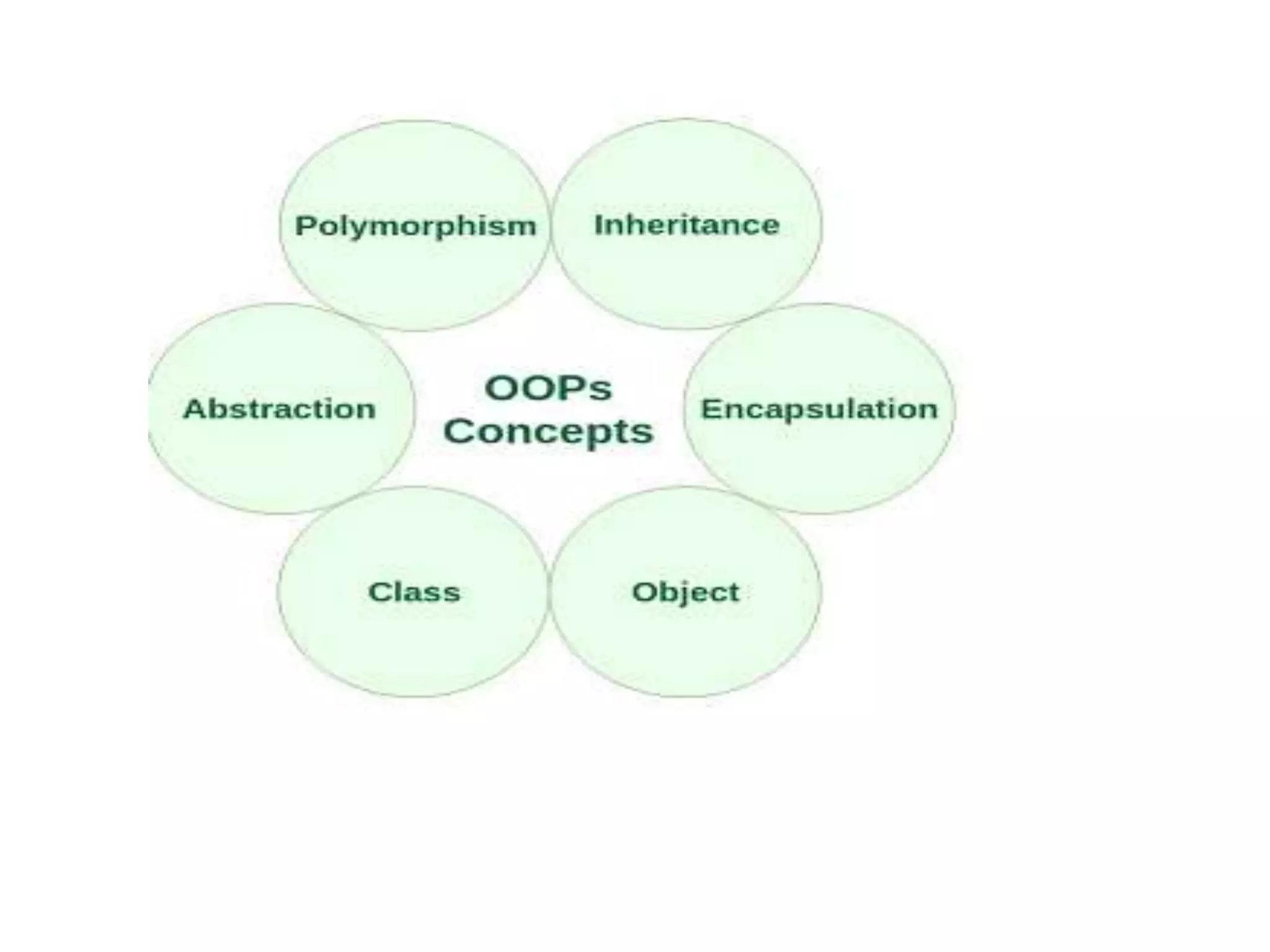

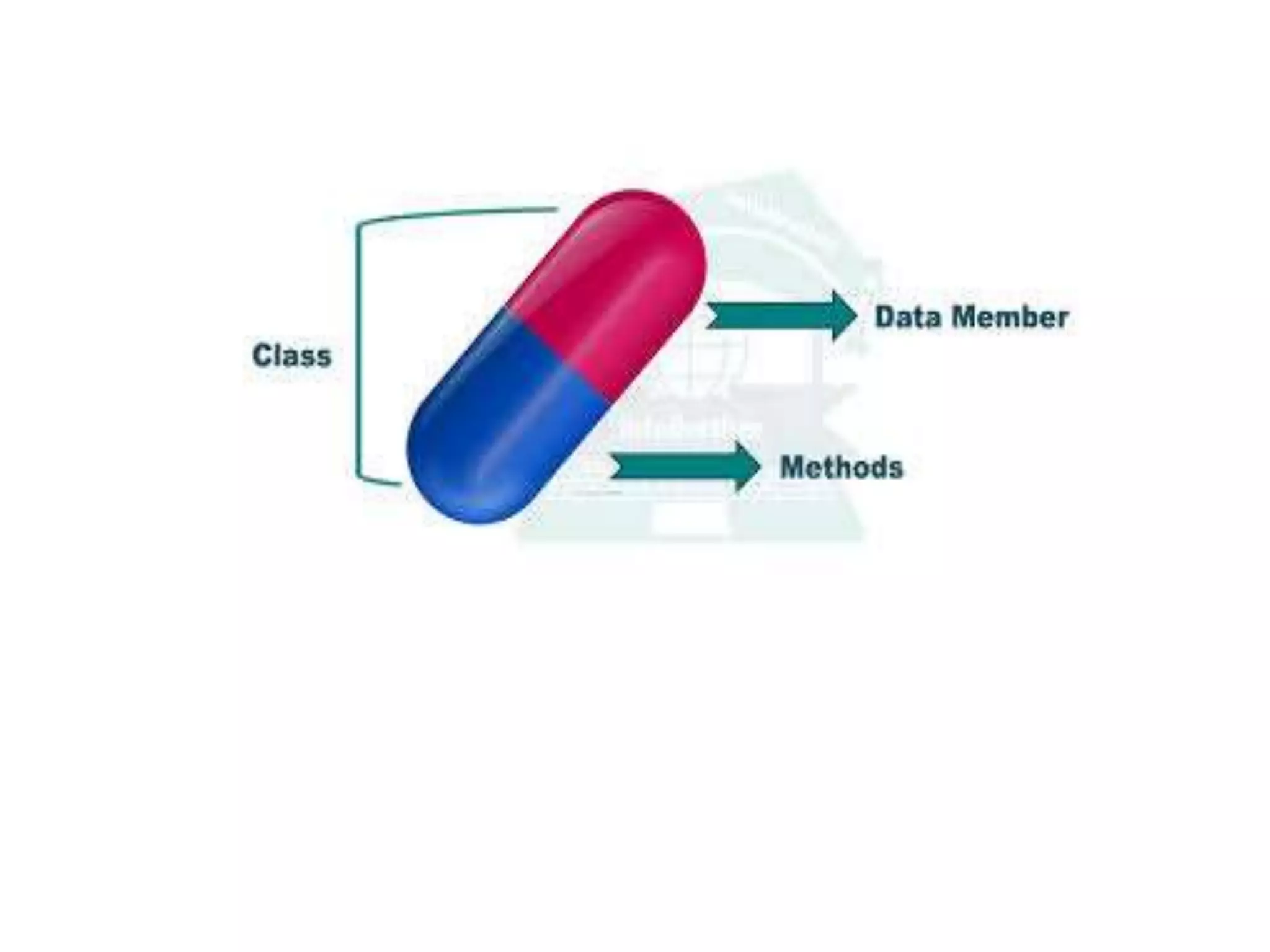
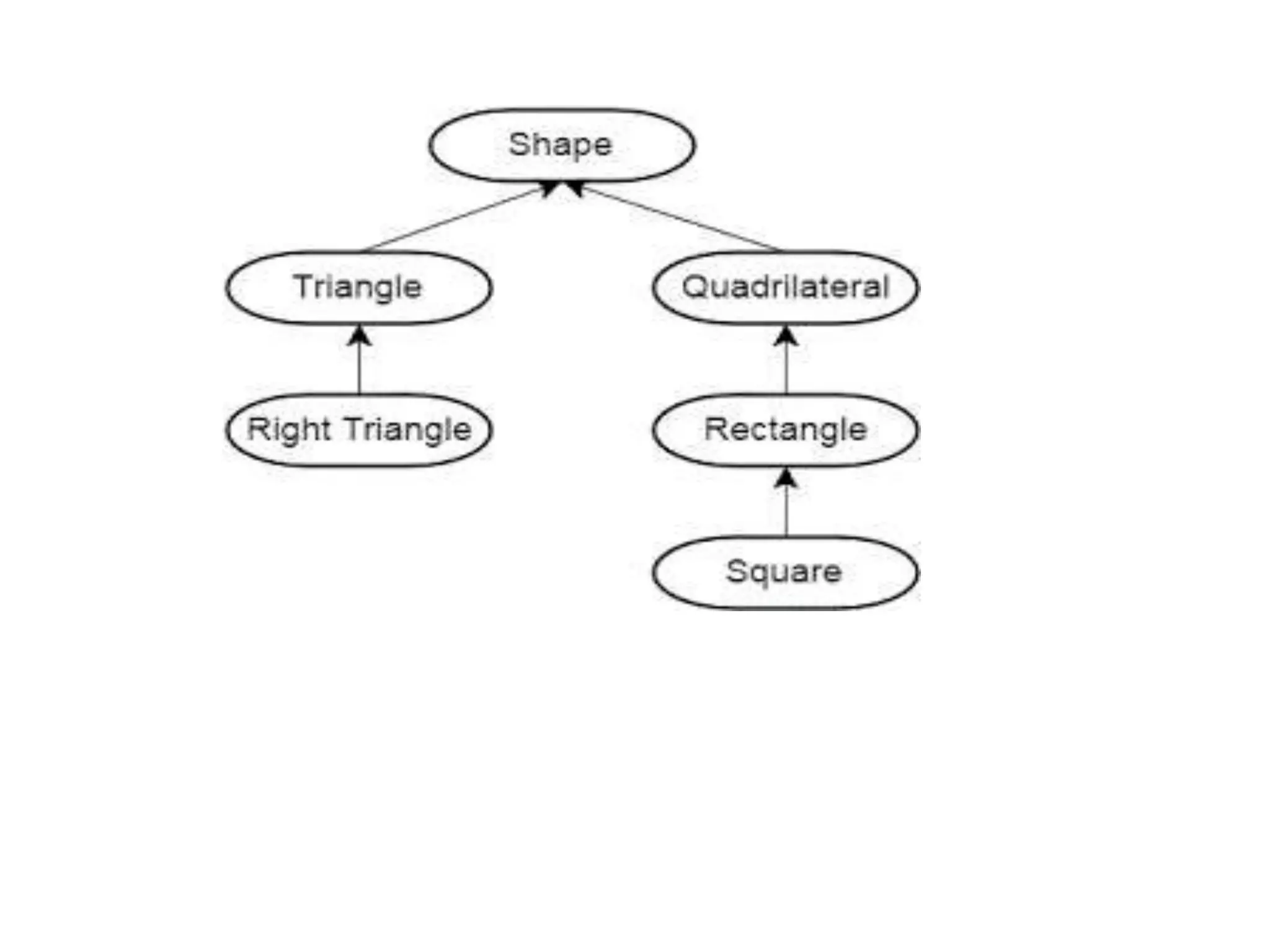
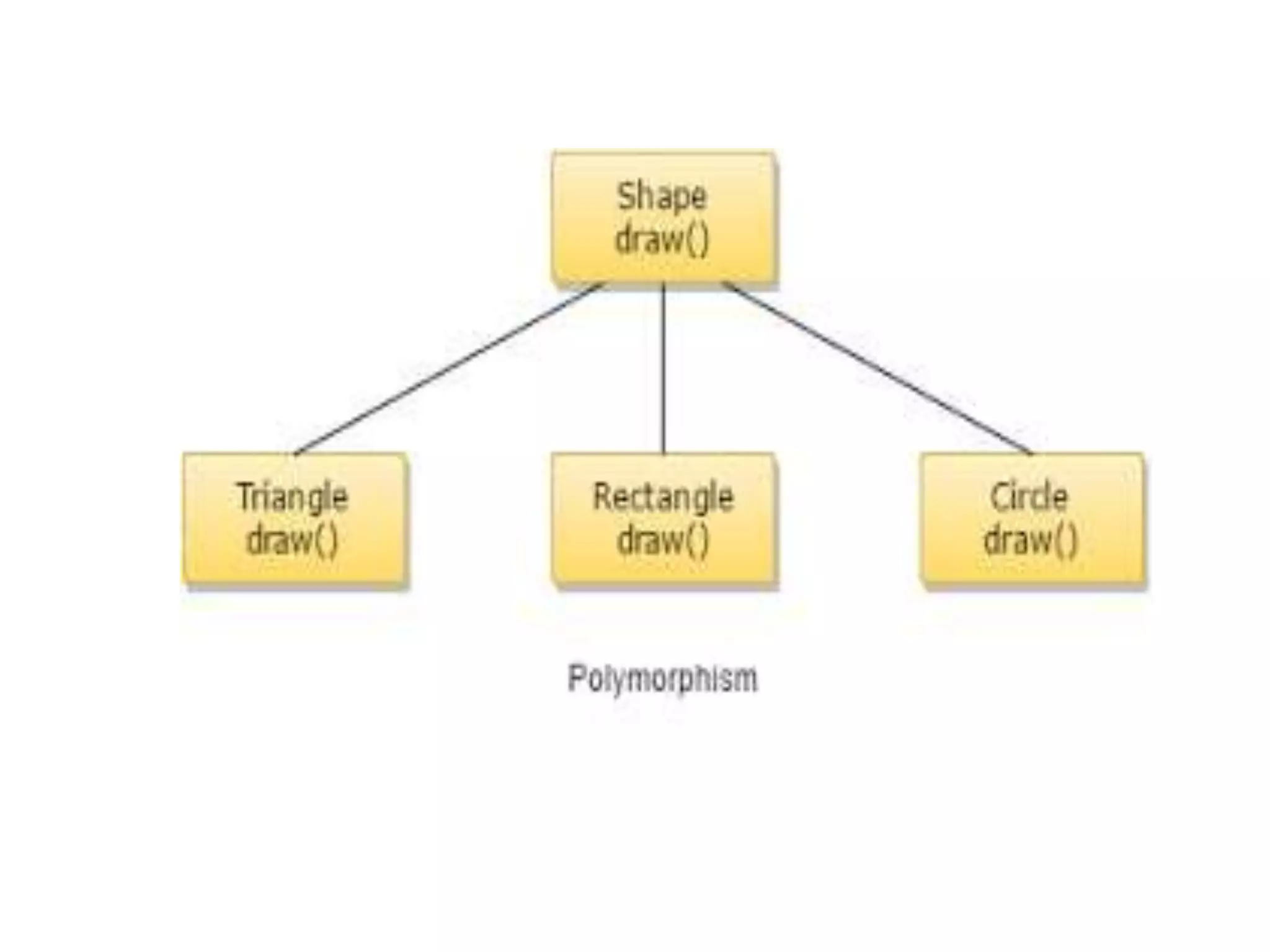
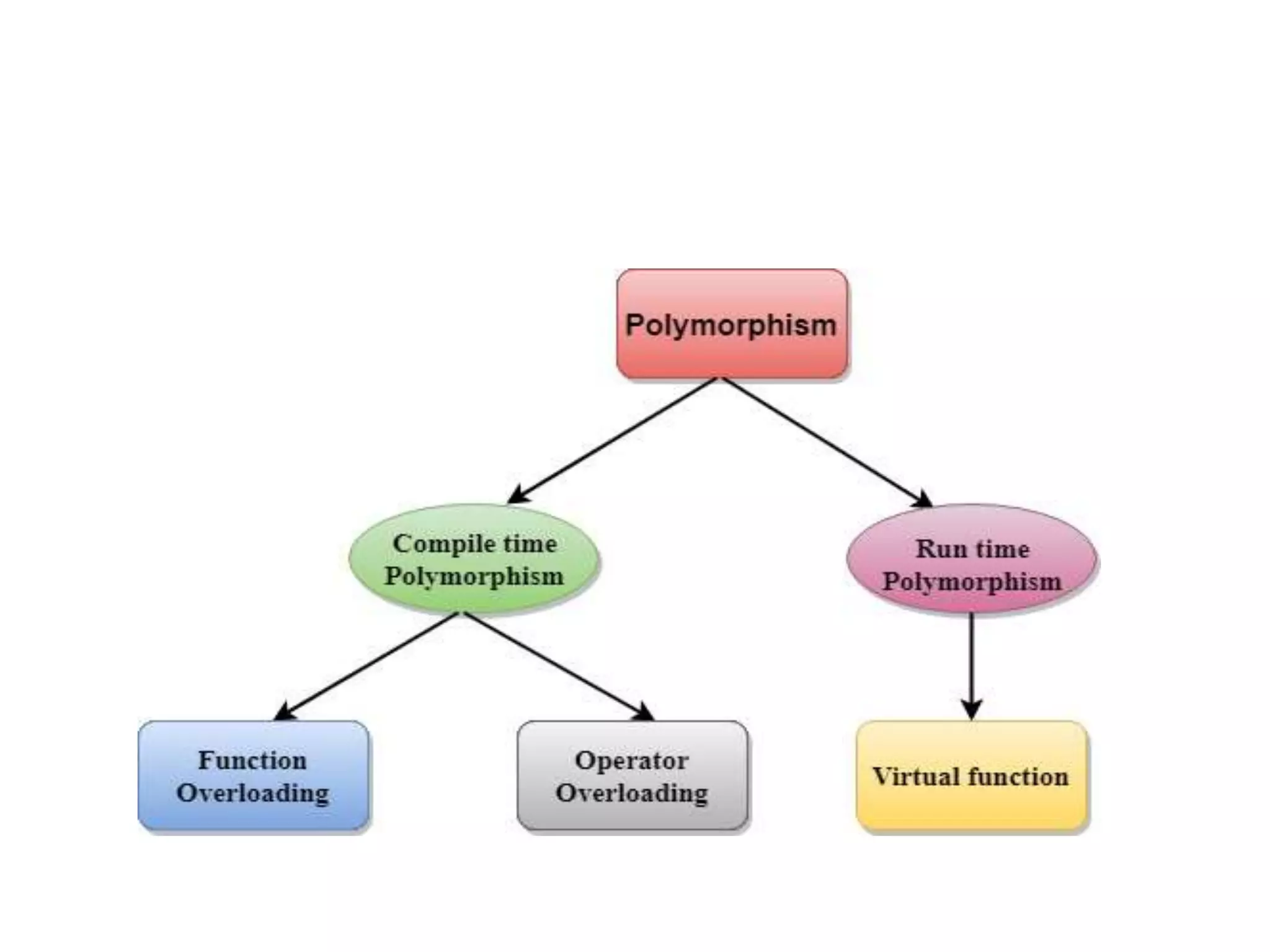
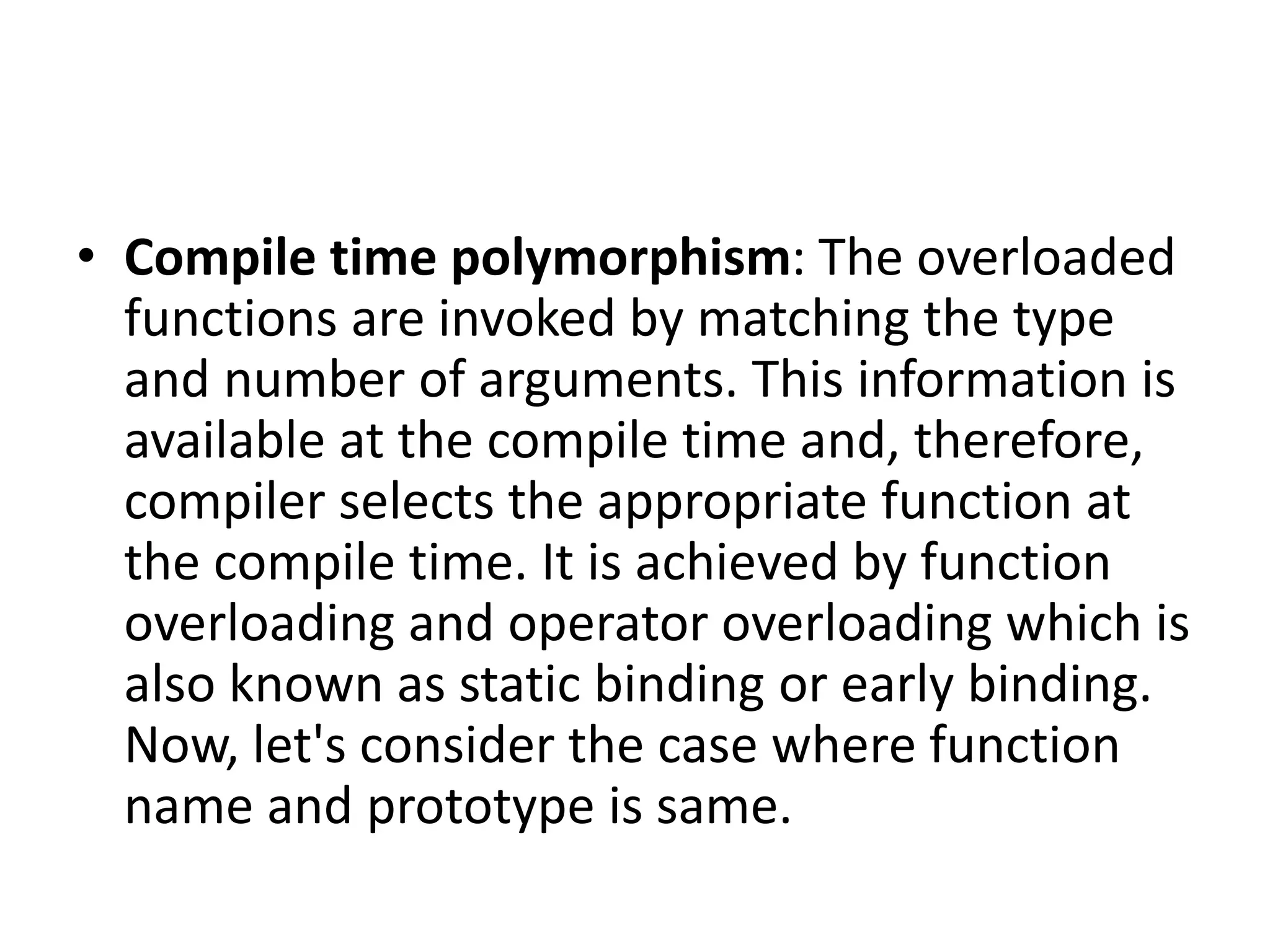
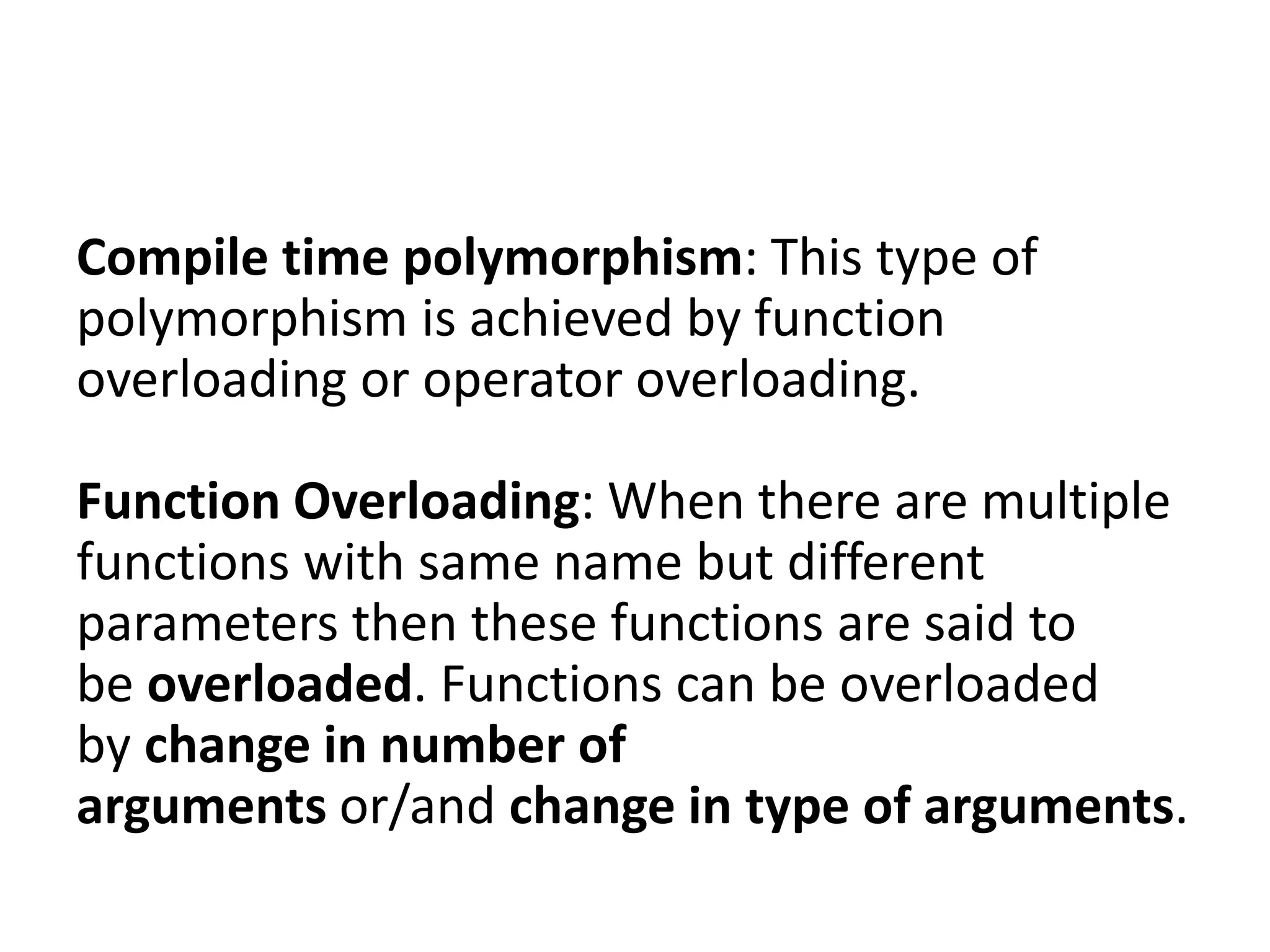
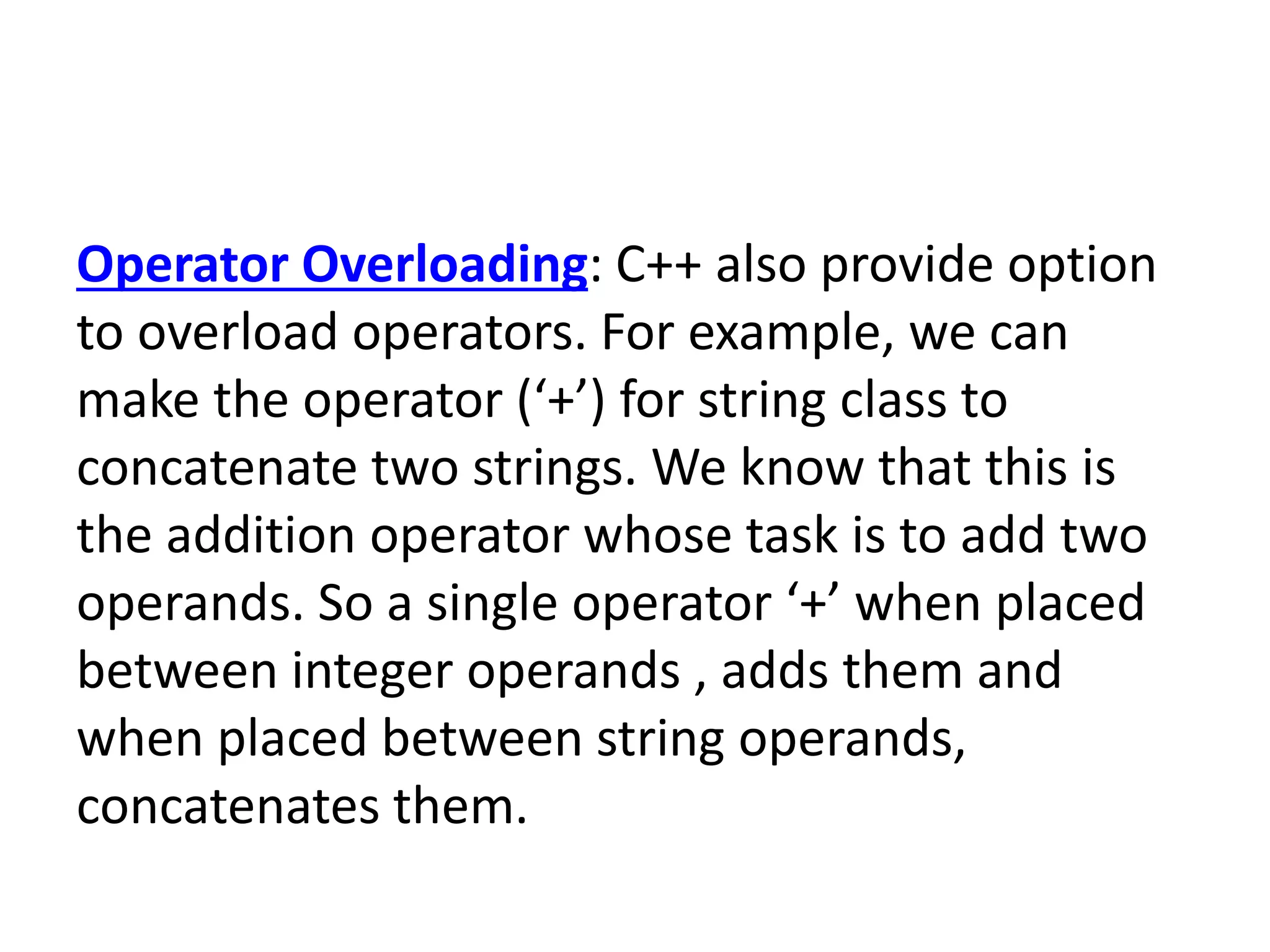
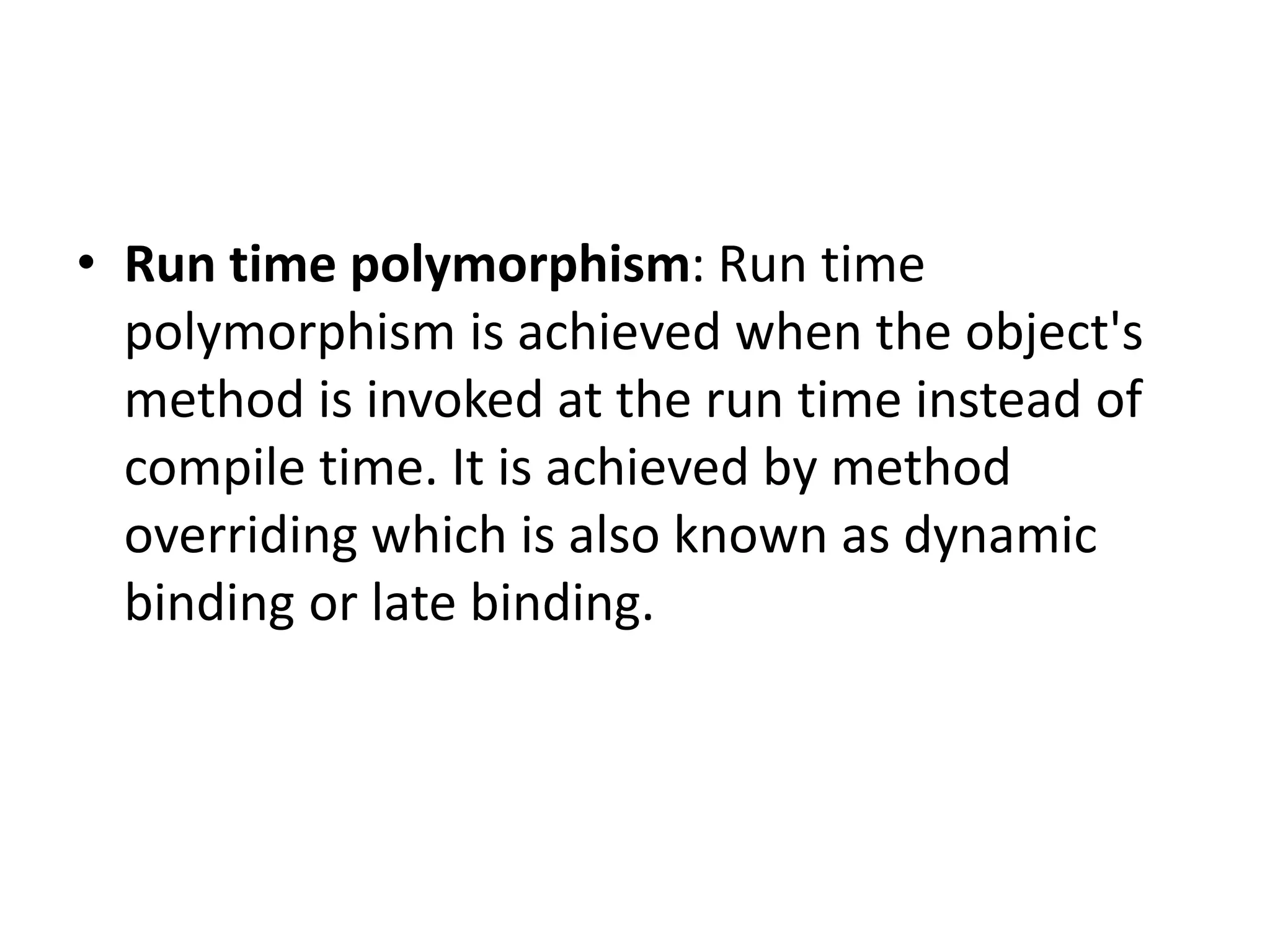
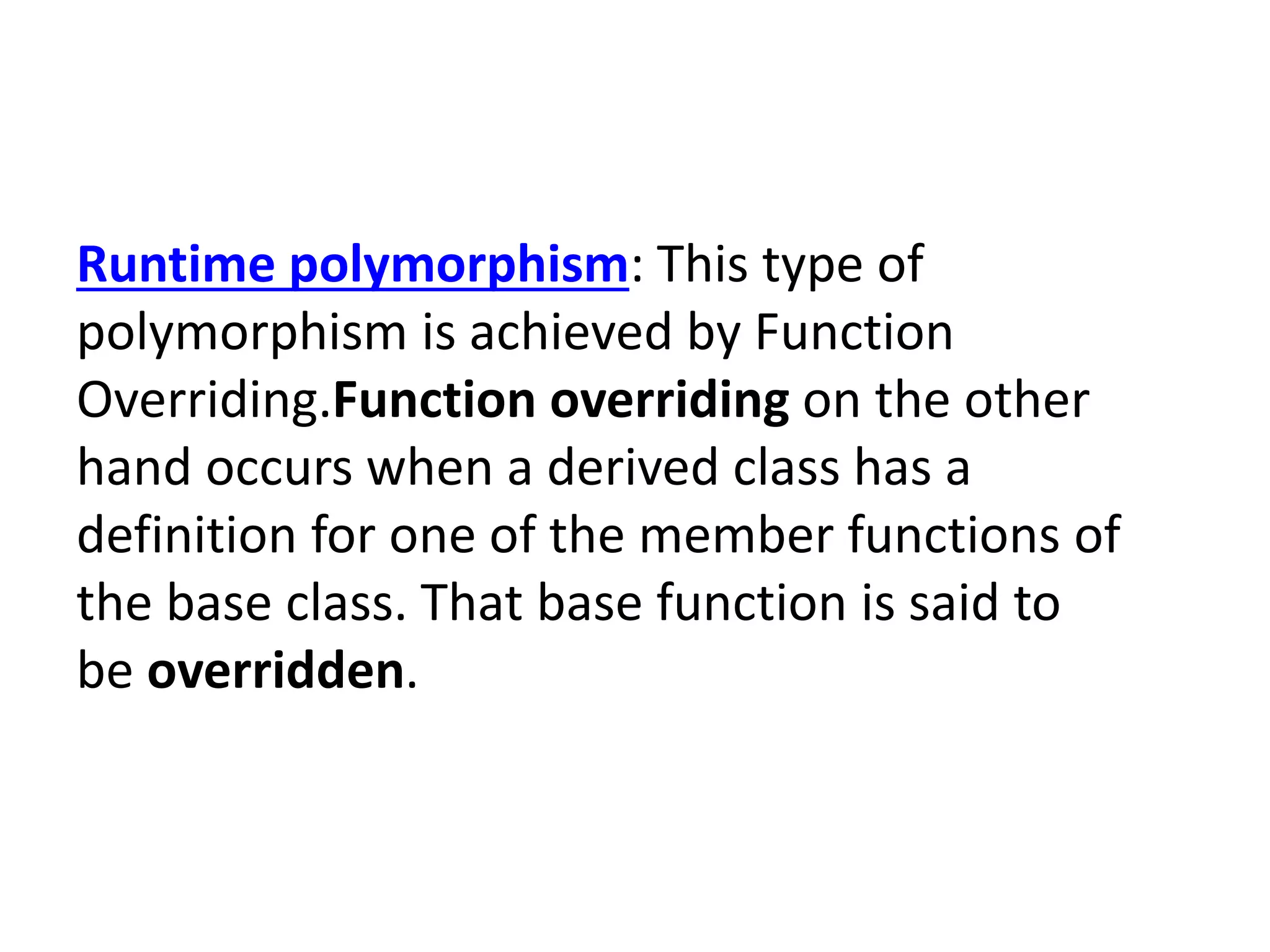
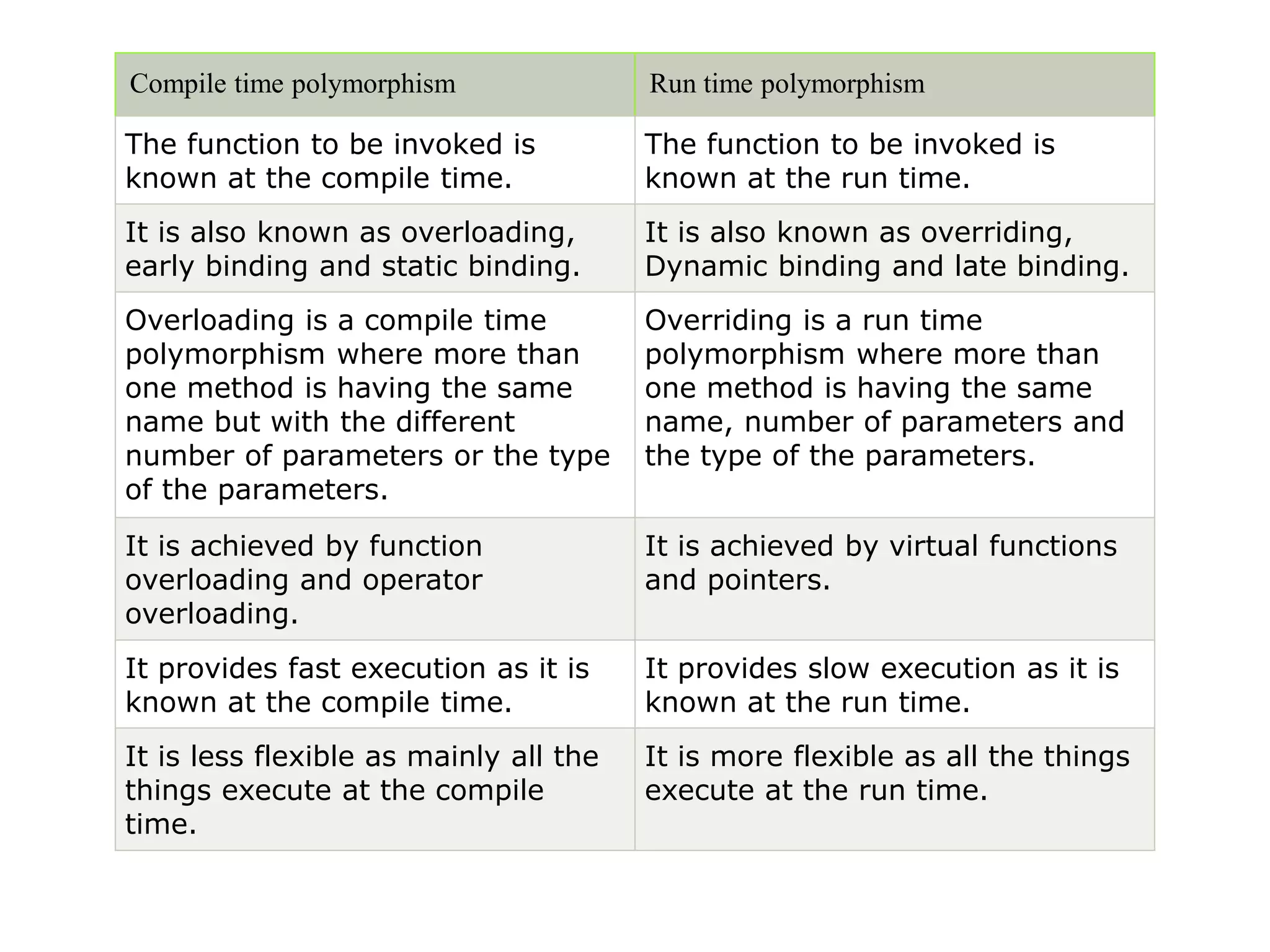
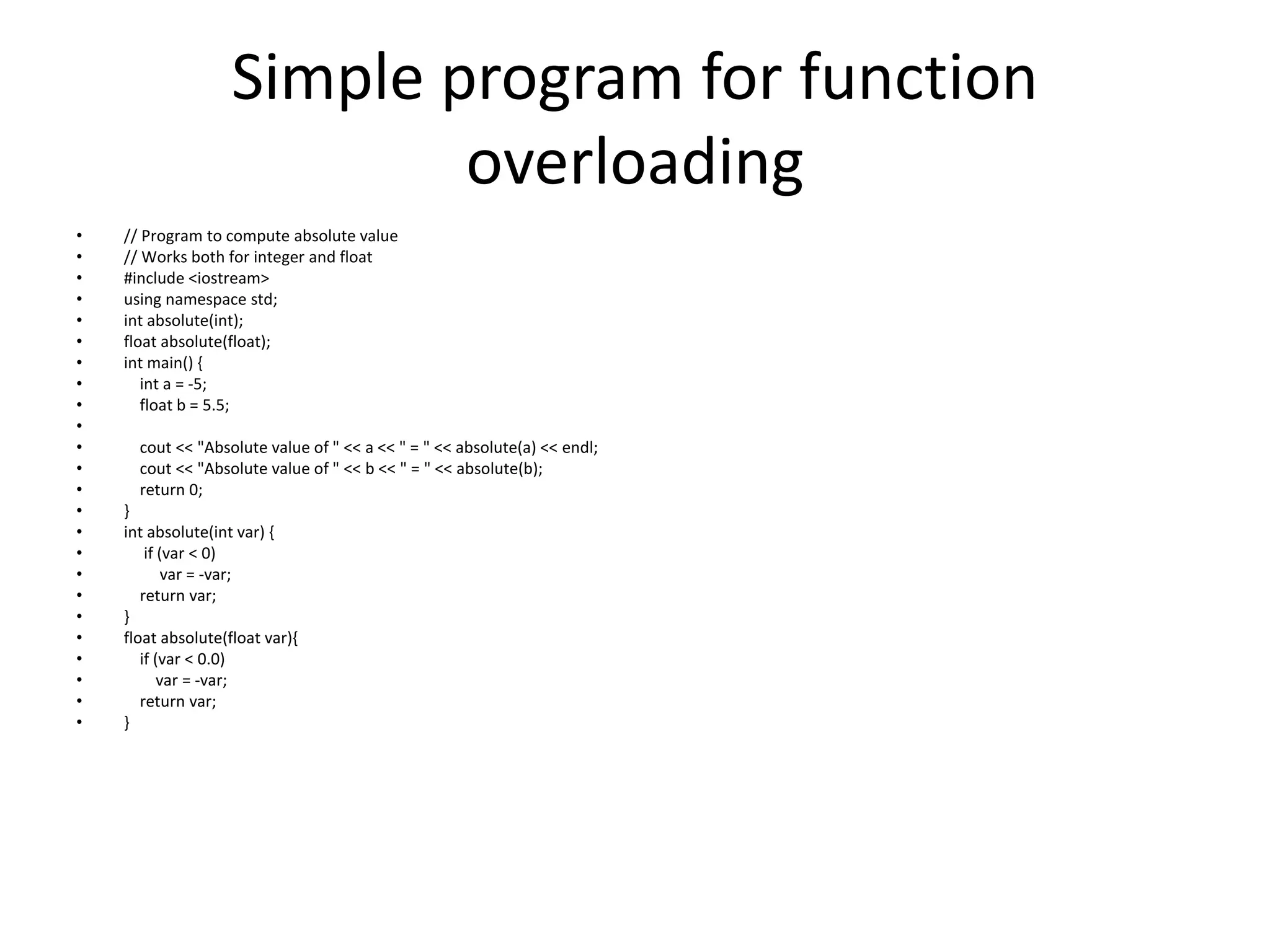

This document provides an overview of object-oriented programming (OOP) concepts like objects, classes, abstraction, encapsulation, inheritance, and polymorphism. It also discusses OOP principles and how they are implemented in C++. Key points include: OOP aims to model real-world entities and their relationships via objects and classes; classes act as blueprints that define objects; abstraction hides unnecessary details; encapsulation bundles related data and functions; inheritance allows code reusability; and polymorphism allows one interface to work with multiple forms. The document also contrasts compile-time vs. runtime polymorphism.


![11.C++Polymorphism [Autosaved].pptx](https://cdn.slidesharecdn.com/ss_thumbnails/11-230415140221-2d16bb5a-thumbnail.jpg?width=640&height=640&fit=bounds)


