PROGRAMMING FUNDAMENTAL
Lecture No. 1
PROGRAM
“A precise sequence of steps to
solve a particular problem”
CRITICAL SKILLS
 Analysis
 Critical Thinking
 Attention to Detail
DESIGN RECIPE
To design a program properly, we must:
 Analyze a problem statement, typically expressed as
a word problem
 Express its essence, abstractly and with examples
 Formulate statements and comments in a precise
language
 Evaluate and revise the activities in light of checks
and tests
 PAY ATTENTION TO DETAIL
 These skills are useful for anybody
 All assignments in this course should follow
the these guidelines
Computers are STUPID
Think ALL
TILL End
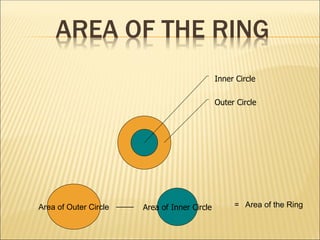
AREA OF THE RING
Outer Circle
Inner Circle
Area of Inner Circle
____
Area of Outer Circle = Area of the Ring
 Think Reuse
 Think User Interface
 Comments liberally
Dump man brings water:
What is the probability that he
get glass of water on specified
location.
LOGICAL ERROR
Lewis Carol: “Through the Looking Glass”
“Twas brillig, and the slithy toves Did gyre
and gimble in the wabe “
BOOKS
 Kernighan and Ritchie: The C Programming Language
 Yashavant Kanetkar: Let Us C
 Deitel & Deitel : C++ How to Program
COURSE OBJECTIVES
Objectives of this course are following
three milestones:
1. To appreciate the need for a programming
language
2. To introduce the concept and usability of the
structured programming methodology
3. To develop proficiency in making useful software
using the C language
COURSE CONTENTS
To achieve our later two objectives,
discussed prior:
 Basic Programming constructs and
building blocks
 Structured programming
 Structured flowcharts, pseudo-code
 History of C Language
 Operators, Variables and Expression
 Conditions and Control structures
 Arrays and Pointers
 Functions (Build In & User Defined)
COURSE CONTENTS
COURSE CONTENTS
 Header Files
 Structures and Unions
 File handling
 Flavor of Object Oriented
Programming (OOP)
There are two main categories of software
 System software
 Application Software
C Language
TOOLS OF THE TRADE
 Editor
 Interpreter and Compilers
 Debuggers
INTEGRATED DEVELOPMENT ENVIRONMENT
(IDE)
It contains
 Editor
 Compilers
 Debugger
 Linkers
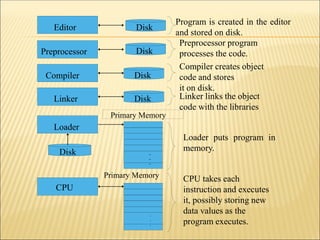
Preprocessor program
processes the code.
Loader puts program in
memory.
CPU takes each
instruction and executes
it, possibly storing new
data values as the
program executes.
Compiler creates object
code and stores
it on disk.
Linker links the object
code with the libraries
Loader
Primary Memory
Compiler
Editor
Preprocessor
Linker
Primary Memory
.
.
.
.
.
.
.
.
.
.
.
.
Disk
Disk
Disk
CPU
Disk
Disk
Program is created in the editor
and stored on disk.
THANKS

c computer programming language presentation

  • 1.
  • 2.
    PROGRAM “A precise sequenceof steps to solve a particular problem”
  • 3.
    CRITICAL SKILLS  Analysis Critical Thinking  Attention to Detail
  • 4.
    DESIGN RECIPE To designa program properly, we must:  Analyze a problem statement, typically expressed as a word problem  Express its essence, abstractly and with examples  Formulate statements and comments in a precise language  Evaluate and revise the activities in light of checks and tests
  • 5.
     PAY ATTENTIONTO DETAIL  These skills are useful for anybody  All assignments in this course should follow the these guidelines
  • 6.
  • 7.
  • 8.
    AREA OF THERING Outer Circle Inner Circle Area of Inner Circle ____ Area of Outer Circle = Area of the Ring
  • 9.
     Think Reuse Think User Interface  Comments liberally
  • 10.
    Dump man bringswater: What is the probability that he get glass of water on specified location.
  • 11.
    LOGICAL ERROR Lewis Carol:“Through the Looking Glass” “Twas brillig, and the slithy toves Did gyre and gimble in the wabe “
  • 12.
    BOOKS  Kernighan andRitchie: The C Programming Language  Yashavant Kanetkar: Let Us C  Deitel & Deitel : C++ How to Program
  • 13.
    COURSE OBJECTIVES Objectives ofthis course are following three milestones: 1. To appreciate the need for a programming language 2. To introduce the concept and usability of the structured programming methodology 3. To develop proficiency in making useful software using the C language
  • 14.
    COURSE CONTENTS To achieveour later two objectives, discussed prior:  Basic Programming constructs and building blocks  Structured programming  Structured flowcharts, pseudo-code
  • 15.
     History ofC Language  Operators, Variables and Expression  Conditions and Control structures  Arrays and Pointers  Functions (Build In & User Defined) COURSE CONTENTS
  • 16.
    COURSE CONTENTS  HeaderFiles  Structures and Unions  File handling  Flavor of Object Oriented Programming (OOP)
  • 17.
    There are twomain categories of software  System software  Application Software
  • 18.
  • 19.
    TOOLS OF THETRADE  Editor  Interpreter and Compilers  Debuggers
  • 20.
    INTEGRATED DEVELOPMENT ENVIRONMENT (IDE) Itcontains  Editor  Compilers  Debugger  Linkers
  • 21.
    Preprocessor program processes thecode. Loader puts program in memory. CPU takes each instruction and executes it, possibly storing new data values as the program executes. Compiler creates object code and stores it on disk. Linker links the object code with the libraries Loader Primary Memory Compiler Editor Preprocessor Linker Primary Memory . . . . . . . . . . . . Disk Disk Disk CPU Disk Disk Program is created in the editor and stored on disk.
  • 22.