PREPARING	
  FOR	
  RIO?	
  OR	
  PREPARING	
  FOR	
  POST-­‐RIO?	
  
PARALYMPIC	
  ATHLETES	
  AND	
  TRANSITIONS	
  OUT	
  OF	
  SPORT	
  
ANDREA	
  BUNDON,	
  PHD	
  
PROFESSOR	
  VICKY	
  GOOSEY-­‐TOLFREY	
  
The	
  Peter	
  Harrison	
  Centre	
  for	
  Disability	
  Sport	
  
Loughborough	
  University,	
  UK	


DISCUSSION	
  FINDINGS	
  METHODS	
  PURPOSE	
  BACKGROUND	
  
BACKGROUND	
  
The	
  English	
  InsKtute	
  of	
  Sport	
  (EIS)	
  is	
  a	
  significant	
  
provider	
  of	
  sport	
  science	
  and	
  sport	
  management	
  
services	
  to	
  athletes	
  represenKng	
  Great	
  Britain	


§  Performance	
  Lifestyle	
  advisors	
  provide	
  services	
  that	
  
support	
  lifestyles	
  conducive	
  to	
  opKmal	
  performance	
  
§  This	
  includes	
  mentoring	
  athletes	
  at	
  transiKonal	
  
stages	
  in	
  athleKc	
  careers	


§  Also	
  includes	
  supporKng	
  athletes	
  in	
  their	
  transiKons	
  
from	
  ‘in	
  sport’	
  to	
  ‘out	
  of	
  sport’	
  
DISCUSSION	
  FINDINGS	
  METHODS	
  PURPOSE	
  BACKGROUND	
  
BACKGROUND	
  
Mainstreaming	
  of	
  disability	
  sport	
  means	
  same	
  
services	
  are	
  now	
  provided	
  to	
  elite	
  para-­‐athletes	


§  There	
  is	
  no	
  empirical	
  research	
  into	
  the	
  out	
  of	
  sport	
  
transiKons	
  of	
  disabled	
  athletes	
  
§  Performance	
  Lifestyle	
  advisers’	
  pracKce	
  is	
  guided	
  by	
  
research	
  conducted	
  exclusively	
  with	
  non-­‐disabled	
  
athletes	


DISCUSSION	
  FINDINGS	
  METHODS	
  PURPOSE	
  BACKGROUND	
  
PURPOSE	
  
Purpose	
  1:	
  	
  
Map	
  the	
  exisKng	
  literature	
  on	
  para-­‐athlete	
  career	
  
pathways	
  idenKfying	
  the	
  sources	
  of	
  evidence	
  
currently	
  available	
  as	
  well	
  as	
  gaps	
  in	
  knowledge.	


Purpose	
  2:	
  	
  
Provide	
  service	
  providers	
  with	
  specific	
  direcKons	
  for	
  
further	
  inquiry.	


DISCUSSION	
  FINDINGS	
  METHODS	
  PURPOSE	
  BACKGROUND	
  
METHODS	
  
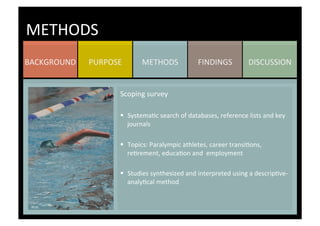
Scoping	
  survey	


§  SystemaKc	
  search	
  of	
  databases,	
  reference	
  lists	
  and	
  key	
  
journals	
  
§  Topics:	
  Paralympic	
  athletes,	
  career	
  transiKons,	
  
reKrement,	
  educaKon	
  and	
  	
  employment	


§  Studies	
  synthesized	
  and	
  interpreted	
  using	
  a	
  descripKve-­‐
analyKcal	
  method	


DISCUSSION	
  FINDINGS	
  METHODS	
  PURPOSE	
  BACKGROUND	
  
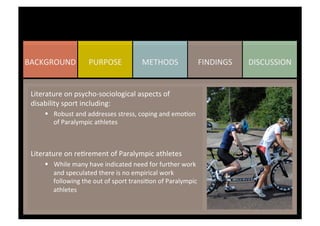
Literature	
  on	
  psycho-­‐sociological	
  aspects	
  of	
  
disability	
  sport	
  including:	
  
§  Robust	
  and	
  addresses	
  stress,	
  coping	
  and	
  emoKon	
  
of	
  Paralympic	
  athletes	


Literature	
  on	
  reKrement	
  of	
  Paralympic	
  athletes	
  
§  While	
  many	
  have	
  indicated	
  need	
  for	
  further	
  work	
  
and	
  speculated	
  there	
  is	
  no	
  empirical	
  work	
  
following	
  the	
  out	
  of	
  sport	
  transiKon	
  of	
  Paralympic	
  
athletes	


DISCUSSION	
  FINDINGS	
  METHODS	
  PURPOSE	
  BACKGROUND	
  
DISCUSSION	
  
§  Paralympians	
  may	
  have	
  different	
  pathways	
  into	
  elite	
  sport	
  compared	
  to	
  
non-­‐disabled	
  athletes	
  (o^en	
  later	
  start	
  and	
  different	
  employment	
  history)	
  
§  There	
  are	
  reasons	
  for	
  leaving	
  sport	
  unique	
  to	
  Paralympic	
  athletes	
  (changes	
  
in	
  classificaKon,	
  changes	
  to	
  events	
  on	
  Paralympic	
  programme)	
  
§  Engagement	
  with	
  reKred	
  para-­‐athletes	
  athletes	
  is	
  needed	
  to	
  understand	
  
these	
  interacKons	
  and	
  provide	
  be_er	
  services	
  to	
  current	
  para-­‐athletes	


Project	
  supported	
  by:	


PREPARING	
  FOR	
  RIO?	
  OR	
  PREPARING	
  FOR	
  POST-­‐RIO?	
  
PARALYMPIC	
  ATHLETES	
  AND	
  TRANSITIONS	
  OUT	
  OF	
  SPORT	
  

Bundon vista 2015 prism

  • 1.
    PREPARING  FOR  RIO?  OR  PREPARING  FOR  POST-­‐RIO?   PARALYMPIC  ATHLETES  AND  TRANSITIONS  OUT  OF  SPORT   ANDREA  BUNDON,  PHD   PROFESSOR  VICKY  GOOSEY-­‐TOLFREY   The  Peter  Harrison  Centre  for  Disability  Sport   Loughborough  University,  UK    
  • 2.
    DISCUSSION  FINDINGS  METHODS  PURPOSE  BACKGROUND   BACKGROUND   The  English  InsKtute  of  Sport  (EIS)  is  a  significant   provider  of  sport  science  and  sport  management   services  to  athletes  represenKng  Great  Britain     §  Performance  Lifestyle  advisors  provide  services  that   support  lifestyles  conducive  to  opKmal  performance   §  This  includes  mentoring  athletes  at  transiKonal   stages  in  athleKc  careers     §  Also  includes  supporKng  athletes  in  their  transiKons   from  ‘in  sport’  to  ‘out  of  sport’  
  • 3.
    DISCUSSION  FINDINGS  METHODS  PURPOSE  BACKGROUND   BACKGROUND   Mainstreaming  of  disability  sport  means  same   services  are  now  provided  to  elite  para-­‐athletes     §  There  is  no  empirical  research  into  the  out  of  sport   transiKons  of  disabled  athletes   §  Performance  Lifestyle  advisers’  pracKce  is  guided  by   research  conducted  exclusively  with  non-­‐disabled   athletes      
  • 4.
    DISCUSSION  FINDINGS  METHODS  PURPOSE  BACKGROUND   PURPOSE   Purpose  1:     Map  the  exisKng  literature  on  para-­‐athlete  career   pathways  idenKfying  the  sources  of  evidence   currently  available  as  well  as  gaps  in  knowledge.     Purpose  2:     Provide  service  providers  with  specific  direcKons  for   further  inquiry.                  
  • 5.
    DISCUSSION  FINDINGS  METHODS  PURPOSE  BACKGROUND   METHODS   Scoping  survey     §  SystemaKc  search  of  databases,  reference  lists  and  key   journals   §  Topics:  Paralympic  athletes,  career  transiKons,   reKrement,  educaKon  and    employment     §  Studies  synthesized  and  interpreted  using  a  descripKve-­‐ analyKcal  method          
  • 6.
    DISCUSSION  FINDINGS  METHODS  PURPOSE  BACKGROUND   Literature  on  psycho-­‐sociological  aspects  of   disability  sport  including:   §  Robust  and  addresses  stress,  coping  and  emoKon   of  Paralympic  athletes       Literature  on  reKrement  of  Paralympic  athletes   §  While  many  have  indicated  need  for  further  work   and  speculated  there  is  no  empirical  work   following  the  out  of  sport  transiKon  of  Paralympic   athletes        
  • 7.
    DISCUSSION  FINDINGS  METHODS  PURPOSE  BACKGROUND   DISCUSSION   §  Paralympians  may  have  different  pathways  into  elite  sport  compared  to   non-­‐disabled  athletes  (o^en  later  start  and  different  employment  history)   §  There  are  reasons  for  leaving  sport  unique  to  Paralympic  athletes  (changes   in  classificaKon,  changes  to  events  on  Paralympic  programme)   §  Engagement  with  reKred  para-­‐athletes  athletes  is  needed  to  understand   these  interacKons  and  provide  be_er  services  to  current  para-­‐athletes        
  • 8.
    Project  supported  by:       PREPARING  FOR  RIO?  OR  PREPARING  FOR  POST-­‐RIO?   PARALYMPIC  ATHLETES  AND  TRANSITIONS  OUT  OF  SPORT