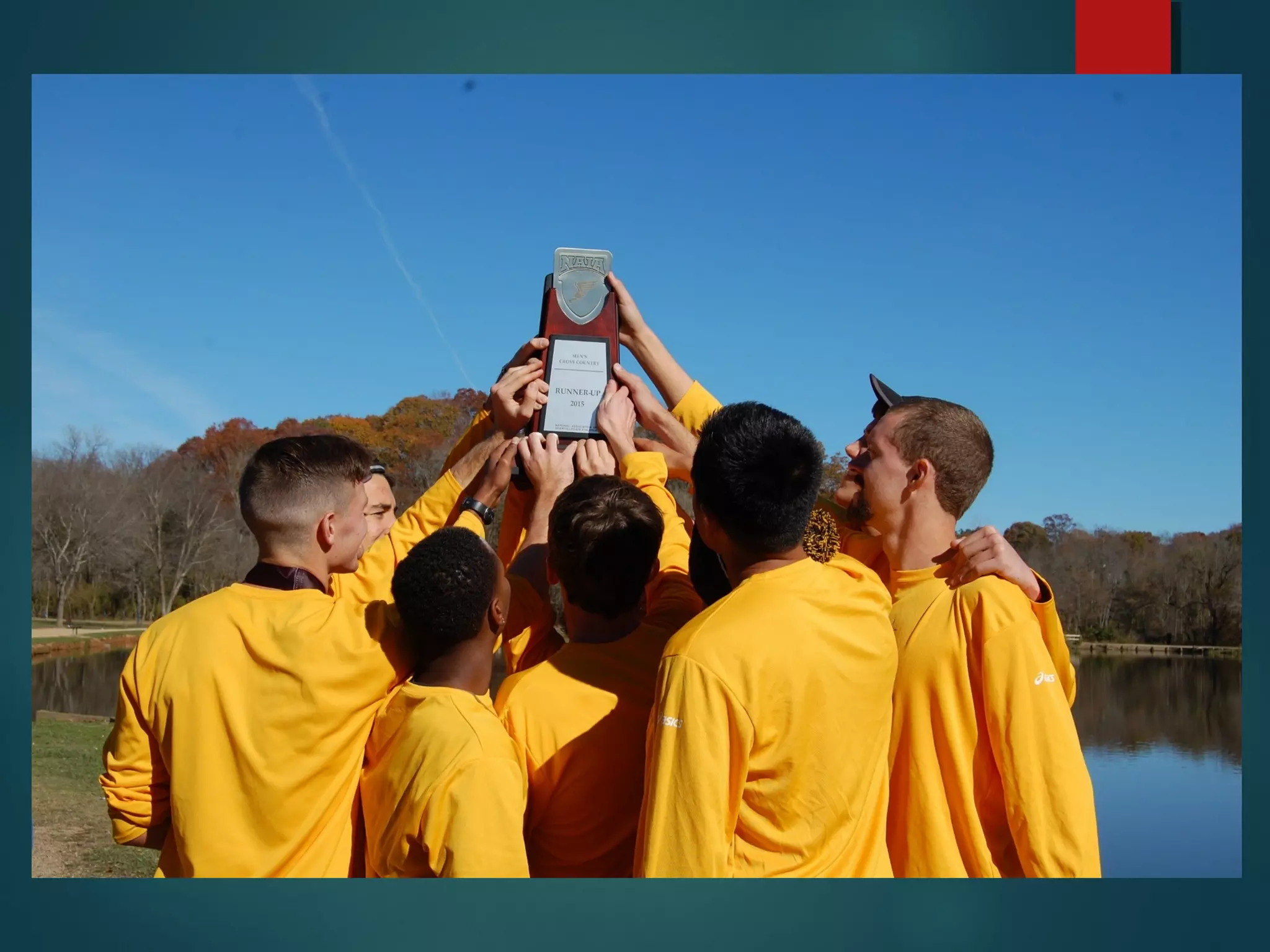
Building a Championship Culture
COACH ALSTIN BENTON –
UNIVERSITY OF SAINT MARY
Culture why is it so
important?
 Every time we have failed as a program it
was because of culture.
 Regardless of the talent of the team…. culture is
why we failed.
 LET ME MAKE THIS CLEAR THAT IS MY FAULT/
FAILURE NOT THEIRS
 We control the culture of our teams
What is a championship
culture?
 Is a culture that breads success
 What factors are important to performing at a
high level? – factors that affect performance?
Components of a
championship culture
Character
Mentality
Passion
The Fan
Practice
The Person
Lifestyle Issues
Character
HOW CHARACTER AFFECTS A
TEAM
What are the components
of a Champion of
Character *(NAIA)
 Integrity
 Servant Leadership
 Responsibility
 Respect
 Sportsmanship
Why are these
components important
 Integrity
 Knowing and doing what is right
 Servant Leadership
 Serving the good of the team
 Responsibility
 Doing your part to contribute to the team
 Respect
 Treat others how you want to be treated
 Sportsmanship
 Bringing your best to every competition
Mentality
WHY “MENTAL” -ITY MATTERS
Mentality – “ The Grind”
“The art of the hero is not
about being brave but it is about
being so competent there is no
need to be brave”
We discuss working hard so that we are over prepared
Mentality – Central
Governor Model
 Understanding how much the mind plays in
successful running
 Introduced by Tim Noakes in the 2000’s
 Traditional Catastrophic approach is likely false
 Traditional fatigue by products don’t directly
cause fatigue
 “Fatigue is a Brain-Derived Emotion” (Noakes
2012)
Example’s
 When you exercise and your body heats up your
brain shuts down exercise or slows you down
before your body gets to a dangerous heat level.
 The athlete who PR’s and says that it was the
easiest race they have ever ran.
Mental Toughness
Workouts
 Long Runs
 The ability to stay focused for an extended period
of time
 Mystery workouts
 Do not tell them workout up front
 They only know what’s next after the previous
interval
 Surprise Workouts
 Cut warmup short
 Last Minute Changes
 Unexpected workout that day
Passion
COACHING WITH A PASSION
Passion
 Bring your A game everyday
 Be ready for practice!
 Never bring outside emotions into practice
 Be interested in their life outside of running
 Fine arts, work, family life, grad school, finals
 You should BE A FAN of the Sport!
The Name Game
 Say an athletes name everyday
 Try this!
 They give you 1-2 hours of your time try to spend 20
seconds saying name and asking them one
question
 “ Hey Mark! How is work treating you?
 “Hey Josh! How did you math test go?
The Fan
CREATING FANS OF THE
SPORT
Love the Sport
 Track Watch Parties
 Track is expensive to watch and not main stream
 You don’t see it everyday on TV
 Have a Pizza Party and Watch whatever big meet is
on
 Have everyone pick a favorite professional
athlete.
 Create a questionnaire
Athletes Name:_______________ Athlete Hometown/Country:________
Athlete Age:_____
Major Victories/Medals:
What are their main events?
What is their racing style?
What is your favorite race for that athlete?
What is the athletes background?
What college did the athlete go to?
Favorite Professional Track Athlete
Practice
BRING A CHAMPIONSHIP
ATMOSPHERE TO PRACTICE
Practice
 Organized
 Have a reason
 Explain the reason
 Keep it simple – 5 min rule
 Put your phone away
 Always be ON
 Deliberate Practice
Team Communication
 Communication is key
 As coaches we emphasize the importance of
communicating
 Comfortable correcting each other
 Doing exercise right
 Not skipping
 Comfortable talking with coaches staff
 Injuries/Pain
 Asking questions
After Practice
 The importance of friendship and recovery
 Practice should end together
 Studies show that Laughing and Spending time
with Family or Friends decreases perceived
fatigue (Magness)
 Helps Low Cortisol(stress) levels
The Person
THEY ARE PEOPLE NOT
ROBOTS
 Remember they are people
 They have feelings
 They all are going through things
 Many more than we know or understand
Athletic Lifestyle Issues
THE FACTORS THAT AFFECT
AN ATHLETES PERFORMANCE
Lifestyle Issues
The outside factors that
contribute to an Athletes
Performance
 Sleep
 Nutrition
 Stress
 Outside Activity Levels
Sleep
 8 to 10hrs – we already knew this
 But why…..because of two hormones that a
linked to our appetite and hunger!
 Ghrelin and Leptin – accelerator and brake
 Ghrelin – hormone released by the stomach that
affects appetite (accelerator)
 Leptin – a hormone that is thought to suppress
appetite and speed up metabolism (brakes)
 4-6hrs of sleep a night results in 14.9% increase in
Ghrelin production and 15.5% lower levels of
Leptin
Sleep = Recovery
 Aids in muscle Recovery
 Lack off = Loss of mental concentration
 Release of Growth Hormone
Recovery, Mental Focus, Hormone Balance = Great
Performance!!
Nutrition
 We are in a crisis in America
 Eating More and Being Less Active
 Spend time in practice talking about nutrition
 Try to have healthier team meals!
 Recommended Reading on Nutrition – for you!
 Lore of Nutrition - Tim Noakes
 The Story of the Human Body – Daniel Liebermann
Nutrition
Basic Nutrition information I share with the team
The six groups of nutrients found in our food are
 Carbohydrates
 Fats & oils
 Proteins
 Vitamins
 Minerals
 Water
Recommended Daily Amount
• 3-4 Servings of Fruit Daily
• Essential Carbohydrates
• Essential Vitamins
• Essential Minerals
• Small amounts of protein
• 5-7 Servings of Vegetables Daily
• Essential Carbohydrates
• Essential Vitamins
• Essential Minerals
• Small amounts of protein
• 2-4 Servings of Protein Daily
• Essential Fats
• Large Amounts of Protein
• 3 Servings of Whole Grains Daily
• Carbohydrates
• Fiber
How do we apply this?
 What is a Servings size?
 Fruit = 1 fruit.. I.E. whole apple
 Vegetable =1/2 cup of solid vegetables (corn,
green beans, broccoli)
 Salads = 1 Cup (Dark Greens)
 Protein = Size of 1 palm
 Whole Grain = Judgment call/ 1 slice
Eat more, Eat Less
 Aim for 5-6 meals daily
 Why? To maintain blood sugar levels without spikes
 Prevent metabolism from slowing
 Make meals similar in size
 Why? Keeps you full, no need to pig out at single
meal.
 Eat more often but eat less at individual meals
Name_Alstin__ Date__________
Meal Monday Tuesday Wednesday Thursday Friday Saturday Sunday
Breakfast 2 Eggs, Toast
Snack Bannana
Lunch
Salad w/ chicken
apple, Bread
Snack
Protien Bar,
bannana
Dinner
Tilapia, Corn,
Asparagus,
Cookie
Vegetables
(5-7) 4 veggy
Fruits(3-4) 3 fruit
Protein(2-3) 3 servings
W.Grain
(3)(45+g) 3 servings
How Do We Bring This
to the Team?
Team Goals/ Individual
Goals
 Setting team goals based around these areas not
around performance goals.
 We don’t set goals based on
finishes/times/performances
 Focus on growing in these areas will help you
grow as an athlete
 Character
 Mentality
 Practice
 Lifestyle Issues
FINAL STEP-THE BUY IN!
The End! Thank you
QUESTIONS?
Sources
 Noakes, T. D. (2012) Frontiers in Physiology
 Magness (2014) The Science of Running
 Noakes T. D. (2004) Lore of Running

Building a championship culture

  • 1.
    Building a ChampionshipCulture COACH ALSTIN BENTON – UNIVERSITY OF SAINT MARY
  • 3.
    Culture why isit so important?  Every time we have failed as a program it was because of culture.  Regardless of the talent of the team…. culture is why we failed.  LET ME MAKE THIS CLEAR THAT IS MY FAULT/ FAILURE NOT THEIRS  We control the culture of our teams
  • 4.
    What is achampionship culture?  Is a culture that breads success  What factors are important to performing at a high level? – factors that affect performance?
  • 5.
    Components of a championshipculture Character Mentality Passion The Fan Practice The Person Lifestyle Issues
  • 6.
  • 7.
    What are thecomponents of a Champion of Character *(NAIA)  Integrity  Servant Leadership  Responsibility  Respect  Sportsmanship
  • 8.
    Why are these componentsimportant  Integrity  Knowing and doing what is right  Servant Leadership  Serving the good of the team  Responsibility  Doing your part to contribute to the team  Respect  Treat others how you want to be treated  Sportsmanship  Bringing your best to every competition
  • 9.
  • 10.
    Mentality – “The Grind” “The art of the hero is not about being brave but it is about being so competent there is no need to be brave” We discuss working hard so that we are over prepared
  • 11.
    Mentality – Central GovernorModel  Understanding how much the mind plays in successful running  Introduced by Tim Noakes in the 2000’s  Traditional Catastrophic approach is likely false  Traditional fatigue by products don’t directly cause fatigue  “Fatigue is a Brain-Derived Emotion” (Noakes 2012)
  • 12.
    Example’s  When youexercise and your body heats up your brain shuts down exercise or slows you down before your body gets to a dangerous heat level.  The athlete who PR’s and says that it was the easiest race they have ever ran.
  • 13.
    Mental Toughness Workouts  LongRuns  The ability to stay focused for an extended period of time  Mystery workouts  Do not tell them workout up front  They only know what’s next after the previous interval  Surprise Workouts  Cut warmup short  Last Minute Changes  Unexpected workout that day
  • 14.
  • 15.
    Passion  Bring yourA game everyday  Be ready for practice!  Never bring outside emotions into practice  Be interested in their life outside of running  Fine arts, work, family life, grad school, finals  You should BE A FAN of the Sport!
  • 16.
    The Name Game Say an athletes name everyday  Try this!  They give you 1-2 hours of your time try to spend 20 seconds saying name and asking them one question  “ Hey Mark! How is work treating you?  “Hey Josh! How did you math test go?
  • 17.
  • 18.
    Love the Sport Track Watch Parties  Track is expensive to watch and not main stream  You don’t see it everyday on TV  Have a Pizza Party and Watch whatever big meet is on  Have everyone pick a favorite professional athlete.  Create a questionnaire
  • 19.
    Athletes Name:_______________ AthleteHometown/Country:________ Athlete Age:_____ Major Victories/Medals: What are their main events? What is their racing style? What is your favorite race for that athlete? What is the athletes background? What college did the athlete go to? Favorite Professional Track Athlete
  • 20.
  • 21.
    Practice  Organized  Havea reason  Explain the reason  Keep it simple – 5 min rule  Put your phone away  Always be ON  Deliberate Practice
  • 22.
    Team Communication  Communicationis key  As coaches we emphasize the importance of communicating  Comfortable correcting each other  Doing exercise right  Not skipping  Comfortable talking with coaches staff  Injuries/Pain  Asking questions
  • 23.
    After Practice  Theimportance of friendship and recovery  Practice should end together  Studies show that Laughing and Spending time with Family or Friends decreases perceived fatigue (Magness)  Helps Low Cortisol(stress) levels
  • 24.
    The Person THEY AREPEOPLE NOT ROBOTS
  • 25.
     Remember theyare people  They have feelings  They all are going through things  Many more than we know or understand
  • 26.
    Athletic Lifestyle Issues THEFACTORS THAT AFFECT AN ATHLETES PERFORMANCE
  • 27.
    Lifestyle Issues The outsidefactors that contribute to an Athletes Performance  Sleep  Nutrition  Stress  Outside Activity Levels
  • 28.
    Sleep  8 to10hrs – we already knew this  But why…..because of two hormones that a linked to our appetite and hunger!  Ghrelin and Leptin – accelerator and brake  Ghrelin – hormone released by the stomach that affects appetite (accelerator)  Leptin – a hormone that is thought to suppress appetite and speed up metabolism (brakes)  4-6hrs of sleep a night results in 14.9% increase in Ghrelin production and 15.5% lower levels of Leptin
  • 29.
    Sleep = Recovery Aids in muscle Recovery  Lack off = Loss of mental concentration  Release of Growth Hormone Recovery, Mental Focus, Hormone Balance = Great Performance!!
  • 30.
    Nutrition  We arein a crisis in America  Eating More and Being Less Active  Spend time in practice talking about nutrition  Try to have healthier team meals!  Recommended Reading on Nutrition – for you!  Lore of Nutrition - Tim Noakes  The Story of the Human Body – Daniel Liebermann
  • 31.
    Nutrition Basic Nutrition informationI share with the team The six groups of nutrients found in our food are  Carbohydrates  Fats & oils  Proteins  Vitamins  Minerals  Water
  • 32.
    Recommended Daily Amount •3-4 Servings of Fruit Daily • Essential Carbohydrates • Essential Vitamins • Essential Minerals • Small amounts of protein • 5-7 Servings of Vegetables Daily • Essential Carbohydrates • Essential Vitamins • Essential Minerals • Small amounts of protein • 2-4 Servings of Protein Daily • Essential Fats • Large Amounts of Protein • 3 Servings of Whole Grains Daily • Carbohydrates • Fiber
  • 33.
    How do weapply this?  What is a Servings size?  Fruit = 1 fruit.. I.E. whole apple  Vegetable =1/2 cup of solid vegetables (corn, green beans, broccoli)  Salads = 1 Cup (Dark Greens)  Protein = Size of 1 palm  Whole Grain = Judgment call/ 1 slice
  • 34.
    Eat more, EatLess  Aim for 5-6 meals daily  Why? To maintain blood sugar levels without spikes  Prevent metabolism from slowing  Make meals similar in size  Why? Keeps you full, no need to pig out at single meal.  Eat more often but eat less at individual meals
  • 35.
    Name_Alstin__ Date__________ Meal MondayTuesday Wednesday Thursday Friday Saturday Sunday Breakfast 2 Eggs, Toast Snack Bannana Lunch Salad w/ chicken apple, Bread Snack Protien Bar, bannana Dinner Tilapia, Corn, Asparagus, Cookie Vegetables (5-7) 4 veggy Fruits(3-4) 3 fruit Protein(2-3) 3 servings W.Grain (3)(45+g) 3 servings
  • 36.
    How Do WeBring This to the Team?
  • 37.
    Team Goals/ Individual Goals Setting team goals based around these areas not around performance goals.  We don’t set goals based on finishes/times/performances  Focus on growing in these areas will help you grow as an athlete  Character  Mentality  Practice  Lifestyle Issues
  • 38.
  • 39.
    The End! Thankyou QUESTIONS?
  • 40.
    Sources  Noakes, T.D. (2012) Frontiers in Physiology  Magness (2014) The Science of Running  Noakes T. D. (2004) Lore of Running