Introduction to SAP MM
Module
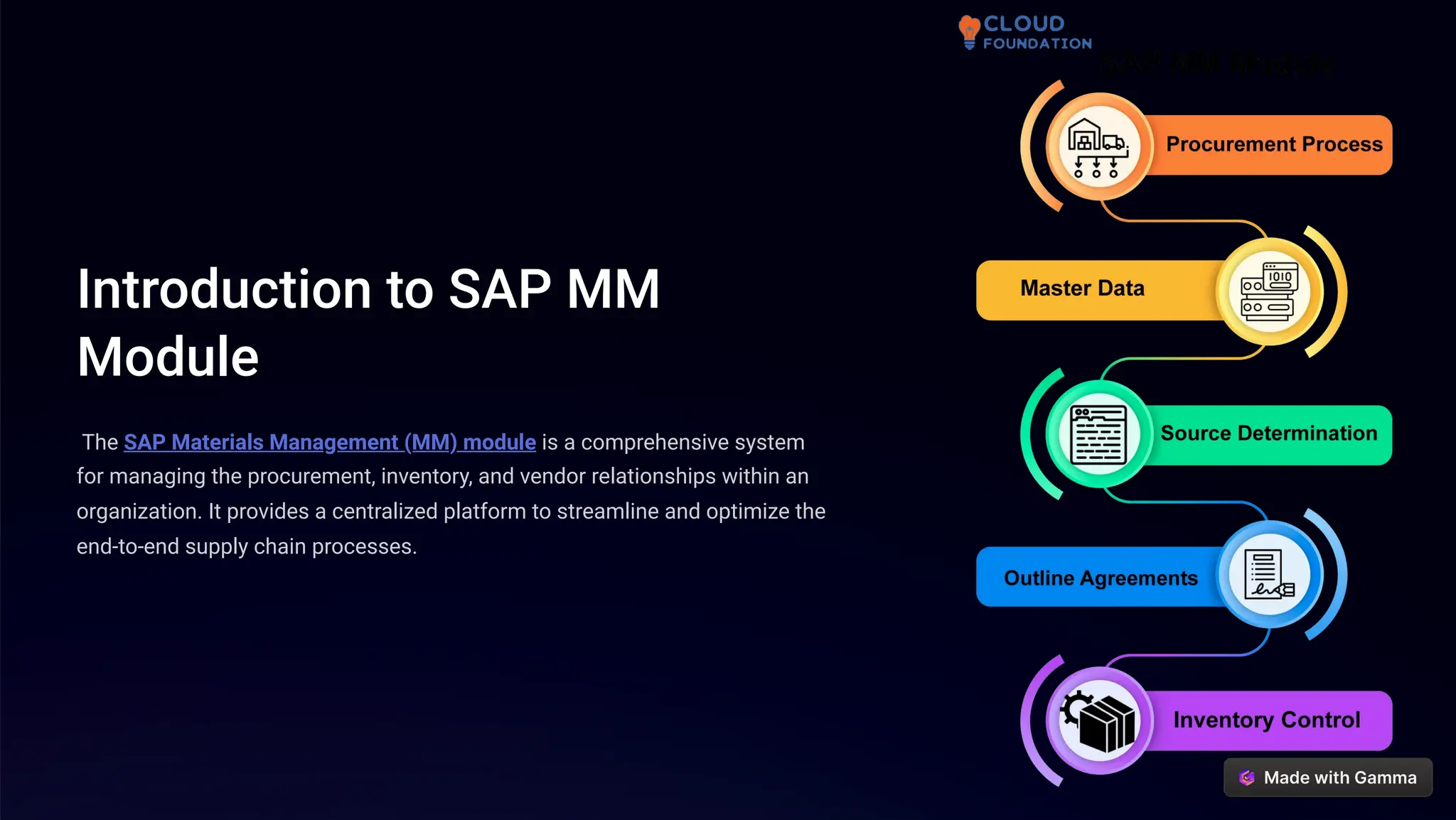
The SAP Materials Management (MM) module is a comprehensive system
for managing the procurement, inventory, and vendor relationships within an
organization. It provides a centralized platform to streamline and optimize the
end-to-end supply chain processes.
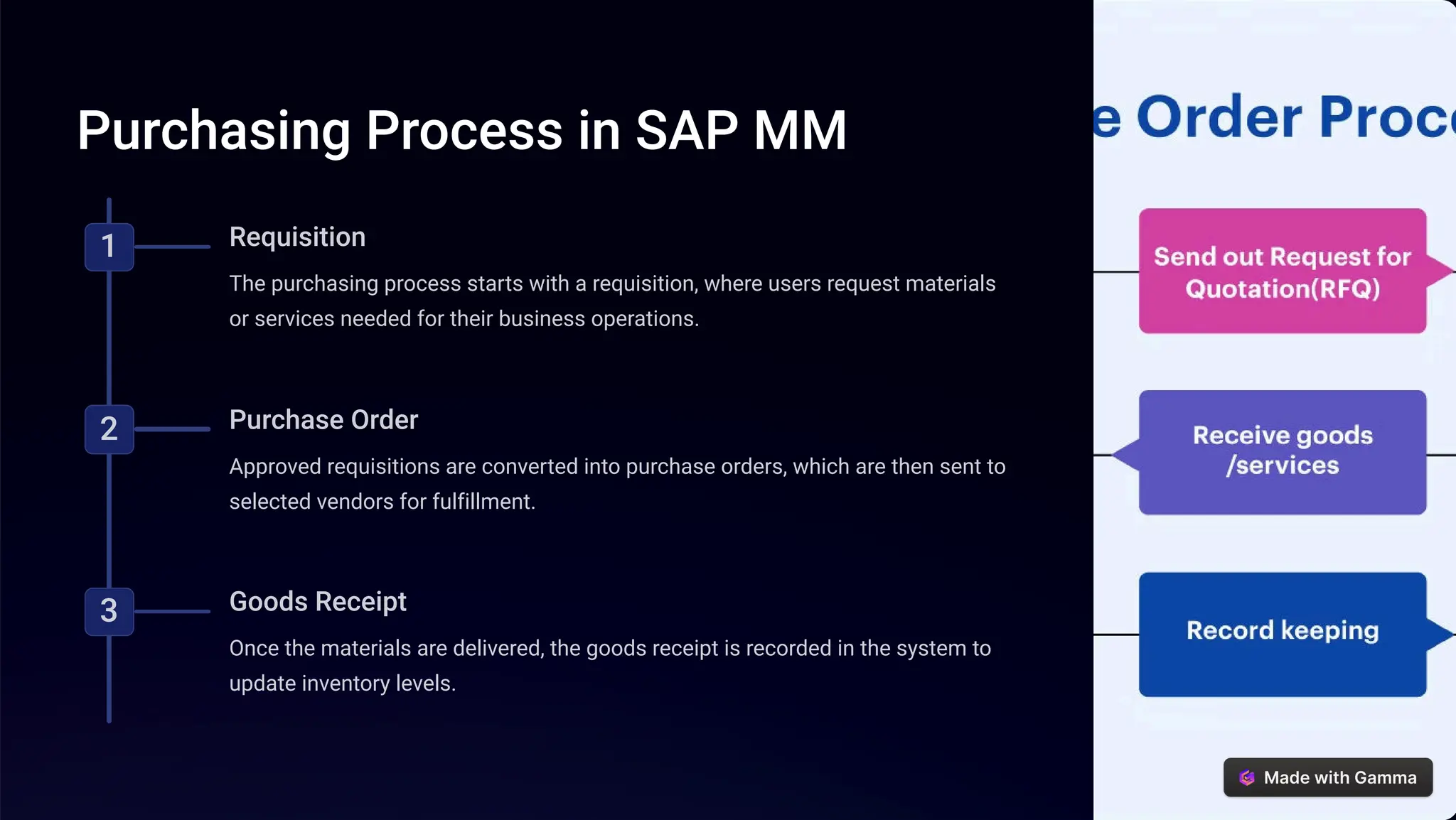
Purchasing Process in SAP MM
1 Requisition
The purchasing process starts with a requisition, where users request materials
or services needed for their business operations.
2 Purchase Order
Approved requisitions are converted into purchase orders, which are then sent to
selected vendors for fulfillment.
3 Goods Receipt
Once the materials are delivered, the goods receipt is recorded in the system to
update inventory levels.
Inventory Management in SAP MM
Stock Availability
SAP MM provides real-time visibility
into current stock levels, enabling
effective inventory planning and
control.
Valuation and Costing
The module supports various costing
methods to accurately value the
inventory and support financial
reporting.
Warehouse Management
SAP MM integrates with the
Warehouse Management (WM)
module to streamline warehouse
operations and material movements.
Vendor Management in SAP MM
Vendor Master Data
Maintain comprehensive vendor information, including
contact details, payment terms, and performance
metrics.
Vendor Evaluation
Assess vendor performance based on factors like
delivery times, quality, and cost to support strategic
sourcing decisions.
Vendor Collaboration
Facilitate seamless communication and collaboration
with vendors through features like self-service portals
and electronic data interchange (EDI).
Contract Management
Centralize and manage vendor contracts, ensuring
compliance with agreed terms and conditions.
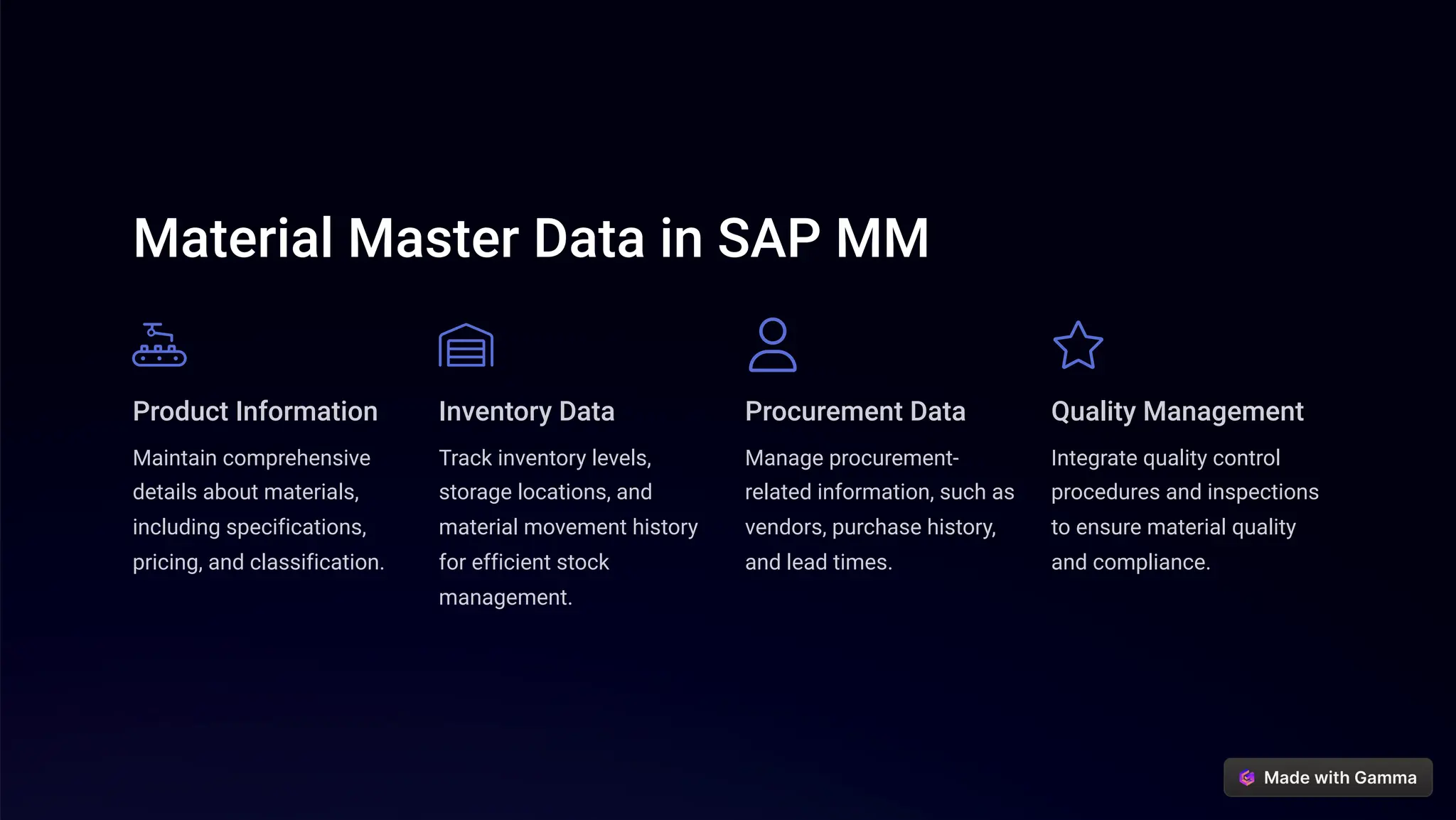
Material Master Data in SAP MM
Product Information
Maintain comprehensive
details about materials,
including specifications,
pricing, and classification.
Inventory Data
Track inventory levels,
storage locations, and
material movement history
for efficient stock
management.
Procurement Data
Manage procurement-
related information, such as
vendors, purchase history,
and lead times.
Quality Management
Integrate quality control
procedures and inspections
to ensure material quality
and compliance.
Reporting and Analytics in SAP MM
1 Real-Time Dashboards
Gain instant visibility into key procurement and
inventory metrics through interactive dashboards.
2 Ad-Hoc Reporting
Easily create custom reports to analyze data and
support informed decision-making.
3 Predictive Analytics
Leverage predictive analytics to forecast demand,
optimize inventory levels, and identify potential
supply chain risks.
4 Integration with BI Tools
Seamless integration with business intelligence (BI)
tools for advanced data analysis and visualization.
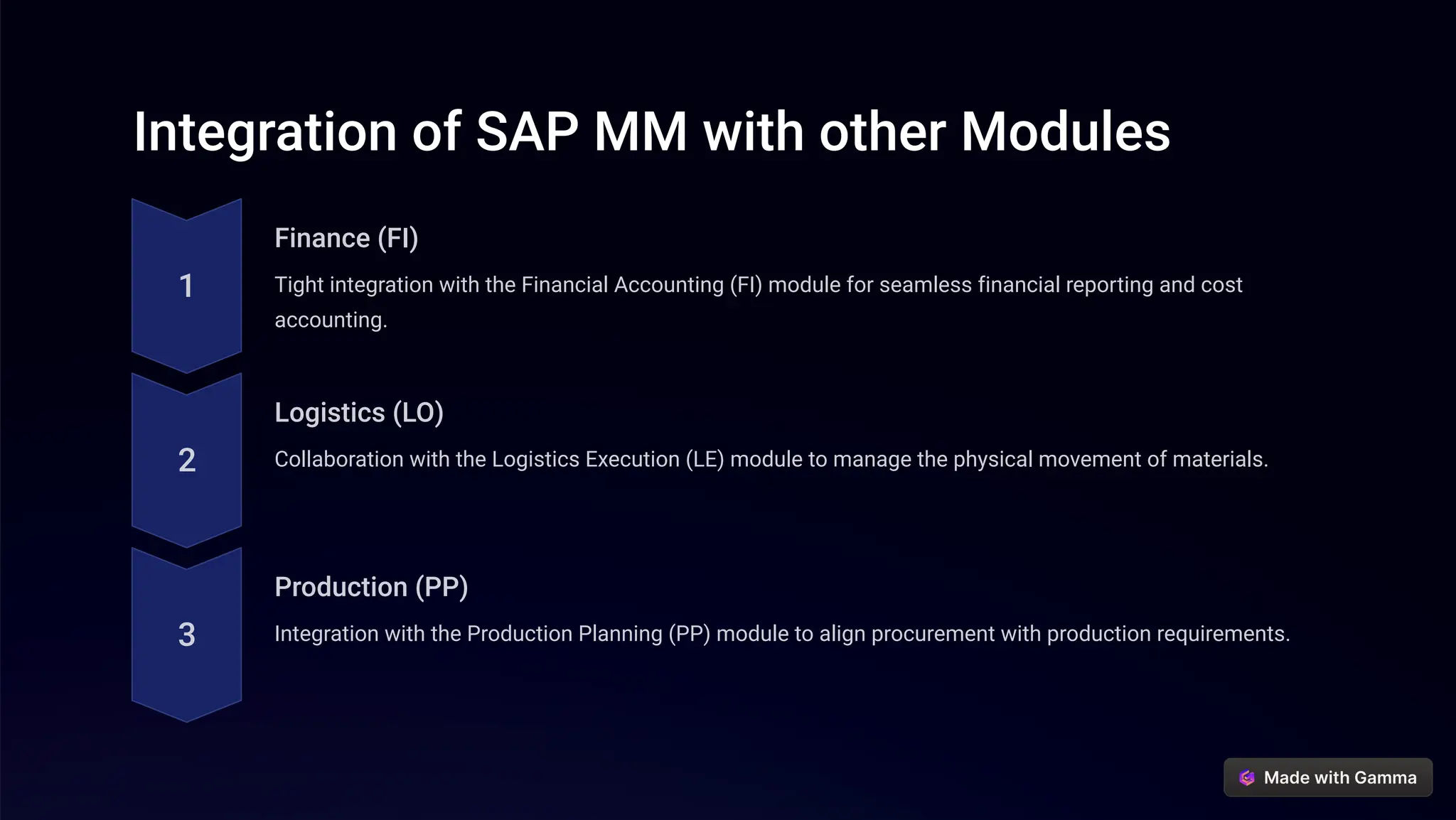
Integration of SAP MM with other Modules
1
Finance (FI)
Tight integration with the Financial Accounting (FI) module for seamless financial reporting and cost
accounting.
2
Logistics (LO)
Collaboration with the Logistics Execution (LE) module to manage the physical movement of materials.
3
Production (PP)
Integration with the Production Planning (PP) module to align procurement with production requirements.
Best Practices and Optimization Strategies
1 Process Automation
Leverage SAP's workflow and automation
capabilities to streamline procurement and inventory
management.
2 Data Governance
Establish robust data management policies to
ensure data accuracy, integrity, and compliance.
3 Continuous Improvement
Regularly review and optimize MM processes based
on performance metrics and user feedback.
4 Change Management
Effectively manage organizational change to drive
user adoption and maximize the benefits of the SAP
MM implementation.

Brief- Introduction-to-SAP-MM-Module.pdf

  • 1.
    Introduction to SAPMM Module The SAP Materials Management (MM) module is a comprehensive system for managing the procurement, inventory, and vendor relationships within an organization. It provides a centralized platform to streamline and optimize the end-to-end supply chain processes.
  • 2.
    Purchasing Process inSAP MM 1 Requisition The purchasing process starts with a requisition, where users request materials or services needed for their business operations. 2 Purchase Order Approved requisitions are converted into purchase orders, which are then sent to selected vendors for fulfillment. 3 Goods Receipt Once the materials are delivered, the goods receipt is recorded in the system to update inventory levels.
  • 3.
    Inventory Management inSAP MM Stock Availability SAP MM provides real-time visibility into current stock levels, enabling effective inventory planning and control. Valuation and Costing The module supports various costing methods to accurately value the inventory and support financial reporting. Warehouse Management SAP MM integrates with the Warehouse Management (WM) module to streamline warehouse operations and material movements.
  • 4.
    Vendor Management inSAP MM Vendor Master Data Maintain comprehensive vendor information, including contact details, payment terms, and performance metrics. Vendor Evaluation Assess vendor performance based on factors like delivery times, quality, and cost to support strategic sourcing decisions. Vendor Collaboration Facilitate seamless communication and collaboration with vendors through features like self-service portals and electronic data interchange (EDI). Contract Management Centralize and manage vendor contracts, ensuring compliance with agreed terms and conditions.
  • 5.
    Material Master Datain SAP MM Product Information Maintain comprehensive details about materials, including specifications, pricing, and classification. Inventory Data Track inventory levels, storage locations, and material movement history for efficient stock management. Procurement Data Manage procurement- related information, such as vendors, purchase history, and lead times. Quality Management Integrate quality control procedures and inspections to ensure material quality and compliance.
  • 6.
    Reporting and Analyticsin SAP MM 1 Real-Time Dashboards Gain instant visibility into key procurement and inventory metrics through interactive dashboards. 2 Ad-Hoc Reporting Easily create custom reports to analyze data and support informed decision-making. 3 Predictive Analytics Leverage predictive analytics to forecast demand, optimize inventory levels, and identify potential supply chain risks. 4 Integration with BI Tools Seamless integration with business intelligence (BI) tools for advanced data analysis and visualization.
  • 7.
    Integration of SAPMM with other Modules 1 Finance (FI) Tight integration with the Financial Accounting (FI) module for seamless financial reporting and cost accounting. 2 Logistics (LO) Collaboration with the Logistics Execution (LE) module to manage the physical movement of materials. 3 Production (PP) Integration with the Production Planning (PP) module to align procurement with production requirements.
  • 8.
    Best Practices andOptimization Strategies 1 Process Automation Leverage SAP's workflow and automation capabilities to streamline procurement and inventory management. 2 Data Governance Establish robust data management policies to ensure data accuracy, integrity, and compliance. 3 Continuous Improvement Regularly review and optimize MM processes based on performance metrics and user feedback. 4 Change Management Effectively manage organizational change to drive user adoption and maximize the benefits of the SAP MM implementation.