BRIDGING THE KNOWLEDGE GAP: ENHANCING TRACHEOSTOMY CARE SKILLS THROUGH STRUCTURED LEARNING
1.
www.ajms.in
RESEARCH ARTICLE
BRIDGING THEKNOWLEDGE GAP: ENHANCING
TRACHEOSTOMY CARE SKILLS THROUGH STRUCTURED
LEARNING
*
Jeya Beulah D, 1
Usha Rani Kandula
*,
Associate professor, SCPM college of nursing and paramedical sciences, Gonda, Uttar
Pradesh-271003, Atal Bihari Vajpayee University Lucknow,India.
1
HOD, Department of Medical surgical nursing, SCPM college of nursing and
paramedical sciences, Gonda, Uttar Pradesh-271003, Atal Bihari Vajpayee University
Lucknow,India.
Email: neha2010dec@gmail.com
Received: 12-04-2024; Revised: 28-04-2024; Accepted: 08-05-2024
ABSTRACT
Background-Tracheostomy care is essential for patients with severe respiratory issues, yet traditional
nursing education often inadequately prepares students for this complex procedure. This study explores
the impact of a structured educational program on improving the knowledge and skills of nursing students
in tracheostomy care.Aim-The primary objective of this study is to evaluate the effectiveness of a
structured educational program in enhancing the knowledge, skills, and confidence of nursing students
regarding tracheostomy care.Methods-An evaluative approach with a pre-experimental one-group
pretest-post-test design was employed. The study was conducted at SCPM College of Nursing and
Paramedical Sciences, Gonda, UP, involving 40 second-year GNM students. A structured questionnaire
assessed knowledge levels before and after the intervention and study samples were recruited with the
help of purposive sampling technique. Data collection was performed by six trained BSc nursing tutors
and analysed using SPSS, with a significance level of <0.05 and a 95% confidence interval.Results-The
pretest mean score was 11.42 (SD = 1.9596), while the post-test mean score increased to 17.50 (SD =
2.2870), with a mean difference of 6.08. The standard error was 0.47, and the calculated t-value was
12.76, compared to the tabulated value of 1.685, indicating a significant improvement in knowledge
levels.Conclusion-The structured educational program significantly enhanced the knowledge and
practical skills of nursing students regarding tracheostomy care, demonstrating its effectiveness as a
teaching method.
Keywords: Covid-19, SEIR model, Social Distancing Measures, Mathematical Model, Reproduction
Number
2.
BRIDGING THE KNOWLEDGEGAP: ENHANCING TRACHEOSTOMY CARE SKILLS THROUGH STRUCTURED LEARNING
61
AJMS/Apr-Jun 2024/Volume 8/Issue 2
INTRODUCTION
Background and Rationale
Tracheostomy care is a crucial component of respiratory management, particularly for patients requiring
long-term ventilation, those with upper airway obstructions, or patients needing airway protection. The
procedure involves creating an opening in the neck to place a tube into a person's windpipe, allowing for
breathing when the usual route for breathing is somehow blocked or reduced(1). The care of a
tracheostomy demands meticulous attention to prevent complications such as infections, blockages, and
other life-threatening issues. Given its complexity and the critical nature of the care required, it is
imperative that nursing students are thoroughly trained and competent in managing tracheostomies(2).
However, traditional nursing education often lacks sufficient depth in specialized procedures like
tracheostomy care. Many nursing curricula focus extensively on broad medical and surgical nursing
principles, sometimes at the expense of specialized, high-risk procedures(3). This educational gap can
result in nursing students feeling underprepared when they encounter such situations in clinical practice.
Addressing this gap is essential to ensure that nursing graduates are not only knowledgeable but also
confident and proficient in performing tracheostomy care(4,5).
Significance of the Study
The structured educational program on tracheostomy care was developed to address this educational
deficiency. The program aims to provide a comprehensive learning experience that integrates theoretical
knowledge with practical skills, thereby preparing nursing students to manage tracheostomies effectively
and safely(5). This study evaluates the impact of such a program on the knowledge and skills of second-
year General Nursing and Midwifery (GNM) students at SCPM College of Nursing and Paramedical
Sciences, Gonda, UP.
LITERATURE REVIEWS
Previous studies have shown that structured educational interventions can significantly improve nursing
students' competence in various clinical skills. For instance, simulation-based training has been widely
recognized for its effectiveness in enhancing clinical performance and decision-making skills. Simulation
provides a risk-free environment where students can practice and hone their skills, receive immediate
feedback, and learn from their mistakes without endangering patients(6,7).
Moreover, educational programs that blend didactic lectures with hands-on practice and real-world
clinical scenarios have demonstrated a higher retention rate of knowledge and skills. These programs
foster an active learning environment where students engage more deeply with the material, leading to
better long-term retention and application in clinical settings.
MATERIAL AND METHODS
Operational Definitions
1. Structured Educational Program
A systematic and organized teaching method designed to enhance nursing students' knowledge and skills
regarding tracheostomy care. This program includes a combination of didactic lectures, interactive
sessions, simulation-based training, and practical hands-on experiences. It aims to provide a
comprehensive understanding and improve the competency of nursing students in performing
tracheostomy care
.
2. Knowledge
3.
BRIDGING THE KNOWLEDGEGAP: ENHANCING TRACHEOSTOMY CARE SKILLS THROUGH STRUCTURED LEARNING
62
AJMS/Apr-Jun 2024/Volume 8/Issue 2
In the context of this study, knowledge refers to the theoretical understanding that nursing students
possess about tracheostomy care. This includes their awareness of procedures, protocols, complications,
and management techniques associated with tracheostomy. Knowledge will be measured using a
structured questionnaire administered before and after the educational intervention.
3. Tracheostomy Care
Tracheostomy care encompasses all the medical and nursing procedures involved in maintaining and
managing a tracheostomy. This includes stoma care, suctioning, changing tracheostomy tubes, infection
prevention, and emergency response to complications. Effective tracheostomy care is essential for patient
safety and involves both routine and critical care skills(8).
4. Nursing Students
Individuals enrolled in the second year of the General Nursing and Midwifery (GNM) program at SCPM
College of Nursing and Paramedical Sciences, Gonda, UP. These students are in the process of acquiring
foundational and advanced nursing skills and are the target population for the structured educational
program on tracheostomy care.
METHODOLOGY
This study employs an evaluative approach with a pre-experimental one-group pretest-post-test design to
assess the effectiveness of a structured educational program on tracheostomy care among nursing
students. Conducted at SCPM College of Nursing and Paramedical Sciences, Gonda, Uttar Pradesh, the
study involves 40 purposively selected second-year General Nursing and Midwifery (GNM) students. A
structured questionnaire, developed to evaluate theoretical knowledge of tracheostomy care, was
administered before and after the intervention. The educational program includes didactic lectures,
simulation-based training, clinical practice, and interactive sessions, designed to enhance both theoretical
knowledge and practical skills. Data collection was carried out by six trained BSc nursing tutors and
subsequently analysed using SPSS software. Descriptive statistics, including mean and standard
deviation, along with inferential statistics, such as paired t-tests, were used to determine the significance
of the changes in pretest and post-test scores, with a significance level set at <0.05 and a 95% confidence
interval. Ethical approval was obtained, and informed consent was secured from all participants. The
expected outcome is a significant improvement in students' knowledge and skills related to tracheostomy
care, demonstrating the program's effectiveness in preparing students for clinical practice.
Eligibility Criteria
Inclusion criteria
For inclusive criteria, we welcome GNM second-year students currently enrolled at SCPM College who
exhibit a keen interest in advancing their knowledge of tracheostomy care through participation in our
study. We prioritize students who willingly engage in the research process, eager to contribute to the
advancement of nursing education. Additionally, students who are present during the data collection
sessions are eligible for inclusion, ensuring the integrity and completeness of our sample.
Exclusion criteria
On the other hand, for exclusive criteria, we respectfully decline participation from GNM students who
express reluctance to engage in the study, acknowledging and respecting their autonomy in decision-
making regarding their involvement. Furthermore, students who are absent at the time of data collection
are excluded, as their absence may introduce bias and compromise the reliability of our findings. Through
these carefully crafted criteria, we aim to assemble a cohesive and dedicated cohort of participants
4.
BRIDGING THE KNOWLEDGEGAP: ENHANCING TRACHEOSTOMY CARE SKILLS THROUGH STRUCTURED LEARNING
63
AJMS/Apr-Jun 2024/Volume 8/Issue 2
committed to enhancing their understanding of tracheostomy care through our structured educational
program.
Study Variables
Independent variable
In our study, the independent variable is the Structured Training Program (STP) focused on the
prevention of tracheostomy care complications. This innovative program serves as the catalyst for
enhancing the knowledge of second-year General Nursing and Midwifery (GNM) students in our sample.
We believe that by implementing a comprehensive and meticulously designed training regimen, we can
empower these students with the necessary skills and insights to mitigate risks associated with
tracheostomy care.
Dependent variable
The dependent variable in our research is the knowledge level of GNM second-year students. This
encompasses their understanding of tracheostomy care protocols, procedures, and preventative measures.
Through our structured training program, we aim to observe a significant improvement in the knowledge
base of these students, as they become more adept at identifying potential complications and
implementing effective preventative strategies.
Demographic variables
Moreover, our study considers various demographic variables that may influence the outcomes. These
include age, gender, education level, family income, religion, prior experience in healthcare settings, and
participation in in-service education programs. By analysing these demographic factors alongside the
effectiveness of our training program, we gain valuable insights into the diverse backgrounds and
experiences that shape the learning process for nursing students. This holistic approach ensures that our
findings are comprehensive and reflective of the multifaceted nature of nursing education and practice.
Study instruments
In our study, we employed a structured questionnaire designed with two distinct sections to
comprehensively assess and evaluate the impact of our Structured Training Program (STP) on the
prevention of tracheostomy care complications.
Section A- Section A of the questionnaire focused on gathering socio-demographic variables, including
age, gender, education level, family income, religion, prior experience in healthcare settings, and
participation in in-service education programs. By capturing this diverse array of demographic data, we
aimed to gain a holistic understanding of the background characteristics that may influence the
participants' knowledge levels and responses.
Section B- Section B of the questionnaire was dedicated to assessing the participants' knowledge
regarding the prevention of tracheostomy care complications. This section comprised a series of targeted
questions aimed at evaluating the subjects' understanding of essential protocols, procedures, and
preventative measures related to tracheostomy care. Each question was meticulously crafted to gauge the
depth and breadth of the participants' knowledge in this critical area of nursing practice.
Data Collection Procedure
5.
BRIDGING THE KNOWLEDGEGAP: ENHANCING TRACHEOSTOMY CARE SKILLS THROUGH STRUCTURED LEARNING
64
AJMS/Apr-Jun 2024/Volume 8/Issue 2
The data collection procedure followed a structured approach to ensure the integrity and reliability of our
findings. Initially, a pre-test was conducted using the structured questionnaire to assess the subjects'
baseline knowledge levels. Subsequently, all participants received the STP intervention, designed to
enhance their understanding and competency in preventing tracheostomy care complications. Following
the completion of the STP, a post-test was administered seven days later, utilizing the same structured
questionnaire as the pre-test. This sequential approach allowed us to measure the effectiveness of the STP
by comparing the participants' pre-test and post-test responses, thus providing valuable insights into the
program's impact on knowledge acquisition and retention.
By employing this innovative data collection procedure and utilizing a comprehensive structured
questionnaire, our study aims to contribute novel insights into the effectiveness of educational
interventions in improving nursing students' knowledge and skills in preventing tracheostomy care
complications.
Ethical Consideration
Ethical considerations in our study were diligently addressed to uphold the rights and well-being of
participants. Prior ethical approval was obtained from SCPM College of Nursing's ethics committee.
Informed consent was obtained from all participants, ensuring they were fully informed about the study's
purpose, procedures, and their voluntary participation. Confidentiality of data was strictly maintained,
with anonymization measures in place. Participants were assured of their right to withdraw from the
study without penalty. Measures were taken to minimize any potential harm or discomfort. Upholding
these ethical standards ensured the integrity and validity of our research findings while prioritizing
participant welfare.
RESULTS
In this section, we present a comprehensive analysis of the data collected during our study on the
effectiveness of a Structured Training Program (STP) in preventing tracheostomy care complications
among General Nursing and Midwifery (GNM) second-year students. The analysis focuses on evaluating
the impact of the STP on participants' knowledge levels regarding tracheostomy care. By examining pre-
test and post-test data, we aim to assess the effectiveness of the program in enhancing participants'
understanding of essential protocols, procedures, and preventative measures related to tracheostomy care.
Through rigorous statistical analysis, we seek to identify significant changes in knowledge levels and
provide valuable insights into the efficacy of educational interventions in improving patient care
outcomes.
Section-I
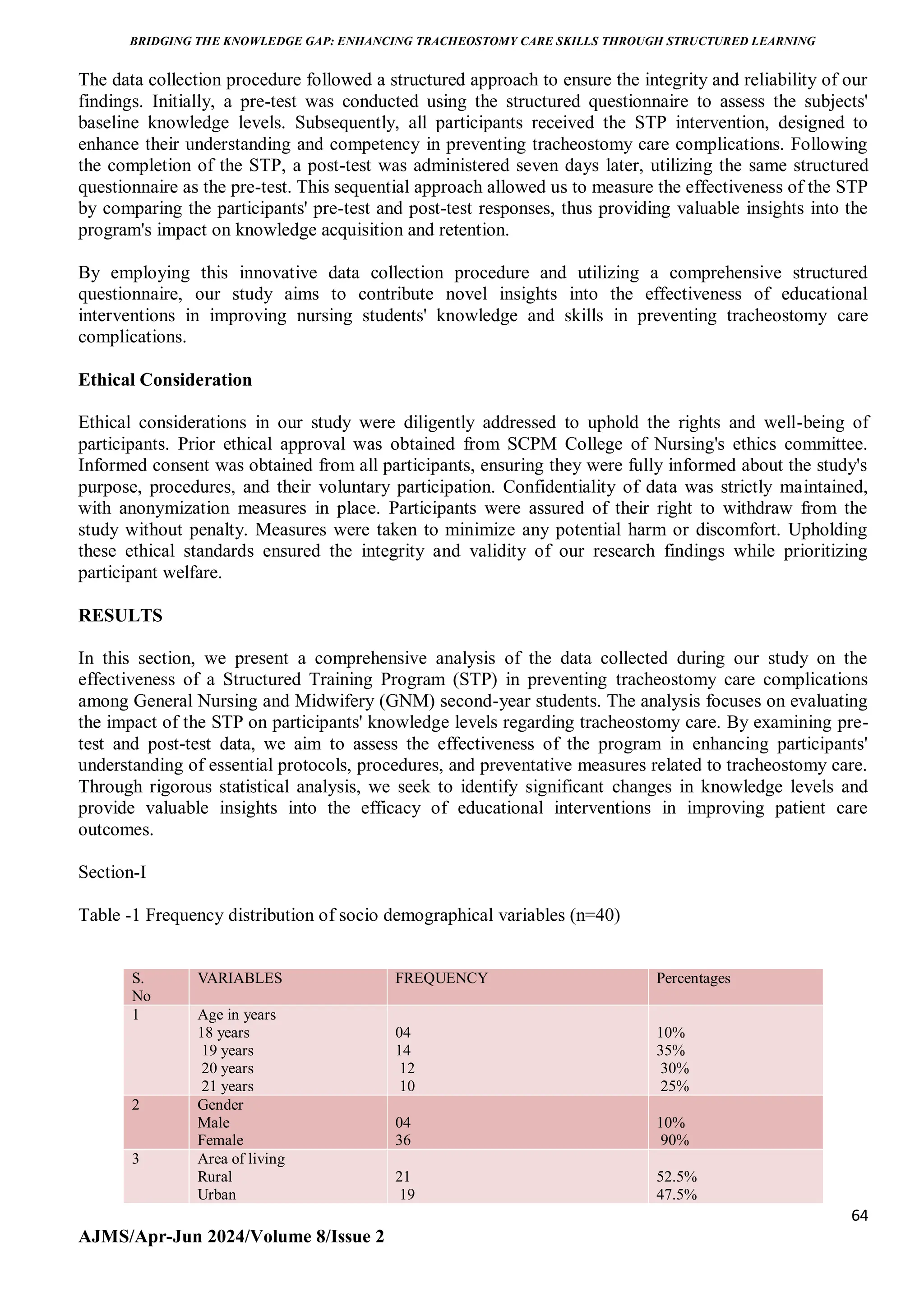
Table -1 Frequency distribution of socio demographical variables (n=40)
S.
No
VARIABLES FREQUENCY Percentages
1 Age in years
18 years
19 years
20 years
21 years
04
14
12
10
10%
35%
30%
25%
2 Gender
Male
Female
04
36
10%
90%
3 Area of living
Rural
Urban
21
19
52.5%
47.5%
6.
BRIDGING THE KNOWLEDGEGAP: ENHANCING TRACHEOSTOMY CARE SKILLS THROUGH STRUCTURED LEARNING
65
AJMS/Apr-Jun 2024/Volume 8/Issue 2
others -- --
4 Religion
Hindu
Muslim
Christian
others
35
05
--
--
87.5%
12.5%
--
--
5 Type of Family
Nuclear
Joint
Extended
others
25
15
--
--
62.5%
37.5%
--
--
6 Earlier knowledge to
tracheostomy care
Yes
No
40
--
100%
--
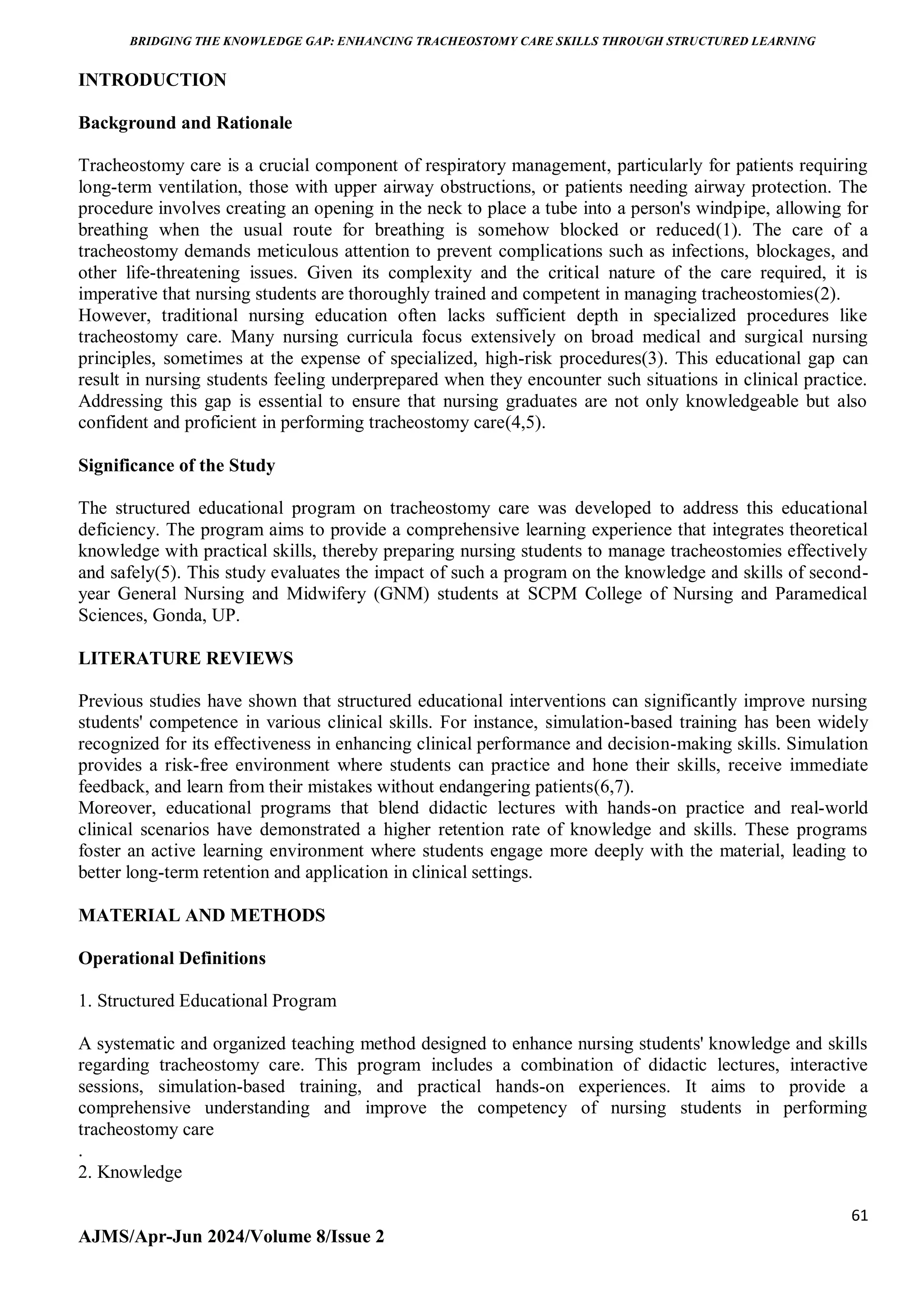
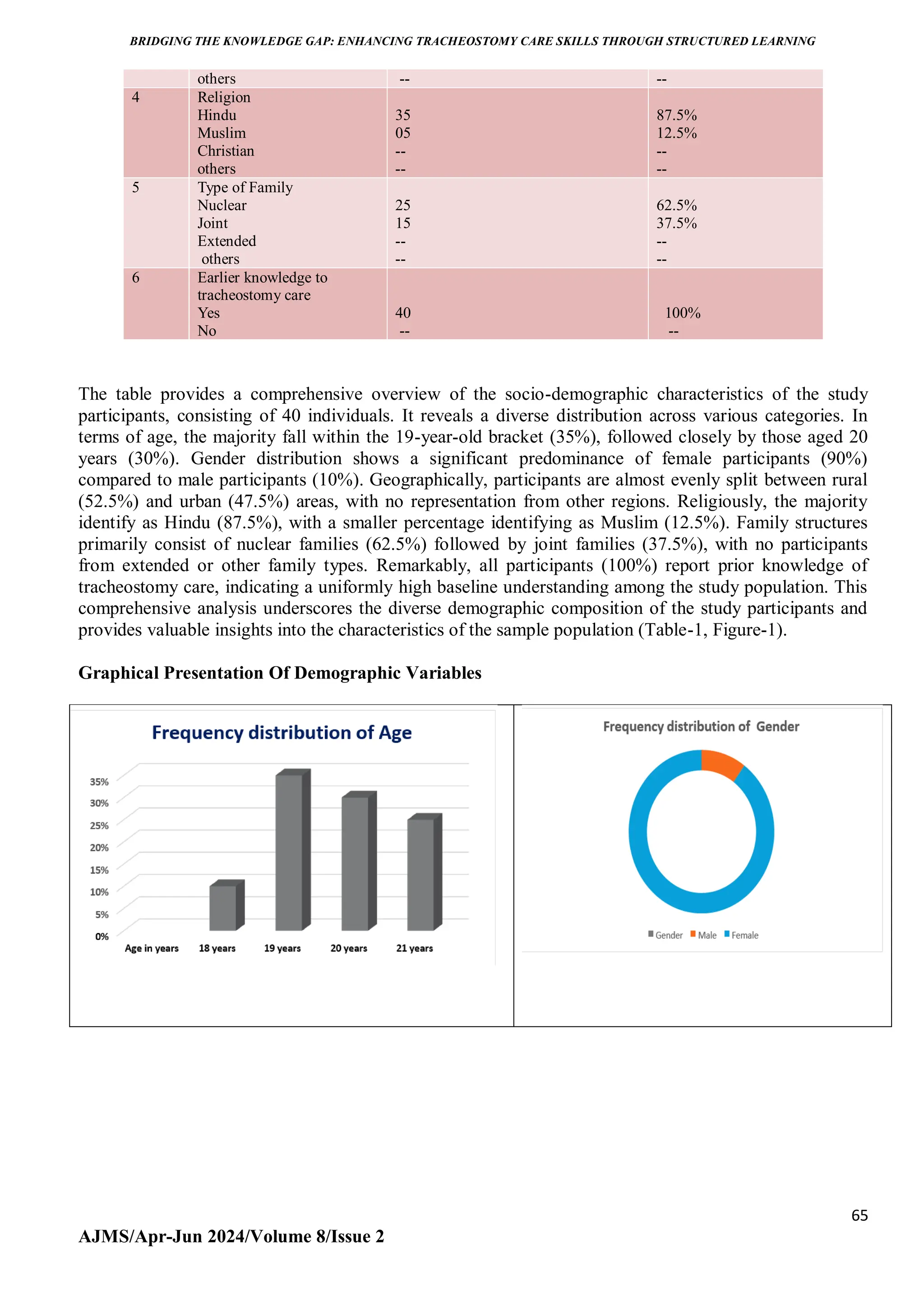
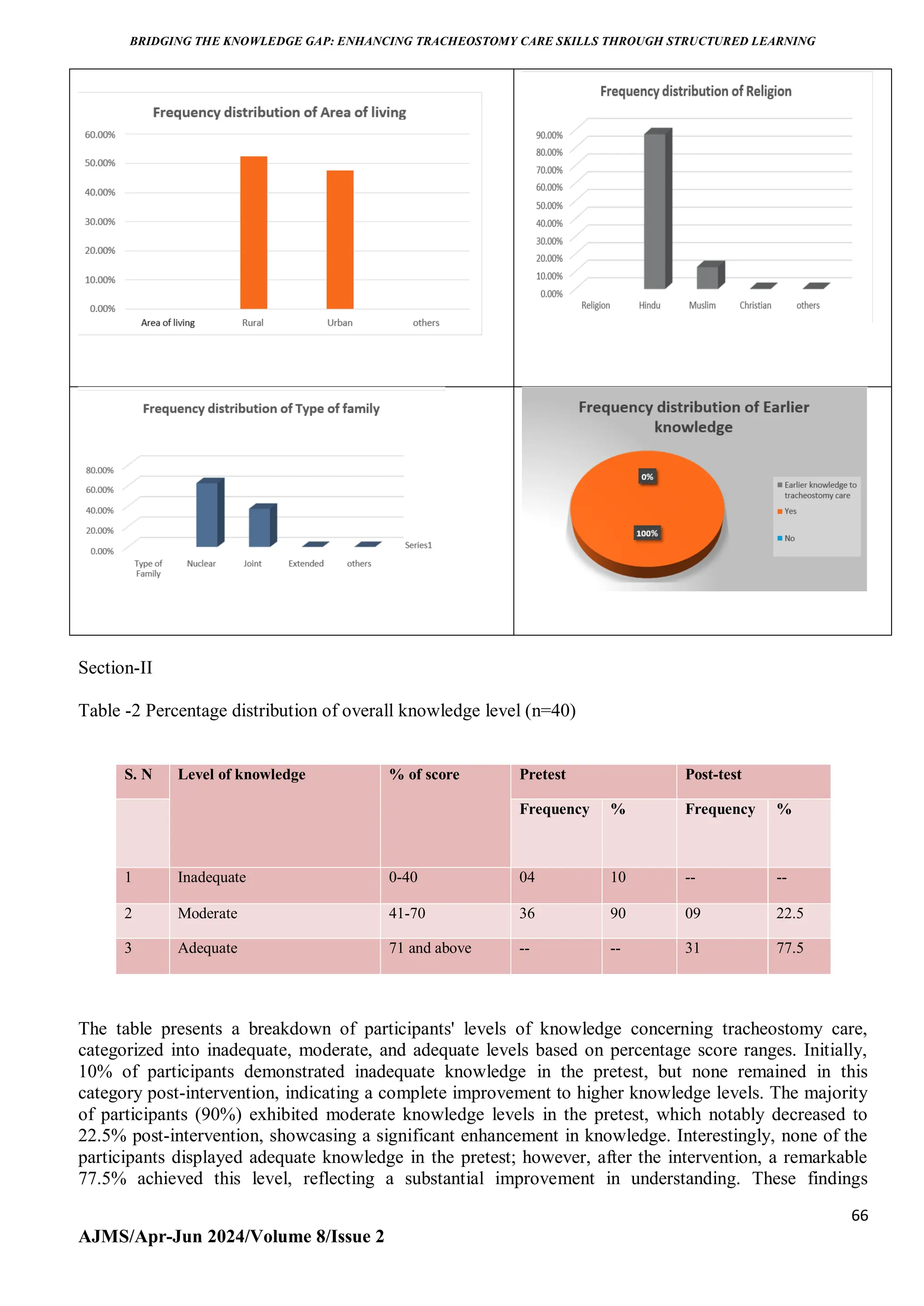
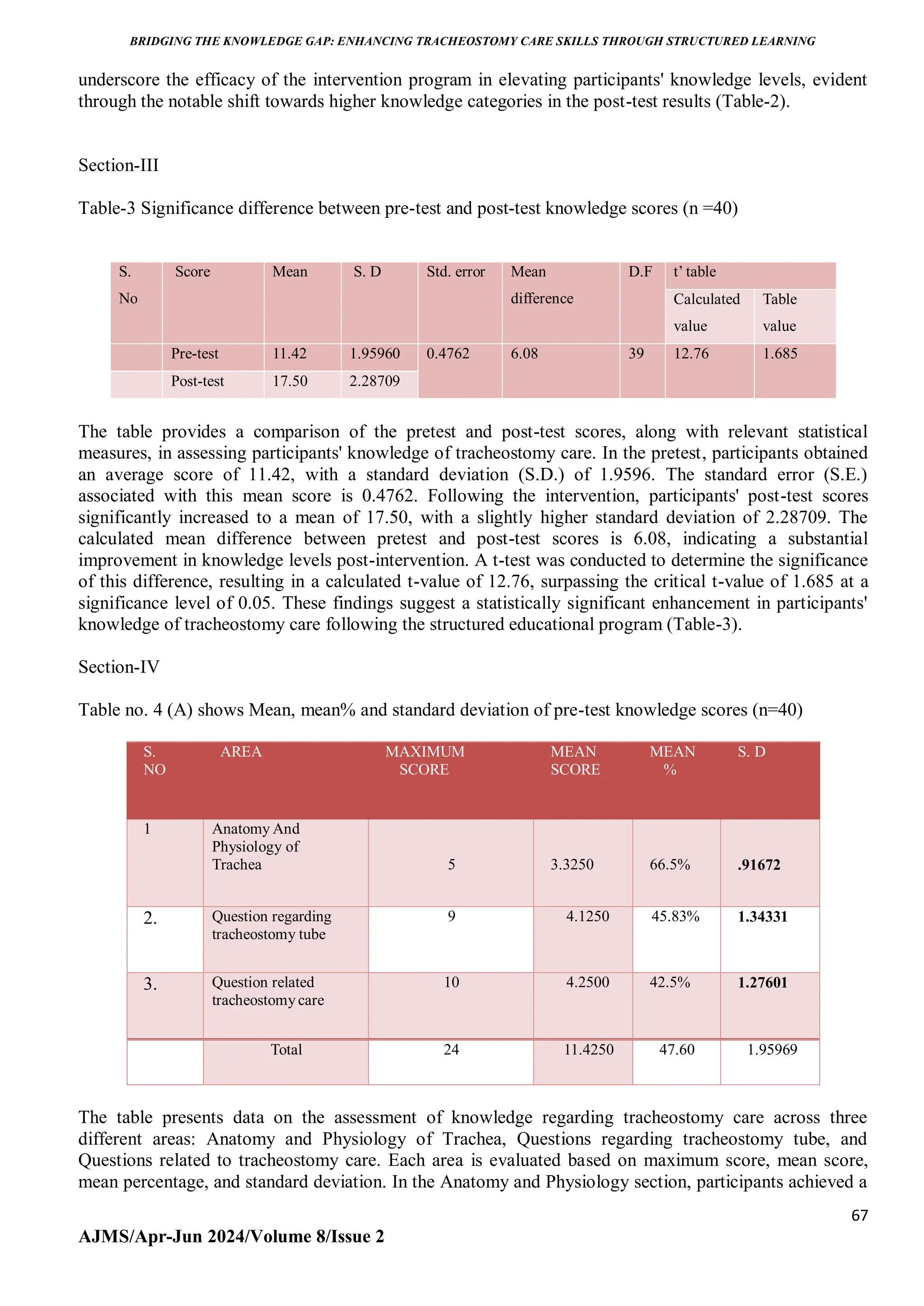
The table provides a comprehensive overview of the socio-demographic characteristics of the study
participants, consisting of 40 individuals. It reveals a diverse distribution across various categories. In
terms of age, the majority fall within the 19-year-old bracket (35%), followed closely by those aged 20
years (30%). Gender distribution shows a significant predominance of female participants (90%)
compared to male participants (10%). Geographically, participants are almost evenly split between rural
(52.5%) and urban (47.5%) areas, with no representation from other regions. Religiously, the majority
identify as Hindu (87.5%), with a smaller percentage identifying as Muslim (12.5%). Family structures
primarily consist of nuclear families (62.5%) followed by joint families (37.5%), with no participants
from extended or other family types. Remarkably, all participants (100%) report prior knowledge of
tracheostomy care, indicating a uniformly high baseline understanding among the study population. This
comprehensive analysis underscores the diverse demographic composition of the study participants and
provides valuable insights into the characteristics of the sample population (Table-1, Figure-1).
Graphical Presentation Of Demographic Variables
7.
BRIDGING THE KNOWLEDGEGAP: ENHANCING TRACHEOSTOMY CARE SKILLS THROUGH STRUCTURED LEARNING
66
AJMS/Apr-Jun 2024/Volume 8/Issue 2
Section-II
Table -2 Percentage distribution of overall knowledge level (n=40)
S. N Level of knowledge % of score Pretest Post-test
Frequency % Frequency %
1 Inadequate 0-40 04 10 -- --
2 Moderate 41-70 36 90 09 22.5
3 Adequate 71 and above -- -- 31 77.5
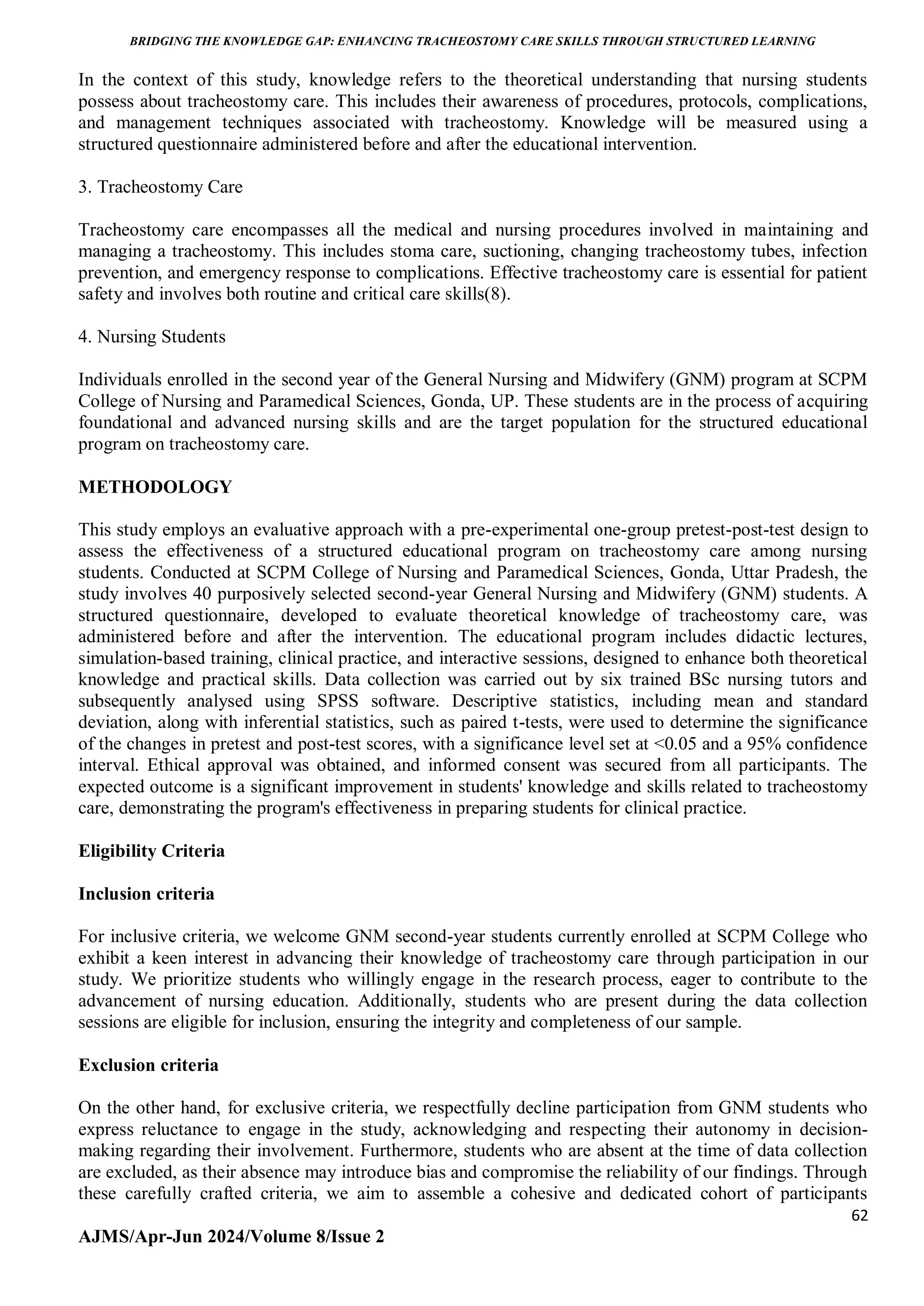
The table presents a breakdown of participants' levels of knowledge concerning tracheostomy care,
categorized into inadequate, moderate, and adequate levels based on percentage score ranges. Initially,
10% of participants demonstrated inadequate knowledge in the pretest, but none remained in this
category post-intervention, indicating a complete improvement to higher knowledge levels. The majority
of participants (90%) exhibited moderate knowledge levels in the pretest, which notably decreased to
22.5% post-intervention, showcasing a significant enhancement in knowledge. Interestingly, none of the
participants displayed adequate knowledge in the pretest; however, after the intervention, a remarkable
77.5% achieved this level, reflecting a substantial improvement in understanding. These findings
8.
BRIDGING THE KNOWLEDGEGAP: ENHANCING TRACHEOSTOMY CARE SKILLS THROUGH STRUCTURED LEARNING
67
AJMS/Apr-Jun 2024/Volume 8/Issue 2
underscore the efficacy of the intervention program in elevating participants' knowledge levels, evident
through the notable shift towards higher knowledge categories in the post-test results (Table-2).
Section-III
Table-3 Significance difference between pre-test and post-test knowledge scores (n =40)
S.
No
Score Mean S. D Std. error Mean
difference
D.F t’ table
Calculated
value
Table
value
Pre-test 11.42 1.95960 0.4762 6.08 39 12.76 1.685
Post-test 17.50 2.28709
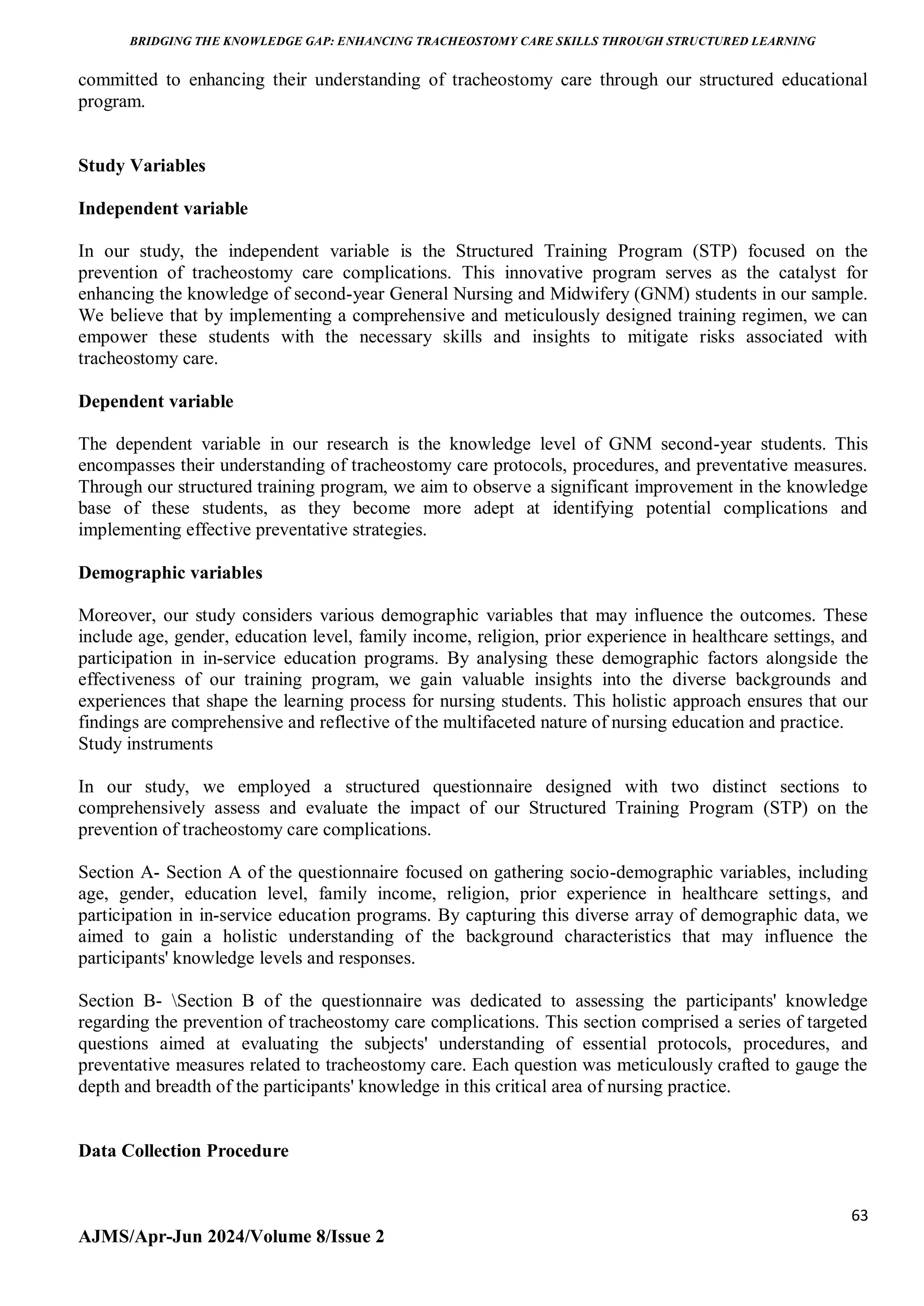
The table provides a comparison of the pretest and post-test scores, along with relevant statistical
measures, in assessing participants' knowledge of tracheostomy care. In the pretest, participants obtained
an average score of 11.42, with a standard deviation (S.D.) of 1.9596. The standard error (S.E.)
associated with this mean score is 0.4762. Following the intervention, participants' post-test scores
significantly increased to a mean of 17.50, with a slightly higher standard deviation of 2.28709. The
calculated mean difference between pretest and post-test scores is 6.08, indicating a substantial
improvement in knowledge levels post-intervention. A t-test was conducted to determine the significance
of this difference, resulting in a calculated t-value of 12.76, surpassing the critical t-value of 1.685 at a
significance level of 0.05. These findings suggest a statistically significant enhancement in participants'
knowledge of tracheostomy care following the structured educational program (Table-3).
Section-IV
Table no. 4 (A) shows Mean, mean% and standard deviation of pre-test knowledge scores (n=40)
S.
NO
AREA MAXIMUM
SCORE
MEAN
SCORE
MEAN
%
S. D
1 Anatomy And
Physiology of
Trachea 5 3.3250 66.5% .91672
2. Question regarding
tracheostomy tube
9 4.1250 45.83% 1.34331
3. Question related
tracheostomycare
10 4.2500 42.5% 1.27601
Total 24 11.4250 47.60 1.95969
The table presents data on the assessment of knowledge regarding tracheostomy care across three
different areas: Anatomy and Physiology of Trachea, Questions regarding tracheostomy tube, and
Questions related to tracheostomy care. Each area is evaluated based on maximum score, mean score,
mean percentage, and standard deviation. In the Anatomy and Physiology section, participants achieved a
9.
BRIDGING THE KNOWLEDGEGAP: ENHANCING TRACHEOSTOMY CARE SKILLS THROUGH STRUCTURED LEARNING
68
AJMS/Apr-Jun 2024/Volume 8/Issue 2
mean score of 3.3250 out of a maximum of 5, corresponding to a mean percentage of 66.5% with a
standard deviation of 0.91672. For questions regarding the tracheostomy tube, the mean score was 4.1250
out of a maximum of 9, resulting in a mean percentage of 45.83% and a standard deviation of 1.34331.
Similarly, in the section related to tracheostomy care, the mean score was 4.2500 out of 10, translating to
a mean percentage of 42.5% with a standard deviation of 1.27601. Overall, across all sections, the total
mean score was 11.4250 out of a maximum of 24, with a mean percentage of 47.60% and a standard
deviation of 1.95969. These results provide insights into the distribution of knowledge levels among
participants regarding different aspects of tracheostomy care, highlighting areas of strength and areas
needing improvement (Table-4. A).
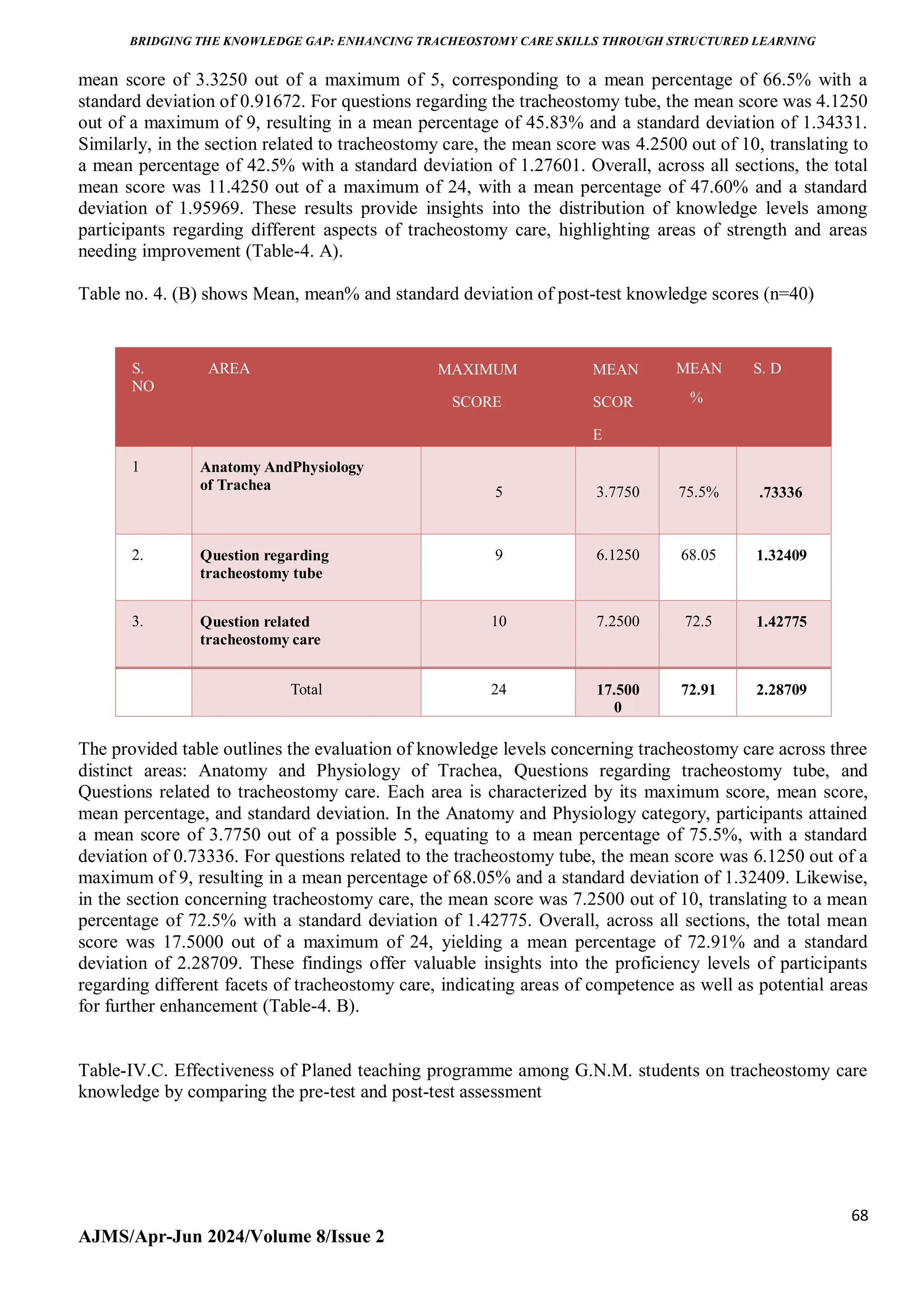
Table no. 4. (B) shows Mean, mean% and standard deviation of post-test knowledge scores (n=40)
S.
NO
AREA MAXIMUM
SCORE
MEAN
SCOR
E
MEAN
%
S. D
1 Anatomy AndPhysiology
of Trachea 5 3.7750 75.5% .73336
2. Question regarding
tracheostomy tube
9 6.1250 68.05 1.32409
3. Question related
tracheostomy care
10 7.2500 72.5 1.42775
Total 24 17.500
0
72.91 2.28709
The provided table outlines the evaluation of knowledge levels concerning tracheostomy care across three
distinct areas: Anatomy and Physiology of Trachea, Questions regarding tracheostomy tube, and
Questions related to tracheostomy care. Each area is characterized by its maximum score, mean score,
mean percentage, and standard deviation. In the Anatomy and Physiology category, participants attained
a mean score of 3.7750 out of a possible 5, equating to a mean percentage of 75.5%, with a standard
deviation of 0.73336. For questions related to the tracheostomy tube, the mean score was 6.1250 out of a
maximum of 9, resulting in a mean percentage of 68.05% and a standard deviation of 1.32409. Likewise,
in the section concerning tracheostomy care, the mean score was 7.2500 out of 10, translating to a mean
percentage of 72.5% with a standard deviation of 1.42775. Overall, across all sections, the total mean
score was 17.5000 out of a maximum of 24, yielding a mean percentage of 72.91% and a standard
deviation of 2.28709. These findings offer valuable insights into the proficiency levels of participants
regarding different facets of tracheostomy care, indicating areas of competence as well as potential areas
for further enhancement (Table-4. B).
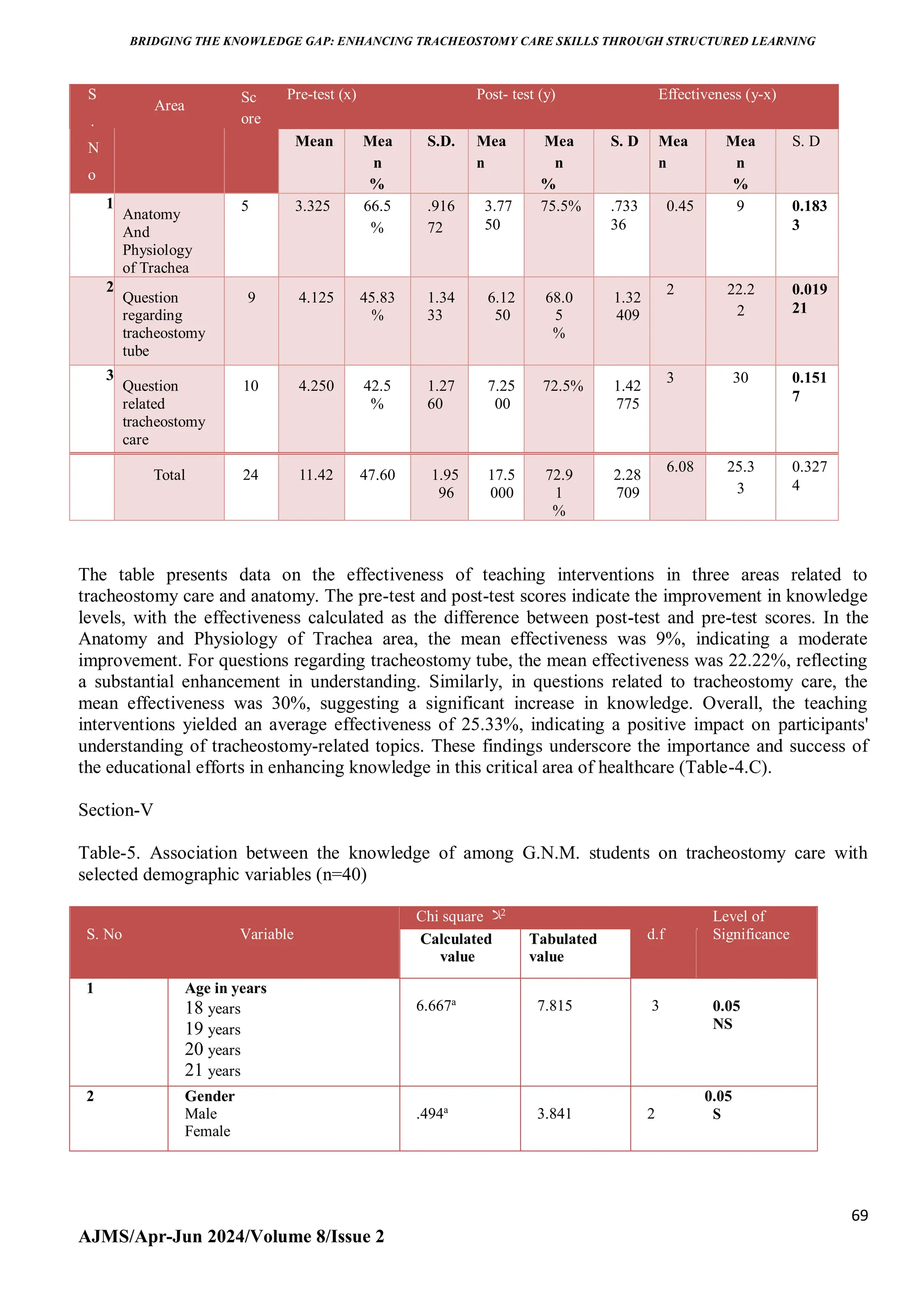
Table-IV.C. Effectiveness of Planed teaching programme among G.N.M. students on tracheostomy care
knowledge by comparing the pre-test and post-test assessment
10.
BRIDGING THE KNOWLEDGEGAP: ENHANCING TRACHEOSTOMY CARE SKILLS THROUGH STRUCTURED LEARNING
69
AJMS/Apr-Jun 2024/Volume 8/Issue 2
The table presents data on the effectiveness of teaching interventions in three areas related to
tracheostomy care and anatomy. The pre-test and post-test scores indicate the improvement in knowledge
levels, with the effectiveness calculated as the difference between post-test and pre-test scores. In the
Anatomy and Physiology of Trachea area, the mean effectiveness was 9%, indicating a moderate
improvement. For questions regarding tracheostomy tube, the mean effectiveness was 22.22%, reflecting
a substantial enhancement in understanding. Similarly, in questions related to tracheostomy care, the
mean effectiveness was 30%, suggesting a significant increase in knowledge. Overall, the teaching
interventions yielded an average effectiveness of 25.33%, indicating a positive impact on participants'
understanding of tracheostomy-related topics. These findings underscore the importance and success of
the educational efforts in enhancing knowledge in this critical area of healthcare (Table-4.C).
Section-V
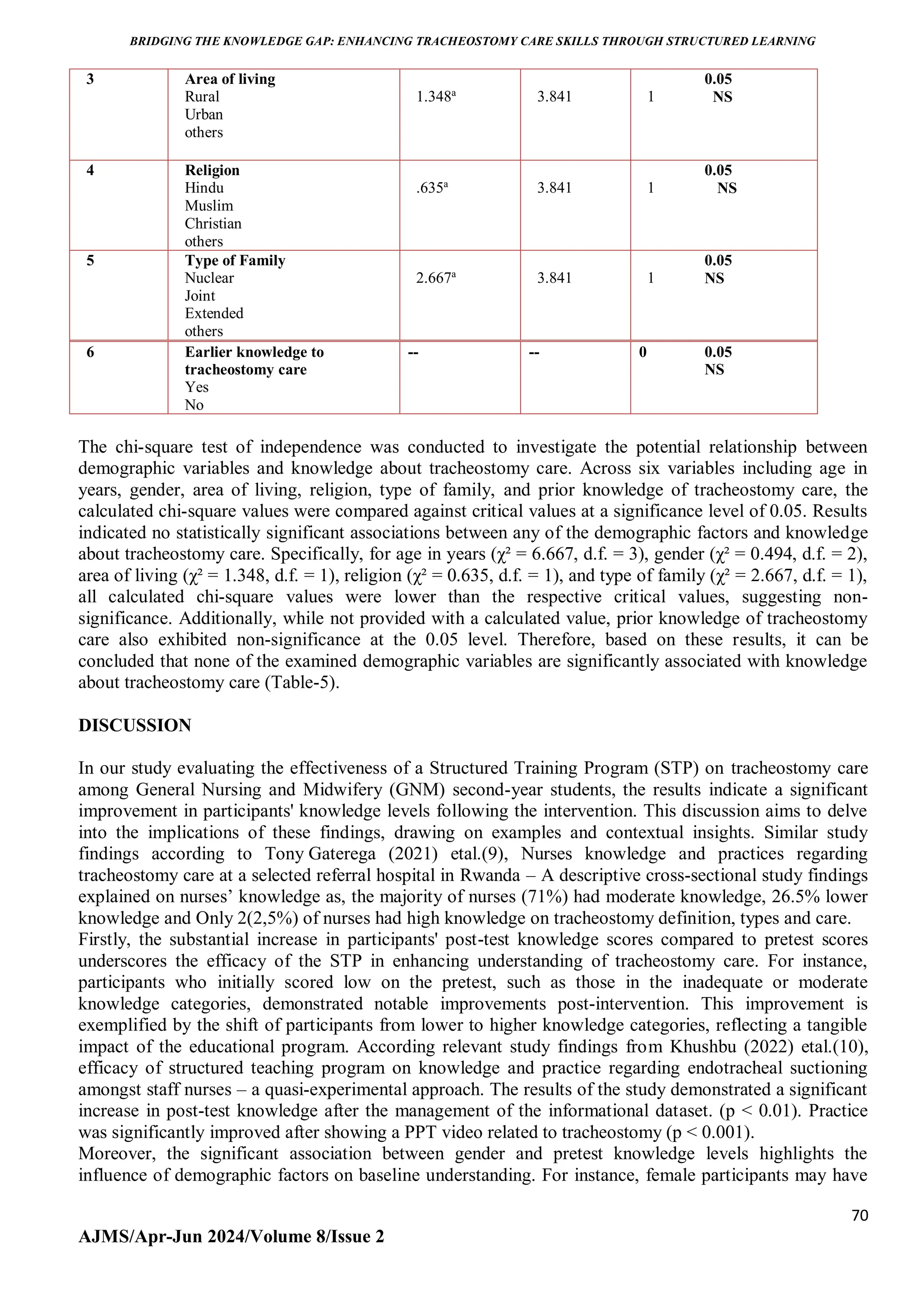
Table-5. Association between the knowledge of among G.N.M. students on tracheostomy care with
selected demographic variables (n=40)
S. No Variable
Chi square ﻼ2
d.f
Level of
Significance
Calculated
value
Tabulated
value
1 Age in years
18 years
19 years
20 years
21 years
6.667a
7.815 3 0.05
NS
2 Gender
Male
Female
.494a
3.841 2
0.05
S
S
.
N
o
Area
Sc
ore
Pre-test (x) Post- test (y) Effectiveness (y-x)
Mean Mea
n
%
S.D. Mea
n
Mea
n
%
S. D Mea
n
Mea
n
%
S. D
1.
Anatomy
And
Physiology
of Trachea
5 3.325 66.5
%
.916
72
3.77
50
75.5% .733
36
0.45 9 0.183
3
2.
Question
regarding
tracheostomy
tube
9 4.125 45.83
%
1.34
33
6.12
50
68.0
5
%
1.32
409
2 22.2
2
0.019
21
3.
Question
related
tracheostomy
care
10 4.250 42.5
%
1.27
60
7.25
00
72.5% 1.42
775
3 30 0.151
7
Total 24 11.42 47.60 1.95
96
17.5
000
72.9
1
%
2.28
709
6.08 25.3
3
0.327
4
11.
BRIDGING THE KNOWLEDGEGAP: ENHANCING TRACHEOSTOMY CARE SKILLS THROUGH STRUCTURED LEARNING
70
AJMS/Apr-Jun 2024/Volume 8/Issue 2
3 Area of living
Rural
Urban
others
1.348a
3.841 1
0.05
NS
4 Religion
Hindu
Muslim
Christian
others
.635a
3.841 1
0.05
NS
5 Type of Family
Nuclear
Joint
Extended
others
2.667a
3.841 1
0.05
NS
6 Earlier knowledge to
tracheostomy care
Yes
No
-- -- 0 0.05
NS
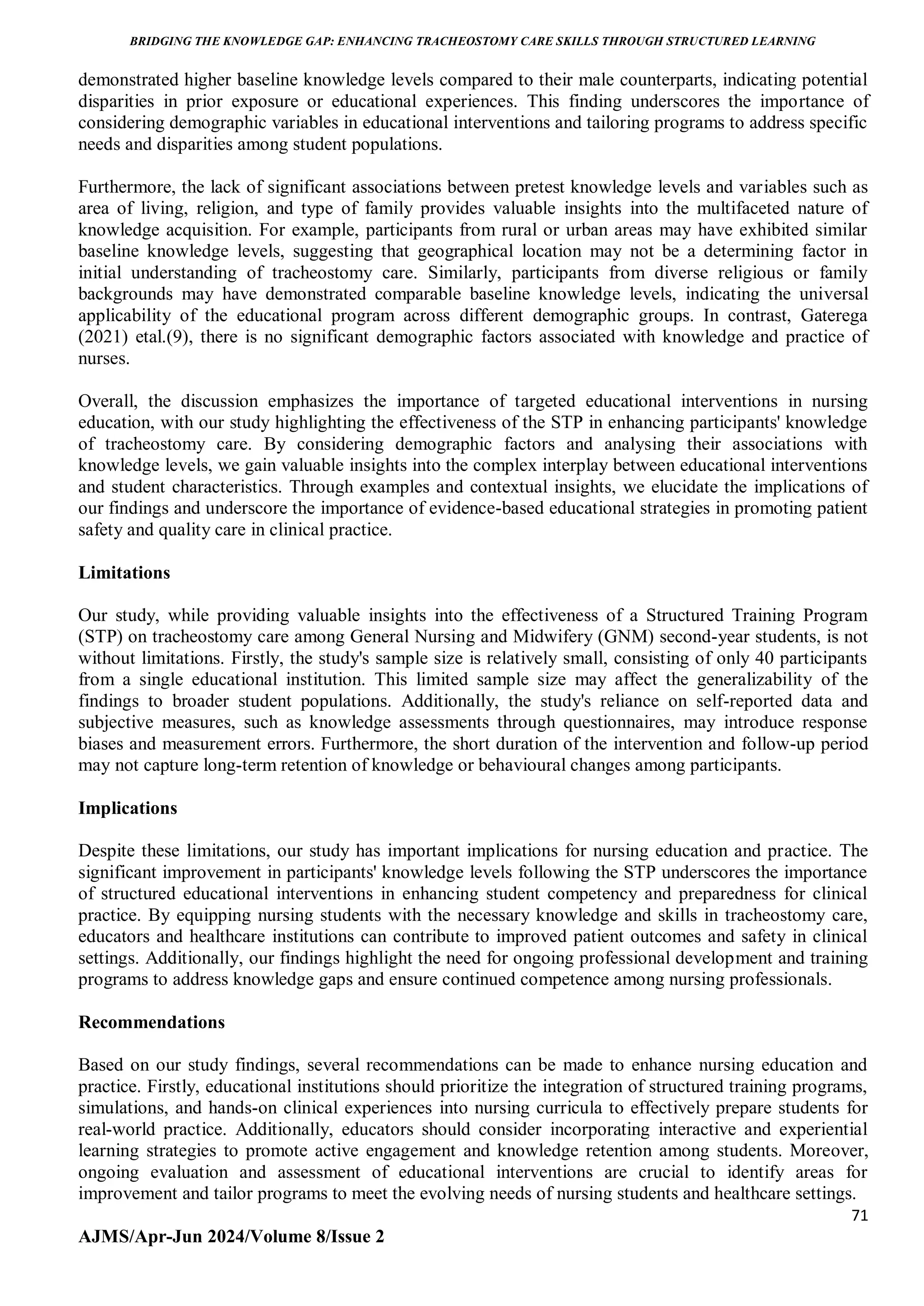
The chi-square test of independence was conducted to investigate the potential relationship between
demographic variables and knowledge about tracheostomy care. Across six variables including age in
years, gender, area of living, religion, type of family, and prior knowledge of tracheostomy care, the
calculated chi-square values were compared against critical values at a significance level of 0.05. Results
indicated no statistically significant associations between any of the demographic factors and knowledge
about tracheostomy care. Specifically, for age in years (χ² = 6.667, d.f. = 3), gender (χ² = 0.494, d.f. = 2),
area of living (χ² = 1.348, d.f. = 1), religion (χ² = 0.635, d.f. = 1), and type of family (χ² = 2.667, d.f. = 1),
all calculated chi-square values were lower than the respective critical values, suggesting non-
significance. Additionally, while not provided with a calculated value, prior knowledge of tracheostomy
care also exhibited non-significance at the 0.05 level. Therefore, based on these results, it can be
concluded that none of the examined demographic variables are significantly associated with knowledge
about tracheostomy care (Table-5).
DISCUSSION
In our study evaluating the effectiveness of a Structured Training Program (STP) on tracheostomy care
among General Nursing and Midwifery (GNM) second-year students, the results indicate a significant
improvement in participants' knowledge levels following the intervention. This discussion aims to delve
into the implications of these findings, drawing on examples and contextual insights. Similar study
findings according to Tony Gaterega (2021) etal.(9), Nurses knowledge and practices regarding
tracheostomy care at a selected referral hospital in Rwanda – A descriptive cross-sectional study findings
explained on nurses’ knowledge as, the majority of nurses (71%) had moderate knowledge, 26.5% lower
knowledge and Only 2(2,5%) of nurses had high knowledge on tracheostomy definition, types and care.
Firstly, the substantial increase in participants' post-test knowledge scores compared to pretest scores
underscores the efficacy of the STP in enhancing understanding of tracheostomy care. For instance,
participants who initially scored low on the pretest, such as those in the inadequate or moderate
knowledge categories, demonstrated notable improvements post-intervention. This improvement is
exemplified by the shift of participants from lower to higher knowledge categories, reflecting a tangible
impact of the educational program. According relevant study findings from Khushbu (2022) etal.(10),
efficacy of structured teaching program on knowledge and practice regarding endotracheal suctioning
amongst staff nurses – a quasi-experimental approach. The results of the study demonstrated a significant
increase in post-test knowledge after the management of the informational dataset. (p < 0.01). Practice
was significantly improved after showing a PPT video related to tracheostomy (p < 0.001).
Moreover, the significant association between gender and pretest knowledge levels highlights the
influence of demographic factors on baseline understanding. For instance, female participants may have
12.
BRIDGING THE KNOWLEDGEGAP: ENHANCING TRACHEOSTOMY CARE SKILLS THROUGH STRUCTURED LEARNING
71
AJMS/Apr-Jun 2024/Volume 8/Issue 2
demonstrated higher baseline knowledge levels compared to their male counterparts, indicating potential
disparities in prior exposure or educational experiences. This finding underscores the importance of
considering demographic variables in educational interventions and tailoring programs to address specific
needs and disparities among student populations.
Furthermore, the lack of significant associations between pretest knowledge levels and variables such as
area of living, religion, and type of family provides valuable insights into the multifaceted nature of
knowledge acquisition. For example, participants from rural or urban areas may have exhibited similar
baseline knowledge levels, suggesting that geographical location may not be a determining factor in
initial understanding of tracheostomy care. Similarly, participants from diverse religious or family
backgrounds may have demonstrated comparable baseline knowledge levels, indicating the universal
applicability of the educational program across different demographic groups. In contrast, Gaterega
(2021) etal.(9), there is no significant demographic factors associated with knowledge and practice of
nurses.
Overall, the discussion emphasizes the importance of targeted educational interventions in nursing
education, with our study highlighting the effectiveness of the STP in enhancing participants' knowledge
of tracheostomy care. By considering demographic factors and analysing their associations with
knowledge levels, we gain valuable insights into the complex interplay between educational interventions
and student characteristics. Through examples and contextual insights, we elucidate the implications of
our findings and underscore the importance of evidence-based educational strategies in promoting patient
safety and quality care in clinical practice.
Limitations
Our study, while providing valuable insights into the effectiveness of a Structured Training Program
(STP) on tracheostomy care among General Nursing and Midwifery (GNM) second-year students, is not
without limitations. Firstly, the study's sample size is relatively small, consisting of only 40 participants
from a single educational institution. This limited sample size may affect the generalizability of the
findings to broader student populations. Additionally, the study's reliance on self-reported data and
subjective measures, such as knowledge assessments through questionnaires, may introduce response
biases and measurement errors. Furthermore, the short duration of the intervention and follow-up period
may not capture long-term retention of knowledge or behavioural changes among participants.
Implications
Despite these limitations, our study has important implications for nursing education and practice. The
significant improvement in participants' knowledge levels following the STP underscores the importance
of structured educational interventions in enhancing student competency and preparedness for clinical
practice. By equipping nursing students with the necessary knowledge and skills in tracheostomy care,
educators and healthcare institutions can contribute to improved patient outcomes and safety in clinical
settings. Additionally, our findings highlight the need for ongoing professional development and training
programs to address knowledge gaps and ensure continued competence among nursing professionals.
Recommendations
Based on our study findings, several recommendations can be made to enhance nursing education and
practice. Firstly, educational institutions should prioritize the integration of structured training programs,
simulations, and hands-on clinical experiences into nursing curricula to effectively prepare students for
real-world practice. Additionally, educators should consider incorporating interactive and experiential
learning strategies to promote active engagement and knowledge retention among students. Moreover,
ongoing evaluation and assessment of educational interventions are crucial to identify areas for
improvement and tailor programs to meet the evolving needs of nursing students and healthcare settings.
13.
BRIDGING THE KNOWLEDGEGAP: ENHANCING TRACHEOSTOMY CARE SKILLS THROUGH STRUCTURED LEARNING
72
AJMS/Apr-Jun 2024/Volume 8/Issue 2
CONCLUSION
In conclusion, our study demonstrates the effectiveness of a Structured Training Program in improving
knowledge levels of tracheostomy care among GNM second-year students. While acknowledging the
study's limitations, the findings have important implications for nursing education and practice. By
addressing knowledge gaps and enhancing student competency, structured educational interventions can
contribute to improved patient care and safety. Moving forward, continued research and innovation in
nursing education are essential to ensure the delivery of high-quality, evidence-based care in clinical
practice.
REFERENCES
1. Raimonde AJ, Westhoven N, Winters R. Tracheostomy. In: StatPearls [Internet]. Treasure Island (FL):
StatPearls Publishing; 2024 [cited 2024 Jun 5]. Available from:
http://www.ncbi.nlm.nih.gov/books/NBK559124/
2. Morris M, Boruff JT, Gore GC. Scoping reviews: establishing the role of the librarian. J Med Libr Assoc
JMLA. 2016 Oct;104(4):346–54.
3. Dawson D. Essential principles: tracheostomy care in the adult patient. Nurs Crit Care. 2014
Mar;19(2):63–72.
4. Jamshidi N, Molazem Z, Sharif F, Torabizadeh C, Najafi Kalyani M. The Challenges of Nursing Students
in the Clinical Learning Environment: A Qualitative Study. Sci World J. 2016;2016(1):1846178.
5. Saifan A, Devadas B, Daradkeh F, Abdel-Fattah H, Aljabery M, Michael LM. Solutions to bridge the
theory-practice gap in nursing education in the UAE: a qualitative study. BMC Med Educ. 2021 Sep
13;21(1):490.
6. Alrashidi N, Pasay an E, Alrashedi MS, Alqarni AS, Gonzales F, Bassuni EM, et al. Effects of simulation
in improving the self-confidence of student nurses in clinical practice: a systematic review. BMC Med
Educ. 2023 Oct 30;23(1):815.
7. Chabrera C, Diago E, Curell L. Development, Validity and Reliability of Objective Structured Clinical
Examination in Nursing Students. SAGE Open Nurs. 2023 Oct 9;9:23779608231207217.
8. Ernstmeyer K, Christman E. Chapter 22 Tracheostomy Care & Suctioning. In: Nursing Skills [Internet]
[Internet]. Chippewa Valley Technical College; 2021 [cited 2024 Jun 5]. Available from:
https://www.ncbi.nlm.nih.gov/books/NBK593189/
9. Gaterega T. Nurses knowledge and practices regarding tracheostomy care at a selected referral hospital in
Rwanda – A descriptive cross-sectional study. Int J Afr Nurs Sci. 2021 Jan 1;15:100350.
10. Khushbu, Rajamani S. Efficacy of Structured Teaching Program on Knowledge And Practice Regarding
Endotracheal Suctioning Amongst Staff Nurses – A Quasi-Experimental Approach. V Pub J Nurs Med
Res. 2022 Dec 1;1(1):1–4.
![BRIDGING THE KNOWLEDGE GAP: ENHANCING TRACHEOSTOMY CARE SKILLS THROUGH STRUCTURED LEARNING
72
AJMS/Apr-Jun 2024/Volume 8/Issue 2
CONCLUSION
In conclusion, our study demonstrates the effectiveness of a Structured Training Program in improving
knowledge levels of tracheostomy care among GNM second-year students. While acknowledging the
study's limitations, the findings have important implications for nursing education and practice. By
addressing knowledge gaps and enhancing student competency, structured educational interventions can
contribute to improved patient care and safety. Moving forward, continued research and innovation in
nursing education are essential to ensure the delivery of high-quality, evidence-based care in clinical
practice.
REFERENCES
1. Raimonde AJ, Westhoven N, Winters R. Tracheostomy. In: StatPearls [Internet]. Treasure Island (FL):
StatPearls Publishing; 2024 [cited 2024 Jun 5]. Available from:
http://www.ncbi.nlm.nih.gov/books/NBK559124/
2. Morris M, Boruff JT, Gore GC. Scoping reviews: establishing the role of the librarian. J Med Libr Assoc
JMLA. 2016 Oct;104(4):346–54.
3. Dawson D. Essential principles: tracheostomy care in the adult patient. Nurs Crit Care. 2014
Mar;19(2):63–72.
4. Jamshidi N, Molazem Z, Sharif F, Torabizadeh C, Najafi Kalyani M. The Challenges of Nursing Students
in the Clinical Learning Environment: A Qualitative Study. Sci World J. 2016;2016(1):1846178.
5. Saifan A, Devadas B, Daradkeh F, Abdel-Fattah H, Aljabery M, Michael LM. Solutions to bridge the
theory-practice gap in nursing education in the UAE: a qualitative study. BMC Med Educ. 2021 Sep
13;21(1):490.
6. Alrashidi N, Pasay an E, Alrashedi MS, Alqarni AS, Gonzales F, Bassuni EM, et al. Effects of simulation
in improving the self-confidence of student nurses in clinical practice: a systematic review. BMC Med
Educ. 2023 Oct 30;23(1):815.
7. Chabrera C, Diago E, Curell L. Development, Validity and Reliability of Objective Structured Clinical
Examination in Nursing Students. SAGE Open Nurs. 2023 Oct 9;9:23779608231207217.
8. Ernstmeyer K, Christman E. Chapter 22 Tracheostomy Care & Suctioning. In: Nursing Skills [Internet]
[Internet]. Chippewa Valley Technical College; 2021 [cited 2024 Jun 5]. Available from:
https://www.ncbi.nlm.nih.gov/books/NBK593189/
9. Gaterega T. Nurses knowledge and practices regarding tracheostomy care at a selected referral hospital in
Rwanda – A descriptive cross-sectional study. Int J Afr Nurs Sci. 2021 Jan 1;15:100350.
10. Khushbu, Rajamani S. Efficacy of Structured Teaching Program on Knowledge And Practice Regarding
Endotracheal Suctioning Amongst Staff Nurses – A Quasi-Experimental Approach. V Pub J Nurs Med
Res. 2022 Dec 1;1(1):1–4.](https://image.slidesharecdn.com/document1-251015084714-64c3148a/75/BRIDGING-THE-KNOWLEDGE-GAP-ENHANCING-TRACHEOSTOMY-CARE-SKILLS-THROUGH-STRUCTURED-LEARNING-13-2048.jpg)


