Download free for 30 days
Sign in
Upload
Language (EN)
Support
Business
Mobile
Social Media
Marketing
Technology
Art & Photos
Career
Design
Education
Presentations & Public Speaking
Government & Nonprofit
Healthcare
Internet
Law
Leadership & Management
Automotive
Engineering
Software
Recruiting & HR
Retail
Sales
Services
Science
Small Business & Entrepreneurship
Food
Environment
Economy & Finance
Data & Analytics
Investor Relations
Sports
Spiritual
News & Politics
Travel
Self Improvement
Real Estate
Entertainment & Humor
Health & Medicine
Devices & Hardware
Lifestyle
Change Language
Language
English
Español
Português
Français
Deutsche
Cancel
Save
Submit search
EN
Uploaded by
KirushanthSathiyanat1
52 views
Breast CA Management Principle for PG, UG
Breast CA Management Principle for PG, UG
Entertainment & Humor
◦
Read more
0
Save
Share
Embed
Embed presentation
Download
Download to read offline
1
/ 263
2
/ 263
Most read
3
/ 263
4
/ 263
5
/ 263
6
/ 263
7
/ 263
8
/ 263
9
/ 263
10
/ 263
Most read
11
/ 263
12
/ 263
13
/ 263
14
/ 263
15
/ 263
16
/ 263
17
/ 263
18
/ 263
19
/ 263
20
/ 263
21
/ 263
22
/ 263
23
/ 263
24
/ 263
25
/ 263
26
/ 263
27
/ 263
28
/ 263
29
/ 263
30
/ 263
31
/ 263
32
/ 263
33
/ 263
34
/ 263
35
/ 263
36
/ 263
37
/ 263
38
/ 263
39
/ 263
40
/ 263
41
/ 263
42
/ 263
43
/ 263
44
/ 263
45
/ 263
46
/ 263
47
/ 263
48
/ 263
49
/ 263
50
/ 263
51
/ 263
52
/ 263
53
/ 263
54
/ 263
55
/ 263
56
/ 263
57
/ 263
58
/ 263
59
/ 263
60
/ 263
61
/ 263
62
/ 263
63
/ 263
64
/ 263
65
/ 263
66
/ 263
67
/ 263
68
/ 263
69
/ 263
70
/ 263
71
/ 263
72
/ 263
73
/ 263
74
/ 263
75
/ 263
76
/ 263
77
/ 263
78
/ 263
79
/ 263
80
/ 263
81
/ 263
82
/ 263
83
/ 263
84
/ 263
85
/ 263
86
/ 263
87
/ 263
88
/ 263
89
/ 263
90
/ 263
91
/ 263
92
/ 263
93
/ 263
94
/ 263
95
/ 263
96
/ 263
97
/ 263
98
/ 263
99
/ 263
100
/ 263
101
/ 263
102
/ 263
103
/ 263
104
/ 263
105
/ 263
106
/ 263
107
/ 263
108
/ 263
109
/ 263
110
/ 263
111
/ 263
112
/ 263
113
/ 263
114
/ 263
115
/ 263
116
/ 263
117
/ 263
118
/ 263
119
/ 263
120
/ 263
121
/ 263
122
/ 263
123
/ 263
124
/ 263
125
/ 263
126
/ 263
127
/ 263
128
/ 263
129
/ 263
130
/ 263
131
/ 263
132
/ 263
133
/ 263
134
/ 263
135
/ 263
136
/ 263
137
/ 263
138
/ 263
139
/ 263
140
/ 263
141
/ 263
142
/ 263
143
/ 263
144
/ 263
145
/ 263
146
/ 263
147
/ 263
148
/ 263
149
/ 263
150
/ 263
151
/ 263
152
/ 263
153
/ 263
154
/ 263
155
/ 263
156
/ 263
157
/ 263
158
/ 263
159
/ 263
160
/ 263
161
/ 263
162
/ 263
163
/ 263
164
/ 263
165
/ 263
166
/ 263
167
/ 263
168
/ 263
169
/ 263
170
/ 263
171
/ 263
172
/ 263
173
/ 263
174
/ 263
175
/ 263
176
/ 263
177
/ 263
178
/ 263
179
/ 263
180
/ 263
181
/ 263
182
/ 263
183
/ 263
184
/ 263
185
/ 263
186
/ 263
187
/ 263
188
/ 263
189
/ 263
190
/ 263
191
/ 263
192
/ 263
193
/ 263
194
/ 263
195
/ 263
196
/ 263
197
/ 263
198
/ 263
199
/ 263
200
/ 263
201
/ 263
202
/ 263
203
/ 263
204
/ 263
205
/ 263
206
/ 263
207
/ 263
208
/ 263
209
/ 263
210
/ 263
211
/ 263
212
/ 263
213
/ 263
214
/ 263
215
/ 263
216
/ 263
217
/ 263
218
/ 263
219
/ 263
220
/ 263
221
/ 263
222
/ 263
223
/ 263
224
/ 263
225
/ 263
226
/ 263
227
/ 263
228
/ 263
229
/ 263
230
/ 263
231
/ 263
232
/ 263
233
/ 263
234
/ 263
235
/ 263
236
/ 263
237
/ 263
238
/ 263
239
/ 263
240
/ 263
241
/ 263
242
/ 263
243
/ 263
244
/ 263
245
/ 263
246
/ 263
247
/ 263
248
/ 263
249
/ 263
250
/ 263
251
/ 263
252
/ 263
253
/ 263
254
/ 263
255
/ 263
256
/ 263
257
/ 263
258
/ 263
259
/ 263
260
/ 263
261
/ 263
262
/ 263
263
/ 263
More Related Content
PDF
NCCN Guidelines Breast Cancer Version 5.2025
by
MichaelJaya1
PDF
breast cancer national cancer comprehensive
by
hummingbirdmayo
PDF
nccn breast 2023.pdf
by
AngeliAndreaCocos
PDF
breast-cancer national comprehensive cancer network.pdf
by
angelicocos1
PDF
breast .pdf
by
RoanPolAndan
PDF
NCCN Clinical Practice Guidelines in Oncology (NCCN Guidelines®) Breast Cancer
by
flipmuziek
PDF
breast.pdf
by
sallyhamed5
PDF
breast (3).pdf
by
LolaWoo
NCCN Guidelines Breast Cancer Version 5.2025
by
MichaelJaya1
breast cancer national cancer comprehensive
by
hummingbirdmayo
nccn breast 2023.pdf
by
AngeliAndreaCocos
breast-cancer national comprehensive cancer network.pdf
by
angelicocos1
breast .pdf
by
RoanPolAndan
NCCN Clinical Practice Guidelines in Oncology (NCCN Guidelines®) Breast Cancer
by
flipmuziek
breast.pdf
by
sallyhamed5
breast (3).pdf
by
LolaWoo
Similar to Breast CA Management Principle for PG, UG
PDF
cancer de mama actualizaciones sobre el tratamiento
by
rcondorif07
PDF
breast.pdf
by
grethelvalencia1
PDF
breast.pdf
by
AsifaAndleeb
PDF
breast.pdf
by
AnnWahba
PDF
breast cancer ginecology oncology mastology
by
ronald torrico quea
PDF
BREAST.pdf
by
ElizabethMurilloA
PDF
Mama NCCN Breast cancer NCCN 2025 Cancer de mama
by
IbrainCayamanaCcorim
PDF
breast carcinoma NCCN presentation for surgeons
by
ssusera41aec
PPTX
Breat cancer
by
Rajeev Sahai
PDF
breast-screening national comprehensive cancer network.pdf
by
angelicocos1
PDF
Cancer of the Breast.pdf a surgical aspect
by
Stano3
PPTX
CES2019-02: Cáncer de mama - visión del oncólogo
by
Mauricio Lema
PPTX
Breast N C C Nguidlinesms1
by
guest108e832
PPTX
ONCOLOGIC DISORDERS_Breast Cancer phm.pptx
by
Rxumar umar
PPTX
CES201901: Breast cancer 2 (adjunct presentation)
by
Mauricio Lema
PDF
02-Breast ca_2016.pdf yes opvvhsjvdjbdbd
by
jiropharm
PPTX
MANAGEMENT OF METASTATIC BREAST CANCER.pptx
by
patuskoomson
PPTX
Early breast cancer management
by
Woraprat Samart
PPT
Breast Cancer Awareness
by
Queens Library
PPTX
Oncologic disorders.pptx
by
AdugnaWari
cancer de mama actualizaciones sobre el tratamiento
by
rcondorif07
breast.pdf
by
grethelvalencia1
breast.pdf
by
AsifaAndleeb
breast.pdf
by
AnnWahba
breast cancer ginecology oncology mastology
by
ronald torrico quea
BREAST.pdf
by
ElizabethMurilloA
Mama NCCN Breast cancer NCCN 2025 Cancer de mama
by
IbrainCayamanaCcorim
breast carcinoma NCCN presentation for surgeons
by
ssusera41aec
Breat cancer
by
Rajeev Sahai
breast-screening national comprehensive cancer network.pdf
by
angelicocos1
Cancer of the Breast.pdf a surgical aspect
by
Stano3
CES2019-02: Cáncer de mama - visión del oncólogo
by
Mauricio Lema
Breast N C C Nguidlinesms1
by
guest108e832
ONCOLOGIC DISORDERS_Breast Cancer phm.pptx
by
Rxumar umar
CES201901: Breast cancer 2 (adjunct presentation)
by
Mauricio Lema
02-Breast ca_2016.pdf yes opvvhsjvdjbdbd
by
jiropharm
MANAGEMENT OF METASTATIC BREAST CANCER.pptx
by
patuskoomson
Early breast cancer management
by
Woraprat Samart
Breast Cancer Awareness
by
Queens Library
Oncologic disorders.pptx
by
AdugnaWari
More from KirushanthSathiyanat1
PDF
colon CA Management Principle for PG, UG
by
KirushanthSathiyanat1
PDF
Hand Book - Forensic.pdf gudie to learn forensice
by
KirushanthSathiyanat1
PDF
Oral presentation about medixalPP45.pdf
by
KirushanthSathiyanat1
PPTX
Recent_Advances_in_Rectal_Cancer_30Slides.pptx
by
KirushanthSathiyanat1
PPTX
Oral Presentation- Kirushanth kirushanth sathiyanathna
by
KirushanthSathiyanat1
PDF
Expert Pane discussion bout a trauma of ptienr
by
KirushanthSathiyanat1
PPTX
ICU summary oct of accident service patients
by
KirushanthSathiyanat1
PPTX
KIRU OPEN FRACTURES Ani.pptx its about fracture
by
KirushanthSathiyanat1
PDF
KIRU OPEN FRACTURES from Bapras guideline
by
KirushanthSathiyanat1
PDF
SEVO Smart Tech of business stragedy of it
by
KirushanthSathiyanat1
PDF
MDM Breast (Rani)(1).pdf
by
KirushanthSathiyanat1
PDF
Rectal CA.pdf
by
KirushanthSathiyanat1
PDF
medullarycamanagement-210828055735.pdf
by
KirushanthSathiyanat1
PDF
ARROCase_Rectal_DefinitiveManagement.pdf
by
KirushanthSathiyanat1
PDF
gastric.pdf
by
KirushanthSathiyanat1
PPTX
MNM WD 17.pptx
by
KirushanthSathiyanat1
colon CA Management Principle for PG, UG
by
KirushanthSathiyanat1
Hand Book - Forensic.pdf gudie to learn forensice
by
KirushanthSathiyanat1
Oral presentation about medixalPP45.pdf
by
KirushanthSathiyanat1
Recent_Advances_in_Rectal_Cancer_30Slides.pptx
by
KirushanthSathiyanat1
Oral Presentation- Kirushanth kirushanth sathiyanathna
by
KirushanthSathiyanat1
Expert Pane discussion bout a trauma of ptienr
by
KirushanthSathiyanat1
ICU summary oct of accident service patients
by
KirushanthSathiyanat1
KIRU OPEN FRACTURES Ani.pptx its about fracture
by
KirushanthSathiyanat1
KIRU OPEN FRACTURES from Bapras guideline
by
KirushanthSathiyanat1
SEVO Smart Tech of business stragedy of it
by
KirushanthSathiyanat1
MDM Breast (Rani)(1).pdf
by
KirushanthSathiyanat1
Rectal CA.pdf
by
KirushanthSathiyanat1
medullarycamanagement-210828055735.pdf
by
KirushanthSathiyanat1
ARROCase_Rectal_DefinitiveManagement.pdf
by
KirushanthSathiyanat1
gastric.pdf
by
KirushanthSathiyanat1
MNM WD 17.pptx
by
KirushanthSathiyanat1
Recently uploaded
DOCX
Best Ever Guide To Purchased Verified Wise Accounts ....docx
by
Business
PDF
Best 18 Websites to Buy Aged Twitter Accounts ....pdf
by
Business
DOCX
Best 7 Sites to Buy iCloud Email Accounts In 2026.docx
by
marketing
PDF
Zootopia 2 2026 and Judy Hopps’ Role in a Changing City
by
Afdah Movies
DOCX
How to Buy Verified Payoneer Accounts in 2026.docx
by
Business
PDF
MAGNET STORY: Coaster Sequence (Final).pdf
by
Mike Pelensky
PDF
Discover the Best Sources for Purchasing Aged LinkedIn Accounts.pdf
by
Business
DOCX
Buttons: The Anti-Hero Cat ebook Preview
by
Basak Serin
DOCX
Top Five Websites for Purchasing Verified PayPal Accounts.docx
by
marketing
PPTX
A Study of Dr J.T. Kent’s “Repertory of the Homoeopathic Materia Medica.pptx
by
Sudarshankarade
PDF
PBS Brand brand guidelines from 2019 pdf
by
yoadkazaz1
Best Ever Guide To Purchased Verified Wise Accounts ....docx
by
Business
Best 18 Websites to Buy Aged Twitter Accounts ....pdf
by
Business
Best 7 Sites to Buy iCloud Email Accounts In 2026.docx
by
marketing
Zootopia 2 2026 and Judy Hopps’ Role in a Changing City
by
Afdah Movies
How to Buy Verified Payoneer Accounts in 2026.docx
by
Business
MAGNET STORY: Coaster Sequence (Final).pdf
by
Mike Pelensky
Discover the Best Sources for Purchasing Aged LinkedIn Accounts.pdf
by
Business
Buttons: The Anti-Hero Cat ebook Preview
by
Basak Serin
Top Five Websites for Purchasing Verified PayPal Accounts.docx
by
marketing
A Study of Dr J.T. Kent’s “Repertory of the Homoeopathic Materia Medica.pptx
by
Sudarshankarade
PBS Brand brand guidelines from 2019 pdf
by
yoadkazaz1
Breast CA Management Principle for PG, UG
1.
Version 4.2025, 4/17/25
© 2025 National Comprehensive Cancer Network® (NCCN® ), All rights reserved. NCCN Guidelines® and this illustration may not be reproduced in any form without the express written permission of NCCN. NCCN Clinical Practice Guidelines in Oncology (NCCN Guidelines® ) Breast Cancer Version 4.2025 — April 17, 2025 Continue NCCN.org NCCN Guidelines for Patients® available at www.nccn.org/patients NCCN recognizes the importance of clinical trials and encourages participation when applicable and available. Trials should be designed to maximize inclusiveness and broad representative enrollment.
2.
NCCN Guidelines Version
4.2025 Breast Cancer Version 4.2025, 4/17/25 © 2025 National Comprehensive Cancer Network® (NCCN® ), All rights reserved. NCCN Guidelines® and this illustration may not be reproduced in any form without the express written permission of NCCN. NCCN Guidelines Index Table of Contents Discussion NCCN Rashmi Kumar, PhD Ryan Schonfeld, BA NCCN Guidelines Panel Disclosures Continue ‡ Hematology/Hematology oncology Þ Internal medicine † Medical oncology ≠ Pathology ¥ Patient advocacy § Radiation oncology/ Radiotherapy Ÿ Reconstructive surgery ¶ Surgery/Surgical oncology * Discussion Section Writing Committee *William J. Gradishar, MD/Chair ‡ † Robert H. Lurie Comprehensive Cancer Center of Northwestern University *Meena S. Moran, MD/Vice-Chair § Yale Cancer Center/Smilow Cancer Hospital Jame Abraham, MD ‡ † Case Comprehensive Cancer Center/ University Hospitals Seidman Cancer Center and Cleveland Clinic Taussig Cancer Institute Vandana Abramson, MD † Vanderbilt-Ingram Cancer Center *Rebecca Aft, MD, PhD ¶ Siteman Cancer Center at Barnes- Jewish Hospital and Washington University School of Medicine Doreen Agnese, MD ¶ The Ohio State University Comprehensive Cancer Center - James Cancer Hospital and Solove Research Institute Kimberly H. Allison, MD ≠ Stanford Cancer Institute Bethany Anderson, MD § University of Wisconsin Carbone Cancer Center Janet Bailey, MD § University of Michigan Rogel Cancer Center Harold J. Burstein, MD, PhD † Dana-Farber/Brigham and Women’s Cancer Center Nan Chen, MD ‡ The UChicago Medicine Comprehensive Cancer Center *Helen Chew, MD † UC Davis Comprehensive Cancer Center Chau Dang, MD † Memorial Sloan Kettering Cancer Center *Anthony D. Elias, MD † University of Colorado Cancer Center Sharon H. Giordano, MD, MPH † The University of Texas MD Anderson Cancer Center Matthew P. Goetz, MD ‡ † Mayo Clinic Comprehensive Cancer Center *Rachel C. Jankowitz, MD † Abramson Cancer Center at the University of Pennsylvania Sara H. Javid, MD ¶ Fred Hutchinson Cancer Center Jairam Krishnamurthy, MD † Fred & Pamela Buffett Cancer Center A. Marilyn Leitch, MD ¶ UT Southwestern Simmons Comprehensive Cancer Center Janice Lyons, MD § Case Comprehensive Cancer Center/ University Hospitals Seidman Cancer Center and Cleveland Clinic Taussig Cancer Institute Susie McCloskey, MD, MSHS § UCLA Jonsson Comprehensive Cancer Center Melissa McShane, MD † Fox Chase Cancer Center Joanne Mortimer, MD † City of Hope National Medical Center Sameer A. Patel, MD Ÿ Fox Chase Cancer Center Laura H. Rosenberger, MD, MS ¶ Duke Cancer Institute Hope S. Rugo, MD † UCSF Helen Diller Family Comprehensive Cancer Center *Cesar A. Santa-Maria, MD, MSCI † Johns Hopkins Kimmel Cancer Center Bryan P. Schneider, MD † Indiana University Melvin and Bren Simon Comprehensive Cancer Center Mary Lou Smith, JD, MBA ¥ Research Advocacy Network Hatem Soliman, MD † Moffitt Cancer Center Erica M. Stringer-Reasor, MD † ‡ O'Neal Comprehensive Cancer Center at UAB Melinda L. Telli, MD † Þ Stanford Cancer Institute Mei Wei, MD † Huntsman Cancer Institute at the University of Utah Kari B. Wisinski, MD † University of Wisconsin Carbone Cancer Center Amulya Yellala, MBBS ‡ Fred & Pamela Buffett Cancer Center Kay T. Yeung, MD, PhD Þ † UC San Diego Moores Cancer Center Jessica S. Young, MD ¶ Roswell Park Comprehensive Cancer Center PLEASE NOTE that use of this NCCN Content is governed by the End-User License Agreement, and you MAY NOT distribute this Content or use it with any artificial intelligence model or tool. Printed by Kirushanth Kiru on 9/22/2025 11:08:38 PM. Copyright © 2025 National Comprehensive Cancer Network, Inc. All Rights Reserved.
3.
NCCN Guidelines Version
4.2025 Breast Cancer Version 4.2025, 4/17/25 © 2025 National Comprehensive Cancer Network® (NCCN® ), All rights reserved. NCCN Guidelines® and this illustration may not be reproduced in any form without the express written permission of NCCN. The NCCN Guidelines® are a statement of evidence and consensus of the authors regarding their views of currently accepted approaches to treatment. Any clinician seeking to apply or consult the NCCN Guidelines is expected to use independent medical judgment in the context of individual clinical circumstances to determine any patient’s care or treatment. The National Comprehensive Cancer Network® (NCCN® ) makes no representations or warranties of any kind regarding their content, use or application and disclaims any responsibility for their application or use in any way. The NCCN Guidelines are copyrighted by National Comprehensive Cancer Network® . All rights reserved. The NCCN Guidelines and the illustrations herein may not be reproduced in any form without the express written permission of NCCN. ©2025. NCCN Guidelines Index Table of Contents Discussion Find an NCCN Member Institution: https://www.nccn.org/ home/member-institutions. NCCN Categories of Evidence and Consensus: All recommendations are category 2A unless otherwise indicated. See NCCN Categories of Evidence and Consensus. NCCN Categories of Preference: All recommendations are considered appropriate. See NCCN Categories of Preference. NCCN Breast Cancer Panel Members Summary of Guidelines Updates Recommendations for Lobular Carcinoma In Situ were removed from the NCCN Guidelines for Breast Cancer. See NCCN Guidelines for Breast Cancer Screening and Diagnosis Noninvasive Breast Cancer D uctal Carcinoma In Situ (DCIS) Workup and Primary Treatment (DCIS-1) D CIS Postsurgical Treatment and Surveillance/Follow-up (DCIS-2) Invasive Breast Cancer Clinical Stage, Workup (BINV-1) Locoregional Treatment of cT1–3,cN0 or N+,M0 Disease • BCS + Whole Breast RT (BINV-2) • Mastectomy ± PMRT (BINV-3) Systemic Adjuvant Treatment • HR-Positive – HER2-Positive Disease (BINV-5) • HR-Positive – HER2-Negative Disease: Postmenopausal Patients (BINV-6) Premenopausal Patients with pT1–3, pN0 (BINV-7) Premenopausal Patients with pT1–3, pN+ (BINV-8) • HR-Negative – HER2-Positive Disease (BINV-9) • HR-Negative – HER2-Negative Disease (BINV-10) • Favorable Histologies (BINV-11) Workup Prior to Preoperative Systemic Therapy (BINV-12) A djuvant Systemic Therapy After Preoperative Systemic Therapy (BINV-16) Surveillance/Follow-up (BINV-17) Recurrent/Stage IV (M1) Disease (BINV-18) Treatment of Local and Regional Recurrence (BINV-19) S ystemic Treatment of Recurrent Unresectable (Local or Regional) or Stage IV (M1) Disease (BINV-21) Principles of Survivorship for Those Living with Advanced or Metastatic Breast Cancer (BINV-28) Principles of Biomarker Testing (BINV-A) Principles of Dedicated Breast MRI Testing (BINV-B) Fertility and Birth Control (BINV-C) Considerations for Surgical Axillary Staging (BINV-D) Axillary Lymph Node Staging (BINV-E) M argin Status Recommendations After Breast-Conserving Surgery (BCS) for Invasive Cancers and DCIS (BINV-F) Contraindications to Breast-Conserving Approaches Requiring RT (BINV-G) P rinciples of Breast Reconstruction After Surgery (BINV-H) Principles of Radiation Therapy (BINV-I) S pecial Considerations for Breast Cancer in Males (Sex Assigned at Birth) (BINV-J) Principles of Adjuvant Endocrine Therapy (BINV-K) Principles of Preoperative Systemic Therapy (BINV-L) Preoperative/Adjuvant Therapy Regimens (BINV-M) G ene Expression Assays for Consideration of Adjuvant Systemic Therapy (BINV-N) Definition of Menopause (BINV-O) S ystemic Therapy for ER- and/or PR-Positive Recurrent Unresectable (Local or Regional) or Stage IV (M1) Disease (BINV-P) S ystemic Therapy Regimens for Recurrent Unresectable (Local or Regional) or Stage IV (M1) Disease (BINV-Q) Systemic Chemotherapy for HR-Positive or -Negative and HER-2 Negative (BINV-Q 5) Targeted Therapies and Associated Biomarker Testing for Recurrent Unresectable (Local or Regional) or Stage IV (M1) Disease (BINV-Q 6) Principles of Monitoring Metastatic Disease (BINV-R) Staging (ST-1) Abbreviations (ABBR-1) Special Considerations Phyllodes Tumor (PHYLL-1) Paget Disease (PAGET-1) Breast Cancer During Pregnancy (PREG-1) Inflammatory Breast Cancer (IBC-1) PLEASE NOTE that use of this NCCN Content is governed by the End-User License Agreement, and you MAY NOT distribute this Content or use it with any artificial intelligence model or tool. Printed by Kirushanth Kiru on 9/22/2025 11:08:38 PM. Copyright © 2025 National Comprehensive Cancer Network, Inc. All Rights Reserved.
4.
NCCN Guidelines Version
4.2025 Breast Cancer Version 4.2025, 4/17/25 © 2025 National Comprehensive Cancer Network® (NCCN® ), All rights reserved. NCCN Guidelines® and this illustration may not be reproduced in any form without the express written permission of NCCN. NCCN Guidelines Index Table of Contents Discussion Continued UPDATES Updates in Version 4.2025 of the NCCN Guidelines for Breast Cancer from Version 3.2025 include: BINV-Q 2 of 15 and BINV-A: • Second line: HER2 IHC 0+ moved to new row and fam-trastuzumab deruxtecan-nxki was changed from a category 1, preferred recommendation to a category 2A, other recommended regimen. • Footnote verbiage was updated to align with FDA approved scoring and CAP reporting: The distinction between HER2 test results of IHC 0/absent membrane staining, IHC 0+/with membrane staining (faint, partial membrane staining in ≤10%), IHC 1+ or 2+/ISH negative is currently clinically relevant for therapy selection. • Footnote f revised: Fam-trastuzumab deruxtecan-nxki may be used for HER2 IHC 0+ 1+ or 2+/ISH negative, in those previously treated with at least one line of endocrine-based therapy in the metastatic setting... BINV-Q 3 of 15 • Second Line, row 3 revised: No germline BRCA1/2 mutation and HER2 IHC 0+, 1+ , or 2+/ISH negative. • Second Line, row 3, column 2: Fam-trastuzumab deruxtecan-nxki changed from a category 1, preferred to a category 2A, other recommended regimen. • Footnote k revised: Fam-trastuzumab deruxtecan may be considered in a later line for HER2 IHC 0+, 1+ or 2+/ISH negative, if not used in second line or may be considered first line therapy when disease has progressed during or within 6 months after completing adjuvant chemotherapy... Erratum: BINV-20 • Last node, added and Supportive Care. Updates in Version 3.2025 of the NCCN Guidelines for Breast Cancer from Version 2.2025 include: Erratum: BINV-M 3 of 10 • Regimen revised: AC (doxorubicin/cyclophosphamide) followed or preceded by carboplatin + taxane (paclitaxel or docetaxel). BINV-M 6 of 10 • Added dosing for AC followed or preceded by carboplatin + taxane (paclitaxel). BINV-Q 2 of 15 • Erratum: Datopotamab deruxtecan-dlnk is indicated as second- or subsequent-line therapy for those who have received a prior endocrine-based therapy and chemotherapy for unresectable or metastatic disease. was added to the beginning of footnote h to clarify that the recommendation aligns with the FDA indication and panel vote. • For Breast Cancer Version 1.2025, BINV-M 6 of 10: Dosing correction for AC followed or preceded by carboplatin + docetaxel. BINV-M 3 of 10 • Regimen clarified: TC followed by or preceded by AC was replaced with AC (doxorubicin/cyclophosphamide) followed or preceded by carboplatin + docetaxel. BINV-M 4 of 10 • Erratum: Paclitaxel + trastuzumab + pertuzumab was inadvertently listed under Adjuvant setting only. This has been corrected and this regimen is listed under Preoperative or adjuvant setting. • Footnotes were adjusted in the table. BINV-M 6 of 10 • Dosing added for AC followed or preceded by carboplatin + docetaxel. • Formatting change for Docetaxel + Carboplatin + Pembrolizumab. • Dosing correction for Docetaxel + Carboplatin + Pembrolizumab. BINV-M 10 of 10 • Reference 34 added: Sohn J, Kim GM, Jung KH, et al. A randomized, multicenter, open-label, phase III trial comparing anthracyclines followed by taxane versus anthracyclines followed by taxane plus carboplatin as (neo) adjuvant therapy in patients with early triple-negative breast cancer: Korean Cancer Study Group BR 15-1 PEARLY trial. J Clin Oncol 2024; 42: LBA502. Updates in Version 2.2025 of the NCCN Guidelines for Breast Cancer from Version 1.2025 include: PLEASE NOTE that use of this NCCN Content is governed by the End-User License Agreement, and you MAY NOT distribute this Content or use it with any artificial intelligence model or tool. Printed by Kirushanth Kiru on 9/22/2025 11:08:38 PM. Copyright © 2025 National Comprehensive Cancer Network, Inc. All Rights Reserved.
5.
NCCN Guidelines Version
4.2025 Breast Cancer Version 4.2025, 4/17/25 © 2025 National Comprehensive Cancer Network® (NCCN® ), All rights reserved. NCCN Guidelines® and this illustration may not be reproduced in any form without the express written permission of NCCN. NCCN Guidelines Index Table of Contents Discussion Continued UPDATES DCIS-1 • Footnote g revised: Surgical axillary staging should not be performed for preoperative (biopsy-determined) pure DCIS unless there is some clinical-pathologic suggestion of invasion or axillary metastasis. A SLNB should also can be considered in the setting of 1) mastectomy for DCIS, where there is a small risk of detecting invasive disease in the mastectomy specimen or 2) excision in an anatomic location compromising the performance of a future SLNB procedure. • Footnote h added: A SLNB may be considered in the setting of 1) mastectomy for DCIS, 2) excision in an anatomic location compromising the performance of a future SLNB procedure 3) oncoplastic breast conserving surgery (see BINV-D for appropriate candidates for SLNB). • Footnote m, last sentence revised: Select patients with low risk DCIS may be considered suitable for APBI/PBI or omission of RT (endocrine therapy alone, if all RTOG 9804 criteria are met: screen-detected, grade 1–2, size ≤2.5 cm, margins ≥3 mm). DCIS-2 • Surveillance/Follow-up, 2nd bullet revised: First mammogram 6–12 mo, after end of RT, if given, or after BCS therapy (category 2B) if no RT is given and annually thereafter • Footnote q revised: The standard dose of tamoxifen is 20 mg/day for 5 years. Low-dose tamoxifen (5 mg/day or 10 mg/every other day, for 3 years) is an option in patients who are symptomatic or unwilling to take standard 20-mg dosing. Low-dose tamoxifen (5 mg per day or 10 mg every other day for 3–5 years) is an option if patient is symptomatic on the 20-mg dose or if patient is unwilling or unable to take standard-dose 20 mg per day tamoxifen [10 mg every other day since 5-mg dose is not available in the United States]. This low dosage needs further investigation in premenopausal individuals (DeCensi A, et al. J Clin Oncol 2019;37:1629-1637). BINV-1 • Workup Last bullet added: Consider baseline lymphedema screening, as per NCCN Guidelines for Survivorship • Clinical Stage Bottom pathway, last column middle node, bullet 1 revised: BCS + surgical axillary staging ± whole breast RT Followed by RT Bottom pathway, last column middle node, bullet 2 revised: Mastectomy + surgical axillary staging ± PMRT Followed by RT BINV-2 • Column headers added: Surgery, Adjuvant Systemic Therapy, Nodal Status, RT • Column 2 Last sentence added: RT is typically given after systemic therapy (Also for BINV-3) • pN1a pathway, bullet 1 revised: cT1–T3 2, cN0 • pN1a pathway, No node, last column revised: Whole breast RT with inclusion of any portion of the undissected axilla at risk ± boost to tumor bed (category 1). Strongly consider comprehensive RNI, including any portion of the undissected axilla. • Footnote o revised: Sentinel node biopsy may be omitted based on the SSO Choosing Wisely recommendation in patients ≥70 years of age with HR+/ HER2-negative and pT1, cN0 tumors (Hughes KS, et al. J Clin Oncol 2013;31:2382-2387. Kunkler IH, et al. N Engl J Med 2023:388:585-594). • Footnote p added: Determined by surgery, clinical findings, or radiographic imaging. • Footnote q added: Based on emerging data from the SOUND trial, patients with HR+/HER2-negative tumors, pT1, N0 (node negative by axillary ultrasound), may be considered for omission of SLN biopsy. Gentilini OD, et al. JAMA Oncol 2023;9:1557-1564. BINV-3 • Header revised: Locoregional Treatment of cT–3, cN0 or cN+, M0 Disease: Mastectomy ± PMRT • Column headers added: Surgery, Adjuvant Systemic Therapy, Pathologic Nodal Status, RT • Column 1 revised: Nipple-sparing, skin-sparing, or total mastectomy with surgical axillary staging (category 1) ± reconstruction BINV-4 • Header added: Adjuvant Systemic Therapy Considerations Based on Histology and Receptor Status after Upfront Surgery Updates in Version 1.2025 of the NCCN Guidelines for Breast Cancer from Version 6.2024 include: PLEASE NOTE that use of this NCCN Content is governed by the End-User License Agreement, and you MAY NOT distribute this Content or use it with any artificial intelligence model or tool. Printed by Kirushanth Kiru on 9/22/2025 11:08:38 PM. Copyright © 2025 National Comprehensive Cancer Network, Inc. All Rights Reserved.
6.
NCCN Guidelines Version
4.2025 Breast Cancer Version 4.2025, 4/17/25 © 2025 National Comprehensive Cancer Network® (NCCN® ), All rights reserved. NCCN Guidelines® and this illustration may not be reproduced in any form without the express written permission of NCCN. NCCN Guidelines Index Table of Contents Discussion Continued UPDATES BINV-5 • pT1c-pT3 pathway revised: Adjuvant chemotherapy with trastuzumab (category 1) (± pertuzumab for pT2-T3) and endocrine therapy • Footnote hh revised: The prognosis of benefit of HER2-targeted therapy is uncertain in patients with HER2-positive breast cancer with pT1a–b, N0 tumors, pT1a and pT1b tumors that are pN0 is uncertain even when HER2 is amplified or overexpressed. This is a population of patients with breast cancer that was not studied in available randomized trials. The decision for use of trastuzumab therapy in this cohort of patients must balance with the known toxicities of trastuzumab, such as cardiac toxicity, and the uncertain, absolute benefits that may exist with trastuzumab therapy. • Footnote ii revised: Adjuvant chemotherapy with weekly paclitaxel and trastuzumab can be considered for pT1,N0,M0, HER2-positive cancers, particularly if the primary cancer is HR-negative. The absolute benefit of HER2-based systemic chemotherapy is likely negligible in patients with HR- positive cancers and tumor size bordering on T1mic (1 mm), when the estimated recurrence risk is less than 5% and endocrine therapy remains a viable option for systemic treatment. (Also for subsequent pages) BINV-6 • Middle pathway, column 3, new node added: Determine if candidate for chemotherapy (Also for BINV-7) New branch point added: Not a candidate for chemotherapy (Also for BINV-7) • Footnote removed: Addition of 1 year of adjuvant olaparib is an option for select patients with germline BRCA1/2 mutation after completion of adjuvant chemotherapy. See BINV-L. In patients eligible for adjuvant olaparib and abemaciclib or ribociclib the optimal sequence is not known. (Also for BINV-8 and 10) BINV-7 • Not a candidate for chemotherapy, last column, new node added: Adjuvant endocrine therapy ± ovarian suppression/ablation. Consider adjuvant ribociclib for eligible patients. See BINV-K 2 of 3 for eligibility criteria. BINV-8 • Bottom pathway revised: Adjuvant chemotherapy followed by endocrine therapy ± ovarian suppression/ablation (category 1). Consider adjuvant abemaciclib or ribociclib and/or adjuvant olaparib if germline BRCA1/2 mutation for eligible patients. See BINV-K 2 of 3 and BINV-M for eligibility criteria. BINV-9 • pT1c-pT3 pathway revised: Adjuvant chemotherapy with trastuzumab (category 1) (± pertuzumab for pT2-T3) BINV-10 • Last column, middle pathway revised: Consider adjuvant chemotherapy and adjuvant olaparib if germline BRCA1/2 mutation, see BINV-M for eligibility criteria. • Last column, bottom pathway revised: Adjuvant chemotherapy (category 1) and adjuvant olaparib if germline BRCA1/2 mutation, see BINV-M for eligibility criteria. BINV-14 • Footnote t added: Special Considerations for Breast Cancer in Males (Sex Assigned at Birth) (BINV-J). (Also for BINV-15 and BINV-16) BINV-16 • Footnote removed: High-risk criteria include stage II–III TNBC. The use of adjuvant pembrolizumab (category 2A) may be individualized. BINV-17 • Endocrine therapy Psychosocial support added: Survivors are at elevated risk for fear of recurrence, distress, anxiety, and depression that may persist for many years after diagnosis. Periodic screening and referral to mental health professionals if needed are recommended. See NCCN Guidelines for Survivorship. Updates in Version 1.2025 of the NCCN Guidelines for Breast Cancer from Version 6.2024 include: PLEASE NOTE that use of this NCCN Content is governed by the End-User License Agreement, and you MAY NOT distribute this Content or use it with any artificial intelligence model or tool. Printed by Kirushanth Kiru on 9/22/2025 11:08:38 PM. Copyright © 2025 National Comprehensive Cancer Network, Inc. All Rights Reserved.
7.
NCCN Guidelines Version
4.2025 Breast Cancer Version 4.2025, 4/17/25 © 2025 National Comprehensive Cancer Network® (NCCN® ), All rights reserved. NCCN Guidelines® and this illustration may not be reproduced in any form without the express written permission of NCCN. NCCN Guidelines Index Table of Contents Discussion UPDATES Continued BINV-18 • Workup, Imaging for systemic staging Bullet 6, sub-bullet revised: FDG-PET/CT (consider FES-PET/CT for ER-positive disease and lobular histology) • Footnote iii revised: Tumor tissue or plasma-based circulating tumor DNA (ctDNA) assays may be used and each of these have benefits and limitations for diagnosis and disease progression. Tissue-based assays have greater sensitivity for some alterations, but ctDNA may reflect tumor heterogeneity more accurately. If one specimen is negative for actionable biomarkers, testing on the alternative specimen can be considered. • Footnote kkk added: In the setting of oligometastatic breast cancer, the currently available data do not support ablative metastasis-directed RT (ie, stereotactic body radiation therapy [SBRT]) for extending overall survival (OS) or progression-free survival (PFS). (Also for BINV-21) BINV-19 • Column 3 1st row revised: Repeat BCS or mastectomy + consider surgical axillary staging if no prior ALND + RT after BCS and if indicated after mastectomy 2nd row revised: Total mastectomy + consider surgical axillary staging if no prior ALND + repeat RT if feasible and indicated 3rd row revised: Surgical resection if feasible + consider surgical axillary staging + postmastectomy radiotherapy (PMRT) 4th row revised: Surgical resection if feasible + consider surgical axillary staging if no prior ALND + repeat RT, if feasible and indicated • Footnote mmm revised: In patients with a local breast recurrence after BCS who had a prior SLNB, a repeat SLNB may be considered although the accuracy of repeat SLNB is unproven. After mastectomy, repeat SLNB may be considered although there are limited data in this setting. In patients who had a prior ALND or mastectomy, repeat SLNB with lymphoscintigraphy may be considered rather than ALND (Poodt IGM, et al. Ann Surg Oncol 2019;26:2417-2427). BINV-22 • Footnote removed: If progression on initial endocrine therapy, switch to a different endocrine therapy option. BINV-25 • Top pathway, column 4 revised: Systemic therapy + ± HER2-targeted therapy until progression • Footnote cccc revised: Continue HER2-targeted therapy following progression on first-line HER2-targeted chemotherapy for metastatic breast cancer. The optimal duration of trastuzumab in patients with long-term control of disease is unknown. (Also for BINV-26) BINV-26 • Column 4 revised: Alternate systemic therapy + HER2-targeted therapy until progression BINV-27 • Footnote removed: Targeted Therapies and Associated Biomarker Testing for Recurrent Unresectable (Local or Regional) or Stage IV (M1) Disease BINV-Q (6). BINV-28 • New section: Principles of Survivorship for Those Living with Advanced or Metastatic Breast Cancer BINV-A (1 of 2) • Footnote d revised: The distinction between HER2 IHC 0 with no membrane staining from IHC 0+ with faint, partial membrane staining in ≤10%, 1+, or 2+/ISH negative results (on primary or metastatic samples) and 1+ is currently clinically relevant in the since patients with metastatic disease setting since with HER2 1+ or 2+/ISH negative results (on primary or metastatic samples) may be eligible for treatment targeting non-amplified levels of HER2 expression. BINV-C • New paragraph added: The general considerations for fertility and sexual health/function outlined for specific populations in NCCN Guidelines for Adolescent and Young Adult (AYA) Oncology and NCCN Guidelines for Survivorship are applicable to all patients diagnosed with breast cancer. See NCCN Guidelines for Adolescent and Young Adult (AYA) Oncology and NCCN Guidelines for Survivorship. BINV-D • Section significantly revised. BINV-E • Paragraph 2 revised: In the absence of definitive data demonstrating superior survival, the performance of axillary staging may be considered optional in patients who have particularly favorable tumors, patients for whom the selection of adjuvant systemic and/or RT is unlikely to be affected, those ≥70 years of age, or those with serious comorbid conditions. • Footnote a revised: Sentinel node biopsy may be omitted based on the SSO Choosing Wisely recommendation in patients ≥70 years of age with HR+/HER2-negative and pT1, cN0 tumors (Hughes KS, et al. J Clin Oncol 2013;31:2382-2387. Kunkler IH, et al. N Engl J Med 2023:388:585-594). • Footnote b added: Based on emerging data from the SOUND trial, patients with HR+/HER2-negative tumors, pT1, N0 (node negative by axillary ultrasound), may be considered for omission of SLN biopsy. Gentilini OD, et al. JAMA Oncol 2023;9:1557-1564. Updates in Version 1.2025 of the NCCN Guidelines for Breast Cancer from Version 6.2024 include: PLEASE NOTE that use of this NCCN Content is governed by the End-User License Agreement, and you MAY NOT distribute this Content or use it with any artificial intelligence model or tool. Printed by Kirushanth Kiru on 9/22/2025 11:08:38 PM. Copyright © 2025 National Comprehensive Cancer Network, Inc. All Rights Reserved.
8.
NCCN Guidelines Version
4.2025 Breast Cancer Version 4.2025, 4/17/25 © 2025 National Comprehensive Cancer Network® (NCCN® ), All rights reserved. NCCN Guidelines® and this illustration may not be reproduced in any form without the express written permission of NCCN. NCCN Guidelines Index Table of Contents Discussion Continued UPDATES Updates in Version 1.2025 of the NCCN Guidelines for Breast Cancer from Version 6.2024 include: BINV-F (1 of 2) • Bullet 1 added: Pathology report should include: Sub-bullet 3 added: Quantification of the extent of disease that is approximating the inked margin. BINV-F (2 of 2) • Row 7, column 1 revised: Pure Classic LCIS at surgical margin BINV-G • Title revised: Contraindications to breast-conserving approaches Special Considerations to Breast-Conservation Therapy Requiring RT BINV-H (2 of 7) • Footnote g revised: Common donor sites for autologous tissue include the abdomen (ie, DIEP, MS-TRAM, SIEA, free TRAM, pedicled TRAM), gluteal region (ie, SGAP, IGAP), thigh (ie, TUG, VUG, DUG, PAP), or the back (ie, LD, TDAP, LAP). BINV-H (3 of 7) • Footnote n revised: Addition of latissimus or other regional or free flap to prosthetics in the patient who has previously had irradiation mitigates many of the effects specified in the previous footnote. BINV-H (5 of 7) • Bullet 3, first sentence revised: Selection of reconstructive option and timing of reconstruction option is based on an assessment of cancer treatment, body habits of patients, obesity, smoking history, comorbidities, and patient concerns. BINV-H (6 of 7) • Last bullet revised: Breast implant-associated anaplastic large cell lymphoma (BIA-ALCL) and other rare implant-associated malignancies Sub-bullet 1 added: BIA-ALCL commonly presents with delayed periprosthetic effusion and breast asymmetry occurring 1 year after implantation. Sub-bullet 2 added: Rarely, BIA-ALCL can present with a mass, regional lymphadenopathy, overlying skin rash, and/or capsular contracture. Sub-bullet 3 added: Similar symptoms can also be seen in breast implant-associated squamous cell carcinoma (BIA-SCC), another rare implant associated malignancy. Individuals with breast implants have a very small risk of developing BIA-ALCL (average 7–9 years after implantation) and BIA-SCC (average 22 years after implantation). Sub-bullet 4 revised:The majority of cases of BIA-ALCL have been seen in textured implants, while BIA-SCC is associated with either smooth or textured implants. Rare cases of implant associated diffuse large B-cell lymphomas have also been reported. There exists an association between certain types of textured breast implants and BIA-ALCL. The risk appears to vary based on the method of texturing. Patients with a past or current history of textured implants should follow up with their reconstructive surgeon. BINV-I (1 of 3) • Optimizing Delivery of Individual Therapy, bullet 3 added: In the setting of oligometastatic breast cancer, the currently available data do not support ablative metastasis- directed RT (ie, SBRT) for extending overall survival OS or PFS to provide more durable local control and pain relief. • Whole Breast Radiation, bullet 2, sub-bullet 2 revised: A boost to the tumor bed is recommended in patients at higher risk for recurrence. Typical boost doses are 10– 16 Gy in 4–8 fractions. The boost can be given sequentially after whole breast RT or as a simultaneous integrated boost. Typical boost doses when given sequentially are 10–16 Gy in 4–8 fractions. When given concurrently, the whole breast should receive 40 Gy in 15 fractions and the lumpectomy site should receive 48 Gy in 15 fractions. • Footnote a added: Vicini FA, Winter K, Freedman GM, et al. NRG RTOG 1005: A phase III trial of hypo fractionated whole breast irradiation with concurrent boost vs. conventional whole breast irradiation plus sequential boost following lumpectomy for high risk early-stage breast cancer. Int J Radiation Oncol 2022;114;S1. • Footnote b added: Coles CE, Haviland JS, Kirby AM, et al. Dose-escalated simultaneous integrated boost radiotherapy in early breast cancer (IMPORT HIGH): a multicentre, phase 3, non-inferiority, open-label, randomised controlled trial. Lancet 2023;401:2124-2137. PLEASE NOTE that use of this NCCN Content is governed by the End-User License Agreement, and you MAY NOT distribute this Content or use it with any artificial intelligence model or tool. Printed by Kirushanth Kiru on 9/22/2025 11:08:38 PM. Copyright © 2025 National Comprehensive Cancer Network, Inc. All Rights Reserved.
9.
NCCN Guidelines Version
4.2025 Breast Cancer Version 4.2025, 4/17/25 © 2025 National Comprehensive Cancer Network® (NCCN® ), All rights reserved. NCCN Guidelines® and this illustration may not be reproduced in any form without the express written permission of NCCN. NCCN Guidelines Index Table of Contents Discussion UPDATES Continued Updates in Version 1.2025 of the NCCN Guidelines for Breast Cancer from Version 6.2024 include: BINV-I (2 of 3) • PMRT (including breast reconstruction) Bullet 1 revised: The target includes the ipsilateral chest wall and the entire clinically relevant mastectomy scar ± drain sites. Bullet 4, sub-bullet 1 revised: The routine use of bolus is not recommended. Bolus should be considered in the use of used for inflammatory breast cancer or and considered in clinical-pathologic clinically relevant situations with the dose delivered to the skin is not adequate. Bullet 4, sub-bullet 2 revised: Chest wall RT dose is may be delivered in conventional dosing of 45–50.4 Gy at 1.8–2 Gy/fx in 25–28 fractions or moderately hypofractionated dosing of 40 –Gy at 2.67 Gy/fx or 42.5 Gy at 2.66 Gy/fx in 15–16 fractions. Bullet 4, sub-bullet 3 revised: In patients who are at high risk for local recurrence, a chest wall scar boost of approximately 10 16 Gy/fx delivered in at 1.8 to 2.0 Gy/fx total 5 4–5 fractions may be delivered with or without bolus using electrons or photons. Regional Nodal Radiation Bullet 3, sub-bullet 1 revised: Regional node dose RT doses to the regional nodes of 46-50 Gy (conventional fractionation) or 39-42 Gy (moderately fractionated) dosing schedules similar to PMRT and whole breast may be considered is 45–50.4 Gy at 1.8–2 Gy/fx. BINV-I (3 of 3) • Section significantly revised. BINV-K (1 of 3) • General Principles Bullet 2 revised: Considering that majority of all HR+ breast cancers are ER+ or ER+/PR+ and ER-negative/PR+ tumors are relatively uncommon, ER and/or PR+ tumors are referred to as HR+ throughout the guidelines. The majority of hormone sensitive tumors are ER+/PR+ or ER+/PR-negative. Considering that ER -negative/PR+ tumors are relatively uncommon, in these guidelines, ER and/or PR+ tumors are referred to as HR+. • Methods for OFS Sub-bullet 2 revised: Leuprolide 3.75–7.5 mg IM or SC every 4 weeks or 11.25–22.5 mg IM or SC every 12 weeks Sub-bullet 3 added: Triptorelin: 3.75 mg IM every 4 weeks. • Initiation of OFS Bullet 1 revised: Prior to or with start of chemotherapy (neoadjuvant preoperative or adjuvant) • Duration of OFS Bullet 1 revised: 5 years of OFS is optimal based on SOFT and TEXT trials. The 8-year DFS was 85.4% with OFS + tamoxifen versus 80.2% with tamoxifen alone. A minimum 2 years of OFS is encouraged. There are no data on efficacy or safety to support prolonging of OFS 5 years. 5 years optimal according to SOFT and TEXT trial. No efficacy or safety date to support prolonged OFS. It is encouraged to complete a minimum 2 years of OFS. The 8-year DFS was 85.4% with OFS + tamoxifen versus 80.2% with tamoxifen alone. BINV-L (1 of 2) • Known Benefits of Preoperative Systemic Therapy Bullets moved to Opportunities: ◊ May allow time for genetic testing ◊ May allow time to plan breast reconstruction in patients electing mastectomy ◊ May allow time for delayed decision-making for definitive surgery BINV-M • Section significantly revised. BINV-P (1 of 3) • New page added: General Considerations BINV-P (2 of 3) • Other Recommended Regimens for first and/or subsequent lines of therapy Bullet 1 revised: For HER2-negative disease and ESR1 mutated tumors and after progression on one or two prior lines of endocrine therapy, including one line containing a CDK4/6 inhibitor, see BINV-Q (6) PLEASE NOTE that use of this NCCN Content is governed by the End-User License Agreement, and you MAY NOT distribute this Content or use it with any artificial intelligence model or tool. Printed by Kirushanth Kiru on 9/22/2025 11:08:38 PM. Copyright © 2025 National Comprehensive Cancer Network, Inc. All Rights Reserved.
10.
NCCN Guidelines Version
4.2025 Breast Cancer Version 4.2025, 4/17/25 © 2025 National Comprehensive Cancer Network® (NCCN® ), All rights reserved. NCCN Guidelines® and this illustration may not be reproduced in any form without the express written permission of NCCN. NCCN Guidelines Index Table of Contents Discussion UPDATES Updates in Version 1.2025 of the NCCN Guidelines for Breast Cancer from Version 6.2024 include: Continued BINV-P (3 of 3) • Row 1, sentence added: If treatment was initiated with chemotherapy and trastuzumab + pertuzumab, and the chemotherapy was stopped, endocrine therapy may be added to trastuzumab + pertuzumab. • Abemaciclib in combination with fulvestrant and trastuzumab was added as a category 2B recommendation. • Footnote m added: See BINV-Q (1) for Considerations for those receiving systemic HER2-targeted therapy. • Footnote removed: An FDA-approved biosimilar is an appropriate substitute for trastuzumab. Trastuzumab and hyaluronidase-oysk injection for subcutaneous use may be substituted for trastuzumab. It has different dosage and administration instructions compared to intravenous trastuzumab. Do not substitute trastuzumab and hyaluronidase-oysk for or with ado- trastuzumab emtansine or fam-trastuzumab deruxtecan-nxki. BINV-Q (1 of 15) • General considerations, bullets added: An FDA-approved biosimilar is an appropriate substitute for any recommended systemic biologic therapy in the NCCN Guidelines. Screen for and manage immunotherapy-related toxicities and endocrine dysfunctions (eg, hypothyroidism, adrenal insufficiency) in patients treated with immune checkpoint inhibitors. See NCCN Guidelines for Management of Immunotherapy-Related Toxicities. Regular cardiac monitoring for patients with current or prior use of anthracyclines or HER2-targeted therapy. See NCCN Guidelines for Survivorship: Cardiovascular Disease Risk Assessment. Consider scalp cooling to reduce incidence of chemotherapy-induced alopecia for patients receiving chemotherapy. Results may be less effective with anthracycline. BINV-Q (2 of 15) • First Line Subtype/Biomarker column revised: No germline BRCA1/2 mutation and/or IHC HER2 0+, 1+, or 2+/ISH negative Regimen column revised: Systemic chemotherapy (category 1, preferred) BINV-Q (5), or fam-trastuzumab deruxtecan-nxki (other recommended regimen) • Second Line For HER2 IHC 0, 1+, or 2+/ISH negative: Datopotamab deruxtecan-dlnk was added as a category 2A other recommended regimen. Subtype/Biomarker column revised: HER2 IHC 0+, 1+, or 2+/ISH negative (Also for BINV-Q 3) • Footnote d revised: Principles of HER2 Testing (BINV-A). The distinction between HER2 test results of IHC 0 with no membrane staining, IHC 0+ with faint, partial membrane staining in ≤10%, IHC 1+, or 2+/ISH negative is currently clinically relevant for therapy selection. (Also for BINV-Q 3) • Footnote e added: Systemic chemotherapy (eg, oral chemotherapy) is generally preferred in the first-line setting. Selection of systemic therapy versus fam-trastuzumab-nxki for first-line therapy should be individualized based on clinical features and patient preference. • Footnote f revised: Fam-trastuzumab deruxtecan-nxki may be considered used for in a later line for HER2 IHC 0+ 1+ or 2+/ISH negative, previously treated with at least one line of endocrine-based therapy in the metastatic setting. if not used in second–line. Fam-trastuzumab deruxtecan-nxki is associated with interstitial lung disease (ILD)/pneumonitis. Regular monitoring for this serious side effect is recommended. For patients with a history of ILD/pneumonitis, there are no data on managing safety or toxicity of this drug in a trial. • Footnote h added: Datopotamab deruxtecan-dlnk did not meet the OS endpoint in the TROPION-Breast01 trial. Whereas the previously approved antibody drug conjugates (ADC), fam- trastuzumab deruxtecan-nxki and sacituzumab govitecan have shown a benefit in OS in randomized phase III trials. The benefit of using datopotamab deruxtecan-dlnk in patients with prior ADC treatment are not known as the TROPION-Breast01 trial did not include patients with prior ADC treatment. BINV-Q (3 of 15) • Footnote j revised: Sacituzumab govitecan-hziy may be used in patients who have received at least 1 prior regimen in the metastatic setting. it may be considered for later line if not used as second line therapy. • Footnote k added: Fam-trastuzumab deruxtecan may be considered in a later line for HER2 IHC 0+, 1+ or 2+/ISH negative, if not used in second line or may be considered first line therapy when disease has progressed during or within 6 months after completing adjuvant chemotherapy. Fam-trastuzumab deruxtecan-nxki is associated with interstitial lung disease (ILD)/pneumonitis. Regular monitoring for this serious side effect is recommended. For patients with a history of ILD/pneumonitis, there are no data on managing safety or toxicity of this drug in a trial. BINV-Q (4 of 15) • Abemaciclib in combination with fulvestrant and trastuzumab (for HR+ only) was added as a category 2B recommendation. BINV-Q (5 of 15) • Footnote removed and added to table: Sequential single agents are preferred, but chemotherapy combinations may be used in select patients with high tumor burden, rapidly progressing disease, and visceral crisis. • Footnote removed: Alternative taxanes (ie, docetaxel, paclitaxel, albumin-bound paclitaxel) may be substituted for select patients due to medical necessity (ie, hypersensitivity reaction). If substituted for weekly paclitaxel or docetaxel, then the weekly dose of albumin-bound paclitaxel should not exceed 125 mg/m2. • Footnote removed: Consider scalp cooling to reduce incidence of chemotherapy-induced alopecia for patients receiving chemotherapy. Results may be less effective with anthracycline containing regimens. • Footnote removed: Consider cryotherapy of hands and feet to decrease the risk of peripheral neuropathy when receiving taxane therapies. PLEASE NOTE that use of this NCCN Content is governed by the End-User License Agreement, and you MAY NOT distribute this Content or use it with any artificial intelligence model or tool. Printed by Kirushanth Kiru on 9/22/2025 11:08:38 PM. Copyright © 2025 National Comprehensive Cancer Network, Inc. All Rights Reserved.
11.
NCCN Guidelines Version
4.2025 Breast Cancer Version 4.2025, 4/17/25 © 2025 National Comprehensive Cancer Network® (NCCN® ), All rights reserved. NCCN Guidelines® and this illustration may not be reproduced in any form without the express written permission of NCCN. NCCN Guidelines Index Table of Contents Discussion UPDATES Updates in Version 1.2025 of the NCCN Guidelines for Breast Cancer from Version 6.2024 include: BINV-Q (6 of 15) • Targeted Therapies and Associated Biomarker Testing for Recurrent Unresectable (Local or Regional) or Stage IV (M1) Disease Detection column significantly revised (Also for BINV-Q 7 and 8) Last row, NCCN Category of Preference column revised: Other recommended regimen subsequent-line therapy • Footnote t added: Some plasma-based ctDNA assays include a measure of tumor fraction (TF), which can aid in identification of low ctDNA content. Samples with low TF, especially 1%, should be interpreted with caution. Tests have varying sensitivities at low TF. Additional sampling from current tumor sample or future plasma can be considered. (Also for BINV-Q 7 and 8) • Footnote x revised: For postmenopausal or premenopausal patients receiving ovarian ablation or suppression or adult males with ER-positive, HER2-negative, ESR1-mutated disease after progression on one or two prior lines of endocrine therapy, including one line containing a CDK4/6 inhibitor. Assess for ESR1 mutations at progression following prior lines of endocrine therapy (ctDNA preferred). BINV-Q (7 of 15) • Germline PALB2 row moved from subsequent page. • Footnote y added: This regimen is not FDA approved for this indication. Tung NM, Robson ME, Ventz S, et al. TBCRC 048: phase II study of olaparib for metastatic breast cancer and mutations in homologous recombination-related genes. J Clin Oncol 2020;38:4274-4282. • Footnote dd added: Tissue biopsy is more sensitive than ctDNA (liquid biopsy) at detecting homozygous copy loss of PTEN or TMB-H. (Also for BINV-Q 7) • Footnote removed: NCCN Guidelines for Management of Immunotherapy-Related Toxicities. BINV-Q (8 of 15) • Row 1 column 4 revised: Neratinib + ± trastuzumab/ fulvestrant was added as a category 2A, useful in certain circumstances recommendation. • Row 3 added: Erdafitinib was added as a category 2B, useful in certain circumstances recommendation. • Footnote hh revised: Jhaveri KL, Goldman JW, Hurvitz SA, et al. Neratinib plus fulvestrant plus trastuzumab (N+F+T) for hormone receptor-positive (HR+), HER2-negative, HER2-mutant metastatic breast cancer (MBC): Outcomes and biomarker analysis from the SUMMIT trial. J Clin Oncol 2022;40:1028-1028. Jhaveri K, Eli LD, Wildiers H, et al. Neratinib + fulvestrant + trastuzumab for HR-positive, HER2-negative, HER2-mutant metastatic breast cancer: outcomes and biomarker analysis from the SUMMIT trial. Ann Oncol 2023;34:885-898. BINV-Q (9 of 15) • Datopotamab deruxtecan-dlnk dosing added. BINV-Q (12 of 15) • Reference 15 added: Bardia A, Jhaveri K, Im SA, et al. Datopotamab deruxtecan versus chemotherapy in previously treated inoperable/metastatic hormone receptor–positive human epidermal growth factor receptor 2–negative breast cancer: Primary Results from TROPION-Breast01. J Clin Oncol 2025;43:285-296. BINV-Q (14 of 15) • Repotrectinib dosing added. BINV-Q (15 of 15) • Reference 14 added: Solomon BJ, Drilon A, Lin JJ, et al. Repotrectinib in patients with NTRK fusion-positive advanced solid tumors, including non-small cell lung cancer: Update from the phase 1/2 TRIDENT-1 trial [abstract]. Ann Oncol 2023;34:Abstract 1372P. BINV-R (3 of 3) • Principles of Monitoring Metastatic Disease: Suggested Intervals of Follow-up for Patients with Metastatic Disease Column 3, header revised: Chemotherapy or Targeted Therapy Column 4, header revised: Endocrine Therapy Alone or in Combination with CDK 4/6 Inhibitor or Other Targeted Therapy PHYLL-1 • Column 4, Findings revised to Core Biopsy Results. IBC-1 • Footnote a revised: IBC is characterized by: 1) Rapid onset (≤6 months) of erythema, edema, p'eau d'orange occupying ≥1/3 of the breast, with or without a palpable mass. 2) Pathologic confirmation of invasive breast cancer. 3) Dermal lymphatic involvement may be seen but is not required for the diagnosis. IBC is a clinical syndrome in patients with invasive breast cancer that is characterized by erythema and edema (peau d'orange) of a third or more of the skin of the breast. The differential diagnosis includes cellulitis of the breast or mastitis. Pathologically, a tumor is typically present in the dermal lymphatics of the involved skin, but dermal lymphatic involvement is neither required, nor sufficient by itself for a diagnosis of IBC. IBC-2 • Footnote i revised: The accurate assessment of in-breast tumor or regional lymph node response to preoperative systemic therapy is difficult, and should include physical examination and performance of imaging studies (mammogram and/or breast ultrasound and/or breast MRI) that were abnormal at the time of initial tumor staging. Selection of imaging methods prior to surgery should be determined by the multidisciplinary team. MRI is more accurate than mammography for assessing tumor response to preoperative therapy. PLEASE NOTE that use of this NCCN Content is governed by the End-User License Agreement, and you MAY NOT distribute this Content or use it with any artificial intelligence model or tool. Printed by Kirushanth Kiru on 9/22/2025 11:08:38 PM. Copyright © 2025 National Comprehensive Cancer Network, Inc. All Rights Reserved.
12.
Version 4.2025, 4/17/25
© 2025 National Comprehensive Cancer Network® (NCCN® ), All rights reserved. NCCN Guidelines® and this illustration may not be reproduced in any form without the express written permission of NCCN. Note: All recommendations are category 2A unless otherwise indicated. NCCN Guidelines Version 4.2025 Ductal Carcinoma In Situ (DCIS) NCCN Guidelines Index Table of Contents Discussion DCIS-1 a Encapsulated papillary carcinoma (EPC) without associated conventional invasion is staged as pTis because behavior is similar to DCIS (per AJCC). SPC should be specified as in situ or invasive based on WHO criteria but both forms have favorable outcomes. b The Panel endorses the College of American Pathologists Protocol for pathology reporting for all invasive and noninvasive carcinomas of the breast. http://www.cap.org. c For risk criteria, see NCCN Guidelines for Genetic/Familial High-Risk Assessment: Breast, Ovarian, Pancreatic, and Prostate. d Principles of Dedicated Breast MRI Testing (BINV-B). e The use of MRI has not been shown to increase likelihood of negative margins or decrease conversion to mastectomy. Data to support improved long-term outcomes are lacking. f Re-resection(s) may be performed in an effort to obtain negative margins in patients desiring breast-conservation therapy. Patients in whom adequate surgical margins cannot be achieved with BCS should undergo a total mastectomy. For definition of adequate surgical margins, see Margin Status Recommendations After BCS for Invasive Cancers and DCIS (BINV-F). g Surgical axillary staging should not be performed for preoperative (biopsy-determined) pure DCIS unless there is some clinical-pathologic suggestion of invasion or axillary metastasis. DIAGNOSIS WORKUP PRIMARY TREATMENT DCIS Tis,N0,M0, Encapsulated or solid papillary carcinoma (SPC)a • History and physical exam • Diagnostic bilateral mammogram • Pathology reviewb • Determination of tumor estrogen receptor (ER) status • Genetic counseling for patients at riskc of hereditary breast cancer • Breast MRId,e as indicated Breast-conserving surgeryf (BCS) without lymph node surgeryg Total mastectomy with sentinel lymph node biopsy (SLNB)h ± reconstructioni Whole breast RT (category 1) with or without boost to tumor bedj,k,l,m or Accelerated partial breast irradiation/partial breast radiation (APBI/PBI)j,k,l or No RTj,k,m (category 2B) Postsurgical Treatment (DCIS-2) Postsurgical Treatment (DCIS-2) h A SLNB may be considered in the setting of 1) mastectomy for DCIS, 2) excision in an anatomic location compromising the performance of a future SLNB procedure 3) oncoplastic breast conserving surgery (see BINV-D for appropriate candidates for SLNB). i Principles of Breast Reconstruction Following Surgery (BINV-H). j Invasive disease at total mastectomy or re-excision should be managed as clinical stage l or stage ll disease (BINV-1). k Principles of Radiation Therapy (BINV-I). l Contraindications to Breast-Conserving Approaches Requiring RT (BINV-G). m Whole breast RT following BCS reduces ipsilateral breast tumor recurrence rates in DCIS by 50%–70%. Approximately half of the recurrences are invasive and half are DCIS. The risk of local relapse increases with larger DCIS, palpable mass, grade III disease, margins ≤2 mm, ER-negative tumors, and age 50. Select patients with low risk DCIS may be considered suitable for omission of RT (endocrine therapy alone, if all RTOG 9804 criteria are met: screen-detected, grade 1–2, size ≤2.5 cm, margins ≥3 mm). PLEASE NOTE that use of this NCCN Content is governed by the End-User License Agreement, and you MAY NOT distribute this Content or use it with any artificial intelligence model or tool. Printed by Kirushanth Kiru on 9/22/2025 11:08:38 PM. Copyright © 2025 National Comprehensive Cancer Network, Inc. All Rights Reserved.
13.
Version 4.2025, 4/17/25
© 2025 National Comprehensive Cancer Network® (NCCN® ), All rights reserved. NCCN Guidelines® and this illustration may not be reproduced in any form without the express written permission of NCCN. Note: All recommendations are category 2A unless otherwise indicated. NCCN Guidelines Version 4.2025 Ductal Carcinoma In Situ (DCIS) NCCN Guidelines Index Table of Contents Discussion DCIS-2 n CYP2D6 genotype testing is not recommended for patients considering tamoxifen. o Available data suggest endocrine therapy provides risk reduction in the ipsilateral breast treated with breast conservation and in the contralateral breast in patients with mastectomy or breast conservation with ER-positive primary tumors. Since a survival advantage has not been demonstrated, individual consideration of risks and benefits is important. p The use of a bisphosphonate (PO/IV) or denosumab is acceptable to maintain or improve bone mineral density and reduce risk of fractures in postmenopausal (natural or induced) patients receiving adjuvant aromatase inhibitor therapy. Optimal duration of either therapy has not been established. Benefits from duration beyond 3 years or optimal duration beyond 3 years is not known. Factors to consider for duration of anti-osteoporosis therapy include bone mineral density, response to therapy, and risk factors for continued bone loss or fracture. There are case reports of spontaneous fractures after denosumab discontinuation. Patients treated with a bisphosphonate or denosumab should undergo a dental examination with preventive dentistry prior to the initiation of therapy, and should take supplemental calcium and vitamin D. q Low-dose tamoxifen (5 mg per day or 10 mg every other day for 3–5 years) is an option if patient is symptomatic on the 20-mg dose or if patient is unwilling or unable to take standard-dose 20 mg per day tamoxifen [10 mg every other day since 5-mg dose is not available in the United States]. This low dosage needs further investigation in premenopausal individuals (DeCensi A, et al. J Clin Oncol 2019;37:1629-1637). Risk reduction therapy for ipsilateral breast following BCS: • Consider endocrine therapy for 5 years for patients with ER- positive DCIS, if: Treated with BCS and RTn (category 1) Treated with excision aloneo • Endocrine therapyp: Tamoxifenn,q for premenopausal patients Tamoxifenn,q or aromatase inhibitor for postmenopausal patients with some advantage for aromatase inhibitor therapy in patients 60 years or with concerns for thromboembolism Risk reduction therapy for contralateral breast: • Counseling regarding risk reduction DCIS POSTSURGICAL TREATMENT SURVEILLANCE/FOLLOW-UP • Interval history and physical exam every 6–12 mo for 5 y, then annually • First mammogram 6–12 mo, after end of RT, if given, or after BCS (category 2B) if no RT is given and annually thereafter PLEASE NOTE that use of this NCCN Content is governed by the End-User License Agreement, and you MAY NOT distribute this Content or use it with any artificial intelligence model or tool. Printed by Kirushanth Kiru on 9/22/2025 11:08:38 PM. Copyright © 2025 National Comprehensive Cancer Network, Inc. All Rights Reserved.
14.
Version 4.2025, 4/17/25
© 2025 National Comprehensive Cancer Network® (NCCN® ), All rights reserved. NCCN Guidelines® and this illustration may not be reproduced in any form without the express written permission of NCCN. Note: All recommendations are category 2A unless otherwise indicated. NCCN Guidelines Version 4.2025 Invasive Breast Cancer NCCN Guidelines Index Table of Contents Discussion BINV-1 a For tools to aid optimal assessment and management of older adults, see NCCN Guidelines for Older Adult Oncology. b Breast MRI may be useful for characterizing axillary and/or internal mammary nodal disease. See Principles of Dedicated Breast MRI Testing (BINV-B) and NCCN Guidelines for Breast Cancer Screening and Diagnosis. c The panel endorses the College of American Pathologists Protocol for pathology reporting for all invasive and noninvasive carcinomas of the breast. http://www.cap.org. d Principles of Biomarker Testing (BINV-A). WORKUPa DIAGNOSIS (CLINICAL) CLINICAL STAGE • History and physical exam • Imaging: Diagnostic bilateral mammogram Ultrasound as necessary Breast MRIb (optional), with special consideration for mammographically occult tumors • Pathology reviewc • Estrogen/progesterone receptor (ER/PR) status and HER2 statusd • Genetic counseling and testing if patient is at riske for hereditary breast cancer, has triple- negative breast cancer (TNBC) (at any age), or is a candidate for adjuvant olaparib • Address fertility and sexual health concerns as appropriatef • Pregnancy test in all patients of childbearing potentialf (If pregnant, see PREG-1) • Assess for distressg • Consider additional imaging studies only in the presence of signs and symptoms of metastatic disease and for patients who are clinically high risk (BINV-18)h • Consider baseline lymphedema screening, as per NCCN Guidelines for Survivorship Locoregional treatmenti • BCS ± surgical axillary staging + whole breast RT (BINV-2) or • Mastectomy + surgical axillary staging ± post- mastectomy RT (PMRT) (BINV-3) See NCCN Guidelines for Occult Primary Additional Workup Prior to Preoperative Systemic Therapy (BINV-12) cT1–T4, ≥cN0,M0 Metastatic (M1) invasive breast cancer Stage IV (M1) or Recurrent disease Criteria for preoperative systemic therapy (BINV-L) Workup for Recurrent or Stage IV (M1) Disease (BINV-18) Considering preoperative systemic therapy Not considering preoperative systemic therapy Inflammatory breast cancer (IBC) Workup for IBC (IBC-1) Localized breast cancer: Invasive, non-inflammatory, non-metastatic (M0) cT0,cN+,M0 e For risk criteria, see NCCN Guidelines for Genetic/Familial High-Risk Assessment: Breast, Ovarian, Pancreatic, and Prostate. f For Fertility and Birth Control, see BINV-C. The general considerations for fertility and sexual health/function outlined for specific populations in NCCN Guidelines for Adolescent and Young Adult (AYA) Oncology and NCCN Guidelines for Survivorship are applicable to all patients diagnosed with breast cancer. g NCCN Guidelines for Distress Management. h Routine systemic staging is not indicated for non-metastatic (M0) cancer in the absence of systemic symptoms. If metastatic disease is suspected, see Workup on BINV-18. i Patients with a known genetic predisposition to breast cancer may have an increased risk of contralateral or ipsilateral breast cancers after breast-conservation therapy. Risk reduction strategies including prophylactic mastectomies should be discussed. See NCCN Guidelines for Genetic/Familial High-Risk Assessment: Breast, Ovarian, Pancreatic, and Prostate. PLEASE NOTE that use of this NCCN Content is governed by the End-User License Agreement, and you MAY NOT distribute this Content or use it with any artificial intelligence model or tool. Printed by Kirushanth Kiru on 9/22/2025 11:08:38 PM. Copyright © 2025 National Comprehensive Cancer Network, Inc. All Rights Reserved.
15.
Version 4.2025, 4/17/25
© 2025 National Comprehensive Cancer Network® (NCCN® ), All rights reserved. NCCN Guidelines® and this illustration may not be reproduced in any form without the express written permission of NCCN. Note: All recommendations are category 2A unless otherwise indicated. NCCN Guidelines Version 4.2025 Invasive Breast Cancer NCCN Guidelines Index Table of Contents Discussion BINV-2 aFor tools to aid optimal assessment and management of older adults, see NCCN Guidelines for Older Adult Oncology. i Patients with a known genetic predisposition to breast cancer may have an increased risk of contralateral or ipsilateral breast cancers after breast-conservation therapy. Risk reduction strategies including prophylactic mastectomies should be discussed. See NCCN Guidelines for Genetic/Familial High-Risk Assessment: Breast, Ovarian, Pancreatic, and Prostate. j For patients 40 years of age with 2 biopsy proven cTis–cT2 lesions (with at least one invasive site) after MRI evaluation, intending on adjuvant whole breast radiation + boost, breast-conservation therapy may be considered (Boughey JC, et al. J Clin Oncol 2023;41:3184-3193). See BINV-G. k Considerations for Surgical Axillary Staging (BINV-D). l See Axillary Lymph Node Staging (BINV-E) and Margin Status Recommendations After BCS for Invasive Cancers and DCIS (BINV-F). LOCOREGIONAL TREATMENT OF cT1–3, cN0 or cN+, M0 DISEASEa: BREAST-CONSERVING SURGERY (BCS) + WHOLE BREAST RT BCSi,j ± surgical axillary staging category 1)k,l,m ± oncoplastic reconstructionn pN2–3r (≥4 positive axillary nodes) pN1a (1–3 positive axillary nodes) pN0 or cN0o,p,q Whole breast RT ± boosts to tumor bed (category 1) + comprehensive RNI, including any portion of the undissected axilla at risk (category 1) Whole breast RT with inclusion of any portion of the undissected axilla at risk ± boosts to tumor bed (category 1). Strongly consider comprehensive RNI. Whole breast RT ± boosts to tumor bed, and consider comprehensive regional nodal irradiation (RNI) in patients with central/medial tumors, pT3 tumors, or pT2 tumors and one of the following high-risk features: grade 3, extensive lymphovascular invasion (LVI), or hormone-receptor (HR)-negative.t or Consider APBI/PBI in selected patients who are low risk (category 1)s,u or Consider omitting breast irradiation if adjuvant endocrine therapy is planned and following criteria are met (category 1): 1) ≥70 y, HR+, HER2-negative, cN0, pT1 (≤2cm)o,t 2) ≥65 y, HR+, HER2-negative, pN0, pT ≤3 cmt m Contraindications to Breast-Conserving Approaches Requiring RT (BINV-G). n Includes techniques such as local tissue rearrangement, local flaps, regional flaps, breast reduction, and mastopexy to allow for greater volumes of resection while optimizing aesthetic outcomes in patients undergoing BCS. o Sentinel node biopsy may be omitted based on the SSO Choosing Wisely recommendation in patients ≥70 years of age with HR+/HER2-negative and pT1, cN0 tumors (Hughes KS, et al. J Clin Oncol 2013;31:2382-2387. Kunkler IH, et al. N Engl J Med 2023:388:585-594). p Determined by surgery, clinical findings, or radiographic imaging. q Based on emerging data from the SOUND trial, patients with HR+/HER2-negative tumors, pT1, N0 (node negative by axillary ultrasound), may be considered for omission of SLN biopsy. Gentilini OD, et al. JAMA Oncol 2023;9:1557-1564. r Consider imaging for systemic staging, including chest/abdomen ± pelvis diagnostic CT with contrast, bone scan, and optional FDG-PET/CT. s Principles of Radiation Therapy (BINV-I). t For definition of HR-positive, see Principles of Endocrine Therapy (BINV-K). u APBI/PBI may be administered prior to chemotherapy. Whole breast RT ± boost (use of comprehensive RNI with or without intentional inclusion of axilla at the discretion of the radiation oncologist) (category 1) Meets ALL of the following criteria: • cT1–T3, cN0 • No preoperative chemotherapy • 1–2 positive sentinel lymph nodes (SLNs) • Whole breast RT planned Yes to all No See BINV-4 to determine whether adjuvant systemic therapy is indicated. RT is typically given after systemic therapy. See BINV-I for sequencing of systemic therapy and RT. SURGERY NODAL STATUS ADJUVANT SYSTEMIC THERAPY RT PLEASE NOTE that use of this NCCN Content is governed by the End-User License Agreement, and you MAY NOT distribute this Content or use it with any artificial intelligence model or tool. Printed by Kirushanth Kiru on 9/22/2025 11:08:38 PM. Copyright © 2025 National Comprehensive Cancer Network, Inc. All Rights Reserved.
16.
Version 4.2025, 4/17/25
© 2025 National Comprehensive Cancer Network® (NCCN® ), All rights reserved. NCCN Guidelines® and this illustration may not be reproduced in any form without the express written permission of NCCN. Note: All recommendations are category 2A unless otherwise indicated. NCCN Guidelines Version 4.2025 Invasive Breast Cancer NCCN Guidelines Index Table of Contents Discussion BINV-3 Nipple-sparing, skin-sparing, or total mastectomy with surgical axillary stagingk,l (category 1) ± reconstructionw ≥4 positive axillary nodesr 1–3 positive axillary nodesx Margins positive Negative axillary nodes and ≤pT2 (≤5 cm) and negative margins but 1 mm Negative axillary nodes and ≤pT2 (≤5 cm) and margins ≥1 mm PMRTs to chest wall + comprehensive RNI (including any portion of the undissected axilla at risk) (category 1). Strongly consider PMRTs to chest wall + comprehensive RNI (including any portion of the undissected axilla at risk). Re-excision to negative margins is preferred. If not feasible, then strongly consider PMRTs to chest wall ± comprehensive RNI (including any portion of the undissected axilla at risk). Consider postmastectomy radiotherapy (PMRT)s to chest wall. For patients with additional high-risk features,y consider addition of comprehensive RNI (including any portion of the undissected axilla at risk). No RTy a For tools to aid optimal assessment and management of older adults, see NCCN Guidelines for Older Adult Oncology. k Considerations for Surgical Axillary Staging (BINV-D). l See Axillary Lymph Node Staging (BINV-E) and Margin Status Recommendations After BCS for Invasive Cancers and DCIS (BINV-F). r Consider imaging for systemic staging, including chest/abdomen ± pelvis diagnostic CT with contrast, bone scan, and optional FDG-PET/CT. s Principles of Radiation Therapy (BINV-I). Negative axillary nodes and pT3 (5 cm) Consider PMRTs to chest wall ± comprehensive RNI (including any portion of the undissected axilla at risk). LOCOREGIONAL TREATMENT OF cT1–3, cN0 or cN+, M0 DISEASEa,v: MASTECTOMY ± PMRT v Special Considerations for Breast Cancer in Males (Sex Assigned at Birth) (BINV-J). w Principles of Breast Reconstruction Following Surgery (BINV-H). x In the case of a micrometastasis (0.2 to ≤2.0 mm), and no axillary dissection, evaluate other patient risk factors when considering RT. y Postmastectomy RT may be considered for patients with multiple high-risk recurrence factors, including central/medial tumors or tumors ≥2 cm and at least one of the following: grade 3, ER-negative, or LVI. See BINV-4 to determine whether adjuvant systemic therapy is indicated. RT is typically given after systemic therapy. See BINV-I for sequencing of systemic therapy and RT. SURGERY PATHOLOGIC NODAL STATUS ADJUVANT SYSTEMIC THERAPY RT PLEASE NOTE that use of this NCCN Content is governed by the End-User License Agreement, and you MAY NOT distribute this Content or use it with any artificial intelligence model or tool. Printed by Kirushanth Kiru on 9/22/2025 11:08:38 PM. Copyright © 2025 National Comprehensive Cancer Network, Inc. All Rights Reserved.
17.
Version 4.2025, 4/17/25
© 2025 National Comprehensive Cancer Network® (NCCN® ), All rights reserved. NCCN Guidelines® and this illustration may not be reproduced in any form without the express written permission of NCCN. Note: All recommendations are category 2A unless otherwise indicated. NCCN Guidelines Version 4.2025 Invasive Breast Cancer NCCN Guidelines Index Table of Contents Discussion BINV-4 z According to WHO, carcinoma of no special type (NST) encompasses multiple patterns including medullary pattern, cancers with neuroendocrine expression, and other rare patterns. aa There are rare subtypes of metaplastic carcinoma (low-grade adenosquamous and low-grade fibromatosis-like carcinoma) that are considered to have a favorable prognosis without adjuvant systemic therapies. bb To be associated with favorable prognosis, the favorable histologic type should not be high grade, should be pure (90% as classified on the surgical excision, not core biopsy alone), and should be HER2 negative. If atypical pathologic or clinical features are present, consider treating as ductal/NST. HISTOLOGY HR STATUS HER2 STATUS SYSTEMIC ADJUVANT TREATMENT • Ductal/NSTz • Lobular • Mixed • Micropapillary • Metaplasticaa Favorable histologic typebb: • Pure tubular • Pure mucinous • Pure cribriform • Adenoid cystic (conventional), secretory carcinoma, and other salivary carcinomas • Rare low-grade forms of metaplastic carcinomaaa • Other rare forms ER-positivecc,dd and/or PR-positivecc,dd ER-negative and PR-negativecc,dd ER-positivedd and/or PR-positivedd or ER-negative and PR-negative HER2-positivecc HER2-negativecc HER2-positivecc HER2-negativecc Favorable Histologies (BINV-11) BINV-5 Postmenopausalee BINV-9 BINV-10 Premenopausalee cc Correlation of histology, HR, and HER2 status should always be done with awareness of unusual/discordant or borderline results. See Principles of Biomarker Testing (BINV-A). dd Although patients with cancers with 1%–100% ER immunohistochemistry (IHC) staining are considered ER-positive and eligible for endocrine therapies, there are more limited data on the subgroup of cancers with ER-low–positive (1%–10%) results. The ER-low–positive group is heterogeneous with reported biologic behavior often similar to ER-negative cancers; thus, individualized consideration of risks versus benefits of endocrine therapy and additional adjuvant therapies should be incorporated into decision-making. See Principles of Biomarker Testing (BINV-A). ee Definition of Menopause (BINV-O). pT1–3 AND pN0 pT1–3 AND pN+ BINV-6 BINV-7 BINV-8 pT1–3 AND pN0 or pN+ ADJUVANT SYSTEMIC THERAPY CONSIDERATIONS BASED ON HISTOLOGY AND RECEPTOR STATUS AFTER UPFRONT SURGERY PLEASE NOTE that use of this NCCN Content is governed by the End-User License Agreement, and you MAY NOT distribute this Content or use it with any artificial intelligence model or tool. Printed by Kirushanth Kiru on 9/22/2025 11:08:38 PM. Copyright © 2025 National Comprehensive Cancer Network, Inc. All Rights Reserved.
18.
Version 4.2025, 4/17/25
© 2025 National Comprehensive Cancer Network® (NCCN® ), All rights reserved. NCCN Guidelines® and this illustration may not be reproduced in any form without the express written permission of NCCN. Note: All recommendations are category 2A unless otherwise indicated. NCCN Guidelines Version 4.2025 Invasive Breast Cancer NCCN Guidelines Index Table of Contents Discussion BINV-5 SYSTEMIC ADJUVANT TREATMENT: HR-POSITIVE – HER2-POSITIVE DISEASEd,v,dd • Ductal/NSTz • Lobular • Mixed • Micropapillary pT1, pT2, or pT3; and pN0 or pN1mi (≤2 mm axillary node metastasis) pN+ (≥1 ipsilateral metastases 2 mm) pT1a (≤0.5 cm) pT1b (0.6–1.0 cm) pT1c–pT3 (1 cm) pN0 pN1mi Adjuvant endocrine therapyhh,ii or Adjuvant chemotherapya,ff,gg with trastuzumabhh and endocrine therapyff,jj Adjuvant whole breast RT (BINV-2) or PMRT (BINV-3) as indicated. See BINV-I for sequencing of systemic therapy and RT. and Follow-up (BINV-17) Consider adjuvant endocrine therapyff or Consider adjuvant chemotherapya,gg with trastuzumabhh,ii (category 2B) and endocrine therapyhh,ii Adjuvant chemotherapya,gg with trastuzumab + pertuzumabll (category 1, preferred) and endocrine therapyff,jj,kk or Adjuvant chemotherapya,gg with trastuzumab (category 1) and endocrine therapyff,jj,kk a For tools to aid optimal assessment and management of older adults, see NCCN Guidelines for Older Adult Oncology. d Principles of Biomarker Testing (BINV-A). v Special Considerations for Breast Cancer in Males (Sex Assigned at Birth) (BINV-J). z According to WHO, carcinoma of NST encompasses multiple patterns including medullary pattern, cancers with neuroendocrine expression, and other rare patterns. dd Although patients with cancers with 1%–100% ER IHC staining are considered ER-positive and eligible for endocrine therapies, there are more limited data on the subgroup of cancers with ER-low–positive (1%–10%) results. The ER-low–positive group is heterogeneous with reported biologic behavior often similar to ER-negative cancers; thus, individualized consideration of risks versus benefits of endocrine therapy and additional adjuvant therapies should be incorporated into decision- making. See Principles of Biomarker Testing (BINV-A). ff Adjuvant Endocrine ± CDK/4/6 Inhibitor Therapy and Principles of Adjuvant Endocrine Therapy (BINV-K). gg Preoperative/Adjuvant Therapy Regimens (BINV-M). hh The benefit of HER2-targeted therapy is uncertain in HER2-positive breast cancer with pT1a–b, N0 tumors, a population not studied in randomized trials. The decision for use of trastuzumab therapy in this cohort must balance with the known toxicities. Adjuvant chemotherapya,gg with trastuzumab (category 1) (± pertuzumab for pT2-T3) and endocrine therapyff,jj ii The absolute benefit of HER2-targeted systemic therapy is negligible in patients with HR-positive cancers and tumor size bordering on T1mic (1 mm), and endocrine therapy remains a viable option for systemic treatment. jj Consider adjuvant bisphosphonate therapy for risk reduction of distant metastasis for 3–5 years in postmenopausal patients (natural or induced) with high-risk node-negative or node-positive tumors. kk Consider extended adjuvant neratinib following adjuvant trastuzumab- containing therapy for patients with HR-positive, HER2-positive disease with a perceived high risk of recurrence. The benefit or toxicities associated with extended neratinib in patients who have received pertuzumab or ado- trastuzumab emtansine is unknown. ll Updated results from the adjuvant APHINITY trial in HER2-positive early breast cancer, with a median follow-up of 8.4 years, have confirmed the benefit of adding pertuzumab to trastuzumab plus chemotherapy in preventing recurrences. PLEASE NOTE that use of this NCCN Content is governed by the End-User License Agreement, and you MAY NOT distribute this Content or use it with any artificial intelligence model or tool. Printed by Kirushanth Kiru on 9/22/2025 11:08:38 PM. Copyright © 2025 National Comprehensive Cancer Network, Inc. All Rights Reserved.
19.
Version 4.2025, 4/17/25
© 2025 National Comprehensive Cancer Network® (NCCN® ), All rights reserved. NCCN Guidelines® and this illustration may not be reproduced in any form without the express written permission of NCCN. Note: All recommendations are category 2A unless otherwise indicated. NCCN Guidelines Version 4.2025 Invasive Breast Cancer NCCN Guidelines Index Table of Contents Discussion BINV-6 a For tools to aid optimal assessment and management of older adults, see NCCN Guidelines for Older Adult Oncology. d Principles of Biomarker Testing (BINV-A). v Special Considerations for Breast Cancer in Males (Sex Assigned at Birth) (BINV-J). z According to WHO, carcinoma of NST encompasses multiple patterns including medullary pattern, cancers with neuroendocrine expression, and other rare patterns. dd Although patients with cancers with 1%–100% ER IHC staining are considered ER-positive and eligible for endocrine therapies, there are more limited data on the subgroup of cancers with ER-low–positive (1%–10%) results. The ER-low–positive group is heterogeneous with reported biologic behavior often similar to ER-negative cancers; thus individualized consideration of risks versus benefits of endocrine therapy and additional adjuvant therapies should be incorporated into decision-making. See Principles of Biomarker Testing (BINV-A). SYSTEMIC ADJUVANT TREATMENT: HR-POSITIVE – HER2-NEGATIVE DISEASEd,v,dd POSTMENOPAUSALee PATIENTS with pT1–3 AND pN0 or pN+ TUMORS ee Definition of Menopause (BINV-O). ff Adjuvant Endocrine ± CDK/4/6 Inhibitor Therapy and Principles of Adjuvant Endocrine Therapy (BINV-K). gg Preoperative/Adjuvant Therapy Regimens (BINV-M). jj Consider adjuvant bisphosphonate therapy for risk reduction of distant metastasis for 3–5 years in postmenopausal patients (natural or induced) with high-risk node-negative or node- positive tumors. mm There are few data regarding the role of gene expression assays in those with ≥4 ipsilateral axillary lymph nodes. Decisions to administer adjuvant chemotherapy for this group should be based on clinical factors. nn Other prognostic gene expression assays may be considered to help assess risk of recurrence but have not been validated to predict response to chemotherapy. See Gene Expression Assays for Consideration of Adjuvant Systemic Therapy (BINV-N). oo Patients with T1b tumors with low-grade histology and no LVI should be treated with endocrine monotherapy as the TAILORx trial did not include patients with such tumors. pT1b-T3 (0.5 cm) or pN1mi (≤2 mm axillary node metastases) or pN1 (1–3 positive nodes) pN2/pN3 (≥4 ipsilateral metastases 2 mm)mm Consider adjuvant endocrine therapy (category 2B)ff If candidate for chemotherapy: Strongly consider 21-gene RT-PCR assay (category 1)nn,oo Not done Recurrence score 26 Recurrence score ≥26 Adjuvant endocrine therapy (category 1).ff,jj Consider adjuvant abemaciclib or ribociclib for eligible patients.ff See BINV-K 2 of 3 for eligibility criteria. pT1a ( ≤0.5 cm) and pN0 Adjuvant endocrine therapy.ff,jj Consider adjuvant abemaciclib or ribociclib for eligible patients.ff See BINV-K 2 of 3 for eligibility criteria. Adjuvant chemotherapya,gg followed by endocrine therapyff,jj (category 1). Consider adjuvant abemaciclib or ribociclib for eligible patients.ff See BINV-K 2 of 3 for eligibility criteria. Adjuvant chemotherapya,gg followed by endocrine therapyff,jj (category 1). Select patients may be eligible for treatment with adjuvant abemaciclibff or ribociclib and/or adjuvant olaparib if germline BRCA1/2 mutation. See BINV-K 2 of 3 and BINV-M for eligibility criteria. • Ductal/NSTz • Lobular • Mixed • Micropapillary Determine if candidate for chemotherapy Not a candidate for chemotherapy Adjuvant whole breast RT (BINV-2) or PMRT (BINV-3) as indicated. See BINV-I for sequencing of systemic therapy and RT. and Follow-up (BINV-17) PLEASE NOTE that use of this NCCN Content is governed by the End-User License Agreement, and you MAY NOT distribute this Content or use it with any artificial intelligence model or tool. Printed by Kirushanth Kiru on 9/22/2025 11:08:38 PM. Copyright © 2025 National Comprehensive Cancer Network, Inc. All Rights Reserved.
20.
Version 4.2025, 4/17/25
© 2025 National Comprehensive Cancer Network® (NCCN® ), All rights reserved. NCCN Guidelines® and this illustration may not be reproduced in any form without the express written permission of NCCN. Note: All recommendations are category 2A unless otherwise indicated. NCCN Guidelines Version 4.2025 Invasive Breast Cancer NCCN Guidelines Index Table of Contents Discussion BINV-7 d Principles of Biomarker Testing (BINV-A). v Special Considerations for Breast Cancer in Males (Sex Assigned at Birth) (BINV-J). z According to WHO, carcinoma of NST encompasses multiple patterns including medullary pattern, cancers with neuroendocrine expression, and other rare patterns. dd Although patients with cancers with 1%–100% ER IHC staining are considered ER-positive and eligible for endocrine therapies, there are more limited data on the subgroup of cancers with ER-low–positive (1%–10%) results. The ER-low–positive group is heterogeneous with reported biologic behavior often similar to ER-negative cancers; thus individualized consideration of risks versus benefits of endocrine therapy and additional adjuvant therapies should be incorporated into decision-making. See Principles of Biomarker Testing (BINV-A). ee Definition of Menopause (BINV-O). SYSTEMIC ADJUVANT TREATMENT: HR-POSITIVE - HER2-NEGATIVE DISEASEd,v,dd PREMENOPAUSALee PATIENTS with pT1–3 AND pN0 TUMORS ff Adjuvant Endocrine ± CDK/4/6 Inhibitor Therapy and Principles of Adjuvant Endocrine Therapy (BINV-K). gg Preoperative/Adjuvant Therapy Regimens (BINV-M). jj Consider adjuvant bisphosphonate therapy for risk reduction of distant metastasis for 3–5 years in postmenopausal patients (natural or induced) with high-risk node-negative or node-positive tumors. nn Other prognostic gene expression assays may be considered to help assess risk of recurrence but have not been validated to predict response to chemotherapy. See Gene Expression Assays for Consideration of Adjuvant Systemic Therapy (BINV-N). oo Patients with T1b tumors with low-grade histology and no LVI should be treated with endocrine monotherapy as the TAILORx trial did not include patients with such tumors. pp In premenopausal patients with recurrence score 26, the addition of chemotherapy to endocrine therapy was associated with a lower rate of distant recurrence compared with endocrine monotherapy, but it is unclear if the benefit was due to the ovarian suppression effects promoted by chemotherapy. Determine if candidate for chemotherapy pT1b-T3 (0.5 cm) and pN0 Consider adjuvant endocrine therapy (category 2B)ff If candidate for chemotherapy: Strongly consider 21- gene RT-PCR assay (category 1)nn,oo Not done Recurrence score ≤15pp Recurrence score 16–25pp Recurrence score ≥26 Adjuvant endocrine therapyff,jj ± ovarian suppression/ablation.ff,jj Consider adjuvant ribociclib for eligible patients.ff See BINV-K 2 of 3 for eligibility criteria. pT1a (≤0.5 cm) and pN0 Adjuvant chemotherapygg followed by endocrine therapyff,jj ± ovarian suppression/ ablation (category 1). Consider adjuvant ribociclib for eligible patients.ff See BINV-K 2 of 3 for eligibility criteria. • Ductal/NSTz • Lobular • Mixed • Micropapillary Adjuvant chemotherapygg followed by endocrine therapyff,jj ± ovarian suppression/ablation. Consider adjuvant ribociclib for eligible patients.ff See BINV-K 2 of 3 for eligibility criteria. Adjuvant endocrine therapyff,jj ± ovarian suppression/ablation.ff,jj Consider adjuvant ribociclib for eligible patients.ff See BINV-K 2 of 3 for eligibility criteria. Not a candidate for chemotherapy Adjuvant whole breast RT (BINV-2) or PMRT (BINV-3) as indicated. See BINV-I for sequencing of systemic therapy and RT. and Follow-up (BINV-17) PLEASE NOTE that use of this NCCN Content is governed by the End-User License Agreement, and you MAY NOT distribute this Content or use it with any artificial intelligence model or tool. Printed by Kirushanth Kiru on 9/22/2025 11:08:38 PM. Copyright © 2025 National Comprehensive Cancer Network, Inc. All Rights Reserved.
21.
Version 4.2025, 4/17/25
© 2025 National Comprehensive Cancer Network® (NCCN® ), All rights reserved. NCCN Guidelines® and this illustration may not be reproduced in any form without the express written permission of NCCN. Note: All recommendations are category 2A unless otherwise indicated. NCCN Guidelines Version 4.2025 Invasive Breast Cancer NCCN Guidelines Index Table of Contents Discussion BINV-8 d Principles of Biomarker Testing (BINV-A). v Special Considerations for Breast Cancer in Males (Sex Assigned at Birth) (BINV-J). z According to WHO, carcinoma of NST encompasses multiple patterns including medullary pattern, cancers with neuroendocrine expression, and other rare patterns. dd Although patients with cancers with 1%–100% ER IHC staining are considered ER-positive and eligible for endocrine therapies, there are more limited data on the subgroup of cancers with ER-low–positive (1%–10%) results. The ER-low–positive group is heterogeneous with reported biologic behavior often similar to ER-negative cancers; thus individualized consideration of risks versus benefits of endocrine therapy and additional adjuvant therapies should be incorporated into decision- making. See Principles of Biomarker Testing (BINV-A). ee Definition of Menopause (BINV-O). ff Adjuvant Endocrine ± CDK/4/6 Inhibitor Therapy and Principles of Adjuvant Endocrine Therapy (BINV-K). gg Preoperative/Adjuvant Therapy Regimens (BINV-M). SYSTEMIC ADJUVANT TREATMENT: HR-POSITIVE - HER2-NEGATIVE DISEASEd,v,dd PREMENOPAUSALee PATIENTS with pT1–3 AND pN+ TUMORS jj Consider adjuvant bisphosphonate therapy for risk reduction of distant metastasis for 3–5 years in postmenopausal patients (natural or induced) with high-risk node-negative or node-positive tumors. pp In premenopausal patients with RS 26, the addition of chemotherapy to endocrine therapy was associated with a lower rate of distant recurrence compared with endocrine monotherapy, but it is unclear if the benefit was due to the ovarian suppression effects promoted by chemotherapy. qq There are few data regarding the role of gene expression assays in those with ≥4 ipsilateral axillary lymph nodes. Decisions to administer adjuvant chemotherapy for this group should be based on clinical factors. rr Gene Expression Assays for Consideration of Adjuvant Systemic Therapy (BINV-N). pN1mi (≤2 mm axillary node metastasis) or pN1 (1–3 positive nodes) Adjuvant endocrine therapy ± ovarian suppression/ablation.ff,jj Consider adjuvant abemaciclib or ribociclib for eligible patients. See BINV-K 2 of 3 for eligibility criteria. Not a candidate for chemotherapy If candidate for chemotherapy: consider gene expression assay to assess prognosispp,rr Determine if candidate for chemotherapy Adjuvant chemotherapygg followed by endocrine therapy ± ovarian suppression/ablation.ff,jj Consider adjuvant abemaciclib or ribociclib for eligible patients. See BINV-K 2 of 3 for eligibility criteria. or Adjuvant endocrine therapy + ovarian suppression/ablation.ff,jj Consider adjuvant abemaciclib or ribociclib for eligible patients. See BINV-K 2 of 3 for eligibility criteria. Adjuvant chemotherapygg followed by endocrine therapy ± ovarian suppression/ ablationff,jj (category 1). Consider adjuvant abemaciclib or ribociclib and/or adjuvant olaparib if germline BRCA1/2 mutation for eligible patients. See BINV-K 2 of 3 and BINV-M for eligibility criteria. • Ductal/NSTz • Lobular • Mixed • Micropapillary pN2/pN3 (≥4 ipsilateral metastases 2 mm)qq Adjuvant whole breast RT (BINV-2) or PMRT (BINV-3) as indicated. See BINV-I for sequencing of systemic therapy and RT. and Follow-up (BINV-17) PLEASE NOTE that use of this NCCN Content is governed by the End-User License Agreement, and you MAY NOT distribute this Content or use it with any artificial intelligence model or tool. Printed by Kirushanth Kiru on 9/22/2025 11:08:38 PM. Copyright © 2025 National Comprehensive Cancer Network, Inc. All Rights Reserved.
22.
Version 4.2025, 4/17/25
© 2025 National Comprehensive Cancer Network® (NCCN® ), All rights reserved. NCCN Guidelines® and this illustration may not be reproduced in any form without the express written permission of NCCN. Note: All recommendations are category 2A unless otherwise indicated. NCCN Guidelines Version 4.2025 Invasive Breast Cancer NCCN Guidelines Index Table of Contents Discussion BINV-9 SYSTEMIC ADJUVANT TREATMENT: HR-NEGATIVE – HER2-POSITIVE DISEASEd,v • Ductal/NSTz • Lobular • Mixed • Micropapillary pT1, pT2, or pT3; and pN0 or pN1mi (≤2 mm axillary node metastasis) pN+ (≥1 ipsilateral metastases 2 mm) pN0 pN1mi Consider adjuvant chemotherapya,gg with trastuzumabhh (category 2B) Consider adjuvant chemotherapya,gg with trastuzumabhh,jj Consider adjuvant chemotherapya,gg with trastuzumabhh,jj Adjuvant chemotherapya,gg with trastuzumabjj (category 1) (± pertuzumab for pT2-T3) Adjuvant chemotherapya,gg with trastuzumabjj + pertuzumabll (category 1, preferred) or Adjuvant chemotherapya,gg with trastuzumabjj (category 1) a For tools to aid optimal assessment and management of older adults, see NCCN Guidelines for Older Adult Oncology. d Principles of Biomarker Testing (BINV-A). v Special Considerations for Breast Cancer in Males (Sex Assigned at Birth) (BINV-J). z According to WHO, carcinoma of NST encompasses multiple patterns including medullary pattern, cancers with neuroendocrine expression, and other rare patterns. gg Preoperative/Adjuvant Therapy Regimens (BINV-M). hh The benefit of HER2-targeted therapy is uncertain in HER2-positive breast cancer with pT1a-b, N0 tumors, a population not studied in randomized trials. The decision for use of trastuzumab therapy in this cohort must balance with the known toxicities. jj Consider adjuvant bisphosphonate therapy for risk reduction of distant metastasis for 3–5 years in postmenopausal patients (natural or induced) with high-risk node- negative or node-positive tumors. ll Updated results from the adjuvant APHINITY trial in HER2-positive early breast cancer, with a median follow-up of 8.4 years, have confirmed the benefit of adding pertuzumab to trastuzumab plus chemotherapy in preventing recurrences. pT1a (≤0.5 cm) pT1b (0.6–1.0 cm) pT1c-T3 (1 cm) Adjuvant whole breast RT (BINV-2) or PMRT (BINV-3) as indicated. See BINV-I for sequencing of systemic therapy and RT. and Follow-up (BINV-17) PLEASE NOTE that use of this NCCN Content is governed by the End-User License Agreement, and you MAY NOT distribute this Content or use it with any artificial intelligence model or tool. Printed by Kirushanth Kiru on 9/22/2025 11:08:38 PM. Copyright © 2025 National Comprehensive Cancer Network, Inc. All Rights Reserved.
23.
Version 4.2025, 4/17/25
© 2025 National Comprehensive Cancer Network® (NCCN® ), All rights reserved. NCCN Guidelines® and this illustration may not be reproduced in any form without the express written permission of NCCN. Note: All recommendations are category 2A unless otherwise indicated. NCCN Guidelines Version 4.2025 Invasive Breast Cancer NCCN Guidelines Index Table of Contents Discussion BINV-10 SYSTEMIC ADJUVANT TREATMENT: HR-NEGATIVE – HER2-NEGATIVE DISEASEd,v • Ductal/NSTz • Lobular • Mixed • Micropapillary • Metaplasticaa pT1, pT2, or pT3; and pN0 or pN1mi (≤2 mm axillary node metastasis) pN+ (≥1 ipsilateral metastases 2 mm) pN0 pN1mi No adjuvant therapyss Consider adjuvant chemotherapya,gg,jj and adjuvant olaparib if germline BRCA1/2 mutation, see BINV-M for eligibility criteria. Olaparib should be given after completion of RT, see BINV-I. a For tools to aid optimal assessment and management of older adults, see NCCN Guidelines for Older Adult Oncology. d Principles of Biomarker Testing (BINV-A). v Special Considerations for Breast Cancer in Males (Sex Assigned at Birth) (BINV-J). z According to WHO, carcinoma of NST encompasses multiple patterns including medullary pattern, cancers with neuroendocrine expression, and other rare patterns. aa There are rare subtypes of metaplastic carcinoma (eg, low-grade adenosquamous and low-grade fibromatosis-like carcinoma) that are considered to have a favorable prognosis without adjuvant systemic therapies. gg Preoperative/Adjuvant Therapy Regimens (BINV-M). jj Consider adjuvant bisphosphonate therapy for risk reduction of distant metastasis for 3–5 years in postmenopausal patients (natural or induced) with high-risk node- negative or node-positive tumors. ss In select patients with high-risk features (eg, young patients with high-grade histology), adjuvant chemotherapy may be considered (category 2B). See BINV-L. Adjuvant chemotherapya,gg,jj (category 1) and adjuvant olaparib if germline BRCA1/2 mutation, see BINV-M for eligibility criteria. Olaparib should be given after completion of RT, see BINV-I. pT1a (≤0.5 cm) pT1b (0.6–1.0 cm) pT1c-pT3 (1 cm) Adjuvant whole breast RT (BINV-2) or PMRT (BINV-3) as indicated. See BINV-I for sequencing of systemic therapy and RT. and Follow-up (BINV-17) PLEASE NOTE that use of this NCCN Content is governed by the End-User License Agreement, and you MAY NOT distribute this Content or use it with any artificial intelligence model or tool. Printed by Kirushanth Kiru on 9/22/2025 11:08:38 PM. Copyright © 2025 National Comprehensive Cancer Network, Inc. All Rights Reserved.
24.
Version 4.2025, 4/17/25
© 2025 National Comprehensive Cancer Network® (NCCN® ), All rights reserved. NCCN Guidelines® and this illustration may not be reproduced in any form without the express written permission of NCCN. Note: All recommendations are category 2A unless otherwise indicated. NCCN Guidelines Version 4.2025 Invasive Breast Cancer NCCN Guidelines Index Table of Contents Discussion BINV-11 SYSTEMIC ADJUVANT TREATMENT: FAVORABLE HISTOLOGIESv,bb a For tools to aid optimal assessment and management of older adults, see NCCN Guidelines for Older Adult Oncology. v Special Considerations for Breast Cancer in Males (Sex Assigned at Birth) (BINV-J). aa There are rare subtypes of metaplastic carcinoma (eg, low-grade adenosquamous and low-grade fibromatosis-like carcinoma) that are considered to have a favorable prognosis without adjuvant systemic therapies. bb To be associated with favorable prognosis, the favorable histologic type should not be high grade, should be pure (90% as classified on the surgical excision, not core biopsy alone), and should be HER2 negative. If atypical pathologic or clinical features are present, consider treating as ductal/NST. cc Correlation of histology, HR, and HER2 status should always be done with awareness of unusual/discordant or borderline results. See Principles of Biomarker Testing (BINV-A). ff Adjuvant Endocrine ± CDK/4/6 Inhibitor Therapy and Principles of Adjuvant Endocrine Therapy (BINV-K). gg Preoperative/Adjuvant Therapy Regimens (BINV-M). jj Consider adjuvant bisphosphonate therapy for risk reduction of distant metastasis for 3–5 years in postmenopausal patients (natural or induced) with high-risk node- negative or node-positive tumors. • Adenoid cystic (conventional), secretory carcinoma, and other salivary carcinomas • Rare low- grade forms of metaplastic carcinomaaa • Pure tubular • Pure mucinous • Pure cribriform ER-positive and/or PR-positive, HER2-negativecc ER-negative and PR-negative, HER2-negativecc pT1, pT2, or pT3; and pN0 or pN1mi (≤2 mm axillary node metastasis) pN+ (≥1 ipsilateral metastases 2 mm) 1 cm 1–2.9 cm ≥3 cm Consider adjuvant endocrine therapyff for risk reduction Consider adjuvant endocrine therapyff Adjuvant endocrine therapyff,jj Adjuvant endocrine therapyff,jj ± adjuvant chemotherapya,gg Limited available data support local therapy only with consideration for systemic/targeted therapies only in pN+ disease Adjuvant whole breast RT (BINV-2) or PMRT (BINV-3) as indicated. See BINV-I for sequencing of systemic therapy and RT. and Follow-up (BINV-17) PLEASE NOTE that use of this NCCN Content is governed by the End-User License Agreement, and you MAY NOT distribute this Content or use it with any artificial intelligence model or tool. Printed by Kirushanth Kiru on 9/22/2025 11:08:38 PM. Copyright © 2025 National Comprehensive Cancer Network, Inc. All Rights Reserved.
25.
Version 4.2025, 4/17/25
© 2025 National Comprehensive Cancer Network® (NCCN® ), All rights reserved. NCCN Guidelines® and this illustration may not be reproduced in any form without the express written permission of NCCN. Note: All recommendations are category 2A unless otherwise indicated. NCCN Guidelines Version 4.2025 Invasive Breast Cancer NCCN Guidelines Index Table of Contents Discussion BINV-12 CLINICAL STAGE ADDITIONAL WORKUPa c≥T2tt or cN+ and M0 or cT1c, cN0 HER2-positive disease or cT1c, cN0 TNBC (For preoperative systemic therapy criteria, see BINV-L 1) WORKUP PRIOR TO PREOPERATIVE SYSTEMIC THERAPY • Axillary assessment with exam Consider ultrasound Percutaneous biopsy of suspicious nodesuu • Complete blood count (CBC) • Comprehensive metabolic panel, including liver function tests and alkaline phosphatase Additional tests to consider as clinically indicated • Chest diagnostic CT ± contrast • Abdomen ± pelvis diagnostic CT with contrast or MRI with contrast • Bone scan or sodium fluoride PET/CT (category 2B) • FDG-PET/CTvv • Breast MRIb (optional), with special consideration for mammographically occult tumors, if not previously done For operable breast cancers: see Breast and Axillary Evaluation Prior to Preoperative Systemic Therapy (BINV-13) For inoperable breast cancers: see Preoperative Systemic Therapy (BINV-15) a For tools to aid optimal assessment and management of older adults, see NCCN Guidelines for Older Adult Oncology. b Breast MRI may be useful for characterizing axillary and/or internal mammary nodal disease. See Principles of Dedicated Breast MRI Testing (BINV-B) and NCCN Guidelines for Breast Cancer Screening and Diagnosis. tt If considering preoperative therapy, consider use of a gene expression assay during workup for postmenopausal patients with cN0, operable ER-positive, HER2- negative disease (Iwata H, et al. Breast Cancer Res Treat 2019;173:123-133; Pease AM, et al. Ann Surg Oncol 2019;26:366-371). uu At the time of biopsy of the most suspicious axillary lymph node(s), a marker should be placed to allow for identification and removal at the time of definitive surgery. vv FDG-PET/CT is most beneficial and accurate for advanced disease (stage III) and invasive ductal (compared to lobular) histology, but may be useful in selected circumstances of earlier stage disease (stage IIA disease: cT1cN1, cT2cN0) such as: equivocal CT+ bone scan results; suspicion of undetected nodal and/or distant disease; and treatment response assessment. An FDG-PET/CT may be utilized as an adjunct to, or in lieu of, initial standard staging and may be performed simultaneously with diagnostic CT. Conversely, a bone scan or sodium fluoride PET/CT may not be needed if an upfront FDG-PET/CT clearly indicates consistent findings on both PET and CT components. PLEASE NOTE that use of this NCCN Content is governed by the End-User License Agreement, and you MAY NOT distribute this Content or use it with any artificial intelligence model or tool. Printed by Kirushanth Kiru on 9/22/2025 11:08:38 PM. Copyright © 2025 National Comprehensive Cancer Network, Inc. All Rights Reserved.
26.
Version 4.2025, 4/17/25
© 2025 National Comprehensive Cancer Network® (NCCN® ), All rights reserved. NCCN Guidelines® and this illustration may not be reproduced in any form without the express written permission of NCCN. Note: All recommendations are category 2A unless otherwise indicated. NCCN Guidelines Version 4.2025 Invasive Breast Cancer NCCN Guidelines Index Table of Contents Discussion BINV-13 Prior to preoperative systemic therapy, perform: • Core biopsy of breast with placement of image- detectable clips or marker(s), if not previously performed, should be performed prior to preoperative therapy to demarcate the tumor bed • Axillary imaging with ultrasound or MRI (if not previously done) and • Biopsy + marker placement recommended of the most suspicious and/or clinically positive axillary lymph node, if not previously done; only the most suspicious node should be marked and retrieved along with SLNs Surgical Treatment and Adjuvant Therapy After Preoperative Systemic Therapy (BINV-14) Preoperative systemic therapy based on HR and HER2 statusgg (BINV-L 1) gg Preoperative/Adjuvant Therapy Regimens (BINV-M). OPERABLE DISEASE: BREAST AND AXILLARY EVALUATION PRIOR TO PREOPERATIVE SYSTEMIC THERAPY PLEASE NOTE that use of this NCCN Content is governed by the End-User License Agreement, and you MAY NOT distribute this Content or use it with any artificial intelligence model or tool. Printed by Kirushanth Kiru on 9/22/2025 11:08:38 PM. Copyright © 2025 National Comprehensive Cancer Network, Inc. All Rights Reserved.
27.
Version 4.2025, 4/17/25
© 2025 National Comprehensive Cancer Network® (NCCN® ), All rights reserved. NCCN Guidelines® and this illustration may not be reproduced in any form without the express written permission of NCCN. Note: All recommendations are category 2A unless otherwise indicated. NCCN Guidelines Version 4.2025 Invasive Breast Cancer NCCN Guidelines Index Table of Contents Discussion BINV-14 n Includes techniques such as local tissue rearrangement, local flaps, regional flaps, breast reduction, and mastopexy to allow for greater volumes of resection while optimizing aesthetic outcomes in patients undergoing BCS. s Principles of Radiation Therapy (BINV-I). t Special Considerations for Breast Cancer in Males (Sex Assigned at Birth) (BINV-J). w Principles of Breast Reconstruction Following Surgery (BINV-H). ww The accurate assessment of in-breast tumor or regional lymph node response to preoperative systemic therapy is difficult, and should include physical examination and performance of imaging studies (mammogram and/or breast ultrasound and/or breast MRI) that were abnormal at the time of initial tumor staging. Selection of imaging methods prior to surgery should be determined by the multidisciplinary team. MRI is more accurate than mammography for assessing tumor response to preoperative therapy. xx Complete planned systemic therapy regimen course if not completed preoperatively. yy Strongly consider RT boost for high-risk features (eg, high-grade disease, age 50 years). zz Based on emerging data, there may be subsets of patients who achieve pCR in nodes that may not benefit from RNI (in BCS setting) or PMRT + RNI (in mastectomy setting). (Mamounas E, Bandos H, White J, et al. Loco-regional irradiation in patients with biopsy-proven axillary node Involvement at presentation who become pathologically node-negative after neoadjuvant chemotherapy: Primary outcomes of NRG Oncology/NSABP B-51/RTOG 1304; Abstract GS02-07; SABCS 2023.) OPERABLE DISEASE: SURGICAL TREATMENT AND ADJUVANT THERAPY AFTER PREOPERATIVE SYSTEMIC TREATMENTww BCS not possible BCS possible Mastectomy and surgical axillary staging (BINV-D) ± reconstructionw BCS with surgical axillary staging (BINV-D) ± oncoplastic reconstructionn SURGICAL TREATMENT ADJUVANT SYSTEMIC THERAPY AND RTt Adjuvant systemic therapyxx (BINV-16) + whole breast RTs • cN+ and ypN0: Adjuvant whole breast RT ± boost to the tumor bedyy; and strongly consider comprehensive RNI with inclusion of any portion of the undissected axilla at risk.zz • Any ypN+: Adjuvant whole breast RT ± boost to the tumor bedyy; and comprehensive RNI with inclusion of any portion of the undissected axilla at risk. • Any cN0, ypN0: Adjuvant whole breast RT ± boost to tumor bedyy Adjuvant systemic therapyxx (BINV-16) + PMRTs • cN+ and ypN0: Strongly consider PMRT to the chest wall and comprehensive RNI with inclusion of any portion of the undissected axilla at risk.zz • Any ypN+: PMRT is indicated to the chest wall + comprehensive RNI with inclusion of any portion of the undissected axilla at risk. • cT4, any N: RT is indicated to the chest wall + comprehensive RNI with inclusion of any portion of the undissected axilla at risk. • cT3, cN0, and ypN0: Consider PMRT to the chest wall + comprehensive RNI with inclusion of any portion of the undissected axilla at risk. Adjuvant systemic therapyxx (BINV-16), no PMRT • Any cN0,ypN0: If axilla was assessed by SLNB or axillary node dissection PLEASE NOTE that use of this NCCN Content is governed by the End-User License Agreement, and you MAY NOT distribute this Content or use it with any artificial intelligence model or tool. Printed by Kirushanth Kiru on 9/22/2025 11:08:38 PM. Copyright © 2025 National Comprehensive Cancer Network, Inc. All Rights Reserved.
28.
Version 4.2025, 4/17/25
© 2025 National Comprehensive Cancer Network® (NCCN® ), All rights reserved. NCCN Guidelines® and this illustration may not be reproduced in any form without the express written permission of NCCN. Note: All recommendations are category 2A unless otherwise indicated. NCCN Guidelines Version 4.2025 Invasive Breast Cancer NCCN Guidelines Index Table of Contents Discussion BINV-15 k Considerations for Surgical Axillary Staging (BINV-D). n Includes techniques such as local tissue rearrangement, local flaps, regional flaps, breast reduction, and mastopexy to allow for greater volumes of resection while optimizing aesthetic outcomes in patients undergoing BCS. s Principles of Radiation Therapy (BINV-I). t Special Considerations for Breast Cancer in Males (Sex Assigned at Birth) (BINV-J). w Principles of Breast Reconstruction Following Surgery (BINV-H). gg Preoperative/Adjuvant Therapy Regimens (BINV-M). ww The accurate assessment of in-breast tumor or regional lymph node response to preoperative systemic therapy is difficult, and should include physical examination and performance of imaging studies (mammogram and/or breast ultrasound and/or breast MRI) that were abnormal at the time of initial tumor staging. Selection of imaging methods prior to surgery should be determined by the multidisciplinary team. MRI is more accurate than mammography for assessing tumor response to preoperative therapy. xx Complete planned systemic therapy regimen course, if not completed preoperatively. aaa For patients with skin and/or chest wall involvement (T4 non-inflammatory) prior to preoperative systemic therapy, breast conservation may be performed in carefully selected patients based on a multidisciplinary assessment of local recurrence risk. In addition to standard contraindications to breast conservation (BINV-G), exclusion criteria for breast conservation include: inflammatory (T4d) disease before preoperative systemic therapy and incomplete resolution of skin involvement after preoperative systemic therapy. LOCOREGIONAL TREATMENT AND ADJUVANT THERAPY Response to preoperative systemic therapyww and tumor is operable Consider additional systemic therapy and/or preoperative radiations Individualize treatment INOPERABLE OR LOCALLY ADVANCED DISEASE (NON-INFLAMMATORY): PREOPERATIVE SYSTEMIC THERAPY AND SUBSEQUENT TREATMENT Mastectomy and surgical axillary stagingk + reconstruction (optional)w or BCS with surgical axillary stagingk,aaa ± oncoplastic reconstructionn RESPONSEww Preoperative systemic therapyt,gg (BINV-L 1) Adjuvant systemic therapyxx (BINV-16) and Adjuvant RTs to the whole breast or chest wall and comprehensive RNI with inclusion of any portion of the undissected axilla at risk. No response to preoperative systemic therapyww and/or tumor remains inoperable Response to preoperative systemic therapyww and tumor is operable No response to preoperative systemic therapyww and tumor is inoperable Follow pathway above PLEASE NOTE that use of this NCCN Content is governed by the End-User License Agreement, and you MAY NOT distribute this Content or use it with any artificial intelligence model or tool. Printed by Kirushanth Kiru on 9/22/2025 11:08:38 PM. Copyright © 2025 National Comprehensive Cancer Network, Inc. All Rights Reserved.
29.
Version 4.2025, 4/17/25
© 2025 National Comprehensive Cancer Network® (NCCN® ), All rights reserved. NCCN Guidelines® and this illustration may not be reproduced in any form without the express written permission of NCCN. Note: All recommendations are category 2A unless otherwise indicated. NCCN Guidelines Version 4.2025 Invasive Breast Cancer NCCN Guidelines Index Table of Contents Discussion BINV-16 t Special Considerations for Breast Cancer in Males (Sex Assigned at Birth) (BINV-J). ff Adjuvant Endocrine ± CDK/4/6 Inhibitor Therapy and Principles of Adjuvant Endocrine Therapy (BINV-K). gg Preoperative/Adjuvant Therapy Regimens (BINV-M). jj Consider adjuvant bisphosphonate therapy for risk reduction of distant metastasis for 3–5 years in postmenopausal patients (natural or induced) with high-risk node- negative or node-positive tumors. kk Consider extended adjuvant neratinib following adjuvant trastuzumab-containing therapy for patients with HR-positive, HER2-positive disease with a perceived high risk of recurrence. The benefit or toxicities associated with extended neratinib in patients who have received pertuzumab or ado-trastuzumab emtansine is unknown. Follow-Up (BINV-17) ADJUVANT SYSTEMIC THERAPY AFTER PREOPERATIVE SYSTEMIC THERAPYjj HR-positive/ HER2-negative HR-negative/ HER2-negative HR-positive/ HER2-positive HR-negative/ HER2-positive ypT0N0 or pCR ypT1–4,N0 or ypN≥1 ypT1–4,N0 or ypN≥1 Adjuvant endocrine therapy (category 1) Adjuvant pembrolizumab (if pembrolizumab-containing regimen was given preoperatively)ccc and/or Adjuvant capecitabine (6–8 cycles)bbb,ccc and/or Adjuvant olaparib for 1 year if germline BRCA1/2 mutationccc (category 1) Endocrine therapy (category 1) + complete (up to) 1 year of HER2-directed therapy with trastuzumab (category 1) ± pertuzumab. If node positive at initial staging, trastuzumab + pertuzumab (category 1) ypT0N0 or pCR ypT0N0 or pCR ypT0N0 or pCR Complete up to 1 year of HER2-targeted therapy with trastuzumab (category 1) ± pertuzumab. If node positive at initial staging, trastuzumab + pertuzumab (category 1). Ado-trastuzumab emtansine (category 1) alone for 14 cycles.bbb If ado-trastuzumab emtansine discontinued for toxicity, then complete (up to) 1 year of HER2-directed therapy with trastuzumab (category 1) ± pertuzumab. If node positive at initial staging, trastuzumab + pertuzumabll (category 1) and If HR-positive, adjuvant endocrine therapykk (category 1) ADJUVANT SYSTEMIC THERAPYt,ff,gg,jj RESPONSE/PATHOLOGIC STAGE AFTER PREOPERATIVE THERAPY ll Updated results from the adjuvant APHINITY trial in HER2-positive early breast cancer, with a median follow-up of 8.4 years, have confirmed the benefit of adding pertuzumab to trastuzumab plus chemotherapy in preventing recurrences. bbb Recommendations do not apply to residual DCIS (ypTis). ccc There are no data on sequencing or combining adjuvant pembrolizumab with capecitabine or olaparib in patients who meet criteria for treatment with one or more of these agents. However, their sequential/combined use may be considered given high risk of recurrence in patients with residual disease. For high risk: Adjuvant pembrolizumab (if pembrolizumab-containing regimen was given preoperatively), see BINV-M 3 of 10. Adjuvant endocrine therapy (category 1) + adjuvant olaparib if germline BRCA1/2 mutation (category 1), see BINV-M 1 of 10 for eligibility criteria. Consider adjuvant abemaciclib or ribociclib for eligible patients, see BINV-K 2 of 3 for eligibility criteria. ypT1–4,N0 or ypN≥1 PLEASE NOTE that use of this NCCN Content is governed by the End-User License Agreement, and you MAY NOT distribute this Content or use it with any artificial intelligence model or tool. Printed by Kirushanth Kiru on 9/22/2025 11:08:38 PM. Copyright © 2025 National Comprehensive Cancer Network, Inc. All Rights Reserved.
30.
Version 4.2025, 4/17/25
© 2025 National Comprehensive Cancer Network® (NCCN® ), All rights reserved. NCCN Guidelines® and this illustration may not be reproduced in any form without the express written permission of NCCN. Note: All recommendations are category 2A unless otherwise indicated. NCCN Guidelines Version 4.2025 Invasive Breast Cancer NCCN Guidelines Index Table of Contents Discussion BINV-17 SURVEILLANCE/FOLLOW-UP Recurrent Disease (BINV-18) ddd Studies indicate that annual mammograms are the appropriate frequency for surveillance of patients with breast cancer who have had BCS and RT with no clear advantage to shorter interval imaging. Patients should wait 6 to 12 months after the completion of RT to begin their annual mammogram surveillance. Suspicious findings on physical examination or surveillance imaging might warrant a shorter interval between mammograms. eee The use of estrogen, progesterone, or selective ER modulators to treat osteoporosis or osteopenia in patients with breast cancer is discouraged. The use of a bisphosphonate (oral/IV) or denosumab is acceptable to maintain or to improve bone mineral density and reduce risk of fractures in postmenopausal (natural or induced) patients receiving adjuvant aromatase inhibitor therapy. Optimal duration of either therapy has not been established. Benefits of duration beyond 3 years or optimal duration beyond 3 years is not known. Factors to consider for duration of anti-osteoporosis therapy include bone mineral density, response to therapy, and risk factors for continued bone loss or fracture. There are case reports of spontaneous fractures after denosumab discontinuation. Patients treated with a bisphosphonate or denosumab should undergo a dental examination with preventive dentistry prior to the initiation of therapy, and should take supplemental calcium and vitamin D. Exam: • History and physical exam 1–4 times per year as clinically appropriate for 5 years, then annually Genetic screening: • Periodic screening for changes in family history and genetic testing indications and referral to genetic counseling as indicated, see NCCN Guidelines for Genetic/Familial High- Risk Assessment: Breast, Ovarian, Pancreatic, and Prostate Postsurgical management: • Educate, monitor, and refer for lymphedema management, see NCCN Guidelines for Survivorship: Lymphedema Breast imaging: • Mammography every 12 months, beginning 6 months or more after completion of breast-conserving therapy (BCT)ddd • Routine imaging of reconstructed breast is not indicated • For patients with germline mutations or family history of breast cancer, please refer to NCCN Guidelines for Genetic/ Familial High-Risk Assessment: Breast, Ovarian, Pancreatic, and Prostate Fertility, birth control, and sexual health see BINV-C. Screening for metastases: • In the absence of clinical signs and symptoms suggestive of recurrent disease, there is no indication for laboratory or imaging studies for metastases screening. Post-treatment monitoring: • Cardiotoxicity monitoring for patients who received left- sided radiation therapy, anthracyclines, or HER2-targeted therapy. For anthracycline-induced toxicity, see NCCN Guidelines for Survivorship • Provide guidance on risk of comorbidities Endocrine therapy: • Assess and encourage adherence to adjuvant endocrine therapy • Patients on tamoxifen: Age-appropriate gynecologic screening Routine annual pelvis ultrasound is not recommended • Patients on an aromatase inhibitor or who experience ovarian failure secondary to treatment should have monitoring of bone health with a bone mineral density determination at baseline and periodically thereaftereee Lifestyle: • Evidence suggests that active lifestyle, healthy diet, limited alcohol intake, and achieving and maintaining an ideal body weight (20–25 body mass index [BMI]) may lead to optimal breast cancer outcomes. See NCCN Guidelines for Breast Cancer Risk Reduction. Psychosocial support: • Survivors are at elevated risk for fear of recurrence, distress, anxiety, and depression that may persist for many years after diagnosis. Periodic screening and referral to mental health professionals if needed are recommended. See NCCN Guidelines for Survivorship. Communication: • Coordination of care between the primary care physician (PCP) and specialists is encouraged. Additionally, a personalized survivorship treatment plan including personalized treatment summary of possible long-term toxicity and clear follow-up recommendations is recommended. See NCCN Guidelines for Survivorship Engagement: • Patients frequently require follow-up encouragement in order to improve adherence to ongoing screening and medication adherence. See NCCN Guidelines for Patients PLEASE NOTE that use of this NCCN Content is governed by the End-User License Agreement, and you MAY NOT distribute this Content or use it with any artificial intelligence model or tool. Printed by Kirushanth Kiru on 9/22/2025 11:08:38 PM. Copyright © 2025 National Comprehensive Cancer Network, Inc. All Rights Reserved.
31.
Version 4.2025, 4/17/25
© 2025 National Comprehensive Cancer Network® (NCCN® ), All rights reserved. NCCN Guidelines® and this illustration may not be reproduced in any form without the express written permission of NCCN. Note: All recommendations are category 2A unless otherwise indicated. NCCN Guidelines Version 4.2025 Invasive Breast Cancer NCCN Guidelines Index Table of Contents Discussion BINV-18 a For tools to aid optimal assessment and management of older adults, see NCCN Guidelines for Older Adult Oncology. d Principles of Biomarker Testing (BINV-A). e For risk criteria, see NCCN Guidelines for Genetic/Familial High-Risk Assessment: Breast, Ovarian, Pancreatic, and Prostate. g See NCCN Guidelines for Distress Management. fff For the treatment of brain metastases, see NCCN Guidelines for Central Nervous System Cancers. ggg False-negative ER and/or PR determinations occur, and there may be discordance between the ER and/or PR determination between the primary and metastatic tumor(s). Therefore, endocrine therapy with its low attendant toxicity may be considered in patients with non-visceral or asymptomatic visceral tumors, especially in patients with clinical characteristics predicting for an HR-positive tumor (eg, long disease-free interval, limited sites of recurrence, indolent disease, older age). hhh In clinical situations where a biopsy cannot safely be obtained but the clinical evidence is strongly supportive of recurrence, treatment may commence based on the ER/PR/HER2 status of the primary tumor. Since ER/PR and HER2 status can change with treatment and metastatic progression, it may be appropriate to consider repeat testing on new samples in these scenarios if management will change. iii Tumor tissue or plasma-based circulating tumor DNA (ctDNA) assays may be used and each of these have benefits and limitations for diagnosis and disease progression. Tissue-based assays have greater sensitivity for some alterations, but ctDNA may reflect tumor heterogeneity more accurately. If one specimen is negative for actionable biomarkers, testing on the alternative specimen can be considered. jjj See NCCN Guidelines for Palliative Care and NCCN Guidelines for Supportive Care. kkk In the setting of oligometastatic breast cancer, the currently available data do not support ablative metastasis-directed RT (ie, stereotactic body radiation therapy [SBRT]) for extending overall survival (OS) or progression-free survival (PFS). In some cases, SBRT may be preferred over palliative RT to provide more durable local control and pain relief. RECURRENT/STAGE IV (M1) DISEASE CLINICAL STAGE WORKUPa Stage IV (M1) or Recurrent • History and physical exam • Discuss goals of therapy, adopt shared decision-making, and document course of care • CBC • Comprehensive metabolic panel, including liver function tests and alkaline phosphatase • Imaging for systemic staging: Chest diagnostic CT ± contrast Abdomen ± pelvis diagnostic CT with contrast or MRI with contrast Brain MRI with contrast if suspicious CNS symptomsfff Spine MRI with contrast if back pain or symptoms of cord compression Bone scan or sodium fluoride PET/CT (category 2B) Useful in certain circumstances: ◊ FDG-PET/CT (consider FES-PET/CT for ER-positive disease and lobular histology) X-rays of symptomatic bones and long and weight-bearing bones abnormal on bone scan • Biomarker testing: Biopsy of at least first recurrence of disease (consider re-biopsy if progression) Evaluation of ER/PR and HER2 statusd,ggg,hhh Comprehensive germline and somatic profiling to identify candidates for targeted therapies,iii see BINV-Q 6 • Genetic counseling if patient is at riske for hereditary breast cancer • Assess for distressg Treatment of Local and Regional Recurrence (BINV-19) and Supportive carejjj Systemic Treatment of Recurrent Unresectable (local or regional) or Stage IV (M1) (BINV-21) and Supportive carejjj,kkk PLEASE NOTE that use of this NCCN Content is governed by the End-User License Agreement, and you MAY NOT distribute this Content or use it with any artificial intelligence model or tool. Printed by Kirushanth Kiru on 9/22/2025 11:08:38 PM. Copyright © 2025 National Comprehensive Cancer Network, Inc. All Rights Reserved.
32.
Version 4.2025, 4/17/25
© 2025 National Comprehensive Cancer Network® (NCCN® ), All rights reserved. NCCN Guidelines® and this illustration may not be reproduced in any form without the express written permission of NCCN. Note: All recommendations are category 2A unless otherwise indicated. NCCN Guidelines Version 4.2025 Invasive Breast Cancer NCCN Guidelines Index Table of Contents Discussion BINV-19 s Principles of Radiation Therapy (BINV-I). jjj See NCCN Guidelines for Palliative Care and NCCN Guidelines for Supportive Care. lll Multidisciplinary approach is especially important in the management of breast cancer recurrence to consider all potential treatment options for optimal outcomes. mmm In patients with a local breast recurrence after BCS who had a prior SLNB, a repeat SLNB may be considered although the accuracy of repeat SLNB is unproven. After mastectomy, repeat SLNB may be considered although there are limited data in this setting. In patients who had a prior axillary lymph node dissection (ALND) or mastectomy, repeat SLNB with lymphoscintigraphy may be considered rather than ALND (Poodt IGM, et al. Ann Surg Oncol 2019;26:2417-2427). nnn Repeat BCS ± adjuvant APBI/PBI may be considered in selected patients who decline mastectomy and otherwise meet consensus criteria for radiotherapy omission or APBI/PBI. There are limited data for a repeat BCS in this setting. ooo The decision to use RT to treat locoregional recurrence must factor in any prior radiation to the area and the risk of late normal tissue toxicity from the sum of the prior and planned radiation courses. ppp Consider systemic therapy to best response, then resect if possible. qqq See the Discussion for additional information. TREATMENT OF LOCAL RECURRENCE: In-breast or Chest wall recurrencelll (Without clinically overt axillary recurrence) (For REGIONAL ± LOCAL RECURRENCE, see BINV-20) Yes Total mastectomynnn + consider surgical axillary stagingnnn + repeat RT if feasible and indicateds,ooo Surgical resection if feasibleppp + consider surgical axillary stagingmmm + PMRTs (BINV-3) Consider appropriate systemic therapyqqq (BINV-K, BINV-M, BINV-P, BINV-Q) and Supportive Carejjj and see Principles of Survivorship BINV-28 Surgical resection if feasibleppp + consider surgical axillary stagingmmm + repeat RT, if feasible and indicateds,ooo PRIOR RT LOCAL-REGIONAL (CURRENT) TREATMENT INITIAL (PRIOR SURGERY) BCS Mastectomy Repeat BCS or mastectomy + consider surgical axillary stagingmmm + RTs after BCS and if indicated after mastectomy (BINV-3) No Yes No PLEASE NOTE that use of this NCCN Content is governed by the End-User License Agreement, and you MAY NOT distribute this Content or use it with any artificial intelligence model or tool. Printed by Kirushanth Kiru on 9/22/2025 11:08:38 PM. Copyright © 2025 National Comprehensive Cancer Network, Inc. All Rights Reserved.
33.
Version 4.2025, 4/17/25
© 2025 National Comprehensive Cancer Network® (NCCN® ), All rights reserved. NCCN Guidelines® and this illustration may not be reproduced in any form without the express written permission of NCCN. Note: All recommendations are category 2A unless otherwise indicated. NCCN Guidelines Version 4.2025 Invasive Breast Cancer NCCN Guidelines Index Table of Contents Discussion BINV-20 s Principles of Radiation Therapy (BINV-I). jjj See NCCN Guidelines for Palliative Care and NCCN Guidelines for Supportive Care. lll Multidisciplinary approach is especially important in the management of breast cancer recurrence to consider all potential treatment options for optimal outcomes. ooo The decision to use RT to treat locoregional recurrence must factor in any prior radiation to the area and the risk of late normal tissue toxicity from the sum of the prior and planned radiation courses. ppp Consider systemic therapy to best response, then resect if possible. qqq See the Discussion for additional information. TREATMENT OF REGIONAL ± LOCAL RECURRENCElll (For LOCAL ONLY RECURRENCE, see BINV-19) Surgical resection if feasibleppp with ALND (for axillary recurrence) + RT if feasibles,ooo Repeat RT, if feasibles,ooo Consider appropriate systemic therapyqqq (BINV-K, BINV-M, BINV-P, BINV-Q) and Supportive Carejjj and see Principles of Survivorship BINV-28 RECURRENCE TYPE LOCAL-REGIONAL (CURRENT) TREATMENT SLNB only ALND Prior RT No prior RT Surgical resection of gross diseaseppp ± ALND (for axillary recurrence) if feasible + RT if feasibles,ooo RT (comprehensive or localized) Supra/infra-clavicular, Internal mammary INITIAL (PRIOR) TREATMENT Axillary PLEASE NOTE that use of this NCCN Content is governed by the End-User License Agreement, and you MAY NOT distribute this Content or use it with any artificial intelligence model or tool. Printed by Kirushanth Kiru on 9/22/2025 11:08:38 PM. Copyright © 2025 National Comprehensive Cancer Network, Inc. All Rights Reserved.
34.
Version 4.2025, 4/17/25
© 2025 National Comprehensive Cancer Network® (NCCN® ), All rights reserved. NCCN Guidelines® and this illustration may not be reproduced in any form without the express written permission of NCCN. Note: All recommendations are category 2A unless otherwise indicated. NCCN Guidelines Version 4.2025 Invasive Breast Cancer NCCN Guidelines Index Table of Contents Discussion Bone disease present Bone disease not present Add denosumab zoledronic acid, or pamidronatesss BINV-22 BINV-26 SYSTEMIC TREATMENT OF RECURRENT UNRESECTABLE (LOCAL OR REGIONAL) OR STAGE IV (M1) DISEASEv d Principles of Biomarker Testing (BINV-A). v Special Considerations for Breast Cancer in Males (Sex Assigned at Birth) (BINV-J). dd Although patients with cancers with 1%–100% ER IHC staining are considered ER-positive and eligible for endocrine therapies, there are more limited data on the subgroup of cancers with ER-low–positive (1%–10%) results. The ER-low–positive group is heterogeneous with reported biologic behavior often similar to ER-negative cancers; thus, individualized consideration of risks versus benefits of endocrine therapy and additional adjuvant therapies should be incorporated into decision-making. See Principles of Biomarker Testing (BINV-A). kkk In the setting of oligometastatic breast cancer, the currently available data do not support ablative metastasis-directed RT (ie, SBRT) for extending overall survival OS or PFS. In some cases, SBRT may be preferred over palliative RT to provide more durable local control and pain relief. rrr Routine surgical resection of the primary breast tumor is generally not indicated in the management of patients presenting with de novo stage IV (M1) disease. Although there is no survival benefit, it may be considered for local control of the primary tumor. Discussion regarding management of the primary tumor in this setting must be individualized. sss Denosumab, zoledronic acid, or pamidronate (all with calcium and vitamin D supplementation) should be given (category 1) in addition to systemic therapy or endocrine therapy if bone metastasis is present, expected survival is ≥3 months, and renal function is adequate. Patients should undergo a dental examination with preventive dentistry prior to initiation of this therapy. The optimal schedule for zoledronic acid is every 12 weeks. ttt Baseline assessment of bone density recommended for patients receiving an aromatase inhibitor who are at risk of osteoporosis (eg, age 65, family history, chronic steroids). BINV-21 BINV-24 ER- and/or PR-positive; HER2-negatived,dd,ttt ER- and/or PR-positive; HER2-positived,dd,ttt ER- and PR-negative; HER2-negatived,dd ER- and PR-negative; HER2-positived,dd BINV-27 Recurrent unresectable (local or regional) or stage IV (M1) diseasekkk,rrr PLEASE NOTE that use of this NCCN Content is governed by the End-User License Agreement, and you MAY NOT distribute this Content or use it with any artificial intelligence model or tool. Printed by Kirushanth Kiru on 9/22/2025 11:08:38 PM. Copyright © 2025 National Comprehensive Cancer Network, Inc. All Rights Reserved.
35.
Version 4.2025, 4/17/25
© 2025 National Comprehensive Cancer Network® (NCCN® ), All rights reserved. NCCN Guidelines® and this illustration may not be reproduced in any form without the express written permission of NCCN. Note: All recommendations are category 2A unless otherwise indicated. NCCN Guidelines Version 4.2025 Invasive Breast Cancer NCCN Guidelines Index Table of Contents Discussion SYSTEMIC TREATMENT OF RECURRENT UNRESECTABLE (LOCAL OR REGIONAL) OR STAGE IV (M1) DISEASE: ER- AND/OR PR-POSITIVE; HER2-NEGATIVEd Consider initial systemic therapyvvv No visceral crisis and Prior endocrine therapy within 1 y No visceral crisis and No prior endocrine therapy within 1 y Premenopausalee Postmenopausalee Visceral crisisuuu Premenopausalee Postmenopausalee Ovarian ablation or suppression + systemic therapywww Ovarian ablation or suppression + systemic therapywww or Selective ER modulatorswww Systemic therapywww BINV-22 d Principles of Biomarker Testing (BINV-A). ee Definition of Menopause (BINV-O). uuu According to the 5th ESO-ESMO international consensus guidelines (Cardoso F, et al. Ann Oncol 2020;31:1623-1649) for advanced breast cancer visceral crisis is defined as: “severe organ dysfunction, as assessed by signs and symptoms, laboratory studies and rapid progression of disease. Visceral crisis is not the mere presence of visceral metastases but implies important organ compromise leading to a clinical indication for the most rapidly efficacious therapy.” vvv Systemic Therapy Regimens for Recurrent Unresectable (Local or Regional) or Stage IV (M1) Disease (BINV-Q). www Systemic Therapy for ER- and/or PR-Positive Recurrent Unresectable (Local or Regional) or Stage IV (M1) Disease (BINV-P). yyy Principles of Monitoring Metastatic Disease (BINV-R). zzz It is acceptable to switch to endocrine-based therapy (BINV-P) after disease stabilizes or response is observed. Continue systemic therapy until progressionyyy or unacceptable toxicityzzz and See BINV-28 for Principles of Survivorship Systemic therapywww Progression (BINV-23) PLEASE NOTE that use of this NCCN Content is governed by the End-User License Agreement, and you MAY NOT distribute this Content or use it with any artificial intelligence model or tool. Printed by Kirushanth Kiru on 9/22/2025 11:08:38 PM. Copyright © 2025 National Comprehensive Cancer Network, Inc. All Rights Reserved.
36.
Version 4.2025, 4/17/25
© 2025 National Comprehensive Cancer Network® (NCCN® ), All rights reserved. NCCN Guidelines® and this illustration may not be reproduced in any form without the express written permission of NCCN. Note: All recommendations are category 2A unless otherwise indicated. NCCN Guidelines Version 4.2025 Invasive Breast Cancer NCCN Guidelines Index Table of Contents Discussion BINV-23 d Principles of Biomarker Testing (BINV-A). ggg False-negative ER and/or PR determinations occur, and there may be discordance between the ER and/or PR determination between the primary and metastatic tumor(s). Therefore, endocrine therapy with its low attendant toxicity may be considered in patients with non-visceral or asymptomatic visceral tumors, especially in patients with clinical characteristics predicting for a HR-positive tumor (eg, long disease-free interval, limited sites of recurrence, indolent disease, older age). vvv Systemic Therapy Regimens for Recurrent Unresectable (Local or Regional) or Stage IV (M1) Disease (BINV-Q). www Systemic Therapy for ER- and/or PR-Positive Recurrent Unresectable (Local or Regional) or Stage IV (M1) Disease (BINV-P). yyy Principles of Monitoring Metastatic Disease (BINV-R). aaaa The potential side effects of additional lines of therapy may outweigh any clinical benefit in a patient who has a compromised performance status. Patient preference must be taken into account. SYSTEMIC TREATMENT OF RECURRENT UNRESECTABLE (LOCAL OR REGIONAL) OR STAGE IV (M1) DISEASE: ER- AND/OR PR-POSITIVE; HER2-NEGATIVEd (SEE BINV-28 FOR PRINCIPLES OF SURVIVORSHIP) If not endocrine therapy refractory, consider: Alternate endocrine therapyggg,www ± targeted therapy (see second-line therapy options on BINV-P) or Systemic therapyvvv Alternate systemic therapyvvv Consider no further cytotoxic therapyaaaa and Continue supportive care (See NCCN Guidelines for Palliative Care and NCCN Guidelines for Supportive Care) Progressionyyy or unacceptable toxicity on first-line endocrine therapy No clinical benefit after up to 3 sequential endocrine therapy regimensyyy or Symptomatic visceral disease Systemic therapyvvv,yyy For those with visceral crisis: Progressionyyy or unacceptable toxicity on first-line systemic therapy Most patients will be candidates for multiple lines of systemic therapy to palliate advanced breast cancer. At each reassessment clinicians should assess value of ongoing treatment, the risks and benefits of an additional line of systemic therapy, patient performance status, and patient preferences through a shared decision- making process. PLEASE NOTE that use of this NCCN Content is governed by the End-User License Agreement, and you MAY NOT distribute this Content or use it with any artificial intelligence model or tool. Printed by Kirushanth Kiru on 9/22/2025 11:08:38 PM. Copyright © 2025 National Comprehensive Cancer Network, Inc. All Rights Reserved.
37.
Version 4.2025, 4/17/25
© 2025 National Comprehensive Cancer Network® (NCCN® ), All rights reserved. NCCN Guidelines® and this illustration may not be reproduced in any form without the express written permission of NCCN. Note: All recommendations are category 2A unless otherwise indicated. NCCN Guidelines Version 4.2025 Invasive Breast Cancer NCCN Guidelines Index Table of Contents Discussion SYSTEMIC TREATMENT OF RECURRENT UNRESECTABLE (LOCAL OR REGIONAL) OR STAGE IV (M1) DISEASE: ER- and/or PR-POSITIVE; HER2-POSITIVEd (SEE BINV-28 FOR PRINCIPLES OF SURVIVORSHIP) BINV-24 Progression (BINV-25) Continue therapy until progressionyyy or unacceptable toxicity and See BINV-28 for Principles of Survivorship d Principles of Biomarker Testing (BINV-A). ee Definition of Menopause (BINV-O). vvv Systemic Therapy Regimens for Recurrent Unresectable (Local or Regional) or Stage IV (M1) Disease (BINV-Q). www Systemic Therapy for ER- and/or PR-Positive Recurrent Unresectable (Local or Regional) or Stage IV (M1) Disease (BINV-P). yyy Principles of Monitoring Metastatic Disease (BINV-R). bbbb If prior endocrine therapy within 1 y, consider a different endocrine therapy. cccc For premenopausal patients, tamoxifen alone (without ovarian ablation/suppression) + HER2-targeted therapy is also an option. Systemic therapy + HER2-targeted therapyvvv,www or Endocrine therapybbbb ± HER2-targeted therapy (if premenopausal,ee consider ovarian ablation or suppression)www,cccc PLEASE NOTE that use of this NCCN Content is governed by the End-User License Agreement, and you MAY NOT distribute this Content or use it with any artificial intelligence model or tool. Printed by Kirushanth Kiru on 9/22/2025 11:08:38 PM. Copyright © 2025 National Comprehensive Cancer Network, Inc. All Rights Reserved.
38.
Version 4.2025, 4/17/25
© 2025 National Comprehensive Cancer Network® (NCCN® ), All rights reserved. NCCN Guidelines® and this illustration may not be reproduced in any form without the express written permission of NCCN. Note: All recommendations are category 2A unless otherwise indicated. NCCN Guidelines Version 4.2025 Invasive Breast Cancer NCCN Guidelines Index Table of Contents Discussion BINV-25 Consider alternate endocrine therapy, if not endocrine refractoryggg,www ± HER2-targeted therapyvvv Alternate systemic therapy + HER2-targeted therapyvvv d Principles of Biomarker Testing (BINV-A). ggg False-negative ER and/or PR determinations occur, and there may be discordance between the ER and/or PR determination between the primary and metastatic tumor(s). Therefore, endocrine therapy with its low attendant toxicity may be considered in patients with non-visceral or asymptomatic visceral tumors, especially in patients with clinical characteristics predicting for a HR-positive tumor (eg, long disease-free interval, limited sites of recurrence, indolent disease, older age). vvv Systemic Therapy Regimens for Recurrent Unresectable (Local or Regional) or Stage IV (M1) Disease (BINV-Q). www Systemic Therapy for ER- and/or PR-Positive Recurrent Unresectable (Local or Regional) or Stage IV (M1) Disease (BINV-P). yyy Principles of Monitoring Metastatic Disease (BINV-R). aaaa The potential side effects of additional lines of therapy may outweigh any clinical benefit in a patient who has a compromised performance status. Patient preference must be taken into account. dddd The optimal duration of trastuzumab in patients with long-term control of disease is unknown. Progressionyyy on first-line endocrine therapy ± HER2- targeted therapy No clinical benefit after up to 3 sequential endocrine therapy regimens ± HER2- targeted therapyyyy or Symptomatic visceral disease Progressionyyy on systemic therapy + HER2-targeted therapy SYSTEMIC TREATMENT OF RECURRENT UNRESECTABLE (LOCAL OR REGIONAL) OR STAGE IV (M1) DISEASE: ER- and/or PR-POSITIVE; HER2-POSITIVEd (SEE BINV-28 FOR PRINCIPLES OF SURVIVORSHIP) Continue HER2-targeted therapy until progressionyyy,dddd Systemic therapy ± HER2-targeted therapy until progressionvvv,yyy,dddd Consider no further HER2-targeted therapyaaaa and continue supportive care See NCCN Guidelines for Palliative Care and NCCN Guidelines for Supportive Care Most patients will be candidates for multiple lines of systemic therapy to palliate advanced breast cancer. At each reassessment clinicians should assess value of ongoing treatment, the risks and benefits of an additional line of systemic therapy, patient performance status, and patient preferences through a shared decision- making process. PLEASE NOTE that use of this NCCN Content is governed by the End-User License Agreement, and you MAY NOT distribute this Content or use it with any artificial intelligence model or tool. Printed by Kirushanth Kiru on 9/22/2025 11:08:38 PM. Copyright © 2025 National Comprehensive Cancer Network, Inc. All Rights Reserved.
39.
Version 4.2025, 4/17/25
© 2025 National Comprehensive Cancer Network® (NCCN® ), All rights reserved. NCCN Guidelines® and this illustration may not be reproduced in any form without the express written permission of NCCN. Note: All recommendations are category 2A unless otherwise indicated. NCCN Guidelines Version 4.2025 Invasive Breast Cancer NCCN Guidelines Index Table of Contents Discussion BINV-26 SYSTEMIC TREATMENT OF RECURRENT UNRESECTABLE (LOCAL OR REGIONAL) OR STAGE IV (M1) DISEASE: ER- and/or PR-NEGATIVE; HER2-POSITIVEd (SEE BINV-28 FOR PRINCIPLES OF SURVIVORSHIP) Alternate systemic therapy + HER2- targeted therapy until progressionvvv,yyy,dddd Consider no further HER2-targeted therapyaaaa and continue supportive care NCCN Guidelines for Palliative Care and NCCN Guidelines for Supportive Care Continue therapy until progressionyyy or unacceptable toxicitydddd and See BINV-28 for Principles of Survivorship Systemic therapy + HER2-targeted therapyvvv d Principles of Biomarker Testing (BINV-A). vvv Systemic Therapy Regimens for Recurrent Unresectable (Local or Regional) or Stage IV (M1) Disease (BINV-Q). yyy Principles of Monitoring Metastatic Disease (BINV-R). aaaa The potential side effects of additional lines of therapy may outweigh any clinical benefit in a patient who has a compromised performance status. Patient preference must be taken into account. dddd The optimal duration of trastuzumab in patients with long-term control of disease is unknown. Most patients will be candidates for multiple lines of systemic therapy to palliate advanced breast cancer. At each reassessment clinicians should assess value of ongoing treatment, the risks and benefits of an additional line of systemic therapy, patient performance status, and patient preferences through a shared decision-making process. PLEASE NOTE that use of this NCCN Content is governed by the End-User License Agreement, and you MAY NOT distribute this Content or use it with any artificial intelligence model or tool. Printed by Kirushanth Kiru on 9/22/2025 11:08:38 PM. Copyright © 2025 National Comprehensive Cancer Network, Inc. All Rights Reserved.
40.
Version 4.2025, 4/17/25
© 2025 National Comprehensive Cancer Network® (NCCN® ), All rights reserved. NCCN Guidelines® and this illustration may not be reproduced in any form without the express written permission of NCCN. Note: All recommendations are category 2A unless otherwise indicated. NCCN Guidelines Version 4.2025 Invasive Breast Cancer NCCN Guidelines Index Table of Contents Discussion SYSTEMIC TREATMENT OF RECURRENT UNRESECTABLE (LOCAL OR REGIONAL) OR STAGE IV (M1) DISEASE: ER- AND/OR PR-NEGATIVE; HER2-NEGATIVEd (SEE BINV-28 FOR PRINCIPLES OF SURVIVORSHIP) Systemic therapyvvv Alternative systemic therapyvvv d Principles of Biomarker Testing (BINV-A). vvv Systemic Therapy Regimens for Recurrent Unresectable (Local or Regional) or Stage IV (M1) Disease (BINV-Q). yyy Principles of Monitoring Metastatic Disease (BINV-R). aaaa The potential side effects of additional lines of therapy may outweigh any clinical benefit in a patient who has a compromised performance status. Patient preference must be taken into account. BINV-27 Consider no further cytotoxic therapyaaaa and continue supportive care NCCN Guidelines for Palliative Care and NCCN Guidelines for Supportive Care Most patients will be candidates for multiple lines of systemic therapy to palliate advanced breast cancer. At each reassessment clinicians should assess value of ongoing treatment, the risks and benefits of an additional line of systemic therapy, patient performance status, and patient preferences through a shared decision-making process. Continue therapy until progressionyyy or unacceptable toxicity and See BINV-28 for Principles of Survivorship PLEASE NOTE that use of this NCCN Content is governed by the End-User License Agreement, and you MAY NOT distribute this Content or use it with any artificial intelligence model or tool. Printed by Kirushanth Kiru on 9/22/2025 11:08:38 PM. Copyright © 2025 National Comprehensive Cancer Network, Inc. All Rights Reserved.
41.
Version 4.2025, 4/17/25
© 2025 National Comprehensive Cancer Network® (NCCN® ), All rights reserved. NCCN Guidelines® and this illustration may not be reproduced in any form without the express written permission of NCCN. Note: All recommendations are category 2A unless otherwise indicated. NCCN Guidelines Version 4.2025 Invasive Breast Cancer NCCN Guidelines Index Table of Contents Discussion BINV-28 General Principles • The management of patients with unresectable, Stage IV (M1) or metastatic disease requires a multifaceted approach, encompassing treatment and a comprehensive survivorship plan. • For principles of monitoring metastatic disease, see BINV-R. • Encourage patients to promptly report any new or worsening symptoms. A comprehensive evaluation is essential, as these symptoms could indicate disease progression, treatment effects, or other unrelated medical issues. • Additional health monitoring, management, and immunizations should be performed as appropriate to the prognosis under the care of a PCP. • Patients are encouraged to maintain a therapeutic relationship with a PCP throughout their lifetime. Treatment Management and Supportive Care • Regular follow-up discussions about goals of care and care coordination may be necessary to improve both survival and quality of life. Engaging patients in these discussions, including therapy cessation, ensures that care aligns with their values and preferences. • Surveillance and follow-up plans should be individualized for all patients, particularly older patients, considering comorbidities, functional status, and life expectancy. Personalization of care is key to managing the complexities of older adults or those with multiple medical co-morbidities. • Patients should receive multidisciplinary and interprofessional care that seeks to prevent and/or manage morbidities associated with breast cancer or its treatment. • Patients often experience multiple transitions between different care settings and healthcare providers. Coordination between primary care providers and specialists is essential to ensure continuity of care. • Address all treatment options at each progression, including the option of supportive care alone or hospice care, is appropriate in patients with stage IV disease • Early involvement of a palliative care team should be considered to provide advance care planning, goals of care discussions, care transitions, psychosocial support, and management of cancer and therapy-related symptoms. • Routine screening, evaluation, and assessment for supportive care interventions and referrals are necessary. Some of the symptoms are Hormone-related symptoms, see NCCN Guidelines for Survivorship. Cognitive dysfunction, see NCCN Guidelines for Survivorship. Peripheral neuropathy Cancer-related pain, see NCCN Guidelines for Adult Cancer Pain. Cancer-related fatigue, see NCCN Guidelines for Cancer-Related Fatigue. Cancer-related infections, NCCN Guidelines for Prevention and Treatment of Cancer-Related Infections. Chemotherapy-induced anemia, neutropenia, and thrombocytopenia, see NCCN Guidelines for Hematopoietic Growth Factors. Immunotherapy-related toxicities, see NCCN Guidelines for Management of Immunotherapy-Related Toxicities. PRINCIPLES OF SURVIVORSHIP FOR THOSE LIVING WITH ADVANCED OR METASTATIC BREAST CANCER Cardiac monitoring for patients treated with anthracyclines or HER2- targeted therapy, see NCCN Guidelines for Survivorship. Nausea/vomiting, anorexia, cachexia, diarrhea, dyspnea, malignant wounds, sleep-wake disturbances, see NCCN Guidelines for Antiemesis and other NCCN Guidelines under Supportive Care. Lifestyle, Wellness, and Psychosocial support: • Patients should be encouraged to maintain a physically active lifestyle and a healthy diet whenever possible, see NCCN Guidelines for Survivorship. • Consider age- and gender-appropriate cancer and preventive health screenings. These decisions should be individualized according to the patients prognosis. • Screen for anxiety, fear of progression, depression, and post-traumatic stress disorder (PTSD) related to cancer and its treatment, see NCCN Guidelines for Distress Management and NCCN Guidelines for Survivorship. • Social determinants of health (SDOH) monitoring and referrals Provide resources and assistance through financial navigators, social workers, or other specified personnel to address financial concerns, employment issues, and family support. Ensuring access to these services can alleviate significant stress for patients. ◊ See NCCN Guidelines for Palliative Care: Social Support/Resource Management. ◊ Financial Advocacy Services Guidelines (Association of Cancer Care Centers). ◊ Financial Toxicity and Cancer Treatment (National Cancer Institute). See NCCN Guidelines for Distress Management. • Facilitate connections with consumer groups, support networks, and organizations that advocate for accessible and equitable care. Engagement with these groups can empower patients and provide additional support. • For any patients with sexual health concerns or for fertility and birth control in premenopausal patients, see BINV-C. Communication • Consistent and clear communication while acknowledging uncertainties of disease trajectory and prognosis is crucial. • Treatment goals, survivorship issues, and the specific roles of each provider should be communicated to the patient. Engagement • See NCCN Resources for Patients and Caregivers and Guidelines for Patients. • Address long-term survivorship issues specific to younger patients, such as psychosocial development and educational or vocational support. These patients may face unique challenges that require targeted interventions. • Living will/end-of-life planning should be discussed. PLEASE NOTE that use of this NCCN Content is governed by the End-User License Agreement, and you MAY NOT distribute this Content or use it with any artificial intelligence model or tool. Printed by Kirushanth Kiru on 9/22/2025 11:08:38 PM. Copyright © 2025 National Comprehensive Cancer Network, Inc. All Rights Reserved.
42.
Version 4.2025, 4/17/25
© 2025 National Comprehensive Cancer Network® (NCCN® ), All rights reserved. NCCN Guidelines® and this illustration may not be reproduced in any form without the express written permission of NCCN. Note: All recommendations are category 2A unless otherwise indicated. NCCN Guidelines Version 4.2025 Invasive Breast Cancer NCCN Guidelines Index Table of Contents Discussion PRINCIPLES OF BIOMARKER TESTING HER2 TESTINGa,b • HER2 testing should be performed on all new primary or newly metastatic breast cancers using methodology outlined in the ASCO/CAP HER2 testing guideline.a • A re-review of the pathology with consideration for repeat or consultative HER2 testing should be made if a Grade 1 (any histologic type), pure mucinous, pure tubular, or pure cribriform carcinoma tests HER2-positive.a • After a negative HER2 test result on initial biopsy sample, consider retesting on subsequent surgical or other additional sample if the initial sample was suboptimal (eg, minimal invasive cancer was present, cold ischemic time or fixation was suboptimal), testing error is expected, additional samples contain higher grade morphologically distinct cancer from the biopsy, to rule out heterogeneity in a high grade cancer, or if it will otherwise aid in clinical decision- making.a HER2 testing by validated immunohistochemistry (IHC) assayb,c IHC 0,1+d IHC 2+ IHC 3+ HER2 (-) Equivocal result HER2 (+) Must reflex test with ISH (if same specimen), or order new test with IHC or dual probe ISH (if new specimen available). HER2 testing by validated dual-probee ISH assayb,c HER2-Negative: • (Group 5) HER2/CEP17 ratio 2.0 AND average HER2 copy number 4.0 signals/cell HER2-Negativef (Determined by concurrent IHC and ISH results): • (Group 2) HER2/CEP17 ratio ≥2.0 AND average HER2 copy number 4.0 signals/cell and concurrent IHC 0-1+ or 2+ • (Group 3) HER2/CEP17 ratio 2.0 AND average HER2 copy number ≥6.0 signals/cell and concurrent IHC 0-1+ • (Group 4) HER2/CEP17 ratio 2.0 AND average HER2 copy number ≥4.0 and 6.0 signals/cell and concurrent IHC 0-1+ or 2+ HER2-Positivef (Determined by concurrent IHC and ISH results): • (Group 2) HER2/CEP17 ratio ≥2.0 AND average HER2 copy number 4.0 signals/cell and concurrent IHC 3+ • (Group 3) HER2/CEP17 ratio 2.0 AND average HER2 copy number ≥6.0 signals/cell and concurrent IHC 2+ or 3+ • (Group 4) HER2/CEP17 ratio 2.0 AND average HER2 copy number ≥4.0 and 6.0 signals/cell and concurrent IHC 3+ HER2-Positive: • (Group 1) HER2/CEP17 ratio ≥2.0 AND average HER2 copy number ≥ 4.0 signals/cell a NCCN endorses the ASCO/CAP HER2 testing guideline. “Principles of HER2 Testing” modified with permission from Wolff AC, Hammond MEH, Allison KH, et al. Human Epidermal Growth Factor Receptor 2 Testing in Breast Cancer: American Society of Clinical Oncology/College of American Pathologists Clinical Practice Guideline Focused Update. J Clin Oncol 2018;36:2105-2122. b Laboratory must participate in a quality assurance accreditation program for HER2 testing. Otherwise, tissue specimen should be sent to an accredited laboratory for testing. Health care systems and providers must cooperate to ensure the highest quality testing. c Evidence from trastuzumab adjuvant trials show that HER2 testing by ISH or IHC have similar utility to predict clinical benefit from HER2-targeted therapy. d The distinction between HER2 IHC 0/absent membrane staining, IHC 0+/with membrane staining (faint, partial membrane staining in ≤10%), IHC 1+, or 2+/ ISH negative results (on primary or metastatic samples) is currently clinically relevant since patients with metastatic disease may be eligible for treatment targeting non-amplified levels of HER2 expression. e Single-probe ISH assays are not preferentially recommended but if used, cases with average HER2 copy number ≥4.0 and 6.0 signals/cell should base final results on concurrent IHC and if 2+ reflexed to dual probe ISH testing. f For ISH Groups 2–4 final ISH results are based on review of concurrent IHC, with recounting of the ISH test by a second reviewer if IHC is 2+ (per 2018 CAP/ASCO Update recommendations). Additional report comments are recommended for negative final results in these ISH groups. BINV-A 1 OF 2 PLEASE NOTE that use of this NCCN Content is governed by the End-User License Agreement, and you MAY NOT distribute this Content or use it with any artificial intelligence model or tool. Printed by Kirushanth Kiru on 9/22/2025 11:08:38 PM. Copyright © 2025 National Comprehensive Cancer Network, Inc. All Rights Reserved.
43.
Version 4.2025, 4/17/25
© 2025 National Comprehensive Cancer Network® (NCCN® ), All rights reserved. NCCN Guidelines® and this illustration may not be reproduced in any form without the express written permission of NCCN. Note: All recommendations are category 2A unless otherwise indicated. NCCN Guidelines Version 4.2025 Invasive Breast Cancer NCCN Guidelines Index Table of Contents Discussion • HR testing (ER and PR) by IHC should be performed on any new primary or newly metastatic breast cancer using methodology outlined in the latest ASCO/CAP HR testing guideline.g DCIS should be tested for ER (PR not required). • ER testing should be used to determine if a patient is a candidate for endocrine therapies. Cancers with 1%–100% of cells positive for ER expression are considered ER-positive. Patients with these results are considered eligible for endocrine therapies (applies to DCIS and invasive cancers). Invasive cancers with between 1%–10% ER positivity are considered ER-low–positive. There are more limited data on the benefit of endocrine therapies in this group, but they suggest possible benefit from endocrine treatment, so patients are considered eligible for this treatment (as above). However, this group is noted to be heterogeneous and the biologic behavior of ER-low–positive cancers may be more similar to ER-negative cancers. This should be considered in decision- making for other adjuvant therapy and overall treatment pathway. Cancers with 1% staining are considered ER-negative. Patients with cancers with these results have not been shown to benefit from endocrine therapies. Results (following ER testing by validated IHC assay) Interpretation/ Report As: 0% to 1% of nuclei stain ER-negative 1%–100% of nuclei stain 1%–10% of nuclei stain ER-low–positive (with recommended comment) 10% of nuclei stain ER-positive Highly Unusual ER-Negative Results Highly Unusual ER-Positive Results Low-grade invasive carcinomas of no special type (also known as invasive ductal carcinoma) Metaplastic carcinomas of all subtypes Lobular carcinomas (classic type) Adenoid cystic carcinomas and other salivary gland-like carcinomas of the breast Pure tubular, cribriform, or mucinous carcinomas Secretory carcinoma Encapsulated papillary and solid papillary carcinomas Carcinomas with apocrine differentiation (apocrine carcinoma) Correlation of ER and Histology: Highly Unusual Results Summary of ER IHC Scoring/Interpretation PRINCIPLES OF BIOMARKER TESTING HR TESTING BINV-A 2 OF 2 g Allison KH, Hammond MEH, Dowsett M, et al. Estrogen and Progesterone Receptor Testing in Breast Cancer: ASCO/CAP Guideline Update. J Clin Oncol 2020;38:1346-1366; Arch Pathol Lab Med 2020;144:545-563. • Laboratories should have standard operating procedures to maximize accuracy and reproducibility of results for cases with 10% ER staining or weak intensity staining (to avoid false negatives). The status of controls should be reported for cases with these results. • PR testing by IHC on invasive cancers can aid in the prognostic classification of cancers and serve as a control for possible false- negative ER results. Patients with ER-negative, PR-positive cancers may be considered for endocrine therapies, but the data on this group are noted to be limited. The same overall interpretation principles apply but PR should be interpreted as either positive (if 1%–100% of cells have nuclear staining) or negative (if 1% or 0% of cells have nuclear staining). • Interpretation of any ER result by pathology should include evaluation of the concordance with the histologic findings of each case. Clinicians should be aware of when results are unusual and work with pathologists to attempt to resolve (eg, repeat testing, consultative review) or explain atypical reported findings. See table below. PLEASE NOTE that use of this NCCN Content is governed by the End-User License Agreement, and you MAY NOT distribute this Content or use it with any artificial intelligence model or tool. Printed by Kirushanth Kiru on 9/22/2025 11:08:38 PM. Copyright © 2025 National Comprehensive Cancer Network, Inc. All Rights Reserved.
44.
Version 4.2025, 4/17/25
© 2025 National Comprehensive Cancer Network® (NCCN® ), All rights reserved. NCCN Guidelines® and this illustration may not be reproduced in any form without the express written permission of NCCN. Note: All recommendations are category 2A unless otherwise indicated. NCCN Guidelines Version 4.2025 Invasive Breast Cancer NCCN Guidelines Index Table of Contents Discussion BINV-B 1 Houssami N, Ciatto S, Macaskill P, et al. Accuracy and surgical impact of magnetic resonance imaging in breast cancer staging: systematic review and meta-analysis in detection of multifocal and multicentric cancer. J Clin Oncol 2008;26:3248-3258. 2 Monticciolo DL, Newell MS, Moy L, et al. Breast cancer screening for women at higher-than-average risk: Updated recommendations from the ACR. J Am Coll Radiol 2023;20:902-914. PRINCIPLES OF DEDICATED BREAST MRI TESTING Personnel, Facility, and Equipment • Breast MRI examinations are performed with IV contrast and should be performed and interpreted by an expert breast imaging team working in concert with the multidisciplinary treatment team. • Breast MRI examinations require a dedicated breast coil and breast imaging radiologists familiar with the optimal timing sequences and other technical details for image interpretation. The imaging center should have the ability to perform MRI-guided needle sampling and/ or image-guided localization of MRI-detected findings. Clinical Indications and Applications • May be used for staging evaluation to define extent of cancer or presence of multifocal or multicentric cancer in the ipsilateral breast, or as screening of the contralateral breast cancer at time of initial diagnosis (category 2B). There are no high-level data to demonstrate that the use of MRI to facilitate local therapy decision- making improves local recurrence or survival.1 • May be helpful for breast cancer evaluation before and after preoperative systemic therapy to define extent of disease, response to treatment, and potential for breast-conservation therapy. • May be useful in identifying otherwise clinically occult disease in patients presenting with axillary nodal metastases (cT0, cN+), with Paget disease, or with invasive lobular carcinoma poorly (or inadequately) defined on mammography, ultrasound, or physical examination. • False-positive findings on breast MRI are common. Surgical decisions should not be based solely on the MRI findings. Additional tissue sampling of areas of concern identified by breast MRI is recommended. • The utility of MRI in follow-up screening of most patients with prior breast cancer is undefined and annual MRI is recommended in patients with personal history of breast cancer who:2 1) were diagnosed at age ≤50 or 2) have dense breasts See NCCN Guidelines for Breast Cancer Screening and Diagnosis for indications for screening MRI in patients at increased breast cancer risk. PLEASE NOTE that use of this NCCN Content is governed by the End-User License Agreement, and you MAY NOT distribute this Content or use it with any artificial intelligence model or tool. Printed by Kirushanth Kiru on 9/22/2025 11:08:38 PM. Copyright © 2025 National Comprehensive Cancer Network, Inc. All Rights Reserved.
45.
Version 4.2025, 4/17/25
© 2025 National Comprehensive Cancer Network® (NCCN® ), All rights reserved. NCCN Guidelines® and this illustration may not be reproduced in any form without the express written permission of NCCN. Note: All recommendations are category 2A unless otherwise indicated. NCCN Guidelines Version 4.2025 Invasive Breast Cancer NCCN Guidelines Index Table of Contents Discussion BINV-C FERTILITY, BIRTH CONTROL, AND SEXUAL HEALTH • All premenopausal patients should be informed about the potential impact of chemotherapy on fertility and asked about their desire for potential future pregnancies. Patients who may desire future pregnancies should be referred to fertility specialists before chemotherapy and/or endocrine therapy to discuss the options based on patient specifics, disease stage, and biology (which determine the urgency, type, and sequence of treatment). Timing and duration allowed for fertility preservation, options inclusive of oocyte and embryo cryopreservation as well as evolving technologies, and the probability of successful pregnancies subsequent to completion of breast cancer therapy are also to be discussed. • Although amenorrhea frequently occurs during or after chemotherapy, it appears that the majority of patients 35 years resume menses within 2 years of finishing adjuvant chemotherapy. • Menses and fertility are not necessarily linked. Absence of regular menses, particularly if the patient is taking tamoxifen, does not necessarily imply infertility. Conversely, the presence of menses does not guarantee fertility. There are limited data regarding continued fertility after chemotherapy. • Patients should be advised not to become pregnant while on any systemic therapy, and specific drug package inserts should be consulted for recommendations. • A prospective trial (Partridge AH, Niman SM, Ruggeri M, et al. Breast 2021;59:327-338) evaluated premenopausal patients who had completed between 18–30 months of endocrine therapy before temporarily interrupting endocrine therapy for up to 2 years to allow for pregnancy. At short-term follow-up, the risk of recurrence was not increased among those patients who enrolled or those who became pregnant. This approach is an option for patients who desire pregnancy, although long-term safety is still unknown. • Although data are limited, hormone-based birth control is discouraged regardless of the HR status of the patient's cancer. • Alternative methods of birth control include intrauterine devices (IUDs), barrier methods, or, for patients with no intent of future pregnancies, tubal ligation or vasectomy for the partner. • Randomized trials have shown that ovarian suppression with GnRH agonist therapy administered during adjuvant chemotherapy in premenopausal patients with breast tumors (regardless of HR status) may preserve ovarian function and diminish the likelihood of chemotherapy-induced amenorrhea. • Smaller historical experiences in patients with ER-positive disease have reported conflicting results with regard to the protective effect of GnRH agonist therapy on fertility. • Breastfeeding following breast-conservation cancer treatment is not contraindicated. However, the quantity and quality of breast milk produced by the conserved breast may not be sufficient or may be lacking some of the nutrients needed. Breastfeeding is not recommended during active treatment with chemotherapy and endocrine therapy or within 6 months of completing trastuzumab or pertuzumab. The general considerations for fertility and sexual health/function outlined for specific populations in NCCN Guidelines for Adolescent and Young Adult (AYA) Oncology and NCCN Guidelines for Survivorship are applicable to all patients diagnosed with breast cancer. See NCCN Guidelines for Adolescent and Young Adult (AYA) Oncology and NCCN Guidelines for Survivorship. PLEASE NOTE that use of this NCCN Content is governed by the End-User License Agreement, and you MAY NOT distribute this Content or use it with any artificial intelligence model or tool. Printed by Kirushanth Kiru on 9/22/2025 11:08:38 PM. Copyright © 2025 National Comprehensive Cancer Network, Inc. All Rights Reserved.
46.
Version 4.2025, 4/17/25
© 2025 National Comprehensive Cancer Network® (NCCN® ), All rights reserved. NCCN Guidelines® and this illustration may not be reproduced in any form without the express written permission of NCCN. Note: All recommendations are category 2A unless otherwise indicated. NCCN Guidelines Version 4.2025 Invasive Breast Cancer NCCN Guidelines Index Table of Contents Discussion BINV-D a If a positive lymph node is clipped or tattooed during biopsy, every effort should be made to remove the clipped or tattooed node at the time of surgery. Only the most suspicious node should be marked and retrieved along with SLNs to reduce the false negative rate. b SLN mapping injections may be peritumoral, subareolar, or subdermal. c Sentinel node involvement is defined by multilevel node sectioning with hematoxylin and eosin (HE) staining. Cytokeratin IHC may be used for equivocal cases on HE. Routine cytokeratin IHC to define node involvement is not recommended in clinical decision-making. d If clinically negative axilla before chemotherapy and then have a positive sentinel node after chemotherapy, consider completion axillary lymph node dissection or multidisciplinary tumor board discussion on appropriateness of radiation of axilla without further surgery. e Limited data exist for T3 tumors. f Axillary Lymph Node Staging (BINV-E). CONSIDERATIONS FOR SURGICAL AXILLARY STAGING Clinically suspicious (palpable) lymph nodes or Significant axillary lymph node disease burden on imaging or Preoperative systemic therapy being considered and suspicious lymph nodes at diagnosis on exam or imaging No palpable lymph node at diagnosis or limited axillary lymph node involvement on imaging confirmed by needle biopsy ± marker placementa in the most suspicious node SLN mapping and excisionb,c SLN positivec SLN not identified No further axillary surgery (category 1) Meets ALL of the following criteriag : • cT1–T2, T3e cN0 or pN1mic • No preoperative chemotherapy • 1–2 positive SLNsh • Adjuvant RT planned Yes to all No further axillary surgeryi FNA or core biopsy positive FNA or core biopsy negatived ALND level I/IIf No g ACOSOG Z0011: Giuliano AE, et al. JAMA 2017;318:918-926. EORTC AMAROS: Donker M, et al. Lancet Oncol 2014;15:1303-1310; Ruters E, et al. Cancer Res 2019;79 GS4-01-GS04-01. SENOMAC: de Boniface J, et al. N Engl J Med 2024;390:1163-1175. OTOASAR: Sávolt Á, et al. Ann Oncol 2017;28:v49. SINODAR- One: Tinterri C, et al. Br J Surg 2023;110:1143-1152. Galimberti V, et al. Lancet Oncol 2013;14:297-305. h Limited data exist for ≥3 positive SLNs. i In the mastectomy setting, in patients who were initially cN0, who have positive nodes on SLNB, and have no axillary dissection, RT to the chest wall should include undissected axilla at risk ± RNI. j Among patients shown to be N+ prior to preoperative systemic therapy, SLNB has a 10% false-negative rate when performed after preoperative systemic therapy, which can be improved by marking and removing the most suspicious biopsied node, using dual tracers, and by obtaining ≥3 sentinel nodes (targeted axillary lymph node dissection). (Caudle AS, et al. J Clin Oncol 2016;34:1072-1078.) US-guided FNA or core biopsy + marker placement recommendeda in the most suspicious node SLN negativec Consider preoperative chemotherapy SLNBj ALND level I/IIf No preoperative chemotherapy Yes, preoperative chemotherapy cN+ remains clinically positive cN+ converts to clinically node negative ALND level I/IIf PLEASE NOTE that use of this NCCN Content is governed by the End-User License Agreement, and you MAY NOT distribute this Content or use it with any artificial intelligence model or tool. Printed by Kirushanth Kiru on 9/22/2025 11:08:38 PM. Copyright © 2025 National Comprehensive Cancer Network, Inc. All Rights Reserved.
47.
Version 4.2025, 4/17/25
© 2025 National Comprehensive Cancer Network® (NCCN® ), All rights reserved. NCCN Guidelines® and this illustration may not be reproduced in any form without the express written permission of NCCN. Note: All recommendations are category 2A unless otherwise indicated. NCCN Guidelines Version 4.2025 Invasive Breast Cancer NCCN Guidelines Index Table of Contents Discussion BINV-E AXILLARY LYMPH NODE STAGING SLNB should be performed and is the preferred method of axillary lymph node staging if the patient is an appropriate SLNB candidate (BINV-D). In the absence of definitive data demonstrating superior survival, the performance of axillary staging may be considered optional in patients who have particularly favorable tumors, patients for whom the selection of adjuvant systemic and/or RT is unlikely to be affected, or those with serious comorbid conditions.a,b Level III dissection to the thoracic inlet should be performed only in cases with gross disease in level II and/or lll. In the absence of gross disease in level II nodes, lymph node dissection should include tissue inferior to the axillary vein from the latissimus dorsi muscle laterally to the medial border of the pectoralis minor muscle (level I/II). Lymphedema is a potential side effect after the treatment of axillary lymph node surgery resulting from damage to the lymphatic system. Early detection/diagnosis of lymphedema is key for optimal management. Consider pretreatment measurement of both arms as a baseline for patients with risk factors for lymphedema. See NCCN Guidelines for Survivorship: Lymphedema (SLYMPH-1). a Sentinel node biopsy may be omitted based on the SSO Choosing Wisely recommendation in patients ≥70 years of age with HR+/HER2-negative and pT1, cN0 tumors (Hughes KS, et al. J Clin Oncol 2013;31:2382-2387. Kunkler IH, et al. N Engl J Med 2023:388:585-594). b Based on emerging data from the SOUND trial, patients with HR+/HER2-negative tumors, pT1, N0 (node negative by axillary ultrasound), may be considered for omission of SLN biopsy. Gentilini OD, et al. JAMA Oncol 2023;9:1557-1564. PLEASE NOTE that use of this NCCN Content is governed by the End-User License Agreement, and you MAY NOT distribute this Content or use it with any artificial intelligence model or tool. Printed by Kirushanth Kiru on 9/22/2025 11:08:38 PM. Copyright © 2025 National Comprehensive Cancer Network, Inc. All Rights Reserved.
48.
Version 4.2025, 4/17/25
© 2025 National Comprehensive Cancer Network® (NCCN® ), All rights reserved. NCCN Guidelines® and this illustration may not be reproduced in any form without the express written permission of NCCN. Note: All recommendations are category 2A unless otherwise indicated. NCCN Guidelines Version 4.2025 Invasive Breast Cancer NCCN Guidelines Index Table of Contents Discussion BINV-F 1 OF 2 • Margins should be evaluated on all surgical specimens from BCS. Accurate orientation of the surgical specimens is required for optimal margin evaluation. • Pathology report should include: Description of the gross and microscopic margin status. Reporting of the distance, orientation, and type of tumor (invasive or DCIS) in relation to the closest margin. Quantification of the extent of disease that is approximating the inked margin. • For mammographically detected DCIS with microcalcifications, complete resection should be documented by analysis of margins and specimen radiography. Post-excision mammography can be considered if there is uncertainty. • The NCCN Panel accepts the definitions of negative margins after breast-conservation therapy from the 2014 SSO/ASTRO Margins Guideline1 for Stage I/II Invasive Cancers and the 2016 SSO/ASTRO/ASCO Guideline for DCIS.2 For patients with stage I or II invasive cancers after BCS, a positive margin is defined as “ink on tumor” (any invasive cancer or DCIS cells on ink). These patients generally require further surgery—either a re-excision to achieve a negative margin or a mastectomy. If re-excision is technically feasible to allow for BCS to achieve “no ink on tumor,” this can be done with resection of the involved margin guided by the orientation of the initial resection specimen or re- excision of the entire original excision cavity. There may be select patients with stage III invasive cancers who may be eligible for BCS. For these patients, the margins status would be accessed with similar definitions. DCIS • For patients with pure DCIS treated by BCS and whole breast RT, a quantitative description of any tumor close to margin resection width of at least 2 mm is associated with a reduced risk of ipsilateral breast tumor recurrence (IBTR) relative to narrower negative margin widths, while the routine practice of obtaining margins 2 mm to further improve outcomes is not supported by the evidence. When there is only minimal or focal DCIS involvement near the margin, clinical judgment should be utilized to weigh the risks of re-excision with risk of recurrence for an individual patient. • For patients with DCIS treated with excision alone (no whole breast RT), regardless of margin width, there is a substantially higher rate of IBTR than treatment with excision and whole breast RT, even in predefined, patients who are low risk. Although the optimal margin width for treatment with excision alone is unknown, it should be at least 2 mm, with some evidence suggesting improved IBTR rates with margin widths wider than 2 mm. • DCIS with microinvasion (DCIS-M), defined as an invasive focus ≤1 mm in size, should refer to the DCIS margin definition when considering the optimal margin width (2 mm), given that the majority of DCIS-M is comprised of DCIS and systemic therapy utilization for this lesion more closely reflects the treatment pattern for DCIS than for invasive carcinoma. Continued MARGIN STATUS RECOMMENDATIONS AFTER BREAST-CONSERVING SURGERY (BCS) FOR INVASIVE CANCERS AND DCIS 1 Moran MS, Schnitt SJ, Giuliano AE, et al. Society of Surgical Oncology-American Society for Radiation Oncology consensus guideline on margins for breast- conserving surgery with whole-breast irradiation in stages I and II invasive breast cancer. J Clin Oncol 2014;32:1507-1515. 2 Morrow M, Van Zee KJ, Solin LJ, et al. Society of Surgical Oncology-American Society for Radiation Oncology-American Society of Clinical Oncology Consensus Guideline on Margins for Breast-Conserving Surgery With Whole-Breast Irradiation in Ductal Carcinoma In Situ. J Clin Oncol 2016;34:4040-4046. PLEASE NOTE that use of this NCCN Content is governed by the End-User License Agreement, and you MAY NOT distribute this Content or use it with any artificial intelligence model or tool. Printed by Kirushanth Kiru on 9/22/2025 11:08:38 PM. Copyright © 2025 National Comprehensive Cancer Network, Inc. All Rights Reserved.
49.
Version 4.2025, 4/17/25
© 2025 National Comprehensive Cancer Network® (NCCN® ), All rights reserved. NCCN Guidelines® and this illustration may not be reproduced in any form without the express written permission of NCCN. Note: All recommendations are category 2A unless otherwise indicated. NCCN Guidelines Version 4.2025 Invasive Breast Cancer NCCN Guidelines Index Table of Contents Discussion Invasive Breast Cancer • For invasive breast cancers that have a component of DCIS, regardless of the extent of DCIS, the negative margin definition of “no ink on tumor” should be based on the invasive margin guideline. In this setting, “no ink on tumor” is recommended for either DCIS or invasive cancer cells, primarily because the natural history, treatment, and outcomes of these lesions are more similar to invasive cancer than DCIS. For specifically challenging cases, clinical judgment and discussion with the patient should precede routine re-excision. • These margin recommendations cannot be applied directly to patients undergoing APBI/PBI,1 where data regarding local recurrence are more limited. Furthermore, individualized clinical judgment should be utilized on a case-by-case basis, using postoperative mammography to identify residual calcifications and clinical-pathologic factors such as quantitative extent of disease near margin, presence of extensive intraductal component (EIC),3 young age, or multiple close margins to assist in identifying patients who may have an increased risk of IBTR and therefore may be selected to benefit from re-excision. • For patients with invasive breast cancer after BCS, with microscopically focally positive margins (in the absence of an EIC),3 the use of a higher radiation boost dose to the tumor bed may be considered, since generally a boost to the tumor bed is recommended for patients at higher risk of recurrence. See BINV-I. 1 Moran MS, Schnitt SJ, Giuliano AE, et al. Society of Surgical Oncology-American Society for Radiation Oncology consensus guideline on margins for breast- conserving surgery with whole-breast irradiation in stages I and II invasive breast cancer. J Clin Oncol 2014;32:1507-1515. 3 EIC is defined as an infiltrating ductal cancer where 25% of the tumor volume is DCIS and DCIS extends beyond the invasive cancer into surrounding normal breast parenchyma. 4 Choi J, Laws A, Hu J, et al. Margins in breast-conserving surgery after neoadjuvant therapy. Ann Surg Oncol 2018;25:3541-3547. 5 Wimmer K, Bolliger M, Bago-Horvath Z, et al. Impact of surgical margins in breast cancer after preoperative systemic chemotherapy on local recurrence and survival. Ann Surg Oncol 2020;27:1700-1707. BINV-F 2 OF 2 MARGIN STATUS RECOMMENDATIONS AFTER BCS FOR INVASIVE CANCERS AND DCIS No ink on tumor 2-mm margin No margin necessary Invasive breast cancer X Invasive breast cancer + DCIS X Invasive breast cancer + extensive DCIS X Invasive breast cancer (treated with neoadjuvant chemotherapy followed by breast-conservation therapy)4,5 X Pure DCIS X DCIS with microinvasion X Classic LCIS* at surgical margin X Atypia at surgical margin X *For pleomorphic lobular carcinoma in situ (LCIS), the optimal width of margins is not known. PLEASE NOTE that use of this NCCN Content is governed by the End-User License Agreement, and you MAY NOT distribute this Content or use it with any artificial intelligence model or tool. Printed by Kirushanth Kiru on 9/22/2025 11:08:38 PM. Copyright © 2025 National Comprehensive Cancer Network, Inc. All Rights Reserved.
50.
Version 4.2025, 4/17/25
© 2025 National Comprehensive Cancer Network® (NCCN® ), All rights reserved. NCCN Guidelines® and this illustration may not be reproduced in any form without the express written permission of NCCN. Note: All recommendations are category 2A unless otherwise indicated. NCCN Guidelines Version 4.2025 Invasive Breast Cancer NCCN Guidelines Index Table of Contents Discussion BINV-G 1 Boughey JC, Rosenkranz KM, Ballman KV, et al. Local recurrence after breast-conserving therapy in patients with multiple ipsilateral breast cancer: Results from ACOSOG Z11102 (Alliance). J Clin Oncol 2023;41:3184-3193. 2 Arthur DW, Winter KA, Kuerer HM, et al. Effectiveness of breast-conserving surgery and 3-dimensional conformal partial breast reirradiation for recurrence of breast cancer in the ipsilateral breast: The NRG Oncology/RTOG 1014 Phase 2 Clinical Trial. JAMA Oncol 2020;6:75-82. a Contraindications to radiation delivery where toxicity may be increased. b Patients with a known genetic predisposition to breast cancer may have an increased risk of contralateral or ipsilateral breast cancers after breast-conservation therapy. Risk reduction strategies including prophylactic mastectomies should be discussed. See NCCN Guidelines for Genetic/Familial High-Risk Assessment: Breast, Ovarian, Pancreatic, and Prostate. c For patients 40 years of age with 2 biopsy proven cTis-cT2 lesions (with at least one site invasive) after MRI evaluation, intending on adjuvant whole breast radiation with boost, breast-conservation therapy may be considered. See Boughey JC, et al. J Clin Oncol 2023;41:3184-3193. CONTRAINDICATIONS TO BREAST-CONSERVING APPROACHES REQUIRING RT Absolute contraindications (mastectomy is recommended) • Inflammatory breast cancer or invasive breast cancer with extensive skin or dermal lymphatic involvement • Diffuse suspicious or malignant-appearing microcalcifications • Inability to clear multiple positive pathologic margins after one or more re-excision attempts, see BINV-F • Homozygous ATM mutation (often leads to ataxia-telangiectasia syndrome) (category 2B)a • Multicentric disease with any of the following criteria1,b: Receipt of neoadjuvant chemotherapy or endocrine therapy Age ≤ 40 Triple negative breast cancer (ER-, PR-, and HER2-negative) More than 2 lesions involving more than 2 quadrants by MRI evaluation Any individual lesion ≥5 cm BRCA mutation carrier Multicentric pure DCIS Inability to achieve negative margins (defined as no ink on tumor for invasive cancers ± DCIS), see BINV-F cN2–N3 Any reason for precluding the delivery of adjuvant whole breast RT + boost • Patients diagnosed with gestational breast cancer who cannot receive RT within 12–16 weeks.a See PREG-1. Relative contraindications (mastectomy should be considered, but breast-conserving therapy may be appropriate) • Patients with a known genetic predisposition to breast cancerb • Pathologic p53 mutation (Li-Fraumeni syndrome) (category 2B)a,b (See NCCN Guidelines for Genetic/Familial High-Risk Assessment: Breast, Ovarian, Pancreatic, and Prostate) • Active connective tissue disease involving the skin (eg, scleroderma or lupus)a • A history of prior radiation therapy to the affected area; knowledge of doses and volumes prescribed is importanta,c,2 PLEASE NOTE that use of this NCCN Content is governed by the End-User License Agreement, and you MAY NOT distribute this Content or use it with any artificial intelligence model or tool. Printed by Kirushanth Kiru on 9/22/2025 11:08:38 PM. Copyright © 2025 National Comprehensive Cancer Network, Inc. All Rights Reserved.
51.
Version 4.2025, 4/17/25
© 2025 National Comprehensive Cancer Network® (NCCN® ), All rights reserved. NCCN Guidelines® and this illustration may not be reproduced in any form without the express written permission of NCCN. Note: All recommendations are category 2A unless otherwise indicated. NCCN Guidelines Version 4.2025 Invasive Breast Cancer NCCN Guidelines Index Table of Contents Discussion BINV-H 1 OF 7 BCSc (mark cavity with clips for subsequent RT planning, particularly in cases of oncoplastic tissue rearrangement/ reduction)d Mastectomye IBC Delayed reconstruction (Special Cases, [BINV-H 7]) No reconstruction required if ratio of tumor to breast volume is small and minimal cosmetic deformity will result or Consider oncoplastic reduction or mastopexy and simultaneous or delayed contralateral matching procedure or Consider bilateral breast reduction if symptoms warrant breast reduction or Local tissue rearrangement, regional flap (LD, partial LD, TDAP) History of RT or adjuvant RT needed No history of RT/no adjuvant RT needed Unknown RT history or need for RT Reconstruction Based on Planned Adjuvant RT (BINV-H 2) or Reconstruction Based on History of RT (BINV-H 3) Implant, autologous, or combination reconstruction Reconstruction Based on Unknown History of RT or Unknown Need for Postmastectomy RT (BINV-H 4) Delayed fat grafting Delayed flap for correction of contour defects performed ≥6 months after RT Contralateral reduction/mastopexy for symmetry a General Principles of Breast Reconstruction (BINV-H 5). b Patient Factors Affecting Choice of Reconstruction (BINV-H 6). c An evaluation of the likely cosmetic outcome of BCS should be performed prior to surgery. Oncoplastic techniques for breast conservation can extend breast-conserving surgical options in situations where the resection by itself would likely yield an unacceptable cosmetic outcome. Application of these oncoplastic techniques may reduce the need for mastectomy and decrease the need for a secondary surgery to minimize breast deformity. Patients should be informed of the possibility of positive margins and potential need for secondary surgery, which could include either segmental re-excision, or mastectomy with or without loss of the nipple. Systematic oncoplastic reduction specimen orientation as well as highly specific operative documentation regarding tissue rearrangement should be conducted. Enhanced communication between the radiation oncology team and reconstructive team will be necessary for boost cavity localization for RT treatment planning (Shah C, et al. Ann Surg Oncol 2018;25:2509-2511). RT PRINCIPLES OF BREAST RECONSTRUCTION AFTER SURGERY Carcinoma in situa,b or Invasive carcinoma d Consider staged partial mastectomy reconstruction (oncoplastic approaches) if preoperative margin status is unclear (lobular, multifocal/centric). e As with any mastectomy, there is a risk of locoregional cancer recurrence, and evidence suggests skin-sparing or skin- and nipple-sparing mastectomy is probably equivalent to standard mastectomy in this regard. Indications for PMRT following skin- sparing mastectomy should not differ from standard mastectomy. PLEASE NOTE that use of this NCCN Content is governed by the End-User License Agreement, and you MAY NOT distribute this Content or use it with any artificial intelligence model or tool. Printed by Kirushanth Kiru on 9/22/2025 11:08:38 PM. Copyright © 2025 National Comprehensive Cancer Network, Inc. All Rights Reserved.
52.
Version 4.2025, 4/17/25
© 2025 National Comprehensive Cancer Network® (NCCN® ), All rights reserved. NCCN Guidelines® and this illustration may not be reproduced in any form without the express written permission of NCCN. Note: All recommendations are category 2A unless otherwise indicated. NCCN Guidelines Version 4.2025 Invasive Breast Cancer NCCN Guidelines Index Table of Contents Discussion BINV-H 2 OF 7 RECONSTRUCTION BASED ON PLANNED ADJUVANT RTa,b Implant-based reconstruction plannedf Autologous reconstruction plannedg 2 stage: tissue expander followed by permanent implant (prepectoral, partial submuscular, or total submuscular tissue expander) 1 stage: direct to implanth Tissue expansion followed by exchange to implant prior to the initiation of RTk Tissue expansion followed by RT and delayed exchange to implantj,k ≥6 months after completion of RT Immediate autologous reconstructioni Delayed reconstruction ≥6 months after the completion of RTi Place tissue expander at the time of surgery, followed by expansion, RT, and delayed autologous reconstructioni,j ≥6 months after completion of RT a General Principles of Breast Reconstruction (BINV-H 5). b Patient Factors Affecting Choice of Reconstruction (BINV-H 6). f The use of RT significantly increases the baseline risk of capsular contracture, aesthetic deformity, malposition, implant exposure, infection, and reconstructive failure. g Common donor sites for autologous tissue include the abdomen (ie, DIEP, MS- TRAM, SIEA, free TRAM, pedicled TRAM), gluteal region (ie, SGAP, IGAP), thigh (ie, TUG, VUG, DUG, PAP), or the back (ie, LD, TDAP, LAP). h Determined by preoperative size and ptosis, patient desire of postoperative size, and assessment intraoperatively of skin and soft-tissue quality and perfusion, with consideration for patient-specific relative contraindications (eg, smoking, obesity) to single-stage versus two-stage approaches. Healing issues may occur and delay initiation of RT. i Consider delaying autologous reconstruction until after RT is completed, as RT to a flap may cause loss of cosmesis and/or fat necrosis. j Consultation with radiation oncologists may be necessary to determine if volume of contralateral tissue expander will affect RT treatment planning. In some cases, contralateral deflation may be required prior to CT simulation. Radiation oncology consultation should also be requested in cases of an anticipated close or positive deep margin, as this may impact the optimal placement of the expander (pre- vs. subpectoral). Clips to identify the close/positive margins should be placed to assist in delineating the tumor bed boost. k Exchange of tissue expander to implant should be timed to avoid any delay in adjuvant RT. PRINCIPLES OF BREAST RECONSTRUCTION AFTER SURGERY PLEASE NOTE that use of this NCCN Content is governed by the End-User License Agreement, and you MAY NOT distribute this Content or use it with any artificial intelligence model or tool. Printed by Kirushanth Kiru on 9/22/2025 11:08:38 PM. Copyright © 2025 National Comprehensive Cancer Network, Inc. All Rights Reserved.
53.
Version 4.2025, 4/17/25
© 2025 National Comprehensive Cancer Network® (NCCN® ), All rights reserved. NCCN Guidelines® and this illustration may not be reproduced in any form without the express written permission of NCCN. Note: All recommendations are category 2A unless otherwise indicated. NCCN Guidelines Version 4.2025 Invasive Breast Cancer NCCN Guidelines Index Table of Contents Discussion BINV-H 3 OF 7 RECONSTRUCTION BASED ON PRIOR HISTORY OF RTa,b Recurrent carcinoma after breast conservation including RT Delayed reconstruction after mastectomy and RT Assess soft tissue preoperatively and intraoperativelyl Assess soft tissue preoperatively and intraoperativelyl Adequatem Adequatem Inadequatem Inadequatem 2 stage: tissue expander followed by implant Autologous (preferred) or combinationn Autologous (preferred) or combinationn,o 1 stage: direct to implant 2 stage: tissue expander followed by implant or autologous tissue Autologous (preferred) or combinationn,o Autologous (preferred) or combinationn,o a General Principles of Breast Reconstruction (BINV-H 5). b Patient Factors Affecting Choice of Reconstruction (BINV-H 6). l Assessment includes clinical examination and may also include intraoperative technologies to assess perfusion. m In patients with a history of RT to the breast, implant-based reconstruction carries a significantly increased risk of capsular contracture, aesthetic deformity, malposition, implant exposure, infection, and reconstructive failure. n Addition of latissimus or other regional or free flap to prosthetics in the patient who has previously had irradiation mitigates many of the effects specified in the previous footnote. o In the patient with delayed reconstruction, there is often limited soft tissue even with the addition of a latissimus flap. Therefore, latissimus flap + tissue expander placement may be required if a permanent implant cannot be accommodated under the latissimus flap. PRINCIPLES OF BREAST RECONSTRUCTION AFTER SURGERY PLEASE NOTE that use of this NCCN Content is governed by the End-User License Agreement, and you MAY NOT distribute this Content or use it with any artificial intelligence model or tool. Printed by Kirushanth Kiru on 9/22/2025 11:08:38 PM. Copyright © 2025 National Comprehensive Cancer Network, Inc. All Rights Reserved.
54.
Version 4.2025, 4/17/25
© 2025 National Comprehensive Cancer Network® (NCCN® ), All rights reserved. NCCN Guidelines® and this illustration may not be reproduced in any form without the express written permission of NCCN. Note: All recommendations are category 2A unless otherwise indicated. NCCN Guidelines Version 4.2025 Invasive Breast Cancer NCCN Guidelines Index Table of Contents Discussion BINV-H 4 OF 7 RECONSTRUCTION BASED ON NO OR UNKNOWN HISTORY OF RT OR UNKNOWN NEED FOR POSTMASTECTOMY RTa,b Immediate placement of tissue expander at the time of mastectomy (prepectoral, partial submuscular, total submuscular tissue expander placement)f 1 stage: direct to implanth or Immediate autologous reconstruction or latissimus dorsi with implant at time of mastectomyi Delayed reconstruction RT not required RT required Consider revisional surgeries to the ipsilateral or contralateral breast after RT if needed Adjuvant chemotherapy planned No adjuvant chemotherapy planned RT planned No RT planned Tissue expansion during chemotherapy Exchange tissue expander to permanent implantf,j (prior to initiation of RT, if no delay to initiation of RT or ≥6 months after RT) or Conversion to autologous tissue reconstruction ≥6 months after RT Exchange tissue expander to implant or Convert to autologous tissue reconstruction Tissue expansion followed by exchange to permanent implant or autologous tissue reconstruction Tissue expansion followed by RT; conversion to permanent implant or autologous tissue ≥6 months after completion of RT (category 2B)j or Tissue expansion followed by exchange to permanent implant before RT (if no delay to initiation of RT) PRINCIPLES OF BREAST RECONSTRUCTION AFTER SURGERY a General Principles of Breast Reconstruction (BINV-H 5). b Patient Factors Affecting Choice of Reconstruction (BINV-H 6). f The use of RT significantly increases the baseline risk of capsular contracture, aesthetic deformity, malposition, implant exposure, infection, and reconstructive failure. h Determined by preoperative size and ptosis, patient desire of postoperative size, and assessment intraoperatively of skin and soft-tissue quality and perfusion, with consideration for patient-specific relative contraindications (eg, smoking, obesity) to single-stage versus two-stage approaches. Healing issues may occur and delay initiation of RT. i Consider delaying autologous reconstruction until after RT is completed, as RT to a flap may cause loss of cosmesis and/or fat necrosis. j Consultation with radiation oncologists may be necessary to determine if volume of contralateral tissue expander will affect RT treatment planning. In some cases, contralateral deflation may be required prior to CT simulation. Radiation oncology consultation should also be requested in cases of an anticipated close or positive deep margin, as this may impact the optimal placement of the expander (pre- vs. subpectoral). Clips to identify the close/positive margins should be placed to assist in delineating the tumor bed boost. RT planned No RT planned Reconstruction with implant, autologous tissue, or a combination Reconstruction Based on History of RT (BINV-H 3) PLEASE NOTE that use of this NCCN Content is governed by the End-User License Agreement, and you MAY NOT distribute this Content or use it with any artificial intelligence model or tool. Printed by Kirushanth Kiru on 9/22/2025 11:08:38 PM. Copyright © 2025 National Comprehensive Cancer Network, Inc. All Rights Reserved.
55.
Version 4.2025, 4/17/25
© 2025 National Comprehensive Cancer Network® (NCCN® ), All rights reserved. NCCN Guidelines® and this illustration may not be reproduced in any form without the express written permission of NCCN. Note: All recommendations are category 2A unless otherwise indicated. NCCN Guidelines Version 4.2025 Invasive Breast Cancer NCCN Guidelines Index Table of Contents Discussion BINV-H 5 OF 7 General Principles of Breast Reconstruction • Breast reconstruction may be an option for any patient receiving surgical treatment for breast cancer. All patients undergoing breast cancer treatment should be educated about breast reconstructive options as adapted to their individual clinical situation. However, breast reconstruction should not interfere with the appropriate surgical, medical, and radiation management of the cancer or the scope of appropriate surgical treatment for this disease. Coordinating consultation and surgical treatment with a reconstructive surgeon should be executed within a reasonable time frame. The process of breast reconstruction should not govern the timing or the scope of appropriate surgical treatment for this disease. The availability of or the practicality of breast reconstruction should not result in the delay or refusal of appropriate surgical, medical, and radiation intervention. • Some patients may choose not to have reconstruction after mastectomy. The option to undergo mastectomy alone with a surgically optimized closure should be offered to all patients as part of a comprehensive discussion of reconstructive options. Achieving the optimal result in this scenario may require additional procedures beyond the initial mastectomy. See BINV-H (6) for patient factors influencing choice of reconstruction. • Selection of reconstructive option and timing of reconstruction option is based on an assessment of cancer treatment, body habits of patients, obesity, smoking history, comorbidities, and patient concerns. Smoking and obesity (WHO Class 2 and 3) increase the risk of perioperative complications for all types of breast reconstruction. Patients with these high-risk factors should be counseled about their increased risk for complications following breast reconstruction, including donor site complications/hernias and bulges of the abdominal wall, delayed healing, mastectomy skin flap necrosis, total flap failure (obesity), and implant failure (smoking). • Nipple areolar reconstruction should be offered to patients if the nipple-areolar complex (NAC) has been removed as part of their cancer treatment. Various techniques are available for nipple reconstruction. Three-dimensional (3-D) tattooing can be offered to patients as an option for NAC reconstruction. • Additionally, patients who are not satisfied with the cosmetic outcome following completion of breast cancer treatment should be offered reconstructive surgery consultation. • Patients known to harbor genetic mutations that increase the risk of breast cancer may opt to undergo bilateral prophylactic mastectomies with reconstruction. Reconstruction can be performed with prosthetic, autologous tissue, or a combination of implant with autologous tissue. • Skin-sparing mastectomy should be performed by an experienced breast surgery team that works in a coordinated, multidisciplinary fashion to guide proper patient selection for skin-sparing mastectomy, determine optimal sequencing of the reconstructive procedure(s) in relation to adjuvant therapies, and perform a resection that achieves appropriate surgical margins. • Revisional surgery may be necessary after breast reconstruction. This may include procedures such as fat grafting, mastopexy, direct excision/suction-assisted lipectomy, contralateral procedures (in cases of unilateral reconstruction), and others. Patients should be informed before reconstruction that revision surgery may be necessary. PRINCIPLES OF BREAST RECONSTRUCTION AFTER SURGERY Continued PLEASE NOTE that use of this NCCN Content is governed by the End-User License Agreement, and you MAY NOT distribute this Content or use it with any artificial intelligence model or tool. Printed by Kirushanth Kiru on 9/22/2025 11:08:38 PM. Copyright © 2025 National Comprehensive Cancer Network, Inc. All Rights Reserved.
56.
Version 4.2025, 4/17/25
© 2025 National Comprehensive Cancer Network® (NCCN® ), All rights reserved. NCCN Guidelines® and this illustration may not be reproduced in any form without the express written permission of NCCN. Note: All recommendations are category 2A unless otherwise indicated. NCCN Guidelines Version 4.2025 Invasive Breast Cancer NCCN Guidelines Index Table of Contents Discussion BINV-H 6 OF 7 Patient Factors Influencing Breast Reconstruction • Breast reconstruction is elective and patients may choose to not have breast reconstruction. Individual patients present preoperatively with a variety of factors that may impact the choice of reconstruction, the risk of complications, donor site morbidity, and aesthetic result. Each of these factors must be taken into account, along with patient desire, to choose the optimal method of reconstruction. • Patient desire The patient may have a strong feeling towards one form of reconstruction after being given the options. Breast reconstruction should be a shared decision. • Medical comorbidities Medical comorbidities may preclude longer reconstructive procedures such as autologous tissue reconstruction in some patients. The selection of the reconstructive method of choice should take into consideration patient comorbidities. Poorly controlled diabetes is a risk factor for postoperative complications in both implant and autologous tissue reconstruction. Patients should be screened for personal or familial thrombophilia. Thrombophilia may result in reconstructive failure of microsurgical reconstruction or thromboembolic events. • Tobacco use Smoking has been associated with increased risk of delayed wound healing, mastectomy flap necrosis, NAC necrosis in the setting of nipple-sparing mastectomy, infection, and failure of implant-based reconstruction. In free flap reconstruction, smoking increases the risk of donor complications. Patients should be encouraged to stop smoking prior to reconstruction. Smoking has not definitively been shown to increase the risk of microvascular thrombosis in free flap breast reconstruction. • Breast size/shape If patient has significant macromastia or ptosis, consideration can be given to a reduction pattern mastectomy with either implant-based or autologous tissue reconstruction, or oncoplastic reduction techniques. The volume limitations of implants may preclude an acceptable reconstruction in patients with macromastia if preservation of volume is a priority. • BMI Patients with a markedly elevated BMI may be at increased risk of infectious complications and seromas as well as donor site complications from autologous reconstruction, including delayed healing and hernia formation. Immediate reconstruction can be performed, but delayed reconstruction can be considered if the patient is motivated to lose weight. Oncoplastic reduction techniques can be considered if the breast is large/ptotic. • Breast implant-associated anaplastic large cell lymphoma (BIA-ALCL) and other rare implant-associated malignancies BIA-ALCL commonly presents with delayed periprosthetic effusion and breast asymmetry occurring 1 year after implantation. Rarely, BIA-ALCL can present with a mass, regional lymphadenopathy, overlying skin rash, and/or capsular contracture. Similar symptoms can also be seen in breast implant associated squamous cell carcinoma (BIA-SCC), another rare implant associated malignancy. Individuals with breast implants have a very small risk of developing BIA-ALCL (average 7–9 years after implantation) and BIA- SCC (average 22 years after implantation). The majority of cases of BIA-ALCL have been seen in textured implants, while BIA-SCC is associated with either smooth or textured implants. Rare cases of implant associated diffuse large B-cell lymphomas have also been reported. See NCCN Guidelines for T-Cell Lymphomas. PRINCIPLES OF BREAST RECONSTRUCTION AFTER SURGERY Continued PLEASE NOTE that use of this NCCN Content is governed by the End-User License Agreement, and you MAY NOT distribute this Content or use it with any artificial intelligence model or tool. Printed by Kirushanth Kiru on 9/22/2025 11:08:38 PM. Copyright © 2025 National Comprehensive Cancer Network, Inc. All Rights Reserved.
57.
Version 4.2025, 4/17/25
© 2025 National Comprehensive Cancer Network® (NCCN® ), All rights reserved. NCCN Guidelines® and this illustration may not be reproduced in any form without the express written permission of NCCN. Note: All recommendations are category 2A unless otherwise indicated. NCCN Guidelines Version 4.2025 Invasive Breast Cancer NCCN Guidelines Index Table of Contents Discussion BINV-H 7 OF 7 PRINCIPLES OF BREAST RECONSTRUCTION AFTER SURGERY Special Cases • Nipple-sparing mastectomy NAC-sparing procedures may be an option in patients with cancer who are carefully selected by experienced multidisciplinary teams. Retrospective data support the use of NAC-sparing procedures for early-stage breast cancer, DCIS, risk-reduction procedures, and in some locally advanced invasive cancers (ie, with complete clinical response to preoperative chemotherapy and no nipple involvement with cancer). Contraindications to NAC include: Preoperative clinical or radiographic evidence of nipple involvement, including Paget disease, bloody nipple discharge associated with malignancy, IBC, and/or imaging findings suggesting malignant involvement of the nipple or subareolar tissues. Nipple margin assessment is mandatory and should be clearly designated on the specimen. Preoperative breast size, shape, and nipple position should also be considered in the decision to perform NAC-sparing mastectomy. Patients with small to moderate breast volume with good nipple position are ideal candidates. In patients with large or significantly ptotic breasts, NAC-sparing mastectomies may be offered in select cases by using various reduction patterns or delay techniques to augment the NAC perfusion, either in an immediate or delayed fashion, as long as it does not delay oncologic care. Intraoperative assessment of the NAC perfusion should also guide the decision to preserve the NAC or remove it. Patients should be counseled on the risk of delayed healing, nipple necrosis, loss of pigmentation, loss of sensation, loss of projection, and need for subsequent removal of the NAC. Topical 2% nitroglycerine (45 mg total dose) used prophylactically has been shown to reduce mastectomy skin flap necrosis in both skin- sparing mastectomy and nipple sparing mastectomy in one randomized control trial. • Inflammatory breast cancer Delayed reconstruction after mastectomy for IBC remains the clinical standard for several reasons. The need to resect involved skin negates the benefit of skin-sparing mastectomy for immediate reconstruction, and high rates of local and distant recurrence warrant comprehensive RNI in a timely fashion, which may be technically more challenging or subject to delay after immediate reconstruction. Advances in multimodal therapy have improved 5-year survival in patients with IBC, justifying clinical studies to see if immediate reconstruction may be appropriate for certain patients with IBC, but neither the outcomes nor the clinical features to predict such outcomes are known at this time. In the uncommon clinical circumstance that the extent of skin excision at the time of mastectomy precludes primary or local closure, reconstruction of the chest wall defect with autologous tissue is necessary, and concomitant immediate reconstruction may be accomplished. PLEASE NOTE that use of this NCCN Content is governed by the End-User License Agreement, and you MAY NOT distribute this Content or use it with any artificial intelligence model or tool. Printed by Kirushanth Kiru on 9/22/2025 11:08:38 PM. Copyright © 2025 National Comprehensive Cancer Network, Inc. All Rights Reserved.
58.
Version 4.2025, 4/17/25
© 2025 National Comprehensive Cancer Network® (NCCN® ), All rights reserved. NCCN Guidelines® and this illustration may not be reproduced in any form without the express written permission of NCCN. Note: All recommendations are category 2A unless otherwise indicated. NCCN Guidelines Version 4.2025 Invasive Breast Cancer NCCN Guidelines Index Table of Contents Discussion Optimizing Delivery of Individual Therapy • It is important to individualize RT planning and delivery. 3-D CT-based treatment planning should routinely be utilized to delineate target volumes organs at risk, and assess dose distribution across the entire treatment volume. Radiation is generally delivered with single or mixed energy photons ± electrons. Treatment planning should be optimized to maximally improve homogeneity across the target volume while minimizing dose to organs at risk. Additional techniques such as respiratory control (deep inspiration breath-hold), prone positioning, and cardiac blocks may also be used to try to further reduce dose to heart, lung, and adjacent normal tissue. At a minimum, weekly imaging to verify treatment setup should be utilized. More frequent imaging may be needed for selected cases with inconsistent reproducibility. Image-guided radiation therapy (IGRT) may be utilized with deep inspiration breath-hold (DIBH) technique to reduce normal tissue exposure of the heart, lung or liver. Dose-volume histograms (DVHs) should be used to evaluate dose, normal tissue constraints (ie, heart, lung), and planning target volumes (PTVs). • It is common for RT to follow chemotherapy when chemotherapy is indicated. See BINV-I 2 of 3. • In the setting of oligometastatic breast cancer, the currently available data do not support ablative metastasis-directed RT (ie, SBRT) for extending overall survival OS or PFS. In some cases, SBRT may be preferred over palliative radiotherapy to provide more durable local control and pain relief. Whole Breast RT • Target definition is the breast tissue at risk. • RT dosing: The whole breast should receive a hypofractionated dose of 40–42.5 Gy in 15–16 fractions; in selected cases 45–50.4 Gy in 25–28 fractions may be considered. A boost to the tumor bed is recommended in patients at higher risk for recurrence. The boost can be given sequentially after whole breast RT or as a simultaneous integrated boost. Typical boost doses when given sequentially are 10–16 Gy in 4–8 fractions. When given concurrently, the whole breast should receive 40 Gy in 15 fractions and the lumpectomy site should receive 48 Gy in 15 fractions.a,b Ultra-hypofractionated whole breast RT of 28.5 Gy in 5 (once-a-week) fractions may be considered for selected patients over 50 years following BCS with early-stage, node-negative disease, particularly those in whom a boost is not intended.c,d • Lumpectomy cavity boost can be delivered using enface electrons, photons, or brachytherapy. BINV-I 1 OF 3 PRINCIPLES OF RADIATION THERAPY a Vicini FA, Winter K, Freedman GM, et al. NRG RTOG 1005: A phase III trial of hypo fractionated whole breast irradiation with concurrent boost vs. conventional whole breast irradiation plus sequential boost following lumpectomy for high risk early-stage breast cancer. Int J Radiation Oncol 2022;114;S1. b Coles CE, Haviland JS, Kirby AM, et al. Dose-escalated simultaneous integrated boost radiotherapy in early breast cancer (IMPORT HIGH): a multicentre, phase 3, non-inferiority, open-label, randomised controlled trial. Lancet 2023;401:2124-2137. c Alternatively, 26 Gy in 5 daily fractions over one week may be considered, though data beyond 5 years for local relapse or toxicity are not yet available for this regimen. (Murray Brunt A, Haviland JS, Wheatley DA, et al. Hypofractionated breast radiotherapy for 1 week versus 3 weeks [FAST-Forward]: 5-year efficacy and late normal tissue effects results from a multicentre, non-inferiority, randomised, phase 3 trial. Lancet 2020;395:1613-1626.) d Brunt AM, Haviland JS, Sydenham M, et al. Ten-year results of FAST: A randomized controlled trial of 5-fraction whole-breast radiotherapy for early breast cancer. J Clin Oncol 2020;38:3261-3272. PLEASE NOTE that use of this NCCN Content is governed by the End-User License Agreement, and you MAY NOT distribute this Content or use it with any artificial intelligence model or tool. Printed by Kirushanth Kiru on 9/22/2025 11:08:38 PM. Copyright © 2025 National Comprehensive Cancer Network, Inc. All Rights Reserved.
59.
Version 4.2025, 4/17/25
© 2025 National Comprehensive Cancer Network® (NCCN® ), All rights reserved. NCCN Guidelines® and this illustration may not be reproduced in any form without the express written permission of NCCN. Note: All recommendations are category 2A unless otherwise indicated. NCCN Guidelines Version 4.2025 Invasive Breast Cancer NCCN Guidelines Index Table of Contents Discussion BINV-I 2 OF 3 PRINCIPLES OF RADIATION THERAPY PMRT (including breast reconstruction) • The target includes the ipsilateral chest wall and the clinically relevant mastectomy scar ± drain sites. Regional nodal RT is typically delivered with the chest wall. See below. • In the case of cT3N0, high-risk features for considering PMRT include, but are not limited to, young age and/or LVI. • Based on anatomic considerations and presence of reconstruction, various 3-D-, intensity modulated radiation therapy [IMRT], or volumetric modulated arc therapy (VMAT) techniques using photons and/or electrons are appropriate. • PMRT details and dosing: The routine use of bolus is not recommended. Bolus should be used for inflammatory breast cancer and considered in clinically relevant situations where the dose to the skin may not be adequate. Chest wall RT dose may be delivered in conventional dosing of 45–50.4 Gy in 25–28 fractions or moderately hypofractionated dosing of 40–42.5 Gy in 15–16 fractions. In patients who are at high risk for local recurrence, a chest wall scar boost may be considered of approximately 10 Gy delivered in 4-5 fractions with or without bolus. Regional Nodal Radiation • For supra/infra-clavicular and axillary nodes, prescription depth varies based on the patient anatomy. • Regional nodes should be contoured when when RNI is indicated. Refer to breast atlases for contouring guidelines.e,f • RT dosing: RT doses to the regional nodes of 46–50 Gy (conventional fractionation) or 39–42 Gy (moderately fractionated) dosing schedules similar to PMRT and whole breast may be considered. A supplemental boost of RT can be delivered to grossly involved or enlarged lymph nodes (ie, internal mammary, supra/infra-clavicular) that have not been surgically removed. RT with Preoperative or Adjuvant Systemic Therapy • In patients treated with preoperative systemic therapy, adjuvant RT is based on the maximal disease stage (ie, clinical stage, pathologic stage, tumor characteristics) at diagnosis (before preoperative systemic therapy) and pathology results after preoperative systemic therapy. • Sequencing of RT with systemic therapy: It is common for RT to follow chemotherapy when chemotherapy is indicated. However, – CMF (cyclophosphamide/methotrexate/fluorouracil) is the only standard regimen that can be given concurrently with RT. – Capecitabine is typically given after completion of RT. – Olaparib should be given after completion of RT. Available data suggest that sequential or concurrent endocrine therapy with RT is acceptable. Due to compounding side effects, initiating endocrine therapy at the completion of RT may be preferred. ◊ Abemaciclib or ribociclib should be initiated after completion of surgery/RT/chemotherapy, concurrently with endocrine therapy. Adjuvant HER2-targeted therapy ± endocrine therapy may be delivered concurrently with RT. e Offersen BV, Boersma LJ, Kirkove C, et al. ESTRO consensus guideline on target volume delineation for elective radiation therapy of early stage breast cancer. Radiother Oncol 2015;114:3-10. f Gentile MS, Usman AA, Neuschler EI, et al. Contouring guidelines for the axillary lymph nodes for the delivery of radiation therapy in breast cancer: Evaluation of the RTOG Breast Cancer Atlas. Int J Radiat Oncol Biol Phys 2015;93:257-265. PLEASE NOTE that use of this NCCN Content is governed by the End-User License Agreement, and you MAY NOT distribute this Content or use it with any artificial intelligence model or tool. Printed by Kirushanth Kiru on 9/22/2025 11:08:38 PM. Copyright © 2025 National Comprehensive Cancer Network, Inc. All Rights Reserved.
60.
Version 4.2025, 4/17/25
© 2025 National Comprehensive Cancer Network® (NCCN® ), All rights reserved. NCCN Guidelines® and this illustration may not be reproduced in any form without the express written permission of NCCN. Note: All recommendations are category 2A unless otherwise indicated. NCCN Guidelines Version 4.2025 Invasive Breast Cancer NCCN Guidelines Index Table of Contents Discussion BINV-I 3 OF 3 PRINCIPLES OF RADIATION THERAPY Accelerated Partial Breast Irradiation (APBI)/Partial Breast Irradiation (PBI) • The NCCN Panel endorses APBI/PBI for any patient without germline BRCA 1/2 mutations who meets the criteria outlined in the 2023 ASTRO guidelines. Patients aged ≥40 years are recommended suitable for APBI/PBI if they have: Invasive ER-positive ductal carcinoma measuring ≤2 cm (pT1 disease), grade 1–2, with negative margin widths, no LVSI, and negative nodes Or DCIS measuring size ≤2 cm with low-intermediate grade with negative margins • APBI offers comparable local control and comparable or improved cosmesis to whole breast RT when delivered with the following dose regimens. The APBI regimens have not been compared directly but 30 Gy/5 fractions is preferred based on the highest rated cosmesis outcomes. • RT dosing: Dose Regimen EBRT APBI 30 Gy/5 fractions QOD (preferred); IMRT/VMAT protocol mandated • Livi L, Meattini I, Marrazzo L, et al. Accelerated partial breast irradiation using intensity-modulated radiotherapy versus whole breast irradiation: 5-year survival analysis of a phase 3 randomised controlled trial. Eur J Cancer 2015;51:451-463. • Meattini I, Marrazzo L, Saieva C, et al. Accelerated partial-breast irradiation compared with whole-breast irradiation for early breast cancer: Long-term results of the randomized phase III APBI-IMRT-Florence Trial. J Clin Oncol 2020;38:4175-4183. • Franceschini D, Loi M, Chiola I, et al. Preliminary results of a randomized study on postmenopausal women with early stage breast cancer: Adjuvant hypofractionated whole breast irradiation versus accelerated partial breast irradiation (HYPAB Trial). Clin Breast Cancer 2021;21:231-238. • Lo Faro L, Fogliata A, Franceschini D, et al. Adjuvant hypofractionated whole breast irradiation (WBI) vs. accelerated partial breast irradiation (APBI) in postmenopausal women with early stage breast cancer: 5 years update of the HYPAB trial. Clin Breast Cancer 2024;24:253-260. 40 Gy/15 fractions • Coles CE, Griffin CL, Kirby AM, et al. Partial-breast radiotherapy after breast conservation surgery for patients with early breast cancer (UK IMPORT LOW trial): 5-year results from a multicentre, randomised, controlled, phase 3, non-inferiority trial. Lancet 2017;390:1048-1060. Brachytherapy APBI (including balloon/interstitial) 34 Gy/10 fractions BID; 32 Gy/8 fractions BID; 30.1 Gy/7 fractions BID • Vicini FA, Cecchini RS, White JR, et al. Long-term primary results of accelerated partial breast irradiation after breast-conserving surgery for early-stage breast cancer: a randomised, phase 3, equivalence trial. Lancet 2019;394:2155-2164. • Strnad V, Ott OJ, Hildebrandt G, et al. 5-year results of accelerated partial breast irradiation using sole interstitial multicatheter brachytherapy versus whole- breast irradiation with boost after breast-conserving surgery for low-risk invasive and in-situ carcinoma of the female breast: a randomised, phase 3, non- inferiority trial. Lancet 2016;387:229-238. • Polgár C, Ott OJ, Hildebrandt G, et al. Late side-effects and cosmetic results of accelerated partial breast irradiation with interstitial brachytherapy versus whole-breast irradiation after breast-conserving surgery for low-risk invasive and in-situ carcinoma of the female breast: 5-year results of a randomised, controlled, phase 3 trial. Lancet Oncol 2017;18:259-268. PLEASE NOTE that use of this NCCN Content is governed by the End-User License Agreement, and you MAY NOT distribute this Content or use it with any artificial intelligence model or tool. Printed by Kirushanth Kiru on 9/22/2025 11:08:38 PM. Copyright © 2025 National Comprehensive Cancer Network, Inc. All Rights Reserved.
61.
Version 4.2025, 4/17/25
© 2025 National Comprehensive Cancer Network® (NCCN® ), All rights reserved. NCCN Guidelines® and this illustration may not be reproduced in any form without the express written permission of NCCN. Note: All recommendations are category 2A unless otherwise indicated. NCCN Guidelines Version 4.2025 Invasive Breast Cancer NCCN Guidelines Index Table of Contents Discussion BINV-J 1 OF 2 SPECIAL CONSIDERATIONS FOR BREAST CANCER IN MALES (SEX ASSIGNED AT BIRTH) NCCN recommendations have been developed to be inclusive of individuals of all sexual and gender identities to the greatest extent possible. On this page, the terms males and females refer to sex assigned at birth. • Few males have been included in breast cancer trials.1 Therefore, recommendations regarding management of breast cancer in males are generally extrapolated from findings of clinical trials focusing on breast cancer in females. • Although there are some biologic and clinical differences between breast cancer in males and females, management of breast cancer in males is similar overall to management of breast cancer in females, with the following special considerations pertinent to male patients2: Genetics: The NCCN Panel recommends consideration of genetic testing for all males with breast cancer (See NCCN Guidelines for Genetic/Familial High-Risk Assessment: Breast, Ovarian, Pancreatic, and Prostate). Breast surgery: Historically, males with breast cancer have undergone mastectomy more often than BCS. However, breast-conservation therapy is increasingly being performed in males and evolving data indicate that breast conservation in males is associated with equivalent outcomes to mastectomy and that it is safe and feasible. Decisions about breast conservation versus mastectomy in males should be made according to similar criteria as for females.2-9 Axillary lymph node surgery: As in females, SLNB should be performed in the setting of male breast cancer with a clinically node-negative axilla.2,4 RT: Indications for radiation after breast surgery in males with breast cancer are the same as for females with breast cancer.2,5,10,11 Use of molecular assays: Data are limited regarding the use of molecular assays to assess prognosis and to predict benefit from chemotherapy in males with breast cancer.2 Available data suggest the 21-gene assay recurrence score provides prognostic information in males with breast cancer.12,13 Preoperative/adjuvant systemic therapy: Chemotherapy with/without HER2-targeted therapy should be recommended for males with breast cancer according to guidelines for females with breast cancer.2 Options for adjuvant endocrine therapy for males with breast cancer include tamoxifen for 5–10 years or, if tamoxifen is contraindicated, a GnRH analog plus an aromatase inhibitor. In males, single- agent adjuvant treatment with an aromatase inhibitor has been associated with inferior outcomes compared to tamoxifen alone, likely due to inadequate estradiol suppression, and is not recommended.2,14-17 Follow-up after treatment for early-stage disease: There are only limited data to support screening for breast cancer in males.2 The NCCN Panel recommends that bone density be assessed at baseline and every 2 years in males with breast cancer who receive adjuvant GnRH analog therapy. Low bone density should be managed according to standard guidelines.18 Systemic therapy for advanced disease: Management of advanced breast cancer in males is similar to that in females; however, it is preferred that when an aromatase inhibitor is used, a GnRH analog should be given concurrently.2 Available data suggest single-agent fulvestrant has similar efficacy in males as in females.19 CDK4/6 inhibitors in combination with an aromatase inhibitor or fulvestrant, mTOR inhibitors, and PIK3CA inhibitors have not been systematically evaluated in clinical trials in males with breast cancer. However, available real-world data suggest comparable efficacy and safety profiles and it is reasonable to recommend these agents to males based on extrapolation of data from studies comprised largely of female participants with advanced breast cancer. Indications for and recommendations regarding chemotherapy, HER2-targeted therapy, immunotherapy, and PARP inhibitors for advanced breast cancer in males are similar to those for advanced breast cancer in females.1 References on BINV-J 2 of 2 PLEASE NOTE that use of this NCCN Content is governed by the End-User License Agreement, and you MAY NOT distribute this Content or use it with any artificial intelligence model or tool. Printed by Kirushanth Kiru on 9/22/2025 11:08:38 PM. Copyright © 2025 National Comprehensive Cancer Network, Inc. All Rights Reserved.
62.
Version 4.2025, 4/17/25
© 2025 National Comprehensive Cancer Network® (NCCN® ), All rights reserved. NCCN Guidelines® and this illustration may not be reproduced in any form without the express written permission of NCCN. Note: All recommendations are category 2A unless otherwise indicated. NCCN Guidelines Version 4.2025 Invasive Breast Cancer NCCN Guidelines Index Table of Contents Discussion BINV-J 2 OF 2 SPECIAL CONSIDERATIONS FOR BREAST CANCER IN MALES (SEX ASSIGNED AT BIRTH) REFERENCES 1 Duma N, Hoversten KP, Ruddy KJ. Exclusion of male patients in breast cancer clinical trials. JNCI Cancer Spectr 2018;2:pky018. 2 Gao Y, Goldberg JE, Young TK, et al. Breast cancer screening in high-risk men: A 12-year longitudinal observational study of male breast imaging utilization and outcomes. Radiology 2019;293:282-291. 3 Cardoso F, Bartlett JMS, Slaets L, et al. Characterization of male breast cancer: results of the EORTC 10085/TBCRC/BIG/NABCG International Male Breast Cancer Program. Ann Oncol 2018;29:405-417. 4 Cloyd JM, Hernandez-Boussard T, Wapnir IL. Outcomes of partial mastectomy in male breast cancer patients: analysis of SEER, 1983-2009. Ann Surg Oncol 2013;20:1545-1550. 5 Bateni SB, Davidson AJ, Arora M, et al. Is breast-conserving therapy appropriate for male breast cancer patients? A National Cancer Database analysis. Ann Surg Oncol 2019;26:2144-2153. 6 Zaenger D, Rabatic BM, Dasher B, Mourad WF. Is breast conserving therapy a safe modality for early-stage male breast cancer? Clin Breast Cancer 2016;16:101-104. 7 Leone J, Zwenger AO, Leone BA, et al. Overall survival of men and women with breast cancer according to tumor subtype: A population-based study. Am J Clin Oncol 2019;42:215-220. 8 Elmi M, Sequeira S, Azin A, et al. Evolving surgical treatment decisions for male breast cancer: an analysis of the National Surgical Quality Improvement Program (NSQIP) database. Breast Cancer Res Treat 2018;171:427-434. 9 Fields EC, DeWitt P, Fisher CM, Rabinovitch R. Management of male breast cancer in the United States: a surveillance, epidemiology and end results analysis. Int J Radiat Oncol Biol Phys 2013;87:747-752. 10 Flynn LW, Park J, Patil SM, et al. Sentinel lymph node biopsy is successful and accurate in male breast carcinoma. J Am Coll Surg 2008;206:616-621. 11 Jardel P, Vignot S, Cutuli B, et al. Should adjuvant radiation therapy be systematically proposed for male breast cancer? A systematic review. Anticancer Res 2018;38:23-31. 12 Massarweh SA, Sledge GW, Miller DP, et al. Molecular characterization and mortality from breast cancer in men. J Clin Oncol 2018;36:1396-1404. 13 Grenader T, Yerushalmi R, Tokar M, et al. The 21-gene recurrence score assay (Oncotype DX) in estrogen receptor-positive male breast cancer: experience in an Israeli cohort. Oncology 2014;87:1-6. 14 Hayes FJ, Seminara SB, Decruz S, et al. Aromatase inhibition in the human male reveals a hypothalamic site of estrogen feedback. J Clin Endocrinol Metab 2000;85:3027-3035. 15 Mauras N, O'Brien KO, Klein KO, Hayes V. Estrogen suppression in males: metabolic effects. J Clin Endocrinol Metab 2000;85:2370-2377. 16 Eggemann H, Ignatov A, Smith BJ, et al. Adjuvant therapy with tamoxifen compared to aromatase inhibitors for 257 male breast cancer patients. Breast Cancer Res Treat 2013;137:465-470. 17 Harlan LC, Zujewski JA, Goodman MT, Stevens JL. Breast cancer in men in the United States: a population-based study of diagnosis, treatment, and survival. Cancer 2010;116:3558-3568. 18 Gralow JR, Biermann JS, Farooki A, et al. NCCN Task Force Report: Bone Health In Cancer Care. J Natl Compr Canc Netw 2013;11 Suppl 3:S1-50; quiz S51. 19 Zagouri F, Sergentanis TN, Chrysikos D, et al. Fulvestrant and male breast cancer: a case series. Ann Oncol 2013;24:265-266. PLEASE NOTE that use of this NCCN Content is governed by the End-User License Agreement, and you MAY NOT distribute this Content or use it with any artificial intelligence model or tool. Printed by Kirushanth Kiru on 9/22/2025 11:08:38 PM. Copyright © 2025 National Comprehensive Cancer Network, Inc. All Rights Reserved.
63.
Version 4.2025, 4/17/25
© 2025 National Comprehensive Cancer Network® (NCCN® ), All rights reserved. NCCN Guidelines® and this illustration may not be reproduced in any form without the express written permission of NCCN. Note: All recommendations are category 2A unless otherwise indicated. NCCN Guidelines Version 4.2025 Invasive Breast Cancer NCCN Guidelines Index Table of Contents Discussion General Principles • Hormone receptor-positive (HR+) tumors: Breast tumors may be positive for estrogen receptors (ER+), progesterone receptors (PR+) or both (ER+/PR+). See Principles of Biomarker Testing (BINV-A). ER+ tumors: ER testing should be used to determine if a patient is a candidate for endocrine therapies.a Patients with cancers with 1%–100% ER IHC staining are considered ER+ and eligible for endocrine therapies, there are limited efficacy data on the subgroup of cancers with ER-low-positive (1%–10%) results. The ER-low-positive group is heterogeneous with reported biologic behavior often similar to ER-negative cancers; thus, individualized consideration of risks versus benefits of endocrine therapy and additional adjuvant therapies should be incorporated into decision-making. PR+ tumors: Patients with ER-negative, PR+ cancers may be considered for endocrine therapies, but the data on this group are noted to be limited. The same overall interpretation principles apply but PR should be interpreted as either positive (if 1%–100% of cells have nuclear staining) or negative (if 1% or 0% of cells have nuclear staining). • The majority of hormone sensitive tumors are ER+/PR+ or ER+/PR-negative. Considering that ER -negative/PR+ tumors are relatively uncommon, in these guidelines, ER and/or PR+ tumors are referred to as HR+. • The magnitude of risk reduction from adjuvant endocrine therapy is dependent on: Level of ER expression: Low ER+ expression is less likely to benefit from endocrine therapy. Recurrence score (RS) on gene expression assay test results: Patients with high RS will gain relatively less benefit from adjuvant endocrine alone compared to those with low RS. Candidates for Ovarian Suppression + Endocrine Therapy • Premenopausal patients • Endocrine sensitive tumors with high enough recurrence risk where the additional absolute decrease in recurrence compared with tamoxifen alone is worth the additional toxicity (young age, high-grade tumor, lymph node involvement).b BINV-K 1 OF 3 PRINCIPLES OF ADJUVANT ENDOCRINE THERAPY (for pT1-3,pN+,M0) a Definition of Menopause (BINV-O). b A balanced discussion of the risks and benefits associated with ovarian suppression therapy is critical, including the potential side effects of premature menopause. Aromatase inhibitor or tamoxifen for 5 years plus ovarian suppression should be considered, based on SOFT and TEXT clinical trial outcomes, for premenopausal patients at higher risk of recurrence (ie, young age, high-grade tumor, lymph node involvement). c Baek SY, Noh WC, Ahn SH, et al. Adding ovarian suppression to tamoxifen for premenopausal women with hormone receptor-positive breast cancer after chemotherapy: An 8-year follow-up of the ASTRRA Trial. J Clin Oncol 2023;41:4864-4871. Ovarian function assessment • Menopausal status cannot be determined while receiving OFS.a • Monitor estradiol and follicle-stimulating hormone (FSH)/luteinizing hormone (LH) levels: If under 60 years and amenorrheic for ≤12 months prior to treatment with adjuvant endocrine therapy Amenorrheic after chemotherapy or after tamoxifen +/- ovarian function suppression (OFS). After switching from tamoxifen to an AI, or if taken off OFS Prior to next dose of GNRH agonist, particularly in women under 45 years. Frequency of testing of estradiol and FSH/LH levels should be individualized. • AI can stimulate ovarian function. If vaginal bleeding occurs while on AI, contact physician immediately. Methods for OFS • GNRH agonists Goserelin 3.6 mg SC every 4 weeks or 10.8 mg SC every 12 weeks Leuprolide 3.75–7.5 mg IM or SC every 4 weeks or 11.25–22.5 mg IM or SC every 12 weeks Triptorelin: 3.75 mg IM every 4 weeks. • Radiation therapy • Bilateral oophorectomy Initiation of OFS • Prior to or with start of chemotherapy (preoperative or adjuvant) • If no chemotherapy planned, then OFS should be started alone for at least 1–2 cycles or concurrently with tamoxifen until estradiol level in postmenopausal range at which time an aromatase inhibitor could considered. Concurrently with RT or upon completion Duration of OFS • 5 years of OFS is optimal based on SOFT and TEXT trials. The 8-year DFS was 85.4% with OFS + tamoxifen versus 80.2% with tamoxifen alone. A minimum 2 years of OFS is encouraged. There are no data on efficacy or safety to support prolonging of OFS 5 years.c • Premenopausal patients wishing to continue adjuvant endocrine therapy after OFS stopped should use tamoxifen. PLEASE NOTE that use of this NCCN Content is governed by the End-User License Agreement, and you MAY NOT distribute this Content or use it with any artificial intelligence model or tool. Printed by Kirushanth Kiru on 9/22/2025 11:08:38 PM. Copyright © 2025 National Comprehensive Cancer Network, Inc. All Rights Reserved.
64.
Version 4.2025, 4/17/25
© 2025 National Comprehensive Cancer Network® (NCCN® ), All rights reserved. NCCN Guidelines® and this illustration may not be reproduced in any form without the express written permission of NCCN. Note: All recommendations are category 2A unless otherwise indicated. NCCN Guidelines Version 4.2025 Invasive Breast Cancer NCCN Guidelines Index Table of Contents Discussion BINV-K 2 OF 3 a Definition of Menopause (BINV-O). b A balanced discussion of the risks and benefits associated with ovarian suppression therapy is critical, including the potential side effects of premature menopause. Aromatase inhibitor or tamoxifen for 5 years plus ovarian suppression should be considered, based on SOFT and TEXT clinical trial outcomes, for premenopausal patients at higher risk of recurrence (ie, young age, high-grade tumor, lymph node involvement). d Baseline assessment of bone density recommended for patients receiving an aromatase inhibitor who are at risk of osteoporosis (eg, age 65, family history, chronic steroids). e The use of a bisphosphonate (oral/IV) or denosumab is acceptable to maintain or to improve bone mineral density and reduce risk of fractures in postmenopausal (natural or induced) patients receiving adjuvant aromatase inhibitor therapy. f Evidence suggests that the magnitude of benefit from surgical or radiation ovarian ablation in premenopausal patients with HR-positive breast cancer is similar to that achieved with CMF alone. g Safety data support administration of GnRH agonists before or with chemotherapy, especially if there is a goal to enhance fertility preservation. They can also be initiated after chemotherapy in patients who remain premenopausal. h Some SSRIs like fluoxetine and paroxetine decrease the formation of endoxifen, 4-OH tamoxifen, and active metabolites of tamoxifen, and may impact its efficacy. Caution is advised about coadministration of these drugs with tamoxifen. However, SNRIs (citalopram and venlafaxine) appear to have minimal impact on tamoxifen metabolism. At this time, based on current data the panel recommends against CYP2D6 gene testing for patients being considered for tamoxifen therapy. i In patients with HR-positive/HER2-negative breast cancer, 1) for those with high-risk breast cancer (ie, those with ≥4 positive lymph nodes (confirmed preoperatively and/ or at surgery), or 1–3 positive lymph nodes with either grade 3 disease or tumor size ≥5 cm (on pre-operative imaging and/or at surgery), 2 years of adjuvant abemaciclib can be considered in combination with endocrine therapy (category 1, preferred). VTE risk should be considered when combining abemaciclib with tamoxifen. 2) For those with any lymph node involvement (excluding microscopic nodal involvement), or if no nodal involvement either tumor size 5 cm, or if tumor size 2–5 cm, either Grade 2 (and high genomic risk or Ki-67 ≥20%), or Grade 3, 3 years of ribociclib with aromatase inhibitor may be considered (Category 1, preferred). Notably adjuvant CDK4/6 inhibitors have been studied in patients at high risk who mostly received adjuvant/neoadjuvant chemotherapy; there are limited data in those who did not receive chemotherapy. In patients eligible for adjuvant olaparib (see BINV-L) and abemaciclib or ribociclib, the benefit and optimal sequence is not known. j The three selective aromatase inhibitors (ie, anastrozole, letrozole, exemestane) have shown similar anti-tumor efficacy and toxicity profiles in randomized studies in the adjuvant and preoperative settings. The optimal duration of aromatase inhibitors in adjuvant therapy is uncertain. Patients with lymph node involvement may benefit from extended aromatase inhibitor duration (7.5–10 years total). ADJUVANT ENDOCRINE ± CDK4/6 INHIBITOR THERAPY Premenopausal at diagnosisa,d,e,f,g Tamoxifenh for 5 y (category 1) ± ovarian suppression or ablationb,f (category 1). Consider adjuvant abemaciclib in eligible patientsi or Aromatase inhibitor for 5 yj + ovarian suppression or ablationb,f (category 1). Consider adjuvant abemaciclib or ribociclib in eligible patientsi Postmenopausala Premenopausala,g Aromatase inhibitor for 5 yj (category 1) or No further endocrine therapy Consider aromatase inhibitor for an additional 3–5 yj Consider tamoxifenh for an additional 5 y to complete 10 y or PLEASE NOTE that use of this NCCN Content is governed by the End-User License Agreement, and you MAY NOT distribute this Content or use it with any artificial intelligence model or tool. Printed by Kirushanth Kiru on 9/22/2025 11:08:38 PM. Copyright © 2025 National Comprehensive Cancer Network, Inc. All Rights Reserved.
65.
Version 4.2025, 4/17/25
© 2025 National Comprehensive Cancer Network® (NCCN® ), All rights reserved. NCCN Guidelines® and this illustration may not be reproduced in any form without the express written permission of NCCN. Note: All recommendations are category 2A unless otherwise indicated. NCCN Guidelines Version 4.2025 Invasive Breast Cancer NCCN Guidelines Index Table of Contents Discussion BINV-K 3 OF 3 a Definition of Menopause (BINV-O). b A balanced discussion of the risks and benefits associated with ovarian suppression therapy is critical, including the potential side effects of premature menopause. Aromatase inhibitor or tamoxifen for 5 years plus ovarian suppression should be considered, based on SOFT and TEXT clinical trial outcomes, for premenopausal patients at higher risk of recurrence (ie, young age, high-grade tumor, lymph node involvement). d Baseline assessment of bone density recommended for patients receiving an aromatase inhibitor who are at risk of osteoporosis (eg, age 65, family history, chronic steroids). e The use of a bisphosphonate (oral/IV) or denosumab is acceptable to maintain or to improve bone mineral density and reduce risk of fractures in postmenopausal (natural or induced) patients receiving adjuvant aromatase inhibitor therapy. h Some SSRIs like fluoxetine and paroxetine decrease the formation of endoxifen, 4-OH tamoxifen, and active metabolites of tamoxifen, and may impact its efficacy. Caution is advised about coadministration of these drugs with tamoxifen. However, SNRIs (citalopram and venlafaxine) appear to have minimal impact on tamoxifen metabolism. At this time, based on current data the panel recommends against CYP2D6 gene testing for patients being considered for tamoxifen therapy. i In patients with HR-positive/HER2-negative breast cancer, 1) for those with high-risk breast cancer (ie, those with ≥4 positive lymph nodes (confirmed preoperatively and/ or at surgery), or 1–3 positive lymph nodes with either grade 3 disease or tumor size ≥5 cm (on pre-operative imaging and/or at surgery), 2 years of adjuvant abemaciclib can be considered in combination with endocrine therapy (category 1, preferred). VTE risk should be considered when combining abemaciclib with tamoxifen. 2) For those with any lymph node involvement (excluding microscopic nodal involvement), or if no nodal involvement either tumor size 5 cm, or if tumor size 2-5 cm, either Grade 2 (and high genomic risk or Ki-67 ≥20%), or Grade 3, 3 years of ribociclib with aromatase inhibitor may be considered (Category 1, preferred). Notably adjuvant CDK4/6 inhibitors have been studied in high-risk patients who mostly received adjuvant/neoadjuvant chemotherapy; there are limited data in those who did not receive chemotherapy. In patients eligible for adjuvant olaparib (see BINV-L) and abemaciclib or ribociclib, the benefit and optimal sequence is not known. j The three selective aromatase inhibitors (ie, anastrozole, letrozole, exemestane) have shown similar anti-tumor efficacy and toxicity profiles in randomized studies in the adjuvant and preoperative settings. The optimal duration of aromatase inhibitors in adjuvant therapy is uncertain. Patients with lymph node involvement may benefit from extended aromatase inhibitor duration (7.5–10 years total). k If patient is not postmenopausal, sequential evaluation of hormonal status is recommended to consider an alternative endocrine agent. ADJUVANT ENDOCRINE ± CDK4/6 INHIBITOR THERAPY Postmenopausal at diagnosisa,d,e,k Aromatase inhibitorj for 5 y (category 1). Consider adjuvant abemaciclib or ribociclib in eligible patientsi or Aromatase inhibitork for 2–3 y (category 1). Consider adjuvant abemaciclib or ribociclib in eligible patientsi or Tamoxifenh for 2–3 y Tamoxifenh for 4.5–6 y Patients with a contraindication to aromatase inhibitors, who decline aromatase inhibitors, or who are intolerant to aromatase inhibitors Aromatase inhibitor to complete 5 yj of endocrine therapy (category 1) or Up to 5 y of an aromatase inhibitorj (category 2B) Aromatase inhibitor for 5 yj (category 1) or Consider tamoxifenh for an additional 5 y to complete 10 y Tamoxifenh for 5 y (category 1) or Consider tamoxifenh for up to 10 y Tamoxifenh to complete 5 y of endocrine therapy (category 1) Consider aromatase inhibitor for an additional 3–5 yj PLEASE NOTE that use of this NCCN Content is governed by the End-User License Agreement, and you MAY NOT distribute this Content or use it with any artificial intelligence model or tool. Printed by Kirushanth Kiru on 9/22/2025 11:08:38 PM. Copyright © 2025 National Comprehensive Cancer Network, Inc. All Rights Reserved.
66.
Version 4.2025, 4/17/25
© 2025 National Comprehensive Cancer Network® (NCCN® ), All rights reserved. NCCN Guidelines® and this illustration may not be reproduced in any form without the express written permission of NCCN. Note: All recommendations are category 2A unless otherwise indicated. NCCN Guidelines Version 4.2025 Invasive Breast Cancer NCCN Guidelines Index Table of Contents Discussion BINV-L 1 OF 2 Cautions • Possible overtreatment with systemic therapy if clinical stage is overestimated • Possible undertreatment locoregionally with radiotherapy if clinical stage is underestimated • Possibility of disease progression during preoperative systemic therapy Candidates for Preoperative Systemic Therapy • Patients with inoperable breast cancer: IBC Bulky or matted cN2 axillary nodes cN3 nodal disease cT4 tumors • In select patients with operable breast cancer Preoperative systemic therapy is preferred for: ◊ HER2-positive disease and TNBC, if ≥cT2 or ≥cN1 ◊ Large primary tumor relative to breast size in a patient who desires breast conservation ◊ cN+ disease likely to become cN0 with preoperative systemic therapy Preoperative systemic therapy can be considered for cT1c, cN0 HER2-positive disease and TNBC • Patients in whom definitive surgery may be delayed. Non-candidates for Preoperative Systemic Therapy • Patients with extensive in situ disease when extent of invasive carcinoma is not well-defined • Patients with a poorly delineated extent of tumor • Patients whose tumors are not palpable or clinically assessable PRINCIPLES OF PREOPERATIVE SYSTEMIC THERAPY Known Benefits of Preoperative Systemic Therapy • Facilitates breast conservation • Can render inoperable tumors operable • Treatment response provides important prognostic information at an individual patient level, particularly in patients with TNBC or HER2- positive breast cancer • Identifies patients with residual disease at higher risk for relapse to allow for the addition of supplemental adjuvant regimens, particularly in patients with TNBC or HER2-positive breast cancer. Opportunities • May allow SLNB alone if initial cN+ becomes cN0 after preoperative therapy • May provide an opportunity to modify systemic treatment if no preoperative therapy response or progression of disease • May allow for more limited radiation fields in patients with cN+ who become cN0/pN0 after preoperative therapy • Provides excellent research platform to test novel therapies and predictive biomarkers • May allow time for genetic testing • May allow time to plan breast reconstruction in patients electing mastectomy • May allow time for delayed decision-making for definitive surgery PLEASE NOTE that use of this NCCN Content is governed by the End-User License Agreement, and you MAY NOT distribute this Content or use it with any artificial intelligence model or tool. Printed by Kirushanth Kiru on 9/22/2025 11:08:38 PM. Copyright © 2025 National Comprehensive Cancer Network, Inc. All Rights Reserved.
67.
Version 4.2025, 4/17/25
© 2025 National Comprehensive Cancer Network® (NCCN® ), All rights reserved. NCCN Guidelines® and this illustration may not be reproduced in any form without the express written permission of NCCN. Note: All recommendations are category 2A unless otherwise indicated. NCCN Guidelines Version 4.2025 Invasive Breast Cancer NCCN Guidelines Index Table of Contents Discussion BINV-L 2 OF 2 PRINCIPLES OF PREOPERATIVE SYSTEMIC THERAPY • Pathology evaluation of surgical resection specimens following preoperative systemic therapy should include the standardized tissue sampling and reporting elements of the Residual Cancer Burden (RCB) (category 2B).a • Randomized trials of chemotherapy demonstrate similar long-term outcomes when patients are given the same treatment preoperatively compared with postoperatively.b • Pathologic complete response (pCR) to preoperative systemic therapy is associated with an extremely favorable disease-free and overall survival (OS), particularly in situations in which all treatment is given preoperatively. The correlation between pathologic response and long- term outcome is strongest for TNBC, somewhat less so for HER2-positive disease, and least for ER-positive disease.c,d • A number of chemotherapy regimens have activity in the preoperative setting. In general, those chemotherapy regimens recommended in the adjuvant setting may be considered in the preoperative setting. See Preoperative/Adjuvant Therapy Regimens (BINV-M). • Preoperative endocrine therapy alone may be considered for patients with ER-positive disease based on comorbidities or low-risk luminal biology based on clinical characteristics and/or genomic signatures (until desired effect is achieved). Data shows that optimal duration for response if achieved between 4–6 months.e • Patients with HER-2 positive, ≥cT2 and/or cN+ should be considered for HER2-directed therapy preoperatively. See Preoperative/Adjuvant Therapy Regimens (BINV-M). • Some studies suggest an increased risk of locoregional recurrence following use of preoperative chemotherapy.f These trials delivered chemotherapy regimens that are no longer standard, did not include targeted therapies, did not use modern imaging techniques, and/or used non-standard locoregional management. Care should be taken to follow the procedures outlined in BINV-12 and BINV-14 to assure appropriate locoregional management. Not all patients are appropriate candidates for preoperative systemic therapy. Accurate clinical staging at baseline prior to initiation of preoperative systemic therapy is critical. See Potentially Operable Disease: Breast and Axillary Evaluation Prior to Preoperative Systemic Therapy (BINV-12). • Tumor response should be routinely assessed by clinical exam and imaging studies (see footnote uu on BINV-13) during delivery of preoperative therapy. It is preferred that the standard regimen is completed prior to surgery. If all intended treatment is not completed prior to surgery, the remainder may be given in the adjuvant setting. Patients with operable breast cancer experiencing progression of disease during preoperative systemic therapy may be given an alternate systemic regimen or proceed to surgery if deemed resectable. Locoregional therapy principles should be applied in the same manner as in patients treated with adjuvant systemic therapy. a Yau C, Osdoit M, van der Noorda M, et al. Residual cancer burden after neoadjuvant chemotherapy and long-term survival outcomes in breast cancer: a multicentre pooled analysis of 5161 patients. Lancet Oncol 2022;23:149-160. b Rastogi P, Anderson SJ, Bear HD, et al. Preoperative chemotherapy: Updates of National Surgical Adjuvant Breast and Bowel Project Protocols B-18 and B-27. J Clin Oncol 2008;26:778-785. c von Minckwitz G, Untch M, Blohmer JU, et al. Definition and impact of pathologic complete response on prognosis after neoadjuvant chemotherapy in various intrinsic breast cancer subtypes. J Clin Oncol 2012;30:1796-1804. d Cortazar P, Zhang L, Untch M, et al. Pathological complete response and long- term clinical benefit in breast cancer: the CTNeoBC pooled analysis. Lancet 2014;384:164-172. e Hunt KK, Suman VJ, Wingate HF, et al. Local-regional recurrence after neoadjuvant endocrine therapy: Data from ACOSOG Z1031 (Alliance), a Randomized Phase 2 neoadjuvant comparison between letrozole, anastrozole, and exemestane for postmenopausal women with estrogen receptor-positive clinical stage 2 or 3 breast cancer. Ann Surg Oncol 2023;30:2111-2118. f Early Breast Cancer Trialists' Collaborative Group (EBTCG). Long-term outcomes for neoadjuvant versus adjuvant chemotherapy in early breast cancer: metaanalysis of individual patient data from ten randomised trials. Lancet Oncol 2018;19:27-39. PLEASE NOTE that use of this NCCN Content is governed by the End-User License Agreement, and you MAY NOT distribute this Content or use it with any artificial intelligence model or tool. Printed by Kirushanth Kiru on 9/22/2025 11:08:38 PM. Copyright © 2025 National Comprehensive Cancer Network, Inc. All Rights Reserved.
68.
Version 4.2025, 4/17/25
© 2025 National Comprehensive Cancer Network® (NCCN® ), All rights reserved. NCCN Guidelines® and this illustration may not be reproduced in any form without the express written permission of NCCN. Note: All recommendations are category 2A unless otherwise indicated. NCCN Guidelines Version 4.2025 Invasive Breast Cancer NCCN Guidelines Index Table of Contents Discussion Considerations for Those Receiving Preoperative/Adjuvant Systemic Therapy General Considerations: • An FDA-approved biosimilar is an appropriate substitute for any recommended systemic biologic therapy in the NCCN Guidelines. • Screen for and manage immunotherapy-related toxicities and endocrine dysfunctions (eg, hypothyroidism, adrenal insufficiency) in patients treated with immune checkpoint inhibitors, see NCCN Guidelines for Management of Immunotherapy-Related Toxicities. • Regular cardiac monitoring for patients on anthracyclines or HER2-targeted therapys, see NCCN Guidelines for Survivorship: Cardiovascular Disease Risk Assessment. For Those Receiving Preoperative/Adjuvant Chemotherapy: • Patients at a higher risk of taxane-induced peripheral neuropathy (TIPN) (eg, African descent, diabetes) may consider docetaxel as the preferred taxane based on data supporting less TIPN and less dose reductions (Schneider BP, Zhao F, Ballinger TJ, et al. ECOG-ACRIN EAZ171: prospective validation trial of germline predictors of taxane-induced peripheral neuropathy in Black women with early-stage breast cancer. J Clin Oncol 2024;42:2899-2907). • Consider cryotherapy of hands and feet to decrease the risk of peripheral neuropathy when receiving taxane therapies. • Consider scalp cooling to reduce incidence of chemotherapy-induced alopecia for patients receiving neoadjuvant/adjuvant chemotherapy. Results may be less effective with anthracycline-containing regimens. • Alternative taxanes (ie, docetaxel, paclitaxel, albumin-bound paclitaxel) may be substituted for select patients due to medical necessity (ie, hypersensitivity reaction). If substituted for weekly paclitaxel or docetaxel, then the weekly dose of albumin-bound paclitaxel should not exceed 125 mg/m2 . • Sequence of therapies in the adjuvant setting: Chemotherapy and endocrine therapy should be given sequentially, with endocrine therapy given after chemotherapy. Adjuvant olaparib can be given concurrently with endocrine therapy. For sequencing of RT with systemic therapy, see BINV-I (2). For those receiving HER2-targeted therapy: Trastuzumab and hyaluronidase-oysk subcutaneous injection may be substituted for trastuzumab IV; however, dosing and administration instruction differ. Do not substitute trastuzumab and hyaluronidase-oysk for or with ado-trastuzumab emtansine. Pertuzumab, trastuzumab, and hyaluronidase-zzxf subcutaneous injection may be substituted for IV pertuzumab and trastuzumab; however, the dosing and administration instruction may differ. PREOPERATIVE/ADJUVANT THERAPY REGIMENS BINV-M 1 OF 10 PLEASE NOTE that use of this NCCN Content is governed by the End-User License Agreement, and you MAY NOT distribute this Content or use it with any artificial intelligence model or tool. Printed by Kirushanth Kiru on 9/22/2025 11:08:38 PM. Copyright © 2025 National Comprehensive Cancer Network, Inc. All Rights Reserved.
69.
Version 4.2025, 4/17/25
© 2025 National Comprehensive Cancer Network® (NCCN® ), All rights reserved. NCCN Guidelines® and this illustration may not be reproduced in any form without the express written permission of NCCN. Note: All recommendations are category 2A unless otherwise indicated. NCCN Guidelines Version 4.2025 Invasive Breast Cancer NCCN Guidelines Index Table of Contents Discussion BINV-M 2 OF 10 PREOPERATIVE/ADJUVANT THERAPYa,b HR-Positive, HER2-Negative Patients with HR-positive disease are recommended to receive adjuvant endocrine therapy ± CDK4/6 inhibitor therapy (see BINV-K). Preferred Regimens: Preoperative or adjuvant setting: • Dose-dense AC (doxorubicin/cyclophosphamide) followed or preceded by paclitaxel every 2 weeksc • Dose-dense AC (doxorubicin/cyclophosphamide) followed or preceded by weekly paclitaxelc • TC (docetaxel and cyclophosphamide) Adjuvant setting only: • If germline BRCA1/2 mutationsd: Olaparib Useful in Certain Circumstances: Preoperative or adjuvant setting: • Dose-dense AC (doxorubicin/cyclophosphamide) • AC (doxorubicin/cyclophosphamide) every 3 weeks (category 2B) • CMF (cyclophosphamide/methotrexate/fluorouracil) • AC followed by weekly paclitaxelc Other Recommended Regimens: Preoperative or adjuvant setting: • AC followed by docetaxel every 3 weeksc • EC (epirubicin/cyclophosphamide) • TAC (docetaxel/doxorubicin/cyclophosphamide) a Alternative taxanes (ie, docetaxel, paclitaxel, albumin-bound paclitaxel) may be substituted for select patients due to medical necessity (ie, hypersensitivity reaction). If substituted for weekly paclitaxel or docetaxel, then the weekly dose of albumin-bound paclitaxel should not exceed 125 mg/m2. b Principles of Preoperative Systemic Therapy (BINV-L). c It is acceptable to change the administration sequence to taxane followed by AC. d Patients in the OlympiA trial did not receive capecitabine; thus, there are no data on sequencing or to guide selection of one agent over the other. In patients eligible for both adjuvant olaparib and abemaciclib, the optimal sequence is not known. See BINV-K, 2. The regimens listed in the table are all category 1 (except where indicated) when used in the adjuvant setting. See BINV-M, 1 for Considerations for Those Receiving Preoperative/Adjuvant Systemic Therapy. PLEASE NOTE that use of this NCCN Content is governed by the End-User License Agreement, and you MAY NOT distribute this Content or use it with any artificial intelligence model or tool. Printed by Kirushanth Kiru on 9/22/2025 11:08:38 PM. Copyright © 2025 National Comprehensive Cancer Network, Inc. All Rights Reserved.
70.
Version 4.2025, 4/17/25
© 2025 National Comprehensive Cancer Network® (NCCN® ), All rights reserved. NCCN Guidelines® and this illustration may not be reproduced in any form without the express written permission of NCCN. Note: All recommendations are category 2A unless otherwise indicated. NCCN Guidelines Version 4.2025 Invasive Breast Cancer NCCN Guidelines Index Table of Contents Discussion BINV-M 3 OF 10 PREOPERATIVE/ADJUVANT THERAPYa,b HR-Negative, HER2-Negative Preferred Regimens: Stage 1 Preoperative or adjuvant setting: • Dose-dense AC (doxorubicin/cyclophosphamide) followed or preceded by paclitaxel every 2 weeksc,e • Dose-dense AC (doxorubicin/cyclophosphamide) followed or preceded by weekly paclitaxelc,e • TC (docetaxel and cyclophosphamide)e Stage II–III Preoperative followed by adjuvant: • Preoperative pembrolizumab + carboplatin + paclitaxel, followed by preoperative pembrolizumab + cyclophosphamide + doxorubicin or epirubicin, followed by adjuvant pembrolizumab (category 1) Stages I–III Adjuvant setting only: • If residual disease after preoperative therapy with taxane-, alkylator-, and anthracycline-based chemotherapyd,e: Capecitabine • Germline BRCA1/2 mutationsd: Olaparib Useful in Certain Circumstances: Preoperative only: • Docetaxel/carboplatin/pembrolizumab Preoperative or adjuvant: • Dose-dense AC (doxorubicin/cyclophosphamide) • AC (doxorubicin/cyclophosphamide) every 3 weeks (category 2B) • CMF (cyclophosphamide/methotrexate/fluorouracil) • AC followed by weekly paclitaxelc • AC (doxorubicin/cyclophosphamide) followed or preceded by carboplatin + taxane (paclitaxel or docetaxel)c Maintenance therapy after adjuvant chemotherapy: • Capecitabine Other Recommended Regimens: Preoperative or adjuvant setting: • AC followed by docetaxel every 3 weeksc • EC (epirubicin/cyclophosphamide) • TAC (docetaxel/doxorubicin/cyclophosphamide) • Paclitaxel + carboplatin (various schedules) (category 2A) • Docetaxel + carboplatin1 (category 2A) • Regimens listed as “Preferred” for stage I, may be considered for patients with Stage II–III disease who are not eligible for pembrolizumab. a Alternative taxanes (ie, docetaxel, paclitaxel, albumin-bound paclitaxel) may be substituted for select patients due to medical necessity (ie, hypersensitivity reaction). If substituted for weekly paclitaxel or docetaxel, then the weekly dose of albumin-bound paclitaxel should not exceed 125 mg/m2 . b Principles of Preoperative Systemic Therapy (BINV-L). c It is acceptable to change the administration sequence to taxane followed by AC. d Patients in the OlympiA trial did not receive capecitabine; thus, there are no data on sequencing or to guide selection of one agent over the other. In patients eligible for both adjuvant olaparib and abemaciclib, the optimal sequence is not known. See BINV-K, 2. e For patients with stage II–III disease who are not eligible for pembrolizumab, the regimens listed as preferred for stage 1 could be considered as other recommended options. The regimens listed in the table are all category 1 (except where indicated) when used in the adjuvant setting. See BINV-M, 1 for Considerations for Those Receiving Preoperative/Adjuvant Systemic Therapy. References on BINV-M 10 of 10 PLEASE NOTE that use of this NCCN Content is governed by the End-User License Agreement, and you MAY NOT distribute this Content or use it with any artificial intelligence model or tool. Printed by Kirushanth Kiru on 9/22/2025 11:08:38 PM. Copyright © 2025 National Comprehensive Cancer Network, Inc. All Rights Reserved.
71.
Version 4.2025, 4/17/25
© 2025 National Comprehensive Cancer Network® (NCCN® ), All rights reserved. NCCN Guidelines® and this illustration may not be reproduced in any form without the express written permission of NCCN. Note: All recommendations are category 2A unless otherwise indicated. NCCN Guidelines Version 4.2025 Invasive Breast Cancer NCCN Guidelines Index Table of Contents Discussion BINV-M 4 OF 10 PREOPERATIVE/ADJUVANT THERAPYa HR-positive or negative and HER2-Positive Patients with HR-positive disease are recommended to receive adjuvant endocrine therapy ± CDK4/6 inhibitor therapy (see BINV-K). Preferred Regimens: Preoperative or adjuvant setting: • Paclitaxel + trastuzumabf • TCH (docetaxel/carboplatin/trastuzumab) • TCHP (docetaxel/carboplatin/trastuzumab/pertuzumab) Adjuvant setting only: • If no residual disease after preoperative therapy or no preoperative therapy: Complete up to 1 year of HER2-targeted therapy with trastuzumabh,i (category 1) ± pertuzumab. If node positive at initial staging, trastuzumab + pertuzumab (category 1)g • If residual disease after preoperative therapy: Ado-trastuzumab emtansine (category 1) alone. If ado-trastuzumab emtansine discontinued for toxicity, then trastuzumab (category 1) ± pertuzumab to complete 1 year of therapy.h If node positive at initial staging, trastuzumab + pertuzumab (category 1)g Useful in Certain Circumstances: Preoperative or adjuvant setting: • Docetaxel + cyclophosphamide + trastuzumab • AC followed by Tc + trastuzumabh,i (doxorubicin/cyclophosphamide followed by paclitaxel plus trastuzumab, various schedules) • AC followed by Tc + trastuzumab + pertuzumabh,i (doxorubicin/ cyclophosphamide followed by paclitaxel plus trastuzumab plus pertuzumab, various schedules) • Paclitaxel + trastuzumab + pertuzumab Adjuvant setting only: • Neratinibi • Ado-trastuzumab emtansine (TDM-1) Other Recommended Regimens: Preoperative or adjuvant setting: • AC followed by docetaxelc + trastuzumabh,i (doxorubicin/ cyclophosphamide followed by docetaxel + trastuzumab) • AC followed by docetaxelc + trastuzumab + pertuzumabh,i (doxorubicin/cyclophosphamide followed by docetaxel + trastuzumab + pertuzumab) • Paclitaxel/carboplatin + trastuzumab + pertuzumabi a Alternative taxanes (ie, docetaxel, paclitaxel, albumin-bound paclitaxel) may be substituted for select patients due to medical necessity (ie, hypersensitivity reaction). If substituted for weekly paclitaxel or docetaxel, then the weekly dose of albumin-bound paclitaxel should not exceed 125 mg/m2 . c It is acceptable to change the administration sequence to taxane (with or without HER2-targeted therapy) followed by AC. f Paclitaxel + trastuzumab may be considered for patients with low-risk T1,N0,M0, HER2-positive disease, particularly those not eligible for other standard adjuvant regimens due to comorbidities. g Updated results from the adjuvant APHINITY trial in HER2-positive early breast cancer, with a median follow-up of 8.4 years, have confirmed the benefit of adding pertuzumab to trastuzumab plus chemotherapy in preventing recurrences in those with node positive disease. h Trastuzumab given in combination with an anthracycline is associated with significant cardiac toxicity. Concurrent use of trastuzumab and pertuzumab with an anthracycline should be avoided. i Consider extended adjuvant neratinib following adjuvant trastuzumab-containing therapy for patients with HR-positive, HER2-positive disease with a perceived high risk of recurrence. The benefit or toxicities associated with extended neratinib in patients who have received pertuzumab or ado-trastuzumab emtansine is unknown. See BINV-M, 1 for Considerations for Those Receiving Preoperative/Adjuvant Systemic Therapy. PLEASE NOTE that use of this NCCN Content is governed by the End-User License Agreement, and you MAY NOT distribute this Content or use it with any artificial intelligence model or tool. Printed by Kirushanth Kiru on 9/22/2025 11:08:38 PM. Copyright © 2025 National Comprehensive Cancer Network, Inc. All Rights Reserved.
72.
Version 4.2025, 4/17/25
© 2025 National Comprehensive Cancer Network® (NCCN® ), All rights reserved. NCCN Guidelines® and this illustration may not be reproduced in any form without the express written permission of NCCN. Note: All recommendations are category 2A unless otherwise indicated. NCCN Guidelines Version 4.2025 Invasive Breast Cancer NCCN Guidelines Index Table of Contents Discussion BINV-M 5 OF 10 DOSING: PREOPERATIVE/ADJUVANT THERAPY REGIMENS j All cycles are with myeloid growth factor support. See NCCN Guidelines for Hematopoietic Growth Factors. k Pembrolizumab 400 mg or 4mg/kg every 42 days may be given instead of pembrolizumab 200 mg every 21 days in this regimen. HER2-Negative • Dose-dense AC followed by paclitaxel2 Doxorubicin 60 mg/m2 IV day 1 Cyclophosphamide 600 mg/m2 IV day 1 ◊ Cycled every 14 days for 4 cyclesj ◊ Followed by: Paclitaxel 175 mg/m2 by 3 h IV infusion day 1 ◊ Cycled every 14 days for 4 cyclesj • Dose-dense AC followed by weekly paclitaxel2 Doxorubicin 60 mg/m2 IV day 1 Cyclophosphamide 600 mg/m2 IV day 1 ◊ Cycled every 14 days for 4 cyclesj ◊ Followed by: Paclitaxel 80 mg/m2 by 1 h IV infusion weekly for 12 weeks • TC3 Docetaxel 75 mg/m2 IV day 1 Cyclophosphamide 600 mg/m2 IV day 1 ◊ Cycled every 21 days for 4–6 cyclesj • Ribociclib (in combination with an aromatase inhibitor) 400 mg PO once daily 21 days on/7 days off for 3 years • Preoperative pembrolizumab + chemotherapy followed by adjuvant pembrolizumab4,j,k Preoperative: ◊ Pembrolizumab 200 mg IV or 2mg/kg day 1 ◊ Paclitaxel 80 mg/m2 IV days 1, 8, 15 ◊ Carboplatin AUC 5 IV day 1 Or ◊ Carboplatin AUC 1.5 IV days 1, 8, 15 – Cycled every 21 days x 4 cycles (cycles 1–4) Followed by: ◊ Pembrolizumab 200 mg IV or 2mg/kg day 1 ◊ Doxorubicin 60 mg/m2 IV day 1 or Epirubicin 90 mg/m2 IV day 1 ◊ Cyclophosphamide 600 mg/m2 IV day 1 – Cycled every 21 days x 4 cycles (cycles 5–8) Followed by: Adjuvant pembrolizumab 200 mg IV or 2mg/kg day 1 ◊ Cycled every 21 days x 9 cycles • Capecitabine5 1000–1250 mg/m2 PO twice daily on days 1–14 ◊ Cycled every 21 days for 6–8 cycles • Olaparib6 300 mg PO twice daily Cycled every 28 days for 1 year The selection, dosing, and administration of anti-cancer agents and the management of associated toxicities are complex. Modifications of drug dose and schedule and initiation of supportive care interventions are often necessary because of expected toxicities and individual patient variability, prior treatment, and comorbidity. The optimal delivery of anti-cancer agents therefore requires a health care delivery team experienced in the use of anti-cancer agents and the management of associated toxicities in patients with cancer. References on BINV-M 10 of 10 PLEASE NOTE that use of this NCCN Content is governed by the End-User License Agreement, and you MAY NOT distribute this Content or use it with any artificial intelligence model or tool. Printed by Kirushanth Kiru on 9/22/2025 11:08:38 PM. Copyright © 2025 National Comprehensive Cancer Network, Inc. All Rights Reserved.
73.
Version 4.2025, 4/17/25
© 2025 National Comprehensive Cancer Network® (NCCN® ), All rights reserved. NCCN Guidelines® and this illustration may not be reproduced in any form without the express written permission of NCCN. Note: All recommendations are category 2A unless otherwise indicated. NCCN Guidelines Version 4.2025 Invasive Breast Cancer NCCN Guidelines Index Table of Contents Discussion BINV-M 6 OF 10 DOSING: PREOPERATIVE/ADJUVANT THERAPY REGIMENS j All cycles are with myeloid growth factor support. See NCCN Guidelines for Hematopoietic Growth Factors. k Pembrolizumab 400 mg or 4mg/kg every 42 days may be given instead of pembrolizumab 200 mg every 21 days in this regimen. • Dose-dense AC2 Doxorubicin 60 mg/m² IV day 1 Cyclophosphamide 600 mg/m² IV day 1 ◊ Cycled every 14 days for 4 cyclesj • AC15 Doxorubicin 60 mg/m² IV on day 1 Cyclophosphamide 600 mg/m² IV day 1 ◊ Cycled every 21 days for 4 cycles • AC followed or preceded by carboplatin + taxane (paclitaxel or docetaxel)34 Doxorubicin 60 mg/m2 IV day 1 Cyclophosphamide 600 mg/m2 IV day 1 ◊ Cycled every 21 days for 4 cycles ◊ Followed by Paclitaxel 80 mg/m2 IV on Days 1, 8, 15 Carboplatin AUC 5 IV on Day 1 ◊ Cycled every 21 days x 4 cycles Or Docetaxel 75 mg/m2 IV day 1 Carboplatin AUC 5 IV on Day 1 ◊ Cycled every 21 days x 4 cycles • CMF chemotherapy16,17 Cyclophosphamide 100 mg/m² PO days 1–14 Methotrexate 40 mg/m² IV days 1 8 5-fluorouracil 600 mg/m² IV days 1 8 ◊ Cycled every 28 days for 6 cycles Or Cyclophosphamide 600 mg/m2 IV day 1 Methotrexate 40 mg/ m2 IV day 1 5-fluorouracil 600 mg/m2 IV day 1 ◊ Cycled every 21 days for 8 cycles • AC followed by weekly paclitaxel18 Doxorubicin 60 mg/m² IV day 1 Cyclophosphamide 600 mg/m² IV day 1 ◊ Cycled every 21 days for 4 cycles ◊ Followed by Paclitaxel 80 mg/m² by 1 h IV infusion weekly for 12 weeks • Capecitabine (maintenance therapy)19 650 mg/m2 PO twice daily on days 1–28 Cycled every 28 days for 1 year • Docetaxel + Carboplatin + Pembrolizumabj,k,20 Docetaxel 75 mg/m2 IV day 1 Carboplatin AUC 6 IV day 1 Pembrolizumab 200 mg IV or 2 mg/kg day 1 ◊ Cycled every 21 days x 6 cycles HER2-Negative • AC followed by docetaxel every 3 weeks7 Doxorubicin 60 mg/m² IV on day 1 Cyclophosphamide 600 mg/m² IV day 1 ◊ Cycled every 21 days for 4 cycles ◊ Followed by: Docetaxel 100 mg/m² IV on day 1 ◊ Cycled every 21 days for 4 cycles • EC chemotherapy8 Epirubicin 100 mg/m² IV day 1 Cyclophosphamide 830 mg/m² IV day 1 ◊ Cycled every 21 days for 8 cycles • TAC chemotherapy9 Docetaxel 75 mg/m² IV day 1 Doxorubicin 50 mg/m² IV day 1 Cyclophosphamide 500 mg/m² IV day 1 ◊ Cycled every 21 days for 6 cyclesl • Paclitaxel + carboplatin Weekly paclitaxel + carboplatin1,10 (preoperative setting only) ◊ Paclitaxel 80 mg/m2 days 1, 8, and 15 ◊ Carboplatin AUC 5 or 6 day 1; – Cycled every 21 days x 4 cycles Weekly paclitaxel + weekly carboplatin11,12 ◊ Paclitaxel 80 mg/m2 days 1, 8, and 15 ◊ Carboplatin AUC 1.5–2 days 1, 8, and 15 – Cycled every 28 days x 6 cycles • Docetaxel + carboplatin (4–6 cycles)1,13,14,j Docetaxel 75 mg/m2 day 1 Carboplatin AUC 6 day 1 ◊ Cycled every 21 days x 4–6 cycles The selection, dosing, and administration of anti-cancer agents and the management of associated toxicities are complex. Modifications of drug dose and schedule and initiation of supportive care interventions are often necessary because of expected toxicities and individual patient variability, prior treatment, and comorbidity. The optimal delivery of anti-cancer agents therefore requires a health care delivery team experienced in the use of anti-cancer agents and the management of associated toxicities in patients with cancer. References on BINV-M 10 of 10 PLEASE NOTE that use of this NCCN Content is governed by the End-User License Agreement, and you MAY NOT distribute this Content or use it with any artificial intelligence model or tool. Printed by Kirushanth Kiru on 9/22/2025 11:08:38 PM. Copyright © 2025 National Comprehensive Cancer Network, Inc. All Rights Reserved.
74.
Version 4.2025, 4/17/25
© 2025 National Comprehensive Cancer Network® (NCCN® ), All rights reserved. NCCN Guidelines® and this illustration may not be reproduced in any form without the express written permission of NCCN. Note: All recommendations are category 2A unless otherwise indicated. NCCN Guidelines Version 4.2025 Invasive Breast Cancer NCCN Guidelines Index Table of Contents Discussion BINV-M 7 OF 10 DOSING: PREOPERATIVE/ADJUVANT THERAPY REGIMENS The selection, dosing, and administration of anti-cancer agents and the management of associated toxicities are complex. Modifications of drug dose and schedule and initiation of supportive care interventions are often necessary because of expected toxicities and individual patient variability, prior treatment, and comorbidity. The optimal delivery of anti-cancer agents therefore requires a health care delivery team experienced in the use of anti-cancer agents and the management of associated toxicities in patients with cancer. l Trastuzumab and hyaluronidase-oysk injection for subcutaneous use may be substituted for trastuzumab. It has different dosage and administration instructions compared to intravenous trastuzumab. Do not substitute trastuzumab and hyaluronidase-oysk for or with ado-trastuzumab emtansine. m Pertuzumab, trastuzumab, and hyaluronidase-zzxf injection for subcutaneous use may be substituted anywhere that the combination of intravenous pertuzumab and intravenous trastuzumab are given as part of systemic therapy. Pertuzumab, trastuzumab, and hyaluronidase-zzxf injection for subcutaneous use has different dosing and administration instructions compared to the intravenous products. n Evaluate left ventricular ejection fraction (LVEF) prior to and during treatment. The optimal frequency of LVEF assessment during adjuvant trastuzumab therapy is not known. The FDA label recommends LVEF measurements prior to initiation of trastuzumab and every 3 months during therapy. HER2-Positivel,m Paclitaxel + trastuzumab21 Paclitaxel 80 mg/m2 IV weekly for 12 weeks ◊ With: Trastuzumab 4 mg/kg IV with first dose of paclitaxel ◊ Followed by: Trastuzumab 2 mg/kg IV weekly to complete 1 year of treatment. As an alternative, trastuzumab 6 mg/kg IV every 21 days may be used following the completion of paclitaxel, and given to complete 1 year of trastuzumab treatment. TCH22 Docetaxel 75 mg/m2 IV day 1 Carboplatin AUC 6 IV day 1 ◊ Cycled every 21 days for 6 cycles ◊ With: Trastuzumab 4 mg/kg IV week 1 ◊ Followed by: Trastuzumab 2 mg/kg IV for 17 weeks ◊ Followed by: Trastuzumab 6 mg/kg IV ◊ Cycled every 21 days to complete 1 year of therapyn OR Trastuzumab 8 mg/kg IV week 1 ◊ Followed by: Trastuzumab 6 mg/kg IV ◊ Cycled every 21 days to complete 1 year of therapyn TCH + pertuzumab23 Docetaxel 75 mg/m2 IV day 1 Carboplatin AUC 6 IV day 1 ◊ Cycled every 21 days for 6 cycles With: Trastuzumab 8 mg/kg IV day 1 Pertuzumab 840 mg IV day 1 ◊ Followed by: Trastuzumab 6 mg/kg IV on day 1 Pertuzumab 420 mg IV day 1 ◊ Cycled every 21 days to complete 1 year of therapyn TDM-1 3.6 mg/kg day 1 ◊ Cycled every 21 days for 14 cycles References on BINV-M 10 of 10 PLEASE NOTE that use of this NCCN Content is governed by the End-User License Agreement, and you MAY NOT distribute this Content or use it with any artificial intelligence model or tool. Printed by Kirushanth Kiru on 9/22/2025 11:08:38 PM. Copyright © 2025 National Comprehensive Cancer Network, Inc. All Rights Reserved.
75.
Version 4.2025, 4/17/25
© 2025 National Comprehensive Cancer Network® (NCCN® ), All rights reserved. NCCN Guidelines® and this illustration may not be reproduced in any form without the express written permission of NCCN. Note: All recommendations are category 2A unless otherwise indicated. NCCN Guidelines Version 4.2025 Invasive Breast Cancer NCCN Guidelines Index Table of Contents Discussion BINV-M 8 OF 10 The selection, dosing, and administration of anti-cancer agents and the management of associated toxicities are complex. Modifications of drug dose and schedule and initiation of supportive care interventions are often necessary because of expected toxicities and individual patient variability, prior treatment, and comorbidity. The optimal delivery of anti-cancer agents therefore requires a health care delivery team experienced in the use of anti-cancer agents and the management of associated toxicities in patients with cancer. DOSING: PREOPERATIVE/ADJUVANT THERAPY REGIMENS j All cycles are with myeloid growth factor support. See NCCN Guidelines for Hematopoietic Growth Factors. l Trastuzumab and hyaluronidase-oysk injection for subcutaneous use may be substituted for trastuzumab. It has different dosage and administration instructions compared to intravenous trastuzumab. Do not substitute trastuzumab and hyaluronidase-oysk for or with ado-trastuzumab emtansine. m Pertuzumab, trastuzumab, and hyaluronidase-zzxf injection for subcutaneous use may be substituted anywhere that the combination of intravenous pertuzumab and intravenous trastuzumab are given as part of systemic therapy. Pertuzumab, trastuzumab, and hyaluronidase-zzxf injection for subcutaneous use has different dosing and administration instructions compared to the intravenous products. n Evaluate LVEF prior to and during treatment. The optimal frequency of LVEF assessment during adjuvant trastuzumab therapy is not known. The FDA label recommends LVEF measurements prior to initiation of trastuzumab and every 3 months during therapy. HER2-Positivel,m AC followed by T + trastuzumab24 Doxorubicin 60 mg/m2 IV day 1 Cyclophosphamide 600 mg/m2 IV day 1 ◊ Cycled every 21 days for 4 cycles. ◊ Followed by: Paclitaxel 80 mg/m2 by 1 h IV weekly for 12 weeks ◊ With: Trastuzumab 4 mg/kg IV with first dose of paclitaxel ◊ Followed by: Trastuzumab 2 mg/kg IV weekly to complete 1 year of treatment. As an alternative, trastuzumab 6 mg/kg IV every 21 days may be used following the completion of paclitaxel, and given to complete 1 year of trastuzumab treatment.n Dose-dense AC followed by paclitaxel + trastuzumab25 Doxorubicin 60 mg/m2 IV day 1 Cyclophosphamide 600 mg/m2 IV day 1 ◊ Cycled every 14 days for 4 cycles ◊ Followed by: Paclitaxel 175 mg/m2 by 3 h IV infusion day 1 ◊ Cycled every 14 days for 4 cyclesj ◊ With: Trastuzumab 4 mg/kg IV with first dose of paclitaxel ◊ Followed by: Trastuzumab 2 mg/kg IV weekly to complete 1 year of treatment. As an alternative, trastuzumab 6 mg/kg IV every 21 days may be used following the completion of paclitaxel, and given to complete 1 year of trastuzumab treatment.n AC or Dose-Dense AC followed by T + trastuzumab + pertuzumab26 Doxorubicin 60 mg/m2 IV day 1 Cyclophosphamide 600 mg/m2 IV day 1 ◊ Cycled every 21 days for 4 cycles or For dose-dense: Cycle every 14 days for 4 cycles ◊ Followed by: Pertuzumab 840 mg IV day 1 followed by 420 mg IV Trastuzumab 8 mg/kg IV day 1 followed by 6 mg/kg IV Paclitaxel 80 mg/m2 IV days 1, 8, and 15 ◊ Cycled every 21 days for 4 cycles ◊ Followed by: Trastuzumab 6 mg/kg IV day 1 Pertuzumab 420 mg IV day 1 ◊ Cycled every 21 days to complete 1 year of therapyn Docetaxel/cyclophosphamide + trastuzumab27 Docetaxel 75 mg/m2 IV day 1 Cyclophosphamide 600 mg/m2 IV day 1 ◊ Cycled every 21 days for 4 cycles ◊ With: Trastuzumab 4 mg/kg IV week 1 ◊ Followed by Trastuzumab 2 mg/kg IV weekly for 11 weeks ◊ Followed by Trastuzumab 6 mg/kg IV ◊ Cycled every 21 days to complete 1 year of therapy of trastuzumab therapyn OR Trastuzumab 8 mg/kg IV week 1 ◊ Followed by: Trastuzumab 6 mg/kg IV every 21 days to complete 1 year of trastuzumab therapyn References on BINV-M 10 of 10 PLEASE NOTE that use of this NCCN Content is governed by the End-User License Agreement, and you MAY NOT distribute this Content or use it with any artificial intelligence model or tool. Printed by Kirushanth Kiru on 9/22/2025 11:08:38 PM. Copyright © 2025 National Comprehensive Cancer Network, Inc. All Rights Reserved.
76.
Version 4.2025, 4/17/25
© 2025 National Comprehensive Cancer Network® (NCCN® ), All rights reserved. NCCN Guidelines® and this illustration may not be reproduced in any form without the express written permission of NCCN. Note: All recommendations are category 2A unless otherwise indicated. NCCN Guidelines Version 4.2025 Invasive Breast Cancer NCCN Guidelines Index Table of Contents Discussion BINV-M 9 OF 10 DOSING: PREOPERATIVE/ADJUVANT THERAPY REGIMENS Neratinib31 120 mg PO daily on days 1–7; Followed by: 160 mg PO daily on days 8–14; Followed by: 240 mg PO daily on days 15–28 ◊ Cycled every 28 days x 1 cycle ◊ Followed by: 240 mg PO daily on days 1–28 ◊ Cycled every 28 days x 12 cycles beginning with cycle 2 Paclitaxel + trastuzumab + pertuzumab32 Paclitaxel 80 mg/m2 IV day 1 ◊ Cycled every 7 days x 12 cycles Trastuzumab 8 mg/kg IV day 1 followed by 6 mg/kg IV Pertuzumab 840 mg IV day 1 followed by 420 mg IV ◊ Cycled every 21 days x 4 cycles ◊ Followed by: Trastuzumab 6 mg/kg IV; Pertuzumab 420 mg IV day 1; ◊ Cycled every 21 days to complete 1 year of therapyn Ado-trastuzumab emtansine (T-DM1)33 3.6 mg/kg IV day 1 ◊ Cycled every 21 days for 17 cycles The selection, dosing, and administration of anti-cancer agents and the management of associated toxicities are complex. Modifications of drug dose and schedule and initiation of supportive care interventions are often necessary because of expected toxicities and individual patient variability, prior treatment, and comorbidity. The optimal delivery of anti-cancer agents therefore requires a health care delivery team experienced in the use of anti-cancer agents and the management of associated toxicities in patients with cancer. HER2-Positivel,m AC followed by docetaxel + trastuzumab21,28 Doxorubicin 60 mg/m2 IV day 1 Cyclophosphamide 600 mg/m2 IV day 1 ◊ Cycled every 21 days for 4 cycles ◊ Followed by: Docetaxel 100 mg/m2 IV day 1 ◊ Cycled every 21 days for 4 cycles ◊ With: Trastuzumab ◊ 4 mg/kg IV week 1; Followed by: ◊ 2 mg/kg IV weekly for 11 weeks; Followed by: ◊ 6 mg/kg IV ◊ Cycled every 21 days to complete 1 year of trastuzumab therapyn AC followed by docetaxel + trastuzumab + pertuzumab30 Doxorubicin 60 mg/m2 IV day 1 Cyclophosphamide 600 mg/m2 IV day 1 ◊ Cycled every 21 days for 4 cycles ◊ Followed by: Pertuzumab 840 mg IV day 1 followed by 420 mg IV Trastuzumab 8 mg/kg IV day 1 followed by 6 mg/kg IV Docetaxel 75–100 mg/m2 IV day 1 ◊ Cycled every 21 days for 4 cycles ◊ Followed by: Trastuzumab 6 mg/kg IV Pertuzumab 420 mg IV day 1 ◊ Cycled every 21 days to complete 1 year of therapyn l Trastuzumab and hyaluronidase-oysk injection for subcutaneous use may be substituted for trastuzumab. It has different dosage and administration instructions compared to intravenous trastuzumab. Do not substitute trastuzumab and hyaluronidase-oysk for or with ado-trastuzumab emtansine. m Pertuzumab, trastuzumab, and hyaluronidase-zzxf injection for subcutaneous use may be substituted anywhere that the combination of intravenous pertuzumab and intravenous trastuzumab are given as part of systemic therapy. Pertuzumab, trastuzumab, and hyaluronidase-zzxf injection for subcutaneous use has different dosing and administration instructions compared to the intravenous products. n Evaluate LVEF prior to and during treatment. The optimal frequency of LVEF assessment during adjuvant trastuzumab therapy is not known. The FDA label recommends LVEF measurements prior to initiation of trastuzumab and every 3 months during therapy. Paclitaxel/carboplatin + trastuzumab + pertuzumab29 Paclitaxel 80 mg/m2 IV day 1 and 8 Carboplatin AUC 6 IV day 1 ◊ Cycled every 21 days for 9 cycles Trastuzumab 8 mg/kg IV day 1 Pertuzumab 840 mg IV day 1 ◊ Followed by: Trastuzumab 6 mg/kg IV day 1 Pertuzumab 420 mg IV day 1 ◊ Cycled every 21 days to complete 1 year of therapy References on BINV-M 10 of 10 PLEASE NOTE that use of this NCCN Content is governed by the End-User License Agreement, and you MAY NOT distribute this Content or use it with any artificial intelligence model or tool. Printed by Kirushanth Kiru on 9/22/2025 11:08:38 PM. Copyright © 2025 National Comprehensive Cancer Network, Inc. All Rights Reserved.
77.
Version 4.2025, 4/17/25
© 2025 National Comprehensive Cancer Network® (NCCN® ), All rights reserved. NCCN Guidelines® and this illustration may not be reproduced in any form without the express written permission of NCCN. Note: All recommendations are category 2A unless otherwise indicated. NCCN Guidelines Version 4.2025 Invasive Breast Cancer NCCN Guidelines Index Table of Contents Discussion BINV-M 10 OF 10 PREOPERATIVE/ADJUVANT THERAPY REGIMENS - REFERENCES 1 Gupta S, Nair NS, Hawaldar RW, et al. Addition of platinum to sequential taxane-anthracycline neoadjuvant chemotherapy in patients with triple-negative breast cancer: A phase III randomized controlled trial. Presented at: 2022 San Antonio Breast Cancer Symposium; December 6-10, 2022; San Antonio, TX. Abstract GS5-01. 2 Citron ML, Berry DA, Cirrincione C, et al. Randomized trial of dose-dense versus conventionally scheduled and sequential versus concurrent combination chemotherapy as postoperative adjuvant treatment of node-positive primary breast cancer: First report of intergroup trial C9741/cancer and leukemia group B trial 9741. J Clin Oncol 2003;21:1431-1439. 3 Jones S, Holmes F, O’Shaughnessey J, et al. Docetaxel with cyclophosphamide is associated with an overall survival benefit compared with doxorubicin and cyclophosphamide: 7-year follow-up of US Oncology Research trial 9735. J Clin Oncol 2009;27:1177-1183; Nitz U, Gluz O, Clemens M, et al. West German Study PlanB Trial: Adjuvant four cycles of epirubicin and cyclophosphamide plus docetaxel versus six cycles of docetaxel and cyclophosphamide in HER2- negative early breast cancer. J Clin Oncol 2019;37:799-808. 4 Schmid P, Cortes J, Pusztai L, et al. Pembrolizumab for early triple-negative breast cancer. N Engl J Med, 2020;382:810-821. 5 Masuda N, Lee SJ, Ohtani S, et al. Adjuvant capecitabine for breast cancer after preoperative chemotherapy. N Engl J Med 2017;376:2147-2159. 6 Tutt ANJ, Garber JE, Kaufman B, et al. Adjuvant Olaparib for Patients with BRCA1- or BRCA2- Mutated Breast Cancer. N Engl J Med 2021;384:2394-2405. 7 von Minckwitz G1, Raab G, Caputo A, et al. Doxorubicin with cyclophosphamide followed by docetaxel every 21 days compared with doxorubicin and docetaxel every 14 days as preoperative treatment in operable breast cancer: the GEPARDUO study of the German Breast Group. J Clin Oncol 2005;23:2676-2685. 8 Piccart MJ, Di Leo A, Beauduin M, et al. Phase III trial comparing two dose levels of epirubicin combined with cyclophosphamide with cyclophosphamide, methotrexate, and fluorouracil in node- positive breast cancer. J Clin Oncol 2001;19:3103-3110. 9 Martin, Pienkowski T, Mackey J, et al. Adjuvant docetaxel for node-positive breast cancer. N Engl J Med 2005;352:22. 10 Sharma P, Kimler BF, O'Dea A, et al. Randomized phase II trial of anthracycline-free and anthracycline-containing neoadjuvant carboplatin chemotherapy regimens in stage I-III triple- negative breast cancer (NeoSTOP). Clin Cancer Res 2021;27:975-982. 11 Yu KD, Ye FG, He M, et al. Effect of adjuvant paclitaxel and carboplatin on survival in women with triple-negative breast cancer: A phase 3 randomized clinical trial. JAMA Oncol 2020;6:1390- 1396. 12 von Minckwitz G, Schneeweiss A, Loibl S, et al. Neoadjuvant carboplatin in patients with triple- negative and HER2-positive early breast cancer (GeparSixto; GBG 66): a randomised phase 2 trial. Lancet Oncol 2014;15:747-756. 13 Sharma P, Lopez-Tarruella S, Garcia-Saenz J, et al. Efficacy of neoadjuvant carboplatin plus docetaxel in triple-negative breast cancer: Combined analysis of two cohorts. Clin Cancer Res 2017;23:649-657. 14 Zhang L, Wu ZY, Li J, et al. Neoadjuvant docetaxel plus carboplatin versus epirubicin plus cyclophosphamide followed by docetaxel in triple-negative, early-stage breast cancer (NeoCART): Results from a multicenter, randomized controlled, open-label phase II trial. Int J Cancer 2022;150:654-662. 15 Fisher B, Brown AM, Dimitrov NV, et al. Two months of doxorubicin-cyclophosphamide with and without interval reinduction therapy compared with 6 months of cyclophosphamide, methotrexate, and fluorouracil in positive-node breast cancer patients with tamoxifen-nonresponsive tumors: results from the National Surgical Adjuvant Breast and Bowel Project B-15. J Clin Oncol 1990;8:1483-1496. 16 Goldhirsch A, Colleoni M, Coates AS, et al: Adding adjuvant CMF chemotherapy to either radiotherapy or tamoxifen: are all CMFs alike? The International Breast Cancer Study Group (IBCSG). Ann Oncol 1998;9:489-493. 17 Jakesz R, Hausmaninger H, Kubista E, et al. Austrian Breast and Colorectal Cancer Study Group Trial 5. Randomized adjuvant trial of tamoxifen and goserelin versus cyclophosphamide, methotrexate, and fluorouracil: evidence for the superiority of treatment with endocrine blockade in premenopausal patients with hormone-responsive breast cancer--Austrian Breast and Colorectal Cancer Study Group Trial 5. J Clin Oncol 2002;20:4621-4627. 18 Sparano JA, Wang M, Martino S, et al. Weekly paclitaxel in adjuvant treatment of breast cancer. N Engl J Med 2008;258:1663-1671. 19 Wang X, Wang SS, Huang H, et al. Effect of capecitabine maintenance therapy using lower dosage and higher frequency vs observation on disease-free survival among patients with early-stage triple-negative breast cancer who had received standard treatment: The SYSUCC-001 randomized clinical trial. JAMA 2021;325:50-58. 20 Sharma P, Stecklein SR, Yoder R, et al. Clinical and biomarker findings of neoadjuvant pembrolizumab and carboplatin plus docetaxel in triple-negative breast cancer: NeoPACT phase 2 clinical trial. JAMA Oncol 2024;10:227-235. 21 Tolaney S, Barry W, Dang C, et al. Adjuvant paclitaxel and trastuzumab for node-negative HER2-positive breast cancer. N Engl J Med 2015;372:134-141. 22 Slamon D, Eiermann W, Robert N, et al. Adjuvant trastuzumab in HER2-positive breast cancer. N Engl J Med 2011;365:1273-1283. 23 Schneeweiss A, Chia S, Hickish T, et al. Pertuzumab plus trastuzumab in combination with standard neoadjuvant anthracycline-containing and anthracycline-free chemotherapy regimens in patients with HER2-positive early breast cancer: a randomized phase II cardiac safety study (TRYPHAENA). Ann Oncol 2013;24:2278-2284. 24 Romond EH, Perez EZ, Bryant J, et al. Trastuzumab plus adjuvant chemotherapy for operable HER2 positive breast cancer. N Engl J Med 2005;353:1673-1684. 25 Dang C, Fornier M, Sugarman S, et al. The safety of dose-dense doxorubicin and cyclophosphamide followed by paclitaxel with trastuzumab in HER-2/neu over-expressed/amplified breast cancer. J Clin Oncol 2008;26:1216-1222. 26 Swain SM, Ewer MS, Viale G, et al. Pertuzumab, trastuzumab, and standard anthracycline- and taxane- based chemotherapy for the neoadjuvant treatment of patients with HER2-positive localized breast cancer (BERENICE): a phase II, open-label, multicenter, multinational cardiac safety study. Ann Oncol 2018;29:646- 653. 27 Jones SE, Collea R, Paul D, et al. Adjuvant docetaxel and cyclophosphamide plus trastuzumab in patients with HER2-amplified early stage breast cancer: a single-group, open-label, phase 2 study. Lancet Oncol 2013;14:1121-1128. 28 Joensuu H, Kellokumpu-Lehtinen PL, Bono P, et al. Adjuvant docetaxel or vinorelbine with or without trastuzumab for breast cancer. N Engl J Med 2006;354:809-820. 29 van Ramshorst MS, van der Voort A, van Werkhoven ED, et al. Neoadjuvant chemotherapy with or without anthracyclines in the presence of dual HER2 blockade for HER2-positive breast cancer (TRAIN-2): a multicentre, open-label, randomised, phase 3 trial. Lancet Oncol 2018;19:1630-1640. 30 Gianni L, Pienkowski T, Im YH, et al. Efficacy and safety of neoadjuvant pertuzumab and trastuzumab in women with locally advanced, inflammatory, or early HER2-positive breast cancer (NeoSphere): a randomised multicentre, open-label, phase 2 trial. Lancet Oncol 2012;13:25-32. 31 Chan A, Delaloge S, Holmes FA, et al. Neratinib after trastuzumab-based adjuvant therapy in patients with HER2-positive breast cancer (ExteNET): a multicentre, randomised, double-blind, placebo-controlled, phase 3 trial. Lancet Oncol 2016;17:367-377. 32 Nitz UA, Gluz O, Christgen M, et al. De-escalation strategies in HER2-positive early breast cancer (EBC): final analysis of the WSG-ADAPT HER2+/HR- phase II trial: efficacy, safety, and predictive markers for 12weeks of neoadjuvant dual blockade with trastuzumab and pertuzumab ± weekly paclitaxel. Ann Oncol 2017;28:2768-2772. 33 Tolaney SM, Tayob N, Dang C, et al. Adjuvant trastuzumab emtansine versus paclitaxel in combination with trastuzumab for stage I HER2-positive breast cancer (ATEMPT): A randomized clinical trial. J Clin Oncol 2021;39:2375-2385. 34 Sohn J, Kim GM, Jung KH, et al. A randomized, multicenter, open-label, phase III trial comparing anthracyclines followed by taxane versus anthracyclines followed by taxane plus carboplatin as (neo) adjuvant therapy in patients with early triple-negative breast cancer: Korean Cancer Study Group BR 15-1 PEARLY trial. J Clin Oncol 2024; 42: LBA502. PLEASE NOTE that use of this NCCN Content is governed by the End-User License Agreement, and you MAY NOT distribute this Content or use it with any artificial intelligence model or tool. Printed by Kirushanth Kiru on 9/22/2025 11:08:38 PM. Copyright © 2025 National Comprehensive Cancer Network, Inc. All Rights Reserved.
78.
Version 4.2025, 4/17/25
© 2025 National Comprehensive Cancer Network® (NCCN® ), All rights reserved. NCCN Guidelines® and this illustration may not be reproduced in any form without the express written permission of NCCN. Note: All recommendations are category 2A unless otherwise indicated. NCCN Guidelines Version 4.2025 Invasive Breast Cancer NCCN Guidelines Index Table of Contents Discussion BINV-N 1 OF 5 GENE EXPRESSION ASSAYS FOR CONSIDERATION OF ADJUVANT SYSTEMIC THERAPYa,b Assay Predictive Prognostic NCCN Category of Preference NCCN Category of Evidence and Consensus Recurrence Risk and Treatment Implications 21-gene (Oncotype Dx) (for pN0) Yes Yes Preferred 1 BINV-N (2) 21-gene (Oncotype Dx) for pN1 (1–3 positive nodes)c Yes Yes Postmenopausal: Preferred 1 BINV-N (2) Premenopausal: Other 2A 70-gene (MammaPrint) for pN0 and pN1 (1–3 positive nodes) Not determined Yes Other 1 BINV-N (3) 50-gene (Prosigna) for pN0 and pN1 (1–3 positive nodes) Not determined Yes Other 2A BINV-N (3) 12-gene (EndoPredict) for pN0 and pN1 (1–3 positive nodes) Not determined Yes Other 2A BINV-N (3) Breast Cancer Index (BCI) Predictive of benefit of extended adjuvant endocrine therapy Yes Other 2A BINV-N (4) a Gene expression assays provide prognostic and therapy-predictive information that complements T,N,M and biomarker information. Use of these assays is not required for staging. The 21-gene assay (Oncotype Dx) is preferred by the NCCN Breast Cancer Panel for prognosis and prediction of chemotherapy benefit. Other prognostic gene expression assays can provide prognostic information but the ability to predict chemotherapy benefit is unknown. b Special Considerations for Breast Cancer in Males (Sex Assigned at Birth) (BINV-J). c In the overall study population of the RxPONDER trial, 10.3% had high-grade disease and 9.2% had 3 involved nodes. PLEASE NOTE that use of this NCCN Content is governed by the End-User License Agreement, and you MAY NOT distribute this Content or use it with any artificial intelligence model or tool. Printed by Kirushanth Kiru on 9/22/2025 11:08:38 PM. Copyright © 2025 National Comprehensive Cancer Network, Inc. All Rights Reserved.
79.
Version 4.2025, 4/17/25
© 2025 National Comprehensive Cancer Network® (NCCN® ), All rights reserved. NCCN Guidelines® and this illustration may not be reproduced in any form without the express written permission of NCCN. Note: All recommendations are category 2A unless otherwise indicated. NCCN Guidelines Version 4.2025 Invasive Breast Cancer NCCN Guidelines Index Table of Contents Discussion BINV-N 2 OF 5 GENE EXPRESSION ASSAYS FOR CONSIDERATION OF ADJUVANT SYSTEMIC THERAPYa,b Assay Recurrence Risk Treatment Implications 21-gene (Oncotype Dx) (for postmenopausal patients with pN0 and pN1 [1–3 positive nodes])c 26 Patients with T1b/c–2, pN0, HR-positive, HER2-negative tumors, with recurrence scores (RS) between 0–10 have a risk of distant recurrence of 4% and those with RS 11–25 derived no benefit from the addition of chemotherapy to endocrine therapy in the prospective TAILORx study.1 Postmenopausal patients with pT1–3, pN1, HR-positive, HER2-negative, with RS 26 derived no benefit from the addition of chemotherapy to endocrine therapy in the prospective RxPONDER study.2 ≥26 In postmenopausal patients with pT1–3, HR-positive, HER2-negative, and pN0 and pN1 (1–3 positive nodes) tumors and an RS ≥26, the addition of chemotherapy to endocrine therapy is recommended.1,2 21-gene (Oncotype Dx) (for premenopausal patients: pN0) ≤15 Premenopausal patients with T1b/c –2, pN0, HR-positive, HER2-negative tumors with RS 16 derived no benefit from the addition of chemotherapy to endocrine therapy in the prospective TAILORx study.1 16–25 In premenopausal patients with RS between 16–25, a small benefit from the addition of chemotherapy could not be ruled out, but it is unclear if the benefit was due to the ovarian suppression effect promoted by chemotherapy in premenopausal patients.1,2 For this group, consider chemotherapy followed by endocrine therapy or alternatively, ovarian function suppression combined with either tamoxifen or an AI. ≥26 In premenopausal patients with HR-positive, HER2-negative, and pN0 tumors and an RS ≥26, the addition of chemotherapy to endocrine therapy is recommended.1 21-gene (Oncotype Dx) (for premenopausal patients with 1–3 positive nodes)c 26 In premenopausal patients with pT1–3 and pN1 (1–3 positive nodes) tumors and an RS 26, the addition of chemotherapy to endocrine therapy was associated with a lower rate of distant recurrence compared with endocrine monotherapy2 but it is unclear if the benefit was due to the ovarian suppression effects promoted by chemotherapy. For this group of patients, consider chemotherapy followed by endocrine therapy or alternatively, ovarian function suppression combined with either tamoxifen or an AI.2 ≥26 In premenopausal patients with HR-positive, HER2-negative, pT1–3 and pN1 (1–3 positive nodes) tumors and an RS ≥26, the addition of chemotherapy to endocrine therapy is recommended.2 a Gene expression assays provide prognostic and therapy-predictive information that complements T,N,M and biomarker information. Use of these assays is not required for staging. The 21-gene assay (Oncotype Dx) is preferred by the NCCN Breast Cancer Panel for prognosis and prediction of chemotherapy benefit. Other prognostic gene expression assays can provide prognostic information but the ability to predict chemotherapy benefit is unknown. b Special Considerations for Breast Cancer in Males (Sex Assigned at Birth) (BINV-J). c In the overall study population of the RxPONDER trial, 10.3% had high-grade disease and 9.2% had 3 involved nodes. References on BINV-N 5 of 5 PLEASE NOTE that use of this NCCN Content is governed by the End-User License Agreement, and you MAY NOT distribute this Content or use it with any artificial intelligence model or tool. Printed by Kirushanth Kiru on 9/22/2025 11:08:38 PM. Copyright © 2025 National Comprehensive Cancer Network, Inc. All Rights Reserved.
80.
Version 4.2025, 4/17/25
© 2025 National Comprehensive Cancer Network® (NCCN® ), All rights reserved. NCCN Guidelines® and this illustration may not be reproduced in any form without the express written permission of NCCN. Note: All recommendations are category 2A unless otherwise indicated. NCCN Guidelines Version 4.2025 Invasive Breast Cancer NCCN Guidelines Index Table of Contents Discussion BINV-N 3 OF 5 GENE EXPRESSION ASSAYS FOR CONSIDERATION OF ADJUVANT SYSTEMIC THERAPYa,b Assay Recurrence Risk Treatment Implications 70-gene (MammaPrint) (for pN0 and 1–3 positive nodes) High Patients with high clinical risk and low genomic risk were randomly assigned to receive chemotherapy (n = 749) or not (n = 748); this was the intention-to-treat population. The 8-year estimates for distant metastasis-free survival in the intention-to-treat population were 92.0% (95% CI, 89.6–93.8) for chemotherapy versus 89.4% (86.8–91.5) for no chemotherapy (HR, 0.66; 95% CI, 0.48–0.92). An exploratory analysis confined to the subset of patients with HR-positive, HER2-negative disease (1358 [90.7%] of 1497 randomly assigned patients, of whom 676 received chemotherapy and 682 did not) shows different effects of chemotherapy administration on 8-year distant metastasis-free survival according to age: 93.6% (95% CI, 89.3–96.3) with chemotherapy versus 88.6% (83.5–92.3) without chemotherapy in 464 patients aged ≤50 years (absolute difference 5.0 percentage points [SE, 2.8; 95% CI, −0.5 to 10.4]) and 90.2% (86.8–92.7) versus 90.0% (86.6–92.6) in 894 females 50 years (absolute difference 0.2 percentage points [2.1, −4.0 to 4.4]). The 8-year distant metastasis-free survival in the exploratory analysis by nodal status in these patients was 91.7% (95% CI, 88.1–94.3) with chemotherapy and 89.2% (85.2– 92.2) without chemotherapy in 699 patients who are node-negative (absolute difference 2.5 percentage points [SE, 2.3; 95% CI, −2.1 to 7.2]) and 91.2% (87.2–94.0) versus 89.9% (85.8–92.8) for 658 patients with 1–3 positive nodes (absolute difference 1.3 percentage points [2.4, −3.5 to 6.1]).3 Lowd 50-gene (Prosigna) (for pN0 and 1–3 positive nodes) Node negative: Low (0–40), Intermediate (41–60), High (61–100) For patients with T1 and T2 HR-positive, HER2-negative, pN0 tumors, a risk of recurrence score in the low range, regardless of T size, places the tumor into the same prognostic category as T1a–T1b,N0,M0.4 Node positive: Low (0–40) In patients with HR-positive, HER2-negative, pN+ tumors (1–3 positive lymph nodes) with low risk of recurrence score, treated with endocrine therapy alone, the distant recurrence risk was less than 3.5% at 10 years and no distant recurrence was seen at 10 years in the TransATAC study in a similar group.5 Node positive: High (41–100) 12-gene (EndoPredict) (pN0 and 1–3 positive nodes) Low (≤3.3) For patients with T1 and T2 HR-positive, HER2-negative, and pN0 tumors, a 12-gene low-risk score, regardless of T size, places the tumor into the same prognostic category as T1a–T1b,N0,M0.6 In ABCSG 6/8, patients in the low-risk group had risk of distant recurrence of 4% at 10 years and in the TransATAC study, patients with 1–3 positive nodes in the low-risk group had a 5.6% risk of distant recurrence at 10 years.6,7 The assay is prognostic in patients treated with endocrine and chemo-endocrine.7 High (3.3) a Gene expression assays provide prognostic and therapy-predictive information that complements T,N,M and biomarker information. Use of these assays is not required for staging. The 21-gene assay (Oncotype Dx) is preferred by the NCCN Breast Cancer Panel for prognosis and prediction of chemotherapy benefit. Other prognostic gene expression assays can provide prognostic information but the ability to predict chemotherapy benefit is unknown. b Special Considerations for Breast Cancer in Males (Sex Assigned at Birth) (BINV-J). d Postmenopausal patients with UltraLow risk in the Stockholm Tamoxifen trial had a 20-year breast cancer specific survival of 97% with 2–5 years of Tamoxifen (Esserman LJ, et al. JAMA Oncology 2017;3:1503-1510). Patients with an ultralow-risk in the MINDACT trial have shown 8-year breast cancer specific survival above 95.6%. (Lopes Cardozo JMN, et al. J Clin Oncol 2022;40:1335-1345). References on BINV-N 5 of 5 PLEASE NOTE that use of this NCCN Content is governed by the End-User License Agreement, and you MAY NOT distribute this Content or use it with any artificial intelligence model or tool. Printed by Kirushanth Kiru on 9/22/2025 11:08:38 PM. Copyright © 2025 National Comprehensive Cancer Network, Inc. All Rights Reserved.
81.
Version 4.2025, 4/17/25
© 2025 National Comprehensive Cancer Network® (NCCN® ), All rights reserved. NCCN Guidelines® and this illustration may not be reproduced in any form without the express written permission of NCCN. Note: All recommendations are category 2A unless otherwise indicated. NCCN Guidelines Version 4.2025 Invasive Breast Cancer NCCN Guidelines Index Table of Contents Discussion BINV-N 4 OF 5 GENE EXPRESSION ASSAYS FOR CONSIDERATION OF EXTENDED ADJUVANT SYSTEMIC THERAPYa,b Assay Recurrence Risk/ Predictive Result Treatment Implications Breast Cancer Index (BCI)e BCI (H/I) Low • For patients with T1 and T2 HR-positive, HER2-negative, and pN0 tumors, a BCI (H/I) in the low-risk range (0–5), regardless of T size, places the tumor into the same prognostic category as T1a–T1b, N0, M0. • Patients with BCI (H/I) low demonstrated a lower risk of distant recurrence (compared to BCI [H/I] high) and no significant improvement in disease-free survival (DFS) or OS compared to the control arm in terms of extending endocrine therapy duration.8 BCI (H/I) High • For patients with T1 HR-positive, HER2-negative, and pN0 tumors, a BCI (H/I) high (5.1–10) demonstrated significant rates of late distant recurrence. • In secondary analyses of the MA.17, Trans-aTTom, and IDEAL trials, patients with HR-positive, T1–T3, pN0 or pN+ who had a BCI (H/I) high demonstrated significant improvements in DFS when adjuvant endocrine therapy was extended, compared to the control arm.8-11 a Gene expression assays provide prognostic and therapy-predictive information that complements T,N,M and biomarker information. Use of these assays is not required for staging. The 21-gene assay (Oncotype Dx) is preferred by the NCCN Breast Cancer Panel for prognosis and prediction of chemotherapy benefit. Other prognostic gene expression assays can provide prognostic information but the ability to predict chemotherapy benefit is unknown. b Special Considerations for Breast Cancer in Males (Sex Assigned at Birth) (BINV-J). e The benefit of testing BCI (H/I) for extended adjuvant endocrine therapy is unknown in patients who had ovarian function suppression, CDK4/6 inhibitors, or olaparib in addition to adjuvant endocrine therapy. References on BINV-N 5 of 5 PLEASE NOTE that use of this NCCN Content is governed by the End-User License Agreement, and you MAY NOT distribute this Content or use it with any artificial intelligence model or tool. Printed by Kirushanth Kiru on 9/22/2025 11:08:38 PM. Copyright © 2025 National Comprehensive Cancer Network, Inc. All Rights Reserved.
82.
Version 4.2025, 4/17/25
© 2025 National Comprehensive Cancer Network® (NCCN® ), All rights reserved. NCCN Guidelines® and this illustration may not be reproduced in any form without the express written permission of NCCN. Note: All recommendations are category 2A unless otherwise indicated. NCCN Guidelines Version 4.2025 Invasive Breast Cancer NCCN Guidelines Index Table of Contents Discussion BINV-N 5 OF 5 1 Sparano JA, Gray RJ, Makower DF, et al. Adjuvant chemotherapy guided by a 21-gene expression assay in breast cancer. N Engl J Med 2018;379:111-121. 2 Kalinsky K, Barlow WE, Meric-Bernstam F, et al. First results from a phase III randomized clinical trial of standard adjuvant endocrine therapy (ET) +/- chemotherapy (CT) in patients (pts) with 1-3 positive nodes, hormone receptor-positive (HR+) and HER2-negative (HER2-) breast cancer (BC) with recurrence score (RS) 25: SWOG S1007 (RxPonder). Cancer Res 2021;81:Abstract GS3-00. 3 Piccart M, van 't Veer LJ, Poncet C, et al. 70-gene signature as an aid for treatment decisions in early breast cancer: updated results of the phase 3 randomised MINDACT trial with an exploratory analysis by age. Lancet Oncol 2021;22:476-488. 4 Laenkholm AV, Jensen MB, Eriksen JO, et al. PAM50 risk of recurrence score predicts 10-year distant recurrence in a comprehensive Danish cohort of postmenopausal women allocated to 5 years of endocrine therapy for hormone receptor-positive early breast cancer. J Clin Oncol 2018;36:735-740. 5 Sestak I, Buus R, Cuzick J, et al. Comparison of the performance of 6 prognostic signatures for estrogen receptor–positive breast cancer: A secondary analysis of a randomized clinical trial. JAMA Oncol 2018;4:545-553. 6 Filipits M, Rudas M, Jakesz R, et al. A new molecular predictor of distant recurrence in ER-positive, HER2-negative breast cancer adds independent information to conventional clinical risk factors. Clin Cancer Res 2011;17:6012-6020. 7 Sestak I, Martín M, Dubsky P, et al. Prediction of chemotherapy benefit by EndoPredict in patients with breast cancer who received adjuvant endocrine therapy plus chemotherapy or endocrine therapy alone. Breast Cancer Res Treat 2019;176:377-386. 8 Noordhoek I, Treuner K, Putter H, et al. Breast cancer index predicts extended endocrine benefit to individualize selection of patients with HR(+) early-stage breast cancer for 10 years of endocrine Therapy. Clin Cancer Res 2021;27:311-319. 9 Sgroi DC, Carney E, Zarrella E, et al. Prediction of late disease recurrence and extended adjuvant letrozole benefit by the HOXB13/IL17BR biomarker. J Natl Cancer Inst 2013;105:1036-1042. 10 Blok EJ, Kroep JR, Meershoek-Klein Kranenbarg E, et al. Optimal duration of extended adjuvant endocrine therapy for early breast cancer; Results of the IDEAL Trial (BOOG 2006-05). J Natl Cancer Inst 2017;110:40-48. 11 Bartlett JMS, Sgroi DC, Treuner K, et al. Breast cancer index and prediction of benefit from extended endocrine therapy in breast cancer patients treated in the Adjuvant Tamoxifen-To Offer More? (aTTom) trial. Ann Oncol 2019;30:1776-1783. GENE EXPRESSION ASSAYS FOR CONSIDERATION OF ADJUVANT SYSTEMIC THERAPY REFERENCES PLEASE NOTE that use of this NCCN Content is governed by the End-User License Agreement, and you MAY NOT distribute this Content or use it with any artificial intelligence model or tool. Printed by Kirushanth Kiru on 9/22/2025 11:08:38 PM. Copyright © 2025 National Comprehensive Cancer Network, Inc. All Rights Reserved.
83.
Version 4.2025, 4/17/25
© 2025 National Comprehensive Cancer Network® (NCCN® ), All rights reserved. NCCN Guidelines® and this illustration may not be reproduced in any form without the express written permission of NCCN. Note: All recommendations are category 2A unless otherwise indicated. NCCN Guidelines Version 4.2025 Invasive Breast Cancer NCCN Guidelines Index Table of Contents Discussion BINV-O DEFINITION OF MENOPAUSE • Menopause is the permanent cessation of menses and includes a profound and permanent decrease in ovarian estrogen synthesis. • Determination of menopausal status may be required to guide selection of endocrine therapy for breast cancer. • Menopause is usually a clinical diagnosis made after ≥12 months of amenorrhea. Natural menopause is experienced between ages 42–58 years. • Breast cancer treatments may affect ovarian function and menses. In those who are premenopausal at the beginning of chemotherapy and who develop chemotherapy-induced amenorrhea, ovarian function may still be intact despite amenorrhea or may resume over time. The likelihood of ovarian function resuming after chemotherapy is higher among those aged 40 years. Tamoxifen may cause amenorrhea without inducing menopause in premenopausal individuals. Ovarian function suppression induces amenorrhea and reduces ovarian estrogen synthesis without causing permanent menopause. • Twelve months of amenorrhea alone is insufficient to diagnose menopause with chemotherapy-induced amenorrhea or with tamoxifen ± ovarian suppression. FSH and estradiol levels are used to support the diagnosis of menopause; however, clear criteria to guide interpretation of FSH and estradiol in this population is lacking. Tamoxifen may alter FSH levels, limiting its utility in determination of menopausal status. FSH and estradiol should be repeated serially to ensure menopausal status in patients with breast cancer with chemotherapy-induced amenorrhea. • Evidence-based criteria for the diagnosis of menopause in patients with breast cancer are lacking. Clinical trials in breast cancer have utilized a variety of definitions of menopause. Reasonable criteria for determining menopause in patients with breast cancer include any of the following: Prior bilateral oophorectomy Age ≥60 years Age 60 with amenorrhea for ≥12 months in the absence of prior chemotherapy, receipt of tamoxifen, toremifene, or ovarian suppression and estradiol and FSH in the postmenopausal range Age 60 years: chemotherapy-induced amenorrhea for ≥12 months with FSH and estradiol in post-menopausal range on serial assessments Age 60 years: on tamoxifen with FSH and estradiol level in postmenopausal range • Menopausal status cannot be determined in those receiving ovarian function suppression PLEASE NOTE that use of this NCCN Content is governed by the End-User License Agreement, and you MAY NOT distribute this Content or use it with any artificial intelligence model or tool. Printed by Kirushanth Kiru on 9/22/2025 11:08:38 PM. Copyright © 2025 National Comprehensive Cancer Network, Inc. All Rights Reserved.
84.
Version 4.2025, 4/17/25
© 2025 National Comprehensive Cancer Network® (NCCN® ), All rights reserved. NCCN Guidelines® and this illustration may not be reproduced in any form without the express written permission of NCCN. Note: All recommendations are category 2A unless otherwise indicated. NCCN Guidelines Version 4.2025 Invasive Breast Cancer NCCN Guidelines Index Table of Contents Discussion SYSTEMIC THERAPY FOR ER- AND/OR PR-POSITIVE RECURRENT UNRESECTABLE (LOCAL OR REGIONAL) OR STAGE IV (M1) DISEASE General Considerations for therapy selection for HR-positive disease Ovarian function assessment: (see BINV-O and BINV-K 1 of 2) • Assess serum estradiol prior to therapy initiation. • If premenopausal or perimenopausal, Ovarian suppression/ablation/resection plus anti-estrogen therapy is more effective than endocrine therapy alone. Start OFS with or prior to initiation of endocrine therapy Choice of endocrine therapy: • Depends on prior adjuvant endocrine agent and disease-free interval (see BINV-P 2 of 3) • Must balance benefit with additional side effects. Endocrine + CDK4/6 inhibitor therapy: • Endocrine therapy + CDK4/6 inhibitor is preferred over chemotherapy, even for extensive visceral involvement • Chemotherapy recommended only if true visceral crisis • If frail or extensive comorbidity, consider single agent aromatase inhibitor (AI). Management of toxicity (particularly early in initiation of these therapies) is essential. Duration of initial response to endocrine therapy can guide likelihood of benefit of continued endocrine therapy as later line therapy. BINV-P 1 OF 3 PLEASE NOTE that use of this NCCN Content is governed by the End-User License Agreement, and you MAY NOT distribute this Content or use it with any artificial intelligence model or tool. Printed by Kirushanth Kiru on 9/22/2025 11:08:38 PM. Copyright © 2025 National Comprehensive Cancer Network, Inc. All Rights Reserved.
85.
Version 4.2025, 4/17/25
© 2025 National Comprehensive Cancer Network® (NCCN® ), All rights reserved. NCCN Guidelines® and this illustration may not be reproduced in any form without the express written permission of NCCN. Note: All recommendations are category 2A unless otherwise indicated. NCCN Guidelines Version 4.2025 Invasive Breast Cancer NCCN Guidelines Index Table of Contents Discussion BINV-P 2 OF 3 SYSTEMIC THERAPY FOR ER- AND/OR PR-POSITIVE RECURRENT UNRESECTABLE (LOCAL OR REGIONAL) OR STAGE IV (M1) DISEASEa HER2-Negative and Postmenopausal or Premenopausal Receiving Ovarian Ablation or Suppression See BINV-P 1 of 3 for general considerations for therapy selection for HR-positive, HER2-negative disease. First-Line Therapy Second- and/or Subsequent-Line Therapy Preferred Regimens • Aromatase inhibitor + CDK4/6 inhibitorb Aromatase inhibitor + ribociclib (category 1)c Aromatase inhibitor + abemaciclib Aromatase inhibitor + palbociclib If disease progression on adjuvant endocrine therapy or relapse within 12 months of adjuvant endocrine therapy completion consider: • Fulvestrantd + CDK4/6 inhibitorb Fulvestrant + ribociclib (category 1)e Fulvestrant + abemaciclib (category 1)e Fulvestrant + palbociclib Preferred Regimens • Fulvestrant + CDK4/6 inhibitor (abemaciclib, palbociclib, or ribociclib) if CKD4/6 inhibitor not previously used (category 1)f,g • For HER2-negative tumors with PIK3CA or AKT1 activating mutations or PTEN alterations, see BINV-Q (6)h • Everolimus + endocrine therapy (exemestane, fulvestrant, tamoxifen)i,j • Targeted therapy, see BINV-Q (6) and BINV-Q (7), and emerging biomarker options, see BINV-Q (8) Useful in Certain Circumstances • For HER2-negative tumors with PIK3CA activating mutations and disease progression on adjuvant endocrine therapy or relapse within 12 months of adjuvant endocrine therapy completion, see BINV-Q (6) Useful in Certain Circumstances • Megestrol acetate • Estradiol • Abemaciclibl • Targeted therapy, see BINV-Q (6) and BINV-Q (7), and emerging biomarker options, see BINV-Q (8) Other Recommended Regimens for first and/or subsequent lines of therapy • For HER2-negative disease and ESR1 mutated tumors and after progression on one or two prior lines of endocrine therapy, including one line containing a CDK4/6 inhibitor, see BINV-Q (6) • Fulvestrant) + aromatase inhibitor (anastrozole, letrozole) (category 1)k • Fulvestrant • Anastrozole • Letrozole • Tamoxifen • Exemestane Footnotes on BINV-P 3 of 3 PLEASE NOTE that use of this NCCN Content is governed by the End-User License Agreement, and you MAY NOT distribute this Content or use it with any artificial intelligence model or tool. Printed by Kirushanth Kiru on 9/22/2025 11:08:38 PM. Copyright © 2025 National Comprehensive Cancer Network, Inc. All Rights Reserved.
86.
Version 4.2025, 4/17/25
© 2025 National Comprehensive Cancer Network® (NCCN® ), All rights reserved. NCCN Guidelines® and this illustration may not be reproduced in any form without the express written permission of NCCN. Note: All recommendations are category 2A unless otherwise indicated. NCCN Guidelines Version 4.2025 Invasive Breast Cancer NCCN Guidelines Index Table of Contents Discussion BINV-P 3 OF 3 SYSTEMIC THERAPY FOR ER- AND/OR PR-POSITIVE RECURRENT UNRESECTABLE (LOCAL OR REGIONAL) OR STAGE IV (M1) DISEASEa a Baseline assessment of bone density recommended for patients receiving an aromatase inhibitor who are at risk of osteoporosis (eg, age 65, family history, chronic steroids). b There is controversy on the choice of CDK4/6 inhibitor as there are no head to head comparisons between the agents and there are some differences in the study populations in the phase 3 randomized studies. c In phase 3 randomized controlled trials, ribociclib + endocrine therapy have shown OS benefit in the first-line setting. d Consider for disease progression on adjuvant endocrine therapy or with early disease relapse within 12 months of adjuvant endocrine therapy completion e In phase 3 randomized controlled trials, fulvestrant + ribociclib or abemaciclib has shown OS benefit in the first-line setting f In phase 3 randomized controlled trials, fulvestrant in combination with a CDK4/6 inhibitor (abemaciclib, palbociclib, and ribociclib) has shown OS benefit in the second- line setting. g If there is disease progression while on palbociclib, there are limited phase II data to support the use of ribociclib in the second line setting. h If there is progression while on a PI3K inhibitor, there are limited data to support another line of therapy with a PI3K-pathway inhibitor-containing regimen. i If there is disease progression while on an everolimus-containing regimen, there are no data to support an additional line of therapy with another everolimus regimen. j A combination of exemestane with everolimus can be considered for patients who meet the eligibility criteria for BOLERO-2 (progressed within 12 mo or on non- steroidal aromatase inhibitor). k A single study (S0226) in patients with HR-positive breast cancer and no prior chemotherapy, biological therapy, or endocrine therapy for metastatic disease demonstrated that the addition of fulvestrant to anastrozole resulted in prolongation of time to progression and OS. Subset analysis suggested that patients without prior adjuvant tamoxifen and more than 10 years since diagnosis experienced the greatest benefit. Two studies with similar design (FACT and SOFEA) demonstrated no advantage in time to progression with the addition of fulvestrant to anastrozole. l Indicated after progression on prior endocrine therapy and prior chemotherapy in the metastatic setting. HER2-Positive and Postmenopausal or Premenopausal Receiving Ovarian Ablation or Suppression See BINV-Q (1) for Considerations for Systemic Therapy. If treatment was initiated with chemotherapy and trastuzumab + pertuzumab, and the chemotherapy was stopped, endocrine therapy may be added to trastuzumab + pertuzumab. • Aromatase inhibitor ± trastuzumab • Aromatase inhibitor ± lapatinib • Aromatase inhibitor ± lapatinib + trastuzumab • Fulvestrant ± trastuzumab • Tamoxifen ± trastuzumab • Abemaciclib in combination with fulvestrant and trastuzumab (category 2B) • Targeted therapy see BINV-Q (7) and emerging biomarker options see BINV-Q (8) PLEASE NOTE that use of this NCCN Content is governed by the End-User License Agreement, and you MAY NOT distribute this Content or use it with any artificial intelligence model or tool. Printed by Kirushanth Kiru on 9/22/2025 11:08:38 PM. Copyright © 2025 National Comprehensive Cancer Network, Inc. All Rights Reserved.
87.
Version 4.2025, 4/17/25
© 2025 National Comprehensive Cancer Network® (NCCN® ), All rights reserved. NCCN Guidelines® and this illustration may not be reproduced in any form without the express written permission of NCCN. Note: All recommendations are category 2A unless otherwise indicated. NCCN Guidelines Version 4.2025 Invasive Breast Cancer NCCN Guidelines Index Table of Contents Discussion BINV-Q 1 OF 15 • For treatment of brain metastases, see NCCN Guidelines for Central Nervous System Cancers. General considerations: • An FDA-approved biosimilar is an appropriate substitute for any recommended systemic biologic therapy in the NCCN Guidelines. • Screen for and manage immunotherapy-related toxicities and endocrine dysfunctions (eg, hypothyroidism, adrenal insufficiency) in patients treated with immune checkpoint inhibitors. See NCCN Guidelines for Management of Immunotherapy-Related Toxicities. • Regular cardiac monitoring for patients with current or prior use of anthracyclines or HER2-targeted therapy. See NCCN Guidelines for Survivorship: Cardiovascular Disease Risk Assessment. • Consider scalp cooling to reduce incidence of chemotherapy-induced alopecia for patients receiving chemotherapy. Results may be less effective with anthracycline. • When receiving taxane-containing regimen: Alternative taxanes (ie, docetaxel, paclitaxel, albumin-bound paclitaxel) may be substituted for select patients due to medical necessity (ie, hypersensitivity reaction). If substituted for weekly paclitaxel or docetaxel, then the weekly dose of albumin-bound paclitaxel should not exceed 125 mg/m2 . Consider cryotherapy of hands and feet to decrease the risk of peripheral neuropathy.1,2 For Those Receiving HER2-targeted Therapy • Trastuzumab and hyaluronidase-oysk subcutaneous injection may be substituted for trastuzumab IV; however, dosing and administration instruction differ. Do not substitute trastuzumab and hyaluronidase-oysk for or with ado-trastuzumab emtansine or fam-trastuzumab deruxtecan-nxki. • Pertuzumab, trastuzumab, and hyaluronidase-zzxf subcutaneous injection may be substituted for IV pertuzumab and trastuzumab; however, the dosing and administration instruction may differ. • Patients previously treated with chemotherapy plus trastuzumab in the absence of pertuzumab in the metastatic setting may be considered for one line of therapy including both trastuzumab plus pertuzumab in combination with or without cytotoxic therapy (such as vinorelbine or taxane). Further research is needed to determine the ideal sequencing strategy for anti-HER2 therapy. 1 Sphar BG, Bowe C, Dains JE. The impact of peripheral cooling on chemotherapy-induced peripheral neuropathy: An integrative review. J Adv Pract Oncol 2020;11:845-857. 2 Hanai A, Ishiguro H, Sozu T, et al. Effects of cryotherapy on objective and subjective symptoms of paclitaxel-induced neuropathy: Prospective self-controlled trial. J Natl Cancer Inst 2018;110:141-148. SYSTEMIC THERAPY FOR RECURRENT UNRESECTABLE (LOCAL OR REGIONAL) OR STAGE IV (M1) DISEASE PLEASE NOTE that use of this NCCN Content is governed by the End-User License Agreement, and you MAY NOT distribute this Content or use it with any artificial intelligence model or tool. Printed by Kirushanth Kiru on 9/22/2025 11:08:38 PM. Copyright © 2025 National Comprehensive Cancer Network, Inc. All Rights Reserved.
88.
Version 4.2025, 4/17/25
© 2025 National Comprehensive Cancer Network® (NCCN® ), All rights reserved. NCCN Guidelines® and this illustration may not be reproduced in any form without the express written permission of NCCN. Note: All recommendations are category 2A unless otherwise indicated. NCCN Guidelines Version 4.2025 Invasive Breast Cancer NCCN Guidelines Index Table of Contents Discussion SYSTEMIC THERAPY FOR RECURRENT UNRESECTABLE (LOCAL OR REGIONAL) OR STAGE IV (M1) DISEASEa BINV-Q 2 OF 15 HR-Positive and HER2-Negative with Visceral Crisis† or Endocrine Refractory See BINV-Q (1) for Considerations for Systemic Therapy. Setting Subtype/Biomarker Regimen First Line No germline BRCA1/2 mutationb and/or HER2 IHC 0+, 1+, or 2+/ISH negatived Systemic chemotherapye (category 1, preferred) BINV-Q (5), or fam-trastuzumab deruxtecan-nxkie,f (other recommended regimen) Germline BRCA1/2 mutationb PARPi (olaparib, talazoparib)c (category 1, preferred) Second Line HER2 IHC 1+ or 2+/ISH negatived Fam-trastuzumab deruxtecan-nxkif (category 1, preferred) HER2 IHC 0+d Fam-trastuzumab deruxtecan-nxkif (other recommended regimen) Not a candidate for fam-trastuzumab deruxtecan-nxki Sacituzumab govitecang (category 1, preferred) Systemic chemotherapy BINV-Q (5) Targeted therapy BINV-Q (6) and BINV-Q (7) For HER2 IHC 0, 1+, or 2+/ISH negative:d Datopotamab deruxtecan-dlnkh (other recommended regimen) Third Line and beyond Any Systemic chemotherapy BINV-Q (5) Biomarker positive (ie, MSI-H, NTRK, RET, TMB-H) Targeted agents and emerging biomarker options BINV-Q (6), BINV-Q (7), and BINV-Q (8) a For treatment of brain metastases, see NCCN Guidelines for Central Nervous System Cancers. b Assess for germline BRCA1/2 mutations in all patients with recurrent or metastatic breast cancer to identify candidates for PARPi therapy. c PARPi can be considered for a later line for those with germline BRCA1/2 mutation, however available evidence suggests it is more effective if used earlier. d Principles of HER2 Testing (BINV-A). The distinction between HER2 test results of IHC 0/absent membrane staining, IHC 0+/with membrane staining (faint, partial membraine staining in ≤10%), IHC 1+, or 2+/ISH negative is currently clinically relevant for therapy selection. e Systemic chemotherapy (eg, oral chemotherapy) is generally preferred in the first-line setting. Selection of systemic therapy versus fam-trastuzumab-nxki for first-line therapy should be individualized based on clinical features and patient preference. f Fam-trastuzumab deruxtecan-nxki may be used in those previously treated with at least one line of endocrine-based therapy in the metastatic setting. Fam- trastuzumab deruxtecan-nxki is associated with interstitial lung disease (ILD)/pneumonitis. Regular monitoring for this serious side effect is recommended. For patients with a history of ILD/pneumonitis, there are no data on managing safety or toxicity of this drug in a trial. g Sacituzumab govitecan-hziy may be used after prior treatment including endocrine therapy, a CDK4/6 inhibitor, and at least two lines of chemotherapy, one of which was a taxane, and at least one of which was in the metastatic setting. It may be considered for later line if not used as second line therapy. h Datopotamab deruxtecan-dlnk is indicated as second- or subsequent-line therapy for those who have received a prior endocrine-based therapy and chemotherapy for unresectable or metastatic disease. Datopotamab deruxtecan-dlnk did not meet the OS endpoint in the TROPION-Breast01 trial. Whereas the previously approved antibody drug conjugates (ADC), fam-trastuzumab deruxtecan-nxki and sacituzumab govitecan have shown a benefit in OS in randomized phase III trials. The benefit of using datopotamab deruxtecan-dlnk in patients with prior ADC treatment are not known as the TROPION-Breast01 trial did not include patients with prior ADC treatment. † According to the 5th ESO-ESMO international consensus guidelines (Cardoso F, et al. Ann Oncol 2020;31:1623-1649) for advanced breast cancer visceral crisis is defined as: “severe organ dysfunction, as assessed by signs and symptoms, laboratory studies and rapid progression of disease. Visceral crisis is not the mere presence of visceral metastases but implies important organ compromise leading to a clinical indication for the most rapidly efficacious therapy.” PLEASE NOTE that use of this NCCN Content is governed by the End-User License Agreement, and you MAY NOT distribute this Content or use it with any artificial intelligence model or tool. Printed by Kirushanth Kiru on 9/22/2025 11:08:38 PM. Copyright © 2025 National Comprehensive Cancer Network, Inc. All Rights Reserved.
89.
Version 4.2025, 4/17/25
© 2025 National Comprehensive Cancer Network® (NCCN® ), All rights reserved. NCCN Guidelines® and this illustration may not be reproduced in any form without the express written permission of NCCN. Note: All recommendations are category 2A unless otherwise indicated. NCCN Guidelines Version 4.2025 Invasive Breast Cancer NCCN Guidelines Index Table of Contents Discussion SYSTEMIC THERAPY FOR RECURRENT UNRESECTABLE (LOCAL OR REGIONAL) OR STAGE IV (M1) DISEASEa BINV-Q 3 OF 15 HR-Negative and HER2-Negative (Triple-Negative Breast Cancer; TNBC) See BINV-Q (1) for Considerations for systemic therapy. Setting Subtype/Biomarker Regimen First Line PD-L1 CPS ≥10g regardless of germline BRCA mutation statusb Pembrolizumab + chemotherapy (albumin-bound paclitaxel, paclitaxel, or gemcitabine and carboplatin)i (category 1, preferred) PD-L1 CPS 10g and no germline BRCA1/2 mutationb Systemic chemotherapy BINV-Q (5) PD-L1 CPS 10g and germline BRCA1/2 mutationb • PARPi (olaparib, talazoparib) (category 1, preferred) • Platinum (cisplatin or carboplatin) (category 1, preferred) Second Line Germline BRCA1/2 mutationb PARPi (olaparib, talazoparib) (category 1, preferred) Any Sacituzumab govitecanj (category 1, preferred) Systemic chemotherapy BINV-Q (5) or targeted agents BINV-Q (7) No germline BRCA1/2 mutationb and HER2 IHC 1+ or 2+/ISH negatived Fam-trastuzumab deruxtecan-nxkik (other recommended regimen) Third Line and beyond Biomarker positive (ie, MSI-H, NTRK, RET, TMB-H) Targeted agents and emerging biomarker options BINV-Q (7) and BINV-Q (8) Any Systemic chemotherapy BINV-Q (5) a For treatment of brain metastases, see NCCN Guidelines for Central Nervous System Cancers. b Assess for germline BRCA1/2 mutations in all patients with recurrent or metastatic breast cancer to identify candidates for PARPi therapy. d Principles of HER2 Testing (BINV-A). The distinction between HER2 test results of IHC 0/absent membrane staining, IHC 0+/with membrane staining (faint, partial membraine staining in ≤10%), IHC 1+, or 2+/ISH negative is currently clinically relevant for therapy selection. g PD-L1 expression is assessed using 22C3 antibody. Threshold for positivity combined positive score ≥10. i While available data are in the first-line setting, this regimen can be used for second and subsequent lines of therapy if PD-1/PD-L1 inhibitor therapy has not been previously used. If there is disease progression while on a PD-1/PD-L1 inhibitor, there are no data to support an additional line of therapy with another PD-1/PD-L1 inhibitor. j Sacituzumab govitecan-hziy may be considered for later line if not used as second line therapy. k Fam-trastuzumab deruxtecan may be considered in a later line for HER2 IHC 1+ or 2+/ISH negative, if not used in second line or may be considered first line therapy when disease has progressed during or within 6 months after completing adjuvant chemotherapy. Fam-trastuzumab deruxtecan-nxki is associated with ILD/ pneumonitis. Regular monitoring for this serious side effect is recommended. For patients with a history of ILD/pneumonitis, there are no data on managing safety or toxicity of this drug in a trial. PLEASE NOTE that use of this NCCN Content is governed by the End-User License Agreement, and you MAY NOT distribute this Content or use it with any artificial intelligence model or tool. Printed by Kirushanth Kiru on 9/22/2025 11:08:38 PM. Copyright © 2025 National Comprehensive Cancer Network, Inc. All Rights Reserved.
90.
Version 4.2025, 4/17/25
© 2025 National Comprehensive Cancer Network® (NCCN® ), All rights reserved. NCCN Guidelines® and this illustration may not be reproduced in any form without the express written permission of NCCN. Note: All recommendations are category 2A unless otherwise indicated. NCCN Guidelines Version 4.2025 Invasive Breast Cancer NCCN Guidelines Index Table of Contents Discussion BINV-Q 4 OF 15 SYSTEMIC THERAPY FOR RECURRENT UNRESECTABLE (LOCAL OR REGIONAL) OR STAGE IV (M1) DISEASEa,l HR-Positive or -Negative and HER2-Positivem See BINV-Q (1) for Considerations for systemic HER2-targeted therapy. Setting Regimen First Linen Pertuzumab + trastuzumab + docetaxel (category 1, preferred) Pertuzumab + trastuzumab + paclitaxel (preferred) Second Lineo Fam-trastuzumab deruxtecan-nxkin (category 1, preferred) Third Line Tucatinib + trastuzumab + capecitabineo (category 1, preferred) Ado-trastuzumab emtansine (T-DM1)p Fourth Line and Beyond (optimal sequence is not known)q Trastuzumab + docetaxel or vinorelbine Trastuzumab + paclitaxel ± carboplatin Capecitabine + trastuzumab or lapatinib Trastuzumab + lapatinib (without cytotoxic therapy) Trastuzumab + other chemotherapy agentsr,s Neratinib + capecitabine Margetuximab-cmkb + chemotherapy (capecitabine, eribulin, gemcitabine, or vinorelbine) Abemaciclib in combination with fulvestrant and trastuzumab (for HR+ only) (category 2B) Targeted Therapy and emerging biomarker Options BINV-Q (7) and BINV-Q (8) a For treatment of brain metastases, see NCCN Guidelines for Central Nervous System Cancers. l Assess for germline BRCA1/2 mutations in all patients with recurrent or metastatic breast cancer to identify candidates for PARPi therapy. While olaparib and talazoparib are FDA-indicated in HER2-negative disease, the panel supports use in any breast cancer subtype associated with a germline mutation. There is lower-level evidence for HER2-positive tumors, therefore category 2A for this setting. m Maintenance trastuzumab/pertuzumab after response (with concurrent endocrine therapy if ER+ and HER2+ metastatic breast cancer). n Fam-trastuzumab deruxtecan-nxki may be considered in the first-line setting as an option for select patients (ie, those with rapid progression within 6 months of neoadjuvant or adjuvant therapy [12 months for pertuzumab-containing regimens]). Fam-trastuzumab deruxtecan-nxki is associated with ILD/pneumonitis. Regular monitoring for this serious side effect is recommended. For patients with a history of ILD/pneumonitis, there are no data on managing safety or toxicity of this drug in a trial. o Tucatinib + trastuzumab + capecitabine is preferred in patients with both systemic and CNS progression in the third-line setting and beyond; and it may be given in the second-line setting. p May be used as an option for third-line and beyond; the optimal sequence for third-line therapy and beyond is not known. If not a candidate fam-trastuzumab T-DM1 could be considered in the second-line. q Multiple lines of concurrent chemotherapy with anti-HER2 therapy (trastuzumab or a TKI) offer clinical benefit for recurrent unresectable HER2+ metastatic breast cancer and have been studied in phase 2 or 3 trials. Clinical experience suggests frequent clinical benefit for such treatment. However, there are no meaningful data for use of any of these regimens among patients previously treated with pertuzumab-based chemotherapy, ado-trastuzumab emtansine, fam-trastuzumab deruxtecan-nxki, or trastuzumab/capecitabine/tucatinib regimens. Thus, the optimal sequence or true benefit of therapy is not known. r Trastuzumab given in combination with an anthracycline is associated with significant cardiac toxicity. Concurrent use of trastuzumab and pertuzumab with an anthracycline should be avoided. s Trastuzumab may be safely combined with all non-anthracycline–containing preferred and other single agents listed on (BINV-Q 5) for recurrent or metastatic breast cancer. PLEASE NOTE that use of this NCCN Content is governed by the End-User License Agreement, and you MAY NOT distribute this Content or use it with any artificial intelligence model or tool. Printed by Kirushanth Kiru on 9/22/2025 11:08:38 PM. Copyright © 2025 National Comprehensive Cancer Network, Inc. All Rights Reserved.
91.
Version 4.2025, 4/17/25
© 2025 National Comprehensive Cancer Network® (NCCN® ), All rights reserved. NCCN Guidelines® and this illustration may not be reproduced in any form without the express written permission of NCCN. Note: All recommendations are category 2A unless otherwise indicated. NCCN Guidelines Version 4.2025 Invasive Breast Cancer NCCN Guidelines Index Table of Contents Discussion Systemic Chemotherapy for HR-Positive or -Negative and HER2-Negativea See BINV-Q (1) for Considerations for systemic chemotherapy. Sequential single agents are preferred, but chemotherapy combinations may be used in select patients with high tumor burden, rapidly progressing disease, and visceral crisis. Preferred Regimens Other Recommended Regimens Useful in Certain Circumstances • Anthracyclines Doxorubicin Liposomal doxorubicin • Taxanes Paclitaxel • Anti-metabolites Capecitabine Gemcitabine • Microtubule inhibitors Vinorelbine Eribulin • Cyclophosphamide • Docetaxel • Albumin-bound paclitaxel • Epirubicin • Ixabepilone • AC (doxorubicin/cyclophosphamide) • EC (epirubicin/cyclophosphamide) • CMF (cyclophosphamide/ methotrexate/fluorouracil) • Docetaxel/capecitabine • GT (gemcitabine/paclitaxel) • Gemcitabine/carboplatin • Carboplatin + paclitaxel or albumin-bound paclitaxel BINV-Q 5 OF 15 • For specific lines of systemic therapy options for HR-positive and HER2-negative with visceral crisis or endocrine refractory, see BINV-Q (2). • For specific lines of systemic therapy options for HR-negative and HER2-negative (TNBC), see BINV-Q (3). • For specific lines of systemic therapy options for HR-negative or -positive and HER2-positive, see BINV-Q (4). a For treatment of brain metastases, see NCCN Guidelines for Central Nervous System Cancers. RECURRENT UNRESECTABLE (LOCAL OR REGIONAL) OR STAGE IV (M1) DISEASE PLEASE NOTE that use of this NCCN Content is governed by the End-User License Agreement, and you MAY NOT distribute this Content or use it with any artificial intelligence model or tool. Printed by Kirushanth Kiru on 9/22/2025 11:08:38 PM. Copyright © 2025 National Comprehensive Cancer Network, Inc. All Rights Reserved.
92.
Version 4.2025, 4/17/25
© 2025 National Comprehensive Cancer Network® (NCCN® ), All rights reserved. NCCN Guidelines® and this illustration may not be reproduced in any form without the express written permission of NCCN. Note: All recommendations are category 2A unless otherwise indicated. NCCN Guidelines Version 4.2025 Invasive Breast Cancer NCCN Guidelines Index Table of Contents Discussion t Some plasma-based ctDNA assays include a measure of tumor fraction (TF), which can aid in identification of low ctDNA content. Samples with low TF, especially 1%, should be interpreted with caution. Tests have varying sensitivities at low TF. Additional sampling from current tumor sample or future plasma can be considered. u Consider for disease progression on adjuvant endocrine therapy or with early disease relapse within 12 months of adjuvant endocrine therapy completion. v The safety of alpelisib in patients with Type 1 or uncontrolled Type 2 diabetes has not been established. w In adult patients with PIK3CA or AKT1 activating mutations, or for PTEN alterations after disease progression or recurrence after ≥1 prior lines of endocrine therapy, including one line containing a CDK4/6 inhibitor. x Assess for ESR1 mutations at progression following prior lines of endocrine therapy (ctDNA preferred). TARGETED THERAPIES AND ASSOCIATED BIOMARKER TESTING FOR RECURRENT UNRESECTABLE (LOCAL OR REGIONAL) OR STAGE IV (M1) DISEASE BINV-Q 6 OF 15 Biomarkers Associated with FDA-Approved Therapies Breast Cancer Subtype Biomarker Detectiont FDA-Approved Agents NCCN Category of Evidence NCCN Category of Preference HR-positive, HER2-negative PIK3CA activating mutation NGS, PCR Inavolisib + palbociclib + fulvestrantu Category 1 Useful in certain circumstances first-line therapy HR-positive/ HER2-negative PIK3CA activating mutation NGS, PCR Alpelisib + fulvestrantv Category 1 Preferred second- or subsequent-line therapy HR-positive/ HER2-negative PIK3CA or AKT1 activating mutations or PTEN alterations NGS, PCR Capivasertib + fulvestrantw Category 1 Preferred second- or subsequent-line therapy in select patientsw HR-positive/ HER2-negativex ESR1 mutationx NGS, PCR Elacestrant Category 2A Other recommended regimen subsequent-line therapy Continued PLEASE NOTE that use of this NCCN Content is governed by the End-User License Agreement, and you MAY NOT distribute this Content or use it with any artificial intelligence model or tool. Printed by Kirushanth Kiru on 9/22/2025 11:08:38 PM. Copyright © 2025 National Comprehensive Cancer Network, Inc. All Rights Reserved.
93.
Version 4.2025, 4/17/25
© 2025 National Comprehensive Cancer Network® (NCCN® ), All rights reserved. NCCN Guidelines® and this illustration may not be reproduced in any form without the express written permission of NCCN. Note: All recommendations are category 2A unless otherwise indicated. NCCN Guidelines Version 4.2025 Invasive Breast Cancer NCCN Guidelines Index Table of Contents Discussion t Some plasma-based ctDNA assays include a measure of TF, which can aid in identification of low ctDNA content. Samples with low TF, especially 1%, should be interpreted with caution. Tests have varying sensitivities at low TF. Additional sampling from current tumor sample or future plasma can be considered. y This regimen is not FDA approved for this indication. Tung NM, Robson ME, Ventz S, et al. TBCRC 048: phase II study of olaparib for metastatic breast cancer and mutations in homologous recombination-related genes. J Clin Oncol 2020;38:4274-4282. z Larotrectinib and entrectinib are indicated for the treatment of solid tumors that have an NTRK gene fusion without a known acquired resistance mutation and have no satisfactory alternative treatments or that have progressed following treatment. aa Repotrectinib is indicated for the treatment of solid tumors that have an NTRK gene fusion and are locally advanced or metastatic or where surgical resection is likely to result in severe morbidity and have progressed following treatment or have no satisfactory alternative therapy. The recommendation in the first-line setting is category 2B. bb Pembrolizumab is indicated for the treatment of patients with unresectable or metastatic, microsatellite instability-high (MSI-H) or mismatch repair deficient (dMMR) solid tumors, or TMB-H tumors that have progressed following prior treatment and who have no satisfactory alternative treatment options. cc Dostarlimab-gxly is indicated for adult patients with MSI-H/dMMR unresectable or metastatic tumors that have progressed on or following prior treatment and who have no satisfactory alternative treatment options. dd Tissue biopsy is more sensitive than ctDNA (liquid biopsy) at detecting homozygous copy loss of PTEN or TMB-H. ee Selpercatinib is indicated for adult patients with locally advanced or metastatic solid tumors with a RET gene fusion that have progressed on or following prior systemic treatment or who have no satisfactory alternative treatment options. TARGETED THERAPIES AND ASSOCIATED BIOMARKER TESTING FOR RECURRENT UNRESECTABLE (LOCAL OR REGIONAL) OR STAGE IV (M1) DISEASE BINV-Q 7 OF 15 Biomarkers Associated with FDA-Approved Therapies Breast Cancer Subtype Biomarker Detectiont FDA-Approved Agents NCCN Category of Evidence NCCN Category of Preference Any Germline BRCA1 or BRCA2 mutation Germline sequencing Olaparib Talazoparib Category 1 Preferred Any Germline PALB2 Germline sequencing Olapariby Category 2A Other recommended regimen Any NTRK fusion FISH, NGS, PCR Larotrectinibz Entrectinibz Repotrectinibaa Category 2Aaa Useful in certain circumstances Any MSI-H/dMMR IHC, NGS, PCR Pembrolizumabbb Category 2A Dostarlimab-gxlycc Any TMB-H (≥10 mut/Mb)dd NGS Pembrolizumabbb Category 2A Any RET-fusion NGS Selpercatinibee Category 2A PLEASE NOTE that use of this NCCN Content is governed by the End-User License Agreement, and you MAY NOT distribute this Content or use it with any artificial intelligence model or tool. Printed by Kirushanth Kiru on 9/22/2025 11:08:38 PM. Copyright © 2025 National Comprehensive Cancer Network, Inc. All Rights Reserved.
94.
Version 4.2025, 4/17/25
© 2025 National Comprehensive Cancer Network® (NCCN® ), All rights reserved. NCCN Guidelines® and this illustration may not be reproduced in any form without the express written permission of NCCN. Note: All recommendations are category 2A unless otherwise indicated. NCCN Guidelines Version 4.2025 Invasive Breast Cancer NCCN Guidelines Index Table of Contents Discussion BINV-Q 8 OF 15 EMERGING BIOMARKERS AND NOVEL THERAPIES FOR PATIENTS WITH STAGE IV (M1) DISEASE Breast Cancer Subtype Emerging Biomarkers Detectiont Potential Targeted Therapyff NCCN Category of Evidence NCCN Category of Preference ER+/HER2- ER-/HER2- HER2 activating mutations NGS, PCR Neratinib ± fulvestrantgg Category 2B Useful in certain circumstances • If ER+/HER2-, in patients who have already received CDK4/6 inhibitor therapy. Neratinib + trastuzumab/ fulvestranthh Category 2A Any Somatic BRCA1/2 mutations NGS Olaparibii Category 2B Useful in certain circumstances Any FGFR1-3 fusion/ mutation NGS Erdafitinibjj Category 2B Useful in certain circumstances t Some plasma-based ctDNA assays include a measure of TF, which can aid in identification of low ctDNA content. Samples with low TF, especially 1%, should be interpreted with caution. Tests have varying sensitivities at low TF. Additional sampling from current tumor sample or future plasma can be considered. ff At the present time, the data for the emerging biomarkers for the potential targeted agents noted in the table are promising but limited. gg Ma CX, Luo J, Freedman RA, et al. The phase II MutHER study of neratinib alone and in combination with fulvestrant in HER2-mutated, non-amplified metastatic breast cancer. Clin Cancer Res 2022;28:1258-1267. hh Jhaveri K, Eli LD, Wildiers H, et al. Neratinib + fulvestrant + trastuzumab for HR-positive, HER2-negative, HER2-mutant metastatic breast cancer: outcomes and biomarker analysis from the SUMMIT trial. Ann Oncol 2023;34:885-898. ii Tung NM, Robson ME, Ventz S, et al. TBCRC 048: phase II study of olaparib for metastatic breast cancer and mutations in homologous recombination-related genes. J Clin Oncol 2020;38:4274-4282. jj Pant S, Schuler M, Iyer G, et al. Erdafitinib in patients with advanced solid tumours with FGFR alterations (RAGNAR): an international, single-arm, phase 2 study. Lancet Oncol 2023;24:925-935. PLEASE NOTE that use of this NCCN Content is governed by the End-User License Agreement, and you MAY NOT distribute this Content or use it with any artificial intelligence model or tool. Printed by Kirushanth Kiru on 9/22/2025 11:08:38 PM. Copyright © 2025 National Comprehensive Cancer Network, Inc. All Rights Reserved.
95.
Version 4.2025, 4/17/25
© 2025 National Comprehensive Cancer Network® (NCCN® ), All rights reserved. NCCN Guidelines® and this illustration may not be reproduced in any form without the express written permission of NCCN. Note: All recommendations are category 2A unless otherwise indicated. NCCN Guidelines Version 4.2025 Invasive Breast Cancer NCCN Guidelines Index Table of Contents Discussion BINV-Q 9 OF 15 The selection, dosing, and administration of anti-cancer agents and the management of associated toxicities are complex. Modifications of drug dose and schedule and initiation of supportive care interventions are often necessary because of expected toxicities and individual patient variability, prior treatment, and comorbidity. The optimal delivery of anti-cancer agents therefore requires a health care delivery team experienced in the use of anti- cancer agents and the management of associated toxicities in patients with cancer. • Anthracyclines: Doxorubicin 60–75 mg/m2 IV day 1; cycled every 21 days1 Doxorubicin 20 mg/m2 IV day 1 weekly2 Liposomal doxorubicin3 50 mg/m2 IV day 1; cycled every 28 days • Taxanes: Paclitaxel 175 mg/m2 IV day 1; cycled every 21 days4 Paclitaxel 80 mg/m2 IV day 1 weekly5 • Antimetabolites: Capecitabine6 1000–1250 mg/m2 PO twice daily days 1–14; cycled every 21 days Capecitabine7 1500 mg PO twice daily days 1–7 and days 15–21 cycled every 28 days Gemcitabine8 800–1200 mg/m2 IV days 1, 8, and 15; cycled every 28 days • Microtubule inhibitors: Vinorelbine9,10 ◊ 25 mg/m2 IV day 1 weekly; or ◊ 20–35 mg/m2 IV days 1 and 8; cycled every 21 days; or ◊ 25–30 mg/m2 IV days 1, 8, and 15; cycled every 28 days Eribulin11 1.4 mg/m2 IV days 1 and 8; cycled every 21 days • Platinum (for TNBC and germline BRCA1/2 mutation) Carboplatin12 AUC 6 IV on day 1 ◊ Cycled every 21–28 days Cisplatin13 75 mg/m2 IV on day 1 ◊ Cycled every 21 days HER2-Negative Regimens: • Cyclophosphamide14 50 mg PO daily on days 1–21 Cycled every 28 days • Datopotamab deruxtecan-dlnk15 6 mg/kg IV day 1 Cycled every 21 days • Docetaxel16,17 60–100 mg/m2 IV day 1 Cycled every 21 days • Docetaxel18 35 mg/m2 IV weekly for 6 weeks followed by a 2-week rest, then repeat • Albumin-bound paclitaxel19,20 100 mg/m2 or 125 mg/m2 IV days 1, 8, and 15 Cycled every 28 days • Albumin-bound paclitaxel19 260 mg/m2 IV Cycled every 21 days • Epirubicin21 60–90 mg/m2 IV day 1 Cycled every 21 days • Ixabepilone22 40 mg/m2 IV day 1 Cycled every 21 days • Sacituzumab govitecan-hziy (for TNBC or HR+/HER2-)23,24 10 mg/kg IV on days 1 and 8 Cycled every 21 days • Fam-trastuzumab deruxtecan-nxki25 5.4 mg/kg IV day 1 Cycled every 21 days • AC26 Doxorubicin 60 mg/m2 IV day 1 Cyclophosphamide 600 mg/m2 IV day 1 ◊ Cycled every 21 days • EC27 Epirubicin 75 mg/m2 IV day 1 Cyclophosphamide 600 mg/m2 IV day 1 ◊ Cycled every 21 days • CMF28 Cyclophosphamide 100 mg/m2 PO days 1–14 Methotrexate 40 mg/m2 IV days 1 and 8 5-fluorouracil 600 mg/m2 IV days 1 and 8 ◊ Cycled every 28 days • Docetaxel/capecitabine29 Docetaxel 75 mg/m2 IV day 1 Capecitabine 950 mg/m2 PO twice daily days 1–14 ◊ Cycled every 21 days • GT30 Paclitaxel 175 mg/m2 IV day 1 Gemcitabine 1250 mg/m2 IV days 1 and 8 (following paclitaxel on day 1) ◊ Cycled every 21 days DOSING: SYSTEMIC THERAPY REGIMENS FOR RECURRENT UNRESECTABLE (LOCAL OR REGIONAL) OR STAGE IV (M1) DISEASE • Gemcitabine/carboplatin31 Gemcitabine 1000 mg/m2 on days 1 and 8 Carboplatin AUC 2 IV on days 1 and 8 ◊ Cycled every 21 days • Carboplatin/albumin-bound paclitaxel32 Carboplatin AUC 2 IV on days 1 and 8 Albumin-bound paclitaxel 125 mg/m2 IV on days 1 and 8 Cycled every 21 days • Carboplatin/paclitaxel33,34 Paclitaxel 175–200 mg/m2 IV day 1 Carboplatin AUC 6 IV day 1 Cycled every 21 days or Paclitaxel 100 mg/m2 IV days 1, 8, and 15 Carboplatin AUC 2 IV days 1, 8, and 15 Cycled every 28 days Continued See dosing for targeted therapies on BINV-Q (14) References on BINV-Q 12 of 15 PLEASE NOTE that use of this NCCN Content is governed by the End-User License Agreement, and you MAY NOT distribute this Content or use it with any artificial intelligence model or tool. Printed by Kirushanth Kiru on 9/22/2025 11:08:38 PM. Copyright © 2025 National Comprehensive Cancer Network, Inc. All Rights Reserved.
96.
Version 4.2025, 4/17/25
© 2025 National Comprehensive Cancer Network® (NCCN® ), All rights reserved. NCCN Guidelines® and this illustration may not be reproduced in any form without the express written permission of NCCN. Note: All recommendations are category 2A unless otherwise indicated. NCCN Guidelines Version 4.2025 Invasive Breast Cancer NCCN Guidelines Index Table of Contents Discussion BINV-Q 10 OF 15 The selection, dosing, and administration of anti-cancer agents and the management of associated toxicities are complex. Modifications of drug dose and schedule and initiation of supportive care interventions are often necessary because of expected toxicities and individual patient variability, prior treatment, and comorbidity. The optimal delivery of anti-cancer agents therefore requires a health care delivery team experienced in the use of anti- cancer agents and the management of associated toxicities in patients with cancer. HER2-Positive Regimenskk,ll : • Pertuzumab + trastuzumab + docetaxel35 Pertuzumab 840 mg IV day 1 followed by 420 mg IV Trastuzumab 8 mg/kg IV day 1 followed by 6 mg/kg IV day 1 every 21 days Docetaxel 75–100 mg/m2 IV day 1 ◊ Cycled every 21 days • Pertuzumab + trastuzumab + paclitaxel36,37 Pertuzumab 840 mg IV day 1 followed by 420 mg IV ◊ Cycled every 21 days Trastuzumab 4 mg/kg IV day 1 followed by 2 mg/kg IV weekly or Trastuzumab 8 mg/kg IV day 1 followed by 6 mg/kg IV day 1 every 21 days38 Paclitaxel 80 mg/m2 IV day 1 weekly36 or Paclitaxel 175 mg/m2 day 1 ◊ Cycled every 21 days • Tucatinib + trastuzumab + capecitabine38 Tucatinib 300 mg orally twice daily on days 1–21 Trastuzumab 8 mg/kg IV day 1 followed by 6 mg/kg IV day 1 every 21 days Capecitabine 1000 mg/m2 orally twice daily on days 1–14 Cycled every 21 days • Ado-trastuzumab emtansine (T-DM1)39 3.6 mg/kg IV day 1 ◊ Cycled every 21 days • Fam-trastuzumab deruxtecan-nxki40 5.4 mg/kg IV day 1 ◊ Cycled every 21 days • Paclitaxel/carboplatin + trastuzumab41 Carboplatin AUC 6 IV day 1 Paclitaxel 175 mg/m2 IV day 1 ◊ Cycled every 21 days Trastuzumab 4 mg/kg IV day 1 followed by 2 mg/kg IV weekly or Trastuzumab 8 mg/kg IV day 1 followed by 6 mg/kg IV day 1 every 21 days37 • Weekly paclitaxel/carboplatin + trastuzumab42 Paclitaxel 80 mg/m2 IV days 1, 8, and 15 Carboplatin AUC 2 IV days 1, 8, and 15 ◊ Cycled every 28 days Trastuzumab 4 mg/kg IV day 1 followed by 2 mg/kg IV weekly or Trastuzumab 8 mg/kg IV day 1 followed by 6 mg/kg IV day 1 every 21 days37 • Trastuzumab + paclitaxel43,44 Paclitaxel 175 mg/m2 IV day 1 cycled every 21 days43 or Paclitaxel 80–90 mg/m2 IV day 1 weekly45 Trastuzumab 4 mg/kg IV day 1 followed by 2 mg/kg IV weekly or Trastuzumab 8 mg/kg IV day 1 followed by 6 mg/kg IV day 1 every 21 days37 • Trastuzumab + docetaxel45,46 Docetaxel 80–100 mg/m2 IV day 1 cycled every 21 days45 or Docetaxel 35 mg/m2 IV days 1, 8, and 15 weekly cycled every 28 days46 Trastuzumab 4 mg/kg IV day 1 followed by 2 mg/kg IV weekly or Trastuzumab 8 mg/kg IV day 1 followed by 6 mg/kg IV day 1 every 21 days37 DOSING: SYSTEMIC THERAPY REGIMENS FOR RECURRENT UNRESECTABLE (LOCAL OR REGIONAL) OR STAGE IV (M1) DISEASE kk Trastuzumab and hyaluronidase-oysk injection for subcutaneous use may be substituted for trastuzumab. It has different dosage and administration instructions compared to intravenous trastuzumab. Do not substitute trastuzumab and hyaluronidase-oysk for or with ado-trastuzumab emtansine or fam-trastuzumab deruxtecan-nxki. ll Pertuzumab, trastuzumab, and hyaluronidase-zzxf injection for subcutaneous use may be substituted anywhere that the combination of intravenous pertuzumab and intravenous trastuzumab are given as part of systemic therapy. Pertuzumab, trastuzumab, and hyaluronidase-zzxf injection for subcutaneous use has different dosing and administration instructions compared to the intravenous products. Continued See dosing for targeted therapies on BINV-Q (14) References on BINV-Q 12 of 15 PLEASE NOTE that use of this NCCN Content is governed by the End-User License Agreement, and you MAY NOT distribute this Content or use it with any artificial intelligence model or tool. Printed by Kirushanth Kiru on 9/22/2025 11:08:38 PM. Copyright © 2025 National Comprehensive Cancer Network, Inc. All Rights Reserved.
97.
Version 4.2025, 4/17/25
© 2025 National Comprehensive Cancer Network® (NCCN® ), All rights reserved. NCCN Guidelines® and this illustration may not be reproduced in any form without the express written permission of NCCN. Note: All recommendations are category 2A unless otherwise indicated. NCCN Guidelines Version 4.2025 Invasive Breast Cancer NCCN Guidelines Index Table of Contents Discussion BINV-Q 11 OF 15 • Trastuzumab + vinorelbine10,47,48 Vinorelbine ◊ 25 mg/m2 IV day 1 weekly; or ◊ 20–35 mg/m2 IV days 1 and 8; cycled every 21 days; or ◊ 25–30 mg/m2 IV days 1, 8, and 15; cycled every 28 days Trastuzumab 4 mg/kg IV day 1 followed by 2 mg/kg IV weekly or Trastuzumab 8 mg/kg IV day 1 followed by 6 mg/kg IV day 1 every 21 days37 • Trastuzumab + capecitabine49,50,51 Capecitabine 1000–1250 mg/m2 PO twice daily days 1–14 cycled every 21 days Trastuzumab 4 mg/kg IV day 1 followed by 2 mg/kg IV weekly43,50 or Trastuzumab 8 mg/kg IV day 1 followed by 6 mg/kg IV day 1 every 21 days35,37 • Lapatinib + capecitabine52 Lapatinib 1250 mg PO daily days 1–21 Capecitabine 1000 mg/m2 PO twice daily days 1–14 ◊ Cycled every 21 days HER2-Positive Regimens (continued)kk : • Trastuzumab + lapatinib53 Lapatinib 1000 mg PO daily for 21 days Trastuzumab 4 mg/kg IV day 1 followed by 2 mg/kg IV weekly or Trastuzumab 8 mg/kg IV day 1 followed by 6 mg/kg IV day 1 every 21 days37 • Neratinib + capecitabine54 Neratinib 240 mg PO daily on days 1–21 Capecitabine 750 mg/m2 PO twice daily on days 1–14 ◊ Cycled every 21 days or Neratinib ◊ 120 mg PO daily on days 1–7; followed by ◊ 160 mg PO daily on days 8–14; followed by ◊ 240 mg PO daily on days 15–21 Capecitabine 750 mg/m² PO twice daily on days 1–14 ◊ Cycled every 21 days x 1 cycle Followed by Neratinib 240 mg PO daily on days 1–21 Capecitabine 750 mg/m² PO twice daily on days 1–14 ◊ Cycled every 21 days beginning with cycle 2 DOSING: SYSTEMIC THERAPY REGIMENS FOR RECURRENT UNRESECTABLE (LOCAL OR REGIONAL) OR STAGE IV (M1) DISEASE kk Trastuzumab and hyaluronidase-oysk injection for subcutaneous use may be substituted for trastuzumab. It has different dosage and administration instructions compared to intravenous trastuzumab. Do not substitute trastuzumab and hyaluronidase-oysk for or with ado-trastuzumab emtansine or fam-trastuzumab deruxtecan-nxki. • Margetuximab-cmkb + capecitabine55 Margetuximab 15 mg/kg IV day 1 Capecitabine 1000 mg/m2 PO twice daily days 1–14 ◊ Cycled every 21 days • Margetuximab-cmkb + eribulin55 Margetuximab 15 mg/kg IV day 1 Eribulin 1.4 mg/m2 IV days 1 and 8 ◊ Cycled every 21 days • Margetuximab-cmkb + gemcitabine55 Margetuximab 15 mg/kg IV day 1 Gemcitabine 1000 mg/m2 IV days 1 and 8 ◊ Cycled every 21 days • Margetuximab-cmkb + vinorelbine55 Margetuximab 15 mg/kg IV day 1 Vinorelbine 25–30 mg/m2 IV days 1 and 8 ◊ Cycled every 21 days The selection, dosing, and administration of anti-cancer agents and the management of associated toxicities are complex. Modifications of drug dose and schedule and initiation of supportive care interventions are often necessary because of expected toxicities and individual patient variability, prior treatment, and comorbidity. The optimal delivery of anti-cancer agents therefore requires a health care delivery team experienced in the use of anti- cancer agents and the management of associated toxicities in patients with cancer. See dosing for targeted therapies on BINV-Q (14) References on BINV-Q 12 of 15 PLEASE NOTE that use of this NCCN Content is governed by the End-User License Agreement, and you MAY NOT distribute this Content or use it with any artificial intelligence model or tool. Printed by Kirushanth Kiru on 9/22/2025 11:08:38 PM. Copyright © 2025 National Comprehensive Cancer Network, Inc. All Rights Reserved.
98.
Version 4.2025, 4/17/25
© 2025 National Comprehensive Cancer Network® (NCCN® ), All rights reserved. NCCN Guidelines® and this illustration may not be reproduced in any form without the express written permission of NCCN. Note: All recommendations are category 2A unless otherwise indicated. NCCN Guidelines Version 4.2025 Invasive Breast Cancer NCCN Guidelines Index Table of Contents Discussion BINV-Q 12 OF 15 1 Chan S, Friedrichs K, Noel D, et al. Prospective randomized trial of docetaxel versus doxorubicin in patients with metastatic breast cancer. J Clin Oncol 1999;17:2341-2354. 2 Gasparini G, Dal Fior S, Panizzoni GA, et al. Weekly epirubicin versus doxorubicin as second line therapy in advanced breast cancer. A randomized clinical trial. Am J Clin Oncol 1991;14:38-44. 3 O'Brien ME, Wigler N, Inbar M, et al. Reduced cardiotoxicity and comparable efficacy in a phase III trial of pegylated liposomal doxorubicin HCl (CAELYX/Doxil) versus conventional doxorubicin for first-line treatment of metastatic breast cancer. Ann Oncol 2004;15:440-449. 4 Seidman AD, Tiersten A, Hudis C, et al. Phase II trial of paclitaxel by 3-hour infusion as initial and salvage chemotherapy for metastatic breast cancer. J Clin Oncol 1995;13:2575- 2581. 5 Perez EA, Vogel CL, Irwin DH, et al. Multicenter phase II trial of weekly paclitaxel in women with metastatic breast cancer. J Clin Oncol 2001;19:4216-4223. 6 Bajetta E, Procopio G, Celio L, et al. Safety and efficacy of two different doses of capecitabine in the treatment of advanced breast cancer in older women. J Clin Oncol 2005;23:2155-2161. 7 Khan QJ, Bohnenkamp C, Monson T, et al. Randomized trial of fixed dose capecitabine compared to standard dose capecitabine in metastatic breast cancer: The X-7/7 trial. J Clin Oncol 2023;41:1007-1007. 8 Seidman AD. Gemcitabine as single-agent therapy in the management of advanced breast cancer. Oncology (Williston Park) 2001;15:11-14. 9 Zelek L, Barthier S, Riofrio M, et al. Weekly vinorelbine is an effective palliative regimen after failure with anthracyclines and taxanes in metastatic breast carcinoma. Cancer 2001;92:2267-2272. 10 Esfahani K, Ferrario C, Le P, Panasci L. The trastuzumab and vinorelbine combination: an alternative to taxane-based chemotherapy for early-stage and locally advanced her2- positive breast cancer. Curr Oncol 2014;21:e723-e727. 11 Cortes J, O'Shaughnessy J, Loesch D, et al. Eribulin monotherapy versus treatment of physician's choice in patients with metastatic breast cancer (EMBRACE): a phase 3 open- label randomised study. Lancet 2011;377:914-923. 12 Isakoff SJ, Mayer EL, He L, et al. TBCRC009: A multicenter phase II clinical trial of platinum monotherapy with biomarker assessment in metastatic triple-negative breast cancer. J Clin Oncol 2015;33:1902-1909. 13 Silver DP, Richardson AL, Eklund AC, et al. Efficacy of neoadjuvant cisplatin in triple- negative breast cancer. J Clin Oncol 2010;28:1145-1153. 14 Licchetta A, Correale P, Migali C, et al. Oral metronomic chemo-hormonal-therapy of metastatic breast cancer with cyclophosphamide and megestrol acetate. J Chemother 2010;22:201-204. 15 Bardia A, Jhaveri K, Im SA, et al. Datopotamab deruxtecan versus chemotherapy in previously treated inoperable/metastatic hormone receptor–positive human epidermal growth factor receptor 2–negative breast cancer: Primary Results from TROPION- Breast01. J Clin Oncol 2025;43:285-296. Continued SYSTEMIC THERAPY REGIMENS FOR RECURRENT UNRESECTABLE (LOCAL OR REGIONAL) OR STAGE IV (M1) DISEASE REFERENCES 16 Burris HA, 3rd. Single-agent docetaxel (Taxotere) in randomized phase III trials. Semin Oncol 1999;26:1-6. 17 Harvey V, Mouridsen H, Semiglazov V, et al. Phase III trial comparing three doses of docetaxel for second-line treatment of advanced breast cancer. J Clin Oncol 2006;24:4963-4970. 18 Rivera E, Mejia JA, Arun BJ, et al. Phase 3 study comparing the use of docetaxel on an every-3-week versus weekly schedule in the treatment of metastatic breast cancer. Cancer 2008;112:1455-1461. 19 Gradishar WJ, Tjulandin S, Davidson N, et al. Phase III trial of nanoparticle albumin- bound paclitaxel compared with polyethylated castor oil-based paclitaxel in women with breast cancer. J Clin Oncol 2005;23:7794-7803. 20 Gradishar W, Dimitry K, Sergey C, et al. Significantly longer progression-free survival with nab-paclitaxel compared with docetaxel as first-line therapy for metastatic breast cancer. J Clin Oncol 2009;27:3611-3619. 21 Bastholt L, Dalmark M, Gjedde SB, et al. Dose-response relationship of epirubicin in the treatment of postmenopausal patients with metastatic breast cancer: a randomized study of epirubicin at four different dose levels performed by the Danish Breast Cancer Cooperative Group. J Clin Oncol 1996;14:1146-1155. 22 Perez E, Lerzo G, Pivot X, et al. Efficacy and safety of ixabepilone (BMS-247550) in a phase II study of patients with advanced breast cancer resistant to an anthracycline, a taxane, and capecitabine. J Clin Oncol 2007;25:3407-3414. 23 Bardia A, Mayer IA, Vahdat LT, et al. Sacituzumab govitecan-hziy in refractory metastatic triple negative breast cancer. N Engl J Med 2019;380:741-751. 24 Rugo HS, Bardia A, Marme F, et al. Primary Results from TROPiCS-02: A randomized phase 3 study of sacituzumab govitecan (SG) versus treatment of physician’s choice (TPC) in patients with hormone receptor-positive/HER2-negative (HR+/HER2-) advanced breast cancer [abstract]. J Clin Oncol 2022;40:Abstract LB1001. 25 Modi S, Jacot W, Yamashita T, et al. Trastuzumab deruxtecan in previously treated HER2-low advanced breast cancer. N Engl J Med 2022;7;387:9-20. 26 Nabholtz JM, Falkson C, Campos D, et al. Docetaxel and doxorubicin compared with doxorubicin and cyclophosphamide as first-line chemotherapy for metastatic breast cancer: results of a randomized, multicenter, phase III trial. J Clin Oncol 2003;21:968- 975. 27 Langley RE, Carmichel J, Jones AL, et al. Phase III trial of epirubicin plus paclitaxel compared with epirubicin plus cyclophosphamide as first-line chemotherapy for metastatic breast cancer: United Kingdom Cancer Research Institute. J Clin Oncol 2005;23:8322-8330. 28 Bonadonna G, Brusamolino E, Valagussa P, et al. Combination chemotherapy as an adjuvant treatment in operable breast cancer. N Engl J Med 1976;294:405-410. 29 Mavroudis D, Papakotoulas P, Ardavanis A, et al. Randomized phase III trial comparing docetaxel plus epirubicin versus docetaxel plus capecitabine as first-line treatment in women with advanced breast cancer. Ann Oncol 2010;21:48-54. PLEASE NOTE that use of this NCCN Content is governed by the End-User License Agreement, and you MAY NOT distribute this Content or use it with any artificial intelligence model or tool. Printed by Kirushanth Kiru on 9/22/2025 11:08:38 PM. Copyright © 2025 National Comprehensive Cancer Network, Inc. All Rights Reserved.
99.
Version 4.2025, 4/17/25
© 2025 National Comprehensive Cancer Network® (NCCN® ), All rights reserved. NCCN Guidelines® and this illustration may not be reproduced in any form without the express written permission of NCCN. Note: All recommendations are category 2A unless otherwise indicated. NCCN Guidelines Version 4.2025 Invasive Breast Cancer NCCN Guidelines Index Table of Contents Discussion BINV-Q 13 OF 15 30 Albain KS, Nag S, Calderillo-Ruiz G, et al. Gemcitabine plus paclitaxel versus paclitaxel monotherapy in patients with metastatic breast cancer and prior anthracycline treatment. J Clin Oncol 2008;26:3950-3957. 31 O’Shaughnessy J, Schwartzberg LS, Danso MA, et al. A randomized phase III study of iniparib (BSI-201) in combination with gemcitabine/carboplatin (G/C) in metastatic triple-negative breast cancer (TNBC). [abstract]. J Clin Oncol 2011;29 (Suppl_15):Abstract 1007. 32 Yardley DA, Coleman R, Conte P, et al. nab-Paclitaxel plus carboplatin or gemcitabine versus gemcitabine plus carboplatin as first-line treatment of patients with triple-negative metastatic breast cancer: results from the tnAcity trial. Ann Oncol 2018;29:1763-1770. 33 Perez EA, Hillman DW, Stella PJ, et al. A phase II study of paclitaxel plus carboplatin as first-line chemotherapy for women with metastatic breast carcinoma. Cancer 2000;88:124-131. 34 Loesch D, Robert N, Asmar L, et al. Phase II multicenter trial of a weekly paclitaxel and carboplatin regimen in patients with advanced breast cancer. J Clin Oncol 2002;20:3857-3864. 35 Baselga J, Cortes J, Kim SB, et al. Pertuzumab plus trastuzumab plus docetaxel for metastatic breast cancer. N Engl J Med 2012;366:109-119. 36 Datko F, D'Andrea G, Dickler M, et al. Phase II study of pertuzumab, trastuzumab, and weekly paclitaxel in patients with metastatic HER2-overexpressing metastatic breast cancer [abstract]. Cancer Res 2012;72:Abstract P5-18-20. 37 Leyland-Jones B, Gelmon K, Ayoub JP, et al. Pharmacokinetics, safety, and efficacy of trastuzumab administered every three weeks in combination with paclitaxel. J Clin Oncol 2003;21:3965-3971. 38 Murthy RK, Loi S, Okines A, et al. Tucatinib, trastuzumab, and capecitabine for HER2-positive metastatic breast cancer. N Engl J Med 2020;382:597-609. 39 Verma S, Miles D, Gianni L, et al. Trastuzumab emtansine for HER2-positive advanced breast cancer [supplementary appendix available online]. N Engl J Med 2012;367:1783-1791. 40 Modi S, Saura C, Yamashita T, et al. Trastuzumab deruxtecan in previously treated HER2-positive breast cancer. N Engl J Med 2020;382:610-621. 41 Robert N, Leyland-Jones B, Asmar L, et al. Randomized phase III study of trastuzumab, paclitaxel, and carboplatin compared with trastuzumab and paclitaxel in women with HER-2-overexpressing metastatic breast cancer. J Clin Oncol 2006;24:2786-2792. 42 Perez EA, Suman VJ, Rowland KM, et al. Two concurrent phase II trials of paclitaxel/carboplatin/trastuzumab (weekly or every-3-week schedule) as first-line therapy in women with HER2-overexpressing metastatic breast cancer: NCCTG study 983252. Clin Breast Cancer 2005;6:425-432. SYSTEMIC THERAPY REGIMENS FOR RECURRENT UNRESECTABLE (LOCAL OR REGIONAL) OR STAGE IV (M1) DISEASE REFERENCES 43 Slamon DJ, Leyland-Jones B, Shak S, et al. Use of chemotherapy plus a monoclonal antibody against HER2 for metastatic breast cancer that overexpresses HER2. N Engl J Med 2001;344:783-792. 44 Seidman A, Berry DA, Cirrincione C, et al. Randomized phase III trial of weekly compared with every-3-weeks paclitaxel for metastatic breast cancer, with trastuzumab for all HER-2 overexpressors and random assignment to trastuzumab or not in HER-2 nonoverexpressors: final results of Cancer and Leukemia Group B protocol 9840. J Clin Oncol 2008;26:1642-1649. 45 Marty M, Cognetti F, Maraninchi D, et al. Randomized phase II trial of the efficacy and safety of trastuzumab combined with docetaxel in patients with human epidermal growth factor receptor 2-positive metastatic breast cancer administered as first-line treatment: the M77001 study group. J Clin Oncol 2005;23:4265-4274. 46 Esteva FJ, Valero V, Booser D, et al. Phase II study of weekly docetaxel and trastuzumab for patients with HER-2-overexpressing metastatic breast cancer. J Clin Oncol 2002;20:1800-1808. 47 Burstein HJ, Keshaviah A, Baron AD, et al. Trastuzumab plus vinorelbine or taxane chemotherapy for HER2-overexpressing metastatic breast cancer: the trastuzumab and vinorelbine or taxane study. Cancer 2007;110:965-972. 48 Andersson M, Lidbrink E, Bjerre K, et al. Phase III randomized study comparing docetaxel plus trastuzumab with vinorelbine plus trastuzumab as first-line therapy of metastatic or locally advanced human epidermal growth factor receptor 2-positive breast cancer: the HERNATA study. J Clin Oncol 2011;29:264-271. 49 von Minckwitz G, du Bois A, Schmidt M, et al. Trastuzumab beyond progression in human epidermal growth factor receptor 2-positive advanced breast cancer: a german breast group 26/ breast international group 03-05 study. J Clin Oncol 2009;27:1999-2006. 50 Cobleigh MA, Vogel CL, Tripathy D, et al. Multinational study of the efficacy and safety of humanized anti-HER2 monoclonal antibody in women who have HER2-overexpressing metastatic breast cancer that has progressed after chemotherapy for metastatic disease. J Clin Oncol 1999;17:2639-2648. 51 Bartsch R, Wenzel C, Altorjai G, et al. Capecitabine and trastuzumab in heavily pretreated metastatic breast cancer. J Clin Oncol 2007;25:3853-3858. 52 Geyer C, Forster J, Lindquist D, et al. Lapatinib plus capecitabine for HER2-positive advanced breast cancer. N Engl J Med 2006;355:2733-2743. 53 Blackwell KL, Burstein H, Storniolo A, et al. Randomized study of lapatinib alone or in combination with trastuzumab in women with ErbB2-positive, trastuzumab-refractory metastatic breast cancer. J Clin Oncol 2010;28:1124-1130. 54 Saura C, Oliveira M, Feng YH, et al. Neratinib plus capecitabine versus lapatinib plus capecitabine in patients with HER2-positive metastatic breast cancer previously treated with ≥2 HER2-directed regimens: Findings from the multinational, randomized, phase 3 NALA trial. Presented at the American Society of Clinical Oncology (ASCO) Annual Meeting. May 31-June 4, 2019; Chicago, IL. J Clin Oncol 2019;37(suppl): abstract 1002. 55 Rugo HS, Im S, Cardoso F, et al. Efficacy of margetuximab vs trastuzumab in patients with pretreated ERBB2-positive advanced breast cancer. JAMA Oncol 2021;573-584. PLEASE NOTE that use of this NCCN Content is governed by the End-User License Agreement, and you MAY NOT distribute this Content or use it with any artificial intelligence model or tool. Printed by Kirushanth Kiru on 9/22/2025 11:08:38 PM. Copyright © 2025 National Comprehensive Cancer Network, Inc. All Rights Reserved.
100.
Version 4.2025, 4/17/25
© 2025 National Comprehensive Cancer Network® (NCCN® ), All rights reserved. NCCN Guidelines® and this illustration may not be reproduced in any form without the express written permission of NCCN. Note: All recommendations are category 2A unless otherwise indicated. NCCN Guidelines Version 4.2025 Invasive Breast Cancer NCCN Guidelines Index Table of Contents Discussion The selection, dosing, and administration of anti-cancer agents and the management of associated toxicities are complex. Modifications of drug dose and schedule and initiation of supportive care interventions are often necessary because of expected toxicities and individual patient variability, prior treatment, and comorbidity. The optimal delivery of anti-cancer agents therefore requires a health care delivery team experienced in the use of anti-cancer agents and the management of associated toxicities in patients with cancer. BINV-Q 14 OF 15 DOSING: TARGETED THERAPIES AND ASSOCIATED BIOMARKER TESTING FOR RECURRENT UNRESECTABLE (LOCAL OR REGIONAL) OR STAGE IV (M1) DISEASE • Alpelisib + fulvestrant1 Alpelisib 300 mg PO daily on days 1–28; fulvestrant 500 mg IM on days 1 and 15 ◊ 28-day cycle for 1 cycle Followed by alpelisib 300 mg PO daily on days 1–28; fulvestrant 500 mg IM on day 1 ◊ Cycled every 28 days until disease progression or unacceptable toxicity • Capivasertib + fulvestrant2 Capivasertib 400 mg PO twice daily on days 1–4, 8–11, 15–18, 22–25 Fulvestrant 500 mg IM day 1 and day 15 ◊ Cycled every 28 days for 1 cycle Followed by Capivasertib 400 mg PO twice daily on days 1–4, 8–11, 15–18, 22–25 Fulvestrant 500 mg IM day 1 starting with cycle 2 ◊ Cycled every 28 days until disease progression or unacceptable toxicity • Dostarlimab-gxly3 500 mg IV on day 1 ◊ Cycled every 21 days for cycles 1–4 Followed by 1000 mg IV on day 1 of cycle 5 ◊ Cycled every 42 days starting with cycle 5 • Elacestrant4 345 mg PO daily on days 1-28 Cycled every 28 days until disease progression or unacceptable toxicity • Entrectinib5 600 mg PO daily on days 1–28 Cycled every 28 days until disease progression or unacceptable toxicity • Inavolisib + palbociclib + fulvestrant6 Inavolisib 9 mg PO daily on days 1–28 Palbociclib 125 mg PO daily on days 1–21 Fulvestrant 500 mg IM on days 1 and 15 ◊ 28-day cycle for 1 cycle Followed by Inavolisib 9 mg PO daily on days 1–28 Palbociclib 125 mg PO daily on days 1–21 Fulvestrant 500 mg IM on day 1 ◊ 28-day cycle until disease progression or unacceptable toxicity • Larotrectinib7 100 mg PO twice daily on days 1–28 Cycled every 28 days until disease progression or unacceptable toxicity • Olaparib8 tablet 300 mg PO twice daily Cycled every 28 days • Pembrolizumab9-12 200 mg IV on day 1, every 21 days until disease progression or unacceptable toxicity, or up to 24 months or 400 mg IV on day 1, every 6 weeks until disease progression or unacceptable toxicity, or up to 24 months • Pembrolizumab + chemotherapy (albumin-bound paclitaxel, paclitaxel, or gemcitabine and carboplatin)13 Pembrolizumab 200 mg IV or 2mg/kg day 1 (given every 21 days) Albumin-bound paclitaxel 100 mg/m2 days 1, 8, 15 (given every 28 days) OR Paclitaxel 90 mg/m2 IV days 1, 8, 15 (given every 28 days) OR Pembrolizumab 200 mg IV or 2mg/kg day 1 Gemcitabine 1000 mg/m2 IV days 1 and 8 Carboplatin AUC 2 IV days 1 and 8 ◊ Given every 21 days • Repotrectinib14 160 mg PO once daily on days 1–14, then 160 mg twice daily until disease progression or unacceptable toxicity • Selpercatinib15 Patients 50 kg: 120 mg PO twice daily until disease progression or unacceptable toxicity Patients ≥50 kg: 160 mg PO twice daily until disease progression or unacceptable toxicity • Talazoparib16 tablet 1 mg PO daily Cycled every 28 days References on BINV-Q 14 of 15 PLEASE NOTE that use of this NCCN Content is governed by the End-User License Agreement, and you MAY NOT distribute this Content or use it with any artificial intelligence model or tool. Printed by Kirushanth Kiru on 9/22/2025 11:08:38 PM. Copyright © 2025 National Comprehensive Cancer Network, Inc. All Rights Reserved.
101.
Version 4.2025, 4/17/25
© 2025 National Comprehensive Cancer Network® (NCCN® ), All rights reserved. NCCN Guidelines® and this illustration may not be reproduced in any form without the express written permission of NCCN. Note: All recommendations are category 2A unless otherwise indicated. NCCN Guidelines Version 4.2025 Invasive Breast Cancer NCCN Guidelines Index Table of Contents Discussion BINV-Q 15 OF 15 TARGETED THERAPIES AND ASSOCIATED BIOMARKER TESTING FOR RECURRENT UNRESECTABLE (LOCAL OR REGIONAL) OR STAGE IV (M1) DISEASE REFERENCES 1 Andre F, Ciruelos E, Rubovszky G, et al. Alpelisib for PIK3CA-mutated, hormone receptor-positive advanced breast cancer. N Engl J Med 2019;380:1929-1940. 2 Turner NC, Oliveira M, Howell SJ, et al. Capivasertib in hormone receptor–positive advanced breast cancer. N Engl J Med 2023;388:2058-2070. 3 Berton D, Banerjee S, Curigliano G, et al. Antitumor activity of dostarlimab in patients with mismatch repair–deficient (dMMR) tumors: a combined analysis of 2 cohorts in the GARNET study. Poster presented at American Society for Clinical Oncology (ASCO), Virtual Meeting, June 4–8, 2021. [Abstract ID: 2564]. 4 Bidard FC, Kaklamani V, Neven P, et al. Elacestrant (oral selective estrogen receptor degrader) versus standard endocrine therapy for estrogen receptor-positive, human epidermal growth factor receptor 2-negative advanced breast cancer: Results from the randomized phase III EMERALD trial. J Clin Oncol 2022;40:3246-3256. 5 Drilon A, Siena S, Ou SI, et al. Safety and antitumor activity of the multitargeted pan-TRK, ROS1, and ALK inhibitor entrectinib: Combined results from two phase I trials (ALKA-372-001 and STARTRK-1). Cancer Discov 2017;7:400-409. 6 Turner NC, Im SA, Saura C, et al. Inavolisib-based therapy in PIK3CA-mutated advanced breast cancer. N Engl J Med 2024;391:1584-1596. 7 Drilon A, Laetsch TW, Kummar W, et al. Efficacy of larotrectinib in TRK fusion-positive cancers in adults and children. N Engl J Med 2018;378:731-739. 8 Robson M, Im SA, Senkus E, et al. Olaparib for metastatic breast cancer in patients with a germline BRCA mutation. N Engl J Med 2017;377:523-533. 9 Le DT, Durham JN, Smith KN, et al. Mismatch repair deficiency predicts response of solid tumors to PD-1 blockade. Science 2017;357:409-413. 10 Le DT, Uram JN, Wang H, et al. PD-1 blockade in tumors with mismatch-repair deficiency. N Engl J Med 2015;372:2509-2520. 11 Lala M, Li TR, De Alwis DP, et al. A six-weekly dosing schedule for pembrolizumab in patients with cancer based on evaluation using modelling and simulation. Eur J Cancer 2020;131:68-75. 12 Marabelle A, Fakih M, Lopez J, et al. Association of tumour mutational burden with outcomes in patients with advanced solid tumours treated with pembrolizumab: prospective biomarker analysis of the multicohort, open-label, phase 2 KEYNOTE-158 study. Lancet Oncol 2020;21:1353-1365. 13 Cortes J, Cescon DW, Rugo HS, et al. Pembrolizumab plus chemotherapy versus placebo plus chemotherapy for previously untreated locally recurrent inoperable or metastatic triple-negative breast cancer (KEYNOTE-355): a randomised, placebo-controlled, double-blind, phase 3 clinical trial. Lancet 2020;396:1817-1828. 14 Solomon BJ, Drilon A, Lin JJ, et al. Repotrectinib in patients with NTRK fusion-positive advanced solid tumors, including non-small cell lung cancer: Update from the phase 1/2 TRIDENT-1 trial [abstract]. Ann Oncol 2023;34:Abstract 1372P. 15 Subbiah V, Wolf J, Konda B, et al. Tumour-agnostic efficacy and safety of selpercatinib in patients with RET fusion-positive solid tumours other than lung or thyroid tumours (LIBRETTO-001): a phase 1/2, open-label, basket trial. Lancet Oncol 2022;23:1261-1273. 16 Litton J, Rugo H, Ettl J, et al. Talazoparib in patients with advanced breast cancer and a germline BRCA mutation. N Engl J Med 2018;379:753-763. PLEASE NOTE that use of this NCCN Content is governed by the End-User License Agreement, and you MAY NOT distribute this Content or use it with any artificial intelligence model or tool. Printed by Kirushanth Kiru on 9/22/2025 11:08:38 PM. Copyright © 2025 National Comprehensive Cancer Network, Inc. All Rights Reserved.
102.
Version 4.2025, 4/17/25
© 2025 National Comprehensive Cancer Network® (NCCN® ), All rights reserved. NCCN Guidelines® and this illustration may not be reproduced in any form without the express written permission of NCCN. Note: All recommendations are category 2A unless otherwise indicated. NCCN Guidelines Version 4.2025 Invasive Breast Cancer NCCN Guidelines Index Table of Contents Discussion BINV-R 1 OF 3 a Rising tumor markers (eg, CEA, CA 15-3, CA 27.29) are concerning for tumor progression, but may also be seen in the setting of responding disease. An isolated increase in tumor markers should rarely be used to declare progression of disease. Changes in bone lesions are often difficult to assess on plain or cross-sectional radiology or on bone scan. For these reasons, patient symptoms and serum tumor markers may be more helpful in patients with bone-dominant metastatic disease. PRINCIPLES OF MONITORING METASTATIC DISEASE Monitoring of patient symptoms and cancer burden during treatment of metastatic breast cancer is important to determine whether the treatment is providing benefit and that the patient does not have toxicity from an ineffective therapy. Components of Monitoring Monitoring includes periodic assessment of varied combinations of symptoms, physical examination, routine laboratory tests, imaging studies, and blood biomarkers where appropriate. Results of monitoring are classified as response/continued response to treatment, stable disease, uncertainty regarding disease status, or progression of disease. The clinician typically must assess and balance multiple different forms of information to make a determination regarding whether disease is being controlled and the toxicity of treatment is acceptable. Sometimes, this information may be contradictory. Clinicians should take into account patient preferences through a shared decision-making process. Definition of Disease Progression Unequivocal evidence of progression of disease by one or more of these factors is required to establish progression of disease, either because of ineffective therapy or acquired resistance of disease to an applied therapy. Progression of disease may be identified through evidence of growth or worsening of disease at previously known sites of disease and/or of the occurrence of new sites of metastatic disease. • Findings concerning for progression of disease include: Worsening symptoms such as pain or dyspnea Evidence of worsening or new disease on physical examination Declining performance status Unexplained weight loss Increasing alkaline phosphatase, alanine aminotransferase (ALT), aspartate transaminase (AST), or bilirubin Hypercalcemia New radiographic abnormality or increase in the size of pre-existing radiographic abnormality New areas of abnormality on functional imaging (eg, bone scan, PET/CT) Increasing tumor markers (eg, carcinoembryonic antigen [CEA], CA 15-3, CA 27.29)a Continued PLEASE NOTE that use of this NCCN Content is governed by the End-User License Agreement, and you MAY NOT distribute this Content or use it with any artificial intelligence model or tool. Printed by Kirushanth Kiru on 9/22/2025 11:08:38 PM. Copyright © 2025 National Comprehensive Cancer Network, Inc. All Rights Reserved.
103.
Version 4.2025, 4/17/25
© 2025 National Comprehensive Cancer Network® (NCCN® ), All rights reserved. NCCN Guidelines® and this illustration may not be reproduced in any form without the express written permission of NCCN. Note: All recommendations are category 2A unless otherwise indicated. NCCN Guidelines Version 4.2025 Invasive Breast Cancer NCCN Guidelines Index Table of Contents Discussion BINV-R 2 OF 3 Continued PRINCIPLES OF MONITORING METASTATIC DISEASE Use of Objective Criteria for Response/Stability/Progression • The most accurate assessments of disease activity typically occur when previously abnormal studies are repeated on a serial and regular basis. Generally, the same method of assessment should be used over time (eg, an abnormality found on chest CT should generally be monitored with repeat chest CT). • Some non-clinically important variation in measurement of abnormalities by all serial studies is common and expected. Therefore, the use of objective and widely accepted criteria for response, stability, and progression of disease are encouraged. Such systems include the Response Evaluation Criteria In Solid Tumors (RECIST) guidelines (Eisenhauer EA, Therasse P, Bogaerts J, et al. New response evaluation criteria in solid tumours: revised RECIST guideline [version 1.1]. Eur J Cancer 2009;45:228-247) and the WHO criteria (Miller AB, Hoogstraten B, Staquet M, Winkler A. Reporting results of cancer treatment. Cancer 1981;47:207-214). • Studies of functional imaging, such as radionuclide bone scans and PET imaging, are particularly challenging when used to assess response. In the case of bone scans, responding disease may result in a flare or increased activity on the scan that may be misinterpreted as disease progression, especially on the first follow-up bone scan after initiating a new therapy. PET imaging is challenging because of the absence of a reproducible, validated, and widely accepted set of standards for disease activity assessment. PLEASE NOTE that use of this NCCN Content is governed by the End-User License Agreement, and you MAY NOT distribute this Content or use it with any artificial intelligence model or tool. Printed by Kirushanth Kiru on 9/22/2025 11:08:38 PM. Copyright © 2025 National Comprehensive Cancer Network, Inc. All Rights Reserved.
104.
Version 4.2025, 4/17/25
© 2025 National Comprehensive Cancer Network® (NCCN® ), All rights reserved. NCCN Guidelines® and this illustration may not be reproduced in any form without the express written permission of NCCN. Note: All recommendations are category 2A unless otherwise indicated. NCCN Guidelines Version 4.2025 Invasive Breast Cancer NCCN Guidelines Index Table of Contents Discussion BINV-R 3 OF 3 b In patients who have long-term stable disease, the frequency of monitoring can be reduced. Suggested Intervals of Follow-up for Patients with Metastatic Diseaseb Baseline Prior to New Therapy Chemotherapy or Targeted Therapy Endocrine Therapy Alone or in Combination with CDK 4/6 Inhibitor or Other Targeted Therapy Restaging if Concern for Progression of Disease Symptom Assessment Yes Prior to each cycle Every 1–3 months Yes Physical Examination Yes Prior to each cycle Every 1–3 months Yes Performance Status Yes Prior to each cycle Every 1–3 months Yes Weight Yes Prior to each cycle Every 1–3 months Yes LFTs, CBC Yes Prior to each cycle, as indicated Every 1–3 months Yes CT Chest/Abdomen/ Pelvis with Contrast Yes Every 2–4 cycles Every 2–6 months Yes Bone Scan Yes Every 4–6 cycles Every 2–6 months Yes PET/CT As clinically indicated As clinically indicated As clinically indicated As clinically indicated Tumor Markers As clinically indicated As clinically indicated As clinically indicated As clinically indicated Brain MRI with contrast As clinically indicated As clinically indicated As clinically indicated As clinically indicated Frequency of Monitoring The optimal frequency of repeat testing is uncertain, and is primarily based on the monitoring strategies utilized in breast cancer clinical trials. The frequency of monitoring must balance the need to detect progressive disease, avoid unnecessary toxicity of any ineffective therapy, resource utilization, and determine cost. The following table is to provide guidance, and should be modified for the individual patient based on sites of disease, biology of disease, and treatment regimen. Reassessment of disease activity should be performed in patients with new or worsening signs or symptoms of disease, regardless of the time interval from previous studies. PRINCIPLES OF MONITORING METASTATIC DISEASE PLEASE NOTE that use of this NCCN Content is governed by the End-User License Agreement, and you MAY NOT distribute this Content or use it with any artificial intelligence model or tool. Printed by Kirushanth Kiru on 9/22/2025 11:08:38 PM. Copyright © 2025 National Comprehensive Cancer Network, Inc. All Rights Reserved.
105.
Version 4.2025, 4/17/25
© 2025 National Comprehensive Cancer Network® (NCCN® ), All rights reserved. NCCN Guidelines® and this illustration may not be reproduced in any form without the express written permission of NCCN. Note: All recommendations are category 2A unless otherwise indicated. NCCN Guidelines Version 4.2025 Phyllodes Tumor NCCN Guidelines Index Table of Contents Discussion PHYLL-1 CLINICAL PRESENTATION WORKUP CORE BIOPSY RESULTS TREATMENT SURVEILLANCE a FNA or core biopsy may not distinguish a fibroadenoma from a phyllodes tumor in some cases. The sensitivity of core biopsy for the diagnosis of phyllodes tumor is greater than that of FNA biopsy, but neither core biopsy nor FNA biopsy can always differentiate phyllodes tumors from fibroadenomas. In cases with clinical suspicion for phyllodes tumor, excision of the lesion may be needed for definitive pathologic classification. b Genetic counseling and testing if patient is at risk for hereditary cancer syndromes, particularly breast, ovarian, and pancreatic cancer. c Excisional biopsy includes complete mass removal, but without the intent of obtaining surgical margins. d For borderline or malignant phyllodes tumors, wide excision means excision with the intention of obtaining surgical margins ≥1 cm. Narrow surgical margins are associated with heightened local recurrence risk, but are not an absolute indication for mastectomy when partial mastectomy fails to achieve a margin width ≥1 cm. Clinical suspicion of phyllodes: • Palpable mass • Rapid growth • Large size (3 cm) • Imaging with ultrasound suggestive of fibroadenoma except for size and/or history of growth • History and physical exam • Ultrasound • Mammogram for patients ≥30 y Core needle biopsya Phyllodes, borderline or malignantb,f Fibroadenoma Indeterminate or suspicious for a benign phyllodesb Invasive or in situ cancer Observe Excisional biopsyc Clinical follow-up for 3 y (no RT) Clinical follow-up for 3 yg Wide excisiond without axillary staging + consider RTe See NCCN Guidelines for Noninvasive Breast Cancer for DCIS (DCIS-1) or Invasive Breast Cancer (BINV-1) e There are no prospective randomized data supporting the use of RT for phyllodes tumors. However, in the setting where additional recurrence would create significant morbidity (eg, chest wall recurrence following mastectomy), RT may be considered following the same principles that are applied to the treatment of soft- tissue sarcoma. f The Panel endorses the College of American Pathologists Protocol for standardized pathology reporting for all phyllodes tumors (https://documents.cap. org/protocols/Breast.Phyllodes_1.1.0.1.REL_CAPCP.pdf). g Borderline and malignant phyllodes tumors are high-risk for local recurrence and heightened imaging should be considered to include ultrasound every 6 months after BCS for 2 years, then annually through 5 years, in addition to annual mammograms (as age appropriate). Benign phyllodesb,f Suspicious for borderline/ malignant phyllodesb Follow pathway below Phyllodes, borderline or malignantb,f PLEASE NOTE that use of this NCCN Content is governed by the End-User License Agreement, and you MAY NOT distribute this Content or use it with any artificial intelligence model or tool. Printed by Kirushanth Kiru on 9/22/2025 11:08:38 PM. Copyright © 2025 National Comprehensive Cancer Network, Inc. All Rights Reserved.
106.
Version 4.2025, 4/17/25
© 2025 National Comprehensive Cancer Network® (NCCN® ), All rights reserved. NCCN Guidelines® and this illustration may not be reproduced in any form without the express written permission of NCCN. Note: All recommendations are category 2A unless otherwise indicated. NCCN Guidelines Version 4.2025 Phyllodes Tumor NCCN Guidelines Index Table of Contents Discussion PHYLL-2 a FNA or core biopsy may not distinguish a fibroadenoma from a phyllodes tumor in some cases. The sensitivity of core biopsy for the diagnosis of phyllodes tumor is greater than that of FNA biopsy, but neither core biopsy nor FNA biopsy can always differentiate phyllodes tumors from fibroadenomas. In cases with clinical suspicion for phyllodes tumor, excision of the lesion may be needed for definitive pathologic classification. e There are no prospective randomized data supporting the use of RT for phyllodes tumors. However, in the setting where additional recurrence would create significant morbidity (eg, chest wall recurrence following mastectomy), RT may be considered following the same principles that are applied to the treatment of soft tissue sarcoma. PHYLLODES TUMOR RECURRENCE CLINICAL PRESENTATION WORKUP FINDINGS TREATMENT Locally recurrent breast mass following excision of phyllodes tumor • History and physical exam • Ultrasound • Mammogram • Tissue samplinga (histology preferred) • Consider chest imaging (x-ray or CT, CT contrast optional) No metastatic disease Metastatic disease Re-excision with wide margins without axillary staging Follow principles of soft-tissue sarcoma (See NCCN Guidelines for Soft Tissue Sarcoma) Consider post- operative radiation (category 2B)e PLEASE NOTE that use of this NCCN Content is governed by the End-User License Agreement, and you MAY NOT distribute this Content or use it with any artificial intelligence model or tool. Printed by Kirushanth Kiru on 9/22/2025 11:08:38 PM. Copyright © 2025 National Comprehensive Cancer Network, Inc. All Rights Reserved.
107.
Version 4.2025, 4/17/25
© 2025 National Comprehensive Cancer Network® (NCCN® ), All rights reserved. NCCN Guidelines® and this illustration may not be reproduced in any form without the express written permission of NCCN. Note: All recommendations are category 2A unless otherwise indicated. NCCN Guidelines Version 4.2025 Paget Disease NCCN Guidelines Index Table of Contents Discussion PAGET-1 a Nipple or areolar eczema, ulceration, bleeding, or itching. CLINICAL PRESENTATION WORKUP Clinical suspicion of Paget diseasea • Clinical breast exam • Diagnostic bilateral mammogram, ultrasound as necessary Examination or imaging positive for breast lesion Examination and imaging negative for breast lesion PAGET-2 PLEASE NOTE that use of this NCCN Content is governed by the End-User License Agreement, and you MAY NOT distribute this Content or use it with any artificial intelligence model or tool. Printed by Kirushanth Kiru on 9/22/2025 11:08:38 PM. Copyright © 2025 National Comprehensive Cancer Network, Inc. All Rights Reserved.
108.
Version 4.2025, 4/17/25
© 2025 National Comprehensive Cancer Network® (NCCN® ), All rights reserved. NCCN Guidelines® and this illustration may not be reproduced in any form without the express written permission of NCCN. Note: All recommendations are category 2A unless otherwise indicated. NCCN Guidelines Version 4.2025 Paget Disease NCCN Guidelines Index Table of Contents Discussion PAGET-2 b Principles of Dedicated Breast MRI Testing (BINV-B). c Mastectomy is always an option with any manifestation of Paget disease (Discussion). WORKUP TREATMENT Examination or imaging positive for breast lesion Examination and imaging negative for breast lesion Core biopsy of breast lesion and full-thickness skin biopsy of involved NAC Full-thickness skin biopsy of involved NAC Breast and NAC biopsy negative Clinical follow-up Re-biopsy if not healing Breast DCIS and NAC Paget Breast invasive cancer and NAC Paget Breast negative for cancer and positive NAC Paget NAC biopsy positive for Paget NAC biopsy negative for Paget See NCCN Guidelines for Noninvasive Breast Cancer for DCIS (DCIS-1) See NCCN Guidelines for Invasive Breast Cancer (BINV-1) Clinical follow-up Re-biopsy if not healing Appropriate systemic adjuvant therapy as clinically indicated See NCCN Guidelines for DCIS or Invasive Breast Cancer Consider breast MRIb and tissue sampling Central lumpectomy including NAC with whole breast RT or Total mastectomyc ± SLNB with or without breast reconstruction or Central lumpectomy including NAC ± SLNB without RT (category 2B) PLEASE NOTE that use of this NCCN Content is governed by the End-User License Agreement, and you MAY NOT distribute this Content or use it with any artificial intelligence model or tool. Printed by Kirushanth Kiru on 9/22/2025 11:08:38 PM. Copyright © 2025 National Comprehensive Cancer Network, Inc. All Rights Reserved.
109.
Version 4.2025, 4/17/25
© 2025 National Comprehensive Cancer Network® (NCCN® ), All rights reserved. NCCN Guidelines® and this illustration may not be reproduced in any form without the express written permission of NCCN. Note: All recommendations are category 2A unless otherwise indicated. NCCN Guidelines Version 4.2025 Breast Cancer NCCN Guidelines Version 4.2025 Breast Cancer During Pregnancy NCCN Guidelines Index Table of Contents Discussion PREG-1 a CT scans and nuclear imaging are contraindicated during pregnancy. b Considerations and selection of optimal local therapy and systemic therapy are similar to that recommended in non–pregnancy-associated breast cancer; see other sections of this guideline. However, the selection and timing of chemotherapy, endocrine therapy, and RT is different if pregnant. BCS during the first trimester of pregnancy can be considered in those who will require adjuvant chemotherapy and can have adjuvant radiation therapy delayed until after delivery. Chemotherapy should not be administered during the first trimester of pregnancy, and RT should not be administered during any trimester of pregnancy. Coordination is recommended between the oncology and obstetrics teams to plan the optimal timing of systemic therapy administration during pregnancy. Most experience with chemotherapy during pregnancy for breast cancer is from regimens that utilize various combinations of doxorubicin, cyclophosphamide, and fluorouracil. Considerations for postpartum chemotherapy are the same as for non–pregnancy- associated breast cancer. c Use of blue dye is contraindicated in pregnancy; radiolabeled sulfur colloid appears to be safe for SLNB in pregnancy. See Considerations for Surgical Axillary Staging (BINV-D). CLINICAL PRESENTATION WORKUP PRIMARY TREATMENTb ADJUVANT TREATMENTd If pregnant with confirmed breast cancer; No distant metastases on staging If indicateda: • Chest x-ray (with abdominal shielding) • Abdominal ultrasound to assess liver metastases • Consider non-contrast MRI of spine if indicated to assess for bone metastases First trimester Second trimester/ Early third trimester Late third trimester Discuss termination: Non-therapeutic Continuing pregnancy Preoperative chemotherapy,d mastectomy, or BCSe + axillary stagingb,c Begin adjuvant chemotherapy in second trimesterd ± RT postpartum ± Adjuvant endocrine therapy postpartum Mastectomye + axillary stagingb,c Mastectomyf or BCSe + axillary stagingb,c Adjuvant chemotherapyd ± RT postpartum ± Adjuvant endocrine therapy postpartum ± RT postpartum ± Adjuvant endocrine therapy postpartum Adjuvant chemotherapyd ± RT postpartum ± Adjuvant endocrine therapy postpartum or Mastectomy or BCSe + axillary stagingb,c d There are limited data on the use of taxanes during pregnancy. The optimal schedule is unclear. If used, the NCCN Panel recommends weekly administration of paclitaxel after the first trimester if clinically indicated by disease status. The use of anti-HER2 therapy is contraindicated during pregnancy. e Survival outcomes of BCT are equivalent to mastectomy in both non-pregnancy and pregnancy-associated BCs. Therapeutic RT is generally avoided during pregnancy due to potential risks to the fetus. Mastectomy may be preferred, particularly for early (1st trimester) gestational diagnosis, as early BCS may preclude timely administration of RT. Generally, intervals of 12–16 weeks between treatment modalities (surgery, RT, and chemotherapy) are considered acceptable. f If late first trimester, may consider preoperative chemotherapy in the second trimester. PLEASE NOTE that use of this NCCN Content is governed by the End-User License Agreement, and you MAY NOT distribute this Content or use it with any artificial intelligence model or tool. Printed by Kirushanth Kiru on 9/22/2025 11:08:38 PM. Copyright © 2025 National Comprehensive Cancer Network, Inc. All Rights Reserved.
110.
Version 4.2025, 4/17/25
© 2025 National Comprehensive Cancer Network® (NCCN® ), All rights reserved. NCCN Guidelines® and this illustration may not be reproduced in any form without the express written permission of NCCN. Note: All recommendations are category 2A unless otherwise indicated. NCCN Guidelines Version 4.2025 Inflammatory Breast Cancer NCCN Guidelines Index Table of Contents Discussion IBC-1 CLINICAL PRESENTATIONa WORKUP Clinical pathologic diagnosis of IBC • History and physical exam by multidisciplinary team and obtain medical photography • CBC • Comprehensive metabolic panel, including LFTs and alkaline phosphatase • Pathology reviewb • Determination of tumor ER/PR status and HER2 statusc • Fertility counseling if premenopausald • Genetic counseling if patient is at riske for hereditary breast cancer • Imaging: Bilateral diagnostic mammogram, ultrasound as necessary Chest diagnostic CT ± contrast Abdomen ± pelvis diagnostic CT with contrast or MRI with contrast Bone scan or FDG-PET/CTf,g Breast MRI (optional) Preoperative/Adjuvant Therapy Regimens (BINV-L)h a IBC is characterized by: 1) Rapid onset (≤6 months) of erythema, edema, p'eau d'orange occupying ≥1/3 of the breast, with or without a palpable mass. 2) Pathologic confirmation of invasive breast cancer. 3) Dermal lymphatic involvement may be seen but is not required for the diagnosis. b The panel endorses the College of American Pathologists Protocol for pathology reporting for all invasive and noninvasive carcinomas of the breast. http://www.cap.org. c Principles of Biomarker Testing (BINV-A). d Fertility and Birth Control (BINV-C). e For risk criteria, see NCCN Guidelines for Genetic/Familial High-Risk Assessment: Breast, Ovarian, and Pancreatic, and Prostate. f If FDG-PET/CT is performed and clearly indicates bone metastasis on both the PET and CT component, bone scan or sodium fluoride PET/CT may not be needed. g FDG-PET/CT can be performed at the same time as diagnostic CT. FDG-PET/CT is most helpful in situations where standard staging studies are equivocal or suspicious. FDG-PET/CT may also be helpful in identifying unsuspected regional nodal disease and/or distant metastases when used in addition to standard staging studies. h A pertuzumab-containing regimen may be administered preoperatively to patients with HER2-positive IBC. See IBC-2 PLEASE NOTE that use of this NCCN Content is governed by the End-User License Agreement, and you MAY NOT distribute this Content or use it with any artificial intelligence model or tool. Printed by Kirushanth Kiru on 9/22/2025 11:08:38 PM. Copyright © 2025 National Comprehensive Cancer Network, Inc. All Rights Reserved.
111.
Version 4.2025, 4/17/25
© 2025 National Comprehensive Cancer Network® (NCCN® ), All rights reserved. NCCN Guidelines® and this illustration may not be reproduced in any form without the express written permission of NCCN. Note: All recommendations are category 2A unless otherwise indicated. NCCN Guidelines Version 4.2025 Inflammatory Breast Cancer NCCN Guidelines Index Table of Contents Discussion IBC-2 i The accurate assessment of in-breast tumor or regional lymph node response to preoperative systemic therapy is difficult, and should include physical examination and performance of imaging studies (mammogram and/or breast ultrasound and/or breast MRI) that were abnormal at the time of initial tumor staging. Selection of imaging methods prior to surgery should be determined by the multidisciplinary team. MRI is more accurate than mammography for assessing tumor response to preoperative therapy. j Patients with recurrent IBC should be treated according to the guideline for recurrence/stage IV (M1) disease (BINV-19). k Principles of Breast Reconstruction Following Surgery (BINV-H). l Systemic Therapy Regimens for Recurrent Unresectable (Local or Regional) or Stage IV (M1) Disease (BINV-Q). m Adjuvant Endocrine Therapy (BINV-K). n Principles of Radiation Therapy (BINV-I). TREATMENTj RESPONSE TO PREOPERATIVE THERAPY Responsei No responsei Total mastectomy + level l/ll axillary dissection + RT to chest wall and comprehensive RNI with inclusion of any portion of the undissected axilla at risk ± delayed breast reconstructionk Consider additional systemic chemotherapyl and/ or preoperative radiation. • Complete planned chemotherapy regimen course if not completed preoperatively plus endocrine treatment if ER-positive and/or PR-positive (sequential chemotherapy followed by endocrine therapy).m • Complete up to one year of HER2-targeted therapy if HER2-positive (category 1). May be administered concurrently with RTn and with endocrine therapy if indicated. Responsei No responsei See above pathway Individualized treatment Patients may be candidates for multiple lines of systemic therapy to palliate advanced breast cancer. At each reassessment clinicians should assess value of ongoing treatment, the risks and benefits of an additional line of systemic therapy, patient performance status, and patient preferences through a shared decision- making process. PLEASE NOTE that use of this NCCN Content is governed by the End-User License Agreement, and you MAY NOT distribute this Content or use it with any artificial intelligence model or tool. Printed by Kirushanth Kiru on 9/22/2025 11:08:38 PM. Copyright © 2025 National Comprehensive Cancer Network, Inc. All Rights Reserved.
112.
NCCN Guidelines Version
4.2025 Breast Cancer Version 4.2025, 4/17/25 © 2025 National Comprehensive Cancer Network® (NCCN® ), All rights reserved. NCCN Guidelines® and this illustration may not be reproduced in any form without the express written permission of NCCN. NCCN Guidelines Index Table of Contents Discussion American Joint Committee on Cancer (AJCC) TNM Staging System For Breast Cancer Primary Tumor (T) The T category of the primary tumor is defined by the same criteria regardless of whether it is based on clinical or pathological criteria, or both. The T category is based primarily on the size of the invasive component of the cancer. The maximum size of a tumor focus is used as an estimate of disease volume. The largest contiguous dimension of a tumor focus is used, and small satellite foci of noncontiguous tumor are not added to the size. The cellular fibrous reaction to invasive tumor cells is generally included in the measurement of a tumor prior to treatment; however, the dense fibrosis observed following neoadjuvant treatment is generally not included in the pathological measurement because its extent may overestimate the residual tumor volume. The clinical size of a primary tumor (T) can be measured based on clinical findings (physical examination and imaging modalities, such as mammography, ultrasound, and MR imaging) and pathological findings (gross and microscopic measurements). Clinical tumor size (cT) should be based on the clinical findings that are judged to be most accurate for a particular case, although it may still be somewhat inaccurate because the intent of some breast cancers is not always apparent with current imaging techniques and because tumors are composed of varying proportions of noninvasive and invasive disease, which these techniques are currently unable to distinguish. Size should be measured to the nearest millimeter. If the tumor size is slightly less than or greater than a cutoff for a given T classification the size should be rounded to the millimeter reading that is closest to the cutoff. For example, a reported size of 4.9 mm is reported as 5 mm, or a size of 2.04 cm is reported as 2.0 cm (20 mm). The exception to this rounding rule is for a breast tumor sized between 1.0 and 1.4 mm. These sizes are rounded up to 2 mm, because rounding down would result in the cancer’s being categorized as microinvasive carcinoma (T1mi) defined as a size of 1.0 mm or less. Table 1. Definitions for T, N, M TX Primary tumor cannot be assessed T0 No evidence of primary tumor Tis (DCIS)* Ductal carcinoma in situ Tis (Paget) Paget disease of the nipple NOT associated with invasive carcinoma and/or carcinoma in situ (DCIS) in the underlying breast parenchyma. Carcinomas in the breast parenchyma associated with Paget disease are categorized based on the size and characteristics of the parenchymal disease, although the presence of Paget disease should still be noted T1 Tumor ≤20 mm in greatest dimension T1mi Tumor ≤1 mm in greatest dimension T1a Tumor 1 mm but ≤5 mm in greatest dimension (round any measurement 1.0–1.9 mm to 2 mm) T1b Tumor 5 mm but ≤10 mm in greatest dimension T1c Tumor 10 mm but ≤20 mm in greatest dimension T2 Tumor 20 mm but ≤50 mm in greatest dimension T3 Tumor 50 mm in greatest dimension T4 Tumor of any size with direct extension to the chest wall and/ or to the skin (ulceration or macroscopic nodules); invasion of the dermis alone does not qualify as T4 T4a Extension to the chest wall; invasion or adherence to pectoralis muscle in the absence of invasion of chest wall structures does not qualify as T4 T4b Ulceration and/or ipsilateral macroscopic satellite nodules and/or edema (including peau d’orange) of the skin that does not meet the criteria for inflammatory carcinoma T4c Both T4a and T4b are present T4d Inflammatory carcinoma *Note: Lobular carcinoma in situ (LCIS) is a benign entity and is removed from TNM staging in the AJCC Cancer Staging Manual, 8th Edition. Continued Used with the permission of the American College of Surgeons, Chicago Illinois. The original source for this information is the AJCC Cancer Staging Manual, Eighth Edition (2017) published by Springer International Publishing. For complete information and data supporting the staging tables, visit www.springer.com. ST-1 PLEASE NOTE that use of this NCCN Content is governed by the End-User License Agreement, and you MAY NOT distribute this Content or use it with any artificial intelligence model or tool. Printed by Kirushanth Kiru on 9/22/2025 11:08:38 PM. Copyright © 2025 National Comprehensive Cancer Network, Inc. All Rights Reserved.
113.
NCCN Guidelines Version
4.2025 Breast Cancer Version 4.2025, 4/17/25 © 2025 National Comprehensive Cancer Network® (NCCN® ), All rights reserved. NCCN Guidelines® and this illustration may not be reproduced in any form without the express written permission of NCCN. NCCN Guidelines Index Table of Contents Discussion Continued Used with the permission of the American College of Surgeons, Chicago Illinois. The original source for this information is the AJCC Cancer Staging Manual, Eighth Edition (2017) published by Springer International Publishing. For complete information and data supporting the staging tables, visit www.springer.com. Table 1. Definitions for T, N, M (continued) Regional Lymph Nodes (N) Clinical (cN) cNX* Regional lymph nodes cannot be assessed (e.g., previously removed) cN0 No regional lymph node metastases (by imaging or clinical examination) cN1 Metastases to movable ipsilateral level I, II axillary lymph node(s) cN1mi** Micrometastases (approximately 200 cells, larger than 0.2 mm, but none larger than 2.0 mm) cN2 Metastases in ipsilateral level I, II axillary lymph nodes that are clinically fixed or matted; or in ipsilateral internal mammary nodes in the absence of axillary lymph node metastases cN2a Metastases in ipsilateral level I, II axillary lymph nodes fixed to one another (matted) or to other structures cN2b Metastases only in ipsilateral internal mammary nodes in the absence of axillary lymph node metastases cN3 Metastases in ipsilateral infraclavicular (level III axillary) lymph node(s) with or without level I, II axillary lymph node involvement; or in ipsilateral internal mammary lymph node(s) with level I, II axillary lymph node metastases; or metastases in ipsilateral supraclavicular lymph node(s) with or without axillary or internal mammary lymph node involvement cN3a Metastases in ipsilateral infraclavicular lymph node(s) cN3b Metastases in ipsilateral internal mammary lymph node(s) and axillary lymph node(s) cN3c Metastases in ipsilateral supraclavicular lymph node(s) Note: (sn) and (f) suffixes should be added to the N category to denote confirmation of metastasis by sentinel node biopsy or fine needle aspiration/core needle biopsy respectively. *The cNX category is used sparingly in cases where regional lymph nodes have previously been surgically removed or where there is no documentation of physical examination of the axilla. **cN1mi is rarely used but may be appropriate in cases where sentinel node biopsy is performed before tumor resection, most likely to occur in cases treated with neoadjuvant therapy. Pathologic (pN) pNX Regional lymph nodes cannot be assessed (e.g., not removed for pathological study or previously removed) pN0 No regional lymph node metastasis identified or ITCs only pN0(i+) ITCs only (malignant cells clusters no larger than 0.2 mm) in regional lymph node(s) pN0(mol+) Positive molecular findings by reverse transcriptase polymerase chain reaction (RT-PCR); no ITCs detected pN1 Micrometastases; or metastases in 1–3 axillary lymph nodes; and/or in clinically negative internal mammary nodes with micrometastases or macrometastases by sentinel lymph node biopsy pN1mi Micrometastases (approximately 200 cells, larger than 0.2 mm, but none larger than 2.0 mm) pN1a Metastases in 1–3 axillary lymph nodes, at least one metastasis larger than 2.0 mm pN1b Metastases in ipsilateral internal mammary sentinel nodes, excluding ITCs pN1c pN1a and pN1b combined. pN2 Metastases in 4–9 axillary lymph nodes; or positive ipsilateral internal mammary lymph nodes by imaging in the absence of axillary lymph node metastases pN2a Metastases in 4–9 axillary lymph nodes (at least one tumor deposit larger than 2.0 mm) pN2b Metastases in clinically detected internal mammary lymph nodes with or without microscopic confirmation; with pathologically negative axillary nodes ST-2 PLEASE NOTE that use of this NCCN Content is governed by the End-User License Agreement, and you MAY NOT distribute this Content or use it with any artificial intelligence model or tool. Printed by Kirushanth Kiru on 9/22/2025 11:08:38 PM. Copyright © 2025 National Comprehensive Cancer Network, Inc. All Rights Reserved.
114.
NCCN Guidelines Version
4.2025 Breast Cancer Version 4.2025, 4/17/25 © 2025 National Comprehensive Cancer Network® (NCCN® ), All rights reserved. NCCN Guidelines® and this illustration may not be reproduced in any form without the express written permission of NCCN. NCCN Guidelines Index Table of Contents Discussion Table 1. Definitions for T, N, M (continued) Pathologic (pN) Table 2. AJCC Anatomic Stage Groups Continued Used with the permission of the American College of Surgeons, Chicago Illinois. The original source for this information is the AJCC Cancer Staging Manual, Eighth Edition (2017) published by Springer International Publishing. For complete information and data supporting the staging tables, visit www.springer.com. pN3 Metastases in 10 or more axillary lymph nodes; or in infraclavicular (level III axillary) lymph nodes; or positive ipsilateral internal mammary lymph nodes by imaging in the presence of one or more positive level I, II axillary lymph nodes; or in more than three axillary lymph nodes and micrometastases or macrometastases by sentinel lymph node biopsy in clinically negative ipsilateral internal mammary lymph nodes; or in ipsilateral supraclavicular lymph nodes pN3a Metastases in 10 or more axillary lymph nodes (at least one tumor deposit larger than 2.0 mm); or metastases to the infraclavicular (level III axillary lymph) nodes pN3b pN1a or pN2a in the presence of cN2b (positive internal mammary nodes by imaging); or pN2a in the presence of pN1b pN3c Metastases in ipsilateral supraclavicular lymph nodes Note: (sn) and (f) suffixes should be added to the N category to denote confirmation of metastasis by sentinel node biopsy or FNA/core needle biopsy respectively, with NO further resection of nodes Distant Metastasis (M) M0 No clinical or radiographic evidence of distant metastases* cM0(i+) No clinical or radiographic evidence of distant metastases in the presence of tumor cells or deposits no larger than 0.2 mm detected microscopically or by molecular techniques in circulating blood, bone marrow, or other nonregional nodal tissue in a patient without symptoms or signs of metastases cM1 Distant metastases detected by clinical and radiographic means pM1 Any histologically proven metastases in distant organs; or if in non-regional nodes, metastases greater than 0.2 mm The Anatomic Stage Group table should only be used in global regions where biomarker tests are not routinely available. Cancer registries in the U.S. must use the Clinical and Pathological Prognostic Stage Group tables for case reporting. Stage 0 Tis N0 M0 Stage IIIA T0 N2 M0 Stage IA T1 N0 M0 T1 N2 M0 Stage IB T0 N1mi M0 T2 N2 M0 T1 N1mi M0 T3 N1 M0 Stage IIA T0 N1 M0 T3 N2 M0 T1 N1 M0 Stage IIIB T4 N0 M0 T2 N0 M0 T4 N1 M0 Stage IIB T2 N1 M0 T4 N2 M0 T3 N0 M0 Stage IIIC Any T N3 M0 Stage IV Any T Any N M1 Notes: 1. T1 includes T1mi. 2. T0 and T1 tumors with nodal micrometastases (N1mi) are staged as Stage IB. 3. T2, T3, and T4 tumors with nodal micrometastases (N1mi) are staged using the N1 category. 4. M0 includes M0(i+). 5. The designation pM0 is not valid; any M0 is clinical. 6. If a patient presents with M1 disease prior to neoadjuvant systemic therapy, the stage is considered Stage IV and remains Stage IV regardless of response to neoadjuvant therapy. 7. Stage designation may be changed if postsurgical imaging studies reveal the presence of distant metastases, provided the studies are performed within 4 months of diagnosis in the absence of disease progression, and provided the patient has not received neoadjuvant therapy. 8. Staging following neoadjuvant therapy is designated with “yc” or “yp” prefix to the T and N classification. There is no anatomic stage group assigned if there is a complete pathological response (pCR) to neoadjuvant therapy, for example, ypT0ypN0cM0. ST-3 PLEASE NOTE that use of this NCCN Content is governed by the End-User License Agreement, and you MAY NOT distribute this Content or use it with any artificial intelligence model or tool. Printed by Kirushanth Kiru on 9/22/2025 11:08:38 PM. Copyright © 2025 National Comprehensive Cancer Network, Inc. All Rights Reserved.
115.
NCCN Guidelines Version
4.2025 Breast Cancer Version 4.2025, 4/17/25 © 2025 National Comprehensive Cancer Network® (NCCN® ), All rights reserved. NCCN Guidelines® and this illustration may not be reproduced in any form without the express written permission of NCCN. NCCN Guidelines Index Table of Contents Discussion Continued Used with the permission of the American College of Surgeons, Chicago Illinois. The original source for this information is the AJCC Cancer Staging Manual, Eighth Edition (2017) published by Springer International Publishing. For complete information and data supporting the staging tables, visit www.springer.com. Table 2. AJCC Anatomic Stage Groups (continued) Histologic Grade (G) All invasive breast carcinomas should be assigned a histologic grade. The Nottingham combined histologic grade (Nottingham modification of the SBR grading system) is recommended and is stipulated for use by the College of American Pathologists (see www.cap.org). The grade for a tumor is determined by assessing morphologic features (tubule formation, nuclear pleomorphism, and calibrated mitotic count), assigning a value from 1 (favorable) to 3 (unfavorable) for each feature, and totaling the scores for all three categories. A combined score of 3–5 points is designated as grade 1; a combined score of 6–7 points is grade 2; a combined score of 8–9 points is grade 3. The use of subjective grading alone is discouraged. Invasive Cancer (Scarff-Bloom-Richardson [SBR] Grading System, Nottingham Modification) GX Grade cannot be assessed G1 Low combined histologic grade (favorable); SBR score of 3–5 points G2 Intermediate combined histologic grade (moderately favorable); SBR score of 6–7 points G3 High combined histologic grade (unfavorable); SBR score of 8–9 points Ductal Carcinoma in situ: Nuclear Grade The grade that should be used for ductal carcinoma in situ is nuclear grade (www.cap.org) GX Grade cannot be assessed G1 Low nuclear grade G2 Intermediate nuclear grade G3 High nuclear grade ST-4 PLEASE NOTE that use of this NCCN Content is governed by the End-User License Agreement, and you MAY NOT distribute this Content or use it with any artificial intelligence model or tool. Printed by Kirushanth Kiru on 9/22/2025 11:08:38 PM. Copyright © 2025 National Comprehensive Cancer Network, Inc. All Rights Reserved.
116.
NCCN Guidelines Version
4.2025 Breast Cancer Version 4.2025, 4/17/25 © 2025 National Comprehensive Cancer Network® (NCCN® ), All rights reserved. NCCN Guidelines® and this illustration may not be reproduced in any form without the express written permission of NCCN. NCCN Guidelines Index Table of Contents Discussion Continued Favorable Histologic Types Tubular carcinoma Cribriform carcinoma Mucinous carcinoma Adenoid cystic Low-grade adenosquamous carcinoma metaplastic carcinoma Low-grade fibromatosis-like metaplastic carcinoma Histopathologic Type - WHO Classification 5th Edition (2019) WHO Classification of Tumors Editorial Board, ed. WHO Classification of Tumors, 5th Edition – Breast Tumors. Lyon: International Agency for Research on Cancer 2019. ST-5 In situ carcinomas D uctal carcinoma in situ (DCIS) (low nuclear grade, intermediate nuclear grade, and high nuclear grade) Insitu papillary neoplasms (papillary DCIS, encapsulated papillary carcinoma, solid papillary carcinoma in situ) Invasive Carcinomas In vasive breast carcinoma of no special type (ductal and other special patterns) Microinvasive carcinoma Invasive lobular carcinoma Tubular carcinoma Cribriform carcinoma Mucinous carcinoma Mucinous cystadenocarcinoma Invasive micropapillary carcinoma Invasive papillary carcinoma Invasive solid papillary carcinoma Carcinoma with apocrine differentiation Me taplastic carcinoma (spindle cell, squamous, with heterologous differentiation, low-grade adenosquamous carcinoma, low-grade fibromatosis-like and mixed metaplastic) Neuroendocrine tumor (NET) Neuroendocrine carcinoma (NEC) Sa livary gland-type (acinic cell, adenoid cystic, secretory, mucoepidermoid, polymorphous adenocarcinoma) Tall cell carcinoma with reversed polarity PLEASE NOTE that use of this NCCN Content is governed by the End-User License Agreement, and you MAY NOT distribute this Content or use it with any artificial intelligence model or tool. Printed by Kirushanth Kiru on 9/22/2025 11:08:38 PM. Copyright © 2025 National Comprehensive Cancer Network, Inc. All Rights Reserved.
117.
NCCN Guidelines Version
4.2025 Breast Cancer Version 4.2025, 4/17/25 © 2025 National Comprehensive Cancer Network® (NCCN® ), All rights reserved. NCCN Guidelines® and this illustration may not be reproduced in any form without the express written permission of NCCN. NCCN Guidelines Index Table of Contents Discussion Continued Used with the permission of the American College of Surgeons, Chicago Illinois. The original source for this information is the AJCC Cancer Staging Manual, Eighth Edition (2017) published by Springer International Publishing. For complete information and data supporting the staging tables, visit www.springer.com. Table 3. Clinical Prognostic Stage Clinical Prognostic Stage applies to ALL patients with breast cancer for clinical classification and staging. It uses clinical tumor (T), node (N) and metastases (M) information based on history, physical examination, any imaging performed (not necessary for clinical staging) and relevant biopsies. Genomic profile information is not included in Clinical Prognostic Stage as pathologic information from surgery is necessary to ascertain the prognosis using these tools. *T1 includes T1mi. **N1 does not include N1mi. T1 N1mi M0 and T0 N1mi M0 cancers are included for prognostic staging with T1 N0 M0 cancers of the same prognostic factor status. TNM Grade HER2 ER PR Stage Tis N0 M0 Any Any Any Any 0 T1* N0 M0 T0 N1mi M0 T1* N1mi M0 G1 Positive Positive Positive IA Negative Negative Positive Negative Negative Positive Positive Negative Negative Positive Negative IB G2 Positive Positive Positive IA Negative Negative Positive Negative Negative Positive Positive Negative Negative Positive Negative IB G3 Positive Positive Positive IA Negative Negative Positive Negative Negative Positive Positive Negative IB Negative Positive Negative TNM Grade HER2 ER PR Stage T0 N1** M0 T1* N1** M0 T2 N0 M0 G1 Positive Positive Positive IB Negative IIA Negative Positive Negative Negative Positive Positive IB Negative IIA Negative Positive Negative G2 Positive Positive Positive IB Negative IIA Negative Positive Negative Negative Positive Positive IB Negative IIA Negative Positive Negative IIB G3 Positive Positive Positive IB Negative IIA Negative Positive Negative Negative Positive Positive Negative IIB Negative Positive Negative ST-6 PLEASE NOTE that use of this NCCN Content is governed by the End-User License Agreement, and you MAY NOT distribute this Content or use it with any artificial intelligence model or tool. Printed by Kirushanth Kiru on 9/22/2025 11:08:38 PM. Copyright © 2025 National Comprehensive Cancer Network, Inc. All Rights Reserved.
118.
NCCN Guidelines Version
4.2025 Breast Cancer Version 4.2025, 4/17/25 © 2025 National Comprehensive Cancer Network® (NCCN® ), All rights reserved. NCCN Guidelines® and this illustration may not be reproduced in any form without the express written permission of NCCN. NCCN Guidelines Index Table of Contents Discussion Continued *T1 includes T1mi. ***N1 includes N1mi. T2, T3, and T4 cancers and N1mi are included for prognostic staging with T2 N1, T3 N1 and T4 N1, respectively. Used with the permission of the American College of Surgeons, Chicago Illinois. The original source for this information is the AJCC Cancer Staging Manual, Eighth Edition (2017) published by Springer International Publishing. For complete information and data supporting the staging tables, visit www.springer.com. Table 3. Clinical Prognostic Stage (continued) TNM Grade HER2 ER PR Stage T2 N1*** M0 T3 N0 M0 G1 Positive Positive Positive IB Negative IIA Negative Positive Negative IIB Negative Positive Positive IIA Negative IIB Negative Positive Negative G2 Positive Positive Positive IB Negative IIA Negative Positive Negative IIB Negative Positive Positive IIA Negative IIB Negative Positive Negative IIIB G3 Positive Positive Positive IB Negative IIB Negative Positive Negative Negative Positive Positive Negative IIIA Negative Positive Negative IIIB TNM Grade HER2 ER PR Stage T0 N2 M0 T1* N2 M0 T2 N2 M0 T3 N1*** M0 T3 N2 M0 G1 Positive Positive Positive IIA Negative IIIA Negative Positive Negative Negative Positive Positive IIA Negative IIIA Negative Positive Negative IIIB G2 Positive Positive Positive IIA Negative IIIA Negative Positive Negative Negative Positive Positive IIA Negative IIIA Negative Positive Negative IIIB G3 Positive Positive Positive IIB Negative IIIA Negative Positive Negative Negative Positive Positive Negative IIIB Negative Positive Negative IIIC ST-7 PLEASE NOTE that use of this NCCN Content is governed by the End-User License Agreement, and you MAY NOT distribute this Content or use it with any artificial intelligence model or tool. Printed by Kirushanth Kiru on 9/22/2025 11:08:38 PM. Copyright © 2025 National Comprehensive Cancer Network, Inc. All Rights Reserved.
119.
NCCN Guidelines Version
4.2025 Breast Cancer Version 4.2025, 4/17/25 © 2025 National Comprehensive Cancer Network® (NCCN® ), All rights reserved. NCCN Guidelines® and this illustration may not be reproduced in any form without the express written permission of NCCN. NCCN Guidelines Index Table of Contents Discussion Continued ***N1 includes N1mi. T2, T3, and T4 cancers and N1mi are included for prognostic staging with T2 N1, T3 N1 and T4 N1, respectively. Used with the permission of the American College of Surgeons, Chicago Illinois. The original source for this information is the AJCC Cancer Staging Manual, Eighth Edition (2017) published by Springer International Publishing. For complete information and data supporting the staging tables, visit www.springer.com. Table 3. Clinical Prognostic Stage (continued) TNM Grade HER2 ER PR Stage T4 N0 M0 T4 N1*** M0 T4 N2 M0 Any T N3 M0 G1 Positive Positive Positive IIIA Negative IIIB Negative Positive Negative Negative Positive Positive Negative Negative Positive Negative IIIC G2 Positive Positive Positive IIIA Negative IIIB Negative Positive Negative Negative Positive Positive Negative Negative Positive Negative IIIC G3 Positive Positive Positive IIIB Negative Negative Positive Negative Negative Positive Positive Negative IIIC Negative Positive Negative Any T Any N M1 Any Any Any Any IV Notes: 1. Because N1mi categorization requires evaluation of the entire node, and cannot be assigned on the basis of an FNA or core biopsy, N1mi can only be used with Clinical Prognostic Staging when clinical staging is based on a resected lymph node in the absence of resection of the primary cancer, such as the situation where sentinel node biopsy is performed prior to receipt of neoadjuvant chemotherapy or endocrine therapy. 2. For cases with lymph node involvement with no evidence of primary tumor (e.g. T0 N1, etc.) or with breast ductal carcinoma in situ (e.g. Tis N1, etc.), the grade, HER2, ER, and PR information from the tumor in the lymph node should be used for assigning stage group. 3. For cases where HER2 is determined to be “equivocal” by ISH (FISH or CISH) testing under the 2013 ASCO/CAP HER2 testing guidelines, the HER2 “negative” category should be used for staging in the Clinical Prognostic Stage Group. 4. The prognostic value of these Prognostic Stage Groups is based on populations of persons with breast cancer that have been offered and mostly treated with appropriate endocrine and/or systemic chemotherapy (including anti-HER2 therapy). ST-8 PLEASE NOTE that use of this NCCN Content is governed by the End-User License Agreement, and you MAY NOT distribute this Content or use it with any artificial intelligence model or tool. Printed by Kirushanth Kiru on 9/22/2025 11:08:38 PM. Copyright © 2025 National Comprehensive Cancer Network, Inc. All Rights Reserved.
120.
NCCN Guidelines Version
4.2025 Breast Cancer Version 4.2025, 4/17/25 © 2025 National Comprehensive Cancer Network® (NCCN® ), All rights reserved. NCCN Guidelines® and this illustration may not be reproduced in any form without the express written permission of NCCN. NCCN Guidelines Index Table of Contents Discussion Continued Table 4. Pathological Prognostic Stage Pathological Prognostic Stage applies to patients with breast cancer treated with surgery as the initial treatment. It includes all information used for clinical staging plus findings at surgery and pathological findings from surgical resection. Pathological Prognostic Stage does not apply to patients treated with systemic or radiation prior to surgical resection (neoadjuvant therapy). Used with the permission of the American College of Surgeons, Chicago Illinois. The original source for this information is the AJCC Cancer Staging Manual, Eighth Edition (2017) published by Springer International Publishing. For complete information and data supporting the staging tables, visit www.springer.com. *T1 includes T1mi. **N1 does not include N1mi. T1 N1mi M0 and T0 N1mi M0 cancers are included for prognostic staging with T1 N0 M0 cancers of the same prognostic factor status. TNM Grade HER2 ER PR Stage Tis N0 M0 Any Any Any Any 0 T1* N0 M0 T0 N1mi M0 T1* N1mi M0 G1 Positive Positive Positive IA Negative Negative Positive Negative Negative Positive Positive Negative Negative Positive Negative G2 Positive Positive Positive Negative Negative Positive Negative Negative Positive Positive Negative Negative Positive Negative IB G3 Positive Positive Positive IA Negative Negative Positive Negative Negative Positive Positive Negative Negative Positive Negative IB TNM Grade HER2 ER PR Stage T0 N1** M0 T1* N1** M0 T2 N0 M0 G1 Positive Positive Positive IA Negative IB Negative Positive Negative IIA Negative Positive Positive IA Negative IB Negative Positive Negative IIA G2 Positive Positive Positive IA Negative IB Negative Positive Negative IIA Negative Positive Positive IA Negative IIA Negative Positive Negative G3 Positive Positive Positive IA Negative IIA Negative Positive Negative Negative Positive Positive IB Negative IIA Negative Positive Negative ST-9 PLEASE NOTE that use of this NCCN Content is governed by the End-User License Agreement, and you MAY NOT distribute this Content or use it with any artificial intelligence model or tool. Printed by Kirushanth Kiru on 9/22/2025 11:08:38 PM. Copyright © 2025 National Comprehensive Cancer Network, Inc. All Rights Reserved.
121.
NCCN Guidelines Version
4.2025 Breast Cancer Version 4.2025, 4/17/25 © 2025 National Comprehensive Cancer Network® (NCCN® ), All rights reserved. NCCN Guidelines® and this illustration may not be reproduced in any form without the express written permission of NCCN. NCCN Guidelines Index Table of Contents Discussion Continued *T1 Includes T1mi. ***N1 includes N1mi. T2, T3, and T4 cancers and N1mi are included for prognostic staging with T2 N1, T3 N1 and T4 N1, respectively. Used with the permission of the American College of Surgeons, Chicago Illinois. The original source for this information is the AJCC Cancer Staging Manual, Eighth Edition (2017) published by Springer International Publishing. For complete information and data supporting the staging tables, visit www.springer.com. Table 4. Pathological Prognostic Stage (continued) TNM Grade HER2 ER PR Stage T2 N1*** M0 T3 N0 M0 G1 Positive Positive Positive IA Negative IIB Negative Positive Negative Negative Positive Positive IA Negative IIB Negative Positive Negative G2 Positive Positive Positive IB Negative IIB Negative Positive Negative Negative Positive Positive IB Negative IIB Negative Positive Negative G3 Positive Positive Positive IB Negative IIB Negative Positive Negative Negative Positive Positive IIA Negative IIB Negative Positive Negative IIIA TNM Grade HER2 ER PR Stage T0 N2 M0 T1* N2 M0 T2 N2 M0 T3 N1*** M0 T3 N2 M0 G1 Positive Positive Positive IB Negative IIIA Negative Positive Negative Negative Positive Positive IB Negative IIIA Negative Positive Negative G2 Positive Positive Positive IB Negative IIIA Negative Positive Negative Negative Positive Positive IB Negative IIIA Negative Positive Negative IIIB G3 Positive Positive Positive IIA Negative IIIA Negative Positive Negative Negative Positive Positive IIB Negative IIIA Negative Positive Negative IIIC ST-10 PLEASE NOTE that use of this NCCN Content is governed by the End-User License Agreement, and you MAY NOT distribute this Content or use it with any artificial intelligence model or tool. Printed by Kirushanth Kiru on 9/22/2025 11:08:38 PM. Copyright © 2025 National Comprehensive Cancer Network, Inc. All Rights Reserved.
122.
NCCN Guidelines Version
4.2025 Breast Cancer Version 4.2025, 4/17/25 © 2025 National Comprehensive Cancer Network® (NCCN® ), All rights reserved. NCCN Guidelines® and this illustration may not be reproduced in any form without the express written permission of NCCN. NCCN Guidelines Index Table of Contents Discussion ***N1 includes N1mi. T2, T3, and T4 cancers and N1mi are included for prognostic staging with T2 N1, T3 N1 and T4 N1, respectively. Used with the permission of the American College of Surgeons, Chicago Illinois. The original source for this information is the AJCC Cancer Staging Manual, Eighth Edition (2017) published by Springer International Publishing. For complete information and data supporting the staging tables, visit www.springer.com. Table 4. Pathological Prognostic Stage (continued) TNM Grade HER2 ER PR Stage T4 N0 M0 T4 N1*** M0 T4 N2 M0 Any T N3 M0 G1 Positive Positive Positive IIIA Negative IIIB Negative Positive Negative Negative Positive Positive IIIA Negative IIIB Negative Positive Negative G2 Positive Positive Positive IIIA Negative IIIB Negative Positive Negative Negative Positive Positive IIIA Negative IIIB Negative Positive Negative IIIC G3 Positive Positive Positive IIIB Negative Negative Positive Negative Negative Positive Positive Negative IIIC Negative Positive Negative Any T Any N M1 Any Any Any Any IV Notes: 1. For cases with lymph node involvement with no evidence of primary tumor (e.g. T0 N1, etc.) or with breast ductal carcinoma in situ (e.g. Tis N1, etc.), the grade, HER2, ER and PR information from the tumor in the lymph node should be used for assigning stage group. 2. For cases where HER2 is determined to be “equivocal” by ISH (FISH or CISH) testing under the 2013 ASCO/CAP HER2 testing guidelines, HER2 “negative” category should be used for staging in the Pathological Prognostic Stage Group. 3. The prognostic value of these Prognostic Stage Groups is based on populations of persons with breast cancer that have been offered and mostly treated with appropriate endocrine and/or systemic chemotherapy (including anti-HER2 therapy). Table 5. Genomic Profile for Pathologic Prognostic Staging When Oncotype DX Score is Less than 11... TNM Grade HER2 ER PR Stage T1 N0 M0 T2 N0 M0 Any Negative Positive Any IA Notes: 1. Obtaining genomic profiles is NOT required for assigning Pathological Prognostic Stage. However genomic profiles may be performed for use in determining appropriate treatment. If the OncotypeDx® test is performed in cases with a T1N0M0 or T2N0M0 cancer that is HER2-negative and ER-positive, and the recurrence score is less than 11, the case should be assigned Pathological Prognostic Stage Group IA. 2. If OncotypeDx® is not performed, or if it is performed and the OncotypeDx® score is not available, or is 11 or greater for patients with T1–2 N0 M0 HER2– negative, ER-positive cancer, then the Prognostic Stage Group is assigned based on the anatomic and biomarker categories shown above. 3. OncotypeDx® is the only multigene panel included to classify Pathologic Prognostic Stage because prospective Level I data supports this use for patients with a score less than 11. Future updates to the staging system may include results from other multigene panels to assign cohorts of patients to Prognostic Stage Groups based on the then available evidence. Inclusion or exclusion in this staging table of a genomic profile assay is not an endorsement of any specific assay and should not limit appropriate clinical use of any genomic profile assay based on evidence available at the time of treatment. ST-11 PLEASE NOTE that use of this NCCN Content is governed by the End-User License Agreement, and you MAY NOT distribute this Content or use it with any artificial intelligence model or tool. Printed by Kirushanth Kiru on 9/22/2025 11:08:38 PM. Copyright © 2025 National Comprehensive Cancer Network, Inc. All Rights Reserved.
123.
NCCN Guidelines Version
4.2025 Breast Cancer Version 4.2025, 4/17/25 © 2025 National Comprehensive Cancer Network® (NCCN® ), All rights reserved. NCCN Guidelines® and this illustration may not be reproduced in any form without the express written permission of NCCN. NCCN Guidelines Index Table of Contents Discussion ABBREVIATIONS ABBR-1 3D-CRT three dimensional radiation therapy AI aromatase inhibitor APBI accelerated partial breast irradiation ALND axillary lymph node dissection ALT alanine aminotransferase AST aspartate aminotransferase AUC area under the curve BCs breast cancers BCI breast cancer index BCS breast-conserving surgery BCT breast-conservation therapy BIA- ALCL breast implant-associated anaplastic large cell lymphoma BIA- SCC breast implant-associated squamous cell carcinoma BMI body mass index CBC complete blood count CEA carcinoembryonic antigen CPS combined positive score CRF cancer-related fatigue ctDNA circulating tumor deoxyribonucleic acid DCIS ductal carcinoma in situ DCIS-M DCIS with microinvasion DFS disease-free survival DIBH deep-inspiratory breath hold PCP primary care physician PD-1 programmed cell death protein 1 PD-L1 programmed death ligand 1 PFS progression-free survival PMRT postmastectomy radiotherapy PTSD post-traumatic stress disorder PTV planning target volume RCB residual cancer burden RECIST response evaluation criteria in solid tumors RNI regional nodal irradiation RS recurrence score RT-PCR reverse transcriptase polymerase chain reaction SBRT stereotactic body radiation therapy SE standard error SLN sentinel lymph node SLNB sentinel lymph node biopsy SPC solid papillary carcinoma SNRI serotonin and norepinephrine reuptake inhibitors SSRI selective serotonin reuptake inhibitors TF tumor fraction TIPN taxane-induced peripheral neuropathy TMB-H tumor mutational burden-high TNBC triple-negative breast cancer VMAT volumetric modulated arc therapy dMMR mismatch repair deficient DVH dose-volume histogram EBRT external beam radiation therapy EIC extensive intraductal component EPC encapsulated papillary carcinoma FDG fluorodeoxyglucose FSH follicle-stimulating hormone FNA fine-needle aspiration GnRH gonadotropin-releasing hormone HE hematoxylin and eosin IBC inflammatory breast cancer IBTR ipsilateral breast tumor recurrence IGRT image-guided radiation therapy IHC immunohistochemistry ILD interstitial lung disease IMRT intensity modulated radiation therapy ISH in situ hybridization LFTs liver function tests LH luteinizing hormone LVEF left ventricular ejection fraction LVI lymphovascular invasion MSI-H microsatellite instability-high NAC nipple-areolar complex NGS next-generation sequencing NST no special type OFS ovarian function suppression OS overall survival PBI partial breast irradiation pCR complete pathological response PLEASE NOTE that use of this NCCN Content is governed by the End-User License Agreement, and you MAY NOT distribute this Content or use it with any artificial intelligence model or tool. Printed by Kirushanth Kiru on 9/22/2025 11:08:38 PM. Copyright © 2025 National Comprehensive Cancer Network, Inc. All Rights Reserved.
124.
NCCN Guidelines Version
4.2025 Breast Cancer Version 4.2025, 4/17/25 © 2025 National Comprehensive Cancer Network® (NCCN® ), All rights reserved. NCCN Guidelines® and this illustration may not be reproduced in any form without the express written permission of NCCN. NCCN Guidelines Index Table of Contents Discussion CAT-1 NCCN Categories of Evidence and Consensus Category 1 Based upon high-level evidence (≥1 randomized phase 3 trials or high-quality, robust meta-analyses), there is uniform NCCN consensus (≥85% support of the Panel) that the intervention is appropriate. Category 2A Based upon lower-level evidence, there is uniform NCCN consensus (≥85% support of the Panel) that the intervention is appropriate. Category 2B Based upon lower-level evidence, there is NCCN consensus (≥50%, but 85% support of the Panel) that the intervention is appropriate. Category 3 Based upon any level of evidence, there is major NCCN disagreement that the intervention is appropriate. All recommendations are category 2A unless otherwise indicated. NCCN Categories of Preference Preferred intervention Interventions that are based on superior efficacy, safety, and evidence; and, when appropriate, affordability. Other recommended intervention Other interventions that may be somewhat less efficacious, more toxic, or based on less mature data; or significantly less affordable for similar outcomes. Useful in certain circumstances Other interventions that may be used for selected patient populations (defined with recommendation). All recommendations are considered appropriate. PLEASE NOTE that use of this NCCN Content is governed by the End-User License Agreement, and you MAY NOT distribute this Content or use it with any artificial intelligence model or tool. Printed by Kirushanth Kiru on 9/22/2025 11:08:38 PM. Copyright © 2025 National Comprehensive Cancer Network, Inc. All Rights Reserved.
125.
Version 4.2025 ©
2025 National Comprehensive Cancer Network© (NCCN© ), All rights reserved. NCCN Guidelines® and this illustration may not be reproduced in any form without the express written permission of NCCN. NCCN Guidelines Version 4.2025 Breast Cancer MS-1 Discussion Table of Contents Overview.........................................................................................MS-2 Sensitive/Inclusive Language Usage ...............................................MS-2 Guidelines Update Methodology ......................................................MS-2 Literature Search Criteria and Guidelines Update Methodology........MS-2 Ductal Carcinoma in Situ (Tis, N0, M0) ............................................MS-3 Workup for DCIS..........................................................................MS-3 Primary Treatment for DCIS.........................................................MS-4 Management of DCIS After Primary Treatment.............................MS-8 Invasive Breast Cancer .................................................................MS-10 Workup for Non-metastatic (M0) Invasive Breast Cancer............MS-10 Locoregional Treatment of cT1–3, cN0 or cN+, M0 Disease .......MS-13 Surgery ..................................................................................MS-13 Radiation Therapy ..................................................................MS-18 Adjuvant Radiation Therapy After BCS ...................................MS-21 Adjuvant Radiation Therapy After Mastectomy........................MS-23 Breast Reconstruction ..................................................................MS-26 Systemic Therapies (Preoperative and Adjuvant)...........................MS-30 Post-Therapy Surveillance and Follow-up for T0–3, N1, M0 and T1–3, N0–1, M0 Tumors..........................................................................MS-52 Recurrent/Stage IV Breast Cancer................................................ MS-55 Special Situations......................................................................... MS-77 Paget Disease........................................................................... MS-77 Phyllodes Tumors of the Breast ................................................ MS-79 Breast Cancer During Pregnancy ............................................ MS-80 Inflammatory Breast Cancer ..................................................... MS-82 Axillary Breast Cancer............................................................... MS-85 Summary...................................................................................... MS-86 References................................................................................... MS-87 This Discussion corresponds to the NCCN Guidelines for Breast Cancer. The section for systemic therapies (preoperative and adjuvant) was updated on June 7th, 2024. The update to the rest of the Discussion section is in progress. PLEASE NOTE that use of this NCCN Content is governed by the End-User License Agreement, and you MAY NOT distribute this Content or use it with any artificial intelligence model or tool. Printed by Kirushanth Kiru on 9/22/2025 11:08:38 PM. Copyright © 2025 National Comprehensive Cancer Network, Inc. All Rights Reserved.
126.
Version 4.2025 ©
2025 National Comprehensive Cancer Network© (NCCN© ), All rights reserved. NCCN Guidelines® and this illustration may not be reproduced in any form without the express written permission of NCCN. NCCN Guidelines Version 4.2025 Breast Cancer MS-2 Overview Breast cancer is the most common malignancy in females in the United States and is second only to lung cancer as a cause of cancer death. The American Cancer Society has estimated that 313,510 Americans will be diagnosed with breast cancer and 42,780 will die of disease in the United States in 2024.1,2 The therapeutic options for patients with noninvasive or invasive breast cancer are complex and varied. The NCCN Clinical Practice Guidelines in Oncology (NCCN Guidelines® ) for Breast Cancer include guidelines for clinical management of patients with carcinoma in situ, invasive breast cancer, Paget disease, Phyllodes tumor, inflammatory breast cancer (IBC), male breast cancer, and breast cancer during pregnancy. These Guidelines have been developed and are updated continuously by a multidisciplinary panel of representatives from NCCN Member Institutions with breast cancer-focused expertise in the fields of medical oncology, surgical oncology, radiation oncology, pathology, reconstructive surgery, and patient advocacy. Sensitive/Inclusive Language Usage NCCN Guidelines strive to use language that advances the goals of equity, inclusion, and representation. NCCN Guidelines endeavor to use language that is person-first; not stigmatizing; anti-racist, anti-classist, anti-misogynist, anti-ageist, anti-ableist, and anti-weight-biased; and inclusive of individuals of all sexual orientations and gender identities. NCCN Guidelines incorporate non-gendered language, instead focusing on organ-specific recommendations. This language is both more accurate and more inclusive and can help fully address the needs of individuals of all sexual orientations and gender identities. NCCN Guidelines will continue to use the terms men, women, female, and male when citing statistics, recommendations, or data from organizations or sources that do not use inclusive terms. Most studies do not report how sex and gender data are collected and use these terms interchangeably or inconsistently. If sources do not differentiate gender from sex assigned at birth or organs present, the information is presumed to predominantly represent cisgender individuals. NCCN encourages researchers to collect more specific data in future studies and organizations to use more inclusive and accurate language in their future analyses. Guidelines Update Methodology Literature Search Criteria and Guidelines Update Methodology Prior to the update of this version of the NCCN Guidelines® for Breast Cancer, an electronic search of the PubMed database was performed to obtain key literature using the following search terms: Breast Cancer, Breast Neoplasms, DCIS, Inflammatory Breast Cancer, OR Phyllodes. The PubMed database was chosen as it remains the most widely used resource for medical literature and indexes peer-reviewed biomedical literature.3 The search results were narrowed by selecting studies in humans published in English. Results were confined to the following article types: Clinical Trial, Phase III; Clinical Trial, Phase IV; Guideline; Randomized Controlled Trial; Meta-Analysis; Systematic Reviews; and Validation Studies. The potential relevance of the PubMed search was examined. The data from key PubMed articles selected by the Panel for review during the Guidelines update meeting as well as articles from additional sources deemed as relevant to these Guidelines and discussed by the Panel have been included in this version of the Discussion section. Recommendations for which high-level evidence is lacking are based on the Panel’s review of lower-level evidence and expert opinion. The complete details of the Development and Update of the NCCN Guidelines are available at www.NCCN.org. PLEASE NOTE that use of this NCCN Content is governed by the End-User License Agreement, and you MAY NOT distribute this Content or use it with any artificial intelligence model or tool. Printed by Kirushanth Kiru on 9/22/2025 11:08:38 PM. Copyright © 2025 National Comprehensive Cancer Network, Inc. All Rights Reserved.
127.
Version 4.2025 ©
2025 National Comprehensive Cancer Network© (NCCN© ), All rights reserved. NCCN Guidelines® and this illustration may not be reproduced in any form without the express written permission of NCCN. NCCN Guidelines Version 4.2025 Breast Cancer MS-3 Ductal Carcinoma in Situ (Tis, N0, M0) The diagnosis of ductal carcinoma in situ (DCIS) has increased since the introduction and increased utilization of screening mammography. According to the American Cancer Society, over 50,000 cases of DCIS of the female breast will be diagnosed in the United States in 2022.1 Workup for DCIS The recommended workup and staging of DCIS includes history and physical examination, bilateral diagnostic mammography, pathology review, determination of tumor estrogen receptor (ER) status, and MRI, as indicated. For pathology reporting, the NCCN Panel endorses the College of American Pathologists (CAP) Protocol for both invasive and noninvasive carcinomas of the breast.4 The NCCN Panel recommends testing for ER status in order to determine the benefit of adjuvant endocrine therapy or risk reduction. This is in accordance with the American Society for Clinical Oncology (ASCO)/CAP guidelines,5 which recommend that ER testing of newly diagnosed DCIS to determine potential benefit of endocrine therapies for breast cancer risk reduction and progesterone receptor (PR) testing be considered optional. Although the tumor HER2 status is of prognostic significance in invasive cancer, its importance in DCIS has not been established. To date, studies have either found unclear or weak evidence of HER2 status as a prognostic indicator in DCIS,6-9 and no statistically significant benefit to the use of trastuzumab concurrently with radiation in HER2-amplified DCIS.10 The NCCN Panel has concluded that HER2 status for DCIS does not alter the management strategy and therefore is not recommended for DCIS. Genetic counseling is recommended if the patient is considered to be at high risk for hereditary breast cancer as defined by the NCCN Guidelines for Genetic/Familial High-Risk Assessment: Breast, Ovarian, and Pancreatic. The role of MRI in management of DCIS remains unclear. MRI has been prospectively shown to have a sensitivity of up to 98% for high-grade DCIS.11 In a prospective, observational study of 193 patients with pure DCIS who underwent both mammography and MRI imaging preoperatively; 93 (56%) patients were diagnosed by mammography and 153 (92%) were diagnosed by MRI (P .0001). Of the 89 patients with high-grade DCIS, 43 (48%) who were not diagnosed by mammography were diagnosed by MRI alone.11 However, other studies suggest that MRI can overestimate the extent of disease.12 Therefore, the surgical decisions for performing a mastectomy for DCIS should not be solely based on MRI findings alone. If MRI findings suggest more extensive disease than is seen on mammography such that a markedly larger resection is required for complete excision, the findings should be verified histologically through MRI-guided biopsy of the more extensive enhancement. Studies performed to determine whether the use of MRI reduces re-excision rates and decreases local recurrence in patients with DCIS show conflicting results. While several studies suggest no reduction in re-excision rates in patients with pure DCIS undergoing breast-conserving surgery (BCS) following MRI compared with those who did not undergo preoperative MRI,13,14 some have demonstrated a reduction in re-excision rate with use of preoperative MRI for DCIS.15,16 One study showed an additional cancer detection rate of 6.2% with preoperative MRI.16 Therefore, the use of preoperative MRI remains controversial. The NCCN Panel recommends only performing breast MRI for DCIS in select circumstances where additional information is warranted during the initial workup, noting that the use of MRI has not been shown to increase likelihood of negative margins or decrease conversion to mastectomy for DCIS. PLEASE NOTE that use of this NCCN Content is governed by the End-User License Agreement, and you MAY NOT distribute this Content or use it with any artificial intelligence model or tool. Printed by Kirushanth Kiru on 9/22/2025 11:08:38 PM. Copyright © 2025 National Comprehensive Cancer Network, Inc. All Rights Reserved.
128.
Version 4.2025 ©
2025 National Comprehensive Cancer Network© (NCCN© ), All rights reserved. NCCN Guidelines® and this illustration may not be reproduced in any form without the express written permission of NCCN. NCCN Guidelines Version 4.2025 Breast Cancer MS-4 Primary Treatment for DCIS The goal of primary therapy for DCIS is to prevent progression to invasive breast carcinoma. Management strategies for DCIS treatment include surgery (mastectomy or BCS), and/or radiation therapy (RT), followed by adjuvant endocrine therapy in eligible patients to reduce risk of recurrence. The choice of local treatment does not impact overall disease-related survival; therefore, the individual’s preferences for risk reduction must be considered. Several prospective randomized trials of pure DCIS have shown that the addition of whole breast RT (WBRT) after BCS decreases the rate of in-breast disease recurrence,17-24 but not distant metastasis-free survival.25 A meta-analysis of four large multicenter randomized trials confirmed the results of the individual trials, demonstrating that the addition of WBRT after BCS for DCIS provides a statistically and clinically significant reduction in ipsilateral breast events (hazard ratio [HR], 0.49; 95% confidence interval [CI]; 0.41–0.58, P .00001).26 However, these trials did not show that the addition of RT has an overall survival (OS) benefit. The long-term follow-up of the NSABP B-17 trial showed that at 15 years, RT resulted in a 52% reduction of ipsilateral invasive recurrence compared with excision alone (HR, 0.48; 95% CI, 0.33–0.69, P .001).23 The OS and cumulative all-cause mortality rates through 15 years were similar between the two groups (HR for death, 1.08; 95% CI, 0.79–1.48).23 Similar findings were reported by a large observational study of the SEER database that included 108,196 patients with DCIS.27 In a subgroup analysis at 10 years, of 60,000 patients treated with BCS, with or without WBRT, a 50% reduction in the risk of ipsilateral recurrence (adjusted HR, 0.47 [95% CI, 0.42–0.53]; P .001) was associated with the addition of WBRT. However, in this study, breast cancer-specific mortality was found to be similar (HR, 0.86 [95% CI, 0.67–1.10]; P = .22).27 In contrast, several population-based studies suggest beneficial effects of WBRT for DCIS after BCS; for example, the use of WBRT in patients with higher-risk DCIS (eg, higher nuclear grade, younger age, larger tumor size) was demonstrated to be associated with a modest but statistically significant improvement in OS.28 In another observational study of the SEER database including 140,366 patients with DCIS, the 15-year breast cancer mortality rate was 1.7% for those treated with breast-conserving therapy (BCT) versus 2.3% for patients treated with BCS alone (HR, 0.77; 95% CI, 0.67–0.88; P .001), demonstrating a small but significant reduction in breast cancer mortality with BCS and WBRT compared with BCS alone.29 RT Boost: The use of RT boost has been demonstrated to provide a small but statistically significant reduction in ipsilateral breast tumor recurrence (IBTR) risk (4% at 20 years) in all age groups for invasive breast cancers.30-33 A pooled analysis of patient-level data from 10 academic institutions evaluated outcomes of pure DCIS patients, all treated with BCS and WBRT (n = 4131) who either received RT boost with a median dose of 14 Gy (n = 2661) or received no boost (n = 1470). The median follow-up of patients was 9 years. A decrease in IBTR was seen in patients who received a boost compared with those who did not at 5 years (97.1% vs. 96.3%), 10 years (94.1% vs. 92.5%), and 15 years (91.6% vs. 88.0%) (P = .0389 for all). The use of RT boost was associated with significantly decreased IBTR across the entire cohort of patients (HR, 0.73; 95% CI, 0.57–0.94; P = .01).34 In a multivariate analysis that took into account factors associated with lower IBTR, including grade, ER positive status, use of adjuvant tamoxifen, margin status, and age, the benefit of RT boost still remained statistically significant (HR, 0.69; 95% CI, 0.53–0.91; P .010).34 Even in patients considered very low risk based on negative margins status (defined as no ink on tumor as per NSABP definition, or margins 2 mm as per Society of Surgical Oncology [SSO]/American PLEASE NOTE that use of this NCCN Content is governed by the End-User License Agreement, and you MAY NOT distribute this Content or use it with any artificial intelligence model or tool. Printed by Kirushanth Kiru on 9/22/2025 11:08:38 PM. Copyright © 2025 National Comprehensive Cancer Network, Inc. All Rights Reserved.
129.
Version 4.2025 ©
2025 National Comprehensive Cancer Network© (NCCN© ), All rights reserved. NCCN Guidelines® and this illustration may not be reproduced in any form without the express written permission of NCCN. NCCN Guidelines Version 4.2025 Breast Cancer MS-5 Society for Radiation Oncology [ASTRO]/ASCO definition), the RT boost remained statistically significant for decreasing the rate of local relapse. Similar to invasive cancers, though RT boost was beneficial in all age groups studied, the magnitude of the absolute benefit of the boost was greatest in younger patients. Two randomized phase III trials are studying whether an RT boost reduces recurrence in patients with DCIS (ClinicalTrials.gov Identifiers: NCT00470236 and NCT00907868). These trials have completed accrual and are now in active follow-up. A recent publication on the health-related quality of life (HRQOL) in patients enrolled in the BIG 3-07/TROG 07.01 phase III trial (NCT00470236) showed that after 2 years, the cosmetic status was impacted negatively with the boost versus no boost, suggesting the importance of informed shared decision-making regarding addition of boost until data related to impact on local recurrence and OS are published.35 According to the 5- year data from this trial, presented at the 2021 annual San Antonio Breast Cancer Symposium (SABCS) meeting, 93% of patients in the group who did not receive a boost were free from local recurrence compared with 97% in the group who received an RT boost (HR, 0.47; 95% CI, 0.31– 0.72; P .001).36 The peer-reviewed publication of these data is awaited. Breast Conserving Surgery Alone Without WBRT: RT adds to treatment cost and is accompanied by adverse effects. Therefore, in an attempt to de-escalate treatment and limit morbidity and preserve quality of life (QOL), several trials have examined omission of RT in carefully selected patients at low risk of disease recurrence. There are retrospective series suggesting that selected patients have a low risk of in-breast recurrence when treated with excision alone (without WBRT).37-40 For example, in one retrospective review, 10-year disease-free survival (DFS) rates of 186 patients with DCIS treated with BCS alone were 94% for patients with low-risk DCIS and 83% for patients with both intermediate- and high-risk DCIS.37 In another retrospective study of 215 patients with DCIS treated with BCS without RT, or systemic risk reduction therapy, the recurrence rates over 8 years were 0%, 21.5%, and 32.1% in patients with low-, intermediate-, or high-risk DCIS, respectively.38 The stratification for risk of recurrence in this retrospective study was calculated using the modified Van Nuys Prognostic Index based on tumor grade, size, absence of comedo necrosis, margin width, and age at diagnosis.38 A multi-institutional, non-randomized, prospective study of selected patients with low-risk DCIS treated without radiation has also provided some support for BCS alone without radiation.41 Patients were enrolled onto one of two low-risk cohorts: 1) low- or intermediate-grade DCIS, tumor size ≤2.5 cm (n = 561); or 2) high-grade DCIS, tumor size ≤1 cm (n = 104). Protocol specifications included excision of the DCIS tumor with a minimum negative margin width of ≥3 mm. Only 30% of the patients received tamoxifen. Of note, margins were substantially wider than the 3- mm protocol requirement in many patients (ie, the low-/intermediate-risk patient group margins were ≥5 mm in 62% of patients and 10 mm or no tumor on re-excision in 48% of patients).41 Although the rate of IBTR was acceptably low for the low-/intermediate-grade group at 5 years, at a median follow-up of 12.3 years, the rates of developing an IBTR were 14.4% for low-/intermediate-grade and 24.6% for high-grade DCIS (P = .003). This suggests that IBTR events may be delayed but not prevented in the seemingly low-risk population. The RTOG 9804 trial investigated outcomes of RT omission in the setting of low-risk DCIS, randomizing 636 patients with low-risk disease to either RT or observation after surgery.24 In this study, low risk consisted of low- to intermediate-grade DCIS measuring 2.5 cm, with negative margins of ≥3 mm. With a median follow-up of 7 years, a reduced risk of local recurrence was seen with use of RT compared with observation (0.9% vs. 6.7%; HR, 0.11; 95% CI, 0.03–0.47). No difference was seen in either DFS or OS. With a follow-up of 15 years, local recurrence rates were PLEASE NOTE that use of this NCCN Content is governed by the End-User License Agreement, and you MAY NOT distribute this Content or use it with any artificial intelligence model or tool. Printed by Kirushanth Kiru on 9/22/2025 11:08:38 PM. Copyright © 2025 National Comprehensive Cancer Network, Inc. All Rights Reserved.
130.
Version 4.2025 ©
2025 National Comprehensive Cancer Network© (NCCN© ), All rights reserved. NCCN Guidelines® and this illustration may not be reproduced in any form without the express written permission of NCCN. NCCN Guidelines Version 4.2025 Breast Cancer MS-6 reduced by 50% with RT versus without RT (7.1% vs. 15.1%; HR, 0.36; 95% CI, 0.20–0.66).42 The available evidence from four randomized trials (NSABP B-39/RTOG 0413,43 OCOG-RAPID,44 University of Florence,45 and GEC-ESTRO46 ) of patients with breast cancer (tumors ≤3 cm) has shown that accelerated partial breast irradiation (APBI) delivered with multi-catheter brachytherapy is noninferior in local control compared with WBRT, with similar toxicity and breast cosmetic outcomes. Patients with DCIS constituted 25%, 18%, 8.8%, and 6% of patients in the NSABP B-39/RTOG 0413, OCOG-RAPID, University of Florence, and GEC-ESTRO trials, respectively. Per the ASTRO guideline for APBI, patients with screen-detected DCIS measuring 2.5 cm, with grade I or II disease, and with negative margins of 3 mm or more are “suitable” candidates for APBI.47 Margin Status After Breast-Conserving Therapy: Prospective randomized trials have not been carried out to analyze whether wider margins can replace the need for RT for DCIS. Results from a retrospective study of 445 patients with pure DCIS treated by excision alone indicated that margin width was the most important independent predictor of local recurrence, although the trend for decreasing local recurrence risk with increasing margin width was most apparent with margins 1 mm compared to ≥10 mm.48 In a meta-analysis of 4660 patients with DCIS treated with BCS and radiation, a surgical margin of 2 mm was associated with increased rates of IBTR compared with margins of 2 mm, although no significant differences were observed when margins of 2 mm to 5 mm or 5 mm were compared with 2-mm margins.49 A study retrospectively reviewed a database of 2996 patients with DCIS who underwent BCS to investigate the association between margin width and recurrence, controlling all other characteristics.50 Wider margins were significantly associated with a lower rate of recurrence only in patients who did not receive RT (P .0001), but not in those treated with radiation (P = .95).50 According to the DCIS Consensus Guideline on Margins by SSO/ASTRO/ASCO, the use of at least a 2-mm margin in DCIS treated with WBRT is associated with low rates of IBTR.47 Additional factors to consider in assessing adequacy of excision for DCIS include presence of residual calcifications, which margin is close (anterior against skin or posterior against muscle vs. medial, superior, inferior, or lateral), and life expectancy of the patient. Notably, in situations where DCIS is admixed with invasive carcinoma, the SSO/ASTRO/ASCO Consensus Guideline on Margins for invasive breast cancer should be utilized, which supports “no tumor on ink” as an adequate margin applying to both the invasive and noninvasive components in this mixed tumor scenario. Mastectomy: Patients with DCIS and evidence of widespread disease (ie, disease involving two or more quadrants) on diagnostic mammography or other imaging, physical examination, or biopsy may require mastectomy. For DCIS patients undergoing mastectomy, or for local excision in an anatomic location that could compromise the lymphatic drainage pattern to the axilla (eg, tail of the breast), a sentinel lymph node biopsy (SLNB) procedure should strongly be considered at the time of definitive surgery to avoid necessitating a full axillary lymph node dissection (ALND) for evaluation of the axilla.51-54 Since only a small proportion of patients (about 25%) with seemingly pure DCIS on initial biopsy will have invasive breast cancer at the time of the definitive surgical procedure55 and will ultimately require axillary lymph node (ALN) staging, ALND is not recommended unless there is pathologically documented invasive cancer or ALN metastatic disease in patients (by either biopsy or SNLB). NCCN Recommendations for Primary Treatment of DCI PLEASE NOTE that use of this NCCN Content is governed by the End-User License Agreement, and you MAY NOT distribute this Content or use it with any artificial intelligence model or tool. Printed by Kirushanth Kiru on 9/22/2025 11:08:38 PM. Copyright © 2025 National Comprehensive Cancer Network, Inc. All Rights Reserved.
131.
Version 4.2025 ©
2025 National Comprehensive Cancer Network© (NCCN© ), All rights reserved. NCCN Guidelines® and this illustration may not be reproduced in any form without the express written permission of NCCN. NCCN Guidelines Version 4.2025 Breast Cancer MS-7 Trials are ongoing to determine if there might be a selected favorable biology DCIS subgroup where surgical excision is not required. Until such time that definitive evidence regarding the safety of this non-surgical approach is demonstrated, the NCCN Panel continues to recommend surgical excision for all DCIS. According to the NCCN Panel, primary treatment options for patients with DCIS along with their respective categories of consensus are: 1) BCS plus WBRT with or without boost (category 1). While considering RT boost for DCIS, the NCCN Panel recommends an individualized approach based on patient preference and other factors such as longevity. The NCCN Panel notes that WBRT following BCS reduces IBTR rates in DCIS by about 50% to 70%. For DCIS patients treated with BCS alone (without radiation), irrespective of margin width, the risk of IBTR is substantially higher than treatment with excision followed by WBRT (even for predefined low-risk subsets of DCIS patients). 2) Total mastectomy, with or without SLNB with optional reconstruction (category 2A). 3) BCS plus APBI in carefully selected patients (category 2A). According to the Panel, select patients with low-risk DCIS may be considered suitable for APBI if they meet all aspects of the definition of RTOG 9804 low-risk DCIS or ASTRO “suitable” DCIS for APBI. 4) BCS alone (category 2B). The option of BCS alone should be considered only in cases where the patient and the physician view the individual as having a low risk of disease recurrence. For patients with low-risk disease that has been fully resected with negative margins and particularly if they are ER-positive and will be receiving endocrine therapy, the absolute reduction of in-breast recurrence may not be large enough to justify the risks associated with RT. Therefore, according to the NCCN Panel, it may be reasonable to omit RT in such cases. Contraindications to BCT are listed in the algorithm (see Special Considerations to Breast Conservation Therapy Requiring RT). Patients treated with mastectomy are appropriate candidates for breast reconstruction (see Principles of Breast Reconstruction Following Surgery in the algorithm). According to the NCCN Panel, complete resection should be documented by analysis of margins and specimen radiography. Post-excision mammography can be considered for any uncertainty about adequacy of the excision remains (eg, the mass and/or microcalcifications are not clearly within the specimen). Clips may be used to delineate the tumor bed and ensure adequate coverage with radiation, provide design of boost and APBI fields, and provide markers should additional surgery be required pending the pathologic margin status review. For patients with pure DCIS treated by BCS and WBRT, a quantitative description of any tumor close to margin is helpful as a resection width of at least 2 mm is associated with a reduced risk of IBTR relative to narrower negative margin widths. The routine practice of obtaining margins 2 mm to further improve outcomes is not supported by the evidence. When there is only minimal or focal DCIS involvement near the margin, clinical judgment should be utilized to weigh the risks of re- excision with risk of recurrence for an individual patient. For patients with DCIS treated with excision alone (no WBRT), regardless of margin width, there is a substantially higher rate of IBTR than treatment with excision and WBRT, even in predefined, low-risk patients. Although the optimal margin width for treatment with excision alone is unknown, it should be at least 2 mm, with some evidence suggesting improved IBTR rates with margin widths wider than 2 mm. For DCIS with microinvasion (DCIS-M), defined as an invasive focus 1 mm or smaller in size, the optimal margin width should refer to the DCIS PLEASE NOTE that use of this NCCN Content is governed by the End-User License Agreement, and you MAY NOT distribute this Content or use it with any artificial intelligence model or tool. Printed by Kirushanth Kiru on 9/22/2025 11:08:38 PM. Copyright © 2025 National Comprehensive Cancer Network, Inc. All Rights Reserved.
132.
Version 4.2025 ©
2025 National Comprehensive Cancer Network© (NCCN© ), All rights reserved. NCCN Guidelines® and this illustration may not be reproduced in any form without the express written permission of NCCN. NCCN Guidelines Version 4.2025 Breast Cancer MS-8 margin definition (≥2 mm), given that the majority of DCIS-M is comprised of DCIS and the natural history and systemic therapy utilization for DCIS- M more closely reflect the treatment pattern for pure DCIS than for invasive carcinoma. Management of DCIS After Primary Treatment Tamoxifen: DCIS falls between atypical ductal hyperplasia (ADH) and invasive ductal carcinoma within the spectrum of breast proliferative abnormalities. The Breast Cancer Prevention Trial performed by NSABP showed a 75% reduction in the occurrence of invasive breast cancer in patients with ADH treated with tamoxifen.56,57 These data also showed that tamoxifen led to a substantial reduction in the risk of developing invasive breast disease.58 The Early Breast Cancer Trialists’ Collaborative Group (EBCTCG) overview analysis showed that, with 5 years of tamoxifen therapy, patients with ER-positive or receptor-unknown invasive tumors had a 39% reduction in the annual odds of recurrence of invasive breast cancer.59 Similarly, the NSABP B-24 trial found a benefit from tamoxifen for patients with DCIS after treatment with breast conservation surgery and RT. In that study, patients with DCIS who were treated with BCT were randomized to receive placebo or tamoxifen. At a median follow-up of 13.6 years, patients who received tamoxifen had a 3.4% absolute reduction in ipsilateral in-breast tumor recurrence risk (HR, 0.30; 95% CI, 0.21–0.42; P .001) and a 3.2% absolute reduction in contralateral breast cancers (HR, 0.68; 95% CI, 0.48–0.95; P = .023).23 The patients receiving tamoxifen had a 10-year cumulative rate of 4.6% for invasive and 5.6% for noninvasive breast cancers in the ipsilateral breast, compared with 7.3% invasive and 7.2% noninvasive recurrences for those treated with placebo. The cumulative 10-year frequency of invasive and noninvasive breast cancer in the contralateral breast was 6.9% and 4.7% in the placebo and tamoxifen groups, respectively. No differences in OS were noted. A retrospective analysis of ER expression in NSABP B-24 suggests that increased levels of ER expression predict for tamoxifen benefit in terms of risk reduction for ipsilateral and contralateral breast cancer development following BCT.60 A phase III trial randomized patients with excised DCIS to receive WBRT or no WBRT and tamoxifen versus no tamoxifen.22 The randomization was independent for each of the two treatments (RT and tamoxifen). With 12.7 years of median follow-up, the use of tamoxifen decreased all new breast events (HR, 0.71; 95% CI, 0.58–0.88; P = .002). The use of tamoxifen decreased ipsilateral and contralateral breast events in the subjects not given WBRT (ipsilateral HR, 0.77; 95% CI, 0.59–0.98; contralateral HR, 0.27; 95% CI, 0.12–0.59), but not in those receiving WBRT (ipsilateral HR, 0.93; 95% CI, 0.50–1.75; P = .80; contralateral HR, 0.99; 95% CI, 0.39– 2.49; P = 1.0). The standard dose of tamoxifen is 20 mg/day for 5 years. The phase III TAM-01 trial studied a lower dose of tamoxifen (5 mg for 3 years) in 501 patients with breast intraepithelial neoplasia including DCIS, lobular carcinoma in situ (LCIS), and ADH. The rate of recurrence of either intraepithelial neoplasia or invasive breast cancer was 5.7% among those receiving tamoxifen 5 mg daily versus 11.9% for those receiving placebo (HR, 0.48; 95% CI, 0.25–0.89) at a median follow-up of 5.1 years.61 The relative risk (RR) reduction with low-dose tamoxifen seen in the TAM-01 trials is consistent with that seen in trials that used a higher dose of tamoxifen, but the rate of severe toxicity compared with placebo was less. Anastrozole: In patients with ER-positive and/or PR-positive DCIS treated by wide local excision with or without RT, a large, randomized, double-blind, placebo-controlled trial (IBIS-II) compared anastrozole (n = 1471) with tamoxifen (n = 1509). The results demonstrated non-inferiority of anastrozole to tamoxifen.62 After a median follow-up of 7.2 years, 67 recurrences were reported with anastrozole versus 77 for tamoxifen (HR, 0.89; 95% CI, 0.64–1.23). A total of 33 deaths were recorded for PLEASE NOTE that use of this NCCN Content is governed by the End-User License Agreement, and you MAY NOT distribute this Content or use it with any artificial intelligence model or tool. Printed by Kirushanth Kiru on 9/22/2025 11:08:38 PM. Copyright © 2025 National Comprehensive Cancer Network, Inc. All Rights Reserved.
133.
Version 4.2025 ©
2025 National Comprehensive Cancer Network© (NCCN© ), All rights reserved. NCCN Guidelines® and this illustration may not be reproduced in any form without the express written permission of NCCN. NCCN Guidelines Version 4.2025 Breast Cancer MS-9 anastrozole and 36 for tamoxifen (HR, 0.9393; 95% CI, 0.58–1.50; P = .78).62 Although the number of patients reporting any adverse event was similar between anastrozole (n = 1323, 91%) and tamoxifen (n = 1379, 93%), the side-effect profiles of the two drugs were different. There were more fractures, musculoskeletal events, hypercholesterolemia, and strokes reported with anastrozole and more muscle spasms, gynecologic cancers and symptoms, vasomotor symptoms, and deep vein thromboses reported with tamoxifen. The NSABP B-35 study randomly assigned 3104 postmenopausal patients with hormone-positive DCIS treated with lumpectomy and radiation to either tamoxifen or anastrozole for 5 years. Prior to being randomly assigned, patients were stratified by age—60 years or 60 years. The primary endpoint was breast cancer-free interval.63 Anastrozole treatment resulted in an overall statistically significant decrease in breast cancer-free interval events compared with tamoxifen (HR, 0.73; 95% CI, 0.56–0.96; P = .0234). The significant difference in breast cancer-free interval between the two treatments was apparent in the study only after 5 years of follow-up. The estimated percentage of patients with a 10-year breast cancer-free interval was 89.1% in the tamoxifen group and 93.1% in the anastrozole group.63 In addition, anastrozole resulted in further improvement in breast cancer-free interval in younger postmenopausal patients (60 years of age). With respect to adverse effects, the overall incidence of thrombosis or embolism was higher in the tamoxifen group while the anastrozole group had slightly more cases of arthralgia and myalgia.63 Results of the IBIS-II and the NSABP-B-35 studies indicate that anastrozole provides at least a comparable benefit as adjuvant treatment for postmenopausal patients with hormone receptor (HR)-positive DCIS treated with BCS and RT, with a different toxicity profile. Surveillance after treatment for DCIS helps early recognition of disease recurrences (either DCIS or invasive disease) and evaluation and management of therapy-related complications. The majority of recurrences of DCIS are in-breast recurrences after BCT, and recurrences mostly occur in close proximity to the location of the prior disease. Overall, approximately one-half of the local recurrences after initial treatment for a pure DCIS are invasive in nature, whereas the remainder recur as pure DCIS. NCCN Recommendations for Management of DCIS After Primary Treatment According to the NCCN Panel, in patients with ER-positive DCIS treated with BCT, endocrine therapy with tamoxifen (for premenopausal and postmenopausal patients) or an aromatase inhibitor (AI) (for postmenopausal patients, especially those 60 years of age or in those with concerns of embolism) may be considered as a strategy to reduce the risk of ipsilateral breast cancer recurrence (category 1 for those undergoing BCT followed by RT; category 2A for those undergoing excision alone). The benefit of endocrine therapy for ER-negative DCIS is not known. Low-dose tamoxifen (5 mg/day for 3 years) is an option only if the 20-mg standard-dose of tamoxifen is not tolerated (see DCIS-2 in the algorithm). Follow-up of patients with DCIS includes interval history and physical examination every 6 to 12 months for 5 years and then annually, as well as yearly diagnostic mammography. In patients treated with BCT, the first follow-up mammogram should be performed 6 to 12 months after the completion of RT (category 2B) (see DCIS-2 in the algorithm). Patients receiving endocrine therapy for risk reduction should be monitored as described in the NCCN Guidelines for Breast Cancer Risk Reduction. PLEASE NOTE that use of this NCCN Content is governed by the End-User License Agreement, and you MAY NOT distribute this Content or use it with any artificial intelligence model or tool. Printed by Kirushanth Kiru on 9/22/2025 11:08:38 PM. Copyright © 2025 National Comprehensive Cancer Network, Inc. All Rights Reserved.
134.
Version 4.2025 ©
2025 National Comprehensive Cancer Network© (NCCN© ), All rights reserved. NCCN Guidelines® and this illustration may not be reproduced in any form without the express written permission of NCCN. NCCN Guidelines Version 4.2025 Breast Cancer MS-10 Invasive Breast Cancer Workup for Non-metastatic (M0) Invasive Breast Cancer The recommended workup of localized invasive breast cancer (listed on BINV-1 in the algorithm) includes a history and physical examination. Complete blood count (CBC) and liver function tests (LFTs) have no added benefit in the detection of underlying metastatic disease in patients with asymptomatic early-stage breast cancers.64 In addition, monitoring of disease relapse with any tumor markers is not recommended. Imaging: Imaging with bilateral diagnostic mammography is recommended; breast ultrasonography is recommended only if necessary. The use of MRI in the workup remains controversial. Breast MRI advocates note its high sensitivity for evaluation of extent of disease, particularly for invasive cancer and in dense breasts where mammographically occult disease is more likely to elude preoperative detection. MRI detractors note that MRI has a high percentage of false-positive findings, resulting in further diagnostic workup—including MRI-guided biopsy—in many circumstances.65-67 MRI findings tend to overestimate extent of disease,68 resulting in increased frequency of mastectomies.69-72 MRI findings alone are not sufficient to determine whether BCT is optimal, as additional tissue sampling is needed to verify true malignant disease warranting excision. MRI use may increase mastectomy rates by identifying areas of mammographically occult disease that may have been adequately treated with radiation after BCS had the disease remained undiscovered without MRI.72 Two prospective randomized studies have examined the utility of preoperative MRI in determining disease extent, and neither demonstrated improvement in rates of re-excision after initial BCS.73,74 Retrospective review of the utility of MRI showed conflicting outcome results— one with benefit75 and another without.76 One systematic review67 documented that breast MRI staging altered surgical treatment in 7.8% to 33.3% of patients;67 however, no differences in local recurrence or survival have been demonstrated. In addition, there is no evidence that use of breast MRI increases rates of margin-negative resection.77,78 Breast MRI may assist with identification and management of clinically occult primary tumors presenting with axillary nodal metastases.79 In patients with Paget disease not identifiable on mammography, breast MRI may help determine the extent of disease.80,81 Breast MRI also has utility in screening patients with higher than average risk based on family history.82 If breast MRI imaging is performed, a dedicated breast coil, an imaging team experienced with reading breast MRI and performing MRI-guided biopsy, and multidisciplinary management are the standard of care. According to the NCCN Panel, the use of MRI is optional and is not universally recommended by experts in the field. Breast MRI may be used for staging evaluation to define extent of cancer, in the adjuvant or neoadjuvant setting, to detect the presence of multifocal or multicentric cancer in the ipsilateral breast, or as screening of the contralateral breast cancer at time of initial diagnosis. Additional indications for breast MRI include: clinical axillary metastasis with an occult primary cancer; Paget disease of the nipple with breast primary not identified by other breast imaging modalities or physical examination; follow-up screening of patients with prior mammographically undetected breast cancers; and those whose lifetime risk of a second primary breast cancer is 20% (based on models largely dependent on family history). Pathology Assessment: A central component of the treatment of breast cancer is full knowledge of extent of disease and biologic features. Full PLEASE NOTE that use of this NCCN Content is governed by the End-User License Agreement, and you MAY NOT distribute this Content or use it with any artificial intelligence model or tool. Printed by Kirushanth Kiru on 9/22/2025 11:08:38 PM. Copyright © 2025 National Comprehensive Cancer Network, Inc. All Rights Reserved.
135.
Version 4.2025 ©
2025 National Comprehensive Cancer Network© (NCCN© ), All rights reserved. NCCN Guidelines® and this illustration may not be reproduced in any form without the express written permission of NCCN. NCCN Guidelines Version 4.2025 Breast Cancer MS-11 knowledge of extent of disease and biologic features is central to the treatment of breast cancer. The specimens should be oriented for the pathologist, and specific requests for determination of biomarkers should be stated (eg, ER, PR, and HER2 status). The Panel also recommends testing for Ki-67 if HR- positive, HER2-negative, and considering adjuvant abemaciclib. Accurate pathology reporting requires communication between the clinician and the pathologist relating to relevant patient history, prior breast biopsies, prior irradiation to the chest, pregnancy status, characteristics of the abnormality biopsied (eg, palpable, mammographically detected microcalcifications), clinical state of lymph nodes, presence of inflammatory change or other skin abnormality, and any prior treatment administered (eg, chemotherapy, RT). The specimens should be oriented for the pathologist, and specific requests for determination of biomarkers should be stated. The use of consistent, unambiguous standards for reporting is strongly encouraged. Data from both national and local surveys show that as many as 50% of pathology reports for breast cancer are missing some elements critical to disease management.12,13 Significant omissions include failure to orient and report surgical margins and failure to report tumor gradeconsistently. The CAP has developed pathology reporting protocols to promote complete and standardized reporting of malignant specimens. CAP provides a protocol for each disease site that includes cancer case summaries (checklists) along with background documentation. These checklists form the basis for a synoptic, standardized reporting of pathologic findings. The checklists are available without charge through the CAP website at www.cap.org. Consistent, unambiguous, and complete pathology reporting is a cornerstone of quality breast cancer care. The NCCN Breast Cancer Panel endorses the use of the CAP protocols for reporting the pathologic analysis of all breast cancer specimens.5 Genetic Counseling: For patients considered to be at high risk for hereditary breast cancer as defined by the NCCN Guidelines for Genetic/Familial High-Risk Assessment: Breast, Ovarian, and Pancreatic, genetic counseling is recommended. Distress Assessment: Levels of distress may vary in patients and should be addressed individually. Psychological distress can be impacted by body image and other factors. Younger patients have higher rates of psychosocial distress than patients diagnosed at older ages.83-87 The NCCN Breast Cancer Panel recommends assessing for distress in patients newly diagnosed with breast cancer using guidance from NCCN Guidelines for Distress Management. Fertility and Sexual Health: The general considerations for fertility and sexual health/function outlined for specific populations in NCCN Guidelines for Adolescent and Young Adult (AYA) Oncology and NCCN Guidelines for Survivorship are applicable to all patients diagnosed with breast cancer. The Panel recommends referring to those guidelines for guidance. Numerous epidemiologic studies have demonstrated that childbearing after treatment for invasive breast cancer does not increase rates of recurrence or death from breast cancer.88 The offspring of pregnancies after treatment for breast cancer do not have an increased rate of birth defects or other serious childhood illness. However, treatment for breast cancer, especially with cytotoxic agents, may impair fertility and fertility may wane during the 5 to 10 years of adjuvant endocrine therapy. While the potential to regain menstrual function within 2 years of completing chemotherapy is possible, especially for those 35 years of age,89 resumption of menses does not correlate with fertility, and conversely, fertility may be preserved without menses. Therefore, all PLEASE NOTE that use of this NCCN Content is governed by the End-User License Agreement, and you MAY NOT distribute this Content or use it with any artificial intelligence model or tool. Printed by Kirushanth Kiru on 9/22/2025 11:08:38 PM. Copyright © 2025 National Comprehensive Cancer Network, Inc. All Rights Reserved.
136.
Version 4.2025 ©
2025 National Comprehensive Cancer Network© (NCCN© ), All rights reserved. NCCN Guidelines® and this illustration may not be reproduced in any form without the express written permission of NCCN. NCCN Guidelines Version 4.2025 Breast Cancer MS-12 premenopausal patients should be informed about the potential impact of chemotherapy on fertility and offered the option of fertility preservation if future childbearing is desired. Considerations for fertility preservation should incorporate patient preference, tumor stage and biology, age of the patient, risk of premature ovarian failure based on anticipated type and duration of chemotherapy and/or endocrine therapy, as well as the timing and duration allowed for fertility preservation. Several studies report lower rates of fertility discussion among female patients with cancer90-92 despite the updated ASCO guidelines stating that patients should not be excluded from consideration for discussion of fertility preservation for any reason, including parity, prognosis, age, and socioeconomic status.93 The NCCN Panel recommends that all treating physicians should have a discussion with their patients of childbearing potential regarding the options for fertility preservation. Patients who desire to bear children after systemic therapy should be referred to a fertility specialist prior to initiating systemic (chemotherapy or endocrine) therapy.93-99 Randomized trials have demonstrated that GnRH agonists (such as goserelin) administered prior to initiating chemotherapy and then administered concurrently with adjuvant chemotherapy protect against ovarian failure and reduce the risk of early menopause.100-102 In one trial goserelin improved the probability of pregnancy from 11% to 21% in patients with HR-negative early-stage breast cancer.103 Smaller historical experiences in patients with HR-positive disease have conflicting results with respect to the protective effects of GnRH agonists in fertility preservation. Patients should be informed of all the various modalities available to minimize gonadal damage and preserve ovarian function and future fertility. The fertility specialist should discuss specifics of fertility preservation options including hormonal interventions, ovarian stimulation, embryo or oocyte cryopreservation, and other investigational options, as well as the probability of successful gestation and childbirth.104,105 Combining the various modalities for a specific patient may increase the odds of preservation of future fertility. It is important for fetal safety that patients actively avoid becoming pregnant during breast cancer treatment. Additional Diagnostic Workup The Panel has reiterated that routine systemic imaging is not indicated for patients with early-stage breast cancer in the absence of signs/symptoms of metastatic disease. Recommendations for additional metastatic workup should be performed for those patients with signs or symptoms suspicious for metastatic disease, based on lack of evidence to demonstrate any benefits with metastatic workup in early-stage disease.106-108 In one study, metastases were identified by bone scan in 5.1%, 5.6%, and 14% of patients with stage I, II, and III disease, respectively, and no evidence of metastasis was detected by liver ultrasonography or chest radiography in patients with stage I or II disease.106 For patients with stage III breast cancer, the prevalence of a positive liver ultrasound and positive chest x-ray was 6% and 7%, respectively.106 CBC, comprehensive metabolic panel, liver function, and alkaline phosphatase tests should be considered only if the patient is a candidate for preoperative or adjuvant systemic therapy. A bone scan or sodium fluoride PET/CT is indicated in patients presenting with localized bone pain or elevated alkaline phosphatase. Bone scan or sodium fluoride PET/CT may not be needed if FDG-PET/CT is performed and clearly indicates bone metastasis, on both the PET and CT component. A diagnostic chest CT is indicated only if pulmonary symptoms (ie, cough or hemoptysis) are present. Likewise, abdominal and pelvic imaging using PLEASE NOTE that use of this NCCN Content is governed by the End-User License Agreement, and you MAY NOT distribute this Content or use it with any artificial intelligence model or tool. Printed by Kirushanth Kiru on 9/22/2025 11:08:38 PM. Copyright © 2025 National Comprehensive Cancer Network, Inc. All Rights Reserved.
137.
Version 4.2025 ©
2025 National Comprehensive Cancer Network© (NCCN© ), All rights reserved. NCCN Guidelines® and this illustration may not be reproduced in any form without the express written permission of NCCN. NCCN Guidelines Version 4.2025 Breast Cancer MS-13 diagnostic CT or MRI is indicated if the patient has elevated alkaline phosphatase, abnormal results on LFTs, abdominal symptoms, or abnormal physical examination of the abdomen or pelvis. FDG-PET/CT may be performed at the same time as diagnostic CT, and may be helpful in situations where standard staging studies are equivocal or suspicious. FDG-PET/CT may also be helpful in identifying unsuspected regional nodal disease and/or distant metastases when used in addition to standard staging studies. The routine use of FDG-PET/CT scanning is not recommended in the staging of clinical stage I, II, or operable III (T3,N1) breast cancer, due to its high false-negative rate for the detection of lesions that are small (1 cm) and/or low-grade disease, the high rate of false-positive scans in patients without locally advanced disease, the low sensitivity for detection of axillary nodal metastases, and the low probability of these patients having detectable metastatic disease.109-112 Locoregional Treatment of cT1–3, cN0 or cN+, M0 Disease Surgery Patients with early-stage operable breast cancer initially undergo upfront definitive surgery (BCS or mastectomy), and adjuvant systemic therapy if indicated, based on primary tumor characteristics, such as tumor size, grade, lymph node involvement, ER/PR status, expression of HER2 receptor, and tumor genomics. Some patients with early-stage operable HER2-positive or triple-negative disease may be treated with preoperative systemic therapy first, followed by surgery. For NCCN Panel recommendations and consideration for preoperative systemic therapy, refer to www.NCCN.org. Radiation is typically sequenced after definitive surgery and after systemic chemotherapy (if delivered). Several randomized trials document that mastectomy is equivalent to BCT, which includes BCS with WBRT with respect to OS as primary treatment for the majority of patients with stage I and stage II breast cancers (category 1).113-117 The optimal choice of surgery is based on a shared decision made by the patient and clinician after discussing benefits and risks of mastectomy versus BCT in regards to long-term survival, risk of local recurrence, and the impact on cosmetic outcome and overall QOL. Breast Conserving Surgery BCS allows patients to preserve their breast without sacrificing oncologic outcome. BCS is contraindicated for patients who are pregnant and would require radiation during pregnancy; have diffuse suspicious or malignant-appearing microcalcifications on mammography; have widespread disease that cannot be incorporated by local excision of a single region or segment of the breast tissue with a satisfactory cosmetic result; have diffusely positive pathologic margins; or have homozygous (biallelic) inactivation for ATM mutation (category 2B). Relative contraindications to lumpectomy include previous RT to the breast or chest wall; active connective tissue disease involving the skin (especially scleroderma and lupus); persistently positive pathologic margin; or those with a known or suspected genetic predisposition to breast cancer who may have an increased risk of ipsilateral breast recurrence or contralateral breast cancer with BCT or who may be considered for prophylactic bilateral mastectomy for risk reduction as per the criteria in the NCCN Guidelines for Genetic/Familial High-Risk Assessment: Breast, Ovarian, and Pancreatic or may have known or suspected Li-Fraumeni syndrome (category 2B). Several studies of patients with early-stage breast cancer treated with BCS have identified young age as a significant predictor of an increased likelihood of IBTRs after BCT.118-120 Risk factors, such as a family history of breast cancer or a genetic predisposition for breast cancer (ie, BRCA1/2 or other cancer-predisposing mutation), are more likely to exist in the PLEASE NOTE that use of this NCCN Content is governed by the End-User License Agreement, and you MAY NOT distribute this Content or use it with any artificial intelligence model or tool. Printed by Kirushanth Kiru on 9/22/2025 11:08:38 PM. Copyright © 2025 National Comprehensive Cancer Network, Inc. All Rights Reserved.
138.
Version 4.2025 ©
2025 National Comprehensive Cancer Network© (NCCN© ), All rights reserved. NCCN Guidelines® and this illustration may not be reproduced in any form without the express written permission of NCCN. NCCN Guidelines Version 4.2025 Breast Cancer MS-14 population of young patients with breast cancer, thereby confounding the independent contributions of age and treatment to clinical outcome.121 With respect to OS outcomes for young patients with breast cancer, BCT or mastectomy are similar.115,116,122-124 Some studies have shown improved survival125-127 and fewer post-surgical complications128 with BCS. Mastectomy Mastectomy is indicated for patients who are not candidates for BCS or those who choose to undergo this procedure over BCS. Only limited data are available on the survival impact of risk-reducing contralateral mastectomy in patients with a unilateral breast cancer.129 Analysis of patients included in the SEER database treated with mastectomy for a unilateral breast cancer from 1998 to 2003 showed that contralateral risk-reducing mastectomy performed at the time of treatment of a unilateral cancer was associated with a reduction in breast cancer-specific mortality only in the population of young patients (18–49 years of age) with stage I/II, ER-negative breast cancer (HR, 0.68; 95% CI, 0.53–0.88; P = .004).130 The 5-year breast cancer survival for this group was only slightly improved with contralateral risk-reducing mastectomy versus without (88.5% vs. 83.7%, difference = 4.8%).130 These differences observed in retrospective analysis could be due to selection bias among patients who chose risk-reducing contralateral mastectomy.131 A statistical simulation of survival outcomes after risk- reducing contralateral mastectomy among patients with stage I or II breast cancer with no BRCA mutation found that the absolute 20-year survival benefit from risk-reducing contralateral mastectomy was 1% among all age, ER status, and cancer stage groups.132 Data from another meta-analysis found no absolute reduction in risk of distant metastases with risk-reducing mastectomy.133 Furthermore, among patients with unilateral breast cancer who have an increased familial/genetic risk, a decrease in metastatic contralateral breast cancer incidence was observed in those who received risk-reducing contralateral mastectomy, although no improvement was seen in OS of these patients.133 The Panel recommends that patients with breast cancer who are ≤35 years or premenopausal and carriers of a known BRCA1/2 mutation consider additional risk reduction strategies following appropriate risk assessment and counseling (see NCCN Guidelines for Breast Cancer Risk Reduction and NCCN Guidelines for Genetic/Familial High-Risk Assessment: Breast, Ovarian, and Pancreatic). This process should involve multidisciplinary consultations prior to surgery, and should include a discussion of the risks associated with development of a contralateral breast cancer as compared with the risks associated with recurrent disease from the primary cancer. Except as specifically outlined in the NCCN Guidelines for Genetic/Familial High-Risk Assessment: Breast, Ovarian, and Pancreatic, risk reduction mastectomy of the contralateral breast to a known unilateral breast cancer treated with mastectomy or BCT is discouraged by the Panel. The NCCN Panel recommends referring to the NCCN Guidelines for Older Adult Oncology for special considerations for this population. Margin Assessment: After surgical resection, a careful histologic assessment of resection margins is essential. The NCCN Panel notes that benefit of BCS is predicated on achieving pathologically negative margins after resection. The NCCN Panel accepts the most recent definition outlined in the guidelines established by the SSO/ASTRO as the standard for negative surgical margins for invasive cancer.134 For patients with stage I or II invasive cancers after BCS, a positive margin is defined as “ink on tumor” (any invasive cancer or DCIS cells on ink). Patients with positive margins generally require further surgery—either a re-excision to achieve a negative margin or a mastectomy. If re-excision is technically feasible to achieve “no ink on tumor,” this can be done with PLEASE NOTE that use of this NCCN Content is governed by the End-User License Agreement, and you MAY NOT distribute this Content or use it with any artificial intelligence model or tool. Printed by Kirushanth Kiru on 9/22/2025 11:08:38 PM. Copyright © 2025 National Comprehensive Cancer Network, Inc. All Rights Reserved.
139.
Version 4.2025 ©
2025 National Comprehensive Cancer Network© (NCCN© ), All rights reserved. NCCN Guidelines® and this illustration may not be reproduced in any form without the express written permission of NCCN. NCCN Guidelines Version 4.2025 Breast Cancer MS-15 resection of the involved margin guided by the orientation of the initial resection specimen or re-excision of the entire original excision cavity. There may be select patients with stage III invasive cancers who may be eligible for BCS. For these patients, the margin status would be assessed with similar definitions. If margins remain positive after further surgical re-excision(s), then mastectomy may be required for optimal local disease control. In order to adequately assess margins following surgery, the Panel recommends that the surgical specimens be directionally oriented and that the pathologist provide descriptions of the gross and microscopic margin status and the distance, orientation, and type of tumor (invasive cancer or pure DCIS) in relation to the closest margin. Marking the tumor bed with clips facilitates accurate planning of the radiation boost field, where appropriate. For invasive breast cancers that have a component of DCIS, the negative margin definition of “no ink on tumor” should be utilized based on the SSO/ASTRO Consensus Guideline on Margins unless it is DCIS-M, which behaves more like pure DCIS and 2-mm margins are recommended. In this setting, “no ink on tumor” is recommended for either DCIS or invasive cancer cells, primarily because the natural history, treatment, and outcomes of these lesions are more similar to invasive cancer than DCIS. For specifically challenging cases, clinical judgment and discussion with the patient should precede routine re-excision. The same margin recommendations cannot be applied directly to patients undergoing APBI, where data regarding local recurrence are more limited than WBRT. Individualized clinical judgment should be utilized on a case- by-case basis, using postoperative mammography to identify residual calcifications and clinical-pathologic factors such as quantitative extent of disease near margin, presence of extensive intraductal component (EIC), young age, or multiple close margins to assist in identifying patients who may have an increased risk of ipsilateral recurrence and therefore may benefit from re-excision. Surgical Axillary Staging Axillary status is important for planning systemic adjuvant treatment and RT. The lymphatic pathways from the breast go to the ALNs, internal mammary, infraclavicular, and/or supraclavicular lymph nodes. Traditional level I and level II ALNDs require that at least 10 lymph nodes be provided for pathologic evaluation to accurately stage the axilla.135,136 ALND should be extended to include level III nodes only if gross disease is apparent in the level II and I nodes. In the absence of gross disease in level II nodes, lymph node dissection should include tissue inferior to the axillary vein from the latissimus dorsi muscle laterally to the medial border of the pectoralis minor muscle (levels I and II). Historically, ALND has been the standard of care for axillary staging.137 However, ALND is associated with lymphedema and other significant morbidities.138-140 This has been largely replaced with SLNB. SLN mapping injections may be peritumoral, subareolar, or subdermal. SLNs can be assessed for the presence of metastases by both hematoxylin and eosin (HE) staining and cytokeratin immunohistochemistry (IHC). The clinical significance of a lymph node that is negative by HE staining but positive by cytokeratin IHC is not clear. Because the historical and clinical trial data on which treatment decisions are based have relied on HE staining, the Panel does not recommend routine cytokeratin IHC to define node involvement and believes that current treatment decisions should be made based solely on HE staining. This recommendation is further supported by a randomized clinical trial (ACOSOG Z0010) for patients with HE negative nodes where further examination by cytokeratin IHC was not associated with improved OS over PLEASE NOTE that use of this NCCN Content is governed by the End-User License Agreement, and you MAY NOT distribute this Content or use it with any artificial intelligence model or tool. Printed by Kirushanth Kiru on 9/22/2025 11:08:38 PM. Copyright © 2025 National Comprehensive Cancer Network, Inc. All Rights Reserved.
140.
Version 4.2025 ©
2025 National Comprehensive Cancer Network© (NCCN© ), All rights reserved. NCCN Guidelines® and this illustration may not be reproduced in any form without the express written permission of NCCN. NCCN Guidelines Version 4.2025 Breast Cancer MS-16 a median of 6.3 years.141 In the uncommon situation in which HE staining is equivocal, reliance on the results of cytokeratin IHC is appropriate. Two randomized trials compared SLNB alone versus ALND. The Milan trial (1998–1999) randomized 516 patients treated with BCS with tumors ≤2 cm to two arms, one receiving immediate axillary dissection and the other receiving the dissection only if the sentinel node was involved.142 After 79 months of follow-up, there was no difference in OS and DFS.143 Another similar study, NSABP B-32, conducted between 1999 and 2004, randomized 5611 patients with invasive breast cancer ≤2 cm to either ALND or SLNB alone with ALND performed only if the SLN was positive.144 After 95.6 months of follow-up, OS and DFS were similar in the two groups. Results of a subgroup analysis of this study showed patients with ALND had significantly higher arm morbidity and significantly more restricted work and social activity and impaired QOL.145,146 The ALMANAC trial studied the QOL in patients (n= 1031) with SLNB versus ALND.147 After 12 months, lymphedema and sensory loss were higher in the ALND group. Operative time, drainage use, hospitalization, and resumption of normal life were much longer in ALND compared to the SLNB group. The SNAC trial148 and the DBCCG trial149 also showed less morbidity with SLNB compared with ALND. Based on the results of the above studies, it was clarified that for negative sentinel nodes, ALND is not needed. The ACOSOG Z0011 trial addressed the role of ALND in those with a clinically negative axilla but pathologically positive lymph nodes from an SLNB. This trial randomized patients ≥18 years of age with clinical T1/T2 tumors, fewer than 3 positive SLNs, undergoing BCS and WBRT, to SLNB alone (n = 436) or to a completion ALND (n = 420). In this study, there was no difference in local recurrence, DFS, or OS between patients with positive SLN undergoing a completion ALND versus no ALND. Only ER-negative status, age 50 years, and lack of adjuvant systemic therapy were associated with decreased OS.150 At a median follow-up of 6.3 years, locoregional recurrences were noted in 4.1% of patients in the ALND group and 2.8% of patients in the SLNB group (P = .11). Median OS was approximately 92% in each group.151 Long-term follow-up (median 9.25 years) results of the ACOSOG Z0011 study showed no statistically significant difference in local recurrence-free survival (RFS) between trial arms (P = .13).152 The cumulative incidence of ipsilateral axillary recurrences at 10 years was 0.5% (2 patients) in those who underwent ALND and 1.5% (5 patients) in those who underwent SLNB alone (P = .28).152 The 10-year cumulative incidence of locoregional recurrences was 6.2% with ALND and 5.3% with SLNB alone (P = .36).152 The results of the ACOSOG Z0011 trial demonstrate that there is no benefit to ALND in patients with early-stage breast cancer who have only one or two SLN metastases (minimal nodal burden) on SLNB after receiving WBRT as part of BCT. Mastectomy patients were not enrolled in the ACOSOG Z0011 trial since these patients do not routinely receive radiation. Another randomized trial (IBCSG 23-01) was specifically designed to compare outcomes in patients with sentinel micrometastases (≤2 mm) treated with ALND versus no ALND.153 While the ACOSOG Z0011 trial was limited to those undergoing BCT, this trial included patients undergoing mastectomy (9%).153 Between the group treated with SLNB plus ALND versus the group that had SLNB alone, there were no differences in 5-year DFS (84.4%; 95% CI, 80.7%–88.1% vs. 87.8%; 95% CI, 84.4%–91.2%); cumulative incidence of breast cancer events, including local, regional, contralateral breast, and distant recurrence (10.8%; 95% CI, 7.6–14.0 vs. 10.6%; 95% CI, 7.5–13.8); or OS (97.6%; 95% CI, 96.0%–99.2% vs. 97.5%; 95% CI, 95.8%–99.1%).153 Regional PLEASE NOTE that use of this NCCN Content is governed by the End-User License Agreement, and you MAY NOT distribute this Content or use it with any artificial intelligence model or tool. Printed by Kirushanth Kiru on 9/22/2025 11:08:38 PM. Copyright © 2025 National Comprehensive Cancer Network, Inc. All Rights Reserved.
141.
Version 4.2025 ©
2025 National Comprehensive Cancer Network© (NCCN© ), All rights reserved. NCCN Guidelines® and this illustration may not be reproduced in any form without the express written permission of NCCN. NCCN Guidelines Version 4.2025 Breast Cancer MS-17 recurrence was 1% for those who underwent ALND and 1% for those who did not undergo ALND.153 The results of this trial show that in patients with micrometastases on SLNB, ALND is not needed. The results of a trial by the European EORTC group (AMAROS) assessed whether axillary RT provides regional control with fewer side effects compared with ALND.154 This trial included patients (n = 4823) with T1 or T2 breast cancer with positive SLNs randomized to an ALND or axillary RT. One thousand four hundred twenty-five patients had positive SLNs (micrometastatic or macrometastatic), which included a small fraction of patients (n = 248) treated with mastectomy (17%).154 The results reported no difference in 5-year OS or DFS for patients randomized to ALND versus axillary radiation.154 The 5-year DFS was 86.9% (95% CI, 84.1– 89.3) in the ALND group and 82.7% (79.3–85.5) in the axillary RT group. The 5-year OS was 93.3% (95% CI, 91.0–95.0) in the ALND group and 92.5% (90.0–94.4) in the axillary RT group.154 At the end of 5 years, lymphedema was less frequent in the group treated with axillary RT versus ALND (11% vs. 23%).154 The 10-year follow-up results presented at the 2021 SABCS showed no significant differences between the two arms with respect to OS (with ALND, OS was 84.6% vs. 81.4% with axillary RT), distant metastasis-free survival (with ALND was 81.7% vs. 78.2% with axillary RT), or locoregional recurrence rate (3.59% with ALND vs. 4.07% with axillary RT). The axillary recurrence with axillary RT was 1.8% versus 0.93% with ALND.155 The OTOASAR trial was designed similarly to the AMAROS trial; patients (n = 2100) with tumors ≤3.0 cm who were clinically node negative were randomized to receive either ALND or axillary RT if they had 1 to 2 positive SLNs.156 The results showed no difference in axillary recurrence with ALND compared with SLNB plus RT to the axilla.156 In the setting of preoperative chemotherapy, the question that is being explored is whether ALND may be omitted in patients with complete pathologic response after preoperative therapy. Several prospective studies have evaluated patients with positive lymph nodes before preoperative systemic therapy who had clinical complete response to preoperative therapy and underwent SLNB and ALND. The results of these studies have shown that in those with node-positive disease prior to preoperative systemic therapy, SLNB has a 10% false- negative rate when performed after preoperative systemic therapy. In the SENTINA study,157 the overall false-negative rate was 14.2%. In the ACOSOG-Z1071 trial,158 the false-negative rate was 12.6% and in the SN FNAC trial,159 the false-negative rate was 13.3%. Subgroup analyses from studies have shown that 1) using dual-agent lymphatic mapping (radiotracer and blue dye); 2) identifying three or more SLNs; and 3) marking the metastatic lymph node with a clip before neoadjuvant therapy and then resecting it at the time of surgery reduces false-negative rates to 10%. A subgroup analysis of the ACOSOG Z1071 trial showed lower false- negative rates in patients who had a clip placed in the positive lymph nodes at the time of initial biopsy followed by removal of the clipped node during SLN surgery after preoperative systemic therapy.160 A another study of selective localization and removal of clipped nodes with SLNB, known as targeted axillary dissection (TAD), showed false-negative rates reduced to approximately 2% compared with 4% with removal of the clipped lymph node alone.161 Several ongoing clinical trials are examining further de-escalation of axillary surgery in those who have positive nodes after preoperative systemic treatment. The Alliance A011202/MAC19 trial (NCT01901094) is randomly assigning patients who have sentinel node–positive disease PLEASE NOTE that use of this NCCN Content is governed by the End-User License Agreement, and you MAY NOT distribute this Content or use it with any artificial intelligence model or tool. Printed by Kirushanth Kiru on 9/22/2025 11:08:38 PM. Copyright © 2025 National Comprehensive Cancer Network, Inc. All Rights Reserved.
142.
Version 4.2025 ©
2025 National Comprehensive Cancer Network© (NCCN© ), All rights reserved. NCCN Guidelines® and this illustration may not be reproduced in any form without the express written permission of NCCN. NCCN Guidelines Version 4.2025 Breast Cancer MS-18 after neoadjuvant chemotherapy to ALND versus no further axillary surgery. Both arms will receive regional nodal radiation. The SLNB alone arm will include axillary RT to the undissected axilla (levels I–III), whereas the ALND arm will not include RT to levels I or II axillae. NCCN Recommendations for Surgical Axillary Staging: If ALNs are clinically negative (no palpable nodes) at the time of diagnosis, ≤2 suspicious lymph nodes are found on imaging, or ≤2 positive lymph nodes are confirmed by needle biopsy, the Panel recommends SLN mapping. If SLN is negative, no further surgery is needed in these patients. If SLN is positive, based on the ACOSOG Z 0011 data, no further surgery is recommended only if all of the following criteria are met: the patients have cT1–2, N0 tumors, have not received preoperative systemic therapy, only have 1 or 2 positive SLNs, and will undergo BCT (BCS + WBRT). If any of the above criteria are not met, the Panel recommends level I and II axillary dissection. Based on the AMAROS and OTASAR trial data, no further surgery is recommended only if all of the following criteria are met: the patients have cT1–2, N0 tumors, have not received preoperative systemic therapy, have 1 to 2 positive SLNs, and will undergo lumpectomy or mastectomy along with adjuvant RT with intentional inclusion of undissected axilla at risk. If any of the above criteria are not met, the Panel recommends level I and II axillary dissection. In select patients undergoing mastectomy with clinically negative axillae but 1 to 2 positive SLNs, the Panel notes that axillary radiation may replace ALND for regional control of disease. Based on the results of the IBCSG 23-01 trial, the NCCN Panel recommends no ALND for patients with positive SLNs when that disease is limited to only micrometastatic. According to the American Joint Committee on Cancer (AJCC) staging, micrometastatic nodal involvement is defined as a metastatic deposit or 0.2 mm but ≤2.0 mm.162 In patients with clinically suspicious (palpable) lymph nodes or 3 or more suspicious lymph nodes on imaging, or if preoperative systemic therapy is being considered for patients with suspicious lymph nodes at diagnosis on examination or imaging, the Panel recommends pathologic confirmation of malignancy using ultrasound-guided fine-needle aspiration (FNA)163 or core biopsy of suspicious nodes with clip placement. According to the NCCN Panel, the recommendation for ALND of level I and II nodes is limited to patients with biopsy-proven axillary metastases (in those who did not receive preoperative systemic therapy) or who have residual disease after preoperative chemotherapy. Highly selected patients with biopsy-proven axillary metastases, who then converted to clinically node negative after preoperative systemic therapy, may undergo SLNB with removal of the clipped lymph node. This is a currently a category 2B recommendation as the rate of false negatives is high when SLN is performed after preoperative systemic therapy. According to the NCCN Panel, based on available data, the false-negative rate can be reduced by marking biopsied lymph nodes to document their removal, using dual tracer, and by removing 3 or more sentinel nodes (targeted ALND). When sentinel nodes are not successfully identified, the Panel recommends level I and II axillary dissection be performed for axillary staging. Radiation Therapy Principles of Radiation Therapy It is important to individualize RT planning and delivery. CT-based treatment planning is encouraged to delineate target volumes and adjacent organs at risk. Greater target dose homogeneity and sparing of normal tissues can be accomplished using compensators such as wedges, forward planning using segments, and intensity-modulated RT (IMRT). Respiratory control techniques including deep inspiration PLEASE NOTE that use of this NCCN Content is governed by the End-User License Agreement, and you MAY NOT distribute this Content or use it with any artificial intelligence model or tool. Printed by Kirushanth Kiru on 9/22/2025 11:08:38 PM. Copyright © 2025 National Comprehensive Cancer Network, Inc. All Rights Reserved.
143.
Version 4.2025 ©
2025 National Comprehensive Cancer Network© (NCCN© ), All rights reserved. NCCN Guidelines® and this illustration may not be reproduced in any form without the express written permission of NCCN. NCCN Guidelines Version 4.2025 Breast Cancer MS-19 breath-hold and prone positioning may be used to try to further reduce dose to adjacent normal tissues, particularly the heart and lung.164 Verification of treatment setup consistency is done with weekly imaging. When using certain techniques (ie, prone breast), more frequent imaging may be appropriate. Standard utilization of daily imaging is not recommended. Radiation to the breast/chest wall and nodal regions is generally delivered with single-energy or mixed-energy photons with or without electrons. Dose-volume histograms (DVHs) should be used to evaluate dose constraints, evaluate dose to normal tissues (ie, heart, lung), and ensure adequate coverage to the intended planning target volumes (PTVs), including the breast/chest wall, supraclavicular fossa, axillary levels I–III, and internal mammary nodes. Whole Breast Radiation Therapy WBRT reduces the risk of local recurrence and has shown to have a beneficial effect on survival.114,117 Randomized trials have demonstrated decreased in-breast recurrences with an additional boost dose of radiation (by photons, brachytherapy, or electron beam) to the tumor bed.165,166 For greater homogeneity of target dose and to spare normal tissues using compensators such as tissue wedges, forward planning using segments and IMRT may be used.167,168 Four randomized clinical trials have investigated hypofractionated WBRT schedules (39–42.9 Gy in single fractions of 2.6–3.3 Gy) compared to standard 50 Gy in single fractions of 2 Gy.169-172 The 10-year follow-up data from the START trials173 are consistent with the 10-year results of the Canadian trial,172 which reported that local tumor control and breast cosmesis were similar with a regimen of 42.5 Gy in 16 fractions over 3.2 weeks compared with the standard dose of 50 Gy in 25 fractions over 5 weeks.172 The START trials reported radiation-related effects to normal breast tissue such as breast shrinkage, telangiectasia, and breast edema as less common with the hypofractionated regimen.173 Another randomized trial showed similar outcomes among patients receiving a hypofractionated schedule (40 Gy in 15 fractions) compared with standard fractionation (50 Gy in 25 fractions) in patients (n = 1854) with node-negative breast cancer (n = 1608) or DCIS (n = 246).174 The 9- year risk of locoregional recurrence was 3.3% in the 50-Gy group and 3.0% in the 40-Gy group. The 9-year OS was 93.4% in the 50-Gy group and 93.4% in the 40-Gy group. Radiation-associated cardiac and lung disease were comparable between the groups. Other shorter schedules of delivering WBRT have also been studied with similar results. The FAST trial compared patients 50 years of age with low-risk invasive breast carcinoma (pT1–2, pN0) randomly assigned to the standard schedule of 50 Gy in 25 fractions over 5 weeks or 30 Gy or 28.5 Gy in 5 fractions once weekly. After 10-year follow-up, there were no significant differences reported in normal tissue effects for the standard 50 Gy in 25 fractions schedule versus a once-weekly schedule for 5 weeks totaling 28.5 Gy, but normal tissue effects were higher with a weekly schedule for 5 weeks totaling 30 Gy.175 The FAST Forward trial randomized patients with non-metastatic breast cancer (n = 4096) after BCS or mastectomy to one of the following: 40 Gy in 15 fractions over 3 weeks; 27 Gy in 5 fractions over 1 week; or 26 Gy in 5 fractions over 1 week to either whole beast or chest wall.176 The 5-year incidence of ipsilateral breast tumor relapse was 2.1% with the standard 40 Gy in 15 fractions over 3 weeks versus 1.7% with 27 Gy in 5 fractions over 1 week (5.4 Gy per fraction; HR, 0.86; 95% CI, 0.51–1.44) and 1.4% with 26 Gy in 5 fractions over 1 week (5.2 Gy per fraction; HR, 0.67; 95% CI, 0.38–1.16).176 The moderate or marked tissue effects in the breast or chest wall were 15% with 27 Gy, 12% with 26 Gy, and 10% with 40 Gy, but differences between the 40 Gy and 26 Gy groups were not statistically different.176 PLEASE NOTE that use of this NCCN Content is governed by the End-User License Agreement, and you MAY NOT distribute this Content or use it with any artificial intelligence model or tool. Printed by Kirushanth Kiru on 9/22/2025 11:08:38 PM. Copyright © 2025 National Comprehensive Cancer Network, Inc. All Rights Reserved.
144.
Version 4.2025 ©
2025 National Comprehensive Cancer Network© (NCCN© ), All rights reserved. NCCN Guidelines® and this illustration may not be reproduced in any form without the express written permission of NCCN. NCCN Guidelines Version 4.2025 Breast Cancer MS-20 RT Boost to Tumor Bed: In patients with higher risk characteristics (such as age 50 years, high-grade disease, or patients with focally positive margins) an RT boost has been shown to reduce local relapse.30,32,166,173,177-179 RT boost treatment in the setting of breast conservation can be delivered using enface electrons, photons, or brachytherapy.180 NCCN Recommendations for WBRT: The Panel has defined the target as breast tissue at risk. The NCCN Panel recommends a dose of 40 to 42.5 Gy in 15 to 16 fractions for all patients getting whole breast radiation without regional nodal radiation, based on its equivalence in efficacy and toxicity demonstrated in the moderately hypofractionated trials.173 While these abbreviated courses of RT of 40 to 42.5 Gy in 15 to 16 fractions are the NCCN Panel’s preferred fractionation schema for whole breast radiation, the conventionally fractionated regimen of 46 to 50 Gy in 23 to 25 fractions may be utilized in selected patients. The RT boost doses intended to decrease rate of local recurrence are 10 to 16 Gy in 4 to 8 fractions. Ultra-hypofractionated WBRT of 28.5 Gy delivered as 5 (once weekly) fractions may be considered in select patients with pTis/T1/T2/N0 aged 50 years after BCS, though the optimal fractionation for the boost delivery is unknown for this regimen. Alternatively, 26 Gy in 5 daily fractions over one week may be considered, though data beyond 5 years for local relapse or toxicity are not yet available for this regimen and should be discussed with patients prior to its use. The Panel also notes that when using ultra-hypofractionated dosing, it is essential to utilize 3D planning to minimize inhomogeneity and exposure to heart and lung. Chest Wall Radiation The target includes the ipsilateral chest wall, mastectomy scar, and drain sites when indicated. Depending on whether the patient has had breast reconstruction, several techniques using photons and/or electrons are appropriate. Chest wall scar boost may be delivered with or without bolus using electrons or photons. NCCN Recommendations for Chest Wall Radiation: The NCCN Panel recommends a dose of 45 to 50.4 Gy in 25 to 28 fractions to the chest wall. A boost at the scar of 1.8 to 2 Gy per fraction to a total dose of approximately 60 to 66 Gy may be considered in some cases based on risk. Special consideration should be given to the use of bolus material to ensure that the skin dose is adequate, particularly in the case of IBC. Regional Nodal Irradiation Two studies, MA.20 and EORTC 22922/10925, evaluated the addition of regional nodal irradiation (RNI) to the internal mammary nodes and the upper axillary nodes including the supraclavicular region, in addition to WBRT or chest wall irradiation after BCS or mastectomy, respectively. In MA.20, regional recurrences were reduced from 2.7% with breast irradiation only to 0.7% with the addition of nodal irradiation.181 The distant recurrences were reduced from 17.3% to 13.4%.181 An improvement in DFS was seen from 77% to 82% at 10 years in those who received RNI compared to those who did not.181 In EORTC 22922/10925, regional RT reduced the incidence of regional recurrences from 4.2% to 2.7% and decreased the rate of distant metastases from 19.6% to 15.9% at a median follow-up of 10.9 years.182 Results of 15.7 years follow-up showed that breast cancer mortality (19.8% vs. 16%; 95% CI, 0.70–0.94) and breast cancer recurrence (27.1% vs. 24.5%; 95% CI, 0.77%–0.98%) were reduced with internal mammary and medial supraclavicular RT.183 The independent contribution of internal mammary nodal RT as a component of RNI continues to be debated as it is associated with higher risk of cardiac and lung toxicity, and data regarding its benefits are conflicting (discussed in detail below). PLEASE NOTE that use of this NCCN Content is governed by the End-User License Agreement, and you MAY NOT distribute this Content or use it with any artificial intelligence model or tool. Printed by Kirushanth Kiru on 9/22/2025 11:08:38 PM. Copyright © 2025 National Comprehensive Cancer Network, Inc. All Rights Reserved.
145.
Version 4.2025 ©
2025 National Comprehensive Cancer Network© (NCCN© ), All rights reserved. NCCN Guidelines® and this illustration may not be reproduced in any form without the express written permission of NCCN. NCCN Guidelines Version 4.2025 Breast Cancer MS-21 NCCN Recommendation for RNI: When considering RNI, anatomic variations across patients result in significant differences in prescription depth and field design. The NCCN Panel therefore recommends contouring the individual nodal basins that are at risk using one of the various breast atlases, to ensure adequate RT coverage. 184,185 The recommended dose for RNI is 45 to 50.4 Gy in 25 to 28 fractions to the regional nodal fields. A supplemental RT boost can be delivered to grossly involved or enlarged lymph nodes (ie, internal mammary or clavicular) that have not been surgically addressed. Accelerated Partial Breast Irradiation Several large, randomized trials have been published using various forms of APBI rather than WBRT after BCS. Most of these studies have found that rates of local control in selected patients, with early-stage breast cancer and low risk of recurrence, are equal to those treated with WBRT.44,46,186-188 In the NSABP B-39 trial, 10-year cumulative incidence of IBTR with APBI was 4.6% compared with 3.9% with WBRT, yielding an absolute difference of 0.7% with an HR of 1.22 (90% CI, 0.94–1.58) that did not meet the prespecified criteria for equivalence.43 However, given the small magnitude in IBTR differences between WBRT and APBI, it is not likely to be of clinical significance in appropriately selected patients. QOL, toxicity, and cosmetic outcomes have generally been comparable or slightly favored APBI in randomized trials. For example, the IMPORT-LOW study compared WBRT with partial breast irradiation delivered as 40 Gy in 15 once-daily fractions using reduced-size breast tangents and found less breast firmness, less change in breast appearance, and lower average number of adverse events per person with partial breast irradiation.186,189 The University of Florence compared WBRT with intensity-modulated APBI (30 Gy in 5 fractions, delivered every other day), and 10-year results have shown that APBI produced less acute and late toxicity and better cosmetic outcomes.187 However, the RAPID trial found significantly higher rates of fair/poor cosmetic outcome with 3D conformal APBI delivered as 38.5 Gy in 10 twice-daily fractions.44,190 The majority of APBI patients on NSABP B-39 were treated with the same external beam regimen, and treatment-related toxicities were not different for APBI versus WBRT as currently reported.43 Cosmetic outcome analysis, however, is pending. NCCN Recommendation for APBI: The Panel accepts the updated ASTRO APBI consensus statement for guidance on APBI use.191 The NCCN Panel recommends APBI for any BRCA-negative patient who meets the ASTRO 2016 “suitable” criteria defined as age 50 years, ER- positive invasive ductal carcinoma measuring ≤2 cm (pT1 disease) with negative margin widths of ≥2 mm, and no lymphovascular invasion (LVI), and also permits APBI in patients 50 years of age with screen-detected low- or intermediate-grade DCIS measuring ≤2.5 cm, resected with ≥3 mm margins. The Panel prefers the APBI regimen and method followed in the trial by University of Florence (30 Gy/5 fractions every other day delivered using IMRT).187 The Panel encourages participation in clinical trials for patients who do not meet the above criteria. Adjuvant Radiation Therapy After BCS Those who have a positive lymph node have a high risk of recurrence. Therefore, after BCS WBRT is strongly recommended with or without boost to tumor bed for node-positive disease (category 1 for those with positive nodes; category 2A for those with negative axillary nodes). This recommendation is supported by the results of a meta-analysis by the EBCTCG showing reduction in 10-year risk of recurrence in those who received WBRT versus those who did not (19% vs. 35%; RR, 0.52; 95% CI 0.48–0.56).117 In addition, a significant reduction in 15-year risk of breast cancer death (21% vs. 25%; RR, 0.82; 95% CI, 0.75–0.90) was also observed.117 PLEASE NOTE that use of this NCCN Content is governed by the End-User License Agreement, and you MAY NOT distribute this Content or use it with any artificial intelligence model or tool. Printed by Kirushanth Kiru on 9/22/2025 11:08:38 PM. Copyright © 2025 National Comprehensive Cancer Network, Inc. All Rights Reserved.
146.
Version 4.2025 ©
2025 National Comprehensive Cancer Network© (NCCN© ), All rights reserved. NCCN Guidelines® and this illustration may not be reproduced in any form without the express written permission of NCCN. NCCN Guidelines Version 4.2025 Breast Cancer MS-22 For patients with a pathologically confirmed, focally positive margin without EIC, who do not undergo re-excision after BCS, the use of a higher radiation boost dose to the tumor bed may be considered, since generally a boost to the tumor bed is recommended for patients at higher risk of recurrence. Regional Nodal Irradiation After BCS The reduction in the risk of locoregional and distant recurrence and improvement in DFS seen in the MA.20 and EORTC 22922/10925 trials,181,182 and the reduction in breast cancer mortality with 15-year follow- up of the EORTC 22922 patients,183 support the importance of RNI after BCS. As mentioned previously, routine inclusion of the internal mammary nodes as a component of RNI remains somewhat controversial due to the associated cardiac and lung toxicities. A Korean trial KROG 08-06 studied independent effect on DFS of RT to internal mammary nodes after BCS or mastectomy for node-positive disease,192 randomizing patients to RNI with internal mammary RT versus RNI without internal mammary RT. Radiation to the internal mammary nodes did not significantly improve the DFS in patients with node-positive breast cancer. However, there was a statistically significant benefit in outcomes with internal mammary nodal RT for patients with medially or centrally located tumors.192 Conflicting data have arisen from the Danish Breast Cancer Cooperative Group that recently reported 15-year follow-up of their study on RT to internal mammary nodes in patients (n = 3089) with positive nodes and early- stage breast cancer.193 In this study, RT to the internal mammary nodes was delivered to right-sided patients (n = 1,491), while no RT to internal mammary nodes was delivered to left-sided patients (n = 1,598). The study reported a 15-year improved OS rate of 60.1% with RT to internal mammary nodes compared to 55.4% with no RT to internal mammary nodes. Improvements were also seen with respect to risk of developing distant recurrence and breast cancer-specific mortality favoring RT to internal mammary nodes.193 Clinical judgment is needed when determining inclusion of the internal mammary nodes during RNI. Therefore, the NCCN Panel no longer specifies the fields that should be included for RNI and refers to it as comprehensive RNI. According to the Panel, patient selection should consider risks versus benefits including long-term organ (cardiac and lung) toxicities, comorbidities of the patient, age, and life expectancy. In including RT to the internal mammary nodes, meticulous treatment planning with normal tissue dose constraints is mandatory. RNI After BCS for Node-Negative Disease: The NCCN Panel recommends consideration of comprehensive RNI in patients with central/medial tumors (in accordance with EORTC 22922 trial criteria) and in accordance with the MA.20 criteria: 3 tumors, as well as those with T2 tumors who have undergone limited axillary dissection (10 lymph nodes) and also have other risk factors, including high-grade histology, ER- negative disease, or LVI.181 RNI After BCS for Node-Positive Disease: For those with 1 to 3 positive nodes, if a patient meets all of the following criteria—has cT1–T2, cN0; did not receive preoperative chemotherapy; and has 1 to 2 positive SLNs—the use of comprehensive RNI with or without the intentional inclusion of the axilla is at the discretion of the radiation oncologist. If the patients do not meet all the criteria listed, the NCCN Panel recommends WBRT with inclusion of any portion of the undissected axilla at risk (category 1) with strong consideration of comprehensive RNI. For those with 4 or more positive nodes, the NCCN Panel recommends comprehensive RNI with inclusion of any portion of the undissected axilla at risk (category 1). PLEASE NOTE that use of this NCCN Content is governed by the End-User License Agreement, and you MAY NOT distribute this Content or use it with any artificial intelligence model or tool. Printed by Kirushanth Kiru on 9/22/2025 11:08:38 PM. Copyright © 2025 National Comprehensive Cancer Network, Inc. All Rights Reserved.
147.
Version 4.2025 ©
2025 National Comprehensive Cancer Network© (NCCN© ), All rights reserved. NCCN Guidelines® and this illustration may not be reproduced in any form without the express written permission of NCCN. NCCN Guidelines Version 4.2025 Breast Cancer MS-23 Radiation Therapy After BCS in Older Adults with ER-Positive Tumors WBRT as a component of BCT does not affect breast cancer-specific survival in selected patients 70 years of age with more indolent disease. In a study of patients with clinical stage I, ER-positive breast cancer who were ≥70 years of age at diagnosis, patients were randomized to receive BCS with WBRT or BCS alone, both with tamoxifen for 5 years. Locoregional recurrence rates were 1% in the BCS, radiation, and tamoxifen arm and 4% in the BCS plus tamoxifen arm. There were no differences in OS, DFS, or need for mastectomy.194 These results were confirmed in an updated analysis of this study with a median follow-up of 12.6 years.195 At 10 years, a statistically significant reduction in IBTR was seen with RT with 90% of patients in the BCS and tamoxifen arm compared with 98% in the BCS plus radiation and tamoxifen arm.195 Concordant results have been demonstrated in other studies of similar design.196,197 Whether the increase in local relapse without RT is relevant for an individual patient should be individualized after a discussion of the risks and benefits of RT and patient commitment to 5 years of endocrine therapy if RT omission is being considered. The NCCN Guidelines allow for the use of BCS (pathologically negative margin required) with 5 years of tamoxifen or an AI, without breast irradiation, for patients 70 years with clinically negative lymph nodes and ER-positive, T1 breast cancers (category 1). Adjuvant Radiation Therapy After Mastectomy Post-Mastectomy RT for Node-Positive Disease Randomized clinical trials have shown that a DFS and OS advantage is conferred by the irradiation of chest wall and regional lymph nodes in patients with positive ALNs after mastectomy and ALND.198-202 In these trials, the ipsilateral chest wall and the ipsilateral locoregional lymph nodes were irradiated. The results of EBCTCG meta-analyses show that RT after mastectomy and axillary node dissection reduced both recurrence and breast cancer mortality in the patients with 1 to 3 positive lymph nodes even when systemic therapy was administered.182,203 According to the NCCN Panel, post-mastectomy radiation to the chest wall is recommended in all of these patients (category 1). Data from the EORTC 22922/10925 trial support the inclusion of RNI in patients undergoing post- mastectomy radiation. The trial assessed the independent effects of including RNI versus no RNI when treating the chest wall after mastectomy. Based on the benefits demonstrated in this trial, the NCCN Panel recommends comprehensive RNI to include any undissected axilla at risk (category 1 for 1 or more positive nodes). Post-Mastectomy RT for Node-Negative Disease: In patients with negative nodes, tumor ≤5 cm, and clear margins (≥1 mm), post-mastectomy RT (PMRT) is typically not recommended. However, the Panel has noted that it may be considered in subsets of these patients with high-risk features. Based on the inclusion criteria of node-negative patients enrolled onto the RNI trials (MA-20 and EORTC 22922), any patients with the following high-risk features, including central/medial tumors, T3 tumors, or tumors ≥2 cm with 10 axillary nodes removed and at least one of the following: grade 3, ER-negative, or LVI, should be considered for PMRT with RNI to include any undissected axilla at risk. Features in node-negative tumors that predict a high rate of local recurrence include primary tumors 5 cm or positive pathologic margins.204 In patients with positive pathologic margin, if re-resection to negative margins is not possible, the Panel recommends strongly considering chest wall irradiation with the addition of comprehensive RNI including any portion of the axilla at risk. Chest wall irradiation should be considered with addition of comprehensive RNI, including any portion of the axilla at risk in those with tumors 5 cm. In patients with tumors ≤5 cm and negative margins ≤1 mm, chest wall irradiation should be considered with PLEASE NOTE that use of this NCCN Content is governed by the End-User License Agreement, and you MAY NOT distribute this Content or use it with any artificial intelligence model or tool. Printed by Kirushanth Kiru on 9/22/2025 11:08:38 PM. Copyright © 2025 National Comprehensive Cancer Network, Inc. All Rights Reserved.
148.
Version 4.2025 ©
2025 National Comprehensive Cancer Network© (NCCN© ), All rights reserved. NCCN Guidelines® and this illustration may not be reproduced in any form without the express written permission of NCCN. NCCN Guidelines Version 4.2025 Breast Cancer MS-24 consideration of comprehensive RNI including any portion of the undissected axilla at risk only in those with high-risk features. Considerations for RT in Patients Receiving Preoperative Systemic Therapy The Panel recommends that decisions related to administration of adjuvant RT for patients receiving preoperative systemic chemotherapy should be made based on maximal stage (ie, clinical/anatomic stage, tumor characteristics) at diagnosis (before preoperative systemic therapy) and pathologic stage at definitive surgery (after preoperative systemic therapy). Data from numerous studies in patients with stage III disease suggest that postoperative RT improves local control even for patients who have a pathologic complete response (pCR) to neoadjuvant chemotherapy.205-208 RT After Preoperative Therapy and BCS: Those who have clinically negative nodes at diagnosis, that remain pathologically node-negative at definitive surgery (after systemic therapy), should receive adjuvant RT to the whole breast with the addition of boost to the tumor bed after SLNB. Patients who have clinically/radiographically positive nodes at diagnosis and convert to clinically/radiographically node-negative after preoperative chemotherapy are candidates for the NSABP B-51 trial assessing the benefit of RNI. Until the results of this trial become available, the existing data suggest that node-positive disease at presentation is at high risk for locoregional recurrence and should be considered to receive comprehensive RNI with inclusion of any portion of the undissected axilla at risk. Patients who have clinically/radiographically positive nodes at diagnosis who convert to clinically/radiographically negative nodes after preoperative chemotherapy, but are found to have persistent nodal disease on SLNB, are candidates for the ALLIANCE 11202 trial assessing whether ALND can be safely replaced with axillary RT. ALND is the standard arm of this trial; however, in the event that a neoadjuvant therapy patient with node- positive disease (ypN1+) does not undergo a complete axillary dissection, all levels of the undissected axilla should be included with the radiation treatment. RT After Preoperative Therapy and Mastectomy: Those who have clinically positive nodes at diagnosis that respond to preoperative systemic therapy and become node-negative should be strongly considered to receive RT to the chest wall and comprehensive RNI with inclusion of any portion of the undissected axilla at risk based on the discussion above. For those with positive nodes (ypN1+) after preoperative systemic therapy, axillary dissection is the standard treatment arm of the ongoing Alliance 11202 trial; however, if RT is indicated it should include chest wall along with comprehensive RNI with inclusion of any portion of the undissected axilla at risk. Those who have node-negative disease at diagnosis and after preoperative systemic therapy and whose axilla was assessed by SLNB or axillary node dissection may forego RT. Two prospective trials are ongoing and will prospectively evaluate the benefit of RT in patients treated with neoadjuvant therapy (NSABP B- 51/RTOG 1304 [NCT01872975] and the Alliance A011202/MAC19 trial [NCT01901094]). Sequencing of RT and Systemic Therapy PLEASE NOTE that use of this NCCN Content is governed by the End-User License Agreement, and you MAY NOT distribute this Content or use it with any artificial intelligence model or tool. Printed by Kirushanth Kiru on 9/22/2025 11:08:38 PM. Copyright © 2025 National Comprehensive Cancer Network, Inc. All Rights Reserved.
149.
Version 4.2025 ©
2025 National Comprehensive Cancer Network© (NCCN© ), All rights reserved. NCCN Guidelines® and this illustration may not be reproduced in any form without the express written permission of NCCN. NCCN Guidelines Version 4.2025 Breast Cancer MS-25 If chemotherapy and radiation are indicated after surgery, adjuvant radiation is typically delivered after the completion of chemotherapy.209,210 This recommendation is based on results of the “Upfront-Outback” trial in which patients who had undergone BCS and axillary dissection were randomly assigned to receive chemotherapy following RT or RT following chemotherapy. The initial results showed an increased rate of local recurrence in the group with delayed RT at a median follow-up of 58 months;210 however, differences in rates of distant or local recurrence were not statistically significant when the two arms were compared at 135-month follow-up.209 While it is common for RT to follow chemotherapy when chemotherapy is indicated, based on data from prospective and retrospective studies, CMF (cyclophosphamide/methotrexate/fluorouracil) and RT may be given concurrently. Data from multiple studies of patients treated with endocrine therapy either before, during, or after RT suggest no difference in outcomes or toxicity.211-214 Therefore, according to the NCCN Panel, sequential or concurrent endocrine therapy with RT is acceptable. However, due to compounding side effects, initiating endocrine therapy at the completion of RT may be preferred. When adjuvant capecitabine215 is indicated, since it is a known radiosensitizing agent with potential to increase toxicity to normal tissue, it should be given after completion of adjuvant RT. When adjuvant olaparib is used, the Panel recommends that olaparib be given after completion of RT. In the OlympiA trial,216 olaparib was not administered concurrently with RT and there are limited data on safety of concurrent administration. Adjuvant HER2-targeted therapy may be delivered concurrently with RT. Data from clinical trials in the adjuvant setting do not suggest an increased complication rate with the concurrent administration of HER2-targeted therapies with adjuvant RT.217 PLEASE NOTE that use of this NCCN Content is governed by the End-User License Agreement, and you MAY NOT distribute this Content or use it with any artificial intelligence model or tool. Printed by Kirushanth Kiru on 9/22/2025 11:08:38 PM. Copyright © 2025 National Comprehensive Cancer Network, Inc. All Rights Reserved.
150.
Version 4.2025 ©
2025 National Comprehensive Cancer Network© (NCCN© ), All rights reserved. NCCN Guidelines® and this illustration may not be reproduced in any form without the express written permission of NCCN. NCCN Guidelines Version 4.2025 Breast Cancer MS-26 Breast Reconstruction Breast reconstruction may be an option for anyone receiving surgical treatment for breast cancer. Therefore, all patients undergoing breast cancer treatment should be educated about breast reconstructive options as adapted to their individual clinical situation and be offered an opportunity to consult with a reconstructive plastic surgeon. Breast reconstruction should not interfere with the appropriate surgical management. This may increase the risk of overall and cancer-related death, especially in those with late-stage disease.218 Coordinating consultation and surgical treatment with a reconstructive surgeon should be executed within a reasonable timeframe. Several reconstructive approaches are summarized for these patients in the NCCN Guidelines for Breast Cancer under Principles of Breast Reconstruction Following Surgery. The decision regarding type of reconstruction includes patient preference, body habitus, smoking history, comorbidities, plans for irradiation, and expertise and experience of the reconstruction team. Smoking and obesity increase the risk of complications for all types of breast reconstruction whether with implant or flap.219-223 Smoking and obesity are therefore considered a relative contraindication to breast reconstruction by the NCCN Panel. Patients should be informed of increased rates of wound healing complications and partial or complete flap failure among patients who smoke and have obesity. Reconstruction is an optional procedure that does not impact the probability of recurrence or death, but it is associated with an improved QOL for many patients. It is sometimes necessary to perform surgery on the contralateral breast (ie, breast reduction, implantation) to achieve optimal symmetry between the ipsilateral reconstructed breast and the contralateral breast. Breast Reconstruction After Mastectomy Mastectomy results in loss of the breast for breastfeeding, loss of sensation in the skin of the breast and nipple-areolar complex (NAC), and loss of the breast for cosmetic, body image, and psychosocial purposes. The loss of the breast for cosmetic, body image, and psychosocial issues may be partially overcome through the performance of breast reconstruction with or without reconstruction of the NAC. Those undergoing mastectomy should be offered consultation regarding options and timing of breast reconstruction. Many factors must be considered in the decision-making about breast reconstruction. There are several different types of breast reconstruction that include the use of implants, autogenous tissues, or both.224-226 Reconstruction with implants can be performed either by immediate placement of a permanent subpectoral implant or initial placement of a subpectoral expander implant followed by gradual expansion of the implant envelope with stretching of the pectoralis major muscle and overlying skin followed by replacement of the expander with a permanent implant. A wide variety of implants are available that contain saline, silicone gel, or a combination of saline and silicone gel inside a solid silicone envelope. Autogenous tissue methods of reconstruction use various combinations of fat, muscle, skin, and vasculature from donor sites (ie, abdomen, buttock, back) that may be brought to the chest wall with their original blood supply (pedicle flap) or as free flaps with microvascular anastomoses to supply blood from the chest wall/thorax.227 Several procedures using autologous tissue are available including transverse rectus abdominis myocutaneous flap, latissimus dorsi flap, and gluteus maximus myocutaneous flap reconstruction. PLEASE NOTE that use of this NCCN Content is governed by the End-User License Agreement, and you MAY NOT distribute this Content or use it with any artificial intelligence model or tool. Printed by Kirushanth Kiru on 9/22/2025 11:08:38 PM. Copyright © 2025 National Comprehensive Cancer Network, Inc. All Rights Reserved.
151.
Version 4.2025 ©
2025 National Comprehensive Cancer Network© (NCCN© ), All rights reserved. NCCN Guidelines® and this illustration may not be reproduced in any form without the express written permission of NCCN. NCCN Guidelines Version 4.2025 Breast Cancer MS-27 Composite reconstruction techniques use implants in combination with autogenous tissue reconstruction to provide volume and symmetry. Patients with underlying diabetes or who smoke tobacco have increased rates of complications following autogenous tissue breast cancer reconstruction, presumably because of underlying microvascular disease. Reconstruction can be performed either at the time of the mastectomy known as “immediate breast reconstruction” and under the same anesthetic or in a delayed fashion any time, known as “delayed breast reconstruction.” In many cases, breast reconstruction involves a staged approach requiring more than one procedure such as surgery on the contralateral breast to improve symmetry, revision surgery involving the breast and/or donor site, and/or nipple and areola reconstruction and tattoo pigmentation. Plans for post-mastectomy RT can impact decisions related to breast reconstruction since there is a significantly increased risk of implant capsular contracture following irradiation of an implant. Furthermore, post- mastectomy irradiation may have a negative impact on breast cosmesis when autologous tissue is used in immediate breast reconstruction, and may interfere with the targeted delivery of radiation when immediate reconstruction is performed using either autologous tissue or breast implants.228,229 Some studies, however, have not found a significant compromise in reconstruction cosmesis after RT.230 The preferred approach to breast reconstruction for irradiated patients was a subject of controversy among the Panel. While some experienced breast cancer teams have employed protocols in which immediate tissue reconstructions are followed by RT, generally RT is preferred to precede autologous reconstruction due to the reported loss in reconstruction cosmesis (category 2B). When implant reconstruction is planned in a post- mastectomy patient requiring RT, the NCCN Panel prefers a staged approach with immediate tissue expander placement followed by implant placement. Immediate placement of an implant in patients requiring postoperative radiation has an increased rate of capsular contracture, malposition, poor cosmesis, and implant exposure. Surgery to exchange the tissue expanders with permanent implants can be performed prior to radiation or after completion of RT. In a previously radiated patient, the use of tissue expanders/implants is relatively contraindicated.231 Tissue expansion of irradiated skin can result in a significantly increased risk of capsular contracture, malposition, poor cosmesis, implant exposure, and failed reconstruction.232,233 If a patient has previously received RT to the breast, autologous tissue reconstruction is the preferred method of breast reconstruction. Skin-Sparing Mastectomy Skin-sparing mastectomy procedures are appropriate for some patients and involve removal of the breast parenchyma including the NAC while preserving the majority of the original skin envelope, and are followed by immediate reconstruction with autogenous tissue, a prosthetic implant, or a composite of autogenous tissue and an implant. Skin-sparing mastectomy involving preservation of the skin of the NAC has become the subject of increased attention. Possible advantages of this procedure include improvements in breast cosmesis, body image, and nipple sensation following mastectomy, although the impact of this procedure on these QOL issues has not been well-studied.234-236 There are limited data from surgical series, with short follow-up, that suggest that performance of NAC-sparing mastectomy in selected patients is associated with low rates of occult involvement of the NAC with breast cancer and local disease recurrence.235,237,238 NAC-sparing procedures may be an option in patients who are carefully selected by experienced multidisciplinary teams. According to the NCCN Panel, when considering a NAC-sparing procedure, assessment of nipple margins is mandatory. Retrospective data support the use of NAC-sparing procedures for patients with breast PLEASE NOTE that use of this NCCN Content is governed by the End-User License Agreement, and you MAY NOT distribute this Content or use it with any artificial intelligence model or tool. Printed by Kirushanth Kiru on 9/22/2025 11:08:38 PM. Copyright © 2025 National Comprehensive Cancer Network, Inc. All Rights Reserved.
152.
Version 4.2025 ©
2025 National Comprehensive Cancer Network© (NCCN© ), All rights reserved. NCCN Guidelines® and this illustration may not be reproduced in any form without the express written permission of NCCN. NCCN Guidelines Version 4.2025 Breast Cancer MS-28 cancer with low rates of nipple involvement and low rates of local recurrence due to early-stage, biologically favorable (ie, Nottingham grade 1 or 2, node-negative, HER2-negative, no LVI) invasive cancers and/or DCIS that are peripherally located in the breast (2 cm from nipple).239,240 Contraindications for nipple preservation include evidence of nipple involvement such as Paget disease or other nipple discharge associated with malignancy and/or imaging findings suggesting malignant involvement of nipple and subareolar tissues. Several prospective trials are underway to evaluate NAC-sparing mastectomy in the setting of cancer and enrollment in such trials is encouraged. Advantages of a skin-sparing mastectomy procedure include an improved cosmetic outcome resulting in a reduction in the size of the mastectomy scar and a more natural breast shape, especially when autologous tissue is used in reconstruction,241 and the ability to perform immediate reconstruction. Although no randomized studies have been performed, results of several mostly retrospective studies have indicated that the risk of local recurrence is not increased when patients receiving skin-sparing mastectomies are compared with those undergoing non-skin–sparing procedures. However, strong selection biases almost certainly exist in the identification of patients appropriate for skin-sparing procedures.242-246 Reconstruction of the NAC may also be performed in a delayed fashion if desired by the patient. Reconstructed nipples are devoid of sensation. According to the NCCN Panel, skin-sparing mastectomy should be performed by an experienced breast surgery team that works in a coordinated, multidisciplinary fashion to guide proper patient selection for skin-sparing mastectomy, determine optimal sequencing of the reconstructive procedure(s) in relation to adjuvant therapies, and perform a resection that achieves appropriate surgical margins. Post-mastectomy radiation should still be applied for patients treated by skin-sparing mastectomy following the same selection criteria as for standard mastectomy. Breast Reconstruction After Lumpectomy Issues related to breast reconstruction also pertain to those who undergo or have undergone a lumpectomy, particularly in situations where the surgical defect is large and/or expected to be cosmetically unsatisfactory. An evaluation of the likely cosmetic outcome of lumpectomy should be performed prior to surgery. Oncoplastic techniques for breast conservation can extend breast-conserving surgical options in situations where the resection by itself would likely yield an unacceptable cosmetic outcome.247 The evolving field of oncoplastic surgery includes the use of “volume displacement” techniques performed in conjunction with a large partial mastectomy.248 Oncoplastic volume displacement procedures combine the removal of generous regions of breast tissue (typically designed to conform to the segmentally distributed cancer in the breast) with “mastopexy” techniques in which remaining breast tissues are shifted together within the breast envelope to fill the resulting surgical defect and thereby avoid the creation of significant breast deformity. Volume displacement techniques are generally performed during the same operative setting as the breast-conserving lumpectomy by the same surgeon who is performing the cancer resection.248,249 Advantages of oncoplastic volume displacement techniques are that they permit the removal of larger regions of breast tissue, thereby achieving wider surgical margins around the cancer, and at the same time better preserve the natural shape and appearance of the breast than do standard breast resections.250 Limitations of oncoplastic volume displacement techniques include lack of standardization among centers, performance at only a limited number of sites in the United States, and the possible necessity for subsequent mastectomy if pathologic margins are positive when further breast-conserving attempts are deemed impractical or unrealistic. Nevertheless, the Panel consensus is that these issues should be PLEASE NOTE that use of this NCCN Content is governed by the End-User License Agreement, and you MAY NOT distribute this Content or use it with any artificial intelligence model or tool. Printed by Kirushanth Kiru on 9/22/2025 11:08:38 PM. Copyright © 2025 National Comprehensive Cancer Network, Inc. All Rights Reserved.
153.
Version 4.2025 ©
2025 National Comprehensive Cancer Network© (NCCN© ), All rights reserved. NCCN Guidelines® and this illustration may not be reproduced in any form without the express written permission of NCCN. NCCN Guidelines Version 4.2025 Breast Cancer MS-29 considered prior to surgery for individuals who are likely to have a surgical defect that is cosmetically unsatisfactory. Those who undergo lumpectomy and are dissatisfied with the cosmetic outcome after treatment should be offered a consultation with a plastic surgeon to address the repair of resulting breast defects. Patients should be informed of the possibility of positive margins and potential need for secondary surgery, which could include re-excision segmental resection, or could require mastectomy with or without loss of the nipple. Oncoplastic procedures can be combined with surgery on the contralateral unaffected breast to minimize long-term asymmetry. Finally, decisions regarding breast reconstruction should primarily focus on treatment of the tumor, and such treatment should not be compromised. PLEASE NOTE that use of this NCCN Content is governed by the End-User License Agreement, and you MAY NOT distribute this Content or use it with any artificial intelligence model or tool. Printed by Kirushanth Kiru on 9/22/2025 11:08:38 PM. Copyright © 2025 National Comprehensive Cancer Network, Inc. All Rights Reserved.
154.
Version 4.2025 ©
2025 National Comprehensive Cancer Network© (NCCN© ), All rights reserved. NCCN Guidelines® and this illustration may not be reproduced in any form without the express written permission of NCCN. NCCN Guidelines Version 4.2025 Breast Cancer MS-30 Systemic Therapies (Preoperative and Adjuvant) Preoperative Systemic Therapy The NCCN Panel has outlined the rationale, appropriate patient selection, and response assessment for preoperative systemic therapy in a new section titled, Principles of Preoperative Chemotherapy. Randomized clinical trials have found no significant differences in long-term outcomes when systemic chemotherapy is given before or after surgery.251,252 Historically, a primary advantage of administering preoperative systemic therapy has been to improve surgical outcomes. Preoperative systemic therapy can convert inoperable tumors to operable and also downstage a significant number of patients with operable breast cancer to allow for more limited breast conservation procedures. 253 Results from large clinical trials and retrospective reviews indicate that breast conservation rates are improved with preoperative systemic therapy.252,254 Clinicians need to carefully consider the extent of disease in the breast, tumor biology and likelihood of adequate tumor response before recommending preoperative systemic therapy to improve the likelihood of successful breast conservation. In addition, use of preoperative systemic therapy may provide important prognostic information based on response to therapy. Achieving a pathologic complete response (pCR) to neoadjuvant therapy is associated with favorable disease-free and OS in early-stage breast cancer. The correlation between pathologic response and long-term outcomes in patients with early-stage breast cancer is strongest for patients with triple-negative breast cancer, less so for HER2-positive disease, and least for hormone-positive disease.255-257 Other benefits of preoperative systemic therapy include allowing time for appropriate genetic testing and for planning potential breast reconstruction in patients proceeding with mastectomy. For those with significant residual disease after standard preoperative systemic therapy, it may provide an opportunity to identify patients who may benefit from further adjuvant therapy after surgery. It many allow sentinel lymph node biopsy (SLNB) alone or allow for limited radiation fields if clinically node positive disease becomes clinically node negative after preoperative systemic therapy. In addition, preoperative systemic therapy also serves as an excellent research platform to test novel therapies and predictive biomarkers by providing tumor specimens and blood samples prior to and during systemic treatment. Selection of Patients for Preoperative Therapy Not all patients are appropriate candidates for preoperative systemic therapy. According to the NCCN Panel, among those with inoperable breast tumors, preoperative systemic therapy is indicated in patients with locally advanced or inoperable breast cancer including those with inflammatory breast cancer; those with bulky or matted cN2 axillary nodes; cN3 regional lymph node nodal disease; and cT4 tumors. In patients with operable tumors, preoperative systemic therapy is the preferred approach for the following scenarios: for patients with TNBC and HER2+ breast cancer that is clinical stage T2N0 and higher or is clinically node positive; if the patient’s breast cancer subtype is associated with a high likelihood of response; or if a patient desires BCS and the size of the tumor is large relative to that of the breast. When preoperative systemic therapy is used to improve the likelihood of successful breast conservation, the surgical plan should consider the possibility that clear surgical margins may not always be obtained, and a follow-up mastectomy may be required, with or without breast reconstruction. This consideration is especially important when oncoplastic This section for systemic therapies (preoperative and adjuvant) was updated on June 7th, 2024. PLEASE NOTE that use of this NCCN Content is governed by the End-User License Agreement, and you MAY NOT distribute this Content or use it with any artificial intelligence model or tool. Printed by Kirushanth Kiru on 9/22/2025 11:08:38 PM. Copyright © 2025 National Comprehensive Cancer Network, Inc. All Rights Reserved.
155.
Version 4.2025 ©
2025 National Comprehensive Cancer Network© (NCCN© ), All rights reserved. NCCN Guidelines® and this illustration may not be reproduced in any form without the express written permission of NCCN. NCCN Guidelines Version 4.2025 Breast Cancer MS-31 breast reduction techniques or contralateral breast symmetry procedures are added to the breast-conserving surgery to achieve optimal cosmetic outcomes. The NCCN Panel cautions that preoperative systemic therapy is not appropriate for certain patients. Preoperative systemic therapy should not be offered in patients with extensive in situ disease when the extent of invasive disease cannot be defined; in patients where the extent of the tumor is poorly delineated; or in those whose tumors are not clinically assessable. The decision to utilize preoperative therapy should be made in the context of a coordinated and collaborative multi-disciplinary team. For predicting the response of pre-operative endocrine therapy for postmenopausal women with ER-positive, HER2-negative, cN0 breast cancer, data from the TransNEOS study demonstrate a significant correlation between 21 gene assay Recurrence Score and clinical response to preoperative letrozole. Those whose tumors had a Recurrence Score between 0-17 were significantly more likely to respond to preoperative letrozole compared with Recurrence Score of 31-100.258 For predicting the response to pre-operative chemotherapy for post- menopausal, ER-positive, HER2-negative patients with T1/T2, node negative tumors, another study evaluated the role of the Recurrence Score with pathologic response rates after pre-operative systemic therapy. Their findings suggest high Recurrence Scores are associated with a higher likelihood of pCR after preoperative chemotherapy.259 Based on the above two studies that showed the use of 21-gene Recurrence Score in predicting response to preoperative chemotherapy, 258,259 the NCCN panel has added a footnote for considering the use of a gene expression assay during workup when contemplating preoperative endocrine or systemic therapy for postmenopausal patients with cN0, operable ER-positive, HER2-negative disease, to aid in predicting response to preoperative therapy. Preoperative therapy options: Chemotherapy: A number of chemotherapy regimens have activity in the preoperative setting. According to the NCCN Panel, those regimens recommended in the adjuvant setting may be considered in the preoperative setting. In both settings, the underlying aim remains the same: eradication or control of undiscovered distant metastases. Endocrine Therapy: Preoperative endocrine therapy alone may be offered to those with strongly HR-positive tumors based on comorbidities or low- risk luminal biology based on clinical characteristics and/or genomic signatures (until desired effect is achieved).260-267 The results of the ACOSOG Z1031 trial show that preoperative endocrine therapy is effective in reducing residual disease and enabling BCS for many patients with low rates of local-regional recurrence post-surgery. 268 According to the NCCN Panel, the endocrine therapy options include an aromatase inhibitor (with ovarian function suppression (OFS) for premenopausal patients) or tamoxifen (with or without OFS for premenopausal patients). The preferred endocrine therapy option for postmenopausal patients is an aromatase inhibitor. The panel has added a comment that the optimal response to endocrine therapy, if achieved is anywhere between 4-6 months based on the above trials. HER2-Targeted Therapy: For patients with HER2-positive breast cancer, that are candidates for preoperative systemic therapy, chemotherapy and trastuzumab-based therapy is recommended.269 Chemotherapy and dual anti-HER2 blockade associated with trastuzumab plus pertuzumab has shown significant improvements in the pCR rate when compared with chemotherapy and trastuzumab in the preoperative setting. PLEASE NOTE that use of this NCCN Content is governed by the End-User License Agreement, and you MAY NOT distribute this Content or use it with any artificial intelligence model or tool. Printed by Kirushanth Kiru on 9/22/2025 11:08:38 PM. Copyright © 2025 National Comprehensive Cancer Network, Inc. All Rights Reserved.
156.
Version 4.2025 ©
2025 National Comprehensive Cancer Network© (NCCN© ), All rights reserved. NCCN Guidelines® and this illustration may not be reproduced in any form without the express written permission of NCCN. NCCN Guidelines Version 4.2025 Breast Cancer MS-32 In the TRYPHAENA trial, preoperative therapy with pertuzumab and trastuzumab given along with anthracycline-containing or anthracycline-free standard chemotherapy regimens to patients with operable, locally advanced, or inflammatory HER2-positive breast cancer showed pCR rates in all treatment arms ranging from 57% to 66%.270 In the Neosphere trial, the addition of pertuzumab to trastuzumab and docetaxel preoperatively led to a statistically significant increase in pCR in the breast which in turn led to improves outcomes in those with node- positive disease.271,272 The NCCN Panel supports the FDA-approved indication that a pertuzumab-containing regimen may be administered preoperatively to patients with greater than or equal to cT2, or greater than or equal to cN1, HER2-positive, early-stage breast cancer. Immunotherapy: The randomized phase III multicenter, double-blind, placebo-controlled trial (KEYNOTE-522) compared preoperative carboplatin and paclitaxel followed by doxorubicin or epirubicin and cyclophosphamide in combination with either pembrolizumab (n=784) or placebo (n=390), followed by pembrolizumab or placebo administered every 3 weeks for up to nine cycles after surgery, in patients with previously untreated stage II-III TNBC.273 After a median follow-up of 39.1 months, a significant improvement in event-free survival was seen with the addition of pembrolizumab compared with placebo plus chemotherapy. The 3-year event-free survival rates were 84.5% and 76.8%, respectively (HR = 0.63, 95% CI = 0.48–0.82; P .001).273 The 5-year follow-up of KEYNOTE-522 trial results showed an improvement in EFS rate in patients treated with chemotherapy plus pembrolizumab compared with the placebo arm (81.3% vs. 72.3%), with reduction in risk for recurrence, progression, complications, or death of 37% (HR, 0.63; 95% CI, 0.49-0.81).274 Among patients in the trial who had a pCR and received adjuvant pembrolizumab, the 5-year EFS rate was 92.2% compared with 88.2% in patients who received only chemotherapy.274 There are no data comparing adjuvant pembrolizumab with other newer adjuvant therapies such as adjuvant capecitabine and/or olaparib in patients who meet criteria for treatment with one or more of these agents. Response Assessment During Preoperative Chemotherapy The NCCN panel recommends that tumor response should be routinely assessed by clinical exam during the delivery of preoperative systemic therapy. Patients with operable breast cancer experiencing progression of disease while undergoing preoperative systemic therapy should be taken promptly to surgery. Imaging during preoperative systemic therapy should not be done routinely but may be considered if tumor progression is suspected. Imaging prior to surgery should be determined by a multi-disciplinary team. In a multicenter analysis of patients (n=5161), the residual cancer burden (RCB) after preoperative chemotherapy was seen to be prognostic within each breast cancer subtype.275 Higher RCB scores were significantly associated with worse event-free survival, with hazard ratios ranging from 1.55 to 2.16 across different breast cancer subtypes. This study highlights RCB as a prognostic factor for outcomes in patients with breast cancer patients undergoing preoperative chemotherapy.275 As noted under the “workup” section, in order to have a standardized method of pathology reporting, the NCCN endorses the CAP protocol for pathology reporting for all invasive and noninvasive carcinomas of the breast. On the Principles of Preoperative Therapy page, the panel encourages that the pathology report from definitive surgery after preoperative systemic therapy include the standardized tissue sampling and reporting elements of the Residual Cancer Burden (RCB). However, since RCB reporting is currently not mandatory given its main purpose for PLEASE NOTE that use of this NCCN Content is governed by the End-User License Agreement, and you MAY NOT distribute this Content or use it with any artificial intelligence model or tool. Printed by Kirushanth Kiru on 9/22/2025 11:08:38 PM. Copyright © 2025 National Comprehensive Cancer Network, Inc. All Rights Reserved.
157.
Version 4.2025 ©
2025 National Comprehensive Cancer Network© (NCCN© ), All rights reserved. NCCN Guidelines® and this illustration may not be reproduced in any form without the express written permission of NCCN. NCCN Guidelines Version 4.2025 Breast Cancer MS-33 prognostication only, there is inconsistent reporting of RCB across institutions and no uniform agreement among the panel that RCB is required in the pathology report, rendering it a category 2B recommendation. Adjuvant Systemic Therapy After surgical treatment, adjuvant systemic therapy should be considered. In patients with early-stage breast cancer, systemic adjuvant therapy is administered to reduce risk of cancer recurrence. The decision is often based on individual risk of relapse and predicted sensitivity to a particular treatment (eg, ER/PR and HER2 status). The decision to use systemic adjuvant therapy requires considering and balancing risk for disease recurrence with local therapy alone, the magnitude of benefit from applying adjuvant therapy, toxicity of the therapy, and comorbidity. The decision-making process requires collaboration between the health care team and patient. Stratification for Systemic Adjuvant Therapy The NCCN Guidelines stratify, patients with breast cancer based on their HR- status and HER2 expression. Patients are then further stratified based on risk of disease recurrence based on anatomic and pathologic characteristics (ie, tumor grade, tumor size, ALN status, angiolymphatic invasion). Adjuvant Systemic therapy for HR-positive, HER2-negative tumors Patients with HR positive, HER2-negative tumors, receive adjuvant endocrine therapy to reduce the risk of recurrence and those deemed at high risk for distant recurrence despite adjuvant endocrine therapy, receive adjuvant chemotherapy. The NCCN Guidelines call for the determination of ER and PR content in all primary invasive breast cancers276 to determine whether a patient is a candidate for endocrine therapies. Patients with cancers with 1%–100% ER IHC staining are considered ER+ and eligible for endocrine therapies. Given the limited efficacy data on the ER-low-positive (1%-10%) group, with ER-low-positive patients reported to be a heterogeneous group with a natural history/biologic behavior often similar to ER-negative cancers, individualized consideration of risks versus benefits of endocrine therapy and additional adjuvant therapies should be incorporated into decision- making. Patients with ER-negative, PR-positive cancers may also be considered for endocrine therapies, however, the efficacy data on this group are also limited. The same overall interpretation principles apply but PR should be interpreted as either positive (if 1%–100% of cells have nuclear staining) or negative (if 1% or 0% of cells have nuclear staining). For the purposes of this guideline, any ER and/or PR-positive tumors is referred to as ‘hormone receptor (HR)-positive’, given that the majority of all breast cancers are ER-positive or ER and PR-positive and the subgroup of ER negative/PR-positive tumors are relatively uncommon. The magnitude of risk reduction from adjuvant endocrine therapy is dependent on level of ER-expression and on recurrence score (RS) of gene expression assay test results. Low level of ER expression is less likely to benefit from endocrine therapy and a high RS will gain less benefit with endocrine therapy alone versus those with low RS. Patients with invasive breast cancers that are HR- positive should be considered for adjuvant endocrine therapy regardless of patient age, lymph node status, or whether adjuvant chemotherapy is to be administered.277 Selected studies suggest that HER2-positive breast cancers may be less sensitive to some endocrine therapies, although other studies have failed to confirm this finding.278-286 A retrospective analysis of tumor blocks collected in the ATAC trial indicated that HER2 amplification is a marker of relative endocrine resistance independent of type of endocrine therapy.287 However, given the favorable toxicity profile of the available endocrine therapies, the panel recommends the use of PLEASE NOTE that use of this NCCN Content is governed by the End-User License Agreement, and you MAY NOT distribute this Content or use it with any artificial intelligence model or tool. Printed by Kirushanth Kiru on 9/22/2025 11:08:38 PM. Copyright © 2025 National Comprehensive Cancer Network, Inc. All Rights Reserved.
158.
Version 4.2025 ©
2025 National Comprehensive Cancer Network© (NCCN© ), All rights reserved. NCCN Guidelines® and this illustration may not be reproduced in any form without the express written permission of NCCN. NCCN Guidelines Version 4.2025 Breast Cancer MS-34 adjuvant endocrine therapy in the majority of patients with HR-positive breast cancer regardless of menopausal status, age, or HER2 status of the tumor. Tamoxifen: The most firmly established adjuvant endocrine therapy is tamoxifen for both premenopausal and postmenopausal patients.59 In patients with ER-positive breast cancer, adjuvant tamoxifen decreases the annual odds of recurrence by 41% and the annual odds of death by 31% irrespective of the use of chemotherapy, patient age, menopausal status, or ALN status.59 In patients receiving both tamoxifen and chemotherapy, chemotherapy should be given first, followed by sequential tamoxifen.288 Prospective randomized trials have demonstrated that 5 years of tamoxifen is more effective than 1 to 2 years of tamoxifen.289,290 The ATLAS trial randomly allocated pre- and postmenopausal patients to 5 or 10 years (extended therapy) of tamoxifen. The outcome analyses of 6846 patients with ER-positive disease showed that by extending adjuvant treatment to 10 years, the risk of relapse and breast cancer-related mortality was reduced.291 The risk of recurrence during years 5 to 14 was 21.4% for patients receiving tamoxifen versus 25.1% for controls (absolute recurrence reduction 3.7%). Patients who received tamoxifen for 10 years had a greater reduction in risk of progression, possibly due to a “carryover effect.” The reduction in risk of recurrence was 0.90 (95% CI, 0.79–1.02) during 5 to 9 years of tamoxifen treatment and 0.75 (0.62–0.90) after 10 years of treatment. There were decreases in the incidence of contralateral breast cancer as well. Furthermore, reduced mortality was also apparent after completion of 10 years of treatment with tamoxifen. With regards to toxicity, the most important adverse effects noted in all patients in the ATLAS trial after with 10 years of tamoxifen treatment were an increased risk for endometrial cancer and pulmonary embolism.291 The results of the aTTom trial confirm the significant reduction in recurrence and death from breast cancer seen in the ATLAS trial with 10 versus 5 years of tamoxifen therapy.292 Aromatase inhibitors: Several studies have evaluated aromatase inhibitors (AI) in the treatment of postmenopausal patients with early-stage breast cancer. These studies have utilized AI as initial adjuvant therapy, as sequential therapy following 2 to 3 years of tamoxifen, or as extended therapy following 4.5 to 6 years of tamoxifen. The AIs are not active in the treatment of patients with functioning ovaries and should not be used in patients whose ovarian function cannot reliably be assessed owing to treatment-induced amenorrhea. The results from two prospective, randomized, clinical trials have provided evidence of an OS benefit for patients with early-stage breast cancer receiving initial endocrine therapy with tamoxifen followed sequentially by anastrozole (HR, 0.53; 95% CI, 0.28–0.99; P = .045) or exemestane (HR, 0.83; 95% CI, 0.69–1.00; P = .05 [excluding patients with ER-negative disease]) when compared with tamoxifen as the only endocrine therapy.293,294 In addition, the NCIC-CTG MA-17 trial demonstrated a survival advantage with extended therapy with letrozole compared with placebo in patients with ALN-positive (but not lymph node-negative), ER-positive breast cancer.295 Tamoxifen and aromatase inhibitors have different side effect profiles. Both contribute to hot flashes and night sweats and may cause vaginal dryness. AIs are more commonly associated with musculoskeletal symptoms, osteoporosis, and increased rate of bone fracture, while tamoxifen is associated with an increased risk for uterine cancer and deep venous thrombosis. Two studies have examined initial adjuvant endocrine treatment with either tamoxifen or an AI. The ATAC trial demonstrated that anastrozole is superior to tamoxifen or the combination of tamoxifen and anastrozole in the adjuvant endocrine therapy of postmenopausal patients with HR-positive breast cancer.296,297 With a median of 100 months follow-up, PLEASE NOTE that use of this NCCN Content is governed by the End-User License Agreement, and you MAY NOT distribute this Content or use it with any artificial intelligence model or tool. Printed by Kirushanth Kiru on 9/22/2025 11:08:38 PM. Copyright © 2025 National Comprehensive Cancer Network, Inc. All Rights Reserved.
159.
Version 4.2025 ©
2025 National Comprehensive Cancer Network© (NCCN© ), All rights reserved. NCCN Guidelines® and this illustration may not be reproduced in any form without the express written permission of NCCN. NCCN Guidelines Version 4.2025 Breast Cancer MS-35 results in 5216 postmenopausal patients with HR-positive, early-stage breast cancer enrolled in the ATAC trial demonstrated fewer recurrences (HR for DFS, 0.85; 95% CI, 0.76–0.94; P = .003) with anastrozole compared with tamoxifen.298 No difference in survival has been observed (HR, 0.90; 95% CI, 0.75–1.07; P = .2). Patients in the combined tamoxifen and anastrozole group gained no benefit over those in the tamoxifen group, suggesting a possible deleterious effect from the weak estrogenic effect of tamoxifen in patients with near complete elimination of endogenous estrogen levels.297 ATAC trial sub-protocols show a lesser effect of anastrozole compared with tamoxifen on endometrial tissue;299 similar effects of anastrozole and tamoxifen on quality of life, with most patients reporting that overall quality of life was not significantly impaired;300 a greater loss of bone mineral density with anastrozole;301 a small pharmacokinetic interference of anastrozole in the presence of tamoxifen of unclear significance;302 and no evidence for an interaction between prior chemotherapy and anastrozole.303 BIG 1-98 is a randomized trial testing the use of tamoxifen alone for 5 years, letrozole alone for 5 years, or tamoxifen for 2 years followed sequentially by letrozole for 3 years, or letrozole for 2 years followed sequentially by tamoxifen for 3 years. An early analysis compared tamoxifen alone versus letrozole alone, including those patients in the sequential arms during their first 2 years of treatment only.304 With 8010 patients included in the analysis, DFS was superior in the letrozole-treated patients (HR, 0.81; 95% CI, 0.70–0.93; log rank P = .003). No interaction between PR expression and benefit was observed. No difference in OS was observed. A comparison of the cardiovascular side effects in the tamoxifen and letrozole arms of the BIG 1-98 trial showed that the overall incidence of cardiac adverse events was similar (letrozole, 4.8%; tamoxifen, 4.7%). However, the incidence of grade 3 to 5 cardiac adverse events was significantly higher in the letrozole arm, and both the overall incidence and incidence of grade 3 to 5 thromboembolic events was significantly higher in the tamoxifen arm.305 In addition, a higher incidence of bone fracture was observed for patients in the letrozole arm compared with those in the tamoxifen arm (9.5% vs. 6.5%).306 After a longer follow-up (median 71 months) no significant improvement in DFS was noted with either tamoxifen followed by letrozole or the reverse sequence as compared with letrozole alone (HR for tamoxifen followed by letrozole, 1.05; 99% CI, 0.84–1.32; HR for letrozole followed by tamoxifen, 0.96; 99% CI, 0.76–1.21).307 Five trials have studied the use of tamoxifen for 2 to 3 years followed sequentially by a third-generation AI versus continued tamoxifen in postmenopausal patients. The Italian Tamoxifen Anastrozole (ITA) trial randomized 426 postmenopausal patients with breast cancer who had completed 2 to 3 years of tamoxifen to either continue tamoxifen or to switch to anastrozole to complete a total of 5 years of endocrine therapy.308 The HR for relapse strongly favored sequential treatment with anastrozole (HR, 0.35; 95% CI, 0.18–0.68; P = .001) with a trend towards fewer deaths (P = .10).308 Updated results from this study show the HR for relapse-free survival as 0.56 (95% CI, 0.35–0.89; P = .01); P value for OS analysis remained at 0.1.309 The IES trial randomized 4742 postmenopausal patients with breast cancer who had completed a total of 2 to 3 years of tamoxifen to either continue tamoxifen or to switch to exemestane to complete a total of 5 years of endocrine therapy.310 The results at a median of 55.7 months of follow-up demonstrated the superiority of sequential exemestane in DFS (HR, 0.76; 95% CI, 0.66– 0.88; P = .0001) with a significant difference in OS in only patients with ER-positive tumors (HR, 0.83; 95% CI, 0.69–1.00; log rank P = .05). A prospectively planned, combined analysis of 3224 patients enrolled in the ABCSG 8 trial and the ARNO 95 trial has also been reported.311 Patients in this combined analysis had been randomized following 2 years of tamoxifen to complete 5 years of adjuvant tamoxifen or 3 years of anastrozole. With 28 months of median follow-up available, event-free PLEASE NOTE that use of this NCCN Content is governed by the End-User License Agreement, and you MAY NOT distribute this Content or use it with any artificial intelligence model or tool. Printed by Kirushanth Kiru on 9/22/2025 11:08:38 PM. Copyright © 2025 National Comprehensive Cancer Network, Inc. All Rights Reserved.
160.
Version 4.2025 ©
2025 National Comprehensive Cancer Network© (NCCN© ), All rights reserved. NCCN Guidelines® and this illustration may not be reproduced in any form without the express written permission of NCCN. NCCN Guidelines Version 4.2025 Breast Cancer MS-36 survival was superior with crossover to anastrozole (HR, 0.60; 95% CI, 0.44–0.81; P = .0009). No statistically significant difference in survival has been observed. An analysis of the ARNO 95 trial alone after 58 months of median follow-up demonstrated that switching from tamoxifen to anastrozole was associated with significant increases in both DFS (HR, 0.66; 95% CI, 0.44–1.00; P = .049) and OS (HR, 0.53; 95% CI, 0.28–0.99; P = .045).294 A meta-analysis of ABCSG 8, ARNO 95, and ITA studies showed significant improvement in OS (HR, 0.71; 95% CI, 0.52-0.98; P = .04) with a switch to anastrozole.312 The TEAM trial compared treatment of exemestane alone versus sequential therapy of tamoxifen for 2.5 to 3.0 years followed by exemestane to complete 5 years of hormone therapy.313 At the end of 5 years, 85% of patients in the sequential group versus 86% in the exemestane group were disease free (HR, 0.97; 95% CI, 0.88–1.08; P = .60). This is consistent with the data from the BIG 1-98 trial,307 in which tamoxifen followed by letrozole or the reverse sequence of letrozole followed by tamoxifen was not associated with significant differences in efficacy versus letrozole monotherapy after a median follow-up of 71 months. The NCCN panel finds no meaningful differences in terms of efficacy or toxicity between the available AIs: anastrozole, letrozole, and exemestane. All three have shown similar anti-tumor efficacy and toxicity profiles in randomized studies in the adjuvant settings. Ovarian Function Suppression and Endocrine Therapy: Ovarian function suppression (OFS) is achieved with a gonadotropin-releasing hormone (GnRH) agonist, oophorectomy, or ovarian irradiation. Available GnRH agonists in the United States include goserelin and leuprolide. OFS is generally considered in those who are premenopausal and for tumors with high enough recurrence risk where the additional absolute decrease in recurrence compared with tamoxifen alone is worth the additional toxicity (young age, high-grade tumor, lymph node involvement). A balanced discussion of the risks and benefits associated with OFS is critical, including the potential side effects of premature menopause. In two randomized trials (TEXT and SOFT), premenopausal patients with HR-positive early-stage breast cancer were assigned to receive AI (exemestane) plus OFS or tamoxifen plus OFS for a period of 5 years.314 Suppression of ovarian estrogen production was achieved with the use of GnRH agonist triptorelin, oophorectomy, or ovarian irradiation. The DFS was 92.8% in the exemestane plus OFS as compared with 88.8% in the tamoxifen plus OFS (HR for recurrence, 0.66; 95% CI, 0.55–0.80; P .001).314 The OS did not differ significantly between the two groups (HR for death in the exemestane plus OFS group, 1.14; 95% CI, 0.86–1.51; P = .37).314 A 9-year median follow-up analysis of the TEXT-SOFT trials showed sustained improvements in DFS with exemestane plus OFS versus tamoxifen plus OFS (HR- 0.77; 95% CI, 0.67 to 0.90) and in distant recurrence-free interval but not OS (HR, 0.98; 95% CI, 0.79 to 1.22).315 Ultimately, with longer follow-up (median = 13 years), an OS was demonstrated for OFS + exemestane in patients with high-risk of recurrence, but not in .exemestane plus OFS in patients with lower risk of relapse not receiving chemotherapy.316 The benefit of OFS in premenopausal patients with high-risk of recurrence was also seen in the results of the ASTRRA trial. This trial studied premenopausal patients (n= 1483) with HR-positive breast cancer younger than 45 years treated with surgery and who received chemotherapy (as adjuvant or preoperative therapy) and received 5 years of tamoxifen alone or 5 years of tamoxifen with OFS for 2 years. The 8-year DFS with PLEASE NOTE that use of this NCCN Content is governed by the End-User License Agreement, and you MAY NOT distribute this Content or use it with any artificial intelligence model or tool. Printed by Kirushanth Kiru on 9/22/2025 11:08:38 PM. Copyright © 2025 National Comprehensive Cancer Network, Inc. All Rights Reserved.
161.
Version 4.2025 ©
2025 National Comprehensive Cancer Network© (NCCN© ), All rights reserved. NCCN Guidelines® and this illustration may not be reproduced in any form without the express written permission of NCCN. NCCN Guidelines Version 4.2025 Breast Cancer MS-37 tamoxifen plus OFS was 85.4% versus 80.2% with tamoxifen alone (HR- 0.67; 95% CI, 0.51 to 0.87).317 The results of the TEXT-SOFT trials suggest an optimal OFS duration of 5 years and data from the ASTRA trial suggests a benefit with a minimum of at least 2 years of OFS. The NCCN Panel has included OFS plus endocrine therapy for 5 years as an option for premenopausal patients with HR–positive breast cancer at higher risk of recurrence (eg, young age, high-grade tumor, lymph-node involvement). Premenopausal patients wishing to continue adjuvant endocrine therapy after ovarian suppression is stopped should continue with tamoxifen versus AI. Duration of Adjuvant Endocrine Therapy Adjuvant endocrine therapy is recommended for a minimum of 5 years. A recent retrospective analysis by the Oxford University studied risk of recurrence for years 5 through 20 after 5 years of endocrine therapy. 318 These data showed a considerable risk of recurrence between years 5 and 20 in these patients treated with initial 5 years of endocrine therapy.318 Data has now emerged showing benefit of extended endocrine therapy in improving DFS. Data from the ATLAS trial (discussed above)291 and the aTTom trial confirm greater reduction in recurrence and death from breast cancer with 10 versus 5 years of tamoxifen therapy.292 For those treated initially with adjuvant tamoxifen, there is evidence for benefit from extended adjuvant endocrine therapy from several randomized trials. Results of the MA-17 trial in 5187 patients who had completed 4.5 to 6 years of adjuvant tamoxifen demonstrated that extended therapy with letrozole provides benefit in postmenopausal patients with HR-positive, early-stage breast cancer.295,319 With a median follow-up of 64 months, letrozole was associated with improved DFS (HR 0.52, 95% CI 0.45-0.61) and an improved OS (HR 0.61, 95% CI 0.52-0.71) compared with placebo.320 In a separate cohort analysis of the MA-17 trial, the efficacy of letrozole versus placebo was evaluated after un-blinding of the study in the 1579 patients who had been randomly assigned to placebo after 4.5 to 6 years of tamoxifen.321,322 The median time since completion of tamoxifen was 2.8 years. Both DFS and distant DFS were significantly improved in the group receiving letrozole, thereby providing some evidence for the efficacy of letrozole in patients who had received 4.5 to 6 years of tamoxifen therapy followed by no endocrine therapy for an extended period. A formal quality-of-life analysis demonstrated reasonable preservation of quality of life during extended endocrine therapy, although patients may experience ongoing menopausal symptoms and loss of bone mineral density.323,324 No data are available regarding use of aromatase inhibitors for more than 5 years or long-term toxic effects from extended treatment. In addition, the ATLAS trial data do not provide clear direction for treatment of postmenopausal patients.291 There are no data available to suggest that an AI for 5 years is better for long-term benefit than 10 years of tamoxifen. In the extension study of ABCSG trial 6, HR-positive postmenopausal patients received 5 years of adjuvant tamoxifen and were randomized to 3 years of anastrozole or no further therapy.325 At a median follow-up of 62.3 months, patients who received anastrozole (n = 387) were reported to have a statistically significantly reduced risk of recurrence compared with patients who received no further treatment (n = 469; HR, 0.62; 95% CI, 0.40–0.96; P = .031).325 The differences in design and patient populations among the studies of the aromatase inhibitors do not allow for the direct comparison of the results of these studies. A meta-analysis of adjuvant trials of aromatase inhibitors versus tamoxifen alone versus after 2 or 3 years of tamoxifen documented lower recurrence rates with the aromatase inhibitor-containing regimen, PLEASE NOTE that use of this NCCN Content is governed by the End-User License Agreement, and you MAY NOT distribute this Content or use it with any artificial intelligence model or tool. Printed by Kirushanth Kiru on 9/22/2025 11:08:38 PM. Copyright © 2025 National Comprehensive Cancer Network, Inc. All Rights Reserved.
162.
Version 4.2025 ©
2025 National Comprehensive Cancer Network© (NCCN© ), All rights reserved. NCCN Guidelines® and this illustration may not be reproduced in any form without the express written permission of NCCN. NCCN Guidelines Version 4.2025 Breast Cancer MS-38 with no clear impact on OS.326 It is not known whether initial, sequential, or extended use of adjuvant aromatase inhibitors is the optimal strategy. In patients initially treated with an AI, a randomized phase III trial (MA17.R) evaluated the effects of extending adjuvant AI therapy from 5 to 10 years.327 Postmenopausal patients who had completed 4.5 to 6 years of therapy with an AI (with a median duration of prior tamoxifen of 5 years), were randomized to letrozole or placebo for an additional 5 years.327 Improvement was seen in five-year DFS in those receiving letrozole compared to those who received placebo (95% [95% CI 93 - 96%] vs. 91% [95% CI 89 -93%]). The annual rate of contralateral breast cancer reported was lower with letrozole (0.49% vs. 0.21%; HR 0.42, 95% CI 0.22-0.81%). However, longer duration of AI resulted in more frequent bone-related adverse effects compared with those who received placebo and no improvement was observed with respect to OS. Bone-related adverse effects included bone pain (18% vs. 14%), fractures (14% vs. 9%), and new-onset osteoporosis (11% vs. 6%).327 Patients with high-risk of recurrence (eg. those with lymph node involvement) may benefit from extended AI duration (7.5–10 years total).328,329 NCCN Recommendations: The decision of whether or not to extend adjuvant treatment based on the evidence available should be individualized. When considering endocrine therapy, the Panel recommends the following adjuvant endocrine therapy options for patients with early-stage breast cancer. Adjuvant Endocrine Therapy for Postmenopausal Patients: The NCCN Panel recommends AI as initial adjuvant therapy for 5 years (category 1); and tamoxifen for 2 to 3 years followed by one of the following options: an AI to complete 5 years of adjuvant endocrine therapy (category 1) or 5 years of AI therapy (category 2B); or tamoxifen for 4.5 to 6 years followed by 5 years of AI (category 1) or consideration of tamoxifen for up to 10 years. In postmenopausal patients, the use of tamoxifen alone for 5 years (category 1) or up to 10 years is limited to those who decline or who have a contraindication to AIs. Adjuvant Endocrine Therapy for Premenopausal Patients: If premenopausal at diagnosis, the NCCN Panel recommend 5 years of tamoxifen alone (category 1) or tamoxifen with OFS (category 1) or OFS plus AI for 5 years (category 1). Patients who are premenopausal at diagnosis and who become amenorrheic with chemotherapy may have continued estrogen production from the ovaries without menses. Menopausal status cannot be determined while receiving OFS. AI can stimulate ovarian function. To assure a true postmenopausal status, serial assessment of circulating LH, FSH, and estradiol is mandatory when considering this subset for AI therapy.330,331 Frequency of testing of estradiol and FSH/LH levels should be individualized. After 5 years of initial endocrine therapy, for patients who are postmenopausal at that time (including those who have become postmenopausal during the 5 years of tamoxifen therapy), the NCCN Panel recommends considering extended therapy with an AI for up to 5 years (category 1) or based on the data from the ATLAS trial considering tamoxifen for an additional 5 years. For those who remain premenopausal after the initial 5 years of tamoxifen, the panel recommends considering continuing up to 10 years of tamoxifen therapy. Additional considerations during Adjuvant Endocrine Therapy: Symptom management for patients on adjuvant endocrine therapies often requires treatment of hot flashes and the treatment of concurrent depression. Venlafaxine, a serotonin-norepinephrine reuptake inhibitor (SNRI) has been studied and is an effective intervention in decreasing hot flashes.332- 335 There is evidence suggesting that concomitant use of tamoxifen with certain SSRIs (eg, paroxetine, fluoxetine) may decrease plasma levels of PLEASE NOTE that use of this NCCN Content is governed by the End-User License Agreement, and you MAY NOT distribute this Content or use it with any artificial intelligence model or tool. Printed by Kirushanth Kiru on 9/22/2025 11:08:38 PM. Copyright © 2025 National Comprehensive Cancer Network, Inc. All Rights Reserved.
163.
Version 4.2025 ©
2025 National Comprehensive Cancer Network© (NCCN© ), All rights reserved. NCCN Guidelines® and this illustration may not be reproduced in any form without the express written permission of NCCN. NCCN Guidelines Version 4.2025 Breast Cancer MS-39 endoxifen, an active metabolite of tamoxifen.336,337 These SSRIs/SNRIs may interfere with the enzymatic conversion of tamoxifen to endoxifen by inhibiting a particular isoform of cytochrome P-450 (CYP450) enzyme. Individuals with wild-type CYP2D6 alleles are classified as extensive metabolizers of tamoxifen. Those with one or two variant alleles with either reduced or no activity are designated as intermediate metabolizers and poor metabolizers, respectively. The mild CYP2D6 inhibitors such as citalopram, escitalopram, sertraline, and venlafaxine appear to have no or only minimal effect on tamoxifen metabolism.330,338,339 With respect to CYP2D6 mutation status, a large retrospective study of 1325 patients found that time to disease recurrence was significantly shortened in poor metabolizers of tamoxifen.340 However, the BIG 1-98 trial reported on the outcome based on CYP2D6 genotype in a subset of postmenopausal patients with endocrine-responsive, early invasive breast cancer. The study found no correlation between CYP2D6 allelic status and disease outcome or between CYP2D6 allelic status and tamoxifen-related adverse effects.341 A genetic analysis of the ATAC trial found no association between CYP2D6 genotype and clinical outcomes.342,343 Given the limited and conflicting evidence at this time,344 the NCCN Breast Cancer Panel does not recommend CYP2D6 testing as a tool to determine the optimal adjuvant endocrine strategy. This recommendation is consistent with the ASCO Guidelines.345 When prescribing a selective serotonin reuptake inhibitor (SSRI), it is reasonable to avoid potent and intermediate CYP2D6 inhibiting agents, particularly paroxetine and fluoxetine, if an appropriate alternative exists. For those on tamoxifen, while age-appropriate gynecologic screening is recommended, the use of routine annual pelvic ultrasound is not recommended. For those receiving AI or who experience ovarian failure secondary to treatment should have monitoring of bone health with a bone mineral density determination at baseline and periodically thereafter. .The panel discourages the selective ER modulators to treat osteoporosis or osteopenia in patients with breast cancer. The use of a bisphosphonate (oral/IV) or denosumab is recommended to maintain or to improve bone mineral density and reduce risk of fractures in postmenopausal (natural or induced) patients receiving adjuvant AI therapy. Optimal duration of either therapy has not been established. The optimal duration and benefits beyond 3 years is not known. Factors to consider for duration of anti- osteoporosis therapy include bone mineral density, response to therapy, and risk factors for continued bone loss or fracture. There are case reports of spontaneous fractures after denosumab discontinuation. Patients treated with bisphosphonates or denosumab should undergo a dental examination with preventive dentistry prior to the initiation of therapy, and should take supplemental calcium and vitamin D. The incremental benefit of adding adjuvant chemotherapy to endocrine therapy in patients with low clinical risk of recurrence such as those with very small, low grade, lymph node-negative tumors is relatively small.346 The decision whether or not to administer adjuvant chemotherapy in patients with HR-positive, HER2-negative tumors is based on many factors including lymph node status, size, grade, lymphovascular invasion, age, comorbid conditions and/or the results of a gene expression profile test using multigene assays. Several commercially-available gene-based assays are useful in determining prognosis by predicting distant recurrence, local recurrence, or survival. Of these, only one, the 21-gene assay (Oncotype Dx) has been clinically validated for predicting the benefit of adding adjuvant chemotherapy to further reduce the risk of recurrence. 21-gene assay (Oncotype DX) in Node-negative, HR-positive, HER2-negative disease: The 21-gene recurrence score (RS) is one of the most validated multigene assays. The RS is helpful in determining the PLEASE NOTE that use of this NCCN Content is governed by the End-User License Agreement, and you MAY NOT distribute this Content or use it with any artificial intelligence model or tool. Printed by Kirushanth Kiru on 9/22/2025 11:08:38 PM. Copyright © 2025 National Comprehensive Cancer Network, Inc. All Rights Reserved.
164.
Version 4.2025 ©
2025 National Comprehensive Cancer Network© (NCCN© ), All rights reserved. NCCN Guidelines® and this illustration may not be reproduced in any form without the express written permission of NCCN. NCCN Guidelines Version 4.2025 Breast Cancer MS-40 prognosis in patients with HR-positive, HER2-negative tumors treated with endocrine therapy alone by predicting locoregional and distant recurrence.347-349 This assay has also been validated to predict the benefit from adding adjuvant chemotherapy to adjuvant endocrine therapy for patients with HR-positive, HER2-negative, node-negative breast cancer.286,350,351 Among patients with T1b/c and T2, lymph node-negative, HR-positive, HER2-negative tumors with RS between 0-10, the risk of distant recurrence is low and these patients derive no incremental benefit from the addition of adjuvant chemotherapy to endocrine therapy.286,352 At the other end of the spectrum, patients with lymph node-negative, HR-positive, HER2-negative cancers with high RS (≥ 31) have a higher risk of distant recurrence and secondary analyses of prospective studies demonstrate a clear benefit from adjuvant chemotherapy.286,353 For those with intermediate RS (11-25), the TAILORx trial of postmenopausal patients (n= 6711) with lymph node-negative, HR-positive, HER-2 negative breast cancer, showed similar disease-free survival rates at 9-years in those who received adjuvant chemotherapy followed by endocrine therapy compared with endocrine therapy alone.353 However, in a subset analysis, patients 50 years of age or younger with RS 16-25 had lower rates of distance recurrence with the addition of adjuvant chemotherapy to endocrine therapy.353 The cutoff for low, intermediate, and high RS was different in TAILORx versus NSABP B-20. The NSABP-B20 was the first trial to validate the 21-gene assay both as a prognostic as well as a predictive tool and identified RS cut-offs to predict the magnitude of chemotherapy benefit in patients with node-negative, HR-positive breast cancer.7 21-gene assay (Oncotype DX) in Node- positive, HR-positive, HER2-negative disease: In the West German Plan B study, patients (n = 110) with lymph node-positive, HR-positive, HER2-negative tumors, and a RS of ≤11, were found to have a 5-year disease-free survival of94.4% when treated with endocrine therapy alone.354 In a secondary analysis of a prospective registry of patients with HR-positive, HER2-negative, lymph node-positive tumors, the 5-year risk of distant recurrence in patients with a RS of 18, treated with endocrine therapy alone was 2.7%.355 These results suggest that in patients with limited nodal disease (1-3 positive lymph nodes) and a low RS, the absolute benefit from chemotherapy is likely to be very small.355,356 There is a clear benefit from adjuvant chemotherapy in patients with node positive, HR-positive, HER2-negative tumors, if the RS is high (≥ 31). In a secondary analysis of the SWOG 8814 trial of patients with HR-positive, lymph node-positive tumors, high RS (≥31) was predictive of chemotherapy benefit. This study evaluated breast cancer specimens from node-positive, HR-positive postmenopausal patients (n= 367) randomized to endocrine therapy with tamoxifen alone or chemotherapy with CAF followed by tamoxifen.350 Compared with tamoxifen alone, treatment with CAF among patients with a high RS (≥31) resulted in improved 10-year DFS (55% vs. 43%; HR 0.59, 95% CI 0.35-1.01) and OS (73% vs. 54%; HR 0.56, 95% CI 0.31-1.02).350 The Southwest Oncology Group (SWOG) S1007 RxPONDER trial,357 assigned patients with 1-3 lymph node-positive nodes, HR-positive, HER2-negative breast cancer and a RS ≤ 25 to standard endocrine therapy with or without adjuvant chemotherapy. The results showed that the addition of adjuvant chemotherapy to endocrine therapy improved invasive disease–free survival among premenopausal—but not postmenopausal—women with hormone receptor–positive, HER2- negative, node-positive breast cancer and a 21-gene assay recurrence score up to 25.358 70-gene assay (MammaPrint): Results from the randomized MINDACT trial,359 demonstrated that the 70-gene assay can identify a subset of PLEASE NOTE that use of this NCCN Content is governed by the End-User License Agreement, and you MAY NOT distribute this Content or use it with any artificial intelligence model or tool. Printed by Kirushanth Kiru on 9/22/2025 11:08:38 PM. Copyright © 2025 National Comprehensive Cancer Network, Inc. All Rights Reserved.
165.
Version 4.2025 ©
2025 National Comprehensive Cancer Network© (NCCN© ), All rights reserved. NCCN Guidelines® and this illustration may not be reproduced in any form without the express written permission of NCCN. NCCN Guidelines Version 4.2025 Breast Cancer MS-41 patients who have a low likelihood of distant recurrence despite high-risk clinical features (based on tumor size, grade, nodal status). In this trial, 79% had lymph node-negative disease and 21% had 1-3 positive lymph nodes and all patients underwent risk assessment by clinical criteria (using Adjuvant! Online) and genomic risk assessment by the 70-gene assay. Patients with low-risk disease according to both clinical criteria and genomic assay results did not receive adjuvant chemotherapy, whereas patients categorized as high-risk by both assessments received chemotherapy. Patients with discordant results (i.e., either high clinical risk/low genomic risk or low clinical risk/high genomic risk) were randomized to the chemotherapy group or the no-chemotherapy group on the basis of either the clinical result or the genomic result. The primary outcome of the study was met with the demonstration that among those with high clinical risk/low genomic risk, the 5-year rate of survival without distant metastasis in those did not receive adjuvant chemotherapy was 94.7% (95% CI, 92.5 to 96.2).359 In the intention-to-treat population, among patients at high clinical risk/low genomic risk by the 70-gene assay, the 5-year rate of survival with no distant metastasis in those who received chemotherapy was 95.9% (95% CI, 94.0 to 97.2) versus 94.4% (95% CI, 92.3 to 95.9) in those who did not receive chemotherapy (adjusted HR for distant metastasis or death with chemotherapy vs.no chemotherapy 0.78; 95% CI, 0.50 to 1.21).359 Among patients at low clinical risk/ high genomic risk, 5-year survival with no distant metastasis was 95.8% with chemotherapy (95% CI, 92.9 to 97.6), compared with a rate of 95.0% (95% CI, 91.8 to 97.0%) without chemotherapy (adjusted HR for distant metastasis or death with chemotherapy vs. no chemotherapy,1.17; 95% CI, 0.59 to 2.28). These data suggest that the results of the 70-gene signature do not provide evidence for making recommendations regarding chemotherapy for patients at low clinical risk.359 In a subgroup analysis by nodal status, among node-negative patients with high clinical risk/low genomic risk, the 5-year rate of survival with no distant metastasis was 95.7% (95% CI, 93.0 to 97.4) in those who received adjuvant chemotherapy compared with 93.2% (95% CI, 90.1 to 95.4) in those who did not receive chemotherapy.359 Among patients with 1-3 positive lymph nodes, the rates of survival without distant metastases were 96.3% (95% CI, 93.1 to 98.1) in those who received adjuvant chemotherapy versus 95.6 (95% CI, 92.7 to 97.4) in those who did not receive adjuvant chemotherapy.359 These data suggest that the additional benefit of adjuvant chemotherapy in patients with high-clinical risk/low genomic risk is likely to be small. 50-gene assay (PAM50): The 50-gene assay (PAM-50) risk of recurrence (ROR) score stratifies patients with HR-positive disease into high, medium, and low risk groups. Several studies have demonstrated the prognostic value of ROR score in estimating risk of disease recurrence.360- 362 In a study from the Danish Breast Cancer Cooperative Group database, patients with lymph node node-negative tumors and low ROR had a distant recurrence risk of 5.0% (95% CI, 2.9% to 8.0%) whereas tumors with high ROR had a distant recurrence risk of 17.8% (95% CI, 14.0% to 22.0%).361 Based on these analyses, patients with T1 and T2, HR-positive, HER2- negative, lymph node-negative tumors, a ROR score in the low range, regardless of tumor size, places the individual into the same prognostic category as those with T1a–T1b, N0, M0 tumors.361 In patients with 1-3 lymph-node positive, HR-positive, HER2-negative disease with low-risk of recurrence score, the distant recurrence risk was less than 3.5% at 10 years with endocrine therapy alone.361 In TransATAC study, no distant recurrence was seen at 10 years in a similar group.362 PLEASE NOTE that use of this NCCN Content is governed by the End-User License Agreement, and you MAY NOT distribute this Content or use it with any artificial intelligence model or tool. Printed by Kirushanth Kiru on 9/22/2025 11:08:38 PM. Copyright © 2025 National Comprehensive Cancer Network, Inc. All Rights Reserved.
166.
Version 4.2025 ©
2025 National Comprehensive Cancer Network© (NCCN© ), All rights reserved. NCCN Guidelines® and this illustration may not be reproduced in any form without the express written permission of NCCN. NCCN Guidelines Version 4.2025 Breast Cancer MS-42 12-gene assay (EndoPredict): This assay utilizes 12-genes to calculate a prognostic score. This assay appears to be useful in identifying a subgroup of patients with ER-positive, HER2-negative tumors with very low risk of recurrence without adjuvant chemotherapy and helpful in identifying patients at low risk for a late recurrence.363 Based on results of two Austrian Breast Cancer Study Group trials- ABCSG-6 and ABCSG-8, patients with HR-positive, HER-2 negative, and lymph-node node-negative disease with a low-risk score by the 12-gene assay had risk of distant recurrence of 4% at 10 years.363 The prognostic value of the risk score from the 12-gene assay was found to be independent of conventional clinicopathological factors. Patients with T1 and T2 HR-positive, HER2-negative, and lymph node-negative tumors, a 12-gene low-risk score, regardless of T size, places the tumor into the same prognostic category as T1a–T1b, N0, M0. In TransATAC study, patients with 1-3 positive nodes in the low-risk group had a 5.6% risk of distant recurrence at 10 years,362 suggesting that chemotherapy would be of limited benefit in these patients. Breast Cancer Index: The Breast Cancer Index (BCI) is a combination of two profiles, the HOXB13-to-IL17BR expression ratio (H:I ratio) and the Molecular Grade Index (MGI). Compared with clinical prognostic factors (eg, age, tumor size, tumor grade, and lymph node status), the H:I ratio has been shown to be prognostic in the setting of adjuvant tamoxifen monotherapy.362,364 The addition of MGI to H:I was determined to provide additional prognostic discrimination, leading to the BCI assay.364 In a secondary analysis of the ATAC trial, BCI was prognostic in node negative breast cancer for both early (years 0-5) and late (years 5-10) distant recurrence.365 For patients with T1 and T2 HR-positive, HER2-negative, and lymph node-negative tumors, a BCI in the low-risk range, regardless of T size, places the tumor into the same prognostic category as T1a-T1b, N0, M0. Secondary analyses of the MA.17, Trans-aTTom, and IDEAL trials showed that in patients with HR-positive T1–T3 tumors that are lymph-node negative or positive, those that had a high BCI (H/I) demonstrated significant improvements in DFS when adjuvant endocrine therapy was extended, compared to the control arm.366-368 Considering the ability of the multigene assays to predict benefit of adjuvant systemic chemotherapy and ability to determine prognosis by predicting risk of distant recurrence, the NCCN Panel has summarized the treatment implications based on risk scores and nodal status. Multigene Assays for Axillary Lymph Node-Negative HR-Positive, HER2-Negative Tumors Small tumors (up to 0.5 cm in greatest diameter) that do not involve the lymph nodes have a favorable prognosis so adjuvant chemotherapy is not recommended. According to the NCCN Panel, adjuvant endocrine therapy may be considered in this group of patients to reduce the risk for a second contralateral breast cancer, as well as the small benefit in reducing the risk of local/regional and distant recurrence.(Category 2B). For patients with invasive ductal or lobular tumors greater than 0.5 cm in diameter and no lymph node involvement (lymph node node-negative), the NCCN panel recommends strongly considering the 21-gene RT-PCR assay to help estimate likelihood of recurrence and benefit from chemotherapy (category 1). The panel has noted that on an exploratory analysis from the TAILORx study,353 adjuvant chemotherapy may be considered in patients 50 years of age or younger with a 21-gene RS of 16-25. Also, patients with T1b tumors with low grade histology should be considered for endocrine monotherapy, as the TAILORx study353 did not include patients with such tumors. The panel notes that other prognostic multigene assays may be considered to help estimate risk of recurrence, but these assays have not been validated to predict the benefit of systemic chemotherapy. Also, PLEASE NOTE that use of this NCCN Content is governed by the End-User License Agreement, and you MAY NOT distribute this Content or use it with any artificial intelligence model or tool. Printed by Kirushanth Kiru on 9/22/2025 11:08:38 PM. Copyright © 2025 National Comprehensive Cancer Network, Inc. All Rights Reserved.
167.
Version 4.2025 ©
2025 National Comprehensive Cancer Network© (NCCN© ), All rights reserved. NCCN Guidelines® and this illustration may not be reproduced in any form without the express written permission of NCCN. NCCN Guidelines Version 4.2025 Breast Cancer MS-43 amongst the other assays, the panel has listed the 70-gene assay as a category 1 option based on the results of the prospective MINDACT359 trial demonstrating the ability of the 70-gene assay to identify a good genomic risk population despite a high clinical risk, in whom chemotherapy may be omitted without a detrimental effect. High clinical risk in the MINDACT trial was defined for grade 1 tumors as 3 cm N0 or T2N1, for grade 2 tumors T2N0-1, and for grade 3 tumors T1c-2N0-1. Furthermore, given no difference in outcomes with or without chemotherapy in the discordant low clinical risk/high genomic risk group, the MINDACT study suggests that the 70-gene panel is not useful guiding systemic chemotherapy decisions in this subgroup of patients. Since results of different assays may not be concordant with each other and these assays have not been compared head-to-head prospectively, clinicians should only order one of the available assays for a specific patient and tumor. Multigene Assays for Axillary Lymph Node-Positive HR- Positive, HER2-Negative Tumors For patients with four or more involved nodes the panel recommends systemic adjuvant chemotherapy followed by endocrine therapy (category 1). Patients with less than four involved nodes or with pN1mi and less than or equal to 2 mm axillary node metastasis, are most often candidates for chemotherapy in addition to endocrine therapy. The panel recommends that clinical decision making for adjuvant chemotherapy be based on elements of clinical risk stratification such as clinical characteristics, tumor stage, pathology and comorbid conditions. If the patient is not a candidate for chemotherapy, the panel recommends adjuvant endocrine therapy alone (category 2A). For those who are candidates for systemic adjuvant chemotherapy based on clinical characteristics, tumor stage, and pathology, the panel recommends consideration of multigene assays to assess prognosis as a tool to assist with treatment decision making. The panel notes in those with N1mi and N1 tumors, while multigene assays have yet to be proven to be predictive for adjuvant chemotherapy benefit, they are prognostic and can be used to identify low-risk patients who are likely to derive little or no absolute benefit from addition of adjuvant chemotherapy to adjuvant endocrine therapy. A secondary analysis of the prospective SWOG 8814 trial using the 21-gene assay demonstrated no benefit for chemotherapy for patients with 1-3 involved axillary lymph nodes and a low RS, and a significant benefit for the addition of adjuvant chemotherapy in those with high-RS (≥ 31).350 The phase III RxPONDER trial prospectively demonstrated that for premenopausal patients with hormone receptor– positive, HER2-negative, node-positive breast cancer , a 21-gene assay Recurrence Scores up to 25 had an addition benefit of adjuvant chemotherapy to endocrine therapy for improving invasive disease–free survival .358 In the MINDACT trial, among patients with 1-3 positive nodes who had a high clinical risk of recurrence but low risk by the 70-gene assay, the rates of survival were similar between those who received adjuvant chemotherapy in addition to adjuvant endocrine therapy versus those received adjuvant endocrine therapy alone, suggesting that chemotherapy could be omitted in this group.359 Other multigene assays have not proven to be predictive of benefit from chemotherapy. For those who are candidates for systemic adjuvant chemotherapy based on clinical characteristics, tumor stage, and pathology, if multigene assay is not available, the panel recommends systemic adjuvant chemotherapy followed by endocrine therapy (category 1). Adjuvant Targeted therapies for HR-positive, HER2-negative tumors PLEASE NOTE that use of this NCCN Content is governed by the End-User License Agreement, and you MAY NOT distribute this Content or use it with any artificial intelligence model or tool. Printed by Kirushanth Kiru on 9/22/2025 11:08:38 PM. Copyright © 2025 National Comprehensive Cancer Network, Inc. All Rights Reserved.
168.
Version 4.2025 ©
2025 National Comprehensive Cancer Network© (NCCN© ), All rights reserved. NCCN Guidelines® and this illustration may not be reproduced in any form without the express written permission of NCCN. NCCN Guidelines Version 4.2025 Breast Cancer MS-44 Adjuvant therapies are rapidly evolving and CDK 4/6 inhibitors and PARP inhibitors are now indicated in this setting. Adjuvant CDK 4/6 inhibitors: In the MonarchE study, the addition of 2 years of abemaciclib to endocrine therapy reduced the absolute risk of recurrence at 4 years by 6.4% (HR 0.664, 95% CI 0.578-0.762, P .0001) in patients with HR-positive/HER2-negative, high-risk breast cancer, defined as 4 or more pathologically involved lymph nodes confirmed preoperatively and/or at surgery, or 1–3 pathologically involved lymph nodes with additional high risk features (grade 3 or size ≥5 cm based on pre-operative imaging and/or pathologically at surgery).369 Two trials of palbociclib as adjuvant therapy in HR-positive, HER2– negative early breast cancer did not show benefit of adding palbociclib to adjuvant endocrine therapy in terms of invasive disease-free survival.370,371 The results from the NATALEE trial reported after a median follow-up of 34 months, showed a statistically significant improvement (3.3%) in invasive disease-free survival with the addition of ribociclib to adjuvant endocrine therapy (HR-0.75, 95% CI 0.62-0.91, P = .003).) for stage II and stage III HR-positive, HER2-negative breast cancer.372 Additional follow-up is needed to characterize the long-term efficacy of ribociclib in this setting. According to the current guidelines, 2 years of adjuvant CDK 4/6 therapy with abemaciclib should be considered in combination with endocrine therapy in patients with HR-positive/HER2-negative, high-risk breast cancer (as detailed above). This is a category 1, preferred option for this setting. Adjuvant Olaparib: In patients with germline BRCA 1/2 mutations and high-risk HER2-negative tumors, the results of the OlympiA trial showed that the 4-year OS in the group that received 1 year of adjuvant olaparib was 89.8% and 86.4% in the placebo group (95% CI -0.1% -6.8%). The 4- year invasive DFS for the olaparib group versus placebo group was 82.7% versus 75.4% (95% CI 3.0% - 11.5%) and 4-year distant DFS was 86.5% versus 79.1% (95% CI 3.6% -11.3%).373 According to the NCCN panel, addition of adjuvant olaparib for 1 year may be considered for those with germline BRCA 1/2 mutations in patients with HR-positive, HER2-negative tumors with ≥4 positive lymph nodes after adjuvant chemotherapy or residual disease after preoperative therapy and a clinical stage, pathologic stage, ER status, and tumor grade (CPS+EG) score ≥3 (category 2A). Adjuvant olaparib may be used concurrently with endocrine therapy. In patients eligible for both adjuvant olaparib and abemaciclib, the optimal sequencing is not known. (For sequencing of olaparib and/or abemaciclib with RT, see BINV-I on nccn.org) Adjuvant bisphosphonate therapy Antiresorptive agents (bisphosphonates and denosumab) have an established role as preventative and therapeutic agents for the management of osteoporosis, hypercalcemia of malignancy, and bone metastases. Bisphosphonates: In the Austrian Breast and Colorectal Cancer Study Group trial-12 (ABCSG-12) trial, for patients over 40 years, zoledronic acid significantly reduced the risk of recurrence by 34% (HR, 0.66; P=.014) and the risk of death by 49% (HR, 0.51; P=.020). However, no improvement was seen in either DFS or OS in this post hoc analysis among patients under 40 years.374 In a planned subgroup analysis of the AZURE trial, zoledronic acid improved DFS in patients who were more than 5 years since menopause at trial entry.375 A meta-analysis of data from seven adjuvant bisphosphonate trials (AZURE, ABCSG-12, ZO-FAST, Z-FAST, EZO-FAST, NSABP-B34, GAIN), including only those known to be over 50 years, postmenopausal, or with ovarian suppression, showed a significant PLEASE NOTE that use of this NCCN Content is governed by the End-User License Agreement, and you MAY NOT distribute this Content or use it with any artificial intelligence model or tool. Printed by Kirushanth Kiru on 9/22/2025 11:08:38 PM. Copyright © 2025 National Comprehensive Cancer Network, Inc. All Rights Reserved.
169.
Version 4.2025 ©
2025 National Comprehensive Cancer Network© (NCCN© ), All rights reserved. NCCN Guidelines® and this illustration may not be reproduced in any form without the express written permission of NCCN. NCCN Guidelines Version 4.2025 Breast Cancer MS-45 benefit for the use of adjuvant bisphosphonates in patients with a low-estrogen state and early-stage breast cancer.376 More recently, the Early Breast Cancer Trialists' Collaborative Group (EBTCG) conducted a meta-analysis of all randomized adjuvant bisphosphonate studies (26 studies) and reported convincing evidence that adjuvant bisphosphonates provide benefits to postmenopausal (natural or induced) patients with breast cancer.377 With bisphosphonate therapy, the greatest improvement was seen in bone recurrence (RR=0.83, P = .004) and bone fractures (RR=0.85, P = .02). No effect was seen on distant recurrence outside bone (RR =0.98, P =0.69).377 In premenopausal patients, bisphosphonate therapy did not seem to have a significant effect on bone recurrence. However, in postmenopausal patients, zoledronic acid significantly reduced bone recurrence (3.4% vs. 4.5%, RR=0.73, 99% CI 0.53 to 1.00); the difference in breast cancer mortality was not statistically significant (7.1% vs. 7.9%, RR=0.88, 99% CI 0.69 to 1.11).377 Denosumab: In the adjuvant setting, the ABCSG-18 trial studied the effect of denosumab in postmenopausal patients treated with adjuvant AIs and showed a reduction in clinical fractures (HR 0.5, P .0001), which was the primary endpoint of this study.378 The final analysis after a median follow- up of 8 years continued to show a benefit with denosumab. Adjuvant denosumab improved bone metastasis-free survival (88.9 vs. 86.4%; HR, 0.81; 95% CI, 0.65 to 1.00) and OS (90.9 vs. 89.9%; HR, 0.80; 95% CI, 0.64 to 1.01).379 In contrast, results of the phase III trial (D-Care) trial failed to demonstrate a difference in bone metastasis-free survival in those receiving denosumab versus placebo.380 Due to these conflicting results from phase III trials, denosumab is currently not recommended in the adjuvant setting.379 The panel recommends considering adjuvant bisphosphonate therapy for risk reduction of distant metastasis for 3–5 years in patients with high-risk node negative or node-positive tumors. Adjuvant Therapy for HER2-negative tumors Several combination chemotherapy regimens are appropriate to consider for HR-positive or negative and HER2-negative tumors. All adjuvant chemotherapy regimens listed in the NCCN Guidelines have been evaluated in phase III clinical trials and are category 1 unless otherwise noted. Preferred Regimens Regimens listed as preferred include dose-dense doxorubicin and cyclophosphamide (AC) followed or preceded by paclitaxel either weekly or biweekly; docetaxel plus cyclophosphamide (TC); olaparib for germline BRCA 1/2 mutations; pembrolizumab for high-risk ER- disease; and capecitabine for residual ER- disease after preoperative chemotherapy. Meta-analysis from Early Breast Cancer Trialists’ Collaborative Group (EBCTCG) has shown that anthracycline and taxane-based combination chemotherapy reduces the risk of breast cancer mortality compared with no chemotherapy. The use of dose-dense schedules has shown to further reduce the risk of breast cancer recurrence or death without increasing mortality. 381 The results of two randomized trials comparing AC chemotherapy with or without sequential paclitaxel chemotherapy in patients with axillary node-positive breast cancer suggest improved disease-free rates and results from one of the trials showed an improvement in OS, with the addition of paclitaxel.382,383 On retrospective analysis, the apparent advantage of the paclitaxel-containing regimen appears greater in patients with ER-negative breast cancers. A randomized trial evaluated the use of concurrent versus sequential chemotherapy (doxorubicin followed by paclitaxel followed by cyclophosphamide vs. doxorubicin plus cyclophosphamide followed by PLEASE NOTE that use of this NCCN Content is governed by the End-User License Agreement, and you MAY NOT distribute this Content or use it with any artificial intelligence model or tool. Printed by Kirushanth Kiru on 9/22/2025 11:08:38 PM. Copyright © 2025 National Comprehensive Cancer Network, Inc. All Rights Reserved.
170.
Version 4.2025 ©
2025 National Comprehensive Cancer Network© (NCCN© ), All rights reserved. NCCN Guidelines® and this illustration may not be reproduced in any form without the express written permission of NCCN. NCCN Guidelines Version 4.2025 Breast Cancer MS-46 paclitaxel) given either every 2 weeks with filgrastim support or every 3 weeks. The results show no significant difference between the two chemotherapy regimens but demonstrate a 26% reduction in hazard of recurrence (P = .01) and a 31% reduction in the hazard of death (P = .013) for the dose-dense regimens.384 The ECOG E1199 study was a four-arm trial that randomized 4950 patients to receive AC chemotherapy followed by either paclitaxel or docetaxel given by either an every-3-week schedule or a weekly schedule.385 In a secondary series of comparisons, weekly paclitaxel was superior to every-3-week paclitaxel in DFS (HR, 1.27; 95% CI, 1.03–1.57; P = .006) and OS (HR, 1.32; 95% CI, 1.02–1.72; P = .01), and every-3-week docetaxel was superior to every-3-week paclitaxel in DFS (HR, 1.23; 95% CI, 1.00–1.52; P = .02) but not in OS.385 Based on these results, as well as the findings from the CALGB trial 9741 that showed dose-dense AC followed by paclitaxel every 2 weeks to have a survival benefit when compared with the regimen of AC followed by every-3-week paclitaxel,384 the every-3-week paclitaxel regimen has been removed from the guidelines. Combination TC was compared with AC chemotherapy in a trial that randomized 1016 patients with stage I to III breast cancer.386 At a median follow-up of 7 years, overall DFS (81% vs. 75%; HR, 0.74; 95% CI, 0.56– 0.98; P = .033) and OS (87% vs. 82%; HR, 0.69; 95% CI, 0.50–0.97; P = .032) were significantly improved with TC compared with AC. Non- anthracycline, taxane-based regimen, such as TC may be preferred options in patients for whom anthracyclines are contraindicated. Residual disease after preoperative systemic therapy indicates higher risk (20% to 30%) of disease relapse.256,387 CREATE-X, a multicenter, open- label, randomized, phase 3 trial evaluated the efficacy and safety of adjuvant capecitabine in patients with HER2-negative primary breast cancer who had residual invasive disease after standard (anthracycline and/or taxane-based) preoperative chemotherapy. The results showed improved DFS (HR 0.70, 95% CI 0.53-0.92, P = .01) and OS (HR for death 0.59, 95% CI 0.39-0.90, P = .01) with adjuvant capecitabine. The OS was higher in those with TNBC (HR for death, 0.52). Results of two other similar trials with adjuvant capecitabine have showed a similar impact with adjuvant capecitabine in patients with TNBC with no significant impact in those with HR-positive disease.388,389 Based on the above trial results, the NCCN panel has included adjuvant capecitabine an adjuvant therapy option for those with TNBC and residual disease after preoperative therapy. For those with germline BRCA 1/2 mutations and TNBC, according to the NCCN panel, based on the results of OlympiA trial (discussed in section adjuvant therapy for HR-positive, HER2-negative disease) adjuvant olaparib for 1 y may be considered if tumors ≥ pT2 or ≥ pN1 disease after adjuvant chemotherapy or in those with residual disease after preoperative chemotherapy (catgeory1). Patients in the OlympiA trial did not receive capecitabine; thus, there are no data on sequencing or to guide selection of one agent over the other. (For sequencing of capecitabine or Olaparib with RT, see BINV-I on nccn.org) If pembrolizumab was given in combination with chemotherapy in the preoperative setting, based on the KEYNOTE-522 trial data, the panel recommends adjuvant pembrolizumab.274 Other Recommended Regimens Other recommended regimens included in the guidelines include: AC; epirubicin and cyclophosphamide (EC); docetaxel, doxorubicin, and cyclophosphamide (TAC); paclitaxel + carboplatin (various schedules); and docetaxel + carboplatin. A trial compared 2 dose levels of EC chemotherapy with CMF chemotherapy in patients with node-positive breast cancer.390 This study showed that higher-dose EC chemotherapy was equivalent to CMF PLEASE NOTE that use of this NCCN Content is governed by the End-User License Agreement, and you MAY NOT distribute this Content or use it with any artificial intelligence model or tool. Printed by Kirushanth Kiru on 9/22/2025 11:08:38 PM. Copyright © 2025 National Comprehensive Cancer Network, Inc. All Rights Reserved.
171.
Version 4.2025 ©
2025 National Comprehensive Cancer Network© (NCCN© ), All rights reserved. NCCN Guidelines® and this illustration may not be reproduced in any form without the express written permission of NCCN. NCCN Guidelines Version 4.2025 Breast Cancer MS-47 chemotherapy and superior to moderate-dose EC in event-free survival and OS. Final results from a randomized trial of TAC versus FAC chemotherapy in node-positive breast cancer demonstrated that TAC is superior to FAC.391 Estimated 5-year DFS was 75% with TAC and 68% with FAC (HR, 0.72; 95% CI, 0.59–0.88; P =.001); survival was 87% with TAC and 81% with FAC (HR, 0.70; 95% CI, 0.53–0.91; P = .008). DFS favored TAC in both ER-positive and ER-negative tumors. At a median follow-up of 73 months, results from the 3-arm randomized NSABP B-30 trial comparing TAC versus AT versus AC followed by docetaxel (AC followed by T) demonstrated that AC followed by T had a significant advantage in DFS (HR, 0.83; P = .006) but not in OS (HR, 0.86; P = .086) when compared with TAC. In addition, both DFS (HR, 0.080; P = .001) and OS (HR, 0.83; P = .034) were significantly increased when AC followed by T was compared with AT, with AT demonstrating non-inferiority compared with TAC.392 Useful in Certain Circumstances: Regimens included in this category include dose dense AC; AC every 3 weeks (Category 2B); CMF; AC followed by weekly paclitaxel; and capecitabine as maintenance therapy for TNBC after adjuvant chemotherapy. The phase III E1199 trial compared patients with node-positive or high-risk node-negative breast cancer who received 4 cycles of AC every 3 weeks, followed by either paclitaxel or docetaxel, either weekly or every 3 weeks. The 10-year updated results of this trial showed that incorporation of weekly paclitaxel and docetaxel every 3 weeks was associated with significant improvements in DFS, and marginal improvements in OS, compared with paclitaxel given every 3 weeks. Among patients with triple-negative disease, the10-year DFS rate with weekly paclitaxel was 69% and the 10-year OS rate was 75%.393 The AC regimen for four cycles has been studied in randomized trials, resulting in relapse-free survival and OS equivalent to CMF chemotherapy.394,395 No benefit from dose escalation of either doxorubicin or cyclophosphamide was shown.382,396 Studies of CMF chemotherapy versus no chemotherapy have shown DFS and OS advantages with CMF chemotherapy.59,397 Results of a randomized trial in patients with TNBC (n=434) who received standard adjuvant chemotherapy demonstrated that maintenance therapy with low-dose capecitabine (dose of 650 mg/m2 twice a day by mouth for 1 year) improved 5-year DFS and OS. The invasive DFS in those who receive adjuvant low-dose capecitabine was 85.8% compared with 75.8% in those who did not (HR for risk of distant metastasis or death, 0.60 [95% CI, 0.38-0.92]; P = .02), the estimated 5-year OS with maintenance capecitabine was 85.5% versus 81.3% (HR for risk of death, 0.75 [95% CI, 0.47-1.19]; P = .22).398 Adjuvant Therapy for HER2-positive tumors Trastuzumab containing chemotherapy regimens followed by one year of HER2-targeted therapy are a backbone of adjuvant therapy patients with HER2-positive disease. The panel recommends HER2-targeted therapy in patients with HER2-positive tumors (see Principles of HER2 Testing in the NCCN Guidelines for Breast Cancer). Pre-operative systemic therapy incorporating HER-2 targeted agent(s) should be considered for HER-2 positive patients presenting with clinical node-positive tumors or those measuring 2 cm (cT2) at presentation.) PLEASE NOTE that use of this NCCN Content is governed by the End-User License Agreement, and you MAY NOT distribute this Content or use it with any artificial intelligence model or tool. Printed by Kirushanth Kiru on 9/22/2025 11:08:38 PM. Copyright © 2025 National Comprehensive Cancer Network, Inc. All Rights Reserved.
172.
Version 4.2025 ©
2025 National Comprehensive Cancer Network© (NCCN© ), All rights reserved. NCCN Guidelines® and this illustration may not be reproduced in any form without the express written permission of NCCN. NCCN Guidelines Version 4.2025 Breast Cancer MS-48 The NCCN Panel suggests trastuzumab and chemotherapy be used for patients with HER2-positive, node-negative tumors measuring 0.6 to 1.0 cm (T1b) and for smaller tumors that have less than or equal to 2 mm axillary node metastases (pN1mi). Some support for this recommendation comes from studies showing a higher risk of recurrence for patients with HER2-positive, node-negative tumors less than or equal to 1 cm compared to those with HER2-negative tumors of the same size.399 Ten-year breast cancer-specific survival and 10-year recurrence-free survival were 85% and 75%, respectively, in patients with tumors characterized as HER2-positive, ER-positive tumors, and 70% and 61%, respectively, in patients with HER2-positive, ER-negative tumors. Two additional retrospective series report recurrence-free survival in this subpopulation of HER-2 positive, node-negative tumors measuring 0.6 to 1.0 cm (T1b) and/or pN1mi. all treated without trastuzumab. In the first study, 5-year recurrence-free survival rates of 77.1% and 93.7% (P .001) were observed for patients with HER2-positive and HER2-negative T1a-bN0M0 breast tumors, respectively, with no recurrence-free survival differences seen in the HER2-positive group when hormonal receptor status was considered.400 In the other retrospective study of patients with small HER2-positive tumors, the risk of recurrence at 5 years was low (99% [95% CI; 96%–100%] for HER2-negative disease and 92% [95% CI; 86%–99%] for HER2-positive disease).401 Subgroup analyses from several of the randomized trials have shown consistent benefit of trastuzumab irrespective of tumor size or nodal status.402,403 Preferred Regimens: The NCCN Panel has included paclitaxel and trastuzumab as an option for patients with low-risk, HER2-positive, stage 1 tumors, based on a trial of 406 patients with small, node-negative, HER2-positive tumors treated with this combination. The 3-year rate of DFS was 98.7% (95% CI, 97.6–99.8) and the risk of serious toxic effects with this regimen was low (incidence of heart failure reported was 0.5%).404 The long-term follow-up data reported 10-year invasive DFS of 91.3%, breast cancer-specific survival of 98.8% and OS rates of 94.3%.405 Accordingly, NCCN panel has listed paclitaxel and trastuzumab as a less intensive therapeutic option, preferred for patients with low-risk T1,N0,M0, HER2-positive disease, particularly those not eligible for other standard adjuvant regimens due to comorbidities.405 The BCIRG 006 study randomized 3222 patients with HER2-positive, node-positive, or high-risk node-negative breast cancer to AC followed by docetaxel; AC followed by docetaxel plus trastuzumab for one year; or carboplatin, docetaxel, and trastuzumab for one year.403 At 65-month follow-up, patients receiving AC followed by docetaxel with trastuzumab (AC-TH) had an HR for DFS of 0.64 (P .001) when compared with the group of patients in the control arm receiving the same chemotherapy regimen without trastuzumab (AC-T). The HR for DFS was 0.75 (P = .04) when patients in the carboplatin/docetaxel/ trastuzumab (TCH)-containing arm were compared to patients in the control arm. No statistically significant difference in the HR for DFS was observed between the two trastuzumab-containing arms. An OS advantage was reported for patients in both trastuzumab-containing arms relative to the control arm (HR for AC-TH vs. AC-T = 0.63; P = .001; HR for TCH vs. AC-T = 0.77; P = .04). Cardiac toxicity was significantly lower in the TCH arm (9.4% patients with 10% relative decline in left ventricular ejection fraction) compared with the AC-TH arm (18.6%; P .0001). CHF was also more frequent with AC-TH than TCH (2% vs. 0.4%; P .001). Analysis of this trial by critical clinical event revealed more distant breast cancer recurrences with TCH (144 vs. 124) but fewer cardiac events with TCH compared with AC-TH (4 vs. 21).403 In the FinHer trial, 1010 patients were randomized to 9 weeks of vinorelbine followed by 3 cycles of FEC chemotherapy versus docetaxel for 3 cycles followed by 3 cycles of FEC chemotherapy.406 Patients (n = 232) with HER2-positive cancers that were either node-positive or node-negative and greater than or equal to 2 cm and PR-negative were PLEASE NOTE that use of this NCCN Content is governed by the End-User License Agreement, and you MAY NOT distribute this Content or use it with any artificial intelligence model or tool. Printed by Kirushanth Kiru on 9/22/2025 11:08:38 PM. Copyright © 2025 National Comprehensive Cancer Network, Inc. All Rights Reserved.
173.
Version 4.2025 ©
2025 National Comprehensive Cancer Network© (NCCN© ), All rights reserved. NCCN Guidelines® and this illustration may not be reproduced in any form without the express written permission of NCCN. NCCN Guidelines Version 4.2025 Breast Cancer MS-49 further randomized to receive or not receive trastuzumab for 9 weeks during the vinorelbine or docetaxel portions of the chemotherapy only. With a median follow-up of 3 years, the addition of trastuzumab was associated with a reduction in risk of recurrence (HR, 0.42; 95% CI, 0.21– 0.83; P = .01). No statistically significant differences in OS (HR, 0.41; 95% CI, 0.16–1.08; P = .07) or cardiac toxicity were observed with the addition of trastuzumab.406 At 5-year follow-up, a comparison of the two arms (ie, chemotherapy with and without trastuzumab) demonstrated that the HRs for distant DFS (HR, 0.65; 95% CI, 0.38–1.12; P = .12) and OS (HR, 0.55; 95% CI, 0.27–1.11; P = .094) were higher relative to those reported at 3 years.407 The TCH regimen is a preferred regimen, especially for those with risk factors for cardiac toxicity, based on the results of the BCIRG 006 study. The APHINITY trial compared adjuvant trastuzumab plus pertuzumab with trastuzumab–placebo, both in combination with standard adjuvant chemotherapy in patients with node-positive or high-risk node-negative HER2-positive, operable tumors. The study demonstrated that trastuzumab plus pertuzumab significantly improved 3-year iDFS (HR 0.81, 95% CI 0.66-1.00, P =.045).408 With long-term (8-year) follow-up, the node positive subgroup maintained a clear invasive DFS benefit favoring the dual HER-2 agent arm demonstrating 8-year invasive DFS of 86% versus 81% (HR; 0.72, 95% CI 0.60-0.87) with no OS difference; no benefit was seen in the node-negative subgroup.409 These updated results from the adjuvant APHINITY trial confirm the long-term benefit of adding pertuzumab to trastuzumab plus chemotherapy for node positive disease. The panel has designated use of trastuzumab with chemotherapy as a category 1 recommendation for all HER2-positive tumors 1 cm, and based on the data above, chemotherapy plus trastuzumab and pertuzumab as a category 1, preferred regimen for all HER-2 positive, node-positive disease. The data from the phase III KATHERINE trial reported improved outcomes in patients who had residual invasive cancer and received adjuvant trastuzumab emtansine (T-DM1). Invasive DFS at 3 years was 88.3% with T-DM1 versus 77.0% with trastuzumab.410 T-DM1 significantly decreased the invasive breast cancer recurrence risk or death (HR 0.50, 95% CI 0.39-0.64, P .001).410 The ATEMPT trial was designed to determine whether T-DM1 was more toxic than paclitaxel/Trastuzumab. The long-term followup data of patients who received 1 year of adjuvant T-DM1 (n = 383) or trastuzumab/paclitaxel (n = 114) reported the 5-year invasive disease free survival rate with T-DM1 of 97.0% (95% CI, 95.2%-98.7%), the 5-year recurrence-free interval of 98.3% (95% CI, 96.3%-99.0%), and the 5-year OS rate of 97.8% (95% CI, 96.3%-99.3%).411 The study was not powered to evaluate the efficacy of paclitaxel/trastuzumab, among those who received it, the reported 5-year invasive disease-free survival with this combination was 91.3% (95% CI: 86.0-96.9%), 5-year recurrence free interval was 93.3% (95% CI: 88.6-98.2%) and 5-year OS was 97.9% (95% CI: 95.2-100%).411 Based on these data, T-DM1 may be considered an alternative for these patients ineligible for paclitaxel/Trastuzumab. Other recommended regimens: Anthracycline followed by taxane-containing chemotherapy regimens were used in the NSABP trial B-31,412 NCCTG trial,413 and BCIRG 006 trial.403 In the NOAH trial, patients were given concurrent taxane and anthracycline, then taxane alone followed by cyclophosphamide– methotrexate–fluorouracil.414 In the FinHER patients were randomized to docetaxel or vinorelbine before anthracyclines,406 and PACS 04 randomized patients to fluorouracil/epirubicin/cyclophosphamide or to epirubicin plus docetaxel.415 The HERA trial did not mandate the choice of chemotherapy, 94% receiving anthracyclines and 26% receiving a taxane in addition to an anthracycline. PLEASE NOTE that use of this NCCN Content is governed by the End-User License Agreement, and you MAY NOT distribute this Content or use it with any artificial intelligence model or tool. Printed by Kirushanth Kiru on 9/22/2025 11:08:38 PM. Copyright © 2025 National Comprehensive Cancer Network, Inc. All Rights Reserved.
174.
Version 4.2025 ©
2025 National Comprehensive Cancer Network© (NCCN© ), All rights reserved. NCCN Guidelines® and this illustration may not be reproduced in any form without the express written permission of NCCN. NCCN Guidelines Version 4.2025 Breast Cancer MS-50 All of the above adjuvant trials of trastuzumab have demonstrated clinically significant improvements in DFS. Furthermore, the HERA trial416 and the combined analysis of the NSABP B31 and NCCTG N9831 trials417 showed significant improvement in OS with the use of trastuzumab. A more recent meta-analysis of all the above (excluding the BCIRG 006 Trial) showed that addition of trastuzumab resulted in an average absolute reduction in 10-year risk of recurrence of 9.0% (95% CI 7.4 to 10.7; P . 0001), a reduction in 10-year breast cancer mortality by 6.4% (4.9 to 7.8; P .0001), and a reduction in mortality (all causes) by 6.5% (5.0 to 8.0; P .0001).418 The benefits of trastuzumab are independent of ER status.412,419 The NCCN Panel considers it reasonable to incorporate pertuzumab into the above adjuvant regimens272,420,421 The results of theTRAIN-2 trial showed high pCR rates after treatment regimen with anthracycline plus trastuzumab and pertuzumab (67%) and also without anthracycline plus trastuzumab and pertuzumab (68%).420 Patients who received anthracycline-containing regimen experienced more febrile neutropenia, hypokalemia, and left ventricular ejection fraction (LVEF) decline to grade 2 or worse (≥10% or to 50%).420 A follow-up analysis of the TRAIN-2 study showed similar 3-year EFS and OS with or without anthracyclines in patients with stage II and III HER2- positive breast cancer. Based on these results, considering the added toxicity of anthracycline containing regimens the panel has added non- anthracycline containing regimens with trastuzumab and pertuzumab as treatment options.422 The NCCN panel has included the following regimen as other recommended regimens for HER2-positive disease: doxorubicin/cyclophosphamide (AC) followed by docetaxel + trastuzumab (followed by docetaxel + trastuzumab); AC followed by docetaxel + trastuzumab + pertuzumab and paclitaxel/carboplatin + trastuzumab + pertuzumab. Regimens Useful in Certain Circumstances: One year of extended therapy with neratinib after completion of 1 year of adjuvant trastuzumab without pertuzumab was evaluated in the phase III ExteNET trial. Neratinib improved invasive DFS (HR 0.73, 95% CI 0.57- 0.92, P = .0083) primarily in the subgroup of HR-positive tumors (HR 0.60, 95% CI 0.43-0.83, P = .063). Neratinib is associated with moderate to severe diarrhea. Based on the trials listed in the section for “other recommended regimen and the above data from ExteNET, the NCCN panel has included following regimens have been included as useful in certain circumstances: Docetaxel + cyclophosphamide + trastuzumab; AC followed by paclitaxel + trastuzumab followed by paclitaxel plus trastuzumab, various schedules); AC followed by paclitaxel + trastuzumab + pertuzumab, various schedules); Paclitaxel + trastuzumab + pertuzumab; adjuvant neratinib and adjuvant T-DM1. Therapeutic duration and Other Considerations in those receiving HER2- targeted therapy The length of trastuzumab administration in the adjuvant setting trials listed above is 12 months. The HERA trial demonstrated no additional benefit extending trastuzumab to 2 years compared with 1 year. With respect to a duration less than 12 months, the results of the PERSEPHONE trial showed non-inferiority for 6 months versus 12 months of trastuzumab treatment,423 However, the PHARE study observed more events in the 6 month cohort compared to the 12 month cohort, and non- inferiority was not established.424 Furthermore, adverse events over time PLEASE NOTE that use of this NCCN Content is governed by the End-User License Agreement, and you MAY NOT distribute this Content or use it with any artificial intelligence model or tool. Printed by Kirushanth Kiru on 9/22/2025 11:08:38 PM. Copyright © 2025 National Comprehensive Cancer Network, Inc. All Rights Reserved.
175.
Version 4.2025 ©
2025 National Comprehensive Cancer Network© (NCCN© ), All rights reserved. NCCN Guidelines® and this illustration may not be reproduced in any form without the express written permission of NCCN. NCCN Guidelines Version 4.2025 Breast Cancer MS-51 remained similar in both arms, and comparable to data reported in other trials. Considering the conflicting results between PERSEPHONE and PHARE, in addition to the protocol design of the majority of the randomized trials establishing the benefits of trastuzumab which utilized 12 months of therapy, the NCCN panel recommends up to one year of HER2-targeted therapy with trastuzumab. Based on the updated APHINITY trial data, the addition of pertuzumab may be considered with trastuzumab in those with node-positive disease. Increased cardiac toxicity has been observed in patients treated with trastuzumab.412,425,426 In addition, anthracycline and taxane-based regimens in combination with HER2-targeted agents are associated with further increased risk of cardiac toxicity.427 The panel recommends evaluation of left ventricular ejection fraction (LVEF) prior to and during treatment. The optimal frequency of LVEF assessment during adjuvant trastuzumab therapy is not known. The FDA label recommends LVEF measurements prior to initiation of trastuzumab and every 3 months during therapy. According to the panel, use of a FDA-approved biosimilar is an appropriate substitute for trastuzumab. Trastuzumab and hyaluronidase- oysk injection approved for subcutaneous use may be substituted for intravenous trastuzumab. It is important to note that it has a different dosage and administration compared to intravenous trastuzumab. Adjuvant Therapy for Tumors of Favorable Histologies The guidelines provide systemic treatment recommendations for the favorable histology of invasive breast cancers (including pure tubular and pure mucinous cancers, pure cribriform, adenoid cystic secretory carcinoma and other salivary carcinoma, rare low-grade forms of metaplastic carcinoma) based on ER/PR status, tumor size and ALN status. If used, the treatment options for endocrine therapy, chemotherapy, and sequencing of treatment with other modalities are similar to those of the usual histology of breast cancers. There are rare subtypes of metaplastic carcinoma (eg, low-grade adenosquamous and low-grade fibromatosis-like carcinoma) that have a favorable prognosis even without administration of adjuvant systemic therapies. The vast majority of pure tubular, pure mucinous, and pure cribriform breast cancers are both ER-positive and HER2-negative. To be associated with favorable prognosis, the favorable histologic type should not be high grade, should be pure (90% as classified on the surgical excision, not core biopsy alone), and should be HER-2 negative. If atypical pathologic or clinical features are present, consider treating as ductal/NST. The pathology evaluation and accuracy of the ER and/or HER2 determination should be reviewed if these are ER-negative and/or HER2-positive, or if a tumor with an ER- and PR-negative status is grade 1.276 Should a breast cancer be histologically identified as a pure tubular or mucinous breast cancer and be confirmed as ER-negative, then the tumor should be treated according to the guideline for the usual histology, ER-negative breast cancers. The panel acknowledges that prospective data regarding systemic adjuvant therapy of pure tubular and mucinous histologies are lack PLEASE NOTE that use of this NCCN Content is governed by the End-User License Agreement, and you MAY NOT distribute this Content or use it with any artificial intelligence model or tool. Printed by Kirushanth Kiru on 9/22/2025 11:08:38 PM. Copyright © 2025 National Comprehensive Cancer Network, Inc. All Rights Reserved.
176.
Version 4.2025 ©
2025 National Comprehensive Cancer Network© (NCCN© ), All rights reserved. NCCN Guidelines® and this illustration may not be reproduced in any form without the express written permission of NCCN. NCCN Guidelines Version 4.2025 Breast Cancer MS-52 Post-Therapy Surveillance and Follow-up for T0–3, N1, M0 and T1–3, N0–1, M0 Tumors Post-therapy follow-up is optimally performed by members of the treatment team and includes the performance of regular history/physical examinations every 4 to 6 months for the first 5 years after primary therapy and annually thereafter. Mammography should be performed annually. Regarding frequency of mammograms after BCS followed by radiation, the NCCN Panel agrees with ASTRO’s “Choosing Wisely” list of recommendations released in 2014.428 The recommendations state that “annual mammograms are the appropriate frequency for surveillance of breast cancer patients who have had BCS and RT with no clear advantage to shorter interval imaging. Patients should wait 6 to 12 months after the completion of RT to begin their annual mammogram surveillance. Suspicious findings on physical examination or surveillance imaging might warrant a shorter interval between mammograms.” The NCCN Panel notes that any imaging of reconstructed breast is not indicated. According to the NCCN Panel, in the absence of clinical signs and symptoms suggestive of recurrent disease, laboratory or imaging studies to screen for metastasis are not necessary. The routine performance of alkaline phosphatase tests and LFTs are not included in the guidelines.429- 431 In addition, the Panel notes no evidence to support the use of “tumor markers” for breast cancer, and routine bone scans, CT scans, MRI scans, PET scans, or ultrasound examinations in the asymptomatic patient provide no advantage in survival or ability to palliate recurrent disease and are, therefore, not recommended.110,432 The use of breast MRI in follow-up of patients with prior breast cancer is undefined. It may be considered as an option in patients with high lifetime risk (20% based on models largely dependent on family history) of developing a second primary breast cancer. Rates of contralateral breast cancer after either breast-conserving therapy or mastectomy have been reported to be increased in patients with BRCA1/2 mutations when compared with patients with sporadic breast cancer.433-435 The Panel recommends that patients with intact uteri who are taking adjuvant tamoxifen should have yearly gynecologic assessments and rapid evaluation of any vaginal spotting that might occur because of the risk of tamoxifen-associated endometrial carcinoma in postmenopausal patients.436 The performance of routine endometrial biopsy or ultrasonography in the asymptomatic woman is not recommended. Neither test has demonstrated utility as a screening test in any population of patients. The vast majority of patients with tamoxifen-associated uterine carcinoma have early vaginal spotting. If an adjuvant AI is considered in patients with amenorrhea following treatment, baseline levels of estradiol and gonadotropin followed by serial monitoring of these hormones should be performed if endocrine therapy with an AI is initiated.330 Bilateral oophorectomy assures postmenopausal status in young patients with therapy-induced amenorrhea and may be considered prior to initiating therapy with an AI in a young woman. Symptom management for patients on adjuvant endocrine therapies often requires treatment of hot flashes and the treatment of concurrent depression. Venlafaxine, a serotonin-norepinephrine reuptake inhibitor (SNRI), has been studied and is an effective intervention in decreasing hot flashes.332-335 There is evidence suggesting that concomitant use of tamoxifen with certain selective serotonin reuptake inhibitors (SSRIs) (eg, paroxetine, fluoxetine) may decrease plasma levels of endoxifen, an active metabolite of tamoxifen.336,337 These SSRIs/SNRIs may interfere with the enzymatic conversion of tamoxifen to endoxifen by inhibiting a particular isoform of CYP2D6. However, the mild CYP2D6 inhibitors such as PLEASE NOTE that use of this NCCN Content is governed by the End-User License Agreement, and you MAY NOT distribute this Content or use it with any artificial intelligence model or tool. Printed by Kirushanth Kiru on 9/22/2025 11:08:38 PM. Copyright © 2025 National Comprehensive Cancer Network, Inc. All Rights Reserved.
177.
Version 4.2025 ©
2025 National Comprehensive Cancer Network© (NCCN© ), All rights reserved. NCCN Guidelines® and this illustration may not be reproduced in any form without the express written permission of NCCN. NCCN Guidelines Version 4.2025 Breast Cancer MS-53 citalopram, escitalopram, sertraline, and venlafaxine appear to have no or only minimal effect on tamoxifen metabolism.330,338,339 Follow-up also includes assessment of patient adherence to ongoing medication regimens such as endocrine therapies. Predictors of poor adherence to medication include the presence of side effects associated with the medication, and incomplete understanding by the patient of the benefits associated with regular administration of the medication.437 The Panel recommends the implementation of simple strategies to enhance patient adherence to endocrine therapy, such as direct questioning of the patient during office visits, as well as brief, clear explanations on the value of taking the medication regularly and the therapeutic importance of longer durations of endocrine therapy. Lymphedema is a common complication after treatment for breast cancer. Factors associated with increased risk of lymphedema include extent of axillary surgery, axillary radiation, infection, and patient obesity.438,439 The Panel recommends educating the patients on lymphedema, monitoring for lymphedema, and referring for lymphedema management as needed. Many young patients treated for breast cancer maintain or regain premenopausal status following treatment for breast cancer. For these patients, the NCCN Panel discourages the use of hormonal birth control methods, regardless of the HR status of the tumor.440 Alternative birth control methods are recommended, including intrauterine devices, barrier methods, and, for those with no intent of future pregnancy, tubal ligation or vasectomy. Breastfeeding during endocrine or chemotherapy treatment is not recommended by the NCCN Panel because of risks to the infant. Breastfeeding after breast-conserving treatment for breast cancer is not contraindicated. However, lactation from an irradiated breast may not be possible, or may occur only with a diminished capacity.440,441 The Panel recommends that patients on an adjuvant AI or who experience ovarian failure secondary to treatment should have monitoring of bone health with a bone mineral density determination at baseline and periodically thereafter. The use of estrogen, progesterone, or selective ER modulators to treat osteoporosis or osteopenia in patients with breast cancer is discouraged. The use of a bisphosphonate is generally the preferred intervention to improve bone mineral density. A single phase 3 study, ABCSG12, demonstrated improved outcomes with the addition of zoledronic acid in premenopausal patients receiving endocrine therapy with ovarian suppression.442 Use of bisphosphonates in such patients and in other subgroups remains controversial. Denosumab has shown to significantly reduce fractures in postmenopausal patients receiving adjuvant therapy AIs, and improves bone mineral density.378 Optimal duration of bisphosphonate therapy has not been established. Factors to consider for duration of anti-osteoporosis therapy include bone mineral density, response to therapy, and risk factors for continued bone loss or fracture. Patients treated with a bisphosphonate should undergo a dental examination with preventive dentistry prior to the initiation of therapy, and should take supplemental calcium and vitamin D. Evidence suggests that a healthy lifestyle may lead to better breast cancer outcomes. A nested case control study of 369 patients with ER-positive tumors who developed a second primary breast cancer compared with 734 matched control patients who did not develop a second primary tumor showed an association between obesity (body mass index [BMI] ≥30), smoking, and alcohol consumption and contralateral breast cancer.443 A prospective study of 1490 patients diagnosed with stage I–III breast cancer showed an association between high fruit and vegetable consumption, physical activity, and improved survivorship, regardless of obesity.444 There is emerging evidence that obesity is associated with poorer outcomes for certain subtypes of breast cancers. The study by the PLEASE NOTE that use of this NCCN Content is governed by the End-User License Agreement, and you MAY NOT distribute this Content or use it with any artificial intelligence model or tool. Printed by Kirushanth Kiru on 9/22/2025 11:08:38 PM. Copyright © 2025 National Comprehensive Cancer Network, Inc. All Rights Reserved.
178.
Version 4.2025 ©
2025 National Comprehensive Cancer Network© (NCCN© ), All rights reserved. NCCN Guidelines® and this illustration may not be reproduced in any form without the express written permission of NCCN. NCCN Guidelines Version 4.2025 Breast Cancer MS-54 Women’s Intervention Nutrition group randomized patients with early-stage breast cancer to an intervention group and a control group. The intervention consisted of eight one-on-one visits with a registered dietitian who had been trained on a low-fat eating plan. OS analysis showed no significant difference between the two study arms (17% for the intervention vs. 13.6% without); however, subgroup analysis showed that those with ER- and PR-negative disease who were part of the intervention group saw a 54% improvement in OS.445 The NCCN Panel recommends an active lifestyle and ideal body weight (BMI 20–25) for optimal overall health and breast cancer outcomes as there are reports of proven benefits of exercise and active lifestyle during and after treatment.446-448 For management of issues related to survivorship including late/long-term effects of cancer and its treatment, see the NCCN Guidelines for Survivorship. PLEASE NOTE that use of this NCCN Content is governed by the End-User License Agreement, and you MAY NOT distribute this Content or use it with any artificial intelligence model or tool. Printed by Kirushanth Kiru on 9/22/2025 11:08:38 PM. Copyright © 2025 National Comprehensive Cancer Network, Inc. All Rights Reserved.
179.
Version 4.2025 ©
2025 National Comprehensive Cancer Network© (NCCN© ), All rights reserved. NCCN Guidelines® and this illustration may not be reproduced in any form without the express written permission of NCCN. NCCN Guidelines Version 4.2025 Breast Cancer MS-55 Recurrent/Stage IV Breast Cancer Staging and Workup for Recurrent and Stage IV Breast Cancer The staging evaluation of patients who present with recurrent or stage IV breast cancer includes: history and physical examination; the performance of a CBC, LFTs, chest diagnostic CT, bone scan, and radiographs of any long or weight-bearing bones that are painful or appear abnormal on bone scan; diagnostic CT of the abdomen (with or without diagnostic CT of the pelvis) or MRI scan of the abdomen; and biopsy documentation of first recurrence if possible. The NCCN Panel generally discourages the use of sodium fluoride PET or PET/CT scans for the evaluation of patients with recurrent disease. There is limited evidence (mostly from retrospective studies) to support the use of PET/CT scanning to guide treatment planning through determination of the extent of disease in select patients with recurrent or metastatic disease.110,111,449,450 In general, the non-diagnostic CT scans used for PET under-evaluate the lungs and the liver compared with contrast-enhanced diagnostic CT scans. The Panel considers biopsy of equivocal or suspicious sites to be more likely than PET/CT scanning to provide accurate staging information in this patient population. The consensus of the NCCN Panel is that FDG-PET/CT is optional and most helpful in situations where standard imaging results are equivocal or suspicious. The NCCN Panel recommends bone scan or sodium fluoride PET/CT (category 2B) to detect bone metastases. However, if the FDG- PET results clearly indicate bone metastases, these scans can be omitted. The NCCN Panel recommends that metastatic disease at presentation or first recurrence of disease should be biopsied as a part of the workup for patients with recurrent or stage IV disease. This ensures accurate determination of metastatic/recurrent disease and tumor histology, and allows for biomarker determination and selection of appropriate treatment. Soft tissue tumor biopsy is preferred over bone sites unless a portion of the biopsy can be protected from harsh decalcification solution to preserve more accurate biomarker assessment. Determination of HR status (ER and PR) and HER2 status should be repeated in all cases when diagnostic tissue is obtained. ER and PR assays may be falsely negative or falsely positive, and there may be discordance between the primary and metastatic tumors.451,452 The reasons for the discordance may relate to change in biology of disease, differential effect of prior treatment on clonal subsets, tumor heterogeneity, or imperfect accuracy and reproducibility of assays.452 Discordance between the receptor status of primary and recurrent disease has been reported in a number of studies. The discordance rates are in the range of 3.4% to 60% for ER-negative to ER-positive; 7.2% to 31% for ER-positive to ER-negative; and 0.7% to 11% for HER2.453-462 The NCCN Panel recommends that re-testing the receptor status of recurrent disease be performed, especially in cases when it was previously unknown, originally negative, or not overexpressed. For patients with clinical courses consistent with HR–positive breast cancer, or with prior positive HR results, the Panel has noted that a course of endocrine therapy is reasonable, regardless of whether the receptor assay is repeated or the result of the most recent HR assay. Genetic counseling is recommended if the patient is considered to be at high risk for hereditary breast cancer, as defined by the NCCN Guidelines for Genetic/Familial High-Risk Assessment: Breast, Ovarian, and Pancreatic. Genetic testing: In the metastatic setting, results from genetic testing may have therapeutic implications. Germline mutations in BRCA1/2 have proven clinical utility and therapeutic impact. Therefore, germline BRCA1/2 mutations should be assessed in all patients with recurrent or metastatic breast cancer to identify candidates for PARP inhibitor therapy. PLEASE NOTE that use of this NCCN Content is governed by the End-User License Agreement, and you MAY NOT distribute this Content or use it with any artificial intelligence model or tool. Printed by Kirushanth Kiru on 9/22/2025 11:08:38 PM. Copyright © 2025 National Comprehensive Cancer Network, Inc. All Rights Reserved.
180.
Version 4.2025 ©
2025 National Comprehensive Cancer Network© (NCCN© ), All rights reserved. NCCN Guidelines® and this illustration may not be reproduced in any form without the express written permission of NCCN. NCCN Guidelines Version 4.2025 Breast Cancer MS-56 Management of Locally Recurrent Disease Patients with local recurrence only are divided into three groups: 1) those who had been treated initially by mastectomy alone; 2) those who had been treated initially by mastectomy plus RT; and 3) those who had received breast-conserving therapy plus RT. In one retrospective study of local recurrence patterns in patients with breast cancer who had undergone mastectomy and adjuvant chemotherapy without RT, the most common sites of local recurrence were at the chest wall and the supraclavicular lymph nodes.463 The recommendations for treatment of the population of patients experiencing a local recurrence only are supported by analyses of a combined database of patients from the EORTC 10801 and Danish Breast Cancer Cooperative Group 82TM trials. The analyses compared breast-conserving therapy with mastectomy in patients with stage I and stage II disease. The 133 (approximately 8%) patients experiencing a local recurrence as an initial event were approximately equally divided between those who had undergone mastectomy and those who had received breast-conserving therapy as initial treatment for breast cancer. Of those in the former group, 51 (76%) were able to undergo RT with or without surgery as treatment for local disease recurrence. No difference in survival emerged between patients receiving treatment after initial treatment with mastectomy or breast-conserving therapy; approximately 50% of both groups were alive at 10-year follow-up.464 According to the NCCN Panel, mastectomy-treated patients should undergo surgical resection of the local recurrence (if it can be accomplished with limited morbidity) and involved-field RT to the chest wall and supraclavicular area (if the chest wall was not previously treated or if additional RT may be safely administered). The use of surgical resection in this setting implies the use of limited excision of disease with the goal of obtaining clear margins of resection. Unresectable chest wall recurrent disease should be treated with RT if no prior radiation has been given. In patients with a local breast recurrence after BCS and RT who had a prior sentinel lymph node (SLN) biopsy, a repeat SLNB may be considered although the accuracy of repeat SLNB is unproven, and the prognostic significance of repeat SLNB after mastectomy is unknown and its use is discouraged.465,466 On the other hand, the prognostic significance of repeat SLNB after mastectomy is unknown and its use is discouraged. The consensus recommendation of the Panel for most patients with a local recurrence following breast-conserving therapy and SLNB is mastectomy and a level I/II axillary dissection. The results of the CALOR trial found that after complete resection in patients with isolated locoregional recurrence, adjuvant chemotherapy improves both DFS and OS.467 After a median follow-up of 4.9 years, the overall DFS was 69% in the chemotherapy group versus 57% in the group that did not receive chemotherapy (HR, 0.59; P = .046).467 Five-year OS in all patients in the study was also significantly improved with chemotherapy (88% vs. 76%, P = .024).467 The benefit of adjuvant chemotherapy was mostly seen in patients with ER-negative disease. Among patients with ER-negative disease, 5-year DFS was 67% versus 35% (HR, 0.32; 95% CI, 0.14–0.73) and in those ER-positive disease, the 5-year DFS was 70% versus 69% (HR, 0.94; 95% CI, 0.47–1.89).467 However these patients received endocrine therapy. According to the NCCN Panel, after local treatment, patients with local recurrences only should be considered for limited duration systemic chemotherapy or endocrine therapy similar to that outlined in the adjuvant chemotherapy section. The Panel emphasized the importance of individualizing treatment strategies in patients with a recurrence of disease limited to a local site. PLEASE NOTE that use of this NCCN Content is governed by the End-User License Agreement, and you MAY NOT distribute this Content or use it with any artificial intelligence model or tool. Printed by Kirushanth Kiru on 9/22/2025 11:08:38 PM. Copyright © 2025 National Comprehensive Cancer Network, Inc. All Rights Reserved.
181.
Version 4.2025 ©
2025 National Comprehensive Cancer Network© (NCCN© ), All rights reserved. NCCN Guidelines® and this illustration may not be reproduced in any form without the express written permission of NCCN. NCCN Guidelines Version 4.2025 Breast Cancer MS-57 Management of Recurrent or Stage IV Disease From the time of diagnosis of recurrent/stage IV metastatic disease, patients should be offered appropriate supportive care and symptom-related interventions as a routine part of their care. NCCN recognizes the importance of clinical trials and encourages participation when applicable and available. Surgery for Recurrent or Stage IV Disease The primary treatment approach recommended by the NCCN Panel for patients with metastatic breast cancer and an intact primary tumor is systemic therapy, with consideration of surgery after initial systemic treatment for those requiring palliation of symptoms or with impending complications, such as skin ulceration, bleeding, fungation, and pain.468 Generally such surgery should be undertaken only if complete local clearance of tumor may be obtained and if other sites of disease are not immediately life-threatening. Alternatively, RT may be considered instead of surgery. Often such surgery requires collaboration between the breast surgeon and the reconstructive surgeon to provide optimal cancer control and wound closure. Retrospective studies suggest a potential survival benefit from complete excision of the in-breast tumor in select patients with metastatic breast cancer.469-472 Substantial selection biases exist in all of these studies and are likely to confound the study results.473,474 Two prospective, randomized studies assessed whether or not surgery on the primary tumor in the breast is necessary for patients who are diagnosed with metastatic/stage IV breast cancer.475,476 In the first prospective trial, patients (n = 350) with de novo metastatic breast cancer who achieved a partial or complete response to anthracycline-based chemotherapy were randomly assigned to either surgery of the primary tumor plus adjuvant radiation or no locoregional treatment.475 There was no difference in the OS between the group that received surgery and the group that did not (19.2 vs. 20.5 months; HR, 1.04; 95% CI, 0.81–1.34).475 In a separate multicenter prospective registry study patients whose disease responded to first-line systemic therapy were randomized to management of the primary tumor by surgery or not. 477 Preliminary data showed no difference in OS between the two groups 477 However, in another trial by the Turkish Federation (MF07-01), patients (n = 274) with de novo metastatic breast cancer who were randomized to local management (mastectomy, or BCS with radiation) followed by systemic therapy versus systemic therapy only observed a benefit with surgery.478 While no difference in survival was seen at 36 months, at 40 months, patients treated with local management showed an improvement in survival with locoregional treatment (46.4% vs. 26.4%; HR, 0.66; 95% CI, 0.49–0.88).478 The design of this trial is different from the other, the first difference being the inclusion of two prospective studies described above in which patients were included only if they had experienced a response to systemic therapy. Second, randomization in the Turkish trial was not balanced. Patients who received surgery had lower rates of triple-negative disease (7% vs. 17%), visceral metastases (29% vs. 45%), and many had solitary bone metastases only (33% vs. 20%).478 In an unplanned subgroup analysis, patients who appeared to derive the greatest OS benefit from local management included those with HR-positive disease (HR, 0.63; 95% CI, 0.44–0.89; P = .008); those with HER2-negative disease (HR, 0.64; 95% CI, 0.45–0.91; P = .01); those 55 years (HR, 0.57; 95% CI, 0.38–0.86; P = .007); and those with solitary bone metastases (HR, 0.47; 95% CI, 0.23–0.98; P = .04). 478 The Panel recognizes the need for more data from randomized clinical trials that will address the risks and benefits of local therapy for patients with stage IV disease while eliminating selection biases. Though the available data do not support broadly considering local therapy with PLEASE NOTE that use of this NCCN Content is governed by the End-User License Agreement, and you MAY NOT distribute this Content or use it with any artificial intelligence model or tool. Printed by Kirushanth Kiru on 9/22/2025 11:08:38 PM. Copyright © 2025 National Comprehensive Cancer Network, Inc. All Rights Reserved.
182.
Version 4.2025 ©
2025 National Comprehensive Cancer Network© (NCCN© ), All rights reserved. NCCN Guidelines® and this illustration may not be reproduced in any form without the express written permission of NCCN. NCCN Guidelines Version 4.2025 Breast Cancer MS-58 surgery and/or RT, this may be reasonable in select patients with disease responding to initial systemic therapy. In such clinical scenarios, patient engagement in the decision is encouraged. Guideline Stratification for Systemic Therapy for Stage IV/Recurrent Disease The systemic treatment of breast cancer recurrence or stage IV disease prolongs survival and enhances QOL but is not curative. Therefore, treatments associated with minimal toxicity are preferred. Thus, the use of the minimally toxic endocrine therapies is preferred to the use of cytotoxic therapy whenever reasonable.479 Guidance for treatment of patients with breast cancer and brain metastases is included the NCCN Guidelines for Central Nervous System Cancers. Patients with recurrent or stage IV breast cancer at diagnosis are initially stratified according to whether bone metastases are present. These two patient subsets (those with and without bony metastases) are then further stratified by tumor HR and HER2 status. Therapy for Bone Metastases Complications from bone metastases include pain, decreased performance status, and decreased QOL, as well as skeletal-related events (SREs), which are defined as the need for radiation or surgery to bone, pathologic fractures, spinal cord compression, and hypercalcemia of malignancy. The NCCN Panel recommends treatment with a bone-modifying agent such as zoledronic acid, pamidronate, or denosumab (category 1) in addition to chemotherapy or endocrine therapy if bone metastasis is present; expected survival is ≥3 months. Patients should undergo a dental examination with preventive dentistry prior to initiation of this therapy. The bisphosphonates and denosumab are associated with a risk of development of osteonecrosis of the jaw (ONJ). Poor baseline dental health or dental procedures during treatment are known risk factors for ONJ. Thus, a dental examination with preventive dentistry intervention is recommended prior to treatment with intravenous bisphosphonate or denosumab, and dental procedures invasive of gum or bone during treatment should be avoided if at all possible. Additional risk factors for the development of ONJ include administration of chemotherapy or corticosteroids and poor oral hygiene with periodontal disease and dental abscess.480 Bisphosphonates There are extensive data from randomized trials in support of the use of bisphosphonates for patients with metastatic disease to bone. The randomized clinical trial data include the use of zoledronic acid and pamidronate in the United States and ibandronate and clodronate in European countries.481-488 In metastatic bone disease, bisphosphonate treatment is associated with fewer SREs, fewer pathologic fractures, and less need for RT and surgery to treat bone pain. The use of bisphosphonates in metastatic disease is a palliative care measure. No impact on OS has been observed in patients treated with bisphosphonates. The data indicate that zoledronic acid and pamidronate may be given on a 3- to 4-week schedule in conjunction with antineoplastic therapy (ie, endocrine therapy, chemotherapy, biologic therapy) or every 12 weeks. Three randomized trials have compared zoledronic acid dosed every 4 weeks versus every 12 weeks.489-491 Data from these trials show that among patients with breast cancer and bone metastases zoledronic acid administered once every 12 weeks versus once every 4 weeks does not compromise efficacy and has similar rates of SREs.489,490,492 In the ZOOM trial,489 the rate of skeletal morbidities was 0.22 (95% CI, 0.14–0.29) in those receiving zoledronic acid every 4 weeks versus 0.26 (95% CI, 0.15– 0.37) in those receiving zoledronic acid every 12 weeks. In the CALGB PLEASE NOTE that use of this NCCN Content is governed by the End-User License Agreement, and you MAY NOT distribute this Content or use it with any artificial intelligence model or tool. Printed by Kirushanth Kiru on 9/22/2025 11:08:38 PM. Copyright © 2025 National Comprehensive Cancer Network, Inc. All Rights Reserved.
183.
Version 4.2025 ©
2025 National Comprehensive Cancer Network© (NCCN© ), All rights reserved. NCCN Guidelines® and this illustration may not be reproduced in any form without the express written permission of NCCN. NCCN Guidelines Version 4.2025 Breast Cancer MS-59 70604 trial,490 the rate of SREs in the 4-week arm was 29.5% versus 28.6% in the 12-week arm. In OPTIMIZE-2 trial,491 the rate of SREs was 22% in the 4-week arm and 23.2% in the 12-week arm.491 The NCCN Panel recommends an optimal dosing of every 12 weeks. The use of bisphosphonates should be accompanied by calcium and vitamin D supplementation with daily doses of calcium of 1200 to 1500 mg and vitamin D3 of 400 to 800 IU. Recommended agents for use in the United States are pamidronate 90 mg intravenously over 2 hours or zoledronic acid 4 mg intravenously over 15 minutes. The original studies continued treatment for up to 24 months; however, there are limited long-term safety data indicating treatment can continue beyond that time.484,486,493 The risk of renal toxicity necessitates monitoring of serum creatinine prior to administration of each dose and dose reduction or discontinuation if renal function is reduced. Current clinical trial results support the use of bisphosphonates for up to 2 years. Longer durations of bisphosphonate therapy may provide additional benefit, but this has not yet been tested in clinical trials. Denosumab Patients with metastatic breast cancer to bone who are candidates for bisphosphonate therapy may also be considered for treatment with denosumab. This recommendation is based on the results of a single randomized trial comparing denosumab to zoledronic acid.494 All trial patients were recommended to supplement with vitamin D and calcium. Patients on the experimental arm were given 120 mg of denosumab injected subcutaneously every 4 weeks plus intravenous placebo versus the control arm where patients were given an intravenous infusion of 4 mg of zoledronic acid every 4 weeks, and a subcutaneous placebo. In this trial with non-inferiority as the primary endpoint, denosumab was shown to significantly delay time to first SRE by 18% as compared with zoledronic acid (HR, 0.82; 95% CI, 0.71–0.95; P .001 for non-inferiority; P = .01 for superiority) and time to first and subsequent SREs (rate ratio, 0.77; 95% CI, 0.66–0.89; P = .001). No difference in time to progression or OS was observed.494 Dosing of denosumab outside of every 3 to 6 weeks has not been studied. Systemic Therapy for Stage IV or Recurrent Metastatic HR-Positive, HER2-Negative Breast Cancer Patients with stage IV or recurrent disease characterized by HR-positive, HER2-negative tumors with no visceral crisis are treated with endocrine therapy alone or endocrine therapy in combination with targeted agents. Patients whose disease progresses after a year from the end of adjuvant endocrine-based therapy and those who present with de novo stage IV/metastatic breast cancer are eligible for first-line endocrine therapies. Many premenopausal and postmenopausal patients with HR-positive breast cancer benefit from sequential use of endocrine therapies at disease progression. Therefore, patients with breast cancers whose disease responds to an endocrine-based therapy with either shrinkage of the tumor or long-term disease stabilization (clinical benefit) should receive additional endocrine therapy at disease progression. For disease progression on or within 12 months of completing adjuvant endocrine therapy or for disease progression on first-line endocrine therapy for metastatic disease, patients are eligible for second-line endocrine therapy either as monotherapy or in combination with a targeted agent. The optimal sequence for endocrine therapy is not well defined. The choice would depend on previous tolerance of treatment and patient preference. Many trials in HR-positive patients have not included premenopausal patients. The NCCN Panel recommends that patients with HR-positive disease should have adequate ovarian suppression/ablation and then be treated in the same way as postmenopausal patients. The NCCN Panel has outlined endocrine-based therapies that would be used in the first-line versus second- and subsequent-line settings. PLEASE NOTE that use of this NCCN Content is governed by the End-User License Agreement, and you MAY NOT distribute this Content or use it with any artificial intelligence model or tool. Printed by Kirushanth Kiru on 9/22/2025 11:08:38 PM. Copyright © 2025 National Comprehensive Cancer Network, Inc. All Rights Reserved.
184.
Version 4.2025 ©
2025 National Comprehensive Cancer Network© (NCCN© ), All rights reserved. NCCN Guidelines® and this illustration may not be reproduced in any form without the express written permission of NCCN. NCCN Guidelines Version 4.2025 Breast Cancer MS-60 Preferred First-Line Therapy for HR-Positive, HER2-Negative Breast Cancer AI in combination with CDK 4/6 inhibitor: In postmenopausal patients or premenopausal patients receiving ovarian ablation or ovarian function suppression with a luteinizing hormone-releasing hormone (LHRH) agonist, combinations of AIs with CDK 4/6 inhibitors (palbociclib, ribociclib, or abemaciclib) have demonstrated improved progression-free survival (PFS) relative to an AI alone. Palbociclib in combination with letrozole was studied in a phase III study that included postmenopausal patients (n = 666) with metastatic, HR-positive, HER2-negative breast cancer who had not received prior treatment for advanced disease.495 An improvement in PFS (24.8 vs. 14.5 months; HR, 0.58; 95% CI, 0.46–0.72) and objective response rate (ORR; 42% vs. 35%) was seen with the combination of palbociclib and letrozole compared with letrozole alone.495 Grade 3 and 4 adverse effects seen with the combination of palbociclib and letrozole included neutropenia (66.5% vs. 1.4%), leukopenia (24.8% vs. 0%), anemia (5.4% vs. 1.8%) and fatigue (1.8% vs. 0.5%).495 Ribociclib in combination with letrozole was also studied as first-line therapy in a phase III study of postmenopausal patients (n = 668) with HR-positive, HER2-negative recurrent/stage IV breast cancer. At a median follow-up of 26.4 months, an improvement in PFS (25.3 vs. 16.0 months; HR for progression or death was 0.56; 95% CI, 0.45–0.70) and improved ORR of 43% vs. 29% was seen with ribociclib plus letrozole compared with letrozole alone.496 Grade 3 or 4 adverse events were more common with the combination and included neutropenia (62% vs. 1.2%), leukopenia (21.3% vs. 0.9%), and abnormal LFTs (10.2% vs. 2.4%).496 The phase III MONARCH trial studied the combination of abemaciclib with either an AI (letrozole or anastrozole) or AI monotherapy as first-line treatment of patients with advanced HR-positive, HER2-negative breast cancer. The combination of abemaciclib with the AI improved PFS, compared with the AI alone (median not reached vs. 14.7 months, respectively; HR, 0.54; 95% CI, 0.41–0.72).497 The ORR was higher with the combination compared with AI monotherapy (59% vs. 44 %).497 The most frequent grade 3 or higher adverse events for abemaciclib versus placebo included diarrhea (9.5% vs.1.2%), neutropenia (21.1% vs. 1.2%), leukopenia (8% vs. 0.6%), and fatigue (2% vs. 0%).497 Most trials studying CDK 4/6 inhibitor with an AI have mainly included postmenopausal patients and only a small subset of premenopausal patients on ovarian suppression. However, in the phase III MONALEESA-7 trial, 672 pre- or perimenopausal patients with HR-positive, HER2-negative advanced breast cancer were randomly assigned to first-line treatment with ribociclib or placebo with goserelin plus either a nonsteroidal AI or tamoxifen.498 An improvement in PFS was seen with the addition of ribociclib (median PFS, 24 vs. 13 months; HR, 0.55; 95% CI, 0.4–0.69).498 At 3.5 years, an improvement in OS was reported with ribociclib (70% vs. 46%; HR, 0.71; 95% CI, 0.54–0.95).499 Grade 3 and 4 adverse events reported in 10% of patients in either group included neutropenia (61% vs. 4%) and leukopenia (14% vs. 1%).498 Based on the above data, the NCCN Panel has included AI in combination with CDK 4/6 inhibitors as a category 1 first-line option for postmenopausal patients and premenopausal patients with ovarian ablation/suppression with HR-positive, HER2-negative recurrent/stage IV breast cancer. Single-Agent Fulvestrant: Fulvestrant is an ER antagonist and was originally approved as a monthly intramuscular injection (250 mg per month); higher dose has been proven to be more effective in subsequent randomized trials. In the first-line setting, fulvestrant was found to be as PLEASE NOTE that use of this NCCN Content is governed by the End-User License Agreement, and you MAY NOT distribute this Content or use it with any artificial intelligence model or tool. Printed by Kirushanth Kiru on 9/22/2025 11:08:38 PM. Copyright © 2025 National Comprehensive Cancer Network, Inc. All Rights Reserved.
185.
Version 4.2025 ©
2025 National Comprehensive Cancer Network© (NCCN© ), All rights reserved. NCCN Guidelines® and this illustration may not be reproduced in any form without the express written permission of NCCN. NCCN Guidelines Version 4.2025 Breast Cancer MS-61 effective as anastrozole in terms of ORR (36.0% vs. 35.5%; OR, 1.02; 95% CI, 0.56–1.87).500 An improved time to progression was seen with fulvestrant compared to anastrozole (median time to progression was 23.4 months for fulvestrant vs. 13.1 months for anastrozole; HR, 0.63; 95% CI, 0.39–1.00; P = .0496).501 This study also used a higher loading dose of 500 mg every 2 weeks for 3 doses and then maintenance dose of 500 mg monthly.500 The median OS was observed to be longer in the fulvestrant group than in the anastrozole group (54.1 months vs. 48.4 months; HR, 0.70; P = .041).502 A separate phase III randomized study in postmenopausal patients with metastatic HR-positive breast cancer compared fulvestrant 500 mg every 2 weeks for 3 doses followed by 500 mg monthly versus fulvestrant 250 mg monthly. The PFS was superior with the fulvestrant 500 mg regimen (HR, 0.80; 95% CI, 0.68–0.94; P = .006),503 indicating an increased duration of response with the higher dose of fulvestrant. The final analyses demonstrated an increase in median OS (4.1 months) and reduced risk of death (19%) with a dose of 500 mg compared with 250 mg. Median OS was 26.4 versus 22.3 months (HR, 0.81; 95% CI, 0.69–0.96; P = .02).504 Results from another phase III trial (FALCON) of first-line treatment with fulvestrant compared with anastrozole in endocrine therapy-naïve patients with metastatic ER-positive breast cancer, demonstrated improved PFS with fulvestrant (at the higher dose, 500 mg) over anastrozole at a median follow-up of 25.0 months (16.6 vs. 13.8 months; HR for progression or death, 0.797; 95% CI, 0.637–0.999).505 The QOL outcomes were similar between the two groups, with the most common adverse effects being arthralgia (17% vs. 10%) and hot flashes (11% vs. 10%) for fulvestrant and anastrozole, respectively.505 Fulvestrant + CDK 4/6 Inhibitor: In the phase III trial, MONALEESA-3, in patients (n = 726) with advanced HR-positive breast cancer who had no prior endocrine therapy or had disease progression on prior therapy, the combination of ribociclib with fulvestrant showed improved PFS versus fulvestrant alone (21 vs. 13 months; HR, 0.59; 95% CI, 0.48–0.73).506 The PFS benefits were consistent across patients with and without prior endocrine treatment. In a subsequent analysis, a significant improvement in OS was observed.507 At 42 months the estimated OS was 57.8% (95% CI, 52.0–63.2) in the ribociclib group and 45.9% (95% CI, 36.9–54.5) in the placebo group.507 Comparison across multiple trials, including those in the second-line settings studying combination of fulvestrant with palbociclib or abemaciclib have shown statistically significant improvement in PFS. Based on the results of the MONALEESA-3 trial and extrapolation results from the second-line setting, the NCCN Panel has included fulvestrant in combination with CDK 4/6 inhibitors as a category 1 first-line option for postmenopausal patients and premenopausal patients with ovarian ablation/suppression with HR-positive, HER2-negative recurrent/stage IV breast cancer. Fulvestrant + Nonsteroidal AI: The combination of two endocrine agents as first-line treatment in postmenopausal patients with HR-positive, metastatic breast cancer has been reported from studies comparing single-agent anastrozole versus anastrozole plus fulvestrant. In one study (FACT), combination of fulvestrant with anastrozole was not superior to single-agent anastrozole (time to progression HR, 0.99; 95% CI, 0.81–1.20; P = .91).508 In a second phase III trial (SoFEA), the effect of fulvestrant alone or in combination with anastrozole or exemestane was studied in patients with advanced breast cancer with acquired resistance to a nonsteroidal AI.509 An AI had been given as adjuvant treatment to 18% of patients for a median of 27.9 months, and to 82% of patients for locally advanced/metastatic disease for a median of 19.3 months. Median PFS was 4.8 months, 4.4 months, and 3.4 months for patients treated with fulvestrant alone, anastrozole plus fulvestrant, and fulvestrant plus PLEASE NOTE that use of this NCCN Content is governed by the End-User License Agreement, and you MAY NOT distribute this Content or use it with any artificial intelligence model or tool. Printed by Kirushanth Kiru on 9/22/2025 11:08:38 PM. Copyright © 2025 National Comprehensive Cancer Network, Inc. All Rights Reserved.
186.
Version 4.2025 ©
2025 National Comprehensive Cancer Network© (NCCN© ), All rights reserved. NCCN Guidelines® and this illustration may not be reproduced in any form without the express written permission of NCCN. NCCN Guidelines Version 4.2025 Breast Cancer MS-62 exemestane, respectively. No differences were observed for ORR, clinical benefit rate, and OS. In the trial by the Southwest Oncology Group (SWOG), S0226, PFS (HR, 0.80; 95% CI, 0.68–0.94; stratified log-rank P = .007) and OS (HR, 0.81; 95% CI, 0.65–1.00; stratified P = .049) were superior with combination anastrozole plus fulvestrant.510 A subgroup analysis in this trial suggested that patients without prior adjuvant tamoxifen experienced the greatest OS benefit with combination therapy compared with monotherapy (median, 52.2 months vs. 40.3 months, respectively; HR, 0.73; 95% CI, 0.58– 0.92).511 The reasons for the divergent outcomes in the above trials is not very clear. The three trials discussed above had slightly different patient populations—there were more cases of patients with no prior endocrine exposure (with de novo stage IV metastatic disease) in the SWOG S0226 trial compared with the FACT trial. The FACT trial included a more heterogeneous population of both premenopausal and postmenopausal patients with locally advanced and metastatic disease. The SoFEA trial only enrolled patients with acquired endocrine resistance (who had disease progression while they were receiving an AI). Further studies are needed to confirm the results of the SWOG S0226 trial. The NCCN Panel has included an AI and fulvestrant as first-line therapy (category 1) for postmenopausal patients based on the above data. Monotherapy with Endocrine Agents: In postmenopausal patients there is evidence supporting the use of an AI as first-line therapy for their recurrent disease.512,513 Prospective randomized trials comparing the AI head-to-head have demonstrated that all AIs are the same.514 Tamoxifen is the commonly used selective estrogen receptor modulator (SERM) for premenopausal patients.515 In postmenopausal patients, AI monotherapy has been shown to have superior outcome compared with tamoxifen, although the differences are modest.516-520 A randomized phase III trial comparing tamoxifen with exemestane as first-line endocrine therapy for postmenopausal patients with metastatic breast cancer showed no significant differences in PFS or OS between the two arms.518 NCCN recommendations for first-line therapy: For postmenopausal patients with HR-positive, HER2-negative recurrent/stage IV breast cancer, NCCN category 1, preferred regimens include a cyclin-dependent kinase CDK 4/6 inhibitor with an AI; fulvestrant with or without a CDK 4/6 inhibitor; and fulvestrant with a nonsteroidal AI. The NCCN category 2A, preferred regimen includes nonsteroidal AI (ie, anastrozole, letrozole); steroidal AI (exemestane), and selective ER modulator (tamoxifen or toremifene). For premenopausal patients, first-line endocrine treatment includes ovarian suppression/ablation and endocrine therapy listed above for postmenopausal patients or alternately with a SERM alone. Preferred Regimens for Second and Subsequent Lines of Therapy for HR-Positive, HER2-Negative Breast Cancer Fulvestrant-Containing Regimens Fulvestrant + CDK 4/6 Inhibitors: Fulvestrant in combination with a CDK 4/6 inhibitor may be offered to patients who experienced disease progression during prior treatment with AIs with or without one line of prior chemotherapy (category 1), because PFS was improved compared with fulvestrant alone in a phase III trial (PALOMA-3).521 The NCCN Panel notes that treatment should be limited to those without prior exposure to CDK 4/6 inhibitors. The PALOMA-3 compared the combination of palbociclib and fulvestrant to fulvestrant in pre- or postmenopausal patients with HR-positive, HER2-negative advanced breast cancer, whose disease progressed on PLEASE NOTE that use of this NCCN Content is governed by the End-User License Agreement, and you MAY NOT distribute this Content or use it with any artificial intelligence model or tool. Printed by Kirushanth Kiru on 9/22/2025 11:08:38 PM. Copyright © 2025 National Comprehensive Cancer Network, Inc. All Rights Reserved.
187.
Version 4.2025 ©
2025 National Comprehensive Cancer Network© (NCCN© ), All rights reserved. NCCN Guidelines® and this illustration may not be reproduced in any form without the express written permission of NCCN. NCCN Guidelines Version 4.2025 Breast Cancer MS-63 prior endocrine therapy. Pre- or perimenopausal patients also received goserelin. The median PFS was 9.5 months for the combination compared to 4.6 months for fulvestrant (HR, 0.46; P .000001)522 Grade 3/4 adverse events of palbociclib and fulvestrant were mainly confined to neutropenia (in 65% of patients). In the MONARCH 2 phase III trial, patients who had disease progression while receiving endocrine therapy were randomly assigned to fulvestrant with or without abemaciclib.523 Those receiving combination therapy experienced an improved PFS relative to those receiving fulvestrant alone (16.4 vs. 9.3 months; HR, 0.55; 95% CI, 0.45–0.68). The ORR was higher in those receiving abemaciclib and fulvestrant (48% vs. 21%).523 In addition, an improvement was seen in OS with abemaciclib plus fulvestrant compared with fulvestrant alone (46.7 vs. 37.3 months; HR, 0.757; 95% CI, 0.606–0.945).524 Based on the above data that shows addition of a CDK 4/6 inhibitor to fulvestrant in patients previously exposed to prior endocrine therapy provides a significant improvement in median PFS, the NCCN Panel has included fulvestrant in combination with a CDK 4/6 inhibitor as a category 1 option for postmenopausal patients and premenopausal patients with ovarian ablation/suppression with HR-positive, HER2- negative, recurrent/stage IV breast cancer. The Panel notes that if there is disease progression while on CDK 4/6 inhibitor therapy, there are limited data to support an additional line of therapy with another CDK 4/6 inhibitor-containing regimen. Fulvestrant Monotherapy: Fulvestrant monotherapy appears to be at least as effective as anastrozole in patients whose disease progressed on previous tamoxifen.525,526 A randomized phase II study compared anastrozole versus fulvestrant in over 200 patients with advanced breast cancer.500,501 In the initial analysis, fulvestrant was as effective as anastrozole in terms of ORR (36.0% vs. 35.5%; OR, 1.02; 95% CI, 0.56– 1.87; P = .947) in evaluable patients (n = 89 for fulvestrant and n = 93 for anastrozole).500 An improved time to progression was seen with fulvestrant compared to anastrozole (median time to progression was 23.4 months for fulvestrant vs. 13.1 months for anastrozole; HR, 0.63; 95% CI, 0.39–1.00; P = .0496).501 This study used a higher 500 mg loading dose every 2 weeks for 3 doses and then 500 mg monthly.500 The median OS was observed to be longer in the fulvestrant group than in the anastrozole group (54.1 months vs. 48.4 months; HR, 0.70; P = .041).502 A phase II study of fulvestrant in postmenopausal patients with advanced breast cancer and disease progression following AI therapy documented a partial response rate of 14.3% with an additional 20.8% of patients achieving stable disease for at least 6 months.527 The clinical benefit rates of exemestane versus fulvestrant observed in a phase III trial of postmenopausal patients with HR-positive advanced breast cancer who experienced disease progression on prior nonsteroidal AI therapy were comparable (32.2% vs. 31.5%; P = .853).528 In that study, fulvestrant was administered as a 500 mg loading dose followed by doses of 250 mg on day 14, day 28, and then monthly.528 Fulvestrant Plus Alpelisib: In a randomized phase III trial, patients (n = 572) with advanced HR-positive breast cancer and confirmed PIK3CA status had received a prior AI either for local or advanced disease. Patients were enrolled into either the PIK3CA mutant (n = 341) cohort or the PIK3CA non-mutant cohort and each cohort was randomized to receive fulvestrant plus the phosphoinositide 3-kinase (PI3K) inhibitor, alpelisib versus fulvestrant plus placebo. Patients with a PIK3CA mutation receiving alpelisib showed improved PFS compared to fulvestrant alone. At a median follow-up of 20 months PFS was 11.0 months (95% CI, 7.5– 14.5) in the alpelisib group compared with 5.7 months (95% CI, 3.7–7.4) in the group that received fulvestrant alone (HR for progression or death, 0.65; 95% CI, 0.50–0.85; P .001); in the cohort without PIK3CA-mutated PLEASE NOTE that use of this NCCN Content is governed by the End-User License Agreement, and you MAY NOT distribute this Content or use it with any artificial intelligence model or tool. Printed by Kirushanth Kiru on 9/22/2025 11:08:38 PM. Copyright © 2025 National Comprehensive Cancer Network, Inc. All Rights Reserved.
188.
Version 4.2025 ©
2025 National Comprehensive Cancer Network© (NCCN© ), All rights reserved. NCCN Guidelines® and this illustration may not be reproduced in any form without the express written permission of NCCN. NCCN Guidelines Version 4.2025 Breast Cancer MS-64 tumors, the HR was 0.85 (95% CI, 0.58–1.25). In the overall population, the most frequently reported grade 3 or 4 adverse events seen with alpelisib and fulvestrant versus fulvestrant alone were hyperglycemia (36.6% vs. 0.7%), rash (9.9% vs. 0.3%), and diarrhea (6.7% vs. 0.3%) (grade 3); no diarrhea or rash of grade 4 were reported.529 Everolimus Plus Endocrine Therapy: Resistance to endocrine therapy in patients with HR-positive disease is frequent. One mechanism of resistance to endocrine therapy is activation of the mammalian target of rapamycin (mTOR) signal transduction pathway. A randomized phase II study estimated the efficacy of tamoxifen alone versus tamoxifen combined with everolimus, an oral inhibitor of mTOR, in patients with HR-positive, HER2-negative metastatic breast cancer previously treated with an AI.530 After a median follow-up of 13 months, an intent-to-treat analysis showed that the clinical benefit was 42.1% (95% CI, 29.1–55.9) with tamoxifen alone and 61.1% (95% CI, 46.9–74.1) with tamoxifen plus everolimus. An improvement in median time to progression was seen when everolimus was combined with tamoxifen compared with tamoxifen alone. Median time to progression was 4.5 months (95% CI, 3.7–8.7) with tamoxifen alone versus 8.5 months (95% CI, 6.01–13.9) with everolimus and tamoxifen.530 In a phase III trial in postmenopausal patients with advanced, HR-positive breast cancer with no prior endocrine therapy for advanced disease, randomized subjects to letrozole with or without the mTOR inhibitor temsirolimus,531 PFS was not different between the treatment arms (HR, 0.89; 95% CI, 0.75–1.05; log-rank P = .18). The results of this trial differ from that of the BOLERO-2 trial (described below). The reasons for the differences in the outcomes of these two randomized phase III studies531,532 is uncertain, but may be related to the issues of patient selection and extent of prior endocrine therapy. A phase III study (BOLERO-2) randomized postmenopausal patients with HR-positive advanced breast cancer that had disease progression or recurrence during treatment with a nonsteroidal AI to exemestane with or without the mTOR inhibitor everolimus.533 Final results reported after median 18-month follow-up show that median PFS (by central review) remained significantly longer with everolimus plus exemestane versus placebo plus exemestane at 11.0 versus 4.1 months, respectively (HR, 0.38; 95% CI, 0.31–0.48; P .0001).532 The adverse events (all grades) that occurred more frequently in those receiving everolimus included stomatitis, infections, rash, pneumonitis, and hyperglycemia.532,533 Analysis of safety and efficacy in the older patients enrolled in this trial showed that older patients treated with an everolimus-containing regimen had similar incidences of these adverse events, but the younger patients had more on-treatment deaths.534 Based on the evidence from the BOLERO-2 trial, the NCCN Panel has included everolimus plus exemestane as an option for patients who fulfill the entry criteria for BOLERO-2. Tamoxifen or fulvestrant in combination with everolimus have also been included as options. The NCCN Panel also notes that if there is disease progression while on an everolimus-containing regimen, there are no data to support an additional line of therapy with another everolimus regimen. Aromatase Inhibitors: AIs as monotherapy are options as subsequent-line therapy. The three AIs (anastrozole, letrozole, and exemestane) have shown similar efficacy in the second-line setting.514,535,536 AI monotherapy maybe be useful in patients desiring single-agent treatment, if they have not received an AI as first-line treatment or if they may not be suitable for combination therapy. Patients who have received a prior nonsteroidal AI may benefit from a steroidal AI as a subsequent line of therapy or vice versa. PLEASE NOTE that use of this NCCN Content is governed by the End-User License Agreement, and you MAY NOT distribute this Content or use it with any artificial intelligence model or tool. Printed by Kirushanth Kiru on 9/22/2025 11:08:38 PM. Copyright © 2025 National Comprehensive Cancer Network, Inc. All Rights Reserved.
189.
Version 4.2025 ©
2025 National Comprehensive Cancer Network© (NCCN© ), All rights reserved. NCCN Guidelines® and this illustration may not be reproduced in any form without the express written permission of NCCN. NCCN Guidelines Version 4.2025 Breast Cancer MS-65 Selective ER Modulator: An analysis of two randomized studies of first-line treatment with anastrozole followed by second-line tamoxifen and vice versa showed that tamoxifen is effective as a second-line option.537 NCCN Recommendations for Second-line Therapy: For postmenopausal patients with HR-positive, HER2-negative recurrent/stage IV breast cancer, the preferred options available include fulvestrant with a CDK 4/6 inhibitor (ie, palbociclib, ribociclib, abemaciclib) (category 1), or for those with tumor PIK3CA mutations, fulvestrant with alpelisib; everolimus with either an AI, tamoxifen, or fulvestrant; monotherapy with fulvestrant; nonsteroidal or steroidal AI; or SERM. Estrogen receptor 1 (ESR1) activating mutations are frequently detected in patients with prior exposure to AIs. Tumors with these mutations are generally resistant to both AIs and tamoxifen. Certain tumors with these mutations retain sensitivity to fulvestrant. All may benefit by adding one of the following to fulvestrant: a CDK 4/6-inhibitor, or an mTOR-inhibitor, or alpelisib, if the tumor has PIK3CA mutation. Regimens Useful in Certain Circumstances for Therapy for HR-Positive, HER2-Negative Breast Cancer Megestrol acetate,512,538-540 estradiol541 androgens such as fluoxymesterone, and single-agent abemaciclib have been listed as options useful in certain circumstances. The phase II MONARCH 1 trial evaluated the activity of abemaciclib as a single agent in patients (n = 132) with refractory HR-positive, HER2-negative metastatic breast cancer who had disease progression while on endocrine therapy and already received multiple systemic therapies (average of three prior systemic regimens).542 Ninety percent of patients had visceral disease and 50.8% had more than three sites of metastases.542 Single-agent abemaciclib induced a partial response in 26 patients (19.7%) and demonstrated an ORR of 19.7% (95% CI, 13.3– 27.5).542 Median PFS was 6 months (95% CI, 4.2–7.5). At the final analysis, at 18 months, median OS was 22.3 months (95% CI, 17.7–not reached).542 Diarrhea was the most frequent adverse event reported in 90.2% of patients. Other common adverse events were fatigue (65.2%), nausea (64.4%), and decreased appetite (45.5%). Grade 3 and 4 neutropenia occurred in 26.9% of patients.542 The NCCN Panel has included single-agent abemaciclib as an option for those with disease progression on prior endocrine therapy and prior chemotherapy in the metastatic setting. Systemic Therapy for Stage IV or Recurrent HR-Negative, HER2-Positive Breast Cancer For patients with HER2-positive, HR-negative recurrent/stage IV breast cancer, the treatment approach is HER2-targeted therapy in combination with systemic chemotherapy. The NCCN Panel notes that an FDA-approved biosimilar is an appropriate substitute for trastuzumab. Also, trastuzumab and hyaluronidase-oysk injection for subcutaneous use may be substituted for trastuzumab. This subcutaneous option has different dosage and administration instructions compared to intravenous trastuzumab. Doses and schedules of representative regimens for use in HER2-positive metastatic breast cancer are also included in NCCN Guidelines. Patients with disease progression while being treated with HER2-targeted therapy should be offered an additional line of treatment with a HER2-targeted therapy since it is beneficial to continue suppression of the HER2 pathway. The choice of the HER2-targeted therapy will depend on previously administered therapy, relapse-free interval, and patients’ preference and access. The optimal sequence of available HER2-targeted therapies and the optimal duration of HER2-targeted therapy for recurrent/stage IV breast cancer is currently unknown. The NCCN Panel recommends continuing HER2-targted therapy until progression/unacceptable toxicity. PLEASE NOTE that use of this NCCN Content is governed by the End-User License Agreement, and you MAY NOT distribute this Content or use it with any artificial intelligence model or tool. Printed by Kirushanth Kiru on 9/22/2025 11:08:38 PM. Copyright © 2025 National Comprehensive Cancer Network, Inc. All Rights Reserved.
190.
Version 4.2025 ©
2025 National Comprehensive Cancer Network© (NCCN© ), All rights reserved. NCCN Guidelines® and this illustration may not be reproduced in any form without the express written permission of NCCN. NCCN Guidelines Version 4.2025 Breast Cancer MS-66 Preferred Regimens for Stage IV/Recurrent HER2-Positive Breast Cancer A randomized, double-blind, phase III study (CLEOPATRA) compared the efficacy and safety of pertuzumab in combination with trastuzumab and docetaxel versus trastuzumab and docetaxel as first-line treatment for 808 patients (n = 808) with HER2-positive metastatic breast cancer.543 This trial included patients (about 10%) who had previously received trastuzumab in the adjuvant or neoadjuvant setting. At a median follow-up of 19 months, the addition of pertuzumab to docetaxel plus trastuzumab resulted in improvement in PFS compared with placebo (median, 18.5 vs. 12.4 months; HR, 0.62; 95% CI, 0.51–0.75; P .001).543 At a median follow-up of 30 months the results showed a statistically significant improvement in OS in favor of the pertuzumab-containing regimen, with a 34% reduction in the risk of death (HR, 0.66; 95% CI, 0.52–0.84; P = .0008).544 The most common adverse reactions reported in the pertuzumab group compared to the control group were diarrhea (67% vs. 46%), rash (34% vs. 24%), mucosal inflammation (27% vs. 20%), febrile neutropenia (14% vs. 8%), and dry skin (10% vs. 4%). Peripheral edema and constipation were greater in the control group.543 Cardiac adverse events or left ventricular systolic dysfunction were reported slightly more frequently in the control group.545 HRQOL was not different in the two treatment groups.546 In the PERUSE study, patients (n = 1436) with advanced HER2-positive breast cancer and no prior systemic therapy (except endocrine therapy) received docetaxel, paclitaxel, or nab-paclitaxel with trastuzumab and pertuzumab until disease progression or unacceptable toxicity. The preliminary results after 52 months of median follow-up show that median PFS was comparable between docetaxel, paclitaxel, and nab-paclitaxel (median PFS reported was 19.6, 23.0, and 18.1 months with docetaxel, paclitaxel, and nab-paclitaxel, respectively).547 Compared with docetaxel-containing therapy, paclitaxel-containing therapy was associated with more neuropathy (31% vs. 16%), but less febrile neutropenia (1% vs. 11%) and mucositis (14% vs. 25%). Phase II trials have also found activity and tolerability for pertuzumab, pertuzumab with trastuzumab, and for other regimens combining pertuzumab and trastuzumab together with other active cytotoxic agents (ie, paclitaxel, vinorelbine).548,549,550 Phase III trials of pertuzumab plus chemotherapy without trastuzumab have not been reported. The NCCN Panel recommends pertuzumab plus trastuzumab in combination with a taxane as a preferred option for first-line treatment of patients with HER2-positive metastatic breast cancer. Pertuzumab plus trastuzumab in combination with docetaxel is an NCCN category 1 and in combination with paclitaxel is an NCCN category 2A recommendation. Other Regimens for Stage IV/Recurrent HER2-Positive Breast Cancer Ado-trastuzumab emtansine (T-DM1): T-DM1 is an antibody-drug conjugate that stably links the HER2-targeting property of trastuzumab to the cytotoxic activity of the microtubule-inhibitory agent DM1 (derivative of maytansine). In a phase III trial (MARIANNE), 1095 patients with locally advanced or metastatic breast cancer were randomized to first-line treatment with T-DM1 with or without pertuzumab or trastuzumab plus a taxane. The primary endpoints were safety and PFS assessed by independent review. The PFS for T-DM1 with pertuzumab was found to be non-inferior to trastuzumab and a taxane (15.2 and 13.7 months, respectively; HR, 0.87; 97.5% CI, 0.69–1.08; P = .14).551 The PFS for T-DM1 alone was non-inferior to trastuzumab plus a taxane (14.1 and 13.7, respectively; HR, 0.91; 97.5% CI, 0.73–1.13; P = .31).551 The incidence of grade 3–5 adverse events was 54.1%, 45.4%, and 46.2% in the trastuzumab plus a taxane arm, T-DM1 arm, and T-DM1 plus pertuzumab arm, respectively. HRQOL was maintained for a longer duration with a median of 7.7 months for T-DM1 (HR, 0.70; 95% CI, 0.57–0.86) and a median of 9 months for PLEASE NOTE that use of this NCCN Content is governed by the End-User License Agreement, and you MAY NOT distribute this Content or use it with any artificial intelligence model or tool. Printed by Kirushanth Kiru on 9/22/2025 11:08:38 PM. Copyright © 2025 National Comprehensive Cancer Network, Inc. All Rights Reserved.
191.
Version 4.2025 ©
2025 National Comprehensive Cancer Network© (NCCN© ), All rights reserved. NCCN Guidelines® and this illustration may not be reproduced in any form without the express written permission of NCCN. NCCN Guidelines Version 4.2025 Breast Cancer MS-67 T-DM1 plus pertuzumab (HR, 0.68; 95% CI, 0.55–0.84) compared with a median of 3.9 months for trastuzumab and a taxane.551 Based on the MARIANNE trial data demonstrating T-DM1 and T-DM1 with pertuzumab being non-inferior, with better QOL compared with trastuzumab plus a taxane and possibly better tolerated for some patients, 551 the NCCN Panel included T-DM1 as an option for treatment of patients with HER2-positive metastatic breast cancer. Pertuzumab, trastuzumab, and a taxane, however, remains the preferred first-line regimen for HER2-positive metastatic disease based on data demonstrating improved OS compared to trastuzumab and a taxane. TDM-1 as first-line therapy should be considered only in those not suitable for the preferred treatment. First-line trastuzumab in combination with selected chemotherapy552 are additional options for patients with HER2-positive metastatic breast cancer. Randomized trials demonstrate benefit from adding trastuzumab to other agents including paclitaxel with or without carboplatin,552-555 docetaxel,553 and vinorelbine,553 for patients with HER2-positive metastatic disease. In addition, the combination of trastuzumab and capecitabine has also shown efficacy as a first-line trastuzumab-containing regimen in this setting.556,557 The NCCN Panel believes the 27% frequency of significant cardiac dysfunction in patients treated with the combination of trastuzumab and doxorubicin/cyclophosphamide chemotherapy in the metastatic setting is too high for use of this combination outside the confines of a prospective clinical trial.552,557,558 In those with disease progression on first-line trastuzumab-containing regimens, the NCCN Panel recommends continuation of HER2 blockade. This recommendation also applies to patients who are diagnosed with HER2-positive metastatic disease after prior exposure to trastuzumab in the adjuvant setting. Several trials have demonstrated benefit of continuation of trastuzumab therapy following disease progression on a trastuzumab-containing regimen.559-561 However, the optimal duration of trastuzumab in patients with long-term control of disease is unknown. Pertuzumab is active in patients beyond the first-line setting. The results of a multicenter, open-label, single-arm, phase II study (n = 66) show that the combination of pertuzumab and trastuzumab is active and well tolerated in patients with HER2-positive metastatic breast cancer that has progressed on prior trastuzumab therapy.562 The trial reported an ORR of 24.2% (16 patients out of 66). The median PFS time observed with pertuzumab and trastuzumab combination was 15.5 months (range, 0.9–17.0 months; 80% CI, 18–31 months).562 The reported median duration of response with the combination was 5.8 months (range, 2.9–15.3 months).562 To determine whether the clinical benefit seen in the study was from pertuzumab alone or was a result of the combined effect of pertuzumab and trastuzumab, a cohort of patients (n = 29) whose disease progressed during prior trastuzumab-based therapy received pertuzumab monotherapy until progressive disease or unacceptable toxicity. Of these, patients with disease progression (n = 17) continued to receive pertuzumab with the addition of trastuzumab. In the 29 patients who received pertuzumab monotherapy, the ORR and clinical benefit rate reported were 3.4% and 10.3%, respectively, whereas in the patients who received dual blockade after disease progression while on pertuzumab, the ORR and clinical benefit rate were 17.6% and 41.2%, respectively.563 According to the NCCN Panel, for patients with disease progression after treatment with trastuzumab-based therapy without pertuzumab, a line of therapy containing both trastuzumab plus pertuzumab with or without a cytotoxic agent (such as vinorelbine or taxane) may be considered. Further research is needed to determine the ideal sequencing strategy for HER2-targeted therapy. PLEASE NOTE that use of this NCCN Content is governed by the End-User License Agreement, and you MAY NOT distribute this Content or use it with any artificial intelligence model or tool. Printed by Kirushanth Kiru on 9/22/2025 11:08:38 PM. Copyright © 2025 National Comprehensive Cancer Network, Inc. All Rights Reserved.
192.
Version 4.2025 ©
2025 National Comprehensive Cancer Network© (NCCN© ), All rights reserved. NCCN Guidelines® and this illustration may not be reproduced in any form without the express written permission of NCCN. NCCN Guidelines Version 4.2025 Breast Cancer MS-68 T-DM1 also has also shown activity in the second-line setting. A randomized, international, multicenter, open-label, phase III study (EMILIA) evaluated the safety and efficacy of T-DM1 compared with lapatinib plus capecitabine for HER2-positive patients with locally advanced breast cancer or metastatic breast cancer previously treated with trastuzumab and a taxane.564 The primary endpoints of this study were PFS, OS, and safety. T-DM1 demonstrated a statistically significant improvement in both primary endpoints of PFS and OS. PFS (assessed by independent review) was significantly improved with T-DM1 with median PFS of 9.6 months vs. 6.4 months with lapatinib plus capecitabine; HR for progression or death from any cause was 0.65 (95% CI, 0.55–0.77; P .001). At the first interim analysis, T-DM1 also demonstrated significant improvement in OS. The stratified HR for death from any cause with T-DM1 versus lapatinib plus capecitabine was 0.62 (95% CI, 0.48–0.81; P = .0005).564 Rates of grade 3 or 4 adverse events were higher with lapatinib plus capecitabine than with T-DM1 (57% vs. 41%). The incidences of thrombocytopenia and increased serum aminotransferase levels were higher with T-DM1 (frequency 25%), whereas the incidences of diarrhea, nausea, vomiting, and palmar-plantar erythrodysesthesia were higher with lapatinib plus capecitabine.564 A phase II single-arm study evaluated fam-trastuzumab deruxtecan-nxki, a HER2 antibody conjugated with a topoisomerase I inhibitor, in adults (n = 184) with pathologically documented HER2-positive metastatic breast cancer who had received multiple previous treatments including treatment with T-DM1.565 After a median duration of follow-up of 11.1 months (range 0.7–19.9), the median response duration with fam-trastuzumab deruxtecan-nxki was 14.8 months (95% CI, 13.8–16.9), and the median PFS was 16.4 months (95% CI, 12.7–not reached).565 Most commonly reported adverse events (grade 3 or higher) were a decreased neutrophil count (20.7%), anemia (8.7%), nausea (7.6%), and fatigue (6%).565 Interstitial lung disease (ILD) was reported in 13.6% of the patients (grade 1 or 2, 10.9%; grade 3 or 4, 0.5%; and grade 5, 2.2%). Based on this study and the approval from the FDA, the NCCN Panel has included this as an option for HER2-positive metastatic disease noting that it is indicated in patients after two or more lines of prior HER2-targeted therapy in the metastatic setting and contraindicated for those with a history of or active ILD. Lapatinib in combination with capecitabine or trastuzumab are options for patients with HER2-positive disease following disease progression on a trastuzumab-containing regimen. A phase III study compared lapatinib plus capecitabine with capecitabine alone in patients with advanced or metastatic breast cancer refractory to trastuzumab in the metastatic setting and with prior treatment with an anthracycline and a taxane in either the metastatic or adjuvant setting.566 Time to progression was increased in the group receiving combination therapy when compared with the group receiving capecitabine monotherapy (8.4 months vs. 4.4 months; HR, 0.49; 95% CI, 0.34–0.71; P .001). The patients who had disease progression on monotherapy were allowed to cross over to the combination arm. This resulted in insufficient power to detect significant differences in OS; an exploratory analysis demonstrated a trend toward a survival advantage with lapatinib plus capecitabine.567 The analysis reported a median OS of 75.0 weeks for the combination arm and 64.7 weeks for the monotherapy arm (HR, 0.87; 95% CI, 0.71–1.08; P = .210).567 Results from a phase III trial in which patients with heavily pretreated metastatic breast cancer and disease progression on trastuzumab therapy randomly assigned to trastuzumab plus lapatinib or lapatinib monotherapy showed that PFS was increased from 8.1 weeks to 12 weeks (P = .008) with the combination.568 The OS analysis data showed that lapatinib plus trastuzumab improved median survival by 4.5 months, with median OS of 14 months for the combination therapy and 9.5 months for lapatinib alone PLEASE NOTE that use of this NCCN Content is governed by the End-User License Agreement, and you MAY NOT distribute this Content or use it with any artificial intelligence model or tool. Printed by Kirushanth Kiru on 9/22/2025 11:08:38 PM. Copyright © 2025 National Comprehensive Cancer Network, Inc. All Rights Reserved.
193.
Version 4.2025 ©
2025 National Comprehensive Cancer Network© (NCCN© ), All rights reserved. NCCN Guidelines® and this illustration may not be reproduced in any form without the express written permission of NCCN. NCCN Guidelines Version 4.2025 Breast Cancer MS-69 (HR, 0.74; 95% CI, 0.57–0.97; P = .026). 569 This improvement in OS analysis included patients who were initially assigned to monotherapy and crossed over to receive combination therapy at the time of progression.569 Based on the absence of data, the Panel does not recommend the addition of chemotherapy to the trastuzumab and lapatinib combination. In a phase II trial of patients (n = 49) with progressive, HER2-positive disease and brain metastases (92% received CNS surgery and/or radiotherapy),570 patients were treated with capecitabine plus neratinib, a second-generation (irreversible) pan-HER tyrosine kinase inhibitor (TKI) of the tyrosine kinase domains of EGFR, HER2, and HER4. The patients were separated based on prior lapatinib treatment. The combination therapy resulted in a CNS ORR of 49% (95% CI, 32%–66%), among lapatinib-naïve patients, and 33% (95% CI, 10%–65%) among those with prior lapatinib treatment.570 Median PFS and OS among lapatinib-naïve patients was 5.5 and 13.3 months, and 3.1 and 15.1 months among those with prior lapatinib treatment. Grade 3 diarrhea occurred in 29% of patients.570 A prospective randomized phase III trial (NALA) randomized patients (n = 621) with HER2-positive breast cancer to neratinib in combination with capecitabine or lapatinib plus capecitabine until disease progression.571 All enrolled patients received a least two lines of prior HER2-targeted treatment in the metastatic setting. Approximately 30% had received ≥3 prior treatment lines. About a third of all patients had received prior treatment with trastuzumab, pertuzumab, and T-DM1. The ORR (32.8% vs. 26.7%; P = .1201), clinical benefit rate (44.5% vs. 35.6%; P = .0328), and median duration of response (8.5 vs. 5.6 months) all favored the neratinib arm. Fewer patients required intervention for CNS metastases with neratinib. The risk of progression was reduced by 24% in the neratinib group (HR, 0.76; 95% CI, 0.63–0.93; P = .0059). There was a non-significant trend towards improved survival. The OS rates at 6 and 12 months were 90.2% versus 87.5% with neratinib + capecitabine compared with 72.5% versus 66.7% for lapatinib in combination with capecitabine (HR, 0.88; 95% CI, 0.72–1.07; P = .2086). Diarrhea was the most frequently reported side effect in the NALA trial in both arms, but a higher rate was observed in patients in the neratinib group (any grade diarrhea, 83% vs. 66%; grade 3/4 diarrhea, 24% vs. 13%). Based on the results of the NALA trial and the recent FDA approval, NCCN has included neratinib plus capecitabine as a category 2A option in this setting. Systemic Therapy for Recurrent or Stage IV HR-Positive, HER2-Positive Breast Cancer Patients with stage IV or recurrent disease characterized by tumors that are HR-positive, HER2-positive tumors have the option of receiving HER2-directed therapy as a component of their treatment plan. Options include treatment with a HER2-targeted therapy plus chemotherapy or endocrine therapy alone or in combination with HER2-targeted therapy. Endocrine therapy alone or in combination with HER2-targeted therapy is a less toxic approach compared with HER2-targeted therapy combined with chemotherapy. Premenopausal patients treated with HER2-targeted therapy and endocrine therapy should receive ovarian suppression or ablation. Adding trastuzumab or lapatinib to an AI has demonstrated a PFS advantage compared with AI alone in postmenopausal patients with stage IV or recurrent HR-positive, HER2-positive tumors. In the TAnDEM study, postmenopausal patients (n = 207) with metastatic HR-positive and HER2-positive tumors were randomized to receive anastrozole alone or anastrozole plus trastuzumab.572 Compared with single-agent anastrozole, an improvement in PFS was seen with combination therapy (4.8 vs. 2.4 months; HR, 0.63; 95% CI, 0.47–0.84; P PLEASE NOTE that use of this NCCN Content is governed by the End-User License Agreement, and you MAY NOT distribute this Content or use it with any artificial intelligence model or tool. Printed by Kirushanth Kiru on 9/22/2025 11:08:38 PM. Copyright © 2025 National Comprehensive Cancer Network, Inc. All Rights Reserved.
194.
Version 4.2025 ©
2025 National Comprehensive Cancer Network© (NCCN© ), All rights reserved. NCCN Guidelines® and this illustration may not be reproduced in any form without the express written permission of NCCN. NCCN Guidelines Version 4.2025 Breast Cancer MS-70 = .0016). The combination was associated with a higher incidence of toxicities (all grades), fatigue (21% vs. 9%), diarrhea (20% vs. 8%), vomiting (21% vs. 4%), and pyrexia (18% vs. 7%); serious (grade 3/4) toxicities were rare in both treatment arms. The phase III eLEcTRA trial studied the efficacy and safety of trastuzumab plus letrozole in patients (n = 93) with HER2-positive and HR-positive metastatic breast cancer. Median time to progression was 3.3 months with letrozole and 14.1 months with trastuzumab plus letrozole. The results are consistent with the TAnDEM trial; however, due to smaller numbers of patients enrolled in this trial, this was not statistically significant (HR, 0.67; 95% CI, 0.35–1.29; P = .23).573 In a phase III study of postmenopausal patients (n = 219) with HER2- positive and HR-positive disease, first-line treatment with lapatinib plus letrozole reduced the risk of disease progression compared to treatment with letrozole alone (median PFS, 8.2 months vs. 3.0 months; HR, 0.71; 95% CI, 0.53–0.96; P = .019).574 The combination of letrozole plus trastuzumab was associated with a higher rate of grade 3 or grade 4 toxicities, including diarrhea (10% vs. 1%) and rash (1% vs. 0%).574 In the randomized phase II study (PERTAIN), postmenopausal patients (n = 258) were randomly assigned to either first-line pertuzumab plus trastuzumab and an AI (anastrozole or letrozole) or trastuzumab plus an AI. There was an improvement in PFS with the three-drug combination (18.9 vs. 15.8 months; HR, 0.65; 95% CI, 0.48–0.89).575 Grade 3 or higher adverse events observed were higher trastuzumab and pertuzumab versus pertuzumab alone (50% vs. 39%). Of note, about half of patients received induction therapy with a taxane for 18 to 24 weeks prior to the initiation of endocrine therapy. Based on the results of the PERTAIN trial,575 the NCCN Panel notes that if treatment was initiated with chemotherapy and trastuzumab plus pertuzumab, and the chemotherapy was stopped, endocrine therapy may be added to the trastuzumab plus pertuzumab. In the ALTERNATIVE trial, postmenopausal patients (n = 355) with HER2-positive, HR-positive metastatic breast cancer were randomized to receive lapatinib plus trastuzumab plus an AI, lapatinib plus an AI, or trastuzumab plus an AI without chemotherapy.576 All patients in the trial received prior trastuzumab and prior endocrine therapy, either in the adjuvant or metastatic disease setting. An AI in combination with lapatinib plus trastuzumab demonstrated a significant increase in PFS compared with trastuzumab without lapatinib (11 vs. 5.7 months; HR, 0.62; 95% CI, 0.45–0.88, P = .0064).576 The most common adverse events with the combination compared with trastuzumab or lapatinib monotherapy were diarrhea (69%, 9%, 51%), rash (36%, 2%, 28%), nausea (22%, 9%, 22%), and paronychia (30%, 0%, 15%). The NCCN Panel has also included other combinations of available endocrine therapies such as fulvestrant or tamoxifen with trastuzumab as options for HR-positive and HER2-positive metastatic disease. These options would be mostly considered after completion of chemotherapy plus HER2-therapy or in a few patients with indolent or asymptomatic disease based on the need for continuing HER2-targeted therapy for disease control. The selection of appropriate endocrine therapy would depend on agents the patient has already received. Systemic Therapy for Recurrent or Stage IV Disease with Germline BRCA1/2 Mutations About 5% of all patients with breast cancer carry the germline breast cancer susceptibility gene (BRCA) mutations, and rates of these mutations are higher among those with HER2-negative disease. 577,578 PARP Inhibitors: The phase III OlympiAD trial randomized patients (n = 302) with metastatic breast cancer harboring the germline BRCA PLEASE NOTE that use of this NCCN Content is governed by the End-User License Agreement, and you MAY NOT distribute this Content or use it with any artificial intelligence model or tool. Printed by Kirushanth Kiru on 9/22/2025 11:08:38 PM. Copyright © 2025 National Comprehensive Cancer Network, Inc. All Rights Reserved.
195.
Version 4.2025 ©
2025 National Comprehensive Cancer Network© (NCCN© ), All rights reserved. NCCN Guidelines® and this illustration may not be reproduced in any form without the express written permission of NCCN. NCCN Guidelines Version 4.2025 Breast Cancer MS-71 mutations to the PARP inhibitor, olaparib (n = 205) or physician’s choice (n = 97) of non-platinum chemotherapy (capecitabine, eribulin, or vinorelbine).579 An improvement in PFS was seen in those receiving olaparib relative to those receiving chemotherapy [7.0 vs. 4.2 months; HR, 0.58; 95% CI, 0.43–0.80; P .001].579 The study, included all subtypes— those with HR-positive, HER2-negative and -positive, and triple-negative disease. The PFS improvements noted with olaparib were noted in all subtypes and were greatest in the triple-negative population. Subsequent follow-up did not show a statistically significant difference in OS between treatment arms and the study was also not powered to evaluate OS. The median OS with olaparib compared with treatment of physician’s choice was 19.3 months versus 17.1 months, respectively (HR, 0.90; 95% CI, 0.66–1.23; P = .513).580 The QOL was significantly better in the olaparib arm. It is interesting to note that patients who had not received prior chemotherapy in the metastatic setting achieved a 7.9-month longer median OS with olaparib compared with treatment of physician’s choice.580 The phase III EMBRACA trial of patients with advanced breast cancer harboring the germline BRCA mutations and no prior exposure to a PARP inhibitor, were randomized to talazoparib (n = 287) or to physician’s choice of single-agent chemotherapy (n = 144).581 The median PFS among patients in the talazoparib group was longer than in the control group (8.6 months [95% CI, 7.2–9.3] vs. 5.6 months [95% CI, 4.2–6.7]; HR for disease progression or death, 0.54; 95% CI, 0.41–0.71; P .001).581 Based on the results of the above phase III trials, the two FDA-approved PARP inhibitors, olaparib and talazoparib, are included as category 1, preferred options for those with germline BRCA1/2 mutations. The NCCN Panel recommends assessing germline BRCA1/2 mutations in all patients with recurrent or metastatic breast cancer to identify candidates for PARP inhibitor therapy. While olaparib and talazoparib are FDA-indicated in HER2-negative disease, the NCCN Panel supports use in any breast cancer subtype associated with germline BRCA1/2 mutations. Platinums: The phase III TNT trial compared docetaxel with carboplatin in the first-line setting in patients (n = 376) with triple-negative breast cancer. In the unselected population, carboplatin was not more active than docetaxel (ORR, 31.4% vs. 34.0%; P = .66). 582 Patients with a germline BRCA1/2 mutation had a significantly better response to carboplatin than docetaxel (ORR, 68.0% vs. 33.3%, absolute difference, 34.7%; P = .03). 582 PFS was also improved with carboplatin treatment in patients with a germline BRCA1/2 mutation (median PFS, 6.8 months vs. 4.4 months); no difference was found in OS. However, patients with somatic BRCA1/2 mutation in the tumor DNA did not appear to have the same advantage. For those with triple-negative recurrent/stage IV breast cancer and germline BRCA1/2 mutations, the NCCN Panel has included platinum agents (cisplatin and carboplatin) as preferred treatment options. It is unknown how PARP inhibitors compare with platinums in this setting. Systemic Chemotherapy for Recurrent or Stage IV Disease Patients with HR-negative tumors not localized to the bone or soft tissue only, or that are associated with symptomatic visceral metastasis irrespective of HR- or HER-status, or that have HR-positive tumors that are refractory to endocrine therapy should receive systemic chemotherapy. A variety of chemotherapy regimens are felt to be appropriate, as outlined in the treatment algorithm. Combination chemotherapy generally provides higher rates of objective response and longer time to progression, in comparison to single-agent chemotherapy. Combination chemotherapy is, however, associated with an increase in toxicity and is of little survival benefit.583-587 Furthermore, administering single agents sequentially decreases the likelihood that dose reductions will be needed. Thus, the PLEASE NOTE that use of this NCCN Content is governed by the End-User License Agreement, and you MAY NOT distribute this Content or use it with any artificial intelligence model or tool. Printed by Kirushanth Kiru on 9/22/2025 11:08:38 PM. Copyright © 2025 National Comprehensive Cancer Network, Inc. All Rights Reserved.
196.
Version 4.2025 ©
2025 National Comprehensive Cancer Network© (NCCN© ), All rights reserved. NCCN Guidelines® and this illustration may not be reproduced in any form without the express written permission of NCCN. NCCN Guidelines Version 4.2025 Breast Cancer MS-72 NCCN Panel finds no compelling evidence that combination chemotherapy is superior to sequential single agents. Therefore, sequential monotherapy is preferred and combination therapy is useful in patients with rapid clinical progression or need for rapid symptom and/or disease control. Usually the first-line regimens are given until progression or unacceptable toxicity. Considering what is unacceptable toxicity and considering no further cytotoxic therapy should be decided together with the patient. Adverse effects may require dose reduction and cessation of chemotherapy prior to disease progression. The NCCN Panel recommends considering scalp cooling to reduce incidence of chemotherapy-induced alopecia for patients receiving chemotherapy. The data on efficacy of scalp cooling is mainly from the adjuvant setting and also show that results may be less effective with anthracycline-containing regimens.588-592 A meta-analysis showed favorable impact on OS by prolonging treatment until disease progression.593 In this analysis, data from four studies involving 666 patients indicated that median OS was increased by 23% (95% CI, 9–38%; P = .01) in patients receiving longer durations of chemotherapy versus a limited number of cycles.593 In a systematic review, longer durations of chemotherapy demonstrated a marginal increase in OS (HR, 0.91; 95% CI, 0.84–0.99) and a significant improvement in PFS (HR, 0.66; 95% CI, 0.6–0.72), compared with shorter durations.587 A more recent study of patients (n = 420) with HER2-negative, advanced breast cancer showed that intermittent first-line treatment with paclitaxel plus bevacizumab was not inferior to continuous treatment. The median overall PFS for intermittent versus continuous treatment was 7.4 months and 9.7 months, respectively (HR, 1.17; 95% CI, 0.88–1.57). Median OS was 17.5 months versus 20.9 months for intermittent versus continuous treatment (HR, 1.38; 95% CI, 1.00–1.91).594 Determining the duration of chemotherapy in an individual patient typically depends on the efficacy and tolerability and shared decision-making between the treating physician and patient. Most patients will be candidates for multiple lines of systemic therapy for palliation. At each reassessment clinicians should assess the value of ongoing treatment, the risks and benefits of an additional line of systemic therapy, patient performance status, and patient preferences through a shared decision-making process. Preferred Chemotherapy Regimens for Stage IV or Recurrent Metastatic Disease The NCCN Panel has classified the chemotherapy agents into three categories: preferred, other recommended, and useful in certain circumstances. The treatment decision should be individualized and consider previous therapies, pre-existing comorbidities, nature of the disease, toxicity profiles, patient preferences, and in some cases access to agents. Among preferred single agents, the NCCN Panel has included taxanes (paclitaxel), anthracyclines (doxorubicin and liposomal doxorubicin), antimetabolites (capecitabine and gemcitabine), microtubule inhibitors (eribulin and vinorelbine), and platinum agents for patients with triple- negative tumors and germline BRCA1/2 mutations. Paclitaxel can be administered weekly (80 mg/m2 )595 or every 3 weeks (175 mg/m2 ).596 A meta-analysis of randomized controlled trials that compared weekly and every-3-week taxane regimens in advanced breast cancer showed that compared with every-3-week treatment, weekly PLEASE NOTE that use of this NCCN Content is governed by the End-User License Agreement, and you MAY NOT distribute this Content or use it with any artificial intelligence model or tool. Printed by Kirushanth Kiru on 9/22/2025 11:08:38 PM. Copyright © 2025 National Comprehensive Cancer Network, Inc. All Rights Reserved.
197.
Version 4.2025 ©
2025 National Comprehensive Cancer Network© (NCCN© ), All rights reserved. NCCN Guidelines® and this illustration may not be reproduced in any form without the express written permission of NCCN. NCCN Guidelines Version 4.2025 Breast Cancer MS-73 administration of paclitaxel resulted in an improvement in OS (HR, 0.78; 95% CI, 0.67–0.89).597 Doxorubicin (60–75 mg/m2 ) every 3 weeks, or 20 mg/m2 weekly has shown an ORR between 30% to 47%.598-601 Liposomal doxorubicin (50 mg/m2 every 4 weeks) has been shown to have efficacy similar to doxorubicin (60 mg/m2 every 3 weeks).602 It has also been shown to have efficacy in the second-line setting for patients with metastatic breast cancer.602 Compared with doxorubicin, liposomal doxorubicin has a less frequent dosing schedule, decreased risk of cardiotoxicity (7% vs. 26%; HR, 3.16; 95% CI, 1.58–6.31), decreased rate of nausea (37% vs. 53%) and vomiting (19% vs. 31%), lower rates of alopecia (20% vs. 66%), and lower rates of neutropenia (4% vs. 10%).602 However, compared with doxorubicin it was associated with a higher rate of palmar-plantar erythrodysesthesia (48% vs. 2%), stomatitis (22% vs. 15%), and mucositis (23% vs. 13%).602 The benefit of capecitabine as a treatment option for patients with metastatic breast cancer has been demonstrated in multiple phase II trials. Results of one study of patients (n = 126) treated with capecitabine showed an ORR of 28%, median time to progression of 4.9 months, and median OS of 15.2 months (95% CI, 13.5–19.6 months).603 In another study, patients (n = 95) were randomized to receive capecitabine or cyclophosphamide, methotrexate, and fluorouracil (CMF).604 Treatment with single-agent capecitabine resulted in a higher ORR compared with CMF (30% vs. 16%). The median time to progression and OS were similar in both groups.604 Eribulin is a non-taxane microtubule inhibitor used for the treatment of patients with metastatic breast cancer who have previously received at least two chemotherapeutic regimens for the treatment of metastatic disease. Prior therapy should have included an anthracycline and a taxane in either the adjuvant or metastatic setting. In a phase III trial, patients (n = 762) with metastatic breast cancer were randomized 2:1 to eribulin or treatment of physician’s choice. OS was improved in patients assigned to eribulin (median 13.1 months; 95% CI, 11.8–14.3) compared with those receiving other treatments (10.6 months, 9.3–12.5), a 19% statistically significant risk reduction (HR, 0.81; 95% CI, 0.66–0.99; P = .041).605 A phase III trial compared eribulin with capecitabine in patients with metastatic breast cancer and showed that both treatments were similar with respect to OS and PFS.606 The median PFS times for eribulin and capecitabine were 4.1 and 4.2 months, respectively (HR, 1.08; 95% CI, 0.93–1.25; P = .30), and the OS with eribulin versus capecitabine was 15.9 months versus 14.5 months (HR, 0.88; 95% CI, 0.77–1.00). 606 In addition to the above, gemcitabine607 and vinorelbine are both active as a single agents even in heavily pretreated patients with metastatic breast cancer.608-610 Among other recommended single agents, the NCCN Panel has included taxanes (docetaxel,611 albumin-bound paclitaxel612-614), anthracyclines (epirubicin 615), and ixabepilone616-618 as other recommended regimens. Ixabepilone as monotherapy has been evaluated in several phase II trials of patients with metastatic breast cancer: in a first-line setting in patients previously treated with anthracycline chemotherapy 616 ; in patients with taxane-resistant metastatic breast cancer617 ; and in patients with advanced breast cancer resistant to an anthracycline, a taxane, and capecitabine.618 In the phase II trials, ORR, median duration of response, and median OS duration were 41.5% (95% CI, 29.4%–54.4%), 8.2 months (95% CI, 5.7–10.2 months), and 22.0 months (95% CI, 15.6–27.0 months) in the first-line setting;616 12% (95% CI, 4.7%– 26.5%), 10.4 months, and 7.9 months for the taxane-resistant patients;617 and 11.5% (95% CI, 6.3%– 18.9%), 5.7 months, and 8.6 months for the patients previously treated with an anthracycline, a taxane, and capecitabine.618 In the study by Perez PLEASE NOTE that use of this NCCN Content is governed by the End-User License Agreement, and you MAY NOT distribute this Content or use it with any artificial intelligence model or tool. Printed by Kirushanth Kiru on 9/22/2025 11:08:38 PM. Copyright © 2025 National Comprehensive Cancer Network, Inc. All Rights Reserved.
198.
Version 4.2025 ©
2025 National Comprehensive Cancer Network© (NCCN© ), All rights reserved. NCCN Guidelines® and this illustration may not be reproduced in any form without the express written permission of NCCN. NCCN Guidelines Version 4.2025 Breast Cancer MS-74 et al,618 grade 3/4 treatment-related toxicities included peripheral sensory neuropathy (14%) and neutropenia (54%). The NCCN Panel has included combination chemotherapy regimens as useful in certain circumstances. The combination regimen options include doxorubicin/cyclophosphamide (AC)619,620 ; epirubicin/cyclophosphamide (EC)621; docetaxel/capecitabine585; gemcitabine/paclitaxel (GT)622; cyclophosphamide/methotrexate/fluorouracil (CMF)623 ; gemcitabine/ carboplatin624-626 ; carboplatin with paclitaxel or albumin-bound paclitaxel627- 629 ; and paclitaxel/bevacizumab.630-632 For the doublet regimens that are included, randomized phase III trials have shown that the ORR with first-line AC treatment ranges from 47% to 54% and OS is around 20 months.619,620 For first-line EC, a phase III trial reported the ORR of 55%, PFS of 7.1 months, and OS of 14 months.621 For first-line capecitabine/docetaxel, a phase III trial reported an ORR of 53% and time to progression of 11 months.633 In the second-line setting, another phase III trial compared the efficacy and tolerability of capecitabine/docetaxel therapy in anthracycline-pretreated patients and showed significantly superior efficacy in time to disease progression (HR, 0.652; 95% CI, 0.545–0.780; P = .0001; median, 6.1 vs. 4.2 months), OS (HR, 0.775; 95% CI, 0.634–0.947; P = .0126; median, 14.5 vs. 11.5 months), and ORR (42% vs. 30%, P = .006) compared with single-agent docetaxel.585 Combination chemotherapy regimens containing a platinum agent or a taxane have been shown to be efficacious in patients with metastatic triple-negative breast cancer. A randomized phase II study compared the addition of iniparib to gemcitabine/carboplatin versus gemcitabine/carboplatin in patients with triple-negative breast cancer who had received no more than two prior chemotherapies. ORR was similar in both groups, 30.2% (95% CI, 24.6–35.8) with gemcitabine/carboplatin,624 and the median OS was 11.1 months with gemcitabine/carboplatin (HR, 0.88; 95% CI, 0.69–1.12).624 Several phase II studies have evaluated the efficacy of paclitaxel/carboplatin as first-line treatment for patients with metastatic breast cancer and found the combination to be an effective therapeutic option in this setting.628,629 The randomized trial, tnAcity, evaluated the efficacy and safety of first-line albumin-bound paclitaxel plus carboplatin, albumin-bound paclitaxel plus gemcitabine, and gemcitabine plus carboplatin in patients with metastatic triple-negative breast cancer.627 The results of this trial reported that median PFS was significantly longer with albumin-bound paclitaxel plus carboplatin versus albumin-bound paclitaxel/gemcitabine (8.3 vs. 5.5 months; HR, 0.59; 95% CI, 0.38– 0.92; P = .02) or gemcitabine/carboplatin (8.3 vs. 6.0 months; HR, 0.58; 95% CI, 0.37–0.90; P = .02). The median OS was also longer with albumin-bound paclitaxel plus carboplatin versus albumin-bound paclitaxel/gemcitabine (16.8 vs. 12.1 months; HR, 0.73; 95% CI, 0.47– 1.13; P = .16) or gemcitabine/carboplatin (16.8 vs. 12.6 months; HR, 0.80; 95% CI, 0.52–1.22; P = .29). The ORR was 73%, 39%, and 44%, respectively.627 The NCCN Panel notes that albumin-bound paclitaxel may be substituted for paclitaxel or docetaxel due to medical necessity (ie, hypersensitivity reaction). If substituted for weekly paclitaxel or docetaxel, then the weekly dose of nab-paclitaxel should not exceed 125 mg/m2 . The only triplet regimen listed as an option in the metastatic setting is CMF. This regimen was compared in the first-line setting with capecitabine monotherapy, and results show similar ORR and PFS.623 However, CMF resulted in a shorter OS (median, 22 vs. 18 months; HR, 0.72; 95% CI, 0.55–0.94) compared to capecitabine. PLEASE NOTE that use of this NCCN Content is governed by the End-User License Agreement, and you MAY NOT distribute this Content or use it with any artificial intelligence model or tool. Printed by Kirushanth Kiru on 9/22/2025 11:08:38 PM. Copyright © 2025 National Comprehensive Cancer Network, Inc. All Rights Reserved.
199.
Version 4.2025 ©
2025 National Comprehensive Cancer Network© (NCCN© ), All rights reserved. NCCN Guidelines® and this illustration may not be reproduced in any form without the express written permission of NCCN. NCCN Guidelines Version 4.2025 Breast Cancer MS-75 Additional Targeted Therapies for Stage IV Disease Useful in Certain Circumstances NTRK gene fusions are seen in a few rare types of cancer, such as secretory carcinoma of the breast or salivary gland and infantile fibrosarcoma and also infrequently in some common cancers, such as melanoma, glioma, and carcinomas of the thyroid, lung, and colon.634 NTRK fusions are identified by fluorescence in situ hybridization (FISH), next-generation sequencing (NGS), or polymerase chain reaction (PCR). Larotrectinib635-637 and entrectinib637,638 are two NTRK inhibitors that are FDA-approved for the treatment of solid tumors that have an NTRK gene fusion without a known acquired resistance mutation and have no satisfactory alternative treatments or that have progressed following treatment. If a patient with recurrent/stage IV breast cancer presents with a tumor with an NTRK fusion, treatment with an NTRK inhibitor is an option if no satisfactory alternative treatments exist or for disease progression following treatment. Pembrolizumab is FDA-approved for the treatment of patients with unresectable or metastatic, microsatellite instability-high (MSI-H) or mismatch repair deficient (dMMR) solid tumors that have progressed following prior treatment and who have no satisfactory alternative treatment options.639-641 Pembrolizumab has demonstrated anti-tumor activity in heavily pretreated patients with metastatic breast cancer and high tumor mutational burden (≥9 mutations/megabase) determined by commercially available tests.642 If a patient with recurrent/stage IV breast cancer presents with a tumor with MSI-H/mismatch repair (MMR) mutation, whose disease has progressed following prior treatments and no satisfactory alternative treatment options, treatment pembrolizumab is an option. Monitoring Metastatic Disease Monitoring the treatment of metastatic breast cancer involves a wide array of assessments and the need for the clinician to integrate several different forms of information to decide on the effectiveness of treatment and the acceptability of toxicity. The information includes those from direct observations of the patient, including patient-reported symptoms, performance status, change in weight, and physical examination; laboratory tests such as alkaline phosphatase, liver function, blood counts, and calcium; radiographic imaging; functional imaging; and, where appropriate, tumor biomarkers. The results of these evaluations generally are classified as response, continued response to treatment, stable disease, uncertainty regarding disease status, or progression of disease. The clinician typically must assess and balance multiple different forms of information to decide, along with the patient, whether disease is being controlled and the toxicity of treatment is acceptable. Sometimes individual pieces of information can be conflicting with regard to disease response, and clinical judgment along with patient input is critical. The NCCN Panel recommends using widely accepted criteria for reporting response, stability, and progression of disease such as the RECIST criteria643 and the WHO criteria.644 The Panel also recommends using the same method of response assessment over time. For example, an abnormality initially found on diagnostic CT scan of the chest should be monitored with repeat diagnostic CT scans of the chest. The optimal frequency of testing is uncertain and primarily based on the monitoring strategies utilized in breast cancer clinical trials. The page titled Principles of Monitoring Metastatic Disease in the algorithm provides a table outlining general recommendations for the frequency and type of monitoring as a baseline before initiation of a new therapy, for monitoring the effectiveness of cytotoxic chemotherapy and endocrine therapy, and as an assessment when there is evidence of disease progression. The PLEASE NOTE that use of this NCCN Content is governed by the End-User License Agreement, and you MAY NOT distribute this Content or use it with any artificial intelligence model or tool. Printed by Kirushanth Kiru on 9/22/2025 11:08:38 PM. Copyright © 2025 National Comprehensive Cancer Network, Inc. All Rights Reserved.
200.
Version 4.2025 ©
2025 National Comprehensive Cancer Network© (NCCN© ), All rights reserved. NCCN Guidelines® and this illustration may not be reproduced in any form without the express written permission of NCCN. NCCN Guidelines Version 4.2025 Breast Cancer MS-76 Panel has indicated in a footnote that the frequency of monitoring can be reduced in patients who have long-term stable disease. These are guidelines and should be modified for the individual patient using clinical judgment, especially for those with stable or responding disease for long periods of time. The clinical use of circulating tumor cells (CTC) or circulating tumor DNA (ctDNA) in metastatic breast cancer is not yet included in the NCCN Guidelines for Breast Cancer for disease assessment and monitoring. Patients with persistently increased CTC after 3 weeks of first-line chemotherapy have a poor PFS and OS.645 In spite of its prognostic ability, CTC count has failed to show a predictive value. A prospective, randomized, phase 3 trial (SWOG S0500) evaluated the clinical utility of serial enumeration of CTC in patients with metastatic breast cancer. 645 According to the study results, switching to an alternative cytotoxic therapy after 3 weeks of first-line chemotherapy in patients with persistently increased CTC did not affect either PFS or OS.645 PLEASE NOTE that use of this NCCN Content is governed by the End-User License Agreement, and you MAY NOT distribute this Content or use it with any artificial intelligence model or tool. Printed by Kirushanth Kiru on 9/22/2025 11:08:38 PM. Copyright © 2025 National Comprehensive Cancer Network, Inc. All Rights Reserved.
201.
Version 4.2025 ©
2025 National Comprehensive Cancer Network© (NCCN© ), All rights reserved. NCCN Guidelines® and this illustration may not be reproduced in any form without the express written permission of NCCN. NCCN Guidelines Version 4.2025 Breast Cancer MS-77 Special Situations Paget Disease Paget disease of the breast is a rare manifestation of breast cancer characterized by neoplastic cells in the epidermis of the NAC.646 It most commonly presents with eczema of the areola, bleeding, ulceration, and itching of the nipple. The diagnosis is often delayed because of the rare nature of the condition and confusion with other dermatologic conditions. There is an associated cancer elsewhere in the breast in up to about 80% to 90% of cases.647-649 The associated cancers are not necessarily located adjacent to the NAC and may be either DCIS or invasive cancer. Patients with clinical signs that raise suspicion for Paget disease require a complete history and physical examination and diagnostic breast imaging. Any breast lesion identified by imaging or examination should be evaluated according to the NCCN Guidelines for Breast Cancer Screening and Diagnosis. The skin of the NAC should undergo surgical biopsy, including the full thickness of the epidermis including at least a portion of any clinically involved NAC. When biopsy of the NAC is positive for Paget disease, breast MRI is recommended to define the extent of disease and identify additional disease.649,650 There are no category 1 data that specifically address local management of Paget disease. Systemic therapy is based on the stage and biological characteristics of any underlying cancer, and is supported by the evidence cited in the relevant stage-specific breast cancer treatment guidelines. Management of Paget disease has traditionally been total mastectomy with axillary dissection. Total mastectomy remains a reasonable option for patients regardless of the absence or presence of an associated breast cancer.648 Data demonstrate that satisfactory local control may be achieved with BCS including the excision with negative margins of any underlying breast cancer along with resection of the NAC followed by WBRT.651-655 The risk of ipsilateral breast recurrence after breast-conserving NAC resection and RT with or without an associated cancer is similar to that with BCS and RT with the typical invasive or in situ cancer. For Paget disease without an associated cancer (ie, no palpable mass or imaging abnormality), it is recommended that BCS consist of removal of the entire NAC with a negative margin of underlying breast tissue. In cases with an associated cancer elsewhere in the breast, the surgery includes removal of the NAC with a negative margin and removal of the peripheral cancer using standard breast-conserving technique to achieve a negative margin. It is not necessary to remove the NAC and the peripheral cancer in continuity in a single surgical specimen or through a single incision. Mastectomy also remains an appropriate treatment option. ALN staging is not necessary when breast-conserving therapy is used to treat Paget disease with underlying DCIS without evidence of invasive cancer following clinical examination, imaging evaluation, and full-thickness skin biopsy of the involved NAC. In the presence of an underlying invasive breast cancer treated with BCS, axillary surgery should be performed according to the Considerations for Surgical Axillary Staging outlined in the NCCN Guidelines algorithm. In cases treated by total mastectomy, axillary staging is recommended for patients with invasive disease and should also be considered for patients with underlying DCIS without evidence of invasive disease. This is because the final pathology may reveal an invasive cancer in the mastectomy specimen and the mastectomy precludes subsequent sentinel node biopsy. Two retrospective studies have provided evidence for a high degree of accuracy in the identification of the sentinel node(s) in patients with Paget disease.656,657 Patients treated with breast conservation should receive whole breast radiation. Extended-field radiation to regional lymph nodes should be used in cases of an associated invasive breast cancer PLEASE NOTE that use of this NCCN Content is governed by the End-User License Agreement, and you MAY NOT distribute this Content or use it with any artificial intelligence model or tool. Printed by Kirushanth Kiru on 9/22/2025 11:08:38 PM. Copyright © 2025 National Comprehensive Cancer Network, Inc. All Rights Reserved.
202.
Version 4.2025 ©
2025 National Comprehensive Cancer Network© (NCCN© ), All rights reserved. NCCN Guidelines® and this illustration may not be reproduced in any form without the express written permission of NCCN. NCCN Guidelines Version 4.2025 Breast Cancer MS-78 with involved lymph nodes as for any breast cancer as described in the initial sections of the NCCN Guidelines. A radiation boost should be considered for the site of the resected NAC and any associated resected cancer site, if applicable. Patients with an associated invasive cancer have substantial risk of developing metastases. Adjuvant systemic therapy should be administered according to the stage of the cancer. Patients with Paget disease treated with breast conservation and without an associated cancer or those with associated ER-positive DCIS should consider tamoxifen for risk reduction. Those with an associated invasive cancer should receive adjuvant systemic therapy based on the stage and HR status. PLEASE NOTE that use of this NCCN Content is governed by the End-User License Agreement, and you MAY NOT distribute this Content or use it with any artificial intelligence model or tool. Printed by Kirushanth Kiru on 9/22/2025 11:08:38 PM. Copyright © 2025 National Comprehensive Cancer Network, Inc. All Rights Reserved.
203.
Version 4.2025 ©
2025 National Comprehensive Cancer Network© (NCCN© ), All rights reserved. NCCN Guidelines® and this illustration may not be reproduced in any form without the express written permission of NCCN. NCCN Guidelines Version 4.2025 Breast Cancer MS-79 Phyllodes Tumors of the Breast (also known as phyllodes tumors, cystosarcoma phyllodes) Phyllodes tumors of the breast are rare tumors comprised of both stromal and epithelial elements.658 Phyllodes tumors exist in benign, borderline, and malignant subtypes, although there is not uniform agreement on the criteria for assigning subtype or for predicting biological behavior.659 The subtype of phyllodes tumor appears less important for risk of recurrence than does the margin of tumor-free resection achieved by surgical treatment. Diagnosis of phyllodes tumors prior to excisional biopsy/lumpectomy is uncommon. Phyllodes tumors occur in an older age distribution than fibroadenoma, a younger age distribution than the invasive ductal and lobular cancers, and with a mean age of 40 years.660 Phyllodes tumors often enlarge rapidly and are usually painless. Phyllodes tumors often appear on ultrasound and mammography as fibroadenomas, and FNA cytology and even core needle biopsy are inadequate to reliably distinguish phyllodes tumors from fibroadenomas.660 Thus, in the setting of a large or rapidly enlarging clinical fibroadenoma, excisional biopsy should be considered to pathologically exclude a phyllodes tumor. Patients with Li-Fraumeni syndrome (germline TP53 mutation, see NCCN Guidelines for Genetic/Familial High Risk Assessment: Breast, Ovarian, and Pancreatic) have an increased risk for phyllodes tumors.661 Local recurrences of phyllodes tumors are the most common site of recurrence. Most distant recurrences occur in the lung, and may be solid nodules or thin-walled cavities. Treatment of phyllodes tumors (which includes benign, borderline, and malignant subtypes) is with local surgical excision with tumor-free margins of ≥1 cm. Lumpectomy or partial mastectomy is the preferred surgical therapy. Total mastectomy is necessary only if negative margins cannot be obtained by lumpectomy or partial mastectomy.662 Since phyllodes tumors rarely metastasize to the ALNs, surgical axillary staging or ALND is not necessary unless the lymph nodes are pathologic on clinical examination.663 In those patients who experience a local recurrence, resection of the recurrence with wide, tumor-free surgical margins should be performed. Some Panel members recommend local RT of the remaining breast or chest wall following resection of a local recurrence, but this recommendation is controversial (category 2B).664 While the epithelial component of most phyllodes tumors contains ER (58%) and/or PR (75%),665 endocrine therapy has no proven role in the treatment of phyllodes tumors. Similarly, there is no evidence that adjuvant cytotoxic chemotherapy provides benefit in reduction of recurrences or death. In the rare patient who experiences a systemic recurrence (usually in the lung), treatment should be as recommended in the NCCN Guidelines for Soft Tissue Sarcoma. PLEASE NOTE that use of this NCCN Content is governed by the End-User License Agreement, and you MAY NOT distribute this Content or use it with any artificial intelligence model or tool. Printed by Kirushanth Kiru on 9/22/2025 11:08:38 PM. Copyright © 2025 National Comprehensive Cancer Network, Inc. All Rights Reserved.
204.
Version 4.2025 ©
2025 National Comprehensive Cancer Network© (NCCN© ), All rights reserved. NCCN Guidelines® and this illustration may not be reproduced in any form without the express written permission of NCCN. NCCN Guidelines Version 4.2025 Breast Cancer MS-80 Breast Cancer During Pregnancy Breast cancer occurring concurrently with pregnancy is an infrequent clinical event. In a California registry study, there were 1.3 breast cancers diagnosed per 10,000 live births.666 Unfortunately, breast cancer during pregnancy is most often ALN-positive and with larger primary tumor size. Histologically the tumors are poorly differentiated, are more frequently ER/PR-negative, and approximately 30% are HER2-positive.667,668 The diagnosis is often delayed because neither the patient nor the physician suspects malignancy. Evaluation of the pregnant patient with suspected breast cancer should include a physical examination with particular attention to the breast and regional lymph nodes. Mammogram of the breast with shielding can be done safely and the accuracy is reported to be 80%.669 Ultrasound of the breast and regional lymph nodes can be used to assess the extent of disease and also to guide biopsy. Ultrasound has been reported to be abnormal in up to 100% of breast cancers occurring during pregnancy.669 Biopsies for cytologic evaluation of a suspicious breast mass may be done with FNA of the breast and suspicious lymph nodes. However, the preferred technique is core needle biopsy. This provides tissue for histologic confirmation of invasive disease as well as adequate tissue for HR and HER2 analyses. Staging assessment of the pregnant patient with breast cancer may be guided by clinical disease stage. The staging studies should be tailored to minimize fetal exposure to radiation. For clinically node-negative T1–T2 tumors, a chest x-ray (with shielding), liver function and renal function assessment, and a CBC with differential are appropriate. In patients who have clinically node-positive or T3 breast lesions, in addition to the aforementioned tests an ultrasound of the liver and consideration of a screening MRI of the thoracic and lumbar spine without contrast may be employed. The documentation of the presence of metastases may alter the treatment plan and influence the patient’s decision regarding maintenance of the pregnancy. Assessment of the pregnancy should include a maternal fetal medicine consultation and review of antecedent maternal risks such as hypertension, diabetes, and complications with prior pregnancies. Documentation of fetal growth and development and fetal age by means of ultrasonographic assessment is appropriate. Estimation of the date of the delivery will help with systemic chemotherapy planning. In addition, maternal fetal medicine consultation should include counseling regarding maintaining or terminating pregnancy. Counseling of the pregnant patient with breast cancer should include a review of the treatment options, which include mastectomy or BCS as well as the use of systemic therapy. The most common surgical procedure has been modified radical mastectomy. However, BCS is possible if RT can be delayed to the postpartum period,670 and breast-conserving therapy during pregnancy does not appear to have a negative impact on survival.670,671 When surgery is performed at 25 weeks of gestation or later, obstetrical and prenatal specialists must be onsite and immediately available in the event of precipitous delivery of a viable fetus. Although there are a limited number of isolated case reports and small retrospective studies evaluating use of SLNB in pregnant patients,672,673 the sensitivity and specificity of the procedure have not been established in this setting. Thus, there are insufficient data on which to base recommendations for its use in pregnant patients. Decisions related to use of SLNB in pregnancy should be individualized. A review of the relative and absolute contraindications to sentinel node biopsy concluded that sentinel node biopsy should not be offered to pregnant patients 30 weeks gestation.674 There are limited data with only case reports and estimations of fetal radiation dose regarding use of radioactive tracer (eg, technetium 99m sulfur colloid).675-677 Isosulfan blue or methylene blue dye for sentinel node biopsy procedures is discouraged during pregnancy. PLEASE NOTE that use of this NCCN Content is governed by the End-User License Agreement, and you MAY NOT distribute this Content or use it with any artificial intelligence model or tool. Printed by Kirushanth Kiru on 9/22/2025 11:08:38 PM. Copyright © 2025 National Comprehensive Cancer Network, Inc. All Rights Reserved.
205.
Version 4.2025 ©
2025 National Comprehensive Cancer Network© (NCCN© ), All rights reserved. NCCN Guidelines® and this illustration may not be reproduced in any form without the express written permission of NCCN. NCCN Guidelines Version 4.2025 Breast Cancer MS-81 The indications for systemic chemotherapy are the same in the pregnant patient as in the non-pregnant patient with breast cancer, although chemotherapy should not be administered at any point during the first trimester of pregnancy. The largest experience in pregnancy has been with anthracycline and alkylating agent chemotherapy.678,679 Collected data of chemotherapy exposure in utero indicate that the first trimester has the greatest risk of fetal malformation.680,681 Fetal malformation risks in the second and third trimester are approximately 1.3%, not different than that of fetuses not exposed to chemotherapy during pregnancy. If systemic therapy is initiated, fetal monitoring prior to each chemotherapy cycle is appropriate. Chemotherapy during pregnancy should not be given after week 35 of pregnancy or within 3 weeks of planned delivery in order to avoid the potential for hematologic complications during delivery. Data from a single-institution prospective study indicate that FAC chemotherapy (5-fluorouraci 500 mg/m2 IV days 1 and 4, doxorubicin 50 mg/m2 by IV infusion over 72 hours, and cyclophosphamide 500 mg/m2 IV day 1) may be given with relative safety during the second and third trimesters of pregnancy.679 As reported by Gwyn et al, the median gestational age at delivery was 38 weeks, more than 50% of the patients had a vaginal delivery, and there were no fetal deaths.667 An update of this experience reported on 57 patients treated with FAC in the adjuvant or neoadjuvant setting. There were 57 live births. A survey of parents/guardians reported on the health of 40 children. There was one child with Down syndrome and two with congenital abnormalities (club foot, congenital bilateral ureteral reflux). The children are reported to be healthy and progressing well in school.679,682 Ondansetron, lorazepam, and dexamethasone can be used as part of the pre-chemotherapy antiemetic regimen. There are limited data on the use of taxanes during pregnancy.683-686 If used, the NCCN Panel recommends weekly administration of paclitaxel after the first trimester if clinically indicated by disease status. There are only case reports of trastuzumab use during pregnancy.687-694 The majority of these case reports indicated oligohydramnios or anhydramnios with administration of trastuzumab; fetal renal failure occurred in one case. If trastuzumab is otherwise indicated, it should be administered in the postpartum period; the Panel recommends against its use during pregnancy. A single case report of first-trimester exposure to lapatinib during treatment for breast cancer reported an uncomplicated delivery of a healthy female neonate.695 Endocrine therapy and RT are contraindicated during pregnancy. Endocrine therapy and RT, if indicated, should thus not be initiated until the postpartum period. Communication between the oncologist and maternal fetal medicine specialist is essential at every visit and for every treatment decision point for the patient. PLEASE NOTE that use of this NCCN Content is governed by the End-User License Agreement, and you MAY NOT distribute this Content or use it with any artificial intelligence model or tool. Printed by Kirushanth Kiru on 9/22/2025 11:08:38 PM. Copyright © 2025 National Comprehensive Cancer Network, Inc. All Rights Reserved.
206.
Version 4.2025 ©
2025 National Comprehensive Cancer Network© (NCCN© ), All rights reserved. NCCN Guidelines® and this illustration may not be reproduced in any form without the express written permission of NCCN. NCCN Guidelines Version 4.2025 Breast Cancer MS-82 Inflammatory Breast Cancer IBC is a rare, aggressive form of breast cancer estimated to account for 1% to 6% of breast cancer cases in the United States.696,697 IBC is a clinical diagnosis that requires erythema and dermal edema (peau d’orange) of a third or more of the skin of the breast. IBC is usually HR-negative and is more frequently HER2-positive than the usual ductal breast cancers. Studies on gene expression profiling of IBC have demonstrated that all the subtypes of IBC exist, but basal and HER2 overexpressed are more frequent.698-701 According to the 7th edition of the AJCC Cancer Staging Manual, IBC is classified as stage IIIB, stage IIIC, or stage IV breast cancer, depending on the degree of nodal involvement and whether distant metastases are present. The primary tumor of IBC is classified as T4d by definition, even when no mass is specifically apparent in the breast. On radiographic imaging, findings of skin thickening and, in some cases, an underlying mass are observed. Despite use of the term “inflammatory,” the characteristic clinical features of IBC are due to blockage of dermal lymphatics by tumor emboli. Although a biopsy is required to evaluate for the presence of cancer in breast tissue and the dermal lymphatics, a diagnosis of IBC is based on clinical findings, and dermal lymphatic involvement is neither required, nor sufficient by itself, to assign a diagnosis of IBC.702,703 The differential diagnosis includes cellulitis of the breast and mastitis. In the past, IBC has often been placed under the general heading of locally advanced breast cancer. There is a growing body of evidence that patients with IBC, when compared with patients with noninflammatory forms of locally advanced breast cancer, are more likely to have a less favorable prognosis704-706 and to be younger at the time of disease presentation.707 The NCCN Panel acknowledges that studies focusing on genetic characterization of IBC are needed to more clearly define IBC as a disease entity and to optimize treatment.708,709 Nevertheless, current evidence provides justification for a separate guideline for the workup and treatment of patients diagnosed with IBC. StageT4d, N0–N3, M0 Workup Patients with a clinical/pathologic diagnosis of IBC without distant metastasis (stage T4d, N0–N3, M0) should undergo a thorough staging evaluation by a multidisciplinary team. Recommendations for workup include a complete history and physical examination involving a CBC and platelet count. A pathology review and pre-chemotherapy determinations of tumor HR- and HER2- status should be performed. HER2 has a predictive role in determining which patients with IBC will benefit from HER2-targeted therapy. The NCCN Panel endorses the CAP protocol for pathology reporting (www.cap.org) and endorses the ASCO CAP recommendations for quality control performance of HER2 testing and interpretation of IHC and ISH results.710 Imaging studies help facilitate image-guided biopsy, delineate locoregional disease, and identify distant metastases. Evaluation of all patients suspected with IBC must include diagnostic bilateral mammogram, with the addition of ultrasound as necessary. A breast MRI scan is optional. Evaluations for the presence of distant metastasis in the asymptomatic patient include LFTs, bone scan or sodium fluoride PET/CT (category 2B), and diagnostic CT imaging of the chest, abdomen, and pelvis (category 2B; category 2A for diagnostic CT imaging of the chest when pulmonary symptoms are present). PLEASE NOTE that use of this NCCN Content is governed by the End-User License Agreement, and you MAY NOT distribute this Content or use it with any artificial intelligence model or tool. Printed by Kirushanth Kiru on 9/22/2025 11:08:38 PM. Copyright © 2025 National Comprehensive Cancer Network, Inc. All Rights Reserved.
207.
Version 4.2025 ©
2025 National Comprehensive Cancer Network© (NCCN© ), All rights reserved. NCCN Guidelines® and this illustration may not be reproduced in any form without the express written permission of NCCN. NCCN Guidelines Version 4.2025 Breast Cancer MS-83 FDG-PET/CT may be most helpful in situations where standard imaging results are equivocal or suspicious. However, there is limited evidence suggesting that PET/CT may be a useful adjunct to standard imaging of IBC due to the increased risk of regional lymph node involvement and distant spread of disease in this group of patients.110,111,711,712 Nevertheless, equivocal or suspicious sites identified by FDG-PET/CT scanning or other imaging methods should be biopsied for confirmation of stage IV disease whenever possible. FDG-PET/CT is a category 2B recommendation. The consensus of the Panel is that FDG-PET/CT can be performed at the same time as diagnostic CT. If FDG-PET and diagnostic CT are performed and both clearly indicate bone metastases, bone scan or sodium fluoride PET/CT may not be needed. Genetic counseling is recommended if the patient is considered to be at high risk for hereditary breast cancer as defined by the NCCN Guidelines for Genetic/Familial High-Risk Assessment: Breast, Ovarian and Pancreatic. Treatment The treatment of patients with IBC should involve a combined modality approach696 comprising preoperative systemic therapy followed by surgery (mastectomy) and radiotherapy. Preoperative Chemotherapy There are no large randomized trials evaluating the optimal systemic treatment of IBC, since it is a rare disease. The systemic therapy recommendations are based on data from retrospective analyses, small prospective studies, and data from non-IBC, locally advanced breast cancer. The benefit of preoperative systemic therapy followed by mastectomy over preoperative systemic therapy alone in patients with IBC was shown in a retrospective analysis in which lower local recurrence rates and longer disease-specific survival were reported for the combined modality approach.713 Results from a large retrospective study of patients with IBC performed over a 20-year period at The University of Texas MD Anderson Cancer Center demonstrated that initial treatment with doxorubicin-based chemotherapy followed by local therapy (ie, RT or mastectomy, or both) and additional postoperative chemotherapy resulted in a 15-year DFS rate of 28%.714 A retrospective study demonstrated that the addition of a taxane to an anthracycline-based regimen improved PFS and OS in patients with ER-negative IBC.715 A systematic review found evidence for an association between the intensity of preoperative therapy and the likelihood of a pCR.716 A study of IBC patients, with cytologically confirmed ALN metastases, treated with anthracycline-based chemotherapy with or without a taxane indicated that more patients receiving the anthracycline-taxane combination achieved a pCR compared with those who received only anthracycline-based therapy. In addition, patients who had a pCR in the ALNs had superior OS and DFS compared with those with residual axillary disease.717 The NCCN Panel recommends preoperative systemic therapy with an anthracycline-based regimen with or without taxanes for the initial treatment of patients with IBC. The Panel also recommends completing the planned chemotherapy prior to mastectomy. If the chemotherapy was not completed preoperatively, it should be completed postoperatively. Targeted Therapy All patients with HR-positive IBC are recommended to receive endocrine therapy sequentially after completing the planned preoperative systemic therapy. HER2-positive IBC is associated with a poor prognosis.700,718 For patients with HER2-positive disease, the addition of trastuzumab to primary PLEASE NOTE that use of this NCCN Content is governed by the End-User License Agreement, and you MAY NOT distribute this Content or use it with any artificial intelligence model or tool. Printed by Kirushanth Kiru on 9/22/2025 11:08:38 PM. Copyright © 2025 National Comprehensive Cancer Network, Inc. All Rights Reserved.
208.
Version 4.2025 ©
2025 National Comprehensive Cancer Network© (NCCN© ), All rights reserved. NCCN Guidelines® and this illustration may not be reproduced in any form without the express written permission of NCCN. NCCN Guidelines Version 4.2025 Breast Cancer MS-84 systemic chemotherapy is associated with better response rates.414,719-722 A prospective study that randomized patients with locally advanced breast cancers, including those with IBC, to neoadjuvant anthracycline-based chemotherapy with or without trastuzumab for 1 year demonstrated that the addition of trastuzumab significantly improved the response rate and event-free survival.414 The NCCN Panel recommends inclusion of trastuzumab in the chemotherapy regimen and is recommended for patients with HER2-positive disease. There are no available data to indicate the optimal duration of trastuzumab, specifically among patients with IBC. However, based on the available data,414 the Panel recommends continuing trastuzumab therapy for up to 1 year. Results of small phase II trials indicate that other HER2-targeting agents such as lapatinib and pertuzumab have a clinical benefit in IBC.723,724 The results of the NEOSPHERE trial that included patients with IBC showed increased pCR with the pertuzumab-containing regimens. Therefore, the NCCN Panel has included in a footnote that a pertuzumab-containing regimen may be administered preoperatively in patients with HER2-positive IBC.724 Determination of response to neoadjuvant chemotherapy in IBC should include a combination of physical examination and radiologic assessment. Surgery Patients with a clinical/pathologic diagnosis of IBC should always be treated with chemotherapy before surgery. It has been known for many years that surgical treatment as primary treatment of patients with IBC is associated with poor outcomes.725 SLN dissection is not a reliable method of assessing ALNs among patients with IBC.726 Use of BCS in patients with IBC has been associated with poor cosmesis, and limited data suggest that rates of local recurrence may be higher when compared with mastectomy. Breast-conserving therapy is not recommended for patients with IBC. Mastectomy with level I/II ALND is the recommended surgical procedure recommended by the NCCN Panel for patients whose tumor responds to neoadjuvant chemotherapy. The NCCN Panel has listed delayed breast reconstruction as an option that can be recommended to patients with IBC who have undergone a modified radical mastectomy. Reconstruction of the breasts soon after mastectomy may compromise the post-mastectomy RT outcomes.727 For patients with IBC who do not respond to preoperative systemic therapy, mastectomy is not generally recommended. Additional systemic chemotherapy and/or preoperative radiation should be considered for these patients. Patients with tumors responding to this secondary therapy should undergo mastectomy and subsequent treatment as described above. Radiation After mastectomy, RT is recommended after the completion of the planned chemotherapy. The probability of locoregional lymph node involvement is high for patients with IBC. To reduce the risk of local recurrence, the Panel recommends RT to the chest wall and the supraclavicular region. If the internal mammary lymph node(s) is clinically or pathologically involved, RT should include the internal mammary nodes. If the internal mammary nodes are not clinically or pathologically involved, then including the internal mammary nodes in the RT field is at the discretion of the treating radiation oncologist (category 3). For HER2-positive disease, trastuzumab may be administered concomitantly with RT. Stage IV or Recurrent IBC Patients with stage IV or recurrent IBC should be treated according to the guidelines for recurrence/stage IV breast cancer. PLEASE NOTE that use of this NCCN Content is governed by the End-User License Agreement, and you MAY NOT distribute this Content or use it with any artificial intelligence model or tool. Printed by Kirushanth Kiru on 9/22/2025 11:08:38 PM. Copyright © 2025 National Comprehensive Cancer Network, Inc. All Rights Reserved.
209.
Version 4.2025 ©
2025 National Comprehensive Cancer Network© (NCCN© ), All rights reserved. NCCN Guidelines® and this illustration may not be reproduced in any form without the express written permission of NCCN. NCCN Guidelines Version 4.2025 Breast Cancer MS-85 Axillary Breast Cancer Occult breast cancer presenting with axillary metastases is an unusual presentation that can be a diagnostic and therapeutic challenge. Evidence to support recommendations for patients presenting with axillary breast cancer comes from a limited number of retrospective studies involving small numbers of patients728-730 (see also references therein). Although treatment of patients with axillary metastases from an unknown primary tumor has typically involved mastectomy and axillary nodal dissection, some of these patients have also been successfully treated with axillary nodal dissection followed by RT.729,730 Patients with a suspected occult primary breast cancer will typically present to the oncologist after undergoing an initial biopsy: core needle biopsy (preferred), and/or FNA. Accurate pathologic assessment of the biopsied material is most important. Therefore, the pathologist must be consulted to determine whether the available biopsy material is adequate, or if additional biopsy material is necessary (eg, core needle, incisional, or excisional biopsy) to provide an accurate and complete diagnosis. Workup for Possible Primary Breast Cancer MRI of the breast can facilitate the identification of occult breast cancer, and can help select those patients most likely to benefit from mastectomy.731 For example, in a study of 40 patients with biopsy-proven breast cancer in the axilla, and a negative or indeterminate mammogram, MRI identified the primary breast lesion in 70% of the patients.729 In addition, of the 7 patients with a negative MRI who subsequently underwent ALND and RT to the whole breast, no evidence of local recurrence was evident at a median follow-up of 19 months. The NCCN Guidelines for Occult Primary provide guidance on the diagnosis and initial workup of patients with a suspicious axillary mass without any signs of a primary tumor. A small subset of these patients may have a primary cancer in the axillary tail of the breast. Adenocarcinoma with positive axillary nodes and mediastinal nodes is highly suggestive of a breast primary. Adenocarcinoma in the supraclavicular nodes, chest, peritoneum, retroperitoneum, liver, bone, or brain could also indicate primary breast cancer in patients. The guidelines suggest the use of a mammogram and breast ultrasound for such patients. Testing for immunohistochemical markers including ER/PR and HER2 is recommended. Elevated ER/PR levels provide strong evidence for a breast cancer diagnosis.732 MRI of the breast should be considered for a patient with histopathologic evidence of breast cancer when mammography and ultrasound are not adequate to assess the extent of the disease. MRI may be especially helpful in patients with dense breast tissue, positive axillary nodes, and suspected occult primary breast tumor or to evaluate the chest wall.733 Breast MRI has been shown to be useful in identifying the primary site in patients with occult primary breast cancer and may also facilitate breast conservation in selected patients by allowing for lumpectomy instead of mastectomy.729,734 In one report, the primary site was identified using MRI in about half of the patients presenting with axillary metastases, irrespective of the breast density.735 The NCCN Guidelines for Occult Primary also provide recommendations for additional workup, including chest and abdominal CT to evaluate for evidence of distant metastases for patients diagnosed with adenocarcinoma (or carcinoma not otherwise specified) of the axillary nodes without evidence of a primary breast lesion. In particular, breast MRI and ultrasound are recommended. Axillary ultrasound should also be performed. PLEASE NOTE that use of this NCCN Content is governed by the End-User License Agreement, and you MAY NOT distribute this Content or use it with any artificial intelligence model or tool. Printed by Kirushanth Kiru on 9/22/2025 11:08:38 PM. Copyright © 2025 National Comprehensive Cancer Network, Inc. All Rights Reserved.
210.
Version 4.2025 ©
2025 National Comprehensive Cancer Network© (NCCN© ), All rights reserved. NCCN Guidelines® and this illustration may not be reproduced in any form without the express written permission of NCCN. NCCN Guidelines Version 4.2025 Breast Cancer MS-86 Treatment for Possible Primary Breast Cancer Patients with MRI-positive breast disease should undergo evaluation with ultrasound or MRI-guided biopsy and receive treatment according to the clinical stage of the breast cancer. Treatment recommendations for those with MRI-negative disease are based on nodal status. For patients with T0, N1, M0 disease, options include mastectomy plus axillary nodal dissection or axillary nodal dissection plus whole breast irradiation with or without nodal irradiation. Systemic chemotherapy, endocrine therapy, or trastuzumab is given according to the recommendations for stage II or III disease. Neoadjuvant chemotherapy, trastuzumab, and endocrine therapy should be considered for patients with T0, N2–N3, M0 disease followed by axillary nodal dissection and mastectomy as for patients with locally advanced disease. Summary The therapeutic options for patients with noninvasive or invasive breast cancer are complex and varied. In many situations, the patient and physician have the responsibility to jointly explore and select the most appropriate option from among the available alternatives. With few exceptions, the evaluation, treatment, and follow-up recommendations in these guidelines are based on the results of past and present clinical trials. However, there is not a single clinical situation in which the treatment of breast cancer has been optimized with respect to either maximizing cure or minimizing toxicity and disfigurement. Therefore, patient/physician participation in prospective clinical trials allows patients to not only receive state-of-the-art cancer treatment but also to contribute to improving the treatment outcomes. PLEASE NOTE that use of this NCCN Content is governed by the End-User License Agreement, and you MAY NOT distribute this Content or use it with any artificial intelligence model or tool. Printed by Kirushanth Kiru on 9/22/2025 11:08:38 PM. Copyright © 2025 National Comprehensive Cancer Network, Inc. All Rights Reserved.
211.
Version 4.2025 ©
2025 National Comprehensive Cancer Network© (NCCN© ), All rights reserved. NCCN Guidelines® and this illustration may not be reproduced in any form without the express written permission of NCCN. NCCN Guidelines Version 4.2025 Breast Cancer MS-87 References 1. Siegel RL, Miller KD, Fuchs HE, Jemal A. Cancer statistics, 2022. CA: A Cancer Journal for Clinicians 2022;72:7-33. Available at: https://acsjournals.onlinelibrary.wiley.com/doi/abs/10.3322/caac.21708. 2. Siegel RL, Giaquinto AN, Jemal A. Cancer statistics, 2024. CA Cancer J Clin 2024;74:12-49. Available at: https://www.ncbi.nlm.nih.gov/pubmed/38230766. 3. U.S. National Library of Medicine-Key MEDLINE® Indicators. Available at: http://www.nlm.nih.gov/bsd/bsd_key.html. 4. http://www.cap.org. Accessed April, 2022. 5. Allison KH, Hammond MEH, Dowsett M, et al. Estrogen and progesterone receptor testing in breast cancer: American Society of Clinical Oncology/College of American Pathologists guideline update. Arch Pathol Lab Med 2020;144:545-563. Available at: https://www.ncbi.nlm.nih.gov/pubmed/31928354. 6. Kerlikowske K, Molinaro AM, Gauthier ML, et al. Biomarker expression and risk of subsequent tumors after initial ductal carcinoma in situ diagnosis. J Natl Cancer Inst 2010;102:627-637. Available at: http://www.ncbi.nlm.nih.gov/pubmed/20427430. 7. Stackievicz R, Paran H, Bernheim J, et al. Prognostic significance of HER-2/neu expression in patients with ductal carcinoma in situ. Isr Med Assoc J 2010;12:290-295. Available at: http://www.ncbi.nlm.nih.gov/pubmed/20929083. 8. Zhou W, Jirstrom K, Johansson C, et al. Long-term survival of women with basal-like ductal carcinoma in situ of the breast: a population-based cohort study. BMC Cancer 2010;10:653. Available at: http://www.ncbi.nlm.nih.gov/pubmed/21118480. 9. Lari SA, Kuerer HM. Biological markers in DCIS and risk of breast recurrence: A systematic review. J Cancer 2011;2:232-261. Available at: http://www.ncbi.nlm.nih.gov/pubmed/21552384. 10. Cobleigh MA, Anderson SJ, Siziopikou KP, et al. Comparison of Radiation With or Without Concurrent Trastuzumab for HER2-Positive Ductal Carcinoma In Situ Resected by Lumpectomy: A Phase III Clinical Trial. Journal of Clinical Oncology 2021;39:2367-2374. Available at: https://ascopubs.org/doi/abs/10.1200/JCO.20.02824. 11. Kuhl CK, Schrading S, Bieling HB, et al. MRI for diagnosis of pure ductal carcinoma in situ: a prospective observational study. Lancet 2007;370:485-492. Available at: http://www.ncbi.nlm.nih.gov/pubmed/17693177. 12. Allen LR, Lago-Toro CE, Hughes JH, et al. Is there a role for MRI in the preoperative assessment of patients with DCIS? Ann Surg Oncol 2010;17:2395-2400. Available at: https://www.ncbi.nlm.nih.gov/pubmed/20217259. 13. Davis KL, Barth RJ, Jr., Gui J, et al. Use of MRI in preoperative planning for women with newly diagnosed DCIS: risk or benefit? Ann Surg Oncol 2012;19:3270-3274. Available at: https://www.ncbi.nlm.nih.gov/pubmed/22911365. 14. Pilewskie M, Olcese C, Eaton A, et al. Perioperative breast MRI is not associated with lower locoregional recurrence rates in DCIS patients treated with or without radiation. Ann Surg Oncol 2014;21:1552-1560. Available at: https://www.ncbi.nlm.nih.gov/pubmed/24385207. 15. Lam DL, Smith J, Partridge SC, et al. The impact of preoperative breast MRI on surgical management of women with newly diagnosed Ductal Carcinoma In Situ. Acad Radiol 2020;27:478-486. Available at: https://www.ncbi.nlm.nih.gov/pubmed/31281083. 16. Chou SS, Romanoff J, Lehman CD, et al. Preoperative breast MRI for newly diagnosed ductal carcinoma in situ: Imaging features and performance in a multicenter setting (ECOG-ACRIN E4112 trial). Radiology 2021;301:66-77. Available at: https://www.ncbi.nlm.nih.gov/pubmed/34342501. 17. Bijker N, Meijnen P, Peterse JL, et al. Breast-conserving treatment with or without radiotherapy in ductal carcinoma-in-situ: ten-year results PLEASE NOTE that use of this NCCN Content is governed by the End-User License Agreement, and you MAY NOT distribute this Content or use it with any artificial intelligence model or tool. Printed by Kirushanth Kiru on 9/22/2025 11:08:38 PM. Copyright © 2025 National Comprehensive Cancer Network, Inc. All Rights Reserved.
212.
Version 4.2025 ©
2025 National Comprehensive Cancer Network© (NCCN© ), All rights reserved. NCCN Guidelines® and this illustration may not be reproduced in any form without the express written permission of NCCN. NCCN Guidelines Version 4.2025 Breast Cancer MS-88 of European Organisation for Research and Treatment of Cancer randomized phase III trial 10853--a study by the EORTC Breast Cancer Cooperative Group and EORTC Radiotherapy Group. J Clin Oncol 2006;24:3381-3387. Available at: http://www.ncbi.nlm.nih.gov/pubmed/16801628. 18. Emdin SO, Granstrand B, Ringberg A, et al. SweDCIS: Radiotherapy after sector resection for ductal carcinoma in situ of the breast. Results of a randomised trial in a population offered mammography screening. Acta Oncol 2006;45:536-543. Available at: http://www.ncbi.nlm.nih.gov/pubmed/16864166. 19. Fisher B, Dignam J, Wolmark N, et al. Lumpectomy and radiation therapy for the treatment of intraductal breast cancer: findings from National Surgical Adjuvant Breast and Bowel Project B-17. J Clin Oncol 1998;16:441-452. Available at: http://www.ncbi.nlm.nih.gov/pubmed/9469327. 20. Houghton J, George WD, Cuzick J, et al. Radiotherapy and tamoxifen in women with completely excised ductal carcinoma in situ of the breast in the UK, Australia, and New Zealand: randomised controlled trial. Lancet 2003;362:95-9102. Available at: http://www.ncbi.nlm.nih.gov/pubmed/12867108. 21. Julien JP, Bijker N, Fentiman IS, et al. Radiotherapy in breast- conserving treatment for ductal carcinoma in situ: first results of the EORTC randomised phase III trial 10853. EORTC Breast Cancer Cooperative Group and EORTC Radiotherapy Group. Lancet 2000;355:528-533. Available at: http://www.ncbi.nlm.nih.gov/pubmed/10683002. 22. Cuzick J, Sestak I, Pinder SE, et al. Effect of tamoxifen and radiotherapy in women with locally excised ductal carcinoma in situ: long-term results from the UK/ANZ DCIS trial. Lancet Oncol 2011;12:21- 29. Available at: http://www.ncbi.nlm.nih.gov/pubmed/21145284. 23. Wapnir IL, Dignam JJ, Fisher B, et al. Long-term outcomes of invasive ipsilateral breast tumor recurrences after lumpectomy in NSABP B-17 and B-24 randomized clinical trials for DCIS. J Natl Cancer Inst 2011;103:478-488. Available at: http://www.ncbi.nlm.nih.gov/pubmed/21398619. 24. McCormick B, Winter K, Hudis C, et al. RTOG 9804: a prospective randomized trial for good-risk ductal carcinoma in situ comparing radiotherapy with observation. J Clin Oncol 2015;33:709-715. Available at: https://www.ncbi.nlm.nih.gov/pubmed/25605856. 25. Holmberg L, Garmo H, Granstrand B, et al. Absolute risk reductions for local recurrence after postoperative radiotherapy after sector resection for ductal carcinoma in situ of the breast. J Clin Oncol 2008;26:1247-1252. Available at: http://www.ncbi.nlm.nih.gov/pubmed/18250350. 26. Goodwin A, Parker S, Ghersi D, Wilcken N. Post-operative radiotherapy for ductal carcinoma in situ of the breast--a systematic review of the randomised trials. Breast 2009;18:143-149. Available at: http://www.ncbi.nlm.nih.gov/pubmed/19447038. 27. Narod SA, Iqbal J, Giannakeas V, et al. Breast cancer mortality after a diagnosis of ductal carcinoma in situ. JAMA Oncol 2015;1:888-896. Available at: https://www.ncbi.nlm.nih.gov/pubmed/26291673. 28. Sagara Y, Freedman RA, Vaz-Luis I, et al. Patient prognostic score and associations with survival improvement offered by radiotherapy after breast-conserving surgery for ductal carcinoma in situ: A population- based longitudinal cohort study. J Clin Oncol 2016;34:1190-1196. Available at: https://www.ncbi.nlm.nih.gov/pubmed/26834064. 29. Giannakeas V, Sopik V, Narod SA. Association of radiotherapy with survival in women treated for ductal carcinoma in situ with lumpectomy or mastectomy. JAMA Netw Open 2018;1:e181100. Available at: https://www.ncbi.nlm.nih.gov/pubmed/30646103. 30. Bartelink H, Horiot JC, Poortmans PM, et al. Impact of a higher radiation dose on local control and survival in breast-conserving therapy of early breast cancer: 10-year results of the randomized boost versus no boost EORTC 22881-10882 trial. J Clin Oncol 2007;25:3259-3265. Available at: http://www.ncbi.nlm.nih.gov/pubmed/17577015. PLEASE NOTE that use of this NCCN Content is governed by the End-User License Agreement, and you MAY NOT distribute this Content or use it with any artificial intelligence model or tool. Printed by Kirushanth Kiru on 9/22/2025 11:08:38 PM. Copyright © 2025 National Comprehensive Cancer Network, Inc. All Rights Reserved.
213.
Version 4.2025 ©
2025 National Comprehensive Cancer Network© (NCCN© ), All rights reserved. NCCN Guidelines® and this illustration may not be reproduced in any form without the express written permission of NCCN. NCCN Guidelines Version 4.2025 Breast Cancer MS-89 31. Bartelink H, Maingon P, Poortmans P, et al. Whole-breast irradiation with or without a boost for patients treated with breast-conserving surgery for early breast cancer: 20-year follow-up of a randomised phase 3 trial. Lancet Oncol 2015;16:47-56. Available at: https://www.ncbi.nlm.nih.gov/pubmed/25500422. 32. Romestaing P, Lehingue Y, Carrie C, et al. Role of a 10-Gy boost in the conservative treatment of early breast cancer: results of a randomized clinical trial in Lyon, France. J Clin Oncol 1997;15:963-968. Available at: http://www.ncbi.nlm.nih.gov/pubmed/9060534. 33. Polgar C, Fodor J, Orosz Z, et al. Electron and high-dose-rate brachytherapy boost in the conservative treatment of stage I-II breast cancer first results of the randomized Budapest boost trial. Strahlenther Onkol 2002;178:615-623. Available at: https://www.ncbi.nlm.nih.gov/pubmed/12426672. 34. Moran MS, Zhao Y, Ma S, et al. Association of radiotherapy boost for ductal carcinoma in situ with local control after whole-breast radiotherapy. JAMA Oncol 2017;3:1060-1068. Available at: https://www.ncbi.nlm.nih.gov/pubmed/28358936. 35. King MT, Link EK, Whelan TJ, et al. Quality of life after breast- conserving therapy and adjuvant radiotherapy for non-low-risk ductal carcinoma in situ (BIG 3-07/TROG 07.01): 2-year results of a randomised, controlled, phase 3 trial. Lancet Oncol 2020;21:685-698. Available at: https://www.ncbi.nlm.nih.gov/pubmed/32203696. 36. Chua BH, Link E, Kunkler I, et al. Abstract GS2-04: A randomized phase III study of radiation doses and fractionation schedules in non-low risk ductal carcinoma in situ (DCIS) of the breast (BIG 3-07/TROG 07.01). Cancer Research 2021;81:GS2-04-GS02-04. Available at: https://doi.org/10.1158/1538-7445.SABCS20-GS2-04. 37. Di Saverio S, Catena F, Santini D, et al. 259 Patients with DCIS of the breast applying USC/Van Nuys prognostic index: a retrospective review with long term follow up. Breast Cancer Res Treat 2008;109:405- 416. Available at: http://www.ncbi.nlm.nih.gov/pubmed/17687650. 38. Gilleard O, Goodman A, Cooper M, et al. The significance of the Van Nuys prognostic index in the management of ductal carcinoma in situ. World J Surg Oncol 2008;6:61-61. Available at: http://www.ncbi.nlm.nih.gov/pubmed/18564426. 39. Silverstein MJ, Lagios MD, Craig PH, et al. A prognostic index for ductal carcinoma in situ of the breast. Cancer 1996;77:2267-2274. Available at: http://www.ncbi.nlm.nih.gov/pubmed/8635094. 40. Silverstein MJ, Lagios MD, Groshen S, et al. The influence of margin width on local control of ductal carcinoma in situ of the breast. N Engl J Med 1999;340:1455-1461. Available at: http://www.ncbi.nlm.nih.gov/pubmed/10320383. 41. Hughes LL, Wang M, Page DL, et al. Local excision alone without irradiation for ductal carcinoma in situ of the breast: a trial of the Eastern Cooperative Oncology Group. J Clin Oncol 2009;27:5319-5324. Available at: http://www.ncbi.nlm.nih.gov/pubmed/19826126. 42. McCormick B, Winter KA, Woodward W, et al. Randomized phase III trial evaluating radiation following surgical excision for good-risk ductal carcinoma in situ: Long-term report from NRG Oncology/RTOG 9804. J Clin Oncol 2021;39:3574-3582. Available at: https://www.ncbi.nlm.nih.gov/pubmed/34406870. 43. Vicini FA, Cecchini RS, White JR, et al. Long-term primary results of accelerated partial breast irradiation after breast-conserving surgery for early-stage breast cancer: a randomised, phase 3, equivalence trial. Lancet 2019;394:2155-2164. Available at: https://www.ncbi.nlm.nih.gov/pubmed/31813636. 44. Whelan TJ, Julian JA, Berrang TS, et al. External beam accelerated partial breast irradiation versus whole breast irradiation after breast conserving surgery in women with ductal carcinoma in situ and node- negative breast cancer (RAPID): a randomised controlled trial. Lancet 2019;394:2165-2172. Available at: https://www.ncbi.nlm.nih.gov/pubmed/31813635. PLEASE NOTE that use of this NCCN Content is governed by the End-User License Agreement, and you MAY NOT distribute this Content or use it with any artificial intelligence model or tool. Printed by Kirushanth Kiru on 9/22/2025 11:08:38 PM. Copyright © 2025 National Comprehensive Cancer Network, Inc. All Rights Reserved.
214.
Version 4.2025 ©
2025 National Comprehensive Cancer Network© (NCCN© ), All rights reserved. NCCN Guidelines® and this illustration may not be reproduced in any form without the express written permission of NCCN. NCCN Guidelines Version 4.2025 Breast Cancer MS-90 45. Livi L, Meattini I, Marrazzo L, et al. Accelerated partial breast irradiation using intensity-modulated radiotherapy versus whole breast irradiation: 5-year survival analysis of a phase 3 randomised controlled trial. Eur J Cancer 2015;51:451-463. Available at: https://www.ncbi.nlm.nih.gov/pubmed/25605582. 46. Strnad V, Ott OJ, Hildebrandt G, et al. 5-year results of accelerated partial breast irradiation using sole interstitial multicatheter brachytherapy versus whole-breast irradiation with boost after breast- conserving surgery for low-risk invasive and in-situ carcinoma of the female breast: a randomised, phase 3, non-inferiority trial. Lancet 2016;387:229-238. Available at: https://www.ncbi.nlm.nih.gov/pubmed/26494415. 47. Morrow M, Van Zee KJ, Solin LJ, et al. Society of Surgical Oncology- American Society for Radiation Oncology-American Society of Clinical Oncology consensus guideline on margins for breast-conserving surgery with whole-breast irradiation in ductal carcinoma in situ. Pract Radiat Oncol 2016;6:287-295. Available at: https://www.ncbi.nlm.nih.gov/pubmed/27538810. 48. MacDonald HR, Silverstein MJ, Mabry H, et al. Local control in ductal carcinoma in situ treated by excision alone: incremental benefit of larger margins. Am J Surg 2005;190:521-525. Available at: http://www.ncbi.nlm.nih.gov/pubmed/16164913. 49. Dunne C, Burke JP, Morrow M, Kell MR. Effect of margin status on local recurrence after breast conservation and radiation therapy for ductal carcinoma in situ. J Clin Oncol 2009;27:1615-1620. Available at: http://www.ncbi.nlm.nih.gov/pubmed/19255332. 50. Van Zee KJ, Subhedar P, Olcese C, et al. Relationship between margin width and recurrence of ductal carcinoma in situ: Analysis of 2996 women treated with breast-conserving surgery for 30 years. Ann Surg 2015;262:623-631. Available at: http://www.ncbi.nlm.nih.gov/pubmed/26366541. 51. Cody HS, Van Zee KJ. Point: sentinel lymph node biopsy is indicated for patients with DCIS. J Natl Compr Canc Netw 2003;1:199-206. Available at: http://www.ncbi.nlm.nih.gov/pubmed/19768878. 52. Edge SB, Sheldon DG. Counterpoint: sentinel lymph node biopsy is not indicated for ductal carcinoma in situ. J Natl Compr Canc Netw 2003;1:207-212. Available at: http://www.ncbi.nlm.nih.gov/pubmed/19768879. 53. Lyman GH, Giuliano AE, Somerfield MR, et al. American Society of Clinical Oncology guideline recommendations for sentinel lymph node biopsy in early-stage breast cancer. J Clin Oncol 2005;23:7703-7720. Available at: http://www.ncbi.nlm.nih.gov/pubmed/16157938. 54. Virnig BA, Tuttle TM, Shamliyan T, Kane RL. Ductal carcinoma in situ of the breast: a systematic review of incidence, treatment, and outcomes. J Natl Cancer Inst 2010;102:170-178. Available at: http://www.ncbi.nlm.nih.gov/pubmed/20071685. 55. Brennan ME, Turner RM, Ciatto S, et al. Ductal carcinoma in situ at core-needle biopsy: meta-analysis of underestimation and predictors of invasive breast cancer. Radiology 2011;260:119-128. Available at: http://www.ncbi.nlm.nih.gov/pubmed/21493791. 56. Fisher B, Costantino JP, Wickerham DL, et al. Tamoxifen for the prevention of breast cancer: current status of the National Surgical Adjuvant Breast and Bowel Project P-1 study. J Natl Cancer Inst 2005;97:1652-1662. Available at: http://www.ncbi.nlm.nih.gov/pubmed/16288118. 57. Fisher B, Costantino JP, Wickerham DL, et al. Tamoxifen for prevention of breast cancer: report of the National Surgical Adjuvant Breast and Bowel Project P-1 Study. J Natl Cancer Inst 1998;90:1371- 1388. Available at: http://www.ncbi.nlm.nih.gov/pubmed/9747868. 58. Tan-Chiu E, Wang J, Costantino JP, et al. Effects of tamoxifen on benign breast disease in women at high risk for breast cancer. J Natl Cancer Inst 2003;95:302-307. Available at: http://www.ncbi.nlm.nih.gov/pubmed/12591986. PLEASE NOTE that use of this NCCN Content is governed by the End-User License Agreement, and you MAY NOT distribute this Content or use it with any artificial intelligence model or tool. Printed by Kirushanth Kiru on 9/22/2025 11:08:38 PM. Copyright © 2025 National Comprehensive Cancer Network, Inc. All Rights Reserved.
215.
Version 4.2025 ©
2025 National Comprehensive Cancer Network© (NCCN© ), All rights reserved. NCCN Guidelines® and this illustration may not be reproduced in any form without the express written permission of NCCN. NCCN Guidelines Version 4.2025 Breast Cancer MS-91 59. Effects of chemotherapy and hormonal therapy for early breast cancer on recurrence and 15-year survival: an overview of the randomised trials. Lancet 2005;365:1687-1717. Available at: http://www.ncbi.nlm.nih.gov/pubmed/15894097. 60. Allred DC, Anderson SJ, Paik S, et al. Adjuvant tamoxifen reduces subsequent breast cancer in women with estrogen receptor-positive ductal carcinoma in situ: a study based on NSABP protocol B-24. J Clin Oncol 2012;30:1268-1273. Available at: https://www.ncbi.nlm.nih.gov/pubmed/22393101. 61. DeCensi A, Puntoni M, Guerrieri-Gonzaga A, et al. Randomized placebo controlled trial of low-dose tamoxifen to prevent local and contralateral recurrence in breast intraepithelial neoplasia. J Clin Oncol 2019;37:1629-1637. Available at: https://www.ncbi.nlm.nih.gov/pubmed/30973790. 62. Forbes JF, Sestak I, Howell A, et al. Anastrozole versus tamoxifen for the prevention of locoregional and contralateral breast cancer in postmenopausal women with locally excised ductal carcinoma in situ (IBIS-II DCIS): a double-blind, randomised controlled trial. Lancet 2015. Available at: http://www.ncbi.nlm.nih.gov/pubmed/26686313. 63. Margolese RG, Cecchini RS, Julian TB, et al. Anastrozole versus tamoxifen in postmenopausal women with ductal carcinoma in situ undergoing lumpectomy plus radiotherapy (NSABP B-35): a randomised, double-blind, phase 3 clinical trial. Lancet 2015. Available at: http://www.ncbi.nlm.nih.gov/pubmed/26686957. 64. Louie RJ, Tonneson JE, Gowarty M, et al. Complete blood counts, liver function tests, and chest x-rays as routine screening in early-stage breast cancer: value added or just cost? Breast Cancer Res Treat 2015. Available at: http://www.ncbi.nlm.nih.gov/pubmed/26467045. 65. Esserman L. Integration of imaging in the management of breast cancer. J Clin Oncol 2005;23:1601-1602. Available at: http://www.ncbi.nlm.nih.gov/pubmed/15755961. 66. Gundry KR. The application of breast MRI in staging and screening for breast cancer. Oncology (Williston Park) 2005;19:159-169. Available at: http://www.ncbi.nlm.nih.gov/pubmed/15770888. 67. Houssami N, Ciatto S, Macaskill P, et al. Accuracy and surgical impact of magnetic resonance imaging in breast cancer staging: systematic review and meta-analysis in detection of multifocal and multicentric cancer. J Clin Oncol 2008;26:3248-3258. Available at: http://www.ncbi.nlm.nih.gov/pubmed/18474876. 68. Weber JJ, Bellin LS, Milbourn DE, et al. Selective preoperative magnetic resonance imaging in women with breast cancer: no reduction in the reoperation rate. Arch Surg 2012;147:834-839. Available at: http://www.ncbi.nlm.nih.gov/pubmed/22987175. 69. Feigelson HS, James TA, Single RM, et al. Factors associated with the frequency of initial total mastectomy: results of a multi-institutional study. J Am Coll Surg 2013;216:966-975. Available at: http://www.ncbi.nlm.nih.gov/pubmed/23490543. 70. Katipamula R, Degnim AC, Hoskin T, et al. Trends in mastectomy rates at the Mayo Clinic Rochester: effect of surgical year and preoperative magnetic resonance imaging. J Clin Oncol 2009;27:4082- 4088. Available at: http://www.ncbi.nlm.nih.gov/pubmed/19636020. 71. Sorbero ME, Dick AW, Beckjord EB, Ahrendt G. Diagnostic breast magnetic resonance imaging and contralateral prophylactic mastectomy. Ann Surg Oncol 2009;16:1597-1605. Available at: http://www.ncbi.nlm.nih.gov/pubmed/19330381. 72. Miller BT, Abbott AM, Tuttle TM. The influence of preoperative MRI on breast cancer treatment. Ann Surg Oncol 2012;19:536-540. Available at: http://www.ncbi.nlm.nih.gov/pubmed/21751044. 73. Peters NH, van Esser S, van den Bosch MA, et al. Preoperative MRI and surgical management in patients with nonpalpable breast cancer: the MONET - randomised controlled trial. Eur J Cancer 2011;47:879- 886. Available at: http://www.ncbi.nlm.nih.gov/pubmed/21195605. PLEASE NOTE that use of this NCCN Content is governed by the End-User License Agreement, and you MAY NOT distribute this Content or use it with any artificial intelligence model or tool. Printed by Kirushanth Kiru on 9/22/2025 11:08:38 PM. Copyright © 2025 National Comprehensive Cancer Network, Inc. All Rights Reserved.
216.
Version 4.2025 ©
2025 National Comprehensive Cancer Network© (NCCN© ), All rights reserved. NCCN Guidelines® and this illustration may not be reproduced in any form without the express written permission of NCCN. NCCN Guidelines Version 4.2025 Breast Cancer MS-92 74. Turnbull LW, Brown SR, Olivier C, et al. Multicentre randomised controlled trial examining the cost-effectiveness of contrast-enhanced high field magnetic resonance imaging in women with primary breast cancer scheduled for wide local excision (COMICE). Health Technol Assess 2010;14:1-182. Available at: http://www.ncbi.nlm.nih.gov/pubmed/20025837. 75. Fischer U, Zachariae O, Baum F, et al. The influence of preoperative MRI of the breasts on recurrence rate in patients with breast cancer. Eur Radiol 2004;14:1725-1731. Available at: http://www.ncbi.nlm.nih.gov/pubmed/15248080. 76. Solin LJ, Orel SG, Hwang W-T, et al. Relationship of breast magnetic resonance imaging to outcome after breast-conservation treatment with radiation for women with early-stage invasive breast carcinoma or ductal carcinoma in situ. J Clin Oncol 2008;26:386-391. Available at: http://www.ncbi.nlm.nih.gov/pubmed/18202414. 77. Bleicher RJ, Ciocca RM, Egleston BL, et al. Association of routine pretreatment magnetic resonance imaging with time to surgery, mastectomy rate, and margin status. J Am Coll Surg 2009;209:180-187; quiz 294-185. Available at: http://www.ncbi.nlm.nih.gov/pubmed/19632594. 78. Turnbull L, Brown S, Harvey I, et al. Comparative effectiveness of MRI in breast cancer (COMICE) trial: a randomised controlled trial. Lancet 2010;375:563-571. Available at: http://www.ncbi.nlm.nih.gov/pubmed/20159292. 79. de Bresser J, de Vos B, van der Ent F, Hulsewe K. Breast MRI in clinically and mammographically occult breast cancer presenting with an axillary metastasis: a systematic review. Eur J Surg Oncol 2010;36:114- 119. Available at: https://www.ncbi.nlm.nih.gov/pubmed/19822403. 80. Morrogh M, Morris EA, Liberman L, et al. MRI identifies otherwise occult disease in select patients with Paget disease of the nipple. J Am Coll Surg 2008;206:316-321. Available at: https://www.ncbi.nlm.nih.gov/pubmed/18222386. 81. Frei KA, Bonel HM, Pelte MF, et al. Paget disease of the breast: findings at magnetic resonance imaging and histopathologic correlation. Invest Radiol 2005;40:363-367. Available at: https://www.ncbi.nlm.nih.gov/pubmed/15905723. 82. Monticciolo DL, Newell MS, Moy L, et al. Breast cancer screening in women at higher-than-average risk: Recommendations from the ACR. J Am Coll Radiol 2018;15:408-414. Available at: https://www.ncbi.nlm.nih.gov/pubmed/29371086. 83. Baucom DH, Porter LS, Kirby JS, et al. Psychosocial issues confronting young women with breast cancer. Breast Dis 2005;23:103- 113. Available at: http://www.ncbi.nlm.nih.gov/pubmed/16823173. 84. Dunn J, Steginga SK. Young women's experience of breast cancer: defining young and identifying concerns. Psychooncology 2000;9:137- 146. Available at: http://www.ncbi.nlm.nih.gov/pubmed/10767751. 85. Ganz PA, Greendale GA, Petersen L, et al. Breast cancer in younger women: reproductive and late health effects of treatment. J Clin Oncol 2003;21:4184-4193. Available at: http://www.ncbi.nlm.nih.gov/pubmed/14615446. 86. Gorman JR, Bailey S, Pierce JP, Su HI. How do you feel about fertility and parenthood? The voices of young female cancer survivors. J Cancer Surviv 2012;6:200-209. Available at: http://www.ncbi.nlm.nih.gov/pubmed/22179785. 87. Howard-Anderson J, Ganz PA, Bower JE, Stanton AL. Quality of life, fertility concerns, and behavioral health outcomes in younger breast cancer survivors: a systematic review. J Natl Cancer Inst 2012;104:386- 405. Available at: http://www.ncbi.nlm.nih.gov/pubmed/22271773. 88. Kranick JA, Schaefer C, Rowell S, et al. Is pregnancy after breast cancer safe? Breast J 2010;16:404-411. Available at: http://www.ncbi.nlm.nih.gov/pubmed/20522097. 89. Sukumvanich P, Case LD, Van Zee K, et al. Incidence and time course of bleeding after long-term amenorrhea after breast cancer PLEASE NOTE that use of this NCCN Content is governed by the End-User License Agreement, and you MAY NOT distribute this Content or use it with any artificial intelligence model or tool. Printed by Kirushanth Kiru on 9/22/2025 11:08:38 PM. Copyright © 2025 National Comprehensive Cancer Network, Inc. All Rights Reserved.
217.
Version 4.2025 ©
2025 National Comprehensive Cancer Network© (NCCN© ), All rights reserved. NCCN Guidelines® and this illustration may not be reproduced in any form without the express written permission of NCCN. NCCN Guidelines Version 4.2025 Breast Cancer MS-93 treatment: a prospective study. Cancer 2010;116:3102-3111. Available at: http://www.ncbi.nlm.nih.gov/pubmed/20564648. 90. Quinn GP, Block RG, Clayman ML, et al. If you did not document it, it did not happen: rates of documentation of discussion of infertility risk in adolescent and young adult oncology patients' medical records. J Oncol Pract 2015;11:137-144. Available at: http://www.ncbi.nlm.nih.gov/pubmed/25549654. 91. Yee S, Abrol K, McDonald M, et al. Addressing oncofertility needs: views of female cancer patients in fertility preservation. J Psychosoc Oncol 2012;30:331-346. Available at: http://www.ncbi.nlm.nih.gov/pubmed/22571247. 92. Yeomanson DJ, Morgan S, Pacey AA. Discussing fertility preservation at the time of cancer diagnosis: dissatisfaction of young females. Pediatr Blood Cancer 2013;60:1996-2000. Available at: http://www.ncbi.nlm.nih.gov/pubmed/23836521. 93. Loren AW, Mangu PB, Beck LN, et al. Fertility preservation for patients with cancer: American Society of Clinical Oncology clinical practice guideline update. J Clin Oncol 2013;31:2500-2510. Available at: http://www.ncbi.nlm.nih.gov/pubmed/23715580. 94. Cruz MR, Prestes JC, Gimenes DL, Fanelli MF. Fertility preservation in women with breast cancer undergoing adjuvant chemotherapy: a systematic review. Fertil Steril 2010;94:138-143. Available at: http://www.ncbi.nlm.nih.gov/pubmed/19339000. 95. Dunn L, Fox KR. Techniques for fertility preservation in patients with breast cancer. Curr Opin Obstet Gynecol 2009;21:68-73. Available at: http://www.ncbi.nlm.nih.gov/pubmed/19125006. 96. Oktem O, Oktay K. Fertility preservation for breast cancer patients. Semin Reprod Med 2009;27:486-492. Available at: http://www.ncbi.nlm.nih.gov/pubmed/19806518. 97. Redig AJ, Brannigan R, Stryker SJ, et al. Incorporating fertility preservation into the care of young oncology patients. Cancer 2011;117:4-10. Available at: http://www.ncbi.nlm.nih.gov/pubmed/21235031. 98. Lee S, Ozkavukcu S, Heytens E, et al. Value of early referral to fertility preservation in young women with breast cancer. J Clin Oncol 2010;28:4683-4686. Available at: http://www.ncbi.nlm.nih.gov/pubmed/20876425. 99. Peate M, Meiser B, Friedlander M, et al. It's now or never: fertility- related knowledge, decision-making preferences, and treatment intentions in young women with breast cancer--an Australian fertility decision aid collaborative group study. J Clin Oncol 2011;29:1670-1677. Available at: http://www.ncbi.nlm.nih.gov/pubmed/21444865. 100. Blumenfeld Z, Evron A. Preserving fertility when choosing chemotherapy regimens - the role of gonadotropin-releasing hormone agonists. Expert Opin Pharmacother 2015;16:1009-1020. Available at: http://www.ncbi.nlm.nih.gov/pubmed/25826240. 101. Del Mastro L, Lambertini M. Temporary ovarian suppression with gonadotropin-releasing hormone agonist during chemotherapy for fertility preservation: Toward the end of the debate? Oncologist 2015;20:1233- 1235. Available at: http://www.ncbi.nlm.nih.gov/pubmed/26463868. 102. Lambertini M, Peccatori FA, Moore HC, Del Mastro L. Reply to the letter to the editor 'Can ovarian suppression with gonadotropin releasing hormone analogs (GnRHa) preserve fertility in cancer patients?' by Rodriguez-Wallberg et al. Ann Oncol 2015. Available at: http://www.ncbi.nlm.nih.gov/pubmed/26646756. 103. Moore HC, Unger JM, Phillips KA, et al. Goserelin for ovarian protection during breast-cancer adjuvant chemotherapy. N Engl J Med 2015;372:923-932. Available at: 104. Moffat R, Guth U. Preserving fertility in patients undergoing treatment for breast cancer: current perspectives. Breast Cancer (Dove Med Press) 2014;6:93-101. Available at: http://www.ncbi.nlm.nih.gov/pubmed/25114587. PLEASE NOTE that use of this NCCN Content is governed by the End-User License Agreement, and you MAY NOT distribute this Content or use it with any artificial intelligence model or tool. Printed by Kirushanth Kiru on 9/22/2025 11:08:38 PM. Copyright © 2025 National Comprehensive Cancer Network, Inc. All Rights Reserved.
218.
Version 4.2025 ©
2025 National Comprehensive Cancer Network© (NCCN© ), All rights reserved. NCCN Guidelines® and this illustration may not be reproduced in any form without the express written permission of NCCN. NCCN Guidelines Version 4.2025 Breast Cancer MS-94 105. Oktay K, Turan V, Bedoschi G, et al. Fertility preservation success subsequent to concurrent aromatase inhibitor treatment and ovarian stimulation in women with breast cancer. J Clin Oncol 2015;33:2424- 2429. Available at: http://www.ncbi.nlm.nih.gov/pubmed/26101247. 106. Ravaioli A, Pasini G, Polselli A, et al. Staging of breast cancer: new recommended standard procedure. Breast Cancer Res Treat 2002;72:53-60. Available at: http://www.ncbi.nlm.nih.gov/pubmed/12000220. 107. Puglisi F, Follador A, Minisini AM, et al. Baseline staging tests after a new diagnosis of breast cancer: further evidence of their limited indications. Ann Oncol 2005;16:263-266. Available at: http://www.ncbi.nlm.nih.gov/pubmed/15668281. 108. Brothers JM, Kidwell KM, Brown RK, Henry NL. Incidental radiologic findings at breast cancer diagnosis and likelihood of disease recurrence. Breast Cancer Res Treat 2016;155:395-403. Available at: http://www.ncbi.nlm.nih.gov/pubmed/26797222. 109. Kumar R, Chauhan A, Zhuang H, et al. Clinicopathologic factors associated with false negative FDG-PET in primary breast cancer. Breast Cancer Res Treat 2006;98:267-274. Available at: http://www.ncbi.nlm.nih.gov/pubmed/16555126. 110. Podoloff DA, Advani RH, Allred C, et al. NCCN task force report: positron emission tomography (PET)/computed tomography (CT) scanning in cancer. J Natl Compr Canc Netw 2007;5 Suppl 1:1-1. Available at: http://www.ncbi.nlm.nih.gov/pubmed/17509259. 111. Rosen EL, Eubank WB, Mankoff DA. FDG PET, PET/CT, and breast cancer imaging. Radiographics 2007;27 Suppl 1:S215-229. Available at: http://www.ncbi.nlm.nih.gov/pubmed/18180228. 112. Wahl RL, Siegel BA, Coleman RE, Gatsonis CG. Prospective multicenter study of axillary nodal staging by positron emission tomography in breast cancer: a report of the staging breast cancer with PET Study Group. J Clin Oncol 2004;22:277-285. Available at: http://www.ncbi.nlm.nih.gov/pubmed/14722036. 113. Arriagada R, Le MG, Rochard F, Contesso G. Conservative treatment versus mastectomy in early breast cancer: patterns of failure with 15 years of follow-up data. Institut Gustave-Roussy Breast Cancer Group. J Clin Oncol 1996;14:1558-1564. Available at: http://www.ncbi.nlm.nih.gov/pubmed/8622072. 114. Clarke M, Collins R, Darby S, et al. Effects of radiotherapy and of differences in the extent of surgery for early breast cancer on local recurrence and 15-year survival: an overview of the randomised trials. Lancet 2005;366:2087-2106. Available at: http://www.ncbi.nlm.nih.gov/pubmed/16360786. 115. Fisher B, Anderson S, Bryant J, et al. Twenty-year follow-up of a randomized trial comparing total mastectomy, lumpectomy, and lumpectomy plus irradiation for the treatment of invasive breast cancer. N Engl J Med 2002;347:1233-1241. Available at: http://www.nejm.org/doi/full/10.1056/NEJMoa022152. 116. Veronesi U, Cascinelli N, Mariani L, et al. Twenty-year follow-up of a randomized study comparing breast-conserving surgery with radical mastectomy for early breast cancer. N Engl J Med 2002;347:1227-1232. Available at: http://www.ncbi.nlm.nih.gov/pubmed/12393819. 117. Early Breast Cancer Trialists' Collaborative G, Darby S, McGale P, et al. Effect of radiotherapy after breast-conserving surgery on 10-year recurrence and 15-year breast cancer death: meta-analysis of individual patient data for 10,801 women in 17 randomised trials. Lancet 2011;378:1707-1716. Available at: http://www.ncbi.nlm.nih.gov/pubmed/22019144. 118. Fourquet A, Campana F, Zafrani B, et al. Prognostic factors of breast recurrence in the conservative management of early breast cancer: a 25-year follow-up. Int J Radiat Oncol Biol Phys 1989;17:719- 725. Available at: http://www.ncbi.nlm.nih.gov/pubmed/2777661. 119. Komoike Y, Akiyama F, Iino Y, et al. Ipsilateral breast tumor recurrence (IBTR) after breast-conserving treatment for early breast cancer: risk factors and impact on distant metastases. Cancer PLEASE NOTE that use of this NCCN Content is governed by the End-User License Agreement, and you MAY NOT distribute this Content or use it with any artificial intelligence model or tool. Printed by Kirushanth Kiru on 9/22/2025 11:08:38 PM. Copyright © 2025 National Comprehensive Cancer Network, Inc. All Rights Reserved.
219.
Version 4.2025 ©
2025 National Comprehensive Cancer Network© (NCCN© ), All rights reserved. NCCN Guidelines® and this illustration may not be reproduced in any form without the express written permission of NCCN. NCCN Guidelines Version 4.2025 Breast Cancer MS-95 2006;106:35-41. Available at: http://www.ncbi.nlm.nih.gov/pubmed/16333848. 120. Zhou P, Gautam S, Recht A. Factors affecting outcome for young women with early stage invasive breast cancer treated with breast- conserving therapy. Breast Cancer Res Treat 2007;101:51-57. Available at: http://www.ncbi.nlm.nih.gov/pubmed/16821084. 121. Golshan M, Miron A, Nixon AJ, et al. The prevalence of germline BRCA1 and BRCA2 mutations in young women with breast cancer undergoing breast-conservation therapy. Am J Surg 2006;192:58-62. Available at: http://www.ncbi.nlm.nih.gov/pubmed/16769276. 122. Kroman N, Holtveg H, Wohlfahrt J, et al. Effect of breast-conserving therapy versus radical mastectomy on prognosis for young women with breast carcinoma. Cancer 2004;100:688-693. Available at: http://www.ncbi.nlm.nih.gov/pubmed/14770422. 123. Blichert-Toft M, Nielsen M, During M, et al. Long-term results of breast conserving surgery vs. mastectomy for early stage invasive breast cancer: 20-year follow-up of the Danish randomized DBCG-82TM protocol. Acta Oncol 2008;47:672-681. Available at: http://www.ncbi.nlm.nih.gov/pubmed/18465335. 124. Litiere S, Werutsky G, Fentiman IS, et al. Breast conserving therapy versus mastectomy for stage I-II breast cancer: 20 year follow-up of the EORTC 10801 phase 3 randomised trial. Lancet Oncol 2012;13:412-419. Available at: http://www.ncbi.nlm.nih.gov/pubmed/22373563. 125. Agarwal S, Pappas L, Neumayer L, et al. Effect of breast conservation therapy vs mastectomy on disease-specific survival for early-stage breast cancer. JAMA Surg 2014;149:267-274. Available at: http://www.ncbi.nlm.nih.gov/pubmed/24429935. 126. Hwang ES, Lichtensztajn DY, Gomez SL, et al. Survival after lumpectomy and mastectomy for early stage invasive breast cancer: the effect of age and hormone receptor status. Cancer 2013;119:1402-1411. Available at: http://www.ncbi.nlm.nih.gov/pubmed/23359049. 127. Hartmann-Johnsen OJ, Karesen R, Schlichting E, Nygard JF. Survival is better after breast conserving therapy than mastectomy for early stage breast cancer: A registry-based follow-up study of Norwegian women Primary operated between 1998 and 2008. Ann Surg Oncol 2015;22:3836-3845. Available at: http://www.ncbi.nlm.nih.gov/pubmed/25743325. 128. Chatterjee A, Pyfer B, Czerniecki B, et al. Early postoperative outcomes in lumpectomy versus simple mastectomy. J Surg Res 2015;198:143-148. Available at: 129. Recht A. Contralateral prophylactic mastectomy: caveat emptor. J Clin Oncol 2009;27:1347-1349. Available at: http://www.ncbi.nlm.nih.gov/pubmed/19224834. 130. Bedrosian I, Hu CY, Chang GJ. Population-based study of contralateral prophylactic mastectomy and survival outcomes of breast cancer patients. J Natl Cancer Inst 2010;102:401-409. Available at: http://www.ncbi.nlm.nih.gov/pubmed/20185801. 131. Jatoi I, Parsons HM. Contralateral prophylactic mastectomy and its association with reduced mortality: evidence for selection bias. Breast Cancer Res Treat 2014;148:389-396. Available at: http://www.ncbi.nlm.nih.gov/pubmed/25301088. 132. Portschy PR, Kuntz KM, Tuttle TM. Survival outcomes after contralateral prophylactic mastectomy: a decision analysis. J Natl Cancer Inst 2014;106. Available at: http://www.ncbi.nlm.nih.gov/pubmed/25031308. 133. Fayanju OM, Stoll CR, Fowler S, et al. Contralateral prophylactic mastectomy after unilateral breast cancer: a systematic review and meta-analysis. Ann Surg 2014;260:1000-1010. Available at: http://www.ncbi.nlm.nih.gov/pubmed/24950272. 134. Moran MS, Schnitt SJ, Giuliano AE, et al. Society of Surgical Oncology-American Society for Radiation Oncology consensus guideline on margins for breast-conserving surgery with whole-breast irradiation in PLEASE NOTE that use of this NCCN Content is governed by the End-User License Agreement, and you MAY NOT distribute this Content or use it with any artificial intelligence model or tool. Printed by Kirushanth Kiru on 9/22/2025 11:08:38 PM. Copyright © 2025 National Comprehensive Cancer Network, Inc. All Rights Reserved.
220.
Version 4.2025 ©
2025 National Comprehensive Cancer Network© (NCCN© ), All rights reserved. NCCN Guidelines® and this illustration may not be reproduced in any form without the express written permission of NCCN. NCCN Guidelines Version 4.2025 Breast Cancer MS-96 stages I and II invasive breast cancer. J Clin Oncol 2014;32:1507-1515. Available at: http://www.ncbi.nlm.nih.gov/pubmed/24516019. 135. Axelsson CK, Mouridsen HT, Zedeler K. Axillary dissection of level I and II lymph nodes is important in breast cancer classification. The Danish Breast Cancer Cooperative Group (DBCG). Eur J Cancer 1992;28A:1415-1418. Available at: http://www.ncbi.nlm.nih.gov/pubmed/1515262. 136. Kiricuta CI, Tausch J. A mathematical model of axillary lymph node involvement based on 1446 complete axillary dissections in patients with breast carcinoma. Cancer 1992;69:2496-2501. Available at: http://www.ncbi.nlm.nih.gov/pubmed/1568171. 137. Bland KI, Scott-Conner CE, Menck H, Winchester DP. Axillary dissection in breast-conserving surgery for stage I and II breast cancer: a National Cancer Data Base study of patterns of omission and implications for survival. J Am Coll Surg 1999;188:586-595; discussion 595-586. Available at: https://www.ncbi.nlm.nih.gov/pubmed/10359351. 138. Deutsch M, Land S, Begovic M, Sharif S. The incidence of arm edema in women with breast cancer randomized on the National Surgical Adjuvant Breast and Bowel Project study B-04 to radical mastectomy versus total mastectomy and radiotherapy versus total mastectomy alone. Int J Radiat Oncol Biol Phys 2008;70:1020-1024. Available at: https://www.ncbi.nlm.nih.gov/pubmed/18029105. 139. Fleissig A, Fallowfield LJ, Langridge CI, et al. Post-operative arm morbidity and quality of life. Results of the ALMANAC randomised trial comparing sentinel node biopsy with standard axillary treatment in the management of patients with early breast cancer. Breast Cancer Res Treat 2006;95:279-293. Available at: https://www.ncbi.nlm.nih.gov/pubmed/16163445. 140. Lucci A, McCall LM, Beitsch PD, et al. Surgical complications associated with sentinel lymph node dissection (SLND) plus axillary lymph node dissection compared with SLND alone in the American College of Surgeons Oncology Group Trial Z0011. J Clin Oncol 2007;25:3657-3663. Available at: https://www.ncbi.nlm.nih.gov/pubmed/17485711. 141. Giuliano AE, Hawes D, Ballman KV, et al. Association of occult metastases in sentinel lymph nodes and bone marrow with survival among women with early-stage invasive breast cancer. JAMA 2011;306:385-393. Available at: http://www.ncbi.nlm.nih.gov/pubmed/21791687. 142. Veronesi U, Paganelli G, Viale G, et al. A randomized comparison of sentinel-node biopsy with routine axillary dissection in breast cancer. N Engl J Med 2003;349:546-553. Available at: http://www.ncbi.nlm.nih.gov/pubmed/12904519. 143. Veronesi U, Paganelli G, Viale G, et al. Sentinel-lymph-node biopsy as a staging procedure in breast cancer: update of a randomised controlled study. Lancet Oncol 2006;7:983-990. Available at: https://doi.org/10.1016/S1470-2045(06)70947-0. 144. Krag DN, Julian TB, Harlow SP, et al. NSABP-32: Phase III, randomized trial comparing axillary resection with sentinal lymph node dissection: a description of the trial. Ann Surg Oncol 2004;11:208S- 210S. Available at: https://www.ncbi.nlm.nih.gov/pubmed/15023753. 145. Land SR, Kopec JA, Julian TB, et al. Patient-reported outcomes in sentinel node-negative adjuvant breast cancer patients receiving sentinel-node biopsy or axillary dissection: National Surgical Adjuvant Breast and Bowel Project phase III protocol B-32. J Clin Oncol 2010;28:3929-3936. Available at: https://www.ncbi.nlm.nih.gov/pubmed/20679600. 146. Ashikaga T, Krag DN, Land SR, et al. Morbidity results from the NSABP B-32 trial comparing sentinel lymph node dissection versus axillary dissection. J Surg Oncol 2010;102:111-118. Available at: https://www.ncbi.nlm.nih.gov/pubmed/20648579 PLEASE NOTE that use of this NCCN Content is governed by the End-User License Agreement, and you MAY NOT distribute this Content or use it with any artificial intelligence model or tool. Printed by Kirushanth Kiru on 9/22/2025 11:08:38 PM. Copyright © 2025 National Comprehensive Cancer Network, Inc. All Rights Reserved.
221.
Version 4.2025 ©
2025 National Comprehensive Cancer Network© (NCCN© ), All rights reserved. NCCN Guidelines® and this illustration may not be reproduced in any form without the express written permission of NCCN. NCCN Guidelines Version 4.2025 Breast Cancer MS-97 147. Mansel RE, Fallowfield L, Kissin M, et al. Randomized multicenter trial of sentinel node biopsy versus standard axillary treatment in operable breast cancer: the ALMANAC Trial. J Natl Cancer Inst 2006;98:599-609. Available at: http://www.ncbi.nlm.nih.gov/pubmed/16670385. 148. Gill G, Surgeons STGotRACo, Centre NCT. Sentinel-lymph-node- based management or routine axillary clearance? One-year outcomes of sentinel node biopsy versus axillary clearance (SNAC): a randomized controlled surgical trial. Ann Surg Oncol 2009;16:266-275. Available at: https://www.ncbi.nlm.nih.gov/pubmed/19050973. 149. Husted Madsen A, Haugaard K, Soerensen J, et al. Arm morbidity following sentinel lymph node biopsy or axillary lymph node dissection: a study from the Danish Breast Cancer Cooperative Group. Breast 2008;17:138-147. Available at: https://www.ncbi.nlm.nih.gov/pubmed/17928226. 150. Giuliano AE, McCall L, Beitsch P, et al. Locoregional recurrence after sentinel lymph node dissection with or without axillary dissection in patients with sentinel lymph node metastases: the American College of Surgeons Oncology Group Z0011 randomized trial. Ann Surg 2010;252:426-432; discussion 432-423. Available at: http://www.ncbi.nlm.nih.gov/pubmed/20739842. 151. Giuliano AE, Hunt KK, Ballman KV, et al. Axillary dissection vs no axillary dissection in women with invasive breast cancer and sentinel node metastasis: a randomized clinical trial. JAMA 2011;305:569-575. Available at: http://www.ncbi.nlm.nih.gov/pubmed/21304082. 152. Giuliano AE, Ballman K, McCall L, et al. Locoregional recurrence after sentinel lymph node dissection with or without axillary dissection in patients with sentinel lymph node metastases: Long-term follow-up from the American College of Surgeons Oncology Group (Alliance) ACOSOG Z0011 randomized trial. Ann Surg 2016;264:413-420. Available at: https://pubmed.ncbi.nlm.nih.gov/27513155. 153. Galimberti V, Cole BF, Zurrida S, et al. Axillary dissection versus no axillary dissection in patients with sentinel-node micrometastases (IBCSG 23-01): a phase 3 randomised controlled trial. Lancet Oncol 2013;14:297-305. Available at: https://www.ncbi.nlm.nih.gov/pubmed/23491275. 154. Donker M, van Tienhoven G, Straver ME, et al. Radiotherapy or surgery of the axilla after a positive sentinel node in breast cancer (EORTC 10981-22023 AMAROS): a randomised, multicentre, open- label, phase 3 non-inferiority trial. Lancet Oncol 2014;15:1303-1310. Available at: https://www.ncbi.nlm.nih.gov/pubmed/25439688. 155. Rutgers E, Donker M, Poncet C, et al. Abstract GS4-01: Radiotherapy or surgery of the axilla after a positive sentinel node in breast cancer patients: 10 year follow up results of the EORTC AMAROS trial (EORTC 10981/22023). Cancer Research 2019;79:GS4-01. Available at: 156. Savolt A, Peley G, Polgar C, et al. Eight-year follow up result of the OTOASOR trial: The Optimal Treatment Of the Axilla - Surgery Or Radiotherapy after positive sentinel lymph node biopsy in early-stage breast cancer: A randomized, single centre, phase III, non-inferiority trial. Eur J Surg Oncol 2017;43:672-679. Available at: https://www.ncbi.nlm.nih.gov/pubmed/28139362. 157. Kuehn T, Bauerfeind I, Fehm T, et al. Sentinel-lymph-node biopsy in patients with breast cancer before and after neoadjuvant chemotherapy (SENTINA): a prospective, multicentre cohort study. Lancet Oncol 2013;14:609-618. Available at: http://www.ncbi.nlm.nih.gov/pubmed/23683750. 158. Boughey JC, Suman VJ, Mittendorf EA, et al. Sentinel lymph node surgery after neoadjuvant chemotherapy in patients with node-positive breast cancer: the ACOSOG Z1071 (Alliance) clinical trial. Jama 2013;310:1455-1461. Available at: 159. Boileau JF, Poirier B, Basik M, et al. Sentinel node biopsy after neoadjuvant chemotherapy in biopsy-proven node-positive breast cancer: the SN FNAC study. J Clin Oncol 2015;33:258-264. Available at: https://www.ncbi.nlm.nih.gov/pubmed/25452445. PLEASE NOTE that use of this NCCN Content is governed by the End-User License Agreement, and you MAY NOT distribute this Content or use it with any artificial intelligence model or tool. Printed by Kirushanth Kiru on 9/22/2025 11:08:38 PM. Copyright © 2025 National Comprehensive Cancer Network, Inc. All Rights Reserved.
222.
Version 4.2025 ©
2025 National Comprehensive Cancer Network© (NCCN© ), All rights reserved. NCCN Guidelines® and this illustration may not be reproduced in any form without the express written permission of NCCN. NCCN Guidelines Version 4.2025 Breast Cancer MS-98 160. Boughey JC, Ballman KV, Le-Petross HT, et al. Identification and resection of clipped node decreases the false-negative rate of sentinel lymph node surgery in patients presenting with node-positive breast bancer (T0-T4, N1-N2) who receive neoadjuvant chemotherapy: results from ACOSOG Z1071 (Alliance). Ann Surg 2016;263:802-807. Available at: https://www.ncbi.nlm.nih.gov/pubmed/26649589. 161. Caudle AS, Yang WT, Krishnamurthy S, et al. Improved axillary evaluation following neoadjuvant therapy for patients with node-positive breast cancer using selective evaluation of clipped nodes: Implementation of targeted axillary dissection. J Clin Oncol 2016;34:1072-1078. Available at: http://www.ncbi.nlm.nih.gov/pubmed/26811528. 162. American Joint Committee on Cancer (AJCC) Cancer staging manual, Seventh Edition (2010) published by Springer Science+Business Media, LLC 163. Rocha RD, Girardi AR, Pinto RR, de Freitas VA. Axillary ultrasound and fine-needle aspiration in preoperative staging of axillary lymph nodes in patients with invasive breast cancer. Radiol Bras 2015;48:345-352. Available at: http://www.ncbi.nlm.nih.gov/pubmed/26811550. 164. Mulliez T, Veldeman L, van Greveling A, et al. Hypofractionated whole breast irradiation for patients with large breasts: a randomized trial comparing prone and supine positions. Radiother Oncol 2013;108:203- 208. Available at: http://www.ncbi.nlm.nih.gov/pubmed/24044803. 165. Antonini N, Jones H, Horiot JC, et al. Effect of age and radiation dose on local control after breast conserving treatment: EORTC trial 22881-10882. Radiother Oncol 2007;82:265-271. Available at: http://www.ncbi.nlm.nih.gov/pubmed/17126434. 166. Bartelink H, Horiot JC, Poortmans P, et al. Recurrence rates after treatment of breast cancer with standard radiotherapy with or without additional radiation. N Engl J Med 2001;345:1378-1387. Available at: http://www.ncbi.nlm.nih.gov/pubmed/11794170. 167. Pignol JP, Olivotto I, Rakovitch E, et al. A multicenter randomized trial of breast intensity-modulated radiation therapy to reduce acute radiation dermatitis. J Clin Oncol 2008;26:2085-2092. Available at: http://www.ncbi.nlm.nih.gov/pubmed/18285602. 168. Mukesh MB, Barnett GC, Wilkinson JS, et al. Randomized controlled trial of intensity-modulated radiotherapy for early breast cancer: 5-year results confirm superior overall cosmesis. J Clin Oncol 2013;31:4488-4495. Available at: http://www.ncbi.nlm.nih.gov/pubmed/24043742. 169. Group ST, Bentzen SM, Agrawal RK, et al. The UK Standardisation of Breast Radiotherapy (START) Trial B of radiotherapy hypofractionation for treatment of early breast cancer: a randomised trial. Lancet 2008;371:1098-1107. Available at: http://www.ncbi.nlm.nih.gov/pubmed/18355913. 170. Group ST, Bentzen SM, Agrawal RK, et al. The UK Standardisation of Breast Radiotherapy (START) Trial A of radiotherapy hypofractionation for treatment of early breast cancer: a randomised trial. Lancet Oncol 2008;9:331-341. Available at: http://www.ncbi.nlm.nih.gov/pubmed/18356109. 171. Owen JR, Ashton A, Bliss JM, et al. Effect of radiotherapy fraction size on tumour control in patients with early-stage breast cancer after local tumour excision: long-term results of a randomised trial. Lancet Oncol 2006;7:467-471. Available at: http://www.ncbi.nlm.nih.gov/pubmed/16750496. 172. Whelan TJ, Pignol JP, Levine MN, et al. Long-term results of hypofractionated radiation therapy for breast cancer. N Engl J Med 2010;362:513-520. Available at: http://www.ncbi.nlm.nih.gov/pubmed/20147717. 173. Haviland JS, Owen JR, Dewar JA, et al. The UK Standardisation of Breast Radiotherapy (START) trials of radiotherapy hypofractionation for treatment of early breast cancer: 10-year follow-up results of two randomised controlled trials. Lancet Oncol 2013;14:1086-1094. Available at: http://www.ncbi.nlm.nih.gov/pubmed/24055415. PLEASE NOTE that use of this NCCN Content is governed by the End-User License Agreement, and you MAY NOT distribute this Content or use it with any artificial intelligence model or tool. Printed by Kirushanth Kiru on 9/22/2025 11:08:38 PM. Copyright © 2025 National Comprehensive Cancer Network, Inc. All Rights Reserved.
223.
Version 4.2025 ©
2025 National Comprehensive Cancer Network© (NCCN© ), All rights reserved. NCCN Guidelines® and this illustration may not be reproduced in any form without the express written permission of NCCN. NCCN Guidelines Version 4.2025 Breast Cancer MS-99 174. Offersen BV, Alsner J, Nielsen HM, et al. Hypofractionated versus standard fractionated radiotherapy in patients with early breast cancer or ductal carcinoma in situ in a randomized phase III trial: The DBCG HYPO trial. J Clin Oncol 2020;38:3615-3625. Available at: https://www.ncbi.nlm.nih.gov/pubmed/32910709. 175. Brunt AM, Haviland JS, Sydenham M, et al. Ten-year results of FAST: A randomized controlled trial of 5-fraction whole-breast radiotherapy for early breast cancer. J Clin Oncol 2020;38:3261-3272. Available at: https://www.ncbi.nlm.nih.gov/pubmed/32663119. 176. Murray Brunt A, Haviland JS, Wheatley DA, et al. Hypofractionated breast radiotherapy for 1 week versus 3 weeks (FAST-Forward): 5-year efficacy and late normal tissue effects results from a multicentre, non- inferiority, randomised, phase 3 trial. Lancet 2020;395:1613-1626. Available at: https://www.ncbi.nlm.nih.gov/pubmed/32580883. 177. Vrieling C, Collette L, Fourquet A, et al. The influence of patient, tumor and treatment factors on the cosmetic results after breast- conserving therapy in the EORTC 'boost vs. no boost' trial. EORTC Radiotherapy and Breast Cancer Cooperative Groups. Radiother Oncol 2000;55:219-232. Available at: http://www.ncbi.nlm.nih.gov/pubmed/10869738. 178. Jones HA, Antonini N, Hart AA, et al. Impact of pathological characteristics on local relapse after breast-conserving therapy: a subgroup analysis of the EORTC boost versus no boost trial. J Clin Oncol 2009;27:4939-4947. Available at: http://www.ncbi.nlm.nih.gov/pubmed/19720914. 179. Vrieling C, van Werkhoven E, Maingon P, et al. Prognostic factors for local control in breast cancer after long-term follow-up in the EORTC boost vs no boost trial: A randomized clinical trial. JAMA Oncol 2017;3:42-48. Available at: https://www.ncbi.nlm.nih.gov/pubmed/27607734. 180. Frazier RC, Kestin LL, Kini V, et al. Impact of boost technique on outcome in early-stage breast cancer patients treated with breast- conserving therapy. Am J Clin Oncol 2001;24:26-32. Available at: https://www.ncbi.nlm.nih.gov/pubmed/11232945. 181. Whelan TJ, Olivotto IA, Parulekar WR, et al. Regional nodal irradiation in early-stage breast cancer. N Engl J Med 2015;373:307-316. Available at: http://www.ncbi.nlm.nih.gov/pubmed/26200977. 182. Poortmans PM, Collette S, Kirkove C, et al. Internal mammary and medial supraclavicular irradiation in breast cancer. N Engl J Med 2015;373:317-327. Available at: http://www.nejm.org/doi/full/10.1056/NEJMoa1415369. 183. Poortmans PM, Weltens C, Fortpied C, et al. Internal mammary and medial supraclavicular lymph node chain irradiation in stage I-III breast cancer (EORTC 22922/10925): 15-year results of a randomised, phase 3 trial. Lancet Oncol 2020;21:1602-1610. Available at: https://www.ncbi.nlm.nih.gov/pubmed/33152277. 184. Gentile MS, Usman AA, Neuschler EI, et al. Contouring guidelines for the axillary lymph nodes for the delivery of radiation therapy in breast cancer: Evaluation of the RTOG Breast Cancer Atlas. Int J Radiat Oncol Biol Phys 2015;93:257-265. Available at: https://www.ncbi.nlm.nih.gov/pubmed/26383674. 185. Offersen BV, Boersma LJ, Kirkove C, et al. ESTRO consensus guideline on target volume delineation for elective radiation therapy of early stage breast cancer, version 1.1. Radiother Oncol 2016;118:205- 208. Available at: https://www.ncbi.nlm.nih.gov/pubmed/26791404. 186. Coles CE, Griffin CL, Kirby AM, et al. Partial-breast radiotherapy after breast conservation surgery for patients with early breast cancer (UK IMPORT LOW trial): 5-year results from a multicentre, randomised, controlled, phase 3, non-inferiority trial. Lancet 2017;390:1048-1060. Available at: https://www.ncbi.nlm.nih.gov/pubmed/28779963. 187. Meattini I, Marrazzo L, Saieva C, et al. Accelerated partial-breast irradiation compared with whole-breast irradiation for early breast cancer: Long-term results of the randomized phase III APBI-IMRT-Florence trial. PLEASE NOTE that use of this NCCN Content is governed by the End-User License Agreement, and you MAY NOT distribute this Content or use it with any artificial intelligence model or tool. Printed by Kirushanth Kiru on 9/22/2025 11:08:38 PM. Copyright © 2025 National Comprehensive Cancer Network, Inc. All Rights Reserved.
224.
Version 4.2025 ©
2025 National Comprehensive Cancer Network© (NCCN© ), All rights reserved. NCCN Guidelines® and this illustration may not be reproduced in any form without the express written permission of NCCN. NCCN Guidelines Version 4.2025 Breast Cancer MS-100 J Clin Oncol 2020;38:4175-4183. Available at: https://www.ncbi.nlm.nih.gov/pubmed/32840419. 188. Polgar C, Major T, Takacsi-Nagy Z, Fodor J. Breast-conserving surgery followed by partial or whole breast irradiation: Twenty-year results of a phase 3 clinical study. Int J Radiat Oncol Biol Phys 2021;109:998-1006. Available at: https://www.ncbi.nlm.nih.gov/pubmed/33186620. 189. Bhattacharya IS, Haviland JS, Kirby AM, et al. Patient-reported outcomes over 5 years after whole- or partial-breast radiotherapy: Longitudinal analysis of the import low (cruk/06/003) phase III randomized controlled trial. J Clin Oncol 2019;37:305-317. Available at: https://www.ncbi.nlm.nih.gov/pubmed/30532984. 190. Olivotto IA, Whelan TJ, Parpia S, et al. Interim cosmetic and toxicity results from RAPID: a randomized trial of accelerated partial breast irradiation using three-dimensional conformal external beam radiation therapy. J Clin Oncol 2013;31:4038-4045. Available at: https://www.ncbi.nlm.nih.gov/pubmed/23835717. 191. Correa C, Harris EE, Leonardi MC, et al. Accelerated partial breast irradiation: Executive summary for the update of an ASTRO evidence- based consensus statement. Pract Radiat Oncol 2017;7:73-79. Available at: https://doi.org/10.1016/j.prro.2016.09.007. 192. Kim YB, Byun HK, Kim DY, et al. Effect of elective internal mammary node irradiation on disease-free survival in women with node- positive breast cancer: A randomized phase 3 clinical trial. JAMA Oncol 2022;8:96-105. Available at: https://www.ncbi.nlm.nih.gov/pubmed/34695841. 193. Thorsen LBJ, Overgaard J, Matthiessen LW, et al. Internal mammary node irradiation in patients with node-positive early breast cancer: Fifteen-year results from the Danish Breast Cancer Group internal mammary node study. J Clin Oncol 2022:JCO2200044. Available at: https://www.ncbi.nlm.nih.gov/pubmed/35394824. 194. Hughes KS, Schnaper LA, Berry D, et al. Lumpectomy plus tamoxifen with or without irradiation in women 70 years of age or older with early breast cancer. N Engl J Med 2004;351:971-977. Available at: http://www.ncbi.nlm.nih.gov/pubmed/15342805. 195. Hughes KS, Schnaper LA, Bellon JR, et al. Lumpectomy plus tamoxifen with or without irradiation in women age 70 years or older with early breast cancer: long-term follow-up of CALGB 9343. J Clin Oncol 2013;31:2382-2387. Available at: http://www.ncbi.nlm.nih.gov/pubmed/23690420. 196. Fyles AW, McCready DR, Manchul LA, et al. Tamoxifen with or without breast irradiation in women 50 years of age or older with early breast cancer. N Engl J Med 2004;351:963-970. Available at: http://www.ncbi.nlm.nih.gov/pubmed/15342804. 197. Kunkler IH, Williams LJ, Jack WJ, et al. Breast-conserving surgery with or without irradiation in women aged 65 years or older with early breast cancer (PRIME II): a randomised controlled trial. Lancet Oncol 2015;16:266-273. Available at: https://www.ncbi.nlm.nih.gov/pubmed/25637340. 198. Hellman S. Stopping metastases at their source. N Engl J Med 1997;337:996-997. Available at: http://www.ncbi.nlm.nih.gov/pubmed/9309106. 199. Overgaard M, Hansen PS, Overgaard J, et al. Postoperative radiotherapy in high-risk premenopausal women with breast cancer who receive adjuvant chemotherapy. Danish Breast Cancer Cooperative Group 82b Trial. N Engl J Med 1997;337:949-955. Available at: http://www.ncbi.nlm.nih.gov/pubmed/9395428. 200. Overgaard M, Jensen MB, Overgaard J, et al. Postoperative radiotherapy in high-risk postmenopausal breast-cancer patients given adjuvant tamoxifen: Danish Breast Cancer Cooperative Group DBCG 82c randomised trial. Lancet 1999;353:1641-1648. Available at: http://www.ncbi.nlm.nih.gov/pubmed/10335782. PLEASE NOTE that use of this NCCN Content is governed by the End-User License Agreement, and you MAY NOT distribute this Content or use it with any artificial intelligence model or tool. Printed by Kirushanth Kiru on 9/22/2025 11:08:38 PM. Copyright © 2025 National Comprehensive Cancer Network, Inc. All Rights Reserved.
225.
Version 4.2025 ©
2025 National Comprehensive Cancer Network© (NCCN© ), All rights reserved. NCCN Guidelines® and this illustration may not be reproduced in any form without the express written permission of NCCN. NCCN Guidelines Version 4.2025 Breast Cancer MS-101 201. Ragaz J, Olivotto IA, Spinelli JJ, et al. Locoregional radiation therapy in patients with high-risk breast cancer receiving adjuvant chemotherapy: 20-year results of the British Columbia randomized trial. J Natl Cancer Inst 2005;97:116-126. Available at: http://www.ncbi.nlm.nih.gov/pubmed/15657341. 202. Recht A, Edge SB, Solin LJ, et al. Postmastectomy radiotherapy: clinical practice guidelines of the American Society of Clinical Oncology. J Clin Oncol 2001;19:1539-1569. Available at: http://www.ncbi.nlm.nih.gov/pubmed/11230499. 203. Early Breast Cancer Trialists' Collaborative G, McGale P, Taylor C, et al. Effect of radiotherapy after mastectomy and axillary surgery on 10- year recurrence and 20-year breast cancer mortality: meta-analysis of individual patient data for 8135 women in 22 randomised trials. Lancet 2014;383:2127-2135. Available at: http://www.ncbi.nlm.nih.gov/pubmed/24656685. 204. Nielsen HM, Overgaard M, Grau C, et al. Study of failure pattern among high-risk breast cancer patients with or without postmastectomy radiotherapy in addition to adjuvant systemic therapy: long-term results from the Danish Breast Cancer Cooperative Group DBCG 82 b and c randomized studies. J Clin Oncol 2006;24:2268-2275. Available at: http://www.ncbi.nlm.nih.gov/pubmed/16618947. 205. Abdel-Wahab M, Wolfson A, Raub W, et al. The importance of postoperative radiation therapy in multimodality management of locally advanced breast cancer: a phase II trial of neoadjuvant MVAC, surgery, and radiation. Int J Radiat Oncol Biol Phys 1998;40:875-880. Available at: https://www.ncbi.nlm.nih.gov/pubmed/9531373. 206. Huang EH, Tucker SL, Strom EA, et al. Postmastectomy radiation improves local-regional control and survival for selected patients with locally advanced breast cancer treated with neoadjuvant chemotherapy and mastectomy. J Clin Oncol 2004;22:4691-4699. Available at: https://www.ncbi.nlm.nih.gov/pubmed/15570071. 207. McGuire SE, Gonzalez-Angulo AM, Huang EH, et al. Postmastectomy radiation improves the outcome of patients with locally advanced breast cancer who achieve a pathologic complete response to neoadjuvant chemotherapy. Int J Radiat Oncol Biol Phys 2007;68:1004- 1009. Available at: https://www.ncbi.nlm.nih.gov/pubmed/17418973. 208. Swisher SK, Vila J, Tucker SL, et al. Locoregional control according to breast cancer subtype and response to neoadjuvant chemotherapy in breast cancer patients undergoing breast-conserving therapy. Ann Surg Oncol 2016;23:749-756. Available at: https://www.ncbi.nlm.nih.gov/pubmed/26511263. 209. Bellon JR, Come SE, Gelman RS, et al. Sequencing of chemotherapy and radiation therapy in early-stage breast cancer: updated results of a prospective randomized trial. J Clin Oncol 2005;23:1934-1940. Available at: http://www.ncbi.nlm.nih.gov/pubmed/15774786. 210. Recht A, Come SE, Henderson IC, et al. The sequencing of chemotherapy and radiation therapy after conservative surgery for early- stage breast cancer. N Engl J Med 1996;334:1356-1361. Available at: http://www.ncbi.nlm.nih.gov/pubmed/8614420. 211. Pierce LJ, Hutchins LF, Green SR, et al. Sequencing of tamoxifen and radiotherapy after breast-conserving surgery in early-stage breast cancer. J Clin Oncol 2005;23:24-29. Available at: https://www.ncbi.nlm.nih.gov/pubmed/15545669. 212. Harris EE, Christensen VJ, Hwang WT, et al. Impact of concurrent versus sequential tamoxifen with radiation therapy in early-stage breast cancer patients undergoing breast conservation treatment. J Clin Oncol 2005;23:11-16. Available at: https://www.ncbi.nlm.nih.gov/pubmed/15545665. 213. Ahn PH, Vu HT, Lannin D, et al. Sequence of radiotherapy with tamoxifen in conservatively managed breast cancer does not affect local relapse rates. J Clin Oncol 2005;23:17-23. Available at: https://www.ncbi.nlm.nih.gov/pubmed/15545666. PLEASE NOTE that use of this NCCN Content is governed by the End-User License Agreement, and you MAY NOT distribute this Content or use it with any artificial intelligence model or tool. Printed by Kirushanth Kiru on 9/22/2025 11:08:38 PM. Copyright © 2025 National Comprehensive Cancer Network, Inc. All Rights Reserved.
226.
Version 4.2025 ©
2025 National Comprehensive Cancer Network© (NCCN© ), All rights reserved. NCCN Guidelines® and this illustration may not be reproduced in any form without the express written permission of NCCN. NCCN Guidelines Version 4.2025 Breast Cancer MS-102 214. Li YF, Chang L, Li WH, et al. Radiotherapy concurrent versus sequential with endocrine therapy in breast cancer: A meta-analysis. Breast 2016;27:93-98. Available at: 215. Masuda N, Lee SJ, Ohtani S, et al. Adjuvant capecitabine for breast cancer after preoperative chemotherapy. N Engl J Med 2017;376:2147- 2159. Available at: https://www.ncbi.nlm.nih.gov/pubmed/28564564. 216. Tutt ANJ, Garber JE, Kaufman B, et al. Adjuvant olaparib for patients with BRCA1- or BRCA2-mutated breast cancer. N Engl J Med 2021. Available at: https://www.ncbi.nlm.nih.gov/pubmed/34081848. 217. Mignot F, Ajgal Z, Xu H, et al. Concurrent administration of anti- HER2 therapy and radiotherapy: Systematic review. Radiother Oncol 2017;124:190-199. Available at: https://www.ncbi.nlm.nih.gov/pubmed/28751231. 218. McLaughlin JM, Anderson RT, Ferketich AK, et al. Effect on survival of longer intervals between confirmed diagnosis and treatment initiation among low-income women with breast cancer. J Clin Oncol 2012;30:4493-4500. Available at: http://www.ncbi.nlm.nih.gov/pubmed/23169521. 219. Liu AS, Kao HK, Reish RG, et al. Postoperative complications in prosthesis-based breast reconstruction using acellular dermal matrix. Plast Reconstr Surg 2011;127:1755-1762. Available at: http://www.ncbi.nlm.nih.gov/pubmed/21228744. 220. McCarthy CM, Mehrara BJ, Riedel E, et al. Predicting complications following expander/implant breast reconstruction: an outcomes analysis based on preoperative clinical risk. Plast Reconstr Surg 2008;121:1886- 1892. Available at: http://www.ncbi.nlm.nih.gov/pubmed/18520873. 221. Cowen D, Gross E, Rouannet P, et al. Immediate post-mastectomy breast reconstruction followed by radiotherapy: risk factors for complications. Breast Cancer Res Treat 2010;121:627-634. Available at: http://www.ncbi.nlm.nih.gov/pubmed/20424909. 222. Woerdeman LA, Hage JJ, Hofland MM, Rutgers EJ. A prospective assessment of surgical risk factors in 400 cases of skin-sparing mastectomy and immediate breast reconstruction with implants to establish selection criteria. Plast Reconstr Surg 2007;119:455-463. Available at: http://www.ncbi.nlm.nih.gov/pubmed/17230076. 223. Antony AK, McCarthy CM, Cordeiro PG, et al. Acellular human dermis implantation in 153 immediate two-stage tissue expander breast reconstructions: determining the incidence and significant predictors of complications. Plast Reconstr Surg 2010;125:1606-1614. Available at: http://www.ncbi.nlm.nih.gov/pubmed/20517083. 224. Ahmed S, Snelling A, Bains M, Whitworth IH. Breast reconstruction. BMJ 2005;330:943-948. Available at: http://www.ncbi.nlm.nih.gov/pubmed/15845976. 225. Edlich RF, Winters KL, Faulkner BC, et al. Advances in breast reconstruction after mastectomy. J Long Term Eff Med Implants 2005;15:197-207. Available at: http://www.ncbi.nlm.nih.gov/pubmed/15777171. 226. Pennington DG. Breast reconstruction after mastectomy: current state of the art. ANZ J Surg 2005;75:454-458. Available at: http://www.ncbi.nlm.nih.gov/pubmed/15943736. 227. Chang DW. Breast Reconstruction with Microvascular MS-TRAM and DIEP Flaps. Arch Plast Surg 2012;39:3-10. Available at: http://www.ncbi.nlm.nih.gov/pubmed/22783484. 228. Kronowitz SJ, Robb GL. Radiation therapy and breast reconstruction: a critical review of the literature. Plast Reconstr Surg 2009;124:395-408. Available at: http://www.ncbi.nlm.nih.gov/pubmed/19644254. 229. Tran NV, Chang DW, Gupta A, et al. Comparison of immediate and delayed free TRAM flap breast reconstruction in patients receiving postmastectomy radiation therapy. Plast Reconstr Surg 2001;108:78-82. Available at: http://www.ncbi.nlm.nih.gov/pubmed/11420508. PLEASE NOTE that use of this NCCN Content is governed by the End-User License Agreement, and you MAY NOT distribute this Content or use it with any artificial intelligence model or tool. Printed by Kirushanth Kiru on 9/22/2025 11:08:38 PM. Copyright © 2025 National Comprehensive Cancer Network, Inc. All Rights Reserved.
227.
Version 4.2025 ©
2025 National Comprehensive Cancer Network© (NCCN© ), All rights reserved. NCCN Guidelines® and this illustration may not be reproduced in any form without the express written permission of NCCN. NCCN Guidelines Version 4.2025 Breast Cancer MS-103 230. Mehta VK, Goffinet D. Postmastectomy radiation therapy after TRAM flap breast reconstruction. Breast J 2004;10:118-122. Available at: http://www.ncbi.nlm.nih.gov/pubmed/15009038. 231. Berry T, Brooks S, Sydow N, et al. Complication rates of radiation on tissue expander and autologous tissue breast reconstruction. Ann Surg Oncol 2010;17 Suppl 3:202-210. Available at: http://www.ncbi.nlm.nih.gov/pubmed/20853034. 232. Francis SH, Ruberg RL, Stevenson KB, et al. Independent risk factors for infection in tissue expander breast reconstruction. Plast Reconstr Surg 2009;124:1790-1796. Available at: http://www.ncbi.nlm.nih.gov/pubmed/19952635. 233. Colwell AS, Damjanovic B, Zahedi B, et al. Retrospective review of 331 consecutive immediate single-stage implant reconstructions with acellular dermal matrix: indications, complications, trends, and costs. Plast Reconstr Surg 2011;128:1170-1178. Available at: http://www.ncbi.nlm.nih.gov/pubmed/22094736. 234. Garcia-Etienne CA, Cody Iii HS, Disa JJ, et al. Nipple-sparing mastectomy: initial experience at the Memorial Sloan-Kettering Cancer Center and a comprehensive review of literature. Breast J 2009;15:440- 449. Available at: http://www.ncbi.nlm.nih.gov/pubmed/19496781. 235. Petit JY, Veronesi U, Orecchia R, et al. Nipple sparing mastectomy with nipple areola intraoperative radiotherapy: one thousand and one cases of a five years experience at the European institute of oncology of Milan (EIO). Breast Cancer Res Treat 2009;117:333-338. Available at: http://www.ncbi.nlm.nih.gov/pubmed/19152026. 236. Yueh JH, Houlihan MJ, Slavin SA, et al. Nipple-sparing mastectomy: evaluation of patient satisfaction, aesthetic results, and sensation. Ann Plast Surg 2009;62:586-590. Available at: http://www.ncbi.nlm.nih.gov/pubmed/19387167. 237. Chung AP, Sacchini V. Nipple-sparing mastectomy: Where are we now? Surg Oncol 2008;17:261-266. Available at: http://www.ncbi.nlm.nih.gov/pubmed/18456492. 238. Gerber B, Krause A, Dieterich M, et al. The oncological safety of skin sparing mastectomy with conservation of the nipple-areola complex and autologous reconstruction: an extended follow-up study. Ann Surg 2009;249:461-468. Available at: http://www.ncbi.nlm.nih.gov/pubmed/19247035. 239. Mallon P, Feron JG, Couturaud B, et al. The role of nipple-sparing mastectomy in breast cancer: a comprehensive review of the literature. Plast Reconstr Surg 2013;131:969-984. Available at: http://www.ncbi.nlm.nih.gov/pubmed/23629079. 240. Piper M, Peled AW, Foster RD, et al. Total skin-sparing mastectomy: A aystematic review of oncologic outcomes and postoperative complications. Ann Plast Surg 2013. Available at: http://www.ncbi.nlm.nih.gov/pubmed/23486127. 241. Toth BA, Forley BG, Calabria R. Retrospective study of the skin- sparing mastectomy in breast reconstruction. Plast Reconstr Surg 1999;104:77-84. Available at: http://www.ncbi.nlm.nih.gov/pubmed/10597677. 242. Carlson GW, Styblo TM, Lyles RH, et al. The use of skin sparing mastectomy in the treatment of breast cancer: The Emory experience. Surg Oncol 2003;12:265-269. Available at: http://www.ncbi.nlm.nih.gov/pubmed/14998566. 243. Downes KJ, Glatt BS, Kanchwala SK, et al. Skin-sparing mastectomy and immediate reconstruction is an acceptable treatment option for patients with high-risk breast carcinoma. Cancer 2005;103:906-913. Available at: http://www.ncbi.nlm.nih.gov/pubmed/15651068. 244. Foster RD, Esserman LJ, Anthony JP, et al. Skin-sparing mastectomy and immediate breast reconstruction: a prospective cohort study for the treatment of advanced stages of breast carcinoma. Ann Surg Oncol 2002;9:462-466. Available at: http://www.ncbi.nlm.nih.gov/pubmed/12052757. PLEASE NOTE that use of this NCCN Content is governed by the End-User License Agreement, and you MAY NOT distribute this Content or use it with any artificial intelligence model or tool. Printed by Kirushanth Kiru on 9/22/2025 11:08:38 PM. Copyright © 2025 National Comprehensive Cancer Network, Inc. All Rights Reserved.
228.
Version 4.2025 ©
2025 National Comprehensive Cancer Network© (NCCN© ), All rights reserved. NCCN Guidelines® and this illustration may not be reproduced in any form without the express written permission of NCCN. NCCN Guidelines Version 4.2025 Breast Cancer MS-104 245. Medina-Franco H, Vasconez LO, Fix RJ, et al. Factors associated with local recurrence after skin-sparing mastectomy and immediate breast reconstruction for invasive breast cancer. Ann Surg 2002;235:814-819. Available at: http://www.ncbi.nlm.nih.gov/pubmed/12035037. 246. Newman LA, Kuerer HM, Hunt KK, et al. Presentation, treatment, and outcome of local recurrence afterskin-sparing mastectomy and immediate breast reconstruction. Ann Surg Oncol 1998;5:620-626. Available at: http://www.ncbi.nlm.nih.gov/pubmed/9831111. 247. Clough KB, Kaufman GJ, Nos C, et al. Improving breast cancer surgery: a classification and quadrant per quadrant atlas for oncoplastic surgery. Ann Surg Oncol 2010;17:1375-1391. Available at: http://www.ncbi.nlm.nih.gov/pubmed/20140531. 248. Anderson BO, Masetti R, Silverstein MJ. Oncoplastic approaches to partial mastectomy: an overview of volume-displacement techniques. Lancet Oncol 2005;6:145-157. Available at: http://www.ncbi.nlm.nih.gov/pubmed/15737831. 249. Huemer GM, Schrenk P, Moser F, et al. Oncoplastic techniques allow breast-conserving treatment in centrally located breast cancers. Plast Reconstr Surg 2007;120:390-398. Available at: http://www.ncbi.nlm.nih.gov/pubmed/17632339. 250. Kaur N, Petit J-Y, Rietjens M, et al. Comparative study of surgical margins in oncoplastic surgery and quadrantectomy in breast cancer. Ann Surg Oncol 2005;12:539-545. Available at: http://www.ncbi.nlm.nih.gov/pubmed/15889210. 251. Mauri D, Pavlidis N, Ioannidis JP. Neoadjuvant versus adjuvant systemic treatment in breast cancer: a meta-analysis. J Natl Cancer Inst 2005;97:188-194. Available at: http://www.ncbi.nlm.nih.gov/pubmed/15687361. 252. Rastogi P, Anderson SJ, Bear HD, et al. Preoperative chemotherapy: updates of National Surgical Adjuvant Breast and Bowel Project Protocols B-18 and B-27. J Clin Oncol 2008;26:778-785. Available at: http://www.ncbi.nlm.nih.gov/pubmed/18258986. 253. Gralow JR, Burstein HJ, Wood W, et al. Preoperative therapy in invasive breast cancer: pathologic assessment and systemic therapy issues in operable disease. J Clin Oncol 2008;26:814-819. Available at: http://www.ncbi.nlm.nih.gov/pubmed/18258991. 254. Killelea BK, Yang VQ, Mougalian S, et al. Neoadjuvant chemotherapy for breast cancer increases the rate of breast conservation: results from the National Cancer Database. J Am Coll Surg 2015;220:1063-1069. Available at: http://www.ncbi.nlm.nih.gov/pubmed/25868410. 255. Liedtke C, Mazouni C, Hess KR, et al. Response to neoadjuvant therapy and long-term survival in patients with triple-negative breast cancer. J Clin Oncol 2008;26:1275-1281. Available at: https://www.ncbi.nlm.nih.gov/pubmed/18250347. 256. Cortazar P, Zhang L, Untch M, et al. Pathological complete response and long-term clinical benefit in breast cancer: the CTNeoBC pooled analysis. Lancet 2014;384:164-172. Available at: http://www.ncbi.nlm.nih.gov/pubmed/24529560. 257. von Minckwitz G, Untch M, Blohmer JU, et al. Definition and impact of pathologic complete response on prognosis after neoadjuvant chemotherapy in various intrinsic breast cancer subtypes. J Clin Oncol 2012;30:1796-1804. Available at: https://www.ncbi.nlm.nih.gov/pubmed/22508812. 258. Iwata H, Masuda N, Yamamoto Y, et al. Validation of the 21-gene test as a predictor of clinical response to neoadjuvant hormonal therapy for ER+, HER2-negative breast cancer: the TransNEOS study. Breast Cancer Res Treat 2019;173:123-133. Available at: https://www.ncbi.nlm.nih.gov/pubmed/30242578. 259. Pease AM, Riba LA, Gruner RA, et al. Oncotype DX((R)) Recurrence Score as a Predictor of Response to Neoadjuvant PLEASE NOTE that use of this NCCN Content is governed by the End-User License Agreement, and you MAY NOT distribute this Content or use it with any artificial intelligence model or tool. Printed by Kirushanth Kiru on 9/22/2025 11:08:38 PM. Copyright © 2025 National Comprehensive Cancer Network, Inc. All Rights Reserved.
229.
Version 4.2025 ©
2025 National Comprehensive Cancer Network© (NCCN© ), All rights reserved. NCCN Guidelines® and this illustration may not be reproduced in any form without the express written permission of NCCN. NCCN Guidelines Version 4.2025 Breast Cancer MS-105 Chemotherapy. Ann Surg Oncol 2019;26:366-371. Available at: https://www.ncbi.nlm.nih.gov/pubmed/30542840. 260. Cataliotti L, Buzdar AU, Noguchi S, et al. Comparison of anastrozole versus tamoxifen as preoperative therapy in postmenopausal women with hormone receptor-positive breast cancer: the Pre-Operative Arimidex Compared to Tamoxifen (PROACT) trial. Cancer 2006;106:2095-2103. Available at: http://www.ncbi.nlm.nih.gov/pubmed/16598749. 261. Smith IE, Dowsett M, Ebbs SR, et al. Neoadjuvant treatment of postmenopausal breast cancer with anastrozole, tamoxifen, or both in combination: the Immediate Preoperative Anastrozole, Tamoxifen, or Combined with Tamoxifen (IMPACT) multicenter double-blind randomized trial. J Clin Oncol 2005;23:5108-5116. Available at: http://www.ncbi.nlm.nih.gov/pubmed/15998903. 262. Eiermann W, Paepke S, Appfelstaedt J, et al. Preoperative treatment of postmenopausal breast cancer patients with letrozole: A randomized double-blind multicenter study. Ann Oncol 2001;12:1527- 1532. Available at: http://www.ncbi.nlm.nih.gov/pubmed/11822750. 263. Ellis MJ, Ma C. Letrozole in the neoadjuvant setting: the P024 trial. Breast Cancer Res Treat 2007;105 Suppl 1:33-43. Available at: http://www.ncbi.nlm.nih.gov/pubmed/17912634. 264. Ellis MJ, Suman VJ, Hoog J, et al. Randomized phase II neoadjuvant comparison between letrozole, anastrozole, and exemestane for postmenopausal women with estrogen receptor-rich stage 2 to 3 breast cancer: clinical and biomarker outcomes and predictive value of the baseline PAM50-based intrinsic subtype-- ACOSOG Z1031. J Clin Oncol 2011;29:2342-2349. Available at: http://www.ncbi.nlm.nih.gov/pubmed/21555689. 265. Masuda N, Sagara Y, Kinoshita T, et al. Neoadjuvant anastrozole versus tamoxifen in patients receiving goserelin for premenopausal breast cancer (STAGE): a double-blind, randomised phase 3 trial. Lancet Oncol 2012;13:345-352. Available at: http://www.ncbi.nlm.nih.gov/pubmed/22265697. 266. Torrisi R, Bagnardi V, Rotmensz N, et al. Letrozole plus GnRH analogue as preoperative and adjuvant therapy in premenopausal women with ER positive locally advanced breast cancer. Breast Cancer Res Treat 2011;126:431-441. Available at: http://www.ncbi.nlm.nih.gov/pubmed/21221766. 267. Fontein DB, Charehbili A, Nortier JW, et al. Efficacy of six month neoadjuvant endocrine therapy in postmenopausal, hormone receptor- positive breast cancer patients--a phase II trial. Eur J Cancer 2014;50:2190-2200. Available at: http://www.ncbi.nlm.nih.gov/pubmed/24970786. 268. Hunt KK, Suman VJ, Wingate HF, et al. Local-regional recurrence after neoadjuvant endocrine therapy: Data from ACOSOG Z1031 (Alliance), a randomized phase 2 neoadjuvant comparison between letrozole, anastrozole, and exemestane for postmenopausal women with estrogen receptor-positive clinical stage 2 or 3 breast cancer. Ann Surg Oncol 2023;30:2111-2118. Available at: https://www.ncbi.nlm.nih.gov/pubmed/36653664. 269. Petrelli F, Borgonovo K, Cabiddu M, et al. Neoadjuvant chemotherapy and concomitant trastuzumab in breast cancer: a pooled analysis of two randomized trials. Anticancer Drugs 2011;22:128-135. Available at: http://www.ncbi.nlm.nih.gov/pubmed/21218604. 270. Schneeweiss A, Chia S, Hickish T, et al. Pertuzumab plus trastuzumab in combination with standard neoadjuvant anthracycline- containing and anthracycline-free chemotherapy regimens in patients with HER2-positive early breast cancer: a randomized phase II cardiac safety study (TRYPHAENA). Ann Oncol 2013;24:2278-2284. Available at: http://www.ncbi.nlm.nih.gov/pubmed/23704196. 271. Gianni L, Pienkowski T, Im Y-H, et al. Five-year analysis of the phase II NeoSphere trial evaluating four cycles of neoadjuvant docetaxel (D) and/or trastuzumab (T) and/or pertuzumab (P). ASCO Meeting Abstracts 2015;33:505. Available at: http://meeting.ascopubs.org/cgi/content/abstract/33/15_suppl/505. PLEASE NOTE that use of this NCCN Content is governed by the End-User License Agreement, and you MAY NOT distribute this Content or use it with any artificial intelligence model or tool. Printed by Kirushanth Kiru on 9/22/2025 11:08:38 PM. Copyright © 2025 National Comprehensive Cancer Network, Inc. All Rights Reserved.
230.
Version 4.2025 ©
2025 National Comprehensive Cancer Network© (NCCN© ), All rights reserved. NCCN Guidelines® and this illustration may not be reproduced in any form without the express written permission of NCCN. NCCN Guidelines Version 4.2025 Breast Cancer MS-106 272. Gianni L, Pienkowski T, Im YH, et al. 5-year analysis of neoadjuvant pertuzumab and trastuzumab in patients with locally advanced, inflammatory, or early-stage HER2-positive breast cancer (NeoSphere): a multicentre, open-label, phase 2 randomised trial. Lancet Oncol 2016;17:791-800. Available at: https://www.ncbi.nlm.nih.gov/pubmed/27179402. 273. Schmid P, Cortes J, Dent R, et al. Event-free survival with pembrolizumab in early triple-negative breast cancer. N Engl J Med 2022;386:556-567. Available at: https://www.ncbi.nlm.nih.gov/pubmed/35139274. 274. Schmid P, Cortés J, Dent RA, et al. Pembrolizumab or placebo plus chemotherapy followed by pembrolizumab or placebo for early-stage TNBC: Updated EFS results from the phase III KEYNOTE-522 study (abstract). Annals of Oncology 2023;34:S1257. Available at: https://doi.org/10.1016/j.annonc.2023.10.008. 275. Yau C, Osdoit M, van der Noordaa M, et al. Residual cancer burden after neoadjuvant chemotherapy and long-term survival outcomes in breast cancer: a multicentre pooled analysis of 5161 patients. Lancet Oncol 2022;23:149-160. Available at: https://www.ncbi.nlm.nih.gov/pubmed/34902335. 276. Allred DC, Carlson RW, Berry DA, et al. NCCN Task Force Report: Estrogen receptor and progesterone receptor testing in breast cancer by immunohistochemistry. J Natl Compr Canc Netw 2009;7 Suppl 6:S1-S21; quiz S22-23. Available at: http://www.ncbi.nlm.nih.gov/pubmed/19755043. 277. Tamoxifen for early breast cancer: an overview of the randomised trials. Early Breast Cancer Trialists' Collaborative Group. Lancet 1998;351:1451-1467. Available at: http://www.ncbi.nlm.nih.gov/pubmed/9605801. 278. Arpino G, Green SJ, Allred DC, et al. HER-2 amplification, HER-1 expression, and tamoxifen response in estrogen receptor-positive metastatic breast cancer: a southwest oncology group study. Clin Cancer Res 2004;10:5670-5676. Available at: http://www.ncbi.nlm.nih.gov/pubmed/15355892. 279. Berry DA, Muss HB, Thor AD, et al. HER-2/neu and p53 expression versus tamoxifen resistance in estrogen receptor-positive, node-positive breast cancer. J Clin Oncol 2000;18:3471-3479. Available at: http://www.ncbi.nlm.nih.gov/pubmed/11032587. 280. De Laurentiis M, Arpino G, Massarelli E, et al. A meta-analysis on the interaction between HER-2 expression and response to endocrine treatment in advanced breast cancer. Clin Cancer Res 2005;11:4741- 4748. Available at: http://www.ncbi.nlm.nih.gov/pubmed/16000569. 281. Eppenberger-Castori S, Kueng W, Benz C, et al. Prognostic and predictive significance of ErbB-2 breast tumor levels measured by enzyme immunoassay. J Clin Oncol 2001;19:645-656. Available at: http://www.ncbi.nlm.nih.gov/pubmed/11157014. 282. Knoop AS, Bentzen SM, Nielsen MM, et al. Value of epidermal growth factor receptor, HER2, p53, and steroid receptors in predicting the efficacy of tamoxifen in high-risk postmenopausal breast cancer patients. J Clin Oncol 2001;19:3376-3384. Available at: http://www.ncbi.nlm.nih.gov/pubmed/11454885. 283. Mass R. The role of HER-2 expression in predicting response to therapy in breast cancer. Semin Oncol 2000;27:46-52. Available at: http://www.ncbi.nlm.nih.gov/pubmed/11236028. 284. Pegram MD, Pauletti G, Slamon DJ. HER-2/neu as a predictive marker of response to breast cancer therapy. Breast Cancer Res Treat 1998;52:65-77. Available at: http://www.ncbi.nlm.nih.gov/pubmed/10066073. 285. Piccart MJ, Di Leo A, Hamilton A. HER2. a 'predictive factor' ready to use in the daily management of breast cancer patients? Eur J Cancer 2000;36:1755-1761. Available at: http://www.ncbi.nlm.nih.gov/pubmed/10974622. PLEASE NOTE that use of this NCCN Content is governed by the End-User License Agreement, and you MAY NOT distribute this Content or use it with any artificial intelligence model or tool. Printed by Kirushanth Kiru on 9/22/2025 11:08:38 PM. Copyright © 2025 National Comprehensive Cancer Network, Inc. All Rights Reserved.
231.
Version 4.2025 ©
2025 National Comprehensive Cancer Network© (NCCN© ), All rights reserved. NCCN Guidelines® and this illustration may not be reproduced in any form without the express written permission of NCCN. NCCN Guidelines Version 4.2025 Breast Cancer MS-107 286. Paik S, Tang G, Shak S, et al. Gene expression and benefit of chemotherapy in women with node-negative, estrogen receptor-positive breast cancer. J Clin Oncol 2006;24:3726-3734. Available at: http://www.ncbi.nlm.nih.gov/pubmed/16720680. 287. Dowsett M, Allred C, Knox J, et al. Relationship between quantitative estrogen and progesterone receptor expression and human epidermal growth factor receptor 2 (HER-2) status with recurrence in the Arimidex, Tamoxifen, Alone or in Combination trial. J Clin Oncol 2008;26:1059-1065. Available at: http://www.ncbi.nlm.nih.gov/pubmed/18227529. 288. Albain KS, Barlow WE, Ravdin PM, et al. Adjuvant chemotherapy and timing of tamoxifen in postmenopausal patients with endocrine- responsive, node-positive breast cancer: a phase 3, open-label, randomised controlled trial. Lancet 2009;374:2055-2063. Available at: http://www.ncbi.nlm.nih.gov/pubmed/20004966. 289. Early Breast Cancer Trialists' Collaborative G, Davies C, Godwin J, et al. Relevance of breast cancer hormone receptors and other factors to the efficacy of adjuvant tamoxifen: patient-level meta-analysis of randomised trials. Lancet 2011;378:771-784. Available at: https://www.ncbi.nlm.nih.gov/pubmed/21802721. 290. Early Breast Cancer Trialists' Collaborative G. Effects of chemotherapy and hormonal therapy for early breast cancer on recurrence and 15-year survival: an overview of the randomised trials. Lancet 2005;365:1687-1717. Available at: http://www.ncbi.nlm.nih.gov/pubmed/15894097. 291. Davies C, Pan H, Godwin J, et al. Long-term effects of continuing adjuvant tamoxifen to 10 years versus stopping at 5 years after diagnosis of oestrogen receptor-positive breast cancer: ATLAS, a randomised trial. Lancet 2013;381:805-816. Available at: https://www.ncbi.nlm.nih.gov/pubmed/23219286. 292. Gray R, Rea D, Handley K, et al. aTTom: Long-term effects of continuing adjuvant tamoxifen to 10 years versus stopping at 5 years in 6,953 women with early breast cancer [Abstract]. J Clin Oncol 2013;31(Suppl):Abstract 5. Available at: 293. Coombes RC, Kilburn LS, Snowdon CF, et al. Survival and safety of exemestane versus tamoxifen after 2-3 years' tamoxifen treatment (Intergroup Exemestane Study): a randomised controlled trial. Lancet 2007;369:559-570. Available at: http://www.ncbi.nlm.nih.gov/pubmed/17307102. 294. Kaufmann M, Jonat W, Hilfrich J, et al. Improved overall survival in postmenopausal women with early breast cancer after anastrozole initiated after treatment with tamoxifen compared with continued tamoxifen: the ARNO 95 Study. J Clin Oncol 2007;25:2664-2670. Available at: http://www.ncbi.nlm.nih.gov/pubmed/17563395. 295. Goss PE, Ingle JN, Martino S, et al. Randomized trial of letrozole following tamoxifen as extended adjuvant therapy in receptor-positive breast cancer: updated findings from NCIC CTG MA.17. J Natl Cancer Inst 2005;97:1262-1271. Available at: http://www.ncbi.nlm.nih.gov/pubmed/16145047. 296. Baum M, Budzar AU, Cuzick J, et al. Anastrozole alone or in combination with tamoxifen versus tamoxifen alone for adjuvant treatment of postmenopausal women with early breast cancer: first results of the ATAC randomised trial. Lancet 2002;359:2131-2139. Available at: http://www.ncbi.nlm.nih.gov/pubmed/12090977. 297. Howell A, Cuzick J, Baum M, et al. Results of the ATAC (Arimidex, Tamoxifen, Alone or in Combination) trial after completion of 5 years' adjuvant treatment for breast cancer. Lancet 2005;365:60-62. Available at: http://www.ncbi.nlm.nih.gov/pubmed/15639680. 298. Forbes JF, Cuzick J, Buzdar A, et al. Effect of anastrozole and tamoxifen as adjuvant treatment for early-stage breast cancer: 100- month analysis of the ATAC trial. Lancet Oncol 2008;9:45-53. Available at: http://www.ncbi.nlm.nih.gov/pubmed/18083636. 299. Duffy S, Jackson TL, Lansdown M, et al. The ATAC ('Arimidex', Tamoxifen, Alone or in Combination) adjuvant breast cancer trial: first PLEASE NOTE that use of this NCCN Content is governed by the End-User License Agreement, and you MAY NOT distribute this Content or use it with any artificial intelligence model or tool. Printed by Kirushanth Kiru on 9/22/2025 11:08:38 PM. Copyright © 2025 National Comprehensive Cancer Network, Inc. All Rights Reserved.
232.
Version 4.2025 ©
2025 National Comprehensive Cancer Network© (NCCN© ), All rights reserved. NCCN Guidelines® and this illustration may not be reproduced in any form without the express written permission of NCCN. NCCN Guidelines Version 4.2025 Breast Cancer MS-108 results of the endometrial sub-protocol following 2 years of treatment. Hum Reprod 2006;21:545-553. Available at: http://www.ncbi.nlm.nih.gov/pubmed/16210385. 300. Fallowfield L, Cella D, Cuzick J, et al. Quality of life of postmenopausal women in the Arimidex, Tamoxifen, Alone or in Combination (ATAC) Adjuvant Breast Cancer Trial. J Clin Oncol 2004;22:4261-4271. Available at: http://www.ncbi.nlm.nih.gov/pubmed/15514369. 301. Eastell R, Adams JE, Coleman RE, et al. Effect of anastrozole on bone mineral density: 5-year results from the anastrozole, tamoxifen, alone or in combination trial 18233230. J Clin Oncol 2008;26:1051-1057. Available at: http://www.ncbi.nlm.nih.gov/pubmed/18309940. 302. Dowsett M, Cuzick J, Howell A, Jackson I. Pharmacokinetics of anastrozole and tamoxifen alone, and in combination, during adjuvant endocrine therapy for early breast cancer in postmenopausal women: a sub-protocol of the 'Arimidex and tamoxifen alone or in combination' (ATAC) trial. Br J Cancer 2001;85:317-324. Available at: http://www.ncbi.nlm.nih.gov/pubmed/11487258. 303. Buzdar AU, Guastalla JP, Nabholtz JM, et al. Impact of chemotherapy regimens prior to endocrine therapy: Results from the ATAC (anastrozole and tamoxifen, alone or in combination) trial. Cancer 2006;107:472-480. Available at: http://www.ncbi.nlm.nih.gov/pubmed/16804925. 304. Thurlimann B, Keshaviah A, Coates AS, et al. A comparison of letrozole and tamoxifen in postmenopausal women with early breast cancer. N Engl J Med 2005;353:2747-2757. Available at: http://www.ncbi.nlm.nih.gov/pubmed/16382061. 305. Mouridsen H, Keshaviah A, Coates AS, et al. Cardiovascular adverse events during adjuvant endocrine therapy for early breast cancer using letrozole or tamoxifen: safety analysis of BIG 1-98 trial. J Clin Oncol 2007;25:5715-5722. Available at: http://www.ncbi.nlm.nih.gov/pubmed/17998546. 306. Rabaglio M, Sun Z, Price KN, et al. Bone fractures among postmenopausal patients with endocrine-responsive early breast cancer treated with 5 years of letrozole or tamoxifen in the BIG 1-98 trial. Ann Oncol 2009;20:1489-1498. Available at: http://www.ncbi.nlm.nih.gov/pubmed/19474112. 307. Mouridsen H, Giobbie-Hurder A, Goldhirsch A, et al. Letrozole therapy alone or in sequence with tamoxifen in women with breast cancer. N Engl J Med 2009;361:766-776. Available at: http://www.ncbi.nlm.nih.gov/pubmed/19692688. 308. Boccardo F, Rubagotti A, Puntoni M, et al. Switching to anastrozole versus continued tamoxifen treatment of early breast cancer: preliminary results of the Italian Tamoxifen Anastrozole Trial. J Clin Oncol 2005;23:5138-5147. Available at: http://www.ncbi.nlm.nih.gov/pubmed/16009955. 309. Boccardo F, Rubagotti A, Guglielmini P, et al. Switching to anastrozole versus continued tamoxifen treatment of early breast cancer. Updated results of the Italian tamoxifen anastrozole (ITA) trial. Ann Oncol 2006;17 Suppl 7:10-14. Available at: http://www.ncbi.nlm.nih.gov/pubmed/16760270. 310. Coombes RC, Hall E, Gibson LJ, et al. A randomized trial of exemestane after two to three years of tamoxifen therapy in postmenopausal women with primary breast cancer. N Engl J Med 2004;350:1081-1092. Available at: http://www.ncbi.nlm.nih.gov/pubmed/15014181. 311. Jakesz R, Jonat W, Gnant M, et al. Switching of postmenopausal women with endocrine-responsive early breast cancer to anastrozole after 2 years' adjuvant tamoxifen: combined results of ABCSG trial 8 and ARNO 95 trial. Lancet 2005;366:455-462. Available at: http://www.ncbi.nlm.nih.gov/pubmed/16084253. 312. Jonat W, Gnant M, Boccardo F, et al. Effectiveness of switching from adjuvant tamoxifen to anastrozole in postmenopausal women with hormone-sensitive early-stage breast cancer: a meta-analysis. Lancet PLEASE NOTE that use of this NCCN Content is governed by the End-User License Agreement, and you MAY NOT distribute this Content or use it with any artificial intelligence model or tool. Printed by Kirushanth Kiru on 9/22/2025 11:08:38 PM. Copyright © 2025 National Comprehensive Cancer Network, Inc. All Rights Reserved.
233.
Version 4.2025 ©
2025 National Comprehensive Cancer Network© (NCCN© ), All rights reserved. NCCN Guidelines® and this illustration may not be reproduced in any form without the express written permission of NCCN. NCCN Guidelines Version 4.2025 Breast Cancer MS-109 Oncol 2006;7:991-996. Available at: http://www.ncbi.nlm.nih.gov/pubmed/17138220. 313. van de Velde CJ, Rea D, Seynaeve C, et al. Adjuvant tamoxifen and exemestane in early breast cancer (TEAM): a randomised phase 3 trial. Lancet 2011;377:321-331. Available at: http://www.ncbi.nlm.nih.gov/pubmed/21247627. 314. Pagani O, Regan MM, Walley BA, et al. Adjuvant exemestane with ovarian suppression in premenopausal breast cancer. N Engl J Med 2014;371:107-118. Available at: http://www.ncbi.nlm.nih.gov/pubmed/24881463. 315. Francis PA, Pagani O, Fleming GF, et al. Tailoring adjuvant endocrine therapy for premenopausal breast cancer. N Engl J Med 2018;379:122-137. Available at: 316. Pagani O, Walley BA, Fleming GF, et al. Adjuvant exemestane with ovarian suppression in premenopausal breast cancer: Long-term follow- up of the combined TEXT and SOFT trials. Journal of Clinical Oncology 2023;41:1376-1382. Available at: https://ascopubs.org/doi/abs/10.1200/JCO.22.01064 https://www.ncbi.nlm.nih.gov/pmc/articles/PMC10419413/pdf/jco-41- 1376.pdf. 317. Baek SY, Noh WC, Ahn SH, et al. Adding ovarian suppression to tamoxifen for premenopausal women with hormone receptor-positive breast cancer after chemotherapy: An 8-year follow-up of the ASTRRA trial. J Clin Oncol 2023;41:4864-4871. Available at: https://www.ncbi.nlm.nih.gov/pubmed/37607321. 318. Pan H, Gray R, Davies C, et al. Predictors of recurrence during years 5-14 in 46,138 women with ER+ breast cancer allocated 5 years only of endocrine therapy (ET) [abstract]. J Clin Oncol 2016;34:Abstract 505. Available at: http://meetinglibrary.asco.org/content/166053-176. 319. Goss PE, Ingle JN, Martino S, et al. A randomized trial of letrozole in postmenopausal women after five years of tamoxifen therapy for early- stage breast cancer. N Engl J Med 2003;349:1793-1802. Available at: http://www.ncbi.nlm.nih.gov/pubmed/14551341. 320. Jin H, Tu D, Zhao N, et al. Longer-term outcomes of letrozole versus placebo after 5 years of tamoxifen in the NCIC CTG MA.17 trial: analyses adjusting for treatment crossover. J Clin Oncol 2012;30:718- 721. Available at: https://www.ncbi.nlm.nih.gov/pubmed/22042967. 321. Goss PE, Ingle JN, Pater JL, et al. Late extended adjuvant treatment with letrozole improves outcome in women with early-stage breast cancer who complete 5 years of tamoxifen. J Clin Oncol 2008;26:1948-1955. Available at: http://www.ncbi.nlm.nih.gov/pubmed/18332475. 322. Ingle JN, Tu D, Pater JL, et al. Intent-to-treat analysis of the placebo-controlled trial of letrozole for extended adjuvant therapy in early breast cancer: NCIC CTG MA.17. Ann Oncol 2008;19:877-882. Available at: http://www.ncbi.nlm.nih.gov/pubmed/18332043. 323. Perez EA, Josse RG, Pritchard KI, et al. Effect of letrozole versus placebo on bone mineral density in women with primary breast cancer completing 5 or more years of adjuvant tamoxifen: a companion study to NCIC CTG MA.17. J Clin Oncol 2006;24:3629-3635. Available at: http://www.ncbi.nlm.nih.gov/pubmed/16822845. 324. Whelan TJ, Goss PE, Ingle JN, et al. Assessment of quality of life in MA.17: a randomized, placebo-controlled trial of letrozole after 5 years of tamoxifen in postmenopausal women. J Clin Oncol 2005;23:6931-6940. Available at: http://www.ncbi.nlm.nih.gov/pubmed/16157934. 325. Jakesz R, Greil R, Gnant M, et al. Extended adjuvant therapy with anastrozole among postmenopausal breast cancer patients: results from the randomized Austrian Breast and Colorectal Cancer Study Group Trial 6a. J Natl Cancer Inst 2007;99:1845-1853. Available at: http://www.ncbi.nlm.nih.gov/pubmed/18073378. 326. Dowsett M, Cuzick J, Ingle J, et al. Meta-analysis of breast cancer outcomes in adjuvant trials of aromatase inhibitors versus tamoxifen. J PLEASE NOTE that use of this NCCN Content is governed by the End-User License Agreement, and you MAY NOT distribute this Content or use it with any artificial intelligence model or tool. Printed by Kirushanth Kiru on 9/22/2025 11:08:38 PM. Copyright © 2025 National Comprehensive Cancer Network, Inc. All Rights Reserved.
234.
Version 4.2025 ©
2025 National Comprehensive Cancer Network© (NCCN© ), All rights reserved. NCCN Guidelines® and this illustration may not be reproduced in any form without the express written permission of NCCN. NCCN Guidelines Version 4.2025 Breast Cancer MS-110 Clin Oncol 2010;28:509-518. Available at: http://www.ncbi.nlm.nih.gov/pubmed/19949017. 327. Goss PE, Ingle JN, Pritchard KI, et al. Extending aromatase- inhibitor adjuvant therapy to 10 years. N Engl J Med 2016;375:209-219. Available at: http://www.ncbi.nlm.nih.gov/pubmed/27264120. 328. Del Mastro L, Mansutti M, Bisagni G, et al. Extended therapy with letrozole as adjuvant treatment of postmenopausal patients with early- stage breast cancer: a multicentre, open-label, randomised, phase 3 trial. Lancet Oncol 2021;22:1458-1467. Available at: 329. Gnant M, Fitzal F, Rinnerthaler G, et al. Duration of adjuvant aromatase-inhibitor therapy in postmenopausal breast cancer. N Engl J Med 2021;385:395-405. Available at: https://www.ncbi.nlm.nih.gov/pubmed/34320285. 330. Smith IE, Dowsett M, Yap Y-S, et al. Adjuvant aromatase inhibitors for early breast cancer after chemotherapy-induced amenorrhoea: caution and suggested guidelines. J Clin Oncol 2006;24:2444-2447. Available at: http://www.ncbi.nlm.nih.gov/pubmed/16735701. 331. Yu B, Douglas N, Ferin MJ, et al. Changes in markers of ovarian reserve and endocrine function in young women with breast cancer undergoing adjuvant chemotherapy. Cancer 2010;116:2099-2105. Available at: http://www.ncbi.nlm.nih.gov/pubmed/20187091. 332. Loprinzi CL, Kugler JW, Sloan JA, et al. Venlafaxine in management of hot flashes in survivors of breast cancer: a randomised controlled trial. Lancet 2000;356:2059-2063. Available at: http://www.ncbi.nlm.nih.gov/pubmed/11145492. 333. Boekhout AH, Vincent AD, Dalesio OB, et al. Management of hot flashes in patients who have breast cancer with venlafaxine and clonidine: a randomized, double-blind, placebo-controlled trial. J Clin Oncol 2011;29:3862-3868. Available at: http://www.ncbi.nlm.nih.gov/pubmed/21911720. 334. Kaplan M, Mahon S, Cope D, et al. Putting evidence into practice: evidence-based interventions for hot flashes resulting from cancer therapies. Clin J Oncol Nurs 2011;15:149-157. Available at: http://www.ncbi.nlm.nih.gov/pubmed/21444282. 335. Bordeleau L, Pritchard KI, Loprinzi CL, et al. Multicenter, randomized, cross-over clinical trial of venlafaxine versus gabapentin for the management of hot flashes in breast cancer survivors. J Clin Oncol 2010;28:5147-5152. Available at: http://www.ncbi.nlm.nih.gov/pubmed/21060031. 336. Garber K. Tamoxifen pharmacogenetics moves closer to reality. J Natl Cancer Inst 2005;97:412-413. Available at: http://www.ncbi.nlm.nih.gov/pubmed/15770000. 337. Jin Y, Desta Z, Stearns V, et al. CYP2D6 genotype, antidepressant use, and tamoxifen metabolism during adjuvant breast cancer treatment. J Natl Cancer Inst 2005;97:30-39. Available at: http://www.ncbi.nlm.nih.gov/pubmed/15632378. 338. Henry NL, Stearns V, Flockhart DA, et al. Drug interactions and pharmacogenomics in the treatment of breast cancer and depression. Am J Psychiatry 2008;165:1251-1255. Available at: http://www.ncbi.nlm.nih.gov/pubmed/18829880. 339. Ahern TP, Pedersen L, Cronin-Fenton DP, et al. No increase in breast cancer recurrence with concurrent use of tamoxifen and some CYP2D6-inhibiting medications. Cancer Epidemiol Biomarkers Prev 2009;18:2562-2564. Available at: http://www.ncbi.nlm.nih.gov/pubmed/19690182. 340. Schroth W, Goetz MP, Hamann U, et al. Association between CYP2D6 polymorphisms and outcomes among women with early stage breast cancer treated with tamoxifen. JAMA 2009;302:1429-1436. Available at: http://www.ncbi.nlm.nih.gov/pubmed/19809024. 341. Regan MM, Leyland-Jones B, Bouzyk M, et al. CYP2D6 genotype and tamoxifen response in postmenopausal women with endocrine- PLEASE NOTE that use of this NCCN Content is governed by the End-User License Agreement, and you MAY NOT distribute this Content or use it with any artificial intelligence model or tool. Printed by Kirushanth Kiru on 9/22/2025 11:08:38 PM. Copyright © 2025 National Comprehensive Cancer Network, Inc. All Rights Reserved.
235.
Version 4.2025 ©
2025 National Comprehensive Cancer Network© (NCCN© ), All rights reserved. NCCN Guidelines® and this illustration may not be reproduced in any form without the express written permission of NCCN. NCCN Guidelines Version 4.2025 Breast Cancer MS-111 responsive breast cancer: the breast international group 1-98 trial. J Natl Cancer Inst 2012;104:441-451. Available at: 342. Rae J, Drury S, Hayes D, et al. Lack of correlation between gene variants in tamoxifen metabolizing enzymes with primary endpoints in the ATAC trial [abstract]. Cancer Res 2010;70(Suppl):Abstract S1-7. Available at: http://cancerres.aacrjournals.org/cgi/content/meeting_abstract/70/24_Me etingAbstracts/S1-7?sid=e2c268c0-3fe1-481b-a9c9-01b32769a3d9. 343. Park HS, Choi JY, Lee MJ, et al. Association between genetic polymorphisms of CYP2D6 and outcomes in breast cancer patients with tamoxifen treatment. J Korean Med Sci 2011;26:1007-1013. Available at: https://www.ncbi.nlm.nih.gov/pubmed/21860550. 344. Higgins MJ, Stearns V. Pharmacogenetics of endocrine therapy for breast cancer. Annu Rev Med 2011;62:281-293. Available at: http://www.ncbi.nlm.nih.gov/pubmed/21226615. 345. Visvanathan K, Chlebowski RT, Hurley P, et al. American Society of Clinical Oncology clinical practice guideline update on the use of pharmacologic interventions including tamoxifen, raloxifene, and aromatase inhibition for breast cancer risk reduction. . J Clin Oncol 2009;27:3235-3258. Available at: http://www.ncbi.nlm.nih.gov/pubmed/19470930. 346. Berry DA, Cirrincione C, Henderson IC, et al. Estrogen-receptor status and outcomes of modern chemotherapy for patients with node- positive breast cancer. JAMA 2006;295:1658-1667. Available at: http://www.ncbi.nlm.nih.gov/pubmed/16609087. 347. Paik S, Shak S, Tang G, et al. A multigene assay to predict recurrence of tamoxifen-treated, node-negative breast cancer. N Engl J Med 2004;351:2817-2826. Available at: http://www.ncbi.nlm.nih.gov/pubmed/15591335. 348. Dowsett M, Cuzick J, Wale C, et al. Prediction of risk of distant recurrence using the 21-gene recurrence score in node-negative and node-positive postmenopausal patients with breast cancer treated with anastrozole or tamoxifen: a TransATAC study. J Clin Oncol 2010;28:1829-1834. Available at: http://www.ncbi.nlm.nih.gov/pubmed/20212256. 349. Mamounas EP, Tang G, Fisher B, et al. Association between the 21-gene recurrence score assay and risk of locoregional recurrence in node-negative, estrogen receptor-positive breast cancer: results from NSABP B-14 and NSABP B-20. J Clin Oncol 2010;28:1677-1683. Available at: http://www.ncbi.nlm.nih.gov/pubmed/20065188. 350. Albain KS, Barlow WE, Shak S, et al. Prognostic and predictive value of the 21-gene recurrence score assay in postmenopausal women with node-positive, oestrogen-receptor-positive breast cancer on chemotherapy: a retrospective analysis of a randomised trial. Lancet Oncol 2010;11:55-65. Available at: http://www.ncbi.nlm.nih.gov/pubmed/20005174. 351. Tang G, Shak S, Paik S, et al. Comparison of the prognostic and predictive utilities of the 21-gene Recurrence Score assay and Adjuvant! for women with node-negative, ER-positive breast cancer: results from NSABP B-14 and NSABP B-20. Breast Cancer Res Treat 2011;127:133- 142. Available at: http://www.ncbi.nlm.nih.gov/pubmed/21221771. 352. Sparano JA, Gray RJ, Makower DF, et al. Adjuvant chemotherapy guided by a 21-gene expression assay in breast cancer. N Engl J Med 2018;379:111-121. Available at: https://www.ncbi.nlm.nih.gov/pubmed/29860917. 353. Sparano J, Gray, RJ, Wood, WC, Makower, DF, Lively, TG, Saphner, TJ et al. TAILORx: Phase III trial of chemoendocrine therapy versus endocrine therapy alone in hormone receptor-positive, HER2- negative, node-negative breast cancer and an intermediate prognosis 21-gene recurrence score [Abstract]. J Clin Oncol 2018;36(Suppl): Abstract LBA1 Available at: http://abstracts.asco.org/214/AbstView_214_212997.html. 354. Nitz U, Gluz O, Christgen M, et al. Reducing chemotherapy use in clinically high-risk, genomically low-risk pN0 and pN1 early breast cancer PLEASE NOTE that use of this NCCN Content is governed by the End-User License Agreement, and you MAY NOT distribute this Content or use it with any artificial intelligence model or tool. Printed by Kirushanth Kiru on 9/22/2025 11:08:38 PM. Copyright © 2025 National Comprehensive Cancer Network, Inc. All Rights Reserved.
236.
Version 4.2025 ©
2025 National Comprehensive Cancer Network© (NCCN© ), All rights reserved. NCCN Guidelines® and this illustration may not be reproduced in any form without the express written permission of NCCN. NCCN Guidelines Version 4.2025 Breast Cancer MS-112 patients: five-year data from the prospective, randomised phase 3 West German Study Group (WSG) PlanB trial. Breast Cancer Res Treat 2017;165:573-583. Available at: https://www.ncbi.nlm.nih.gov/pubmed/28664507. 355. Stemmer SM, Steiner M, Rizel S, et al. Clinical outcomes in ER+ HER2 -node-positive breast cancer patients who were treated according to the Recurrence Score results: evidence from a large prospectively designed registry. NPJ Breast Cancer 2017;3:32. Available at: https://www.ncbi.nlm.nih.gov/pubmed/28900632. 356. Gluz O, Nitz UA, Christgen M, et al. West German Study Group phase III PlanB trial: First prospective outcome data for the 21-gene recurrence score assay and concordance of prognostic markers by central and local pathology assessment. J Clin Oncol 2016;34:2341- 2349. Available at: https://www.ncbi.nlm.nih.gov/pubmed/26926676. 357. https://clinicaltrials.gov/ct2/show/NCT01272037 {Identifier: NCT01272037}. Available at: 358. Kalinsky K, Barlow WE, Gralow JR, et al. 21-gene assay to inform chemotherapy benefit in node-positive breast cancer. N Engl J Med 2021;385:2336-2347. Available at: https://www.ncbi.nlm.nih.gov/pubmed/34914339. 359. Cardoso F, van’t Veer LJ, Bogaerts J, et al. 70-gene signature as an aid to treatment decisions in early-stage breast cancer. N Engl J Med 2016;375:717-729. Available at: https://www.nejm.org/doi/full/10.1056/NEJMoa1602253. 360. Dowsett M, Sestak I, Lopez-Knowles E, et al. Comparison of PAM50 risk of recurrence score with oncotype DX and IHC4 for predicting risk of distant recurrence after endocrine therapy. J Clin Oncol 2013;31:2783-2790. Available at: http://www.ncbi.nlm.nih.gov/pubmed/23816962. 361. Laenkholm AV, Jensen MB, Eriksen JO, et al. PAM50 risk of recurrence score predicts 10-year distant recurrence in a comprehensive danish cohort of postmenopausal women allocated to 5 years of endocrine therapy for hormone receptor-positive early breast cancer. J Clin Oncol 2018;36:735-740. Available at: https://www.ncbi.nlm.nih.gov/pubmed/29369732. 362. Sestak I, Buus R, Cuzick J, et al. Comparison of the performance of 6 prognostic signatures for estrogen receptor–positive breast cancer: A secondary analysis of a randomized clinical trial. JAMA Oncol 2018;4:545-553. Available at: http://dx.doi.org/10.1001/jamaoncol.2017.5524. 363. Filipits M, Rudas M, Jakesz R, et al. A new molecular predictor of distant recurrence in ER-positive, HER2-negative breast cancer adds independent information to conventional clinical risk factors. Clin Cancer Res 2011;17:6012-6020. Available at: https://www.ncbi.nlm.nih.gov/pubmed/21807638. 364. Ma XJ, Wang Z, Ryan PD, et al. A two-gene expression ratio predicts clinical outcome in breast cancer patients treated with tamoxifen. Cancer Cell 2004;5:607-616. Available at: https://www.ncbi.nlm.nih.gov/pubmed/15193263. 365. Sgroi DC, Sestak I, Cuzick J, et al. Prediction of late distant recurrence in patients with oestrogen-receptor-positive breast cancer: a prospective comparison of the breast-cancer index (BCI) assay, 21-gene recurrence score, and IHC4 in the TransATAC study population. Lancet Oncol 2013;14:1067-1076. Available at: http://www.ncbi.nlm.nih.gov/pubmed/24035531. 366. Noordhoek I, Treuner K, Putter H, et al. Breast Cancer Index Predicts Extended Endocrine Benefit to Individualize Selection of Patients with HR(+) Early-stage Breast Cancer for 10 Years of Endocrine Therapy. Clin Cancer Res 2021;27:311-319. Available at: https://www.ncbi.nlm.nih.gov/pubmed/33109739. 367. Blok EJ, Kroep JR, Meershoek-Klein Kranenbarg E, et al. Optimal Duration of Extended Adjuvant Endocrine Therapy for Early Breast Cancer; Results of the IDEAL Trial (BOOG 2006-05). J Natl Cancer Inst 2018;110. Available at: https://www.ncbi.nlm.nih.gov/pubmed/28922787. PLEASE NOTE that use of this NCCN Content is governed by the End-User License Agreement, and you MAY NOT distribute this Content or use it with any artificial intelligence model or tool. Printed by Kirushanth Kiru on 9/22/2025 11:08:38 PM. Copyright © 2025 National Comprehensive Cancer Network, Inc. All Rights Reserved.
237.
Version 4.2025 ©
2025 National Comprehensive Cancer Network© (NCCN© ), All rights reserved. NCCN Guidelines® and this illustration may not be reproduced in any form without the express written permission of NCCN. NCCN Guidelines Version 4.2025 Breast Cancer MS-113 368. Bartlett JMS, Sgroi DC, Treuner K, et al. Breast Cancer Index and prediction of benefit from extended endocrine therapy in breast cancer patients treated in the Adjuvant Tamoxifen—To Offer More? (aTTom) trial. Annals of Oncology 2019;30:1776-1783. Available at: http://www.sciencedirect.com/science/article/pii/S0923753420325898 https://www.annalsofoncology.org/article/S0923-7534(20)32589-8/pdf. 369. Johnston SRD, Harbeck N, Hegg R, et al. Abemaciclib combined with endocrine therapy for the adjuvant treatment of hr+, her2-, node- positive, high-risk, early breast cancer (monarchE). J Clin Oncol 2020;38:3987-3998. Available at: https://www.ncbi.nlm.nih.gov/pubmed/32954927. 370. Gnant M, Dueck AC, Frantal S, et al. Adjuvant palbociclib for early breast cancer: The PALLAS trial results (ABCSG-42/AFT-05/BIG-14-03). J Clin Oncol 2022;40:282-293. Available at: https://www.ncbi.nlm.nih.gov/pubmed/34874182. 371. Loibl S, Marmé F, Martin M, et al. Palbociclib for residual high-risk invasive hr-positive and her2-negative early breast cancer-The Penelope-B trial. J Clin Oncol 2021;39:1518-1530. Available at: 372. Slamon D, Lipatov O, Nowecki Z, et al. Ribociclib plus endocrine therapy in early breast cancer. N Engl J Med 2024;390:1080-1091. Available at: https://www.ncbi.nlm.nih.gov/pubmed/38507751. 373. Geyer CE, Jr., Garber JE, Gelber RD, et al. Overall survival in the OlympiA phase III trial of adjuvant olaparib in patients with germline pathogenic variants in BRCA1/2 and high-risk, early breast cancer. Ann Oncol 2022;33:1250-1268. Available at: https://www.ncbi.nlm.nih.gov/pubmed/36228963. 374. Gnant M, Mlineritsch B, Stoeger H, et al. Adjuvant endocrine therapy plus zoledronic acid in premenopausal women with early-stage breast cancer: 62-month follow-up from the ABCSG-12 randomised trial. The Lancet. Oncology 2011;12:631-641. Available at: https://pubmed.ncbi.nlm.nih.gov/21641868. 375. Coleman RE, Marshall H, Cameron D, et al. Breast-cancer adjuvant therapy with zoledronic acid. N Engl J Med 2011;365:1396-1405. Available at: http://www.ncbi.nlm.nih.gov/pubmed/21995387. 376. Valachis A, Polyzos NP, Coleman RE, et al. Adjuvant therapy with zoledronic acid in patients with breast cancer: a systematic review and meta-analysis. Oncologist 2013;18:353-361. Available at: https://www.ncbi.nlm.nih.gov/pubmed/23404816. 377. Early Breast Cancer Trialists' Collaborative G, Coleman R, Powles T, et al. Adjuvant bisphosphonate treatment in early breast cancer: meta- analyses of individual patient data from randomised trials. Lancet 2015;386:1353-1361. Available at: https://www.ncbi.nlm.nih.gov/pubmed/26211824. 378. Gnant M, Pfeiler G, Dubsky PC, et al. Adjuvant denosumab in breast cancer (ABCSG-18): a multicentre, randomised, double-blind, placebo-controlled trial. Lancet 2015;386:433-443. Available at: 379. Gnant M, Frantal S, Pfeiler G, et al. Long-term outcomes of adjuvant denosumab in breast cancer. NEJM Evidence 2022;1:EVIDoa2200162. Available at: https://evidence.nejm.org/doi/abs/10.1056/EVIDoa2200162. 380. Coleman R, Finkelstein DM, Barrios C, et al. Adjuvant denosumab in early breast cancer (D-CARE): an international, multicentre, randomised, controlled, phase 3 trial. Lancet Oncol 2020;21:60-72. Available at: 381. Gray R, Bradley R, Braybrooke J, et al. Increasing the dose intensity of chemotherapy by more frequent administration or sequential scheduling: a patient-level meta-analysis of 37#x2008;298 women with early breast cancer in 26 randomised trials. The Lancet 2019;393:1440- 1452. Available at: https://doi.org/10.1016/S0140-6736(18)33137-4. 382. Henderson I, Berry D, Demetri G, et al. Improved outcomes from adding sequential paclitaxel but not from escalating doxorubicin dose in an adjuvant chemotherapy regimen for patients with node-positive PLEASE NOTE that use of this NCCN Content is governed by the End-User License Agreement, and you MAY NOT distribute this Content or use it with any artificial intelligence model or tool. Printed by Kirushanth Kiru on 9/22/2025 11:08:38 PM. Copyright © 2025 National Comprehensive Cancer Network, Inc. All Rights Reserved.
238.
Version 4.2025 ©
2025 National Comprehensive Cancer Network© (NCCN© ), All rights reserved. NCCN Guidelines® and this illustration may not be reproduced in any form without the express written permission of NCCN. NCCN Guidelines Version 4.2025 Breast Cancer MS-114 primary breast cancer. J Clin Oncol 2003;21:976-983. Available at: http://www.ncbi.nlm.nih.gov/pubmed/12637460. 383. Mamounas E, Bryant J, Lembersky B, et al. Paclitaxel after doxorubicin plus cyclophosphamide as adjuvant chemotherapy for node- positive breast cancer: results from NSABP B-28. J Clin Oncol 2005;23:3686-3696. Available at: http://www.ncbi.nlm.nih.gov/pubmed/15897552. 384. Citron ML, Berry DA, Cirrincione C, et al. Randomized trial of dose- dense versus conventionally scheduled and sequential versus concurrent combination chemotherapy as postoperative adjuvant treatment of node-positive primary breast cancer: first report of Intergroup Trial C9741/Cancer and Leukemia Group B Trial 9741. J Clin Oncol 2003;21:1431-1439. Available at: http://www.ncbi.nlm.nih.gov/pubmed/12668651. 385. Sparano J, Wang M, Martino S, et al. Weekly paclitaxel in the adjuvant treatment of breast cancer. N Engl J Med 2008;358:1663-1671. Available at: http://www.ncbi.nlm.nih.gov/pubmed/18420499. 386. Jones S, Holmes FA, O'Shaughnessy J, et al. Docetaxel with cyclophosphamide is associated with an overall survival benefit compared with doxorubicin and cyclophosphamide: 7-year follow-up of US Oncology Research trial 9735. J Clin Oncol 2009;27:1177-1183. Available at: http://www.ncbi.nlm.nih.gov/pubmed/19204201. 387. Kuroi K, Toi M, Ohno S, et al. Prognostic significance of subtype and pathologic response in operable breast cancer; a pooled analysis of prospective neoadjuvant studies of JBCRG. Breast Cancer 2015;22:486- 495. Available at: https://www.ncbi.nlm.nih.gov/pubmed/24338638. 388. Martín M, Simón AR, Borrego MR, et al. Epirubicin plus cyclophosphamide followed by docetaxel versus epirubicin plus docetaxel followed by capecitabine as adjuvant therapy for node-positive early breast cancer: Results from the GEICAM/2003-10 study. Journal of Clinical Oncology 2015;33:3788-3795. Available at: https://ascopubs.org/doi/abs/10.1200/JCO.2015.61.9510. 389. Joensuu H, Kellokumpu-Lehtinen PL, Huovinen R, et al. Adjuvant capecitabine, docetaxel, cyclophosphamide, and epirubicin for early breast cancer: final analysis of the randomized FinXX trial. J Clin Oncol 2012;30:11-18. Available at: https://www.ncbi.nlm.nih.gov/pubmed/22105826. 390. Piccart MJ, Di Leo A, Beauduin M, et al. Phase III trial comparing two dose levels of epirubicin combined with cyclophosphamide with cyclophosphamide, methotrexate, and fluorouracil in node-positive breast cancer. J Clin Oncol 2001;19:3103-3110. Available at: http://www.ncbi.nlm.nih.gov/pubmed/11408507. 391. Martin M, Pienkowski T, Mackey J, et al. Adjuvant docetaxel for node-positive breast cancer. N Engl J Med 2005;352:2302-2313. Available at: http://www.ncbi.nlm.nih.gov/pubmed/15930421. 392. Swain SM, Jeong J-H, Geyer CE, et al. NSABP B-30: definitive analysis of patient outcome from a randomized trial evaluating different schedules and combinations of adjuvant therapy containing doxorubicin, docetaxel and cyclophosphamide in women with operable, node-positive breast cancer [abstract]. Cancer Research 2009;69(Suppl):Abstract 75. Available at: http://cancerres.aacrjournals.org/cgi/content/meeting_abstract/69/2_Mee tingAbstracts/75. 393. Sparano JA, Zhao F, Martino S, et al. Long-term follow-up of the e1199 phase iii trial evaluating the role of taxane and schedule in operable breast cancer. J Clin Oncol 2015;33:2353-2360. Available at: https://www.ncbi.nlm.nih.gov/pubmed/26077235. 394. Bang SM, Heo DS, Lee KH, et al. Adjuvant doxorubicin and cyclophosphamide versus cyclophosphamide, methotrexate, and 5- fluorouracil chemotherapy in premenopausal women with axillary lymph node positive breast carcinoma. Cancer 2000;89:2521-2526. Available at: http://www.ncbi.nlm.nih.gov/pubmed/11135211. 395. Fisher B, Brown AM, Dimitrov NV, et al. Two months of doxorubicin- cyclophosphamide with and without interval reinduction therapy compared with 6 months of cyclophosphamide, methotrexate, and PLEASE NOTE that use of this NCCN Content is governed by the End-User License Agreement, and you MAY NOT distribute this Content or use it with any artificial intelligence model or tool. Printed by Kirushanth Kiru on 9/22/2025 11:08:38 PM. Copyright © 2025 National Comprehensive Cancer Network, Inc. All Rights Reserved.
239.
Version 4.2025 ©
2025 National Comprehensive Cancer Network© (NCCN© ), All rights reserved. NCCN Guidelines® and this illustration may not be reproduced in any form without the express written permission of NCCN. NCCN Guidelines Version 4.2025 Breast Cancer MS-115 fluorouracil in positive-node breast cancer patients with tamoxifen- nonresponsive tumors: results from the National Surgical Adjuvant Breast and Bowel Project B-15. J Clin Oncol 1990;8:1483-1496. Available at: http://www.ncbi.nlm.nih.gov/pubmed/2202791. 396. Fisher B, Anderson S, Wickerham DL, et al. Increased intensification and total dose of cyclophosphamide in a doxorubicin- cyclophosphamide regimen for the treatment of primary breast cancer: findings from National Surgical Adjuvant Breast and Bowel Project B-22. J Clin Oncol 1997;15:1858-1869. Available at: http://www.ncbi.nlm.nih.gov/pubmed/9164196. 397. Polychemotherapy for early breast cancer: an overview of the randomised trials. Early Breast Cancer Trialists' Collaborative Group. Lancet 1998;352:930-942. Available at: http://www.ncbi.nlm.nih.gov/pubmed/9752815. 398. Wang X, Wang SS, Huang H, et al. Effect of Capecitabine Maintenance Therapy Using Lower Dosage and Higher Frequency vs Observation on Disease-Free Survival Among Patients With Early-Stage Triple-Negative Breast Cancer Who Had Received Standard Treatment: The SYSUCC-001 Randomized Clinical Trial. Jama 2021;325:50-58. Available at: 399. Chia S, Norris B, Speers C, et al. Human epidermal growth factor receptor 2 overexpression as a prognostic factor in a large tissue microarray series of node-negative breast cancers. J Clin Oncol 2008;26:5697-5704. Available at: http://www.ncbi.nlm.nih.gov/pubmed/19001334. 400. Gonzalez-Angulo AM, Litton JK, Broglio KR, et al. High risk of recurrence for patients with breast cancer who have human epidermal growth factor receptor 2-positive, node-negative tumors 1 cm or smaller. J Clin Oncol 2009;27:5700-5706. Available at: http://www.ncbi.nlm.nih.gov/pubmed/19884543. 401. Curigliano G, Viale G, Bagnardi V, et al. Clinical relevance of HER2 overexpression/amplification in patients with small tumor size and node- negative breast cancer. J Clin Oncol 2009;27:5693-5699. Available at: http://www.ncbi.nlm.nih.gov/pubmed/19884553. 402. Untch M, Gelber RD, Jackisch C, et al. Estimating the magnitude of trastuzumab effects within patient subgroups in the HERA trial. Ann Oncol 2008;19:1090-1096. Available at: http://www.ncbi.nlm.nih.gov/pubmed/18296421. 403. Slamon D, Eiermann W, Robert N, et al. Adjuvant trastuzumab in HER2-positive breast cancer. N Engl J Med 2011;365:1273-1283. Available at: http://www.ncbi.nlm.nih.gov/pubmed/21991949. 404. Tolaney SM, Barry WT, Dang CT, et al. Adjuvant paclitaxel and trastuzumab for node-negative, HER2-positive breast cancer. N Engl J Med 2015;372:134-141. Available at: https://www.ncbi.nlm.nih.gov/pubmed/25564897. 405. Tolaney SM, Tarantino P, Graham N, et al. Adjuvant paclitaxel and trastuzumab for node-negative, HER2-positive breast cancer: final 10- year analysis of the open-label, single-arm, phase 2 APT trial. Lancet Oncol 2023;24:273-285. Available at: https://www.ncbi.nlm.nih.gov/pubmed/36858723. 406. Joensuu H, Kellokumpu-Lehtinen P, Bono P, et al. Adjuvant docetaxel or vinorelbine with or without trastuzumab for breast cancer. N Engl J Med 2006;354:809-820. Available at: http://www.ncbi.nlm.nih.gov/pubmed/16495393. 407. Joensuu H, Bono P, Kataja V, et al. Fluorouracil, epirubicin, and cyclophosphamide with either docetaxel or vinorelbine, with or without trastuzumab, as adjuvant treatments of breast cancer: final results of the FinHer Trial. J Clin Oncol 2009;27:5685-5692. Available at: http://www.ncbi.nlm.nih.gov/pubmed/19884557. 408. von Minckwitz G, Procter M, de Azambuja E, et al. Adjuvant Pertuzumab and Trastuzumab in Early HER2-Positive Breast Cancer. New England Journal of Medicine 2017;377:122-131. Available at: http://www.nejm.org/doi/full/10.1056/NEJMoa1703643. PLEASE NOTE that use of this NCCN Content is governed by the End-User License Agreement, and you MAY NOT distribute this Content or use it with any artificial intelligence model or tool. Printed by Kirushanth Kiru on 9/22/2025 11:08:38 PM. Copyright © 2025 National Comprehensive Cancer Network, Inc. All Rights Reserved.
240.
Version 4.2025 ©
2025 National Comprehensive Cancer Network© (NCCN© ), All rights reserved. NCCN Guidelines® and this illustration may not be reproduced in any form without the express written permission of NCCN. NCCN Guidelines Version 4.2025 Breast Cancer MS-116 409. Loibl S, Jassem J, Sonnenblick A, et al. VP6-2022: Adjuvant pertuzumab and trastuzumab in patients with early HER-2 positive breast cancer in APHINITY: 8.4 years' follow-up. Annals of Oncology 2022;33:986-987. Available at: https://www.sciencedirect.com/science/article/pii/S0923753422017380. 410. von Minckwitz G, Huang CS, Mano MS, et al. Trastuzumab Emtansine for Residual Invasive HER2-Positive Breast Cancer. N Engl J Med 2019;380:617-628. Available at: https://www.ncbi.nlm.nih.gov/pubmed/30516102. 411. Tarantino P, Tayob N, Dang CT, et al. Abstract PD18-01: Adjuvant Trastuzumab Emtansine Versus Paclitaxel plus Trastuzumab for Stage I HER2+ Breast Cancer: 5-year results and correlative analyses from ATEMPT (TBCRC033). Cancer Research 2023;83:PD18-01-PD18-01. Available at: https://doi.org/10.1158/1538-7445.SABCS22-PD18-01. 412. Romond E, Perez E, Bryant J, et al. Trastuzumab plus adjuvant chemotherapy for operable HER2-positive breast cancer. N Engl J Med 2005;353:1673-1684. Available at: http://www.ncbi.nlm.nih.gov/pubmed/16236738. 413. Perez EA, Suman VJ, Rowland KM, et al. Two concurrent phase II trials of paclitaxel/carboplatin/trastuzumab (weekly or every-3-week schedule) as first-line therapy in women with HER2-overexpressing metastatic breast cancer: NCCTG study 983252. Clin Breast Cancer 2005;6:425-432. Available at: http://www.ncbi.nlm.nih.gov/pubmed/16381626. 414. Gianni L, Eiermann W, Semiglazov V, et al. Neoadjuvant chemotherapy with trastuzumab followed by adjuvant trastuzumab versus neoadjuvant chemotherapy alone, in patients with HER2-positive locally advanced breast cancer (the NOAH trial): a randomised controlled superiority trial with a parallel HER2-negative cohort. The Lancet 2010;375:377-384. Available at: http://linkinghub.elsevier.com/retrieve/pii/S0140673609619644. 415. D'Hondt V, Canon JL, Roca L, et al. UCBG 2-04: Long-term results of the PACS 04 trial evaluating adjuvant epirubicin plus docetaxel in node-positive breast cancer and trastuzumab in the human epidermal growth factor receptor 2-positive subgroup. Eur J Cancer 2019;122:91- 100. Available at: https://www.ncbi.nlm.nih.gov/pubmed/31634648. 416. Piccart-Gebhart M, Procter M, Leyland-Jones B, et al. Trastuzumab after adjuvant chemotherapy in HER2-positive breast cancer. N Engl J Med 2005;353:1659-1672. Available at: http://www.ncbi.nlm.nih.gov/pubmed/16236737. 417. Perez EA, Romond EH, Suman VJ, et al. Four-year follow-up of trastuzumab plus adjuvant chemotherapy for operable human epidermal growth factor receptor 2-positive breast cancer: joint analysis of data from NCCTG N9831 and NSABP B-31. J Clin Oncol 2011;29:3366-3373. Available at: http://www.ncbi.nlm.nih.gov/pubmed/21768458. 418. Early Breast Cancer Trialists' Collaborative g. Trastuzumab for early-stage, HER2-positive breast cancer: a meta-analysis of 13 864 women in seven randomised trials. Lancet Oncol 2021;22:1139-1150. Available at: https://www.ncbi.nlm.nih.gov/pubmed/34339645. 419. Romond E, Suman V, Jeong J-H, et al. Trastuzumab plus adjuvant chemotherapy for HER2-positive breast cancer: Final planned joint analysis of overall survival (OS) from NSABP B-31 and NCCTG N9831. Cancer Research 2012;72:S5-5. Available at: http://cancerres.aacrjournals.org/cgi/content/meeting_abstract/72/24_Me etingAbstracts/S5-5. 420. van Ramshorst MS, van der Voort A, van Werkhoven ED, et al. Neoadjuvant chemotherapy with or without anthracyclines in the presence of dual HER2 blockade for HER2-positive breast cancer (TRAIN-2): a multicentre, open-label, randomised, phase 3 trial. Lancet Oncol 2018;19:1630-1640. Available at: https://www.ncbi.nlm.nih.gov/pubmed/30413379. 421. Nitz UA, Gluz O, Christgen M, et al. De-escalation strategies in HER2-positive early breast cancer (EBC): final analysis of the WSG- ADAPT HER2+/HR- phase II trial: efficacy, safety, and predictive markers for 12 weeks of neoadjuvant dual blockade with trastuzumab PLEASE NOTE that use of this NCCN Content is governed by the End-User License Agreement, and you MAY NOT distribute this Content or use it with any artificial intelligence model or tool. Printed by Kirushanth Kiru on 9/22/2025 11:08:38 PM. Copyright © 2025 National Comprehensive Cancer Network, Inc. All Rights Reserved.
241.
Version 4.2025 ©
2025 National Comprehensive Cancer Network© (NCCN© ), All rights reserved. NCCN Guidelines® and this illustration may not be reproduced in any form without the express written permission of NCCN. NCCN Guidelines Version 4.2025 Breast Cancer MS-117 and pertuzumab +/- weekly paclitaxel. Ann Oncol 2017;28:2768-2772. Available at: https://www.ncbi.nlm.nih.gov/pubmed/28945833. 422. van der Voort A, van Ramshorst MS, van Werkhoven ED, et al. Three-year follow-up of neoadjuvant chemotherapy with or without anthracyclines in the presence of dual erbb2 blockade in patients with erbb2-positive breast cancer: A secondary analysis of the train-2 randomized, phase 3 trial. JAMA Oncol 2021;7:978-984. Available at: https://www.ncbi.nlm.nih.gov/pubmed/34014249. 423. Earl HM, Hiller L, Vallier AL, et al. 6 versus 12 months of adjuvant trastuzumab for HER2-positive early breast cancer (PERSEPHONE): 4- year disease-free survival results of a randomised phase 3 non-inferiority trial. Lancet 2019;393:2599-2612. Available at: https://www.ncbi.nlm.nih.gov/pubmed/31178152. 424. Pivot X, Romieu G, Debled M, et al. 6 months versus 12 months of adjuvant trastuzumab in early breast cancer (PHARE): final analysis of a multicentre, open-label, phase 3 randomised trial. Lancet 2019;393:2591-2598. Available at: https://www.ncbi.nlm.nih.gov/pubmed/31178155. 425. Perez EA, Suman VJ, Davidson NE, et al. Cardiac safety analysis of doxorubicin and cyclophosphamide followed by paclitaxel with or without trastuzumab in the North Central Cancer Treatment Group N9831 adjuvant breast cancer trial. J Clin Oncol 2008;26:1231-1238. Available at: http://www.ncbi.nlm.nih.gov/pubmed/18250349. 426. Tan-Chiu E, Yothers G, Romond E, et al. Assessment of cardiac dysfunction in a randomized trial comparing doxorubicin and cyclophosphamide followed by paclitaxel, with or without trastuzumab as adjuvant therapy in node-positive, human epidermal growth factor receptor 2-overexpressing breast cancer: NSABP B-31. J Clin Oncol 2005;23:7811-7819. Available at: http://www.ncbi.nlm.nih.gov/pubmed/16258083. 427. Romond EH, Jeong JH, Rastogi P, et al. Seven-year follow-up assessment of cardiac function in NSABP B-31, a randomized trial comparing doxorubicin and cyclophosphamide followed by paclitaxel (ACP) with ACP plus trastuzumab as adjuvant therapy for patients with node-positive, human epidermal growth factor receptor 2-positive breast cancer. J Clin Oncol 2012;30:3792-3799. Available at: http://www.ncbi.nlm.nih.gov/pubmed/22987084. 428. Moran MS, Schnitt SJ, Giuliano AE, et al. Society of Surgical Oncology–American Society for Radiation Oncology Consensus Guideline on Margins for Breast-Conserving Surgery With Whole-Breast Irradiation in Stages I and II Invasive Breast Cancer. Int J Radiat Oncol Biol Phys 2014;88:553-564. Available at: https://doi.org/10.1016/j.ijrobp.2013.11.012. 429. Impact of follow-up testing on survival and health-related quality of life in breast cancer patients. A multicenter randomized controlled trial. The GIVIO Investigators. JAMA 1994;271:1587-1592. Available at: http://www.ncbi.nlm.nih.gov/pubmed/8182811. 430. Rosselli Del Turco M, Palli D, Cariddi A, et al. Intensive diagnostic follow-up after treatment of primary breast cancer. A randomized trial. National Research Council Project on Breast Cancer follow-up. JAMA 1994;271:1593-1597. Available at: http://www.ncbi.nlm.nih.gov/pubmed/7848404. 431. Smith TJ, Davidson NE, Schapira DV, et al. American Society of Clinical Oncology 1998 update of recommended breast cancer surveillance guidelines. J Clin Oncol 1999;17:1080-1082. Available at: http://www.ncbi.nlm.nih.gov/pubmed/10071303. 432. Bast RC, Ravdin P, Hayes DF, et al. 2000 update of recommendations for the use of tumor markers in breast and colorectal cancer: clinical practice guidelines of the American Society of Clinical Oncology. J Clin Oncol 2001;19:1865-1878. Available at: http://www.ncbi.nlm.nih.gov/pubmed/11251019. 433. Kirova YM, Stoppa-Lyonnet D, Savignoni A, et al. Risk of breast cancer recurrence and contralateral breast cancer in relation to BRCA1 and BRCA2 mutation status following breast-conserving surgery and radiotherapy. Eur J Cancer 2005;41:2304-2311. Available at: http://www.ncbi.nlm.nih.gov/pubmed/16140006. PLEASE NOTE that use of this NCCN Content is governed by the End-User License Agreement, and you MAY NOT distribute this Content or use it with any artificial intelligence model or tool. Printed by Kirushanth Kiru on 9/22/2025 11:08:38 PM. Copyright © 2025 National Comprehensive Cancer Network, Inc. All Rights Reserved.
242.
Version 4.2025 ©
2025 National Comprehensive Cancer Network© (NCCN© ), All rights reserved. NCCN Guidelines® and this illustration may not be reproduced in any form without the express written permission of NCCN. NCCN Guidelines Version 4.2025 Breast Cancer MS-118 434. Metcalfe K, Lynch HT, Ghadirian P, et al. Contralateral breast cancer in BRCA1 and BRCA2 mutation carriers. J Clin Oncol 2004;22:2328-2335. Available at: http://www.ncbi.nlm.nih.gov/pubmed/15197194. 435. Pierce LJ, Levin AM, Rebbeck TR, et al. Ten-year multi-institutional results of breast-conserving surgery and radiotherapy in BRCA1/2- associated stage I/II breast cancer. J Clin Oncol 2006;24:2437-2443. Available at: http://www.ncbi.nlm.nih.gov/pubmed/16636335. 436. ACOG committee opinion. No. 336: Tamoxifen and uterine cancer. Obstet Gynecol 2006;107:1475-1478. Available at: http://www.ncbi.nlm.nih.gov/pubmed/16738185. 437. Osterberg L, Blaschke T. Adherence to medication. N Engl J Med 2005;353:487-497. Available at: http://www.ncbi.nlm.nih.gov/pubmed/16079372. 438. Dayes IS, Whelan TJ, Julian JA, et al. Randomized trial of decongestive lymphatic therapy for the treatment of lymphedema in women with breast cancer. J Clin Oncol 2013;31:3758-3763. Available at: http://www.ncbi.nlm.nih.gov/pubmed/24043733. 439. Warren AG, Brorson H, Borud LJ, Slavin SA. Lymphedema: a comprehensive review. Ann Plast Surg 2007;59:464-472. Available at: http://www.ncbi.nlm.nih.gov/pubmed/17901744. 440. Hickey M, Peate M, Saunders CM, Friedlander M. Breast cancer in young women and its impact on reproductive function. Human Reproduction Update 2009;15:323-339. Available at: http://www.ncbi.nlm.nih.gov/pubmed/19174449. 441. Moran MS, Colasanto JM, Haffty BG, et al. Effects of breast- conserving therapy on lactation after pregnancy. Cancer J 2005;11:399- 403. Available at: http://www.ncbi.nlm.nih.gov/pubmed/16259870. 442. Gnant M, Mlineritsch B, Schippinger W, et al. Endocrine therapy plus zoledronic acid in premenopausal breast cancer. N Engl J Med 2009;360:679-691. Available at: http://www.ncbi.nlm.nih.gov/pubmed/19213681. 443. Li CI, Daling JR, Porter PL, et al. Relationship between potentially modifiable lifestyle factors and risk of second primary contralateral breast cancer among women diagnosed with estrogen receptor-positive invasive breast cancer. J Clin Oncol 2009;27:5312-5318. Available at: http://www.ncbi.nlm.nih.gov/pubmed/19738113. 444. Pierce JP, Stefanick ML, Flatt SW, et al. Greater survival after breast cancer in physically active women with high vegetable-fruit intake regardless of obesity. J Clin Oncol 2007;25:2345-2351. Available at: http://www.ncbi.nlm.nih.gov/pubmed/17557947. 445. Chlebowski RT BG, et al. . Final survival analysis from the randomized Women's Intervention Nutrition Study (WINS) evaluating dietary intervention as adjuvant breast cancer therapy [abstract]. San Antonio Breast Cancer Symposium 2014;Abstract S5-08. Available at: 446. de Glas NA, Fontein DB, Bastiaannet E, et al. Physical activity and survival of postmenopausal, hormone receptor-positive breast cancer patients: results of the Tamoxifen Exemestane Adjuvant Multicenter Lifestyle study. Cancer 2014;120:2847-2854. Available at: http://www.ncbi.nlm.nih.gov/pubmed/24840230. 447. Courneya KS, Segal RJ, McKenzie DC, et al. Effects of exercise during adjuvant chemotherapy on breast cancer outcomes. Med Sci Sports Exerc 2014;46:1744-1751. Available at: http://www.ncbi.nlm.nih.gov/pubmed/24633595. 448. Mishra SI, Scherer RW, Snyder C, et al. Exercise interventions on health-related quality of life for people with cancer during active treatment. Cochrane Database Syst Rev 2012;8:CD008465. Available at: http://www.ncbi.nlm.nih.gov/pubmed/22895974. 449. Eubank WB, Mankoff D, Bhattacharya M, et al. Impact of FDG PET on defining the extent of disease and on the treatment of patients with recurrent or metastatic breast cancer. AJR Am J Roentgenol PLEASE NOTE that use of this NCCN Content is governed by the End-User License Agreement, and you MAY NOT distribute this Content or use it with any artificial intelligence model or tool. Printed by Kirushanth Kiru on 9/22/2025 11:08:38 PM. Copyright © 2025 National Comprehensive Cancer Network, Inc. All Rights Reserved.
243.
Version 4.2025 ©
2025 National Comprehensive Cancer Network© (NCCN© ), All rights reserved. NCCN Guidelines® and this illustration may not be reproduced in any form without the express written permission of NCCN. NCCN Guidelines Version 4.2025 Breast Cancer MS-119 2004;183:479-486. Available at: http://www.ncbi.nlm.nih.gov/pubmed/15269044. 450. Moon DH, Maddahi J, Silverman DH, et al. Accuracy of whole-body fluorine-18-FDG PET for the detection of recurrent or metastatic breast carcinoma. J Nucl Med 1998;39:431-435. Available at: http://www.ncbi.nlm.nih.gov/pubmed/9529287. 451. Arslan C, Sari E, Aksoy S, Altundag K. Variation in hormone receptor and HER-2 status between primary and metastatic breast cancer: review of the literature. Expert Opin Ther Targets 2011;15:21-30. Available at: http://www.ncbi.nlm.nih.gov/pubmed/21105765. 452. Pusztai L, Viale G, Kelly CM, Hudis CA. Estrogen and HER-2 receptor discordance between primary breast cancer and metastasis. Oncologist 2010;15:1164-1168. Available at: http://www.ncbi.nlm.nih.gov/pubmed/21041379. 453. Bogina G, Bortesi L, Marconi M, et al. Comparison of hormonal receptor and HER-2 status between breast primary tumours and relapsing tumours: clinical implications of progesterone receptor loss. Virchows Arch 2011;459:1-10. Available at: http://www.ncbi.nlm.nih.gov/pubmed/21643691. 454. Fabi A, Di Benedetto A, Metro G, et al. HER2 protein and gene variation between primary and metastatic breast cancer: significance and impact on patient care. Clin Cancer Res 2011;17:2055-2064. Available at: http://www.ncbi.nlm.nih.gov/pubmed/21307144. 455. Karlsson E, Lindström LS, Wilking U, et al. Discordance in hormone receptor status in breast cancer during tumor progression [abstract]. J Clin Oncol 2010;28:(Suppl):Abstract 1009. Available at: http://www.asco.org/ASCOv2/Meetings/Abstracts?vmview=abst_detail_ viewconfID=74abstractID=47385. 456. Sari E, Guler G, Hayran M, et al. Comparative study of the immunohistochemical detection of hormone receptor status and HER-2 expression in primary and paired recurrent/metastatic lesions of patients with breast cancer. Med Oncol 2011;28:57-63. Available at: http://www.ncbi.nlm.nih.gov/pubmed/20099049. 457. Simmons C, Miller N, Geddie W, et al. Does confirmatory tumor biopsy alter the management of breast cancer patients with distant metastases? Ann Oncol 2009;20:1499-1504. Available at: http://www.ncbi.nlm.nih.gov/pubmed/19299408. 458. Gong Y, Booser DJ, Sneige N. Comparison of HER-2 status determined by fluorescence in situ hybridization in primary and metastatic breast carcinoma. Cancer 2005;103:1763-1769. Available at: http://www.ncbi.nlm.nih.gov/pubmed/15786420. 459. Tapia C, Savic S, Wagner U, et al. HER2 gene status in primary breast cancers and matched distant metastases. Breast Cancer Res 2007;9. Available at: http://www.ncbi.nlm.nih.gov/pubmed/17511881. 460. Lindstrom LS, Karlsson E, Wilking UM, et al. Clinically used breast cancer markers such as estrogen receptor, progesterone receptor, and human epidermal growth factor receptor 2 are unstable throughout tumor progression. J Clin Oncol 2012;30:2601-2608. Available at: http://www.ncbi.nlm.nih.gov/pubmed/22711854. 461. Dieci MV, Barbieri E, Piacentini F, et al. Discordance in receptor status between primary and recurrent breast cancer has a prognostic impact: a single-institution analysis. Ann Oncol 2013;24:101-108. Available at: http://www.ncbi.nlm.nih.gov/pubmed/23002281. 462. Aurilio G, Disalvatore D, Pruneri G, et al. A meta-analysis of oestrogen receptor, progesterone receptor and human epidermal growth factor receptor 2 discordance between primary breast cancer and metastases. Eur J Cancer 2014;50:277-289. Available at: http://www.ncbi.nlm.nih.gov/pubmed/24269135. 463. Katz A, Strom EA, Buchholz TA, et al. Locoregional recurrence patterns after mastectomy and doxorubicin-based chemotherapy: implications for postoperative irradiation. J Clin Oncol 2000;18:2817- 2827. Available at: http://www.ncbi.nlm.nih.gov/pubmed/10920129. PLEASE NOTE that use of this NCCN Content is governed by the End-User License Agreement, and you MAY NOT distribute this Content or use it with any artificial intelligence model or tool. Printed by Kirushanth Kiru on 9/22/2025 11:08:38 PM. Copyright © 2025 National Comprehensive Cancer Network, Inc. All Rights Reserved.
244.
Version 4.2025 ©
2025 National Comprehensive Cancer Network© (NCCN© ), All rights reserved. NCCN Guidelines® and this illustration may not be reproduced in any form without the express written permission of NCCN. NCCN Guidelines Version 4.2025 Breast Cancer MS-120 464. van Tienhoven G, Voogd AC, Peterse JL, et al. Prognosis after treatment for loco-regional recurrence after mastectomy or breast conserving therapy in two randomised trials (EORTC 10801 and DBCG- 82TM). EORTC Breast Cancer Cooperative Group and the Danish Breast Cancer Cooperative Group. Eur J Cancer 1999;35:32-38. Available at: http://www.ncbi.nlm.nih.gov/pubmed/10211085. 465. Cox CE, Furman BT, Kiluk JV, et al. Use of reoperative sentinel lymph node biopsy in breast cancer patients. J Am Coll Surg 2008;207:57-61. Available at: http://www.ncbi.nlm.nih.gov/pubmed/18589362. 466. Poodt IGM, Vugts G, Schipper RJ, Nieuwenhuijzen GAP. Repeat sentinel lymph node biopsy for ipsilateral breast tumor recurrence: A systematic review of the results and impact on prognosis. Ann Surg Oncol 2018;25:1329-1339. Available at: https://www.ncbi.nlm.nih.gov/pubmed/29468606. 467. Aebi S, Gelber S, Anderson SJ, et al. Chemotherapy for isolated locoregional recurrence of breast cancer (CALOR): a randomised trial. Lancet Oncol 2014;15:156-163. Available at: http://www.ncbi.nlm.nih.gov/pubmed/24439313. 468. Hortobagyi GN. Multidisciplinary management of advanced primary and metastatic breast cancer. Cancer 1994;74:416-423. Available at: http://www.ncbi.nlm.nih.gov/pubmed/8004615. 469. Babiera GV, Rao R, Feng L, et al. Effect of primary tumor extirpation in breast cancer patients who present with stage IV disease and an intact primary tumor. Ann Surg Oncol 2006;13:776-782. Available at: http://www.ncbi.nlm.nih.gov/pubmed/16614878. 470. Khan SA, Stewart AK, Morrow M. Does aggressive local therapy improve survival in metastatic breast cancer? Surgery 2002;132:620- 626. Available at: http://www.ncbi.nlm.nih.gov/pubmed/12407345. 471. Rao R, Feng L, Kuerer HM, et al. Timing of surgical intervention for the intact primary in stage IV breast cancer patients. Ann Surg Oncol 2008;15:1696-1702. Available at: http://www.ncbi.nlm.nih.gov/pubmed/18357493. 472. Rapiti E, Verkooijen HM, Vlastos G, et al. Complete excision of primary breast tumor improves survival of patients with metastatic breast cancer at diagnosis. J Clin Oncol 2006;24:2743-2749. Available at: http://www.ncbi.nlm.nih.gov/pubmed/16702580. 473. Morrow M, Goldstein L. Surgery of the primary tumor in metastatic breast cancer: closing the barn door after the horse has bolted? J Clin Oncol 2006;24:2694-2696. Available at: http://www.ncbi.nlm.nih.gov/pubmed/16702578. 474. Olson JA, Marcom PK. Benefit or bias? The role of surgery to remove the primary tumor in patients with metastatic breast cancer. Ann Surg 2008;247:739-740. Available at: http://www.ncbi.nlm.nih.gov/pubmed/18438109. 475. Badwe R, Hawaldar R, Nair N, et al. Locoregional treatment versus no treatment of the primary tumour in metastatic breast cancer: an open- label randomised controlled trial. Lancet Oncol 2015;16:1380-1388. Available at: https://www.ncbi.nlm.nih.gov/pubmed/26363985. 476. King TA, Lyman JP, Gonen M, et al. Prognostic Impact of 21-Gene Recurrence Score in Patients With Stage IV Breast Cancer: TBCRC 013. J Clin Oncol 2016;34:2359-2365. Available at: https://www.ncbi.nlm.nih.gov/pubmed/27001590. 477. King TA, Lyman J, Gonen M, et al. A prospective analysis of surgery and survival in stage IV breast cancer (TBCRC 013). Journal of Clinical Oncology 2016;34:1006-1006. Available at: https://doi.org/10.1200/JCO.2016.34.15_suppl.1006. 478. Soran A, Ozmen V, Ozbas S, et al. Randomized Trial Comparing Resection of Primary Tumor with No Surgery in Stage IV Breast Cancer at Presentation: Protocol MF07-01. Ann Surg Oncol 2018;25:3141-3149. Available at: https://www.ncbi.nlm.nih.gov/pubmed/29777404. PLEASE NOTE that use of this NCCN Content is governed by the End-User License Agreement, and you MAY NOT distribute this Content or use it with any artificial intelligence model or tool. Printed by Kirushanth Kiru on 9/22/2025 11:08:38 PM. Copyright © 2025 National Comprehensive Cancer Network, Inc. All Rights Reserved.
245.
Version 4.2025 ©
2025 National Comprehensive Cancer Network© (NCCN© ), All rights reserved. NCCN Guidelines® and this illustration may not be reproduced in any form without the express written permission of NCCN. NCCN Guidelines Version 4.2025 Breast Cancer MS-121 479. Higgins MJ, Wolff AC. Therapeutic options in the management of metastatic breast cancer. Oncology (Williston Park) 2008;22:614-623. Available at: http://www.ncbi.nlm.nih.gov/pubmed/18561551. 480. Woo S-B, Hellstein JW, Kalmar JR. Narrative [corrected] review: bisphosphonates and osteonecrosis of the jaws. Ann Intern Med 2006;144:753-761. Available at: http://www.ncbi.nlm.nih.gov/pubmed/16702591. 481. Diel IJ, Body JJ, Lichinitser MR, et al. Improved quality of life after long-term treatment with the bisphosphonate ibandronate in patients with metastatic bone disease due to breast cancer. Eur J Cancer 2004;40:1704-1712. Available at: http://www.ncbi.nlm.nih.gov/pubmed/15251160. 482. Hortobagyi GN, Theriault RL, Lipton A, et al. Long-term prevention of skeletal complications of metastatic breast cancer with pamidronate. Protocol 19 Aredia Breast Cancer Study Group. J Clin Oncol 1998;16:2038-2044. Available at: http://www.ncbi.nlm.nih.gov/pubmed/9626201. 483. Hortobagyi GN, Theriault RL, Porter L, et al. Efficacy of pamidronate in reducing skeletal complications in patients with breast cancer and lytic bone metastases. Protocol 19 Aredia Breast Cancer Study Group. N Engl J Med 1996;335:1785-1791. Available at: http://www.ncbi.nlm.nih.gov/pubmed/8965890. 484. Lipton A, Theriault RL, Hortobagyi GN, et al. Pamidronate prevents skeletal complications and is effective palliative treatment in women with breast carcinoma and osteolytic bone metastases: long term follow-up of two randomized, placebo-controlled trials. Cancer 2000;88:1082-1090. Available at: http://www.ncbi.nlm.nih.gov/pubmed/10699899. 485. McLachlan SA, Cameron D, Murray R, et al. Safety of oral ibandronate in the treatment of bone metastases from breast cancer: long-term follow-up experience. Clin Drug Investig 2006;26:43-48. Available at: http://www.ncbi.nlm.nih.gov/pubmed/17163234. 486. Pecherstorfer M, Rivkin S, Body J-J, et al. Long-term safety of intravenous ibandronic acid for up to 4 years in metastatic breast cancer: an open-label trial. Clin Drug Investig 2006;26:315-322. Available at: http://www.ncbi.nlm.nih.gov/pubmed/17163265. 487. Rosen LS, Gordon DH, Dugan W, et al. Zoledronic acid is superior to pamidronate for the treatment of bone metastases in breast carcinoma patients with at least one osteolytic lesion. Cancer 2004;100:36-43. Available at: http://www.ncbi.nlm.nih.gov/pubmed/14692022. 488. Theriault RL, Lipton A, Hortobagyi GN, et al. Pamidronate reduces skeletal morbidity in women with advanced breast cancer and lytic bone lesions: a randomized, placebo-controlled trial. Protocol 18 Aredia Breast Cancer Study Group. J Clin Oncol 1999;17:846-854. Available at: http://www.ncbi.nlm.nih.gov/pubmed/10071275. 489. Amadori D, Aglietta M, Alessi B, et al. Efficacy and safety of 12- weekly versus 4-weekly zoledronic acid for prolonged treatment of patients with bone metastases from breast cancer (ZOOM): a phase 3, open-label, randomised, non-inferiority trial. Lancet Oncol 2013;14:663- 670. Available at: https://www.ncbi.nlm.nih.gov/pubmed/23684411. 490. Himelstein AL, Foster JC, Khatcheressian JL, et al. Effect of longer- interval vs standard dosing of zoledronic acid on skeletal events in patients with bone metastases: A randomized clinical trial. JAMA 2017;317:48-58. Available at: https://www.ncbi.nlm.nih.gov/pubmed/28030702. 491. Hortobagyi GN, Van Poznak C, Harker WG, et al. Continued treatment effect of zoledronic acid dosing every 12 vs 4 weeks in women with breast cancer metastatic to bone: The OPTIMIZE-2 randomized clinical trial. JAMA Oncol 2017;3:906-912. Available at: https://www.ncbi.nlm.nih.gov/pubmed/28125763. 492. Hortobagyi GN, Lipton A, Chew HK, et al. Efficacy and safety of continued zoledronic acid every 4 weeks versus every 12 weeks in women with bone metastases from breast cancer: Results of the OPTIMIZE-2 trial. ASCO Meeting Abstracts 2014;32:LBA9500. Available PLEASE NOTE that use of this NCCN Content is governed by the End-User License Agreement, and you MAY NOT distribute this Content or use it with any artificial intelligence model or tool. Printed by Kirushanth Kiru on 9/22/2025 11:08:38 PM. Copyright © 2025 National Comprehensive Cancer Network, Inc. All Rights Reserved.
246.
Version 4.2025 ©
2025 National Comprehensive Cancer Network© (NCCN© ), All rights reserved. NCCN Guidelines® and this illustration may not be reproduced in any form without the express written permission of NCCN. NCCN Guidelines Version 4.2025 Breast Cancer MS-122 at: http://meeting.ascopubs.org/cgi/content/abstract/32/18_suppl/LBA9500. 493. Rosen LS, Gordon D, Kaminski M, et al. Long-term efficacy and safety of zoledronic acid compared with pamidronate disodium in the treatment of skeletal complications in patients with advanced multiple myeloma or breast carcinoma: a randomized, double-blind, multicenter, comparative trial. Cancer 2003;98:1735-1744. Available at: http://www.ncbi.nlm.nih.gov/pubmed/14534891. 494. Stopeck AT, Lipton A, Body JJ, et al. Denosumab compared with zoledronic acid for the treatment of bone metastases in patients with advanced breast cancer: A randomized, double-blind study. J Clin Oncol 2010;28:5132-5139. Available at: http://www.ncbi.nlm.nih.gov/pubmed/21060033. 495. Finn RS, Martin M, Rugo HS, et al. Palbociclib and Letrozole in Advanced Breast Cancer. N Engl J Med 2016;375:1925-1936. Available at: https://www.ncbi.nlm.nih.gov/pubmed/27959613. 496. Hortobagyi GN, Stemmer SM, Burris HA, et al. Updated results from MONALEESA-2, a phase III trial of first-line ribociclib plus letrozole versus placebo plus letrozole in hormone receptor-positive, HER2- negative advanced breast cancer. Ann Oncol 2018;29:1541-1547. Available at: https://www.ncbi.nlm.nih.gov/pubmed/29718092. 497. Goetz MP, Toi M, Campone M, et al. MONARCH 3: Abemaciclib As Initial Therapy for Advanced Breast Cancer. J Clin Oncol 2017;35:3638- 3646. Available at: https://www.ncbi.nlm.nih.gov/pubmed/28968163. 498. Tripathy D, Im SA, Colleoni M, et al. Ribociclib plus endocrine therapy for premenopausal women with hormone-receptor-positive, advanced breast cancer (MONALEESA-7): a randomised phase 3 trial. Lancet Oncol 2018;19:904-915. Available at: https://www.ncbi.nlm.nih.gov/pubmed/29804902. 499. Im SA, Lu YS, Bardia A, et al. Overall survival with ribociclib plus endocrine therapy in breast cancer. N Engl J Med 2019;381:307-316. Available at: https://www.ncbi.nlm.nih.gov/pubmed/31166679. 500. Robertson JF, Llombart-Cussac A, Rolski J, et al. Activity of fulvestrant 500 mg versus anastrozole 1 mg as first-line treatment for advanced breast cancer: results from the FIRST study. J Clin Oncol 2009;27:4530-4535. Available at: http://www.ncbi.nlm.nih.gov/pubmed/19704066. 501. Robertson JF, Lindemann JP, Llombart-Cussac A, et al. Fulvestrant 500 mg versus anastrozole 1 mg for the first-line treatment of advanced breast cancer: follow-up analysis from the randomized 'FIRST' study. Breast Cancer Res Treat 2012;136:503-511. Available at: http://www.ncbi.nlm.nih.gov/pubmed/23065000. 502. Ellis MJ, Llombart-Cussac A, Feltl D, et al. Fulvestrant 500 mg versus anastrozole 1 mg for the first-Line treatment of advanced breast cancer: Overall survival analysis from the phase II FIRST study. J Clin Oncol 2015;33:3781-3787. Available at: http://www.ncbi.nlm.nih.gov/pubmed/26371134. 503. Di Leo A, Jerusalem G, Petruzelka L, et al. Results of the CONFIRM phase III trial comparing fulvestrant 250 mg with fulvestrant 500 mg in postmenopausal women with estrogen receptor-positive advanced breast cancer. J Clin Oncol 2010;28:4594-4600. Available at: http://www.ncbi.nlm.nih.gov/pubmed/20855825. 504. Di Leo A, Jerusalem G, Petruzelka L, et al. Final overall survival: fulvestrant 500 mg vs 250 mg in the randomized CONFIRM trial. J Natl Cancer Inst 2014;106:djt337. Available at: http://www.ncbi.nlm.nih.gov/pubmed/24317176. 505. Robertson JFR, Bondarenko IM, Trishkina E, et al. Fulvestrant 500 mg versus anastrozole 1 mg for hormone receptor-positive advanced breast cancer (FALCON): an international, randomised, double-blind, phase 3 trial. Lancet 2016;388:2997-3005. Available at: https://www.ncbi.nlm.nih.gov/pubmed/27908454. 506. Slamon DJ, Neven P, Chia S, et al. Phase III randomized study of ribociclib and fulvestrant in hormone receptor-positive, human epidermal growth factor receptor 2-negative advanced breast cancer: MONALEESA-3. J Clin Oncol 2018:Jco2018789909. Available at: PLEASE NOTE that use of this NCCN Content is governed by the End-User License Agreement, and you MAY NOT distribute this Content or use it with any artificial intelligence model or tool. Printed by Kirushanth Kiru on 9/22/2025 11:08:38 PM. Copyright © 2025 National Comprehensive Cancer Network, Inc. All Rights Reserved.
247.
Version 4.2025 ©
2025 National Comprehensive Cancer Network© (NCCN© ), All rights reserved. NCCN Guidelines® and this illustration may not be reproduced in any form without the express written permission of NCCN. NCCN Guidelines Version 4.2025 Breast Cancer MS-123 507. Slamon DJ, Neven P, Chia S, et al. Overall survival with ribociclib plus fulvestrant in advanced breast cancer. N Engl J Med 2020;382:514- 524. Available at: https://www.ncbi.nlm.nih.gov/pubmed/31826360. 508. Bergh J, Jonsson PE, Lidbrink EK, et al. FACT: an open-label randomized phase III study of fulvestrant and anastrozole in combination compared with anastrozole alone as first-line therapy for patients with receptor-positive postmenopausal breast cancer. J Clin Oncol 2012;30:1919-1925. Available at: http://www.ncbi.nlm.nih.gov/pubmed/22370325. 509. Johnston SR, Kilburn LS, Ellis P, et al. Fulvestrant plus anastrozole or placebo versus exemestane alone after progression on non-steroidal aromatase inhibitors in postmenopausal patients with hormone-receptor- positive locally advanced or metastatic breast cancer (SoFEA): a composite, multicentre, phase 3 randomised trial. Lancet Oncol 2013;14:989-998. Available at: http://www.ncbi.nlm.nih.gov/pubmed/23902874. 510. Mehta RS, Barlow WE, Albain KS, et al. Combination anastrozole and fulvestrant in metastatic breast cancer. N Engl J Med 2012;367:435- 444. Available at: http://www.ncbi.nlm.nih.gov/pubmed/22853014. 511. Mehta RS, Barlow WE, Albain KS, et al. Overall survival with fulvestrant plus anastrozole in metastatic breast cancer. N Engl J Med 2019;380:1226-1234. Available at: https://www.ncbi.nlm.nih.gov/pubmed/30917258. 512. Buzdar A, Douma J, Davidson N, et al. Phase III, multicenter, double-blind, randomized study of letrozole, an aromatase inhibitor, for advanced breast cancer versus megestrol acetate. J Clin Oncol 2001;19:3357-3366. Available at: http://www.ncbi.nlm.nih.gov/pubmed/11454883. 513. Buzdar AU, Jonat W, Howell A, et al. Anastrozole versus megestrol acetate in the treatment of postmenopausal women with advanced breast carcinoma: results of a survival update based on a combined analysis of data from two mature phase III trials. Arimidex Study Group. Cancer 1998;83:1142-1152. Available at: http://www.ncbi.nlm.nih.gov/pubmed/9740079. 514. Campos SM, Guastalla JP, Subar M, et al. A comparative study of exemestane versus anastrozole in patients with postmenopausal breast cancer with visceral metastases. Clin Breast Cancer 2009;9:39-44. Available at: https://www.ncbi.nlm.nih.gov/pubmed/19299239. 515. Sunderland MC, Osborne CK. Tamoxifen in premenopausal patients with metastatic breast cancer: a review. J Clin Oncol 1991;9:1283-1297. Available at: 516. Bonneterre J, Thurlimann B, Robertson JF, et al. Anastrozole versus tamoxifen as first-line therapy for advanced breast cancer in 668 postmenopausal women: results of the Tamoxifen or Arimidex Randomized Group Efficacy and Tolerability study. J Clin Oncol 2000;18:3748-3757. Available at: http://www.ncbi.nlm.nih.gov/pubmed/11078487. 517. Nabholtz JM, Buzdar A, Pollak M, et al. Anastrozole is superior to tamoxifen as first-line therapy for advanced breast cancer in postmenopausal women: results of a North American multicenter randomized trial. Arimidex Study Group. J Clin Oncol 2000;18:3758- 3767. Available at: http://www.ncbi.nlm.nih.gov/pubmed/11078488. 518. Paridaens RJ, Dirix LY, Beex LV, et al. Phase III study comparing exemestane with tamoxifen as first-line hormonal treatment of metastatic breast cancer in postmenopausal women: the European Organisation for Research and Treatment of Cancer Breast Cancer Cooperative Group. J Clin Oncol 2008;26:4883-4890. Available at: http://www.ncbi.nlm.nih.gov/pubmed/18794551. 519. Vergote I, Bonneterre J, Thurlimann B, et al. Randomised study of anastrozole versus tamoxifen as first-line therapy for advanced breast cancer in postmenopausal women. Eur J Cancer 2000;36 Suppl 4:S84- 85. Available at: http://www.ncbi.nlm.nih.gov/pubmed/11056332. 520. Mauri D, Pavlidis N, Polyzos NP, Ioannidis JP. Survival with aromatase inhibitors and inactivators versus standard hormonal therapy PLEASE NOTE that use of this NCCN Content is governed by the End-User License Agreement, and you MAY NOT distribute this Content or use it with any artificial intelligence model or tool. Printed by Kirushanth Kiru on 9/22/2025 11:08:38 PM. Copyright © 2025 National Comprehensive Cancer Network, Inc. All Rights Reserved.
248.
Version 4.2025 ©
2025 National Comprehensive Cancer Network© (NCCN© ), All rights reserved. NCCN Guidelines® and this illustration may not be reproduced in any form without the express written permission of NCCN. NCCN Guidelines Version 4.2025 Breast Cancer MS-124 in advanced breast cancer: meta-analysis. J Natl Cancer Inst 2006;98:1285-1291. Available at: https://www.ncbi.nlm.nih.gov/pubmed/16985247. 521. Turner NC, Ro J, Andre F, et al. Palbociclib in hormone-receptor- positive advanced breast cancer. N Engl J Med 2015;373:209-219. Available at: https://pubmed.ncbi.nlm.nih.gov/26030518/. 522. Cristofanilli M, Turner NC, Bondarenko I, et al. Fulvestrant plus palbociclib versus fulvestrant plus placebo for treatment of hormone- receptor-positive, HER2-negative metastatic breast cancer that progressed on previous endocrine therapy (PALOMA-3): final analysis of the multicentre, double-blind, phase 3 randomised controlled trial. Lancet Oncol 2016;17:425-439. Available at: https://www.ncbi.nlm.nih.gov/pubmed/26947331 https://www.thelancet.com/journals/lanonc/article/PIIS1470- 2045(15)00613-0/fulltext. 523. Sledge GW, Jr., Toi M, Neven P, et al. MONARCH 2: Abemaciclib in combination with fulvestrant in women with HR+/HER2- advanced breast cancer who had progressed while receiving endocrine therapy. J Clin Oncol 2017;35:2875-2884. Available at: https://www.ncbi.nlm.nih.gov/pubmed/28580882. 524. Sledge GW, Jr., Toi M, Neven P, et al. The Effect of Abemaciclib Plus Fulvestrant on Overall Survival in Hormone Receptor-Positive, ERBB2-Negative Breast Cancer That Progressed on Endocrine Therapy- MONARCH 2: A Randomized Clinical Trial. JAMA Oncol 2019. Available at: https://www.ncbi.nlm.nih.gov/pubmed/31563959. 525. Howell A, Robertson JFR, Quaresma Albano J, et al. Fulvestrant, formerly ICI 182,780, is as effective as anastrozole in postmenopausal women with advanced breast cancer progressing after prior endocrine treatment. J Clin Oncol 2002;20:3396-3403. Available at: http://www.ncbi.nlm.nih.gov/pubmed/12177099. 526. Osborne CK, Pippen J, Jones SE, et al. Double-blind, randomized trial comparing the efficacy and tolerability of fulvestrant versus anastrozole in postmenopausal women with advanced breast cancer progressing on prior endocrine therapy: results of a North American trial. J Clin Oncol 2002;20:3386-3395. Available at: http://www.ncbi.nlm.nih.gov/pubmed/12177098 527. Ingle JN, Suman VJ, Rowland KM, et al. Fulvestrant in women with advanced breast cancer after progression on prior aromatase inhibitor therapy: North Central Cancer Treatment Group Trial N0032. J Clin Oncol 2006;24:1052-1056. Available at: http://www.ncbi.nlm.nih.gov/pubmed/16505423. 528. Chia S, Gradishar W, Mauriac L, et al. Double-blind, randomized placebo controlled trial of fulvestrant compared with exemestane after prior nonsteroidal aromatase inhibitor therapy in postmenopausal women with hormone receptor-positive, advanced breast cancer: results from EFECT. J Clin Oncol 2008;26:1664-1670. Available at: http://www.ncbi.nlm.nih.gov/pubmed/18316794. 529. Andre F, Ciruelos E, Rubovszky G, et al. Alpelisib for PIK3CA- mutated, hormone receptor-positive advanced breast cancer. N Engl J Med 2019;380:1929-1940. Available at: https://www.ncbi.nlm.nih.gov/pubmed/31091374. 530. Bachelot T, Bourgier c, Cropet C, et al. TAMRAD: A GINECO randomized phase II trial of everolimus in combination with tamoxifen versus tamoxifen alone in patients (pts) with hormone-receptor positive, HER2 negative metastatic breast Cancer (MBC) with prior exposure to aromatase inhibitors (AI) [abstract]. Cancer Res 2010;70(Suppl):Abstract: S1-6 Available at: http://cancerres.aacrjournals.org/cgi/content/meeting_abstract/70/24_Me etingAbstracts/S1-6. 531. Chow L, Sun Y, Jassem J, et al. Phase 3 study of temsirolimus with letrozole or letrozole alone in postmenopausal women with locally advanced or metastatic breast cancer. Breast Cancer Res Treat. 2006;100(Suppl 1):6091. Available at: 532. Yardley DA, Noguchi S, Pritchard KI, et al. Everolimus plus exemestane in postmenopausal patients with HR(+) breast cancer: PLEASE NOTE that use of this NCCN Content is governed by the End-User License Agreement, and you MAY NOT distribute this Content or use it with any artificial intelligence model or tool. Printed by Kirushanth Kiru on 9/22/2025 11:08:38 PM. Copyright © 2025 National Comprehensive Cancer Network, Inc. All Rights Reserved.
249.
Version 4.2025 ©
2025 National Comprehensive Cancer Network© (NCCN© ), All rights reserved. NCCN Guidelines® and this illustration may not be reproduced in any form without the express written permission of NCCN. NCCN Guidelines Version 4.2025 Breast Cancer MS-125 BOLERO-2 final progression-free survival analysis. Adv Ther 2013;30:870-884. Available at: http://www.ncbi.nlm.nih.gov/pubmed/24158787. 533. Baselga J, Campone M, Piccart M, et al. Everolimus in postmenopausal hormone-receptor-positive advanced breast cancer. N Engl J Med 2012;366:520-529. Available at: http://www.ncbi.nlm.nih.gov/pubmed/22149876. 534. Pritchard KI, Burris HA, 3rd, Ito Y, et al. Safety and efficacy of everolimus with exemestane vs. exemestane alone in elderly patients with HER2-negative, hormone receptor-positive breast cancer in BOLERO-2. Clin Breast Cancer 2013;13:421-432 e428. Available at: http://www.ncbi.nlm.nih.gov/pubmed/24267730. 535. Dixon JM, Renshaw L, Langridge C, et al. Anastrozole and letrozole: an investigation and comparison of quality of life and tolerability. Breast Cancer Res Treat 2011;125:741-749. Available at: https://www.ncbi.nlm.nih.gov/pubmed/20821047. 536. Rose C, Vtoraya O, Pluzanska A, et al. An open randomised trial of second-line endocrine therapy in advanced breast cancer. comparison of the aromatase inhibitors letrozole and anastrozole. Eur J Cancer 2003;39:2318-2327. Available at: https://www.ncbi.nlm.nih.gov/pubmed/14556923. 537. Thurlimann B, Robertson JF, Nabholtz JM, et al. Efficacy of tamoxifen following anastrozole ('Arimidex') compared with anastrozole following tamoxifen as first-line treatment for advanced breast cancer in postmenopausal women. Eur J Cancer 2003;39:2310-2317. Available at: https://www.ncbi.nlm.nih.gov/pubmed/14556922. 538. Abrams J, Aisner J, Cirrincione C, et al. Dose-response trial of megestrol acetate in advanced breast cancer: cancer and leukemia group B phase III study 8741. J Clin Oncol 1999;17:64-73. Available at: https://www.ncbi.nlm.nih.gov/pubmed/10458219. 539. Willemse PH, van der Ploeg E, Sleijfer DT, et al. A randomized comparison of megestrol acetate (MA) and medroxyprogesterone acetate (MPA) in patients with advanced breast cancer. Eur J Cancer 1990;26:337-343. Available at: https://www.ncbi.nlm.nih.gov/pubmed/2141491. 540. Buzdar A, Jonat W, Howell A, et al. Anastrozole, a potent and selective aromatase inhibitor, versus megestrol acetate in postmenopausal women with advanced breast cancer: results of overview analysis of two phase III trials. Arimidex Study Group. J Clin Oncol 1996;14:2000-2011. Available at: http://www.ncbi.nlm.nih.gov/pubmed/8683230. 541. Ellis MJ, Gao F, Dehdashti F, et al. Lower-dose vs high-dose oral estradiol therapy of hormone receptor-positive, aromatase inhibitor- resistant advanced breast cancer: a phase 2 randomized study. JAMA 2009;302:774-780. Available at: https://www.ncbi.nlm.nih.gov/pubmed/19690310. 542. Dickler MN, Tolaney SM, Rugo HS, et al. MONARCH 1, a phase II study of abemaciclib, a CDK4 and CDK6 inhibitor, as a single agent, in patients with refractory HR(+)/HER2(-) metastatic breast cancer. Clin Cancer Res 2017;23:5218-5224. Available at: https://www.ncbi.nlm.nih.gov/pubmed/28533223. 543. Baselga J, Cortes J, Kim SB, et al. Pertuzumab plus trastuzumab plus docetaxel for metastatic breast cancer. N Engl J Med 2012;366:109- 119. Available at: http://www.ncbi.nlm.nih.gov/pubmed/22149875. 544. Swain S, Kim S-B, Cortes J, et al. Confirmatory overall survival (OS) analysis of CLEOPATRA: a randomized, double-blind, placebo- controlled Phase III study with pertuzumab (P), trastuzumab (T), and docetaxel (D) in patients (pts) with HER2-positive first-line (1L) metastatic breast cancer (MBC). Cancer Research 2012;72:P5-18-26. Available at: http://cancerres.aacrjournals.org/cgi/content/meeting_abstract/72/24_Me etingAbstracts/P5-18-26. 545. Ewer M, Baselga J, Clark E, et al. Cardiac tolerability of pertuzumab plus trastuzumab plus docetaxel in patients with HER2-positive metastatic breast cancer in the CLEOPATRA study [abstract]. J Clin PLEASE NOTE that use of this NCCN Content is governed by the End-User License Agreement, and you MAY NOT distribute this Content or use it with any artificial intelligence model or tool. Printed by Kirushanth Kiru on 9/22/2025 11:08:38 PM. Copyright © 2025 National Comprehensive Cancer Network, Inc. All Rights Reserved.
250.
Version 4.2025 ©
2025 National Comprehensive Cancer Network© (NCCN© ), All rights reserved. NCCN Guidelines® and this illustration may not be reproduced in any form without the express written permission of NCCN. NCCN Guidelines Version 4.2025 Breast Cancer MS-126 Oncol 2012;30(Suppl):Abstract 533. Available at: http://www.asco.org/ASCOv2/Meetings/Abstracts?vmview=abst_detail_ viewconfID=114abstractID=95049. 546. Cortés J, Baselga J, Im Y, et al. Quality of life assessment in CLEOPATRA, a phase III study combining pertuzumab with trastuzumab and docetaxel in metastatic breast cancer [abstract]. J Clin Oncol 2012 30(Suppl) Abstract 598 Available at: http://www.asco.org/ASCOv2/Meetings/Abstracts?vmview=abst_detail_ viewconfID=114abstractID=95084. 547. Bachelot T, Ciruelos E, Schneeweiss A, et al. Preliminary safety and efficacy of first-line pertuzumab combined with trastuzumab and taxane therapy for HER2-positive locally recurrent or metastatic breast cancer (PERUSE). Ann Oncol 2019;30:766-773. Available at: https://www.ncbi.nlm.nih.gov/pubmed/30796821. 548. Datko F, D'Andrea G, Dickler M, et al. Phase II study of pertuzumab, trastuzumab, and weekly paclitaxel in patients with metastatic HER2-overexpressing metastatic breast cancer [abstract]. Cancer Research 2012;72:Abstract P5-18-20. Available at: http://cancerres.aacrjournals.org/cgi/content/meeting_abstract/72/24_Me etingAbstracts/P5-18-20. 549. Paclitaxel, trastuzumab, and pertuzumab in the treatment of metastatic HER2-positive breast cancer (Clinical Trial ID: NCT01276041). Available at: http://clinicaltrials.gov/show/NCT01276041. . 550. Perez E, Lopez-Vega J, Mastro L, et al. A combination of pertuzumab, trastuzumab, and vinorelbine for first-line treatment of patients with HER2-positive metastatic breast cancer: An open-label, two-cohort, phase II study (VELVET) [abstract]. J Clin Oncol 2012;30(Suppl):Asbtract TPS653. Available at: http://www.asco.org/ASCOv2/Meetings/Abstracts?vmview=abst_detail_ viewconfID=114abstractID=93917. 551. Ellis PA, Barrios CH, Eiermann W, et al. Phase III, randomized study of trastuzumab emtansine (T-DM1) {+/-} pertuzumab (P) vs trastuzumab + taxane (HT) for first-line treatment of HER2-positive MBC: Primary results from the MARIANNE study. ASCO Meeting Abstracts 2015;33:507. Available at: http://meeting.ascopubs.org/cgi/content/abstract/33/15_suppl/507. 552. Slamon DJ, Leyland-Jones B, Shak S, et al. Use of chemotherapy plus a monoclonal antibody against HER2 for metastatic breast cancer that overexpresses HER2. N Engl J Med 2001;344:783-792. Available at: http://www.ncbi.nlm.nih.gov/pubmed/11248153. 553. Burstein HJ, Keshaviah A, Baron AD, et al. Trastuzumab plus vinorelbine or taxane chemotherapy for HER2-overexpressing metastatic breast cancer: the trastuzumab and vinorelbine or taxane study. Cancer 2007;110:965-972. Available at: http://www.ncbi.nlm.nih.gov/pubmed/17614302. 554. Robert N, Leyland-Jones B, Asmar L, et al. Randomized phase III study of trastuzumab, paclitaxel, and carboplatin compared with trastuzumab and paclitaxel in women with HER-2-overexpressing metastatic breast cancer. J Clin Oncol 2006;24:2786-2792. Available at: http://www.ncbi.nlm.nih.gov/pubmed/16782917. 555. Seidman A, Berry DA, Cirrincione C, et al. Randomized phase III trial of weekly compared with every-3-weeks paclitaxel for metastatic breast cancer, with trastuzumab for all HER-2 overexpressors and random assignment to trastuzumab or not in HER-2 nonoverexpressors: final results of Cancer and Leukemia Group B protocol 9840. J Clin Oncol 2008;26:1642-1649. Available at: http://www.ncbi.nlm.nih.gov/pubmed/18375893. 556. Schaller G, Bangemann N, Weber J, et al. Efficacy and safety of trastuzumab plus capecitabine in a German multicentre phase II study of pre-treated metastatic breast cancer [abstract]. J Clin Oncol 2005;23(Suppl 16):Abstract 717. Available at: http://meeting.ascopubs.org/cgi/content/abstract/23/16_suppl/717. 557. Yamamoto D, Iwase S, Kitamura K, et al. A phase II study of trastuzumab and capecitabine for patients with HER2-overexpressing metastatic breast cancer: Japan Breast Cancer Research Network PLEASE NOTE that use of this NCCN Content is governed by the End-User License Agreement, and you MAY NOT distribute this Content or use it with any artificial intelligence model or tool. Printed by Kirushanth Kiru on 9/22/2025 11:08:38 PM. Copyright © 2025 National Comprehensive Cancer Network, Inc. All Rights Reserved.
251.
Version 4.2025 ©
2025 National Comprehensive Cancer Network© (NCCN© ), All rights reserved. NCCN Guidelines® and this illustration may not be reproduced in any form without the express written permission of NCCN. NCCN Guidelines Version 4.2025 Breast Cancer MS-127 (JBCRN) 00 Trial. Cancer Chemother Pharmacol 2008;61:509-514. Available at: http://www.ncbi.nlm.nih.gov/pubmed/17516068. 558. Seidman A, Hudis C, Pierri MK, et al. Cardiac dysfunction in the trastuzumab clinical trials experience. J Clin Oncol 2002;20:1215-1221. Available at: http://www.ncbi.nlm.nih.gov/pubmed/11870163. 559. Bartsch R, Wenzel C, Altorjai G, et al. Capecitabine and trastuzumab in heavily pretreated metastatic breast cancer. J Clin Oncol 2007;25:3853-3858. Available at: http://www.ncbi.nlm.nih.gov/pubmed/17679724. 560. von Minckwitz G, du Bois A, Schmidt M, et al. Trastuzumab beyond progression in human epidermal growth factor receptor 2-positive advanced breast cancer: a german breast group 26/breast international group 03-05 study. J Clin Oncol 2009;27:1999-2006. Available at: http://www.ncbi.nlm.nih.gov/pubmed/19289619. 561. Von Minckwitz G, Zielinski C, Maarteense E, et al. Capecitabine vs. capecitabine + trastuzumab in patients with HER2-positive metastatic breast cancer progressing during trastuzumab treatment: The TBP phase III study (GBG 26/BIG 3-05) [abstract]. J Clin Oncol 2008;26(Suppl):Abstract 1025. Available at: http://meeting.ascopubs.org/cgi/content/abstract/26/15_suppl/1025. 562. Baselga J, Gelmon KA, Verma S, et al. Phase II trial of pertuzumab and trastuzumab in patients with human epidermal growth factor receptor 2-positive metastatic breast cancer that progressed during prior trastuzumab therapy. J Clin Oncol 2010;28:1138-1144. Available at: http://www.ncbi.nlm.nih.gov/pubmed/20124182. 563. Cortes J, Fumoleau P, Bianchi GV, et al. Pertuzumab monotherapy after trastuzumab-based treatment and subsequent reintroduction of trastuzumab: activity and tolerability in patients with advanced human epidermal growth factor receptor 2-positive breast cancer. J Clin Oncol 2012;30:1594-1600. Available at: http://www.ncbi.nlm.nih.gov/pubmed/22393084. 564. Verma S, Miles D, Gianni L, et al. Trastuzumab emtansine for HER2-positive advanced breast cancer. N Engl J Med 2012;367:1783- 1791. Available at: http://www.ncbi.nlm.nih.gov/pubmed/23020162. 565. Modi S, Saura C, Yamashita T, et al. Trastuzumab deruxtecan in previously treated HER2-positive breast cancer. N Engl J Med 2019. Available at: https://www.ncbi.nlm.nih.gov/pubmed/31825192. 566. Geyer C, Forster J, Lindquist D, et al. Lapatinib plus capecitabine for HER2-positive advanced breast cancer. N Engl J Med 2006;355:2733-2743. Available at: http://www.ncbi.nlm.nih.gov/pubmed/17192538. 567. Cameron D, Casey M, Oliva C, et al. Lapatinib plus capecitabine in women with HER-2-positive advanced breast cancer: final survival analysis of a phase III randomized trial. Oncologist 2010;15:924-934. Available at: http://www.ncbi.nlm.nih.gov/pubmed/20736298. 568. Blackwell KL, Burstein HJ, Storniolo AM, et al. Randomized study of lapatinib alone or in combination with trastuzumab in women with ErbB2- positive, trastuzumab-refractory metastatic breast cancer. J Clin Oncol 2010;28:1124-1130. Available at: http://www.ncbi.nlm.nih.gov/pubmed/20124187. 569. Blackwell KL, Burstein HJ, Storniolo AM, et al. Overall survival benefit with lapatinib in combination with trastuzumab for patients with human epidermal growth factor receptor 2-positive metastatic breast cancer: final results from the EGF104900 Study. J Clin Oncol 2012;30:2585-2592. Available at: http://www.ncbi.nlm.nih.gov/pubmed/22689807. 570. Freedman RA, Gelman RS, Anders CK, et al. TBCRC 022: A phase II trial of neratinib and capecitabine for patients with human epidermal growth factor receptor 2-positive breast cancer and brain metastases. J Clin Oncol 2019;37:1081-1089. Available at: https://www.ncbi.nlm.nih.gov/pubmed/30860945. 571. Saura C, Oliveira M, Feng Y-H, et al. Neratinib + capecitabine versus lapatinib + capecitabine in patients with HER2+ metastatic breast PLEASE NOTE that use of this NCCN Content is governed by the End-User License Agreement, and you MAY NOT distribute this Content or use it with any artificial intelligence model or tool. Printed by Kirushanth Kiru on 9/22/2025 11:08:38 PM. Copyright © 2025 National Comprehensive Cancer Network, Inc. All Rights Reserved.
252.
Version 4.2025 ©
2025 National Comprehensive Cancer Network© (NCCN© ), All rights reserved. NCCN Guidelines® and this illustration may not be reproduced in any form without the express written permission of NCCN. NCCN Guidelines Version 4.2025 Breast Cancer MS-128 cancer previously treated with ≥ 2 HER2-directed regimens: Findings from the multinational, randomized, phase III NALA trial. Journal of Clinical Oncology 2019;37:1002-1002. Available at: https://ascopubs.org/doi/abs/10.1200/JCO.2019.37.15_suppl.1002. 572. Kaufman B, Mackey JR, Clemens MR, et al. Trastuzumab plus anastrozole versus anastrozole alone for the treatment of postmenopausal women with human epidermal growth factor receptor 2- positive, hormone receptor-positive metastatic breast cancer: results from the randomized phase III TAnDEM study. J Clin Oncol 2009;27:5529-5537. Available at: https://www.ncbi.nlm.nih.gov/pubmed/19786670. 573. Huober J, Fasching PA, Barsoum M, et al. Higher efficacy of letrozole in combination with trastuzumab compared to letrozole monotherapy as first-line treatment in patients with HER2-positive, hormone-receptor-positive metastatic breast cancer - results of the eLEcTRA trial. Breast 2012;21:27-33. Available at: https://www.ncbi.nlm.nih.gov/pubmed/21862331. 574. Johnston S, Pippen J, Pivot X, et al. Lapatinib combined with letrozole versus letrozole and placebo as first-line therapy for postmenopausal hormone receptor-positive metastatic breast cancer. J Clin Oncol 2009;27:5538-5546. Available at: http://www.ncbi.nlm.nih.gov/pubmed/19786658. 575. Rimawi M, Ferrero JM, de la Haba-Rodriguez J, et al. First-line trastuzumab plus an aromatase inhibitor, with or without pertuzumab, in human epidermal growth factor receptor 2-positive and hormone receptor-positive metastatic or locally advanced breast cancer (PERTAIN): A randomized, open-label phase II trial. J Clin Oncol 2018;36:2826-2835. Available at: https://www.ncbi.nlm.nih.gov/pubmed/30106636. 576. Gradishar WJ, Hegg R, Im S-A, et al. Phase III study of lapatinib (L) plus trastuzumab (T) and aromatase inhibitor (AI) vs T+AI vs L+AI in postmenopausal women (PMW) with HER2+, HR+ metastatic breast cancer (MBC): ALTERNATIVE. Journal of Clinical Oncology 2017;35:1004-1004. Available at: https://ascopubs.org/doi/abs/10.1200/JCO.2017.35.15_suppl.1004. 577. Malone KE, Daling JR, Doody DR, et al. Prevalence and predictors of BRCA1 and BRCA2 mutations in a population-based study of breast cancer in white and black American women ages 35 to 64 years. Cancer Res 2006;66:8297-8308. Available at: https://www.ncbi.nlm.nih.gov/pubmed/16912212. 578. Kurian AW, Gong GD, John EM, et al. Performance of prediction models for BRCA mutation carriage in three racial/ethnic groups: findings from the Northern California Breast Cancer Family Registry. Cancer Epidemiol Biomarkers Prev 2009;18:1084-1091. Available at: https://www.ncbi.nlm.nih.gov/pubmed/19336551. 579. Robson M, Im SA, Senkus E, et al. Olaparib for Metastatic Breast Cancer in Patients with a Germline BRCA Mutation. N Engl J Med 2017;0:null. Available at: https://www.ncbi.nlm.nih.gov/pubmed/28578601. 580. Robson ME, Tung N, Conte P, et al. OlympiAD final overall survival and tolerability results: Olaparib versus chemotherapy treatment of physician's choice in patients with a germline BRCA mutation and HER2- negative metastatic breast cancer. Ann Oncol 2019;30:558-566. Available at: https://www.ncbi.nlm.nih.gov/pubmed/30689707 https://www.annalsofoncology.org/article/S0923-7534(19)31111-1/pdf. 581. Litton JK, Rugo HS, Ettl J, et al. Talazoparib in patients with advanced breast cancer and a germline BRCA mutation. N Engl J Med 2018;379:753-763. Available at: https://www.ncbi.nlm.nih.gov/pubmed/30110579. 582. Tutt A, Tovey H, Cheang MCU, et al. Carboplatin in BRCA1/2- mutated and triple-negative breast cancer BRCAness subgroups: the TNT Trial. Nat Med 2018;24:628-637. Available at: https://www.ncbi.nlm.nih.gov/pubmed/29713086. PLEASE NOTE that use of this NCCN Content is governed by the End-User License Agreement, and you MAY NOT distribute this Content or use it with any artificial intelligence model or tool. Printed by Kirushanth Kiru on 9/22/2025 11:08:38 PM. Copyright © 2025 National Comprehensive Cancer Network, Inc. All Rights Reserved.
253.
Version 4.2025 ©
2025 National Comprehensive Cancer Network© (NCCN© ), All rights reserved. NCCN Guidelines® and this illustration may not be reproduced in any form without the express written permission of NCCN. NCCN Guidelines Version 4.2025 Breast Cancer MS-129 583. Albain KS, Nag S, Calderillo-Ruiz G, et al. Global phase III study of gemcitabine plus paclitaxel (GT) vs. paclitaxel (T) as frontline therapy for metastatic breast cancer (MBC): First report of overall survival [abstract]. J Clin Oncol 2004;22:Abstract 510 Available at: http://meeting.ascopubs.org/cgi/content/abstract/22/14_suppl/510. 584. Carrick S, Parker S, Wilcken N, et al. Single agent versus combination chemotherapy for metastatic breast cancer. Cochrane Database Syst Rev 2005:CD003372. Available at: http://www.ncbi.nlm.nih.gov/pubmed/15846660. 585. O'Shaughnessy J, Miles D, Vukelja S, et al. Superior survival with capecitabine plus docetaxel combination therapy in anthracycline- pretreated patients with advanced breast cancer: phase III trial results. J Clin Oncol 2002;20:2812-2823. Available at: https://www.ncbi.nlm.nih.gov/pubmed/12065558. 586. Sledge GW, Neuberg D, Bernardo P, et al. Phase III trial of doxorubicin, paclitaxel, and the combination of doxorubicin and paclitaxel as front-line chemotherapy for metastatic breast cancer: an intergroup trial (E1193). J Clin Oncol 2003;21:588-592. Available at: http://www.ncbi.nlm.nih.gov/pubmed/12586793. 587. Gennari A, Stockler M, Puntoni M, et al. Duration of chemotherapy for metastatic breast cancer: a systematic review and meta-analysis of randomized clinical trials. J Clin Oncol 2011;29:2144-2149. Available at: http://www.ncbi.nlm.nih.gov/pubmed/21464403. 588. Giarratano T, Frezzini S, Zanocco M, et al. Use of scalp cooling device to prevent alopecia for early breast cancer patients receiving chemotherapy: A prospective study. Breast J 2019. Available at: https://www.ncbi.nlm.nih.gov/pubmed/31837103. 589. Kruse M, Abraham J. Management of chemotherapy-induced alopecia with scalp cooling. J Oncol Pract 2018;14:149-154. Available at: https://www.ncbi.nlm.nih.gov/pubmed/29529389. 590. Nangia J, Wang T, Osborne C, et al. Effect of a scalp cooling device on alopecia in women undergoing chemotherapy for breast cancer: The SCALP randomized clinical trial. JAMA 2017;317:596-605. Available at: https://www.ncbi.nlm.nih.gov/pubmed/28196254. 591. Rugo HS, Klein P, Melin SA, et al. Association between use of a scalp cooling device and alopecia after chemotherapy for breast cancer. JAMA 2017;317:606-614. Available at: 592. Rugo HS, Melin SA, Voigt J. Scalp cooling with adjuvant/neoadjuvant chemotherapy for breast cancer and the risk of scalp metastases: systematic review and meta-analysis. Breast Cancer Res Treat 2017;163:199-205. Available at: https://www.ncbi.nlm.nih.gov/pubmed/28275922. 593. Stockler MR, Wilcken NJC, Coates AS. Chemotherapy for Advanced Breast Cancer – How Long Should it Continue? Breast Cancer Research and Treatment 2003;81:49-52. Available at: https://doi.org/10.1023/A:1026316806601. 594. Claessens AKM, Bos M, Lopez-Yurda M, et al. Intermittent versus continuous first-line treatment for HER2-negative metastatic breast cancer: the Stop Go study of the Dutch Breast Cancer Research Group (BOOG). Breast Cancer Res Treat 2018;172:413-423. Available at: https://www.ncbi.nlm.nih.gov/pubmed/30121808. 595. Perez EA, Vogel CL, Irwin DH, et al. Multicenter phase II trial of weekly paclitaxel in women with metastatic breast cancer. J Clin Oncol 2001;19:4216-4223. Available at: http://www.ncbi.nlm.nih.gov/pubmed/11709565. 596. Seidman AD, Berry D, Cirrincione C, et al. Randomized phase III trial of weekly compared with every-3-weeks paclitaxel for metastatic breast cancer, with trastuzumab for all HER-2 overexpressors and random assignment to trastuzumab or not in HER-2 nonoverexpressors: final results of Cancer and Leukemia Group B protocol 9840. J Clin Oncol 2008;26:1642-1649. Available at: https://www.ncbi.nlm.nih.gov/pubmed/18375893. 597. Mauri D, Kamposioras K, Tsali L, et al. Overall survival benefit for weekly vs. three-weekly taxanes regimens in advanced breast cancer: A PLEASE NOTE that use of this NCCN Content is governed by the End-User License Agreement, and you MAY NOT distribute this Content or use it with any artificial intelligence model or tool. Printed by Kirushanth Kiru on 9/22/2025 11:08:38 PM. Copyright © 2025 National Comprehensive Cancer Network, Inc. All Rights Reserved.
254.
Version 4.2025 ©
2025 National Comprehensive Cancer Network© (NCCN© ), All rights reserved. NCCN Guidelines® and this illustration may not be reproduced in any form without the express written permission of NCCN. NCCN Guidelines Version 4.2025 Breast Cancer MS-130 meta-analysis. Cancer Treat Rev 2010;36:69-74. Available at: https://www.ncbi.nlm.nih.gov/pubmed/19945225. 598. Chan S, Friedrichs K, Noel D, et al. Prospective randomized trial of docetaxel versus doxorubicin in patients with metastatic breast cancer. J Clin Oncol 1999;17:2341-2354. Available at: http://www.ncbi.nlm.nih.gov/pubmed/10561296. 599. Gasparini G, Dal Fior S, Panizzoni GA, et al. Weekly epirubicin versus doxorubicin as second line therapy in advanced breast cancer. A randomized clinical trial. Am J Clin Oncol 1991;14:38-44. Available at: http://www.ncbi.nlm.nih.gov/pubmed/1987737. 600. Norris B, Pritchard KI, James K, et al. Phase III comparative study of vinorelbine combined with doxorubicin versus doxorubicin alone in disseminated metastatic/recurrent breast cancer: National Cancer Institute of Canada Clinical Trials Group Study MA8. J Clin Oncol 2000;18:2385-2394. Available at: 601. Andersson M, Daugaard S, von der Maase H, Mouridsen HT. Doxorubicin versus mitomycin versus doxorubicin plus mitomycin in advanced breast cancer: a randomized study. Cancer Treat Rep 1986;70:1181-1186. Available at: 602. O'Brien ME, Wigler N, Inbar M, et al. Reduced cardiotoxicity and comparable efficacy in a phase III trial of pegylated liposomal doxorubicin HCl (CAELYX/Doxil) versus conventional doxorubicin for first-line treatment of metastatic breast cancer. Ann Oncol 2004;15:440- 449. Available at: https://www.ncbi.nlm.nih.gov/pubmed/14998846. 603. Fumoleau P, Largillier R, Clippe C, et al. Multicentre, phase II study evaluating capecitabine monotherapy in patients with anthracycline- and taxane-pretreated metastatic breast cancer. Eur J Cancer 2004;40:536- 542. Available at: https://www.ncbi.nlm.nih.gov/pubmed/14962720. 604. Oshaughnessy JA, Blum J, Moiseyenko V, et al. Randomized, open-label, phase II trial of oral capecitabine (Xeloda) vs. a reference arm of intravenous CMF (cyclophosphamide, methotrexate and 5- fluorouracil) as first-line therapy for advanced/metastatic breast cancer. Ann Oncol 2001;12:1247-1254. Available at: https://www.ncbi.nlm.nih.gov/pubmed/11697835. 605. Cortes J, O'Shaughnessy J, Loesch D, et al. Eribulin monotherapy versus treatment of physician's choice in patients with metastatic breast cancer (EMBRACE): a phase 3 open-label randomised study. Lancet 2011;377:914-923. Available at: http://www.ncbi.nlm.nih.gov/pubmed/21376385. 606. Kaufman PA, Awada A, Twelves C, et al. Phase III open-label randomized study of eribulin mesylate versus capecitabine in patients with locally advanced or metastatic breast cancer previously treated with an anthracycline and a taxane. J Clin Oncol 2015;33:594-601. Available at: http://www.ncbi.nlm.nih.gov/pubmed/25605862. 607. Vernieri C, Prisciandaro M, Milano M, et al. Single-Agent Gemcitabine vs. Carboplatin-Gemcitabine in Advanced Breast Cancer: A Retrospective Comparison of Efficacy and Safety Profiles. Clin Breast Cancer 2019;19:e306-e318. Available at: https://www.ncbi.nlm.nih.gov/pubmed/30635175. 608. Jones S, Winer E, Vogel C, et al. Randomized comparison of vinorelbine and melphalan in anthracycline-refractory advanced breast cancer. J Clin Oncol 1995;13:2567-2574. Available at: https://www.ncbi.nlm.nih.gov/pubmed/7595708. 609. Fumoleau P, Delgado FM, Delozier T, et al. Phase II trial of weekly intravenous vinorelbine in first-line advanced breast cancer chemotherapy. J Clin Oncol 1993;11:1245-1252. Available at: https://www.ncbi.nlm.nih.gov/pubmed/8315421. 610. Martin M, Ruiz A, Munoz M, et al. Gemcitabine plus vinorelbine versus vinorelbine monotherapy in patients with metastatic breast cancer previously treated with anthracyclines and taxanes: final results of the phase III Spanish Breast Cancer Research Group (GEICAM) trial. Lancet Oncol 2007;8:219-225. Available at: https://www.ncbi.nlm.nih.gov/pubmed/17329192. PLEASE NOTE that use of this NCCN Content is governed by the End-User License Agreement, and you MAY NOT distribute this Content or use it with any artificial intelligence model or tool. Printed by Kirushanth Kiru on 9/22/2025 11:08:38 PM. Copyright © 2025 National Comprehensive Cancer Network, Inc. All Rights Reserved.
255.
Version 4.2025 ©
2025 National Comprehensive Cancer Network© (NCCN© ), All rights reserved. NCCN Guidelines® and this illustration may not be reproduced in any form without the express written permission of NCCN. NCCN Guidelines Version 4.2025 Breast Cancer MS-131 611. Jones SE, Erban J, Overmoyer B, et al. Randomized phase III study of docetaxel compared with paclitaxel in metastatic breast cancer. J Clin Oncol 2005;23:5542-5551. Available at: https://www.ncbi.nlm.nih.gov/pubmed/16110015. 612. Ibrahim NK, Samuels B, Page R, et al. Multicenter phase II trial of ABI-007, an albumin-bound paclitaxel, in women with metastatic breast cancer. J Clin Oncol 2005;23:6019-6026. Available at: https://www.ncbi.nlm.nih.gov/pubmed/16135470. 613. Gradishar WJ, Tjulandin S, Davidson N, et al. Phase III trial of nanoparticle albumin-bound paclitaxel compared with polyethylated castor oil-based paclitaxel in women with breast cancer. J Clin Oncol 2005;23:7794-7803. Available at: http://www.ncbi.nlm.nih.gov/pubmed/16172456. 614. Gradishar WJ, Krasnojon D, Cheporov S, et al. Significantly longer progression-free survival with nab-paclitaxel compared with docetaxel as first-line therapy for metastatic breast cancer. J Clin Oncol 2009;27:3611-3619. Available at: https://www.ncbi.nlm.nih.gov/pubmed/19470941. 615. Bastholt L, Dalmark M, Gjedde SB, et al. Dose-response relationship of epirubicin in the treatment of postmenopausal patients with metastatic breast cancer: a randomized study of epirubicin at four different dose levels performed by the Danish Breast Cancer Cooperative Group. J Clin Oncol 1996;14:1146-1155. Available at: http://www.ncbi.nlm.nih.gov/pubmed/8648369. 616. Roche H, Yelle L, Cognetti F, et al. Phase II clinical trial of ixabepilone (BMS-247550), an epothilone B analog, as first-line therapy in patients with metastatic breast cancer previously treated with anthracycline chemotherapy. J Clin Oncol 2007;25:3415-3420. Available at: http://www.ncbi.nlm.nih.gov/pubmed/17606972. 617. Thomas E, Tabernero J, Fornier M, et al. Phase II clinical trial of ixabepilone (BMS-247550), an epothilone B analog, in patients with taxane-resistant metastatic breast cancer. J Clin Oncol 2007;25:3399- 3406. Available at: http://www.ncbi.nlm.nih.gov/pubmed/17606975. 618. Perez EA, Lerzo G, Pivot X, et al. Efficacy and safety of ixabepilone (BMS-247550) in a phase II study of patients with advanced breast cancer resistant to an anthracycline, a taxane, and capecitabine. J Clin Oncol 2007;25:3407-3414. Available at: http://www.ncbi.nlm.nih.gov/pubmed/17606974. 619. Nabholtz JM, Falkson C, Campos D, et al. Docetaxel and doxorubicin compared with doxorubicin and cyclophosphamide as first- line chemotherapy for metastatic breast cancer: results of a randomized, multicenter, phase III trial. J Clin Oncol 2003;21:968-975. Available at: https://www.ncbi.nlm.nih.gov/pubmed/12637459. 620. Biganzoli L, Cufer T, Bruning P, et al. Doxorubicin and paclitaxel versus doxorubicin and cyclophosphamide as first-line chemotherapy in metastatic breast cancer: The European Organization for Research and Treatment of Cancer 10961 Multicenter Phase III Trial. J Clin Oncol 2002;20:3114-3121. Available at: https://www.ncbi.nlm.nih.gov/pubmed/12118025. 621. Langley RE, Carmichael J, Jones AL, et al. Phase III trial of epirubicin plus paclitaxel compared with epirubicin plus cyclophosphamide as first-line chemotherapy for metastatic breast cancer: United Kingdom National Cancer Research Institute trial AB01. J Clin Oncol 2005;23:8322-8330. Available at: http://www.ncbi.nlm.nih.gov/pubmed/16293863. 622. Albain KS, Nag SM, Calderillo-Ruiz G, et al. Gemcitabine plus paclitaxel versus paclitaxel monotherapy in patients with metastatic breast cancer and prior anthracycline treatment. J Clin Oncol 2008;26:3950-3957. Available at: http://www.ncbi.nlm.nih.gov/pubmed/18711184. 623. Stockler MR, Harvey VJ, Francis PA, et al. Capecitabine versus classical cyclophosphamide, methotrexate, and fluorouracil as first-line chemotherapy for advanced breast cancer. J Clin Oncol 2011;29:4498- 4504. Available at: https://www.ncbi.nlm.nih.gov/pubmed/22025143. 624. O'Shaughnessy J, Schwartzberg L, Danso MA, et al. Phase III study of iniparib plus gemcitabine and carboplatin versus gemcitabine and PLEASE NOTE that use of this NCCN Content is governed by the End-User License Agreement, and you MAY NOT distribute this Content or use it with any artificial intelligence model or tool. Printed by Kirushanth Kiru on 9/22/2025 11:08:38 PM. Copyright © 2025 National Comprehensive Cancer Network, Inc. All Rights Reserved.
256.
Version 4.2025 ©
2025 National Comprehensive Cancer Network© (NCCN© ), All rights reserved. NCCN Guidelines® and this illustration may not be reproduced in any form without the express written permission of NCCN. NCCN Guidelines Version 4.2025 Breast Cancer MS-132 carboplatin in patients with metastatic triple-negative breast cancer. J Clin Oncol 2014;32:3840-3847. Available at: http://www.ncbi.nlm.nih.gov/pubmed/25349301. 625. Yardley DA, Brufsky A, Coleman RE, et al. Phase II/III weekly nab- paclitaxel plus gemcitabine or carboplatin versus gemcitabine/carboplatin as first-line treatment of patients with metastatic triple-negative breast cancer (the tnAcity study): study protocol for a randomized controlled trial. Trials 2015;16:575. Available at: https://www.ncbi.nlm.nih.gov/pubmed/26673577. 626. Nelli F, Moscetti L, Natoli G, et al. Gemcitabine and carboplatin for pretreated metastatic breast cancer: the predictive value of immunohistochemically defined subtypes. Int J Clin Oncol 2013;18:343- 349. Available at: https://www.ncbi.nlm.nih.gov/pubmed/22350024. 627. Yardley DA, Coleman R, Conte P, et al. nab-Paclitaxel plus carboplatin or gemcitabine versus gemcitabine plus carboplatin as first- line treatment of patients with triple-negative metastatic breast cancer: results from the tnAcity trial. Ann Oncol 2018;29:1763-1770. Available at: https://www.ncbi.nlm.nih.gov/pubmed/29878040. 628. Perez EA, Hillman DW, Stella PJ, et al. A phase II study of paclitaxel plus carboplatin as first-line chemotherapy for women with metastatic breast carcinoma. Cancer 2000;88:124-131. Available at: https://www.ncbi.nlm.nih.gov/pubmed/10618614. 629. Fountzilas G, Kalofonos HP, Dafni U, et al. Paclitaxel and epirubicin versus paclitaxel and carboplatin as first-line chemotherapy in patients with advanced breast cancer: a phase III study conducted by the Hellenic Cooperative Oncology Group. Ann Oncol 2004;15:1517-1526. Available at: https://www.ncbi.nlm.nih.gov/pubmed/15367413. 630. Miller K, Wang M, Gralow J, et al. Paclitaxel plus bevacizumab versus paclitaxel alone for metastatic breast cancer. N Engl J Med 2007;357:2666-2676. Available at: http://www.ncbi.nlm.nih.gov/pubmed/18160686. 631. Robert NJ, Dieras V, Glaspy J, et al. RIBBON-1: Randomized, double-blind, placebo-controlled, phase III trial of chemotherapy with or without bevacizumab (B) for first-line treatment of HER2-negative locally recurrent or metastatic breast cancer (MBC) [abstract]. J Clin Oncol 2009;27(Suppl):Abstract 1005. Available at: http://meeting.ascopubs.org/cgi/content/abstract/27/15S/1005. 632. Robert NJ, Dieras V, Glaspy J, et al. RIBBON-1: randomized, double-blind, placebo-controlled, phase III trial of chemotherapy with or without bevacizumab for first-line treatment of human epidermal growth factor receptor 2-negative, locally recurrent or metastatic breast cancer. J Clin Oncol 2011;29:1252-1260. Available at: http://www.ncbi.nlm.nih.gov/pubmed/21383283. 633. Mavroudis D, Papakotoulas P, Ardavanis A, et al. Randomized phase III trial comparing docetaxel plus epirubicin versus docetaxel plus capecitabine as first-line treatment in women with advanced breast cancer. Ann Oncol 2010;21:48-54. Available at: http://www.ncbi.nlm.nih.gov/pubmed/19906761. 634. Stransky N, Cerami E, Schalm S, et al. The landscape of kinase fusions in cancer. Nat Commun 2014;5:4846. Available at: 635. Drilon A, Laetsch TW, Kummar S, et al. Efficacy of larotrectinib in TRK fusion-positive cancers in adults and children. N Engl J Med 2018;378:731-739. Available at: https://www.ncbi.nlm.nih.gov/pubmed/29466156. 636. Meric-Bernstam F, Shukla N, Peled N, et al. Abstract P6-20-02: Activity of larotrectinib, a highly selective inhibitor of tropomyosin receptor kinase, in TRK fusion breast cancers. Cancer Research 2019;79:P6-20-02. Available at: 637. Drilon A. TRK inhibitors in TRK fusion-positive cancers. Ann Oncol 2019;30:viii23-viii30. Available at: https://www.ncbi.nlm.nih.gov/pubmed/31738426. 638. Demetri GD, Paz-Ares L, Farago AF, et al. Efficacy and safety of entrectinib in patients with NTRK fusion-positive tumours: Pooled PLEASE NOTE that use of this NCCN Content is governed by the End-User License Agreement, and you MAY NOT distribute this Content or use it with any artificial intelligence model or tool. Printed by Kirushanth Kiru on 9/22/2025 11:08:38 PM. Copyright © 2025 National Comprehensive Cancer Network, Inc. All Rights Reserved.
257.
Version 4.2025 ©
2025 National Comprehensive Cancer Network© (NCCN© ), All rights reserved. NCCN Guidelines® and this illustration may not be reproduced in any form without the express written permission of NCCN. NCCN Guidelines Version 4.2025 Breast Cancer MS-133 analysis of STARTRK-2, STARTRK-1, and ALKA-372-001. Annals of Oncology 2018;29. Available at: https://doi.org/10.1093/annonc/mdy483.003. 639. Adams S, Loi S, Toppmeyer D, et al. Pembrolizumab monotherapy for previously untreated, PD-L1-positive, metastatic triple-negative breast cancer: cohort B of the phase II KEYNOTE-086 study. Ann Oncol 2019;30:405-411. Available at: https://www.ncbi.nlm.nih.gov/pubmed/30475947. 640. Phan K, Charif M. Pembrolizumab for PD-L1-positive breast cancer refractory to chemotherapy. Am J Ther 2020;27:e622-e624. Available at: https://pubmed.ncbi.nlm.nih.gov/31219807/. 641. Nanda R, Chow LQ, Dees EC, et al. Pembrolizumab in Patients With Advanced Triple-Negative Breast Cancer: Phase Ib KEYNOTE-012 Study. J Clin Oncol 2016;34:2460-2467. Available at: https://www.ncbi.nlm.nih.gov/pubmed/27138582. 642. Alva AS, Mangat PK, Garrett-Mayer E, et al. Pembrolizumab (P) in patients (pts) with metastatic breast cancer (MBC) with high tumor mutational burden (HTMB): Results from the Targeted Agent and Profiling Utilization Registry (TAPUR) Study. Journal of Clinical Oncology 2019;37:1014-1014. Available at: https://ascopubs.org/doi/abs/10.1200/JCO.2019.37.15_suppl.1014. 643. Eisenhauer EA, Therasse P, Bogaerts J, et al. New response evaluation criteria in solid tumours: revised RECIST guideline (version 1.1). Eur J Cancer 2009;45:228-247. Available at: http://www.ncbi.nlm.nih.gov/pubmed/19097774. 644. Miller AB, Hoogstraten B, Staquet M, Winkler A. Reporting results of cancer treatment. Cancer 1981;47:207-214. Available at: http://www.ncbi.nlm.nih.gov/pubmed/7459811. 645. Smerage JB, Barlow WE, Hortobagyi GN, et al. Circulating tumor cells and response to chemotherapy in metastatic breast cancer: SWOG S0500. J Clin Oncol 2014;32:3483-3489. Available at: http://www.ncbi.nlm.nih.gov/pubmed/24888818. 646. Sakorafas GH, Blanchard K, Sarr MG, Farley DR. Paget's disease of the breast. Cancer Treat Rev 2001;27:9-18. Available at: http://www.ncbi.nlm.nih.gov/pubmed/11237774. 647. Kollmorgen DR, Varanasi JS, Edge SB, Carson WE. Paget's disease of the breast: a 33-year experience. J Am Coll Surg 1998;187:171-177. Available at: http://www.ncbi.nlm.nih.gov/pubmed/9704964. 648. Marcus E. The management of Paget's disease of the breast. Curr Treat Options Oncol 2004;5:153-160. Available at: http://www.ncbi.nlm.nih.gov/pubmed/14990209. 649. Morrogh M, Morris EA, Liberman L, et al. MRI identifies otherwise occult disease in select patients with Paget disease of the nipple. J Am Coll Surg 2008;206:316-321. Available at: http://www.ncbi.nlm.nih.gov/pubmed/18222386. 650. Frei KA, Bonel HM, Pelte M-F, et al. Paget disease of the breast: findings at magnetic resonance imaging and histopathologic correlation. Invest Radiol 2005;40:363-367. Available at: http://www.ncbi.nlm.nih.gov/pubmed/15905723. 651. Bijker N, Rutgers EJ, Duchateau L, et al. Breast-conserving therapy for Paget disease of the nipple: a prospective European Organization for Research and Treatment of Cancer study of 61 patients. Cancer 2001;91:472-477. Available at: http://www.ncbi.nlm.nih.gov/pubmed/11169928. 652. Kawase K, Dimaio DJ, Tucker SL, et al. Paget's disease of the breast: there is a role for breast-conserving therapy. Ann Surg Oncol 2005;12:391-397. Available at: http://www.ncbi.nlm.nih.gov/pubmed/15915373. 653. Marshall JK, Griffith KA, Haffty BG, et al. Conservative management of Paget disease of the breast with radiotherapy: 10- and 15-year results. Cancer 2003;97:2142-2149. Available at: http://www.ncbi.nlm.nih.gov/pubmed/12712465. PLEASE NOTE that use of this NCCN Content is governed by the End-User License Agreement, and you MAY NOT distribute this Content or use it with any artificial intelligence model or tool. Printed by Kirushanth Kiru on 9/22/2025 11:08:38 PM. Copyright © 2025 National Comprehensive Cancer Network, Inc. All Rights Reserved.
258.
Version 4.2025 ©
2025 National Comprehensive Cancer Network© (NCCN© ), All rights reserved. NCCN Guidelines® and this illustration may not be reproduced in any form without the express written permission of NCCN. NCCN Guidelines Version 4.2025 Breast Cancer MS-134 654. Pierce LJ, Haffty BG, Solin LJ, et al. The conservative management of Paget's disease of the breast with radiotherapy. Cancer 1997;80:1065- 1072. Available at: http://www.ncbi.nlm.nih.gov/pubmed/9305706. 655. Singh A, Sutton RJ, Baker CB, Sacks NP. Is mastectomy overtreatment for Paget's disease of the nipple? Breast 1999;8:191-194. Available at: http://www.ncbi.nlm.nih.gov/pubmed/14731439. 656. Laronga C, Hasson D, Hoover S, et al. Paget's disease in the era of sentinel lymph node biopsy. Am J Surg 2006;192:481-483. Available at: http://www.ncbi.nlm.nih.gov/pubmed/16978954. 657. Sukumvanich P, Bentrem DJ, Cody HS, et al. The role of sentinel lymph node biopsy in Paget's disease of the breast. Ann Surg Oncol 2007;14:1020-1023. Available at: http://www.ncbi.nlm.nih.gov/pubmed/17195914. 658. Telli ML, Horst KC, Guardino AE, et al. Phyllodes tumors of the breast: natural history, diagnosis, and treatment. J Natl Compr Canc Netw 2007;5:324-330. Available at: http://www.ncbi.nlm.nih.gov/pubmed/17439760. 659. Anderson BO, Lawton TJ, Lehman CD, Moe RE. Phyllodes tumors. In: Harris JR, Lippman ME, Morrow M, Osborne CK, eds. Diseases of the Breast (ed 3rd). Philadelphia: Lippincott Williams Wilkins; 2004. 660. Salvadori B, Cusumano F, Del Bo R, et al. Surgical treatment of phyllodes tumors of the breast. Cancer 1989;63:2532-2536. Available at: http://www.ncbi.nlm.nih.gov/pubmed/2541890. 661. Birch JM, Alston RD, McNally RJ, et al. Relative frequency and morphology of cancers in carriers of germline TP53 mutations. Oncogene 2001;20:4621-4628. Available at: http://www.ncbi.nlm.nih.gov/pubmed/11498785. 662. Chaney AW, Pollack A, McNeese MD, et al. Primary treatment of cystosarcoma phyllodes of the breast. Cancer 2000;89:1502-1511. Available at: http://www.ncbi.nlm.nih.gov/pubmed/11013364. 663. Mangi AA, Smith BL, Gadd MA, et al. Surgical management of phyllodes tumors. Arch Surg 1999;134:487-492. Available at: http://www.ncbi.nlm.nih.gov/pubmed/10323420. 664. Pandey M, Mathew A, Kattoor J, et al. Malignant phyllodes tumor. Breast J 2001;7:411-416. Available at: http://www.ncbi.nlm.nih.gov/pubmed/11843853. 665. Tse GMK, Lee CS, Kung FYL, et al. Hormonal receptors expression in epithelial cells of mammary phyllodes tumors correlates with pathologic grade of the tumor: a multicenter study of 143 cases. Am J Clin Pathol 2002;118:522-526. Available at: http://www.ncbi.nlm.nih.gov/pubmed/12375638. 666. Smith LH, Dalrymple JL, Leiserowitz GS, et al. Obstetrical deliveries associated with maternal malignancy in California, 1992 through 1997. Am J Obstet Gynecol 2001;184:1504-1512. Available at: http://www.ncbi.nlm.nih.gov/pubmed/11408874. 667. Gwyn K, Theriault R. Breast cancer during pregnancy. Oncology (Williston Park) 2001;15:39-46. Available at: http://www.ncbi.nlm.nih.gov/pubmed/11271981. 668. Middleton LP, Amin M, Gwyn K, et al. Breast carcinoma in pregnant women: assessment of clinicopathologic and immunohistochemical features. Cancer 2003;98:1055-1060. Available at: http://www.ncbi.nlm.nih.gov/pubmed/12942575. 669. Yang WT, Dryden MJ, Gwyn K, et al. Imaging of breast cancer diagnosed and treated with chemotherapy during pregnancy. Radiology 2006;239:52-60. Available at: http://www.ncbi.nlm.nih.gov/pubmed/16484353. 670. Kuerer HM, Gwyn K, Ames FC, Theriault RL. Conservative surgery and chemotherapy for breast carcinoma during pregnancy. Surgery 2002;131:108-110. Available at: http://www.ncbi.nlm.nih.gov/pubmed/11812971. PLEASE NOTE that use of this NCCN Content is governed by the End-User License Agreement, and you MAY NOT distribute this Content or use it with any artificial intelligence model or tool. Printed by Kirushanth Kiru on 9/22/2025 11:08:38 PM. Copyright © 2025 National Comprehensive Cancer Network, Inc. All Rights Reserved.
259.
Version 4.2025 ©
2025 National Comprehensive Cancer Network© (NCCN© ), All rights reserved. NCCN Guidelines® and this illustration may not be reproduced in any form without the express written permission of NCCN. NCCN Guidelines Version 4.2025 Breast Cancer MS-135 671. Annane K, Bellocq JP, Brettes JP, Mathelin C. Infiltrative breast cancer during pregnancy and conservative surgery. Fetal Diagn Ther 2005;20:442-444. Available at: http://www.ncbi.nlm.nih.gov/pubmed/16113569. 672. Khera SY, Kiluk JV, Hasson DM, et al. Pregnancy-associated breast cancer patients can safely undergo lymphatic mapping. Breast J 2008;14:250-254. Available at: http://www.ncbi.nlm.nih.gov/pubmed/18476883. 673. Mondi MM, Cuenca RE, Ollila DW, et al. Sentinel lymph node biopsy during pregnancy: initial clinical experience. Ann Surg Oncol 2007;14:218-221. Available at: http://www.ncbi.nlm.nih.gov/pubmed/17066225. 674. Filippakis GM, Zografos G. Contraindications of sentinel lymph node biopsy: are there any really? World J Surg Oncol 2007;5:10. Available at: http://www.ncbi.nlm.nih.gov/pubmed/17261174. 675. Gentilini O, Cremonesi M, Trifiro G, et al. Safety of sentinel node biopsy in pregnant patients with breast cancer. Ann Oncol 2004;15:1348- 1351. Available at: http://www.ncbi.nlm.nih.gov/pubmed/15319240. 676. Keleher A, Wendt R, Delpassand E, et al. The safety of lymphatic mapping in pregnant breast cancer patients using Tc-99m sulfur colloid. Breast J 2004;10:492-495. Available at: http://www.ncbi.nlm.nih.gov/pubmed/15569204. 677. Pandit-Taskar N, Dauer LT, Montgomery L, et al. Organ and fetal absorbed dose estimates from 99mTc-sulfur colloid lymphoscintigraphy and sentinel node localization in breast cancer patients. J Nucl Med 2006;47:1202-1208. Available at: http://www.ncbi.nlm.nih.gov/pubmed/16818956. 678. Germann N, Goffinet F, Goldwasser F. Anthracyclines during pregnancy: embryo-fetal outcome in 160 patients. Ann Oncol 2004;15:146-150. Available at: http://www.ncbi.nlm.nih.gov/pubmed/14679135. 679. Johnson PH, Gwyn K, Gordon N, et al. The treatment of pregnant women with breast cancer and the outcomes of the children exposed to chemotherapy in utero [abstract]. J Clin Oncol 2005;23(Suppl):Abstract 540. Available at: http://meeting.ascopubs.org/cgi/content/abstract/23/16_suppl/540. 680. Doll DC, Ringenberg QS, Yarbro JW. Antineoplastic agents and pregnancy. Semin Oncol 1989;16:337-346. Available at: http://www.ncbi.nlm.nih.gov/pubmed/2678485. 681. Ebert U, Loffler H, Kirch W. Cytotoxic therapy and pregnancy. Pharmacol Ther 1997;74:207-220. Available at: http://www.ncbi.nlm.nih.gov/pubmed/9336023. 682. Hahn KME, Johnson PH, Gordon N, et al. Treatment of pregnant breast cancer patients and outcomes of children exposed to chemotherapy in utero. Cancer 2006;107:1219-1226. Available at: http://www.ncbi.nlm.nih.gov/pubmed/16894524. 683. Gainford MC, Clemons M. Breast cancer in pregnancy: are taxanes safe? Clinical Oncol (R Coll Radiol) 2006;18:159. Available at: http://www.ncbi.nlm.nih.gov/pubmed/16523825. 684. Garcia-Manero M, Royo MP, Espinos J, et al. Pregnancy associated breast cancer. Eur J Surg Oncol 2009;35:215-218. Available at: http://www.ncbi.nlm.nih.gov/pubmed/18550321. 685. Gonzalez-Angulo AM, Walters RS, Carpenter RJ, et al. Paclitaxel chemotherapy in a pregnant patient with bilateral breast cancer. Clin Breast Cancer 2004;5:317-319. Available at: http://www.ncbi.nlm.nih.gov/pubmed/15507181. 686. Mir O, Berveiller P, Ropert S, et al. Emerging therapeutic options for breast cancer chemotherapy during pregnancy. Ann Oncol 2008;19:607- 613. Available at: http://www.ncbi.nlm.nih.gov/pubmed/17921242. 687. Bader AA, Schlembach D, Tamussino KF, et al. Anhydramnios associated with administration of trastuzumab and paclitaxel for PLEASE NOTE that use of this NCCN Content is governed by the End-User License Agreement, and you MAY NOT distribute this Content or use it with any artificial intelligence model or tool. Printed by Kirushanth Kiru on 9/22/2025 11:08:38 PM. Copyright © 2025 National Comprehensive Cancer Network, Inc. All Rights Reserved.
260.
Version 4.2025 ©
2025 National Comprehensive Cancer Network© (NCCN© ), All rights reserved. NCCN Guidelines® and this illustration may not be reproduced in any form without the express written permission of NCCN. NCCN Guidelines Version 4.2025 Breast Cancer MS-136 metastatic breast cancer during pregnancy. Lancet Oncol 2007;8:79-81. Available at: http://www.ncbi.nlm.nih.gov/pubmed/17196514. 688. Fanale MA, Uyei AR, Theriault RL, et al. Treatment of metastatic breast cancer with trastuzumab and vinorelbine during pregnancy. Clin Breast Cancer 2005;6:354-356. Available at: http://www.ncbi.nlm.nih.gov/pubmed/16277887. 689. Pant S, Landon MB, Blumenfeld M, et al. Treatment of breast cancer with trastuzumab during pregnancy. J Clin Oncol 2008;26:1567- 1569. Available at: http://www.ncbi.nlm.nih.gov/pubmed/18349415. 690. Sekar R, Stone PR. Trastuzumab use for metastatic breast cancer in pregnancy. Obstet Gynecol 2007;110:507-510. Available at: http://www.ncbi.nlm.nih.gov/pubmed/17666645. 691. Shrim A, Garcia-Bournissen F, Maxwell C, et al. Favorable pregnancy outcome following Trastuzumab (Herceptin) use during pregnancy--Case report and updated literature review. Reprod Toxicol 2007;23:611-613. Available at: http://www.ncbi.nlm.nih.gov/pubmed/17399946. 692. Waterston AM, Graham J. Effect of adjuvant trastuzumab on pregnancy. J Clin Oncol 2006;24:321-322. Available at: http://www.ncbi.nlm.nih.gov/pubmed/16401684. 693. Watson WJ. Herceptin (trastuzumab) therapy during pregnancy: association with reversible anhydramnios. Obstet Gynecol 2005;105:642-643. Available at: http://www.ncbi.nlm.nih.gov/pubmed/15738038. 694. Witzel ID, Müller V, Harps E, et al. Trastuzumab in pregnancy associated with poor fetal outcome. Ann Oncol 2008;19:191-192. Available at: http://www.ncbi.nlm.nih.gov/pubmed/18084047. 695. Kelly H, Graham M, Humes E, et al. Delivery of a healthy baby after first-trimester maternal exposure to lapatinib. Clin Breast Cancer 2006;7:339-341. Available at: http://www.ncbi.nlm.nih.gov/pubmed/17092403. 696. Dawood, S, Cristofanilli M. What progress have we made in managing inflammatory breast cancer? Oncology 2007;21:673-679. Available at: http://www.ncbi.nlm.nih.gov/pubmed/17564325 697. Jaiyesimi IA, Buzdar AU, Hortobagyi G. Inflammatory breast cancer: a review. J Clin Oncol 1992;10:1014-1024. Available at: http://www.ncbi.nlm.nih.gov/pubmed/1588366. 698. Bertucci F, Finetti P, Rougemont J, et al. Gene expression profiling identifies molecular subtypes of inflammatory breast cancer. Cancer Res 2005;65:2170-2178. Available at: http://www.ncbi.nlm.nih.gov/pubmed/15781628. 699. Van Laere SJ, Van den Eynden GG, Van der Auwera I, et al. Identification of cell-of-origin breast tumor subtypes in inflammatory breast cancer by gene expression profiling. Breast Cancer Res Treat 2006;95:243-255. Available at: http://www.ncbi.nlm.nih.gov/pubmed/16261404. 700. Zell JA, Tsang WY, Taylor TH, et al. Prognostic impact of human epidermal growth factor-like receptor 2 and hormone receptor status in inflammatory breast cancer (IBC): analysis of 2,014 IBC patient cases from the California Cancer Registry. Breast Cancer Res 2009;11:R9. Available at: http://www.ncbi.nlm.nih.gov/pubmed/19228416. 701. Parton M, Dowsett M, Ashley S, et al. High incidence of HER-2 positivity in inflammatory breast cancer. Breast 2004;13:97-103. Available at: http://www.ncbi.nlm.nih.gov/pubmed/15019688. 702. Edge SB, Byrd DR, Compton CC, et al., eds. AJCC Cancer Staging Manual, 7th Edition. New York: Springer; 2010. 703. Haagensen CD. Inflammatory Carcinoma. Diseases of the Breast. Philadelphia: WB Saunders; 1956:488-498. 704. Cristofanilli M, Valero V, Buzdar AU, et al. Inflammatory breast cancer (IBC) and patterns of recurrence: understanding the biology of a unique disease. Cancer 2007;110:1436-1444. Available at: http://www.ncbi.nlm.nih.gov/pubmed/17694554. PLEASE NOTE that use of this NCCN Content is governed by the End-User License Agreement, and you MAY NOT distribute this Content or use it with any artificial intelligence model or tool. Printed by Kirushanth Kiru on 9/22/2025 11:08:38 PM. Copyright © 2025 National Comprehensive Cancer Network, Inc. All Rights Reserved.
261.
Version 4.2025 ©
2025 National Comprehensive Cancer Network© (NCCN© ), All rights reserved. NCCN Guidelines® and this illustration may not be reproduced in any form without the express written permission of NCCN. NCCN Guidelines Version 4.2025 Breast Cancer MS-137 705. Panades M, Olivotto IA, Speers CH, et al. Evolving treatment strategies for inflammatory breast cancer: a population-based survival analysis. J Clin Oncol 2005;23:1941-1950. Available at: http://www.ncbi.nlm.nih.gov/pubmed/15774787. 706. Dawood S, Ueno NT, Valero V, et al. Differences in survival among women with stage III inflammatory and noninflammatory locally advanced breast cancer appear early: a large population-based study. Cancer 2011;117:1819-1826. Available at: http://www.ncbi.nlm.nih.gov/pubmed/21509759. 707. Hance KW, Anderson WF, Devesa SS, et al. Trends in inflammatory breast carcinoma incidence and survival: the surveillance, epidemiology, and end results program at the National Cancer Institute. J Natl Cancer Inst 2005;97:966-975. Available at: http://www.ncbi.nlm.nih.gov/pubmed/15998949. 708. Bleicher RJ, Morrow M. Inflammatory breast cancer: Still poorly characterized. The Dawood/Cristofanilli article reviewed. Oncology 2007;21:679-680. Available at: http://www.cancernetwork.com/breast- cancer/content/article/10165/61508. 709. Nguyen DM, Sam K, Tsimelzon A, et al. Molecular heterogeneity of inflammatory breast cancer: a hyperproliferative phenotype. Clin Cancer Res 2006;12:5047-5054. Available at: http://www.ncbi.nlm.nih.gov/pubmed/16951220. 710. Wolff AC, Hammond MEH, Schwartz JN, et al. American Society of Clinical Oncology/College of American Pathologists guideline recommendations for human epidermal growth factor receptor 2 testing in breast cancer. J Clin Oncol 2007;25:118-145. Available at: http://www.ncbi.nlm.nih.gov/pubmed/17159189. 711. Carkaci S, Macapinlac HA, Cristofanilli M, et al. Retrospective study of 18F-FDG PET/CT in the diagnosis of inflammatory breast cancer: preliminary data. J Nucl Med 2009;50:231-238. Available at: http://www.ncbi.nlm.nih.gov/pubmed/19164229. 712. Chia S, Swain SM, Byrd DR, Mankoff DA. Locally advanced and inflammatory breast cancer. J Clin Oncol 2008;26:786-790. Available at: http://www.ncbi.nlm.nih.gov/pubmed/18258987. 713. Fleming RY, Asmar L, Buzdar AU, et al. Effectiveness of mastectomy by response to induction chemotherapy for control in inflammatory breast carcinoma. Ann Surg Oncol 1997;4:452-461. Available at: http://www.ncbi.nlm.nih.gov/pubmed/9309333. 714. Ueno NT, Buzdar AU, Singletary SE, et al. Combined-modality treatment of inflammatory breast carcinoma: twenty years of experience at M. D. Anderson Cancer Center. Cancer Chemother Pharmacol 1997;40:321-329. Available at: http://www.ncbi.nlm.nih.gov/pubmed/9225950. 715. Cristofanilli M, Gonzalez-Angulo AM, Buzdar AU, et al. Paclitaxel improves the prognosis in estrogen receptor negative inflammatory breast cancer: the M. D. Anderson Cancer Center experience. Clin Breast Cancer 2004;4:415-419. Available at: http://www.ncbi.nlm.nih.gov/pubmed/15023242. 716. Kim T, Lau J, Erban J. Lack of uniform diagnostic criteria for inflammatory breast cancer limits interpretation of treatment outcomes: a systematic review. Clin Breast Cancer 2006;7:386-395. Available at: http://www.ncbi.nlm.nih.gov/pubmed/17239263. 717. Hennessy BT, Gonzalez-Angulo AM, Hortobagyi GN, et al. Disease- free and overall survival after pathologic complete disease remission of cytologically proven inflammatory breast carcinoma axillary lymph node metastases after primary systemic chemotherapy. Cancer 2006;106:1000-1006. Available at: http://www.ncbi.nlm.nih.gov/pubmed/16444747. 718. Dawood S, Broglio K, Gong Y, et al. Prognostic significance of HER-2 status in women with inflammatory breast cancer. Cancer 2008;112:1905-1911. Available at: http://www.ncbi.nlm.nih.gov/pubmed/18300243. PLEASE NOTE that use of this NCCN Content is governed by the End-User License Agreement, and you MAY NOT distribute this Content or use it with any artificial intelligence model or tool. Printed by Kirushanth Kiru on 9/22/2025 11:08:38 PM. Copyright © 2025 National Comprehensive Cancer Network, Inc. All Rights Reserved.
262.
Version 4.2025 ©
2025 National Comprehensive Cancer Network© (NCCN© ), All rights reserved. NCCN Guidelines® and this illustration may not be reproduced in any form without the express written permission of NCCN. NCCN Guidelines Version 4.2025 Breast Cancer MS-138 719. Hurley J, Doliny P, Reis I, et al. Docetaxel, cisplatin, and trastuzumab as primary systemic therapy for human epidermal growth factor receptor 2-positive locally advanced breast cancer. J Clin Oncol 2006;24:1831-1838. Available at: http://www.ncbi.nlm.nih.gov/pubmed/16549824. 720. Burstein HJ, Harris LN, Gelman R, et al. Preoperative therapy with trastuzumab and paclitaxel followed by sequential adjuvant doxorubicin/cyclophosphamide for HER2 overexpressing stage II or III breast cancer: a pilot study. J Clin Oncol 2003;21:46-53. Available at: http://www.ncbi.nlm.nih.gov/pubmed/12506169. 721. Limentani SA, Brufsky AM, Erban JK, et al. Phase II study of neoadjuvant docetaxel, vinorelbine, and trastuzumab followed by surgery and adjuvant doxorubicin plus cyclophosphamide in women with human epidermal growth factor receptor 2-overexpressing locally advanced breast cancer. J Clin Oncol 2007;25:1232-1238. Available at: http://www.ncbi.nlm.nih.gov/pubmed/17296975. 722. Van Pelt AE, Mohsin S, Elledge RM, et al. Neoadjuvant trastuzumab and docetaxel in breast cancer: preliminary results. Clin Breast Cancer 2003;4:348-353. Available at: http://www.ncbi.nlm.nih.gov/pubmed/14715110. 723. Boussen H, Cristofanilli M, Zaks T, et al. Phase II study to evaluate the efficacy and safety of neoadjuvant lapatinib plus paclitaxel in patients with inflammatory breast cancer. Journal of Clinical Oncology 2010;28:3248-3255. Available at: http://jco.ascopubs.org/content/28/20/3248.abstract. 724. Gianni L, Pienkowski T, Im YH, et al. Efficacy and safety of neoadjuvant pertuzumab and trastuzumab in women with locally advanced, inflammatory, or early HER2-positive breast cancer (NeoSphere): a randomised multicentre, open-label, phase 2 trial. Lancet Oncol 2012;13:25-32. Available at: http://www.ncbi.nlm.nih.gov/pubmed/22153890. 725. Kell MR, Morrow M. Surgical aspects of inflammatory breast cancer. Breast Dis 2005;22:67-73. Available at: http://www.ncbi.nlm.nih.gov/pubmed/16735788. 726. Stearns V, Ewing CA, Slack R, et al. Sentinel lymphadenectomy after neoadjuvant chemotherapy for breast cancer may reliably represent the axilla except for inflammatory breast cancer. Ann Surg Oncol 2002;9:235-242. Available at: http://www.ncbi.nlm.nih.gov/pubmed/11923129. 727. Motwani SB, Strom EA, Schechter NR, et al. The impact of immediate breast reconstruction on the technical delivery of postmastectomy radiotherapy. Int J Radiat Oncol Biol Phys 2006;66:76- 82. Available at: http://www.ncbi.nlm.nih.gov/pubmed/16765534. 728. Blanchard DK, Shetty PB, Hilsenbeck SG, Elledge RM. Association of surgery with improved survival in stage IV breast cancer patients. Ann Surg 2008;247:732-738. Available at: http://www.ncbi.nlm.nih.gov/pubmed/18438108. 729. Olson JA, Morris EA, Van Zee KJ, et al. Magnetic resonance imaging facilitates breast conservation for occult breast cancer. Ann Surg Oncol 2000;7:411-415. Available at: http://www.ncbi.nlm.nih.gov/pubmed/10894136. 730. Varadarajan R, Edge SB, Yu J, et al. Prognosis of occult breast carcinoma presenting as isolated axillary nodal metastasis. Oncology 2006;71:456-459. Available at: http://www.ncbi.nlm.nih.gov/pubmed/17690561. 731. Schelfout K, Kersschot E, Van Goethem M, et al. Breast MR imaging in a patient with unilateral axillary lymphadenopathy and unknown primary malignancy. Eur Radiol 2003;13:2128-2132. Available at: http://www.ncbi.nlm.nih.gov/pubmed/12928964. 732. Bhatia SK, Saclarides TJ, Witt TR, et al. Hormone receptor studies in axillary metastases from occult breast cancers. Cancer 1987;59:1170- 1172. Available at: http://www.ncbi.nlm.nih.gov/pubmed/3815292. PLEASE NOTE that use of this NCCN Content is governed by the End-User License Agreement, and you MAY NOT distribute this Content or use it with any artificial intelligence model or tool. Printed by Kirushanth Kiru on 9/22/2025 11:08:38 PM. Copyright © 2025 National Comprehensive Cancer Network, Inc. All Rights Reserved.
263.
Version 4.2025 ©
2025 National Comprehensive Cancer Network© (NCCN© ), All rights reserved. NCCN Guidelines® and this illustration may not be reproduced in any form without the express written permission of NCCN. NCCN Guidelines Version 4.2025 Breast Cancer MS-139 733. Bleicher RJ, Morrow M. MRI and breast cancer: role in detection, diagnosis, and staging. Oncology (Williston Park) 2007;21:1521-1528, 1530; discussion 1530, 1532-1523. Available at: http://www.ncbi.nlm.nih.gov/pubmed/18077995. 734. Stomper PC, Waddell BE, Edge SB, Klippenstein DL. Breast MRI in the evaluation of patients with occult primary breast carcinoma. Breast J 1999;5:230-234. Available at: http://www.ncbi.nlm.nih.gov/pubmed/11348292. 735. Buchanan CL, Morris EA, Dorn PL, et al. Utility of breast magnetic resonance imaging in patients with occult primary breast cancer. Ann Surg Oncol 2005;12:1045-1053. Available at: http://www.ncbi.nlm.nih.gov/pubmed/16244803. PLEASE NOTE that use of this NCCN Content is governed by the End-User License Agreement, and you MAY NOT distribute this Content or use it with any artificial intelligence model or tool. Printed by Kirushanth Kiru on 9/22/2025 11:08:38 PM. Copyright © 2025 National Comprehensive Cancer Network, Inc. All Rights Reserved.
Download
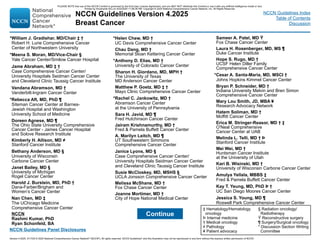
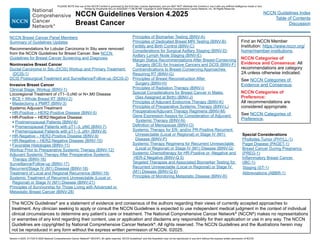
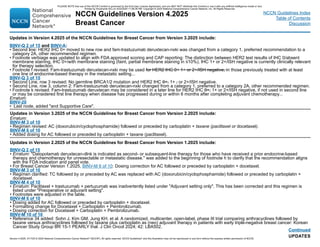
![NCCN Guidelines Version 4.2025
Breast Cancer
Version 4.2025, 4/17/25 © 2025 National Comprehensive Cancer Network®
(NCCN®
), All rights reserved. NCCN Guidelines®
and this illustration may not be reproduced in any form without the express written permission of NCCN.
NCCN Guidelines Index
Table of Contents
Discussion
Continued
UPDATES
DCIS-1
• Footnote g revised: Surgical axillary staging should not be performed for preoperative (biopsy-determined) pure DCIS unless there is some clinical-pathologic
suggestion of invasion or axillary metastasis. A SLNB should also can be considered in the setting of 1) mastectomy for DCIS, where there is a small risk of
detecting invasive disease in the mastectomy specimen or 2) excision in an anatomic location compromising the performance of a future SLNB procedure.
• Footnote h added: A SLNB may be considered in the setting of 1) mastectomy for DCIS, 2) excision in an anatomic location compromising the performance of
a future SLNB procedure 3) oncoplastic breast conserving surgery (see BINV-D for appropriate candidates for SLNB).
• Footnote m, last sentence revised: Select patients with low risk DCIS may be considered suitable for APBI/PBI or omission of RT (endocrine therapy alone, if
all RTOG 9804 criteria are met: screen-detected, grade 1–2, size ≤2.5 cm, margins ≥3 mm).
DCIS-2
• Surveillance/Follow-up, 2nd bullet revised: First mammogram 6–12 mo, after end of RT, if given, or after BCS therapy (category 2B) if no RT is given
and annually thereafter
• Footnote q revised: The standard dose of tamoxifen is 20 mg/day for 5 years. Low-dose tamoxifen (5 mg/day or 10 mg/every other day, for 3 years) is
an option in patients who are symptomatic or unwilling to take standard 20-mg dosing. Low-dose tamoxifen (5 mg per day or 10 mg every other day for
3–5 years) is an option if patient is symptomatic on the 20-mg dose or if patient is unwilling or unable to take standard-dose 20 mg per day tamoxifen
[10 mg every other day since 5-mg dose is not available in the United States]. This low dosage needs further investigation in premenopausal individuals
(DeCensi A, et al. J Clin Oncol 2019;37:1629-1637).
BINV-1
• Workup
Last bullet added: Consider baseline lymphedema screening, as per NCCN Guidelines for Survivorship
• Clinical Stage
Bottom pathway, last column middle node, bullet 1 revised: BCS + surgical axillary staging ± whole breast RT Followed by RT
Bottom pathway, last column middle node, bullet 2 revised: Mastectomy + surgical axillary staging ± PMRT Followed by RT
BINV-2
• Column headers added: Surgery, Adjuvant Systemic Therapy, Nodal Status, RT
• Column 2
Last sentence added: RT is typically given after systemic therapy (Also for BINV-3)
• pN1a pathway, bullet 1 revised: cT1–T3 2, cN0
• pN1a pathway, No node, last column revised: Whole breast RT with inclusion of any portion of the undissected axilla at risk ± boost to tumor bed
(category 1). Strongly consider comprehensive RNI, including any portion of the undissected axilla.
• Footnote o revised: Sentinel node biopsy may be omitted based on the SSO Choosing Wisely recommendation in patients ≥70 years of age with HR+/
HER2-negative and pT1, cN0 tumors (Hughes KS, et al. J Clin Oncol 2013;31:2382-2387. Kunkler IH, et al. N Engl J Med 2023:388:585-594).
• Footnote p added: Determined by surgery, clinical findings, or radiographic imaging.
• Footnote q added: Based on emerging data from the SOUND trial, patients with HR+/HER2-negative tumors, pT1, N0 (node negative by axillary
ultrasound), may be considered for omission of SLN biopsy. Gentilini OD, et al. JAMA Oncol 2023;9:1557-1564.
BINV-3
• Header revised: Locoregional Treatment of cT–3, cN0 or cN+, M0 Disease: Mastectomy ± PMRT
• Column headers added: Surgery, Adjuvant Systemic Therapy, Pathologic Nodal Status, RT
• Column 1 revised: Nipple-sparing, skin-sparing, or total mastectomy with surgical axillary staging (category 1) ± reconstruction
BINV-4
• Header added: Adjuvant Systemic Therapy Considerations Based on Histology and Receptor Status after Upfront Surgery
Updates in Version 1.2025 of the NCCN Guidelines for Breast Cancer from Version 6.2024 include:
PLEASE NOTE that use of this NCCN Content is governed by the End-User License Agreement, and you MAY NOT distribute this Content or use it with any artificial intelligence model or tool.
Printed by Kirushanth Kiru on 9/22/2025 11:08:38 PM. Copyright © 2025 National Comprehensive Cancer Network, Inc. All Rights Reserved.](https://image.slidesharecdn.com/breast-2-251014042453-90a4bd3f/85/Breast-CA-Management-Principle-for-PG-UG-5-320.jpg)
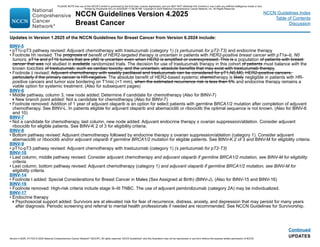
![NCCN Guidelines Version 4.2025
Breast Cancer
Version 4.2025, 4/17/25 © 2025 National Comprehensive Cancer Network®
(NCCN®
), All rights reserved. NCCN Guidelines®
and this illustration may not be reproduced in any form without the express written permission of NCCN.
NCCN Guidelines Index
Table of Contents
Discussion
UPDATES
Continued
BINV-18
• Workup, Imaging for systemic staging
Bullet 6, sub-bullet revised: FDG-PET/CT (consider FES-PET/CT for ER-positive disease and lobular histology)
• Footnote iii revised: Tumor tissue or plasma-based circulating tumor DNA (ctDNA) assays may be used and each of these have benefits and limitations for diagnosis
and disease progression. Tissue-based assays have greater sensitivity for some alterations, but ctDNA may reflect tumor heterogeneity more accurately. If one
specimen is negative for actionable biomarkers, testing on the alternative specimen can be considered.
• Footnote kkk added: In the setting of oligometastatic breast cancer, the currently available data do not support ablative metastasis-directed RT (ie, stereotactic body
radiation therapy [SBRT]) for extending overall survival (OS) or progression-free survival (PFS). (Also for BINV-21)
BINV-19
• Column 3
1st row revised: Repeat BCS or mastectomy + consider surgical axillary staging if no prior ALND + RT after BCS and if indicated after mastectomy
2nd row revised: Total mastectomy + consider surgical axillary staging if no prior ALND + repeat RT if feasible and indicated
3rd row revised: Surgical resection if feasible + consider surgical axillary staging + postmastectomy radiotherapy (PMRT)
4th row revised: Surgical resection if feasible + consider surgical axillary staging if no prior ALND + repeat RT, if feasible and indicated
• Footnote mmm revised: In patients with a local breast recurrence after BCS who had a prior SLNB, a repeat SLNB may be considered although the accuracy of repeat
SLNB is unproven. After mastectomy, repeat SLNB may be considered although there are limited data in this setting. In patients who had a prior ALND or mastectomy,
repeat SLNB with lymphoscintigraphy may be considered rather than ALND (Poodt IGM, et al. Ann Surg Oncol 2019;26:2417-2427).
BINV-22
• Footnote removed: If progression on initial endocrine therapy, switch to a different endocrine therapy option.
BINV-25
• Top pathway, column 4 revised: Systemic therapy + ± HER2-targeted therapy until progression
• Footnote cccc revised: Continue HER2-targeted therapy following progression on first-line HER2-targeted chemotherapy for metastatic breast cancer. The optimal
duration of trastuzumab in patients with long-term control of disease is unknown. (Also for BINV-26)
BINV-26
• Column 4 revised: Alternate systemic therapy + HER2-targeted therapy until progression
BINV-27
• Footnote removed: Targeted Therapies and Associated Biomarker Testing for Recurrent Unresectable (Local or Regional) or Stage IV (M1) Disease BINV-Q (6).
BINV-28
• New section: Principles of Survivorship for Those Living with Advanced or Metastatic Breast Cancer
BINV-A (1 of 2)
• Footnote d revised: The distinction between HER2 IHC 0 with no membrane staining from IHC 0+ with faint, partial membrane staining in ≤10%, 1+, or 2+/ISH negative
results (on primary or metastatic samples) and 1+ is currently clinically relevant in the since patients with metastatic disease setting since with HER2 1+ or 2+/ISH
negative results (on primary or metastatic samples) may be eligible for treatment targeting non-amplified levels of HER2 expression.
BINV-C
• New paragraph added: The general considerations for fertility and sexual health/function outlined for specific populations in NCCN Guidelines for Adolescent and Young
Adult (AYA) Oncology and NCCN Guidelines for Survivorship are applicable to all patients diagnosed with breast cancer. See NCCN Guidelines for Adolescent and
Young Adult (AYA) Oncology and NCCN Guidelines for Survivorship.
BINV-D
• Section significantly revised.
BINV-E
• Paragraph 2 revised: In the absence of definitive data demonstrating superior survival, the performance of axillary staging may be considered optional in patients who
have particularly favorable tumors, patients for whom the selection of adjuvant systemic and/or RT is unlikely to be affected, those ≥70 years of age, or those with
serious comorbid conditions.
• Footnote a revised: Sentinel node biopsy may be omitted based on the SSO Choosing Wisely recommendation in patients ≥70 years of age with HR+/HER2-negative
and pT1, cN0 tumors (Hughes KS, et al. J Clin Oncol 2013;31:2382-2387. Kunkler IH, et al. N Engl J Med 2023:388:585-594).
• Footnote b added: Based on emerging data from the SOUND trial, patients with HR+/HER2-negative tumors, pT1, N0 (node negative by axillary ultrasound), may be
considered for omission of SLN biopsy. Gentilini OD, et al. JAMA Oncol 2023;9:1557-1564.
Updates in Version 1.2025 of the NCCN Guidelines for Breast Cancer from Version 6.2024 include:
PLEASE NOTE that use of this NCCN Content is governed by the End-User License Agreement, and you MAY NOT distribute this Content or use it with any artificial intelligence model or tool.
Printed by Kirushanth Kiru on 9/22/2025 11:08:38 PM. Copyright © 2025 National Comprehensive Cancer Network, Inc. All Rights Reserved.](https://image.slidesharecdn.com/breast-2-251014042453-90a4bd3f/85/Breast-CA-Management-Principle-for-PG-UG-7-320.jpg)
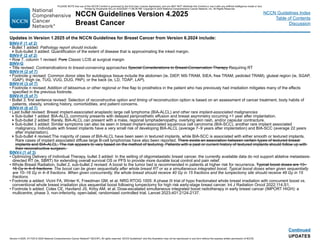
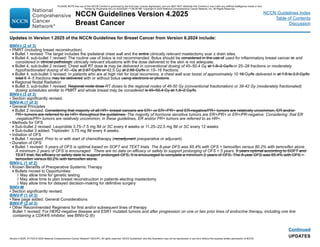
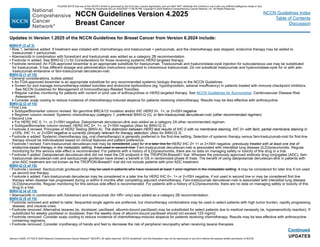
![NCCN Guidelines Version 4.2025
Breast Cancer
Version 4.2025, 4/17/25 © 2025 National Comprehensive Cancer Network®
(NCCN®
), All rights reserved. NCCN Guidelines®
and this illustration may not be reproduced in any form without the express written permission of NCCN.
NCCN Guidelines Index
Table of Contents
Discussion
UPDATES
Updates in Version 1.2025 of the NCCN Guidelines for Breast Cancer from Version 6.2024 include:
BINV-Q (6 of 15)
• Targeted Therapies and Associated Biomarker Testing for Recurrent Unresectable (Local or Regional) or Stage IV (M1) Disease
Detection column significantly revised (Also for BINV-Q 7 and 8)
Last row, NCCN Category of Preference column revised: Other recommended regimen subsequent-line therapy
• Footnote t added: Some plasma-based ctDNA assays include a measure of tumor fraction (TF), which can aid in identification of low ctDNA content. Samples with low TF, especially 1%,
should be interpreted with caution. Tests have varying sensitivities at low TF. Additional sampling from current tumor sample or future plasma can be considered. (Also for BINV-Q 7 and
8)
• Footnote x revised: For postmenopausal or premenopausal patients receiving ovarian ablation or suppression or adult males with ER-positive, HER2-negative, ESR1-mutated disease
after progression on one or two prior lines of endocrine therapy, including one line containing a CDK4/6 inhibitor. Assess for ESR1 mutations at progression following prior lines of
endocrine therapy (ctDNA preferred).
BINV-Q (7 of 15)
• Germline PALB2 row moved from subsequent page.
• Footnote y added: This regimen is not FDA approved for this indication. Tung NM, Robson ME, Ventz S, et al. TBCRC 048: phase II study of olaparib for metastatic breast cancer and
mutations in homologous recombination-related genes. J Clin Oncol 2020;38:4274-4282.
• Footnote dd added: Tissue biopsy is more sensitive than ctDNA (liquid biopsy) at detecting homozygous copy loss of PTEN or TMB-H. (Also for BINV-Q 7)
• Footnote removed: NCCN Guidelines for Management of Immunotherapy-Related Toxicities.
BINV-Q (8 of 15)
• Row 1 column 4 revised: Neratinib + ± trastuzumab/ fulvestrant was added as a category 2A, useful in certain circumstances recommendation.
• Row 3 added: Erdafitinib was added as a category 2B, useful in certain circumstances recommendation.
• Footnote hh revised: Jhaveri KL, Goldman JW, Hurvitz SA, et al. Neratinib plus fulvestrant plus trastuzumab (N+F+T) for hormone receptor-positive (HR+), HER2-negative, HER2-mutant
metastatic breast cancer (MBC): Outcomes and biomarker analysis from the SUMMIT trial. J Clin Oncol 2022;40:1028-1028. Jhaveri K, Eli LD, Wildiers H, et al. Neratinib + fulvestrant +
trastuzumab for HR-positive, HER2-negative, HER2-mutant metastatic breast cancer: outcomes and biomarker analysis from the SUMMIT trial. Ann Oncol 2023;34:885-898.
BINV-Q (9 of 15)
• Datopotamab deruxtecan-dlnk dosing added.
BINV-Q (12 of 15)
• Reference 15 added: Bardia A, Jhaveri K, Im SA, et al. Datopotamab deruxtecan versus chemotherapy in previously treated inoperable/metastatic hormone receptor–positive human
epidermal growth factor receptor 2–negative breast cancer: Primary Results from TROPION-Breast01. J Clin Oncol 2025;43:285-296.
BINV-Q (14 of 15)
• Repotrectinib dosing added.
BINV-Q (15 of 15)
• Reference 14 added: Solomon BJ, Drilon A, Lin JJ, et al. Repotrectinib in patients with NTRK fusion-positive advanced solid tumors, including non-small cell lung cancer: Update from the
phase 1/2 TRIDENT-1 trial [abstract]. Ann Oncol 2023;34:Abstract 1372P.
BINV-R (3 of 3)
• Principles of Monitoring Metastatic Disease: Suggested Intervals of Follow-up for Patients with Metastatic Disease
Column 3, header revised: Chemotherapy or Targeted Therapy
Column 4, header revised: Endocrine Therapy Alone or in Combination with CDK 4/6 Inhibitor or Other Targeted Therapy
PHYLL-1
• Column 4, Findings revised to Core Biopsy Results.
IBC-1
• Footnote a revised: IBC is characterized by:
1) Rapid onset (≤6 months) of erythema, edema, p'eau d'orange occupying ≥1/3 of the breast, with or without a palpable mass.
2) Pathologic confirmation of invasive breast cancer.
3) Dermal lymphatic involvement may be seen but is not required for the diagnosis.
IBC is a clinical syndrome in patients with invasive breast cancer that is characterized by erythema and edema (peau d'orange) of a third or more of the skin of the breast. The differential
diagnosis includes cellulitis of the breast or mastitis. Pathologically, a tumor is typically present in the dermal lymphatics of the involved skin, but dermal lymphatic involvement is neither
required, nor sufficient by itself for a diagnosis of IBC.
IBC-2
• Footnote i revised: The accurate assessment of in-breast tumor or regional lymph node response to preoperative systemic therapy is difficult, and should include physical examination
and performance of imaging studies (mammogram and/or breast ultrasound and/or breast MRI) that were abnormal at the time of initial tumor staging. Selection of imaging methods prior
to surgery should be determined by the multidisciplinary team. MRI is more accurate than mammography for assessing tumor response to preoperative therapy.
PLEASE NOTE that use of this NCCN Content is governed by the End-User License Agreement, and you MAY NOT distribute this Content or use it with any artificial intelligence model or tool.
Printed by Kirushanth Kiru on 9/22/2025 11:08:38 PM. Copyright © 2025 National Comprehensive Cancer Network, Inc. All Rights Reserved.](https://image.slidesharecdn.com/breast-2-251014042453-90a4bd3f/85/Breast-CA-Management-Principle-for-PG-UG-11-320.jpg)
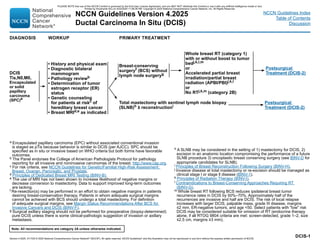
![Version 4.2025, 4/17/25 © 2025 National Comprehensive Cancer Network®
(NCCN®
), All rights reserved. NCCN Guidelines®
and this illustration may not be reproduced in any form without the express written permission of NCCN.
Note: All recommendations are category 2A unless otherwise indicated.
NCCN Guidelines Version 4.2025
Ductal Carcinoma In Situ (DCIS)
NCCN Guidelines Index
Table of Contents
Discussion
DCIS-2
n CYP2D6 genotype testing is not recommended for patients considering tamoxifen.
o Available data suggest endocrine therapy provides risk reduction in the ipsilateral breast treated with breast conservation and in the contralateral breast in patients
with mastectomy or breast conservation with ER-positive primary tumors. Since a survival advantage has not been demonstrated, individual consideration of risks and
benefits is important.
p The use of a bisphosphonate (PO/IV) or denosumab is acceptable to maintain or improve bone mineral density and reduce risk of fractures in postmenopausal (natural
or induced) patients receiving adjuvant aromatase inhibitor therapy. Optimal duration of either therapy has not been established. Benefits from duration beyond
3 years or optimal duration beyond 3 years is not known. Factors to consider for duration of anti-osteoporosis therapy include bone mineral density, response to
therapy, and risk factors for continued bone loss or fracture. There are case reports of spontaneous fractures after denosumab discontinuation. Patients treated with a
bisphosphonate or denosumab should undergo a dental examination with preventive dentistry prior to the initiation of therapy, and should take supplemental calcium
and vitamin D.
q Low-dose tamoxifen (5 mg per day or 10 mg every other day for 3–5 years) is an option if patient is symptomatic on the 20-mg dose or if patient is unwilling or
unable to take standard-dose 20 mg per day tamoxifen [10 mg every other day since 5-mg dose is not available in the United States]. This low dosage needs further
investigation in premenopausal individuals (DeCensi A, et al. J Clin Oncol 2019;37:1629-1637).
Risk reduction therapy for ipsilateral breast following BCS:
• Consider endocrine therapy for 5 years for patients with ER-
positive DCIS, if:
Treated with BCS and RTn (category 1)
Treated with excision aloneo
• Endocrine therapyp:
Tamoxifenn,q for premenopausal patients
Tamoxifenn,q or aromatase inhibitor for postmenopausal
patients with some advantage for aromatase inhibitor therapy
in patients 60 years or with concerns for thromboembolism
Risk reduction therapy for contralateral breast:
• Counseling regarding risk reduction
DCIS POSTSURGICAL TREATMENT SURVEILLANCE/FOLLOW-UP
• Interval history and physical exam every 6–12 mo for 5 y,
then annually
• First mammogram 6–12 mo, after end of RT, if given, or
after BCS (category 2B) if no RT is given and annually
thereafter
PLEASE NOTE that use of this NCCN Content is governed by the End-User License Agreement, and you MAY NOT distribute this Content or use it with any artificial intelligence model or tool.
Printed by Kirushanth Kiru on 9/22/2025 11:08:38 PM. Copyright © 2025 National Comprehensive Cancer Network, Inc. All Rights Reserved.](https://image.slidesharecdn.com/breast-2-251014042453-90a4bd3f/85/Breast-CA-Management-Principle-for-PG-UG-13-320.jpg)
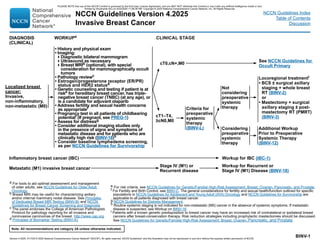
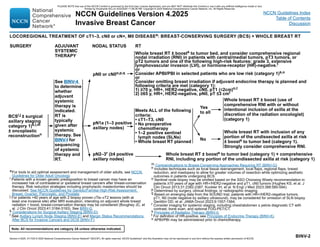
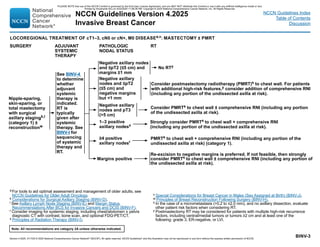
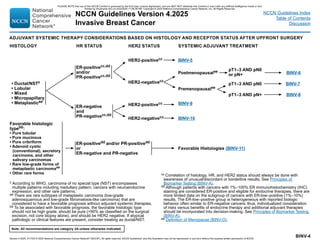
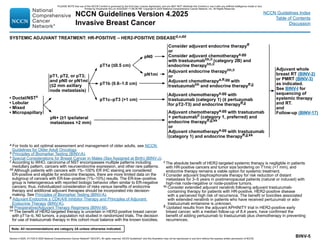
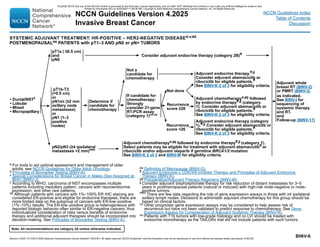
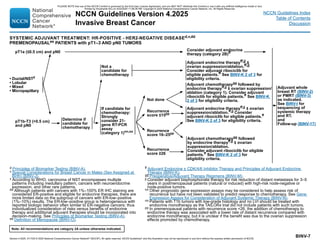
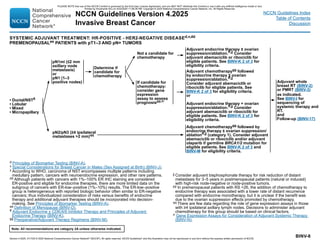
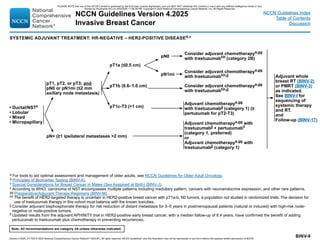
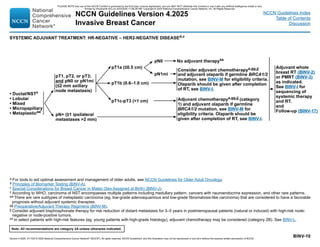
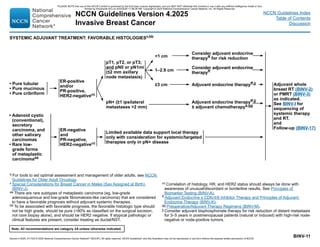
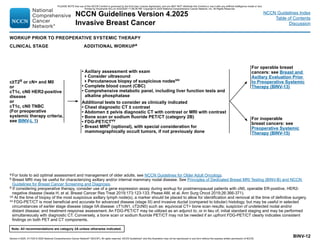
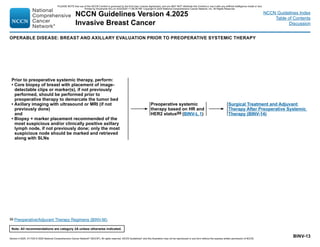
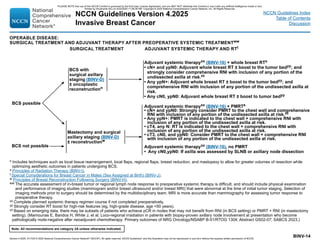
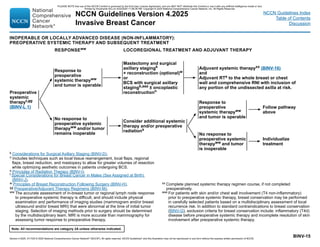
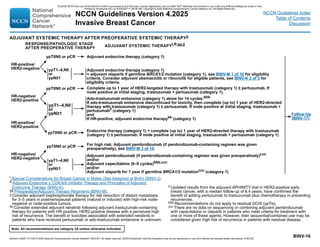
![Version 4.2025, 4/17/25 © 2025 National Comprehensive Cancer Network®
(NCCN®
), All rights reserved. NCCN Guidelines®
and this illustration may not be reproduced in any form without the express written permission of NCCN.
Note: All recommendations are category 2A unless otherwise indicated.
NCCN Guidelines Version 4.2025
Invasive Breast Cancer
NCCN Guidelines Index
Table of Contents
Discussion
BINV-17
SURVEILLANCE/FOLLOW-UP
Recurrent
Disease
(BINV-18)
ddd
Studies indicate that annual mammograms are the appropriate frequency for surveillance of patients with breast cancer who have had BCS and RT with no clear
advantage to shorter interval imaging. Patients should wait 6 to 12 months after the completion of RT to begin their annual mammogram surveillance. Suspicious
findings on physical examination or surveillance imaging might warrant a shorter interval between mammograms.
eee
The use of estrogen, progesterone, or selective ER modulators to treat osteoporosis or osteopenia in patients with breast cancer is discouraged. The use of a
bisphosphonate (oral/IV) or denosumab is acceptable to maintain or to improve bone mineral density and reduce risk of fractures in postmenopausal (natural or
induced) patients receiving adjuvant aromatase inhibitor therapy. Optimal duration of either therapy has not been established. Benefits of duration beyond 3 years
or optimal duration beyond 3 years is not known. Factors to consider for duration of anti-osteoporosis therapy include bone mineral density, response to therapy,
and risk factors for continued bone loss or fracture. There are case reports of spontaneous fractures after denosumab discontinuation. Patients treated with a
bisphosphonate or denosumab should undergo a dental examination with preventive dentistry prior to the initiation of therapy, and should take supplemental calcium
and vitamin D.
Exam:
• History and physical exam 1–4 times per year as clinically
appropriate for 5 years, then annually
Genetic screening:
• Periodic screening for changes in family history and genetic
testing indications and referral to genetic counseling as
indicated, see NCCN Guidelines for Genetic/Familial High-
Risk Assessment: Breast, Ovarian, Pancreatic, and Prostate
Postsurgical management:
• Educate, monitor, and refer for lymphedema management,
see NCCN Guidelines for Survivorship: Lymphedema
Breast imaging:
• Mammography every 12 months, beginning 6 months or
more after completion of breast-conserving therapy (BCT)ddd
• Routine imaging of reconstructed breast is not indicated
• For patients with germline mutations or family history of
breast cancer, please refer to NCCN Guidelines for Genetic/
Familial High-Risk Assessment: Breast, Ovarian, Pancreatic,
and Prostate
Fertility, birth control, and sexual health see BINV-C.
Screening for metastases:
• In the absence of clinical signs and symptoms suggestive
of recurrent disease, there is no indication for laboratory or
imaging studies for metastases screening.
Post-treatment monitoring:
• Cardiotoxicity monitoring for patients who received left-
sided radiation therapy, anthracyclines, or HER2-targeted
therapy. For anthracycline-induced toxicity, see NCCN
Guidelines for Survivorship
• Provide guidance on risk of comorbidities
Endocrine therapy:
• Assess and encourage adherence to adjuvant endocrine therapy
• Patients on tamoxifen:
Age-appropriate gynecologic screening
Routine annual pelvis ultrasound is not recommended
• Patients on an aromatase inhibitor or who experience ovarian
failure secondary to treatment should have monitoring of bone
health with a bone mineral density determination at baseline and
periodically thereaftereee
Lifestyle:
• Evidence suggests that active lifestyle, healthy diet, limited
alcohol intake, and achieving and maintaining an ideal body
weight (20–25 body mass index [BMI]) may lead to optimal breast
cancer outcomes. See NCCN Guidelines for Breast Cancer Risk
Reduction.
Psychosocial support:
• Survivors are at elevated risk for fear of recurrence, distress,
anxiety, and depression that may persist for many years after
diagnosis. Periodic screening and referral to mental health
professionals if needed are recommended. See NCCN Guidelines
for Survivorship.
Communication:
• Coordination of care between the primary care physician (PCP)
and specialists is encouraged. Additionally, a personalized
survivorship treatment plan including personalized treatment
summary of possible long-term toxicity and clear follow-up
recommendations is recommended. See NCCN Guidelines for
Survivorship
Engagement:
• Patients frequently require follow-up encouragement in order
to improve adherence to ongoing screening and medication
adherence. See NCCN Guidelines for Patients
PLEASE NOTE that use of this NCCN Content is governed by the End-User License Agreement, and you MAY NOT distribute this Content or use it with any artificial intelligence model or tool.
Printed by Kirushanth Kiru on 9/22/2025 11:08:38 PM. Copyright © 2025 National Comprehensive Cancer Network, Inc. All Rights Reserved.](https://image.slidesharecdn.com/breast-2-251014042453-90a4bd3f/85/Breast-CA-Management-Principle-for-PG-UG-30-320.jpg)
![Version 4.2025, 4/17/25 © 2025 National Comprehensive Cancer Network®
(NCCN®
), All rights reserved. NCCN Guidelines®
and this illustration may not be reproduced in any form without the express written permission of NCCN.
Note: All recommendations are category 2A unless otherwise indicated.
NCCN Guidelines Version 4.2025
Invasive Breast Cancer
NCCN Guidelines Index
Table of Contents
Discussion
BINV-18
a For tools to aid optimal assessment and management of older adults, see NCCN
Guidelines for Older Adult Oncology.
d Principles of Biomarker Testing (BINV-A).
e For risk criteria, see NCCN Guidelines for Genetic/Familial High-Risk
Assessment: Breast, Ovarian, Pancreatic, and Prostate.
g See NCCN Guidelines for Distress Management.
fff
For the treatment of brain metastases, see NCCN Guidelines for Central
Nervous System Cancers.
ggg
False-negative ER and/or PR determinations occur, and there may be
discordance between the ER and/or PR determination between the primary
and metastatic tumor(s). Therefore, endocrine therapy with its low attendant
toxicity may be considered in patients with non-visceral or asymptomatic
visceral tumors, especially in patients with clinical characteristics predicting for
an HR-positive tumor (eg, long disease-free interval, limited sites of recurrence,
indolent disease, older age).
hhh
In clinical situations where a biopsy cannot safely be obtained but the clinical
evidence is strongly supportive of recurrence, treatment may commence
based on the ER/PR/HER2 status of the primary tumor. Since ER/PR and
HER2 status can change with treatment and metastatic progression, it may be
appropriate to consider repeat testing on new samples in these scenarios if
management will change.
iii Tumor tissue or plasma-based circulating tumor DNA (ctDNA) assays may be
used and each of these have benefits and limitations for diagnosis and disease
progression. Tissue-based assays have greater sensitivity for some alterations,
but ctDNA may reflect tumor heterogeneity more accurately. If one specimen is
negative for actionable biomarkers, testing on the alternative specimen can be
considered.
jjj
See NCCN Guidelines for Palliative Care and NCCN Guidelines for Supportive
Care.
kkk In the setting of oligometastatic breast cancer, the currently available data
do not support ablative metastasis-directed RT (ie, stereotactic body radiation
therapy [SBRT]) for extending overall survival (OS) or progression-free survival
(PFS). In some cases, SBRT may be preferred over palliative RT to provide more
durable local control and pain relief.
RECURRENT/STAGE IV (M1) DISEASE
CLINICAL
STAGE
WORKUPa
Stage IV (M1)
or
Recurrent
• History and physical exam
• Discuss goals of therapy, adopt shared decision-making, and document course of care
• CBC
• Comprehensive metabolic panel, including liver function tests and alkaline phosphatase
• Imaging for systemic staging:
Chest diagnostic CT ± contrast
Abdomen ± pelvis diagnostic CT with contrast or MRI with contrast
Brain MRI with contrast if suspicious CNS symptomsfff
Spine MRI with contrast if back pain or symptoms of cord compression
Bone scan or sodium fluoride PET/CT (category 2B)
Useful in certain circumstances:
◊ FDG-PET/CT (consider FES-PET/CT for ER-positive disease and lobular histology)
X-rays of symptomatic bones and long and weight-bearing bones abnormal on bone scan
• Biomarker testing:
Biopsy of at least first recurrence of disease (consider re-biopsy if progression)
Evaluation of ER/PR and HER2 statusd,ggg,hhh
Comprehensive germline and somatic profiling to identify candidates for targeted
therapies,iii see BINV-Q 6
• Genetic counseling if patient is at riske for hereditary breast cancer
• Assess for distressg
Treatment
of Local and
Regional Recurrence
(BINV-19)
and
Supportive carejjj
Systemic Treatment of
Recurrent Unresectable
(local or regional) or
Stage IV (M1) (BINV-21)
and
Supportive carejjj,kkk
PLEASE NOTE that use of this NCCN Content is governed by the End-User License Agreement, and you MAY NOT distribute this Content or use it with any artificial intelligence model or tool.
Printed by Kirushanth Kiru on 9/22/2025 11:08:38 PM. Copyright © 2025 National Comprehensive Cancer Network, Inc. All Rights Reserved.](https://image.slidesharecdn.com/breast-2-251014042453-90a4bd3f/85/Breast-CA-Management-Principle-for-PG-UG-31-320.jpg)
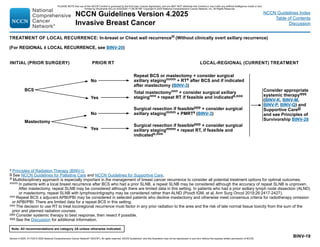
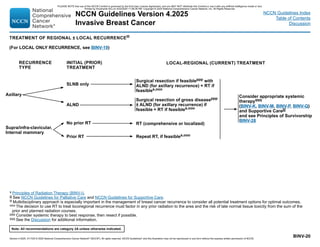
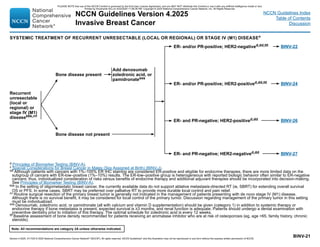
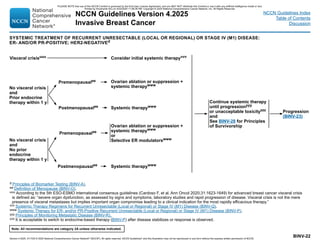
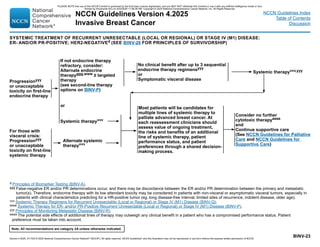
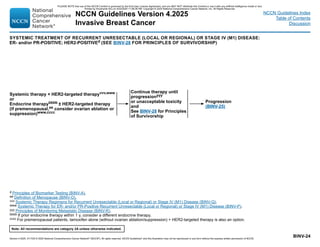
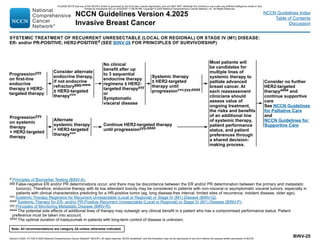
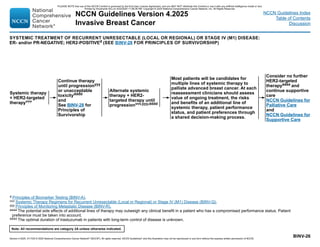
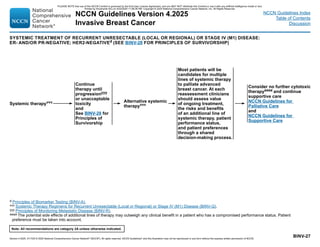
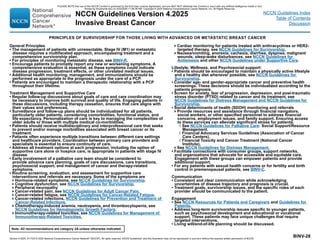
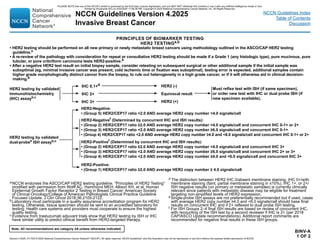
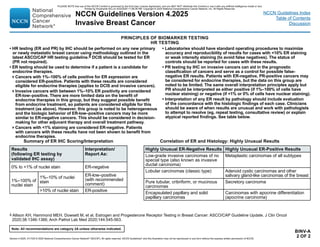
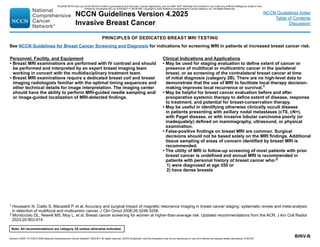
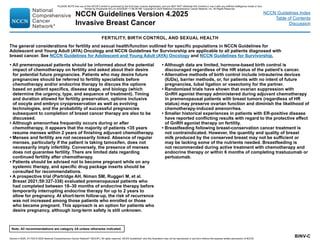
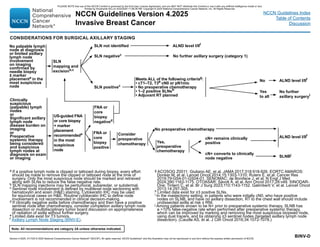
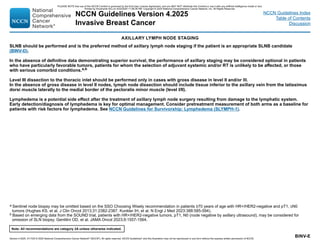
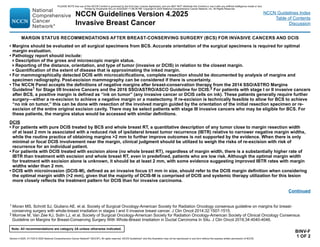
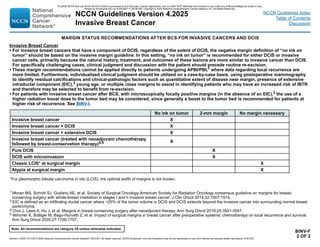
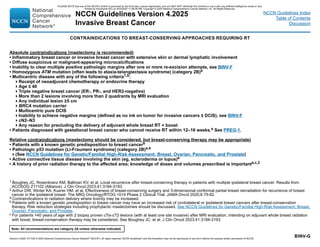
![Version 4.2025, 4/17/25 © 2025 National Comprehensive Cancer Network®
(NCCN®
), All rights reserved. NCCN Guidelines®
and this illustration may not be reproduced in any form without the express written permission of NCCN.
Note: All recommendations are category 2A unless otherwise indicated.
NCCN Guidelines Version 4.2025
Invasive Breast Cancer
NCCN Guidelines Index
Table of Contents
Discussion
BINV-H
1 OF 7
BCSc (mark
cavity with clips
for subsequent
RT planning,
particularly in cases
of oncoplastic tissue
rearrangement/
reduction)d
Mastectomye
IBC Delayed reconstruction
(Special Cases, [BINV-H 7])
No reconstruction required if ratio of
tumor to breast volume is small and
minimal cosmetic deformity will result
or
Consider oncoplastic reduction or
mastopexy and simultaneous or delayed
contralateral matching procedure
or
Consider bilateral breast reduction if
symptoms warrant breast reduction
or
Local tissue rearrangement, regional
flap (LD, partial LD, TDAP)
History of RT or adjuvant RT needed
No history of RT/no adjuvant RT needed
Unknown RT history or need for RT
Reconstruction Based on Planned
Adjuvant RT (BINV-H 2)
or
Reconstruction Based on History of
RT (BINV-H 3)
Implant, autologous, or combination reconstruction
Reconstruction Based on Unknown
History of RT or Unknown Need for
Postmastectomy RT (BINV-H 4)
Delayed fat grafting
Delayed flap for correction of contour
defects performed ≥6 months after RT
Contralateral reduction/mastopexy
for symmetry
a General Principles of Breast Reconstruction (BINV-H 5).
b Patient Factors Affecting Choice of Reconstruction (BINV-H 6).
c An evaluation of the likely cosmetic outcome of BCS should be performed prior to surgery.
Oncoplastic techniques for breast conservation can extend breast-conserving surgical options
in situations where the resection by itself would likely yield an unacceptable cosmetic outcome.
Application of these oncoplastic techniques may reduce the need for mastectomy and decrease
the need for a secondary surgery to minimize breast deformity. Patients should be informed of
the possibility of positive margins and potential need for secondary surgery, which could include
either segmental re-excision, or mastectomy with or without loss of the nipple. Systematic
oncoplastic reduction specimen orientation as well as highly specific operative documentation
regarding tissue rearrangement should be conducted. Enhanced communication between the
radiation oncology team and reconstructive team will be necessary for boost cavity localization
for RT treatment planning (Shah C, et al. Ann Surg Oncol 2018;25:2509-2511).
RT
PRINCIPLES OF BREAST RECONSTRUCTION AFTER SURGERY
Carcinoma
in situa,b
or
Invasive
carcinoma
d Consider staged partial mastectomy reconstruction (oncoplastic
approaches) if preoperative margin status is unclear (lobular,
multifocal/centric).
e As with any mastectomy, there is a risk of locoregional cancer
recurrence, and evidence suggests skin-sparing or skin- and
nipple-sparing mastectomy is probably equivalent to standard
mastectomy in this regard. Indications for PMRT following skin-
sparing mastectomy should not differ from standard mastectomy.
PLEASE NOTE that use of this NCCN Content is governed by the End-User License Agreement, and you MAY NOT distribute this Content or use it with any artificial intelligence model or tool.
Printed by Kirushanth Kiru on 9/22/2025 11:08:38 PM. Copyright © 2025 National Comprehensive Cancer Network, Inc. All Rights Reserved.](https://image.slidesharecdn.com/breast-2-251014042453-90a4bd3f/85/Breast-CA-Management-Principle-for-PG-UG-51-320.jpg)
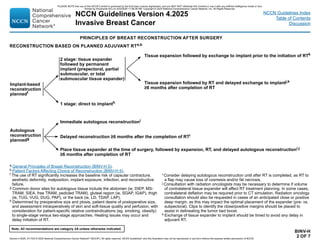
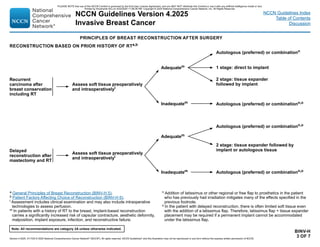
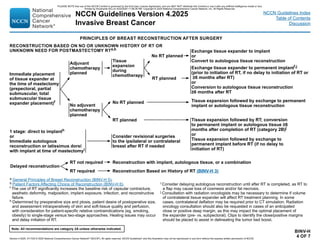
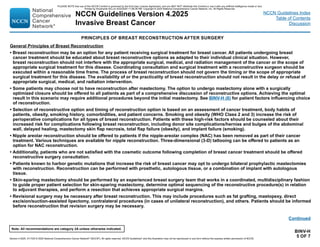
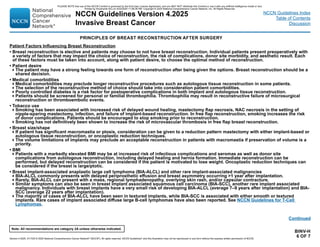
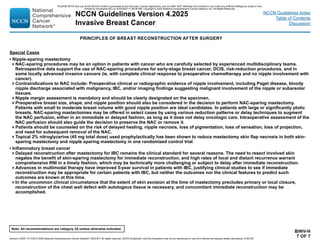
![Version 4.2025, 4/17/25 © 2025 National Comprehensive Cancer Network®
(NCCN®
), All rights reserved. NCCN Guidelines®
and this illustration may not be reproduced in any form without the express written permission of NCCN.
Note: All recommendations are category 2A unless otherwise indicated.
NCCN Guidelines Version 4.2025
Invasive Breast Cancer
NCCN Guidelines Index
Table of Contents
Discussion
Optimizing Delivery of Individual Therapy
• It is important to individualize RT planning and delivery.
3-D CT-based treatment planning should routinely be utilized to delineate target volumes organs at risk, and assess dose distribution
across the entire treatment volume.
Radiation is generally delivered with single or mixed energy photons ± electrons.
Treatment planning should be optimized to maximally improve homogeneity across the target volume while minimizing dose to organs at
risk.
Additional techniques such as respiratory control (deep inspiration breath-hold), prone positioning, and cardiac blocks may also be used
to try to further reduce dose to heart, lung, and adjacent normal tissue.
At a minimum, weekly imaging to verify treatment setup should be utilized. More frequent imaging may be needed for selected cases with
inconsistent reproducibility. Image-guided radiation therapy (IGRT) may be utilized with deep inspiration breath-hold (DIBH) technique to
reduce normal tissue exposure of the heart, lung or liver.
Dose-volume histograms (DVHs) should be used to evaluate dose, normal tissue constraints (ie, heart, lung), and planning target volumes
(PTVs).
• It is common for RT to follow chemotherapy when chemotherapy is indicated. See BINV-I 2 of 3.
• In the setting of oligometastatic breast cancer, the currently available data do not support ablative metastasis-directed RT (ie, SBRT) for
extending overall survival OS or PFS. In some cases, SBRT may be preferred over palliative radiotherapy to provide more durable local
control and pain relief.
Whole Breast RT
• Target definition is the breast tissue at risk.
• RT dosing:
The whole breast should receive a hypofractionated dose of 40–42.5 Gy in 15–16 fractions; in selected cases 45–50.4 Gy in 25–28 fractions
may be considered.
A boost to the tumor bed is recommended in patients at higher risk for recurrence. The boost can be given sequentially after whole
breast RT or as a simultaneous integrated boost. Typical boost doses when given sequentially are 10–16 Gy in 4–8 fractions. When given
concurrently, the whole breast should receive 40 Gy in 15 fractions and the lumpectomy site should receive 48 Gy in 15 fractions.a,b
Ultra-hypofractionated whole breast RT of 28.5 Gy in 5 (once-a-week) fractions may be considered for selected patients over 50 years
following BCS with early-stage, node-negative disease, particularly those in whom a boost is not intended.c,d
• Lumpectomy cavity boost can be delivered using enface electrons, photons, or brachytherapy.
BINV-I
1 OF 3
PRINCIPLES OF RADIATION THERAPY
a Vicini FA, Winter K, Freedman GM, et al. NRG RTOG 1005: A phase III trial of hypo fractionated whole breast irradiation with concurrent boost vs. conventional whole
breast irradiation plus sequential boost following lumpectomy for high risk early-stage breast cancer. Int J Radiation Oncol 2022;114;S1.
b Coles CE, Haviland JS, Kirby AM, et al. Dose-escalated simultaneous integrated boost radiotherapy in early breast cancer (IMPORT HIGH): a multicentre, phase 3,
non-inferiority, open-label, randomised controlled trial. Lancet 2023;401:2124-2137.
c Alternatively, 26 Gy in 5 daily fractions over one week may be considered, though data beyond 5 years for local relapse or toxicity are not yet available for this
regimen. (Murray Brunt A, Haviland JS, Wheatley DA, et al. Hypofractionated breast radiotherapy for 1 week versus 3 weeks [FAST-Forward]: 5-year efficacy and late
normal tissue effects results from a multicentre, non-inferiority, randomised, phase 3 trial. Lancet 2020;395:1613-1626.)
d Brunt AM, Haviland JS, Sydenham M, et al. Ten-year results of FAST: A randomized controlled trial of 5-fraction whole-breast radiotherapy for early breast cancer. J
Clin Oncol 2020;38:3261-3272.
PLEASE NOTE that use of this NCCN Content is governed by the End-User License Agreement, and you MAY NOT distribute this Content or use it with any artificial intelligence model or tool.
Printed by Kirushanth Kiru on 9/22/2025 11:08:38 PM. Copyright © 2025 National Comprehensive Cancer Network, Inc. All Rights Reserved.](https://image.slidesharecdn.com/breast-2-251014042453-90a4bd3f/85/Breast-CA-Management-Principle-for-PG-UG-58-320.jpg)
![Version 4.2025, 4/17/25 © 2025 National Comprehensive Cancer Network®
(NCCN®
), All rights reserved. NCCN Guidelines®
and this illustration may not be reproduced in any form without the express written permission of NCCN.
Note: All recommendations are category 2A unless otherwise indicated.
NCCN Guidelines Version 4.2025
Invasive Breast Cancer
NCCN Guidelines Index
Table of Contents
Discussion
BINV-I
2 OF 3
PRINCIPLES OF RADIATION THERAPY
PMRT (including breast reconstruction)
• The target includes the ipsilateral chest wall and the clinically relevant mastectomy scar ± drain sites.
Regional nodal RT is typically delivered with the chest wall. See below.
• In the case of cT3N0, high-risk features for considering PMRT include, but are not limited to, young age and/or LVI.
• Based on anatomic considerations and presence of reconstruction, various 3-D-, intensity modulated radiation therapy [IMRT], or volumetric modulated arc
therapy (VMAT) techniques using photons and/or electrons are appropriate.
• PMRT details and dosing:
The routine use of bolus is not recommended. Bolus should be used for inflammatory breast cancer and considered in clinically relevant situations
where the dose to the skin may not be adequate.
Chest wall RT dose may be delivered in conventional dosing of 45–50.4 Gy in 25–28 fractions or moderately hypofractionated dosing of 40–42.5 Gy in
15–16 fractions.
In patients who are at high risk for local recurrence, a chest wall scar boost may be considered of approximately 10 Gy delivered in 4-5 fractions with or
without bolus.
Regional Nodal Radiation
• For supra/infra-clavicular and axillary nodes, prescription depth varies based on the patient anatomy.
• Regional nodes should be contoured when when RNI is indicated. Refer to breast atlases for contouring guidelines.e,f
• RT dosing:
RT doses to the regional nodes of 46–50 Gy (conventional fractionation) or 39–42 Gy (moderately fractionated) dosing schedules similar to PMRT and
whole breast may be considered.
A supplemental boost of RT can be delivered to grossly involved or enlarged lymph nodes (ie, internal mammary, supra/infra-clavicular) that have not
been surgically removed.
RT with Preoperative or Adjuvant Systemic Therapy
• In patients treated with preoperative systemic therapy, adjuvant RT is based on the maximal disease stage (ie, clinical stage, pathologic stage, tumor
characteristics) at diagnosis (before preoperative systemic therapy) and pathology results after preoperative systemic therapy.
• Sequencing of RT with systemic therapy:
It is common for RT to follow chemotherapy when chemotherapy is indicated. However,
– CMF (cyclophosphamide/methotrexate/fluorouracil) is the only standard regimen that can be given concurrently with RT.
– Capecitabine is typically given after completion of RT.
– Olaparib should be given after completion of RT.
Available data suggest that sequential or concurrent endocrine therapy with RT is acceptable. Due to compounding side effects, initiating endocrine
therapy at the completion of RT may be preferred.
◊ Abemaciclib or ribociclib should be initiated after completion of surgery/RT/chemotherapy, concurrently with endocrine therapy.
Adjuvant HER2-targeted therapy ± endocrine therapy may be delivered concurrently with RT.
e Offersen BV, Boersma LJ, Kirkove C, et al. ESTRO consensus guideline on target volume delineation for elective radiation therapy of early stage breast cancer.
Radiother Oncol 2015;114:3-10.
f Gentile MS, Usman AA, Neuschler EI, et al. Contouring guidelines for the axillary lymph nodes for the delivery of radiation therapy in breast cancer: Evaluation of the
RTOG Breast Cancer Atlas. Int J Radiat Oncol Biol Phys 2015;93:257-265.
PLEASE NOTE that use of this NCCN Content is governed by the End-User License Agreement, and you MAY NOT distribute this Content or use it with any artificial intelligence model or tool.
Printed by Kirushanth Kiru on 9/22/2025 11:08:38 PM. Copyright © 2025 National Comprehensive Cancer Network, Inc. All Rights Reserved.](https://image.slidesharecdn.com/breast-2-251014042453-90a4bd3f/85/Breast-CA-Management-Principle-for-PG-UG-59-320.jpg)
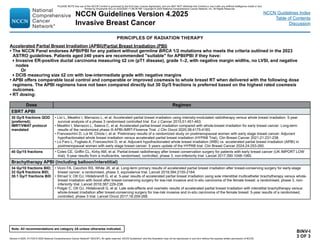
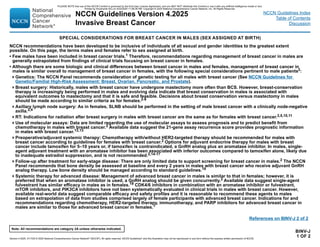
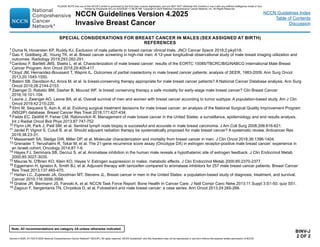
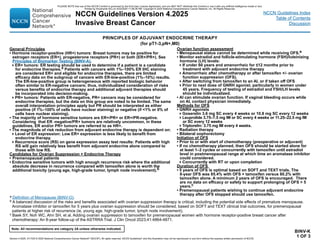
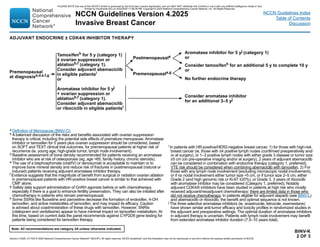
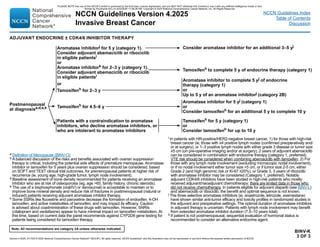
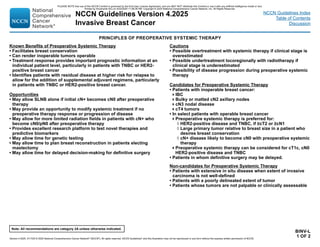
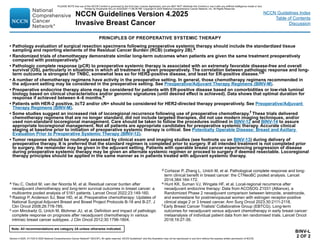
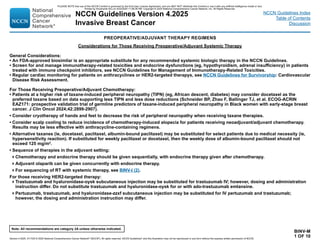
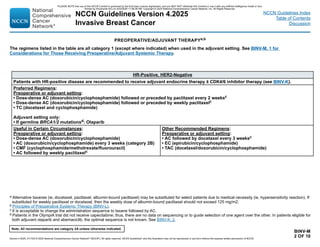
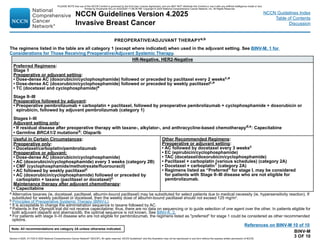
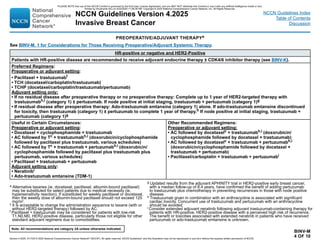
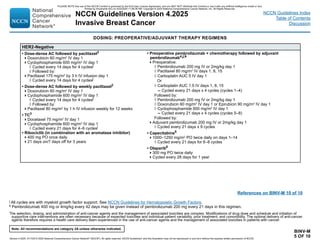
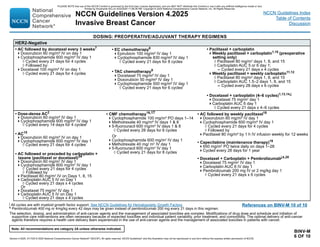
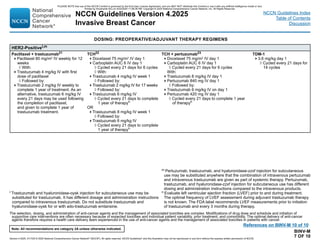
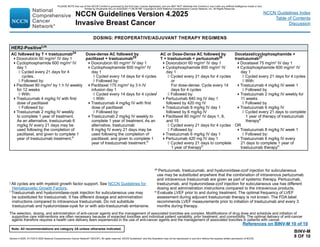
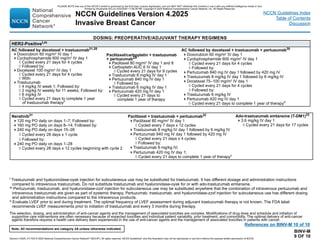
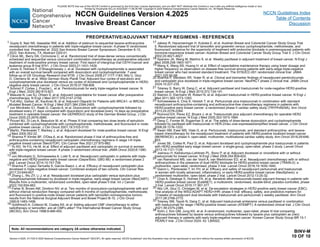
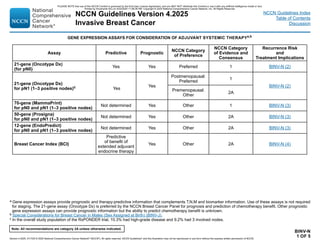
![Version 4.2025, 4/17/25 © 2025 National Comprehensive Cancer Network®
(NCCN®
), All rights reserved. NCCN Guidelines®
and this illustration may not be reproduced in any form without the express written permission of NCCN.
Note: All recommendations are category 2A unless otherwise indicated.
NCCN Guidelines Version 4.2025
Invasive Breast Cancer
NCCN Guidelines Index
Table of Contents
Discussion
BINV-N
2 OF 5
GENE EXPRESSION ASSAYS FOR CONSIDERATION OF ADJUVANT SYSTEMIC THERAPYa,b
Assay Recurrence Risk Treatment Implications
21-gene
(Oncotype Dx)
(for
postmenopausal
patients with pN0
and pN1 [1–3
positive nodes])c
26
Patients with T1b/c–2, pN0, HR-positive, HER2-negative tumors, with recurrence scores (RS) between
0–10 have a risk of distant recurrence of 4% and those with RS 11–25 derived no benefit from the
addition of chemotherapy to endocrine therapy in the prospective TAILORx study.1
Postmenopausal patients with pT1–3, pN1, HR-positive, HER2-negative, with RS 26 derived no benefit
from the addition of chemotherapy to endocrine therapy in the prospective RxPONDER study.2
≥26
In postmenopausal patients with pT1–3, HR-positive, HER2-negative, and pN0 and pN1 (1–3 positive
nodes) tumors and an RS ≥26, the addition of chemotherapy to endocrine therapy is recommended.1,2
21-gene
(Oncotype Dx)
(for premenopausal
patients: pN0)
≤15
Premenopausal patients with T1b/c –2, pN0, HR-positive, HER2-negative tumors with RS 16 derived no
benefit from the addition of chemotherapy to endocrine therapy in the prospective TAILORx study.1
16–25
In premenopausal patients with RS between 16–25, a small benefit from the addition of chemotherapy
could not be ruled out, but it is unclear if the benefit was due to the ovarian suppression effect promoted by
chemotherapy in premenopausal patients.1,2 For this group, consider chemotherapy followed by endocrine
therapy or alternatively, ovarian function suppression combined with either tamoxifen or an AI.
≥26
In premenopausal patients with HR-positive, HER2-negative, and pN0 tumors and an RS ≥26, the addition
of chemotherapy to endocrine therapy is recommended.1
21-gene (Oncotype
Dx)
(for premenopausal
patients with 1–3
positive nodes)c
26
In premenopausal patients with pT1–3 and pN1 (1–3 positive nodes) tumors and an RS 26, the addition
of chemotherapy to endocrine therapy was associated with a lower rate of distant recurrence compared
with endocrine monotherapy2 but it is unclear if the benefit was due to the ovarian suppression effects
promoted by chemotherapy. For this group of patients, consider chemotherapy followed by endocrine
therapy or alternatively, ovarian function suppression combined with either tamoxifen or an AI.2
≥26
In premenopausal patients with HR-positive, HER2-negative, pT1–3 and pN1 (1–3 positive nodes) tumors
and an RS ≥26, the addition of chemotherapy to endocrine therapy is recommended.2
a Gene expression assays provide prognostic and therapy-predictive information that complements T,N,M and biomarker information. Use of these assays is not required
for staging. The 21-gene assay (Oncotype Dx) is preferred by the NCCN Breast Cancer Panel for prognosis and prediction of chemotherapy benefit. Other prognostic
gene expression assays can provide prognostic information but the ability to predict chemotherapy benefit is unknown.
b Special Considerations for Breast Cancer in Males (Sex Assigned at Birth) (BINV-J).
c In the overall study population of the RxPONDER trial, 10.3% had high-grade disease and 9.2% had 3 involved nodes. References on
BINV-N 5 of 5
PLEASE NOTE that use of this NCCN Content is governed by the End-User License Agreement, and you MAY NOT distribute this Content or use it with any artificial intelligence model or tool.
Printed by Kirushanth Kiru on 9/22/2025 11:08:38 PM. Copyright © 2025 National Comprehensive Cancer Network, Inc. All Rights Reserved.](https://image.slidesharecdn.com/breast-2-251014042453-90a4bd3f/85/Breast-CA-Management-Principle-for-PG-UG-79-320.jpg)
![Version 4.2025, 4/17/25 © 2025 National Comprehensive Cancer Network®
(NCCN®
), All rights reserved. NCCN Guidelines®
and this illustration may not be reproduced in any form without the express written permission of NCCN.
Note: All recommendations are category 2A unless otherwise indicated.
NCCN Guidelines Version 4.2025
Invasive Breast Cancer
NCCN Guidelines Index
Table of Contents
Discussion
BINV-N
3 OF 5
GENE EXPRESSION ASSAYS FOR CONSIDERATION OF ADJUVANT SYSTEMIC THERAPYa,b
Assay Recurrence Risk Treatment Implications
70-gene
(MammaPrint)
(for pN0 and
1–3 positive
nodes)
High
Patients with high clinical risk and low genomic risk were randomly assigned to receive chemotherapy
(n = 749) or not (n = 748); this was the intention-to-treat population. The 8-year estimates for distant
metastasis-free survival in the intention-to-treat population were 92.0% (95% CI, 89.6–93.8) for
chemotherapy versus 89.4% (86.8–91.5) for no chemotherapy (HR, 0.66; 95% CI, 0.48–0.92). An
exploratory analysis confined to the subset of patients with HR-positive, HER2-negative disease (1358
[90.7%] of 1497 randomly assigned patients, of whom 676 received chemotherapy and 682 did not) shows
different effects of chemotherapy administration on 8-year distant metastasis-free survival according to
age: 93.6% (95% CI, 89.3–96.3) with chemotherapy versus 88.6% (83.5–92.3) without chemotherapy in
464 patients aged ≤50 years (absolute difference 5.0 percentage points [SE, 2.8; 95% CI, −0.5 to 10.4])
and 90.2% (86.8–92.7) versus 90.0% (86.6–92.6) in 894 females 50 years (absolute difference 0.2
percentage points [2.1, −4.0 to 4.4]). The 8-year distant metastasis-free survival in the exploratory analysis
by nodal status in these patients was 91.7% (95% CI, 88.1–94.3) with chemotherapy and 89.2% (85.2–
92.2) without chemotherapy in 699 patients who are node-negative (absolute difference 2.5 percentage
points [SE, 2.3; 95% CI, −2.1 to 7.2]) and 91.2% (87.2–94.0) versus 89.9% (85.8–92.8) for 658 patients with
1–3 positive nodes (absolute difference 1.3 percentage points [2.4, −3.5 to 6.1]).3
Lowd
50-gene
(Prosigna)
(for pN0 and
1–3 positive
nodes)
Node negative:
Low (0–40),
Intermediate
(41–60), High
(61–100)
For patients with T1 and T2 HR-positive, HER2-negative, pN0 tumors, a risk of recurrence score in the low
range, regardless of T size, places the tumor into the same prognostic category as T1a–T1b,N0,M0.4
Node positive:
Low (0–40) In patients with HR-positive, HER2-negative, pN+ tumors (1–3 positive lymph nodes) with low risk of
recurrence score, treated with endocrine therapy alone, the distant recurrence risk was less than 3.5% at
10 years and no distant recurrence was seen at 10 years in the TransATAC study in a similar group.5
Node positive:
High (41–100)
12-gene
(EndoPredict)
(pN0 and
1–3 positive
nodes)
Low (≤3.3)
For patients with T1 and T2 HR-positive, HER2-negative, and pN0 tumors, a 12-gene low-risk score, regardless
of T size, places the tumor into the same prognostic category as T1a–T1b,N0,M0.6
In ABCSG 6/8, patients in the low-risk group had risk of distant recurrence of 4% at 10 years and in the
TransATAC study, patients with 1–3 positive nodes in the low-risk group had a 5.6% risk of distant recurrence at
10 years.6,7 The assay is prognostic in patients treated with endocrine and chemo-endocrine.7
High (3.3)
a Gene expression assays provide prognostic and therapy-predictive information that complements T,N,M and biomarker information. Use of these assays is not required
for staging. The 21-gene assay (Oncotype Dx) is preferred by the NCCN Breast Cancer Panel for prognosis and prediction of chemotherapy benefit. Other prognostic
gene expression assays can provide prognostic information but the ability to predict chemotherapy benefit is unknown.
b Special Considerations for Breast Cancer in Males (Sex Assigned at Birth) (BINV-J).
d Postmenopausal patients with UltraLow risk in the Stockholm Tamoxifen trial had a 20-year breast cancer specific survival of 97% with 2–5 years of Tamoxifen
(Esserman LJ, et al. JAMA Oncology 2017;3:1503-1510). Patients with an ultralow-risk in the MINDACT trial have shown 8-year breast cancer specific survival above
95.6%. (Lopes Cardozo JMN, et al. J Clin Oncol 2022;40:1335-1345). References on
BINV-N 5 of 5
PLEASE NOTE that use of this NCCN Content is governed by the End-User License Agreement, and you MAY NOT distribute this Content or use it with any artificial intelligence model or tool.
Printed by Kirushanth Kiru on 9/22/2025 11:08:38 PM. Copyright © 2025 National Comprehensive Cancer Network, Inc. All Rights Reserved.](https://image.slidesharecdn.com/breast-2-251014042453-90a4bd3f/85/Breast-CA-Management-Principle-for-PG-UG-80-320.jpg)
![Version 4.2025, 4/17/25 © 2025 National Comprehensive Cancer Network®
(NCCN®
), All rights reserved. NCCN Guidelines®
and this illustration may not be reproduced in any form without the express written permission of NCCN.
Note: All recommendations are category 2A unless otherwise indicated.
NCCN Guidelines Version 4.2025
Invasive Breast Cancer
NCCN Guidelines Index
Table of Contents
Discussion
BINV-N
4 OF 5
GENE EXPRESSION ASSAYS FOR CONSIDERATION OF EXTENDED ADJUVANT SYSTEMIC THERAPYa,b
Assay Recurrence Risk/
Predictive Result Treatment Implications
Breast Cancer
Index (BCI)e
BCI (H/I) Low
• For patients with T1 and T2 HR-positive, HER2-negative, and pN0 tumors, a BCI (H/I) in the low-risk range
(0–5), regardless of T size, places the tumor into the same prognostic category as T1a–T1b, N0, M0.
• Patients with BCI (H/I) low demonstrated a lower risk of distant recurrence (compared to BCI [H/I] high) and
no significant improvement in disease-free survival (DFS) or OS compared to the control arm in terms of
extending endocrine therapy duration.8
BCI (H/I) High
• For patients with T1 HR-positive, HER2-negative, and pN0 tumors, a BCI (H/I) high (5.1–10) demonstrated
significant rates of late distant recurrence.
• In secondary analyses of the MA.17, Trans-aTTom, and IDEAL trials, patients with HR-positive, T1–T3, pN0
or pN+ who had a BCI (H/I) high demonstrated significant improvements in DFS when adjuvant endocrine
therapy was extended, compared to the control arm.8-11
a Gene expression assays provide prognostic and therapy-predictive information that complements T,N,M and biomarker information. Use of these assays is not required
for staging. The 21-gene assay (Oncotype Dx) is preferred by the NCCN Breast Cancer Panel for prognosis and prediction of chemotherapy benefit. Other prognostic
gene expression assays can provide prognostic information but the ability to predict chemotherapy benefit is unknown.
b Special Considerations for Breast Cancer in Males (Sex Assigned at Birth) (BINV-J).
e The benefit of testing BCI (H/I) for extended adjuvant endocrine therapy is unknown in patients who had ovarian function suppression, CDK4/6 inhibitors, or olaparib in
addition to adjuvant endocrine therapy. References on
BINV-N 5 of 5
PLEASE NOTE that use of this NCCN Content is governed by the End-User License Agreement, and you MAY NOT distribute this Content or use it with any artificial intelligence model or tool.
Printed by Kirushanth Kiru on 9/22/2025 11:08:38 PM. Copyright © 2025 National Comprehensive Cancer Network, Inc. All Rights Reserved.](https://image.slidesharecdn.com/breast-2-251014042453-90a4bd3f/85/Breast-CA-Management-Principle-for-PG-UG-81-320.jpg)
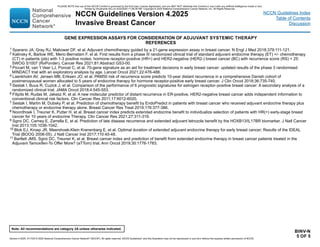
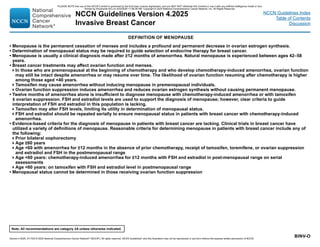
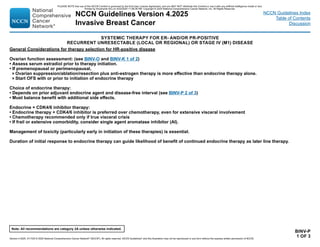
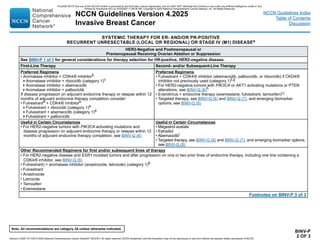
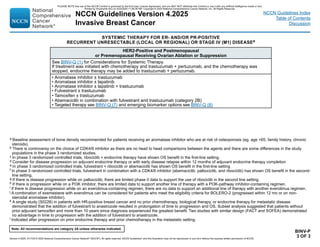
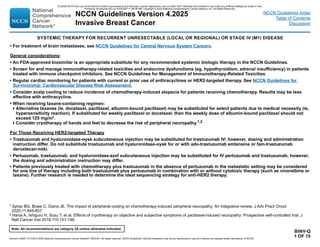
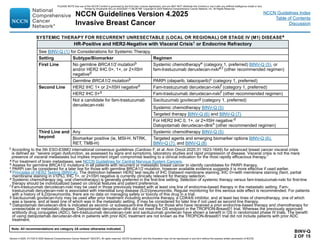
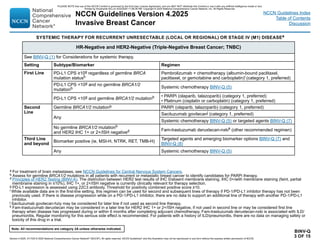
![Version 4.2025, 4/17/25 © 2025 National Comprehensive Cancer Network®
(NCCN®
), All rights reserved. NCCN Guidelines®
and this illustration may not be reproduced in any form without the express written permission of NCCN.
Note: All recommendations are category 2A unless otherwise indicated.
NCCN Guidelines Version 4.2025
Invasive Breast Cancer
NCCN Guidelines Index
Table of Contents
Discussion
BINV-Q
4 OF 15
SYSTEMIC THERAPY FOR RECURRENT UNRESECTABLE (LOCAL OR REGIONAL) OR STAGE IV (M1) DISEASEa,l
HR-Positive or -Negative and HER2-Positivem
See BINV-Q (1) for Considerations for systemic HER2-targeted therapy.
Setting Regimen
First Linen Pertuzumab + trastuzumab + docetaxel (category 1, preferred)
Pertuzumab + trastuzumab + paclitaxel (preferred)
Second Lineo Fam-trastuzumab deruxtecan-nxkin (category 1, preferred)
Third Line
Tucatinib + trastuzumab + capecitabineo (category 1, preferred)
Ado-trastuzumab emtansine (T-DM1)p
Fourth Line
and Beyond
(optimal
sequence is
not known)q
Trastuzumab + docetaxel or vinorelbine
Trastuzumab + paclitaxel ± carboplatin
Capecitabine + trastuzumab or lapatinib
Trastuzumab + lapatinib (without cytotoxic therapy)
Trastuzumab + other chemotherapy agentsr,s
Neratinib + capecitabine
Margetuximab-cmkb + chemotherapy (capecitabine, eribulin, gemcitabine, or vinorelbine)
Abemaciclib in combination with fulvestrant and trastuzumab (for HR+ only) (category 2B)
Targeted Therapy and emerging biomarker Options BINV-Q (7) and BINV-Q (8)
a For treatment of brain metastases, see NCCN Guidelines for Central Nervous System Cancers.
l Assess for germline BRCA1/2 mutations in all patients with recurrent or metastatic breast cancer to identify candidates for PARPi therapy. While olaparib and talazoparib
are FDA-indicated in HER2-negative disease, the panel supports use in any breast cancer subtype associated with a germline mutation. There is lower-level evidence for
HER2-positive tumors, therefore category 2A for this setting.
m Maintenance trastuzumab/pertuzumab after response (with concurrent endocrine therapy if ER+ and HER2+ metastatic breast cancer).
n Fam-trastuzumab deruxtecan-nxki may be considered in the first-line setting as an option for select patients (ie, those with rapid progression within 6 months of
neoadjuvant or adjuvant therapy [12 months for pertuzumab-containing regimens]). Fam-trastuzumab deruxtecan-nxki is associated with ILD/pneumonitis. Regular
monitoring for this serious side effect is recommended. For patients with a history of ILD/pneumonitis, there are no data on managing safety or toxicity of this drug in a
trial.
o Tucatinib + trastuzumab + capecitabine is preferred in patients with both systemic and CNS progression in the third-line setting and beyond; and it may be given in the
second-line setting.
p May be used as an option for third-line and beyond; the optimal sequence for third-line therapy and beyond is not known. If not a candidate fam-trastuzumab T-DM1
could be considered in the second-line.
q Multiple lines of concurrent chemotherapy with anti-HER2 therapy (trastuzumab or a TKI) offer clinical benefit for recurrent unresectable HER2+ metastatic breast cancer
and have been studied in phase 2 or 3 trials. Clinical experience suggests frequent clinical benefit for such treatment. However, there are no meaningful data for use
of any of these regimens among patients previously treated with pertuzumab-based chemotherapy, ado-trastuzumab emtansine, fam-trastuzumab deruxtecan-nxki, or
trastuzumab/capecitabine/tucatinib regimens. Thus, the optimal sequence or true benefit of therapy is not known.
r Trastuzumab given in combination with an anthracycline is associated with significant cardiac toxicity. Concurrent use of trastuzumab and pertuzumab with an
anthracycline should be avoided.
s Trastuzumab may be safely combined with all non-anthracycline–containing preferred and other single agents listed on (BINV-Q 5) for recurrent or metastatic breast
cancer.
PLEASE NOTE that use of this NCCN Content is governed by the End-User License Agreement, and you MAY NOT distribute this Content or use it with any artificial intelligence model or tool.
Printed by Kirushanth Kiru on 9/22/2025 11:08:38 PM. Copyright © 2025 National Comprehensive Cancer Network, Inc. All Rights Reserved.](https://image.slidesharecdn.com/breast-2-251014042453-90a4bd3f/85/Breast-CA-Management-Principle-for-PG-UG-90-320.jpg)
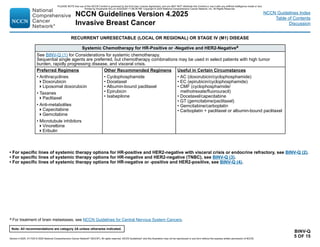
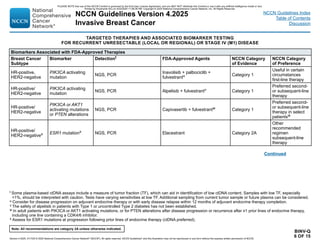
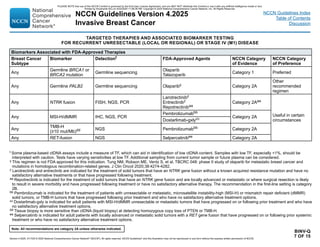
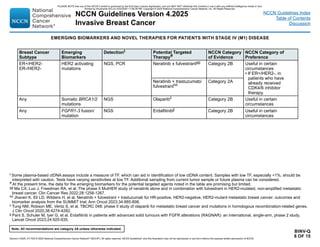
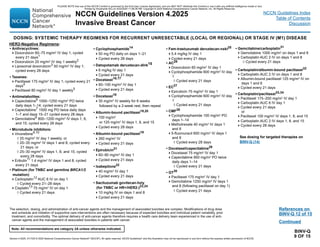
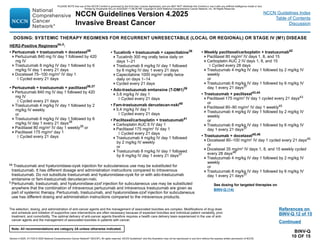
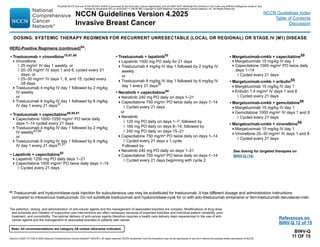
![Version 4.2025, 4/17/25 © 2025 National Comprehensive Cancer Network®
(NCCN®
), All rights reserved. NCCN Guidelines®
and this illustration may not be reproduced in any form without the express written permission of NCCN.
Note: All recommendations are category 2A unless otherwise indicated.
NCCN Guidelines Version 4.2025
Invasive Breast Cancer
NCCN Guidelines Index
Table of Contents
Discussion
BINV-Q
12 OF 15
1 Chan S, Friedrichs K, Noel D, et al. Prospective randomized trial of docetaxel versus
doxorubicin in patients with metastatic breast cancer. J Clin Oncol 1999;17:2341-2354.
2 Gasparini G, Dal Fior S, Panizzoni GA, et al. Weekly epirubicin versus doxorubicin as
second line therapy in advanced breast cancer. A randomized clinical trial. Am J Clin Oncol
1991;14:38-44.
3 O'Brien ME, Wigler N, Inbar M, et al. Reduced cardiotoxicity and comparable efficacy in a
phase III trial of pegylated liposomal doxorubicin HCl (CAELYX/Doxil) versus conventional
doxorubicin for first-line treatment of metastatic breast cancer. Ann Oncol 2004;15:440-449.
4 Seidman AD, Tiersten A, Hudis C, et al. Phase II trial of paclitaxel by 3-hour infusion as
initial and salvage chemotherapy for metastatic breast cancer. J Clin Oncol 1995;13:2575-
2581.
5 Perez EA, Vogel CL, Irwin DH, et al. Multicenter phase II trial of weekly paclitaxel in
women with metastatic breast cancer. J Clin Oncol 2001;19:4216-4223.
6 Bajetta E, Procopio G, Celio L, et al. Safety and efficacy of two different doses of
capecitabine in the treatment of advanced breast cancer in older women. J Clin Oncol
2005;23:2155-2161.
7 Khan QJ, Bohnenkamp C, Monson T, et al. Randomized trial of fixed dose capecitabine
compared to standard dose capecitabine in metastatic breast cancer: The X-7/7 trial. J Clin
Oncol 2023;41:1007-1007.
8 Seidman AD. Gemcitabine as single-agent therapy in the management of advanced breast
cancer. Oncology (Williston Park) 2001;15:11-14.
9 Zelek L, Barthier S, Riofrio M, et al. Weekly vinorelbine is an effective palliative regimen
after failure with anthracyclines and taxanes in metastatic breast carcinoma. Cancer
2001;92:2267-2272.
10 Esfahani K, Ferrario C, Le P, Panasci L. The trastuzumab and vinorelbine combination:
an alternative to taxane-based chemotherapy for early-stage and locally advanced her2-
positive breast cancer. Curr Oncol 2014;21:e723-e727.
11 Cortes J, O'Shaughnessy J, Loesch D, et al. Eribulin monotherapy versus treatment of
physician's choice in patients with metastatic breast cancer (EMBRACE): a phase 3 open-
label randomised study. Lancet 2011;377:914-923.
12 Isakoff SJ, Mayer EL, He L, et al. TBCRC009: A multicenter phase II clinical trial of
platinum monotherapy with biomarker assessment in metastatic triple-negative breast
cancer. J Clin Oncol 2015;33:1902-1909.
13 Silver DP, Richardson AL, Eklund AC, et al. Efficacy of neoadjuvant cisplatin in triple-
negative breast cancer. J Clin Oncol 2010;28:1145-1153.
14 Licchetta A, Correale P, Migali C, et al. Oral metronomic chemo-hormonal-therapy of
metastatic breast cancer with cyclophosphamide and megestrol acetate. J Chemother
2010;22:201-204.
15 Bardia A, Jhaveri K, Im SA, et al. Datopotamab deruxtecan versus chemotherapy in
previously treated inoperable/metastatic hormone receptor–positive human epidermal
growth factor receptor 2–negative breast cancer: Primary Results from TROPION-
Breast01. J Clin Oncol 2025;43:285-296.
Continued
SYSTEMIC THERAPY REGIMENS FOR RECURRENT UNRESECTABLE (LOCAL OR REGIONAL) OR STAGE IV (M1) DISEASE
REFERENCES
16 Burris HA, 3rd. Single-agent docetaxel (Taxotere) in randomized phase III trials. Semin
Oncol 1999;26:1-6.
17 Harvey V, Mouridsen H, Semiglazov V, et al. Phase III trial comparing three doses
of docetaxel for second-line treatment of advanced breast cancer. J Clin Oncol
2006;24:4963-4970.
18 Rivera E, Mejia JA, Arun BJ, et al. Phase 3 study comparing the use of docetaxel on
an every-3-week versus weekly schedule in the treatment of metastatic breast cancer.
Cancer 2008;112:1455-1461.
19 Gradishar WJ, Tjulandin S, Davidson N, et al. Phase III trial of nanoparticle albumin-
bound paclitaxel compared with polyethylated castor oil-based paclitaxel in women with
breast cancer. J Clin Oncol 2005;23:7794-7803.
20 Gradishar W, Dimitry K, Sergey C, et al. Significantly longer progression-free survival
with nab-paclitaxel compared with docetaxel as first-line therapy for metastatic breast
cancer. J Clin Oncol 2009;27:3611-3619.
21 Bastholt L, Dalmark M, Gjedde SB, et al. Dose-response relationship of epirubicin in
the treatment of postmenopausal patients with metastatic breast cancer: a randomized
study of epirubicin at four different dose levels performed by the Danish Breast Cancer
Cooperative Group. J Clin Oncol 1996;14:1146-1155.
22 Perez E, Lerzo G, Pivot X, et al. Efficacy and safety of ixabepilone (BMS-247550) in a
phase II study of patients with advanced breast cancer resistant to an anthracycline, a
taxane, and capecitabine. J Clin Oncol 2007;25:3407-3414.
23 Bardia A, Mayer IA, Vahdat LT, et al. Sacituzumab govitecan-hziy in refractory
metastatic triple negative breast cancer. N Engl J Med 2019;380:741-751.
24 Rugo HS, Bardia A, Marme F, et al. Primary Results from TROPiCS-02: A randomized
phase 3 study of sacituzumab govitecan (SG) versus treatment of physician’s choice
(TPC) in patients with hormone receptor-positive/HER2-negative (HR+/HER2-) advanced
breast cancer [abstract]. J Clin Oncol 2022;40:Abstract LB1001.
25 Modi S, Jacot W, Yamashita T, et al. Trastuzumab deruxtecan in previously treated
HER2-low advanced breast cancer. N Engl J Med 2022;7;387:9-20.
26 Nabholtz JM, Falkson C, Campos D, et al. Docetaxel and doxorubicin compared with
doxorubicin and cyclophosphamide as first-line chemotherapy for metastatic breast
cancer: results of a randomized, multicenter, phase III trial. J Clin Oncol 2003;21:968-
975.
27 Langley RE, Carmichel J, Jones AL, et al. Phase III trial of epirubicin plus paclitaxel
compared with epirubicin plus cyclophosphamide as first-line chemotherapy for
metastatic breast cancer: United Kingdom Cancer Research Institute. J Clin Oncol
2005;23:8322-8330.
28 Bonadonna G, Brusamolino E, Valagussa P, et al. Combination chemotherapy as an
adjuvant treatment in operable breast cancer. N Engl J Med 1976;294:405-410.
29 Mavroudis D, Papakotoulas P, Ardavanis A, et al. Randomized phase III trial comparing
docetaxel plus epirubicin versus docetaxel plus capecitabine as first-line treatment in
women with advanced breast cancer. Ann Oncol 2010;21:48-54.
PLEASE NOTE that use of this NCCN Content is governed by the End-User License Agreement, and you MAY NOT distribute this Content or use it with any artificial intelligence model or tool.
Printed by Kirushanth Kiru on 9/22/2025 11:08:38 PM. Copyright © 2025 National Comprehensive Cancer Network, Inc. All Rights Reserved.](https://image.slidesharecdn.com/breast-2-251014042453-90a4bd3f/85/Breast-CA-Management-Principle-for-PG-UG-98-320.jpg)
![Version 4.2025, 4/17/25 © 2025 National Comprehensive Cancer Network®
(NCCN®
), All rights reserved. NCCN Guidelines®
and this illustration may not be reproduced in any form without the express written permission of NCCN.
Note: All recommendations are category 2A unless otherwise indicated.
NCCN Guidelines Version 4.2025
Invasive Breast Cancer
NCCN Guidelines Index
Table of Contents
Discussion
BINV-Q
13 OF 15
30 Albain KS, Nag S, Calderillo-Ruiz G, et al. Gemcitabine plus paclitaxel versus
paclitaxel monotherapy in patients with metastatic breast cancer and prior
anthracycline treatment. J Clin Oncol 2008;26:3950-3957.
31 O’Shaughnessy J, Schwartzberg LS, Danso MA, et al. A randomized phase III
study of iniparib (BSI-201) in combination with gemcitabine/carboplatin (G/C) in
metastatic triple-negative breast cancer (TNBC). [abstract]. J Clin Oncol 2011;29
(Suppl_15):Abstract 1007.
32 Yardley DA, Coleman R, Conte P, et al. nab-Paclitaxel plus carboplatin or
gemcitabine versus gemcitabine plus carboplatin as first-line treatment of patients
with triple-negative metastatic breast cancer: results from the tnAcity trial. Ann Oncol
2018;29:1763-1770.
33 Perez EA, Hillman DW, Stella PJ, et al. A phase II study of paclitaxel plus
carboplatin as first-line chemotherapy for women with metastatic breast carcinoma.
Cancer 2000;88:124-131.
34 Loesch D, Robert N, Asmar L, et al. Phase II multicenter trial of a weekly paclitaxel
and carboplatin regimen in patients with advanced breast cancer. J Clin Oncol
2002;20:3857-3864.
35 Baselga J, Cortes J, Kim SB, et al. Pertuzumab plus trastuzumab plus docetaxel
for metastatic breast cancer. N Engl J Med 2012;366:109-119.
36 Datko F, D'Andrea G, Dickler M, et al. Phase II study of pertuzumab, trastuzumab,
and weekly paclitaxel in patients with metastatic HER2-overexpressing metastatic
breast cancer [abstract]. Cancer Res 2012;72:Abstract P5-18-20.
37 Leyland-Jones B, Gelmon K, Ayoub JP, et al. Pharmacokinetics, safety, and
efficacy of trastuzumab administered every three weeks in combination with
paclitaxel. J Clin Oncol 2003;21:3965-3971.
38 Murthy RK, Loi S, Okines A, et al. Tucatinib, trastuzumab, and capecitabine for
HER2-positive metastatic breast cancer. N Engl J Med 2020;382:597-609.
39 Verma S, Miles D, Gianni L, et al. Trastuzumab emtansine for HER2-positive
advanced breast cancer [supplementary appendix available online]. N Engl J Med
2012;367:1783-1791.
40 Modi S, Saura C, Yamashita T, et al. Trastuzumab deruxtecan in previously treated
HER2-positive breast cancer. N Engl J Med 2020;382:610-621.
41 Robert N, Leyland-Jones B, Asmar L, et al. Randomized phase III study of
trastuzumab, paclitaxel, and carboplatin compared with trastuzumab and paclitaxel
in women with HER-2-overexpressing metastatic breast cancer. J Clin Oncol
2006;24:2786-2792.
42 Perez EA, Suman VJ, Rowland KM, et al. Two concurrent phase II trials of
paclitaxel/carboplatin/trastuzumab (weekly or every-3-week schedule) as first-line
therapy in women with HER2-overexpressing metastatic breast cancer: NCCTG
study 983252. Clin Breast Cancer 2005;6:425-432.
SYSTEMIC THERAPY REGIMENS FOR RECURRENT UNRESECTABLE (LOCAL OR REGIONAL) OR STAGE IV (M1) DISEASE
REFERENCES
43 Slamon DJ, Leyland-Jones B, Shak S, et al. Use of chemotherapy plus a monoclonal
antibody against HER2 for metastatic breast cancer that overexpresses HER2. N Engl J Med
2001;344:783-792.
44 Seidman A, Berry DA, Cirrincione C, et al. Randomized phase III trial of weekly compared
with every-3-weeks paclitaxel for metastatic breast cancer, with trastuzumab for all HER-2
overexpressors and random assignment to trastuzumab or not in HER-2 nonoverexpressors:
final results of Cancer and Leukemia Group B protocol 9840. J Clin Oncol 2008;26:1642-1649.
45 Marty M, Cognetti F, Maraninchi D, et al. Randomized phase II trial of the efficacy and safety
of trastuzumab combined with docetaxel in patients with human epidermal growth factor
receptor 2-positive metastatic breast cancer administered as first-line treatment: the M77001
study group. J Clin Oncol 2005;23:4265-4274.
46 Esteva FJ, Valero V, Booser D, et al. Phase II study of weekly docetaxel and trastuzumab for
patients with HER-2-overexpressing metastatic breast cancer. J Clin Oncol 2002;20:1800-1808.
47 Burstein HJ, Keshaviah A, Baron AD, et al. Trastuzumab plus vinorelbine or taxane
chemotherapy for HER2-overexpressing metastatic breast cancer: the trastuzumab and
vinorelbine or taxane study. Cancer 2007;110:965-972.
48 Andersson M, Lidbrink E, Bjerre K, et al. Phase III randomized study comparing docetaxel
plus trastuzumab with vinorelbine plus trastuzumab as first-line therapy of metastatic or locally
advanced human epidermal growth factor receptor 2-positive breast cancer: the HERNATA
study. J Clin Oncol 2011;29:264-271.
49 von Minckwitz G, du Bois A, Schmidt M, et al. Trastuzumab beyond progression in human
epidermal growth factor receptor 2-positive advanced breast cancer: a german breast group 26/
breast international group 03-05 study. J Clin Oncol 2009;27:1999-2006.
50 Cobleigh MA, Vogel CL, Tripathy D, et al. Multinational study of the efficacy and safety
of humanized anti-HER2 monoclonal antibody in women who have HER2-overexpressing
metastatic breast cancer that has progressed after chemotherapy for metastatic disease. J Clin
Oncol 1999;17:2639-2648.
51
Bartsch R, Wenzel C, Altorjai G, et al. Capecitabine and trastuzumab in heavily pretreated
metastatic breast cancer. J Clin Oncol 2007;25:3853-3858.
52
Geyer C, Forster J, Lindquist D, et al. Lapatinib plus capecitabine for HER2-positive advanced
breast cancer. N Engl J Med 2006;355:2733-2743.
53 Blackwell KL, Burstein H, Storniolo A, et al. Randomized study of lapatinib alone or in
combination with trastuzumab in women with ErbB2-positive, trastuzumab-refractory metastatic
breast cancer. J Clin Oncol 2010;28:1124-1130.
54 Saura C, Oliveira M, Feng YH, et al. Neratinib plus capecitabine versus lapatinib plus
capecitabine in patients with HER2-positive metastatic breast cancer previously treated with
≥2 HER2-directed regimens: Findings from the multinational, randomized, phase 3 NALA trial.
Presented at the American Society of Clinical Oncology (ASCO) Annual Meeting. May 31-June
4, 2019; Chicago, IL. J Clin Oncol 2019;37(suppl): abstract 1002.
55 Rugo HS, Im S, Cardoso F, et al. Efficacy of margetuximab vs trastuzumab in patients with
pretreated ERBB2-positive advanced breast cancer. JAMA Oncol 2021;573-584.
PLEASE NOTE that use of this NCCN Content is governed by the End-User License Agreement, and you MAY NOT distribute this Content or use it with any artificial intelligence model or tool.
Printed by Kirushanth Kiru on 9/22/2025 11:08:38 PM. Copyright © 2025 National Comprehensive Cancer Network, Inc. All Rights Reserved.](https://image.slidesharecdn.com/breast-2-251014042453-90a4bd3f/85/Breast-CA-Management-Principle-for-PG-UG-99-320.jpg)
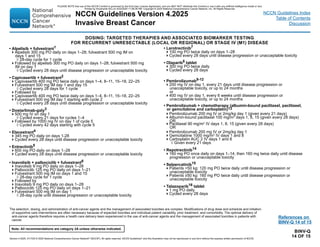
![Version 4.2025, 4/17/25 © 2025 National Comprehensive Cancer Network®
(NCCN®
), All rights reserved. NCCN Guidelines®
and this illustration may not be reproduced in any form without the express written permission of NCCN.
Note: All recommendations are category 2A unless otherwise indicated.
NCCN Guidelines Version 4.2025
Invasive Breast Cancer
NCCN Guidelines Index
Table of Contents
Discussion
BINV-Q
15 OF 15
TARGETED THERAPIES AND ASSOCIATED BIOMARKER TESTING
FOR RECURRENT UNRESECTABLE (LOCAL OR REGIONAL) OR STAGE IV (M1) DISEASE
REFERENCES
1 Andre F, Ciruelos E, Rubovszky G, et al. Alpelisib for PIK3CA-mutated, hormone receptor-positive advanced breast cancer. N Engl J Med 2019;380:1929-1940.
2 Turner NC, Oliveira M, Howell SJ, et al. Capivasertib in hormone receptor–positive advanced breast cancer. N Engl J Med 2023;388:2058-2070.
3 Berton D, Banerjee S, Curigliano G, et al. Antitumor activity of dostarlimab in patients with mismatch repair–deficient (dMMR) tumors: a combined analysis of 2 cohorts
in the GARNET study. Poster presented at American Society for Clinical Oncology (ASCO), Virtual Meeting, June 4–8, 2021. [Abstract ID: 2564].
4 Bidard FC, Kaklamani V, Neven P, et al. Elacestrant (oral selective estrogen receptor degrader) versus standard endocrine therapy for estrogen receptor-positive,
human epidermal growth factor receptor 2-negative advanced breast cancer: Results from the randomized phase III EMERALD trial. J Clin Oncol 2022;40:3246-3256.
5 Drilon A, Siena S, Ou SI, et al. Safety and antitumor activity of the multitargeted pan-TRK, ROS1, and ALK inhibitor entrectinib: Combined results from two phase I
trials (ALKA-372-001 and STARTRK-1). Cancer Discov 2017;7:400-409.
6 Turner NC, Im SA, Saura C, et al. Inavolisib-based therapy in PIK3CA-mutated advanced breast cancer. N Engl J Med 2024;391:1584-1596.
7 Drilon A, Laetsch TW, Kummar W, et al. Efficacy of larotrectinib in TRK fusion-positive cancers in adults and children. N Engl J Med 2018;378:731-739.
8 Robson M, Im SA, Senkus E, et al. Olaparib for metastatic breast cancer in patients with a germline BRCA mutation. N Engl J Med 2017;377:523-533.
9 Le DT, Durham JN, Smith KN, et al. Mismatch repair deficiency predicts response of solid tumors to PD-1 blockade. Science 2017;357:409-413.
10 Le DT, Uram JN, Wang H, et al. PD-1 blockade in tumors with mismatch-repair deficiency. N Engl J Med 2015;372:2509-2520.
11 Lala M, Li TR, De Alwis DP, et al. A six-weekly dosing schedule for pembrolizumab in patients with cancer based on evaluation using modelling and simulation. Eur J
Cancer 2020;131:68-75.
12 Marabelle A, Fakih M, Lopez J, et al. Association of tumour mutational burden with outcomes in patients with advanced solid tumours treated with pembrolizumab:
prospective biomarker analysis of the multicohort, open-label, phase 2 KEYNOTE-158 study. Lancet Oncol 2020;21:1353-1365.
13 Cortes J, Cescon DW, Rugo HS, et al. Pembrolizumab plus chemotherapy versus placebo plus chemotherapy for previously untreated locally recurrent inoperable or
metastatic triple-negative breast cancer (KEYNOTE-355): a randomised, placebo-controlled, double-blind, phase 3 clinical trial. Lancet 2020;396:1817-1828.
14 Solomon BJ, Drilon A, Lin JJ, et al. Repotrectinib in patients with NTRK fusion-positive advanced solid tumors, including non-small cell lung cancer: Update from the
phase 1/2 TRIDENT-1 trial [abstract]. Ann Oncol 2023;34:Abstract 1372P.
15 Subbiah V, Wolf J, Konda B, et al. Tumour-agnostic efficacy and safety of selpercatinib in patients with RET fusion-positive solid tumours other than lung or thyroid
tumours (LIBRETTO-001): a phase 1/2, open-label, basket trial. Lancet Oncol 2022;23:1261-1273.
16 Litton J, Rugo H, Ettl J, et al. Talazoparib in patients with advanced breast cancer and a germline BRCA mutation. N Engl J Med 2018;379:753-763.
PLEASE NOTE that use of this NCCN Content is governed by the End-User License Agreement, and you MAY NOT distribute this Content or use it with any artificial intelligence model or tool.
Printed by Kirushanth Kiru on 9/22/2025 11:08:38 PM. Copyright © 2025 National Comprehensive Cancer Network, Inc. All Rights Reserved.](https://image.slidesharecdn.com/breast-2-251014042453-90a4bd3f/85/Breast-CA-Management-Principle-for-PG-UG-101-320.jpg)
![Version 4.2025, 4/17/25 © 2025 National Comprehensive Cancer Network®
(NCCN®
), All rights reserved. NCCN Guidelines®
and this illustration may not be reproduced in any form without the express written permission of NCCN.
Note: All recommendations are category 2A unless otherwise indicated.
NCCN Guidelines Version 4.2025
Invasive Breast Cancer
NCCN Guidelines Index
Table of Contents
Discussion
BINV-R
1 OF 3
a Rising tumor markers (eg, CEA, CA 15-3, CA 27.29) are concerning for tumor progression, but may also be seen in the setting of responding disease. An isolated
increase in tumor markers should rarely be used to declare progression of disease. Changes in bone lesions are often difficult to assess on plain or cross-sectional
radiology or on bone scan. For these reasons, patient symptoms and serum tumor markers may be more helpful in patients with bone-dominant metastatic disease.
PRINCIPLES OF MONITORING METASTATIC DISEASE
Monitoring of patient symptoms and cancer burden during treatment of metastatic breast cancer is important to determine whether the
treatment is providing benefit and that the patient does not have toxicity from an ineffective therapy.
Components of Monitoring
Monitoring includes periodic assessment of varied combinations of symptoms, physical examination, routine laboratory tests, imaging
studies, and blood biomarkers where appropriate. Results of monitoring are classified as response/continued response to treatment, stable
disease, uncertainty regarding disease status, or progression of disease. The clinician typically must assess and balance multiple different
forms of information to make a determination regarding whether disease is being controlled and the toxicity of treatment is acceptable.
Sometimes, this information may be contradictory. Clinicians should take into account patient preferences through a shared decision-making
process.
Definition of Disease Progression
Unequivocal evidence of progression of disease by one or more of these factors is required to establish progression of disease, either
because of ineffective therapy or acquired resistance of disease to an applied therapy. Progression of disease may be identified through
evidence of growth or worsening of disease at previously known sites of disease and/or of the occurrence of new sites of metastatic disease.
• Findings concerning for progression of disease include:
Worsening symptoms such as pain or dyspnea
Evidence of worsening or new disease on physical examination
Declining performance status
Unexplained weight loss
Increasing alkaline phosphatase, alanine aminotransferase (ALT), aspartate transaminase (AST), or bilirubin
Hypercalcemia
New radiographic abnormality or increase in the size of pre-existing radiographic abnormality
New areas of abnormality on functional imaging (eg, bone scan, PET/CT)
Increasing tumor markers (eg, carcinoembryonic antigen [CEA], CA 15-3, CA 27.29)a
Continued
PLEASE NOTE that use of this NCCN Content is governed by the End-User License Agreement, and you MAY NOT distribute this Content or use it with any artificial intelligence model or tool.
Printed by Kirushanth Kiru on 9/22/2025 11:08:38 PM. Copyright © 2025 National Comprehensive Cancer Network, Inc. All Rights Reserved.](https://image.slidesharecdn.com/breast-2-251014042453-90a4bd3f/85/Breast-CA-Management-Principle-for-PG-UG-102-320.jpg)
![Version 4.2025, 4/17/25 © 2025 National Comprehensive Cancer Network®
(NCCN®
), All rights reserved. NCCN Guidelines®
and this illustration may not be reproduced in any form without the express written permission of NCCN.
Note: All recommendations are category 2A unless otherwise indicated.
NCCN Guidelines Version 4.2025
Invasive Breast Cancer
NCCN Guidelines Index
Table of Contents
Discussion
BINV-R
2 OF 3
Continued
PRINCIPLES OF MONITORING METASTATIC DISEASE
Use of Objective Criteria for Response/Stability/Progression
• The most accurate assessments of disease activity typically occur when previously abnormal studies are repeated on a serial and regular
basis. Generally, the same method of assessment should be used over time (eg, an abnormality found on chest CT should generally be
monitored with repeat chest CT).
• Some non-clinically important variation in measurement of abnormalities by all serial studies is common and expected. Therefore, the use
of objective and widely accepted criteria for response, stability, and progression of disease are encouraged. Such systems include the
Response Evaluation Criteria In Solid Tumors (RECIST) guidelines (Eisenhauer EA, Therasse P, Bogaerts J, et al. New response evaluation
criteria in solid tumours: revised RECIST guideline [version 1.1]. Eur J Cancer 2009;45:228-247) and the WHO criteria (Miller AB, Hoogstraten
B, Staquet M, Winkler A. Reporting results of cancer treatment. Cancer 1981;47:207-214).
• Studies of functional imaging, such as radionuclide bone scans and PET imaging, are particularly challenging when used to assess
response. In the case of bone scans, responding disease may result in a flare or increased activity on the scan that may be misinterpreted
as disease progression, especially on the first follow-up bone scan after initiating a new therapy. PET imaging is challenging because of the
absence of a reproducible, validated, and widely accepted set of standards for disease activity assessment.
PLEASE NOTE that use of this NCCN Content is governed by the End-User License Agreement, and you MAY NOT distribute this Content or use it with any artificial intelligence model or tool.
Printed by Kirushanth Kiru on 9/22/2025 11:08:38 PM. Copyright © 2025 National Comprehensive Cancer Network, Inc. All Rights Reserved.](https://image.slidesharecdn.com/breast-2-251014042453-90a4bd3f/85/Breast-CA-Management-Principle-for-PG-UG-103-320.jpg)
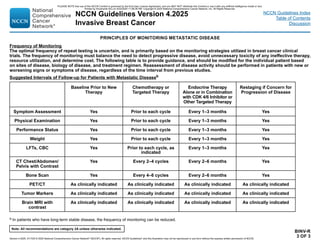
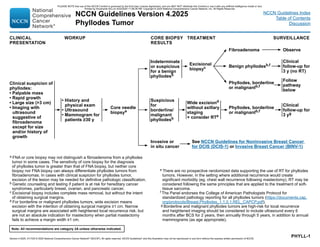
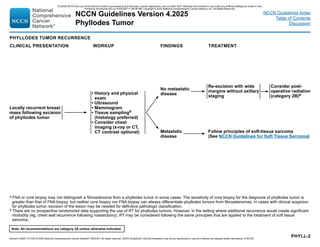
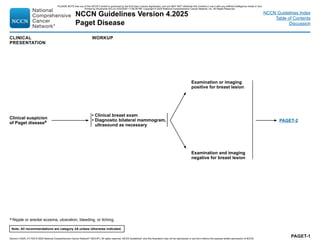
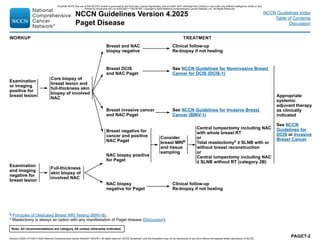
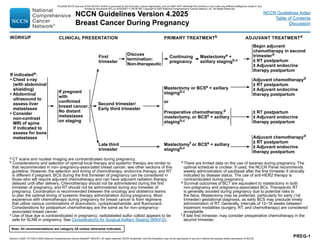
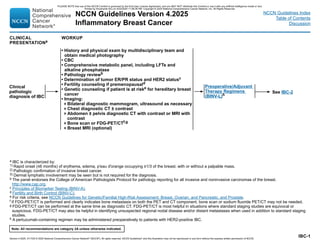
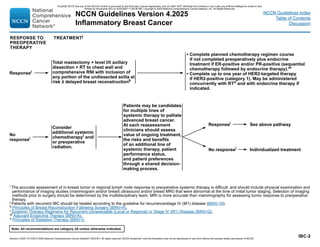
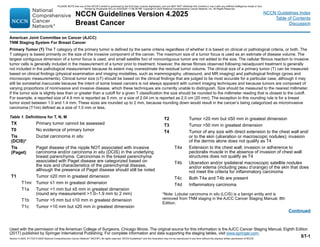
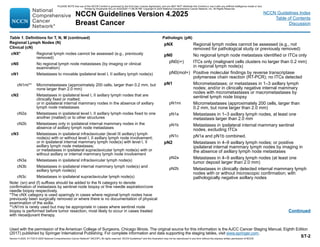

![NCCN Guidelines Version 4.2025
Breast Cancer
Version 4.2025, 4/17/25 © 2025 National Comprehensive Cancer Network®
(NCCN®
), All rights reserved. NCCN Guidelines®
and this illustration may not be reproduced in any form without the express written permission of NCCN.
NCCN Guidelines Index
Table of Contents
Discussion
Continued
Used with the permission of the American College of Surgeons, Chicago Illinois. The original source for this information is the AJCC Cancer Staging Manual, Eighth Edition
(2017) published by Springer International Publishing. For complete information and data supporting the staging tables, visit www.springer.com.
Table 2. AJCC Anatomic Stage Groups (continued)
Histologic Grade (G)
All invasive breast carcinomas should be assigned a histologic grade. The
Nottingham combined histologic grade (Nottingham modification of the SBR
grading system) is recommended and is stipulated for use by the College of
American Pathologists (see www.cap.org). The grade for a tumor is determined
by assessing morphologic features (tubule formation, nuclear pleomorphism, and
calibrated mitotic count), assigning a value from 1 (favorable) to 3 (unfavorable)
for each feature, and totaling the scores for all three categories. A combined score
of 3–5 points is designated as grade 1; a combined score of 6–7 points is grade 2;
a combined score of 8–9 points is grade 3. The use of subjective grading alone is
discouraged.
Invasive Cancer (Scarff-Bloom-Richardson [SBR] Grading System,
Nottingham Modification)
GX Grade cannot be assessed
G1 Low combined histologic grade (favorable);
SBR score of 3–5 points
G2 Intermediate combined histologic grade (moderately favorable); SBR
score of 6–7 points
G3 High combined histologic grade (unfavorable);
SBR score of 8–9 points
Ductal Carcinoma in situ: Nuclear Grade
The grade that should be used for ductal carcinoma in situ is nuclear grade
(www.cap.org)
GX Grade cannot be assessed
G1 Low nuclear grade
G2 Intermediate nuclear grade
G3 High nuclear grade
ST-4
PLEASE NOTE that use of this NCCN Content is governed by the End-User License Agreement, and you MAY NOT distribute this Content or use it with any artificial intelligence model or tool.
Printed by Kirushanth Kiru on 9/22/2025 11:08:38 PM. Copyright © 2025 National Comprehensive Cancer Network, Inc. All Rights Reserved.](https://image.slidesharecdn.com/breast-2-251014042453-90a4bd3f/85/Breast-CA-Management-Principle-for-PG-UG-115-320.jpg)
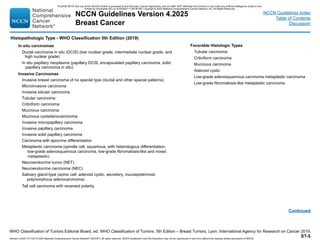
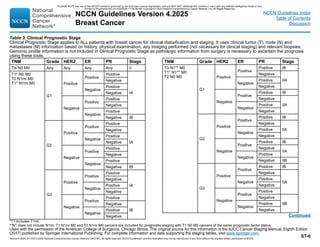
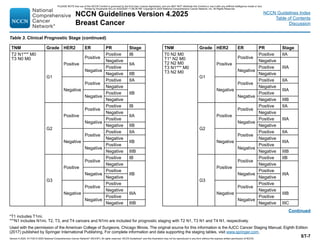
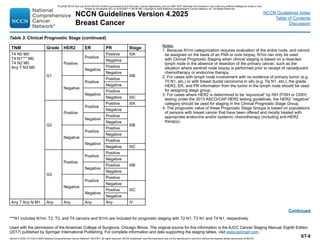
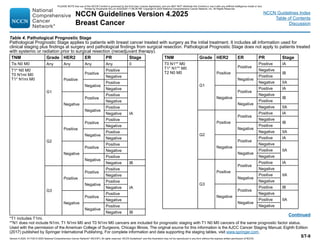
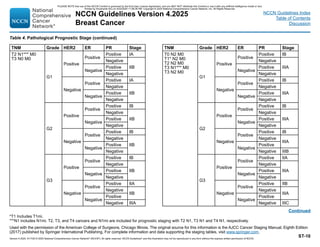
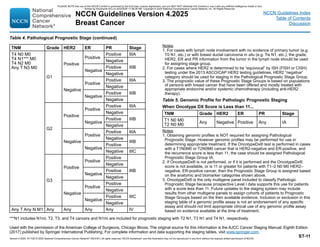
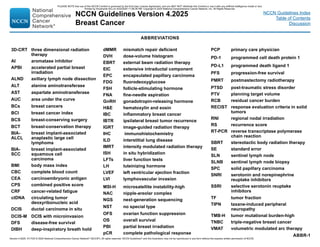
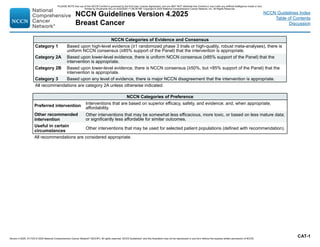
![Version 4.2025 © 2025 National Comprehensive Cancer Network©
(NCCN©
), All rights reserved. NCCN Guidelines® and this illustration may not be reproduced in any form without the express written permission of NCCN.
NCCN Guidelines Version 4.2025
Breast Cancer
MS-4
Primary Treatment for DCIS
The goal of primary therapy for DCIS is to prevent progression to invasive
breast carcinoma. Management strategies for DCIS treatment include
surgery (mastectomy or BCS), and/or radiation therapy (RT), followed by
adjuvant endocrine therapy in eligible patients to reduce risk of recurrence.
The choice of local treatment does not impact overall disease-related
survival; therefore, the individual’s preferences for risk reduction must be
considered.
Several prospective randomized trials of pure DCIS have shown that the
addition of whole breast RT (WBRT) after BCS decreases the rate of
in-breast disease recurrence,17-24
but not distant metastasis-free survival.25
A meta-analysis of four large multicenter randomized trials confirmed the
results of the individual trials, demonstrating that the addition of WBRT
after BCS for DCIS provides a statistically and clinically significant
reduction in ipsilateral breast events (hazard ratio [HR], 0.49; 95%
confidence interval [CI]; 0.41–0.58, P .00001).26
However, these trials
did not show that the addition of RT has an overall survival (OS) benefit.
The long-term follow-up of the NSABP B-17 trial showed that at 15 years,
RT resulted in a 52% reduction of ipsilateral invasive recurrence compared
with excision alone (HR, 0.48; 95% CI, 0.33–0.69, P .001).23 The OS
and cumulative all-cause mortality rates through 15 years were similar
between the two groups (HR for death, 1.08; 95% CI, 0.79–1.48).23
Similar
findings were reported by a large observational study of the SEER
database that included 108,196 patients with DCIS.27
In a subgroup
analysis at 10 years, of 60,000 patients treated with BCS, with or without
WBRT, a 50% reduction in the risk of ipsilateral recurrence (adjusted HR,
0.47 [95% CI, 0.42–0.53]; P .001) was associated with the addition of
WBRT. However, in this study, breast cancer-specific mortality was found
to be similar (HR, 0.86 [95% CI, 0.67–1.10]; P = .22).27
In contrast, several population-based studies suggest beneficial effects of
WBRT for DCIS after BCS; for example, the use of WBRT in patients with
higher-risk DCIS (eg, higher nuclear grade, younger age, larger tumor
size) was demonstrated to be associated with a modest but statistically
significant improvement in OS.28
In another observational study of the
SEER database including 140,366 patients with DCIS, the 15-year breast
cancer mortality rate was 1.7% for those treated with breast-conserving
therapy (BCT) versus 2.3% for patients treated with BCS alone (HR, 0.77;
95% CI, 0.67–0.88; P .001), demonstrating a small but significant
reduction in breast cancer mortality with BCS and WBRT compared with
BCS alone.29
RT Boost: The use of RT boost has been demonstrated to provide a small
but statistically significant reduction in ipsilateral breast tumor recurrence
(IBTR) risk (4% at 20 years) in all age groups for invasive breast
cancers.30-33
A pooled analysis of patient-level data from 10 academic institutions
evaluated outcomes of pure DCIS patients, all treated with BCS and
WBRT (n = 4131) who either received RT boost with a median dose of 14
Gy (n = 2661) or received no boost (n = 1470). The median follow-up of
patients was 9 years. A decrease in IBTR was seen in patients who
received a boost compared with those who did not at 5 years (97.1% vs.
96.3%), 10 years (94.1% vs. 92.5%), and 15 years (91.6% vs. 88.0%) (P =
.0389 for all). The use of RT boost was associated with significantly
decreased IBTR across the entire cohort of patients (HR, 0.73; 95% CI,
0.57–0.94; P = .01).34
In a multivariate analysis that took into account
factors associated with lower IBTR, including grade, ER positive status,
use of adjuvant tamoxifen, margin status, and age, the benefit of RT boost
still remained statistically significant (HR, 0.69; 95% CI, 0.53–0.91; P
.010).34
Even in patients considered very low risk based on negative
margins status (defined as no ink on tumor as per NSABP definition, or
margins 2 mm as per Society of Surgical Oncology [SSO]/American
PLEASE NOTE that use of this NCCN Content is governed by the End-User License Agreement, and you MAY NOT distribute this Content or use it with any artificial intelligence model or tool.
Printed by Kirushanth Kiru on 9/22/2025 11:08:38 PM. Copyright © 2025 National Comprehensive Cancer Network, Inc. All Rights Reserved.](https://image.slidesharecdn.com/breast-2-251014042453-90a4bd3f/85/Breast-CA-Management-Principle-for-PG-UG-128-320.jpg)
![Version 4.2025 © 2025 National Comprehensive Cancer Network©
(NCCN©
), All rights reserved. NCCN Guidelines® and this illustration may not be reproduced in any form without the express written permission of NCCN.
NCCN Guidelines Version 4.2025
Breast Cancer
MS-5
Society for Radiation Oncology [ASTRO]/ASCO definition), the RT boost
remained statistically significant for decreasing the rate of local relapse.
Similar to invasive cancers, though RT boost was beneficial in all age
groups studied, the magnitude of the absolute benefit of the boost was
greatest in younger patients. Two randomized phase III trials are studying
whether an RT boost reduces recurrence in patients with DCIS
(ClinicalTrials.gov Identifiers: NCT00470236 and NCT00907868).
These trials have completed accrual and are now in active follow-up. A
recent publication on the health-related quality of life (HRQOL) in patients
enrolled in the BIG 3-07/TROG 07.01 phase III trial (NCT00470236)
showed that after 2 years, the cosmetic status was impacted negatively
with the boost versus no boost, suggesting the importance of informed
shared decision-making regarding addition of boost until data related to
impact on local recurrence and OS are published.35
According to the 5-
year data from this trial, presented at the 2021 annual San Antonio Breast
Cancer Symposium (SABCS) meeting, 93% of patients in the group who
did not receive a boost were free from local recurrence compared with
97% in the group who received an RT boost (HR, 0.47; 95% CI, 0.31–
0.72; P .001).36
The peer-reviewed publication of these data is awaited.
Breast Conserving Surgery Alone Without WBRT: RT adds to treatment
cost and is accompanied by adverse effects. Therefore, in an attempt to
de-escalate treatment and limit morbidity and preserve quality of life
(QOL), several trials have examined omission of RT in carefully selected
patients at low risk of disease recurrence.
There are retrospective series suggesting that selected patients have a
low risk of in-breast recurrence when treated with excision alone (without
WBRT).37-40
For example, in one retrospective review, 10-year
disease-free survival (DFS) rates of 186 patients with DCIS treated with
BCS alone were 94% for patients with low-risk DCIS and 83% for patients
with both intermediate- and high-risk DCIS.37
In another retrospective
study of 215 patients with DCIS treated with BCS without RT, or systemic
risk reduction therapy, the recurrence rates over 8 years were 0%, 21.5%,
and 32.1% in patients with low-, intermediate-, or high-risk DCIS,
respectively.38 The stratification for risk of recurrence in this retrospective
study was calculated using the modified Van Nuys Prognostic Index based
on tumor grade, size, absence of comedo necrosis, margin width, and age
at diagnosis.38
A multi-institutional, non-randomized, prospective study of selected
patients with low-risk DCIS treated without radiation has also provided
some support for BCS alone without radiation.41 Patients were enrolled
onto one of two low-risk cohorts: 1) low- or intermediate-grade DCIS,
tumor size ≤2.5 cm (n = 561); or 2) high-grade DCIS, tumor size ≤1 cm (n
= 104). Protocol specifications included excision of the DCIS tumor with a
minimum negative margin width of ≥3 mm. Only 30% of the patients
received tamoxifen. Of note, margins were substantially wider than the 3-
mm protocol requirement in many patients (ie, the low-/intermediate-risk
patient group margins were ≥5 mm in 62% of patients and 10 mm or no
tumor on re-excision in 48% of patients).41
Although the rate of IBTR was
acceptably low for the low-/intermediate-grade group at 5 years, at a
median follow-up of 12.3 years, the rates of developing an IBTR were
14.4% for low-/intermediate-grade and 24.6% for high-grade DCIS (P =
.003). This suggests that IBTR events may be delayed but not prevented
in the seemingly low-risk population.
The RTOG 9804 trial investigated outcomes of RT omission in the setting
of low-risk DCIS, randomizing 636 patients with low-risk disease to either
RT or observation after surgery.24
In this study, low risk consisted of low-
to intermediate-grade DCIS measuring 2.5 cm, with negative margins of
≥3 mm. With a median follow-up of 7 years, a reduced risk of local
recurrence was seen with use of RT compared with observation (0.9% vs.
6.7%; HR, 0.11; 95% CI, 0.03–0.47). No difference was seen in either
DFS or OS. With a follow-up of 15 years, local recurrence rates were
PLEASE NOTE that use of this NCCN Content is governed by the End-User License Agreement, and you MAY NOT distribute this Content or use it with any artificial intelligence model or tool.
Printed by Kirushanth Kiru on 9/22/2025 11:08:38 PM. Copyright © 2025 National Comprehensive Cancer Network, Inc. All Rights Reserved.](https://image.slidesharecdn.com/breast-2-251014042453-90a4bd3f/85/Breast-CA-Management-Principle-for-PG-UG-129-320.jpg)
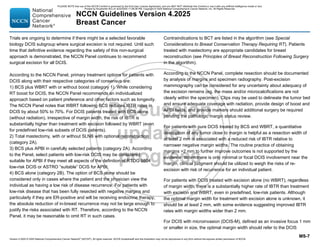
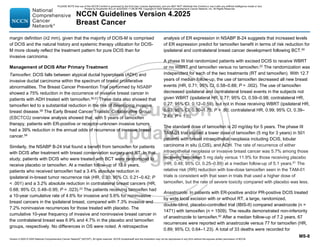
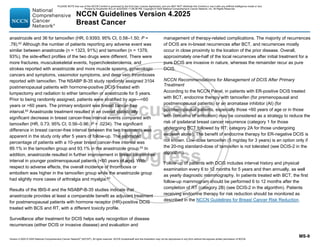
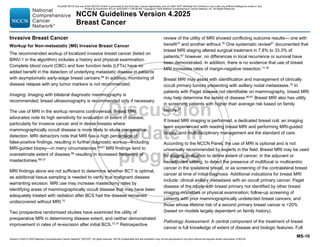
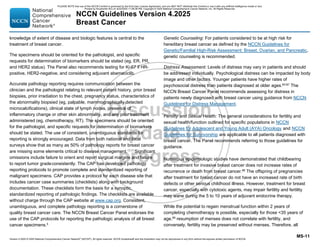
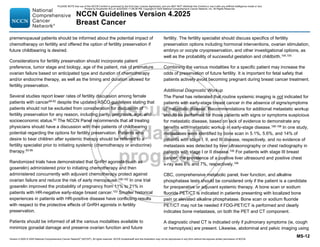
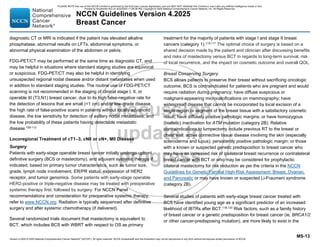
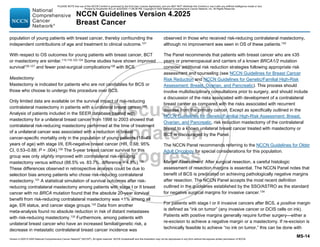
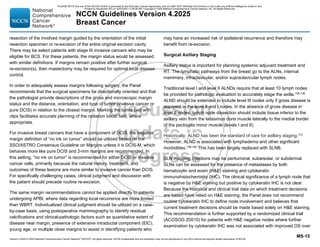
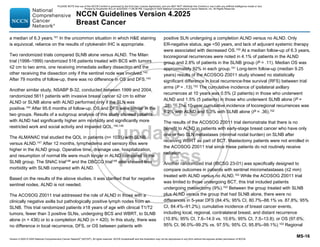
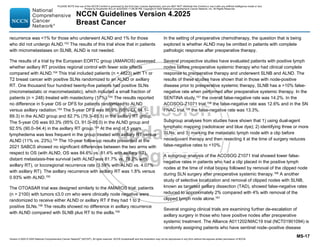
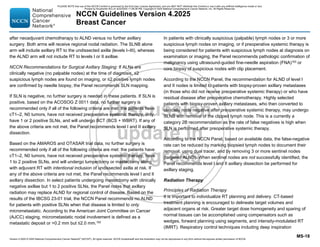
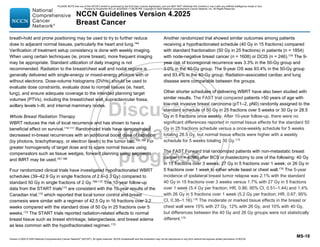
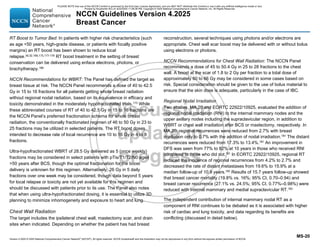
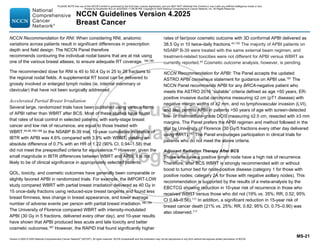
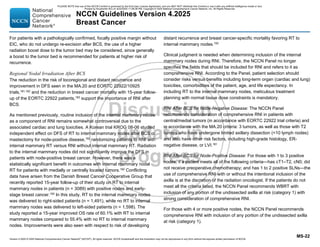
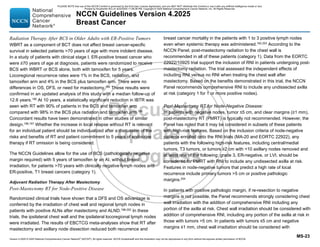
![Version 4.2025 © 2025 National Comprehensive Cancer Network©
(NCCN©
), All rights reserved. NCCN Guidelines® and this illustration may not be reproduced in any form without the express written permission of NCCN.
NCCN Guidelines Version 4.2025
Breast Cancer
MS-24
consideration of comprehensive RNI including any portion of the
undissected axilla at risk only in those with high-risk features.
Considerations for RT in Patients Receiving Preoperative Systemic
Therapy
The Panel recommends that decisions related to administration of
adjuvant RT for patients receiving preoperative systemic chemotherapy
should be made based on maximal stage (ie, clinical/anatomic stage,
tumor characteristics) at diagnosis (before preoperative systemic therapy)
and pathologic stage at definitive surgery (after preoperative systemic
therapy). Data from numerous studies in patients with stage III disease
suggest that postoperative RT improves local control even for patients
who have a pathologic complete response (pCR) to neoadjuvant
chemotherapy.205-208
RT After Preoperative Therapy and BCS:
Those who have clinically negative nodes at diagnosis, that remain
pathologically node-negative at definitive surgery (after systemic therapy),
should receive adjuvant RT to the whole breast with the addition of boost
to the tumor bed after SLNB.
Patients who have clinically/radiographically positive nodes at diagnosis
and convert to clinically/radiographically node-negative after preoperative
chemotherapy are candidates for the NSABP B-51 trial assessing the
benefit of RNI. Until the results of this trial become available, the existing
data suggest that node-positive disease at presentation is at high risk for
locoregional recurrence and should be considered to receive
comprehensive RNI with inclusion of any portion of the undissected axilla
at risk.
Patients who have clinically/radiographically positive nodes at diagnosis
who convert to clinically/radiographically negative nodes after preoperative
chemotherapy, but are found to have persistent nodal disease on SLNB,
are candidates for the ALLIANCE 11202 trial assessing whether ALND
can be safely replaced with axillary RT. ALND is the standard arm of this
trial; however, in the event that a neoadjuvant therapy patient with node-
positive disease (ypN1+) does not undergo a complete axillary dissection,
all levels of the undissected axilla should be included with the radiation
treatment.
RT After Preoperative Therapy and Mastectomy:
Those who have clinically positive nodes at diagnosis that respond to
preoperative systemic therapy and become node-negative should be
strongly considered to receive RT to the chest wall and comprehensive
RNI with inclusion of any portion of the undissected axilla at risk based on
the discussion above.
For those with positive nodes (ypN1+) after preoperative systemic therapy,
axillary dissection is the standard treatment arm of the ongoing Alliance
11202 trial; however, if RT is indicated it should include chest wall along
with comprehensive RNI with inclusion of any portion of the undissected
axilla at risk.
Those who have node-negative disease at diagnosis and after
preoperative systemic therapy and whose axilla was assessed by SLNB or
axillary node dissection may forego RT.
Two prospective trials are ongoing and will prospectively evaluate the
benefit of RT in patients treated with neoadjuvant therapy (NSABP B-
51/RTOG 1304 [NCT01872975] and the Alliance A011202/MAC19 trial
[NCT01901094]).
Sequencing of RT and Systemic Therapy
PLEASE NOTE that use of this NCCN Content is governed by the End-User License Agreement, and you MAY NOT distribute this Content or use it with any artificial intelligence model or tool.
Printed by Kirushanth Kiru on 9/22/2025 11:08:38 PM. Copyright © 2025 National Comprehensive Cancer Network, Inc. All Rights Reserved.](https://image.slidesharecdn.com/breast-2-251014042453-90a4bd3f/85/Breast-CA-Management-Principle-for-PG-UG-148-320.jpg)
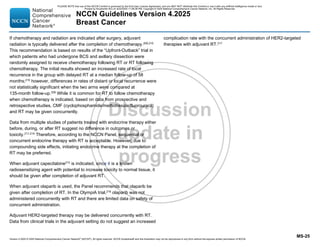
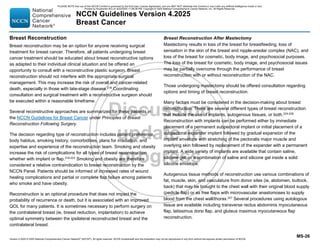

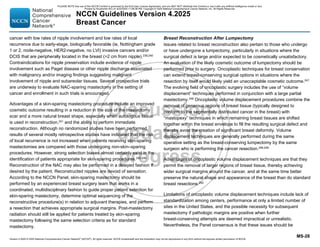
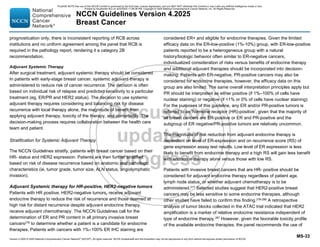
![Version 4.2025 © 2025 National Comprehensive Cancer Network©
(NCCN©
), All rights reserved. NCCN Guidelines® and this illustration may not be reproduced in any form without the express written permission of NCCN.
NCCN Guidelines Version 4.2025
Breast Cancer
MS-34
adjuvant endocrine therapy in the majority of patients with HR-positive
breast cancer regardless of menopausal status, age, or HER2 status of
the tumor.
Tamoxifen: The most firmly established adjuvant endocrine therapy is
tamoxifen for both premenopausal and postmenopausal patients.59
In
patients with ER-positive breast cancer, adjuvant tamoxifen decreases the
annual odds of recurrence by 41% and the annual odds of death by 31%
irrespective of the use of chemotherapy, patient age, menopausal status,
or ALN status.59
In patients receiving both tamoxifen and chemotherapy,
chemotherapy should be given first, followed by sequential tamoxifen.288
Prospective randomized trials have demonstrated that 5 years of
tamoxifen is more effective than 1 to 2 years of tamoxifen.289,290
The ATLAS trial randomly allocated pre- and postmenopausal patients to
5 or 10 years (extended therapy) of tamoxifen. The outcome analyses of
6846 patients with ER-positive disease showed that by extending adjuvant
treatment to 10 years, the risk of relapse and breast cancer-related
mortality was reduced.291
The risk of recurrence during years 5 to 14 was
21.4% for patients receiving tamoxifen versus 25.1% for controls (absolute
recurrence reduction 3.7%). Patients who received tamoxifen for 10 years
had a greater reduction in risk of progression, possibly due to a “carryover
effect.” The reduction in risk of recurrence was 0.90 (95% CI, 0.79–1.02)
during 5 to 9 years of tamoxifen treatment and 0.75 (0.62–0.90) after 10
years of treatment. There were decreases in the incidence of contralateral
breast cancer as well. Furthermore, reduced mortality was also apparent
after completion of 10 years of treatment with tamoxifen. With regards to
toxicity, the most important adverse effects noted in all patients in the
ATLAS trial after with 10 years of tamoxifen treatment were an increased
risk for endometrial cancer and pulmonary embolism.291
The results of the
aTTom trial confirm the significant reduction in recurrence and death from
breast cancer seen in the ATLAS trial with 10 versus 5 years of tamoxifen
therapy.292
Aromatase inhibitors: Several studies have evaluated aromatase inhibitors
(AI) in the treatment of postmenopausal patients with early-stage breast
cancer. These studies have utilized AI as initial adjuvant therapy, as
sequential therapy following 2 to 3 years of tamoxifen, or as extended
therapy following 4.5 to 6 years of tamoxifen. The AIs are not active in the
treatment of patients with functioning ovaries and should not be used in
patients whose ovarian function cannot reliably be assessed owing to
treatment-induced amenorrhea.
The results from two prospective, randomized, clinical trials have provided
evidence of an OS benefit for patients with early-stage breast cancer
receiving initial endocrine therapy with tamoxifen followed sequentially by
anastrozole (HR, 0.53; 95% CI, 0.28–0.99; P = .045) or exemestane (HR,
0.83; 95% CI, 0.69–1.00; P = .05 [excluding patients with ER-negative
disease]) when compared with tamoxifen as the only endocrine
therapy.293,294
In addition, the NCIC-CTG MA-17 trial demonstrated a
survival advantage with extended therapy with letrozole compared with
placebo in patients with ALN-positive (but not lymph node-negative),
ER-positive breast cancer.295
Tamoxifen and aromatase inhibitors have
different side effect profiles. Both contribute to hot flashes and night
sweats and may cause vaginal dryness. AIs are more commonly
associated with musculoskeletal symptoms, osteoporosis, and increased
rate of bone fracture, while tamoxifen is associated with an increased risk
for uterine cancer and deep venous thrombosis.
Two studies have examined initial adjuvant endocrine treatment with either
tamoxifen or an AI. The ATAC trial demonstrated that anastrozole is
superior to tamoxifen or the combination of tamoxifen and anastrozole in
the adjuvant endocrine therapy of postmenopausal patients with
HR-positive breast cancer.296,297
With a median of 100 months follow-up,
PLEASE NOTE that use of this NCCN Content is governed by the End-User License Agreement, and you MAY NOT distribute this Content or use it with any artificial intelligence model or tool.
Printed by Kirushanth Kiru on 9/22/2025 11:08:38 PM. Copyright © 2025 National Comprehensive Cancer Network, Inc. All Rights Reserved.](https://image.slidesharecdn.com/breast-2-251014042453-90a4bd3f/85/Breast-CA-Management-Principle-for-PG-UG-158-320.jpg)
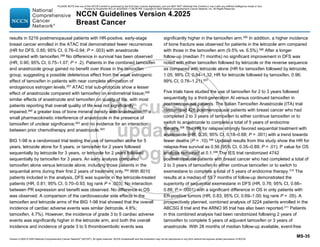
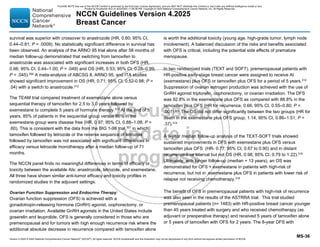
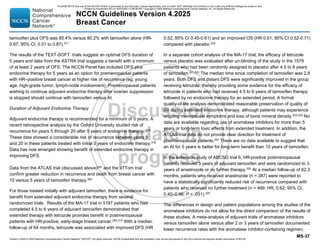
![Version 4.2025 © 2025 National Comprehensive Cancer Network©
(NCCN©
), All rights reserved. NCCN Guidelines® and this illustration may not be reproduced in any form without the express written permission of NCCN.
NCCN Guidelines Version 4.2025
Breast Cancer
MS-38
with no clear impact on OS.326
It is not known whether initial, sequential, or
extended use of adjuvant aromatase inhibitors is the optimal strategy.
In patients initially treated with an AI, a randomized phase III trial
(MA17.R) evaluated the effects of extending adjuvant AI therapy from 5 to
10 years.327
Postmenopausal patients who had completed 4.5 to 6 years
of therapy with an AI (with a median duration of prior tamoxifen of 5
years), were randomized to letrozole or placebo for an additional 5
years.327
Improvement was seen in five-year DFS in those receiving
letrozole compared to those who received placebo (95% [95% CI
93 - 96%] vs. 91% [95% CI 89 -93%]). The annual rate of contralateral
breast cancer reported was lower with letrozole (0.49% vs. 0.21%; HR
0.42, 95% CI 0.22-0.81%). However, longer duration of AI resulted in more
frequent bone-related adverse effects compared with those who received
placebo and no improvement was observed with respect to OS.
Bone-related adverse effects included bone pain (18% vs. 14%), fractures
(14% vs. 9%), and new-onset osteoporosis (11% vs. 6%).327
Patients with
high-risk of recurrence (eg. those with lymph node involvement) may
benefit from extended AI duration (7.5–10 years total).328,329
NCCN Recommendations: The decision of whether or not to extend
adjuvant treatment based on the evidence available should be
individualized. When considering endocrine therapy, the Panel
recommends the following adjuvant endocrine therapy options for patients
with early-stage breast cancer.
Adjuvant Endocrine Therapy for Postmenopausal Patients: The NCCN
Panel recommends AI as initial adjuvant therapy for 5 years (category 1);
and tamoxifen for 2 to 3 years followed by one of the following options: an
AI to complete 5 years of adjuvant endocrine therapy (category 1) or 5
years of AI therapy (category 2B); or tamoxifen for 4.5 to 6 years followed
by 5 years of AI (category 1) or consideration of tamoxifen for up to 10
years. In postmenopausal patients, the use of tamoxifen alone for 5 years
(category 1) or up to 10 years is limited to those who decline or who have
a contraindication to AIs.
Adjuvant Endocrine Therapy for Premenopausal Patients: If
premenopausal at diagnosis, the NCCN Panel recommend 5 years of
tamoxifen alone (category 1) or tamoxifen with OFS (category 1) or OFS
plus AI for 5 years (category 1). Patients who are premenopausal at
diagnosis and who become amenorrheic with chemotherapy may have
continued estrogen production from the ovaries without menses.
Menopausal status cannot be determined while receiving OFS. AI can
stimulate ovarian function. To assure a true postmenopausal status, serial
assessment of circulating LH, FSH, and estradiol is mandatory when
considering this subset for AI therapy.330,331 Frequency of testing of
estradiol and FSH/LH levels should be individualized.
After 5 years of initial endocrine therapy, for patients who are
postmenopausal at that time (including those who have become
postmenopausal during the 5 years of tamoxifen therapy), the NCCN
Panel recommends considering extended therapy with an AI for up to 5
years (category 1) or based on the data from the ATLAS trial considering
tamoxifen for an additional 5 years. For those who remain premenopausal
after the initial 5 years of tamoxifen, the panel recommends considering
continuing up to 10 years of tamoxifen therapy.
Additional considerations during Adjuvant Endocrine Therapy: Symptom
management for patients on adjuvant endocrine therapies often requires
treatment of hot flashes and the treatment of concurrent depression.
Venlafaxine, a serotonin-norepinephrine reuptake inhibitor (SNRI) has
been studied and is an effective intervention in decreasing hot flashes.332-
335
There is evidence suggesting that concomitant use of tamoxifen with
certain SSRIs (eg, paroxetine, fluoxetine) may decrease plasma levels of
PLEASE NOTE that use of this NCCN Content is governed by the End-User License Agreement, and you MAY NOT distribute this Content or use it with any artificial intelligence model or tool.
Printed by Kirushanth Kiru on 9/22/2025 11:08:38 PM. Copyright © 2025 National Comprehensive Cancer Network, Inc. All Rights Reserved.](https://image.slidesharecdn.com/breast-2-251014042453-90a4bd3f/85/Breast-CA-Management-Principle-for-PG-UG-162-320.jpg)
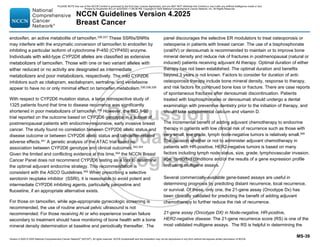
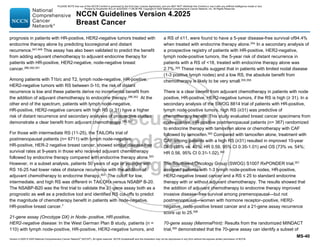
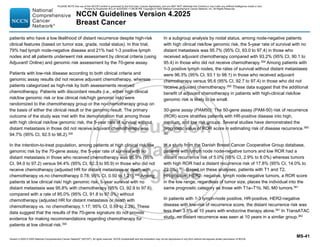
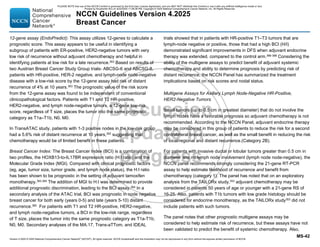
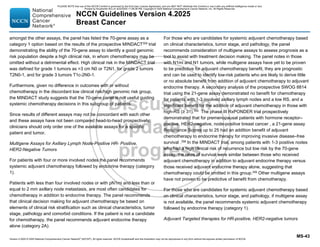
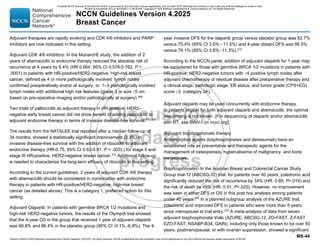
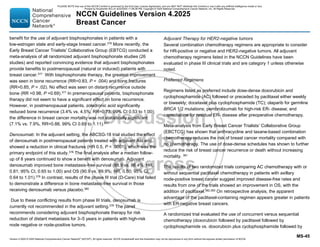
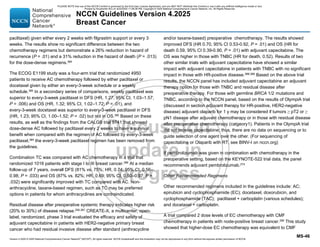
![Version 4.2025 © 2025 National Comprehensive Cancer Network©
(NCCN©
), All rights reserved. NCCN Guidelines® and this illustration may not be reproduced in any form without the express written permission of NCCN.
NCCN Guidelines Version 4.2025
Breast Cancer
MS-47
chemotherapy and superior to moderate-dose EC in event-free survival
and OS.
Final results from a randomized trial of TAC versus FAC chemotherapy in
node-positive breast cancer demonstrated that TAC is superior to FAC.391
Estimated 5-year DFS was 75% with TAC and 68% with FAC (HR, 0.72;
95% CI, 0.59–0.88; P =.001); survival was 87% with TAC and 81% with
FAC (HR, 0.70; 95% CI, 0.53–0.91; P = .008). DFS favored TAC in both
ER-positive and ER-negative tumors. At a median follow-up of 73 months,
results from the 3-arm randomized NSABP B-30 trial comparing TAC
versus AT versus AC followed by docetaxel (AC followed by T)
demonstrated that AC followed by T had a significant advantage in DFS
(HR, 0.83; P = .006) but not in OS (HR, 0.86; P = .086) when compared
with TAC. In addition, both DFS (HR, 0.080; P = .001) and OS (HR, 0.83;
P = .034) were significantly increased when AC followed by T was
compared with AT, with AT demonstrating non-inferiority compared with
TAC.392
Useful in Certain Circumstances:
Regimens included in this category include dose dense AC; AC every 3
weeks (Category 2B); CMF; AC followed by weekly paclitaxel; and
capecitabine as maintenance therapy for TNBC after adjuvant
chemotherapy.
The phase III E1199 trial compared patients with node-positive or high-risk
node-negative breast cancer who received 4 cycles of AC every 3 weeks,
followed by either paclitaxel or docetaxel, either weekly or every 3 weeks.
The 10-year updated results of this trial showed that incorporation of
weekly paclitaxel and docetaxel every 3 weeks was associated with
significant improvements in DFS, and marginal improvements in OS,
compared with paclitaxel given every 3 weeks. Among patients with
triple-negative disease, the10-year DFS rate with weekly paclitaxel was
69% and the 10-year OS rate was 75%.393
The AC regimen for four cycles has been studied in randomized trials,
resulting in relapse-free survival and OS equivalent to CMF
chemotherapy.394,395
No benefit from dose escalation of either doxorubicin
or cyclophosphamide was shown.382,396 Studies of CMF chemotherapy
versus no chemotherapy have shown DFS and OS advantages with CMF
chemotherapy.59,397
Results of a randomized trial in patients with TNBC (n=434) who received
standard adjuvant chemotherapy demonstrated that maintenance therapy
with low-dose capecitabine (dose of 650 mg/m2
twice a day by mouth for 1
year) improved 5-year DFS and OS. The invasive DFS in those who
receive adjuvant low-dose capecitabine was 85.8% compared with 75.8%
in those who did not (HR for risk of distant metastasis or death, 0.60 [95%
CI, 0.38-0.92]; P = .02), the estimated 5-year OS with maintenance
capecitabine was 85.5% versus 81.3% (HR for risk of death, 0.75 [95% CI,
0.47-1.19]; P = .22).398
Adjuvant Therapy for HER2-positive tumors
Trastuzumab containing chemotherapy regimens followed by one year of
HER2-targeted therapy are a backbone of adjuvant therapy patients with
HER2-positive disease.
The panel recommends HER2-targeted therapy in patients with
HER2-positive tumors (see Principles of HER2 Testing in the NCCN
Guidelines for Breast Cancer). Pre-operative systemic therapy
incorporating HER-2 targeted agent(s) should be considered for HER-2
positive patients presenting with clinical node-positive tumors or those
measuring 2 cm (cT2) at presentation.)
PLEASE NOTE that use of this NCCN Content is governed by the End-User License Agreement, and you MAY NOT distribute this Content or use it with any artificial intelligence model or tool.
Printed by Kirushanth Kiru on 9/22/2025 11:08:38 PM. Copyright © 2025 National Comprehensive Cancer Network, Inc. All Rights Reserved.](https://image.slidesharecdn.com/breast-2-251014042453-90a4bd3f/85/Breast-CA-Management-Principle-for-PG-UG-171-320.jpg)
![Version 4.2025 © 2025 National Comprehensive Cancer Network©
(NCCN©
), All rights reserved. NCCN Guidelines® and this illustration may not be reproduced in any form without the express written permission of NCCN.
NCCN Guidelines Version 4.2025
Breast Cancer
MS-48
The NCCN Panel suggests trastuzumab and chemotherapy be used for
patients with HER2-positive, node-negative tumors measuring 0.6 to 1.0
cm (T1b) and for smaller tumors that have less than or equal to 2 mm
axillary node metastases (pN1mi). Some support for this recommendation
comes from studies showing a higher risk of recurrence for patients with
HER2-positive, node-negative tumors less than or equal to 1 cm
compared to those with HER2-negative tumors of the same size.399
Ten-year breast cancer-specific survival and 10-year recurrence-free
survival were 85% and 75%, respectively, in patients with tumors
characterized as HER2-positive, ER-positive tumors, and 70% and 61%,
respectively, in patients with HER2-positive, ER-negative tumors. Two
additional retrospective series report recurrence-free survival in this
subpopulation of HER-2 positive, node-negative tumors measuring 0.6 to
1.0 cm (T1b) and/or pN1mi. all treated without trastuzumab. In the first
study, 5-year recurrence-free survival rates of 77.1% and 93.7% (P
.001) were observed for patients with HER2-positive and HER2-negative
T1a-bN0M0 breast tumors, respectively, with no recurrence-free survival
differences seen in the HER2-positive group when hormonal receptor
status was considered.400
In the other retrospective study of patients with
small HER2-positive tumors, the risk of recurrence at 5 years was low
(99% [95% CI; 96%–100%] for HER2-negative disease and 92% [95% CI;
86%–99%] for HER2-positive disease).401
Subgroup analyses from several
of the randomized trials have shown consistent benefit of trastuzumab
irrespective of tumor size or nodal status.402,403
Preferred Regimens:
The NCCN Panel has included paclitaxel and trastuzumab as an option for
patients with low-risk, HER2-positive, stage 1 tumors, based on a trial of
406 patients with small, node-negative, HER2-positive tumors treated with
this combination. The 3-year rate of DFS was 98.7% (95% CI, 97.6–99.8)
and the risk of serious toxic effects with this regimen was low (incidence of
heart failure reported was 0.5%).404
The long-term follow-up data reported
10-year invasive DFS of 91.3%, breast cancer-specific survival of 98.8%
and OS rates of 94.3%.405
Accordingly, NCCN panel has listed paclitaxel
and trastuzumab as a less intensive therapeutic option, preferred for
patients with low-risk T1,N0,M0, HER2-positive disease, particularly those
not eligible for other standard adjuvant regimens due to comorbidities.405
The BCIRG 006 study randomized 3222 patients with HER2-positive,
node-positive, or high-risk node-negative breast cancer to AC followed by
docetaxel; AC followed by docetaxel plus trastuzumab for one year; or
carboplatin, docetaxel, and trastuzumab for one year.403
At 65-month
follow-up, patients receiving AC followed by docetaxel with trastuzumab
(AC-TH) had an HR for DFS of 0.64 (P .001) when compared with the
group of patients in the control arm receiving the same chemotherapy
regimen without trastuzumab (AC-T). The HR for DFS was 0.75 (P = .04)
when patients in the carboplatin/docetaxel/ trastuzumab (TCH)-containing
arm were compared to patients in the control arm. No statistically
significant difference in the HR for DFS was observed between the two
trastuzumab-containing arms. An OS advantage was reported for patients
in both trastuzumab-containing arms relative to the control arm (HR for
AC-TH vs. AC-T = 0.63; P = .001; HR for TCH vs. AC-T = 0.77; P = .04).
Cardiac toxicity was significantly lower in the TCH arm (9.4% patients with
10% relative decline in left ventricular ejection fraction) compared with
the AC-TH arm (18.6%; P .0001). CHF was also more frequent with
AC-TH than TCH (2% vs. 0.4%; P .001). Analysis of this trial by critical
clinical event revealed more distant breast cancer recurrences with TCH
(144 vs. 124) but fewer cardiac events with TCH compared with AC-TH (4
vs. 21).403
In the FinHer trial, 1010 patients were randomized to 9 weeks of
vinorelbine followed by 3 cycles of FEC chemotherapy versus docetaxel
for 3 cycles followed by 3 cycles of FEC chemotherapy.406
Patients (n =
232) with HER2-positive cancers that were either node-positive or
node-negative and greater than or equal to 2 cm and PR-negative were
PLEASE NOTE that use of this NCCN Content is governed by the End-User License Agreement, and you MAY NOT distribute this Content or use it with any artificial intelligence model or tool.
Printed by Kirushanth Kiru on 9/22/2025 11:08:38 PM. Copyright © 2025 National Comprehensive Cancer Network, Inc. All Rights Reserved.](https://image.slidesharecdn.com/breast-2-251014042453-90a4bd3f/85/Breast-CA-Management-Principle-for-PG-UG-172-320.jpg)
![Version 4.2025 © 2025 National Comprehensive Cancer Network©
(NCCN©
), All rights reserved. NCCN Guidelines® and this illustration may not be reproduced in any form without the express written permission of NCCN.
NCCN Guidelines Version 4.2025
Breast Cancer
MS-53
citalopram, escitalopram, sertraline, and venlafaxine appear to have no or
only minimal effect on tamoxifen metabolism.330,338,339
Follow-up also includes assessment of patient adherence to ongoing
medication regimens such as endocrine therapies. Predictors of poor
adherence to medication include the presence of side effects associated
with the medication, and incomplete understanding by the patient of the
benefits associated with regular administration of the medication.437
The
Panel recommends the implementation of simple strategies to enhance
patient adherence to endocrine therapy, such as direct questioning of the
patient during office visits, as well as brief, clear explanations on the value
of taking the medication regularly and the therapeutic importance of longer
durations of endocrine therapy.
Lymphedema is a common complication after treatment for breast
cancer. Factors associated with increased risk of lymphedema include
extent of axillary surgery, axillary radiation, infection, and patient
obesity.438,439
The Panel recommends educating the patients on
lymphedema, monitoring for lymphedema, and referring for lymphedema
management as needed.
Many young patients treated for breast cancer maintain or regain
premenopausal status following treatment for breast cancer. For these
patients, the NCCN Panel discourages the use of hormonal birth control
methods, regardless of the HR status of the tumor.440
Alternative birth
control methods are recommended, including intrauterine devices, barrier
methods, and, for those with no intent of future pregnancy, tubal ligation or
vasectomy. Breastfeeding during endocrine or chemotherapy treatment is
not recommended by the NCCN Panel because of risks to the infant.
Breastfeeding after breast-conserving treatment for breast cancer is not
contraindicated. However, lactation from an irradiated breast may not be
possible, or may occur only with a diminished capacity.440,441
The Panel recommends that patients on an adjuvant AI or who experience
ovarian failure secondary to treatment should have monitoring of bone
health with a bone mineral density determination at baseline and
periodically thereafter. The use of estrogen, progesterone, or selective ER
modulators to treat osteoporosis or osteopenia in patients with breast
cancer is discouraged. The use of a bisphosphonate is generally the
preferred intervention to improve bone mineral density. A single phase 3
study, ABCSG12, demonstrated improved outcomes with the addition of
zoledronic acid in premenopausal patients receiving endocrine therapy
with ovarian suppression.442
Use of bisphosphonates in such patients and
in other subgroups remains controversial. Denosumab has shown to
significantly reduce fractures in postmenopausal patients receiving
adjuvant therapy AIs, and improves bone mineral density.378
Optimal duration of bisphosphonate therapy has not been established.
Factors to consider for duration of anti-osteoporosis therapy include bone
mineral density, response to therapy, and risk factors for continued bone
loss or fracture. Patients treated with a bisphosphonate should undergo a
dental examination with preventive dentistry prior to the initiation of
therapy, and should take supplemental calcium and vitamin D.
Evidence suggests that a healthy lifestyle may lead to better breast cancer
outcomes. A nested case control study of 369 patients with ER-positive
tumors who developed a second primary breast cancer compared with
734 matched control patients who did not develop a second primary tumor
showed an association between obesity (body mass index [BMI] ≥30),
smoking, and alcohol consumption and contralateral breast cancer.443
A
prospective study of 1490 patients diagnosed with stage I–III breast
cancer showed an association between high fruit and vegetable
consumption, physical activity, and improved survivorship, regardless of
obesity.444
There is emerging evidence that obesity is associated with
poorer outcomes for certain subtypes of breast cancers. The study by the
PLEASE NOTE that use of this NCCN Content is governed by the End-User License Agreement, and you MAY NOT distribute this Content or use it with any artificial intelligence model or tool.
Printed by Kirushanth Kiru on 9/22/2025 11:08:38 PM. Copyright © 2025 National Comprehensive Cancer Network, Inc. All Rights Reserved.](https://image.slidesharecdn.com/breast-2-251014042453-90a4bd3f/85/Breast-CA-Management-Principle-for-PG-UG-177-320.jpg)
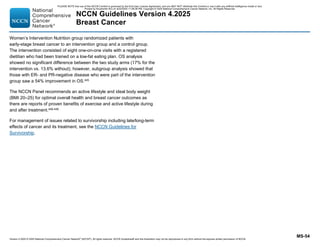
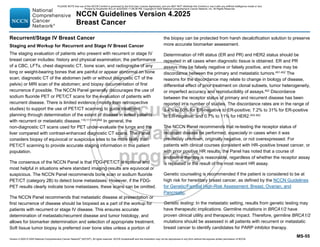
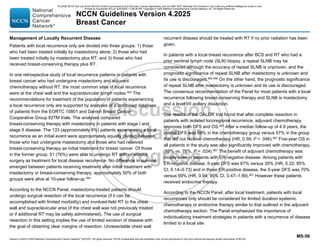
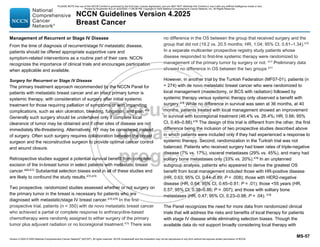
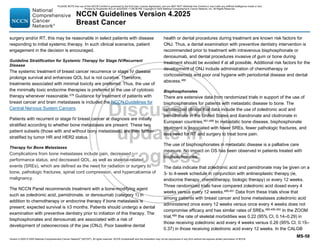
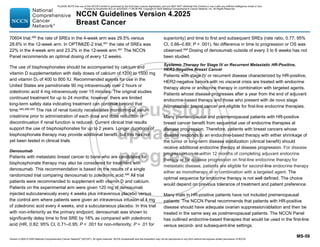
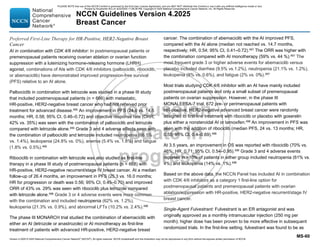
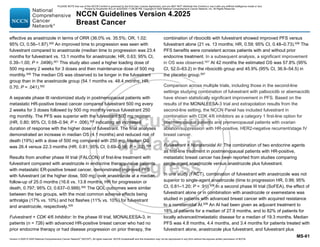
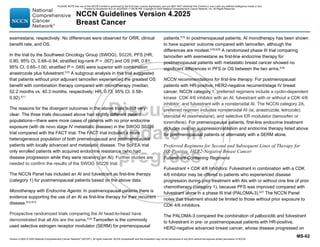
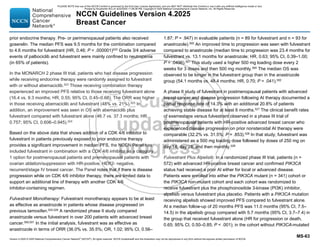
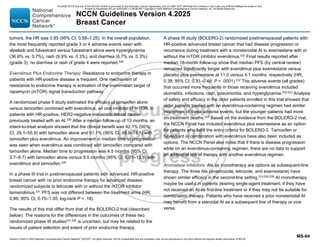
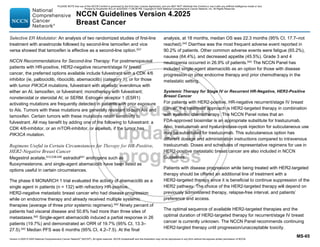
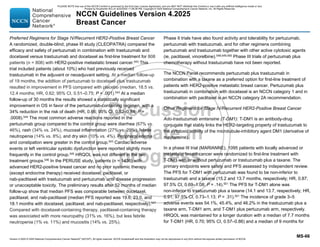
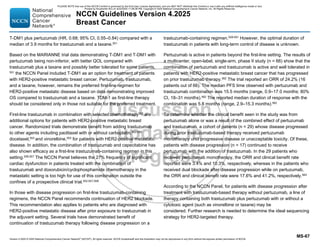
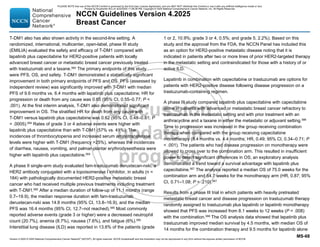
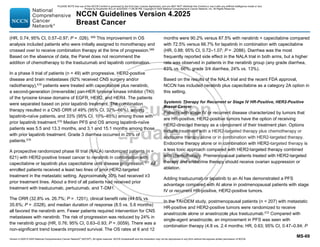
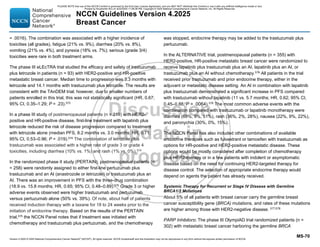
![Version 4.2025 © 2025 National Comprehensive Cancer Network©
(NCCN©
), All rights reserved. NCCN Guidelines® and this illustration may not be reproduced in any form without the express written permission of NCCN.
NCCN Guidelines Version 4.2025
Breast Cancer
MS-71
mutations to the PARP inhibitor, olaparib (n = 205) or physician’s choice (n
= 97) of non-platinum chemotherapy (capecitabine, eribulin, or
vinorelbine).579
An improvement in PFS was seen in those receiving
olaparib relative to those receiving chemotherapy [7.0 vs. 4.2 months; HR,
0.58; 95% CI, 0.43–0.80; P .001].579
The study, included all subtypes—
those with HR-positive, HER2-negative and -positive, and triple-negative
disease. The PFS improvements noted with olaparib were noted in all
subtypes and were greatest in the triple-negative population. Subsequent
follow-up did not show a statistically significant difference in OS between
treatment arms and the study was also not powered to evaluate OS. The
median OS with olaparib compared with treatment of physician’s choice
was 19.3 months versus 17.1 months, respectively (HR, 0.90; 95% CI,
0.66–1.23; P = .513).580
The QOL was significantly better in the olaparib
arm. It is interesting to note that patients who had not received prior
chemotherapy in the metastatic setting achieved a 7.9-month longer
median OS with olaparib compared with treatment of physician’s choice.580
The phase III EMBRACA trial of patients with advanced breast cancer
harboring the germline BRCA mutations and no prior exposure to a PARP
inhibitor, were randomized to talazoparib (n = 287) or to physician’s choice
of single-agent chemotherapy (n = 144).581
The median PFS among
patients in the talazoparib group was longer than in the control group (8.6
months [95% CI, 7.2–9.3] vs. 5.6 months [95% CI, 4.2–6.7]; HR for
disease progression or death, 0.54; 95% CI, 0.41–0.71; P .001).581
Based on the results of the above phase III trials, the two FDA-approved
PARP inhibitors, olaparib and talazoparib, are included as category 1,
preferred options for those with germline BRCA1/2 mutations. The NCCN
Panel recommends assessing germline BRCA1/2 mutations in all patients
with recurrent or metastatic breast cancer to identify candidates for PARP
inhibitor therapy. While olaparib and talazoparib are FDA-indicated in
HER2-negative disease, the NCCN Panel supports use in any breast
cancer subtype associated with germline BRCA1/2 mutations.
Platinums: The phase III TNT trial compared docetaxel with carboplatin in
the first-line setting in patients (n = 376) with triple-negative breast cancer.
In the unselected population, carboplatin was not more active than
docetaxel (ORR, 31.4% vs. 34.0%; P = .66). 582 Patients with a germline
BRCA1/2 mutation had a significantly better response to carboplatin than
docetaxel (ORR, 68.0% vs. 33.3%, absolute difference, 34.7%; P = .03).
582
PFS was also improved with carboplatin treatment in patients with
a germline BRCA1/2 mutation (median PFS, 6.8 months vs. 4.4 months);
no difference was found in OS. However, patients with somatic BRCA1/2
mutation in the tumor DNA did not appear to have the same advantage.
For those with triple-negative recurrent/stage IV breast cancer and
germline BRCA1/2 mutations, the NCCN Panel has included platinum
agents (cisplatin and carboplatin) as preferred treatment options. It is
unknown how PARP inhibitors compare with platinums in this setting.
Systemic Chemotherapy for Recurrent or Stage IV Disease
Patients with HR-negative tumors not localized to the bone or soft tissue
only, or that are associated with symptomatic visceral metastasis
irrespective of HR- or HER-status, or that have HR-positive tumors that
are refractory to endocrine therapy should receive systemic
chemotherapy.
A variety of chemotherapy regimens are felt to be appropriate, as outlined
in the treatment algorithm. Combination chemotherapy generally provides
higher rates of objective response and longer time to progression, in
comparison to single-agent chemotherapy. Combination chemotherapy is,
however, associated with an increase in toxicity and is of little survival
benefit.583-587
Furthermore, administering single agents sequentially
decreases the likelihood that dose reductions will be needed. Thus, the
PLEASE NOTE that use of this NCCN Content is governed by the End-User License Agreement, and you MAY NOT distribute this Content or use it with any artificial intelligence model or tool.
Printed by Kirushanth Kiru on 9/22/2025 11:08:38 PM. Copyright © 2025 National Comprehensive Cancer Network, Inc. All Rights Reserved.](https://image.slidesharecdn.com/breast-2-251014042453-90a4bd3f/85/Breast-CA-Management-Principle-for-PG-UG-195-320.jpg)
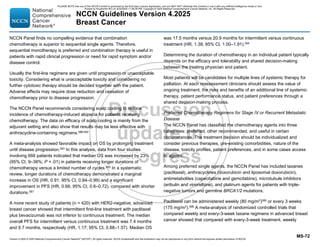
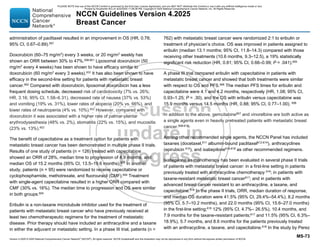
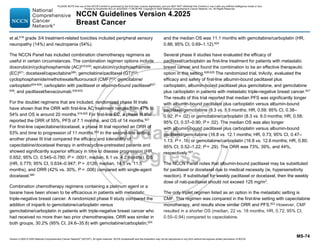
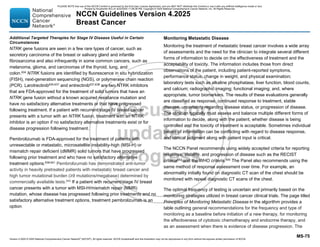
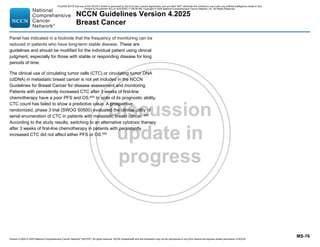
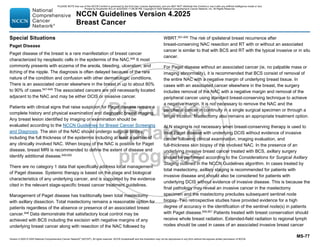
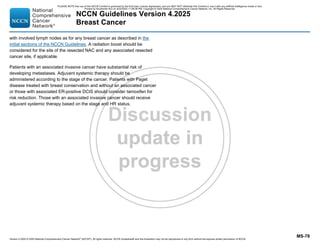
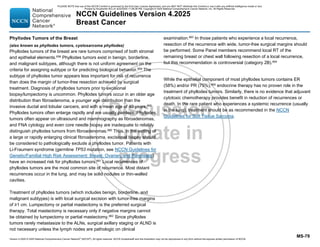
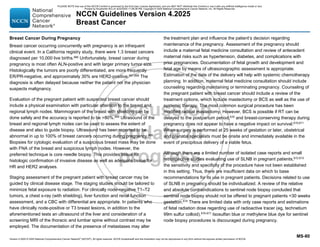
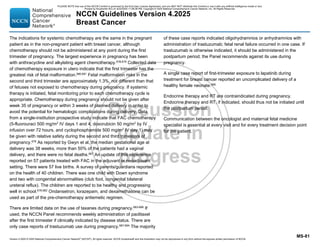
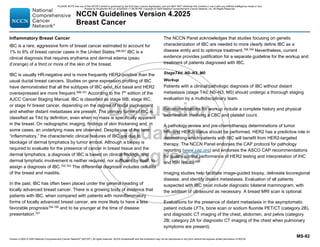
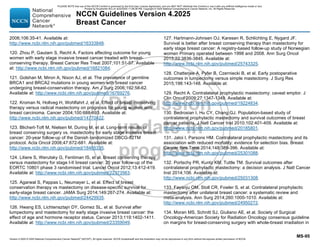
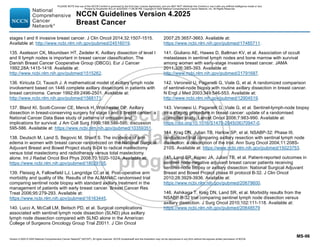
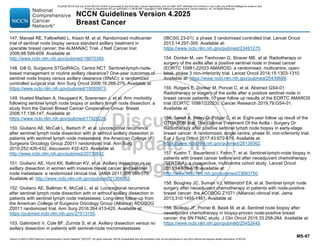
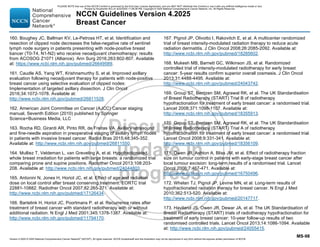
![Version 4.2025 © 2025 National Comprehensive Cancer Network©
(NCCN©
), All rights reserved. NCCN Guidelines® and this illustration may not be reproduced in any form without the express written permission of NCCN.
NCCN Guidelines Version 4.2025
Breast Cancer
MS-107
286. Paik S, Tang G, Shak S, et al. Gene expression and benefit of
chemotherapy in women with node-negative, estrogen receptor-positive
breast cancer. J Clin Oncol 2006;24:3726-3734. Available at:
http://www.ncbi.nlm.nih.gov/pubmed/16720680.
287. Dowsett M, Allred C, Knox J, et al. Relationship between
quantitative estrogen and progesterone receptor expression and human
epidermal growth factor receptor 2 (HER-2) status with recurrence in the
Arimidex, Tamoxifen, Alone or in Combination trial. J Clin Oncol
2008;26:1059-1065. Available at:
http://www.ncbi.nlm.nih.gov/pubmed/18227529.
288. Albain KS, Barlow WE, Ravdin PM, et al. Adjuvant chemotherapy
and timing of tamoxifen in postmenopausal patients with endocrine-
responsive, node-positive breast cancer: a phase 3, open-label,
randomised controlled trial. Lancet 2009;374:2055-2063. Available at:
http://www.ncbi.nlm.nih.gov/pubmed/20004966.
289. Early Breast Cancer Trialists' Collaborative G, Davies C, Godwin J,
et al. Relevance of breast cancer hormone receptors and other factors to
the efficacy of adjuvant tamoxifen: patient-level meta-analysis of
randomised trials. Lancet 2011;378:771-784. Available at:
https://www.ncbi.nlm.nih.gov/pubmed/21802721.
290. Early Breast Cancer Trialists' Collaborative G. Effects of
chemotherapy and hormonal therapy for early breast cancer on
recurrence and 15-year survival: an overview of the randomised trials.
Lancet 2005;365:1687-1717. Available at:
http://www.ncbi.nlm.nih.gov/pubmed/15894097.
291. Davies C, Pan H, Godwin J, et al. Long-term effects of continuing
adjuvant tamoxifen to 10 years versus stopping at 5 years after diagnosis
of oestrogen receptor-positive breast cancer: ATLAS, a randomised trial.
Lancet 2013;381:805-816. Available at:
https://www.ncbi.nlm.nih.gov/pubmed/23219286.
292. Gray R, Rea D, Handley K, et al. aTTom: Long-term effects of
continuing adjuvant tamoxifen to 10 years versus stopping at 5 years in
6,953 women with early breast cancer [Abstract]. J Clin Oncol
2013;31(Suppl):Abstract 5. Available at:
293. Coombes RC, Kilburn LS, Snowdon CF, et al. Survival and safety of
exemestane versus tamoxifen after 2-3 years' tamoxifen treatment
(Intergroup Exemestane Study): a randomised controlled trial. Lancet
2007;369:559-570. Available at:
http://www.ncbi.nlm.nih.gov/pubmed/17307102.
294. Kaufmann M, Jonat W, Hilfrich J, et al. Improved overall survival in
postmenopausal women with early breast cancer after anastrozole
initiated after treatment with tamoxifen compared with continued
tamoxifen: the ARNO 95 Study. J Clin Oncol 2007;25:2664-2670.
Available at: http://www.ncbi.nlm.nih.gov/pubmed/17563395.
295. Goss PE, Ingle JN, Martino S, et al. Randomized trial of letrozole
following tamoxifen as extended adjuvant therapy in receptor-positive
breast cancer: updated findings from NCIC CTG MA.17. J Natl Cancer
Inst 2005;97:1262-1271. Available at:
http://www.ncbi.nlm.nih.gov/pubmed/16145047.
296. Baum M, Budzar AU, Cuzick J, et al. Anastrozole alone or in
combination with tamoxifen versus tamoxifen alone for adjuvant
treatment of postmenopausal women with early breast cancer: first
results of the ATAC randomised trial. Lancet 2002;359:2131-2139.
Available at: http://www.ncbi.nlm.nih.gov/pubmed/12090977.
297. Howell A, Cuzick J, Baum M, et al. Results of the ATAC (Arimidex,
Tamoxifen, Alone or in Combination) trial after completion of 5 years'
adjuvant treatment for breast cancer. Lancet 2005;365:60-62. Available
at: http://www.ncbi.nlm.nih.gov/pubmed/15639680.
298. Forbes JF, Cuzick J, Buzdar A, et al. Effect of anastrozole and
tamoxifen as adjuvant treatment for early-stage breast cancer: 100-
month analysis of the ATAC trial. Lancet Oncol 2008;9:45-53. Available
at: http://www.ncbi.nlm.nih.gov/pubmed/18083636.
299. Duffy S, Jackson TL, Lansdown M, et al. The ATAC ('Arimidex',
Tamoxifen, Alone or in Combination) adjuvant breast cancer trial: first
PLEASE NOTE that use of this NCCN Content is governed by the End-User License Agreement, and you MAY NOT distribute this Content or use it with any artificial intelligence model or tool.
Printed by Kirushanth Kiru on 9/22/2025 11:08:38 PM. Copyright © 2025 National Comprehensive Cancer Network, Inc. All Rights Reserved.](https://image.slidesharecdn.com/breast-2-251014042453-90a4bd3f/85/Breast-CA-Management-Principle-for-PG-UG-231-320.jpg)

![Version 4.2025 © 2025 National Comprehensive Cancer Network©
(NCCN©
), All rights reserved. NCCN Guidelines® and this illustration may not be reproduced in any form without the express written permission of NCCN.
NCCN Guidelines Version 4.2025
Breast Cancer
MS-109
Oncol 2006;7:991-996. Available at:
http://www.ncbi.nlm.nih.gov/pubmed/17138220.
313. van de Velde CJ, Rea D, Seynaeve C, et al. Adjuvant tamoxifen
and exemestane in early breast cancer (TEAM): a randomised phase 3
trial. Lancet 2011;377:321-331. Available at:
http://www.ncbi.nlm.nih.gov/pubmed/21247627.
314. Pagani O, Regan MM, Walley BA, et al. Adjuvant exemestane with
ovarian suppression in premenopausal breast cancer. N Engl J Med
2014;371:107-118. Available at:
http://www.ncbi.nlm.nih.gov/pubmed/24881463.
315. Francis PA, Pagani O, Fleming GF, et al. Tailoring adjuvant
endocrine therapy for premenopausal breast cancer. N Engl J Med
2018;379:122-137. Available at:
316. Pagani O, Walley BA, Fleming GF, et al. Adjuvant exemestane with
ovarian suppression in premenopausal breast cancer: Long-term follow-
up of the combined TEXT and SOFT trials. Journal of Clinical Oncology
2023;41:1376-1382. Available at:
https://ascopubs.org/doi/abs/10.1200/JCO.22.01064
https://www.ncbi.nlm.nih.gov/pmc/articles/PMC10419413/pdf/jco-41-
1376.pdf.
317. Baek SY, Noh WC, Ahn SH, et al. Adding ovarian suppression to
tamoxifen for premenopausal women with hormone receptor-positive
breast cancer after chemotherapy: An 8-year follow-up of the ASTRRA
trial. J Clin Oncol 2023;41:4864-4871. Available at:
https://www.ncbi.nlm.nih.gov/pubmed/37607321.
318. Pan H, Gray R, Davies C, et al. Predictors of recurrence during
years 5-14 in 46,138 women with ER+ breast cancer allocated 5 years
only of endocrine therapy (ET) [abstract]. J Clin Oncol 2016;34:Abstract
505. Available at: http://meetinglibrary.asco.org/content/166053-176.
319. Goss PE, Ingle JN, Martino S, et al. A randomized trial of letrozole
in postmenopausal women after five years of tamoxifen therapy for early-
stage breast cancer. N Engl J Med 2003;349:1793-1802. Available at:
http://www.ncbi.nlm.nih.gov/pubmed/14551341.
320. Jin H, Tu D, Zhao N, et al. Longer-term outcomes of letrozole
versus placebo after 5 years of tamoxifen in the NCIC CTG MA.17 trial:
analyses adjusting for treatment crossover. J Clin Oncol 2012;30:718-
721. Available at: https://www.ncbi.nlm.nih.gov/pubmed/22042967.
321. Goss PE, Ingle JN, Pater JL, et al. Late extended adjuvant
treatment with letrozole improves outcome in women with early-stage
breast cancer who complete 5 years of tamoxifen. J Clin Oncol
2008;26:1948-1955. Available at:
http://www.ncbi.nlm.nih.gov/pubmed/18332475.
322. Ingle JN, Tu D, Pater JL, et al. Intent-to-treat analysis of the
placebo-controlled trial of letrozole for extended adjuvant therapy in early
breast cancer: NCIC CTG MA.17. Ann Oncol 2008;19:877-882. Available
at: http://www.ncbi.nlm.nih.gov/pubmed/18332043.
323. Perez EA, Josse RG, Pritchard KI, et al. Effect of letrozole versus
placebo on bone mineral density in women with primary breast cancer
completing 5 or more years of adjuvant tamoxifen: a companion study to
NCIC CTG MA.17. J Clin Oncol 2006;24:3629-3635. Available at:
http://www.ncbi.nlm.nih.gov/pubmed/16822845.
324. Whelan TJ, Goss PE, Ingle JN, et al. Assessment of quality of life in
MA.17: a randomized, placebo-controlled trial of letrozole after 5 years of
tamoxifen in postmenopausal women. J Clin Oncol 2005;23:6931-6940.
Available at: http://www.ncbi.nlm.nih.gov/pubmed/16157934.
325. Jakesz R, Greil R, Gnant M, et al. Extended adjuvant therapy with
anastrozole among postmenopausal breast cancer patients: results from
the randomized Austrian Breast and Colorectal Cancer Study Group Trial
6a. J Natl Cancer Inst 2007;99:1845-1853. Available at:
http://www.ncbi.nlm.nih.gov/pubmed/18073378.
326. Dowsett M, Cuzick J, Ingle J, et al. Meta-analysis of breast cancer
outcomes in adjuvant trials of aromatase inhibitors versus tamoxifen. J
PLEASE NOTE that use of this NCCN Content is governed by the End-User License Agreement, and you MAY NOT distribute this Content or use it with any artificial intelligence model or tool.
Printed by Kirushanth Kiru on 9/22/2025 11:08:38 PM. Copyright © 2025 National Comprehensive Cancer Network, Inc. All Rights Reserved.](https://image.slidesharecdn.com/breast-2-251014042453-90a4bd3f/85/Breast-CA-Management-Principle-for-PG-UG-233-320.jpg)
![Version 4.2025 © 2025 National Comprehensive Cancer Network©
(NCCN©
), All rights reserved. NCCN Guidelines® and this illustration may not be reproduced in any form without the express written permission of NCCN.
NCCN Guidelines Version 4.2025
Breast Cancer
MS-111
responsive breast cancer: the breast international group 1-98 trial. J Natl
Cancer Inst 2012;104:441-451. Available at:
342. Rae J, Drury S, Hayes D, et al. Lack of correlation between gene
variants in tamoxifen metabolizing enzymes with primary endpoints in the
ATAC trial [abstract]. Cancer Res 2010;70(Suppl):Abstract S1-7.
Available at:
http://cancerres.aacrjournals.org/cgi/content/meeting_abstract/70/24_Me
etingAbstracts/S1-7?sid=e2c268c0-3fe1-481b-a9c9-01b32769a3d9.
343. Park HS, Choi JY, Lee MJ, et al. Association between genetic
polymorphisms of CYP2D6 and outcomes in breast cancer patients with
tamoxifen treatment. J Korean Med Sci 2011;26:1007-1013. Available at:
https://www.ncbi.nlm.nih.gov/pubmed/21860550.
344. Higgins MJ, Stearns V. Pharmacogenetics of endocrine therapy for
breast cancer. Annu Rev Med 2011;62:281-293. Available at:
http://www.ncbi.nlm.nih.gov/pubmed/21226615.
345. Visvanathan K, Chlebowski RT, Hurley P, et al. American Society of
Clinical Oncology clinical practice guideline update on the use of
pharmacologic interventions including tamoxifen, raloxifene, and
aromatase inhibition for breast cancer risk reduction. . J Clin Oncol
2009;27:3235-3258. Available at:
http://www.ncbi.nlm.nih.gov/pubmed/19470930.
346. Berry DA, Cirrincione C, Henderson IC, et al. Estrogen-receptor
status and outcomes of modern chemotherapy for patients with node-
positive breast cancer. JAMA 2006;295:1658-1667. Available at:
http://www.ncbi.nlm.nih.gov/pubmed/16609087.
347. Paik S, Shak S, Tang G, et al. A multigene assay to predict
recurrence of tamoxifen-treated, node-negative breast cancer. N Engl J
Med 2004;351:2817-2826. Available at:
http://www.ncbi.nlm.nih.gov/pubmed/15591335.
348. Dowsett M, Cuzick J, Wale C, et al. Prediction of risk of distant
recurrence using the 21-gene recurrence score in node-negative and
node-positive postmenopausal patients with breast cancer treated with
anastrozole or tamoxifen: a TransATAC study. J Clin Oncol
2010;28:1829-1834. Available at:
http://www.ncbi.nlm.nih.gov/pubmed/20212256.
349. Mamounas EP, Tang G, Fisher B, et al. Association between the
21-gene recurrence score assay and risk of locoregional recurrence in
node-negative, estrogen receptor-positive breast cancer: results from
NSABP B-14 and NSABP B-20. J Clin Oncol 2010;28:1677-1683.
Available at: http://www.ncbi.nlm.nih.gov/pubmed/20065188.
350. Albain KS, Barlow WE, Shak S, et al. Prognostic and predictive
value of the 21-gene recurrence score assay in postmenopausal women
with node-positive, oestrogen-receptor-positive breast cancer on
chemotherapy: a retrospective analysis of a randomised trial. Lancet
Oncol 2010;11:55-65. Available at:
http://www.ncbi.nlm.nih.gov/pubmed/20005174.
351. Tang G, Shak S, Paik S, et al. Comparison of the prognostic and
predictive utilities of the 21-gene Recurrence Score assay and Adjuvant!
for women with node-negative, ER-positive breast cancer: results from
NSABP B-14 and NSABP B-20. Breast Cancer Res Treat 2011;127:133-
142. Available at: http://www.ncbi.nlm.nih.gov/pubmed/21221771.
352. Sparano JA, Gray RJ, Makower DF, et al. Adjuvant chemotherapy
guided by a 21-gene expression assay in breast cancer. N Engl J Med
2018;379:111-121. Available at:
https://www.ncbi.nlm.nih.gov/pubmed/29860917.
353. Sparano J, Gray, RJ, Wood, WC, Makower, DF, Lively, TG,
Saphner, TJ et al. TAILORx: Phase III trial of chemoendocrine therapy
versus endocrine therapy alone in hormone receptor-positive, HER2-
negative, node-negative breast cancer and an intermediate prognosis
21-gene recurrence score [Abstract]. J Clin Oncol 2018;36(Suppl):
Abstract LBA1
Available at: http://abstracts.asco.org/214/AbstView_214_212997.html.
354. Nitz U, Gluz O, Christgen M, et al. Reducing chemotherapy use in
clinically high-risk, genomically low-risk pN0 and pN1 early breast cancer
PLEASE NOTE that use of this NCCN Content is governed by the End-User License Agreement, and you MAY NOT distribute this Content or use it with any artificial intelligence model or tool.
Printed by Kirushanth Kiru on 9/22/2025 11:08:38 PM. Copyright © 2025 National Comprehensive Cancer Network, Inc. All Rights Reserved.](https://image.slidesharecdn.com/breast-2-251014042453-90a4bd3f/85/Breast-CA-Management-Principle-for-PG-UG-235-320.jpg)
![Version 4.2025 © 2025 National Comprehensive Cancer Network©
(NCCN©
), All rights reserved. NCCN Guidelines® and this illustration may not be reproduced in any form without the express written permission of NCCN.
NCCN Guidelines Version 4.2025
Breast Cancer
MS-114
primary breast cancer. J Clin Oncol 2003;21:976-983. Available at:
http://www.ncbi.nlm.nih.gov/pubmed/12637460.
383. Mamounas E, Bryant J, Lembersky B, et al. Paclitaxel after
doxorubicin plus cyclophosphamide as adjuvant chemotherapy for node-
positive breast cancer: results from NSABP B-28. J Clin Oncol
2005;23:3686-3696. Available at:
http://www.ncbi.nlm.nih.gov/pubmed/15897552.
384. Citron ML, Berry DA, Cirrincione C, et al. Randomized trial of dose-
dense versus conventionally scheduled and sequential versus
concurrent combination chemotherapy as postoperative adjuvant
treatment of node-positive primary breast cancer: first report of
Intergroup Trial C9741/Cancer and Leukemia Group B Trial 9741. J Clin
Oncol 2003;21:1431-1439. Available at:
http://www.ncbi.nlm.nih.gov/pubmed/12668651.
385. Sparano J, Wang M, Martino S, et al. Weekly paclitaxel in the
adjuvant treatment of breast cancer. N Engl J Med 2008;358:1663-1671.
Available at: http://www.ncbi.nlm.nih.gov/pubmed/18420499.
386. Jones S, Holmes FA, O'Shaughnessy J, et al. Docetaxel with
cyclophosphamide is associated with an overall survival benefit
compared with doxorubicin and cyclophosphamide: 7-year follow-up of
US Oncology Research trial 9735. J Clin Oncol 2009;27:1177-1183.
Available at: http://www.ncbi.nlm.nih.gov/pubmed/19204201.
387. Kuroi K, Toi M, Ohno S, et al. Prognostic significance of subtype
and pathologic response in operable breast cancer; a pooled analysis of
prospective neoadjuvant studies of JBCRG. Breast Cancer 2015;22:486-
495. Available at: https://www.ncbi.nlm.nih.gov/pubmed/24338638.
388. Martín M, Simón AR, Borrego MR, et al. Epirubicin plus
cyclophosphamide followed by docetaxel versus epirubicin plus
docetaxel followed by capecitabine as adjuvant therapy for node-positive
early breast cancer: Results from the GEICAM/2003-10 study. Journal of
Clinical Oncology 2015;33:3788-3795. Available at:
https://ascopubs.org/doi/abs/10.1200/JCO.2015.61.9510.
389. Joensuu H, Kellokumpu-Lehtinen PL, Huovinen R, et al. Adjuvant
capecitabine, docetaxel, cyclophosphamide, and epirubicin for early
breast cancer: final analysis of the randomized FinXX trial. J Clin Oncol
2012;30:11-18. Available at:
https://www.ncbi.nlm.nih.gov/pubmed/22105826.
390. Piccart MJ, Di Leo A, Beauduin M, et al. Phase III trial comparing
two dose levels of epirubicin combined with cyclophosphamide with
cyclophosphamide, methotrexate, and fluorouracil in node-positive
breast cancer. J Clin Oncol 2001;19:3103-3110. Available at:
http://www.ncbi.nlm.nih.gov/pubmed/11408507.
391. Martin M, Pienkowski T, Mackey J, et al. Adjuvant docetaxel for
node-positive breast cancer. N Engl J Med 2005;352:2302-2313.
Available at: http://www.ncbi.nlm.nih.gov/pubmed/15930421.
392. Swain SM, Jeong J-H, Geyer CE, et al. NSABP B-30: definitive
analysis of patient outcome from a randomized trial evaluating different
schedules and combinations of adjuvant therapy containing doxorubicin,
docetaxel and cyclophosphamide in women with operable, node-positive
breast cancer [abstract]. Cancer Research 2009;69(Suppl):Abstract 75.
Available at:
http://cancerres.aacrjournals.org/cgi/content/meeting_abstract/69/2_Mee
tingAbstracts/75.
393. Sparano JA, Zhao F, Martino S, et al. Long-term follow-up of the
e1199 phase iii trial evaluating the role of taxane and schedule in
operable breast cancer. J Clin Oncol 2015;33:2353-2360. Available at:
https://www.ncbi.nlm.nih.gov/pubmed/26077235.
394. Bang SM, Heo DS, Lee KH, et al. Adjuvant doxorubicin and
cyclophosphamide versus cyclophosphamide, methotrexate, and 5-
fluorouracil chemotherapy in premenopausal women with axillary lymph
node positive breast carcinoma. Cancer 2000;89:2521-2526. Available
at: http://www.ncbi.nlm.nih.gov/pubmed/11135211.
395. Fisher B, Brown AM, Dimitrov NV, et al. Two months of doxorubicin-
cyclophosphamide with and without interval reinduction therapy
compared with 6 months of cyclophosphamide, methotrexate, and
PLEASE NOTE that use of this NCCN Content is governed by the End-User License Agreement, and you MAY NOT distribute this Content or use it with any artificial intelligence model or tool.
Printed by Kirushanth Kiru on 9/22/2025 11:08:38 PM. Copyright © 2025 National Comprehensive Cancer Network, Inc. All Rights Reserved.](https://image.slidesharecdn.com/breast-2-251014042453-90a4bd3f/85/Breast-CA-Management-Principle-for-PG-UG-238-320.jpg)
![Version 4.2025 © 2025 National Comprehensive Cancer Network©
(NCCN©
), All rights reserved. NCCN Guidelines® and this illustration may not be reproduced in any form without the express written permission of NCCN.
NCCN Guidelines Version 4.2025
Breast Cancer
MS-118
434. Metcalfe K, Lynch HT, Ghadirian P, et al. Contralateral breast
cancer in BRCA1 and BRCA2 mutation carriers. J Clin Oncol
2004;22:2328-2335. Available at:
http://www.ncbi.nlm.nih.gov/pubmed/15197194.
435. Pierce LJ, Levin AM, Rebbeck TR, et al. Ten-year multi-institutional
results of breast-conserving surgery and radiotherapy in BRCA1/2-
associated stage I/II breast cancer. J Clin Oncol 2006;24:2437-2443.
Available at: http://www.ncbi.nlm.nih.gov/pubmed/16636335.
436. ACOG committee opinion. No. 336: Tamoxifen and uterine cancer.
Obstet Gynecol 2006;107:1475-1478. Available at:
http://www.ncbi.nlm.nih.gov/pubmed/16738185.
437. Osterberg L, Blaschke T. Adherence to medication. N Engl J Med
2005;353:487-497. Available at:
http://www.ncbi.nlm.nih.gov/pubmed/16079372.
438. Dayes IS, Whelan TJ, Julian JA, et al. Randomized trial of
decongestive lymphatic therapy for the treatment of lymphedema in
women with breast cancer. J Clin Oncol 2013;31:3758-3763. Available
at: http://www.ncbi.nlm.nih.gov/pubmed/24043733.
439. Warren AG, Brorson H, Borud LJ, Slavin SA. Lymphedema: a
comprehensive review. Ann Plast Surg 2007;59:464-472. Available at:
http://www.ncbi.nlm.nih.gov/pubmed/17901744.
440. Hickey M, Peate M, Saunders CM, Friedlander M. Breast cancer in
young women and its impact on reproductive function. Human
Reproduction Update 2009;15:323-339. Available at:
http://www.ncbi.nlm.nih.gov/pubmed/19174449.
441. Moran MS, Colasanto JM, Haffty BG, et al. Effects of breast-
conserving therapy on lactation after pregnancy. Cancer J 2005;11:399-
403. Available at: http://www.ncbi.nlm.nih.gov/pubmed/16259870.
442. Gnant M, Mlineritsch B, Schippinger W, et al. Endocrine therapy
plus zoledronic acid in premenopausal breast cancer. N Engl J Med
2009;360:679-691. Available at:
http://www.ncbi.nlm.nih.gov/pubmed/19213681.
443. Li CI, Daling JR, Porter PL, et al. Relationship between potentially
modifiable lifestyle factors and risk of second primary contralateral breast
cancer among women diagnosed with estrogen receptor-positive
invasive breast cancer. J Clin Oncol 2009;27:5312-5318. Available at:
http://www.ncbi.nlm.nih.gov/pubmed/19738113.
444. Pierce JP, Stefanick ML, Flatt SW, et al. Greater survival after
breast cancer in physically active women with high vegetable-fruit intake
regardless of obesity. J Clin Oncol 2007;25:2345-2351. Available at:
http://www.ncbi.nlm.nih.gov/pubmed/17557947.
445. Chlebowski RT BG, et al. . Final survival analysis from the
randomized Women's Intervention Nutrition Study (WINS) evaluating
dietary intervention as adjuvant breast cancer therapy [abstract]. San
Antonio Breast Cancer Symposium 2014;Abstract S5-08. Available at:
446. de Glas NA, Fontein DB, Bastiaannet E, et al. Physical activity and
survival of postmenopausal, hormone receptor-positive breast cancer
patients: results of the Tamoxifen Exemestane Adjuvant Multicenter
Lifestyle study. Cancer 2014;120:2847-2854. Available at:
http://www.ncbi.nlm.nih.gov/pubmed/24840230.
447. Courneya KS, Segal RJ, McKenzie DC, et al. Effects of exercise
during adjuvant chemotherapy on breast cancer outcomes. Med Sci
Sports Exerc 2014;46:1744-1751. Available at:
http://www.ncbi.nlm.nih.gov/pubmed/24633595.
448. Mishra SI, Scherer RW, Snyder C, et al. Exercise interventions on
health-related quality of life for people with cancer during active
treatment. Cochrane Database Syst Rev 2012;8:CD008465. Available at:
http://www.ncbi.nlm.nih.gov/pubmed/22895974.
449. Eubank WB, Mankoff D, Bhattacharya M, et al. Impact of FDG PET
on defining the extent of disease and on the treatment of patients with
recurrent or metastatic breast cancer. AJR Am J Roentgenol
PLEASE NOTE that use of this NCCN Content is governed by the End-User License Agreement, and you MAY NOT distribute this Content or use it with any artificial intelligence model or tool.
Printed by Kirushanth Kiru on 9/22/2025 11:08:38 PM. Copyright © 2025 National Comprehensive Cancer Network, Inc. All Rights Reserved.](https://image.slidesharecdn.com/breast-2-251014042453-90a4bd3f/85/Breast-CA-Management-Principle-for-PG-UG-242-320.jpg)
![Version 4.2025 © 2025 National Comprehensive Cancer Network©
(NCCN©
), All rights reserved. NCCN Guidelines® and this illustration may not be reproduced in any form without the express written permission of NCCN.
NCCN Guidelines Version 4.2025
Breast Cancer
MS-119
2004;183:479-486. Available at:
http://www.ncbi.nlm.nih.gov/pubmed/15269044.
450. Moon DH, Maddahi J, Silverman DH, et al. Accuracy of whole-body
fluorine-18-FDG PET for the detection of recurrent or metastatic breast
carcinoma. J Nucl Med 1998;39:431-435. Available at:
http://www.ncbi.nlm.nih.gov/pubmed/9529287.
451. Arslan C, Sari E, Aksoy S, Altundag K. Variation in hormone
receptor and HER-2 status between primary and metastatic breast
cancer: review of the literature. Expert Opin Ther Targets 2011;15:21-30.
Available at: http://www.ncbi.nlm.nih.gov/pubmed/21105765.
452. Pusztai L, Viale G, Kelly CM, Hudis CA. Estrogen and HER-2
receptor discordance between primary breast cancer and metastasis.
Oncologist 2010;15:1164-1168. Available at:
http://www.ncbi.nlm.nih.gov/pubmed/21041379.
453. Bogina G, Bortesi L, Marconi M, et al. Comparison of hormonal
receptor and HER-2 status between breast primary tumours and
relapsing tumours: clinical implications of progesterone receptor loss.
Virchows Arch 2011;459:1-10. Available at:
http://www.ncbi.nlm.nih.gov/pubmed/21643691.
454. Fabi A, Di Benedetto A, Metro G, et al. HER2 protein and gene
variation between primary and metastatic breast cancer: significance and
impact on patient care. Clin Cancer Res 2011;17:2055-2064. Available
at: http://www.ncbi.nlm.nih.gov/pubmed/21307144.
455. Karlsson E, Lindström LS, Wilking U, et al. Discordance in hormone
receptor status in breast cancer during tumor progression [abstract]. J
Clin Oncol 2010;28:(Suppl):Abstract 1009. Available at:
http://www.asco.org/ASCOv2/Meetings/Abstracts?vmview=abst_detail_
viewconfID=74abstractID=47385.
456. Sari E, Guler G, Hayran M, et al. Comparative study of the
immunohistochemical detection of hormone receptor status and HER-2
expression in primary and paired recurrent/metastatic lesions of patients
with breast cancer. Med Oncol 2011;28:57-63. Available at:
http://www.ncbi.nlm.nih.gov/pubmed/20099049.
457. Simmons C, Miller N, Geddie W, et al. Does confirmatory tumor
biopsy alter the management of breast cancer patients with distant
metastases? Ann Oncol 2009;20:1499-1504. Available at:
http://www.ncbi.nlm.nih.gov/pubmed/19299408.
458. Gong Y, Booser DJ, Sneige N. Comparison of HER-2 status
determined by fluorescence in situ hybridization in primary and
metastatic breast carcinoma. Cancer 2005;103:1763-1769. Available at:
http://www.ncbi.nlm.nih.gov/pubmed/15786420.
459. Tapia C, Savic S, Wagner U, et al. HER2 gene status in primary
breast cancers and matched distant metastases. Breast Cancer Res
2007;9. Available at: http://www.ncbi.nlm.nih.gov/pubmed/17511881.
460. Lindstrom LS, Karlsson E, Wilking UM, et al. Clinically used breast
cancer markers such as estrogen receptor, progesterone receptor, and
human epidermal growth factor receptor 2 are unstable throughout tumor
progression. J Clin Oncol 2012;30:2601-2608. Available at:
http://www.ncbi.nlm.nih.gov/pubmed/22711854.
461. Dieci MV, Barbieri E, Piacentini F, et al. Discordance in receptor
status between primary and recurrent breast cancer has a prognostic
impact: a single-institution analysis. Ann Oncol 2013;24:101-108.
Available at: http://www.ncbi.nlm.nih.gov/pubmed/23002281.
462. Aurilio G, Disalvatore D, Pruneri G, et al. A meta-analysis of
oestrogen receptor, progesterone receptor and human epidermal growth
factor receptor 2 discordance between primary breast cancer and
metastases. Eur J Cancer 2014;50:277-289. Available at:
http://www.ncbi.nlm.nih.gov/pubmed/24269135.
463. Katz A, Strom EA, Buchholz TA, et al. Locoregional recurrence
patterns after mastectomy and doxorubicin-based chemotherapy:
implications for postoperative irradiation. J Clin Oncol 2000;18:2817-
2827. Available at: http://www.ncbi.nlm.nih.gov/pubmed/10920129.
PLEASE NOTE that use of this NCCN Content is governed by the End-User License Agreement, and you MAY NOT distribute this Content or use it with any artificial intelligence model or tool.
Printed by Kirushanth Kiru on 9/22/2025 11:08:38 PM. Copyright © 2025 National Comprehensive Cancer Network, Inc. All Rights Reserved.](https://image.slidesharecdn.com/breast-2-251014042453-90a4bd3f/85/Breast-CA-Management-Principle-for-PG-UG-243-320.jpg)
![Version 4.2025 © 2025 National Comprehensive Cancer Network©
(NCCN©
), All rights reserved. NCCN Guidelines® and this illustration may not be reproduced in any form without the express written permission of NCCN.
NCCN Guidelines Version 4.2025
Breast Cancer
MS-121
479. Higgins MJ, Wolff AC. Therapeutic options in the management of
metastatic breast cancer. Oncology (Williston Park) 2008;22:614-623.
Available at: http://www.ncbi.nlm.nih.gov/pubmed/18561551.
480. Woo S-B, Hellstein JW, Kalmar JR. Narrative [corrected] review:
bisphosphonates and osteonecrosis of the jaws. Ann Intern Med
2006;144:753-761. Available at:
http://www.ncbi.nlm.nih.gov/pubmed/16702591.
481. Diel IJ, Body JJ, Lichinitser MR, et al. Improved quality of life after
long-term treatment with the bisphosphonate ibandronate in patients with
metastatic bone disease due to breast cancer. Eur J Cancer
2004;40:1704-1712. Available at:
http://www.ncbi.nlm.nih.gov/pubmed/15251160.
482. Hortobagyi GN, Theriault RL, Lipton A, et al. Long-term prevention
of skeletal complications of metastatic breast cancer with pamidronate.
Protocol 19 Aredia Breast Cancer Study Group. J Clin Oncol
1998;16:2038-2044. Available at:
http://www.ncbi.nlm.nih.gov/pubmed/9626201.
483. Hortobagyi GN, Theriault RL, Porter L, et al. Efficacy of
pamidronate in reducing skeletal complications in patients with breast
cancer and lytic bone metastases. Protocol 19 Aredia Breast Cancer
Study Group. N Engl J Med 1996;335:1785-1791. Available at:
http://www.ncbi.nlm.nih.gov/pubmed/8965890.
484. Lipton A, Theriault RL, Hortobagyi GN, et al. Pamidronate prevents
skeletal complications and is effective palliative treatment in women with
breast carcinoma and osteolytic bone metastases: long term follow-up of
two randomized, placebo-controlled trials. Cancer 2000;88:1082-1090.
Available at: http://www.ncbi.nlm.nih.gov/pubmed/10699899.
485. McLachlan SA, Cameron D, Murray R, et al. Safety of oral
ibandronate in the treatment of bone metastases from breast cancer:
long-term follow-up experience. Clin Drug Investig 2006;26:43-48.
Available at: http://www.ncbi.nlm.nih.gov/pubmed/17163234.
486. Pecherstorfer M, Rivkin S, Body J-J, et al. Long-term safety of
intravenous ibandronic acid for up to 4 years in metastatic breast cancer:
an open-label trial. Clin Drug Investig 2006;26:315-322. Available at:
http://www.ncbi.nlm.nih.gov/pubmed/17163265.
487. Rosen LS, Gordon DH, Dugan W, et al. Zoledronic acid is superior
to pamidronate for the treatment of bone metastases in breast carcinoma
patients with at least one osteolytic lesion. Cancer 2004;100:36-43.
Available at: http://www.ncbi.nlm.nih.gov/pubmed/14692022.
488. Theriault RL, Lipton A, Hortobagyi GN, et al. Pamidronate reduces
skeletal morbidity in women with advanced breast cancer and lytic bone
lesions: a randomized, placebo-controlled trial. Protocol 18 Aredia Breast
Cancer Study Group. J Clin Oncol 1999;17:846-854. Available at:
http://www.ncbi.nlm.nih.gov/pubmed/10071275.
489. Amadori D, Aglietta M, Alessi B, et al. Efficacy and safety of 12-
weekly versus 4-weekly zoledronic acid for prolonged treatment of
patients with bone metastases from breast cancer (ZOOM): a phase 3,
open-label, randomised, non-inferiority trial. Lancet Oncol 2013;14:663-
670. Available at: https://www.ncbi.nlm.nih.gov/pubmed/23684411.
490. Himelstein AL, Foster JC, Khatcheressian JL, et al. Effect of longer-
interval vs standard dosing of zoledronic acid on skeletal events in
patients with bone metastases: A randomized clinical trial. JAMA
2017;317:48-58. Available at:
https://www.ncbi.nlm.nih.gov/pubmed/28030702.
491. Hortobagyi GN, Van Poznak C, Harker WG, et al. Continued
treatment effect of zoledronic acid dosing every 12 vs 4 weeks in women
with breast cancer metastatic to bone: The OPTIMIZE-2 randomized
clinical trial. JAMA Oncol 2017;3:906-912. Available at:
https://www.ncbi.nlm.nih.gov/pubmed/28125763.
492. Hortobagyi GN, Lipton A, Chew HK, et al. Efficacy and safety of
continued zoledronic acid every 4 weeks versus every 12 weeks in
women with bone metastases from breast cancer: Results of the
OPTIMIZE-2 trial. ASCO Meeting Abstracts 2014;32:LBA9500. Available
PLEASE NOTE that use of this NCCN Content is governed by the End-User License Agreement, and you MAY NOT distribute this Content or use it with any artificial intelligence model or tool.
Printed by Kirushanth Kiru on 9/22/2025 11:08:38 PM. Copyright © 2025 National Comprehensive Cancer Network, Inc. All Rights Reserved.](https://image.slidesharecdn.com/breast-2-251014042453-90a4bd3f/85/Breast-CA-Management-Principle-for-PG-UG-245-320.jpg)
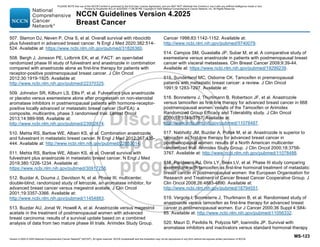
![Version 4.2025 © 2025 National Comprehensive Cancer Network©
(NCCN©
), All rights reserved. NCCN Guidelines® and this illustration may not be reproduced in any form without the express written permission of NCCN.
NCCN Guidelines Version 4.2025
Breast Cancer
MS-124
in advanced breast cancer: meta-analysis. J Natl Cancer Inst
2006;98:1285-1291. Available at:
https://www.ncbi.nlm.nih.gov/pubmed/16985247.
521. Turner NC, Ro J, Andre F, et al. Palbociclib in hormone-receptor-
positive advanced breast cancer. N Engl J Med 2015;373:209-219.
Available at: https://pubmed.ncbi.nlm.nih.gov/26030518/.
522. Cristofanilli M, Turner NC, Bondarenko I, et al. Fulvestrant plus
palbociclib versus fulvestrant plus placebo for treatment of hormone-
receptor-positive, HER2-negative metastatic breast cancer that
progressed on previous endocrine therapy (PALOMA-3): final analysis of
the multicentre, double-blind, phase 3 randomised controlled trial. Lancet
Oncol 2016;17:425-439. Available at:
https://www.ncbi.nlm.nih.gov/pubmed/26947331
https://www.thelancet.com/journals/lanonc/article/PIIS1470-
2045(15)00613-0/fulltext.
523. Sledge GW, Jr., Toi M, Neven P, et al. MONARCH 2: Abemaciclib
in combination with fulvestrant in women with HR+/HER2- advanced
breast cancer who had progressed while receiving endocrine therapy. J
Clin Oncol 2017;35:2875-2884. Available at:
https://www.ncbi.nlm.nih.gov/pubmed/28580882.
524. Sledge GW, Jr., Toi M, Neven P, et al. The Effect of Abemaciclib
Plus Fulvestrant on Overall Survival in Hormone Receptor-Positive,
ERBB2-Negative Breast Cancer That Progressed on Endocrine Therapy-
MONARCH 2: A Randomized Clinical Trial. JAMA Oncol 2019. Available
at: https://www.ncbi.nlm.nih.gov/pubmed/31563959.
525. Howell A, Robertson JFR, Quaresma Albano J, et al. Fulvestrant,
formerly ICI 182,780, is as effective as anastrozole in postmenopausal
women with advanced breast cancer progressing after prior endocrine
treatment. J Clin Oncol 2002;20:3396-3403. Available at:
http://www.ncbi.nlm.nih.gov/pubmed/12177099.
526. Osborne CK, Pippen J, Jones SE, et al. Double-blind, randomized
trial comparing the efficacy and tolerability of fulvestrant versus
anastrozole in postmenopausal women with advanced breast cancer
progressing on prior endocrine therapy: results of a North American trial.
J Clin Oncol 2002;20:3386-3395. Available at:
http://www.ncbi.nlm.nih.gov/pubmed/12177098
527. Ingle JN, Suman VJ, Rowland KM, et al. Fulvestrant in women with
advanced breast cancer after progression on prior aromatase inhibitor
therapy: North Central Cancer Treatment Group Trial N0032. J Clin
Oncol 2006;24:1052-1056. Available at:
http://www.ncbi.nlm.nih.gov/pubmed/16505423.
528. Chia S, Gradishar W, Mauriac L, et al. Double-blind, randomized
placebo controlled trial of fulvestrant compared with exemestane after
prior nonsteroidal aromatase inhibitor therapy in postmenopausal women
with hormone receptor-positive, advanced breast cancer: results from
EFECT. J Clin Oncol 2008;26:1664-1670. Available at:
http://www.ncbi.nlm.nih.gov/pubmed/18316794.
529. Andre F, Ciruelos E, Rubovszky G, et al. Alpelisib for PIK3CA-
mutated, hormone receptor-positive advanced breast cancer. N Engl J
Med 2019;380:1929-1940. Available at:
https://www.ncbi.nlm.nih.gov/pubmed/31091374.
530. Bachelot T, Bourgier c, Cropet C, et al. TAMRAD: A GINECO
randomized phase II trial of everolimus in combination with tamoxifen
versus tamoxifen alone in patients (pts) with hormone-receptor positive,
HER2 negative metastatic breast Cancer (MBC) with prior exposure to
aromatase inhibitors (AI) [abstract]. Cancer Res
2010;70(Suppl):Abstract: S1-6 Available at:
http://cancerres.aacrjournals.org/cgi/content/meeting_abstract/70/24_Me
etingAbstracts/S1-6.
531. Chow L, Sun Y, Jassem J, et al. Phase 3 study of temsirolimus with
letrozole or letrozole alone in postmenopausal women with locally
advanced or metastatic breast cancer. Breast Cancer Res Treat.
2006;100(Suppl 1):6091. Available at:
532. Yardley DA, Noguchi S, Pritchard KI, et al. Everolimus plus
exemestane in postmenopausal patients with HR(+) breast cancer:
PLEASE NOTE that use of this NCCN Content is governed by the End-User License Agreement, and you MAY NOT distribute this Content or use it with any artificial intelligence model or tool.
Printed by Kirushanth Kiru on 9/22/2025 11:08:38 PM. Copyright © 2025 National Comprehensive Cancer Network, Inc. All Rights Reserved.](https://image.slidesharecdn.com/breast-2-251014042453-90a4bd3f/85/Breast-CA-Management-Principle-for-PG-UG-248-320.jpg)
![Version 4.2025 © 2025 National Comprehensive Cancer Network©
(NCCN©
), All rights reserved. NCCN Guidelines® and this illustration may not be reproduced in any form without the express written permission of NCCN.
NCCN Guidelines Version 4.2025
Breast Cancer
MS-125
BOLERO-2 final progression-free survival analysis. Adv Ther
2013;30:870-884. Available at:
http://www.ncbi.nlm.nih.gov/pubmed/24158787.
533. Baselga J, Campone M, Piccart M, et al. Everolimus in
postmenopausal hormone-receptor-positive advanced breast cancer. N
Engl J Med 2012;366:520-529. Available at:
http://www.ncbi.nlm.nih.gov/pubmed/22149876.
534. Pritchard KI, Burris HA, 3rd, Ito Y, et al. Safety and efficacy of
everolimus with exemestane vs. exemestane alone in elderly patients
with HER2-negative, hormone receptor-positive breast cancer in
BOLERO-2. Clin Breast Cancer 2013;13:421-432 e428. Available at:
http://www.ncbi.nlm.nih.gov/pubmed/24267730.
535. Dixon JM, Renshaw L, Langridge C, et al. Anastrozole and
letrozole: an investigation and comparison of quality of life and
tolerability. Breast Cancer Res Treat 2011;125:741-749. Available at:
https://www.ncbi.nlm.nih.gov/pubmed/20821047.
536. Rose C, Vtoraya O, Pluzanska A, et al. An open randomised trial of
second-line endocrine therapy in advanced breast cancer. comparison of
the aromatase inhibitors letrozole and anastrozole. Eur J Cancer
2003;39:2318-2327. Available at:
https://www.ncbi.nlm.nih.gov/pubmed/14556923.
537. Thurlimann B, Robertson JF, Nabholtz JM, et al. Efficacy of
tamoxifen following anastrozole ('Arimidex') compared with anastrozole
following tamoxifen as first-line treatment for advanced breast cancer in
postmenopausal women. Eur J Cancer 2003;39:2310-2317. Available at:
https://www.ncbi.nlm.nih.gov/pubmed/14556922.
538. Abrams J, Aisner J, Cirrincione C, et al. Dose-response trial of
megestrol acetate in advanced breast cancer: cancer and leukemia
group B phase III study 8741. J Clin Oncol 1999;17:64-73. Available at:
https://www.ncbi.nlm.nih.gov/pubmed/10458219.
539. Willemse PH, van der Ploeg E, Sleijfer DT, et al. A randomized
comparison of megestrol acetate (MA) and medroxyprogesterone
acetate (MPA) in patients with advanced breast cancer. Eur J Cancer
1990;26:337-343. Available at:
https://www.ncbi.nlm.nih.gov/pubmed/2141491.
540. Buzdar A, Jonat W, Howell A, et al. Anastrozole, a potent and
selective aromatase inhibitor, versus megestrol acetate in
postmenopausal women with advanced breast cancer: results of
overview analysis of two phase III trials. Arimidex Study Group. J Clin
Oncol 1996;14:2000-2011. Available at:
http://www.ncbi.nlm.nih.gov/pubmed/8683230.
541. Ellis MJ, Gao F, Dehdashti F, et al. Lower-dose vs high-dose oral
estradiol therapy of hormone receptor-positive, aromatase inhibitor-
resistant advanced breast cancer: a phase 2 randomized study. JAMA
2009;302:774-780. Available at:
https://www.ncbi.nlm.nih.gov/pubmed/19690310.
542. Dickler MN, Tolaney SM, Rugo HS, et al. MONARCH 1, a phase II
study of abemaciclib, a CDK4 and CDK6 inhibitor, as a single agent, in
patients with refractory HR(+)/HER2(-) metastatic breast cancer. Clin
Cancer Res 2017;23:5218-5224. Available at:
https://www.ncbi.nlm.nih.gov/pubmed/28533223.
543. Baselga J, Cortes J, Kim SB, et al. Pertuzumab plus trastuzumab
plus docetaxel for metastatic breast cancer. N Engl J Med 2012;366:109-
119. Available at: http://www.ncbi.nlm.nih.gov/pubmed/22149875.
544. Swain S, Kim S-B, Cortes J, et al. Confirmatory overall survival
(OS) analysis of CLEOPATRA: a randomized, double-blind, placebo-
controlled Phase III study with pertuzumab (P), trastuzumab (T), and
docetaxel (D) in patients (pts) with HER2-positive first-line (1L)
metastatic breast cancer (MBC). Cancer Research 2012;72:P5-18-26.
Available at:
http://cancerres.aacrjournals.org/cgi/content/meeting_abstract/72/24_Me
etingAbstracts/P5-18-26.
545. Ewer M, Baselga J, Clark E, et al. Cardiac tolerability of pertuzumab
plus trastuzumab plus docetaxel in patients with HER2-positive
metastatic breast cancer in the CLEOPATRA study [abstract]. J Clin
PLEASE NOTE that use of this NCCN Content is governed by the End-User License Agreement, and you MAY NOT distribute this Content or use it with any artificial intelligence model or tool.
Printed by Kirushanth Kiru on 9/22/2025 11:08:38 PM. Copyright © 2025 National Comprehensive Cancer Network, Inc. All Rights Reserved.](https://image.slidesharecdn.com/breast-2-251014042453-90a4bd3f/85/Breast-CA-Management-Principle-for-PG-UG-249-320.jpg)
![Version 4.2025 © 2025 National Comprehensive Cancer Network©
(NCCN©
), All rights reserved. NCCN Guidelines® and this illustration may not be reproduced in any form without the express written permission of NCCN.
NCCN Guidelines Version 4.2025
Breast Cancer
MS-126
Oncol 2012;30(Suppl):Abstract 533. Available at:
http://www.asco.org/ASCOv2/Meetings/Abstracts?vmview=abst_detail_
viewconfID=114abstractID=95049.
546. Cortés J, Baselga J, Im Y, et al. Quality of life assessment in
CLEOPATRA, a phase III study combining pertuzumab with trastuzumab
and docetaxel in metastatic breast cancer [abstract]. J Clin Oncol 2012
30(Suppl) Abstract 598 Available at:
http://www.asco.org/ASCOv2/Meetings/Abstracts?vmview=abst_detail_
viewconfID=114abstractID=95084.
547. Bachelot T, Ciruelos E, Schneeweiss A, et al. Preliminary safety
and efficacy of first-line pertuzumab combined with trastuzumab and
taxane therapy for HER2-positive locally recurrent or metastatic breast
cancer (PERUSE). Ann Oncol 2019;30:766-773. Available at:
https://www.ncbi.nlm.nih.gov/pubmed/30796821.
548. Datko F, D'Andrea G, Dickler M, et al. Phase II study of
pertuzumab, trastuzumab, and weekly paclitaxel in patients with
metastatic HER2-overexpressing metastatic breast cancer [abstract].
Cancer Research 2012;72:Abstract P5-18-20. Available at:
http://cancerres.aacrjournals.org/cgi/content/meeting_abstract/72/24_Me
etingAbstracts/P5-18-20.
549. Paclitaxel, trastuzumab, and pertuzumab in the treatment of
metastatic HER2-positive breast cancer (Clinical Trial ID:
NCT01276041). Available at: http://clinicaltrials.gov/show/NCT01276041.
.
550. Perez E, Lopez-Vega J, Mastro L, et al. A combination of
pertuzumab, trastuzumab, and vinorelbine for first-line treatment of
patients with HER2-positive metastatic breast cancer: An open-label,
two-cohort, phase II study (VELVET) [abstract]. J Clin Oncol
2012;30(Suppl):Asbtract TPS653. Available at:
http://www.asco.org/ASCOv2/Meetings/Abstracts?vmview=abst_detail_
viewconfID=114abstractID=93917.
551. Ellis PA, Barrios CH, Eiermann W, et al. Phase III, randomized
study of trastuzumab emtansine (T-DM1) {+/-} pertuzumab (P) vs
trastuzumab + taxane (HT) for first-line treatment of HER2-positive MBC:
Primary results from the MARIANNE study. ASCO Meeting Abstracts
2015;33:507. Available at:
http://meeting.ascopubs.org/cgi/content/abstract/33/15_suppl/507.
552. Slamon DJ, Leyland-Jones B, Shak S, et al. Use of chemotherapy
plus a monoclonal antibody against HER2 for metastatic breast cancer
that overexpresses HER2. N Engl J Med 2001;344:783-792. Available at:
http://www.ncbi.nlm.nih.gov/pubmed/11248153.
553. Burstein HJ, Keshaviah A, Baron AD, et al. Trastuzumab plus
vinorelbine or taxane chemotherapy for HER2-overexpressing metastatic
breast cancer: the trastuzumab and vinorelbine or taxane study. Cancer
2007;110:965-972. Available at:
http://www.ncbi.nlm.nih.gov/pubmed/17614302.
554. Robert N, Leyland-Jones B, Asmar L, et al. Randomized phase III
study of trastuzumab, paclitaxel, and carboplatin compared with
trastuzumab and paclitaxel in women with HER-2-overexpressing
metastatic breast cancer. J Clin Oncol 2006;24:2786-2792. Available at:
http://www.ncbi.nlm.nih.gov/pubmed/16782917.
555. Seidman A, Berry DA, Cirrincione C, et al. Randomized phase III
trial of weekly compared with every-3-weeks paclitaxel for metastatic
breast cancer, with trastuzumab for all HER-2 overexpressors and
random assignment to trastuzumab or not in HER-2 nonoverexpressors:
final results of Cancer and Leukemia Group B protocol 9840. J Clin
Oncol 2008;26:1642-1649. Available at:
http://www.ncbi.nlm.nih.gov/pubmed/18375893.
556. Schaller G, Bangemann N, Weber J, et al. Efficacy and safety of
trastuzumab plus capecitabine in a German multicentre phase II study of
pre-treated metastatic breast cancer [abstract]. J Clin Oncol
2005;23(Suppl 16):Abstract 717. Available at:
http://meeting.ascopubs.org/cgi/content/abstract/23/16_suppl/717.
557. Yamamoto D, Iwase S, Kitamura K, et al. A phase II study of
trastuzumab and capecitabine for patients with HER2-overexpressing
metastatic breast cancer: Japan Breast Cancer Research Network
PLEASE NOTE that use of this NCCN Content is governed by the End-User License Agreement, and you MAY NOT distribute this Content or use it with any artificial intelligence model or tool.
Printed by Kirushanth Kiru on 9/22/2025 11:08:38 PM. Copyright © 2025 National Comprehensive Cancer Network, Inc. All Rights Reserved.](https://image.slidesharecdn.com/breast-2-251014042453-90a4bd3f/85/Breast-CA-Management-Principle-for-PG-UG-250-320.jpg)
![Version 4.2025 © 2025 National Comprehensive Cancer Network©
(NCCN©
), All rights reserved. NCCN Guidelines® and this illustration may not be reproduced in any form without the express written permission of NCCN.
NCCN Guidelines Version 4.2025
Breast Cancer
MS-127
(JBCRN) 00 Trial. Cancer Chemother Pharmacol 2008;61:509-514.
Available at: http://www.ncbi.nlm.nih.gov/pubmed/17516068.
558. Seidman A, Hudis C, Pierri MK, et al. Cardiac dysfunction in the
trastuzumab clinical trials experience. J Clin Oncol 2002;20:1215-1221.
Available at: http://www.ncbi.nlm.nih.gov/pubmed/11870163.
559. Bartsch R, Wenzel C, Altorjai G, et al. Capecitabine and
trastuzumab in heavily pretreated metastatic breast cancer. J Clin Oncol
2007;25:3853-3858. Available at:
http://www.ncbi.nlm.nih.gov/pubmed/17679724.
560. von Minckwitz G, du Bois A, Schmidt M, et al. Trastuzumab beyond
progression in human epidermal growth factor receptor 2-positive
advanced breast cancer: a german breast group 26/breast international
group 03-05 study. J Clin Oncol 2009;27:1999-2006. Available at:
http://www.ncbi.nlm.nih.gov/pubmed/19289619.
561. Von Minckwitz G, Zielinski C, Maarteense E, et al. Capecitabine vs.
capecitabine + trastuzumab in patients with HER2-positive metastatic
breast cancer progressing during trastuzumab treatment: The TBP phase
III study (GBG 26/BIG 3-05) [abstract]. J Clin Oncol
2008;26(Suppl):Abstract 1025. Available at:
http://meeting.ascopubs.org/cgi/content/abstract/26/15_suppl/1025.
562. Baselga J, Gelmon KA, Verma S, et al. Phase II trial of pertuzumab
and trastuzumab in patients with human epidermal growth factor receptor
2-positive metastatic breast cancer that progressed during prior
trastuzumab therapy. J Clin Oncol 2010;28:1138-1144. Available at:
http://www.ncbi.nlm.nih.gov/pubmed/20124182.
563. Cortes J, Fumoleau P, Bianchi GV, et al. Pertuzumab monotherapy
after trastuzumab-based treatment and subsequent reintroduction of
trastuzumab: activity and tolerability in patients with advanced human
epidermal growth factor receptor 2-positive breast cancer. J Clin Oncol
2012;30:1594-1600. Available at:
http://www.ncbi.nlm.nih.gov/pubmed/22393084.
564. Verma S, Miles D, Gianni L, et al. Trastuzumab emtansine for
HER2-positive advanced breast cancer. N Engl J Med 2012;367:1783-
1791. Available at: http://www.ncbi.nlm.nih.gov/pubmed/23020162.
565. Modi S, Saura C, Yamashita T, et al. Trastuzumab deruxtecan in
previously treated HER2-positive breast cancer. N Engl J Med 2019.
Available at: https://www.ncbi.nlm.nih.gov/pubmed/31825192.
566. Geyer C, Forster J, Lindquist D, et al. Lapatinib plus capecitabine
for HER2-positive advanced breast cancer. N Engl J Med
2006;355:2733-2743. Available at:
http://www.ncbi.nlm.nih.gov/pubmed/17192538.
567. Cameron D, Casey M, Oliva C, et al. Lapatinib plus capecitabine in
women with HER-2-positive advanced breast cancer: final survival
analysis of a phase III randomized trial. Oncologist 2010;15:924-934.
Available at: http://www.ncbi.nlm.nih.gov/pubmed/20736298.
568. Blackwell KL, Burstein HJ, Storniolo AM, et al. Randomized study of
lapatinib alone or in combination with trastuzumab in women with ErbB2-
positive, trastuzumab-refractory metastatic breast cancer. J Clin Oncol
2010;28:1124-1130. Available at:
http://www.ncbi.nlm.nih.gov/pubmed/20124187.
569. Blackwell KL, Burstein HJ, Storniolo AM, et al. Overall survival
benefit with lapatinib in combination with trastuzumab for patients with
human epidermal growth factor receptor 2-positive metastatic breast
cancer: final results from the EGF104900 Study. J Clin Oncol
2012;30:2585-2592. Available at:
http://www.ncbi.nlm.nih.gov/pubmed/22689807.
570. Freedman RA, Gelman RS, Anders CK, et al. TBCRC 022: A phase
II trial of neratinib and capecitabine for patients with human epidermal
growth factor receptor 2-positive breast cancer and brain metastases. J
Clin Oncol 2019;37:1081-1089. Available at:
https://www.ncbi.nlm.nih.gov/pubmed/30860945.
571. Saura C, Oliveira M, Feng Y-H, et al. Neratinib + capecitabine
versus lapatinib + capecitabine in patients with HER2+ metastatic breast
PLEASE NOTE that use of this NCCN Content is governed by the End-User License Agreement, and you MAY NOT distribute this Content or use it with any artificial intelligence model or tool.
Printed by Kirushanth Kiru on 9/22/2025 11:08:38 PM. Copyright © 2025 National Comprehensive Cancer Network, Inc. All Rights Reserved.](https://image.slidesharecdn.com/breast-2-251014042453-90a4bd3f/85/Breast-CA-Management-Principle-for-PG-UG-251-320.jpg)
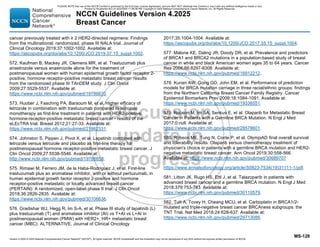
![Version 4.2025 © 2025 National Comprehensive Cancer Network©
(NCCN©
), All rights reserved. NCCN Guidelines® and this illustration may not be reproduced in any form without the express written permission of NCCN.
NCCN Guidelines Version 4.2025
Breast Cancer
MS-129
583. Albain KS, Nag S, Calderillo-Ruiz G, et al. Global phase III study of
gemcitabine plus paclitaxel (GT) vs. paclitaxel (T) as frontline therapy for
metastatic breast cancer (MBC): First report of overall survival [abstract].
J Clin Oncol 2004;22:Abstract 510 Available at:
http://meeting.ascopubs.org/cgi/content/abstract/22/14_suppl/510.
584. Carrick S, Parker S, Wilcken N, et al. Single agent versus
combination chemotherapy for metastatic breast cancer. Cochrane
Database Syst Rev 2005:CD003372. Available at:
http://www.ncbi.nlm.nih.gov/pubmed/15846660.
585. O'Shaughnessy J, Miles D, Vukelja S, et al. Superior survival with
capecitabine plus docetaxel combination therapy in anthracycline-
pretreated patients with advanced breast cancer: phase III trial results. J
Clin Oncol 2002;20:2812-2823. Available at:
https://www.ncbi.nlm.nih.gov/pubmed/12065558.
586. Sledge GW, Neuberg D, Bernardo P, et al. Phase III trial of
doxorubicin, paclitaxel, and the combination of doxorubicin and paclitaxel
as front-line chemotherapy for metastatic breast cancer: an intergroup
trial (E1193). J Clin Oncol 2003;21:588-592. Available at:
http://www.ncbi.nlm.nih.gov/pubmed/12586793.
587. Gennari A, Stockler M, Puntoni M, et al. Duration of chemotherapy
for metastatic breast cancer: a systematic review and meta-analysis of
randomized clinical trials. J Clin Oncol 2011;29:2144-2149. Available at:
http://www.ncbi.nlm.nih.gov/pubmed/21464403.
588. Giarratano T, Frezzini S, Zanocco M, et al. Use of scalp cooling
device to prevent alopecia for early breast cancer patients receiving
chemotherapy: A prospective study. Breast J 2019. Available at:
https://www.ncbi.nlm.nih.gov/pubmed/31837103.
589. Kruse M, Abraham J. Management of chemotherapy-induced
alopecia with scalp cooling. J Oncol Pract 2018;14:149-154. Available at:
https://www.ncbi.nlm.nih.gov/pubmed/29529389.
590. Nangia J, Wang T, Osborne C, et al. Effect of a scalp cooling device
on alopecia in women undergoing chemotherapy for breast cancer: The
SCALP randomized clinical trial. JAMA 2017;317:596-605. Available at:
https://www.ncbi.nlm.nih.gov/pubmed/28196254.
591. Rugo HS, Klein P, Melin SA, et al. Association between use of a
scalp cooling device and alopecia after chemotherapy for breast cancer.
JAMA 2017;317:606-614. Available at:
592. Rugo HS, Melin SA, Voigt J. Scalp cooling with
adjuvant/neoadjuvant chemotherapy for breast cancer and the risk of
scalp metastases: systematic review and meta-analysis. Breast Cancer
Res Treat 2017;163:199-205. Available at:
https://www.ncbi.nlm.nih.gov/pubmed/28275922.
593. Stockler MR, Wilcken NJC, Coates AS. Chemotherapy for
Advanced Breast Cancer – How Long Should it Continue? Breast Cancer
Research and Treatment 2003;81:49-52. Available at:
https://doi.org/10.1023/A:1026316806601.
594. Claessens AKM, Bos M, Lopez-Yurda M, et al. Intermittent versus
continuous first-line treatment for HER2-negative metastatic breast
cancer: the Stop Go study of the Dutch Breast Cancer Research
Group (BOOG). Breast Cancer Res Treat 2018;172:413-423. Available
at: https://www.ncbi.nlm.nih.gov/pubmed/30121808.
595. Perez EA, Vogel CL, Irwin DH, et al. Multicenter phase II trial of
weekly paclitaxel in women with metastatic breast cancer. J Clin Oncol
2001;19:4216-4223. Available at:
http://www.ncbi.nlm.nih.gov/pubmed/11709565.
596. Seidman AD, Berry D, Cirrincione C, et al. Randomized phase III
trial of weekly compared with every-3-weeks paclitaxel for metastatic
breast cancer, with trastuzumab for all HER-2 overexpressors and
random assignment to trastuzumab or not in HER-2 nonoverexpressors:
final results of Cancer and Leukemia Group B protocol 9840. J Clin
Oncol 2008;26:1642-1649. Available at:
https://www.ncbi.nlm.nih.gov/pubmed/18375893.
597. Mauri D, Kamposioras K, Tsali L, et al. Overall survival benefit for
weekly vs. three-weekly taxanes regimens in advanced breast cancer: A
PLEASE NOTE that use of this NCCN Content is governed by the End-User License Agreement, and you MAY NOT distribute this Content or use it with any artificial intelligence model or tool.
Printed by Kirushanth Kiru on 9/22/2025 11:08:38 PM. Copyright © 2025 National Comprehensive Cancer Network, Inc. All Rights Reserved.](https://image.slidesharecdn.com/breast-2-251014042453-90a4bd3f/85/Breast-CA-Management-Principle-for-PG-UG-253-320.jpg)
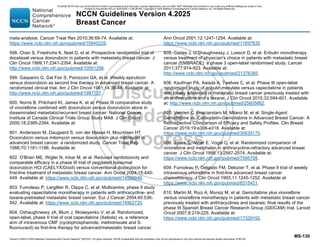
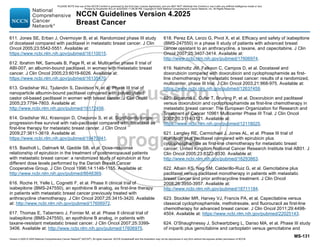
![Version 4.2025 © 2025 National Comprehensive Cancer Network©
(NCCN©
), All rights reserved. NCCN Guidelines® and this illustration may not be reproduced in any form without the express written permission of NCCN.
NCCN Guidelines Version 4.2025
Breast Cancer
MS-132
carboplatin in patients with metastatic triple-negative breast cancer. J
Clin Oncol 2014;32:3840-3847. Available at:
http://www.ncbi.nlm.nih.gov/pubmed/25349301.
625. Yardley DA, Brufsky A, Coleman RE, et al. Phase II/III weekly nab-
paclitaxel plus gemcitabine or carboplatin versus gemcitabine/carboplatin
as first-line treatment of patients with metastatic triple-negative breast
cancer (the tnAcity study): study protocol for a randomized controlled
trial. Trials 2015;16:575. Available at:
https://www.ncbi.nlm.nih.gov/pubmed/26673577.
626. Nelli F, Moscetti L, Natoli G, et al. Gemcitabine and carboplatin for
pretreated metastatic breast cancer: the predictive value of
immunohistochemically defined subtypes. Int J Clin Oncol 2013;18:343-
349. Available at: https://www.ncbi.nlm.nih.gov/pubmed/22350024.
627. Yardley DA, Coleman R, Conte P, et al. nab-Paclitaxel plus
carboplatin or gemcitabine versus gemcitabine plus carboplatin as first-
line treatment of patients with triple-negative metastatic breast cancer:
results from the tnAcity trial. Ann Oncol 2018;29:1763-1770. Available at:
https://www.ncbi.nlm.nih.gov/pubmed/29878040.
628. Perez EA, Hillman DW, Stella PJ, et al. A phase II study of
paclitaxel plus carboplatin as first-line chemotherapy for women with
metastatic breast carcinoma. Cancer 2000;88:124-131. Available at:
https://www.ncbi.nlm.nih.gov/pubmed/10618614.
629. Fountzilas G, Kalofonos HP, Dafni U, et al. Paclitaxel and epirubicin
versus paclitaxel and carboplatin as first-line chemotherapy in patients
with advanced breast cancer: a phase III study conducted by the Hellenic
Cooperative Oncology Group. Ann Oncol 2004;15:1517-1526. Available
at: https://www.ncbi.nlm.nih.gov/pubmed/15367413.
630. Miller K, Wang M, Gralow J, et al. Paclitaxel plus bevacizumab
versus paclitaxel alone for metastatic breast cancer. N Engl J Med
2007;357:2666-2676. Available at:
http://www.ncbi.nlm.nih.gov/pubmed/18160686.
631. Robert NJ, Dieras V, Glaspy J, et al. RIBBON-1: Randomized,
double-blind, placebo-controlled, phase III trial of chemotherapy with or
without bevacizumab (B) for first-line treatment of HER2-negative locally
recurrent or metastatic breast cancer (MBC) [abstract]. J Clin Oncol
2009;27(Suppl):Abstract 1005. Available at:
http://meeting.ascopubs.org/cgi/content/abstract/27/15S/1005.
632. Robert NJ, Dieras V, Glaspy J, et al. RIBBON-1: randomized,
double-blind, placebo-controlled, phase III trial of chemotherapy with or
without bevacizumab for first-line treatment of human epidermal growth
factor receptor 2-negative, locally recurrent or metastatic breast cancer.
J Clin Oncol 2011;29:1252-1260. Available at:
http://www.ncbi.nlm.nih.gov/pubmed/21383283.
633. Mavroudis D, Papakotoulas P, Ardavanis A, et al. Randomized
phase III trial comparing docetaxel plus epirubicin versus docetaxel plus
capecitabine as first-line treatment in women with advanced breast
cancer. Ann Oncol 2010;21:48-54. Available at:
http://www.ncbi.nlm.nih.gov/pubmed/19906761.
634. Stransky N, Cerami E, Schalm S, et al. The landscape of kinase
fusions in cancer. Nat Commun 2014;5:4846. Available at:
635. Drilon A, Laetsch TW, Kummar S, et al. Efficacy of larotrectinib in
TRK fusion-positive cancers in adults and children. N Engl J Med
2018;378:731-739. Available at:
https://www.ncbi.nlm.nih.gov/pubmed/29466156.
636. Meric-Bernstam F, Shukla N, Peled N, et al. Abstract P6-20-02:
Activity of larotrectinib, a highly selective inhibitor of tropomyosin
receptor kinase, in TRK fusion breast cancers. Cancer Research
2019;79:P6-20-02. Available at:
637. Drilon A. TRK inhibitors in TRK fusion-positive cancers. Ann Oncol
2019;30:viii23-viii30. Available at:
https://www.ncbi.nlm.nih.gov/pubmed/31738426.
638. Demetri GD, Paz-Ares L, Farago AF, et al. Efficacy and safety of
entrectinib in patients with NTRK fusion-positive tumours: Pooled
PLEASE NOTE that use of this NCCN Content is governed by the End-User License Agreement, and you MAY NOT distribute this Content or use it with any artificial intelligence model or tool.
Printed by Kirushanth Kiru on 9/22/2025 11:08:38 PM. Copyright © 2025 National Comprehensive Cancer Network, Inc. All Rights Reserved.](https://image.slidesharecdn.com/breast-2-251014042453-90a4bd3f/85/Breast-CA-Management-Principle-for-PG-UG-256-320.jpg)
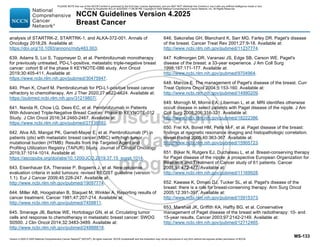
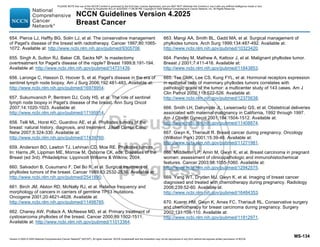
![Version 4.2025 © 2025 National Comprehensive Cancer Network©
(NCCN©
), All rights reserved. NCCN Guidelines® and this illustration may not be reproduced in any form without the express written permission of NCCN.
NCCN Guidelines Version 4.2025
Breast Cancer
MS-135
671. Annane K, Bellocq JP, Brettes JP, Mathelin C. Infiltrative breast
cancer during pregnancy and conservative surgery. Fetal Diagn Ther
2005;20:442-444. Available at:
http://www.ncbi.nlm.nih.gov/pubmed/16113569.
672. Khera SY, Kiluk JV, Hasson DM, et al. Pregnancy-associated
breast cancer patients can safely undergo lymphatic mapping. Breast J
2008;14:250-254. Available at:
http://www.ncbi.nlm.nih.gov/pubmed/18476883.
673. Mondi MM, Cuenca RE, Ollila DW, et al. Sentinel lymph node
biopsy during pregnancy: initial clinical experience. Ann Surg Oncol
2007;14:218-221. Available at:
http://www.ncbi.nlm.nih.gov/pubmed/17066225.
674. Filippakis GM, Zografos G. Contraindications of sentinel lymph
node biopsy: are there any really? World J Surg Oncol 2007;5:10.
Available at: http://www.ncbi.nlm.nih.gov/pubmed/17261174.
675. Gentilini O, Cremonesi M, Trifiro G, et al. Safety of sentinel node
biopsy in pregnant patients with breast cancer. Ann Oncol 2004;15:1348-
1351. Available at: http://www.ncbi.nlm.nih.gov/pubmed/15319240.
676. Keleher A, Wendt R, Delpassand E, et al. The safety of lymphatic
mapping in pregnant breast cancer patients using Tc-99m sulfur colloid.
Breast J 2004;10:492-495. Available at:
http://www.ncbi.nlm.nih.gov/pubmed/15569204.
677. Pandit-Taskar N, Dauer LT, Montgomery L, et al. Organ and fetal
absorbed dose estimates from 99mTc-sulfur colloid lymphoscintigraphy
and sentinel node localization in breast cancer patients. J Nucl Med
2006;47:1202-1208. Available at:
http://www.ncbi.nlm.nih.gov/pubmed/16818956.
678. Germann N, Goffinet F, Goldwasser F. Anthracyclines during
pregnancy: embryo-fetal outcome in 160 patients. Ann Oncol
2004;15:146-150. Available at:
http://www.ncbi.nlm.nih.gov/pubmed/14679135.
679. Johnson PH, Gwyn K, Gordon N, et al. The treatment of pregnant
women with breast cancer and the outcomes of the children exposed to
chemotherapy in utero [abstract]. J Clin Oncol 2005;23(Suppl):Abstract
540. Available at:
http://meeting.ascopubs.org/cgi/content/abstract/23/16_suppl/540.
680. Doll DC, Ringenberg QS, Yarbro JW. Antineoplastic agents and
pregnancy. Semin Oncol 1989;16:337-346. Available at:
http://www.ncbi.nlm.nih.gov/pubmed/2678485.
681. Ebert U, Loffler H, Kirch W. Cytotoxic therapy and pregnancy.
Pharmacol Ther 1997;74:207-220. Available at:
http://www.ncbi.nlm.nih.gov/pubmed/9336023.
682. Hahn KME, Johnson PH, Gordon N, et al. Treatment of pregnant
breast cancer patients and outcomes of children exposed to
chemotherapy in utero. Cancer 2006;107:1219-1226. Available at:
http://www.ncbi.nlm.nih.gov/pubmed/16894524.
683. Gainford MC, Clemons M. Breast cancer in pregnancy: are taxanes
safe? Clinical Oncol (R Coll Radiol) 2006;18:159. Available at:
http://www.ncbi.nlm.nih.gov/pubmed/16523825.
684. Garcia-Manero M, Royo MP, Espinos J, et al. Pregnancy associated
breast cancer. Eur J Surg Oncol 2009;35:215-218. Available at:
http://www.ncbi.nlm.nih.gov/pubmed/18550321.
685. Gonzalez-Angulo AM, Walters RS, Carpenter RJ, et al. Paclitaxel
chemotherapy in a pregnant patient with bilateral breast cancer. Clin
Breast Cancer 2004;5:317-319. Available at:
http://www.ncbi.nlm.nih.gov/pubmed/15507181.
686. Mir O, Berveiller P, Ropert S, et al. Emerging therapeutic options for
breast cancer chemotherapy during pregnancy. Ann Oncol 2008;19:607-
613. Available at: http://www.ncbi.nlm.nih.gov/pubmed/17921242.
687. Bader AA, Schlembach D, Tamussino KF, et al. Anhydramnios
associated with administration of trastuzumab and paclitaxel for
PLEASE NOTE that use of this NCCN Content is governed by the End-User License Agreement, and you MAY NOT distribute this Content or use it with any artificial intelligence model or tool.
Printed by Kirushanth Kiru on 9/22/2025 11:08:38 PM. Copyright © 2025 National Comprehensive Cancer Network, Inc. All Rights Reserved.](https://image.slidesharecdn.com/breast-2-251014042453-90a4bd3f/85/Breast-CA-Management-Principle-for-PG-UG-259-320.jpg)