BRE Automation
with
karate Framework
June2024
Problem statement
● Manual QA testing efforts on policy testing is quite high
● Frequent changes in policy DRLs
● Complex line calculation requires exhaustive testing
● Different versions of policies for the same product has to tested which
requires a lot of manual efforts
● Wider testing coverage and more combination of scenarios has to be
validated (eg:channels,employer segment,NTC)
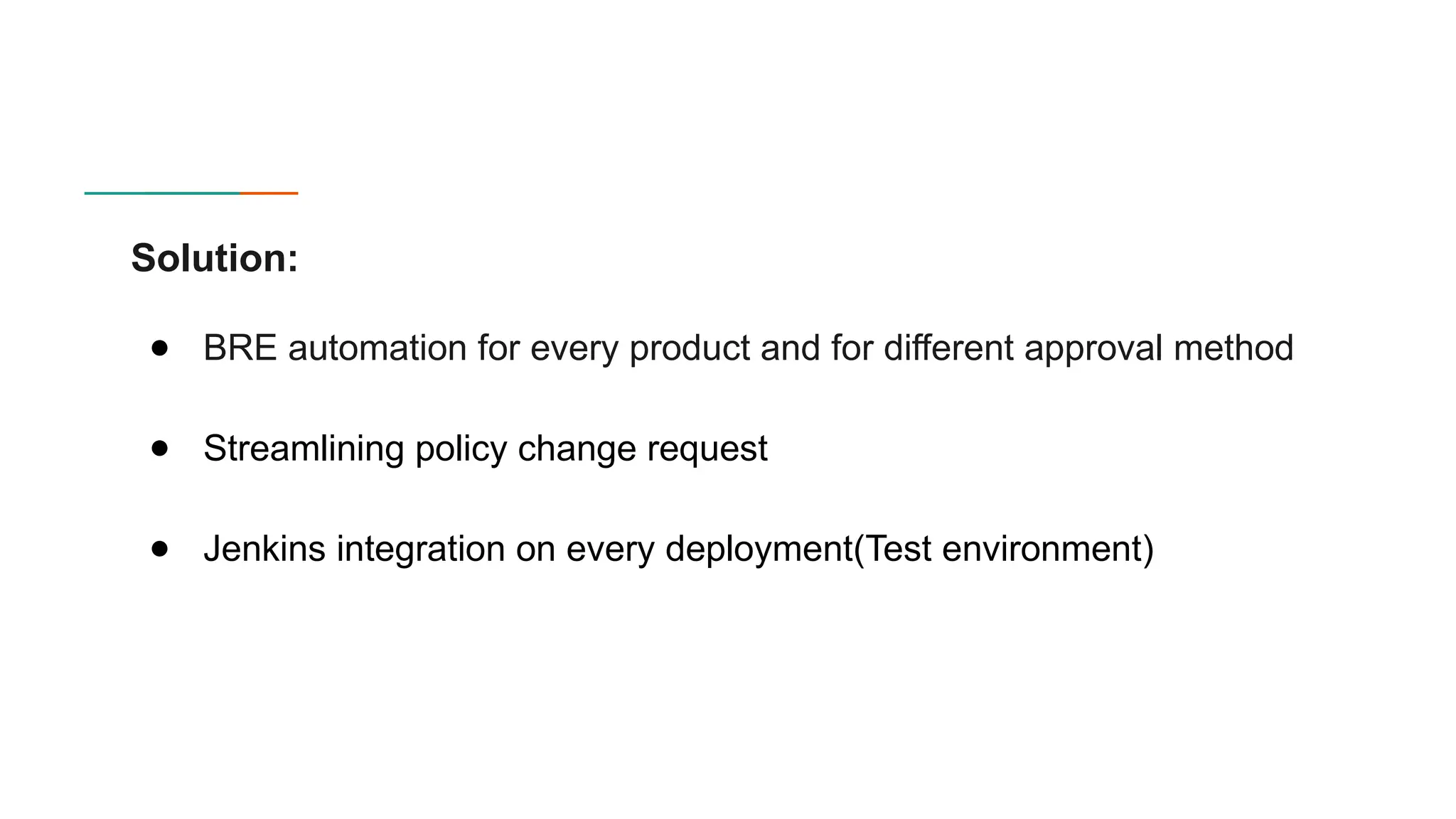
Solution:
● BRE automation for every product and for different approval method
● Streamlining policy change request
● Jenkins integration on every deployment(Test environment)
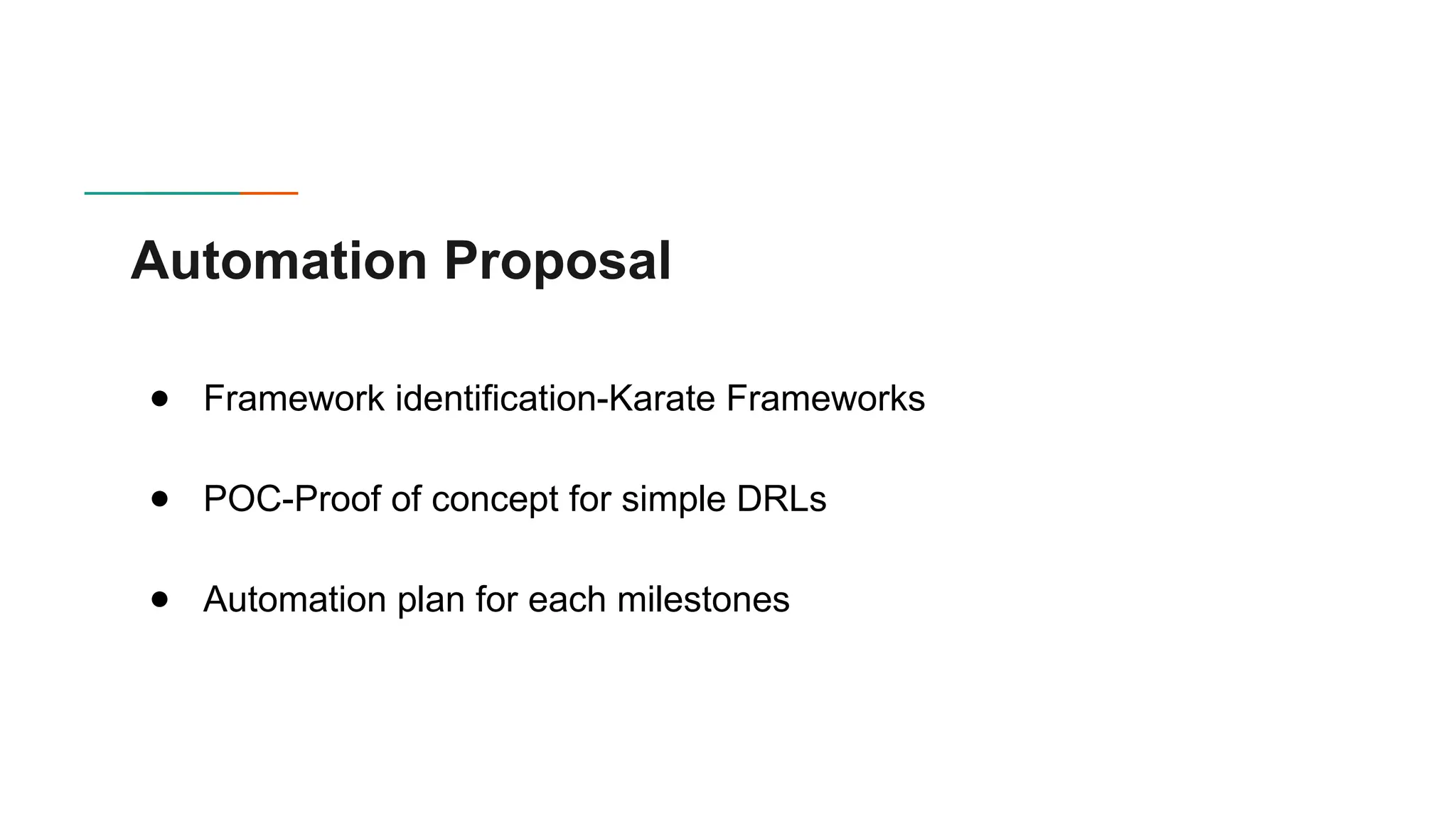
Automation Proposal
● Framework identification-Karate Frameworks
● POC-Proof of concept for simple DRLs
● Automation plan for each milestones
Why Karate ?
● Powerful assertion engine, supporting various types of assertions
for API response validation.
● Data-Driven Testing Made Easy
● Parallel Execution
● Very minimalistic coding
Why Karate ?Contd..
● Detailed Logs and Reporting
● Framework supports both XML and JSON formats ,which
makes the API testing more easier
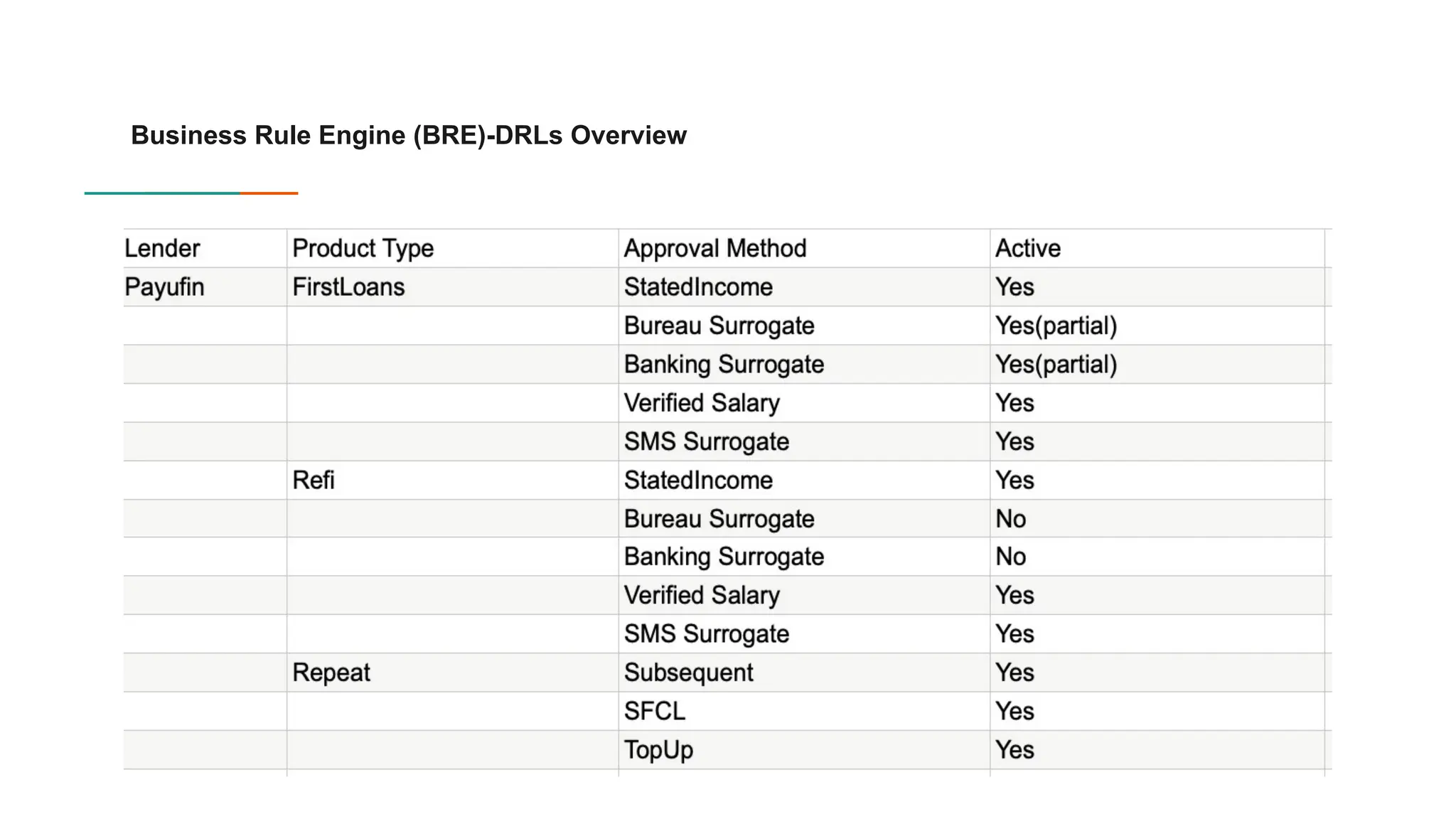
Business Rule Engine (BRE)-DRLs Overview
Business Rule Engine (BRE)-DRL Overview
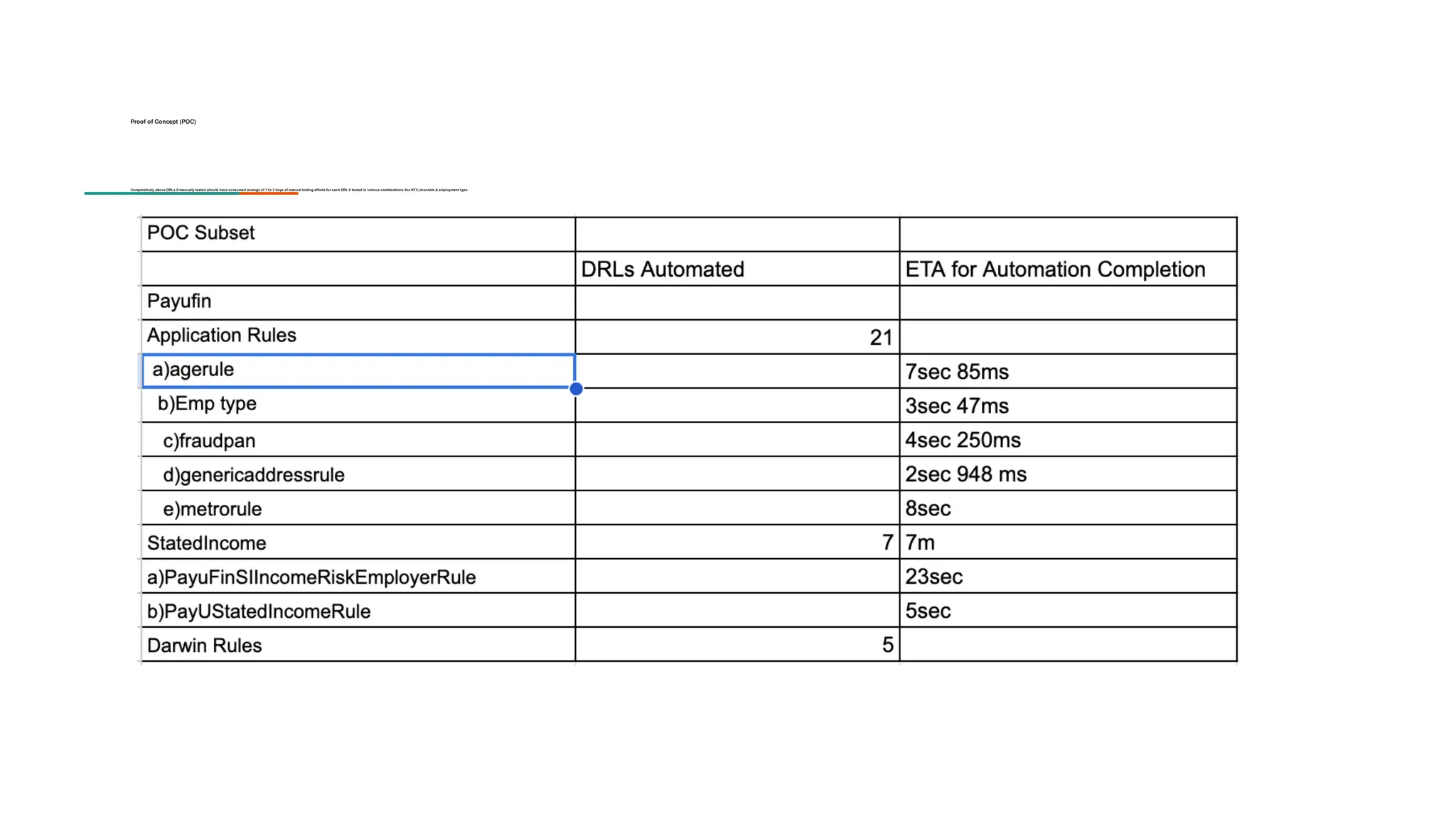
Proof of Concept (POC)
Comparatively above DRLs if manually tested should have consumed average of 1 to 2 days of manual testing efforts for each DRL if tested in various combinations like NTC,channels & employment type
QA Automation Target Plan
Reference link for detailed plan:
https://docs.google.com/spreadsheets/d/15745BUnaO4JwON0ql1m3zLctwGX3AIUKxWppcLJJl2Q/edit?gid=1
504816283#gid=1504816283
Process Optimisation:
● Contract sheet to be updated and shared with QA at start of
development
● 2. All the conditions should be available in the contract sheet
● 3. BRE features should be independently developed and should
have test automation as a preference for coverage
● 4. Line calculation sheet should be upfrontly available in the
contract sheet incase any modification is required

BRE Automation via karate Framework.pptx

  • 1.
  • 2.
    Problem statement ● ManualQA testing efforts on policy testing is quite high ● Frequent changes in policy DRLs ● Complex line calculation requires exhaustive testing ● Different versions of policies for the same product has to tested which requires a lot of manual efforts ● Wider testing coverage and more combination of scenarios has to be validated (eg:channels,employer segment,NTC)
  • 3.
    Solution: ● BRE automationfor every product and for different approval method ● Streamlining policy change request ● Jenkins integration on every deployment(Test environment)
  • 4.
    Automation Proposal ● Frameworkidentification-Karate Frameworks ● POC-Proof of concept for simple DRLs ● Automation plan for each milestones
  • 5.
    Why Karate ? ●Powerful assertion engine, supporting various types of assertions for API response validation. ● Data-Driven Testing Made Easy ● Parallel Execution ● Very minimalistic coding
  • 6.
    Why Karate ?Contd.. ●Detailed Logs and Reporting ● Framework supports both XML and JSON formats ,which makes the API testing more easier
  • 7.
    Business Rule Engine(BRE)-DRLs Overview
  • 8.
    Business Rule Engine(BRE)-DRL Overview
  • 9.
    Proof of Concept(POC) Comparatively above DRLs if manually tested should have consumed average of 1 to 2 days of manual testing efforts for each DRL if tested in various combinations like NTC,channels & employment type
  • 10.
    QA Automation TargetPlan Reference link for detailed plan: https://docs.google.com/spreadsheets/d/15745BUnaO4JwON0ql1m3zLctwGX3AIUKxWppcLJJl2Q/edit?gid=1 504816283#gid=1504816283
  • 11.
    Process Optimisation: ● Contractsheet to be updated and shared with QA at start of development ● 2. All the conditions should be available in the contract sheet ● 3. BRE features should be independently developed and should have test automation as a preference for coverage ● 4. Line calculation sheet should be upfrontly available in the contract sheet incase any modification is required