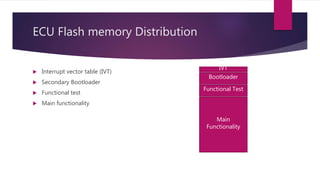
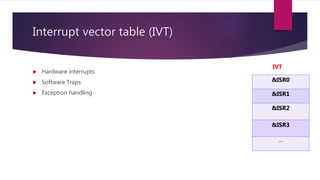
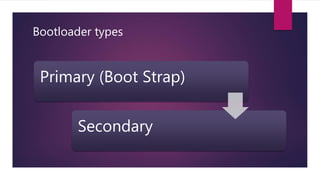
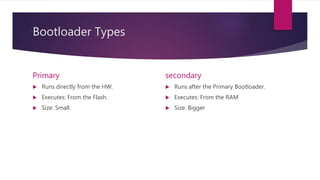
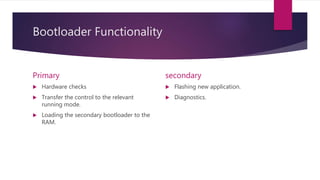


The document discusses bootloaders, including their types, functionality, and how they relate to ECU memory mapping. It explains that primary bootloaders are small and run directly from flash to perform hardware checks and load the secondary bootloader into RAM. Secondary bootloaders are larger and can perform tasks like flashing new applications and running diagnostics. The interrupt vector table maps hardware interrupts, software traps, and exception handling to interrupt service routines.


