Blue Eye
Technology
Department of Electronic Engineering
Technical seminar on
“Blue Eye Technology”
Shivam Rathaur
Roll no:- 1516630042
Date:- Mar 17,2018
 Introduction
 Need of Blue Eye Technology
 System Overview
 Data Acquisition Unit
 DAU Feature
 Central System Unit
 Technologies Used
 How can we give computer the Human Power?
 Methods of accomplishing affective computing
 Main Biometric Technique
 Emotion mouse
 Magic pointing
 Data Security
 Blue eyes enabled devices
 Suitor
 Application
 Conclusion
Contents:-
Introduction:-
 BLUE EYES is a technology, which aims at creating computational machines
that have perceptual and sensory abilities like those of human beings.
 It is modified model of touch screen technology.
 The basic idea behind this technology is to give computer human power.
 It provides technical means for monitoring and recording human-operator’s
physiological condition.
 BLUE in the term stands for Bluetooth, which enable reliable wireless
communication.
 EYE, because the eye movement enables us to obtain a lot of instresting
information.
Need of Blue Eye Technology:-
 To built a machine that can understand your
emotions
 A pc that can listen, talk orscream
 Verify your identity, feels your presence and
interact with you.
 Adding such perceptual abilities to computers
would enable computers and humans to work
together more as partners.
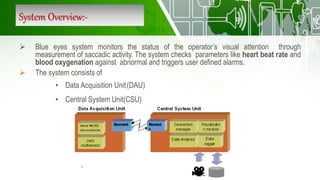
System Overview:-
 Blue eyes system monitors the status of the operator’s visual attention through
measurement of saccadic activity. The system checks parameters like heart beat rate and
blood oxygenation against abnormal and triggers user defined alarms.
 The system consists of
• Data Acquisition Unit(DAU)
• Central System Unit(CSU)
Data Acquisition Unit:-
 The Data Acquisition Unit comprisesseveral hardware modules.
 Atmel 89C52 microcontroller - system core
 Bluetooth module (based on ROK101008)
 HD44780 - small LCD display
 24C16 - I2C EEPROM (on a removable ID card
 MC145483 – 13bit PCM codec
 Jazz Multi sensor interface
 Beeper and LED indicators ,6 AA batteries andvoltage level
monitor.
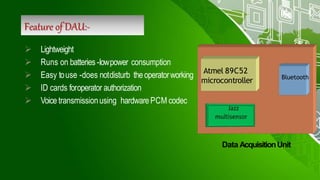
Feature of DAU:-
 Lightweight
 Runs on batteries -lowpower consumption
 Easy touse -does notdisturb theoperatorworking
 ID cards foroperator authorization
 Voice transmissionusing hardwarePCM codec
Bluetooth
Atmel 89C52
microcontroller
Data AcquisitionUnit
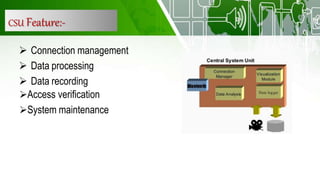
CSU Feature:-
 Connection management
 Data processing
 Data recording
Access verification
System maintenance
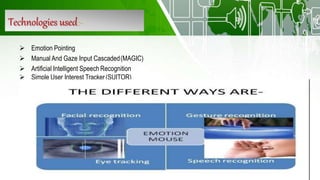
Technologies used:-
 Emotion Pointing
 Manual And Gaze Input Cascaded(MAGIC)
 Artificial Intelligent Speech Recognition
 Simple User Interest Tracker(SUITOR)
How can we give computer the human power?
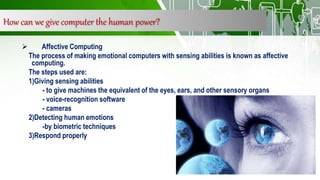
 Affective Computing
The process of making emotional computers with sensing abilities is known as affective
computing.
The steps used are:
1)Giving sensing abilities
- to give machines the equivalent of the eyes, ears, and other sensory organs
- voice-recognition software
- cameras
2)Detecting human emotions
-by biometric techniques
3)Respond properly
Methods of accomplishing affective computing
 Affect detection:
• Detecting our emotional states from the expressions on our face
 MAGIC pointing:
• Manual Acquisition with Gaze Tracking Technology
 SUITOR:
• Simple User Interface Tracker
 Emotion mouse:
• Expected accuracy is 75%
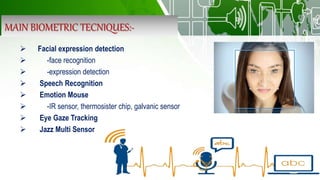
MAIN BIOMETRIC TECNIQUES:-
 Facial expression detection
 -face recognition
 -expression detection
 Speech Recognition
 Emotion Mouse
 -IR sensor, thermosister chip, galvanic sensor
 Eye Gaze Tracking
 Jazz Multi Sensor
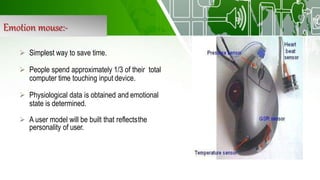
Emotion mouse:-
 Simplest way to save time.
 People spend approximately 1/3 of their total
computer time touching input device.
 Physiological data is obtained and emotional
state is determined.
 A user model will be built that reflectsthe
personality of user.
Magic pointing:-
 Twomagic pointing techniques
 Liberal
 Conservative
 APPROACHES
 LIBERALAPPROACH-Towarpthecursor toeverynewobjectuser looksat
 CONSERVATIVEAPPROACH-Does notwarpthecursor targetuntilthemanual input devicehas beenactuated
 Reduce thecursor movementneeded fortargetselection
 Click on thetargetwitha regularmanual inputdevice
Data Security:-
Only registered mobile devices can connect to the system
Bluetooth connection authentication
Bluetooth connection encryption
Access rights restrictions
Personal and physiological data encryption
Blue eyes enabled devices:-
 POD
The first blue Eye enabled mass production device
It’s a car manufactured by TOYOTA
It could keep the driver alert and active
 It could tell the driver to go slow if he is driving too
fast
It could hear the driver some sort of interesting
music when he is getting bored.
Suitor:-
Help by fetching more information at desktop.
Notice where the user’s eyes focus on the screen.
Fills a scrolling ticker on a computer screen with
information related to user’s task.
Ex. If reading headline ,pops up the story in the browser
window.
Application:-
In smart cameras ,lie detectors and emotional speech processing
retailing record and interpret customer movements
In automobile industry
In video games
Military
Power station
Flight control centres
Ovens and refrigerators
Conclusion:-
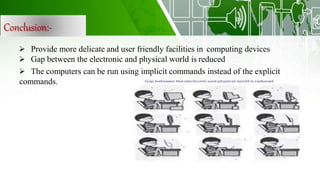
 Provide more delicate and user friendly facilities in computing devices
 Gap between the electronic and physical world is reduced
 The computers can be run using implicit commands instead of the explicit
commands.
Blue Eye Technology Seminar Presentation

Blue Eye Technology Seminar Presentation

  • 1.
  • 2.
    Department of ElectronicEngineering Technical seminar on “Blue Eye Technology” Shivam Rathaur Roll no:- 1516630042 Date:- Mar 17,2018
  • 3.
     Introduction  Needof Blue Eye Technology  System Overview  Data Acquisition Unit  DAU Feature  Central System Unit  Technologies Used  How can we give computer the Human Power?  Methods of accomplishing affective computing  Main Biometric Technique  Emotion mouse  Magic pointing  Data Security  Blue eyes enabled devices  Suitor  Application  Conclusion Contents:-
  • 4.
    Introduction:-  BLUE EYESis a technology, which aims at creating computational machines that have perceptual and sensory abilities like those of human beings.  It is modified model of touch screen technology.  The basic idea behind this technology is to give computer human power.  It provides technical means for monitoring and recording human-operator’s physiological condition.  BLUE in the term stands for Bluetooth, which enable reliable wireless communication.  EYE, because the eye movement enables us to obtain a lot of instresting information.
  • 5.
    Need of BlueEye Technology:-  To built a machine that can understand your emotions  A pc that can listen, talk orscream  Verify your identity, feels your presence and interact with you.  Adding such perceptual abilities to computers would enable computers and humans to work together more as partners.
  • 6.
    System Overview:-  Blueeyes system monitors the status of the operator’s visual attention through measurement of saccadic activity. The system checks parameters like heart beat rate and blood oxygenation against abnormal and triggers user defined alarms.  The system consists of • Data Acquisition Unit(DAU) • Central System Unit(CSU)
  • 7.
    Data Acquisition Unit:- The Data Acquisition Unit comprisesseveral hardware modules.  Atmel 89C52 microcontroller - system core  Bluetooth module (based on ROK101008)  HD44780 - small LCD display  24C16 - I2C EEPROM (on a removable ID card  MC145483 – 13bit PCM codec  Jazz Multi sensor interface  Beeper and LED indicators ,6 AA batteries andvoltage level monitor.
  • 8.
    Feature of DAU:- Lightweight  Runs on batteries -lowpower consumption  Easy touse -does notdisturb theoperatorworking  ID cards foroperator authorization  Voice transmissionusing hardwarePCM codec Bluetooth Atmel 89C52 microcontroller Data AcquisitionUnit
  • 9.
    CSU Feature:-  Connectionmanagement  Data processing  Data recording Access verification System maintenance
  • 10.
    Technologies used:-  EmotionPointing  Manual And Gaze Input Cascaded(MAGIC)  Artificial Intelligent Speech Recognition  Simple User Interest Tracker(SUITOR)
  • 11.
    How can wegive computer the human power?  Affective Computing The process of making emotional computers with sensing abilities is known as affective computing. The steps used are: 1)Giving sensing abilities - to give machines the equivalent of the eyes, ears, and other sensory organs - voice-recognition software - cameras 2)Detecting human emotions -by biometric techniques 3)Respond properly
  • 12.
    Methods of accomplishingaffective computing  Affect detection: • Detecting our emotional states from the expressions on our face  MAGIC pointing: • Manual Acquisition with Gaze Tracking Technology  SUITOR: • Simple User Interface Tracker  Emotion mouse: • Expected accuracy is 75%
  • 13.
    MAIN BIOMETRIC TECNIQUES:- Facial expression detection  -face recognition  -expression detection  Speech Recognition  Emotion Mouse  -IR sensor, thermosister chip, galvanic sensor  Eye Gaze Tracking  Jazz Multi Sensor
  • 14.
    Emotion mouse:-  Simplestway to save time.  People spend approximately 1/3 of their total computer time touching input device.  Physiological data is obtained and emotional state is determined.  A user model will be built that reflectsthe personality of user.
  • 15.
    Magic pointing:-  Twomagicpointing techniques  Liberal  Conservative  APPROACHES  LIBERALAPPROACH-Towarpthecursor toeverynewobjectuser looksat  CONSERVATIVEAPPROACH-Does notwarpthecursor targetuntilthemanual input devicehas beenactuated  Reduce thecursor movementneeded fortargetselection  Click on thetargetwitha regularmanual inputdevice
  • 16.
    Data Security:- Only registeredmobile devices can connect to the system Bluetooth connection authentication Bluetooth connection encryption Access rights restrictions Personal and physiological data encryption
  • 17.
    Blue eyes enableddevices:-  POD The first blue Eye enabled mass production device It’s a car manufactured by TOYOTA It could keep the driver alert and active  It could tell the driver to go slow if he is driving too fast It could hear the driver some sort of interesting music when he is getting bored.
  • 18.
    Suitor:- Help by fetchingmore information at desktop. Notice where the user’s eyes focus on the screen. Fills a scrolling ticker on a computer screen with information related to user’s task. Ex. If reading headline ,pops up the story in the browser window.
  • 19.
    Application:- In smart cameras,lie detectors and emotional speech processing retailing record and interpret customer movements In automobile industry In video games Military Power station Flight control centres Ovens and refrigerators
  • 20.
    Conclusion:-  Provide moredelicate and user friendly facilities in computing devices  Gap between the electronic and physical world is reduced  The computers can be run using implicit commands instead of the explicit commands.