Blockchain Based
Voting System
Contents
 Introduction
 Problem Statement
 Aim
 Objective
 Methodology
 Literature Survey
 UML Diagrams (Usecase, class)
 Proposed work
 Conclusion
Introduction
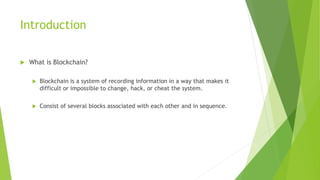
 What is Blockchain?
 Blockchain is a system of recording information in a way that makes it
difficult or impossible to change, hack, or cheat the system.
 Consist of several blocks associated with each other and in sequence.
Continued…
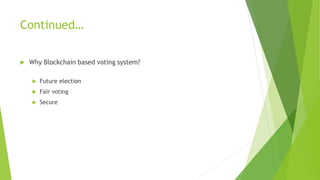
 Why Blockchain based voting system?
 Future election
 Fair voting
 Secure
Problem Statement
 By adopting blockchain in the distribution of databases on e-voting systems
can reduce one of the cheating sources of database manipulation.
 Blockchain technology is one of solutions, because it embraces a distributed
system and the entire database are owned by many users.
 Blockchain itself has been used in the Bitcoin, Ethereum, Ripple, Litecoin.
Aim
 Aims to building an voting system that satisfies the legal requirements of
legislators has been a challenge for a long time.
 Distributed ledger technologies is an exciting technology world.
 Also aims to evaluate the application of blockchain as service to implement
distributed electronic voting systems.
Objective
 The election system must be openly verifiable and transparent.
 The election system must ensure that the vote cast by the voter has been
recorded.
 Only eligible voters must be allowed to vote.
 The election system should be tamper-proof.
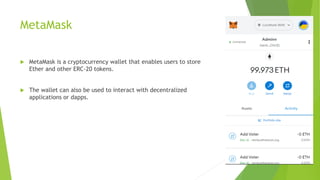
MetaMask
 MetaMask is a cryptocurrency wallet that enables users to store
Ether and other ERC-20 tokens.
 The wallet can also be used to interact with decentralized
applications or dapps.
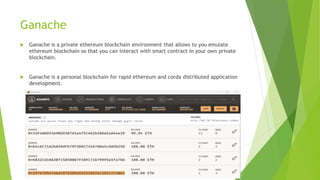
Ganache
 Ganache is a private ethereum blockchain environment that allows to you emulate
ethereum blockchain so that you can interact with smart contract in your own private
blockchain.
 Ganache is a personal blockchain for rapid ethereum and corda distributed application
development.
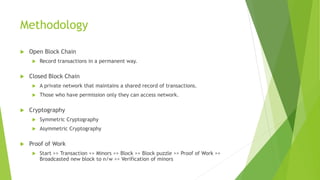
Methodology
 Open Block Chain
 Record transactions in a permanent way.
 Closed Block Chain
 A private network that maintains a shared record of transactions.
 Those who have permission only they can access network.
 Cryptography
 Symmetric Cryptography
 Asymmetric Cryptography
 Proof of Work
 Start >> Transaction >> Minors >> Block >> Block puzzle >> Proof of Work >>
Broadcasted new block to n/w >> Verification of minors
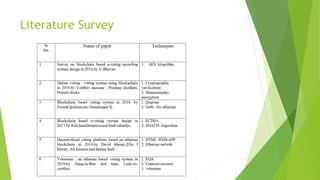
Literature Survey
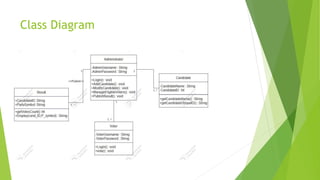
Class Diagram
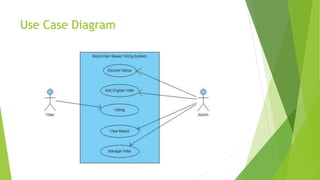
Use Case Diagram
Proposed Work
 Existing System:
 Ballot system
 Electronic Control System
 Current Digital Voting System
 Proposed Work: As compared to the existing system
 The voting is stored in the Blockchain which makes it tamper proof.
 As there’s no standing in queue for casting vote it’ll save a lot of time and
reduce the workload.
Conclusion
 A nation with less voting percentage will fight to develop as choosing a
right front-runner for the nation is very essential. Our future system is
designed to provide a secure data and dependable voting amongst the people
of the equality. Block chain itself has been used in the Bitcoin scheme known
as the dispersed bank system. By assuming blockchain in the distribution
database on voting system one can reduce the double-dealing sources of
database management. This project aims to voting effect using blockchain
procedure from every place of election

Blockchain Based voting system PPT.pptx

  • 1.
  • 2.
    Contents  Introduction  ProblemStatement  Aim  Objective  Methodology  Literature Survey  UML Diagrams (Usecase, class)  Proposed work  Conclusion
  • 3.
    Introduction  What isBlockchain?  Blockchain is a system of recording information in a way that makes it difficult or impossible to change, hack, or cheat the system.  Consist of several blocks associated with each other and in sequence.
  • 4.
    Continued…  Why Blockchainbased voting system?  Future election  Fair voting  Secure
  • 5.
    Problem Statement  Byadopting blockchain in the distribution of databases on e-voting systems can reduce one of the cheating sources of database manipulation.  Blockchain technology is one of solutions, because it embraces a distributed system and the entire database are owned by many users.  Blockchain itself has been used in the Bitcoin, Ethereum, Ripple, Litecoin.
  • 6.
    Aim  Aims tobuilding an voting system that satisfies the legal requirements of legislators has been a challenge for a long time.  Distributed ledger technologies is an exciting technology world.  Also aims to evaluate the application of blockchain as service to implement distributed electronic voting systems.
  • 7.
    Objective  The electionsystem must be openly verifiable and transparent.  The election system must ensure that the vote cast by the voter has been recorded.  Only eligible voters must be allowed to vote.  The election system should be tamper-proof.
  • 8.
    MetaMask  MetaMask isa cryptocurrency wallet that enables users to store Ether and other ERC-20 tokens.  The wallet can also be used to interact with decentralized applications or dapps.
  • 9.
    Ganache  Ganache isa private ethereum blockchain environment that allows to you emulate ethereum blockchain so that you can interact with smart contract in your own private blockchain.  Ganache is a personal blockchain for rapid ethereum and corda distributed application development.
  • 10.
    Methodology  Open BlockChain  Record transactions in a permanent way.  Closed Block Chain  A private network that maintains a shared record of transactions.  Those who have permission only they can access network.  Cryptography  Symmetric Cryptography  Asymmetric Cryptography  Proof of Work  Start >> Transaction >> Minors >> Block >> Block puzzle >> Proof of Work >> Broadcasted new block to n/w >> Verification of minors
  • 11.
  • 12.
  • 13.
  • 14.
    Proposed Work  ExistingSystem:  Ballot system  Electronic Control System  Current Digital Voting System  Proposed Work: As compared to the existing system  The voting is stored in the Blockchain which makes it tamper proof.  As there’s no standing in queue for casting vote it’ll save a lot of time and reduce the workload.
  • 15.
    Conclusion  A nationwith less voting percentage will fight to develop as choosing a right front-runner for the nation is very essential. Our future system is designed to provide a secure data and dependable voting amongst the people of the equality. Block chain itself has been used in the Bitcoin scheme known as the dispersed bank system. By assuming blockchain in the distribution database on voting system one can reduce the double-dealing sources of database management. This project aims to voting effect using blockchain procedure from every place of election