BLOCKCHAIN BASED
E-VOTING RECORDING
SYSTEM
SANJAY-A
4SN14CS089
CONTENTS
 INTRODUCTION
 PROPOSED SYSTEM
 BLOCKCHAIN
 HASHING
 ADVANTAGES OF BLOCKCHAIN
 ELECTION & BLOCKCHAIN TECHNOLOGY
 WORKING
 CONCLUSION
 REFERENCE
INTRODUCTION
 Elections have a great power in determining the fate of a nation or an
organization.
 The aspect of security and transparency is a threat from still
widespread election with the conventional system.
 General elections still use a centralized system, there is one
organization that manages it.
 Some of the problems that can occur in traditional electoral systems
is with an organization that has full control over the database and
system, it is possible to tamper with the database of considerable
opportunities.
PROPOSED SYSTEM
 Blockchain technology is one of solutions, because it embraces a
distributed system and the entire database are owned by many users.
 Blockchain itself has been used in the Bitcoin, Ethereum, Ripple,
Litecoin.
 By adopting blockchain in the distribution of databases on e-voting
systems can reduce one of the cheating sources of database
manipulation.
BLOCKCHAIN
 Blockchain is a distributed database that stores data records that
continue to grow, controlled by multiple entities.
 Blockchain (distributed ledger) is a trustworthy service system to a group
of nodes or non-trusting parties, generally blockchain acts as a reliable
third party to keep things together, mediate exchanges, and provide
secure computing machines.
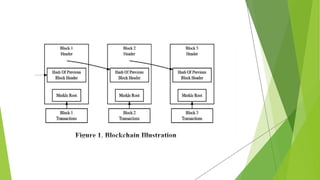
 Blockchain consists of several blocks associated with each other and in
sequence
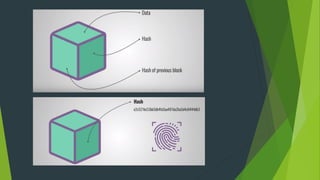
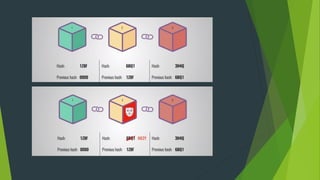
 To connect between one block with another block, the hash value of the
previous block inserted into the next block then calculated its hash value.
 The blocks are related because the hash values of the previous block are
used in the next block creation process.
 The first block is called the genesis block.
HASHING
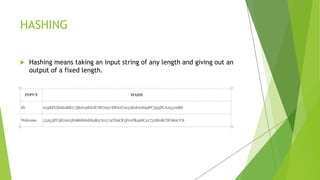
 Hashing means taking an input string of any length and giving out an
output of a fixed length.
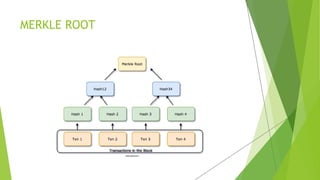
MERKLE ROOT
ADVANTAGES OF BLOCKCHAIN
 Blockchain is distributed digitally to a number of computers in almost
real time.
 Blockchain is decentralized, the entire recording is available for all
users and peer to peer network users. This eliminates the need for
central authorities, such as banks, as well as trusted intermediaries.
 Blockchain uses cryptography and digital signatures to prove identity.
 Blockchain has a difficult mechanism for altering stored records.
 A Blockchain is time-stamped.
 High Availability.
 Verifiability and Integrity.
These advantages make the blockchain attractive for use in recording
systems on e-voting.
ELECTION & BLOCKCHAIN TECHNOLOGY
 The traditional voting system has several problems encountered when
managed by an organization that has full control over the system and
database, therefore the organization can tamper with the database,
and when the database changes the traces can be easily eliminated.
 The solution is to make the database public, the database owned by
many users, which is useful to compare if there are any discrepancies.
 Each voter's vote serves as a transaction that can be created into
blockchain.
 The vote count can be verified that no data is altered or deleted nor
is there any unauthorized data entered in the blockchain.
WORKING
 Before the election process begins, each node generates a private key
and a public key.
 Public key of each node sent to all nodes listed in the election
process, so each node has a public key list of all nodes.
 When the election occurs, each node gathers the election results from
each voter.
 When the selection process is completed, the nodes will wait their
turn to create the block.
 Upon arrival of the block on each node, then done verification to
determine whether the block is valid.
VERIFICATION & UPDATE
 The verification process starts from the acquisition of a block
containing the voting result, the previous hash of the hash value
originating from the previously valid block, and the digital signature.
 Digital signature is done by decryption process using the public key of
the node that makes the electronic document.
 These two hash values are then compared, if the value is the same
then the digital signature is valid and the process continues, but if the
value is not equal it is considered invalid and the system will refuse
the block to continue the process.
CREATE NEW BLOCK AND BROADCAST
 Nodes collect votes from each selector, then calculated and combined
with the previous hash as an electronic document in the system.
 It encrypts the hash value using the private key
 After the node that get the turn finished creating a new block, then
the block is broadcast to all nodes.
FLOW CHART
SIZE VS NODE GRAPH
TIME VS NODE GRAPH
CONCLUSION
 Blockchain technology can be one solution to solve the problems that
often occur in the electoral system.
 The use of hash values in recording the voting results of each polling
station linked to each other makes this recording system more secure
and the use of digital signatures makes the system more reliable.
 Any data that is broadcast by the node that gets a turn is always
verified and updated its data by the recipient.
REFERENCES
 http://ieeexplore.ieee.org/document/8272896/
 https://blockgeeks.com/guides/what-is-blockchain-technology
 https://bitcoin.stackexchange.com/questions/10479/what-is-the-merkle-root
 https://blockgeeks.com/guides/what-is-hashing
 https://www.youtube.com/watch?v=lik9aaFIsl4
 https://www.youtube.com/watch?v=93E_GzvpMA0
 https://www.youtube.com/watch?v=SSo_EIwHSd4

Blockchain based e voting recording system design

  • 1.
  • 2.
    CONTENTS  INTRODUCTION  PROPOSEDSYSTEM  BLOCKCHAIN  HASHING  ADVANTAGES OF BLOCKCHAIN  ELECTION & BLOCKCHAIN TECHNOLOGY  WORKING  CONCLUSION  REFERENCE
  • 3.
    INTRODUCTION  Elections havea great power in determining the fate of a nation or an organization.  The aspect of security and transparency is a threat from still widespread election with the conventional system.  General elections still use a centralized system, there is one organization that manages it.  Some of the problems that can occur in traditional electoral systems is with an organization that has full control over the database and system, it is possible to tamper with the database of considerable opportunities.
  • 4.
    PROPOSED SYSTEM  Blockchaintechnology is one of solutions, because it embraces a distributed system and the entire database are owned by many users.  Blockchain itself has been used in the Bitcoin, Ethereum, Ripple, Litecoin.  By adopting blockchain in the distribution of databases on e-voting systems can reduce one of the cheating sources of database manipulation.
  • 5.
    BLOCKCHAIN  Blockchain isa distributed database that stores data records that continue to grow, controlled by multiple entities.  Blockchain (distributed ledger) is a trustworthy service system to a group of nodes or non-trusting parties, generally blockchain acts as a reliable third party to keep things together, mediate exchanges, and provide secure computing machines.  Blockchain consists of several blocks associated with each other and in sequence  To connect between one block with another block, the hash value of the previous block inserted into the next block then calculated its hash value.  The blocks are related because the hash values of the previous block are used in the next block creation process.  The first block is called the genesis block.
  • 6.
    HASHING  Hashing meanstaking an input string of any length and giving out an output of a fixed length.
  • 10.
  • 11.
    ADVANTAGES OF BLOCKCHAIN Blockchain is distributed digitally to a number of computers in almost real time.  Blockchain is decentralized, the entire recording is available for all users and peer to peer network users. This eliminates the need for central authorities, such as banks, as well as trusted intermediaries.  Blockchain uses cryptography and digital signatures to prove identity.  Blockchain has a difficult mechanism for altering stored records.  A Blockchain is time-stamped.  High Availability.  Verifiability and Integrity. These advantages make the blockchain attractive for use in recording systems on e-voting.
  • 12.
    ELECTION & BLOCKCHAINTECHNOLOGY  The traditional voting system has several problems encountered when managed by an organization that has full control over the system and database, therefore the organization can tamper with the database, and when the database changes the traces can be easily eliminated.  The solution is to make the database public, the database owned by many users, which is useful to compare if there are any discrepancies.  Each voter's vote serves as a transaction that can be created into blockchain.  The vote count can be verified that no data is altered or deleted nor is there any unauthorized data entered in the blockchain.
  • 13.
    WORKING  Before theelection process begins, each node generates a private key and a public key.  Public key of each node sent to all nodes listed in the election process, so each node has a public key list of all nodes.  When the election occurs, each node gathers the election results from each voter.  When the selection process is completed, the nodes will wait their turn to create the block.  Upon arrival of the block on each node, then done verification to determine whether the block is valid.
  • 14.
    VERIFICATION & UPDATE The verification process starts from the acquisition of a block containing the voting result, the previous hash of the hash value originating from the previously valid block, and the digital signature.  Digital signature is done by decryption process using the public key of the node that makes the electronic document.  These two hash values are then compared, if the value is the same then the digital signature is valid and the process continues, but if the value is not equal it is considered invalid and the system will refuse the block to continue the process.
  • 15.
    CREATE NEW BLOCKAND BROADCAST  Nodes collect votes from each selector, then calculated and combined with the previous hash as an electronic document in the system.  It encrypts the hash value using the private key  After the node that get the turn finished creating a new block, then the block is broadcast to all nodes.
  • 16.
  • 17.
  • 18.
  • 19.
    CONCLUSION  Blockchain technologycan be one solution to solve the problems that often occur in the electoral system.  The use of hash values in recording the voting results of each polling station linked to each other makes this recording system more secure and the use of digital signatures makes the system more reliable.  Any data that is broadcast by the node that gets a turn is always verified and updated its data by the recipient.
  • 20.
    REFERENCES  http://ieeexplore.ieee.org/document/8272896/  https://blockgeeks.com/guides/what-is-blockchain-technology https://bitcoin.stackexchange.com/questions/10479/what-is-the-merkle-root  https://blockgeeks.com/guides/what-is-hashing  https://www.youtube.com/watch?v=lik9aaFIsl4  https://www.youtube.com/watch?v=93E_GzvpMA0  https://www.youtube.com/watch?v=SSo_EIwHSd4