BITCOIN
CLARE JOHNSON
WHAT IS BITCOIN?
“A digital currency in which transactions can be performed
without the need for a central bank”
• It is the first implementation of a concept called Cryptocurrency
• It is the first decentralised peer-to-peer payment network
• Specification and proof of concept first published by Satoshi
Nakamoto in 2009
KEY FEATURES OF BITCOIN
• Nobody controls the Bitcoin network
• It has a decentralised structure
• Anyone can view the software used to create Bitcoin
• ‘Cash for the Internet’
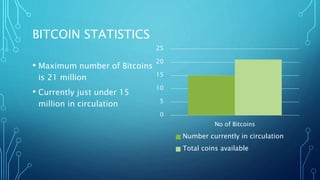
BITCOIN STATISTICS
• Maximum number of Bitcoins
is 21 million
• Currently just under 15
million in circulation
0
5
10
15
20
25
No of Bitcoins
Number currently in circulation
Total coins available
HOW DOES BITCOIN WORK?
• The Bitcoin network shares a public ledger or book of accounts
called the blockchain
• The ledger contains every transaction ever processed, allowing
a user's device to verify the validity of each transaction
• The authenticity of each transaction is protected by digital
signatures corresponding to the sending addresses, allowing all
users to have full control over sending bitcoins from their own
Bitcoin addresses
HOW DO I USE IT?
• Download an app to your computer or mobile device called a digital
wallet
• The wallet uses software to generate Bitcoin addresses
• Acquire Bitcoins – either by buying them or by selling something for
Bitcoins
• Each address in your wallet has its own Bitcoin balance
• To pay for something with Bitcoins you will need the Bitcoin address
for the sale
• The transactions takes place within seconds, but verification can take
10 minutes or so
WHAT INFORMATION IS REQUIRED FOR A
TRANSACTION?
If Alice sends some bitcoins to Bob, that transaction will need the
following information:
• An input: this is a record of which bitcoin address was used to
send the bitcoins to Alice in the first place (she received them
from her friend, Eve).
• An amount: this is the amount of bitcoins that Alice is sending
to Bob.
• An output: this is Bob's bitcoin address
• The Blockchain – this is used to verify all transactions
THE BLOCKCHAIN
• The blockchain contains all previous transactions
• Alice makes a payment to Bob
• Bitcoin miners look at the payment and calculate a mathematical
function based on the last transaction stored on the blockchain and
the next pending transaction
• The miner to solve the function first adds the transaction and result
to the blockchain
• The miner gets paid in Bitcoins for her efforts
• The transaction is verified
RESOURCES
• https://youtu.be/ZT26y_l-jtI (Video explaining bitcoin basics,
Mashable)
• https://www.weusecoins.com/ (Video explaining bitcoins,
WeUseCoins.com)
• https://bitcoin.org/en/faq#who-created-bitcoin (Bitcoin FAQ,
Bitcoin.org)
• https://www.bitcoinmining.com/ (Video explaining bitcoin mining,
Bitcoinmining.com)
• https://youtu.be/l9jOJk30eQs (Block chain explained video,
CuriousInventor)

Bitcoin

  • 1.
  • 2.
    WHAT IS BITCOIN? “Adigital currency in which transactions can be performed without the need for a central bank” • It is the first implementation of a concept called Cryptocurrency • It is the first decentralised peer-to-peer payment network • Specification and proof of concept first published by Satoshi Nakamoto in 2009
  • 3.
    KEY FEATURES OFBITCOIN • Nobody controls the Bitcoin network • It has a decentralised structure • Anyone can view the software used to create Bitcoin • ‘Cash for the Internet’
  • 4.
    BITCOIN STATISTICS • Maximumnumber of Bitcoins is 21 million • Currently just under 15 million in circulation 0 5 10 15 20 25 No of Bitcoins Number currently in circulation Total coins available
  • 5.
    HOW DOES BITCOINWORK? • The Bitcoin network shares a public ledger or book of accounts called the blockchain • The ledger contains every transaction ever processed, allowing a user's device to verify the validity of each transaction • The authenticity of each transaction is protected by digital signatures corresponding to the sending addresses, allowing all users to have full control over sending bitcoins from their own Bitcoin addresses
  • 6.
    HOW DO IUSE IT? • Download an app to your computer or mobile device called a digital wallet • The wallet uses software to generate Bitcoin addresses • Acquire Bitcoins – either by buying them or by selling something for Bitcoins • Each address in your wallet has its own Bitcoin balance • To pay for something with Bitcoins you will need the Bitcoin address for the sale • The transactions takes place within seconds, but verification can take 10 minutes or so
  • 7.
    WHAT INFORMATION ISREQUIRED FOR A TRANSACTION? If Alice sends some bitcoins to Bob, that transaction will need the following information: • An input: this is a record of which bitcoin address was used to send the bitcoins to Alice in the first place (she received them from her friend, Eve). • An amount: this is the amount of bitcoins that Alice is sending to Bob. • An output: this is Bob's bitcoin address • The Blockchain – this is used to verify all transactions
  • 8.
    THE BLOCKCHAIN • Theblockchain contains all previous transactions • Alice makes a payment to Bob • Bitcoin miners look at the payment and calculate a mathematical function based on the last transaction stored on the blockchain and the next pending transaction • The miner to solve the function first adds the transaction and result to the blockchain • The miner gets paid in Bitcoins for her efforts • The transaction is verified
  • 9.
    RESOURCES • https://youtu.be/ZT26y_l-jtI (Videoexplaining bitcoin basics, Mashable) • https://www.weusecoins.com/ (Video explaining bitcoins, WeUseCoins.com) • https://bitcoin.org/en/faq#who-created-bitcoin (Bitcoin FAQ, Bitcoin.org) • https://www.bitcoinmining.com/ (Video explaining bitcoin mining, Bitcoinmining.com) • https://youtu.be/l9jOJk30eQs (Block chain explained video, CuriousInventor)