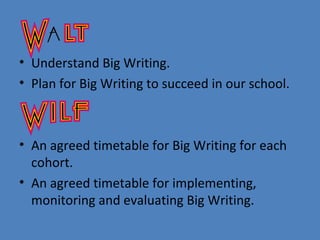
• Understand Big Writing.
• Plan for Big Writing to succeed in our school.

• An agreed timetable for Big Writing for each
cohort.
• An agreed timetable for implementing,
monitoring and evaluating Big Writing.
What is Big Writing? - 1
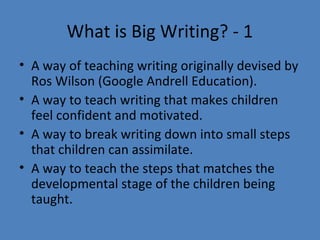
• A way of teaching writing originally devised by
Ros Wilson (Google Andrell Education).
• A way to teach writing that makes children
feel confident and motivated.
• A way to break writing down into small steps
that children can assimilate.
• A way to teach the steps that matches the
developmental stage of the children being
taught.
What is Big Writing? - 2
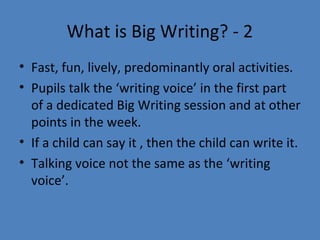
• Fast, fun, lively, predominantly oral activities.
• Pupils talk the ‘writing voice’ in the first part
of a dedicated Big Writing session and at other
points in the week.
• If a child can say it , then the child can write it.
• Talking voice not the same as the ‘writing
voice’.
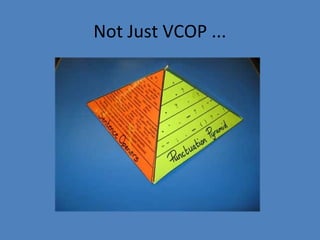
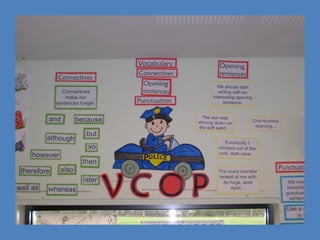
Not Just VCOP ...
Three Strands
• Basic Skills:
• grammar, handwriting, spelling and sentence structure

• Detail and Structure:
•
•
•
•
•

openings – body – endings – 5 W’s – emotions and feelings
features of different non-fiction writing genres
play script
poetry
five part story structure

• Writing Voice:
• vocabulary, connectives, sentence openers and punctuation
Strand One
• Basic Skills:
•
•
•
•
•

What resources have we got to teach:
Grammar?
Handwriting?
Spelling?
Sentence structure?
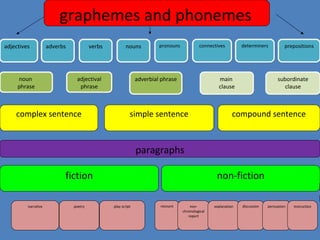
graphemes and phonemes
adjectives

noun
phrase

adverbs

verbs

nouns

adjectival
phrase

complex sentence

pronouns

connectives

adverbial phrase

determiners

main
clause

simple sentence

prepositions

subordinate
clause

compound sentence

paragraphs
fiction
narrative

poetry

non-fiction
play script

recount

nonchronological
report

explanation

discussion

persuasion

instruction
Strand Two
• Detail and Structure
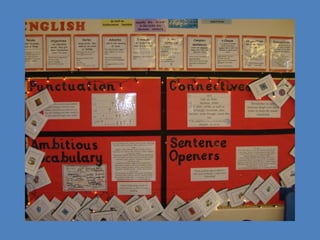
• What resources have we got to teach the features of all
the different genres of writing?
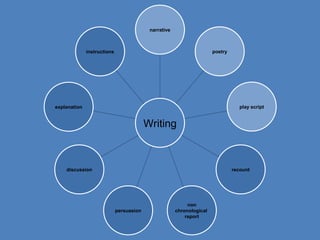
narrative

poetry

instructions

play script

explanation

Writing

discussion

recount

persuasion

non
chronological
report
Strand Three
• Writing Voice
• What resources have we got to teach the features of
the writing voice?
• Vocabulary
• Connectives
• Openers
• Punctuation
Planning Big Writing
• Structure of sessions.
• Two part

• Length of sessions.
• Age specific

• When?
•
•
•
•

As part of two/ three week literacy unit?
Once a week/ fortnight/ 4 weeks in every 6 ...?
A few weeks after a genre has been taught?
Cross curricular opportunities?
Component Parts
• Daily reminder of upcoming Big Write session.
• Big Write homework – talk homework.
• Two part Big Write lesson – from one literacy
hour plus an extra session devoted to
extended writing.
• Time can be split across the morning break
• (Only 1 hour, split into 2 x 30 min in Year 1)
Daily Reminder
• Brief recap of text type.
• Re-visit success criteria for chosen genre.
• Share children’s ideas.
Big Write Homework
• Gathering ideas for writing – oral homework,
possibly written notes. E.g. List of people’s
opinions and ideas to find out before the Big
Write.
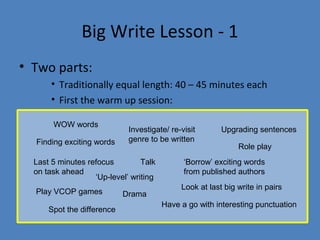
Big Write Lesson - 1
• Two parts:
• Traditionally equal length: 40 – 45 minutes each
• First the warm up session:
WOW words
Finding exciting words

Investigate/ re-visit
genre to be written

Last 5 minutes refocus
Talk
on task ahead
‘Up-level’ writing
Play VCOP games
Spot the difference

Drama

Upgrading sentences
Role play

‘Borrow’ exciting words
from published authors
Look at last big write in pairs
Have a go with interesting punctuation
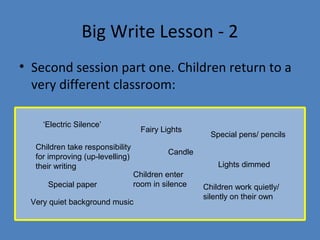
Big Write Lesson - 2
• Second session part one. Children return to a
very different classroom:
‘Electric Silence’
Children take responsibility
for improving (up-levelling)
their writing
Special paper

Fairy Lights

Special pens/ pencils

Candle
Lights dimmed
Children enter
room in silence

Very quiet background music

Children work quietly/
silently on their own
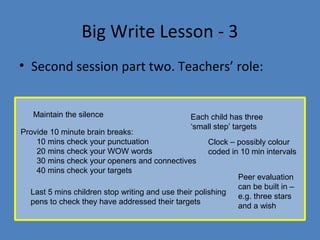
Big Write Lesson - 3
• Second session part two. Teachers’ role:
Maintain the silence

Each child has three
‘small step’ targets

Provide 10 minute brain breaks:
10 mins check your punctuation
20 mins check your WOW words
30 mins check your openers and connectives
40 mins check your targets

Clock – possibly colour
coded in 10 min intervals

Last 5 mins children stop writing and use their polishing
pens to check they have addressed their targets

Peer evaluation
can be built in –
e.g. three stars
and a wish
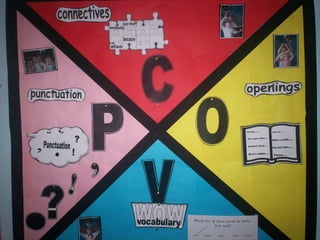
Classroom Changes
•
•
•
•
•
•

‘Writer of the Week’ display.
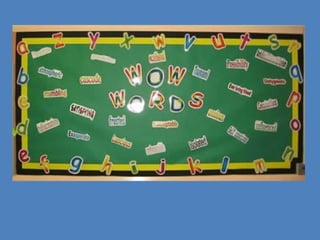
WOW words display.
Target display – who has reached their goal?
Connective Ladder.
Openers display.
Punctuation Pyramid.
Suggested Timetable
• Staff Meeting on Big Writing – this is it!
• TA training – 22nd October.
• Monitor Literacy and Big Write planning –
early November.
• Monitor Big Write books – later in November.
• Feedback to staff, celebrate success! – early
December.
• Understand Big Writing.
• Plan for Big Writing to succeed in our school.

• An agreed timetable for Big Writing for each
cohort.
• An agreed timetable for implementing,
monitoring and evaluating Big Writing.
Big writing staff_meeting

Big writing staff_meeting

  • 2.
    • Understand BigWriting. • Plan for Big Writing to succeed in our school. • An agreed timetable for Big Writing for each cohort. • An agreed timetable for implementing, monitoring and evaluating Big Writing.
  • 3.
    What is BigWriting? - 1 • A way of teaching writing originally devised by Ros Wilson (Google Andrell Education). • A way to teach writing that makes children feel confident and motivated. • A way to break writing down into small steps that children can assimilate. • A way to teach the steps that matches the developmental stage of the children being taught.
  • 4.
    What is BigWriting? - 2 • Fast, fun, lively, predominantly oral activities. • Pupils talk the ‘writing voice’ in the first part of a dedicated Big Writing session and at other points in the week. • If a child can say it , then the child can write it. • Talking voice not the same as the ‘writing voice’.
  • 5.
  • 6.
    Three Strands • BasicSkills: • grammar, handwriting, spelling and sentence structure • Detail and Structure: • • • • • openings – body – endings – 5 W’s – emotions and feelings features of different non-fiction writing genres play script poetry five part story structure • Writing Voice: • vocabulary, connectives, sentence openers and punctuation
  • 7.
    Strand One • BasicSkills: • • • • • What resources have we got to teach: Grammar? Handwriting? Spelling? Sentence structure?
  • 8.
    graphemes and phonemes adjectives noun phrase adverbs verbs nouns adjectival phrase complexsentence pronouns connectives adverbial phrase determiners main clause simple sentence prepositions subordinate clause compound sentence paragraphs fiction narrative poetry non-fiction play script recount nonchronological report explanation discussion persuasion instruction
  • 9.
    Strand Two • Detailand Structure • What resources have we got to teach the features of all the different genres of writing?
  • 10.
  • 11.
    Strand Three • WritingVoice • What resources have we got to teach the features of the writing voice? • Vocabulary • Connectives • Openers • Punctuation
  • 12.
    Planning Big Writing •Structure of sessions. • Two part • Length of sessions. • Age specific • When? • • • • As part of two/ three week literacy unit? Once a week/ fortnight/ 4 weeks in every 6 ...? A few weeks after a genre has been taught? Cross curricular opportunities?
  • 13.
    Component Parts • Dailyreminder of upcoming Big Write session. • Big Write homework – talk homework. • Two part Big Write lesson – from one literacy hour plus an extra session devoted to extended writing. • Time can be split across the morning break • (Only 1 hour, split into 2 x 30 min in Year 1)
  • 14.
    Daily Reminder • Briefrecap of text type. • Re-visit success criteria for chosen genre. • Share children’s ideas.
  • 15.
    Big Write Homework •Gathering ideas for writing – oral homework, possibly written notes. E.g. List of people’s opinions and ideas to find out before the Big Write.
  • 16.
    Big Write Lesson- 1 • Two parts: • Traditionally equal length: 40 – 45 minutes each • First the warm up session: WOW words Finding exciting words Investigate/ re-visit genre to be written Last 5 minutes refocus Talk on task ahead ‘Up-level’ writing Play VCOP games Spot the difference Drama Upgrading sentences Role play ‘Borrow’ exciting words from published authors Look at last big write in pairs Have a go with interesting punctuation
  • 17.
    Big Write Lesson- 2 • Second session part one. Children return to a very different classroom: ‘Electric Silence’ Children take responsibility for improving (up-levelling) their writing Special paper Fairy Lights Special pens/ pencils Candle Lights dimmed Children enter room in silence Very quiet background music Children work quietly/ silently on their own
  • 18.
    Big Write Lesson- 3 • Second session part two. Teachers’ role: Maintain the silence Each child has three ‘small step’ targets Provide 10 minute brain breaks: 10 mins check your punctuation 20 mins check your WOW words 30 mins check your openers and connectives 40 mins check your targets Clock – possibly colour coded in 10 min intervals Last 5 mins children stop writing and use their polishing pens to check they have addressed their targets Peer evaluation can be built in – e.g. three stars and a wish
  • 19.
    Classroom Changes • • • • • • ‘Writer ofthe Week’ display. WOW words display. Target display – who has reached their goal? Connective Ladder. Openers display. Punctuation Pyramid.
  • 25.
    Suggested Timetable • StaffMeeting on Big Writing – this is it! • TA training – 22nd October. • Monitor Literacy and Big Write planning – early November. • Monitor Big Write books – later in November. • Feedback to staff, celebrate success! – early December.
  • 26.
    • Understand BigWriting. • Plan for Big Writing to succeed in our school. • An agreed timetable for Big Writing for each cohort. • An agreed timetable for implementing, monitoring and evaluating Big Writing.

Editor's Notes